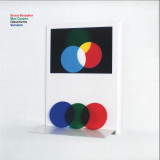
Black Coffee, Peggy Lee's 1956 album smash for Decca (she left Capitol in 1952 over creative and artistic differences), presents her in an intimate setting with a top-notch jazz quartet in place of her usual studio orchestra. This smaller combination, including trumpeter Pete Candoli and pianist Jimmy Rowles (two of her favorite sidemen), works to perfection, especially on sultry takes on “It Ain’t Necessarily So”, “Gee, Baby Ain’t I Good To You” and the title track. Verve’s Acoustic Sounds Series features transfers from analog tapes and remastered 180-gram vinyl in deluxe gatefold packaging. SOLD IN PREVIOUSLY-EXISITING ORDERS STILL STAND
Luigi Madonna returns for his first Drumcode EP in five years, teaming up with fellow Neapolitan and label favourite Robert Capuano.
We got our last taste of the creative synergy that marks Luigi Madonna and Robert Capuano’s friendship when the pair dropped ‘Limitless’ in 2017, a brilliant addition to A-Sides Vol.6. Prior to that Luigi hadn’t dropped a cut on DC since 2015’s hook-driven ‘Magic Land’, while Capuano stands as one of the label’s most infallible contributors, last year’s ‘The Walker’ EP was typically impressive.
Crafted between two studios in a pre-COVID-19 world, the three-track conceptual EP opens with ‘Mad World’, as masterfully layered industrial hits and rides depict it’s narrative, while a pulsating melodic lead ensures heavy impact. ‘System Alert’ is inspired by the destructive effects of climate change and the track’s composition mirrors this malaise, as a pitch-bending synth elicits rhythmic chaos alongside Luigi and Robert’s deft drum work. ‘Headquarter’ is steeped in drama and cinematic charm, backed by a distorted vocal sample, stormy oscillating synths and a sharp percussive backdrop.
out of Stock
Last delivered 25 days ago available to reorder, subject to availability
Hot on the heels of solo concerts to commemorate the 20th birthday of her debut album Mud Stories, An Pierle returns with a brand new Quartet album that proves that looking back was no retro exercise. Together with life/musical partner Koen Gisen and jazz youngsters Hendrik Lasure & Casper Van De Velde (schntzl, warm bad, Bombataz,...) she now presents Wiga Waga, an adventurous new album that juggles playfulness and experimentalism.
The songs sound familiar and bear the Pierle mark, even though they uncover hereto unexplored territory. Inspired by a newly-found enthusiasm and inquisitive spirit, the musicians came up with a batch of songs that revisit familiar themes and atmospheres, but dress them up with an invigorating eclecticism. Working as a real 'band', the quartet sets out for a new, collective identity. It is not jazz in the classic sense, but it contains the imagination, freedom and constant renewal of the genre, and it works like a charm.
Debut from Norwegian artist Ole Kirkeng on Die With Your Boots On Records. Kirkeng has been living in New York for five years, but had to go home when the pandemic broke. He's been touring with Courtney Marie Andrews, Darling West and Molly Tuttle. He lived in Brooklyn where he wrote songs, worked in a studio and hung out with friends like Big Thief and Liz Cooper and the Stampede.
Peter Green’s genius has its main roots in musical influences from a chidlhood spent in London’s working class East End.
This intense collection features several of his best successes with the 1968-70 Fleetwood Mac — before their move torwards pop stardom – and some interesting
tunes from his tormented solo career throughout the 70s and the 80s.
Angel Tears in Sunlight is Pauline Anna Strom's first album in over thirty years; an assemblage of music that refracts the expansiveness, and minutiae, of imagined realms while embracing the kaleidoscopic echoes of our distant epochs. The capacity to collapse time might elucidate the enigma of Pauline Anna Strom. A mystic force in music, emerging during the dawn of new age as the Trans-Millenia Consort, the pioneering synthesist channelled primordial energies into future-facing sound through a series of full-length releases between 1982 and 1988. Little was known about her, except by a constellation of devoted followers who saw a unique legacy forming amidst the (mostly male) synthesist canon of the time. Following the 2017 release of Trans-Millenia Music, an anthology revitalizing the most evocative parts of Strom's catalog, the Bay Area visionary sensed the universe telling her to return to music. As with her work in the 80s, Angel Tears in Sunlight was composed and recorded in the same San Francisco apartment where Strom has lived for almost four decades in synthesis with her machines and "dinosaurs." Populated by a compact array of modern instruments that streamline the sound of her analog past and her beloved iguanas, Little Soulstice and Ms Huff, the terrarium of her home forms an intimate yet limitless ecosystem that defies the constraints of the outside world. Within this sanctuary, Strom becomes lost in time, drawing on the ancient energies of her inner visions. Her hardware forms the crux of translating these ideas into sound. "It's the only way this stuff can be pulled out of myself, the universe, Little Soulstice, an ammonite_," Strom notes. "It couldn't be done without this machinery, because there's no other way to draw and capture these frequencies into sonic interpretation." Strom's process of recording transient live-takes enriches the mystery of her work. She renders the machinery a composer itself, a cohabitation with a living other. "Many musicians wouldn't go that far because of ego," Strom muses. "The equipment has to become part of you and your creativity. That's how I think it all comes together." Music-making becomes a harmonic language of intuition with an instrument, where Strom cultivates sound for a harvest that defies season. Shaped by circadian contours, Angel Tears in Sunlight is a celestial observatory of earthborn phonic mosaics. Strom uncovers a symbiosis between hardware frequencies and apparitions of nature in the record's arena of organic tones, emulating the melodic pulses of primeval terrain. The album transcends both shadow and light, falling to hushed stretches of sound as if not to awaken antediluvian animals, before soaring through the treetops where ancient skies peer over reptilian traffic and unsparing rains.
out of Stock
Last delivered 5 years ago available to reorder, subject to availability
Freestyle Records are proud to present the first ever reissue of this rare Black Ark-era Lee "Scratch" Perry production on LP & CD w/ bonus tracks. Both formats feature liner notes from author of the acclaimed People Funny Boy: The Genius of Lee 'Scratch' Perry and Solid Foundation: An Oral History of Reggae, David Katz.
The late Bunny Rugs was best known as the frontman for legendary reggae band Third World, but prior to that he completed an apprenticeship at Lee Perry's Black Ark resulting in this solo LP, originally released in 1975 and credited to Bunny Scott.
The album captures the laid-back sessions of the early Black Ark, with a few surprising innovations lurking amongst the soul covers and love ballads. Highlights include the sought after Blaxploitation-influenced funk track 'Kinky Fly' featuring members of The Chi-Lites' backing band, passing through Perry's infamous studio whilst in Jamaica for a series of shows - their horn section and Chinna Smith's wah-wah guitar give the track its outstanding difference as synth overdubs add to the moody feeling, underpinned by the ghostly click tracks of the Conn Rhythm Unit (constituting one of Perry's earliest experiments with drum machines).
Breakup track 'Second Avenue' shows how suited Rugs' powerful, deep tenor was suited to a soul framework, the Chi-Lites' horns again making a striking difference. The Bee Gees' evergreen 'To Love Somebody' takes James Carr's soulful rendition as its reference and 'Big May' re-works the 'Return Of Django'/'Sick And Tired' rhythm, with a new drum part. while the broken-hearted 'What's The Use' was cut at the request of Sonia Pottinger, who ultimately failed to release it.
Somehow the sublime rendition of William DeVaughans' 'Be Thankful', recorded during the same session, was left off the LP - but appears here as a bonus track on the CD along with I Never Had It So Good & Hip Harry + it's version track.
Looking back on the sessions documented on this LP, Rugs said that Perry's creativity taught him that music could be limitless. As he explained, 'It was so simple that it became complex. The approach he has to music and to recording, I think the music nowadays lack that kind of intuition. He's somebody that would use pliers and a screwdriver to create percussion; he wouldn't hesitate to experiment. He was a little...not crazy, but somebody with that kind of thinking must be somewhere else, in another zone sometimes.'
out of Stock
Last delivered 5 years ago available to reorder, subject to availability
Following on from a series of singles, 'Runnin' Wild', 'Confliction' and 'Jump The Line', First Word Records is very pleased to present a full-length EP from alt-soul artist Olivier St.Louis, produced by Oddisee - 'M.O.T.H. (Matters Of The Heartless)'
Olivier was born in Washington DC of Haitian and Cameroon heritage, but spent his teens studying in the UK. As a teenager, his CD and tape collection would encompass a wide range of genres, from hip hop and r&b to garage and British alternative rock. A bio-science student, Olivier couldn't suppress his true passion of music. After graduating, he took on a "Jekyll and Hyde" lifestyle; working as a scientist in the day, and a musician at night.
His work as a recording artist eventually lead to his debut release in 2011, 'The Mr. Saint Louis EP', released under the moniker Olivier Daysoul and produced by longtime collaborator and fellow Washingtonian, Oddisee, a revered hip hop producer / artist in his own right. From here on, Olivier began laying down vocals, collaborating and touring with a wide-range of artists over the following years, including Hudson Mohawke, C2C, Laura Mvula and German rockers, AnnenMayKantereit.
After taking a hiatus from feature work, Olivier decided to concentrate on nurturing his own sound. Embracing a newfound love for blues, rock and funk, a series of late night sessions saw him engulfed in new soundscapes, and reverting back to his birth name, Olivier St.Louis. This saw him release two critically-acclaimed EPs with Berlin-based label, Jakarta, and the release of 'The Serious EP' with Bibio on Warp Records.
Following world tours with many of the afore-mentioned, Olivier has been working on all-new material, which is now set to be unleashed upon the world via Worldwide Award-winning London label, First Word Records.
The 'M.O.T.H.' EP begins with the downtempo bump of 'Jump The Line' before the adrenaline-racing rhythm of 'Runnin Wild' steps up the pace. Next is second single 'Confliction'; a considerably moodier affair, with Oddisee on assist on the bars as well as on the boards. The flipside begins on a similar vein as the first with the smoothed-out soul of 'All In Love', before we head into the slightly jazzier tinged 'Quit'. 'Serotonin' follows next with a groove and bassline reminiscent of Sly Stone, before we close out with the feel-good uptempo boogie stepper, 'Steady'. With Oddisee on the boards throughout, this EP exemplifies Olivier's unique take on alternative soul.
Comparisons have already been made to something between D'Angelo and Shuggie Otis - big boots to fill, though easy to believe once you've seen and heard this man do his thing. This EP is essentially a classically-structured selection of soul-funk with a rock edge, and a touch of jazz. Each track is laced with Olivier's sweet harmonies and fuzzed-out guitar licks throughout, and mixed down with a little 2020 boom bap thump. A prime example of Olivier's unique talents and a set of quality contemporary alt-soul.
When asked his thoughts on his artistry, Olivier St. Louis simply states "no punches pulled, no compromises, just me".
'M.O.T.H. (Matters Of The Heartless)' is released via First Word Records in January 2021.
out of Stock
Last delivered 5 years ago available to reorder, subject to availability
Laurel Halo, Donato Dozzy and Teheran sound artist Tegh give us their "Glassforms Versions"alongside a new edit by Max Cooper. The works of Philip Glass are reflected and refracted in a myriad of ways by some of the most renowned electronic artists alive, making for a blissful, multi-dimensional listening experience.
Textextext - (add your write up)
With "Glassforms", Max Cooper and Bruce Brubaker set out on an intimate, nuanced exploration of the works of Philip Glass. The resulting recordings, developed in a fluctuating exchange between the American pianist and the Irish scientist-artist, are an astounding testament to the innovation that artistic collaboration can achieve and what depths are yet to discover in Philip Glass' compositions. The two artists did not just rework, but fundamentally rewired the original songs using algorithmic software to process and augment the musical data it received from Brubaker's piano live on stage.
When approaching his remix, Donato Dozzy also tapped into that inspiration to create something new rather than just reworking it, which is one of the core motives that emanates from "Glassforms". The Italian producer and label owner is known for his drive to explore: he develops installations for public spaces and museums, uses obscure musical instruments and collaborates with classical singers or visual artists. "I chose "Two Pages" for it's hypnotic feel in the notes repetition", he says, "but I did not want to merely sample the piano, but instead ask someone I trust and admire to carve it from scratch and even go further." So he followed the lead of Brubaker and Cooper and teamed up with the renowned Italian percussionist and jazz musician Daniele Di Gregorio to completely rewire "Two Pages" into a gorgeous piece of endlessly modulating ambient electronica.
Laurel Halo, the second remixer on "Glassforms Versions", does not need a long introduction either: the American musician is at the forefront of electronic music in 2020, a bright star today after releasing her debut "Quarantine" on Hyperdub in 2012. Her remix of "Opening" brings to mind the string section of an orchestra tuning their violins before the performance - forever. They glide in and out of tune, sometimes individually, then together, then are accompanied by keys that are most likely a ghostly representation of Brubaker's piano, sampled and pitched down, but sound almost jazzy in the context of Halo's remix. It's a blissful listening experience, calling to mind her recent collaboration with cellist Oliver Coates on "Raw Silk Uncut Wood" and showing a deep understanding of Philip Glass' work.
Sound artist Tegh is the third on the remix bill - the electronic musician from Teheran delivers his take on "ƒTwo Pages", once again showcasing how versatile, how inherently complex the works of Philip Glass are. They can be interpreted in a myriad of ways - Tegh's version is a bounding, brooding piece filled with raw energy that feels like it is performed live, just for you, every single time you listen. His version is, at first, much more focused on the underlying moods, electronic undercurrents of the original than Dozzy's version, and yet, when the piano finally does break through, it becomes clear that we are listening to Philip Glass, reflected manifold: through the piano of Bruce Brubaker, the synths of Max Cooper, and then again through the mind of the artist Tegh.
Concluding the new "Glassforms Versions" is a previously unheard edit of "Two Pages". It's difficult to edit a piece of minimalistic beauty without losing it's essence, but Max Cooper - after many efforts and close conversations with Bruce Brubaker - managed to bring these shorter edit into a satisfying, conclusive form.
out of Stock
Last delivered 5 years ago available to reorder, subject to availability
Demon Records is proud to present a new series of vinyl reissues from American singer-songwriter Black Francis / Frank Black
“Salutations from the Twilight Zone, and if you think I mean the 1960s sci fi television program you are correct;
I am quite literally inside of a 1960s sci fi television program. And in that context Demon have allowed
me to correct certain anachronisms in my published works and are releasing some for the first time on vinyl
(https://en.wikipedia.org/wiki/Polyvinyl_chloride).” - Black Francis
• First released in 2000, Oddballs is a compilation of remixed rarities and B-sides recorded between 1994 and 1997.
• Black Francis explains the album was given the title as “they're ODDBALLS. There was once a time when even I was asked to
provide additional content for auxiliary releases of main published works. It was great. They didn't care what the new content was
they just needed it. Yesterday. So awesome. I get to go back into the studio and obsess a little more with no one to bother me,
except by then the bank was mostly blown so we did not have a lot of TIME. Well, sometimes, fuck time.”
• Long out of print, this new vinyl reissue is pressed on 140g silver vinyl, housed in a printed inner sleeve.
There is a blink-and-you’ll-miss-it anecdote tucked into one of
the many fine documentaries about seminal 20th Century artist
Jean-Michel Basquiat regarding the habits of his studio practice.
As we watch inspiring footage of Basquiat darting from one
piece to the next with rapid-fire brush strokes, a friend or
gallerist in a voice over says that it was not unusual for
Basquiat to be working on several paintings in the same
moment as several radio stations and televisions played in the
background. Not much more time is spent on the anecdote but
it feels like a skeleton key into Basquiat’s endlessly alluring,
neoexpressionist work.
And while Bryan Devendorf’s solo curio ‘Royal Green’ doesn’t
possess the only-in-New York vibe of Basquiat’s work, there is
something shared in its many-channels-open style of creation.
Satellite signals, strange voices from lost television
documentaries and radio operas are all woven into its fabric -
like it’s using these endless tides of media and information to
unlock the subconscious. Even its covers - Bob Dylan,
Fleetwood Mac, The National (with a nice big wink), The
Beatles - are like stunning, albeit satanic takes on hymns, or
like American standards almost dragged into the underworld.
Like the best of Spacemen 3, Sparklehorse or massively
underrated San Fran band Skygreen Leopards - the music
makes you queasy in one movement and lulls you into
blissmode in the next. It’s the very edge of outsider pop
songwriting.
For all the amphitheaters and festival fields Devendorf has
played to over his career, ‘Royal Green’ almost feels like an unlearning and a newfound love of homemade/found/fractured
sounds - and how, if collaged just so, detritus can become
stunningly gorgeous and surreal. And not without hooks. Look
no further than ‘Frosty’, which could be Little Billy Corgan’s
decayed demo tape from just before the Smashing Pumpkins
appeared on the scene. And the unspooling, slightly unglued
dream-pop of ‘Breaking the River’ is as rapturous as it is
sinister. And that’s probably where Devendorf wants it.
After two tracks were successfully taken for a limited Maxi single, the whole album is now available on Double LP - Nicely remastered.
Patience, Violet ,and Pinky recorded their first Album in 1992. Knowing each other from the music scene, the back up singers turned friends teamed up with Emmanuel Diale and signed with Mob Music to embark on their music career as their own act. The first two albums were straight African Disco, A leftover sound of the 80's that some had still hoped to capitalize on. By the time they released their third album Why O Nketsa so Baby, loosely translated to "Why are you doing this to me Baby", Kwaito was still called either Disco or International House, and it was new sound that was taking over. The third album was influenced by the Shangaan sound made largely popular by artists like Penny Penny and Peta Teanet. Looking back now, at the time Mob Music was really leading the pack with this new sound. Being one of the last labels to have official releases with artwork and a group of young talented producers given full creative freedom they pushed the sound in a way only few other labels of that time can be given the same credit.
For their fourth and final album on Mob Music they worked with legendary producer/songwriter Malcom "X" Makume. With three years of songwriting experience and stellar talent behind the desk the result was the LP Malende. Eight tracks that would combine the early kwaito sound with the more uptempo International House topped off with productions heavily inspired by what had been slowly making its way from Chicago over the last 10 years. At the time they had some success and to this day are well known amongst the real heads.
The girls would go on to record one final album once their contract with Mob was up and then after a 5 album catalog would hang up their matching outfits for work a in a newly free South Africa. They remain friends to this day.
out of Stock
Last delivered 4 years ago available to reorder, subject to availability
• Joe Brown is the English musician who has being working as a rock and roll singer and guitarist for more than six decades and continues to play over 100 shows every year. Often described as a ‘musician's musician’, Brown is admired by fellow artists and fans alike.
• In the early 1960s the hits began to roll in for Joe and his backing band the Bruvvers with tracks such as ‘A Picture Of You’, ‘It Only Took A Minute’ and ‘That’s What Love Will Do’ – all of which are included on this new Gold collection. Brown’s career continued to grow throughout the 60s and included headline British tours that featured the Beatles, Del Shannon and the Crystals.
• This new compilation features 16 of Brown’s best loved tracks pressed on 180g heavyweight gold-coloured vinyl, housed in a printed inner sleeve
When Claud Mintz's mother finally heard the 13 songs on her kid's magnetic first album, Super Monster, she asked a concerned question: Just how many people had her 21-year-old dated? From beginning to end, these sparkling pop tunes capture the assorted stages of a relationship's delight and dejection_the giddy sensation of a first kiss during the beaming "Overnight," the heartsick longing of a pending rejection during the yearning "Jordan," the reluctant call for a requisite breakup during the smoldering "Ana." Claud, though, replied that these songs detailed the phases of only two or three relationships, simply written during them or at various points after they were over. The debut release on Phoebe Bridgers' Saddest Factory Records, Super Monster is a vertiginous but joyous coming-of-age reckoning with such young love. Claud sees relationships as games of endless wonder, intrigue, and second-guesses, a roller-coaster thrilling you even when it's terrifying. If "Gold" turns the tension and indecision of a bad match into an undeniable bit of lithe disco, "That's Mr. Bitch To You" uses a spurt of righteous indignation to fuse a little soul and emo into one breathless hook. Super Monster is like a compulsive compilation that Claud culled from a lifetime of musical enthusiasms_the arcing alt-rock of '90s airwaves, the rapturous pop of '00s chart-toppers, the diligent genre-hopping of modern online life. Claud emerges as the chameleonic mastermind of this mélange, channeling all of love's emotions into songs so sharp they make even the hardest times feel fun. Perhaps you are in the throes of one of these romantic moments yourself right now, resentful of a frustrating paramour like Claud during "Pepsi" or indulging in lust like "In or In Between." Or maybe these songs recall those wild days and tough situations. Incisive, instant, and addictive Super Monster works on either level_to remind us of love's wild ups and downs or to help us deal with them in real time. In that way, Mom, these songs are about dating, well, everyone.
Jupiter, the gas giant in our Solar System, with thunderstorms a thousand times more powerful than on Earth, rainfalls of diamonds in the atmosphere, temperatures below -100°C, plenty of hydrogen, 79 moons and a South pole that looks like an abstract painting, has just the kind of environment this music seems to emanate from.
Jupiter and Beyond, the second collaborative effort of composer/performer Rafael Toral and percussionist João Pais Filipe as a duo (after Saturn in 2016), is definitely not quite a record of Earth music. On the contrary, Jupiter and Beyond, is indeed gas music, unfolding over two long movements without solid body or any tangible outline, between ambient and noise. A music of sheer volume and beauty, icy, massive, in which the elements of Toral's signature, in particular his use of jazz-inspired electronics and feedback, dissolve to become a labile, nebulous, expansive material, occasionally struck by abyssal depressions and masterful densities, magnified by the return, after 17 years of silence, of the electric guitar in Rafael Toral's instrumentarium.
Towards the end of Beyond, the second piece on the record, lurking behind the volutes of feedback, a bell and a bass drum, one can detect from the distance... a barking dog, as a surreptitious and prosaic reminder of where we are here and now, a calling back to Earth. Between sadness and joy, anger and peace, movement and stillness, Jupiter and Beyond is indeed a mirror held out to us, music reflecting our times and that emotionally speaks first of all about us.
"While João Pais Filipe was drummer in the Space Quartet, we played a live duo set. During soundcheck we were jamming for a while on bowed gongs and feedback and lost track of time, it just flowed so well. I joked "we could make a whole record with this!". But later we took the idea seriously and set to record an improvised session at his cymbalsmith workshop (he made the gong on the cover and it was used in the recording). When we listened to the first take the mass of sound was amazing. At some point it reminded me of the complex clusters of sound in Ligeti's music as it appears on Kubrick's 2001 scene "Jupiter and Beyond the Infinite". In the end the title felt like an apt choice for Saturn's successor. Back at my studio I felt the need for some more layers of density in some sections. I thought of using trombones, but ended up picking up the electric guitar, which I hadn't used since 2003.” Rafael Toral
"Like water drops, gently hovering, slowly bursting one by one, reassembling themselves simultaneously." An imagery that shaped this shining debut album "klondike" by hanisii - a mysteriously operating artist who has been flying under the radar for half a decade now yet scattering some highly unique re-interpretations via Soundcloud.
After a no-contact-no-contract-deal with Rico Puestel about remixing and editing his music back in 2016 and 2017 (working out both stunningly and skillfully), it took three years until this album at hand emerged out of the blue. Adapted to the circumstances, Rico Puestel constructed a way of presenting this specialty item appropriately on his large-scale project "Time In The Special Practice Of Relativity": A "slight bit" beyond the usual, showcasing the entire album on a limited cassette tape together with an exclusive SD card, carrying its digital audio version + bonus material.
As one might cynically state that God created music, the devil the ones writing about it, it feels right to keep it short and simple about the album itself here: Setting the scene itself with an intro and outro of genuine beauty (letting even an old broadcasting signal sound like those multifarious water drops of elegancy), everything in between profoundly passes through the depths of electronic onomatopoeia in nine diverse yet coherent and organic shapes, melting the groovy energy of House music with a pervasive serenity and clearness of Techno aesthetics.
While "klondike" allows itself to only raise the singular claim of wanting to get listened to, the scent of a future classic might be floating around the ether...
Herself is the moniker of multi-instrumentalist Gioele Valenti, also known as JuJu in more recent years (Fuzz Club) or as part of the psych project LAY LLAMA'S. Herself's work was described by critics as the harmonious meeting between Sparklehorse, Gravenhurst and Will Oldham. Valenti's songwriting takes inspiration from low-fidelity apocalyptic folk, crooning and pop; boasting a rather extensive discography. Well rooted in tradition, his music often ventures in the realms of subtle experimentation. His new album "Rigel Playground" prepares the listener for a journey through cosmic folk, in which traditional Brit Pop flirts with an alt vein, as if the Beatles and Sparklehorse would meet the torments of Nick Drake and the intimacy of a Mike Scott. Continuing a long list of illustrious collaborations (Amaury Cambuzat of Ulan Bator, John Fallon of The Steppes,Capra Informis of GOAT, among others), the prestigious guest on this record is Jonathan Donahue from MERCURY REV, a group of absolute prominence in the international indie panorama, which in addition to having lent his voice to the single "The Beast of Love" - as Herself says - informs the essence of the entire record. Not surprisingly Mercury Rev chose Herself to support them during their Italian tour last year.
Over the course of their remarkable career, Barenaked Ladies have sold over 15 million albums, written multiple top 20 hits (including radio staples “One Week,” “Pinch Me,” “If I Had $1,000,000”), garnered 2 GRAMMY® nominations, won 8 JUNO Awards, had Ben & Jerry’s name an ice cream after them (“If I Had 1,000,000 Flavours”), participated in the first-ever “space-to-earth musical collaboration” with astronaut Chris Hadfield, and garnered an international fan base whose members number in the millions. In 2018, the band were inducted into the Canadian Music Hall of Fame and Toronto Mayor John Tory declared October 1st “Barenaked Ladies Day.”
For the 20th anniversary of their 6th Reprise studio album, Maroon, Run Out Groove is finally issuing the album on vinyl for the first time as a 2LP set with bonus tracks. The album is limited to 3000 copies and features a previously unreleased demo version of “Falling For The First Time.”
The band are currently in the studio working on their 16th album. BNL will return to the US in Summer 2021 with their ‘Last Summer on Earth Tour’ featuring Gin Blossoms and Toad the Wet Sprocket. They will also tour the UK in Autumn 2021.
Shouter Nathan James und Drummer Phil Beaver stellen die britischen Hardrocker Inglorious neu auf. Mit Danny De La Cruz (Guitar), Dan Stevens (Guitar), Rob Lindop (Keys) und Vinnie Colla (Bass), spielten sie das erste Mal in dieser Besetzung neue Songs ein. Das ganze geschah mitten im Covid-19 Lockdown in Cardiff. Mit Einhaltung von Abstandsregeln und hygienischen Bedingungen, schafften es die Mannen um Nathan James, die 11 Songs des Albums fertigzustellen. “The writing for this album was honestly the most pleasurable and relaxed experience I have had as a writer,” sagt Sänger Nathan James. “We had so much fun and made sure not to force the songs that weren’t working. One of my favourite songs, ‘She Won’t Let You Go,’ was actually written by Danny and myself before he was even in the band.” Soweit die Stimme der Band zum neuen Album, die Powerröhre James und seine Mannen wollen unbedingt wieder live auf die Bühnen der Welt....we (all) will ride (again) !
There is a blink-and-you'll-miss-it anecdote tucked into one of the many fine documentaries about seminal 20th Century artist Jean-Michel Basquiat regarding the habits of his studio practice. As we watch inspiring footage of Basquiat darting from one piece to the next with rapid-fire brush strokes, a friend or gallerist in a voice over says that it was not unusual for Basquiat to be working on several paintings in the same moment as several radio stations and televisions played in the background. Not much more time is spent on the anecdote, but it feels like a skeleton key into Basquiat's endlessly alluring, neoexpressionist work. And while Bryan Devendorf's solo curio `Royal Green' doesn't possess the only-in-New York vibe of Basquiat's work, there is something shared in its many-channels-open style of creation. Satellite signals, strange voices from lost television documentaries and radio operas are all woven into its fabric _ like it's using these endless tides of media and information to unlock the subconscious. Even its covers _ Bob Dylan, Fleetwood Mac, The National (with a nice big wink), The Beatles _ are like stunning, albeit satanic takes on hymns, or like American standards almost dragged into the underworld. Like the best of Spacemen 3, Sparklehorse or massively underrated San Fran band Skygreen Leopards _ the music makes you queasy in one movement and lulls you into blissmode in the next. It's the very edge of outsider pop songwriting. For all the amphitheaters and festival fields Devendorf has played to over his career, `Royal Green' almost feels like an un-learning and a newfound love of homemade/found/fractured sounds _ and how, if collaged just so, detritus can become stunningly gorgeous and surreal. And not without hooks. Look no further than "Frosty" which could be Little Billy Corgan's decayed demo tape from just before the Smashing Pumpkins appeared on the scene. And the unspooling, slightly unglued dream-pop of "Breaking the River" is as rapturous as it is sinister. And that's probably where Devendorf wants it.
out of Stock
Last delivered 5 years ago available to reorder, subject to availability
In the 2000’s Chee Shimizu helmed an untouchable Tokyo DJ collective called Discossession alongside Dr Nishimura (House music buyer for Cisco Records at the time). Balancing out this unit were a young Scotsman-abroad named Jonny Nash (who’d later form Sombrero Galaxy ESP001 and Gaussian Curve as well as the Melody As Truth imprint), and the late guitar virtuoso and tattoo artist Zecky. Formidable DJs and multi-talents on the Tokyo scene, Discossession released two EPs on Kenji Takimi’s Crue-L imprint and various mixes individually on lovefingers, all holding well-deserved eternal cult status. Chee’s Denshi Meisou 2006 and Follow My Dream 2007 for Lovefingers as well as his legendary “listening sessions” at HiFi lounge SHeLTeR in the Tokyo suburb of Hachioji, laid foundation for what would become known to his followers as “Organic Music” or “Obscure Sound”, the former extending as the name of his record shop and the latter as the title of his 2013 book.
Obscure Sound chronicled his tastes in detail and has since become a sort of diggers bible for peers and younger generations. At the ESP Institute’s inception in 2009, Shimizu contributed two tracks to Lovefingers’ Concentration Vol 1 compilation as apéritifs to a later release. “Later” eventually became “forever” and the mythical piano track (appearing only as a demo on Golden Age and Dekmantel 061) is still, to this day, not ready for formal release. Skip a dozen years, musical interests and major life changes, and Chee has now unveiled something quite special in accordance with his Obscure Sound—rather than making new out of old rope, he presents a collaboration with Tokyo guitarist miku-mari a.k.a. Takahiro Matsumura. The artists frequently collaborate at the experimental audio/visual event, Sacrifice, held irregularly at Tokyo’s ForestLimit, and in 2018 when Chee was invited to DJ at Japan’s only Ambient festival Camp Off-Tone, he and miku-mari endeavored to expand these works into a 2-hour improvised performance. Chee collaged various percussion samples and personal field recordings utilizing four CDJs, supplementing with live windchimes and Andean chajchas, while miku-mari coupled a guitar-controlled synthesizer, Sound Tube software (developed by Japanese Ambient composer Hiroshi Yoshimura) and more live elements such as Tibetan bells and pyramid crystals. Rehearsals for this performance were held prior to the festival at ForestLimit, recorded as multi-tracks and edited into these two cerebral Reconstructions.
out of Stock
Last delivered 5 years ago available to reorder, subject to availability
At Cloud’s Length is a collaborative compilation of musical works from artists on Melbourne/Naarm based collective WAT artists, using the vehicle of music as the driving force of connection.
While the opportunities to gather have been put on hold, this compilation is a collaborative release rising from a challenge set to the WAT artists roster to connect and create using isolation as a creative parameter from which to generate new music, resulting in surprising and powerful musical cross-pollination.
At Cloud’s Length - an ode to the use of cloud storage as the last front of musical collaboration during lockdown - reaches through the veil of isolation, passing overland, gathering energy and offering a release saturated with creativity and collaboration from afar.
This compilation is both a confluence of unique and diverse creative minds and a narrative of humanity's desire for deeper meaning and connection.
Music contributors:
30/70, Adam Halliwell (Mildlife), Alex Albrecht, Barney McCall, Bell Towers, Big Yawn,
Edd Fisher, Fantastic Man, IN2STELLAR, Kris Baha, Loure, Mike Callander, Morgan Wright, Michael Ozone, Rings Around Saturn, Sleep D, Sui Zhen, Toni Yotzi, ZFEX
out of Stock
Last delivered 4 years ago available to reorder, subject to availability
Harry Bertoia's Glowing Sounds LP contains three versions of the same composition, each transferred at different tape speeds in accordance with the artist's instructions. This is the third LP to be released from Bertoia's extensive tape archive and it's the first, of many, to be released using instructions left behind by the artist himself.
Bertoia wrote the concept for this Glowing Sounds LP on a note in 1975 and slipped it into the master tape case where it sat unread for 45 years. The idea was simple, transfer the original recording at its original speed and two slower speeds. Bertoia noticed that the results, however, were profound.
Recorded on January 20, 1975 using two large gongs, Glowing Sounds is one of the most powerfully minimal recordings yet discovered in Bertoia's collection. The artist's note left with the tape indicated that it was recorded at a speed of 15 IPS (inches per second) but slowing it down to speeds of 7.5 IPS and 3.25 IPS were quite effective for enhanced playback. Side A features the original 15 IPS recording and the 50% slower 7.5 IPS recording. Side B features a 20 minute, ultra-slow version at 3.25 IPS.
Long, deep drones and powerful overtones define the sound of this recording. Comparison of the three speeds provides a revealing magnification of Bertoia's gongs, overtones and the artist's inventive approach to performance, composition and recording.
Bio:
Harry Bertoia first gained some artistic visibility in the early 1940s, then came into prominence with his sculptural, ergonomic chairs, produced by Knoll Furniture beginning in 1952, which quickly became classics of modernist furniture. Inspired by the resonant sounds emanating from metals as he worked them and encouraged by his brother Oreste, whose passion was music, Harry restored a fieldstone "Pennsylvania Dutch" barn as the home for this experiment in sounding sculptures which he had begun in the late 1950s. Bertoia was an obsessive composer and relentless experimenter, often working late into the night and accumulating hundreds of tapes of his best performances; Oreste, too, would explore and record the sculptures' sounds during his annual visits to his brother's home in rural Pennsylvania.
Harry Bertoia's recently dismantled Sonambient barn collection was an attentive listener's paradise full of warm, expressive instruments that were gorgeous visually and audibly. Nothing could prepare you, even on return visits, for the overwhelming experience of entering the spacious wood and plaster interior where gongs, some of them giant, hung among the ranks of standing sculptures of various metals. Over nearly twenty years of adding, culling and rearranging, Bertoia carefully selected nearly 100 harmonious pieces ranging in height from under a foot to more than fifteen feet. He considered this barn a full experience, sights and sounds comprising not a collection of works, but one piece unto itself. It was here, deep in the woods, that his Sonambient recording work took place.
Learning by experimentation was common for Bertoia and he mastered the art of tape recording, turning the Sonambient barn into a sound studio with four overhead microphones hanging from the rafters in a square formation. He would experiment with overdubbing by performing along to previous recordings, sometimes backwards, constantly improving his methods while also honing his performance skills. Bertoia was a careful editor of his own work and only chosen recordings remained, each with a date and carefully considered observations written on a note included with each tape. Through these pieces of paper a the artist's logic can be uncovered, a careful approach to composition, ideas, feelings and forms. The story of Sonambient barn collection will slowly be told through the release of recordings from the archive as well as installations and performances built from Bertoia's own recordings, lectures and a book.
Nonesuch releases a remastered, special edition of the 2005 record Our New Orleans for the first time on vinyl. The two-LP set, also available digitally, includes five previously unreleased tracks: ‘Do You Know What It Means’, by Davell Crawford; ‘Let's Work Together’, by Buckwheat Zydeco and Ry Cooder; ‘Crescent City Serenade’, by Dr. Michael White; ‘Walking By the River’, by Dr. John; and ‘Do You Know What It Means’, by The Wardell Quezergue Orchestra featuring Donald Harrison.
The $1.5 million raised from the 2005 release went toward providing housing in partnership with low-income musicians and others through the New Orleans Habitat Musicians’ Village, a concept that was developed by New Orleans Area Habitat for Humanity, working with Branford Marsalis and Harry Connick, Jr. Habitat–built homes in the village now provide musicians and others of modest means the opportunity to buy decent, affordable housing. The centerpiece of the village is the Ellis Marsalis Center for Music, dedicated to celebrating the music and musicians of New Orleans and to the education and development of homeowners and others who live nearby.
For Our New Orleans, many of the Crescent City’s best-known musicians recorded songs that are integral to their lives and that express their feelings about the city and the trauma of Katrina. The album was made swiftly and simply, over the course of a month, in one-day sessions across the country. Nick Spitzer, host of public radio’s New Orleans–based American Routes, contributed liner notes to the record, as did Pulitzer Prize–winning author Richard Ford, also a Crescent City resident. Other producers who made enormous contributions include Mark Bingham, Ry Cooder, Joel and Adam Dorn, Steve Epstein, Joe Henry, Doug Petty, Matt Sakakeeny, and Hal Willner.
Nonesuch’s parent company – Warner Records, part of the Warner Music Group – donated all production costs for Our New Orleans as part of the Group’s larger efforts on behalf of hurricane victims on the Gulf Coast. Many others involved in creating the album also generously donated their time and services.
Nonesuch President David Bither recalls, “What was most remarkable to me was the immediate response of the musicians. Many were in New Orleans when Katrina struck. Many lost everything they owned including even the musical instruments that are their livelihood. Yet they responded within days to the question of whether they might participate in this project. The emotion and the power of Our New Orleans come both from their anguish and from their incredible generosity.”
And the label’s Chairman Emeritus Bob Hurwitz said, “When we pick up a CD booklet, we usually skip over the page that says, ‘Special thanks to…’, but in the case of Our New Orleans, it is, after the listing of the musician’s names, the most important part of this package. Everyone wanted to help – studios that insisted on contributing free time, caterers, photographers and videographers, instrument rentals, producers, engineers – every step down the line, people gave, not only their profits, but absorbed all of their costs. It was an incredible outpouring of generosity.”
“Our New Orleans is a testament to the power of music to heal and provide a sense of community,” said Marguerite Oestreicher, Executive Director of New Orleans Area Habitat for Humanity. “Musicians helped the city heal after Hurricane Katrina, and Musicians’ Village helped them come home. We’re grateful to Nonesuch and everyone who worked on this album. This year has brought new challenges to everyone, but especially to our culture-bearers. This re-release could not be more timely.”
MSG is a legendary name. After two phenomenal records under the guise of Michael Schenker Fest, a true guitar hero is returning to his roots. By forming Michael Schenker Group (MSG) back in 1979, Michael Schenker laid the foundations for one of hard rock’s most glorious solo careers of all times. And while nobody expected anything less from a former guitarist for Scorpions and UFO, it’s close to impossible mentioning everything Michael has built over the past 50 years, or the countless people he influenced or played with. This, truly, is the stuff that hard rocking myths are made of.
“I never looked back,” is how Michael dryly sums up an extraordinary career. Due to this mindset, he only realised much later what a huge impact his playing had made on the world of metal and hard rock. Very few guitarists can be cited as a primary influence for the likes of James Hetfield, Kirk Hammett, Dave Mustaine, Dimebag Darrell, Slash or Kerry King. However, to understand Michael Schenker means to understand one primary thing: he’s not here to be worshipped or adored, he’s not here to get rich, he’s here to play. And at 65, he’s doing it with the same swagger, verve and dizzying artistry as always. “I’m still 16 in my head,” he laughs.
Right in time for his 40th anniversary as a solo artist and his 50th birthday as a musician, he resurrects the immortal Michael Schenker Group. “Immortal” is also the name of his new album, recorded by likely the strongest line-up in his long history. Its a lightning bolt of an album that sounds fresh, bloodthirsty and agile. “Immortal” showcases the gargantuan vocal talents of Chilean hard rock prodigy Ronnie Romero (Rainbow), backed by singers Ralf Scheepers (Primal Fear), Joe Lynn Turner (ex-Deep Purple) as well as Schenker’s brother in arms, Michael Voss (Mad Max) who again produced the record alongside Michael Schenker – flawlessly, punchy and at full steam as if their very lives depended on it.
Next to Michael Schenker caressing his iconic black and white Dean Flying V, we hear bass player Barry Sparks (Dokken), keyboard player Steve Mann as well as the three drummers Bodo Schopf, Simon Phillips (ex-Toto) and Brian Tichy (ex-Whitesnake) pumping gallons of fresh blood through the tracks. And that’s not all, keyboard wizard extraordinaire Derek Sherinian (Dream Theater, Black Country Communion) gives the listener a baptism of fire in the blistering, heavy hitting opener “Drilled to Kill”, powered by Ralf Scheepers’ unbelievable vocal tornado.
Michael Schenker doesn’t live to play, he plays to live, and there’s no better way of summing up his relationship to his music than this – now for half a century and counting. The most emblematic representation of this relationship is the monumental closing track “In Search Of The Peace Of Mind”, a new recording of the very first song he ever wrote. “I composed this track in my mother’s kitchen back when I was 15,” he looks back half a century and smiles broadly: “The solo is just so perfect, I wouldn’t change a single note even today. This is the most important song of the last 50 years for me. It’s what started it all.”
When it finally got released in 1972 on the Scorpions’ debut “Lonesome Crow” Schenker had already moved on to UFO. What followed were several decades of pure hard rock ecstasy on and off stage, featuring a rotating cast of stellar players, always pressing the pedal to the metal. Now, in 2020, he reaps what he sowed. Alongside many of his peers, friends and contemporaries, he is celebrating 50 years of hard rock – fittingly with an album that is something like a zeitgeisty reminiscence of everything he’s ever done. The massive midtempo smasher “Don’t Die On Me Now” sees Joe Lynn Turner going all in, Ronnie Romero works his magic in “Knight Of The Dead” while Michael Voss cuts a grand figure before the microphone as well as behind the mixing desk on the furious second single “After The Rain”.
Towering above them all, Michael Schenker and his guitar prove they’re truly and utterly invincible. The celebrated icon pulls out all the stops – including his legendary “howler”, the fabled magnet he’s used on his fingerboard for a while now. And here’s yet another thing that’s just so archetypically Schenker, when bringing up his fiery and dedicated performance on “Immortal” he nonchalantly shrugs it off: “I simply played from the heart, as always.” This, dear Michael, is the understatement of the year – all the more so for a record that is already one of the top contenders for hard rock/metal album of the year.
MSG is a legendary name. After two phenomenal records under the guise of Michael Schenker Fest, a true guitar hero is returning to his roots. By forming Michael Schenker Group (MSG) back in 1979, Michael Schenker laid the foundations for one of hard rock’s most glorious solo careers of all times. And while nobody expected anything less from a former guitarist for Scorpions and UFO, it’s close to impossible mentioning everything Michael has built over the past 50 years, or the countless people he influenced or played with. This, truly, is the stuff that hard rocking myths are made of.
“I never looked back,” is how Michael dryly sums up an extraordinary career. Due to this mindset, he only realised much later what a huge impact his playing had made on the world of metal and hard rock. Very few guitarists can be cited as a primary influence for the likes of James Hetfield, Kirk Hammett, Dave Mustaine, Dimebag Darrell, Slash or Kerry King. However, to understand Michael Schenker means to understand one primary thing: he’s not here to be worshipped or adored, he’s not here to get rich, he’s here to play. And at 65, he’s doing it with the same swagger, verve and dizzying artistry as always. “I’m still 16 in my head,” he laughs.
Right in time for his 40th anniversary as a solo artist and his 50th birthday as a musician, he resurrects the immortal Michael Schenker Group. “Immortal” is also the name of his new album, recorded by likely the strongest line-up in his long history. Its a lightning bolt of an album that sounds fresh, bloodthirsty and agile. “Immortal” showcases the gargantuan vocal talents of Chilean hard rock prodigy Ronnie Romero (Rainbow), backed by singers Ralf Scheepers (Primal Fear), Joe Lynn Turner (ex-Deep Purple) as well as Schenker’s brother in arms, Michael Voss (Mad Max) who again produced the record alongside Michael Schenker – flawlessly, punchy and at full steam as if their very lives depended on it.
Next to Michael Schenker caressing his iconic black and white Dean Flying V, we hear bass player Barry Sparks (Dokken), keyboard player Steve Mann as well as the three drummers Bodo Schopf, Simon Phillips (ex-Toto) and Brian Tichy (ex-Whitesnake) pumping gallons of fresh blood through the tracks. And that’s not all, keyboard wizard extraordinaire Derek Sherinian (Dream Theater, Black Country Communion) gives the listener a baptism of fire in the blistering, heavy hitting opener “Drilled to Kill”, powered by Ralf Scheepers’ unbelievable vocal tornado.
Michael Schenker doesn’t live to play, he plays to live, and there’s no better way of summing up his relationship to his music than this – now for half a century and counting. The most emblematic representation of this relationship is the monumental closing track “In Search Of The Peace Of Mind”, a new recording of the very first song he ever wrote. “I composed this track in my mother’s kitchen back when I was 15,” he looks back half a century and smiles broadly: “The solo is just so perfect, I wouldn’t change a single note even today. This is the most important song of the last 50 years for me. It’s what started it all.”
When it finally got released in 1972 on the Scorpions’ debut “Lonesome Crow” Schenker had already moved on to UFO. What followed were several decades of pure hard rock ecstasy on and off stage, featuring a rotating cast of stellar players, always pressing the pedal to the metal. Now, in 2020, he reaps what he sowed. Alongside many of his peers, friends and contemporaries, he is celebrating 50 years of hard rock – fittingly with an album that is something like a zeitgeisty reminiscence of everything he’s ever done. The massive midtempo smasher “Don’t Die On Me Now” sees Joe Lynn Turner going all in, Ronnie Romero works his magic in “Knight Of The Dead” while Michael Voss cuts a grand figure before the microphone as well as behind the mixing desk on the furious second single “After The Rain”.
Towering above them all, Michael Schenker and his guitar prove they’re truly and utterly invincible. The celebrated icon pulls out all the stops – including his legendary “howler”, the fabled magnet he’s used on his fingerboard for a while now. And here’s yet another thing that’s just so archetypically Schenker, when bringing up his fiery and dedicated performance on “Immortal” he nonchalantly shrugs it off: “I simply played from the heart, as always.” This, dear Michael, is the understatement of the year – all the more so for a record that is already one of the top contenders for hard rock/metal album of the year.
MSG is a legendary name. After two phenomenal records under the guise of Michael Schenker Fest, a true guitar hero is returning to his roots. By forming Michael Schenker Group (MSG) back in 1979, Michael Schenker laid the foundations for one of hard rock’s most glorious solo careers of all times. And while nobody expected anything less from a former guitarist for Scorpions and UFO, it’s close to impossible mentioning everything Michael has built over the past 50 years, or the countless people he influenced or played with. This, truly, is the stuff that hard rocking myths are made of.
“I never looked back,” is how Michael dryly sums up an extraordinary career. Due to this mindset, he only realised much later what a huge impact his playing had made on the world of metal and hard rock. Very few guitarists can be cited as a primary influence for the likes of James Hetfield, Kirk Hammett, Dave Mustaine, Dimebag Darrell, Slash or Kerry King. However, to understand Michael Schenker means to understand one primary thing: he’s not here to be worshipped or adored, he’s not here to get rich, he’s here to play. And at 65, he’s doing it with the same swagger, verve and dizzying artistry as always. “I’m still 16 in my head,” he laughs.
Right in time for his 40th anniversary as a solo artist and his 50th birthday as a musician, he resurrects the immortal Michael Schenker Group. “Immortal” is also the name of his new album, recorded by likely the strongest line-up in his long history. Its a lightning bolt of an album that sounds fresh, bloodthirsty and agile. “Immortal” showcases the gargantuan vocal talents of Chilean hard rock prodigy Ronnie Romero (Rainbow), backed by singers Ralf Scheepers (Primal Fear), Joe Lynn Turner (ex-Deep Purple) as well as Schenker’s brother in arms, Michael Voss (Mad Max) who again produced the record alongside Michael Schenker – flawlessly, punchy and at full steam as if their very lives depended on it.
Next to Michael Schenker caressing his iconic black and white Dean Flying V, we hear bass player Barry Sparks (Dokken), keyboard player Steve Mann as well as the three drummers Bodo Schopf, Simon Phillips (ex-Toto) and Brian Tichy (ex-Whitesnake) pumping gallons of fresh blood through the tracks. And that’s not all, keyboard wizard extraordinaire Derek Sherinian (Dream Theater, Black Country Communion) gives the listener a baptism of fire in the blistering, heavy hitting opener “Drilled to Kill”, powered by Ralf Scheepers’ unbelievable vocal tornado.
Michael Schenker doesn’t live to play, he plays to live, and there’s no better way of summing up his relationship to his music than this – now for half a century and counting. The most emblematic representation of this relationship is the monumental closing track “In Search Of The Peace Of Mind”, a new recording of the very first song he ever wrote. “I composed this track in my mother’s kitchen back when I was 15,” he looks back half a century and smiles broadly: “The solo is just so perfect, I wouldn’t change a single note even today. This is the most important song of the last 50 years for me. It’s what started it all.”
When it finally got released in 1972 on the Scorpions’ debut “Lonesome Crow” Schenker had already moved on to UFO. What followed were several decades of pure hard rock ecstasy on and off stage, featuring a rotating cast of stellar players, always pressing the pedal to the metal. Now, in 2020, he reaps what he sowed. Alongside many of his peers, friends and contemporaries, he is celebrating 50 years of hard rock – fittingly with an album that is something like a zeitgeisty reminiscence of everything he’s ever done. The massive midtempo smasher “Don’t Die On Me Now” sees Joe Lynn Turner going all in, Ronnie Romero works his magic in “Knight Of The Dead” while Michael Voss cuts a grand figure before the microphone as well as behind the mixing desk on the furious second single “After The Rain”.
Towering above them all, Michael Schenker and his guitar prove they’re truly and utterly invincible. The celebrated icon pulls out all the stops – including his legendary “howler”, the fabled magnet he’s used on his fingerboard for a while now. And here’s yet another thing that’s just so archetypically Schenker, when bringing up his fiery and dedicated performance on “Immortal” he nonchalantly shrugs it off: “I simply played from the heart, as always.” This, dear Michael, is the understatement of the year – all the more so for a record that is already one of the top contenders for hard rock/metal album of the year.
From co-founder of the Lumineers, Jeremiah Fraites, Piano Piano is a collection of songs that’s been in the works for the better part of a decade, featuring gorgeous, intimate piano-centric instrumental songs capturing Fraites’ reflective moments from his Denver home. Piano Piano is an achingly gorgeous set of songs, emotionally direct yet profoundly revealing. Fraites’ songwriting reaches into deeply personal spaces with moving grace and stark elegance, retaining the folk-inspired melodicism so familiar from his work in The Lumineers, transported into a more classically sophisticated setting. In addition to piano, Fraites plays nearly every instrument on the album, including guitar, drums, synths, and programming. It was co-produced and engineered by David Baron (Jade Bird, Vance Joy, Shawn Mendes) and features other collaborators such as The Lumineers’ violinist Lauren Jacobson, cellists Rubin Kodheli and Alex Waterman, and Macedonia’s 40-piece FAME’S Orchestra.
Somewhere Between: Mutant Pop, Electronic Minimalism & Shadow Sounds of Japan 1980–1988 hovers vibe–wise between two distinct poles within Light In The Attic’s acclaimed Japan Archival Series—Kankyō Ongaku: Japanese Ambient, Environmental & New Age Music 1980–1990 and Pacific Breeze: Japanese City Pop, AOR & Boogie 1976–1986. All three albums showcase recordings produced during Japan’s soaring bubble economy of the 1980s, an era in which aesthetic visions and consumerism merged. Music echoed the nation’s prosperity and with financial abundance came the luxury to dream.
Sonically, Somewhere Between mines the midpoint between Kankyō Ongaku’s sparkling atmospherics and Pacific Breeze’s metropolitan boogie. The compilation encompasses ambient pop, underground electronics, liminal minimalism and shadow sounds—all descriptors emphasizing the hazy nature of the nebula. Out–of–focus rhythms wear ethereal accoutrements, ballads are shrouded in static, and angular drums snake skyward on transcendent tones. From the Avant–minimalism of Mkwaju Ensemble and Yoshio Ojima, to the leftfield techno-pop of Mishio Ogawa and Noriko Miyamoto (featuring members of YMO), and highlights from the groundbreaking Osaka underground label Vanity Records, these are blurry constellations defying collective categorization.
These tracks also exist in a space of transition when the major label grip on the Japanese recording market began to give way to the escalation of independents. Thanks to the idyllic economic climate and innovations in domestically–manufactured music gear, creators on the edges were empowered to focus on satisfying their artistic visions in the open headspace of home studios. While labels like Warner Music and Nippon Columbia explored new sounds through traditional channels, it was possible for Vanity, Balcony and other indie labels, not to mention self–released artists like Ojima and Naoki Asai, to publish their work via affordable media such as cassettes, 7" vinyl, and flexi–discs.
Expertly curated by Yosuke Kitazawa and Mark “Frosty” McNeill (dublab), Somewhere Between is a collection of music, much of it released for the first time outside Japan, that is bound more by energetic vibration than shared history, genre or scene. They are the sounds of transition and searching—a celebration of the freedom found in floating.
Note: The track “Days Man” by Yoshio Ojima is only available on the LP and Cassette versions.
out of Stock
Last delivered 4 years ago available to reorder, subject to availability
Much has changed in the musical life of renowned composer and director John Carpenter since 2016's Lost Themes II. Following the release of that album, he went on his first-ever concert tour, performing material from the Lost Themes albums, as well as music from his classic film scores. He re-recorded many of those classic movie themes for 2017's Anthology album, working alongside son Cody Carpenter and godson Daniel Davies. The following year, he was asked to executive produce and compose the music for the new Halloween movie directed by David Gordon Green, which promptly became the highest-grossing installment in the series. Now, he returns with his first album of non-soundtrack music in nearly five years, Lost Themes III: Alive After Death. Underpinning Carpenter's renaissance as a musician has been his collaboration with Cody Carpenter and Daniel Davies. They've composed and performed as a trio throughout this entire run, on studio albums, on soundtracks, and onstage. Here, the trio reaches a new level of creative mind meld. Richly rendered worlds are built in the interplay between Davies's guitar and the dueling synthesizers played by the Carpenters. "We begin with a theme, a bass line, a pad, something that sounds good and will lead us to the next layer," John says of the trio's process. "We then just keep adding on from there. We understand each other's strengths and weaknesses, how to communicate without words, and the process is easier now than it was in the beginning. We've matured." Whereas the original Lost Themes album came as a pleasant surprise after years of relative silence from Carpenter, the third installment sees him in the midst of a resurgent moment as a cultural force. The 2018 Halloween score gave his music its biggest audience in decades, and the world he releases his new album into is one that has, at long last, given him the credit he deserves as a founding father of modern electronic music.
Much has changed in the musical life of renowned composer and director John Carpenter since 2016's Lost Themes II. Following the release of that album, he went on his first-ever concert tour, performing material from the Lost Themes albums, as well as music from his classic film scores. He re-recorded many of those classic movie themes for 2017's Anthology album, working alongside son Cody Carpenter and godson Daniel Davies. The following year, he was asked to executive produce and compose the music for the new Halloween movie directed by David Gordon Green, which promptly became the highest-grossing installment in the series. Now, he returns with his first album of non-soundtrack music in nearly five years, Lost Themes III: Alive After Death. Underpinning Carpenter's renaissance as a musician has been his collaboration with Cody Carpenter and Daniel Davies. They've composed and performed as a trio throughout this entire run, on studio albums, on soundtracks, and onstage. Here, the trio reaches a new level of creative mind meld. Richly rendered worlds are built in the interplay between Davies's guitar and the dueling synthesizers played by the Carpenters. "We begin with a theme, a bass line, a pad, something that sounds good and will lead us to the next layer," John says of the trio's process. "We then just keep adding on from there. We understand each other's strengths and weaknesses, how to communicate without words, and the process is easier now than it was in the beginning. We've matured." Whereas the original Lost Themes album came as a pleasant surprise after years of relative silence from Carpenter, the third installment sees him in the midst of a resurgent moment as a cultural force. The 2018 Halloween score gave his music its biggest audience in decades, and the world he releases his new album into is one that has, at long last, given him the credit he deserves as a founding father of modern electronic music.
Legendary activist and Afrobeat originator Fela Kuti used his
music to lament social injustices and political corruption in his
native Nigeria. Fela’s legacy spans decades and genres,
touching on jazz, pop, funk, hip-hop, rock and beyond. While
this impact can be felt in Nigeria and the entire world, it also
greatly affected Fela’s son Femi and his son Made, both of
whom carry his legacy as torchbearers for change. Partisan
Records release two albums from Femi and Made, packaged
together and appropriately titled ‘Legacy +’.
Both albums that make up ‘Legacy +’ are steeped in the
tradition of Afrobeat invented by Fela but each also offers their
own unique vision.
Femi’s ‘Stop The Hate’ honours Fela in a traditionally fun,
sharply political and affirming way. Meanwhile Made’s
‘For(e)ward’ is a modern and progressive freedom manifesto,
pushing boundaries of the subgenre even further. Made also
performs every instrument on his album.
Both albums also feature portraits of Femi and Made, done by
Brooklyn-based artist Delphine Desane, whose work was
recently featured on the cover of Vogue Italia.
out of Stock
Last delivered 5 years ago available to reorder, subject to availability
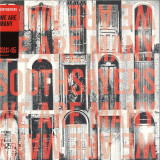
South London-based band Soothsayers are set to release their ninth studio album 'We Are Many'. Held together by heavy basslines, solid grooves, and socially and politically charged lyrics; the album takes the listener into different sonic spaces with elements of dub, Afrobeat, improvisational jazz and electronica.
The initial steps in recording 'We Are Many' came in January 2019 when the band's founders - saxophonist Idris Rahman and trumpeter Robin Hopcraft - set out on a journey to Brazil. With executive production in the Sao Paulo studio by renowned music journalist and author David Katz, they hooked up with bass player and producer Victor Rice who they'd met sharing the bill at Freedom Sounds festival in Cologne, Germany a year earlier. Victor organised a session in Studio Traquitana, home of acclaimed Brazilian band Bixiga 70, and invited a selection of local musicians. Percussionist and singer Ligia Kamara contributed lyrics and melodies written in the studio, and drummer Bruno Buarque, guitarist Joao Erbetta and bassist Victor provided some solid, personality-driven input. Fresh and vital, what came out was a fascinating blend of Soothsayers' dub and Afrobeat mixed with distinctly Brazilian inflections.
After arriving back in the UK, Idris and Robin set about creating the remainder of the album in a different, yet complimentary way, and called on the services of Wu-Lu and Kwake at their The Room studio in South London. Things started to take shape very quickly, Wu-Lu and Kwake combining Soothsayers' music with electronic elements, while also referencing elements of the current UK jazz scene.
When lockdown hit in March 2020, there was still a lot of work to do in order to complete a full album and Robin and Idris set about working on tracks with their musicians remotely. Having time to consider the album as a whole, they found strong connections between the music recorded in Brazil and the tracks recorded in London and they set about fusing and combining these elements further into a satisfying whole.
UK based Sengalese singer Modou Toure was enlisted to guest on one track while percussionists Satin Singh and Maurizio Ravalico were engaged to help affirm a sound-world where Brazilian flavours, such as the low-end Surdo drum, were combined with sounds more readily associated with reggae and Afrobeat.
Soothsayers' three part vocal harmony is a defining factor in this album. With strong references to the vocal styles of reggae legends such as The Gladiators, Mighty Diamonds, Heptones, and Abyssinnians; it has benefited from the long-standing friendship between Robin, Idris and Julia Biel. Lyrics, melodies and harmonies were presented, discussed, explored and recorded at Idris' and Julia's home studio in Streatham in a relaxed and positive way, with concepts from social and political commentary turned into powerful songs.
Themes cover political observations of Trump and beyond alongside Brazil's president Bolsanaro (Rat Race), speaking out against increasing levels of violence from the Brazilian government towards its native and indigenous people (Love And Unity) and keeping hopeful despite the impending horrors of a no-deal Brexit (We Won't Lose Hope).
Elsewhere they discuss striving to create space for meditation and reflection against the background noise of 24/7 news and social media (Move In Silence), the daily grind (No Sacrifice) and workers' rights (Slave), while highlighting those that fall through the cracks in society and end up without a permanent address, what led to this and how close we all are from this happening (One Step Away).
'We Are Many' represents a positive and uplifting statement in the face of challenging times - the overriding force, power and positivity of the music to continue forward, pushing the boundaries of musical concepts into the future.
"Whilst heavy questions of life and death and the future of our species surround us all, music is a guide that can help us perceive the challenges in a different way - a guide that can help us towards a deep inner peace. If we listen, music can help light the way. We hope you will listen, and we hope you will experience the joy, meditative power and beauty in the connection of different musical cultures that was experienced in the creation of this album."
out of Stock
Last delivered 5 years ago available to reorder, subject to availability
Nahawa Doumbia's new album Kanawa concisely captures this current moment in Malian history. The singer, whose storied career spans more than four decades, reflects on the immigration crisis from the Malian perspective in the title of her new album Kanawa. Across eight songs recorded in Bamako with a band including traditional and modern instruments, Doumbia merges her early work that relied on a spare expression of her trademark didadi rhythm with the bombastic range of contemporary Malian pop. The beautifully complex musical accompaniment that results is courtesy of the large ensemble she pulled together with producer and arranger (and day one collaborator) N'gou Bagayoko. The band features two highly expressive Malian string instruments, the ngoni and the slightly smaller kamalé ngoni, as well as a variety of percussion, drum programming, karignan (a metal scraper) and acoustic and electric guitars. Doumbia's daughter, a celebrated singer with her own group and busy concert schedule, Doussou Bagayoko sings on "Adjorobena," a song about patience, tolerance and living in peace. Doumbia weaves together a roadmap of her psyche when it comes to the good and bad life has to offer. She talks about marriage and women leaving home to join another through the metaphor of a tree in the garden; she includes gunshot samples in the song "Foliwilen" to honor the bravery of hunters, soldiers and other courageous people; she uses a bird in "Djougoh" to talk about lazy people; and, in "Ndiagneko" she advises people to ignore critics, just do you. Mali has gone through an intense period of regional strife and terrorist incidents over the last ten years and Doumbia roots the album in tragic local concerns with deep global implications. "The meaning of Kanawa is so simple. We see our children trying to cross the ocean all the time. I said that many of our children die in the ocean and some of them die while crossing the Sahara. But I ask them why do they leave their country? They said that they leave because of the family situation or problems like poverty and unemployment. I ask them to stay and work in their country. I call on the UN and African leaders so that we can coordinate our efforts to find a solution, to create jobs for them so that young people stop leaving. That's why I chose it as the title of my album so that everybody can learn from it and also so that there is a reduction in the number of people emigrating. So that some will hear the message and stay home and grow the land. Leaving is not the only solution. My message is to help the youth find jobs."
out of Stock
Last delivered 5 years ago available to reorder, subject to availability
‘Giants of All Sizes’ was recorded at Hamburg’s Clouds Hill Studio, The Dairy in Brixton, 604 Studios in Vancouver and Blueprint Studios in Salford with additional recording taking place at various band member’s home studios spread across Manchester. As with their previous four studio albums, ‘Giants’ was produced and mixed by Craig Potter. Guests across the album include Jesca Hoop, The Plumedores and South London newcomer Chilli Chilton.
Given such bleak, if ultimately redeemed, subject matter, it is also, perversely, the most relaxed record which elbow have made in some time. On ‘Giants of All Sizes’, each band member extended their usual process of working on demos alone and followed their vision to its conclusion rather than, as Craig Potter puts it, ‘taking the edges off things to find compromise’. In tandem with this, they returned to playing live in the studio, encouraged to experiment with the banks of analogue equipment at Clouds Hill in Northern Germany, giving songs a looser, more live feel. The result is the most starkly dynamic record from the band in recent times, “Sonically unabashed”, as Guy would have it. Whilst album closer ‘Weightless’ has the gossamer melodies and communal harmonies for which the band have latterly been known, this album echoes earlier elbow work at times whilst also breaking new ground.
‘White Noise White Heat’ is motorik, metal machine soul driven by a vocal that is rage incarnate, ‘Doldrums’ mixes John Carpenter with The Plastic Ono Band to brilliantly disturbing effect and ‘On Deronda Road’ hitches stark bass beats and glitches to an ad-hoc choir. ‘Empires’ delivers dark resignation via an insidious melody and ‘Seven Veils’ continues the subversion by inverting the perception of elbow as a band for lovers into a band for haters, a double-barrelled fuck-you song par excellence. ‘The Delayed 3:15’ marries mariarchi guitars to jazz dynamics, Morricone via Buddy Rich, and ‘My Trouble’ is a clockwork, analogue shuffle housing a delicate melody that builds over the course of the song into a fragile monolith to the power of love.
Lead track, ‘Dexter & Sinister’, released on 10” ahead of the album, encapsulates the whole. A seven-minute musical journey that blends deep bass grooves, sudden keyboard stabs, dislocated piano and guitar runs and soul stylings then abruptly shifts gear, parts the storm clouds and takes wing, flying towards the heat of the sun. It is the soundtrack for these ‘hope free, faith free, charity free days’, a denial of the divine and a reconciliation, two songs in one song, two emotions for one emotion, human, fragile and brilliant like the album which it opens.
only 1 copy exists of this heavy melodic progressive concept lp valued in excess of £10,000. fresh from the incredible success of Rick Wakemans early concept lps (he drummed with Wakemans band) Barney and his ex band mates Warhorse made this sensational lost heavy prog lp as a promo acetate to get an official release, Barney wrote all the songs and sings. Musically complex it begins with a spoken intro and tells the tale of Koneg Son Of Odin, as he quests to find meaning and death in battle. Keyboards and guitar interweave, with further spoken interludes, and culminating in an epic prog workout featuring fluid soloing electric leads as Koneg dies on the battlefield and is taken by Valkyries to Valhalla. The original gold hand made cover is reproduced as a gatefold with sleevnotes by the actual Rick Wakeman. Barney James, an ex British Army Commando, and ex Gracious, Legend, and Warhorse, and actor in The Sweeney and Derek Jarmans Jubilee, is also now in Valhalla, and his lost lp is here Issued for the first time with the full permission of his two daughters.
“The Vale” is in immersive electronic album of dark soundtrack work. It’s the first of several Everyday Dust releases scheduled for Castles in Space in 2021.
Everyday Dust is RJ McConnell. Based in Scotland, RJ ditched piano lessons when he realised I had no interest in being an instrumentalist. Instead he wanted to create his own musical works from the ground up. He goes on, “I was much happier working my way through music theory books on my own and applying my learning to my own music. We had a little home studio when I was a child. My Dad was also a musician and was involved in local amateur theatre where he prepared and operated all the sound cues on reel to reel tape. So from an early age I was messing around with tape machines, making tape loops and recording music. For years I tried to make the most interesting tones I could from a Yamaha home keyboard by passing it through my Dad’s guitar pedals, or recording to tape and playing it back at different speeds etc. My first proper synth was the Roland SH101.” He went on to study music and sound for theatre and worked for many years as a theatre composer before branching into larger events and eventually film and documentary work.
The Vale story starts in 2018. RJ again, “I was brought in as composer for an independent horror short that was being filmed in Istanbul. The film was a vampire movie, very atmospheric and beautifully shot. I was aware of being a Scottish composer on a Turkish film and therefore didn’t want to attempt in any way to make anything that sounded traditionally Turkish. I wanted to represent the idea of these ancient beings who had existed in one of the oldest cities in the world for centuries. I wondered how I could imply this “ancient” world with the instruments I had to hand. I recorded various old metal whistles, which were slowed right down to become eerie arcane horn blasts that sounded like they had come from another time. I also recorded lots of melodica, which was again slowed down to sound like wheezing old harmonium drones. I spent another day recording inside an old piano, plucking individual strings and also hammering them percussively with wooden beaters. Using synthesizers and effects as the “glue” to bring these sounds together I started to work on the cues for the film. I had scored most of the film by the time I heard it was being cancelled. The concept and story had been taken over by a streaming site who wanted to make it into a series - with a drastically different tone and style.
“Later that same year I had worked on a project that incorporated the folklore of a celtic water sprite who kept the waterfalls and streams running smoothly so they could turn the mills of the local village. In return the villagers would bring the water sprite bannocks (Scottish flatbreads) each day. I started to daydream about a darker, Lovecraftian twist on this story. Some Ancient One dwelling in the forests and controlling the water - the very life essence of the village - in return for offerings of the soul. The concept was filed away in the back of my mind for some months.
“The following year I was on a flight to visit my friend in Bodrum. He had been the producer and editor on the original disbanded Vampire film, and I found myself thinking about the project again. I wondered if the sound cue files were still on my laptop, which they were. It had been a year since I’d even heard them. Hearing the eldritch folk-tinged sounds of the whistles and plucked strings my mind instantly returned to the idea of the Lovecraftian folk horror story. I started jotting down notes and musical ideas and by the time I landed in Bodrum I already had the album title - The Vale. Having the album concept and prototype ideas to work with was a huge head start in making the album. Although all of the original cues were so dramatically developed and transformed that they really just served as the initial clay on the wheel.
“I used a Doepfer A100 modular synth to create the animalistic yelps, conches and horns that were improvised over the original cues as a response to the arcane “folk” world of the acoustic instruments. This half-acoustic half-modular landscape was the sonic scene-setter I needed to move onto the composition and musical journey of the album. I composed and developed most of the musical parts on an Oberheim Matrix 6 synthesizer. However all the percussion, rhythmic sequences and ornamental synth sounds were created from improvised modular sessions multitrack recorded. A lot of editing later, the soundtrack to the movie in my mind was finally there.
St Leonard’s premier manipulator of drones, loops and echoes delivers his most buzzed out, kosmische and beat driven work to date in a deluxe white vinyl album release for Castles in Space.
Here, Kieran explains the genesis and production of his masterwork:
“Eternal Return was unusual for me in that I actually set out to make an album, rather than find myself with a set of tunes that evolved into a project.
The “Eternal Return” is a concept I have been inspired by before. However it clicked with me in a more profound way recently. Far from seeing the prospect of living life over, unknowingly, on an endless loop as depressing, I suddenly felt amazing comfort in the theory. The Stoic emperor Marcus Aurelius said, “Waste no more time arguing about what a good man should be. Be one.” Far from being trapped in the loop I am elated to feel that it's simply about living the best life you can. One that you wouldn't fear having to live again.
To place the album in context against this newly realised perception, I think of the Side One as the battle to get to that realisation and enlightenment and Side Two represents the acceptance and the decision on how to proceed. The turning point is from thinking about the things I love most and what I would want to experience over and over again. I hope it is an uplifting listening experience. As it happens, the album originally had a darker ending. I think I actually learned a bit about my point of view during the process. There are drums, which wouldn’t often feature in my music (there are in fact more drums on this LP than in my combined output over the last 8 years) and the pieces are noticeably shorter, more focussed and concise than my usual longer form work.
Musically this album is probably the least clearly influenced by anything I regularly listened to. The main outcome was wanting to challenge myself and to add whatever the pieces needed and go with that. I think I was also probably pushed on by the wealth of amazing music being made by my peers across Bandcamp and social media. 2020 was an incredible year in this particular sphere of electronic music. The album was made as I started to transition from a semi-modular to a modular synth set up. I think that this was a key driving force, since a lot of the time I didn’t know exactly what I was doing. It is nice to be surprised by what you’re creating.
Finally, whilst this is in no way a “lockdown album”, the period of time in which much of it was recorded definitely had a bearing on how it sounds. For one thing I spent a lot more time around my studio space when working from home. In keeping with the album's theme, the lockdown also helped consolidate my feelings on what is important in life and what isn’t. One piece was in fact sketched out as a first draft while I sat on mute during a Zoom meeting.
• Demon Records presents Dr. Hook ‘Gold’, the only Dr. Hook compilation you’ll ever need.
• Formed in New Jersey in 1968, Dr. Hook were an American rock band who found international success and became a household name throughout the 70’s and 80’s. Led by Dennis Locorriere and Ray Sawyer, the spirited band of singers and musicians became known for their wide ranging body of work which includes the iconic tongue in cheek ‘The Cover of ‘Rolling Stone’’, the powerfully emotional ‘Carry Me, Carrie’ and the nightlife romance of ‘Sexy Eyes’.
• The group achieved an impressive 6 UK Top 10 singles including ‘Sylvia’s Mother’, ‘A Little Bit More’ and the #1 hit ‘When You’re In Love With A Beautiful Woman’.
• This new compilation brings 18 of Dr. Hook’s classic tracks together, including songs from across their entire career.
South London-based band Soothsayers are set to release their ninth studio album 'We Are Many'. Held together by heavy basslines, solid grooves, and socially and politically charged lyrics; the album takes the listener into different sonic spaces with elements of dub, Afrobeat, improvisational jazz and electronica.
The initial steps in recording 'We Are Many' came in January 2019 when the band's founders - saxophonist Idris Rahman and trumpeter Robin Hopcraft - set out on a journey to Brazil. With executive production in the Sao Paulo studio by renowned music journalist and author David Katz, they hooked up with bass player and producer Victor Rice who they'd met sharing the bill at Freedom Sounds festival in Cologne, Germany a year earlier. Victor organised a session in Studio Traquitana, home of acclaimed Brazilian band Bixiga 70, and invited a selection of local musicians. Percussionist and singer Ligia Kamara contributed lyrics and melodies written in the studio, and drummer Bruno Buarque, guitarist Joao Erbetta and bassist Victor provided some solid, personality-driven input. Fresh and vital, what came out was a fascinating blend of Soothsayers' dub and Afrobeat mixed with distinctly Brazilian inflections.
After arriving back in the UK, Idris and Robin set about creating the remainder of the album in a different, yet complimentary way, and called on the services of Wu-Lu and Kwake at their The Room studio in South London. Things started to take shape very quickly, Wu-Lu and Kwake combining Soothsayers' music with electronic elements, while also referencing elements of the current UK jazz scene.
When lockdown hit in March 2020, there was still a lot of work to do in order to complete a full album and Robin and Idris set about working on tracks with their musicians remotely. Having time to consider the album as a whole, they found strong connections between the music recorded in Brazil and the tracks recorded in London and they set about fusing and combining these elements further into a satisfying whole.
UK based Sengalese singer Modou Toure was enlisted to guest on one track while percussionists Satin Singh and Maurizio Ravalico were engaged to help affirm a sound-world where Brazilian flavours, such as the low-end Surdo drum, were combined with sounds more readily associated with reggae and Afrobeat.
Soothsayers' three part vocal harmony is a defining factor in this album. With strong references to the vocal styles of reggae legends such as The Gladiators, Mighty Diamonds, Heptones, and Abyssinnians; it has benefited from the long-standing friendship between Robin, Idris and Julia Biel. Lyrics, melodies and harmonies were presented, discussed, explored and recorded at Idris' and Julia's home studio in Streatham in a relaxed and positive way, with concepts from social and political commentary turned into powerful songs.
Themes cover political observations of Trump and beyond alongside Brazil's president Bolsanaro (Rat Race), speaking out against increasing levels of violence from the Brazilian government towards its native and indigenous people (Love And Unity) and keeping hopeful despite the impending horrors of a no-deal Brexit (We Won't Lose Hope).
Elsewhere they discuss striving to create space for meditation and reflection against the background noise of 24/7 news and social media (Move In Silence), the daily grind (No Sacrifice) and workers' rights (Slave), while highlighting those that fall through the cracks in society and end up without a permanent address, what led to this and how close we all are from this happening (One Step Away).
'We Are Many' represents a positive and uplifting statement in the face of challenging times - the overriding force, power and positivity of the music to continue forward, pushing the boundaries of musical concepts into the future.
"Whilst heavy questions of life and death and the future of our species surround us all, music is a guide that can help us perceive the challenges in a different way - a guide that can help us towards a deep inner peace. If we listen, music can help light the way. We hope you will listen, and we hope you will experience the joy, meditative power and beauty in the connection of different musical cultures that was experienced in the creation of this album."