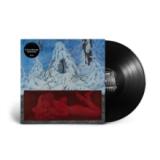
MOVIE MOVIE is based out of NYC and features members of the bands TWIN GUNS, THE ELECTRIC MESS, and THE ABOVE. The band combine elements of power pop, '60s, '70s and '80s garage, classic, alternative and glam rock, but they have a sound all their own, with a focus on strong hooks and melodic vocals. "After Hours" is a 1980s New Wave comedy about a party girl on the downtown scene whose claim to fame is a bit part in a popular movie, where she uttered the immortal line, "Won't you look at the time," but she wouldn't give you the time. "Wasting Time" is an existential road picture in the mind of the protagonist, set across heartland America and a sunny beach in the Caribbean, but in reality he never leaves the girl, or town, and in the end ponders his wasted years. "First Love (Never Dies)" is a romantic drama that spans decades, about an aging rocker who reflects on his first teenage love, a girl he has never stopped thinking about. He tries to track her down and reconnect after all these years, only to find she is now married to his old childhood rival.
"Photograph" is a future arthouse hit, shot in stark black white, about the disintegration of a relationship seen from two different perspectives, captured in an old photograph, in which the truth is revealed in the looks on their faces. "Coming Attractions" is MOVIE MOVIE's second EP, after their debut six track EP, "Now Playing" (2022), on Ghost Highway/ KOTJ Records, and they have two full LPs, "Storyboards" (2023), and "In 4-D!" (2024), both Topsy-Turvy Records.
APORIAMOR noun 1. The death of love’s contradiction.
| “Embody APORIAMOR”
Etymology
aporia-: an irresolvable internal contradiction or logical disjunction in a text, argument, or theory. from Greek aporos ‘impassable’, from a- ‘without’ + poros ‘passage’
-amor: love. Sentimiento intenso del ser humano que, partiendo de su propia insuficiencia, necesita y busca el encuentro y unión con otro ser. Del latín amor.
-mor: latin for death.
APORIAMOR explores the affective ontological and organic processes of love and lust in the turmoil of an urban existence, through the female lens. It expresses the process of strengthening through heartbreak in its various forms.
With her debut EP The Art of the Concrete, elsas knew that by giving that name to a record which was ironically expansive and experimental, she would be calling for a distilled and clearer path further down the line. This is what she’s been incorporating into the sonic world of this new EP, APORIAMOR, signifying the birth of a more matured and distilled version of herself as an artist.
With APORIAMOR (“the death of love’s contradiction”) elsas conveys a personal process of healing in the romantic space. Through different experiences of heartbreak, elsas builds a language - a coping mechanism attached to its subsequent artistic expression – that isn’t founded on hardness or a closing-off, but instead, on a playful but profound reckoning, and learning of self-worth.
APORIAMOR embraces the complexities of being a lover-girl: of moving through life with an open heart. It celebrates the clarity, sweet hindsight, and detachment that come from processing emotion. APORIAMOR is both an affirmation and a release.
elsas makes canonical blends with a forward boundary-bending vision. Her sound in this record is naturally referential of both her Mediterranean heritage and UK alternative music — intrinsic parts of her lived experience. She has had the opportunity to collaborate with artists she deeply admires, each exchange enriching her creative world.
The experience of working hand-in-hand with Sampha for the last 3 years and ongoingly has been a core of her evolution as an artist. She has also collaborated in many forms with artists like Florence + the Machine, Little Simz, Jordan Rakei, Jockstrap, Obongjayar, Black Country New Road, Genevieve Artadi (KNOWER) and Duval Timothy. Additionally, her ongoing work with the Idrîsî Ensemble, of which she is a core member, continues to inform her artistic depth.
The making of this largely self-produced record unfolded over four years — “it’s a well-kneaded dough,” she says. These songs evolved through exposure to multiple environments: from early writing sessions in her childhood home in the Spanish countryside, to stages across the U.S. while on tour supporting Sampha.
Experimentation and modulation are an intrinsic part of elsas’ method, conceiving songs as organisms that respond to their surroundings. Collaborators on this collection of songs include Shrink, Will Lister, Gabriel Gifford, Ethan P. Flynn and more. The record was mixed by David Wrench (a long-time supporter of elsas’) and Nathan Boddy, and mastered by Matt Colton.
With APORIAMOR, elsas creates a visual world from the fabulation of the past, as an act of playful historical revisionism in which she embeds herself as both subject and storyteller. The songs function like an archive of her experiences across various years, each one unearthed and presented as some sort of archaeological artifact. Through this body of work, elsas begins to conceptualize herself as a legacy artist: one who honors the archive of her own becoming while emerging as a distinct and resonant voice in today’s musical landscape.
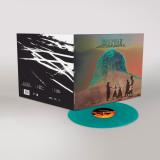
Chris Liberator & Sterling Moss have produced some classics of the Acid Techno genre and now hope to add to that roster with this their first LP 'Culture Of Acid' on the seminal Stay Up Forever label. 8 banging tracks covering a multitude of Acid Techno/Techno styles including their collaboration with punk performing arts legend Doghouse on 'The Freaks' which has already been causing havoc on underground dancefloors.
out of Stock
Last delivered 5 months ago available to reorder, subject to availability
Sabine McCalla creates her own version of multi-cultural American roots music. It's a sound that crosses borderlines, pulling everything from Brazilian samba to southern soul to British rock & roll into its orbit. On Don't Call Me Baby, Sabine filters those influences through the lens of her Haitian heritage and her music community of New Orleans, creating a debut album that's every bit as multi-faceted as the woman who wrote its songs.
The daughter of first-generation Haitian immigrants, Sabine was raised in the suburbs of New York City, where she grew up alongside her sister Leyla McCalla (Sons of Our Native Daughters, Carolina Chocolate Drops). Introduced to chamber music at an early age, Sabine began playing classical violin in orchestras, music camps, and conservatory classes as an 8 year old. Back at home, she filled her head with Motown classics, girl group hits, Bob Marley albums, Beatles standards, and Haitian folk music. It was a wide constellation of sound that spanned more than a half century, and Sabine made it all her own, drawn to the connections binding everything together.
Don't Call Me Baby shines a light on those connections. The follow-up to her critically-acclaimed Folk EP, whose pre-war sound earned her a slot at the Newport Folk Festival in 2019, the album transcends genre and generation, creating a raw, rich mix of country, R&B, folk, and soul that exists on its own timeline. Co-produced by Sam Doores of the Deslondes and featuring a cast of New Orleans’ most spirited and gifted (including guest vocals from Riley Downing, Leyla McCalla, and The Lostines), Sabine McCalla reaches beyond her beloved New Orleans Americana scene with Don't Call Me Baby, building a bridge between the world-spanning sounds that have captured her attention.
From the opening notes – arriving as if in mid-air – to its final, cheerful burblings, Sean Mac Erlaine and Caoimhín Ó Raghallaigh’s Old Segotia is an album about friendship: both musical and human, the product of two distinctive musicians visiting each other’s worlds with a sense of veneration, and a sense of joyful wonder.
Here, Mac Erlaine (This is How We Fly, Quiet Music Ensemble) and Ó Raghallaigh (The Gloaming, This is How We Fly) meet on common ground developed over 20 years of playing together, with Mac Erlaine’s musical language rooted in jazz and sonic experimentation, and Ó Raghallaigh emerging from an Irish traditional music that he has shaped and reshaped in a deeply personal way.
In this place, Mac Erlaine and Ó Raghallaigh’s music is profoundly integrated and emotionally textured: at times bursting with explosive energy, at times almost sighing into life, but always searching. Here are the touching unison duets of ‘Cantandor’, the lyrical wanderings of ‘Swallow Dive’, or the flirtations with finding a groove in ‘Reverse Burst’.
The palette of instruments speaks to the album’s feeling of abundance, with Mac Erlaine performing on clarinets, chalumeau d’amore, three different flutes, car hooter, percussion, live electronics, Wurlitzer, synthesiser, vocals and alto saxophone; and with Ó Raghallaigh bringing his signature hardanger d’amore sound plus a turn on the flute and live electronics, too.
With the title echoing a well-worn Dublinese expression for “friend”, Old Segotia plays out with ‘Oiche Crua Sna Sleibhte’ (A Hard Night in the Mountains), with ornithologist Seán Ronayne’s field recordings of birdsong rising out of the musicians’ playful explorations, offering a taste of life echoing music, echoing life.
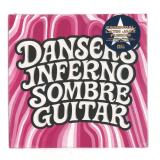
We’re back on PANORAMA Records with a stone cold cult classic from Danser’s Inferno, lifting “Sombre Guitar” off their elusive 1973 LP Creation One and giving it a fresh run on 7inch. Long treasured by jazz heads and deep-digging DJs, it’s one of those records that has been in the bags of discerning music lovers for years, moving dancers.
Musically, “Sombre Guitar” sits in that sweet spot between Latin jazz and jazz-funk – rolling congas, driving kit, tight horn lines and that drifting, melodic guitar figure that pulls everything together. It’s lively and percussive enough for the dancefloor, but still has that slightly cinematic, reflective feel that rewards proper listening too. A true jazz dance cut that works just as well at home as it does in a warm-up or end-of-night moment.
This PANORAMA edition brings it back into reach, cut loud and clear so it can do what it was always meant to do: move a room.
As ever, PANORAMA Records is about unearthing and reintroducing rare and essential music to new ears. From German jazz and Brazilian fusion to Latin-leaning grooves like this, the focus is on records with real soul and longevity, remastered with care and treated with the respect they deserve.
out of Stock
Last delivered 7 months ago available to reorder, subject to availability
The late pedal-steel guitarist Susan Alcorn leaves a final surprise hinting at new directions left underexplored on her collaboration with Nomad War Machine, the improvising metal duo of drummer Julius Masri and guitarist James Reichard. Their death-metal-influenced pummel adds new fire to her molten flow across a suite of improvised tracks that show off the vast range and simpatico of the trio. Julius Masri and James Reichard of Nomad War Machine: “An unexpected opportunity arose out of a catching-up conversation where Susan had revealed a recent fascination with death metal, confessing, ‘I’m 70 years old—I think about death!’ She had learned a couple of Arch Enemy songs on her pedal steel, particularly compelled by their frontwoman’s intensity and vigor as a performer. Voicing an appreciation for the hook-oriented sound of Swedish death metal made sense for a melodic thinker whose roots as veteran pedal steel player reached into the Texan Western swing circuit in the ’60s and ’70s. For her, ever the explorer, metal was a new, appealing point of departure into fresh musical territory. When she expressed an interest in playing with Nomad War Machine, it felt like there was a whole world of shared or complementary interests to explore.” Though known for her fluency in jazz, country, and free improvisation, Alcorn had also studied Arabic, the oud, and maqam, with all holding a deep curiosity for her. Pre-’70s country & western music had also been a lifelong presence for both members Nomad War Machine. Masri, a Lebanese free-jazz and metal drummer, and devoted fan of Texas swing legends like Speedy West, Jimmy Bryant, Leon Rhodes, and Joe Maphis, was also steeped in Arabic music traditions. James Reichard, before coming to “freely” improvised metal, xenharmonic music, and non-Western tuning systems, had grown up being subjected to countless singalongs to numerous pre-’70s country records, entranced by the pedal steel.
With her highly anticipated CiCi (Deluxe) album, Grammy Award-winning icon Ciara steps fully into her power; reclaiming her narrative with clarity, confidence, and the most dynamic soundscape of her career. A celebration of freedom, femininity, and evolution, CiCi is more than a return — it’s a full-on reinvention.
The Deluxe Edition expands her sonic universe even further — introducing four new songs that fuse sensuality, rhythm, and empowerment with global influences—featuring standout singles like the globally acclaimed “Low” (with Diamond Platnumz), “Ecstasy” (featuring Normani & Teyana Taylor), “How We Roll” (with Chris Brown), amongst other hits, the project seamlessly blends Ciara’s R&B and pop legacy with futuristic production, cross-continental energy, and unfiltered storytelling. Among them, “Low” stands as a defining moment — an electrifying fusion of Afrobeats and R&B that bridges Atlanta and East Africa in one hypnotic groove. The visual, rich with dance-floor heat and unapologetic sensuality, showcases Ciara’s signature choreography and global reach, earning millions of views and sparking an international dance challenge.
For over two decades, Ciara has defined what it means to be a cultural force — from trendsetting choreography to genre-shaping hits. With CiCi (Deluxe), she bridges generations, reignites her core, and welcomes a new wave of fans into her world. It’s bold. It’s intimate. It’s CiCi. Behind the scenes, CiCi also marks a powerful chapter in Ciara’s entrepreneurial journey. Through her self-founded, female-led Beauty Marks Entertainment, Ciara has created a home for her music, media, film, fashion, tech, and philanthropic ventures. BME empowers her to own her narrative, lead with vision, and build legacy — on her terms.
For the first time, all the 1978 recording sessions of Lino Capra Vaccina's legendary Antico Adagio - including Frammenti da Antico Adagio and Echi Armonici da Antico Adagio - collected in one definitive deluxe edition. Minimalism, and so much more. Sheets of resonance, stunning harmonic interplay, intricate rhythms rising as one. Sidelong works of pulsing, hypnotic, ritualistic drone built from vibraphones, marimbas, gongs, bells, and cymbals, threaded by the sustained vocal tones of Juri Camisasca and Dana Matus. A trance-inducing, meditative, cosmic world of sonic interplay - the world beyond, joined with that which lays within.
Before an aberrant idea of progress ludicrously sped up our daily lives, even in hectic Milan it was possible to "play slowly" - with no pressure, simply following the path your art was showing you. This music moves between modal fascinations, ritual evocations, and states of hypnotic trance, evoking the acoustic environment of Tibetan and Zen Buddhist ceremonies and the temporal structures of Noh theatre, from which Vaccina took the name of his original label, Nō. Now, fittingly, this complete collection appears on Ubi Kū, the label of the Italian Buddhist Union.
Lino Vaccina (1953) first gained note as a member of Aktuala, creating a hybrid of rock, avant-garde, and ancient musics while incorporating sonic traditions from across the globe. After leaving in 1974, he studied at Milano's Civica Scuola di Musica, collaborating with Franco Battiato and Juri Camisasca, and forming Telaio Magnetico in 1975. In 1978 he self-released Antico Adagio in a tiny edition and wouldn't be heard from again until 1992. From 1979 to 1985 he was percussionist with the Orchestra of Teatro alla Scala under maestros such as Abbado and Ozawa. His career has been marked by an incredibly high bar of quality and a tragically slim recorded output - a rigorous and sensual language fusing Oriental, Mediterranean, and African influences with ritual elements and a cosmic sense of time.
As Massimo Torrigiani writes: "Lino Vaccina's music captivates through its internal coherence and its ability to generate states of suspension and deep listening - through undulations, small melodic fragments, dialogues between acoustic instruments and resonances that seem to evoke a phantom orchestra. An example of personal exploration, discipline and openness that speaks across time to anyone willing to be drawn into its sound."
Frammenti da Antico Adagio and Echi Armonici da Antico Adagio contain material from the original sessions, restored and issued by Die Schachtel in 2014 and 2017. The new masters, prepared by Giuseppe Ielasi, are based on those restorations and the original material. The package includes previously unpublished photographs from the May 1978 sessions and liner notes by Mauro Radice in Italian, English, and French. Cover art by Dana Matus. Printed by Legno, Milano & Mother Tongue, Verona.
Personnel: Lino Capra Vaccina (vibraphone, marimba, tablas, wooden drums, darbuka, cymbals, gong, metal sheets, bells, bass drum, tom, snare drum, piano, voice), Dana Matus (voice, percussion, cetra), Juri Camisasca (voice), Mario Garuti (violin), Roberto Mazza (oboe). Original production by Massimo Villa & Lino Vaccina with Piero Cannizzaro. Recorded May 1978 at Circle Studios, Milano.
The heights of the Italian avant-garde, at their very best.
Born in East London to Jamaican parents, 28 year old Tiana Major9 was immersed in music from an early age, influenced by jazz, praise and worship, and the neo-soul sounds of Erykah Badu and Lauryn Hill. Their journey into music saw debut releases establishing their soulful voice as one of the UK's most enticing, featuring with Stormzy, Bryson Tiller, Smino and Unknown T, support slots with Victoria Monet, Jazmine Sullivan and Adele as well as a GRAMMY nomination for "Collide" from the Queen & Slim soundtrack. After two years of self-discovery, Tiana is set to release their long-awaited debut album in 2025; a rich tapestry of love, loss, and growth, recorded in LA, the UK, and Jamaica, filled with luxurious melodies, featherlight floating production and raw, grounded storytelling. As a queer Black femme artist, Tiana reclaims the term "diva" on the project, embracing it with pride in the spirit of icons like Beyoncé and Whitney Houston, and approaches this next chapter with a focus on classic artistry, longevity, and self-expression
Interdimensional exotica in the form of eccentric space jazz, sonic experimentation, Afro-centric rhythms, and ostinato electronic freakouts! Includes three platters worth of tunes pressed on orange vinyl, all curated by Irwin Chusid - who also co-wrote the liners with Brother Cleve - for all those with cocktail in hand and ready for a slice of Ra’s jetpack jetset recorded legacy!
We Mean It, Man! If you're receiving this message, you are a writerly/music/culture person who wants to know more about the new Gogol Bordello album the band just unleashed. It's called We Mean It, Man! And it's out on February 13, 2026 via Casa Gogol Records. Gogol frontman and spiritual figurehead Eugene Hutz calls it the band's "post punk revenge." It's a fitting description. We Mean It, Man! #was co-produced by Nick Launay, whose 40+ year run of musical partners reads like the Great Canon of avant-teasing rock: Idles, Nick Cave and The Bad Seeds, Public Image Limited, Gang Of Four, the Yeah Yeah Yeahs (he did the one with "Heads Will Roll" on it. Dude is the Quincy Jones of the underground). And Adam "Atom" Greenspan (Nick Cave, Idles, Refused, Amyl and The Sniffers).
Wishbone Ash's self-titled debut album, released in 1970, introduced a distinctive sound that would become highly influential in British rock. This re-issue faithfully replicates the original UK release in it's gatefold sleeve and is pressed on 180gm vinyl. Blending blues-rock, folk melodies, and emerging progressive elements, the album is defined by the bands signature twin-lead guitar approach, with Andy Powell and Ted Turner weaving melodic, harmonized lines rather than relying on a single dominant lead. Tracks like Blind Eye and Queen Of Torture balance hard-edged riffs with spacious, reflective passages, while acoustic moments add a pastoral, almost medieval atmosphere. The rhythm section, understated yet precise, allows the guitars to breathe and develop organically. Rather than chasing commercial immediacy, the album favours mood, texture, and musical interplay, giving it a thoughtful, exploratory character. As a debut, Wishbone Ash feels confident and forward-looking, laying the groundwork for the bands later classics and helping to shape the twin-guitar sound later adopted by countless rock and metal acts.
The album begins with the title track (Blossom) a light and immediate song composed by Besson. Also composed by Besson are 'Kyoto dans la brume', inspired by a stay in Japan's imperial city, and 'La Course', originally written for three slapstick short films by Fatty Arbuckle starring Buster Keaton. Suarez's composition ' Sans laisser d'adresse' , was initially written for a stage play titled ' Ici Nougaro' , and his ' Le jour J a l'heure H' for a film by director Jean- Henri Meunier. 'Les Tuiles Bleues' is a nod to Suarez's late friend, Malagasy accordionist and singer, Regis Gizavo.
There are also three covers on the album, 'Answer Me' by Gerhard Winkler and Fred Rauch, a composition recorded by Keith Jarrett during his 2016 European tour; Besson cites Jarrett as a major influence. There is also Carla Bley's ' Ida Lupino' and Pat Metheny and Lyle Mays' ' Au Lait'. These and their own compositions result is Blossom' ', a highly accomplished album on which trumpet and accordion shine in equal measure.
Tilaye Gebre is one of Ethiopia’s most soulful saxophone giants, with a musical legacy that’s hard to surpass. A founding member of the Equators, later renamed the Dahlak Band, he was a key figure in Ethiopia’s vibrant hotel music scene and a sought-after musician and arranger for artists like Aster Aweke, Mahmoud Ahmed, Tilahun Gessesse, and Muluken Melesse.
Tilaye — still going strong — was at the epicenter of the Ethiopian music scene during one of the most turbulent periods in the country’s history. Tilaye’s musical trajectory, regardless of the forms it has taken over the decades, is simply ceaseless. The road to a musical career spanning six decades started out winding, and the first steps came almost as a fluke.
With the Dahlak Band, Tilaye had managed to secure a musical residency at the legendary Ghion Hotel, where they honed their skills and developed their musical expression to unparalleled levels. From the late sixties onwards, Dahlak Band lit up Addis Ababa with a mixture of James Brown and Wilson Pickett tunes, rhythm and blues, soul, funk, and the sound of the disco era — mixed with modern Ethiopian styles — serving up majestic concoctions with full-range instrumentation, featuring trumpet, keyboard, saxophone, bass, drums, and guitar. Through their hotel sessions, Tilaye developed further as an arranger, arranging fellow band member Muluken Melesse’s first solo album, Muluken Melesse with the Dahlak Band (Kaifa Records – LPKF 39), recorded during the turbulent years of 1975–1976, following the fall of Haile Selassie. Everything was in flux in this transitional period, but a constant was how Tilaye stood in the spotlight. On that record, there’s a loose vibe to the soundscape that lets Tilaye’s skills shine, while all the other musical contributions coalesce into a slowly cooking atmosphere where the groove at times fluctuates into psychedelic territory, making the music stand out from most contemporaries.
Most of their recorded output came from one-take live cassette recordings at the Ghion, or from music shops at that time — one microphone at the front, hit record: no EQ, no reverb, just some delay. Some of the Dahlak Band’s releases featured Tilaye as frontman, such as Tilaye’s Saxophone with the Dahlak Band from the late 1970s — typical of a rare groove on the Ethiopian scene — with excursions into reggae territory, including the band’s characteristic sound featuring Tilaye Gebre (tenor and alto saxophone), Dawit Yifru (organ), David Kassa (electric guitar), Shimelis Beyene (trumpet), Moges Habte (tenor saxophone), Abera Feyissa (bass guitar), Tesfaye Tessema (drums), and Muluken Melesse (cowbell). The Dahlak Band’s output was so prodigious that they simply couldn’t be pigeonholed.
No saxophonist in Ethiopia influenced the sound of popular music more than Tilaye in the 1970s, yet his recordings have been hard to come by for ages, which has meant that newcomers to the scene have gems to uncover in retrospect. Arguably, Tilaye shifted gears when he relocated to the U.S. to such an extent that his musicianship became even more renowned, accompanying the greatest of his contemporaries internationally. Tilaye is one of Ethiopia’s all-time greats, with a musical legacy — both as musician and arranger — that’s hard to surpass. It’s a wonder to be able to enjoy a recording like this half a century later.
out of Stock
Last delivered 3 days ago available to reorder, subject to availability
From the heart of Tamanrasset in South Algeria, Imarhan transcend Tuareg tradition, weaving hypnotic synths into desert blues. The result is a timeless work—deeply respectful of their roots, yet alive with a stirring sense of modernity.
ESSAM is the band’s fourth album, recorded with the same core lineup, but marks a significant shift in their sound and approach. Musically, it marks a departure from the rocky, bluesy, psychedelic Tuareg guitar-driven sound influenced by Tinariwen’s heritage — moving toward something more open, modern, and exploratory.
For the first time, their long-time sound engineer Maxime Kosinetz stepped in as producer. He travelled to Tamanrasset with Emile Papandreou (of the French duo UTO), a multi-instrumentalist who introduced electronic elements by sampling live instruments and reprocessing them in real time with a modular synthesizer — subtly reshaping the band's sonic identity.
The album was recorded mostly live, in one big room at Aboogi Studio — the band’s own rehearsal and recording space in Tamanrasset. The studio, a converted concert hall, has become a kind of cultural hub for the local youth. Friends dropped by during the sessions to contribute handclaps, vocals, and just be part of the energy. It’s a space where people gather, hang out, play dominoes, smoke chicha — a rare communal spot in a city that doesn’t offer many for young people, somewhat like a youth and community center.
This context — the creative shift, the live recording process, the atmosphere around Aboogi — might be interesting threads to explore in the conversation.
Story Of The Year haben seit ihrem Debütalbum »Page Avenue« – einem der ersten Alben dieser Art, das sich 2003 eine Million Mal verkaufte – die Post-Hardcore-Szene maßgeblich geprägt, und das Quartett aus St. Louis ist im Laufe der Jahre nur noch beeindruckender geworden. Fans haben die Band auf Tour mit Linkin Park, My Chemical Romance und Deftones gesehen, sowie bei ihren Auftritten auf der Warped Tour und beim Festival When We Were Young und vielen anderen.
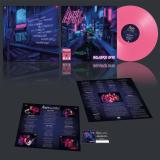
RENO, the debut album from Red Leather, is a scorched-earth confession wrapped in the swagger of classic rock and the soul of Americana. Written in the aftermath of addiction, heartbreak, and self-reckoning, it’s an unflinching look at what it means to burn your life down and start over. Across its 14 tracks, Red Leather howls through desert nights and neon cityscapes, blending grit and grace in equal measure. Songs like “Deathwish,” “Burn in Hell,” and “The Only Time It Rains in Hollywood” are raw, cinematic, and deeply human—each one a snapshot of pain, defiance, and redemption. Equal parts road trip and resurrection, RENO cements Red Leather as one of the most compelling new voices in modern rock. 1xLP, Single Pocket Jacket, Pressed on Translucent Red Vinyl
The beautiful new world that master bassist Isao Suzuki built with the support of a diverse group of musicians finally returns to life after nearly 50 years!
With his deep musical insight and collaboration among some of Japan’s finest jazz artists, Isao Suzuki created a work of timeless beauty that now resonates
once again in the modern era.
Bass: Takashi Mizuhashi, Teruo Nakamura
Drums: Bruno Carr
Piano, Electric Piano: Herbie Hancock
Recorded on February 22, 1977, in New York, this rare session captures Japan’s proud bassist Takashi Mizuhashi performing alongside Herbie Hancock.
Throughout the album, Mizuhashi’s deeply resonant bass tone and melodious phrasing shine, making this a quintessential “international” Japanese jazz classic.
Shake Stew ist mehr als eine Band - sie ist ein Ereignis. Seit ihrer Gründung durch Bassist und Komponist Lukas Kranzelbinder umweht die Formation ein Hauch von Magie und Energie, der sich live in eine hypnotische Kraft verwandelt. Zwei Schlagzeuge, zwei Bässe und drei Bläser erzeugen einen Sound, der zwischen tranceartigen Basslinien, eruptiven Grooves und fragilen Klanggebilden oszilliert. Die Jury des Preises der deutschen Schallplattenkritik sprach von "etwas Kultischem", das den Jazz bereichert, während MOJO begeistert: "Shake Stew twists, blisters and burns like a fevered dream!" Ob im Club oder im Wiener Konzerthaus - die Band zieht alle in ihren Bann. Mit dem Jubiläumsprojekt TEN ONE TWO öffnet sich Shake Stew noch weiter: neue Klangfarben, freie Improvisationen, Kooperationen und eine Besetzung, die mit Yvonne Moriel eine aufregende Stimme integriert. Nach zehn Jahren, zahllosen Konzerten und internationalen Auszeichnungen ist klar: Shake Stew definiert Jazz als lebendige Kunstform - kompromisslos, visionär und voller Dynamit.
After decades deep in the game, few names carry the same weight as D.I.T.C. veteran O.C. and East New York’s own PF Cuttin, the DJ and producer behind countless underground classics. Long respected for their consistency and craftsmanship, the two finally joined forces for Opium — a nine-track masterclass that channels the essence of true-school hip-hop.
Originally released to remind heads of what the real sound of the streets was, Opium plays like a time capsule from the era of block parties, 40s, and cipher sessions on the corner — where bars mattered and the beats hit hard. PF Cuttin’s rugged, sample-driven production perfectly complements O.C.’s sharp lyricism and timeless flow, delivering a record that bridges nostalgia with enduring relevance.
Reissued in 2025 with the same iconic artwork by Scarful, this edition celebrates a collaboration that captures the raw soul of New York hip-hop — pure, uncut, and eternal.
Iconic hip-hop duo The High & Mighty, composed of rapper Mr. Eon and producer DJ Mighty Mi, make their long-awaited return with Sound of Market, their first studio album in over twenty years. The release marks a powerful comeback for one of underground hip-hop’s most celebrated duos — a project steeped in nostalgia, boom-bap grit, and the timeless energy of East Coast rap.
Named in honor of Sound of Market Street, the legendary Philadelphia record store that served as a hub for crate diggers, DJs, and hip-hop heads for decades, the album pays homage to the culture that shaped The High & Mighty’s sound and identity. Much like the store itself, the record celebrates deep cuts, rare finds, and the shared love of vinyl that connects generations of hip-hop fans.
Across 17 tracks, Sound of Market revives the duo’s trademark wit and sharp lyricism while showcasing an impressive lineup of collaborators, including Kool Keith, The Alchemist, Your Old Droog, Large Professor, O.C., Chubb Rock, King T, Skillz, and many more. The result is a cohesive, sample-driven experience that bridges the classic and contemporary — reaffirming The High & Mighty’s status as true architects of independent hip-hop.
From the opening anthem “Two Man Crew” and the surreal swagger of “Pinky Tuskadero” with Kool Keith, to the cinematic boom of “Mighty’s Big 5 (Live from The Palestra)”, the record moves effortlessly through sharp lyricism, layered production, and a shared reverence for the foundations of the genre. Sound of Market is both a return and a reminder — a record that feels timeless in its authenticity.
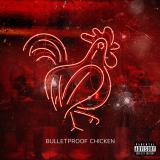
Two of the most respected voices in the underground connect for a heavyweight collaboration that's been a long time coming — BULLETPROOF CHICKEN is out now!
CRIMEAPPLE, the bilingual New Jersey spitter known for razor-sharp wordplay and a steady run of cult-favorite projects like Aguardiente and his collaborations with DJ Muggs, cementing his spot as a force in modern hip-hop.
On the boards, V DON has become a staple for his signature dark, cinematic production style. From Harlem to the world, he’s laced tracks for the likes of Boldy James, Estee Nack, A$AP Rocky, Dave East, Benny The Butcher among several otehrs, while also building his own lane with the underground classics like Omerta and his Deutsche Marks and Blue Note series with Willie The Kid. His beats balance grit and atmosphere, making him one of the most sought-after producers in the underground and beyond.
With BULLETPROOF CHICKEN, the two bring their worlds together — sharp rhymes, moody textures, and guest appearances from T.F, Bruiser Wolf, and Primo Profit only add more weight. This album is a testament to where both artists are right now, rising higher with every drop, carrying the underground to new levels.
Crystal Tides’ long-awaited debut album Toothpaste is the sound of a band truly coming into their own. Written and recorded completely independently, the record embodies the spirit of resilience, creativity, and raw honesty that has carried the Portsmouth outfit through their journey so far. “We wanted the focus of this album to showcase our independence as a band. We felt it important, given our journey thus far, that it come from us in as raw form as possible.” The seeds of Toothpaste were planted back in 2022 with rough voice notes on lead singer Billy’s phone, evolving into a collection of songs that capture both the band’s infectious energy and their most personal reflections to date. From collaborative writing sessions in the practice room to late-night home demos, every track carries the DNA of Crystal Tides’ unity and determination. Working with long-time collaborator and producer David Evans, the result is a bold, heartfelt body of work that celebrates their independence while delivering polished, stadium-ready anthems. The album takes its name from one of its most intimate tracks. Toothpaste was born out of Billy’s battle with Ulcerative Colitis, which led to life-changing surgery. A passing joke about naming the album after the song became a moment of clarity. It's unusual, striking title felt like the only choice, a symbol of the band’s authenticity and ability to find meaning even in the unexpected.
On Hungry Animal, Luke Temple continues to trace the invisible lines between the personal and the cosmic _ between what we feel, what we observe, and what we inherit simply by being alive. The album reunites Temple with Doug Stuart (bass) and Kosta Galanopoulos (drums), the core of his Cascading Moms ensemble, whose instinctive chemistry anchors the record's balance of rhythmic precision and melodic drift. Together they shape a sound that feels handmade and fluid, delivering sharp observations in soft focus. The album opens with "Clean Living," a tenderly libidinous groove, unraveling purity myths and self-discipline _ less a confession than a celebration of the futility of striving for perfection in a flawed world. From there, "Echo Park Donut" shifts into the memory of an unsettling vignette drawn from a violent incident outside Temple's Los Angeles home. The band moves with a quiet pulse beneath the story, suggesting both detachment and the surreal intimacy of fear. The title track, "Hungry Animal," grounds the album's broader questions: how well can we really know one another, or ourselves? Temple's lyrics circle around the idea that we are animals among animals, driven by instinct and affection alike. It's both playful and philosophical, one of the record's emotional centers. Temple's bandmates bring an understated mastery to these pieces. Stuart's melodic, infectious grooves converse fluidly with Galanopoulos's drumming, which breathes life into each song even as it gently propels them forward. The trio's interplay feels both weightless and deeply rooted _ commanding the listener's attention and empathy without ever forcing it. With Hungry Animal, Luke Temple and the Cascading Moms create a world where reflection becomes rhythm and consciousness gains texture _ a record of quiet revelations and deliberate grace.
Refracting beatifically through realities and mirages flickering along his aural parade route, Animal Collective"s Geologist rides the high country on a hurdy gurdy of many colours. Via the mystery science of musical engagement, we take his sonic kaleidoscope of encounters into our own experience as we listen. That"s the beauty of Can I Get a Pack of Camel Lights?, the debut solo transmission of the heart and soul and life and times of Geologist.
Today Cork's acclaimed Cardinals announce their much-anticipated debut album 'Masquerade'. Set to land February 13th on tastemaker label So Young Records, the ten song album was recorded with producer Shrink at RAK Studios, London across the summer. It's a record that is at once grand and intimate, awash with romance and flickers of holy imagery, and most of all, it's an undeniable fulfilment of the innate promise the band have shown since their earliest beginnings. These are emotionally expansive songs, some simmering with an undercurrent of violence, cynicism or fervent discontent (Anhedonia, The Burning of Cork, Barbed Wire) and others gleaming with a bright-eyed vulnerability. A vivid first half contrasts a darker second and crafts a record with a clear A-side and B-side. A nod to the band’s collective love of vinyl, that tonal shift takes its cue from a variety of expected and unexpected influences - from the brittle honesty of folk to the theatrical melodrama of goth-rock. Formats and Quantities
A moonstone glow infuses Boy Golden’s Best of Our Possible Lives, an album that finds its flow state. A pensive, questioning collection, Best of Our Possible Lives is informed by the artist’s intuitive, observational worldview, beaming honesty and levity in its quest for emotional balance. Buoyant, smooth and disarming, the music of singer-songwriter/producer Boy Golden is charmingly undefinable, drawing lines from the Tulsa sound to North Carolina indie, New Jersey DIY to swampy New Orleans folk. From opening riff to swirling final notes, Best of Our Possible Lives ripples like sun on the lake, an invitation to seek each our own bliss. Produced by Robbie Lackritz (Feist, Bahamas, Weather Station), Best of Our Possible Lives brought Boy Golden to Lucy’s Meat Market in Los Angeles with Pino Palladino (D’Angelo), Gabe Noel (Father John Misty), Joseph Shabason (Destroyer) and Abe Rounds (Meshell Ndegeocello) alongside Church of Better Daze founding members FONTINE and Austin Parachoniak. RIYL - Mk.gee, Waxahatchee, MJ Lenderman, Plant & Krauss’ Raising Sand, Paul Simon
Wigwam's previously unreleased rare live recording from 1976 out in February via Svart Records In the summer of 1976, Wigwam performed not only in Finland but also in Sweden, Denmark, the Netherlands, and Germany. However, the pace slowed down afterward. The early autumn tours planned for European countries were cancelled, and even the replacement shows in Finland had to be postponed due to bassist Måns “Måsse” Groundstroem's sick leave. In October 1976 an opening appeared in the schedule for a studio session, during which Jim Pembroke’s third solo album, Corporal Cauliflower’s Mental Function, was recorded. After that, Wigwam played five gigs in Denmark at the end of November, followed by an equal number in Sweden. No exact information has survived about the concert setlists, but the band was in a stable phase, and certain songs had become staples in their live repertoire. Albums from Wigwam's deep-pop era, which began in autumn 1974, as well as Pembroke’s first solo records had already been released, and rehearsals were underway for what would become the Dark Album, released in 1977. It can be said that this concert, recorded for Danish Radio, is a strong representation of the band’s era at the time. The recording took place in northern Denmark, in a district called Lundtofte in Lyngby. Before this, Wigwam had performed in Køge and Århus, and after Lundtofte, gigs in Ballerup and Copenhagen awaited. Lundtofte was home to the Danish Technical University (DTU), where a student venue called “Studenterhuset” (Building 101) hosted a one- to two-day music events known as Polyjoint during the 1970’s. The events typically featured Danish bands, but also visiting acts like Wigwam. Most importantly, Danish Radio was sometimes present at these events. Wigwam had performed a studio concert for Danish Radio the previous year, but this particular recording is considered the more energetic of the two. Details have faded with time — for example, the identity of the second act at the concert is unknown. In any case, both guitarist Pekka “Rekku” Rechardt and keyboardist Pedro Hietanen remember the band being in high spirits, in top form, and highly motivated.
Wigwam's previously unreleased rare live recording from 1976 out in February via Svart Records In the summer of 1976, Wigwam performed not only in Finland but also in Sweden, Denmark, the Netherlands, and Germany. However, the pace slowed down afterward. The early autumn tours planned for European countries were cancelled, and even the replacement shows in Finland had to be postponed due to bassist Måns “Måsse” Groundstroem's sick leave. In October 1976 an opening appeared in the schedule for a studio session, during which Jim Pembroke’s third solo album, Corporal Cauliflower’s Mental Function, was recorded. After that, Wigwam played five gigs in Denmark at the end of November, followed by an equal number in Sweden. No exact information has survived about the concert setlists, but the band was in a stable phase, and certain songs had become staples in their live repertoire. Albums from Wigwam's deep-pop era, which began in autumn 1974, as well as Pembroke’s first solo records had already been released, and rehearsals were underway for what would become the Dark Album, released in 1977. It can be said that this concert, recorded for Danish Radio, is a strong representation of the band’s era at the time. The recording took place in northern Denmark, in a district called Lundtofte in Lyngby. Before this, Wigwam had performed in Køge and Århus, and after Lundtofte, gigs in Ballerup and Copenhagen awaited. Lundtofte was home to the Danish Technical University (DTU), where a student venue called “Studenterhuset” (Building 101) hosted a one- to two-day music events known as Polyjoint during the 1970’s. The events typically featured Danish bands, but also visiting acts like Wigwam. Most importantly, Danish Radio was sometimes present at these events. Wigwam had performed a studio concert for Danish Radio the previous year, but this particular recording is considered the more energetic of the two. Details have faded with time — for example, the identity of the second act at the concert is unknown. In any case, both guitarist Pekka “Rekku” Rechardt and keyboardist Pedro Hietanen remember the band being in high spirits, in top form, and highly motivated.
In einer Zeit, wo alles immer mehr Digital und von KI dominiert wird, setzt Angelo Kelly auf Authentizität
und zwar auf allen Ebenen
Die Songs auf dem neuen Album „ALIVE“ wurden komplett von ihm geschrieben, arrangiert und produziert. Wer sich die Texte der Lieder anschaut wird schnell merken, dass sich einiges in seinem Leben
verändert hat. Er öffnet sich in seinen Songs mehr, als er es jemals in einem Interview tun würde.
Die Art, wie dieses Album produziert wurde, könnte auch nicht authentischer sein!
AK: „Mir war es wichtig das Album komplett analog auf einer Bandmaschine aufzunehmen ganz ohne
Computer. Meine Band und ich waren dabei alle im gleichen Aufnahmeraum und haben meine neuen
Songs gemeinsam in „One Takes” aufgenommen. Nichts wurde korrigiert und es gab auch keine Overdubs
/ Zusatzaufnahmen! So sind die Aufnahmen sicherlich nicht perfekt, und im Radio werden sie höchstwahrscheinlich nicht laufen, aber das ist die einzige Art Musik zu machen, die mich heute noch reizt und
interessiert.“
Das Album wurde dann auch komplett analog auf Band gemischt.
Und für alle, die sich dieses Werk auf Vinyl holen: Das Mastering wurde im letzten Schritt von Chris
Bellman analog vollendet.
In einer Zeit, wo alles immer mehr Digital und von KI dominiert wird, setzt Angelo Kelly auf Authentizität
und zwar auf allen Ebenen
Die Songs auf dem neuen Album „ALIVE“ wurden komplett von ihm geschrieben, arrangiert und produziert. Wer sich die Texte der Lieder anschaut wird schnell merken, dass sich einiges in seinem Leben
verändert hat. Er öffnet sich in seinen Songs mehr, als er es jemals in einem Interview tun würde.
Die Art, wie dieses Album produziert wurde, könnte auch nicht authentischer sein!
AK: „Mir war es wichtig das Album komplett analog auf einer Bandmaschine aufzunehmen ganz ohne
Computer. Meine Band und ich waren dabei alle im gleichen Aufnahmeraum und haben meine neuen
Songs gemeinsam in „One Takes” aufgenommen. Nichts wurde korrigiert und es gab auch keine Overdubs
/ Zusatzaufnahmen! So sind die Aufnahmen sicherlich nicht perfekt, und im Radio werden sie höchstwahrscheinlich nicht laufen, aber das ist die einzige Art Musik zu machen, die mich heute noch reizt und
interessiert.“
Das Album wurde dann auch komplett analog auf Band gemischt.
Und für alle, die sich dieses Werk auf Vinyl holen: Das Mastering wurde im letzten Schritt von Chris
Bellman analog vollendet.
Animaleja (Medellín, Colombia) and No Sabes (Nashville, Tennessee) unveil Nostalgia De Mar Remixed a special edition that brings together eight artists from across the globe. From the tropicanibalismo of Meridian Brothers in Bogotá and the experimental guaracha of DJ Malicia in Medellín, to the digital cumbia of Ruido Selecto weaving Latin roots with bass music, the album traces a sonic journey across continents. In Japan, Nickelman and Boogie Mason reimagine tropical sounds through lofi beats and hip hop, while in Amsterdam Apichat Pakwan fuses Asian tropical bass with contemporary electronica. Back in the tropics, Palka (Chiriki Records, Panama) offers a downtempo universe, and on the Mexico–Los Angeles border, 714 channels the power of the Latin club scene. Nostalgia De Mar Remixed is a global dialogue of rhythms, voices, and territories, where tropical roots find new forms beyond borders.
STORY OF THE YEAR have been influential in shaping the post-hardcore scene since their debut album “Page Avenue” – one of the first of its kind to sell a million copies back in 2003, and the St. Louis quartet have only grown even more impressive throughout the years.
Fans have seen the band hit the road with LINKIN PARK, MY CHEMICAL ROMANCE, and DEFTONES, as well as tear up Warped Tour Stages and festival performances at When We Were Young, and more. The band’s 2023 album “Tear Me To Pieces” was their first with SharpTone, and we couldn’t be more thrilled to reveal “A.R.S.O.N.” to the world!
The Byrds' Greatest Hits is the first greatest hits album by American rock band The Byrds and was released in August 1967. It is the top-selling album in The Byrds' catalogue as it provides a summary of The Byrds' history during Gene Clark and David Crosby's tenure with the band and also functions as a survey of the group's hit singles from 1965 to 1967, a period when the band had its greatest amount of success on the singles chart. From classics such as “Mr. Tambourine Man”, “Turn! Turn! Turn! (To Everything There Is A Season)” and “Eight Miles High” these are chiming timeless songs that will fill your heart with warmth.
The Byrd's Greatest Hits is part of the Groove Classics collection and now available against a fair, budget-friendly price.