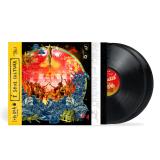
180 GR Records is proud to present a new release by N-Zino, reimagining two tracks previously released by Four Flies Records: Mo... and Living Disco Club, offering two distinct yet complementary interpretations. Mo... (180 GR Disco Mix) takes its cue from the original Banda Maje version, itself a contemporary homage to Peppino Di Capri, already given a club reinterpretation. N-Zino elevates the track with a nu disco approach, emphasizing its elegant groove and sunnier, funkier side, blending disco influences with pulsing basslines, shimmering percussion, and warm synth textures, all infused with contemporary sensibilities while keeping the original melody alive. The result is a bright, danceable reinterpretation designed for both listening and the dancefloor. In a different yet perfectly complementary direction, Living Disco Club (Don Ciccio Tribute Mix) explores a deep house dimension, turning Banda Maje's disco-inspired original into a hypnotic, late-night groove. Deep bass, soft drum machines, essential rhythms, and atmospheric pads create a rich, warm, immersive vibe, ideal for after-hours or more refined, introspective club moments. Together, these remixes highlight N-Zino and 180 GR Records' vision: celebrating strong musical roots, connecting Italy's musical past with contemporary club culture, offering tracks that honor the tradition and the originals released by Four Flies, while speaking directly to modern dancefloors.
out of Stock
Last delivered 5 months ago available to reorder, subject to availability
With Alouette!, Les Louanges attempts to make sense of his human condition and Québécois identity by bringing guitars and Joual (the French language dialect spoken in Québec) to the forefront while still fuelling his signature grooves. More rock-oriented than his previous albums, this third effort is luminous yet rich in sounds, emotion and political commentary. It unfolds through a journey that will lead Loulou to encounter universal experiences such as illness, death, and true love.
The album is also the result of an artistic quest that began during a period of self-reflection, when Vincent Roberge (aka Les Louanges or Loulou) seized the opportunity to take a break after his last extended tour. Alongside the existential questions typical of someone approaching their thirties came a rediscovery of the classics—from Leonard Cohen and Prince to Richard Desjardins and the nursery rhyme that gives the album its name–, followed by total exploration. In addition to playing most of the instruments himself, the singer-songwriter revived obscure Quebec records through sampling and got to experiment with actual sound recording. Roberge co-produced Alouette! with his long-time collaborator Félix Petit (because why change a winning formula).
Four years after the success of his sophomore album Crash, Les Louanges returns more confident than ever, thanks to a renewed cultural and emotional baggage that allows him to reflect on the past to better engage with the present, while also enjoying it to the fullest. All of this, without overlooking the future, which he foresees with hope despite the collective challenges that await us.
British electronic music pioneers Graham Massey (founding member of Manchester legends 808 State) and Brian Dougans (the mind behind acid house milestone Humanoid and one half of The Future Sound Of London) join forces for their debut collaboration In Place Of Language, released on Belgian label De:tuned.
Both 808 State and Humanoid helped shape the UK's early rave and acid house movement. Here, Massey and Dougans channel that legacy into a beautifully balanced four-track EP that radiates warmth and energy, drawing on more than three decades of experience in electronic music. Inspired by key elements of the '89-91 era while embracing a contemporary edge, the duo merge their distinct sonic identities into a sound that feels both timeless and forward-looking.
In Place Of Language is not a nostalgia trip, but a natural evolution: a meeting point between foundation and future, and a blueprint for a new wave of electronic experimentation!
Kevin Foakes (Openmind, DJ Food, Ninja Tune) created all the graphic work. Mastered by Matt Colton at Metropolis. A separate digital release will also be available at the usual digital shops. Stay tuned!
out of Stock
Last delivered 5 months ago available to reorder, subject to availability
Limite is the genre-defying ensemble led by Brussels-based bassist Jordi Cassagne. Alongside him are several familiar faces from the W.E.R.F. Records family, including guitarist Benjamin Sauzereau (REMORQUE) and keyboardist Camille-Alban Spreng (ODIL).
Limite's music embodies a distinctive blend of alternative rock, no wave, and idiosyncratic folk, drawing inspiration from artists such as Blonde Redhead, Big Thief, Daniel Rossen, Joanna Newsom, Leonard Cohen, DavidBowie, Deerhoof, Sonic Youth, and Jim O'Rourke.
A collection of fourteen digital reggae, deep roots and dub rarities from the Nigerian underground, spotlighting a time when Jamaican reggae entwined with Nigerian styles, politics and consciousness, creating a bridge between Lagos and Kingston. Fight the Fire is a companion piece to Soundway"s seminal "Doing it in Lagos" and "Nigeria Special" compilations, celebrating the innovation and musical experimentation of Nigeria in the 80s. Features rare tracks from key figures of the time including Oby Onyioha (with a crucial Burning Spear cover) and Orits Williki.
out of Stock
Last delivered 5 months ago available to reorder, subject to availability
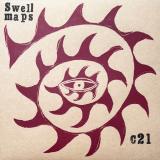
One of the first punk bands to set up an "indie" label, they were also pioneers of "alternative" music, mixing punk with experimental sounds. Swell Maps released four singles and two albums in a brief but eventful career, in partnership with Rough Trade, topping UK indie charts and influencing acts including Sonic Youth, Nirvana, Stereolab, and Blur. The original line-up split in 1980, but still their studio albums, A Trip to Marineville and Jane From Occupied Europe, attract new generations of enthusiasts. In 2021, Jowe organised performances
with ten musicians to play a diverse selection of Maps material over two consecutive nights at London's Cafe Oto, and did it again at the Rough Trade launch for Jowe's book on Swell Maps in 2022. Concerts followed across the UK and Europe, with more planned. This ongoing project has resulted in a new studio album, C21, released through Tiny Global Productions. The material was composed at various times between 1979 and the present, including older songs never recorded professionally, a remake of Soundtracks' astonishing Jelly Babies and plenty of surprises. C21 offers memorable melodies, wild riffs with super hooks, yet never veers from their adventurous spirit, radical ideas and eccentric musical shapes. The current collective of musicians features: Jowe Head, David Callahan of Wolfhounds / Moonshake / solo fame, Jeff Bloom out from Television Personalities, Alternative TV's Lee McFadden, Lucie Rejchrtova (Crazy World Of Arthur Brown), Chloe Herington from chamber rock faves Chrome Hoof, and Luke Haines, who led Auteurs and Black Box Recorder and plays with REM's Peter Buck. SWELL MAPS will be performing throughout 2026 across the UK and Europe and are proud to present this stellar document, which maintains the group's devotion to D-I-Y ideals and impulses. The vinyl album covers were hand-screened and stamped by a feminist cooperative in Valencia, Spain and are offered in three randomly picked variants. The Guardian is going to run a 1400-word piece on the release.
Death Is Not The End present a further volume of Arja Kastinen's eerie amalgamations of 110 year old wax cylinders with her own meticulously transcribed takes, this time focussing in on Armas Otto Väisänen's field recordings of kantele player Iivana Mišukka (b. 1861 d.1919).
"Ivana Mišukka (1861–1919) was one of the Karelian kantele players recorded by the folk music researcher Armas Otto Väisänen on wax cylinders in 1916 and 1917. In the early 20th century, the remote areas of Border Karelia were undergoing the final phase of a transformation in musical culture, with the ancient runo song tradition giving way to newer forms of music. This transition is reflected in Mišukka's repertoire and choice of instrument. The ancient small kantele, hollowed out of a single piece of wood, was already rare at the turn of the century. Mišukka's kantele was a new type of instrument with 26 strings, constructed of several parts, but he played it using the traditional plucking technique. Like other Border Karelian kantele players, his repertoire consisted of music rooted in runosong culture, as well as newer dances and songs from the east and west. Most of the recorded material falls into the latter category.
Ivan Bogdanov Mišukka was born out of wedlock in Suursara village, Suistamo, on 1 May 1861. He began playing the kantele at the age of five or six, quickly mastering the instrument. In adulthood, he was considered one of the area's best master players. Mišukka was landless for most of his life and lived in different parts of the Suistamo parish. His first wife, Tekla Markintytär, died in 1897 at the age of 40, and his second wife, Jevdokia Filipintytär Jeminen, died in 1907 at the age of 50. Seven children were born from the first marriage, two of whom died young. The third wife, Maria Ignatintytär Gurnan (Kuurnanen), was a well-known master of lamentations. Together with Maria, Iivana Mišukka worked as a tenant farmer in the village of Suursara. Mišukka suffered from rheumatism, which prevented him from participating in physical work like Maria. This was apparently partly the reason why Iivana Mišukka went to earn extra money by playing the kantele on gig trips. He often had other traditional artists from Suistamo as his travelling companions, such as the runosingers Konstantin Kuokka and Iivana Onoila. Iivana Mišukka died in Leppäsyrjä village, Suistamo, on 18 May 1919 at the age of 58, and his kantele was donated to Teppana Jänis.
Mišukka only used 14 of the 26 strings on his kantele, playing the same tunes either a fourth higher or lower. He tuned his kantele to the major scale using fifths, except for a low seventh scale degree on the upper strings, but not below the fundamental. Since he did not use the seventh note of the scale on the upper strings at all, he could use the major scale both lower and a fourth higher with this tuning. According to Mišukka, the sound of higher, or 'finer', strings is 'more beautiful', while that of lower ones is 'greater'. Among runosingers, the size of the thirds varied, ranging from major to minor to neutral. A similar phenomenon can be observed in kantele tunings, where the third, sixth and seventh scale degrees vary in a comparable way.
During a meeting, Väisänen suggested that Mišukka play the smaller kantele belonging to Konstantin Kuokka. The idea was to bring it closer to the horn to improve the recording quality. However, the kantele was completely out of tune, and now Mišukka tuned it to the Lydian scale (track 18).
Using the old plucking technique, Mišukka placed his right middle finger on the fundamental tone, his right index finger on the second scale degree, his left middle finger on the third scale degree and his left index finger on the fourth scale degree, and his right thumb on the fifth. The thumb also played the notes above the fifth note of the scale. As Mišukka remarked to Väisänen: 'Peigaloll' tuloo enemb ruadoa' (the thumb has to do more work). However, he did not use the seventh note of the scale on the upper strings at all. Below the fundamental note, he played the seventh and sixth notes of the scale with his right middle finger of and the fifth note of the scale with his right ring finger. This fifth scale degree below the fundamental is almost always used as a drone. Sometimes, when the melody required it, Mišukka, like other players, also varied the fingering. He would also occasionally strike the same string with the side of his fingernail after plucking it.
The wax cylinder recordings of Karelian kantele players are kept in the archives of the Finnish Literature Society in Helsinki, Finland. Copies were made of them onto reel-to-reel tapes in both the 1960s and 1980s. The 1960s copies are mono and the 1980s copies are stereo. However, not all kantele recordings from these decades have survived.
The sound of the kantele is difficult to hear in wax cylinder recordings due to its low volume, and it occasionally becomes completely obscured by noise. During the copying process, the cylinder sometimes rotates unevenly, resulting in breaks or jumps in the music. Additionally, the rotation speed of the cylinder in the copies does not correspond to the performance speed of the original music, which alters the pitch. However, since Väisänen's precise notes are available in the archive, it is possible to deduce the melodies, their speed, and the tuning level of the kantele in the recordings. Of the copies of the original recordings from the 1960s and 1980s, I have selected the one that best met the requirements of this publication and adjusted the speed of the recording to align with Väisänen's notes. To enhance the listening experience, I have replayed the songs, which now partly overlap the old recordings on this release."
Death Is Not The End present a further volume of Arja Kastinen's eerie amalgamations of 110 year old wax cylinders with her own meticulously transcribed takes, this time focussing in on Armas Otto Väisänen's field recordings of kantele player Iivana Mišukka (b. 1861 d.1919).
"Ivana Mišukka (1861–1919) was one of the Karelian kantele players recorded by the folk music researcher Armas Otto Väisänen on wax cylinders in 1916 and 1917. In the early 20th century, the remote areas of Border Karelia were undergoing the final phase of a transformation in musical culture, with the ancient runo song tradition giving way to newer forms of music. This transition is reflected in Mišukka's repertoire and choice of instrument. The ancient small kantele, hollowed out of a single piece of wood, was already rare at the turn of the century. Mišukka's kantele was a new type of instrument with 26 strings, constructed of several parts, but he played it using the traditional plucking technique. Like other Border Karelian kantele players, his repertoire consisted of music rooted in runosong culture, as well as newer dances and songs from the east and west. Most of the recorded material falls into the latter category.
Ivan Bogdanov Mišukka was born out of wedlock in Suursara village, Suistamo, on 1 May 1861. He began playing the kantele at the age of five or six, quickly mastering the instrument. In adulthood, he was considered one of the area's best master players. Mišukka was landless for most of his life and lived in different parts of the Suistamo parish. His first wife, Tekla Markintytär, died in 1897 at the age of 40, and his second wife, Jevdokia Filipintytär Jeminen, died in 1907 at the age of 50. Seven children were born from the first marriage, two of whom died young. The third wife, Maria Ignatintytär Gurnan (Kuurnanen), was a well-known master of lamentations. Together with Maria, Iivana Mišukka worked as a tenant farmer in the village of Suursara. Mišukka suffered from rheumatism, which prevented him from participating in physical work like Maria. This was apparently partly the reason why Iivana Mišukka went to earn extra money by playing the kantele on gig trips. He often had other traditional artists from Suistamo as his travelling companions, such as the runosingers Konstantin Kuokka and Iivana Onoila. Iivana Mišukka died in Leppäsyrjä village, Suistamo, on 18 May 1919 at the age of 58, and his kantele was donated to Teppana Jänis.
Mišukka only used 14 of the 26 strings on his kantele, playing the same tunes either a fourth higher or lower. He tuned his kantele to the major scale using fifths, except for a low seventh scale degree on the upper strings, but not below the fundamental. Since he did not use the seventh note of the scale on the upper strings at all, he could use the major scale both lower and a fourth higher with this tuning. According to Mišukka, the sound of higher, or 'finer', strings is 'more beautiful', while that of lower ones is 'greater'. Among runosingers, the size of the thirds varied, ranging from major to minor to neutral. A similar phenomenon can be observed in kantele tunings, where the third, sixth and seventh scale degrees vary in a comparable way.
During a meeting, Väisänen suggested that Mišukka play the smaller kantele belonging to Konstantin Kuokka. The idea was to bring it closer to the horn to improve the recording quality. However, the kantele was completely out of tune, and now Mišukka tuned it to the Lydian scale (track 18).
Using the old plucking technique, Mišukka placed his right middle finger on the fundamental tone, his right index finger on the second scale degree, his left middle finger on the third scale degree and his left index finger on the fourth scale degree, and his right thumb on the fifth. The thumb also played the notes above the fifth note of the scale. As Mišukka remarked to Väisänen: 'Peigaloll' tuloo enemb ruadoa' (the thumb has to do more work). However, he did not use the seventh note of the scale on the upper strings at all. Below the fundamental note, he played the seventh and sixth notes of the scale with his right middle finger of and the fifth note of the scale with his right ring finger. This fifth scale degree below the fundamental is almost always used as a drone. Sometimes, when the melody required it, Mišukka, like other players, also varied the fingering. He would also occasionally strike the same string with the side of his fingernail after plucking it.
The wax cylinder recordings of Karelian kantele players are kept in the archives of the Finnish Literature Society in Helsinki, Finland. Copies were made of them onto reel-to-reel tapes in both the 1960s and 1980s. The 1960s copies are mono and the 1980s copies are stereo. However, not all kantele recordings from these decades have survived.
The sound of the kantele is difficult to hear in wax cylinder recordings due to its low volume, and it occasionally becomes completely obscured by noise. During the copying process, the cylinder sometimes rotates unevenly, resulting in breaks or jumps in the music. Additionally, the rotation speed of the cylinder in the copies does not correspond to the performance speed of the original music, which alters the pitch. However, since Väisänen's precise notes are available in the archive, it is possible to deduce the melodies, their speed, and the tuning level of the kantele in the recordings. Of the copies of the original recordings from the 1960s and 1980s, I have selected the one that best met the requirements of this publication and adjusted the speed of the recording to align with Väisänen's notes. To enhance the listening experience, I have replayed the songs, which now partly overlap the old recordings on this release."
Auf ,Emeralds", dem zweiten Longplayer von Parlor Greens, präsentiert das Trio eine sorgfältig zusammengestellte Auswahl dessen, was funkige Orgelmusik leisten kann. Drei wahre Meister ihres Fachs: Tim Carman (ehemals GA-20) am Schlagzeug, Jimmy James (True Loves, ehemals Delvon Lamarr Organ Trio) an der Gitarre und Adam Scone (Scone Cash Players, The Sugarman 3) an der Orgel. Erfahrene und gefühlvolle Profis, die sich zusammengetan haben, um mitreißende, funkige Instrumental-Jams zu kreieren. Parlor Greens sind in Bestform: Sie sind eingespielt und selbstbewusster denn je, was ihre Identität und ihre Ausrichtung betrifft. Der Opener des Albums, ,Eat Your Greens", beginnt mit einem von Charles Earland inspirierten Four-on-the-Floor-Beat, wobei Jimmy und Scone den Song wie einen überladenen Güterzug vorantreiben, der einfach nicht zu stoppen ist. Greens", startet mit einem von Charles Earland inspirierten Four-on-the-Floor-Beat, wobei Jimmy und Scone den Song wie einen überladenen Güterzug vorantreiben, der einfach nicht zu stoppen ist. ,Lion's Mane" zeigt eine etwas raffiniertere Seite des Trios, mit Anspielungen auf einen von Scones Orgelmentoren , den unvergleichlichen Dr. Lonnie Smith. Um seinen Bandkollegen in nichts nachzustehen, demonstriert Tim Carman in ,Letter To Brother Ben", einem gospelartigen Shuffler, warum er den besten Shuffle diesseits des Mississippi spielt. Und obwohl die Ergebnisse stärker denn je sind, war die Stimmung bei dieser zweiten Aufnahmesession ganz anders. Als sich die drei zum ersten Mal in Loveland im Colemine's Portage Lounge Studio trafen, war die Atmosphäre von einer gewissen Frische geprägt. Es war neu, es war das erste Mal, dass sie alle zusammen spielten. Es war aufregend, es war Neuland. Die Session für Emeralds lastete viel schwerer auf allen drei Mitgliedern. Da alle drei mit persönlichen Tragödien in ihrem individuellen Leben zu kämpfen hatten, war die Session für die Gruppe ein echter Moment der Freude. Nur drei talentierte Musiker, die nun als Freunde in einer vertrauten Umgebung Musik schreiben und spielen. Nirgendwo wird die Bedeutung dieser Session deutlicher als beim letzten Titel des Albums, ,Queen Of My Heart", einem Stück, das Jimmy für seine Mutter kurz nach ihrem Tod geschrieben hat. Mit schwerem Herzen und voller Emotionen ist Colemine Records sehr stolz darauf, das zweite Album dieser drei Meister präsentieren zu dürfen. Parlor Greens präsentiert_ Emeralds.
Auf ,Emeralds", dem zweiten Longplayer von Parlor Greens, präsentiert das Trio eine sorgfältig zusammengestellte Auswahl dessen, was funkige Orgelmusik leisten kann. Drei wahre Meister ihres Fachs: Tim Carman (ehemals GA-20) am Schlagzeug, Jimmy James (True Loves, ehemals Delvon Lamarr Organ Trio) an der Gitarre und Adam Scone (Scone Cash Players, The Sugarman 3) an der Orgel. Erfahrene und gefühlvolle Profis, die sich zusammengetan haben, um mitreißende, funkige Instrumental-Jams zu kreieren. Parlor Greens sind in Bestform: Sie sind eingespielt und selbstbewusster denn je, was ihre Identität und ihre Ausrichtung betrifft. Der Opener des Albums, ,Eat Your Greens", beginnt mit einem von Charles Earland inspirierten Four-on-the-Floor-Beat, wobei Jimmy und Scone den Song wie einen überladenen Güterzug vorantreiben, der einfach nicht zu stoppen ist. Greens", startet mit einem von Charles Earland inspirierten Four-on-the-Floor-Beat, wobei Jimmy und Scone den Song wie einen überladenen Güterzug vorantreiben, der einfach nicht zu stoppen ist. ,Lion's Mane" zeigt eine etwas raffiniertere Seite des Trios, mit Anspielungen auf einen von Scones Orgelmentoren , den unvergleichlichen Dr. Lonnie Smith. Um seinen Bandkollegen in nichts nachzustehen, demonstriert Tim Carman in ,Letter To Brother Ben", einem gospelartigen Shuffler, warum er den besten Shuffle diesseits des Mississippi spielt. Und obwohl die Ergebnisse stärker denn je sind, war die Stimmung bei dieser zweiten Aufnahmesession ganz anders. Als sich die drei zum ersten Mal in Loveland im Colemine's Portage Lounge Studio trafen, war die Atmosphäre von einer gewissen Frische geprägt. Es war neu, es war das erste Mal, dass sie alle zusammen spielten. Es war aufregend, es war Neuland. Die Session für Emeralds lastete viel schwerer auf allen drei Mitgliedern. Da alle drei mit persönlichen Tragödien in ihrem individuellen Leben zu kämpfen hatten, war die Session für die Gruppe ein echter Moment der Freude. Nur drei talentierte Musiker, die nun als Freunde in einer vertrauten Umgebung Musik schreiben und spielen. Nirgendwo wird die Bedeutung dieser Session deutlicher als beim letzten Titel des Albums, ,Queen Of My Heart", einem Stück, das Jimmy für seine Mutter kurz nach ihrem Tod geschrieben hat. Mit schwerem Herzen und voller Emotionen ist Colemine Records sehr stolz darauf, das zweite Album dieser drei Meister präsentieren zu dürfen. Parlor Greens präsentiert_ Emeralds.
Auf ,Emeralds", dem zweiten Longplayer von Parlor Greens, präsentiert das Trio eine sorgfältig zusammengestellte Auswahl dessen, was funkige Orgelmusik leisten kann. Drei wahre Meister ihres Fachs: Tim Carman (ehemals GA-20) am Schlagzeug, Jimmy James (True Loves, ehemals Delvon Lamarr Organ Trio) an der Gitarre und Adam Scone (Scone Cash Players, The Sugarman 3) an der Orgel. Erfahrene und gefühlvolle Profis, die sich zusammengetan haben, um mitreißende, funkige Instrumental-Jams zu kreieren. Parlor Greens sind in Bestform: Sie sind eingespielt und selbstbewusster denn je, was ihre Identität und ihre Ausrichtung betrifft. Der Opener des Albums, ,Eat Your Greens", beginnt mit einem von Charles Earland inspirierten Four-on-the-Floor-Beat, wobei Jimmy und Scone den Song wie einen überladenen Güterzug vorantreiben, der einfach nicht zu stoppen ist. Greens", startet mit einem von Charles Earland inspirierten Four-on-the-Floor-Beat, wobei Jimmy und Scone den Song wie einen überladenen Güterzug vorantreiben, der einfach nicht zu stoppen ist. ,Lion's Mane" zeigt eine etwas raffiniertere Seite des Trios, mit Anspielungen auf einen von Scones Orgelmentoren , den unvergleichlichen Dr. Lonnie Smith. Um seinen Bandkollegen in nichts nachzustehen, demonstriert Tim Carman in ,Letter To Brother Ben", einem gospelartigen Shuffler, warum er den besten Shuffle diesseits des Mississippi spielt. Und obwohl die Ergebnisse stärker denn je sind, war die Stimmung bei dieser zweiten Aufnahmesession ganz anders. Als sich die drei zum ersten Mal in Loveland im Colemine's Portage Lounge Studio trafen, war die Atmosphäre von einer gewissen Frische geprägt. Es war neu, es war das erste Mal, dass sie alle zusammen spielten. Es war aufregend, es war Neuland. Die Session für Emeralds lastete viel schwerer auf allen drei Mitgliedern. Da alle drei mit persönlichen Tragödien in ihrem individuellen Leben zu kämpfen hatten, war die Session für die Gruppe ein echter Moment der Freude. Nur drei talentierte Musiker, die nun als Freunde in einer vertrauten Umgebung Musik schreiben und spielen. Nirgendwo wird die Bedeutung dieser Session deutlicher als beim letzten Titel des Albums, ,Queen Of My Heart", einem Stück, das Jimmy für seine Mutter kurz nach ihrem Tod geschrieben hat. Mit schwerem Herzen und voller Emotionen ist Colemine Records sehr stolz darauf, das zweite Album dieser drei Meister präsentieren zu dürfen. Parlor Greens präsentiert_ Emeralds.
Ruff Kutz presents 'Found Sound', a debut solo album by Pugilist.
At a time where art has become readily reproduced and seemingly disposable, I have made something longer-form to be enjoyed as a complete piece, rather than it's single elements.
Found Sound delves into my internal monologue, which I hope results in a personal and introspective listening experience. Building on my previous discography - you can expect versatile sounds and tempos, with a washy dub-wise feel, intoxicating atmospherics, all in a genre-free structure. The album is floaty, euphoric and perhaps a surprisingly light listen compared to my normal output, but with notably huge bass and intricate percussion throughout.
The album taps into nostalgic reference points without leaning on retrograde tropes. While sculpted by contemporary production and FX, the sound remains raw and not overly polished. The album is best described as a collage of sounds that I have steadily collected over the last decade, which have inspired me, some very cheeky sampling and many a late night working on my studio tan. It is a tribute to the music I grew up with and love the most, from past to the present. It is fitting that this release marks the 10 years since I started the Pugilist alias.
This wouldn't have been possible without Umeya, who the album is dedicated to.
out of Stock
Last delivered 3 months ago available to reorder, subject to availability
Tim Maia’s self-titled 1973 album is one of those records that hits you from the very first groove and doesn’t let go. Originally released on Polydor Brazil, this was the fourth in a series of Tim’s self-titled albums and many fans and critics still consider it the crown jewel. Packed with irresistible hooks, lush arrangements, and that unmistakable Tim Maia swagger, the album captures the singer at the peak of his creative powers.If you’re new to Tim Maia, here’s the quick story: born in Rio de Janeiro, Tim was a larger-than-life icon whose music married American soul and funk with Brazilian samba and pop long before “fusion” was a buzzword. A true musical polymath, he absorbed everything from Curtis Mayfield to Motown and translated it into a sound entirely his own, gritty, passionate, and full of groove.
He didn’t just introduce soul to Brazil; he made it Brazilian.On this 1973 release, Tim pushes everything up a notch. The arrangements are bigger, slicker, and surprisingly majestic, without losing the raw spirit that earned him a devoted following. From the moment ‘Réu Confesso’ opens the album, you know you’re in for something special—smooth, funky, and heartfelt in all the right ways. The bittersweet ‘Gostava Tanto de Você’ remains one of his most beloved classics, while ‘O Balanço’ bursts with Brazilian flavor that practically dares you not to move. And with tracks like ‘Do Your Thing, Behave Yourself’ and ‘Over Again,’ Tim shows just how naturally the soul idiom fit him, even when he switched to English.This record has everything: deep grooves, soaring strings, magnetic vocals, and that unmistakable sense of joy that Tim Maia carried into every session. It’s a front-to-back winner—one of those albums that deserves a spot not just in Brazilian music history, but in any collection that celebrates great soul, funk, and timeless grooves.If you’re a longtime fan, it’s a reminder of why Tim Maia is legendary. If you’re discovering him for the first time, this is the perfect place to start. Either way: press play, turn it up, and let Tim do his thing.
out of Stock
Last delivered 5 months ago available to reorder, subject to availability
INTERWOVEN' is a four-track split EP that binds together two of Denmark's most forwardthinking heavy acts: HIRAKI and Meejah. Built on a shared appetite for boundary-pushing intensity, the collaboration channels the urgency of electronic hardcore, the spaciousness of experimental rock, and the emotional depth of cinematic metal into an immersive work that is at once confrontational and deeply connective. As a part of Denmark's flourishing underground scene for dark and heavy music, the HIRAKI trio deploys an aggressive style of progressive synthpunk from the edge of the abyss. The band presents this sonic assault to accompany the inevitable fact that our world is sick, and we all take part in maintaining the fucked up systemic structures. MEEJAH is a Post/Experimental Danish-Korean band from Copenhagen weaving together Nordic Melancholia & Korean Ancestry. The results sound like Heaven, Thunder, Mountain, Earth, Wind, Fire, Water, Lake. Across these four tracks, both bands challenge each other to step past familiar contours, unraveling and recombining their musical identities until a new hybrid shape emerges_volatile, textured, and unmistakably alive. FOR FANS OF The Body * The Armed * Sightless Pit * Massive Attack * Julie Christmas * Death Engine
INTERWOVEN' is a four-track split EP that binds together two of Denmark's most forwardthinking heavy acts: HIRAKI and Meejah. Built on a shared appetite for boundary-pushing intensity, the collaboration channels the urgency of electronic hardcore, the spaciousness of experimental rock, and the emotional depth of cinematic metal into an immersive work that is at once confrontational and deeply connective. As a part of Denmark's flourishing underground scene for dark and heavy music, the HIRAKI trio deploys an aggressive style of progressive synthpunk from the edge of the abyss. The band presents this sonic assault to accompany the inevitable fact that our world is sick, and we all take part in maintaining the fucked up systemic structures. MEEJAH is a Post/Experimental Danish-Korean band from Copenhagen weaving together Nordic Melancholia & Korean Ancestry. The results sound like Heaven, Thunder, Mountain, Earth, Wind, Fire, Water, Lake. Across these four tracks, both bands challenge each other to step past familiar contours, unraveling and recombining their musical identities until a new hybrid shape emerges_volatile, textured, and unmistakably alive. FOR FANS OF The Body * The Armed * Sightless Pit * Massive Attack * Julie Christmas * Death Engine The single colour edition comes as white vinyl!
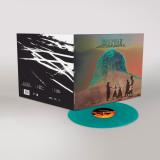
Green Vinyl, limited to 500 copies. New album from the psychedelic, progressive folk rock band from Skien, Norway! The day belongs to the night The four songs on side A came about in November 2022 for a winter solstice celebration at Oslo Badstuforening. Our take on this was that the solstice invites reflections on the relationship between night and day. Does the day spring out of the darkness of the preceding night or does the night follow and swallow the light of the day? Is it Saturday Night or Sunday Morning? Are we running from the past or catching up with the future? Moving from A to B, Lidskjalv has existed as a demo since the 90s. Many versions have been made, but this is the first proper recording of the song. The passage of time is the future becoming the present. It moves forward in circles like a rolling wheel. Balder, Osiris and Jesus are all vegetation gods emulating the turn of the seasons in their eternal return. After the death of winter, life emerges anew. But not only this; there is also the promise of each dawn bringing a Better Day. According to Snorre, after the Fimbul Winter and Ragnarok, there is a new Earth. From the ashes emerges a better place. This holds also the idea of progress. It is at the core of being a prog band; each album is an improvement on the last, an exploration of new territory, a different perspective.
With two deeply cherished compilations already in the bag, Luke Una steps up for the third volume in his É Soul Cultura series on Mr Bongo. A love letter to the dancefloor and its power to unite people from all corners of society amid growing division and extremist politics. Genre-spanning in nature, the 15 tracks travel between cosmic soul, boogie, proto-house, slo-mo technoid grooves, drum machine afro, astral bass-bugging futurism, jazz funk, dance, and disco. Each having the ability to move the body as much as the heart.
From his formative years in Sheffield to co-founding Manchester’s much-fabled Electric Chair with Justin Crawford, through to helming the iconic LGBTQ institutions of Homoelectric / Homobloc, Luke has spent 40 years immersed in dance music. His latest outlet, É Soul Cultura, has grown from a label to a globe-spanning events series with Luke holding residencies and embarking on tours across the world from Japan and Australia to America and Europe.
“For me, the dancefloor was never about a one-dimensional, thudding, 130 BPM beat only. It's a much more dynamic, broader vision than that. I cut my teeth in an era where a 100 BPM record had as much impact, excitement, and energy as a 134 BPM dancefloor jazz funk or techno record”, Luke mentions. É Soul Cultura Volume 3 is the perfect embodiment of that notion: “It’s about four decades in the trenches playing dance music, the late-night afters, the shebeens, the basements, warehouse parties, the eight-hour journeys in East London, through to festival sets at Houghton and We Out Here. It’s music unconstrained by genre or tempo and more about making your body move”.
But this isn’t simply a collection of disparate dance tracks; they carry meaning and soul. “It’s less about escapism, more about reconnection. My experience of post-covid has been the coming together of all the clans in various clubs and gatherings. A reaction to a very toxic world out there, where the aggro rhythms of division have sought to divide us, and people don't meet as often. The coming back together face-to-face in clubs has encouraged a real love in the air, there's a real togetherness and collective spirit”.
Opening up the compilation is a track that channels that very message, the transcendental, soul-rousing Harris & Orr ‘Spread Love’. Joining the dots from there, to the low-slung deep house closer of Fatdog ‘Remember’, you’ll find electronic drum machine Nigerian funk, sitting side by side with dancefloor Cape Verdean brilliance, a post-punk cover of Fela Kuti, rubbing shoulders with cosmic electro, and an Una-championed, 8-minute, kickless DJ Harvey remix. There’s jazz funk in various guises moving from boogie synth to astral travelling, slo-mo acidic raw techno, and a ‘79 soul stepper, alongside swirling percussive Italo disco and tribal-charged house. All infused with an innate ability to bring people together.
As society becomes increasingly fractured, É Soul Cultura Volume 3’s message is more than movement. It’s about dance music’s power to unify people from all walks of life and break down the barriers that divide us.
out of Stock
Last delivered 33 days ago available to reorder, subject to availability
Vertigo is proud to announce their debut physical release Necessity from Perth/Boorloo electronic duo Ezines, available March 20th. Necessity is a sleazy, pressure-driven club record, built on a balance of short, immediate ideas and long-term structural development. Across four original tracks and a remix — Dissolve, Necessity, Pacer, Ekspres, and Necessity (Liquid Earth Heaven ’N’ Hell Dub) — Ezines balance instant impact with slow-burn momentum, allowing tracks to hit fast before stretching into longer, more patient forms. The EP thrives on tension, repetition, and release, shaped equally by instinct, live performance, and hands-on studio refinement.
out of Stock
Last delivered 83 days ago available to reorder, subject to availability
reActive Lab proudly unveils its first vinyl release, marking a defining moment for the label's evolution. reActive Lab Collective 001 brings together four of the label's core members - Chrivu, Dragne, Flavius, and Pattern Tusk - to craft a 12" that perfectly captures the collective's sonic DNA: deep groove, subtle minimalism, and timeless house energy. The record opens with Chrivu - "Cell Division", a vibrant house piece driven by a confident bassline and crisp percussive motion. Built with clarity and flow, it sets the tone for a journey anchored in groove and precision. Dragne - "Get Funk" follows with playful rhythm and low-end warmth - an irresistible combination of swing, bounce, and character designed for the dancefloor. On the flip side, Flavius - "The Interview" introduces a more introspective dimension - stripped-down yet immersive, balancing atmosphere with emotion through delicate textures and steady rhythm.
Closing the release, Pattern Tusk - "We Went On" blends soulful depth with minimal intricacy, offering a smooth, driving finale that resonates with both feeling and functionality. reActive Lab Collective 001 stands as more than a debut - it's a declaration of artistic identity. A 100% in-house release from reActive Lab, crafted with authenticity and intent. A promising first step in what's clearly a long-term commitment to sound, craft, and community. Short Description: reActive Lab makes its vinyl debut with reActive Lab Collective 001, a powerful VA featuring Chrivu, Dragne, Flavius & Pattern Tusk. Four deep and groovy house cuts blending energy, warmth, and minimal precision - a pure statement of the label's identity.
out of Stock
Last delivered 7 months ago available to reorder, subject to availability
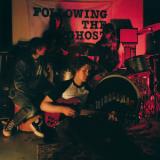
“It’s hard to find your way, following the ghost,” sings Noah Alves on the title track from Middleman’s debut album, as the band explores ideas of how being chained to the past can hinder your forward momentum into the future. This creates a thrilling duality to the debut LP from the London DIY four-piece made up of Alves, Harper Maury, Rory White and Ted Foster. They are all young, in their early-to-mid-twenties, and very much focused in the now, harnessing an energy, urgency and rawness that feels fresh, alive and viscerally present. However, it’s also clear there’s a deep love of music that was made before they were born: the taut, wiry assault of Mission of Burma; the raspy yet melodic charge of The Replacements; the pioneering punk of Wipers, fleshed out via the more restrained and tender moments of Big Star or Neil Young. The result is a beautiful dichotomy of a record that both pays tribute to a rich musical lineage that the band are a part of, while also resisting the urge to get sucked into a dead end of nostalgia, mythology and recycling past glories.
For here lies one of the most influential bands in the realm of gothic metal, a group with doom and death metal roots that has flourished for over three decades, boasting thirteen albums that have garnered devoted acclaim. This injustice is now being set right by The Circle Music , beginning with the vinyl release of the classic album "Burning: A Wish", which emerged twenty-four years ago. "Burning: A Wish", released in the twilight of the year 2001, stands as a dark reliquary of dreams lost to the velvet fog of melancholy. To revisit it now, two dozen years later, is to unseal a time capsule of gothic ache, doom- laced longing, and the tormented tenderness that only Lacrimas Profundere could conjure at their creative height. It was a candle-lit corridor between worlds. A slow fall into velvet shadows. A scream muffled by rain.
By the time "Burning: A Wish" was released, Lacrimas Profundere had already begun to evolve from their early death- doom origins, shaping their identity with the sophistication of seasoned mourners. The death growls had receded, replaced by the haunted, baritone croon of Christopher Schmid, whose voice is an echo from a chapel ruined by time. Yet, while the growls faded, the emotional gravitas remained intact, transmuted into melody, into baroque gloom, into something more sorrowfully refined. Produced with lush, theatrical clarity, the album never drowns in its own atmosphere, it breathes with it, moves with it. The soundscape is dominated by somber guitar textures, languid tempos, and subtle orchestral touches. From the very first notes, it is clear that this is music for ruined lovers and moon-drenched graveyards.
This is the hallmark of Lacrimas Profundere 's style: an emotional minimalism that does not explain or elaborate, but merely opens wounds and lets them breathe. That this album has remained, until now, absent from the warm embrace of vinyl is both tragic and oddly poetic. For what format better suits a record such as this than the one that cracks and hisses like an old seance? Vinyl is tactile, intimate. It requires attention, reverence. To place Burning: A Wish on a turntable is to light a candle in the dark.
James Ruskin's Blueprint Records continues its 30-year celebrations with a new EP by Kr!z who returns with his fourth EP for the label. Kr!z made his Blueprint debut in fine style with his "Neutrino EP" in 2022 and went on to deliver the "Revelation EP" in 2023 and "Horo EP" in 2024 so it's fitting that he's back to join in this landmark label anniversary.
Kr!z has been at the forefront of techno for more than a decade. Influenced by the hypnotic and energetic sound helmed by veterans such as Jeff Mills, Steve Rachmad and James Ruskin, he gradually but steadily developed his own identity in the international techno scene.
After making a name for himself as a skilled DJ with sharp focus and a quick mixing style in home country Belgium and the Netherlands, Kr!z launched Token Records in 2007. It has since been a leading outlet for heady, purist sounds. He rapidly established the label as a fixed value with a timeless and powerful sound and took it around the world with label nights on every continent. Token remains important in defining techno today - always straightforward, sometimes weird, often catchy - all under the helm of Kr!z as avid A&R.
After 12 years spent assiduously focused on curating the Token discography, showcasing artists he has nurtured and supported over this time, and incorporating the connoisseur's knowledge and experience he has cultivated in his work as a DJ, in 2019 he released his own debut EP "Mantra" on the label, earning high acclaim from both media and key DJs. Since then, he has continued to develop a strong body of work, regularly releasing on the influential Blueprint Records and SK_eleven alongside his own Token imprint, and producing aseries of notable remixes. This steady output has established him as a key figure within the techno landscape, recognized for both consistency and artistic depth.
Kr!z's latest Blueprint EP "Footprints" is released 13th March on vinyl and digitally.
out of Stock
Last delivered 4 months ago available to reorder, subject to availability
1976 markiert das Erscheinungsjahr der ersten Punk-Singles - und 50 Jahre später feiern zwei Anthologien dieses Jubiläum mit einem einzigartigen Doppelblick auf die Geschichte des Genres. In Bored Teenagers und Angriff aufs Schlaraffenland wählen über 200 Musiker:innen, Autor:innen, Fanzine-Macher:innen, Journalist:innen, Punks, Ex- und Anti-Punks ihren persönlich wichtigsten Punk-Song. Sie fragen sich: Welcher Track hat mich geprägt? Welcher verkörpert Punk für mich am stärksten? Ob "Anarchy in the UK", "Nazis raus", "California über alles" oder "Für immer Punk" - über 400 sehr unterschiedliche Antworten zeigen, wie vielfältig Punk erlebt, erinnert und weitergeführt wird. Trotz aller Unterschiede verbindet die Beiträge eines: Punk ist für die Schreibenden auch nach fünf Jahrzehnten kein beliebiges Musikgenre. Die Texte erzählen von jugendlicher Aufbruchstimmung, radikalen Ideen und politischem Selbstverständnis, aber auch davon, wie lebendig Punk bis heute ist. Punk erscheint als musikalischer Aufruhr und ästhetischer Bruch, als DIY-Haltung, Hausbesetzung, Theorie und Praxis zugleich. Er kann feministisch, anarchistisch, widersprüchlich, laut, zärtlich oder rotzig sein - aber niemals langweilig. Während Angriff aufs Schlaraffenland die deutschsprachige Punkgeschichte beleuchtet, widmet sich Bored Teenagers zentralen Songs der internationalen Szene. Mit Beiträgen von u. a. Bela B, Simon Reynolds, Franz Dobler, Diedrich Diederichsen, Linus Volkmann, Hans Nieswandt, Bernd Begemann, Jim Avignon und vielen weiteren entsteht ein Panorama über Klassiker von Sex Pistols, X-Ray Spex, Mittagspause, Ramones, Clash und Slime, über Post-Punk von Wire, Gang of Four oder The Slits, über fast Vergessenes bis hin zu zeitgenössischen Acts wie Team Scheisse, Sleaford Mods oder Acht Eimer Hühnerherzen.
1976 markiert das Erscheinungsjahr der ersten Punk-Singles - und 50 Jahre später feiern zwei Anthologien dieses Jubiläum mit einem einzigartigen Doppelblick auf die Geschichte des Genres. In Bored Teenagers und Angriff aufs Schlaraffenland wählen über 200 Musiker:innen, Autor:innen, Fanzine-Macher:innen, Journalist:innen, Punks, Ex- und Anti-Punks ihren persönlich wichtigsten Punk-Song. Sie fragen sich: Welcher Track hat mich geprägt? Welcher verkörpert Punk für mich am stärksten? Ob "Anarchy in the UK", "Nazis raus", "California über alles" oder "Für immer Punk" - über 400 sehr unterschiedliche Antworten zeigen, wie vielfältig Punk erlebt, erinnert und weitergeführt wird. Trotz aller Unterschiede verbindet die Beiträge eines: Punk ist für die Schreibenden auch nach fünf Jahrzehnten kein beliebiges Musikgenre. Die Texte erzählen von jugendlicher Aufbruchstimmung, radikalen Ideen und politischem Selbstverständnis, aber auch davon, wie lebendig Punk bis heute ist. Punk erscheint als musikalischer Aufruhr und ästhetischer Bruch, als DIY-Haltung, Hausbesetzung, Theorie und Praxis zugleich. Er kann feministisch, anarchistisch, widersprüchlich, laut, zärtlich oder rotzig sein - aber niemals langweilig. Während Angriff aufs Schlaraffenland die deutschsprachige Punkgeschichte beleuchtet, widmet sich Bored Teenagers zentralen Songs der internationalen Szene. Mit Beiträgen von u. a. Bela B, Simon Reynolds, Franz Dobler, Diedrich Diederichsen, Linus Volkmann, Hans Nieswandt, Bernd Begemann, Jim Avignon und vielen weiteren entsteht ein Panorama über Klassiker von Sex Pistols, X-Ray Spex, Mittagspause, Ramones, Clash und Slime, über Post-Punk von Wire, Gang of Four oder The Slits, über fast Vergessenes bis hin zu zeitgenössischen Acts wie Team Scheisse, Sleaford Mods oder Acht Eimer Hühnerherzen.
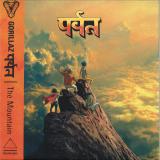
The Mountain is Gorillaz’ ninth studio album, a collection of 15 new tracks featuring a stellar list of artists and collaborators. Jamie Hewlett’s album artwork captures the four much-loved animated band members - Murdoc, Noodle, Russel and 2D – in a series of beautifully intricate, hand-drawn illustrations.
The Mountain is Gorillaz 9th studio album. The album is a collection of 15 new tracks featuring artists and collaborators including: Ajay Prasanna, Anoushka Shankar, Asha Bhosle, Asha Puthli, Bizarrap, Black Thought, Gruff Rhys, Idles, Jalen Ngonda, Johnny Marr, Kara Jackson, Omar Souleyman, Paul Simonon, Sparks, Trueno and Yasiin Bey; as well as the voices of Bobby Womack, Dave Jolicoeur, Dennis Hopper, Mark E. Smith, Proof and Tony Allen. Produced by Gorillaz, James Ford, Samuel Egglenton, Remi Kabaka Jr. and Bizarrap (Orange County), The Mountain was recorded in London, Devon, Miami, Jaipur, Mumbai, New Delhi and Rishikesh; and features artists performing in five languages: Arabic, English, Hindi, Spanish and Yoruba. The artwork for The Mountain sees Jamie Hewlett’s distinct, yet ever-evolving, style illustrate the world of Gorillaz with an ever more detailed and beautiful intricacy across a series of hand-drawn illustrations. Circumstances find Murdoc Niccals, Russel Hobbs, 2D and Noodle in India, where our heroes are immersed in the rhythms of mystical music-making as they navigate the mountainous terrain of this thing called life.
out of Stock
Last delivered 12 days ago available to reorder, subject to availability
The Mountain is Gorillaz’ ninth studio album, a collection of 15 new tracks featuring a stellar list of artists and collaborators. Jamie Hewlett’s album artwork captures the four much-loved animated band members - Murdoc, Noodle, Russel and 2D – in a series of beautifully intricate, hand-drawn illustrations.
The Mountain is Gorillaz 9th studio album. The album is a collection of 15 new tracks featuring artists and collaborators including: Ajay Prasanna, Anoushka Shankar, Asha Bhosle, Asha Puthli, Bizarrap, Black Thought, Gruff Rhys, Idles, Jalen Ngonda, Johnny Marr, Kara Jackson, Omar Souleyman, Paul Simonon, Sparks, Trueno and Yasiin Bey; as well as the voices of Bobby Womack, Dave Jolicoeur, Dennis Hopper, Mark E. Smith, Proof and Tony Allen. Produced by Gorillaz, James Ford, Samuel Egglenton, Remi Kabaka Jr. and Bizarrap (Orange County), The Mountain was recorded in London, Devon, Miami, Jaipur, Mumbai, New Delhi and Rishikesh; and features artists performing in five languages: Arabic, English, Hindi, Spanish and Yoruba. The artwork for The Mountain sees Jamie Hewlett’s distinct, yet ever-evolving, style illustrate the world of Gorillaz with an ever more detailed and beautiful intricacy across a series of hand-drawn illustrations. Circumstances find Murdoc Niccals, Russel Hobbs, 2D and Noodle in India, where our heroes are immersed in the rhythms of mystical music-making as they navigate the mountainous terrain of this thing called life.
out of Stock
Last delivered 73 days ago available to reorder, subject to availability
Clear Vinyl in limitierter Auflage von 1500 Stück. Die renommierte US-niederländische Gospel-Soul-Künstlerin Michelle David & The True-tones läuten mit ihrem neuen Album ,Soul Woman", das am 27. Februar 2026 bei Record Kicks erscheint, ein neues Kapitel ein. Aufbauend auf dem von Kritikern gefeierten Album ,Brothers & Sisters" aus dem Jahr 2024, das die Komplexität der Welt widerspiegelte, wendet sich die neue LP ,Soul Woman" nach innen - eine zutiefst persönliche Auseinandersetzung mit Identität, Heilung und spiritueller Widerstandsfähigkeit. ,Wie kann ich andere bitten, sich Zeit zu nehmen, um über ihr Leben nachzudenken, wenn ich das selbst nicht tue?", fragt Michelle David. Dieser Geist der Selbstreflexion und Erneuerung steht im Mittelpunkt von ,Soul Woman" - einem Album, das Verletzlichkeit zulässt und gleichzeitig Stärke ausstrahlt. Musikalisch verfeinert ,Soul Woman" die charakteristische Mischung der Band aus Gospel, Soul und Vintage-Rhythm & Blues und schöpft dabei aus einer breiteren Palette von Einflüssen. Anklänge an Curtis Mayfield, Bobby Womack und The Four Seasons pulsieren durch die Grooves, während das Gospel-Feuer der Blind Boys of Alabama und die fröhliche Ausstrahlung von Diana Ross & The Supremes dem Album sowohl Schwere als auch Glanz verleihen. Im Mittelpunkt steht Michelle Davids unverwechselbare Stimme - rau, warm und voller Entschlossenheit -, umhüllt von reichhaltigen, analog geprägten Arrangements ihrer langjährigen Mitstreiter Paul Willemsen (Gitarre, Bassgitarre), Onno Smit (Gitarre, Bassgitarre) und Bas Bouma (Schlagzeug). Gemeinsam stehen Michelle David & The True-tones an der Spitze der Retro-Soul-Szene - sie verbinden zeitlose Grooves mit moderner Dringlichkeit, unerschütterlicher Authentizität und herzlicher Leidenschaft. Eine Stimme, geboren in der Kirche, geschliffen auf der Straße. Michelle David wurde in New York geboren und wuchs in der Kirche auf. Mit nur vier Jahren begann sie zu singen und trat mit fünf Jahren ihrer ersten Gruppe, The Mission of Love, bei. Ihre kraftvolle Stimme führte sie um die ganze Welt, wo sie in gefeierten Broadway-Produktionen wie Mama, The Sound of Motown, Glory of Gospel und Mahalia mitwirkte und mit Legenden wie Diana Ross und Michael Bolton Aufnahmen machte - alles bevor sie ihre gefeierte Reise mit The True-tones begann. Gemeinsam haben Michelle David & The True-tones sieben von der Kritik gefeierte Alben veröffentlicht und die Bühnen Europas erobert, von Pinkpop über North Sea Jazz bis hin zum London Jazz Festival. Die Band ist bekannt für ihre mitreißenden Live-Auftritte, hat von Spanien bis Skandinavien Standing Ovations erhalten, ist in großen Fernseh- und Radiosendungen aufgetreten und hat sogar bei den Olympischen Winterspielen 2022 gespielt. Ihre Aufnahmen wurden ebenso gelobt: The Gospel Sessions wurde für einen Edison Award (das niederländische Pendant zum Grammy) nominiert, während Truth & Soul aus dem Jahr 2020 von Craig Charles' BBC Radio 6 Music zum Album des Jahres und von FIP (Radio France) zum Album des Monats gekürt wurde. Ihr jüngstes Album, Brothers & Sisters (2024), markierte ihr Debüt bei Record Kicks und wurde zu einem Durchbruch - gefeiert von Rolling Stone France, KEXP, Jazzthing Magazine (Deutschland), De Volkskrant (Niederlande) und BBC 6 Music. Ein Zeugnis der zeitlosen Kraft des Soul: Mit ,Soul Woman" bieten Michelle David & The True-tones mehr als nur eine neue Platte - es ist ein musikalisches Zeugnis der Widerstandsfähigkeit, eine Feier des spirituellen Wachstums und eine Bekräftigung der Fähigkeit der Soulmusik, zu heilen, zu verbinden und zu inspirieren. Gleichzeitig in klassischen Traditionen verwurzelt und neue Wege beschreitend, ist dies zeitgenössischer Soul vom Feinsten. Für Fans von Durand Jones & The Indications, Thee Sacred Souls, Jalen Ngonda, Sharon Jones & The Dap-Kings, Lee Fields, Mavis Staples.
If you know your death metal history, you are then well aware that 'Hating Life' stands for one of GRAVE earliest and gnarliest demo days classics, later on rerecorded on their immortal debut 'Into The Grave', later on once again used as the title of their fourth full-length, back in 1996. So when a brand new entity proudly waving an old-school death metal flag and bearing the same name seemingly creeps out of nowhere, you're entitled to except the same kind of HM-2 drenched, tribute-in-disguise and downtuned death metal innit? Well, for the time being, the answer would be yes. And no at the same time. Not so hidden behind the whole thing is Santi, guitar player and founding member of ATARAXY, one of Spain most respected and relentless old-school death metal outfit since 2008. "The whole process was very spontaneous, the result of me jamming with a Gibson Les Paul and a HM-2 pedal and ending up soon with great riffs, melodies and plenty of ideas. With ATARAXY having now a very specific personality, it felt great to rediscover primitive death metal roots." Describing HATING LIFE overall sound as "putrid and raw", he doesn't deny the obvious GRAVE nod, especially since the opening track/intro of their debut recording is simply called 'Into The Grave'. "You can call it a tribute or a declaration of intent. The first GRAVE material was and remains a clear exponent, among many others, of the kind of death metal that truly motivated me to compose the tracks for this."
‘Platinum Rare 1’ contains extremely rare recordings by the four original SWEET members. The legendary glam/hard rock band continues to thrill fans all over the world to this day. Over the years, SWEET have sold more than 55 million records and reached 34 number 1 chart positions. The songs on ‘Platinum Rare 1’ come from the private archive of SWEET guitarist Andy Scott and were personally selected by him. Fans of the band will be thrilled with this collection of rare and alternative takes and mixes. Many of the songs on the album have never before seen the light of day on a regular SWEET release. ‘Platinum Rare 1’ is an absolute enrichment for every true fan of SWEET.
Rick James Blends Brazen Attitude, Fearless Sexuality, and Shrewd Charisma on Street Songs:
Punk-Funk Album Aims for the Hips and Head, Includes the Timeless Hit “Super Freak”
Sourced from the Original Master Tapes and Strictly Limited to 4,000 Numbered Copies:
Mobile Fidelity’s 180g 45RPM 2LP Set Presents 1981 Smash in Audiophile Sound for the First Time
1/4” / 30 IPS analogue master to DSD 256 to analogue console to lathe
“Punk funk” was a relatively unknown concept before 1981. But once Street Songs took the charts by storm that year, the world soon knew about what became Rick James’ signature style. And how. True to its name, Street Songs blends outspoken sexuality, brazen attitude, and edgy commentary amid contagious R&B-fueled arrangements that simultaneously aim for the hips, head, and various nether regions. And it’s never sounded better.
Sourced from the original master tapes, strictly limited to 4,000 numbered copies, pressed at Fidelity Record Pressing, and housed in a Stoughton gatefold jacket, Mobile Fidelity’s 180g 45RPM 2LP set presents James’ platinum-certified effort in audiophile quality for the first time. Playing with crisp dynamics, lively textures, airy headroom, and revealing clarity, this collectible edition of the record that stayed at the No. 1 spot on the R&B Album Charts for 20 weeks invites you to get closer to music that beckons you to turn your space into a private dance floor.
Then again, you’ll likely be so taken by how the taut bass lines, snappy rhythms, and four-on-the-floor beats — all rendered in stunning detail and with full-bodied architecture — come across with such accuracy and presence, you might stay pinned to your seat. On this pressing, the soundstaging, imaging, and lit-fuse energy of Street Songs reach new heights. Everything from the rubbery feel of the guitar lines to the depth of James’ temperature-raising vocals to the scale of the horn charts emerges as if James and his ace session crew set up in your room.
The Buffalo native and his ensemble waste no time getting their message across. On the album-opening “Give It to Me Baby,” James and company lay down a mix of sleek funk and pulsing disco that practically activates the bright lights of a discotheque and stimulates the libido of anyone within earshot. Having reached No. 1 on the Billboard Hot Soul charts, the song is pure sex — and just one of the carnal delights on a record that embraces the subject as fearlessly as James does his identity.
Of course, the most famous of James’ erotic excursions — the timeless “Super Freak” — hit No. 1 on Hot Dance Club Play charts, No. 16 on the Hot 100, and, later, No. 153 on Rolling Stone’s list of the Top 500 Songs of All Time. Bolstered by a quavering keyboard theme and electro riffs, the much-sampled track worms itself inside your muscles with smile-inducing subject matter, gliding vocals, nimble movements, a hot tenor-saxophone solo, and backing vocals by the Temptations.
The iconic Motown group isn’t the only celebrated guest artist on the Grammy-nominated Street Songs. James’ then-labelmate, Stevie Wonder, lends harmonica to the frank sociopolitical narrative on “Mr. Policeman,” a protest tune that also manages to stroll ’n’ strut via simmering organ, staggering brass accents, and James’ gritty vocal performance. In addition to contributing backing vocals on several cuts, Teena Marie turns in one of the album’s signature moments on “Fire and Desire,” a romantic old-school duet with James that impresses with smoothness, sensitivity, and smokiness.
High-profile colleagues aside, James remains the undisputed star, a figure whose leather-and-latex attire, braided hair, and natural swagger made him misunderstood by some in the mainstream and embraced by everyone in the know as a true original. As a testament to his magnetism and skills, his charisma and rawness seemingly seep through every note, whether on the balladic sweep of the risqué “Make Love to Me” or strident, poke-and-prod persuasion of the moonwalking “Call Me Up.”
On the closing “Below the Funk (Pass the J),” an uptempo autobiographical tale that addresses the visionary musician’s second-favorite love, the singer acknowledges his upbringing and inseparable connection with his roots — an homage to where he began and a toast to where he’s gone.
Rick James, keepin’ it real on Street Songs, still as real as it gets.
out of Stock
Last delivered 7 months ago available to reorder, subject to availability
The last time Noir embarked on a similar creative exorcism was for 2012's Jimmy's Show LP which selected choice cuts from 18 E.P. 's released via straight to fan subscription over as many months. The resulting album is one of his most lauded and beloved by fans, with the vinyl now selling for silly money on Discogs.
Programmes for Cools is Jimmy's Show's spiritual successor, idiosyncratic, other worldly and brimming with timeless melodies. Noir's influences seep through the track list, wrapped with a haunting, dreamlike delivery.
First single 'Out Of Sight' is a Fleetwood Mac meets Selected Ambient Works era Richard D James, four to the floor banger. Already a fan favourite, it propels Side A forward with a somewhat misplaced optimism, much like Neil Young's 'Walk On' starting On the Beach.
Side B is more esoteric, exemplified by 'Fireworks’which includes lyrics and vocals from Marie Claude Dequoy,produced with the wooze of golden era Boards of Canada. Elsewhere, influences as disparate as Stevie Wonder, on the wonky clav funk of 'The Fountain', and Ian Brown 'I think I found it' illustrate Noir's disregard for musical straightjackets (the latter may have the most unapologetic baggy, hypnotic groove since the Mondays' 'Halleluiah').
As the album swells to its conclusion, via the epic Led Zeppelin meets the Warhol clique 'Morning Light’and the heart tugging finale of 'Motorbike’(the first song released from the most recent run of E.P.'s), there is a sense of completion and finality...
‘This is the last Jim Noir album. There are no more Jim Noir albums after this one. This time I'm serious. It's been the hardest I've ever worked on anything. I think I have created my own Be Here Now...Sorry.’
Joking and hyperbole aside, the album has more of an Abbey Road feel, and needs to be experienced in one sitting. If the infamous Davyhulme prankster is to be believed and this is his final outing, then you could wish for a more fitting album. - NM
With four albums already behind them, Sababa 5 have earned global support, from Songlines magazine and BBC Radio 6 Music tastemakers including Gilles Peterson, Jamz Supernova and Iggy Pop to France’s FIP Radio and Radio Nova, for their unique blend of traditional Middle Eastern celebration music with psychedelic grooves, funk, jazz, rock, and international vocal collaborations spanning Japan to India. The Paris-based group have taken this sound to stages across Europe, including Reeperbahn Festival and Dresden’s Super Fest.
Ça Va Ça Va is the band’s hafla album – a return to the wedding and event celebration music that first shaped Sababa 5. Recorded in Paris, it draws directly from the sounds of hafla – the joyful, communal music heard at Middle Eastern weddings, parties and festive gatherings – with a sprinkling of influences from the wider Mediterranean. The group utilise their classic combination of electric guitar, bass, drums, organ, and synths to transform these ideas into vibrant melodies, dance-ready rhythms, and a spirit of abundance and
togetherness.
Opening track “Bienvenue” sets the tone with a mysterious, longing guitar solo before bursting into an irresistible rhythm and jubilant guitar motif. It flows seamlessly into “Allô”, straight into wedding-riot territory – a fast-rising instrumental that showers the dancefloor with energy as it builds around a hypnotic, arpeggio-driven riff. The album is almost entirely original material, with two key exceptions: “Ypárcho” (I Exist), a beautiful instrumental journey inspired by a classic Greek song traditionally performed by Stelios Kazantzidis, and “Asunsan”, an instrumental flip of the much-loved Sababa 5 collaboration “Nasnusa” with Yurika Hanashima. Another impressive step in the Sababa 5 story, Ça Va Ça Va captures both joy and longing – the unmistakable warmth of Eastern Mediterranean celebration and the band’s surf-rock edge – sounding more confident, spirited and deeply rooted than ever.
In 1999, on December 23 to be precise, the electronic music landscape changed forever. On that day, the now legendary Icelandic band múm released their debut album “Yesterday Was Dramatic – Today Is OK”. The thing is though, back in the day, hardly anybody realized. It was Christmas after all, people were busy with potentially more important things and didn’t pay attention to some kids selling records on Reykjavík’s high street. Little did those shoppers know.
Thankfully, those 10 tracks weren’t overlooked for long. On the contrary: the album went on to become one of the most influential building blocks of what back then was called electronica and today is considered an art form playing a crucial and important role in shaping and defining the rich electronic music culture of the 21st century. Now, 20 years after the record dropped onto planet Earth, Morr Music is re-issuing the remastered album with its original artwork, adding newly commissioned re-works: A note-for-note representation of “Smell Memory“ by Kronos Quartet (with additional drums by múm’s Samuli Kosminen), a gentle reinterpretation of “Random Summer” by acclaimed pianist and composer Hauschka and an otherworldly new version of “Ballad Of The Broken String” recorded by label mate Sóley. Additionally, four remixes produced in the early 2000s are made available for the first time ever on vinyl here.
In 1999, electronic music was in full bloom. The dance floors were thriving worldwide.Yet the concept of using electronic sounds in acoustic-based productions (or vice versa) was still in its infancy. Many producers were trying, most of them failed. The results felt often forced, fabricated, unimaginative, random and forgettable. New ideas require new mindsets after all. With “Yesterday Was Dramatic – Today Is OK”, múm established a new approach in music production. Instead of setting a fixed agenda and working with a distinct hierarchy for their sonic palette, Gyða Valtýsdóttir, Kristín Anna Valtýsdóttir, Gunnar Örn Tynes and Örvar Smárason let each instrument and sound source be true to itself, creating an ever-evolving universe of sonic bliss. Listening to the album in 2019 still makes every music lover’s heart jump. Combining Drill-and-Bass-inspired beat-chopping, future-informed DSP-programming, ethereal vocal work, indie rock’s boominess, folk music’s soulful brittleness and a lofty feeling for melody and arrangement, the album is a rare example of musical transcendence and remains impossible to categorize.
Many of the ideas formulated and recorded for the album quickly became an integral part of the canonical self-conception musicians around the world were and still are aspiring to. How these ideas really came about, though, is not known – the dynamics, the struggles, the qualms, the sudden realization of having achieved something which might actually stick. Maybe that is a good thing. Örvar Smárason remembers that most of the album “was recorded in a tiny, sweaty room in the summer of 1999 with carpenters banging nails around us, but sometimes we put on headphones so we couldn’t hear them.” It is a good thing they did. As is often the case with classics, all one can do is listen closely and let the magic sink in – again and again.
out of Stock
Last delivered 7 months ago available to reorder, subject to availability
A chance meeting in Mexico City set Points of Inaccessibility into motion. When Ibero-American composer Rafael Anton Irisarri crossed paths with Dutch media artist Jaco Schilp at MUTEK in 2024, a conversation about how technology shapes perception revealed an unexpected common ground. Schilp invited Irisarri to a spring 2025 residency at Uncloud, the Utrecht-based collective he co-founded, where Irisarri's sound began to take form amid an environment shaped by Schilp’s visual research.
The Uncloud studio was located inside the former Pieter Baan Centre, a forensic psychiatric prison where suspects of violent crimes were once confined. Its long history of silence and containment shaped the atmosphere in which the project developed. Within this setting, Irisarri coaxed long bowed-guitar tones through a network of pedals and looping systems. The raw gestures thickened into a vaporous and architectural field of sound. Schilp processed the material through a custom point-cloud software patch that produced images in continuous flux. The visuals flickered, dissolved and reformed like memories that resist coherence, functioning as a digital Rorschach that reflected the observer’s own perception.
Amid these spectral echoes, the project evolved into an examination of how the past persists within present signals. Memory endures as residue and interference, continually shaping perception even when its source has faded.
Schilp’s visual process required a continuous stream of sound in real time. Irisarri improvised throughout the residency, generating material that allowed the visuals to develop in parallel. Once back in his New York studio, he began shaping the recordings by carving pathways through the improvisations and mapping selected passages into MIDI. This process allowed him to build outward from the bowed-guitar material with minimal overdubs, adding Prophet 5 textures, Moog bass and strings that expanded the harmonic field while keeping the original performances at the center. To refine the structure, Abul Mogard provided editorial input, working with Irisarri’s stems to guide transitions and strengthen the overall pacing. The material, originally created under conditions of immediacy and constraint, evolved into a fully realized work through careful revision, patience and sustained reworking.
The title engages the geographic concept of the Poles of Inaccessibility, locations defined solely by their distance from all surrounding points. Irisarri adapts this idea to the conditions of digital life, where new forms of inaccessibility arise through the informational enclosures that structure perception. What appears to be a fully connected network often produces a deeper kind of separation, one shaped by the filtering logic of the systems that mediate experience. In this sense, the digital sphere mirrors its geographic counterpart. We inhabit spaces saturated with signals, yet the possibility of genuine contact becomes increasingly remote.
At its core, Points of Inaccessibility considers what can be understood as the new rituals of capitalist realism. Irisarri uses the term digital shamanism to describe the forms of simulated connection that organize contemporary life. These systems promise comfort through algorithms, influencers and AI interlocutors, yet they often reproduce the same conditions that generate loneliness in the first place. What appears as connection becomes the echo of connection, a sequence of gestures that imitate solidarity while withholding it. Like the geographic poles, these rituals are defined by distance. They pull us into environments where everything is illuminated, yet meaningful proximity becomes increasingly rare. In this sense, the work approaches a hauntology of the present, a reflection on futures that have stalled and intimacies that have been thinned by the algorithmic infrastructures that surround us.
This thematic tension unfolds across the album’s four movements. Faded Ghosts of Clouds introduces the work with textures that rise and dissipate in slow cycles, creating an atmosphere that resists clear definition. Breaking the Unison occupies a pivotal position in the sequence and focuses on the moment when the individual and the system fall out of alignment. Its shifting patterns trace the scattering of signals that once suggested connection, revealing the instability at the heart of contemporary perception. Signals from a Distant Afterglow forms the center of the album and features vocals by Karen Vogt, whose presence enters the sound field like a fragile transmission shaped by distance and delay. The closing piece, Memory Strands, follows motifs that appear, recede and briefly intersect before returning to quiet. Across these movements, the album outlines a landscape in which emergence and disappearance continually inform one another.
Listening to Points of Inaccessibility is an encounter with a sound field that is constantly in flux. Elements surface briefly, shift position and recede, creating a sense of motion that resists stable interpretation. The music moves between closeness and vastness, carrying traces of memory while withholding a clear point of resolution.
The album’s visual identity completes the project’s conceptual arc. In Mexico City, where Irisarri and Schilp first met, Daniel Castrejón transformed stills from Schilp’s point-cloud visuals into the cover image. The final artwork captures a single suspended frame of the digital material, a moment extracted from a field that is normally in constant motion. Its surface recalls the texture and abstraction found in the work of Catalan artist Antoni Tàpies, where material presence and erasure coexist within the same plane.
What emerges is a work that examines the tension between technological systems and human presence. Points of Inaccessibility asks whether connection is still possible within environments shaped by mediation and delay, or whether we have become isolated points within the very networks that promise proximity. What possibilities for relation persist within environments organized by algorithms and interruption? And how are we meant to understand presence when so much of it is constructed at a distance?
Points of Inaccessibility will be released on BioVinyl on February 6, 2026, with audiovisual performances planned throughout 2026.
Mastered by Stephan Mathieu
Artwork by Jaco Schilp
Design and layout by Daniel Castrejón
Artist photo by Iulia Alexandra Magheru.
out of Stock
Last delivered 7 months ago available to reorder, subject to availability
From the heart of Tamanrasset in South Algeria, Imarhan transcend Tuareg tradition, weaving hypnotic synths into desert blues. The result is a timeless work—deeply respectful of their roots, yet alive with a stirring sense of modernity.
ESSAM is the band’s fourth album, recorded with the same core lineup, but marks a significant shift in their sound and approach. Musically, it marks a departure from the rocky, bluesy, psychedelic Tuareg guitar-driven sound influenced by Tinariwen’s heritage — moving toward something more open, modern, and exploratory.
For the first time, their long-time sound engineer Maxime Kosinetz stepped in as producer. He travelled to Tamanrasset with Emile Papandreou (of the French duo UTO), a multi-instrumentalist who introduced electronic elements by sampling live instruments and reprocessing them in real time with a modular synthesizer — subtly reshaping the band's sonic identity.
The album was recorded mostly live, in one big room at Aboogi Studio — the band’s own rehearsal and recording space in Tamanrasset. The studio, a converted concert hall, has become a kind of cultural hub for the local youth. Friends dropped by during the sessions to contribute handclaps, vocals, and just be part of the energy. It’s a space where people gather, hang out, play dominoes, smoke chicha — a rare communal spot in a city that doesn’t offer many for young people, somewhat like a youth and community center.
This context — the creative shift, the live recording process, the atmosphere around Aboogi — might be interesting threads to explore in the conversation.
APORIAMOR noun 1. The death of love’s contradiction.
| “Embody APORIAMOR”
Etymology
aporia-: an irresolvable internal contradiction or logical disjunction in a text, argument, or theory. from Greek aporos ‘impassable’, from a- ‘without’ + poros ‘passage’
-amor: love. Sentimiento intenso del ser humano que, partiendo de su propia insuficiencia, necesita y busca el encuentro y unión con otro ser. Del latín amor.
-mor: latin for death.
APORIAMOR explores the affective ontological and organic processes of love and lust in the turmoil of an urban existence, through the female lens. It expresses the process of strengthening through heartbreak in its various forms.
With her debut EP The Art of the Concrete, elsas knew that by giving that name to a record which was ironically expansive and experimental, she would be calling for a distilled and clearer path further down the line. This is what she’s been incorporating into the sonic world of this new EP, APORIAMOR, signifying the birth of a more matured and distilled version of herself as an artist.
With APORIAMOR (“the death of love’s contradiction”) elsas conveys a personal process of healing in the romantic space. Through different experiences of heartbreak, elsas builds a language - a coping mechanism attached to its subsequent artistic expression – that isn’t founded on hardness or a closing-off, but instead, on a playful but profound reckoning, and learning of self-worth.
APORIAMOR embraces the complexities of being a lover-girl: of moving through life with an open heart. It celebrates the clarity, sweet hindsight, and detachment that come from processing emotion. APORIAMOR is both an affirmation and a release.
elsas makes canonical blends with a forward boundary-bending vision. Her sound in this record is naturally referential of both her Mediterranean heritage and UK alternative music — intrinsic parts of her lived experience. She has had the opportunity to collaborate with artists she deeply admires, each exchange enriching her creative world.
The experience of working hand-in-hand with Sampha for the last 3 years and ongoingly has been a core of her evolution as an artist. She has also collaborated in many forms with artists like Florence + the Machine, Little Simz, Jordan Rakei, Jockstrap, Obongjayar, Black Country New Road, Genevieve Artadi (KNOWER) and Duval Timothy. Additionally, her ongoing work with the Idrîsî Ensemble, of which she is a core member, continues to inform her artistic depth.
The making of this largely self-produced record unfolded over four years — “it’s a well-kneaded dough,” she says. These songs evolved through exposure to multiple environments: from early writing sessions in her childhood home in the Spanish countryside, to stages across the U.S. while on tour supporting Sampha.
Experimentation and modulation are an intrinsic part of elsas’ method, conceiving songs as organisms that respond to their surroundings. Collaborators on this collection of songs include Shrink, Will Lister, Gabriel Gifford, Ethan P. Flynn and more. The record was mixed by David Wrench (a long-time supporter of elsas’) and Nathan Boddy, and mastered by Matt Colton.
With APORIAMOR, elsas creates a visual world from the fabulation of the past, as an act of playful historical revisionism in which she embeds herself as both subject and storyteller. The songs function like an archive of her experiences across various years, each one unearthed and presented as some sort of archaeological artifact. Through this body of work, elsas begins to conceptualize herself as a legacy artist: one who honors the archive of her own becoming while emerging as a distinct and resonant voice in today’s musical landscape.
We Mean It, Man! If you're receiving this message, you are a writerly/music/culture person who wants to know more about the new Gogol Bordello album the band just unleashed. It's called We Mean It, Man! And it's out on February 13, 2026 via Casa Gogol Records. Gogol frontman and spiritual figurehead Eugene Hutz calls it the band's "post punk revenge." It's a fitting description. We Mean It, Man! #was co-produced by Nick Launay, whose 40+ year run of musical partners reads like the Great Canon of avant-teasing rock: Idles, Nick Cave and The Bad Seeds, Public Image Limited, Gang Of Four, the Yeah Yeah Yeahs (he did the one with "Heads Will Roll" on it. Dude is the Quincy Jones of the underground). And Adam "Atom" Greenspan (Nick Cave, Idles, Refused, Amyl and The Sniffers).
After a short break, CEP Records is back and opens a new chapter with the X-Series. An imprint dedicated to raw club energy and oldschool-inspired sounds that redefine the label's identity. Leading the way is riko, the head of the label, with a four track release.
'Whoa 55' on A1 pulls you in with its striking vocal and weighty bassline, delivering a perfect balance of groove and drive. 'Le Bom Bom' follows with a deeper feel, clean drums and little sound bits that play nicely around the low end. On the B side, 'Drum God' goes all out and hits the hardest, made for late nights and busy rooms. Closing it off, 'Phrygian' opens things up again with a mix of catchy melodies and deep frequencies that stick with you.
Rhiza Semar presents its fourth chapter with Yildizlara, a four-track odyssey shaped from shadow, rhythm, and elemental texture. Crafted as both visceral tools and introspective journeys, the record navigates between ominous density and luminous release, guided by a deep awareness of space, myth, and matter. As an artist, Hitam paves the way for a new sound emerging from his burrows to build bridges between electronic subgenres while shaping a landscape unmistakably his own. Orb Weaver opens the cycle with jagged IDM rhythms that coil and release like threads of a web pulled taut. Originally composed for the graduation project of fashion designer Tim van der Plas, who's collection was inspired on climbing out of depression, its atmosphere is dark and ceremonial, with textures scraping against silence until catharsis emerges from the tension. A confrontation between inner turmoil and release. On Vanishing of the Anasazi, cavernous reverbs carry traces of lost structures, percussion echoing as if across ruins. A relentless drive holds the ghost of ritual processions, summoning a spectral energy that feels at once monumental and hollowed-out. The track suspends itself between presence and absence, architecture and collapse, leaving the listener in a space where echoes become the only surviving form of memory. Mesh Grip plunges downward into subterranean force. A thundering groove rumbles like minerals being unearthed, goblin-like figures at work in hidden shafts, chiseling away at stone in endless rhythm. From this pressure, a sudden swell of melancholy pads rises, reframing the heaviness with emotional resonance as if the whispers of angelic guardians seep into the caverns, transforming extraction into elegy. What begins as pure drive of endurance evolves into an introspective meditation. Closing the release, Yildizlara unfolds as an epic ascent. Layered rhythms rush forward with urgency, intricate yet propulsive, while chopped vocals bring back a sensual human element, scattering like signals across the night sky. Animalistic atmospheres dart through the mix as spectral cries and furtive movements, adding a primal dimension to the drive. What begins as erratic and untamed slowly converges into warmth and ultimate catharsis: a cosmic tale inscribed in sound, both intimate and monumental, familiar yet born of hidden memory. Yildizlara is both innovative and ancestral; a release where turbulence becomes ritual, and where rhythmic complexity unearths fragments of hidden memory. Beneath its dark and erratic surfaces lies a strange familiarity, like echoes of a primal past resurfacing through sound, reminding us of worlds once known but long concealed. Words by A. Veyra
out of Stock
Last delivered 6 months ago available to reorder, subject to availability
Ivan The Tolerable returns with Chromophobia, an expansive new double album and his fourth for Riot Season after ‘Water Music’ & ‘Vertigo’ (both 2024) and ‘An Orphan Form’ (2025)
Chromophobia carries with it a deep personal history. The earliest recording sessions date back to 2018 at the IDI in Middlesbrough, engineered by longtime collaborator Nigel Crooks over the course of three weekends. The material was left unfinished for years, shelved for reasons that accumulated and compounded - until the tragic passing of Crooks in 2023. His unfinished work lingered, and the desire to complete it became a mission.
“In the end, I finished this record for Nigel, above all else,” says Oli Heffernan (Ivan The Tolerable). “It always annoyed him that it never got done.”
To bring the album to completion, the original stems were passed to producer Hugh Major (formerly of Benefits) in early 2024. Across a year of meticulous experimentation - countless versions, radical reconstructions, entire songs torn down and rebuilt - the album transformed into something wholly new. The final collection spans 14 tracks, reimagined from the ground up yet still anchored to the spirit of the sessions that began it.
“It’s a very different beast from where it started,” Heffernan adds, “but I think Nigel would really like it - and be glad it was finally finished.”
Chromophobia stands as both a reinvention and a tribute: a document of persistence, creative overhaul, and the enduring impact of a lost collaborator.