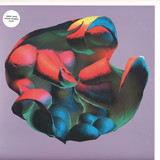
with »redsuperstructure«, robert lippok created a new foundation for his musical endeavors. now - 7 years later - this system properly comes to life on »applied autonomy«. the title of the new album is a clear indicator as to what the berlin-based producer has been up to during the last couple of years, both on a conceptual level as well as how he molds his ideas into tracks.
»applied autonomy« orchestrates a certain state of frantic standstill, which occurs once a structure is set. has this state been reached, the artist is free to focus on other equally important aspects, balancing the various shades, pushing ideas even further to really make them shine and blossom in their self-declared autonomy. the more light one lets in, the more layers become visible.
layers are key when it comes to understanding »applied autonomy«. big chunks of the material with which the album has been produced derive from sketches specifically made for a club performance. rather than meticulously devising each and every detail, lippok focussed instead on recording as many fragments as possible in a short period of time, elements which he could later combine and layer on stage. based on this material and his experience experimenting with it in a live environment, the album slowly began to shape. an album culminating in a collaboration with klara lewis, with whom lippok spent 2 days at the EMS studios in stockholm, approaching the idea of autonomy from yet another angle. during the session, both musicians played and performed simultaneously, yet not explicitly together, lost in their own thoughts and ideas, only subconsciously taking in what the other one was coming up with. the result is »samtal«, 14 minutes of a constantly evolving state of poise, magically connecting all the dots Lippok had already defined as »applied autonomy«.
A great compilation can open the gate to another world. Who knew that some of the most exciting Afro-funk records of all time were actually made in the small West African country of Benin Once Analog Africa released the first African Scream Contest in 2008, the proof was there for all to hear, gut-busting yelps, lethally well- drilled horn sections and irresistibly insistent rhythms added up to a record that took you into its own space with the same electrifying sureness as any favourite blues or soul or funk or punk sampler you might care to mention.
Ten years on, intrepid crate-digger Samy Ben Redjeb unveils a new treasure- trove of Vodoun-inspired Afrobeat heavy funk crossover greatness. Right from the laceratingly raw guitar fanfare which kicks o Les Sympathics' pile-driving opener, it's clear that African Scream Contest II is going to be every bit as joyous a voyage of discovery as its predecessor. And just as you're trying to get o the canvas after this one-punch knock out, an irresistible Afro-ska romp with a more than subliminal echo of the Batman theme puts you right back there. Ignace De Souza and the Melody Aces' Asaw Fofor" would've been a killer instrumental but once you've factored in the improbably-rich-to-the-point-of-being-Nat-King-Cole-influenced lead vocal, it's a total revelation.
The screaming does not stop there, in fact it's only just beginning. But the
strange thing about African Scream Contest II's celebration of unfettered Beninese creativity is that it would not have been possible without the assistance of a musician who had been trained by the Russian secret services to "search and destroy" enemies of the country's (then) Marxist-Leninist president Mathieu Kerekou.
Already familiar to fans of the first African Scream Contest as a mainstay of ruthlessly disciplined military band Les Volcans de la Capitale, Lokonon André vanished in a cloud of dust at Ben Redjeb's behest with a list of names and some petrol money, only to return a few days later having miraculously tracked down every single name he'd been given. The source of this Afrobeat bounty-hunter's impressive people-finding skills - his training with the KGB - highlights the tension between encroaching authoritarian politics and fearless expressions of personal creative freedom which is the back-story of so much great African music of the 60s and 70s. Happily, in this instance, Lokonon was tracking the artists down to oer them licensing deals, rather than to arrest them.
Where some purveyors of vintage African sounds seem to be strip-mining the
continent's musical heritage with no less rapacious intent than the mining companies and colonial authorities who previously extracted its mineral wealth, Samy Ben Redjeb's determination to track this amazing music to its human sources pays huge karmic dividends.
Like every other Analog Africa release, African Scream Contest II is illuminated by meticulously researched text and eortlessly fashion-forward photography supplied by the artists themselves. Looming large - alongside Lokonon André - in the cast of biopic-worthy characters to emerge from this seductive tropical miasma is visionary space-nerd Bernard Dohounso, who laid the foundations for Benin's vinyl predominance by importing and assembling the turntables that would play the products of his Bond villain-acronymed pressing plant SATEL, a factory that would revolutionise the music industry in the whole region.
The scene documented here couldn't have been born anywhere else but in the Benin Republic , and the prime reason for that is Vodoun. It's one of the world's most complex religions, involving the worship of some 250 divinities, where each divinity has its own specific set of rhythms, and the bands introduced on the African Scream Contest series and other compilations from that country were no less diverse than that army of dierent Gods. At once restless pioneers and masters of the art of modernising their own folklore, the mystic sound of Vodoun was their prime source of inspiration.
One especially irascible Vodoun-adept was Antoine Dougbe, who styled himself The devil's prime minister' while turning ancestral rhythms into satanically alluring modern beats. As Orchestre Poly-Rythmo songwriter Pynasco has observed sagely, Evil is not elsewhere, evil extends into the house'. And African Scream Contest II is a gloriously cinematic road-trip through an undiscovered realm of music lore whose familiarity is every bit as thrilling as its otherness.
Prairie is the project of multi-instrumentalist and producer Marc Jacobs, hailing from Brussels with roots in The Netherlands. He previously released an EP (I'm so in love I almost forgot I survived a Disaster - 2013) and an LP (Like a Pack of Hounds - 2015) on the Berlin imprint Shitkatapult. On stage, Prairie plays with two or three musicians and together they re-create a free association of musical ideas and atmospheres. Prairie has played in selected venues and festivals across Europe and toured with Apparat in 2016.If the apocalypse was painted in several layers of pastel gouache, its soundtrack might be PRAIRIE's Flash Flood. Listening to the album, we drift through a series of frozen landscapes that gesture at a post-apocalyptic ambience. This is a kind of blackened music that has been left to sediment, excavated from traces in ice core samples. Flash Flood showcases a deep sensitivity to narrative and rich cinematic textures as Marc Jacobs returns with palimpsestic sonic layers. It has been three years since PRAIRIE's last release—the 2015 Cormac McCarthy-inspired Like a Pack of Hounds—and it is clear that it has been several years of pensive reflection. Now, PRAIRIE takes the sentiment of his 2012 debut, I'm So In Love I Almost Forgot I Survived A Disaster, several steps further: it is after the apocalypse, and no one has survived. And yet with Flash Flood, we can hear the hum of this impossible future.
'After the Flash Flood' introduces the sonic ruins of distorted guitars, field recordings, drum programming and synths that create the textures of the entire album. The melancholic and subdued black metal churn of 'Raindeath' becomes the cold backdrop for unnerving, paranoiac speech. The third track, 'Sisters', foregrounds this coldness while slowly moving away toward alternate vistas where the acoustic timbres of the saz-driven 'A Permanent War Economy' take over. 'Underwater Body Hunting' and 'Rabid Ibrahim' are hard hitting beat-oriented tracks that insist on burning slow. There is a patience with PRAIRIE's FLASH FLOOD that is difficult to deny. The lamentation of 'Elephants Will Rise Again' perhaps signals that it is not only the human that is lost after catastrophe. The album closes with 'Hard Water: Cracked Ice' and 'Hayashi Clock'. The former is a beautiful coalescence of clean harmonious tones and softly overdriven drums, while the latter brings us back to a meditative state, drifting through the final pastel tapestry.
"... his cosmos is located somewhere between Bohren & der Club of Gore and Sunn O))), ambient is as familiar to him as brachial sounds, and he is as much acquainted with guitars as with synths and modern technology" (GROOVE)
"... Like Ben Frost, (Prairie) exudes a certain harshness while tempering his work with moments of sublime beauty. This isn't club material, it's music for the hammer in one's hand, the confrontation of the demon, the soul-shattering revelation." (A Closer Listen)
Zia Mohiuddin Dagar : rudra veena
Annie Penta : tanpura
Concert recorded at the home of Shantha and Niranjan B. Benegal, Seattle, Washington 9 March 1986.
Recorded by Niranjan Benegal. Files obtained from Jeff Lewis.
Mastered & Cut by Rashad Becker at Dubplates & Mastering 1117 & 0318.
Liner notes by Renaud Brizard, edited by Stephen O'Malley & Ian Christe.
Front and back cover photos by unknown.
Interior photography by Niranjan B. Benegal, Dan Neuman & unknown, Seattle 1978-1980. .
Around ten years ago, deep into a cozy and hazy night following a concert with my sound brothers Daniel O'Sullivan and Kristoffer Rygg in London (as Æthenor), they graciously introduced me to a recording of rudra veena (a kind of noble deeper bass relative to the sitar, in a way) as performed by dhrupad master Zia Mohiuddin Dagar.
Dhrupad, for those who do not know, is a branch of Hindustani classical music said to "show the raga in its clearest and purest form". It's pacing concentrates heavily on the slow, contemplative alap section and works with specific microtonal gestures and deep characteristics of resonance ... in short I was hooked on this new (to me) and ancient form of music from the first listen, and feel that a more or less continual listening & reviewing of Zia Mohiuddin Dagar's recordings in the years that followed have influenced my own approach to music quite heavily (if, albeit, indirectly).
In early 2015 I was able to make contact with Zia Mohiuddin Dagar's son Bahauddin and some of his American students/disciples, primarily Jeff Lewis. Over time we developed a friendly and educational exchange, access a massive archive of recordings and developed these two paired titles for my label. It's been a long path to arrive at actually releasing them but also probably in many ways one of the most significant releases I've worked on. And I'm proud to be able to reveal these to date unreleased archival recordings of one of the masters of dhrupad, Z. M. Dagar, to the public for the first time.
Zia Mohiuddin Dagar was the nineteenth generation in a family tradition known as Dagar gharana, a rich lineage which continued and performed the musical form of dhrupad (Bahauddin Dagar continues the lineage as a master rudra veena dhrupad player of note today). Initially, dhrupad was a rigorous, austere, devotional genre that was sung in Hindu temples. But between the 16th and the 18th centuries, it became the preeminent genre in royal courts in North and Central India, and the Dagar gharana developed and continued publicly following the eventual loss of court patronage for dhrupad in the 19th century. The French ethnomusicologist Renaud Brizard covers the story of Zia Mohiuddin Dagar's life and teaching (a long story also in Seattle, my hometown!), the Dagar family and gharana, the rudra veena and more topics in an extensive set of liner notes in this release.
Ragas Abhogi & Vardhani were recorded in a private house concert in Seattle at the home of the Benegals in March 1986 (the week before the accompanying release SOMA029 Raga Yaman was recorded). The Benegals were friends (& Shantha Benegal was also a student) of Dagarsahib who sometimes hosted Hindustani music concerts in their home. It's a rare glimpse of a more intimate, personal and perhaps different kind of performance considering the form of dhrupad.
-Stephen O'Malley, March 2018, Paris, France
Stephen O'Malley would like to especially thank Bahauddin Dagar, Jeff Lewis & Jody Stecher for their enthusiasm, cooperation, patience, insight & advice toward developing these editions. Thank you also to Laurel Sercombe & John Vallier from the University of Washington Ethnomusicology Archives, Shantha Benegal, Philippe Bruguière, Dan Neuman, Ira Landgarten, Renaud Brizard, Ian Christe, Peter Rehberg, Rashad Becker, Daniel O'Sullivan & Kristoffer Rygg, all for their direct or indirect cooperation, assistance & patience.
Recorded by unknown at the University of Washington, HUB Auditorium, Seattle, Washington 15 March 1986 , concert co-sponsored by the UW Ethnomusicology Division and Ragamala.
Original digitally processed audio recording made with Panasonic PV-9000 VCR, Sony PCM-F1, PZM mics. Mastered & Cut by Rashad Becker at Dubplates & Mastering 1117 & 0318.
Liner notes by Renaud Brizard, Stephen O'Malley & Ian Christe.
Front and back cover photos by Niranjan B. Benegal, Seattle Center Folklife Festival 1979. Elizabeth Reeke & Annie Penta on tanpuras.
Inner gatefold photography by Niranjan B. Benegal & Ira Landgarten.
Around ten years ago, deep into a cozy and hazy night following a concert with my sound brothers Daniel O'Sullivan and Kristoffer Rygg in London (as Æthenor), they graciously introduced me to a recording of rudra veena (a kind of noble deeper bass relative to the sitar, in a way) as performed by dhrupad master Zia Mohiuddin Dagar.
Dhrupad, for those who do not know, is a branch of Hindustani classical music said to "show the raga in its clearest and purest form". It's pacing concentrates heavily on the slow, contemplative alap section and works with specific microtonal gestures and deep characteristics of resonance ... in short I was hooked on this new (to me) and ancient form of music from the first listen, and feel that a more or less continual listening & reviewing of Zia Mohiuddin Dagar's recordings in the years that followed have influenced my own approach to music quite heavily (if, albeit, indirectly).
In early 2015 I was able to make contact with Zia Mohiuddin Dagar's son Bahauddin and some of his American students/disciples, primarily Jeff Lewis. Over time we developed a friendly and educational exchange, access a massive archive of recordings and developed these two paired titles for my label. It's been a long path to arrive at actually releasing them but also probably in many ways one of the most significant releases I've worked on. And I'm proud to be able to reveal these to date unreleased archival recordings of one of the masters of dhrupad, Z. M. Dagar, to the public for the first time.
Zia Mohiuddin Dagar was the nineteenth generation in a family tradition known as Dagar gharana, a rich lineage which continued and performed the musical form of dhrupad (Bahauddin Dagar continues the lineage as a master rudra veena dhrupad player of note today). Initially, dhrupad was a rigorous, austere, devotional genre that was sung in Hindu temples. But between the 16th and the 18th centuries, it became the preeminent genre in royal courts in North and Central India, and the Dagar gharana developed and continued publicly following the eventual loss of court patronage for dhrupad in the 19th century. The French ethnomusicologist Renaud Brizard covers the story of Zia Mohiuddin Dagar's life and teaching (a long story also in Seattle, my hometown!), the Dagar family and gharana, the rudra veena and more topics in an extensive set of liner notes in this release.
Raga Yaman was recorded at a public concert in Seattle at the HUB Ballroom at the University of Washington in March 1986 (the week after the accompanying release SOMA028 Ragas Abhogi & Vardhani was recorded) at the end of his last tour of the United States. Yaman was a special raga for Zia Mohiuddin Dagar, one of his signature raags. For centuries, Yaman has been considered as one of the most fundamental ragas in Hindustani music and is one of the first ragas which is taught to students. A deep knowledge of Yaman gives a key for understanding many other ragas. It's filled with tranquility, contemplation, pathos and spiritual yearning. .
Following two previous excursions into degraded tape loops, fuzzed-out ambience and bittersweet moments of tenderness, O$VMV$M return to Idle Hands to complete a trilogy of LPs with 12 vignettes from the underbelly of the Bristol scene.
Bound to Young Echo's ever-swelling cult of wayward sonics, individually Amos 'Jabu' Childs and Sam 'Neek' Barrett have plenty of irons in the fire. Childs deals in forlorn, vocal-led introspection alongside Alex Rendall and Jasmine Butt as Jabu, while Barrett can be found laying down punishing modern grime variations alongside Kahn, or delving into more traditional soundsystem sonics in Gorgon Sound. Meanwhile the pair were clearly heard laying down some of the tones that seep out of the uncredited Young Echo collective LP from earlier this year. Their production work behind Rider Shafique's killerLion7" on Lavalava was unmissable, and their blunted beats behind Manonmars' debut LP are awaited with anticipation.
As O$VMV$M, the pair enter a particular sound world that mixes cosy nostalgia with creeping dread. Even at its most mellow, a sense of unease hovers beneath the surface, and that's what makes their approach so compelling. The sound palette is broad, from pitch-shifted RnB vocal licks to foggy trumpets crawling at half speed, but over it all a dense blanket of dust gives the sensation of peering back through time.
Putting paid to the idea that immersive music needs to be long and drawn out, the dose response on these condensed mood capsules is quick and strong. In a little over 20 minutes O$VMV$M take you far and wide. The trip over the past three LPs has been an adventure for both label and artists - Sam and Amos have shaped out a style that now feels like a fully formed entity independent of their other ventures. We look forward to seeing where O$VMV$M heads from here.
New Lp-edition of a private press library recordings of the early '70s.
Together with Florian Fricke and Peter Michael Hamel, Deuter is certainly the main responsible of a fruitful encounter between European sensibility and Eastern aesthetics in the German music of the 1970s. Soundtrack was originally produced by Kuckuck in 1973 not for an official and public release, but as a library' to be used for films, TV and radio. As a library it respects the canonical and typological structure of the genre with 26 short sonic fragments, sequences imagined and conceived like fulminating illuminations. There's still a solid electronic vocation that, however, has put aside the most disruptive effluvia of D (1971) of pure kraut' ancestry. In fact, the album is more like an ideal passing bridge between some ritual instances of the previous Aum (1972) and the following successful phase of Deuter during the period when he stays in the Bhagwan Shree Rajneesh's ashram in Poona realizing, in parallel to a renewed inner life, masterpieces like Celebration, Haleakala, Ecstasy and Silence is the Answer. Musically speaking, Soundtrack presents itself as a heterogeneous work with nocturnal, cinematic, galactic and atmospheric-environmental implications. Electronics remains the predominant factor but can vary from mantra drones of more ceremonial and meditative space-relax' tones of some tracks (Triad, Deep Sea, Gothic Velvet or Evening) to the most amused formulations of pulsating analog synths that in the hands of Deuter become toy-equipement' to modulate and explore (Desert Rock, Synth Effect, Flea Dance or Laser). There is no lack of acoustic moments more ethnically inspired with Arabian and Indian (Reed, Arabia) or devotionally solar themes (Tom Bombaddils Dance), so evoking an air of diffuse peace then completely conquered in the beloved India.
With this new work Maurizio Abate recovers the discourse started with Loneliness, Desire and Revenge (2016) but with a different narrative sensitivity. The symbolic air that you breathe suggests a personal and universal experience in which thoughts and perceptions remain as enveloped in an eternal cosmic wheel. It's a condition that flows sincerely into an emphatic introspection and identification between the stasis of an inner soul and the flowing vitality of stagnant aquatic landscapes. In this direction the music of Abate always condenses multiple ranges of different emotional spectra evoked by profound naturalistic references. The airy openings of the strings, the distant whispers of the harmonica, cascades of phrasings more calm or more torrential can lead into the magnificent climax of the Nostalgia. The string arrangement for violin and cello by Lucia Gasti introduces in a dimension of idyll, in elegiac passages of touching poetry almost of chamber music but at the same time wet by the pastoral and bucolic moods of autumn landscapes, they are paintings imbued with different flavors and colours that recall the light and the candor of the Venetian tonalisms or the moving paintings full of meaning of Tarkoski. In the darkest and saddest moments the open chords are like suspensions of unresolved questions and torments, but the cathartic finale with a free and minimalist piano prelude to possible future glares, almost to perceiving that even where there's stasis the sun can still shine the hope for the new on the clearing of the pond. Remains the feeling with that stylistic "freedom of expression" dear to the visionaries Fahey and Basho, but also a clear interpretation of the expressive possibility of the lead guitar, absolutely lyrical and contemporary for refinement of the crystalline sound, which places this work in parallel with the basic acoustic tests of others great like Jim O'Rourke, Jack Rose or James Blackshaw.
Record Kicks Celebrates 15 Years In The Business With A Collection Full Of Exclusive New Singles. Available In Ltd Edition Double Clear Vinyl Lp, Cd And Digital Download. Side By Side With Similar Outfits Like Daptone, Truth And Soul, Freestyle Or Timmion, Under Its Motto "the Explosive Sound From Today's Scene" Milan-based Independent Label Record Kicks Has Been Pitching The Contemporary Funk & Soul Scene Since Day One.
With Over 200 Releases Under The Belt, Rk Has Released Bands From All Over The Globe And Earnedthe Support Of Vip Fans Such As Kenny Dope, Jamie Cullum, Craig Charles And Not Least Jay-z, Thanks To Which The Label Has Recently Received A Grammy Nomination For Hov's Use Of Hannah Williams' "late Nights And Heartbreak" As Backdrop For His "4:44". The New Instalment "record Kicks 15th" Coming Out Next May 18th On Double Clear Lp, Cd And Digital Download, Celebrates 15 Years In The Business With A Collection Full Of Exclusive New Tracks And The Very Best Of It's Roster.
The Album Kicks Off With Rk's Latest And Youngest Signing:
From Chicago, Heavily Inspired By The Impressions And Leroy Hutson, We Are Proud To Present You "the Devonns" With Their Super Soulful Debut Single "come Back", An Appetizer Of Their Debut Full Length Expected To Land On Rk Next Autumn. Another New Signing To The Label Is Men Of North Country's (acid Jazz Records) Side Project "the Faithful Brothers", Here With Their New Single "one More Time".
Other Exclusive Tracks Of The Comp Are "this Strange Effect", A Coverup Of The Hooverphonic's Single From 1998 Brought To You By Dutch Northern Soul Disciples The Tibbs, "love You Back" From Detroit Deep Funk Outfit Third Coast Kings, "the Sort" By The Buenos Aires Mod Reggae Kings The Crabs Corporation, "top Dog" By British Funk Combo The Hook & Slingers And Straight From Down Under "you Don't Know Me" By The Always Great Dojo Cuts.
Along With These New Exclusive Cuts, Dig On Some Label's News Singles And Heavyweight Classics Such As Dj Shadow's "this Time" Taken From Baby Charles Debut Lp, "don't Throw Your Love In The Garbage Can" By James Brown's Original Funk Diva Martha High Feat Japanese Funk Ambassadors Osaka Monaurail, "psycheground" The Brand New Afro-funk Single By Calibro 35 And Then Portuguese Tnt Dynamite Marta Ren & The Groovelvets, Toronto Soul Queen Tanika Charles, Uk Funk Ambassadors The New Mastersounds, The Diplomats Of Solid Sound And The Already Mentioned "late Nights & Heartbreak" By Hannah Williams & The Affirmations.
With MEL011, it is Melodies International's immense pleasure to direct their focus towards both Soul and House royalty, selecting and reissuing two of Frankie Knuckles' scarcer remixes of an all-time classic: Womack & Womack - MPB (Missin' Persons Bureau). Now known as Zekkariyas and Zeriiya, partners Cecil and Linda Womack, two eminent members in an extensive lineage of music artistry (i.e. Bobby Womack was Zekkariyas' brother, Zeriiya is Sam Cooke's daughter) engaged in one of music history's most successful and exciting singing and song writing partnerships in the early 1980s. Zeriiya says her process with Zekkariyas flowed like water, their shared complicity and talent led them to write and produce strings of chart topping hits and classic albums as Womack & Womack but also for other renowned artists of the time such as Patti Labelle, Teddy Pendergrass and the O'Jays to only name a few. The original version of Missin' Persons Bureau was first released in 1988 on 'Conscience' (Island Records), a classic album with impeccable instrumentation and thoughtful and relatable narratives that reflect on the nature of life, true friendship, love or in the case of MPB, it's subsequent loss. Following the release of the LP, Island records founder Chris Blackwell introduced the idea of getting Missin' Persons Bureau reworked by House legend Frankie Knuckles and whilst the Womacks weren't originally set on the idea of having their songs remixed by other artists, Blackwell, who Zeriiya describes as a 'record label manager seriously involved in making sure the project is what the creators really want it to be", had earned their trust. With these remixes, Frankie managed to turn a radio hit into underground club classics. The Paradise Ballroom mix conserves the essence of the original, reinterpreting the rhythm section whilst drawing it out over 8 minutes, with expert tension building and release clearly aimed at the dance floor.
Here We Are Releasing The Second Album Of Cologne Born Producer Thyladomid Who Is Familiar To Many Through His Work On Hamburg Label Diynamic Which Has Lead Him To Perform Around The World, Together With Artists Such As: Adriatique, Solomun, Kollektiv Turmstraße, Hosh, David August, Stimming, And Many More. More Then 30 Minutes Playing Time, 6 Tracks And Artwork By Florian Kramer Offer A Lot To Discover. Thyladomid Is Famous For His Forward Thinking Deep Melodic Dance Music Which Earned Him Respect And Support From Many People Of The Scene And Evolved Also In Cooperations With Adriatique And The Singer Mahfoud. You Can Find Two Tracks Featuring Mahfoud On The Album. With His First Album "interstellar Destiny" In 2015 Thyladomid Has Already Changed Towards More Introspective Music And You Will Hear He Has Taken That A Step Further Here. In Comparison To His First Album, "places" Refers To Different Places Which Inspired Him To Write The Album And Offers A Higher Level Of Complexity In The Making Of Music Which Has Helped Thyladomid To Enhance The Moody Quality In A Dazzling Way Sometimes Even Spine Tingling When You Let Yourself Go To Explore The Abundance Of The Trax. As He Said In His Own Words: - the Albums Intention Was That Of An Organic Produced Album With Different Moods. Instruments Such As Piano And And Violin As Well As Field Recording Bring Alive A Special Quality. The Bouncing Of Stones On A Frozen Pond Recorded With Multiple Microphones Suggest For Example An Authentic Spacious Quality. The Self Recorded Percussion, Sometimes Quite Exotic Were Included In All Of The Tracks. The Combination Of Synthetic Sounds With Traditionally Instruments Was One Of The Big Challenges For Me. The Piano And Prophet 6 Und The Moog Sub37 Were The Main Instruments Used For The Album'. Thyladomid Started Working On The Album 2 1/2 Years Ago. His Classical Training On The Piano Helped To Quickly Come Up With A Musical Theme Which Is Based On Different Tonalities Which Were Then Linked To Each Other And Which Actually Helped To Structure The Whole Release. The Good Weather In Summer Was A Good Inspiration And Finally Led To The Idea To Dedicate Tracks To A Certain Place, A Place Which Means A Lot For Him. From That Idea The Title Of The Whole Album Derived: "places ". "a Little Church In Amsterdam" As He Says "is Such A Track Encouraged By The City Of Amsterdam I Love And Respects So Much And Actually Have Spend So Much Time In. It Is A Track I Played Outside In My Garden To Friends And Which Works Perfectly For Me.' "a Little Church In Amsterdam" Is A Track Where Melodies Bloom And Flourish. It Feels Like Zooming In On Nature Grasping A Time Lapse Symphony. "blossoming Limburg Ft Mahfoud" Was Born In The Capital Of Limburg Which Is Located In The South Of The Netherlands And Reflects The Summer Of 2017 And Was Recorded In A Warehouse. It Reflects The Intimacy And Synergetic Level Between Mahfoud And Thyladomid. The Fantastic Deep Vocal Track Is Spiced Up With Lots Of Acoustic Details Which All Happen In The Background But Effectively Surface To Pull The Listener Into His World. "night Owl" Is A Lyrical Dreamy Piano Piece With A Melancholic Note And An Ear For Details. Acoustic Finesse Presented On An Episodic Scale. We Guess The Track Was Influenced By The Works Of Four Tet Or Pantha Du Prince. "kollwitzplatz" Is A Small Park In Berlin's Prenzlauer Berg Which Was Thyladomid's Home For 2 Years . - the Cafes And Restaurants Laced By The Alleys Of The Kollwitz District Resemble A Piece Of Home For Me And Represents The Time Of My Stay In Berlin'. Musically "kollwitzplatz" Is Full Of Life. You Can Hear Children Talking While The Piano Attracts Sounds Like Moths Are Attracted To Light. The Track Offers This Richness Of Percussive Elements And Sound Sources Creating A Stunning Complexity Which Does Not Limiting Itself But Rather Creates This Free Flow Of Acoustic Signals. You Instantly Will Feel: There Is A Lot To Discover At "kollwitzplatz". "underwater Rhapsody", The Title Says It All: It Has That Episodic, Free-flowing Structure, Featuring A Range Of Highly Contrasted Moods, Color And Tonality. What It Actually Means To The Listener Is That Grande Chords Meet Dissonances Of Sound That Fly In Like Drones Cross The Big Time Melodies That Gain A Centrifugal Force At Times... And All This Leaves You Dizzy And Creates Another Big Listening Experience As The Whole Album Is Directed To Entertain You In A Smart And Distinguished Way.
Soma Are Proud To Present The Debut Album From One Of Techno's Most Prolific And Renowned Producers, Tensal. As One Half Of The Duo Exium, Hector Sandoval Has Already Carved Out A Career In Techno Spanning Over 20 Years, With Countless Release On Their Self-run Nheoma, Warm Up Recordings & Pole Group, To Name But A Few. In 2014, He Started The Tensal Project As An Outlet For His Own Productions Which Allowed Him The Scope Of Pursuing The More Direct And Minimalistic Approach With His Music And Also His Dj'ing. After Hooking Up With The Soma Camp In Early 2017 And Releasing A Collection Of Well-refined Singles, Tensal Delivers His Debut Album, Graphical. Searching To Go Beyond The Realm Of Standard Techno, Tensal Lends His Considerable Production Experience To This Project And Creates A Sophisticated And Immersive Album Experience That Flows Gracefully Between Idm And Techno.
With The More Stripped Back Approach At The Forefront Of The Project, Belga Gives Us An Insight Of What To Expect From The Album; A Refined Sequence And Melodic Element Build Gracefully And Hypnotically, Ending Abruptly To Leave You Wanting More. Santolaya Picks Things Up And Brings With It A More Pensive And Exploratory View Before The Droning And Atmospheric Roj0 Leans On A Decidedly More Experimental Side. Aimed At Bringing Tension To The Project, Convulsa's Waves Of Sub Bass And Syncopated Percussion Set The Tone For A Pulsing And Edgy Affair. Tensal Brings 4x4 Into Play With Polariex. Slow Paced Yet Staunch In It's Approach, A Gritty Synth Hook Stands As The Backbone. A More Hypnotic Approach On Egoaio Looks To Bring In The Standard Tensal Sound But As Always, New And Experimental Sounds Are At The Forefront. Closing Out The Album, The Focus Begins To Shift To A More Dance Floor Orientated Attitude. Zomb Is A Quintessential Dj Tool, Drawing On The Power Of Restraint, As Its Gradual Swells Create Perfect Cohesion Throughout. P R U V I 4 Continues The Ongoing Theme Of Tension As Multi Layered Hooks Surge Forth Against A Backdrop Of Forceful Drums And Undulating Noise. Tensal Ends His Debut Lp On A High With The Punishing Mimix. Pounding Kicks And Twisted, Tripped Out Synths Are Driven In Intensity With Chopping High Hats That Slice Through With Vigour.
With Graphical, Tensal Has Constructed A Body Of Work That Is More Than The Sum Of Its Parts; Easily And Intelligently Displaying His Production Prowess By Crafting A Sonically Accomplished Album.
It's A Funny Old World, And Yet Again, The Black Dog Have Provided The Soundtrack. Our Fast-approaching Dystopia Has Been Envisioned And Documented By The Band For Decades. Now, The Black Dog's Two New Albums, Post -truth And Black Daisy Wheel, Translate Their Growing Horror Into Some Of Their Most Accessible And Impactful Music, Translating Our Manufactured Reality Into High Energy Dancefloor Constructions On Post -truth, And Reflective Ambient Excursions On Black Daisy Wheel.
Long Familiar With The Tropes And Pitfalls Of Esoteric Undergrounds, In Both The Pre- And Post Internet Eras, The Black Dog Have Ventured Deep Into Contemporary Conspiratorial Cultures With A Trenchantly Critical Eye. In The 80s, Conspiracy Theories Were A Tonic For A Sceptical Mind, A Stimulant To Agile Thinking. Today, They Have Become The Stock In Trade Of Mainstream Political Influence. The Scene Has Morphed Into A Rabbit Hole Where Nothing Is 'really' Real, Everything Is A Hoax, And Everyone Is Out To Get You. The Mindset Is Beyond Paranoid, The Discourse So Far Post-fact That Only Opinion And Assumed Identity Matter. Arguing Against Proven Science Is A Part Of The Entry Criteria, And Wilful Pedantry Its Standard Currency. The Impact On Mental Health Is Corrosive: Fear, Uncertainty And Doubt Multiply And Replicate Until The Most Ridiculous Theories Are Invented To Explain The Most Basic Things: Tarmac, Banana Skins, Duvets. Auto-suggestion Is Rife, Where Willing Victims Drink Bleach (mms) At The Behest Of Youtube Videos, Flat-earthers Are Taken Seriously, And The Manufactured Fearful Believe They Are Being Gang-stalked For Finding Monsters On Pixelated Screens. The Distinction Between The Real World And The World Of An Auto-hoaxer Is So Blurred That Reality Melts Away; You're Only Ever One Personal Detail Away From Being Doxxed, At Which Point Reality Bites Back, Hard.
You Couldn't Make It Up, Even Though That Is Exactly What The Conspiratorial Fringe (now One Sharp Corner From The Mainstream) Always Do. The Fact That There Are Real People Involved In This Scene Creates A Real Sense Of Pathos And Anger Which Is Deeply Embedded In The Music On These Two Albums. As Soon As You Start Engaging With People In The So-called 'truth Movement', One Minute It's Painful, But The Next Can Be Genuinely Funny; These Are People Who Are Both On Edge And Upon The Edge Of A Larger Social And Political Reality That, For Worse And For (even) Worse, Defines Our Times. Hence These Two Very Different Albums. Black Daisy Wheel Is Reflective, Often Intense, Frequently Compassionate; While Post -truth Was Written While The Black Dog Was Fully Engaged With People Whose Paranoia Was In Full Swing.
It's A Funny Old World, And Yet Again, The Black Dog Have Provided The Soundtrack. Our Fast-approaching Dystopia Has Been Envisioned And Documented By The Band For Decades. Now, The Black Dog's Two New Albums, Post -truth And Black Daisy Wheel, Translate Their Growing Horror Into Some Of Their Most Accessible And Impactful Music, Translating Our Manufactured Reality Into High Energy Dancefloor Constructions On Post -truth, And Reflective Ambient Excursions On Black Daisy Wheel. Long Familiar With The Tropes And Pitfalls Of Esoteric Undergrounds, In Both The Pre- And Post Internet Eras, The Black Dog Have Ventured Deep Into Contemporary Conspiratorial Cultures With A Trenchantly Critical Eye. In The 80s, Conspiracy Theories Were A Tonic For A Sceptical Mind, A Stimulant To Agile Thinking. Today, They Have Become The Stock In Trade Of Mainstream Political Influence. The Scene Has Morphed Into A Rabbit Hole Where Nothing Is 'really' Real, Everything Is A Hoax, And Everyone Is Out To Get You. The Mindset Is Beyond Paranoid, The Discourse So Far Post-fact That Only Opinion And Assumed Identity Matter. Arguing Against Proven Science Is A Part Of The Entry Criteria, And Wilful Pedantry Its Standard Currency. The Impact On Mental Health Is Corrosive: Fear, Uncertainty And Doubt Multiply And Replicate Until The Most Ridiculous Theories Are Invented To Explain The Most Basic Things: Tarmac, Banana Skins, Duvets. Auto-suggestion Is Rife, Where Willing Victims Drink Bleach (mms) At The Behest Of Youtube Videos, Flat-earthers Are Taken Seriously, And The Manufactured Fearful Believe They Are Being Gang-stalked For Finding Monsters On Pixelated Screens. The Distinction Between The Real World And The World Of An Auto-hoaxer Is So Blurred That Reality Melts Away; You're Only Ever One Personal Detail Away From Being Doxxed, At Which Point Reality Bites Back, Hard. You Couldn't Make It Up, Even Though That Is Exactly What The Conspiratorial Fringe (now One Sharp Corner From The Mainstream) Always Do. The Fact That There Are Real People Involved In This Scene Creates A Real Sense Of Pathos And Anger Which Is Deeply Embedded In The Music On These Two Albums. As Soon As You Start Engaging With People In The So-called 'truth Movement', One Minute It's Painful, But The Next Can Be Genuinely Funny; These Are People Who Are Both On Edge And Upon The Edge Of A Larger Social And Political Reality That, For Worse And For (even) Worse, Defines Our Times. Hence These Two Very Different Albums. Black Daisy Wheel Is Reflective, Often Intense, Frequently Compassionate; While Post -truth Was Written While The Black Dog Was Fully Engaged With People Whose Paranoia Was In Full Swing. Welcome To Our Disinformation.
Cause we love Vinyl..... Here is the first Vinyl from the Label JACKFRUIT RECORDINGS, a new label founded in 2017. Label Owner is the Berlin based Artist, DOMPE, known for good arranged House Sounds. He releases a lot, a real creative mind. Four handmade tracks can be found on the Vinyl. THE JOKER: Do you need a Joker Deep and warm Techhouse-Bassline So who is you favourite Buffoon now Risky grinning attitudes sounds you have to hear loud. After that bomb it's time for an new experience: It's time to Boogie. 1,2,3,4 what are you waiting for Move your Body to the Groove. CRY: snappy sounds, a necessary amount of percussions and a beat that makes you teeter along. FREE BIRD: Here are some very new House Beats for you! It is really time for some spring feelings, so the sounds go fresher! And it feels like hearing the bird singing, sitting in the sun meanwhile. Real Groove comes through your Speakers - turn is loud! Percussions make you hooo. So shake your body once again and dance until the spring is coming. JACK BROWN: Hey Sweetheart you are such a hot fruity! Another brilliant cooperation between AGENT! and DOMPE and as it is common: never change a winning team! These both guys living in Berlin are not only Friends; they got a perfect match with their sounds and ideas. Soundaholics with playful whims in their heads. There is a rumour that JACK BROWN gives his Name to JACK FRUIT. Not really just kidding. JACK BROWN makes you dance, drags u to the middle of the floor. Charming Bassline, Vocal and a direct urge for snipping your fingers.
out of Stock
Last delivered 34 days ago available to reorder, subject to availability
Joanne Forman's Cave Vaults of the Moon created in 1987 for an exhibit of sculptures in Taos, New Mexico is a mesmerizing score for voice, Ensoniq Mirage, Juno 106, flute, guitar and effects. The playful extra-terrestrial recording wafted through the exhibit every day for its duration and then lay dormant for nearly 30 years. Unearthed now, Cave Vaults of the Moon sounds prescient and timeless, as if Pep Llopis and Iasos scored a Wicker Man remake set on Mars. Restored, remastered and cut using DMM.
.
We humans, the nascent beings that we are, still haven't quite figured out the full potential of music. Dancing, meditating, emoting, protesting, these are all pretty basic. But what if we communicated more complex ideas with music What if we codified all of our activities with music This idea came to composer Joanne Forman
when commissioned in 1987 to create the soundscape for an environmental exhibition of sculpture called Artifacts from an Alien Civilization in Taos, New Mexico. The sculptures, elaborate ruins that had been found on the moon, begged the question: who created them and for what purpose
Joanne Forman imagined that Earth's moon was a vacation spot for advanced beings from another galaxy. In her mind, the sculptures in the exhibit were the remnants of a deserted playground. Cave Vaults of the Moon became a collection of sonic texts describing the recreational activities that went on there, earth-viewing, collecting information, building and playing.
'It is now clear that humans are no longer the most important things in the universe, that their knowledge, creativity and intelligence are ultimately limited.'
The Posthuman realises that the ultimate questions about existence and being do not require answers and accepts that humans have a finite capacity to understand and control nature. Even just to know the ultimate nature of the universe would require knowing everything about the universe, everything that has happened and everything that will happen. If one thing were not known it would imply that all knowledge of the universe is partial, potentially incomplete and, therefore, not ultimate.
Humans privilege to order over disorder on the assumption that the essential laws of nature are gradually being discovered. This is a fundamental error; nature is neither essentially ordered or disordered. What we perceive as regular, patterned information we classify as order; what we perceive as irregular, unpatterned information we classify as disorder. The appearance of order and disorder implies more about the way in which we process information than the intrinsic presence of order or disorder in nature.
The humanist era was characterized by certainty about the operation of the universe and the place of humans within it. The Posthuman era is characterized by uncertainty about the operation of the universe and about what it is to be human.
What is a human Is there such a thing
No finite division can be drawn between the environment, the body and the brain. The human is identifiable, but not definable.
Consciousness, (the interaction body-brain) and the environment (reality) cannot be separated; they are continuous that defines the being.
All technological progress of human society is geared towards the transformation of the human species as we currently know it; the posthumans regard their own being as embodied in an extended technological world. In such 'synthetik' reality power no longer needs to impose physical regulations, as it is able to manipulate and shape up the minds directly, becoming part of it.
There won't be any resistance from the individual, as he will have embodied the needs of the system in his own being, and their ambition will serve the economy.
Currently the output of machines is predictable; the Posthuman era fully starts when the output of machines becomes unpredictable, so that complex machines, apparatus whose workings we do not fully understand or control, become an emerging form of life.
In the Posthuman era, the future never arrives.
..from ´The Posthuman Manifesto´, Robert Pepperel, 1995
The artist run gallery Schloss, inhabiting the space of a defunct Porsche repair shop in Oslo, has birthed a record label under the same name. Run by the visual artist Ida Ekblad and the DJ/ producer Karima Furuseth. The first release is by Londoner Max Fowler,who has a certain affinity for ageing samplers and dusty samples.The B-side features a remix by Stockholm mainstay and, among other, The Trilogy Tapes-affiliate Samo DJ.
Mixed and mastered by Matt Karmil.
Arctic Monkeys Veröffentlichen Ihr Sechstes Album, Ein Zeitloses, Virtuoses Und Reifes Werk Abseits Aller Indierock-kategorien Und Jenseits Aller Erwartungen.
Tranquility Base Hotel & Casino, Das Sechste Studioalbum Der Arctic Monkeys Und Tritt Die Nachfolge Des Bislang Erfolgreichsten Longplayer Des Britischen Quartetts, Am, An. Tranquility Base Hotel & Casino Ist Ein Ebenso Gewagtes Wie Brillantes Album, In Dem Sich Die Immer Weitumfassenderen Kreativen Ideen Turners Perfekt Widerspiegeln. Was Dabei Entstanden Ist Bewegt Sich Weit Jenseits Aller Indie-rock Kategorien Und Widersetzt Sich Virtuos Und Eigenwillig Dem Erwartungsdruck Einen Gebührenden Nachfolger Für - am Zu Veröffentlichen.
Keyfacts:
- Cd In Card Pack
- Schwarzes Heavyweight Vinyl Inklusive 4-seitigem Booklet Und Mp3 Downloadkarte
out of Stock
Last delivered 17 months ago available to reorder, subject to availability
Not Long After Recording Her 10th Album, Ruins, Liz Harris Traveled To Wyoming To Work On Art And Record Music. She Found Herself Drawn Towards The Pairing Of Skeletal Piano Phrasing With Spare, Rich Bursts Of Vocal Harmony.
A Series Of Stark Songs Emerged, Minimal And Vulnerable, Woven With Emotive Silences. Inspired By the Idea That Something Is Missing Or Cold,' The Pieces Float And Fade Like Vignettes, Implying As Much As They Reveal. She Describes Them As small Texts Hanging In Space,' Impressions Of Mortality, Melody, And The Unseen - Fleeting Beauty, Interrupted. Grid Of Points Stands As A Concise And Potently Poetic Addition To The Grouper Catalog.
From Liz Harris: Grid Of Points Is A Set Of Songs For Piano And Voice. I Wrote These Songs Over A Week And A Half, They Stopped Abruptly When I Was Interrupted By A High Fever. Though Brief, It Is Complete. The Intimacy And Abbreviation Of This Music Allude To An Essence That The Songs Lyrics Speak More Directly Of. The Space Left After Matter Has Departed, A Stage After The Characters Have Gone, The Hollow Of Some Central Column, Missing.
On The 50th Anniversary Of The Band's Inception At An Event In Harlem, Ny To Commemorate Malcolm X's Birthday On 19 May 1968, Influential Spoken Word Artists, Poets And Commentators The Last Poets Are Set To Make A Glorious And Relevant Return With Their First Album In Over 20 Years, 'understand What Black Is'.
Produced By Ben Lamdin (nostaglia 77) And Brighton Legend Prince Fatty, Whose Speciality Is Traditional Reggae And Dub Production's, 'understand What Black Is' Is A Ten-track Album Which Speaks Of A Revolutionary Struggle Defined By Both Race And Identity, That Has Never Sounded More Relevant. Released On Studio Rockers, There Will Also Be An Accompanying Single Featuring Remixes Of The Title Track "understand What Black Is" By Mala (south London Collective Digital Mystikz) And Uk Dance Music Innovators Dego And Kaidi.
Since The Initial Line-up Of Dahveed Nelson, Gylan Kain And Felipe Luciano Formed In East Harlem's Marcus Garvey Park, The Last Poets Have Produced Under Various Guises Over The Subsequent Years. However, It Was Their Seminal Output, Namely 1970's 'the Last Poets' Under Both Umar Bin Hassan And Abiodun Oyewole That Secured Their Legacy, Becoming One Of The Most Important Influences In Early Hip Hop.
Throughout The Last 20 Years, The Band Have Remained Largely On Hiatus. But Their Influence Could Still Be Felt With Their Tracks Being Sampled By The Notorious B.i.g, Nwa, A Tribe Called Quest, Dr.dre And Snoop Dogg. Umar Has Recorded Various Solo Albums And Featured On Common And Kanye West's Grammy Nominated 'the Corner'. Abiodun Appeared On The Red Hot Organization's Album, Stolen Moments Which Was Named "album Of The Year" By Time. He Also Conducts Weekly Open House Poetry Readings, Where He Constructively Critiques Upcoming Poets, Helping To Nurture Them. He Has Also Conducted Classes At Columbia University, Where He Teaches Creative Writing.
The Inauguration Of Donald Trump As Us President In 2016 Inspired Hassan And Oyewole To Resurrect The Group To Create A Brand New Record, Modern And Edgy, And Deeply Relevant And Reflective Of Our Times.
Tracks On 'understand What Black Is' Include 'how Many Bullets', Which Bridles With Defiance As Oyewole Works Through A Litany Of Injustices Suffered By Black People In The Us: " You've Tried
To Blow My Brains Out With Bigotry, Chopped Off My Wings, So I Couldn't Fly Free, And Dared Me To Be Me, Took My Drum, Broke My Hands, Yanked My Roots Right Up Out Of The Land, And Riddled My Soul With Jesus" 'what I Want To See' Describes A Utopia - A Refuge From Hurt And Those Who'd Make "our Vision Blurred, And Our Faith Obscure", Whilst The Title Track 'understand What Black Is' Aims To Transcend Ethnicity: "understand What Black Is....it's The Source From Which All Things Come...black Is A Hero, Not A Villain."
The Album Even Takes Reference From Prince's 2003 Album Of Instrumentals, 'news', Which Hassan Drew Comparisons From With His Own Childhood Experiences: "that Poem Took Me About A Year To Write....i Just Kept Writing And Writing But Not Getting Too Far And Then I Heard That Album And The Musicianship Was Amazing. I Was Left Wondering If It Was Jazz, Classical, Rock Or Maybe Something New But All Those Images That I Write About Came To Me From Listening To That Album. I Loved Prince In That Movie Purple Rain Because My Father Was A Talented Musician But He Was Into Brutalising Mama At Times And In The Movie There's A Jerome And My Name Is Jerome, So It Was Like He Was Telling My Life Story As Well."
The Album Acts As A Body Of Work Between Individual Members Each Speaking Of Their Own Personal Journeys, But Feeding Into The Much Larger Narrative Of Struggle And Oppression, Alongside A Fervent Hunger For Social Change. These Are Struggles And Tests Of Personal Resolve That Have Directly Shaped And Moulded The Bands' Unique Sound Over The Course Of An Impressive 50 Years, And Their Powerful And Influential Commentary Remains As Relevant As Ever.
It's the return of the sexual vigilante Sex Judas and his trusted sidekick Ricky. This time in full album mode. Norwegian producer Tore Gjedrem of Ost & Kjex fame, channels his love of comix, bohemia and fascination with human vice, the unspoken, the Red Light districts, the alleys of the mind into his alter ego.
Sex Judas is no bad character but certainly says what it's author cannot.
'I wanted to create a world where any musical idea is possible, wound together by the world and word of Judas, the ultimate sinner, reborn as a child of Venus.'
Inspiration ranges from Africa to 80's NYC, from Bohannon to Quasimoto, from Norwegian New Wave to Acid House. With contributions by friends in the Oslo scene as hometown legend Dj Pål Strangefruit Nyhus, composer Ole-Henrik Moe, jazzpianist Bugge Wesseltoft, Sidiki Camara from Mali playing that beautiful Ngoni, and multi instrumentalist Ivar Snuten Winther, the album touches anything from blues, funk, disco and post-punk to IDM, acid house and electronic explorer music.
Radical Connector was originally released in 2004 and is now fnally back on vinyl. This re-issue is pressed on mixed splatter color vinyl and presented in a high gloss jacket with free download card.
Though reference points like Daft Punk and Prince have rightly been thrown around, Radical Connector is in fact a strange album that doesn't sound like much else.' - Pitchfork
Mouse on Mars is recognised as one of Germany's most defning and versatile electronic music projects. With their
anarchic mixture of sound that oscillates between uncontrollable chaos and meticulously arranged structures,
Jan St. Werner and Andi Toma have forged a unique musical language, which is readily decomposed by the
unpredictability of its myriad mutations. Free from schools of thought, genre conventions, and from the constraints
of the music establishment, they have worked under the Mouse on Mars alias for 24 years, mapping their own
idiosyncratic trajectory through a no man's land between pop, art, club music, and the avant-garde. - Jan Rohlf
Sexy robot vocals slip and slide all over juicy squeals, raindrop plops, and jungle-thick beats.'
- Entertainment Weekly
Stirring songs drift out of its frantic aural mishmashes, fnding a controlled center amid all the dizzy spin.'
- AV Club
Mouse on Mars have a gift for making electronic bleeps and buzzes sound like tangible objects that bounce,
bend and collide in physical space.' - Rolling Stone
Debütalbum der kanadischen Musikerin, Sängerin und Fotografin Tess Roby, langjähriges Mitglied des Chors Canadian Children's Opera Company. Auf den 8 Songs auf "Beacon" besticht die Künstlerin mit einem elektronisch-spirituellen Dream-Pop, aufgenommen mit Drum Machines und Synthesizern, der ihre klassische Ausbildung und ihren Sinn für Ästhetik verdeutlicht. LP auf deckend-schwarzem 180g Vinyl.
A thrilling 9-song set, Murmurations is as perfectly pitched for headphones as it is for clubs, named after giant cloud formations of starlings and themed around the stunning emergent behaviors that appear within them. To mirror these movements in the sonic landscape and visuals of Murmurations, SMD's James Ford and Jas Shaw collaborated with the celebrated Hackney-based vocal collective The Deep Throat Choir, as well as creative directors Kazim Rashid of ENDLESSLOVESHOW (Aphex Twin, Flying Lotus, Hudson Mohawk) and Carri Munden.
Finding time in between Ford's work as a producer and Jas' club gigging last year, the duo arranged a session in Shaw's countryside studio. Via an introduction from a friend of Ford's wife, The Deep Throat Choir's director Luisa Gerstein and SMD began swapping some production and melodic ideas. They decided to bring the whole East London-based choir into the studio to experiment, and the results were intense. Jas says, 'Listening to them moving their voices around a tone, altering the timbre, making chords, was like working with an incredible new synthesiser.' Rashid and Munden explore related ideas centered on kinetic energy and communal movement throughout the visuals of Murmurations. Rashid says of the collaboration, 'We were both having discussions around the purity of collective human experience and how transcendental this can be. Techno and the dance-floor is one of the last true expressions of this euphoria.'
From the beat-less introduction 'Boids' onwards you can hear uncanny patterns and sounds rising up from the sea of voices -- not traditional chords or harmonies, but complex interference patterns that play tricks on the mind and merge perfectly with SMD's distinctive synth tonalities and instinctive dancefloor nous. At times you might hear hints of Bulgarian choral music, or Cocteau Twins, or avant-garde composers like Iannis Xenakis or Pauline Oliveiros - but really, thanks to the creative freedom of SMD's working methods, it is a sound completely of its own, something all too rare in an age of retro and reference.
Ford and Shaw still have the same love of pure sound, human harmonies and electronic possibilities that they did when they first met at university, and it's clear that their career path has allowed them to nurture this love and express it as vividly as ever before.
Strut presents the brand new album from cosmic jazz travellers The Pyramids, led by saxophonist Idris Ackamoor, 'An Angel Fell'. I wanted to use folklore, fantasy and drama as a warning bell,' explains Ackamoor. The songs explore global themes that are important to me and to us all: the rise of catastrophic climate change and our lack of concern for our planet, loss of innocence and separation... but positive themes too, the healing power of music, collective action and the simple beauty of nature.' Produced by Malcolm Catto of The Heliocentrics, the album was recorded during an intense week at Quatermass studios in London and is one of the deepest, richest works yet from a band reaching their highest creative peak since the early '70s. Some of the many highlights include the poignant title track depicting a fallen angel in purgatory, outrage and grief on the powerful, hard hitting 'Soliloquy For Michael Brown' and the lilting, beautiful album closer, 'Sunset'.
The Pyramids originally came together in 1972 at Antioch College, Yellow Springs, Ohio where teachers included renowned pianist, Cecil Taylor. After forming in Paris and embarking on a cultural odyssey' across Africa, the group recorded three independent albums, 'Lalibela' (1973), 'King Of Kings' (1974) and 'Birth / Speed / Merging' (1976) and became renowned for their striking live shows, mixing percussive, spiritual and space-age jazz with performance theatre and dance. After migrating to San Francisco, they disbanded in 1977. 35 years later, the band reunited in 2012 following growing demand for their music from vinyl collectors. German label Disko B released the freeform album 'Otherwordly' and in 2016, they released their first album for Strut, the acclaimed 'We Be All Africans'.
'An Angel Fell' is released on Strut on 11th May 2018 and features full hand-painted artwork by Lewis Heriz.
New concept album by leading cosmic jazz collective exploring global apocalypse, climate change and the healing power of music
Produced by Malcolm Catto of The Heliocentrics - Superb cover painting by Lewis Heriz
Full priority worldwide PR campaign and marketing
Release supported by major European tour dates in May and key Summer festivals
proper mixed bag this one.. soothing, grinding, banging, and disturbing!
.
New York City by way of Miami, Alex Suarez delivers his debut lp the eight track "Autogolpe" for L.I.E.S. Autogolpe, is a term for military coup initiated by a dictator to take control of an existing government and Suarez uses this loose idea to create the sonic equivialent of the pain, strife, oppression, isolation, and joyous freedom associated with said act. Musically he expands on his prior releases for Bank and Primitive Languages as heavy industrialized sonic beatings sit next to somber passages, oil drum slow beat tribal clangers provide a back drop for screams shooting out of the dark. Musically it paints a distorted picture of world in decline, an exile from another land and arrivial to anothers in chaos or the clinging hope of something better on the other side.
Berlin based Jens Dohle is a man of many talents. An accomplished composer and arranger for theatre productions across Europe, classically trained multi instrumentalist, explosive live drummer for YE:SOLAR, Munk, Hot Coins, Sado Opera. Longtime collaborator with Danilo Plessow aka MCDE and Noema from African Shakedown fame. Remixer for Jazzanova and 4 Hero. There's not enough room here to list his amazing work.
2018 ushers forth a new identity to his already enviable C.V with his first EP as James Dole (a jokingly anglicised version of his birth name). The 3 tracks here all showcase his ability to create a strong mood and use great splashes of melody and rhythm but without ever losing the groove. Written during a period of 'introspection' in deepest, darkest Berlin, each one tells a different story.
Ex is a moody monster of a track. It builds and builds into a pounding nightime symphony with a kind of epic-ness which hints at many years spent mining the highs and lows of music, love and life. Big room yet with a gut wrenching soul beneath the slightly flamboyant majesty. Made in East Berlin and well road tested in the cities debauched nightclubs.
Fantasia shows off Mr Doles jazz and broken beat background with rolling, funky drums sashaying with hip hoppy live jazz keys. Then those signature euphoric yet melancholic synths appear halfway through the track to create an emotionally halcyon mood. WIBES.
The EP closes with Grande. Super melodic yet cinematic with amazing synth work and a sophisticated arrangement showcasing James's well trained musicianship and artistry. An opus of melody and longing built for Italian arthouse films about unrequited love.
DJ Support from - Midland, Honey Soundsystem, Sandrino, Jimpster, Ame, DVS1, Shadow Child, Joe Goddard, Red Rack'em, Futureboogie, Soft Rocks, Domenic Cappello, Downtown Party Network, Danny Russell
DJ, producer and Rex Club resident Molly presents the third EP for her RDV Music imprint, drawing on talent from across her native France, featuring fellow Parisian Aleqs Notal (Clek Clek Boom, Sistrum) and 1977, as featured on Syncrophone's For Those Who Know imprint. While each side and artist offer their own distinctive flavour, percussive, classy late-night house music is the main course; ideal for late nights under dim red lights.Aleqs Notal pays tribute to the timeless appeal of spinning analogue wax throughout opening track, 'Sweet Rotation'; a simple hymn to the essence of house music, bubbling gently on bright keys and woozy basslines. 'Hands On' follows, offering a more nocturnal angle on this enduring aesthetic, reducing the energy but enhancing the atmosphere even further, both on-record and across any packed dancefloor.The more Southern sensibility of 1977 brings drumwork to the fore, weaving an exotic, patient tapestry of bubbling, alluring synths and analogue feedback across two confident, percussive jams. While 'Vodoom' indulges in tension and intrigue, EP closer 'Jdlf' is pure, unwinding pleasure, across which each of 1977's influences and instruments are offered freedom to breathe and evolve.With this installment of emminently classy and supremely confident house, RDV Music continues to prove itself as one of the most worthy musical institutions on the contemporary Parisian scene.
Second release from Delusion, presenting a various artists dancefloor orientated four tracker including tracks by Michal Jablonski, Philip Firek and Delusion residents Stefan Tews and Smbr.
Uncompromising techno tools filled with pushing sub basses versus playful acid and epic pads.
One of Sonic Groove's longest standing label artists, Realmz returns with an infectious well rounded four cut extended EP entitled 'Mindfold'. Straight out of Pittsburgh the steel city capital of the USA Realmz has been involved in electronic music since the last decade of the 20th century. Growing up on a steadfast diet of Industrial/EBM/IDM/Detroit techno and Drum & Bass, Realmz has taken inspiration from these many underground forms of electronic music. In his signature style, the Sci-fi sound design on 'Mindfold' weaves it's way in an out of bleak futuristic overtones set across a multitude of uniquely written broken beat and 4/4 drum rhythms. This heavily thought provocative & extremely well produced, contemporary Industrial Techno EP is a must for any aficionado of the genre.
Crying Bamboos is a translation of the pidgin description of the sound of sacred flutes: "Mambu i cry, i cry, i cry".
Sacred flutes are blown to make the cries of spirits by adult men in the Madang region of Papua New Guinea. Pairs of long bamboo male and female flutes are played for ceremonies in the coastal villages near the Ramu River. There are seven male initiation flute cries from Bosmun, four flute cries from Bak: Borai with occasional single garamut percussion and two flute cries from Kaean, one with vocals and hand drums. The flute players were of the last generation to have learned this skill during a complete cycle of male initiation. These previouslyunreleased recordings were made in 1979.
Recorded by Ragnar Johnson
Notes by Ragnar Johnson and Jessica Mayer
Photographs by Ragnar Johnson
Tape to digital transfer and mastering by Dave Hunt at
Dave Hunt Audio, London
Cut by Rashad Becker at Dubplates and Mastering, Berlin
It's been a couple years, but I've put together a new record, this time with my neighbor Stu and a few other friends. Stu's been tuning the piano Linda and I were using for our Lejsovka & Freund and Trouble Books recordings, and I've always enjoyed the test scales and vignettes he would run through checking his work.
I floated the idea to collaborate on a sort of 70s/80s ECM kinda vibe, and soon started bringing my laptop and a couple microphones over to his house to collect his improvisations and have him add to pieces I had started. Other friends from the neighborhood dropped by to add parts here and there as well.
The recordings were made primarily in the summers of 2016 & 2017 (with a break in-between to mourn the triumph of neo-fascism as well as the passing of beloved pets). Ultimately I tried to follow the feel of those summer nights and the tranquility they offered. Open air or at least open windows, drifting along, you know"
-KF, Spring 2018.
Aqueduct Ensemble is a collaboration between Ohio based artist Keith Freund - who has previously released music as part of both Lejsovka & Freund and Trouble Books - and his neighbour Stu, who is a piano tuner and professional pianist. Their debut album together, "Improvisations On An Apricot" is the second release from label Last Resort, and follows G.S Schray's "Gabriel" (2017) - the sleeves for which were both designed by Keith, who does does all the art direction for the label. Beginning life in 2013 as an NTS radio show of the same name, Last Resort is run by Tom Cathcart from his home in London.
The Works of John B. McLemore, the star of one of last years biggest podcasts, S-Town, which is coming out on Dais. The story behind this release is truly fascinating.. the music itself is ambient remixes of Tor Lundvall's best works, but with John's idiosyncratic slant on them, with some having been woven together using the horde of clocks he use to keep in his basement. This story is really worth a read if you get a chance."In September 2012, I received an e-mail from someone named John B. who said he had assembled a lengthy remix of my music, which also incorporated some of his own material. John asked if I'd mind if he posted this recording on YouTube, to which I agreed. He also mentioned that there was a second part to his mix that was "roughed out", but never completed. I was curious to hear both parts, so shortly afterwards, John mailed me two CDrs which I enjoyed very much. The recordings were hypnotic and haunting, evoking images of vast fields at twilight. I was especially fond of the second disc which had a darker atmosphere and featured more of John's original material, beginning with ghostly clock chimes and ending with a mysterious piece using dried seed pods and other cryptic sounds that slowly built-up into an intense, almost claustrophobic environment.
My correspondence with John lasted about two months. In one of his final e-mails, John said "I have to observe that your paintings seem to have a great deal of loneliness involved in them... even multiple characters seem to be together alone, so to speak... I really appreciate looking at your paintings as well as your music, I think I have connected with the spirit of them both as much as anyone can." He went on to discuss his struggles with depression, caring for his aging mom and his concerns about the future. I tried to encourage his music as a possible outlet, perhaps as a means to help transform his feelings of loneliness into a more content solitude. Always easy to say, but as I well know, not always easy to do.
In his last e-mail in late October 2012, John sent me a beautiful slideshow of his Fall flower beds and his dogs. I was touched and I told him how much watching his video had brightened my day. That was the last time I heard from him.
Last year, I visited John's YouTube channel to see if Part One of his mix was still posted, which it was, and still remains. I was shocked and saddened to read in the comments section that he had passed away. The comments also suggested that John had received some sort of national attention recently. This quickly led me to the S-Town podcast. Although I had mixed reactions after listening, I was thankful that S-Town shed more light on John and his remarkable life... but somehow, I just couldn't place the person in the podcast with the person I had corresponded with. Had I not listened to S-Town, I would have remembered John as a very private, somewhat dark and lonely person. He may have been these things, but there was obviously far more to him than that.
After finishing the final episode, I decided to play the second, unreleased CDr of John's recordings for the first time in years. Listening to his clock chimes ringing in the dark was an eerie and chilling moment. I was reminded of a line from my song "29" which says "I live with dreams and a lonely mind, my clock is set to a different time". I wondered what those lyrics might have meant to him.
John had mentioned that he wasn't satisfied with his final mix, but I felt his work was too special not to be heard. I hope that these recordings offer another glimpse into the creative mind of a unique, complex and gifted individual who tragically left this world all too early."
Tor Lundvall
January 17th, 2018
JOHN B.'s NOTES:
This is what was intended to be the second part of my Tor Lundvall Remix series. Unfortunately I am dissatisfied with it due to a few defects, and it is highly unlikely that I will ever be able to complete it. Still it serves as a testament to my interest in the work of Tor Lundvall that I made it this far. Defects are as follows: The first movement is too 'fussy', and the first section of the fifth movement seems a bit long and may bore the listener, but since it consisted of so many slow moving textures, I don't know how I could redo it and still achieve what I was wanting to accomplish. Additionally, this recording was done just days before my Father died, and there are many feelings of guilt associated with the time spent on it. If you are receiving this recording, either you are one of my better friends, or you are a great admirer of Tor Lundvall, and requested that I send it to you.
1st Part: Basically a track of me fiddling around with old clock bells, and air turbulence mixed with Tor Lundvall and Field Recordings of rain, birds, cicadas, frogs and such.
2nd Part: My interpretation of Lundvall's Dark Spring. This track was inspired by the music of Carl Michael von Hausswolff.
3rd Part: Very ambient Field Recordings inspired by the work of Francisco Lopez.
4th Part: A Very Quiet passage consisting of delicate Field Recordings.
5th Part: Music performed entirely by me inspired by the Darker paintings of Tor Lundvall. Most of the instruments on this piece consisted of dried seed pods from the plant; Showy Rattlebox (Crotolaria Spectabilis), that I had collected and dried the previous Fall. There are other sounds from my own environment as well.
This mix was assembled in the Late Fall of 2003. There are some very Quiet passages in this piece, so it requires a nearly Isolated listening environment... It should be heard After Midnight, in the Late Fall of the year, and, not surprisingly, a Very Long Attention span is a Prerequisite.
The newest studio material of Steven Wilson's experimental drone project, especially recorded for Substantia Innominata series! Based on ethereal vocal choir material the four parts of "Sisters Oregon" reach transcendental beauty of the highest degree.
Much more than a mere side-project, Bass Communion could be regarded as Steven Wilson's discrete medium for manifesting his most daring, challenging and obscure musical ideas.
After a planning phase of several years, we can finally present the newest studio material of Bass Communion, a wonderful, mysterious experimental drone / ambient work that is mainly based on a recording of a boys choir (recorded at Air Studio in London 2014). Other sound sources or the meaning of the title "Sisters Oregon" were not revealed so much of this music is dependent on the listener's own imagination.
The four parts on this long play 10" are filled with sonorous drone expanses, tiny microsounds, deep bass eruptions and sudden breaks, ranging from an otherwordly subtleness to a most spacious finale, reaching a transcendental beauty of the highest degree.
Second pressing is limited to 300 copies on blue marpled vinyl, with full colour sleeve feat. stunning artwork by Carl Glover, underlining the mystery of this release.
Black To Comm's Marc Richter returns under his Jemh Circs guise for a 2nd album of sonic abstractions. In contrast to Black To Comm's analogue tape and vinyl based sound, in Jemh Circs he works with digital sources by primarily sampling modern Pop Music (and various other oddities) on YouTube (et al.) and sending chunks of it through a variety of arcane transformations and mutations.Using similar esoteric methods as on his 2016 debut album but with very different results the record deconstructs the hypermodern sound of Pop Music with a Post Punk attitude, energy and primitivism. Richter's combining disparate elements that shouldn't really work together but somehow all the chaos is making strange sense creating a collection of oddly diverging sonic vignettes with a surreal and anarchic spirit. This is music deeply rooted in the present but still difficult to pinpoint to a certain year or style."(untitled) Kingdom" converts a seemingly one-dimensional concept into a complex puzzle of ideas, sounds and narratives, completely assimilating the original sources and transforming them into novel entities with an unexpected melodic and rhythmic quality.Some press clips for previous releases:The overall effect is quite remarkable. Each track is like a hologram of pop music itself, a tiny part that reflects the whole. You almost feel that you could open them out and re-create entire popular music cultures. We'll be grateful for that when the next solar storm fries all of our hard drives. (Ian Sherred / The Sound Projector) In that way Jemh Circs is a record about process - not just how Richter loops and distorts and mutates his samples, but how the sounds of pop music create a particular sonic signature, one that gets more interesting the farther they're pulled from their original context. (Marc Masters / The Out Door) Recycling random audio off YouTube, Jemh Circs' process couldn't be less sentimental, but the results turn out to be sneakily emotive. (Philip Sherburne / Pitchfork)
Wave Stu might just be the Platonic ideal of icy, emotionally fraught synth-pop. On his debut release for Origin Peoples, Stockholm-based musician Michel Isorinne puts paragons of this style like Orchestral Manoeuvres In e Dark in his slipstream. Laced with spoken-word passages from films and television shows, Wave Stu weaves a loose tale about the nature of time, physics, and mortality that can be summarized by the key phrase, uttered by a woman scientist somewhere throughout the album, 'magic is in the molecules...'
Isorinne essentially creates introverted minimalist symphonies in which sprightly synth leads peacefully coexist with melancholy, drone-y undercurrents. Throughout the record, Isorinne's melodies bear a fruitful contrast between the morose and the jubilant. He repeatedly places exceptionally delicate and beautiful tunes amid subliminal waves of pensiveness. It truly is a masterly balancing act. e zenith of this approach is Side A's closing track, in which gorgeous countermelodies intertwine like lovers on a tropical beach while a pistoning rhythm pumps up the libido. It's instant paradisiacal bliss.
Side B contains Wave Stu 's most cheerful, uptempo track yet it never bursts into full-on euphoria. Elsewhere, Isorinne reverts back to more somber moods: an eerie, methodical chiller full of quiet wonderment and subdued sparkle reminiscent of Casino Versus Japan, Plone, and others of their gnomic ilk; a low-key anthem in which '70s Vangelis grandiosi meets the workmanlike bass-synth chug of Ulrich Schnauss; an elegiac piece that conjures an intimate majes ; a bass-heavy dirge festooned with forlorn wisps of melodiousness.
The complex, paradoxical happy/sad pendulum at the heart of Isorinne's music lends Wave Stu a tingly resonance that will reward repeat listens. Please welcome an extravagantly rich synth-pop classic.