Mit der neuen Sommerausgabe taucht Buddha-Bar tief in die vibrierende Atmosphäre Ibizas ein - einem der weltweit prägendsten Hotspots elektronischer Musik. Als sorgfältig kuratierte 2CD-Compilation konzipiert, begleitet diese Edition den musikalischen Fluss eines perfekten Tages: vom entspannten Sonnenuntergang bis in die pulsierende Nacht. CD1 Sunset vereint warme, organische und melodische Klangwelten aus Chillout, Downtempo und Deep Electronic - ideal für Strand, Terrasse und Aperitivo. CD2 After Dark steigert die Intensität mit hypnotischem Melodic House und Ethno-inspirierten Grooves für DJ-Sets und Dancefloor-Momente. Gemixt von Ravin entsteht ein eleganter Spannungsbogen mit hohem Wiedererkennungswert. Über 50 % unveröffentlichte Tracks verleihen der Edition exklusiven Charakter.
,Mount Zero", das Debütalbum von Swapmeet, ist ein mitreißender, gitarrenlastiger Road Trip, der an den Slowcore und Alternative Rock der 90er und frühen 2000er Jahre erinnert und diesen Stil neu belebt. Es markiert den Moment, in dem das australische Quartett zu seiner eigenen Identität findet. Nach ihrer verträumten Debüt-EP ,Oxalis" aus dem Jahr 2024 erscheint ,Mount Zero" kurz nach der Unterzeichnung des Bandvertrags beim in LA ansässigen Label Winspear, nachdem sie in ganz Australien für Aufsehen gesorgt hatten, bei den South Australian Music Awards Auszeichnungen für die beste Veröffentlichung und den besten Song (,Ceiling Fan") mit nach Hause nahmen und bei SXSW Sydney den Titel ,Bester Newcomer" erhielten. ,Mount Zero" verbindet luftige Sanftheit mit schrägem Surrealismus und verwandelt so viele der Bedauern und Unsicherheiten des jungen Erwachsenenalters in ein aufkeimendes, neu gewonnenes Selbstvertrauen. Obwohl die Mitglieder von Swapmeet ihre Songs oft zunächst einzeln schreiben, drehten sich die Titel auf ,Mount Zero" letztendlich um gemeinsame Themen: erste Lieben, erste Liebeskummer, erste Peinlichkeiten, erste Katastrophen. Wie schon seit ihren Anfängen als Band tauschten Swapmeet auch bei ,Mount Zero" die Instrumente untereinander aus und teilten sich die Produktionsaufgaben als Quartett. Sie entwickelten ihren Sound, indem sie Dutzende (manchmal Hunderte) von Spuren in jedem Song übereinanderlegten und dann sorgfältig Elemente entfernten, bis die Produktion eine klare Form annahm. Das Ergebnis ist ein Album, auf dem Swapmeet die zähneknirschende Intensität einfangen, die man empfindet, wenn man sich unter dem unerbittlichen Druck der Realität auf zellulärer Ebene verändert. Es ist eine Hommage an all die Leben, die niemals gelebt werden können, an all die Wege, die niemals beschritten werden - und zugleich eine Ode an das Leben, das direkt vor uns liegt.
Kaizen is a Japanese philosophy that means “continuous improvement.”
The new Lisbon-based label is built around a vision of constant evolution in groove and rhythm. The label’s debut release comes from its founder, Stan Yaroslavsky, delivering a deeply personal project that reflects his artistic growth throughout years of musical exploration and production.
The 4-track EP showcases different sides of his musical identity, with each track representing a unique approach to sound, groove, and atmosphere. Blending elements of House and Tech House with subtle minimal influences, the release captures both movement and progression while staying true to the label’s core philosophy of continuous change.
Grey Echo Recordings launches with its debut release, a four-track EP that lays the foundation for the label’s sonic identity. Crafted by AeFe, the record delivers four distinct interpretations of groove-driven techno, each with its own character while remaining connected through a shared vision of hypnotic rhythms, timeless energy, and old-school influence.
From deep and immersive journeys to more driving and peak-time-focused cuts, the EP explores different shades of techno while maintaining a strong focus on movement and functionality. Hypnotic sequences, rolling percussion, powerful low-end grooves, and subtle atmospheric details combine to create tracks designed for both demanding dancefloors and dedicated listeners alike.
As the first release on Grey Echo Recordings, this EP serves as a statement of intent: authentic, uncompromising techno inspired by the genre’s roots while looking firmly toward the future.
Metrica Recordings presents its third release, marking the label’s first various artists project. The record brings together Memoryman aka Uovo and Dj Rou from Bologna together with Neg, Marco Spinetti and Franz Di Maio, the label’s owners. The result is a journey across house and electro vibes, where different influences blend naturally into a shared identity.
Vertice Di Convergenza explores the intersection between two rhythmicarchitectures. The sub-driven asymmetry of UK bass and dubstep blends thehypnotic cyclic motion of Dutch psy–IDM trance. Both share a focus on low-end design: basslines as structural anchors, kicks tuned to harmonic tension andpercussive spaces engineered for negative pressure. The result is a sonic plane where mechanical precision meets psychoacoustic flow.
The Architects of Shadows explores the volatile undercurrents shaping today's polarized world, where extremes on all sides vie for influence and control. Against a backdrop of rising nationalism, digital echo chambers, and deepening distrust, each track captures a stage in the gradual radicalization of society. Through dark, immersive soundscapes, the album delves into how unseen architects exploit fear, amplify division, and pull the strings of public sentiment, leading society toward ideological extremes. The Architects of Shadows invites listeners to confront the forces behind the fracturing of Western societies in an era marked by profound political and cultural polarization.
MASK Records founder ZentaSkai joins forces with Berlin-based creative Laura Merino Allue under the name Cuddling Monsters, a project centered on analog processes and tactile sound design. Debuting in March 2024, the project explores Detroit-infused House, dub Techno, and minimal soundscapes shaped by raw texture and spatial depth. Working exclusively with analogue instruments, the duo prioritise warmth, imperfection, and presence over polish. Alongside her music work, Laura Merino Allue is also a graphic designer, bringing a strong visual identity to the project’s wider aesthetic.
‘Cuddling Monsters' is inspired by real-life experiences — the raw, imperfect, beautiful moments we move through. We believe in staying present, feeling everything deeply, and embracing the analog flow of the now. It’s about living the moment fully — and like a cuddle on the dancefloor, creating a space where sound holds you, warmth surrounds you, and even the wildest monsters feel safe enough to soften.’ -
Cuddling Monsters
The Cuddling Monsters ‘Vol. 3’ EP opens with ‘Bubble Bloom’, a melodic house track featuring warped, filtered synth tones that set a hazy foundation before a dub-leaning beat settles in. It’s layered with aquatic, bubbly textures and fragmented samples, adding warmth and movement. ‘Warm Waves’ shifts into a lighter, more atmospheric space, increasing the tempo slightly while maintaining a restrained, ethereal character. The B-side closes with ‘Secret Signal’, a long-form techno piece stretching over ten minutes, where evolving synth lines gradually merge with soft, dubby drums and analogue percussion, building steadily without excess before easing out.
Red Deviil returns to X-IMG with their first ever vinyl release titled “Tesoros Infernales” featuring five original cuts of their uniquely sinister Techno Body Music topped off by three exquisite remixes by distinguished veterans of the underground dark electronics scene. The LP consists of forty minutes of sinister, brooding, groovy & cutting edge tracks with a bonus digital track included with the attached download code. Remixers include Filmmaker, Arnaud Rebotini & Mind | Matter. This release follows their incredible first X-IMG debut album from 2023 titled “Tendencias Ocultas”.
Red Deviil is the project of Guni Ca & Blak G hailing from the deceptively picturesque town of Tuxtla Gutiérrez in Chiapas Mexico. They are based out of their Astro Bar headquarters & event space where they host regular nights of underground electronic music, cultivating the local scene in Mexico while inviting and performing alongside international acts. The pair’s thick & heavy dark electronic music output contrasts heavily with their idyllic surroundings where they play a key role in developing the local underground community.
This is underground house music made in Detroit with real weight, moody, stylish and absolutely loaded with character. A bold and ultra-desirable vinyl-only drop that nails the spirit of Detroit-rooted dance music while keeping its own identity razor sharp. Massive record, massive presence, no compromise.
OLIVER HO returns as SLOW WHITE FALL with a new album.
Three years after his last release, FLOOD (2023), Oliver Ho reactivates his most introspective pseudonym, SLOW WHITE FALL, unveiling a new 11-track album: O CURSE UPON THOU HOUSE
Presented by KR3, the album continues the sonic journey that defines SLOW WHITE FALL, described by Oliver as "atmospheric metal / post-rock soundscapes / drones." These elements unfold through raw, sharp atmospheres, creating a contemplative and mystical listening experience.
The album will be released on vinyl in two editions: standard and limited. The limited edition will also include a 16-page fanzine featuring photographs taken by Oliver Ho, designed to expand the dialogue between sound and visual identity - an essential dimension of the project.
The vinyl edition contains 8 of the 11 tracks, while the remaining 3 will be available exclusively as digital bonus material.
O CURSE UPON THOU HOUSE - is a work of raw sonic and visual power!
Founded in Puebla City in 1998 by Alberto Tlahuetl, Grupo Soñador played a key role in shaping a distinct regional take on cumbia at a time when the genre was largely dominated by Mexico City and the coastal scenes. Working with minimal resources, home recordings, cassettes, and affordable keyboards, the group developed a clean, melodic, and dance-driven sound that resonated deeply within the sonidero circuit. Their breakthrough track El Paso del Gigante (2001), spread organically through DJs and street dances, establishing Grupo Soñador as a cornerstone of Puebla’s emerging musical identity. Without a formal label structure, their music travelled hand to hand, from local fairs to migrant communities in the United States, becoming part of a wider underground network of circulation. Blending electronic instrumentation with sonidero rhythms, Grupo Soñador helped place Puebla on Mexico’s cumbia map, not through industry infrastructure, but through the dance floor.
Dieses Jazzensemble ist durch und durch skandinavisch. Schlagzeuger Emil Brandqvist stammt aus Schweden, Pianist Tuomas Turunen aus Finnland und Bassist Max Thornberg ist ebenfalls Schwede. Seit etwa drei Jahren bilden sie das Emil Brandqvist Trio – mit großem Tatendrang und großem Erfolg. »Falling Crystals« heißt ihr drittes Album.
Auch ihre Musik ist typisch skandinavisch: geprägt von unaufgeregten, meditativen Klängen und nordischer Melancholie.
Und obwohl man von einem Trio, das nach seinem Schlagzeuger benannt ist, eigentlich das genaue Gegenteil erwartet, zeigt Emil Brandqvist auf »Falling Crystals« ein weiteres Mal, wie gut musikalische Zurückhaltung klingt. Das hat er bereits mit seinen beiden Vorgängeralben »Breathe Out« (2013) und »Seascapes« (2015) bewiesen, für das der Schlagzeuger unlängst für den Echo Jazz 2016 in der Kategorie »Instrumentalist/in des Jahres international Drums/Percussion« nominiert wurde.
Neben all der Leichtigkeit und Stille des neuen Albums, darf aber nicht vergessen werden, dass es sich dabei auch um herausragende, starke Kompositionen handelt, in dessen Zentrum das Klavier steht.
Beim Emil Brandqvist Trio treffen technische Finesse und punktgenaues Zusammenspiel auf bildhafte, berührende und vor allem eingängige Melodien. »Falling Crystals« bleibt also lange im Gedächtnis – wie der letzte Skandinavienurlaub.
Rezensionen
»Emil Brandqvist scheint ein ausgeglichener Mensch zu sein, der mal ausgelassen und fröhlich daherkommt, aber auch seine nachdenklichen, leiseren Seiten hat. Jedenfalls versteht sich der Schlagzeuger darauf, mit seinem Trio heiter, schwungvoll, aber auch bedächtig aufzuspielen. In „Through The Forest“ hüpfen die Töne von ihm, dem Pianisten Tuomas Turunen und dem Kontrabassisten Max Thornberg so fröhlich, als hätten sie sich durch Hits von ABBA zu einem Tänzchen inspirieren lassen. Mit „Shine“ hingegen bringen sie eine kleine Melodie zum Strahlen, und die Ballade „Longing“ gewinnt durch ausdrucksstarke, stellenweise an Frank Sinatras Intonation erinnernde Klaviermelodien und ein klares Fundament von Bass und Schlagzeug Ausdruck. Zu dritt oder im Quartett mit dem Perkussionisten Martin Brandqvist verzichten sie auf virtuose Hochgeschwindkeitspassagen – ihre Stärken sind einerseits das gelassene Ineinandergreifen von Piano und Begleitung und andererseits die Fähigkeit, kurze und einprägsame Melodien abwechslungsreich auszugestalten. Mal greifen sie dabei auf minimalistische Variationstechniken zurück, mal setzen sie Brüche, gliedern in Abschnitte, setzen einzelne Segmente hintereinander. Im Eröffnungsstück „While We Are Here“ und dem abschließenden Epilog „The Oak Trees“ und „Early Spring“ unterstützt sie das Sjöströmska String Quartet mit flächigen Klängen und aufgefächerten Akkorden, während das Trio in „The Sea Begins To Freeze“ eher auf die Tradition der Minimal Music zurückgreift. Die im Titel angesprochenen Kristalle fallen nicht nur, sie funkeln auch.« (RONDO, Werner Stiefele, 12.03.2016)
»Die wahre Schönheit zeigt sich hier nicht an der Oberfläche. Brandqvist, Turunen und Thornberg sind wahre Meister darin, elaboriert-komplexe klangliche Architekturen mit einer fein gezeichneten Gradlinigkeit zu entwerfen…Wunderschöne freigeistliche und anrührende Musik.« (JazzPodium)
»Waren schon die beiden vorherigen CDs (s.u.) wertvolle Kostbarkeiten in Sachen Piano-Jazz, so kann das Album Falling Crystals noch mal einen draufsetzen. Ein dermaßen relaxtes, zeitloses und Musikliebhaber aller Couleurs ansprechendes Album hat man selten gesehen.« (sound&image.de)
»Falls Ihnen der Name bekannt vorkommt: Vom schwedischen Emil Brandqvist Trio haben wir schon mehrfach geschwärmt, das wunderbare ›Seascapes‹ Ende 2015 gar zu einem Album des Jahres gekürt. Nun folgt mit ›Falling Crystals‹ der nächste große Wurf. Wieder gelingt es den drei Musikern, ganz simple Ideen zu Stücken von zerbrechlicher Schönheit und anmut zu formen. Mal klingt das Trio fast wie Popmusik, mal erweitert es sein Klangspektrum durch ein Streichquartett. Dann scheint die berühmte nordische Melancholie noch etwas stärker durch die beührenden Melodien.« (Stern, 31.03.2016)
»Dem Schlagzeuger Emil Brandqvist gelingt mit seinem Jazz-Trio nun bereits zum dritten Mal ein gar nicht mal so einfaches Kunststück: hinreißend schöne, cineastisch ausgreifende Melodien zu schreiben.« (dpa + Focus)
»Typisch romantische Brandqvist-Art: Eine eingängige Popmelodie wird von schwebenden Streichern unterstützt, fern von darüber gezogenem Pathos.« (Jazz thing)
»Die klangmalerischen Landschaftsbilder des Trios …entwickeln einen hypnotischen Sog.« (Hörzu + Gong)
»Erstklassiger Piano-Jazz.« (In Music)
»Eine stilvoll und -sicher arrangierte Kreuzung aus Pop-Jazz und eingängiger Kammermusik.« (Nordische Musik.de)
»Dieses Trio besticht durch herrliche Melodien, welche tief ins Herz gelangen. Sounds welche man so schnell nicht vergisst. Es scheint als würden die Musiker ein Gemälde von unsagbarere Schönheit malen. Dieses Album sticht aus der Masse deutlich heraus.« (Jazzdrummerworld.de)
»Um es vorweg zu nehmen, mit Falling Crystals liefert das Emil Brandqvist Trio sein Meisterstück ab. Bereits in den letzten Jahren hat sich der Göteborger Schlagzeuger Emil Brandqvist auf vordere Ränge des europäischen Jazz gespielt, sein Trio steht für unaufgeregte, bildhafte und berührende Melodien und Sounds, die lebhaft in Erinnerung bleiben.« (Medien-Info.com)
Konzert-Reviews
Poesie- und Literaturfestival Bad Homburg – Lesung mit Max Moor:
»Unterbrochen werden seine Sequenzen vom Emil Brandqvist Trio, einer virtuosen großartigen finnisch-schwedischen Band, die mit magischen und häufig melancholischen Klängen, mit Jazz ganz eigener Prägung, den Inhalt der Geschichte aufgreift, intensiviert und weiterführt. ..« (Taunus Zeitung)
»Mit ihren besonderen Klangreisen hinterließen sie ein andächtiges und zugleich euphorisches Publikum, das die einzelnen Songs lautstark beklatschte…Einfach exzellent…mit seiner raffiniert gewürzten Lyrik des Nordens. Dieser teils magische Jazz bleibt in Erinnerung.« (shz.de)
»Klassisches Maß und große Kraft.« (HNA)
»In die Musik des Emil-Brandqvist-Trios kann man sich wunderbar versenken und sich darin verlieren…« (Haller Tagesblatt)
The first release in the Between Dimensions vinyl series, BDREP001 , presents Oi Zé EP by Lipp — a deep and hypnotic journey rooted in minimal grooves, organic percussion, and timeless underground aesthetics.
Crafted for intimate dance floors and extended listening sessions, the EP balances raw rhythmic energy with refined textures, delivering a warm and immersive sound signature that reflects the identity of Between Dimensions.
On the A side, “Atleta Do Ano” and “Oi Zé!” explore stripped-back grooves, subtle melodic movements, and rolling low-end pressure. The B side features a special reinterpretation of “Oi Zé!” by Barac, transforming the original into a deeper and more atmospheric late-night tool.
BDREP001 marks the beginning of the Between Dimensions wax journey — a carefully curated series focused on timeless electronic music, connecting artists from different parts of the world through a shared vision of depth, rhythm, and dance floor storytelling.
Credits
Original Tracks
by Filipe Rodrigues Bezerra
Remix by Nicolae Barac
Mastering by Rob Smalls
Visual art by Steph Gar
Leopard DaVinci is the official keyboardist of Dabeull's Band.
“Casual Conversation” pairs Leopard DaVinci’s high-gloss funk production with Moniquea’s signature vocal charisma for an instantly addictive modern funk single. Flirty, confident and groove-heavy, the track balances retro-inspired synth textures with a contemporary boogie pulse, making it a strong fit for editorial playlists centered around funk-forward, danceable and soulful music.
Moniquea already holds a respected position in the global modern funk community, and this release delivers exactly what that audience wants: attitude, melody, replay value and undeniable groove. “Casual Conversation” has crossover potential between dedicated funk listeners, nu-disco audiences and feel-good R&B selectors.
“Flaws” pairs Leopard DaVinci’s signature synth-led funk production with Helena’s fresh and expressive vocal presence for a release that feels both timeless and relevant. Built around a message of self-acceptance and inner strength, the track transforms vulnerability into groove, offering a refined mix of modern funk, boogie and soulful pop energy.
Its lyrical theme makes it especially effective beyond niche funk circles, opening space for playlisting tied not only to groove and retro-funk aesthetics, but also to confidence, empowerment and uplifting mood. “Flaws” is melodic, elegant and emotionally direct — a strong crossover track with both artistic identity and listener accessibility.
This release represents the musical union of two friends who, despite the distance, have always found in music the place where they stay close. This EP is the proof that when the connection is real, sound becomes common ground - a space to share moments, ideas, and energy beyond geography.
Both artists have been devoted to physical formats from the very beginning, especially vinyl. They have always been record collectors, and that passion shapes the intention behind this project: a work conceived with the depth, respect, and materiality that only vinyl can convey. This EP is more than music; it is a cultural object that preserves a way of understanding techno.
Creatively, Truncate and Pushmann set out to merge their sonic identities. The result is an EP charged with strength, built for the dancefloor, and defined by a clear aesthetic: raw energy, firm rhythm, and a contemporary reading of hardgroove and jackin. These are intense, direct tracks - the kind that emerge when two visions complement each other effortlessly.
In a scene often driven by speed and overstimulation, this release stands out for its authenticity. It is fast, funky techno, yes, but crafted with soul, intention, and emotional depth. It does not chase trends; it delivers groove, substance, and a recognisable sonic character from the first bar.
Inspired by rave culture and the pure roots of hardgroove, this EP offers a journey that blends functionality, sensitivity, and force. A project that reinforces LILA's philosophy: preserving the essence of techno and supporting those who create it with passion.
New 4-track Ep From Austin, Texas Analogue Hardware Enthusiast Bill Converse. Immersed In The Early Days Of The 90s Midwest Rave Scene, Bill Began Djing At A Young Age In Lansing, Michigan. Luminaries Such As Claude Young, Traxx, And Derrick May Were Key Early Influences. Techno, Noise, Ambient And Tape Processing Are All Part Of His Uncanny Sound Palette. His Debut Album 'meditations/industry' Was Released On Cassette In 2013 And Edited For A Vinyl Release On Dark Entries In 2016 Followed By Two 12' Singles 'warehouse Invocation' And '7 Of 9' The Same Year. In 2017 Converse Released His Second Album 'the Shape Of Things To Come' Followed By The Double Ep 'salt Of Mars'.
'hulled' Is A 25 Minute Journey Spread Across 4 Tracks Of Glacial Abandon. All Tracks Were Recorded Directly To Tape With No Overdubs, Made At Converse's Home Studio. Bill Says These Tracks Represent 'ocean Waves In Stormy Conditions, Dark Grey Blue Water, Or More Generally Speaking Something Ominous And Beautiful.' The Songs On This Album Reveal A Sublime Influence From Detroit Techno, Idm, And Acid. Built Around Vintage Synthesizer Lines And Gritty Drum Machine Percussion, The Tracks Ebb And Flow Like The Effect Of Sun Shimmering On Water, Woozy, Gauzy And Ephemeral. All Songs Were Mastered For Vinyl By George Horn At Fantasy Studios In Berkeley.
Each Ep Is Housed In A Die-cute Jacket Designed By Eloise Leigh With Peachy Pink Patterns Landing On An Alien Water Planet And Seeing Mysterious Playing Forms Under The Turquoise Water. Each Copy Includes A Postcard Featuring Photo Of Bill With Notes.
'Electronic lullabies and folk songs from Ethiopia! A landmark recording from Ethiopia’s vibrant cassette era of the 1980s, Resonance of Time features pioneering composer Wesenyeleh Mebreku reimagining Ethiopian folk melodies through the humble circuitry of an early Casiotone keyboard.
'Historically, the works featured on Resonance of Time (የጊዜ ቃና Yegizie Kana) stand as quiet documents of Ethiopian musical memory. Many of the original songs included in this release emerged during important moments in Ethiopian history when music carried the collective emotion of the nation - love, loss, resistance, dignity, and hope. By arranging these pieces from Ethiopia’s musical heritage instrumentally, Wesenyeleh Mebreku aimed to preserve their essence while protecting them from being confined to a single era or performance style. In doing so, his preservation of Ethiopia’s musical heritage became a contribution to his country’s musical legacy itself, as Resonance of Time serves as an important musical milestone of this composer’s innovative recordings and musical developments in the prolific era of Ethiopia’s 1980s cassette tape culture.
'On Resonance of Time, Wesenyeleh made use of the first Casio electronic keyboard - the Casiotone CT-201 - to arrange and perform Ethiopian folk songs in his own unique style. Implementing the soulful, lo-fi character of the keyboard, Wesenyeleh’s interpretations of these works take on a life of their own. Charming analog tones interpret swirling sounds of organ and piano in kignit modality to the beat of a nostalgic rhythm machine while twinkling synthesizer sounds carry the melodies drifting out of time. The recordings reflect a watershed moment in Ethiopian musical history - when traditional melodies started being interpreted on electronic keyboards, and the advent of cassette tape recording allowed for music to be transmitted more accessibly than centuries-old oral traditions. During this time, Ethiopian musical modes were syncretized with new technology and budding musical experimentation, and Wesenyeleh’s interpretations on Resonance of Time are a landmark recording of this era, following in the tradition of reflecting upon and re-interpreting historical Ethiopian music for a new generation.
'Featured on the release are timeless Amharic folk songs and lullabies, Tigrinya love songs, Gurage and Oromifa popular songs, and even works closely associated with performers from Ethiopia’s 1970s popular music era such as Tiz Alegne Yetintu (ትዝ አለኝ የጥንቱ) which was famously performed by Tilahun Gessesse. Each piece, thoughtfully chosen by Wesenyeleh, is beautifully transformed into instrumental music of his own style - allowing these worlds of song to echo into the future while they are synthesized with the electronic innovations of the 1980s and Wesenyeleh’s own musical history.
'Wesenyeleh says this about his musical approach - ”Instrumental music, for me, is a space of reflection. Without words, the listener is invited to remember, imagine, and feel freely. In Resonance of Time, I hear my own musical philosophy: respect for Ethiopian kignit, careful dialogue with Western harmony, and a deep trust in melody as a storyteller.”
'Each piece performed on Resonance of Time speaks to a time when Ethiopian music was shaped by oral transmission through live performance and communal listening. In today’s fast-moving musical environment, revisiting these works is an act of cultural responsibility. These works remind us that melody once traveled slowly, settling deeply in the listener’s heart. The instrumental format allows these works to cross linguistic and generational boundaries, making them accessible to audiences who may not know the original lyrics but can still feel their spirit.
'Resonance of Time also reflects a broader historical dialogue: the meeting of tradition and adaptation. Ethiopian music has always evolved while holding onto its core identity. These arrangements affirm that evolution does not mean abandonment. Instead, it can be a form of safeguarding - ensuring that the musical wisdom of the past continues to resonate in the present and inspire the future.
'In this sense, the album is both personal and collective. It carries Wesenyeleh Mebreku’s own musical fingerprint, shaped by decades of practice, but it ultimately belongs to a wider cultural continuum. It is the artist’s contribution to keeping time audible so that memory, history, and sound may continue to speak to one another.'
Melody As Truth and Future Days Radio present ‘At the Emerald Pool’, an album by Tomo Katsurada and Jonny Nash.
Netherlands-based artists Tomo Katsurada (Ex-Kikagaku Moyo / Future Days Radio) and Jonny Nash (Melody As Truth) combine forces for an exploration into the sonic potential of the guitar duo, rooted in their experiences performing together over the last 12 months.
Friends and admirers of each other’s work for a decade, their musical collaboration began in 2024 with Katsurada asking Nash to contribute guitar to his debut EP ‘Dream Of The Egg’. Sensing the need to explore this further, they spent the following year performing together in different configurations, with Nash joining Katsurada’s trio and Katsurada in turn playing with Nash as a duo, across a wide spectrum of spaces, from churches and temples to concert halls, theatres and outdoor festivals. With new ideas developing organically out of these performances, recording new material became the next logical step. A short period of three days was set aside with a clear goal: to capture the essence of their fluid, intertwining melodies and guitar playing in a way that felt as direct and unfiltered as possible. Working from a handful of pre-existing sketches, they left ample room for experimentation to unfold within the process.
The results are presented on ‘At The Emerald Pool’, a collection of ten pieces that offer the listener a full immersion into the pair’s sound. With guitar as the primary instrument for both artists, it is no surprise that the core of the album lies here, specifically in the fluid interplay between the two players. Layers of gentle, delay-soaked fingerpicking often make it almost impossible to distinguish where one player ends and the other begins. As soloists, both Katsurada and Nash have a gift for crafting melodic lines that feel open and ascending, expressive and hopeful without becoming saccharine. Longer, more abstract pieces are counterbalanced by a series of shorter songs, with five vocal tracks appearing across the album. The decision to share vocal duties lends the record a unique quality and a strong sense of variation, bringing a wide expressive range out of a deliberately focused musical framework.
‘At The Emerald Pool’ represents the first chapter in an ongoing musical dialogue, an attempt to capture a moment of connection, openness and discovery, laying the foundation for what continues to unfold.
SUPREME STRIKER returns with its second release following the breakthrough success of Quasar — Ritmo Love, widely supported on dancefloors and notably played by James Zabiela, igniting crowds and confirming the label’s direction: uncompromising underground music built on culture, not trends.
The new chapter comes from Italian producer John De La Noise, delivering a powerful and deeply authentic EP entirely co-produced by Michele Lamacchia, the mind behind Rhythm Of Paradise (ROP), Love Island, 34th Floor Experience, Nu-Cleo, Qubrique, Soulvibe Inc. and many other essential projects tied to the extended SKYLAX universe. A true architect of sound, Lamacchia brings his unmistakable analog finesse and musical intelligence into every detail of this record. From the opening track, A1 — Just With U (Special Skylax Edit) sets the tone with a refined filtered house approach — balancing French touch heritage with modern underground precision. Warmth, control, and elegance without excess. A2 — Tributo Al Maestro operates as a direct transmission — a respectful and elevated nod to the legacy of Soichi Terada and Larry Levan, where rhythm becomes language and space becomes emotion. A3 — 1986 (Special Skylax Edit) pushes deeper into the source code — merging old school Italo disco, proto-Chicago house and early European electronics. With strong melodic identity and raw analog textures, the track echoes the spirit of Klein & MBO while feeling immediate and alive.
On the B side, the journey expands with Piacere D’Estate, a fluid and luminous house track built for open air systems and extended sets, followed by Città Di Frontiera, where darker tones and hypnotic structures meet urban tension. Vecchio Ritmo Italiano closes the record as a statement — rhythm as memory, rhythm as identity, reprojected forward. Across the entire EP, the production carries the aura of early ‘90s Italian and New York house — not as a reference, but as a living system. Every element is intentional. Every frequency serves a purpose. SUPREME STRIKER continues to define its path: records made for the dancefloor, for DJs, for those who understand that music is not content, but structure.
LP,180, 2018 REISSUE - REMASTERED FROM ORIGINAL TAPES, CAREFULLY REPRODUCED ORIGINAL ART
The two sides of 1973's Big Business / Wind of Change are mainly the work of thegreat Keith Mansfeld but there's a killer cameo each from Alan Hawkshaw and David Snell to help deliver a thematic suite, diverse in mood, applicable to dramatic and environmental situations'. A Be With favourite and truly one for the heads.
The Big Business of side A is all the work of Keith Mansfeld. It's heavy on the suspense and features the vital Hot Property', an insistent groove so good that Madlib sampled it to lace the ace Long Awaited' by Lootpack with Dilated Peoples.
Sleeping Giant 1' is a more feshed out version of the equally-dazzling Fatal Error', evoking the orchestral magic of David Axelrod. Indeed, it conjures images of Diamond D falling over himself in the early-to-mid 90s to loop its intoxicatingly
eerie soundscape. Complete with guitar flls that recall Paris, Texas-era Ry Cooder, you need this record for this piece alone.
The horn-and-fute-led "Tycoon" is a head-nodder and "Power Complex" has some fantastic percussion. Other highlights include the breezy glide of Whistle Stop Tour' and its sister groove Clean Air.'
Over on Side B is the more expansive Wind Of Change, which includes the David Snell and the Alan Hawkshaw contributions. But these ain't no fller. Snell's shufing International Flight' sounds like a smooth Dorothy Ashby track tossed from the heavens. Hawkshaw's Road And Rail' is about as luxurious and strung-
out as the great man gets and it might just be the highlight of this whole set.
Not to be outdone, if Mansfeld's Balance Of Power' doesn't make you feel like king of the world then you must be playing it wrong. Oh, and did we mention World In Action'!
As with all ten re-issues, the audio for Big Business / Wind of Change comes from the original analogue tapes and has been remastered for vinyl by Be With regularSimon Francis. We've taken the same care with the sleeves, handing the reproduction duties over to Richard Robinson, the current custodian of KPM's
brand identity.
LP,180g, 2027 REISSUE - REMASTERED FROM ORIGINAL TAPES, CAREFULLY REPRODUCED ORIGINAL ART
Hot Wax is an assured KPM masterclass from a dream team line-up of Brian Bennett, Alan Hawkshaw and John Fiddy. Here we're treated to what happens when all three decide to explore the latest trends in production music'. The latest as of 1976, of course.John Fiddy's numbers are sumptuous, string-led and light. Floaty soft-psych underpinned by a solid groove, particularly on Taste For Living' and "Fresh Start". If you're into Koushik and those early Manitoba/Caribou records - and you should be - you'll appreciate these.
For us, the Bennett and Bennett/Hawkshaw stuf is on another level. Capitol City' oscillates between driving funk and downbeat sentiment. Name Of The Game' is tough, smokin' funk, famously sampled in 2007 by Madlib for Percee P's Who With Me'. Bop On The Rocks' knocks hard and Full Throttle' features a guitar solo with some of the nastiest, about-to-explode fuzz you're ever likely to hear.
As with all ten re-issues, the audio for Hot Wax comes from the original analogue tapes and has been remastered for vinyl by Be With regular Simon Francis. We've taken the same care with the sleeves, handing the reproduction duties over to Richard Robinson, the current custodian of KPM's brand identity.
LP,180g, 2027 REISSUE - REMASTERED FROM ORIGINAL TAPES, CAREFULLY REPRODUCED ORIGINAL ART
The 'vivid contemporary sounds for a fresh visual image' make up the now canonised Synthesis from Alan Hawkshaw and Brian Bennett. These two greats go deeper than usual on this collection, and the end result is a synth concept record of sorts. Released in 1974, it's an essential companion piece to
their Synthesizer and Percussion LP, released on Themes International Music in the same year.
Like most of our favourite library records, Synthesis has that gloriously funky, 'weird electronic music' vibe without ever being inaccessible. With the awesome ARP Odyssey at the fore, Hawkshaw and Bennett have created a blissed-out soundscape that, whilst laid back in all the right places, somehow remains heavy on the funk. It's a sort of throbbing, proto-G Funk sound and you can fnd it on many of these low-lit basement workouts.
Take the ice-cool 'Alto Glide'. It's a sunset-funk highlight with an electro-fute refrain that conjures those dreamier Dre / DJ Quick instrumentals from '91 to '92.
Stereolab, Koushik (again) and all those Ghost Box artists were clearly listening very closely in the years since. The equally relaxed 'Mermaid' glides efortlessly with soft, shimmering piano, understated percussion and kaleidoscopic synths.
It's a really beautiful piece.With these two soft-focus closing tracks allowing the LP to foat away over the horizon, the preceding ten tracks have a more insistent, neck-snapping rhythm
section to back the synth overload. Highlights include the head-nod funk of 'Getting It Together' and the synth break in 'The Executive', which informed classic video game soundtracks.
For once Be With really is stuck for words to describe just how good this record is.
Best just to listen. As with all ten re-issues, the audio for Synthesis comes from the original analogue tapes and has been remastered for vinyl by Be With regular Simon Francis. We've taken the same care with the sleeves, handing the reproduction duties over to Richard Robinson, the current custodian of KPM's brand identity.
LP,180g, 2027 REISSUE - REMASTERED FROM ORIGINAL TAPES, CAREFULLY REPRODUCED ORIGINAL ART
Veteran library musician Alan Parker recorded with session vocalist Madeline Bell for his Themes International Music label and the result was 1976's The Voice of Soul.
The sensational uptempo dancer 'That's What Friends Are For' is probably the most well known track on the record, and is a big hit on the rare groove scene, but it is by no means an anomaly. The Voice of Soul is essentially a perfect, sophisticated soul album with heaps of swagger and sass from beginning to end.
Its once generic-sounding title is now deservedly defnitive.
And the whole LP oozes sex. It oozes sex so much that it could have soundtracked a period porn flm. Indeed, parts of it did. 'Love Is All' and 'You've Got What It Takes' both featured on the infamously banned Pretty Peaches from the same year.
As is usual with library records, The Voice of Soul was hard to get even when it was frst released. It's next to impossible now. So here's your opportunity to own what is in our opinion one of the fnest rare soul LPs of the late 70s, and a superb example of Madeline Bell's superlative vocal talents.
But that's not the whole story. As well as pitching the record as 'a varied selection of modern female vocal features which are equally suitable for background or radio programme usage', the original release notes go on to explain that 'the corresponding backing tracks are issued on TIM 1022 The Sound of Soul. Therefore it is possible to edit from vocal to instrumental version and vica versa where commentary or scene changes occur.'
So yes, all of the backing tracks from The Voice of Soul were released as The Sound of Soul, and we couldn't re-issue one without re-issuing the other.
As with all ten re-issues, the audio for The Voice of Soul comes from the original analogue tapes and has been remastered for vinyl by Be With regular Simon Francis. We've taken the same care with the sleeves, handing the reproduction duties over to Richard Robinson, the current custodian of KPM's brand identity.
Be With have raided the KPM archives to re-issue another of our favourites from the KPM 1000 series. They Say: Underscore moods and links—contemporary beat music idiom. We say: Includes some of the most sublime, sub-ten second,
B8 : Keith Mansfield - Teenage Suspense
| B9 : Keith Mansfield - Teenage Narrative
[] B10 : Keith Mansfield - Teenage Seadiver
[~] B11 : Keith Mansfield - Teenage Link 1
[] B12 : Keith Mansfield - Teenage Link 2
[] B13 : Keith Mansfield - Teenage Link 3
[] B8 : Keith Mansfield - Teenage Suspense
[|] B9 : Keith Mansfield - Teenage Narrative
[] B10 : Keith Mansfield - Teenage Seadiver
[~] B11 : Keith Mansfield - Teenage Link 1
[] B12 : Keith Mansfield - Teenage Link 2
[] B13 : Keith Mansfield - Teenage Link 3
[{] B8 : Keith Mansfield - Teenage Suspense
[|] B9 : Keith Mansfield - Teenage Narrative
[}] B10 : Keith Mansfield - Teenage Seadiver
[~] B11 : Keith Mansfield - Teenage Link 1
[] B12 : Keith Mansfield - Teenage Link 2
[] B13 : Keith Mansfield - Teenage Link 3
[{] B8 : Keith Mansfield - Teenage Suspense
[|] B9 : Keith Mansfield - Teenage Narrative
[}] B10 : Keith Mansfield - Teenage Seadiver
[~] B11 : Keith Mansfield - Teenage Link 1
[] B12 : Keith Mansfield - Teenage Link 2
[] B13 : Keith Mansfield - Teenage Link 3
[{] B8 : Keith Mansfield - Teenage Suspense
[|] B9 : Keith Mansfield - Teenage Narrative
[}] B10 : Keith Mansfield - Teenage Seadiver
[~] B11 : Keith Mansfield - Teenage Link 1
[] B12 : Keith Mansfield - Teenage Link 2
[] B13 : Keith Mansfield - Teenage Link 3
[{] B8 : Keith Mansfield - Teenage Suspense
[|] B9 : Keith Mansfield - Teenage Narrative
[}] B10 : Keith Mansfield - Teenage Seadiver
[~] B11 : Keith Mansfield - Teenage Link 1
[] B12 : Keith Mansfield - Teenage Link 2
[] B13 : Keith Mansfield - Teenage Link 3
180g 2027 Repress They Say: “Descriptive scores for scenes of visual impact”.
We say: Arguably the single greatest album in KPM history. An ensemble piece of staggeringly heavy works from none other than Brian Bennett, John Scott, Steve Gray, Jim Lawless and Johnny Pearson.
For our immense pleasure, Visual Impact includes the insanely ace “Nuplex” by Brian Bennett, a nagging, sweeping, punchy funk piece that exists in a world of its own. If you don’t know, get to know - the record’s worth getting for this track alone. The same goes for the beautifully paced, string-drenched, horn-fed LP opener “Canaveral Scape”, courtesy of John Scott. Truly sublime. Other highlights on the A-side include Bennett’s easy, bass-heavy jazz groover “Sequence Of Events” and the spare, building, undercover funk of Steve Gray’s aptly-named “Low Profile”.
The B-side is straight-up fantastic. The percussive, vibey exotica of Jim Lawless’s “Keeping Pace” is followed by five tracks of slick, weighty funk breaks from Johnny Pearson. Check the pure groove of “Jaguar” with its head-nod drum break intro, the creeping piano-strings combo and… er… giant neck-snapping breaks of “Giant’s Causeway”, the speaker-smashing progressive bass groove of “Fugitive”, the tense "Rock Climb" and the sheer heft of "Heavy Load". Library largeness. If that isn’t enough, John Scott’s incessant “Flight Of The Phoenix” ends the session, brilliantly pilfered by M.O.P. for their much-loved “We Run New York”.
Originally released in 1976 but wonderfully timeless, Visual Impact is a rare example of a library record that’s genuinely great listen from start to finish. Just too good…
As with all of our KPM re-issues, the audio for Visual Impact comes from the original analogue tapes and has been remastered for vinyl by Be With regular Simon Francis. We’ve taken the same care with the sleeves, handing the reproduction duties over to Richard Robinson, the current custodian of KPM’s brand identity.
And don’t worry! Those KPM stickers aren’t stuck directly on the sleeves!
With Panorama, Frank Maston pays homage to the classic era of library records and Italian soundtracks of the 70s. A blissed-out, grooving collection of filmic cues, it continues the unique brilliance of Tulips and Darkland. Elegant and easy, subtle and stylish, breezy and beautiful; this is his Maston-piece. Commissioned by legendary label KPM, Panorama cements Maston as a master of modern classics and the most mesmeric of contemporary composers.
In early 2020, Be With suggested to Frank that he should make a KPM record. He wasn't aware that they were still putting out new library records - but he was super keen: "It was completely surreal and it still hasn't fully sank in that I have a record in that catalog, sitting alongside those incredible albums that were so influential to me."
Frank was visiting family in his hometown of LA in March 2020 when the world ground to a halt so the KPM project arrived at a fortuitous moment. Having fantasised about committing to a record with no distractions, with a proper budget, access to his gear and space to work in - to really dig in and try to write and arrange the best work he could possibly make - it was a real "be careful what you wish for" moment. But, as Frank explained, "it completely saved my year and sanity to have something to focus on and get excited about. It was my lifeline." He spent seven months on it, working almost every day.
Maston had already been making library-influenced music so when KPM outlined the criteria for the tracks it was exactly what he had been doing all along. He thought the best approach would be to make a follow-up to Tulips that had a parallel life as a KPM record. Enjoying complete creative freedom, “gave me the drive to power through and dig in deep. I'm not sure if I could have kept myself on such a rigorous recording schedule under my own steam, and I think the momentum I had writing and recording it is part of the strength of this record."
Maston’s sleek retro-groove instrumentals emulate the classic KPM “Greensleeve” reel-to-reel recordings that provided mood-setting music for mid-century cinema, television, and radio programs. Apparently in close conversation with the John Cameron-Keith Mansfield KPM pastoral masterclass Voices In Harmony, Maston's Panorama could be heard as that record's funky follow-up. Yes, it's *that good*. Another reference point from the hallowed library would be Francis Coppieter's wonderful Piano Viberations.
Opener "First Class" is a blissed-out groove, featuring the soothing vocals of Molly Lewis and a glistening harp over drums, a two-note bass motif (from Eli Ghersinu of L'Eclair) and an assemblage of guitars, synths, French horn and glowing vibraphone. Acid Lounge, anyone? The irresistibly funky "Easy Money" is a gorgeous cut led by more of Molly's vocals, pastoral flute and Rhodes, underpinned by drums and percussion, grooving bass, chilled guitars and synth strings. Kicking the tempo up, the percussive "Storm" is a vibin' filmic-fusion jam where psychedelic guitars (courtesy of Pedrum of Allah Las/Paint) organ, jazzy flute, Rhodes and vibes all compete for a place in the sun, over drums and walking bassline.
The heavenly "You Shouldn't Have" is a delicate, melancholic wonder; a dreamy instrumental where the melody is shared by a whistle, harpsichord and celeste, over a cyclical piano chord sequence and bass, synths, guitars, organ and distant French horn. The tempo rises again with the passionate, sticky "Fling", a summery, nostalgic groove with skipping drums and percussion, warm bass and electric guitar, yearning flute and synth strings. The brilliantly titled "Fool Moon" has that Voices In Harmony sound down pat. A romantic slow-mo dreamscape of Rhodes and harpsichord, piano, light drums and softly strummed acoustic guitar.
Side B opens with "Medusa", a hopeful, mellowed-out track with shuffling drums, feel-good flute, muted horns, glowing Rhodes and synth strings. The soft and gentle "Morning Paper" is an elegant way to start the day; a beatless blend of flute, guitar, percussion, ambient synths and vibes. The upbeat head-nod jam "Scenic" has that widescreen car-chase feel, uptempo drums and percussion, grooving bass, piano, synths and ambient electric guitar. "Adieu" is a smooth summer vibe, relaxing with brushed drums, Rhodes, flutes and horns. Molly Lewis's gorgeous vocals steal the show, alongside vibes, jamming organ and synth strings.
"Hydra" is another laid-back 70s-sounding retro cinema cue with light drums and percussion, walking bass, spacey synths, clavinet, glowing vibraphone, vintage organ and electric guitar. Closer "Jet Lag" is a laconic bow out; bass-driven drum machine soul, featuring hand percussion, Rhodes, vibes, synths and organ.
Multi-instrumentalist Frank played a bit of everything across Panorama. Yet, humble as ever, he believes the time, energy, and enthusiasm of all of the musicians invited to the sessions helped him realise his vision: "There were two Italian flautists who really understood what I was going for. Two french horn players, cor anglais, a vibraphonist and a flügel horn player. I've never involved this many people in my projects before, and yet the result is the most "me" record I've ever made."
Musically, a strong Italian theme runs through the record. Frank is fascinated by ancient Rome and both his parents are Italian (Maston was originally Mastrantonio before anglicisation). So, it felt natural to fully embrace these strands and tie everything together with the striking artwork. The Romans were influenced by Greek culture, emulating their art and architecture, which, in turn, influenced Renaissance era artists. Frank acknowledged this tradition when reflecting on his place in the lineage of library and soundtrack composers. He then asked his friend Mattea Perrotta, a painter and sculptor, for some sketches. What he received was exactly what he had in mind: "Especially the theater mask, which really captures the range of moods on the album". Frank arranged them as per the cover and it soon felt right: "I wanted to make a cover that was reminiscent of the classic KPM albums without making it too pastiche - so it has its own identity and looks at home alongside other library records, while still fitting in nicely in the KPM catalogue." The last step was for us to introduce Frank to Be With-KPM’s Rich Robinson, who helped put together the back and centre labels and align it all within the KPM standard.
Panorama is a perfect title for the album. With no opportunity to travel for tours or recording projects, Frank arranged postcards from his collection on his desk with beautiful views of the mediterranean coast, the Roman Colosseum and Cinque Terre. These also served as visual prompts: "That was part of the sonic concept - imagining myself driving down the mediterranean coast with this music on, with the top down." Additionally, the range of moods and vibes - "I tried to make each song very different from the previous one in terms of tempo and arrangement and feeling" - speaks to the idea of a Panorama of music and sounds and emotions. The last track was originally called Panorama, but KPM already had that title in their catalogue so it was changed to "Jet Lag", which, as Frank notes, "is perhaps even more fitting, since the trip is over".
ORANGE - Limited Edition! SPANDAU20 returns, bridging Berlin and UK lineage, with new material from Mr. G, Elli Acula, FJAAK and Dajusch, continuing to showcase the many shades of contemporary club music through its forward-facing approach. On its 12th release, the Berlin label presents a record that reflects individual artistry as much as the unmistakable identity of the SPANDAU20 sound. Opening the release is Mr. G with 'I Came To See You'. The track is a true embodiment of his distinctive production style, unfolding through bouncing basslines, swinging percussion and hypnotic looping vocals and capturing the raw spirit of old-school dance music with fresh spirit. Sitting somewhere between house and techno, it sets the tone with a particular kind of hypnosis, taking the listeners deep into the endlessly circling groove. Elli Acula follows with 'Take One Higher', a fierce and uncompromising techno track that perfectly reflects the label's hallmark aesthetic. She channels the raw energy of the 90s through a modern lens, pairing rough edged stabs, cavernous kicks and gritty percussion programmed with unfiltered dancefloor intensity in mind. The result is a high-pressure track designed to fully consume the room. On the flip side, FJAAK unleash 'Drip Code', showcasing the duo's signature blend of powerful low-end pressure and analogue grooves. Having spent over a decade shaping Berlin's techno landscape through their machine-driven approach, the pair deliver crisp percussion, huge open hi-hats and teeth-rattling drum machine combinations, while racing chords and looping vocals propel the track forward. It is a direct and highly effective example of the energy that has come to define the SPANDAU20 universe. Closing the release is Dajusch with 'Tongue In Cheek'. Deeply influenced by the foundational sounds of Detroit and Chicago, the classically trained producer leans into warmer, more uplifting territory. The track combines grooving basslines, saturated 909 percussion and piano-led melodies with disco-tinged vocal loops that glide effortlessly across the arrangement. This closer highlights Dajusch's refined understanding of groove, texture and atmosphere, rounding off the release with a distinctly euphoric touch. SPANDAU20 012 is another example of classy production skills merged with genuine dancefloor purpose. As ever, the label lets the music speak for itself. The many shades of sound are on full display, bound together by the singular identity that has made SPANDAU20 one of Berlin's most distinctive voices in the electronic music landscape.
SPANDAU20 returns, bridging Berlin and UK lineage, with new material from Mr. G, Elli Acula, FJAAK and Dajusch, continuing to showcase the many shades of contemporary club music through its forward-facing approach. On its 12th release, the Berlin label presents a record that reflects individual artistry as much as the unmistakable identity of the SPANDAU20 sound. Opening the release is Mr. G with 'I Came To See You'. The track is a true embodiment of his distinctive production style, unfolding through bouncing basslines, swinging percussion and hypnotic looping vocals and capturing the raw spirit of old-school dance music with fresh spirit. Sitting somewhere between house and techno, it sets the tone with a particular kind of hypnosis, taking the listeners deep into the endlessly circling groove. Elli Acula follows with 'Take One Higher', a fierce and uncompromising techno track that perfectly reflects the label's hallmark aesthetic. She channels the raw energy of the 90s through a modern lens, pairing rough edged stabs, cavernous kicks and gritty percussion programmed with unfiltered dancefloor intensity in mind. The result is a high-pressure track designed to fully consume the room. On the flip side, FJAAK unleash 'Drip Code', showcasing the duo's signature blend of powerful low-end pressure and analogue grooves. Having spent over a decade shaping Berlin's techno landscape through their machine-driven approach, the pair deliver crisp percussion, huge open hi-hats and teeth-rattling drum machine combinations, while racing chords and looping vocals propel the track forward. It is a direct and highly effective example of the energy that has come to define the SPANDAU20 universe. Closing the release is Dajusch with 'Tongue In Cheek'. Deeply influenced by the foundational sounds of Detroit and Chicago, the classically trained producer leans into warmer, more uplifting territory. The track combines grooving basslines, saturated 909 percussion and piano-led melodies with disco-tinged vocal loops that glide effortlessly across the arrangement. This closer highlights Dajusch's refined understanding of groove, texture and atmosphere, rounding off the release with a distinctly euphoric touch. SPANDAU20 012 is another example of classy production skills merged with genuine dancefloor purpose. As ever, the label lets the music speak for itself. The many shades of sound are on full display, bound together by the singular identity that has made SPANDAU20 one of Berlin's most distinctive voices in the electronic music landscape.
Field Records proudly presents the first complete vinyl edition of Monolake’s seminal excursion into experimental dub techno, Hongkong. Originally released on the now-classic Chain Reaction label in 1997, this collection of early singles by Robert Henke and Gerhard Behles has gone on to become a vital listening experience in its own right - a genre classic alongside the other groundbreaking works from the likes of Porter Ricks and Vladislav Delay.
The tracks which make up Hongkong were made while Henke and Behles studied computer science and immersed themselves in Berlin’s techno scene. Their early forays into computer-based music production were enabled by the use of the Max/MSP programming environment, forming a backdrop to the landmark work they would undertake in developing the Ableton Live DAW. Henke and Behles travelled to Hong Kong in 1996 to attend the annual International Computer Music Conference, and while there recorded extensive field recordings. These recordings became the glue that pieced together their collaborative tracks into a fluid listening experience for a CD-compilation at Chain Reaction’s request.
While absolutely rooted in the embryonic sound of European dub techno, Monolake’s early work possesses a back room, headphone-ready demeanour which lends itself to the album listening experience. In the cascade of rhythms created by precision engineered delays and subliminal, expansive spatial world building occurring throughout Hongkong, the stage is set for a full and thorough immersion. Before the Monolake sound progressed into a more pointillist form of computer music as Henke’s solo project, Hongkong presented a gritty, grainy sonic still tied in some way to the traditional methods of techno production, even as the artists’ ideas were sending the sequencing and arranging in exciting new directions.
Remastered and presented for the first time as a complete double 12” package, this is the definitive edition of an essential work in the evolution of experimental techno. As Henke himself explains, “twenty-five years later, this record still holds immense value to me in many ways.”
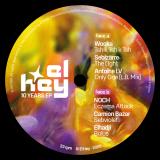
A decade of sweat, sound, and raw energy has led us to this: our 10 years anniversary various.
Six tracks, one vision, and zero boundaries.
From the deep textures of Dub and IDM to the groove of House, and the driving force of Techno, Break and Minimal, this record is a celebration of the eclectic sound we’ve been digging since day one.
Featuring the core family Antoine LV, Elhadji, Sebizarre, and NOCH, alongside special guests and long-time friends Camion Bazar and Wooka.
Pappenheimer – Stolen Memory Pt. 1 + Pt. 2 (Vinyl) bringt die rohe Energie und kompromisslose Klangästhetik des deutschen Techno-Acts Pappenheimer auf den Punkt. Diese Vinyl vereint beide Teile der Stolen Memory-Reihe und liefert treibende Beats, düstere Atmosphären und präzise produzierte Sounddesigns für den Club und darüber hinaus.
Mit druckvollen Rhythmen und hypnotischer Intensität steht diese Veröffentlichung für modernen, kraftvollen Techno – ideal für Sammler und alle, die elektronische Musik am liebsten analog und in voller Tiefe erleben
Epic emotional club tunes with a feeling of grandeur. Moving through different tempos and styles, the EP channels golden-era IDM and Italian trance-prog psychedelic tradition into a deeply melodic and contemporary framework. Inspired by the Tibetan tradition of Sky Burial, its themes revolve around transcendence and spiritual transformation.
Antuni (translated from Armenian as “homeless”), Margenrot’s third album, was created over five years. It is a personal statement about fragility, vulnerability, and the search for grounding in a world where conflict has become part of everyday life. Antuni is a genre of gusan song (gusans were Armenian folk singers and rhapsodes) – a story told by a homeless, eternal wanderer, exiled and deprived of homeland.
The album’s title also refers to the melancholic ballad Antuni (“The Song of the Wanderer”) by the Armenian composer, folklorist, and monk Komitas. This work was dedicated to the victims of the Armenian Genocide of 1915. Lusia’s new album is about national identity and inner wandering – between contempo- rary wars and deeply personal, existential experiences. She asks an urgent, personal question: “What is my home, and where is it?”
The album weaves together traditional Armenian chants and chorales with electronic music and field recordings. Breakbeat is layered with conversations between Lucy’s relatives about the fading village of Naokhrebi (an Armenian village in Georgia), while samples of Komitas’ liturgy, recorded in a Catholic church, contrast with fractured rhythms.
Still compelled by the space they first opened, Gūsū returns with a second release, “Inhabiting Me”. What began as a shared approach, sprouted from intuition, has grown denser and more defined, holding on to that same fragility and openness. The duo continues to befriend with contrast, friction and proximity, shaping a language that inhabits their uncommon ground.
Vintage drum machines, tape delays and bass guitar widen the sonic ground, adding pulse, grain and instability, while the guzheng holds its place in full clarity. Each sound source becomes each other’s ornament, forming to gesture the next currents.
What emerges is less a fixed composition than a shifting form: precise in detail, impossible to contain. Listeners who have experienced Gūsū’s live performances will recognise this rare quality: a music of great sensitivity that expands with quiet force, drawing them inward rather than confronting them directly. The sound fades, re-enters, and leaves behind the trace of a lighthearted heaviness, echoing back in fragments, reappearing in memory with altered weight and colour.
Time bends inward and tones return altered. Between repetition and resonance, a tensile form begins to emerge. Neither nostalgic nor futuristic, neither static nor loose. Gūsū does not merge its materials into one smooth surface; it lets them stand close enough to sharpen one another.
Gūsū is a transcultural music project born from the confluence of two distinct artistic voices: Xueyan Chen and Nicolas Balmer. Together, they create a complex dialogue of sound that bridges the ancient and the modern, exploring the liminal spaces between tradition and experimentation. Gūsū’s inception was serendipitous, sparked by a shared stage in late 2022. What began as spontaneous improvisations has since evolved into a profound collaboration. The duo has performed under various monikers, finding their ultimate identity in the name Gūsū, a nod to both heritage and transformation.
New Flesh Records returns with its 34th release, bringing together two long-time affiliates: Boris Divider and label mastermind Umwelt. On the A-side, Boris Divider delivers "A New God", a hypnotic slice of stripped-back electro built around his signature robotic vocoder work and a tightly coiled arpeggiated loop that borders on obsession. Umwelt's remix sharpens the edges, injecting a cold, metallic sheen that amplifies its physicality, engineered for peak-time impact without sacrificing the original tension. Flip to the B-side and Umwelt steps forward with "Digital Ruins", a dystopian song that thrives on contrast: powerful, driving rhythms collide with soaring, almost melancholic synthwave textures, giving the track its emotional charge. Boris Divider's reinterpretation leans further into austerity, reinforcing the rhythmic framework while steering the piece into colder, more abstract territory that privileges atmosphere and textural nuance over immediacy, yet remaining firmly anchored in his established sonic identity.
Newly launched label Thirty Ends introduces Corpus 01, the first release in a strictly limited series of 30 vinyl records, with no represses.
Built as both a conceptual and functional project, the label sets its tone from the start: raw, hypnotic and club-focused techno, designed for sound systems rather than algorithms.
This first VA brings together four artists from different corners of the scene, each contributing a distinct yet cohesive sonic identity:
From industrial textures to stripped-back grooves and immersive atmospheres, Corpus 01 delivers a focused selection of tracks aimed at DJs and late-night floors.
Pressed in 325 copies, the record is distributed through selected underground channels and available in limited quantities via the label.
Vinyl only. No repress. Digital release scheduled at a later stage.
Who, or, what, exactly is a Matured Sinner? In this case it's the result of a meeting of both minds and bodies between Swedish producer Johan Blende, freshly relocated to Athens, and fellow Eskimo artist and native Athenian NTEIBINT. Between the decidedly weak minds of succumbing to night time activities and day time regret an idea was born to create the best Greco-Norse creation since ABBA stole a bouzouki and used it shamefully for the best part of Mamma Mia (OST ?).
"I took one of my half-baked beats to George (aka NTEIBINT) to see what he could add to it and voilà - Mist 9000 was born!" explained Johan. Now complete with pulsating analogue arpeggios, a throbbing bass line and increasinglydistressed synths all writhing together in composed ecstasy that dance floors are made for, the track that emerged from George's studio left them hungry for more.
Returning to the studio, it isn't long before the song that would give this new project its name emerged. Created with the help of a friend Olga on backing vocals and an unnamed, equally sinning, young lad, Matured Sinner paired hypnotic disco beats, sinuous synths, squawking sine waves and almost queasily blissful sighs with a cautionary tale of drugs, flying saucer cults and a spiral deeper and deeper into sin and moral ruin.
Was it enough? It was. But then the third one came around, mainly by sheer want to continue, lingering like the third child of a marriage running out of ideas. Shall we keep going? "Of course we shall, this is our gift to the world!" Like a modern day cult, Bright Bum was conceived in a non-sexual context from leftover sounds after a nightof confusing creations and not necessarily tender compliments in an equal manner, chugging synths squelching their way over a mesmerising guitar loop as bright stabs cut through the humid funk of the track's insistent rhythm which, like all good nights out, increasingly fray at the edges as it rolls towards oblivion. Nobody requested it but like the nature of humanity itself, it must keep going.
Digi Dub re-enter the vinyl world with a handful of archival 10” releases, the first collating tracks harvested from four releases which originally came out in the early 90s.
The Aliens EP provides a perfect showcase of the adventurous and experimental approach that the label took at a time when breakbeat hardcore was starting to fragment. Taking none of the paths that their peers took, the artists in the Digi Dub stable infused their breakbeat science with a playful dubwise methodology to create idiosyncratic dance music operating at the interstice between modern dub mechanics and rave dynamics that was a premonition of much of the experimental bass music that the UK has become known for.
The first track comes from the trio L.S. Diezel whose Alien In The Woods marries cosmic interference with a steppers reinforced breakbeat and a tough digital bassline. The Diezel boys are joined by label owner Lee Berwick under his Launch DAT pseudonym for the second track Rougher Than A Lion. Beginning with what sounds like a sort of distorted tribal ritual, the track erupts into a symphony of skittering breakbeats, processed jazz lines, bursts of acid and discombobulated ragga chat.
On the second side the collaboration between Diezel and DAT continues with Poor Mans Glory that sees a weighty sped-up funk break allied with a suitably robust dub bassline overlaid with bursts of rasta invocation rattling around in the echo chamber. L.S. Diezel’s Get Your Spear Out rounds out the package with a clangorous proto-dubstep breaker forging the link between a Jah Shaka dance and Horsepower Productions.
With the original 12s now rare as rocking horse shit, grab yourself a 10” and make your bass bins smile.
As WARNING prepares to release Rituals of Shame - their first new music in twenty years,vocalist/guitarist Patrick Walker is self-effacing about what led to this moment. Over the last two decades he continued to write and release music, satisfied that he had achieved what he set out to do with WARNING. In those intervening years, interest in WARNING swelled, organically gathering an ardent fanbase. In particular, the 2006 album, Watching from a Distance, has gained a cult following. In response to a transformative period in his life, Walker turned towards writing new songs, and it soon became apparent that these belonged to WARNING. In early January 2025, he started with a completely blank canvas, and piece by piece, he started to fill it with ideas that evolved to become the songs that make up Rituals of Shame.
His immersion in the project became a full-time pursuit. After successfully demoing the five songs, Walker retreated to a remote house on a hill outside Florence, Italy, to refine the lyrics. Recording took place at The Arch Studio, a 140-year-old former church in Southport, UK. Chris Fullard (Idles, Sunn O))), Ulver) handled the recording and mixing. Walker's lifelong musical inspirations can be traced through Rituals of Shame. The ambitious structural arrangements harken to Marillion’s complex but soaring episodic songs. They retain a sparsity that is reminiscent of June Tabor’s economic arrangements; thick with melody but with a diaphanous air to them. Citing John Brenner of Revelation as an enduring inspiration, Patrick credits him with introducing the idea of how to infuse heavy music with significant emotional depth. Often reluctant to discuss the minutiae of his lyrics, Walker does acknowledge that making this album was a direct response to the immediate concerns of his current life period. Rituals of Shame also echoes the enduring themes and fixations that have marked most of his work: guilt, shame, personal failure, obsession, longing, and separation, but, most of all, he says, love. Short: WARNING return with Rituals of Shame - the pioneering Doom band's first new music in 20 years! FFO: My Dying Bride, Candlemass, YOB, Black Sabbath, 40 Watt Sun, Pallbearer, Pagan Altar
The Reloved series – Four Flies Records’ ongoing project where today’s producers reimagine select gems from the golden age of Italian library music and soundtracks – welcomes a new chapter from the formidable pairing of Nicola Conte and Nico Lahs.
The tracks reworked in this vinyl EP all originate from the first half of the 1970s, a period when a fascination with African imagery and sounds was so pervasive among Italian composers that it became a prominent cultural and aesthetic trend. Applying their refined touch, Conte and Lahs have expanded the rhythmic and atmospheric potential of the original recordings without the need for invasive overwriting. Instead, they have emphasized the unique identity of each piece, adding a contemporary club energy that remains entirely respectful of the original spirit, structure, and essence.
The EP opens with Piero Umiliani’s “Nel Villaggio” (originally found on the 1975 library album Continente Nero), which Conte and Lahs have filtered through a hypnotic, sensual tribal-house lens. Side A continues with “Orgiastic Ritual”, a reimagining of Gianfranco Reverberi’s main theme for Black Magic Rites (Renato Polselli’s 1973 erotic-horror film), which elevates the original percussive groove, amplifying its ritualistic dimension and drawing the listener into a mesmeric sonic spiral.
On side B, “Oasi nella Giungla” – from Giuliano Sorgini’s Africa Oscura (recorded in 1974) – takes a more minimalist, electronic approach: the original material remains front and centre, enveloped in delays and subtle rhythmic touches. Closing the EP is Romolo Grano and Gianni Oddi’s “Kilimangiaro”, originally composed for the 1974 documentary Le Montagne della Luce; through the use of sampling and loops, Conte and Lahs transform it into an elegant afro-house cut, at once sleekly restrained and irresistibly magnetic.
This is undoubtedly the most club-oriented instalment of the Reloved series to date, propelling Italy’s library music heritage from the flickering screens and analogue airwaves of the past onto the dancefloors of the present.
Somniac One's fourth EP for PRSPCT XTRM is a love song to hardcore of yore, featuring two nostalgic original tracks and a hellfire remix of Party In My Head anthem 'Kill Everyone' by the one and only Deathmachine.
Somniac One's intense atmospheres and sledgehammer kicks get a euphoric lick on 'The Grand Awokening', a tribute to the millennium hardcore sound this industrial warrior was raised on. 'Hard Synths '92' meanwhile takes cues from even further back down the timeline, marrying early rave stabs and sentiment with Somniac One's thoroughly modern sound design and identifiable signature.
Technically skilled and hard as nails, Deathmachine then breaks the back of Somniac One's much loved 2018 banger 'Kill Everyone', delivering a crossbreed mutant remix that's gonna slay dance floors all over again.
This is not a Ben Vida, Booker Stardrum, and Will Epstein record; it’s a Play Time record. That’s a subtle but important distinction, for a couple reasons. One, the sound of Magic Object—a polymetric blend of improv and pulse minimalism for saxophone, drums, and Moog—doesn’t really sound anything like any of their many other ensembles or respective solo projects. And two, it was only while making Magic Object, their debut album, that Play Time realized they were a band at all.
Let’s back up. The roots of the trio date to 2020-21, when Will and then Booker moved to the Hudson Valley, where Ben was already living. The three got into the habit of playing together at Ben’s house, and they soon realized that their hang sessions felt fundamentally different from making music in some falling-down studio in Bushwick. Where those experiences were rushed and cramped, a new sense of time and space now suggested itself. Where once they rat-raced the music, now they relaxed into it.
Early gigs yielded similar revelations. A booking at Tubby’s, the beloved Kingston venue, evolved into a kind of residency. Tubby’s is a small space, fitting around 100 people, with a bar in the front room and a stage in the back. Play Time decided that they didn’t want to play on the stage; they wanted to play in front, among the people in the bar. Rather than hogging the spotlight and overpowering the other voices in the room, they blended with the energy of their surroundings and emerged as a sort of minimalist-jazz-krautrock bar band.
Gradually, they discovered a newfound “elasticity”—Ben’s word—that reshaped the music from inside. “It’s this communal thing,” he says. “It’s vibes. And it’s embedded in the community up here, which feels really vital and nourishing.” They were jamming, but it wasn’t just a free-for-all; they found themselves listening to each other in new ways. “Ben and Booker joke that they’re always playing in different time signatures,” Will says. “We’re all going forward with our own ideas, but we’re open to each others’ as well, and they’re all sort of dancing together.”
“We all have our painterly solo projects,” Will says—where, Booker adds, “we do a lot of studio arranging and thinking and composition that takes shape over a period of time.” Play Time, on the other hand, is all about being in the moment. That spontaneity was key to the process of recording the album. They booked two days in their friend Joey’s studio, a converted wooden barn. “It’s just a live room,” Booker says. “There’s no separation or anything. So we’re all in the space together and it’s got this beautiful, woody sound, and that’s very much the sound of the record.” For two days, they just jammed, for seven or eight hours each day. When it was over, they went through, edited down the portions they liked, and added very judicious overdubs designed to enhance the original recordings without fundamentally altering them, staying true to the spirit of the sessions.
The result is something like a snapshot and a mission statement all rolled into one. “You’re hearing us discover the voice of the band in real time,” Ben says. “We finished those sessions and we were like, ‘Oh, that’s what our band sounds like now.’”
Now, with Magic Object, the rest of us get to find out too.
—
Balmat is a label with a cloudy outline. Jointly shepherded by Albert Salinas and Philip Sherburne, two friends living in Cardedeu, Catalonia, and on the Balearic island of Menorca, Balmat grew out of Lapsus Radio, a weekly show born almost ten years ago. Balmat’s mission is simple: to foster new ideas, expand upon personal obsessions, and put enveloping sounds out into the world.
“Balmat” means “empty” or “void” in Catalan. But quite apart from any negative connotations, we prefer to think of it in terms of possibility: a space waiting to be filled.
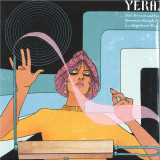
Featuring virtuosos of "Contemporary Armenian" music such as Bei Ru, Lara Sarkissian and Armen Ra, as well as shedding a light on the independent music scene in Yerevan, "YERAZ" is an exercise in ethnomusicology. Classical songs and instruments collide with the full spectrum of electronic-based music from ambient to techno and everything in between, building a mosaic inside of a specific cultural context. Whether you are looking to get lost in meditation or bring dynamic energy to a room, this record serves as a tool kit for all intents and purposes with a traditional touch. The double-LP is split between Angeleno artists (Sides A and B) incorporating folk instruments and melodies to reinterpret the "Contemporary Armenian" idea outside of the established pop landscape, and Yerevani artists (Sides C and D) emulating popular musical trends of the West through their native lexicons. Critique will be donating 100% of its net profits from sales of YERAZ to Kooyrigs, a non-profit organization providing resources for women and transparent aid to the Armenian homeland.
In the beginning of the 1970’s, Guinea-Bissau was a country broken up into many ethnic groups and at the heart of a war for independence. By reviving traditional musical genres as Gumbé and singing in guinean Kriol, José Carlos Schwarz & Cobiana Djazz established an immediate affective bond with their audiences. Through its music and politically engaged spirit of the lyrics, the band played a significant role in shaping the social and political consciousness of the masses. As well as influencing local bands like Super Mama Djombo and giving back a deep sense of cultural identity to bissau-guineans.
The explosive birth of Cobiana Djazz brought about other kinds of detonation. Schwarz became involved in urban guerilla activities which resulted in several bombings in the centre of Bissau, leading to his imprisonment and torture. He remained in lockup for a total period of about 2 years, between 1972 and 1974.
The process of decolonisation, in the wake of the Portuguese revolution of 25 April 1974, led to the recognition, during the same year, of the sovereign nation of Guinea-Bissau.
Schwarz, a key figure in the fight for independence, played an important part in the transition to the democratic regime, profiting from his popularity as an artist. Soon, his criticism (underscoring opportunism and irresponsibility in high places) became a thorn in the side of the political elite. Uneasy with the disquieting effects of his work, government officials effectively separated the author from the masses by assigning him to the embassy in Havana.
José Carlos Schwarz met a tragic and untimely death at the age of 27, when his plane crashed on arrival at Cuba's José Martí International Airport, on May 271th 1977.
Hailed by african giants like Orchestra Baobab, Letta Mbulu or Miriam Makeba (with whom he recorded his first and only solo album), “Zé Carlos” and his poetry won a lasting position in the annals of Guinea-Bissau. However, this collection of songs remains relatively unknown outside the country and its diasporas.
We are proud to offer, in close collaboration with the Schwarz family, this first official reissue on vinyl. Remastered and pressed on heavyweight vinyl.
Remastered from the original recordings and now presented on a 45rpm 2 LP deluxe audiophile edition, this is first time the complete 7-track album has been available on vinyl. 'In My Own Sweet Way', recorded during a month- long European tour in 1987, captures Woody Shaw in peak form playing with a spirit and a sense of adventure that identify him as a jazz giant. Woody calls the trumpet "the prince of all the horns". Woody is the king of all the trumpet players.
Nobody around plays with such a big, round, ravishing sound - a sound which could easily fool you into thinking that you are listening to a flugelhorn. Woody's musical asociates on this album are Alex Deutsch, a young drummer from Austria who has worked in Europe with many American jazz stars; Neil Swainson, a highly gifted bassist from Toronto who has worked with Pat La Barbera and Peter Leitch but is perhaps best known for his superb collaboration with George Shearing; and Fred Henke , a pianist from Montreal whose credits include backing Clifford Jordan, Steve Grossman and Junior Cook
Known to many a canny Bandcamp digger through his excellent Lost Acid series of digital albums, Jim Thompson is a London based producer, skater & graphic designer. His debut vinyl release came last year on Ooze Records, run by Laurence, an estimable selector based in the excellent Palace Records store in Brixton.
The release caught the attention of System One head D. Howard who followed the trail & found High Score Table from Jim’s Glytek Audio album, a thoroughly captivating mid tempo acidic chug with aching pads & an old school charm; exactly the kind of track that needs to be played on vinyl at an after hours in a basement.
A conversation began, pints were downed & the idea was spawned; lets make a killer ep with another Glytek cut, The Hollow Tree, 2 phenomenal new cuts - the muscular sub acidic tweaker Cruiser and Numerology, a late night trippy gem - and 2 remixes including top tier Irish electro don, Cignol, who has made some of the finest cuts to grace the System One basement over the last few years.
An accomplished video producer, Jim has made videos to every track, stand by for these, the first one for the CIgnol remix drops May 22 & its a peach ! System One is a new label dedicated to soulful electronic music, late night grooves & intergalactic beats, drawing its inspiration from the early 90s techno & ambient sounds of Uk, Frankfurt, Detroit & beyond
Olindo Records is proud to present the physical edition of Venezuelan drummer, producer and artist Orestes Gómez 2nd solo LP: No Me Fui Porque Quise.
This album is a deeply personal and rhythm-driven project where Orestes explores themes of migration, identity, and emotional resilience. Through a fusion of Afro-Caribbean percussion, jazz, hip-hop, and electronic textures, the album tells the story of leaving home not by choice, but by circumstance.
Featuring a host of exciting guests from his home country and beyond, each track blends organic drums with modern production, creating a sound that is both rooted in tradition and forward-thinking. The music moves between introspective moments and powerful rhythmic expressions, reflecting the complexity of displacement, memory, and cultural identity.
Orestes Gómez is much more than a percussionist; he is an architect of rhythm and a visionary of hybrid production. Originally from Venezuela, he has established himself as a leading Latin American voice by fusing the heritage of Afro-Caribbean drums with the avant-garde of electronic music, jazz, and hip-hop.
Curated by Brian d'Souza (aka Auntie Flo), Plants Can Dance is a forthcoming new compilation bringing together a global community of artists, exploring the creative possibilities of biosonification - transforming signals from plants, ecosystems and the natural world into sound. Out June 26th, the project marks the culmination of several years of d'Souza’s work across music, ecology and technology.
The album arrives at a time when more artists are turning toward nature as both subject and collaborator, such as Brian Eno’s Earth Percent, which formally recognises “Nature” as an artist. Plants Can Dance sits within a wider cultural shift, which is redefining the relationship between sound and the living world.
The project builds on several years of work by d'Souza, whose Plants Can Dance events have taken place across the UK, Europe, India and Africa, appearing in institutions including the V&A, Tate and the Design Museum. What began as a series of intimate gatherings has since evolved into a global platform, reflecting a growing appetite for work that reconnects music with the natural world.
The compilation features contributions from leading practitioners including Modern Biology (Tarun Nayar) in collaboration with saxophonist Zekarias Musele Thompson, OMMA (Olga Maximovam founder of Playtronica), Jason Singh, Dr Helen Anahita Wilson, Justin Wiggan in collaboration with celebrated Norwegian jazz musician Arve Henriksen, Lamine Touré, Bit Marten and Balam, alongside new work from d'Souza himself. Using a range of tools - from commercially available devices to bespoke modular systems - artists translate electrical activity, environmental data and organic processes into musical material.
The processes behind each piece differ - from interpreting plant biodata to translating wind patterns into compositional structures - and the results are as varied as they are compelling. The record spans ambient, jazz, electronica and modern classical, yet all pieces are unified by a shared intent: to reimagine music as a space of collaboration between human and more-than-human worlds.
At the core of Plants Can Dance is a question about how we define music, and how we choose to listen. Traditional musical forms, with their fixed tempos and predictable structures, give way here to something more fluid and less easily controlled. The listener is invited to surrender expectation and engage with sound as an evolving environment rather than a linear narrative. In this context, the compositions function as what d'Souza describes as “acoustic ecologies” - sonic systems shaped by biological, environmental and elemental forces unfolding in real time.
Accompanying the release is a printed zine offering reflections from each artist, and deeper insight into the ideas and debates surrounding this practice. Rather than presenting definitive answers, Plants Can Dance positions itself as an artistic exploration grounded in curiosity, experimentation and critical thought.
Ultimately, Plants Can Dance is less concerned with proving whether plants “make music” than with changing how we listen. By inviting audiences to engage with sound shaped by non-humans, it opens up new ways of perceiving the environments we inhabit - not as passive backdrops, but as active, dynamic participants in a shared ecological network. In doing so, it offers a quietly radical proposition: that by listening differently, we might begin to relate to the natural world differently too.
In the creative Bologna of the 1980s and 1990s, Kinki was the first gay (LGBTQ+) Club in Italy: a visionary space where House music exploded
and the night became a symbol of freedom, identity, and cultural revolution. Through the DJs and charismatic figures who shaped it’s future,
the documentary tells how this small club beneath the Two Towers forever changed the way music and clubbing were experienced.
The documentary, produced by RCO Europe and directed by Lorenzo Miglioli, is available on Amazon Prime and Google Play platforms throughout Europe, the UK, the US, Australia, and South Africa.
The soundtrack, curated by Luca Trevisi (LTJ Xperience), features a selection of 1990s and more recent tracks, ranging from Italo House to
Nu Disco. Most of the tracks are re-edited by LTJ himself.
A double vinyl album packaged in a gatefold sleeve, also containing a 16-page color booklet featuring images of the Kinki crowd.
Ouragan’s first release, Clair Obscur, is an invitation to take time, to reflect, to wander. It was conceived as a shared story between distant landscapes: dreamlike, moving yet contemplative. A thread between closed eyes, through imaginary worlds that appear here – and elsewhere fade.
Despite their distinct identities, the four tracks share a sense of mystery. A warm tension characteristic of dub techno, no matter its form. Side A offers an introspective, dancefloor-driven vision of the genre; the flip side turns more meditative – emotional, melancholic, and beautifully touching.
The irreversible Monsieur Van Pratt is back with more edit magic on a new 12" that offers up a sharp transatlantic pairing aimed squarely at late-night selectors. He begins with 'What You Got', which is all tight groove science and polished uplift, before 'Disco Woman' retools a rare source into driving, peak-time tackle laden with soul. On the flip, Rob Castillo brings Afro-leaning firepower as 'Zig Zag Eoh' rides hypnotic percussion and loose funk swagger, while 'Good Time Woman' signs off with an irresistible strut. Potent weaponry as ever from this always naughty but nice label.
COS 010 - Environmental Architecture A fusion of ambient, techno and IDM, often described as a form of “mental abstraction.” Created by Mark Cheney in a bedroom in Clapham, this release captures a moment defined by raw imagination and open-ended experimentation. It sits alongside artists of that era such as B12 and The Black Dog.
It stands as a perfect reflection of that era – raw, inventive and deeply evocative – leaving a lasting sense of nostalgia for those who experienced it. For the first time, this release has been remastered and cut by Mike Grinser at Manmade Mastering. Pressed on 180g vinyl, it sounds exceptional - rich, detailed and full of depth. Originally intended for home listening, it’s been cut loud so it can be played in a club setting.
pdqb shows no signs of slowing down. Relentlessly productive and constantly locked into transmission mode, it delivers 13 tracks of its unmistakable Electro-Cognition sound. Sharp, futuristic, body-moving music wired straight into the nervous system.
From precision electro workouts to mind-bending synth transmissions, every track hits with purpose, style, and identity.
However, the remix lineup is equally heavyweight. Four elite reworks from four serious operators, each one twisting the source code into new dimensions.
---
Half pinball table, half neural reactor, wired directly into a wall of aging synthesizers. The so-called Transient Witness (aka Preconscious Data Quantum Buffer) records not what people did - but what they almost did: Every flash of hesitation, every thought that vanished before becoming real, every dream erased at sunrise.
At its center pulses a synthetic brain, decoding impulses too brief for language. These signal transients are micro-events that appear and disappear in milliseconds.
When activated, the table will not play sound. It remembers it. Each collision of steel ball and sensor triggers forgotten futures, lost timelines, phantom rhythms from decisions never taken. Basslines from parallel selves. Melodies from unrealized lives. Percussion patterns from collapsing probabilities.
The 13 original tracks featured on this release are a transmission recovered from one of its sessions. Electro pulses, synaptic breaks, machine funk, and signals from thoughts that never survived long enough to exist.
Inspiral Carpets announce Burn Like The Sun - their first studio album in 12 years. The album marks a major new chapter for Inspiral Carpets following a period shaped by loss, reflection and renewal. An extended hiatus left the future of the band uncertain, and the return to writing and recording became something deeper than simply making another record. What emerged is an album rooted in endurance, connection, and forward motion. At the centre of that story is the return of original frontman Stephen Holt, whose rejoining of the band reconnected Inspiral Carpets with their earliest creative identity while opening the door to an entirely new era. Rather than revisiting the past, the band approached Burn Like The Sun determined to create something fresh, relevant and emotionally honest - a record that acknowledges their history without being defined by it.
Inspiral Carpets announce Burn Like The Sun - their first studio album in 12 years. The album marks a major new chapter for Inspiral Carpets following a period shaped by loss, reflection and renewal. An extended hiatus left the future of the band uncertain, and the return to writing and recording became something deeper than simply making another record. What emerged is an album rooted in endurance, connection, and forward motion. At the centre of that story is the return of original frontman Stephen Holt, whose rejoining of the band reconnected Inspiral Carpets with their earliest creative identity while opening the door to an entirely new era. Rather than revisiting the past, the band approached Burn Like The Sun determined to create something fresh, relevant and emotionally honest - a record that acknowledges their history without being defined by it.
Inspiral Carpets announce Burn Like The Sun - their first studio album in 12 years. The album marks a major new chapter for Inspiral Carpets following a period shaped by loss, reflection and renewal. An extended hiatus left the future of the band uncertain, and the return to writing and recording became something deeper than simply making another record. What emerged is an album rooted in endurance, connection, and forward motion. At the centre of that story is the return of original frontman Stephen Holt, whose rejoining of the band reconnected Inspiral Carpets with their earliest creative identity while opening the door to an entirely new era. Rather than revisiting the past, the band approached Burn Like The Sun determined to create something fresh, relevant and emotionally honest - a record that acknowledges their history without being defined by it.
In the evolving landscape of modern Southern hip-hop, the pairing of Starlito and Bandplay stands out as a unique bridge between street-level authenticity and refined, calculated musicality. Their collaborative project, Not The Country You Know, functions less like a standard release and more as a manifesto—a masterclass in the chemistry between a seasoned, introspective lyricist and a producer who possesses an intuitive grasp of the region's pulse. It is an exploration of legacy and adaptation, capturing the tension between where they came from and where the culture is currently headed.
Bandplay, long recognized for sculpting the sonic identity of Memphis icons, brings his signature, trunk-rattling 808s to the project, yet he manages to pivot here. The production feels remarkably expansive, masterfully blending the raw, stripped-back aesthetics of classic Tennessee rap with forward-thinking textures that refuse to be confined to a single sub-genre. Complementing this, Starlito operates with his trademark mix of cynical observation and genuine vulnerability. He navigates these beats with the weary grace of an artist who has weathered the music industry's relentless cycles, treating every bar like a necessary piece of a larger, ongoing story.
The album’s title serves as a direct commentary on these shifting tides. Across the tracklist, the duo investigates the growing disparity between the romanticized South and the cold realities of the streets, alongside the inevitable evolution of the music business itself. There is no frantic chasing of streaming-era trends or algorithmic bait here; instead, the project remains a stubborn, confident assertion of artistic identity. By weaving together Starlito’s "voice-of-reason" flow and Bandplay’s evolving, genre-bending sound, Not The Country You Know challenges the listener to abandon their preconceived notions of the region, offering instead a complex, urgent vision of a South that is as haunting as it is vibrant.
Eli Zem - Kiss My Music EP 12"
____
Born from the idea of capturing a musical fragment from Eli Zem’s latest live set and transforming it into a four-track journey, Kiss My Music creates a fluid sonic passage designed to make people dance while immersing them in a unique experience.
Blending hypnotic grooves, raw energy, and refined textures, the EP reflects the distinctive spirit of the Disordine School movement and its vision of underground electronic music.
Gorizont Sobytiy (Event Horizon), the duo of veteran electronic musician Nocow and his wife, DJ Designer, mark the project's debut with an album worth of material of 'frogg-step' / Pankratov Step. It's safe to say this is an intriguing proposition for even those well-initiated into the world of the contemporary Russian underground. What is perhaps most immediately obvious across the 11 tracks is a clear appreciation for golden-era Rephlex records, as if the duo are reflecting on how the iconic label was perceived in the Eastern bloc at the time. There's a nostalgic touch tugging at the heart strings with the warm ambient tones of 'Bananoivy Twist' or even the ballroom-esque organ melodies of follow up 'Chacha', both swiftly followed by a switch back into frantic gabber style kicks that recur across the album.
To give a little more away in terms of a background story, Nocow and DJ Designer draw influence from a film called Winter Evening in Gagra, a somewhat distant feeling artefact of late-Soviet cinema about a tap dancing champion's late nights spent gallivanting across the glitz of Moscow's pop music scene in the 1980s. Maximalist in its sound design, Pankratov Step draws its name from actor-protagonist Pankratov, not quite an out-of-time soundtrack as such but at the least a wry nod to the former world in which the film takes place. The cascading, brittle synthesis of 'Cemetry's Boss' forms an icy cinematic fusion again with a gabber influence at play whilst a fierce acid line works alongside myriad glitch rhythms and repeating keys on 'Octopus Werk'. Influenced by the local humour and sentimentality surrounding the film, a melodrama with themes of lost art and a kind of old-world transcendence the young circus performer yearns for, the duo use it as a vessel to describe the projects sound - a coalescing of vintage Soviet soundtracks, early IDM, Jake Slazenger and Expert Knob Twiddlers album. 'Pankratov-Step' becoming their own fictional genre. The LP marks another avant-garde chapter in Nocow's long back catalogue, as well as a fully formed collaborative debut for the currently enigmatic DJ Designer. Pankratov Step is the second release on GOST ZVUK sub-label MEMONT, curated by Kuzma Palkin.
The 41st release on TECHNO Records marks a defining milestone: the first full- scale solo record by the label’s founder, Nastia, in her music career. It opens up a new depth of detail within the character and identity of both the artist and the catalogue.
Rather than making a loud statement, Nastia focuses on a restrained and functional approach to techno, shaped through subtle shifts in tension, texture, and rhythm. The tracks move with intention, avoiding obvious peaks in favour of gradual development and controlled energy—a familiar methodology and a direct analogy to the evolution of the label itself. Crafted with dancefloor energy in mind but not bound by it, the release offers a fresh perspective on the author’s persona, stripping away excess and overexplanation. It leaves ample room for the listener’s imagination and a versatile, expert application within a DJ set.
The trajectory of ascents and shifting attention in an artist’s career is the only honest path, providing material for reflection and the anchoring of values. This depth of experience cannot be replicated by overnight success or short-lived peaks—only decades of exploration, trial, and error can forge a work built to endure. Studio work becomes a new instrument for Nastia to build value capital, while her debut solo EP stands as an artefact marking a historic point for the author and the label.
TECH041
A1 “Indoctrinated” — a masterclass in rhythmic interplay used as a narrative device. It functions as a sonic manifesto: universally accessible yet distinctly individual. A process-driven track, its strength lies in its ability to repeatedly shift the listener’s focus. It serves as an ideal transitional tool, offering a calculated awakening from a hypnotic state.
A2 “Ignorance Is Keelleeng” — a structured dancefloor powerhouse built on a precise understanding of peak-time energy. Functioning as a set-defining anchor, it allows the DJ to pivot the mix in any direction without losing momentum. A true catalyst track that opens up new sonic horizons.
B1 “True Majority” — the most forward-thinking cut on the record, providing a definitive blueprint for the hypnotic techno sound of summer 2026. It presents a multi-layered, all-encompassing sonic tapestry that interacts with the listener while maintaining a strictly restrained narrative. A motif-driven track that subtly exposes an underlying tension.
B2 “Additive Integration” — best conceptualised within an extended set where the goal is to gradually establish the atmosphere and dictate the rules of the journey. A track built on anticipation, it conserves energy and conceals its inner mechanics until the final acts. It compels the listener to decode its sonic language for full comprehension.
Good Morning Tapes are back with a new album of lushest New Age sound-bathing x emotionally gooey trip hop from Andro Gogibedashvili aka Saphileaum.
Saphileaum has spent the past decade in passage between notable houses of atmospheric sorcery - Mule Musiq, Not Not Fun, Slow Life, Constellation Tatsu - and of course Good Morning Tapes, who now host their 3rd meeting, »Heavenly Hills«. A definitive chapter in his ten year saga, it is flush with symphonic strings and sky born keys, breezily urged by percussion that straddles chill out and folk zones. That said there’s also a Balearic - or should that be Black Sea? - appeal to its title tune, that lingers in the glistening wake of »Your Grace«, to the shimmering breaks of a parting piece »Alarko (Cosmic Eagle)«, falling into the space between Boards of Canada’s cult-inspired hauntological nostalgia and Shackleton’s hallowed ethno-dub.
»The tracks in the album were written with the inspiration of the kingdom of Shambhala in the Himalayas. I’m deeply fascinated and touched by it. Even the album title, holds the idea of its Heavenly nature and the tracks are like individual, elemental parts of it. The album is not a journey into Shambhala, but rather a play and a dance with its energy, image and presence in my world. »Alarko (Cosmic Eagle)« is dedicated to my grandfather, Temur Tsiklauri, and I dedicate the whole album to my country Georgia, which I deeply love«.
Uncompromising Italian DJ/producer The Southern makes his vinyl debut on Mutual Rytm's sub-label, Spectra, with remixes from Alarico, Temudo and Sciahri. An EP marking an impressive label debut, Carmine Portarulo, aka The Southern, lands on Mutual Rytm’s sub- label Spectra with a powerful showcase of his much-loved sound. With the lead track featuring as one of label head SHDW's most requested IDs of the year so far, and packaged alongside outstanding remixes by close label associates Alarico, Temudo and Sciahri, the EP comes having established himself with a sound rooted in old school value and pure techno, favouring energy and authenticity over hype. The track’s backstory comes from the moment Carmine and his partner found out they were expecting a child and went for their first ultrasound appointment. Overwhelmed by the emotion of the moment and the beauty of what nature is capable of, he returned home and poured those feelings into the music. The result, ‘Ultrasound’, is an anthemic, punchy techno cut with euphoric energy rising up through the synths and its catchy lead melody. Joyful melodies sparkle amid vocal groans, adding a raw emotional pull as the warm, driving drums march on. Berlin-based artist Alarico is the first to remix on his return to the label, and his ‘Sad Mix’ has a more melancholic mood, with dark chords and tightly programmed drums that bring lo-key funk. Hayes Collective founder Temudo also returns and flips the vibe on his ‘Neuro Interpretation’ with a more psyched-out, twisted tune featuring trippy synths and booming drums for peak-time impact. Italo-Iranian Sublunar Records head Sciahri then drops his trance- inducing, hypotonic ‘Tunnel Vision Mix’, followed by two digital bonuses: ‘The Stripped Mix’, a bouncy workout with futuristic melodies, and Temudo’s ‘Neuro Interpretation 2’, which is raw, textured, and dark.
After 25 years out of print, El Baile Alemán — the cult album by Señor Coconut (one of Atom™’s many aliases) — returns on vinyl via Transamericas. What began as a half-joke (“The only way I’d cover Kraftwerk is as chachachá or death metal…”) became a fever-born epiphany: Kraftwerk’s electronic minimalism recast through a tropical imagination — where chachachá, mambo, and cumbia intertwine with glitch, breakbeats, and distressed samples.
Long before reggaeton and trap filled stadiums and playlists, Señor Coconut was already mapping the fault lines between Latin rhythm and electronic form.
Originally released in Japan in 2000, El Baile Alemán caught the ear of Kraftwerk’s Florian Schneider, who unexpectedly championed the project. This reissue has been cut from Atom™’s 2022 remasters, preserving the album’s detail for a new generation of listeners. In the second half of 2026,
Transamericas will also reissue El Gran Baile (1997), his first outing — a rawer but equally idiosyncratic fusion of what Atom™ was going to frame as electrolatino.
To mark 25 years of Tsunami Records, Wunsch delivers a landmark release that celebrates the label's legacy while looking firmly toward the future.
For this special anniversary project, Wunsch brings together a powerful lineup of artists who embody the spirit and evolution of the sound: Black Forests (Arcanoid and Wunsch), The Rare Breed (Regis and Wunsch), Broken English Club, Giving Ground (Function and Wunsch), Microcorps, Rumenige, and Sabotak. Each contribution reflects a distinct voice, yet together they form a cohesive statement - raw, uncompromising, and deeply rooted in the underground.
This release is more than a milestone; it's a testament to 25 years of dedication, vision, and sonic exploration. From driving, industrial textures to immersive and atmospheric moments, the record captures the essence of Tsunami's identity across decades.
A celebration of past, present, and future - this is Tsunami at full force.
With “The Insanity Of Infinity” Hernán Cattáneo and Marc Romboy join forces for a deeply atmospheric and emotionally charged release on Systematic Recordings. The track brings together two artists with long-standing
international reputations and clearly defined musical identities: Cattáneo’s unmistakable sense for hypnotic, progressive storytelling and Romboy’s warm, driving and Detroit-influenced Systematic sound.
The original version unfolds with depth, tension and elegance, balancing melodic emotion with club-focused precision. Rather than relying on obvious peak-time formulas, “The Insanity Of Infinity” builds its own universe:
immersive, sophisticated and timeless, shaped by two artists who understand how to create music that works both on the dance floor and beyond it.
The release is completed by two strong remix interpretations. Frank Sonic & Drumcomplex add a powerful, forward-moving techno version with clear Systematic DNA, designed for darker club moments and peak-time
impact. Brian Cid brings his own hypnotic and progressive touch, expanding the emotional dimension of the original with a deep, atmospheric and cinematic interpretation.
Released as a strictly limited red colored 12” vinyl edition, “The Insanity Of Infinity” is a special collector’s piece and a strong DJ tool at the same time.
DJ support from Dan Tyler (Idjut Boys), Eric Duncan, Justin Strauss, Severino (Horse Meat Disco), and PBR Streetgang.
High-energy disco, Balearic, and synth-funk weapons backed by an elite DJ vanguard. This release delivers dancefloor-tested versatility, moving seamlessly from sun-drenched daytime grooves to late-night afterparty anthems. Motor Mouth Drum Ensemble present their Highballs At The Beach Club EP on Creative Use. Kicking things off on the A side is “Singapore Ray” A cheeky mid-tempo Asian disco-pop stepper, a neck dancer’s dream! Over on the flip “Night-Mine” a Dramatic low & slow balearo-funk to launch your ships to. Rounding off the EP “Fool You For Real” which is a Icy digital synth funk built to halt your after-party waffle.
“Beautiful. Feels like every corner has been lovingly created. Highly recommended" Jamie Cullum, BBC Radio 2
“Incredible. One of my albums of the year” Dom Servini, Jazz FM
“What a beautiful message” China Moses, Jazz FM
“Completely envelopes you” Soweto Kinch, BBC Radio 3
“An uplifting, articulate soundtrack which instils hope and uncontaminated warmth” Backseat Mafia
“Scrimshire delivers a superior example of the style thanks to his musicality and inventive imagination” Jazzwise
“He has stepped up: a stronger musician, and a braver one, with nothing here that plays as filler” UK Vibe
DJ Support: Cerys Matthews, Gilles Peterson, Gideon Coe, Zakia, Jamie Cullum, Patrick Forge, Maflada, Dom Servini, Tony Minvielle, China Moses, Yolanda Brown
Drawing on influences from Charles Stepney to David Axelrod, into expansive folk-soul and jazz from the 60s, Bring Our Light To Every Corner is a deep and enchanting masterpiece from Scrimshire.
With captivating features by Dwight Trible, Idris Rahman, Faye Houston and Indian classical legend Mahesh Kale, the album holds together a suitably diverse set of ideas in a seamless journey full of heart.
Turkey’s first stereo LP. A foundational recording of Anatolian psychedelia. Audio transferred from the original analog master tapes, mastered and lacquer cut by Frank Merritt at The Carvery, London, and pressed on 180g heavyweight black vinyl at Record Industry in the Netherlands.
Released by the legendary Yonca Müzik label in 1973 as Turkey’s first stereo LP, Türküz Türkü Çağırırız! now returns as the first official reissue. The album captures Mazhar Alanson and Fuat Güner at a pivotal moment before their later success with MFÖ, one of Turkish pop-rock’s most influential and enduring groups.
Mazhar and Fuat first met in 1966 through a shared love of The Beatles’ Rubber Soul. Inspired by the close vocal harmonies of The Beatles and Crosby, Stills & Nash, they initially believed this music could only work in English. Producer Ergin Bener encouraged them to develop their own musical language in Turkish.
Previously members of Kaygısızlar, the pioneering group that accompanied Barış Manço, Mazhar and Fuat explored a more intimate Turkish folk-rock sound on this album. Zafer Dilek’s arrangements bring his distinctive guitar and keyboard work to a recording in which acoustic guitars, organ and electric guitar touches frame Anatolian melodies. Country-rock influences and the English-language “Upside Down” add to its range.
The title roughly translates as “We are Turks, and we sing Turkish folk songs” — reflecting a search for a new, distinctly Turkish musical identity. The album draws on works by Âşık Veysel, a defining voice of Turkish folk poetry, and Yunus Emre, the great Anatolian Sufi poet.
“Adımız Miskindir Bizim” was sampled on Action Bronson’s “Easy Rider,” while Stones Throw producer Oh No sampled “Sür Efem Atını.”
Originally released by Time Capsule in 2021 and long out of print, Stories From Another Time 1982-1988 returns in an upgraded edition following years of demand and rising collector prices on the secondhand market. Widely regarded as a modern cult classic, Mário Rui Silva’s visionary recordings blend acoustic folk, cinematic soul, spiritual jazz and saudade-filled Lusophone rhythm into a deeply timeless and universal work that transcends genre and geography.
This new edition features half-speed mastering cut at Metropolis alongside an expanded 4-page insert with a tribute essay and unseen photographs following Silva’s passing in 2024.
The roots of Angolan popular music explored in the meticulous guitar studies of Mário Rui Silva. For fans of Naná Vasconcelos, John Hassell’s Fourth World ambient, Eduardo Mateo’s psychedelic folk and Cameroonian electronic music visionary Francis Bebey.
Whether on mesmerising acoustic ballads or hypnotic groove-led tracks, the music of Angolan guitarist, researcher and intellectual Mário Rui Silva has a beguiling, melancholy quality, woven into the dynamics of his deft guitar playing.Rhythmically complex yet supremely effortless, the music collected here stems from three albums Mário released in Luanda in the 1980s that reflect his diverse range of influences, from traditional Angolan and West African rhythms to European jazz and classical instrumentation. It is united by a sense of low-key beauty, whether on the chugging opener ‘Kazum-zum-zum’, the jazz-funk keys of ‘Lembrança Dum Velho’, or the twinkling, late-night poly-rhythms of ‘Kizomba Kya Kisanji’.
Born in Luanda, Angola in 1953, Mário dedicated his life to Angolan popular music. His fifty-year career has seen him live between Angola and Europe, rub shoulders with Cameroonian musicians Francis Bebey and Ewanjé, record the seminal album Angola ’72 with fellow Angolan musician Bonga, and draw influence from Brazilian guitarist Baden Powell.
It was the teaching of Angolan legend and Ngola Ritmos co-founder Liceu Vieira Dias that Mário gained a technical, political and spiritual understanding of Angolan musical culture. In the hands of Liceu, the traditional Angolan semba and kazukuta rhythms of the 1940s and ‘50s helped create an emancipatory sense of national pride and collective agency that awakened its listeners to the racism and tyranny of colonial rule, underpinning the country’s push for independence in the process.
What might sound like the intonations of Brazilian influence are what Mário attributes to the “African rhythms taken by the slaves which gave rise to other musical cultures” around the globe. Instead, this music emerged from a collective instinct to assert a cosmopolitan Angolan identity free from the patronising falsehoods of Lusotropicalism.
“There was a need within me to contribute in doing new things,” Mário describes. “In the sense of solidifying the music of Angola that was the result of the meeting of two cultures, and wanting to value the Angolan part whenever possible.”A selection from Mário’s three 1980s albums, Sung’Ali (1982), Tunapenda Afrika (1985) and Koizas dum Outru Tempu (1988) have been compiled here as a 2xLP release by Time Capsule’s Sam Jacob and Kay Suzuki. Together, they provide a snapshot of one man’s journey to the core of his nation’s music, charged with the search for a culture uprooted by colonialism
"Cuba Greatest Hits" bringt die Hitze Havannas direkt ins Wohnzimmer und vereint die wichtigsten Klassiker der kubanischen Musik auf einem exklusiven Doppel-Vinyl. Von Son und Mambo bis Bolero und Latin Jazz bietet diese Compilation ein authentisches musikalisches Panorama mit Legenden wie Compay Segundo, Celia Cruz und Beny Moré. Ein atmosphärischer Katalogtitel voller Rhythmus, Lebensfreude und karibischem Flair - ideal für alle, die kubanische Musik lieben.
DOGMA marks a new beginning for Coloray. As the name suggests, the project explores the endless search for meaning in a world that does not always offer one. Across 11 tracks, the artist reflects on queer romance, grief, youthful hope, and melancholic joy. Emotional, chaotic, and imperfect, DOGMA mirrors both the artist and the messy reality of a life unfolding. Rather than forcing rigid structures, the album embraces looseness and human presence. Live recordings and improvised songwriting take center stage- every lyric was written in the moment, and the tracks remain intentionally raw to preserve their imperfections.
In this way, the album is both personal and political. It calls for belief in keeping humanity alive and for dismantling the societal dogmas that push artists away from the core of their creative identity. DOGMA is an honest journey of self-authorship, unfolding through the sounds of new wave, disco-punk, electro, and ambient music.
New Jon Savage Compilation release alert! Jon Savage's SF Sike 1966-72 (Double Vinyl) Limited Edition. Heavyweight Luxury Gauge Sleeve-Stock & Inners.
The real sound of San Francisco 1966-72." It was the new gold rush, but with drugs, music and freedom the goal. " (Jon Savage -The Guardian August 2012)
A limited edition double vinyl 18 track album celebrating the great pop music and idealism of that time & featuring Moby Grape, Skip Spence, Ron Nagle, Country Joe & The Fish & much more
Full contextual & track-by-track sleeve notes by Jon Savage. Ephemera & archive material from the period.
Cristi Cons returns to Amphia with Out of Cycle Part 2, expanding the narrative beyond fixed frameworks.
Cristi Cons continues his exploration of fluid musical identity with Out of Cycle Part 2, released via Amphia, the label which he co-founded and runs alongside Vlad Caia.
Conceived as a continuation of Out of Cycle Part 1 released back in 2021, the new installment deepens the concept of operating outside predefined structures, both in form and in sonic direction. Rather than adhering to a single aesthetic, the album reflects a wide spectrum of influences, capturing an evolving artistic language shaped by intuition, experimentation, and long-term musical curiosity.
The title Out of Cycle acts as both a statement and a method: stepping outside familiar loops, resisting categorization, and allowing the music to exist beyond rigid expectations. This philosophy extends into the production itself, where subtle variations in structure, tone, and pacing reveal a process driven less by formula and more by exploration.
Across the album, rhythmic frameworks shift between hypnotic, club-oriented patterns and more introspective passages, while textures unfold with a focus on depth, movement, and spatial detail. Each track functions as part of a broader continuum, yet maintains its own identity, highlighting a deliberate departure from cyclical repetition in favor of a more open-ended approach.
Released on vinyl and digital formats, Out of Cycle Part 2 marks another chapter in Cristi Cons’ ongoing dialogue between club functionality and deeper listening contexts. While rooted in stereo composition, the project also opens the possibility for further reinterpretation, reflecting an interest in how the same material can evolve across different listening environments.
With this record, Cristi Cons continues to trace a distinct artistic trajectory, one that prioritizes depth, individuality, and an ongoing expansion of his musical language as it evolves beyond established forms.
Dedicated to my dear friend Laurentiu Gavrila (Funk-e).
In an engrossing lattice of polyrhythmic beat science and deep atmospheric meditation, Samurai Music is thrilled to welcome Marco Shuttle to the fold for the Sumud EP.
Since his early years locked into the 00s London techno scene, Marco Sartorelli has developed as an artist entirely on his own terms. Through the rush of new ideas and cross-pollination that has characterised cutting-edge techno over the past 20-odd years, Sartorelli has travelled as Marco Shuttle from one considered stylistic concept to the next. On his own Eerie label and across expansive releases for respected outposts such as Spazio Disponibile, Incensio and Astral Industries, he's taken an exploratory approach to rhythm and spatial design while always drawing on intentional thematic frameworks, creating distinctive and immersive dance music in the process.
As Samurai Music continues to celebrate the rich seams of inspiration where deep techno and drum & bass intersect, Sartorelli's malleable, mysterious strain of drum work fits right in and sets a captivating tone for the label's operations in 2026. 'Sumud' is a steely drum mantra dealing in fractured patterns with the primal patina of the early Artificial Intelligence era, while 'Las Dunas de Taroa' leans on gently pulsing melancholia undulating at a half-time pace. 'Iso 50' taps into raw, analogue minimalism once more, evoking the sound of Roman Flugel's Ro70 records in their icy, alien formation. Completing the set, we're guided towards the tense electronica of 'Polylayering What I've Got', where uneasy melodic chimes interlock with intricately programmed drum machines.
There's a distinct sense of golden-era, mid-90s electronica coursing through Sumud EP, but Sartorelli shrouds the classic tools at his disposal in his subtle signature atmospherics, pushing towards a plain of expression that transcends time.
Michael Forzza unveils Obscure, a two-track EP navigating the darker edges of atmospheric techno with precision and intent.
A) Obscure is a peak-time weapon built on powerful percussive drive and a commanding groove. The rhythm pushes forward with controlled intensity, locking the dancefloor into motion. As the track evolves, the rhythmic pressure gradually recedes, allowing a shadowed melodic atmosphere to emerge in the final moments, adding depth and contrast without losing its dark identity.
B) Torture ventures into a more industrial realm. Dense textures, mechanical tension and hypnotic repetition shape its core, creating a sustained rhythmic strain. Then, when the pulse finally withdraws, the structure opens into a striking melodic finale, transforming the track into a suspended, almost cinematic closing atmosphere.
With OBSCURE, Michael Forzza explores the fragile line between impact and introspection, pressure and release. A release crafted for intense peak-time moments and the shadows that follow.
Français
Michael Forzza dévoile Obscure, un EP deux titres qui explore les territoires les plus sombres de la techno atmosphérique avec précision et intensité.
A) Obscure est un véritable track peak time, porté par une puissance percussive affirmée et un groove implacable. La tension rythmique s’installe et maintient le dancefloor sous pression, avant de s’effacer progressivement en fin de morceau pour laisser émerger une atmosphère sombre et mélodique, apportant profondeur et contraste.
B) Torture s’aventure dans une dimension plus industrielle. Textures denses, tension mécanique et répétition hypnotique construisent une montée intense. Puis, lorsque la pression rythmique disparaît, le titre bascule vers une finale mélodique surprenante, transformant l’énergie brute en une atmosphère finale plus immersive.
Avec OBSCURE, Michael Forzza joue sur l’équilibre entre impact et relâchement, puissance et émotion. Un EP taillé pour les heures sombres et les dancefloors exigeants.
ALERT: BIG 90s ITALIAN RAVE COMP - a lot of very in demand tunes on here.
Navigators
Franco Falsini and the Interactive Test Universe
There are musicians who follow their time.
And then there are those who seem to move along a different trajectory—like navigators crossing sonic eras without ever truly belonging to any one of them. The story of Franco Falsini belongs to the latter. It is a story that begins long before raves, before techno, before the word “electronic” had even become a recognizable musical genre. A story that moves across continents, technologies, and sonic visions, eventually arriving at a small creative laboratory born in Italy in the early 1990s: Interactive Test. This compilation is a fragment of that universe. But as often happens with the hidden histories of music, understanding it requires going back. Far back.
The Beginning: Machines, Tape and Space
In the late 1960s Franco Falsini leaves Italy and moves to the United States. It is not merely a geographical journey—it is also a journey into a new idea of music. At the time, synthesizers are only just emerging from research laboratories. Multitrack tape recorders allow musicians to build entire sonic worlds on their own. Technology is still far from standardized: every studio is almost an experimental workshop. In Virginia, Falsini builds one of his own. Among cables, oscillators, electric guitars and reels of magnetic tape, a kind of music begins to take shape that resembles nothing else being made at the time. It is not simply rock, and it is not yet truly electronic. It moves somewhere in the space between the two. Out of these explorations emerges Sensations' Fix, the project through which Falsini releases a series of albums during the 1970s. Records that seem to come from a parallel dimension: cosmic landscapes, electronically treated guitars, synthesizers drifting like satellites. Many years later those albums would be rediscovered as visionary works. But at the time they were simply the result of relentless curiosity. A curiosity that would never fade.
The City That Never Sleeps
In the 1980s Falsini’s trajectory leads him to New York. The city is a sonic organism in constant transformation. In its clubs and recording studios something entirely new is beginning to take shape: music built from drum machines, sequencers, and samplers, created for the body before the living room. It is the dawn of modern dance culture. Falsini works as a sound engineer, producer and experimenter. From close range he observes electronic music transforming into a global language. Machines become more accessible, computers begin entering studios, and rhythm takes on an increasingly central role. Yet even in this phase Falsini does not simply follow what is happening. He absorbs. Observes. Reimagines. When he eventually returns to Italy, he brings back not only technical experience but also a clear vision: the conviction that electronic music is an open space, a territory still waiting to be explored.
Tuscany, Early 1990s
At the beginning of the 1990s something is happening in Italy as well. In clubs, abandoned industrial warehouses and clandestine parties, a new scene is beginning to form. It is rave culture: a spontaneous movement bringing together DJs, producers and listeners in a collective experience driven by rhythm, technology, and creative freedom. It is within this context that Franco Falsini, together with his brother Riccardo, creates Interactive Test.
The name almost sounds like a scientific experiment. In many ways, it is. Interactive Test does not emerge as a traditional record label. It begins as a laboratory—a place where ideas, sounds and musical identities can be tested and explored. Around the Falsini studio in Tuscany a small constellation of artists and DJs begins to gather, helping to shape the sound of Italy’s emerging electronic scene. Among them are Andrea Giuditta, Francesco Farfa, Gabry Fasano, Roby Mastelloni, Roby J and many others. Each brings a different musical sensibility. But they all share the same intuition: electronic music is not a genre. It is a language.
The Laboratory of Identities
One of the most fascinating aspects of the Interactive Test universe is its constant play with identity. Franco Falsini releases music under several different names: Open Space, Youth Wave, Agent Fylfoyt, Man Myth Magic. These are not simply pseudonyms.
They are different sonic perspectives, as if each project were a window opening onto a parallel musical universe. Open Space, for example, explores more atmospheric and visionary territories. Youth Wave moves between electronic groove and club-oriented rhythms. Other projects experiment with digital psychedelia or hypnotic techno textures. Interactive Test becomes something more than a label. it becomes an ecosystem.
Domestic Machines, Infinite Worlds
Looking back today at the technology used in those productions, one might almost smile. Many tracks were created on Amiga computers, MIDI sequencers and analog synthesizers wired together in home studios—tools that appear modest when compared to today’s digital possibilities.
Yet precisely these limitations became a creative force. Every sound had to be built, shaped and reinvented. Sequences developed slowly, almost like living organisms. The tracks did not always follow traditional dance music structures; often they felt like genuine sonic journeys. Music built from space.
A Hidden Constellation
Many of the records released by Interactive Test in the 1990s remained for years almost invisible objects, circulating quietly among DJs, collectors, and devoted listeners. Yet it is precisely this underground existence that helped preserve them. Listening again today, one perceives something rare: the feeling of music that does not fully belong to its own time. Music suspended between different eras. Perhaps because it comes from a vision that both precedes and transcends trends.
Continuing the Journey
Looking at Franco Falsini’s entire path—from the electronic psychedelia of Sensations’ Fix to the rave culture of the 1990s—a surprisingly coherent line emerges.
A line defined by exploration.
Each project, each pseudonym, each record appears as a new route within the same great sonic voyage.
Interactive Test was one of its stations.
A laboratory.
A community.
A creative platform.
This compilation gathers some of its traces.
Not as a simple archive of the past, but as a map of a musical territory that continues to expand even today.
LOS ANGELES—To celebrate the 40th anniversary of the celebrated Talking Heads and Jonathan Demme’s concert film Stop Making Sense, the set will be re-released as a 2LP and 2CD/Blu-ray set this summer.
Released last year, the sold-out Deluxe Edition of the soundtrack will return as a 2-LP black vinyl on Rhino and 2-LP crystal clear vinyl at retail. Both variants feature a 12-page booklet with liner notes from all four band members –Tina Weymouth, David Byrne, Chris Frantz, and Jerry Harrison—and band photos. The 2CD/Blu-ray version includes the entire 28-page booklet from last year’s Deluxe Edition and a Dolby Atmos mix of the complete concert, mixed by Jerry Harrison and E.T. Thorngren, who also mixed the original release. Both will be available on July 26. Pre-order now.
The band appeared together for a sold-out screening and Q&A last night at the Pantages Theater, the same theater at which Stop Making Sense was recorded. They were joined by Blondshell, who performed “Thank You For Sending Me an Angel.” Another special screening with the band will occur in Brooklyn at the King’s Theater on June 13, with the Q&A hosted by Questlove and The Linda Linda’s performing “Found a Job.” The two events cap off a banner year of celebrations for what many consider to be the best concert film of all time.
The inspiration for Stop Making Sense came when director Jonathan Demme saw Talking Heads perform during the band’s 1983 tour for Speaking in Tongues. Afterward, he approached them with the idea of making the show into a concert film. They agreed and worked together over the next few months to finalize the details. Ultimately, Demme filmed three shows at Hollywood’s Pantages Theater in December 1983 to create Stop Making Sense.
The concert film presents a retrospective of the band up to that point, with a performance that weaves together songs from all six of its studio albums. The show progresses methodically, opening with Byrne onstage performing “Psycho Killer” alone with a drum machine. After each song, he’s joined by a new band member until Weymouth, Frantz, and Harrison are all on stage with him. The group continues to grow throughout the concert as members of the stellar touring band are added: keyboardist Bernie Worrell, percussionist Steve Scales, guitarist Alex Weir, and backup singers Lynn Mabry and Ednah Holt.
The band performs 18 songs in Stop Making Sense, including its recent single at the time, “Burning Down The House.” That summer, the song was in heavy rotation on radio and MTV, helping the song become the band’s first top 10 hit in America. It was, however, a different song from Speaking in Tongues that was destined to deliver one of the film’s signature moments. Talking Heads would perform “Girlfriend Is Better” wearing the now iconic, oversized suit inspired by costumes worn in traditional Japanese theater. For good measure, a picture of David Byrne in the suit also graces the album cover.
Stop Making Sense focuses mainly on music by Talking Heads but does include a few songs recorded outside the band: “Genius Of Love” by Tom Tom Club, “What A Day That Was” and “Big Business” from Byrne’s 1981 album, The Catherine Wheel. Limited edition vinyl versions of both of these albums, along with Harrison’s The Red And The Black, were released for this year’s Record Store Day.
When it arrived in September 1984, Stop Making Sense was an artistic and commercial triumph. The film had people dancing in theatre aisles, and the soundtrack sold over two million copies. Just last year, the Library of Congress added Stop Making Sense to the National Film Registry in recognition of its cultural, historical, and aesthetic significance.
Weymouth praises Demme as a collaborator: “…Jonathan was a very enthusiastic, highly adaptive, and imaginative guy who was just as good a listener as he was a talker and collaborator. From the get-go you just got the impression he was as flexible as he was disciplined. Being team players, that boded well for a great relationship and a great film!”
Harrison says the film still holds up today: “To me, Stop Making Sense has remained relevant because the staging and lighting techniques could have been created in a much earlier time period. For example, Vari-Lights, lights with motors to re-aim them, had just come into vogue. Had we used them, there would have been a timestamp on the film, and it eventually would have felt dated...The absence of interviews, combined with the elegant and timeless lighting, created a film that can be watched over and over.”
Byrne says it’s interesting that this album was – for many people – an introduction to Talking Heads. “We had done a live album before this, but coupled with the film, and with the improved mixes and sound quality, this record reached a whole new audience. As often happens, the songs got an added energy when we performed them live and were inspired by having an audience. In many ways, these versions are more exciting than the studio recordings, so maybe that’s why a lot of folks discovered us via this record.”
Frantz recalls the sheer joy surrounding the entire Stop Making Sense experience. “I’m talking about real, conscious, transcendent joy… I’m talking about what the Southern gospel people call ‘getting happy,’ which means ‘to be filled with the Spirit.’ That is what happened to us onstage every night, and from my seat behind the drums, I recognized that this was happening to the audience too. Joy was visible in front of me and all around me every night.”
Ampoule's Pub returns with a fresh remaster of the classic 'Summer' and a brand new track titled 'The Fragile Root'
'Summer' was originally released 20 years ago on the Vertical Form label - a result of a multitude of completely live and improvised studio sessions, that gently swell and evolve over the tracks 16 minutes.
'Fragile Root' is a brand new track, think vintage idm - intricate rhythms and melodies crossed with massive dub chords.
Vier Jahre nach ihrem gefeierten Debüt ,International Love Affair" kehrt Tigerbalm (Rose Robinson) mit dem aufregend kaleidoskopischen Album ,Bubblegum Discos" zu Ubiquity Records zurück. Als mutige Weiterentwicklung ihres global geprägten Nu-Disco-Sounds spiegelt das Album ein neu gewonnenes Selbstbewusstsein wider sowie den Wunsch, mit handverlesenen Musikern und Sängern aus aller Welt zusammenzuarbeiten. In lebhaften Klangfarben gehalten, präsentiert ,Bubblegum Discos" Tigerbalms zwei große musikalische Leidenschaften: die brasilianische Musikkultur und Vintage-Dancefloor-Hits vom afrikanischen Kontinent, angereichert mit Anspielungen auf Italo-Disco, Proto-House und Soca. Die erste Hälfte des Albums ist stark von südamerikanischen Einflüssen geprägt. ,Nayar", entstanden in Zusammenarbeit mit Giorgio Lopez aus Neapel, macht den Anfang mit leicht vom Reggaeton inspiriertem Nu-Disco, gefolgt vom brasilianischen Disco-Rausch von ,Diga Me" und dem luftigen Samba-Disco von ,Vera En Paraty". Robinson liefert ihren allerersten Leadgesang auf dem teilweise improvisierten Neo-Boogie-Track ,Coco Makoko". Das Album wendet sich dann Afrika zu, mit herausragenden Beiträgen von Andre Espeut, der in Montreal lebenden haitianischen Sängerin Waahli auf dem hornlastigen ,Do Da Soca" und dem Afrobeats-Sänger Idd Aziz auf dem körperbetonten ,Afro-Disco". Der Abschluss ,Conga" rundet das Ganze mit schweren, afrozentrischen Disco-Rhythmen und tiefem Dub-Bass ab. Actiongeladen und makellos produziert: ,Bubblegum Discos" ist der Sound einer Künstlerin, die ihr frühes Versprechen mehr als nur einhält.
HouseHeadz Records presents Various Headz Vol.001, the first installment of a new VA series that brings together different artists under the same vision. A selection of four cuts that represent the label’s underground identity and its focus on club-driven house music. A side features Giuseppe Fava - What is She (Looking For Mix) and Domgreek - Dom in Heaven. B side features V.I.C.A.R.I - On and On and On and Samuele De Santis - Baile De Verano. A various artists release built for selectors and dancefloors, staying true to the HouseHeadz approach: raw, focused and rooted in contemporary club culture.
Alina Valentina ignores rule books. When it comes to making music, she bends genres to her own sound and vision. Acid, electro, synth wave, vocoders. All are melted to produce a bracing style that is floor focussed and strikingly individual. It is this distinctive perspective that The Hague based artist brings to Schrödinger’s Box for NPC Dream, eight tracks that map a journey that disregards genre limitations. The intent and mood are immediately set with the fierce “Air Slasher” plunging through the fog as kicks roll and beads of acid bulge. Raw electro is further coarsened by scything keys and vicious vocoder words in the title piece before the technoid mutations and pain-streaked “Echo of Ecco.” The ground is never stable, the direction and ideas darting and shifting to new sonic territory. Punishing and pure, “Mine Cart Madness” is EBM-encrusted cruelty. Tempos shift on the flip, the slow and cinematic atmosphere of “Pixel Swamp” feeding into the sinister and snarling snares of “Wishing Engine.” Paranoia and tension collide in the stabbing chiptune chords and spiking percussion of “Come Get Some”, acid barbs ballooning into a blistering barrage in this warped wrecking ball. “Light Warrior” is cut from the same raucous cloth. Knobs splinter against machined lyrics, sirens blare as kicks thump in this basement lurking beast.
NPC Dream is a relentless record. From the needle drop, Alina Valentina enforces her sound as she teases and taunts styles. Fiery and brimming with energy, this 12” encapsulates the sound of an exciting talent who carves their music with a truly unique ear.
“Nimm die rosa Brille … sag was Du siehst … alles viel besser”
44 years after its original release, one of the most idiosyncratic DIY minimal electronics / synth / new wave records of the early ’80s returns: the legendary 7” by German group DEUTSCHE SCHÄFERHUNDE (engl. German shepherds)—now remastered and reissued for the first time as a one-sided 12” on Anna Logue Records. Recorded in the winter of 1981/82 between rehearsal space, provincial disco and bar nights, and a humble four-track setup, these tracks capture the raw spirit of a generation that simply started creating—no formal training, but plenty of attitude. Minimalist, uncompromising, and inspired by krautrock, punk, new wave, electronic music and dub, the songs move between raw electronics, percussive noise, new wave experimentation, and sharp social commentary. „Rosa Brille“ (rose coloured glasses) in particular feels as urgent today as it did back then—a track that has lost none of its relevance, „Gasmasken“ tells of gas masks dancing in the woods to the sound of sirens, and a timeless Holger Czukay/Jah Wobble inspired „Mein Herz“ (my heart).
Originally pressed in a small run of just 500 copies and later becoming a sought-after collector’s item now worth 200€, the record now returns in a carefully crafted edition featuring a laser-printed reverse side and additional materials such as original lyric sheets and articles, postcard and poster. DEUTSCHE SCHÄFERHUNDE thrived on paradox—a provocative name paired with a clear stance, and lyrics that still resonate today. Shaped by Cold War tension, political unease, and youthful rebellion, their sound refused to fit into any neat category. Only few other bands, such as Der Musikant, Im Namen des Volkes, Thorax Wach, Klinisch Sauber oder Stephan Eicher spielt Noise Boys come to mind.
This release is more than a reissue—it’s a document of its time that still hits with full force.
12″ features: limited to 400 copies, hand-numbered, one-sided 180g black vinyl, laser-etched B-side, outer sleeve printed on reverse side of the board, printed inner sleeve with original lyrics sheets and original articles, DIN A3 poster, double-sided postcard
"Zuhause sterben" by Endstation Altes Krematorium is quite possibly Lux Rec darkest release ever and as such, a perfect closure. This absolute, idle, desperate record will suffocate you, haunt you, certainly annoy you, and all of which is precisely intended. Daniele Cosmo and Florin Buchel gazed long into the abyss, so the abyss gazed back. This recording is what was found down there.
Introducing Sum Of Its Parts: A new collaborative music project led by Alex Nut. Featuring remixes by Boddhi Satva.
London, UK — A new musical project titled Sum Of Its Parts brings together a dynamic collective of musicians under the direction of DJ, curator and Eglo Records mainstay Alex Nut, who steps into a central creative role as the project’s musical director and producer.
Sum Of Its Parts is built on a fluid, collaborative model, featuring a rotating cast of musicians drawn from some of the UK’s most exciting contemporary music circles. Including Sam Crowe (Lianne La Havas) on Keys, Junior Ali-Balogun (Sault/Cleo Sol) on percussion and Duane Atherley (Kokoroko) on Bass.
Debut EP, The Message, introduces the project’s expansive sonic identity across two original compositions. The title track, The Message, is a 10-minute spiritual jazz odyssey—deep, meditative and expressive. In contrast, Hello High – which previously appeared on the Eglo Records Vol. 3 compilation – delivers a soulful, jazz-inflected house energy with dancefloor sensibility. Extending the release further, the B-side features two amazing remixes by revered House producer Boddhi Satva, who reinterprets the project’s sound through his unique Ancestral Soul lens.
Straight from the depths of techno, Lewis Fautzi delivers an intense EP where each track pulls you deeper into a raw, immersive soundscape.
Featuring five tracks that explore deep textures, driving rhythms, and dark atmospheres, "Ghosts Don't Text Me" reinforces his unmistakable signature style.
5 tracks. 1 identity. Pure energy from start to finish.
In the early 1990s, at the intersection of New Beat, early techno and EBM, a wave of raw, experimental club music emerged from Germany—dark, mechanical and often strangely playful. Among its most distinctive voices was Scrot, the project of producer Lars Janzik (Base Scan, Decade V, Technoline).
Originally released on ZYX Records, Scrot’s three seminal singles—“Teufelsrhythmus”, “Der Rhythmusmensch” and “Der Amokläufer”—captured a unique moment in early European techno. Built on hypnotic drum machine patterns, lo-fi sequencing and spoken-word German samples, these tracks combined industrial textures and unconventional vocal treatments with early techno production techniques and a peculiar sense of humor.
Limited to 300 copies on black vinyl and 200 copies on orange vinyl, and accompanied by an exclusive postcard, “Teufel & Mensch” brings together some of the project’s most iconic tracks and remixes, alongside the previously unreleased Knauer Remix of “Teufelsrhythmus”.
More than a retrospective, “Teufel & Mensch” stands as a document of a transitional era—when techno was still forming its identity, and artists like Scrot were pushing its boundaries into strange and uncompromising territory.
Take Me, I’m Yours is the first collaboration album between Alan Abrahams and Jan Jelinek. Released through the latter’s faitiche, it builds upon multi-layered vocal sketches by the former. The Paris-based artist, primarily known for his work as Portable and Bodycode, supplied Jelinek with multi-layered song sketches that the German artist subjected to a rigorous process of manipulation, excavating the ambiguities of the original material and transforming its rhythms into subtle pulses. Take Me, I’m Yours is neither a typical Abrahams record nor a classic Jelinek album—it is something third, mediating between the physicality of the voice and the abstraction of electronic sound design.
The two had crossed paths before really getting to know each other after Abrahams invited Jelinek to play at one of his Süd Electronic parties. The idea of a collaboration emerged slowly. “It started as an experiment, and over the past few years grew from a few tracks into this album,” says Abrahams. He describes recording the basic material as a “tantalizing” process, not knowing how Jelinek would transform his material, some of which was based on wordless chanting, while other tracks were working with lyrical content. However, their mutual trust allowed Jelinek to remove the harmonies, radically reduce the rhythms, and concentrate on Abrahams’ voice.
Jelinek heard something “fragile” in this voice, “moments of doubt and dark premonitions.” He points to Forever as an example. “Alan’s original song reminded me of classic vocal house, but his voice seemed to almost break,” he says. “This contradiction made the piece even bigger, because we hear a singer in the moment of an awakening.” He further accentuated such tensions through arrhythmic synth modulations and time-stretching algorithms, while also adding concrete sounds from a variety of sources. With its dedication to both transforming and amplifying the emotional qualities hidden within Abrahams’ pieces, Take Me, I’m Yours functions as a dialogue between those two singular artists.
Komatssu, Lefrenk, Vema Diodes y Celine Arnauld comparten este various artists de cuatro cortes para el tercer disco de Undancel.
La tercera referencia del sello discográfico de Undancel se caracteriza por una fase de transición entre varios sonidos. Representado un punto «ni aquí ni allí» donde la identidad o el estado anterior se disuelve antes de alcanzar uno nuevo, cuyo nombre LIMINAL.
Cuatro cortes en vinilo de 12″ de varios artistas más una canciones extra en formato digital con código de descargas en su interior.
A1_KOMATSSU_DESTRUCTOR DE MUNDOS: En activo desde 2005, Komatssu es el proyecto más personal de Héctor Sandoval (Tensal y 50% del reconocido proyecto Techno Exium). Un proyecto cimentado sobre la fusión natural entre la IDM más melódica, el Electro, el Breakcore y el avant-techno espectral que concibe el sonido como catalizador de emociones, dando lugar a un imaginario sonoro sumamente personal.
A2_LEFRENK_INDECENT: Lefrenk es un productor y DJ coruñés con más de 20 años de experiencia y más de 100 lanzamientos.
También es profesor en Fanzine School.
En el ámbito editorial, destaca como cofundador del sello Deep Different junto a Ikke Alra y fundador de Knerfel, su sello centrado en el techno.
Su trabajo se distingue por la fusión de texturas sonoras orgánicas e innovación digital, lo que refleja una constante evolución personal y creativa. Siempre innovando, Lefrenk ha expandido su influencia a través de colaboraciones dinámicas y actuaciones en directo junto a figuras de renombre de la industria.
B1_VEMA DIODES_MINDNIMALIST: Productor con raíces en el Baix Llobregat, cuya identidad se define por la experimentación técnica. Su trabajo es una exploración constante de la síntesis, donde las máquinas dictan el mensaje.
Desde sus primeras producciones en 2002, ha refinado un sonido que transita del electrobass crudo a estructuras más complejas y horizontales, fusionando la calidez analógica con la precisión digital.
Fundador del sello ÚTIL Records, Gente Seria Viste Chándal y Dialecto Periférico, plataforma desde la que reivindica el sonido de máquinas icónicas como la TR-808, tratadas con distorsiones y texturas de corte industrial.
Entiende el electro no como un género rígido, sino como un proceso de «electrificar» la señal. Su música es un equilibrio entre ritmos sintéticos y pinceladas de IDM, buscando siempre una narrativa sonora avanzada.
B2_CELINE ARNAULD_GLITCHED DANCE SYSTEM: Celine Arnauld es el nombre artístico de Pablo Miranda Caballero, artista y productor de música electrónica especializado en géneros como el IDM y el glitch con texturas ambientales. Recientemente, ha creado los alias DJ Don’t Sleep, donde da rienda suelta a la vertiente más rave del jungle y el breakbeat, y Paul Basscoigne, donde explora el electro, el acid, el IDM y el braindance.
Ha publicado su música en varios sellos, como EVEL, Clean Error, Dynamic Form, Mahorka, Hypnotica Colectiva, EC Underground, Dead Trax, Not 4 Human Consumption, New York Haunted, Point Source Electronics Arts, Moatun 7, Polygon Network, Colorsquad Records, Opal Tapes y Zabra Records.
Balancing glitch-pop and contemporary piano, the Belgian pianist explores the edges of her voice, language and twisted electronica
The Belgian pianist and producer maya dhondt releases a new album titled 'wow, x', marking her debut solo album under her own name. Navigating between bedroom glitch-pop and contemporary piano, she presents sounds of alienating beauty.
The album ‘wow, x’ will be released on September 13 on vinyl and all digital platforms via VIERNULVIER Records.
“I find beauty in the uncomfortable and disorienting" - maya dhont
The first single, 'desire,' is a mutated synth-pop track that gets under the skin. The song centralizes longing for something you don't know (yet). Perhaps it's the smell of damp earth, which can be both pleasant and unsettling? The single is now available on all streaming platforms and comes with a schizophrenic video by Sakis Brönnimann.
The first release show is scheduled for Saturday, October 5, at De Koer, Ghent.
More shows will be announced soon.
A postmodern cramp, that's how one could describe the music of pianist and producer maya dhondt. Her music is an intuitive and a never ending exploration that has the potential to be and become a multitude of things at once.
On her first solo album under her own name, 'wow, x,' she presents 10 varied tracks in which she creates equally idiosyncratic sound worlds. She takes the liberty to endlessly experiment with vocals, piano, and a mix of distorted lo-fi electronic sounds with an open mind. The result is sometimes synthetic and weird, sometimes compellingly beautiful, and always captivating, drawing you into its underlying melody. These intelligently crafted productions are connected by a penchant for alienating beauty: like a warm, but damp cave where it’s pleasant to linger just a little longer. Her original sound moves within a sonic spectrum reminiscent of contemporary artists such as Lolina, Astrid Sonne, claire rousay, aya or Carla Dal Forno.
"What I create never stands alone, it can be many things at once"
If the world were a sculpture garden, maya dhondt eagerly picks from it to draw inspiration from both visual and literary passages as well as personal experiences. Her highly personal bedroom productions are grounded firmly in the world due to philosophical references and politically charged messages. And the world she lives in is being questioned on 'wow, x', as the title refers to "What Or Why?". This is evident in the single 'desire': "What is the thing that matters / to exist / or to know you’re existing?" What does one choose in life: to live in the moment or to live to remember that moment?
In the lyrics on 'wow, x', maya dhondt plays - at times childishly - with language and its boundaries. On 'tip toe tip,' banal wordplay leads to an unexpected confession, and the seemingly simple phrases in 'untitled' conceal hidden life lessons. dhondt's world of words is multilayered and multilingual: Dutch ('kleine cijfers, groot verlies'), English ('desire'), and French ('untitled') are at her disposal. And on the fierce track that is 'minimalinvasiv,' not only she turns to hardstyle, but also to German - a language dear to her due to her Swiss heritage.
Die in Kyoto geborene und heute in Berlin lebende Midori Hirano schafft minimalistische, ätherische Musik, in der akustisches Klavier nahtlos mit elektronischen Texturen verschmilzt. In Anlehnung an Ryuichi Sakamotos spätere Werke (Async, 12) erforscht, dekonstruiert und erfindet Hirano den traditionellen Rahmen der klassischen Musik neu und verwandelt jede Klaviernote in eine introspektive und immersive Reise. Unter ihrem Pseudonym Mimicof produziert sie auch elektronischere, Ambient Techno/IDM-orientierte Werke. Es war daher fast unvermeidlich, dass Midori eines Tages mit Ivan Pavlov zusammentreffen würde. Der russische Künstler, der heute in Frankreich lebt, ist eine Schlüsselfigur der experimentellen elektronischen Musik der letzten 30 Jahre. Als ehemaliger Akustikingenieur der russischen Marine ist COH ein Freigeist mit chirurgischer Präzision. In den späten 1990er Jahren trat er mit avantgardistischem, präzisem Post-Techno hervor, bevor er sich mit Glitch beschäftigte und später akustische und Ambient-Sounds in seine Klangskulpturen einbaute. Seine frühere Zusammenarbeit mit Peter Christopherson (COIL), Cosey Fanni Tutti und Abul Mogard (COH Meets Abul Mogard) sowie Veröffentlichungen auf renommierten Labels wie Raster-Noton und Editions Mego unterstreichen sowohl seinen Einfluss auf die elektronische Avantgarde als auch seine bemerkenswerte Fähigkeit zur Kollaboration. Mit Sudden Fruit liefern COH und Midori Hirano ein immersives und chimärisches Werk ab. Vom ersten Track an, ,Wave to Wave", spürt man das empfindliche Gleichgewicht zwischen dem Organischen und dem Digitalen, dem Fließen der Natur und der Poesie, die es verkörpert.
AS THE WORLD TURNS is the newly founded label by Rob Manga -- a platform created to channel his distinct sonic identity while cultivating a community rooted in shared energy and expression. The label emerges from a clear intention: to push a personal sound forward while opening space for others to connect, contribute, and evolve alongside it. It is both a statement and an invitation -- a place where sound becomes a meeting point. The first release marks this vision with a four-track EP, weaving together soulful textures, deep atmospheres, and club-driven impact. Each track reflects a different facet of the dancefloor, balancing introspection with movement, and depth with raw energy. With this debut, AS THE WORLD TURNS sets the tone -- not just as a label, but as a growing circle centered around sound, rhythm, and connection.
Suburban Base Records welcomes Spinscott with his debut release on the label, Pure Magic / F2.
Hailing from the USA, Spinscott is a lifelong drummer, international performance DJ, and producer who has built a global following through his distinctive approach to Jungle and Drum & Bass. His 100% real-time live sets, performed on drum machines and samplers, have set him apart, combining technical precision with the energy of live musicianship.
Through a steady output of widely shared Live Jungle Drum Machine videos, DJ mixes, and original productions, he has carved out a unique space within the scene, earning recognition for both his skill and his commitment to pushing performance boundaries.
Pure Magic / F2 marks his first release on Suburban Base Records, bringing that same ethos into the label’s catalogue. The pairing reflects both his foundation as an artist and his forward-facing approach to the genre, aligning naturally with Suburban Base’s long-standing role in championing authentic Jungle and Drum & Bass.
With a growing international profile and a clear artistic identity, Spinscott’s arrival on the label adds another distinct voice to the roster, grounded in craft, driven by performance, and built for the culture.
Salin, gefeierte Schlagzeugerin, Produzentin und Komponistin, geboren in Thailand, wohnhaft in Kanada, ist bekannt für ihre innovative Verschmelzung globaler Rhythmen. Ihr bahnbrechendes Album "Rammana" erhielt 2025 eine JUNO-Nominierung als "Global Music Album of the Year" und wird nun flächendeckend auf Tonträger erhältlich. "Rammana" ist eine zutiefst persönliche Reise, die die Klänge Nordostthailands mit dem psychedelischen Soul Westafrikas der 1970er-Jahre verwebt – gefiltert durch Salins modernen Produktionsstil. Inspiriert von traditionellen Trommeln und Volksliedern der Urak Lawoi, einem indigenen Nomadenvolk Thailands, ist Salins Album eine Hommage an die musikalische Migration und den Austausch zwischen Ost und West. Ihre Musik reflektiert Themen wie Identität, Spiritualität und Menschlichkeit, gepaart mit einer Prise Lebensfreude, und erschafft eine einzigartige Klangreise für die Zuhörer. Salin tourte durch Nordamerika und Europa (u.a. Jazztage Dresden, Überjazz, Trans4JAZZ-Festival, JazzOne+ Festival) und trat als Support für Kokoroko und Yussef Dayes auf.
With Mr. Coconut, Cosmo Dance delivers a four-track EP that strengthens a distinctive sonic identity, blending retro aesthetics, club culture and cinematic sensibility into a cohesive body of work.
The title track unfolds through refined dynamic control. Warm multilayered percussion, textured guitars and a deep yet restrained bassline create an organic groove that evolves gradually rather than relying on obvious drops. The production favors subtle progression and hypnotic growth, resulting in elegant, mature dance music.
Goodbye expands the project’s narrative dimension. Inspired by the atmosphere of Italian ’70s library music, the track represents the protagonist’s theatrical exit from the club — not a melancholic farewell, but a charismatic closing scene. A playful detail emerges when Dandolo (Cosmo Dance’s alter ego) delivers an ironic “cough solo” precisely as an off-voice introduces Mr. Coconut, adding a self-aware cinematic twist.
Dub nuts explores deeper dub-informed territory. Built through layering and subtraction, the track showcases careful spatial control and restrained low-end management.
The EP closes with the Coccappella Version, a stripped-down reinterpretation of the title track focused solely on percussion and voice, revealing the rhythmic backbone of the project.
Mr. Coconut is a refined balance between club functionality and cinematic storytelling — controlled, elegant and unmistakably personal. It’s not about peak-time fireworks — it’s about atmosphere, detail and identity.
Steyoyoke Anniversary, Vol. 15 marks a special chapter in the label’s history with a double vinyl edition dedicated to the sound, artists, and identity that have shaped Steyoyoke over the years. Across eight original tracks, the release brings together Soul Button, Clawz SG, Nick Devon, 2Qimic, Monarke, MPathy, Seismal D, and René Diehl, forming a carefully curated journey through the label’s Ethereal Techno sound.
From the emotional depth of Silent Truth and the shadowed atmosphere of Lumen Obscura, to the melodic tension of The Day You Decide To Change and the introspective movement of My Dreams, the first part of the vinyl sets a deep and immersive tone. The second half expands the energy with Pressure, Sora, Consciousness, and Pulse, moving between driving grooves, cinematic textures, and refined club-focused intensity.
Pressed as a double vinyl, Steyoyoke Anniversary, Vol. 15 stands as both a celebration and a reflection - a collection built around memory, connection, and the unmistakable emotional language of Steyoyoke.
Massimiliano Pagliara celebrates 20 years of music production with a special anniversary compilation on Funnuvojere. The release brings together solo productions and collaborations spanning a rich and abundant period that began when Pagliara acquired his first analogue machines, five years after moving to Berlin from Milan, where he worked as a professional dancer and choreographer.
The compilation features 20 previously unreleased tracks, deeply infused with italo grooves, wonky bass-lines, balearic pads, drama, love, sex, and dreams. These tracks evoke a wide spectrum of moments, ranging from intimate, pleasure-driven home listening to full-blown dance-floor euphoria. Throughout the compilation, one can feel Pagliara’s enthusiasm for discovery—his excitement in encountering new machines and immediately putting them to work.
Pagliara’s sonic identity is unmistakable, present in every track and in the compilation as a whole. Like the facets of a crystal, the music reflects his many nuances while maintaining a strong, coherent core. Tracks such as Waves of Desire pay homage to Dream House, reimagined through contemporary production with cosmic tones and infectious drums. Flicker Of Us reveals a dramatic tension between a rowdy bass-line and melancholic pads, while We Can Touch The Sky features Pagliara himself on vocals, blending synth-pop with elements of new wave and glam rock. Cool Breeze unfolds as a sunlit, optimistic walk through a wide Berlin avenue—funky, warm, and filled with curiosity for what lies ahead.
A notable strength of the compilation lies in its collaborations, which highlight Pagliara’s joy in working with other producers and vocalists. Each collaboration reveals a distinct character: the balearic sensibility of A Journey of Discovery with Gatto Fritto, the French house flavour of Neon Memories with Alinka, the 70s disco inflection of It’s In Your Eyes with the late Aérea Negrot, and the driving techno attitude of Whirlwind with Fabrizio Mammarella, to name just a few.
Ultimately, this compilation stands as both a gift to Massimiliano’s long-time fans and an open invitation to new listeners. It offers entry into a world shaped by beauty, order, balance, and ecstasy—guided by an enduring love for the craft.
Destination Unknown is an EP by Unpronounceable born from an archive of sounds collected between 2019 and 2024—sonic fragments that took shape without a predetermined direction guided only by an open idea in constant transformation. The original track conceived as a “destination unknown” composition developed its own independent identity. However precisely because of its fluid and cross-genre nature Unpronounceable chose not to place it within a traditional EP context instead opening it up to a multiplicity of perspectives by inviting five artists to reinterpret it freely without genre constraints.
The result is an EP that unfolds like an alternative map of the same sonic territory where each remix explores a distinct direction transforming Destination Unknown into a multifaceted and ever-evolving experience.
In Carl Finlow’s remix Destination Unknown takes on a strong cinematic and narrative dimension. Inspired by the title Finlow imagines a mysterious journey toward a futuristic dystopian city turning the track into a kind of electro soundtrack—dark yet ironic rich in character and capable of evoking vivid images and motion.
MANASYt pushes the track toward more physical and ritualistic territories focusing on the dark pads and the more oneiric vocal elements of the original. The result is a hypnotic pulsating tribal-industrial reinterpretation where rhythm and sonic material become central intensifying the track’s most visceral qualities.
With Gay Horror the focus shifts to an emotional and narrative dimension. The vocals are deliberately made elusive and undefined while the structure develops through a slow controlled crescendo that recalls the atmospheres of ’90s trip-hop. This version also reflects a long-standing human and artistic relationship conceived as a story that travels through time and reaches the present day.
Kevin Follet adopts a more conceptual approach overturning the perspective of the original track. Rather than working with its main elements he brings the underlying structures to the foreground transforming what usually remains hidden into the core of his reinterpretation. His remix is elegant and deep balancing sound exploration with a strong attention to songwriting.
Closing the EP is GP The Synth Roller with a radical and highly experimental reinterpretation. The track behaves like an unstable system: parameters shift without warning surfaces lose coherence sudden accelerations collide with moments of arrest. There is no resolution only a sonic condition in constant tension eventually condensing into a dark compact mass.
Taken as a whole Destination Unknown is far more than a simple remix collection: it is a collective exploration of the potential of a single composition. Unpronounceable’s original track and the reinterpretations by Carl Finlow MANASYt Gay Horror Kevin Follet and GP The Synth Roller move across electro techno industrial and experimental territories offering six different perspectives from the same starting point. An open journey with no fixed destination where every detour becomes an integral part of the path.
MUSAR is proud to introduce Koloah, the newest voice in the family. Making his label debut with You Can Get Me EP, the Kyiv-born, Berlin-based artist arrives fully formed: three original tracks that move between restless grooves and expansive, immersive sound design, accompanied by a brain-melting remix from rising French star Binary Digit.
The EP opens with "You Can Get Me" - a UK-leaning groove anchored by a snaking acid line and fragmented vocal cuts that surface and dissolve, insistent and hypnotic, one of those tracks that lands fast and stays with you. "Get Me Close" follows, shifting the A-side into electro territory: harder edges, colder mechanics, but the atmosphere holds. Koloah keeps the tension tight and the space wide.
The B-side reaches further. The braindance producer Binary Digit takes "You Can Get Me" apart and rebuilds it in his own image - known for his deeply idiosyncratic approach to rhythm and texture, he turns the original into a real summer anthem, faster and focused, the same raw material carrying a completely different emotional weight
The EP closes with "Liminal Forest", a full IDM statement: intricate rhythmic programming, layered synthesis, and a sense of place that feels earned rather than constructed. Koloah signs off somewhere between the forest and the machine.
Recorded in Koloah's Berlin studio, the tracks were built in different periods - which is exactly why they breathe the way they do. Not a forced coherence, but a natural one.
"Atmosphere is the core of all my music and what I pay the most attention to."
- Koloah
This is the beginning of something. Welcome, Koloah.
Be The Mountain (2026) is the latest release from Detroit-based musician STS. The record explores a serene and introspective world shaped by organically morphed textures and slowly evolving soundscapes.
While largely drumless, the album maintains a subtle rhythmic backbone - not through traditional percussion, but through modulated pads, shifting synths, and carefully sculpted ambience. The music moves and breathes without overt propulsion, finding tension and momentum through tone, density, and motion rather than beats.
Much of the record was written during a period of sustained physical and mental strain. A time when daily effort fought against perceived limits. Instead of responding with heavier or more aggressive material, the music became a quiet counterweight to the intensity. These tracks function as an escape from chaos. They are built from patience, repetition, and a gradual transformation.
The title reflects a central idea behind the record: confronting something that initially feels insurmountable, only to realize that the enduring force is the one within us all.
Be The Mountain is about endurance, not as struggle, but as presence.
Copenhagen-based DJ and producer Anastasia Kristensen presents her debut album Bestiarium Sombre, a vivid and cinematic techno work shaped by UK bleep, jungle and dubbed IDM influences. Known for headlining major clubs and festivals worldwide and for releases on Houndstooth, Turbo and Arcola, she now delivers a cohesive long-form statement on Intercept, home to artists such as Tsepo, Coloray, DJ Aya and Ineffekt. The album follows an anthropomorphic concept where each track embodies an animal, creating a distinctive narrative world with strong visual identity. This vinyl edition arrives as a limited transparent yellow marbled pressing housed in full-colour artwork. Designed for both peak-time DJs and collectors, it combines dancefloor impact with strong shelf presence.
Mit dem Comeback-Album "The Modern Age" (2019) fanden Sleeper zu ihrer Identität zurück, mit dem neuen Album "End Of The World" bezieht die Band Stellung. Die zutiefst persönlichen Songs bewegen sich von Witz, Nonchalance und der beobachtenden Erzählweise der 90er hin zu etwas Direktem, emotional Offenem und Unverstelltem. Die in Paris und Manchester entstandene, von Joe Cross (The Courteeners, Hurts, Louis Tomlinson, The Slow Readers Club) produzierte LP thematisiert Trauer, Reue, Einsamkeit und das Ringen ums Loslassen. Trotz aller Düsternis ist die Musik klanglich kühn und euphorisch; durch jeden Song ziehen sich Louise Weners charakteristisch-eingängigen Melodien und hymnischen Refrains.
Mit dem Comeback-Album "The Modern Age" (2019) fanden Sleeper zu ihrer Identität zurück, mit dem neuen Album "End Of The World" bezieht die Band Stellung. Die zutiefst persönlichen Songs bewegen sich von Witz, Nonchalance und der beobachtenden Erzählweise der 90er hin zu etwas Direktem, emotional Offenem und Unverstelltem. Die in Paris und Manchester entstandene, von Joe Cross (The Courteeners, Hurts, Louis Tomlinson, The Slow Readers Club) produzierte LP thematisiert Trauer, Reue, Einsamkeit und das Ringen ums Loslassen. Trotz aller Düsternis ist die Musik klanglich kühn und euphorisch; durch jeden Song ziehen sich Louise Weners charakteristisch-eingängigen Melodien und hymnischen Refrains.
Originally from Patagonia, Aldana grew up deeply connected to the Earth. It was in Buenos Aires, however, that she shaped her musical identity, immersed in a vibrant and inspiring scene. Influenced by the energy of parties and the community around her, she soon felt the urge to channel that intensity into her own music.
Today, she marks a new chapter for Luzerna with the label’s very first EP — a project moving between the emotional and the physical. There are more introspective moments and others that are more direct, designed for the dancefloor. It’s also very versatile and can be experienced in different contexts and moments.
The production is largely driven by intuition, allowing the sound to find its own shape.Although each track has its own identity, they are all connected by groove, like a constant pulse that brings them together.
Berlin-based label Ascension on Wax continues its deep, jazz-inflected trajectory with the forthcoming release A Quiet Storm EP from DFRA, arriving June on 12" vinyl and digital formats (Cat No: AOW005). Available to buy and pre-order from May 15, the EP showcases DFRA's refined blend of soul, jazz, and classic house sensibilities, enriched further by a remix from Detroit's Jon Dixon.
Hailing from Colombia and now based in Buenos Aires, DFRA (Diego Ruiz) brings a deeply musical approach shaped by formal studies in composition and a lifelong immersion in hip-hop, gospel, soul, and disco. His productions balance two complementary sides, lush, jazz-rooted musicality and the raw, driving energy of Detroit and Chicago house. This duality is fully realised across A Quiet Storm EP, marking another step in his evolving sonic identity.
The title track, "Quiet Storm," opens the record with a deep, rolling groove elevated by exquisite saxophone work, setting an introspective yet dancefloor-ready tone. "Strings" follows with a dreamy atmosphere, rich piano textures, and a warm jazz undercurrent that highlights DFRA's compositional finesse. On "Charlene," soulful vocals intertwine with chord progressions reminiscent of early Motor City Drum Ensemble, delivering a nostalgic yet forward-looking house cut.
Completing the package, Jon Dixon reimagines "Charlene" through a distinctly Detroit lens. Stripping the track back and rebuilding it with deeper textures and signature keys, Dixon channels the spirit of Underground Resistance while pushing into more meditative territory, bridging jazz improvisation with machine-driven rhythm.
Founded in Berlin, Ascension on Wax continues to honour the legacy of jazz within house music, pairing contemporary producers with a strong visual identity and limited vinyl releases. With A Quiet Storm EP, the label reinforces its commitment to soulful, authentic club music rooted in the traditions of the 90s US scene while looking firmly ahead.
Six tracks. Six undeniable hits. Science can't explain it.
Four dazzling pdqb originals: pop-infused disco house transmissions where retro dreams collide with absurdly modern groove technology and hyper-modern circuitry. Hooks everywhere. Basslines that flirt shamelessly with eternity. Rhythms that know exactly what they're doing.
And then Roman Flügel arrives at the party. With two remixes of such dubby, technoid magnificence that they bend the laws of physics wherever they're played.
The cover? Pure gold. A radiant golden surface punctured by bullet marks - courtesy of world-renowned artist Maurizio Cattelan. When the music hits this hard, the artwork should too.
And the vinyl itself is no less extravagant: it reveals a dramatic close-up of the Direct Hit - a colossal crater surrounded by smoky burn marks, gleaming like a tiny golden monument to impeccable taste.
A small but undeniable upgrade to the cultural history of planet Earth. Play loud. Repeat often. History will thank you.
P.S. Real-world violence is neither glamorous nor welcome - this record stands firmly for peace, joy, and the radical idea that the only explosions worth having happen on dancefloors.
Born from a demo session originally recorded in 2011, “I Like” finally came to life when Daniele “Shield” Contrini and Piero Pirupa reunited in late 2025 to complete the track, transforming an early idea into a powerful new collaboration featuring two legendary voices of house music: The Egyptian Lover and Paris Brightledge.
Daniele “Shield” Contrini, founder and creative force behind Rebirth Records, joins forces with globally respected DJ and producer Piero Pirupa to deliver a record designed to fire any dancefloor.
Blending Italo disco influences, classic house grooves and a powerful bassline, “I Like” carries a warm, uplifting energy while paying tribute to the golden era of club music. The track is driven by the unmistakable vocal presence of The Egyptian Lover, the pioneering American artist, producer and DJ Greg Broussard. Widely recognized as one of the architects of West Coast electro and early hip-hop, he helped shape the sound of 1980s Los Angeles electronic music through his groundbreaking use of the Roland TR-808.
Adding further depth to the record is the distinctive voice of Chicago house legend Paris Brightledge, whose haunting and melodic tone became iconic through classics such as “It’s Alright” and “Paris Dub 1”. Over the years he has collaborated with some of the most important names in house music including Joe Smooth, Frankie Knuckles, Marshall Jefferson, Ron Hardy, Mike Dunn, Farley “Jackmaster” Funk and Byron Stingily, while also appearing on projects with Pet Shop Boys, Paranoid London and Groove Armada.
With its blend of electro heritage, Chicago house soul and contemporary club production, “I Like”connects different generations of dance music in a single record, a collaboration that bridges eras, styles and scenes. Set for an official release on 22nd May, the track marks another chapter in the label’s ongoing story and its commitment to celebrating the roots of club culture while pushing it forward.
Tom Sharkett has been one to watch in the last year via his remix work for DFA, Sub Pop and more plus his edits that are quietly out there doing damage with those that know. Here he arrives on Test Pressing Recordings with ’25’. Hot on the heels of his remix of LCD Soundsystem’s ‘Home’ – ‘Easily one of the biggest records of the Summer’ (Phonica Records) – here is his first solo EP for the label. ‘Painting On Glass’ arrives and sets the mood. Heavy synths and breaks. ’25’ features the vocals of mui zyu and pulls from the likes of New Order but takes them somewhere new. The third track, 'Sleepwalk', sees mui zyu return — a love song that sets a mood then drops into a vocoder loop midway before a fitting finale. ‘I’ll Call If I Want You’ closes the EP with a vocal from Tom himself. It’s a perfect closer. This isn’t a straight up dance record. It’s an artist showing they’ve got big ideas and a home for them.
Conjunto Media Luna presents two new tracks that bring together different geographies, collaborators, and histories of cumbia. “Kumbia dos Pasitos,” in collaboration with Turbo Sonidero, and “No es Moda,” alongside La Terrorista del Sabor, are released jointly on 7” vinyl by Little Beat More and on digital platforms through In-correcto. The cover design is by Bogotá-based artist Mateo Rivano, whose work has defined the visual identity of several influential projects in Colombian alternative music.
Final chapter of the Monochrome series by Okain.
Started in his Berlin studio a few years ago and completed just before moving back to France, these tracks mark the end of a special period.
They are the last recordings made in that space, capturing a moment in time.
The Monochrome concept was simple: one track, one day, one idea.
This EP brings together four new cuts, each drawing from different influences across deep tech house, dub techno and UK garage.
As the so-called “Latin boom” becomes a new anchor for hard-swung club sounds, it is crucial to recognize that the region’s musical culture extends far beyond dembow edits and the pop-trap hybrids that have edged into the mainstream. Monterrey-born, New York City-based producer and DJ Delia Beatriz, aka Debit, returns to NAAFI with Potpourri, a generous and kinetic collection of dancefloor-oriented tracks filled with percussive flourishes, squelching 303 basslines, and rhythmic mutations that actively challenge the status quo. Rather than rebuilding “Latin sounds” as a fixed category, the album rethinks their internal logic, tracing the evolution of techno and house in cities like Detroit, Chicago, and New York alongside parallel innovations emerging in Mexico, Colombia, and across the wider Latin world. Positioned on the bridge between Mexico and the US, Potpourri does not seek synthesis as a gesture of smooth fusion, but as a site of disruption.
The album can be heard as a loose follow-up to System (2018), Debit’s NAAFI-released EP that expanded the sonic potential of tribal guarachero through triplet-driven rhythms, industrial pressure, and noisy reconstruction. Potpourri retains guaracha as a structural backbone while drawing further influence from veteran DJ and producer Javier Estrada—who also appeared on System—and particularly from his fast-paced, nonlinear style of mixing. That approach becomes a formal principle here: canonical structures are dismantled, repetition is avoided, and tracks evolve without sacrificing propulsion. Coming after the introspective temporal inquiry of Desaceleradas and the speculative historical acoustics of The Long Count, Potpourri arrives as a deliberate surge of energy. As Beatriz explains: “It’s a manifesto for rethinking form and sound in dance music. By stepping outside traditional structures and embracing the potpourri approach, I’m creating new meaning with familiar rhythms. I’ve also been applying this to my DJ sets, using it as a tool to break free from established norms and explore new narrative possibilities.”
Years in the making, Potpourri imagines an alternate timeline in which the psychedelic squelch of acid—echoing pioneers such as DJ Pierre and Mr. Fingers—and the dub-inflected atmospheres of Basic Channel entered into direct and sustained contact with Latin American club mutations. Those references are legible, but never merely quoted. Instead, they are folded into syncopated hi-hats, overdriven kicks, and unstable arrangements that absorb both the intensity of the parties Beatriz remembers from Monterrey and the abrasive edge she sharpened at DIY noise shows in New England. The result is unmistakably a dancefloor record—heard in tracks as forceful as “Pero like” and the peak-time pressure of “tuvesuerte”—but one saturated with grotesque, psychedelic atmospheres, where sounds dissolve into hoarse croaks, acidic smears, and anxiety-inducing growls. Here, the rave becomes not simply a site of release, but a platform for navigating identity, hybridity, and artistic formation across borders. Moving through peaks and ruptures, Potpourri reveals a party narrative that is not linear but multidimensional.
By folding together the fluidity of DJ culture, the experimental charge of acid, and the rhythmic vitality of guaracha, Potpourri proposes a space of formal and political innovation within Latin America’s rapidly expanding electronic music landscape. It is a record that refuses containment, pushing against the templates through which Latin electronic music is often consumed, and insisting instead on friction, instability, and transformation as generative conditions for the dancefloor.
If – in some parallel universe (or perhaps a not-so-distant-future version of the one we’re already sentenced to living in) – the evil overloads of artificial intelligence were actually successful in their attempts to create convincingly enjoyable “original music,” more specifically tasked with wholly encapsulating my own personal tastes by data-chugging some cocktail of – oh, I don’t know – the posters on my wall, the records in my “most listened to” pile, the mixtapes I made for others, intensive physical scans of my auditory cortex, amygdala, hippocampus, heart strings, whatever else they have splayed out on their autopsy table with the intention of generating one all-encompassing “perfect band” based on the fruitful sum of their findings – that band, for me, would be (or would at least sound exactly like) the Tara Clerkin Trio. It is, quite simply, without exception, the music I wish to hear.
Formed in Bristol UK (where none of them are from yet all of whom are deeply engrained) in 2020, the Tara Clerkin Trio – as it somewhat democratically exists today, despite the singular authority implied by its name – consists of the titular Tara Clerkin, her partner Sunny Joe Paradisos, and Sunny’s brother, Patrick Benjamin. I’ll confess, I don’t know what their respective roles are within the operation and there’s only a very small part of me that cares to learn, as one of my favorite qualities in an objective listening experience is the mystery of who is playing what, which sounds are “authentic” versus synthesized, which chunks are performed “live” in a room together versus meticulously Frankenstein’ed from measure to measure, or how exactly the overall sound is so (seemingly) effortlessly achieved. Though, I suspect, if and when I do witness a live performance by this band at any point, my enjoyment of the music will not be lost in my better understanding of it.
With two extraordinary mini-albums – In Spring (2021) and On The Turning Ground (2023) – making a splash on London’s formidable World of Echo label in wake of their self-titled 2020 debut, this upcoming Somewhere Good LP is, in many ways, the band’s most realised work. In running their usual gauntlet of idiosyncratic (*an overused adjective for which here there is regrettably no sufficient alternative) approaches, Clerkin & co. colour in and outside of compositional lines over the course of 40+ celebratory minutes - never wallowing, despite inherently somber subject matters of self-defeat, disease, displacement, restlessness, gentrification - allowing their arrangements and improvisations ample space and time to situate, stretch out, breathe, cross-pollinate, and ultimately take deeper hold on the listener’s imagination – all while somehow sounding more like themselves than ever before.
Of course, there are traceable influences herein, if one felt that such comparisons were necessary to properly examine and enjoy this music (they aren’t)… Being the big dumb American from the small boring town that I am, cornfed on ‘90s alternative radio with the enchantingly exotic sounds of Maxinquaye and Mezzanine emanating from my chunky tube television, I can’t help but to make a blatantly obvious reference to a “Bristol sound”, ie the whole trip-hop trip, the pastoral crooning over the suggestive urban grime of cracked electro/piano treatments, the digitally-yet-primitively reconstructed James Bond soundtrack string-beats, etc.. But the Tara Clerkin Trio is so infinitely much more than that. There are elements of avant-pop, modern classical, kraut-folk, audio verité, dare I say indie rock (and not of the beer guzzling, masturbatory fuzz-flex variety but perhaps more like a Trish Keenan-fronted Faust, Adrian Sherwood at the mixing desk of If You’re Feeling Sinister, or – in expanding on our alternate reality – a world in which High Llamas cut a full-length for Warp Records with Andrew Weatherall on coffee duty).
The hazy, unmappable skyline-mirage of droning harmonium, upright bass, peculiarly accentuated wind instruments, acoustic guitar, hushed yet literally mighty keys combine to hypnotizing effect. The band may make underlying nods to jazz, sure, but it’s not appropriation, it’s that they have the actual chops to build it out. Beneath the janky samples and oddball percussive embellishment lies actually great drumming. Beyond the manipulated vocal witchery and woefully reflective plain-spoke moments are Tara’s subtly inspired melodies, sung with what might honestly be the glue to the whole crazy equation. A calming consistency throughout the otherwise unpredictably dynamic, boldly intuitive, uniquely British exploration of this (their own) universe in song. – Ryan Davis (Chicago, February 2026)
Limited first release in a new 7" collector series from Common Saints, the UK psychedelic soul project known for its warm analogue textures and cinematic groove-led sound Features Idol Eyes (33M streams) and Summer Sun (24M streams), pressed on heavyweight black vinyl in a printed sleeve and cut by Stuart Hawkes at Metropolis, London. Strictly limited to 1,000 copies worldwide - strong catalogue demand meets premium analogue presentation.
After years of shaping dancefloors worldwide and carefully curating the sonic and visual identity of Up The Stuss, Dutch favourite Chris Stussy presents his most expansive and personal statement to date with his debut album, ‘Lost, Found & Forgotten...’. Landing on 3rd April, the album unfolds across three interconnected chapters - ‘Lost’, ‘Found’, and ‘Forgotten’ - each revealing a different side of his creative world across 19 tracks while remaining tethered to a singular wider vision.
At its core, ‘Lost, Found & Forgotten...’ is an exploration of creative freedom. Visually and conceptually guided by the image of a kite, the album reflects movement, perspective, and balance. Floating freely yet always anchored, the kite mirrors Chris’s approach to music: unrestricted in emotion and imagination, but grounded in groove, craftsmanship, and intention. It’s a symbol that naturally extends the Up The Stuss identity; pointing skyward, embracing openness, and encouraging curiosity.
“This album has been a long time in the making, and I’m excited to finally share it with you. The process behind it - exchanging ideas with other artists and creating music outside of my comfort zone - has been an incredible experience. It gave me a true sense of freedom, allowing me to not think about boundaries or expectations. I’ve never been more proud of a project than this one. It’s deeply personal, and it represents my sound as a whole. I hope you listen with an open mind and find something in it that resonates with you.” - Chris Stussy.
The ‘Lost’ chapter opens the album by giving new life to music once left behind. These are tracks written across different moments in Chris’s journey, ideas that never quite found a home until now. Rather than relics of the past, they emerge re-discovered, refined, and fully realised. ‘
Found’ represents inspiration in motion. Sparked by collaboration, digging, and shared creative exchange, this chapter captures the moment when ideas connect, and colour floods the sky.
The album closes with ‘Forgotten’ - a nod to the deeper cuts, the B-sides, and the moments that reward patience. This chapter is for the heads and diggers; tracks that may not demand immediate attention but reveal their value over time.
A sonic journey that feels both intimate and expansive, Inigo Lunani drifts between late-night introspection and dancefloor euphoria. The album blends minimal grooves and warm tones into a cohesive narrative that feels alive—constantly evolving, yet grounded in emotion.
Each track unfolds like a fragment of memory: hazy, rhythmic, and slightly surreal. There’s a tension between control and spontaneity, where tight percussive patterns meet playful, almost careless melodies. The result is music that invites movement but rewards deep listening—equally at home in a dark club or through headphones at sunrise.
Inigo Lunani isn’t just about sound; it’s about identity in motion. It captures the feeling of searching, of becoming, of existing somewhere between who you were and who you’re about to be.
Dr. Lonnie Smith’s 1969 album Turning Point featured the organ virtuoso with a dynamic band featuring Lee Morgan on trumpet, Julian Priester on trombone, Bennie Maupin on tenor saxophone, Melvin Sparks on guitar, and the funky drummer Leo Morris (aka Idris Muhammad). Highlights include covers of “See Saw” and “Eleanor Rigby” plus soulful originals.
This Blue Note Classic Vinyl Edition is stereo, all-analog, mastered by Kevin Gray from the original master tapes, and pressed on 180g vinyl at Optimal