In The Dust Of Idols is an album exploring mortality, existentialism & the dread one can feel in the face of an apparently meaningless world. The journey you embark on when trying to create meaning where there is perhaps none. These initial senses of dread can be brought about by the insignificance you feel in the face of greatness, where others have seemingly found meaning and purpose in the face of your own wavering path. Other then these can be expressed in grandness and can become historically significant human feats, the fact that they have stood the test of time can become in itself overwhelming when reflecting on your own journey. Whilst these moments in time may hold no specific meaning to you - despite their impressive nature - you are driven into senseless awe. In the Dust of Idols ties in this sense of wonderment coupled with the overarching dread you feel as you contemplate your own existence, where you fit into the significance of society and as Ruth Tallman quotes ' the search for answers in an answerless world'. 'I wanted to create something dense & heavy. When you listen through, it makes you feel like it has the weight of time stitched into it' explains Ives. As well as expanding the range of instrumentation used on this,his second album, Ives also enlisted the talents of Cellist Charlote de Burgh-Holder and experimentalist Joe Summers on the tracks 'The Unread Library' and 'Twisted Necks' which further adds to the dynamic depth and range on this record Clarity was not my main objective, like an old piece of furniture covered in dust, you can tell what it is but the details are obscured,
Search:imp express 8 1
Ever since Onom Agemo & The Disco Jumpers broke the dreaded curse of the difficult second album by releasing "Liquid Love", a cocktail so spicy and delectable that it could warm the cockles of the grumpiest man alive's heart, even in the most Arctic conditions, everybody wondered how the Onom crew could top that one. But now you have an opportunity to whip out your "Magic Polaroid" as proof that this wasn't an impossible Project. Never before has the band so successfully captured their full-on live sound as they do here, thanks to three days of recording frenzy at Daniel Nentwig and Sebastian Maschat's Butterama studio, a haven of analog hardware hidden in a remote part of Berlin's Neukölln district. The exploding kaleidoscope of styles that make up this album, perfectly reflected by the stunning cover artwork from Nick Henderson and photography by Christoph Rothmeier, means that they can no longer be confined to their early description as an "Afro-Funk Quintet" or merely described as a lively tribute to the artists which have influenced them: their sound is 100 per cent pure uncut Onom Agemo, even though every track feels like a new beginning. The presence of a charismatic in-house vocalist who brought her own lyrics along has also boosted their confidence considerably and provided a further knock-out punch to their onstage performances.
And no one will be disappointed as soon as the first bars of "The Trumpets Of Denmark" stomp on stage like a boisterous fanfare, with Johannes Schleiermacher's impressive wall of sound production making the musicians sound like a much bigger band than what their line-up suggests (with Maria Schneider from Andromeda Mega Express Orchestra adding some extra percussive clout) and just the right amount of dizzying cross-rhythms to steer it away from potential bombast. When Onom Agemo's powerhouse vocalist Natalie Greffel starts chanting what at first sounds like a string of Onomatopoeia, it soon becomes clear that she's laying down her manifesto for a nostalgic Space-Age yet to come, with a few key words serving as Mantra (Focus, patience, tears and creation): an invitation to drive off the Information Superhighway and its endless litany of polite noises, to redirect our gaze inside ourselves and learn to understand and sometimes question how others perceive us.
Recorded already in 1983/84, these soulful songs still show a relation to 1970s soul pop with lush
arrangements that work with real instruments and have a vibrant atmosphere. An all in all memorable songwriting
and the incredible vocals of Mavis Staples from The Staple Singers make the album stand the test of time, even 35
years after the initial recording sessions and 25 years past its first CD/MC release. Licensed by legendary BRIAN
HOLLAND and for the first time on vinyl now by EVERLAND!
Mavis Staples has come to fame and fortune as member of the family vocal group THE STAPLES
SINGERS from the late 50s onward to the mid 80s and she has released a fair amount of solo albums as well,
many of them in recent years. - Love gone bad' is a solo effort from 1993, originally titled - Mavis Staples' and only
released on CD and cassette back in the days. So EVERLAND have now done the right thing and put out the first
ever vinyl of this gem. And a real gem can be found here. Soul music in a down tempo with a slick production and
lush arrangements that still have this vivid expression making it real music by real musicians. The songs contained
on this album all date back to the early 80s, from a session not released until 1993. The melodies and the way the
compositions flow go back to a mid to late 70s soul pop style that incorporates elements of funk and dance music
but in a moderate pace. You can easily float upon the dancefloor and drift away in silky dreams. Some tunes have
a synthesized beat with a typical 80s sound, but these are compositions that stand the test of time and 25 years
after their initial release and 35 years after these recording sessions they shine on as diamonds of black soul pop
and R'n'B music (not to be confused with Rhythm & Blues). Mavis sings like a grand lady of soul with a timeless
quality that makes her stand out from the crowd of similar crooners. Even in the most gentle moments here the
tunes have an irresistible groove that moves the listener. But you can also sit and listen and explore piece by piece
digging deeper into the arrangements to unearth great bass and guitar lines. You will sing these vocal melodies
over and over again in the days to come until you throw this onto your turntable once again. I wonder why this did
not see a regular release back in the 80s as it would have led Mavis Staples to the top positions of the charts, Pop,
Black Music and Billboard. She was meant to make an impact and although she was already in her mid 40s when
she recorded this collection of soul nuggets, she brought a lightfooted youthful spirit in, which gives so much life to
her songs. A must have for all aficionados of female fronted soul pop.
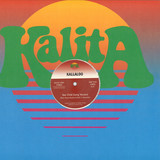
Kalita Records are proud and honoured to announce the first
ever and official reissue of Kallaloo's sought-after 1982
disco single 'Star Child', accompanied by interview-based
liner notes. Originally released on Jeffrey Turpin's
Trinidadian record label IDA, 'Star Child' has since become
highly sought-after by both DJs and collectors alike as an
invisible, yet astonishing piece of Caribbean disco. Unable
at the time to gain the traction and success that it deserved,
we hope that this re-release provides an opportunity to bring
such a great record to a much wider audience.
Kallaloo consisted of various Trinidadian musicians including
Keith Alexander and Peter Wayne Barkley. Keith had been
well-respected as a member of the Trinidadian group Impact, and
was later to become an in-demand producer and composer under
the name of Keith Diamond, responsible for various hits by Billy
Ocean, Donna Summer, Starpoint and Melba Moore. In contrast,
Peter was a well-known recording session drummer, but after
'Star Child's' release he moved to North Carolina to pursue other
interests and 'was never heard from again'.
'Star Child' was recorded at Right Track Recording, in mid-town
Manhattan, New York. As Jeffrey recalls, the atmosphere in the
studio was 'great', with 'everyone upbeat, the cream of the crop
just looking for that break... everyone was talented and just
wanted the chance to express their own ideas'. Five hundred
copies of the record were released on IDA with a white label
design, and they were sold both in Brooklyn, New York and Port
of Spain, Trinidad. It was also released on a red label, however
this was not to Jeffrey's knowledge at the time.
Jeffrey explains that the reason why the record didn't fare well at
the time was because of the difficulty in getting the song played
on the radio. As he recalls, radio stations were much more likely
to play 'radio versions' of songs which lasted for a couple of
minutes, rather than five or seven minute 'extended' versions
such as 'Star Child', which were more suitable to a club
environment. In addition, as Jeffrey explains, radio airplay is a
'political business', and also within a short while band members
such as Keith got their own breaks, and the Kallaloo era was over
as quickly as it had started.
- A1: Leben Und Arbeiten - Amanita
- A2: Malaria! - Your Turn To Run
- A3: Ausserhalb - Zeitzelle
- A4: Die Haut - Der Karibische Western
- B1: Aus Lauter Liebe - Pingelig
- B2: Mania D. - Track 4
- B3: Exkurs - Fakten
- B4: Christiane F. - Wunderbar (Optimo Edit)
- C1: Sprung Aus Den Wolken - Dub And Die
- C2: P1/E - Up And Above / Up And Above Dub
- C3: Franz Erlmeier & Fritz Köstler - Öffnen Sie Mal Ihre Tasche
- C4: Populäre Mechanik - Scharfer Schnitt (No. 1)
- D1: Andreas Dorau - Fred Vom Jupiter
- D2: Weltklang - Veb Heimat
- D3: Stefan Blöser - Voyager One
- D4: Matthias Schuster - An Rah Robeel
Strut Present An Exclusive New Compilation Curated By Optimo's Jd Twitch, 'kreaturen Der Nacht', Bringing Together Classics, Rarities And Oddities From Germany's Original Post-punk And Diy Scene. 1979 To 1984 Was An Era Of Particular Artistic Upheaval In Germany As Strong Subculture Scenes Formed In Many German Cities. Emphasis Was Placed On Expression Rather Than Technical Perfection, Artistic Impact Rather Than Skill. Diy Self-organisation Prevailed With The Establishment Of Small Record Labels And Independently Produced Records And Cassettes. Bands Experimented Across Genres And Consciously Abandoned The English-speaking Mainstream With German Band Names And Lyrics. 'although We Had A Small Underground
Scene, It Was Very Vibrant,' Explains Gudrun Gut Of Malaria! 'bands Like Die Haut, My Frst Band Mania D., Malaria!... We Organised Gigs Ourselves Or Friends Would Open A Gallery And
Have Bands Playing. We Hung Around Together In A Handful Of Clubs Like Risiko Or Dschungel And Went To Gigs At So36. West Germany Had Other Regional Scenes Too: Düsseldorf And
Köln Around Der Plan And The Ata Tak Label And There Was The Hamburg Side With Abwärts. Germany Didn't Have A Real Music Industry Like The Us Or England Back Then.'
This New Collection Is A Personal Selection From Jd Twitch, Built Over Years Of Playing The Tracks In Club Sets. 'it Is Not Designed To Tell A Defnitive Story Of What Was Going On In
Germany In This Era,' He Explains. 'rather, It Is Simply An Arbitrary Collection Of Records I Adore From A Specifc Era With A Specifc Attitude That Hopefully Together Sum Up Some
Of The Musical Undercurrents In Germany At That Time.'
The Package Features A Host Of Rare And Unseen Photos From The Period Along With Extensive Interviews With Artists Including Beate Bartel (mania D.), Christoph Dreher (die Haut),
Michael Hirsch (p1/e) And Thomas Voburka (weltklang). All Tracks Are Remastered By The Carvery With Artwork By Optimo's In-house Design Man Andrew Beltran.
'Breathe The Machine' is the first installment of Dojostudio and presents a musical world rich in harmonics, low frequency and melodic impact, yet with enough space in between to allow that perfect breathing room essential for powerful dance cuts. 'Breathe The Machine' portrays a world that initially feels robotic, yet instills an organic fluidity known only to come from humanoid beings, breathing life into a system littered with code and coldness. Billy Dalessandro presents 3 original cuts, plus a rendition of the title track by Mike Shannon.
Both for 'Breathe The Machine' and 'Tractor Beam' the Waldorf Microwave XT 2 and the Jomox 888 were the primary sound sources. For 'Breathe The Machine' the 888 was processed through a Jomox T-Resonator, which added harmonic distortion, and also spread the stereo spectrum out a bit offering the drums a more washed-out feel. The XT was layered track by track by performing patterns live into an editor until the desired ideas were properly recorded. Mike Shannon was brought on board to offer a contrasting expression of 'Breathe The Machine' and when asked how the process went he stated:
"I took the source sounds, edited them and processed them to work with a groove I had written for this remix. I mainly used the pad, lead synth and synth effects from the original. The rest of the gold I engineered."
On 'Tractor Beam', subtle use shows that ample space in between ideas make things seem larger than life. By allowing a more minimal approach in the production process the sounds can easily co-exist, allowing for that 'big room' sound without overwhelming the overall experience.
The digital exclusive 'Deliverance' was created using NI's Maschine for the drums, and FM8 and Reaktor were the sources of the synths. Drum patterns were created in Maschine and then recorded in realtime back into the DAW as it played, with real-time tweaking of the hi-hat to create the desired impact, especially at the break. The synth and pad patterns were recorded as MIDI into the editor, and then automation of the synths' VCF rounded out the expression needed to complete the emotional process.
All in all, DOJ001 is mostly an all-hardware showdown, with 'Deliverance' being the only 'virtual' attempt. Life is in nature, not in machines, yet the culmination of the two worlds can be beautiful, if only properly tamed and understood. Lest we beware! Stay tuned... and thanks for listening!
Continually pushing the boundaries of jazz, funk, electronic music and disco, as expressed through their signature samba swing, the Brazilian mavericks have recreated the energy of those spellbinding seventies' sessions which would launch them into international recognition and confirm their status as one of Brazil's most successful bands. Since the passing of keyboard maestro Jose Roberto Bertrami in 2012, remaining members Ivan Conti and Alex Malheiros have worked tirelessly to keep the spirit of Azymuth alive, and to continue the legacy of Bertrami's genius. But Fênix also marks a new era as the Azymuth trio is complete once again, by special guest keyboardist Kiko Continentino. A hugely talented pianist, composer and arranger, Kiko has worked with the likes of Milton Nascimento, Gilberto Gil and Djavan, and the fresh energy and inspiration he has brought to the group is undeniable. The album also features Brazilian percussion legend Robertinho Silva, one of Brazil's most important and influential players.
From the disco-carnival title track to sunny jazz-funk head-nodder Orange Clouds, through to the deep-space samba Corumbá, Azymuth have drawn upon five decades of consummate craftsmanship - which coupled with their endless desire for experimentation and improvisation - has resulted in a 10-track journey encapsulating the full spectrum of Azymuth's brilliantly coloured expressionist fusion. With all the cosmic energy and masterful musicianship you'd expect from the three-man orchestra, Azymuth rise from the ashes!
Recorded in Rio De Janeiro in May 2016 with producers Daniel Maunick and Joe Davis the official release date is set for December 2016, on super-heavyweight vinyl.
- Upward Bound' is a long lost, incredibly rare and very expensive classic disco era album! It combines soul, funk with and slick pop appeal into a great cocktail of grooves and melodies! This will drive you to the dancefloor and make you sing along at the same time! The lush arrangements, tight grooves and powerful soul vocals with catchy harmonies make this album an instant evergreen. I'm least surprised that the arrangements should pose a challenge to every rhythm section and that the catchy melodies instantly stick to the listener. The flashing horn arrangements are amazing! The funky bass grooves and guitar riffs weave a cocoon of sound around your soul. The sound is certainly clean but also vivid and the music feels grounded despite it's larger than life expression. The swirling backing vocals in combination with the lead singer are the icing on the cake that already consists of catchy and outstanding songs. This is more funk and soul than simple disco music. There is depth in the arrangements with awesome details as you delve deeper into each single track. You can of course groove along and just enjoy the songs as they are, but be sure to at least be on the lookout for the beautiful ornaments in each song. This music will surely move you, it makes it impossible sit still . In this album you'll find a wide range of funky music, from Slow groovers to fast paced tunes, you will get them all. Some with a deep atmosphere, some energetic, all of them memorable with arrangements that keep your attention going even with the 50th spin on your turntable. To my opinion this album is an unmissable gem of the disco era at it's peak! The original album retails at $ 400 going up, rarely a decent copy could surfaces on the market once a year. So here's a chance for you to grab an affordable copy of this well-deserved and long overdue reissue on vinyl and be enchanted!
Compilation of the works by MJ Lallo, weird harmonizing mantras layered with drummachine rhythms.. Very psychedelic compositions where she uses her voice to create all kinds of sound(scapes)
.
Take Me With You is a revelatory voyage through the captivating universe of voice artist and poet MJ Lallo. The works on this 2LP compilation were all recorded in her home studio between 1982 and 1997, primarily using drum computer, synth and her own voice processed through a Yamaha SPX 90 digital effects unit. They range from wordless harmonizer mantras and primitive drum computer meditations, to psychedelic latin dance-floor anthems and synth-drenched end-of-the-nighters. Lallo has created her own inimitable galaxy of sound where the human voice, liberated from the constraints of language and abstracted using digital technology, is able to explore the outer realms of human expression, like Joan La Barbara with an Eventide and a new-age sensibility. Although Lallo's flight path is distinctly her own, her journey converges with other travellers as diverse as Jon Hassell, Laraaji, Stereolab, William Aura, Laurie Anderson, Meredith Monk, Gertrude Stein and even Terry Gilliam (whose film Brazil was a big influence on Lallo). Like something beamed in from another planet, Lallo's work is both fascinatingly strange and strangely familiar, and will leave a lasting impression for lightyears to come. Double gatefold LP, remastered DDM pressing.
[E B1 | Midnight in the Sky
In 2008, Aaron Dessner sent Justin Vernon an
instrumental sketch of a song called 'Big Red Machine' for
'Dark Was The Night'. This was before they had met in
person. Justin wrote a song to it, interpreting the 'Big Red
Machine' title as a heart. 10 years of friendship later, there
are 10 more songs. 'Big Red Machine'. Each song includes
a large number of collaborators via the PEOPLE platform
and the record was produced by Justin and Aaron with
longtime collaborator Brad Cook and engineered by
Jonathan Low primarily at Aaron's studio Long Pond in
Upper Hudson Valley, NY.
PEOPLE is a steadily growing group of international artists
who have come together to create and share our work
freely, with each other and everyone. It was born out of a
wish to establish an independent and nurturing space in
which to make work (generally around music) that is
collaborative, spontaneous and expressive in nature and
where all unnecessary distractions or obstacles that get in
the way are removed. PEOPLE is for the benefit and
development of the artists involved and just as
importantly, for those who would like to access and enjoy
the output. It is as much about the process of making
work and showing all that openly as it is about the final
outcome.
Slovenska Televiza Are A Two-piece Act Based In Valladolid And Barcelona. They Produce Music That Is Hard To Define With Simple Comparisons Or Oblique Generalisations, But Perhaps An Amalgam Of Minimal Synth And Coldwave Would Best Express Their 'sound'. With That In Mind, There Is Also A Melancholy Underpinning This Release, Perhaps It's The Haunting Vocals Of Lunademayo, Or The Heavily Reverb Laden Soundscapes Of Wladyslaw Trejo's Analogue Synths. You'll Have To Wait Patiently To Find Out....
Slovenska Televiza
Slovenska Televiza Is A Minimal Electronics Duo Based In Valladolid And Barcelona. Wladyslaw Trejo And Lunademayo Stays Close To Coldwave Then Expands To Avant-garde And Experimental Approaches, Reaching A Proposal As Strange As It Is Fascinating.
It Must Be Said That Slovenska Televiza Is Not Only Limited To The Musical Arena, Its Commitment Extends To Other Artistic Facets As Already Shown With Their Very Special Debut, A Performative Action Implemented In Latvia, Where They Traveled To Leave Behind The Entire Output In Several Locations.
- 1: The Room
- 2: Hbw
- 3: Rythm A
- 4: Groovin' With The Eternal Now
- 5: Don't Move!
- 6: Feel Better
- 7: Like A River
- 8: Just The Rain
- 9: Haha Lol
- 10: Two Doors
"The Room", Fenster's fourth album and their first release on Altin Village & Mine marks the beginning of a new chapter for the band. After releasing three albums, a feature length film, and touring extensively throughout Europe and North America since 2012, "The Room" serves as an entry point into their sonic evolution. The essential characteristic of the band is transformation - within and between genres, albums, and songs. Their sound is a window framing psychedelic, groovy, hypnogogic, playful pop.
Fenster is Elias Hock (Germany), Jonathan Jarzyna (Germany), Lucas Ufo (France) and JJ Weihl (USA). Their mission in creating this album was to compose and arrange every song together in a room. It is an experiment in collective creativity that pushed all of them to transcend their individuality and create something together which is greater than the sum of its parts.
The songs were tracked live in a house where the band ate, slept, and played together. Often the songs were recorded without implementing a click track. They were intent on finding and locking into a human groove—one open to imperfection—while still maintaining a tightness between them. They wanted to make the songs feel alive—as if the listener were present in the room with them in the moment of creation.
The album's title track "The Room" opens the record like a rollercoaster ride. There is a tension in the first bars that ties us to earth, a minimal riff that guides us to the first chorus where we feel we are slowly lifting into the air—and by the time we reach the second chorus it has exploded into a space far away from the planet's gravitational pull.
The band's use of juxtaposition is not just a way of channeling a vast library of musical genres and concepts, it is a means of expression. Combining tender pop melodies with kraut-beats, disco grooves and psychedelia frees the band from any one sound and creates a genre all its own.
This playfulness is especially vibrant in songs like "Rhythm A" and "HAHA lol" which deconstruct and fuse together disparate moments of explosive rock, tender harmonies, percussion made of splashing water, voices from a radio, and electric piano. Even "Feel Better", a sparkly pop ballad is cracked wide open by a long trippy interlude that appears unexpectedly within an otherwise classic structure.
The cover art, created by the band's own Lucas Ufo, invites us into a room in the shape of a human skull. If one looks "out" the window in the picture, one finds oneself looking in to an infinite portal of rooms within rooms. The record plays a lot with this idea of perception. In "HBW", the relationship between the bass and the drums creates the feeling of an infinity loop. The lyrics lend an enigmatic tint to the landscape of so called objective reality v. perceived reality: "I was a phase — you were going through — said I was the one but there is no one — there's only the sun — that gives shape to the moon"
The record starts with "The Room" and ends with "Two Doors". Maybe one door is an exit, and one leads to another room... who knows The song has something mysterious and expansive, like a digital ocean flooding the room, carrying everything away. The whole process of making a record is about capturing a moment in time. This is the record they made - in this point in time, all together, in a room. The last words of the record roll out with the waves: "What you leave behind for someone else to find — Two doors inside — neither one is right"
Tracklisting
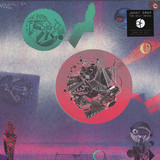
Jonny Drop's debut, Sub Plot, was the very first album release on the fledgling Albert's Favourites label at the beginning of 2016. The initial offering, a 7" of album favourites Mind Field and This Is The One had quickly been picked up on by the good people at BBC Radio 6 Music as well as some of Drop's personal heroes including Kenny Dope, Mr. Thing and Nightmares On Wax.
But when the infectious rhythms and warm production of the beat tape landed, its impact was greater than anyone at the label could have hoped.
Although Jonny never stopped producing beats in the following years, he was also kept busy as a drummer, playing live for Andrew Ashong, The Bongolian and Connie Constance, whose Boring Connie EP he also laid down beats for.
Then in early 2018 his band The Expansions delivered their celebrated Murmuration LP. All the while, with the support of his label family, Drop had been evolving his solo sound too.
'The Only Sound sees a huge progression in my writing direction, as I collaborated with multiple vocalists and musicians, instead of the usual 'one-man band' approach.
The development of these processes make this LP a steady departure from the beat-tape influence of my past releases, and hopefully, showcase the more original sound I've been working to achieve over the past few years.'
The new album is more atmospheric, emotional and expressive. It is filled with beautiful vocal performances, musical contributions from label partners and close friends Deoke and James O'Keefe, and inspirational London jazz composer, flautist and master saxophonist Tamar Osborn (Collocutor/On The Corner).
Voices here include Shea Soul, Grace Walker, former Myron and E soul man Eric Boss with his Lucid Paradise and Pendletons partner Ishtar, plus First Word Records producer/Golden Rules collaborator Sarah Williams White.
While there are thoughtful, down-tempo moments of electronica in abundance here, Drop brings his favourite elements of disco and soul into the picture too.
And there's no shortage of low end throughout. The Only Sound is a welcome next step from Jonny Drop, the sound of a beat maker not just finding his feet as a composer, but thriving in new territory.
Huey Morgan (BBC Radio 6 Music),
Music Is My Sanctuary premiere for All This Trouble, Bonafide Magazine premiere for Looking Glass
'A really talented musician, absolutely loving that" Lauren Laverne on This Is The One, BBC Radio 6 Music
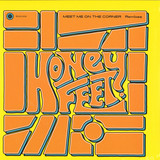
Meet Me On The Corner is taken from the band's sophomore album, Orange Whip, which itself was BBC 6Music's Album of The Day on its release. It follows previous singles Whatever You Do and Sinner, which garnered support from Craig Charles, Tom Ravenscroft and Huey Morgan. The song showcases Honeyfeet at their funkiest and chunkiest. A pounding beat beefed up by bass, guitar and brass propels forward while Rioghnach Connolly sings lyrics that could be straight out of the playground, but suggest something deeper, possibly mystical even, in its demands for a dalliance on the street.
Remixes on this more foot friendly single come courtesy of homegrown legends of funky house music, Crazy P who come through with both a vocal and dub version. Honeyfeet's latest opus is turned into a straight up soulful disco monster by the boys from Nottingham, with Rioghnach's rasping vocals playfully meandering over Hot Toddy and Ron Basejam's crisp beats and trademark live bass. Elsewhere, much hyped Russian production don, I Gemin, delivers his take - still aimed at the dance floor of course, but a slightly deeper house affair based around jazzy keys and chopped up vocals that take the song into more sonorous territories.
As a bonus, the 12" package also features the acclaimed remix of previous single, Sinner, courtesy of erstwhile Polish Innocent Sorceror, Envee - his shuffling, moody take only previously being available on vinyl via a super limited (and now impossible to find) 7-inch release late last year. For the last couple of years Honeyfeet (whose name comes from a line in the Blues Brothers film) have been a conduit for the ideas and expressions of an exotic mixture of Manchester based musicians. This genre-defying band incorporate styles including jazz, folk and hip hop into their music.
The band are fronted by Rioghnach Connolly - also known for her work with Real World artists Afro Celt Sound System and The Breath - "A remarkable singer and flutist who...can ease from Irish traditional influences to soul" (The Guardian). The line-up is completed by Rik Warren (vocals/harmonica), Gus Fairbairn (tenor sax), Biff Roxby (trombone/vocals), Ellis Davies (guitar), Lorien Edwards (bass guitar), John Ellis (keyboards) and David Schlechtriemen (drums).
Since their self-released debut album, 2013's It's a Good Job I Love You, keyboardist John Ellis jumped on board as full-time member, bringing his unique musical presence. This enabled the development of a more texturally adventurous style, as witnessed with the dual atonal solo between himself and guitarist Ellis Davies on Sinner. Similarly, for their current LP, Orange Whip, engineer, bassist and spiritual guide Lorien Edwards makes his Honeyfeet recording debut, so completing the 'kitchen' of this very special band.
- The album, Orange Whip, is out now.
Echocord's Colour sub-label returns early June with a four- track EP from Eindhoven's Albert Van Abbe in the shape of 'Klangbilder'. Dutch Techno artist Albert Van Abbe has nearly two decades of experience under his belt in various forms of musical and visual expression, releasing on his own Vanabbe imprint, Figure Jams, Semantica and No Comment, as well as playing live and DJing at hot spots across the globe such as Berghain, Tresor, DGTL and Awakenings festival. 'Klangbilder 1' leads with a robust rhythmic drive, employing bumpy toms, shuffled hats and lumpy kicks at its core as vacillating synths, tension building drones and menacing pizzicato strings develop throughout. 'Klangbilder 2' takes things deeper next, retaining the dusty drums sound of the previous cut whilst stirring in airy ethereal pads and choppy, resonant stab sequences. 'Klangbilder 3' kicks off the B-Side with modulating synth whirrs, emotive organ tones and a muted drum tones throughout before 'Klangbilder 4' closes the package, taking things beatless and cinematic via emotive synth leads, droning subs and expansive echoes.
Winter thaw marks the return to Furanum of Uncto, the Silesian dyad Domink Muller and Rafal Furst, with their first full release of collaborative material since 2013's seminal FU009. Like its predecessor, Unctuous offers four cuts of viscerally engineered and rhythmically exacting dystopias, each ably situated within a striking 'synth-etic' narrative. It is this latter aspect of each arrangement that perhaps most noticeably demonstrates the pair's singular and evolving approach to composition, born out in the calculated emphasis on hardware-based expressionism.
The opening title track stands as a testament to the above: while deceptively sparse at the outset, its ponderous advance, both heavyset and indomitable as it gathers pace, is framed in the midst of an unfolding panorama of stark analog wails. Further interspersed with resonant timbres more akin to the vocalizations of some hell-beast luring its prey, the eponymous behemoth ingratiates its listener, beckoning submission to its will with the promise of exhilaratory assimilation. Such a hive-mind state attained, exhilaration does follow, yet so does a concomitant loss of agency, leaving one thoroughly subjugated and enslaved to its cadence. Perhaps as a manifestation of dramatic resistance to such a fate, 'Trust No One' daringly defies the impositions of its predecessor. Instead, it animates and emboldens the beholder through its rhythm, ineluctably driven by a sense of accelerating linear intensity. Thus arriving at a climactic percussive build whose isochronal blows shatter any remnants of doubt, angst transforms into raw conviction as one is propelled into a delirious realm of solipsistic certitude.
Situated amidst the foreboding sound of blade clashing with blade, 'Cold Knife', on the other hand, is driven by an entirely disparate off-beat progression. As its anticipatory rhythmic thrusts cut through an advancing fog of shivering drones with frigid precision, one seemingly undergoes a cyclical plunge into a state not unlike one marked by the visceral dopaminergic rush of contact with extreme cold. Finally, 'Metzgers Tochter' ('Butcher's Daughter') closes the EP with a ruthless exploration of the contrast between the gruesome and the feminine. In a similar way to the opener, the track's meter is staggered and undulating, yet also steadily punctuated with breathing room between its crushing blasts. Such scenery thus serves as a canvas for the expression of the titular character's 'beauty and the beast': a paradoxical synthesis of attraction and aural brutality, held in tension by the unceasing throbbing of the composition's beats.
Mastered & cut by CGB at Berlin's Dubplates & Mastering,
Teste returns with The Box Man, a five-track EP that marks their first release of original material in 25 years. Formed during the early nineties in Hamilton, Ontario, they put out only three official records between 1992-1993 on Probe Records, most notably 'The Wipe,' which is regarded as a genre defining classic, while the follow-up 'Regions' also served as a template for the ensuing sonics of contemporary techno. With only a handful of live actions, the final chaotic show (public disturbance) occurred for Pure in Glasgow 1994. Afterwards, the original Teste lineup of juvenile delinquents disbanded but unwittingly ended up defining the hypnotic and drugged out strains of today's afterhours techno parties. The project vanished for decades until reactivating the chaos in 2014, promoting a slew of remixes 'The Rewipes,' by artists such as Rrose and Terence Fixmer, on the Edit Select imprint.
Since then, original member David Foster, still at large as //HUREN//, has been slugging it out in the fringes with influential output on the seminal Zhark Recordings Berlin and has collaborated as O/H with Rich Oddie of Orphx. First meeting on Mayday 2017 in Berlin, a new alliance with Martin Maischein aka Goner formed. Goner is likewise a veteran with essential output under various monikers on imprints such as Force Inc., Editions Mego, and Hospital Productions. From that pairing, The Box Man came into being for the second release on BITE, the Berlin techno label run by Hayden Payne and Florian Engerling.
The Box Man picks up where Teste last left us with their revolutionary vision of techno and continues to further their interdimensional manifestation of insanity and formation. Pure techno serving as a method of psychic expulsion and self-reckoning. From the opening, the eponymous track approaches full panoramic throttle as metallic synths creep 360 degrees around the listener, setting the tone for panic and loss of cognitive control. Teste then moves into the stealthier outpatient techno rhythms of 'The Long Term Care Facility' and 'Thieves Are Operating In This Area'. The EP contrasts its propulsion with different interpretations of its blueprint. 'Foaming At The Mouth' delves into Cabaret Voltaire-alike rhythm box violence until all is closed with the comedown melodies of 'Lyubov'. Through highly adept methods of sound design and neural interpretation, Teste once again cuts apart reality with their music, expressing nightmares and visions via new rituals and mind control techno.
- A1: A Min We Vo Nou We - Les Sympathics De Porto Novo
- A2: Asaw Fofor - Ignace De Souza & The Melody Aces
- A3: Dja Dja Dja - Stanislas Tohon
- B1: L´enfance - Elias Akadiri & Sunny Black´s Band
- B2: Mé Adomina - Picoby Band D´abomey
- B3: Nounignon Ma Klon Midji - Antoine Dougbé
- B4: Moulon Devia - Orch. Poly-Rythmo De Cotonou
- C1: Paulina - Black Santiago
- C2: Glenon Ho Akue - Lokonon André Et Les Volcans
- C3: Sadé - Sebastien Pynasco And L´orchestre Black Santiago
- C4: Baba L´oke Ba´wagbe - Super Borgou De Parakou
- D1: Gangnidodo - Cornaire Salifou Michel Et L´orchestre El Rego & Ses Commandos
- D2: How Much Love Naturally Cost - Gnonnas Pedro And His Dadjes Band
- D3: Idavi - Orchestre Poly-Rythmo De Cotonou
African Scream Contest 2
A great compilation can open the gate to another world. Who knew that some of the most exciting Afro-funk records of all time were actually made in the small West African country of Benin Once Analog Africa released the first African Scream Contest in 2008, the proof was there for all to hear, gut-busting yelps, lethally well- drilled horn sections and irresistibly insistent rhythms added up to a record that took you into its own space with the same electrifying sureness as any favourite blues or soul or funk or punk sampler you might care to mention.
Ten years on, intrepid crate-digger Samy Ben Redjeb unveils a new treasure- trove of Vodoun-inspired Afrobeat heavy funk crossover greatness. Right from the laceratingly raw guitar fanfare which kicks o Les Sympathics' pile-driving opener, it's clear that African Scream Contest II is going to be every bit as joyous a voyage of discovery as its predecessor. And just as you're trying to get o the canvas after this one-punch knock out, an irresistible Afro-ska romp with a more than subliminal echo of the Batman theme puts you right back there. Ignace De Souza and the Melody Aces' Asaw Fofor" would've been a killer instrumental but once you've factored in the improbably-rich-to-the-point-of-being-Nat-King-Cole-influenced lead vocal, it's a total revelation.
The screaming does not stop there, in fact it's only just beginning. But the
strange thing about African Scream Contest II's celebration of unfettered Beninese creativity is that it would not have been possible without the assistance of a musician who had been trained by the Russian secret services to "search and destroy" enemies of the country's (then) Marxist-Leninist president Mathieu Kerekou.
Already familiar to fans of the first African Scream Contest as a mainstay of ruthlessly disciplined military band Les Volcans de la Capitale, Lokonon André vanished in a cloud of dust at Ben Redjeb's behest with a list of names and some petrol money, only to return a few days later having miraculously tracked down every single name he'd been given. The source of this Afrobeat bounty-hunter's impressive people-finding skills - his training with the KGB - highlights the tension between encroaching authoritarian politics and fearless expressions of personal creative freedom which is the back-story of so much great African music of the 60s and 70s. Happily, in this instance, Lokonon was tracking the artists down to oer them licensing deals, rather than to arrest them.
Where some purveyors of vintage African sounds seem to be strip-mining the
continent's musical heritage with no less rapacious intent than the mining companies and colonial authorities who previously extracted its mineral wealth, Samy Ben Redjeb's determination to track this amazing music to its human sources pays huge karmic dividends.
Like every other Analog Africa release, African Scream Contest II is illuminated by meticulously researched text and eortlessly fashion-forward photography supplied by the artists themselves. Looming large - alongside Lokonon André - in the cast of biopic-worthy characters to emerge from this seductive tropical miasma is visionary space-nerd Bernard Dohounso, who laid the foundations for Benin's vinyl predominance by importing and assembling the turntables that would play the products of his Bond villain-acronymed pressing plant SATEL, a factory that would revolutionise the music industry in the whole region.
The scene documented here couldn't have been born anywhere else but in the Benin Republic , and the prime reason for that is Vodoun. It's one of the world's most complex religions, involving the worship of some 250 divinities, where each divinity has its own specific set of rhythms, and the bands introduced on the African Scream Contest series and other compilations from that country were no less diverse than that army of dierent Gods. At once restless pioneers and masters of the art of modernising their own folklore, the mystic sound of Vodoun was their prime source of inspiration.
One especially irascible Vodoun-adept was Antoine Dougbe, who styled himself The devil's prime minister' while turning ancestral rhythms into satanically alluring modern beats. As Orchestre Poly-Rythmo songwriter Pynasco has observed sagely, Evil is not elsewhere, evil extends into the house'. And African Scream Contest II is a gloriously cinematic road-trip through an undiscovered realm of music lore whose familiarity is every bit as thrilling as its otherness.
Written by Ben Thomson, March 2018
- A1: Moment Of Collapse (Feat. Heidi Vogel)
- A2: Palmares Fantasy (Feat. Hermeto Pascoal)
- A3: Waltz For Hermeto (Feat. Hermeto Pascoal)
- A4: The Blonde
- B1: Montreux (Feat. Hermeto Pascoal)
- B2: Said (Feat. Hermeto Pascoal)
- B3: Tudo Que Voce Podia Ser (Feat. Sabrina Malheiros)
- B4: The Conversation (Feat. Hermeto Pascoal)
For his third album for Far Out Recordings, London based multi-instrumentalist and one of Europe's finest saxophonists Sean Khan ventures to Rio de Janeiro to collaborate with iconic Brazilian polymath Hermeto Pascoal. Taking its title from the escaped slave settlement 'Palmares' in the Northeast of Brazil during the 1600s, Palmares Fantasy is Khan's utopian jazz message for the world, and features Azymuth drummer Ivan 'Mamao' Conti, bassist Paulo Russo, guitarist Jim Mullen, and guest vocals from Brazilian chanteuse Sabrina Malheiros, and Cinematic Orchestra frontwoman Heidi Vogel.
Like Hermeto Pascoal, Sean Khan is a self-taught musician. Never able to afford his original dream of studying at Berklee, and having been turned away from Guildhall School of Music for being 'too raw', he became disillusioned with what he saw as the exclusivity, elitism and dangerous institutionalisation of the jazz world. Yet Sean's love for music and the drive to create never faltered.
Hermeto Pascoal, the man Miles Davis once dubbed the most impressive musician in the world', is a similarly independent artist. A true maverick whose ingenuity and freedom from conventional restraints is so great that he has essentially conceived his own musical language, made him the dream collaboration for Sean.
Aspiring to inclusivity and equality also informs the message in Khan's music. Inspired by the 17th Century settlement of Palmares in Brazil's Alagoas region, which was free from the Portuguese crown's murderous exploitation of South America for a century, Khan notes his fascination with the fact that while majoritively made up of escaped African slaves, many deserter conquistadors also joined the settlement.
Hearing the deep-grooving title track with this history in mind, the listener is transported to a futuristic musical eden, with Mamao's insatiable 10/8 rhythm back-boning Hermeto's wild improvised vocals, rhodes and whistles, while Sean's harmonically brilliant sax and flute add more layers of moody, characterful expression. 'Moment of Collapse' is Sean's poetic study on the uncertainties of modern day western civilisation, delicately presented by the gorgeous vocals of Heidi Vogel and drenched in lugubrious strings and Alice Coltrane-esque harp. The two covers on the album are of Hermeto's own 'Montreux' (on which Hermeto plays solos on a teapot and a pint of water), and an uplifting soulful jazz-funk take on Milton Nascimento & Lo Borges MPB classic 'Tudo Que Voce Podia Ser' featuring the vocals of pioneering nu-bossa voice Sabrina Malheiros.
The recording sessions for the album were part of an intensive and hugely productive eight-week excursion to South America for Far Out boss Joe Davis in the summer of 2016, which also saw the sessions for Azymuth's Fênix and a forthcoming album from Uruguayan fusion legend Hugo Fattoruso.
Fantastic' Gilles Peterson
Loving this!' Opolopo
Thank you!' Sassy J
Proper! Great track.' Colin Dale
this is great!' Yannick Elverfeld (RBMA / Needs Records)
I've enjoyed Sean Khan's earlier releases, but this really seems like he's grown into his fairly considerable talent.' Mark Sampson (Songlines)
His last album was his best so far, but I think this one may be even better.' Laurence Pragnell (Soul Brother Records)
dope!!!' Kyri (R2 Records)
this is great - really cool vibe!' Sam Redmore
wonderful track - can't wait to hear the lp.' Simon Harrison (Basic Soul Radio)
This is very tasty indeed.' Gavin Boyd (Soul Has No Tempo)
Stunning!!!' Mark Milz (Further In Fusion)
Oi Oi' Samuel Lloyd (Balamii Radio)
PRESS / ONLINE
VINYL FACTORY (UK) News (Anton Spice) 09/03/18 online
SOUNDS & COLOURS (UK) News (Gabriel Gahan) 09/03/18 online
THE WIRE (UK) Review confirmed (Joseph Stanard) print
EVENING STANDARD (UK) Review confirmed (Jane Cornwell) print + online
ECHOES MAGAZINE (UK) Review confirmed (Laurence Pragnell) print
LIBERATION (FR) Feature confirmed (Jacques Denis) print + online
MUSIC IS MY SANCTUARY (CA) Premiere confirmed (Mike Jones) online
JAZZ MAGAZINE (FR) Review confirmed (Frederic Goaty) print
SHINDIG! (UK) Review confirmed (Grahame Bent) print
MUSICA MACONDO (UK) Premiere confirmed (Tim Garcia) online
RAWCKUS MAGAZINE (USA) News (Randy Radic) online
KIND OF JAZZ (UK) Review confirmed (Fernando Rose) online
TONART MAGAZINE (DE) Review confirmed (Michael Moehring) print
WORLD MUSIC NETWORK (USA) Review confirmed (Raul Da Gama) online
BADD PRESS BLOG (USA) Review confirmed (Kevin Press) online
ORKESTER JOURNALEN (DK) Review confirmed (Patrik Sandberg) print
LIVE
WORLDWIDE FM (UK) Sean Khan live session confirmed (Gilles Peterson)
RADIO
BBC RADIO 6 (UK) Gilles Peterson - Palmares Fantasy (24/02/18) link
OTHER
BRITISH AIRWAYS On board BA flights (June 2018)
Ryuji Takeuchi provides Instruments Of Discipline with an EP of noisy, hypnotic tracks, ranging from giddy, stomping, left-field techno to melancholic ambience; the EP's title 'One's Sentiment' provides a thoughtful angle to this at times cacophonous collection, for while they are bristling with noise there is something contemplative about the pieces, expressed in a way that suggests more than one thought trying to take life at the same moment, Ryuji finds space for conflicting voices both spatially and in terms of mood, the first three tracks, 'Ambivalence', 'Sadness' & 'Sorrow' crawl with competing elements, synth lines drool over and meld with throbbing kick patterns, anxiety & excitement are tightly wound in focus as tracks build and develop, leaving the listener to navigate these abstract planes, intoxicated; while the final track 'Regret' is a compelling piece of noisy, ambient minimalism that allows for an austere pause after the eruption of the initial works. It becomes evident that Ryuji's journey as a producer, through periods of hard-techno, deep-minimalism and the more abrasive ventures on HueHelix, has created a powerful and nuanced voice that is fully on display in 'One's Sentiment'.
Ryuji Takeuchi - Artist Bio
Ryuji Takeuchi (Local Sound Network / LSN, HueHelix) was born in Osaka, in the late 90s, he moved to the United States where he discovered Techno, House and Electro Music, influencing his desire to produce & DJ. His first wave of releases on LK Records, Arms, Mastertraxx, FK Records, SWR, Innervate, I.CNTRL, Impact Mechanics, Silent Steps, GSR & Brood Audio to name a few, were straight-up, hard techno,
In 2011, Ryuji started his own imprint, 'Local Sound Network / LSN', a platform for a new generation of both Japanese & global electronic music & later on, in collaboration with Tomohiko Sagae, Go Hiyama & Kazuya Kawakami, the label, 'HueHelix / HHX', developing further the voice of Japanese techno & experimental electronics, with a focus on distorted, industrial sounds.
In 2012, Ryuji launched the 'Local Sound Network Digital Solutions / LSNDS' series born from a desire to both discover and introduce a wider range of electronic music to the world.
Ryuji Takeuchi provides us with an EP of noisy, hypnotic tracks, ranging from giddy, stomping, left-field techno to melancholic ambience; the EP's title 'One's Sentiment' provides a thoughtful angle to this at times cacophonous collection, for while they are bristling with noise there is something contemplative about the pieces, expressed in a way that suggests more than one thought trying to take life at the same moment, Ryuji seems to find space for conflicting voices both spatially and in terms of mood, the first three tracks, 'Ambivalence', 'Sadness' & 'Sorrow' seem to crawl with competing elements, synth lines drool over and meld with throbbing kick patterns, anxiety & excitement are tightly wound in focus as tracks build and develop, leaving the listener to navigate these abstract planes, intoxicated; while the final track 'Regret' is a compelling piece of noisy, ambient minimalism that allows for a pause after the . It is testament to Ryuji's journey as a producer through periods of hard-techno, electronic minimalism