Nach den letzten Jahren, die durch ein mit dem American Music Award und dem iHeart Radio Award ausgezeichnetes internationales Nummer-1-Album ”Impera”, das auch in Deutschland die Spitze der Charts
eroberte, eine RIAA-zertifizierte Platin- und eine UK-zertifizierte Gold-Single sowie eine massive Welttournee, die in dem rekordverdächtigen Kinofilm ”Rite Here Rite Now” verewigt wurde, welcher es bis auf
Platz 3 der deutschen Kino-Charts schaffte, geprägt waren, wird 2025 für GHOST das bisher geschäftigste,
ehrgeizigste und schlichtweg größte Jahr werden. Mit der Enthüllung von SKELETÁ, dem kommenden
sechsten Album der GRAMMY-gekrönten schwedischen Theatralik-Rock-Ikonen, und der heimtückischmelodischen Leadsingle „Satanized“ hat GHOST gerade erst die nächste Phase ihres unausweichlichen
Weges zur Weltherrschaft eingeleitet. Mit Hunderttausenden von bereits verkauften Tickets für den ersten
Teil einer weltweiten Arena-Tournee, bei der die Band zum ersten Mal als Headliner im Madison Square
Garden auftritt, ist GHOST bereit, das introspektivste und nach innen gerichtete Material der Bandkarriere
zum Leben zu erwecken - und das in einem angemessen grandiosen Stil: Auf der Tournee zu SKELETÁ
wird der neu getaufte Papa V Perpetua sein Debüt geben, der einer phantasmagorischen neuen Produktion
vorsteht, die verspricht, die Live-Rituale zu übertreffen, die den Debütfilm der Band, RITE HERE RITE
NOW, zum umsatzstärksten Hardrock-Kinoereignis der nordamerikanischen Geschichte machten
Joe Lovano und seine polnischen Mitstreiter vom Marcin Wasilewski Trio zeigen sich auf ihrem zweiten
gemeinsamen Album für ECM von einer besonders abenteuerlustigen Seite. Aufbauend auf den lyrischen
Stärken der vorherigen Aufnahme der Gruppe (Arctic Riff, 2020), erforscht das Quartett auf Homage
nun auch noch die Art von frei fließendem Zusammenspiel und ausgedehnten Improvisationspassagen, die
schon zu einem festen Bestandteil von Lovanos Unternehmungen mit seinem Trio Tapestry geworden sind.
Zwei lange Kompositionen und der Titeltrack „Homage“ - allesamt Originale von Lovano - bilden mit
einer Länge von jeweils über zehn Minuten das Fundament des Albums und zeigen die Musiker in ihrer
experimentierfreudigsten Form, wobei Joe häufig sein Tenorsaxophon und sein Tárogató gegen diverse
Perkussionsinstrumente tauscht. Bei „Love In The Garden“, einer Komposition des polnischen Geigenvirtuosen Zbigniew Seifert, schmückt die Gruppe die stimmungsvolle Melodie mit fließenden Harmonien aus,
die in eindringliche Rubato-Gefilde gehüllt sind. Improvisierte Miniaturen vervollständigen ein Programm,
das zeigt, dass Wasilewski und seine Trio-Kollegen die ideale Ergänzung zu Lovanos einzigartigen Improvisationslinien sind. Die schlackenlose Chemie der Gruppe wird auf Homage deutlicher denn je. Das Album
wurde von Manfred Eicher produziert.
Lean back on the beat. Inhale, exhale. A new voice from an old soul. Kick drum rolls deep with Fender Rhodes. Charlotte Day Wilson sparking up a blunt, skateboarding at midnight with Brittany from Alabama Shakes. Jazzy intonation on a funky tip. Utterly confident in its own sense of time. Just in time.
You may not have heard of GC O'Connor before, but ask any working musician in Sydney and they know her name. A stalwart of the scene, multi-instrumentalist and composer O'Connor has been putting in the work for years, quietly dropping gems as she readies her debut EP, a self-described 'bedroom soundtrack'. Soul Lament is the kind of assured, accomplished record we delight in putting out into the world. It's representative of a fertile scene in Australian music that deserves celebrating.
Includes an individually-numbered, specially-designed obi strip.
“The future of Rock music is in safe hands” (10/10 Powerplay Magazine)… It’s time to embrace the next chapter of one of rock’s hardest-working bands. H.E.A.T storms back into the spotlight with the explosive new album “Welcome To The Future” – and it hits with full force!
In recent years, the Swedes have been impossible to ignore. At the front is Kenny Leckremo, undoubtedly one of the best rock and metal voices of his generation, with a stage energy that has been sorely missed in the scene.
Those lucky enough to meet the band know their passion for the ‘80s runs deep. H.E.A.T masterfully channels the spirit of rock’s most fun era, a time where exuberance reigned the stage, crafting a distinctive sound that melds power metal with melodic hard rock.
With “Welcome To The Future”, H.E.A.T brings you a heavy and melodic album packed with anthems that beg to be belted out. It’s an invitation to all who crave the rush of true arena rock.
“The future of Rock music is in safe hands” (10/10 Powerplay Magazine)… It’s time to embrace the next chapter of one of rock’s hardest-working bands. H.E.A.T storms back into the spotlight with the explosive new album “Welcome To The Future” – and it hits with full force!
In recent years, the Swedes have been impossible to ignore. At the front is Kenny Leckremo, undoubtedly one of the best rock and metal voices of his generation, with a stage energy that has been sorely missed in the scene.
Those lucky enough to meet the band know their passion for the ‘80s runs deep. H.E.A.T masterfully channels the spirit of rock’s most fun era, a time where exuberance reigned the stage, crafting a distinctive sound that melds power metal with melodic hard rock.
With “Welcome To The Future”, H.E.A.T brings you a heavy and melodic album packed with anthems that beg to be belted out. It’s an invitation to all who crave the rush of true arena rock.
For a project which made its debut in 2024 with next to no fanfare nor hype, rush2theUnknown managed to capture the attention and the imagination of a number of notable DJs across genres, tempos and timezones in their debut year. From legendary chillers Kruder & Dorfmeister picking up on the more Japanese VGM influenced side of their music, techno DJs like Courtesy, Anastassia Kristensen and Nastia drawn towards their more celestial-tinged breakbeat offerings and key support coming in from many trailblazers past and present of the genres that shaped the duo thirty years back. Support from artists and DJs around the world saw rush2theUnknown's music aired across Kool FM, Rinse FM, NTS, BBC Radio One, and thanks to impassioned support from punky-reggae icon Don Letts, multiple spins on the Rebel Dreads legendary BBC Radio 6 show.
With the foundation laid rush2theUnknown return to Diskotopia with the "Yugawara" EP.
Early support for the Yugawara EP has already seen responses from and tracks from the EP played by DJs like Machinedrum, DJ Flight, Addison Groove, dBridge, Gyrofield, Joakim, I:Cube, Courtesy, Cici, Sakura Tsuruta and more in clubs and on radio like NTS, Kool FM, Rinse FM and BBC Radio One, and BBC 6 Music.
Born from a journey out of Tokyo to the seaside town of Yugawara in the northeastern end of Izu Peninsula, the EP channels the energy, spirit and mathematically impossible coincidences that seem to come with each adventure the duo has in that part of Japan. Each morning the duo would leave their makeshift studio and wander across the hills of Yugawara. Be it a random encounter, a conversation or mental picture sparked by the visual scenery before them, new tracks came to life each day. As with their Diskotopia debut, each EP is a mix of the myriad influences the duo have accumulated since their teenage years living on outer ends of the Pacific Ocean.
From the technicolour aqua-jungle of "View From Fuua" which bursts with Logical Progression era Good Looking Records exo-planet optimism, through to the EPs closer, "Zuio-ji" a track that owes as much of a debt to the ancient Japanese court music of gagaku, as it does the 1960s soundtrack work of composer Toru Takemitsu and the jidaigeki infused breakbeat experiments of a mid 90s Rupert Parkes. Shades, tones and hues plucked from CD-ROM era "Visual Scenes" 80s CM Music and the techno-animism of synth-heavy anime soundtracks can be found on the EPs more VGM-leaning excursions "光のトンネル" and "夜明けの真鶴岬" whereas tracks like "Physical Reality" continue the question posed on their debut:What would a breakbeat tradition look and sound like, had it been forged a billion light years away?
Marina y su Melao is a band from Barcelona led by Puerto Rican Marina Molina. After a period of live activity, in 2025 they will release their debut album, "Rezo al agua", where Puerto Rico's bomba, an eminently rhythmic genre, expands to fuse with the colours and flavours of other Afro-Caribbean sounds. Tradition and folklore are embodied in a powerful and innovative conception.
In "Rezo al agua", Marina Molina expresses an attachment to the land, the landscape, the culture, the beliefs and the environment where she was born, Puerto Rico. She does this through bomba, one of the country's most identifying musical expressions. Bomba is as old as the slavery of those who gave birth to it in order to tell their tribulations and hopes, armed with the instrument they had at hand: the drums. It is a kind of meta-genre that includes a multitude of rhythmic varieties.
But Marina is something more than bomba, the legacy she received from her elders and which she does not wish to turn into a frozen object of veneration, an untouchable totem, mystical and ruled by norms bequeathed by the years. Marina, who has Colombian blood in her veins, is an artist of today, of a world in which cultures can mix, people migrate, influence each other, travel, exchange their cultural traces, can see online what happens at the other end of the world and thus open the window that facilitates the mixing of identities. These mixtures redraw borders and genres, allowing popular music to avoid its fossilization.
Marina grows in this fertile territory. She has a ductile and powerful voice, as clear as her strong, independent mindset. This is a remarkable element in the lyrics of the album, which despite being written from a current perspective, contain the sense that popular lyrics have always had: they explain life with the small letters of the everyday. And all this is presented in the bomba genre. Impure. There is an African guitar, a pedal steel guitar, a Wurlitzer, an accordion and everything that Marina and Miguelito Superstar, the album's producer, thought was necessary to accentuate the musicality of a full voice and drums that resonate raw with the vibration of tradition. A tradition now in the hands of a woman who aspires to her own space in life, to write her own chapter.
Marillion steht für gefühlvolle, kraftvolle und zutiefst bewegende Musik und sind seit den 80er Jahren bekannt für ihre beeindruckenden Live-Shows und eine imposante, treue und loyale globale Fangemeinde. "This Strange Engine" ist ein bemerkenswertes Album, das sich durch akustische Finesse und Intimität auszeichnet und gleichzeitig eine atmosphärische Klanglandschaft mit tiefgründigen Texten und sanften Melodien bietet. Das Album zeigt Marillions Vielseitigkeit und Offenheit für verschiedene Einflüsse.
Erhältlich als hochwertige Deluxe Editionen mit reichlich Bonusmaterial, ist diese Neuaufl age ein Muss für alle Fans von anspruchsvoller Rockmusik.
Japanese free jazz legend Akira Sakata and Greek avant-garde guitarist Giotis Damianidis present Adyton, their first-ever duo recording. Having collaborated since 2018, the two musicians have developed an intuitive and electrifying musical dialogue, culminating in this live performance at Haekem, Brussels—the final concert of a two-week tour with Entasis in September 2023.
Sakata, who turned 80 on February 21st, 2024, delivers his signature fiery alto saxophone, evocative clarinet, expressive voice, and resonant bells, while Damianidis expands the sonic spectrum with textural guitar and effects, weaving a dynamic interplay between structure and chaos.
Titled after the "Adyton"—the innermost, most sacred part of an ancient temple—this album invites listeners into a raw, unfiltered space of musical exploration, where spontaneous energy and deep-rooted tradition converge. A testament to Sakata’s lifelong commitment to improvisation and Damianidis’ boundary-pushing approach to guitar, Adyton is a powerful, transcendental journey into the unknown.
Born in the vibrant alternative scene of 1980s Sao Paulo, Mercenárias is an iconic band in the history of Brazilian punk and post-punk. Formed by Sandra Coutinho (bass and vocals), Rosália Munhoz (vocals), Ana Machado (guitar), and Edgard Scandurra (drums), the group stood out for their rebellious attitude, incisive lyrics, and raw sound that blended punk, post-punk, and experimental elements. Mercenárias is an iconic band in the history of Brazilian punk and post-punk. They gained global recognition after being included in several compilations outside Brazil. Their debut album, "Cadê as Armas?" (1986), is considered one of the most important records in Brazilian music history. Three years earlier, they recorded their first demo tape at the studio of the funk/pop band Placa Luminosa. The recording turned out great, it's the best you can wait from a Brazilian punk record: raw, aggressive, yet catchy, well-played and produced. Recommended for fans of The Slits, DNA, Malaria!, Kleenex, and Minutemen, this early recording by Mercenárias is more punk than their albums, but still super catchy. It has been remastered from the original tape and includes an insert with previously unseen photos and a short text by Edgard Scandurra.
Mercenárias is an iconic band in the history of Brazilian punk and post-punk. They gained global recognition after being included in several compilations outside Brazil. Born in the vibrant alternative scene of 1980s Sao Paulo, Mercenárias is an iconic band in the history of Brazilian punk and post-punk. Formed in 1982 by Sandra Coutinho (bass and vocals), Rosália Munhoz (vocals), Ana Machado (guitar), and Edgard Scandurra (drums), the group stood out for their rebellious attitude, incisive lyrics, and raw sound that blended punk, post-punk, no wave and experimental elements. Their debut album, "Cadê as Armas?" (1986), is considered one of the most important records in Brazilian music history. Recommended for fans of The Slits, DNA, Malaria!, Kleenex, and Minutemen, the group stood out for their rebellious attitude, incisive lyrics, and raw sound that blended punk, post-punk, no wave and experimental elements. This is a compilation of rare tracks from 1983 to 1987. On the A side, there are 10 amazing songs that didn't make it onto their two albums. On the B side, there is a great live recording at the legendary Sesc Pompéia during their early days, as well as a "lost" studio session featuring some of their classic songs recorded for the cult film Vera. It has been remastered from the original tapes and includes an insert with previously unseen photos and a short text by Edgard Scandurra. .
In a decidedly experimental approach, Brain Damage and Emiko Ota unveil a new vision of dub, reinventing the unexpected. While the sound treatment techniques inherent to the genre remain-evolving mixes, echoes, reverbs, and bass frequencies that are almost palpable-the Anglo-Jamaican roots of the style have indeed been replaced, re-conceptualized, recomposed, and rewritten. The duo seems to engage in a musical dialogue using a novel language, tinged with Japanese spoken word, creating moments of rare intensity, as unpredictable as they are hypnotic. By allowing for controlled improvisation, Brain Damage and Emiko Ota recreate the tracks of their latest album at each performance, oscillating between introspection and exaltation. With post-dub as the pretext, they once again explore, captivate, and surprise. For fans of: Massive Attack, Björk, Lee Scratch Perry... POST-DUB. With 16 soon 17 albums and nearly 900 concerts since 1999, French dub pioneer Brain Damage collaborates with artists like Horace Andy, Big Youth, Groundation and more recently with Mad Professor and Emiko Ota. Alongside his many productions showcasing his incredible vitality and unbridled creativity, the intensity of his live performances has earned him a strong international reputation.
One of the UK’s most exciting breakout stars of the past decade, Rebecca Lucy Taylor AKA Self Esteem emerged from cult favourite status to mainstream hero following the huge success of her empowering, truth-telling 2021 single ‘I Do This All The Time’. The song resonated intensely as a perfect example of Taylor’s affectionately termed ‘trojan horse’ or ‘salad and chips’ approach, fearlessly packing important, emotive messages into witty, resonant pop music.
Self Esteem’s wildly acclaimed second album Prioritise Pleasure quickly followed, tackling the hypocrisies and joys found in her experiences of modern day womanhood across dating, friendship, comparison culture, self love, women’s safety and sexual assault and much more. Prioritise Pleasure received Mercury Prize, BRIT Award, Sky Arts and NME Award nominations, was crowned The Guardian and Sunday Times Culture’s Album of the Year, and ‘I Do This All The Time’ was also named The Guardian’s #1 song of 2021.
Quite the opposite of an overnight success, Taylor spent a decade as one half of indie duo Slow Club before adopting the pop star persona she’d always dreamed of. She released her first Self Esteem album Compliments Please in 2019, featuring fan favourite singles ‘The Best’, ‘Girl Crush’ and more.
Gathering a passionate and vast legion of fans ever since, Taylor has appeared on The Graham Norton Show, Celebrity Gogglebox, Friday Night Live & Taskmaster, performed three times on Jools Holland including the NYE Hootenanny, graced the covers of magazines from Grazia to NME to Sunday Times Style, and is one of a handful of artists to have been playlisted across BBC Radio 1, 2 and 6 Music simultaneously.
Having reached new heights of acclaim, Taylor continued to grow, diversify, and create in 2024. Branching out into the world of acting, Taylor starred in a regular role in the Sky series SMOTHERED before completing a run playing Sally Bowles in the multiple Olivier Award-winning production of 'Cabaret at the Kit Kat Club' in London's West End. Starring alongside Jake Shears (Scissor Sisters) as Emcee, the pair’s time on stage was extended due to popular demand and showcased the sheer range of talent in Taylor’s repertoire. Last year’s releases ‘Big Man’ and ‘Love Second Music First’ followed a collaboration with Becky Hill on her song ‘True Colours’.
Web Web mit ihrem sechsten Album in sieben Jahren und mit einem neuen Touch. Mehr psychedelisch, mitunter krautiger als zuvor.
Dazu haben sich WEB WEB diesmal (wieder) in Originalbesetzung (ohne Max Herre) einen besonderen Gast ausgesucht: JJ Whitefield (The Poets Of Rhythm / Karl Hector & The Malcouns / Syrup), der den fantastischen Gitarrensound beisteuert. Seine Riffs sind manchmal funky wie bei den Poets Of Rhythm oder Syrup, oder psychedelischer wie bei Karl Hector & The Malcouns oder seinen vielen Live- und Studioaufnahmen mit Embryo. Die Soundfarbe seiner Gitarre gibt dem Album den Schub in die wunderbare Atmosphäre spaciger Jazz-Kraut Bands der Siebziger. Das Konzept des Albums sollte das exakte Gegenteil zum vorigen WEB MAX Album (WEB MAX II) darstellen: Wieder zurück zu den (WEB WEB-) Wurzeln, mit spontanen, improvisierten Stücken, Fragmenten, Ideen, die größtmögliche Freiheit und Live Spirit bedeuten. Und genauso unvorhersehbar und improvisiert war auch die Idee, JJ Whitefield mit ins Boot zu holen: Einen Tag vor der Session dachte sich Roberto Di Gioia: "JJ und ich leben seit jeher in München. Wir sind uns aber leider nie wirklich über den Weg gelaufen. Ich bin ein großer Bewunderer seiner Kunst, seiner Musik, seiner Art zu spielen. Er ist so inspirierend, weil er keine Kompromisse eingeht. Er spielt auf seine so eigene Art und Weise, er ist keine Kopie von irgendwem und irgendwas."
Die 14 Kompositionen entstanden an zwei Tagen, aufgenommen von Jan Krause (Beanfield) in München. Die energetische Live-Session ging über zweimal 10 Stunden, und alle - Roberto Di Gioia (Rhodes, Fender Precision Bass, Moog, Mellotron, Percussion), Christian von Kaphengst (Fender Precision Bass, Rhodes), Peter Gall (Drums, Percussion, Fender Rhodes), Tony Lakatos (Tenorsaxophon, Querflöte) - waren bis ins Mark "on fire". Dabei wechselten die Musiker die Instrumente, um einen vollkommen anderen Gesamtklang zu erzeugen: Kaphengst am Fender Rhodes klingt anders als Roberto, sein Spiel hat einen anderen harmonischen Aufbau, und Roberto am Bass kennt man von zahlreichen Max Herre Aufnahmen, oder von Till Brönners Album "Till Brönner", und natürlich auch bei dem von ihm produzierten "Let Yourself Be Loved" von Joy Denalane, das auf Motown Records erschienen ist.
out of Stock
Last delivered 17 months ago available to reorder, subject to availability
Hollows Made Homes In Their Sunken Cheeks came into existence as a result of Jon's wishes to take the Ungraven sound somewhere other than a standard 'rock band' setup. Moving away from the traditional 'drums / bass / guitar' structure has allowed Ungraven to experiment further with both sound and composition. 'Hollows_.' Is an experiment in sonics and allows both Davis and Perry to perform a sickening sonic duet as their respective instruments carve a universe shaped hole in your consciousness. Inspired by the duo's past collaborations on Conan tracks such as "Older than Earth" and "Grief Sequence" as well as artists such as Tangerine Dream, Circle, Zombi and Harold Budd. Hollows is a combination of composed and improvised elements, constructed remotely from their bases in England and Denmark. The addition of Perry's synth, organ and piano to Davis's slab like 6 string delivery has produced two epics that are both introspective and pummelling at the same time. Fall untethered into a bleak and expansive soundscape of psychedelic terror, experience a new chapter in Ungraven's tome of tone.
out of Stock
Last delivered 17 months ago available to reorder, subject to availability
BEATALISTICS, the soulful South-German Drum & Bass label, run by Enea and MC Fava, is celebrating its 100th release. ONEHUNDRED reflects on almost one and a half decades of label back catalogue with a 29 tunes strong 'best of' various artists digital compilation. Included are also 6 brand new tunes which are packed on a vinyl sampler In addition. Featured is orchestral DnB pioneer KEENO who puts his magic hands of 'Sarah', taken off FAVA's Destiny EP with Smote & Becca Jane Grey and rounds up the meaningful song with his cinematic trademark sound . FAVA also adds some decent chants to COMMAND STRANGE'S 'Kindness Flow, a positive and uplifting liquid roller that is going to make your soul smile for sure. Long time label friend PAUL SG, head honcho of the brilliant soul driven Austrian imprint Jazzsticks delivers one of his signature amen break soul-rollers with 'Pale White Boy'. Label boss ENEA can't be missed on here and literally delivers the 'Heat' with his contribution. Beatalistics sticks to the label philosophy and supports local talents and important label representatives DAVA and MOJOMAN.'Pictures' delivers dancefloor vibes with a deep bassline and strong vocal arrangement and proves that Dava is one to watch out for in the near future. MOJOMAN maintains a desire to dance with the hypnotizing 'Pillers of Nah', following his unmistakably melodic and hymnal style.
out of Stock
Last delivered 16 months ago available to reorder, subject to availability
Samurai Music returns to the evocative sound world of Ancestral Voices for an album that splits the difference between cinematic sound design and deadly restraint at 170 BPM. Nemeton continues Liam Blackburn's exploration of ancient Celtic mysticism through snaking rhythms and snarling sound design, conjuring a high-definition sonic image of sacred groves and the druids practicing amongst them.
Blackburn's Ancestral Voices project tracks back to 2015, when he debuted on Samurai Horo with the Night Of Visions album. In stark contrast to his celebrated 140 work as Indigo, this project leaned on the inspiration of pagan spirituality to charge his vivid, advanced production style with a rich and mysterious atmosphere. While he's channelled this approach into a variety of tempos and styles, on his 2016 EP Old Earth Voodoo on Samurai Music he applied the concept to a drum & bass framework, which he returns to on Nemeton with rigorous focus.
Far from a straightforward collection of breakbeat tracks, Blackburn uses negative space and pointillist production to carve out an immersive, tense sound world around the 170 grid. He takes a widescreen approach to percussion, running from pin-prick synthesised one-shots to tumbling, organic drums you'd more readily associate with a Hans Zimmer score. Scene-building is the foremost mission across Nemeton, casting otherworldly forces in sweeps of low-end friction and dramatic melodic blooms amidst tangible real-world field recordings of flora and fauna.
Casting the mind back some 2000 years is an exercise in imagination as much as research, and Blackburn ably summons dark fantasy as he delves ever deeper into Welsh mythology with a studious zeal and avid fascination. It's that drive that makes Nemeton burst forth and take shape so powerfully, bristling with kinetic energy and a barely-concealed, strangely seductive menace that leaves a lasting impression long after the last snatch of bass has bared its teeth.
out of Stock
Last delivered 9 months ago available to reorder, subject to availability
An Introduction To Syd Barrett, is a reissue of the 2010 collection that brought together for the first time the tracks of Pink Floyd and Syd Barrett on one compilation.
David Gilmour, who originally worked on Syd Barrett's two solo albums, as co-producer of The Madcap Laughs and as producer of Barrett, was the executive producer for the album. Damon Iddins and Andy Jackson at Astoria Studios remixed five tracks including ‘Octopus’, ‘She Took A Long Cool Look’, ‘Dominoes’ and ‘Here I Go’, with David Gilmour adding bass guitar to the last track. Pink Floyd's ‘Matilda Mother’ also received a fresh 2010 Mix.
The album features the original 24-page booklet and graphics plus all lyrics, and was designed including the cover art by long time Pink Floyd associate the late Storm Thorgerson and his estimable studio.
Born in Cambridge in 1946, Roger Keith 'Syd' Barrett was the primary songwriter, guitarist and original lead vocalist in the first incarnation of Pink Floyd. He formed the band in the mid-1960s with drummer Nick Mason, bassist Roger Waters and keyboard-player Richard Wright. With their groundbreaking, semi-improvised sets at the legendary UFO Club in London's Tottenham Court Road, they became the prime movers of British psychedelia.
Barrett wrote the warped pop vignettes ‘Arnold Layne’ and ‘See Emily Play’, the group's two hit singles from 1967, as well as 'Apples And Oranges', and the lion's share of the material – the dreamy ‘Matilda Mother’, ‘Chapter 24’ and the whimsical ‘Bike’ – on their debut album The Piper At The Gates Of Dawn. Recorded at EMI's famed Abbey Road Studios while the Beatles were making Sgt Pepper's Lonely Hearts Club Band, Pink Floyd's first album has proved an enduring classic, referenced by everyone from David Bowie to Spiritualized via The Damned.
Barrett contributed ‘Jugband Blues’ to A Saucerful Of Secrets, the band's follow-up, but his behaviour became increasingly erratic and he left in April 1968, a few months after the addition to the group of his Cambridge friend David Gilmour on guitar and vocals.
Syd Barrett's first solo album, The Madcap Laughs, was a long time coming but made the Top 40 on its release in January 1970. Barrett followed in November that year, and contains tracks such as ‘Baby Lemonade’ and ‘Gigolo Aunt’ that provided the names for two cult US groups in the 80s and 90s.
Over the last four decades, Syd Barrett has become the ultimate rock enigma. In 1975, he paid an eerie visit to his former band mates at Abbey Road while they were recording ‘Shine On You Crazy Diamond’, the centrepiece of the Wish You Were Here album he had inspired. He never entered a studio again. In 2001, he was the subject of a BBC Omnibus documentary.
He died in July 2006 but his legacy lives on in the music of R.E.M., Robyn Hitchcock, Julian Cope, Spiritualized, Blur and countless other groups. Earlier this year, Faber and Faber published Syd Barrett: A Very Irregular Head, an exhaustive biography by long-time fan Rob Chapman.
An Introduction To Syd Barrett provides a handy overview of this visionary talent, this madcap genius whose star shone brightly yet burnt out all too quickly.
out of Stock
Last delivered 17 months ago available to reorder, subject to availability
The OM Q.Bert on the SH-4 Black headshell is a practical and convenient solution for our customers who wish direct and easy mounting and replacement on their S-shaped tonearm.
Features:
Universal mount fitting a wide range of S-shaped tonearms
Ultra high output
Low wear characteristics
Q.Bert neon printed logo on the top of the headshell
Stylus Type Spherical
Tracking Force 3.0 g
Output Voltage 11 mV
Frequency Range 20-18.000 Hz
Technische Daten:
Output voltage at 1000Hz, 5cm/sec. - 11 mV
Channel balance at 1kHz - 1,5 dB
Channel separation at 1kHz - 22 dB
Frequency range at -3dB - 20-18.000 Hz
Tracking ability at 315 Hz at recommmended tracking force - 980 μm
Compliance, dynamic lateral - 12 μm/m N
Stylus type - Spherical
Stylus tip radius - R 18 μm
Tracking force range - 2 - 4 g
Tracking force recommended - 3 g
Tracking angle - 20°
Internal impedance, DC resistance - 1.680 Ohm
Internal inductance - 920 mH
Recommended load resistance - 47 kOhm
Recommended load capacitance - 200-400 pF
OM cartridge weight incl. extra weight - 5 g
Replacement stylus unit - Q.Bert
Running Back is delighted to introduce RB Studio Sessions, a new sub-imprint of music envisioned, recorded and fully realised at Running Back’s in-house studio.
Built on the promise of unfettered creative freedom and aided by agreeable local autobahn connections in the Hesse region, the RB Studio Sessions project is christened with the work of Running Back’s founder, chief dreamer, and Geschäftsführer, Gerd Janson.
For this debut edition, he is joined for a momentous jam by the new-school hero of the house, good friend and kindred spirit, Narciss.
Just as Running Back’s earliest releases dropped a stylus to preserve timeless ideals of club culture, the four tracks on ‘No Maze Like Heaven’ further this continuum by turning back the sonic clock just a decade or so. Picture, if you will, a nascent Narciss, youthfully club
hopping and deeply inspired by the selections of Gerd himself, alongside a selection of DJs coaxing the Panorama Bar blinds open with exquisite, mid-tempo precision.
As such, new light immediately floods in for ‘Chicco’s Chips’, which captures many of those irresistible elements—Italo-tinted synths, hooky vocals, and perfect percussion— regenerated with the wide-eyed, high energy of Narciss’s own solo productions. ‘Elka,
meanwhile, is a richer, deeper dish, masterfully interlocking multiple heavenly melodies under layers of optimistic analogue fuzz.
Narciss and Gerd then look to the Netherlands for further collaboration with one of electronic music’s best-loved vocalists and another fine producer, Coloray, who fills ‘Look For You’ with a yearning performance in the vulnerable, synth-pop tradition. Finally, ‘No
Maze Like Heaven’ builds on this mood and melody for a finale that hits the sweet spot between machine power and oh-so-human emotion.
Featuring labyrinthian artwork from the mighty Gasius., via a sleeve that appears to blend M.C. Escher with MC Hammer, ‘No Maze Like Heaven’ proves to be a divine foundation of RB Studio Sessions. For Narciss, “a memory they will cherish forever.”
For Gerd, a taxdeductible working lunch. For DJs and dancers? Four ebullient hits-in-waiting, sounding great and meaning more.
out of Stock
Last delivered 3 months ago available to reorder, subject to availability
The egyptian producer Saharty debuts with his first release on Impakto Records. Robotic vocoder vocals, 80's drums patterns, Italo/Valencia mix synths and basslines to create a complete EP that takes the best of the new and old school sound
out of Stock
Last delivered 3 months ago available to reorder, subject to availability
The Ibex Band, with Giovanni Rico and Selam Woldemariam at the creative helm, provided the musical backbone for legends like Aster Aweke, Girma Beyene, Tilahun Gessesse, Mulatu Astatke, and Mahmoud Ahmed, including the iconic album Ere Mela Mela, shaping modern Ethiopian music as we know it today. This 1976 album (Ge’ez Year 1968) played a pivotal role in that legacy and has now resurfaced to set the record straight.
There’s a tendency to talk about the seventies as a golden age of Ethiopian music. There are good reasons for that, and just as good reasons against it. However, the notion of a golden past privileges the role of Western explorers and suggests that the pinnacle of Ethiopia’s musical culture is something only a foreigner can appreciate and unearth. It downplays the complexities of Ethiopia’s culture and history, creating an artificial divide between then and now. And it underestimates the constantly evolving sound that has followed.
The legendary musical outfit The Ibex Band, later metamorphosed into The Roha Band, has played a central role in defining the sound of many of the greatest stars on the music scene of Ethiopia from the mid-seventies onwards–but their golden output has never really waned. The story of the origins of the band that provided the musical backbone for greats such as Aster Aweke, Girma Beyene, Tilahun Gessesse, backing the solo career of group member Mahmoud Ahmed as well as backing Mulatu Astatke and many others has yet to be properly told.
Two misconceptions plague the image of Ethiopian music, one is that the music is pure because it is, by some notion, unexploited, the other is that it is all traditional. To begin with, a combination of political changes between the late sixties and the mid-nineties created an environment where only the most dedicated and skilled musicians struggled on and pursued a musical career against fierce odds. The whole Ibex Band, with Giovanni Rico and Selam “Selamino” Seyoum Woldermarian at the creative helm, are arguably the origo of the vibrant scene in the mid-seventies, and the said pair are foremost responsible for not only navigating the band through troubled times, but also modernizing the 6/8 chickchicka rhythm to a contemporary form. Giovanni laid the rhythmic foundation with heavy looped basslines that reinvented traditional melodies as dance music, and with Selamino’s innovative guitar work they influenced scores of musicians from Abegaz Kibrework Shiota to Henock Temesgen. Even Giovanni’s Fender bass and Selamino’s Gibson guitar inspired younger musicians in their choice of instruments. Not only in choice of instruments but also in sound–even as the digital revolution hit Ethiopian music, a lot of popular music still took its cue from the masters from Ibex and Roha.
Ibex emerged out of the ashes of the sixties group the Soul Echos band, adding Giovanni and Selamino to their ranks and taking their cues from a slew of influences, such as Motown and The Beatles, fused with traditional music. A tighter-knit unit than most bands at the time – Ibex has remained six to seven members throughout their whole career, compared to many bands that were as large as fifteen or sixteen men strong when Ibex set out. Their playing has been viciously focused, economical yet heavy. Just a year before the recording sessions of the album in your hands, Giovanni and Selamino made a contribution to the popular musical lexicon of Ethiopia that was simply defining the popular sound: their arrangement and recording of bandmate Mahmoud Ahmed’s solo effort and real commercial breakthrough tune and eponymous album, Ere Mela Mela, from 1975.
Selamino has never limited himself to being an adroit lead guitarist, but has always been a scholar of history, and as such he has probably contributed as much to modern Ethiopian music with his guitar playing and compositions as with a deepened understanding of modern or contemporary – Zemenawi – Ethiopian music. Selamino’s contributions serve as a metaphor for those of the whole band, at one and the same time creating and defining a new, danceable and updated sound anchored in Giovanni’s bass, whilst also elevating the broader scene through their support for others on the scene and on top of that, increasing the understanding of the music.
There is an understandable desire to romanticize the musical heyday Ibex and Roha were at the forefront of, because so much of the output is sorrowfully hard to come by. Ibex creativity was nothing short of ridiculously fierce compared to many of their Western contemporaries. Based on their sheer recorded output alone they could have usurped the title “hardest working in show business” from James Brown, recording more than 250 albums or 2500 songs in the seventies and eighties. Some only surface as cassettes today, others were never given full LP release, and some are simply impossible to find today. In the light of that, it’s nothing short of a miracle that the recording Stereo Instrumental Music from 1976 (Ge’ez Year 1968) has resurfaced. Unearthed in perfect condition on a chrome cassette, this is musical history comes alive–to set the future straight. Stereo Instrumental Music was recorded in collaboration with Karl-Gustav Lundgren, a Swedish national working for the Radio Voice of the Gospel. It took two sessions at the Ras Hotel ballroom in Addis Ababa. The Ibex Band was the first band in Ethiopia to employ a four-track recorder for their recording (the first available in the country, lent by Karl-Gustav). Later the same week, Giovanni and Selamino realized that, lengthwise, the recorded material fell short of what they wished for, so they recorded four more tracks in one more session on a single-track recorder. The Ras Hotel and Ghion Hotel, where the Ibex Band held musical residencies were to Ethiopia in general and Addis Ababa in particular what Motown was to the USA and Detroit a few years earlier – a hotbed of musical creativity and showmanship.
The most astonishing thing about Ethiopian music of the last half century is how tradition and modernity are intertwined. Because of this feature, it’s kind of hard to tell when there ever was or when we are in a “golden age”. So much of music from the past has been criminally neglected, but because of the hardships in the past, it would be an oversimplification to say that said past was a golden age. Probably, the golden age is what we are approaching, because for the first time both the past and future are accessible, and the monumental contributions from before can lay a firm foundation for a thriving music scene today. The Ibex Band stands firmly in the past, present and the future. That, if anything, is golden.
The detailed history of Stereo Instrumental Music is in many ways unique. To begin with, it couldn’t have been recorded earlier (there were no four-track recorders available) and it really couldn’t have been recorded afterwards either, at least not in the years directly following, because of the toll the musical scene took from the unfavorable political climate that followed when the nascent Derg regime and rival groups tried to assert themselves, the musical equipment lent from The Voice of Gospel Radio simply disappeared from Ethiopia when the radio station folded in 1977. Karl-Gustav Lundgren,
the Swedish foreign national who assisted during the recording, worked with the Ethiopian Evangelical Church Mekane Yesus at the time, recalls how they only had about fifteen minutes to get the microphones in place for the recording as to not alert neither the management at Ras Hotel nor the authorities and most importantly, to complete the recording before the curfew came into effect at midnight. In leaping to the opportunity to use previously unavailable equipment to push their sound forward and improvising to meet the logistical challenges, the Ibex Band displayed the very avant-gardism and adaptability that explains their longevity as a band through the years. The recording of Stereo Instrumental Music is from a given time in history, but it sounds as beyond time.
Much of the energy that burst out of the scene that Stereo Instrumental Music came out of dissipated or got sidetracked during the societal changes Ethiopia went through in the 1970s and 80s. Whilst leaders might have professed to be revolutionary, the work ethic of the Ibex Band can truly be described as that. They never called it quits, but adapted, toured extensively abroad in Africa, Europe, and the Middle East, and found ways to work even in the face of the curfew that curtailed a lot of musical life. They even played major arenas in the nineteen eighties, despite said curfew and restrictions. The whole extent of their legacy has never been told, but their music speaks louder than words, so therefore… tune in to the Ibex Band’s Stereo Instrumental Music.
out of Stock
Last delivered 15 months ago available to reorder, subject to availability
How can the unfamiliar feel so close? Dookuzot, the debut EP of Floid and W92 (aka Woody92), invites listeners to venture into the echochambers of the psyche on their Omen Wapta imprint. Like a salvaged coat of arms, this 8-track release weaves the cryptic motifs of the bloodbrothers into its sonic fabric, blending unease with ease through stealthy rhythms and dissonant harmonies. Neither tempo nor zeitgeist grounds the EP; instead, it conjures a citadel of sound--an intricate fortification of motion and stillness. Cryptic, unnerving, and undeniably strange, Dokuuzot doesn't ask you to move--it compels you. With this debut, Floid and W92 draw you into their world, setting the stage for a vision that is both forward-thinking and enthralling.
out of Stock
Last delivered 15 days ago available to reorder, subject to availability
Exclusively designed E.T. character on top and "THUD RUMBLE" and "OSGEMEOS" tags on both sides of the cartridge. Features the exact "industry standard" audio specifications of DJ Q.Bert's Concordes with the deluxe allure of Gold.
The Q.Bert has a supreme ability to trace the grooves of your records and it is tailored specifically for scratch.
Due to its enomous output, it is perfect for scratch of all music with deep bass frequences.
Q.Bert Gold stylus Technical data
- Output voltage at 1000Hz, 5cm/sec. - 11 mV
- Channel balance at 1kHz - 1,5 dB
- Channel separation at 1kHz - 22 dB
- Frequency range at -3dB - 20-18.000 Hz
- Frequency response - 20-20.000 Hz -3 dB
- Tracking ability at 315 Hz at recommmended tracking force - 980 μm
- Compliance, dynamic lateral - 12 μm/m N
- Stylus type - Spherical
- Stylus tip radius - R 18 μm
- Tracking force range - 2,0-4,0 g (20-40 mN)
- Tracking force recommended - 3,0 g (30 mN)
- Tracking angle - 20°
- Internal impedance, DC resistance - 1.680 Ohm
- Internal inductance - 920 mH
- Recommended load resistance - 47 kOhm
- Recommended load capacitance - 200-400 pF
- Cartridge weight - 18,5 g
Compatible with cartridges - Q.Bert Gold Anniversary (discontinued and no longer available) and Q.Bert
ECMs bahnbrechende Präsentation von Soloklaviermusik war eines der genreverändernden Experimente der
frühen 1970er Jahre, und diese wunderschön aufgenommene Session, die Chick Corea im April 1971 im
Osloer Bendiksen Studio aufnahm, markierte den Beginn dieser neuen Entwicklung. Piano Improvisations
Vol. 1 hat längst den Status eines Klassikers erreicht. Es enthält mit ”Sometime Ago” einen Vorgeschmack
auf die reichhaltig melodische und lateinamerikanisch angehauchte Musik, die Chick ein Jahr später in der
ersten Return To Forever-Band einführen sollte, aber die meisten Stücke hier wurden einfach aus dem
Äther gezogen. Corea, so stellte sich heraus, hatte die unheimliche Fähigkeit, in Echtzeit vollwertige
Kompositionen zu formen. Corea: ”Dies war eine intensive Zeit der Entdeckung für mich. Die Aufnahmen
der Piano Improvisations sind spontan im Studio entstanden. Ich nahm die nächste Idee auf, die mir in
den Sinn kam, spielte sie ein und betitelte sie dann später. Das war damals eine neue Art des Schaffens
für mich. Ich war mir nicht sicher, wie das Ergebnis aussehen würde – aber ich hatte einfach Spaß
daran, es auszuprobieren, um zu sehen, was passieren würde…” Diese Begeisterung ist in der von Manfred
Eicher produzierten Aufnahme spürbar. Die Luminessence-Vinyl-Ausgabe von Piano Improvisations Vol.
1 erscheint in einem Gatefold-Klappcover mit Chicks eigenen Anmerkungen sowie einem Text von Neil
Tesser, der die Wirkung der Musik in ihrem historischen Kontext beleuchtet.
Carrying on their longstanding dedication to the seminal output of Merzbow, Urashima returns with what is unquestionably their most ambitious release to date: “Collection 001-010”, a deluxe, 10 LP vinyl box set limited to 299 copies, gathering together the entirety of the project’s first ten releases, originally released in 1981. Encountering the band in its early incarnation of the duo of Masami Akita and Kiyoshi Mizutani, raw, exposed and bristling with energy, foreshadowing numerous trajectories they would follow over the coming years, these astounding full lengths - the majority of which have never been released on vinyl - come housed in a beautifully produced, deluxe wooden box, with each LP in its own individual sleeve reproducing the original artwork, and a LP-sized 32-page book containing reproductions of artworls and collages by Masami Akita, an interview conducted by Jim O'Rourke, and liner notes penned by Lasse Marhaug, Thurston Moore, and Akita himself, amounting to what is unquestionably one of the most historically significant releases we’re likely to encounter in 2025.
Deluxe Edition of 299 copies, remastered from the original analog tapes by Masami Akita, each LP comes in its individual sleeve reproducing the original artwork, also includes a LP-sized 32-page book. ** Since its founding during the late 2000s, the Italian imprint, Urashima, has become a definitive voice in the landscape of noise. Bringing forth beautiful limited edition releases, they’ve sculpted a singular vision of one of the most vibrant and revolutionary bodies of experimental sound to have graced the globe. Among the many projects that they have supported over the decades, there has been an undeniable dedication to the output of the seminal Japanese noise outfit, Merzbow, making a significant amount of the project’s out of print back catalog available across a range of formats. Now they return with what is arguably their most stunning and ambitious release dedicated to the project to date: “Collection 001-010”, gathering the entirety of Merzbow’s first ten releases, largely privately released by the band on cassette across 1981, in a deluxe, 10 LP vinyl box set. Representing what is effectively ground zero in Japanese noise and collectively amounting to some of the most sought after releases ever produced within that movement, Urashima’s truly beautiful collection comes fully remastered by Masami Akita himself from the original tapes, presenting all but a small number in their first ever vinyl pressings, with each LP housed in its own individual sleeve reproducing the original artwork, alongside a LP-sized 32-page book containing reproductions of artworks and collages by Masami Akita, an interview conducted by Jim O'Rourke, and liner notes penned by Lasse Marhaug, Thurston Moore and Akita himself. Towering with energy and groundbreaking creative vision, within the realms of noise and experimental music, releases don’t get more monumental or historically important than this!
Merzbow came roaring onto the Tokyo scene in 1979, and remains, to this day, one of the most prolific and aggressively forward-thinking projects in experimental music. Eventually becoming the solo vehicle for the efforts of Masami Akita, in its earliest incarnation the project was the duo of Akita and Kiyoshi Mizutani, taking their name from German artist Kurt Schwitters' pre-war architectural assemblage, The Cathedral of Erotic Misery or Merzbau, and quickly set out to challenge entrenched notions of what music could be. Embracing technology and the machine, even in its earliest iterations, Merzbow pushed toward new territories of the extreme, arriving at a space of pure, unadulterated sonic onslaught that has continued, for over 40 years, to set the pace for the entire genre of noise, and has remained one of the movement’s most important, definitive voices, continuously laying the groundwork for countless artists who have followed in its wake.
When dealing with historical gestures, there’s an invertible aura surrounding original line-ups and early statements, and rightfully so. It is often within a band’s debut that we catch the purest glimpse of the raw energy and creative ferment that made them what they are. This is certainly the case when regarding the coveted early releases of Merzbow, capturing the emergence of the project in its form as the duo of Masami Akita and Kiyoshi Mizutani as they helped set the blue print from the then emerging movement of Japanese noise. Over the course of its nearly five decades of activity, Merzbow has always been noted for how prolific and ambitious the project is. This was no less the case in the very beginning. While they were active for roughly two years prior, in 1981 alone they issued ten self-released cassettes numerically titled “Collection 001-010”, albums which have both individually and collectively become holy grails in the realms of noise, with only two - “Collection 007” and “Collection 009” - ever receiving vinyl reissues prior to now.
As Lasse Marhaug deftly articulates in the newly commissioned liner notes for “Collection 001-010”, despite having been recorded in different location across a span of time, the sum total of Merzbow’s first ten releases might be best regarded as a single release to be listened to in the same, durational sitting, with the material standing well apart from what most came to expect from Merzbow, while foreshadowing numerous trajectories the project would take over the coming years. Not only do these recordings feature a vast array of instrumentation - tapes, acoustic and electric guitar, violin, drums, voice, recorder, organ, found sounds, clarinet, homemade and prepared instruments, a vast arsenal of effects and electronics, and piano, to only begin to scratch the surface - the majority of which would disappear from the project’s active sources of sound generation over the subsequent years, but there is a slow pacing and raw sense of openness and exposure that reveals strong connections to the avant-garde improvisations of groups like AMM, Musica Elettronica Viva, and Gruppo di Improvvisazione Nuova Consonanza, the psychedelia of groups like Taj Mahal Travellers and Flower Traveling band (both of whom Akita mentions having seen in youth within his interview with Jim O’Rourke), and rock in general - albeit in fully abstracted forms - unspooling as brittle, pointillistic, textural, raw and abrasive forms, that occasionally flirts with unexpected tonal sensibilities. As Marhaug describes it in his excellent liner notes: «Sonically, “Collection” sounds more sparse and stripped. It’s dry sounding, up-front, no reverb, and there’s less heavy low-end grime and thin on the signature frequency sweeps. Viewed in a 1981 context, musically, it’s more akin to what the LAFMS (Los Angeles Free Music Society) pool of artists were doing at that time than what was happening in industrial music... There’s a strong playfulness throughout, like the sound objects are being explored for the first time, without neither restraint nor hurry. Events are allowed to be fully examined before the music moves on, or simply cuts off. To a large degree, the music on “Collection” feels acoustic in nature, although a Electro-Harmonix ring-modulator features prominently throughout.»
Easily described as a rarely encountered revelation into the original and earlier documented studio sound of Merzbow, “Collection 001-010” collectively amounts to an engrossing sonic journey in its own right, while also allowing for important, often overlooked connections drawn from numerous other creative wellsprings, notably free jazz, underground rock, the output of European and Japanese avant-garde music, as well as Dada, Fluxus, and Mail Art, much of which, beyond the illumination made possible by the sounds, Jim O’Rourke’s fantastic interview with Akita, published in the booklet, further explores, offering great insights into the origins of Merzbow and the thinking behind the project, as well as aspects of the earliest days of Japanese noise.
On their second record as The Convenience, Like Cartoon Vampires, New Orleans multi-instrumentalists Nick Corson and Duncan Troast embrace a hypnotic physicality and collage-y, spur-of-the-moment approach to composition. The result is an avant-rock soundworld, peppered with spidery, atonal guitar work, pointy rhythms, and strident feedback, which may strike as a total reinvention following the sugary funk-pop of their 2021 debut album Accelerator. With their second LP, following their inspiration meant creating with their hands much more than buttons or switches. Sessions were characterized by gnarly, improvisational jams as they tinkered with everything from cassette loops, found sounds, and 808s. Tracks like "Target Offer" and "Fake the Feeling" quake with ear-splitting guitar feedback, while "Pray'r" and "Rats" eschew their groove worship in favor of haunting minimalism. Song after song, Accelerator's pop influences are traded in for more eccentric frontiers, with the clear common denominators of their first two records being the duo's spellbinding, funky instincts and a mastery of texture. Lyrically, Like Cartoon Vampires collects dispatches from a dying empire-characters are devoured by alienation and vanity, though society doesn't bat an eye. But make no mistake, these songs are not merely disaffected ennui-music-making and collaboration are intensely emotional practices for The Convenience, and they reflect a shrieking lust for life.
On their second record as The Convenience, Like Cartoon Vampires, New Orleans multi-instrumentalists Nick Corson and Duncan Troast embrace a hypnotic physicality and collage-y, spur-of-the-moment approach to composition. The result is an avant-rock soundworld, peppered with spidery, atonal guitar work, pointy rhythms, and strident feedback, which may strike as a total reinvention following the sugary funk-pop of their 2021 debut album Accelerator. With their second LP, following their inspiration meant creating with their hands much more than buttons or switches. Sessions were characterized by gnarly, improvisational jams as they tinkered with everything from cassette loops, found sounds, and 808s. Tracks like "Target Offer" and "Fake the Feeling" quake with ear-splitting guitar feedback, while "Pray'r" and "Rats" eschew their groove worship in favor of haunting minimalism. Song after song, Accelerator's pop influences are traded in for more eccentric frontiers, with the clear common denominators of their first two records being the duo's spellbinding, funky instincts and a mastery of texture. Lyrically, Like Cartoon Vampires collects dispatches from a dying empire-characters are devoured by alienation and vanity, though society doesn't bat an eye. But make no mistake, these songs are not merely disaffected ennui-music-making and collaboration are intensely emotional practices for The Convenience, and they reflect a shrieking lust for life.
On their second record as The Convenience, Like Cartoon Vampires, New Orleans multi-instrumentalists Nick Corson and Duncan Troast embrace a hypnotic physicality and collage-y, spur-of-the-moment approach to composition. The result is an avant-rock soundworld, peppered with spidery, atonal guitar work, pointy rhythms, and strident feedback, which may strike as a total reinvention following the sugary funk-pop of their 2021 debut album Accelerator. With their second LP, following their inspiration meant creating with their hands much more than buttons or switches. Sessions were characterized by gnarly, improvisational jams as they tinkered with everything from cassette loops, found sounds, and 808s. Tracks like "Target Offer" and "Fake the Feeling" quake with ear-splitting guitar feedback, while "Pray'r" and "Rats" eschew their groove worship in favor of haunting minimalism. Song after song, Accelerator's pop influences are traded in for more eccentric frontiers, with the clear common denominators of their first two records being the duo's spellbinding, funky instincts and a mastery of texture. Lyrically, Like Cartoon Vampires collects dispatches from a dying empire-characters are devoured by alienation and vanity, though society doesn't bat an eye. But make no mistake, these songs are not merely disaffected ennui-music-making and collaboration are intensely emotional practices for The Convenience, and they reflect a shrieking lust for life.
No skips, no pauses-since 1995. Sonic Groove Records of New York celebrates an important milestone: 30 years of crossing the parallels within electronic music. This special compilation features exclusively unreleased tracks by some of the most innovative and respected icons in techno and industrial music, each carefully crafting top-notch works to create an album filled with all killer, no filler selections. The legends of Sonic Groove live on!
out of Stock
Last delivered 51 days ago available to reorder, subject to availability
The first ever reissue of 1994 sound poetry masterpiece »BLANKSMANSHIP«, a high point in the work of legendary avant-garde poet and artist John M. Bennett. Editions Basilic and Luna Bisonte Prods previously collaborated on »A Flattened Face Fogs Through: Selected Sound Poetry (1986-1994)«, an anthology of Bennett’s sound poetry released in 2022 to widespread acclaim.
John M. Bennett’s »BLANKSMANSHIP« is a totemic representation of something impossible: a linguistic object containing a totality. Written and recorded in the early 1990s and released as a sound poetry cassette and chapbook, »BLANKSMANSHIP« begins and ends with a ten word mantra, distilling the poem’s ten cantos that act as phases of an extended meditation. Performed by the author accompanied only by minimalist shakuhachi flute and bell, a narrative emerges from a mythic place, spoken by a single voice that eventually multiplies into a horde of selves. The author states that »BLANKSMANSHIP« refers to a state of mind, the "empty yet swarming void from which the poem’s voice arises, as if it were the voice of completeness itself".
RIYL: Robert Ashley, Akio Suzuki, William S. Burroughs, Steve Dalachinsky, Max Headroom, Japanese Shakuhachi Flute Music
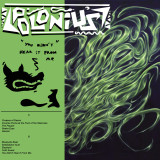
Full page feature in Wire Magazine (March 2025, Issue 493) 'the freak audio series continues with the lysergic You Didn't Hear It From Me which combines dubbed out sampledelia and metallic beats with ghostly saxophone soaked in an acid bath'
Polonius AKA Egyptian-French artist Seif Gaber, whose works spans a decade of “science fiction archeomiragical time travel" explorations and is an important piece of the healthy electronic/far out mosaic in Milan.
With a considerable number of releases under his name, both self released and through such likeminded labels as Ikuisuus, Goaty Tapes or Sun Araw's Sun Ark, Polonius grand vision encompasses a myriad of languages culled from kosmische travelings, exotica's dreamlands, soundtrack psychedelia, spiritual jazz escape routes and transmuted beat science to convey them into a sonic fiction where all these trails intertwine in a cosmological soundscape filled with wonder and speculation.
Building on last year's more beat-centric excursions of his self-titled vinyl debut on Stoned to Death, Polonius' first entry into the Discrepant extended family via Souk finds him dwelling deeper into rhythmic mystic extrapolations through a series of hallucinatory tracks. Conveying jungle's kinetic energy, dubwise meditations on bass weight, collapsing beats, globetrotting percussion accents and synth-driven night drives, 'You Didn't Hear It From Me' finds Polonius with a strong sense of purpose and direction, reconvening bits and pieces from the netherworld into a more urban scenario, not quite any we can stand or dance on. Just dream of.
Cool Up Records presents Music is the Right Way, their latest 7-inch vinyl release. A unique featuring of two soulful singers of the label, Paulinho and Payoh SoulRebel. In this song, these tasteful singers show their skills with determination, resulting a positive song with a crafted result.
Music is the Right way bring a strong message about the importance of music in our lives. Paulinho invites Payoh to join this wonderful tribute to music and how important is to be creative and express your feelings through music. Cool Up provides a Deep Roots track with a solid one drop, sweet vocal harmonies and interesting piano arrangements.
As usual, this release includes a notable dub version on the B-side, highlighting Cool Up's cleverly produced work, resulting in a great final product.
The design is another example of Mr. John Vanilla's unmatched skill. It keeps the look of the earlier singles and shows off his great work again.
Certainly, Reggae collectors will enjoy Music is the Right Way. It's the eight 7-inch release from Cool Up Records, which keeps active releasing music on vinyl.
If Hawalat sounds like a world tour that’s because it essentially is. “As much as Marzipan is a picture of Lebanon from the inside, Hawalat kind of picks up from where Marzipan finished but more looking to the outside, the diaspora, to the notion of exile.” Megarbane says he is interested in the connections between the global and the domestic, the mundane and the cosmic, and wanted to create space for non-linear progression.
Hawalat is based on the idea of hawala, informal money transfers that you can make to certain countries impacted by a lack of currency or unstable political and economic contexts. His use of the term on this album is not a financial one, Megarbane explains, but a nod to notions of creative exchange between “places, persons, generations.” It is the first time Megarbane called on other musicians in this way to inform his sound, including a collaboration with Sven Wunder on the song Helia featuring strings by the Stockholm Studio Orchestra.
The album opens with first single Hanadi, a punchy Somali-inspired track with warm non-lexical vocals and saxophone. It immediately pivots to the Dreams of an Insomniac, which balances soft, effortless vocals and keys with urgent violin intrusions. Al Dollarji feels like Megarbane’s bread and butter, that is Mediterranean sounds with intricate strings, while Al Bahriye takes this staple and introduces hip hop inflections. The result is a rich 17 track album that effortlessly blends genres and styles.
Including 8 page, 12" sized booklet with unseen photos and liner notes by Armani Syed.
out of Stock
Last delivered 10 months ago available to reorder, subject to availability
Pink vinyl, limited to 350 copies. Hollows Made Homes In Their Sunken Cheeks came into existence as a result of Jon's wishes to take the Ungraven sound somewhere other than a standard 'rock band' setup. Moving away from the traditional 'drums / bass / guitar' structure has allowed Ungraven to experiment further with both sound and composition. 'Hollows_.' Is an experiment in sonics and allows both Davis and Perry to perform a sickening sonic duet as their respective instruments carve a universe shaped hole in your consciousness. Inspired by the duo's past collaborations on Conan tracks such as "Older than Earth" and "Grief Sequence" as well as artists such as Tangerine Dream, Circle, Zombi and Harold Budd. Hollows is a combination of composed and improvised elements, constructed remotely from their bases in England and Denmark. The addition of Perry's synth, organ and piano to Davis's slab like 6 string delivery has produced two epics that are both introspective and pummelling at the same time. Fall untethered into a bleak and expansive soundscape of psychedelic terror, experience a new chapter in Ungraven's tome of tone.
Imported from the UK !! Fantastic 4 track E.P. of slamming Acid Techno from Rats On Acid with classic 303 tracks on the A side and darker techno and trance inluences coming through on the B1 and B2.
out of Stock
Last delivered 18 months ago available to reorder, subject to availability
"After more than 20 years, Band Of Brothers is still considered one of HBO's most important series. Produced by Steven Spielberg and Tom Hanks, the series has won major awards such as the Golden Globe for Best Miniseries and the Emmy Award for Outstanding Miniseries. Band Of Brothers is a war drama miniseries based on historian Stephen E. Ambrose's 1992 non-fiction same titled book. It follows the story of Easy Company of the U.S. Army 101st Airborne Division and their mission in World War II Europe, from Operation Overlord to V-J Day. The score, composed by the late Michael Kamen, is credited as one of the essential elements in creating the realistic atmosphere of the series. Kamen was best known for scoring movies such as Die Hard, Lethal Weapon and X-Men, and received an Academy Award nomination for both Don Juan DeMarco and Robin Hood: Prince Of Thieves. Revisit the Band Of Brothers score with this deluxe reissue on white coloured vinyl, available as a limited edition of 1500 individually numbered copies. The 2LP is housed in a sleeve finished with linen laminate and includes a 4-page booklet with a large cast picture on the inside."