Shock Room it’s a double vinyl release who takes the name from the main room of the discoteque.
ULTIMO IMPERO DI Torino; an historic temple of the techno music from the ‘90s. in this compila)on are all included the most iconic and an)cipated “techno, trance & progressive” grooves that have made dance en)re genera)ons of people, nowadays again on track and well
spinned up by djs all arounf the world.
out of Stock
Last delivered 10 months ago available to reorder, subject to availability
When the quartet of Luke Martin, Gabriel Salomon, Klaus Janek and Andy Graydon gathered to record an afternoon of sessions in Andy's studio, it was both the result of years of cultivation and an afterthought. Klaus and Andy had been long-time, and now long-distance, collaborators since their shared years in Berlin. That city was also where Andy was introduced to Gabriel at one of his solo performances by their mutual friend, the painter Paul McDevitt. Years passed, and cities. After meeting and working together in Boston, Luke and Andy both found themselves transplanted to Minneapolis. And by happenstance Gabriel arrived a few years later. A new conversation was just starting to emerge when Klaus announced his arrival, stopping by on a North American tour. Suddenly the four got a chance to listen and play together performing on a bill at a local gallery, in one configuration or another, for the first time. Packing up after that show, Klaus leaned over to ask, "isn't there a moment we could meet again, to play?"
Nothing was expected, and so anything was possible. The circumstances lent their gathering an impromptu but grounded feeling, a unique mix of chance encounter and reunion. As befits an opening encounter, the focus was as often on listening to the unfolding sonic conversation as it was on making a recording. Everyone seemed to intuit the direction despite not knowing where they were headed. The four faced each other in a loose circle surrounded by speakers and microphones pointed haphazardly, as likely to catch the dog padding around curiously as the bowing of strings or rattling of a cymbal. The permissive spirit of the day was declared early, just before rolling, when Gabriel asked if we should close the studio windows or leave them open. "You know what my answer is," replied Luke. If it's in the nature of a recording to become fixed, to be bottled up, let us at least leave open the windows to hear what might be coming next.
Recorded at the Studio Acousti, Paris, September 23, 1965.
Original LP issue: International Polydor Production – 46.871.
This self-titled album is a testimony of the short lived-band led by New-York drummer Ron Jefferson during his stay in Paris in the mid-60s. After a first album under his name on Pacific Jazz in 1962, the founding member of The Jazz Modes and the Les McCann trio made the trip overseas.
Here, he made his living by playing with the popular pianists Errol Parker or Hazel Scott but his main drive was this trio that he formed with two other US expats, bassist Roland Haynes (the same musician who recorded an album on Black Jazz as a pianist, as confirmed by Kirk Lightsey) and guitarist Buz Saviano. After a highly successful show at ‘Palais de Chaillot’ in 1965, they were invited for a series of concerts in Dakar Sénégal. On their return, Polydor International proposed them this session. You can hear the deep impact their stay in the Motherland had on their music on the stand-out track ‘Africa the Beautiful’. On pair with the best of Yusef Lateef’s afro-eastern explorations from the time, it showcases Ron on flute and Senegalese percussion. The album release nonetheless was a commercial failure that prompted the band’s separation and Ron’s return to New-York where he performed until his passing in 2007.
Only a few copies of this record ever made it to the shops at the time and very few have had the chance to listen to it before this legit reissue remastered from the original MONO master tapes.
– Antoine Rajon –
Ron Jefferson (Drums & Flute)
Buz Saviano (Guitar)
Roland Haynes (Bass)
Jackie Robinson (Vocal on The Speaker)
out of Stock
Last delivered 23 months ago available to reorder, subject to availability
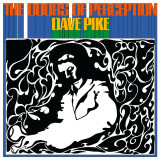
Repress! The Doors Of Perception Is Presented In A Unique Blue Swirl Colored Vinyl Pressing / "The Doors of Perception" is among the most experimental and innovative releases by famed jazz vibraphonist Dave Pike. Recorded in 1966 and released in 1970, the album finds Pike indulging in full-fledged psychedelic jazz, with trippy grooves and a new sound. Produced by Herbie Mann, "The Doors of Perception" features an all-star cast of musicians, including Eddie Daniels, Lee Konitz, Don Friedman, and Chuck Israel. Their talents are complemented by a wide range of sound effects, from echo chambers to piped-in applause to thunderstorms to fuzzy distortion, making for a dynamic and unique listening experience.
The "Sula Bassana" project marks the fusion of two distinct but complementary musical worlds: that of 20syl, electro-hip hop producer and DJ, and that of Christophe Panzani, versatile jazz musician. The album is an ode to contemplation, an immobile voyage embodied by the Gannet, the symbol of their creativity as they fly across styles and soundscapes.
The duo affirm their complicity with the eponymous track "Sula Bassana", where 20syl's sophisticated electro production blends with Christophe Panzani's melodious instruments. The track was accompanied on its release by a remarkable interactive video that poetically retraces the journey of a gannet.
The album also features a number of enriching collaborations. On "Dreams", they invite Yael Naim with her haunting voice and poignant harmonies. "Nuevo Mundo" invites La Chica to take us into a vibrant and eclectic atmosphere, fusing electro rhythms with Latin influences. Finally, "Playtime" features jazz pianist Eric Legnini, whose subtle chords and virtuoso improvisation infuse the album with a refined energy.
"Sula Bassana" is a space where the duo asserts itself with confidence, a rich and varied musical exploration, transcending the boundaries of genres to offer a unique and captivating sonic experience.
out of Stock
Last delivered 23 months ago available to reorder, subject to availability
Die Sängerin und Geigerin Alice Zawadzki, Pianist Fred Thomas (der hier auch die historische Fiedel
und Schlagzeug spielt) und Bassist Misha Mullov-Abbado präsentieren auf ihrem Trio-Debüt eine seltene
Alchemie, die Folk-Idiome verschiedenster Herkünfte mit frei fließendem Zusammenspiel und beweglichen
Strukturen verschmilzt. Somit umgibt das Trio ein eigenständiges Stil- und Klangspektrum, das Volkslied,
Kammermusik, Improvisation und Jazz verbindet, und auf Za Górami bündeln sie all diese Qualitäten zu
einem faszinierend Ganzen. Sephardische Lieder sind ebenso zu hören wie eindrucksvolle Interpretationen
von Gustavo Santaollas ”Suéltate Las Cintas” und Simón Díaz’ ”Tonada De Luna Llena”. ”Za Górami“ – das
traditionelle polnische Lied, das dem Album seinen Namen gibt – erklingt in einer ergreifenden Fassung von
Zawadzki selbst, und das Renaissancestück ”Je Suis Trop Jeunette” findet in der von Monodien inspirierten
Fred Thomas Vertonung von James Joyce’ ”Gentle Lady” eine verwandte Gestalt. Das Album wurde im
Auditorio Stelio Molo in Lugano aufgenommen und von Manfred Eicher produziert.
The seeds of composer Rafael Anton Irisarri’s latest LP were first planted during his 2016 tour in Italy, months before that Autumn’s unexpected presidential election. The linguistic glitch of an innocuous diner in Milan named “il Mito Americano” – meant as “The American Dream” but translated literally to English as “The American Myth” – sparked a series of ideas, both conceptual and musical.
Amid the chaos of 2020, while exploring the stark world of brutalist architecture and inspired by the false fronts of Potemkin villages, a vision started to take shape: FAÇADISMS. Composed over three years, it’s a late capitalist lament of simmering electric despondency.
Irisarri’s obsession with repeating motifs mirrors the cyclical nature of our tumultuous political history. The album’s eight tracks heave and storm like a tempest being drained of its rage. This is the sound of majestic dissipation, of morning afters, fashioned from a mournful haze with cavernous guitars and granular twilight. A euphony of a receding tide as one sifts through the remnants of what remains: dust, delusion, and memory.
Opening with the somber gauze of “Broken Intensification," FAÇADISMS moves fluidly between moments of absence and abandon. Ashen swaths of electronics billow above smoldering embers of melody, guitar, and scattered streaks of processed strings and voice, as on the rapturous doom of “Control Your Soul's Desire for Freedom,” featuring Julia Kent on cello and Hannah Elizabeth Cox on vocals. "The impoverished peoples of the Americas have known all along that 'freedom' is a cruel illusion crafted by the elites, akin to Potemkin's fake villages designed to impress Catherine the Great," Irisarri indicates. "FAÇADISMS illustrates a twisted inversion where the rulers deceive their subjects with illusions of safety, democracy, and free speech to create a grotesque mirage of control over their own lives.”
Elsewhere, Irisarri leans into passages of hushed oblivion (“Hollow,” “Dispersion of Belief”), while ragged drones rumble and disintegrate into wind-battered ambient wreckage. One has the sense that it’s all too late. The hour of fury has passed. The beauty has come and gone. Irisarri’s muse has become the crack in the façade of the unraveling myth.
The record closes with a climax of grand departure. Co-written with Kenyan sound artist KMRU, “Red Moon Tide” surges from flickering elegy to celestial disquiet, roiling waves of hymnal descent, and bristling noise. The effect is unsettling and unmooring: a soundtrack for the soul leaving the body, only to discover a void. It’s the sound of the center not holding, of shared illusions being dissolved in a tunnel of white light.
The cover photograph captures a profound sense of desolation. Taken in the historic shanty town of La Perla, Puerto Rico, where Irisarri spent his childhood, brutal colonial mysteries are lost to time. A skeletal concrete structure decays against an expansive blue horizon. Only the shadow of its shell ripples on the empty sea.
Has the American myth finally run its course?
out of Stock
Last delivered 23 months ago available to reorder, subject to availability
The seeds of composer Rafael Anton Irisarri’s latest LP were first planted during his 2016 tour in Italy, months before that Autumn’s unexpected presidential election. The linguistic glitch of an innocuous diner in Milan named “il Mito Americano” – meant as “The American Dream” but translated literally to English as “The American Myth” – sparked a series of ideas, both conceptual and musical.
Amid the chaos of 2020, while exploring the stark world of brutalist architecture and inspired by the false fronts of Potemkin villages, a vision started to take shape: FAÇADISMS. Composed over three years, it’s a late capitalist lament of simmering electric despondency.
Irisarri’s obsession with repeating motifs mirrors the cyclical nature of our tumultuous political history. The album’s eight tracks heave and storm like a tempest being drained of its rage. This is the sound of majestic dissipation, of morning afters, fashioned from a mournful haze with cavernous guitars and granular twilight. A euphony of a receding tide as one sifts through the remnants of what remains: dust, delusion, and memory.
Opening with the somber gauze of “Broken Intensification," FAÇADISMS moves fluidly between moments of absence and abandon. Ashen swaths of electronics billow above smoldering embers of melody, guitar, and scattered streaks of processed strings and voice, as on the rapturous doom of “Control Your Soul's Desire for Freedom,” featuring Julia Kent on cello and Hannah Elizabeth Cox on vocals. "The impoverished peoples of the Americas have known all along that 'freedom' is a cruel illusion crafted by the elites, akin to Potemkin's fake villages designed to impress Catherine the Great," Irisarri indicates. "FAÇADISMS illustrates a twisted inversion where the rulers deceive their subjects with illusions of safety, democracy, and free speech to create a grotesque mirage of control over their own lives.”
Elsewhere, Irisarri leans into passages of hushed oblivion (“Hollow,” “Dispersion of Belief”), while ragged drones rumble and disintegrate into wind-battered ambient wreckage. One has the sense that it’s all too late. The hour of fury has passed. The beauty has come and gone. Irisarri’s muse has become the crack in the façade of the unraveling myth.
The record closes with a climax of grand departure. Co-written with Kenyan sound artist KMRU, “Red Moon Tide” surges from flickering elegy to celestial disquiet, roiling waves of hymnal descent, and bristling noise. The effect is unsettling and unmooring: a soundtrack for the soul leaving the body, only to discover a void. It’s the sound of the center not holding, of shared illusions being dissolved in a tunnel of white light.
The cover photograph captures a profound sense of desolation. Taken in the historic shanty town of La Perla, Puerto Rico, where Irisarri spent his childhood, brutal colonial mysteries are lost to time. A skeletal concrete structure decays against an expansive blue horizon. Only the shadow of its shell ripples on the empty sea.
Has the American myth finally run its course?
out of Stock
Last delivered 23 months ago available to reorder, subject to availability
The seeds of composer Rafael Anton Irisarri’s latest LP were first planted during his 2016 tour in Italy, months before that Autumn’s unexpected presidential election. The linguistic glitch of an innocuous diner in Milan named “il Mito Americano” – meant as “The American Dream” but translated literally to English as “The American Myth” – sparked a series of ideas, both conceptual and musical.
Amid the chaos of 2020, while exploring the stark world of brutalist architecture and inspired by the false fronts of Potemkin villages, a vision started to take shape: FAÇADISMS. Composed over three years, it’s a late capitalist lament of simmering electric despondency.
Irisarri’s obsession with repeating motifs mirrors the cyclical nature of our tumultuous political history. The album’s eight tracks heave and storm like a tempest being drained of its rage. This is the sound of majestic dissipation, of morning afters, fashioned from a mournful haze with cavernous guitars and granular twilight. A euphony of a receding tide as one sifts through the remnants of what remains: dust, delusion, and memory.
Opening with the somber gauze of “Broken Intensification," FAÇADISMS moves fluidly between moments of absence and abandon. Ashen swaths of electronics billow above smoldering embers of melody, guitar, and scattered streaks of processed strings and voice, as on the rapturous doom of “Control Your Soul's Desire for Freedom,” featuring Julia Kent on cello and Hannah Elizabeth Cox on vocals. "The impoverished peoples of the Americas have known all along that 'freedom' is a cruel illusion crafted by the elites, akin to Potemkin's fake villages designed to impress Catherine the Great," Irisarri indicates. "FAÇADISMS illustrates a twisted inversion where the rulers deceive their subjects with illusions of safety, democracy, and free speech to create a grotesque mirage of control over their own lives.”
Elsewhere, Irisarri leans into passages of hushed oblivion (“Hollow,” “Dispersion of Belief”), while ragged drones rumble and disintegrate into wind-battered ambient wreckage. One has the sense that it’s all too late. The hour of fury has passed. The beauty has come and gone. Irisarri’s muse has become the crack in the façade of the unraveling myth.
The record closes with a climax of grand departure. Co-written with Kenyan sound artist KMRU, “Red Moon Tide” surges from flickering elegy to celestial disquiet, roiling waves of hymnal descent, and bristling noise. The effect is unsettling and unmooring: a soundtrack for the soul leaving the body, only to discover a void. It’s the sound of the center not holding, of shared illusions being dissolved in a tunnel of white light.
The cover photograph captures a profound sense of desolation. Taken in the historic shanty town of La Perla, Puerto Rico, where Irisarri spent his childhood, brutal colonial mysteries are lost to time. A skeletal concrete structure decays against an expansive blue horizon. Only the shadow of its shell ripples on the empty sea.
Known for the monolithic force of their music and their inventive production techniques, The Body"s albums are benchmarks in the expansion and evolution of heavy music. Tightly packed with deceptively nuanced arrangements and exhilarating, challenging distortion, their compositions are possessed of an unmistakably singular sound. The Crying Out of Things is no exception; a culmination of all that The Body have done before, highlighting their mastery of dynamic and monumental music that pushes toward the unmistakable sound of oblivion The Body have produced a wealth of groundbreaking collaborations with the likes of Full of Hell, Thou, Uniform, BIG|BRAVE, OAA, and Dis Fig. The duo"s benchmark albums have, over the past 2 decades, changed the perceptions and directions of heavy music. The Crying Out of Things" embrace of noise is a comprehensive display of the multitude of expressions possible with abrasive sound, a skill that The Body have pioneered and refined. "I think for us the key to the way we use noise is, it"s not the only element," says Buford. "You"ve gotta really listen if you"re into noise. But it also has to have dynamics. Where, say, BIG|BRAVE (who have a similar ethos) expresses it in this more intellectual, minimalist way, The Body comes from an instinctual, maximalist way. We"re trying to cover it ALL." The Body stand alone in their ability to connect disparate influences and collaborators into a wholly original, potent and singular work. Alongside producer/engineer Seth Manchester, the duo"s voracious and omnivorous musical appetites have pushed the studio as an instrument into new avenues to conjure profound feelings from the music. The Crying Out of Things cements The Body"s place as a leader of heavy new music, their boundless creativity, their defining ability to convey anguish, created with a visceral clarity to devastating impact.
Known for the monolithic force of their music and their inventive production techniques, The Body"s albums are benchmarks in the expansion and evolution of heavy music. Tightly packed with deceptively nuanced arrangements and exhilarating, challenging distortion, their compositions are possessed of an unmistakably singular sound. The Crying Out of Things is no exception; a culmination of all that The Body have done before, highlighting their mastery of dynamic and monumental music that pushes toward the unmistakable sound of oblivion The Body have produced a wealth of groundbreaking collaborations with the likes of Full of Hell, Thou, Uniform, BIG|BRAVE, OAA, and Dis Fig. The duo"s benchmark albums have, over the past 2 decades, changed the perceptions and directions of heavy music. The Crying Out of Things" embrace of noise is a comprehensive display of the multitude of expressions possible with abrasive sound, a skill that The Body have pioneered and refined. "I think for us the key to the way we use noise is, it"s not the only element," says Buford. "You"ve gotta really listen if you"re into noise. But it also has to have dynamics. Where, say, BIG|BRAVE (who have a similar ethos) expresses it in this more intellectual, minimalist way, The Body comes from an instinctual, maximalist way. We"re trying to cover it ALL." The Body stand alone in their ability to connect disparate influences and collaborators into a wholly original, potent and singular work. Alongside producer/engineer Seth Manchester, the duo"s voracious and omnivorous musical appetites have pushed the studio as an instrument into new avenues to conjure profound feelings from the music. The Crying Out of Things cements The Body"s place as a leader of heavy new music, their boundless creativity, their defining ability to convey anguish, created with a visceral clarity to devastating impact.
Fracatso was born during a spontaneous weekend break away from home of four good friends, emerging from the collective desire to record together in total freedom. This remarkable album that will delight you as it did us, is made of two distinct sessions recorded in Laura Lippie's Lyon apartment, composed on site using various acoustic and electronic instruments by Lippie, Iueke, Lowjack and Zaltan, fueled by wine, laughter and song and an honest need for aimless creation and poetical collaboration .
During an impromptu meeting in Amsterdam, Zaltan played to Gilb'R these unrevised original recordings lead by the powerful and whimsical words and voice of Lippie, and the known talent of the band creating bucolic arrangements in unformatted musical identities. Gilb'R instantly proposed to release the sessions on Versatile Records on the spot! And hear you have it , Fracatso lives.
Opaque yellow vinyl in reverse board jacket.
A full four years after Chicago organ maestro Jimmy Lacy’s legendary maiden voyage as SiP, Leos Naturals, he returns with its lush, layered, long-awaited sequel: Leos Ultras.
Conceived and recorded in a corner of a large floorplan warehouse-turned-sound lab called Homan Gardens, the album radiates a rare joy and colour, projected through a technicolor slideshow of cosmic keys, clarinet, kalimba, sax, melodica, flute, tambourine, and drumbox. The songs feel warm and weathered, like familiar garments treasured through passing seasons.
Many seasons did pass while these songs took shape, spiked with seismic changes – Lacy’s first daughter was born, followed 17 months by a second. Daily routines grew denser, but he never lost faith in the melodies simmering in the periphery of his thoughts: “I knew the music would be there whenever I had the time. It felt good to stay calm about it.” Patience paid off; Leos Ultras is indeed the ultimate SiP statement to date, rich with detail, discovery, beauty, lofted improvisation, and shades of spiritual jazz. It’s music both casual and cosmic, playful and poignant, channelled from long shadows and wordless hours in celebration of life, love, and Leo.
Joel Sarakula's new album "Soft Focus" is a mid-career album spanning his many influences and genres including Soft-Rock, Funk and Indie Pop, all brought under the umbrella of his gentle gaze and a 'soft' aesthetic. "Soft Focus" is also the name of a photographic technique born out of a spherical abberation of the lens where the image is a bit blurry and undefined: it's both flattering and forgiving on the subject. It's an apt title. As a lifetime wearer of (vintage) glasses, Sarakula knows a lot about spherical abberations. Perhaps he produced these songs with his glasses off as these are abstract and warm vignettes, never overstaying their welcome and for this reason Sarakula manages to feature twelve new tracks on "Soft Focus".
Highlights include one of the two Shawn Lee produced tracks "I'll Get By Without You", the rockier, iberic beat of "King Of Spain", the soulful affirmation of "Back For Your Love" and the psychedelic-tinged "Bird Of Paradise" and "Microdosing". This is a lovingly crafted album, well polished and it feels like the culmination of Sarakula's adventures in soulful soft-rock and his defining statement in the genre. While comparisons will be made with contemporary projects like Shawn Lee's Young Gun Silver Fox, Drugdealer, Benny Sings and Prep, echoes of soft-rock icons Ned Doheny, Boz Scaggs, Todd Rundgren and Michael Franks also ripple gently through the album.
Imagine if Ray Manzarek was the frontman for the Bee Gees... It's a neat visual introduction to Joel Sarakula, a UK-based Australian artist who writes, produces and sings Soulful Pop, gazing out at a contemporary world through vintage glasses, vintage threads and long blond hair. His music is informed by a rich, 1970s-inspired palette, drawing on soft-rock, funk and disco influences: sunny, uptempo jams for darker times. Self-aware that he looks and occasionally sounds like the love child of Ray Manzarek and the Gibb brothers, his self-deprecating sense of humour is always there just below the fringe.
Born in Sydney, based in UK and international in outlook Sarakula is a songwriter who has travelled the world in search of his muse, experiencing everything from being a victim of Caribbean carjackings to performing in the remote fishing villages of Norway before finally establishing his career in the UK and Europe. Since then he has released albums such as "Island Time" (2023), "Companionship" (2020), "Love Club" (2018) and "The Imposter" (2015) that have racked up plays on rotation across national UK and European radio and got him noticed in The New York Times, The Independent (UK), The Irish Times, Rolling Stone Germany, El Pais (Spain) and Sydney Morning Herald. It's- been a long road finding his current cult status starting out at the piano from a young age in suburban Sydney, writing and singing songs by the time he was a teenager and onstage by fifteen years old playing jazz standards in his local golf club. "I came from humble beginnings, it's best not to mention" as he sings in his 70s boogie influenced song "I'm Still Winning". Joel Sarakula is a fixture on the festival and club circuit having previously performed at SXSW, Primavera Sound and Glastonbury festivals. Ever the internationalist, he tours with pickup bands sourced from each territory he plays in: a Barcelona band for Spain, a Berlin band for Germany and so forth. This cross-cultural exchange is another echo of the 1970s when world travelling soul and pop artists from the US did the same and guarantees that his live shows remain fresh, exciting and absolutely contemporary.
Conoley Ospovat, with appearances on Otake, Kimochi Sound, Blankhaus, and Cervidae, continues to build his longrunning home imprint: Continental Drift. Opening with a jazzy, atmospheric strut, Transcontinental Trip's title track sets the tone for this record as a more driving, basslinefocused affair than some of his recent downtempo excursions. The taut restraint & open air vibe of loose drumming & ¬eld recordings for Hold On feel like a nonchalant response to Ricardo's Sei Es Drum. Then, Ospovat's attention to melody & clever programming comes to the fore again on Sunbreaks. The tune is a moody danceoor builder full of twists & turns before the EP closes out with the carbonated haze of Paci¬c Coast Rain
out of Stock
Last delivered 19 months ago available to reorder, subject to availability
True to himself, Fellini Félin continues to explore new paths and venture into the realm of new sounds, skillfully blending rock and electronic elements in his new album Oddy. Following in the footsteps of pioneers like Tame Impala or Metronomy, the artist explores and composes entirely from his own space, in 100% self-production mode. Between introspection, danceable rhythms, and meticulous production, Oddy is one of those albums that evoke emotions as beautiful as they are intricate.
The beats on Capital Punishment, from RZA, Rockwilder, Domingo, and other A-list maestros, are grimy, radio- friendly, yet low-ley cutting-edge, affirming its status as an undisputed classic. Big Pun was as much a visionary — conceptualizing every song — as a consummate pro in the booth. Citing Picasso and Baby Jesus while purporting to “twist your temples into pretzels,” Pun made Minute Rice out of multi-syllables. There’s no way to describe Pun’s febrile liberties with the king’s English. He doesn’t really breathe; when he does, it’s a sharp gasp for air that almost mimics his Ginsu-like wordplay. Pun’s habit of sucking wind before spitting an ill verse mimics the effect of a lit grenade about to land and decimate entire sections of the population. If Pun’s dense rhymes invoke mixed metaphors, that’s likely because he’s an impossible amalgam of wanton wooer and lyrical hitman, an overweight lover with a murderous mouthpiece.
Originally released as a nine-track LP on Bobbito Garcia’s legendary Fondle 'Em Records in 1996, the Juggaknots’ debut made a massive impact and it remains one of the most revered and groundbreaking releases of the ‘90s independent hip-hop scene.
Ahead of their time, the sibling trio of Breeze Brewin, Queen Herawin and Buddy Slim deftly combine their knack for braggadocio, humor and social commentary with thick, low-end heavy beats for their inaugural effort. It’s an album that helped lay the bedrock for what would become the alternative hip-hop subgenre that thrives today.
Re:Release presents their original debut LP in a whole new light with 11 additional tracks comprising re-mastered music and three bonus mixes. This special edition 2XLP is presented in an alternate cover, gatefold jacket with a six panel insert that contains full album liners, song lyrics, and a forward by Bobbito García a.ka. Kool Bob Love.
The man born Omar Credle is an ornate wordsmith; his tone is rough and rococo — every verse is like a boosted spool of handmade silk. There’s a meticulous rasp to every O.C. utterance, wherein his lavish darts seem composed by a Crooklyn corner-stander tickled by his technical brilliance.
O.C., on Word...Life, had to compete in this impossible climate (in which Nas was rap’s messiah, and B.I.G. squared mad circles the instant he uttered, “It was all a dream”). Against all odds, O.C.’s first LP captivated in its quiet way.
Tiny Mouse Tales was released in 2018. At the time, Evgeny was living in a house surrounded by forest. One night he noticed movement in his kitchen and saw a mouse. The mouse kept coming back but seemed to have different features each time! Eventually Evgeny understood that it was a family of mice, and the title of his new record was evident. On Tiny Mouse Tales Evgeny tells the musical story of the family of mice living in his home, expanding his palate to include the trumpet to great effect on tracks such as “Hunter In Love” and “Prologue.” The blog Spellbinding Music sums it up perfectly: “With short pieces such as “Prologue”, “Epilogue” or “Carousel”, the Tiny Mouse Tales EP sketches wonderful cinematic themes begging to be expanded and heard on the big screen.” Naive Album was released in 2019. Album opener “Where Art Thou” announces the arrival of a masterpiece. More than ever, Evgeny’s compositional voice is fully formed. Each track feels like a journey in itself, and the album has several crescendos that make the listener feel as if there is an entire orchestra backing Evgeny. The album closer, “Unexpected Finale Somewhere in Lisbon,” perfectly encapsulates this masterpiece. Running through three separate, repeating themes, the track is at times mournful, intense, epic and humorous. Witness the picked / improvised violin notes on top of the relaxed accordion theme that makes up the second half of the track. Although the record was recorded in Lisbon, this track has the feeling of a stroll down the Seine in Paris, a silhouette dancing with heels clicking left and right. Now, these treasured recordings and pieces of Evgeny Grinko’s creative world will be available in physical format for the first time.
Over the last few years Theravada has been making a very strong name for himself, with a unique human touch and deep lyricism, the rapper-producer proved to be a man of many hats and is standing tall as a one of a kind artist in today's musical landscape, having collaborated with artists such as Evidence, Earl Sweatshirt, Yungmorpheus, Your Old Droog and Navy Blue just so name a few, as well as his 2000 Entertainment home team alongside Rob Chambers, TOP$ and Kluse. On his brand new full-length "Waste Management", he has teamed up with RRR Music Group representative Zoomo to produce the entire project. The two have crafted 10 killer joints, with Theravada handling all mic duties on his own and Zoomo's soulful productions providing the perfect soundscape for his transcendent bars to resonate and bring you on an epic journey.
Peni Candra Rini (she/her), the Indonesian composer and performer whose musical practice encompasses a wide range of traditional and experimental Javanese styles, announces her new album Wulansih (July 12, 2024) via New Amsterdam Records. Kronos Quartet's David Harrington, a frequent collaborator of Rini, recently called her “one of the world's greatest singers”, and on Wulansih she places her voice in conversation with a wide array of experimental and traditional musicians, including Andy McGraw, Lester St. Louis, Shahzad Ismaily, John Priestley, Curt Sydnor, and many others. Produced by Ismaily at New York's Figure 8 Recording, Wulansih creates a world all its own.
The 8 songs on Wulansih exert a deep sense of spiritual calm and act as, in Rini’s words, “a reminder that you are still human, listening to expressions of other humans.” Her music is deeply inspired by the poetry of Rumi and Hafez, Wayang Kulit (Indonesian shadow play), and Serat, the tradition of Sufi thought in Central Javanese court poetry. Rini says that Wulansih aims to “express my inner feelings, my soul, to provide inspiration to younger Indonesian composers, and to introduce Indonesian new compositions to new global audiences.”
Wulansih is a small encyclopedia of Indonesian music. Rini explains: “The album mixes a wide range of materials, including traditional Javanese gamelan singing, Balinese chant, stringband music of the 1960s, and intercultural improvisations, bringing them all together through my contemporary compositional approach. We created experimental ensembles, and even experimental instruments and tunings to create an album that, whatever you think of it, sounds like nothing else.”
Rini’s lyrics are poems, strongly inspired by Javanese Sufism, with a deep emphasis on love and the inner self. Estu explores the idea of “love as a sacrifice; it takes a commitment to put one’s heart in the right place. It requires the seriousness of an artist,” while Warahsih explores how “always through understanding and sincerity, teaching Love to those who study the ways of life, through the ages.”
The music on Wulansih transforms these poems of love and compassion into open and lush sonic spaces that are crafted using synthesizers, traditional Indonesian instruments, Rini’s wide vocal range, guitars, and Ismaily’s production.
Parallel zu seinem ersten neuen Soloalbum seit über zwei Jahrzehnten, "Good Grief", veröffentlicht Bernard Butler eine ganz besondere Live-10" mit 6 Albumsongs. Nach Fertigstellung des Albums buchte Butler das Green Note in Camden, einen beliebten Treffpunkt, um vor einem kleinen Publikum von jeweils 60 Fans eine Woche lang intime Akustikshows zu spielen, um die neuen Songs zu testen. Das reduzierte Format mit nur 2 Gitarren und einem Mikrofon liess ihm dabei reichlich Improvisationsfreiraum für jeden Song und jedes Set. Vorliegende 10" präsentiert die Essenz dieser Konzerte.
The Boysnoize Records catalogue contains more than a decade of milestones in the life of Angeleno DJ and producer PILO. His signatures—a focus on sound design, and a digital crunch evocative of hardware rather than software—are present from the very beginning, but the evolution of Pilo’s skill and sophistication is clear as he stretches from electro to experimental to techno and back again in a slowly oscillating gradient. Yet despite his dozen or so releases in just as many years, G.L.A.M. (dropping November 8th, 2024 from BNR) is Pilo’s first proper album. That the record embraces the cyclical nature of time is apropos; the artist’s journey towards self-actualized mastery always ends with a new beginning.
Over the eight tracks of G.L.A.M., Pilo reaches deep into the dream that first ignited the passion that has driven him since. For a chosen few internet-connected American teens in the aughts, the sounds of European electro (and electroclash) trickled down their ethernet cables and instilled a fantasy of exotic, sartorial, sexually-fluid hedonism that felt a world away from the hard-edged masculinity of the hip-hop and skate cultures dominant at home. Pilo opens G.L.A.M. expressing this idealized fantasy with the track “Superstar DJ,” channeling the tongue-in-cheek self-celebritizing of Miss Kitten and The Hacker’s seminal work. “I’m a superstar, come meet me at the bar,” hiss Pilo’s heavily effected vocals, over a bassline of chopped mentasm synths driven by a swift, club-ready rhythm. The fingerprint of 2000’s electro a la International Deejay Gigolo Records is recognizably present, yet Pilo is too adept, too confident in his studio abilities to let his tracks rely on the retro. A great joy of this album is the future-facing richness of its production, always nodding to its spiritual guide of the past, while constantly breaking new sonic ground.
G.L.A.M. continues with “Girls Rule The World,” its vicious, droning bassline and sticky, titular hook making it the perfect electroclash soundtrack for a revenge plot on an ex-boyfriend. “What you Want” offers an instrumental exercise in “synthesizers are the new guitars,” and Pilo’s FX chops really shine as he warps and distorts his sounds into an undiscovered dimension existing somewhere between both. “Loverboy” enters the more melodic, Legowelt-inspired realm of electro, pushing above and beyond the foundation of analogue minimalism with flourishes of impressive sound design to construct something both climactic and cathartic. Scopa lends her perfect coldwave sprechgesang to titular track “G.L.A.M.,” with Pilo’s vocal processing offering surprises throughout and his FX chains wielded as instruments unto themselves.
On the track “A Slow Thinning Halo,” Pilo might be conjuring the haunting vocal chops and chiptune simplicity of early Crystal Castles, but the whiplash snap of his drums and sizzling production are all his own. “Spend the Night” is G.L.A.M.’s least nostalgic—and most unashamedly pop—offering, with the mic being passed between Sana and DEEVIOUS (previously featured on Pilo and Boys Noize’s 2023 track “Pvssy.”) DEEVIOUS’ sultry singing rides atop the bassline as it hypnotically struts across the floor, while Pilo’s skillful arrangement, deft rhythm programming, and atmospheric control elevate the songcraft into full-spectrum worldbuilding.
As the penultimate track, the contemporaneity of “Spend the Night” serves as transition away from the album’s previous, past-leaning exercises, allowing Pilo to step fully into the future with “One Last Embrace.” The closing track still references aughts sounds, but it borrows so widely and prolifically that Pilo’s reassemblage can only be described as singular. Here, Pilo pushes his engineering into psychoacoustic territory, as the eerie, beautiful melancholy of “One Last Embrace” explodes into a thrashing bassline that warbles like a drowning memory, struggling against the sinking weight of time. Pilo allows it to survive for 16 electrifying, gut-wrenching bars before letting go. In G.L.A.M., as in Pilo’s career, as in life, every ending can only be a new beginning.
out of Stock
Last delivered 38 days ago available to reorder, subject to availability
This album is a companion to guitarist David Preston"s 2023 debut under his own name: a set of recordings that confounded expectations as much as they delighted audiences and again feature pianist Kit Downes, bassist Kevin Glasgow and drummer Sebastian Rochford. Preston went into the studio with a coherent set of compositions that focused on texture and mood as much as improvisational virtuosity, and a band of front-rank players whose ability to work outside the confines of genre matched his own. The sessions were so productive that they yielded two albums worth of material, of which this is the second.
arottenbit is an electronic music project born in 2008 by Alessandro 'Otto' Galli (FOH Sound Engineer for Messa, Deafheaven, Pallbearer, Truckfighters, Bongzilla, Fuoco Fatuo). Playing solo with a 1989 NINTENDO GAME BOY or accompanied by hardcore punk drummer Guido Montanarini (PARADISE LOST, IMPLORE, THE SECRET), he soon found himself opening for some of his favorite bands like MELVINS, ATARI TEENAGE RIOT, THE BODY, MELT BANANA, AUTHOR & PUNISHER, FULL OF HELL and performing at major international festivals like ROADBURN 2022, HELLFEST 2022. "You Don't Know What Chiptune Is" is a bold exploration of the chiptune genre, pushing the boundaries of 8-bit music with an experimental and innovative approach. Each track on the album is a unique specimen, meticulously crafted to showcase the versatility and depth of chiptune sounds. The album is characterized by its inventive use of 8-bit sound chips, evoking the essence of vintage gaming consoles like Game Boy. arottenbit skillfully manipulates these sounds to create a wide range of textures and atmospheres. The lo-fi, raw quality of the 8-bit era is preserved, while contemporary production techniques enhance the overall listening experience.
When the then 21-year old Mac DeMarco released his debut Rock and Roll Night Club 12" just a short while ago in the Spring of 2012, it was accompanied by a barrage of bizarrely funny promo videos, wildly unhinged live performances and a not-so-subtle disparate range of promo photos. The glam facade was purely that, an image that was manufactured for fun to confuse the stiff and compartmentalizing world of indie music journalists. But it wasn't all a jest, as that EP covered a whole range of music styles that were latent in the ex-Makeout Videotape frontman's already impressive slough of cassette-only releases. The sincere and warm Mac who sang "Only You" was the same lipstick-wearing sleazoid that crooned "Baby's Wearing Blue Jeans" and that suited him and his listeners just fine. Now, all of six months later, Mac is back with his first proper full length, Mac DeMarco 2. As opposed to RNRNC, "2" is a concerted effort to produce a cohesive work that showcases Mac's natural ability as a songwriter, singer and producer. With a new arsenal of recording gear, the fidelity has substantially improved without compromising the immediacy and organic quality of his prior releases under any monicker. The results are immediately rewarding, from the warm "Cooking Up Something Good" to the heartfelt "My Kind of Woman." It's obvious Mac is presenting himself musically in the most sincere way possible, no matter what happens in his wild videos or live shows. "Freaking out the Neighborhood," Mac's apologetic ode to his loved ones about such public behavior, shows that Mac DeMarco is still with us, coming along for the ride, getting everyone else in trouble. Even so, the maturation process of Mac DeMarco, recording artist, is in full swing. He did, after all, turn 22 this April.
Mac DeMarco, formerly Makeout Videotape, is the anti-thesis to your stereotypical singer-songwriter. Disregarding the seriously somber moments, he replaces them with whimsical and youthful spontaneity, whilst retaining the endearing and subtle commentaries that exude his familiarity. Promptly after leaving his Edmonton garage for Vancouver he embarked on a North American tour accompanying fellow Canadians Japandroids on a grand voyage of enlightenment and alcoholic debauchery. DeMarco's a weird cat cultivating an affinity for occult imagery, nudity and social satire. But his most impressive trait is his undeniable and instinctual ability to compose magical pop jangles, of which he'll likely refer to as "jizz jazz". His dusted jams have garnished him accolades that are as ever-increasing as his song writing abilities; his sound rendering comparisons, but in a nomadic fashion alluding no distinct origin. DeMarco's debut solo EP entitled "Rock And Roll Night Club" will ramble into the great unknown guided by Captured Tracks, DeMarco's inner Elvis a tow.
Smallville Records welcomes Barcelona’s Lis Sarocca onto the imprint this November with her four-track ‘Untitled Thoughts’ EP.
Since 2018, Barcelona, Spain’s Lis Sarocca has been steadily unveiling her take on House, Techno, Disco and Electro via the likes of Shall Not Fade, Hot Haus and Chiwax among others as well maintain a steady presence across the globe as a heavily in demand DJ. Here, we see Sarocca making her debut on Smallville with her latest collection of works, again showcasing her widespread influences and mesmerising sonic aesthetic across four cuts.
Up first is ‘Atacote’, a hypnotic house cut with a Balearic feel courtesy of breathy vocals, cinematic strings, piano lines and hazy atmospherics, intertwined with organic percussion and bouncy sub bass tones. ‘Breaks Reminder’ follows and shifts gear into a broken rhythm section, squelchy acid lines and textural synths throughout.
Opening the flip-side is ‘Early Years’, diving back into deeper realms with a multitude of ethereal pads, dubby synth flutters, plucked bass hits and crisp drums. ‘Might Be’ then concludes the EP on a more chuggy Nu-Disco tip, employing gritty bass stabs, bubbling arpeggios, airy flute melodies and a saturated off-kilter drum groove.
Comes with a Full Cover Artwork by Stefan Marx
out of Stock
Last delivered 11 months ago available to reorder, subject to availability
As a young conservatory student back in 2016, Danish trumpeter Anders Malta was invited to participate in a reunion concert with the legendary Ernie Wilkins Almost Big Band. He was so taken with the band and the music, that on the spot he decided that he wanted to form his own. In 2020, Anders Malta Almost Big Band played its first concert, going on to play a monthly residency at Christiania Jazz Club in Copenhagen for the past two years. Their debut album Introducing is set to release on August 23rd on April Records. Since the early days of jazz, the broad sound pallet and dynamic range of the big band has proven irresistible to composers and arrangers. However, the traditional big band, with its 16 16-19 individual moving parts, can also at times, and for different reasons, be an unwieldy machine to maneuver. Malta s 13 13-piece made up of Denmark s finest young soloists is agile like a small group, retaining the powerful force of the larger orchestra. Belonging to a new generation of musicians with a deep love and knowledge of the jazz tradition, Introducing " sees the band pay tribute to the timeless Hardbop sound of the 50" s and 60" s through the three movement suite Hardbop Conversations "", whilst offering a contemporary European perspective on the classic large ensemble format through Ouverture, Interludium and Epilog ". Intricate arrangements, rich harmony, soaring trumpet & flugelhorn improvisations and a diverse array of feel and grooves showcase the impressive stylistic and artistic breadth Malta has to offer as a bandleader, arranger, composer and instrumentalist. From the high high-energy swing and powerful tutti chords one craves from a Big Band to the more intimate textures of solo instrumental passages, the ensemble s sophisticated, complex, and joyous debut proves once again that Denmark s jazz scene is among the world s most prolific and exciting.
Led by pianist/composer Barbara Fiig, the ensemble is made up of three creative communicators self described as blue sheep " of the jazz world. First stumbling into each other at the music education program at Classical Music Conservatory DKDM, their sound is rooted in collaboration and community, drawing on elements of musical poetry, jazz, folk, Nordic and Classical traditions. Regarding the name Blåly , the trio explains that it is a made up word open to interpretation. Derived from the wordly "", meaning shelter " in Danish, it is reflective of the shared feelings of safety and introspection the trio find in their music making and that they hope to impart onto their audience. Exploring themes of motherhood, new beginnings, mental health, identity, and the cathartic potential of music, the record is built around Fiigs personal approach to the piano. Combining gentle lyrical melodies and colorful melancholic harmony, Blåly perform and interpret each piece with a mature, spacious and textural sound palette, ebbing and flowing between the composed and the improvised in a collective exchange of ideas and energy. Driving drum grooves, hypnotic piano patterns and ethereal timbres from bowed double bass craft a stripped back sound world that is simple, immersive, honest,
A followup to his 2022 debut Dayyani released on his own label, Trop Op " sees the drummer delve deeper into the mood of pedal steel, trumpet and Nordic folk he discovered early in his writing practice and develop it into a bigger, more comprehensive vision. Featuring eight original compositions and an arrangement of a traditional Swedish folk song, Dayyani s simple yet sophisticated writing style is focussed on lyrical thematic melodies, rich folk harmony, and showcasing each member of the sextets musical identity.With years of playing together in a number of up and-coming Danish jazz groups including Tigeroak, Nordlys trio and Vingborg/Valencia Quartet, the ensemble is well versed in giving each other space to express their voices freely. Soaring reverberated arcs from the pedal steel, subtle drum grooves and expressive, tasteful improvisations offer up an imaginative fresh perspective on contemporary Nordic jazz. The records title translates to Step Up ", referring to Dayyani s view that we all need to step up for our communities and share more of ourselves to the people around us. "We live in a time where there is an increasing focus on our mental health, and personal growth where we need to take care of ourselves. In doing so, I think we can sometimeswithdraw too much into ourselves, focus on the inner self and forget to stand up for eachother and the community surrounding what we do.
Buffalo Tom (Bill Janovitz, Chris Colbourn und Tom Maginnis) gründeten sich 1984 an der University of Massachusetts in Amherst - einer Brutstätte von Post-Punk-Gitarrenbands wie Dinosaur Jr. und Pixies. Die drei langjährigen Bandmitglieder erkennen die Leistung ihrer Langlebigkeit als kreative Einheit an. Anfänglich boten sie einen rauen, treibenden Sound, der Janovitz" imposanten Gitarrensound hervorhob, doch der frühe Ansatz von Buffalo Tom wich einem melodischeren, aber nicht weniger unverwechselbaren Stil. Die Band hat zehn Studioalben veröffentlicht, das jüngste, Jump Rope, erschien Anfang dieses Jahres. "Big Red Letter Day" wurde 1993 veröffentlicht. Auf ihrem vierten Album machten sie das, was sie sehr gut können, aber mit mehr Glanz in der Produktion. Das Album wurde in LA von den Robb Brothers aufgenommen und enthält zahlreiche Publikumslieblinge, vor allem: "Sodajerk", 'I"m Allowed", 'Treehouse" und 'Late At Night". Die Band erlangte neue Berühmtheit, als "Late At Night" in einer Schlüsselszene der kurzlebigen TV-Kultserie "My So Called Life" mit Claire Danes und Jared Leto in den Hauptrollen zu hören war, die Mitte der 90er Jahre ausgestrahlt wurde. Der Song kam nicht nur in der Folge vor, sondern die Band wurde auch bei der Aufführung des Songs gezeigt. Der Rolling Stone bezeichnete den Song in einem Bericht über die Band als "inspirierte, geradlinige Power-Pop-Sammlung", und Spin schrieb: "Die Leidenschaft fühlt sich echt an und die Musik ist erhaben."
Buffalo Tom (Bill Janovitz, Chris Colbourn und Tom Maginnis) gründeten sich 1984 an der University of Massachusetts in Amherst - einer Brutstätte von Post-Punk-Gitarrenbands wie Dinosaur Jr. und Pixies. Die drei langjährigen Bandmitglieder erkennen die Leistung ihrer Langlebigkeit als kreative Einheit an. Anfänglich boten sie einen rauen, treibenden Sound, der Janovitz" imposanten Gitarrensound hervorhob, doch der frühe Ansatz von Buffalo Tom wich einem melodischeren, aber nicht weniger unverwechselbaren Stil. Die Band hat zehn Studioalben veröffentlicht, das jüngste, Jump Rope, erschien Anfang dieses Jahres. Birdbrain ist das zweite Album der Band, das mit Hilfe von J Mascis produziert wurde. Die Songs von "Birdbrain" sind zu Live-Favoriten geworden, darunter der epische Titelsong und "Enemy". Bill Janovitz sprach über den Songwriting-Prozess für dieses Album und sagte: "Ich denke, das Interessante an Birdbrain ist, dass sich das Songwriting verändert hat. Ich hatte alles auf der ersten Platte geschrieben. "Birdbrain" ist eine Art melancholischer Track, aber das meiste davon, wie "Fortune Teller" oder "Directive", das sind in vielerlei Hinsicht sehr wütende Songs. Für mich war das viel punkrockiger, aber wir haben uns in diese Richtung bewegt, und ich weiß nicht, warum. Aber Chris hat angefangen zu schreiben. Chris singt und schrieb "Baby" und die Art und Weise, wie wir schrieben - wir schrieben nicht im selben Raum zusammen - aber wir brachten diese Ideen zueinander und trieben sie herum."
Buffalo Tom (Bill Janovitz, Chris Colbourn und Tom Maginnis) gründeten sich 1984 an der University of Massachusetts in Amherst - einer Brutstätte von Post-Punk-Gitarrenbands wie Dinosaur Jr. und Pixies. Die drei langjährigen Bandmitglieder erkennen die Leistung ihrer Langlebigkeit als kreative Einheit an. Anfänglich boten sie einen rauen, treibenden Sound, der Janovitz" imposanten Gitarrensound hervorhob, doch der frühe Ansatz von Buffalo Tom wich einem melodischeren, aber nicht weniger unverwechselbaren Stil. Die Band hat zehn Studioalben veröffentlicht, das jüngste, Jump Rope, erschien Anfang dieses Jahres. 1992 nahm die Band ihr drittes Album "Let Me Come Over" auf, auf dem sie eine Reihe von Songs, die sie zu Hause und unterwegs entwickelt hatten, mit ihrem Live-Power-Trio-Sound und einigen akustischeren Gitarrenballaden mischte. Die Single "Taillights Fade" aus diesem Album wurde zu ihrem Markenzeichen. Auf ihren ersten beiden Alben bauten Buffalo Tom gewaltige Gitarrenlandschaften und beherrschten eine naturalistische Version der Dynamik von leise zu laut. Für ihr drittes Album haben Buffalo Tom ihre Haut ein wenig, aber nicht vollständig abgestreift und ihren Charme stärker in den Vordergrund gestellt. "Let Me Come Over" ist der Sound des Trios, das sich aus dem insularen Underground in die weite Welt des "alternativen" Rocks begibt - und dabei mehr oder weniger seine besten Moves mitbringt.
Idiosynkratisch, großformatig gedacht und in seiner Grundanlage einzigartig, ist Florian Webers Imaginary
Cycle, der für die ungewöhnliche Besetzung von Blechbläserensemble und Klavier konzipiert wurde, ein
Hybrid aus mehreren musikalischen Sprachen, der das Harmonische mit dem Gewagten nahtlos verbindet.
Weber präsentiert hier einen Zyklus in vier Teilen, plus einer Eröffnung und einem Epilog. Darin wird der
deutsche Pianist von einer Gruppe von vier Euphonien, einem Posaunenquartett sowie der Flötistin AnnaLena Schnabel und Michel Godard auf dem selten verwendeten historischen Blechblasinstrument „Serpent“
begleitet. Gemeinsam führen sie ein Werk auf, das die Grenze zwischen Improvisation und Komposition
verwischt. Während das Ensemble elegant durch Webers mehrere Idiome umfassendes Werk reist, mischen sich symphonische Passagen mit komplizierten Kontrapunkten, pastorale Vorstellungen werden mit
zeitgenössischeren Texturen kontrastiert, und jede Stimme des Ensembles spielt eine eigenständige Rolle
und fügt sich zu einem Ganzen. Imaginary Cycle ist ein gewagtes und spektakuläres Unterfangen, das an
Webers Beiträge zu den Alben von Matthieu Bordenave, Ralph Alessi und seiner eigenen Quartettaufnahme
Lucent Waters anschließt - auch wenn die musikalischen Überschneidungen zwischen diesen Aufnahmen
und dem vorliegenden Album eher gering und zweideutig sind. Das Projekt, das im 2023 im Sendesaal
Bremen aufgenommen wurde, ist in enger Zusammenarbeit mit Manfred Eicher entstanden.
Ihr perfekt harmonierendes Duo setzt auf starke Kontraste und lebt von Empathie und intensivem Austausch. – Deutschlandfunk
Nachdem sie bereits bei mehreren Aufnahmen von Louis Sclavis für ECM zusammengearbeitet hatten,
darunter das letzte Album des Klarinettisten, betitelt Characters On A Wall, konzentrierten sich Sclavis
und der Pianist Benjamin Moussay in den letzten Jahren zunehmend auf ihre Duo-Kommunikation und
spielten in dieser Konstellation ausgedehnte und vielbeachtete Konzerte in ganz Europa. Mit einem Programm, das zu zwei Dritteln aus der Feder des Pianisten und zu einem Drittel aus der des Klarinettisten
stammt, erschafft das französische Duo eine Welt der kammermusikalischen Konversation, in der sich
lyrische Kontemplation und skurriler Erfindungsreichtum in einer fröhlichen, konzentrierten Zusammenarbeit abwechseln. Nachdenklich hüllt das Duo heikle Themen in warme Improvisationen, die nie überstürzt,
sondern geduldig das geschriebene Material mit seltener Kreativität und in fließenden Dialogen erkunden.
Unfolding wurde in den Studios La Buissonne, Südfrankreich im März 2024 aufgenommen und von Manfred
Eicher produziert.
Nachdem sich die ungewöhnliche Zusammenarbeit zwischen dem John Coltrane Quartett und Johnny Hartman überraschend als Riesenerfolg erwiesen hatte, produzierte Bob Thiele mit dem auf Balladen spezialisierten Baritonsänger zwei Soloalben für Impulse! Records. Auf “I Just Dropped By To Say Hello” ist
Hartman - unterstützt von einer sechsköpfigen All-Star-Besetzung - mit einem Repertoire zu hören, das
ihm auf den Leib, oder besser: die samtige Stimme geschneidert schien.
Coleman Hawkins gilt als Begründer einer der beiden großen Tenorsaxofon-Schulen. Während der Stil
seines Gegenparts Lester Young kühl und reflektiert war, stand Hawkins für leidenschaftliches und überbordendes Spiel. Bob Thiele holte den Veteranen 1962 für Impulse! Records ins Studio, um ihn eine exquisite
Mischung aus Up-Tempo-Nummern und Balladen, älteren und zeitgenössischeren Stücken einspielen zu
lassen.