The A side opens with two ambient pieces: "Inception," gritty and haunting, built from field recordings and layered chords, and the dreamier "Regulator Dial." "Air Lock" and "DFtB" turn breaky and low-tempo, evoking early electronica. The flip moves through "Waterproof's" downtempo electro and "Make Right," the LP's most club-ready cut. Title track "Bean Soup" channels early Four Tet: bleepy, minimal, emotional, while "Sunlight" closes with blissful, calming sounds, rounding out a beautifully balanced record.
Tudor Gheorghe, aka Romansoff, is a Bucharest DJ, producer and vinyl collector with over 13 years on the capital's underground scene. Inspired by small local parties in the 2000s, he started collecting vinyl, then DJing, quickly becoming a key figure in the Bucharest club scene. Since founding his imprint Raw Tools in 2013, he's released on Lobster Theremin's Mork, Creme Organization, Les Yeux Orange and Solar Phenomena.
In 2018 he co-founded venue Platforma Wolff, a full club by 2021, as booker and resident, hosting headliners like Prosumer, Paramida and Tornado Wallace. Versatile and creative, he stays a fixture at Bucharest's best nights. His debut LP lands this year on Bar Ton's vinyl label.
out of Stock
Last delivered 3 months ago available to reorder, subject to availability
The second Jai Alai album takes its name from a track on Winners (1979) by New York band Kleeer, who evolved from Pipeline via The Universal Robot Band before becoming a major force on the soul and boogie scene; their full-length “Open Your Mind” is simply sublime.
Two originally unreleased tracks will delight completists of Aretha Franklin and Dionne Warwick. Aretha co-produced “The Boy From Bombay” with Quincy Jones — perhaps a little too quirky at the time — while Warwick’s Ashford & Simpson-produced “Someone Else Gets The Price” has all the hallmarks of a missed hit.
Philadelphia’s Pieces Of A Dream, discovered by Grover Washington Jr., were fêted across Europe throughout the 80s. Their Elektra album Imagine This (1983) yielded the wonderfully moody “It’s Time For Love”. Further mining of the Elektra vaults yields a highly collectable Phat Phili Mix of Teddy’s “Believe In Love”, alongside a jewel from Leon Ware’s Rockin’ You Eternally (1981). I was lucky to know this genius, still underappreciated as a master of sensuous soul; “Got To Be Loved” ranks among his finest.
There’s not enough space here to fully cover Gerald Levert’s “What About Me”, but my liner notes to the Jai Alai release JAR14 “Top Of My Head” detail just how talented he was — and this is further proof.
The two least-known artists make a strong impression. Andy Bey’s “I Know This Love Can’t Be Wrong” recalls Jon Lucien at his best, while Phajja — a promising Warner Bros. signing in 1997 — disappeared after just two albums; their Cutfather & Joe production here is as polished as The Emotions.
By the time Etta James recorded “Evening Of Love”, she was four decades into her career, delivering this beautiful ballad with total assurance. Truly epic Southern soul.
Baby Ford perfected the minimal sound with his impeccable early run of releases. Now, one of them gets reissued many years on and it still sounds as strikingly new as ever, not least because it has been remastered by the legendary Dubplates & Mastering in Berlin. The sought-after EP from Peter Adshead emerged during his shift toward stripped-back techno and tech-house and captures a deeper, more hypnotic side of his craft. 'Serpentine Tale' coils through hissing rhythms and shadowy bass pressure, while 'Night D3 Died' pairs crunchy drums with mournful synth chords. Closing cut 'The Introducer' drifts into warm, spacious territory.
out of Stock
Last delivered 23 days ago available to reorder, subject to availability
Moving Pressure 03 lands as Rene Wise's third release on his imprint. With a refined approach to rhythm and restraint, the artist once again distills techno to its purest form: hypnotic, percussive, and propulsive. Across four tracks and in line with the label's essence, MP03 thrives on movement-low-end mastery meets tightly coiled grooves, while textural elements shift and evolve with subtle precision.
A1 'Relax' sets the foundation with a mighty sub-base, rolling forward with effortless force. Chopped-up claps ricochet through the mix, while a funky, disembodied vocal repeats a single command: "relax". Then comes 'Chomp Chomp', a denser offering in Wise's sensorial arsenal. Layered with gritty textures, his signature percussion builds a soundscape that is both tactile and weightless, evoking a kinetic dream state where groove and space are in constant conversation. On the flip, 'Cave' plunges into murkier terrain. Swathed in fog and sinister atmospherics, it unfolds through an eerie blend of sci-fi surrealism and grounded physicality. Bleeps hover like distant signals, their sharpness softened by a cavernous, smothering embrace. It's a study in tension-hypnotic and unsettling in equal measure. Closing the release is 'Deep Under', a track that embodies its name with subterranean mystique. The soundscape is rich with detail, an ecosystem of sonic fragments shifting beneath the surface. It's immersive yet elusive, like catching glimpses of something just out of reach-a mirage that flickers between the tangible and the ethereal.
This is minimalism with intent, built for deep immersion. Less, here, is infinitely more.
out of Stock
Last delivered 20 days ago available to reorder, subject to availability
In spring 2025, Abul Mogard and Rafael Anton Irisarri created the source material for their second album, Where Light Pauses in the Silence of the Sun, during a three-day residency at Morphine Raum in Berlin. Functioning as both recording studio and performance venue, the space has no stage, with the audience gathered around the performers. Working within an open framework, the duo reshaped the music each evening while recording the performances live to multitrack. Rotary speakers, modular synthesizers and bowed guitar formed the core of their sonic language, captured through a 1970s mixing console and microphones placed around the room.
Back in Mogard’s studio in Rome, the material was further crafted as motifs were stretched, fragments isolated, and tempos dissolved. Irisarri recorded additional guitar textures and treatments in New York, while passages recorded by Martina Bertoni and Andrea Burelli in Berlin reinforced the harmonic centres and brought breath, refinement and a new sensibility to their compositions. The process continued as Mogard’s layering and subtraction reassembled everyone’s parts into the final arrangement.
The album opens with “In the Eastern Wild,” building from a sparse outline into a monumental formation of low-frequency weight, its internal motion shaped by the rotating Leslie speaker. “Over the Domes” widens into a broader acoustic field, where sustained modular tones meet waves of softly plucked guitar. The music then turns inward with “A Blue Descent,” centred on Bertoni’s cello, whose growling timbre introduces a melancholic depth.
At the album’s centre, “In a Quiet Radiance” unfolds around a slow guitar ostinato, its luminous stillness opening into a more expansive and reflective state. Across its ten-minute span, Burelli’s violin lines and Bertoni’s lower cello phrases gradually surface, weaving through the harmonic field. Mogard brings Burelli’s processed voice to the fore, its emotive, operatic presence becoming one of the record’s pivotal moments. “Of Blessed Ages” suspends the sonic flow, shifting between parallel major and minor chords as lingering, slowly decaying melodies shape the music’s internal drift. The closing “Among Shadows” settles into a darker resonance as layered textures recede.
Mogard and Irisarri’s shared language balances restraint and maximalism. UK magazine Crack describes the music as “a tidal wave held in suspension,” while Dutch newspaper de Volkskrant writes, “What a colossal sound, and how this music strikes at the emotions.” Reflecting on the residency sessions, Irisarri recalls: “At moments I genuinely couldn’t tell if a sound was coming from me or from Abul. It stopped feeling like two people making decisions and began to feel like we were inside a system moving on its own."
Marja de Sanctis’ cover artwork revisits the vessel sculpture from the duo’s first album, Impossibly Distant, Impossibly Close. There it appeared as raw, unfired clay. Here it has been fired in the kiln and finished with a glaze. Light gathers on its polished surface and spills into the surrounding space. As she explains, “I wanted to convey the idea of continuity within the duo, and the vessel became a kind of container for that idea. However, their music felt different this time, and with the collaboration of Martina and Andrea, I felt it should have a sleeker, softer, more glamorous look, very distant from the first raw appearance.” The transformation of the vessel from raw clay to fired form suggests a passage from immediacy toward permanence, mirroring the music’s gradual expansion.
out of Stock
Last delivered 3 months ago available to reorder, subject to availability
In spring 2025, Abul Mogard and Rafael Anton Irisarri created the source material for their second album, Where Light Pauses in the Silence of the Sun, during a three-day residency at Morphine Raum in Berlin. Functioning as both recording studio and performance venue, the space has no stage, with the audience gathered around the performers. Working within an open framework, the duo reshaped the music each evening while recording the performances live to multitrack. Rotary speakers, modular synthesizers and bowed guitar formed the core of their sonic language, captured through a 1970s mixing console and microphones placed around the room.
Back in Mogard’s studio in Rome, the material was further crafted as motifs were stretched, fragments isolated, and tempos dissolved. Irisarri recorded additional guitar textures and treatments in New York, while passages recorded by Martina Bertoni and Andrea Burelli in Berlin reinforced the harmonic centres and brought breath, refinement and a new sensibility to their compositions. The process continued as Mogard’s layering and subtraction reassembled everyone’s parts into the final arrangement.
The album opens with “In the Eastern Wild,” building from a sparse outline into a monumental formation of low-frequency weight, its internal motion shaped by the rotating Leslie speaker. “Over the Domes” widens into a broader acoustic field, where sustained modular tones meet waves of softly plucked guitar. The music then turns inward with “A Blue Descent,” centred on Bertoni’s cello, whose growling timbre introduces a melancholic depth.
At the album’s centre, “In a Quiet Radiance” unfolds around a slow guitar ostinato, its luminous stillness opening into a more expansive and reflective state. Across its ten-minute span, Burelli’s violin lines and Bertoni’s lower cello phrases gradually surface, weaving through the harmonic field. Mogard brings Burelli’s processed voice to the fore, its emotive, operatic presence becoming one of the record’s pivotal moments. “Of Blessed Ages” suspends the sonic flow, shifting between parallel major and minor chords as lingering, slowly decaying melodies shape the music’s internal drift. The closing “Among Shadows” settles into a darker resonance as layered textures recede.
Mogard and Irisarri’s shared language balances restraint and maximalism. UK magazine Crack describes the music as “a tidal wave held in suspension,” while Dutch newspaper de Volkskrant writes, “What a colossal sound, and how this music strikes at the emotions.” Reflecting on the residency sessions, Irisarri recalls: “At moments I genuinely couldn’t tell if a sound was coming from me or from Abul. It stopped feeling like two people making decisions and began to feel like we were inside a system moving on its own."
Marja de Sanctis’ cover artwork revisits the vessel sculpture from the duo’s first album, Impossibly Distant, Impossibly Close. There it appeared as raw, unfired clay. Here it has been fired in the kiln and finished with a glaze. Light gathers on its polished surface and spills into the surrounding space. As she explains, “I wanted to convey the idea of continuity within the duo, and the vessel became a kind of container for that idea. However, their music felt different this time, and with the collaboration of Martina and Andrea, I felt it should have a sleeker, softer, more glamorous look, very distant from the first raw appearance.” The transformation of the vessel from raw clay to fired form suggests a passage from immediacy toward permanence, mirroring the music’s gradual expansion.
out of Stock
Last delivered 3 months ago available to reorder, subject to availability
In spring 2025, Abul Mogard and Rafael Anton Irisarri created the source material for their second album, Where Light Pauses in the Silence of the Sun, during a three-day residency at Morphine Raum in Berlin. Functioning as both recording studio and performance venue, the space has no stage, with the audience gathered around the performers. Working within an open framework, the duo reshaped the music each evening while recording the performances live to multitrack. Rotary speakers, modular synthesizers and bowed guitar formed the core of their sonic language, captured through a 1970s mixing console and microphones placed around the room.
Back in Mogard’s studio in Rome, the material was further crafted as motifs were stretched, fragments isolated, and tempos dissolved. Irisarri recorded additional guitar textures and treatments in New York, while passages recorded by Martina Bertoni and Andrea Burelli in Berlin reinforced the harmonic centres and brought breath, refinement and a new sensibility to their compositions. The process continued as Mogard’s layering and subtraction reassembled everyone’s parts into the final arrangement.
The album opens with “In the Eastern Wild,” building from a sparse outline into a monumental formation of low-frequency weight, its internal motion shaped by the rotating Leslie speaker. “Over the Domes” widens into a broader acoustic field, where sustained modular tones meet waves of softly plucked guitar. The music then turns inward with “A Blue Descent,” centred on Bertoni’s cello, whose growling timbre introduces a melancholic depth.
At the album’s centre, “In a Quiet Radiance” unfolds around a slow guitar ostinato, its luminous stillness opening into a more expansive and reflective state. Across its ten-minute span, Burelli’s violin lines and Bertoni’s lower cello phrases gradually surface, weaving through the harmonic field. Mogard brings Burelli’s processed voice to the fore, its emotive, operatic presence becoming one of the record’s pivotal moments. “Of Blessed Ages” suspends the sonic flow, shifting between parallel major and minor chords as lingering, slowly decaying melodies shape the music’s internal drift. The closing “Among Shadows” settles into a darker resonance as layered textures recede.
Mogard and Irisarri’s shared language balances restraint and maximalism. UK magazine Crack describes the music as “a tidal wave held in suspension,” while Dutch newspaper de Volkskrant writes, “What a colossal sound, and how this music strikes at the emotions.” Reflecting on the residency sessions, Irisarri recalls: “At moments I genuinely couldn’t tell if a sound was coming from me or from Abul. It stopped feeling like two people making decisions and began to feel like we were inside a system moving on its own."
Marja de Sanctis’ cover artwork revisits the vessel sculpture from the duo’s first album, Impossibly Distant, Impossibly Close. There it appeared as raw, unfired clay. Here it has been fired in the kiln and finished with a glaze. Light gathers on its polished surface and spills into the surrounding space. As she explains, “I wanted to convey the idea of continuity within the duo, and the vessel became a kind of container for that idea. However, their music felt different this time, and with the collaboration of Martina and Andrea, I felt it should have a sleeker, softer, more glamorous look, very distant from the first raw appearance.” The transformation of the vessel from raw clay to fired form suggests a passage from immediacy toward permanence, mirroring the music’s gradual expansion.
out of Stock
Last delivered 3 months ago available to reorder, subject to availability
Having built a reputation through an impressive run of standout releases on labels such as Life and Death, United Identities, HOME//GRXWN. and Berg Audio, coupled with an ever-growing presence behind the scenes, Dutch DJ/producer M-HIGH arrives on Up The Stuss for his label debut with ‘What’s Going On’ - a four-track collection that shifts shape as it moves.
A friendship dating back years, with Chris having been a key early supporter of M-HIGH’s productions, regularly digging through fresh sketches and unreleased ideas while both artists carved their own individual paths, that connection now comes full circle here with a heavily anticipated first outing on the label that has long felt inevitable - it was simply a case of when.
Never holding still in one form for too long, he plays with tension and release across the individual tracks, balancing airy, vocal-led moments with weightier, more grounded rhythms, allowing each idea room to unfold without losing momentum. There’s a constant sense of motion that runs through the record from the first minute to the last, yet it’s an EP that showcases distinct sides to his growing sound across each production. Melodic passages drift in and out of focus, giving way to tougher, more angular sections before circling back again.
Subtle nods to classic house touches, from organs to retro-leaning motifs, are reframed through a more off-center lens and direction, while flashes of electro influence and low-slung grooves keep things unpredictable for the later hours. It’s a record that feels built for both peak dancefloor use and also the in-between moments, when the energy shifts, the room resets, and the direction isn’t quite locked yet.
out of Stock
Last delivered 87 days ago available to reorder, subject to availability
SML is a Los Angeles based quintet featuring Anna Butterss, Jeremiah Chiu, Josh Johnson, Booker Stardrum, and Gregory Uhlmann. Spontaneous Music Live contains two side-length pieces of unedited improvisation, recorded live at Los Angeles venue Zebulon during SML"s December 2025 three-night residency, just weeks after the release of the band"s second album HOW YOU BEEN. It was recorded and mixed live to stereo tape by Bryce Gonzales (the same engineer/wizard known for his gorgeous live captures/mixes of Jeff Parker"s ETA IVtet). Between HOW YOU BEEN and their 2024 debut SMALL MEDIUM LARGE (both of which were heavily edited, shaped and post-produced) the band has developed a reputation for records that are heavily fused, polished, and punchy. The medium is on full post-modern display on those LPs, and the band"s post-production knife can be responsible for much of the perspective - the tastiest morsels collected, arranged, and rearranged just so. But the source material from both those albums were live recordings. Longform, unwieldy, ebbing and flowing. On top of that, every performance the band has ever done has been fully improvised in that spirit. So in the sphere of live performance the band"s esteem has grown down a different path - one of linear, hypnotic, expansion. It"s a perceived split persona shared by some of SML"s most inspiring conceptual bedfellows: compare the extended madness of Can"s Live in Paris 1973 to the relative tight form of Future Days from the same year; the speed-funk chaos of Miles Davis" Dark Magus to the heavily deconstructed On The Corner or Big Fun. Spontaneous Music Live removes the curatorial perspective and pulls the curtain back on that search-pluck-reconstruct editing process. What we"re left with is the psychedelic realism of the band in situ, in their home town, collectively improvising, fully in-the-moment, mining for that moment of discovery. We hear, in macro, each nugget of sound which could be the basis for a future SML album track, spattered amongst the collective chaos-and-control like stars in the night sky.
out of Stock
Last delivered 38 days ago available to reorder, subject to availability
This sought after one from Lance Desardi, on his own Legwork imprint is getting a small repress in Black. Grab them whilst you can as these are going to fly!
Originally released in 2008. Although this album invites aesthetic comparisons to works by the likes of Philip Jeck, William Basinski, and Janek Schaefer – draped as it is in an obfuscating, soupy crackle – there’s a very specific conceptual agenda at work here.
Part of the success of »Persistent Repetition of Phrases« comes from the attention it pays to the function of »the loop«, not only as a narrative ordering system in modern music, but as a means by which the brain itself recalls and interprets information; it’s as old as recorded sound itself, but in this context the repetition of small shards of auditory information becomes an elegy to fading memory and the worn-out synapses of old age. The track titles offer signposts through Kirby’s labyrinth of faulty remembrances, pointing their way towards the peculiarities dictating the manner by which the mind stores and attempts to recover information: »Lacunar Amnesia« references a condition that leaves a specific event absent from the sufferer’s memory, and Kirby’s music sounds suitably stuck on a prelude to something that never happens.
Bathed in gusts of crackle, the piece gets stuck on what might be a start of something, but we never get to hear what. Many of the pieces refer to different ways the memory might find itself caught in a holding pattern: »Von Restorff Effect«, »Rosy Retrospection«, and the title track itself are all suggestive of reliving a single event or point in time – here, both music and memory are united by the notion of »glitch«, whereby a fault or fissure causes the replaying of the same pocket of data over and over again, but what distinguishes Kirby from so many other musicians operating within the field of loops and broken recordings is the unnerving, ghostly sentimentality that courses through this process. »Long Term (remote)« is particularly explicit in its reaching back through the first half of the 20th century, exhuming snatches of music hall romance, now warped into a sinister new form by the erosions of time. It’s like watching John Carpenter’s »The Fog« only to find that instead of vengeful phantoms emerging from the mist, it’s The Glenn Miller Band. Which is infinitely more disturbing. More eerie still is the detachment from authorship endemic to this sound – at no point do you really sense the presence of a composer’s hand; this album just... is. A remarkable thing that only seems to have improved with age (which is either highly appropriate or highly inappropriate, I can’t quite decide which), »Persistent Repetition of Phrases« is an even better fit on vinyl, a medium which itself wears and fades just as the memory does.
out of Stock
Last delivered 3 months ago available to reorder, subject to availability
Grammy Award winner Louie Vega has the unique ability to spotlight and highlight the most essential elements of classic dance tracks and remix and recreate them to create something just as powerful for today’s audiences. Currently in the midst of putting the finishing touches on his forthcoming album, Expansions In The NYC, Louie took some extra time to gather together the original members of the seminal New York – based disco funk band Unlimited Touch and collaborate with them at Log Cabin Studio in Manhattan and his own Daddy’s Workshop Studio in New Jersey to produce the 2020 edition of “I Hear Music In The Streets.”
Unlimited Touch consists of Audrey Wheeler (lead singer), Phil Hamilton, Tony Cintron, Sandy Anderson (RIP), Stephanie James and Lenny Underwood. “I Hear Music In The Streets” was originally released on legendary imprint Prelude Records in 1981.
Growing up in the Bronx, from an early age Louie had an affinity and love for all the various musical genres that were bubbling up in New York during that era defining creative period. It is that passion that has stayed with him during a career that has brought him Grammy’s, several worldwide hit records, and a status as one of the world’s most sought after DJs. It was especially fulfilling for Louie to work with the original members of Unlimited Touch, He quickly realized that their talents were still as strong as ever as they performed musical and vocal elements from the original song, and that they had the vision to see how the song could be re-energized by having Louie add his unique production elements to this seminal tune.
Louie is in the midst of an especially prolific and productive period. In 2016 he released the Grammy nominated Louie Vega Starring….XXVIII full length album; 2018 saw the release of the widely acclaimed and chart topping NYC Disco 2 X CD and 4 X vinyl album on Nervous Records. Known universally as “The Maestro” due to the standards of excellence he maintains in his productions, DJ Performances and live appearances with his Elements of Life Band, Louie Vega is now ready to unleash another gem to add to one of the music industry’s most remarkable body of work.
out of Stock
Last delivered 21 days ago available to reorder, subject to availability
On their fresh imprint, In.Visible, Uruguayan mainstays Kino and Manuel Jelen turn their sonics towards the slower, and stranger. On the front is Italian legend Dionigi’s first posthumous release, having sadly passed away during the making of the record, with ‘Komp 22’ an ethereal yet eye-closing opener, plodding through luscious strings and mysterious retrofuturistic sound design. The mechanically swung percussion of ‘Dust Distortion’ takes the record into straighter territory until it code-switches into a synth workout close, while ‘Bhaskara’ rounds offthe side by wiggling and scuttling through offkilter syncopations, bassline bleeps, and hellish, claustrophobic arpeggios. The flip is helmed by UK acid day-oner Scott Hallam; ‘Larb’ offers a moody, squelching downtempo groove, before closing with the most club ready (at a push) track on the record, ‘Stupendous’ – a soaring electro number bookmarked by oddball English vocal samples.
out of Stock
Last delivered 3 months ago available to reorder, subject to availability
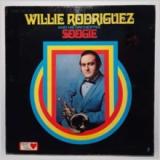
1969 salsa gem originally released on Mary Lou Records, one of the labels in the right place at the right time, just before Fania smashed almost all the competition. The album is mostly comprised of guaguancós, boleros, and improvised-space-filling descargas (jam sessions). We are now happy to reissue this rare and in-demand album after decades unavailable! It includes an insert with liner notes. "Soogie" (1969) was Willie Rodríguez's first album for Mary Lou Records. Mary Lou Records, at that time, was also one of the labels in the right place at the right time, just before Fania smashed almost all the competition. The album is mostly comprised of guaguancós, boleros, and improvised-space-filling descargas (jam sessions). This is remarkable, as it hardly includes boogaloo, which was still prevalent during those years, yet already on the way out. According to Bobby Marín, its musical director "we didn't call it salsa at the time; it had no name. It was mambo or música movida, they used to call it on the radio." The first tune, 'My Dog Soogie,' which provides the title for the recording, is a playful guaracha about a dog The following track is the wildly popular 'La Puerta del Dolor.' 'El Chivo' (the goat) is a spicy guaracha, which changes into a son montuno-guajira. 'Grande' is a guaguancó, followed by 'Los Callos de Dolores,' also a delightful guaguancó. Then comes the ballad 'Porque yo te Amo,' a monster hit of the sixties by popular Argentine singer Sandro. Next we have 'Al Compás del Güiro,' a guaguancó, with the delicious chorus that goes "cómo va, cómo va, cómo va, mi güiro cómo va." 'Paul's Thing' is an instrumental guaguancó, with engrossing sax solos. Finally, we have the smashing, extended descarga 'Salsa con Willie Rodríguez.' We are now happy to reissue this rare and in-demand 1969 salsa gem after decades unavailable!
40 years after its creation, MOß GARTEN – Sekvensstyrd 1981–1986 arrives as a compelling double vinyl LP, diving deep into the early Swedish DIY electronic scene. Inspired by pioneers such as Kraftwerk, Cabaret Voltaire, John Foxx, and The Human League, Mikael Isaksson developed a distinct sound situated between minimal electronics, industrial, synth wave, and experimental sound art. At its core was the sequencer: pulsing, programmed structures forming the backbone of dense, often hypnotic compositions.
Working initially with his cousin Jan or friend Thomas and later evolving into a largely one-man project, recordings were made on cassette tapes and in improvised studios—often under time pressure, frequently recorded and mixed within just a few hours. These very limitations gave the tracks their raw and immediate character. Pieces like “Moderna Kvinnor,” “Soon Soon,” “Ensam,” and “Music From The Border” exemplify the uncompromising, sequence-driven (“sekvensstyrd”) approach that defined this era.
Using an arsenal of analog synthesizers, early sequencers, and drum machines, the project created music that feels at once cold, mechanical, and deeply emotional. Sekvenssytrd 1981–1986 is more than a collection of archival recordings—it is a vivid document of a time when electronic music was conceived as a radical and deeply personal form of expression.
Mastered by Martin Bowes. Graphic design by Steve Lippert.
2LP features: limited to approx. 200 copies, solid moss green vinyl, gatefold outer sleeve gloss lamination, polylined inner sleeves, hand-numbered silver foil paper insert with lyrics, download coupon)
King Tubby and Producer Bunny ‘Striker’ Lee are intertwined in the birth of Dub Music. After discovering a mistake that made a ‘serious joke’ (more of which later...) they went on to release the first pressings of this new musical genre namely ‘Dub Music’. Tubby’s vast knowledge of electronics and Bunny’s vast catalogue of rhythms would lay the foundations of what today is taken as a standard... the Remix / Version cuts to an existing vocal tune.
Osbourne ‘King Tubby’ Ruddock was born in Kingston, Jamaica on 28th January 1941 and grew up in the High Holborn Street area of downtown Kingston. He studied electronics at Kingston’s National Technical College and also on two correspondence courses from the U.S.A... When he had qualified Tubby began repairing radios and other electrical appliances in a shack in the back yard of his mother’s home. His work in the early days included winding transformers and building amplifiers for Kingston’s Sound Systems. Tubby built his first Sound System in 1957 playing jazz and Rhythm & Blues at local weddings and birthday parties. His reputation as a man who knew and understood both electronics and music grew steadily and as the sixties drew to a close. Tubby purchased his own basic two track equipment. He installed this alongside his dub cutting machine, a homemade mixing console and his impressive collection of Jazz albums in the back bedroom of his home at 18 Dromilly Avenue which he christened his music room.
Tubby and Striker were at Treasure Isle Studio’s one day while Ruddy from Spanish Town was working with the engineer Byron Smith....
“Tubby and myself was talking when Ruddy was cutting some dub but Smithy (engineer) made a mistake through we were talking and forgot to put in the voice. It was two track recording in those days. Ruddy said ‘No Man! Make it stay! and so they cut the rhythm. When I went over to Ruddy’s that Saturday night a dance was in progress and when they played the vocal to the tune... then he said we’re going to play ‘Part Two’. They never called it ‘Version’..and then he played the rhythm track. The song was a catchy song and everybody started to sing along and the deejay started to toast so everything went down well. On Monday morning I went up and I said ‘Tubbs the mistake we made was a serious joke. It mash up Spanish Town! The people went wild. So you have to start to do that now ‘cause when the man put on the ‘Part Two’ everyone start singing this song. It played about twenty times. I said you try Tubbs!’...Well the next Saturday night now when Tubby strung up down the farm U Roy said he’s going to play ‘Part Two’ but Tubby did it different now. He started with the voice then dropped it out and let the rhythm run and then he brought in the voice in the middle and from there Tubby started to get really popular.’’
Bunny ‘Striker’ Lee
Dynamic Sounds upgraded to sixteen track recording in 1972 and Tubby purchased, again with the help of a deal brokered by Bunny Lee. The old four track equipment and the MCI console from their Studio B. The four tracks now gave him far wider scope to work with and he began to create a new musical form where the bass and drum parts were brought up while the faders allowed Tubby to ease the vocal and rhythm in and out of the mix. It was only a matter of time before Tubby’s dub plate experiments began to make it on to vinyl and the first ever long-playing King Tubby releases would feature a collection of his mixes to a selection of Strikers rhythms. So please sit back and enjoy this historic set of sounds, mixed by King Tubby and Mr Prince Phillip Smart and another set of scorcher Bunny Lee rhythms.
”What Parts & Labor have figured out how to do, in a way no one else really has, is to make noise anthemic.” —PITCHFORK “Visions of disaster sound more optimistic with every album.” —THE NEW YORK TIMES “Parts & Labor is … creating rock albums that everyone who cares about rock music should own.” —CHICAGO TRIBUNE ”Part psychedelia, part noise, part all-out rock... exhilarating stuff.” —THE GUARDIAN ”East Coast art-punk with a 21st-century overhaul.” —Q ”A joyous explosion of sound.” —MOJO After a 14-year hiatus, prismatic noise-punk fireworkers Parts & Labor, a beloved institution of Brooklyn's '00s underground, re-emerge with a double-drummer lineup and colossal double album. The 79-minute Set of All Sets (July 10, Ernest Jenning Record Co.) is an expansive, blown-out gush of apocalypse-pop that imagines utopias and confronts the overwhelming weight of the infinite. Their first album since 2011, Set of All Sets finds the band re-energized, rebooted and expanding their punk-kosmische, matching their skyscraping melodies and squelching electronics with hypnotic rhythms and frenzied tumbles of percussion. Parts & Labor co-founders Dan Friel and BJ Warshaw are joined by the simultaneous battery of drummers Christopher Weingarten and Joe Wong — asynchronous members during their critically acclaimed four-album run on indie rock titans Jagjaguwar. The power trios that made 2007's breakthrough Mapmaker and 2011's swan song Constant Future have merged into a single four-piece, at once a brand new vision, a clamorous continuation and a recapturing of the deafening sound of their "final" two shows in 2012. With eight weaponized limbs from two veteran drummers, Parts & Labor surges forth with rhythms inspired by Tanzanian singeli, ecstatic free improv and the motorik of vintage krautrock. Friel and Warshaw beam with the most majestic and triumphant melodies of their career, windswept cascades of bubblegum Boredoms and Big-Music-gone-hardcore.
Mit seiner Band Ubiquity (was so viel wie “Allgegenwärtigkeit” bedeutet) schlug der amerikanische Vibrafonist Roy Ayers Anfang der 1970er Jahre ein neues musikalisches Kapitel in seiner Karriere auf. “He’s
Coming” war 1972 bereits das dritte Album, auf dem der ehemalige Bebopper mit seiner Band ein unwiderstehliches Gebräu aus jazzigen Improvisationen, Funk-Rhythmen, Soul-Harmonien und spiritueller Tiefe bot.
Dieser Sound sollte Ayers Werk während des gesamten Jahrzehnts prägen und ihn später zu einer Inspirationsquelle für Soul-, Funk-, Hip-Hop- und Neo-Soul-Künstler machen.
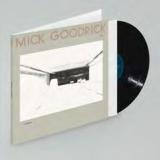
Mick Goodrick (1945–2022), den das Magazin DownBeat in seiner Rezension dieses Albums als „technisch
einen der besten Gitarristen überhaupt“ pries, war ein subtiler Meister der Gitarre und ein ebenso zurückhaltender Komponist – beide Qualitäten treten auf dieser einzigen ECM-Aufnahme unter seinem eigenen
Namen deutlich hervor. Der Pianist Fred Hersch nannte ihn „den Gitarrenflüsterer“, während John Scofield
bemerkte: „Ich durfte mit Mick spielen, was eine wertvolle Lernerfahrung war – ganz abgesehen davon,
dass es Spaß gemacht hat. Ich liebe sein ECM-Album In Pas(s)ing – ein besonderes Werk, das auch heute
noch relevant klingt.“ Für In Pas(s)ing wurde der Gitarrist, der maßgeblich zu Gary Burtons erfolgreicher
ECM Albumserie der 1970er Jahre beigetragen hatte, von hochkarätigen Begleitern unterstützt: John
Surman, hier überwiegend am Baritonsaxophon zu hören, Bassist Eddie Gomez sowie Schlagzeuglegende
Jack DeJohnette. In weit-offenem, lyrischem Zusammenspiel entfalten die vier Improvisatoren eine leiseeruptive Session voller filigraner Interaktion und heimlich einprägsamer Melodien. Das Magazin Melody
Maker bezeichnete Goodrick in seiner Rezension von 1979 als einen „Komponisten und Bandleader, der
seiner Musik erlaubt an Ort und Stelle anmutig Pirouetten zu drehen“, und führte weiter aus: „Unter den
gegenwärtigen Gitarristen der ECM-Schule scheint er die gelungenste Verbindung von Tradition mit einer
modernen Konzeption zu besitzen. Modisch unaufdringlich versieht er die Musik dennoch mit einer unverwechselbaren Handschrift – durch seinen kühlen, singenden verstärkten Ton, sparsam eingesetzte, aber
feste Hintergründe und das wunderbare Zusammenspiel mit Surman.“ Auch die Mitmusiker würdigte der
Artikel ausdrücklich: „Dies ist jedenfalls eine der besten Aufnahmen Surmans seit Jahren. Natürlich sind
Gomez und DeJohnette entscheidend für den Erfolg der Platte – der Vorwärtsdrang, den sie erzeugen, ist
beinahe übernatürlich diskret, aber absolut real.“ Das Album wurde im November 1978 im Talent Studio
in Oslo aufgenommen und von Manfred Eicher produziert.
Im Rahmen von ECMs Luminessence Reihe neu aufgelegt, erscheint In Pas(s)ing in einem hochwertigen
tip-on Klappcover mit neuen Linernotes von Joel Harrison sowie Photographien aus dem Archiv.
Reissue of the debut album by Laghonia, one of the most important bands of Peruvian rock. Originally released in 1960, "Glue" will be cherished by lovers of Latin American rock, pop and psychedelia as practiced by other similar classic bands such as Traffic Sound, We All Together, Black Sugar and Telegraph Avenue. After four brilliant singles, in 1969 the Peruvian band New Juggler Sound, formed by Saúl Cornejo (guitar), David Levene (lead guitar), Ernesto Samané (bass), Carlos Salom (organ) and Manuel Cornejo (drums), changed their name to Laghonia and released their debut LP "Glue" on the MAG label. The album included those previously released tracks, which were very influenced by the British rock scene of those years, to which they added fiery guitars bursting with fuzz and wah-wah, the ever present and hypnotic Hammond organ sound and Latin American percussion and rhythms. The result was a wonderful mix of mid-60s British beatmelodies, Jimmy Hendrix's intense rock, Cream's heavy blues and Santana's Latin rock. "Glue" is regarded as one of the key albums of Latin American psych and garage rock and is an essential record for any fan of those genres. Deluxe edition: 180g vinyl LP in tip-on jacket and insert with liner notes.
The Bug and Ghost Dubs relentlessly probe and atomize original material culled from Kevin Richard Martin's critically acclaimed 'Sub Zero' album. ("Monolithic and unforgiving, even by the Bug's standards, representing his most suffocating take on ambient dub yet." Pitchfork). Remixed to punish sound systems and freeze up the dance, both Fiedler and Martin trade fresh, contrasting blows, after their recent IMPLOSION face off album on PRESSURE last year. (Dub/Reggae album of the year, 2025, in 'The Wire') The resulting 4 remixes are every bit as hypnotic and persuasive as you would hope for from productions fresh out the soundlabs of Michael Fiedler aka GHOST DUBS and Kevin Richard Martin under his dancefloor destroying Bug alias. Both producers intensify the desolate mood of the originals but introduce demolition inducing beats which provide the literally irresistible momentum. Echoes of the originals are respected and heard throughout, but the extra gear shifts pay off brilliantly. Guaranteed to push serious air, and test the most powerful of sub woofers, these 4 remixes vary from heavy to superheavyweight. i.e. GHOST DUBS outputs a deliriously stoned headnod with his zonal refix of 'When I'm Gone', which miraculously sounds both subtley mysterious, but monolithically huge, whilst The Bug prowls ice cold, on the noirish, narcotic, instrumental hip hop of 'Too Human', which sounds like prime Mobb Deep mixed by Rhythm & Sound' at 16 bpm. Essential remixes of an already very special album, the original atmosphere is not only captured expertly, it is categorically amplified. LARGE.
Between her elaborately conceptual Drag City singer-songwriter albums and celebrated soundtracks for Ryusuke Hamaguchi, in recent years Eiko Ishibashi has quietly self-released a significant body of solo and collaborative work on her Bandcamp page. At times resembling her solo live performances in their organic interweaving of instrumental, electronic, and concrete sounds, each of these less feted online releases offers a snapshot of the experiments always underway at Atelier Eiko. Some Fine Legacy is pleased to announce a vinyl edition of one of the most intriguing of these works, Gasping_Sighing_Sobbing, made in collaboration with Hiroshi Minami and first released in 2021.
Active since the 1980s, Hiroshi Minami is a key figure in the Tokyo jazz scene, as well as a respected memoirist. Devoted to the great standards, which he explores with an Evans-ish delicacy of touch and Impressionist harmonic extensions, he is equally at home working up variations on tunes by Ryuichi Sakomoto and The Beatles or experimenting with ambient electronics. A single note from his piano is the first thing we hear on Gasping_Sighing_Sobbing, the space left by its decay unexpectedly filled by a synth arpeggio that quickly fades away as the piano returns with a balladic chord sequence.
Like her frequent collaborator Jim O’Rourke, Ishibashi possesses the virtue of patience, recognising the beauty of lingering at length in a single musical environment. Throughout its 40-minute duration, Gasping_Sighing_Sobbing remains lost in this maze of obstructed and fragmented piano balladry. The musical surface is in one respect placid, but close listening reveals dynamics and processes that are deeply strange: the resonance of a chord dying away is frozen, expanding to become a cloud that suddenly makes way for the piano’s return; or the piano is looped into a ticking glitch or a time-stretched shudder, momentarily sinking under lapping waves, distant bells, and snatches of conversation. Ishibashi’s subtle vocals and synths colour the piano passages like views through distorted glass. The metaphor of cinéma pour l’oreille is perhaps overused in discussions of the musique concrète tradition, but here the visual associations are almost unavoidable: especially when Daisuke Ijichi joins on upright bass, it’s hard to shake the cinematic image of a smoky jazz bar—shown in a sequence, perhaps, that cuts repeatedly to the musicians’ and audience’s thoughts and dreams. Like much of Ishibashi’s work, this collaboration with Hiroshi Minami is inconspicuously radical, shaped at the deepest level by electro-acoustic procedures even as it luxuriates in melancholic beauty.
Riff-driven and immediate, MALIST's style is rooted in the best Atmospheric Black Metal imprint, although experimenting with Post-Metal passages and modern-oriented melodic approaches Often epic and fierce, "Eternal Echo of the Fall" allows the listener to experience the perfect balance between anger and melancholy, as well as a raw, suggestive quality, thanks to mutable sections that float between slow, magical atmospheres and more fiery, aggressive ones. A particular attention to arrangements and a certain amount of ideas seal this album as an intriguing musical journey, in which each song has distinctive traits when compared to the others.
Across landscapes of electronica, ambient textures and jazz improvisation, Be Quiet unfolds as an intimate, spatial set of recordings - built on proximity and contrast, where different cultures, disciplines and sonic identities meeting Moalvaer's unmistakable trumpet voice. The album is accompanied by a documentary film directed by celebrated Norwegian filmmaker Per Manning, capturing the process, environments and relationships behind the music, and informing the project's visual world. Be Quiet unfolds as Molvaer steps into each collaborator's space, responding in real time and shaping a body of work that remains fluid, intimate and constantly in motion.
Foreign Tongues, the new album from The Rolling Stones, is an incredibly vibrant 14-track collection arriving less than three years after the band’s universally acclaimed, GRAMMY-winning album Hackney Diamonds, which topped charts worldwide and achieved multi-platinum status. The new album is introduced by the upbeat and infectious lead single In The Stars.
Leading up to the announcement, the band subtly built anticipation around the project, including the limited white label release of the track Rough and Twisted, issued exclusively on vinyl under the name The Cockroaches. Circulating among fans and collectors, the release has already sparked excitement and speculation about the sound and direction of Foreign Tongues, offering an early glimpse into the album’s raw and experimental energy. Recorded during an exceptionally creative period, Foreign Tongues was brought to life in under a month at Metropolis Studios in West London, with Mick Jagger, Keith Richards and Ronnie Wood reuniting with GRAMMY-winning producer Andrew Watt, who also helmed Hackney Diamonds. The result is a dynamic and forward-looking record that captures the band’s unmistakable sound while venturing into new sonic and lyrical territory—further cementing their unmatched legacy.
The album showcases standout performances from Jagger, Richards and Wood, alongside their long-time collaborators, including Darryl Jones, Matt Clifford and Steve Jordan. It also features a special guest appearance from Charlie Watts, recorded during one of his final studio sessions before his passing in 2021. Additional contributions come from an impressive lineup of guest artists, including Steve Winwood, Paul McCartney, Robert Smith of The Cure, and Chad Smith from Red Hot Chili Peppers.
Speaking about the recording process, Mick Jagger said: “I love doing these recording sessions in London at Metropolis. It was a very intense few weeks recording Foreign Tongues. We had 14 great tracks, and we worked as quickly as we could. I like the room there because it’s not too big, so you can really feel the passion in the room from everyone.”
Keith Richards added: “The album Foreign Tongues has a connection to Hackney Diamonds, and it was great to be working in London again and to have that London vibe around us. It was a month of concentrated punch. For me, it’s all about the joy of it. I’m blessed to be able to do this—may it continue for a long time.”
Ronnie Wood commented: “The atmosphere in the room was so creative, and the whole band was in top form throughout the process. Very often, we nailed it on the first take. I hope everyone will love it.”
The album’s striking cover artwork is a painting created by the acclaimed American artist Nathaniel Mary Quinn
Entombed's 2003 inferno burns anew. Remastered and reignited, this definitive edition unleashes one of the band's dirtiest, most aggressive, and groove-soaked records - where gritty riffs, doom-laden heaviness, and punk-edged energy collide.
Produced and mixed by Per Gunnefeldt (Fireside, also associated with Viagra Boys), the album now returns with a powerful new remaster by Magnus Lindberg (Redmount Studios, known for The Hellacopters, Cult of Luna, Refused, Alcest, and more). The result is sharper, denser, and more forceful than ever - preserving the grainy guitars and thick low-end rumble that define Entombed's trademark sound.
A longtime fan favorite and a bold detour in their catalogue, Inferno showcases Entombed's ability to weave raw death 'n' roll power with punk grit and a heavy, sinister swing. Signature tracks like ""Retaliation,"" ""The Fix Is In,"" ""Incinerator,"" ""Young & Dead,"" and ""That's When I Became A Satanist"" mark the album's feral intensity.
As Swedish Music Hall of Fame inductees and founders of Scandinavian death metal, Entombed forged a legacy that shaped generations of heavy music. Inferno stands as one of their darkest, most visceral statements - now restored for maximum sonic impact.
Formats:
* 2LP + Cassette editions feature 14 tracks, including the bonus cut ""When Humanity's Gone"" between ""That's When I Became A Satanist"" and ""Nobodaddy.""
* CD edition includes 13 tracks, closing with ""Night For Day.""
1. Retaliation 2. The Fix Is In 3. Incinerator 4. Children Of The Underworld 5. Thats When I Became A Satanist 6. When Humanitys Gone 7. Nobodaddy 8. Intermission 9. Young & Dead 10. Descent Into Inferno 11. Public Burning 12. Flexing Muscles 13. Skeleton Of Steel 14. Night For Day
Entombed's 2003 inferno burns anew. Remastered and reignited, this definitive edition unleashes one of the band's dirtiest, most aggressive, and groove-soaked records - where gritty riffs, doom-laden heaviness, and punk-edged energy collide.
Produced and mixed by Per Gunnefeldt (Fireside, also associated with Viagra Boys), the album now returns with a powerful new remaster by Magnus Lindberg (Redmount Studios, known for The Hellacopters, Cult of Luna, Refused, Alcest, and more). The result is sharper, denser, and more forceful than ever - preserving the grainy guitars and thick low-end rumble that define Entombed's trademark sound.
A longtime fan favorite and a bold detour in their catalogue, Inferno showcases Entombed's ability to weave raw death 'n' roll power with punk grit and a heavy, sinister swing. Signature tracks like ""Retaliation,"" ""The Fix Is In,"" ""Incinerator,"" ""Young & Dead,"" and ""That's When I Became A Satanist"" mark the album's feral intensity.
As Swedish Music Hall of Fame inductees and founders of Scandinavian death metal, Entombed forged a legacy that shaped generations of heavy music. Inferno stands as one of their darkest, most visceral statements - now restored for maximum sonic impact.
Formats:
* 2LP + Cassette editions feature 14 tracks, including the bonus cut ""When Humanity's Gone"" between ""That's When I Became A Satanist"" and ""Nobodaddy.""
* CD edition includes 13 tracks, closing with ""Night For Day.""
1. Retaliation 2. The Fix Is In 3. Incinerator 4. Children Of The Underworld 5. Thats When I Became A Satanist 6. When Humanitys Gone 7. Nobodaddy 8. Intermission 9. Young & Dead 10. Descent Into Inferno 11. Public Burning 12. Flexing Muscles 13. Skeleton Of Steel 14. Night For Day
Entombed's 2003 inferno burns anew. Remastered and reignited, this definitive edition unleashes one of the band's dirtiest, most aggressive, and groove-soaked records - where gritty riffs, doom-laden heaviness, and punk-edged energy collide.
Produced and mixed by Per Gunnefeldt (Fireside, also associated with Viagra Boys), the album now returns with a powerful new remaster by Magnus Lindberg (Redmount Studios, known for The Hellacopters, Cult of Luna, Refused, Alcest, and more). The result is sharper, denser, and more forceful than ever - preserving the grainy guitars and thick low-end rumble that define Entombed's trademark sound.
A longtime fan favorite and a bold detour in their catalogue, Inferno showcases Entombed's ability to weave raw death 'n' roll power with punk grit and a heavy, sinister swing. Signature tracks like ""Retaliation,"" ""The Fix Is In,"" ""Incinerator,"" ""Young & Dead,"" and ""That's When I Became A Satanist"" mark the album's feral intensity.
As Swedish Music Hall of Fame inductees and founders of Scandinavian death metal, Entombed forged a legacy that shaped generations of heavy music. Inferno stands as one of their darkest, most visceral statements - now restored for maximum sonic impact.
Formats:
* 2LP + Cassette editions feature 14 tracks, including the bonus cut ""When Humanity's Gone"" between ""That's When I Became A Satanist"" and ""Nobodaddy.""
* CD edition includes 13 tracks, closing with ""Night For Day.""
1. Retaliation 2. The Fix Is In 3. Incinerator 4. Children Of The Underworld 5. Thats When I Became A Satanist 6. When Humanitys Gone 7. Nobodaddy 8. Intermission 9. Young & Dead 10. Descent Into Inferno 11. Public Burning 12. Flexing Muscles 13. Skeleton Of Steel 14. Night For Day
Ikadub have been shaping their sound for a decade, oscillating between digital pulse and analog sounds. Character and rhythm that the duo offers to several singers according to style and mood, for a discography rich in beautiful encounters.
Tell The Truth is an example, if not the best, of a collaboration that rings true, hits hard and sounds killer! Prince Jamo delivers impeccable vocals to lyrics that resonate as current events prove him right, served by a riddim that makes you nod your head from the first bars. I want to say BIM!
out of Stock
Last delivered 3 months ago available to reorder, subject to availability
Originally released in 2003, With A Heartbeat brings together Pharoah Sanders, Bill Laswell and Graham Haynes in a collaboration that remains as elusive as it is forward-thinking. Now reissued by Glossy Mistakes, the album receives its first official vinyl edition, remastered and available both in standard black and a limited burgundy pressing.
At the core of the record lies an unusual but striking element: the steady pulse of a human heartbeat. Rather than a conceptual gesture, it becomes the foundation of the music itself-treated as a deep, bass-like rhythm that anchors the entire album. Around it, Laswell builds his unmistakable sonic world, drawing from dub techniques where basslines expand, dissolve, and re-emerge, and where space becomes as important as sound.
Across its extended compositions, the album unfolds slowly and deliberately. Layers of electric sitar, guitar, keyboards and subtle percussion drift in and out, creating a fluid, almost tidal movement. The heartbeat remains present throughout, grounding even the most abstract passages in something physical and immediate.
At the center stands Sanders' saxophone-searching, expansive, and deeply spiritual. His playing moves freely across the structures, at times echoing the lineage of John Coltrane, while also reaching beyond it. Alongside him, Haynes adds a complementary voice, weaving through the shifting textures.
The result is a work that resists easy definition: part spiritual jazz, part future-facing experiment, shaped by dub's sense of space and transformation. Meditative, immersive, and deeply rhythmic, With A Heartbeat unfolds like a living organism-guided not by fixed tempo, but by the pulse of life itself.
With this release, Glossy Mistakes continues its work of bringing essential and forward-thinking recordings into new formats, preserving their depth while opening them to new listeners.
out of Stock
Last delivered 3 months ago available to reorder, subject to availability
Michael follows up his debut release on UK label Digthis Records with a strong new EP on the Austrian imprint Rhythm Science.This four-track EP moves effortlessly between house and electro influences before closing out with a moody house weapon on the B-side.This release marks a confident statement, underlining Michael’s growing presence and serious talent.
out of Stock
Last delivered 3 months ago available to reorder, subject to availability
LOWERCASE sits in the darker progressive lane — trance-informed, disciplined and hard-edged. Militant pacing with low-end intent, built on pressure and control: long blends, transitions, and that slow-burn momentum that holds the floor without raising its voice.
Progressive motion with a trance backbone — patient, driving, and engineered for fully dialled-in rooms. Three tracks. No excess. Straight function: cycle.
A1 return – A ripping progressive scorcher, primed for larger-floor impact and long-form hypnosis.
B1 cause – An emotional progger: two-tone movement harmonised into break that blooms just to drop back to stride.
B2 way – Rooted in dub culture, a deep trance exploration — spacious, weighty, and quietly consuming.
All tracks written and produced by Boris Salimkhan
out of Stock
Last delivered 13 days ago available to reorder, subject to availability
LP1 New album
LP2 Available on vinyl for the first time
LP3/4 Debut album on green vinyl
LP5 Second album on red vinyl
When I recorded the first 2 Trickfinger records, I had recently discovered that you could make electronic music in a room with a bunch of synced machines going at the same time, record it on a
CD burner and have a finished track. I've heard this process described as “overdubbing into the air”. It was as exciting to me as my first 4 track was when I was 14. I wasn't trying to be good, or
original. I was just excited that music could be made that way; it felt like I was a whole group of musicians playing together… or like I was jamming with ghosts of myself. This has actually been a
very common way of making electronic music since the 80s, particularly in the main pioneering genres like Chicago Acid and Detroit Techno, but anyways I didn't figure it out until 2006. In 2007,
I started doing it myself, which resulted in what was eventually released as Trickfinger, and Trickfinger II. I was just home from tour and was still in the middle of recording The Empyrean.
A couple of years later I started making music by overdubbing onto a computer, but using the same machines. I tried to make music that didn't sound like anything else. I saw a way of combining
Progressive Rock and Synth Pop which nobody had done. And I was combining my songwriting and guitar playing with these old machines in a way which I was sure was unique. I had reached a point
where it was more important to do something original than to do something good, whatever “good” means.
Some of this music did not get a proper release, and is compiled here as the vinyl record High Low. I don't think I have ever tried so hard at making music as I did during that period. This in contrast to
those two Trickfinger records, where I wasn't trying at all. There’s something to be said for both mental states. When you're in one, the other seems impossible. I was really pushing myself on High
Low. Looking back, it was as if I had an audience inside myself, driving me to go beyond my abilities, while at the same time I had a total disregard for any concept of an actual audience. It
was one of those periods in life where things come together in a certain way that feels natural at the time, but seems foreign in retrospect. It felt like I was going to die if I didn't do something musically
different.
The fourth record in this box is me breaking in a new mixing console, making live-to-stereo music. The record is called Rotation, and it is all new music. These tracks are more in the “not trying”
category, since we're on that subject. I had just come home from tour, and was just really glad to be in the studio with my machines. Acid Test thought it would be nice to do a box set commemorating the 10th anniversary of the release of Trickfinger, and so we put together this box set, with homemade cover art.
John Frusciante 2026
out of Stock
Last delivered 83 days ago available to reorder, subject to availability
First Word Records are proud to bring you the debut EP from papaya noon - ‘through the moods’.
papaya noon are a Cardiff-based duo comprised of vocalist Annie Mirza and multi-instrumentalist Greg Marriott.
Formed five years ago, they make jazz-infused R&B music that incorporates their mutual love of classic soul, hip hop & electronica.
The duo have already amassed an impressive fan-base online, garnering over 80,000 followers across their socials, and receiving praise from such luminaries in the US as Missy Elliot, Snoop Dogg, Queen Latifah, 9th Wonder, Bootie Brown & the late great Fatman Scoop.
This is a result of their unique style, captivating grooves & deeply catchy hooks, encompassing a distinctive blend of soul music, from retrospective 90s vibes to alternative futuristic flavours, creating a sonic palette that’s wonderfully contemporary, yet very much their own.
All their music is written, performed & produced single-handedly by the duo themselves, who’ve managed to create a magically powerful potion from their plant-filled Cardiff studio space, and generated huge anticipation for their future output in-turn.
The future is NOW, as papaya noon are finally ready to unleash their music into the world.
‘through the moods’ is a 6-track EP of delicious alternative r&b vibes, already set to become future soul classics.
Sonically rooted in warm, textured instrumentation & layered harmonies, the duo have triumphantly built a huge soundscape that feels simultaneously nostalgic & futuristic. Smoky late-night ballads nestle alongside infectious uptempo jams, leaning into their jazzy boom-bap & neo-soul influences, whilst showcasing their phenomenal spread of talents as performers and songwriters both.
The duo explained that the EP navigates “neurodivergence, trauma & loss, with tenderness & honesty. Rather than presenting trauma as a spectacle, we’ve attempted to approach it with the softness and complexity that it merits”.
From the first single release ‘blush’, to the downtempo sweetness of ‘blindside’ or ‘morning light’, to the pacier ‘on your side’ & EP closer ‘crybaby’, each track on this project exemplifies their unbridled ability to produce deeply infectious earworms, whilst thematically encompassing unflinching lyricism that’s deeply personal.
Already hailed by some as “the Welsh Moonchild”, papaya noon were named as one of Clash Magazine’s “must-see” acts at FOCUS Wales in 2025, bringing their music to life on stage with their 5-piece live band, additionally performing at Brick Lane Jazz Festival, The Great Escape, Inglefest, Nowadaze, Swn Festival & Good Vibrations Society, as well as NXNe and BreakOut West in Canada, and supporting the likes of Hot 8 Brass Band & Reel People.
With everything already pointing to the duo swiftly becoming one of the hottest new soul acts in Britain, this is only the beginning of the journey for papaya noon…
‘through the moods’ will be released on vinyl & all digital platforms on Fri 10th July.
Initially conceived as a short-run cassette for Altered States Tapes, YL Hooi's nameless collection of textural apparitions oscillate between icy DIY minimalism, FX-drenched atmospherics and nang chamber dub. A ghost-like transmission, Hooi's voice serves to anchor an array of sonic abstractions and impressionistic melodic motifs as a sense of purgatorial ambience dominates throughout. Co-produced with alleged fellow Kallista Kult member Tarquin Manek (LST, M. Quake), Untitled's ultimate sensation is its halfway state, as if caught between worlds.
The album's final form speaks of its origins, recorded intermittently over a two year period (2017-2019). The extended time passage seeps into the song structures, spiralling and mutating from the same centre - the elegiac pulse of opener 'Title' presages the hymnal lilt of 'Straight Thru', before birthing the inverted bossa nova of 'W/O Love'. The result is a constantly shifting tableaux of shared liminal spaces. These songs seemingly emerge in plumes of smoke, magician's tricks conjured from the ether. It's a vision that ossifies at Untitled's midpoint with a cover of Love Joys' 'Stranger', the lovers rock original morphed into the transportive intimacy of Hooi's own hazy inner space, a totem of the LP's amorphous and ultimately sensuous qualities.
The sound from both down under and way out there in subspace, Untitled is an inspired masterstroke of experimental mystics. This 2021 Efficient Space edition is remastered and robed in new artwork that honours the Melbourne-based earth dragon's Chinese and Russian heritage.
out of Stock
Last delivered 73 days ago available to reorder, subject to availability
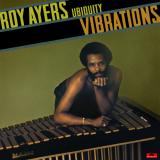
Step into the golden era of soul-jazz with the long-awaited vinyl reissue of “Vibrations” by Roy Ayers Ubiquity — a record that captures the unmistakable warmth, groove, and sophistication that defined Roy Ayers’ sound at its peak.
Originally released in 1976, “Vibrations” stands as a cornerstone in Ayers’ catalog, marking a moment where his signature blend of jazz, funk, and soul reached a refined, deeply cohesive form. Building on the foundations laid in earlier works, this album presents a tighter, more focused musical vision without sacrificing the lush textures and emotional depth that made his music resonate worldwide.
Roy Ayers was a pioneering vibraphonist, composer, and producer whose influence stretches far beyond jazz into R&B, neo-soul, and hip-hop. Often referred to as the “Godfather of Neo Soul,” Ayers crafted a sound that feels both timeless and forward-thinking, pairing silky vocals with hypnotic grooves and rich instrumental arrangements. His work throughout the 1970s helped shape the sonic DNA of modern Black music, and “Vibrations” is one of its purest expressions.
The album flows effortlessly between moods: from the jazz-inflected elegance of ‘Searching’ to the irresistible funk pulse of ‘The Memory,’ the dancefloor-ready ‘One Sweet Love to Remember,’ and the laid-back, atmospheric title track ‘Vibrations.’ Each track showcases a masterful balance between musicianship and groove, brought to life by a stellar ensemble of collaborators who elevate every moment.
Beyond its original impact, “Vibrations” has taken on a second life through hip-hop. Its grooves, breaks, and melodies have been extensively sampled by generations of producers and artists, becoming a foundational source for crate diggers and beatmakers alike. Tracks from the album have been reinterpreted and flipped by influential names such as A Tribe Called Quest, J Dilla, Dr. Dre, and Common, cementing its legacy as a vital bridge between 1970s soul-jazz and contemporary hip-hop culture.
After almost two decades out of print, we are pleased to present this much-needed vinyl reissue of an essential album in Roy Ayers’ career. Whether you’re discovering it for the first time or returning to a beloved classic, this album remains an essential piece of musical history. Pressed on 180g vinyl.
out of Stock
Last delivered 3 months ago available to reorder, subject to availability
Ever since the late 1950s bossa-nova revolution, Brazil’s influence on French music has been undeniable. Pierre Barouh, Georges Moustaki and a vast array of lesser known artists, all made the Musica Popular Brasileira (MPB) an axis of promotion at the service of a cool and metaphysical, modern and mixed Brazilian lifestyle. Some were seduced by the poetic languors of the bossa, some were looking for fun, and others just loved the American hybridization of jazz-bossa, jazz-samba.
What is bossa nova? One of its creators, Joao Gilberto said: "Its style, cadence, everything is samba. At the very start, we didn't call it bossa nova, we sang a little samba made up of a single note - Samba de uma nota so .... The discussion around the origins of bossa nova is therefore useless”. It is nevertheless useful to remember that these magnificent Brazilian songs, which the guitarist describes as samba, were shifted and balanced around improbable chords. "I like things that lean, the in-betweens that limp with grace," said Pierre Barrouh, quoting Jean Cocteau.
With emotion, arrangements for violin and supple guitar licks, bossa nova rapidly changed. A transformation that can be heard in the Tchic, tchic, French Bossa Nova 1963-1974 compilation, the result of a cultural reappropriation, which traveled through the United States and supplemented itself in France.
A musical revolution that has remained significant, bossa nova was born in Rio. From 1956 to 1961, Brazil lived through its golden years. In five years, the country had invented its modernist style. Elected president in 1956, Juscelino Kubitschek de Oliveira, an elegant man with a broad forehead, brandished a promising slogan: "Fifty years of progress in five years". He quickly got to work. Not worried about increasing debt, he launched the project for a new federal capital, Brasilia, designed by the communist architect Oscar Niemeyer. Volkswagen opened state-of-the-art factories and created the “fusquinha”, the Beetle. In Rio, the Vespa made its first appearance. The Arpoador Surf Club crew run into the “girl” from Ipanema, Helô Pinheiro - the tanned garota ("chick"), between a flower and mermaid, who at 17 walked by the Veloso bar, where the fiery author and composer, Tom Jobim and Vinicius de Moraes, were getting drunk on whiskey. From then on, bossa symbolized cool.
In 1958, Joao Gilberto recorded Chega de Saudade, which the directors of Philips denied, calling it "music for fagots". The marketing director, who believed in it, secretly pressed 3000 78-inch vinyls and distributed them at schools around Rio, creating a tidal wave.
American jazzmen then took over. In particular, trumpeter Dizzy Gillespie and guitarist Charlie Byrd. In November 1962, the Brazilian Ministry of Foreign Affairs funded a "Bossa-Nova" concert at Carnegie Hall in New York, inviting the genre’s pioneers. Unprepared, the show soon turned to disaster. But the troupe was invited to the White House by Jackie Kennedy. The first lady loved "the new beat" and in particular Maria Ninguem, a song by Carlos Lyra, later covered by Brigitte Bardot.
In Brazil, the 1964 military coup quickly ended this euphoria. The destructive atmosphere that ensued pushed many Brazilian musicians to leave, if not to exile. Thus, Tom Jobim, Sergio Mendes and Joao Gilberto arrived to the United States. In New York, Joao Gilberto met saxophonist Stan Getz. At the time, he was married to the Bahianese Astrud Weinert Gilberto, who had a German father. She had never sung before, but she knew how to speak English. Getz therefore asked her to replace her husband on The Girl From Ipanema. The Getz/Gilberto record with Tom Jobim on piano, was released in March 1964. Phil Ramone, the "pope of pop" was in charge of sound.
Bossa nova arrived in Paris through the classic “guitar-voice” channel (Pierre Barouh, Baden Powell, Moustaki…) But France loved jazz and Paris had already welcomed its American contributors. All these good people were to pass through Saint-Germain-des-Prés. The cabaret l'Escale became the Mecca of Latin American sound where one could find Pierre Barrouh and his friends, such as the Camara Trio, samba-jazz aces, whose only record was published by the Saravah label. With a band strangely called Les Masques (a band that included Nicole Croisille and Pierre Vassiliu, among others), the Camara Trio recorded an interesting Brazilian Sound, including the track Il faut tenir which is present on this tasty compilation of rarities.
Other enlightened musicians can also be found on the compilation, such as Jean-Pierre Sabar (songwriter for Hardy, Auffray, Leforestier ...) and the French pop rock organist Balthazar. In 1975, Sabar recorded Aurinkoinen Musiikkimatka on a Finnish label, which featured the crazy Vai, Vai, included on this record. We are now following the footsteps of Brazilian electronic musicians such as Sergio Mendes, Eumir Deodato or Marcos Valle who created funk and disco sounds on their keyboards and synthesizers. A style that influenced Véronique Sanson when she wrote Jusqu’à la Tombée de la nuit in 1969 for Isabelle de Funès, the niece of Louis and a great friend of Michel Berger - Sanson did end up singing this track on her 1992 Sans Regret record.
The pinnacle of exoticism and travel, Sylvia Fels’ Corto Maltese includes bongos, sea mist and ocean sounds. The title was taken from Jacky Chalard’s concept album written in 1974, Je suis vivant, mais j’ai peur (I am alive, but I am scared), based on Gilbert Deflez’s science fiction novel.
However, bossa nova extended the scope of popularity. "In the 1970s, I was a fan of Sergio Mendes, Getz / Gilberto. I fell in love with this music that I knew because I had been an orchestral singer, " explained Isabelle Aubret, who in 1971 delivered a composite record of covers by the very funky Jorge Ben, Orfeu Negro, Tom Jobim, Vinicius de Morais and Jean Ferrat. "I recorded this album for Meys Records in Paris, far from Brazil, with wonderful musicians, François Raubert, Roland Vincent, Alain Goraguer...". The latter wrote the arrangements for Casa Forte, a very percussive title borrowed from Edu Lobo, one of the initiators of the bossa who spent time in California. "Jazz and bossa came together and produced very rhythmic music. I love singing, it allows me to dream, to have fun, to feel a high on stage, and these songs brought me joy, made me swing, my singing felt like a dance.”
The world tours of French singers and their desire for the tropics, often brought them to Rio with its hills, forests, caipirinhas and tanned bodies. There are surprises though, like this Iemenja (Iemenja is the goddess of the sea in the Afro-Brazilian candomblé religion). Not unlike the composer and musician Jean-Pierre Lang, based in Sao Paulo, Claire Chevalier taught Brazil to Brazil. In 1970, the singer and painter published a 45-inch vinyl, Mon mari et mes amants (My husband and my lovers), under the improbable pseudonym of Clarinha (little Claire). She was then living in Rio, with her husband, Joël Leibovitz, who founded a band called Azimuth, and who owned a record label specialized in "sambas enredos" songs for samba school parades.
For its B side, she asked Pierre Perret to come up with lyrics for a song composed by Carlos Imperial: "Oh goddess of the sea, o goddess Iemenja, I bring a white rose to adorn your long hair ..." . "Perret came to see us, and we had fun, remembers Joël Leibovitz. We wrote Lemenja for fun, we recorded it at the Havaí studio, behind the Central do Brasil the central station. Erlon Chaves, the arranger who worked with Elis Regina, joined us" adding his share of Afro-Brazilian percussions and funky brass to the mix.
There is a common misunderstanding in Franco-Brazilian history: that bossa, admittedly hedonistic, is perceived as funny, even though the poets who wrote the texts are often philosophizing on the human condition. Its French interpreters pull it towards a carnival inspired universe, far removed from its fundamental essence. Thus, Jean Constantin covered the famous Samba da minha terra, an ode to the art of samba written by the classic Bahian composer Dorival Caymmi, renaming it with the enticing title of Pas tant de tchi tchi pompon: "On your pier there is no tchi tchi / when you arch your back, you know everything is alright ”(lyrics by Gérard Calvi). This expedited bossa aims for the absurd, but retains a certain elegance.
Indeed, Jean Constantin was not an idiot, the rather large man had a huge mustache and liked fantasy, (Les pantoufles à papa, Le pacha, inspired by cha-cha-cha-cha, salsa and jazz) but he was also the lyricist of Mon manège à moi interpreted by Edith Piaf, the composer of Mon Truc en plume by Zizi Jeanmaire and the soundtrack of François Truffaut’s 400 Blows. Le Poulpe, published in 1970, from which this bossa is extract, was arranged by Jean-Claude Vannier, an accomplice of Serge Gainsbourg’s Melody Nelson. In short: "There is enough of samba / By looking at the parasol / Because my poor cabeza / Is going to die in the sun".
Even the American actress Marpessa Down, who was at the heart of the bossa nova revolution with her role as Euridyce in Marcel Camus’ film Orfeu Negro, winner of the 1959 Cannes Palme d'or, fed the clichée with Je voudrais parler au petit cuica - "Tell me how you manage to always make people want to dance / It's true, I must admit that I cannot resist your magic" - in consequence, once can hear the cuica, a little drum inherited from the Bantu.
But bossa nova had many angles. Societal, of course, pushing actresses who were symbols of women's liberation like Brigitte Bardot, Jeanne Moreau, or Sophia Loren to engage in the exercise of accelerated bossa. In February of 1963, Sophia Loren made a record in French in Rome, Je ne t'aime plus, featuring the song De jour en jour, a bossa written by two Italians, Armando Trovajoli and Tino Fornai, which was released a little later by Barclay. Bossa accompanied the 1960s, a decade of moral liberation. Ann Sorel, who interpreted La Poupée des favellas, caused a sensation with L’amour à plusieurs, a provocative song written by Frédéric Bottom and Jean-Claude Vannier. As for the actress Andrea Parisy, she displayed her bourgeois cheekiness in Marcel Carné's Les Tricheurs before interpreting Les mains qui font du bien. And Magalie Noël, the friend of Boris Vian, who sung Johnny fais-moi mal, was hired to sing Une énorme Samba, composed by Alain Goraguer (arranger to Gainsbourg, Bobby Lapointe and Jean Ferrat) with lyrics by Frédéric Botton.
But in the end, of what wood is bossa nova made of? The answer is given by Christianne Legrand, daughter of Raymond the conductor, and sister to Michel the composer: "With me, with jà" - jà means "immediately" in Portuguese. In 1972, the singer, an expert in vocal jazz and a member of the Double Six, published Le Brésil de Christianne Legrand. Two songs included on the Tchic Tchic compilation that demonstrate how bossa, jazz, funk, rock, etc. work like a swiss army knife: the music is used to denounce broken systems, or miracles, HLM et ciné roman, Cent mille poissons dans ton filet, two songs from the O Cafona soundtrack, a successful telenovela broadcast, at the time in black and white, on TV Globo. The first was adapted in French by the fighter and friend of the Legrand tribe, Agnès Varda. The second is content with a play on words, jostling them into a summer fun.
Véronique Mortaigne
out of Stock
Last delivered 3 months ago available to reorder, subject to availability
MEGAPTERA, the scientific name of the humpback whale, is also the title of the new album by French producer and composer Rone.
Born from an ambitious film project, the record was largely composed at sea, off the coasts of Brittany and Réunion Island, using a modular synthesizer and melodic sketches developed for an almost unreal proposition: attempting to resonate with whales through music.
Following Room With a View—a soundtrack to a performance created with the alternative dance company La Horde, exploring collapse and rebirth—Rone continues his investigation into new imaginaries. If that earlier work emerged from reflections on ecological, social, and technological tipping points, MEGAPTERA marks a shift: away from the city, toward the sea.
Gradually, he moved away from performance toward a more craft-based approach, extending his practice beyond the studio into a wider space of listening, exchange, and fieldwork. Early footage of sailors broadcasting his work into open water—seemingly answered by whale presence—circulated online, generating fascination, but also a growing unease for the artist regarding what these projections might imply.
This tension became the starting point for a longer period of field experimentation, developed in dialogue with scientists, environmentalists, sailors, and bioacousticians. The resulting 15-track album reflects this open-ended inquiry — not only into whether human-made sound can reach whales, but also into how this process can shape a new form of electronic music, and open it towards new deep-sea soundscapes.
Rather than seeking imitation, Rone works with reduction. Drawing on research into cetacean vocalisation, he pares back his language—focusing on frequency bands, repetition, and suspended structures. Minimalism appears less as reference than as natural convergence.
out of Stock
Last delivered 3 months ago available to reorder, subject to availability
Secret Vault is a new and already essential edit label from what is rumoured to be a group of Far Eastern otakus - a collective term in Japanese for obsessive interests in niche hobbies, in this case, disco. This second drop kicks off with the impossibly joyous and uplifting A-side, with trilling strings that just go up and up and up as the funky drums and elastic male vocals match that energy. Flip it over for an equally euphoric B-side with funky, knotted bass riffs, instrumental grooves and a steamy female vocal. Both are no-brainers for anyone looking to inject big heart into their sets.