After several remixes for the label, Sestrica returns with her first solo EP — A Way to Ananda. Across three emotionally charged compositions, Sestrica unfolds an intimate sonic journey that mirrors her own path of transformation.
From the raw energy of “Intuitions” to the emotional depth of “Letting You Go” and “Way to Ananda,” the EP captures transformation, freedom, and bliss.
“This EP is my experience of coming back to life after divorce,” says Sestrica. “Intuition was knowing it was the right decision. Letting You Go was leaving my past behind. Ananda is the new bliss I’ve found.”
Closing the release, Not Even Noticed deliver a sophisticated remix—minimal yet powerful, sharp drums and refined sound design perfectly sealing this chapter.
Everyone knows the story of American disco. But few are aware that, between the late 1960s and the late 1980s, Italy wrote a parallel one — spontaneous, surprising, and incredibly creative.
It is a story that spans two distinct seasons: the Italian disco of the 1970s — melodic, handmade, sometimes naïve yet always original — and the emerging Italo Disco of the 1980s, electronic, futuristic, and lightheartedly projected toward the future. Two different languages, yet both driven by the same desire for freedom and modernity. Discoteca Sound — Italian Discoteca Underground 1975–1986 brings together 18 rare tracks — including two previously unreleased — that tell this story of transition: from the orchestral and sentimental disco of Italian dance halls to the synthetic and visionary sound of the first drum machines. A journey through private archives, local labels, regional studios, and forgotten voices — the sonic map of a country that has always danced, but to its own rhythm. From Mediterranean disco to the first Italo Disco, from the dim lights of provincial dance halls to the early home synthesizers, each track opens a window onto an Italy that dreamed of the dance floor as a universal language of connection during the brief season of revolutionary utopias.
This compilation celebrates ten years of work by Disco Segreta — a decade dedicated to the research, recovery, and appreciation of Italian disco and electronic culture. An act of justice owed to all those artists who had their moment yet were never remembered by history — bringing back to light an essential, still too little known part of our musical heritage. Because dancing today remains, more than ever, a living act of memory.
Limited edition 2LP, features 2 previously unreleased tracks and a new 2025 version of Coscarella & Polimeno – Station to Station.
f Grazia Vitale – Poi (1975) Previously Unreleased
q Daniel Sentacruz Ensemble – Vivo Solo Con Te (1982) Previously Unreleased
f Grazia Vitale – Poi (1975) Previously Unreleased
q Daniel Sentacruz Ensemble – Vivo Solo Con Te (1982) Previously Unreleased
f B2. Grazia Vitale – Poi (1975) Previously Unreleased
q D4. Daniel Sentacruz Ensemble – Vivo Solo Con Te (1982) [Previously Unreleased]
[f] B2. Grazia Vitale – Poi (1975) [Previously Unreleased]
[q] D4. Daniel Sentacruz Ensemble – Vivo Solo Con Te (1982) [Previously Unreleased]
[f] B2. Grazia Vitale – Poi (1975) [Previously Unreleased]
[q] D4. Daniel Sentacruz Ensemble – Vivo Solo Con Te (1982) [Previously Unreleased]
DJ Support - Alan Fitzpatrick, Ben Sims, Colin Dale, Dave Clarke, DJ Bone, Doc Scott, Dustin Zahn, Ellen Allien, Fear-E, Fixon, Gary Beck, James Ruskin, Laurent Garnier, Luke Slater, Misstress Barbara, Radio Slave, Rebecca Delle Piane, Remy Unger, Rodhad, Scuba, The Advent & Truncate
Hardgroove returns with three powerful new remixes from rising Greek talent ANNE, who twists label boss Sim’s Snapshot ‘99 into a trio of peak-time weapons. Marking her third release on the legendary label, ANNE builds on acclaimed work for Out Of Place, Soma, and Hardgroove sister label Symbolism, seeing her in heavy demand with a packed 2025 touring schedule across the EU and beyond.
The third release on Midnight Fashion Chill gracefully continues the label’s elegant, soul-soothing direction, this time through the warm voice of Jaidene Veda. The original Across The World stands as a true gem: a silky, gently flowing composition where soft, understated drums and delicate piano lines create an intimate, contemplative atmosphere. The From P60 rework tightens things up a little, adding a touch more groove while preserving the track’s airiness and emotional subtlety.
The next on is Kai Alcé’s remix. The Atlanta based producer injects the track with his signature classic-house energy: deeper basslines, dancefloor-ready rhythms, and an overall sophistication that makes the remix both driving and refined. This is the version guaranteed to move the crowd — vibrant, stylish, and tailormade for late-night club moments. The three faces of Across The World show just how far a well-crafted vocal track can be stretched. Midnight Fashion Chill’s latest release manages to be both relaxing and dance-inducing — exactly the kind of balance that makes this series worth following.
Xris bends the sentiment. Pacing at four in the morning with no intention of stopping. The night won't go quiet. The days are not linear. Straight lines are for people with plans.
Kicking off 2026 in style Pep Jam All Stars Vol 6 is here.
First up, Kiinjo teams with The Patchouli Brothers and Planet B for Love On The Dancefloor – a proper disco-house jam that’s all about love, groove, and good vibes. Then Hungarian duo Soneec & Soultizer hook up with Hazel Fernandes for Get Down, a feel-good floorfiller with soul and energy to spare.
On the flip, Phil Fuldner brings us Afrodesia, a sun-soaked, disco-powered groove that’s been a long time coming. And finally, Lovebirds take us back with The Path 2011, a cheeky classic that still hits just right.
Four tracks, one 12 inch loads of love for the dancefloor – enjoy!
From the heart of Tamanrasset in South Algeria, Imarhan transcend Tuareg tradition, weaving hypnotic synths into desert blues. The result is a timeless work—deeply respectful of their roots, yet alive with a stirring sense of modernity.
ESSAM is the band’s fourth album, recorded with the same core lineup, but marks a significant shift in their sound and approach. Musically, it marks a departure from the rocky, bluesy, psychedelic Tuareg guitar-driven sound influenced by Tinariwen’s heritage — moving toward something more open, modern, and exploratory.
For the first time, their long-time sound engineer Maxime Kosinetz stepped in as producer. He travelled to Tamanrasset with Emile Papandreou (of the French duo UTO), a multi-instrumentalist who introduced electronic elements by sampling live instruments and reprocessing them in real time with a modular synthesizer — subtly reshaping the band's sonic identity.
The album was recorded mostly live, in one big room at Aboogi Studio — the band’s own rehearsal and recording space in Tamanrasset. The studio, a converted concert hall, has become a kind of cultural hub for the local youth. Friends dropped by during the sessions to contribute handclaps, vocals, and just be part of the energy. It’s a space where people gather, hang out, play dominoes, smoke chicha — a rare communal spot in a city that doesn’t offer many for young people, somewhat like a youth and community center.
This context — the creative shift, the live recording process, the atmosphere around Aboogi — might be interesting threads to explore in the conversation.
Motor city royalty Floorplan, aka Detroit techno pioneer and creator of minimal techno Robert Hood and his DJ/producer daughter Lyric Hood, announce their forthcoming inclusion in the deeply respected ‘fabric presents’ mix series with the release of their new single ‘You’re A Shining Star’, out now. The full mix drops on digital/vinyl/CD via fabric records on 28th November.
Robert has been a long-standing fabric favourite since the institution's earliest years, clocking up over 20 sets in Room 2, including a live session on New Year's Eve, 2012. In 2008, he'd turn in Fabric 39 which is among the most revered contributions to the fabric mix canon. Now, with the forthcoming ‘fabric presents Floorplan’ mix, the story comes full circle - marking both the duo’s debut on the iconic mix series and a monumental moment for the family project.
About Floorplan: Emerging from a musically rich Detroit upbringing steeped in Motown and vinyl culture, Robert Hood became an early member of the seminal ’90s collective Underground Resistance, helping to spearhead the rise of techno. Going solo, Hood created minimal techno with his Minimal Nation LP. Groundbreaking productions, acclaimed performances, and his own M-plant label followed, until in ’96 he formed Floorplan - an alter ego to expand beyond minimal techno into gospel, soul and house-infused techno. Immersed in music from an early age, Lyric eventually caught the same electronic spark that’s driven her father for decades. In 2014, after the release of Hood’s debut Floorplan album Paradise, the project evolved as the then-16-year-old Lyric joined him to perform as Floorplan, including a supreme closing set at Dekmantel’s Boiler Room stage. Two years later, Lyric officially became a full member of Floorplan, cementing their father–daughter collaboration, and they’d release their co-produced album Victorious on M-Plant that same year.
To submit or to surrender? Robert Johnson resident Oskar Offermann doesn’t have the answers, and that’s kind of the point. Things change: one moment you’re touring the globe as a recognizable face of one of the greatest clubs in the world, the next you’ve started a new life as a teacher. How do you handle that shift? On this record, Offermann doesn’t offer solutions so much as trace his own way through it, reflecting the whole process in his music and creative work.
Whatever the story, whatever the case, Oskar Offermann can still produce some of the most emotive, bleepy, strange dance music out there and this 12 inch is the proof. Sonically and conceptually it leans into that precise, melancholic German school: at points drawing from 80s wave and experimental music, then flirting with trancey motifs and closing in divinely crafted breakbeat. In just four tracks it packs in a surprising amount of functional range, exactly what you’d expect from one of RJ’s longest-standing residents. The A- and B-sides mirror each other: they open at full intensity, tempos pushed well past the 130 BPM mark, easy to imagine ripping through a peak-time floor – and still both sides land on something far more personal and reflective.
Even inside a framework of high-intensity club tunes, Oskar’s character shines through loud and proud. Think the slightly disjarring yet melodically captivating winds in the middle of the B1 trance induced number “Accepting”, or the masterfully paced build of opener “Planet Interface”. The same goes for A2 “Televise Improvise” and B2 “Sei mal nur lieb”: on paper they should feel like breathers next to the two behemoths, but they don’t. Offermann crams so much substance and personality into them that they become quietly dangerous. There’s that magical mix of squelchy acid, rough low end and naturalistic melodies on B2, and the relentless emotional drive of A2 “Televise Improvise”. Oskar is really, really good at making dance music irresistible.
Character, skill and honesty in one record, meant for the attentive listener and the brave DJ. A rare combination nowadays, get it fast!
Recorded in the wake of Dr. King's assassination, this 1969 single from Mississippi-born, Chicago-raised Syl Johnson stands as one of the starkest and most soul-wrenching protest songs ever committed to tape. Built around a slow, smouldering groove and the raw ache of Johnson's vocal, 'Is It Because I'm Black' is less a call to arms than a question hung in the air-resigned, frustrated, defiant. The Pieces of Peace deliver a restrained but deeply felt arrangement: skeletal drums, moody bass, mournful horns, all circling Johnson's voice like a sermon in minor key. What could feel like despair instead pulses with something tougher-dignity, clarity, and a refusal to shut up. The record would later be sampled by Wu-Tang and reinterpreted in Jamaica, but nothing quite matches the grit and sorrow of the original. A landmark in American soul music, whispered more than shouted.
Die Welt wird immer verrückter. Gut, dass es Musik gibt, die uns in eine positive, optimistische Welt gleiten lässt. SCHILLER präsentiert mit dem neuen Studioalbum "Euphoria" ein kraftvolles musikalisches Gegengewicht zur Unberechenbarkeit unserer Zeit: voller Energie, positiver Schwingungen und cineastischer Klangwelten. Musik zum Abschalten, Auftanken - und zum Eintauchen in eine hypnotische Atmosphäre.
Die limitierte Color Vinyl im Gatefold beinhaltet das "Euphoria"-Album auf 2 audiophilen 180g Vinyls in den Farben Neonpink und Carouso - jeweils in einer gepolsterten Innentasche verpackt
"Euphoria" ist ein mitreißendes Klangabenteuer - episch, bildgewaltig und berührend.
About SCHILLER
Hinter SCHILLER steht der deutsche Elektronik-Künstler Christopher von Deylen, der seit über zwei Jahrzehnten internationale Maßstäbe in der elektronischen Musik setzt. Seine Werke verbinden elektronische Sounds mit orchestralen Elementen, packenden Rhythmen und atmosphärischer Tiefe. SCHILLER ist weltweit bekannt für ausverkaufte Live-Tourneen, hohe Chartplatzierungen und musikalische Kooperationen mit internationalen Top-Künstlern.
Mit zahlreichen Gold- und Platinauszeichnungen sowie unzähligen Nummer-1-Erfolgen gilt SCHILLER als einer der erfolgreichsten deutschen Elektronik-Acts - und als musikalischer Grenzgänger zwischen Pop, Ambient, Klassik und Klangkunst.
For the fifth release on Silum Records, the in-house production collective Wavetest teams up with longtime friend Lexx for two tracks and completes the 12” with a new creation of their own. “Last Dance at Zukunft” and “Alpine State” were both inspired by the iconic Zurich venue Zukunft which closed its doors in the spring of 2025. Club Zukunft was a cornerstone of Zurich’s underground club culture for nearly two decades. Everyone involved in the making of this record spent countless nights there, whether behind the decks, on stage or dancing in the crowd. This release is both a celebration and a heartfelt farewell to a place whose impact on Zurich’s music scene remains unmatched.
Limited Edition Transparent Black Vinyl Version - 500 Units Only
There are few people across the globe, who will have not been touched by the work of Frankie Knuckles. Forever regarded as ‘The Godfather of House’ for his unrivalled contribution to the house music we know today; what started as an underground movement in Chicago has grown to international heights thanks to Frankie. His records earned him recognition on a global scale, allowing him to work with some of the globes biggest names including the likes of Diana Ross, Whitney Houston and Michael Jackson.
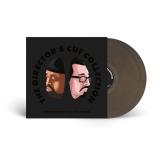
Five years ago, Frankie passed away in Chicago on 31st March 2014 leaving behind one of the greatest house music legacies spanning almost four decades. Now he is commemorated by long time writing and production partner Eric Kupper. Eric, himself a seasoned DJ producer and writer, has worked on over 116 Billboard #1 Dance Records and played a pivotal role in a many of Frankie’s productions. Having both worked together for many years they established themselves at ‘Director’s Cut’ from 2011 and set about producing original releases and remixes based on the classic ‘Def Mix’ sound while sharing equal credits for their creations.
Together they re-produced and re-purpose classic cuts for modern dancefloors, with reworks including tracks from Marshall Jefferson, Ashford & Simpson, Artful & Ridney and The Sunburst Band, alongside Frankie Knuckles originals. These releases have now been brought together by Eric to feature on special album called ‘The Directors Cut Collection’ on SoSure Music. It includes the Director’s Cut reworks of Frankie’s classic cuts such as ‘Your Love’ and ‘Take You There’ with Jamie Principle, alongside Frankie’s first #1 single - ‘The Whistle Song’ on which Eric shares writing credits.
Within a multitude of classic reworks, highlights include a previously unreleased version of Ashford & Simpson’s ‘Bourgie Bourgie’ and a huge Director’s Cut Retro Signature mix of Marshall Jefferson’s The House Music Anthem (Move Your Body) featuring Curtis McClain.
The Director’s Cut Collection is a fitting tribute to commemorate the fifth anniversary of Frankie’s passing whilst giving Eric a platform to tell his side of the creative story. This album is to be released in collaboration with The Frankie Knuckles Foundation who work to continuing Frankie’s legacy well into the future.
Panthera is back at the Bordello with his most energy-packed release to date. Synthsizer Hits III is forged in the heat of Hi-NRG, the romance of italo and the daring synthesizer hooks of 1980s Europe. A thick rasping beat pounds above a juddering arpeggiator line before hedonistic surges ignite “Fumare”, an achingly addictive opener. Vocals are toyed with, used to increase the potency of the chosen machines and sounds. A circling chant infects “Lucifera” as a joyous melody takes hold of this modern Summer anthem, euphoric notes ushering in the dawn while speakers and strobe throb. There is a palpable power that permeates the 12”. “The Magic Touch” sends strings sailing skyward as rich percussive textures take root below. From this fertile ground, a sensational ode to the synthesizer flowers. Vocoder lyrics, pulsating rhythms and keys that are truly fantastical. “Toccata” finishes this analogue celebration. Slow burning with disco inflections, this finale soon shows its true colours. Daring counter melodies frolic, from the elegant and refined to the brash and broad, in this mirrorball inspired last dance.
X-IMG presents “SEARCHING HELL” the new album by industrial body music producer SARIN, this 12” full-length LP marks his first release in six years.
SARIN (aka Emad Dabiri) has spent the last years sharpening his teeth on numerous collaborations and dozens of remixes. His evolution and development is displayed in the Gesamtkunstwerk that is “SEARCHING HELL” a nine track cybernetic joyride into oblivion; featuring his distinct militant drumwork, heat-seeking bass lines and surgically interlaced sampling, augmented by deceptively serene atmospheric pads & bloodied vocals. All this composed and assembled with an array of analog, digital and software based weaponry. “SEARCHING HELL” seeks to find meaning in an increasingly meaningless & subjugated world while maintaining a subversive & defiant autonomy.
A collection of transfixing, storm-like compositions, "Drifts" draws you into its heightened sense of quiet, reveling in iridescent, tranquilized vapors - one part ambient Classical, one part Club-adjacent ambience.
Pitched, reduced, sampled and re-sampled, the album's glowing, elliptical abstractions - using piano, harp, strings & modular synthesizer - explore the emotional terrain between aftermath and renewal, blending the unstructured immediacy of improvisation with the elegant sculpture of composition.
"Drifts" represents for its maker a newfound interest in shadow and mystery, each track a shifting terrain, a collection of clues, a scene set in a larger story, the effect cumulative.
Featuring collaborations with Patrick Belaga, Marilu Donovan (LEYA), and Takuma Watanabe, the album's cinematic suite of impressionistic, ambient works invites the listener into a vast, mapless space of dreamlike non-linearity where interior and exterior landscapes bristle with intimacy and electricity.
We are thrilled to welcome back Aldo Cadiz to Beatwax Records with his brand-new EP “Amandorada.”
Years after his highly acclaimed debut album on Beatwax, Aldo returns with a stunning follow-up that once again showcases his unique sound signature — a perfect blend of hypnotic grooves, deep rhythmic precision, and timeless underground energy.
“Amandorada” captures the essence of Cadiz’s refined production style: warm textures, intricate percussion, and that unmistakable Latin-influenced pulse that has made him a favorite among DJs and music lovers worldwide.
This EP marks not only a reunion between Aldo Cadiz and Beatwax Records but also a new chapter in our shared musical journey. We couldn’t be happier to have him back on the label, delivering another powerful statement of cutting-edge electronic music.
Don`t sleep on this. Already making waves and getting hammered by all the big players in the scene.
Slam rework Nitzer Ebb, Silent Breed, DK8, Terrence Fixmer and more for the final installment of their Archive Edit series.
Soma label heads Slam curate a specially designed package of tracks to finalize their Archive Edit project that sees them delve deep into Techno's past to bring some of the genre's best tracks into the modern age. The Archive Edit project started as a way for Slam to showcase and share the many different edits that had made their way into their DJ sets over the last few years.
The pairing of Stuart McMillan & Orde Meikle have both raided their extensive collections, picking out tracks that have defined countless sets over their career. Tracks from luminaries such as Nitzer Ebb, Thomas P Heckmann (as Silent Breed), Damon Wild & Terrence Fixmer have been re-edited alongside some of Slam's own unreleased material, showcasing the duo's current sound; one that naturally evolves, matures and demonstrates why the duo have been at the forefront of the global scene since its inception.
Italian artist and researcher Mariachiara Troianiello is Katatonic Silentio, and is an artist able to move fluidly between club culture and experimental practice. A DJ with more than 15 years behind the decks, her selections can drift from musique concrete, ambient, spoken word and global soundscapes to the harder edges of techno, drum & bass, and leftfield electronics. Her work also explores how sound interacts with space and the body and on Lysergic Induction Forge, she dips into IDM, electro, ambient and dub. 'Velvet Dweller" gets underway with warped synths and liquid rhythms, 'Dubbin'Acid' is a slow, percolating rhythm and 'Psychoactive Groove' sounds like the innerworkings of a brain during a psychoactive experience. 'Acid Foundation' closes with a gentle acid-laced ascent. Classy stuff.
Lempuyang has been at the heart of the second wave of dub techno since day one. It's a label that deals in super deep and high-quality sounds from a range of artists. Now they welcome back Adria, three years after his debut, with a heavyweight follow-up that dives deep into the murky edges of dub experimentation. This new release trades dancefloor immediacy for atmosphere and weight by blending low-slung rhythms, hazy tape hiss and hypnotic textures that nod to classic sound system culture. Each track comes rich in analogue warmth and restrained tension. This is dub crafted with precision and that fully rewards close listening and real exploration of space, texture and bass pressure.
1987 eroberte „Houseman“ die Tanzflächen weltweit – nun kehrt der Klassiker als exklusive, farbige Maxi-Vinyl zurück: neu abgemischt, remastered und bereit für kraftvolle ClubMomente im authentischen Vinyl-Sound.
Track-Highlights der Maxi-Vinyl:
• New Radio Edit – die kompakte Fassung für direkte, energiegeladene Einsätze.
• Oliver Bach Remix – treibender Techno mit maximaler ClubPower.
• Dominatrix Remix – hypnotischer Indie Dance für anspruchsvolle und experimentierfreudige Hörer.
• Remastered Original – der Kult-Track in frischem, modernen Klangbild, klarer und druckvoller als je zuvor.
• Germany Calling (Remastered) – die legendäre Version neu aufgelegt und perfekt für nostalgische Vinyl-Momente
In 1987, ‘Houseman’ conquered dance floors worldwide – now the classic is back as an exclusive, coloured maxi vinyl: remixed, remastered and ready for powerful club moments with authentic vinyl sound.
Track highlights of the maxi vinyl:
• New Radio Edit – the compact version for direct, energetic performances.
• Oliver Bach Remix – driving techno with maximum club power.
• Dominatrix Remix – hypnotic indie dance for discerning and adventurous listeners.
• Remastered Original – the cult track with a fresh, modern sound, clearer and more powerful than ever before.
• Germany Calling (Remastered) – the legendary version reissued and perfect for nostalgic vinyl moments.
VIER - IIII, a project by: Machinedrum x Thys x Holly x Salvador Breed.
Across its eleven tracks, 'IIII' dissolves borders between breakbeat, trap-meets-gabber, skippy UK shuffle, halftime, jungle and cinematic electronica, music that shifts from serious voltage to full-colour euphoria. What ties it together is philosophy, not genre.
The group's working method began playfully in the studio with a ten-minute egg timer: each member would sketch for ten minutes, then pass it on. That rule became a ritual, a way to keep things human, spontaneous and shared. In VIER, every track passes through four sets of hands; every decision is a test of trust. What could have been chaos instead became a flow state, a cycle of surrender and discovery thatdefines their sound.
Following singles such as Frankfurt, Control, Where Were You, Solitu and Vai Pulando, 'IIII' stands as VIER's first full statement, a body of work that feels both playful and deeply considered. Moments of quiet bloom into distorted joy; melody drifts through broken percussion; endings turn into new beginnings.
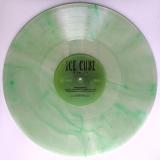
This holiday season, global hip-hop icon Ice Cube makes a powerful return with Man Up — a brand-new album from a cultural trailblazer whose influence spans music, film, and activism. With over 10 million albums sold and six Platinum plaques, Cube’s legacy is undisputed, from his revolutionary work with N.W.A. to timeless solo anthems like “It Was a Good Day.” Now, sharper and more unapologetic than ever, he’s back to deliver a project that fuses his raw lyrical power with a message rooted in resilience and authenticity.
To mark the release, Man Up will be available exclusively as an ultra-limited vinyl drop this holiday season. Each record features a one-of-a-kind hand-crafted cover — a unique blend of artisanal design and proprietary technology (created without A.I.) — alongside city- and country-specific sleeves that pay homage to Cube’s global impact in places like LA, Tokyo, London, and France. The campaign will be amplified through a global social media rollout, city-focused influencer activations, and Ice Cube’s upcoming North American tour. Major press coverage and podcast appearances will further elevate the conversation, making Man Up not just an album, but a collector’s piece and cultural moment fans won’t want to miss.
The ever enigmatic Deepchord makes a most welcome return to Soma with this, the first single to be taken from this latest full length, Ultraviolet Music. Three beautiful slices have been cut from the album to form this truly outstanding single and shows Deepchord return to a straight up mix of heady, cerebral dub techno infused with more solid rhythms.
Belgian based Phara makes a huge debut on Soma with The Great Attractor EP. With his fast, raw and energetic sound, Phara's ascent has been quick off the mark and this latest release has the young producer stretch himself farther with cleverly produced and exciting tracks. UK Techno don, Setaoc Mass backs up this already masterful EP, lending his own prowess to the title track.
Great Attractor leans on 90s, spaced out techno vibes as fast paced 909s fire against the backdrop of rapid, modulating synths. Setaoc Mass' remix comes up next, offering a deeper more restrained affair. However, as usual, the adept nature of his productions deal out devastating effect. On the flip, Mission 3,2,1 delves into dubbed out synth work whilst retaining drive and groove. Further dub explorations are found on closing track The Andromeda Manoeuvre. Spacial synth work and atmospherics ebb and flow as Phara's hard hitting and relentless percussive work deals the final blow.
To mark Grid's second anniversary back in 2023, the label brought together 13 tracks from the bass scene's most forward-thinking artists, all of which sank you into deep sonic chambers. Now, six of those tracks are available on wax for the first time in what is an essential sampler featuring boundary-pushing contributions from forward-thinking artists. Sister Zo opens with the percussive pressure of 'EMP,' Ronan lays down a lithe rhythm that befits its 'Shadowbox' title and Seekersinternational drill down into warped low-end chaos. There is a deftness to Jonny From Space's tumbling perc and E-Unity brings clean lines and a futuristic sheen to his deep dub workout 'Of All The Places I Could Be'. Tammo Hesselink brings ambient soundscaping with his floating delight, 'Paint Reduce Trick.' This is high-quality, original music that moves both mind and body.
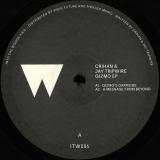
Into The Woods returns to wax with “Gizmo,” marking Crihan and Jay Tripwire’s first collaborative project. Three stripped, hypnotic cuts from two masters of the craft. The aim of this series remains unchanged: to present forward-thinking expressions of minimal. Music for Carpenters and DIY enthusiasts!
Originally released in 1972, Toni Tornado's self-titled debut is a landmark in Brazilian soul and funk - a gritty, groovy record that helped define the sound of the Black Rio movement. Blending deep soul, psychedelic funk, and bold orchestration, this album channels the revolutionary energy of James Brown with the tropical swagger of Rio's streets. From the urgent rhythms of 'Torniente' to the undeniable strut of 'Mané Beleza' and 'Tornado,' Toni's music pulses with a fierce sense of pride and liberation. It's the sound of a new cultural identity taking shape - where African-American soul met Afro-Brazilian reality. Often compared to the legendary Tim Maia, Tornado brought his own explosive edge to Brazil's growing soul scene. By the 1970s, other Brazilian musicians, such as Banda Black Rio, Cassiano, Gerson King Combo, Jorge Ben and Gilberto Gil, began making soul records. DJs started throwing soul-only parties. Toni Tornado's voice carries grit and passion, his grooves hit hard, and his message is crystal clear - Black is beautiful, and the funk is real. Back on vinyl for a new generation, this reissue is more than a collector's gem - it's a time capsule from an era when music moved bodies and minds. Essential listening for fans of vintage soul, global funk, and revolutionary sounds. Reissue on 180g vinyl.
Das Set enthält acht Maxi-Singles auf Vinyl+ ein Nachdruck des Promo-Posters zu "Dream-On" sowie ein großformatige Poster, welches Bestandteil der 12'' zu "Good Lover" war + die Tracks der audiophilen Maxis wurden anhand der Original-Tapes gere-mastert.
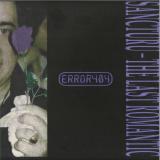
For this release, we’re thrilled to welcome Chilean artist Jose Luis Seguel, also known as Statickman. This one feels special — not only because it marks our 10th installment as a label, but also because it’s Statickman’s first-ever physical release, delivering a dose of pure ’80s-inspired bliss.
The Last Romantic is a blend of 80s vibes, featuring memorable sounds and catchy basslines.
For this release, we feature three original tracks from Sancturu, an Argentinian artist releasing his first EP in physical format. It also includes a collaboration on the A1 track with vocalist Lourene and a powerful rework by Light Blue File, a close friend of the Error404 team and reowned producer.
We’re thrilled to announce our debut release — Lucid Departure EP, marking the beginning of our journey. Kicking things off in style with David Pasajero and Artesano Titer, each bringing their own unique blend of trance.
David Pasajero’s A1 Matter of the Mind and A2 Stage One showcase his distinctive touch — a driving fusion of Goa textures and heavier trance energy that sets the tone for what’s to come.
Artesano Titer’s B1 Declaration and B2 The Sparrow reflect his Uruguayan roots, weaving dark, progressive layers into an atmospheric trance experience.
Bilingual rapper/producer Joe Cupertino, hailing from Cupertino, California, follows his 2024 mini-album RE: with a 7" single featuring two standout tracks. RE: was conceived as a thematic counterpart to his 2025 release DE: (focused on destruction), while RE: explored the theme of regeneration.
Side A features "Wagamama," with Mamiko Suzuki (chelmico) on vocals and production by longtime collaborator T-Razor. The mellow jazz arrangement evokes a daydream-like atmosphere, perfectly matching the bittersweet theme of the title.
Side B, "Ruby," features Lil' Leise But Gold and production by Ryuju Tanoue (w.a.u). The track blends Brazilian, reggae, and Afrobeat influences into an alternative, cross-genre groove that embodies Joe Cupertino's unique sound.
Ruffiani is the new joint venture between Sam Ruffillo and Fimiani – a playground for edits, sample reworks and cheeky dancefloor tricks. The first release brings together four cuts that go from classic sample-based grooves to refined eighties-inspired proto-house vibes, up to a shamelessly catchy tune built around a very familiar Italian hook… and a final club weapon made to blow the room apart.
Renowned for his rich, soulful voice and heartfelt songwriting, Wellington, New Zealand's Louis Baker blends neo-soul, R&B, and folk into a sound that feels both timeless and fresh. His single "Keep On" is an uplifting anthem of perseverance, now reimagined by a hand-picked selection of acclaimed producers, each bringing their unique touch to the track.
Delfonic: Berlin's Delfonic is a digger's digger - a selector, DJ, and producer with an encyclopedic ear for groove. Fresh from delivering stunning Roy Ayers edits for BBE Music, he brings his soulful touch to "Keep On", crafting a warm, deep, and floor-friendly rework.
Larse: German DJ and producer Larse has released on acclaimed labels such as Defected, Glitterbox, and Noir Music, earning a global reputation for timeless, emotive house. His remix of "Keep On" channels the smooth, sultry elegance of UK soul icon Sade's '80s sound - lush, classy, and built for late-night listening.
Gush Collective: The legendary German 2-step producers Gush Collective are masters of soulful, shuffling rhythms. Their remix of "Keep On" blends classic UK garage swing with uplifting melodies, delivering a dancefloor-ready cut that radiates joy and energy.
DJ Philippa: Originally from New Zealand and now based in Berlin, DJ Philippa has built a strong following for her uplifting, groove-rich house sets and productions. With releases on Freerange Records, SlothBoogie, and Local Talk, she's known for her deep musicality and impeccable feel for the dancefloor. Her remix of "Keep On" injects warm basslines, shimmering keys, and irresistible rhythmic flow.
The Éthiopiques series returns! Essential archive recordings from an extremely fruitful period in Ethiopian music.
Before “Swinging Addis” took over the world, there was Moussié Nerses Nalbandian — the Armenian-born composer who shaped modern Ethiopian music. Mentor, arranger, and pioneer, he laid the foundations of Ethio-jazz.
This Éthiopiques volume revives his forgotten legacy, recorded live by Either/ Orchestra First issue ever with new exclusive photos and in depth liner 8-page insert.
“Ethiopian jazzmen are the best musicians that we have seen so far in Africa.
They really are promising handlers of jazz instruments.”
Wilbur De Paris
(1959, after a concert in Addis Ababa)
አዲስ፡ዘመን። *Addis zèmèn* **A new era.**
The time is the mid-1950s and early 1960s, just before "Swinging Addis" bloomed – or rather boomed – onto the scene. Brass instruments are still dominant, but the advent of the electric guitar, and the very first electronic organs, are just around the corner. Rock’n'Roll, R’n’B, Soul and the Twist have not yet barged their way in. Addis Ababa is steeped in the big band atmosphere of the post-war era, with Glenn Miller's *In the* *Mood* as its world-wide theme song, neck and neck with the Latin craze that was in vogue at the same period. Life has become enjoyable once again, with the return of peace after the terrible Italian Fascist invasion of Ethiopia (1935-1941). The redeployment of modern music is part and parcel of the postwar reconstruction. *Addis zèmèn* – a new era – is the watchword of the postwar period, just as it was all across war-torn Europe.
The generation who were the young parents of baby boomers** were the first to enjoy this musical renaissance, before the baby boomers themselves took over and forever super-charged the soundtrack of the final days of imperial reign. Music is Ethiopia's most popular art form, and very often serves as the best barometer for the upsurge of energy that is critical for reconstruction. Whether it be jazz in Saint-Germain-des-Prés or the *zazous* who revolutionised both jazz and French *chanson* after the *Libération*, be it Madrid's post-Franco Movida, or Dada, the Surrealists and *les années folles* that followed World War I, the periods just after mourning and hardship always give rise to brighter and more tuneful tomorrows. Addis Ababa, as the country's capital, and the epicentre of change, was no exception to this vital rule.
**Two generations of Nalbandian musicians**
Nersès Nalbandian belonged to a family of Armenian exiles, who had moved to Ethiopia in the mid-1920s. The uncle Kevork arrived along with the fabled "*Arba Lidjotch*", the** "*40 Kids*", young Armenian orphans and musicians that the Ras Tafari had recruited when he visited Jerusalem in 1924, intending to turn their brass band into the official imperial band. If Kevork Nalbandian was the one who first opened the way of modernism, pushing innovation so far as to invent musical theatre, it was his nephew Nersès who would go on to become, from the 1940s and until his death in 1977, a pivotal figure of modern Ethiopian music and of the heights it. Going all the way back to the 1950s. Nothing less. And it is Nersès who is largely to thank for the brassy colours that so greatly contributed to the international renown of Ethiopian groove. While the younger generations today venture timidly into the genealogy of their country's modern music, often losing their way amidst a distinctly xenophobic historiographical complacency, many survivors of the imperial period are still around to bear witness and pay tribute to the essential role that "Moussié Nersès" played in the rise of Abyssinia's musical modernity.
Given the year of his birth (15 March 1915), no one knows for sure if Nersès Nalbandian was born in Aintab, today Gaziantep (Turkiye/former Ottoman Empire) or on the other side of the border in Alep, Syria... What is certain is that his family, like the entire Armenian community, was amongst the victims of the genocide perpetrated by the Turks. Alep, the place of safety – today in ruins.
Before Nersès then, there was uncle Kevork (1887-1963). For a quarter of a century, he was a whirlwind of activity in music teaching and theatrical innovation. *Guèbrè Mariam le Gondaré* (የጎንደሬ ገብረ ማርያም አጥቶ ማግኘት, 1926 EC=1934) is his most famous creation. This play included "ten Ethiopian songs" — a totally innovative approach. According to his autobiographical notes, preserved by the Nalbandian family, Kevork indicates that he composed some 50 such pieces over the course of his career. This shows just how much he understood, very early on, the critical importance of song as Ethiopia's crowning artistic form. Indeed, for Ethiopian listeners, the most important thing is the lyrics, with all their multifarious mischief, far more than a strong melody, sophisticated arrangements or even an exceptional voice. (This is also why Ethiopians by and large, and beginning with the artists and producers themselves, believed for a long time — and wrongly — that their music could not possibly be exported, and could never win over audiences abroad, who did not speak the country's languages).
Last but not least, one of Kevork's major contributions remains composing Ethiopia's first national anthem – with lyrics by Yoftahé Negussié.
Nersès Nalbandian moved to Ethiopia at the end of the 1930s, at the behest of his ground-breaking uncle. Proficient in many instruments (pretty much everything but the drums), conductor, choir director, composer, arranger, adapter, creator, piano tuner, purveyor of rented pianos,... he was above all an energetic and influential teacher. From 1946 onwards, thanks to Kevork's connexion, Nersès was appointed musical director of the Addis Ababa Municipality Band. In just a few years, Nersès transformed it into the first truly modern ensemble, thanks to the quality of his teaching, his choice of repertoire, and the sophistication of his arrangements. It was this group that would go on to become the orchestra of the Haile Selassie Theatre shortly after its inauguration in 1955, which was a major celebration of the Emperor's jubilee, marking the 25th anniversary of his on-again-off-again reign.
At some point or other in his long career, Nersès Nalbandian had a hand in the creation of just about every institutional band (Municipality Band, Police Orchestra, Imperial Bodyguard Band, Army Band, Yared Music School…), but it was with the Haile Selassie Theatre – today the National Theatre – that his abilities were most on display, up until his death in 1977. To this must be added the development of choral singing in Ethiopia, hitherto unknown, and a sort of secret garden dedicated to the memory of Armenian sacred music, and brought together in two thick, unpublished volumes. Shortly before his death (November 13, 1977), he was appointed to lead the impressive Ethiopian delegation at Festac in Lagos, Nigeria (January-February 1977).
His status as a stateless foreigner regularly excluded him from the most senior positions, in spite of the respect he commanded (and commands to this day) from the musicians of his era. Naturally gifted and largely self-taught, Nerses was tirelessly curious about new musical developments, drawing inspiration from the very first imported records, and especially from listening intensely to the musical programmes broadcast over short-wave radio – BBC *First*. A prolific composer and arranger, he was constantly mindful of formalising and integrating Ethiopian parameters (specific “musical modes”, pentatonic scale, and the dominance of ternary rhythms) into his “modernisation” of the musical culture, rather than trying to over-westernise it. It even seems very probable that *Moussié* Nerses made a decisive contribution to the development of tighter music-teaching methods, in order to revitalise musical education during this period of prodigious cultural ferment. Flying in the face of all the historiographical and musicological evidence, it is taken as sacrosanct dogma that the four musical modes or chords officially recognised today, the *qǝñǝt* or *qiñit* (ቅኝት), are every bit as millennial as Ethiopia itself. It would appear however that some streamlining of these chords actually took place in around 1960. It was only from this time onward that music teaching was structured around these four fundamental musical modes and chords: *Ambassel*, *Bati*, *Tezeta* and *Antchi Hoyé*. A historical and musical “details” that is, apparently, difficult to swallow, especially if that should honour a *foreigner*. Modern Ethiopian music has Nersès to thank for many of its standards and, to this day, it is not unusual for the National Radio to broadcast thunderous oldies that bear unmistakable traces of his outrageously groovy touch.