Recorded in 1989 on the remaining ten minutes left at the end of Swiz’s Hell Yes I Cheated reel-to-reel and originally released at the time as a 33 RPM 7-inch, this 2023 release presents a 12-inch 45RPM version remastered by Tim Green with an extra song recovered from the tape archives of Jason Farrell. The brief story of Fury: At some point in 1989, members of Washington DC punk bands Swiz and Ignition formed Fury as a loose experiment with no intentions beyond being a diversion. The band existed for a few months, wrote six songs, and played two shows. Shawn Brown and Chris Thomson switched their musical roles from their regular bands as vocalist and bass player. The eyes-closed leap into those unfamiliar positions imbued the recording its feeling of deranged chaos, while the well-seasoned duo of Jason Farrell and Alex Daniels nailed down each song with the signature agility and power displayed in their more familiar work together. The recording is a vexing listen that sounds like a Neapolitan swirl of Swiz, Void, and the Germs. Was it precision theatre? Or was it a natural step back into a more primitive and comfortable place for four young veterans that just wanted to fill the daily void of existential restlessness? The track “Resurrection” famously made it onto the final Swiz LP. The final track “Last One” got cut off halfway through recording and the band looped and spliced it into a dizzying psychedelic nightmare / masterpiece. The recording has faded into somewhat of an obsurity, a footnote to the larger careers of all of its members. In its time, it was revered by a small cult of obsessives from numerous early ’90s underground punk circles. It notably had a pronounced influence on the emerging Gravity Records scene, where its echoes can be heard on quite a few of the earlier releases. Resurrection is finally getting the deluxe treatment that it deserves after 34 years!
quête:in da place
Federica Grappasonni aka Mistura Pura is an Italian DJ, composer, singer, vinyl collector and music producer. She started to play and produce music at the age of 19 in Bologna, Italy. Before becoming a DJ she wrote and performed her songs live, either as a duo or with a complete band. In the ‘Acid Jazz’ era she was totally immersed in Bossanova, Jazz-funk and Jazzy Hip Hop music. At the time she wrote poetry and songs, singing melodies that burned in her mind. ‘Ed è…’ is one of the first songs she wrote. While ‘Vamo Vive’ is the result of the mix of more songs connected as part of her repertoire, made as a later piece of her musical puzzle.
At the end of the ‘90s and for the following decade Federica became known in the so called ‘lounge scene’ as a selector with Mistura Pura DJ sets in great demand, she gained residencies in the most beautiful and cool places in Milan, the isle of Panarea, Eolian Islands, and Sicily. Coming into the present day she decided to edit and rework some of her repertoire with both songs being revisited while keeping the original voice she recorded at the time and with the support of the pianist and co-arranger Alberto Napolioni and the flautist Carlo Nicita whom worked very well to define the harmonies of the musical works. After 25 years from that period and during the pandemic, Federica repeatedly told herself as a loop ‘go to live Fede’. It was during a walk on the beach that she remembered capturing a frame of a couple of children building a castle in the sand on the Adriatic sea with all the meaning and poetry that this image portrays; a sense of freedom, innocence and truth. In this sense ‘Vamo Vive’ and ‘Ed è…’ is a gentle scream of hope in a time when humanity was closed and living like prisoners in their own houses.
Ronan lands on nascent X-Kalay sub-label Another Place with renewed focus and a new EP. Musing on personal crossroads, ‘Leaves of Life’ is a highly evocative contemplation on the tides of life. It’s the culmination of a personal arc having sat with the material for six years, further refining the lush, introspective sound that’s characterised his output to date.
The outcome feels similarly unhurried; a pristine, genre-spanning exploration rendered with meticulous attention to detail. Soul-bearing stuff interspersed with words of reassurance through quietly spoken vocals.
The opener strives for utopia. Carried away on a warm current, ‘Song of Surrender’ initiates with a gorgeous unfurling of life-affirming trance that begs repeat immersion. Comparatively direct, ‘Cure for Toxicity’ comes on a breaks-driven flex before a fleeting switch-up into 2-step territory.
Supple groove and jazz modalities fuel airily introspective D&B as we shift focus to title track ‘Leaves of Life’. Then, finally, Ronan closes things out with a ritual purification of sorts. Deploying more breaks but bordering on new age, ‘Sacral Dub’ exudes a soothing, massaging quality with dubby tendencies in full effect.
- Word Games (Live)
- Love The One You’re With (Live)
- Sugar Babe (Live)
- Do For The Other (Live)
- Jesus Gave Love Away For Free (Live)
- 49: Bye-Byes/For What It’s Worth (Live)
- You Don’t Have To Cry (Live)
- The Lee Shore (Live)
- Cherokee (Live)
- Black Queen (Live)
- Know You’ve Got To Run (Live)
- Band Introduction (Live)
- Ecology Song (Live)
- Bluebird Revisited (Live)
- Lean On Me (Live)
Founding member of Buffalo Springfield and folk-rock supergroup Crosby, Stills, Nash & Young, Stills' first solo album, Stephen Stills, earned a gold record, is the only album to feature both Jimi Hendrix and Eric Clapton, and climbed to #3 on the album charts. Stephen Stills’ single "Love the One You're With" became his biggest solo hit, peaking at number 14 on the Billboard Hot 100 and is the first track on this collection. 14 tracks from Stephen Still’s First US Tour, previously unissued and recorded Live at The Berkeley Community Theater in 1971, featuring David Crosby on two songs. In 1971 Stephen Stills embarked on a US tour, opening each show with an intimate acoustic first set, and closing each night with a riveting electric set featuring the Memphis Horns. These historic, previously unreleased recordings took place over two nights at the Berkeley Community Theater, with David Crosby joining him on vocals and guitar for "You Don’t Have To Cry" and "The Lee Shore." These recordings find Stills at peak performance in both vocal delivery and musicianship, effortlessly incorporating alternate instrumentation on his instantly recognizable tracks, including a seamless medley of “49 Bye Byes" and "For What It’s Worth” unexpectedly played on piano. Hand-picked by Stills from his personal archives, this album captures timeless and era defining performances. Fans who were lucky enough to catch his historic debut trek, dubbed “The Memphis Horns Tour,” were treated to the balladeer, the raving troubadour, the acoustic bluesman, the soul driver, and by far the most passionate music maker. Backed by a loyal cast of friends, including his usual steady rhythm section—drummer Dallas Taylor and bassist Calvin “Fuzzy” Samuels—along with keyboardist Paul Harris, guitarist Steve Fromholz, and percussionist Joe Lala, these Northern California shows were one of the most unique and intimate stops on the tour This album, rather than being an artifact from a bygone era, sparkles and stimulates. It cajoles you into thinking, feeling and—most importantly—moving. Stephen Stills Live At Berkeley 1971 is a cornucopia of priceless sound—and all of it bears the distinct and loving fingerprint of Stephen Stills.
Following nearly 20 years of working together as a trio, and numerous cross-collaborations in different configuration between them, Ideologic Organ presents Placelessness, the debut full-length by Chris Abrahams, Oren Ambarchi, and Robbie Avenaim, comprising two long-form works at juncture of ambient music, minimalism, rigorous experimentalism and improvisation, and machine music. Having carved distinct pathways across a diverse number of musical idioms for decades, Chris Abrahams, Oren Ambarchi, and Robbie Avenaim are each, respectively, among the most noteworthy and groundbreaking figures to have emerged from Australia's thriving experimental music scene. Ambarchi and Avenaim first encountered Abrahams when seeing the Necks - the project that has served as the primary vehicle for his singular approach to the piano since its founding in 1987 - together during the late 1980s, not long after having met in Sydney's underground music community. The pair's collaborations date back more than 35 years, criss-crossing Ambarchi's pioneering solo and ensemble work for guitar and Avenaim's visionary efforts for SARPS (Semi Automated Robotic Percussion System), robotic and kinetic extensions to his drum kit. In 2004, fate brought the three together in a trio performance at the What Is Music? Festival, the annual touring showcase of experimental music founded and run by Ambarchi and Avenaim between 1994-2012. For the nearly two decades since, Abrahams, Ambarchi, and Avenaim have intermittently reformed in exclusively live contexts, in Australia and abroad, cultivating and refining the fertile ground first tilled in that early meeting. Placelessness is the first album to present this remarkable trio's efforts in recorded form. Placelessness is the joining of three highly individualised streams, working in perfect harmony; the point at which friendship, mutual respect, and decades of creative exploration produce a singular spectrum of sound. Featuring Abrahams on piano, Ambarchi on guitar, and Avenaim on drums, the album's two sides draw on each artist's enduring dedication to long-form composition. Its two pieces, Placelessness I and Placelessness II, initially began as a single, 40 minute work, before being divided and reworked into distinct, complimentary gestures for the corresponding sides of the LP. Beginning with restrained clusters of reverberant piano tones, Placelessness I progresses at an almost glacial pace, with Abrahams' interventions increasing met by sparse responses, darting within vast ambiences, on guitar and percussion by Ambarchi and Avenaim. Remarkably conversational within its convergences of tonal, rhythmic, and textural abstraction, over the work's duration a progressive sense of tension unfurls and contracts, refusing release, as each of the ensemble's members contribute to an increasingly tangled sense of density at its resolve. While an entirely autonomous work, Placelessness II rapidly realises a distillation of the energy hinted at across the length of its predecessor. Following a luring passage of harmonious calm, Abrahams' launches into shimmering lines of repeating arpeggios, complimented at each escalation of tempo by Avenaim's machine gun fire percussion work and Ambarchi's masterful delivery of tonality and texture, as the trio collectively generate dense sheets of pointillistic ambience within which individual identity is almost lost, before slowly unspooling into unexpected abstractions and dissonances that deftly intervene with the work's inner logic and calm. What could easily be termed a maximalist take on Minimalism, Placelessness is a masterstroke of contemporary, real time composition, that blurs the boundaries between ambient music, experimentalism, free improvisation, and machine music. Drawing on Chris Abrahams, Oren Ambarchi, and Robbie Avenaim's decades of respective solo and collaborative practice, and the culmination of nearly twenty years of working together as a trio, it's two durational pieces - Placelessness I and Placelessness II - take form with a startling sense of effortlessness and grace, neither shying away from explicit beauty or rigorously tension within their forms.
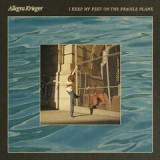
It contains all the signatures of her best lyricism: delicate and precise phrasings, moments that flicker between beauty and banality, meaning that forms through the accretion of observations, memories, and unexpected adages. This is an album that is at once post-theistic and devoted to a relationship with the divine, each song blinking in and out of "the fragile plane," a place Krieger describes as "a middle ground in the universe," both abstract and peaceful, where time, bodies, and names don't exist.
Krieger initially collaborated with Luke Temple and Jeremy Harris to record her vocals and guitar to tape at Panoramic Studios in West Marin, CA. As the album continued to form, Krieger envisioned instruments - like the French and English horn (Nancy Ranger and Priscilla Reinhart), electric guitar (Jacob Drab), and pedal steel (Kevin Copeland) - as characters which would walk in and out of the soundscape. What emerged from conversations with composer Sammy Weissberg, are brass parts that have a dark, almost surreal logic: horns arise to emphasize a word or phrase, fall out completely, only to rush back with dissonant orchestrations that gesture simultaneously toward deterioration and generation.
While Krieger takes inspiration from Elliot Smith's honesty, Judee Sill's cosmic reaching, and Joni Mitchell's sharp noticing, the dream-like association, harmonic dissonance, and angular melodic ascensions in each song are singularly and delightfully Krieger's.
"I Keep My Feet on the Fragile Plane" is a daring collection of songs by an artist who scries with both the cold glass eye of truth and the beating heart of empathy; who portrays life in all its twisted complexities.
- A1: Mystery Of You - Jeff Scott
- A2: Palavras - Caixa Cubo
- A3: I Had A Friend - Peter Gallway
- A4: We Don't Have To Talk About It - Bell Helium
- B1: Como Aprendi A Soportar Tus Inseguridades - Litto Nebbia & Los Músicos Del Centro
- B2: A Place In Space - Joe Thomas
- B3: Heaven - Crosswind
- C1: Life - Bugs Beddow
- C2: I Know (Demo Version) - Astronauts, Etc
- C3: Factory Rhythms - Jr Quintet
- D1: Make The Call (Extended Version) - Mf Robots
- D2: For Us - April Fulladosa
- D3: California (Shawn Lee Mix) - Kirk Reed
- D4: Smile Upon Your Brother - The Ambassador College Band & New World Singers
- D5: Easter Suite (Edit) - John Standefer
Curated by Reference Point residents Mark GV Taylor and George Arthur, this 15 track
compilation album features tracks the pair have played at their peripatetic, Europe wide
events since 2012.
Stretching from the 1970s to the present day the Reference Point compilation spans a whole
range of genres, tempos, languages and grooves where the quality of music is paramount
whether $1.00 bin records or $1000 rarities.
Reference Point, 'a place to hear the music', is a truly trans-global album with music from
Argentina, Brazil, Oakland, Detroit, Texas, London and more, including tracks from private
press albums, from artists who have played at Reference Point events and from current
artists such as MF Robots and Caixa Cubo.
Releasing as a CD, digital and a double LP, Reference Point is another essential compilation
from BBE Music and one that belongs in the collection of all collectors and lovers of great
music
Perth-based artist hub 823, led by the extraordinary producer / creator Ta-ku joins forces with Berlin's Jakarta Records for the release of Godblesscomputers's fourth full-length LP, "Faded Views." The LP melds bright electronic flourishes with laidback synth-driven backdrops, weaving tapestries of mellow folktronica and groovy jazz harmony with continuous sonic intrigue that will keep you grooving into a tropical disposition. Paying homage to his musical moniker, the Bologna-based producer makes timely metallic interjections amidst lush, effortlessly groovy soundscapes. Explore a world of found, recycled, and synthesized sound on "Faded Views" out everywhere September 8.
Bologna-based producer, DJ, and sound collector Godblesscomputers (122k Spotify listeners) has returned with the release of his fourth full-length record, "Faded Views." Godblesscomputers's latest LP "The Island" (2020, La Tempesta Dischi) earned him placement on Spotify playlists like "Brain Flood" and "Coffee Club." Since then, his appearance on Willie Peyote's track "La colpa al vento" landed GBC on "Best of Indie Italia 2022." On "Faded Views," it was Godblesscomputers's creative project to explore the sonic potentials of his direct environment, picking up recordings and threads of inspiration from the most commonplace occurrences. A sonic scavenger, Godblesscomputers explored the expanses of his-both digital and physical-soundscapes. "Faded Views" does the work of crafting a unified, yet complex compilation of the noises that mark the experience of being digital natives in ever-expanding dimensions.
Godblesscomputers's use of musique concrète and found-sound composition melds curiously with his undeniable electronic and techno acumen. Superimposing metallic electronica onto esoteric sound bytes creates the occasion for complex sound collage. "Faded Views" marks a decade since the genesis of the Godblesscomputers project; the entire LP testifies to how time warps perception and sound. Godblesscomputers's music seems to decorate time, both commemorating the moments passed with mind-melting sonic collages and looking forward to the infinitudes of the future with frenetic electronic experimentation.
Themes of impermanence and transience-hence "Faded Views"-pervade the record. Godblesscomputers blurs time as each track seeps into the next in what feels like a seamless transition. He makes these swift passages in genre as well-the record opens on "Colors" with a rich horn section which frictionlessly becomes a lo-fi dance groove. It is this melding of the analog and the electronic that makes sense of his found approach to beat-making: Godblesscomputers marries the found and the synthesized; the creator and the created; the past and the future. The process of sonic dissection and recomposition that drives much of Godblesscomputers's creative process yields not only assertive breakdowns and animated dance tracks, but also complex tapestries of sound that keep the listener ever-intrigued-piano, saxophone, and modular synthesis all find a natural home on tracks like "Hello." In an apt description, the producer's work has been described as "sounding like wood, metal, and microchip."
Godblesscomputers's artistic objective lies in blurring definitive lines, constantly shifting perspectives, genres, and origins of inspiration. On "Faded Views," this design cultivates a folktronica record that truly evades definition.
Feelgood lead single "Mirrors" is out June 30th and features a rich meld of warbling layers, mixing upbeat dance music with complex instrumentation. Stream second single, "Above the Lake," for a mellow summer cut on July 21. Finally, the effortlessly groovy third single "You Feel Me" captures a genre-warping foray into folktronica. Listen to "You Feel Me" on August 11.
All LP artwork and stunning single visualizers were single-handedly put together by multi-disciplinary designer Michael Norman. "Faded Views" will be available everywhere physically and digitally on September 8, 2023. Be sure to listen for focus track "Hello" that captures the vast scope of Godblesscomputers's musical prowess. Find the LP, CD, and digital release on 823's and Jakarta Records's Bandcamp and local record stores.
Belgian jazz veterans W.E.R.F. records and JazzLab are celebrating their 30th anniversary together with three unique creation projects for which they are joining forces. One of them is with percussionist Chris Joris, a veteran of Belgian jazz who is releasing a haunting new project.
Until the Darkness Fades' immediately says something about Chris Joris' career path, in which the musical and the personal invariably overlap. This percussionist has written one of the most colorful chapters of Belgian jazz. For many years he was active within various genres, but is now mostly praised as the percussionist who constantly demolished boundaries. Not only between all those oppressive genre boxes - pop, experiment, theater, world music, jazz - but also between complete worlds.
Chris Joris was playing "world jazz" long before there was that term, and he signed on for some hot-blooded jazz classics, with "Out Of The Night" perhaps the best-known example. That album was originally released in 2003, was then unavailable for years, but is back on shelves in 2023 and on vinyl for the first time. And rightfully so. Joris also eagerly seized the prospect of a new tour and a brand new album for a musical self-portrait. With "Until the Darkness Fades," he highlights different aspects of his musical identity, both expected and unexpected.
Joris composed new material, but also keeps a prominent place for free improvisation. It will be a tantalizing dichotomy full of hybrid sounds, with familiar and less familiar sounds, between romanticism and uninhibited adventure. He explores these in the presence of notable associates on violin and cello. In this way, he combines earthy percussion with the freedom of jazz and the elegance of chamber music. Discover this story of a Belgian master who is far from finished.
Working with Bat For Lashes producer David Kosten (aka Faultline), the recording of Man Alive was completed mainly in a chapel in North Wales. The album sounded unique. Nothing dates like the future, yet Man Alive sounds dateless, placeless, and as a result, stands up perfectly many years later.
Man Alive was only the beginning of the group's adventures in – to use their words – 'Mismatched styles of music mashed together.' The result is often exhilarating; there are Brazilian drums and a prog guitar breakdown in Schoolin', classical influences, as well. Its subject matter is often way outside the realms of conventional songwriting; MY KZ, UR BF explored the different Americas: the cosy self-centred domesticity of programmes such as Friends versus a foreign policy
based on killing; Qwerty Finger examines imperialism. Anglo Saxon guilt is also present.
The album's artwork was striking – a photograph of a fox by Swiss photographer, Laurent Geslin, reflecting the track Tin (The Manhole) which deals with the theme of depression, through, as the band said in 2010, "the story of an urban fox that ingests all our pollution and grows massively in a sort of dream sequence. We chose photos of an urban fox for this reason, but we partly attacked the code of the digital image to create a glitch distortion . . . a reference to digital manipulation and chaos as well as our modern lives online".
Released in August 2010, Man Alive made the UK Top 20 and was well reviewed.
For example, BBC Music commented that the group "know more than most how to craft a song, how to make an album. They know how to give it depth, light and dark, and they - crucially - know when to stop." Man Alive was shortlisted for the 20th Mercury Music Prize in 2011.
The original LP edition of the album is super- scarce, released before the 'vinyl revival' kicked in, hence the original pressing now selling in the high three figures.
This re-issue is presented with scrupulous attention to the detail of the original UK first pressing, complete with gatefold sleeve, poster and 8 page booklet. It is pressed on 140gm vinyl.
- A1: Yantra
- B1: Tor 8
- B2: Temple
- C1: Black Jack
- C2: Astra
- D1: Gamma (Alternate Mix)
- E1: Sexuality (My Reality)
- E2: Space Cowboys I
- F1: Raum 422
- G1: Friedrichshain Funk
- G2: Solar
- I1: Hymn (In The Name Of Fantasy)
- I2: Gamma (The Other Side)
- J1: Don't Be Stupid Day (Extended Album Mix)
- K2: Waver
- L1: It's Time (To Move Your Body)
- M1: Shri Yantra
- M2: Make Me Scream
- N1: Liyah
- O1: Halide Part 1
- O2: Voices
- P1: Halide Part 2
- K1: Space Cowboys Ii
EACH COPY Personally SIGNED BY LEN FAKI
Len Faki has always been a defining character of the techno underground. His unique approach to DJing, the consistent work as a producer and the quality output of his label Figure has all shaped the current environment.
Starting out as a clubber in the 90's, his inspirations have always reached back to the first encounters with electronic music, when new worlds opened and everything seemed possible.
While these experiences have always influenced Faki's productions and used to be released under many different aliases back in the day, they have been waiting since to be made into a proper album under the Len Faki moniker.
After quickly climbing to the top of the international DJ circuit, busy touring schedules never quite allowed for it. Finally faced with the opportunity of a long overdue creative break, Faki decided tackle the life-time venture with the necessary dedication and focus.
Excited about the new project, he also took the time and energy needed to expand his production methods. Finding new techniques allowed him to truly bring all his different influences to the surface. The process was one of following his own heart, occasionally challenging and surprising himself. Naturally the result emerged as two parallel experiences, which are now presented across two discs. Both still carry all the signature features of Faki's style but with added layers of depth and detail. There's that special contrast of dark and heady grooves, paired with dreamy melodies that transport the listener to places beyond the mind. But we also see all strains of his previous work being incorporated, mixed and molded into something new altogether.
While the first disc focuses on the kind of techno, which Faki has been brought up by and given back to for so many years of his life, the second is more loose and experimental, with forays into house, ambient and broken beats - the sounds he has always kept very passionate about.
It creates two distinct experiences, showcasing the entire breadth of Faki's cosmos. Where some ideas stay straight and kick hard, like the neon bleep opener Tor 8 or joyfully booming Astra, others take the newfound freedom to inspire a wistful broken beat ballad such as Hymn (In the Name of Fantasy) or the soulfully subdued Drum & Bass closer Voices.
Many songs even exist as pairings, with their respective counterpart on the other disc. For example, the duo of Shri Yantra/Yantra, where similar soundscapes have been looked through different lenses, making for a more straight-laced or shuffled rhythm. Also noteworthy are Faki's appearance as a veritable house producer on Hymn (In the Name of Freedom) as well as the inclusion of two very personal pieces:
The Halide tracks were made in remembrance of Faki's late mother, who passed away during the final production stage of the EP. These delicate tracks capture the intense sadness Faki was feeling at the time and helped him to process his grief and eventually to finish off the album.
By doing so Faki has given us a complete artistic statement, one that proves him to be as curious and driven now as ever, taking his sound to all-new realms.
- 1: The District Sleeps Alone Tonight
- 1: 2 We Will Become Silhouettes
- 1: 3 Sleeping In
- 1: 4 Turn Around
- 1: 5 Nothing Better
- 1: 6 Recycled Air
- 1: 7 Be Still My Heart
- 1: 8 Clark Gable
- 2: 1 Our Secret
- 2: This Place Is A Prison
- 2: 3 A Tattered Line Of String
- 2: 4 Such Great Heights
- 2: 5 Natural Anthem
- 2: 6 (This Is) The Dream Of Evan And Chan
- 2: 7 Brand New Colony
"Everything Will Change" ist eine Dokumentation und Konzertfilm über den Auftritt von THE POSTAL SERVICE im Greek Theater in Berkeley auf ihrer 2013er Reunion Tour. Als Kollaboration zwischen Benjamin Gibbard von DEATH CAB FOR CUTIE und Jimmy Tamborello von DNTEL zusammen mit Jenny Lewis von RILO KILEY veröffentlichten THE POSTAL SERVICE ,Give Up", ihre erstes und einziges Album, 2003. Das Album sollte sich über eine Million Mal verkaufen. Die meisten Fans allerdings hatten niemals die Chance, die Band live zu sehen. Zur Feier des zehnjährigen Jubiläums von ,Give Up" kam die Band wieder zusammen, um durch die ganze Welt zu touren. ,Everything Will Change" fängt eine dieser Nächte ein, in der sich alles änderte. Das Konzert ist nun erstmals als LP Tonträger erhältlich. Die limitierte Erstauflage der 2xLP kommt gepresst auf hellblauem (Disk 1) und pinkem (Disk 2) Vinyl.
Their 2018 debut Pink Noise (released on Sonic Cathedral) gained them a spot on Rough Trade's best album of the year list and praise from Drowned in Sound, CLASH Magazine, BBC Radio 6 and more.
This music has been in development for quite a while, and you still find clear inspiration from some of the shoegaze greats such as Jesus and the Mary Chain, A Place To Bury Strangers, Slowdive, and many more. This album is built on the same foundation that Echo Ladies curated during their past releases, but with a more unyielding presence.
Echo Ladies have always tried to balance two emotions at the same time throughout their songs. While their past songs tried to convey the feeling of nostalgia and hope for the future, mixed with worries and anxieties about defining who you are and what you will become, this album instead tries to balance the emotions of sorrow and loneliness, with anger, frustration, and the determination to make a change for the better.
Building off of the themes of identity, storytelling and experimentation on her critically acclaimed debut album, Khonnar (2018), Deena Abdelwahed’s upcoming album Jbal Rrsas is the next chapter of a reimagining of what club music could be. The album spans seven tracks of bass, techno, and experimental music, with Abdelwahed consulting with masterminds like Tunisian composer and multi-instrumentalist Khalil Hentati, aka Khalil Epi, and Iraqi-British multi-instrumentalist, composer, and researcher Khyam Allami, as well as Egyptian mastering engineer Heba Kadry, to help realise her vision.
Jbal Rrsas starts with the seductively apocalyptic opener, The Key to the Exit, a deconstructed sha’bi production. With tracks like Six as Oil and the delightfully intense Violence for Free, Abdelwahed leads users to a desert rave, where industrial rhythms are left unbridled. Abdelwahed’s vocals on Complain and Pre-Island are powerful and exposed, confidently placed on dizzying avant-garde productions. The Wire previously said “Khonnar is an assured debut that sits on the edge of a whole swathe of possibilities, not only sonic but also geographical, social and political.” With Jbal Rrsas finds Abdelwahed deftly navigating through those possibilities, frequently pushing against genres, labels, and social identifiers, while elevating club music to otherworldly heights.
- Hox A
- Echo A.d
- The Pit
- Hox B
- A Web, A Knot, A Tangle
- But At What Cost?
- Æthervision
- Little Ghosts
- Hox C
- S.c.c. (Surge Cell Continuum) / Hox D
- The Rift / Hox Z / Desolation Overdrive
- Doom Country
Black[26,01 €]
Antifreeze Green Vinyl. Black Market Brass is proud to present Hox, due out on Colemine Records on September 8, 2023. Their third LP is a new take on afrobeat that combines traditional grooves with heavy, hypnotic, sci-fi sounds that reflect the band's myriad of influences as record collectors across genres. "We didn't leave the traditional afro-beat sound behind, but we did allow ourselves to pull from different places with less hesitation." Shared saxophonist Cole Pulice. Like their previous albums, the 9-piece band recorded Hox live to tape. "The sound and aesthetic of the analog recording process is important for this kind of music," Pulice explained. "We're looking to capture lightning in a bottle." With that, the album features several sections of heavily processed synthesizers, harsh glitches, fuzzed out guitars, and a burning percussion section that pays homage to the traditional drumming cultures of Nigeria and Ghana. The performances are dynamic and confident. The grooves are infectious and hypnotic. BMB has pushed further into musical experimentalism, but at the end of the day, they're still making dance music. Krautrock, free-jazz, doom metal - the inspirations for Hox stem from all kinds of musical backgrounds, but the sound is far from scattered. It's a polished, innovative record that's sure to exceed expectations and keep the listener engaged from start to finish.
Echo Ladies are back with their second album after a quiet spell while the rest of the world turned upside down.
This music has been in development for quite a while, and you still find clear inspiration from some of the shoegaze greats such as Jesus and the Mary Chain, A Place To Bury Strangers, Slowdive, and many more.
This album is built on the same foundation that Echo Ladies curated during their past releases, but with a more unyielding presence. Echo Ladies have always tried to balance two emotions at the same time throughout their songs. While their past songs tried to convey the feeling of nostalgia and hope for the future, mixed with worries and anxieties about defining who you are and what you will become, this album instead tries to balance the emotions of sorrow and loneliness, with anger, frustration, and the determination to make a change for the better.
This album really carries the Echo Ladies mantra that "Nothing Ever Lasts". Good things can come to an end, but bad things will also pass.
Antifreeze Green Vinyl. Black Market Brass is proud to present Hox, due out on Colemine Records on September 8, 2023. Their third LP is a new take on afrobeat that combines traditional grooves with heavy, hypnotic, sci-fi sounds that reflect the band's myriad of influences as record collectors across genres. "We didn't leave the traditional afro-beat sound behind, but we did allow ourselves to pull from different places with less hesitation." Shared saxophonist Cole Pulice. Like their previous albums, the 9-piece band recorded Hox live to tape. "The sound and aesthetic of the analog recording process is important for this kind of music," Pulice explained. "We're looking to capture lightning in a bottle." With that, the album features several sections of heavily processed synthesizers, harsh glitches, fuzzed out guitars, and a burning percussion section that pays homage to the traditional drumming cultures of Nigeria and Ghana. The performances are dynamic and confident. The grooves are infectious and hypnotic. BMB has pushed further into musical experimentalism, but at the end of the day, they're still making dance music. Krautrock, free-jazz, doom metal - the inspirations for Hox stem from all kinds of musical backgrounds, but the sound is far from scattered. It's a polished, innovative record that's sure to exceed expectations and keep the listener engaged from start to finish.
Setting out to create a future Balearic anthem while doffing a cap to street soul and synth-heavy Italo-disco B-sides of the early 1980s, Orbs of Light’s debut single, ‘Billion Days’ lands on Leng after a tip-off from Mind Fair duo Dean Meredith and Ben Shenton, who booked the duo to play live at their Rotation festival last summer.
Orbs of Light’s Baz Bradley and A Girl Called Kate have been friends for decades and have collaborated musically in the past, though it was only a couple of years ago that they dreamed up this project. It was first trialled via a 2021 remix for Andres y Xavi on Hollis Recordings (‘Perfect Timing’) on which Kate added new vocals to Bradley’s interpretation of the track. Since then, regular recording sessions have taken place, with the duo first crafting tight instrumental tracks before – in Bradley’s words – “dream up the best songs we can” with “melodies that will hopefully stay in your head all day”.
It would be fair to say that they’ve achieved that goal on ‘Billion Days’, a hooky and addictive affair whose vocal hooks and strong chorus could well inspire Balearic sing-alongs in the months ahead. Their original mix (B1 on the vinyl version of the EP, track 2 on the digital EP) is joyous, cheery and kaleidoscopic, with steel pan style melodies, bouncy synth stabs, jaunty lead lines and Kate’s wonderful lead vocal riding a shuffling, post street soul beat and a bubbly bassline.
The accompanying remix package is naturally very strong too. San Francisco crew 40 Thieves, fresh from dropping a killer single of their own on Leng (‘The Gift’, with disco legends Gary Davis and Cinnamon Jones), step up first with a take that stretches out and builds on Orbs of Light’s original mix – think wobbly nu-disco synth bass, fresh flute sounds, dubbed-out vocal snippets and a locked-in groove that’s just perfect for sun-soaked alfresco dancing.
Fittingly, the second and final revision comes from Mind Fair, whose email to Leng HQ about Orbs of Light got the ball rolling. Opting for a rubbery, body-popping beat inspired by vintage electro, they deliver a joyful, effects-laden Balearic dancefloor ‘Dub Mix’ that somehow makes a genuinely life-affirming record even more loved-up and saucer-eyed – despite the presence of only a fraction of Kate’s addictive lead vocal.
A new EP by The Untouchables is always a treat to be savoured, but the opening track of their latest for DNO is so deliciously tense, so foaming at the mouth with anticipation, that it’s hard not to gulp down the whole release in one go. A minute and a half of sinister notes trying to jab their way through a thick filter and there’s no doubting ‘Emu’ is gonna be one hell of a ride — and it doesn’t disappoint, revealing the stabs in all their gritty darkcore glory, and unleashing a torrent of system-shaking subs.
As per, the Belgian duo present a masterclass in merging dub’s unparalleled spaciousness with techno’s unrelenting drive, and delivering it all at a drum & bass tempo.
On ‘Punjab Chant’, a South Asian vocal call and various wind and percussive instrumentation from the region are pulled apart, lashed with delay, and layered over rubbery subs, resulting in an intense intercontinental dubwise belter.
‘Ragga Ting’ goes full digi dancehall, maintaining pace while employing sultry dembow-style syncopation and a hefty droning bassline that seems to loop ad infinitum. It’s an innovative move and one that’s sure to get hips swinging in the dance.
And the final track on wax, ‘86 Dread’, is pure bass weight, its boxy drums almost swallowed up by the sullen low-end, with only crisp shakers and the odd sonic squiggle poking above the gloom.
Digital bonus track ‘Planetarium Space’ brings the tempo down, but fills the mix with the hurried tick of hi-hats and pattering congas, dollops of reverse bass that add slippery off-kilter movement, and a rogues’ gallery of ghostly organ and other haunted samples and synths that wouldn’t feel out of place in an ‘80s horror flick.
Always taking a leftfield route to rattle your ribcage, The Untouchables and DNO once again prove they’re a perfect pairing. Yum, yum.
Rhythms of postmodern realism at the very bottom of the DNO.
Vinyl includes lyric booklet with hand-written lyrics and exclusive photos and download card. Has collaborated with MF Doom, Czarface, Ghostface Killah, Dennis Coffey, and more. Kendra Morris, the Brooklyn-based Artist is back with her fifth LP, entitled I Am What I’m Waiting For, on Colemine/Karma Chief Records. Co-Written and Produced by Torbitt Schwartz (Run The Jewels, Killer Mike, Rubble Kings, Chin Chin), this collection is Kendra’s most personal album to date. It was spring of 2022 and Kendra had just released Nine Lives, her first new album in almost a decade and her first release on Colemine Records. She felt an urgency to get back into the studio, but something felt different this time. Returning to her usual ways, places, and people that she had been creating with felt like dragging herself back to a familiar and comfortable place - but that wasn’t what she was looking for. “I had to step into a new, unknown process because I knew it was the only way that I’d continue to grow,” she explained. She took a small batch of songs to Torbitt’s studio and the two began to write. “He challenged me to find the best version of every lyric,” she shared. “When I listen back, I’m so proud of the time we spent, because every single line is deliberate. I challenged myself to write just to write. No love songs this time around. Torbitt and I wanted to create a record that felt like you cracked open the ooze in my head. There are a lot of layers to me but I only recently through age and experience have fully accepted the weird little nuances that I’m made of. I’m a messy introvert that pretends to be an extrovert so I can feel like I fit in.” From top to bottom, I Am What I’m Waiting For is sincere. It’s a fresh take on a timeless sound, and Kendra exudes power. “My heart has always been in soul music,” she shared. “On this record, you’ll hear my influences and then some. You’ll hear all the bits of me….the vulnerable bits, the silly bits, all of it.This record is my melting pot.” Whether you’re a longtime listener or just now beginning to explore the whimsical world of Kendra Morris, the relatable lyrics and modern soul sounds on I Am What I’m Waiting For are sure to turn you into a fan