600% Dynamite is the critically acclaimed Soul Jazz Records compilation series of Jamaican music, praised for its eclectic selection of upbeat reggae, ska, soul, rocksteady, dancehall, funk and dub satisfying both connoisseurs and newcomers alike.Originally released in 2003 this album has been out of print for nearly 20 years making it one of the most-collectible of Soul Jazz Records" Dynamite! Series. This is the first ever Color Vinyl edition of this classic album.Party classics and non-stop reggae anthems such as Tenor Saw"s "Golden Hen", The Uniques "Queen Majesty", Johnny Osbourne"s "Buddy Bye" and many more, 600% Dynamite is an addictive mix of well-known classics and rarities.Classic artists such as Dennis Brown, Johnny Osbourne, I Roy, Yabby You and Tenor Saw which feature alongside classic and rare tracks by lesser known artists such as Tall T and The Touchers, Prince Mohammed and more.
Released in 2016, It’s Immaterial found Black Marble refining its coldwave and synth-pop foundations into a warmer, more melodic expression of isolation, longing, and quiet resilience. Guided by Chris Stewart’s unmistakable baritone and a palette of analog synths, pulsing basslines, and minimalist rhythms, the album feels simultaneously nostalgic and forward-leaning. Its songs drift between shadowy introspection and subtle hope, creating a cinematic atmosphere that’s both intimate and hypnotic.
With It’s Immaterial, Black Marble deepened its signature sound, offering a collection that resonates like a faded memory—soft, hazy, and endlessly replayable.
"Melodies twist inward and out of the comfort zone, but never overstep their boundaries or demand extra attention they don’t deserve. The fragments that have been found, from beginning to end, click and fall into place almost effortlessly. It’s surprising how nothing feels forced." - Drowned in Sound
The Cabildos remain one of the most enigmatic names to emerge from the 1970s library music scene. Little is known about the group, except that their name was inspired by Johnny Cabildo, an Italian keyboardist and composer who had relocated to Florida. Their recorded legacy is strikingly concise: just three albums—Yuxtaposición (1972, released under the name Cabildo's Three), Cross Fire (1974), and the later Where Is the Cat? (1979).
Entirely instrumental, the Cabildos' music is driven by deep grooves and a vibrant blend of Latin influences, funk, and jazz fusion, often enhanced by Afro-tribal percussion. Conceived primarily for use in films, documentaries, and advertising, their work naturally belongs to the world of synchronization music.
Cross Fire stands out as a particularly compelling chapter in their catalog, distinguished by an impressive range of textures and moods achieved through the minimalist interplay of bass, drums, and keyboards alone.
Now reissued by Redi Edizioni on clear red vinyl, this excellent record returns with a faithful reproduction of the original artwork, offering a renewed opportunity to appreciate one of library music's most elusive gems.
Out on February 20th 2026. The album release will be preceded by the single " The Praise of Folly part 1". First 13 minutes of a long composition that will take up the entire side A of the album for a total of 21 minutes. Guitarist Alessandro Santori says about the album: " We are very excited to finally release these three songs that we have worked hard to arrange on over the past two years. Once again we invite the listener to join us on a journey beyond the constraints of song form and genre, and to dive into The Praise of Folly like reading a book where you never know what will happen when you turn the page... sometimes exactly what you expect, but very often... absolutely not.
From the production point of view we pushed even more on the live aspect and sounds of the single performance. We decided to not edit and comping between different takes of each song but to choose which one to use on the base of general feeling and then add some post arrangements to emphasize specific passages. We definitely did not want to create a perfect Frankenstein but to take the listener in the room with us during the performance, as in concert".
Out on February 20th 2026. The album release will be preceded by the single " The Praise of Folly part 1". First 13 minutes of a long composition that will take up the entire side A of the album for a total of 21 minutes. Guitarist Alessandro Santori says about the album: " We are very excited to finally release these three songs that we have worked hard to arrange on over the past two years. Once again we invite the listener to join us on a journey beyond the constraints of song form and genre, and to dive into The Praise of Folly like reading a book where you never know what will happen when you turn the page... sometimes exactly what you expect, but very often... absolutely not.
From the production point of view we pushed even more on the live aspect and sounds of the single performance. We decided to not edit and comping between different takes of each song but to choose which one to use on the base of general feeling and then add some post arrangements to emphasize specific passages. We definitely did not want to create a perfect Frankenstein but to take the listener in the room with us during the performance, as in concert".
Leigh-Anne Pinnock is ready to reintroduce herself. After conquering the pop world with one of the biggest groups on the planet and stepping out as a solo artist, she has reached a new clarity: no more compromises, no more limits.
With the introduction of her debut album ‘My Ego Told Me To’, Leigh-Anne isn’t reinventing herself, she’s restoring the woman she always was. Bold, unapologetic and free, this album is the purest expression of her artistry to date and musically reflects every facet of Leigh-Anne Pinnock - unfiltered, independent and finally on her own terms. “Everything that has been in my heart, everything I’ve wanted to do, I’m doing now. It feels like freedom. It feels right.”
Leigh-Anne Pinnock is ready to reintroduce herself. After conquering the pop world with one of the biggest groups on the planet and stepping out as a solo artist, she has reached a new clarity: no more compromises, no more limits.
With the introduction of her debut album ‘My Ego Told Me To’, Leigh-Anne isn’t reinventing herself, she’s restoring the woman she always was. Bold, unapologetic and free, this album is the purest expression of her artistry to date and musically reflects every facet of Leigh-Anne Pinnock - unfiltered, independent and finally on her own terms. “Everything that has been in my heart, everything I’ve wanted to do, I’m doing now. It feels like freedom. It feels right.”
The story of how we heard about D.J. City.
Once upon a time P.P. D.J.ed in Stockholm. Picked up by legend Sling from the airport, with what I recall was a very nice old Jeep, that had a tape deck.
That Tape deck was playing a cassette that quickly caught our attention. We found out, on it was „1- 800 Techno“, a project by another local legend D.J. City. Somehow we received the tape and digital files and have been playing them ever since.
Years later we met D.J. City at a gig for Cocktail D’Amore, it was a brief and pleasant introduction as he was handing over the decks to us.
It took some more time until we really got in touch and started a work relation that quickly turned into friendship. Circa 10 years later, we have the opportunity to properly shine light on this project that started it all.
You can listen to the full release digitally and on Vinyl for the first time. „1-800 Techno“ that is Karl Lihagen & Johan Norling (aka D.J. City) with „For Several Eternals Before There Were Years“. This I guess is what you call a „full circle moment“. Enjoy!
out of Stock
Last delivered 6 months ago available to reorder, subject to availability
Kacem Wapalek ist seit über einem Jahrzehnt in der französischen Hip-Hop-Szene aktiv. Aber Kacem ist nicht nur Hip-Hop. Ein Künstler, der nicht zögert, sich in einem Universum zu bewegen, das auch vom Jazz und französischen Chansons geprägt ist.
Wewantsounds is delighted to continue its Yoshiko Sai reissue program with the release of "Mikkou", the Japanese singer-songwriter"s 2nd album released in 1976 on Black Records. The album, produced by ace arranger Isamu Haruna, keeps the same formula as "Mangekyou" with Yoshiko Sai"s beautiful songs and dreamy vocals over cool funky arrangements, this time featuring legendary guitarist Masayoshi Takanaka. This is the first time "Mikkou" is widely available outside of Japan, with remastered audio, original artwork and a 4 page insert including new liner notes by Hashim Kotaro Bharoocha who interviewed Yoshiko Sai for this special occasion.
Hotel Lux announce their second album 'The Bitter Cup', which will be released October 31st. News of the album comes alongside the outlining of an extensive UK winter tour and new single, Costermonger. The band's 2023 debut album Hands Across The Creek won an abundance of press support, from the likes of: Dork, The Guardian, Mojo, Uncut, DIY L&Q, Clash, So Young, NME. BBC 6 Music playlists were also achieved. Recent single Another One Gone marked the start of new chapter for the band, after talking time to rediscover their identities, both as musicians and as a bunch of mates heading into their late twenties.
On new single, Hotel Lux say: "Costermonger is a musical translation of a BBC documentary detailing the rise and the fall of Deptford Market, High Street and the surrounding housing. The title itself refers to a Cockney word for a market trader. Sadly, the subject matter of the lyrics are as relevant now as they would’ve been back in ‘67 when Lewisham council first started pulling down the council housing.
On ‘The Bitter Cup’, Hotel Lux took it upon themselves to self-produce. “Something that felt completely natural, but also entirely necessary” Recorded at Big Jelly Studios, the band had enough confidence to lead on carving their own sound for this new record. Written completely collaboratively, and recorded live to replicate the emotional intensity of their live shows, this new record finds the band at their most vulnerable, while, also, at their most confident.
Bryan Senti’s La Marea, out on 10th October, is a poignant new work for string orchestra that moves like the ocean. Written as a tribute to his father’s journey from Cuba to the United States, the music carries the listener across waters filled with memory, loss, and hope. Performed by the Czech National Symphony, La Marea is both intimate and cinematic, guiding the listener through a story that transports us from the mountain to the sea.
“The image that repeatedly came to mind was that of the proverbial raft, of being alone and adrift at sea. I can imagine the internal struggle: anchoring oneself to memories of the past while hoping, desperately so, to be reborn in a foreign land. That singular combination of grief and faith that brings someone to surrender to inevitable change”
The album brings together collaborators including bassist Spencer Zahn, cellist Noah Hoffeld, and Grammy-winning baritone Edward Parks, whose moving performance of Saloma (Tierra en Movimiento), set to the words of Chilean poet Antonia Torres Aguëro, is paired with a moving short film by Jared Malik Royal.
Co-produced with Grammy winner Justin Moshkevich and mixed by Francesco Donadello (Chernobyl, Tàr, The Joker).
La Marea is both a personal reflection and a universal meditation on migration and transformation.
Re-issued! 1993 nahmen PROPAGANDHI ihr erstes Album "How to Clean Everything" auf und veröffentlichten es über das damals noch junge Label Fat Wreck Chords. Es versteht sich von selbst, dass das Album nicht nur das Label bekannt machte, sondern vor allem PROPAGANDHI als eine der großen Kräfte in der Punkszene etablierte. "How To Clean Everything" war ein Start nach Maß und lehnte sich noch eher an die Skate-Punk-Tradition an als die folgenden Werke der Band. Trotzdem voller aggressiver Metal/HC-Riffs und jungenhafter, bissiger Texte über Menschenrechte, Gleichberechtigung und radikale linke Politik. Sänger/Gitarrist Chris Hannah erklärt seine Gründefür die Neuauflage (mit einem Hauch seines geliebten sarkastischen Humors): ,Vielleicht liegt es an den Badesalzen, aber ich bin zu der Überzeugung gelangt, dass es wertvoll ist, etwas zu haben, das einen bis zum Tod verfolgt. Ich präsentiere euch "How To Clean Everything". Die 2026 Neuauflage enthält wie die 20th Anniversary Edition das komplette Originalalbum plus die drei Outtakes, die Fat Mike für Fat Wreck seinerzeit für die Vinylveröffentlichung rausgenommen hatte. Natürlich wurde das Album auch von den originalen Analogbändern remastert. Schwarzes und farbiges Vinyl wieder erhältlich.
p SEEMED FUNNY THE FIRST TIME BONUS TRACK
[q] NOT TO BE GENDER SPECIFIC, OF COURSE [BONUS TRACK]
[p] SEEMED FUNNY THE FIRST TIME [BONUS TRACK]
[q] NOT TO BE GENDER SPECIFIC, OF COURSE [BONUS TRACK]
[p] SEEMED FUNNY THE FIRST TIME [BONUS TRACK]
[q] NOT TO BE GENDER SPECIFIC, OF COURSE [BONUS TRACK]
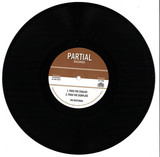
* Vintage nuggets from the vaults of The Rootsman and Third Eye Studio
* `Pass The Chalice’ incorporates that heavy UK dub sound of the 1990's while `Tribal Dervish’ employs that middle eastern flavour of which The Rootsman's work became associated with.
* Dating from 1996, three of the tracks have been out of circulation on vinyl for some time while `Tribal Dervish – Dubplate Mix’ appears on vinyl for the very first time.
out of Stock
Last delivered 7 months ago available to reorder, subject to availability
DIESECT fearlessly navigates the turbulent realms of both internal struggles and external chaos, refusing to sugarcoat the complexities of life. From humble beginnings as Brisbane locals to their current status as national contenders, DIESECT has garnered over 2 million streams across various platforms all by themselves, showcasing their undeniable appeal to a growing audience. They've toured across the nation selling out their own shows and supporting the likes of Fit For A King (US), ERRA (US), Silent Planet (US), Currents (US), August Burns Red (US), While She Sleeps (UK), Spite (US), To The Grave and more.
T.O.N.Y. 2 (Director's Cut) delivers a raw, unfiltered dive into Pounds448’s unique brand of underground Hip-Hop. 15 tracks packed with gritty storytelling, tight wordplay, and heavyweight energy. Completely produced by Spittzwell blending streetwise lyricism with vivid soundscapes, this project showcases Pounds448 honing his craft and carving out his own lane in the modern rap landscape. At just under 50 min, it’s a powerful listen that’s perfect for anyone hungry for authentic, no-nonsense hip-hop from one of Rochester’s most distinctive voices.
Based on an unbelievable true story, Roofman follows Jeffrey Manchester (Tatum), an Army veteran and struggling father who turns to robbing McDonald's restaurants by cutting holes in their roofs, earning him the nickname: Roofman. The film's score was composed by Grizzly Bear multi-instrumentalist Christopher Bear, with contributions from The War on Drugs' Jon Natchez. Christopher Bear is a drummer and multi- instrumentalist member of the Brooklynbased indie-rock group Grizzly Bear. He continues developing his independent career, most recently working on arranging soundtracks for the HBO series High Maintenance, and scoring the 2023 film Past Lives alongside his bandmate Daniel Rossen.
Forever at Last - the debut EP by Melbourne’s HighSchool - is finally back in print on vinyl. Six brilliant tracks that introduced the world to an exciting new band, it’s been out of print long enough and is being reissued ahead of their 35-date World tour. Produced by Archie Shannon (Floodlights), the band’s ingenuity shines with them effortlessly mining myriad influences. Where first singles ‘Frosting’ and ‘New York, Paris and London’ delighted with their potent mix of sun-dappled indie pop and industrial post-punk, their next two ‘De Facto’ and ‘Sirens’ pointed to the dancefloor with the band infusing DFA / New Order / Future Islands sounds while the final pair saw ‘Jerry’ taking a darker turn, playing on the band’s gothic image before closer and title track ‘Forever at Last’ pushed the synth to the fore. A perfect record.
Like a crusader, Apollo Noir relentlessly pursues his noble cause: pushing modular and analog experimentation ever further while remaining irresistibly accessible. Here is CORE, his 4th studio album, fusing post rave techno Detroit à la Drexciya and Manchester early Autechre (Spiral), OPN’s most epic era (Nobody On The Floor), futuristic UK jungle (A Good Brainwash), letfield amen-breaked ambient (ça va), a mega massive cadaver exquis song (CORE) featuring Remi Sauzedde’s very close friends (Janis, Ley, Claude Violante, Silly Boy Blue, S Diamah, Serguei Spoutnik and Fly HQ), diving deeper - as a true obsessive lover of drum machines (TR909, TR808 and TR606) - in the raw deconstruction of techno rhythms (Déconstruire), unleashing a dark and heavy Bassline at 145 bpm with grime vocal samples (Patternity), heavy modular beats blending perfectly with soft and voicy Korg M1 pads (Shame)... Apollo Noir knows his classics and contemporaries inside out, forging his own path with deranged yet beautiful twists (Thedral, Arco Arca).
out of Stock
Last delivered 8 months ago available to reorder, subject to availability
defaultbox returns with its 20th release entitled "020".
This various artists compilation brings together five carefully selected tracks by Karenz, Gockel, TIKOA, 10.000 BC, and aem.aze, each rooted in a shared vision of deep, functional techno rhythms and subtle dub-infused textures.
The release comes on a limited run of 50 transparent blue splatter copies alongside the regular black pressing.
out of Stock
Last delivered 7 months ago available to reorder, subject to availability
At the start of this summer, following a three-year hiatus for Daphni (punctuated only by his first ever collaborative Daphni track ‘Unidos’ alongside Sofia Kourtesis), he dropped ‘Sad Piano House’. The track represented something of a continuation in the Daphni catalogue, its roots growing from Cherry’s ‘Cloudy’ and its subsequent Kelbin remix, something in that song’s makeup having a profound effect when played on dancefloors by Snaith and countless others. ‘Sad Piano House’ deployed more intangibly irresistible bendy piano to equally satisfying effect and continues to achieve similarly rhapsodic dancefloor saturation.
Though a sizeable gap for Daphni releases, between Cherry and Butterfly however of course sits Honey, the latest Caribou album and one that saw the more instantaneous and dancefloor leaning traits of Daphni peaking through the cracks more than ever before. This blurring of the lines leads to an intriguing collaboration in Butterfly’s lead single ‘Waiting So Long (feat. Caribou)’. An unlikely duo - in that both artists are the same man, Dan Snaith - ‘Waiting So Long’ is not so much an identity crisis, ego trip, or the result of a chemical spill in the Snaith laboratory. It’s simply a track that Snaith felt for the first time belongs to both aliases, and might appeal to fans of both. He has never sung on a Daphni track before, and did not set out with the intention to do so this time, and yet this strange billing was born.
Daphni music has always been Snaith’s way of hitting directly to the core of the dancefloors he spends so much of his time playing to, and those dancefloors have been steadily expanding as his name grows, with the music following suit. This album however also draws from further back with a definite kinship to the very first Daphni album, the invigorating bag of ideas that was Jiaolong.
Butterfly is a showcase of the wonderful variety and surprising twists and turns that made that album such an exciting new prospect and that still to this day make Snaith such an intriguing DJ. There are more heavy hitters here, tracks that fill those dancefloors better than anyone, like ‘Clap Your Hands’ which picks up the energy of ‘Sad Piano House’ and flips it, exposing the gritty and intoxicating underbelly of Snaith’s hitmaking side, while retaining the playful urgency that runs through all of his work of late. Meanwhile ‘Hang’’s comic-strip horns are unpinned by gleeful force, unrelenting and thrillingly unshakeable. Elsewhere though comes a clutch of other tunes that might creep out somewhere more off the beaten path, a path Snaith has never stopped seeking in amongst his larger billings. ‘Lucky’ is squirmy and elusively intoxicating, ‘Invention’ skitters down meandering, inviting corridors, ‘Talk To Me’ grumbles and broods in the murk, and ‘Miles Smiles’ could roll on endlessly, so confident in its groove. There are no obvious peaks in these tracks or unifying moments, in fact many of them really have no business being on the dancefloor at all, and yet in the right setting, they could be the most fun to be had all night.
One such club is a good microcosm for the ethos of Butterfly as a whole. “Around the time I was finishing up this album I played a long set in a club called Open Ground in Wuppertal, Germany.” Snaith recalls, “It’s kind of, in one sense, the platonic ideal of the kind of club I’d want to play in. Every single decision has been taken, at great expense, with the aim of making the perfect sounding medium sized club room. But on top of it being the perfect acoustic environment it also is run by an amazing collection of people in a way that gives it a sense of community that dance music at its best provides. It is an absolute pleasure to play in that room to a crowd of people who come from all over. Playing in there you feel like you can play anything, and I played works in progress of pretty much every track on this album in my set there. Don’t get me wrong, I love playing a short set at a festival or in a more raw warehouse kind of club where you bang it out and only really functional music works but on record I guess the point of these Daphni records is to keep in mind a more expansive idea of dance music where the parameters are broad and the church is broad. I think that actually, putting really functional stuff next to weirder tracks (both on an album and in a dj set) might be the thing that’s still most interesting to me.”
This is the feeling that’s most palpable on Butterfly, and in every single time you see Snaith DJ. Right from the inception of the Daphni alias - and even before that – the thrill of trying stuff out, pushing at the boundaries has always been there and on Butterfly is present in all its twists and turns. It leaps all over the place and yet it hangs together, never feeling like a grab bag of dancefloor utilities but rather a distillation of all the strings to Snaith’s bow, exhilaratingly human and unified by one singular concept – simple and joyful exploration.
out of Stock
Last delivered 83 days ago available to reorder, subject to availability
“Tubby did three original dub albums, ‘Dub From The Roots’. ‘The Roots of Dub’ and the third is ‘Brass Rockers’ with Tommy McCook ‘pon the flying cymbals. Where he mixed it with the horn going in and out in a dub way and one named ‘Shalom Dub’ you can call Tubby’s too because he mixed the versions as they were off forty fives’’
Bunny ‘Striker’ Lee
King Tubby and Producer Bunny ‘Striker’ Lee are intertwined in the birth of Dub Music. After discovering a mistake that made a ‘serious joke’ (more of which later...) they went on to release the first pressings of this new musical genre namely ‘Dub Music’. Tubby’s vast knowledge of electronics and Bunny’s vast catalogue of rhythms would lay the foundations of what today is taken as a standard... the Remix / Version cuts to an existing vocal tune.
Osbourne ‘King Tubby’ Ruddock was born in Kingston, Jamaica on 28th January 1941 and grew up in the High Holborn Street area of downtown Kingston. He studied electronics at Kingston’s National Technical College and also on two correspondence courses from the U.S.A... When he had qualified Tubby began repairing radios and other electrical appliances in a shack in the back yard of his mother’s home. His work in the early days included winding transformers and building amplifiers for Kingston’s Sound Systems. Tubby built his first Sound System in 1957 playing jazz and Rhythm & Blues at local weddings and birthday parties. His reputation as a man who knew and understood both electronics and music grew steadily and as the sixties drew to a close. Tubby
purchased his own basic two track equipment. He installed this alongside his dub cutting machine, a home-made mixing console, and his impressive collection of jazz albums in the back bedroom of his home at 18 Dromilly Avenue which he christened his music room.
Tubby and Striker were at Treasure Isle Studio’s one day while Ruddy from Spanish Town was working with the engineer Byron Smith....
“Tubby and myself was talking when Ruddy was cutting some dub but Smithy (engineer) made a mistake through we were talking and forgot to put in the voice. It was two track recording in those days. Ruddy said ‘No Man! Make it stay! and so they cut the rhythm. When I went over to Ruddy’s that Saturday night a dance was in progress and when they played the vocal to the tune... then he said we’re going to play ‘Part Two’. They never called it ‘Version’..and then he played the rhythm track. The song was a catchy song and everybody started to sing along and the deejay started to toast so everything went down well. On Monday morning I went up and I said ‘Tubbs the mistake we made was a serious joke.It mash up Spanish Town! The people went wild. So you have to start to do that now ‘cause when the man put on the ‘Part Two’ everyone start singing this song. It played about twenty times. I said you try Tubbs!’...Well the next Saturday night now when Tubby strung up down the farm U Roy said he’s going to play ‘Part Two’ but Tubby did it different now. He started with the voice then dropped it out and let the rhythm run and then he brought in the voice in the middle and from there Tubby started to get really popular.’’
Bunny ‘Striker’ Lee
Dynamic Sounds upgraded to sixteen track recording in 1972 and Tubby purchased, again with the help of a deal brokered by Bunny Lee. The old four track equipment and the MCI console from their Studio B. The four tracks now gave him far wider scope to work with and he began to create a new musical form where the bass and drum parts were brought up while the faders allowed Tubby to ease the vocal and rhythm in and out of the mix. It was only a matter of time before Tubby’s dub plate experiments began to make it on to vinyl and the first ever long-playing King Tubby releases would feature a collection of his mixes to a selection of Strikers rhythms. So please sit back and enjoy this historic set of sounds. Lovingly restored and with a few extra gems added to the CD Editions. These releases were the first to carry the name of King Tubby and the first to credit the great musicians that contributed so much to the rhythms that made these albums possible.
out of Stock
Last delivered 28 days ago available to reorder, subject to availability
Reggae music in many ways reminds us of America’s Motown records. The music comes out of its stable fast and furious we tend to know the songs, the artists, the
studio but who? are the players. The unsung heroes that in many cases, cut most of our favourite tracks One such band this applies to in the Reggae field is the Soul Syndicate Band.
Each Jamaican record producer would have their favourite set of musicians they would use, availability permitting. Although several musicians crossed over into different named bands. For example, a set of players working with Producer Bunny 'Striker' Lee would go under the guise of The Aggrovators. The same group working with Producer Joe Gibbs would work under the name The Professionals. Soul Syndicate were the band of choice for Producer Niney the Observer, who used them for his own recordings and when you put that aside the other artists Niney produced, Dennis Brown, Max Romeo, Michael Rose, I Roy, The Ethiopians, Barry Brown, Gregory Issacs and Freddie McGregor. To name a few and not necessary all, you begin to see the amount of material this set of musicians played on.
Built around the rhythm section of Calton 'Santa' Davis and George 'Fully' Fullwood, drums and bass respectfully. They were usually accompanied by Earl 'Chinna' Smith, Tony Chin on guitars, Keith Sterling, Gladstone 'Gladdy' Anderstone, Bernard 'Touter' Harvey, organ/keyboards and Noel 'Skully' Simms, percussion. Niney's tracks tended to be rhythm heavy and thus Sound System favourites.But when brass was needed/called for ,this was provided by the likes of Tommy McCook, Bobby Ellis, Felix ' Deadley Headley' Bennett. Niney not having a studio of his own at the time used most of Kingston's studios, again availability and money providing. But most of these cuts
selected for this release were cut at Channel 1 and a few exceptions at Randy's Studio 17 and at Joe Gibbs studio at Burns Avenue.
Niney also worked closely with King Tubby on his dub plates, so tracks after the recording sessions were taken to King Tubbys for reconstruction and sometimes
re-voicing over an existing rhythm. These were then used as version sides to the vocal cuts, but most importantly used to nice up the dances, being played out on King Tubbys Hometown Hi-Fi Sound System. We have pulled together a selection of such dub plate specials cut by the Soul Syndicate band for this release. Dub sides that emphasise how well the band worked together, and with Niney at the reigns and the added bonus of some Tubby magic sprinkled on top. Please see our Niney the Observer at King Tubbys 1973-1975 (JRO11) for further examples of this work.
We at Jamaican Recordings hope we are not alone in saluting the musicians, that played such a big part in producing many of our favourite Reggae Sounds. Having released titles by The Revolutionaries (JR003), The Aggrovators (JR005), Sly and Robbie (JR006), we are now pleased to release a selection of rare Dub cuts by another one of Jamaica's finest, the Soul Syndicate band to our catalogue...
Respect Jah Floyd.
out of Stock
Last delivered 7 months ago available to reorder, subject to availability
The funky, atmospheric, evocative and sometimes downright weird output of companies such as DeWolfe, Cavendish, Burton and the ubiquitous KPM have always been a guiding inspiration for ATA Records, as evidenced in the spooky soundtrack works of The Sorcerers, the big band brass of The Yorkshire Film & Television Orchestra and even in the soul-jazz of The Lewis Express ('Theme From The Watcher).
Everything released on ATA is written and guided by the label heads Neil Innes and Pete Williams, who frequently dip their toes in the Library pond while working on other projects. These occasional one-off tracks have accumulated over the past few years and have now found a home on the first volume of an ongoing series : The Library Archive
Recorded using the same techniques and equipment used to create the now legendary catalogues of music sold to the film and television industry of the 60's & 70's, The Library Archive could easily sit alongside the plain minimalist covers of KPM or Telesound.
The fierce Brass of 'Whack, Slap & Blow' and 'Kaye Okay' could both be a Keith Mansfield cut, acting as a theme tune to a glamorous saturday night tv show circa 1972. 'Duck Strut' is a cheeky slice of Bass driven Brit-funk, Muted horns and flute adding an element of Quincy Jones amongst the grooving drums and percussion. 'The Needle Nose', 'Midnight Heist' and 'Wiretap' are amongst the more cinematic tracks on the album. Moody and atmospheric, they conjure up images of dark alleys, shadowy figures and dead letter drops. 'Wigged out' channels the wonky organ weirdness of Italian library legends I Marc 4 while 'Nuclear Wind I & II' use Moog and Mellotron as electronic counterpoint to ethereal voices. 'Siren's sea's' acoustic interlude conjures up images of distant clifftops, gossamer vocals enticing you onto the rocks before album closer 'Planet Nine' traverses the cosmos.
out of Stock
Last delivered 6 months ago available to reorder, subject to availability
Minority Records is releasing a unique boxset Politique du silence with three early albums from Sylvain Chauveau, French composer of minimalist neoclassical music.
“When I made my first albums as a composer, I was obsessed with minimalism, and this quote from the film director Robert Bresson summed up my state of mind. I set myself three principles: 1) Use silence as a starting point, 2) Only add sound when it's absolutely essential, 3) Don't imitate the Anglo-Saxon musicians I admired, but draw on the musical culture of my country, France which lead me to listen intensively to Satie, Debussy and Ravel.” Chauveau explains the background to his work.
The collection Politique du silence contains the recordings of Des plumes dans la tête (2004), Un autre Décembre (2003) and Nocturne impalpable (2001) on coloured 180 gram vinyls. The cover features artwork by French photographer Valéry Lorenzo.
“When I discovered the simple and powerful black and white pictures by Valéry Lorenzo, in the 90s, I immediately fell in love with them. We became good friends and since then I ask him to let me use one of his photos for most of my album covers, or to make my portrait for press shots. It has become a real collaboration, music and images, for more than 25 years. It was then logical to ask him again for the cover of this boxset, like a gentle reflection on my piano and strings era. It's a true honour for me to see my early music recollected, repackaged, remastered after all this time. Which gives me hope that this music, in which I've put all my soul and heart during the years 2001 to 2003, is maybe not forgotten yet.” Chauveau himself adds of his collaboration with Valéry Lorenzo.
Nocturne impalpable and Un autre Décembre were re-issued by Minority Records in 2014 and 2015 and both titles completely sold out. This year’s release also includes the album Des plumes dans la tête in its world premiere on vinyl.
Nocturne Impalpable is a world of minimalism, abstraction, and contemporary rendition of classical music with variations for the piano, clarinet, strings, and accordion which are often compared to the compositions of composers Harold Budd and Claude Debussy. Here, Chauveau partially reveals his versatility as a composer by connecting electronic elements, noises, and ambient planes with monumental strings and piano preludes. The
album of piano variations Un autre Décembre is interspersed with field recordings and electronic noises. The inspiration for the recording of the album and for its name was the song Jaurès by the Belgian singer and composer Jacques Brel. This song tells the story of the grandparents’ generation who toiled in the mines. “Comfort and health won’t protect our generation from sadness and discontent. We also live through winter times, even if these are slightly warmer due to the current climate.” An album of 20 short instrumental sketches with several delicate intermezzos for the piano, string quartet, and the clarinet, Des plumes dans la tête, was composed for the eponymous film by director Thomas de Thier.
Sylvain Chauveau was born in 1971 in the French town of Bayonne and currently lives in Barcelona. His extensive discography of mainly meditative neo-classical recordings for the music labels FatCat, Sub Rosa, Sonic Pieces, and Flau is enriched by several collaborations and his participation in the Ensemble 0, Arca, and On projects. Chauveau has also composed many film soundtracks as well as music for the theatre. He has presented his works in Prague several times, most recently in the spring of 2024 at the Spectaculare festival. His compositions get tens of millions of streams on streaming services, and he’s been called the French king of minimalism.
For their very first offering, Hanna & Robbie unveils a 5-track album making an ever possible encounter between psychedelic fractured grooves and mellow sci-fi haze in a divergent electronic shell. Planet42 carves a slow-burning path through severance and trance, a trip back to the subconscious like an escape or a sin, guiding both body and mind into unfamiliar exploration
Taking a fey look on electronic performance, where dubby-inspired and fractured rhythms tend to unveil ethereal ambiances, HR was born and raised in the emergent underground electronic French scene and started being moving targets in 2023 with a first live show at the Supercamp Festival happy few’s gathering.
With a mosaic of gritty textures, clubby breaks and otherworldly echoes in the lead-off project Planet42, Hanna & Robbie dives deep in this restless esoteric tension their identity is all about : an spunky early signal sculpting precise and intricate yet atypical tones revealing this crawling need of delivering unsettled arrangements and dreamscaped lines. Already in the move for their next in order work, it is settled in their experimentation lab that new doses of psychedelia and delusive resonances were written as an incipit to a future alternative live act.
out of Stock
Last delivered 7 months ago available to reorder, subject to availability
Malena Zavala is an Argentinian-born, London-based artist, producer, and filmmaker, known for crafting ethereal, genre-blending music that navigates the space between her Latin heritage and her British upbringing. With the forthcoming album If This Life Could Start Again set for release on 30 January 2026 on Paraná Records, Zavala presents her most intimate, cohesive, and accomplished work to date, marking a significant evolution in her artistic journey.
With her new album, Malena creates an atmospheric dream pop world, weaving singer-songwriter intimacy with synth pop, Argentine folk, indiepop, rock and experimental music, threaded together by her blissful vocals and dreamy guitar work. Gorgeously warm and vivid, If This Life Could Start Again charts the journey from pain to acceptance, mapping out the non-linear nature of healing through a sonic landscape. Each song embodies a distinct emotion within that journey, from grief and chaos to feeling lost, seeking refuge, finding confidence, and finally acceptance and letting go. Drawing on her Argentinian roots, Malena uses the Andes mountains as both a visual and thematic anchor – the difficult climb towards higher ground becomes a metaphor for healing, whilst being lost at rock bottom reflects the darkest moments of the journey.
Completely composed and performed by Malena herself, the album was recorded in Girona’s L’Empordà countryside in Spain with producer Luke Smith. As a professional producer and audio engineer, this was Malena’s first time relinquishing production control – an intimate creative shift that allowed their shared vision to shape the album’s rich, enveloping sound.
However, Zavala’s career to date has been a testament to self-sufficient artistry. Her critically acclaimed debut, Aliso (2018), was written, recorded, and produced alone in her parents’ garage, which honed her dreamy bedroom pop sound. The album, praised by The Guardian for its “gently warped and beguilingly melancholy guitar pop,” ****, immediately catapulted her from DIY beginnings to prestigious stages, supporting acts like Lord Huron at London’s Roundhouse and Men I Trust at Village Underground and subsequently continuing on their UK/EU tours. Later with standout performances at Latitude, Green Man, and All Points East. Her consistent radio support from key influencers including BBC Radio 6 Music, BBC Radio 1's Huw Stephens, and Steve Lamacq has solidified her presence on the airwaves.
Her second album, La Yarará (2020), saw Zavala delve deeper into her roots, exploring Latin traditions like Cumbia and Bolero. This exploration of identity continues powerfully on the new album, but with a newfound lyrical depth and sonic confidence. The new album, If This Life Could Start Again, is a raw and transformative eight-track journey that maps the emotional landscape of healing. Written after a period of personal upheaval, the album traverses themes of grief, hereditary trauma, and self-discovery. The record’s narrative is structured like a mountain ascent. A challenging climb through varied emotional terrain, posing the central question: “Will you join the journey?” Sonically, this journey mirrors the non-linear path to acceptance, evolving from acoustic folk and synth-pop to funk-infused rhythms and rock anthems.
As a formidable live performer, Zavala has built a robust touring profile across the UK and Europe. She will embark on an extensive tour in February and March 2026 to support the album, with dates spanning major cities from London and Glasgow to Berlin, Paris, and Barcelona.
With If This Life Could Start Again, Malena Zavala fully realizes her artistic vision as a self-taught producer to an autonomous artist commanding her career through Paraná Records whilst reflecting the vast landscapes of her heritage and affirming her place as a compelling and evolving voice in contemporary music.
out of Stock
Last delivered 7 months ago available to reorder, subject to availability
Toronto-based musician and producer David Psutka’s long dormant Egyptrixx alias returns, with How Tidal. A compendium of sorts, which retells the story so far, reworks of highlights from his catalogue sit alongside brand new tracks, serving as a bridge between the past and the future, preceding more fresh music in 2026.
With the originals still sounding remarkably current, a straight best-of wouldn’t have been out of question, but ever the tinkering student of sound, Psutka thought he’d break them apart, just to see how he could put them back together again.
The music on is How Tidal is cutting-edge and futuristic, but never difficult, instead offering accessible gems where multiple strains of bass music are infused with a zingy, techno-pop bounce, whilst ambient moments gift sonic lozenges for maximum contentment. Psutka creates optimistically welcoming environments, where synthetic birds chirrup in cyan skies over babbling rainbow brooks, as 15 inch subwoofers boom by.
Egyptrixx gained renown across the 2010s with his hard hitting yet tranquil experimental dance music dubbed ‘celestial jeep music for a Saturn moon’. Colourful sound design was braided with dancefloor structures, creating an exhilarating tension between melodic and dissonant, euphoric and inward. The debut album Bible Eyes was released in March of 2011 to critical acclaim.
As Egyptrixx, Psutka has released four studio albums, collaborated, remixed, and toured with some of the biggest names in electronic music.
The widely acclaimed moniker is foundational to Psutka’s complex body of work that encompasses multiple solo projects, plus a diverse range of collaborative work. He has performed live at Sonar Festival, Roskilde, Mutek, MOMA PS1 Warm-UP and CTM Festival, and presented sound installations at Galeria Civica Commune di Modena and Art Gallery of Ontario (AGO).
In 2015, Psutka launched Halocline Trance as a home for his various sound projects, events and collaborations. In recent years, the label has quietly established itself as a platform that facilitates many of Canada’s most exciting creative music projects.
out of Stock
Last delivered 6 months ago available to reorder, subject to availability
After appearances on Freakadelle’s ’44’ compilation series as well as on a Night Defined Recordings 12inch alongside Mesak, Even Tuell and Mary Yalex, Nurah presents his debut album, which will also be the last release of the Freakadelle imprint before entering new waters.
CTRL aims to point out that the world of perception is strongly guided by frequencies in music. CTRL combines modified sounds with minimal sonic structures and creates rhythms that transcend genres. From an artistic point of view, CTRL auditorily as well as visually hints at the versatility of earthly sensations.
Nurah explores electronic music in its many facets and places his ever-gro-wing, musical challenges at the forefront of his work.
out of Stock
Last delivered 3 months ago available to reorder, subject to availability
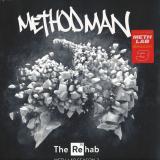
The Meth Lab returns for its third instalment with “Meth Lab Season 3: The Rehab,” a sharp, hard-hitting chapter that cements Method Man’s place as one of hip-hop’s most consistent and enduring voices. Executive produced by longtime collaborator Handz On, this project finds the Wu-Tang legend in rare form—polished, precise, and laser-focused.
“The Rehab” pulls listeners back into the world Meth has been building since the first Meth Lab sessions: a mixtape-style showcase blending razor-sharp lyricism with streetwise storytelling, packed with energy and attitude. Method Man’s flow remains timeless, weaving between gritty boom-bap, polished modern production, and the unmistakable Wu-Tang aesthetic. A strong lineup of guests brings extra fire to the set—Cappadonna, RJ Payne, Redman, KRS-One, JoJo Pellegrino, Jadakiss, Carlton Fisk, Hanz On, Intell, Iron Mic, 5th Pxwer, Chunk Bizza, Eddie I, Cortez, and more—each stepping into Meth’s world with their own hard-edged energy. Behind the boards, producers like P. Version, Rockwilder, Eric Sermon, Adam McLeer, Daniel C. Wells, Darnell Norman McConnell, and Joshua D. Zimmerman craft a gritty yet refined sonic framework that elevates every performance.
More than just another chapter, Season 3: The Rehab feels like a victory lap: a culmination of decades of craft, a celebration of the Staten Island movement, and a reminder that Method Man still out-rhymes rappers half his age. It’s a must-own for Wu-Tang fans, East Coast purists, and anyone who appreciates sharp writing and decades-deep mastery.
out of Stock
Last delivered 7 months ago available to reorder, subject to availability
Francois Kevorkian is a name that should need no introduction. With over 40 years in the game FK has occupied numerous roles in his long and storied career - drummer, DJ, A&R man, remixer and producer - his skills know no boundaries. Having DJ-ed during the nascent days of club culture in NYC alongside Walter Gibbons, Larry Levan and more, Kevorkian has been there from day one. Years spent in the seminal clubs of the day sharpened his ears and his prowess behind the mixing desk saw him become the A&R man at the legendary Prelude records in the early 80's, this in turn led to him working with everyone from The Eurythmics, Depeche Mode, Erasure, D-Train, Yazoo, The Smiths, Kraftwerk and many many more. A true NYC original and legend, Kevorkian is still active today and the respect he commands amongst his peers has never waned, his adventurous extended DJ sets, seminal mixes and remixes and his open ears and open mind have ensured that he will go down in history as a musical pioneer.
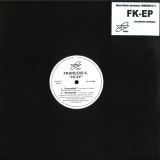
Rewind to 1995. Kevorkian's 'Wave Music' imprint has come into existence with a handful of releases. No-one could imagine that his self-produced 'FK EP' - the next release on the label - would be a stone cold classic. Easily one of the most consistent, exciting and solid EP's to come out of NYC during this golden era of dance music. Across 4 tracks we are taken on a sound journey through a world that is undoubtedly informed by FK's time as an engineer, DJ and most importantly, a music lover.
EP opener 'Hypnodelic' brings us into this world, a deep, driving cut that fuses the dubbed out vocals of Freddie Turner against FK's keyboards and immaculate drum programming, oozing cosmic electronic soul, this track was destined to be a future classic. 'Mindspeak' also boasts some tough drums and with a respectful nod to Chicago is an incredibly mixed and arranged peak-time cut that will drive your dancefloor into deep space again and again. 'Edge Of Time' welcomes us to the flipside of the EP, wild Latin percussions, tablas and old school horn stabs drive this monstrous cut, not to mention cavernous dub FX and that huge bassline that just doesn't let up. Essential. 'Moov' rounds things out on a more subdued, stripped back vibe. Reversed percussions and spaced-out synth chords lace this beautifully understated and warm track, one that builds into a crescendo of melodies and hypnotic rhythms and the perfect way to close what has been a truly special musical journey.
This essential reissue of the 'FK EP' has been fully licensed, sanctioned and remastered in conjunction with FK from the original master sources by Optimum Mastering, Bristol UK, repressed onto high quality vinyl and packaged as the 1995 release was. A truly classic record indeed, available again for 2018. Welcome back Wave Music!
You don’t need to be Freud to regard teeth as a delicate issue. They can make joy look joyous and pain look painful, and on the cover of the new múm album they do both at the same time. As »Yesterday Was Dramatic – Today Is Okay« (2001), »Finally We Are No One« (2002) and »Sing Along To Songs You Don’t Know« (2009) »Smilewound« is another example of the band’s art of juxtaposing two conflicting meanings and taking advantage of the energy created through the tension between both.
Sparser in sound than many of its predecessors, »Smilewound« is an airy, relaxed record. The múm-core-duo of Örvar and Gunni doesn’t make you laugh out loud (except maybe for the quirky vintage Arcade-sound-start of »When Girls Collide«), but it will make you smile often - despite the heavenly voices singing about violence in one form or another in most songs. Musically, múm’s capability to build playful electronic sound-ornaments around simple melodies is in full bloom. And these days they know that trimming the ornamentation can strengthen the melody. Take »The Colorful Stabwound«: an aguish drum’n’bass piece and »Smilewound« gets close to a straight pop-song. Even that isn’t very close, but it combines its rhythmic strength with a simple yet effective piano-line and the soothing lushness of a female voice to something compelling that follows you like the smell of a delicate eau de toilette. Or »Candlestick« which started out as a little ditty strummed on an acoustic guitar many years ago and has grown into this bouncy piece of synth-pop that changes its musical colours every couple of beats until you feel comfortably dizzy. Perfect pop in very fancy clothes. No wonder that antipodean pop-princess Kylie Minogue wanted to collaborate with múm on the »Whistle«, the main song in 2012-movie »Jack & Diane«.
Recorded in, among other places, the band’s practice-space, an old baltic farmhouse and on the kitchen-table after dinner, the album was produced by múm themselves. And being the revolving collective they are, it comes as no surprise that we see the return of former member Gyda. Defining satellites as part of the core fits nicely with the band’s penchant for ambivalence - in fact that's part of the album's charm.
out of Stock
Last delivered 7 months ago available to reorder, subject to availability
Editions Mego welcomes KMRU back to the fold. Kin is Kenyan born, Berlin based, sonic wizard Joseph Kamaru’s second release on Editions Mego, following on from the classic 2020 release Peel. Since the release and subsequent praise for Peel, the artist has been a staple on the electronic scene performing on numerous stages and festivals worldwide in tandem with a flood of media recognition. Kin could be construed as the second child following Peel. The project came out of initial discussions with Peter Rehberg about what a Peel sequel would sound like. Kamaru is quick to clarify that Kin is not that record; “I'll know when that record will come and when I'll make it. It's already happening... or maybe it lives within both of these Mego records”.
It is this deft ambiguity and vague tiptoeing around the concrete that encapsulates the ambiguous sound world of Kamaru’s vision.
Kin was started early 2021 in Nairobi with Kamaru exploring his noisier palette of sounds encompassing distortions reminiscent of the sounds he would muster from in his youth when playing guitar. He paused making this record for a year as soon as Peter died, then slowly returned to it through 2022 resulting in the immense new work we have here.
The charms within Kin lay as Easter eggs revealing the true identity behind the colourful sonics only after multiple deep listens. With Trees Where We Can See sets the tone by way of a warm swaying melody inviting the listener in for further investigation. In 2022 KMRU and Mego stalwart Fennesz toured the USA together resulting in a strong friendship and also, the second track here, Blurred. A neat Mego/Editions Mego loop as such. Blurred arranges twangy guitar strums alongside glistening glaciers of shimmering drones. They Are Here represents a darker hue as melancholic clouds of shadowy noir tap directly into the listener's nerve stream. Maybe takes a detour into a bristling euphoric electronic storm whilst We Are screeches in a pattern formation not unlike a highly abstracted Aphex Twin forcing its way out of a hard drive. By Absence concludes proceedings, operating as both exit music and a portal to further sonic investigation with acoustic bellowing residing amongst a kaleidoscopic backdrop.
Kin is a trip that rewards close repeated listens as all the colours and textures, nuance and narratives unveil themselves. This isn’t a record to be glossed over, magic rewards concentration.
Kin is a record to be Played slow and LOUD.
For Pita.
All tracks written, produced, mixed by Joseph Kamaru
Blurred co-written & produced with Christian Fennesz
Mastered by Stephan Mathieu at Schwebung Mastering
Photography: Joseph Kamaru
Layout & Design: Nik Void
Cut by Andreas Kauffelt at Schnittstelle, Berlin
out of Stock
Last delivered 7 months ago available to reorder, subject to availability
Melbourne / Naarm stronghold Butter Sessionsclock 15 years in the game with a trilogy of 12"s, sustaining their uncompromising streak of peak-form electronics. The family-style V/A binds friends, collaborators, former studio neighbours and DJ booth allies, capturing a label that exists as community as much as catalogue.
Disc Two lifts off with recurring contributor Rory McPike's first label outing as Rings Around Saturn, a blissed-out cosmic floater skimming the periphery. Booked in the early days of the label's formative Mania residency, Japanese don Gonno twists freestyle, techno and breaks into pure ecstasy, before the unerringly bold Jennifer Loveless spikes the punch with a hallucinatory mix of drums, disembodied voice and jazz club keys.
On the flip, Boorloo's Guy Contact rolls out Dance In The Grey, a shadowy prog churn pitched between new-romantic vocal sheen and EBM muscle, with Kate Miller completely rewiring the script on Sub Series E - a masterfully minimal, double-time meditation. suki presents his Sniper1 alias to close with a demonic body-jacking groove loaded for the system.
Whether taken alone or folded into the three-disc triptych, each instalment stands as a bag-ready constant, charged with Butter Sessions' curatorial finesse.
out of Stock
Last delivered 6 months ago available to reorder, subject to availability
A chance meeting in Mexico City set Points of Inaccessibility into motion. When Ibero-American composer Rafael Anton Irisarri crossed paths with Dutch media artist Jaco Schilp at MUTEK in 2024, a conversation about how technology shapes perception revealed an unexpected common ground. Schilp invited Irisarri to a spring 2025 residency at Uncloud, the Utrecht-based collective he co-founded, where Irisarri's sound began to take form amid an environment shaped by Schilp’s visual research.
The Uncloud studio was located inside the former Pieter Baan Centre, a forensic psychiatric prison where suspects of violent crimes were once confined. Its long history of silence and containment shaped the atmosphere in which the project developed. Within this setting, Irisarri coaxed long bowed-guitar tones through a network of pedals and looping systems. The raw gestures thickened into a vaporous and architectural field of sound. Schilp processed the material through a custom point-cloud software patch that produced images in continuous flux. The visuals flickered, dissolved and reformed like memories that resist coherence, functioning as a digital Rorschach that reflected the observer’s own perception.
Amid these spectral echoes, the project evolved into an examination of how the past persists within present signals. Memory endures as residue and interference, continually shaping perception even when its source has faded.
Schilp’s visual process required a continuous stream of sound in real time. Irisarri improvised throughout the residency, generating material that allowed the visuals to develop in parallel. Once back in his New York studio, he began shaping the recordings by carving pathways through the improvisations and mapping selected passages into MIDI. This process allowed him to build outward from the bowed-guitar material with minimal overdubs, adding Prophet 5 textures, Moog bass and strings that expanded the harmonic field while keeping the original performances at the center. To refine the structure, Abul Mogard provided editorial input, working with Irisarri’s stems to guide transitions and strengthen the overall pacing. The material, originally created under conditions of immediacy and constraint, evolved into a fully realized work through careful revision, patience and sustained reworking.
The title engages the geographic concept of the Poles of Inaccessibility, locations defined solely by their distance from all surrounding points. Irisarri adapts this idea to the conditions of digital life, where new forms of inaccessibility arise through the informational enclosures that structure perception. What appears to be a fully connected network often produces a deeper kind of separation, one shaped by the filtering logic of the systems that mediate experience. In this sense, the digital sphere mirrors its geographic counterpart. We inhabit spaces saturated with signals, yet the possibility of genuine contact becomes increasingly remote.
At its core, Points of Inaccessibility considers what can be understood as the new rituals of capitalist realism. Irisarri uses the term digital shamanism to describe the forms of simulated connection that organize contemporary life. These systems promise comfort through algorithms, influencers and AI interlocutors, yet they often reproduce the same conditions that generate loneliness in the first place. What appears as connection becomes the echo of connection, a sequence of gestures that imitate solidarity while withholding it. Like the geographic poles, these rituals are defined by distance. They pull us into environments where everything is illuminated, yet meaningful proximity becomes increasingly rare. In this sense, the work approaches a hauntology of the present, a reflection on futures that have stalled and intimacies that have been thinned by the algorithmic infrastructures that surround us.
This thematic tension unfolds across the album’s four movements. Faded Ghosts of Clouds introduces the work with textures that rise and dissipate in slow cycles, creating an atmosphere that resists clear definition. Breaking the Unison occupies a pivotal position in the sequence and focuses on the moment when the individual and the system fall out of alignment. Its shifting patterns trace the scattering of signals that once suggested connection, revealing the instability at the heart of contemporary perception. Signals from a Distant Afterglow forms the center of the album and features vocals by Karen Vogt, whose presence enters the sound field like a fragile transmission shaped by distance and delay. The closing piece, Memory Strands, follows motifs that appear, recede and briefly intersect before returning to quiet. Across these movements, the album outlines a landscape in which emergence and disappearance continually inform one another.
Listening to Points of Inaccessibility is an encounter with a sound field that is constantly in flux. Elements surface briefly, shift position and recede, creating a sense of motion that resists stable interpretation. The music moves between closeness and vastness, carrying traces of memory while withholding a clear point of resolution.
The album’s visual identity completes the project’s conceptual arc. In Mexico City, where Irisarri and Schilp first met, Daniel Castrejón transformed stills from Schilp’s point-cloud visuals into the cover image. The final artwork captures a single suspended frame of the digital material, a moment extracted from a field that is normally in constant motion. Its surface recalls the texture and abstraction found in the work of Catalan artist Antoni Tàpies, where material presence and erasure coexist within the same plane.
What emerges is a work that examines the tension between technological systems and human presence. Points of Inaccessibility asks whether connection is still possible within environments shaped by mediation and delay, or whether we have become isolated points within the very networks that promise proximity. What possibilities for relation persist within environments organized by algorithms and interruption? And how are we meant to understand presence when so much of it is constructed at a distance?
Points of Inaccessibility will be released on BioVinyl on February 6, 2026, with audiovisual performances planned throughout 2026.
Mastered by Stephan Mathieu
Artwork by Jaco Schilp
Design and layout by Daniel Castrejón
Artist photo by Iulia Alexandra Magheru.
out of Stock
Last delivered 7 months ago available to reorder, subject to availability
Water can retain or wash away memory; flowing or freezing. It gives life and shapes earth, while frozen imprints of an ancient past are waiting to melt – back into sound or fluid motion, or simply to dissipate and disappear. For their split release, Yoichi Kamimura and Olli Aarni offer two distinct reinterpretations of a performance recorded live at the Temppeliaukio Kirkko – a church in Helsinki built directly into solid rock and bathed in natural light – meditating on glacial landscapes and water cycles, using shared field recordings that bifurcate into two sonic visions of “ice journey”.
Yoichi Kamimura’s extensive recordings formed the bedrock of the original performance, notably from time spent on Suomenlinna Island just outside Helsinki in 2021, aiming to capture the remnants of the glacial movements that formed the area’s geology. Elsewhere, the voices of ringed seals, underground waterways of Kyoto, and icy rivers in Lapland from Kamimura’s library float in as well. “The small, charming, and gentle islands floating in the Baltic Sea—some with little cottages and restaurants—reminded me of the drifting ice in the Sea of Okhotsk between Japan and Russia,” describes Kamimura. Fragments of a Christmas choir creep in too, recorded at the church on Suomenlinna Island. Titled Kōri no ryokō , Kaimimura’s reinterpretation of the performance emphasises a shared future across all icy sea regions of the world: thawing ancient memories and the threat of disappearing entirely.
On Jäämatkailu, Olli Aarni presents his own expansive reworking of the same source material, heavily processed alongside his own field recordings from Vantaanjoki river and Suontee lake in Finland. “I was thinking about the processes of erosion, water carving rock, the prehistoric glaciers over the landscape in my own environment,” explains Aarni. The soundscape hums with both intimate details and macrocosmic flow, and a submersible bass rumble hinting at an iceberg far below the tip, morphing at time scales beyond human comprehension.
Side A is composed by Yoichi Kamimura using field recordings of drift ice (Shiretoko, Hokkaido, 2019–2022), the Lake Biwa Canal (Kyoto, 2020), the Therme Vals baths (Vals, 2017), spring water (a fountain next to Saint Benedict Chapel, 2017), a Christmas choir (Suomenlinna Church, Helsinki, 2021), ice in the Juutuanjoki River (Inari, 2021), and recordings from Yoichi’s and Olli’s concert (Temppeliaukion kirkko, Helsinki, 2021), KORG iPolysix, and KORG minilogue xd.
Side B is composed by Olli Aarni using the aforementioned sounds + field recordings of the river Vantaanjoki and the lake Suontee, sampled sounds, and a computer.
out of Stock
Last delivered 7 months ago available to reorder, subject to availability
Allowing yourself to find meaning or beauty in the mundane is an act of generosity, Whether it’s seeing a smiling face in an electrical outlet socket, or discerning cosmic design amidst the forest floor detritus, it comes from a place of kindness to yourself and senses – and openness to hidden spirit of the world. These tracks came together during a period of intense personal change for adaa, rooted in a fruitful reflection on the connections between spirit and body, “feeling my flesh so I can feel and understand my spirit,” as adaa puts it. The sense of a crossover and clash of multiple connected realities – on-screens, on-line, on-earth, off-world, after-life – unites adaa’s multifaceted productions.
Ostensibly an assemblage of found sounds. scribbled thoughts and poems from diaries, and musial snippets, the album's scattered production reflects adaa’s own many mirror worlds. Field recording sit behind most tracks, alongside VST synths, guitars, and a variety of voices, from adaa’s own mangled vox to EVP samples taken from YouTube (recorded sounds believed to be spirits or paranormal activity), all processed to varying degrees.
While the music was mostly produced either in adaa’s studio in Providence, Rhode Island, or in bed, the field recordings bring the outside world in. The result of walks in the woods, hum of roads and highways, hiss of beaches, warmth of walks with friends and past lovers “around the East Coast”. It sits behind tracks like ‘sight’ where a lilting piano lin bobs atop a pond of rustling and distant whistles. Is that birdsong? Or ghosts? Saccharine hyperpop arpeggiation crossfades sharply into noise guitar squall. Angelic demon voices yawn into a hefty crescendo. Pure drones duet with gales of undefinable field sounds.
“Sometimes I feel like a seed in frosted soil,” says adaa. “If i choose to be optimistic.”
out of Stock
Last delivered 7 months ago available to reorder, subject to availability
cLOUDDEAD's debut album, compiling six 10" EPs that appeared between 2000-2001, is aurally dense and obscured. A sprawling mass of miniature beat-suites and Dadaist lyrics, this strange and beautiful 3xLP would influence a myriad of sub-genres (cloud rap, hauntology, lo-fi hip-hop, etc.) in the two decades since its initial release.
Only the three members of cLOUDDEAD – Why?, Doseone and Odd Nosdam – can speak to the group's origins, but in the context of underground hip-hop towards the end of the 20th century, their arrival makes perfect sense. Cincinnati had a vital scene; home to Scribble Jam, an annual confluence of MCs, DJs, B-boys and graffiti artists. While the trio soon relocated to the Bay Area where they co-founded the Anticon collective, their Midwestern roots – in ramshackle basements of off-campus hovels, as the "cerberus of Southern Ohio" – would remain the atomic heart of their early recordings.
As Chris Martins writes in the liner notes, "The only reason we know their names today is because of how loudly and curiously they aired their insularity. They rewrote the entire world as they knew it through their own fucked perspective, and when those mysterious 10-inches started popping up in record shops, it wasn't just a puzzle to investigate: there seemed to be a whole cosmology hidden in those grooves."
Each side of the album represents one of those elusive 10-inches, each embodying a universe unto itself. Opening salvo "Apt. A" and "And All You Can Do Is Laugh" are perhaps most emblematic of the cLOUDDEAD experience. Why? and Dose create a new language through boundless non-sequiturs, sing-song non-choruses and call-and-response hooks, while Nosdam's dexterous production shifts from crackling ambience of Flying Saucer Attack to tight Ohio Players drum breaks and oblique film samples.
Taken all together, cLOUDDEAD is an original interpretation of hip-hop in the surreal Y2K glow – a bizarre meeting point between William Basinski's Disintegration Loops and MF DOOM's Operation: Doomsday. All it took was a Dr. Sample SP-202, Tascam cassette eight-track and cheap RadioShack mic. There's truly nothing like it.
This edition has been faithfully restored by Nosdam. European exclusive version comes on clear vinyl, incl. fold-out poster and liner notes insert.
out of Stock
Last delivered 7 months ago available to reorder, subject to availability