The trinity of piano, bass and drums is an ensemble construction with a particularly prominent place in jazz, past and present. Indeed, some of these piano trios are among the most revered and popular groups the music has seen.
The standing of the piano trio in the Norwegian jazz landscape is no different. And like a lot of modern jazz from Norway it has also taken on flavours very distinct to this country.
Pianist Torvik met and played with double bassist Bjornar Kaldefoss Tveite and drummer Oystein Aarnes Vik during a short stint in Oslo.
They quickly hit it off, and the idea of making an album with this trio began to take shape. The resulting album, ‘Northwestern Songs’, was recorded at Newtone Studio in Oslo, June 2019.
Here, Torvik continues to explore the relationships between pop sensibilities and jazz, which was also a feature of the music on his debut as a leader, the 2016 quintet recording ‘Northwestern Sounds’. At the same time, the open and revealing nature of the trio format allows him to further explore and challenge himself as piano player.
Personnel: Arne Torvik (piano), Bj rnar Kaldefoss Tveite (bass), ystein Aarnes Vik (drums)
quête:indeed
Skylax Armagnac's darling who released his first EP just a year ago, which had an international resonance with rave reviews from Resident Advisor, Bicep, Chaos in the CBD, Peach or even soul clap. Rightly some saw it as a resurgence, a modernized version of 90s New York house, silky and elegant in the Bobby Konders, Mr Fingers way. For this new EP, with fantastic remixes of the brilliant Simoncino, our French prodigy is inspired by the beginnings of trance on the title song (and title of the ep by the way) "The world as we know it (masterclass mix)", UK dub and rave influences, as on some Nu Groove releases (notably the first joey beltram) - the lead vocal sample comes from a speech in which Noam Chomsky describes the United States as a violent country and hard. According to the author "If this piece says something, I believe it is that the music and the party should not serve to forget the problems of the world, but rather to find the strength, the resources, the inspiration to solve them." On "Oh La Musique" Armagnac used the sound of his neighbors as a voice sample ! Indeed, during this incredibly complicated period that we are living in, confinement due to the devastating effects of covid 19, one of his neighbors played music really loudly and for 20 minutes ignored the other neighbors who were screaming "oh oh, the music" through the window. "Turning this moment of irritation into a sample to the glory of the music strikes me as pretty funny." Still according to the author. On B1, it’s a house masterclass lesson by the phenomenal & ultra prolific Simoncino, but do i need to remind you how much italians are masters in their way of paying homage to all the best house music that has ever been created & produced ? Good taste is often on their side ! The red zone club is a tense and incredibly effective mix that can be enjoyed either on a house or techno dancefloor, it is clearly a banger. B2 saw the italian master offers us a beautiful ambient mix. And to conclude "On My Own" is according to Armagnac "a title that speaks of the trust that one can place in one's fellow human beings and of emancipation." A superb EP that adds to the long list of must-haves from Skylax Records.
In a time where everyone from Whitney Houston to Frank Zappa have been re-created in hologram form, where Grimes recently suggested in an interview that “we were at the end of human art”; there could scarcely be a better time for genre-shifting Leeds-based six-piece Team Picture to bring forth the thrillingly expansive synth-pop opus of their debut album The Menace of Mechanical Music.
Inspired by an early 20th century essay under the same name by American marching band leader John Philip Sousa, Team Picture take a look at the automation of creativity on this, their first record with a fully settled line up. Themes centre around the value of creative identity in an automated age, the increasingly disposable nature of art and where that leaves its creators. At twelve songs split into a three-part suite; The Menace of Mechanical Music is emphatically maximalist.
Tracks like the breathy, twinkling Flowerpots, Electric Beds and Handsome Machines’ Icarus-like striving for the sun are an antidote to a music world awash with digital production manipulation and songs written to algorithm. In debating the loosening of the human grip on creativity, Team Picture have poured every last drop of emotion into the recording process.
The group’s now trademark three-way vocal delivery and blurring of textures takes on new structure and purpose. They’ve always had a self-awareness to themselves, too. Initially grouped in with the guitar psych crowd, thanks to their fledgling repeato-rock, they were quick to disassociate themselves from that on 2018's mini-album Recital. With The Menace of Mechanical Music, they expand their sound further still, pirouetting from the likes of Sleeptype Auction – which glimmers like a late 80’s 4AD artefact – through various FX-laden dreamscapes, to the squelchy post-punk of closer Quit Reading. Yet the group were as much influenced by the work of the Early Netherlandish painter Hieronymus Bosch, and his triptych The Garden of Earthly Delights, as they were music touchstones ranging from Kate Bush, Cass McCombs and The Cure.
It’s Sousa words that resonate most deeply within the record however: “The fears of Sousa echo the fears of today's musician,” says Lewis of the late band leader’s 1907 text. “The re-appropriation of funds and support that the artist needs to survive, the gradual erosion of musicianship and self-improvement, that art will become disposable, and that our cultural identity will disappear.”
Recorded with producer Matt Peel (W.H Lung, Eagulls), half the group were unemployed during the session and a daily routine would see them undertake universal credit meetings and job interviews in the morning, before heading to the studio to work into the night. “It was an anxious process but an enjoyable one” says the band’s guitarist Josh Lewis. Indeed, beyond the increasingly golden gated idea of ‘making it’ as an artist, this new album is simply about surviving as one.
Sousa’s vision of a society that had deferred to automation, where babies were rocked to sleep by wheels and pulleys, and people no longer played piano with their own hands. Well over 100 years later and on the precipice of a technological shift never seen before, The Menace of Mechanical Music is the most human response that Team Picture could have given.
Abbey Lincoln, often remembered for her seminal work with Max Roach, was a powerful performer and indeed one of the greatest Jazz voices of all time. "Straight Ahead" stands as one her best albums. Lincoln is matched here by a ultra-stellar line up including Jazz masters such as Booker Little — trumpet, Julian Priester — trombone Eric Dolphy — alto saxophone, bass clarinet, flute, Walter Benton and Coleman Hawkins — tenor saxophone, Mal Waldron — piano, Art Davis — bass, Max Roach — drums, Roger Sanders and Robert Whitley — congas. "Straight Ahead" is the perfect combination between Lincoln 's strong "Afro-Blue" tone singing, conscious lyrics and angular modern Jazz arrangements. Recorded in New York in a one-off studio session held on February 22, 1961 and released by Candid Records in the same year, the album includes highlights such as Oscar Brown jr's "When Malindy Sings", Thelonious Monk's "Blue Monk", Billie Holiday and Mal Waldron's "Left Alone" and "African Lady" a Randy Weston composition based on lyrics by the great writer Langston Hughes.
Tape / Cassette
Spite Cathedral is an S+M regular but the music found on his releases speaks for an artist that is constantly challenging his own creative boundaries. With equal ease Spite Cathedral delves in micro sounds, multilayered noisescapes or more conventional yet daring musical form and structure. ‘The Human Touchʼ is not an exception of this creative modus operandi and certainly takes things further. Dan Mortazaviʼs teams up with his long term partner Karsten Svendsen on his latest album as Spite Cathedral which is a 13-track sonic shapeshifter that will take you all the way from the clinical minimalist sub-tech realms of opener ‘Wake Up Darling Iʼm Spitting Bloodʼ to the industrial- influenced and raw vocal-driven ‘In Godʼs Cornerʼ, the microscopic sound bits and muted angst of “Without a Soundʼ, to the freeform drifting ambiance of ‘Spellcasterʼ. While these pieces might be a guideline of sorts between them there definitely lies more. While it is indeed impressive that Spite Cathedral can speak to us through a plethora of electronic sub-genres itʼs more fascinating how all his different ways are not only not clashing but are always somehow working together in a hypnotizing unison.
Founded in 1996 by the German-Nigerian lead singer Ade Bantu, his brother Abiodun Odukoya and Patrice, BANTU have been one of the West African acts transforming the legacy of King Sunny Adé and Fela Kuti into the soundtrack of the continent. The group is distinguished by the fact that while created and fronted by vocalist Ade Bantu, it is unmistakably a collective, collaborative effort. When you have a band this strong, this tight where everyone gets to shine, magic happens. And once again with this new album, the 13-piece ensemble is pushing the boundaries of funkiness and political prowess for contemporary music, in Africa or globally.
From their first release, “No Vernacular in 1996 to the present, BANTU has scored a series of hits across Europe and Africa garnering major awards. Indeed, the list of artists who've collaborated with BANTU is a testament to the power, originality and talent of the band: an international cornucopia including UB40, Tony Allen, Orlando Julius, Brothers Keepers (which they created), Gentleman, Ebenezer Obey and Burna Boy just to name a few. These collaborations helped the band earn several major Continental awards, including the Kora Awards (the Pan African equivalent of the Grammys) for “Best Group West Africa” and “Best Group Africa”.
Their latest release Everybody Get Agenda is nothing short of a musical sensation - Afrobeat, Funk and Soul seamlessly flow into one another as they merge with Jazz, Highlife, Hiphop and Yoruba music. The lyrics address issues around corruption, injustice, migration, xenophobia and urban alienation while a guest appearance by Seun Kuti on “Yeye Theory” rounds up this solid long player. There is no doubt that with Everybody Get Agenda BANTU has not just charted new musical territory but reached it and planted the flag.
In 1978 Pharoah Sanders went into the studio with pianist, Ed Kelly, who was an important figure in the local San Francisco and Oakland jazz scene. The two of them recorded six tracks which ranged from covers of standards, through soul jazz through to two real gems. The album was originally released as Ed Kelly and Friend due to Pharoah being contracted to Arista Records at the time. Indeed, as you can see, the cover shows Kelly playing next to Pharoah’s hat, shoes and Selmer tenor saxophone.
Rainbow Song, a Kelly composition, opens matters in a manner far removed from Pharoah’s work on his Impulse albums (although there had been a dramatic change of course when he signed with Arista and recorded). This is firmly in Grover Washington Junior territory with a liberal sprinkling of oh so tasteful strings. The Master’s sound is full and mighty as ever.
With the radio track out of the way it is business as hoped for and Newborn is a Sanders composition that burns with intensity. The power of his solo is as good as anything he has produced and he runs over the full span of the tenor’s range and onwards into territory lesser known or explored by 99% of sax players.
Sam Cooke’s You Send Me is treated with reverence and respect, with Pharoah delivering a sensitive and heartfelt rendition and ending with some extraordinary phonics, which we will meet again on later albums. Kelly’s accompaniment complements Sander’s playing before he receives his own space for a shimmering yet restrained solo which discloses what this non-pianist assumes to be an agile right hand.
Answer Me My Love is an early 50’s ballad with a fascinating back story. On its initial release in post-war Britain, covers of this fine melody stirred sufficient controversy for the song to be banned by the BBC. What led to it being barred from broadcast on the Light Programme and treated like Anarchy For The UK, Wet Dream and Give Ireland Back To The Irish? I can reveal that the reason for this draconian action was that the original version was entitled ‘Answer Me, My Lord’. In the olden days, it seems that a direct appeal to God was considered to be blasphemous- especially if set in a secular or selfish. Further research indicates that Nat King Cole made the most celebrated recording and that Bob Dylan used to sing it live in the 1990’s, presumably during his overtly Christian phase. Anyway, it is a grand tune.
Pharoah went on to record at least three studio versions of his great anthem You’ve Got To Have Freedom but the one here is the earliest incarnation that I am aware of. It is also the most restrained treatment of the theme, although Pharoah’s solo shows his ability to play with fire and power over the entire range of the horn. There’s plenty of space for Kelly’s piano too and he provides an elegant setting for Sanders’ exploratory work.
Spirit is the seventh studio album by Earth, Wind & Fire, released 45 years ago, in, 1976 by Columbia Records. The album rose to No. 2 on both the Billboard 200 and Top Soul Albums charts.
Two singles became huge hits; “Getaway” reached No. 1 on the Billboard Hot Soul Songs chart. The single also rose to No. 12 on the Billboard Hot 100. “Saturday Nite, peaked at No. 4 on the Billboard Hot Soul Songs chart and No. 21 on the Billboard Hot 100 chart.
Spirit received critical acclaim. The New York Times wrote; “What is most interesting about Maurice White and his musicians, is their refusal to be locked into any stylistic format Mr. White’s record will be labeled ‘disco’ in some quarters, and indeed parts of if, would not sound out of place in a disco. But, generally, Earth, Wind and Fire is closer to
jazz, or to jazz‐rock, than to the thumping formulas of disco. And yet the group isn’t afraid
to slip in a ballad, either.”
Issac Hayes called Spirit one of Earth, Wind & Fire’s five essential recordings. Spirit was also nominated for an American Music Award for Favorite Soul/R&B Album. A song from the album called “Earth, Wind and Fire” was also Grammy nominated in the category of Best Instrumental Composition.
- A1: Main Title (Theme From "Game Of Thrones")
- A2: Goodbye Brother
- A3: Season 1 Finale
- A4: Warrior Of Light
- A5: Winterfell
- A6: Mother Of Dragons
- A7: A Lannister Always Pays His Debts
- B1: Dracarys
- B2: Mhysa
- B3: Two Swords
- B4: You Are No Son Of Mine
- B5: The Children
- C1: Blood Of The Dragon
- C2: Dance Of Dragons
- C3: Atonement
- C4: Son Of The Harpy
- C5: Khaleesi
- D1: Light Of The Seven
- D2: Winter Has Come
- D3: Hear Me Roar
- D4: The Winds Of Winter
BLACK VINYL[33,32 €]
In 2011 composer Ramin Djawadi was first asked to score a new TV series called Game of Thrones. In its first season much of the music was written for a small string ensemble, and filled out with synthetic pads and percussion. Over the course of the next six seasons the music budget got bigger and bigger to match the ever-increasing viewing figures the show was enjoying. This release celebrates the rich tapestry of music over the six series with the full firepower of an 80-piece symphony orchestra and choir.
Game of Thrones really is a television phenomenon. HBO's epic small screen adaptation of George R.R. Martin's series of fantasy tomes continues to draw in record audiences around the world and shows no signs of slowing down. Indeed some 8.9m people tuned in to the Season Six finale in the US and with repeats, recordings and on-demand viewings taken into consideration, it is estimated that Game of Thrones enjoys an average of 23m viewers per instalment. With a whopping thirty-eight Emmy Awards (and counting), this series remains the darling of prime-time pay TV.
With so much music created for the sixty episodes so far broadcast, this album can of course only take in so much. The particular cues and themes it does highlight, though, lend themselves beautifully to this symphonic re-imagining.
restock
Following up on a strong launch with Braintalk, Human Sense Technology returns for their 2nd entry; this time from the man of many styles, Eastern Zurich's very own Dan Piu, with Modern Utopia Thought EP. Dedicated to his youth and influenced by future visions of creation, the atmosphere and arrangement on this EP permeates into the imagination with colors of suspense, harmony, and spherical textures showcasing the finer lines of deep frequency. Courageous indeed as this EP embraces the mysterious in an eccentric bliss that charms the listening experience in a way that grooves the body as much as it moves the mind. Welcome to Modern Utopia EP, where there are no constraints on creation or time.
Sutja Gutierrez is back on Lumière Noire. The finesse of his productions and his implacable stage performances have given him a special place within the Parisian label. In 2017, he released the EP "The Legend of Time" and one year later, he appeared on the compilation From Above with his track "Allodoxaphobia". He comes back here with an LP entitled PHYLAX SOCIETY, which confirms that Sutja Gutierrez is indeed an artist in his own right. Phylax means guardian in Latin, and the album’s title is directly inspired by the “Phylax Society”, a group of people who, in the late 19th century, wanted to create the ultimate canine breed, but who due their lack of consensus failed and dissolved. Later on, an ex-member eventually bred the very first German Shepherd. On this heartfelt record, as emotional as it is catchy, the artist deals with the feelings that come after the loss of a loved one, chiefly nostalgia and melancholia. The result is an ardent record where crooning is sincere and never a posture. The artist’s lo-fi psychedelic pop trademark oozes in every track of this album. Many of these songs feature his vocals, often doused in ethereal echoes or even shrewdly chopped and distorted in a way that reminds us of the great musique concrete experiments of the past. A DIY approach sometimes indebted to punk and post-punk music, all mixed with a vast variety of traditional pop instruments such as guitar, bass, electric keyboards and real drums, but also drum machines, synth bleeps, found sounds and other strange but fascinating samples. EMPTY FLOWER POTS, which was released as a single ahead of the LP, is definitely one of the album’s standout tracks. This catchy mid-tempo song is the perfect entry point into Sutja’s finely twisted world. A world in which you can find that particular balance between nostalgia and optimism. Oh, life is great, what is life? Life is death. . he sings. It is one of those songs that stays in your head for a while. Do not let the idea of alternative pop fool you, it is quite impossible to listen to any of these songs without reacting in some way or another through moving, dancing or thinking, regardless of the tempo or meaning. I’M DIGGIN’ might be the perfect example of this. Deceptively simple and far removed from dance music, this rock-infused number will not only have you singing along instantly, but you will also find yourself dancing and responding accordingly to the energetic mantra of this song... I'm digging for the truth, I am so diggin' into it. Truly, the dance floor is never too far, sometimes quite blatantly and sometimes in a more oblique fashion. Another case in point is PHYLAX SOCIETY, the eponym track which closes the album, a song in two parts, where a slo-mo club groove carries Sutja’s trademark singing to yet another level of uniqueness, with his surreal soundscapes, twisted melodies and everyday life sounds. An ode to humanity and an homage to the ones who are risking their lives every day in the mediterranean sea. It is rare to encounter an album which is immediately satisfying on one hand but also reveals more and more beautiful secrets with each listen. PHYLAX SOCIETY is clearly one of those special albums.
Pudel Produkte 33 is like a time machine back to homely MFOC ages when Rephlex' very own IG-88 used to be a resident at this very Hamburg club and MFOC-promoter Raf jokingly insulted Richard D. James (with the Aphex Twin standing right behind him, mind you). Blessed times indeed, which quad-ratschulz perfectly emulates with his exquisitely constructed aural body made of braindancing melan-cholodies and thrilling electro boogie. Ralf & Florian meet AFX in an elevator and do have some sto-ries to share. An EP so good you are asking yourself if the upcoming Remix EP can top that (hint: it can). Meanwhile, the dancefloor dictator issues a strict buying order! (Superdefekt)
Twenty vinyl releases is a strong landmark in any labels life most especially in these ever unpredictable days. Tropical Disco Records have reached that number with some verve. Over the last three years they have had a succession of chart-topping, sell-out releases fusing their love of the Jazzier edges of house music with contemporary disco and plenty of sure-fire club hits. So successful has the label been that they have in a short space of time that they have quickly become one of the most established labels releasing across the disco spectrum.
As you would expect Tropical Disco Records have put together a very special collection of tracks to celebrate their twentieth edition. Uniting Italian producer Paul Older with England’s Tung-Sol, Greek disco don C. Da Afro and London’s label head Sartorial the EP marks all points on the European compass. It’s an EP which shows the clear impact that Disco has had across the continent and indeed that we are all united by the power of music.
The opening move goes to Paul Older with his delightful track ‘Nothing’ and it’s the perfect feel-good moment. Wonderfully warm vocals, layers of Saxophone, guitar licks aplenty and some tight drum programming give it an energetic live feel as if Salsoul’s band are playing this in the corner of your club. ‘Nothing’ is a track which transcends pigeon holing and as such is perfect for a variety of situations from sun soaked day parties to peak-time dance-floors.
Tung-Sol’s ‘One for Frida’ is packed with layers of brass giving it a truly enigmatic feel. It’s a track which has discernible African overtones but as seen through the lens of American funk and transcribed by a disco loving auteur. Its effervescent feel is hammered home even further with the addition of Jazzy keys. ‘One For Frida’ is as multicultural a track as you will find in the Disco pantheon and as such will see this picked up by a multitude of genre hopping DJ’s.
‘Shiva’s Chant’ see’s label co-boss Sartorial adding Eastern influences to what is already a globe trotting selection of sounds on Volume 20. Its smooth keys and brass stabs give it an undeniable charm which will see it in heavy demand with sun worshiping DJ’s and for summer playlists alike. Sitars, guitars and trumpets combine here for an intoxicating mix of sounds which help this track stand out from the crowd.
Closing the EP out is perhaps Disco’s most prolific producer C. Da Afro. His sure hands deliver yet another club smash in the shape of 'Street Jam'. Powerful strings immediately establish this as a track which has no intention of letting you do anything other than dance with abandon. It’s a straight to the dance-floor combination of percussion, guitar licks and delightfully effusive vocals. Combining the best moments of 70’s disco he’s crated a sensational club jam.
With their twentieth release Tropical Disco Records continue to redefine the notions of what disco is in 2020. With releases this exciting we can’t wait for the next twenty.
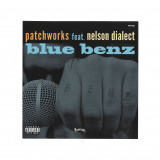
Favorite Recordings presents an exclusive collaboration between French producer Bruno ‘Patchworks’ Hovart (Voilaaa, Mr President, Taggy Matcher, …) and Australian NYC-based rapper and poet Nelson Dialect. The two artists met two years ago after Nelson’s gig in Lyon and, of course, they discussed and seriously planned to collaborate one day, both having an everliving love for early nineties hip hop. Then came the quarantine and Covid-19 with Patchworks locked in Lyon, Nelson Dialect in NYC: it seemed to be the right time to do it. A few months later and they finally drop Blue Benz, the result of their long distance collaboration, coming as a beautiful 7inch filled with proper Jazz & Soul Hip Hop vibes.
On A side, « Blue Benz » reminds indeed the best feelings of the nineties hip-hop with its infectious slapped bass rhythm and subtle Rhodes chords, all fiiting perfectly with Nelson Dialect’s serious flow!
On B Side, « Jazzy Blue Benz » offers an alternate take on the same groove, focusing more on the electric guitar gentle slides with a more percussive beat and horns arrangements with a proper NYC jazz
feeling.
From Adelaide, Australia, Nelson Dialect now lives in New York working with Bronx label Red Apples 45 started by AG of DITC and Ray West. Making music since he was 16, he has received critical acclaim for his work with producer Must Volkoff and their most recent album Magnetism. Before moving to New York, Nelson toured extensively in Australia supporting some of the biggest international Hip Hop acts including Mobb Deep, Lupe Fiasco, Ghostface Killah, GZA, RZA, Pharoahe Monch and DJ Premier among many more. He just released a new album Opal Mind with French producer NuTone.
With the indeed adventurous Aventure EP on Couldn’t Care More Harmonious Thelonious further explores the depths of his unique vision, merging African rhythms, European harmonies and American minimalism: The title track keeps the same yet ever-changing lighthearted melody effortlessly meandering back and forth over electrified beats while Some Blue Beats is more on the minimalist side, as controlled as eccentric. Ta Ta Ta keeps it darker, with hypnotic percussions, organ chords noir and a big bass. Advanced music. Play loud.
MD Records, a small independent label started in 2018, are pleased to present the debut single from “Lost in Rio” on the new MD Gold series imprint.
Their debut single which will be out in August, ‘Little Piece of Heaven’ is a festival summer feel good slice of Latin pop featuring energetic musicianship and the vocals talents of Highland based Miss T.It is also something the guys are, rightly, very proud of.
The vinyl release of this single is presented as a double A side as both sides are phenomenal, with the remix bringing a NYC disco mix, designed purely for dancefloors with thumping bass, chic style guitars and soaring strings, think Studio 54 and the heady crossover soul of Philly meeting the early disco of New York.
Early plays by several funk and soul radio stations (Totally Wired Radio and FACE radio) has attracted interest from DJs keen to feedback with so many positive vibes and offers to collaborate on future songs.
Who Are Lost In Rio:
The band herald from the Highlands of Scotland. Inverness provides the base for a collection of musicians that have made their home here, whether they originated from Manchester, Melbourne, Malaysia or indeed the Highlands! The band has taken the funk and soul sound from their former incarnation, The Leonard Jones Potential (LJP) who were BBC6 Craig Charles Funk & Soul Show favourites with whom they undertook several live interviews on the show with Craig and also a popular live session as well as a number of joint live dates at Kendal Calling Festival, Inverness and Aberdeen. The guys were also asked to undertake some prestigious live work with world renowned DJ Carl Cox, on the bill at his personal request and alongside other acts such as Brand New Heavies, Danny Rampling, Gilles Peterson and of course, Carl himself.
The songwriting team behind all this - Anthony, Andy, Neil and Ruairi quickly set up Lost in Rio upon the demise of The LJP and began collaborating with a number of singers and a rapper (MC Butterscotch). They developed their sound into a smaller, tighter, groove based soul vibe.
From 2017 the grouped honed their sound with a number of live appearances across the Highlands including festivals and supporting acts such as Smoove and Turrell. Utilising guitars, bass, drums, Hammond and percussion, the guys set about leaning on key influences - Acid Jazz Corduroy and Brand New Heavies, dynamite disco guys Chic, Northern Soul, rare soul and a whole plethora of funky hip hop acts - The Allergies, The Herbaliser and Tribe called Quest to write a lot of new tunes. Latin influence comes to the fore in much of the groups new sound, particularly highlighting the impressive skills of Aussie percussionist Andy Pearce.
Live, the band have a good reputation and have been much sought after by promoters. Audiences have loved the tight rhythmic groove that these guys produce, meaning gigs are full of dancing and long encores. Recently the guys have been concentrating on driving up the already high standard of songwriting and production. This hard working band has plenty of material they are eager to share with those ears who are partial to quality funk, soul and pop and are looking for the right partners to work with and spread the message. Future releases will seek to exploit the wordsmith alacrity of MC Butterscotch who as well as Lost in Rio, also features as part of Scottish award winning hip hop act, Spring Break.
MD Records specialise in Unreleased soul and funk on its Yellow Series, contemporary soul and funk artists on the Gold Series, re-issue soul and funk on the Black Series and Missouri Soul and Blues via its Blue Lotus UK imprint.
A journey to far outlands: this is exactly what one can feel when listening to Béliz. Entitled Mémoires, the album from the band Béliz, explores new territories where the Guadeloupean musical tradition meets the harmonic universe of the harp. Béliz is the dialogue between the world of classical harpist Anne Bacqueyrisse, percussionist Olivier Maurières and multi-instrumentalist and singer Edmony Krater, fervent supporter of the Gwo Ka, the ancestral musical tradition coming from Guadeloupe. Founder of the band Zepiss, once a member of Robert Oumaou's collective Gwakasonné, Edmony Krater always had the will to open the Ka to other cultures and to incorporate new sounds. Indeed, with Ti Jan Pou Vélo, his tribute album in the memory of Marcel Lollia known as Vélo (one of the greatest drummers of Guadeloupe), released in 1987, Edmony Krater brilliantly mixed jazz-fusion, Occitan folklore, synthesizers with the distinctive Ka rhythms.
The meeting of Anne Bacqueyrisse, Olivier Maurières and Edmony Krater at the Music Academy of Montauban, gave birth to Béliz. In 2009 the group of three musicians-teachers, under the impulse of one of their pupils, decided to record in studio their project, Mémoires. Béliz, with its innovative and singular artistic approach, is a true invitation to travel. The title “Arawak É Karayib” is a vibrant tribute to the native West Indian people. “Gwadloup” - an acoustic version of the song already featured on the album Ti Jan Pou Vélo - is an ode to Edmony’s beloved island. “Natibel”, an hymn to Nature - another cover from the Zepiss band – makes sense here in a minimalist version.
A true fusional object, Béliz moves us to new horizons, both imaginary and poetic.
Between Christmas 2000 and New Year 2001 producers Ekkehard Ehlers and Stephan Mathieu recorded an album of warm, soft, delicately crackling electronic music in the space of that week. It was christened with the ambivalent title "Heroin" and was released on CD via the label Brombron in 2001 and later in 2003 re-issued on Kit Clayton's Orthlorng Musork on double-LP with remixes the pair had commissioned as expansions.
17 years later Heroin sees its first vinyl release to include all 13 tracks from the original CD track-list on this LP + 12“ set. The centerpiece "Herz" finally receives its long deserved vinyl treatment (side C, at 45rpm) and on the flip side Thomas Brinkmann contributes a mirror in a magnificent remix of that very piece on side D.
Ehlers and Mathieu were both highly prolific solo artists during the period 2000-2004, and in just two years after the initial release of "Heroin" each had produced over half a dozen new solo recordings: among them the serial masterpiece Ehlers' "Plays" (Cornelius Cardew, Hurbert Fichte, John Cassavetes, Albert Ayler, Robert Johnson) released as 5 stunning LPs in a series on Staubgold, while Mathieu's 'Full Swing Edits' spread over five 10" records plus his album 'FrequencyLib' on Mille Plateaux, 'Die Entdeckung des Wetters' on Lucky Kitchen and ‘The Sad Mac’ on Atsushi Sasaki’s Headz label were greeted to critical acclaim.
Both artists were expanding their conceptual sonic approaches in the glow of developing laptop technologies which would to these times in 2020 seem quite primitive, but these two in that period used the state-of-the-art to aid and abet their conceptual visions, while at times the duo used unorthodox experimentation - yet always had a distinctively melodic and musical form at its heart and soul.
Ehlers can be seen as a conceptualist, as a meta-musician who interrogates the mediums and methods of sound production - reflecting on the conditions and possibilities of improvisation (e.g. "Plays Albert Ayler") and exploits ideas of mutation and distortion of popular aesthetics played out within a ghostly form of divine pop beauty in his project März.
Mathieu, originally a drummer and co-founder of what has come to be known as the Berlin 'Echtzeitmusik' scene. His approach could be similarly described as working a critical analyst and researcher: Subtly and precisely working in the realm of processing as a method of intervening in melodious/harmonic analog sound sources.
Ehlers and Mathieu may not think too much about their singular productions and publications outcomes, but instead concentrate on the process and musical personality that characterizes their gesture- style itself stays in the background - and they usher a music from small minimal sound sources coaching a patient music of slow intervention - much like a refraction of light than a concrete painting or a blurred photograph - beatus accident.
And indeed, "Heroin" is an album that embraces the happy accident being made up of reduced, often very catchy and very direct micro hooks which seem laser-guided into a space accepting obvious melodic beauty in what feels like an observation of musics unfolding and revealing it's DNA, embed with for a kind of yearning for innocence and naiveté - as if Satie were on the jukebox in "The Crying of Lot 49". Not to say the music is "reduced", but rather: 'restricted' and born from acceptance of limitations, and the artists allowing the sounds to just "be.." with some incremental degrees of coercion.
The album not only sounds like that of 2 producers who are both dreamers and scientists, but that Ehlers and Mathieu chose to work with these means in a dialogue together to reduce pop music to its musical/tonal core, it is not Pop music anymore, rather a ghostly pointilistic itteration of song. "Heroin" is located at this transition, around that point at which tracks, that were or could have become pop compositions, irrevocably slip into a static harmonic nirvana. We are invited to follow the arch of Heroin in a slow-motion morphine musical haze.
Heroin sounded timeless when originally released and proof is that it remains so, one wishes that Ehlers and Mathieu would convene again for a week, a month or an entire year to continue this process of slow rumination, picking affectionately over the sounds they both love - and then maybe when everything is condensed, evaporated they would write more songs with those sonic refractive elements that remain.
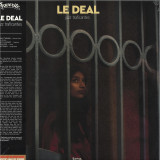
Favorite Recordings presents Jazz Traficantes by LE DEAL, a new musical adventure from the finest French jazzmen with Florian Pellissier (Piano & Fender Rhodes - Camaraõ Orkestra, Cotonete,
Aldorande, Setenta), Yoann Loustalot (Flugelhorn – Bruit Chic, Old & New Songs, Aerophone, Lucky Dog), Théo Girard (Upright Bass – Pensée Rotatives, Discobole) and Malick Koly (Drums - The Wallace
Roney Quintet). Needless to say, they’re used to play all over the globe and quite often to New York. During one of these
trips to the Big Apple, they discovered that the legendary Van Gelder studio (where most of Blue Note, Verve and CTI albums were recorded) was still active and opened so they decided to book a few days session.
Here is the story told by Florian Pellissier: “The tracks had been written the night before. We were going to run through them and then record. A simple plan. Van Gelder had passed a while back, but he left the keys and secret codes with his faithful assistant Maureen before heading off to create the right sound up in heaven. Nothing had changed in the atmosphere or configuration, not even the way the mics were placed. The studio and its wooden beams still exuded New York’s sixties jazz, dimly lit streets and clubs where anything might happen past midnight. Maureen knew just how to capture the ambiance of the sessions and bottle the energy without spilling a drop, taking infinite care to collect each cymbal tone, drum roll and trumpet phrase, without losing a single vibrating bass string or the slightest keyboard pause.”
Indeed, the four contrabandists succeeded to deliver an outstanding album, filled with themes that’ll get stuck in your head, just like in the 19 minutes long performance “Mexican Junkanoo Suite” and its three
parts. But more than just beautiful melodies, LE DEAL truly managed to bring a sense of drama to their compositions, going into the deepest emotions through gutted arrangements, improvising with great attention to the articulation of their ideas. From the beginning to the end, musicians and engineers did their best to emulate the proper vintage sound. Jazz Traficantes could prove once and for all that
French Jazz can indeed cross the borders. The album will be available as Tip-On Deluxe Vinyl LP but also on CD & Digital with a bonus track, “Noche en la Carcel”
GES: Anthology of American Pop Music
Six great pop standards remembered: five pop songs are dissected by sampler, stretched, compressed, and re-collaged. In this way, their identity is lost. What remains is a vague concreteness: flashes of déjà vu and remote echoes that evoke the original.
GES (Gesellschaft zur Emanzipation des Samples)
-
Active members: Helmut Schmidt, Jan Jelinek
Founded: 2009
Headquarters: Federal Court of Justice, Karlsruhe, Germany
-
GES Glossary
Acoustic Surveillance Series
A 7-inch vinyl record series curated by GES focussing on historical methods of acoustic surveillance. Each record introduces a surveillance system from the past. Starting with Uguisubari in 2017, the series will continue with the release of Orecchio di Dionisio in 2021. GES is open to further suggestions on this subject.
Bundesgerichtshof (German Federal Court of Justice), Karlsruhe
“The use of audio samples as artistic practice may justify the infringement of copyright and intellectual property rights.” (ruling of the German Federal Court of Justice pertaining to Metall auf Metall II, 2016). The court is also the official headquarters of GES.
Circulations
What happens to copyright claims when music from a passing car is captured in a street recording? Is it legal to use this recording freely or is it necessary to obtain licensing rights? Circulations re-enacts this recording situation: audio players are placed in public spaces, where they reproduce the desired sample material. The acoustically choreographed space is then recorded, creating a field recording in which everyday noises circulate together with seemingly incidental music.
Emancipation of Sampling
Fuelled by its criminalization, the act of sampling existing recordings forfeited some of its artistic prestige (see Sampling). GES wishes to rehabilitate and re-emancipate the practice of sampling as a form of art in its own right. Strategy: 1. Name samples and sources explicitly. 2. Choose samples that are as popular and as recognizable as possible (Beatles, Carpenters, etc.). 3. The editing and manipulation of the sample must not compromise its recognizability (negotiable). 4. Use as many samples as possible. 5. Always name more sample sources than were actually used in the composition.
Field Recording
A compositional practice widely used in sound art and ethnomusicology that involves the recording of natural acoustical phenomena. Two additional requirements are usually imposed: The recording process should take place outside a studio environment, i.e. outdoors. And the person recording does not generate any of the acoustic material him/herself. GES expands this definition by introducing the concept of choreographed public space (see Circulations).
Gambling
An acoustic event favoured by GES, already used in numerous sound collages (must take place in public). The most popular option is thimblerig, a cup and ball gambling game commonly played in the street. Compositional instruction by GES: Place an audio playback device in the proximity of a thimblerigger. Play works for orchestra (by Debussy or Mahler). Move slowly towards the gamblers with a microphone.
Helmut Schmidt
Multiple identity and fictional character devised by GES. Figures variously within the semiotic system of GES as member, guest artist or public representative. Following the historical example of Subcommandante Marcos (EZLN).
Kraftwerk
The German band founded by electropop musicians Florian Schneider-Esleben and Ralf Hütter (a.k.a. Die Prozessoren) is the natural enemy of GES. Protected by computer-generated avatars, Kraftwerk operates a quote-hostile cultural hegemony. Their strategy: Install a special brand in the collective consciousness by means of a sophisticated system of quotations and references that may in turn not be quoted by anyone else. Other bands with such delusions of omnipotence: U2, Metallica.
Marcel Duchamp
As the inventor of the readymade, Duchamp may be viewed as a precursor to the art of sampling. However, the artist is appreciated above all for his sonorous qualities, as his vocal silence has often been sampled and processed. It was the inspiration for Jelinek's radio play Zwischen.
Orecchio di Dionisio
This 65-meter-deep limestone cave in the Sicilian town of Syracuse, carved out of a hillside in ancient times, has exceptional acoustics: A person standing at the cave entrance can hear every word whispered deep down inside it. The painter Michelangelo da Caravaggio gave it its name (The Ear of Dionysius) in 1608. The cave indeed resembles an ear and – according to Caravaggio – had a specific function: The tyrant Dionysius I imprisoned his political prisoners in the cave in order to spy on them. Orecchio di Dionisio will be featured in the Acoustic Surveillance Series in the near future.
Sampling
Compositional practice whereby recorded music is fragmented, turned into sound collages and transferred into different contexts of meaning. Since the advent of affordable sampling technology in the 1990s, the music industry has been trying to criminalize and/or promote the practice. Both strategies are driven by the same principle: Profit.
Uguisubari
Sound-making floorboards in Japanese temple and castle complexes, featured in the Acoustic Surveillance Series in 2017. In the Edo period, the “nightingale floor” (literal translation of uguisubari) was a popular acoustic warning system. The principle was straightforward: When someone stepped onto the boards, nails would rub against metal clamps beneath the floor, creating a tell-tale squeaky sound that was said to resemble the chirping of the Japanese nightingale.
Wind
A generator of acoustic events and an amplifier/transmitter of existing sounds. A meteorological form of energy appreciated by the GES on account of its unpredictability. A series about wind as an acoustic phenomenon is planned. Working title: Hotel Corridors.
Zwischen (Between)
Radio play by GES member Jan Jelinek based on recordings of various public interview situations. From the speech of the interviewees (all of them eloquent personalities) the pauses between coherent utterances were extracted and assembled. What we hear is an archaic body language: modes of breathing, word particles and onomatopoeic turmoil. A key question for GES: Which comes first, personal rights or artistic freedom? For Zwischen, Jelinek used only recordings by public figures that were already available to the public.