4LP vinyl boxset - pressed on opaque red, green, blue and yellow vinyl housed in printed inner sleeves with disco holes within a hardbound book jacket. The back cover is a Ludo board and the package contains Ludo game pieces, dice and instructions on how to play.
The Best of the Black President is the 13 track guide to Fela Kuti’s massive and manifold creative career. Fela was a musician, arranger, producer, political radical, outlaw and the originator of Afrobeat. This is the first time the complete compilation is available on vinyl. It is a 4 LP set, with updated cover art in a hardbound book jacket and printed inner sleeves. The individual LPs are pressed on red (sides A/B), green (sides C/D), blue (sides E/F) and yellow (sides G/H) vinyl. This edition features a Ludo game board as the back cover and comes with a perforated set of game pieces, dice, and instructions on how to play. Limited edition of 3000 for the world.
The release of this special edition coincides with the 12 episode podcast on the life and legacy of Fela, Fela Kuti: Fear No Man, produced by the Obamas and hosted by Jad Abumrad (Radiolab, Dolly Parton’s America). The series features dozens of interviews including Burna Boy, Paul McCartney, Questlove, Ayo Edebiri, David Byrne, Santigold, and President Obama himself. It was initially released on Audible on 9/15/25 and had a wide release across all podcast platforms on 10/15/25
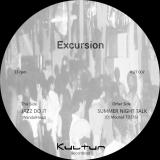
A. WandalHouz – Jazz Do it
Full 13 and a half minute ride, Wandalhouz wanted you to nab some quality use of your favorite material on this earth (vinyl) to its fullest potential. “Jazz Do It” sparks the same feeling and vibe as a sit in studio in session. Using a unique spacey Sci Fi sound creation as its main loop character, its main stand out is its big, bouncing fatty synth bass. Each introduced sound is eloquently placed upon its next, giving each individual sound its own time to welcome itself to the greater whole, and no moment is wasted. Each sound is playfully placed, perpetuating a bounce between the synths rubbing the low end frequencies, while the melodic pipe organ stabs shine bright through the ebbs and flows of sweeping fx to give it movement through the entire wave of sound. Its a driving deep, jazzy, and funky House track that truly encourages you to “Jazz Do It” on the dance floor, and as much as you can, for as long as you can.
B. Dj Mourad TD216 – Summer night talk
“Summer Night Talk” is Deep House cut that meets Electronic Jazz for a drink, at a Broken Beat art show, thats coming from the brain of a Techno OG, and Professor with years of producing, Djing, remixing, and sound design.
Mourad uses “Summer Night Talk” as his latest musical canvas. His machines are his paint brushes, and this song is his poem for its soundtrack. Mourad delivers thumping bass, peppy percussion, skippity snares, and fx that grab attention like poppin off fire crackers inside an art museum. Hypnotizing bass rumbles up your backside, creeps over your shoulders, and then whispers in your ear with a moist breath “Listen….” With each kick of the drum, each new brassy and chunky horn that graces your ear drum, you get further lost in the groove. His melody grab and spin you around, making you take another moment to catch your balance. “Summer Night Talk” is thumping and melodically techy in all the right ways to keep it deep, and true to its title.
"After being praised as one of the best releases of 2025 by multiple platforms, the highly praised debut album from Obeka lands on vinyl via YUKU.
The rhythmic dynamics and emotive attitudes of A World No More captures the density of soundsystem culture in Obeka's ancestral roots. YUKU presents the Bermudians debut album capturing a Neo-Colonial dystopia, protest and Afro-Futurism hyperextended through decaying sonic structures of a dark past and its grievances which very much exist today.
Growing into adulthood within the walls of British and European Colonial systems meant the disconnection and lostness in a new country hid me from the world at a young age. Unlike London's vast and culturally engaging migrant communities, the industrial milling town of Stockport introduced a coldness towards people from other countries I experienced in my first year after relocating from Bermuda. I couldn't understand why. Whether cold words thrown towards me or actions upon other people who look like me, it has shown to be a dooming societal virus with no cure. The most comfort was found through what was familiar - drums and rhythmic spirituality of my homeland. It was a safe-haven, a place to empty the anger and confusion. It's been 15 years since relocating and as my sound evolved, it seems classism, racism, oppression and civil control of ethnic peoples has become worse - even now more legalised and normalised. Ogun (a powerful Yoruba deity associated with anger, justice and war) acts as the opening sequence of the record and its symbolism. Using distorted bass frequencies and dissected Regga-Dub immersed in live-sampled ghostly voices of the lost ones. This sonic exercising is also applied in Drillaman - a stampede of industrial framework and metallic instruments wielded over moody Dancehall MC'ing, magnifying two parallel worlds in cocooned evolution. The resurrection of Transatlantic African cultures and identity have never been silenced, rather carried elsewhere through trade routes of enslavement, which was pivotal when composing and completing the album upon returning home to the Caribbean for the first time ever. After reconnecting with my heritage my blurred vision of what's wrong in the world became so clear. Guidance in empty plains seek truth throughout the pain - A statement of finding oneself expressed on the poetic closing track A World No More.
On Fawohodie (A West African Adinkra symbol that represents independence, freedom, and emancipation stamped on the album cover) the motive and atmosphere begins to change. Afro-Caribbean idealism which refers to the philosophical concept that emphasizes the interconnectedness of individuals and the importance of community, often contrasting with Western individualism, begins to take shape in a new universe. We can co-exist. The track framework uses machine-led software forming frequencies we have no control over, then manipulated through decomposing soundscapes, scattered hand-drums and human-made weapons of control - exposing the hidden disparity that's been carried over generations whilst balancing hopeful and musical foundations towards equality and peace. On Pressure and Kuduro! the writing direction attempts to wake people up. Not settling for a composed approach like in past projects, quite the opposite. A call for native sonic awareness, dismantled vocals of protests, eroded percussion using chains, gears and motorised harmonies sculpted in challenging abstract behaviors far outside my comfort zone. A direct abrasiveness and weight I want people to feel, whilst finding hope and solace through enchanting choirs and hypnotic basslines in complete synchrony.
"Purity in sound manifests when you least expect it. The smallest memory or feeling grows from a seed into a sonic language that you, and only you can interpret and release back into the world." "
Our latest Holy Grail reissue is this private press spiritual jazz gem out of California from Rickey Kelly and his vibes & marimba. Features Diane Reeves (vocals) & Adele Sebastian (flute)!
Heavyweight 180g LP with tip-on sleeve, individually numbered 1-1000, card enclosed for liner notes & audio download
"Rickey, I know these are your friends, the guys you went to school with, but if you wanna record an album, you record with musicians who have been playing their whole life; whatever you write, they'll put their whole life into it. You play with your friends; they may not even play in tune."
These are the words of Slave guitarist Kevin Johnson, and they were to change the course of young Rickey Kelly's life.
It was 1978, and music student Kelly had approached Johnson with a tape of rough demos of some songs he'd written. A San Francisco native, Kelly had recently moved the short distance south to study music at LA City College in East Hollywood. He was a member of E.W. Wainwright Jr.'s African Roots of Jazz, and was spending up to 10 hours a day in practice on both vibes and marimba. He also played with Horace Tapscott, and had his own band made up of fellow students, but it was his ambition to make an album that led to the conversation with Johnson. It was a turning point in his education, and a decision was looming.
The next thing Johnson said was "You call the best jazz musicians. How'd you like to play with Billy Higgins?", a line that would seal it for anyone; for a youngster like Rickey just starting out in the business, you just don't turn down the opportunity to play with the likes of highly accomplished musicians, especially those of the calibre of legendary jazz drummer Billy Higgins.
Some calls were made and the date was set to record at Studio Masters on Beverly Blvd, a studio set up just a few years previous in 1973, owned and operated by Dot Records founder Randy Wood with his son John. Some of the other music professionals set to record with Kelley that day were flautist Adele Sebastian, bass player Tony Dumas, saxophonist Charles Owens and vocalist Diane Reeves, none of whom had previously played with Kelly before.
Kelly was impressed with the studio, with the gold records displayed on the walls and the famous musicians hanging out. 'It took a lot of humility for me to record with them, I mean I was nobody, nothing, and for not a lot of money either' remembers Rickey in a later interview with Calvin Lincoln, 'It taught me a lot, to practice hard, and study for the rest of your life, to give your all, and there's a lot of all to give'.
As the recording session took place, John Wood was listening in. He was impressed. Kelly didn't have the funds to manufacture and release the album himself, so Wood suggested it was pressed up on his in-house studio label, Los Angeles Phonograph Records, and thus the LP 'My Kind of Music' was released early in 1979. The album also saw a subsequent pressing soon afterwards on Dennis Sullivan's New Note label.
Kelly remains humble and proud of his debut album to this day. 'I was still a beginner' he says, 'These masters walked in, smiling, and gave me something worth gold'.
Soda Stereo is a band that never made the same album twice. After the commercial success of Canción Animal, singer Gustavo Cerati went deeper into the art of sampling, electronic music, the Madchester scene from the UK, shoegaze and neo-psychedelia. This change in sound led to some confusion among fans, but also gathered a lot of praise for embracing modern genres. Up this day Dynamo is seen as an essential classic in the Soda Stereo catalogue and also a must have for 90s shoegaze fans.
Dynamo is available as a limited edition of 2000 individually numbered copies on transparent vinyl and includes an insert.
Sueño Stereo is the final album recorded by Argentine rock band Soda Stereo. By 1995, it was clear that the band was the most important Argentinian group of the decade. The album went platinum in 15 days and Rolling Stone considered it the fourth-best album in Latin rock history.
The album is a true reflection of the times, blending Britpop, dream pop and electronic music. Next to that the band named The Beatles as a major influence on the album's structure. Inspired by The Beatles did the band end the album with a medley on the D-side. This gives the album a strong conceptual feel.|
Sueño Stereo is available as a limited edition of 2000 individually numbered copies on transparent vinyl, is packaged in a gatefold sleeve, and includes an insert.
Music never exists in a vacuum — every scene and sound evolves from the non-stop exchange of ideas between different groups and cultures. Traditions get passed down from one generation to the next, and then individual heads take influence from their own unique perspective. Sometimes, certain people strike upon fusions that spark massive new movements, but even those rarest innovations came from somewhere.
Jon E Cash knows this more than most — the legendary beats he started putting out at the turn of the millennium had their own disparate roots and influences which he had the motivation to put together into a sound he called sublow. There wasn't any other reference point for this music — when he took the first white labels of 'Drop Top Bimmer Kid' into Blackmarket Records in Soho, London, he had to describe it to a puzzled Nicky Blackmarket and J Da Flex as being, "between garage and hip-hop."
Playing catch-up in 2004, Rephlex Records nodded to sublow when trying to introduce a wider audience to the sounds which had been tearing up the London underground. "Grime. Sublow. Dubstep... It's Music. Different people call it different things depending on when they discovered it." But Jon E Cash's sound was rooted in more than the UK garage that had dominated the clubs through the late 90s, reaching way back to his pre-teen days when the first waves of hip-hop culture crossed the Atlantic and broke in the UK.
25 years on, it's a fine time to reflect on the impact of the music Cash made at the turn of the millennium. History looks back favourably on what he and the Black Ops crew were doing with sublow in the early 00s. The timing meant it ran in parallel with what was happening over East with Pay As U Go, Roll Deep et al, and of course there was crossover. Every DJ and every MC was on the hunt for the best beats they could find. But there's a whole different swagger to sublow — a different web of influences, a different intention and so a different outcome. It's still there in the beats Cash is making more than 20 years later — his 3dom Music label is carrying upfront productions with that sublow DNA coursing through their veins. Whatever the beat or the tempo, the drums are still hard as nails, and the bass is tuned for maximum rave damage.
Death Is Not The End collaborate with Uzbek label Maqom Soul to deliver an LP counterpart to last year's mixtape of the same title, compiling specially picked & fully licensed individual belters from the ex-soviet studios of Central Asian republics between 1978 and 1989 - incl. Uzbek, Tajik, Kurdish & Uyghur artists pulling traditional folk motifs together with pop & rock and psych elements.
"These recordings do not form a smooth or coherent history. They feel more like a sequence of discoveries made at different moments and in different circumstances. Songs and instrumental pieces that once lived inside specific contexts radio broadcasts, philharmonic programs, touring routes now sit side by side, revealing hidden connections as well as clear fractures between them.
Nasiba Abdullaeva appears here as a voice from the end of an era. Trained within a conservatory system, she worked inside the format of the Soviet pop song while filling it with melodic logic that did not come from Moscow or Leningrad. Her voice is soft and sustained, shaped by Eastern melisma, and it never functions as decoration. Even in tightly structured songs there is a sense of resistance, an effort to preserve a musical language rooted in Uzbek tradition rather than fully adapted to an all Union standard.
The ensemble Sintez, later renamed Navo, represents a different path. Beginning as a student rock group, the band was gradually absorbed into the official VIA system with all its limitations and compromises. Yet it was precisely within those boundaries that Sintez and Navo developed a recognizable sound. Electric guitars and jazz rock harmonies do not overpower the folk material but remain in tension with it. Their recordings feel like negotiations between what the musicians wanted to play and what they were allowed to perform.
The Tajik ensemble Gulshan reflects an institutional approach carried to a high professional level. Formed under television and radio structures, the group treated folk material almost as a written score. Carefully constructed arrangements, close attention to orchestration, and restrained use of pop techniques define their sound. There is less spontaneity here, but a strong sense of discipline and structure, where national melody becomes part of a carefully controlled sonic framework.
Koma Wetan occupies a very different space. Formed in the 1970s, this Kurdish rock group approached poetry and folklore as tools of cultural assertion. Their psychedelic rock never feels like a stylistic borrowing. Instead it functions as a contemporary vessel for language and themes that might otherwise have remained unheard. Even today these recordings sound fragile and stubborn at the same time.
The Uyghur ensemble Yashlik, closely connected to a musical drama theatre, operated somewhere between stage performance and popular music. Their songs are built on folk melodies but shaped for wide audiences. What emerges is a constant attempt to preserve the recognizability of Uyghur musical identity without freezing it in a folkloric frame. Yashlik's music exists in a state of balance between representation and development.
Digging Central Asia does not attempt to establish hierarchies or offer a single wayof listening. Names and dates matter less than the sound itself. Tape noise, abrupt transitions, and unexpected timbres remain part of the material rather than flaws to be corrected. This music existed at the crossroads of multiple routes geographic, cultural, and ideological. Heard today in a new context, it no longer feels peripheral. Instead it stands as a reminder that the history of popular music is far more fragmented, layered, and polyphonic than it is usually allowed to be."
Ultra flat record stabilizers designed to improve vinyl playback by enhancing contact between the record and platter. The added mass helps reduce micro-vibrations, improves stability, and delivers tighter low-end response with better overall definition.
Material: AISI 316 stainless steel
Weight: 475 g
Custom metal case designed to securely fit the pair
2 individual fabric pouches to store each stabilizer separately (prevents rubbing or surface marks)
Internal anti-shock protective layer to reduce impact damage during transport
Newly remastered version of Oren Ambarchi’s long out-of-print classic Hubris originally released on Editions Mego in 2016. Expertly remastered by audio wizard Joe Talia who worked with the original mixes, highlighting the myriad details of the audio with forensic precision, previously unheard up until now.
From the 2016 press release:
Hubris continues the exploration of relentless, driving rhythms heard on Ambarchi’s Sagittarian Domain (2012) and Quixotism (2014). Where those records looked to Krautrock and techno for their starting points, the sidelong opening track here begins from the perhaps unlikely inspirations of disco and new wave, drawing particularly from Ambarchi’s love of Wang Chung’s soundtrack to William Friedkin’s To Live and Die in L.A. Leaving behind the song-forms of these reference points, Ambarchi weaves a sustained and pulsating web of layered palm-muted guitars from which individual voices rise up and recede, eventually setting the stage for some lush guitar synth from Jim O’Rourke. Arnold Dreyblatt collaborator Konrad Sprenger contributes overtone-rich motorized guitar, pushing the piece into a satisfying intersection of shimmering minimalism and rhythmic drive that smoothly builds up until the entrance of Mark Fell’s electronic percussion in its final section.
After a short second part, in which Ambarchi, O’Rourke and crys cole pay tribute to the skewed harmonic sense of Albert Marcoeur with a track built from layered guitar figures and abstracted speech, the long final piece pushes the concept of the first side into darker and denser areas. Joined by electronics from Ricardo Villalobos and the twin drums of Will Guthrie and Joe Talia, the layered guitars of the first piece are transformed into a raw and tumbling fusion-funk groove that calls to mind early Weather Report or even the first Golden Palominos LP. As this stellar rhythm section rides a single repeated chord change into oblivion, a series of spectacular events emerge in the foreground: first, aleatoric synthesizer burbles from Keith Fullerton Whitman, then slashing skronk guitar from Arto Lindsay, until finally Ambarchi’s own fuzzed-out harmonics take center stage as the piece builds to an ecstatic frenzy. Few artists could hope to include such an incredible variety of collaborators on one record and still hope for it to have a unique identity, but Ambarchi manages to do just that, crafting three pieces that emerge directly out of his previous work while also pushing ahead into new dimensions.
Players: Oren Ambarchi, crys cole, Mark Fell, Will Guthrie,
Arto Lindsay, Jim O’Rourke, Konrad Sprenger, Joe Talia, Ricardo Villalobos, Keith Fullerton Whitman.
The Golden Gate Quartett VA5 marks the fifth vinyl Various Artists release on Golden Gate Club Records, continuing the label’s tradition of carefully curated club music with character and depth.
This new chapter brings together a sharp selection of artists - SaPu, Tripmastaz, Cesare vs Disorder, and the trio Alex New, Gruman & Zlene - each contributing one track and guiding listeners through hypnotic rhythms, subtle textures, and a distinct raw energy.
While each contribution carries a clear individual signature, the tracks share a cohesive spirit, balancing low-end weight, atmosphere, groove, and punch, all while maintaining a refined sense of swing.
Golden Gate Quartett VA5 stands as both a statement and a celebration, showcasing diversity within a unified sound and reaffirming Golden Gate Club’s commitment to quality, timeless club music crafted with dedication for the dancefloor.
‘In Virus Times’ is an acoustic instrumental piece by Lee Ranaldo.
Composed during the pandemic, ‘In Virus Times’ is released as a onesided LP with an etching on Side B. The cover is a beautiful photo by
Lee’s friend, the great Brazilian photographer Anna Paula Bogaciovas.
Originally released as one track as part of a collaboration with Lucien
Jean for Le Presses du Reel, the music was featured on a mini CD that
accompanied a book that featured two short stories.
‘In Virus Times’, released by Mute, sees the track transformed into 4
pieces and is available on transparent turquoise vinyl with digital
download and an exclusive poster, designed, signed and individually
numbered by Lee Ranaldo. The poster design is based on an electron
microscope photo of the COVID-19 molecule.
Lee has written some of his own ‘loner notes’ for the release:
“This recording began on an evening in September 2020, stuck at home
in lower Manhattan during the dark days of the Covid-19 pandemic as
we came out of a deadly summer. A heightened sense of anxiety
stemming from the then-upcoming US Presidential elections as well as
the virus seemed to pervade all aspects of life, for myself and everyone I
knew. Its minimal quality reflects the sense of ‘motionless time’ that
many of us felt. I set up some microphones in our darkened living room
(studios being closed due to Covid restrictions), coaxing out one simple,
repetitive phrase, and then another, sounding them out into the air. The
casual home ambience - a siren or truck rumbling down the street out
the window; someone talking around the table in another part of the loft;
water running - intrudes at points. I worked to develop a few simple
thematic elements, but mostly I wanted to hear the notes and chords
ringing out, hanging in the air for a long time on that evening when the
world seemed close to stopped on its axis.
“I’d been listening closely to Morton Feldman’s catalog throughout the
pandemic. His sparse, long-duration music could often be heard playing
on repeat as we spent endless days locked inside. His willingness to do
very little, with very simple elements, and to such profound effect, has
been inspirational. I found the vast open spaces in his works thrilling,
miraculous, and comforting in those empty times. Additionally, the Drop
D guitar tuning used here has prompted my own variations on Bach’s
works for solo cello, open strings droning against melodic lines, so
simple and perfect…” - Lee Ranaldo, New York City, August 2021
Mean Field Mutation is a thermodynamic phenomenon occurring just below the vaporization point of voracious growth. It relies on the debris of false and almost forgotten narratives. Astral residue of consumer angst, echoes of obsolete newspeak and oscillations of promotional imbecilities collide with free floating particles hovering under the radar of the megamachine. In steady intervals, this results in a meltdown producing random waves of reconfigurations driven by cryptic but sanguine naivety.
Released on Lustpoderosa, Mean Field Mutation is the first musical output by Des Coda. Written and produced by Piero Scherer during the pandemic winter of 2021 in his bedroom studio in Zurich. Moving between playful
serenity and feral distortion, it was produced by layering sounds from field recordings, radio and TV clips, as wellas sequences from drum machines and analogue synthesizers. Taking a stance against commercial copyright, all stems of this production are available for download free of charge and ready to be reappropriated.
Des Coda is an open field for collaborative, cultural experiments beyond the conventional understanding of authorship and representation. It engages with an artistic position that defines the creative process as an interplay between context and concept. The resulting work is not a rigid product of authoritarian ingenuity, but a sensitive, living organism guided by the tensions between society and individual. Des Coda is the zestful curiosity rummaging through the rubble of the present in search of future aesthetics.
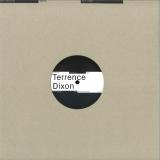
Detroit original, Terrence Dixon, returns to Tresor Records to kick off 2026 with ‘When Stars Remember’. Despite his thirty-year career, Terrence has always managed to keep a lower profile than his peers; he has given few interviews, preferring instead to speak through his music, with cryptic song titles hinting at the thoughts swirling around their creation.
However, ‘When Stars Remember’ finds him stepping forward. “I wanted to get closer to the dancefloor. I consciously made this one feel louder…made with Tresor specifically in mind.” And the EP does just that: whilst many of the hall marks of a Terrence Dixon production are present, the drums are more forward; the synth arpeggios so bold that ‘monumental’ seems a better descriptor than ‘minimal’.
“I put three or four sounds together on the same track, layering to make something bigger”, he says of opening track ‘Mono Collapse’, though the statement could apply to any of the music appearing on the release as all four pieces fold in sonics to create something hypnotic; more than the individual parts: “If you stick with the same layered tones, and repeat it over, after a while your brain changes it on its own; you hear a lot of things: things that you didn’t notice at first, things that maybe aren’t even there.”
The absence of things is another main theme of the EP, especially what Dixon sees as ‘The Forgotten’, a group of fundamental principles like common sense, trust, loyalty, honesty and respect that are missing from modern life. “This world is different…the love is gone. But I love everybody, man. I think, secretly, everybody love everybody, but they just don’t know it.”
Bobby and Martin Boer started experimenting with music in a small bedroom in their parental house in an apartment building on the 4th floor.
The brothers brought together rapper Da Smooth Baron MC and singer Peggy “The Duchess” to form their stage act. The first single “Can’t Help Myself” was released in 1990 and became an international hit in 1991.
multiple international hits were produced as 2 Brothers on the 4th Floor. Gradually changing the style from Eurodance into happy hardcore.
Singles like “Fly (Through the Starry Night)”, “Come Take My Hand” and “Fairytales” were international bestsellers and topped charts all over Europe.
The Very Best Of 2 Brothers On The 4th Floor is available as a limited edition of 1500 individually numbered copies on crystal clear vinyl and includes an insert.
"Carlos Santana’s nineteenth studio album Shaman was released in 2002 and debuted at #1 on the Billboard 200. Just like its predecessor Supernatural, Santana invited contemporary artists to collaborate with him across genres including neo-soul, pop, rock, metal, and opera. Artists such as Seal, P.O.D., Chad Kroeger, Dido, Michelle Branch, Macy Gray, Music, Citizen Cope, Alejandro Lerner, Plácido Domingos, and Ozomatli can be heard on the album. Four tracks were released as singles: “The Game Of Love”, “Nothing At All”, “Why Don’t You & I”, and “Feels Like Fire”. Shaman is being reissued for the first time since its original release. A limited edition is available of 2000 individually numbered copies on translucent purple coloured vinyl and includes an insert."
Shaman by Santana, released 3 May 2024, includes the following tracks: "The Game Of Love (ft. Michelle Branch)", "Amoré (Sexo) (ft. Macy Gray)", "Victory Is Won" and more.
This version of Shaman comes as a 2xLP. This release comes with (a) Insert(s).
The vinyl is pressed as a translucent, purple disc. Another vinyl is pressed as a translucent, purple disc.
Clusters of Noise LPR-V006, kicks off 2026 for Loopaina Records with a powerful vinyl release crafted by two standout names in the international techno scene: Oliver Rosemann and Carmelo Ponente. Photo taken in Mundukalogue between both artists, each delivering their own raw, focused vision of contemporary techno.
The A-side features one original track from each artist, clearly defining their individual styles.
On the B-side, they switch roles to offer remixes of each other's work-expanding the sonic palette of the release while maintaining a cohesive and impactful sound.
Clusters of Noise is a bold statement for the new year at Loopaina Records: quality sound, committed artists, and a strong devotion to the vinyl format while embracing digital as well. A solid, high-impact release that perfectly captures the spirit of the label.
All music written and produced by Oliver Rosemann & Carmelo Ponente
Dutch electronic music trio, Noisia, have announced the release of their long awaited new album, 'Outer Edges' on their own label, Vision. The 18 track album is their first in six years, and the band's second in total.
With a peerless reputation and countless awards under their belts, Noisia have transcended their genre and grown into a phenomenon in their own right. Drum & Bass is at the core of Noisia's sound, but Nik, Martijn, and Thijs's visceral brand has always ventured further.
"It's called Outer Edges because it's us exploring the outer edges of what Noisia, the three of us together, is. It's about the idea that all the songs are little islands that we take to their individual edge... They're all like expeditions to far sides. That doesn't mean that it's everything; it's just that every song, if it goes in a certain direction, we've taken it all the way there. There's no real concessions, we haven't been super DJ- or radio-friendly at all and we've done no collaborations or hardly any vocals on the album." - Noisia
nagoyaka na kaze / 和やかな風 (quiet wind): a collection of forward-thinking electronic experiments sourced from central Japan - co-curated by Nagoya artist abentis for Facta & K-LONE’s Wisdom Teeth imprint.
The project profiles a close-knit community of music makers operating in and around the Japanese city of Nagoya: one of the country’s most populous and industrial cities, but one all too often overlooked in terms of its cultural significance.
Curated in close collaboration with local scene organiser Yuya Abe - aka abentis - the record seeks to capture the creative energy of a community of artists making hard-to-define, future-facing electronic music away from the clamour of the bigger cities. “In Nagoya, there’s a strong culture of supporting artists. Even if you pursue music in your own way, as long as it’s good, you’re encouraged to keep doing what you want”, explains abentis. “Within that environment, my generation has been able to freely bring in elements we like from all kinds of genres, combine them in our own way, and express ourselves individually. If you go to Tokyo or Osaka, that kind of freedom isn’t something you can take for granted.” Spiritually, Nagoya fits the mould of cultural hotbeds like Bristol, Detroit or Melbourne, showing that some of the most innovative creative communities form away from the glare of the capital cities. Like Detroit, Nagoya is principally known for being a major auto manufacturing hub, famous for being the home of Toyota Motors - but behind the scenes, it is quietly harbouring one of Japan’s most vibrant and forward-thinking electronic music scenes. “In a good way, Nagoya is a bit removed from the cutting edge, so you find people making all kinds of music”, explains Karnage. “If you’re making music, you feel like part of the crew, and people of different ages mix together without much hierarchy.” The city’s music scene is characterised by a freedom to mix genres and an open-door approach to creatives of all disciplines. The artists featured come from a diverse set of backgrounds, ranging from hip-hop to noise music, but have found a common collective identity in their omnivorous approach to genre. As such, the record moves fluidly between shimmering ambient and new age (Am Shhara, DHYAN, daiki hayakawa), psychedelic minimal house (Methodd, abentis), abstract, low-slung downtempo (baptisma, Nasty Soupman) and spaceage steppas (Karnage). “I’d say the way ambient, new age and that kind of sound design are blending nicely with dance music feels somewhat new”, says baptisma, the crew’s eldest member and de-facto scene leader. Responsible for bringing artists like Basic Channel, Mala and Jan Jelinek to the city, baptisma has been crucial in establishing underground electronic music in Nagoya since the 90s, and now helps cultivate the next generation of local talent. “Artists and DJs are seamlessly mixing ambient and new age with techno, house and bass music. I think that’s a really interesting development.” nagoyaka na kaze has its roots in a one-off event held in October 2024 as part of the 10 Years of Wisdom Teeth Japan tour. Curated by abentis in collaboration with Facta & K-LONE, the showcase featured live sets from eight artists based in and around Nagoya at one of the city’s key dance music hubs, Club JB’s. Each of the artists features again here, on record, presenting an original commission produced especially for the project. The record’s art direction was led by Yudai Osawa - in-house designer for Kankyō Records, the much-loved Tokyo record shop run by H. Takahashi - and features original photos by Hayato Watanabe.