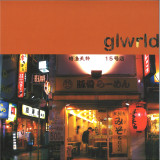
Haut la vache is a record of sound exploration, a testimony to twilight contemplation, and by the way, the second field recording album by collectif_sin~. After Tour de Transmission (2016), a recording of celestial flutes created by the wind rushing through a metal structure at the top of a Pyrenean peak, we now head to Switzerland, where the tinkling of cowbells forms infinite landscapes for the ears, a metallic wave swaying over the green grass that you can listen to on side A, while on side B you'll discover a remix of the bells by the collectif_sin~. Get on the bus and long live the cows!
Cerca:infinite
Over a catalog of six albums, Native Harrow have produced a discography of “rich, engrossing records” and “instant classics” while single-mindedly following their own artistic code, acquiescing only to the exigence of the song: each song its own world with its own rules.
Formed a decade ago, Native Harrow spent their first five or six years crisscrossing the United States and Canada on numerous tours, averaging more than 150 concerts per year in 47 states and 4 provinces, on the back of two self-released albums, Ghost (2015) and Sorores (2017). In 2019, they released Happier Now, partnering with London alt-country stalwarts Loose Records. The record garnered glowing reviews, with Rough Trade selecting it for its album of the month, writing “Beautifully soaring... rolling grooves ground languid and dreamy clearwater shimmers of sound.” The critical acclaim and Americana chart success of the album prompted three back-to-back UK tours in 2019 and early 2020, ultimately leading to a three-year stint living and touring in the UK and Europe. In this time, Native Harrow released two more critically acclaimed records with Loose; Closeness (2020) and Old Kind of Magic (2022), playing for audiences ranging from rock clubs in Norway and Sweden to opera halls in Portugal, and every stop in-between, as well as performing at festivals such as BST Hyde Park (supporting the Eagles and Robert Plant & Alison Kraus), Greenman Festival, Black Deer Festival, The Great Escape, Celtic Connections, Moseley Folk Festival, SXSW, and many more.
Following the eruption of its title track, Side A of “Divided Kind” transitions nimbly through hazy tremolo-laden dusty canyons, past an intimate soulful love letter, and towards a moody anthem of devotion buoyed by propulsive grooves, before ultimately settling on a gentle bird’s-eye-view of love and transcendence. Side B opens with the debut single, “Goin’ Nowhere” a soul transmission over incendiary bass and undulating layers of guiro, congas, tambourines, shakers, and handclaps that sidesteps into moments of infinite dial-toned burnished, Rhodes-propelled soul-jazz and self-assured blues rock à gogo before ending in a spectral folk reading on celestial meditation.
“Divided Kind” was produced and recorded by the pair, in their home studio surrounded by the vintage acoustic and electric guitars, dusty semi-functional amplifiers, and out-of-date Rhodes, B3, piano, and assorted percussion they’ve grown accustomed to. Chicago-based Alex Hall was again drafted to add drums and to mix, and Philadelphia drummer and engineer Joshua Friedman mastered the record. London-based musician Joe Harvey-Whyte added the pedal steel to “Borrowing Time”, with all other voices and instruments being performed by Tuel and Harms.
Recorded in 2014, Mid-City Island is the first ever project to be released from Moses Sumney. Moses recorded the entire EP from his apartment in Mid-City, Los Angeles straight to cassette on a four-track recorder that TV on the Radio's Dave Sitek lent him. To mark the 10 year anniversary of Mid-City Island, Moses kept good on a promise he made to himself all those years ago, broke and starting out - that he would press it to vinyl in a decade. Reflecting back on that period, Moses says "Mid-City, Los Angeles was more of a concept than a place. Seemingly nobody had ever heard of it, and yet it was the geographic center of the city. Living there felt analogous to my disposition as a 'rising' Angeleno - highly visible and invisible at the same time. I sat on my bedroom floor and wrote 'Plastic.' Throughout his 10-year career, Moses Sumney has consistently evaded definition as an act of duty: technicolor self-directed videos and monochrome clothes; Art Rock and Black Classical; blowing into Fashion Weeks from a small town in North Carolina; seemingly infinite collaborators, but one staggering voice. Consistent across the worlds of music, fashion, and film is his assertion that the undefinable still exists and dwelling in it is an act of resistance.
Coming out on September 6th on Sharptone Records, Sundiver is Boston Manor’s fifth album and one that represents a glimmering dawn for the Blackpool five-piece. Grown from a seedbed of optimism and sobriety, the LP celebrates new beginnings, second chances and rebirth. With two members recently stepping into fatherhood, hope is baked into every note. “Datura came out of these really dark few years over the hangover of the pandemic,” Henry reflects. “I'd been struggling a lot with drinking and not taking care of myself and bad mental health and stuff. We wanted Sundiver to be the next morning of the following day.” He explains that it feels good this time round to write through the lens of positivity. “The themes began to emerge, of rebirth, spring, dawn, sunshine and then other elements just started to fit into that.” It was during the making of Sundiver that Henry found out he was going to be a dad. This album is a significant one for the band. Originally coming out of the emo and pop punk scene, they’ve explored sonics and genres throughout their career, taken risks and achieved more than they could ever had dreamed of. They’ve grown up as Boston Manor – their lives and the world changing around them. They’re now taking stock, at a crossroads of the band they were and the band they could be.
While writing the album, they revisited the bands that shaped them in the late 90s and early 00s. “I was listening to the music I loved when I was a teenager and I just thought, why don't we make music like our favourite bands?”, guitarist Mike Cuniff remembers with a smile. “So we brought our interests to the table that way. Y2K kind of vibe. There are elements of Deftones, there are elements of Portishead in there, some Garbage, The Cardigans.” He laughs and adds NSYNC to the list of inspirations. From this cocktail of classics comes a dynamic and ambitious record, rich with depth, groove and more hooks than Peter Pan’s nightmares. Lyrics that foxtrot from parallel universes to personal growth, vivid dreamscapes to raw grief. Individually they’re single strokes full of meaning and magic. Together they’re a landscape.
Container (out Feb 15th) is the first single and it’s them at their best – impassioned and infectious. “This song is about the stagnancy of life creeping up on you & how that can bring about change.,” Henry explains, citing Ocean Song by US band Daughters as an inspiration.
The concept of the butterfly effect is present on Sundiver – how small actions can lead to big changes. This is no clearer than on their second single, Sliding Doors (out April 5th). It has the golden sound of late 90s Lollapalooza rock – think Smashing Pumpkins - rebooted with crisp 2024 production and a potent heaviness. In the lyrics Henry wonders, what if?, pondering on what could be. The idea that there are infinite versions of you whose lives splinter off in different directions at every decision you make. That there’s another you out there somewhere right now reading this sentence, and another me writing it. “So much is down to chance and circumstance,” Henry says. “You might catch that train and your life totally changes. Or you might miss it and things stay the way they are.”
Heat Me Up (out May 30th) is defiant and victorious, the audio equivalent of quitting your shit job and driving into the hot summer sun with a head full of dreams. “The lyrics are about love and gratitude,” Henry shares. “Another theme on the record is just appreciating what you have. It’s about not taking for granted the things that you've been afforded.”
There was some natural magic in the creation of Sundiver. They worked with their usual producer, Larry Hibbitt, and engineer, Alex O’Donovan, but instead of recording in London again they ended up in the green pastures of Welwyn Garden City. “Because Larry lives out in the countryside now, it was a way different environment and way different experience recording this time,” Mike remembers. “That contributed a lot to the brighter sound of the record.” The daily barbecues they had during their recording sessions imbued the process with harmony – five old friends spending quality time together and making quality music.
However, the album is by no means one-note. Birthing this new world they’ve created wasn’t without it’s pain, and that can be heard in the heavier moments on Sundiver. What Is Taken Will Never Be Lost is the most-stripped back on the album, a slow rock number seasoned with the downtempo Portishead influence. The heartfelt lyrics are Henry’s way of processing the loss of his grandfather, who died in a hospice last year(?). “It was just fucking horrible. It was always cold when I went there and they were always trying to get rid of me. The song title, What Was Taken Can Ever Be Lost, is the idea of his memory fading at the time because of dementia.” Henry goes onto explain that shoeboxes of photographs, diaries and a legacy is what he’s left behind. “He lived a really rich life and it has really impacted me and my father. His legacy is etched into the fabric of history in a very small way.” This song continues the connection between his grandfather and the band, as his painted face is emblazoned on the cover of the very first Boston Manor EP, Driftwood. As well as emotionally heavy themes, there’s heaviness in the music of Sundiver too. The closing song, Oil In My Blood, descends into an intense shoegaze outro with Debbie Gough from Heriot screaming hellfire. It’s in moments like this that the band show us aggression and fury can be as much a part of positive change as quiet introspection. The last lyrics of the song, “It resets and starts again,” leaves us in contemplation as the final chord rings out.
Touring the US, Europe and Japan over the years makes for an impressive CV, but if you know anything about Boston Manor you’ll know that they’re all about their hometown. Their choice to work with Blackpool-based photographer Nick Barkworth is testament to that. They’ve been working with him since the pandemic. “He captures Blackpool in a light that really reflects the weirdness and quirkiness of the town,” Henry says.” He's got a really good way of presenting that.” For the Sundiver cover, Nick photographed a 30ft tall abstract glass sculpture made by the local artist John Ditchfield. A striking and bewitching monolith that’s familiar to them but unusual to most people. “It has such kind of a gravity and power to it,” Henry describes the sculpture which stands in a field just outside of the seaside town. “It reminds me of either an explosion or a star or a supernova. To me it represents new life, power and radiance.” Boston Manor have got a knack for that - connecting the otherworldly and the everyday, the stars and the streets.
They’re a band known for using their music to make bigger statements about society. This time round they’re harnessing the uplifting power of music, and the communion it creates, as an antidote to the daily doom and isolation. “It seems like absolute chaos out there at the moment,” Henry says. “You’ve got Gaza and Israel, you've got Russia, you've got the fact that 40% of the world is going to have an election this year and increasingly most governments are leaning very far to the Right. The internet is dividing everybody, people are getting poorer and more desperate. It's really, really scary.” They considered trying to tackle the weight of it all in their music. “We could’ve written Welcome to the Neighbourhood on steroids, where it's just absolute darkness and misery”. He’s referring to their 2018 concept album that deals with class, inequality and the bleaker side of Blackpool. “But I think it's really important to write something that people can be immersed in and find some sort of solace in. Somewhere they can escape to from the modern day pressures and everything that’s going on. We’re all in this together.”
Rose Main Reading Room, the fourth full length by Peel Dream Magazine, is a lush, inviting headphones record; the kind of album made to accompany city bus rides and rainy-day solo trips to accidental destinations. The band, whose name nods to the BBC Radio 1 legend John Peel — arbiter of all things underground, quality, and (it must be said) "cool" — has since its inception been a genre-hopping experiment, jumping from motorik krautrock to shoegaze and space age pop, and their newest work is a perfect starting point for the uninitiated, beckoning toward a newfound romance and nostalgia with their catchiest collection of songs to date. Across its fifteen songs, Rose Main Reading Room ultimately proposes a world of marvels and compelling complexity: “Oblast” cheekily prods at mutually assured destruction; “Ocean Life” explores the infiniteness within ourselves; while “R.I.P. (Running in Place)” unpacks an all too familiar stagnation. It’s all part of, and crucial to, Rose Main Reading Room’s transportive power, ever reaching for the wonder and magic of the world we live in.
fabric Originals is proud to announce the release of the highly anticipated collaborative EP by Irish-born DJ, producer, and label owner Mano Le Tough, one of the most celebrated names in underground house and techno, and electronic musician and DJ Perel—who was the first German artist to sign to James Murphy's seminal dance-punk label DFA Records.
This EP marks the second release in the label’s new series, 'Future Memories,' which pairs together a legendary producer with new talent to create groundbreaking music that bridges generations.
The 'Future Memories' series is fabric Originals' latest initiative to celebrate the legacy of electronic music while paving the way for future innovation. By pairing seasoned veterans with promising newcomers, the series aims to create timeless tracks that resonate across generations. Mano Le Tough and Perel comes hot off the heels of our 1st release – by UK Garage royalty MJ Cole and rising UK techno X Dubstep producer and one half of Wisdom Teeth, K-LONE.
- A1: Moon's Milk Or Under An Unquiet Skull (Part One)
- A2: Moon's Milk Or Under An Unquiet Skull (Part Two)
- B1: Bee Stings
- B2: Glowworms/Waveforms
- B3: Summer Substructures
- B4: A Warning From The Sun (For Fritz)
- C1: Regel
- C2: Rosa Decidua
- C3: Switches
- C4: The Auto-Asphyxiating Hierophant
- C5: Amethyst Deceivers
- D1: A White Rainbow
- D2: North
- D3: Magnetic North
- D4: Christmas Is Now Drawing Near * Featuring – Robert Lee, Rose Mcdowall
- E1: Copal
- E2: Bankside
- F1: The Coppice Meat
- F2: Ü Pel (Insense Offering)
Black Vinyl[54,58 €]
Red in Clear Vinyl. First compiled as a double CD in 2002, Moon's Milk (in Four Phases) is a suite of four EPs that Coil released seasonally via their in-house Eskaton imprint across 1998. The line-up for these sessions were John Balance, Peter "Sleazy" Christopherson, Drew McDowall, and William Breeze. Recorded primarily at their home studio in Chiswick, London on the eve of a permanent relocation to the small seaside town of Weston-super-Mare, the collection has long loomed as a pivotal and pinnacle work in the group's discography, but has never been officially reissued, or repressed on vinyl. Time has only ripened its tapestry of regal strangeness.Arranged sequentially in tribute to the equinoxes and solstices, Moon's Milk captures Coil at a revelatory crossroads, leaning deeper into improvisation, spontaneity, and sound design. "Moon's Milk or Under an Unquiet Skull" initiates the proceedings on Spring Equinox, a two-part netherworld organ séance woven from vocal drones, cathedral keys, seasick strings, and opiated undertow. From there, Summer Solstice skews lighter but no less incantational, with Balance embracing his voice-as-instrument across lucid dream torch songs ("Bee Stings"), purgatorial spoken word ("Glowworms/Waveforms"), sultry chamber pieces ("Summer Substructures"), and falsetto ravings ("A Warning From The Sun (For Fritz)").Autumn Equinox exudes more of a pensive and twilit mood, from the Rose McDowall-sung folk ballad "Rosa Decidua" ("I hear your voice sing near to me / I've put away the poisoned chalice (for now) / And lie down amongst the flowerbeds") to hall-of-lords hallucination "The Auto-Asphyxiating Hierophant" to the liminal string-plucked classic "Amethyst Deceivers," featuring excellent alien guitar by Breeze layered with Balance's oft-quoted couplet: "Pay your respects to the vultures / For they are your future."The album's final chapter, Winter Solstice, is its most swooning, remote, and ceremonial. Opener "A White Rainbow" stirs strings, layered choral vocals, and shivering rhythm into an imploding burial hymn. "North" oscillates bleakly, a ghost in the machine murmuring opaque prophecy ("This black dog has no owner / This black dog has no odour"), while "Magnetic North" is its inverse, a guided meditation of gently flickering software and surreal chakra poetics ("Red rose filling the skull / Yellow cube in the lower pelvis / Silver moon crescent below the navel"). The suite fades to grey with a traditional English carol ("Christmas Is Now Drawing Near"), rendered like an executioner's song by Rose McDowall's doomed, beautiful voice.The Dais box set includes the entirety of the rare Moon's Milk Bonus Disc CD-R / 2019 Threshold Archives CD, which includes three collaborations with Thighpaulsandra. This material is as rich and intoxicating as the previous four phases, ranging from electro-acoustic singing bowl rituals ("Copal") to dissonant electronic recitations of visionary Angus MacLise poetry ("The Coppice Meat") to ominous classical melancholia ("Bankside"). Once again, Coil confirm the vastness of their confounding, infinite alchemy, explored and refined across decades of experimentation - both sonic and bodily. From post-industrial to post-everything, theirs is an art untethered, in the wilds of its own design.
IAMX haucht seinem hyper-emotionalen Elektronik-Projekt mit dem neuen Album "Fault Lines " neues spirituelles Leben ein. Es ist der Nachfolger der aggressiven, kultigen Machenschaften, die auf dem 2023 erschienenen Album "Fault Lines " zu hören waren.
Dieses Sequel ist halb Mutant, halb Ballkönigin-Schwester mit pochenden Bassmonstern wie "Neurosymphony" und "Infinite Fear Jets", die ätherisch in Tracks wie "The Ocean" übergehen, in dem die großartigen Gesangstalente von Hafdis Huld im isländischen Intro und Outro zu hören sind.
Acid-washed motorik drone with buried vocals from experimental duo.
Follows up, thirteen years later, from critically acclaimed album Common Era.
Realistic IX, the third full-length by the duo of Michael Jones and Turk Dietrich aka Belong, is both an expansion and excavation of their signature acid-washed songcraft.
Bleached guitars, metronomic drums, and buried voices rev, swirl, and seethe across shifting gradients of haze and hypnosis, alternately driving and diffuse. Melodies surge closer to the surface, flexing their form before resubmerging into quickening currents of feedback. Elsewhere the elements dissipate into a dusk of murk and microtonalities, electricity liberated back into infinite night.
Although it’s been thirteen years since Belong’s prior Kranky offering, Common Era, none of the duo’s rare synergy has decayed in the interim. Jones and Dietrich’s commitment to oblique states of motorik drone and liminal emotion continues to evolve and unfold, increasingly tactile and unreal, an alluring glow glimpsed through fogged windows at witching hours.
Love Rudiments is a meditation by Ty Segall on his first love: the drums. Known popularly as a singing guitar player, he generally starts the recording of his songs by laying down a drum track. Love Rudiments kicks off with drums and percussion then adds a few other percussive and production aspects. It travels a great journey in this configuration. However, Love Rudiments wasn"t written or performed to present as some kind of solo drums album - it"s just another music album, with vibes (figurative as well as literal), feels, a theme and a through-line. Never one to shy away from a challenge, Ty"s made an instrumental album of percussive music that rides the wild surf of a waxing-then-waning love affair - from the first blinding look, to the eventual recognition, that look back at love"s rudiments, viewed from beyond and outside that seemingly infinite sensation And why not? Drums are a melody instrument too. Ty plays them with precision and sensitivity, delving deep into the textures of timpani, vibraphone, xylophone, percussion and e-drums, all of them occupying space within the luxe stereo spread of the drum kit. In the process, a psychological space is opened - a private emotional location where only two can meet. Love Rudiments reembodies the passion and compulsion that drives all of Ty Segall"s music in a suite of moments played on orchestral batterie to explore the most delicate passages of human interaction - playing on the bones of love.
- 01: Their God Is Ugly
- 02: Their City Tessellates Infinitely
- 03: The Devoted Destroy All Machinery
- 04: They Celebrate Imaginary Victories
- 05: The Devout Vary Their Chants
- 06: These People Are Exhausted
- 07: They Pray To His Data
- 08: Their Devotion Is Choreographed Across The Lands
- 09: No Two Chants Can Repeat
- 10: Love Of Pleasure Is All
- 11: Abstract Devotions Earn Most Love
- 12: Immobile, They Fantasise Endlessly
- 13: The Newest Material Is Most Sacred
"Artist, multi-instrumentalist and astral traveller E Ruscha V releases a hypnotic suite of flow-state synth improvisations for Fourth Sounds.
Building on Ruscha’s 2022 collection Thinking A View, also accompanying an exhibition at Cedric Bardawil, Seeing Frequencies is as intuitive and it is experimental, as Ruscha follows melodic and rhythmic modulations like desire paths across 13 spacious recordings.
Drawn in part from the CocoQuantus synth, built by a man Ruscha describes as 'too weird for Buchla', Seeing Frequencies rides high on tremolo waves and organic vibrations, rooted in ambient, Balearic and Kosmische music traditions, while simultaneously engaging in a dialogue with the synaesthetic qualities of Ruscha’ painting practice.
Allowing the music to flow through him, Ruscha describes the optimum moment of creation as one he imagines for the listener too. 'I really love when music forces you to forget,' he explains. 'There's this beautiful moment where everything coalesces, and you just don’t think about anything.'
To immerse yourself in Seeing Frequencies is to understand exactly what he means."
Edition of 300 marbled vinyl with risograph insert, liner notes by Anton Spice.
Traversing the boundaries of techno, a unique textural palette of Detroit, dub, ambient and breakbeat influences - the compelling debut album from Eddie Hale (Melbourne, Australia) beckons the listener on an introspective journey of the imagination.
- Through The Horned Gate
- Night Marauders
- The Goatriders Horde
- Trial Of Champions
- God Of The Cold White Silence
- Forest King
- Demon S Blade
- The Great Hall Of Feasting
- Infinite Legions
- Assassins Of The Light
- Black Spire
- The Hydra S Teeth
- Rejoice In The Fires Of Man S Demise
- Nocturnal Command
- In The Time Of Job When Mammon Was A Yippie
- Key To Oblivion
How could Canadian heavy metal band 3 Inches of Blood dial up the intensity even more after their 2004 masterpiece Advance and Vanquish? Well, by bringing in Slipknot drummer Jordy Jordison to produce their next record, and adding a new instrumental line-up of former Allfather lead guitarist Justin Hagberg and former Walls of Jericho drummer Alexei Rodriguez to the band’s unique dual vocalist assault of Cam Pipes on “clean” vocals and Jamie Hooper on “scream” vocals. The result was 2007’s Fire Up the Blades, which, as Hooper put it, was “a faster, more intense version of us.” Which means that albums don’t get any faster and more intense than this one; that the epic lyrics are good enough to have been penned by George R.R. Martin of Game of Thrones fame is just a bonus. Speaking of bonus, for the vinyl debut of Fire Up the Blades (and after consulting the band) we’ve upped the stakes with a 2-LP release featuring an entire side of extra tracks that were released right around the time the album was, including their cover of the Lucifer’s Friend song “In the Time of Job When Mammon Was a Yippie.” All pressed in “Crimson Fire” vinyl housed inside a gatefold jacket with lyrics…limited to 1250 ferocious copies!
I was sent an unfinished version of Dose Your Dreams so that I might contribute string parts. I couldn’t stop listening to the rough mixes I received. A friend asked me how the record was. I replied, “My God, Fucked Up have made their Screamadelica.” And psych-rock-groove it is. The drums mixed wide, propensity for drones, for delay pedal, for repetition, groove. The politics and aesthetics of hardcore married to an “open format” approach to genre. Elements of doo-wop, krautrock, groove, digital hardcore. “None of Your Business Man” opens the album in familiar enough territory, a sax assisted exit from an office space. But things get psychedelic very quickly. By the time the title track arrives, Mike Haliechuk is whispering, wah pedals are in full effect, and we’re wearing oversized t-shirts and pinwheeling. “Accelerate,” the lyrical centrepiece of the album, storms in like Boredoms on a bullet train and dissolves into a digital nightmare. The album closer, “Joy Stops Time,” finds Fucked Up at their most Düsseldorfian, nearly eight minutes of blissful motorik. At the center of it all is Damian Abraham’s scream a man chained, a man tortured, a true protagonist. The effect is one of an epic, every chapter attempting its own narrative devices, its own genre hybridization and it works, it works so insanely well. The drama unfolds like a miniature world of many parts being explored, a map being illuminated, location by location. As with David Comes to Life, there is a story here. David who once came to life is now indentured to a desk job. David meets the elderly Joyce who closes his eyes, opens his mind, and sends him on a spiritual journey. David embarks on his own metaphysical odyssey. He sees a stage adaptation of his own life. He speaks to an angel in a lightbulb. He sees an infinite series of universes as simulations within simulations. Meanwhile, Lloyd Joyce’s lover was sent, decades ago, by Joyce on the same odyssey, but was lost in the void. Lloyd seeks to be found and reunited with his lover. Where will David end up? Will Joyce and Lloyd be reunited? Dose Your Dreams meaning: treat your dreams as you would a dream, allow yourself to be lost within them, allow them to open your heart and your mind, enjoy them as you would a drug. Reach out for my hand and pull me close. Owen Pallett.
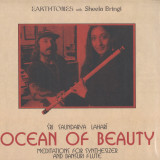
Air is the central element in Antonina Nowacka's third solo album Sylphine Soporifera. The title names an imaginary species and the land they inhabit, inspired by the unreal desert landscape of Paracas and the undulating tree-less hills of the Outer Hebrides, and comes from the writings of Rudolf Steiner, who describes creatures called Sylphs as the spirits of the air, and the Latin word sopor which means deep sleep.
As with all her releases, Nowacka's other-worldly vocals coming as if from beyond the veil, at once haunting, alien and utterly entrancing. "The voice is the most beautiful and resonating instrument,” she says. “When I sing I feel I create a field in between myself and the air in front of me," she explains. "It is not just that I'm singing – something in the space in front of me is happening, and I merge with this sphere.”
She conjures and is inspired by open environments and infinite landscapes: places full of light and air, manifested here in the sound of ocarinas from Budrio in Italy, whistles from Mexico, simple bamboo flutes from Nepal, alongside tremulous zithers, synthetic Hawaiian sounds from a vintage organ and the uncanny wind instrument presets from a 90s synth.
Nowacka’s first album was informed by vocal sketches made in caves in Indonesia, later recorded at a fortress in Poland; she studied Hindustani music in India with vocalist Shashwati Mandal, fell in love with early Cumbia in Mexico and Peru, and has more recently found inspiration in the landscapes of Italy. Hers is a new New Age soundworld that finds its origins everywhere and nowhere. Sylphine Soporifera gathers these sounds, visions and experiences into an album permeated with a sense of hope and fulfilment, that feels like sitting in an enlivening white beam of afternoon sunlight, as dustmotes swirl in the stillness.
GB's debut album, Gusse Music, emerges as a collaged symphony of experimental music with a pop sensibility. Its makeshift compositions, stretched out to linger in memory, offers a 33-minute textural plunge into the melancholy of the infinite – shadowed by loneliness yet illuminated by glimpses of light, a longing for the memories ahead. Tracks bleed into each other, like videos in a feed, momentarily grabbing the listener's attention only to be forgotten again shortly after. However, in the constant stream of impressions, GB patiently strives to inspire new thoughts and conjure an image, quaint and affectionate. From the sludged electric guitars and hypnotic baritone vocals of the opening track "FACETIME," to a solemn, almost Wicker Man-esque, acoustic instrumentation on "CONCRETE CITY," to stoned-out beats and rolling bass on "NEW PLANES”. Gusse Music evokes a world of music that is both welcoming and fun, hauntingly desolate, dark, and gritty. “the world in us, and all the spectacle, so much it hurt, wouldn’t trade anything”
- A1: El Shaddai Theme
- A2: Blessed By The Gods
- A3: Medley 1 (The One Who Receives The Glow -Apostle’s Guide - Michael’s Hand)
- A4: Eternal Heaven And Earth - Enoch’s Theme
- A5: Never Ending Journey
- A6: Rapid Evolution
- A7: The Infinite In The Void
- A8: Overture In The Twilight
- B1: Dignified Time
- B2: Scarlet Liturgy
- B3: Encounter The Sanctuary
- B4: Nephilim Appeared
- B5: Dear Past
- B6: Resonating Heaven And Earth
- B7: Hell Fire Cry
- B8: Violent Soul
- B9: Tragic Scream
- B10: Reverbs Of The Gods
- C1: Flight Of Darkness
- C2: Sariel’s Thoughts
- C3: Ringing Scorching Heat
- C4: Mad Motherhood
- C5: Hymns Of The Underworld King
- C6: Baptized Melody
- C9: The One Trapped In The Dark
- C10: High In The Sky, The Bells Of Hope Are Ringing
- D1: Dripping Madness
- D2: Mirror Reflecting A False
- D3: Forbidden Boundaries
- D4: My Evolutionary Form
- D5: Torn Heart
- D6: Gate To Immortality
- D7: Creation Of The World
- C7: Delusions Beyond The Imaginary
- C8: Revelation
"Relive Enoch's mystical journey in his quest to defeat the fallen angels!
El Shaddai Ascension of the Metatron is back on Nintendo Switch in full HD and for the first time in vinyl format!
To celebrate the occasion, in partnership with CRIM headed by creator and designer Sawaki Takeyasu, here's the game's original soundtrack in a magnificent Gatefold 2 x LP edition with white discs.
The El Shaddai Ascension of the Metatron soundtrack is composed and arranged by Masato Kôda and Kento Hasegawa, and features a variety of epic orchestral pieces and sacred, dreamlike melodies.
It has been praised for its quality and distinctive style, which fits perfectly with the game's artistic design and narrative."
- A1: Awaken The Sleeping 6:00
- A2: Destined Solitaire 10:51
- B1: Until You Comply/Entropy 15:21
- B2: In Real Life There Is No Algebra 4:30
- C1: Where The Rain Comes In 8:28
- C2: At Home Watching Movies 1:53
- C3: Coup De Grâce 9:44
- D1: Abigails Questions (In An Infinite Universe) 9:12
- D2: The Stuff That Dreams Are Made Of 10:40
Nach der überraschenden Ankündigung von BEARDFISHs Rückkehr im Jahr 2013 und der guten Nachricht, dass ein neues Studioalbum in Arbeit ist, freut sich die Band, eine spezielle Vinyl-Veröffentlichung zum 15-jährigen Jubiläum ihres fünften Studioalbums "Destined Solitaire" anzukündigen. Zum ersten Mal überhaupt auf Vinyl erhältlich, wird diese neu gemasterte Ausgabe als Gatefold 140g 2LP mit einem ausklappbaren 6-seitigen Booklet erscheinen, welches das komplette Cover-Artwork zeigt. Die Verpackung enthält außerdem brandneue Linernotes von Frontmann Rikard Sjöblom, in denen er über das Album reflektiert. Diese Wiederveröffentlichung fällt mit dem Auftritt der Band beim letzten "Night of the Prog Festival" in Deutschland zusammen.
Following a ten-year hiatus, multi-instrumentalists Rafael Anton Irisarri and Benoît Pioulard return with »How to Color a Thousand Mistakes«, their third LP together as Orcas. Building on the electronic minimalism of »Orcas« (2012) and the Twin Peaks-inspired haze of »Yearling« (2014), the duo have expanded their sound and vision into a full-spectrum ensemble.
In the time since their last major collaboration, Irisarri and Pioulard have done plenty on their own, while also traversing significant life changes: relocation from Seattle to New York, separation and divorce, illness, hospitalizations, and the loss of siblings, parents, and friends. Yet from these tribulations, they gleaned inspiration to reconstruct their lives, creating music with new collaborators and partners. Recorded in a variety of studios and cities including Brooklyn, Cambridge, Oxford, Seattle, and upstate New York, the resulting album, under the tutelage of UK producer James Brown (Arctic Monkeys, Kevin Shields, Nine Inch Nails), is a patiently-crafted beast, equally inspired by impressionism, British new wave, and dream pop.
With Irisarri’s guidance and Brown’s encouragement, Pioulard brings his velvety voice to its harmonized peak on songs like »Wrong Way to Fall« and the Durutti Column-indebted »Fare«. Where his most recent solo albums for Morr Music (»Sylva« and »Eidetic«) navigated foggy forests of ambient pop and stacked tape loops, here his characteristic blur shifts into focus with a unique degree of clarity and confidence. »How fare against balance do I / Navigate my errors?«, Pioulard sings in a heartbreaking tenor, echoing the album’s broader themes of introspection, grief, loss, trial and trauma.
Lead single, »Riptide«, is a summary of Pioulard’s life changes and personal upheavals in the past decade, »flitting eastward toward a yen deep in the past« and learning to glide through the tumult of ocean waves, as a metaphor for the punches one takes in pursuit of grace. Its towering, key-changing midsection arrives with the monumental drumming of Slowdive’s Simon Scott, a long-time friend and cohort who appears on most songs in the set. Scott’s quintessentially English, jazzier approach offers a balance of force and restraint as the backdrop for Irisarri’s majestic guitars, analog synth lines, and Martin Heyne’s Fender Rhodes counterpoints.
Second single, »Next Life«, began as a sketch by Scott, and reached its final form in the hands of Pioulard and Irisarri, at a point that each had endured major concurrent losses, finding a commonality in the need to gaze over the horizon while acknowledging the unavoidable bittersweetness of letting go – not only of people, but of routines, places, and expectations. It’s one of Orcas’ most nuanced pieces, with a mid-tempo, sunset glow that unfolds into a sparkling, slide-guitar finale as it disappears in the rear view.
On third-act highlight, »Bruise«, Scott is doubled on the drum kit by MONO’s Dahm Majuri Cipolla, whose Liebezeit-influenced metronomy anchors a nimble bass groove from Andrew Tasselmyer (of Hotel Neon), and some of the album's most syncopated, spaced-out interplay, courtesy of Puerto Rican guitar player Orlando Méndez (a childhood friend of Irisarri’s). Originally a droney, fingerpicked guitar demo, »Bruise« is the most storied composition here, having gone through almost a dozen versions and lyrical edits, with Brown distilling hours of improvised performances into the final arrangement.
Throughout »How to Color a Thousand Mistakes«, Irisarri uses his deep well of production experience to paint the stereo field with meticulously designed textures, exemplified on the slow burn of »Heaven’s Despite« and the heady rush of »Swells«. As a mixing and mastering engineer with Black Knoll, he has built a client list that reads as a who’s-who of modern, forward-thinking composition, including Temporary Residence, All Saints Records, and Ghostly International, among many others.
As with previous collaborations, Irisarri and Pioulard bring disparate styles and specialties to the table, but with an interpersonal dynamic that transcends friendship into brotherhood, their open-minded workflow and mutual respect are evident at every turn. »How to Color a Thousand Mistakes« brims with tight, complex art rock songwriting, masterful production, and sonic versatility, informed by a plethora of genres and tonal hues. The title might promise answers, but the gravitational center of the album is the dawning realization that, as you reckon with the infinite whims of the cosmos, there could be none.
"Clinamen" is the random and unpredictable movement of atoms, which inexplicably change direction during their fall and thus encounter each other. From this chance encounter, the divine does not arise but actually dies, since the atom is nothing more than the aggregation of infinitesimal parts of matter, converging into unity. From this one, from this singular, from this self, I want to escape. Having abandoned the vain glory and hope of passions, I strive towards the sacred, for the gods themselves are also made of atoms. In this sacred secularism of mine, in this exodus from myself, I finally recognize the truth: there is no difference between us and them. Everything converges into a single point, which is the whole. And I find peace. You will find the rhythmic and unpredictable chaotic tale of the atomic fall towards oneself. As the infinitesimally small and the infinitesimally large come to coincide in the creative moment, even time bends and adapts in the service of this imperceptible revelation. Through post-tribe sounds of ancient remiescence to the most contemporary clubbing subculture, passing through an exasperated minimalism that leaves no detail behind. Complex, elegant, profound. Open to any change
A new album is finally on Drivecom. A 2xLp full of new tracks recovered and rearrenged around 2022-23. No doubt the legacy of the past works are represented. Some arpeggios and melody lines will remember us to sonic landscapes from the “La Hora de las Máquinas” or “The Source” albums by Boris Divider but with a new and refreshed production sound, for sure this will be a must item for all the electro community and fans of the label.
The album opens with the intro track “The Way You Feel Me” a mix between electro and synthwave with a moog bass and arpegio reminiscent of some Arpanet’s “Wireless Internet” tracks. Then followed for the “Letters From A Sleeper” theme. As the track’s name reflects, it's a clear tribute to the synth era of David Harrow/Anne Clarke’s “Sleeper in Metropolis” just like a reply from a postnuclear future, with a big role carried out by the initial synthline. Then the first slow bpm track is for “Distante” where synthlines a la Tangerine Dream are crossed and mixed with vintage digital rhythm machine sounds and the pattern seems to be taken from those Dire Straits’ “Money for nothing” intro drum arrange in an infinite and repetitive way.
In the B Side “You Know What I Know” track is again showing an Arpanet-ish intro synthline followed by a sequential prophet's arpeggio which bring us back to the old “La hora de las máquinas” sound. Closing the first 12 inch is “Sin Mirar Atrás”. One of the most important tracks of the album for the author. A big dimensional and introspective track full of vintage synthlines and reverb. Time for “Your Light” track is again here. This song was already presented with its own reference on Drivecom. A future pure Electro classic which was announcing the album months before.
In the same side, we find another slow tempo theme called “Recursos Infinitos” an instrumental track which implements several synthlines that interlink themselves into an infnite Tangerine Dream’s soundtrack that serves as a little break to the power and darkness of “Cenital”. Electro rhythm patterns and dark arpeggio synthlines in the vibe of Vangelis’ Blade Runner are mixed in this cold dystopian agressive dancefloor track. Later we find the theme that gives name to the album: “ Memories From The Dust” a slower track which mixes sounds and melodies between “La Hora de las Máquinas“ and other 80's digital keyboard sounds. The last track is just an outro theme called “Out of Sync”. Its name is a clear statement of its own musical arrangement, synthlines are full out of timing and synchro, it was recorded in realtime from a modular synth to a digital device in one take.
As Klasse Wrecks enters the second chapter of our century of releases, we're happy to welcome the sounds and skills of Nicola Cruz to the roster. The Ecuadorian producer masterfully turns in a perfectly tuned handful of tracks for his 'Data Passenger' EP, the overiding soundscape being one of Electro, Breaks and infiniteless cosmic exploration.
Sonically the tracks are as much for the soles as they are the souls, a heady mix of intricate rhythms and vibrations await the listener and dancefloor. Plug in to the console let the soundwaves carry you across the spectrum.
From the deep confines of the universe, we receive emissions of HC Records’ 21st release - Those Dark Whims by UHF, the production duo and Gladio Operations label heads José Castillo and David Aragón. An exciting digital LP from which a selection of tracks have been extracted for vinyl along with remixes by two label regulars, Estrato Aurora and The Lost Boys.
Skynet Was Shy opens both the LP and the vinyl, a hypnotic starting point in which the most vibrant and crystalline electro fuses with acid sequences to generate a state of pure trance, complimented and driven by spiralling sequences and mantra-like vocals. The second track on the LP and A2 on the vinyl is The Lost Boys' remix of Skynet Was Shy. A rough and sharp reinterpretation where the use of 303 sequences continues but focuses on more of a physical than a mental dance.
Hanging Baskets reactivates the state of infinite mental suspension that underlies this powerful and bold composition with deft and minimalistic use of elements: sharp broken rhythms, a dense melodic environment but with occasional moments of pure light and a new vocal message that ignites in our minds.
The B-side kicks off with Estrato Aurora's remix of Day Dream, which as usual in the work of the acclaimed Valencian producer, extends the original version to 8 minutes, giving it an unusual emotionality created by an amalgam of sound textures that interweave multiple pads, mutant melodies and pulsating percussion. Closing the vinyl, UHF's machines join forces with the lyrics of another electro heavyweight in Protestas En Las Redes Feat. Dark Vektor, a combative discourse in which the powerful and robotic vocal message of the Terrassan producer ascend alongside the futuristic melodies, extra-dimensional violins, spatial arpeggios, and metallic rhythms of the Madrid duo.
Sear Bliss liefern ihr Opus Magnum nach einer 30 Jahre langen Reise in die epische Dunkelheit ab - willkommen zu einer Reise in den Weltraum selbst,
dessen Göttlichkeit aus progressiven Komponenten und geschwärztem Chaos besteht: Sear Bliss' "Heavenly Down". Äußerlich mächtig und innerlich
erfüllend, wenden Ungarns metallische Vorreiter einmal mehr ihre charakteristische Formel an, Eleganz und Böses zu vereinen; zwei getrennte
Welten, die sich makellos zu einer besonderen Einheit von höchstem Rang verbinden. Heavenly Down" ist eine galaktische Reise, auf der Sear Bliss die
Regeln des experimentellen Metals neu schreiben, und die Reise ist sehr aufregend, glauben Sie uns: Obwohl "Heavenly Down" die üblichen Black
Metal-Qualitäten enthält, zeigt es eine saubere Form von Sear Bliss' eigener Originalität, gemischt mit einigen üblichen Ausstattungen. Wie nicht
anders zu erwarten, bewahren Sear Bliss ihre Blackened-Wurzeln mit epischen Tremolo-Picking-Passagen, feuernden Blastbeats und András Nagys
anmutigen Schreien, doch der Einsatz von schönen cleanen Gitarren und majestätischen Keyboards fügt dem bereits mächtigen Bild noch etwas
hinzu. Aber keine Angst vor zu viel sanftem Zeug, denn es gibt einige massive Headbanger-Riffs, die einem einfach die Augäpfel rausschreddern.
Die Metalcore/Deathcore Band Sunfall veröffentlichen ihr Debut Album “Les Morts Sont Nés Ici”, was übersetzt so viel bedeutet wie „Die Toten wurden hier geboren“. Dieser Titel bezieht sich auf die Zeit, in der wir uns gerade befinden, in der auch das Album entstand. Eine Zeit, in der politisch, ökonomisch, ökologisch und auf sozialer Ebene alles zu einem frühen Tod hin zu führen scheint. “Les Morts Sont Nés Ici” birgt eine Schwere der Hoffnungslosigkeit in sich, die Furcht vor unserer eigenen Mortalität, Verlust und Trauer. Musikalisch ist dieses Album ein stilistisches Leitbild für Sunfall, in dem sie verschiedene Styles innerhalb wie außerhalb von Metal und Nu-Core erkunden.
LP, 2024 Repress - half speed mastering
"The 50 best IDM albums of all time"
Pitchfork
"A liquidy headbox of aural shapes, whose forms hardly change yet seem to encompass infinite viscosity within them, like rainbow pools of oil on water"
Wire
"Before IDM became a nation of Aphex and Autechre cosplayers, the genre was less defined by aesthetics than by a shared ideology. Here was a loosely connected axis of post-rave kids, united by little more than a shared willingness to subvert the tools of their techno idols and create sounds that hadn't previously been imagined. No record of the era better embodies this find-a-machine-and-freak-it ethos than Islets in Pink Polypropylene, the otherworldly debut by British producer Anthony Manning."
Pitchfork
"It’s refreshing to hear an all-electronic album that sounds so organic yet so totally alien."
Fact
"One of the UK’s first post-rave ambient records proper; sharing much more in common with Autechre’s Amber or AFX’s Selected Ambient Works Vol. II - which were both released in that same year - than anything else before or around it."
Boomkat
For fans of avant everything innovative and experimental music.
About The Album>>>>
The whole album was composed and realized on the Roland R8 drum machine. It followed the same process as the Elastic Variations pieces, with the major addition of many, many hours of editing.
Each piece was composed as a series of patterns, of varying lengths ( 5,6,7 bars long ). The stock R8 sounds were embellished with one of several ROM sound library cards ( mostly the Dance card, number 10 ).
These patterns were created by tapping out a rhythm, then, in real time, using the Pitch slider as the pattern looped, to create improvised melodies for each of the pattern's voices.
The rough version of each piece was built by stitching the patterns together as a song, listening to each addition over and over, to make sure the melodies flowed into each other in a vaguely coherent manner.
Once this initial rough structure was in place I set about fine tuning every single note.
The R8 doesn't allow you to assign a pitch to a note in the conventional sense. It's not possible to assign a pitch of Middle C to the first note of the first bar. Instead, it assigns a numerical value to a note's pitch, between -4800 and +4800 ( I think those numbers are correct - that little screen is seared into my memory ).
If you restrict all notes within a piece to a multiple of, say, 400, you therefore create the possibility of a sort of scale. For multiples of 400, you have a total number of 24 permissable notes. However, most of the percussive sounds, when pitch shifted, only sounded 'good' over a reduced range.
The first editing step was to go through the entire piece, and change every note's pitch to its nearest multiple of 400.
The second step was to draw out the entire piece on graph paper, the Y axis being pitch, X being time. This drawing gave me a visual sense of a melody's flow. It was easy to see too many notes clustering around too tight a pitch range for instance, or a single note straying way down into the lower register while all others at that point in the melody were in the upper.
Once these first 'clearing-up' edits were complete I could set about re-writing elements that didn't sound right melodically. Often this meant stripping out whole chunks of superfluous notes, to reveal a cleaner melody line, then shifting its shape slightly. If the flow of the line of dots on the graph 'looked' balanced and sweetly sinuous, then often it sounded so.
This entire process took many weeks per piece. Weeks of doing almost nothing else. Listening. Re-drawing. Re-writing. Listening. Round and round and round. When I could hear the whole thing in my head, from beginning to end, and nothing seemed to jar ( too excessively ), I knew it was done, time to move on.
I imagine it's very similar to the process of stop animation. Your days are filled with painfully tiny incremental changes that seem to be getting nowhere. Then, slowly, a shape, narrative, starts to appear. Then, all of a sudden, somehow, it's done.
When all the pieces were complete the R8 was taken into Irdial's studio where some simple effects were added, each voice recorded individually for clarity onto 8-track tape and mastered onto an ex-BBC half-inch tape deck.
Then I slept. And vowed never to do it again.
*****
And the title ?
Soon after finishing the pieces I happened to read a magazine article about Christo's "Surrounded Islands" installation with the music playing in the background.
There was something about a particular cluster of words within a random sentence that seemed pleasing and somehow appropriate.
"Islets in Pink Polypropylene" seemed to make as much sense as anything else.
It's a pleasure for us to present one of the most awaited albums of the MM Saturns saga, a record on which we have been working for almost 3 years, and it finally sees the light.
Corben introduces us to "Peachland," an introspective retro-futuristic journey where early electro and downtempo go hand in hand in order to create a cybernetic vision of the '80s subculture. It's like an inner spaceship that immerses you in infinite space, allowing you to reach unknown universes.
Pure no-wave nostalgia filled with contagious vocoders and hypnotic synthesizers that shape a dreamlike and unsettling landscape, in which Corben shows us what could be the most sentimental and human side of an imaginary and futuristic artificial intelligence.
Veteran electrohead and former artist on the Rephlex Records roseter DMX Krew's Ed DMX takes the well-known story by Jorge Luis Borges of The Library of Babel, said to contain all the different languages of the earth. Some deep philosophical thought has gone into the album's concept, but we'll leave that to Ed to explain. Instead, we'll tell you that from beginning to end there's plenty of the kind of trademark 80s synth playfulness in evidence, with a generally more mellow and soundtrack-related rather than frenetic and dancefloor-filling vibe in evidence, even on faster tracks like 'The Combed Thunderclap'. Still, Ed knows what he's doing when it comes to this kind of leftfield electro gear, and it's a rewarding, never boring listen.
- A1: To Tomorrow
- A2: Believe In Yourself
- A3: Believe In Yourself (Strings Version)
- A4: A Powerful Enemy Appears
- A5: Difficult Battle
- A6: Crushing Defeat
- A7: Sign Of Victory
- A8: Great Comeback
- A9: Super Saiyan God
- A10: Reconciliation
- A11: Beerus' Planet
- A12: Beerus' Teatime
- A13: Beerus' Madness
- A14: Vegeta's Strength
- B1: Team Dragon's Theme
- B2: What's Taking Goku So Long!?
- B3: Under The Blue Sky
- B4: Higgledy-Piggledy Town
- B5: Scene Of A Party
- B6: A Romantic Night
- B7: Like Those Clouds
- B8: Scene Of A Southern Island
- B9: Fire Dance
- B10: Fate Of The Earth
- B13: I’m The Greatest In The World
- B14: Infinitely Expansive Grand Universe
- C1: Birth Of A God
- C2: Delightful Friends From Pluto
- C3: Incident
- C4: Probing Each Other
- C5: Cha-La Head-Cha-La (Days Of Battle)
- C6: Delightful Days
- C7: Gods Of Destruction Invitational Fighting Tournament
- C8: Champa's Theme
- C9: Chubby Waltz
- C10: Resurrected Frieza
- C11: Frieza's Plot
- C12: Premonition
- C13: Terror Of The Frieza Army
- D1: Fear That Can’t Be Erased
- D2: Into Battle
- D3: A Close Battle
- D4: Frieza's Chosen
- D5: Golden Frieza's Theme
- D6: Tough Opponent
- D7: Time To Fight Back
- D8: Waves Of Battle
- D9: Blue Saiyan
- D10: Regret
- D11: End Of A Desperate Battle
- B11: The Pilaf Gang's Scheme
- D12: Endless Training
- D13: Gods Of Destruction Invitational Fighting Tournament Begins!
- B12: The Pilaf Gang Flees
DRAGONBALL SUPER is a Japanese anime produced by Toei Animation Studios. Scripted by original Dragon Ball author Akira Toriyama, it follows his work and begins shortly after my defeat of Boo in Dragon Ball Z..
"Four years after Boo's death, peace has returned to Earth, and everyone is living in peace.
Goku has become a farmer, and Vegeta spends time with his family. However, the desire to train and grow stronger never leaves them.
Goku goes to train with Master Kaio, who tells him that a powerful enemy has awakened from a 39-year slumber: Beerus, God of Destruction. The latter is looking for a warrior who appeared to him in a dream, the Divine Super Saiyen, against whom he wishes to measure himself."
The anime has been broadcast since 2017 in France on Toonami in a censored version, then in an uncensored version 1 month later. There are 131 episodes and 2 features.
The anime doesn't resume until 2025.
The Telescopes Radio Sessions collects together the essence of three live session recordings in 3 different countries over a three year period between 2016-2019. This is the third in a series of radio session releases from Tapete Records that have so far included The Monochrome Set and Comet Gain. More session releases are being lined up for the rest of the year and beyond - enjoy the sonics and stay tuned. Over the years I have read a lot on people’s impressions of The Telescopes. Some folk think it’s a collective, others imagine it used to be a band and feel nostalgia towards what they consider to be the original line-up (even though many had come before, during and since) and some people refer to it as currently a solo career. In a way this is all true and none of it is. When faced with these kind of questions, along with questions about the style of music that The Telescopes make I often say The Telescopes house has many rooms, which explains things perfectly for me but for people on the outside looking in it only serves to increase their confusion. For me, confusion isn’t such a bad thing. Everything is born into confusion, the sense we try and make of that chaos is interesting and excites me. The universe often disorientates, it sends me a jumble of thoughts and impressions coupled with a feeling of something I need to express… if I could only decipher the encryption. This is how The Telescopes music comes to be and it is also how The Telescopes came to me. I regard The Telescopes as an entity of it’s own that introduced itself in my darkest hour and I was chosen as its vessel. From the second it arrived I was obsessed to the point where there was nothing else. A bit like having an imaginary friend. As the obsession grew it began to infect others, everybody loved my imaginary friend and wanted a piece of it. As its success grew however, so did the corruption, until one day the entity fell silent. The silence lasted for years, I tried everything to reconnect but it was having none of it. I had been a bad caretaker, I had let the house become infested and I had lost my way. This epiphany served to remind me of simpler times when anything felt possible with this entity by my side. It had trusted me with something so simplistically profound and I had let it down. The realisation of this was a eureka moment. I am not The Telescopes, I never was and never will be, I am the caretaker, the lighthouse keeper and if a job is worth doing it is worth doing well. With this dawning, I felt a crack open up in the cosmic egg and a familiar confusion in my head. The entity had returned. It was time to start untangling its tangled threads once more, to make sense of what it was saying, this time without corruption. It’s all about listening. I listen to what my cosmic friend sends me and channel this expression into what you hear through your speakers. It may take one person to achieve this, it may take more. There is no set line up or instrumentation that can hold The Telescopes. Whatever it takes to hit the zone, whatever is available, absolute focus is imperative. Sometimes it takes sabotage to keep that line of vision intact, there is no room for preconceptions or complacency in making the music. The Telescopes music is the now
incarnate and a state of total being is necessary to achieve. From the outside looking in... again, it’s all about listening. What comes through your speakers is the only thing that matters. The music either reaches you or it doesn’t. Everything else may seem interesting or confusing but ultimately it is corruption. So if you’ve bought the record, read the sleeve notes and bought a ticket to see a live show, don’t be surprised if the line-up is or isn’t the same as the recording. The only thing that is for sure is that The Telescopes as an entity is speaking to you in its own voice in every scenario.
Of course the difference between albums and live shows is that you can play the record over and over again to the point where you know every line and every note that was played. Whereas with live events you are left with an impression that can only be replayed in your mind. It can be frustrating at times. When you are touring with a great line-up and feel like something exciting is happening, you want everyone to hear it, not just the people at the shows but the people that couldn’t make it on the night as well. There is no guarantee that there will be the same line-up at a live show as there is on the album. This is why live sessions are important, they document a side of things that is often fleeting. Here we have three sessions, all different people transmitting The Telescopes sound on each. Some are regulars, some dip in and out and some were just passing through. In each case The Telescopes chose them as their vessel and as the lighthouse keeper I did everything I could to help them on that journey while trying to be a good caretaker to the house of many rooms. The Telescopes have been invited in for many sessions over the years, the first two were for John Peel on BBC Radio 1. We also recorded a session for Marc Riley and Mark Radcliffe before their
celebrity when they had a show on BBC Radio Manchester. We could have compiled this album from those sessions, it was certainly considered but Tapete and myself believe this selection gives an exciting glimpse into that fleeting side of The Telescopes in a constant state of flux that is left mostly to myth and imagination. For those who listen to the records but have never had the chance to take in the live experience, welcome to the other side. For those that follow us live, here’s a little reminder and a keepsake. Infinite suns. Stephen Lawrie February 2024.
Introducing “Psyche Gems”, the Jakarta Records debut LP from LA based Rapper JUICEBOX & Norwegian producer duo Myeye. Debut LP “Psyche Gems,” a collaborative musical venture sparked by an impromptu Instagram jam session in 2021, is poised to mesmerize audiences. The brainchild of JUICEBOX, a versatile artist known for his roles as a singer, songwriter, rapper, and one half of the acclaimed group Figmore (with 10.4 Rog), “Psyche Gems” emerged from JUICEBOX's admiration for Simen Hallset's psych-pop band Gold Celeste (over 20 million Streams on Spotify). After reaching out to Simen, they swiftly connected with Henrik Norbakk, the other half of Myeye, igniting the genesis of the collaborative project. An Instagram jam session in 2021 gave sonic birth to LP “Psyche Gems”. Buttery vocals meet funky, soul-driven beats, meticulously recorded live, then chopped and repurposed to create an experience that transcends sonic definition. From vibrant head-nodding energy to lush beats seamlessly melded with an inimitable vocal delivery, “Psyche Gems” captures the essence of past and present, offering a kaleidoscope snapshot of life reflected through timeless grooves. The album's distinctive sound is characterized by meticulous layering, where each element is meticulously played, chopped, looped, and jammed over until achieving sonic perfection. United by their shared passion for old soul and jazz records, ‘90’s + ‘00’s hip hop, lo-fi indie, and psychedelic music, JUICEBOX and Myeye seamlessly fuse their diverse influences to craft a musical experience that resonates with listeners on a profound level. "We wanted to create something that inspires, provokes, and sheds light on the truths we all carry inside us," explains JUICEBOX. "Psyche Gems is more than just an album; it's an infinite journal entry of reflection, a testament to the power of music to illuminate the human experience."
With this new project, their fourth full-length work, Tupperwear completely departs from the "stylish" electronics and trends to delve into a profound exploration of the fundamentals of music.
It involves a quest or even a game through the extrapolation of geometry into various musical parameters, encompassing classical aspects like pitch, timbre, rhythm, intensity, etc., as well as noise, textures, or the implicit mathematics in natural or irrational elements.
Pentagonono delves into cosmology and nature. It is a musical approach without prejudices to basic numerology that unveils the universe, the harmonic scale, the number e, and logarithmic spirals. The golden ratio (phi) and the omnipresent number pi are also explored. Geometric shapes, proportions, and divisions of vibrating elements are transmitted through the air, internalized by humans, and transformed into music.
Following in the footsteps of previous sound explorers from various spatial and temporal origins such as Gamelan music with its infinite polyrhythmic replication, Psychedelia, Serialism, Musique Concrète, Bach, or J Dilla, this album presents itself as a materialization of ideas and concerns that, while already present in the band's musical understanding, are now brought to the forefront as if it were a vital manifesto.
Following 2020’s 'Point Vacancies', the debut EP from Jamie Paton and Mike Bourne’s collaborative act Metal, the duo return with a trio of dubwise remixes from Mr Paton himself as well as a peak-time stormer from fellow Bristolian artist, Hodge. The latter immediately sets the record ablaze with a driving-tempo kick thump, a duo of grain-textured 16th note hi-hats and chalky clap. He layers an anthemic three-chord pad progression with layered octaves, peppering in arpeggiated bleeps and articulate lead melodies, then tops it off with a few modular elements that retain the character of the original, before climaxing in true rave fashion. Proper. The following three mixes by Metal’s own Jamie Paton make clear his sonic obsession, the type of infinite tweaking that sees some artists/producers to the edge of madness, or at the very least satisfies some dragon-chasing addiction. There’s a successive deconstruction from 'Remix' to 'Dubwise' to 'Dubwise II', most notably in the reduction of rhythm and drum machinery, but also in the general tonality. The melody remains central but is gradually obscured, taking on a less and less recognizable form, and by the end we’re left with a skeleton of the track, quips and cranks, an assembly line of aluminum sheeting punctuated by an array of demented nuts and bolts. As with the previous EP, the sparsity of elements illustrates just how far one can twist an aesthetic, proving that self-imposed limitations can often propel an artist’s process and land them somewhere unfamiliar, somewhere foreign, somewhere enchanted.
- Intro
- Silent Pictures
- Coming Down From Outer Space
- Laser Headlights
- Red River
- Infinite Skies
- Center Of Everywhere
- Outro
- (Silcreened D-Side)
20204 Reissue
Nach Acid Kings hochgelobtem 2023er Album Beyond Vision, das weltweit große Aufmerksamkeit erregte und sogar in die Billboard Top 100 Albums Charts einstieg, präsentiert Blues Funeral eine brandneue, aktualisierte Ausgabe des 2015er Werks der Band. Middle of Nowhere, Center of Everywhere, das von vielen als Acid Kings bestes Werk angesehen wird, wurde auf seinem ursprünglichen Label nur in begrenzter Auflage veröffentlicht und ist seit geraumer Zeit vergriffen. Zur Feier des 30-jährigen Bestehens einer der kultigsten Bands des Heavy Undergrounds präsentiert diese neue Blues Funeral Edition das bahnbrechende Doppelalbum mit aktualisiertem Artwork und einer exklusiven mehrfarbigen Vinyl-Konfiguration speziell für den Record Store Day. Gatefold 2xLP mit siebbedruckter Seite D. Aktualisiertes Cover-Artwork, Siebdruck auf Seite D und neue exklusive, mehrfarbige Vinyl-Editionen für jedes RSD-Gebiet! Die Vinylfarbe für RSD GER & EU ist Orange mit weißem Galaxy/Mamor-Effekt, limitiert auf 500 Stück.