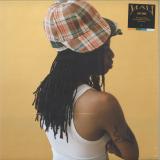
As most of us now live in a world saturated with information, this album feels like a reflection of how the modern world might sound if it were to process its own chaos through a unified scream. Hailing from the highlands of Bandung, West Java, a city where tradition and modernization intertwine in the rhythm of daily life, Xin Lie unpretentiously translates this cultural fusion into a sonically rich and rhythmically bold debut LP.
The artist’s roots in the hardcore and punk scenes reverberate throughout the album, though they’ve been reshaped and refined for the club. There’s an undeniable pleasure in experiencing the chaos Xin Lie channels—irregular beats, dynamic frequencies, and disjointed grooves collide and expand, each track laced with a sense of unpredictable energy. Yet even in its most chaotic moments, the music feels deliberate, its edges softened by a sense of compositional care.
The album reveals a strange duality: tracks that seem to beckon you to the dance floor but never quite let you settle there. Frequencies flicker and fluctuate in patterns that feel just slightly off-grid, as though resisting traditional structures. Yet, amidst the digital textures, Xin Lie weaves in organic sounds—snippets of native conversations or environmental noise—creating layers that feel both intimate and expansive.It’s fair to say this album extends far beyond the boundaries of today’s club music.
Picture this: you’re moving through your daily routines—mundane, repetitive—and suddenly, the music shifts your perspective. It reframes the ordinary as something surreal, as though it’s deconstructing itself in real-time, breaking into fragments or conjuring entirely new forms. Perhaps it’s best imagined as the soundtrack to a multi-sensory art installation or a performance staged not in a gallery but in an unassuming house down your street. Who’s to say where it might take you?
quête:info
This 59 minute piece was conceived as part of a total environment for the exhibition Deus Ex Machina.
The project as a whole seeks to define and articulate the emotional, cultural and aesthetic manifestations of man’s uneasy relationship with technology. The music takes the form of a film score complete with stylized dialogue and actions.
During the 59 minutes four basic layers repeat in various configurations.The effect is to provide a template of narrative in which the pieces exhibited may become protagonists, situated in hypothetical scenarios which illustrate the contentions of Deus Ex Machina and the transmission of information.
Review:“Paul Schütze’s debut album from 1989 sets his stall out from the start; with a cyber update on Jon Hassell’s notion of ‘Fourth World Music”. Schütze’s music always sounds like it could be an alternative soundtrack to ‘Blade Runner’ (be aware fellow purists, I did state “alternative”), and this album is probably the perfect candidate if in some other dimension the Vangelis OST was no longer deemed satisfactory (such a dimension surely cannot exist). The listener feels like they’re walking through the rain soaked, neon-lit streets of a future LA with Deckard.” – Jay Harper
When you’re running a label, a demo occasionally comes across your desk that makes you reconsider everything you thought your label was all about. For Balmat, such was the case with this stunning album from Stephen Vitiello, Brendan Canty, and Hahn Rowe. It sounds like nothing we’ve released so far—and that very otherness opened up a whole new world of possibilities for us.
Fans of ambient, experimental electronic music, and sound art will be familiar with Vitiello, a New York native, long based in Virginia, who has collaborated with a cross-generational list of greats: Taylor Deupree, Steve Roden, Lawrence English, Tetsu Inoue, Nam June Paik, Ryuichi Sakamoto, Pauline Oliveros, and many more. On labels like 12k, Room40, and Sub Rosa, he has explored a wide range of minimalism, microsound, lowercase, ambient, improv, and other styles. But this album is something different. It may begin in ambient-adjacent territory, but it quickly veers off, and it just keeps zigzagging, taking on elements of krautrock, post-punk, dub, and the groove-heavy interplay of groups like Natural Information Society and 75 Dollar Bill.
This stylistic turn is thanks in large part to Vitiello’s choice of collaborators. “We’re coming from three different schools,” Vitiello says: “sound art, art rock, and punk rock.”
Active since the early 1980s, Rowe—a violinist, guitarist, and producer/engineer—has played with, or manned the boards for, a frankly jaw-dropping list of musicians: Herbie Hancock, Gil Scott-Heron, the Last Poets, Roy Ayers, John Zorn, Glenn Branca, Swans, Live Skull, Brian Eno, David Byrne, Anohni, R.E.M., Yoko Ono, and many more. But he might be most closely associated with Hugo Largo, a one-of-a-kind New York quartet—two basses, vocals, and Rowe’s violin—that in the late 1980s helped lay the groundwork for what would eventually become known as post-rock.
Canty, of course, is the legendary drummer of Fugazi, the visionary DC post-hardcore group, as well as Rites of Spring before them, and, currently, the Messthetics, a Dischord-signed instrumental trio with guitarist Anthony Pirog and Fugazi bassist Joe Lally.
Vitiello’s trio first collaborated on First, a 17-minute piece released on the Longform Editions label in 2023. Second picks up where the freeform drift of First left off, channeling the trio’s exploratory energies into more intentionally structured tracks and—in a real first for Balmat—some almost shockingly muscular grooves. “Sometimes my projects are more conceptually driven,” Vitiello says, “but I think this was more musically geared. I just wanted to open up the references and bring in an incredible drummer, bring in some melodies, and I’m sort of the center.” But his collaborators, he stresses, are “vastly creative in making anything I might suggest better.”
Like its predecessor, Second took shape in phases, shifting between improvisation and collage. Vitiello laid down the skeleton of the music at home, sketching out initial ideas on Rhodes keyboard and acoustic and electric guitar; he then fed the parts through samplers and his modular system, recording 10- or 20-minute jams. Once he had edited them into more structured forms, he hit the studio with Canty, who added not just drums but also bass and piano; finally, Vitiello took the results of those sessions to Rowe, who played violin, viola, electric bass, and 12-string acoustic and bowed electric guitar, and assisted in some of the final structuring and mixdown.
A few more surprises along the way: Reanimator’s Don Godwin, the studio engineer where Vitiello recorded with Canty, contributed what he calls “resonant dustpan”; and none other than Animal Collective’s Geologist, who just happened to be in the studio that day, sits in on hurdy gurdy on “Mrphgtrs1,” the album’s gorgeous, stunningly atmospheric drone closer. “I love these chance encounters,” Vitiello says. “Somebody I admire, a group I admire—that was an unexpected gift.”
An unexpected gift is a great way of describing Second as a whole: three veteran musicians venturing outside their usual zones and finding a new collaborative language together. The results can’t be neatly slotted into any given genre; they belong not to any given category, but to the spirit of conversation itself.
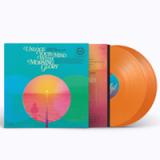
“To Model Phenomena” is a scientific concept that describes a computer’s ability to emulate, regardless of whether the emulated phenomenon exists outside its circuits or is purely imaginary.
Modeling communication platforms enables us to interact with each other or with computers. Modeling behavior patterns, nuclear fusion, or, as in the case of scientists from the Human Brain Project, a virtual human brain, allows us to simulate cognitive processes such as perception, memory, and decision-making, providing insight into the nature of human thought.
In this record, the phenomena modeled are those moments when the mind leaps into the void, confronting new paradigms. For instance, when science, art, or mass media introduces new information, propelling us into a transformed reality.
From this starting point, European musician Shifting Heigo maps a path between realities, evolving his narrative as his music unfolds. This work draws inspiration from Curtis Roads (vice chair of Media Arts and Technology at the UCSB) and his studies on granular synthesis and time scales, where each track on To Model Phenomena evokes a sense of movement, where nothing begins or ends in quite the same way.
A musician with strong ties to new technologies, Shifting Heigo has collaborated with the University of Málaga (Spain) in its PH Degree Program in video game design, composing interactive music, while also singing as part of the tenor section in the Qatar Concert Choir, affiliated with the Qatar Philharmonic Orchestra.
Currently based in Abu Dhabi, he is now part of a circle of electronic musicians surrounding the New York University Abu Dhabi, an institution that supports electronic and experimental music across the Middle East.
To Model Phenomena is the result of his search for a unique voice as a musician, where ternary rhythms, noise, and silence shape the narrative. This is a discourse from a musician’s perspective on the changes that science, technology, art, and the rapid flow of information demand of us. A direct gaze into the fear of change.
Heady house label Courtesy Of Balance only releases music that you know will stand the test of time. It is informed by the classic schools of deepness but always with a modern touch and unique character, and next to carry that torch is Ostrich aka Nadir Agha. He's in charge of curation at Montreal's legendary Stereo Club and shows his class here with opener 'Snake Charmer' which is built on a dynamic groove foundation and embellished with wispy pads that take your mind on a wander. 'Promiscuous' is heavy, dubby house stripped back to the core essentials and perfectly executed. 'Buttered Up' is a little more mobile but embellished with nothing chords and smoky vocal soul and 'Broken Science' closes with a brilliant broken beat flourish that is full of jazzy invention.
The first release to document the solo cello work of musician and composer Lucy Railton, the 40-minute composition Blue Veil recorded at Église du Saint-Esprit in Paris invites listeners into the realm of precision-tuned states of resonance: states made manifest through Railton's careful traversal of her cello's most subtle acoustic characteristics as they harmonically interlock with mind's embodied modalities of attention and imagination. Blue Veil arises out of, is sustained in and finally dissolves back into Railton's momentary presence with her intimate connection to the cello, a way of hearing that allows for a deeper engagement with harmonic resonance, one that opens a space for immediate encounters of mind and sound. Railton's exploratory practice of harmonic perception emerges from a focus on the physical qualities of intervallic and chordal sounds, their textural qualities, degrees of friction, and inner pulsations. Composing in the moment guided by resonances within the cello's body, her own, and their shared vibrational space, Railton moves through Blue Veil by giving sounds what they ask for: sounds of pure texture manifesting as a move through temporal transparency, sounds of rough texture marking regions of dimensionally dense space. Railton's creative and highly refined use of just intonation harmony deforms sound's inner movements in ways that suggest a mode of listening that actively supplies imagery of sounds implied or completely absent rather than merely savouring those fully present. This active mode of "listening-with", playfully and semi-metaphorically referred to by Railton as "sing-along music", allows listening to reflexively participate in the music's movement as it gradually passes through richly saturated domains of harmonic imagination. And just as the precision-tuned tones of Blue Veil lose their individuality when fusing multifaceted uniformity, listening's structures of reference and recognition dissolve into nameless waves of intensity, continuously unfolding themselves upon and merging with the listener. Blue Veil is the result of a deep exploration of the inner worlds of tuning, an undertaking in turn informed by and emerging out of Railton's realisations of the music of Catherine Lamb and Ellen Arkbro, her collaborative work with Kali Malone and Stephen O'Malley as well as her interpretive practice in performing the work of Maryanne Amacher, Morton Feldman and others.
The indominable Russell Haswell returns! He's a restlessly forward-thinking, multi-disciplinary artist, performer and curator who calls Diagonal Records his home. His past collaborators include Aphex Twin, Gescom, Florian Hecker and Merzbrow. "DeepTime" is Russell's latest LP for the label following on from 2023's 'Reality Therapy'. Whilst "Reality Therapy" was an introverted affair, "DeepTime" is brimming with confidence and aimed squarely at the dance floor.
Russell's club friendly turns are resolutelyprogressivist. Whilst being informed by the works of Claude Young and Jeff Mills, his music feels like it was made in another dimension altogether. Title track, "DeepTime", "Unconformity" and "Atropine" all prove the point. It's techno but it's much more besides.
MAD012 has arrived! or as we’ve been referring to it the ‘M.A.D Garage’ EP. (as in Paradise Garage)
After receiving Magari and Ilija Rudman’s tracks within a short time of each other it felt like a perfect fit to pair them together. Both productions give a nod to the 80s House sound whilst expertly bringing the aesthetic up to date.
Magari has provided us with an eyes closed dub’d out groover and Rudman supplies a winding and weaving synthesised journey, giving a sonic glimpse in to his fully stocked studio.
It’s always been top of our list to work with the inimitable Mark Seven. His music is a staple of our sets and as many of you know, is somewhat of guiding light of our scene. Any fan of Parkway Records knows it’s always an exciting day when they announce something new, needless to say we are proud to present a Parkway Powermix on M.A.D.
Finally, our good friend, the extremely versatile Producer/DJ Manuel Darquart finishes off the record with a sublime rolling take on ‘Danceteria’. If somehow you didn’t know him already consider yourself informed.
Probably the Three most dancefloor tracks from the forthcoming Bad Girlz album “Bad Girlz at Work”
I am Savage is a peak time floor filler with Nineties tech vibes with a vocal hook adapted from Breach the Peace. Little Miss information is an all smiles pumping electro hit and It’s a banger ? The clue is in the name … The vinyl sampler will be released on 13th March with the full album in Digital format to follow on the 19th.
Clear Memory welcomes En Direct back. After their appearance on CLEAR001 they released two EP's on our sister label Lunatic. With 'The Illusion Of Control', En Direct release their first album. A long player diving deep into the realms of the human mind and its abyss. Exploring insecurities, uproar and mania with Industrial studies and EBM, rounding it off with bittersweet Minimal Wave and Electro for the sleepless Edition of 200, comes with Info-Sheet.
Uhlmann Johnson Wilkes is the debut album from Gregory Uhlmann (SML, Anna Butterss, Duffy x Uhlmann, Perfume Genius), Josh Johnson (SML, Jeff Parker ETA IVtet & New Breed, Meshell Ndegeocello, Anna Butterss, Leon Bridges), and Sam Wilkes (Sam Gendel, Louis Cole, Chaka Khan). The three improviser/arranger/producers' impressive individual credits encompass such a wide stylistic pendulum swing that a collection of group music from the trio could mine any number of musical territories with masterful results. I n these 11 instrumental songs, the trio explores a spacious lyrical curiosity that could b e described as a jazz-informed take o n progressive electro-acoustic chamber music.
Conceived during two live shows at ETA and a session at Uhlmann's house in Los Angeles, the album maintains a focus on beauty, melody, and rhythm as the pieces unfold, with the trio pushing their instruments and highly-dialed effects to sculpt otherworldly sounds with the collective sensibility o f a rhythm section. The ethos of these instant compositions is arrangement-minded improvisation that showcases the mournful beauty of Uhlmann's fingerpicked electric guitar, the hybrid rhythm-lead of Wilkes' bass chording, and the textural harmonic worldbuilding of Johnson's effect-laden alto saxophone.
Info: The highly anticipated ROAD RASA from JAWARI is a genre-defying journey led by the Tommy Khosla’s evocative sitar playing, seamlessly blending classical Indian influences with jazz, electronic, cinematic textures and poetry. Drawing inspiration from the expansive sounds of artists like Ananda Shankar and Kikagaku Moyo, the album weaves intricate rhythms and ethereal melodies into an immersive experience. Celebrated by Jazz News and featured on NTS, ROAD RASA has earned critical acclaim for its innovative soundscapes. The vinyl edition features stunning artwork by ceramic artist Nehal Aamir, reflecting the album’s conceptual depth and transcendence, and is in a limited run of 500 numbered records.
b
b A2 |
NEW LP PRESSING on Opaque Yellow Wax
Released in September 1978, a mere two months before YMO’s debut, Cochin Moon is a clear precursor to the groundbreaking synth and sequencer-dominated sounds that would come to define the iconic trio. Huge tip!
Credited to Hosono and Pop Art legend Tadanori Yokoo (who created the cover art), Cochin Moon is a fictional soundtrack to a journey into unknown worlds, inspired by Hosono and Yokoo’s trip to India.
The unbelievably prolific Haruomi Hosono is one of the major architects of modern Japanese pop music. With his encyclopedic knowledge of music and boundless curiosity for new sounds, Hosono is the auteur of his own idiosyncratic musical world, putting his unmistakable stamp on hundreds of recordings as an artist, session player, songwriter and producer. Born and raised in central Tokyo, his adolescent obsession with American pop culture informed his early forays into country music, which he would revisit later in his career. Hosono made his professional debut in 1969 as a member of Apryl Fool, whose heavy psychedelia was somewhat at odds with his influences, which leaned towards the rootsy sounds of Moby Grape and Buffalo Springfield. The latter was one of the main inspirations for his next group, Happy End, whose unique blend of West Coast sounds with Japanese lyrics proved to be highly influential over the course of three albums. After the band’s amicable break up in 1973, Hosono began his solo career with Hosono House, an intimate slice of Japanese Americana recorded inside a rented house with recording gear squeezed into its tiny bedroom. Hosono’s solo career would take many twists and turns from this point forward, with forays into exotica, electronic, ambient, and techno, culminating in the massive success of techno pop group Yellow Magic Orchestra (YMO).
Released in September 1978, a mere two months before YMO’s debut, Cochin Moon is a clear precursor to the groundbreaking synth and sequencer-dominated sounds that would come to define the iconic trio. Credited to Hosono and Pop Art legend Tadanori Yokoo (who created the cover art), Cochin Moon is a fictional soundtrack to a journey into unknown worlds, inspired by Hosono and Yokoo’s trip to India. Initially the album was to be a kind of ethnographic musical document, using found sounds and field recordings made by Hosono himself. Instead, after Yokoo introduced Hosono to the sounds of Kraftwerk and krautrock during the trip, Cochin Moon became something much stranger. Created almost entirely on synthesizers and sequencers with the help of future YMO collaborators Ryuichi Sakamoto and Hideki Matsutake, the music on the album is the perfect encapsulation of Hosono’s concept of “sightseeing music,” transporting the listener to an exotic place that may or may not exist. This highly sought-after album sees its first-ever official release outside of Japan.
Cassette[15,08 €]
Studio, the influential project of Swedish musicians Dan Lissvik and Rasmus Hägg, presents their legendary 2006 debut in remastered form, in partnership with Ghostly International. Available in limited edition "Fog Machine Vinyl", CD, and cassette. "One of the finest pieces of electronic music you'll hear this year.” - The Guardian (2006). Included in year-end best-of write-ups by Pitchfork, FACT Magazine, and Rough Trade. Physical copies have long been out of print for West Coast, and the album has also been notably absent from most streaming services until now.
“Somehow, I knew I wanted to make a conceptual record that, although only imaginary at that point, could represent or define how our city sounded,” says Lissvik of Gothenburg's influence on West Coast. Some called Studio, the project of Swedish musicians Dan Lissvik and Rasmus Hägg, “the missing link between The Cure and Lindstrøm,” Pitchfork heard Durutti Column and Can, as the duo’s story became swept up in a loosely developing scene — adjacent first to the label Service (Jens Lekman, The Whitest Boy Alive) and later Sincerely Yours (The Tough Alliance, jj) — and a precursor to the 2010s boom at the axis of electronic and psychedelic music guided by indie greats like Caribou, Four Tet, and Darkside.
West Coast, their seminal 2006 debut, captured a faraway romanticism of Balearic brushed up against Krautrock, disco, dub, and afrobeat, with pop lyricism lifted from new wave, all made modern by two art school grads in Gothenburg. First pressed in a small vinyl-only run via their own Information label, the album has been notably absent from most streaming services, and the internet’s record of its initial impact is all but fossilized from a bygone blog era, while its sound is simply untraceable to any one moment in music.
Outside of three 7” releases, they’d keep the music to themselves for several more years. In 2005, Hägg remembers, “We got our degrees and were kicked out of our studio spaces so all these recordings were just piled up. A year later we dusted them off and started to deconstruct and assemble them in a more drawn-out fashion.” In the same breadth, they cite DJ Screw, J Dilla, and Joy Division, along with early ‘80s European live DJ sets from the likes of Beppe Loda, Dj Mozart, and Baldelli as reference points.
“The anything-goes mentality was very encouraging and was a big cornerstone to the Studio sound,” says Hägg. “But there’s so much more to the picture, we were not that young then and had lots of musical baggage in our suitcases, the new thing was that we finally let it all come through, not bound by any borders that was often the case with music identity in Sweden during the 90s.” In the afterglow of the record’s 2007 reception, Studio receded from view, clouded behind a mountain of remix requests (including one for Kylie Minogue that saw release) and label bureaucracy. “It’s easy to wish we would have done some proper recordings of our own instead,” Hägg reflects. But both artists, now well into respective careers beyond Studio, have come to peace with West Coast as their most enduring effort together. Lissvik adds, “It serves as a good reminder for me to keep to that decision and promise and to continue exploring and growing
The combination of their musicianship and the cutting-edge technology at the studio resulted in a masterpiece of pure, state-of-the-art funk and boogie. The album features all the hallmarks of great 80s music: fresh synths, drum machines, and powerful lead vocals from John Davis. Upbeat tracks like "The Cat (Puma)" and the title track sit comfortably alongside more soulful songs like "Tears" and "Hearts of Gold," while "Dancing Shoes" remains one of the era's catchiest dance tracks.
Still, Shake It - Make It Loose holds a few mysteries. Why was it released under the unusual name J.D. (Puma) Lewis? And what's the story behind tracks like "The Cat"? While J.D. Lewis stood for John Davis Lewis's full legal name, Hudson sheds light on the "Puma" connection: "At the time, I was working as a promotions manager for Puma sportswear. Jörg Dassler, son of Puma founder Rudolf Dassler, was a friend of mine and financed our studio sessions." As said, these sessions took place at Hartmann Digital, a state-of-the-art studio in Untertrubach, Bavaria, where iconic artists like Nena, Yello, Visage, DAF, and Soft Cell recorded.
The use of such an expensive studio would have been out of reach for the two musicians without Puma's backing, which also explains why there is a title like "Dancing Shoes." When we had licensed the track for the Boogie On The Mainline compilation in 2018, we had the chance to speak with John Davis (who sadly passed away in May 2021 due to COVID-19). Davis revealed that there were plans to make a video for the song in collaboration with Puma, but those plans fell through. In the end, the album was signed to the Deggendorf-based Metrovynil label.
Interestingly, the original contract reveals that the first version of the album only contained six tracks. Metrovynil added two more: "Sexy Highschool Lady," a track Davis recorded solo, and "Party Rap" by The Dynamite Two, which had no connection to Davis or Hudson at all. The album's credits also list a "Fred Fiore" as the person "who made all of this possible." Hudson, who sees himself as the producer, has no idea who Fiore was - likely another fabrication from the label. "That's just the kind of thing Metrovynil did," Hudson comments with some regret.
Despite the behind-the-scenes confusion, the music spoke for itself. The original pressing looked and sounded fantastic, featuring a stylish cover shot of John Davis in a sharp suit. Now, with this first-ever vinyl reissue, we're thrilled to include additional photos and more background information in a deluxe gatefold sleeve.
This reissue includes all six tracks from the original Hartmann Digital sessions, plus two bonus tracks. From the original reel tapes, we unearthed additional material that Hudson and Davis produced together in the early to mid-80s. We're excited to share the previously unreleased tracks "Life's A Party," and "Walk Out On Me." The digital version of the reissue will also feature two more songs: "Red Drops" and "Pick It Up Off The Ground."
Shake It - Make It Loose is a classic boogie-funk album that belongs in every serious funk and disco collection. It showcases the undeniable talent of two true musicians and stands as a testament to the friendship between Reg Hudson and John Davis.
70s Nigerian psychedelic soul rock to be filed next to Shuggie Otis’ Inspiration Information. Some albums are more than the sum of their parts. This is one of them. Nothing quite explains the luscious layers of sounds. The wholesome feeling that exudes from the first note to the last. Shuggie Otis meets Grotto/Ofege is what comes to mind.
The band was a ragtag band of teenage musicians who hung around Federal Palace Hotel in classy Victoria Island, listening to the resident band, led by the incomparable Yom Yem with Papa Doe and Gboyega Adelaja on keys. Frank who had some experience stringing around studios in Lagos, approached the George Veira (Vocals, Guitar), Nadi brothers (Clifford and Gerrard) with the idea of making a record. Odion Iruoje had enjoyed massive success with Ofege and Frank knew he might be open to the idea of producing the band. “It happened very fast, as Georges had songs already written or half completed. We started jamming with a few gigs at Surulere Night Club, which was run by Tee Mac at the time. Odion heard the material and did not need any convincing. We Then we went into the studio to lay the vocals, drums and guitars. The keys and further production was done in London.
“My routine at the time was to finish records in London, at Abbey Road Studios. It was the best way to get the sound I wanted and allowed my use London based musicians which brought a special flavour. I liked to lay the rhythm tracks and vocals at our Wharf road studio in Lagos. That was the core of the work”. Mr Odion Iruoje
(Resident A&R exec/Producer, EMI Nigeria)
Borusiade lands on Dark Entries with their triumphant third LP, THE FALL: A Series of Documented Experiences. The Romanian producer and DJ Miruna Boruzescu aka Borusiade has a track record of genre-bending releases on tastemaking outlets like Cómeme, Pinkman, Cititrax, and of course Dark Entries, who unleashed their stunning 2020 sophomore album Fortunate Isolation. THE FALL builds on Borusiade’s mythos with its 9 brooding and sophisticated tracks investigating the contours of memory and embodiment - the “fragile bridge between body and mind” in Borusiade’s words. Moody basslines and melancholy synths wrestle with muscular rhythms; this is electronic body music for the heart and head. This is their most diaristic work to date, as well, chronicling love and loss through the gauze of reflection. Tracks like “Save Me”, “Recovery and Redemption”, and “The Fall” sprung from painful breakups, periods which Borusiade identifies as some of their most creatively fruitful, finding themselves “making the best music when I was brokenhearted.” There are odes to musical titans we’ve lost: the minimal electro producer Porn Darsteller is comemorated on “Darsteller”, while industrial legends Genesis P-Orrige and Lady Jaye are honored on “Pandrogyne.” THE FALL comes housed in a sleeve using Gautier D'Agoty’s “Essai d'Anatomie,” an anatomical work from 1745, and also includes a lyric sheet. Trauma, from lost love to pandemic isolation, informs THE FALL, situating itself as a gap that can only be accessed through sound and the creation of art. “What can I add? When life gives you drama, make music.”
NOTON is pleased to announce the release of Xerrox Vol. 5, the final installment of Alva Noto’s Xerrox series.
For anyone who has been following the series since its inception in 2007, the concept of Xerrox no longer requires introduction. Originally, it aimed to create copies of images—both visual and acoustic—that are more memorable than the originals. The exploration of the relationship between the original and the copy, along with the invention of the copier, not only inspired the series name but also informed its underlying concept. In 2024, this series comes to an end, marking the culmination of a journey that began with the first recording in 2005/2006. Over nearly two decades, the five albums in this series have accompanied the artist's evolving perspective and conceptual approach.
Initially characterized by rawness and a conceptual focus on seeking resolution in white noise, the later works engage with themes of dissolution while shifting their emphasis toward acoustic particles. The copying process is now less visible through software manipulation; rather, it unfolds as the artist describes melodic and acoustic images that are then manipulated, copied, and transformed into new patterns during composition.
Nicolai describes this evolution as a journey encompassing buildup, exploration, and resolution, drawing parallels to the Odyssey and the stories of Jules Verne, particularly those featuring Captain Nemo.
The conclusion of this album holds a sense of finality for the artist. “I aimed to create a whole cycle of tracks that frame both the beginning and the end,” Nicolai explains. “The motif of the journey continues, but this time, the story reaches a dissolution through a conceptual object that embarks on its own journey into infinity. The word “dissolution” (“Auflösung” in German) is a wonderful concept. On one hand, you can solve a riddle, on the other hand, a pill can completely dissolve in water. Here, I am deliberately describing the process of dissolution.”
In crafting Volume 5, Nicolai has evolved his compositional process, eschewing samples in favor of original melodies. “This album probably took the longest to complete,” he reveals. “I first created melodic sketches, which became the foundation for the pieces. These recordings are created entirely from scratch. Based on these sketches, I constructed the process of copying, manipulating, and reshaping.”
Drawing from his recent experiences working with film and larger ensembles, Nicolai's approach to composition reflects a growing influence of classical instrumentation. “This experience of working with acoustic classical instruments has flowed into the compositional process for Xerrox Vol. 5. Certain instruments are designed with potential orchestral translation in mind.”
The sonic atmosphere of Xerrox Vol. 5 is one of profound dissolution. “I wasn’t initially interested in strong, emotional melodic aspects,” Nicolai shares, “but I realized that the fragment plays a central role.” This shift leads to an emotionally charged experience, imbued with melancholy and the bittersweet essence of farewell. The passing of Ryuichi Sakamoto, an admirer of the series, has further deepened the album’s emotional resonance.
“Xerrox Vol. 5 has a lot to do with farewell,” the artist explains. "Not only the farewell to the series itself, which I’ve nurtured for almost two decades, but also there have been many farewells to people who were close to me. I believe these people are recognizable in the music. It’s a very emotional, personal album.”
Listeners can expect a visual dimension to the music, though Nicolai intentionally leaves this open to interpretation. “I prefer to allow the music to evoke personal experiences and images rather than dictate a specific narrative,” he states. The result is a layered listening experience that invites tenderness and introspection.
Fan Club Orchestra (FCO) has its roots in collaborative performances and recordings that began taking place in the late nineties in Brussels. These continued into the second decade of the new millennium around Belgium and neighbouring countries. At a time when large contemporary arts spaces were less professionalised, less obedient to
funding and attendance numbers, and Still tuned to their founding DIY impulses, FCO were able to nurture their nebulous cast of players with their unconventional ensemble of instruments to their own ends. The apparent informality of their performances, mixed with the sheer spectacle of their unfolding, transplanted the experimentalism of New York's downtown scene of the 1960s into the cracked consumer electronics period of new media art at the turn of the century. A newly regrouped FCO now present their album 'VL_Stay' on 12th Isle. This literation of FCO sees Baudoux joined by Ann Appermans on guitar and bass, and Zéphyr Zijlstra on trumpet. Appermans is an original FCO member as well as a frequent collaborator with Baudoux. Zijlstra is a jazz student at the Royal Conservatoire of Brussels. Recorded in just two weeks, the trio invoke the pedigree with which FCO first toyed, while sketching a continuity with new references.

Olivan makes an impressive return to Bunte Kuh with a remarkable EP featuring two brand new tracks!
The title track Hundred Years is elevated by captivating remixes from Acid Pauli and Nhii, while Father and Son – a heartfelt collaboration between Olivan and his father – shines with a groovy remix by Dandara.
This release is not only a musical triumph but also a deeply personal milestone for Olivan. As an ecological offset for vinyl production and in memory of the old and massive copper beech described in the title track, which was destroyed by a severe storm, Olivan has planted a tree for each vinyl record produced.Every record comes with a personalized tree certificate, which can be customized with your details. The certificate provides information about the project, the tree species, the tree's location, and its ecological impact.
Since its founding back in 2014, Blume has carved a unique place in cultural landscape, issuing free-standing works, spanning the historical and contemporary, that represent singular gestures of creativity within the field of experimental sound. Joining their broad efforts in building networks of context and understanding that already includes the works by Werner Durand, Sarah Hennies, Bruce Nauman, John Butcher, Jocy de Oliveira, Mary Jane Leach, Valentina Magaletti, Alvin Curran, Julius Eastman, Alvin Lucier, and others, Blume return with the first ever vinyl release to attend to James Tenney’s legendary “Postal Pieces”, Marking the first ever appearance of five of the suite’s works - “Maximusic, for Max Neuhaus” (1965), “Having Never Written a Note for Percussion, for John Bergamo” (1971), “FFor Percussion Perhaps, or... Night, for Harold Budd” (1971), “Cellogram, for Joel Krosnick” (1971), and “Beast, for Buell Neidlinger” (1971) - on vinyl, drawing upon recordings made in 2003, by the Amsterdam based ensemble, The Barton Workshop, under the direction of James Fulkerson. Among the most important and highly regarded efforts in Tenney’s canon of compositions, as well as within the history of 20th Century music, these five pieces represent a crucial bridge between Fluxus-oriented conceptualism, minimalism, and the microtonal complexities that would emerge in their wakes. Issued in a highly limited vinyl edition of 300 copies, it includes exact replicas of the original postcard graphic scores, and features newly commissioned liner notes by Bradford Bailey, Blume’s brand new edition takes great steps to centring Tenney at the eye the storm during some of experimental music’s most important years.
A student of composition under Carl Ruggles, John Cage, Harry Partch, and Edgard Varèse - remaining close to all of them, and later performing in both Cage and Partch’s ensembles - as well as acoustics, information theory, and tape music composition under Lejaren Hiller, James Tenney carved a wide path within the contexts of experimental and avant-garde music during the second half of the 20th Century. Not only was he a tangible bridge between the generations of composer’s who laid much of the groundwork and the later movements of Fluxus, Minimalism, and the broader practices of experimental music, but Tenney is credited as having contributed one of the earliest applications of gestalt theory and cognitive science to music in 1961, before helping to pioneer the field of computer music at Bell Labs, during the following years.
Over the course of his career, Tenney produced music of such complexity and sophistication - paying little mind to the seductions of taste or dominant tropes of its own moment - that his work and legacy have largely remained under-recognised by the broader publics that have attended to most of his peers. Perhaps more pertinently, the body of work he produced can be perceived as too varied and complex to fit neatly within standard creative histories or critical frameworks, comprising harmonically complex works for acoustic instrumentation, musique concrète, the groundbreaking 1961 “plunderphonic” composition, “Collage No.1 (Blue Suede) (for tape)” - sampling and manipulating a recording of Elvis Presley - as well as algorithmic and computer synthesized music. Even here, within this single decade, a clear image of Tenney’s endeavours remains elusive. In addition to penning important theoretical texts, he collaborated and / or played with Max Neuhaus, La Monte Young, Steve Reich, Philip Glass, Michael Snow, Terry Riley, and numerous others; was an active member of Fluxus; starred in and composed music for Stan Brackage’s films; regularly worked with the Judson Dance Theater; co-founded and played in the ensemble, Tone Roads, with Malcolm Goldstein and Philip Corner; was a vocal advocate of the works of Conlon Nancarrow and Charles Ives, playing a significant part in the revival of both of their legacies; and regularly collaborated as a composer, musician, and actor with his then-partner, the artist Carolee Schneemann, notably co-starring in her film, “Fuses” (1965) and her legendary 1964 performance, “Meat Joy”, as well as creating sound collages for her films “Viet Flakes” (1965) and “Snows” (1970). Curiously, for a relatively absent figure in the historical and critical narratives, Tenney seems to have been the thread that bound multiple generations and disciplines of avant-garde practice in New York during this period.
Tenney was deeply invested in the quality and perception of sound. By 1970, this led him back to composing exclusively for acoustic instrumentation (though sometimes processed with tape delay) - in most cases utilising non-well tempered tuning systems to explore harmonic perception - a practice that he would remain steadfast to for the remainder of his life. This development roughly corresponded with his relocation to California, at the outset of the 1970s, following an invitation to teach at the newly founded music department at California Institute of the Arts (CalArts) in Valencia. Finding himself in regular contact with the harpist Susan Allen and the artist Allison Knowles, as well as at a great distance from many of his friends, in 1971 he completed (with the assistance of Knowles and Marie McRoy) “The Postal Pieces”, a project he had begun in 1965.
A suite of eleven compositions, “The Postal Pieces”, stands among Tenney’s well known and celebrated compositions, and illuminates the dualities embraced by the composer, notably his use of sound to develop consciousness in and of others, and his willingness to draw on elements and observations of everyday life; citing his strong dislike of writing letters as being the primary inspiration for their inception. In lieu, he conceived to send his friends - John Bergamo, Allison Knowles, Pauline Oliveros, La Monte Young, Harold Budd, Philip Corner, Joel Krosnick, Buell Neidlinger, Susan Allen, Max Neuhaus, and Malcolm Goldstein - short scores on the back of postcards. The suite is composed around three themes: Tenney’s concept of swell form (utilizing repetition and progressing through a structurally symmetrical arch), intonation, and the desire to produce “meditative perceptual states”.
A hugely important addition to Blume’s ever expanding efforts in context building and networks of creative practice, James Tenney’s “Post Pieces” is issued in a highly limited vinyl edition of 300 copies, which includes a exact replicas of the original postcard graphic scores, and features newly commissioned liner notes by Bradford Bailey.
Nous'klaer Audio proudly presents Nicola Cruz's latest full-length album, Kinesia. On his third studio album, the Ecuadorian producer masterfully blends rich studio sessions with deep analog synthesis. Kinesia invites the listener to channel an inner voice - to pick up thoughts, words, and messages as if ancient information traveling through time has been received. This album functions as a form of 'antenna,' translating these ideas into compositions and movement. The album begins with a 5/4 rhythm structure, summoning the voice of machina into a textural atmosphere, led by Perma, Nicola's vision of an infinite breaks vortex, and sustains the tension with the meditative Telepathine, a substance fictionally associated with telepathy. Regardless of the tempo, each track is intricately laced with chants, subtle percussion, textures, and spacious details that draw you back for more. With Kinesia, Nicola Cruz continues to evolve his signature sound and takes you along for the ride. While the album is crafted for a deep, introspective journey, the kinetic influence remains ever-present on dance floors.
‘Les Cigales’ takes its’ sonic cues from the structure of film and TV music from the 1960s and 70s, channelling the influence of film composers such as Francois de Roubaix and David Axelrod, whilst also sitting somewhere between the washed out, sun-soaked sonics of Surprise Chef and Robohands. As the EP unwinds, its narrative reflects a love story, full of longing, melancholy and drama, connecting with the story of Gyptis and Protis – the founding myth of Marseilles – whose love broke convention and welcomed the arrival of foreign people on French soil.
The project follows The Offline’s debut album ‘La couleur de la mer’, released in November 2023, which saw him create his own soundtrack to a film yet to be made. Inducing images of manorial, fog- swept villas at the seas edge, silhouetted sailing boats and cigar-chomping villains attempting to thwart the mission of an imaginary hero, the record is a masterfully composed sonic journey. ‘Les Cigales’ sees him continue to build upon a distinctive sound that moves from dramatic cues to fragile romanticism, incorporating psychedelic spaciness, retro soul and hip-hop sensibilities informed by his extensive record collection.
- A1: The Prelude
- A2: You Are Leaving My Mind
- A3: You Are The Other Reality And I Am This Reality Okay Okay No More Scary Faces
- A4: You Are Leaving My Mind Reprise
- A5: Mariko - The Finale Sands And Sun Inst
- A6: A Peeling Off Poster Part 2 Inst
- B1: Sha-La-La On The Hill A Dawn Poem
- B2: Bells Of Spring
- B3: Lipstick Boy
- B4: Love Gone To The Blue Sea Once Again On The Seaside Path
- B5: Twistar Sister Pylot Twinkle Star Patrol
Have you ever been to Miyazaki? It’s a prefecture on Japan’s southern island of Kyushu, facing the Pacific. Palm trees. Humid subtropical climate. This is the home of Maple Fyshh, a musical artist whose late-80s/early-90s recordings have been collected and reissued here. Liberated by the advent of 4-track cassette home recording technology, inspired by a love of 60s pop oddball production mavens like Phil Spector and Joe Meek, as well as American hot rod and surf music, these Maple Fyssh songs glow with an outsider’s love of the transformative power of newly-available sound technology, allowing him to pull his inspirations across decades and oceans to his 1990s Miyazaki home studio. The tracks here are a d.i.y. dream-pop wonderland, compiling songs from his first LP “Mariko” and second LP “Dokitto Station!!”, both self-produced, both released in 1995. The A-side of this release features tracks from the concept album “Mariko”, a masterpiece of daydream pop introspection, recorded in 1994-95, inspired by a poem submitted to a manga magazine. The B-side features tracks from “Dokitto Station!!”, slightly earlier recordings that draw inspiration from a range of 60s pop including girl groups, surf music and acid folk. All the music here demonstrates Maple Fyshh’s deep understanding and appreciation 60s pop moves, and also his mastery of the limited technology at his disposal.
Remastered in 2024, the sound of Miyazaki has been reborn for a new audience. Available on Vinyl LP and download, with a DL card, English/Japanese lyrics and entertaining and informative English/Japanese liner notes by the artist.
DSK Records is thrilled to announce the release of the highly anticipated album ‘USWATT' by the renowned Barcelona based Egyptian artist, Raxon. BIGAMO welcomes Bi Disc to it's label roster who is best known as one half of producer duo Feeling Valencia and the founding member of acclaimed club outfit Gheist. Under the newfound Bi Disc moniker, he now reveals "Pieces, Falling" a musical spectrum that aims at nothing less than offering the most authentic version of himself.
For further information please have a look below, or in the stocklist attached to this mail.
If there is anything else you need, just let us know
Acquit Records are setting out on an ambitious one, presenting their latest foray into vinyl releasing with this incredible new LP from Arbilla. Both label and artist move incredibly low-key, but unearthing the info was worth it. Arbilla aka. Phil Robertson and his own adjacent imprint, Xistence Records, follows up prior greats such as the 'Movement' EP with this full-length, which takes after Detroit techno and catapults it to ever further cosmic reaches. Zooming out to the macro-point of galaxy filaments and Bootes Voids, we begin with the brukky opus '3500 Miles Away From Detroit' before seguing into the percussive workouts of 'Brighter Swallow' and 'Mecca'. A real sense of expanse is given off from the otherwise raw and up-close analogue sound; the cosmos is, of course, airtight.
- A1: The Undertakers - Searching
- A2: The Rippers - The Night At The Lagoone
- A3: Terry Pilittere - You Wouldn&Apos;T Believe Me
- A4: Teegarden & Van Winkle - Doin My Thing
- A5: The Essentials - Oklahoma Blues
- A6: Big Top - What Can I Do
- B1: Lony & The Misfits Ltd - Birthday
- B2: Chuck Baker - Got To Get Away From L A
- B3: Fresh Air - I`m Tired
- B4: A G.e. - Not Going Back
- B5: Synod - Creatures Of Habit
7[21,64 €]
RARE & PREV. UNRELEASED PSYCH-FUNK AND GARAGE ROCK !!!
Say hello to Down & Wired Vol. 7 as Perfect Toy Records unleashes yet another instalment in its long-running compilation series! Once more, the label provides a delectable selection of obscure funk and soul-influenced psychedelic and garage rock tracks to delight even hardcore collectors of both genres.
And make no mistake, there is plenty to discover among these eleven tracks. At the funkiest end of things, Function's Free Style morphs from West Coast psychedelia to country funk to swamp rock and back again in its sub-three minute length, Dandy King provide psychedelic funky-soul and The Whiz Kids take a heavy dose of funkiness with them into psych-rock territory – sample fiends watch out for the fat twenty-second drum break towards the end of the latter! Purer psychedelia can be found in the offering from Third Stone while Würzburg band Prisma provide all-out epic psych-rock carnage. And if rock carnage is your thing, you'll be feeling the dirty garage rock onslaught of The Comin' Generation and a previously unreleased cut by Synod - soon to be a 45 single on Perfect Toy. That just leaves The General Store, The Soul Society, The Vestells and another unreleased cut from The Villagers (from whom the label will be dropping more unreleased material soon!), to close the circle by adding a heavy dose of garage soul.
A worthy successor to the previous volumes, Down & Wired Vol. 7 is once again accompanied by an insert containing detailed information and photos of the bands and a download code is also included with every vinyl LP.
Swiss label Acquit Records has got a couple of superb outings lined up this month and Nate Nubia is behind this one which offers up a single and three different mixes of it. Original cut 'Dracula Vs. Frankenstein' is a warm analogue world of smeared synths and dusty drums over a crisp broken beat. It's full of machine soul and melancholic moods. The Info Remix is more edgy and driven, while the Kenny Hooper remix layers in extra light and melody. The G-Prod remix is one with its head amongst the stars and plenty of celestial synths.
Heavyweight special-effect 12" vinyl (three colors, marbled) with two-sided printed information insert about the album. Mastered and lacquer cut by Stefan Betke (Scape Mastering).
Taevalaotus delivers his second album "Ringlus" ("Circulation") as the second release from Estonian based Taevas Records label, comprised of five original tracks plus a remix from Octal Industries.
In a way, everything eventually returns to its starting point. With everything in constant movement, departure and arrival are nothing more than the beginning and the end of a circle. "Ringlus" as an album wanders along the path of its creator's fantasy. No third-party samples are used, the music's fabric is woven from original, natural sounds such as analog oscillators, vibrations of bass guitar strings, sonic echoes of nature, and cracking of the ice recorded underwater. The tracks contain sound and field recordings from the years 2013 to 2017 that were almost forgotten but then rediscovered from Studio Master 468 archive tapes. The aim was to circulate without taking notice of time and to create soundscapes with original resonance, structure and flow that serve as an antidote to contemporary rushed consumerism.
Hardware used: Alesis A6 Andromeda, Dave Smith Instruments Evolver, Elektron Analog Rytm, Yamaha electric bass, Tibetan singing bowls, wooden drum, Otari MTR-12, Drawmer 1974. 1973 & 1978, various analog effect pedals, scientific hydrophone in ice lake, Konka hand made ("organ-pipes") long distance microphone and portable Sony pcm-d50 in the field recordings.
Rick Holmes’ breath-taking track, ‘Remember To Remember’ gets its first ever officially licensed, remastered reissue on Gold Mink Records. With prices of the original topping £60 this one will be a welcome sight for many.
Title track, ‘Remember To Remember’ is a celestial, emboldening downtempo cut. Beginning with the timeless line, ‘Pass the information, extend the knowledge…’ Rick dives into a spoken word stream of inspirational black artists and key figures whose most memorable words and song titles are framed into snippets of wisdom that get ever more significant the greater in number they become. A powerful monologue, in Rick’s warm reassuring tones, shining a light on those men and women who have made ‘strong contributions to mankind because of their compassion and humanitarianism’, laid over instrumentation you lose yourself in just as easily.
‘Remember to remember, to never forget.
How Long… how long… how long will it take man?
For us to come together.
It will take us as long as you make it…’
Words that ring just as true today, as they did 40 years ago, yet with a new sense hope in the air and prospect of progress approaching.
The B side houses another of Rick’s mesmerising monologues – ‘To The Unknowledgeable One’ motivational, moving and smooth as you like.
Licensed from Uno Melodic Records, Inc, courtesy of Expansion Records.
Buoyant, spirited, and merging the cultural influences of the Ivory Coast, Burkina Faso, and Lebanon, Moaïs debuts on 1432R like a cool glass of water. This EP blends his African influences with modern and informed house traditions, building a sound that’s energetic and timeless. It’s music colored by a longing and loving obsession with the stars and their guiding light, oriented to the DJ, and guaranteed to get the club rats racing.
Unrecognisable” is a story about a city where buildings are used as weapons in a war between the government and the people. The initial chapter, “Eiffel Shard”, was published as an online graphic novel with an interactive soundtrack. It depicts a phone call between Paris Hell and Geneva Heat, two members of the resistance group Unrecognisable. During the call, Paris informs Geneva that a deadly building, The Shard, is now under the authorities’ control. What’s worse — the government also got hold of a secret building transformation plan developed by the resistance. Paris tells Geneva that the Unrecognisables decided to abandon the plan due to the number of civilian casualties it would inevitably cause. A series of intricate explosions would force the building’s glass surface to rip through the surrounding areas, destroying everything in its path and leaving only a pointed metal structure standing: an Eiffel Shard.
The second chapter, “Paris’ Dream”, was performed by Lolina as an improvised gig. Samples from the soundtrack to chapter one accompanied a video showing the protagonist sneaking into The Shard at night. The narrative continues with Paris’ anxiety dream of her time working on the Eiffel Shard project alongside another Unrecognisables member who she fears has betrayed them by handing over their dangerous plan to the government.
The third chapter is now being released as an album of new music. In a declining city, Paris and Geneva are tour guides to be followed at your own risk. Lies and petty crimes, mistrust, betrayal and, inevitably, war are the setting in which they seek to devise a plan for resistance. As members of a secret group, they hide their identities and meet after dark. Under dim lights of city streets and closed-down clubs, it’s hard to tell a dodgy detective from an eager philosophy student, friends are enemies in disguise, and it’s advised to park your car sideways for a fast getaway.
On this concept album, Lolina performs the role of both characters, her own voice often made unrecognisable by pitch-shifts and distortion. It was recorded almost exclusively on a Casio SK-200 sampling keyboard boasting 1.62 seconds total sampling time. No beat preset (total of 20) is left untouched, unchopped or unlooped. Not one of the 49 mini keys is idle. Retains samples when turned off.
This project in a “12 inch form has been created to push the talent of the students from the online music production courses of Alex Font. Giving the students the first chance to sign a record on their names and got fully promoted under the Acmé branch.
Here you can listen to a variety of sounds that we are sure will fulfill different scenarios or set time of your forthcoming performance.
AF MPC (Alex Font Music Production Course) goes live online weekly • if you want to be part of the group just go to the IG page for more info.
J’Voudrais Qu’Tu M’Dises marks another official 12″ French re-issue from the Forest Jams label. Like the previous ‘Nathalie Letertre’ record we have a name on the front of the jacket but with little information behind it. What we do know is that Kelly Lane’s vocals sit atop this obscure synth-pop meets house meets slight boogie with a smooth aggression, equally cute as it is equally strong, funky indeed.
For those that just want the music there’s an instrumental version on the B-side. Two extra versions taken from the CD are re-mastered and included on this release with a surprisingly dancey ‘radio’ version and a pumping/housier ‘version dance remix’. Let Kelly Lane’s “J’Voudrais Qu’Tu M’Dises” find its way to your heart.
Concorde-Version Made by Ortofon, gelb, Baugleich mit Ortofon CC Pro / CC ProS
Sphärischer Diamantschliff
Die Tonar Banana DJ ist eine Ersatz-Nadel für den bekannten Tonar Banana Pickup, basierend auf dem Concord-Design. Die Nadel besitzt eine ausgezeichnete Qualität und bleibt zuverlässig in den Rillen der Platte liegen.
Produkt Informationen
Farbe/Oberfläche Gelb
Set Nein
Nadelschliff spherisch
Ersatzteil Plattenspieler System, stylus
Gewicht und Maße sind inklusive Verpackung
Gewicht (inkl. Verpackung) 10 gr
Maße (inkl. Verpackung) 13,0 x 1,5 x 8,0 cm
Produktdetails
Tonar Banana DJ Nadel
Reserve-Nadel für den Tonar Banana Pickup
Nadeltyp: 0,7 mm sphärisch
Frequenzbereich: 20 – 20.000 Hz
Ausgangsleistung: 5 mV (5 cm/Sek.)
Kanaltrennung: 20 dB (1 KHz)
Kanalbalance: 2 dB oder weniger (1 KHz)
Nadeldruck: 3 – 5 g (4 g empfohlen)
"This is a live album that was taken from the tour for YTILAER. Songs tend to mutate after they"ve been recorded. These songs were mutating faster than usual. Like whatever happened to Bruce Banner in the lab - I knew these songs were about to get superpowers. As far as I was concerned, this change needed to be documented. The best thing about documenting something is that it gives the creator permission to move on should they wish to move on. I usually prefer to move on. These songs were recorded in Chicago, America"s heart. And at one of the best clubs in the country - I try to only work with venues that are not entangled with LiveNation/Ticketmaster. Thalia Hall, baby. Stay free. The date was mid-point in the tour, so I knew we"d be as hot as we were going to get. Not too green, not too brown. There was the thought, "let"s take this op to make it something special." So we took advantage of Chicago"s easily accessible players - we got Nick Mazzarella to add alto sax to one song, and from the opening band, Pascal Kerong"A to sing on a song, and Nathaniel Ballinger on piano on one song - and I couldn"t pass up the opportunity to invite Joshua Abrams and Lisa Alvarado to play on "Natural Information." The hardest part of making the record was cutting songs out - it could have been a triple album. But I don"t know, maybe the show should have been this short?" - Bill Callahan