“One foot out the door, another in the otherworld…”
So begins Hannah Lew’s debut, self-titled solo record, soaked in imperious, wide-eyed pop songwriting and a girl-group/post punk aesthetic that belies the artist’s history in the U.S. underground. A towering, hook-laden album, it’s infused with an optimism and surrealism that conversely deals with the times we find ourselves in.
Recorded at home in Richmond, CA and in The Best House studio with Maryam Qudus in Oakland CA, with the assistance of a crack team of West Coast musicians, this album sees Hannah Lew stepping out from behind the legacy of her two groups Grass Widow and Cold Beat. While musically bearing similarities with her previous work, “Hannah Lew” is a bold leap into direct pop territory, making ample use of a vocal style that teases out the inherent melancholy in her melodies. Mastered by Sarah Register, each song is a perfectly honed nugget that frequently pulls the heart in two directions at once.
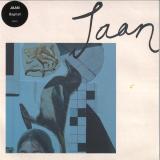
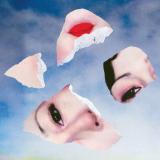
Themes of change, breaking up, shattering old ways of being are shot through the record. For the front cover, a photograph of the artist’s face was printed, ripped up and re-assembled, resembling the creative process embarked upon by Lew for her first “solo” material. The album feels instinctual, almost dream-like in its assemblage of sweeping synths and pulsating, propulsive drum machine beat patterns with Lew’s vocal performances sensitive and caressing over the top. Increasingly relying on the subconscious and dreams to guide her creative process, Hannah Lew frequently abandons literal interpretations or linear narratives, the songs seeming to exist in a swooning, effortless flow-state while remaining emotionally hard hitting.
On an album where every song could be a single, there are kaleidoscopic shades and varying emotional tones in abundance. First single Another Twilight is carried along a pumping, Italo-disco-style 4/4 beat and mono-synth bass line, the low end pulling at the heart and body. Lew’s vocal melody teases the track before swan-diving into a gorgeous chorus as she sings “it’s all over baby and I don’t mind… in decline, I take my time…” The album is suffused with moments like this. On slow builder Damaged Melody, an arpeggiated synth elongates the verse before a cascading synth showers down melodic glitter. The stunning Replica uses dual swirling synth patterns before a driving, synthpop chorus for the ages carries Hannah Lew’s vocal into the stereo field, sailing in on a high register singed with the embers of a break up.
In a departure from previous groups, her solo songs are guided by dreams and free association inspired by Dada and the Surrealist movement and sculpted afterwards. As such, the songs reveal themselves on repeated listens, revealing traces of heartbreak inspired by both personal and global elements - Hannah Lew regards the album “a wartime album.” On Move In Silence, Lew intones “there’s a war outside, just out of view,” revealing the dichotomy at play throughout. With the songs evolving naturally and in a flow state, the pressures and sadnesses of the modern age bleed through, mixed in with Lew’s inherent love, sensitivity and fractured-but-intact optimism. On the swooning, sublime Sunday layers of Numanoid synths open up for the commanding vocal performance pontificating on grief, love, pain as she “feels the ache on Sunday…” As the chorus builds and Lew’s call-and-response vocal adds to the emotional tension, it almost feels like too much to take.
Elsewhere, there are echoes of Hannah Lew’s previous work. On Time Wasted a bass guitar comes in with a heavy, punk attack before the synths and vocal harmonies reminiscent of later Cold Beat elevate everything. The glassy, sweetly resigned closer The Clock sounds like so classic it could be cover, a sweetened Jesus & Mary Chain tune perhaps, before it erupts into volcanic chorus that could only come from Hannah Lew in 2026.
Search:inhere
BLUE & WHITE COLOUR IN COLOUR VINYL
In the culinary arts, it’s easy to overcomplicate the final product. Theme, presentation, texture…they’re important but should work to complement the raison d'etre of any food. At the end of cooking a dish, it should taste good and feed people. Some dishes, like barbeque or provoleta, resist the tendency towards hollow showmanship. One of their expressions can be more or less aesthetic, but the first purpose is to be simple and tasteful. Argentinian provoleta goes so far as to blur the line between ingredient and dish. It relies on the inherent flavor of provolone being heated at the right speed for the perfect amount of time. You can add garlic or chives or red pepper to the slice, but ultimately they serve to bring out an essence that’s already there.
Los Angeles’ Cousin Feo has developed his rapping acumen in the five years since releasing Provoleta, but returning to the project today shows that he always had the penmanship, grit and delivery that christens an emcee worthy of remembrance. Like the bubbles rising up in the appetizer that is the album’s namesake, Feo showed that true profundity is found in the simple gestures.
Since dropping the project in 2019, Cousin Feo has expanded his vision of a world where hip-hop and football, two proletarian art forms, mingle in creative and compelling ways. He has collaborated across multiple continents, chronicled football histories, aided in canonizing legends, kept the flames high in age-old rivalries and constantly forced his audience to search for the last time they heard bars this hard. In anyone else’s hands it would be too great a task.
The maturity he showed on Provoleta wasn’t nascent, it was an inherent quality forcing itself to the surface. The songs refract his experience as a working class Angeleno through the archetypes of Argentinian football legends. The kernel that unites the two worlds is hustle. When Feo was coming up, missteps had greater consequences than crashing out in the group stage and street deals had the weight of a Boca-River Plate match.
Each track uses slightly different ingredients to let Feo’s underlying talent shine. “Maradona” feels salvific, fitting for a football legend canonized from the Andes to the Alps and a Los Angeles rapper looking to inspire similar hope in the neighborhoods that raised him. On “Di Stefano” Feo massages the instrumental with the same composure of the late forward, until he pierces through the headphones like one of Di Stefano’s arrows. It’s also refreshing to hear a song celebrating Messi before his meme-ification, focusing on the universal truths contained in his footballing talent instead of using number 10 as a stand-in to make a point in a fruitless argument. And he still finds space to show deference to Batistuta, Kempes and other members of the Argentinian pantheon who’ve been erased from the popular imagination by the national team's contemporary success.
Real ones know that true players, true rappers, and true artists will always stand the attacks of time and consensus. In Provoleta’s first verse, Cousin Feo says he moves with the hand of God. Maybe one day he’ll tell the whole truth and let us know how he was able to wrestle the pen away too. Limited edition of 300 hand-numbered copies.
- A1: 10-22-38 Astoria
- A2: Haloid Xerrox Copy 4
- A3: 03-10-06 Astoria
- A4: Haloid Xerrox Copy 3 (Paris)
- B1: 03-10-06 Astoria 2
- B2: Haloid Xerrox Copy 2 (Airfrance)
- B3: Haloid Xerrox Copy 6
- C1: 05-10-06 Astoria
- C2: Haloid Xerrox Copy 11
- C3: Haloid Xerrox Copy 1
- D1: 02-10-06 Astoria 1
- D2: Haloid Xerrox Copy 111
- D3: 09-10-19 Astoria
- D4: Haloid Xerrox Copy 9
Xerrox Vol. 1 is the third studio album by German electronic artist Alva Noto. It was released in 2007 as part of the ongoing Xerrox pentalogy, based on the concept of digital replication of source material.
Using the process of copying as a basis, the Xerrox series deals with the manipulation of data through endless reproduction. Due to the inherent fallacy of making copies from other copies, everyday sounds become so altered that they are hardly associated with their source material. As a result, entirely new sounds are created: copies of originals become originals themselves.
Together with Christoph Brünggel, Nicolai designed a "sample transformer" that takes audio fragments and manipulates them beyond recognition. In this process of taking something familiar and defamiliarizing it, samples from obvious sources-advertising jingles, airport tones, telephone hold music, and film soundtracks-were used and altered, resulting in sounds totally unlike their original source. The result is a series of haunting, intricately realised pieces that recontextualise Nicolai's "glitches and bass" sound into extended, cinematic, organic, and almost orchestral works.
Xerrox Vol. 1 was followed by Xerrox Vol. 2 (2009), Xerrox Vol. 3 (2015), Xerrox Vol. 4 (2020), Xerrox Vol. 5 (2024). This remastered version will be reissued on NOTON in 2026
---------------------------------------------------------
Medium: 1 // Side: A // Track: 1
Artist: Alva Noto
Title: 10-22-38 Astoria
Playtime: 00:00:19
Explicit Lyrics: No
ISRC: DE1N62500001
(P):
---------------------------------------------------------
Medium: 1 // Side: A // Track: 2
Artist: Alva Noto
Title: Haloid Xerrox Copy 4
Playtime: 00:03:53
Explicit Lyrics: No
ISRC: DE1N62500002
(P):
---------------------------------------------------------
Medium: 1 // Side: A // Track: 3
Artist: Alva Noto
Title: 03-10-06 Astoria
Playtime: 00:00:38
Explicit Lyrics: No
ISRC: DE1N62500003
(P): 2007 2007
Country: Germany
Composer: Carsten Nicolai
---------------------------------------------------------
Medium: 1 // Side: A // Track: 4
Artist: Alva Noto
Title: Haloid Xerrox Copy 3 (Paris)
Playtime: 00:11:17
Explicit Lyrics: No
ISRC: DE1N62500004
(P): 2007 2007
Country: Germany
Composer: Carsten Nicolai
---------------------------------------------------------
Medium: 1 // Side: B // Track: 5
Artist: Alva Noto
Title: 03-10-06 Astoria 2
Playtime: 00:00:36
Explicit Lyrics: No
ISRC: DE1N62500005
(P): 2007 2007
Country: Germany
Composer: Carsten Nicolai
---------------------------------------------------------
Medium: 1 // Side: B // Track: 6
Artist: Alva Noto
Title: Haloid Xerrox Copy 2 (Airfrance)
Playtime: 00:05:07
Explicit Lyrics: No
ISRC: DE1N62500006
(P): 2007 2007
Country: Germany
Composer: Carsten Nicolai
---------------------------------------------------------
Medium: 1 // Side: B // Track: 7
Artist: Alva Noto
Title: Haloid Xerrox Copy 6
Playtime: 00:06:40
Explicit Lyrics: No
ISRC: DE1N62500007
(P): 2007 2007
Country: Germany
Composer: Carsten Nicolai
---------------------------------------------------------
Medium: 2 // Side: C // Track: 8
Artist: Alva Noto
Title: 05-10-06 Astoria
Playtime: 00:00:22
Explicit Lyrics: No
ISRC: DE1N62500008
(P): 2007 2007
Country: Germany
Composer: Carsten Nicolai
---------------------------------------------------------
Medium: 2 // Side: C // Track: 9
Artist: Alva Noto
Title: Haloid Xerrox Copy 11
Playtime: 00:03:40
Explicit Lyrics: No
ISRC: DE1N62500009
(P): 2007 2007
Country: Germany
Composer: Carsten Nicolai
---------------------------------------------------------
Medium: 2 // Side: C // Track: 10
Artist: Alva Noto
Title: Haloid Xerrox Copy 1
Playtime: 00:09:16
Explicit Lyrics: No
ISRC: DE1N62500010
(P): 2007 2007
Country: Germany
Composer: Carsten Nicolai
---------------------------------------------------------
Medium: 2 // Side: D // Track: 11
Artist: Alva Noto
Title: 02-10-06 Astoria 1
Playtime: 00:00:51
Explicit Lyrics: No
ISRC: DE1N62500011
(P): 2007 2007
Country: Germany
Composer: Carsten Nicolai
---------------------------------------------------------
Medium: 2 // Side: D // Track: 12
Artist: Alva Noto
Title: Haloid Xerrox Copy 111
Playtime: 00:07:56
Explicit Lyrics: No
ISRC: DE1N62500012
(P): 2007 2007
Country: Germany
Composer: Carsten Nicolai
---------------------------------------------------------
Medium: 2 // Side: D // Track: 13
Artist: Alva Noto
Title: 09-10-19 Astoria
Playtime: 00:00:18
Explicit Lyrics: No
ISRC: DE1N62500013
(P): 2007 2007
Country: Germany
Composer: Carsten Nicolai
---------------------------------------------------------
Medium: 2 // Side: D // Track: 14
Artist: Alva Noto
Title: Haloid Xerrox Copy 9
Playtime: 00:11:04
Explicit Lyrics: No
ISRC: DE1N62500014
(P): 2007 2007
Country: Germany
Composer: Carsten Nicolai
With Neolithic Neon, Appleblim creates a kaleidoscopic reflection of the spirituality inherent within electronic music — the ineffable frequencies and communal traditions that spring from exploratory synthesis, deep-rooted rhythms and myriad other sonic codes.
Throughout his third album for Sneaker Social Club, Laurie Osborne continues to express a fascination with the ancient resonance held within modern rave as he guides his own studio practice towards more purposefully analogue processes. It's reflective of his desire to let go and trust his instincts within the more chaotic realm of voltages and signals, not to mention turning to a wider spread of instrumentation and opening up to noisier avenues. This direction defines the character of Neolithic Neon, which bristles with the living imperfections of the gear in the context of incisive and wide-ranging cuts touching on jungle, dubstep, techno, electro, acid and experimental electronic music of all stripes.
Across Osborne's solo output from 2018's Life In A Laser to 2021 tape Infinite Hieroglyphics, a strong melodic sensibility spills out of the richly layered production. It's equally audible in his Wrecked Lightship collaboration with Adam Winchester, and it charges Neolithic Neon with its star-gazing, contemplative streak. From the knotty plucks and licks weaving through opener 'Moorland' to the vaporous synths darting across the top of hardcore conductor 'Thunderstorm', a dreamlike evocation takes the sound off terra firma, musing on cosmic events and our connection to the enormity of the universe.
Eternally in thrall to the maverick vocabulary of pioneering beat scientists and fuelled by the inspiration of great thinkers dwelling on our purpose and place, Neolithic Neon unfurls big ideas without heavy-handed messaging. Instead, it trusts in the universal and time-honoured language of experimentation and rhythm to present its ideas, true to Appleblim's legacy to date while opening a new chapter in his ongoing sonic quest.
Pick a Piper is a Toronto-based electronica duo featuring Caribou drummer Brad Weber and vocalist–songwriter Sophia Alexandra. Their music pairs catchy, ethereal vocals with warm synths, upbeat percussion, and a distinctive sense of sound design that feels both grounded and vulnerable.
The duo’s live show is an intoxicating blend of vibrant physicality and immersive lights and visuals, creating an experience that is both danceable and hypnotic. Pulsing with momentum, vocally driven and haunting, it radiates a charisma that unites the band and audience in cathartic release.
Their new album "Dandelion", explores how we exist in the space between opposing feelings while calling for resilience and the courage to recognize that growth is possible and inherently beautiful, even in life’s most difficult experiences. The record employs skippy beats, bass-heavy kicks, warm subs, hyperactive percussion, woozy synths and organic textures, delivered with a lovingly human-curated feel.
Pick a Piper has toured across Europe, the US, Canada, Guatemala, and Colombia, and has shared the bill with Bonobo, Gold Panda, Blue Hawaii, Do Make Say Think and Ghetto Kumbe.
Cassette[14,50 €]
Aspen is very proud to introduce ‘Non Sonett’ by the Christian Wallumrød Ensemble. This ensemble is a pioneering Norwegian chamber group whose work on ECM and Hubro has redefined the boundaries between jazz, contemporary composition and folk music.Across seven albums, the ensemble has developed a highly distinctive l anguage built on restraint, timbral nuance and collective interplay, placing it among the most influential European ensembles of the 21st century.
Bringing together some of the finest musicians in Norway, the ensemble draws on a rare collective sensitivity, where each player contributes to a deeply integrated and texturally rich sound world.
With Non Sonett, the Christian Wallumrød Ensemble opens a new chapter that grows directly out of recent years of work in more solitary and cross-disciplinary contexts. In this period, Wallumrød has developed material for solo performance as well as for dance, allowing ideas to take shape in more fluid and exploratory formats. Some of this material now finds its way into the ensemble, where it is met by the possibilities offered by instrumentation, collective playing, and the distinct voices of the musicians. At the same time, older pieces—originating in entirely different settings— re-emerge here in new forms, reshaped by the ensemble context.
A defining aspect of Non Sonett is the way many of the pieces function less as fully determined compositions and more as open frameworks: starting points, suggestions, or “springboards” for music. These structures invite response rather than prescribe outcome, relying on the ensemble’s inherent sensitivity and capacity to realize and transform the material in performance. The result is music that feels both precise and fluid, shaped in equal measure by composition and by the interpretative presence of the players.
Central to this album is a continued deepening of Wallumrød’s long-standing interest in ambiguity and in dissolving boundaries between different musical elements and expressive worlds. By placing contrasting materials and associations side by side—sometimes subtly, sometimes more overtly—the music opens up spaces where meanings remain fluid and interconnected. On Non Sonett, this approach is taken a step further, allowing these juxtapositions to play an even more active role in shaping the music’s character and flow.
This approach connects closely with the ensemble’s broader artistic trajectory. Over time, the Christian Wallumrød Ensemble has developed a language that is immediately recognizable—marked by reduction, clarity and a deep attention to sonic detail. While each release has its own character, the underlying aesthetic remains consistent: a focus on the inner life of sound itself. Rather than foregrounding gesture or virtuosity, the music draws the listener toward the smallest elements, where meaning emerges gradually through texture, spacing and timbre.
The listening experience becomes one of concentration and proximity, where each sound carries weight, and the accumulation of detail forms a larger whole. References may be sensed—to early polyphonic music, Norwegian folk traditions, or more recent experimental practices—but these are absorbed into a singular musical language that resists categorization.
As with the ensemble’s recent work, Non Sonett also continues the integration of electronics as a fundamental part of the sound world. Each musician engages with electronic elements alongside their acoustic instruments, creating a layered and dynamic sonic environment. At times, this leads into extended, exploratory passages reminiscent of analogue musique concrète; at others, electronics operate almost imperceptibly, subtly altering and extending the acoustic textures in real time.
vinyl[21,81 €]
Aspen is very proud to introduce ‘Non Sonett’ by the Christian Wallumrød Ensemble. This ensemble is a pioneering Norwegian chamber group whose work on ECM and Hubro has redefined the boundaries between jazz, contemporary composition and folk music.Across seven albums, the ensemble has developed a highly distinctive l anguage built on restraint, timbral nuance and collective interplay, placing it among the most influential European ensembles of the 21st century.
Bringing together some of the finest musicians in Norway, the ensemble draws on a rare collective sensitivity, where each player contributes to a deeply integrated and texturally rich sound world.
With Non Sonett, the Christian Wallumrød Ensemble opens a new chapter that grows directly out of recent years of work in more solitary and cross-disciplinary contexts. In this period, Wallumrød has developed material for solo performance as well as for dance, allowing ideas to take shape in more fluid and exploratory formats. Some of this material now finds its way into the ensemble, where it is met by the possibilities offered by instrumentation, collective playing, and the distinct voices of the musicians. At the same time, older pieces—originating in entirely different settings— re-emerge here in new forms, reshaped by the ensemble context.
A defining aspect of Non Sonett is the way many of the pieces function less as fully determined compositions and more as open frameworks: starting points, suggestions, or “springboards” for music. These structures invite response rather than prescribe outcome, relying on the ensemble’s inherent sensitivity and capacity to realize and transform the material in performance. The result is music that feels both precise and fluid, shaped in equal measure by composition and by the interpretative presence of the players.
Central to this album is a continued deepening of Wallumrød’s long-standing interest in ambiguity and in dissolving boundaries between different musical elements and expressive worlds. By placing contrasting materials and associations side by side—sometimes subtly, sometimes more overtly—the music opens up spaces where meanings remain fluid and interconnected. On Non Sonett, this approach is taken a step further, allowing these juxtapositions to play an even more active role in shaping the music’s character and flow.
This approach connects closely with the ensemble’s broader artistic trajectory. Over time, the Christian Wallumrød Ensemble has developed a language that is immediately recognizable—marked by reduction, clarity and a deep attention to sonic detail. While each release has its own character, the underlying aesthetic remains consistent: a focus on the inner life of sound itself. Rather than foregrounding gesture or virtuosity, the music draws the listener toward the smallest elements, where meaning emerges gradually through texture, spacing and timbre.
The listening experience becomes one of concentration and proximity, where each sound carries weight, and the accumulation of detail forms a larger whole. References may be sensed—to early polyphonic music, Norwegian folk traditions, or more recent experimental practices—but these are absorbed into a singular musical language that resists categorization.
As with the ensemble’s recent work, Non Sonett also continues the integration of electronics as a fundamental part of the sound world. Each musician engages with electronic elements alongside their acoustic instruments, creating a layered and dynamic sonic environment. At times, this leads into extended, exploratory passages reminiscent of analogue musique concrète; at others, electronics operate almost imperceptibly, subtly altering and extending the acoustic textures in real time.
Bound to break the new year in with all our might, we are excited to unveil our new baby, RYCX. Expanding the scope of our main catalogue to bottle what we consider pure techno quality with its idiosyncrasies and inherent untamedness, RYCX will serve as our platform of choice to embrace the more minimalist, dubby vibe of techno, focussing on tracks that sound more like a rabbit hole, trippier, psychedelic, and immersive, yet still powerful enough to fill a dance floor. Kicking off the journey is 'RYCX01' by Ruben Ganev, up with his debut solo release after contributing a track to our 2023-issued 'Heimat' VA. The music here featured packs the very defining qualities RYCX aims to engage its audience with: a raw, inspired, quality-driven combination of force and thoughtfulness, ruggedly honest yet built to meet the expectations of the most picky dance floors and home listeners out there. Ganev's quartet of stormy churners, cut from the most hypnotic cloth and eerily vibrant machine funk, has us diving deep into a throbbing furnace of charred dubs, steely industrial reliefs and post-apocalyptic atmospheres. A most fitting manifesto in sound, telling the beads of the sonic revolution in march.
2026 Repress
The inherently precise forward movement of Swiss duo QZB continues apace as they deliver their most accomplished music yet. From the impressive cinematics and dancefloor blows of "Tech Priest" and "Underneath", QZB push that much further into the experimental tempo excursions of title track "Delirium" until they fire back up into the future funk of "Spez", collaborating with new name IHR.
Also included is the VIP of "Take It All" ft. Charli Brix, the title track of their memorable EP from Critical last year.
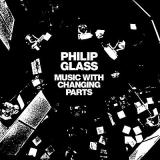
Philip Glass, the great American composer, was already in his mid-30s before his first album appeared, and then only because he produced the double LP himself. Music With Changing Parts was the inaugural release on his own Chatham Square imprint in 1971.
At this point, Einstein on the Beach, Glass' first opera, was still five years away. Yet in Changing Parts, one can already hear much of his vocabulary in full bloom: the buoyant arpeggios, the melding of electronic and acoustic instruments, the elongated drones of human voice, the primary emphasis on pulse (an interest he shared with fellow composer Steve Reich) and the ecstatic potential inherent in repetition.
The album features the original Philip Glass Ensemble – the composer himself, along with Jon Gibson, Dickie Landry, Art Murphy, Steve Chambers and Robert Prado – playing Farfisa organs and woodwinds as well as Barbara Benary on electric violin.
As Glass describes in his memoir Words Without Music, he secured a $500 interest-free loan for the recordings' initial release from the Hebrew Free Loan Society – an organization intended to help immigrants from the Old World upon arrival in the US. Though Glass was merely the grandson of immigrants, the venture wasn't far off the society's charter as Changing Parts helped usher in a new world of sound that would become known as Minimalism.
Chatham Square went on to release albums by other composers in Glass' circle, including Gibson and Landry. The label was named after the Manhattan intersection where Landry had a studio and the ensemble rehearsed.
Born in Baltimore in 1937, Glass first moved to New York to attend Juilliard at just nineteen, having already graduated from the University of Chicago. A staple of the Downtown scene, he can perhaps be appreciated as akin to the likes of sculptor Richard Serra or filmmaker Jim Jarmusch: mavericks who became major cultural figures entirely on their own terms.
This first-time vinyl reissue reproduces the original side-breaks and gatefold sleeve.
Following their 2023 LP Presents, Nathan Nelson's American Cream Band bring the Twin City heat back to Quindi with an album rooted in duality. From the yin and yang party-starting A side and meditative B side to the dual-attack boy-girl vocals, the nature of opposites and equals steer the expansive, artful strain of rock n' roll that spill out of this wholly unique Minnesotan export. For the ever intriguing Quindi, it's a strident step into Spring after the frosty introspection of Roudi Vagou & Läuten der Seele's Taghelle Nacht. While the world burns and injustice prevails, Twin is a celebration of unity and radical expression-all the more urgent against the backdrop of authoritarian overreach and righteous protest that has whipped through Minneapolis in recent times.
Twin continues Nelson's drive at the helm of American Cream Band to draw in a colourful cast of players to feed into his orgiastic sound, meshing the trance-induction of krautrock with the irrepressible funk of the post-punk-new-wave explosion. But principal among the cast of characters and forming a central tenet to the identity of this album is Liz Buhmann, lead vocalist and a formidable, playful foil to Nelson's own Midwestern twang. Around the electric spark between Buhmann and Nelson, a heavy duty ensemble wrangle guitar, bass, sax, a cornucopia of synths and a battery of percussion into all manner of sonic forms.
The double-sided concept manifests throughout Twin. On 'Call Me' Buhmann sings in French to contrast Nelson's English, while the strident strut of the NYC disco groove is offset by an inherent dreaminess that turns the track into a more cosmic kind of dancefloor workout. 'Ethical Vampire' is a spiky cut with a garage rock patina that spirals into a psychedelic, synth-soaked get-down. 'Don't Burn The House Down' is a loose and limber roller that captures Can at their funkiest along with the hypnotic vibe of other such esteemed long format jammers, but American Cream Band boils that energy into a hook-laden art pop sensibility before a gentle, drawn out landing.
Even the more pensive moments on Twin find space for friction. For all its tender, smoky temperament, 'Leda and the Swan' lets the electric piano and guitar fray at the edges and bleed into the red while Mat Heinrich's tumbling drums lurch with pent-up intensity on the one. 'No Funeral Necessary' skirts around the mellow pools of new age but prefers to let liberally doused Tape Echo tweak out Alex Meffert's honeyed sax inflections and Buhmann and Nelson's disparate sermons.
Nelson describes Twin as "an oppositorum coincidentia" - a reference to the mystical Latin concept of the coincidence of opposites that suggests contradictory ideas 'fall together' in a higher reality. Beyond the sound of the album, this idea also manifests in the cover photography by Sho Nikado and the swans on the LP labels by Autumn Garrington. As freewheeling and wide-open as American Cream Band feels, nothing appears by accident. The end result feels like a nourishing whole - rich with substance and nuance, deep enough to be explored and absorbed yet also so brazen and immediate you can't help but feel its surface charms from the first thrusts of 'The Hive Is Pissed' to the last ripples of 'We're Not So Sinister'.
- 1: Lake Walk
- 2: Lazy Daisy
- 3: Ups & Downs
- 4: Silently
- 5: There Was A Nice Sunset
- 6: Somewhere Good
- 7: Slow Island
- 8: Movin’ On
If – in some parallel universe (or perhaps a not-so-distant-future version of the one we’re already sentenced to living in) – the evil overloads of artificial intelligence were actually successful in their attempts to create convincingly enjoyable “original music,” more specifically tasked with wholly encapsulating my own personal tastes by data-chugging some cocktail of – oh, I don’t know – the posters on my wall, the records in my “most listened to” pile, the mixtapes I made for others, intensive physical scans of my auditory cortex, amygdala, hippocampus, heart strings, whatever else they have splayed out on their autopsy table with the intention of generating one all-encompassing “perfect band” based on the fruitful sum of their findings – that band, for me, would be (or would at least sound exactly like) the Tara Clerkin Trio. It is, quite simply, without exception, the music I wish to hear.
Formed in Bristol UK (where none of them are from yet all of whom are deeply engrained) in 2020, the Tara Clerkin Trio – as it somewhat democratically exists today, despite the singular authority implied by its name – consists of the titular Tara Clerkin, her partner Sunny Joe Paradisos, and Sunny’s brother, Patrick Benjamin. I’ll confess, I don’t know what their respective roles are within the operation and there’s only a very small part of me that cares to learn, as one of my favorite qualities in an objective listening experience is the mystery of who is playing what, which sounds are “authentic” versus synthesized, which chunks are performed “live” in a room together versus meticulously Frankenstein’ed from measure to measure, or how exactly the overall sound is so (seemingly) effortlessly achieved. Though, I suspect, if and when I do witness a live performance by this band at any point, my enjoyment of the music will not be lost in my better understanding of it.
With two extraordinary mini-albums – In Spring (2021) and On The Turning Ground (2023) – making a splash on London’s formidable World of Echo label in wake of their self-titled 2020 debut, this upcoming Somewhere Good LP is, in many ways, the band’s most realised work. In running their usual gauntlet of idiosyncratic (*an overused adjective for which here there is regrettably no sufficient alternative) approaches, Clerkin & co. colour in and outside of compositional lines over the course of 40+ celebratory minutes - never wallowing, despite inherently somber subject matters of self-defeat, disease, displacement, restlessness, gentrification - allowing their arrangements and improvisations ample space and time to situate, stretch out, breathe, cross-pollinate, and ultimately take deeper hold on the listener’s imagination – all while somehow sounding more like themselves than ever before.
Of course, there are traceable influences herein, if one felt that such comparisons were necessary to properly examine and enjoy this music (they aren’t)… Being the big dumb American from the small boring town that I am, cornfed on ‘90s alternative radio with the enchantingly exotic sounds of Maxinquaye and Mezzanine emanating from my chunky tube television, I can’t help but to make a blatantly obvious reference to a “Bristol sound”, ie the whole trip-hop trip, the pastoral crooning over the suggestive urban grime of cracked electro/piano treatments, the digitally-yet-primitively reconstructed James Bond soundtrack string-beats, etc.. But the Tara Clerkin Trio is so infinitely much more than that. There are elements of avant-pop, modern classical, kraut-folk, audio verité, dare I say indie rock (and not of the beer guzzling, masturbatory fuzz-flex variety but perhaps more like a Trish Keenan-fronted Faust, Adrian Sherwood at the mixing desk of If You’re Feeling Sinister, or – in expanding on our alternate reality – a world in which High Llamas cut a full-length for Warp Records with Andrew Weatherall on coffee duty).
The hazy, unmappable skyline-mirage of droning harmonium, upright bass, peculiarly accentuated wind instruments, acoustic guitar, hushed yet literally mighty keys combine to hypnotizing effect. The band may make underlying nods to jazz, sure, but it’s not appropriation, it’s that they have the actual chops to build it out. Beneath the janky samples and oddball percussive embellishment lies actually great drumming. Beyond the manipulated vocal witchery and woefully reflective plain-spoke moments are Tara’s subtly inspired melodies, sung with what might honestly be the glue to the whole crazy equation. A calming consistency throughout the otherwise unpredictably dynamic, boldly intuitive, uniquely British exploration of this (their own) universe in song. – Ryan Davis (Chicago, February 2026)
Inspired by Sam Kidel’s ›mimetic hacking‹ concept, Berlin-based composer Jasminev Guffond pipes opiated brass and woodwind motifs into a reverb chamber modelled on an Amazon fulfilment centre.
»Muzak for the Encouragement of Unproductivity« is a poetic inversion of Muzak’s traditional role in stimulating seamless productivity in the workplace. Beginning as a pre-radio music distribution network (1934, U.S.), Muzak was transmitted along electrical wires with the intention of being at once ubiquitous and indiscernible, always present yet easily ignorable. As a pseudo-science the aim was to capitalize on the potential of music to have a psychological effect on listeners, and with the goal of maximum productivity, was employed as a sonic disciplinary force in the work place.
Previously installed for Dystopia Sound Art Biennial (2024), at the Amazon Packing Station located before HAUNT-Frontviews in Berlin, Muzak for the Encouragement of Unproductivity sonically addresses utopic notions of seamless, efficient productivity, inherent to capitalist cultures, and their very real dystopic effects from labour exploitation to the impacts of over-production on the environment. This poetic inversion, further developed as an album, is not meant as a kind of melodic control but rather a reflective space in which to consider the benefits personally, globally and environmentally, of slowing down.
Reverb, essential to the Muzak aesthetic, is programmed (using convolution reverb) with the dimensions of the Berlin Amazon fulfillment centre, DBE2. Amazon fulfillment centers are global contemporary factories, promising a consumer utopia of next day delivery of almost any product imaginable. Inspired by Sam Kidel’s concept of »mimetic hacking«(1), the reverberation characteristics of the DBE2 facility perform a symbolic sonic break-in to the guarded Amazon fulfillment center, a trespass to the flow of production.
Guffond’s ambient Muzak with its drifting horn, clarinet and synth-like modulations is just too down-tempo for upbeat spending. If this is Muzak it is possibly Muzak for the end of the world, thoughtfully seeking transcendence through implied questioning after all avenues for shopping have been exhausted.
Efde's first release on Voyage Direct. Here he gets a chance to showcase his trademark sound on an expansive, four-track E.P for the Amsterdam-based label.
Some may be familiar with Efde's work through his occasional 12' singles for Nordik Netrecords and Soweso, where he distilled a variety of influences - think dreamy, ultra-deep house, the Chicago bump of Chez Damier, and the sci-fi pulse of Detroit - into tracks that had a distinctive vibe all of their own.
My Bleep' is arguably his most stunning production yet: a spine-tingling re-imagining of Detroit futurism built around sparkling, intertwined melody lines, dusty drum machine rhythms, hissing hi-hats and throbbing, analogue bass. While a thing of rare beauty, it also comes blessed with moments of sweaty percussive intensity, with stacked snare hits that increase in energy as the track progresses. The original's inherent beauty is emphasized further on the accompanying Ambient Mix', which recalls the glory days of Pete Namlook's FAX Records in the early 1990s.
There's more far-sighted dancefloor futurism to be found on the flip, where the spacey chord progressions, sprightly synth-bass and restless rhythms of Just Did It' capture the spirit of both the Motor City, and the classic UK techno-funk of Dave Angel and Luke Slater. A fine EP is completed by the ultra-deep shuffle of CMP135', which successfully draws on Efde's love of bumpin' U.S deep house whilst retaining the intergalactic sounds that are such a key part of the Dutchman's club-ready productions.
Experienced Dutch producer Tom Ruijg rightly won praise for his first 12' as Tracey, Skyfall, which surfaced on Voyage Direct in early 2017. Combining elements seemingly inspired by vintage Detroit futurism, '90s ambient techno and his own love of colourful synthesizer melodies, the EP saw Tracey set out his stall in impressive fashion.
.
Compare and contrast, for example, the two A-side cuts. While Testarossa' is far-sighted and spacey, with Tracey wrapping intergalactic electronics and lilting synthesizer melodies around a darting synthesizer bassline and swinging, electro-influenced house drums, Sidekick' is blissful and almost overwhelmingly melodious: all 16-bit new age motifs, head-in-the-clouds electronics and driving, locked-in machine drums.
The contrasts continue on the B-side, too. Many DJs may instinctively be drawn towards Made My Love', whose energy-packed groove (think vintage Chicago jack with a dollop of slick NYC house soul) is peppered with spacey chords, undulating electronic motifs and glacial melodies. Yet the track that follows, the wild and windy electro workout that is Interceptor', is every bit as potent when played over club sound systems. The track's inherent hustle, seemingly the product of Ruijg's darting synth stabs and feverish audio textures, is almost impossible to resist.
BQD050–Arno: "We Perfectly Understand Each Other Until We Start To Talk – The Remixes"
To mark the 50th release on Brouqade, we reach back into the catalog and release as a set of remixes Arno's album “We Perfectly Understand Each Other Until We Start To Talk” a work that touches on the finer problems inherent to human communication.For this unique Album, released in 2019, three distinctive reworkings offer new breath to the original tracks: Baby Ford conducts a lean and hypnotic revision played in minimal fashion, Kuyateh widens out textures with deep organic rhythms and Dana Ruh puts her distinctive groove-orientated stamp on the material.
The bonus on the release is from Arno — a meditative composition that acts as middle ground in terms of his musical language.
In operation midway between introspection and movement, BQD050 depicts the very spirit of Brouqade: depth, warmth, a timeless dancefloor poetry.
Operating on the fringes of pure improv, organised chaos, minimal composition, lo-fi electronics and Italian spaghetti westerns, wide-eyed and with a healthy dose of DIY aesthetics lies the world of Jaan. It’s a poetic & cosmic universe, exploring “discreet music” whilst wandering on the edges of the Cat People soundtrack & Brian Eno’s more experimental output, in which you might yourself find floating, wandering or in the middle of a market place.
Jaan is a collective of one, a deliberately anonymous activistic unit with strong ties to the international art scene. Purposefully bypassing the know-it-all of the the internet & embracing the bygone mystery of dusty old archives and deep-dive searching, remarkably little is known about this project. Jaan is lead by veteran experimental sonic alchemist Jaan; they operate between Greenland, the Middle East and Europe, with frequent associates Lisqa, Mashid & Schneorr N. acting as local hubs for collaboration and exploration.
The purpose of this wilful obscurity: full focus on the actual music, whether live events or on recordings. Which brings us to Baghali, their first for World of Echo. It’s a deeply personal album, much like slowly browsing old family albums filled with vaguely remembered tales, some still very much present, some faded, leaving but a ghost-like reflection of what once was. Baghali was compiled over the course of a year on the road, trapped in snow storms, waiting for cancelled flights and stuck rides. It’s made up of snippets of diary, quick recordings on road sides, abandoned buildings, garden ruins, vast desert and focussed studio sessions, following a collage-like aesthetic and steeped in an exploration of non-lineair storytelling. There’s broken memories, a sense of displacement and an occasional yearning for what can’t be again, clouded in fever and unrest, but there is also hope, wonderment and bright colours seeping through the cracks in the wall. Jaan weaves home-made instruments, old tape loops, broken synths, beat-up reeds, dusty beat boxes and the occasional doom guitar squall into a tapestry of fractured sound, with tracks following their own inherent logic rather than following formats. Sounds crash in and out, field recordings placing the listener firmly in an environment then throwing several perspectives at once onto them, with individual elements - a wandering clarinet, a lone mandoline, a beat out of place yet perfectly in place - slowly walking in and out & doing their thing.
The whole album is alive, breathes, takes a wrong turn, gets lost, somehow finds its way again - effortless and with a unique sense of space and flow.
Baghali is released digitally and on vinyl in an edition of 300 on 3rd October 2025.
Fast At Work returns with another statement EP, this time from the label’s own Carré and her closest collaborator, Danny Goliger. Navigating through textured atmospheres, rhythmic explorations, and immersive landscapes, they allowed their music to unfold naturally—an organic process shaped by curiosity and intuition. Each track was born from sampling its predecessor, creating a recursive dialogue that guided the creative flow. A commitment to a tension-building groove in ‘Up Too Late’, the warped dub throughlines of ‘Tricky One’, the intricate, delicate uptempo delight that is ‘Exit Plan ’, and the bridge between all four tracks ‘Don’t Keep Me In Suspense’ — each reflects different moments in this journey. An expert in textural exploration, the Dutch DJ and producer Konduku brought out the true hypnotic potential of the title track. Their influences ripple outward, yet the sound remains inherently theirs—fluid, unbound by singular genre or label.
- Hotel California
- New Kid In Town
- Life In The Fast Lane
- Wasted Time
- Wasted Time (Reprise)
- Victim Of Love
- Pretty Maids All In A Row
- Try And Love Again
- The Last Resort
The moment the instantly recognizable intertwined guitar passage on the title track to the Eagles' Hotel California begins, the record's genius becomes obvious all over again. Ranked the 118th Greatest Album of All Time by Rolling Stone, certified by RIAA as the third best-selling LP in history, and considered the foundation on which the Golden State's mid-‘70s music scene was built, the 1976 landmark is a music staple immune to shifts in trends, eras, and styles. Fearlessly addressing the chaos and consequences of American life, its songs remain strikingly prescient and gain creedence with each passing day.
Mastered from the original analogue master tapes, pressed on MoFi SuperVinyl, and limited to 17,500 numbered copies, Mobile Fidelity's UltraDisc One-Step 180g 45RPM 2LP vinyl box set ensures you will want to permanently check into and never leave this particular Hotel California. Up to the herculean task of standing head and shoulders above all prior reissues, this collectible edition plays with extreme clarity, organic richness, tube-like warmth, massive dynamics, and microscopic levels of detail. You'll be able to practically smell the colitas and feel the breeze in your hair. Songs come across with an epic sweep and feature immersive, front-to-back soundstages that allow the music unprecedented air, roominess, and separation. As for the noise floor? It's basically as invisible as the spirits that waft in the corridors of the unforgettable title song.
Aesthetically, the premium packaging and presentation of the UD1S Hotel California pressing befit its esteemed status. Housed in a deluxe box, it features gorgeous foil-stamped jackets and faithful-to-the-original graphics that illuminate the splendour of the recording. From every angle, this UD1S reissue exists as a curatorial artefact meant to be preserved, touched, and examined. It is made for discerning listeners that prize sound quality and production, and who desire to fully immerse themselves in the art – and everything involved with the album, from the renowned cover art to the meticulous finishes.
Indeed, the opportunity to zero in on all the particulars of the 26-million-selling Eagles record dubbed "a legitimate rock masterpiece" by vaunted Los Angeles Times scribe Robert Hilburn has never been better. A global phenomenon that marked the band debut of guitarist-singer Joe Walsh, Hotel California continues to resonate and connect with listeners of all generations taken by its narrative depth, stark directness, picturesque melodies, daring majesty, and ardent emotionalism. Adorned with a breathtaking exterior photograph of the Beverly Hills Hotel that serves as the simultaneously haunting and alluring cover art, and rounded out by a rear-cover shot of the Lido Hotel lobby that reinforces a notion that teeters between permanence and transience, Hotel California is brilliantly tied to a specific place that functions as a universally understood metaphor for the American Dream.
Confronting the darker undercurrents and oft-ignored constructs attached to that romantic notion, the record's songs revolve around a host of shared themes: excess, mobility, stability, illusion, fame, destruction, and idealism included. Notably, Hotel California appeared at a crucial junction in American history: During the country's bicentennial and amid escalating controversies related to the Vietnam War, energy crisis, and governmental corruption. That the Eagles manage to channel such cultural, social, and economical matters into a cohesive, stately, big-picture statement is alone a stupendous feat. That the album's reach, boldness, vitality, accessibility, and understated intensity have never waned make it a marvel.
Reflecting on Hotel California 40 years after its original release, and indirectly explaining its enduring appeal and increasing relevance, singer-songwriter Don Henley confirmed the record pertains to the "loss of innocence, the cost of naiveté...the difficulties of balancing loving relationships and work, trying to square the conflicting relationship between business and art; the corruption in politics, the fading away of the Sixties dream of ‘peace, love and understanding.'"
It can be argued that Henley and company squarely hit on and drove home those ideas in the surreal title track, chart-topping "Life in the Fast Lane," and grand "The Last Resort" alone. But that would miss the forest for the trees. Experienced as an unbroken whole, complete with the pristinely shot imagery and physical grooves, Hotel California unfolds like a geography-conscious saga by James Michener and plays like colour-saturated movie shot on 70mm film by Martin Scorsese. It's about our collective and individual decisions – and the shape of our past, present, and future. And, just like that conjured by our imaginations, Hotel California continues to take on a life of its own.
More About Mobile Fidelity UltraDisc One-Step and Why It Is Superior
Mobile Fidelity Sound Lab's UltraDisc One-Step (UD1S) technique bypasses generational losses inherent to the traditional three-step plating process by removing two steps: the production of father and mother plates, which are created to yield numerous stampers from each lacquer that is cut. For UD1S plating, stampers (also called "converts") are made directly from the lacquers. Since each lacquer yields only one stamper, multiple lacquers need to be cut. Mobile Fidelity's UD1S process produces a final LP with the lowest-possible noise floor. The removal of two steps of the plating process also reveals musical details and dynamics that would otherwise be lost due to the standard multi-step process. With UD1S, every aspect of vinyl production is optimized to produce the best-sounding vinyl album available today.
MoFi SuperVinyl
Developed by NEOTECH and RTI, MoFi SuperVinyl is the most exacting-to-specification vinyl compound ever devised. Analogue lovers have never seen (or heard) anything like it. Extraordinarily expensive and extremely painstaking to produce, the special proprietary compound addresses two specific areas of improvement: noise floor reduction and enhanced groove definition. The vinyl composition features a new carbonless dye (hold the disc up to the light and see) and produces the world's quietest surfaces. This high-definition formula also allows for the creation of cleaner grooves that are indistinguishable from the original lacquer. MoFi SuperVinyl provides the closest approximation of what the label's engineers hear in the mastering lab.
- A1: Without Any (Featuring Jason Nazary)
- A2: Kiarostami's Stash
- B1: Infidelian (Featuring Jason Nazary)
- B2: Godspeedu
- B3: Organs Without Borders (Featuring Aria Rostami)
- C1: May Plastic Blossom In Spring's Air
- C2: Vulnerable In A Spreadsheet
- C3: I See Machines (Featuring Raheel Khan & Mhz)
- D1: Kick It Until It's Bent
- D2: Close Your Eyes Okay Now Open Them
- D3: Children Of Alcoholics Drunk On Revolution
"tilt your back
pay respect
hand on heart
we were raised without table,
without manners,
where is it we gather this time?
In ‘Of No Fixed Abode,’ Saint Abdullah and Eomac extend their experimentation with genre dissolution to press upon the tensions that exist between culture, place, and migration. This fourth collaborative LP addresses the inherent fluidity of cultural memory, accepting our inability to remain fixed in the past, and explores how best to carry its spirit forward into an ambiguous future.
Through extensive research into 50 years of Persian pop, they meticulously reinterpret the legacies of artists like Andy, Hayedeh, and Fereydoun Farrokhzad, refracting samples by way of gritty beat work-outs akin to more contemporary musicians like Rezzett and Madlib. Through extensive archival research and sampling, they recontextualise these iconic melodies, placing reverie and frenetic drum programming in conversation with one another in a fashion that seeks to express a sense of two disparate tendencies cohabiting together, all while refusing homogenization. This reimagining extends beyond mere homage, serving as a conduit for exploring the narratives of migrant experiences, both in the UK and globally.
Sonically ‘Of No Fixed Abode’ plays with new sampling techniques, utilising the quick-fire intensity of the Roland SP404 with the cool precision of digital DAWs, and features collaborations with drummer Jason Nazary, sound artist Aria Rostami (both New York based), New Zealand-based mHz, and a vocal collaboration with London-based artist and musician Raheel Khan."
Representing the spirit of the underground in Dubai, Shadi Megallaa is a multifaceted music lover whose unwavering passion for music permeates throughout all of his endeavours. A pioneer of Dubai’s electronic music culture, Shadi’s roots lie with the foundations of modern day electronica: all shades of house, techno and beyond. His commitment to preserving and evolving the culture is inherent in his record shop, The Flip Side, which has been intrinsic to the growth and development of music culture in Dubai. As a DJ and producer he draws on a multitude of experience, diverse taste and a refined ear that has instilled the ability to craft compelling productions. On Spirits Of The Deep we find Shadi exploring the deeper side of electronic music, creating layers of vibration designed to immerse the listener in layers of positive vibration.
As prescribed by Shadi himself, we start the traditional way, with Side B (the info side), where ‘Microgravity’ transports us into the cosmos. Soothing sonics envelop a taut low end with crisp percussion and swathes of pad work cultivating an interstellar atmosphere. Subtly shifting layers keep you locked into a groove, as the track maintains its energetic pulse. The synth lines increase with intensity midway through, adding more potency. Across almost nine minutes Shadi takes us on an excursion beyond the stars…
This is followed by ‘G-Dub’, a smooth jazz-inflected piece full of soul nourishing goodness. Intuitive drum programming with a groove-laced low end form the propulsive backbone of this track. The dreamlike melodic elements are almost transcendent in their illuminating impact. With all of its elements combined, ‘G-Dub’ is a glorious foray into the depths of true deep house. Shadi keeps things interesting throughout, adding and subtracting layers to complement the pace. Those hi-hats and intermittent cymbal crashes are especially impactful. A delight.
On the flip we have ‘Pressure’, where Shadi’s UK breaks influence comes through. A characterful vocal sample features throughout the intro before we enter a world of unusual sounds. The beats are, once again, impeccably executed, accompanied by a dubby bassline and an ever-evolving cacophony of squelchy sounds and chirps. Running at just over 9 ½ minutes, ‘Pressure’ sees Shadi flexing his creative muscles with a heady, expansive composition that invites us on a deep musical trip.
Finally, ‘The Poet’ closes out the EP on an emotive tip. The track is dedicated to the Palestinian poet and activist Refaat Alareer, who was killed during an airstrike on Gaza in December 2023. It utilises Refaat’s powerful poem If I Must Die, with the spinetingling words taking centre stage, as Shadi’s beats, bass and bright pads provide the backdrop. A piano-led melody appears in the latter part of the track, amplifying its emotionally-charged atmosphere. A wonderfully imagined homage to a martyr for peace. As the samples state, Let it bring hope…
Two lyrical and spiritual forces meet, as Akae Beka and Ivorian veteran Tiken Jah Fakoly awaken the profound realisation that all is inherently blessed, encouraging us to accept life as it unfolds. Produced by Zion I Kings, Everything Bless is a gentle yet powerful reminder to embrace the present moment, cherish the divine connection with our spiritual kin, and nurture inner peace and contentment. Vaughn Benjamin meditates on the need for both determination and trust, while the ancient voiced Tiken sings in Bambara, over Mamadou Sidiki Diabate’s cascading Kora, reassuring that Jah will guide. The accompanying dub version pares down drums and vocals, maintaining the same sense of joy. Taken from 2021’s album Polarities, Everything Bless is released as a seven inch vinyl single for the first time on via Before Zero Records.
This series honours both the vocal and version culture of the reggae sound system and the profound lyricism of Vaughn Benjamin. We have consistently received two requests in relation to releasing the LPs: "Can we have dub versions?" and "Where can we read the lyrics?" Our response is the 'Akae Beka - vocal, version and word-sound collection.' Before Zero Records worked with Tippy I Grade to mix a series of dub mixes from a carefully curated selection of his extensive works with Vaughn Benjamin. The vocal and corresponding dub mixes were then cut to wax by Lewis Hopkin of Star Delta and wrapped in a collage made of Ras Marcus's artworks, which he crafted for various LP covers of Vaughn's works throughout the years with the lyrics transcribed and printed on the rear of each sleeve.
After Dull Boy Johnny's previous release, a double EP with a tropical A-side and an erotic B-side, this time the three gentlemen are out on the dance floor. After all, the neighbours decided as much.
Unlike the recordings of their previous work that took place abroad, this time they stayed in a steamy attic room in Belgium, where guitarist and producer Jan built a studio. Unable to record at night because of neighbours who did not (yet) appreciate Dull Boy Johnny's music, they dove into Antwerp's nightlife.
The group's previous work took you on a cinematic journey where every musical nuance takes you to a specific setting. Be it an erotic seventies scene, a beach party in the Bahamas, or a blood-curdling chase in the Wild West, Dull Boy Johnny covers it all. Nard Houdmeyers, Rik De Bal and Jan found each other in a shared interest in film genres such as blaxploitation, neo-noir and spaghetti westerns. And therefore also the artists inherent to these genres such as Isaac Hayes, Curtis Mayfield and Ennio Morricone. Dull Boy Johnny's conceptual approach to music can be traced back to this passion for cinema.
For the new EP, however, they traded that cosy movie-watching for turbulent nightlife (the angry neighbours, you know). Besides, it was about time to get their inspiration in the flesh. Dull Boy Johnny immersed himself in the pulses, flashes and swell of downtown Antwerp. Thunder chasing crept under their skin and then into their guitars. In grandfatherly fashion, they then turned to composing, first with just bass, guitar and vocals. In that small lineup and with the sounds of the night still reverberating in their minds, the first pieces of the puzzle were laid out. After that, the sound was opened up and a solid rhythm boost was added. This defined the catchy, up-tempo nature of the upcoming EP that centres on themes of dancing, flirting and partying. Expect rousing riffs, catchy hooks and swinging rhythms. Details were meticulously laid out and bricked into the songs with delicate grouting. The fine polishing of the songs was done with patient finesse and a constant attitude to serve the song. With songs like Suspicion, She Can Groove and Dynamite, it is immediately clear that the gentlemen got their mustard from the club: action, party and spunk! All without losing their typical sensuality.
Despite the different working methods for the third EP, there are a lot of recurring elements that define Johnny's fresh sound. The essence? Catchy high vocals contrasted with a sensual baritone voice, carried by a groovy bass and rhythm section. Around it, the details that give the songs the right atmosphere swirl.
Dull Boy Johnny's music prefers to function as a soundtrack to your own imagination. As you listen, you are invited to wander through the various landscapes of their musical world, regularly giving a nod to the more lustful side of your brain. The songs have already been praised for their compelling melodies and irresistible energy.
With this release, Dull Boy Johnny proves their ability to create timeless music that both touches the soul and moves the body. So surrender to Dull Boy Johnny's punchy grooves and dance the night away. Long live the neighbours!
Born out of a summer (and time) most sadly lost forever - this new release on Souvenirs From Imaginary Cities will break your skull open most tenderly, so it's fine particles of audio-dust can mingle with the last rays of sunshine and the bitter storm of this autumn. Track after track, this LP draws you in with a natural flow and a deep-felt pulse - reminiscent of classic slices of raw and sample- based ambient like Susumu Yakota's 'Sakura' and 'Everyone Alive Wants Answers' by Colleen. These tunes are heartfelt and channelling tons of real emotions and other melancholia.
It's a very personal and unique blend of almost nineties chill out zoning with a dubby undertone, rich textured loops, mixing a whole range of crazy acoustic and electronic flavours - stuff that shouldn't work together but are dancing all the way to heaven anyways - with slow burning dusty slabs of melody and yes those deep choral pads ( some Rachmaninov vesper magic in the air ), everything rough around the edges and low slung but so damn precise. A subtle mélange between abstract and more concrete sonic territories, but delivered in an upfront, improvised manner with great intuition and a quite ruff but poetic touch.
Name of this piece of swampy, chopped up but most nicely selected ambient work is La Ho, by Purpurny Dyadya aka Purple Uncle aka Sergey Demitriev, originally residing in St-Petersburg but living now for obvious reasons in Armenia. Sergey has been busy on labels like Echotourist, Hair Del, Nazlo and most recently with fellow traveler Nikita Chepurnoi as Amkarahoi on Patience/Impatience. Using a bunch of old tapes from his childhood times, filled with all kinds of sonic memories and Russian underground hip-hop as sample ground, he loaded up his MPC with magic dust and jammed out the basis of this LP during a summer fest near St-Petersburg before current hell broke loose.
It's the kind of a record that needs some time to really let loose his inherent power, give it some air, let it hop along a bit and those sounds will bloom wide open.
Season by season, we raise a toast to our artists and guests by creating a new collection of sounds. Cafe Soda Selects Volume One captures all the memories of the past year. The A-side starts with Crymes . The track captures the essence of summer with its vibrant dub rhythms and sultry 90s vibes, featuring irresistibly sexy vocals that embody pure feel-good energy. A2 sets the stage for Ben Balances , a vibrant track that seizes the eclectic energies of people, weaving together dynamic rhythms and the deep essence of souls. It is a musical journey that celebrates the unique spirit and rhythmic soulfulness inherent in us all. On the flip, check out the two originals from FMN, the latest project by Frag Maddin and Najeh. is a catchy groove that easily grabs every dancer with its rolling bassline. The song has no breaks, allowing ravers to stay in trance. With , B2 celebrates a raw house anthem with a memorable theme, thick kick, banging clap, and a wild hi-hat swing. An homage to the 90s powerhouse era.
/Black Vinyl[18,91 €]
140g transparent blue and green galaxy marble vinyl housed in a matte 3mm cardboard sleeve with lyrics insert featuring photography and artwork by Hidrico Rubens. Limited to 300 copies. The creation of ‘Chrysalis’ was a retreat from a seemingly endless string of unfortunate events, a cocoon from which Zanias could weave hope from hopelessness. In each of its eight songs she has engineered unique worlds to express alternate facets of the modern human experience, from burnout and the toxicity of capitalism to processing death and the inherent isolation of personal trauma. Written and recorded between Berlin and the rainforest of Queensland, Australia, the sound design of ‘Chrysalis’ reflects the rich biodiversity of the latter environment, where she drew much of her inspiration. Her voice shifts and morphs into ghostly, alien forms between catchy hooks that plant this album firmly in the ‘pop’ genre, without losing the underground rawness and lyrical depth for which she is known. With her third full-length album, Zanias is expressing her truest form thus far, fusing her seemingly discordant influences into a genre-defying electronic artpop, as dark and evocative as it is ethereal and uplifting. Written and produced by Alison Lewis Bass guitar on ‘Lovelife’ by Laura Bailey Mixed by Ewan Kay Mastered by Alain Paul Photography and artwork by Hidrico Rubens Sigil by Nat Soba Design and layout by Alison Lewis Makeup by Eavan Derbyshire
Ten years after his first full-length effort ‘Man Is Deaf’ landed him firmly in the runnings for DJ Mag’s album of the year, prodigal son Michael Anthony Wright AKA Brassica returns to Civil Music with a deeply accomplished, painstakingly whittled LP of hydraulic electro slickness, rich synthscapes, and hooky, peak-time tearjerkers for the most discerning front-left lifers. ‘Tribeless Gathering’ is a barnstorming testament to Brassica’s stylistic and timbral deftness, touching down in the elusive epicentre of the club/home listening venn diagram with ease.
From the elastic, neon acid pointillism of opener ‘Hop Kweng’ to the mardy, miasmic plod of closing chugger ‘Changa Hill’, Brassica seamlessly segues between avenues of influence, his notoriously omnivorous musical knowledge roadmapping each turn. Raised on a diet of everything from early rave standards to metal, and schooled in avant garde sonics as a student of sound design at LCC, Brassica does a peerless job of sublimating his countless influences into a record of refined, heterogeneous, and most crucially, catchy, club moods.
Less spartan than his more recent oeuvre on Feel My Bicep, and less baroque than his technicolour experiments in postmodern synth pop with vocalist Stuart Warwick, Tribeless Gathering represents Brassica’s triumphant return to the main room, replete with rushy hooks primed for the planet’s finest soundsystems, and passages of heads-down tension bound to draw listeners right to the edge of their seats. Overall it is a concise and refined testament to Wright’s command of spectral sonics and effortless ability to pressurise a dancefloor. It is no surprise that he has also worked as a prolific mastering engineer, tuning music from a plethora of dance disciplines for maximum club impact. This work extends to his own projects (including this one), cementing them as rare expressions of complete artistry from studio to turntable.
As we delve deeper into the record, we are ushered through a series of accomplished and varied club moods, each channelling a unique cocktail of influences, but retaining a warm, ebullient analogue sensibility unique to Brassica’s work. This playful scope of influence calls to mind James T Cotton or Machinedrum’s experiments in dance music form, but Wright manages it all under one roof, wrangling everything from sashaying wub-laden two step to snarling Dillinja-esque FM damage into something inherently his.
Choice cut ‘Change Yourself’ layers an almost Cerrone-like piano refrain over radiant surges of saturated bass, dubby, strobing chords and a jagged, driving break, building to a jaw-clenching apex of dancefloor elation, while the rude, playful half-step of ‘Elevation’ breaks down the vintage speed garage formula into linear fragments, utilising a tight palette of resonant bass slugs, infectious synth leads and Papua New Guinea-style vocal strobes. The aptly named ‘Hold Tight’ fuses heart-in-mouth UK ‘ardkore pads with glissando acid disturbance and surgical snare fills in a formula which recalls the ethereal grit of Nubian Mindz’ 00s experiments in big-smoke break science, while the questing melodic arcs and arpeggiated squarewaves of ‘Pinball Marinara’ could easily have soundtracked an 80s sci-fi epic, beset with sparkling, bare-bones drum programming and hazy beds of sub sediment.
With ‘Tribeless Gathering’, Brassica both irreverently fuses and pays homage to the many unique and weird permutations of UK dance music. The short lived gathering of junglists, ravers and house hotsteppas of a similar name may have long since dissipated, along with the tribes themselves, but across these 11 tracks, he lays a blueprint for a new sound of togetherness.
Through the medium of a distinctly synthesised, sustained ambience, seasoned artist and composer Jasmine Guffond arrives on OOH to explore the tension between technology and human creativity in an increasingly ambiguous playing field.
Alien Intelligence came into being during Guffond's residency at fabled Parisian institution GRM in 2021. While learning how to generate sound and make music with the in-house Serge modular synthesiser, the Australian artist noticed the typical role of human input for machine output was being subverted by the behaviour of certain electronic elements, which came to exercise their own influences on the direction of the music.
Taking this idea one step further, Guffond proceeded to explore the programming environment MaxMSP, a customisable interface which allowed her to blur the lines between human input and machine directives even further. Across the three extended pieces which make up Alien Intelligence you can hear the results of Guffond's inquisitive approach as she coaxed the machines into bringing their own ideas to bear on the music.
The tension inherent in this thematic duality is mirrored by the contrast between glacial ambience and chaotic interference across the album. On 'Serge & Maxine Variation One' the presiding mood is a slow and patient one, as undulating waveforms rich with harmonic overtones spill out over one another across 10 minutes. The track's latter passage, driven by steadily intensifying oscillations, is then interrupted with an unexpected flurry of pitch shifting. This kind of complex technical movement features more prominently at the start of 'Serge & Maxine Variation Three', which then gradually shifts into a gentler ebb and flow of rising and falling frequencies.
Angled slightly differently and residing on the B side of the album, 15-minute quiet epic 'Serge & Maxine Variation Two' bookends a louder passage of synth work with serene, sustained notes that ring out a sort of hymnal melody. Throughout, the movement in the music evolves in subtly modulating, hypnotic, ways, but there are also unexpected turns or melodic diversions which feel much more incongruous. In its closing stretch, the notes dart around more freely as though played by hand, but it's hard to be sure whether these shifts in the otherwise delicate tonal music were a human conceit or a programming by-product. In the end, the two inputs logically become one.
As Guffond says herself, "More-than-human logics emerge, a kind of alien intelligence that questions an assumed central position of human subjectivity in socio-technical assemblages and considers the philosophical, socio-political and cultural implications beyond music practice in an increasingly technologically mediated world."
As AI creeps into art as much as other aspects of modern life, Guffond applies her playful instinct to the theme of these works by re-considering machine intelligence as 'alien', crediting its contributions with a more robust yet enigmatic identity in the creative process, leading to an end result which is far from artificial.
►Mastered by Giuseppe Ielasi, cover art by Ilan Katin, layout by incepBOY, photo by Camille Blake, words by Oli Warwick
Acid Reflux is an EP compiled by Acid Adams that focuses on acid sounds from different times, genres and genders. The journey starts with the deep and melodic excursions by Nihilist and softcoresoft before we enter a sweaty basement to get lost to rough and punchy tracks by ADSX and Ida Bux. On both sides, a track from the 90s (which has never been released on vinyl before) is followed up by a new composition that was inspired by its predecessor and has been produced especially for this release. Since the 90s-tracks are exclusively by male producers, the concept tries to balance this era-inherent state of affairs with the fact that the new tracks are solely by finta* artists. On a meta-level, this release is about connecting times, genres and genders, beyond forms of binary thinking. The record comes in a reused sleeve from the 90s with a fresh logo sticker designed by Frieedland and a promo sheet like back in the days.
In spring,
Again.
But it's true this time.
In Spring is the second record by Tara Clerkin Trio, a Bristol-based group who appeared to emerge from below the radar of near-all in early 2020 and in the presence of one of the most captivating records of that year. This latest 23 minute, four song collection, recorded in various stages and locations over the last twelve months, does nothing to detract from those first impressions, refining the woozy and shimmering oddness of their debut into an avant-pop sensibility that is increasingly their own.
If the group did arrive fully formed, what that form was did feel supple and hard to grasp. They were, in a sense, essentially new sounding, or at least ghosts between the established lines, and with this new record have doubled-down on their inherently Delphian instinct. At its heart, In Spring is a record of subtle contrasts, experimental yet familiar in its intimacy, obviously modern though tied to certain lineages, and driven by a pop logic which is also free-form and seemingly improvised. Their approach to sound is perhaps the guiding principle here, less concerned with genre as it is texture and feeling, drawing from jazz, folk, modern composition, trip hop and downtempo electronica, yet evading all of those categorisations. Tara Clerkin Trio are too generous of heart to be ripping up any rulebook, they simply seem oblivious to its need.
Their geography does provide some context. Bristol's progressive sonic heritage inescapably bleeds into these four tracks, the enclave of open-minded artists around Planet Records in the mid 90s perhaps the closest point of comparison. There's that same magpie spirit which is both futuregazing and aware of its past, though is mostly set on finding its own path. This is in essence what defines Tara Clerkin Trio, feeling their way through freedom of instinct and curiosity, forging their own desire lines. Not so much taking the road less trodden, just walked at their own winding pace.
"Done before,
And I'll do it again"
Ringing in my head
While I try
To feel
Steel Drum covers of Drake, Snoop Dogg & Dr Dre, Claudja Barry, The Game & 50 Cent, A$AP Rocky, Stranger Things Theme, and more. Bacao Rhythm & Steel Band, the mysterious steel pan outfit hailing from Hamburg, Germany have amassed a cult following around the globe. With a slew of classic 7”s and three critically acclaimed full length albums, they set a high bar for themselves, one they clearly intend on pushing even higher with this new offering. On their fourth album BRSB, Bacao are back with more of the same, but more of the same with them is inherently different. Covering songs that span genres and range from mega hits to underground album cuts, they make them their own with their unique approach to the traditional steel pans of Trinidad and Tobago. While part of the allure of a new Bacao Rhythm & Steel Band album is finding out what covers they do it is equally intriguing to see what original tunes they cooked upland this record is foul of standout originals. The album opener, “In The Crosshairs” is a rough and tough mid-tempo head nodder while both “Grilled” & “Treasure Quest” pick up the tempo with heavy African Funk in‑fluences on both. Bacao goes deep with “Hazy Memories”, a bass heavy slow burner that walks a line between hypnotic and hype. All these originals stand as testament that the term “cover band” is a shoe that could never fit Bacao. However, in the tradition of steel pan music, they do a heavy amount of covers. This time around there is a big West Coast Hip Hop influence with covers of Game & 50 Cent’s “How We Do”, Dr Dre & Snoop Dogg’s “Nuthin But A G Thang”, and Tupac’s “Got My Mind Made Up” all of which take on new energy and lend themselves to the BRSB steel treatment. Bacao puts another certified dance‑floor filler on their resume with their cover of Claudja Barry’s uber Disco classic “Love For The Sake Of Love” which they flip into a dubbed-out affair aptly changing even the title to “Love For The Sake Of Dub”. Pulling from the contemporary smash hit section of Hip Hop they cover Drake’s “Hotline Bling” and “Love$ick” by Mura Masa & A$AP Rocky. Then they go very unexpected with “Stranger Things Theme” where they take the synth heavy theme song to the hit show and give it a more hypnotizing tone than the original. By the time BRSB is through, Bacao has taken the listener on a journey spanning a myriad of energies, tempos, and moods while keeping it all under one umbrella. For all that, these songs are alive, and they will be taken out of the context of this album and sewn into the fabric of DJ sets around the globe for many years to come. Bacao Rhythm & Steel Band continues building their legacy and pushing the boundaries of steel pan music forward with another rock solid musical offering. Enjoy
St. Virus is a Covid-themed album born in Covid times. It processes the pandemic phenomenon from the aspect of the individual and sometimes of the pandemic itself on a philosophical level.
The opening track, "Isolation", takes the listener on a journey plagued by the sense of loneliness created by isolation. The ever-present melancholy slowly deepens into an overflowing anxiety without release. The eponymous "St. Virus" is a piece that considers the relationship between man and nature and the viruses that appear in it. They work in their own expected and, upon consideration, very honest way. Are we humans honest like this? Are human beings on some level similar to a virus? “Inherently Destructive” presents the idea of the unsustainability of the current situation. The events around us are fundamentally destructive for the individual person, for society and for the culture it carries. St. Virus is a personal soundtrack through Covid times. Record featuring artists are Tapani Rinne, Wimme Saari and Ville Kuukka.
Inherently dark but aflush with pop sensibility, Constellations is the 2014 full-length debut from synthpop duo Dead Astronauts (Jared Kyle and Hayley Stewart). The follow-up to 2013’s eponymous EP, it’s an album full of post-punk and new wave inspiration, sure to please fans of Joy Division, Echo and the Bunnymen, and Depeche Mode.
Midnight Mannequin Records is proud to present this deluxe reissue of Constellations, on vinyl for the very first time. A nearly decade-old synthwave classic is now poised to become a modern darkwave hit. Dead Astronauts has always had one foot firmly on synthwave ground, but the band’s willingness to eschew genre limitations and explore the vast spaces of darkwave, goth and everything in between is one of the main reasons Constellations still feels so fresh and unique. An album way ahead of its time. An album that sees two artists at the top of their game who complement each other perfectly. When Kyle’s deep baritone meets Stewart’s ethereal, subdued delivery, the results are magic. A timeless album now in a timeless format; that magic captured and preserved, tactile and eternal
Limited edition on 2xLP transparent neon pink vinyl, housed in a gatefold jacket. Includes OBI strip.
Composed, produced and arranged by Evangelia VS, the artist behind Abyss X, Freedom Doll is the culmination of a year of emotional unloading through songwriting, offering an introspective journey into the ocean of her mind. Produced and recorded between an artist residency near the Mayan jungle in Mexico and her Berlin home, the album chronicles transformations the performer tackled mentally during the writing process, tracing the rollercoaster of falling in love during the pandemic, as well as the pleasures and tribulations of womanhood.
Freedom Doll encapsulates the romantic escapade between her voice and the guitar. The amalgamation of seduction, sexual tension, vulnerability and assertiveness pulses throughout the entirety of the album, spiralling out of the cracks spawned from her vocal chords. From the twirling dance between her lush harmonies and the progressions of the acoustic guitar in tracks such as Ascend and From Hot to Cold, to the explosive confrontation between the metallic and operatic qualities of her voice, the searing sound of the electric guitar in industrial rock / psychedelic anthems such as Torture Grove and Banyana and the cathartic momentum found in the gospel inclined chants in A CHEW - Freedom Doll untethers the dramatics and theatricality that defines Abyss X’s vocal performance and music production, while maintaining the sensual vibrations of her creative essence.
Freedom Doll is the encapsulation of the Minoan woman, the elusive harlequin tiptoeing her way through the “circus of terror” that is living and loving her way through womanhood. With this visual reference, Abyss X pays tribute to her ancestors and their groundbreaking ancient artistry. The back cover of the vinyl features a reiteration of depictions of bulls leaping found in Minoan frescoes; an inherently male cultural act that in the ancient Minoan times presumably gave expression to a tension that underlies man's somewhat tenuous mastery of nature. Freedom Doll’s artwork challenges this preconceived notion through an eco-feminist approach, bringing the Minoan woman slash Gaia in the seat of the bull leaper, taming the unhinged and predominantly male earth - threatening human force.
- A1: Dancing As An Act Of Rebellion
- A2: Fuck Green New Deal
- A3: Your Miserable Fake Flag Is Not Your True Homeland
- A4: La Maté Porque Era Mía (Feat Espectra Negra)
- A5: Semiconducteur Dopage (Poupees Electriques Remix)
- B1: Embrace Capitalism (Until It Strangles You)
- B2: Fake News, Good News
- B3: Religious Music For Atheists (Feat Bavs)
- B4: Quiet Before The Last Storm
- B5: Europe Is Dead (We Are Not Brothers Rework Feat Ana Curra)
- C1: Your Miserable Fake Flag Is Not Your True Homeland (Melting Dogmas Remix)
- C2: Religious Music For Atheists (Feat Bavs) (Hbk Remix)
- C3: Fake News, Good News (José Rodríguez Remix)
- C4: Fuck Green New Deal (Soj Remix)
- C5: Embrace Capitalism (Until It Strangles You) (We Are Not Brothers Remix)
- D1: Fake News, Good News (Geistform Remix)
- D2: La Maté Porque Era Mía (Feat Espectra Negra) (Smforma Vs. Morbia Remix)
- D3: Fake News, Good News (Ober Dada Remix)
- D4: Embrace Capitalism (Until It Strangles You) (Pandemian Mascletà Dework)
Dancing as an act of rebellion is the first Abraxas LP in collaboration with the Valencian label Soil Records. A compilation of the first project recordings released between 2020 and 2021 plus some new tracks and, in addition to this, a second vinyl by other darkwave electronic artists remixing the first one: Geistform, We Are Not Brothers, Ober Dada, Melting Dogmas, SMforma, HBK1, José Rodríguez, SOJ and PanDemian.
Abraxas is a halfway project between dark dance electronic music, philosophical reflection, socio-political activism and musical entrepreneurship. Its main goal is to shake bodies and minds by spreading messages of individual and social self-criticism from the point of view of duality, extremes and contradiction, inherent to the human being and capitalist society.
Known as the “Dynamic Duo” Pig&Dan celebrate twenty years by making a long-awaited debut on Crosstown Rebels next month. The two-track Rock You All Night EP draws inspiration from the USA’s heritage house scene, with a slice of Hot Filtered Disco!
The influences of Chicago and New York are heard right from the offset, with rolling homegrown stabs coupled next to heavy and wholesome bassline grooves. There’s an inherent feel-good atmosphere to the piece, reflective of the era’s freedom and openness, before Let Yourself Unwind finishes proceedings on a similarly euphoric close. Disco-esque melodies flitter beneath an upbeat, repeating vocal as choir-like instrumentals build to create the perfect synergy for both dancefloor and radio play.
Pig&Dan have firmly established their presence as one of electronic music’s most esteemed duos. The pair’s releases speak for themselves, be it on Sven Väth’s Cocoon, Adam Beyer’s Drumcode or John Digweed’s Bedrock to name a mere few of the labels they’ve found success on. Their DJ performances are similarly impressive, with recent years marking the launch of a new live show that debuted across some of the biggest global stages, including Fabric (London), Warung (Brazil) and AIM festival (Canada).
- A1: Cha´kwaina (Marcel Dettmann Remix)
- A2: Beauty Begins With Us (Μ-Ziq Remix)
- B1: Clouds Over Clifden (Dauwd Remix)
- B2: Sun (Placid Angles Bonus Track)
- C1: Our Love Is The Place (Baltra Remix)
- C2: Natsukashii (Plaid Remix)
- D1: Deep Blue (Cassy Remix)
- D2: Touch The Earth (Feel The Rain) (Jakojako Remix)
- D3: When The Sun Shines Through (John Beltran Remix)
One year after its original release, the Placid Angles album Touch The Earth is being remixed by an impressive array of artists from the extended Figure family. With John Beltran being a distinct voice within the electronic music scene for over thirty years now, Figure is thrilled to reveal a whole LP’s worth of reinterpretations, including two works by the original artist himself.
Opening up is Marcel Dettmann, who seamlessly has integrated the lush soundscapes of the original album into a beat-driven but equally serene journey. Picking up on the LP’s underlying dark garage tropes, Planet Mu headmaster M-ziq infuses his rework with even more rolling drums and ethereal vocal chops. The also inherent IDM roots of Touch The Earth have been kept close by Warp-veterans Plaid who deliver a shuffling flurry full of horns, synths and syncopated rhythms. More straightforward interpretations include Dauwd’s dazzling piece of feathery, fast, atmospheric techno; a gorgeous melodic house remix by Baltra and Cassy who turns in a rigid UK stomper.
Amidst all the reworks, John Beltran himself makes two appearances across the record. As Placid Angles he adds another heads-down percussive/ambient swirl, which represents exactly what the producer has been hailed for since more than three decades now. His own remix finishes the record on an epic note, with an organic drum track that celebrates life and the necessity for communal gathering in order to dance.
Beltran’s own additions to this LP are like the essential glue that makes it all bind together, forging the old and the new into something equally exciting as already intimately familar.
Artist and multi-instrumentalist Flaer embraces the search for quiet miracles on first full-length LP Translations.
In 2023, Realf Heygate - who makes music as Flaer - released his debut mini-album Preludes, composed on his mother’s piano and his childhood cello.Returning to ODDA for his debut full-length album, Heygate is now looking in another direction. A record that embraces transition and movement, Translations is in many ways more internal, less rooted to a single place and reflective of the process of laying new foundations in Cornwall.
Like Preludes, Translations is coloured with found sounds and field recordings, from the starlings which can be heard singing through the open window of his studio, to the brittle recordings of his mother, who was a linguist, learning Spanish on a set of language tapes. In both cases, Heygate embraced the translations and memories inherent to the sounds.
“When I digitised my mother’s tapes, they warped and stuttered in a very similar way to the starling’s song,” he explains. “They had this uncanny rhythm and pulse that I couldn’t quite decode, but was saying something." These decayed transmissions hint at loss, resisting clarity in favour of the ineffable.
Translations is also a record of ambiguities and in-betweens, suggested by the double meaning of the album’s opening track ‘Entre’. At once intricate and expansive, threaded with birdsong and acoustic guitar motifs, this and ‘Starling Descends’ (a reference to Vaughan Williams’ ‘The Lark Ascending’) act as a bridge away from the pastoral themes of Preludes towards a more assertive sound. At times intimate in its textured instrumentation and at others more overtly grand in orchestration, reflecting awider palette of influences.
“Flaer began in many ways when I picked up my mother’s instruments, seeking a form of reconnection. Where words evaded me, they became the tools through which I found a language for grief – and above all, for love.”
Recorded between 2023 and 2025 – what Heygate calls “A gradual process of sowing and harvesting ideas rather than a single intense creative period” - each track follows a rhythm similar to the small maquettes and sculptures he has been working on in his visual practice, whereby structures and melodies form intuitively in moments that are as rare as they are fleeting.
“It's that feeling of searching that I really enjoy,” Heygate continues. “I never know what the destination of the composition is going to be, and I never really find what it is."
Translations is released on limited edition off-white vinyl LP (500 copies worldwide) with one of five signed and numbered handmade risograph prints. It's also available as standard black vinyl LP and digitally.
The Owl (real name John Deevechis) has long used his Owl imprint to deliver high-grade, inventive and irrepressibly addictive re-edits. Here, the York-based producer hands over the reins to the previously unheard Nite Hawk, an artist whose identity has so far been a closely guarded secret. Our shadowy hero begins with the superb 'Disco System', an infectious, effects-laden revision of a low-slung, turn of the 80s disco workout rich in dubbed-out vocal samples, super-funky bass and piano loops, and tease-and-release dynamics that only add to the track's inherent energy. On flip-side 'Search Lite', Nite Hawk makes merry with a boogie-era workout, turning it into a glorious fusion of non-stop dub disco bass, rolling house beats and chanted vocal snippets.
The sibling duo behind the music on Graceful Degradation — organ and drums, nothing more, nothing less — carve out a sound that feels unmistakably organic in a world drifting steadily toward the synthetic. Their interplay is entirely live, subtle in its details yet dynamic in its momentum, built on the kind of instinctive communication only brothers can share.
The music is fully instrumental, unfolding in a borderland where dreamy retro pop dissolves into the hazy textures of shoegaze and the unruly pulse of noisy, electronic leaning jazz. It’s a sonic world that feels both familiar and elusive, nostalgic yet inherently restless. Melodies shimmer and blur, rhythms swell and contract, and the space between the notes becomes as expressive as the notes themselves.
What emerges is a sound that resists easy categorization: warm but unpredictable, intimate yet expansive, grounded in the physicality of two musicians performing in real time. The organ breathes like a living organism, shifting from soft focus ambience to swirling, saturated harmonics, while the drums move with a fluid, human elasticity — sometimes whisper quiet, sometimes erupting with raw, kinetic force.
In this in between terrain, the duo has always found its identity and its freedom. Their music doesn’t chase perfection; it chases presence. It embraces imperfection, celebrates spontaneity, and insists on staying alive in a landscape where so much is becoming weightless and automated.
This is instrumental music with a pulse: subtle, dynamic, and unmistakably human.
- 1: ) Drift
- 2: ) Niebla
- 3: ) Bending Myself
- 4: ) Something That Is There, Something Similar
- 5: ) Changing Bodies
Thomas Peter debuts on Hallow Ground with »changing bodies,« an album inspired by the resonance and reaction of objects with and to sound. The Swiss composer and sound artist has worked with sounds generated with various materials, field recordings, and an array of analogue and digital synthesizers to create five ever-shifting pieces full of twists and turns in which even silence plays a significant role. Peter composed and recorded the album over the course of four years in an inherently physical process, led by both his intuition and his perception—what you hear on »changing bodies« is an artist intently listening to the material world around him.
Peter laid the foundation for »changing bodies« by making field recordings wherever he went, whether in closed rooms, cities, or rural environments, while also recording organic-sounding material with different synthesizers as well as working with objects made of wood, stone, or metal. »I viewed all these sounds as a kind of language that I was trying to understand,« he says. »I paid close attention to differences between sounds in motion, rhythmic patterns, and dense textures.« He further describes this as an inherently corporeal endeavour, quite literally becoming all ears and internalising the different sounds.
This process of concretion led to one of abstraction when Peter translated the source material and its psycho-physical reverberations into new musical structures. He applied repetition, densification, and recombination to unlock their true potential. Across its five tracks, the album sets literally unheard-of sounds into motion, creating intricate dynamics without ever overwhelming its listeners. »changing bodies« was born out of listening intently and physically.
It is recommended to listen to it in the exact same way.
- Only Love
- Big Red Sun
- Stormy Sunday
- Where The Water Meets The Land
- Not On The Radar
- Daybreak
- Where Would I Be
- Jamais A L'heure
- Rainbow Days
- If I Could
Includes demos of every track from the original album, stripped back to (mainly) guitar and voice. Originally a Norman Records exclusive, these are the last few copies available from a limited pressing of just 300. Mark Fry is a France- based, English singer- songwriter/ artist whose debut album, 'Dreaming With Alice,' released in Italy in 1971, became a much-bootlegged "acid-folk" classic three decades later. Fry returned to recording in 2008 and has since released 4 more acclaimed studio albums. These days, far less "acid" than in his youth, Fry still knows his way around a beautiful melody. This album of sketches is resplendent with love songs, the beauty of nature and the passing of time Fry is certainly no stranger to the preparatory sketch. An artist in the truest sense of the word, renowned equally for his decades- long career as a painter of vibrant abstracts and as a cult psychedelic minstrel turned intimate, evocative singersongwriter, his atelier, housed in a converted stable building at his Normandy home, literally doubles as his music studio. It was in this space that Mark's fifth solo album, 'Not On The Radar,' released back in May, was recorded in the summer of 2024, with the singer pushing back his easels to accommodate a four-piece live band and vanloads of miscellaneous accompanying paraphernalia.
Before that, the studio had been a considerably emptier space in which working versions of the album's ten languidly bucolic compositions were first demoed by the solitary songwriter (although some emergent tracks were also captured at Balintore - the home studio of Mark's regular guitarist, Iain Ross, housed on the latter's London-moored canal barge). With those sketches presented here in the same running order as on the mothership longplayer, this new album stands as a document of process - offering the opportunity for track- by- track comparison for those already familiar with Not On The Radar. Crucially, it also makes for a very fine standalone album in its own right, which, if nothing else, bears testament to the inherent robustness of Mark Fry's songwriting.
»Ka ora te awa. Ka ora te iwi. The river is well, so the people are well«, says artist and writer Hana Pera Aoake. »In a Māori worldview, everything is connected and contains mauri, the life spark or essence inherent in all things, as they contain the residue of ancestors through whakapapa, or genealogy. Within Western environmental histories, there is a gap in knowledge around what we can learn through an act of listening.«
Hana Pera Aoake’s words resonated with Hinako Omori when they were invited by the Serpentine Gallery to write a piece of music for their »Serpentine Reader« publication on the theme of circulation. Aoake’s essay about listening to the river and other bodies of water parallels Omori’s own Japanese cultural view of water as a sacred source.
»studies on a river« places these two notions side by side, with Omori’s recordings of water sources and elegant 3/4 synth compositions matched to extracts from Aoake’s writing. The first side presents the music alone, while the second is where the project really clicks, with Aoake’s themes and Omori’s gentle, washing sounds completely in sync.
- 1: Fire The Choir 0:5
- 2: Twin Scissors 0:0
- 3: Plainclothes Man 02:29
- 4: Career Blonde 02:12
- 5: Pontaria 01:39
- 6: The Gold Standard In Dumpster Diving 01:28
- 7: Caught Again 04:02
- 8: That's Not My Skin You're Eating 01:13
- 9: Husband And Bribe 02:24
- 10: Wire Lashes 02:07
- 11: Buckteeth 01:48
- 12: Community Gun 02:13
- 13: Triple Tracy 04:33
Conjuring a faithful following, quite rare in these days of ADHD, by sheer force of their celebratory and fiery live shows, Montijo's most celebrated outfit reflects these past couple years of camaraderie and life on the road on their debut album, after a self-released EP and a 4 way split on Zegema Beach Records. Sublimating all the inherent potential of post-hardcore at its most sweeping into a forceful and focused delivery, 'Acetate' captures all their urgency through 13 memorable and sharpened tracks. Recorded patiently and mastered by the gifted know how of Jack Shirley - Deafheaven, Joyce Manor or Gouge Away -, the songs on 'Acetate' open sprawling vistas upon the band's recognizable sound between chaos and order, cutting back on everything that might be redundant or overly technical. Alex Domingos' vocals reach new means of expressiveness through harrowing screams and hints of melody, João Pires' sinewy guitar pulling out riffs and skewed lines that echo for posterity and the rhythmic section of Simão Simões - bass - and João Portalegre - drums - driving all this turmoil with kinetic precision and flexibility. Never before did Hetta sound as relentless, chill and melodic, tracking down life at its own pulse.
Sluta Leta first emerged in the mid-1990s with a series of EPs on legendary labels such as Mego (Fan Club, 1995), Uptight (Space Is The Place, 1996), Cheap Records (Lisa 94, 1998) and Chocolate Industries (…If You Like Champagne On Ice?, 1999). After the release of Sluta Leta's debut album “Semi Peterson” on Mego in 2003, the group somehow got lost in Second Life. Having missed a good decade and a half but not a beat, Sluta Leta unexpectedly reappeared in 2020 with a new album – “Entrée Contrôle” produced by Andi Pieper and Ramon Bauer with a little help from Gerhard Potuznik – released on famersmanual’s generate and test label.
Almost 30 years after their first release on Cheap Records (Lisa 94 in 1998), Sluta Leta returns to the Viennese cult label with their new album “Drift Dekoder”. Andi Pieper and Ramon Bauer have once again teamed up with Gerhard Potuznik to produce some crispy new songs that are bound to set the tone for the second half of the 2020s and beyond. On “Drift Dekoder”, the inherently artificial and somewhat otherworldly atmosphere of Sluta Leta’s songs is enhanced by the participation of several brilliant collaborators: vocals by Gerhard Potuznik on “Moment Eternal” and a duet with Luise Nehl on “Past In Reverse”, drums by ddKern (Past in Reverse, Björn i Fårkläder and Rymdpatrul), keys by Philipp Quehenberger (Björn i Fårkläder) as well as vocal contributions from various previous band members – Jonas Bergkvist (Tidsflayer), Bengt Liljstad (First Order) and Yngwie Moskowich (Driftstopp). A particularly noteworthy highlight of the album is the mix of “Tidsflayer” by Finlay Shakespeare.
Stop looking, start grooving! Written and produced by Andi Pieper and Ramon Bauer.
Lyrics and vocals on “Past In Reverse” and “Moment Eternal” by Gerhard Potuznik. “Tidsflayer (Finlay Shakespeare Mix)” mixed and produced by Finlay Shakespeare.
'In 2023, sound artist and composer Weston Olencki toured across the American South. Beginning in their hometown in South Carolina, they snaked a circuitous path from the mountains of West Virginia to the banks of the Mississippi River. As the miles accumulated, so did the initial seeds of new work.
'Instruments and artifacts they acquired hitched a ride in the backseat, while songs and sounds filled their portable recorder: water in its various states, the familiar insectoid buzz of those summer nights, trains cutting through the landscape, the traditional music that lived alongside the communities that kept it. Olencki took it all in, and over time, found ways that these experiences coalesced into a bramble-like perspective of time, where past, present, and future intersect in ways both barbed and beautiful.
'Broadsides, Olencki’s newest solo full-length is the multilayered result of this journey. The album follows their landmark release Old Time Music from 2022, which presented radical interpretations of traditional tunes from Appalachia and throughout the South alongside original compositions that drew significantly on archival recordings. On Broadsides, Olencki rejects delineations between the unmoored avant-garde and the rootedness of one’s cultural heritage, revealing their porous and intertwined nature. “My mother was a quilter. Her mother before that,” they write in the album’s liner notes. “Quilting, like music, is a practice of embedding knowledge and remembrance into the very core of the thing you are making. It’s not just about the materials, but how they’re reassembled, recontextualized, stitched, woven to form new patterns - the minutiae of craft holding significance to those looking to find it. Stories woven from stories, never told the same way twice.”
'Like all great road trips, Broadsides unfolds slowly and continuously, with moments of dramatic reverie punctuating the endless melt of highway in the rearview. We’re immediately confronted by the uncanniness of revisiting old haunts, as Southern storms break through the initial churn of the freight locomotives of Alabama. Olencki’s interpretation of the bluegrass standard “Foggy Mountain Breakdown” captures the euphoria of melancholy in motion. The permutational plucks of banjo are bounced around the frame by a computer, its pitches determined within algorithmic sequences and transcriptions of classic three-finger licks. The tonalities of old-time are smeared and stretched until all that’s audible is the insistence that Heaven might be real.
'In the album’s second half, “Omie Wise,” a murder ballad made famous by Doc Watson, follows an interlude recorded on the river in North Carolina in which the titular character’s body was laid. Ghostly echoes of a dozen other renditions float through the substrata as Tongue Depressor’s Henry Birdsey accompanies them on the pedal steel guitar. The album’s central composition, “all my father’s clocks,” is a profound meditation on entropy and impermanence. The sound of their father’s extensive clock collection ticks away as Olencki pulls a bow across the length of an autoharp sourced from a rural strip mall. The instrument was left as detuned as it was found, the resonance of its deep bass drone and clanging high-end the result of years of neglect and the warping effects of Southern humidity.
'Historically, broadsides were an early form of broadcasting, an often- musicalized telling of current news pasted in the public square. The name was later taken up by Sis Cunningham and Gordon Friesen in the 1960s, whose Broadside magazine published songs and social commentary when American folk music resurfaced as an urgent way of communicating the multifaceted politics of its time.
'Olencki borrows the phrase to recall both this old form of songmaking and that later prominent reexamination of traditional music’s role in modern life, but also to draw attention to the fragmented and machine- mediated way heritage is diffused in this very different, but no less pivotal, moment.
'As a sanitized past is used as justification for current violence and domination, we can turn to these artifacts to better understand the history of ourselves, but only if they are consciously pushed to evolve. Broadsides represents one personal, striking vision of what far-flung futurisms could be respun from = these high, lonesome sounds: a reflection of the unbridled joy and deep sorrow inherent to living together through time, and a desire to push further into the untold and unknown.'
- A1: Kosmonaut, In Memoriam Joeri Gagarin (+27.03.1968)
- A2: Queen Bess, In Memoriam Bessie Coleman (+30.04.1926)
- B1: Sky King, In Memoriam Richard Russell (+10.08.2018)
- B2: Kamikaze, In Memoriam Yukio Seki (+25.10.1944)
- B3: Vol De Nuit, In Memoriam Antoine De Saint-Exupéry (+31.07.1944)
- B4: C'est Kiki, In Memoriam Daniel Kinet (+15.07.1910)
The piano recital/album sans retour forms the concluding part of Croene's 'Trilogy of Hopelessness' (Cortizona). The overarching theme is the sense of doom inherent in our responses to climate change. After the doomed indulgence in nostalgia ('cul de sac', 2019) and the doomed yearning for landscapes lost through climate change and human mismanagement ('solastalgia', 2022), he now presents 'sans retour': the doom of the inevitably failed fantasy of escape.
Six piano pieces serve as an in memoriam for six fearless aviation pioneers who ultimately lost their lives in plane crashes. The album opens with a sound recording of the communication between Yuri Gagarin and mission control one minute before the launch of the first manned space flight. At the end of Side A and the beginning of Side B, excerpts from the conversation between Richard Russell and air traffic control can be heard.
Conceived as a single, Beethovenian composition, Croene once again demonstrates the wide range of sound palettes a piano can produce. The common thread is a melody based on the 'Dies Irae', which takes six different forms to embody the in memoriam concept.
Phylipe Nunes Araújo's songs are as rich and varied as the diverse landscapes they were written in. The hills of Pernambuco, the lagoons of Alagoas, and the beaches of Bahia are all woven into his stripped-back, folk-inspired Brazilian songwriting. As part of a wider movement of musicians originating from Brazil's Northeast, Phylipe sees the process of music-making as the search for beauty itself.
Collaborating with fellow Northeastern artists Bruno Berle, Batata Boy and Nyron Higor among others, Phylipe's debut album represents the latest flowering of this exceptionally talented community's creative search.
The Northeast holds an almost sacred importance in Brazil's collective cultural imagination. The region bore witness to the brutal histories of Portuguese colonization and the African slave trade, while simultaneously amalgamating the diverse cultures, religions and traditions of those who have called it home. Countless Brazilian music greats - Gilberto Gil, Caetano Veloso, Hermeto Pascoal, Djavan and Luiz Gonzaga - have emerged from this vast cultural melting pot.
Born in Caruaru, Pernambuco state, and raised in the city of Santa Cruz do Capibaribe (famed for its textiles industry), Phylipe describes his music simply as "Brazilian music from the Agreste of Pernambuco". His masterful compositions thread together regional rhythm, folk poetry and sophisticated harmony.
Phylipe's musical foundations were laid in youth, listening to the local elders rehearsing their forrós, attending São João street parties in front of his house and watching the Junina Quadrilhas dance through his neighborhood. At street fairs he would read the Literatura de Cordel (handcrafted pamphlets of Brazilian folk literature), and watch the rhyme battles between cantadores, violeiros, and repentistas, who improvise verses on daily life, social commentary and philosophy. This tradition of Northeastern folk poetry proved particularly formative for Phylipe as a lyricist. "I always try to write things as simply as possible. I believe that beauty must be easily understood. If I can facilitate the path to the message, there's no reason not to. It's something I learned from the traditional poetry here: it's more beautiful if everyone understands."
At the age of 11, Phylipe first got access to the internet. As he explains: "Still in adolescence I was also able to discover things like The Beatles and Nick Drake - I started to get to know music from the rest of the world and later to correlate that with my local musical experiences." Rich with extended chords and artful dissonances, it's clear from his compositions that jazz and bossa nova also took hold, but he's quick to eschew stereotypes. "Inevitably, people associate a Brazilian musician playing a nylon-string guitar with bossa nova..." "But the foundation is another story," he asserts, "It's the Northeast."
On the guitar Phylipe experiments with the binary rhythms inherent in traditional Northeastern music. Coco, frevo, maracatu and baião are recontextualised, placed alongside Brazilian popular music (MPB), gentle lullabies and stunning ballads. "In these 10 songs, I am experimenting with making pop music on a nylon-string guitar with my foundation in the Northeastern songbook."
The contemporary musical community which Phylipe belongs to developed initially in Pernambuco's neighbouring state Alagoas. Phylipe lived in its capital Maceió for three years, where he built friendships and musical bonds with Bruno Berle and Batata Boy who together produced his album. Bruno also sings in unison with Phylipe on the duet "Valise", a song Phylipe wrote aged just 15.
In recent years, Phylipe, Bruno and Batata have migrated south to São Paulo, where the majority of the album was recorded. Other collaborators on the album include Alici, who provides vocals for the ebb and flow of "Temperim", Nyron Higor who plays drums on lead single "Asa" and the sweet indie moment "Ziz"", bassist Meno Del Picchia who plays on the mystical baião "Bixin" and the propulsive "Subindo a Ladeira", and Raphael Coelho who joins Bruno and Batata on percussion for "Santa Cruz", Phylipe's hypnotically powerful portrait of his hometown.
STANDFIRST Titanic, the project spearheaded by Mabe Fratti and Hector Tosta (aka I. la Católica), return with a sumptuous and life-affirming new album.
In her sensational 1929 biography Tiger Woman, dancer and socialite Betty May claimed her ‘coster’s eye’ meant she liked to wear as many colours as possible. “Colours to me are like children to a loving mother. Each is my favourite, yet I can never bring myself to deny the others by preferring one.” May’s bold and inclusive strategy is one that manages to transfer itself, almost a century later, to Hagen, the new record by Titanic.
Many will know Titanic as the Mexico City-based brainchild of cellist and singer Mabe Fratti and multiinstrumentalist Hector Tosta who is now operating under the pseudonym, I. la Católica, (taken, rather unusually, from the name of the street the pair live on). With Hagen, and their previous release, Vidrio, (2023), the pair are creating a distinctive signature sound in modern alternative pop music. Nobody else sounds quite like them. Both records have an open hearted nature and simple, winning melodies that play off against a taste for drama, spectacular orchestration and a feeling of otherworldly mystery. Hagen is the more ambitious, sometimes more mystical effort. From the opening handclaps of ‘Lágrima del Sol’, (a wonderfully uptempo playground chant translating as a tear from the sun but, surely, not referencing the brand of pineapple wine?), the record dances its way through various mid-to-late-eighties inspirations, lush and widescreen passages of melancholy and vertiginous contrasts.
Mystery is often found in the simple but slightly odd song titles. English translations of various track titles give, ‘you swallowed the gum’, ‘leak’, ‘a tear from the sun’, ‘raising the trophy’ ‘digging dimensions’, ‘the owner’, ‘the decapitated hen’ and ‘the trap is exposed’. All denote striking images, metaphysical hints and emotional cues or simple, even childlike actions. Though Fratti and Tosta don’t reveal its provenance, the album’s title could even be a crafty play on words: the listener would be forgiven in thinking the moments of brash contrast and eyebrow raising theatricalism in the music constitute a musical nod to German punk chanteuse, Nina Hagen.
On Hagen, singer and cellist Mabe Fratti once again displays her brilliant knack of speaking to us directly. There is never the suspicion of her playing to the gallery, and the directness of many of the lyrics don’t allow it. Parallel to this, Fratti has an almost magical ability to give Hector Tosta’s melodies, and her and Tosta’s lyrics ones imbued with an insight and meaning that feels otherworldly. Tosta admitted it was “pretty wild to hear Mabe take the interpretations to a different place” and the listener can pick up on the delight Fratti takes in (literally) adding a voice to the many narratives.
Two examples can be shown here: ‘Gotera’ (Leak) uses harsh slashes of cello and tough, gunfire-like guitars and drums and multiple vocal lines that could be acting as a Greek chorus. They play off brilliantly against Fratti’s soft, slightly baleful vocal take that delivers lyrics such as: ‘nobody knows where the leak is / but I know where it is / they fight in front of the door and / nobody can go in’. With ‘La Gallina Degollada’ the somewhat blithe melody melody line, sung with what could be sarcastic brio by Fratti, plays against an itchting rhythm and rasping guitar part. The punch comes when you see that the song is about a chicken that has been decapitated and read lyrics such as: ‘I already saw it, it moved, the decapitated chicken’ / ‘could it be that I'm broken’ and ‘Two people hurt each other by thinking that they no longer agree’/ ‘Hours pass and the chicken represents what scares me’.
There may be death and fights to deal with, but there is also a quality of chirpy self-reliance about Hagen that is a key part of its nature. Like Betty May and her colourful outfits, Hagen’s sound often revels in its own sense of richness. Throughout, the record delivers vaulting string sections or glutinous guitar squeals that could, like the powerful, driving ‘Escarbo Dimensiones’ (Digging Dimensions) have come directly from a glossy 1980s TV series. Fratti sees this “glam sound” developed by Tosta on the aforementioned track and ‘Te Tragaste el Chicle’ (You Swallowed The Gum), as moments that were truly “revealing” for the album as a whole during its making.
What else? The thud and thump of ‘La Trampa Sale’ (The Trap is Exposed), and its sudden change of tempo and mood betrays a monstrously ambitious piece of music, the players almost greedily creating the sounds. Other moments are heart wrenching: ‘Libra’ ends on a poppy chord switch that cleverly ramps up the emotion inherent in the music’s notation. You could almost imagine a teenager in a bedroom forty years ago, rewinding the track over and over on a small, cheap cassette player, unable to get enough of that sugarsweet switch. Elsewhere, Oneohtrix Point Never adds stardust and an unearthly sense of space on the changeable, slightly moody meditation, ‘Pájaro de Fuego’ (Firebird). The record ends with ‘Alzando el Trofeo’ (Lifting the Trophy), a track that could soundtrack a state wedding, what with its beautiful cascading piano parts, a sugary vocal and short triumphal guitar riffs that add a rich patina to the overall sound. Fratti: “When I doubled those vocals on ‘Alzando el Trofeo’ I felt there was an epiphany happening, right at that moment.”
Making a good record is a team game. Tosta and Fratti recall seeing Randall from Circular Ruin Studios in NYC “tweak the drums in ‘Libra’ to make that amazing effect of the gated reverb”, or the shaping of ‘Gotera’, “when (recording engineer) Nate Salon added some synths to the track.” Drummer Eli Keszler, “an amazing and versatile player” had the songs down pat in a couple of days” and, according to Tosta, Oneohtrix Point Never “just came to one of the sessions and we hung out, and after all the recordings he and Nate were together in some studio and out of nowhere they sent us some beautiful tracks for ‘Pájaro de Fuego’! Fratti concurs. “He decided that he wanted to record because he was listening to the record (Nate works closely with him) and he really liked it! It was a total honour, indeed!”
Bedazzled by the playing, the skyscraping ambition in the arrangements and the giddy moments of contrast thrown up by Hagen, we could allow ourselves a brief moment of flippancy and state that Titanic’s new record is Yacht Rock meets Aeschylus, full-on. It’s also worth speculating that, in this hyper-sensitive, intemperate age, Titanic’s music has the power, however fleetingly, to heal hurts. Hagen is a brilliant showcase for a fresh and enriching form of pop music: displaying a magpie eye for what glints and plundering what has gone before.
Like Vidrio, Hagen was partially and additionally recorded at Fratti and Tosta’s house, aka Tinho Studios in Mexico City, as well as Golden Girl Studios & Circular Ruin Studios in New York City. Mixing was done by Santiago Parra in Pedro y el Lobo Studios, Mexico City and mastered by Rafael Anton Irisarri at Black Knoll Studios, New York City. The recording engineer was Nate Salon.
Hagen featured Mabe Fratti on cello, vocals & backing vocals, I. la Católica on guitar, keyboards, prepared piano, bass & backing vocals, drums by Eli Keszler and synths in ‘Pájaro de Fuego’ from Daniel Lopatin and Nate Salon.
All compositions on Hagen are written by I. la Católica, except ‘Escarbo Dimensiones’ & ‘Pájaro de Fuego’, which were composed by I. la Católica and Mabe Fratti. The record was produced by I. la Católica and co-produced by Nate Salon & Mabe Fratti. And all lyrics are by I. la Católica except ‘Escarbo Dimensiones’, ‘Gotera’, ‘Gallina degollada’ & ‘Pájaro de Fuego’, which were written by I. la Católica & Mabe Fratti.
STANDFIRST Titanic, the project spearheaded by Mabe Fratti and Hector Tosta (aka I. la Católica), return with a sumptuous and life-affirming new album.
In her sensational 1929 biography Tiger Woman, dancer and socialite Betty May claimed her ‘coster’s eye’ meant she liked to wear as many colours as possible. “Colours to me are like children to a loving mother. Each is my favourite, yet I can never bring myself to deny the others by preferring one.” May’s bold and inclusive strategy is one that manages to transfer itself, almost a century later, to Hagen, the new record by Titanic.
Many will know Titanic as the Mexico City-based brainchild of cellist and singer Mabe Fratti and multiinstrumentalist Hector Tosta who is now operating under the pseudonym, I. la Católica, (taken, rather unusually, from the name of the street the pair live on). With Hagen, and their previous release, Vidrio, (2023), the pair are creating a distinctive signature sound in modern alternative pop music. Nobody else sounds quite like them. Both records have an open hearted nature and simple, winning melodies that play off against a taste for drama, spectacular orchestration and a feeling of otherworldly mystery. Hagen is the more ambitious, sometimes more mystical effort. From the opening handclaps of ‘Lágrima del Sol’, (a wonderfully uptempo playground chant translating as a tear from the sun but, surely, not referencing the brand of pineapple wine?), the record dances its way through various mid-to-late-eighties inspirations, lush and widescreen passages of melancholy and vertiginous contrasts.
Mystery is often found in the simple but slightly odd song titles. English translations of various track titles give, ‘you swallowed the gum’, ‘leak’, ‘a tear from the sun’, ‘raising the trophy’ ‘digging dimensions’, ‘the owner’, ‘the decapitated hen’ and ‘the trap is exposed’. All denote striking images, metaphysical hints and emotional cues or simple, even childlike actions. Though Fratti and Tosta don’t reveal its provenance, the album’s title could even be a crafty play on words: the listener would be forgiven in thinking the moments of brash contrast and eyebrow raising theatricalism in the music constitute a musical nod to German punk chanteuse, Nina Hagen.
On Hagen, singer and cellist Mabe Fratti once again displays her brilliant knack of speaking to us directly. There is never the suspicion of her playing to the gallery, and the directness of many of the lyrics don’t allow it. Parallel to this, Fratti has an almost magical ability to give Hector Tosta’s melodies, and her and Tosta’s lyrics ones imbued with an insight and meaning that feels otherworldly. Tosta admitted it was “pretty wild to hear Mabe take the interpretations to a different place” and the listener can pick up on the delight Fratti takes in (literally) adding a voice to the many narratives.
Two examples can be shown here: ‘Gotera’ (Leak) uses harsh slashes of cello and tough, gunfire-like guitars and drums and multiple vocal lines that could be acting as a Greek chorus. They play off brilliantly against Fratti’s soft, slightly baleful vocal take that delivers lyrics such as: ‘nobody knows where the leak is / but I know where it is / they fight in front of the door and / nobody can go in’. With ‘La Gallina Degollada’ the somewhat blithe melody melody line, sung with what could be sarcastic brio by Fratti, plays against an itchting rhythm and rasping guitar part. The punch comes when you see that the song is about a chicken that has been decapitated and read lyrics such as: ‘I already saw it, it moved, the decapitated chicken’ / ‘could it be that I'm broken’ and ‘Two people hurt each other by thinking that they no longer agree’/ ‘Hours pass and the chicken represents what scares me’.
There may be death and fights to deal with, but there is also a quality of chirpy self-reliance about Hagen that is a key part of its nature. Like Betty May and her colourful outfits, Hagen’s sound often revels in its own sense of richness. Throughout, the record delivers vaulting string sections or glutinous guitar squeals that could, like the powerful, driving ‘Escarbo Dimensiones’ (Digging Dimensions) have come directly from a glossy 1980s TV series. Fratti sees this “glam sound” developed by Tosta on the aforementioned track and ‘Te Tragaste el Chicle’ (You Swallowed The Gum), as moments that were truly “revealing” for the album as a whole during its making.
What else? The thud and thump of ‘La Trampa Sale’ (The Trap is Exposed), and its sudden change of tempo and mood betrays a monstrously ambitious piece of music, the players almost greedily creating the sounds. Other moments are heart wrenching: ‘Libra’ ends on a poppy chord switch that cleverly ramps up the emotion inherent in the music’s notation. You could almost imagine a teenager in a bedroom forty years ago, rewinding the track over and over on a small, cheap cassette player, unable to get enough of that sugarsweet switch. Elsewhere, Oneohtrix Point Never adds stardust and an unearthly sense of space on the changeable, slightly moody meditation, ‘Pájaro de Fuego’ (Firebird). The record ends with ‘Alzando el Trofeo’ (Lifting the Trophy), a track that could soundtrack a state wedding, what with its beautiful cascading piano parts, a sugary vocal and short triumphal guitar riffs that add a rich patina to the overall sound. Fratti: “When I doubled those vocals on ‘Alzando el Trofeo’ I felt there was an epiphany happening, right at that moment.”
Making a good record is a team game. Tosta and Fratti recall seeing Randall from Circular Ruin Studios in NYC “tweak the drums in ‘Libra’ to make that amazing effect of the gated reverb”, or the shaping of ‘Gotera’, “when (recording engineer) Nate Salon added some synths to the track.” Drummer Eli Keszler, “an amazing and versatile player” had the songs down pat in a couple of days” and, according to Tosta, Oneohtrix Point Never “just came to one of the sessions and we hung out, and after all the recordings he and Nate were together in some studio and out of nowhere they sent us some beautiful tracks for ‘Pájaro de Fuego’! Fratti concurs. “He decided that he wanted to record because he was listening to the record (Nate works closely with him) and he really liked it! It was a total honour, indeed!”
Bedazzled by the playing, the skyscraping ambition in the arrangements and the giddy moments of contrast thrown up by Hagen, we could allow ourselves a brief moment of flippancy and state that Titanic’s new record is Yacht Rock meets Aeschylus, full-on. It’s also worth speculating that, in this hyper-sensitive, intemperate age, Titanic’s music has the power, however fleetingly, to heal hurts. Hagen is a brilliant showcase for a fresh and enriching form of pop music: displaying a magpie eye for what glints and plundering what has gone before.
Like Vidrio, Hagen was partially and additionally recorded at Fratti and Tosta’s house, aka Tinho Studios in Mexico City, as well as Golden Girl Studios & Circular Ruin Studios in New York City. Mixing was done by Santiago Parra in Pedro y el Lobo Studios, Mexico City and mastered by Rafael Anton Irisarri at Black Knoll Studios, New York City. The recording engineer was Nate Salon.
Hagen featured Mabe Fratti on cello, vocals & backing vocals, I. la Católica on guitar, keyboards, prepared piano, bass & backing vocals, drums by Eli Keszler and synths in ‘Pájaro de Fuego’ from Daniel Lopatin and Nate Salon.
All compositions on Hagen are written by I. la Católica, except ‘Escarbo Dimensiones’ & ‘Pájaro de Fuego’, which were composed by I. la Católica and Mabe Fratti. The record was produced by I. la Católica and co-produced by Nate Salon & Mabe Fratti. And all lyrics are by I. la Católica except ‘Escarbo Dimensiones’, ‘Gotera’, ‘Gallina degollada’ & ‘Pájaro de Fuego’, which were written by I. la Católica & Mabe Fratti.
The Alien Dub Orchestra is ragtag collective of Bavarian musicians, featuring members of The Notwist and G.Rag y los hermanos Patchekos. The cohort formed around the idea of performing the standards of the fabled Breadminster Songbook, aka the back-catalogue of lone dubman Elijah Minnelli. Minnelli is known for constructing wheezy, forlorn odes to his hometown, both as highly sought-after self-released 7" singles, and a critically-acclaimed debut album, ‘Perpetual Musket’ for FatCat Records, lauded by the likes of The Guardian, The Wire, and The Quietus. ‘The Alien Dub Orchestra: Plays the Breadminster Songbook’ finds group covering Minnelli’s cumbia-infused dub reggae with full band, playing an eclectic array of instruments including: guiro, accordion, melodica, sousaphone, trumpet and assorted percussion.
The tale begins in 2022, when Minnelli was invited to lend his unique dubbing style to a pair of remixes for The Notwist, and what followed was an ever-flourishing relationship between the Breadminster native and the wider Munich scene. The seeds of the Alien Dub Orchestra were sown during a support gig for The Notwist, where assorted musicians joined Minnelli for a encore, reinterpreting one of his dub remixes across woodwind, brass and assorted percussion.
“The idea of real, competent professionals playing something you’ve muddled together on a computer in a damp basement is quite overwhelming,” reflects Minnelli on the process, “hearing them interpret and improve these melodies is a real joy and privilege.”
Despite the non-traditional origins of the source material, the inherent musicality of Minnelli’s songwriting shines through across his releases, and this creative kinship is what attracted the Orchestra to reimagining his work. The first live collaboration led to recording sessions and further gigs, with the Orchestra building a full set of Minnelli’s music.
The resulting album puts forward the strongest case yet of the shared musical throughline between the acts, where cumbia, dub and folk sensibilities coalesce to something all together unique. The tracks are wrought new, with melodies fleshed out and broader instrumentation expanding the sonic possibilities of the compositions. The tactility of the tracks is perhaps best demonstrated on the gorgeous ‘Vine and Fig Tree’, with it’s layed vocals and expressive bassline returning as a cavorting sousaphone line. Elsewhere, fan favourite ‘SLATS’ sounds as if it was simply written to be performed this way.
To further instill the cylindrical nature of these collaborations, the entire second half of the album is made up of dub versions of the Orchestra’s renditions. For these dubs, Minnelli is joined by Raimund Wong, who had caught his ear with his ambitious live sets, a daisy chain of tape machines and FX pedals. Again, despite their differing creative processes, the two bonded over a shared love of dub music. Each dub was a one-take, with Minnelli riding the faders and Wong’s filters and FX supplying a sound that doesn’t seek to imitate dub, so much as it tries to be it’s own chaotic self. The droning, psychedelic hypnosis of ‘Pundit Dub’ stretches the material to a whole new realm that feels outside of anything else Minnelli has produced before, an ode to the benefits of recycling sound if ever there was one. The whole second half is a perfect closing note to an album that is undoubtedly a love letter to folk tradition, dub ideology and, most importantly, the joy of uninhibited collaboration.
Elijah Minnelli - voc, guiro, percussion
Philip Gross - accordion, melodica
Theresa Loibl - clarinet, melodica
Cico Beck - electronics, keyboards
Sascha Schwegeler - congas, steel drum, percussion
Micha Acher - sousaphone, trumpet
Markus Acher - drums, voc
Dub mixes performed live by Elijah Minnelli & Raimund Wong at Breadminster County Council Studios
The Pusher Distribution / info@thepusher.fr
Hyperjazz Records presents the self-titled debut album from Tera Tera, an unexpected collaboration between two
visionaries of the Italian music scene. Drummer Jacopo Battaglia, founder of the cult Italian trio Zu and collaborator with
Mike Patton and The Bloody Beetroots, joins forces with guitarist Adriano Viterbini, founder of the rising sensation I Hate
My Village and collaborator with Rokia Traorè and Bombino. Born from two intense jam sessions of pure improvisation, this
album emerged through multiple phases of fragmentation, psychedelic experimentation, and sonic reconstruction. Hours
of raw material were distilled into structures, then subjected to further manipulation and synthesis, documenting the inherent
chemistry between two sound wanderers. Tera Tera's primary interest lies in exploring sound, creating new pathways
toward transcendence. Their music defies genre boundaries, pushing beyond conventional limitations into uncharted
psychedelic territories.
Jacopo Battaglia
Jacopo Battaglia has established himself as one of the most innovative and respected drummers in the Italian experimental
music scene. As a founding member of the cult band Zu, he pushes the boundaries of music since 1997. Blending elements
of noise rock, free jazz, and avant-garde into a distinctive style, he’s a pivotal figure in the “evolutionofavant - gardemusic”
internationally.
Adriano Viterbini
Over the years, Adriano Viterbini has built an international credibility like few other Italian musicians. He’s one of the most
inspired guitarists of contemporary Italian music, best known as founding member of I Hate My Village and Bud Spencer
Blues Explosion bands. An entire career voted to the research of the purest language of blues, Viterbini's impact extends
far beyond Italy, influencing a new generation of musicians with his dynamic approach to composition and performance.
Artist and multi-instrumentalist Flaer embraces the search for quiet miracles on first full-length LP Translations.
In 2023, Realf Heygate - who makes music as Flaer - released his debut mini-album Preludes, composed on his mother’s piano and his childhood cello.Returning to ODDA for his debut full-length album, Heygate is now looking in another direction. A record that embraces transition and movement, Translations is in many ways more internal, less rooted to a single place and reflective of the process of laying new foundations in Cornwall.
Like Preludes, Translations is coloured with found sounds and field recordings, from the starlings which can be heard singing through the open window of his studio, to the brittle recordings of his mother, who was a linguist, learning Spanish on a set of language tapes. In both cases, Heygate embraced the translations and memories inherent to the sounds.
“When I digitised my mother’s tapes, they warped and stuttered in a very similar way to the starling’s song,” he explains. “They had this uncanny rhythm and pulse that I couldn’t quite decode, but was saying something." These decayed transmissions hint at loss, resisting clarity in favour of the ineffable.
Translations is also a record of ambiguities and in-betweens, suggested by the double meaning of the album’s opening track ‘Entre’. At once intricate and expansive, threaded with birdsong and acoustic guitar motifs, this and ‘Starling Descends’ (a reference to Vaughan Williams’ ‘The Lark Ascending’) act as a bridge away from the pastoral themes of Preludes towards a more assertive sound. At times intimate in its textured instrumentation and at others more overtly grand in orchestration, reflecting awider palette of influences.
“Flaer began in many ways when I picked up my mother’s instruments, seeking a form of reconnection. Where words evaded me, they became the tools through which I found a language for grief – and above all, for love.”
Recorded between 2023 and 2025 – what Heygate calls “A gradual process of sowing and harvesting ideas rather than a single intense creative period” - each track follows a rhythm similar to the small maquettes and sculptures he has been working on in his visual practice, whereby structures and melodies form intuitively in moments that are as rare as they are fleeting.
“It's that feeling of searching that I really enjoy,” Heygate continues. “I never know what the destination of the composition is going to be, and I never really find what it is."
Translations is released on limited edition off-white vinyl LP (500 copies worldwide) with one of five signed and numbered handmade risograph prints. It's also available as standard black vinyl LP and digitally.
- All Night
- Happiness All Around
- Violent Pictures
- The Future's Just More Of The Same
- Walking-Away World
- Still Clouds At Noon
- Everything You Ever Loved
- Walk Through Any Wall
- The House They Went Past
- Writing Songs
Recorded as part of the same daydreaming puzzle as Unwishing Well, Still Clouds at Noon brings out the slowcore/sadcore elements that drift through The Reds, Pinks & Purples' melancholy catalog. Donaldson names '90s hometown San Francisco acts such as American Music Club and the more obscure Timco as pivotal to his guitar playing and development as a songwriter, both of which shine bright here. The slower tempo ballads on Still Clouds_ often culminate in heavy fuzz drenched codas and showcase the more abstract poetic side of Donaldson's lyricism. There's an inherent pop-sensibility always at work though, with ear-worm melodies appearing over intoxicating circular riffs. Formerly a Bandcamp only digital release, this white vinyl version is remastered and adds two unreleased tracks, one featuring Mark Monnone from Australian pop-legends The Lucksmiths on bass. Strictly limited edition of 500 ww.
This new "Experimental Chapter" by DJ Narciso comes as no surprise, really. Autonomous in the motorization of his music, pushing for progress within the framework of an undeniable (inescapable?) heritage. Twisting and bending sound every step of the way, Narciso definitely keeps in touch with the dancefloor, offering the always much needed transcendence through distinctive, non-linear melodies and patterns. The artist pursues a direct link with bodies in motion but seldom in the expected, institutionalized way club culture is being largely promoted.
This is challenging dance music, proud statements of difference. Narciso's previous record was named "Diferenciado". Now we get "Dificuldades", a track that simultaneously carries the weight of being somewhat odd and the difficulties of life. Check how the piano is venting, freestyle, communicating a feeling, and then lets itself get stuck in a loop, but that's exactly when the groove really starts flowing. And then another layer. It's like direct speech.
A common assertion of pride is found in the origin of the artists. The ghetto as a place where any transformation projects more power precisely because of... inherent difficulties. As others (including himself) did in more or less obvious ways, Narciso clearly states "I come from the ghetto" ( "Não Sabes" ). Twice the value. At least. Almost every segment of music in this album ends up sounding heavily emotional, reaffirming what may be - perversely - a well-known characteristic of Portuguese music: melancholy.
"Não Quero" begins side B as a march maybe more significant than a thousand words, such is the ominous tone of its texture. Next track is another lunar tarraxo, pulling down the shades. Then, "Dor de Barriga" lets things loose again, steering clearly off road, shouting this way and that until a peaceful resolution comes. In "Livra-me Desta", vocal snippets blend into synth snippets, disembodied voices abandon all traces of humanity and finally mutate into different entities that, towards the end, again sound vaguely human but now we find ourselves doubting. Closer "Bob" is a rather classic percussion track with plenty of echo, reverb and an unconscious nod to dodecaphonic music. Unlikely? No, the structural ADN of this music is made up of elements western and eastern, southern and northern. To say all-over-the-place is usually not flattering but in this case the expression translates as wonder, surprise, The Unexpected, and reveals Narciso perfectly at ease inside the nucleus of creation.
- 1: Press Play
- 2: Pop’s Love Suicide
- 3: Tumble In The Rough
- 4: Big Bang Baby
- 5: Lady Picture Show
- 6: And So I Know
- 7: Trippin’ On A Hole In A Paper Heart
- 8: Art School Girl
- 9: Adhesive
- 10: Ride The Cliché
- 11: Daisy
- 12: Seven Caged Tigers
Experience the Double-Platinum 1996 Album in Audiophile Sound for the First Time
Mobile Fidelity’s Numbered-Edition 180g 45RPM 2LP Set Is Sourced from the Original Analogue Tapes
1/2” / 30 IPS analogue master to DSD 256 to analogue console to lathe
If great art, as many believe, is inherently polarizing, then the Stone Temple Pilots’ Tiny Music… Songs from the Vatican Gift Shop easily ranks as the California-based band’s finest album. Simultaneously celebrated and castigated upon release in spring 1996, the group’s third full-length finds vocalist Scott Weiland and company expanding their “grunge” palette with a smart blend of glam rock, psychedelia, jangle pop, and other related styles. Having benefited from long-view reassessments that shed the biases and meanness of initial criticisms, the double-platinum effort is now largely and rightly seen as a creative masterwork. All the more reason why it deserves reference-grade production.
Overseen by producer Brendan O’Brien, Stone Temple Pilots used bedrooms, hallways, bathrooms, and the lawn to capture a broad blend of textures, spaciousness, and ambience that helped underline the group’s obvious (and somewhat unexpected) leap from normal “alternative” status to an artist whose aspirations went beyond that of many of its contemporaries. You can hear the multitude of details and tonalities with previously unattained clarity, presence, and scope on this fantastic reissue, which also delivers the impact and punch every rock record deserves. Another tremendous asset: The depth, grain, and pitch of Weiland’s voice.
For all the contagious choruses and glossy melodies that help make Tiny Music… Songs from the Vatican Gift Shop sparkle, the vocal performances of the late singer arguably rank as the best that the much-missed Weiland committed to tape. None other than the Smashing Pumpkins’ Billy Corgan — who, like many peers and critics, felt a pressing need to reevaluate the record as both time marched on and the self-importance attached to the “alternative” scene faded — praised Weiland’s efforts by noting: “Like Bowie can and does, it was Scott's phrasing that pushed his music into a unique, and hard to pin down, aesthetic sonicsphere.”
Smooth and diverse, those traits are everywhere on Tiny Music… Songs from the Vatican Gift Shop. From the clever combination of emotional closeness and distance he brings to the catchy albeit ultimately melancholic “Lady Picture Show”; to the lounge-fly balladeering that causes “And So I Know” to lightly swing akin to a bleary-eyed house band’s final number at a 4 A.M. bar; to the effortless cool and laissez-faire casualness he articulates on the grinding “Pop’s Love Suicide”; to the dimensional raspiness, defiant energy, and let-loose wail that sail through the crunchy “Big Bang Baby.”
The latter tune, the record’s first single and per Weiland a conscious attempt by the band to deconstruct its prior approaches, clearly borrows from the Rolling Stones’ “Jumpin’ Jack Flash.” Because of it, the song drew all kinds of barbs from naysayers. Their disdain extended to most material on Tiny Music… Songs from the Vatican Gift Shop, which indirectly references other prized acts such as the Beatles, Cheap Trick, T. Rex, and Lush. Those cynics failed to grasp that Stone Temple Pilots were paying homage and having a blast, with even Weiland, then battling serious substance-abuse and legal issues, getting in on the action.
Stone Temple Pilots’ skeptics also turned a deaf ear to the records’ stellar pop craftsmanship, sticky hooks, and sly commentary on music-industry machinations and fame. Not to mention the band’s intent, made clear from the outset. In an interview conducted in 1994, guitarist Robert DeLeo stated: “The last thing I wanted to do with this band was make everybody believe we invented something.”
Seen through that lens and the hindsight afforded history, and appreciated independent of the self-righteous authenticity standards of the day, Tiny Music… Songs from the Vatican Gift Shop sounds borderline fearless while authoritatively checking all the right boxes for fun, flavor, and finesse. Part winking send-up, part tribute to the glitter rock age, and part middle finger towards the hip crowd that didn’t know what they were missing, this mid-90s classic repeatedly invites you to drop the needle and press play.
- All I Really Want
- You Oughta Know
- Perfect
- Hand In My Pocket
- Right Through You
- Forgiven
- You Learn
- Head Over Feet
- Mary Jane
- Ironic
- Not The Doctor
- Wake Up
When Alanis Morissette took direct aim at an ex who wronged her on the eviscerating “You Oughta Know” in 1995, everything about the Top 10 song communicated it wasn’t the usual narrative about love gone south. Or the typical wounded singer wallowing in self pity. Morissette, and both the lead single from and her entire American major-label debut — the profoundly personal Jagged Little Pill — represented a sea change. They kickstarted a movement, one whose impact continues to echo throughout the mainstream nearly three decades later.
Ranked the 69th Greatest Album of All Time by Rolling Stone, included on the Rock and Roll Hall of Fame’s list of 200 Definitive Albums, and featured in several books about essential albums, Jagged Little Pill remains more than a blockbuster that has sold more than 17 million copies in the U.S. and 33 million units worldwide. It’s a statement, an attitude, a soundtrack for anyone seeking inspiration, an outlet, or permission to be themselves.
Sourced from the original master tapes, pressed at Fidelity Record Pressing on MoFi SuperVinyl, and strictly limited to 4,000 numbered copies, Mobile Fidelity’s UltraDisc One-Step 180g 45RPM 2LP box set of Jagged Little Pill presents the landmark effort in audiophile-grade sound for the first time. A key part of the record’s appeal and accessibility — Glen Ballard’s smooth production, touches that help Morissette’s exposed-nerve fare seem more accessible and melodic — comes through on this special 30th anniversary edition with an openness, presence, and dynamic explosiveness that make the vocalist’s songs that much more real and visceral.
The singer’s distinctive mezzo-soprano deliveries — the octave-rippling highs, dark-hued lows, dramatic crescendos, belted choruses, wispy reflections, occasional yodels — resonate with full-range ardor and depth. As crucial as anything on the record, Morissette’s confessional words take center stage like never before. Ditto the instrumentation and atmospherics that form the magnetic backgrounds of the songs. Key in on the contributions from Red Hot Chili Peppers Dave Navarro and Flea on “You Oughta Know” to Tom Petty & the Heartbreakers' co-founder Benmont Tench’s organ playing on six tracks.
The deluxe packaging of Mobile Fidelity’s Jagged Little Pill UD1S set underscores the work’s distinguished status. Housed in a slipcase, the LPs come in special foil-stamped jackets with faithful-to-the-original graphics that illuminate the splendor of the recording. Benefitting from an ultra-low noise floor, superior groove definition, and dead-quiet surfaces, this UD1S reissue is for listeners who prize sound quality and desire to engage themselves in everything involved with the album, including the now-iconic cover art that juxtaposes two portraits of the then-21-year-old singer-songwriter and features typewriter font.
That script — which suggests a raw, blood-on-the-floor document created without modern aids like spell check or language correction — hints at the heightened level of unvarnished intimacy, honesty, and catharsis Morissette offers throughout Jagged Little Pill. Named after a phrase uttered on the astute “You Learn,” the album explores the frank emotions, inherent contradictions, and wishful desires people feel everyday but are often too afraid to express. Morissette displays no such fear or shyness.
Akin to a woman reading from a diary, Morissette leaves nothing to the imagination as she skewers hypocrisy during the poignant “Forgiven,” seeks recompense on the vengeful “You Oughta Know,” and spills her guts on the soul-purging “All I Really Want.” For all the anger and bile ascribed to the singer and record, Jagged Little Pill is incredibly healthy and upbeat. Morissette uses the catchy pop-rock frameworks and moody ambience to suss out situations, to learn, to give hope. There’s the clever yearning of “Hand in My Pocket”; wry contrarianism of “Ironic”; kind-heartedness of “Hand over Feet”; the live-and-let-live spirit of “You Learn” – all positive and amiable.
Throughout Jagged Little Pill, the ever-approachable Morissette connects with listeners who recognize themselves in her — and has an intelligent conversation with anyone who wants to participate. It seemed almost everyone did. In addition to the mammoth sales that make the effort the 17th-best-selling album in American history, Jagged Little Pill collected four Grammy Awards, two American Music Awards, three Billboard Music Awards, and eight Juno Awards. In 2018, the record became the basis for a musical that netted 15 Tony nominations on Broadway.
Ironic? Anything but. Jagged Little Pill transcends generations, gender, and trends. As Morissette sings on the opening “All I Really Want,”, the album represents “deliverance” — “a place to find common ground.”
South African composer and producer Jason van Wyk is continuously honing his craft, with each consecutive release feeling like a clear evolution of its predecessor. Through his albums and soundtrack commissions, van Wyk’s technique at perfectly balancing melody and atmosphere is now more apparent than ever.
Inherent, his sixth aptly named album, finds van Wyk distilling his sound to where each note seems to have implicit cinematic intent, revealing intricate new details with every listen. Inherent features large swaths of warm, wispy ambient, ghostly piano and widescreen drone. Yet, at the very moment when all seems to apex, van Wyk presses on by mining his past endeavors in club music, neo-classical and scoring work to create something else entirely.
Distorted guitars, percolating synth arpeggios and poignant beat design propel the contemplative ambient sections into the light, bringing van Wyk’s sound into previously unexplored territory.
Solo artist debut album for Vidar Landa, mostly known as guitarist and co-founder of the Norwegian rock/metal group Kvelertak and the powerpop outfit Beachheads. For his solo work he record and performs under the name King Hüsky.
A self-annointed ‘over thinker’, nudged into sociability with dark humour and most comfortable in the silent company of books, Landa’s sidewards step into the realms of subtle, honeysweet songcraft peaks with the release of the first, self-titled King Hüsky album Nine tracks are set to offer listeners the same loosely-assembled, yet graciously insistent sonic experience inherent to not only the single Lately I’ve Been Thinking Of Your Mother, but also King Hüsky’s skip-a-long, late-2024 teaser Running
On ‘Animal’, Ash Fure appeals to “animal intelligence” by using sounds that are inherently physical and driven by perception, athleticism and interaction. Placing polycarbonate sheeting over an inverted subwoofer she built alongside her partner Xavi Aguirre and brother Adam, Fure isolates the physical impact of sound by focusing on psychoacoustic sub-bass pulses, semi-perceptible micro-rhythms and discomfiting white noise bursts, linking the process to her experiences in Berlin and Detroit’s techno dungeons where the sound has to adapt to the space it’s performed in. When she performed ‘Animal’ for the first time, Fure fabricated a “listening gym”, allowing the audience to interact in real-time by circuit training in response to the sound. The sweat is almost audible across the record, a run-on selection of rhythms, resonances and abstractions that sound like interlocking heartbeats on a series of treadmills. Her fascination with techno’s cavernous cathedrals is clear from the beginning, but Fure doesn’t worship at the altar: we’re hit with the feeling, not the aesthetic. The beats themselves, made from unstable vibrations and waterlogged, reverberating clicks, echo the brain’s unconscious reaction to repetition in a vast concrete box, the feeling you get when each percussive snag ricochets from every surface in the building. Coddling these whirring, criss-crossing polyrhythms with harsh, distorted low-end retches, Fure accurately recreates the energy and fatigue of the endless weekend sesh. We never once encounter techno in its expected shell, just its residue - the outline of humans figuring out their relationship with technology, architecture and each other. Fure’s use of dynamics is also deviously smart, marking out an overall rhythm that’s not tied to the strength of the sounds themselves, but just volume and physical impact. Often her most brutal sounds - ear-splitting squeals and overdriven mechanical whirrs - are reduced to an almost inaudible level, a bit like the bandy legged trip to the bathroom, or the escape to some dimly lit nook, the part of the night where you can still detect the sound on your skin without being battered by it. When the undulating rhythm returns in earnest, Fure masks acidic sequences in jet engine expulsions, still refusing to objectify anything that an AI model might be able to pick up on.
Two years after releasing the acclaimed Crash Recoil, Anthony Child aka Surgeon returns to Tresor with new LP, Shell~Wave. Retaining the minimal equipment list and studio-version-of-live-show-sets approach of the previous album in order to focus on the work itself, Shell~Wave is a deeply personal document of both where Surgeon is and has been, converging three decades of experience with a continued curiosity in the untested.
“To make this project, I had to dig really deep in terms of what my relationship was to techno; I’ve been involved with it for a really long time and there’s a lot about it I feel dislocated from, so I had to really think hard about what techno is to me. I often get asked “what is techno to you?” but I can’t answer that with words; this album is the answer.” From the complex, twisting track Infinite Eye to the caustic Soul Fire, the eight tracks that make up the body of the album are single-take explorations of the vast, hard yet minimal techno Child is synonymous with.
Neatly dividing the record in two, the emotional centre of the record comes in the form of Dying, a vibrating, beatless piece that with a mantra-like vocal loop steeped in reverberating effects. Further echoes of dub production appear throughout the record as tracks like Divine Shadow, and Empty Cloud have an almost ever-present mist of reverberation, driven by the appearance of a new delay unit in the equipment list; while much of the philosophy of Crash Recoil’s creation is present, the process and the instruments have changed as Child again switches up his approach to studio work.
This insistence on trying novel techniques doesn’t preclude returning to old ones, as this use of modern digital machines with live, hands-on takes that are as inspired by 60s producer Joe Meek and 70s reggae as they are by this year’s synthesiser expos.
“For me, it’s an interesting experience returning to old techniques again after 30 years. I’m always exploring and finding myself back at the beginning. Connecting the present with the past.”
This philosophy of ‘time travel’ is inherent to the music itself as the synchronised loops repeat while the delay and effects branch out, forming unique eddies; distinct quantum moments within the circular whole; the future leaking through the spaces between the sounds. All of the concepts on the album are perfectly communicated through the painting by Taiwanese artist Jazz Szu-Ying Chen which suggests the movement of water, sound waves, and the chitinous shells of sea creatures.
- Pharaoh's Dance
- Bitches Brew
- Spanish Key
- John Mclaughlin
- Miles Runs The Voodoo Down
- Sanctuary
Listen to This.” As the original working title for Bitches Brew, the instruction and invitation remains to this day as the best way to approach a record that shattered conventions, altered music history, and, 55 years later, still sounds far ahead of its time. The template for jazz fusion, Bitches Brew is rightly ranked by virtually every significant outlet among the 100 greatest albums ever made. Sewn together with vibrant colors, voodoo textures, and ethereal moods, the 1970 landmark emerges with supreme detail and nonpareil feeling on Mobile Fidelity’s UltraDisc One-Step 180g 33RPM 2LP vinyl set.
Sourced from the original master tapes, strictly limited to 5,000 numbered copies, and pressed at Fidelity Record Pressing in California, this definitive-sounding 55th anniversary reissue enhances every element of a double album that established new possibilities for studio recording techniques. You’ll hear wide and deep soundstages, separation between instruments, and an extremely broad dynamic range. If ever a jazz album can be said to have gone to outer space and back, this is it.
Davis conceived Bitches Brew by having the musicians stand in a semi-circle. There, he pointed at them with vague directions for tempo, solos, and cues. The collective improvisation and interplay spawned a galaxy of melodies and grooves that were later spliced together by producer Ted Macero. Benefitting from the ultra-low noise floor and superb groove definition of this pressing, these distinct creations take shape with utmost realism. Compositions stretch across jet-black backgrounds and paint canvases laden with millions of colors and shades. Juxtaposed percussion, loose jams, and melodic segues explode with impressionistic verve.
Bitches Brew also boasts visionary artwork. By design, the lavish packaging and gorgeous presentation of the UD1S Bitches Brew set call attention to such matters. Housed in a deluxe slipcase, it features special foil-stamped jackets and faithful-to-the-original graphics that illuminate the splendor of the recording. It is made for discerning listeners who desire to fully immerse themselves in everything surrounding the album, from the images to the tones. And this is one effort where every last detail matters.
Gathering a Hall of Fame-worthy lineup of musicians and tweaking it according to his desires, Davis follows through on his idea to “put together the greatest rock and roll band you ever heard.” Central to his proposition is the presence of two (and sometimes three) drummers and two bassists, a tactical move that makes rhythms a central focus. Akin to the futuristic album cover art, the drum-driven suites head toward distant universes and uncharted territories. At once hypnotizing and grooving, they chart maverick adventures via quixotic rock, funk, and R&B elements.
A without-a-net experiment involving interchangeable double-quintet lineups, Bitches Brew explores the previously unimaginable with electrified instruments — Fender Rhodes piano, processed trumpet, dissonant guitars, and bass among them — and an emphasis on feeling over composition. Mesmerizing and soothing, jarring and smooth, overt and subtle: The music seemingly covers an entire map of emotions and sensations, and like no record before, ties together the groundbreaking creativity of the multiple disciplines that were changing popular culture at the end of the 1960s and dawn of a new decade.
Conceptually, Davis described Bitches Brew as “a novel without words” and “an incredible journey of pain, joy, sorrow, hate, passion, and love.” The vast psychedelic expanses of warped echoes, liquid reverb, and tape loops confirm such ambitious contrasts of light and dark, fear and hope. Yet the most absolute characteristic of the watershed effort lies in how it resists definitive interpretation and encourages free thought — the very principles Davis used to conceive Bitches Brew.
More About Mobile Fidelity UltraDisc One-Step and Why It Is Superior
Mobile Fidelity Sound Lab’s UltraDisc One-Step (UD1S) technique bypasses generational losses inherent to the traditional three-step plating process by removing two steps: the production of father and mother plates, which are created to yield numerous stampers from each lacquer that is cut. For UD1S plating, stampers (also called “converts”) are made directly from the lacquers. Since each lacquer yields only one stamper, multiple lacquers need to be cut. Mobile Fidelity's UD1S process produces a final LP with the lowest-possible noise floor. The removal of two steps of the plating process also reveals musical details and dynamics that would otherwise be lost due to the standard multi-step process. With UD1S, every aspect of vinyl production is optimized to produce the best-sounding vinyl album available today.
- Katsura Otoko
- Tenome
- Isogashi
- Azuki Arai
- Baku
- Katsura Otoko Dub
- Tenome Dub
- Isogashi Dub
- Azuki Arai Dub
In a decidedly experimental approach, Brain Damage and Emiko Ota unveil a new vision of dub, reinventing the unexpected. While the sound treatment techniques inherent to the genre remain-evolving mixes, echoes, reverbs, and bass frequencies that are almost palpable-the Anglo-Jamaican roots of the style have indeed been replaced, re-conceptualized, recomposed, and rewritten. The duo seems to engage in a musical dialogue using a novel language, tinged with Japanese spoken word, creating moments of rare intensity, as unpredictable as they are hypnotic. By allowing for controlled improvisation, Brain Damage and Emiko Ota recreate the tracks of their latest album at each performance, oscillating between introspection and exaltation. With post-dub as the pretext, they once again explore, captivate, and surprise. For fans of: Massive Attack, Björk, Lee Scratch Perry... POST-DUB. With 16 soon 17 albums and nearly 900 concerts since 1999, French dub pioneer Brain Damage collaborates with artists like Horace Andy, Big Youth, Groundation and more recently with Mad Professor and Emiko Ota. Alongside his many productions showcasing his incredible vitality and unbridled creativity, the intensity of his live performances has earned him a strong international reputation.
After a little vacation Wellness Records returns - straight out of the spa area onto the much missed dancefloor! During the break a lot has changed and developed, hence the sound of Wellness also discovered new nuances. With the two young talents Pük & Oward, it turned out wonderfully. The English Pük on the A side manages to pack a very own eclectic variation of breaks, minimal and electro into two sonically top balanced and driving tracks. Both "Double E" and "Get Well Soon" captivate with their clarity, their deepness and their inherently unique coherence.
French Oward, on the other hand, creates a wonderfully fun and light-footed contrast on the B side. With "I Need A Rocking Chair" and "Center Of The Universe" it's almost impossible to keep your feet still. This inevitable groove-attack throws thousandfold ideas and details in the right spots and creates two fantastically arranged dance tracks. We are so happy and proud to present Wellness IV to you!
- Web Of Unfolding Appearance
- Figure Of Reflected Light
- Trancher And The Inheritors
- True Dimension (From The Opaque-Spike)
Entering its 26th year of activity, the morphing, Los Angeles based experimental outfit, Sissy Spacek, joins Shelter Press with Entrance, among the project's most captivating outings to date. Encountering the duo of John Wiese and Charlie Mumma joined in various configurations by an incredible cast of collaborators - Tim Barnes, Marco Fusinato, Aaron Hemphill, Brad Laner, Katsura Mouri, Ralf Wehowsky, and C Spencer Yeh - collectively transformed into a series a deeply intimate and delicate gestures of musique concrète, Entrance radically repositions the possibilities presented by group improvisation outside of time and place. Founded at the end of the last millennium, the Los Angeles based project, Sissy Spacek, initially emerged from the knotted, fiery context 1990s American noise and grindcore, producing sheets of visceral sonority that quickly set the scene on its head. Going through numerous evolutions, before eventually settling as a duo of John Wiese and Charlie Mumma - joined by a rotating and often recurring cast collaborators - over the last 25 years the band has continuously entered states of evolution that have defied the expectations of its own context, seeding the sonic extremes noise with subtle and sophisticated approaches to free improvisation and musique concrète. Fiercely positioning its efforts within the outer reaches of contemporary experimental music, while resisting the constraints of a singular sound or proximity, Wiese regards Sissy Spacek as being primarily centred around the practice of musique concrète and the pursuit of extremes. From its earliest releases - collage treatments of material gathered from the band's full throttle practice sessions - the project's conceptual framework has continuously evolved within a deeply engaged process of experimentation, not only reworking tactical approaches, but also definitions and perception regarding the location and action of their work. In recent years, this has led to an increasingly varied and diverse output. Percolating within, is a thread marked by a striking sense of delicacy and intimacy, driving forward while doubling as an unexpected challenge, in real time, to perceptions connected to the band's past. Entrance is the most recent of these. Embarking upon the four compositions that comprise the finalized four sides of Entrance, Wiese and Mumma enlisted longstanding collaborators, Tim Barnes, Marco Fusinato, Aaron Hemphill, Brad Laner, Katsura Mouri, and C Spencer Yeh, as well as new initiate, Ralf Wehowsky (of the seminal German electronic noise collective P16.D4), requesting a contribution of sounds from each, determined by a general set guidelines that dictated certain qualities the given sonorities, while allowing for the expression of each player's distinct creative voice. The sets of resulting recordings were then chopped, harvested, manipulated, and reassembled as the four tape compositions that make up the album - Web Of Unfolding Appearance, Figure Of Reflected Light, Trancher And The Inheritors, True Dimension (From The Opaque - Spike) - each blurring the lines of authorship and clear creative proximity in remarkable ways. Where historical gestures of musique concrète tend to draw upon non-instrumental sound sources - regarding its sonorous material as raw elements, unburdened by inherent meaning or association, to be transformed and imbued with musicality - Sissy Spacek turns this position on its head. Entrance comprises works of musique concrète that not only draw upon instrumental sound sources, with all their possible meanings or associations, but also individual characters and personalities of their players, crediting each resulting piece to its respective configuration of contributors. As such, Entrance is an effort of sound collage defined by a rare sense of intimacy and humanity: four pieces that often take on the resemblance of group improvisation, but have, in fact, been assembled outside of time and place. Bent under the ever-present hand of Wiese's tape treatments and manipulation, each of the album's four compositions unfurl startling states of sonic abstraction and percolating texture, marked by a striking sense of hard-shifting structure, that culminate as tense, driven manifestations of ambient music: scrapes, squeals, rattles feedback, rolling drums, bouncing tones, whispers, bent electronics, electric artefacts, and seemingly everything else under the sun, configured into immersive, sublime mediations in sound from the most improbable events.
- Drive (Gebrüder Teichmann - Remix) 04:55
- Rainbow (Modeselektor - Remix) 04:06
- Hill Top Jaccuzi (Peaking Lights - Remix) 06:19
- Compound Eye Dialogue (Cloud Management - Remix) 02:57
- Gelée Royale / Jelly Roll Dub (Seekers International - Remix) 04:51
- Suspender (Andi Toma - Remix) 05:20
- Outer Veil (Maya Shenfeld - Remix) 03:50
- Lava Fans / Smack (Agnese Menguzzato - Rework) 03:05
- Iridescent Path / Afrosonification (Angel Bat Dawid - Rework) 07:01
»Re:Polyism« is a track-by-track reinterpretation of Friedrich »Fritz« Brückner’s 2022 debut solo album as Modus Pitch, »Polyism,« through artists affiliated with Altin Village & Mine and/or former collaborators of the prolific Leipzig-based musician and producer. Each track from »Polyism« has been remixed or reworked by different artists such as Modeselektor, Angel Bat Dawid, Maya Shenfield or Mouse on Mars member and HJirok producer Andi Toma, but the album—mastered by Tim Roth a.k.a. Sin Maldita and released as a strictly limited vinyl LP with reimagined artwork by Carmen Orschinski—follows the original record’s tracklist. This makes »Re:Polyism« a veritable musical prism, refracting the creativity inherent to Brückner’s genre-transcending original works through other people’s artistic lenses to create an even more colourful end result.
First off are the Gebrüder Teichmann with their take on opener »Drive,« carefully adding more depth and uncanny sounds to the jazzy, drum-focused piece. Unsurprisingly, Modeselektor go a lot further with their remix »Rainbow,« turning the two-minute track into a dubstep-adjacent banger with infectious synth work that is twice as long and comes with a mind-melting breakdown. With their take on »Hilltop Jacuzzi,« Peaking Lights turn the blissful original into a piece that calls to mind experiments at the intersection of dub, ambient, and industrial music in the mid-1990s. Cloud Management radically transform the eerie »Compound Eye Dialogue« into a rhythmically charged mid-tempo post-krautrock epic, while the Seekers International’s »Jelly Roll Dub« of »Gelée Royale« uses the original’s lush textures to turn up the intensity even further.
On the flipside, Andi Thoma gives the intricate synth pop/breakcore fusion of »Suspender« a similarly dubwise treatment before venturing into gqom territory, pulling it out of the leftfield and straight onto the dancefloor—peak-time use only. Maya Shenfeld then brings her trademark modular synth work to »Outer Veil,« accentuating the focus on Hendrik Otremba’s uncanny spoken word performance even further. This sets the mood perfectly for vocal experimentalist Agnese Menguzzato working her singular magic. Under her hands and with her voice, the multi-layered ambient soundscapes of »Lava Fans« become even larger-than-life-like than before. When Angel Bat Dawid takes the menacing drones of »Iridescent Path« as a template for a trap-inspired beat over which she lets loose on the clarinet, that serves as both the ultimate counterpoint and perfect coda to »Re:Polyism.«
These nine reinterpretations of the highly diverse source material underline Brückner’s singular approach to music-making while also emphasising their makers’ idiosyncratic talents. This makes »Re:Polyism« more than simply a remix album—it’s a polylogue between visionary minds.
Yearly compilation series RADAR KEROXEN return with its fifth volume of themed based albums showcasing the talents and misfortunes of carefully selected musical projects based or connected with the Canary Islands.
With its first volume released in 2020 aiming to introduce and divulge adventurous Island based music, the Keroxen imprint now presents Vol.5 with a collection of tracks born out of an in-situ collective performance at the Keroxen Festival iconic venue - a massive disused gasoline tank near the harbour of Santa Cruz de Tenerife.
The Radar Drone Ensemble, as it was named for that night only, took advantage of the tank’s natural reverb to perform an improvised piece exploring the cavernous resonance corners inherent to the locale. The four artists then took a few months to compose a 9 track LP inspired by the site’s peculiar sound.
Gonçalo F. Cardoso kicks opens up the proceedings with two broody new tracks, in a style not heard since his 2015 album A Study of 21st Century Drone Acoustics. Doomed and menacing atmospherics brush shoulders with creepy and ethereal chants creating the perfect opening for this drone themed edition of Radar Keroxen. Eduardo Briganty (also from MINIATURa) follows with two equally deranged feedback based compositions letting his guitar riffs and distortions roam free. Afgan aka Mladen Kurajica (from GAF, Lagoss and Tupperwear) takes things further to an Angus MacLise inspired drone collage of mystic percussions, field recordings and electronic modular storms. Resonance aka Javier Perez wraps up the journey with his now trademark soothing synth compositions full of warm tones and blissful melodies.
The album comes, as always, wrapped into a dizzying post-tropical collage artwork by Pura Marquez.
- Glistening
- She Emerges
- Bold And Undaunted Youth
- I’d Rather Be Tending My Sheep
- The Fancy Cannot Cheat So Well
- Only The Diceys
As a founding member of Dublin experimental folk group Lankum, Ian Lynch explores submerged leylines of music and song. Forging a musical path that is all at once dark, mysterious and foreboding, but ultimately transcendental. His new solo project One Leg One Eye sees him taking a fresh approach to musical arrangement culminating in a sound that is more rooted in the raw aesthetics of second wave black metal than contemporary folk. The project was born across 2021, a period in which Lynch was able to enjoy the freedom of experimenting and exploring different paths of sound design without expectation or pressure. Seeking out interesting settings to record music and gather field recordings, there are several environments, external and interior, whose respective essence have seeped into the spirit of the music and come to represent Lynch’s artistic approach and development with this singular debut album, …And Take The Black Worm With Me. Rediscovered spaces in Dublin and the familiar enclave of his bedroom are intrinsic to the distinct and sometimes harrowing atmosphere conjured throughout the album’s five enveloping compositions. One particular location, an abandoned factory where his father worked when Ian was a child, provided a space of great inspiration and intrigue during this time. Lynch frequently visited the large abandoned warehouse and sang with his shruti box, contented in his solitude. ‘I’d Rather Be Tending My Sheep’, grew into existence from those initial sessions, eventually finding a home as an emotive centrepiece to the album. Reflecting on the overall recording of …And Take The Black Worm With Me, Lynch says, “Everything I was doing with these songs was all kind of new to me; experimenting with different sounds, textures and palettes and seeing what I could come up with by piecing it all together. I spent about a year making the album. I loved the whole process because it was basically just me in my bedroom recording everything. The experience of recording like this and having my own time to do it was amazing. I could focus on recording a specific element and happily spend all day working on that one part, doing it as many times as I wanted. At the end of the day if it didn’t feel right, I could just try it again the next day. When you’re on your own you can spend as much time as you want on particular parts until you feel that it’s absolutely perfect. I found that to be a really liberating experience. It was probably my favourite experience recording music.” The collection of songs (and their chronology) featured on …And Take The Black Worm With Me tell a story unique to Lynch’s experiences with anxiety and recognising his shadow self. Whilst the album became an outlet of personal expression for Lynch, the overarching themes and subsequent journey to confront one’s internal dichotomy of light and dark before accepting this inherent duality is universally shared. The eerie and often unsettling world contained within the album’s texturally dense opener ‘Glistening, She Emerges’, driven by the captivating drone of distorted uilleann pipes, immediately immerses the listener in this transportive work. It descends with a great heaviness, yet woven throughout the arrangement is a fascinating and indescribable entity that draws you further into this otherworldly dimension. This mood continues as the tracklist progresses and transitions into Lynch’s haunting realisation of ‘Bold and Undaunted Youth’ which further demonstrates a cinematic influence to Lynch’s compositional style. Sonically, Lynch effectively builds an impressively vast terrain with brilliantly murky lo-fi recording techniques and an unshakable curiosity to move beyond conventional structures and play with the timbre of the instruments available to him. From recording hurdy-gurdy or concertina to tape and experimenting with loops and effects pedals to stitching field recordings together, there’s an intimacy established between Lynch and his audience established through the simultaneously eerie and beautiful tones courting through …And Take The Black Worm With Me. This culminates in ‘Only the Diceys’, the extraordinary closing track in which we reach a place of resolution mapped into the album’s narrative structure. Mixed by longtime collaborator John ‘Spud’ Murphy in his Dublin-based Guerrilla Sounds Studio and mastered by Harvey Birrell …And Take The Black Worm With Me features contributions from Ruth Clinton (Landless) on church organ and vocals by Laurie Shanaman (Ails, Ludicra). Of Shanaman’s participation, in particular, which further illustrates the lo-fi and DIY ethos to the recording, Lynch says, “Laurie is my favourite black metal vocalist of all time and so I reached out to her hoping to have her involved in some way. She did, and she features on the opening track by providing some incredible screams. She recorded them into her phone and sent them over to me; what appears on the album is literally a phone recording of her screaming in her kitchen!” …And Take The Black Worm With Me continues Ian Lynch’s groundbreaking work with Lankum; recontextualising traditional forms and generating new spheres of music in his wake, confirming his status as one of the most interesting and innovative artists working in Ireland today.
Steeped in classic dancefloor rhythms and sounds, ARTIFACTUAL RHYTHM presents a re-interpretation of club and DJ music through the lens of a live band with a jazz edge. Tapping into sounds of the 90s and 2000’s while keeping his foot very firmly in the now and beyond, Flood’s new body of work is both for the dancefloor and the listener.
Dubbed 'nu-jazz', 'jazztronica' and 'jazz house music', at its core Alex’s sound takes influence from house, UK garage, drum n’ bass, and broken beat. 'Artifactual' can be defined as 'made by human hands', and that’s exactly what Alex explores with this record; taking sounds and styles that are inherently electronic and giving them new life through the rawness of a live band underpinned by jazz and improvisational explorations. Music made by human hands.
Recorded live in a studio in Naarm / Melbourne and engineered, mixed, and co-produced by Lewis Moody (Energy Exchange Records), the album features a list of some of the finest players 'Down Under' including Erica Tucceri (flute), Finn Rees (keyboards), Dylan Paul (bass), as well as guest vocal features from the lyrical legend Cazeaux O.S.L.O on LIFE IS A RHYTHM, Kara Manasala on UK garage cut DON’T WAIT 4 ME, and New York soul queen Vivian Sessoms heating up some classic house energy on CAN’T GET ENOUGH.
Alexander Flood is one of Australia’s commanding beat-masters, possessing a unique and finessed arsenal of groove, power, and expertise on the drums. Leading his own band from the drum chair, Alex’s music pushes a fresh rhythmic and dynamic realm of live dance music leaning on nu-jazz, deep-house, broken beat, DnB, funk, and experimental sounds. The band has recently featured at Wellington Jazz Festival, Melbourne International Jazz Festival, SXSW Sydney, WOMADelaide, JazzMontez Frankfurt and various clubs across Europe and Australia.
Winning Australia’s Best Up and Coming Drummer Competition in 2016 was just the beginning of Flood’s accelerating trajectory in music. After graduating top of his University jazz degree in 2017, Alex signed with US label Stretch Music to release his debut album HEARTBEAT, followed by his sophomore release The Space Between in 2022. Later that year Alex toured Europe with heavyweight 6x GRAMMY nominee Christian Scott aTunde Adjuah’s band. While in Berlin Flood recorded his third album 'Oscillate' with an all-star lineup including Horatio Luna and Abase, releasing via Jakarta Records in May 2023. In 2023 Alexander was also the recipient of the highly prestigious Young Achiever Award at the Ruby Awards, as well as receiving the Robert Stigwood Fellowship (Government of South Australia).
2024 sees Alex join forces with Atjazz Record Company to release new music from his forthcoming album ARTIFACTUAL RHYTHM, as well as touring his band across Australia, New Zealand, Europe and the UK.
Some notable collaborators of Alex’s include Chief Christian Scott aTunde Adjuah, Abase, Horatio Luna, Atjazz, Vivian Sessoms, Cazeaux O.S.L.O, Nelson Dialect, the ASO, WASO, QSO, as well as working with brands including Red Bull Music and Istanbul Cymbals.
Capturing phantom drones behind dusty beats and haunted twangs, Ellis Swan and James Schimpl return for their third album as Dead Bandit. Locked into a musical language unique to their collaboration, the duo once again put us out to pasture across broad sonic plains, drums flapping like loose fence panels in the prairie breeze and bass rumbling like distant thunder. True to their previous two records, Swan and Schimpl keep the strung out guitars at the front of what they do, whether playing a naked, desolate strum or running six strings through disruptive effects processing until they're barely recognisable.
But while there are details of disturbance when listening to Dead Bandit's self-titled record up close, the wider impression is a smoother, more direct affair that toys with post-rock complexity and matches it with the emotional weight of melodic simplicity, gentle grooves and conscious arrangements. 'Weeds' offsets its languid fuzz guitar with shimmering sustained notes before settling into a patient, heavy-hearted composition charged with heartbreak leads pealing out in the middle distance.
By comparison, 'Glass' has a smoky, half-hidden backroom quality. Its brushed whisper of a beat, lingering guitar drones and subtle sub bass come on like a dub wise flip of a sad-eyed country ballad. The mood maintains on 'Half Smoked Cigarette', which captures the grey sky sullenness of post-punk and reframes it in the seductive isolation of rural America. While there's a thickness to the sound on these most direct of tracks on the album, there's also fragility inherent to the sound world Dead Bandit have been shaping out over these past few years.
'Buttercup' swaps sadness for sinister undercurrents, once more drawing on fulsome low end to fill out the sparse threads of instrumentation up top. 'Pink' finds a steady momentum for its own brand of brooding mystery, the sharp end of the beat bringing focus to the many-layered approaches to the guitar which roundly define the Dead Bandit sound. There's an even clearer direction mapped out in the vintage drum machine pulse of 'Koyo', all the better to carry swirling effects treatments and moody melodic figures. Even in these ominous climes there's space for plaintive, endearing hooks which land as the most direct phrases in Dead Bandit's musical lexicon to date.
The fundamental sound across this album holds true, but Dead Bandit are never bound to a singular practice. 'Lucien's Bitters' strikes up a pronounced drum machine beat which comes on like 90s downtempo, and it feels like a natural vessel for the heavy, shoegaze tinted lament of the guitars. At every turn, Swan and Schimpl prove their affinity for all kinds of approaches, and yet the end product is a deeply cohesive, immediate listen that shows just how clear their creative vision really is.
Crafted from solo recordings of 42 top-notch improviser musicians mostly drawn from Berlin’s multi-layered experimental scene, the monumental Phantom Orchestra project by Raed Yassin is finally getting released on Morphine Records. More than 1000 minutes of source material, recorded at the Morphine Raum during the fall of 2021, is distilled into a cogent work marked by a dazzling display of editing and blending, and packed into a double LP containing 7 “movements” of the Phantom Orchestra composition.
The Lebanese composer, musician and visual artist Raed Yassin has built a career straddling artistic mediums and communities, his devotion to improvisation, his connection to experimental electronic music, and his interest in the archive distinguishing a progressive impulse rooted in historic exploration. In 2020 Morphine Records released his wildly ambitious Live in Sharjah, made by a kaleidoscopic expansion of Praed, his duo with clarinetist Paed Conca. He resumes his interest in large-scale projects with Phantom Orchestra, conceived during the pandemic when most European improvisers were forced to redirect their energies into solo work,
Each set of the Phantom Orchestra’s solos was cut on a Dubplate, ready to be performed on 12 turntables routed to a six-channel setup, to create a unified and breathtaking composition from the spontaneous material. The resulting material was then edited and prepared to be cut on a Double LP format, marshalling a staggering variety of improvised footage into an air-tight collage that locates abstract consonance, stunning sonic rhymes, and unusual harmonies without shutting out the sort of exhilarating collisions and fraught tensions inherent in collaborative improvisations. With this final stage of the composition, Yassin offers a vibrant testimony to the diversity of Berlin’s community of improvisers, to say nothing of his own refined artistic sensibility in achieving such a remarkable feat of blending so many contrasting voices into a truly unified piece of music. “For me it's about how to learn to be a community again,” he says. “And how to live in a world together again, which is a very difficult question for me.”
“This Album was published with the support of the Arab Fund for Arts and Culture – AFAC”
Meet Leng’s latest signings, Liminal – a Danish duo comprised of guitarist, multi-instrumentalist and producer David Rosenkilde, and DJ, producer and sound engineer Morten Troest.
The pair first met when Rosenkilde was booked to perform as a session musician at Troest studio. They clicked immediately so with Troest’s studio skills and inherent knowledge of what works on dancefloors paired with Rosenkilde’s abilities as a musician they decided to produce their own music together working to one simple rule: try out every idea, however outlandish!
Since then Rosenkilde and Troest have been recording their debut album that’s set for release on Leng later in 2025. First, though, we get a taste of their talents via ‘Keep Coming Back To Me’, an impressive debut single that blends electric and electronic instrumentation while keeping its focus fixed on the dancefloor.
Ushered in by shakers, rubbery bass and flanged guitar licks, ‘Keep Coming Back To Me’ giddily blurs the boundaries between colourful nu-disco, low-slung dub disco and the sun-splashed beauty of the more club-friendly end of the Balaeric spectrum. It boasts a hazy, multi-tracked and lightly glassy-eyed lead vocal, as well as a nagging TB-303 acid line that works its way to the fore as the track progresses, adding extra layers of excitement and energy as it unfolds.
Remixer Ray Mang (AKA long-time friend of the label Raj Gupta) takes the latter element as his inspiration on a stunning, nine-minute plus remix that brilliantly re-frames the track as a blend of tactile 21st century nu-disco colour, hypnotic proto-house and analogue-rich, acid-fired Chicago jack. Re-playing the bassline in an early Chicago house style and reaching for lo-fi and spacey synth sounds, the veteran British producer frequently strips the track back to the groove before re-introducing the vocal and the dreamiest of chords.
Liminal also display their sonic diversity on bonus cut ‘The Moon Is Changing’, a wonderfully atmospheric and star-lit affair in which spacey ambient chords, twinkling electric piano keys and intergalactic electronics slowly usher in a mid-tempo Norse nu-disco groove. The pair build slowly, adding vocals and layered guitar licks. The results are hard to pigeonhole but thoroughly impressive, offering a tantalising glimpse of what’s to come on their must-check debut album.
Recorded during a residency in Tenerife powered by Keroxen Festival and Discrepant back in 2020 - amidst the pandemic, no less -, the duo of Carlos Godinho and Mestre André return after their 'Mãe D'Água' debut on Sucata Tapes and an entry on Keroxen's Aquapelago Series through a split with tropical druids Lagoss. Mostly captured in performance through a quadraphonic system placed inside a huge disused fuel tank, with a few tracks recorded out in the open throughout the island, 'Lava Love' evokes the tectonic shifts and motions inherent in their title in 13 tracks.
Based around Godinho's percussive arsenal, from found objects to instruments from all sorts of cartographies, and André's electronic processing, each of these expositions is a point in a map that is created between the island's concrete and fictional existence, discarding any superficial overdubs and crescendos, to focus on the balming and transporting properties of sound itself. From stripped down vignettes like 'Bajamar I' & 'II', 'Chacho' or 'Tangana I' to hypnotic tapestries that confuse the real and imagined like 'Haha No!' or 'La Gomera', Banha da Cobra conjure a collective dream of the island.
All tracks performed and recorded by Banha da Cobra in a quadraphonic system inside an enormous fuel tank (Espacio Cultural El Tanque, Santa Cruz de Tenerife),except Bajamar I and II (recorded outdoors at cantonera de Bajamar, with Lagoss), Taganana I and II (recorded outdoors at Playa de Almáciga) and El Guachinche de Los Realejos (recorded outdoors at Playa de Castro, with Lagoss).
- Every Day There's A Sunset
- Interlude I
- Satellite
- To Breathe Lightning
- Ghost
- Breaks
- Search Light
- Every Day There's A Sunrise
- Spirit
- Maybe
- Interlude Ii
- Letter
- Splits The Light
- You Are Everywhere
TRANS RED VINYL[28,15 €]
Jules Reidy"s sublime music maps the human experience in glittering constellations of sound. The guitarist is a driver of Berlin"s fertile contemporary music scene. A wide-eyed imagination combined with technical mastery guide each work in Reidy"s extensive catalog, from solo guitar albums and collaborations with innovative peers, including recent works with claire rousay, Oren Ambarchi, Andrea Belfi and Sam Dunscombe to major commissions from JACK Quartet and Zinc & Copper. The songs of Ghost/Spirit collectively convey an astral sense of yearning and wonder, pushing towards transcendence. The album charts a deeply personal journey with love, spirituality and transformation expressed in fractal guitar figures, ethereal vocal vapors and rippling microtones. Reidy"s guitar approach unlocks the tonal and textural possibilities of the instrument from their use of alternate tunings and astute processing. The maximalist melodics of album opener "Every Day There"s a Sunset" are bolstered by rumbling bass samples from Andreas Dzialocha, Reidy"s collaborator in the duo Sun Kit. On "Satellite," cello samples from Judith Hamann stretch out through the cosmos, orbited by spiraling finger-picked guitars, while stacked trombone chords echo out into the ether. Thundering drum samples from Berlin metal mainstay Sara Neidorf push the album to ecstatic peaks on "Every Day There"s a Sunrise," fragmented rhythms breaking apart in the atmosphere. Field recordings of the Berlin S-Bahn recur throughout the album, another endless cycle of leaving and returning that shuttles beneath the album"s whirling tones. Ghost/Spirit captures the inherent power and agency in choosing to offer yourself up to the universe and let go, ego death and prayer rendered in incandescent sonics. Reidy"s inimitable skill as a guitarist, producer and composer is on full display, and when combined with the intensity of experience, the resulting album is a remarkable work of art.
First vinyl edition of Carme López’ debut album of entrancing bagpipe arrangements. Unravelling forms of early music and funereal, queered droneworks full of strange tonalities, phased harmonics and curious subversions.
Carme López is a researcher and teacher of traditional Galician oral music, and ‘Quintela’ features her debut recordings for the Galician bagpipe, split into four longform movements totalling 40 minutes of supremely engrossing drone flourishes. Misunderstood by many, the bagpipe is here brought into the experimental realm as a form of decontextualisation, fashioning the instrument’s naturally peculiar timbres into soft, wavering tones.
Despite its unusual resonance, in López's hands the bagpipe almost becomes a pipe organ, producing long, swaying, sustained tones that highlight the instrument's complex timbral qualities. López plays with its breathy overtones, placing microphones on the bag itself to pick up residual sounds while she sculpts its squeals into cavernous siren calls, and then extracting half-rhythms from its reeds on the elegiac closer 'iv: CACHELOS. a César De Farbán'.
The instrument’s inherent wheezing and anomalous timbre lend the recordings a wavering foundation that feels designed to unsettle, but somehow becomes nothing short of entrancing through almost imperceptible harmonic shifts and odd tunings. It’s meditative music that requires active participation, focussed listening - so as to make sense of all the infinitesimal shifts and faults - in a way that feels unique to this most maligned, misunderstood, almost mystical instrument.
Reissue!
WRWTFWW Records is honored to reissue revered UK electronic duo Ultramarine’s best kept secret from their discography, the superb A User’s Guide album, available as a limited double LP housed in a beautiful heavyweight sleeve with inside out printing.
On the rare occasions that Ultramarine’s story is told, the duo’s fifth album, 1998’s A User’s Guide, tends to get omitted from the narrative. Radically different to anything the duo released before or since, it has remained a slept-on, timeless and inherently futurist classic ever since.
Unavailable on vinyl since the year it was released – in part because the label it originally came out on, New Electronica, folded shortly afterwards – A User’s Guide was the result of a conscious decision by Ultramarine members Paul Hammond and Ian Cooper to change their working methods and the “sound palette” that underpinned their work.
Out went the partially improvised hybrid electronic/acoustic sounds and the collaborations with guest musicians they’d become famous for. They were replaced by painstakingly created electronic sounds and textures, metallic motifs, spaced-out chords, rhythms rooted in contemporary techno and drum & bass culture, and nods aplenty to pioneering music of the period, from the post-rock atmospherics of Tortoise, and the hazy dub techno of Basic Channel, to the tech-jazz of Detroit, the minimalism of Berlin, and the musically expansive warmth of Chicago deep house.
It may have taken a year to create – part of which was spent developing this head-spinning new sound – but the results were undeniably unearthly and effortlessly forward-thinking. Over a quarter of a century may have passed since it first appeared in record stores, but A User’s Guide still sounds fresh and modern – a remarkable achievement given the relatively sparse and basic equipment used in the making of the album.
As this first vinyl reissue conclusively proves, the material showcased on A User’s Guide has lost none of its sparkle in the 26 years that have passed since its release. For proof, check the head-nodding IDM bubbliness of opener ‘All of a Sudden’, the queasy, lopsided tech-jazz of ‘Sucker For You’, the locked-in beats and mind-mangling motifs of ‘Zombie’, the ghostly, out-there electro of ‘Ambush’, the Autechreesque ‘Ghost Routine’ and the triumphant closing cut ‘What Machines Want’, a classic of minimalistic, jazz-flecked techno futurism.
Fully remastered from the original DATs by Jason G at Transition Studios, the 2024 vinyl edition of A User’s Guide thrusts Ultramarine’s most overlooked album back into the spotlight. This WRWTFWW edition also features brand new contextualizing sleeve notes, complete with new quotes on the production process from Ultramarine, by dance music historian Matt Anniss (author of Join The Future: Bleep Techno and the Birth of British Bass Music, and founder of online electronic music platform Jointhefuture).
Points of interests For fans of electronic, leftfield, postrock, tech-jazz, IDM, minimalism, futurist electronica, dub techno, house, experimental, Autechre, Tortoise, Basic Channel, forgotten gems from superb discographies, very good music, and very very very very good music.
Official vinyl reissue of legendary UK electronic’s duo Ultramarine’s timeless and radical album A User’s Guide.
It’s written in the Agreement Terms. There’s no getting out alive in Life. And yet, mankind keeps striving for eternal life; through art, through power, through cryogenics, through singularity. In that misguided quest against the inevitable, we all fall into the category of lost travellers. No one is exempt. In that understanding, Confucius MC and producer Bastien Keb offer no misgivings about the destination on the somber “Time Will Come”: Time will come for all of us / try to take your time.
Songs For Lost Travellers is a collaborative album by Con and Bastien Keb that merges unexplored pathways between rap, folk, and jazz into a spiritual triumvirate. Each genre is a balancing force within the record. The result is an album unlike either artist have made previously, possibly unlike any record in existence. Songs For Lost Travellers opens with bedtime stories and fairytales. Both “Tell Me Lies” and “Fairytale” present the creature comforts that trick us into forgetting the truth. Con’s first words spoken are “tell me lies ‘til I swear I can’t remember” over Keb’s lo-fi plucking that feels like it was lifted from a handheld recorder capturing a nursery mobile above a crib. Third track “Time Will Come” resets the album after acknowledging on “Fairytale” there’s “no nourishment in half-truths / no sustenance in eating lies.”
Honest and direct, Con and Keb imbue Songs For Lost Travellers with knowledge and truth from their lived experiences. There is grief hidden in the notes, an inherent sadness that is balanced with an awareness that grief is a protest against the social machinery of remaining numb. The record lingers in a meditative state, unafraid of restlessness and embracing solitude, with the expectation that peace is just as imminent as death.
The production contains a complimentary authenticity. Neither Con nor Keb bothered much with the professional studio in making Songs For Lost Travellers. Instead they opted for the raw state of their home recordings and first takes, matching the intimacy of being alone and reflective in their creative energies. Room static on “Tell Me Lies” makes it feel like you’ve entered their apartments. The immediacy continues on “Gutters,” as Keb plays guitar while watching the tele and Con hums along to the vocal melody in search of the proper pocket for his verse. Someone snaps their finger to mark a cue, but the snap never returns to the mix to keep time.
More drawn to Keb’s recent folk recordings on the Songs For Lilla EP than his funk roots circa Dinking In The Shadows of Zizou or the cinematic soul of The Killing of Eugene Peeps, Con leaned into the spacial freedom he heard in Keb’s lo-fi production cobbled from field recordings and voice notes. Both artists placed their families into the tableau. Con wrote “Little Man” for his son, hoping to add a positive contribution to the canon of parental rap songs. Later, his son appears at the end of “Paramount” to deliver a passage from Kahlil Gibran’s The Prophet. Keb secretly recorded his mum playing saxophone and sampled his cousin playing sax as well. The result is a near-drumless album (save for “Toulouse” and light tapping on “It Would Speak”) in which Keb’s raw production (plus a few sessions with Kofi Flexxx) gave Con a liminal zone, unencumbered by beats per minute, to craft melodies that turn his philosophical rhymes into mantras.
Perhaps there’s a message in the presence of family? It would be one of many. Con and Keb’s reflective, somber approach to Songs For Lost Travellers does not wallow in the mire. Music is action and it’s taking them through a portal to the other side of grief. We are welcome to join (which is also in the fine print of the Agreement Terms), but first there’s a password in the final song, a single request to answer: Tell me what you care about.
Biography by Blake Gillespie
credits
Coloured Vinyl[27,52 €]
The third album Fort Sensible by Brisbane alt-rockers Tape/Off is a genuine labour of love, a passionate dose of opinionated heart-on-sleeve rock’n’roll representing not just a place but a time with its cache of meticulously-crafted guitars, robust rhythms and socially-conscious lyrics mining both the personal and the political.
While musically they veer seamlessly between intricacy and intensity their words cut straight to the quick, the songs caustic and catchy in equal measure, making Fort Sensible by far the most ambitious and accessible album in the band’s storied decade-plus history.
Tape/Off’s first two albums - Chipper (2014) and Broadcast Park (2018) - were both longlisted for the prestigious Australian Music Prize, yet Fort Sensible takes the tried and tested Tape/Off aesthetic to a whole new level as the band seek to both share the creative load and fully harness their innate collective chemistry.
The guitars of Nathan Pickels and Ben Green weave together like an electric tapestry, the resultant soundscapes both intricate and ambitious whilst still entirely capable of busting out massive riffs with the best of them, their inherent simpatico now built upon by years of experience playing off each other. From a rhythmic perspective Tape/Off's propulsive drummer Branko Cosic's immense power and Cameron Smith's robust, expressive basslines combine to provide the perfect rhythmic bottom-end throughout the record.
Excitingly Tape/Off's sonic palette has been broadened substantially on the new album, with Pickels' angry and angst-laden diatribes throughout Fort Sensible now augmented by Green and Smith taking vocal turns at junctures, adding a whole new dynamic and dimension to proceedings.
At a time when our leaders seem lacking and the world needs the redemptive powers of art and music more than ever, Tape/Off announce themselves as a serious force to be reckoned with the uncompromising power and beauty of Fort Sensible!
Free jazz poetry by a spry, 85 year old Joe McPhee, adapting his renowned improvised practice to words - juxtaposed with Mats Gustafson’s sparing brass and electric gestures. It’s an utterly timeless and transfixing salvo, another shiny notch for Smalltown Supersound’s Le Jazz Non Series.
As a common ligature to the OG free jazz scene of ‘60s NYC, with formative binds to its European offshoots and the experimental avant garde, Joe McPhee is a true force of nature who has represented jazz at its freest over a remarkable lifetime. In duo with Swedish free jazz and noise standard bearer Mats Gustafson, he upends expectations with an astonishingly vivid and upfront example of his enduring contribution to freely improvised music. In 11 parts he variously reflects on everything from the neon sleaze and scuzz of NYC to contemporary US politicians and laugh out loud imitations of his previous sparring partners such as Peter Brötzmann, with a head-slapping immediacy that leaves you reeling, spellbound.
McPhee’s flow of rare, organic cadence, ranging from urgent to contemplative and dreamlike, is blessed with a unique turn-of-phrase that surely mirrors his decades of instrumental work. Gustafsson, meanwhile, dextrously takes up the mantle with a multi-instrumental spectrum of sounds, leaving McPhee unbound and able to float and sting on the mic. There’s obvious wisdom in his perceptively penetrative observations, as derived from a rich cultural life well spent, but also a playful naivety and levity in his ability to veer from almost melodic speech to explosive aggression and a knowing, bathetic wit. It’s perhaps hard to believe that McPhee only started incorporating and performing spoken word in his work in the past ten years, a half century since his declaration of “What Time Is It‽” announced his arrival on a legendary debut ‘Nation Time’ (1971), ushering in one of free jazz’s most singular characters in the process.
Oscillating between discordant reflections on life as a touring musician, set to Gustafsson’s skronk and culminating in a snort-worthy imitation of Peter Brötzmann’s gruff German accent, on ‘Short Pieces’ or the glowering growl and noise exhortations of ‘Guitar’, he evokes a more sweetly consonant calm in ‘When I Grow Up’ and eerie threat of ‘The Dreams Book’, and viscerality of ‘Disco Death’, where Gustafson’s tonal versatility comes into hugely mutable play, whilst McPhee’s extraordinary, unaffected voice is a constant. It’s perhaps McPhee’s balance of cool measuredness and wellspring of barbed energies that allows us, at least, to get the most out of this one; not stifling with mannered or manicured enunciation that can trigger certain icks; keeping close to the nature of spoken word in a way that avoids cliche and becomes inherently critical of it within his purposeful, non-hesitant clarity and unflinching approach.
Thme is the alias of Paris-based musician Théo Martin. He has released numerous albums on labels such as Seil Records, Vaagner, and Lontano Series, along recent collaborations with artists Agyt and Lamasz.
Anti Atlas is Théo’s first solo work in two years, and his first release on vinyl and cd. The use of magnetic tape remains central to his creative process, enabling him to infuse the sound with a sense of fragility and vulnerability, despite its inherent unpredictability. Feedback loops, emerging from the interactions between tape recorders, served as the guiding principle throughout the entire recording. Longing, heartfelt aspirations, and the quiet hope that keeps us reaching for what lies ahead.
Pedro Vian Vian and Maalem Najib Soudani "Mogador": A Fusion of Analog Electronic Music and Traditional Gnawa Sounds
"Mogador" stands as a compelling exploration of the intersection between seemingly irreconcilable musical worlds: the experimental realm of analog electronic music and the deep-rooted tradition of Gnawa. This project is more than just a juxtaposition of styles; it’s a meeting of minds where the ancient and the modern, the analog and the organic, are woven together into a seamless auditory dialogue.
What truly sets "Mogador" apart is the way Pedro Vian’s use of the EMS AKS Synthi and Buchla doesn’t overpower the mix but instead forms a perfect synergy with Maalem Najib Soudani’s qrebeb and guimbiri. Rather than competing, the analog pulses intertwine with the hypnotic lines of the traditional instruments, amplifying the trance-inducing qualities inherent in Gnawa music. The Maalem’s vocals, steeped in history and spirituality, float over layers of synths that feel both ethereal and tangible, crafting a soundscape that is as cinematic as it is visceral.
This is not just a collision of cultures or a superficial fusion exercise. "Mogador" represents a genuine dialogue between two ways of understanding sound and space, where every element—from the syncopated percussion to the serpentine modular waves—contributes to a sonic landscape that is both haunting and profoundly resonant. Here, tradition isn’t a museum piece, and analog electronics aren’t a rootless futurism; instead, they transform each other, creating something greater than the sum of their parts.
LP limited to 500 LP copies. Nina Garcia ’s first solo record widely available via international distribution. Nina has collaborated with artists like Stephen O’Malley, Sophie Agnel, Fred Frith, Antoine Chessex, Louis Schild, Leila Bordreuil, and supported for bands like Sonic Youth, SUNN O))). After a decade of performing concerts under the Mariachi guise, Nina Garcia has finally unveiled her unique approach in Bye Bye Bird, her first album under her name. Bye Bye Bird is her second solo album. With no pretence or demonstration, the album is a captivating blend of chiaroscuro, melodies, and raw emotion. Nina Garcia’s album takes on an almost documentary-like quality by adopting a simple approach to gesture and sound recording. It offers a candid portrayal of a moment, a lack, a state, and a breathtaking energy. With ostinato as her only credo, Nina Garcia’s music is an experiment in freedom, where the peaks answer the abysses, and the power of movement and the emotion of sound serves as her compass. From very short (01:28) to never very long (07:34), the eight tracks that make up this set explore a moment, a space, a mechanism, an intention or a way of doing things. As a common feature of almost all these pieces (all but one, the last), Nina Garcia explores a new technique. She adds to her instrumentation, reduced to the essentials (a guitar, a pedal and an amp), an electromagnetic microphone which, when held in hand, makes it possible to listen in on the exact zones where the vibration of the string creates a sound amid vast spaces of silence. The guitar is unplugged, and the body/instrument relationship changes in dimension. In this series of variations, you can get caught up in masses of noise seen from very, very close up, evocations of melodies in the making, feedback on ridgelines, pulsations that hold their own, modulations weakened by exhaustion and harmonic bursts that hint at better days to come. Neither hopelessly chthonic nor beatifically ethereal, Bye Bye Bird is a sum of musical pieces that make a whole and give voice to echoes of what has been, the presence of what is and the hope of what will be, a record movement in the form of flight and salvation. Since 2015, Nina Garcia has been researching and creating around the electric guitar, halfway between improvised music and noise. On numerous stages in Europe and North America, she has played occasionally with Stephen O’Malley, Sophie Agnel, Fred Frith, Antoine Chessex, Louis Schild or with Luke Stewart and Leila Bordreuil’s Feedback Ensemble, in addition to more regular formations in which she participates, such as the ensemble Le Un, mamiedaragon, Autoreverse (with Arnaud Rivière), duets with trombonist Maria Bertel and percussionist Camille Émaille, and the installation piece De Haut En Bas, De Bas En Haut Et Latéralement (with Christophe Cardoen, Jennifer Caubet, Etienne Foyer, Anna Gaïotti and Romain Simon). “Nina Garcia has been actively moving the art of noise guitar into surprising and intriguing new spaces. She has been at it for some time now, a bit of a secret weapon all the while hiding in plain sight. As I listen to her music and ruminate upon seeing her perform it brings me to a realization which I have with very few musicians: the ego inherent in making art can be transcended through a purity of direct action. At least that’s the feeling I have when experiencing Nina’s music which comes across as serious and radical and wholly engaged in the moment of its creative impulse.
Writing music, for singer-songwriter and producer Fine, “feels like being entrusted with a secret.” On Rocky Top Ballads, the Copenhagen-based musician’s debut album, these secrets take the form of minimalist compositions that search for glimpses of beauty in the everyday. Recorded, produced, and mixed by Fine, the album is a mystical soundtrack to a captivating songwriter’s explorations of process and intuition.
“The whole album is about the moments when you see a crack in something,” Fine explains, “where you briefly see another side of yourself or of someone you've known forever.”
Fine grew up in Denmark’s rural Northern Jutland; there, her father’s guitar and banjo playing formed the sonic backdrop of her childhood. In the years since, her musical curiosity has led her to work across a range of styles and sounds. In her early twenties, she became part of Danish electronic trio Chinah, which released three albums. You might also have caught her sampled vocals on the joyfully rollicking Two Shell song “Home,” from 2021. Then, last year, she — along with Erika de Casier and Smerz — co-wrote three songs for the massive, critically lauded K-pop group New Jeans. Fine is also a part of Clarissa Connelly Canons group back home in Denmark, and writes music under the moniker Coined with composer and songwriter Astrid Sonne.
But Rocky Top Ballads is a turn back towards a more personal, stream-of-consciousness songwriting style. Fine wrote and recorded these songs sporadically over the course of the last few years. In light of Chinah’s collaborative, piecemeal production style, Fine craved a more organic, intuitive process for these songs. Her work on the record combines sample-based production with the sounds of instruments she and her collaborators could hold in their hands, ones that inspired free-flowing improvisation: electric and acoustic guitar, even the Ensoniq keyboard that was in her childhood home. The resulting songs are equally inspired by the country and folk of her childhood, the hazy beauty of Mazzy Star, the avant-garde pop of Dean Blunt, and the songwriting of ’90s singer-songwriters like Suzanne Vega.
Fine describes her songwriting process as a “magical thinking method”: being in contact with the present moment and pretending as if she already knows the song she’s about to write. Many of the songs on Rocky Top Ballads use the original takes of Fine’s vocals, an attempt to capture a song’s initial essence and avoid disturbing the song’s generative idea as much as possible. You can hear that well-preserved spark on songs like “Losing Tennessee,” a minimalist and wistful reflection on the inherent loss and change of growing older. She wrote other tracks, like the piano-led “Whys” and the woozy “Coasting,” through a process of cutting and layering her improvisations, carefully merging multiple musical snippets into newly seamless compositions. And the stunning closing track “A Star” is the product of a slow process of evolution: beginning as an understated expression of sincerity before dissolving into a rich, distorted guitar-driven exploration.
As a songwriter and producer, Fine’s work often peers into the universes of experience that can be hidden inside a fragmentary moment. Sometimes she explores this literally — as in “Days Incomplete,” which she built off a short sample from “A Star.” This impulse — to zoom in, to recontextualize, to excavate — threads throughout her lyrics, too. What happens, her songs ask, when we pay close attention to those everyday images and physical realities we might otherwise ignore: the sky, the rain, the sun, the sea? On the spacious and swoony “Big Muzzy,” with its gentle sway and Cocteau Twins-inflected vocals, Fine sings about watching the “summer turn blue”; the grooving, propulsive “Remember The Heart” is a love letter to the sea where she grew up. In her airy voice, Fine traces meandering melodies that continually unspool with fresh insights.
A particular mantra guided Fine’s songwriting throughout the creation of Rocky Top Ballads: “Everything has potential.” In these songs, small moments are worthy of deep contemplation, and gentleness can evoke worlds of emotion. The resulting songs offer a gift of momentary pleasure, flowing and unhurried as a gentle breeze.
Marissa Lorusso
- A1: The Moon - Autumn In Winter
- A2: Venus - Inherent 69
- A3: Saturn - Either/Or
- A4: Mars - Speaking In Tongues
- B1: Uranus (Hershel) - Demented Augminished
- B2: Mercury - Blues For Trees Ii
- B3: Jupiter - Ying Yang
In 2016, the Walter Anderson Museum of Art and Luther Dickinson (North Mississippi All-Stars) set out to interpret the breathtaking Community Center Murals of American Regionalist, Walter Inglis Anderson through music - This venture followed in the footsteps of the adventurous artist who once wrote "all movement is to invisible music although few people hear it" Dickinson teamed up with John Medeski, Johnny Vidacovich and Dominic Davis to create these improvisational soundscapes on the spot - The result is a gorgeous tableau of sonic expression worthy of Anderson's iconic murals.
his release marks the first complete album reissue on Canopy. Originally released in Nigeria in 1987, “Oppressor” was executive produced by Myke Moul himself and distributed domestically by EMI Nigeria & Tropic Records.
“Oppressor”, the album, finds the sweet spot between synth reggae, boogie, and euphoric Balearic island vibes.
Written by Myke Moul and arranged in collaboration with reggae star Majek Fashek in Nigeria, it was later re-crafted and recorded in France with a host of French musicians. Most notably the contribution of multi instrumentalist Pierre de St Front added engaging synthesiser parts and electronic drums.
Unfortunately the pressing of the album suffered from inherent technical flaws which adversely affected the sound quality and therefore even those lucky enough to find a copy, will not be able to enjoy it without considerable sonic defects. Therefore this remastered reissue will prove welcome to both collectors and new discoverers.
The titular track “Oppressor” stands out as a mid-tempo synth-reggae-boogie jam espousing the turbulent political times in Nigeria that were present in the late 80s. Elsewhere “Shadows in the Rain” is an instrumental cut displaying a jazz-funk sensibility which was unusual for a Nigerian artist at that time, and reflects Myke’s influences outside his home country. “Heading for the Top” is a boogie dance floor gem that shows the popularity of this genre at the time, as evidenced in many Nigerian releases and still sounds just as vital today. “Rescue us. O! Lord” shows Myke’s great song writing and Pierre’s fine musical skills working in tandem to create a reggae boogie tune, displaying the reggae & ska tendencies that were present in pop music in this era, from artists such as Grace Jones, Sly & Robbie or The Police.
All in all, the album demonstrates something fresh & exciting for Nigerian album reissues, touching down in a reggae fusion direction, with some fuller sounding production aesthetics, making the dynamics full and crisp on sound systems while also well suited to home listening.
The making of a maiden album can be a capricious process. One moment of outright musical flow paired with another period of sustained creative struggle are feats experienced by seasoned producers the world over. So when Miraclis was forced to hole away in his makeshift studio - in the midst of a global pandemic - the stage was set for something magical. Now it will see the light of day for the very first time.
Having released two singles on Secret Teachings to critical acclaim already this year, Chilean talent Miraclis will accomplish a milestone achievement in July with the release of his debut album: Origin Of Truth.
Difficult experiences were fundamental to the creation of such work, as were Miraclis’ inherent musical interests. He explains: “Origin Of Truth had its birth during the pandemic. I created it as a way of communicating to myself the sensations and feelings that were spinning around my head at the time. I've always been inspired by Bristol trip hop, as well as classical rock, and these genres definitely contributed to the making of these melancholic tracks. In a way I wanted to fuse all the musical influences that were part of my childhood, up until this point now, so this album really means a lot to me. It was my way of communicating, when there was a lack of social contact and communication itself was hard to come by.”
It's this meditative quality that initially drew Damian Lazarus to the project. “It’s a record that has its roots in electronic music, but it’s a very alternative, very deep, melancholic album. I find it both soothing and stirring at the same time, and that’s a quite interesting juxtaposition in that it feels edgy but delicious at the same time,” says Lazarus. “The fact that this was written in this place surrounded by the most incredible desert landscapes makes this a very important piece of work to me. It doesn’t sit in any particular genre, which is why it feels right for a Secret Teachings release. It hints at so many genres that I as a DJ am quite into, and it feels like a first as it’s unique and unclassifiable. That mystical, esoteric, edgy feel makes this a perfect release for the label.”
Sonnet opens proceedings, with ghostly vocals residing next to raw instrumental elements throughout. Miraclis’ signature guitar riffs soon converge on saddened keys, paving the way for Scienter. It takes the form of an instrument-based, electronic-inspired cut, building slowly before reaching a crescendo midway through via an enrapturing acoustic solo.
Floating Child comes next, brimming with a darker intensity courtesy of broody synth pulses and rhythmic hi-hats, as Shiver arrives next. There’s a rock-leaning sensibility to the piece that gives way to earnest lyrical offerings, opening swiftly into the breakbeat-esque world of Perceptions. Hard-hitting drums act as the focal point, with electric chords adding depth and intrigue, whilst Bright continues in a similarly heartfelt vein.
Introspective pads leave us feeling pensive, ahead of Interstellar taking us on a celestial journey through warped bass tones. Acting as the LP’s penultimate number, it’s a four-and-a-half minute showcase of guitar-based musical goodness and one that perfectly sets the stage for Trapped, a closing saga of suitably emotive proportions.
Miraclis earned his stripes as a DJ under the name Max Clementi in his native Chile, as well as Spain after a stint at the Barcelona SAE Institute. Playing and writing music since his parents gave him his first guitar at age twelve, he found himself inspired by synth wave, electronic pop, trip hop, and psychedelic rock of the ‘80s and ‘90s, drenching himself in music by the likes of Massive Attack, Tricky, Depeche Mode, and Nine Inch Nails. However, it wasn’t until he had to move back to Pucón to take care of his father during the pandemic that he began working on what would become Origin Of Truth.
Serendipity seems to play a large part in Crosstown Rebels’ new label Secret Teachings. Just look at the story of how Damian met Miraclis in the first place. It involved a chance midnight encounter in Pucón, Chile at a woodland campfire after the DJ was locked out of his hotel room. This meeting of minds was the start of a remarkable friendship, where Miraclis invited Lazarus to stay at his house and break bread with his family. The two kept in touch, exchanging music and ideas as a result.
Scale and Scope is a set of four colour flexidisc records, each containing an instantiation of an individual microtonal designer scale, developed by Stefan Goldmann. The four discs are housed in a printed cardboard portfolio.
The flexidisc medium plays like a vinyl record, but is inherently noisier and tends to exhibit more signal disruptions than conventional vinyl. Expect occasional clicks, crackle and other variations, which differ substantially from copy to copy. These make each set unique.
The digital file versions are re-recorded directly from the flexidiscs, with very few corrections and a few spectral interventions by the original artist. The full resolution digital files used for cutting the flexidiscs will be available exclusively and individually to collectors who wish to acquire one of the scales as
instantiated in the recordings.
After seven years, Japandroids have returned with Fate and Alcohol, their fourth and final full-length. Written in part while the Vancouver duo-guitarist-vocalist Brian King and drummer-vocalist David Prowse-were touring behind their 2017 ANTI- debut, Near to the Wild Heart of Life, the album is at once a return to form and a thrilling step forward, testament to the sort of chemistry that they"ve honed over the course of 18 years and hundreds of shows side-by-side. Their aim was simply to write songs that they"d enjoy playing live, without sacrificing any of the nuance or ambition that marked their previous effort. Nowhere on this record is that more deeply felt than lead single "Chicago," a song whose sheer momentum feels inevitable and true-from the inherent romance of its opening chords to the series of snare-led explosions that see it through. Like the rest of Fate and Alcohol, it was recorded in Vancouver with longtime collaborator Jesse Gander, who also engineered 2009"s Post-Nothing and 2012"s Celebration Rock. "The very first demo we have of "Chicago" was recorded in our jam space on February 4th, 2020," King says, "and if you listen to that, it just sounds like a rough version of what you hear on the record. But it"s all there. That, in some ways, is the most ideal circumstance for a band like us: just having something that really rips in your jam space, something that feels good, something that you"re excited about."
Let’s start with the scream. We tend to define our singers by how “great” their voice is, how deftly they can ascend and descend major and minor scales, and how they can turn up and turn down the emotion inherent in their voices. But when considering Wilson Pickett, it begins and ends with his scream. He could take you on a journey, he could butter you up, he could make you feel things in your vital organs, but you don’t get a nickname like “Wicked Pickett” because you’re a crooner.
Pickett’s “Hey Jude” forms the spiritual centerpiece and title track of hisfinal trip up to the mountain-top, his last true masterpiece LP. He’d take forays to Philadelphia for the new sound of soul, and even go vaguely disco in the late ’70s. But for his final album of the ’60s, a decade where he dominated the soul charts, he’d unwittingly help start southern rock, and scream his way across one of the most recognizable tunes in the history of song. Not bad for 31 minutes and eight seconds worth of music.
Mark Templeton is a Canadian media artist and the founder of Graphical, an audiovisual label dedicated to publishing his own musical and image based experiments. Mark’s audio compositions are constructed from reel-to-reel tape loops and sampled cassettes that are contrasted with contemporary sound techniques. In his published photobooks, he incorporates his own 35mm pictures and found images, focusing on intangible fantasies and realities. During his audiovisual performances, he utilizes digital instruments while projecting his own photographs, VHS footage, Super 8 film, and other sampled video.
Mark Templeton’s reinterpretation of outdated media as musical instruments makes him a compelling artist for the Faitiche label roster. For his debut on Faitiche, he browsed his old hard drives and invited Andrew Pekler to listen through and co-produce a selection of Mark’s unreleased works. The compositions act as a series of snapshots: a look back at a decade of archived sounds, re-envisioned and re-imaged for Faitiche.
The album contains nine tracks that follow an AB song structure. Each piece begins with verse A, transitions into verse B, and then ends. This simple formula creates a dichotomy that is also present in Mark’s diptych photographs, featured in the artwork. Throughout the album, both juxtaposition and inherent connections are simultaneously at play. One way or another, Two Verses provides a beginner’s guide to Mark Templeton's highly idiosyncratic catalog.
Through X Scroll Era, Gabo Barranco, aka AAAA, conducts a rigorous overhaul of the aesthetics and statements of low-profile IDM, trance, and progressive-acid music typical of the early 2000’s. In addition to this inherent and undeniable veneration for the era, the pieces on this album — which originated from recordings and experimental exercises with gear and accidentally became an album — serve also as a kind of retrospective inspection of Mexico City's suburbs (Lomas de Sotelo), with landscapes full of indiscriminate concrete, highways of two and three levels, factories, and parking lots that have supplanted nature with their own detached beauty. It is a sound memory, a specific melancholy that praises skate squads of the area, friends from the past, parties, and substances. It reviews the decline of rave culture but also its resilience and capacity for transformation. What AAAA offers us with X Scroll Era is an almost multigenerational soundtrack, a memory that feels collective and recollects euphoria, ecstasy, and nostalgia.
After several LPs and EPs (Acid Test, Omnidisc, Janushoved) and several years active in the dance and contemplative electronic music circuit (MUTEK, BERGHAIN, iii Points, RBMA), X Scroll Era is the first album by Gabo Barranco, aka AAAA, published on the Mexican label Umor Rex.
Mere months after releasing their critically acclaimed debut LP “Judgement Day”, five piece Rock & Roll group The Judges return with a “seven inch” - a format often utilised and deployed in the lead up prior to album releases, but not in this case - which features two tracks that Judges fans may recognise from their recent concert performances. “Guns”, a droning groove-meditation on international arms trafficking, imperialism, war, and the utter uselessness/usefulness (?) of using Rock & Roll as a weapon against the establishment that arguably created and fostered its growth. And “(The People Want A) Show”, an uptempo neo proto-punk number thematically concerned with the inherent desire of the undiscerning masses to endlessly consume entertainment media of all kinds, including the aforementioned format of Rock &Roll. Both tracks were composed, performed, recorded, and mixed by The Judges, and now exist in both physical and digital formats for you to consume and enjoy at will
Marking sixty years of Bossa Nova, and twenty years since Marcos Valle’s first release for Far Out Recordings, what better time to bring back this era-defining classic from the Brazilian master composer?
Throughout his astounding six-decade career, infiltrating pop, bossa nova, samba, delicate psychedelia, jazz and funk, Marcos Valle has consistently shown a dogged determination to transcend the traditions and structures of bossa nova, whilst never veering away from the movement’s inherent, fundamental spirit. To some extent, his epithet ‘the original Rio beach boy’ is a handy one: it reflects the origin and character of his often sun-soaked sound, but expounding his importance in the lineage of Brazilian music, he is more discerningly known as ‘the renaissance man of Brazilian pop’. He is indeed one the very greatest and most important composers, arrangers, writers and performers in Brazil.
Up until Nova Bossa Nova, Marcos Valle hadn’t released an album for well over a decade. After 1983, he resented the way the music industry had changed with commercialisation and new demands curtailing his creative freedom. This was until 1994 when Marcos met Far Out boss Joe Davis and they recorded a track for Far Out’s first Friends From Rio album. This new collaborative partnership resulted in a new solo album, which commenced recording in 1996.
Nova Bossa Nova brought Marcos bouncing back into the 90s, slotting nicely in place alongside the acid jazz movement as well as a voracious new demand for Brazilian music on dancefloors from London to Tokyo. It was witnessing the London club scene’s growing appetite for Brazilian music, as well as a lack of new sounds coming out of Brazil at the time, that a young Joe Davis put in a proposal to record a new album with one of his musical idols. Joe wanted to facilitate an album which would combine the latest technologies and production techniques, with live to analogue tape recording: a Marcos Valle album tailor-made for London’s clubs. Always open to modern influences and possibilities, Marcos agreed to the project, and Joe and his production partner Roc Hunter flew to Rio in ‘96. The record wasn’t released until ’98, as the original ½ inch tapes were stolen from Far Out’s London studio, meaning parts of the album had to be re-recorded.

Nova Bossa Nova was unveiled at the peak of the of the Brazilian movement, the record would also prove to be something of a revolution, inspiring a new generation of artists like Bebel Gilberto, Sabrina Malheiros, Da Lata and Bossacucanova, who continued to fuse Brazilian influences with modern electronic sounds.
"Nordvisor” is the inaugural chapter in a series of vinyl releases chronicling the musical essence of Nordvis and the artists whose passions fuel its fires. It focuses on analogue, folkish expressions – distilling the melancholy and beauty inherent in the wilderness, transforming them into music that resonates with the primal force of nature itself.
Born from a vision of collaborative creation, “Nordvisor” steps beyond the conventional compilation format that assembles rare and unreleased tracks. Each song is a bespoke creation, tailored specifically for this project, reflecting the communal ethos and artistic integrity of the participants.
“Nordvisor – Ett samlingsverk från Nordvis” will be released as a double LP, featuring a premium gatefold sleeve with Pantone elements, an 8page, 12-inch booklet, and multi-coloured vinyl.
This release is not merely a label sampler but a celebration of Nordvis’ heart and soul, forming a mosaic of connections between music, landscape, and the human experience. It features exclusive material from Örnatorpet, Bhleg, Blood and Sun, Hagathorn, Grift, Over the Voids, Fields of Mildew, JoDöden, Undantagsfolk, Prag 83, Sons of Crom, Draugurinn, Varde, Saiva, and Forndom.
Recorded as part of the same daydreaming puzzle as Unwishing Well, Still Clouds at Noon brings out the slowcore/sadcore elements that drift through The Reds, Pinks & Purples’ melancholy catalog. Donaldson names '90s hometown San Francisco acts such as American Music Club and the more obscure Timco as pivotal to his guitar playing and development as a songwriter, both of which shine bright here. The slower tempo ballads on Still Clouds… often culminate in heavy fuzz drenched codas and showcase the more abstract poetic side of Donaldson’s lyricism. There’s an inherent pop-sensibility always at work though, with ear-worm melodies appearing over intoxicating circular riffs. Formerly a Bandcamp only digital release, this white vinyl version is remastered and adds two unreleased tracks, one featuring Mark Monnone from Australian pop-legends The Lucksmiths on bass
The magic and majesty of Holger Czukay’s late career works for Claremont 56 is being celebrated on a new compilation. The former Can bassist – a musical maverick renowned for his freewheeling approach to composition, recording and promotion – released a string of inspired tracks on Paul Murphy’s label between 2009 and 2012, typically delivering hard-to-pigeonhole workouts, bona-fide epics and radical reinventions of some of his most beloved tracks.
The collection has been a labour of love – fitting given the sonic details and inventive musicality that marked out the late artist’s solo career – for Claremont 56 founder Paul Murphy AKA Mudd, who first reached out to Czukay after witnessing his now legendary live performance at the Roundhouse in 2009. As Murphy details in his introductory liner notes, it led to a productive working relationship between the pair that included collaborative recording sessions with Ben Smith in Czukay’s legendary Innerspace Studio – a former cinema in Cologne in which much of Can’s music was recorded.The impact of that Roundhouse gig on Murphy is reflected in the fact that two of the tracks on the collection are based on that celebrated performance. There’s ‘Ode To Perfume’, a languid and solo-laden version of one of Czukay’s most celebrated solo records that ratchets up the original’s inherent dreaminess, and a jaunty take on quirky kraut-pop number ‘Photosong’ featuring a spoken introduction recorded at the concert in question.
Murphy’s ability to coax Czukay into delving into his archives is evident across the compilation. Opener ‘A Perfect World (Remix)’ is an eccentric, ever-building masterpiece originally recorded in 1984 – but later re-imagined for Claremont 56 – featuring vocalist Sheldon Ancel and former Can band-mates Jaki Leibezeit and Michael Karoli, while ‘Fragrance’ is a subtly re-wired slab of picturesque Balearic kraut-dub which was initially recorded as a coda for ‘Ode To Perfume’ but lay unreleased for decades.
Then there’s ‘Let’s Get Cool’, a bright and breezy, French horn-sporting 2009 take on 1979 avant-disco classic ‘Cool In The Pool’; ‘My Persian Love (Remix)’, a 2010 re-take of one of his earliest solos recordings; and the near 18-minute brilliance of ‘Music Is A Miracle’. Originally recorded for his fans in the 1980s – but only released three decades later – this widescreen epic not only features drums by Jaki Leibezeit and a fine spoken word vocal by Czukay, but also numerous nods to some of his most revered tracks.
It's fitting, too, that two of the most potent cuts feature Czukay’s much-missed wife and musical muse Ursa Major: the dense, trippy and fittingly out-there ambient soundscape ‘In Space’, and the mesmerising ‘Music To be Murdered By’. Partially inspired by hearing painfully out of tune violin practice through his studio windows, the track was originally recorded for an unreleased album but finally found a home on Claremont 56’s 10th anniversary box set ion 2017. A genuinely spaced-out and mind-mangling slab of organic dub in Czukay’s distinctive style, it delivers a fine curtain call to the iconic artist’s endlessly inventive career.
Blue/Yellow Vinyl[18,91 €]
140g transparent blue and green galaxy marble vinyl housed in a matte 3mm cardboard sleeve with lyrics insert featuring photography and artwork by Hidrico Rubens. Limited to 300 copies. The creation of ‘Chrysalis’ was a retreat from a seemingly endless string of unfortunate events, a cocoon from which Zanias could weave hope from hopelessness. In each of its eight songs she has engineered unique worlds to express alternate facets of the modern human experience, from burnout and the toxicity of capitalism to processing death and the inherent isolation of personal trauma. Written and recorded between Berlin and the rainforest of Queensland, Australia, the sound design of ‘Chrysalis’ reflects the rich biodiversity of the latter environment, where she drew much of her inspiration. Her voice shifts and morphs into ghostly, alien forms between catchy hooks that plant this album firmly in the ‘pop’ genre, without losing the underground rawness and lyrical depth for which she is known. With her third full-length album, Zanias is expressing her truest form thus far, fusing her seemingly discordant influences into a genre-defying electronic artpop, as dark and evocative as it is ethereal and uplifting. Written and produced by Alison Lewis Bass guitar on ‘Lovelife’ by Laura Bailey Mixed by Ewan Kay Mastered by Alain Paul Photography and artwork by Hidrico Rubens Sigil by Nat Soba Design and layout by Alison Lewis Makeup by Eavan Derbyshire
'Gemelo' is the new album from songwriter and pop auteur Angélica Garcia. Its title is a reference to the twin self – the idea of a second, more intuitive self within. It’s a vibrant, prismatic hybrid-pop record that soundtracks a journey through the different stages and forms of grief. Angélica explores its inherent loneliness, beauty, and tension, eventually finding liberation. 'Gemelo' also expertly deconstructs facets of universal themes like religion, spirit, heritage, womanhood, and ancestral veneration.
Born in East LA with Mexican and Salvadoran lineage, Angélica embodies the essence of contemporary America, a cultural landscape continually evolving through its fusion with rich Hispanic influences. In a reflection of modern America itself, 'Gemelo' also marks Garcia’s first album sung almost entirely in Spanish, inviting listeners to reconsider what they think an American record can be.
'Gemelo' was produced by Carlos Arévalo of LA-based rock band Chicano Batman, his first time working in such a role. Sequenced with extreme intent, the album progresses from a delicate, tender entry on Side A which serves almost like a meditation, to the visceral intensity of Side B, which immerses into the difficult, at times terrifying work of healing. With growth and exploration like wind behind her, Garcia arrives at her clearest and most fully realized vision of self on 'Gemelo.'
'Gemelo' is the anticipated follow-up to her 2020 breakthrough 'Cha Cha Palace,' which featured on several year-end lists and brought Angélica to NPR’s Tiny Desk.
[d] Ángel [eterna]
Nowadays, fresh proponents of folk rock seem to prefer fiery delivery to vibrant depth of the pieces they perform, and it's a rare feat for them to explore the Stygian regions of a centuries-spun lore. However, David Carroll, an erstwhile member of SPINNING WHEEL who hasn't publicly practiced the art for decades, sticking instead to the luthier aspect of music industry, knew better when embarking on this project and inviting longtime fellow travelers for the ride. Those kindred spirits, tethered for years to FAIRPORT CONVENTION and GRYPHON, never ceased to be excited by the possibilities of delving into tradition, especially when there's no showcase to make out of tragedy inherent in familiar tunes, with filigree fed into songs per se rather than their perfunctory trappings. That's why "Bold Reynold" is so compelling without ever sounding flashy, the resulting gloomy tapestry stressing the ancient wisdom of every cut on offer.
LIMITED INDIES LOSER EDITION PRESSED ON BLUE TRANSPARENT VINYL! Stella makes her Sub Pop debut with the mesmerizing Up and Away, an old-school pop paean to the pangs and raptures of love. From the Greek folk-inflected get-go, we're swept up in Stella's world - and it's quite the captivating place to be. The singer-songwriter joined forces with artist and producer Tom Calvert (aka Redinho), and it was a match made in Athens; the results are heavenly. Tom caught one of Stella's gigs on a visit to the city. He reached out, they started hanging out, and the pair soon clicked creatively. Both mention chemistry when asked about their collaboration and it's clear, from what we hear, they had it in spades. The meld is seamless. Stella's songs have always riffed on American and Greek mid-century pop but Up and Away doubles down on the vintage aesthetic. Tom says he styled the record "as if it was a rare gem from the '60s found in a box of records in Athens," and Stella notes she was ready for a more "deeply Greek touch - it felt comfortable and right, smoothly fusing with the pop." The bouzouki appears on a full five tracks played by Christos Skondras who, she says, "was brilliant at improvising," while Sofia Labropoulou on the kanun "brought an insane amount of dreaminess to the last two songs. Having these amazing musicians play for Up and Away - I couldn't be more grateful." While not exclusively a confessional artist, Stella is always intimate - when she sings, it's personal. She writes "about things I feel passion for. Stories about me, about others, about all that's there in love and war." Stella was "in a very emotional state at the time, which came through in the lyrics and vocals." And it's true, her honeyed voice - layered in those unmistakable harmonies of hers - thrillingly runs the gamut from tender to terse, by turns bracing and smitten, aching and forlorn. But it's the lyrics that feel key. Across her output, Stella has proven herself a strong storyteller, and Up and Away is no exception (the guise of the medieval bard she assumes on the cover is telling). Past releases have been studded with gem-like vignettes - a diverse array of stories set tightly together to form non-linear narratives unified by emotion. Her latest feels singular in that it seems to trace a longer-form tale across songs, with each track escalating the record's erotic arc. By the end of the album, Up and Away's core concerns are clear: the conflicting and conflicted emotions inherent in love, that live on in ways we can't always understand or control. Love is like this record: when it's over, you still feel it for time to come.
LP Black Vinyl with DLC, CD Capacity Wallet. "Her significant solo output has been remarkable" Drowned In Sound. Following a special vinyl release for this year's Record Store Day celebrating its tenth anniversary, 'Crooked' will be reissued on black vinyl and CD on 27th September. 'A figurehead for feminist indie rock' (Classic Rock), Kristin Hersh achieved a music and publishing first when her eighth solo album was initially released as a multi-media book in 2009. Hersh's "poetic, provocative and puzzling songcraft" (The Washington Post) makes 'Crooked' a stunning record. The resplendent, melancholic 'Flooding' came to Hersh in the form of song but was also a premonition of the imminent death of close friend and musician Vic Chesnutt. Mainstay in her recent live shows, 'Mississippi Kite' is snarly and unsettling whilst the spectral psychedelic tones of 'Rubidoux' stem from a 50foot Wave car ride and a late-night recording session. The songs still lead the way hitting Hersh fully formed but it's her beguiling raspy vocals paired with guitar, and any other instrument that she chose to play on this album, that has a beautiful intensity that's jarring, unpredictable and inherent in her music. "She's still as powerful a presence as she ever was." Pitchfork_
Brussels residents The Untouchables return to Samurai for their fifth full release for the label.
While working on their next full length LP for Samurai, a cluster of tunes began surfacing where their inherent dub flavourings had become the dominant characteristic of the tune. Such was the infectious power of these rhythms, it became apparent a full EP of this sound was presenting itself organically. Onward Forward is the EP The Untouchables have always needed to make - a release that will leave an indelible mark on the year. We're delighted that Samurai is the imprint that releases the EP to kick off our summer 2024 collection.
Kaycie Satterfield leans into the endless, prickly change inherent in life. So when the guitarist and singer-songwriter broke her wrist in 2020 and was entirely unable to play her instrument for months, she had no choice but to embrace change. “Guitar is my main source of continuity,” she says. “So I had to learn how to think outside of my current conventions and to work with limitations.” On one hand, she needed to figure out how to write and play with one hand tied behind her back. But the fact that around the same time she had to go through four moves and a breakup meant she'd have to make peace with far more drastic change. And rather than be stuck in dated patterns and stories, Satterfield was newly determined to tell her own story her own way. The resulting album, Rosie (due July 12th via Earth Libraries), is a glistening slice of indie rock that bolsters Satterfield’s impeccable songwriting with a new perspective and rich, synth-driven production.
Subexotic Records warmly welcomes Miles Otto, with his debut full length LP Desynclined, objectively his most ambitious and conceptual project to date. Following a series of inaugural EPs inhabiting the
margins of dance music and metronomic rhythm, Desynclined takes an unexpected turn. Patterns become twisted, formulae disassembled, and a form of restless energy abounds, feeding off the inherent entropy of live improvisation.
- A1: Introduction (2017 Remaster)
- A2: Unaware (2017 Remaster)
- A3: Aw Give Me Air (2017 Remaster)
- A4: Kamikaze (2017 Remaster)
- A5: Hiroshima (2017 Remaster)
- B1: Spasms (2017 Remaster)
- B2: Heaven And Hell (2017 Remaster)
- B3: That's All (2017 Remaster)
FTB’s Iconic 1972 'Made In Japan' album finally reissued on vinyl!
Regarded as one of the boldest new rock bands of its time, Flower Travelin' Band (FTB) delivers a masterpiece with this album, exploring every imaginable avenue and showcasing the band's inherent charm. Notably, it marks their first recording venture in Canada. In our efforts to remain faithful to the original release, we've painstakingly selected materials for the reissue that closely resemble the original cardboard jacket.
*REMASTERED ROUGH TRADE 4 TRACK E.P LIMITED TO JUST 500 COPIES*
Everything on “Up Home!” is bigger, richer; the guitars are huge, as though they’re being played through the clouds, massive gusts of blue-green noise that move across the stereo spectrum like weather systems. “Baby Milk Snatcher” is built around face-flattening dub bass, with glinting piano and shards of guitar ricocheting through the song. “W.O.G.S.” is delirious to the point of expiration; “One Way Mirror” is their attempt at weird, lopsided ‘anti-funk’, the song’s melody crushed by avalanches of six-string interference. And the closing “Up” is AR Kane’s masterpiece, a disembodied thud pulsing at its heart as a six-note guitar melody spirals ever onward, Ayuli’s voice lost in its own reverie, hymning escapism via references to Jamaican political activist Marcus Garvey’s ‘black star line’.
• Jon Dale, lead review in Uncut Magazine
who grew up together in Stratford, East London. From the off the pair were outsiders in the culturally mixed (cockney/Irish/West Indian/Asian) milieu of the East End, with Alex and Rudy’s folks first generation immigrants from Nigeria and Malawi, respectively. The two of them quickly developed and fostered an innate and near-telepathic mutual understanding forged in musical, literary and
artistic exploration. Like a lot of second-generation immigrants, they were ferocious autodidacts in all kinds of areas, especially around music and literature. Diving deep into the music of afro-futurist luminaries such as Sun Ra, Miles Davis, Lee Perry and Hendrix, as well as devouring the explorations of lysergic noise and feedback from contemporaries like Sonic Youth and Butthole Surfers, they also thoroughly immersed themselves in the alternate literary realities of sci-fi and ancient history (the fascination with the arcane that gave the band their name), all to feed their voracious cultural thirsts and intellectual curiosity.
It was seeing the Cocteau Twins performing on Channel 4 show the Tube that spurred A.R. Kane into being - “They had no drummer. They used tapes and technology and Liz Fraser looked completely otherworldly with those big eyes. And the noise coming out of Robin’s guitar! That was the ‘Fuck! We could do that!
The duo debuted with the astonishing ‘When You’re Sad’ single for One Little Indian in
1986. Immediately dubbed a ‘black Jesus & Mary Chain’ by a press unsure of WHERE to put a black band clearly immersed in feedback and noise, what was immediately apparent for listeners was just how much more was going on here – a tapping of dub’s stealth and guile, a resonant umbilicus back to fusion and jazz, the music less a conjuration of past highs than a re-summoning of lost spirits.
The run of singles and EPs that followed picked up increasingly rapt reviews in the press, but it was the ‘Up Home EP’ released in 1988 on their new home, Rough Trade that really suggested something immense was about to break. SimonReynolds noted the EP was: Their most concentrated slab of iridescent awesomeness and a true pinnacle of an era that abounded with astounding
landmarks of guitar-reinvention, A.R. Kane at their most elixir-like.
If anything, the remastered ‘Up Home’ is even more dazzling, even more startling than it was when it first emerged, and listening now you again wonder not just about how many bands christened ‘shoegaze’ tried to emulate it, but how all of them fell so far short of its lambent, pellucid wonder. This
remains intrinsically experimental music but with none of the frowning orthodoxy those words imply. A.R. Kane, thanks to that second generation auto-didacticism were always supremely aware about the interstices of music and magic, but at the same time gloriously free in the way they explored that connection within their own sound, fascinated always with the creation of ‘perfect mistakes’ and the possibilities inherent in informed play.
Monochord are Vienna-based musicians Bernhard Hammer and Jakob Schneidewind, two thirds of Elektro Guzzi, though Monochord paints a different picture. Electroacoustic experiments and filmic elements define the music that develops instinctively yet irrevocably, a sense of forward motion setting them apart. Compositionally minimal, their tracks maximise their inherent potential all the way through to their logical and even illogical end.
Referencing electronica, ambient, shoegaze and at times modern classical harmonics, Monochord builds and unbuilds in a slow heartbeat. Introspective and filmic, its quiet and non-confrontational nature makes Monochord move in the interzone between various spheres. Their music escapes definition and that is its truest definition. Its subtle pulse and evocative and drony feel invite and inspire.
The qualities of that object may be summarized as follows: 1, Formal legibility of plan; 2, clear exhibition of structure, and 3, valuation of materials for their inherent qualities „as found“ “ Reyner Banham „The new Brutalism“ Architectural Review (1966)
Following on from our audio visual experiences in St. Gertruds church in cologne, this album contains eight excerpts from live sets, specially produced for the unique space of the building designed by Gottfried Böhm, in an attempt to capture its architecture and sound. Since 2015, our goal has been to establish a format at the interface between pop and club culture, as well as "academic" electronic music, in which media art, visuals, sound installations and dance performances play a central role in an immersive and architecturally memorable environment alongside the sophisticated musical program.
Nocturne, the critically acclaimed sophomore album by Wild Nothing, is a window into singer/songwriter Jack Tatum's "ideal world" of pop music. Written largely while living in Savannah, GA during 2011, the songs that became Nocturne blur the lines between Tatum's influences and personality. The album features some open references to past music just as his hit debut Gemini did, but it's also an album that feels much less rooted in anything in particular, and marks a distinct evolution in songwriting for Wild Nothing. Gemini was written before there were Wild Nothing fans or even a live band; Nocturne is different. With an unexpected new fan base to turn to, Tatum spent more time perfecting his craft. The obsessiveness of Nocturne is inherent in it's gentle harmonies, orchestrated synths, wandering voice, and songs that speak to his post-Gemini experiences as he explores new paradoxes of pop. And yet, Nocturne isn't obvious, it is a strange and distinctive musical beast, the product of an obsessive pop vision that creates its own reality. Over the past 10 years, Nocturne has distinguished itself as the quintessential Wild Nothing record, and includes catalog highlights "Shadow", "Paradise", and "Only Heather" - all of which have become dependable standouts in Tatum's live performance through the years. This 10th anniversary pressing is limited to 5,000 copies, pressed on blue marble vinyl, and includes brand new marble art inserts, expanded liners written by Tatum, and a 2022 moon chart.
First full length since 2020. Produced by Dan Luscombe (The Drones, Amyl and the Sniffers). Mixed by Josh Block (White Denim, Leon Bridges). Guest vocalist Carla Geneve. Within the first few seconds of the opening song on Australian troubadour Peter Bibby’s latest album, we get an unvarnished look at the man behind the music as he observes the late-night scene of a local watering hole with increasingly bleary eyes:“No one seems to want to talk to me / ‘cuz I’m the arsehole, probably.” Indeed, that lovable ambivalence is at the heart of Drama King, Bibby’s fourth studio album for Spinning Top Records. The project was produced by first-time collaborator Dan Luscombe (The Drones, Amyl and the Sniffers) and mixed by White Denim’s Josh Block a frequent collaborator with Leon Bridges. An artist who has been celebrated as inherently working-class and wholeheartedly independent, Bibby comes by this caution honestly, having cut his teeth in the rough-and-tumble underground rock scene centered around Perth’s Hyde Park Hotel in Western Australia. Bibby’s affable personality has gotten him plenty of mileage as a live act. He’s toured the U.S. with Pond and performed at the infamous open mic night at Pappy and Harriet’s in the California desert. He’s also taken the stage at international festivals such as Laneway, Falls, All Points East, South by Southwest and South Africa’s Rocking the Daisies while notching his fair share of rowdy headlining shows
Horo proudly presents the long-awaited fourth studio album, Forces of Consciousness, by Ancestral Voices.
Following Liams first venture, 'Night of Visions,' a diary of a physical and life-changing journey to South America, he took a trip into seismic, dark, and heavy frequencies with his second LP, 'Divination,' which plunges into the notion of ritual. The third LP delved into the cosmic, devising custom tuning systems for the meditative 'Navagraha'.
Liam continues this conceptual approach that threads his work together with Forces of Consciousness - an exploratory dive into metaphysics, how consciousness creates reality, and how sound exists to bind and sustain our thoughtforms in harmony.
"I am fascinated by the intricate workings and unexplained phenomena beyond the physical. This has become a journey as I seek to understand the interconnectedness of all things. The threads that bind us to this experience.
Everything is consciousness; all things in existence are inherently conscious, including living and non-living entities. Consciousness is not merely a product of our brains and bodies but a fundamental universal aspect.
Consciousness creates reality; our consciousness shapes our perception of the world. Our thoughts and beliefs play a significant role in shaping the reality we experience.
While intangible thoughts cannot be measured physically, they shape our reality tremendously. Our thoughts significantly impact the world around us.
We are waveforms, and everything around us is sound. Sound plays a vital role in maintaining balance, whether the sound of a chirping bird, the whistles of dunes, or the resonance of the Earth.
As a collective, we make up chords that continuously merge and try to find a harmonious balance that sustains our consciousness. In essence, thought forms coexist to create harmonic structures, a lattice of electrical current that manifests as the lives we live every day."
The patterns change with the observer.
Matter is a limitation of consciousness.
That which was first was the immeasurable.
The harmonies remain.
Within the first few seconds of the opening song on Australian troubadour Peter Bibby's latest album, we get an unvarnished look at the man behind the music as he observes the late-night scene of a local watering hole with increasingly bleary eyes:"No one seems to want to talk to me / 'cuz I'm the arsehole, probably." Indeed, that lovable ambivalence is at the heart of Drama King, Bibby's fourth studio album for Spinning Top Records. The project was produced by first-time collaborator Dan Luscombe (The Drones, Amyl and the Sniffers) and mixed by White Denim's Josh Block a frequent collaborator with Leon Bridges. An artist who has been celebrated as inherently working-class and wholeheartedly independent, Bibby comes by this caution honestly, having cut his teeth in the rough-and-tumble underground rock scene centered around Perth's Hyde Park Hotel in Western Australia. Bibby's affable personality has gotten him plenty of mileage as a live act. He's toured the U.S. with Pond and performed at the infamous open mic night at Pappy and Harriet's in the California desert. He's also taken the stage at international festivals such as Laneway, Falls, All Points East, South by Southwest and South Africa's Rocking the Daisies while notching his fair share of rowdy headlining shows.
Repress!
The release of Crosstown Rebels’ SPIRITS compilation is always a bastion moment for the label. The first edition came to prominence in 2017 and we’ve been graced with an annual compilation ever since, showcasing a consistent habit to champion established artists and breakthrough ones alike. Now, Crosstown Rebels’ lauded SPIRITS series will see the light of day once more in June, with the release of SPIRITS V.
NYC-native Layla Benitez leads proceedings with Fides, a progressive-leaning, introspective number that retains an inherent danceability throughout. It kicks off the compilation with a driving energy, one that’s perfectly matched by Trabajar - the Crosstown Rebels debut of recent Hot Creations inductee Mr.Diamond.
A techy-inspired cut, punchy four-four drum patterns create a distinctive late-night feel, as UK-talent Denney soon arrives with Kill The Soundboy. Showcasing the groove-laced house sound with which he’s become best known, the near seven-minute piece is sure to light up many a club setting this year, paving the way for Talk To Me. It’s a collaborative venture between Munich-based artist ASK:ME and El Muerto, with Soulfoot featuring on vocals. Retaining a vintage Detroit style, the fast-paced tempo creates a natural excitement before Romanian-born mainstay GruuvElement’s gifts us the minimal-toned Boom Room.
Building with tribal-like percussion and salsa-inspired instrumentals, it’s a playful excursion into dance music’s outer realms, paving the way for young Peruvian producer Chinonegro with My Moment. Whether it be the pluck of a guitar string or a jazzy trumpet solo, there’s an inherent authenticity to the six-minute piece, as a mid-track breakdown gives way to whispering hats and a rhythmic underlying backbone.
The penultimate offering comes from French-born, London-based regular Maglia, who serves up the enchanting Rayiys. The chirping of birds resides atop an ever-changing bassline, leaving us open and ready for the VA’s closing saga: Thanks Moon, by Spain’s I AM JAS. A heady combination of beautiful lyrical contributions combines with softly moving electronic elements, to leave us in a state of calm, inward reflection. Rounding off proceedings on a note of quietude, it reminds us of the final moments in clubland, transporting our psyche to sunrise, fond memories and everything in between.
Over a period of nineteen years, Damian Lazarus’ Crosstown Rebels has evolved into a world-renowned institution, garnering global audiences thanks to a consistent schedule of quality releases. In years since it’s earliest beginnings, the likes of Maceo Plex, Art Department, Seth Troxler, Ali Love, Mathew Jonson, Pier Bucci, Acid Pauli, Dennis Kurtel, Francesca Lombardo, Glimpse, Aphrohead, Fur Coat and a plethora of other figureheads have all found their home on the label.
The roster is international, showcasing how Crosstown has shaped a truly global scene. Releases are born in different continents by artists who hail from different countries, resulting in a sound that resonates worldwide. Perhaps most pivotal to the label’s success is its musical output: no part is governed by boundary or genre. It’s underpinned by a truly eclectic sound, one that reflects the diversity of Damian’s love for music itself. An album from drum and bass icon DJ Krust here, a maiden LP from Audiojack there… traversing genres has been Damian’s forte for decades - and Crosstown epitomises that as a result.
Deluxe 180g vinyl. Art Edition LP includes set of six 12”x12” art cards.
The follow-up to Kee Avil's acclaimed 2022 debut Crease: "A stunning debut" (The Quietus); "A whiplash style of uninhibited exploration" (The Wire); "Kee Avil's debut is a force" (Foxy Digitalis); "A work of Frankensteinian wonder" (Electronic Sound); "A tightly coiled, finely wrought vision of avant-pop" (Exclaim); "A debut of fiendish creativity" (Bandcamp Album Of The Day / Albums Of The Year) Kee Avil's music is both adventurous and intimate, intellectually challenging and emotionally resonant. The Montréal guitarist and producer's 2022 debut LP Crease garnered plaudits from outlets like The Wire, The Quietus, Mojo and Foxy Digitalis, picking up a Canadian Juno Award nomination and Bandcamp Album Of The Day and Albums Of The Year along the way. Its intricate construction, unnerving atmospheres, and knife-edge take on avant-pop prompted comparisons to early PJ Harvey, This Heat, and Gazelle Twin. A remix EP with work by claire rousay, Ami Dang, Cecile Believe, and Pelada brought collaborative perspectives to four Crease tracks, offering new pathways within those songs. With Spine, Kee Avil strips back her heavily textured compositions, opening up a much rawer sound. She calls it folk… and while traditionalists might scoff, this is urgent music that reflects the precarity of modern life, as well as the jarring mixture of electronic and real-world interactions that have become the fabric of our day-to-day experiences. There's a hypnotic post-punk somnambulance to it all, using the repetition and fracturing of melodic phrases interwoven with delicate electronics to create curious and persistent hooks. While not a concept album, themes of time's passage, remembrance, and decay crop up across multiple tracks. Each track intentionally only has four elements - guitar, electronics, and two other instruments, with Kee's voice and guitar pushed to the front. Within this minimalist framework, the juxtaposition of beauty and discomfort that is key to the Kee Avil sound stands out in skin-prickling relief. "We're shaped by many versions of ourselves," says Avil. "I was looking back at these versions of myself and what could have been, what didn't end up being and what did end up being, and going back like that through time. Seeing the future, the past." Spine was written in Kee Avil's home studio after a lapse in writing while touring Crease and working on other projects. She is a well-known and respected member of the Montréal experimental scene, and formerly ran Concrete Sound Studio with Zach Scholes, who continues to work with her as a producer on Spine. Compared to the three years that went into making her debut, Spine emerged in a matter of months - a process that may also be a factor in its intensity and sharpness: "This record was much harder, like it was really discovering everything from scratch." In her desire to not simply replicate or extend the sound of Crease, she felt she had to rip up the rule book, write in a different way, and pare back songs against her usual instincts. Sometimes, when we work against our ingrained habits, we get to the core of who we really are. Spine is an exercise in that process. Without over-intellectualizing or being didactic, it hits immediately and emotionally, especially if you are a person who has spent much time in the process of self-examination. Kee's voice hisses, whispers, and chants; her guitar bends and rings; electronics skitter and crackle; violin creaks like a door in the wind. There is something so evocative about the atmospheres she creates that it's easy to overlay one's own feelings onto her work, but to do that wholly would be to overlook one of the most important things about Spine: Kee Avil's clear and thoughtful vision. This isn't just the next step forward in her artistic trajectory; it's a stunner of a record that stands on its own, a bracing and thrilling listen that has much to reveal about the contradictions inherent in being human. - jj skolnik
The female-led discodelic soul band Say She She, named as a silent nod to NileRodgers (C'est chi-chi!: It's Chic!"), release their sophomore album `Silver' on theheels of an epic break-out year that grows brighter by the day. The three strong voices of Piya Malik (El Michels Affair staple feature, and formerbacking singer for Chicano Batman), Sabrina Mileo Cunningham and Nya GazelleBrown front the band. This harmonizing trio was formed in a classic New York taleof friends that met by following the music: the downtown dancefloors, through theLower East Side floorboards and up to the rooftops of Harlem. `Silver' was entirely written and recorded live to tape at Killion Sound studio inNorth Hollywood earlier this year and produced by Sergio Rios (of Orgone). Whilethese analog recording techniques help root Say She She's sound in a bedrock oftonal warmth that only tape can achieve, it is also their process of cutting the trackin the moment and capturing the magic of communal creativity that has seen theirsound described as "a glorious overload of joyful elation and spiritualelevation" (MOJO) and "infused with the wonky post-disco spirit of early'80s NYC" (The Guardian). Silver, the element, is known as the metal of self-confidence and the mirror of thesoul. With that, the 16-song double-LP projects not only their growth in writingwith confidence, but also reflects a deeper exploration into their punk-chic, femme-forward sensibility. Ultimately, `Silver' oozes with quirk and adventure and embraces themultifaceted nature of what it means to be a modern femme. The She She'sfully embrace their role as beauticians, actively reminding people of the inherentbeauty in the world. They skillfully employ double entendres and humor toencourage open dialogue and fearlessly address important matters that demandattention.
The lines of genre have blurred beyond recognition. The landscape flickers between haunting ambiance and noisy immersion, electronic and acoustic elements expressing emotional and mental states that are ever changing. "Somebody Else's Song" was their first true "New York album" since the band's relocation from Chicago, and much of the weight comes from the personal change inherent from living in a new place as life continues to whir around us. The duo took their time, the ideas coming into formation over the course of two years. That patience is apparent as the album unfolds, a balance between vulnerability and enormous shapeshifting rhythms.
- A1: Goldne Abendsonne, Wie Bist Du So Schön
- A2: Aprilnacht
- A3: Urin Deiner Blüten 1
- A4: Mutter Maria Zwischen Den Himmeln
- A5: Requiem Für Eine Ringelnatter
- A6: Urin Deiner Blüten 2
- B1: Apfelbaum, Kuh Und Backofen
- B2: Nie Kann Ohne Wonne, Deinen Glanz Ich Sehn
- B3: Requiem Für Ein Schwalbennest
- B4: Morgensonne
- B5: Afra Altar Maidbronx
Originally released on tape by SicSic in 2014, Aprilnacht commemorates a decade of music from Brannten Schnüre and marked the spring in a tetralogy of albums about the four seasons when it came out. Back then the Würzburg-based project consisted solely of Christian Schoppik, who later welcomed Katie Rich to take over the vocals. He used to perform as Agnes Beil, but dropped the name when, while making this album realized his music was becoming "much gentler and more fragile". Aprilnacht already captured the particular musical ideas that Schoppik would thoroughly keep exploring, delving deeper and deeper into the use and manipulation of samplers from sources so diverging as to wander between the five continents to post-war German family television and cult cinema. Heir of the ritualistic intensity of Coil, of the intricate sampler assemblies of Ghédalia Tazartès', and of the dusty, dismal old ballads from around the world, Brannten Schnüre manages to make these paths cross in a territory that is as inherent as it is uncanny; sieged by the past and intimate as a hearth. An organic approach to folk, ambient, and sound collage, where ethereal yet thoroughly textured pieces coalesce in enthralling, delicate, and innermost musical rituals.
The album cover paintings reveal the temper: dreary old towns where shadows come to dim the slow passage of crepuscular colors, a soft area of reanimation where wind and light come close and foresee the night of spring. Aprilnacht was inspired by the stories of German philosopher and writer Friedrich Alfred Schmid Noerr, whose work exhaustively examines the conflict between paganism and Christianity, safeguarding myth in a way that Schoppik describes as boldly modern, humorous and unpredictable in its variations of the Germanic folklore motifs. "I wanted to do the same with the music," he states, and the music here could as well be suitable for a night when household deities welcome wandering will-o'-the-wisps, water nymphs, and gyrovagues to discuss Perchta's leadership of The Wild Hunt, but this album is not a folk tale, it's not an elegy to worlds already gone, hidden in years; it's an intersection of routes that open mysteriously before our ears like a congregation of vapors. Aprilnacht is a gathering of voices; "There are too many children, and none of them keeps quiet," reads the last verse of «Requiem für eine Ringelnatter.»
Sensuality drips over the music to celebrate both the voluptuousness and tragic quality of nature; "It's raining on me, urine from your flowers," Schoppik sings in «Urin deiner Blüten» and later on, faced with a snake's erotic features, as if he wanted to be embraced by it: "Your quick, sharp tongue and your warm venom; that's what the pond is missing." Orality is where this profusion of contents thrives. When the voices get closer and condense, the words reveal the saliva employed to pronounce them; we feel the mouth and the tongue, but when breath envelops them in sorrow and softens their edges, they sound distant, diffused in the atmosphere, letting go of the body that held them. These two vocal facets oscillate permanently and interact naturally with the fertile assembly of samplers and instruments that develop throughout the album, which condense and disperse impersonating each other, interweaving to search for a specific syntax. Tangled whisperings of enigmatic phrases, timid voices that stick out to check the scene but hide away quickly, shivering trance chants and monastic ambiances, distant screams and clamors in between chaos and warfare swirl until bursting into subtle songs where even Mother Mary comes forth softly. Soothed by foggy atmospheres and crackling punctuations, these voices shape a vulnerable crowd, an occasion of fragility. Along this swarm of songs thrown into thin air, accordions sound like heavy-breathing lungs; clarinets sigh like curtains shaking; violin solos wander around like bees; Gjallarhorns cries distend like fleeing cattle; glockenspiels evoke remote music boxes and inherited toys; backward emanations emerge like slender waves retreating. On the banks of stretching loops and ember textures is where the songs slowly nest, collecting the words to find their tone.
A poem by Jorge Teillier says, "To talk with the dead you have to choose words that they recognize as easily as their hands recognized the fur of their dogs in the dark. To talk with the dead you have to know how to wait: they are fearful like the first steps of a child. But if we are patient one day they will answer us with a flame that suddenly revives in the fireplace." This may be Brannten Schnüre's main purpose: To find the voice to speak to those of whom we were a vision. Not in mourning, but acknowledging the obscure and volatile nature of spring's regenerative force, searching for the treasure of balance, as evidenced in the lyrics of «Requiem für ein Schwalbennest,» "Its nest was destroyed so many times before it was finished, and despite that, the shallow builds as if it is infatuated." The same idea is here in the words of Schmid Noerr, who made poetry an act of resistance to the horror of Nazism; "Since having seen the ability of a brilliant spirit to die, with a calm mouth that everyone saw, health is true again and we affirm it, even if rivers of blood flow." And as we call for the dusk's kindness, waiting to return home and eat with our kin by the stove, our ears become used to the games of the night. We feel like we're rowing on wetlands, while the "moon musick" keeps us vigilant against the slightest movement of water or sweet moan because eeriness here is imperative for survival. Do not succumb to the insipid howl of death, for nothing may last but mutability. You see, the rock has moved a little during the night; the rest is just wind fleeing from the void.
Kee Avil's music is both adventurous and intimate, intellectually challenging and emotionally resonant. The Montréal guitarist and producer's 2022 debut LP Crease garnered plaudits from outlets like The Wire, The Quietus, Mojo and Foxy Digitalis, picking up a Canadian Juno Award nomination and Bandcamp Album Of The Day and Albums Of The Year along the way. Its intricate construction, unnerving atmospheres, and knife-edge take on avant-pop prompted comparisons to early PJ Harvey, This Heat, and Gazelle Twin. A remix EP with work by claire rousay, Ami Dang, Cecile Believe, and Pelada brought collaborative perspectives to four Crease tracks, offering new pathways within those songs. With Spine, Kee Avil strips back her heavily textured compositions, opening up a much rawer sound. She calls it folk—and while traditionalists might scoff, this is urgent music that reflects the precarity of modern life, as well as the jarring mixture of electronic and real-world interactions that have become the fabric of our day-to-day experiences. There's a hypnotic post-punk somnambulance to it all, using the repetition and fracturing of melodic phrases interwoven with delicate electronics to create curious and persistent hooks. While not a concept album, themes of time's passage, remembrance, and decay crop up across multiple tracks. Each track intentionally only has four elements—guitar, electronics, and two other instruments, with Kee's voice and guitar pushed to the front. Within this minimalist framework, the juxtaposition of beauty and discomfort that is key to the Kee Avil sound stands out in skin-prickling relief. "We're shaped by many versions of ourselves," says Avil. "I was looking back at these versions of myself and what could have been, what didn't end up being and what did end up being, and going back like that through time. Seeing the future, the past." Spine was written in Kee Avil's home studio after a lapse in writing while touring Crease and working on other projects. She is a well-known and respected member of the Montréal experimental scene, and formerly ran Concrete Sound Studio with Zach Scholes, who continues to work with her as a producer on Spine. Compared to the three years that went into making her debut, Spine emerged in a matter of months—a process that may also be a factor in its intensity and sharpness: "This record was much harder, like it was really discovering everything from scratch." In her desire to not simply replicate or extend the sound of Crease, she felt she had to rip up the rule book, write in a different way, and pare back songs against her usual instincts. Sometimes, when we work against our ingrained habits, we get to the core of who we really are. Spine is an exercise in that process. Without over-intellectualizing or being didactic, it hits immediately and emotionally, especially if you are a person who has spent much time in the process of self-examination. Kee's voice hisses, whispers, and chants; her guitar bends and rings; electronics skitter and crackle; violin creaks like a door in the wind. There is something so evocative about the atmospheres she creates that it's easy to overlay one's own feelings onto her work, but to do that wholly would be to overlook one of the most important things about Spine: Kee Avil's clear and thoughtful vision. This isn't just the next step forward in her artistic trajectory; it's a stunner of a record that stands on its own, a bracing and thrilling listen that has much to reveal about the contradictions inherent in being human. — jj skolnik.
Subb-an joins the Semi Delicious family for their 17th edition with the aptly named ‘Wobble’ EP, complete with a remix from label head Demi Riquísimo. The release marks another progression in the label’s sonic development as Subb-an contributes a heady, all killer no filler collection of tracks that fit snugly in the diverse, forward thinking back catalog of the imprint. ‘Liquid Sun’ kicks off the release. A subtle, chugging track that utilises a classic organ with a bass acid lines to get rolling. A low end heavy ‘Contact’ is next bringing with it a deep brooding tone and housy shuffling drums. The A-side wraps up with ‘Balance’ a more ethereal track that uses classic deep house motifs whilst remaining inherently modern. The title track ‘Wobble’ opens up the B-side doing exactly what it says on the tin and the EP closes out with the main man, Demi on remix duties putting his own imitable spin on the aforementioned track.
The debut solo album (and second studio LP) by German singer Nico, Chelsea Girl was released by Verve Records in October 1967, following Nico's collaboration with the Velvet Underground on their 1967 debut studio album. The title is a reference to Andy Warhol's 1966 film Chelsea Girls, which Nico starred in. Born Christa Päffgen in Cologne in 1938, Nico was a singer, songwriter, actress and model. Besides working with Warhol, she had roles in several films, including Federico Fellini's La Dolce Vita (1960). In the 1980s, she toured extensively. She died in Ibiza on July 18, 1988, as the result of a cycling accident at the age of 49. Musically, Chelsea Girl can be described as a cross between chamber folk and 1960s baroque pop. AllMusic reviewer Lindsay Planer gave it four and a half out of five stars, stating that "Nico's inherently bleak delivery is similar to the more modern contributions of Laurie Anderson, Ann Magnuson, and Patti Smith. An unqualified masterpiece." Produced by Tom Wilson, much of the album features instrumental work and songwriting credits from Velvet Underground members Lou Reed, Sterling Morrison, and John Cale. "I'll Keep It with Mine" was written by Bob Dylan, while three other songs are by Jackson Browne.
« Lush Life » (1958) is among John Coltrane’s best endeavours on the Prestige (and Music) label. One reason can easily be attributed to the interesting personnel and the
subsequent lack of a keyboard player for the August 16, 1957, session that yielded the majority of the material. Coltrane (tenor sax) had to essentially lead the compact trio of himself,
Earl May (bass) and Art Taylor (drums). The intimate setting is perfect for ballads such as the opener ‘Like Someone in Love ». John Coltrane doesn’t have to supplement the frequent
redundancy inherent in pianists, so he has plenty of room to express himself through simple and ornate passages.
May provides a platform for Coltrane’s even keeled runs before the tenor drops out, allowing both Earl May and then Art Taylor a chance to shine.
The fun cat-and-mouse-like antics continue as Taylor can be heard encouraging the tenor player to raise the stakes and the tempo – which he does to great effect.
"For his fourth full length album, we see the proficiency of instrumentalist and composer Prins Emanuel in full bloom as he turns head deep into the techniques he established on the preceding outing of Diagonal Musik. Here, he revisit what he refers to as a diagonal approach in composing; i.e. starting at one point and then moving to the farthest point in the process, as a way for him to connect the dots somewhere in the middle, or - like I previously described it for the liner notes of that album - “something akin to drawing only shadows and then finishing with the contours”.
And in the tradition of great sequels, this is a much larger and intricate production. While relying on the guitar as a formative backbone to many songs, the layering of brass and woodwinds houses these compositions in bold and sharply lit structures. Mallets and percussion adds an air of momentum but also grounds these tracks in earthy hues.
Thawed and gracious, Diagonal Musik II in essence creates a space that bridges the various paths of Prins Emanuel’s musical universe. At once post-minimalist and avant garde in nature while also peeking through the door at both IDM and folk music, the lingering sensation is that of a well balanced palate that doesn’t break under the presence of repetition. Enveloped in a fourth world approach to jazz and incorporating the more contemplative side of post punk or art pop, there is a story hidden in here that gives cause to the appropriation of these influences.
The inherent warmth of certain instruments play their part in this story. Emanuel often builds on the notion of ‘organic music’ but broadens the definition via subtle electronic enhancements that sit naturally alongside their acoustic counterparts. Take for instance the voice emulator sequence that opens “Kadens Tre” and is dashed on by guitar slides and flute drills to roll further down a hill of staccato percussion. A few tracks in, the lines are so blurred it becomes a natural state until the harsh and eerie sample loops of closing track “Östan Vind” finally breaks the spell. ”
Of the countless accolades and analyses that surround Blue, no point is more significant than the fact that the 1971 Joni Mitchell album continues to become more popular, revered, referenced, and relevant with each passing day. Such vitality is not only extremely singular; it is the ultimate measure of great art and, in the context of Blue, indisputable proof of the record's accessibility, integrity, and timelessness. If the most brilliant and everlasting music seeks to find truths shared by all of humanity, Blue can be said to be universal doctrine.
Sourced from the original analogue master tapes, pressed on MoFi SuperVinyl, and strictly limited to 12,000 numbered copies, Mobile Fidelity's UltraDisc One-Step 180g 45RPM 2LP box set presents the landmark album with reference-grade detail, tonality, and directness. Marking the first time the beloved LP has received audiophile-quality treatment, it's one of six iconic 1970s Mitchell records Mobile Fidelity is reissuing on definitive-sounding vinyl and SACD sets.
Everything about Blue sounds more intimate, involving, and inescapable on this transparent pressing, which benefits from a virtually non-existent noise floor and superior groove definition. Mitchell's voice, positioned front and center, and primarily accompanied by minimalist acoustic guitar, piano, and dulcimer playing, comes across clearly and prominently. Suspended notes and radiant chords double as question marks, commas, and phrases. The in-the-room presence and spatial dimensionality make absolute the full-range spectrum of introspective emotions — hurt and distress, self-awareness and joy, difficulty and uncertainty, warmth and desire — Mitchell navigates, queries, and contemplates throughout the record. The defencelessness the singer once spoke about is laid bare here like never before.
The packaging of the Blue UD1S set complements its distinguished status. Housed in a deluxe box, both LPs come in special foil-stamped jackets with faithful-to-the-original graphics that illuminate the splendor of the recording. This UD1S reissue exists as a curatorial artifact for listeners who prize sound quality and production, and who desire to engage themselves in everything involved with the album, including the unforgettable cover photograph of a ruminative Mitchell shot by Tim Considine.
Deemed the third Greatest Album of All Time by Rolling Stone; universally celebrated by critics, fans, artists, and educators; and defined by a spell of disarmingly vulnerable songs that are at once confessional, intense, spare, honest, painful, hopeful, and exquisite, Blue charts love, spiritualism, independence, and loss like no record before or since. Widely considered the album that established the singer-songwriter template, the largely autobiographical LP changed everything shortly after its original release in June 1971. Amazingly, it continues to do so more than five decades later.
An incalculable influence on generations of artists, it stands as the through-line from Carole King, Elton John, James Taylor, Joan Armatrading, and Leonard Cohen to Patti Smith, Carly Simon, Emmylou Harris, and Rosanne Cash to 21st century contemporaries like Brandi Carlile, Taylor Swift, Sharon Van Etten, and Courtney Barnett. Teetering between agony and optimism, it is — to borrow a phrase from Mitchell's eternal "A Case of You" — a bottomless "box of paints."
The beauty of the stripped-down arrangements, intoxicating melodies, and Mitchell's wisdom on Blue didn't go unnoticed. Critical acclaim, coupled with the depth of the material and Mitchell's reputation, propelled the album into the Top 20 in the U.S. and Top 10 in the U.K. Yet while so much pop music diminishes with age, Blue has defied norms and headed in the opposite direction. Its 50th anniversary year witnessed an outpouring of tributes, reflections, and testimonials that helped frame the record's escalating importance and symbolism — apt in an age in which women have become the prominent trailblazers in rock, R&B, and hip-hop.
Perhaps most succinctly, in a 2021 article celebrating the LP, the Los Angeles Times declared: "In 1971, nothing sounded like Joni Mitchell's Blue. 50 years later, it's still a miracle." Nothing, indeed. Yet "miracle" suggests Blue partially owes to a divine agent or inexplicable circumstance. And though Mitchell's bracing conviction and forthright sincerity can appear otherworldly, her musical approach and lyrical storytelling is nothing if not personal and human. What we hear is pure truth — no matter how aching, complicated, or stark.
Much has been written about the circumstances that inspired the songs on Blue: Mitchell's romances; her time overseas; her disdain for celebrity; her lingering sense of loss at having given up her daughter for adoption; her treatment by the very same industry that her music made uncomfortable; her prolonged search for resolution. These situations and experiences pushed Mitchell to question everything — especially big-picture concepts that have always obsessed mankind: fulfilment, autonomy, love, honesty, being.
"I wanna make you feel free," Mitchell sings on the record-opening "All I Want." Mission accomplished. Blue is liberation — and the start of a freedom that continues to impact music, culture, and identity today.
More About Mobile Fidelity UltraDisc One-Step and Why It Is Superior
Mobile Fidelity Sound Lab's UltraDisc One-Step (UD1S) technique bypasses generational losses inherent to the traditional three-step plating process by removing two steps: the production of father and mother plates, which are created to yield numerous stampers from each lacquer that is cut. For UD1S plating, stampers (also called "converts") are made directly from the lacquers. Since each lacquer yields only one stamper, multiple lacquers need to be cut. Mobile Fidelity's UD1S process produces a final LP with the lowest-possible noise floor. The removal of two steps of the plating process also reveals musical details and dynamics that would otherwise be lost due to the standard multi-step process. With UD1S, every aspect of vinyl production is optimized to produce the best-sounding vinyl album available today.
Most audiophiles know Alan Parsons Project's I Robot by heart. Engineered by Parsons after he performed the same duties on Pink Floyd's Dark Side of the Moon, the 1977 record reigns as a disc whose taut bass, crisp highs, clean production, and seemingly limitless dynamic range are matched only by the sensational prog-rock fare helmed by the keyboardist and his creative partner, Eric Woolfson. Not surprisingly, it's been issued myriad times. Can it be improved? Relish Mobile Fidelity's stupendous UltraDisc One-Step 180g 33RPM box set and the question becomes moot.
Mastered from the original master tapes and pressed at RTI on MoFi SuperVinyl, I Robot comes to life with reference-setting realism on this numbered, limited-edition reissue. Boasting immaculate highs and lows, generous spaciousness, and see-through transparency that takes you into the studio with Parsons and Woolfson at Abbey Road, this definitive edition is designed to demonstrate the full-range capabilities of the world's best stereo systems while offering listeners the convenience of having all the music on one LP.
Featuring a nearly inaudible noise floor, this transcendent UD1S edition functions as a repeat invitation to savor reference-grade soundstages, immersive smoothness, sought-after instrumental separation, three-dimensional imaging, and consummate tonal balances. Able to be played back at high volumes without compromise or fatigue, it is a demonstration record for the ages – the likes of which are no longer being made. This is the very reason you own and invest in high-end audio gear.
The special characteristics of this UD1S version extend to the premium packaging. Housed in an elegant slipcase, the reissue features special foil-stamped jackets and faithful-to-the-original graphics. Aurally and visually, it is made for discerning listeners who prize sound quality and production, and who desire to fully immerse themselves in everything about this conceptual landmark. The Alan Parsons Project's most famous record deserves nothing less.
Inspired by and loosely based around the Isaac Asimov stories of the same name, I Robot delves into themes of artificial intelligence and technological dominance that make the record extremely relevant in the 21st century. Indeed, Parsons and Woolfson's pinnacle creation dovetailed with the ascendency of Star Wars, which itself is experiencing a rebirth in an age of self-driving cars, smart devices, and mindless automation. Lyrically, songs such as "The Voice" call into question human behavior – and their relationship to increasing robotic supremacy – in everyday life. Parsons and Woolfson reflect the associated paranoia, dichotomy, and transformation via shifting sci-fi arrangements steeped in drama and moodiness.
The absorbing tunes on I Robot also continue to fascinate due to their perfectionism and innovation. Borrowing from Pink Floyd's strategies, Parsons and Woolfson utilize a looped sequence on the title track to create new downbeats. "Some Other Time" employs two different lead vocalists and yet gives the illusion that only one is involved. Captivating strings, a piccolo trumpet, and bona fide pipe organ grace "Don't Let It Show." The origins of "Nucleus" stem from a unique analog keyboard concoction dubbed "the Projectron," devised by Parsons and electronic engineer Keith Johnson. Andrew Powell's orchestral and choral arrangements top it all off, with "Total Eclipse" arriving as a frightening track that presages the climactic "Genesis Ch. 1 V. 32."
Does man or machine win in the end? Decide as you get lost in Mobile Fidelity's UltraDisc 180g 33RPM LP pressing. Secure your numbered copy today!
More About Mobile Fidelity UltraDisc One-Step and Why It Is Superior
Mobile Fidelity Sound Lab's UltraDisc One-Step (UD1S) technique bypasses generational losses inherent to the traditional three-step plating process by removing two steps: the production of father and mother plates, which are created to yield numerous stampers from each lacquer that is cut. For UD1S plating, stampers (also called "converts") are made directly from the lacquers. Since each lacquer yields only one stamper, multiple lacquers need to be cut. Mobile Fidelity's UD1S process produces a final LP with the lowest-possible noise floor. The removal of two steps of the plating process also reveals musical details and dynamics that would otherwise be lost due to the standard multi-step process. With UD1S, every aspect of vinyl production is optimized to produce the best-sounding vinyl album available today.
MoFi SuperVinyl
Developed by NEOTECH and RTI, MoFi SuperVinyl is the most exacting-to-specification vinyl compound ever devised. Analogue lovers have never seen (or heard) anything like it. Extraordinarily expensive and extremely painstaking to produce, the special proprietary compound addresses two specific areas of improvement: noise floor reduction and enhanced groove definition. The vinyl composition features a new carbonless dye (hold the disc up to the light and see) and produces the world's quietest surfaces. This high-definition formula also allows for the creation of cleaner grooves that are indistinguishable from the original lacquer. MoFi SuperVinyl provides the closest approximation of what the label's engineers hear in the mastering lab.
HJirok is a mythical figure, conceived as a fictional character by Iranian-born Kurdish singer and artist Hani Mojahedy. Together with versatile music producer And Toma of Mouse On Mars, she combined a variety of sounds collected during their joint travels to Iraqi Kurdistan and elsewhere with heavily processed recordings of Sufi drum rhythms and setar melodies. The result is a driving, dubbed-out, and deeply intricate soundscape that perfectly sets the stage for Mojahedy's extended, unconventional vocal techniques and polyglot lyrics. Both informed by tradition and rigorously forward-looking, »Hjirok« (with a lowercase J) is at once a profoundly personal album and a universal utopian promise. As a ghost from the past, HJirok draws on Mojtahedy's memories to mould a new future out of them.
The foundation for »Hjirok« was laid in the city of Erbil in the Kurdish part of Iraq. During one of their stays in the region, Mojahedy and Toma recorded the three percussionists Hadi Alizadeh, Jawad Salkhordeh and Serdar Saydan as well as setar player Ali Choolaei from Motahedy's backing band while they were playingthe rhythms and notes that she had grown up with in the house of her grandfather in the Iranian city of Sanandaj. Her memories of that place revolve around hypnotic Sufi music, dervishes in deep trance, and ecstatic singing. Much like this music seemed to open a portal to other dimensions, the inhabitants of the house lived in a sort of alternative reality: It provided them with a hideaway from political circumstances. Following the Iranian revolution in 1979, a Kurdish rebellion ensued but was met with the utmost brutality by the new regime, which resulted in the death of thousands.
It is no coincidence that the music on »Hirok« would draw on rhythmic patterns that were passed on from one generation to the next for hundreds of years. »The project is rooted in the figures of the Sufi dervishes and thus a culture that precedes today's political, social, cultural, and religious systems,« explains Mohtahedy. »The Sufi sound travelled around the entire world. I like to think of it as a dialogue between peoples-one based on the rhythms of the drums and the sound of their voices.« Toma adds that by electronically transforming the recordings and enriching them with field recordings from both rural and urban spaces, they were able to use the stories told by the drums and the setar to create an entirely new narrative.
The story told by these eight pieces is hence a deeply personal, but also inherently political one. Moitahedy herself left Iran in 2004 and relocated to Berlin in 2010. Having continued to use her art as a platform to tirelessly advocate for the rights of the Kurdish people and women under oppressive regimes, she has not been allowed to return to her country of origin ever since. »Hani is singing for equality and there are people who are afraid of that-her femininity, her strength.« Toma says. Much like earlier Hirok sound installations addressed human-made climate change and other systemic ills, also »Hjirok« can hardly be disconnected from far-reaching struggles for liberation and equality.
This is also true on a thematic and even linguistic level. »The lyrics are about a promise,« Mojahedy says, citing Kurdish writer Ebdulla Pesêw as an inspiration. »At their core, these are about that day on which violence and fear become a thing of the past; what they tell you is ot not give up, to keep hoping,« she adds. The promise embedded in them is an emancipatory one. These contents are mirrored on a linguistic level: The lyrics were written in both Kurdish and Farsi, blurring the lines between the two languages and thus, Kurdish and Persian cultures.
Mojahedy, or rather HJirok, conveys these philosophical themes with elegance. Herversatile vocal performance is only loosely basedo n established styles. »Of course everything started with traditional rhythms, but we kept pushing things further and further, so Idid the same with my voice,« Mojahedy explains. »There were no boundaries.« The same can be said of the field recordings that she and Toma used. Whether it's conversations between members of the Pesmerge, the Kurdish armed forces, having a chat in meadow full of bunnies or the humming and buzzing of metropolises like Tehran: »Hirok« paints a sonic picture that is quite literally autopian one; that of a non-place in which different soundscapes, cultures and ways of life coexist peacefully.
What the album conjures up from Mojahedy's memory is not only a very specific place during a unique time in history as experienced by a single person. It is also ametaphorical home open to anyone who wishes to enter - promise of a better, more egalitarian future for everyone. Hence, HJirok will bring it on tour, presenting the material as an audio-visual live show that makes use of the photo and video material that Mojahedy and Toma have collected during their travels through Kurdistan.ja
More Than Ten Years Since He First Emerged On Skull Disco, Appleblim Presents His Debut Album. The Label He Co-founded With Shackleton Was The First The World Heard Of His Productions, But Laurie Osborne's Innate Relationship With Electronic Music Culture Reaches Back Much Further Than Those Groundbreaking Early Days Of Dubstep. Early Days Spent Soaking Up Hardcore, Jungle, Techno And Plenty More Besides Were Fundamental Foundations From Which To Spring Into The Then-unknown Realms Of Sub-low Half-step Club Music. At That Time Fwd>> And Dmz Were The Church For This Ritualistic Sound, And Appleblim Was A Regular Fixture At Both.
As Dubstep Matured, Magnified, Mutated And Meandered, So Appleblim Moved Beyond Skull Disco To Explore Different Avenues Of Expression In The New Many- Layered Club Music Landscape. His Own Apple Pips Imprint Was A Natural Vessel On Which To Explore The Emergent Fusions Of Hardcore-derived Sounds And The Us-born House, Techno And Electro, While Labels Such As Aus Music Equally Provided A Home For His Work (often Alongside Komonazmuk). Meanwhile Long-standing Collaborations With Alec Storey (al Tourettes / Second Storey) Finally Manifested In The Hyper-modern Mind-twist Of Also, Captured As An Album On Legendary Rave Label R&s.
More Recently It's Been Possible To Hear Appleblim Delve Into Electro-acoustic And Ambient Production Alongside Bassweight Sounds On Tempa, One Of The Original Bastions Of Dubstep Culture. As The Existing Boundaries Between Genres, Cultures, Eras And Scenes Continue To Dissolve, On His Debut Album Appleblim Offers Up A Fresh Approach That Brings Some Of The Foundational Sound Ethics Of Rave Culture Into A Modern Framework.
Hardcore Breaks Are Still A Regular Sound Source In Contemporary Club Tracks, But On Life In A Laser It's Instantly Apparent That Appleblim Has Moved Beyond Choosing Popular Drum Samples To Truly Tap Into The Elusive Feeling Engendered By The Music Of The Era. It's A Tricky Feat To Manage, But In The Pie-eyed Chords Of ignite', The Subby 808 Tom Basslines On nci' Or The Mr. Fingers Synth Flex On manta Key' The Sonic Finish Sports The Same Understated Grit And Grime That Made Those Early Records So Timeless. There's Still Space For Modernism, Not Least On Snaking 2-step Killer i Think We'll Let The Gas Sort This One Out', But It's Offset By A Layer Of Dust, Not To Mention An Inherent Moodiness That Can't Be Faked.
This Fine Balance Of Rave Romanticism And Future-minded Approaches Binds Together In A Cohesive Conceptual Statement. First And Foremost It's Appleblim's Personal Reflection On The Music That Has Moved Him On Countless Dancefloors Since His First Flirtations With Soundsystem Culture. At The Same Time The Canny Influx Of Modern Ideas Into The Soundworld Of The 90s Genuinely Results In A New Proposition, Making For A Perfect Fit On The Modern-day 'ardcore Fetishists Label Of Choice, Sneaker Social Club. Many May Claim To Draw On Old-skool Influences In Their Modern Trax, But Take One Listen To flows From Within' And You'll Feel The Same Time-slipping Surge Of Future-shock As The Ravers At Lost, Dreamscape, The Dungeons, Clink Street, Blue Note And All Those Other Iconic Spots.
“Though seeing they do not see, though hearing they do not hear or understand.”
NYC-based producer/visual artist Nathaniel Young returns with the sophomore 12” under their techno-focused alias, Guilt Attendant. “A Flower Wilts Under The Heat Of The Son” is cut from the same cloth as 2020’s “Suburban Scum” where Young delves into overtly religious motifs and ideological critique of their cult-like upbringing. Here, though, Young challenges themself and the listener to seek hope and resolve rather than hatred and contempt.
Considering its sometimes-monolithic sound palette, the timeless sub-genre of dub techno has long stood as a versatile vehicle for exploring and expressing a wide range of emotions. From mourning those we’ve lost, to somber reflection, to hope and celebration–all united by warmth, soul, and perhaps most importantly, groove. This versatility has underpinned Young’s affinity for the dub techno framework, and this collection of tracks is the culmination of material that they’ve long aspired to manifest. Atop this foundation, Young explores the place of acceptance and understanding that they’ve ultimately had to reach in relation to their religious upbringing and the inherent dualities that plague dogmatic religious circles and our beloved dance-floor communities alike.
“A Flower Wilts Under The Heat Of The Son” places a heavy emphasis on groove and swing while attempting to stretch the limits of classic dub techno tropes. Through creative melodic layering, swung low-end, and syncopation, these tracks hope to offer a fresh take on the sound while remaining solely devoted to the dancefloor.
Through their design work for Dais Records and Hospital Productions, Young had the pleasure of crossing paths with the recently departed Juan Mendez (Silent Servant), who graciously contributed a striking, cacophonous, and noise-laden remix. Given Mendez’s expansive and diverse body of work, as well as his own affinity for dub techno, Juan’s contribution could not be more harmonious. A singular talent and an extremely kind, generous soul, Juan will be dearly missed.
Rest in peace Juan Mendez, 1977-2024
Roughrider, the new album by Tim Midyett (Silkworm / Bottomless Pit) and MINT MILE rolls through the grace we crave and grant one another, the lengths we go to accommodate those we love, the depths we sink chasing ghosts - temporarily, repeatedly, maybe always and the labyrinthine nature of life, as the chaos inherent in the world provides the capacity to surprise, delight, deflate, disappoint. We try to get it in while we still can, reveling in the good-to-great and avoiding the worst of it. With Jeff Panall (Songs: Ohia), Justin Brown (Palliard), Matthew Barnhart (Tre Orsi) and a cast of fellow travelers including appearances by Nina Nastasia, Alison Chesley and Joel RL Phelps.
- A1: Nixxon - Breather
- A2: Brain Enterprise - Duvv
- A3: Deimos Defender - Schael
- B1: Kruzhem - Clearance
- B2: Deimos Defender - Orbiter Beacon
- B3: Nixxon - Venice
- C1: Brain Enterprise - Gonn
- C2: Kruzhem - Arriving
- C3: Nixxon - Freque Seque
- D1: Deimos Defender - Dead Macro
- D2: Brain Enterprise - Holc
- D3: Kruzhem - Sharp Turns
Danish imprint Inherent Futurism returns with its second release in 2024, entitled 'Merger' and made up of a selection of cuts from the Copenhagen Electro Alliance. Inherent Futurism is the new label launched by Morten Kamper, an intrinsic member of the Copenhagen electronic music scene and the man behind the city's 313vinyl_collective record store. He launched the label with a reissue of the Autobot-1000 '3 Dimensions Of Space', a hidden gem from 2001 and the golden era of Electro. Here though, he brings things closer to home and revisits an array of select compositions from the Copenhagen Electro Alliance, compiled together to make up the aptly titled 'Merger'. The package is made up of twelve tracks across two twelve-inch vinyl from artists in the alliance, Nixxon, Brain Enterprise, Deimos Defender and Kruzh'em. As the name of the Copenhagen Electro Alliance collective would suggest, the aesthetic leans heavily towards experimental sounds and draws influence from the soul of Detroit electro, which paved the way for the future of the genre. The twelve-track collection explores all of the classic Electro tropes from punchy and crunch 808s, intricately intertwined synthesizer melodies, murky bass lines and dynamically unfolding, heavily modulated constructions, some leaning towards dance floor friendly while others lay more in the realm of sonic exploration of futuristic music.
Inveterate, known for championing transformative sounds, is thrilled to announce the launch of its maiden Various Artist compilation, "Incurables 001".
"Incurables" isn't just a title; it's a testament. It epitomizes the label's and its artists' relentless pursuit to push creativity's boundaries. The term captures the insatiable, 'incurable' passion for genuine music and its inherent message.
The compilation boasts an ensemble of prodigious talents, with contributions from artists such as Cressida, S Ruston, Ôtone, Znzl, Giordano, and Rommek. Together, they've crafted a compilation that is not just a collection of tracks but a synergistic blend of sonic narratives.
Curated by Tapefeed, each track on "Incurables 001" functions as a piece of a larger puzzle, resulting in a cohesive and impactful auditory journey that is sure to captivate listeners.
Musique Infinie is the collaborative project of Manuel Oberholzer a.k.a. Feldermelder and Noémi Büchi.Their album »Earth«, released through the Hallow Ground label, is based on a spontaneously composed live score for Alexander Dovzhenko’s groundbreaking 1930 silent movie »Zemlya« (»Earth«) created for the 24th edition of the VIDEOEX festival for experimental film.
Frequently cited as a masterpiece of early 20th century filmmaking, the movie deals with the collectivisation of Ukraine’s agriculture. The Swiss duo complemented it with atmospherically rich electronic soundscapes that are both deeply immersive and highly evocative. As a stand-alone music release, the two-piece »Earth« album captures the essence of Büchi and Oberholzer’s collaboration that is marked by mutual trust and musical versatility that puts them in a state of »togetherness trance,« as they call it.
Oberholzer has been highly productive as a composer, musician, sound designer, and installation artist in recent years, releasing a slew of solo albums as well as a variety of collaboration records with artists such as Sara Oswald and Julian Sartorius. Büchi has recently debuted as a solo composer and sound artist working with electroacoustic techniques to create a »symphonic maximalism for the end of the world,« as she dubs it.
Both are prolific and versatile artists with a penchant for working conceptually, however their collaboration as Musique Infinie is an improvisational and thus by design an intuitive one.
Their sessions start with an exchange on emotions and thoughts rather than theoretical questions or aesthetic debates. When they get to work—often for several hours—they rarely talk.
They approached »Earth« the same way, improvising freely together and using only a few select samples from the film’s original score in the process. Their open-ended approach is marked by an aesthetic ambivalence that perfectly corresponds with the movie’s own inherent contradictions.
Dovzhenko approached his socio-political subject with poetic imagery and philosophical rigour, juxtaposing notions of traditionality with the depiction of modernity.
Büchi and Oberholzer accordingly work with motives that at o ce seem anthemic and elegiac, working with sounds and musical motives that evoke a sense of familiarity in one moment before transforming into something futuristic and uncanny in the next. Their score for »Zemlya« is not to be understood as a mere interpretation of the movie, but rather a re-narration or even re-negotiation of its aesthetic and emotional qualities under their very own terms. »Earth« is an album that concisely depicts what is at the core of the duo’s musical partnership
- A1: Ale Hop - Head Transplant
- A2: Daniela Huerta - Tza Tun Tzat
- A3: Debashis Sinha - For The Waters Ever Taste The Heavens Up Parts I-V
- B1: Hexorcismos - ¿Acaso De Veras Se Vive Con Raíz En La Tierra?
- B2: Hexorcismos & El Irreal Veintiuno - Interferencias
- B3: Jessika Khazrik - Gebera
- C1: Khyam Allami - Mix V6
- C2: Kloxii Li - Anhaga
- C3: Kmru - Hidden Options
- C4: Maf - What's Heard Once Entered (Nommo)
- D1: Portrait Xo - Mutualism_151122
- D2: Simina Oprescu - Granularities
- D3: Visions Of Lizard - Barranca Del Muerto
For the last seven years, sound artist, technologist, and electronic musician Moisés Horta Valenzuela (aka Hexorcismos) has been studying artificial intelligence and generative art, wondering how these new technologies might be augmented into his musical process. Born in Tijuana and currently based in Berlin, Hexorcismos has long attempted to break down the permeable borders between musical styles and expressions, using the spaces in between to reinforce his politics and worldview. And on 'MUTALISMX - becoming sonic network', he expands his vision, inviting artists from across the globe to collaborate on work that questions the biases inherent in AI models, offering a collective alternative that could serve as a blueprint for further research.
The majority of AI art at this stage works with "big data", taking ideas from the cultural canon and muddying them with our contemporary reality. But if we accept that mass culture is always politically biased, always swaying towards historical prejudices, then there must be a counter-narrative. Hexorcismos began to develop a bottom-up approach, using "small data" to interrogate his idiosyncratic approach to art; he built a tool called SEMILLA.AI based on neural audio synthesis that could not only mimic his sonic fingerprint but transform it into another. So when he offered the synth to his network of collaborators, he gave them the option of either using only their data or sharing the signatures of each other artist involved in the project, blurring their identities into a mutual voice.
The result is a compilation that unspools with the coherence and fluidity of a single-artist album or adventurous DJ mix, genreless and boundless but unified by a singular message. Hunanese-American artist Kloxii Li for example takes rugged percussion and tense, industrial ambience, smudging her soundscape into a swirling gust of ghostly dissonance. Hexorcismos himself contributes two compositions: the lengthy, hypnotic 'Acaso de veras se vive con raíz en la Tierra', an AI-powered scramble of his pointed tribal guarachero experiments; and 'Interferencias', a collaboration with Mexican club veteran Bryan Dálvez, aka El Irreal Veintiuno that drives intense dancefloor rhythms into a dense haze of frozen drones and radio static. Elsewhere, Berlin-based Lebanese artist and writer Jessika Khazrik dissolves her voice into a mesh of obscured rhythms and dissociated whirrs, blending the organic with the artificial but retaining an overpowering sense of humanity.
Some artists were drawn to the nebulous aspects of the technology, searching for truth in a soup of different sounds, while others, such as KMRU, used Hexorcismos's synthesizer the examine their output. On 'hidden options', the Kenyan sound artist fed his immense catalog into the neural net, bringing out his mannerisms and tendencies in the process. Each track is singular but myriad, prompting both mutual respect and a sonic becoming, a feedback process between the artist and the tool, the individual and the collective. Data sets are made by people, and by engaging directly with musicians, Hexorcismos suggests a new way of utilizing a technology demonized and glorified without careful examination. Each artist owns their AI model, and alongside the album Hexorcismos will release SEMILLA.AI to the public (with custom-made models to start the process), allowing anyone to access this revolutionary technology.
Even the album's artwork reflects the political message, conceptualized by Chilean duo hypereikon, who used AI processes to develop a visual reflection of the technology and its possibilities. Operating outside of academia and capitalist enterprises, MUTUALISMX proposes an alternative future - one without borders that's not beholden to the Western canon, where independent labor can be prioritized and celebrated, and where creativity can truly flourish.
- A1: Hot With Fleas
- A2: Nation
- A3: Unleash Your Sword
- A4: Jetlag
- A5: Contempt
- B1: Bad Mood Guy
- B2: Dressed In Air
- B3: Rabbi Nardoo Flagoon
- B4: Heaven Is What Heaven Eats
- B5: Mad Dad Mangles A Strad
- C1: Bad Mood Guy (Day 1)
- C2: Unleash Your Sword (Day 1)
- C3: Canine (Day 1)
- C4: Nature 10 (Terse)
- C5: Contempt (Day 1)
- C6: I've Always Hated Severed Heads (Live)
- D1: Hot With Fleas (12" Remix)
- D2: Nation (Nyc Mix)
- D3: Canine (12" Remix)
Futurismo present a deluxe vinyl package of the never before reissued 1987 avant industrial album: Bad Mood Guy by Severed Heads.
With an oeuvre of electronic experimentation that dates back to 1979, Australia’s Severed Heads rawly garnered everything from the sources around them: the sounds of the city, tape loops, old machines, distortion.
Although essentially one man, chief noisemaker Tom Ellard, he was joined here by film maker/homebrew video synthesizer operator Stephen Jones, and effects producer Robert Racic: who had worked with New Order. The result is a punishing view of pop, all crunching rhythms and electronic juxtapose. By incorporating popular tropes such as consistent rhythms, melodic vocal lines and drum machines this was perhaps as near to alittle “boogie-oogie-oogie” as Severed Heads were likely to get, but the outcome is a striking hybrid of the avant-garde, EBM and Synth-pop, an industrial vortex in which the sounds of the 20th century are sucked in and spat out around a monstrous dance beat.
Never pandering to expectations, Ellard saw dance music as a benchmark area where exploration was still possible. Big ideas and big sounds, notto mention big headaches when the original CBS mixes were left in a taxi cab. Whilst many of their contemporaries persisted without dignity, Bad Mood Guy’s cool melancholy assured a fanbase in America and dance floor loyalty with ‘Hot With Fleas’, which dares to sit alongside classics like ‘Dead Eyes Opened’. The unique inventiveness inherent in Severed Heads work makes this release essential for fans of Throbbing Gristle, Kraftwerk, Skinny Puppy and Cabaret Voltaire.
This remastered version of the original CD contains lost original versions and remixes and comes with a fold-out artzine booklet with liners by Ellard.
In the 1970s, Robert Cahen turned to the burgeoning field of video art, where he became a pioneering artist. He was originally trained in musique concrète, his creative background, and joined the Groupe de Recherches Musicales in 1972. The pieces on this record were composed in the GRM studios between 1971 and 1974. They testify to a lively inspiration and imagination combined with a precocious formal mastery that already carries the seeds of later developments, which the artist cleverly and inventively deployed in the field of visual arts. (François Bonnet, Paris, 2022)
--
«La nef des fous» (1974), 12’00
There are pieces of music whose title is obviously a mere label given afterwards to a finished product. And others, on the contrary, which develop in spiral around a bundle of images and impressions condensed into a few words. This is the case indeed with La nef des fous. However, this work by Robert Cahen oddly wraps itself around its title, with bends, breaks, and an impetus driven further every time to close a new circle, for such is the very essence of the spiral. This, at least, is the way I perceive the form of the work, with its theme-chorus which, in part one, both ponctuates and disrupts the emerging musical curve in various ways and at irregular intervals, as well as its broader and more open second part, which closes with a recollection of the beginning of the work. The challenge of a musical form justified by the topic it illustrates, right down to its gaps, its wanderings and its twists, and which would confer upon it the necessity of a profound logic, that of insanity, is the challenge attempted by Robert Cahen. In such a genre as tape music, so careful with respect to form, one can appreciate its audacity. La nef des fous, or Unity through heterogeneity, or Each to their own madness, but all in the same boat. This means that if we can listen to each of these sound characters, “broken chants”, which create the work for themselves, through the singularity of their delirium, we can also, from one to the other, trace the continuous chanting of a music that is inherently and spontaneously poetic, a music that carries “the unconscious under its skin” (Christiane Sacco). (Michel Chion, January 1976)
«Masques 2» (1973), 08’34
Concert version (for tape only) of an audiovisual work entitled Masques, in which the faces of old dolls and «masks», filmed during the Basel Carnival, were projected in 16mm. Masques 2 is a metaphorical version of Masques in which music is featured in its arcane musicality.
Through its concrete and suggestive music Masques 2 aims to bring to light hidden memories, buried within us, thus enabling an awakening, the resurgence of events from our own history. (R. C.)
«Plurielles» (1971), 08’35
Premiered at the Paris Biennale, 24 September 1971. Suite based on the score of a TV film directed by Sophie Talmon.
«Persona» (1971), 08’34
Premiered at the Paris Biennale, 24 September 1971.
«Passé composé» (1971), 05’29
Repetitive actions, looping in your head forever. Forever? Never. Zero is endless. All flowers and fades. No permanence is ours. We are a wave, that flows to fit. And yet, “Music for a film”, a cassette tape by Swedish artists Sofie Herner aka Leda, inheres the power for perpetuity. A circulating dreamland, built on loop pedals, guitar, and tape manipulation.
The Malmö based artist, who is already famed in the global experimental, improvisational, lo-fi noise underworld for her own musical creations as well as being part of bands and projects like Enhet För Fri Musik, Källarbarnen, or Neutral, brings music made for the film “Dödfött“ - an interactive flick by director Niklas Hansson about failed online karate and caducity, screened with a stage art performance at Hypnos Theatre, Malmö, in early autumn 2022. Cinematic sounds for all the Velvets, that never awaken from their first DIY Super 8 dream.
Colorful, yet monochrome electrified and acoustic guitar melodies, monotonous, working like drones, getting all stranded in the zones. Six minimal compositions. Full of plenty, always friendly. Heavy, calm, dreamy, shredding, scratching, created for the woman of the world. And all other creatures, that seek features in unbroken repetition. As nobody keeps any of what he has, one day the eternal veil of forgetfulness will warp us all. Until that hour we dance in circles. Making karate moves, sidestepping caducity, reenacting ourselves, endless at the edges, through night and day, craving form that binds. As form is emptiness, emptiness is form itself. Welcome to the world of Leda, riff, 7/4, loop, the young, the middle aged, the old…
Tape is hand-stamped along the top, in printed card housing, with
Decision Paralysis is the first collaboration by Eva Sajanova and Dominik Suchy.
Their music is very minimalist, repetitive, still, the compositions // songs surprisingly evolve over time. The cold synths are beautifully augmented with raw or effected layers of Sajanova's vocal. Of striking prominence is the decision to forgo the use of any beats or percussive elements. The whole album revolves just around vocals, synths, and layers, and the richness they possess enough in themselves.
This goes in line with Suchy's previous work, one of his trademarks being working mostly with melody and harmony, defying a lot of what is going on in contemporary experimental music. In a way, it is a strive to return to classical or pop ????? in her deepest sense; experimental more in the use of sounds, approaches and forms, rather than defying the musical.
The lyrics are exclusively in Slovak, open to interpretation and perhaps leaving the listener unburdened by meaning, enabling them to focus on Sajanova's voice, phrasing, and vocal techniques. They span from child-like repetitive dadaist poems, to heavy existentialist statements on life's inherent beauty yet meaninglessness.
All of it is further supported by the album cover by the Slovak illustrator Martu, blurring the lines between the naive, the beautiful, the natural, synthetic, dark, and glowing. All at the same time.
- 01: Eeoo (Feat. Tam Bor)
- 02: Shhh (Feat. Simone Aubert)
- 03: Bravo (Feat. Kevin Shea)
- 04: Amen (Feat. Bernard Trontin)
- 05: Ciao (Feat. Ema Matis)
- 06: Sdeng (Feat. Julian Sartorius)
- 07: Boo (Feat. Hugo Panzer)
- 08: Mhh (Feat. Simon Berz)
- 09: Bzzz (Feat. Beatrice Graf)
- 10: Pouf (Feat. Domi Chansorn)
- 11: Wow (Feat. Cosmic Neman)
Drum To Death is a collection of 11 experiments by Peter Kernel and their favourite drummers. Throughout 2020-2023 Peter Kernel invited eleven of their most esteemed drummers to send them rhythms with which they composed these eleven tracks. Each song was written and dedicated to the inherent drummer as an ode of appreciation to the beat creator. These eleven songs come together as a unique collection of an odd collaboration based on appreciation for different styles and people, a microworld made of different feelings, patterns, colours, intentions and attitudes. The album features collaborations with Bernard Trontin (The Young Gods), Cosmic Neman (Zombie Zombie), Beatrice Graf, Domi Chansorn, Ema Matis, Tam Bor, Hugo Panzer, Julian Sartorius, Kevin Shea (Storm & Stress, Lydia Lunch), Simon Berz, Simone Aubert (Hyperculte, Massicot).
‘Demos/sketches/interludes from the hinterland between records. Drum machines and single take vocal sketches tied together with downtime synth experiments and recordings of local disappearing areas.’ True as it is, Jabu’s strap-line is a somewhat understated take on what also proved to be a transformative experience for them. The follow-up record to their 2020 sophomore LP ‘Sweet Company’ (and the ensuing ‘Versions’), ‘Boiling Wells’ weaves a smudged, group -mind spell. Originally released earlier this year without fanfare as a digital-only release, it now receives the proper release attention it deserves, issued in a neatly packaged vinyl edition of 300 copies. Dreamlike, woozy, raw and in dub, the album documents a blossoming process, and encapsulates a fragment in time - holed up in the country, soaking up the atmosphere in collective isolation, creatively embracing the limitations of a small recording set-up, and finding a new way to work as a band. “My mum had gone away so we’d decided to take the mixing desk and a couple of drum machines out to her house and set it up in the front room. We did it a couple of times to get the bulk of the tunes on 'Boiling Wells' done, one in summer and one boozy one around Christmas. I think we all immediately enjoyed working that way, sat around all together, more of an immediate thing. Jas started to play a lot more guitar, her and Al would write lyrics on the fly or be programming a drum beat in or something. We were all switching around and getting ideas down really quickly, not worrying too much if they were good or not. The music was limited by the stuff we had there, I didn’t bring a big desk so we only had six channels or so, and everything was basically just recorded in as a stereo take so we were more or less stuck with it after we’d laid it down - which was nice too. I don’t think we would’ve changed them anyway; it was the sound of the room and of us doing it together in the moment that was really important.” There has always been a collaborative heart to Jabu, though its nature has shifted and morphed over time. In their earliest incarnation, in after-school jams, Alex Rendall would rap over Amos Childs’ beats, but by the time they began releasing music in 2012, Al had found his singing voice – a sweet, soulful counterpoint to Amos’ increasingly dub-wise, experimental backing. Both are founder members of Bristol’s Young Echo, a collective of friends and musicians first operating loosely together on radio shows, artistic collaborations and events, and later on, running a record label. As expansive as their original remit was, Young Echo has steadily evolved since featuring in The Wire’s 2013 cover feature on Bristol’s new school of post-dubstep bass music. Of late, Seb (aka Vessel) has been working with violinist Rakhi Singh on string arrangements for Jabu, and the upcoming residency at Bermondsey’s MOT will showcase relative newcomers Birthmark and Intel Mercenary alongside the regular crew. Jabu’s debut album proper, ‘Sleep Heavy’, arrived in 2017 courtesy of Blackest Ever Black. A sublime, focused meditation on grief and loss written largely by Amos and Al, it marked the debut of Jasmine Butt (aka Guest), adding a further layer of vocal texture to their palette. ‘Sweet Company’, their first album written as a trio (released via their own do you have peace? label), drifted into lighter, more ethereal introspection. Featuring guest appearances by Sunun and Daniela Dyson, remixes by Equiknoxx’s Time Cow and Young Echo ‘s Ossia teased out the inherent pop and dub sensibilities respectively. Recent times have also seen remixes by kindred spirits Seekers International and Jay Glass Dubs, and a collaboration with the renowned T.S. Eliot Prize-winning dub Poet and musician Roger Robinson on a pair of plaintive, aching 7” singles. Jabu’s broad raft of inspirations can be experienced first -hand on their monthly NTS Radio show ‘Music 4 Lovers’, co -hosted by long-time friend and soul afficionado Andy Payback. A celebration of the endless tapestry of interrelated musical connections, it runs parallel to Jabu’s own reinterpretation of their influences. For ‘Boiling Wells’, Amos remembers a diet of “A.R. Kane, Cocteau Twins, DJ Screw, Southern/Memphis rap mixtapes, early 90’s jungle, Karen Dalton, Sybille Baier, Vashti Bunyan, Svitlana Nianio, a lot of soul, Armand Hammer & Alchemist, Grouper, Bobby Caldwell. Jazz was a constant, Japanese, Polish, Latin, American…”. And from those diverse strands, something new and singular has formed, to line up alongside them. ‘Boiling Wells (Demos ‘19-’22)’ is released by UK newcomer Six of Swords in a limited vinyl edition of 300 copies, pressed on black vinyl housed in full colour 270 gsm matt varnish sleeve and black paper inner, with full download coupon
Gloam is the highly anticipated sophomore album from alternative folk band MAYBEL. Similar characteristics from their debut, Gathering, are carried forward: elegant harmonies, soft instrumentals and a shared optimism coupled with a wide open vulnerability. The songs still echo the intimacy, warmth and closeness of their relationships, yet the band has matured. MAYBEL's evolution shines through with ambitious compositions, thoughtful songwriting, and a deeper understanding of themselves as the album’s themes pierce with growing pains, anxieties and hopes for change. It’s a record about movement and stopping; the ongoing act of coming apart and coming together. Gloam is for listening in your bedroom or in transit, missing friends, on your way to see them. It holds an optimism that rings clear yet nestles and dwells in a brooding, muddy darkness - placing it firmly in the illustrious Canadian folk canon. This is the first album for which all four members (Fez Gielen, Ali Hendra, Loris Kecaj and Lauren Spear) wrote songs. For the most part, they were written during the pandemic separately and then shared in the upstairs living room where Lauren, Ali and Loris used to live together. The result is a shared diary on love, grief and moving on. The band's ability to effortlessly blend traditional folk elements with modern production techniques is reminiscent of the collaborations between Emmylou Harris and Daniel Lanois. Just as Harris and Lanois brought a fresh perspective to country music, MAYBEL embraces experimentation in their sound without compromising the warmth and intimacy inherent to folk music. As with their debut Gathering, MAYBEL recorded Gloam with producer/engineer Jonas Bonnetta at Port William Sound in Mountain Grove, Ontario. Resonating with a sound borne of the studio’s deeply intimate rural environs it is no wonder the band chose to return. Here they were joined by Eliza Niemi on bass/cello, Caylie Runciman on bass/drums with Jonas adding synths and percussion. Gloam is an old Scottish word for twilight. It appears like a fantasy between the day and night, a time seemingly frozen, drifting, or ignored all together. Gloam is the mood and time within which the album takes place. MAYBEL describes it as being: “In transition, between sleeping and waking—a quiet underworld where one is alone with their thoughts, in true presence with the in-between.” The final track on the album, “For Nothing”, captures something of the album’s twilight hope. It begins with lilting solos and gracefully builds in energy and color. MAYBEL sings to its listeners, “All that work for nothing” with a buoyancy and radiance that chimes against the lyrics. They repeat: “All that work for nothing”. For all of the band, the last few years have resulted in significant change and stress. Yet they continue to try, through their music, to will themselves towards optimism. They ask for you to marvel with them at the charming and terrifying possibility of life. They harmonize again, not despairingly, but almost ecstatically “All that work for nothing!”
»Arches« is the first collaborative album by brothers Simon and Tobias Lanz. It was written for and performed on self-built prototypes of wind instruments that were inspired by the classic pipe organ, but allowed the two composer-performers to go beyond its limitations in several ways. The music on this 40-minute long album for the Swiss Hallow Ground label was conceived and recorded by the two co-founders of the CRTTR collective and label during an artist residency in May 2022 in their home town of Bern. More than a mere document of a performance however, »Arches« combines the artists’ interest in exploring uncharted new creative and tonal ground inside of and beyond the realm of drone music with their background in visual art and design as a conceptually concise whole.
Simon and Tobias have a combined background in electronic music as well as a shared penchant for drone music. They hence designed these novel instruments in a way that allows for microtonal tuning to be able to overcome the restrictions inherent to the dominance of a twelve tone-based scale in Western music and work with a sonic palette that is much wider and nuanced than that of the conventional pipe organ. Furthermore, the physical design of these instruments widely differs from that of those which inspired them. This allows—or more precisely, forces—the musicians to freely invent and explore entirely novel playing techniques.
These factors, of course, also have an impact on the compositional process, which by design needs to be unconventional. The Lanz brothers worked with a graphic score for the four movements of the piece that forms »Arches« so as to adequately visualise the manifold tonal nuances of their instruments. This graphic score in turn was reinterpreted for the album release by Ramon Keiming, adding another dimension to it. Read from left to right, this remix of the score allows the listeners to follow an interpretation of the evolution of these dronescapes while the record plays, urging them to add their own interpretation.
This retroactive visualisation and thus spatialisation of the music is perfectly in line with its performance, which at all times factored in the acoustic affordances of the Prozess Bar in Bern. In many different ways, the Lanz brothers now invite their audience to join them there and explore the near-infinite possibilities of their curious instruments together with them. Much like Hallow Ground label mates such as Kali Malone or FUJI||||||||||TA, they are dedicated to enriching and expanding upon the musical and sonic qualities of pipe organs, but with widely different aesthetical results. To call »Arches« a unique record with an unheard-of sound is not hyperbole, but only factually correct.
- A1: Future Testaments (4 13)
- A2: Resting Point (2 16)
- A3: A Desolate Stretch Of Night Road (5 50)
- A4: Where All Is Ending (4 37)
- A5: Overwrite (4 11)
- A6: I'm Eating Here (4 01)
- B1: Echos Of Inherent Sense (1 21)
- B2: A Space In The Subsequent Familiar (4 23)
- B3: Drift Incline (4 52)
- B4: Trichome (4 19)
- B5: Absence Of Solution (4 23)
- B6: Kwaahu (5 02)
FSOL present the final instalment in the Environments Trilogy. “7.003” goes deeper and darker than the previous two albums, the flavour here harping back with memories of the group’s 90’s sounding pre “Dead Cities” album. On this release we have swamp laden electronics dripping from cavernous breakbeats weaving in and out of otherworldly chords and strings firmly back in the driving seat.
FSOL deliver not only the final piece of the jigsaw but a clever jaw-droppingly sensorium.
- A1: Celloloop / More That Connects Us
- A2: Rain Gutter
- A3: Fourth Floor
- A4: Nairobi Traffic Light
- A5: Possibility / Kardio Loop (A)
- A6: Stonerella
- A7: Don't Kill It By Naming It
- A8: Insanely Alive
- A9: El Condor Pasa
- A10: Kardio Loop (B)
- B1: Can't Escape Into Space
- B2: Kardio Loop (C)
- B2: Celloloop / Stronger Than This
- B4: Im Treppenhaus (A)
- B5: Late For The Webinar
- B6: Kardio Loop (D)
- B7: Kantine
- B8: Ocean Walk
- B9: Give Me A Shadow
2023 Repress
Moon in Earthlight describes the phenomenon one can see in the first few days after a New Moon, when the slim crescent of the moon is completed into a full circle by a faint light that is not lit by sunlight but by the light reflected from Earth. It is also the apt title for the first album from an artist whose first love was astronomy. After 6 EPs over the course of 5 years, Wolfgang Tillmans now releases his first album, Moon in Earthlight, a singularly plural 53-minute piece comprised of 19 tracks.
Opening with more that connects us than divides us, 'Celloloop / More That Connects Us', a looped cello sets out a discursive path for a bright keyed melody to flirt with while the sounds of the organ and synthesizer build their supporting roles, all along a bouncing four-to-the-floor beat punctuated with bright electronic chimes and the rhythmic tempo of a shaker. The invitation is hard to resist as a yearning voice opens up to let us know he's left his "place in security." And, "you're shining … All the way down to this glittering place … you're shining." Where voices and laughter are then overheard in the background of another field recording sounding water dripping from a 'Rain Gutter' later caught by the soft, warm rhythmic bounce between two synth notes on 'Fourth Floor' where chime-like and percussive timbres resonate from the metal tine keys of the kalimba creating a meditative acuity, which Tillmans peppers with arpeggiated synth riffs.
A composition of multiplicities, Tillmans' album debut is a collage of sounds, field recordings, words, studio jam sessions and live recordings, voice, soundscapes, and instrumentation scored with audible space to breathe along the way. Keeping pace, the first 'Kardio Loop' is a vocal callisthenics contemplating 'the possibility of a happy life' and/or the propositional properties of its semantic constructions backed by the recording of a heartbeat from a cardiogram. This movement is gradually accompanied by a set of orchestral synth pads that build to a crescendo before the soft, twirling melody of 'Stonerella' carries us along a carousel-like melodic, pop, instrumental timed in the percussive clapping of pebbles.
Not knowing where one leaves off and the other begins is part of this album's enigma, as we move in and out of these aural spaces choreographed with the slightest, open hand, where we can float through 'Don't Kill It by Naming It' before dancing along 'Insanely Alive' all the while contemplating the inherent, fragile complexities of language and being.
This enigma also stems from the raw vulnerability of Tillmans' voice. Whether lyrically playful or introspective, it is always giving: intimately unfolding as in the surprising take on Simon & Garfunkel's 'El Condor Pasa' or shapeshifting in 'Can't Escape into Space' or fully naked as raw material expression in 'Kantine' and 'Ocean Walk'.
Whether it's Tillmans voice or voices overheard, a field recording or a pop synth melody, these sounds defy track listings, audibly held together as one of many in an aural space that becomes a reflective cycle that develops over the course of the album. The accumulative effect of which (reminiscent of the artist's installations), drives the singularity of each of the album's elements into a complete, unconsolidated whole. Like a phenomenon that marks time, Moon in Earthlight is the shadow and the reflection, fifty-three minutes in time.
The earth rotates, seasons change_there is but one long day_ Time is a beguiling, indistinct entity_sometimes standing still, sometimes bending back upon itself with premonitions or memories of the future. Growing out of a pen pal style correspondence that took place over the course of a year, separated by the Atlantic Ocean, Gloria de Oliveira and Dean Hurley passed thoughts and music back and forth that would eventually form their collaborative album, Oceans of Time. The result is an aural tapestry of that exchange: woven from conceptual threads of the celestial within, mortality and the realm beyond stars. The duo's partnership is an effortless merge, yet it's the steady presence of de Oliveira's vocals that endows the record with its sense of potency. Throughout the album, there is an innate understanding of how a lyric across a chordal color can sharpen an emotional truth. Much like a sunbeam that pierces a spiderweb to reveal its intricacy, her lyric and melody are purposely aimed in order to illuminate the truths deep within oneself_a process that ties us all to the universal. The Danish philosopher Soren Kierkegaard, a professed influence, wrote about the truth as something that was inherently subjective, less about the concrete reality of what is believed and more about how it is experienced by the believer. Frequent David Lynch collaborator Dean Hurley sets the tonal and sonic landscape of each track on the album, lending a layered ether that envelops, frames and holds de Oliveira's vocals. With its impressionistic synths, shimmering guitars, and ethereal sonics, Oceans of Time at moments recalls the foundational dreampop of 4AD acts like Cocteau Twins and Lush. The album feels especially attuned to the connections between the physical and transcendental realms, and the best dreampop has a way of making the veil between two worlds feel just a little bit thinner. Oceans of Time is a key that has the power to release its listener from the handcuffs of reality, however briefly_
Straight Outta Caledonia is the first commercially available “Greatest Hits” of the outsider songwriter Jackie Leven, an artist
who has largely remained in obscurity in his native Scotland despite being one of the greatest wordsmiths – and singers – it ever
produced. A well-travelled musician who began making psychedelic, progressive music in the late 60s before emerging as an
epic storyteller full of pathos, humour and humanity in the 90s, Leven lived and wrote like many of the fragile, gregarious
characters of his songs; large, full of life and empathy. Leven passed away in 2011 after recording 30+ albums under different
guises or with his briefly successful New Wave band Doll by Doll. Straight Outta Caledonia is a compilation collated by Night
School Records on its Archival label School Daze that seeks to introduce Leven’s music to new generations.
In an age of isolation, alienation and loss of visceral experience, Jackie Leven’s music can be massive and welcoming. It feels
connected to some universal humanity and vibrates with vitality. His songs are often full of tragedy and comedy simultaneously,
cutting straight to the heart, often plugging directly into the nervous system of the listener. His lyrics are rich, dense with imagery
that can veer from apocalyptic to the comically banal in a sentence, with a songwriting panache that can be heavy handed to
almost bursting point before skewering the song with a clownish, warm punchline. His productions ranged from Bob Dylan’s
Rolling Thunder Revue style rock band orchestrations with strings and organ as on the epic Ancient Misty Morning or they could
be pared down to the purest form of folk song as on Poortoun: Leven on stage alone with an acoustic guitar, albeit played with a
mastery of the instrument that he often only hinted at. Musically his sound can bend traditional structures or stay completely
confined within them yet still forever push towards an ecstatic release, as on the cinematic Snow In Central Park.
The most exciting, jaw-droppingly effective tool at Leven’s disposal was his voice. A multi-octave instrument that, though
damaged during a savage assault in Fife, he used with flair; he had both a brazen disregard for the rules and a deep humility, all
of which is evidenced with every phrasing. A baritone that could flit up through the register – always touched by his gentle
Kirkcaldy accent – it’s the prime delivery method for his songs. Leven’s voice enabled him to inhabit the characters in his songs to
an uncanny degree, a skill that in turn enables the listener to empathise with them and, subsequently, the singer. It’s most evident
in stand out song The Sexual Loneliness Of Jesus Christ, a breathtaking re-telling of the life of its protagonist, not as a pure,
sinless messiah but as a sexually frustrated, solitary man condemned to an existential loneliness no one else will ever feel. In
many ways the track is the archetypal Jackie Leven song. Produced by Pere Ubu’s David Thomas, what strikes the ear first –
after the samples of unemployed workers in Glasgow following the closing of the Clyde shipyards – is the audacious, rhythmic
tremolo effect Leven employs through the verses before the production opens up to allow Leven’s vocal to lift into a soar, a
freeing glide powered both by the force of the singer’s chutzpah and the inherent, doomed destiny of the protagonist. With any
other singer such subject matter could come across as gauche or worse, pretentiously sonorous, but Jackie Leven’s genius was
such that he could be this cinematic and brazen while touching something elemental and true in the beholder. It’s a skill evident in
every song on Straight Outta Caledonia, the trademark of a songwriter who revelled and excelled in intensity with a lightness of
touch.
In his lifetime, Jackie Leven toured, wrote and recorded at a ferocious rate. He recorded under aliases to avoid record contract
restrictions, played house shows in Europe after or instead of official concerts, events which were often spoken word story telling
masterclasses as well as performances of his often bewilderingly dense songbook. His music has traditionally been catalogued
as “folk” music and has been largely banished to a small, dedicated group of international fans and apostles both private and well
known, like author Ian Rankin or Glenn Matlock. Since his passing in 2011 however, there has been a growing recognition
amongst a newer generation, with artists like James Yorkston or Molly Nilsson publicly stating the influence of the unsung
troubadour on their own craft. Jackie Leven’s fairytales for hard men are often forensic deconstructions of masculinity, sad and
ecstatic, light and shadow, always endlessly rich, a resource as bountiful as Leven himself’s human spirit undoubtedly was.
Following the release of the shoegaze masterpiece Delaware in 1992, and the intricate experimentations on National Coma in 1993, Drop Nineteens disbanded. They had a great run. Shared stages with Radiohead, Hole, Blur, PJ Harvey. Went from being teenaged kids in Boston to mid twenty somethings with an MTV video under their belt. So when Drop Nineteens ceased to be, Greg Ackell felt content, music was a closed chapter. That was until 2021. For the first time in nearly 30 years, Ackell felt compelled to pick up a guitar. He immediately called up Steve Zimmeran, the band's bassist and fellow guitarist, and the two got writing. It felt effortless for Ackell, like he never stopped writing music. "We were off to the races," he says. "But also the question came up: what does a Drop Nineteens song sound like today? Enter Hard Light, the band's stunning third record. It's the band's proverbial follow up to Delaware, a modern Drop Nineteens record that is completely singular in its sound and vision. The first task making Hard Light, was of course, getting the rest of the band back together. Drop Nineteens is an inherently collaborative project. Ackell's primarily the lyrics writer, and he collaborates with Zimmerman, Paula Kelley, Motohiro Yasue, and Peter Koeplin to create the sonic world. The record came together over the course of a year, recording at a patchwork of studios all around the country. Making music together felt natural, fluid, exciting. The guitar reverb is expansive as ever. Ackell and Kelley's vocals are crystalline. "Scapa Flow," is triumphant. An excellent example of what a modern day Drop Nineteens song sounds like. The guitars glide like clouds on a blue sky day, drums shuffle in the background, searching. Ackell and Kelley's vocals are cool toned and dreamy, bound up in a haze of reverb. It's unquestionably lovely. You could say the same for the whole of the record. Hard Light is so lovely. A portrait of a band 30 years later, as talented and as dedicated to their craft as ever.
If there’s anything that defines SUDS, it’s friendship. Meeting through their love of the DIY scene currently emerging in Norwich, the band quickly found themselves gravitating towards writing songs together, and by Autumn 2021, Jack Ames (drums/vocals) joined Maisie Cater (vocals/guitar) and Dan Godfrey (guitar/vocals) to form a line-up that felt inherently natural. Stepping in on bass duties came Harry Mitchell, and things seemed to click instantaneously. Driven to keep the spark going they all upped sticks from their far flung edges of the county, pooled together to get a touring van and set to work. Just like their 2022 debut EP, In The Undergrowth, SUDS ventured down to Kent to record with producer Ian Sadler (Roam, Anavae), ready to explore the next chapter of their story. Step forth debut album The Great Overgrowth, a record brimming with addictive melodies and gorgeous moments of optimism. Their evocative and sometimes literary approach to lyrics takes inspiration from midwest emo and the 1960s Greenwich Village folk scene - Cater and Ames would regularly distract themselves while writing, gazing between the pages of books by Woody Guthrie, Allen Ginsberg, Bob Dylan and Brontez Purnell - which appears across their songwriting and would quickly become the foundation for their sound. Finding a delicate balance of sensitive lyricism dripping in warmth and killer guitar hooks, The Great Overgrowth follows on from the EP, telling the next part of the tale, as a tight knit group of twenty-something year old friends struggling and floating through life, to becoming more confident in their everyday lives and friendships while embracing change. The band are already off to a flying start, conquering sets at 2000 Trees Festival, The Great Escape and Truck Festival, as well as sold out shows with Spanish Love Songs, Pool Kids and Martha. Their talent for achingly intelligent, relatable lyricism and a heft for devil-may-care creative output already puts them heads above the rest. SUDS might be fresh faced but have the maturity and drive to become one of the most exciting emerging artists of 2023.
Jdotbalance left the moon and the sky for a city that works. This is their first offering for the ESP Institute. On side A, 'Sublimate' combines two aspects of a digital pipe and mallet assortment—both as the percussive base for a groove, and as an interstitial layer where inherent resonances are massaged into melody. Bubbles and squeaks dance around the sound-stage periphery, occasionally pierced by high frequency statements, presenting as either ghostly yelps from the aether or as bursts of kaleidoscopic shards. A third of the way through the track, the instrumentation truly does sublimate, crystallizing into a new self—bolder and naughtier, abandoning its pensive optimism for a detour around the spectrum's dark end. On the flip, 'Precipitate' continues with its predecessor's primer of metallic percussion, but accelerates the pace to reveal Jdot’s attitude leaning toward cunty malice. The kick drum relentlessly pounds us as 16th note droplets metamorphose from chrome-dipped hail into full-blown acid wind. As intensity retreats beneath the digital rubble and the track draws to a close, so does our stream of Jdot’s consciousness. These two songs will accelerate your nervous system.
The iconic voice of Luzmila Carpio rings out from the Andes, spreading messages of indigenous struggle, female empowerment and unceasing love for both the people and planet around us. An undeniable icon of Bolivian Andean culture whose career spans multiple decades, Luzmila has released more than 25 albums (there’s a reason that Rolling Stone described her as”one of the most prolific indigenous singers of South America”), inspiring millions while singing in both her native Aymara-Quechua language and Spanish. Yet Luzmila Carpio isn’t someone who’s content to simply rest on her laurels; she continues to take risks and push her music into vibrant new soundworlds. On new album Inti Watana: El Retorno del Sol (her first LP in a decade), she’s teamed up with Argentinian producer Leonardo Martinelli (a.k.a. Tremor), a ZZK veteran who’s spent the bulk of his career finding the common ground between Latin American folk rhythms and modern electronics. Building off the momentum created by 2015’s Luzmila Carpio Meets ZZK collection in which her music was reworked by not only Tremor, but standout electronic artists like Nicola Cruz, Chancha Vía Circuito and El Búho this new album is meant to stretch across genres, generations and continents, with Luzmila’s sonorous, occasionally birdsong-inspired vocalizations gracefully gliding amongst ambient textures, programmed beats and (of course) a bevy of traditional instrumentation from around the globe. Over the course of the LP, Bolivian charangos and quenas sit comfortably alongside the sounds of harmonium, violin, acoustic and electric guitar, Argentinian bombo leguero and sacha guitar, Armenian duduk and a litany of Asian percussion. Inti Watana: El Retorno del Sol which will be accompanied by a full length documentary might not sound like previous Luzmila Carpio releases, but on a spiritual, political and lyrical level, her core values remain unchanged. A native of Bolivia’s Potosí region, she’s long been a beacon for indigenous communities in not just her home country, but throughout Latin America, her voice inspiring joy and pride amongst ancient peoples whose culture and inherent beauty are often overlooked. Her pursuit of music a field traditionally dominated by men in Andean communities long ago made her a pillar of women’s empowerment, but Carpio has also been a vocal proponent for social change, using her influence to advocate not just for the rights of women, but for the protection and increased visibility of all indigenous people. Yet it’s the planet itself that Carpio is most passionate about, and she’s devoted much of her new album to conversations with Mother Earth and Father Sun
EP opener ‘Scary Movies’, is a wickedly euphoric slice of driving techno that rushes the bassbins and dials up the serotonin levels to the max. A true mutant roller that’s guaranteed to drain the smoke machine dry. Following that is ‘Getting’ a snarling and unpredictable masterclass that traverses through jagged techno and twisted breaks. A proper hard working number, loaded with attitude and built specifically for all night sessions.
‘Esvedra’ kicks off the B-side and keeps things moving at a blistering pace. A laser-focussed club cut that is guaranteed to run amok through every space it graces. A razor sharp face melter stacked with hammering percussion and lethal drum work. Rounding off the release is Yushh’s brooding and expertly restructured remix of ‘Getting’. A heady cocktail of UK Bass in its most sinister form and a heavy dose of the more off-kilter and forward-thinking sounds coming out of not just Bristol but the UK as a whole. This is proper lights down and sound system up material at its finest.
‘Scary Movies’ unequivocally displays Dawn Razor’s skills as an increasingly confident producer and one of the most important artists emerging out of the Russian scene. While simultaneously showcasing Yushh’s inherent ability to think well outside of the box each and every time. Blue Vinyl Edition.
LTD ORANGE VINYL
GLOK is the electronic alter ego of Andy Bell; best-known as the guitarist in venerated shoegazers Ride, alongside stints in other famous groups, with a noteworthy solo careertoo. This October his first album proper as GLOK - 'Pattern Recognition' - is released via Ransom Note Records' sisterlabel Bytes. Although usually renowned for purveying the finest quality jangle, drone and general guitar-based magic, Bell's forayinto dance music should come as less of a surprise than immediately meets the eye. There are parallels between the genres within the sonically-deep layers, hypnotic sound and trance-like headspaces, or, as he puts it more succinctly: "GLOK is all about the push and pull between electronic and psych in my music." Although not a full-blown concept album, 'Pattern Recognition' has a loose thread which takes in a week of life, from weekend to weekend, with each of the vinyl's four sides capturing different mind states across that transition. Each side has a distinct feel that's different to the last but inherently cohesive - much like the changes an individual goes through over 7 days. Across the album with loving craft Andy weaves together throbbing dubbed-out acid, steamy jack trax, levitational psychedelia, sparkling Balearic, techno, Kosmische, shoegaze, art rock and Compass Point-style post punk -with just a hint of ambient, new age and contemporary classical too.
The female-led discodelic soul band Say She She, named as a silent nod to Nile Rodgers (C’est chi-chi!: It's Chic!”), release their sophomore album ‘Silver’ on the heels of an epic break-out year that grows brighter by the day.
The three strong voices of Piya Malik (El Michels Affair staple feature, and former backing singer for Chicano Batman), Sabrina Mileo Cunningham and Nya Gazelle Brown front the band. This harmonizing trio was formed in a classic New York tale of friends that met by following the music: the downtown dancefloors, through the
Lower East Side floorboards and up to the rooftops of Harlem.
‘Silver’ was entirely written and recorded live to tape at Killion Sound studio in North Hollywood earlier this year and produced by Sergio Rios (of Orgone). While these analog recording techniques help root Say She She’s sound in a bedrock of tonal warmth that only tape can achieve, it is also their process of cutting the track
in the moment and capturing the magic of communal creativity that has seen their sound described as “a glorious overload of joyful elation and spiritual elevation” (MOJO) and “infused with the wonky post-disco spirit of early '80s NYC” (The Guardian).
Silver, the element, is known as the metal of self-confidence and the mirror of the soul. With that, the 16-song double-LP projects not only their growth in writing with confidence, but also reflects a deeper exploration into their punk-chic, femmeforward sensibility.
Ultimately, ‘Silver’ oozes with quirk and adventure and embraces the multifaceted nature of what it means to be a modern femme. The She She's fully embrace their role as beauticians, actively reminding people of the inherent beauty in the world. They skillfully employ double entendres and humor to encourage open dialogue and fearlessly address important matters that demand attention.
The female-led discodelic soul band Say She She, named as a silent nod to Nile Rodgers (C’est chi-chi!: It's Chic!”), release their sophomore album ‘Silver’ on the heels of an epic break-out year that grows brighter by the day.
The three strong voices of Piya Malik (El Michels Affair staple feature, and former backing singer for Chicano Batman), Sabrina Mileo Cunningham and Nya Gazelle Brown front the band. This harmonizing trio was formed in a classic New York tale of friends that met by following the music: the downtown dancefloors, through the
Lower East Side floorboards and up to the rooftops of Harlem.
‘Silver’ was entirely written and recorded live to tape at Killion Sound studio in North Hollywood earlier this year and produced by Sergio Rios (of Orgone). While these analog recording techniques help root Say She She’s sound in a bedrock of tonal warmth that only tape can achieve, it is also their process of cutting the track
in the moment and capturing the magic of communal creativity that has seen their sound described as “a glorious overload of joyful elation and spiritual elevation” (MOJO) and “infused with the wonky post-disco spirit of early '80s NYC” (The Guardian).
Silver, the element, is known as the metal of self-confidence and the mirror of the soul. With that, the 16-song double-LP projects not only their growth in writing with confidence, but also reflects a deeper exploration into their punk-chic, femmeforward sensibility.
Ultimately, ‘Silver’ oozes with quirk and adventure and embraces the multifaceted nature of what it means to be a modern femme. The She She's fully embrace their role as beauticians, actively reminding people of the inherent beauty in the world. They skillfully employ double entendres and humor to encourage open dialogue and fearlessly address important matters that demand attention.
All vinyl is in a Gatefold jacket w/ two 12pg booklets, printed insert + download card. SH289LPCB // SH289LPIE are both for Indie stores only. CD Packaging: Digipak w/ 12pg lyric poster insert. The Armed return with their new album Perfect Saviors, the first new music since 2021 breakout release ULTRAPOP. Providing a full accounting of album contributors for the first time, Perfect Saviors was produced by the band’s Tony Wolski along with Ben Chisholm and Troy Van Leeuwen, with contributions from Julien Baker, Sarah Tudzin, Mark Guiliana, Justin Meldal-Johnsen, Eric Avery, Stephen Perkins, Josh Klinghoffer, and many more. The album was mixed by Alan Moulder. Vocalist Tony Wolski offered this statement on the album: “Too much information has made us dumb and confused. Too many ways to connect have inadvertently led to isolation. And too much expectation has forced everyone to become a celebrity. Predictable primal dangers have given way to newer social ones. And the result is a world that is confounding and terrifying but ultimately still beautiful. We hope this record is exactly all of that, too. Perfect Saviors is our completely unironic, sincere effort to create the biggest, greatest rock album of the 21st century.” Perfect Saviors is the conclusion of a trilogy of albums examining and dissecting what constitutes “pop culture” in a world of limitless information and access. Using “pop music” loosely as a format in which to express these ideas, each album used composition and presentation as a way to challenge these questions further. Perfect Saviors is the ultimate product of this evolution. Using one of the world’s most well-known mixing engineers to create a beautiful album fully immersed in the language and world of pop through the inherently unique, extreme, and perverse lens, The Armed communicate their art. Perfect Saviors follows 2021’s critically acclaimed album ULTRAPOP which landed on numerous Best of 2021 lists including Pitchfork, New York Times, Stereogum, Revolver, and many more. Album announce along with first single/video "Sport of Form" and which features Julien Baker on vocals and Iggy Pop playing God set for June 27th . Indie Exclusive Sea Blue vinyl in gatefold jacket w/ two 12 page booklets + printed insert Limited to 1500. FADER cover confirmed to run with announce and additional Cover story features confirmed with The Guardian, Revolver and Kerrang! will run. Supporting Queens of the Stone Age on their North America Headline arena tour in August, UK/EU headline tour scheduled for early 2024. An interactive ARG campaign with numerous stages of engagement is underway and will continue through release. A website, media mailings and various social media interactions are leading fans to find easter eggs including songs, album info, videos and much more. Videos for all three focus tracks are completed and will be released along with each song. UK PR handled by Adrian Read at Inside/Ou.
- 1: Hello
- 2: A Love From Outer Space
- 3: Crack Up
- 4: Timewind
- 5: What's All This Then?
- 6: Snow Joke
- 7: Off Into Space
- 8: And I Say
- 9: Yeti
- 10: Conundrum
- 11: Honeysuckleswallow
- 12: Long Body
- 13: In A Circle
- 14: Fast Ka
- 15: Miles Apart
- 16: Pop
- 17: Mars
- 18: Spook
- 19: Sugarwings
- 20: Back Home
- 21: Down
- 22: Supervixens
- 23: Insect Love
- 24: Sorry
- 25: Catch My Drift
- 26: Challenge
A.R. Kive collates the three most astonishing works from that most miraculous of duos - A.R. Kane - comprising the ‘Up Home’ EP from 1988 that signified the band’s dawning realisation of their own powers and possibilities, their legendary debut LP ‘sixty nine’ (1988) and its kaleidoscopic, prophetic double-LP follow up ‘i’ (1989).
In founder-member Rudy Tambala’s new remastering, the music on these pivotal transmissions from the birth of dream pop, have been reinvigorated and re-infused with a new power, a new depth and intimacy, a new height and immensity. Vivid, timeless and yet always timely whenever they’re recalled, these records still force any listener to realise that despite the habits of retrospective myth-making and the
safe neutering effects of ‘genre’, thirty years have in no way dimmed how resistant and dissident to critical habits of categorisation A.R. Kane always were. Never quite ‘avant-pop’ or ‘shoegaze’ or ‘post-rock’ or any of those sobriquets designed to file and categorise, A.R. Kive is a reminder that those genres had to be coined, had to be invented precisely to contain the astonishing sound of A.R. Kane, because
previous formulations couldn’t come close to their sui generis sound and suggestiveness. This is music that pointed towards futures which a whole generation of artists and sonic explorers would map out. Now beautifully repackaged, remastered and fleshed out with extensive sleeve notes and accompanying materials, ‘A.R. Kive’ reveals that 35 years on it’s still a struggle to defuse the revolutionary and inspirational possibility of A.R. Kane’s music.
A.R. Kane were formed in 1986 by Rudy Tambala and Alex Ayuli, two second-generation immigrants who grew up together in Stratford, East London. From the off the pair were outsiders in the culturally mixed (cockney/Irish/West Indian/Asian) milieu of the East End, with Alex and Rudy’s folks first generation immigrants from Nigeria and Malawi, respectively. The two of them quickly developed and fostered an innate and near-telepathic mutual understanding forged in musical, literary and artistic exploration. Like a lot of second-generation immigrants, they were ferocious autodidacts in all kinds of areas, especially around music and literature. Diving deep into the music of afro-futurist luminaries such as Sun Ra, Miles Davis, Lee Perry and
Hendrix, as well as devouring the explorations of lysergic noise and feedback from contemporaries like Sonic Youth and Butthole Surfers, they also thoroughly immersed themselves in the alternate literary realities of sci-fi and ancient history (the fascination with the arcane that gave the band their name), all to feed their voracious cultural thirsts and intellectual curiosity.
It was seeing the Cocteau Twins performing on Channel 4 show the Tube that spurred A.R. Kane into being - “They had no drummer. They used tapes and technology and Liz Fraser looked completely otherworldly with those big eyes. And the noise coming out of Robin’s guitar! That was the ‘Fuck! We could do that! We could express ourselves like that!’ moment”, recalls Tambala - and through a mix of
confidence, chutzpah, ad hoc almost-mythical live shows and sheer innocent will the duo debuted with the astonishing ‘When You’re Sad’ single for One Little Indian in 1986. Immediately dubbed a ‘black Jesus & Mary Chain’ by a press unsure of WHERE to put a black band clearly immersed in feedback and noise, what was immediately apparent for listeners was just how much more was going on here - a
tapping of dub’s stealth and guile, a resonant umbilicus back to fusion and jazz, the music less a conjuration of past highs than a re-summoning of lost spirits.
The run of singles and EPs that followed picked up increasingly rapt reviews in the press, but it was the ‘Up Home EP’ released in 1988 on their new home, Rough Trade that really suggested something immense was about to break. Simon Reynolds noted the EP was: Their most concentrated slab of iridescent awesomeness and a true pinnacle of an era that abounded with astounding landmarks of guitar-reinvention, A.R. Kane at their most elixir-like.
If anything, the remastered ‘Up Home’ that forms the first part of ‘A.R. Kive’ is even more dazzling, even more startling than it was when it first emerged, and listening now you again wonder not just about how many bands christened ‘shoegaze’ tried to emulate it, but how all of them fell so far short of its lambent, pellucid wonder. This remains intrinsically experimental music but with none of the frowning orthodoxy those words imply. A.R. Kane, thanks to that second generation auto-didacticism were always supremely aware about the interstices of music and magic, but at the same time gloriously free in the way they explored that connection within their own sound, fascinated always with the creation of ‘perfect mistakes’ and the possibilities inherent in informed play.
‘sixty nine’ the group’s debut LP that emerged in 1988 had
critics and listeners struggling to fit language around A.R. Kane’s sound. As a title it was telling - the year of ‘Bitches Brew’, the year of ‘In A Silent Way’, the erotic möbius between two lovers - and as originally coined by the band themselves, ‘dream pop’ (before it became a free-floating signifier of vague import) was entirely apposite for the music A.R. Kane were making. Crafted in a dark small basement studio in which Tambala recalls the duo had “complete freedom - We wanted to go as far out as we could, and in doing so we discovered the point where it stops being music”. There was an irresistibly dreamy, somnambulant, sensual and almost surreal flow to ‘sixty nine’s sound, but also real darkness/dankness, the ruptures of the primordial and the reverberations of the subconscious, within the grooves of remarkable songs like ‘Dizzy’ and ‘Crazy Blue’. Alex’s plangent vocals floated and surged amidst exquisite peals of refracted feedback but crucially there was BASS here, lugubrious and funky and full of dread, sonic pleasure and sonic disturbance crushed together to make music with a center so deep it felt subcutaneous, music constructed from both the accidental and the deliberate, generous enough to dance with both serendipity and chaos. ‘sixty nine’ remains - especially in this remastered iteration - ravishing, revolutionary.
The final part of this ‘A.R. Kive’ contains 1989’s astonishing double-LP ‘i’ which followed up on ‘sixty nine’s promise and saw the duo fully unleash their experimental pop sensibilities over 26 tracks, plunging the A.R. Kane sound into a dazzlingly kaleidoscopic vision of pop experiment and play. Suffused with new digital technologies and combining searingly sweet and danceable pop with perhaps the duo’s strangest and boundary-pushing compositions, the album did exactly what a great double-set should do - indulge the artists sprawling pursuit of their own imaginations but always with a concision and an ear for those moments where pop both transcends and toys with the listeners expectations. Jason Ankeny has noted that “In retrospect, ‘i’ now seems like a crystal ball prophesying virtually every major musical development of the 1990s; from the shimmering techno of ‘A Love from Outer Space’ to the liquid dub of ‘What’s All This Then?’, from the alien drone-pop of ‘Conundrum’ to the sinister shoegazer miasma of ‘Supervixens’ — it’s all here, an underground road map for countless bands to follow.” Perhaps the most overwhelmingly all-encompassing transmission from A.R. Kane, ‘i’ bookended a three year period in which the duo had made some of the most prophetic and revelatory music of the entire decade.
After ‘i’ the duo’s output became more sporadic with Tambala and Ayuli moving in different directions both geographically and musically, with only 1994’s ‘New Clear Child’ a crystalline re-fraction of future and past echoes of jazz, folk and soul, before the duo went their separate ways. Since then, A.R. Kane’s music has endured, not thanks to the usual sepia’d false memories that seem to maintain interest in so much of the musical past, but because those who hear A.R. Kane music and are changed irrevocably, have to share that universe which A.R. Kane opened up, with anyone else who will listen. Far more than other lauded documents of the late 80s it still sounds astonishingly fresh, astonishingly livid and vivid and necessary and NOW.
The music heard on this album was originally the result of a commission to score the second half of the film Nico/Nico Crying made by Andy Warhol in 1966. The commission was made by Art Cinema OFFoff in collaboration with B.A.A.D.M for a screening of the film together with a live presentation of the score in September 2021 at Ancienne Belgique in Brussels. The recording presented here was made in the last week of that year and mixed soon after in January 2022. These recordings are essentially live-recordings performed by the composers together in the same room and recorded in a manner reminiscent of the record making process as it was in the late 1960s. The instrumentation used to make the sounds on this album consists of modular synthesis, zither, voice, contaminated field recordings and metal percussion.
Mats Erlandsson is a composer and musician part of the vibrantly re-emerging field of drone music in Stockholm, Sweden, and is associated with practices characterized by the extensive use of sustained sound. Erlandsson presents his work both as a solo artist and in collaborations, most notably together with Yair Elazar Glotman and Maria W Horn. Recent releases include Gyttjans Topografi on XKatedral, Minnesmärke on Hallow Ground and the collaboration Emanate made with Yair Elazar Glotman on the label 13070. In addition to his own artistic practice Erlandsson holds a position as studio technician and was temporarily, from October 2022 to September 2023, the acting studio director at Elektronmusikstudion in Stockholm.
The compositions of Maria W Horn implement synthetic sound, electroacoustic and acoustic instruments and audiovisual components, often devicing generative and algorithmic processes to control timbre, tuning and texture. She employs a varied instrumentation ranging from analog synthesizers to choir, string instruments, pipe organ and various chamber music formats. Acoustic instruments are often paired with digital synthesis techniques, in order to extend the instruments timbral capacities. Often based on minimalist structures, her music explores the inherent spectral properties of sound and their ability to transcend time and space, reality and dream.
On its’ release in November 2022, Daniel Stenger’s debut mini-album as Flashbaxx, Take Care My Friend, won plenty of plaudits for its’ enticing blend of jazz-funk instrumentation, audible warmth, effortless musicality, and memorable, sun-soaked songs. Now the set returns in remixed and reworked form, with a sextet of artists taking it in turns to put a new spin on the German producer’s carefully crafted and immaculately executed tracks.
The six-cut vinyl version boasts two revisions that have already made waves on digital download: a genuinely life-affirming hip-hop-soul take on ‘Strangers’ courtesy of East Midlands’ maestro Atjazz, where Katherine Kempf’s smouldering lead vocals rise above head-nodding beats, woozy electric piano chords, yearning horn arrangements and smooth bass guitar, and a sublime Moods mix of ‘Love Boat’ that re-frames the track as a languid, groove-fired shuffle through Balearic jazz-funk territory.
The other four reworks, which are exclusive to this EP, are similarly inspired. Chris Pookah collaboration ‘City Lights’ is given the remix treatment not once, but twice. First NuNorthern Soul regulars Mike Salta and Mortale re-imagine the track as a gently breezy, dusk-ready blend of bouncy, samba-influenced grooves and colourful Balearic nu-disco, before BJ Smith – the first artist to release music on Phil Cooper’s imprint way back in 2012 – takes the track into semi-acoustic, blue-eyed-soul-meets-Balearic jazz-funk territory. Gentle, tactile, and vibrant, it’s a stunning, soul-stirring revision.
To round off the EP, two producers renowned for creating atmospheric, sunrise-ready soundscapes deliver their versions of Stenger’s kaleidoscopic, musically rich aural visions. Marshall Watson handles ‘Alright’, smothering a languid, slow-motion drum machine beat in jazzy double bass, delay-laden electric piano motifs, lazy jazz guitars, rising synth strings and the dreamiest of pads.
Then, to round things off in considerable style, Tambores En Benirras reworks title track ‘Take Care My Friend’, teasing out the track’s inherent musical colour and warmth whilst adding his own distinctive spin. Pleasingly hard to pigeonhole, his remix makes extensive use of deep, dubby bass, Latin-style percussion, leisurely beats, blossoming synth sounds and all manner of effects-laden instrumental flourishes – including guitar solos that recall some of Dave Gilmour’s most laidback, eyes-closed moments. It provides a genuinely brilliant conclusion to an effortlessly impressive set of remixes.
Seminal NYC multi-reedist Doug Wieselman announces arresting new album of birdsong arranged for clarinet, flute, banjo and piano WA-Zoh, released on Shahzad Ismaily’s figureight records.
Wieselman has performed with superlative greats (including the Lounge Lizards, Lou Reed, Yoko Ono, Bill Frisell, Iron & Wine, Laurie Anderson, Tricky, Martha Wainwright, Antony and the Johnsons, CocoRosie) and contributed significantly to the NYC Downtown scene over the past three decades. He is described, by NYC Jazz Record, as “a vital force in the New York music scene”.
Over the years, Wieselman has taken hours of recordings of birds both from his world travels and outside his window in Brooklyn. His beautiful new album WA-Zoh uses the recorded bird songs and phrases - slowed down and processed - as source material for original compositions, reflecting the astonishing beauty and inherent musicality of the natural world in a wholly unique take on field recording. Incorporating clarinets, flutes, banjo, piano and percussion, all played by Wieselman himself, the new album is marked step forward from his previous solo outings as a clarinet player, though no less accomplished in its composition, dexterity and skill.
The minimalism, patience, and subtlety here is delicately formed from featherlight interweaving lines of soft, virtuosic instrumentation, resulting in an album that sits somewhere between avian chirrup, rainforest prettiness, the refined intelligence of American minimalism, and the undecorated purity of ambient music.