It contains all the signatures of her best lyricism: delicate and precise phrasings, moments that flicker between beauty and banality, meaning that forms through the accretion of observations, memories, and unexpected adages. This is an album that is at once post-theistic and devoted to a relationship with the divine, each song blinking in and out of "the fragile plane," a place Krieger describes as "a middle ground in the universe," both abstract and peaceful, where time, bodies, and names don't exist.
Krieger initially collaborated with Luke Temple and Jeremy Harris to record her vocals and guitar to tape at Panoramic Studios in West Marin, CA. As the album continued to form, Krieger envisioned instruments - like the French and English horn (Nancy Ranger and Priscilla Reinhart), electric guitar (Jacob Drab), and pedal steel (Kevin Copeland) - as characters which would walk in and out of the soundscape. What emerged from conversations with composer Sammy Weissberg, are brass parts that have a dark, almost surreal logic: horns arise to emphasize a word or phrase, fall out completely, only to rush back with dissonant orchestrations that gesture simultaneously toward deterioration and generation.
While Krieger takes inspiration from Elliot Smith's honesty, Judee Sill's cosmic reaching, and Joni Mitchell's sharp noticing, the dream-like association, harmonic dissonance, and angular melodic ascensions in each song are singularly and delightfully Krieger's.
"I Keep My Feet on the Fragile Plane" is a daring collection of songs by an artist who scries with both the cold glass eye of truth and the beating heart of empathy; who portrays life in all its twisted complexities.
Search:ini
At the end of the 60s and early 70s Brazil was a dream. It was fashionable everywhere in Europe and therefore in France too. One thinks of 'Samba Saravah' from the Un homme et une femme OST, Françoise Hardy and her record produced by Tuca, Isabelle Aubret and her 'Casa Forte' or France Gall with 'Zozoi'. Three Brazilian musicians exiled in France, Edson Lobo (bass), Fernando Martins (piano) and Nelson Serra (drums) form the Trio Camara. They met a group of friends who loved Brazilian music, all professional musicians, but who wanted to remain anonymous, hence the name of the band : Les Masques (The Masks)…
Claude Germain (Les double six), José Bartel, Marie Vassiliu, Pierre Vassiliu … Indeed the singers forming Les Masques are from being unknown. In 1969 they entered Studio Davout with le Trio Camara to record "Brasilian Sound". Composed of 11 tracks, it is a superb album, masterfully produced and recorded, a gripping record to listen in one go and transports us in atmospheres both dreamy and naïve which belong to that period. Produced in 500 copies on CBS, 'Brazilian Sound' was not, unfortunately, a success and it is today impossible to find the original French pressing (which sounds much better than the Canadian pressing released at the same time). This reissue on Le Très Groove Club is welcome, so that 50 years after its release, a larger audience can discover this beautiful record, echo of a once and for all past era.
Repress!
Oliver Dollar debuts on Rekids with disco-fuelled three tracker, ‘Strings for Life’ EP.
Initially appearing on Rekids as a remixer in 2012, Berlin-based Oliver Dollar returns to Radio Slave’s imprint with the Spring-time funk of his ‘Strings for Life’ EP this April.
The rich, stirring strings of the title track open ‘Strings for Life’ with real soul. Warm, euphoric and built atop a rocksteady discoid groove, it’s a track that’s familiar, new and classic all at the same time. ‘School Daze’ follows with rhythmic shakers, funk-infused chopped guitar and bass licks while nifty vocal samples and cosseting chords provide the hooks. Closing out is ‘Sophisticated Funk’ which sees Dollar double down on the disco with an epic, emotive beatdown.
With releases from Radio Slave, Eddie Fowlkes, Cromby, Dave Angel, Star B and Alinka on Rekids in
recent months, Matt Edward’s imprint is as fresh as ever and Oliver Dollar’s ‘Strings of Life’ EP joins the catalogue in fine style.
2023 Repress Blue Vinyl
- Eagerly anticipated follow up to 2014 debut - number 7 in Mojo's best albums of the year.
- LP jacket is gloss laminate with front & back folds on the outside.The back panel is uncoated/matt varnish - 300 gsm card and 180g vinyl. Digital Download included.
- EU tour coming in April with Summer festivals later in 2017.
Sometimes it can take years to find your calling. Not so, for wanderer Julie Byrne, whose power of lyrical expression and melodic nous seems inborn. But often, what comes naturally demonstrates against speed. Julie's second album Not Even Happiness has taken time to evolve, but as it spans recollections of bustling roadside diners, the stars over the high desert, the aching weariness of change, the wildflowers on the coast of California and the irresolvable mysteries of love. Her new album archives a vivid world that would've otherwise been lost to the road and in doing so, Byrne exhibits her extraordinarily innate musicality.
In fact, some of the album's songs took two years of fine tuning to get where they needed to be. And if you were to ask her why the follow up to 2014's Rooms With Walls And Windows has taken so long, you'd only be greeted with a bemused smile as though it's the strangest question she's ever been asked, Writing comes from a natural process of change and growth. It took me up to this point to have the capacity to express my experience of the time in my life that these songs came from.'
Having counted Buffalo, Pittsburgh, Pennsylvania, Northampton, Massachusetts, Chicago, Illinois, Seattle, New Orleans as her home in recent years. For now, Julie has settled in New York City where she moonlights as a seasonal urban park ranger in Manhattan. Whether witnessing the Pacific Northwest for the first time ('Melting Grid'), the morning sky in Colorado after staying up through the night at a house party in the mountains of Boulder ('Natural Blue'), recording the passage of freight trains on the outskirts of Buffalo, New York ('Interlude'), or a journey fragrant with rose water, reading Frank O'Hara aloud from the passengers seat during a drive through the desert of Utah into the rainforest of Washington State ('All The Land Glimmered Beneath'), Not Even Happiness is Julie's beguilingly ode to the fringes of life.
Self-taught on the guitar after picking it up when her father became ill and could no longer play the instrument himself, Julie readily admits she can't read music and doesn't even listen to it all that much - the first vinyl she owned was indeed, her own. Recorded with producer Eric Littmann (Phantom Posse), Julie laid down the new album in her childhood home in western New York state and offers an altogether bigger picture to its predecessor through a wider, yet subtle, exploration of instruments and atmospherics, Not Even Happiness reveals an artist who has grown in confidence over time.
Byrne's debut album was released back in January 2014 on Chicago based DIY label Orindal after initially being as two separate cassettes releases. Rooms With Walls and Windows went onto become a true modern-day word of mouth success story (it would have to be for an artist who shuns all forms of social media) and ended the year being voted number 7 in Mojo magazine's best albums of the year, with the Huffington Post calling it "2014's Great American Album". A collection of hushed intimate front porch psych-folk songs, that unknowingly recalled the greats, but felt very much for our time. It saw her travel to Europe over two summers playing the Green Man festival and End Of The Road, as well as lesser trodden tour paths around Europe.
Julie Byrne will take the songs from Not Even Happiness (the first release on a new record label Basin Rock, based in the Lancashire / Yorkshire border town of Todmorden) on the road throughout 2017.
Repress
Tresor Records is fortunate enough to be sitting on a catalogue of past releases that no other label in electronic music would turn down.
Three of the finest in this collection were contributed by Surgeon; "Basictonalvocabulary", "Balance" and "Force + Form" all originally came out on the Berlin institution between 1997 and 1999.
Surgeon's inimitable combination of Detroit techno and post-industrial sounds emanating from his British homeland found its fullest expression in these masterful trio of releases on Tresor.
The long awaited return of Faetch is here. A pair of stunning EPs by this mysterious entity dropped in 2015 and 2016 on Earwiggle, soon followed by a collaborative release with Sunil Sharpe on On The Hoof. After a 6-year hiatus, Faetch doesn't miss a beat on this return, powering through a range of dynamic dancefloor styles. Starting with the pounding funky jig of peak-time party track "Dialectic", the A-side moves on with the multi-coloured noises and squelching rhythms of "Untec". The stomping FM-riffing industrial techno of "H11" and deep commanding groove of "Jaunt" round off yet another expertly sound-designed 4 tracker, as we reach the completion of the initial Faetch trilogy!
First Word Records is very proud to welcome Ruby Wood to the label, with her debut solo EP 'Sincerely'.
Ruby is a vocalist & songwriter hailing from Huddersfield, West Yorkshire. Her soulful yet distinctive voice has enabled her to front numerous projects; perhaps best known as lead vocalist of the critically acclaimed Submotion Orchestra, since 2009.
She also toured as lead vocalist for Bonobo's live band, for Nubiyan Twist, and with hugely successful 1940's-esque vocal trio, The Sugar Sisters. There have also been features for dance outfits such as GLXY & Franky Wah, additionally to writing & recording for the likes of Krept & Konan, Alfa Mist, Roska, Hemai, Barney Artist and XOA, to name just a few.
In 2021, Ruby was awarded a DYCP Arts Council grant to fund her own creative project, which was taken as an opportunity to go back to the drawing board creatively, spending time working out how her own music would sound and what messages she wanted to convey.
After initial sketches on her Native Instruments Maschine, she began to work with fellow Submotion Orchestra member, Chris 'Fatty' Hargreaves; a long time friend and collaborator, and a revered musician in his own right, with his low-end theory science triumphantly stamped across his other projects, such as Pengshui and Outlook Orchestra. Ruby and Chris began bouncing ideas back and forth, and gradually this solo project started to take shape and form the bulk of this debut EP.
In Ruby's words "After years of working in big projects with lots of people, I often struggled to feel like my voice was being heard. Branching out on my own is an opportunity for me to make music that I would actually listen to myself! This process has been healing for me, and I'm so proud of myself for continuing to learn and develop my craft, whilst learning how to produce songs from scratch.
Becoming a mother also changed me for the better, and provided me with a wealth of experiences and challenges that have gone on to fuel my lyrics. I've grown a lot, and this EP gives a snippet of my life thus far".
'Sincerely' is comprised of five tracks, firmly based in the realms of hip hop soul and neo soul sonically, with an unashamedly '90s R&B vibe throughout. Throughout the EP, Ruby's story tells tales of motherhood, relationships, commitment, independence and inspirations. Further collaborations on the set come from vocalist Isaac Malibu (on 'Mr. Unavailable'), wind player Arran Kent (on 'My Favourite Song'), and assistance on a couple of beats from acclaimed hip hop producer, Pitch 92 and San Diego's Martel Howard, along with more Submotion alumni, Danny Templeman, Dom Howard and Bobby Beddoe and the debut performance from Ruby's daughter, Amber!
A truly triumphant body of work, this is just the start of a new chapter for Ruby Wood.
Founded in 1971, Matumbi was among the earliest and best British reggae bands. They did, however, also record under different guises, including The 4th Street Orchestra. In their acclaimed Rough Guide to Reggae, Steve Barrow and Peter Dalton rate this album (and its counterpart Leggo! Ah-Fi-We-Dis) as "the best showcase for Matumbi's talents". This release marks the first LP reissue of this genuine UK roots-monument since 1976.
Original member Dennis 'Blackbeard' Bovell (of LKJ and Dub Band fame) knew the local sound system-scene like the back of his hand and most tracks on Ah Who Seh? Go Deh! were initially cut as exclusive 'specials' for his own Jah Sufferer sound system and for fellow soundmen. Hardly anyone hearing these tunes at reggae parties or would have guessed they didn't originate in Kingston but were recorded in London. And neither did many who bought the records when they were released a few years later. That's hardly surprising, as the material Bovell & Co churned out could easily compete with the toughest output of their Jamaican counterparts. A splendid version of the 1970 Kingstonians smash "Singer Man" is the most familiar tune here. But it's the band's own outstanding, heavyweight roots tunes like "Jah Chase Dem" or "Za-Ion", their versions popping up later in true sound system style for maximum impact, that will have reggae fans prick up their ears.
Ah Who Seh? Go-Deh! is available as a limited edition of 750 individually numbered copies on orange coloured vinyl.
- A1: Puppet (Equinox Remix)
- A2: Daisy Takes Two (Meat Beat Manifesto Dub Selection Remix)
- B1: Stachybotrys (Coco Bryce Rework)
- B2: Lucky Gonk (Macc & Dgohn Remix)
- C1: Electryon (Wisp Remix)
- C2: Lucky Gonk (Forest Drive West Remix)
- D1: Turnips Are Ok (Rognvald Remix)
- D2: Conty (Scrase Remix)
- E1: Ninnyhammer (Djrum Remix)
- E2: Robin's Windmill (Skee Mask Remix)
- F1: Af0156984 (Quavis Remix)
- F2: Invisible Sandwich (Carl Brown's Pea & Mint Mix)
repressed !
Undesignated remixes is an expansive project containing 12 remixes of tracks from dgoHn’s iconic 2020 full-length by some choice artists from in and around the Love Love sphere. Remixes that take dgoHn’s unique razor-sharp original productions and send them through a loop and round the twist, some stripped down, some messed up, most but not all maintaining the speedier tempos that dgoHn likes to work around. The result is a collection of seriously futuristic electronic music with some stylistic leanings towards labels like braindance or drumfunk or jungle but completely genre-eluding as a whole, reshaped from the minerals of the original LP by some absolute dons of their craft.
Opening the album Equinox does a fantastic job highlighting the lushness of ‘Puppet’ layering sky-high sunshine pads before sliding into Meat Beat Manifesto’s heavy sci-fi acid dub version of ‘Daisy Takes Two’. A woozy remix of ‘Lucky Gonk’ by Macc & dgoHn marks the first new material from them as a duo since ’09 and Wisp also makes a rare appearance bringing his inimitable post-rephlexian vibes on an agonisingly wonderful, melody-heavy remix of 'Electryon'. Skee Mask’s choice of remixing ‘Robin’s Windmill’ turns the original into a bundle of writhing rhythms organically unfolding with swelling ambient tones. Homegrown heroes Rognvald & Scrase both opt for pumped up post-breakcore in unconventional time signatures while Djrum emphatically provides the LP’s dose of peak jungle choppage, tempering the drum breaks of ‘Ninnyhammer’ with a blistering amen. Also featured on the LP are crisp and beefy drum workouts courtesy of Coco Bryce and Forest Drive West, visceral and apocalyptic half-time bass from Activia Benz affiliated duo Quavis and virtuosic noir-jazz tearout from fellow East-Anglian Carl Brown.
- Rainy Day Women #12 & 35
- Pledging My Time
- Visions Of Johanna
- One Of Must Know (Sooner Or Later)
- I Want You
- Stuck Inside Of Mobile With The Memphis Blues Again
- Leopard-Skin Pill-Box Hat
- Just Like A Woman
- Most Likely You Go Your Way (And I'll Go Mine)
- Temporary Like Achilles
- Absolutely Sweet Marie
- 4: Th Time Around
- Obviously 5 Believers
- Sad Eyed Lady Of The Lowlands
Blonde on Blonde: A double album that transcends time, defies space, suspends reality, and looks through the human soul and tells the listener characteristics about themselves they didn't know. Professor Sean Wilentz, historian-in-residence for Bob Dylan's Web site, comes as close to summing up its brilliance in his superb Bob Dylan In America as any who've tried: "The songs are rich meditations on desire, frailty, promises, boredom, hurt, envy, connections, missed connections, paranoia, and transcendent beauty – in short, the lures and snare of love, stock themes of rock and pop music, but written with a powerful literary imagination and played out in a pop netherworld." No lie.
As part of its Bob Dylan catalogue restoration series, we are thoroughly humbled to have the privilege of mastering the iconic LP from the master tapes and pressing it on 45RPM LPs at RTI. We feel that the end result is the very finest, most transparent edition of Blonde on Blonde ever produced. Forever renowned for what the Bard deemed "that thin, that wild mercury sound," the album's famed aural character lives and breathes on this superb version, with wider and deeper grooves affording playback of previously buried information and lifelike presentation of the studio sessions.
Prized for a unique sound that cultural critic Greil Marcus tagged "the most glamorous record imaginable; listening you can see the chequered jester's suit Dylan had worn on stage for the nine previous, furious months," Blonde on Blonde is to music, production, prose, and performance as what hydrogen is to water. The secret to its inimitable aural character partially stems from Dylan's request in Nashville to producer Bob Johnston to remove the baffles from the studio room, allowing the musicians to interact as well as the music to assume a more organic quality that drifts from one microphone to another.
The story of Blonde on Blonde is almost as compelling as the music within. Dylan, frustrated with how initial attempts fared in New York, relocating to Tennessee and pairing with Nashville's top session players as well as members of what would become the Band, feverishly chasing perfectionism while also arriving at an on-the-fly feel that remains a reference point for recorded music. The Bard sweated over lyrics, demanded his band get the exact sounds he heard in his head, and limited most takes to a handful at most. A majority of songs were recorded long after midnight, the post-A.M. vibe reflected in the nocturnal aura, woozy optimism, inversion of intervals, and spiritual soulfulness of the playing.
In 2017, musicians and regular collaborators Gigi Masin and Jonny Nash were invited to a residency at artist Xavier Veilhan's "Studio Venezia" project at the Venice Biennale. For this immersive installation, Veilhan transformed the French Pavilion into a fully functioning recording studio, inviting artists to record original works during a series of residencies. Masin and Nash recorded a series of improvised compositions primarily for Piano and Guitar which were eventually edited down to 6 pieces, collectively entitled "Postcards From Nowhere".
Initially released in 2019 as a limited-edition collaboration with London-based design and branding consultancy Commission Studios, "Postcards From Nowhere" is now fully available on vinyl featuring new artwork and printed inner sleeve featuring photographs by Luke Evans.
The issue was always: How could I transport my work as a producer and beatmaker on to a stage? How can something, that is happening behind locked doors in the studio, emerge into a live experience?" With this vivacious live quartet, he has found his answer.
Songs from a productive solo career spanning a period of over 10 years, Sepalot has a wide variety of songs to pick and choose from. Even in the live set up, his ove for electronic music remains unaffected and the subtle influence of Hip Hop is un- deniable. Despite this being the initial state of the project, a distinctive sound has evolved from jamming together in dark rehearsal rooms. The different characters compliment each other like a puzzle on stage, though Sepalot's part as producer and svengali is undisputable.
FABIAN FU?SS on the drums - longtime partner on the drum set and the voice behind Sepalot's unmistakable radio hit "Rainbows". ANGELA AUX on the bass and mostly the voice of the quartet is a writer and solo artist in his own right. Having released albums on Millaphone his roots are undeniably in hip hop with a heavy tinge of folk. MATTHIAS LINDERMAYR on the trumpet, who originated from a family of musicians, is highly decorated jazz virtuoso. His very own releases grace modern jazz specialist label Enja Records. ... and finally SEPALOT, bringing them together and making them more than the sum of its parts.
The electronic beats, the pulsating bass, Sepalot's enthusiasm for ambient sound design - all this remains unchanged and is garnished with the element of jazz. A unique, unequalled sound that strives for higher ideals and has immense international potential.
Odd Nosdam really doesn’t need an introduction, unless you’ve been living under a rock for the last 20 years then undoubtedly you’ll know what’s up, and what an absolute humbling pleasure it is to now introduce Nosdam to the Where To Now? catalogue with two new cuts that flow from ethereal, meditative contemplation through to downtown abstracted machine damage..
The record opens with ‘End is Important’, A looping, spiritual lament which forces observation, or resolution around the concept of ‘Endings.’ Passages from Tsunetomo Yamamoto’s ‘Hagakure’ seep in and out of the mix throughout, where spiraling and glistening arpeggios dance across a glorious choral mantra, intended to elevate minds towards some kind of plume of awakening. This is a heady and deep cut which finds Odd Nosdam in full introspection mode.
‘Here to Know’ recalls the work of Patrick Cowley in his best downtown ultra slow swinging funk suit, or the more obvious nods to John Carpenter’s Assault on Precinct 13 OST. However, this is far from a straight up ode to creeping machine funk - Nosdam’s injection of energetic, pulsing synth stabs move the piece into a more surreal territory, creating a masterful and experimental injection of life and colour into an otherwise smoked out landscape.
“Where I found myself when Where To Now? reached out - asking if I'd consider a vinyl release with the label - was over in Barcelona spending time with loved ones at my family's apartment in the district of Sant Gervasi.
After my initial contact with WTN?, I ventured north to Cadaqués to visit Salvador Dalí's house in Port Lligat, where Gala & Dalí spent some 50 summers. While inspired asf touring the glorious property, I captured recordings from a looping video screening in an open air theater. These recordings became the foundation of Here To Know.
Sometimes there’s a break in the road. End Is Important was realized after re-watching the Jim Jarmusch film, Ghost Dog. Stealthy and evanescent, a familiar voice carries this slow-diver with a message to the world warped cruiser in all of us.” - Odd Nosdam
Whoop whoop, it’s the sound of the inimitable KRS One’s ‘Sound of da Police’ and the mind bogglingly clever ‘Hip Hop vs Rap’, reissued here for the first time ever on 7 inch vinyl, housed in an original artwork picture sleeve this is a must have for anyone in the know.
First up ‘Sound of da Police’. A song that spoke out against the long running history of the Black community experiencing police brutality, violence and racism at the hands of those that were meant to be protecting them. The hard-hitting words from KRS touch on the history of slavery and it’s manifestation into systemic racism throughout the ages since.
“Change your attitude, change your plan
There could never really be justice on stolen land”
Couple that with a rough breakbeat, chopped through the MPC alongside choice funk samples and that legendary police siren ‘Whoop, Whoop’ and you had a certified golden era rap classic that ignited the fire in the belly of many across the globe.
On the flip, ‘Hip Hop Vs Rap’. A bumping hip hop loop lays the foundation for KRS to work his genius melding all manner of classic hip hop lines that are the perfect ammunition to cut up on the decks and results in a flow that certifies that hip hop is the culture that you live and breathe.
“Rap is something you do,
Hip-Hop is something you live!”
It’s a true, headsy b-boy gem which deserves a place in every collection.
The free folk/jazz sound of modern Los Angeles. Featuring a heavy bunch of musicians and vocalists including Moor Mother.
"Fearlessly Accessing the Divine Spirit From Here on Out" is the vinyl debut from pianist, composer, and producer Diego Gaeta. He has previously released projects as Club Diego and with the trio Human Error Club (whose members Mekala Session and Jesse Justice helped produce this record). He has quickly become a fixture in a number of Los Angeles musical environments, working with Lionmilk, The Pan Afrikan Peoples Arkestra, Carlos Niño, Black Nile among others. This album is a synthesis of these many LA environments, and carries chamber, jazz, ambient, and folk influences, ultimately giving it an uncategorizable feel similar to works by Arthur Verocai or David Axelrod.
Gaeta recorded the initial ideas for the album by himself after experiencing a burst of creativity during the lockdown of 2020, in the aftermath of a season of protests in Los Angeles, on a piano at his home in El Sereno. "I was constantly not in tune with myself, always awaiting outrage and tragedy in a very unstable world. However, hitting the streets in support of various ongoing pandemic community actions felt necessary and it marked a point in time that ushered in large societal changes. The weight of that era made me feel allergic to making art at the time. All of these ideas came after that period, expressing my reflections subconsciously. I remember that the ideas came in a short amount of time, and then they developed."
Once he had created the tracks as Ableton sessions, he realized the gravity and context of how he was processing his ideas so he, as he puts it, "felt like taking them outside the hands of midi and into the hands of friends." Gaeta was able to assemble his dream band, which ended up being a 9-piece ensemble, or a nonet. "I felt that at some point I was channeling the geometrical balance of that nonet...it's almost as if I had a sextet and then the three of the sextet that's not the rhythm section were doubled. It's a really dense sextet, that's how I see it."
The recording process began the following summer in June 2021 as the musicians were all adjusting to the newfound dynamic of getting tested for COVID, waiting a few days, and then meeting up to record. "We were eating Indian food, some of us were smoking, it was a nice memory, but I felt a little stressed, because I was the bandleader, and I felt the emotional weight of my music."
The title track and single, featuring vocals by Jimetta Rose, begins with a speech by Gaeta delivered when playing with Black Nile in 2019 at the Levitt Amphitheatre in MacArthur park. Gaeta provides the following account: "Even though it was in 2019, socio-political tensions and issues were at the forefront for me at that time. I wrote a speech that was intended to be critical of the US but it ended up becoming a collage inspired by different women that had messages of freedom that spoke to me the most. I quoted Nina Simone and Georgia Anne Muldrow, it wasn't something that I read but something that she said "kicking it with consciousness and style" that phrase stuck with me, so I used it in that speech. Although critical, the speech had a positive feeling to it, and it was hopeful. I gave that speech while fireworks were going off."
Moor Mother & Zeroh are found on their respective tracks, Memory Screen & Eccolo - both delivering a distinct, commanding vocal performance. Low Leaf colors the track Soft Spot with harp, a beautiful ballad nestled in the center of the album. Other players include Gregory Uhlmann on guitar, Jon Kaye on violin, Devin Daniels on alto saxophone, Caleb Buchanan on bass, Dante Luna on vibraphone, Patrick Behnke on viola, Bryan Baker on tenor saxophone/flute, and Mekala Session on drums.
"I’d like for us tonight to embody a freedom oriented life. Freedom isn’t just a dream, it’s a place we must all arrive at together, as one by one the people of the Earth help each other to be Free of power, hate, and insecurities. Let’s kick it with consciousness and style. Can y’all dig that? YEAH. I can too. So now we’d like to present to you a spiritual transmission I like to call: 'Fearlessly Accessing the Divine Spirit of Freedom From Here On Out.' YEAH" - Diego Gaeta
Featuring contributions from Brittany Howard, Daniel Tashian (Kacey Musgraves, Demi Lovato), Julien Baker + more. Since moving to Nashville to start their music career in 2012, Becca Mancari has been lauded for their dextrous songwriting and prodigious guitar playing. Their sophomore album The Greatest Part, released in 2020, was an indie rock opus that garnered acclaim from The New York Times, NPR, and more. After its release, however, Mancari was despairing. An illness in their family, coupled with a realization that their alcohol dependency had become untenable, led Mancari to begin the hard work of taking ownership of their existence by mending broken relationships and investing in their mental health. "I didn't realize it then, but looking back, I was a passenger in my own life," Mancari says. The transformative period of self-reckoning was the catalyst that ultimately steered Mancari to write and produce their triumphant new album, Left Hand. After a disheartening studio session with an outside producer, Becca became convinced that they were capable of rendering their vision independently. Close friend and musical ally Juan Solorzano, who has played on all of Mancari's albums since the debut of Good Woman in 2017, joined them in the studio to co-produce the majority of the record. In addition, Daniel Tashian (Kacey Musgraves, Demi Lovato) co-wrote and co-produced the song "Don't Close Your Eyes," encouraging Mancari to track every instrument on the initial demos. As much as self-producing this album was an act of resilience and growth in one's own craft, Mancari brought trusted friends like Brittany Howard, who they play with in Bermuda Triangle, Julien Baker and Zac Farro into the process. Insecurities that had dogged Mancari since childhood couldn't weather the force of energy in that studio, where they executed decisions with newfound certainty. The title track, "Left Hand," is named for the Mancari family crest. After a lifetime spent feeling like they didn't belong, Mancari unlocked a perfect metaphor in the crest: "In many cultures children born with a dominant left hand were taught not to use that hand, and were told that using the right hand was `normal' and `correct.' Similarly, queer children are often times told that it's not `normal' for them to love who they love and that they need to `change.'" On Left Hand, Mancari offers the listener a collection of songs that should be played in moments when we are in need of reassurance and encouragement. No song exemplifies this better than the ebullient track "Over and Over," which is a reminder to friends that happiness doesn't need to be fleeting. "I wanted to write a queer pop song that has meat on its bones," they say. Inspired by one of many reckless and joyful hangs with dear friends in Nashville, the enlivening pop song makes a promise to them, and to the greater community Mancari embraces on this album. "There is something to the feeling/ Head hanging out of the window/ Being ok that we don't know," sung on the chorus over a beat replete with congas and shakers. What follows is a promise to anyone who ever feels like the greatest moments of their life are disappearing in the rearview: "We can have it like we used to, over and over and over and over again." For Fans of boygenius, Phoebe Bridgers, Julien Baker, Julia Jacklin, Caroline Rose, Miya Folick, Molly Burch, Widowspeak.
- 1: Fur And Metal
- 2: Sharing A Smoke
- 3: A New Wound
- 4: Perverse Technology
- 5: Body As Machine
- 6: Shattered Glass
- Side B - Automaton
- 7: Initialize
- 8: Next Subject
- 9: Endoscopy
- 10: Examination
- 11: Acceptance
- 12: You Belong To The Machine
- 13: Observation
- 14: Stretching / Invading
- 15: Who Is In Control
- 16: Subdue Yourself
Augustus Muller (Boy Harsher) hat sich erneut mit Four Chambers zusammengetan, um CELLULOSED BODIES zu veröffentlichen, das die beiden Scores Crash und Automation enthält und über das Label Nude Club Records erscheint. Four Chambers ist das "Projekt" der experimentellen Pornografin Vex Ashley, Filmemacher, Fotograf und kulturelles Phänomen, wie er selbst sagt.
Beide Partituren dienen als Begleitmusik zu Filmen, die Ashley letztes Jahr über Four Chambers veröffentlicht hat.
Crash und Automation demonstrieren Mullers Beherrschung strenger, industrieller Klangwelten. Muller geht jedoch noch einen Schritt weiter, indem er Club-Elemente wie Nu-Disco-Tendenzen und Vocal-Samples einführt. Auf diese Weise greift er das Thema Körper und Maschine auf, das auch in den visuellen Inhalten der Filme behandelt wird. Crash ist eine Hommage an David Cronenbergs gleichnamigen Film von 1996. Sowohl Ashley als auch Cronenberg erforschen die Erotik von Autounfällen, ein Fetisch, der sowohl mechanisch als auch blutig wirkt. Diese gewalttätige Gegenüberstellung ist die eigentliche Inspiration für Muller. Body and Machine" aus Crash ist eine pulsierende Synthie-Hymne, die sowohl synthetische Echos als auch verspielte Highlights enthält. "Perverse Technology" ist eine groovige und disharmonische Nummer, während "Sharing a Smoke" eine düstere Strenge hat, man kann fast sehen, wie die Hände über Ledersitze gleiten, Glasscherben auf verschwitzte Körper prallen und Küsse mit offenem Mund im Scheinwerferlicht.
- 1: Leisureforce
- 1: 2Zzz Top
- 1: 3Cycles To Gehenna
- 1: 4Zero Dark Thirty
- 1: 5Fryerstarter
- 1: 6Ruby
- 1: 7Crows
- 1: 8Crows 2
- 1: 9Racing Stripes
- 1: 0,000 O'clock
- 1: Homemade Mummy
- 1: 2Grace
- 1: 3Saturn Missiles
- 1: 4Tetra
- 1: 5Gopher Guts
- 2: 1Dokken Rules Feat. Rob Sonic
- 2: Bmx Feat. Blueprint & Rob Sonic
- 2: 3Zero Dark Thirty (Blockhead Remix)
- 2: 4Cycles To Gehenna (Zavala Remix)
In celebration of its 10th anniversary, Rhymesayers created this limited edition 3xLP vinyl package that includes a gatefold jacket with revised art layouts, printed sleeves, a 4-panel insert with full album lyrics, two cream & black marble-colored vinyl, and a UV printed ultra-clear bonus disc vinyl with four exclusive bonus tracks! Whether you're a vinyl enthusiast or simply appreciate great lyricism, this album is a must for any collection. Initially released in 2012, Aesop Rock's sixth studio album Skelethon marked a significant moment in the rapper's career. It had been 5 years since his previous effort None Shall Pass was released, and his former label had since been shuttered. As a result, Skelethon became his first solo release on Rhymesayers Entertainment. Coincidentally, it was also his first album that was entirely self produced. The album's title, a portmanteau of "skeleton" and "telethon," was a metaphor for what felt like a long period of many adversities for Aesop. Throughout the album's 15 tracks, he meticulously exhumes and examines these many skeletons in detail, exploring everything from death to distrust, insecurity and isolation, with moments of humor and hope scattered throughout as well. Some of the many standout tracks from the release include "Zero Dark Thirty," a rapid-fire exploration of displeasure over dizzying drums, "ZZZ Top," an impressive ode to youthful expression, and "Cycles to Gehenna," with its haunting production and imaginative musings. Upon release, Skelethon was praised for its intricate storytelling that expertly balanced abstract imagery with concrete details, and its immersive production incorporating sample-based beats with dusty pianos, distorted guitars, and psychedelic synths. To this day, the album remains a fan favorite and a critical darling, praised for its poignant introspection and razor-sharp wordplay.
Limited new repress on blue vinyl. RIYL: Sharon Van Etten, Big Thief, Phoebe Bridgers, Angel Olsen, Neko Case, Bonnie “Prince” Billy, Bill Callahan, Steve Gunn, Kurt Vile, Cass McCombs, Jessica Pratt, Kevin Morby, Molly Burch Phosphorescent, Waxahatchee, boygenius. Recorded and mixed by Joshua Wells (Destroyer, Lightning Dust, ex-Black Mountain). Guest vocals from Bonnie “Prince” Billy on the “Don’t Slow Me Down” single. Guest pedal steel guitar from Paul Rigby (known mostly for his studio work with Neko Case) on 3 of the 10 tracks. Support thus far from FLOOD Mag, Stereogum, KEXP, KCRW, Popular TV (ex-Nylon writers), Pitchfork, Exclaim! & more. “Tonight” single synced for a Netflix series 13 Reasons Why in March 2017. Ashley Shadow winks at darkness, but she won’t lead you towards it. It’s easy to fall under the spell of Ashley’s haunting voice. The Vancouver, B.C. based songwriter forged her own identity as a songwriter with 2016’s eponymous self-titled debut. Her sophomore effort, Only the End, maintains the moody introspection that is ingrained in Pacific Northwest life, but now comes armed with a palpable hope complementing her signature melancholy. Ashley explains, “I wanted to make a more upbeat album, something you could play with some friends over. Some of the songs I wrote were initially bummers, but when we went to record them, we lightened them up.” Balancing a couple of jobs and navigating life and love in increasingly unstable times, the album was written over two years by Ashley at her apartment. Her confident vibrato above lightly, distorted guitars mirrors the album’s theme of resilience, if not triumph, over adversity. There is comfort in these warm songs that endorse the realism of contented acceptance, rather than the naïve search for non-existent utopias. While the songs were conceived in contemplative solitude, Ashley invited some very capable collaborators for their journey into the studio. Ashley’s first album saw her take center stage after more than a decade of gracing friends’ projects in a supporting role. The move to the front was a cautious one. “First record was, can I do a solo album? This time, I know what I’m doing. It’s way more clear.” "Don’t Slow Me Down" reunites Ashley with Bonnie “Prince” Billy for the first time on record when she sang vocals on Bonnie's Lie Down In Light album in 2018. The album also includes contributions from Paul Rigby (Neko Case), Colin Cowan (Elastic Stars), Joshua Wells (Black Mountain, Lightning Dust) and Ryan Beattie (Himalayan Bear). It’s clear to anyone listening. It’s Only the End. If only all endings were so glorious
Curren$y & Harry Fraud's fifth joint project - 'The Director’s Cut' featuring: Snoop Dogg, Larry June, Styles P & Trippie Redd. Just two months following the release of their fourth joint album, The OutRunners, Curren$y and Harry Fraud returned with a brand new project called The Director’s Cut. The longtime cohorts latest project features 9 tracks with guest appearances by Trippie Red, Larry June, Snoop Dogg and Styles P. Initially, the artists intended for The Director’s Cut to be a deluxe version of The Outrunners, but once they went to work they ended up with a standalone project. Curren$y describes the connection between The Director’s Cut and The OutRunners best: “It’s not a deluxe album, it’s the director’s cut of an underground film that garnered a nice bit of mainstream notoriety, with alternate endings, added scenes, secret characters and verses unlocked!
Arrangement- wise, the impulse to keep things simple was a pendulum swing
away from his Grammy-nominated 2018 album, 'Evening Machines'. "I set out to
make a record that was really bare bones," Isakov says. "I wanted to go backward
a little bit, because 'Evening Machines' was such a deep dive into arrangements. I
wanted to have more of a raw experience with this one."Isakov played many of
the instruments on 'Appaloosa Bones' himself. He recorded in a studio tucked
away in a barn on his property outside of Boulder, Colorado, where he helps grow
produce for CSA members, local restaurants, and an area food bank. The
resulting album is intimate and hushed, but maybe not as spare as what Isakov
initially had in mind. The eleven songs on the album are full of lush vocal
harmonies and layers of instrumental textures that blend guitar, banjo, piano, and
various other keyboards.
Limited to 300 copies. The Groove Connection formed in Medway, Kent during the early '90's, amongst the Acid Jazz heyday, playing clubs, pubs and festivals up and down the land with their urban jazz-funk grooves. The band comprised of usually six to eight members over the years, including Mark 'Bertie' Gilbert, the former (initial) bass player from The Milkshakes, and was originally an instrumental project, with vocals added later giving the band further appeal. Recording/releasing their first CD EP in 1996 (In Full Pursuit), described by Blues & Soul as 'an impressive debut set', The Groove Connection also released a 7" vinyl single in 1998 (What It Is), which was produced by respected DJ and percussionist Snowboy. A year later, their first album 'Infiltration' was released. All releases were via their own NeuJaz label. As well as working with Snowboy, the band also supported Jamiroquai twice in 1997 (at Finsbury's Jam in the Park and the Phoenix Festival), as well as playing to a full house at the Jazz Cafe, Camden on many occasions, and the band toured the UK as part of the Messin' Around Jazz Cotech collaboration. In 1999, the band found themselves on the Verve Records' released compilation 'Messin' Around Presents Root Down', alongside Lalo Schifrin, Jimmy Smith, The JBs, and Roy Ayers to name just a few. In 2001 the band recorded, and released their second album 'Back To Brooklyn', introducing vocalist Laura Knight and guest hammond virtuoso Gary Baldwin, a ten-track full-length, CD-only release. Other tracks were recorded in the same session… Two tracks that didn't make the last album were 'Can You Hear Me' and 'When I'm With You', both vocal filled, and we've decided to capture them onto two continuous 'grooves'.
- A1: Vortex Count - Growthh
- A2: Translate - Nyquist
- A3: Pulso - Unexpected
- A4: Aural Research - <>
- B1: Droneghost - Cartographer
- B2: David Bowman - Ligo
- B3: Animatek - Black Cat
- C1: Hd Substance - Kormoran
- C2: Groof - Al Caer Sube
- D1: Dorian Gray - Arcadia
- D2: Andrey Detochkin - Brain Impulses
- E1: Pedro Pina - Peakoil
- E2: Victor Santana - The Feeling Of Never Giving Up
- F1: Hironori Takahashi - Velk
- F2: Subtraum - Binare Code Ii
- G1: Plural - Stowaway
- G2: Hanton - Astral Travel
- H1: Eleck & Alex Schultz - Engine Control
- H2: Lakej - Someone Lead The Way
Neurotwin is a Trilogy:
Part I
In the fight against Alzheimer's, epilepsy, schizophrenia and other diseases characterized by an imbalance in neuronal activity, there are chemical weapons, such as those that try to prevent the protein fragments known as beta-amyloid plaques from developing in the cerebral cortex , and physical, such as electrical stimulation that allow to restore the functionality of brain cells. This last resort, which has already been shown to be effective in modifying the activity of the cerebral cortex, is today a weapon of general intervention. Converting it to precision requires the development of individualized and predictive brain models that allow identifying where and how much to stimulate each patient. To achieve this, an international European team is working on the creation of virtual replicas of the most unknown organ in the body: the Neurotwin project.
According to recent research, the decrease in power in the neuronal oscillations of the gamma band of the cerebral cortex (a pattern whose frequency ranges between 20 and 50 Hertz) favors the development of protein fragments related to Alzheimer's.
Transcranial application of weak electrical currents has proven to be an effective and painless way to modulate brain activity without side effects.
The objective is to create complete computational models of the brain with real data of living beings (human patients) and that allow to anticipate and specify the effects of non-invasive stimulation techniques on neurological mechanisms.
"Never turn your back on a friend."
- Alfred Hitchcock
Part II
The Neurotwin project is the successor to an initiative that encompasses many projects called Virtual Physiological Human, which was based on the idea of creating a complete model of a human being on a computer, to perform non-invasive tests at the computational level. Now the concept has been derived to "Digital Twin", which seeks not only to have an equal computational model for everyone, but to create "twin" digital models of each patient in order to be able to make personalized medicine from the genome of each individual. Specifically, in our project, we have focused on digital twin brains, which would be representations of patient brains created from data extracted with current neuroimaging and brain activity monitoring techniques.
"Mirrors are used to see the face, Art to see the soul."
- George Bernard Shaw
Part III
A digital twin is a computer system programmed in such a way that, receiving the same inputs as the physical object or process it is a twin of, it provides the same outputs.
Characteristics of digital twin technology
1 Connectivity
2 Homogenization
3 Reprogrammable and intelligent
4 Digital traces
"There is no light without shadows and no fullness of mind without imperfections. Life requires for its realization, not perfection, but fullness. Without imperfection, there is no progress or growth."
- Carl Gustav Young
- A1: The Goat (Intro)
- A2: Massacre
- A3: Who Told You (Feat Drake)
- A4: Millterian (Feat Naira Marley)
- A5: Palm Tree
- B1: Nice Body (Feat Jorja Smith)
- B2: Masculine (Feat Burna Boy)
- B3: Come Look
- B4: Cream (Feat Cb)
- C1: Comeback (Feat Villz)
- C2: Alien Girl
- C3: Fresh Water/Safa Kara
- C4: My Baby
- C5: Problem Fixer
- D1: Killy (Feat Popcaan)
- D2: It's Crazy
- D3: Bim Bim
- D4: Come Cully Bun (Gambian President) (Gambian President)
- D5: Playing Chess
Black Vinyl[33,91 €]
J Hus is back with his highly anticipated third album ‘Beautiful And Brutal Yard’, preceded by the raucous street track ‘It’s Crazy’ which charted Top 15 and ‘Who Told You’ (featuring Drake) which debuted at #2 with the 3rd highest UK week 1 singles sales of the year and Hus’ highest single chart to date.
‘B.A.B.Y.’ is the follow-up to his chart-topping album ‘Big Conspiracy’ which earned him the Best Male Award at the Brits and his Top 10 platinum debut ‘Common Sense’ which won an NME award and was nominated for the Mercury Music Prize and Best Album at the Brits.
Fans have come to expect a range of influences and musical styles from Hus’ albums and they will not be disappointed. Across ‘B.A.B.Y’ Hus incorporates elements of afrobeats, drill, R&B and bashment, all delivered in his inimitable lyrical style. The album includes features from Drake, Burna Boy, Jorja Smith, Popcaan and Naira Marley as well as from UK up and comers CB, Villz and Boss Belly.
Having not played his own live shows since 2017 J Hus is announcing a UK Arena tour on Thursday 29th June.
Limited purple coloured vinyl. First time reissued, includes the original cover artwork. Out of print in any format for 30 years. Most of us likely missed MUDHONEY’s ‘Five Dollar Bob’s Mock Cooter Stew’ when it first cratered here on Earth in late 1993, but we can ALL learn from our previous mistakes RIGHT NOW!!! Out of print in any physical format for 30 years (!), here is their Reprise mini-LP for all to devour in real-time and roll in its naked glory. Initially recorded by the band as an offering for their fans to devour while they were between full-length albums, the majority of ‘Five Dollar’ was recorded in one short, inspired burst on August 1, 1993, between the hours of 9:30 and 10:15 PM (with friend and Fastback Kur(d)t Bloch egging them on from the production booth). They smashed this out in just 45 minutes. It might be the band at their most ‘Stooge-esque’ since there is no flowery imagery; nothing to misinterpret; just in-your-face blunt despair (in that department, Black Flag’s ‘Damaged’ LP comes to mind, especially in Mudhoney’s gleefully punishing highlight: ‘No Song III’). Within two seconds of any of these songs hitting your mind (maybe even within one second), you knew it could only be Mudhoney. You can instantly recognize it, because they truly own it/you/the universe. Track listing: 1 In The Blood 2 No Song III 3 Between Me & You Kid 4 Six Two One 5 Make It Now Again 6 Deception Pass 7 Underide
- A1: I Wanna Dance With Somebody (Who Loves Me) (Who Loves Me)
- A2: Just The Lonely Talking Again
- A3: Love Will Save The Day
- A4: Didn't We Almost Have It All
- A5: So Emotional
- B1: Where You Are
- B2: Love Is A Contact Sport
- B3: You're Still My Man
- B4: For The Love Of You
- B5: Where Do Broken Hearts Go
- B6: I Know Him So Well
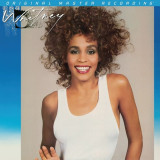
Whitney did more than turn Whitney Houston into a pioneering sensation known around the world by her first name. Originally released in June 1987, the singer's blockbuster sophomore record became the first album by a female artist to debut at No. 1 on the Billboard 200 chart — a position it claimed for a total of 11 weeks en route to selling more than 10 million copies in the U.S. The Diamond platinum effort also contains four No. 1 Hot 100 hits that, when combined with the three chart toppers from her 1985 debut, gave her seven consecutive No. 1 singles — an accomplishment that no other artist has accomplished. Commercially and creatively, Whitney stands on hallowed ground — especially now that the record plays with a sound that puts into perspective just how extraordinary, engaging, and vital Houston's music remains.
Mastered from the original master tapes and pressed on MoFi SuperVinyl at RTI, Mobile Fidelity's 180g 33RPM SuperVinyl LP of Whitney invites listeners to experience the Rock & Roll Hall of Fame inductee's pivotal album in audiophile quality for the very first time. Free of the dynamic limitations and tonal flatness prevalent on prior vinyl and CD pressings, it lets the music breathe and reveals the copious detail, nuance, and texture within the immaculately produced songs. MoFi's SuperVinyl profile offers further advantages in the forms of a nearly inaudible noise floor, dead-quiet surfaces, and superb groove definition.
In addition to featuring extreme clarity and immediacy, this numbered-edition reissue does wonders for the attribute that inspired more than 20 million people around the globe to add Whitney to their record collections: that inimitable voice. Houston's trademark mezzo-soprano — an acrobatic instrument equally capable of taking off on fantastic flights and unwinding for hushed meditations — benefits from the fantastic airiness and transparency afforded by this meticulously restored edition. Whitney has never sounded or looked better. The crossover landmark deserves nothing less.
Issued just two years after Houston's breakthrough debut, Whitney immediately signalled the genre-defying singer's intent to continue to push ahead and expand her palette. Shot by photographer Richard Avedon, the album cover depicts an iconic image of Houston — captured with a gleaming smile, bright eyes, teased-out afro, toned arms, and a right hand that appears to wave a friendly hello — whose active, athletic profile stands in contrast to the extremely formal sit-down shot of her that graces her '85 record. The change is telling: Whitney overflows with unfettered joy, rhythmic vibes, and deep-seated emotions that forever endeared her to the hearts and minds of countless listeners — and which set the standard for the wave after wave of divas that followed in her footsteps.
It's no coincidence that the first track on Whitney is the declarative "I Wanna Dance with Somebody (Who Loves Me)." Like Michael Jackson's "Billie Jean" and Madonna's "Material Girl," the feel-good smash is one of the quintessential '80s gems — a lithe, melodic, celebratory release of pent-up energy and loneliness that glides across club floors, shouts to the rooftops, and shrugs off any concerns about vulnerability or embarrassment. Houston's swooping voice moves in sync with the sleek beats and dipping-and-diving synths. She practically takes her fellow musicians by their hand and leads them in a blissful dance that nobody would dare sidestep. Focusing on Houston's singing — a task made challenging only because of the impossible-to-ignore hooks and grooves — showcases the virtuosic facets of not only her register but her control, discipline, smoothness, and warmth.
That she replicates those feats for the entirety of the nearly 53-minute-long album makes Whitney that much more special. Houston reaches back and channels her childhood gospel training on the R&B-flared "So Emotional"; effortlessly slips into Quiet Storm mode on the duet with her mother, gospel great Cissy Houston, on "I Know Him So Well"; flirts with smooth jazz and collaborates with tenor saxophonist Kenny G on the lush "Just the Lonely Talking Again"; conjures dreamscapes and shadow-boxes with supple funk on a romantic cover of the Isley Brothers' "For the Love of You"; and, for the majestic power ballad "Didn't We Almost Have It All," displays the sky-scraping reach of her vocals amid a grand arrangement made even bigger by Houston's sweeping performance and triumphant finish.
Houston's once-in-a-generation talents weren't lost on the adoring public, radio deejays, or industry experts. In addition to harbouring four No. 1 hits and receiving nominations for four Grammy Awards, Whitney generated another Top 10 success in the guise of the Afro-Cuban-leaning "Love Will Save the Day." The album also netted Houston four American Music Awards; two Billboard Music Awards; back-to-back People's Choice Awards; a Soul Train Award; and various other accolades. It all makes the crux of the Washington Post's July '87 review of the album appear prophetic: "Her voice sounds stronger still and the songs are varied but so consistent she could garner 10 Top 10s out of a field of 11."
That claim still holds true. A brilliant fusion of pop, R&B, smooth jazz, and soul, Whitney is a showstopper – and one of the key reasons Houston is the most-awarded female artist of all time.
Men at Work already had an album in the Top Ten when the Australian ensemble released Cargo, which continued the momentum gained by its record-setting debut. As ambitious and even more diversified than its initial salvo, the 1983 effort firmly established the band as new-wave pioneers – a group whose goofy playfulness, sharp hooks, brass accents, and memorable choruses helped define the decade's landscape. Any doubts about Men at Work's quirky sensibility were promptly answered by the iconic cover art gracing this multi-platinum set.
Mastered on our world-renowned mastering system and pressed at RTI, this LP not only brings the artwork back into full-scale glory but also takes the enjoyably melodic pop-rock to new sonic heights courtesy of improved imaging, separation, and balance. Previously obscured details jump to the surface, and leader Colin Hay's unique voice takes on life-like dimensions that hover between the speakers.
While remaining true to the approach that garnered them a Grammy Award for Best New Artist, Men at Work expands the creative palette on Cargo by giving guitars a more prominent role and increasing the rhythmic textures. With the sweeping ballad "Overkill" and politically savvy cynicism of "It's a Mistake," the band furthered their radio domination and extended their run of Top 10 singles. A third hit, "Dr. Heckyll and Mr. Jive," cracked the Top 30. Well-tailored melodies and whimsical imagination definitely had a place in the public's consciousness, and no group understood this more.
As the final album captured by the original lineup, Cargo remains an indelible piece of the 1980s audio terrain and a reminder of the era's endless fun. Bolstered by lively saxophone solos, self-effacing humor, and instantly catchy refrains, the album is as good as excuse as any to turn on the stereo, sit down, forget your worries, and dance to leisurely pursuits so perfectly captured by this beloved group.
The concept of strict musical genre has arguably been dead for decades, and the latest offering from Danish powerhouses Gustaf Ljunggren and Emil de Waal once again reinforces this notion. Their third collaborative album "Stockholm Kobenhavn", a spacious, cinematic and boundaryless exploration of their shared musical connection is set to release on July 7th on April Records. Emil de Waal has been one of Denmark"s leading drummers for three decades. Gustaf Ljunggren initially studied the saxophone at the Rhythmic Conservatory of Copenhagen, where whispers spread throughout the school that he was the best saxophone player in town and yet never practiced. His career has seen him prove that he can bring grace, musicality and heart to any instrument he touches, from the pedal steel guitar, to the bass, piano, and more. In the words of Danish multi-instrumentalist Kresten Osgood, "Although an instrument may be new to him he is able to play it like he has had a lifetime of experience working with it. Over the years I think the only instrument I haven"t seen him play is the drums." "Stockholm Kobenhavn" has a vast array of influences including Jazz, Americana, Film Music and Electronica. It is full of space, coaxing the listener into a meditative state and inviting them to drift away with their own imagination. The record plays as a series of open-ended sketches or moods, absent of big defining melodies or familiar song-like structures. Each piece evolves over time, providing musical interest in the form of rhythmic ideas, rich harmony, texture, and repetitive melodic patterns from a guitar or rhodes. Imaginative electronic production techniques combine the warm sounds of acoustic instruments with a constantly developing palette of otherworldly textures and effects. Grounded by an unwavering pulse, the combination of programmed beats and acoustic drums provide the hypnotic foundation over which the pair explore and challenge their common musical ground. The album closes with an intimate recording from a performance at STUK in Belgium, with a comforting guitar-led Americana tune bringing the listener back into the room and sharing in the joy the duo have felt in playing together over the past twenty years.
Julian Cannonball Adderley's only Blue Note album, Somethin' Else, would likely forever be famous in music lore if just for the presence of Miles Davis. The iconic composer/trumpeter steps into the role of sideman on the 1958 set, one of just a handful of times he'd make such a move after the calendar passed the mid-1950s. Yet evaluating Somethin' Else strictly on Davis' involvement misses the big picture. Plain and simple, Adderley's jubilant work remains a jazz landmark due to the chemistry of its Hall of Fame personnel, enthusiasm of its participants, and sophistication of its arrangements – not to mention the reference-grade production and inclusion of the definitive renditions of two all-time jazz standards.
Limited to 6,000 numbered copies, pressed on dead-quiet MoFi SuperVinyl at RTI, and mastered from the original master tapes, Mobile Fidelity's ultra-hi-fi UltraDisc One-Step 180g 45RPM 2LP collector's edition pays tribute to the record's merit and includes the bonus track "Allison's Uncle." Offering reference-calibre sonics, this spectacular collector's version provides a clear, transparent, ultra-dynamic, and up-close view of a cornerstone effort that witnesses Adderley and Davis sharing horn duty alone for the only time in their fabled careers – an arrangement that occurred as a result of Adderley having joined Davis' majestic sextet a year prior.
The premium packaging and beautiful presentation of the UD1S Somethin' Else pressing befit its extremely select status. Housed in a deluxe slipcase, it features special foil-stamped jackets and faithful-to-the-original graphics that illuminate the splendour of the recording. No expense has been spared. Aurally and visually, this UD1S reissue exists as a curatorial artefact meant to be preserved, touched, and examined. It is made for discerning listeners that prize sound quality and production, and who desire to fully immerse themselves in the art – and everything involved with the album, from the iconic photos to the gorgeous finishes.
The vibrant potency reveals itself openly on an analogue set that provides full-range reproduction of an ensemble that also includes pianist Hank Jones, bassist Sam Jones, and drummer Art Blakey. Each and every snare hit, downbeat, and cymbal splash registered by the latter take on realistic proportions, blooming and decaying as they would right in front of you on a stage. Jones' foundational bass lines register with uncommon depth and palpability, the litheness of the strings and fullness of the instrument epitomizing the definition of rhythm. Stellar, too, are the surefooted 88s. Sublime in scale, tonality, and attack, with the delineation such you can practically separate the white and black keys in your mind. As for that liquid interplay between Adderley and Davis? Breathtakingly lifelike in timbre, naturalism, purity, and presence. This collector's version takes you there – there being Rudy Van Gelder's legendary New Jersey studio in March 1958 to witness it all unfold, again and again.
For reasons that extend far beyond the outstanding playing and flawless repertoire, Somethin' Else is without question a record you'll always want to watch and hear come together. As veteran critic Bob Blumenthal observed writing about the album four decades after its release, "The instant rapport achieved by the quintet is thus the product of much shared and common history, though the tensile strength that they create throughout created a totally unique feeling that can be attributed to the sensitive musicianship of all concerned, including the supposedly hard bopping leader and drummer." Such inimitable feeling, or emotion, courses throughout every passage, and no where more obviously than on "Autumn Leaves" and "Love for Sale."
Without question, the discreet interpretations of the Johnny Mercer and Cole Porter songs, respectively, found on Somethin' Else have long been considered part of jazz's alluring mystique. Adderley and Davis bring contrasting approaches to the table yet sound of a singular mind on "Autumn Leaves," with the latter's muted trumpet and the headliner's lush alto saxophone dovetailing into a performance that endures as a blueprint for expression, counterpoint, sophistication, fluidity, and linearity. Blues, melody, and romance pour from their horns. Their bandmates, picking up on the intimate vibe and calm mood here – as well as on the spry, head-over-heels spirit of "Love for Sale" – join in on the conversation with sharp economy and float-on-air roundedness.
Not to undersell the other three numbers, all deserving five-star status. Twelve measures in length, the title track offers a slow burn in swing. Written by Adderley's brother, Nat, the 12-bar "One for Daddy-O" transmits funk flavors. The closing "Dancing in the Dark" pops with lushness and temptation, its stream of bold colours and understated textures calling for a moonlight twirl, or at least fantasies suggestive of a memorable night. Somethin' else, indeed.
Tom James Scott holds a unique position in experimental music. With a soft brush approach Scott, who currently lives on the North-West coast of England, has explored delicacy in music with a variety of sublime releases on a variety of labels. Predominantly known for gentle investigations of guitar and piano, Scott has shifted to incorporating different technology and tactics over time. All of this, either in performance or recording, is embedded with a spirit that is quintessentially his own. Nightshade is the latest in his expanding catalogue, one which ignites an alarmingly new take on his approach to music. Echo on Water initiates proceedings with the unmistakable sound of tape.
Any instrumentation is buried amongst the woozy sway of the medium itself, with its rough dynamics soon morphing into an overwhelmingly swirling mass of emotionally decayed sound. The movement of matter takes on a haunted shape with sounds looping and falling apart as the physicality of the medium holds it all together. The second track Blue Mist furthers this approach with its smeared haze of gorgeous emotion. This is deep exploration of ideas meeting matter. Wasting Stars takes up the entire flip side with the sound of tape recoiling a bit to allow the delicate glow of instruments to come more to the fore, with gentle effects that weave the musical matter. As a skewered take on Scott’s earlier piano explorations the atmosphere here is a subdued soundscape evoking the spiritual sadness found in the piano works of Gurdjieff/De Hartmann, with a modern lo fi angle.
Nightshade is a deeply effective journey and one of the most exquisite examples of Scott’s delicate approach so far. Two sides of form which inhabit contrasting yet complimentary clouds of sound communicating in an stunning emotional flow. As music with only trace elements of melody, Nightshade is a beautiful take on tools being used to explore paths both highly idiosyncratic, deeply moving and discreetly personal.
When he first came on the scene, Phil Woods was often referred to as
"The New Bird," in a nod to the legendary Charlie Parker - A testament to
his genius on the saxophone to be sure
But while obviously indebted to Parker - as all modern jazz saxophonists of a
certain era were - there is no question that Phil Woods was an original. After
earning a degree in music from Juilliard in the early 1950's, Woods found himself
in the orbit of the great Quincy Jones. At Jones' invitation Woods joined Dizzy
Gillespie's infamous Jazz Ambassadors - a tour sponsored by the US State
Department as part of a global cultural diplomacy initiative - and subsequently
became a member of Jones' own touring band. This recording, his 9th album as a
band leader, consists entirely of Woods' five- part Rights of Swing Suite. An
ambitious large-scale composition based solidly on jazz traditions. A culmination
of the influences the then 30 year artist had absorbed. Arguably considered one
of Woods finest recordings, the record features a stellar section made up of
Wood's fellow Quincy Jones band members. (It should be noted that these same
musicians, for the most part, are also the section on Benny Bailey's Candid
Records recording, Big Brass, recorded a a few months prior in November of
1960). Recorded at the Nola Penthouse Studios in New Your City on two dates in
January and February of 1961, and conducted by Quincy Jones. The LP includes
extraordinary liner notes by Candid A&R man and producer Nat Hentoff, and indepth commentary from Woods himself, giving a context and insight that adds to
the experience of hearing these extraordinary performances
- 1: New Radio :33
- 2: Rebel Girl :37
- 3: Demirep 2:47
- 4: In Accordance To Natural Law
- 5: Strawberry Julius 2:17
- 6: Anti-Pleasure Dissertation 2:29
- 7: Rah! Rah! Replica 0:58
- 8: I Like Fucking 2:16
- 9: I Hate Danger
Repress!
Bikini Kill Records is excited to reissue of The Singles, on both vinyl and compact disc. This is the first time that it has been released as a 12-inch (special note for all you vinyl fanatics, we managed to keep it at 45rpm for better sound quality)! The Singles was initially released in 1998 as a CD only compilation of all of BIKINI KILL's 7's. Once called "their defining document" by Pitchfork it includes Bikini Kill's legendary collaboration with JOAN JETT on the New Radio (1993) single as well as the long out of print Anti Pleasure Dissertation (1995) and I Like Fucking (1995) singles.
- A1: Bel Cobain & Lex Amor - At The Bay
- A2: Manik Mc & Elisa Imperilee - July
- A3: Enny - For South
- A4: Louis The Hippie - Blessings
- A5: Summers Sons, Majical & C Tappin - Free Your Mind
- A6: Keepvibesnear & Nix Northwest - What U Need
- A7: Summer Pearl - Rising
- A8: Natty Wylah - Eucalyptus
- B1: Kofi Stone & Joe Beard - Like We Used To
- B2: Elisa Imperilee - Closer
- B3: Meron T & Pedro Retro - Standing There
- B4: Eerf Evil & Kosher - Chase It
- B5: Turt & Stephanie Santiago - The Process
- B6: Kieron Boothe & Morgan Lorelle - No Peace
- B7: Louis The Hippie - The Fruits
2023 Repress
Gedacht als Community-Projekt, schafft The Silhouettes Project eine Plattform für aufstrebende Hip-Hop, Soul und Jazz Künstler aus UK. Im Total Refreshment Centre in Hackney, London bietet The Silhouettes Projekt mit Tonstudio und Live-Venue einen Open Space für MCs, Sänger, Musiker und Produzenten sich zu vernetzen und Musik zu machen. The Silhouettes Project wurde 2019 von den beiden Initiatoren/Künstlern Asher Korner (aka Kosher) und Jaden Osei-Bonsu (aka Eerf Evil) gegründet. Als die beiden uns das Projekt vorstellten und die erste Musik zeigten, waren wir sofort begeistert und beteiligen uns seither als Label Partner an dem Projekt. Für die gesamte Art Direction des Projekts ist der Designer und Illustrator Sergio “SagaUno” Alférez aus Medellín, Kolumbien verantworlich. Seit September veröffentlichen wir wöchentlich Donnerstags einen neuen Song aus dem Projekt von Künstlern wie Kofi Stone, Summers Sons, Enny, KeepVibesNear, Manik MC, Lex Amor, Louis The Hippie, Summer Pearl, Joe Beard und vielen mehr.
- A1: Greetings From Planet Love
- A2: Rainbow People
- A3: Love Tonight
- A4: Chasing My Tail
- A5: Swirl
- B1: Tuba Rye And Will’s Son / Balloon In The Sky
- B2: King Of Showbiz
- B3: Whirl
- B4: Freelove Baby
- B5: Groovy Party At Jimmy’s Magic
- C1: It’s Beautiful
- C2: Wink Of The Third Eye
- C3: It Has No Eyes But Sight
- C4: Twirl
- C5: Space And Time
- C6: Time Is Standing Still
- D1: Ride The Snake
- D2: Mr Plastic Business Man
- D3: Ccosmicc Ccarnivall
- D4: Tomorrow Drop Dead
The very first vinyl edition of Andrew Gold’s pastiche
psychedelic masterpiece ‘The Fraternal Order of the All –
Greetings from Planet Love’.
Initially released in 1997, the album was conceived by
Andrew Gold as a tribute to late 60s psychedelic rock. His
remarkable compositions were wonderful stylistic
evocations of artists such as The Beatles, The Beach
Boys, The Byrds and The Doors.
The project saw Gold create the fictitious band The
Fraternal Order of the All, in reality Andrew playing
most of the instrumentation and singing, along with guest
musicians such as Graham Gouldman.
This Esoteric Recordings limited edition double LP is
pressed on 10-inch coloured splatter vinyl and features a
newly designed lavish gatefold sleeve.
GER Als Night Beats erschafft der in Texas geborene und in LA lebende Künstler Danny Lee Blackwell Musik, wie man ein Puzzle zusammensetzen könnte. Der psychedelische Autorenfilmer aus dem Westen baut sein Werk aus einem Moment, einer Initialzündung, auf, die bestimmte Kriterien erfüllen muss: Sie muss ihm Gänsehaut bereiten. Wenn dieses Gefühl eintritt, verfolgt Blackwell die Idee unermüdlich, bis er einen neuen Song hat; wenn nicht, geht er zum nächsten Moment über, immer auf der Suche nach dem perfekten Molekül eines Songs. Auf seinem sechsten Night Beats-Album "Rajan" zeigt sich der Songwriter von seiner besten Seite und erschafft Werke, die mit fesselnden Melodien und hypnotischen Rhythmen glänzen, aber auch durch subtile handwerkliche Entscheidungen unterstrichen werden, die nur nach unzähligen Stunden im Studio erreicht werden können. Blackwell erschafft ein Werk, das irgendwo zwischen Spaghetti-Western-Filmmusik und Psych-Pop-Opus angesiedelt ist, ein karrierebestimmendes Album, das viel über Danny Lee Blackwells künstlerische Philosophie verrät und gleichzeitig den so wichtigen Hauch des Geheimnisvollen bewahrt. Exklusiv für den Indie-Handel, todesrote LP, handnummeriert mit Poster und DLC.
ENG As Night Beats, Texas-born, LA-based artist Danny Lee Blackwell creates music like one might assemble a puzzle. The Western psychedelic auteur builds his work from one moment, an initial spark, that must fit a certain criteria: it must give him goosebumps. If that sensation arrives, Blackwell will pursue the idea relentlessly until he has a new song; if not, he moves onto the next moment, constantly looking for the perfect molecule of a song. On his sixth Night Beats album, 'Rajan', the songwriter is at his strongest, creating works that shine with captivating melodies and hypnotic rhythms, but are underscored by subtle choices of craftsmanship that can only be achieved after countless hours in the studio. Blackwell creates a work that lands somewhere between Spaghetti Western film score and psych-pop opus, a career-defining album that reveals much about Danny Lee Blackwell's artistic philosophy while keeping that ever crucial air of mystery intact. Indies only LP on 180g 'Dying Red Giant' coloured vinyl, limited to 350 hand-numbered copies, fold-out art poster, download card included.
To call Current Affairs a Glasgow band may initially seem misdirection. Though Joan Sweeney (ex-Rose McDowall’s Band, Aggi Doom, The Royal We) is a lifer, Sebastian Ymai (Comidillo Tapes, Pissy, Anxiety) came from Chile via York, recently relocating to Berlin in 2021, and new member Gemma Fleet (The Wharves, Order of the Toad, Dancer) alongside Andrew Milk (Shopping, Pink Pound) were persuaded to leave London for the ‘second city’ after touring through with previous bands. However, Glasgow is the heart and hub of the band’s music, musical life and the place where Off the Tongue was solidified and produced. Their current line up formed in 2020, but the four have been circling each other for years, touring and playing with their previous bands within the close UK network of DIY music. Stalwarts of their respective scenes they finally began working together through the creation of the Spitehouse collective – a project designed to promote Queer and female-fronted music through events mainly held at Transmission Gallery and Glasgow Autonomous Space, putting on many local and international acts (Sneaks, Sacred Paws, Still House Plants and Comfort amongst others). When an opening for a new bassist arrived, Gemma was the obvious compliment, the slogan of Spitehouse being the language of Current Affairs – “Everyone’s welcome, but don’t get it twisted.” Following on from 2019’s singles collection, Object & Subject, the wait for their debut full-length may belie the urgency of its sound. Songs that were written in pieces over a long time and distance, but fully formed in the instant of the recording room across just a few days by producer Ross McGowan at Chime Studio. Current Affairs’ song-writing process has always been collaborative. Songs are developed responsively, with each of the band’s members sending/bringing elements or hooks to each other, but practices being the place where the songs flesh out, structure and are fully realised. These new songs feel a little brighter than their previous offerings, yet still hold true to their propulsive and caterwauling sound. Still embryonic in the most exciting way that that can be. Current Affairs’ music straddles new-wave pop and gothic post-punk in the way that you should expect a Glasgow-Berlin band to do so: with grit and panache. Written from within the world of crumbling services, broken bonds and wounded spirits, Off the Tongue rolls off an ecstatic rage, filled with hope for you, them and everyone else. It’s a rallying cry away from hopelessness, forgiving your fears and laying them to waste. Their album holds a place for you to be angry and to be focussed. In lieu of having anything else, we’ve always got each other, and an uncertain future is open game for us too
Let It Loose is the tenth studio album by Gloria Estefan and Miami Sound Machine, released in 1987.
Initially gaining little attention in Europe, the success of the single "Anything for You" led to the album being re-released under that name, and with different cover art. It became Miami Sound Machine's most commercially successful album, certified triple-platinum by the RIAA, and peaked at number six on the Billboard 200.
Other hit singles include "Can't Stay Away From You", "Rhythm Is Gonna Get You", "1-2-3", and "Betcha Say That".
Let It Loose is available as a limited edition of 2000 individually numbered copies on translucent red coloured vinyl and contains an insert with lyrics
Founded in 1971, Matumbi was among the earliest and best British reggae bands. They did, however, also record under different guises, including 4th Street Orchestra. In their acclaimed Rough Guide to Reggae, Steve Barrow and Peter Dalton rate this album (and its counterpart Ah Who She? Go Deh!) as 'the best showcases for Matumbi's talents'. This release marks the first LP reissue of this genuine UK roots monument since 1976.
Original member Dennis “Blackbeard” Bovell (of LKJ and Dub Band fame) knew the local sound system scene like the back of his hand, and most tracks on Leggo! Ah-Fi-We-Dis were initially cut as exclusive 'specials' for his own Jah Sufferer sound system and for fellow soundmen. Hardly anyone hearing these tunes at reggae parties would have guessed they didn't originate in Kingston but were recorded in London. And neither did many who bought the records when they were released a few years later. That's hardly surprising, as the material Bovell & Co churned out could easily compete with the toughest output of their Jamaican counterparts. The solid interpretation of Junior Delgado's "Tichion" and a scorching, melodica-led version of Ras Michael's "None-Ah-Jah-Children" are the most familiar tunes here. And a militant update of Max Steiner's "Theme From A Summer Place" displays good fun as well as guts. But the band's outstanding originals will give many '70s Jamaican classics a good run for their money.
- 1: I Am Not Going To Fall In Love With You
- 2: Memento Mori
- 3: That Would Only Happen In A Movie
- 4: We Interrupt Our Programme
- 5: We Should Be Together
- 6: Strike!
- 7: Science Fiction
- 8: Summer
- 9: Each Time You Open Your Eyes
- 10: We All Came From The Sea
- 11: Monochrome
- 12: Kerplunk!
- 13: Don’t Give Up Without A Fight
- 14: X Marks The Spot
- 15: You’re Just A Habit That I’m Trying To Break
- 16: Plot Twist
- 17: Whodunnit
- 18: A Song From Under The Floorboards
- 19: Telemark
- 20: Astronomic
- 21: Go Go Go
- 22: Once Bitten
- 23: La La La
- 24: The Loneliest Time Of Year
- 25: White Riot
- 26: Panama
- 27: Jump In, The Water’s Fine
- 28: We All Came From The Sea
- 29: Teper My Hovorymo
Throughout 2022, The Wedding Present’s ‘24 Songs’ series saw the legendary indie band release two new tracks a month as double A sided 7”s, ultimately creating a much-sought-after box set. David Gedge has now re-curated full-length versions of all twenty-four tracks for a new compilation album that will also comprise five bonus recordings including one featuring The Wedding Present’s first guitarist, Peter Solowka.
‘24 Songs’ was a doff of the cap to The Wedding Present’s ‘Hit Parade’ project of 30 years previous. That series proved to be a real milestone for the band with them becoming only the second-ever artist to achieve twelve Official UK Top 40 hits in a calendar year – at the time something that only Elvis had achieved!
David Gedge says: “When it came to compiling the ‘24 Songs’ album, I decided not to sequence the tracks in chronological order. With six sides of vinyl, you have six ‘beginnings’ and six ‘ends’ to play with, and I felt that the opportunity to build some kind of a musical journey was too good to miss! Listening back to this collection, I have to say that I genuinely believe that, for this project, The Wedding Present have recorded some of the best tracks in our history. I loved releasing the singles, but it’s satisfying to have them all rounded up together.”
“The idea of releasing another collection of twenty-four tracks did initially seem quite daunting,” admits David Gedge in the deluxe-CD sleeve notes but, with Jon Stewart (also of Sleeper) having joined the band at the end of 2019 and their subsequent writing partnership flourishing, he began to feel confident that they would be able to produce a year’s worth of music. And, with one of the UK’s most influential independent record labels by their side in Clue, a key partner to EMI North who will be distributing the record - there was no looking back.
[xa] 27. Jump In, The Water’s Fine [Japanese Edit]
[xb] 28. We All Came From The Sea [Utah Saints Remix]
- A1: German Trained Unit 1
- A2: Neoliberal Madness Offering I
- A3: Riyl Roma
- A4: Neoliberal Madness Offering Ii
- B1: German Trained Unit 2
- B2: New Bulgaria
- B3: German Trained Unit 3
- C1: Armchair Evader
- C2: Neoliberal Madness Offering Iii
- C3: German Trained Unit 4
- D1: Double Arm
- D2: Neoliberal Madness Offering Iv
- D3: Abhaengen
Repress!
Exceptional debut album of Military Space Music and / or Fluxus Techno rave drills from the inimitable, acronymic duo for Diagonal. RIYL Belgian Techno, SuperCollider, Powell, Lorenzo Senni,
the bleep test At long last N.M.O. execute their crazed debut album for Diagonal, distilling the playful calisthenics of their laptop and drum kit live show in a totally unique manner that somehow deconstructs and alliterates tracky acid techno with avant no-wave rock, computer music and the kind of snare-
driven tattoos coming out of Portugal's Príncipe label. Best just call it Military Space Music - Cleft as two corresponding but individual sides entitled Nordic Mediterranean Organisation
& Numerous Miscommunications Occur, it finds the Romantic Viking duo ratcheting the psychotomimetic intensity of their previous tape and trio of 12"s for Anòmia, The Death of Rave
and Where To Now according to their central mantra of As Strict As Possible, resulting in 5 alarming, powerful dancefloor raids intersected by infuriating locked grooves, or Neoliberal
Madness Offering #1-4, plus a series of barking trained Unit drills.
The razor sharp and raucous results don't sit comfortably in any pre-ordained category, preferring to scythe their own route thru the time-flattened field of contemporary music by employing
the fundamentals of physical pressure and precise psychoacoustic frequencies in a disciplined pursuit of new, syncretic sensations that toy with rave convention and serve to demystify notions of aerobic mysticism.
Nose to tail, they spell out their ideas with playfully pedantic attention to detail, whether physically making you get up to nudge the needle from its pervasive locked groove, putting you thru your
paces in their German Trained Unit challenges, or simply driving you to delirium in the album's full blown dance tracks.
Cut almost a side-a-piece for optimal intensity, those five dance cuts veer from the clashing sharp and wet, tight-but-distended dichotomies of RIYL Roma to the ploughing pneu-beta bass drum
and giddy top end tickle of New Bulgaria on the Nordic Mediterranean Organisation plate, to take
in the scuffling, compartmented swerve and teeth-chattering acid of Armchair Evader and what
- A1: Introduçào
- A2: From The Foundation - Ft Dub Judah
- A3: City Walls - Ft Ras Addis
- A4: More Jah Songs - Ft Tena Stelin
- B1: Moses - Ft Ras B
- B2: Strictly Ital - Ft Ras Addis
- B3: Babylon Ambush
- B4: There's A Love - Ft Christine Miller
- C1: Respek I-Spek - Ft Levi Roots
- C2: Touch I Heart - Ft Afrikan Simba
- C3: Rua Joào Vieira 106
- C4: Sangue Brasileiro (Brazilian Blood)
- C5: Nyah Keith
- D1: Transformai - Ft Ras Bernardo & Jeru Banto
- D2: Zulu Dawn
- D3: Hail Jah - Ft Ras Addis
- D4: Foundational Dub
When Transform-I was released in 2009, Bristol’s Dubkasm were unmistakably prominent on the reggae scene but it is this LP - their tenth release - that put them on the map and cemented their status as outernational roots innovators and one of the most creative outfits in reggae. By 2006, Jah Shaka had been rinsing their percussive vocoder smash ‘Zulu Dawn’ (track 15) at the end of every dance for close to three years. Dubplates from the LP became firm favourites on some of the greatest soundsystems in the world, including Aba Shanti-I, Iration Steppas, and Channel One.
DJ Stryda and producer Digistep’s reputation grew still further when the pair managed to get an extremely rare vocal from the legendary Dub Judah, who at the time had not voiced a tune for many years. The resulting 7”, ‘From the Foundation’ (track 2) was the first tune to be released from Transform-I, an album which took the music world by storm with its singular blend of a deep, conscious roots reggae sound with instrumentation that drew on Digistep’s Brazilian heritage.
As the great DJ and journalist Steve Barker said in his rave Wire magazine review of the initial release, ‘Like many innovations heard for the first time, you wonder why this has not been done before’. Indeed, the LP’s blend of percussion instruments like zabumba, cavaquinho, and cuica with an absolutely stellar cast of vocalists including Tenastelin, Christine Miller, and Ras B, with a pre-Reggae Reggae Sauce fame Levi Roots recording from his living room, became timeless the moment it was released. Barker praised the album for being ‘more orthodox than expected’, by which I think he meant that the album is a completely authentic roots record, rather than an attempt to mix musical flavours to conceal a lack of ideas. Instead, ideas flew back and forth across the Atlantic, as basic tracks were laid in the Dubkasm Studio (then in Brazil, now in England) and overdubs and vocals were recorded in London, Nottingham, Bristol and Norway, with the final mixes being done at the Daddy Roots studio in Bristol. The combination is seamless both because Digistep grew up with Brazilian music, courtesy of his father, and because Dubkasm have lived and breathed reggae since their formation in 1994 – just go and listen to early releases like ‘Chemical Reaction Dub’ (1996) or ‘Hornsman Trod’ (2003) and you’ll hear heavyweight productions with a Rasta ethos immersed in U.K. soundsystem culture.
Since the album’s release, Dubkasm have gone from strength to strength and collaborated with a dazzling array of artists. Transform-I was remixed by some of Bristol’s best electronica producers in 2010, and 2013’s 12” ‘Victory’ became a huge soundsystem hit around the world, before being voiced by two of the greatest singers of all time, Luciano and Turbulence, and being remixed the following year by one of the world’s finest dubstep producers, Mala (who in 2016 released his own project fusing Latin music with electronic bass – the excellent Mala in Cuba).
The first project of its kind, beautifully reissued in its original format by Dubquake (the outfit behind France’s incredible OBF Soundsystem), Transform-I is the LP that launched Dubkasm on their current trajectory and has truly lived up to its name.
The Remainder comprise of Blancmange’s Neil Arthur (vocals, guitar and synthesisers), solo artist Finlay Shakespeare (synthesisers and vocals) and Liam Hutton (drums, guitar and synthesisers). The latter - best known for his work with Boxed In, Neneh Cherry and more recently, Young Fathers - initiated the writing process back in 2015. ‘There was never a clear brief or definition of the project that we were working towards collectively’, he explains. ‘It was always a completely open statement.’ The trio’s crisp, glacial rhythms, cascading synths, shadowy psychedelia, absurd humour and lyrical x-rays of everyday life all feature strongly on their forward-looking debut album. The hypnotic, beat-driven songs are a way of venting; facing up and expressing a strange new positivity in spite of all the darkness. Each song is also linked by interludes created by Liam’s mother Jo Hutton, a recording engineer and composer/sound designer of experimental music and sound art.
- A1: Let 'Em Know (Produced By Domino)
- A2: Live And Let Live (Produced By Domino)
- A3: That's When Ya Lost (Produced By Del Tha Funkee Homosapien)
- B1: A Name I Call Myself (Produced By Del Tha Funkee Homosapien)
- B2: Disseshowedo (Produced By Domino And Jay Biz)
- B3: What A Way To Go Out (Produced By Domino)
- B4: Never No More (Produced By A-Plus)
- C1: 93 'Til Infinity (Produced By A-Plus)
- C2: Limitations Feat. Casual (Produced By Jay Biz)
- C3: Anything Can Happen (Produced By A-Plus)
- D1: Make Your Mind Up (Produced By Del Tha Funkee Homosapien)
- D2: Batting Practice (Produced By Casual)
- D3: Tell Me Who Profits (Produced By Domino)
- D4: Outro (Produced By Domino)
Repress!
Repressed, note price increase. Remastered from the original masters and pressed extra loud for DJs. There are very few albums across any genre that stand the test of time better than 93 ‘Til Infinity, the classic debut record from the Hieroglyphics crew’s very own Souls of Mischief. In an era where Gangsta Rap and G-Funk dominated the West Coast Rap scene, Souls broke ground on a completely unique and thoroughly west coast sound. While the Dr. Dre’s and the Snoop Doggs were garnering much of the mainstream attention, Souls were quietly forging a charismatic, critically acclaimed, and cohesively shaped record that when categorized, sounded much closer to A Tribe Called Quest than N.W.A. The sound of their debut is characteristic of the distinct style explored by the collective, including a rhyme scheme based on internal rhyme and beats centered around a live bass and obscure jazz and funk samples. 93 ‘Til Infinity was propelled into success by its title track and lead single, which reached #32 on the Billboard Hot 100. It also featured singles “That’s When Ya Lost” and “Never No More” which also reached the Hot Rap Singles. In 1998, the album was selected as one of The Source’s 100 Best Rap Albums of All Time. Considered by many to be a textbook “slept-on” classic Rap record, 93 ‘Til Infinity has only grown better with age. The album simply defines the Hiero golden age with a sound that would later be fine tuned with strong releases from MCs Del The Funkee Homosapien, Casual and Pep Love. It takes some serious bravado to name your album 93 ‘Til Infinity, but certainly the goal of creating a Hip Hop “classic” must have been on the collective minds of group members A-Plus, Tajai, Opio, and Phesto when recording this landmark moment in Hip Hop history. It’s true, even seventeen years after the album’s initial release many people are still discovering it, and with this re-mastered reissue on double vinyl, fans all over the world will once again discover the brilliance that 93 ‘Til Infinity delivers and will continue to deliver beyond infinity. A1. Let ‘Em Know (Produced by Domino) A2. Live and Let Live (Produced by Domino) A3. That’s When Ya Lost (Produced by Del tha Funkee Homosapien) B1. A Name I Call Myself (Produced by Del tha Funkee Homosapien) B2. Disseshowedo (Produced by Domino and Jay Biz) B3. What a Way to Go Out (Produced by Domino) B4. Never No More (Produced by A-Plus) C1. 93 ‘til Infinity (Produced by A-Plus) C2. Limitations feat. Casual (Produced by Jay Biz) C3. Anything Can Happen (Produced by A-Plus) D1. Make Your Mind Up (Produced by Del tha Funkee Homosapien) D2. Batting Practice (Produced by Casual) D3. Tell Me Who Profits (Produced by Domino) D4. Outro (Produced by Domino)
Wisdom Teeth co-founder K-LONE returns with his second full length project, ‘Swells’: a kaleidoscopic and expansive record that looks to deep house, synthpop, leftfield R&B and beyond for a spellbinding masterwork of melodic electronica.
His debut LP ‘Cape Cira’ became the accidental soundtrack of the long strange summer of 2020 - its lush marimbas, hazy atmos and synthesised bird calls providing the ideal soundtrack for some much needed collective escapism. The record was widely deemed one of 2020’s standout electronic LPs, gaining glowing reviews in Pitchfork, DJ Mag, Mixmag and Resident Advisor, and ranking highly in end of year lists by Crack Magazine.
Approaching its follow up, the Brighton-based producer felt a fresh perspective was needed. Originally landing on the name ‘Swells’ as a secret pen-name to write the record under, the intention was to keep the project as separate as possible from ‘Cape Cira’ to avoid settling into familiar territories - but as the record took shape it became clear that it made perfect sense amongst his already diverse discography.
Like ‘Cape Cira’, there is a distinct and intentionally limited sound palette at play on ‘Swells’. Looping vocal cuts, rich cluster chords and undulating arpeggios sit front and centre here - as does the lo-fi plonk of of the CR78 drum machine. But while the record clearly takes influence from a range of vintage sound sources, its overall aesthetic is unmistakably contemporary. Sounds are not artificially degraded nor obscured under washes of sampled tape hiss. Rather, everything is processed with a gloss, hi-fidelity sheen. The record’s rhythms are bright, dry and snappy, and its melodies are processed with a neon poppy glow.
The producer’s unabashed love of contemporary pop music is most obviously exemplified by the appearance of British singer-songwriter Eliza Rose. The pair met for a session at a North London studio back in 2021, and the now Brit Award-nominated singer’s warm, emotive vocal takes became an immediate source of inspiration early in the record’s conception. As such, Rose’s voice is heard in various states of manipulation throughout its duration - initially as reduced and looped phrases, and then finally in full form on ‘With U’: a low-lit, dubbed-out slice of leftfield R&B that beckons comparisons with Tirzah, Little Dragon and even Erykah Badu.
Elsewhere, there are references to G-Funk (‘Oddball’), Autonomic drum and bass (‘Shimmer’), hip-house (‘Love Is’) and even Metronomy-era electro pop (‘Love Me A Little’).
As always, the true magic of K-LONE’s artistry is to present complex, subtle and original ideas in ways that feel familiar and immediate. Melodies are introduced as effortless earworms, only to be twisted out of shape into strange and unusual formulations. Looping rhythms unspool into washes of hazy, dubbed-out ambience before rebuilding themselves. Refined and endlessly creative, ‘Swells’ marks a captivating next step for a producer and record label that have both reliably positioned themselves at the very forefront of contemporary electronic music.
First Word Records is very proud to welcome the return of the inimitable Kaidi Tatham, with his 5th album for us, entitled 'The Only Way'. Kaidi Tatham is a legendary multi-instrumentalist born in the Midlands and based in Belfast. Established as one of the original creators of the Broken Beat sound, he is a virtuoso on the keys and a true innovator in sound production. A deeply prolific artist, this is Kaidi's 5th solo album under his own name, following on from 'Don't Rush The Process' (2022), 'An Insight To All Minds' (2021), 'It's A World Before You' (2018), and 'In Search Of Hope' (re-pressed in 2020), all released on First Word, along with several EPs from 2017 onwards. 'The Only Way' is the latest chapter in Kaidi's entirely unique explorations into sound. 11 tracks touching on bruk, funk, jazz, mid-tempo hip hop and hyper-energetic Brazilian flavours, all thrown into a melting pot that's difficult to define, but all containing Kaidi's unmistakable sonic signature. The ...
Five years after the release of ‘Luyando’, Zimbabwe’s most celebrated music export returns with their long-awaited follow-up album ‘Tusona: Tracings in the Sand’. The six musicians from Victoria Falls are refining their unique sound: infectious Afro grooves deeply connected to Zimbabwe’s cultural DNA. ‘Tusana’ is their most danceable album to date, a DIY production recorded in Zimbabwe. It features horns by Ghanaian highlife outfit Santrofi.
Every Sunday, there is a gathering in the sweltering heat on grounds of an old local beer hall in the Chinotimba township in Mosi-o-Tunya (Victoria Falls). Entertainment is provided by various traditional groups including the Luvale Makisi masquerade. It is a day full of singing, drumming, dancing and storytelling. Mokoomba’s lead vocalist Mathias Muzaza can often be found here singing with a voice both soaring and vulnerable. In the course of the afternoon the other band members - guitarist Trustworth Samende, bass player Abundance Mutori, keyboard player Phathisani Moyo, percussionist Miti Mugande and drummer Ndaba Coster Moyo - often join in with singing. The drum driven song “Bakalubale” featured on their new album invites you to this gathering.
Mokoomba recorded ‘Tusona: Tracings in the Sand’, the follow-up album to ‘Luyando’ (2017, Outhere), in Zimbabwe during the pandemic. Instead of working with outside producers like Manou Gallo or Steve Dyer as they have in the past, this album was entirely recorded in a DIY fashion by Mokoomba. The collective from Zimbabwe put in all the experiences made over the previous years and have forged their music into a unique Zimbabwean sound. On popular demand from their fans in Zimbabwe they have even re-recorded three songs from their last more acoustic album ‘Luyando’ turning them into dancehall bangers (featured on the CD and digital versions of the album). In short, this album is more Mokoomba than any of the ones before.
On the album Mokoomba are singing about love, loss, courage in a changing society. The first single “Nzara Hapana” means “no money” in Shona. The song talks about a man who wants to ensure the future of his wife and family and is trying to protect them against the greed of his relatives. The danceable up-tempo song “Nyansola” praises the goddess of harvest and asks her for rain. “Makisi” is sung in Luvale. It celebrates the beauty of the initiation ceremony for which the whole community comes together. “Manina” is a song about losing a loved one. It was written during the pandemic and features the young singer Ulethu from Harare. Mokoomba sing in many different local languages. Their songs are in Tonga, Luvale, Shona, Nyanja and even Lingala used in “Makolo” when they team up with Congolese singer Desolo B. (The album also features horns by Nobert Wonkyi Arthur (trumpet), Bernard Gyamfi (trombone) and Emmanuel Arthur (sax) from Ghanaian highlife outfit Santrofi.)
The title of the album is a nod towards their immense respect for tradition. ‘Tusona’ refers to an ancient system of signs and symbols, drawn in the sand and used for instruction during initiation ceremonies by the Luvale in Southern Africa. Another important part of the Mukanda initiation ceremony is the incredible Makisi masquerade. Since 2008 the Makisi dances are on the UNESCO list of intangible heritage. The Makisi are masked characters, representing the spirit of deceased ancestors. During the yearly initiation ceremony the Makisi return to the living world to teach the young children to become responsible adults among the Lubale people of Southern Africa. In the last decade the interest - especially among the young people – has faded and the Makisi dances have nearly died out.
“Our inspiration comes from these gatherings”, Trustworth Samende explains, “from listening to and playing pure traditional music with everyone in the township. We then add influences from music that we listened to in our homes growing up and the sounds we experience travelling around the world.” It is the connection with the cultures around them that gives Mokoomba’s music its spiritual power. When you hear Mathias Muzaza singing and you watch closely, you will see the music carrying him away to a different sphere, a place where he is singing with the ancestors. Only a split second later though Trust Samende’s sparkling guitar riffs kick in, blending Congolese influences from neighbouring Kasai with Zamrock and Mbira inspired Chimurenga music, making you want to hit the dancefloor. It is this unique blend of local musical styles with contemporary dance music that is at the heart of Mokoomba’s music. The strong reference to tradition is also reflected in the cover illustration by young Zimbabwean visual artist Lomedy Mhako.
It has been nearly 10 years since this young energetic band from Zimbabwe has exploded onto the international music scene. Since then they have shared their music with fans all over the world: Mokoomba have performed in over 40 countries, rocking audiences in places like Roskilde festival (Denmark), WOMAD festival (UK), Sziget festival (Hungary), SXSW (USA), Apollo Theatre (New York) to name but a few.
Like anywhere in the world Africa’s musical output has become more and more producer based. Mokoomba are the living proof that Africa’s great guitar band heritage is well alive and ready to set any dancefloor on fire. Most important though is that deep below the surface of Mokoomba’s sound - flowing like the Zambezi River - you can still hear the heartbeat and the rhythm of a community connected by its music. Like ‘Tusona’, it is a source of rejuvenation, resilience and strength in these changing times. May the tracings in the sand not fade.
S Transporter is Izaak S and Ryan Spencer, a pan-American duo of exact origins unknown. With roots spanning from Detroit to San Francisco, the project is somewhere around four years old, though no one remembers exactly when it started. The songs were initially demoed in Ryan's bedroom and promptly forgotten about in the chaotic whirl of both members’ efforts in other music projects, DJing, and party-throwing ventures until Ryan played them at his weekly, Monday Is The New Monday (co-founded with PGS' Ben & Zach). Immediately, the songs burst with new life into our ears, and we excitedly requested to hear more. In a tale every creative can relate to, Ryan simply didn't know if they were any good. We found them extraordinary.
What followed were several months of additional recording sessions in a collective effort to finalize the tracks, done at Ryan's apartment in Southwest Detroit, Izaak's in SF, and the Portage Garage in Hamtramck. Bay area DIY underground luminary Anya Ghiorzi joined the group and contributed her vocal talents to the songs, which began to exhibit a sound representative of the genre-collisions featured at MITNM– from krautrock and boogie to trance, acid, and house– in a way other PGS releases have hinted at, but have not fully expressed until now.
S Transporter is the name of the EP, the project, and all four songs. A maximalist sound with a minimalist presentation, naming the songs - so many years after their inception - would, perhaps, take away from the feeling that struck all three of us the first time we heard them on a club-grade sound system.
Izaak S and Anya Ghiorzi are San Francisco residents, musicians, and DJs in the Loveshadow dance collective.
Ryan Spencer is a Detroit resident, DJ, co-founder of Monday Is The New Monday, and is a member of Freakish Pleasures.
"S Transporter 1"
Uptempo, backspin-laden electro/acid with a winding 303 bassline that reveals itself slowly over the pulsing breakbeat backbone. Immersive, haunting and enchanting.
"S Transporter 2"
Downtempo electro. Slap bass. Heavy boogie. Sensual vocals reminiscent of early Chris N Cosey carry you through this industrial funk heater. Heavy synth lines and rhythmic grooving guitar that is club-ready for dance floors of all kinds.
"S Transporter 3"
A fast paced, percussion forward adventure with balaphone melodies and bending synth pads. Spoken words guide the journey, arriving at a movement inducing Juno ascension that dances into a calm end.
"S Transporter 4"
Encompassing the seemingly disjointed, individualistic styles of S Transporter 1-3, ‘4’ combines elements of the entire release into one final gesture. ‘4’ could be Byrne/Eno ("Regiment"), but it's something else - the product of decades of dance music history, distilled by two musicians & DJs into one song.
credits
releases July 19, 2019
PGS 010
S Transporter
"S Transporter"
EP
2015-2019
Written, Mixed and Produced by Izaak S & Ryan Spencer
Vocals by Anya
Bass on “2” by Lucas De Leon Turner
Percussion & additional production on "3" by Shigeto
Percussion on “3” by Julian Spradlin
Mastered by Josh Bonati at Bonati Mastering
Recorded at Izaak's apartment in San Francisco, Ryan's apartment in Southwest Detroit and the Portage Garage
Records Pressed at Archer Record Pressing, Detroit, MI
Design by Will
MMXVIX
"Kurayami" is the result of the dialogue between Akira Uchida (music) and the acclaimed photographer Masao Yamamoto initiated by IIKKI, between September 2022 and May 2023.
After to have worked as a saxophonist for several years, Akira Uchida, in 2007 learned piano tuning under Mr. Satoshi Yoshida. Planning and holding "Sound workshop" which is to introduce how to interact with various sounds from the viewpoint of sound turning. In 2015 while he was learning from Mr. Masahiro Adachi, Akira Uchida started to create a Clavichord (keyboard instrument), invented in the 14th century.
Arad, real name Dara Smith, is the latest to join the VOITAX catalogue. The multidisciplinary artist previously made seminal moves with his work as one half of Lakker, alongside Eomac, dropping groundbreaking music on heavyweight labels such as R&S, Blueprint and Stroboscopic Artefacts. This time for VOITAX, the Irish artist serves us up "Radiance Haze" - a 6 track EP, spanning from heavy-hitting breaks to the ethereal ambience, with heavy features of Smith's vocals.
Early support by Blawan, Dave Clarke, Eomac, Francios X, Inigo Kennedy, Lucy, Marcel Dettmann, Vivian Koch, Neumann and many more.
First proper album by Settima Tacca, aka Apollinariya Kaspars from Moscow.
"Here’s a vinyl edition of an album i recorded in 2021 with a few extras that have been added quite recently for the sake of making it into a full LP (thanks to the initiative of HHR). i have recorded the whole thing at my home studio with an upright piano, two of my favorite polyphonic analog synths - korg polysix and roland juno 60, and a greco stratocaster, that i have bought accidentally because i understand nothing about guitars. the main material for this album was composed around 2017, when entering my mid-twenties and trying to overcome the disenchantments of some crucial personal realms of human life.
as for the later added instrumentals (1,4,9,10) i have kept the sonic consistency intact but with way more hopeful spirits during the process. despite this ambivalent intervention from the future, this work feels even more complete to me now."
- 1: Voice From A Mountain (Prelude)
- 1: 2 Cello Song
- 1: 3 Hazey Jane Ii
- 1: 4 Saturday Sun
- 1: 5 Road
- 1: 6 From The Morning
- 1: 7 Place To Be
- 1: 8 Three Hours
- 1: 9 Parasite
- 1: 0 Time Has Told Me
- 1: One Of These Things First
- 1: 2 Northern Sky
- 1: 3 Black Eyed Dog
- 2: 1 Road (Reprise)
- 2: Poor Boy
- 2: 3 Which Will
- 2: 4 Harvest Breed
- 2: 5 I Think They're Leaving Me Behind
- 2: 6 Pink Moon
- 2: 7 Time Of No Reply
- 2: 8 River Man
- 2: 9 Free Ride
- 2: 10 Fly
- 2: 11 Day Is Done
- 2: 1 Voice From A Mountain
The Endless Coloured Ways is a collection of songs by legendary singer/ songwriter, Nick Drake, performed and recorded by over 30 incredible artists from a range of different backgrounds, genres, age groups and audiences From Fontaines D.C. to Guy Garvey, Aurora to Feist, and Self-Esteem to David Gray, each artist has offered their own incredible take on a timeless classic "Nick Drake was not that concerned with promoting himself as an artist but I think he would have been overjoyed to hear his art promoted by so many vibrant and talented artists such as the ones we approached. Each track is an example of a fellow artist adopting Nick's art as if it was their own, submitting to the song, and the results prove to me that talent can so often win out over mere skill or 'personality'. We are honoured and so grateful to all our friends, old and new, who took part in the making of this set." - Cally Calloman, Bryter Music "Having initially exchanged a list of our favourite artists and realised how much our tastes overlapped, Cally and I set out on this venture with one simple brief - to ask the artists to ignore the original recording of Nick's in terms of arrangement, production and singing style; basically, we were asking them to reinvent the song. First of all, it was humbling to hear so many similar responses, saying how important Nick's music was to them, and how much they wanted to be part of this project. But as the results came in one by one, we were staggered by the brilliance and invention that each artist had shown. They had done what we asked - they had made the song their own." - Jeremy Lascelles, Chrysalis Records
- 1: Voice From A Mountain (Prelude)
- 1: 2 Cello Song
- 1: 3 Hazey Jane Ii
- 1: 4 Saturday Sun
- 1: 5 Road
- 1: 6 From The Morning
- 1: 7 Place To Be
- 1: 8 Three Hours
- 1: 9 Parasite
- 1: 0 Time Has Told Me
- 1: One Of These Things First
- 1: 2 Northern Sky
- 1: 3 Black Eyed Dog
- 2: 1 Road (Reprise)
- 2: Poor Boy
- 2: 3 Which Will
- 2: 4 Harvest Breed
- 2: 5 I Think They're Leaving Me Behind
- 2: 6 Pink Moon
- 2: 7 Time Of No Reply
- 2: 8 River Man
- 2: 9 Free Ride
- 2: 10 Fly
- 2: 11 Day Is Done
- 2: 1 Voice From A Mountain
The Endless Coloured Ways is a collection of songs by legendary singer/ songwriter, Nick Drake, performed and recorded by over 30 incredible artists from a range of different backgrounds, genres, age groups and audiences From Fontaines D.C. to Guy Garvey, Aurora to Feist, and Self-Esteem to David Gray, each artist has offered their own incredible take on a timeless classic "Nick Drake was not that concerned with promoting himself as an artist but I think he would have been overjoyed to hear his art promoted by so many vibrant and talented artists such as the ones we approached. Each track is an example of a fellow artist adopting Nick's art as if it was their own, submitting to the song, and the results prove to me that talent can so often win out over mere skill or 'personality'. We are honoured and so grateful to all our friends, old and new, who took part in the making of this set." - Cally Calloman, Bryter Music "Having initially exchanged a list of our favourite artists and realised how much our tastes overlapped, Cally and I set out on this venture with one simple brief - to ask the artists to ignore the original recording of Nick's in terms of arrangement, production and singing style; basically, we were asking them to reinvent the song. First of all, it was humbling to hear so many similar responses, saying how important Nick's music was to them, and how much they wanted to be part of this project. But as the results came in one by one, we were staggered by the brilliance and invention that each artist had shown. They had done what we asked - they had made the song their own." - Jeremy Lascelles, Chrysalis Records
Recorded in the early 2000s, The Sand Dollars' two Tropicália-inspired remakes of classic late 60's nuggets by The Kinks and Donovan are paired together for the first time here on F-Spot Records' new subsidiary label Pangea International Recording Co., which focuses on world and global groove inspired releases, curated by David M Celia and Dan Ubick.
From the vaults of Dan Ubick's Lions Den Studios, we get the crown jewel in Ray Davies' catalog, "Waterloo Sunset" from Something Else by The Kinks, redone as a funky Tropicália-inspired track and re-named "Waterloo Bossa" complete with fuzzy compact organ, bouncy Fender bass, funky drums from Connie Price, a lush horn arrangement by Ubick's former Keystones cohort and trumpeter Todd M. Simon (Dap Kings, El Michels Affair, Macy Gray), string arrangement by mix guru and multi-instrumentalist Steve Kaye (The Lions, Inara George, Hepcat, Marley Bros.) and topped off with stereophonic vocals by jazz chanteuse Gretchen Parlato (Herbie Hancock, Wayne Shorter, Esperanza Spalding, Lionel Loueke).
Side B's "Get Thy Bearings" was initially pressed on Now-Again Records back in 2003 and quickly sampled by Lily Allen on her track "Sunday Morning" due to the raw and heavy drums and Fender bass courtesy of Connie Price and Richard "Doo" Lee along-side inventive horn arrangement by Todd Simon flipping the original on its heady head. Now freshly mastered, this B-side instrumental is available again as the hard-hitting remake of Donovan's classic from 1968's The Hurdy Gurdy Man LP that may inspire you to sample it as Biz Markie did on "I Told You."
- Moanin’ (Bobby Timmons)
- Superstition (Stevie Wonder)
- Iko Iko (James Crawford)
- Señor Blues (Horace Silver)
- When A Man Loves A Woman
- (C. Lewis & A. Wright)
- Freedom Jazz Dance (Eddie
- Harris)
- Sidewinder (Lee Morgan)
- Brother Where Are You?
- (Oscar Brown)
- Wade In The Water (Traditional)
- Work Song (Nat Adderley)
- Land Of 1.000 Dancers (Chris
- Kenner)
- Gimme Some Lovin’ (S
- Winwood & S. Davis)
- Motherless Child (Traditional)
- New Orleans Strutt (Jack
- Dejohnette)
- La Place Street (Stanley
- Turrentine)
- Amen (Traditional, Arr. By Bob
- Belden)
- Jubilation (Junior Mance)
- Joshua (Traditional)
- Mr. Magic (Ralph Macdonald &
- William Salter)
- Theme From Shaft (Isaac
- Hayes)
- Nobody Knows The Trouble
- I’ve Seen (Traditional)
Who did Aretha Franklin not want to miss out on when she recorded
her most inspiring albums in the early Seventies? Who gave Steely
Dan the beat? Who did Isaac Hayes, Donny Hathaway, BB King,
‘Sweet’ Lou Donaldson and Joe Cocker give the chair behind the
drums? No drummer has seen the inside of a studio as often as
Bernard ‘Pretty’ Purdie.
Not for nothing do colleagues attribute the ‘funkiest soul beat on the
scene’ to the drummer, and consequently, Purdie has never relied on
the genre of jazz alone, but rather curiously looked beyond the
borders. Sessions with The Rolling Stones, James Brown, Jimi
Hendrix or Tom Jones are no problem for him, whose precise and
sensitive playing is synonymous with drive and groove. This is
probably one of the reasons why his rhythms are still sampled by
many DJs today.
Released on CD back in 1996 and 1997 (and now out of print), the
two ‘Soul to Jazz’ recordings have a cult factor today and sound as
fresh as they did back then. Now both albums are released together
for the first time as a 3LP set.
These recordings are peppered with lots of prominent star guests
from jazz and soul, from Eddie Harris, Michael Brecker and Nils
Landgren to Hank Crawford, Stanley Turrentine and Cornell Dupree.
Purdie’s ‘Soul to Jazz’ project takes two different approaches: The
first part focuses on the renowned WDR Big Band led by Gil
Goldstein. Soul classics such as Stevie Wonder’s ‘Superstition’,
‘When a Man Loves a Woman’, Eddie Harris’s ‘Freedom Jazz Dance’
and Lee Morgan’s famous groove tune, ‘Sidewinder’, are interpreted
in large scale sound. One discovery of these recordings amidst all the
renowned guest soloists is the New York-born singer, Martin Moss.
The great success of this first album, released under ‘Soul to Jazz’,
led to ‘Soul to Jazz II’, a more intimate record, but one that picks up
where the first recording left off, by exploring similar themes. Again,
Purdie has called together a notable band of kindred spirits, including
saxophonists Hank Crawford (BB King, Ike and Tina Turner, Ray
Charles), Stanley Turrentine (Jimmy Smith, Shirley Scott) and Vincent
Herring, as well as guitarist Cornell Dupree (King Curtis) to pianists
Benny Green and Junior Mance.
Bernard Purdie’s ‘Soul to Jazz’ is a timeless classic and a blueprint of
the soul jazz genre in all its facets. Above all, it is a portrait of one of
the most influential and best drummers in the world, who made jazz
groove with his inimitable funky soul beat
- La Ballade Du Zwin
- Ein Kleiner Mann
- Ud
- Piume Al Vento
- Nelle
- Granvelle
- Sabina And First Variation
- Un Instant Sous La Hache
- Geuzenlied
- Sabina And Second
- Variation
- The Ff Boom
Part fantastical historic sonic biopic, part anthropologic
journey into the deep roots of Belgium’s monstrous
cosmic rock sound, this wholly individualistic concept
album combines the lead members of the mighty COS
(Daniel Schell and Pascale Son) with studio genius
Alain Pierre (Ô Sidarta / Des morts) and celebrated
Dutch progressive rock singer Dick Annegarn, for what
many consider to be both the overlooked hiding place
of Belgium’s deepest psychedelic moment and
European prog’s lost map to the ‘Franco-Flemish
Boom’.
Emerging from the wider musical family that counted
Marc Moulin, Placebo and Marc Hollander amongst its
creative kin, Daniel Schell’s most profound conceptual
project ambitiously combines the tale of the heroic
historical figure of Count Egmont (1522–1568), while
simultaneously tracing the evolution of the ud, or oud,
(‘the grandfather of the guitar’) in this multifarious
hallucinogenic epic.
Featuring key members of other collectable groups
such as drummer Felix Simtaine from Solis Lacus and
bass player Jean-Louis Baudoin from the mythical
Classroom (COS predecessor), this best-kept secret
vinyl release also harbours the voices of Dirk Bogaert
(of Belgian hard rockers Waterloo), as well as Catalan
singer Ilona Chale (Marc Hollander / Aksak Maboul)
before her later tenure as the COS front woman.
Initially released in 1978 via Zeuhl school distributors
Free Bird alongside French pressings of Don Cherry,
Jacques Thollot and CAN, it is plain to understand the
niche nature of this maligned ‘lost COS’ LP as it finally
blooms from between the cracked branches of
European jazz-rock-synth-psych-prog-pop history…
and beyond
'BATSUMI’s 1974 classic. Repressed at Pallas in Germany on 180g black vinyl. Cover printed on reverse board and includes printed inner sleeve with liner notes from Francis Gooding. Initial copies shipped with exclusive 30cm x 30cm print of Batsumi performing in 1974.
Batsumi is a masterpiece of spiritualised afro-jazz, and a prodigious singularity in the South African jazz canon. There is nothing else on record from the period that has the deep, resonant urgency of the Batsumi sound, a reverb-drenched, formidably focused pulse, underpinned by the tight-locked interplay of traditional and trap drums, and pushed on by the throb of Zulu Bidi’s mesmeric bass figures. The warm notes of Johnny Mothopeng’s guitar complete a soundscape that is at once closely packed with sonic texture and simultaneously vibrating with open space, and in whose shimmer and haze Themba Koyana and Tom Masemola soar. A sonorous echo emanating from an ancient well, reverberant with jazz ghosts and warmed by the heat of soul and pop, Batsumi is nothing short of revelatory.
Many groups from this period did not issue recordings at all, and Batsumi are unusual in even having left an official recorded legacy. Out of print since the 1970s, and never issued outside of South African in its entirety, Batsumi is a landmark South African jazz recording, and a key musical document of its time.'
For the very first 7’’ of the label, La Freak reissued this very sought after disco gem recorded in Quebec by the one and only Nina Dunn. Inimitable voice (she was vocalist for legends like Zachary Richards), "Stay and Dance" is a clavinet, strings and horns arrangement masterclass, that won’t leave your 45's bag!
Whitelands follow their acclaimed single ‘Setting Sun’ – which saw the London-based band added to the BBC Radio 6 Music playlist – with their first ever vinyl release, an EP of reworkings, which is released as a limited edition orange vinyl 10” on June 23.Simply titled Remixes, the EP features two reworkings of ‘Setting Sun’ by dreampop legends A.R. Kane – the short Initiation Dub and the epic Hero Remix, which comes in three parts, titled Departure, Initiation and Return and takes the song to some unexpected and exciting new places.“Whitelands came up in conversation three times in a week,” explains A.R. Kane’s Rudy Tambala of how he got to know the band and came to remix them. “Two times is coincidence, three times is a conspiracy, so I reached out to them on social media, and we started chatting. They’re cool, like baby Kanes. ‘Setting Sun’ was close to my heart, reminding me of ‘Fools Gold’ meets Slowdive versus Frank Ocean. Anyway, I heard several approaches in my head, so I thought, ‘Fuck it, let’s do ’em all’. “I knew I wanted to take a prog approach: Marvin Gaye’s What’s Going On, Pink Floyd’s The Dark Side Of The Moon, Sasha’s Involver2, Coltrane’s A Love Supreme, Frank Ocean’s Blond, etc. Even my own sixty nine. It’s that seamless drift from one part into the next, stretching the idea until it ruptures, creating space for a new way of perceiving; this has the first inklings of hive mind, telepathy, in a musical form; you dissolve into it as it dissolves into you. A fundamental dreampop construction and aim, whereby subject and object become one. Ahem. “As the extended mix took shape it suggested to me the three components of The Hero’s Journey, hence the titles. The three-minute pop song was determined by the technical limitations of the 7” vinyl single. Digital has obliterated that. The perfect dreampop song has no time limit. ‘Setting Sun’ A.R. Kane Hero Remix is timely.” Alongside Rudy’s reworkings is an equally dazzling drum’n’bass take on last year’s single ‘How It Feels’ by the band’s guitarist Michael in his howdogirlssleep guise.
Far Out Recordings proudly presents Hermeto Pascoal’s remarkable self-titled debut album. Recorded in 1970 at A&R studios in New York, the album features certified North American titans including Ron Carter, Hubert Laws, Joe Farrel and Googie Coppola, and Brazilian stars Airto Moreira and Flora Purim (who also produced the album).
While it was Hermeto’s first album released under his own name, he had spent the decade or so prior making a name for himself in Brazil and internationally as a composer, arranger and instrumentalist with groups including Sambrassa Trio, Quarteto Novo and Brazilian Octopus, before going on to work with (amongst countless others) Edu Lobo, Antonio Carlos Jobim, Donald Byrd, Airto Moreira and Miles Davis, who allegedly called Hermeto “one of the most important musicians on the planet”.
With Hermeto’s otherworldly orchestral arrangements, ghostly vocal performances from Flora Purim and Googie Coppola, and the inimitable drumming and percussion stylings of Airto Moreira, Hermeto easily rivals some of the oft-celebrated MPB albums of the early 1970s, sitting somewhere between the string-heavy magic of Arthur Verocai’s 1972 debut and the unplacable early experimentalism of Pedro Santos’ 1968 album Krishnanda.
With his phenomenal natural musical genius and a ceaseless sense of creative freedom, Hermeto is widely known for using unconventional objects to make music. In the album’s sleeve notes, Airto highlights the track “Velório (Mourning)” explaining how Heremto filled 36 apple juice bottles with different amounts of water and tuned them to precise pitches in order to create the beguiling harmonies heard.
The reissue of Hermeto Pascoal’s Hermeto, follow’s Far Out’s recent unveiling of a previously unheard Hermeto Pascoal live concert Planetario da Gavea from 1981, and 2017’s release of Hermeto Pascoal’s lost 1976 studio album: Viajando Com O Som.
Hermeto will be available on vinyl LP and CD from the 20th May 2022 via Far Out Recordings.
Lewis II was the follow up to Lewis Taylor's epochal, self-titled debut album. It was initially released in 2000 and this double LP release, its first ever vinyl edition, has been heavily anticipated for nearly a quarter of a century. It's often years before most listeners catch up with an album's breathtaking vision and devastating execution, and so it has proved with Lewis II; it stands up exceptionally well today.
After Island rejected Lewis Taylor's second release (later released as The Lost Album), he returned to the studio to record Lewis II. Less esoteric than Lewis Taylor, Lewis II is a more polished, sophisticated funk and mature uptempo soul than the dark psych-soul of his debut. The production, whilst slicker, is a bit tougher, with more crisp, R&B-flavoured grooves and head-nod beats and more bass pumping up his voice. The vocal intensity present on album number one doesn't abate. Indeed, as Lewis himself noted, "my voice is better on Lewis II and the vocals are high in the mix."
The moody funk of "Party" sounds like a mad blend of Riot-era Sly Stone and Brian Wilson. It rides a stuttering drum machine groove with acapella harmony vocals arriving halfway through to stay for the duration. "My Aching Heart", with its clean, slick, late 90s R&B drums, could surely have been a single. Perhaps Lewis's idiosyncratic melodies would've been too challenging for the charts. Lewis *had hoped* "You Make Me Wanna" would be a single but the dank, organ-drenched groove, coupled with the growling eroticism of Lewis's vocals would've, again, made this beyond the pale for most mainstream music fans. Somewhat incongruous acidic synths and bleeps give way to a laconic summertime groove on breezy highlight "The Way You Done Me", all funky acoustic guitars and stunning, good-time vocals. Sumptuous ballad "Satisfied", a real fan favourite, marries unusual instrumentation with classic soul-ballad structure and closes with a monster guitar solo which almost out-Princes Prince in its gritty melodicism, set against sweeping strings of real majesty. Prog-Funk-Rock!
The dubbed-out, spaced-out "Never Gonna Be My Woman" is the closest the album comes to classic D’Angeloesque neo-soul, with echoes of the esoteric funk featured across Maxwell's contemporaneous Embrya. But what follows is on some next level business. As Lewis's biggest fan, Geoffrey Scull, noted, "the "I'm On The Floor" / "Lewis II" / "Into You" song cycle stacks up against any other consecutive 15 minutes of recorded music, ever!" And who are we to argue with that? These could've been hits for Justin Timberlake during his fascinating Timbaland-collaborating days, such is the sonic and textural pop experimentation at play here. The extraordinary title track sounds like an outtake from Marvin Gaye’s Trouble Man and spends its last third as a searingly dark piano-led psychedelic-guitar-crunching soul instrumental. Just astounding. And then. AND THEN! The way it segues into, er, "Into You" is just straight up genius. Goosebumps galore on this one, no words can describe its celestial brilliance. Just kick back and be beguiled by the "Let me come on over again" refrain that ornately adorns its sensational coda. Phew.
The swoonsome, lovelorn ballad "Blue Eyes", apparently written in the spirit of Marvin’s "Vulnerable", is a lush, slow swinger with some gorgeous noir touches. To close, Lewis completely retools Jeff Buckley’s beloved, beautiful "Everybody Here Wants You" and, while talking some liberties, even manages to surpass the original. Yes, really! With soaring, fiery vocals set against icy piano and psychedelic guitars, Lewis recasts Buckley's effort as dramatic, ethereal soul.
When it came to translating the original CD booklet into a 12 inch LP sleeve, thanks to some suggestions from Cally Callomon (head of Island’s art department, who designed all the sleeves for Lewis’s two Island albums and their singles) and his trusting us with his “Lewis Taylor” folder full of various negatives, test prints and whatever else he was able to salvage from the old Island art department, we’ve gotten pretty close to what the original LP sleeve would’ve looked like if it existed. Simon Francis’s vinyl mastering, presents the eleven tracks over a double LP so, as ever, the record sounds outstandingly good. The records have been cut by Cicely Balston at Air Studios and pressed at Record Industry.
- A1: Lost (1 32)
- A2: Listen Here (4 18)
- A3: Hide Your Heart Away (4 52)
- B1: Send Me An Angel (4 48)
- B2: Leader Of The Band (4 29)
- B3: Yeah (4 46)
- C1: Please Help Me If You Can (4 20)
- C2: Let’s Hope Nobody Finds Us (4 42)
- C3: New Morning (5 45)
- D1: Say I Love You (4 43)
- D2: See My Way (4 01)
- D3: One More Mystery (4 49)
Lewis Taylor's legendary magnum opus: The Lost Album. "Now you're talking. That's my favourite LT album. Unlike all of the others, there isn't anything about it that embarrasses me." Straight from the genius's mouth. What can we say about this? Well, it's the most requested record ever at Be With Towers. The Lost Album was the intended follow-up to his first album but Island rejected it for fear of "confusing" the marketplace and its conception of Lewis as a soul artist. Their loss. It's a breezy sunset masterpiece.
The genesis of this incredible record needs unpicking a bit. Lewis stopped promoting the first album after a year and went home to record a completely different record that was the most un-R&B album you could probably ever hear: "I pushed in such an extreme direction the other way with what eventually became The Lost Album. It was a knee-jerk reaction to a perceived ‘trapped in R&B’ feeling I was going through at the time. Some people around me were in favour of it and others weren’t. In the end I think I lost confidence in it and did Lewis II instead." We did at least get Lewis II, which is a remarkable album, and he kept Island happy...for a bit. Not long after, Lewis was dropped. And what was to become The Lost Album could've been...er...lost. Forever.
Thankfully, however, Lewis and longtime partner Sabina Smyth revisited those scrapped demo tracks in 2003. They decided to re-arrange, re-record and then self-release them. So it was that the brand new version of The Lost Album finally dropped in late 2004. It's sheer perfection, and we don't say that lightly. The Lost Album was a fully 50/50 collaboration between Lewis and Smyth. As well as production, Sabina did a lot more writing on it, from the melody to "Listen Here" to the chord sequence for "Let's Hope Nobody Finds Us." Thankfully, Sabina is credited this time around.
No, it's not straight up "soul music" in the vein of his previous work. Yet, in its perfectly formed suite of one dozen songs, The Lost Album is dripping in soul. It's so warm, so effervescent and so alive with possibilities. It features deep, fresh imprints on well-loved, accessible sounds. It's a proper 70s style double album. Just one listen and the musical influences on The Lost Album are fairly self-explanatory, as Lewis recently told us, but it's always nice to hear that, in case we were in any doubt, he was definitely channeling Love, Yes, Brian Wilson, CSN, Laura Nyro and, of course, Todd Rundgren. The influences don't end there: "I’m particularly fond of my bass playing on that album, there’s a lot of Chris Squire going on which is cool."
Deep orchestral opener "Lost" is a sublime, harp-laced, string drenched gem, a cinematic, melancholic Axelrod-esque mini-epic that simply beguiles. Written by Smyth, it evokes Donny Hathaway's celestial "I Love The Lord, He Heard My Cry" from Extensions Of A Man. The only problem is the brief 90 seconds running time. It segues into the classic Brian Wilson-meets-power-pop-rock splendour of "Listen Here" which, with its outstanding extended harp-licked beatless intro, sounds like the younger cousin to Boston's "More Than A Feeling". We then drift into the ringing guitars of classic 70s rock anthem "Hide Your Heart Away". It's Lewis's personal favourite, "especially the multi-tracked guitar solo – I was listening to Boston at the time, which was fun." A-ha!
A new version of the heart-stopping, shoulda-been-a-massive-pop-hit "Send Me An Angel" opens Side B before the arrival of, in Lewis's completely correct words, "the clear standout, "Leader of the Band"; the perfect distillation of everything that album was trying to achieve." Soaring, piano-led Rundgren-esque power pop that makes the hairs on the back of your next stand on end. Truly, otherworldly. This is pure pop for now (and then) people. The simple jangly brilliance meets experimental prog-rock of "Yeah" sounds like simultaneously like prime CSNY and late 90s Radiohead (if they'd had a slightly more accessible bent and could write better tunes).
Oh, you wish The Beach Boys had continued writing amazing songs beyond Holland? Well, allow us to point you in the direction of the downlifting stunner "Please Help Me If You Can" and the warm textures and brilliant atmospherics of goosebump-inducer "Let’s Hope Nobody Finds Us". Words can't really describe the sheer beauty of these songs. So we'll stop trying. Just listen. Listen, listen, listen. Closing out this remarkable side of music, the accidentally Balearic "New Morning" should be blasting out at every sunrise set in Ibiza, this summer and forevermore.
The final side opens with the vaguely Beatlesey "Say I Love You". It's just classic, soaring pop-rock songwriting and should strictly be canonical. It's that good. The sassy, Stonesy swagger of "See My Way" injects enough rock'n'roll attitude to compensate for the rest of record's peace-loving, AOR sun-dappled vibe whilst album closer, "One More Mystery", emerging out of the rubble of the previous track, comes on initially like a Baroque-Pop George Harrison before piling crunching drums and screeching guitar solos atop the dreamy harmonies til close.
When asked what it means to have these records available on vinyl for the first time, Lewis is in no doubt: "It’s great and it’s really nice to be able to offer fans a different listening experience. There’s a whole other dimension with vinyl that taps into that whole nostalgia thing, well for me anyway. Something about the physical aspect of pulling it out of the sleeve and putting it on, it does tend to make you feel like you’re more engaged."
Lewis was adamant that he wanted all new artwork for The Lost Album vinyl sleeve and his brief was just the sort of classic tropical-beach-at-sunset you’d want to see on the front of a record that sounds like this. On the finished sleeve, the beach at sunset is just where we start out, before heading up through the painterly clouds and heading out into the stars. And yes, the lettering is a definite subtle nod to all those in-between-period Beach Boys bootlegs we all love. Simon Francis's sensitive mastering combines with Cicely Balston's precise cut for Alchemy at AIR Studios so the album sounds appropriately outstanding. The immaculate Record Industry double LP pressing will ensure this previously lost masterpiece stays forever found.
**Limited edition single-sided LP 300 copies**
David Horridge's unreleased bedroom studio tape material (1982).
Shortly after releasing the inimitable Light Patterns, David Horridge recorded a handful of demos. These sole artifacts from Dave capture the same Mancunian melancholy presented on
Light Patterns, and offer an insight into David’s contributing piece of the puzzle. It comes as no surprise that every track laid to tape from that era is an absolute gem.
David’s playing comes in the form of well-timed melodies and carefully placed basslines.
Nothing forced or rushed, and each movement really sits with a mood. Journey Within is an even more sedated, mellow effort than Light Patterns. The songs were perhaps even sketches for a
follow up that never manifested. The album’s greatest strength is in setting a peaceful, pastoral mood that allows for a relaxed listen all the way through. Hypnotic stuff.
The only deviation is the final song, One Note Bossa, which came as a surprise with its use of a drum machine. A feature that demonstrates what might have been were David have continued to
experiment and release albums...
RIYL: Durutti Column, Woo, Pat Metheny, and Steve Hiett.
Greet Death is a three piece post-rock band from Flint, Michigan. They initially made waves with their infectious debut album "Dixieland" (Flesh and Bone, 2017). The album was well received, with Pitchfork giving it a "7.7" rating and stating "...This is a remarkably tuneful, forthright pop-rock band that just so happens to play six-minute songs at bradycardic tempos". "New Hell" is the latest album from Greet Death. It was recorded by Nick Diener (The Swellers) at Oneder Studios. Additional recording was done by Jake Morse. It was all mastered by Jay Maas at Getaway Recording, and artwork for the release was created by illustrator Liam Rush. The album as a whole is a creative intermingling of lush melodic atmosphere with melancholic lyrical content. Within that haze their personal subject matter is cleverly cloaked amid beautiful vocal deliveries and dreamy guitar work. This is the case in songs "Circles of Hell", "Do You Feel Nothing", "Let It Die", and "You're Gonna Hate What You've Done". This not-so-subtle vitriol continues to spread through self reflection in unforgettable songs like "Entertainment", "Strange Days", as well as the tone-soaked "Strain". While "Crush" plays as a complex outpouring disguised as a hook-laden pop number. All of this leads to "New Hell", a nearly ten minute epic of towering proportions. Lovingly constructed before ominously swaying in the wind and collapsing under its own emotional weight.
When Belgian Adolphe Sax invented the saxophone in the mid-19th century, he could not have imagined what he had set in motion with his invention. Neither in classical music nor in military music did his new woodwind instrument find much appreciation. It was only long after his death that it became the most important instrument in jazz music via swinging big bands. It would probably have amazed Mr. Sax if he had been able to witness a young trio from Germany playing loudly against climate change and the lack of political consequences with two noisy saxophones and a drum set on a stage in front of the Reichstag in Berlin in front of more than 50,000 people jumping up and down during the climate strike in September 2021: BRASS RIOT.
The trio around Constantin von Estorff (Sax), Simon Sasse (Drums) and Carl Weiß (Sax) have been a band since their school days in Lüneburg. What started there as street music became a permanent and sought-after formation through the proximity to political initiatives, above all the Fridays-For-Future movement, and appearances at countless demonstrations. The band's name is slightly misleading, as "brass" in music refers to brass instruments such as the trumpet or tuba, even though most brass bands always include a saxophone. Moreover, the word "brass" means something in the German language, which in turn fits perfectly with this young, energetic trio: Fury.
On the heels of their debut album "Matschsafari" (2018), their second studio album "The Never Acting Story" is now released on Fun In The Church. The album title, in critical allusion to the world-famous fantasy book by Michael Ende, sums up well what the music of BRASS RIOT is about at its core: the possibility to get a noisy outlet for all the fury about the failed politics of the last decades and the frustrations and fears that go with it, and to free oneself from it for a moment. That this path has produced the wildest live music on this crisis-ridden planet is an irony of history - and certainly not the first time it has happened. It's no different in the jazz of Charlie Parker than in the songs of Patti Smith, the raps of Little Simz or the Afro-beat of Fela Kuti.
Musically, BRASS RIOT move more in the area of the melodic ska-pop of Madness, the fake jazz of the Lounge Lizards and contemporary rave brass ensembles like MEUTE between house music and electro beats. The fact that they have managed to politicize their sound so strongly over the years, despite all the party that goes with it, and without any song lyrics at all, is truly phenomenal.
Two of the Bronx’s most skillful emcees have paired up for one of the most promising collaborative albums of 2023. Appropriately titled, Gunz X Bars, the boogie down’s own Cory Gunz and David Bars have joined forces with Respect the Vision (RTV) under the watch of DITC Studios, the label and recording studio akin to one of hip-hop’s most revered crews, comprised of Lord Finesse, Diamond D, Big L, O.C. Fat Joe, Buckwild, Showbiz and A.G. And as you’d expect, the result is top tier lyricism over a soundscape that epitomizes the essence of New York hip-hop. For the past two plus decades, Cory Gunz has made his bones by proving his lyrical prowess time and time again. Son of rapper Peter Gunz (of the famed duo, Lord Tariq and Peter Gunz), it didn’t take long for his talents to be recognized by Lil Wayne, where he appears on his single, “6 Foot 7 Foot” off Tha Carter IV. Gunz also starred in his own befittingly-titled reality show, Son of a Gun (MTV) which documented his journey to fulfill his career in music. David Bars’ trajectory also started at a young age, where he made his name at high school talent shows and industry showcases throughout the city. Releasing his debut project Barcode in 2019, the quick-witted spitter found himself rapping alongside the legendary Fat Joe who appears on the single, “A Star is Born.” However the co-signs weren’t limited by Joey Crack, as the inimitable DJ Premier lent his boom-bap magic to the album cuts, “Beat the Odds” and “Just Like That.” Throughout the project’s eight tracks, Gunz and Bars prove themselves to be both lyrically and sonically compatible. Gunz’ staccato-type flow melds seamlessly with Bars’ smooth delivery. To boot, the production value throughout plays to the strengths of both emcees, with beats provided by So Special, Track Pros, Kofi Cooks and more. It’s no surprise that two of the BX’s most raw and uncut talents would eventually unite, and what better way to join forces than under the auspice of DITC Studios.
Debut Album Nottingham post-punks Do Nothing blend jerky, spidery rhythms with surreal, half-spoken vocals that recall the Fall 's Mark E. Smith . Do Nothing was formed in 2017 by four long-time school friends: frontman Chris Bailey, guitarist Kasper Sandstrøm, drummer Andy Harrison, and bassist Charlie Howarth. All had played in various acts around the city; the band got their start at the popular Maze Club. Bailey, whose father was a singer in an a cappella folk group, grew up listening to the sounds of Simon & Garfunkel , and his own biggest influence was Tom Waits . Initially attempting to copy big names like LCD Soundsystem (as heard on their first 7" single, "Gangs," released in 2019), they eventually became more confident about doing their own thing, and Bailey gave his stream-of-consciousness lyrics and outsider stage persona free rein. Associated with, but wary of, the then-popular post-punk revival, they made clear it was their intention to follow their own path. Their debut EP, Zero Dollar Bill, was released in 2020; another, Glueland, arrived the following year, with an album in the works.
- 1: This Is Mongol
- 2: Yut Hövende
- 3: Triangle
- 4: Teach Me
- 5: Upright Destined Mongol
- 6: Sell The World
- 7: Black Thunder
- 8: Mother Nature
- 9: Bii Biyelgee
- 10: Segee
- 11: Shihi Hutu
- 12: Tatar Warrior
- 13: This Is Mongol (Warrior Souls) (Feat. William Duvall Of Alice In Chains)
- 14: Black Thunder (Feat. Serge Tankian And Dl From Bad Wolves)
- 15: Mother Nature (Feat. Lp)
Solid White Vinyl[34,03 €]
Following the success of the initial standard version of this album, which connects the world to Mongolian culture and its unique core values of natural preservation and spiritual connection with the earth, The HU return with a deluxe version anchored by features from William DuVall of Alice in Chains, DL of Bad Wolves & Serj Tankian of System of A Down, plus LP. This 2xLP set includes vinyl exclusive acoustic audio tracks and has five colour variants in addition to a matte finish border with UV gloss patterns and a high gloss centre anchored by red foil stamp imagery. This new version will also see an accompanying coloured cassette and CD with poster insert and exclusive trading card for all eight band members. The HU continue to carry their core values throughout with the same deeply meaningful lyrics that are uplifting, while the band wishes for prosperity and peace among all.
- 1: This Is Mongol
- 2: Yut Hövende
- 3: Triangle
- 4: Teach Me
- 5: Upright Destined Mongol
- 6: Sell The World
- 7: Black Thunder
- 8: Mother Nature
- 9: Bii Biyelgee
- 10: Segee
- 11: Shihi Hutu
- 12: Tatar Warrior
- 13: This Is Mongol (Warrior Souls) (Feat. William Duvall Of Alice In Chains)
- 14: Black Thunder (Feat. Serge Tankian And Dl From Bad Wolves)
- 15: Mother Nature (Feat. Lp)
Black Vinyl[34,03 €]
Following the success of the initial standard version of this album, which connects the world to Mongolian culture and its unique core values of natural preservation and spiritual connection with the earth, The HU return with a deluxe version anchored by features from William DuVall of Alice in Chains, DL of Bad Wolves & Serj Tankian of System of A Down, plus LP. This 2xLP set includes vinyl exclusive acoustic audio tracks and has five colour variants in addition to a matte finish border with UV gloss patterns and a high gloss centre anchored by red foil stamp imagery. This new version will also see an accompanying coloured cassette and CD with poster insert and exclusive trading card for all eight band members. The HU continue to carry their core values throughout with the same deeply meaningful lyrics that are uplifting, while the band wishes for prosperity and peace among all.
- A1: Intro
- A2: Supa Emcees
- A3: The Bizness
- A4: Yunonstop
- A5: Wonce Again Long Island
- B1: Dinnit
- B2: Brakes
- B3: Dog Eat Dog
- B4: Baby, Baby, Baby, Baby, Ooh Baby
- B5: Long Island Degrees
- C1: Betta Listen
- C2: Itzsoweezee (Hot) (Hot)
- C3: 4 More
- C4: Big Brother Beat
- D1: Down Syndrome
- D2: Pony Ride
- D3: Stakes Is High
- D4: Sunshine
Cassette[18,91 €]
It's hard to think of any other act whose music being added to digital streaming sites would make as many headlines as De La Soul. It has been followed up with a big reissue project that's brought all their many great albums - they made more than just that one iconic one, you know - back to print. Stakes Is High brought the same high levels of wordplay, great beats and overall narrative as any of the band's albums, and all at a time when hip-hop's initial popularity began to wane. Fact fans, take note - Mos Def guested on one tune 'Big Brother Beat' and Common on 'The Bizness' way before anyone knew who either of them was.
- A1: Micksun - Pagliocca Sad Clown
- A2: Dunn - Vision
- A3: Stan Barber - I Saw The Light In Your Eyes
- A4: Bill Welsh - So Very Long
- B1: Laura Michele - You Always Hurt The One You Love
- B2: Perry Lisa - Eye Of The Tiger
- B3: Marv Dee - Taking A Chance On Love
- B4: Mark Suzann Farmer - Waiting For The Dawn
- C1: Victoria - Bop Solo
- C2: Stu Cisco - Night Out
- C3: Fx - Things Are Not What They Seem
- C4: Harley Toberman - Thoughts In Time
- C5: Don Armstrong Victoria Garvey - Japanese Clouds
- D1: Dunn - Believe
- D2: David Marr - This Time
- D3: Ed Pat Gibson - Ode To Bill-Joe Tucker
1000 Die-cut leather structure gatefold with eight artist photo cards & insert.
"Welcome to the America Dream Reserve, home to husband & wife duos, pub legends, one-man-bands, preachers’ sons, and country-lounge entertainers..."
About: America Dream Reserve is a home for kindred souls. An hour-long journey into the world of lo-fi drumcomputer folk, disco-pop-lounge, haunting ballads, obscure vanity pressings, and synthesized string ensembles. A collaborative compilation between Charles Bals, creator of the inimitable Club Meduse, and Smiling C.
Sleeve: This is a premium edition of ADR housed in a die-cut leather structure gatefold. It comes with eight loose double-sided swappable photo cards with artist photos on both sides, and an insert with write-up about the project. Limited run.
Compiled by: Charles Bals & Henry Jones.
Welcoming the inimitable DJ and Producer Dan Shake with his forthcoming EP Verde, set for release on May 26 2023.
Renowned for his infectious charm in the booth and an expert ear for funk, soul and disco rarities, the producer who cut teeth making maximum impact dancefloor groovers is now taking an introspective new direction. Dan was inspired after his relocation to Devon from London where a new found feeling of escapism and appreciation for nature allowed him to experiment with his own sound more than before, including using his own vocals at the forefront for the very first time.
Dan Shake (Daniel Rose-Weir) began his notoriety with the Mahogani Music released 3AM Jazz Club / Thinkin’ in 2014, using Moodymann’s seal of approval as a springboard for his ambitions. Even as dancefloor-igniting releases piled up year on year, such as the Ibiza-smashing ‘Claudia’s Trip’, or any number of Shake Tapes white label edits, Shake’s expertise as a DJ began to match his production chops. This makes for two combined sides of what Dan Shake represents: an explosion of colour, variety and flavour, no matter whether he’s jamming on a rotary in the booth, or juicing fresh joy from old samples in the studio. Basements, lofts, tents, festival stages with the production dialled up to 11 – all are welcome opportunities to let loose. But as his sound has evolved and his reputation as a killer DJ has grown, Shake’s love of connecting to the dancers in front of him has remained, well, unshakable.
repress !
Striking back the way we like it.
With a primitive approach the duo Fractions initiates this ritualistic 12" with a hyper-disco trance induced big room smasher.
As it follows Lars Huismann burns it with a tune that could be directly extracted from a 2000's mighty label like Primate, danger funk alert.
Heavily influenced by the present music the hit of this record has a name, She Won't Make Me Sad. Jheal Bashta pushes once again the limits of the urban music transforming this trap track into a unique piece of dance floor techno music not easy to forget. Sang by his brother Metal Fence.
Closing the issue Kontain's Paradox, will melt the heart and the shoes of those who can still on the dance floor (one of the tracks that I've been playing in the last parts of my sets lately the most).
Discoteca Neanderthal for disc-jockeys and collectors.
Acid Steve's Avinit Records returns with 4 warehouse thumpers direct from the squat party underbelly of London's Acid Techno scene. Acid Vigilantes ramp up the 303's and add some neat vocals, whilst Techsia slams it out nu-style with hard kicks and plenty of venom. On the flip side Acid Steve and Sam DFL go gnarly with some proper Acid Techno, whilst Bubbless and Nesbit go old-school with firing 909 and 303 analogue mayhem.
- A1: Psychonautic Escapism (Cold Alienation) (Cold Alienation)
- A2: Acetoxyhexorchid I (Cluster Phase) (Cluster Phase)
- B1: Lattice Dysmorphism Of Lysothymic Oneiroid
- B2: Ultraviolet Circumzenithal Arc
- C1: Trench Through Pink Death
- C2: Acetoxyhexorchid Ii (Dispersed Phase) (Dispersed Phase)
- D1: Sirencipher Eidolon In Chimeric Photisms (Cascade Xenofluora Entwining) (Cascade Xenofluora Entwining)
- D2: Sun Shimmer Repeater
Born from the fractal innerworld of Vymethoxy Redspiders,
better known as Urocerus Gigas from Leeds-based xenofeminist
crisis energy rock duo Guttersnipe, The Ephemeron Loop's
debut is a synaesthetic acid bath that cracks open the doors of
perception to reveal a sonic landscape of ineffable beauty,
divine femininity and continual transformation.
"PsychonauticEscapism" sublimes Guttersnipe's teeth-gnashing spacegrindaesthetic leaving washes of dream pop ambience, dilated
speedcore fusillades and shapeshifting psychedelic dub effects.
It's an album that lodges itself creatively between Cocteau
Twins, Arca, Basic Channel and Napalm Death, lysergically
fluxing imperceptibly between seemingly contradictory sonics
and philosophies. Miss VR took 14 long, difficult years to write
the album, which developed cautiously as she broke through
the misery of her pre-transition life with shoegaze music, rave
and psychedelic drugs in Leeds' queer underground. An
existence languishing in negativity, soundtracked by extreme
music was replaced with the opportunity to experience
euphoria, elation and ecstatic freedom, emotions that coalesce
sensually on "Psychonautic Escapism".
These formativeexperiences are the album's initial building blocks, assembled between 2007 and 2018 as Miss VR came to grips with her
reality as an autistic/ADHD trans woman and the multidimensional psychotropic experiences that assisted that realization. And as V's worldview expanded and shifted as she lived a fresh life, the music itself developed spiritually. In 2018,after being impressed with producer Ross Halden's work with Guttersnipe, Miss VR asked him to assist her with developing The Ephemeron Loop's fragmented songs and visions. "I learned a lot about why people don't usually combine various kinds of sounds or styles in music," she admits. "It is very difficult to get it to all work together!" But after two-and-a-half years of the duo navigating a "labyrinth of fragmented Reason 5 and Logic
projects," re-recording and processing, and working tirelessly on
complex arrangements and compositions, they eventually found
a light at the end of the tunnel. The finished album is towering
and ambitious, Escher-like in its illusory reconstruction of
familiar elements into brain-altering forms. The album begins
with 'Psychonautic Escapism (Cold Alienation)', decorating Miss
VR's disembodied moans with throbbing dub techno synths,
insectoid digital percussion and disorientating high-BPM
electronics.
Her vocals hover weightlessly between My Bloody Valentine's Bilinda Butcher and Cocteau Twins' Elizabeth Fraser, and on 'Lattice Dysmorphism of Lysothymic Oneiroid Cytoterrain' drift against grinding industrial hardcore kicks, serrated bass and Lorenzo Senni-esque trance pointillism. On 'Trench Through Pink Death', Miss VR's voice mutates into a shrill scream as she directs the music from splattered freeflowing doom into harsh hyper-speed death metal and
breakcore. Woven together with both precision and delicacy, "Psychonautic Escapism" turns a rough patchwork of ideas,
experiences, feelings and vivid emotions into a glorious neon
tapestry. In living and exploring the realities of autism, ADHD
and trans identity, Vymethoxy Redspiders has masterminded a
sonic language that feels fresh, urgent and shockingly honest.
Psychedelic is a term that gets thrown around far too loosely at
the moment - in this case there's just no better way of
describing the album's scope.
- Asking Is There Anything You Believe That You Would Be Willing To Die For, And The Difference Between The Way That Most Beliefs Have Been Accepted/Tolerated And
- A1: Broken And Beaten In 5/8 Time Part 1. Beaten 6:34
- 2: What's It All For?10:39
- 3: Broken And Beaten In 5/8 Time Part 2. Broken 7:6
- 4: Mass Exodus (A Hymn)
- Acceptance Is Not Respect Part One: The Revolution Of Defiance(23:19)
- 1: Anthem For A New Beginning
- 2: Slide Down To Power Off
- 3: What Failure Looks Like
- 4: And So We Rise Again Part Two: Three Martyrs: Pressing, Stoning And Saltire 1/St. Stephen 6:29
- 2: St. Andrew 7:7
- 3: St. Margaret 7:50
In August 2020, following some typical delays at the plant, Fourth Dimension Records released the limited edition 2LP (and now sold out) set of Kleistwahr's This World Is Not My Home and Over Your Heads Forever albums, originally released by the same label in 2014 and 2016 respectively. Packaged together in a single sleeve with printed inners reproducing all the artwork found on the original CDs, the 2LP was always designed to represent the first volume in a series of them. This next volume gathers everything on the next two albums, Down But Defiant Yet and Acceptance is Not Respect, both also initially released on CD in, respectively, 2017 and 2018, and presented in the exact same way. 2017's long sold out at source album, Down But Defiant Yet, collects four lengthy cuts which catch Gary Mundy (also known for Ramleh, Breathless and Broken Flag Records) furrowing his distinct and recognisable take on a kinda contemporary psychedelia with dystopian leanings. Each piece nods towards the fug generated by certain ‘krautrock’ groups whilst retaining threads of those uncompromising power-noise surges he built his reputation on, this is music guaranteed to take you to new spaces before forcing you to nervously look over your shoulder. 2018's Acceptance is Not Respect collects two lengthy pieces themselves broken down into seven parts often tempered to the point restraint assumes new, often disturbed (and disturbing) psychedelic or even filmic, properties, this music arrives like a spitting and foaming scream into the insanity of the void and the myriad challenges and questions it inexorably keeps hurling at us. Whereas Ramleh captures the sound of at least two people dealing as best they know how with the constantly rising rivers of shit around us, Kleistwahr is akin to one man having scaled a great height poking out of an infinite chasm and wondering why he bothered. This is uneasy listening sometimes renderedvirtually elegiac by dint of a prowess rarely found in such realms. Of this, Gary himself quite prophetically, in light of how events have shaped the world since said, “I was trying to make the music more spiritual sounding this time as the album is about belief. The first half is about personal and political belief and the second half about religious belief. I was wondering about whether in the 21st Century, you can seriously get anyone to completely change their beliefs and [am] asking is there anything you believe that you would be willing to die for, and the difference between the way that most beliefs have been accepted/tolerated and [are] supposedly respected in recent times in [the UK]. Now our society is starting to break down, it becomes clear that that acceptance tends not to actually be the same thing as respect at all.”
Kalita are delighted to announce the first ever re-release of Los Angeles-based outfit Addmoro’s three sought-after recordings from their privately released invisible 1985 boogie grail ‘Keep On Trying’. With original copies of the album out of reach for all but a select few since its initial release over thirty-five years ago, this is a much overdue retrospective of the group’s musical output.
Originally privately released on the group’s eponymous label Addmoro Records, Kalita’s 12” reissue single features both the vocal and instrumental versions of ‘Keep On Tryin’, plus the saxophone-featuring boogie monster ‘Rock & Roll Skate (Sax Version)’, arguably one of the heaviest boogie recordings of the genre.
With original copies of Addmoro’s album selling for over £600 on the rare occasion that they come up for sale, Kalita now deliver a loud and remastered 12” single for all.
Angel Deradoorian and Kate NV are Decisive Pink - Ticket To Fame is their highly anticipated debut. After teasing the single 'Haffmilch Holiday' the duo amassed a rapturous response, with The Guardian calling it "a space-age-dancefloor swoon that brings to mind Kate Bush's Waking the Witch" and the New York Times highlighting the single as "substantive and thoroughly hypnotic". On their first LP they do not disappoint, calling on Kate NV's experimental pop leanings and Angel Deradoorian's taste for atmosphere and otherworldliness, Decisive Pink have created a playful and abstract album designed for escape and enchantment. Electronic pop at it's finest, the debut points to the fact that life is a puzzle, but you can still get a lot from living it. 'Destiny' is a smart take on the nature of belief, built on a question-and-answer format, where Angel plays a role as the seer, and Kate the enquirer. The poppy beat is reminiscent of Talking Heads' 'The Great Curve', from Remain in Light. There again, it could be a sinister take on Will Powers' 'Kissing with Confidence'. The synth squeaks, squelches and toots sound like the timid affirmation of the initiate. Ticket to Fame is also unashamedly romantic in atmosphere and tone. Romance is to be found in the simple pleasures, such as listening to a blackbird on the instrumental 'Rodeo', where warm synths, a melancholic guitar pattern and hissing rhythm combine with some vocal snippets to form a soothing contemplation. Then there is 'Ode to Boy'; a perfect pop track. The walking into the room of "more than just an ordinary boy" (doubtless "drunk with fire") allows a set of initially different, and shortened synth patterns to build to a glorious affirmation of the power of love. "Perfect pop music" Marc Riley, BBC6 Music And guess what? The vinyl comes in pink!
Mike Parker is one of underground Techno's most vital luminaires. His hypnotic aqua-pulsing, live hardware approach has undeniably influenced the direction of Techno since the late 90's and spurned some of the genre's definitive tracks.
Sabre-Tooth sees Mike Parker arrive on Samurai with 4 tracks that follow on from his essential Devils Curators series for Donato Dozzy & Neel's Spazio Disponible label where he unveiled his initial experiments with the 85/170 BPM tempo.
Sabre-Tooth is a stylistic re-calibration of Mikes's machine funk hinted at with his remix of Presha's Mainliner in 2022 but previously unheard in stand-alone tracks.
Steadfast cyber-rhythms, precision percussion, and trademark oscillating analogue waves are the magic ingredients on each track. Sparse elements honed to maximum effect, the Mike Parker science.
A new Glasgow label Future State opens its doors with an EP from one of the city’s finest, the inimitable Pigeon Steve. It’s a certified trip throughout, whether it’s the acid-tinged breakbeats of the opening track ‘Do You Wish To Be Saved?’ or the hypnotic chug of ‘Chuffalump’ and ‘Trancit (Hypno Mix)’. The record closes out in fine style with ‘Polemico’, a techno-trance beauty with some serious bassweight.
Repress!
Leeds soul and funk label ATA Records are proud to announce the new single from The Sorcerers. Available on 7" vinyl and Digital Download from Friday 30th March, this single is a driving Ethiojazz track aimed squarely at the dancefloor, backed by the Yorkshire Film & Television's original recording of "The Anderson Spectrum" (Later re-recorded and re-named by The Sorcerers as "The Viking Of 5th Avenue")
Taking influences from Ethiopiques Ethiojazz as well as the soundtracks to the European horror films of the 60s and 70s, The Sorcerers seamlessly blend these disparate elements into one cohesive package. Based in ATA Records' home of Leeds, The Sorcerers are made up of the cream of the city's jazz and world scene. Forming the backbone of the ATA Records house band they incorporate bass clarinets, flutes, and vibraphone alongside bass, guitar organ and drums, providing Ellingtonian textures on top of a solid rhythmic foundation.
Initially inspired by the work of Ethiopian composer Mulatu Astatke, The Sorcerers have developed their sound from the foundations laid out on their debut LP "The Sorcerers"."In pursuit of Shai Hulud" eschews the atmospheric textures of their previous material, replacing them with driving percussion and propulsive bass. Organ and flute tear into the melody as temple blocks beat out an insistent rhythm throughout.
The B-Side ("The Anderson Spectrum") is the original track from The Yorkshire Film & Television Orchestra that The Sorcerers re-recorded and re-named "The Viking Of 5th Avenue" when they recorded it for their debut. Tremolo-fuzz guitar and heavy brass place the track firmly in the sonic realm of 1960s British Library Music, bringing to mind the work of John Barry and Portishead rather than Mulatu Astatke.
Remotely Together introduces new works by claire rousay & Morita Vargas, Maria Chavez & Valentina Magaletti, and KMRU, all commissioned through remote residencies for Rewire’s 2021 - online edition. In the midst of COVID-19 lockdowns, Rewire initiated these collaborations between disparate artists from all over the world, connecting them remotely to explore new creative practices both online and in isolation. The audiovisual results of these residencies were presented during the online edition of the 2021 festival. Newly edited versions of a selection of these performances have now been compiled for this release.
Featuring an enthralling mix of ambient, noise, field recording, and experimental sound art, the scene of Remotely Together is set by the crunching sounds of footsteps over a grassy environment on atmospheric opener Humo De Margatina Dulce, a collaborative song between North American percussionist and improviser claire rousay and Argentinian vocalist Morita Vargas. rousay’s textural mix of field recordings, everyday sounds, and deep electronics coalesce with Vargas’s ethereal vocals, paving the way for compelling music that gradually draws its listeners deeper into its mysterious soundworld.
Meanwhile, New York–based turntablist Maria Chavez and celebrated Italian percussionist Valentina Magaletti collaborate on Particle, featuring hypnotic textures and dreamlike percussion that seems to sonically propel itself forward, slowly expanding into a rich and layered work of stretched-out free jazz.
During his online residency, Kenyan sound artist KMRU teamed up with Dutch filmmaker Donna Verheijden. MicroVerse showcases his evocative mixing of field recordings, entrancing noise, and improvisation, resulting in a piece where the seemingly gentle sounds of the natural world begin to blend in with the artificial muck of droning noise.
Peruvian-born and Amsterdam-based graphic designer Jonathan Castro Alejos has designed the artwork of Remotely Together. It was thought of as a sculptural documentation of the unnoticed urban gestures between Amsterdam and Lima during the pandemic – further reinforcing the relationship between isolation and interconnectivity explored during the remote residencies of Rewire.
Naarm alchemists Sleep D's revelatory new synthetic 'Electronic Arts' is ready for circulation.
Having released 4 EPs of mind-altering club tackle since 2019's 'Rebel Force', the duo overcome second album syndrome, boiling down their chaos with a more developed sense of songwriting. Never banging one drum, 'Electronic Arts' mirrors the anything goes mania of their DJ sets, tactfully shifting through different sounds and styles. Tempos intensify and decelerate, at times pushing the threshold to 150 bpm from docile canine dreamscapes to full tilt Space Invaders in AR mind games.
Largely built on road tested material from their live performances, the album is a tangible Butter Sessions gathering, busting out the gate with Martian rave initiation Planet Waves, Outdoor System's polyrhythmic beatdown and the Orb-like hero dose affirmations of Sunrise In The Crater (I Exist). While 'Electronic Arts' is otherwise a self-dependent effort, Punch Drunk is brewed ever more potent by the hypnagogic vocals and lucid trumpet cycles of former futsal team member YL Hooi. Their unified energy incidentally manifests a profound matrix of ambient techno, motorik, Don Cherry and Everything But the Girl.
Also touching on apocalyptic doof and minimal, the album is not exclusively peak time with Maryos Syawish and Corey Kikos' specialty curveballs also playing their part. From Village To Empire finds the duo rooting down in Syawish's heritage with a tapestry of purposefully deployed Iraqi and Syrian ethnographic samples and field recordings, dubbed within range of Muslimgauze and On-U Sound. As minimal techno finale Textile trails off into footsteps wandering back to base camp with a satisfied exhale, one wonders where Sleep D's existential pathfinding could possibly take us next?
Here we‘ve got two tunes that come with a fascinating story. Recorded in the late 70’s, but never released, this music was thought to be lost.But let’s go back to the beginning. Rose was originally a member of family affair called „The Cornelius Brothers and Sister Rose“ heralding from Dania Beach, Florida. The group had early success with a recording contract with United Artists, which produced two albums in 1972 & 73 respectively, plus an extensive number of single release taken from these albums, which included the million seller ‘Too late to turn back now’.
But Rose’s story starts even further back, singing solo and as part of the Gospel Jazz Singers in the late 60’s, with even a solo appearance on The Ed Sullivan TV show. In 1970, at her mother’s request, she returned home to form the family group and to use her contacts in the music industry to move things forward. The group stayed together until 1976. Soon after Rose returned to a solo career, but few further releases appeared. During this time she recorded a number of tracks in Miami at The Music factory with producer Shirley Cowell, who later received a grammy nomination for her work with Lena Horne. Arrangement was done by gold-certified studio veteran Frank Owens. By this time the Disco sound had taken over much of the music industry and these tracks had a Hi-Energy feel that was much in favour at the time. This session produced the titles ‘Here’ and ‘I want you to stay with me’ but no release was forthcoming.
For many years they became almost forgotten, until the next chapter of the story.In 2018 DJ and record collector Dave Thorley saw an old & dusty acetate disc for sale online, credited to Rose Cornelius. When listening to it he realised that this was indeed Sister Rose of the aforementioned group and purchased it, initially with the intention of simply playing it in his DJ sets. Dave offered the disc to his friends of the Disco Bizarre crew from KitKatClub / Berlin for their record label. Rose, in turn, was contacted and she was kind enough to give permission for its release and additional contemporary remixes/ re-edits. Thus New York producer veteran DJ Duke and San Francisco Disco authority Jim Hopkins landed on the bill. You now have the results of this story on Disco Bizarre’s latest release - a story that has spanned fifty plus years. We at Disco Bizarre are excited about the final results and are happy we‘re able to share it with you.
Lost soul phenomenon Lewis Taylor's Numb finally arrives on double vinyl! One of UK soul’s most fascinating artists, most enigmatic figures and most under-appreciated talents, Andrew Lewis Taylor is a prodigious multi-instrumentalist and eclectic polymath. He enjoys a fiercely loyal following which, over the years, has included celebrity champions like Bowie, Elton and D'Angelo. Numb is Taylor's sixth album, initially released on his own label Slow Reality (an anagram of his name) and licensed to Be With for this long-awaited physical edition. It captures Taylor's wholly unique, intoxicating take on lush, late-night psychedelic soul music.
Lewis wrote and recorded these 10 brand new tracks after a 17 year break from making music, although the album came together over a two-year period. The years away have done nothing to dull Taylor's unique musical vision. He still astounds. The lyrical themes, however, have shifted. Understandably, more than a decade and a half of soul searching and unflinching self-examination cannot fail to influence this most honest of songwriters, and boy does it show. Numb marks a return to the darker, more mysterious side of his output: "Brian Wilson-channels-Smokey Robinson atmospheres", as Mojo put it recently.
After playing a rapturously received gig at the Bowery Ballroom in NYC in 2006, Lewis unceremoniously walked away from music and disappeared completely. An interview in 2016 shed light on some of the reasons for Taylor’s withdrawal from the business, but there was no hint of a return anytime soon. Then in June 2021, news emerged out of the blue that he was readying new music alongside Sabina Smyth with whom he had worked first time around.
On Numb, Lewis deftly balances stark, soul-bearing lyrics with moody mid-tempo pop-soul sheen. He deals candidly with depression, mental turmoil, even thoughts of suicide - clearly more personal than Taylor's earlier songs. The music is rich, warm and layered, with infectious melodies and hooks that stick with you. A true grower of an LP, it really does reward repeated listens. As Jim Irvin in Mojo reflected, "despite the depths these plumb, it's a curiously uplifting experience, unfurling like a concept album about life's challenges with an optimistic beauty at its heart."
Triumphant dubwise horns ring out yet, almost instantly, “Final Hour” takes on a dark, downbeat vibe. With lyrics that confront (and, seemingly, confound) death head-on, Lewis ensures the groove is still there, the beats still swing and your head still nods, strings glissade. Woven around delicate yet insistent piano and subtle strings over a killer bassline, the title track “Numb” is a good example of the lyrical themes throughout the album. As Taylor reflects, "So removed I feel no pain / And for all I know I could be having the time of my life" with a coda that feels very much in conversation with Brian Wilson's finest harmonies. "Feels So Good" is sophisticated 90s-sounding soul of the highest order. The music and vocals feel simultaneously optimistic and despondent. Downlifting. A neat trick, and one Lewis has been so adept at over the years. "Apathy" is a mini-epic, a symphonic-soul gem which builds and glides and, eventually, soars. “Worried Mind" is another slow-builder, creeping out the gate in a sketchy, discordant fashion before climbing to half-crescendo but never quite breaking free of its disorientating restraint.
The brighter "Please" presents a more hopeful mood, with the refrain "I still believe" ringing out as Lewis harmonises with himself. "Brave Heart" quietly struts from step one, as Lewis's falsetto swaggers over a downtempo backdrop with ace echoey drums, beautiful strings and serene electric guitar. Closing out Side C, "Is It Cool" answers its own (non-) question with a spellbinding five and a half minutes of swoonsome deep soul that oscillates between a restrained, barely-there backdrop and a lushly full musical accompaniment of acoustic and electric guitar and organ over bass and slick drums. The penultimate track "Nearer" is a magical, soul-stirring ballad in which Lewis sings of reaching a sweet salvation and achieving a peace of mind. If the hairs on the back of your neck aren't standing up by the midway point, you might need to check your pulse. Album closer and true tear-jerker "Being Broken" places Lewis's gorgeous voice high in the mix and the wordless falsetto and melodies invite you to ponder what Pet Sounds might sound like if it were refashioned as a dubby 21st Century electronic soul album. Astonishing.
Simon Francis’s vinyl mastering spreads out the ten tracks over a double LP so, as ever, nothing is compromised. And as usual, the records have been cut by Cicely Balston at Air Studios and pressed at Record Industry. Turn it up and let the Lewis Taylor sound envelop you.
Stoned Part I was the first self-released album from lost soul phenomenon Lewis Taylor. His third album proper, it was initially released on his own label Slow Reality in 2002 and it's been licensed to Be With for this long-awaited double LP release, its first ever vinyl edition. The songs are varied, hook filled and outstanding. Beloved by his legions of diehard fans, it's nothing short of a masterpiece.
After parting ways with Island, and without a label deal, Lewis went back to his home studio and began to record Stoned Part I in 2001. Co-written and co-produced with longtime collaborator Sabina Smyth, Lewis sings and plays all the instruments on this beautiful, emotional and very human album. It represents Lewis at his most accessible and finds him in the middle ground between his two Island releases. In some ways, Stoned Part I distills the best of his musical sensibilities. The flawless production is dense, layered and very early-2000s slick. The bottom end is thick, funky and sexy.
The complex, proggy-soul of title track "Stoned" opens the album and instantly captivates. Deep swinging funk with truly sweet soulful vocals, complemented by wah-wah guitar and swelling acidic synths. As Lewis himself told us, the ad libs at the end of the track were a nod to Paul McCartney at the end of "Hey Jude". Fan favourite "Positively Beautiful" has shades of Curtis and Marvin; its richly layered harmonies propelled by a simple, metronomic click-track that gives way to a more fully fleshed beat for the magnificent coda.
The slow, sweeping majesty of "Lewis IV" is all moody atmosphere, featuring dense, richly textured music and heavenly multi-tracked harmonies. The stop-you-in-your-tracks incredible "Send Me An Angel" could have been a huge AM radio hit, beautifully crafted sophisticated soul-pop songwriting in the vein of the very best Sade records. Yep! *That good* The smooth, psychedelia-lite "Til The Morning Light" is a gorgeous, sun-dappled love song, layered with Lewis' distinctive honey drenched vocals and, again, the type of record you could've easily heard all over the radio at the time of initial release.
The remarkable, wide-eyed "Shame" packs so many shifting styles into one song, it has to be heard to be believed. Opening in a laconic, breezy style, not unlike a Dallas Austin or Rodney Jerkins produced R&B hit of the day, it morphs into a heavy psych-soul Soulaquarians wig-out (the solo bearing an uncanny resemblance to Carlos Santana’s on "She’s Not There") before elegantly sliding into string-assisted symphonic soul and then back around again. And again. Sheer brilliance. The sublime, gentle head-nod funk-soul of "When Will I Ever Learn" (Part 1) is a strikingly well-turned-out tune, a neat, sweet bass-driven guitar-soul jam that ensures our jaw won't be leaving the floor anytime soon. "Lovin’ U More" sounds like a classic turn-of-the-century Neptunes production, the likes of which they'd lay on for JT BITD. A Latin-tinged groover with more than a little Nile Rodgers-driven slick funk stylings, it's yet another instant Lewis bomb with those gorgeous harmonies and chart-friendly irresistible key-changes to boot. Another indisputable (non-)HIT!
The funky seductive swagger of "From The Day We Met - Part II" opens the final side of wax, giving way to the gigantic buzzing synth-funk beast "Lovelight", a track so insouciantly mighty it should have been a massive hit for someone. Wait, what's that? Robbie Williams covered it? Ah, OK, well, I guess that says something about the effortless pop genius contained within. Containing a seemingly unnoticed nod to Kraftwerk’s "Computer World", it's Lewis's favourite song on the album. It's easy to hear why: "Sabina’s production totally nails it. I love the restraint and the subtlety, and that mixture of warmth and sweetness from the singing against the slightly cold, yet beautiful airy-ness of the backing track." To close this phenomenal album, the twisted electronic soul of "Sheneverdid" marries Lewis's beautiful falsetto to his virtuoso playing and an easy-cum-ominous musical backdrop. Stunning.
Simon Francis’s vinyl mastering, approved by Lewis himself, presents the eleven tracks over a double LP so, as ever, it sounds sensational. The records have been cut by Cicely Balston at Air Studios and pressed at Record Industry. Allow Lewis Taylor to get you Stoned.
- A1: Madman (4 22)
- A2: Keep Right On (5 30)
- A3: Reconsider (3 51)
- B1: When Will I Ever Learn 2 (3 44)
- B2: Out Of My Head Is The Way I Feel (3 05)
- B3: Carried Away (3 32)
- C1: Stoned Part 2 (4 13)
- C2: Positively Beautiful 2 (4 09)
- C3: Throw Me A Line (3 42)
- D1: Shame 2 (3 34)
- D2: Won’t Fade Away (4 05)
- D3: Keep On Keeping On (4 47)
Part 1[30,21 €]
Stoned Part II is Lewis Taylor's pure, perfect dance-pop album. His second self-released album and fourth album proper, it initially appeared on his own label Slow Reality in 2004. It's been licensed to Be With for this long-awaited double LP release, its first ever vinyl edition. Gravely misunderstood at the time by hardcore fans and the music press alike, it has aged quite magnificently. An experiment in the sounds of contemporary pop and dance music, Lewis's wonky take on funky pop would annihilate anything kicking around the charts, then or now. If only it were given half a chance.
Stoned Part II is brimming with Lewis's trademark soul, his singing as beautiful as ever, but the rhythms throughout are more upbeat, the overall sound a more smooth and slicker dance-funk presentation. Roughly half the tracks are absolutely essential, fascinating re-workings of tracks from the eternal Stoned Part 1, as Lewis explains: "When we were doing Stoned we were trying different approaches with everything so we ended up with more than one version of nearly all the songs which left us with more than an album's worth of material. There was a lot of really cool house tunes around at the time which we were both really into and that shaped the sound and production, some songs more directly than others." Amen to that.
The swoonsome, string-drenched opener "Madman" is quite the departure, a bleepy, bumping soulful disco-house record with a bassline to die for. Is there anything he can't do? It's followed by another huge dancefloor stomper, "Keep Right On" again riding another killer bassline over funky drums and featuring Lewis's dazzling vocals. There's no let-up with the sparkling "Reconsider" which sounds an awful lot like Daft Punk meets Nile Rodgers (prescient as ever, our Lewis). The wide-eyed French filtered house vibe is to the fore here, and how this wasn't picked up by someone like Kylie and taken wholesale to the top of the charts is something we'll never understand.
Opening the B-Side, "When Will I Ever Learn 2" really slaps, presenting a breezier, more upbeat funk take on the brilliant original and incorporating "From The Day We Met" from Stoned Part I. "Out Of My Head Is The Way I Feel" is absolutely fantastic and one of Lewis's very best songs. The vocals, self-harmonising and virtuoso playing are next level. To close out the side, "Carried Away" is a real standout, Lewis's gorgeous falsetto riding a quasi D&B groove to begin with before adorning a more classically funky 2-step rhythm. The marriage of undulating synths and guitars is stunning, giving way to Lewis indulging his goosebump-inducing Brian Wilson harmonies.
The funky, Rhythm King drum machine soul of "Stoned Part 2" refashions the original in the style of an unearthed Sly Stone classic, circa There's A Riot Going On. Yes, it's that good. On we then glide to "Positively Beautiful 2" which, if it's even possible, manages to be better than the original. The epic, orchestral opening truly captivates before Lewis truly gets down with kaleidoscopic dancefloor-slaying Philly soul-funk. It's surely tracks like this which help explain why he was soon to be tapped up by Dangermouse and Cee-Lo for the musical director role with Gnarls Barkley. "Throw Me A Line" closes out the side
"Shame 2" is a blissful, restrained version of the massive original, without the crazy psych-soul wig-out. Definitely more radio-friendly, that's for sure. The gorgeous mellow vibe continues with "Won't Fade Away", featuring more Beach Boys harmonies over a barely-there pulse (a version of which later pops up in an altered state on The Lost Album). The album bows out with - you guessed it - a psych-soul wig-out! "Keep On Keeping On", a real highlight, opens with looped sampled drums a la Massive Attack and Lewis's multi-layered self-harmonising again very much high in the mix. It amps up gradually to feature vocals dripping with tune and bite before screaming guitars and crashing drums really blast this whole set into the stratosphere.
Simon Francis’s vinyl mastering, approved by Lewis himself, presents the twelve tracks over a double LP so it sounds exactly as it should. The records have been cut by Cicely Balston at Air Studios and pressed at Record Industry. Allow Lewis Taylor to get you Stoned, Part II.
Brazilian soul, psych, bossa and jazz, reimagined from Berlin, via the Dead Sea, on Moriah Plaza’s dreamy first album for Batov Records.
Moriah Plaza co-founders Tamir Chen and Moosh Lahav first encountered and fell in love with the beautiful and hypnotic sounds of Brazilian bossa nova and samba as children in Tel Aviv in the nineties, via the many local bands and tribute groups that had sprung up since the first wave of bossa had hit swept across the world. Likewise
they developed a fascination with elevator muzak, film soundtracks, and even the hotel pianist performing day-by-day in the lobby of the Sheraton Moriah where Tamir’s mother worked, overlooking the Dead Sea.
Relocating years later to the vastly different environment of Berlin, capital of a country that enjoyed its own Brazilian moment, Tamir and Moosh’s shared passion for Brazilian music would encourage them to create their own songs inspired by the warm pulse of Brazil, albeit a world apart, through a vastly different lens.
Whilst the initial inspiration for Moriah Plaza can be traced back to Tel Aviv and the Dead Sea, the band itself was conceived by Tamir and Moosh in Solarium Studio, Berlin, from the broken fragments of their former shoegaze band, Soda Fabric, who had the honour of backing outsider legend Daniel Johnston. They would go on to write and record their debut album in close collaboration with two Brazilians and fellow Berlin residents,, poet and singer Cecília Erisman, and singer, songwriter, synth operator and Tropical Disco Club founder Flavia Annechini.
The album opens with “Desendereçada”. Dirty drum machine beats thud away under flutes and extraneous noises and a spoken word commentary. The oddness and allure of the intro is a perfect introduction to the world of Moriah Plaza.
The pace picks up on “Mais Amor”. A beautiful Brazilian soul jazz number with a sublime vocal from Flavia Annechini that will surely appeal to the global dancefloor jazz scene. “Te Peço” daws us in deeper with sweetest jazz vocal over an irresistible bassline and bossa drums that transforms halfway through into a modern soul rhythm crowned by flute and horns. A flute solo from Moosh Lahav leads us into the final uplifting refrain.
The Pharoah Sanders meets Ravi Shankar in Rio grooves of “Estelar”
have that fresh feeling that will certainly appeal to fans of modern favourites Rebecca Vasment and Ruby Rushton. Next up, the mysterious “Lagoon de Merim” is practically two songs in one, the first half an atmospheric string-topped number somewhere between Arthur Verocai and Cinematic Orchestra, before snappy drums beats and playful organ chords introduce a slow brassy samba that fills the whole sonic room.
“Teu Porto” is a must for all DJs, mixing calypso, highlife and house, lilting guitars and smooth vocals by Cecilia Erismann.. The deep samba house grooves of “Samba Moosh” close us out. The rich blend of sweet vocals, soaring flute and gritty synths carry us off into the sunset.
Moriah Plaza’s self-titled debut album is a major addition to the global soul and jazz scene. providing the perfect summer soundtrack for music lovers around the world.
- A1: (Oo) (L(Oo)Ping Version)
- A2: Ghosts (L(Oo)Ping Version)
- A3: Room With A View (L(Oo)Ping Version)
- A4: Tikkoun (L(Oo)Ping Version)
- A5: Vood(Oo) (L(Oo)Ping Version)
- B1: Les Olympiades - Opening (L(Oo)Ping Version)
- B2: Les Olympiades - Emilie Dance (L(Oo)Ping Version)
- B3: Bora Vocal (L(Oo)Ping Version)
- B4: Motion (L(Oo)Ping Version)
L(oo)ping is a story that began with great trepidation and an initial polite refusal and may have never have been told. Even for Rone, who's used to making bold moves, the orchestra had always seemed a step too far.
'Motion' laid the groundwork for L(oo)ping, a journey in which Romain Allender (who worked The Grand Budapest Hotel by Wes Anderson and The Shape of Water by Guillermo del Toro amongst others) acted as a creative translator for Rone. Leafing through Rone's repertoire he selected the tracks that would better lend themselves for symphonic reinterpretations.
The eleven pieces chosen each mark a different stage in Rone's trajectory, from one of his first-ever productions, 'Bora', born in a studio flat in Paris in 2008 when he was still a student, all the way to the soundtrack composed for the 2022 short-film, 'Ghosts', written by Spike Jonze, directed and performed by (LA)HORDE. L(oo)ping isn't just an orchestral re-telling of Rone's work, however. New life has been breathed into the music through Allender's arrangements as well as Rone's own interaction with the Orchestre National de Lyon and conductor Dirk Brossé.
There's a rich dramaturgy to the music, but not once does the acoustic trample on the electronic nor vice-versa. Rather, L(oo)ping manages to achieve an elegant and playful tight-rope balance between both voices that keeps listeners hooked on suspense and surprise.
epressed! Proto-punk and garage Zamrock: the celebrated guitarist Paul
Ngozi’s essential debut album. Featuring Chrissy Zebby Tembo
Guitarist/vocalist Paul Ngozi’s debut album – under the name Ngozi Family - is an important record: not just in the Zamrock genre,
but in the global rock canon. Day of Judgement is an introduction to the most intense, raw and inimitable golden era Zamrock
recorded, as it paved the way for a dozen Paul Ngozi and Ngozi Family releases (the most famous being drummer Chrissy Zebby
Tembo’s My Ancestors) that straddled the line between funk and punk, of driving hard rock and Zambian folk melodies and rhythms.
Day of Judgement was released in 1976, the same year as other, now famous, Zamrock albums, from WITCH’s Lazy Bones!! to Rikki
Ililonga’s Zambia. But it sounds like none of its counterparts. Part of that stems from its frenzied primitivism, the Ngozi Family’s
attempt to overcome a lack of musical acumen with sheer force of will.
That will allowed Paul Ngozi to overcome a humble upbringing to become the most unlikely combination: Zamrock’s most beloved
star in its brief but now-well chronicled arc; the only musician to maintain his fame and recording prowess in the dark ages of the
’80s; an inspiration to not only aging but young Zambians — and now others, beyond Zambia’s borders.
But one cannot imagine Paul Ngozi without this album, a full-on aural assault that sounds as wild nearly forty years after its release
as it must have sounded in the developing Zamrock landscape from which it emerged. We listen to this anachronistic yet prescient
album now as a wholly original, completely unpredictable album in line with those from mavericks from across the world – from the
Ramones to the Sex Pistols to Death. And, though it’s been over two decades since Paul Ngozi’s passing, his voice and vision still
seem exciting, powerful, unique, unvarnished, new.
‘Y Dydd Olaf’, which is sung entirely in Welsh,
apart from one song penned in Cornish, draws
inspiration from Owain Owain’s 1976 novel of the
same name. The book is set in a dystopian future
where robots enslave the human race through the
use of medication, while Gwenno’s album covers
such themes as patriarchal society, governmentfunded media propaganda, cultural control,
technology, isolation and the importance of
minority languages.
‘Y Dydd Olaf’ was initially released by Peski
Records in October 2014, before being released
worldwide in 2015 by Heavenly Recordings.
Now available on crystal clear vinyl. Includes
digital download of ‘Y Dydd Olad’ plus nine bonus
tracks of remixes and rarities.
“This record demands what’s left of your time.” - Q
(★★★★)
“Blissful, dreamy psychedelia, full of twinkling
electronics and metronomic drums.” - Evening
Standard (★★★★)
“Language as a metaphor for political defiance…
floats beautifully over the krautrock/space-rock
soundscape, a Goldfrappian album you should
hear.” - The Sunday Times (★★★★)
‘Crossing the Red Line’ is the eleventh release on First Cut and the second part of the label’s public transport-related trilogy.
As anyone who has used Dublin’s light rail knows, crossing the red line is an unforgettable experience.
Soundtracking the ups and downs of daily life on the tracks is Tr-One. ‘VCO Friday’ is a fist-pumping affair, as a flurry of razor-sharp percussion collides with rousing melodic builds and drops.
On ‘Uncle Bulgaria’, Giles Armstrong drops a pulsating, throbbing groove and swirling hooks, with this combination hitting harder than city centre gridlock.
Rounding off the release is the inimitable Reflection Port Assembly – the distinctive, shuffling drums and dusty synths of ‘Tranquilo’ the perfect, calming antidote to rush hour.
Stimela were a popular and successful South African Afro-fusion outfit led by guitarist, vocalist, songwriter, producer and arranger Ray Phiri. The band was formed under the name ‘The Cannibals’ during the 1970s when Phiri got together with drummer Isaac Mtshali, keyboard player Thabo Lloyd Lelosa and bass player Jabu Sibumbe. They initially started out as instrumentalists, but later evolved to Afro-fusion when they joined forces with vocalist Jacob “Mparanyana” Radebe in 1975. The story of ‘The Cannibals’ ends when Radebe died in 1978 but the ‘Stimela’ story was only just beginning.
In 1979, after a life-changing experience in Mozambique (where they were stranded for three months) the band members had to sell all their belongings to take a train home. This trip was a watershed moment as it was here where they conceived the new name for the band: The Zulu word for “locomotive-train” STIMELA.
Stimela would soon become little short of an institution in their home country of South Africa. With soulful tunes and gripping lyrics, the band has recorded platinum-winning albums such as Fire, Passion and Ecstasy, Shadows, Fear and Pain & Look Listen and Decide. In addition to recording their own material, the group supplied instrumental accompaniment on albums by a lengthy list of legendary artists. Stimela would go on to gain global fame after being featured on Paul Simon’s iconic 1986 ‘Graceland’ album and the mega tour that followed.
Ray Phiri would enter into many successful collaborations with major acts and artists such as Harari, Joan Baez, Willie Nelson and Manu Dibango. In 2017 he was diagnosed with lung cancer and died at the age of 70. Phiri has received many awards in recognition for his contribution in the music industry, one of these is the Order of Ikhamanga awarded to him by the South African president. This was to honor his sterling contribution to the South African music industry and the successful use of arts as an instrument of social transformation.
Stimela is the tale of a South African band who have battled their way through dark days to take their rightful place in the forefront of the South African apartheid-era music invasion. One of their most memorable tracks “Whispers in the Deep” was even restricted from being broadcasted by the old South African Broadcasting Corporation.
On the album we are presenting you today (Fire, Passion and Ecstasy from 1984) the unique sounds of Ray Phiri’s Stimela are fully showcased. Expect infectious hypnotic build-up grooves, cinematic lowdown jazz-funk, Afro-soul, delightful reggae, gospel influences and funky synth-boogie sounds…all with a touch of early eighties new wave and hints of Island disco mixed with sensual bubblegum pop. It comes as no surprise that the album has now become a sought-after item due to its addictive and original-sounding nature, a must-have for any self-respecting record digger!
These recordings completely encapsulate Stimela’s fusion style. They managed to craft a modern South African sound that continues to influence SA musicians to this day. Never in a rush, yet always with a sense of purpose and direction – like the steam train after which they took their name.
Tidal Waves Music now proudly presents the first reissue of this fantastic Afro-fusion classic since 1990 (originally released in 1984 on Gallo Records) & this is also the first time the album is getting a release outside of the African continent. This rare record (original copies tend to go for large amounts on the secondary market) is now finally back available as a limited 180g vinyl edition (limited to 500 copies) complete with the original artwork. Also included is a double-sided insert containing rare pictures of the band.
- A1: Carlos Picklin - La Charanga Del Espacio
- A2: Tito Chicoma - Cumbia A Go Go
- A3: Choche Merida - El Rock De Los Chinos
- A4: Benny Del Solar, Melochita, Ita Branda - Rumba Espanola
- A5: Lucho Macedo - Rock & Roll Mambo
- A6: Nallye Fernandez - Batijugando
- A7: Nelson Ferreyra - Twist En Guaracha
- B1: Los Kintos - Kintos Boogaloo
- B2: Patty Pastel - Computador Electronico
- B3: Luciano Luciani - A Bailar Bump
- B4: Willy Marambio - Trompeta A Go Go
- B5: Los Vikingos - Go Go En Patines
- B6: Edgar Zamudio - Dia De Pago
- B7: Lucha Macedo - El Maestro Del Rock & Roll
Exotica, ye-yé cumbia, guaracha infused twist, rock’n roll mambo, Spanish rumba, boogaloo beat, tropical garage and other unexpected bastard genres are featured in this festive compilation of bizarre hits taken from the glorious catalog of records released during the 60s and 70s on the Peruvian label Discos MAG. Some clearly unite genres, others are projects with creative names, but all are bold musical initiatives that got and will always get people onto the dance floor. “Sabroso Go Go” brings together fourteen musical mixes created in the recording studios of Manuel Antonio Guerrero (MAG), in which music directors combine rhythm with alchemy in a quest to find the philosopher's stone of the dance. Exotica, ye-yé cumbia, guaracha infused twist, rock’n roll mambo, Spanish rumba, boogaloo beat, tropical garage and other unexpected bastard genres are featured in this festive compilation. Although this compilation begins in 1957, experiments like this (some more memorable than others) were not new in Peru. The songs on this album were however much more successful hybrids. Some clearly unite genres, others are projects with creative names, but all are bold musical initiatives that got and will always get people onto the dance floor. At the end of the fifties, rock music shook the foundations of Peru, and orchestras rushed to cover hit songs and explore the possibilities of mixing them with tropical music. Lucho Macedo's orchestra took up the mantle and reinterpreted a well-known guaracha by Celia Cruz ('Rock and Roll') in mambo style, renaming it 'Rock and roll Mambo'. 'Maestro de Rock and Roll', a hit by the Cuban Conjunto Casino, received similar treatment. Another mix in this vein is the rock tune 'El Rock de los Chinos' by the Mexican Manolo Muñoz (author of 'Speedy González') recorded by the Chilean Choche Mérida for MAG in 1961. The following year, Chubby Checker’s 'The Twist' hit the scene and was immediately fused with guaracha by maestro Nelson Ferreyra. A legendary MAG musician, Carlos Pickling, composed 'La Charanga del Espacio' in 1963. The space sounds are produced by Pickling and his inseparable Hammond. He himself is the one who leads the orchestra that accompanies Benny Del Solar, Lita Branda and Pablo "Melcochita" Villanueva in the tropicalized version of Spanish Rumba, when the beats of the Iberian rumba were still exotic in South America. Around that time, the Chilean Willy Marambio was already living in Lima. In the track included on this album, the go-go style showcases his virtuosity on the trumpet. Another outstanding trumpet player, Roberto "Tito" Chicoma from Chiclayo, played as a session musician with MAG from 1959. A few years later, he became one of the most popular Colombian cumbia players, a talent he demonstrates in the song on this compilation, which blends the fun of go-go with yé-yé beats. 'Batijugando' was a hit from Mexico and was played in all the rhythms played across the Hispanic world since 1967. Inspired by the "Batman" series, it was performed at MAG by the Betico Salas orchestra, with vocals by the Panamanian lady crooner Nallye Fernández. 'Computador Electrónico' is another surprise on this album, performed by Panamanian vocalist Patty Pastel, it is the only known version in Spanish of 'Der Computer Nr. 3', originally sung in German by France Gall. Two other songs feature Edgar Zamudio. The versatility of Zamudio y Los Vikingos (originally a Chilean group) is demonstrated in the guitar-heavy song composed specifically for the late sixties skate fashion ('Go Go en Patines') and in his idiosyncratic protest song ('Día de Pago') performed in beat style. In the mid-seventies, Los Kintos, led by guitarist Francisco Acosta, developed different harmonic ideas in an instrumental track that veers from boogaloo to salsa, the fashionable rhythm of the day. Finally, in 1976, when the bumping hips dance craze swept the continent, Manuel Guerrero was quick to jump onto the bandwagon, composing a Bump song, together with his son Carlos. The Italian musician based in Lima, Luciano Luciani performed the song 'A Bailar Bump' backed by his band of local musicians Los Mulatos.
$oul $old $eparately marks Freddie’s first major label album debut. Gibbs joined Warner Records shortly after releasing his collaborative album with Alchemist titled Alfredo.
‘Too Much (feat Moneybagg Yo)’ is the first track to be released from the upcoming album and the next track to follow will be ‘Dark Hearted’ which was written in collaboration with British Singer/Songwriter James Blake.
There is a whole thematic world around this album which features Freddie as the head of the $$$ Hotel and Casino which is heard on the album via interludes.
More on Freddie
Freddie Gibbs has become one of hip-hop’s most important, inimitable, and influential voices via his quotable wordplay, versatile songs, and unflinching honesty. Since 2004, the uncompromising Indiana-raised rapper has built a diehard global fan base and regularly attracted tastemaker adoration. His discography includes 20-plus mixtapes, eight EPs, four official solo albums, and four top-billed collaborative records.
Teaming up with Warner Records in 2020, his momentum only accelerated six months later as The Alchemist-assisted Alfredo drew the same enthusiasm, landing a 2021 GRAMMY nomination for Best Rap Album and hitting #4 on the Billboard Top Album Sales chart. Freddie Gibbs has collaborated with everyone from Pusha T, Killer Mike, Anderson .Paak, and Yasiin Bey to Tyler, The Creator, Gucci Mane, A$AP Ferg, Jay Rock, and Young Thug, in addition to contributing music to blockbuster video game franchises, such as Grand Theft Auto, Max Payne, and NBA2K.
Unlike Julie's debut "Flowers and Candles", which she released alone at the age of 15, this album now involved more than a dozen musicians, including a string quartet and a brass section. Nevertheless, Julie still penned all the songs. The elaborate production of the album was made possible by the Frankfurt label Jazz Montez Records and thanks to a generous grant from Initiative Musik. For the first time in the history of this artist funding program by the German government, the application of a musician under the age of 18 was successful.
Angel Deradoorian and Kate NV are Decisive Pink - Ticket To Fame is their highly anticipated debut. After teasing the single 'Haffmilch Holiday' the duo amassed a rapturous response, with The Guardian calling it "a space-age-dancefloor swoon that brings to mind Kate Bush's Waking the Witch" and the New York Times highlighting the single as "substantive and thoroughly hypnotic". On their first LP they do not disappoint, calling on Kate NV's experimental pop leanings and Angel Deradoorian's taste for atmosphere and otherworldliness, Decisive Pink have created a playful and abstract album designed for escape and enchantment. Electronic pop at it's finest, the debut points to the fact that life is a puzzle, but you can still get a lot from living it. 'Destiny' is a smart take on the nature of belief, built on a question-and-answer format, where Angel plays a role as the seer, and Kate the enquirer. The poppy beat is reminiscent of Talking Heads' 'The Great Curve', from Remain in Light. There again, it could be a sinister take on Will Powers' 'Kissing with Confidence'. The synth squeaks, squelches and toots sound like the timid affirmation of the initiate. Ticket to Fame is also unashamedly romantic in atmosphere and tone. Romance is to be found in the simple pleasures, such as listening to a blackbird on the instrumental 'Rodeo', where warm synths, a melancholic guitar pattern and hissing rhythm combine with some vocal snippets to form a soothing contemplation. Then there is 'Ode to Boy'; a perfect pop track. The walking into the room of "more than just an ordinary boy" (doubtless "drunk with fire") allows a set of initially different, and shortened synth patterns to build to a glorious affirmation of the power of love. "Perfect pop music" Marc Riley, BBC6 Music And guess what? The vinyl comes in pink!
10 Year anniversary reissue of Citizen's debut fan-favorite LP on "Evergreen" vinyl including updated deluxe artwork with die-cut slip-case o-card and new gatefold cover. To celebrate 10 years of YOUTH, Citizen and Run For Cover Records have teamed up to completely update the band's debut LP. Since it's initial release in 2013, the songs that make up Youth's tracklist have been staples in mixtapes, playlists and record collections for listeners chasing what felt like a long-lost feeling in alternative music. YOUTH takes notes from the headbanging tempo of grunge, the hazy reverb of shoegaze, and the catharsis of emo together to make something deeply personal and profound. Songs like opener "Roam the Room" and the anthemic sing-a-long "The Summer" have been soundtracked a thousand stagedives at live shows, while pensive and moody songs like "Figure You Out" and "Sleep" offer brief, downtempo respites with blissful melodies. YOUTH also features Citizen's two most popular songs: "The Night I Drove Alone" builds from a quiet, isolated guitar strum into vocalist & lyricist Mat Kerekes' diary-like confessional, exploding mid-song into a full-band barrage, while "How Does It Feel?" incorporates dreamy shoegaze elements into a somber mid-tempo wall of sound. New additions to the vinyl packaging include a die-cut slip-case cover to hold a new rendition of the album's classic flower text done by artist Mike Adams. Packaging also includes an updated printed inner sleeve with photos from the era as well as lyrics and updated liner notes. This updated version of Citizen's first record pays homage to a landmark record for the band and re-contextualizes it alongside their ever-growing catalog.
Oorsprong is a tube, a line in a forest, a sound sculpture. Acoustics to be revealed. Activated by entering, it becomes a giant flute producing a tone that is so low, the body crashes into waves of pure pressure instead of sound. Untranslatable energy. CERCHI CERCHI by Lukas De Clerck (FKA: Bloedneus & de Snuitkever) is a quest in a forest to find traces of that untranslatable sound, its impact, its imprint, its memory. A hide and seek in which the body is concealed in the instrument, becoming its second voice, hidden but exposed.
I
whistling, organ pipe, voice
A whistle, a whisper, a play of breath. Echoes of a low pulse, colliding into each other.
Party in the background, a coach blows a whistle, a haunting scream echoes the whistling from inside, kids returning from a party.
II
voice, whistling
To give away your voice, a gesture. The initiative for an introduction.
Birds chirping, an F16 piercing through the sky.
III
kaval
A circular breath gently caresses a line of circles, making its surface ringing.
Birds chirping, voices of kids, kids shouting, the door of Oorsprong closes.
IV
oorsprong, two bass recorders
When tuning becomes rhythm, when rhythm becomes a beat of breath. A beat underneath the beating of tones. Feedback of flutes.
The clanging of 2 bass recorders, the ventilator of Oorsprong is turning on.
A famous anthem once begged: “Don’t Make Me Wait.” Sometimes, though, it’s good to make ‘em wait—even just a little bit. Case in point: The production duo of Fabrizio Mammarella and Phillip Lauer, known to clubbers, DJs and music heads as Black Spuma.
Three years after their last EP—and nearly a decade into their production existence—the duo have finally given us a full-length manifesto. Sure, there have been a smattering of remixes and EPs over the years on labels like Futureboogie, International Feel and Live At Robert Johnson. But on their new LP “No No No,” the Spumas at last get to stretch out and give us their full-meal-deal.
The pair birthed the tracks at Lauer’s famed Pyramide III studio, with 10 tunes finalised and selected remotely, thanks to the wonders of high-speed Internet. While the Spumas are well-known (both together and as solo acts) for their melodic, 80s-tinged club workouts, the album format has allowed the guys to push their sound into parts unknown. The album drops at the end of May on Permanent Vacation, and it distils all the things we love about the duo: The melody, the playfulness and the musicianship of two veterans in full command of their powers.
Take the tune “Obereggen,” which expands a punchy, staccato bassline into that sweet spot where trance and italo can play next to each other. Or the cut “Fracture,” which is built on a Detroit-like chassis but makes room for gorgeous pads, subby bass and a nimble breakbeat.
For the established fans, there’ll be plenty to latch onto, including the title cut (and first single), which sounds like something Robocop may have produced if he’d taught a violence diversion program.
Meanwhile, cuts like “Dillingen” remind us of one of those lost Eurythmics B-sides that show up in the dark corners of MixesDB. The album was mixed and mastered by Lopazz, and boasts a colourful cover from Berlin-based artist Ilja Karilampi.
So, 17 years after initially meeting, we finally have a full album from these Spuma Men. And in the end, it was worth the wait.
- A1: Intro
- A2: Supa Emcees
- A3: The Bizness
- A4: Yunonstop
- A5: Wonce Again Long Island
- A6: Dinnit
- A7: Brakes
- A8: Dog Eat Dog
- A9: Baby, Baby, Baby, Baby, Ooh Baby
- A10: Long Island Degrees
- A11: Betta Listen
- A12: Itzsoweezee (Hot) (Hot)
- A13: 4 More
- A14: Big Brother Beat
- A15: Down Syndrome
- A16: Pony Ride
- A17: Stakes Is High
- A18: Sunshine
Vinyl[31,72 €]
It's hard to think of any other act whose music being added to digital streaming sites would make as many headlines as De La Soul. It has been followed up with a big reissue project that's brought all their many great albums - they made more than just that one iconic one, you know - back to print. Stakes Is High brought the same high levels of wordplay, great beats and overall narrative as any of the band's albums, and all at a time when hip-hop's initial popularity began to wane. Fact fans, take note - Mos Def guested on one tune 'Big Brother Beat' and Common on 'The Bizness' way before anyone knew who either of them was.
Known for its groundbreaking techno releases, Infrastructure New York, is relaunched! Celebrating 27 years of Function releases this year and the label's 25th anniversary, the label will serve as an outlet for his new material, reissues of out-of-print classics from Synewave, Sandwell District and Ostgut Ton (and of course, Infrastructure), as well as developing new artists. As a member of the Sandwell District collective, David Sumner aka Function, from 2007 onward was instrumental in cultivating and ushering in a new sound of dark, cerebral hypnotica - forcing the hand of change in global techno. Green EP serves as a testament to this, further exploring these depths. The EP pays homage to the day when David arrived in Berlin with his green suitcase where his record "Isolation" on Sandwell District was released, hitting the ground running and springboarding into an incredibly successful career, becoming a stalwart DJ/producer, after years as a struggling artist. Green EP encapsulates the same raw power and hypnotic energy of his genre-defining Sandwell District releases Isolation, Anticipation and Variance, updated with a modern flair. Subject f (Function) has clearly transcended, as expressed through the opening track "Initiation" arriving at his "New Designation". On the b-side Function communicates his divine alignment through the broken beat, etheric "Aeternum (Meridian)". Finally, Function closes Green EP with a live extraction of "Desire and Memory", a brooding club stormer in contrast to the more experimental leanings of the original version, which appeared on Rrose's label Eaux. One thing is clear: Function is back on track and more on form than ever!
- 1: Colombus
- 2: Oiseau Du Matin
- 3: Les Amis De Poin
- 4: No California
- 5: Valparaiso
- 6: Cambodia
- 7: Autoroute
- 8: Pluie
The sun is shining, the heat is enveloping the body, something is still wrong. « L’Ete Suivant » (The Following Summer), the fourth album of the French quartet Limousine still maintains, as its predecessors, this mystery around indolent music difficult to circumscribe, between jazz, pop, easy-listening.
Limousine is a parallel project but essential for the musicians who participate. It is a recreation, a group without a singer, who over the years has become a ritual for these four boys trained in jazz, who have since drifted to many different shores, and who also follow varied careers - within well-known formations and with famous artists (Poni Hoax, Jeanne Added, Thomas de Pourquery, Joakim).
"The following summer ..." is today the fourth Limousine album after "Siam Roads" in 2014, already published at Ekleroshock. Where this previous project revolved around a trip to Thailand, an initiatory meeting with a traditional musician from the region of Isaan, this new record follows no path except that of fantasy and loitering. It is the result of a simple working method: the quartet met during the last three summers, between the end of July and the beginning of August, in the same studio of the 18th arrondissement of Paris.
In general, it is at this time of the season that Paris begins to empty and the atmosphere of the capital oscillates between lightness, spleen, impatience and serenity. It is among others what resonates in this disc: a form of graceful detachment, an exhilarating nonchalance.
Warehouse find!
Teenage Fanclub have announced news of their tenth studio album, Endless Arcade, released 5th March. Even if we weren’t living through extraordinarily troubling times, there is nothing quite like a Teenage Fanclub album to assuage the mind, body and soul, and to reaffirm that all is not lost in this world.
Endless Arcade follows the band’s ninth album “Here”, released in 2016 to universal acclaim and notably their first Top 10 album since 1997; a mark of how much they’re treasured. The new record is quintessential TFC: melodies are equal parts heart-warming and heart-aching; guitars chime and distort; keyboard lines mesh and spiral; harmony-coated choruses burst out like sun on a stormy day.
In the 1990s, the band crafted a magnetically heavy yet harmony-rich sound on classic albums such as “Bandwagonesque” and “Grand Prix”. This century, albums such as “Shadows” and “Here” have documented a more relaxed, less ‘teenage’ Fanclub, reflecting the band’s stage in life and state of mind, which Endless Arcade slots perfectly alongside. The album walks a beautifully poised line between melancholic and uplifting, infused with simple truths. The importance of home, community and hope is entwined with more bittersweet, sometimes darker thoughts - insecurity, anxiety, loss.
Such is life. But the title track suggests, “Don’t be afraid of this endless arcade that is life.”
A preview from the album came in February 2019 with Raymond’s ‘Everything Is Falling Apart’, an online single released at the outset of a six-month tour and a highlight of Endless Arcade.
Everything is falling apart? Well, yes, but the song was written long before COVID-19 arrived. Neither was Raymond’s inspiration political or social, but more, “the entropy in the universe, the knowledge that everything eventually decays,” he explains. But Raymond says relax. Or rather, “Relax, find love, hold on to the hand of a friend”.
Fortunately, Endless Arcade was virtually finished by the time lockdown was announced, bar the odd tinker under the engine hood. It seems timely, given how everyone had to initially stay home under lockdown, that the album starts with Norman’s ‘Home’, though it was chosen in part because of its opening line: “Every morning, I open my eyes...” The album’s longest track (at seven minutes) typifies TFC’s relaxed groove, culminating in Raymond’s peach of a guitar solo.
Norman’s search for ‘home’ could be literal: after all, he’s been living in Canada for the last 10 years. But it’s also figurative. Like Norman’s other Endless Arcade songs – The Sun Won’t Shine On Me’, ‘Warm Embrace’, ‘I’m More Inclined’, ‘Back In The Day’ and ‘Living With You’ – his words on ‘Home’ are etched by loss and yearning. “Without going into too much detail, the last eighteen months have been challenging for me on an emotional level,” he admits. “But it’s been cathartic channelling some of these feelings and emotions into song.”
In contrast, Raymond’s songs – he’s also responsible for ‘Come With Me’, ‘In Our Dreams’, ‘The Future’ and ‘Silent Song’ – are philosophical and questing. As he sings in ‘The Future’: “It’s hard to walk into the future when your shoes are made of lead”, but he’s still going to try, “and see sights we’ve never seen.”
In the band’s own near future, they’re already planning another new album given they can’t yet tour the one they’re releasing now. Welcome back, Teenage Fanclub, unafraid of this endless arcade that is life.
Warehouse find!
Teenage Fanclub have announced news of their tenth studio album, Endless Arcade, released 5th March. Even if we weren’t living through extraordinarily troubling times, there is nothing quite like a Teenage Fanclub album to assuage the mind, body and soul, and to reaffirm that all is not lost in this world.
Endless Arcade follows the band’s ninth album “Here”, released in 2016 to universal acclaim and notably their first Top 10 album since 1997; a mark of how much they’re treasured. The new record is quintessential TFC: melodies are equal parts heart-warming and heart-aching; guitars chime and distort; keyboard lines mesh and spiral; harmony-coated choruses burst out like sun on a stormy day.
In the 1990s, the band crafted a magnetically heavy yet harmony-rich sound on classic albums such as “Bandwagonesque” and “Grand Prix”. This century, albums such as “Shadows” and “Here” have documented a more relaxed, less ‘teenage’ Fanclub, reflecting the band’s stage in life and state of mind, which Endless Arcade slots perfectly alongside. The album walks a beautifully poised line between melancholic and uplifting, infused with simple truths. The importance of home, community and hope is entwined with more bittersweet, sometimes darker thoughts - insecurity, anxiety, loss.
Such is life. But the title track suggests, “Don’t be afraid of this endless arcade that is life.”
A preview from the album came in February 2019 with Raymond’s ‘Everything Is Falling Apart’, an online single released at the outset of a six-month tour and a highlight of Endless Arcade.
Everything is falling apart? Well, yes, but the song was written long before COVID-19 arrived. Neither was Raymond’s inspiration political or social, but more, “the entropy in the universe, the knowledge that everything eventually decays,” he explains. But Raymond says relax. Or rather, “Relax, find love, hold on to the hand of a friend”.
Fortunately, Endless Arcade was virtually finished by the time lockdown was announced, bar the odd tinker under the engine hood. It seems timely, given how everyone had to initially stay home under lockdown, that the album starts with Norman’s ‘Home’, though it was chosen in part because of its opening line: “Every morning, I open my eyes...” The album’s longest track (at seven minutes) typifies TFC’s relaxed groove, culminating in Raymond’s peach of a guitar solo.
Norman’s search for ‘home’ could be literal: after all, he’s been living in Canada for the last 10 years. But it’s also figurative. Like Norman’s other Endless Arcade songs – The Sun Won’t Shine On Me’, ‘Warm Embrace’, ‘I’m More Inclined’, ‘Back In The Day’ and ‘Living With You’ – his words on ‘Home’ are etched by loss and yearning. “Without going into too much detail, the last eighteen months have been challenging for me on an emotional level,” he admits. “But it’s been cathartic channelling some of these feelings and emotions into song.”
In contrast, Raymond’s songs – he’s also responsible for ‘Come With Me’, ‘In Our Dreams’, ‘The Future’ and ‘Silent Song’ – are philosophical and questing. As he sings in ‘The Future’: “It’s hard to walk into the future when your shoes are made of lead”, but he’s still going to try, “and see sights we’ve never seen.”
In the band’s own near future, they’re already planning another new album given they can’t yet tour the one they’re releasing now. Welcome back, Teenage Fanclub, unafraid of this endless arcade that is life.
- A1: Escapement
- A2: Swift Automatons
- A3: Vibration Consensus Reality (For Spectral Multiband Resonator) (For Spectral Multiband Resonator)
- A4: Scatterbrains
- A5: Phantasia Telephonics
- B1: The Violet Light
- B2: Void Manifest
- B3: Clockwork Fables
- B4: Mass Lossless Interbeing
- B5: A Floating World Of Demons
- B6: Endless Flower
Black Vinyl[28,53 €]
Ocean Abyss Colored Vinyl. Edition of 500 copies.
(Whirring Marvels In) Consensus Reality is the new album by Eluvium - the renowned moniker of prolific modern composer, Matthew Robert Cooper . Taking initial inspirations from T.S. Eliot 's The Waste Land and Richard Brautigan 's All Watched Over By Machines Of Loving Grace , (Whirring Marvels) inherently deals both with humankind's need for meaning, and the emergence of algorithms reflecting the feedback loops of humankind's interactions with machines themselves.
This complicated relationship that we have with technology, automations, and algorithms - and the influence they in turn have on shaping our image of the world - is the mechanized heart and soul of an album that almost instantly establishes itself as a peak in Eluvium 's inimitable catalog.
During the writing process for (Whirring Marvels In) Consensus Reality , Cooper began experiencing shoulder and arm pain that rendered his left arm increasingly debilitated. This inspired new compositional methods that blended varying degrees of electronic automations with traditional songwriting. Lyrical themes were built using algorithms to cull content from a notebook filled with years of scribbled thoughts, poems, considerations, conspiracies, scientific notions, and notes on the spirit of existence.
Employing musicians from all around the world - including members of the American Contemporary Music Ensemble ( ACME ), Golden Retriever, and the entire Budapest Scoring Orchestra - much of the music was conducted and recorded remotely via teleconference during the global COVID lockdowns of 2020 and 2021. This approach to composing served as an unintended but serendipitous challenge for an album inspired by the complicated convenience of technology.
(Whirring Marvels In) Consensus Reality blends an ornate combination of ingredients to construct a narrative of our dynamic invention; technological advancement; loneliness and isolationism; and unchecked idealism in a world of never-ending growth. The resulting hope that somehow emerges is itself a marvel of innovation and inspiration.
- A1: Short Term Agreement
- A2: Slump (Feat Freddie Dredd)
- A3: Grub (Feat Jeshi)
- A4: No Witness (Feat Apoc Krysis)
- A5: 9873465923846637282385
- A6: Theroom
- A7: External Memories
- A8: Saint-Laurent (Feat 8Ruki)
- A9: Focus Point
- A10: Syntheticcigarette Interlude
- B1: Find The Bag (Feat Baby.com & Lord Pusswhip)
- B2: Hollowhunt
- B3: Panic!
- B4: Everyday Further From You Is A Better Day (Feat Arthrn)
- B5: Mosh O’clock (Feat Chlobocop)
- B6: Tell Me (Feat Pollari)
- B7: Alone (Feat Bitsu)
- B8: Head! Shot!
- B9: Short Terme Agreement Pt 2
The name NxxxxxS (pronounced "N-Five X-S”) sounds like it could be an equation, or a mystery. But to begin to unravel the identity of the French producer who just signed to Because Music and Mad Decent (the label founded by Diplo), you first have to look for clues on YouTube and Soundcloud, where so many underground artists have found a place to hone their craft. In the ten years preceding the release of his second album Short Term Agreement in 2023, NxxxxxS built up a solid reputation for himself in the international vaporwave, vaportrap & phonk scenes. This is no small feat considering he didn’t have any real knowledge of production or composition before deciding to take on these classic genres of “Internet music”.
The Paris native first gained exposure when he started making beats on YouTube, taking his inspiration from American rappers of the blog era - when artists, especially in hip hop, used digital technology to break away from traditional distribution models - like Mac Miller or Odd Future. Building on this initial success, NxxxxxS turned to Soundcloud, an essential platform for music enthusiasts, tastemakers or anyone on the lookout for the sounds of tomorrow.
Following in the footsteps of The Alchemist and other producers of the same ilk, NxxxxxS soon became one of the pioneers of vaporwave and vaportrap music. Featured prominently in modern productions, these styles originated on social media platforms such as Reddit or Tumbler in the 2010’s and are recognisable by their frequent use of commercial samples ranging from the 70’s to the 2000’s (taken from jingles, lounge, jazz or elevator music). Altered, chopped up and slowed down to around 60 to 70 BPM to match hip-hop standards, the music offered a critique or satire of capitalism, consumer society and any culture that grew out of it, most notably yuppies from the 80’s.
NxxxxxS put his own spin on the recipe by creating a new world filled with soaring melodies and countless references to movies and horror scenes, and eventually released his debut album Fujita Scale (a scale used to measure the damage inflicted by tornadoes) in 2014. The album reached a worldwide audience because of its composer’s story and of the secrecy around his French nationality, and even won over unexpected fanbases such as the highly closed off Chinese market. Fujita Scale landed on one of China's streaming platforms, making NxxxxxS an identifiable artist in Asia who went on to tour his album three times across the continent.
NxxxxxS kept the ball rolling, collaborating on a new series of more accessible projects, which aimed to be less niche in terms of the references or sub-genres they tapped into, so he could find a new audience. This led to his first hits, “Synthetic Corporation” - which would also become the name of his label - “Remember Last Summer” and “Formatted Excess”, as well as his most popular track to date, “Playa Shit”, with over 11M streams on Spotify. The upcoming album’s title, Short Term Agreement, is a playful reference to his unyielding desire for independence and productivity, and his eagerness to preserve the personal freedom he turned into strength.
Yet NxxxxxS is never one to refuse support, and he has now joined forces with Because Music & Mad Decent to further establish himself as a producer at the international level - alongside Diplo especially, who is a case in point - so that this understated and ever prolific artist can meet his ambitions of widening his audience and have his name known by all.
And so the tracks on Short Term Agreement serve as the foundation for NxxxxxS' new identity, featuring a rich and diverse array of sounds thanks to the numerous guests involved: London rapper Jeshi - a new British rap phenomenon also freshly signed to Because Music, French rappers 8ruki & Bitsu, Canadian Freddie Dredd and American underground talents Pollari . Avoiding the pitfalls of a compilation-like producer album, NxxxxxS has once again carved out his own style from the modern hip hop rule book.
In other words, NxxxxxS’ constant evolution has brought us this much closer to solving the mystery that is his name.
Like the winged half-man/half-bull that dominates its outrageous cover, Cleveland Eaton's Half And Half is a mutant bass-heavy monster that absolutely slays. Incredible jazz-funk from 1973, it's been largely overlooked for decades, and unfairly so. This is just sensational music - a crate digger's delight. It's super funky throughout, with lots of layers, jazz breaks for days, dripping with style and gritty class. This is the first reissue of what has been a hard to find record for many years; it's long overdue. Joyous music for mind, soul and body.
Cleveland Eaton was a revered bassist who played an active role in the backing of Count Basie, the Donald Byrd Quintet, The Ramsey Lewis Trio, Terry Callier and Minnie Riperton; amongst many, many others. Half And Half was the first album released under his own name, initially released as a private press record on his - awkwardly named - Cle An Thair Records. It was then picked up by Gamble & Huff for Gamble Records. Varied, string-adorned and with stupid funky grooves, it's just exceptionally good.
Whilst Half And Half is treasured for its famously brilliant interpretations of gold funk-soul standards, Eaton proves an imaginative composer in his own right. Indeed, the album opens with a striking original; the earthy, laconic jazz-guitar-funk fusion of "Keep It Funky". Cleveland and co. do exactly that. Up next is a properly moving cover of Aretha Franklin's eternal "Day Dreaming". The flute and guitar combo truly achieve celestial greatness here. "Here Comes Funky Lou" rides a bassline from the Gods and a driving soul-jazz groove allows the track to go off in all sorts of directions. Serene guitar soul of the breezy variety one moment, crazy hectic violin-driven wig outs the next, courtesy of Ed Green who played with Dorothy Ashby and Alice Coltrane.
His blistering two track salvo of Stylistics covers to close out this A-Side of A-Sides will leave your jaw dropped, and they're likely the reason you're here for this. And why not? "Betcha By Golly Wow", which uses a bed of acidy synths and harmonica to create a unique atmosphere, is on some next level business. Melancholic, wistful, beautiful. "People Make the World Go Round" is so good, dripping in wonderful horns and ace percussive breaks, it could even be regarded as the definitive version. Seriously!
Opening Side B, War's gigantic "Slipping Into Darkness" is tightly tailored to Eaton's funky flute fusion arrangement whilst the insistent "Missing You" is a swaggering horn-heavy version of Luther Ingram's track from the Dilla/Ghostface-linked LP, I've Been Here All The Time. The creeping, screeching guitar-drenched original "John's Groove" features more fantastic horn lines and neck-snapping percussion whilst "The Love Gangster", written by Bill Wyman and Stephen Stills for his seminal Manassas LP, contains a heavy break with slick drums high in the mix and fuzzy guitars.
The album closes with two more Eaton originals. Written with Johnny Guitar Watson, "Lie" is one hell of a funky string and guitar-driven gem whilst the wild, celebratory "Ah Movin' On" cleverly quotes "Wade In The Water" (which he'd recorded with Ramsey Lewis in 1966) folding it into his new free-jazz composition. A message to his old boss, perhaps, as a sign-off?
We've worked on this reissue for 3.5 years, spending the whole time making it sound super sharp and looking as perfect as it possibly can. An absolute must-have for fans of soulful jazz-funk, Half And Half was mastered for vinyl by Simon Francis and cut by Pete Norman at Final Tweak. The bizarre artwork, mutant beast and all, was restored at Be With HQ over many painstaking months! Hopefully, this new edition, a real labour of love, should bring Cleveland Eaton into the homes and record boxes of many more people.
Tidal Waves Music proudly presents ‘Fly By Night’ for the FIRST TIME on vinyl (the album was only released as a limited compact disc back in the early nineties).
This unique record comes as a deluxe 180g vinyl edition (strictly limited to 500 copies) with obi strip.NonReturnable.
This vinyl edition also features the original painted front cover artwork by Virgil Grady (known for his work with Tribe records) and back photography by acclaimed Detroit scene photographer & author Barbara Barefield, whose work has appeared in many renowned publications such as The New York Times, LA Times, People magazine and countless others.
Released exclusively for Record Store Day 2023 (UK/Europe) and available in participating stores on April 22, 2023.
Wendell Harrison was born in Detroit in 1942 where he began formal jazz studies for piano, clarinet and tenor saxophone. At 14, while still in high school, Harrison started performing & recording professionally with artists such as Marvin Gaye, Grant Green, Sun Ra, Hank Crawford … and many others.
In 1971, Harrison began teaching music at Metro Arts (a multi-arts complex for youth) where he also connected with Marcus Belgrave, Harold McKinney and Phil Ranelin…soon after they formed the (now
legendary) Afro-centric TRIBE record label and artist collective. TRIBE used the Metro Arts complex as a vehicle to convey a growing black political consciousness. Wendell Harrison also published the very popular TRIBE magazine, a publication dedicated to local and national social and political issues, as well as featuring artistic contributions such as poetry and visual pieces.
In 1978 Harrison and McKinney co-founded REBIRTH, a non-profit jazz performance and education organization, in which many notable jazz artists have participated. Around the same time Wendell Harrison
also created the WENHA record label and publishing company, which released many of his (now classic) recordings as well as those of other artists, such as Phil Ranelin, Doug Hammond and Reggie Fields (The Real ShooBeeDoo).
In the early 1990s, Wendell Harrison was awarded the title of “Jazz Master” by Arts Midwest. This distinction led Harrison to collaborate with fellow honorees and gave him the chance to tour throughout the UnitedStates, Middle East and Africa. Even to this day Wendell Harrison's recordings for the TRIBE, WENHA and REBIRTH labels have a large worldwide fanbase.
It is on WEHHA in 1990 that Harrison released (and self-produced) the opus: ‘Fly By Night’ which we are proudly presenting you today. ‘Fly By Night’ is a monster of an album featuring an all-star line-up that
includes Doug Hammond (Mingus, Lonnie Liston Smith) on drums, Kirk Lightsey (Chet Baker, Calvin Keys) on piano, Cecil McBee (John Hicks, Pharoah Sanders, Alice Coltrane) on bass, Jaribu Shahid (Sun Ra) on contrabass and Pamela Wise (Tribe) on Piano. Harrison is killing it here with this selected ensemble (guys he grew up with in Detroit in the late 50’s, when hard bop was the thing and Miles and Coltrane were the heroes of the day). This group of talented veterans are taking this classic album to unseen heights.
On ‘Fly By Night’ the gloves come off…no more jazzy-funk or poppy-jazz. Wendell picks up his tenor for one tune but the remainder of the sessions he performs on clarinet. Wendell’s mastery coaxes the sweet piquant sound of the instrument and as it re-emerges in the contemporary jazz scene. The eight handpicked tunes demonstrate the fertile new directions Wendell Harrison has been working on, combing standards with a fresh new approach.
On these amazing recordings (recorded at the Rebirth Studios in Detroit) the listener is invited to experience a synthesis of what has been and what is now. The record shows Wendell’s trademark proficiency. All of the above makes this incredible record both timeless and as relevant today as it was back when it was initially
released.
Svart Records proudly presents Sonny Rollins with the Heikki Sarmanto trio, in an extremely rare live performance at Finland Festival in the summer of 1972. Available for the first time, fifty years after it was initially recorded, this incredible show features Sarmanto on the Fender Rhodes electric piano, his brother Pekka Sarmanto on bass and Esko Rosnell on drums. Legend of American Jazz, “Saxophone Colossus” Sonny Rollins hand picked Heikki Sarmanto and his Finnish trio for this night of improvisation and mutual respect that culminated in years of collaboration after. The music conjured throughout this live extravaganza is everything a Jazz aficionado could have hoped for, with extensive improvisations and incredible soloing by the musicians. Two standards and one original by Rollins, which last between sixteen and twenty-four minutes, illustrate both the quartet’s vibe and supreme virtuosity. Taking place at the magnificent Finlandia Hall, an architectural marvel, which was completed only a few months earlier, and recorded by the YLE (The Finnish Broadcasting Company), this legendary concert has been expertly mastered by Pauli Saastamoinen at the infamous Finnvox Studios in 2022 to perfectly highlight the magic that was in the air all those years ago. Rollins seems to be especially in high spirits throughout the show and his powerful and expressive playing, full of humor, is simply marvelous. He even manages to quote some hints of Jean Sibelius’ “Finlandia” tone poem as a tribute to the venue. Through our tireless efforts at Svart Records to preserve our musical culture, you can now be re-introduced to an important piece in the jigsaw of Finnish Jazz history, immortalised on double vinyl gatefold and CD and both limited to only 1000 copies.
Ultramarine are an English electronic music duo, formed in 1989 by Ian Cooper and Paul Hammond.
Cooper and Hammond first worked together in the band A Primary Industry during the mid-1980s. Following the split of that band, they formed Ultramarine and released their debut album 'Folk' in April 1990 on seminal Belgian label Les Disques du Crépuscule. The duo found critical acclaim with their second long player, 'Every Man And Woman Is A Star', initially released in 1991. Over the next decade or so, they recorded two John Peel sessions, collaborated with Robert Wyatt, toured the States with Orbital, then Europe with Björk. After a hiatus, they began recording again in Ian's home studio, overlooking the Blackwater Estuary in Essex.
The moods and movements of this English estuary can be heard running through the duo's stunning and deeply intriguing new album 'Send and Return'.
Flowing and mutating as it transitions from an Essex river into the open sea, the Blackwater Estuary, north of London, inspired this beguiling collection of hypnotic jazz, itching electronica and softly dazzling ambient shapes.
For the 6-track album, Paul and Ian hired a Thames sailing barge moored on the estuary for one day and recorded below deck in the ship's downstairs wooden saloon; the idea was originally inspired by seeing Robin Williamson of The Incredible String Band perform on a similar barge.
The duo were joined by jazz musician Greg Heath and accomplished percussionist Ric Elsworth for the day, who added stunning saxophones, alto flute, percussion and vibraphone to the mix. It's a contemplative, ambient record with gentle jazz inflections and softly pulsing electronica.
Carole King’s The Legendary Demos will be released April 24th, 2012 via Hear Music / Concord Music Group. A previously unreleased collection of 13 history-making Carole King recordings of some of her most celebrated songs, The Legendary Demos traces King's journey from her days as an Aldon staff writer in the 1960's, where she crafted hit after hit for other artists, to the dawn of her own triumphant solo career in the 1970's, and contains her original recordings of future standards like "(You Make Me Feel Like) A Natural Woman," "It's Too Late," and "You've Got A Friend." Featuring liner notes by acclaimed author and Rolling Stone contributing editor David Browne, the collection brings to light a heretofore missing link in the chain of King's career. Fittingly, The Legendary Demos serves as a companion to King’s long-awaited memoir, A Natural Woman, which is being released April 10th, 2012 via Grand Central Publishing.
Aldon Music used these demos—short for “demonstration records”—to pitch King's material to other artists, from Gene Pitney and Bobby Vee to Aretha Franklin and the Monkees. While the recordings have long been coveted and collected within the industry, they have never before been released to the public.
Whether it was a potential single for the Monkees or a solo performer like Pitney, King’s demos were remarkable in their completeness. “When she sat down to the piano and played a demo of one of her songs, the whole arrangement appeared right in front of your eyes magically,” recalls Brooks Arthur, who engineered a number of these efficient sessions for King at one of several midtown Manhattan studios. “A lot of the smarter producers would adhere to Carole’s demos. If you stuck to that, you’d come home a winner.”
King and then-husband / songwriting partner Gerry Goffin signed with Aldon Music in 1959, and anyone who listened to the radio during the first half of the ‘60s will recognize the songs of teen passion and devastating heartbreak heard in King’s original recordings. “Take Good Care of My Baby” was a No. 1 hit for Bobby Vee in 1961. Goffin’s gift for tapping into teen anguish—in this case, hiding behind a stoic public face—was never conveyed better than in “Crying in the Rain,” which the Everly Brothers took into the top 10 in early 1962. “Just Once in My Life” was the Righteous Brothers’ follow-up to their still-spine-tingling “You’ve Lost That Lovin’ Feelin’,” and King’s demo reveals how she and Goffin were instantly able to tap into the duo’s (and producer Phil Spector’s) dramatic, impassioned sound.
Like many of their fellow songwriters at the time, King and Goffin wrote songs for Don Kirshner’s TV show about a fictional, Beatles-derived pop band that debuted in September 1966. The Monkees turned out to be more credible singers (and musicians) than anyone initially expected, as their high-charting 1967 version of King and Goffin's “Pleasant Valley Sunday” revealed. The Monkees also cut “So Goes Love,” a dreamier ballad heard here, but the track didn’t make their first album and wasn’t released until long after they’d disbanded.
The Legendary Demos includes early takes of six tracks that formed the basis for King’s world-wide solo breakthrough Tapestry. King and lyricist Toni Stern’s ever-poignant “It’s Too Late” is here, along with King’s own “Way Over Yonder,” “Beautiful” and “Tapestry,” all three bursting with the artistic and spiritual renewal infusing King’s life during this period.
Among the collection’s numerous gems is the original 1967 demo for Goffin, King, and producer Jerry Wexler’s “(You Make Me Feel Like) A Natural Woman,” a song that would later appear on Tapestry and of course be famously cut by Aretha Franklin later that same year. King’s version offers several different takes from the Franklin and Tapestry versions. Her delivery in the opening lines is looser (check out the way she stretches out “Lord” in “Lord, it made me feel so tired”), and the bridge is even more imbued with palpable romantic and sexual heat.
And finally, there’s King’s initial take on “You’ve Got a Friend,” a classic entry in the Great American Rock Songbook. Milling around in the Troubadour balcony during soundcheck, her friend James Taylor heard King perform the song on a bare stage and was immediately taken with it; his own version, a massive hit, would arrive the following year.
How does one properly introduce an epochal record? Perhaps by unequivocally stating that it is the best-selling jazz album in history. Or by affirming that, every year, it sells tens of thousands of copies more than five decades after its original release. There's also the matter of its status as the most-referenced, and arguably, most important, jazz recording of all-time. And the Dream Team line-up of Miles Davis, Cannonball Adderley, John Coltrane, Bill Evans, Wynton Kelly, Paul Chambers, and Jimmy Cobb. Yes, Kind of Blue is utterly inimitable.
In its three-decade-plus history, Mobile Fidelity has never been prouder to have the honour of handling efforts as important as Davis' key recordings. It's why the our engineers took every available measure to transport listeners to the March and April 1959 sessions that parlayed modal jazz into mainstream language. The blueprint for melodic improvisation and vamping, Kind of Blue simplifies tonal organization and chordal progression into an eminently beautiful, introspective tapestry stitched with swinging poetry, mellifluous soloing, compositional lyricism, transcendental harmonies, and group interplay of the highest calibre.
While no one has ever completely identified the magic behind the record's allure – the otherworldly nature is part of its inherent charm – much of the success lies with the band members. Davis intentionally hand-picked these musicians to comprise this particular cast, with everyone from former foil Evans to blues maestro Kelly to percussive genius Cobb interacting and reacting with peerless skill.
An audiophile favourite from the day it was issued, Kind of Blue takes on nirvanic sonic proportions via Mobile Fidelity's reissue. The expressive warmth, imaging clarity, frequency extension, and window-on-the-world breadth afforded by this new edition places music lovers right in the studio with the sextet. Close your eyes and, no matter how many times you may have heard it before, your experience will parallel that of the players that recorded these gems. Everyone shares in the excitement of not knowing what will happen and, as the music begins to lie out in front of you, you'll feel as if you've been whisked away to a jazz holy land. Quintessential.
Finally back on vinyl, this time a limited pressing of 500 copies on 180g white vinyl, 'More Wealth Than Money' by Normil Hawaiians quickly sold-out upon its initial release in 2017.
'More Wealth Than Money' proved a vastly ambitious debut album, sprawling across four sides of vinyl in a way that still feels truly expansive, brave, cinematic even. From the plaintive pastoralism of 'British Warm' to the transcendental vistas of 'Other Ways Of Knowing', the album constantly surprises with its ringing trails of guitar, motorik pulse and synth rambles. From the striving incursion of 'Sally IV' to the softly spoken disbelief of 'Yellow Rain' the album is nothing short of a waking dream. Guy Smith's vocal floats through the album in a haunting manner, at times heartfelt at others overcome. He's on a quest to his own celestial city and we can stay for the whole journey if we only listen.
Described by the press upon its release in 1982 as an "absolutely mesmerising double album travelling through progressive rock, via industrial folk to freaky art-punk whilst sounding delightfully coherent" and "a huge slab of mindblowing dark psychedelia" the album was critically acknowledged for its peculiarly British kosmische. However, for an album so indebted to the fertile soil from which it sprang, it's curious that 'More Wealth Than Money' never came out officially in the UK. The band's label Illuminated were temporarily blacklisted by their distributor because of unpaid debts and so the album was only available from the band at concerts within the UK. The bulk of the record's sales went to mainland Europe on export.
Upset The Rhythm are now very proud to finally give 'More Wealth Than Money' the release it's always deserved. On December 1st, 35 years since the album first appeared, Upset The Rhythm will be reissuing the newly re-mastered 'More Wealth Than Money' album, alongside a further full-length collection of demos and unreleased tracks from the album's overlooked corners. Both the 2xCD and DLP versions also come with a booklet contextualizing the release, full of anecdotes and photos from all band members.
Track listing:
- A1: 1916 (1:11)
- A2: Elastic Rock (4:05)
- A3: Striation (2:14)
- A4: Taranaki (1:38)
- A5: Twisted Track (5:19)
- A6: Crude Blues (Part 1) (0:54)
- A7: Crude Blues (Part 2) (2:38)
- A8: 1916 (The Battle Of Boogaloo) (2:58)
- B1: Torrid Zone (8:41)
- B2: Stonescape (2:39)
- B3: Earth Mother (5:15)
- B4: Speaking For Myself, Personally, In My Own Opinion, I Think… (1:31)
- B5: Persephone’s Jive (2:14)
Nucleus's Elastic Rock is undisputedly a milestone in Jazz-Rock. A beautiful and vital debut album, it was first released on Vertigo in 1970. Original copies are now very tricky to score and, like all the Nucleus records, it’s aged ridiculously well. This Be With re-issue, re-mastered from the original analogue tapes, shows off just why this deserves to be back in press.
Genius trumpeter and visionary composer Ian Carr was one of the most respected British musicians of his era. He was a true pioneer and saw the potential in fusing the worlds of jazz with rock, just as Miles Davis and The Tony Williams Lifetime did in the US. In late 1969, following the demise of the Rendell-Carr quintet, and tiring of British jazz, Carr assembled the legendary Nucleus. Regarding music as a continuous process, Nucleus refused to “recognise rigid boundaries” and worked on delivering what they saw as a “total musical experience”. We can get behind that.
Under bandleader Carr, Nucleus existed as a fluid line-up of inventive, skilled musicians. This constant evolution and revolution was all part of the continuous musical exploration and discovery that took jazz to new levels. And the music has kept relevant. To steal a line from a review of our re-issue of Roots, when it comes to anything Nucleus “it’s basically already hip-hop”.
The very title Elastic Rock could be regarded as the group's MO, describing a melting point between their rock and jazz impulses. Indeed, housed in a memorable gatefold jacket designed by Roger Dean, the die cut molten teardrop shape on the front sleeve opens to reveal a fiery volcanic crater. On the back, Dean's drawing has Carr with saxophonist Brian Smith, guitarist Chris Spedding, drummer John Marshall, bassist Jeff Clyne and sax, oboe and pianist Karl Jenkins in a circle, the central core of a movement and the basis for its activity.
Recorded over four days in January 1970, Elastic Rock didn't sound like any other British jazz album. Exploding out the gate, "1916" opens with Marshall's frantic pounding before melancholic horns enter. The smooth title track, "Elastic Rock" is just a gorgeous electric blues track. Light drums, gentle melodic horns, piano and a solid bassline serve as the perfect bed for Spedding's graceful bluesy guitar melodies. The serene "Striation", a Clyne and Spedding collaboration, is led by bowed bass and is the epitome of calm before the late night laid back vibe of "Taranaki" breezes along sweetly and smoothly with great trumpet and tenor.
The truly emotional "Twisted Track" is elegant with horns, while guitar is gently played with drums and bass. Initially deeply soothing, it gradually builds with various solos and duets. "Crude Blues (Part 1)" features an excellent oboe part by Jenkins with laconic guitar helping out. "Part 2" is livelier, with a heavy backbeat and great wind parts. "1916 (Battle Of Boogaloo)" features a steady bassline and great call and response parts from the horn section.
The highly-charged centrepiece of the record, the mesmeric epic "Torrid Zone" features an hypnotic bassline and hi-hat with some of the ensemble's best soloing. Brilliantly encapsulating the jazz fusion aesthetic so desired by the group, the rhythm section is rock-influenced but magically retains a laid-back jazz vibe. Just perfection. Spacey jazz in the style of In a Silent Way, the semi-ambient "Stonescape" features smooth, muted brass, warm, smokey keys and a barely-there rhythm section. Heavenly.
The bubbling, fragile restraint of "Earth Mother" partially utilises the "Torrid Zone" bassline but takes the energy in a different direction with Marshall's frenetic drumming and Spedding's unpredictable riffing. Next comes the very idiosyncratic drum solo track by Marshall in the appropriately-titled "Speaking for Myself, Personally, in My Own Opinion, I Think." The album closes with the raucous "Persephones Jive", a track that ends the album frantically, riotously, just as it began.
This Be With edition of Elastic Rock has been re-mastered from the original Vertigo master tapes, Simon Francis’ mastering working together with Cicely Balston's cut at AIR Studios to weave their usual magic with these wonderful recordings. The stunning die-cut gatefold sleeve has been restored in all its molten glory.
- A1: Darktide Main Theme
- A2: The Uprising On Hive Tertium
- A3: Prison Break
- A4: Onboard The Tancred Bastion
- A5: Escaping The Prison Ship
- A6: The Imperium Unites
- A7: Immortal Imperium
- A8: Dropship To Hive Tertium
- B1: Entering The Hive City
- B2: The Transit Horde
- B3: Imperium Of Man
- B4: The Mourningstar
- B5: Disposal Unit (Imperium Mix)
- B6: Late Night Entertainment
- B7: Nightsider
- B8: City Of Tertium
- B9: Broadcast Apparatus
- C1: Apparatus Receiving
- C2: Data Interference
- C3: Forge Manufactorum
- C4: Atoma Prime
- C5: Entering Throneside
- C6: Waiting To Strike
- C7: Path Of Trust
- D1: Unrest In Throneside
- D2: Transmission Commences
- D3: Offworld Auspex
- D4: Hive City Lowest Level
- D5: The Torrent Fights Back
- D6: Warp Traveller
- D7: Debriefing
- E1: Escape Initiated
- E2: Imperial Advance
- E3: Hab Block Bonanza
- E4: The Will Of The Imperium
- E5: Write Transmit
- E6: Sublevel Data Interrogation
- E7: Reality Slipping
- E8: Heart Of Heresy
- E9: Embrace Of The Chaos Cult
- F1: Forge Chaos Detected
- F2: Last Man Standing
- F3: The Emperor Of Mankind
- F4: Admonition
- F5: The Imperium Unites Part 2 (Bonus Track)
- F6: Disposal Unit (Original Mix)
- F7: Reality Slipping (Imperium Mix)
- F8: Transmission Commences (Late Night Mix)
A co-op coalition of Laced Records, Fatshark, and Games Workshop has summoned forth a deluxe triple vinyl for Jesper Kyd’s incredible new Warhammer 40,000: Darktide score.
48 tracks have been specially mastered for vinyl and will be pressed onto heavyweight galaxy-effect discs in yellow & black, blue & black, and red & black. The widespined outer sleeve features a spot gloss logo on the front cover; while the three spined inner sleeves sport artwork by the Fatshark team.
Darktide succeeds Fatshark’s much beloved Vermintide series with brutal co-op action set in the dystopian future of Warhammer 40,000. Composer Jesper Kyd’s many challenges included capturing the pomp and propaganda of the Imperium’s Inquisition; finding a way to represent ‘living machines’ the size of city blocks and thousands of years old in the lore of the game, but still tens of thousands of years more advanced than our own; and finding the sound of the dangerous lower levels of the Underhive.
He spectacularly achieves this with characterful choral and folk instrumental performances layered among all manner of vintage analog synths, giving the whole soundtrack a rusty, mechanical but not robotic feel — all dusty data and grinding grooves. It’s a unique score that sheds the orchestral and electric guitar palettes of other Warhammer titles.
* 300 COPIES FOR UK/EU* With a friendship stretching back nearly 20 years, it strangely ended up being a couple of childhood photographs that finally brought Ben Chasny and Rick Tomlinson together as collaborators. Both have rich musical backgrounds: Chasny being a member of the psych-rock outfit Comets on Fire but probably best known for his solo project, Six Organs of Admittance, while Tomlinson has released numerous records as Voice of the Seven Woods/Thunders and under his own name. “A mutual acquaintance, Jamie Tugwell, took me to go see Rick play live around 2005,” remembers Chasny. “Jamie kept saying how Rick was sort of an ornery fellow and that I would like him a lot. He was right. I loved his guitar playing right away, which seemed so far from what a lot of players were doing. We had drinks and hit it off. We remained friends over the years.” Chasny became a regular visitor to Tomlinson when on tour in the UK and one particular stay unearthed something serendipitous that would kickstart the making of a joint album. “I was staying at Rick’s house after a show and I looked over and saw a photo of him in a Halloween costume as a box of matches,” Chasny recalls. “It cracked me up because I have a similar photo of me as a robot and I tried to explain to him how it matched his photo.” About 6 months later Chasny found it and sent it to Tomlinson to show him the uncanny likeness of their childhood outfits. “Pretty soon after that we realized we needed to do a duo record and have those photos be on the cover,” says Chasny. “The entire record comes from the photos on the cover.” Tomlinson adds: “It was a pretty odd coincidence. Even down to us both standing on flags with a conifer behind us. We obviously had no option but to use these for the sleeve.” Recorded at Tomlinson’s house in Todmorden over three days one June, initially the pair didn’t quite know where they wanted to go with their musical direction. Tomlinson kept pulling out super rare records from his vast collection for inspiration and they sat and listened to the solo piano recordings of Popol Vuh’s Florian Fricke but they knew they needed to land on something that was intrinsically them. “We knew we wanted to do a record together but we weren’t sure what direction to take,” says Chasny. “When we first sat down to work out some ideas it was pretty much just us getting down to finally having a guitar showdown where each of us tried to outdo each other with flashy moves and ridiculous riffs and playing. After we got that out of our system, we were able to settle down and concentrate on a mood for the record to focus on.” The result is 6 instrumental tracks that capture beautifully fluid and interlocking guitars played with deft grace and skill but also a subtle looseness. On the 9 minute-plus ‘Wait For Low Tide’, the sparse and spacious back and forth playing becomes utterly hypnotic, neatly capturing the kind of natural and intuitive playing that can only come from music made between friends who understand the crucialness of leaving space for one another. While acoustic guitars are the primary means of expression on the record - from the soothing and gentle ‘i’ to the intricate playing of ‘Waking of Insects’ - the pair delve into ambient drone tape loop territory on the humming 16 minute ‘Paths of Ocean Currents and Wind Belts’, which further adds to the deeply textural, spacious and immersive feel of the album. All the tracks were recorded in one take, with the titles all stemming from translations from the Chinese book, The Dream Pool Essays, and then mixed in London at Jimmy Robertson's SNAFU studio, with additional mixing and mastering from Andrew Liles. The laid back, breezy and spontaneous approach to making this record is one that was reflective of the pair’s friendship and camaraderie, with their relationship ultimately driving the tone and feel of the finished album. “We hiked around the countryside, climbed into church bell towers, drank delicious beer in the middle of sunny afternoons, and had fantastic dinners,” says Chasny of the three-day recording period. “I think all of that wound up in the music. I really had the best time in the world.
- A1: N.y's Finest - Do You Feel Me (Club Mix)
- B1: Groove Committee - Dirty Games (Victor Simonelli Club Mix)
- B2: Street Players Vol. 1 - Make It Thru The Night
- C1: Sound Of One - I Know A Place (118 Bpm Mix)
- D1: Inner Faith - I've Been Changed (Club Mix)
- D2: International Connection - I Can't Help Myself (Previously Unreleased Instrumental Mix)
Vol.1[31,05 €]
In the words of Bill Brewster - DJ History
‘At the turn of the 1990s, there were few more successful New York house producers than Victor Simonelli. Under a dizzying array of aliases – Solution, NY’s Finest, Groove Committee, Critical Rhythm and Cloud 9 being amongst the better-known – the Brooklyn-born DJ/producer delivered a string of underground club hits during the city’s early ’90s house boom.’
BTG presents “Victor Simonelli: The Early Years Vol 1” a collectors edition double Vinyl release - 2 X 12’s in each Vol
Launching the first Behind The Groove collectors edition vinyl series is New York’s finest Victor Simonelli with ‘The Early Years Vol 1 & 2’ double Vinyl releases. Featuring seminal house tracks such as Cloud 9’s ‘Do You Want Me’, Solution’s ‘Feel So Right’, Instant Exposure’s ‘Wanna Be With You’ and rare mixes of Raiana Page and EZ-AL, this collection brings together classic and rare Victor Simonelli cuts that reflect the early raw energy and buzz of the New York House scene. With ‘Vol 2” scheduled to follow shortly after, this is the most comprehensive collection of rare Simonelli cuts that firmly establishes his esteemed role in 90s House Music as well as introducing new fans to his inimitable sound.
Victor Simonelli is one of the early kings of NYC sampling In house music. The real deal - Victor danced at the legendary David Mancuso’s Loft sessions and developed a serious appreciation for good music. He interned for Arthur Baker at his renown Shakedown Studios (where Arthur worked with the iconic Afrika Bambatta on the seminal dance floor ’Planet Rock’ track) and went on to release hugely influential releases on seminal NYC labels 4th Floor and Nu Groove. Victor’s music was championed by the hugely celebrated iconic House Music DJ pioneers, Larry Levan and Tony Humphries at Paradise Garage & Zanzibar/WBLS/Kiss FM respectively.
Revered as a New York house heavyweight and prolific producer since the turn of the 1990s, Victor Simonelli grew up in Brooklyn, NYC, nurtured by a music loving family, with an avid record collecting father who also worked as a local party DJ. He took music lessons in piano, drums, guitar and bass, before discovering his first love, tuning into NY’s Radio Mix Shows on WBLS, WKTU and WRKS,98.7 Kiss FM) where he discovered the art of mixing and in his own words, ’I just simply got lost in the music’.
Graduating from NYC’s Centre For Media Arts, Victor got an internship in the legendary producer, Arthur Baker’s Shakedown Studios. Soon graduating to editing, mixing and then producing he worked for artists David Bowie, Quincy Jones, Debbie Harry, Sinead O’Connor and Talking Heads. Teaming up with fellow NYC producer Lenny Dee to become the Brooklyn Funk Essentials, they released records ‘Critical Rhythm’ and ‘Subliminal Aurra’ on 4th Floor before Victor went solo as Groove Committee releasing the classic ‘I Want You To Know’ on the legendary Nu Groove Records. Paradise Garage legend, Larry Levan broke ‘I Want You To Know’ rocking 2 copies on his last tour of Japan whilst King of NY House Music,Tony Humphries broke Victor’s new ‘Feels So Right’ across New York on his WBLS/Kiss FM Mastermix show and at his legendary Zanzibar club sessions. It was only a matter of time before Victor’s name became synonymous with quality House music ensuring a worldwide platform for his productions.
In the early 90s alongside his own productions, Victor Simonelli worked on high profile projects, including James Brown’s album, “Love Overdue” BeBe and CeCe Winans single featuring Mavis Staples “I’ll Take You There” and Quincy Jones’ “I’ll Be Good To You” featuring Chaka Khan and the legendary Ray Charles. Never straying too far from his clubland roots, Victor worked with Danny Tenaglia on his classic “The Harmonica Track”.
DJ gigs across the world started flooding in and Victor found himself recording for a dizzying array of labels including Tribal America, Sub-Urban, Bassline, King Street Sounds and Vibe, under a wide range of aliases. He also produced, wrote and remixed for artists such Nile Rodgers (Chic), Afrika Baambata, Hall & Oates, Frankie Knuckles, Kerri Chandler, Madonna and Michael Jackson. Famed for his own productions “It’s So Good” by Creative Force, “I Know A Place” as Sound Of One - the first release on Roger Sanchez One Records -, “Dirty Games” as well as the “Street Players Vol 1 EP”, Victor went on to set up Suburban Records with Tommy Musto and Bassline Records with two other partners. Notable releases on this label include “Do You Feel Me”, Connie Harvey’s gospel inspired, “Thank You Lord”, Urban Blues Project’s “Deliver Me”, Colonel Abrams “Not Gonna Let”, and Mone’s “Better Way”. Never ceasing to produce, DJ, run his own label and host radio shows like Groove Lift, Victor has worked with virtually every NYC producer and has nurtured a next generation talents including Angel Moraes, Jazz ‘N’ Groove, Urban Blues Project, Harlem Hustlers, Jay Jay and Julius Papp. Victor’s releases have also been used on M&S’s “Salsoul Nuggett” hit and Eddie Amador’s underground smash ‘House Music’.
In the late 90’s Victor launched his new Westside Productions, notable for the “Latin Impressions 1 & 2” releases, opened up a studio in Italy as he found himself increasingly working in Europe and now divides his time between New York and Italy. Suffice to say his unique sound of uplifting and spiritual music has kept him at the forefront of House Music and he is credited as one of its leading exponents with his string of classic releases and remixes.
Behind the Groove, branches out from its digital platform to embark on a programme of releases from the iconic pioneer producers of House Music. Esteemed for their high quality features and mixes that continue to explore, celebrate and venerate the contributions of highly respected, scene-shaping Labels, Artists, DJs and Special Events, BTG seeks to bring these talents and tales to the attention of the wider community. Unlocking the stories surrounding the pivotal roles they played and continue to play today in shaping the underground music scene we have come to know and love.
BTG presents “Victor Simonelli: The Early Years Vol 1” a collectors edition double Vinyl release, released on May 12th 2023. ‘Vol 2” follows on May 26th 2023 . These releases are the most comprehensive collection of rare Victor Simonelli cuts that firmly establish his esteemed role in 90s House Music and introduces new fans to his carefree sound.
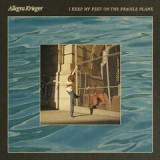
Our journey begins with one of the main crew members guiding you into our secretly hidden realm.
With two engaging original themes that capture the essence and musical vibes of the label, get ready to experience an alternate dimension that will change your perception of space and time.
In this initial journey he has the companionship of two already established and very talented fellow artists, Vern and Lulla, each one with an individual reinterpretation of this trip.
Join the Third Space!
Manchester's Avant-Jazzy-Funk outfit Swamp Children were enviably eclectic and Taste What's Rhythm is their mini masterpiece. Flitting gracefully through a feast of genres with consummate ease, the band were almost indefinable and, accordingly, nigh-on impossible to market. So whilst this cult EP, originally out in 1982 on Factory Benelux, remains in demand for those in the know, it has also glided under the radar of many otherwise clued-up heads for over 40 years. If you don't know, get to know...
The Taste Whats Rhythm EP was originally released in 1982 on Factory Benelux (an informal partnership between the legendary Manchester-based Factory Records and Belgium-based Les Disques du Crépuscule). With it's kaleidoscopic brightness, silky panache and superb execution, it remains one of the most startling documents of a remarkable time and place.
The EP opens with the oh-so-Balearic title track. "Taste Whats Rhythm" gently unfolds with a Spanish guitar, hazy, drifting vocals and sun-bleached Latin percussion. After this most sumptuous of intros, the tempo is raised, the rhythms grow in complexity as horns jostle amidst the restrained chaos quite wonderfully. And then it winds down again. Proper fluctuating rhythms and tempos throughout. I guess that was the point - taste the variety!
“You’ve Got Me Beat” is a *perfect* piece of post-punk pop-jazz. A mysterious, after dark jazz-dancer, the aching vocals serve as a touching, tender resignation to love. A guitar hook which seems to elegantly reference The Blackbyrds' "Rock Creek Park" and a flowing pulse from New York's No Wave scene. It still sounds so fresh all the years later.
Closing out this most perfect of EPs, the twisted synths and nimble rhythms of bass-heavy roller "Softly Saying Goodbye" combine to create a super-slinky gem; Brit-Funk of the highest order.
Swamp Children formed in Manchester in 1980, around core members Ann Quigley (vocals), Tony Quigley (bass, metalaphone, percussion), John Kirkham (electric & acoustic guitars, metalaphone, percussion), Ceri Evans (keyboards, bass, percussion, background vocals), Cliff Saffer (saxaphone, clarine) and Martin Moscrop (drums, percussion, trumpet). They initially practised at a rehearsal space shared with fellow post-punk funkers A Certain Ratio and Joy Division/New Order. Young and relatively inexperienced upon getting together, the ages of Swamp Children's members ranged from just 16 to 19. Talk about the brilliance of youth.
From the outset, Swamp Children shared DNA with A Certain Ratio. Martin Moscrop was a founder member of Ratio, while Ann provided artwork for them. Although the close association with ACR led some to assume that Swamp Children were simply a splinter group, the new band pursued a more overt latin and jazz tinged direction, at the same time adopting a post-punk attitude towards making music, influenced by the records they were listening to at the time: Miles Davis, Brazilian jazz fusion and heavy funk dancefloor sides.
The band made their live debut at Manchester's infamous Beach Club in May 1980. Thanks to a double-booking blunder another support band turned up and were turned away, having travelled all the way from Dublin for a string of British dates. The name of the unlucky band was U2...
With arrangements that emphasised Tony Quigley’s darkly-coloured basslines (and Ann Quigley’s impressionistic vocals as another instrument in the mix) Swamp Children possessed an easygoing grace and a bubbling energy which indicated that the band's true strength was as an ensemble. The band’s musical sophistication (a fusion of funk, jazz, and bossa nova) would prove to be a strong influence on later UK acts like Sade. Indeed, Swamp Children themselves later mutated into the more known and acclaimed latin jazz outfit Kalima.
Working directly with James Nice, custodian of Factory Benelux, means that the audio for this re-issue of the classic EP comes from the original tapes. Cut at 45 RPM and released in the house Be With disco sleeve, we’ve made sure this record is well up to the job of having a permanent place in every DJ’s bag. As far as we’re concerned, this is essential stuff.
Als The Murlocs mit den Aufnahmen zu ihrem siebten Album begannen, hatten sie die Vision, ein typisches Country-Rock-Album zu schaffen - eine Sammlung von sublimen, sanften Songs, die von kultigen Alben wie 'Sweetheart of the Rodeo' und 'Exile on Main St' inspiriert sind - aber die Platte nahm bald ihren eigenen, unbändigen Charakter an. Gespickt mit The Murlocs' unverkennbarem Garagen-Punk verwandelt 'Calm Ya Farm' die Konventionen des Country-Rock in ein frei fließendes Album, das die frenetische Energie des modernen Lebens in sich trägt.
- Col. LP: (Olive Green And Bone Mix Vinyl)
Ten years ago, Parish Bracha anonymously released his Disconscious album Hologram Plaza, significantly influencing the still nascent Vaporwave scene. He continued producing a number of disparate anonymous projects until Cascade II was released in 2020 on Arca's Mutant Mixtape.
Cascades of Refinement, which includes the single Cascade II, is Parish's debut album released under his own name and his focus on the dialogue between the digital and the organic continues. The techniques that defined his influential early sound have been refined into a flawless hybrid of analog and digital textures which give his post-minimalist compositions an unmistakably personal expressivity.
Classical instruments are mutilated and transmuted into razor-sharp shards of glass suspended on piano wire above warped opalescent metal while never losing sight of their tonal integrity. Much like the impartial juxtaposition Parish employs in his timbral exploration, each composition explores the concepts of beauty and gentleness through and with extremity, violence, and chaos as equal counterparts, with each successive piece refining and relieving the artificial tension between these states. Employing use of the Una Corda, prepared piano, bowed piano, plucked piano, harpsichord, church organ, untuned violin, voice, synthesizers, and resampled field recordings, Cascades of Refinement lies somewhere in the indefinite space between acoustic and electronic and is beholden to neither.
Parish's initial electroacoustic experiments with piano and strings were interrupted by the pandemic lockdown when he was limited to sampled instrumentation and digital processing available on a computer. Out of this necessity evolved an appreciation for the incidental nature of digitally sampled acoustic instrumentation and the unpredictability of its interaction with digital signal processing.
As work on Cascades of Refinement continued and acoustic recording was reintroduced, the focus turned to the tension between recorded and sampled instrumentation, with the goal of integrating the two into a singular indistinguishable material to be warped and shaped together. Each of the four pieces of the Cascade series explore this tension, successively integrating and collapsing their distinction with each piece.
The subtle artifacts of digital processing and incidental mechanical sounds of the acoustic are amplified and given presence alongside the tonal elements of each piece until a point of indivisibility is reached. The sound of a bow scraping along a string or a granular buffer freezing are neither discarded nor hidden, but selected as the ripest material to accompany and structure each composition. Cascades of Refinement is a dialogue between organic and digital, between the mercurial and infinitely reproducible, not as opposites, but as mereologically cohabiting counterparts with equal expressivity.
Yazmin Lacey didn't set out to be a singer. Born and raised in Manor Park, East London, she relocated to Nottingham whilst working for a children's charity and initially only considered making music as a way of having fun with friends. However, a chance encounter lead to her earning a place on Future Bubblers - Gilles Peterson's development programme devoted to discovering and nurturing fresh UK talent – and enthused by the experience, Lacey recorded some songs in her living room, then in 2017 self-released her debut EP, 'Black Moon'. The more polished 'When The Sun Dips 90 Degrees' EP followed in 2018, and then 'Morning Matters' EP in 2020 – the EP's title track has clocked up over 14 million plays on Spotify and also saw Yazmin make her COLORS debut performing 'On Your Own'.
Initially releasing on Oscilla Sound, then following up with records on Intramuros and FTD, E-Unity gained wider recognition when Resident Advisor described "post-Livity techno with a dreamy twist, from this promising young Frenchman". His next release – on TEMƎT – saw him inaugurate the imprint with the ‘Duo Road’ EP – four tracks of electronic futurism, jerky rhythms and dubbed-out frequencies.
‘BBB<3’ is an LP of club ballads that echo his influences, ranging from hyper-pop, Latin music, the hardcore continuum and post-dubstep stylings, featuring heavy bass mutations, spacey synths and hybrid rhythmic compositions.
In an uncertain world, E-Unity takes the opposite approach to a lot of contemporary electronic music which is always faster, harder and somehow dystopian. Instead he offers a record filled with sensibility, love and positivity, fighting the evil forces with heart emojis and sub-reinforced sonic weapons.
E-Unity shows extraordinary musicality and eclecticism throughout his productions and DJ mixes. His b2b set with Simo Cell at Positive Education Festival and former monthly residency on Rinse France solidified his notoriety as an adventurous yet thoughtful selector.
TEMƎT was launched by Simo Cell with a mission to release cross-genre electronic music, placing focus on the French music scene, whilst developing collaboration across different artistic disciplines. Previous artists to release on the label are Lolito, Less-O, Second., elise, E-Unity and Simo Cell, plus additional contributions from Low Jack, Peverelist and Skee Mask for their mix cassette series.
Forest Moss Colored Vinyl. Edition of 500 copies. (Whirring Marvels In) Consensus Reality is the new album by Eluvium - the renowned moniker of prolific modern composer, Matthew Robert Cooper . Taking initial inspirations from T.S. Eliot 's The Waste Land and Richard Brautigan 's All Watched Over By Machines Of Loving Grace , (Whirring Marvels) inherently deals both with humankind's need for meaning, and the emergence of algorithms reflecting the feedback loops of humankind's interactions with machines themselves. This complicated relationship that we have with technology, automations, and algorithms - and the influence they in turn have on shaping our image of the world - is the mechanized heart and soul of an album that almost instantly establishes itself as a peak in Eluvium 's inimitable catalog. During the writing process for (Whirring Marvels In) Consensus Reality , Cooper began experiencing shoulder and arm pain that rendered his left arm increasingly debilitated. This inspired new compositional methods that blended varying degrees of electronic automations with traditional songwriting. Lyrical themes were built using algorithms to cull content from a notebook filled with years of scribbled thoughts, poems, considerations, conspiracies, scientific notions, and notes on the spirit of existence. Employing musicians from all around the world - including members of the American Contemporary Music Ensemble ( ACME ), Golden Retriever , and the entire Budapest Scoring Orchestra - much of the music was conducted and recorded remotely via teleconference during the global COVID lockdowns of 2020 and 2021. This approach to composing served as an unintended but serendipitous challenge for an album inspired by the complicated convenience of technology. (Whirring Marvels In) Consensus Reality blends an ornate combination of ingredients to construct a narrative of our dynamic invention; technological advancement; loneliness and isolationism; and unchecked idealism in a world of never-ending growth. The resulting hope that somehow emerges is itself a marvel of innovation and inspiration.
First-ever reissue of the 1988 album. Gatefold LP includes new and restored artwork and a chapbook, featuring forty-eight pages of lyrics, essays, photographs, and Gordon's extraordinary drawings for each song. The Choctaw, Assiniboine, and Texan poet, journalist, visual artist, American Indian Movement activist, and musician Roxy Gordon (First Coyote Boy) (1945-2000) was above all a storyteller, known primarily as a writer of inimitable style and unvarnished candor, whose wide-ranging work encompassed poetry, short fiction, essays, memoirs, journalism, and criticism. Over the course of his career he recorded six albums, wrote six books, and published hundreds of shorter texts in outlets ranging from Rolling Stone and The Village Voice to the Coleman Chronicle and Democrat-Voice, in addition to founding and operating, with his wife Judy Gordon, Wowapi Press and the underground country music journal Picking Up the Tempo. Along the way he cultivated close friendships with fellow Texan songwriters such as Lubbockites Terry Allen, Butch Hancock, and Tommy X. Hancock, as well as Ray Wylie Hubbard, Billy Joe Shaver, and, most famously, Townes Van Zandt, whom he called his brother. Although his work covered a vast array of topics exploring strata personal, local, global, and cosmic alike, Gordon's primary subject as a writer, musician, and visual artist was always American Indian culture, specifically the ways it collided and coexisted with European American culture in the South and West-and within the context of his own life and braided identity. The ten songs on Crazy Horse Never Died, his first officially released and distributed album, were recorded in Dallas in 1988. "Songs" is perhaps an imprecise taxonomy for what Roxy captured on this and his other albums, all of which remain out of print or were released in instantly obscure limited editions of homebrew cassettes and CD-R's. (Paradise of Bachelors plans to reissue remastered, expanded editions of his catalog; Crazy Horse is the first.) He only occasionally attempted to sing, and his musical recordings are primarily corollaries of, and vehicles for, his poems. His sharp West Texan drawl, tinged by formative years of reservation living in Montana and unmistakable once you hear it-high, lonesome, flat, and cold-blooded as a bare rusty blade-instead patiently unfurls in skewed sheets of anecdotal verse and discursive narrative rants. Although Gordon's music at times incorporated powwow style drumming, fiddling, or unaccompanied ballad singing, the majority of it hews to an idiosyncratic spoken word style, accompanied by atmospheric, sometimes synth-damaged country-rock that skirts ambient textures and postpunk deconstructions. His songs are essentially recitations over backing tracks of finger picked guitars, rubbery washtub bass, and buzzing, oscillating keyboards. On the stark yellow and red jacket of Crazy Horse, which he designed himself, Gordon describes these recordings as innately ambivalent in terms of form, content, and identity: These are poems and/or songs about the American West, white and Indian. My life has been Indian and/or white. Maybe there's not a lot of difference-maybe. I guess that's mostly according to which white person or which Indian you're talking about. That's probably what this album's about. Crazy Horse Never Died comprises songs that span the personal and political arcs of his writing practice and the poles of his native and white ancestries.
Speicher 125 is a most auspicious collaboration between two great, inimitable voices in techno: Kompakt co-founder Michael Mayer, and Magazine’s own Barnt. They’ve both been productive of late, Mayer with his “Brainwave Technology” EP in 2021, Barnt with his first release on Kompakt, "ProMetal Fan Decor Only Product" in 2022. Of course, they’re also busy with their respective record labels, and international DJing schedules.
You may already have heard their first track, which appeared on Michael’s "&" album from 2014, the psychedelic “Und Da Stehen Fremde Menschen”. For Speicher, though, they set their sights firmly on the peak time dance floor – the result is two stunning cuts of techno euphoria.
On “Teller” Barnt and Mayer unleash a synth storm, tense and thrilling. Percussion piles up against the incessant buzz, but before too long we’re submerged in waves of dense texturology, making the track an object lesson in tension and release. “Duration” is a bittersweet anthem about "life long love". A moving voice tells us about "faith in life" while gleaming, synths, choral swarms and snares shower down from above to form an epic tale about duration and devotion.
Weirding the groove and updating the emotions, Speicher 125 is a monster.
Speicher 125 ist die Zusammenarbeit zwischen zwei unnachahmlichen Stimmen des Techno: Michael Mayer, Mitbegründer von Kompakt, und Barnt von Magazine. Beide waren in letzter Zeit nicht unproduktiv, Mayer mit seiner "Brainwave Technology" EP, Barnt mit seiner ersten Veröffentlichung auf Kompakt, "ProMetal Fan Decor Only Product". Natürlich sind sie auch mit ihren jeweiligen Plattenlabels und internationalem DJing beschäftigt.
Vielleicht hast Du schon ihre erste Kollaboration gehört, die auf Michaels "&"-Album von 2014 erschienen ist, das psychedelische "Und Da Stehen Fremde Menschen". Für "Speicher" haben sie den Peak-Time-Dancefloor ins Visier genommen - das Ergebnis sind zwei atemberaubende Stücke voller Techno-Euphorie.
Auf "Teller" entfesseln Barnt und Mayer ein Synthie-Gewitter, spannend und mitreißend. Die Percussion türmt sich gegen das unaufhörliche Summen auf, aber schon bald tauchen wir in Wellen dichter Texturen ein, was den Track zu einer Lehrstunde in Sachen Spannung und Entspannung macht. "Duration" ist eine bittersüße Hymne über "lebenslange Liebe". Eine bewegte Stimme erzählt uns vom "Glauben an das Leben", während schimmernde Synthies, Chorschwärme und Snares von oben herab eine epische Geschichte über Ausdauer und Hingabe prasseln.
Speicher 125 ist ein Monster, das den Groove neu erkundet und die Emotionen auffrischt.
Inspired by the events of the record-breaking 4th season of "STRANGER THINGS," RANDOMBEATS & SOUL MATES present MEGA RAN & AMERIGO GAZAWAY's "STRANGERS: BACK TO THE LAB", a follow up to RAN's 2017 "STRANGERS" EP.
Featuring production from DJ DN³, LOST PERCEPTION, K-MURDOCK and special guest appearances from DILLON, RAY WIMLEY and GLENNELLEN ANDERSON ("STRANGER THINGS" S1), MEGA RAN and GAZAWAY join forces to save the world itself from the evils of 'The Upside Down'. Roll for initiative!
- 1: Montana Sky
- 2: Wings
- 3: Celebrate!
- 4: Waffle House
- 5: Vacation Eyes
- 6: Summer Baby
- 7: Walls (Feat Jon Bellion)
"Kicking off another chapter, The Album marks Jonas Brothers’ first body of work since 2019’s Platinum-Certified Happiness Begins, which debuted at #1 on the Billboard 200 and spawned the GRAMMY® Award-nominated, 5x-Platinum, Billboard Hot 100 #1 smash hit “Sucker.” Jonas Brothers notably wrote and recorded The Album with sonic visionary artist Jon Bellion Justin Bieber, Maroon 5, Halsey.
With Bellion at the helm, together, they unlocked the next level for the band, embracing formative influences and igniting their sound from every angle. They delivered an unpredictable, undeniable, and unstoppable record uplifted by their inimitable chemistry and endless creativity. This is The Album. This is Jonas Brothers in 2023."
Album features legendary AC/DC frontman BON SCOTT on lead vocals.His work with FRATERNITY put Scott on the radar of George Young, AC/DC co-producer and older brother of Angus and Malcolm, eventually leading to Scott replacing then frontman Dave Evans in 1974
For the first time since its initial release in 1972, the sophomore album by Australian psych band FRATERNITY is released again on vinyl, fully sanctioned by the surviving band members and their management since the album’s original release in 1972
Collection includes the original 10-track album plus a bonus second disc featuring three rare maxi-single tracks and two obscure live tracks making their debut vinyl appearance, all newly remastered.
Deluxe package includes gatefold jacket packed with original press clippings and previously unpublished period band photos plus extensive liner notes by original band co-manager Victor Marshall.
Freitagabend. Das Wochenende ist immer noch eine glänzende Aussicht und die Müdigkeit verwandelt sich plötzlich inin einen energischen Drang, Spaß zu haben, auf Beutezug zu gehen, einfach zu LEBEN. Das ist der Moment, in dem NIGHTHAWKsperfekte Mischung aus klassischem AOR und Weltklasse-Hardrock am besten zur Geltung. Unverblümt, unverblümtund verdammt brillant.
"Prowler", ihr neues Album, hält genau das, was es verspricht: erstklassigenRock'n'Roll.Außerdem hat die Band den richtigen Stammbaum, um das zu liefern, was sie verspricht. Nighthawk begann als einSoloprojekt von Robert Majd (Bassist bei Metalite & Captain Black Beard). Die Idee war einfachSpaß zu haben, Gitarre zu spielen und energiegeladenen Rock'n'Roll zu schreiben. Das Debütalbum enthielt eineverschiedenen Sängern. Nach der Veröffentlichung des ersten Albums im Sommer 2021 verspürte Robert den Drangmehr zu machen.Diesmal sollte der Einsatz höher sein. Er buchte die weltberühmten Abbey Road Studios, eine Bandund eine Sammlung von Songs, die dem Kaliber des Studios entsprechen. Björn Strid (The Night FlightOrchestra, Soilwork & Donna Cannone) übernahm den Gesang, Magnus Ulfstedt (Ginevra) das SchlagzeugSchlagzeug, John Lönnmyr (The Night Flight Orchestra) an den Keyboards und Christan Ek (Captain BlackBeard) am Bass. Neun Eigenkompositionen und zwei Covers (von Kiss und Bruce SpringsteenKlassikern!) wurden in nur zwei Tagen live im Studio aufgenommen.
For its debut release, Wobbly Mob Records welcomes Newcastle and London based DJs Glockta and Shawn Cartier.
Glockta has created three dark, pulsing, Garage tracks broken up by an interlude, each with impeccable drum programming. The five track EP acts as a reaction to the energy vacuum created by lockdown, due to abandoned dance-floors and a struggling electronic scene. Shawn Cartier has orchestrated the finale with a fast-paced electro ripper, a remix of Plastic Fiver on the A side.
Originating in Newcastle, Wobbly Mob Records first began as The Wobbly Mob, a Facebook platform for sharing music and creating an online community with an interest in similar music genres. This EP will mark a new direction for The Wobbly Mob, which has outgrown its initial purpose, now linking promoters, collectives, DJ’s and producers from all over the globe.
Wobbly Mob Records encourages and supports artists experimenting within and beyond their genre orientation, providing an open space for DJs to develop their skills.
Konformer are a band from Nuremberg in Germany.
Their members are;
Andreas Berg (Drums)
Kristian Krauß (Synthesizer)
Rainer Ruder (Bass)
Initially Konformer was not a project for the public, far away from expectations their sound was developed, with focus on only the essential, but that takes time.
The creation of their minimalist, rhythmic and repetitive groove patterns commence with bass loops and develop into modified strophic form.
Comparison with the likes of Early Kraftwerk and the output of cult German labels such as Brain and Sky are inevitable but Konformer sound a little bit like none of the above.
The record was produced and mastered by the 'Franconian Conny Plank' Frank Mollena at his Lonestar Studios in Nuremberg, Bavaria.
Tom Trago returns to Rush Hour after 10 years with a wonderfully accomplished mini-album, tip!
During the years he spent living in Amsterdam, when his DJ career seemed to become an unstoppable juggernaut, Tom Trago was a regular visitor to Deco Sauna, a local institution that helped him “decompress” and de-toxify his body. Eventually, a more extended period of “decompression” was needed, with Trago moving to the coast to reassess his priorities and spend more time with his young family.
‘Deco’, his sixth album and first for Rush Hour in a decade, was recorded following an extended absence from club dancefloors, as Trago cut back on DJ commitments to prioritise family life. When he returned to the studio, often with his daughter by his side, Trago initially struggled to get back into the groove. The desire to make dancefloor-focused music had – temporarily, at least – deserted him; instead, he found himself drawn towards a desire to create “electronic lullabies” and music that reflected his more pastoral environment (his home backs on to a patch of woodland in which he would walk every day).
Returning to his most familiar synthesisers – and specifically the first synthesiser he bought, on credit, as a young DJ and wannabe producer – Trago set about navigating different musical routes without the straight-jacket of club-focused dancefloors. Occasionally, old friends from Amsterdam would join him in the studio – Tracey and Maxi Mill, both of whom are part of his Voyage Direct label roster, contributed to tracks on the album – but for the most part the production process was a solo endeavour: musical therapy for an artist determined to do things differently after years spent making club hits and sweat-soaked peak-time workouts.
The results are rarely less than spellbinding. Trago sets his stall out with opener ‘Dark Oak’, a gorgeous, colourful, sun-bright scene-setter co-produced by Tracey that layers tumbling lead lines, chiming melodic motifs and kaleidoscopic chords atop the gentlest of bubbly beat patterns. Maxi Mill lends a hand on ‘Central Park’, a deep and hypnotic excursion marked out by rhythmic bleeps, minimalistic beats and layered melodies, and the summer sun-down rush of ‘Never Peace a Puzzle’, where kaleidoscopic synth sounds, meandering solos and looped electronic stabs rush towards a dancefloor of the mind.
Trago’s desire to create “electronic lullabies” for his young daughter comes to the fore on ‘To Be Left Unlocked’, a hypnotising fusion of spacey electronic motifs, Steve Reich style (synth) marimba melodies and slowly building musical intensity, while the echoing Fender Rhodes riffs, squelchy synth-bass, glistening guitar notes and sparse, snappy post hip-hop beats of ‘When The Sky Is Watching Us’ doff a cap to the producer’s roots as a bedroom beat-maker.
Given the project’s genesis, it’s perhaps fitting that Trago chose to conclude proceedings with ‘It Might Be Forever’ and the digital only ‘Blue Dope’, the album’s most rejuvenating, immersive, and vibrant moments. Both feature sustained chords painted with vivid aural brush strokes and come blessed with the merest hint of a rhythmic pulse – a thread that subtly runs throughout Trago’s most mature and musically rich album to date.
Matt Anniss
Correcciones Calypso returns from a generous hiatus with the fourth edition of its acclaimed edit series, replete with four re-edits that veer from the subtle to the downright brazen. Thomass Jackson and INigo Vontier invite the French duo Youkounkoun to open proceedings with an insane early 80s edit full of big drums and exotic touches that's been blowing dancefloors all around the world for the past years - and definitely resides in the brazen category, despite a lot of work having gone into it. Olta Karawame make their debut on the series with a powerful, compact edit full of ballsy keyboard riffing and a military-sized kick drum that is guaranteed to have heads banging . To complete the release label bosses Thomass and INigo deliver edits of their own with their characteristic sound, giving this EP maximum a value for money factor and entertainment from start to finish.
In the words of Bill Brewster - DJ History
‘At the turn of the 1990s, there were few more successful New York house producers than Victor Simonelli. Under a dizzying array of aliases – Solution, NY’s Finest, Groove Committee, Critical Rhythm and Cloud 9 being amongst the better-known – the Brooklyn-born DJ/producer delivered a string of underground club hits during the city’s early ’90s house boom.’
BTG presents “Victor Simonelli: The Early Years Vol 1” a collectors edition double Vinyl release - 2 X 12’s in each Vol
Launching the first Behind The Groove collectors edition vinyl series is New York’s finest Victor Simonelli with ‘The Early Years Vol 1 & 2’ double Vinyl releases. Featuring seminal house tracks such as Cloud 9’s ‘Do You Want Me’, Solution’s ‘Feel So Right’, Instant Exposure’s ‘Wanna Be With You’ and rare mixes of Raiana Page and EZ-AL, this collection brings together classic and rare Victor Simonelli cuts that reflect the early raw energy and buzz of the New York House scene. With ‘Vol 2” scheduled to follow shortly after, this is the most comprehensive collection of rare Simonelli cuts that firmly establishes his esteemed role in 90s House Music as well as introducing new fans to his inimitable sound.
Victor Simonelli is one of the early kings of NYC sampling In house music. The real deal - Victor danced at the legendary David Mancuso’s Loft sessions and developed a serious appreciation for good music. He interned for Arthur Baker at his renown Shakedown Studios (where Arthur worked with the iconic Afrika Bambatta on the seminal dance floor ’Planet Rock’ track) and went on to release hugely influential releases on seminal NYC labels 4th Floor and Nu Groove. Victor’s music was championed by the hugely celebrated iconic House Music DJ pioneers, Larry Levan and Tony Humphries at Paradise Garage & Zanzibar/WBLS/Kiss FM respectively.
Revered as a New York house heavyweight and prolific producer since the turn of the 1990s, Victor Simonelli grew up in Brooklyn, NYC, nurtured by a music loving family, with an avid record collecting father who also worked as a local party DJ. He took music lessons in piano, drums, guitar and bass, before discovering his first love, tuning into NY’s Radio Mix Shows on WBLS, WKTU and WRKS,98.7 Kiss FM) where he discovered the art of mixing and in his own words, ’I just simply got lost in the music’.
Graduating from NYC’s Centre For Media Arts, Victor got an internship in the legendary producer, Arthur Baker’s Shakedown Studios. Soon graduating to editing, mixing and then producing he worked for artists David Bowie, Quincy Jones, Debbie Harry, Sinead O’Connor and Talking Heads. Teaming up with fellow NYC producer Lenny Dee to become the Brooklyn Funk Essentials, they released records ‘Critical Rhythm’ and ‘Subliminal Aurra’ on 4th Floor before Victor went solo as Groove Committee releasing the classic ‘I Want You To Know’ on the legendary Nu Groove Records. Paradise Garage legend, Larry Levan broke ‘I Want You To Know’ rocking 2 copies on his last tour of Japan whilst King of NY House Music,Tony Humphries broke Victor’s new ‘Feels So Right’ across New York on his WBLS/Kiss FM Mastermix show and at his legendary Zanzibar club sessions. It was only a matter of time before Victor’s name became synonymous with quality House music ensuring a worldwide platform for his productions.
In the early 90s alongside his own productions, Victor Simonelli worked on high profile projects, including James Brown’s album, “Love Overdue” BeBe and CeCe Winans single featuring Mavis Staples “I’ll Take You There” and Quincy Jones’ “I’ll Be Good To You” featuring Chaka Khan and the legendary Ray Charles. Never straying too far from his clubland roots, Victor worked with Danny Tenaglia on his classic “The Harmonica Track”.
DJ gigs across the world started flooding in and Victor found himself recording for a dizzying array of labels including Tribal America, Sub-Urban, Bassline, King Street Sounds and Vibe, under a wide range of aliases. He also produced, wrote and remixed for artists such Nile Rodgers (Chic), Afrika Baambata, Hall & Oates, Frankie Knuckles, Kerri Chandler, Madonna and Michael Jackson. Famed for his own productions “It’s So Good” by Creative Force, “I Know A Place” as Sound Of One - the first release on Roger Sanchez One Records -, “Dirty Games” as well as the “Street Players Vol 1 EP”, Victor went on to set up Suburban Records with Tommy Musto and Bassline Records with two other partners. Notable releases on this label include “Do You Feel Me”, Connie Harvey’s gospel inspired, “Thank You Lord”, Urban Blues Project’s “Deliver Me”, Colonel Abrams “Not Gonna Let”, and Mone’s “Better Way”. Never ceasing to produce, DJ, run his own label and host radio shows like Groove Lift, Victor has worked with virtually every NYC producer and has nurtured a next generation talents including Angel Moraes, Jazz ‘N’ Groove, Urban Blues Project, Harlem Hustlers, Jay Jay and Julius Papp. Victor’s releases have also been used on M&S’s “Salsoul Nuggett” hit and Eddie Amador’s underground smash ‘House Music’.
In the late 90’s Victor launched his new Westside Productions, notable for the “Latin Impressions 1 & 2” releases, opened up a studio in Italy as he found himself increasingly working in Europe and now divides his time between New York and Italy. Suffice to say his unique sound of uplifting and spiritual music has kept him at the forefront of House Music and he is credited as one of its leading exponents with his string of classic releases and remixes.
Behind the Groove, branches out from its digital platform to embark on a programme of releases from the iconic pioneer producers of House Music. Esteemed for their high quality features and mixes that continue to explore, celebrate and venerate the contributions of highly respected, scene-shaping Labels, Artists, DJs and Special Events, BTG seeks to bring these talents and tales to the attention of the wider community. Unlocking the stories surrounding the pivotal roles they played and continue to play today in shaping the underground music scene we have come to know and love.
BTG presents “Victor Simonelli: The Early Years Vol 1” a collectors edition double Vinyl release, released on May 12th 2023. ‘Vol 2” follows on May 26th 2023 . These releases are the most comprehensive collection of rare Victor Simonelli cuts that firmly establish his esteemed role in 90s House Music and introduces new fans to his carefree sound.
- A1: Oceana 4D
- A2: Key Of Youth
- A3: Old Bones
- A4: Emerald Nights
- A5: Banana Boat And The Kalo Sanctum
- A6: Key Of Life (Feat. Justice A. Gonzalez)
- A7: Splendid Macaw And The Rotan Initiative
- A8: By Firelight In The Dead Of Night
- A9: Mother Moon And The Mangrove Midnight
- A10: Enigma Of Sator
- B1: Zarzus And The Lotus Eaters (Smugglers Bay)
- B2: Towers Above The Mist
- B3: The Fountains Of Living Water
- B4: In The Land Of Vision (Silkwinds)
- B5: The Sower Sows The Wheel With Effort
- B6: Mysteries From The Wild Ones
- B7: Temple Of The Shark Hunter
- B8: Polyhedron Of Minos
- B9: The Dance Of Pythia
- B10: Unto The Harvest The Feast That’s Sown
Over a decade since its inception, Wave Temples continues to refine and refract the project’s visionary mythopoetic exotica. Panama Shift presents a 20-track kaleidoscopic star map inspired by “the euphoric cults, both then and now, that come and go in the vast ritual of night.” Bleached keys, devotional synth, and driftwood percussion align in minimalist vignettes shaded by tape hiss and field recordings of streams, waves, wind, and birds.
Dedicated to the late Japanese-born American anthropologist Yosihiko H. Sinoto (whose portrait graces the cover), famed for his excavations throughout the Pacific and French Polynesia, the album embodies a similarly voyaging spirit: “chasing ancient mysteries… and rekindling with the esoteric journey of the human spirit.” This is music of forgotten shores, sea air, and saltwater shrines, echoing in shells scattered across the altars of Atlantis.
Turkish underground rock misfit Erbatur Çavusoglu's first solo album is finally here: an intimate collection of previously unreleased songs and new versions, with fresh arrangements by Big Daddy Mugglestone. The result is like Iron & Wine being fronted by a Taksim Square street poet, or a Turkish Crazy Horse.
Erbatur's wavering falsetto delivers heartfelt and tender songwriting, accentuated by an eclectic band of old and new Berlin friends. A must for fans of Indie Americana and Turkish Psychedelic Folk, this is a warm and haunting departure from his previous work with Zardanadam, deeply personal but with open arms.
Supported by Initiative Musik gGmbH with project funds from the Federal Government Commissioner for Culture and Media
Das Solo Debütalbum einer der wohl einflussreichsten, innovativsten und produktivsten Schlagzeuger zeitgenössischer Musik.
Die 13 Stücke umfassende Sammlung ist das Ergebnis einer 40-jährigen Karriere, in der Lombardo als Mitbegründer von Slayer bekannt wurde, zwei GRAMMY-Awards erhielt und sein Repertoire über alle Genres hinweg erweiterte. Der in Havanna geborene Lombardo arbeitete unter anderem mit Mike Patton und Fantômas zusammen, dem von der Kritik verehrten John Zorn, dem experimentellen Hip-Hop-Künstler DJ Spooky und den wiederauferstandenen Punk-Ikonen The Misfits.
Der Aufnahmeprozess für das filmmusikähnliche 'drum album' hatte ein einfaches Mantra: Schlagzeug musste Schlagzeug sein. Das Anfang 2022 von Lombardos Sohn David A. Lombardo abgemischte, selbst produzierte Album enthält eine große Konzert-Bass Drum, eine Pauke, einen Flügel und eine Schar von Shakern, Maracas, chinesischen und symphonischen Gongs, indianischen Trommeln, Congas, Timbales, Bongos, Batás, Holzblöcken, Djembes, Ibos, Darbukas, Octobans, Cajóns und Becken.
Das Solo Debütalbum einer der wohl einflussreichsten, innovativsten und produktivsten Schlagzeuger zeitgenössischer Musik.
Die 13 Stücke umfassende Sammlung ist das Ergebnis einer 40-jährigen Karriere, in der Lombardo als Mitbegründer von Slayer bekannt wurde, zwei GRAMMY-Awards erhielt und sein Repertoire über alle Genres hinweg erweiterte. Der in Havanna geborene Lombardo arbeitete unter anderem mit Mike Patton und Fantômas zusammen, dem von der Kritik verehrten John Zorn, dem experimentellen Hip-Hop-Künstler DJ Spooky und den wiederauferstandenen Punk-Ikonen The Misfits.
Der Aufnahmeprozess für das filmmusikähnliche 'drum album' hatte ein einfaches Mantra: Schlagzeug musste Schlagzeug sein. Das Anfang 2022 von Lombardos Sohn David A. Lombardo abgemischte, selbst produzierte Album enthält eine große Konzert-Bass Drum, eine Pauke, einen Flügel und eine Schar von Shakern, Maracas, chinesischen und symphonischen Gongs, indianischen Trommeln, Congas, Timbales, Bongos, Batás, Holzblöcken, Djembes, Ibos, Darbukas, Octobans, Cajóns und Becken.
- A1: Third World - 1865 (96° In The Shade)
- A2: Peter Tosh - Johnny B. Goode
- A3: Althea & Donna - Uptown Ranking
- A4: Toots & The Maytals - 54-46 Was My Number
- A5: Inner Circle - Mary Mary
- A6: Wailing Souls - Feel The Spirit
- B1: Ini Kamoze - World-A-Music
- B2: John Holt - Police In Helicopter
- B3: Jimmy Cliff - The Harder They Come
- B4: Steel Pulse - Babylon Makes The Rules
- B5: Culture - The International Herb
- B6: Dennis Brown - Love Has Found Its Way
- C1: Eek-A-Mouse - Wa Do Dem
- C2: Black Uhuru - Sinsemilla
- C3: Aswad - Can’t Stand The Pressure
- C4: The Mighty Diamonds - Right Time
- C5: Pato Banton - Go Pato
- C6: Linton Kwesi Johnson - Inglan Is A Bitch
- D1: Gregory Isaacs - Night Nurse
- D2: The Abyssinians - Meditation
- D3: Max Romeo & The Upsetters - Chase The Devil
- D4: Buju Banton - Hills And Valleys
- D5: The Paragons - The Tide Is High
- D6: Yellowman - Zungguzungguguzungguzeng
Reggae Collected is compiled from the broad world of Jamaican artists, groups and its diaspora. This brand new compilation contains early reggae by Jimmy Cliff, classics from Third World, Peter Tosh, Toots & The Maytals, Steel Pulse, Black Uhuru, lovers-rock from Dennis Brown, Linton Kwesi Johnson, Gregory Isaacs, Yellowman and the #1 hit from Althea & Donna “Uptown Top Ranking” which was championed by BBC Radio 1 DJ John Peel.
The album Reggae Collected is part of the Collected compilation series, which is a collaboration between Universal Music and Music On Vinyl. The compilations bring together the biggest and best names of its genre, combined with forgotten hits and less discovered gems, giving the listener an experience of both nostalgia, and uncovering new musical grounds at the same time.
The 2LP Reggae Collected is available as a limited edition of 2000 individually numbered copies on yellow (LP1) and light green (LP2) coloured vinyl and includes an insert.
Unreleased but perfectly formed "hidden" album, recorded in 1989-90 by Nuno Rebelo on the wake of his "Sagração Do Mês De Maio" double LP (composed in 1988 as soundtrack to the third Manobras de Maio fashion event in Lisbon). The tracks convey a sense of investigative curiosity regarding computer composition and they sound wonderfully artificial. Titles as "Moon OK", "Tiny Space Ships" or "Dança Das Creaturas Elásticas" ("Elastic Creatures Dance") embody this idea of otherworldness, a kind of music actually coming from another place, composed and played by elastic creatures. It displays the functional qualities of Library Music, illustrating playful as much as moody and dense moments. In this way the album comes across as a soundtrack for moving images, sure, but with unusual framing and sharp angles. A unique object in the Portuguese avantgarde, keeping its distance from Academia but also from contemporary independent releases ("Plux Quba" by Nuno Canavarro comes to mind). António Duarte's 2019 mastering enhances this collection of music liberated from the archives of one of the most brilliant, active and challenging musicians of his generation.
Nuno Rebelo was born in 1960, graduated in Architecture, founded Street Kids and Mler Ife Dada, played in the "transitional" line up of GNR in 1982. His creativity expanded into improvised music. Performances and recordings with other musicians multiplied. He composed music for theatre, dance, jingles and, on an almost contradictory scale to his underground credentials, soundtracks for the Expo 98 and Porto 2001 mega events.
“Improvisações Cristalizadas” by Nuno Rebelo:
Short electronic pieces composed in 1989-90 using the Atari 1040ST computer with Steinberg Pro24 Software, Two Yamaha Sound Modules (TX81ZX and TG55) and Ensoniq Mirage Sampler with keyboard. The composition method for each piece evolved from a short improvisation on the Mirage keyboard, recorded in MIDI to the computer. Counterpoint permutations (inversion, reversion, inverted reversion, transpositions) were then applied through the software, distributing the variations of the initial improvisation by other timbres. No other musical material was used.
- A1: The Vertical Joyride
- A2: Word 2 Tha D
- A3: I Wanna Be Yo Ho
- A4: When She Calls
- A5: Once A Dawg (Janine 2)
- A6: Jiggable Pie
- B1: P-Funk
- B2: Mai Sista Izza Bitch
- B3: La Queeda
- B4: Vertical Interlude
- B5: Bitch Betta Have My Money
- B6: Lik 'Em Low Lover
- B7: Sylk's Cellular
- B8: Nu Exasize
- C1: Backseat Queenz
- C2: Givva Dogga Bone
- C3: Yo Momma Told Me
- C4: Trunk O' Funk
- D1: Tha Booty Up
- D2: My Ho, My Kids
- D3: D. Control
AMG (whom The Source called “more foul mouthed than a late 70s Richard Pryor concert film”), was a part of Courtney Branch and Tracy Kendrick's Total Trak Production crew which developed DJ Quik, 2nd II None, Sylk Smoov, Hi-C and Boss. He made his first appearances on DJ Quik's debut album Quik is The Name. In December of 1991, AMG released his self-produced debut solo album Bitch Betta Have My Money with the platinum selling lead single of the same name. This reissue has this West Coast 90s classic on vinyl for the first time since its initial release and includes “I Wanna Be Yo Ho (Remix)” previously available only as a CD bonus track.
Coherence is overrated. Especially if keeping things hazy, and not smoothing away all the rough edges, and allowing all the seeming contradictions to find their own unique harmony with each other in their own time can result in the heady magic of Lock Eyes & Collide, the second EP from South London-based quintet Moreish Idols. Across these four tracks, Moreish Idols deal in tangles of hyper-melodic guitar, sleepy-eyed murmurs glowing with unassuming poetry, blossoms of wise saxophone, rhythms that pulse and purr to their own inarguable logic. You could spend days trying to define what exactly it is they are doing over these fifteen or so minutes, but you’d be wiser to just lose yourself within Lock Eyes & Collide’s laser-guided twists and turns.
Pulling into focus. They passed tracks from initial collaborative song-writing sessions along to Dan Carey, who signed Moreish Idols to his Speedy Wunderground label and produced their first release on the label, the Float EP, in the summer of 2022 (they’d released a pair of self-released 7”s before lockdown). Restless, jerky, jagged and rhythmically centred, many of Float’s energetic pleasures bore the influence of their earlier flirtation of post-punk, but the ruminative When The River Runs Dry spelled deeper treasures lay within, while the erratic, wonderful Speedboat spoke to Moreish Idols’ essential gift for mystery. Lock Eyes & Collide is something else altogether, though – a looser constellation of ideas, a clearer hint of the group’s future.
The elements that compose the EP – swooning tremolo guitars, prickly melodic riddles, erudite saxophone improvs, loose and flexible rhythms – make perfect sense together, on vinyl if not on paper, sounding like Watery, Domestic-era Pavement one second and some bucolic Canterbury Scene prog the next, but always, always like Moreish Idols most of all.
The future that is undefined is limitless. If Lock Eyes & Collide captures Moreish Idols’ present, what do they see in their future? “If we’d just made Float II for our second EP, people would be, ‘Oh, they’re the band that does that,” says Tom. “I’m so glad we’ve made this weird alter-ego of our first EP; now we feel we can do whatever we want.”
"Akuphone is proud to present the Jerusalem-based improvisational trio Leviot and its hypnotizing debut album. Leviot (Hebrew for “Lionesses”) is a brainchild of multi-faceted musician and composer Yael Lavie, who’s joined by classically trained percussionist and music teacher Cnaan Canetti, and synth enthusiast Yishay Seroussi. The project is a result of Lavie’s ongoing explorations beyond the restraints of classical kanun playing and fascination with electronic sound and modern composition. Initially started following her experience performing and recording with Spiritczualic Enhancement Center, in Leviot, Yael gives up rehearsed pieces in favour of improvised sets, based on virtuous interpretation by Cnaan and Yishay. The three have been active since 2019, playing their immersive shows in a wide variety of settings, venues and festivals. The trio’s debut release is a live session, recorded in late 2020 at Mazkeka Studios (Jerusalem) for the lockdown edition of the annual Zikuk Festival. It’s a meditative improv piece in five parts that combines and melts boundaries between the traditional and the experimental, the primal and the futuristic. With setup as the foundation of the piece and Lavie’s graphic score as the road map, Leviot takes off on a cosmic journey between deep drones, whispering chimes, mesmerizing Arab melodies, pulsating rhythms and iridescent ambient patterns."
La Candela del Río is the debut album by Paris-based Venezuelan quartet Insólito UniVerso. In the space of 8 tracks, the band fuses traditional Venezuelan styles, such as joropo, merengue caraqueño, or tambores de San Millán with psych, chanson, and contemporary electronics. Co-produced by The Heliocentrics' Malcolm Catto, the record shows two distinct sides; on the one hand there's euphoric music that begs to be danced to, while on the other there's melancholy, mystery and devotion.
Originally released back in 2018, the record's initial run of 500 copies has been long sold out and is presented here in a new edition of 300 including the original artwork and printed lyrics insert.
Edmony Krater grew up on the side of Morne Rouge in Sainte-Rose, north of Guadeloupe. His mother sang in church, but Edmony was drawn to the sound of Gwo Ka, which was frowned upon but very present in ceremonies or funeral vigils.
As both a fashion designer for the theater and a musician (percussion, trumpet, vocals) in the group Gwakasonné, formed by Robert Oumaou and Georges Troupé, Edmony left Guadeloupe in 1983 to settle in mainland France just after recording their first album.
Upon his arrival in Paris, with the desire to give his own version of Gwo Ka, he founded the group Zepiss with Eddy Lebouin, Freddy Tisseur, Philippe Augusty, and Rico Toto and immediately recorded a first album, Natibel.
In a singular way, Natibel perpetuates Gwo Ka Modèn, a movement initiated by the iconic jazz guitarist Gérard Lockel, who was the first to theorize and politicize this music previously transmitted only orally. In just six tracks, Natibel combines the sophistication and roughness of its root music, as Gwo Ka combines an intense rhythmic section with intoxicating melodies.
In the tradition of other Gwo Ka musicians who took the music further such as Guy Conquet, Fabriano Fuzion, Gwakasonné, Erick Cosaque, and above all legendary drummer Marcel Lollia aka Vélo, Edmony Krater and his group Zepiss have contributed to preserving its heritage and bringing an obvious touch of modernity.
I met Sérgio Alves when he was playing with the Groovelvets. I immediately felt I was dealing with a special musician. It wasn’t easy to find a keyboard player that could embody the different expressions of African- American music, and its characteristicgroove in Portugal among the musicians of my generation.
Even though I had been A&R for over twenty years, I just came across with the special João Gomes, and little else. Sharing the love for the African- American sounds, straightened our relationship, and I had the privilege of having all the keyboards on my mini-LP Bonfim, played by Sérgio. I was also able to see the development of the initial demos, the raw material that was in the origin of Azar Azar, the musical adventure in which, for the first time, he fully exposes his artistic personality.
He debuted the project with an E.P., on the brand new andadmirable Jazzego, in 2020.
Although only two of the five songs, that make up the EP, are original work (the remaining three are remixes by K15, Minus + MRDolly and Esa), the record was a beautiful calling card, but it hadn't prepared me for the piece of work that was about to come to my hands.
Like other musicians of his generation, Sérgio Alves grew up in the midst of the development of Hip Hop, House, Techno, Broken Beat and many other expressions of the most modern dance music. He even has 20 years of a consistent career as a Dj. And that seems to have contributed to the way he consolidates his musical personality, allowing him to control an immensity of musical impulses.
It is true that his compositions are settled in Jazz Funk, but, throughout the eight tracks of his debut LP, we can feel the inspiration of huge figures such as Roy Ayers, George Duke or Donald Byrd that are intersected by the presence of a kaleidoscopic variety of genres that have filled dance floors, from Detroit to New York or London, in such a way that allows the creation of piece of music that can be seen as autonomous, intense, stimulating, personalized and relevant in any place of the planet.
Tom Zé and Faust collide in Domenico Lancellotti's "machine samba"
Domenico Lancellotti's SRAMBA reaches back to the roots of samba whilst completely revamping its blueprint, indoctrinating guitar and percussion-led rhythms with analogue synthesisers, courtesy of album producer Ricardo Dias Gomes.
The majority of SRAMBA was recorded over two months in The Cave - Domenico's home studio in Lisbon, the city both Brazilian ex-pats reside in, where the arrival of a couple of Russian-designed synths purchased by Ricardo influenced the direction of their initial experimentation: "Ricardo had these instruments, modular machines" remembers Domenico, "and I had my guitar, some percussion instruments. On the first day we started making sounds and recording them, and songs started to appear, sambas started to appear."
The son of a renowned samba songwriter, at home Domenico would watch his father play and compose. At parties, the adults would hand his father a tamborim (a small tambourine) and ask him to play along. "I grew up inside samba, it's my roots", he says. "For me, everything is samba, I bring it into whatever style of music I am making".
Domenico and Ricardo instantly saw how the synthesisers were not at odds with the sambas they were playing, instead they had a similar sound to its typical percussion instruments (ganza, repinique, surdo, tarol). What's more, they saw a connection with roots samba, the samba that existed before bossa nova and samba jazz came along. This was rhythmic samba, with grooves that could go on ad infinitum. "It's samba de clave, geometrically structured" says Domenico. "It's ostinato samba", adds Ricardo.
"Diga" is a great example of what their proposal is capable of, as what begins as a glitchy machine whirring into action soon turns into a glorious samba in which the gurgles and scratchy beats coming from the analogue equipment only add to the arrangement. Likewise, on "Tá Brabo" it's an aching melody from one of the synths that gives the guitar rhythm its needed counterpoint, and shows how the duo's greatest accomplishment is not in invention alone, but in creating a great samba album. It's an album that can go from the opening track "Ere" with its reverberant bass thud, mantra-like vocals and staccato rhythms to the string-accompanied "Nada Sera de Outra Maneira", a swooning samba that pays tribute to the Brazilian ensemble Tamba Trio, who along with Tom Zé's Estudando O Samba, Domenico names as the biggest influence on their treatment of samba.
Other important reference points are made clear on "Um Abraço No Faust". One of three instrumentals on the album its title riffs off a JoãoGilberto song, "Um Abraço no Bonfá", but whereas JoãoGilberto was giving a hug (um abraço) to bossa nova guitarist Luiz Bonfá, Domenico and Ricardo are giving theirs to the German avant-gardists Faust. "Quem Samba", with its horn section and dramatic melody give a whiff of Domenico's Italian ancestry, while "Descomunal" is devoid of rhythm whatsoever, guest vocalist Tori singing over a bed of electronic drums, cello and swirling synths, that highlights the duo's unwillingness to stick to a particular formula.
Both Domenico Lancellotti and Ricardo Dias Gomes are revered names within Brazilian music over the past 20 years. As a member of the +2's, with Moreno Veloso and Kassin, Domenico released a trio of albums on Luaka Bop in the early 00s that pioneered a new Rio samba sound with elements of funk and psychedelia. With Veloso and Kassin he would later form Orquestra Imperial, a big band intent on reviving ballroom (gafieira) samba, and that has worked with guest vocalists such as Seu Jorge, Elza Soares and Ed Motta. SRAMBA is his fourth solo album. Multi-instrumentalist Ricardo Dias Gomes first came to notice as a member of Caetano Veloso's band Cê which helped reinvigorate Caetano's career with a sound influenced by British new wave. As well as collaborations with Lucas Santtana, Negro Leo and Thiago Nassif, and work with his own group Do Amor, he has released a series of acclaimed solo albums that reveal a restless music-maker.
SRAMBA is a glorious showcase of the duo's style, uniting Domenico's playful lyrics and rhythmic, samba-rooted songs with with Ricardo's assured accompaniment of unorthodox textures and instrumentations. It may be a new language for samba, machine samba (samba de máquina), but as Domenico says, "samba da máquina is samba".
Many people consider the Tbilisi scene (thanks to the artists that turns around Khidi club) as one of the most advanced and influential in the entire world. Giorgi Kolbaia (aka Downwell) & Giorgi Kharanauli are a good example of those talented georgian artists. They have made partnership as Initial Light to present a more relaxed work in relation to their solo acts stuff, “40 Degrees In The Air” is a blend of Italo, breaks, synthwave and modern ebm / new beat keeping a common pleasant industrial taste in the 6 tracks included in their vinyl debut.
Tresor Records is fortunate enough to be sitting on a catalogue of past releases that no other label in electronic music would turn down. Three of the finest in this collection were contributed by Surgeon; 'Basictonalvocabulary', 'Balance' and 'Force + Form' all originally came out on the Berlin institution between 1997 and 1999.
Surgeon's inimitable combination of Detroit techno and post-industrial sounds emanating from his Britishhomeland found its fullest expression in these masterful trio of releases on Tresor.
Tresor Records have decided that its high time to give these seminal albums another airing, and will present each in a staggered series of 2LP represses throughout the year.
'Force + Form' is the last chapter of this re-issue series, centered around Surgeon and represents a turn- ing point both in the artist's career as well as for the history of techno music.
Tresor.117 was remastered in 2015 by Matt Colton at Alchemy Mastering, London.
- A1: Wake Up!
- A2: Ellas Estan Eschuchando
- A3: Les Secrets De L'univers
- A4: Kapitap
- A5: Reality, Or A Construct Of One
- A6: Djaevlen Kalder Pa Dem
- A7: At Hjaelpe Hendes Sjael Pa Vej
- B1: Wirus Sie Rozprzestrzenia
- B2: This Can't Be Real
- B3: Nina
- B4: Track 11
- B5: Track 12
- B6: Initiating Shutdown
- B7: Dieses Mal Wird Sie Aufwachen
Bristol-based producer and DJ 'Drone' present his album on 1985 Music. This 13-track long play, like his previous releases, continues to push the boundaries of underground dance and grime while retaining a sub-heavy, 808-laden coherence within his productions and selections, as anyone who has caught one of his sets can attest to.Since his first release on the imprint in 2020, Drone and his productions have grown from strength to strength. His debut EP ‘Evil Sky’ in 2021 received critical acclaim and support from all the leading figures in underground dance. His production work blurs the boundaries of trap, grime, and dubstep while enjoying support from the likes of Mala, V.I.V.E.K, and Kahn, it seems Drone’s inimitable sounds are becoming favoured by both scene stalwarts and club-goers: an admiration which looks set to grow as he continues to produce thoughtful and original music that promises a reaction in the club. ‘All I Know’ feat. Nottingham’s rising star Snowy kicks off the campaign and is a track that dominated the 2022 festival season. Calling on fellow production friends, this album also sees collaborations with label head honcho Alix Perez, Notion, Hyroglifics, and Deft. Kicking off 2023, Drone undertakes his first North American tour with a month of back-to-back performances and showcases of his new music ahead of release. He returns to the UK with a very special album launch party in his hometown Bristol before taking the party to the capital in early March.
New York painter and musician exploratory industrialist Tor Lundvall initially envisioned his 14th album, Beautiful Illusions, as an entirely instrumental affair, "inspired by memories of sitting in a church or cathedral watching the shifting sunlight through stained glass." Although he ultimately chose to wreath the majority of the tracks with hushed, poetic vocals, his original muse still resonates. These are certainly songs of shadowplay and vaulted skies, the quiet grandeur of dusk deepening on the horizon. Lundvall characterizes the lyrical subject matter, too, in ways both specific and surreal, exploring "the doubts, the anxieties and even the bleak fantasies the mind spirals into during moments of isolation, separation and distance." Tricks of the eye, mind, and ear, magnified by silence and the looming long winter. Shivering pulses and muted bass lines tread the twilight while icicle synths and wiry guitar map the melody until the voice enters, narrating oblique moods of essence and absence, tenderness and truth. Glimpses of dark humor flicker in the wordplay but the greater sonic landscape is one of falling leaves and failing light, small gestures rendered as revelation, cloaked in reverb and spatial fog. Lundvall's mastery of nuance and negative space continues to heighten, whispered brushstrokes of the invisible and the unsaid, what lies beneath and what lies beyond: "Behind the shields and false fronts is usually a sadness. The heartbreaking reflections of what might have been."
WRWTFWW Records is proud to present the first official worldwide reissue of the debut album from fabled Japanese folk singer-songwriter/actress/writer Hako Yamasaki, Tobimasu. The limited edition 180g vinyl LP comes in a heavy sleeve with the original artwork, and the digipack CD has one bonus track. Tobimasu is also available in digital formats.
Originally released in 1975 on legendary independent label Elec Records, Tobimasu is a masterpiece of melancholy carried by one of the most beautiful, moving, melodic, and haunting voices in the history of Japanese music. An extraordinary singer and guitar player, Hako Yamasaki wrote the album at only 18 years old, showing incredible emotional maturity and music making skills, and creating, out of nowhere, a downright classic of folk music, brilliantly arranged and sequenced.
Hako Yamasaki’s folk is bluesy, psychedelic, soft, and poetic, perfectly fitting the themes of nostalgia, love, and nature she covers with heartbreaking intensity. Her songs capture sorrow ravishingly, offering glimpses of empowering hope and uplifting wisdom. A unique voice, a unique approach, and nothing less than magnificent music.
Hako Yamasaki, a pioneer in both the creative boom and the rise of feminism in 1970s Japan, went on to release over thirty albums, building an impressive discography and a fascinating career filled with ups and downs. Her work, inimitable and timeless, deserves the utmost recognition and should be celebrated. Again and again and again.
Tobimasu is released in conjunction with Hako Yamasaki’s beautiful follow-up Tsunawatari, also available on WRWTFWW Records.
Slovak-Hungarian musician Adela Mede explores the interplay between voice and technology with field recordings. She sings in three languages (Slovak, Hungarian and English). Intimate ambient utterances with themes of spiritual growth accompanied by experimental electronics with a wide scope of influences; from minimalism to folklore. Initially released in early 2022 to universal acclaim on digital and cassette, Night School is extremely excited to share Szabadság on vinyl. Mastered by Rupert Clervaux for vinyl, the clearer format teases out new nuances in the music, revealing a physicality and permanence to Mede’s first masterwork.
"Szabadság is a navigation. This debut by Adela Mede, recorded in her family home on the Slovakian border with Hungary, searches through the personal, familial, cultural, folkloric and geographic of her past and present.
Examining both the vulnerability and determination of her voice - as it leaves the lips, raw, and in the ways it can be transformed with digital processing - the embodied memories of language, of utterance, are explored.
Airy, open sound worlds and tentative strings of improvised naked vocal transform themselves into insistent repetition. Fizzing, sparkling electronics are set against the beautiful grainy depth of field recordings. The locations, these places, are found and lost - home is found and lost - in a dance of fragmented vocal harmonies. Three languages (English, Hungarian, Slovak) weave a song of spring, nature, forgiveness, togetherness and rebirth.
Presence Reverts to Absence is the 6th album from dutch ambient-beats duo Tangent.
The album finds Rob- bert Kok and Ralph van Reijendam expanding the Tangent pallet with additions of more poignantly propulsive beatwork and integral modular synth flourishes, which raises their deeply contrasting ethos to new heights.
There has always been something rather unworldly about Tangent's music, and Presence Reverts to Absence might be their most celestial album to date by leaning lightly into sci-fi territory with its sound bed of ghostly beacon transmissions and dusty swelling synth tones.
WRWTFWW Records is proud to present the first official worldwide reissue of the sophomore album from fabled Japanese folk singer-songwriter/actress/writer Hako Yamasaki, Tsunawatari. The limited edition 180g vinyl LP comes in a heavy sleeve with the original artwork, and the digipack CD has one bonus track. Tsunawatari is also available in digital formats.
Recorded right after her outstanding debut Tobimasu, Tsunawatari was released in 1976 on Elec Records, one of the first independent labels in Japan, and solidified Hako Yamasaki as one of the most gorgeous voices of the country and an exceptional musician and singer. A truly perfect follow-up, it immortalizes the bitter beauty of heartache with tearful performances and nostalgic empowerment.
The beauty of melancholic songs reaches heartbreaking heights in Tsunawatari, a magnificent ode to the sorrow of lost love and the time that passes offered to the world with a very unique brand of folk music. The kind of folk that goes for the guts, folk that shamelessly flirts with tearful blues, contemplative soft pop and psychedelic nostalgia. Put the needle on "Help Me" - there’s simply no holding back.
Hako Yamasaki, a pioneer in both the creative boom and the rise of feminism of 1970s Japan, went on to release over thirty albums, building an impressive discography and a fascinating career filled with ups and downs. Her work, inimitable and timeless, deserves the utmost recognition and should be celebrated. Again and again and again.
Tsunawatari is released in conjunction with Hako Yamasaki’s classic debut album Tobimasu, also available on WRWTFWW Records.