It is a privilege to present to you, our esteemed Daptone Family, a selection of fan-favorites by thee legendary Sharon Jones and her Dap-Kings available for thevery first time on 45!
Over the years Daptone H.Q. has been flooded with suggestions and requests for certain album tracks to be available on 45, so we've gone ahead and pressed up a few that are consistently at the top of the heap.
First up we have "Keep On Looking", a track that debuted on SJDK's breakout album 100 Days, 100 Nights,which subsequently became a staple in the groups live set. The incessant backbeat and tight horn arrangement, coupled with Miss Jones' powerful plea to a lost lover provides unadulterated dance-floor fuego!
On the flip is a new discovery of sorts. While digging through the tape archive we stumbled across a box labeled "Natural Born Lover- Instrumental with Strings". Much to our delight what we found is precisely that: an unreleased instrumental version of the SJDK classic, featuring a string arrangement that was cut from its initial release. And as if the nasty drum break at the top wasn't enough to make this a shoe-in addition to Dj boxes and playlists alike, the gorgeous quirky string arrangement places this one soundly into "must have" territory.
Cerca:ini
The Mighty Jah Stitch was a legend in Jamaica, making the move as so many ghetto youth’s have tried from Bad Man to Music Man. Jah Stitch embraced the DJ Culture that he himself was an integral part of.
He put not one but two musical stamps on the format. His initial Big Youth sounding chants grew from working alongside the man on the mic. The second almost spoken vibe came about after a well documented incident that led to him being shot .He lived to tell the tale and cut some of the finest Roots DJ cuts, with his new vocal style that many copied but few have surpassed.
We have selected some of his best known tracks to show the knack of working a killer rhythm and dubbed vocal with an almost call and response story telling style.
The opening and title track to this set ‘Dread Inna Jamdown’ sees him working over John Holt’s ‘In The Springtime’.
The second cut ‘Dem Seek Natty Everywhere’ works another John Holt classic ‘Forgot to Say I Love You’.
After some hits in the 1970’s, the 1980’s would see a short name change to Major Stitch.
But we feel that his best loved monicker Jah Stitch serves the man well.
So sit back and enjoy some fine DJ Cuts
No Dread Can’t Dead…Jah Stitch R.I.P
- A1: Illegal Smile
- A2: Spanish Pipedream
- A3: Hello In There
- A4: Sam Stone
- A5: Paradise
- A6: Pretty Good
- B1: Your Flag Decal Won't Get You Into Heaven Anymore
- B2: Far From Me
- B3: Angel From Montgomery
- B4: Quiet Man
- B5: Donald And Lydia
- B6: Six O'clock News
- B7: Flashback Blues
John Prine’s self-titled debut album continues to sound as fresh as it did back in 1971, with Rolling Stone ranking it amongst its 500 greatest albums of all time. It includes some of Prine’s finest works such as “Sam Stone,” “Paradise,” and the famous “Angel From Montgomery.” After initially being spotted by famed singer-songwriter Kris Kristofferson, John Prine’s debut album earned him a number of admirers, including the likes of Bob Dylan. Tracks such as “Paradise” resonated with many, quickly becoming a bluegrass standard. Originally written by John for his father, the track has since been covered by a number of artists such as Johnny Cash and The Everly Brothers.
John Prine, who passed away in April, was one of the most celebrated singer/songwriters of his generation and recipient of the 2020 Grammy® Lifetime Achievement Award. Considered a true folk-singer, Prine was known for his raspy voice and equally admired for his unique songwriting ability. His career spanned over five decades, during which he created witty and sincere country-folk music that drew from his Midwestern American roots and incorporated sounds from rockabilly, R&B and rock 'n' roll.
In addition to earning the Lifetime Achievement Award this year, Prine also won Grammy® Awards for The Missing Years (1991) and Fair and Square (2005). His songs have been recorded by a long list of well-respected artists, including Joan Baez, Johnny Cash, Bonnie Raitt, Kris Kristofferson, Carly Simon, George Strait, Norah Jones, John Denver, Miranda Lambert, The Everly Brothers, Bette Midler, Paul Westerberg, Tammy Wynette and Dwight Yoakam.
The album 'Balance' by Frank Bretschneider & Taylor Deupree was originally released in 2002 by Mille Plateaux on CD only. The 9 tracks on 'Balance' are a perfect example for the aesthetics to arise within the Click & Cuts scene and (ambient-)glitch music movement of the late 90s and early 2000s.
The two masters of microscopic sounds and sine wave/white noise-based music constructed these seamlessly mixed pieces around rhythms and melodies, which grants the album plenty of dynamics. The wide variety of carefully chosen ambient sounds throughout the whole work endows 'Balance' warmth and intimacy.
The recordings are now available for the first time on vinyl within the KeplarRev series, presented in a new updated artwork based on the original layout with photographs by Taylor Deupree.
From the original press release in 2002:
"Balance is the first and so far only collaborative release from Frank Bretschneider (Berlin) and Taylor Deupree (Brooklyn). Both of these artists are no strangers to the ears of many; Taylor Deupree is one of New York's most vibrant electronic producers. From his early techno days as a member of Prototype 909 to his current status as one of N. America's key "microscopic" electronic composers and to add runs the prestigious 12K and LINE labels. Frank Bretschneider is a key member and founder of the prestigious Raster Music label, he has critically acclaimed releases under the names Komet and Produkt. It's easy to say that Frank Bretschneider has created some of the most influential spatial electronics of the late 90's.
Utilizing both artists keen ears for carefully crafted sounds, Balance blends the clean sine wave / white noise of Bretschneider with the defined grit of Deupree's granular synthesis. Realized entirely on Nord Modular synthesizers, Bretschneider and Deupree exchanged patch files through email and began constructing foundation loops. Bretschneider then created initial mixes of 9 songs and then sent them to Deupree who remixed and re-processed them. This digital exchange allowed for them to work using their own methods and aesthetic while combining the similarities of each others interests. The result is a looping and churning rhythmic work that is both synthetic, warm, dubby and tonally challenging. Thus Balance creates an engaging balance between the 2 artists aesthetics."
The eighteenth release on Second Circle is the label's second exploration into an artists archival works; this time presenting a selection of four early tracks by theatre, film and music producer Can Oral under his Khan alias.
Can moved to Williamsburg, New York in the early 90's along with good friend and fellow musician Jimi Tenor. Born in Germany of Turkish-Finnish parents, he would frantically start buying equipment (such as a TR808, TB303 and Korg Polysix) from junk shops across New York, becoming greatly prolific in his recordings which he would work on throughout the night. During the daytime though, Can set up and ran the now defunct Temple Records, a seminal Soho record store, and later label, largely importing Techno and Acid from Europe. Though a small store, Temple Records would count musicians and DJs such as Björk, Tricky, Dee-Lite, Josh Wink and Joey Beltram among its regular customers. Also he would host many such guests to play live or DJ at his weekly Techno party “Killer” which was held at Save The Robots in New York’s East Village.
Can Oral's nightly studio sessions eventually led to an almost inexhaustible discography with over a dozen monikers each representing a different aspect of his productions. SC018 focuses then on his early electronic works as Khan.
Named after the color painted studio where the EP was produced between 1993-1996, 'Blue Box Sessions' is a collection of four analogue machine driven cuts, covering different tempos and ethos within electronic music. Initially live recorded to an old DAT recorder, and without any overdubs, SC018 is a lost and found artefact to Khan's unquestioned raw talent and timeless relevance.
- A1: Gong
- A2: Satori
- A3: California
- A4: Babel
- A5: Oui
- A6: Formantor
- A7: Avant Org
- A8: Berg
- A9: Touch
- A10: Supercussion
- A11: Dx7 Angel
- A12: Cassette
- A13: Healing
- A14: Scr Op42
- B1: Git L9
- B2: Hedges A
- B3: Hedges B
- B4: Karunesh
- B5: Cow
- B6: Marienbad
- B7: Click & Schwell
- B8: Sonic Island
- B9: Bird Snap
- B10: Engelschor Lo
- B13: Liquid
- B14: Gone
- B11: Marina
- B12: Mingus
Waves 1 is the rst release of Curd Duca since the legendary Elevator series (1998-2000). Waves is an album trilogy. Waves 2 and 3 will be released on Magazine in 2021.
If we think of Curd Duca’s Waves in terms of sound, rather than in terms of form, each track on Waves is actually like the large, illuminated, richly decorated initial letter that introduces the narrative of so many medieval manuscripts. It is as if Duca was collecting extraordinary letters, opening up an alphabet of sounds, and developing a musical phonetics between adjacent terms. From gong to gone; bell to bells minus drone; dome to father.
The real beauty of Curd Duca’s cycle lies in the fact that it opens up differently from so many perspectives. That we can understand it as a collection of treasures, as a commentary on our acoustic environment, as an attempt to dissect the world and stylize its parts. Much like a printer's typesetting box, Duca proposes an inventory of everything that sounds. Some of the pieces are exaggerations. Some allusions. Others abstractions, parodies, and trans gurations. It is often not even clear whether the music is based on a recording or a synthetic sound. Is the nightjar real or is it a synthetic imitation? Did Duca really use brass and zither sounds or simulate them on the computer? The hermaphroditic nature between reality and arti ciality is a central aspect of Duca’s sound world.
There is only one thing you must not do with this music: trivialize it or underestimate it. With Waves, Duca is exploring the very essence of sound, and its possible meanings and contradictions.
- A1: Every Day I Have The Blues
- A2: When My Heart Beats Like A Hammer
- A3: Bad Luck Soul
- A4: You've Been An Angel
- A5: Get Out Of Here
- A6: My Sometime Baby
- A7: Good Man Gone Bad
- B1: Someday
- B2: You Done Lost Your Good Thing Now
- B3: You Know I Go For You
- B4: Please Accept My Love
- B5: Lonely
- B6: Days Of Old
- B7: Bad Luck
- C1: 3 O'clock Blues
- C2: Fishin' After Me
- C3: Don't Cry Anymore
- C4: The Woman I Love
- C5: Going Down Slow
- C6: Sweet Little Angel
- C7: I Am
- D1: Bad Case Of Love
- D2: I Wonder
- D3: Mean Ole Frisco
- E1: Sugar Mama
- E2: Things Are Not The Same
- E3: My Reward
- E4: Be Careful With A Fool
- E5: Don't Look Now, But I've Got The Blues
- E6: Walking Dr Bill
- E7: Gonna Miss You Around Here
- F1: Hully Gully Twist
- F2: Lonely Lover's Plea
- F3: Peace Of Mind
- F4: Early In The Morning
- F5: Time To Say Goodbye
- F6: Dark Is The Night (Part 1)
- F7: Partin' Time
- D4: Sweet Sixteen (Part 1)
- D5: Sweet Sixteen (Part 2)
- D6: Worry Worry
- D7: Quit My Baby
This 3LP compilation documents B.B.King's breakthrough years, when, initially signed to the Bihari Brothers' RPM label, he unleashed a torrent of superb recordings that would establish him as the world's most famous blues singer-guitarist. He made scores of remarkable recordings during his career - but the ones on this compilation represent that marvelous moment in time when Riley King and Lucille combined to make their indelible mark on the history of the blues.
- A1: Road To Earth (With Peter Thomas)
- A2: It's The Music (With Afrika Bambaataa, Charlie Funk, Hektek & Deejay Snoop)
- A3: In The Dark (With Nichola Richards)
- A4: The Spell Of Ra-Orkon
- A5: Political Power (With Afrika Bambaataa, Charlie Funk & Donald D)
- A6: Drifting Stars
- B1: Not Get Caught (With Derobert)
- B2: Locked & Loaded
- B3: Catfight
- B4: Hot Stuff (With Afrika Bambaataa, Charlie Funk & Deejay Snoop)
- B5: The Showdown
COLOUR VINYL[16,77 €]
The Mighty Mocambos' new album "Showdown" sets another cornerstone in their prolific career as a globally active instrumental funk outfit. While maintaining their organic approach of recording real musicians live on tape, the group has refined their trademark sound with a dramatic edge, a hard hitting production and ventures into less obvious musical territories. While highly enjoying themselves as the tight unit they are, The Mighty Mocambos invited an exciting list of guests to contribute to their musical "Showdown": German film composer icon Peter Thomas, hiphop godfather Afrika Bambaataa, rap legends Charlie Funk aka Afrika Islan (member of the original Rocksteady Crew) and Donald D (of Ice-T's Rhyme Syndicate), plus Nichola Richards, Shawn Lee, DeRobert from peer label GED Soul in Nashville, Zulu Nation MCs Deejay Snoop & DJ Hektek and organ genius Guillaume Metenier all joined the group for their new musical adventure. "Showdown" is released on vinyl LP by Mocambo Records and on CD and digital incarnations by Légère Recordings.
About the Mighty Mocambos:
The Mighty Mocambos and their many incarnations have released dozens of 45s and several albums on their own imprint Mocambo Records and other labels such as Kay Dee, Truth & Soul, Tramp, Légère and Favorite Recordings, to name a few. They have collaborated with musical legends such as Afrika Bambaataa, Lee Fields or Kenny Dope, put new talent like Gizelle Smith and Caroline Lacaze on the map, brought Caribbean steel drums to funk clubs with their alter ego Bacao Rhythm & Steel Band, and have toured through all civilized parts of the continent and beyond for the better part of the last years. Their unique style and trademark sound are loved by peers, fans and critics alike and distinguishes them from mere retro-copycat-acts as well as overproduced plastic soul. The Mighty Mocambos continue to deliver their brand of funk with blazing horns, soulful guitars, driving drums and basslines combined with an extra bit of quirkiness. When not producing records for one of their many incarnations and collaborations, the band is touring steadily. Whoever witnessed a concert will tell you about the musicality, passion, energy, humour and joy that the band loves to bring to the people. Background What started out years ago as a take on "deep funk" and its associated vinyl culture has completely grown into its own oeuvre d'art. With the launch of their production studio and record label in 2006, things started to gain momentum. Apart from self-releasing the group's own recordings, Mocambo Records became a household name by putting out highly collectable vinyl 45s by today's best funk outfits as well as unearthing lost library funk treasures. The Mighty Mocambos however did not restrict themselves solely to their own label. Their interpretation of the Furious Five classic "The Message", released under a pseudonym on an obscure phantasy label without proper distribution, got picked up and remixed by Grammy- nominated producer legend Kenny Dope (Masters at Work, Bucketheads). Their first single with UK funk singer Gizelle Smith, "Working Woman", became an overnight smash and a prime-time club favourite of funk & soul DJs worldwide. Initially released on the Finnish private press imprint Old Capital, it got the remix treatment by Kenny Dope and a re-release on Kay Dee Records as well. After earning their credits through vinyl 45s, the band stepped up their game with the full- length "This Is Gizelle Smith & the Mighty Mocambos" in 2009. The album received rave reviews, got lots of airplay - and sold a bunch of physical copies too. Its success led to an extensive tour throughout Europe with club dates from Marseille to Oslo, performances at massive festivals such as the Printemps de Bourges in France and live radio appearances at respected FMs such as the BBC and Radio Nova. With the following album "The Future Is Here" (2011), the band stepped further into the spotlight and explored new sounds with features by hiphop legends Afrika Bambaataa and Charlie Funk, French singer Caroline Lacaze and German rare groove queen Su Kramer, while manifesting their unique raw funk sound and refining their unmistakable instrumental style that had long gained international reputation. The album was toured extensively, including a legendary performance with Afrika Bambaataa at Hamburg's Reeperbahn Festival (covered by ARTE TV), support gigs for Lee Fields and headline shows at renowned venues such as Amsterdam's Paradiso, Islington Assembly Hall in London, Paris' Bellevilloise, Tempo Club in Madrid, or at home at Hamburg's Mojo Club. After producing the critically acclaimed debut album "En Route" (2013) of French soul singer Caroline Lacaze, where their adapted their sound to deliver a stunning mix of French Beat, Soul & Psychedelic Rock, the band went on to record a full length under their moniker Bacao Rhythm & Steel Band. Their interpretation of 50 Cent's P.IM.P. had long become a cult classic and was often mistaken for the original sample. The group's approach in stretching the boundaries of funk by adding Caribbean steel pans caught the interest of Brooklyn's finest label Truth & Soul who signed the band for the album "55", an explosive mix of funk and hip hop cover versions as well as original compositions that showcase the band's singularity in today's funk circuit. The Mighty Mocambos' recent album "Showdown" (2015) sets yet another cornerstone in their prolific career as a globally active instrumental funk outfit. While maintaining their organic approach of recording real musicians live on tape, the group has refined their trademark sound with a dramatic edge, a hard hitting production and ventures into less obvious musical territories, with a diverse list of special guests ranging from German film composer icon Peter Thomas to hiphop pioneer Afrika Bambaataa.
*** REPRESS VINYL *** Edition of 500 Clear Vinyl ***
The Space Lady began her odyssey on the streets of San Francisco in the late 70's, playing versions of contemporary pop music an accordion and dressed flamboyantly, transmitting messages of peace and harmony. Following the theft of her accordion, The Space Lady invested in a then-new Casio keyboard, birthing an otherworldly new dimension to popular song that has captured the imaginations of the underground and its lead exponents ever since, with the likes of John Maus, Erol Alkan and Kutmah being devotees.
Of her early street sets, only one recording was made, self-released originally on cassette and then transferred to a home-made CD. "The Space Lady’s Greatest Hits"(LSSN020) features the best of these recordings - mostly covers but with some originals - pressed on vinyl for the first time and features archival photographs and liner notes from The Space Lady herself. “Greatest Hits” contains The Space Lady’s personal favourites; her haunting take on The Electric Prunes’ “I Had Too Much To Dream (Last Night),” a frantic “Ballroom Blitz” amidst other reconstructed pop music. Included are also 4 originals that easily match for the Pop canon. Following the release of this archive, The Space Lady will be issuing new material and travelling the world to present her message outside the United States for the first time.
In the mid 90's The Space Lady packed away her Casio synth and silenced her distinctive voice, retiring from the streets of San Francisco. Now, more than 30 years after her initial forays on Haight Ashbury, she has surfaced with the first ever official release of her timeless, startling music and, even more remarkably, has re-started her live career. Now in Colorado, The Space Lady continues to spread her message of peace, harmony and love.
Ike Yard remain a legendary band of early '80s New York City – at once immensely influential, yet obscured by a far-too-brief initial phase. Their debut EP, the dark and absorbing Night After Night, sounds almost like a different group, so rapidly would Ike Yard evolve towards the calmly menacing electro throb of their self-titled LP.
Originally released on Factory in 1982, the album put Ike Yard's indelible mark on the synth-driven experimental rock scene then emerging all over the planet. While historical analogues would be Cabaret Voltaire's Red Mecca or Front 242's Geography, opening track "M. Kurtz" makes starkly clear that Ike Yard is a far heavier proposition.
With a thick porridge of bass, ringing guitar and strangled/stunted layers of voice, these six pieces are densely packed and perversely danceable. "Loss" sounds like a minimal techno track that could have been made last week, while "Kino" combines Soviet-era imagery with sparse soundscapes à la African Head Charge's Environmental Studies.
Ike Yard somehow pull off the toughest trick in modern music: making repetition hypnotically compelling through subtle variation. The effect of Ike Yard's first LP can be heard in many genres – from industrial dance labels like Wax Trax to electro-punk bands and innumerable European groups (Lucrate Milk, Red Lorry Yellow Lorry, etc.).
The fact that the cover artwork does not include any photos of the band, but rather features the original catalogue number (FACT A SECOND) only further illustrates the release's importance and Ike Yard's timeless mystique.
* The original sister label to Ram Records from the old Ram HQ studio in Essex, Liftin Spirit Records now celebrates its 25th year with a special ‘RELOADED’ limited vinyl series of remastered classics, alongside rare and previously unreleased tracks since the beginning in1992.
* DATs from artists such as Andy C, Ant Miles, Shimon, Joint Venture, Interrogator and Red One have been located in the archives. Also from the Ram & Liftin HQ came tracks for the Deep Seven label in 1993 and all these rare DAT masters have been located and now re-cut by Simon, the original Ram & Liftin vinyl masterer at ‘The Exchange’. Initially, Deep Seven remasters will present on a printed white label and unreleased tracks will have a black label.
* The 8th release on Deep Seven brought with it a new artist to the label in the form of ‘Aeon Flux’. An alias of Nigel Broad who had previously produced tracks under the artist name ‘Release’ in 1992. His Hardcore cuts such as ‘The Spirit of Space’ EP and Dance in Eden/Passion are now seminal classics and this release is no different. Remastered from the original DAT and presented on 180g heavy weight vinyl with the extra and longer mix of Reality that was not previously included on the original 12”
* The original sister label to Ram Records from the old Ram HQ studio in Essex, Liftin Spirit Records now celebrates its 25th year with a special ‘RELOADED’ limited vinyl series of remastered classics, alongside rare and previously unreleased tracks since the beginning in1992.
* DATs from artists such as Andy C, Ant Miles, Shimon, Joint Venture, Interrogator and Red One have been located in the archives. Also from the Ram & Liftin HQ came tracks for the Deep Seven label in 1993 and all these rare DAT masters have been located and now re-cut by Simon, the original Ram & Liftin vinyl masterer at ‘The Exchange’. Initially, Deep Seven remasters will present on a printed white label and unreleased tracks will have a black label.
* In 1994 Ant Miles launched his own imprint to accompany the vast amount of material coming out of the RAM HQ studio. The first 2 releases were white labels that formed Ant Miles’s alias as Liftin Spirits and the label itself as Liftin Spirit Records. We have selected our favourite tracks from these first 2 releases to bring you a remastered from DAT 4 track E.P which also includes the previously unreleased track ‘Blood Moon’.
* The original sister label to Ram Records from the old Ram HQ studio in Essex, Liftin Spirit Records now celebrates its 25th year with a special ‘RELOADED’ limited vinyl series of remastered classics, alongside rare and previously unreleased tracks since the beginning in1992.
* DATs from artists such as Andy C, Ant Miles, Shimon, Joint Venture, Interrogator and Red One have been located in the archives. Also from the Ram & Liftin HQ came tracks for the Deep Seven label in 1993 and all these rare DAT masters have been located and now re-cut by Simon, the original Ram & Liftin vinyl masterer at ‘The Exchange’. Initially, Deep Seven remasters will present on a printed white label and unreleased tracks will have a black label.
* The 1994 track 'Cold Fresh Air' by Higher Sense pushed Liftin Spirit Records firmly into the developing Jungle/dnb scene and is re issued and remastered here on 180g black vinyl. Both tracks remastered and enhanced from the original DAT.
Recorded between 1985 and 1987, this album brings together the two founders and leading performers of candombe-beat, Ruben Rada and Eduardo Mateo. They hadn´t collaborated in a project since 1969. Both artists had reached their creative prime, with Mateo having released “Cuerpo y Alma” and Rada, “La yapla mata” (which included the classic song ‘Tengo un candombe para Gardel’). 140 gram vinyl with OBI & Insert
This initiative sprang from the artists themselves. But when it was time to create, they rarely got together in the studio, preferring to work on their own. Once finished, the album failed to make an impact, since neither of them promoted it.
This revival brings that semi-hidden treasure to light. It includes two tracks of the artists strictly performing a duet, the only recordings of Mateo and Rada working alongside each other and no one else. It also contains two additional tracks where you can relish Rada accompanied by Mateo’s guitar and Mateo backed by Rada’s percussion. It includes a track where Mateo commands the instruments (as in Mateo solo bien se lame) and another with Rada’s solo on vocals and percussion. There are instances when Rada’s band of that moment and “super-group” (with Osvaldo Nolé on keyboards, Ricardo Lew on electric guitar, Urbano on the bass and Osvaldo Fattoruso on drums), makes an appearance. Sometimes, Urbano comes forth as lead singer, completing the triad of singers of “El Kinto”. All excellent songs.
This album is exceptional and one-of-a-kind, an overflow of talent, musicality, swing, imagination, rhythm, spark, and transcendence.
Guilherme de Alencar Pinto
- A1: Crystal Drift (03:56)
- A2: Rainbow Ripples (04:08)
- A3: And Breathe (02:10)
- A4: Lost Oceans (01:34)
- A5: New Infinity (05:03)
- A6: White Mirror (02:54)
- B1: Peace Bells (02:40)
- B2: Revolving Evolving (03:34)
- B3: Mountain Dreaming (02:03)
- B4: Forest Motion (03:16)
- B5: Sleep Golden (03:16)
- B6: The Long Path (03:29)
Ocean Moon is a solo project from Jon Tye of Seahawks. A long time explorer of the sounds of spaciousness, having released the ambient classic LP iO in 1994 as MLO, Crystal Harmonics is a document of Jon’s latest discoveries. An ambient/new age/modern classical library suite for KPM, this is inter-dimensional music for mind, body and spirit.
Island Visions, the recent collection of music from Seahawks for KPM, touched on the deeper, more spatial side of music and led to Jon exploring this territory in greater depth, again for KPM, under his Ocean Moon alter ego. This time he brought along some of today’s most visionary musicians: Jon Brooks (The Advisory Circle / Ghostbox) for his intuitive melodic mastery, Seaming To (Graham Massey’s Toolshed) for her extraordinary vocal talents, Steve Moore (Zombi) for his sophisticated and inventive rhythmic sensibility and Richard Norris (The Grid) for his sensitive and deeply resonant ambience. The initial recordings were made at The Centre Of Sound in Cornwall, with the collaborators various contributions coming from London, Derbyshire and the US.
The supremely serene electronic flute and bells of “Crystal Drift” ease us into our journey and we take our next steps with “Rainbow Ripples” as it gently folds space with arpeggiated synth swells and delicate machine beats. Light vocal tones, bells and breath FX on “And Breathe” keep us going, accompanied by synth drones and billows of electric piano.
We travel through the synth-space-surf haze of “Lost Oceans”, with soft bass and warm ambience, to reach the “New Infinity” of revolving melody, spacious pads and light electronic beats. The celestial tone floats of “White Mirror” close out the first side.
Temple bells ring out to running water flowing together with deep resonant vocal tones as the second side opens with “Peace Bells”. “Revolving and Evolving” follows, a tranquil electronic meadow of lush pastoral synth tones where we rest for a while for “Mountain Dreaming”, a light rhythmic dance of zither and birdsong.
The undulating “Forest Motion” ripples with synth arpeggios, dreamy Solina strings and percussive modular electronics before allowing the crackling ambience and Cantonese whispers of “Sleep Golden” to wash over us. Finally we find ourselves on “The Long Path”, its warm temple ambience of drones and chants guiding us home.
Crystal Harmonics is inspired by four particular albums from KPM’s catalogue. There’s The Electronic Light Orchestra by Adrian Wagner from 1975 and then Temple Of The Stars, Breath Of Life and finally Keith Mansfield’s Circles, these last three coming from KPM’s mid-1980s run of modern classical/New Age gems. For Jon, “making library music can be very liberating. I really enjoyed the additional focus it brought to the music working on different facets of composition with each collaborator”.
But Crystal Harmonics is no mere exercise in vulger pastiche. As the past, present and future sound of paradise, this fresh exploration of mid-90s ambient and original New Age sounds exists outside of our linear experience of time.
The cover started as a collage Jon made a couple of years ago, a different expression of the same impulses that guided the music. As a nod to the records that provided seeds of inspiration, the collage was framed by KPM’s house style of the 1980s for the finished sleeve by Richard Robinson.
Mastered for vinyl by Be With’s sonic shaman Simon Francis, cut by the legendary Pete Norman and pressed in the Netherlands by Record Industry, Ocean Moon’s Crystal Harmonics is the tranquil balm for these turbulent times.
Thaba is a collaboration between South African singer/
songwriter Khusi Seremane and American producer/musician
Gabriel Cyr. Tragically in July 2020, while the two were
working with Soundway to prepare the release of their first
record, Seremane died a few days past his 41st birthday, after
battling health issues for several years.
The particular Thaba sound reflects a sonic duality drawing
on a double pop heritage of Mbaqanga and Bubblegum artists
like The Soul Brothers, Paul Ndlovu and Pat Shange alongside
traces of Roxy Music, Grace Jones, Sade, and Talk Talk that’s
wrapped up in a modern, electronic, layered, introspective
and at times jazz-tinged production style.
Brought together by a shared love of kwaito, 90’s R&B and
classic downtempo, Seremane and Cyr collaborated for a
decade after meeting online in the halcyon days of Myspace
Music. While the pair initially planned for Seremane to guest
on a Teleseen track, their ideas eventually evolved into an
entire record. Their debut, Eyes Rest Their Feet, was created
remotely over the course of several years, with the core
recorded during a 2016 studio session in Cape Town.
After returning to New York, Cyr honed these recordings with
several Brooklyn-based musicians, calling upon members
of Antibalas, Underground System, Midnight Magic, Loboko
and others. Eyes Rest Their Feet spans genres as well as
geography, touching on elements of soul, reggae, synth-pop
and beyond, with lyrical themes that explore loneliness and
the challenges of human relationships.
Eyes Rest Their Feet not only represents the apex of
Seremane’s work as an artist but also a meditation on the
transformative power of love and the impermanence of all
things.
The pioneering electronic composer Mort Garson (Mother Earth’s Plantasia) • takes on supernatural phenomena with lush synth grooves on The Unexplained, his only release under the name Ataraxia. Subtitled Electronic Musical Impressions of the Occult, the album explores tarot, astral projection, seances, and more with Garson’s signature Moog synthesizer serving as the listener’s tour guide to the paranormal. The exploratory, whimsical spirit of its creator is evident throughout the release, but it also takes its subject matter seriously, making it essential for anyone interested in musical conjurations of the occult. This remastered edition marks the first official reissue of the album since its initial 1975 release, and it includes all the original liner notes.
ABOUT MORT GARSON: Morton S. “Mort” Garson was a Canadian-born composer, arranger, songwriter, and pioneer of electronic music. He is best known for his albums in the 1960s and 1970s that were among the first to feature Moog synthesizers. His bestknown album is Mother Earth’s Plantasia, a 1976 Moog album designed to be played “for plants and the people who love them.”
Sacred Bones Records has undertaken the project of giving official, licensed reissues to key releases from Mort Garson’s catalog, with the intention of bringing these bold masterpieces to a 21st century audience.
After the initial release of ENV012 Kloudmen started sending music that was a level beyond what we had previously heard from the duo. Remixes of and Plays by major scene players such as Caspa and Hatcha as well as the fresh blood in the forms of Bukez, Samba, Sepia etc.
Then out of nowhere in a fashion that caught our ears Kloudmen x Rez. We had to know more! The result was this release.
Worldwide Award winners First Word Records are pleased to welcome back Souleance; a duo that have been releasing music with us for a decade now, and triumphantly returning to the fold with some brand new music for 2020.
This vinyl / digital EP, 'Les Mouches', is their first release for First Word since the acclaimed beat-tape 'French Cassette' from early last year.
Expanding on the original Normand-Parisian super-duo of Fulgeance and Soulist, the Souleance crew now includes Vincent Choquet on synths and Guillaume Rossel on drums as part of their live outfit. Whilst sonically their style remains unchanged, the formation into a full band sees the Souleance sound become bigger, more realised and more formidable than ever.
The title track 'Les Mouches' sets off the EP in a playful disco manner - a chugging bassline, assorted synthesisers, disco claps and a four-to-the-floor drum track, inspired by the likes of Larry Levan and Candido. Meaning "flies", Les Mouches was a legendary Manhattan club that existed around the era of Studio 54, and was infamously a hangout spot for Imelda Marcos. The club itself was named after a play by Jean-Paul Sartre.
Next up is the single 'Aquarelle' (meaning watercolours), which contains more layers than a Bob Ross painting. With its various elements splayed across its aural canvas, sprinkled with some subtle scratches, it's four minutes of funk presented in Souleance's inimitable way.
'The Bounce' follows and enters a more soulful side of the dance, dropping the tempo a touch and inviting in a huge bassline, squelchy keys and intermittent vocal hooks.
'Mont Maudit' takes more of a latin jazz direction with big drums and cymbals rocking throughout, whilst an infectious piano hook cruises throughout, and an ethereal gospel choir switches up the proceedings mid-way.
Things get deeper still with the epic broken beat-esque 'Maneuevers'. Crunchy rhodes dominate this slightly tweaked-out rhythm, a delectable piece of heads-down nujazz fused with Souleance's unmistakable funk once again.
'L'Opuleance' closes out this EP with some more traditional Souleance fare - the tempo a little more head-nod, this one is comprised of some deliciously wobbly bass, chopped samples and hefty breaks.
This EP is essentially a set of grooves marinated in nostalgia whilst managing to sound entirely current. Analogue synths, live bass, sleek cuts and intoxicating drums. This is another round of sure-shot dancefloor fire from our favourite French family.
Previous support has come from OkayPlayer, Bill Brewster, BBC 6 Music's Gilles Peterson, Tom Ravenscroft & Huey Morgan, and various DJs on Worldwide FM, NTS & Le Mellotron,
Soweto-born Sello Twala emerged as a key figure in South Africa’s bubblegum scene, initially cutting his teeth in the early 80s as part of groups Umoja, Harari and Image, who in 1985 released the track that would give him his nickname: ‘Chicco’. Teaming up with co-producer Attie van Wyk, later that year he released his first single as a solo artist, ‘We Can Dance’. It was followed in 1986 by ‘I Need Some Money’. Both tracks add accessible English lyrics and catchy call-and-response vocals to infectious Shangaan-rooted dance rhythms, appealing to a wide audience that defied apartheid categories and established Chicco as a charismatic solo star, as well as a talented producer, both in SA and across the continent. Based on the success of these breakthrough singles, Chicco would go on to release politically charged pop albums We Miss You Manelow (1987), Thina Sizwe Esimnyama (1989), Soldier (1989) and Papa Stop the War (1990) and Nomari (1991).
Veteran NYC based Scottish electronic musician Drew McDowall's latest work is his loftiest, most liturgical, and least industrial outing to date —and potentially the apex of his recent discography.Named after an ancient Greek word for votive offering, Agalmaexudes a hooded, devotional aura, creaking and keeling under vast rafters of stone, stained glass, and shredded wires. It's a music of majesty and mystery but also modernity, McDowall's refined modular system shape-shifting strings, piano, pipe organ, and choral masses into disorienting synthetic mirages of the sacred. He cites the intersection of “joy, terror, and the elegiac” as a centering inspiration –or, phrased more bluntly, “that 'what the fuck is going on' feeling.”
As a career collaborator himself, with stints in Coil, Psychic TV, and countless other shorter-lived partnerships, it's telling that McDowall chose this project to gather such an impressive spectrum of peers. Italian synthesist Caterina Barbieri, American drone organist Kali Malone, prolific multi-instrumentalistRobert Aiki Aubrey Lowe, operatic Humanbeast vocalist Maralie Armstrong-Rial, Saudi producer MSYLMA, and warped futurist beat-makers Bashar Suleiman and Elvin Brandhi cameo across the album's 42 minutes, contouring McDowall's nuanced negative spaces with shudders, shadows, and shivering flickers of serenity. Each of them shines in their spotlight, elevating these elusive alchemical states into surreal revelations of texture and transcendence.
McDowall's original working title for the record is revealing: Ritual Music.He speaks of his creative practice in ceremonial terms, negating binaries by seeking the middle path to anuminousequilibrium that erases the distinction between the inner and outer worlds.These compositions feel similarly processional and intuitive, at the crossroads of holiness and hallucination, the sacred vertigo of yawning naves rising into untouchable night skies. It's a vision of industrial music as enigma and invocation, cryptic hymnals of shroudedbeautysummoned in catacombs and crumbling cathedrals.
Despite its depths, Agalmais also an album of immediacy and emotion. Celestial laments of and for times of unrest and suffering. McDowall characterizes his initial intention for this music as an to attempt to convey experiences he felt incapable of putting into words: “To try and approach sublimity, or at least acknowledge it in some way.”Agalmamore than acknowledges the ineffable –it embodies it.
Between Christmas 2000 and New Year 2001 producers Ekkehard Ehlers and Stephan Mathieu recorded an album of warm, soft, delicately crackling electronic music in the space of that week. It was christened with the ambivalent title "Heroin" and was released on CD via the label Brombron in 2001 and later in 2003 re-issued on Kit Clayton's Orthlorng Musork on double-LP with remixes the pair had commissioned as expansions.
17 years later Heroin sees its first vinyl release to include all 13 tracks from the original CD track-list on this LP + 12“ set. The centerpiece "Herz" finally receives its long deserved vinyl treatment (side C, at 45rpm) and on the flip side Thomas Brinkmann contributes a mirror in a magnificent remix of that very piece on side D.
Ehlers and Mathieu were both highly prolific solo artists during the period 2000-2004, and in just two years after the initial release of "Heroin" each had produced over half a dozen new solo recordings: among them the serial masterpiece Ehlers' "Plays" (Cornelius Cardew, Hurbert Fichte, John Cassavetes, Albert Ayler, Robert Johnson) released as 5 stunning LPs in a series on Staubgold, while Mathieu's 'Full Swing Edits' spread over five 10" records plus his album 'FrequencyLib' on Mille Plateaux, 'Die Entdeckung des Wetters' on Lucky Kitchen and ‘The Sad Mac’ on Atsushi Sasaki’s Headz label were greeted to critical acclaim.
Both artists were expanding their conceptual sonic approaches in the glow of developing laptop technologies which would to these times in 2020 seem quite primitive, but these two in that period used the state-of-the-art to aid and abet their conceptual visions, while at times the duo used unorthodox experimentation - yet always had a distinctively melodic and musical form at its heart and soul.
Ehlers can be seen as a conceptualist, as a meta-musician who interrogates the mediums and methods of sound production - reflecting on the conditions and possibilities of improvisation (e.g. "Plays Albert Ayler") and exploits ideas of mutation and distortion of popular aesthetics played out within a ghostly form of divine pop beauty in his project März.
Mathieu, originally a drummer and co-founder of what has come to be known as the Berlin 'Echtzeitmusik' scene. His approach could be similarly described as working a critical analyst and researcher: Subtly and precisely working in the realm of processing as a method of intervening in melodious/harmonic analog sound sources.
Ehlers and Mathieu may not think too much about their singular productions and publications outcomes, but instead concentrate on the process and musical personality that characterizes their gesture- style itself stays in the background - and they usher a music from small minimal sound sources coaching a patient music of slow intervention - much like a refraction of light than a concrete painting or a blurred photograph - beatus accident.
And indeed, "Heroin" is an album that embraces the happy accident being made up of reduced, often very catchy and very direct micro hooks which seem laser-guided into a space accepting obvious melodic beauty in what feels like an observation of musics unfolding and revealing it's DNA, embed with for a kind of yearning for innocence and naiveté - as if Satie were on the jukebox in "The Crying of Lot 49". Not to say the music is "reduced", but rather: 'restricted' and born from acceptance of limitations, and the artists allowing the sounds to just "be.." with some incremental degrees of coercion.
The album not only sounds like that of 2 producers who are both dreamers and scientists, but that Ehlers and Mathieu chose to work with these means in a dialogue together to reduce pop music to its musical/tonal core, it is not Pop music anymore, rather a ghostly pointilistic itteration of song. "Heroin" is located at this transition, around that point at which tracks, that were or could have become pop compositions, irrevocably slip into a static harmonic nirvana. We are invited to follow the arch of Heroin in a slow-motion morphine musical haze.
Heroin sounded timeless when originally released and proof is that it remains so, one wishes that Ehlers and Mathieu would convene again for a week, a month or an entire year to continue this process of slow rumination, picking affectionately over the sounds they both love - and then maybe when everything is condensed, evaporated they would write more songs with those sonic refractive elements that remain.
After their Grime / Dubstep leaning debut single in late 2018 Intrauterin Recordings mastermind baze.djunkiii and production partner Sascha Müller return with a new outing of their conjunctional COMBAT DUBS project. With „Crystals“ they're coming at us with a special twist, presenting a fascinating crossover of UK Garage and Breakbeat sporting overwhelming basslines and a crystalline, most beautiful and ever cascading synth motif whilst the flipside sees the pair of producers diving deep into raw SpeedGarage / BasslineHouse territories for maximum dancefloor pressure with the aptly titled „Crystals *Speed Mix“.
Initial pressing will be limited to 200 copies on white vinyl.
Soulful selector and skateboarder extraordinaire Hugh Hardie is back with his latest EP, ‘Learning To Fly’, consisting of four sublime cuts, hot on the heels of his recent‘7 Tunes In 7 Days’ lockdown project. Produced from his home studio in Bristol, Hugh’s new release features collaborations with DJ Marky and singer/songwriter Cimone.
Named after the Indian mountain city in West Bengal, opening track ‘Darjeeling’ is a faultless embodiment of Hugh’s trademark jazz-inspired groove. Filled with transcendent piano chord progressions, rolling breaks and an enchanting upright bassline, ‘Darjeeling’ is a classic example of the soulful liquid beats the Bristol-based DJ has become known for.
‘Said & Done’ sees the commanding vocal talents of Cimone take the lead as Hugh Hardie and DJ Marky team up on the buttons to create a smile-inducing bouncer drenched in feel-good summer vibrations. Infectious descending bass wobbles lay the foundations below swinging piano licks and sharp-edged, shuffling percussions. With DJ Marky being an avid supporter of Hugh and Cimone’s initial link up on ‘Raindrops’, it only made sense for the trio to jump on a track together.
‘Learning To Fly’ with graceful strings and arpeggiated plucks, leads seamlessly into a crisp drum track and driving bassline. Hugh’s delicate yet powerful and uplifting pieces of music explore a broad range of emotions, taking the listener on a stimulating musical journey.
Drawing for original jungle sounds whilst staying true to his soul-heavy style, ‘Late Night Harp’ does exactly what it says on the tin as captivating harp melodies and acoustic guitar riffs are infused with fizzing sub-heavy basslines and steamrolling breakbeats generating a no-holds-barred banger.
His ‘Learning To Fly’ EP is the second project to emerge from Hugh Hardie in the 2020 lockdown. His previous ‘7 Tunes In 7 Days’ extended EP saw him create a track from scratch every day over the course of a week, and received support from DJs across the board including the legendary LTJ Bukem. With the success of both his ‘Shadows & Silhouettes’ and ‘Colourspace’ LPs under his belt, Hugh’s dedication to ensuring that soul remains the main ingredient in his productions is cementing him as a staple figure in the world of liquid drum & bass.
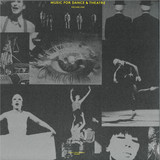
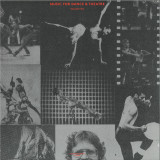
'Music For Theatre And Dance – Volume Two' is the second in a small series of EPs that will focus on music which was initially created for or inspired by dance and performance. Created as a dialogue with the avant-garde and highly experimental work in dance, theatre and art evolving at the time, the music was in turn at times greatly innovative.
That it was created for a dance or performance though means that such music was also often highly rhythmic and a number of pieces from this time stand out and seem greatly deserving of a new context.
Whether it's more ambient or atmospheric works or whether it's in the more rhythmic or percussive pieces, Music From Memory brings together another selection of tracks that aims to highlight this highly innovative direction in music.
- A1: Runaway
- A2: Never Really Get There (Feat Jesse Mac Cormack)
- A3: Friends In Secret
- B1: From Me (Feat Bernache)
- B2: Stranger
- B3: Signal (Feat Daniel Belanger)
- B4: Naissance
- C1: Faces (Feat Jesse Mac Cormack)
- C2: Rainfall (Feat Robert Robert)
- C3: Proud
- C4: Love Spirit (Feat Sophia Bel)
- D1: Initial (Bonus Track)
- D2: Hidden Places (Bonus Track)
“His music defies predictable electronic pigeonholing” – VICE French-Canadian producer and live act Christophe Dubé, aka CRi, is a dance music star in the making. Following in the footsteps of fellow Montréalers Jacques Greene and Kaytranada, CRi has risen through the city’s bubbling scene in recent years and now reveals his debut album ‘Juvenile’. A self-taught college dropout, CRi caught the attention of tastemaker press with early single ‘Rush’ and his 'Someone Else' EP. 'Rush', accompanied by an award-nominated music video, and 'Someone Else' picked up a nomination for Electronic Release of The Year at the 2018 Juno Awards (Canada’s equivalent to The Grammy’s). “I’m just a pizza delivery guy that said fuck it…” CRi’s sound blurs light, dream-like melodies with textured production - capturing the energy of the dancefloor, and the nostalgia of the morning after. Christophe draws inspiration from his musical heroes Moby, St Germain and Daniel Bélanger (who appears on the album), along with more contemporary influences ranging from Caribou and Dark Sky to Jacques Greene and Actress.
Green Vinyl
'2016 - My Generation”?: a momentous comeback for Mirwais, two decades on from his classic “Production” album.
It all started in 2016 with an idea Mirwais had for a music video to promote his upcoming single ?“2016 - My Generation”?.
The idea led Mirwais and co-founder of graphic design studio H5/creator of the Oscar-winning ?“Logorama”? animated short
Ludovic Houplain? ?to work together on a fascinating ten-minute short entitled “?My Generation?”.
Since its 2017 release, the film “?My Generation?”, produced and scored almost liturgically by Mirwais, made the rounds of
festivals, winning several prizes worldwide.
It presents itself as a backwards travelling shot during which all of our pop culture moment’s gimmicks collide at 100 km/h:
sex, the net, art, politics, sports, stocks, big pharma and big porno – from Hitler’s speeches to Trump’s contemporary
analogues.
Flash forward to 2020, and it is this very six-minute ?pop-litical ?critique of our era’s societal excesses that Mirwais chose
as the music video for his new single ?“2016 - My Generation”?, set to be released during the coming fall’s American
presidential election.
A sonic deflagration that heralds a new album from one of Madonna’s most iconic collaborators, succeeding, two decades
later, the now-classic ?“Production”?. A punchy, percussive single poised between hard techno and electronic disco,
sprinkled with choirs and distorted, psychedelic synths ?“2016 - My Generation”? is a dance floor-ready opus bearing
Mirwais’ inimitable signature. This way of mixing genres, of conjugating past and future, and of making pop experimental
and vice-versa, cements Mirwais’ reputation as one of times’ most singular composers.
Sasanami" is the result of a dialog between the Japanese photographer Yamamoto Masao and the Japanese musician Uchida Akira (with
Miu Sakamoto at the voice) initiated by IIKKI, between October 2019 and August 2020.
After to have worked as a saxophonist for several years, Akira Uchida, in 2007 learned piano tuning under Mr. Satoshi Yoshida. Planning and holding "Sound workshop" which is to introduce how to interact with various sounds from the viewpoint of sound turning. In 2015 while he was learning from Mr. Masahiro Adachi, Akira Uchida started to create a Clavichord (keyboard instrument), invented in the 14th century.
"Making instruments, tuning sounds, being a musician, this flow is essential for me to see the world".
Yamamoto Masao was born in Aichi Prefecture, Japan in 1957. He started to photograph when he was 16 years old. He also studied painting but later chose gelatin silver print as his media. His first gallery show in the U.S. was in 1994 in San Francisco. In 1996 he had a solo exhibition at Yancey Richardson Gallery in New York. His works have been shown in Europe since 2006. Besides Japan, U.S.A., and Europe, his museum and gallery exhibitions were held in Moscow and Sao Paulo. Media coverage includes NY Times and other major art magazines. Yamamoto lives in Yatsugatake Nanroku,Yamanashi Prefecture where he enjoys creating his work while being close to nature.
For Dekmantel Festival 2019, The Netherlands Institute for Sound and Vision’s RE:VIVE initiative and Dekmantel teamed up for the third time to invite four artists to bring fresh music to a curation of Dutch archival films. As debuted live in Amsterdam’s Eye Filmmuseum, 2019 featured new scores from Safe Trip eclectic left-of-centre DJ / producer, Max Abysmal, 80s pastiche, keyboard wizard duo, Lamellen, Italian contemporary composer and saxophonist, Laura Agnusdei and heavy-hitter, Identified Patient. 2019’s films were as diverse as the invited artists. Three of the films come Academy Award winning Dutch producer, Nico Crama whose collection is held by The Netherlands Institute for Sound and Vision while Comeback (Poppenfilm) was made by amateur Dutch filmmaker, Otto Laan.
Comes with liner notes inlay and pressed on 180 grams vinyl.
Berlin techno luminary Jamaica Suk announces her most ambitious project yet: Uncertain Landscape.
This 17-track, 4x 12” vinyl release on her acclaimed Gradient label will be released in four installments from Autumn to Winter 2020 and brings together a host of diverse techno talent. She will release a DJ mix featuring all 17 tracks to complete the series accompanied by a film from Anthony Vouardoux. The project is made up of a wishlist of names whose music she has been heavily supporting in her sets over the last few years. “I wrote specific producers inquiring for tracks that would be fitting to the label and also fit the DJ mix that I’m recording from these tunes. I’m looking to promote music that shares the same vision as I do.”
It marks the first original releases on Gradient from producers other than herself, which is a change of tact from her original plan for her imprint. “Initially I wanted to only release my music on Gradient including remixes - but it doesn’t make sense as there’s so much inspiration out there. By expanding the label’s network we create our own tribe.”
Jittery rhythms with a touch of ‘Spastik’ about them propel BNJMN’s ‘Abyssal Surge’ into life, with a big riverbed sound abounding as the track builds through haunting sustained tones and glitching mechanics.
Arthur Kimskii thundering ‘Natasha’ pummels from the first moment, with shuddering sub bass carving its way through the sound field as hypnotic bleeps pulse in the distance. Rapid-fire. Filtering percussive waves accentuate the bassline’s incessant 16ths rhythms, all the while the resonant kicks hammering away beneath.
Wrong Assessment’s ‘The Eight’ is a dissonant avalanche of warped textures, where grunting synth thrusts rub up against industrious pulses and chattering hi-hat patterns weave in and out of the mix. Stuttering bass and cymbal rides complete the urgent feel.
Introspective respite comes from Electro Indigo’s ‘Volcanite’, a stirring piece of broken beat experimentation where graceful pads slide hauntingly over taut kick and bass patterns and beautiful ghostly analog synth notes.
Look out for parts 2-4 coming soon and special audio + visual showcases.
Prolific American artist Jon Hester returns to Rekids for the first instalment of his new album, ‘Converge’, this September.
Jon Hester grew up in the Midwest US, living in Chicago and Minneapolis while taking musical cues from Detroit. Initially he was a dancer, and later transitioned to the decks with a refined understanding of what it takes to move a club. He progressed to hosting his own events, holding residencies, and working at a record shop, and now brings his physical rhythms and adventurous drums to his productions, with output on respected labels such as Transmat, Deeply Rooted, Dystopian, Klockworks, and LET Recordings, not to mention multiple appearances on Rekids.
Continuing to show fine form on his debut album, Hester now serves up eight of his signature house and techno fusions with plenty of his trademark directness across four sides of vinyl. The superb 'Sending Signals' opens the album with scene-setting synth modulations full of sci-fi atmosphere. It's the calm before the storm as 'Metropolitan' then immediately sets off on a cantering groove that is eventually run through with busy, jazzy piano keys that bring the soul.
'Haze' has excellently taught kick drums with hypnotic synth tones adding colour, and features Hester on saxophone. When 'Rain' comes, things grow darker and more menacing, with shakers and urgent stabs keeping you moving at a slick pace.
The second half of this compelling record features the loopy punches and pulses of the super smooth 'Dreamstate', beautifully cosmic and widescreen techno of 'Free' and pensive but urgent deep electro of standout cut 'Flex.' Last of all, 'Equinox' is lit up with distant chords which bring a far-sighted gaze to the rolling, robust kicks.
- A1: Sign O' Times (Cd1 Sign O' Times Remastered)
- A2: Play In The Sunshine
- A3: Housequake
- A4: The Ballad Of Dorothy Parker
- A5: It
- A6: Starfish & Coffee
- A7: Slow Love
- A8: Hot Thing
- A9: Forever In My Life
- B1: U Got The Look (Cd2 Sign O' Times Remastered)
- B2: If I Was Your Girlfriend
- B3: Strange Relationship
- B4: I Could Never Take The Place Of Your Man
- B5: The Cross
- B6: It's Gonna Be A Beautiful Night
- B7: Adore
- C1: Sign O' The Times (Cd3 Single Mixes & Edits Remastered - Edit)
- C2: La, La, La, He, He, Hee (Edit)
- C3: La, La, La, He, He, Hee (High Explosive) (High Explosive)
- C4: If I Was Your Girlfriend (Edit)
- C5: Shockadelica
- C6: Shockadelica
- C7: U Got The Look (Long Look) (Long Look)
- C8: Housequake (Edit)
- C13: Hot Thing (Dub Version)
- C9: Housequake
- C10: I Could Never Take The Place Of Your Man (Fade)
- C11: Hot Thing (Edit)
- C12: Hot Thing (Extended Remix)
Overflowing with musical ideas and topical lyrics that sound just as relevant today as they did when they were initially released, Prince’s iconic double album Sign O’ The Times captured the artist in a period of complete reinvention. The final 16-track album included just some of the countless songs Prince recorded in the prolific period of 1985-1987, which saw the dissolution of his band The Revolution, the construction of his innovative recording complex, Paisley Park, and the creation (and ultimate abandonment) of the albums Dream Factory, Camille, and Crystal Ball.
This September 25, The Prince Estate, in partnership with Warner Records/Rhino UK, will reissue Sign O’ The Times. This 4LP Deluxe Edition will feature the classic album remastered for the very first time by Prince’s original mastering engineer Bernie Grundman, along with single mixes and edits released in the period the album was released.
Good Company Records awakens from a deep slumber to present two new West Coast dreamscapes, proudly written and recorded on Noongar boodja (its local country). Up first is GCR009, the debut LP from Leaving (Rupert Thomas), featuring deep drones and gutsy ambience recorded between 2013 and 2017 - available digitally and as a limited edition 12” (release forthcoming). Thomas’ inimitable wavescaping is complemented by local photographer Duncan Wright’s aerial landscape on the cover, and speaks to the record’s special connection to its country – sound and image forming the perfect package for a cheeky meditation on your morning commute, first brew of the day in hand, or cuddled up somewhere comfy, resonating harmoniously with your beloved.
When Upset The Rhythm released Normil Hawaiians’ lost album ‘Return Of The Ranters’ back in 2015, the band members got back in touch with each other after a 30 year break and starting playing music together again. Out of this the group played a launch show for the album and followed that up with more concerts, including an appearance at Supernormal, a residency at the Edinburgh Festival, gigs at Cafe OTO and supporting Richard Dawson in London too. They even recently toured Greece in support of having all three of their renowned exploratory post-punk albums finally back in print.
Throughout this time, Normil Hawaiians revisited their original songs for these live performances. However for a group always so interested in evolving their sound and seeking nuance, it comes as no surprise that they shirked the idea of a faithful retread of old material in favour of reimagining their songs. The group experimented by pushing their songs into new inventive dimensions, still progressive at heart, but now imbued with a cosmic uncanny. A cinematic, even pastoral approach that was always quietly present has come to the fore. The quaint weirdness of folk song, the humanity of communal practice and the group’s ecological mindedness have all found a place in Normil Hawaiians’ current sound world. With this conducive atmosphere brewing, the band’s first new songs in decades started to emerge.
Being far-flung across the UK, the Family Hawaii encamped to Tayinloan, a small village on the west coast of the Kintyre peninsula in Scotland with the intention of recording new music. They set up their own studio in an isolated, windswept house overlooking the sea and started the tape rolling. Noel Blanden from the band explains how the spirit of the location was such an inspiration to the group during this initial recording session: “Our time immersed in the place and the unique energy it generated in us allowed us to write ‘In The Stone’. It goes right back to our first album, this need to document experience before it passes over and eludes us. We were grabbing at the musical ether and letting it shape itself through the band.” From loose, improvised sessions and reflective periods of listening in Tayinloan, Normil Hawaiians captured the moment. ‘In The Stone’ is a motorik thrill of distorted guitars, locked rhythms and morphic resonance. Guy Smith is joined by Zinta Egle on vocals, skilfully sharing lyrics informed by Alan Garner and Nigel Kneale’s ideas around recurring events being linked to place and historical artefact; a kind of residual haunting known as ‘Stone Tape’ theory. In keeping with the context of the song, sounds from several previous live recordings of the track were woven into its present being. Flipside ‘Where is Living?’ is a decidedly more delicate affair of questioning lyrics and eerie traces, droning strings and impressions smudged. This resultant 7” is a tantalising glimpse of Normil Hawaiians now, an echo from the past, an echo from the future.
LIMITED COKE BOTTLE CLEAR VINYL + DL.
The lead-off and title track of Brock Van Wey's 38th bvdub album Wrath and Apathy establishes itself with a noir hued Rhodes piano and idly lurching beats that provide an intoxicating beginning, which is, fittingly obstructed by a resonant synth-line that paces the song to new heights.
Van Wey's fans have come to covet the ebb and flow between such sprawlingly emotive passages, and Wrath and Apathy has these in mass.
It takes its time, like most of Van Wey's works, to get where it's going, and his musi- cal style to the already initiated is that of intently watching the ocean waves, with each wave bringing its own unique shape, texture, and in this case, aural reward.
Wrath and Apathy is loosely based on the events of Haruki Murakami's novel Kafka on the Shore. Like most of Van Wey's recent n5MD works, comes in the form of four spaciously captivating and deeply immersive long-form journeys.
* The original sister label to Ram Records from the old Ram HQ studio in Essex, Liftin Spirit Records now celebrates it’s 25th year with a special ‘RELOADED’ limited vinyl series of remastered classics, alongside rare and previously unreleased tracks since the beginning in1992.
* DATs from artists such as Andy C, Ant Miles, Shimon, Joint Venture, Interrogator and Red One have been located in the archives. Also from the Ram & Liftin HQ came tracks for the Deep Seven label in 1993 and all these rare DAT masters have been located and now re-cut by Simon, the original Ram & Liftin vinyl masterer at ‘The Exchange’. Initially, Deep Seven remasters will present on a printed white label and unreleased tracks will have a black label.
* The 6th release on the celebrated Deep Seven Records label was the last Desired State production to emerge out of the Ram/Liftin Spirit HQ. Under the alias ‘Faze Lock’, 2 more 1993 Hardcore rollers emerged in the form of 'Come Again' and 'Feel It'.
- A1: Radar Bol (Main Theme)
- A2: Verlaten Dierentuin Wassenaar
- A3: Geheimzinnige Helikopter Basis/Regen
- A4: Liquidatie Bij Albert's Corner
- A5: Men Spreekt Over Atlantis
- B1: Valscherm Malfunction (Ongeluk) (Ongeluk)
- B2: Spannings Bas
- B3: Albert Helpt Met Inpakken
- B4: Nachtelijk Konvooi Op De N44
- B5: Moord Op De Kagerplas
- C1: Verdwaald In De Waddenzee
- C2: Schaduw Horizon (Aktie) (Aktie)
- C3: Land In Zicht
- D1: Voor Een Grotere Zaak
- D2: Duinvallei (Bonus Track)
- D3: Man's Land (Bonus Track)
- D4: Verdwenen Weg (Bonus Track)
Utter presents Danny Wolfers' aka Legowelt's cult spywave album 'Schaduw Horizon' on vinyl for the first time. Initially released on CDR on Wolfers' Strange Life label back in 2008, this DX7-drenched soundtrack was influenced by real locations near Wolfers' coastal dune studio in The Hague.
Set in the depths of the cold war at an abandoned zoo, it scores the imaginary story of Percival, a NATO animal parapsychologist researching the extra-sensory powers of a Siamese cat and a chess-playing chimpanzee named Albert. After the Soviets discover the project, Percival's team members are assassinated one by one, forcing him and his animal friends to escape in a small sailboat towards a mysterious island...
The album has been remastered by Wolfers then transferred and cut by Helmut Erler at D&M. It is housed in a deluxe gatefold sleeve that opens to reveal detailed stories behind each track, while the entire back cover is a life-size chess board for any budding Alberts wishing to play a game. A special 'confidential documents' envelope completes the package and contains a map of the abandoned zoo, a top secret letter including coordinates of the locations featured in the story, DX7 schematics, foldable chess pieces and a 'Schaduw Horizon' sticker.
* The original sister label to Ram Records from the old Ram HQ studio in Essex, Liftin Spirit Records now celebrates its 25th year with a special ‘RELOADED’ limited vinyl series of remastered classics, alongside rare and previously unreleased tracks since the beginning in1992.
* DATs from artists such as Andy C, Ant Miles, Shimon, Joint Venture, Interrogator and Red One have been located in the archives. Also from the Ram & Liftin HQ came tracks for the Deep Seven label in 1993 and all these rare DAT masters have been located and now re-cut by Simon, the original Ram & Liftin vinyl masterer at ‘The Exchange’. Initially, Deep Seven remasters will present on a printed white label and unreleased tracks will have a black label.
* We continue our Deep Seven remasters with the 7th release in the series. 'Legal Offence' was yet another pseudonym from Ant Miles that brings us 2 thunderous mixes of the track 'Burnin'. Relentless beats and breaks make up this rare and sought after 12" from 1993 that provides that prevalent Hardcore vibe.
* The original sister label to Ram Records from the old Ram HQ studio in Essex, Liftin Spirit Records now celebrates its 25th year with a special ‘RELOADED’ limited vinyl series of remastered classics, alongside rare and previously unreleased tracks since the beginning in1992.
* DATs from artists such as Andy C, Ant Miles, Shimon, Joint Venture, Interrogator and Red One have been located in the archives. Also from the Ram & Liftin HQ came tracks for the Deep Seven label in 1993 and all these rare DAT masters have been located and now re-cut by Simon, the original Ram & Liftin vinyl masterer at ‘The Exchange’. Initially, Deep Seven remasters will present on a printed white label and unreleased tracks will have a black label.
* Two more previously unreleased tracks from Desired State that were found in the vaults continuing their exploration of the ‘unknown lands’ of Junglistic Drum and Bass. ‘Terra Incognita’ carries a haunting atmosphere over precision tooled breaks and deep sub basses with a vocal sample taken from 'Deep Space Nine' which was a new show at the time. The flipside ‘Sub Conscious’ features vocals and Indian chants from the movie ‘The Doors’ and again rides out over original beats and vibes in keeping with the Ram/Liftin Spirit sound of the ‘94 era.
Along with its sister imprint Fluid Electronics - dedicated to all things more muscularly 4x4 oriented, from house to techno via ambient, Fluid Funk will offer a platform of choice for creators and lovers of soulful house, hip-hop, jazz, funk, disco et al. The goal of the label is to bring a community of like-minded people together, cleared from the complexities that sometimes hamper the good course of the label-artist relationship.
First to grace Fluid Funk's dance floor-ready grooves is Rotterdam-based emerging talent Beau Zwart. Fresh off a choice inaugural sortie on INI Movements that hit the streets a few weeks ago, Beau steps in with his debut 12", "Beyond Two Souls" - an infectiously smooth and solarpowered six-track platter featuring Dutch duo Fouk on remix duty.
Expect lavishly orchestrated cascades of ankle-twisting breaks, prismatic synthwork and summer-flavoured melodies to wrap your ears around as your feet and body give in to the power of that funky bass. Brewing elements of fuzzy pop, pixelated soul and tropicalised rhythms, Beau Zwarts sound takes us on a wildly enjoyable ride across luxuriantly flowered scapes and fluttering cosmic house horizons. Interlaced with sugary Rhodes stabs and 8-bit harmonics a la "Floating Points", Sykes' warm vox intonations shows us the way into a pulsating heart of wonky, bop-infused boogie.
Expanding to further out-there, club-optimised bravura, Fouk's take on the title-track is the kind of track that'll make an impact in the sweatbox as well as in a more cabaret-like setting. Pulling out the weirdo harmonics and left-of-centre jazz aerobatics, "Ixodus" lets its free spirited sense of playfulness take over completely. Flip sides and here's "Marble Book" unbolts the spacious pads and whirling alien riffs as a sturdy sub-bass and gut-churning kicks beat time onto further estranged
dimensions.
A slightly more muscular but thoroughly sensuous workout, "Bustin Out" fuses classical two-step-indebted breaks with lascivious "P-Funk" tropes into one compelling club heater, before the EP's sluggish closer "Illustrate My Way" sends us into orbit for good with its slowed down romanticism and otherworldly piano fantasy.
It's the third chapter in our 'Moonshine Recordings meets...' series where we focus on various talented vocalists from the UK sound system scene. In this session we have met the inimitable Rider Shafique straight out of Bristol. Riddims and versions built by the Moonshine family members - Baodub, Bukkha, Dubbing Sun, Inner Echo and our fresh signing Joyful Lion. Vocals mixed by Sam Binga and the whole project was mastered from stems by Studio As One.
- A1: Azu Tiwaline - Violet Curves (Feat Cinna Peyghamy)
- A2: Khalab - Sorry
- A3: Dengue Dengue Dengue Aka Dngdngdng - Hiperborea (Quixosis Remix)
- A4: Jd Twitch - Agyapong
- A5: Bkclx - Sisters Brew
- B1: Edrix Puzzle - Jonny Buck Buck
- B2: Don Korto - Samosa Beat 2
- B3: Rebecca Vasmant - Teen Town
- B4: Uffe - City's Dead (Wrapped In Plastic) (Wrapped In Plastic)
- C1: Planet Battagon - Wezlee's Disco Inferno
- C2: Clive From Accounts - The Rain
- C3: Jose Marquez - La Negra Lorenza
- C4: Guedra Guedra Presents Taxi Kabir - Couscous Curtain
- D1: Tamar Collocutor V - Everywhere (Live - Black Classical Speedbump Mix)
- D2: Don Korto - Samosa Beat 1
- D3: Ariwo - Flameback Dance
- D4: Batida - Aquecedor (Feat Karlon)
- E1: Petwo Evans - Wheels
- E2: Dengue Dengue Dengue - Semillero (Nicola Cruz Remix)
- E3: Sunken Cages - Sounds For Zanzi (Iyer Remix)
- E4: Babani Soundsystem - Touni Minwi
- F1: Collocutor - Lost & Found (Afrikan Sciences Remix)
- F2: Dengue Dengue Dengue - Amnative
- F3: Tamar Collocutor & Tenesha The Wordsmith - Yemaya (Vasmant Mixmaster) (Vasmant Mixmaster)
On the Corner goes beyond being a record label. It is a story of innovative artists from hotbeds of ancient-future* music across the globe. This 'Door to the Cosmos' compilation is the 10th full release (and an eclectic array of 20 EPs). OtCs rawkus sonic explorations are brought to the fore via 24 tracks making a heady blend of label mainstays and fresh family recruits. The label is an inimitable mixture of Miles Davis' 'call it what you want' attitude, the afro centric futurism of Sun Ra and the evolving electronic frontier where black music kicks it to the dance floor. 'Door to the Cosmos' expresses On the Corner's adventure; future sounds referencing the source, be it Detroit, UK bass culture, New Orleans or the Niger delta. The title riffs off of the otherworldly, afro futurist jazzer Sun Ra's infamous chant 'dare to knock at the door to the cosmos'. Sun Ra's sound and narrative bending inspires us to kick at the rules and push at the infinite, the ecstatic and the unknown through music by knock, knock, knocking at the door to the cosmos. The compilation is the first outing for a new raft of artists who are celebrated by the label and welcomed to a creative space brimming with the tales of unsung pioneers of the past and champion sonic explorers of the future.
THE KILIMANJARO DARKJAZZ ENSEMBLE are a project which has always been tied to films. Films are luxurious because they dispose of all these boring, unimportant, and trivial parts of our lives. This allows them to fully control our sensations, to put us in a very specific mood. Joy and sadness are occasionally OK, endless joy or endless sadness are clinical. But there is one sensation which can be persistent and unconditionally bearable at the same time. In the absence of a better alternative, let's call it "the mood". The mood is what TKDE are aiming at. The mood.
The mood is infinite and illimitable, but not uniform and unique. On "From The Stairwell", TKDE deliver eight new incarnations of the mood. Stairwells have always been intriguing. They appear to unavoidably lead you to your destination, but they only disclose the path bit by bit. What lies far ahead of you and far beyond you is hidden in the shadows. The stairwell could just as well be infinite. You climb up this murky stairwell, passing by many doors. Every door contains a variation of the mood, a short film, a song. You open the first one, "All Is One". The evaporating mist discloses a large and empty room with a barstool in the middle. On the barstool, a chanteuse from the roaring twenties. Her voice starts to trigger vibrations of the ground, the walls start spiralling around her, but she remains untouched in the eye of the storm. Second room, "Giallo". Sly guy, telling smile, nice suit. Walking down the streets in the dusk. The ambience starts to get out of phase, the guy stumbles in horror while blending with the surrounding to a brown soup. Fourth room. "Cocaine". Naked people with pig heads crawl on the floor, on the walls, on the ceiling. They try to hopelessly suck up the white dust which covers every single piece of this room and is constantly spit out by tubes coming out of the walls. Dissonant sounds accompany the work of this desperate hive. As the people manage to counteract the tubes, fragile melodies start to overpower the dissonances. Sixth room, "Cotard Delusion". Baby morphing into a black fluid morphing into an old man which turns his eyes inwards and finds his inside to be completely empty. The journey up the stairwell, down the stairwell, continues. The pictures fill your head and make you forget where you wanted to go in the first place.
"From The Stairwell" is a surprise and a logical step at the same time. It is a surprise because the songs are far less beat-driven in comparison to TKDE's earlier works, and even contain a few hopeful tints here and there. It is a logical step because in the end each song turns to have a very diverse dramaturgic flow. This could raise the conjecture that TKDE, initially started out to make music for existing and non-existing films, wanted to incorporate the audiovisual impression completely into songs, making the films superfluous. At times, "From The Stairwell" makes you think of 60's soundtracks, but the organic feeling of those is always interwoven with mechanical elements. Altogether, every single of the numerous details present in TKDE's new songs feels to be at the right place and you can either just dive into the mood or pick one of the many aspects and enjoy it on its own - be it Gideon Kiers' beats & fx, Jason Köhnen's bass & piano, Hilary Jeffery's trombone, Charlotte Cegarra's voice & piano, Eelco Bosman's guitar, Nina Hitz' cello, Sarah Anderson's violin, or - appearing as guest musicians - Eiríkur Óli Ólafsson's trumpet and Coen Kaldeway's saxophone & bass clarinet.
2020 marks the 30th Anniversary of ‘Bossanova’, the third studio album by Pixies.
The band continued to work with Gil Norton after collaborating to such success on their platinumselling second album ‘Doolittle’; this time choosing to record in Los Angeles over their native Boston
(the track ‘Blown Away’, however, was recorded at the Hansa Tonstudio in Berlin during a European tour in 1989).
Their third album in as many years, 1990 was a particularly fertile time for the band with Kim Deal also having success with The Breeders, who released their debut album ‘Pod’ just a few months prior.
Featuring the singles ‘Allison’ (a tribute to jazz and blues pianist Mose Allison), ‘Dig For Fire’ and ‘Velouria’, plus the first cover to feature on one of their albums, ‘Cecilia Ann’ (originally by The Surftones), ‘Bossanova’ showed a less primal side to the band, with surf and space rock rising to the fore. Lyrically, Black Francis is even more cryptic with a recurring sci-fi theme running throughout, which in turn influenced Vaughan Oliver’s classic planet design for the sleeve.
To celebrate ‘Bossanova’ hitting its third decade, 4AD are releasing a special red vinyl edition with the original 16-page booklet being reinserted, having previously only been available with the initial UK LP pressing.
Two years after he strikingly entered the world stage with Iron, a luminous track with a truly iconic video - Woodkid released The Golden Age, his first ever album, crafted and shaped in the utmost secrecy during the year 2012. While some might have just let the media hype do its work, Woodkid also known as Yoann Lemoine, chose to reverse the rules of the game. Following the release of a second single Run Boy Run, which became a classic in a matter of weeks - with the accompanying video nominated at the prestigious
Grammy Award in 2013, Woodkid decided to bring out his first album. A record with incredible ambition for this young Frenchman who America was already crazy about, picking up the momentum for his rise. The Golden Age is an epic quest, a beautiful and surprising adventure. The foundations of the Woodkid staple are of course all on display : percussions, string and brass arrangements, piano, programming and - of course - this powerful and sensitive voice that delicately runs through the melodies with great magnitude. A few months after its release The Golden Age was certified Platinum and
Woodkid went on to collect the Prize for “Best Live New Act” at the French Music Awards on February 14th 2014. As a multi-talented artist, Woodkid thought out his project with all aspects in mind. Initially working as a video director for the greatest (Lana Del Rey,
Drake and Rihanna), he then directs his own videos and starts creating the visuals and stage-design for his own live performances.
Since then, this gifted all-rounder has continued to explore multiple paths. In 2014 he works alongside contemporary artist JR on an original piece commissioned by the New York City Ballet (JR creating and Woodkid producing the music), takes the artistic reins of Pharrell Williams’ live shows and co-writes an original soundtrack with Hans Zimmer.
In 2015, Nils Frahm performs the soundtrack that Woodkid wrote for a
documentary on Ellis Island, directed by JR with commentaries from Robert De Niro.
The same year, cinematographer Jonas Cuaron (creator of gravity) asks him to write the music for his feature film “Desierto” a gruelling thriller set in the Mexican-American desert. Woodkid comes up with a radical and organic piece halfway between sound-design and film score, released in April 2016. He is to this day one of the most sought-after artists, a visionary and altruistic creator whose modern and powerful body of work continues to shape itself with every new encounter.
First up is Nehuen, an Argentinian born but Barcelona based artist who is notorious for his abrasive dance floor workouts on I Love Acid, BNR Trax and the Classicworks label he co-owns with Cardopusher. Cardopusher is, of course, a true electronic legend from Venezuela. His dizzyingly diverse sound takes in rave, acid, electro, techno and house influences and distills them into hugely
Raw and energetic new forms.
Nehuen's Psyops Part One kicks off with the excellent title track, which contorts acid and electro into a writhing monster filled with dark energy. The visceral 'Toxic' is built on slapping hits and spangled basslines that will tie you in knots as the bumping drums drive things forward. The late-night menace continues on 'Bailar', with tight synth arps layered up in robotic forms over clunky drums that are industrial and futuristic in equal measure. Last but not least, the eerie 'Desire' strikes a more twisted note with double kicks juddering beneath echoing hits. It's pure, filthy, brilliant body music.
Cardopusher kicks off Part Two with the fantastic 'Disobedience' (feat. Lbeeze) a slow-motion drum workout that is like dark disco mangled through a psychedelic filter, with robotic vocals and stiff arp
jerking your body. 'Abyss Antidote' is then a flurry of drum breaks and electro bass, frazzled synths and whipping hits that keep you on the edge of your seat. Darkness abounds on the gritty 'Initial Decay' (ft. Lbeeze), which layers up taught drums and hits with spraying synths that come from a dystopian planet.
Closing out this epic mini-series is 'Mutant Brain', a cyborg techno meltdown with manic acid for
company.
These are devilishly distorted tracks from two of the best producers around.
New album of one of the biggest Reggae/Dub french soundsystem starring MacGyver, Rooty Step & Pupajim (who worked with Alpha Steppa, Biga Ranx, High Tone, Mungo's Hi-Fi ...).
Available as super limited edition including 60x60cm Poster !
Since their inception at start of the 2000s, Stand High Patrol have rocked sound systems to their own riddim, assimilating and re-purposing the codes of the genre in their own unique style. From tiny bars in Brittany to huge festival stages, on independent radio or across national airwaves, the crew have quietly trod their own path, never compromising their core value of independence. Connoisseurs have long recognised Stand High’s credentials both as a dub group and a leading sound system, but they stand out from the crowd because of their ability to deliver the unexpected, whether live or on record. Their ability to draw such a diverse audience is testament to this atypical approach to making music.
In 2020, almost 20 years since their humble beginnings, the collective presents their fifth album, “Our Own Way”. As with their first two albums “Midnight Walkers” and “Matter Of Scale”, now considered as classics in their genre, this new opus asserts itself as the latest representation of the crew’s versatile approach to crafting sound. Their music, a blend of its own known as “Dubadub”, has always borrowed influences from multiple sources, and over the course of their career their roots in dub and reggae have intertwined with hip-hop, jazz, new wave, trip-hop and numerous other genres. The ‘Dubadub Musketeers’ have never ceased experimenting, forever seeking to increase the sonic territory they cover, day after day. Both live and recorded, they’ve made it a point of honour to never offer up the same thing twice. Any resemblance that “Our Own Way” might bear to those first two albums is a consequence of this obvious creative continuity, rather than of going “back to basics”.
In contrast to the last two Stand High Patrol records, the hip-hop inspired “The Shift”, or the Bristol indebted “Summer On Mars”, “Our Own Way” doesn’t have a unifying concept or theme. Rather than being limited to a single aesthetic, the LP pays respect to the entire canon of Jamaican music, all unified under Stand High’s inimitable production values. With the wealth of experience gained during the recording of their last two records, the collective decided to aim for a freer project, letting themselves be guided by their own music and their own instincts. The end result is a musical portrait of what Stand High Patrol is in the present moment.
The tracks that make up the new LP burst out of the studio, each born out of unbridled, impulsive creativity. Previously unheard compositions and specially re-tooled dub plates have been assembled into a tracklist that shifts and moves like a classic Dubadub Musketeer live set. Each step of the process has been refined by years of practice : composition, effects, and the final mix. Throughout “On Our Way”, the brutal dub stepper, though still a favourite for sound system sessions, is noticeable by its absence. Instead, it’s the full weight of the crew’s reggae heritage that’s expressed in the mix. It's not just the depth and weight of each tune that strikes the listener, but also the spaces heard between the notes that grab and hold their attention.. The sense of a trip, whether musical, internal or geographic, is omnipresent throughout the LP, linking each track to those before and after. “Our Own Way” finds Stand High Patrol exploring as usual, yet also narrating their journey as they’ve rarely done before
Minyo Crusaders rework historic Japanese folk songs (min'yo) with Latin, African, Caribbean and Asian rhythms for their debut album 'Echoes of Japan'.
Releases from Ryuichi Sakamoto, Haruomi Hosono and Midori Takada have re-ignited global interest in Japanese music and 'Echoes of Japan' marks the arrival of a big band like no other.
'For Japanese people, min'yo is both the closest, and most distant, folk music' explains band-leader Katsumi Tanaka: 'We may not feel it in our daily, urban lives, yet the melodies, the style of singing and the rhythm of the taiko drums are engrained in our DNA'. Initially indifferent to min'yo, a tragic event in recent Japanese history set Tanaka on his current path: 'Following the Tohoku earthquake of 2011, I reflected on my life, work and identity. A fan of world music, I began searching for Japanese roots music I could identify
with. Discovering mid-late 20th century acts Hibari Misora, Chiemi Eri and the Tokyo Cuban Boys, I was
captivated by their eccentric arrangements and how they mixed min'yo with Latin and jazz.'
Originally sung by fishermen (Kushimoto Bushi; Mamurogawa Ondo), coal miners (Tanko Bushi) and sumo wrestlers (Sumo Jinku), these songs deal with topics such as the returning spirits of ancestors (Hohai Bushi), Japan's smallest bird (Toichin Bushi) and a bride's love for her husband's pockmarked face (Otemoyan).
Minyo Crusaders are one of the most hyped acts on the Tokyo music scene that went national in 2018 through festivals such as Fuji Rock. The band features veterans of the Tokyo roots music scene such as bassist DADDY U (Ska Flames), keyboardist Moe (Kidlat), sax player Koichiro Osawa (Matt Sounds/ J.J. Session), Yamauchi Stephan (J.J. Session), percussionist Mutsumi Kobayashi (Banda de la Mumbia), conga player Irochi (Cubatumb) and vocalist Meg (DJ collective Tokyo Sabroso).
- Wild blend of Japanese folk music with cumbia, boogaloo, Ethio jazz, Afro funk + more
- Ry Cooder, Mario Galeano (Ondatropica/Frente Cumbiero), Clap! Clap! are all fans
- European touring plans for autumn/fall 2019
- Includes Japanese lyrics + English translations
- Lacquers cut @ The Carvery
Dead Or Alive have sold more than 30 million albums and 25 million singles worldwide and gave Stock Aitken Waterman their first #1
single. Their first three albums, which the band wrote, all reached the UK Top 30, with ‘Youthquake’ reaching the Top 10. In the 1980s, they charted seven unique singles in the UK Top 40, with two further re-entries this century, with a remix and original version of ‘You Spin Me Round (Like A Record)’. Respected US magazine Billboard, ranked them in their all-time Top 100 most successful ‘dance artists’ chart.
Recorded at PWL Studios, London, “Nukleopatra” is the Band’s sixth studio album and was initially released in Japan in 1995, although
subsequently released in different versions - track existing / versions / durations / artwork - in eight other countries between 1996 and 1998. It contains the singles ‘Rebel Rebel’ and ‘Sex Drive’. The album was not released in the UK, until a re-worked version was included within the ‘Sophisticated Boom Box MMXVI’ box set in 2016. This vinyl edition replicates the original Japanese version, which features longer versions ‘Nukleopatra’ and ‘Sex Drive’, along with rerecorded versions of ‘Unhappy Birthday’ and ‘Gone Too Long’, which appeared on “Fan the Flame (Part 1)”. This special 25th Anniversary Edition of “Nukleopatra” is the first time that the album has been commercially released on vinyl in its original configuration, with original playing durations and will be pressed on 180g heavyweight blue colour vinyl.
2020 reboot for Detroit's legendary Metroplex.
The Label Say "Cologne based producer Bas Grossfeldt has crafted an outstanding release perfectly aligned with Juan Atkin’s brilliant Metroplex aesthetic. As a relatively new name in the scene, Bas Grossfeldt’s music sounds as if it were the results of decades of focused experience in the studio.
With a background in installation, choreography and performance art, Bas Grossfeldt is the artists alias to focus on the musical side of things. His deeply rooted interest in the relation of space and body is also translated into his music. The fusion of spaced-out textures, rhythmical distortions, cold waves of synthesis, and enough modern production prowess ensures a release saturated with innovation and abundant imagination. A rare release for the seminal Detroit label, which also represents Juan Atkins’ interest in the arts world and new, different approaches.
The exchange between the label head and the artist, initially came to life because internationally renown conceptual artist Mischa Kuball, knowing Juan from a joint project, sent him the demo of Bas Grossfeldt. Especially intrigued by the track „Lost In Translation“, Juan and Bas started exchanging, approaching the record as an „art project“ and a classical EP at the same time, for example leading into the cover being made by Bas Grossfeldt/Søren Siebel himself and including numerous hidden references to the sound.
Each track embraces an incredible array of sounds and styles, from soundscapes to mind-bending Techno – all equally as effective for the brain as the dancefloor.
“Lost In Translation” opens the release with a cinematic piece of electronica permeating with frozen emotion and melancholic soul. The beautiful track captures a foggy morning’s haze, the first chill of winter with only a gentle kick-drum keeping the cold from completely taking over. It is also accompanied with a hypnotizing abstract video by film-artist Svenja Voß.
Continuing in a dubby, winter haze is “Lost In Sensation” which floats alongside a sharp, metallic rhythmic arrangement and a gentle, ever-present kick drum. Deep, heavily saturated atmospheric textures sleep underneath the sounds while lucid melodies float in and out.
“Your Orbit” rounds out the release with the most club-ready production. Disorienting melodies and gritty synths capture a dreamlike perception while a tough kick drum and clattering percussion drives the music deeper into undiscovered dancing territories just left of center. "
The next release in the Phonica Special Edition series comes from Ukrainian duo Asyncronous who first came to our attention after hearing their critically acclaimed debut on Berlin label Slow Life, 'The Art of Fighting In A Dream'.
A Phonica favourite, it provided the soundtrack to many days in the shop throughout the year, culminating in its inclusion in our top ten Best Singles of 2019!
The Phonica Special Edition series is focused on one-off projects, special remixes or collaborations, highlighting music that is slightly left of the dance floor and pairing it with unique artwork.
This time featuring a beautiful piece by celebrated Ukrainian artist, Mykyta Storozhkov.
The pair initially joined forces in an effort to explore human imagination and life experiences through music, focussing on creating feelings and atmosphere rather than be constrained by genre limitations. The result on this EP is a hazy cosmic trip through their universe of synth swells, deep sub bass and meticulous percussion.
The journey begins on 'Padma Kirtanam' with a constant drone providing the backbone to a building tension scattered with drums. The tension releases and makes way for A2 'Shinkansen', a beautiful track with minimal drums and dubbed out synths which echo around the listener's ear. Closing the A side 'Volta' continues this aesthetic but adds a 4x4 kick drum upping the groove to a cosmic deep house jam.
'Avalanche' kicks off the B side of the record with a syncopated bass line and skitterish hi hats. The energy is at its highest level here and only stops to make way for the next track 'Blocks of Despair'. The tempo drops and drum hits reverberate above stretched out bass notes creating arguably the most heartfelt tune of the release.
The EP ends with 'Midnight Sun' an ambient excursion that invites you to drift off with Asyncronous into outer space.
Today we have many opportunities to discover the world and travel through it without leaving your own room. In the age of globalisation, with the help of knowledge, technology and imagination, you can instantly teleport yourself to mystical temples of India or see the sun above the polar desert at midnight. No more borders - we are connected like never before, as if we are not at different ends of the globe, but on a single and indivisible continent that is not mapped but exists in a plexus of global events, information flows and digital environment.
This is our common home. Our new Pangaea.
Vinyl reissue of the now classic 1971 album. Produced by Transamericas in collaboration
with the band from original master tapes, in a fully analog process at recording studios in María Pinto
(Chile), London and Haarlem (Holland).
Los Jaivas (“El Volantín”) is the first LP by Chilean rock band Los Jaivas, one of South America's biggest names in the fusion of folk roots and psychedelia during the 1970s. Los Jaivas were born in the city of Viña del Mar, with their five members determined to guide their initial sound through improvisation and experimentation, «trusting that in time a language would emerge that would give us our identity», in their own words.
This debut album (popularly known as El Volantín - The Kite -, because of its cover illustration) combined the free-flow of extended electrical pieces with more conventional three-minute songs filled with references to Chile's popular culture and the musicians’ own upbringing. Theirs was a solitary path, not just for the band but also for the beginnings of Chilean rock. Los Jaivas blazed a trail that was rich in musical references, with ideas inspired by Jimi Hendrix, the Congolese Missa Luba, Argentinian folk (Atahualpa Yupanqui, Ariel Ramírez), South American avant-garde composers (Ginastera, Villa-Lobos, Violeta Parra), the experimentation of pianist Henry Cowell, Caribbean rhythms and Miles Davis’ trumpet re-inventions.
On the Corner Records was awarded 'Label of the Year' at the Worldwide Awards 2018. OtC is a story of artists and scenes that goes way beyond being a record label. DJ and label owner Pete On the Corner has created a home for innovative, bordercrossing, genre pushing artists. The OtC vision is to bring music to the world that is knocking at the 'Door To The Cosmos'. The label is an inimitable mixture of Miles Davis 'call it what you want' attitude, Sun Ra's Afro Futurism and the ecstatic soul lifting influence of black music on electronic dance music. On 'Door To The Cosmos - Dancefloor Sampler' Pete has curated a volume of cuts from present and future label family. This first in the series, is not just knocking at the door but giving it a kick! It's club music referencing the source, be it Detroit, or UK bass culture combined with future sounds rising from cosmopolitan hotbeds of sonic heat. On this maxi EP Venezuela meets India via New York, the street sound of Dar Es Salaam, Tanzania pulses through UK Jungle. Undergrounds pushing the dance, breaking borders and genre alike. Rhythms from the ancestors channelled for future times.
30D Records sublabel ‘Close Encounters’ publishes its third release ‘Third Contact’ EP on April 24th 2020, (initially on digital release) bringing together a range of artists to express their musical vision as a virtual union, somewhat reflective of the globes current confinement. ‘Third Contact EP’ delivers four tracks from an alliance of artists who are at a peak in their careers; Denise Rabe clearly defines her dark, hypnotic trade-mark aesthetic in ‘We’ll Meet In Shanghai’, a timeless track even before its release. Geistform combines industrial-electro with a raw techno drive, continuously channelling his masterful energy in ‘3C 273’. A more dancefloor-oriented B side features ‘Stolen’ from Temudo, delivering rolling groove and distorted bass-lines, Adriana Lopez closing the EP with her high energy, spellbinding ‘SMV’, both B-side tracks perfectly geared toward a wide variety of DJ sets. 30D Records are thrilled to debut all four artists on this special release and all the artists are equally happy to be able to share their creativity and vision through music with you at these strange times.
‘Kind of Tango’ is a kaleidoscope of shifting emotions. Wolfgang Haffner’s conception of tango has drama and propulsion in it but also melancholy and longing, with room for frenetic outbursts too. All this is unified by his inimitable groove and feel that commentators have called “an absolute dream,” “magical” and “profoundly relaxed.” Alongside trusted co-protagonists Christopher Dell and Lars Danielsson, he has two guests with him who defy all the clichés associated with tango: guitarist Ulf Wakenius cut his teeth musically in Oscar Peterson’s band and his Swedish heritage always shines through in his playing; Vincent Peirani is one of the leading innovators on the accordion and he finds new ways to define the instrument’s role in the tango. Also, young pianist Simon Oslender makes a first appearance with the band. Jazz and tango find a natural yet constantly shifting equilibrium - to be heard particularly effectively on ‘Close Your Eyes And Listen’ by Astor Piazzolla. In addition to compositions by Haffner himself and by his band members, pieces by the celebrated Argentinian bandoneon player and composer are the focal point of the album. Piazzolla’s innovations with the tango, such as bringing jazz into it, date from around 1955. Haffner and the tango
seem perfectly matched to each other. Tango is no longer a fixed style nowadays, it is above all an attitude to playing and an attitude to life. Wolfgang Haffner’s approach to tango is both authentic and new. It is his and his alone and it is irresistible.
First up is Nehuen, an Argentinian born but Barcelona based artist who is notorious for his abrasive dance floor workouts on I Love Acid, BNR Trax and the Classicworks label he co-owns with Cardopusher. Cardopusher is, of course, a true electronic legend from Venezuela. His dizzyingly diverse sound takes in rave, acid, electro, techno and house influences and distills them into hugely
Raw and energetic new forms.
Nehuen's Psyops Part One kicks off with the excellent title track, which contorts acid and electro into a writhing monster filled with dark energy. The visceral 'Toxic' is built on slapping hits and spangled basslines that will tie you in knots as the bumping drums drive things forward. The late-night menace continues on 'Bailar', with tight synth arps layered up in robotic forms over clunky drums that are industrial and futuristic in equal measure. Last but not least, the eerie 'Desire' strikes a more twisted note with double kicks juddering beneath echoing hits. It's pure, filthy, brilliant body music.
Cardopusher kicks off Part Two with the fantastic 'Disobedience' (feat. Lbeeze) a slow-motion drum
workout that is like dark disco mangled through a psychedelic filter, with robotic vocals and stiff arp
jerking your body. 'Abyss Antidote' is then a flurry of drum breaks and electro bass, frazzled synths and whipping hits that keep you on the edge of your seat. Darkness abounds on the gritty 'Initial Decay' (ft. Lbeeze), which layers up taught drums and hits with spraying synths that come from a dystopian planet.
Closing out this epic mini-series is 'Mutant Brain', a cyborg techno meltdown with manic acid for
company.
These are devilishly distorted tracks from two of the best producers around.
Bélver Yin's soul mining odysseys have been unjustly overlooked for three decades. An anomaly in the Spanish alt-pop scene, their forlorn instrumentals and ethereal romanticism would have struck a chord in the British league of Felt, The Chameleons, Cocteau Twins and Dif Juz, leaving their 1991 debut Luz Bel deserving of reappraisal.
While coining their band name from a Jesús Ferrero novel and quoting Laozi philosophy on album sleeves, Bélver Yin create illuminating textures that unlock a wordless language of memory and adolescent emotion. Formed in Salamanca by self-taught musicians Pedro Ortega Sánchez and José María Martín, the guitar-bass duo spent two years crafting their divine interplay with interim drummers before submitting a demo to Noisex Music, their only attempt at label courting. The phone rang mere days later with owner and producer Bernar Marks (The Dust Sessions) offering to cut an album and the band ventured to Valencia with cloud-touching optimism soon after.
Championed by local press, the release fell short of expectation, fueling the mythology of a vanished band known only to the initiated. Varying lineups would, however, continue to work in the shadows under Pedro's direction, recording two spatially arranged follow-ups at their own pace in 1996 and 2005.
A glorious debut that undeniably set a high watermark, Luz Bel is finally available again, faithfully remastered by Mikey Young and featuring bilingual liner notes from John Gómez, the authoritative ear behind Outro Tempo.
Re-release of the record originally released on 2016-02-05!
Remastered and cut by Rashad Becker at D&M Berlin and presented in an exact replica sleeve of the original 1966 release by Stephen O'Malley.
sales information: Black Truffle is honoured to present the first vinyl reissue of the classic debut album from AMM, AMMMusic. Coinciding with the 50th anniversary of its recording in 1966, this reissue makes one of the cornerstones of the experimental music tradition available again in its original form, replete with Keith Rowe's beautiful pop art cover and the terse aphorisms by the group that served as its original liner notes. A testament to the interaction between the experimental avant-garde and the countercultural underground, the album was originally released on Elektra, recorded by Jac Holzman (the label's founder, responsible for signing The Doors, Love, and The Stooges) and produced by DNA, a group that included Pink Floyd's first manager Peter Jenner. (Pink Floyd paid tribute to AMM's influence on their improvisational sensibility with the track 'Flaming' on their debut album, named after the piece that occupies AMMMusic's first side, 'Later During a Flaming Riviera Sunset').
Formed in 1965 by three players from the emerging British jazz avant-garde - Keith Rowe and Lou Gare had played with the great progressive big band leader Mike Westbrook and Eddie Prévost played in a post-bop group with Gare - AMM quickly evolved from a free jazz group into something decidedly more difficult to categorise. By the time these recordings were made, two more members had joined the group: another Westbrook associate, Lawrence Sheaf, and the radical composer Cornelius Cardew. Then at work on his masterpiece of graphic notation Treatise, Cardew brought with him extensive experience of the post-serialist and Cageian currents in contemporary composition. Using a combination of conventional instruments and unconventional methods of sound production (most famously Keith Rowe's prepared tabletop guitar, but also prepared piano and transistor radio), the group performed improvised pieces often running for over two hours and ranging from extended periods of silence to terrifying cacophonies.
Evan Parker famously described the improvisational logic of AMM's music as 'laminal', in contrast to the 'atomistic' approach more common among the generation of British improvisers (Bailey, Rutherford, Stevens and co.) to which he himself belonged. AMM improvised in layers: layers of sound subtly rising and falling or abruptly starting and stopping without being propelled by the implied pulse of free jazz improvisation. Rather than a pulse, AMM's music began with the sound of the room in which it was played, the Cageian anarchy of silence. By embracing the non-synchronous simultaneity of layered sound, AMM was able to create a musical container into which nearly anything could be incorporated at any moment: on AMMMusic, long tones sit next to abrasive thuds, the howl of uncontrolled feedback accompanies Cardew's purposeful piano chords, radios beam in snatches of orchestral music (and, on the LP's second side, an extended fragment of 'Mockingbird').
AMM's clearest break with jazz-based improvisation concerned the idea of individuality. Where improvised music has tended to foster the development of idiosyncratic stylists who move freely from one group to another, AMM, initially through an engagement with eastern philosophy and mysticism and later though a politicized communitarianism, sought to develop a collective sonic identity in which individual contributions could barely be discerned. In the performances captured on AMMMusic
the use of numerous auxiliary instruments and devices, including radios played by three members of the group, contribute to the sensation that the music is composed as a single monolithic object with multiple facets, rather than as an interaction between five distinct voices.
- Francis Plagne
vinyl only / 180 grams
Finishing off the initial "series" of Krab's vinyl-only records in style, KRB003 centres around 3 signature cuts from German duo Cedric Dekowski & Felix Reifenberg and a stellar remix from Yamen & Eda. The EP divulges into the multi-genre capabilities and eclectic nature of the HardWorkSoftDrink label owners, as there are seamless transition between genres, modular synths and all things in between are highlighted throughout the label's latest record.
Starting off with a slow burner, Act 1 is a hypnotic listen, formed around strung out sounds, glitchy breakdowns and a captivating overlaying melody. Laus highlights the pairs unique ability to shift genres seamlessly as they deliver a cut full of heavy hitting acid and emotion heavy synths suitable for any dance floor.
Internet dial up appears the theme throughout the B-side, as Feelsliker delivers a fast paced minimal roller that is stacked to the brim with bleeps, bloops and modular madness. Finishing off the record is a remix from French Duo Yamen & Eda, a pair of artists that boast a distinguished taste for electronic music. Dance floor ready, B2 is constructed around a heavy hitting bass line and an assembly of inimitable modular synths.
repress
One of the rare outing's of Dopplereffekt , the beautiful abstract and hypnotizing "Linear Accelerator" album is getting a proper double vinyl treatment on WeMe records after the initial cd only release on Gigolo in 2003. Linear Accelerator is a continuation of Der Zyklus's Biometry album with its abstract hypnotizing soundscapes and its controled sterile atmopshere. Tracks like the slowly unfolding 21 minute long 'Photo Injector' are unique and all the 6 tracks all are stunning beauties with Myon-Neutrino bridging the gap between the old Dopplereffekt works and the further evolved outings on this album that garantuee a long and tranquilizing trip. Inspired by the high energy particle psychics being explored at DESY, Dopplereffekt appear to be similarly pulling the very fabric of their sounds apart and thinking on a subatomic level. 17 years after its initial release this is still avant garde and one of those few releases that captured the true meaning of techno! Groundbreaking, Astounding, Alienating, but always with a soul!
Brigitte Barbu's Muzak pour ascenseurs en panne (Muzak for broken lifts) marked a bold new addition to the Circus Company repertoire. In a gilded haze of resonant tones conjured by traditional and non-traditional methods, Brigitte Barbu created an inviting sound world brimming with life and doffing its cap to 1970s signal processing. Out of such sonic research and development comes a wealth of material for other artists to sink their teeth into, and so we proudly present an accompanying remix EP that takes Brigitte Barbu's distinctive stamp into new territory.
Roman Flügel makes a first appearance Circus Company with two versions of "Dae-Boj DeMoya" that showcase this constantly versatile lynchpin of European techno. First up is his "kraut remix", which unsurprisingly channels the grainy beauty of Neu! and early Kraftwerk, before his "synth remix" dials back the drums and diverts our attention towards an expansive arrangement of melodious flourishes from classic synthesisers.
John Tejada and Reggie Watts reunite as Wajatta following their triumphant LP Don't Let Get You Down on Brainfeeder to deliver a particularly inventive, soul-stirring vocal techno version of "Couvre chef en peau de taupe". Watts soars over the signature warmth of Tejada's production, while Brigitte Barbu's mysterious tones linger in every fold of the mix.
Matthew Herbert offers up a "Butter Dub" version of the album interlude serie "Trou Vert" that pits his signature stark sampling methods against Brigitte Barbu's material and creates a fruitful dialogue of crooked 4/4 mechanics with all the playful curiosity of the original and a strong dose of Herbert's inimitable musical personality.
Cascade Symmetry is the culmination of an intense and transformative year-long period. It is an ode to new beginnings and the disintegration of the past.
Recorded and mixed September - October 2017 in San Jose, CA; additional recordings and field recordings taken September 2017 in South Korea.
Gear used: Eurorack modular synthesizer (Mutable Instruments, Make Noise, Orthogonal Devices, Intellijel, TipTop, Ladik, Malekko Heavy Industry, Mannequins, Qu-Bit Electronix, Doepfer), Novation Peak, Korg Electribe 2, Elektron Analog Heat, Strymon El Capistan, Hosa Technology Cables
Initially released on tape and digital through the artist on November 6, 2017.
- A1: Pendulum
- A2: Dark March
- A3: O Lucky Man
- A4: Pull My Daisy
- A5: Beehive
- A6: On Paul's Imp
- A7: Hardly
- A8: Cemetery Raga
- A9: Platform
- A10: Black Flame
- A11: Putty
- A12: One Two
- A13: Nocturnal
- B1: Swordfish
- B2: Cars
- B3: I'm Brave I'm Scared
- B4: Hooks 'N Lines
- B5: Original Putty
- B6: Ooh Everything, Every Little
- B7: Sugar Mommy Part One
- B8: Sugar Mommy Part Two
Alastair Galbraith is considered nothing less than a genius around these parts. A New Zealand underground legend active since the '80s, his solo works have seen release on Siltbreeze, MIE, Emperor Jones and Grapefruit Records while his own labels, Xpressway and Next Best Way have released the likes of The Dead C and Damo Suzuki. His list of collaborators reads like a who's who of freeform musicianship: Peter Jefferies, Bruce Russell, Robert Scott (The Clean; Flying Nun) and Maxine Funke to name but a few. Seconds Mark III is Galbraith's first solo album since Mass (2010) and is a collage of pensive, longing and almost forgotten pieces stitched in his inimitable style. A thrilling addition to A Colourful Storm's ever-expansive catalogue. 21-track LP
Italian producer Clap! Clap! returns to Bristol's Black Acre with his third album, ‘Liquid Portraits’. Born and bred in Florence, Cristiano
Crisci’s musical career extends back to the mid-90s where he started out as a rapper, before picking up a saxophone and exploring
both jazz and jazz/punk fusion with Trio Cane, and then returning to his electronic roots with A Smile For Timbuctu project - a
collaborative effort that released four albums and performed across Europe. By 2008, Crisci decided to strike it out on his own as Digi
G’Alessio, channeling the same hip-hop meets electronic music energies as those animating the nascent Los Angeles beat scene for a
string of EPs and albums. Soon Crisci hit upon a new formula when he started combining samples from the African continent with
energetic drum programming. The results led to the birth of Clap! Clap! in 2013, which has since been recognised and supported by the
likes of Paul Simon and Gilles Peterson. The stripped-back, high-energy yet inventive sound caught the attention of Black Acre with
whom Crisci has been working with ever since, including his first and second albums ‘Tayi Bebba’ and ‘A Thousand Skies’. Returning
to Black Acre, Clap! Clap!’s third album once again deploys his inimitable technique in fine style, however with new eyes as this new
project signifies a definite shift in his work having spent the last few years learning the art of mixing which has lead to some
breakthroughs: “In recent years I’ve spent a lot of time studying essential mixing techniques. I then built an acoustic-treated room and
set up my new studio. I started to convert digital into analogue and vice versa with good converters and achieved sounds that I’ve
never heard before from my speakers. This had a huge positive impact on my mixes and result on my music.” Entitled ‘Liquid Portraits’, the album - as the name suggests - is a collection of sonic paintings, an attempt at capturing furtive, subconscious memories through sound. The tracks reference trips Crisci took and people he met – from southern Italy to Hokkaido via the Kif Mountains of Morocco – as well as more abstract ideas of loss, calmness, and childhood. Having been approached by Paul Simon to work on his 2016 album ‘Stranger To Stranger’ after Simon discovered ‘Tayi Bebba’ through his son, Clap! Clap! is no stranger to collaborations and this album features a small cast of talents, such as south Italy percussionist Domenico Candellori (‘Southern Dub’), Belgian artist Martha Da’ro (‘Moving On’) and harpist Kety Fusco (‘Rising Fire’)
Black Vinyl Edition
The Log and the Leeway follows a 6 year journey of personal exploration and drastic change for Bram Bosteels and his singular Kaboom Karavan universe. What entails is a sound-curiosity of rare format, following a metamorphosis that goes beyond the musical.
Early in the process, Bram was struck by the word/concept of a Leeway : the gradual departure from an intented course due to external influences. Following a boyish fascination for explorers travel journals, logbooks and the far fetched corners of the world, he could not have forseen how fitting of a title he had chosen. Drastically all of a sudden one day, completely unexpectedly, Bram experienced his own father dying in front of him from a rare disease. Shocked and confused by this intense encounter, his perspectives and musical course departed from its original path. But at the same time it was an enlightenment and a necessary influence for him to realise the initial idea and finish this album, started over half a decade before.
The ones familiar with Kaboom Karavan already know that nothing really sounds quite like it. Bram’s musical (and non-musical) universe is of the rare breed that seems to be entirely his own. Self-contained, but never opaque. Quite the opposite actually. Bram never pushes us away, instead, by listening to his music we are given view to a synesthetic wunderkammer of images, places, objects and possibilities. Distant but magnetic, alien but intimately familiar, Kaboom is folk music from another dimension. Listening to The Log and the Leeway is like waking up next to a bonfire in the middle of a swamp wearing somebody else’s clothes: You may not know how you got here, but whatever is happening seems to very directly involve YOU. What will happen?
Note from Erik K Skodvin (Miasmah): All the sounds, fabrics, instrumentation and stories that binds The Log and the Leeway together go far beyond what can be touched up in this simple writeup. As someone who have followed this journey since the beginning, and seen it shift from lighthearted fun to the most crepuscular personal experience, heard the stories behind (almost) every field recording and gone through boundless amounts of clips, visual details, notes, and inspirations – I can only say that it is with great pleasure and certain nostalgia I can present this record in full through Miasmah and close this quite extraordinary chapter. Bram is without doubt the most fascinating person I know. Like I told him in April 2020 during a trying time: “If everything fails, we´ll open a Kaboom Karavan museum” - an idea that might not be as far-fetched as it sounds.
Featuring: Cover painting by John Lurie. 16 page booklet of Musical illustration / collagés by Walter Dhoogh & Erik K Skodvin that more or less connects (or confuses) the dots between the music and stories behind. Mastered by Lupo at Loop-O
"On this seven track album we hear MinaeMinae (alias Bastian Epple) playfully scurry through his dense soundscapes on a tightrope. The sounds lying somewhere on the crossroads of psychedelic trance, exotica, ambient and melodic dance music – veering further off orbit with nontypical rhythms and dystopian percussive patterns.
MinaeMinae understands musical material similar to documentary footage which he would cut up, repitch, and rearrange freely. Most of his tracks are a mix of analog, synthetic sounds and recordings of ethnic percussion and guitar. Recently Bastian began experimenting with modular synthesis and self made tape echoes - seeking a more reduced and minimal composition style compared to his earlier quite whimsical tunes.
Growing up in a small village in southern Germany, Bastian was never interested in kitschy folk sounds that everyone would mindlessly clap and sing along to, rather he took solace in the time he would spend delving into patterns and repetitions that pleased him. His guitar strumming and what sounded to his mother like a young Philip Glass on a cheap Casio keyboard encouraged little Epple to continue on this self-taught path of developing his musical language. He then started to experiment with a tape recorder and layering sounds with non-musical samples, which his former village friends found too weird – then to eventually working with a small freeware DAW. Bastian went on to study Media Art at the Center for Art and Media (ZKM) in Karlsruhe – initially enrolled in music but the frustration and doubt of not being able to produce the music he wanted led him into film and documentary media. During his studies, Bastian was living with Florian Meyers (Don’t DJ) for several years where they would philosophize life and music into the wee hours – he encouraged Bastian to start sharing what he’s been quietly working on all these years and slowly emerge from this anonymity which eventually led to his first release on Human Pitch last fall.
Disproportionate forms, color changes, backdrops weaved into the foreground, all lay the dense earth for Gestrüpp through Benjamin Kilchhofer’s artwork."
- A1: Tape Seq 17
- A2: Codertrax Seq.x
- A3: E H. 5000 Pulse
- B1: Alpha 1 1 Copy
- B2: Future Love-Ec-280 Seq 09
- B3: Drumtraks-Spacetip
- B4: The Mechine's Frequency Memory
- C1: Slowon Edit 02
- C2: Esq-1-Cr8000 (Guitar Mix)
- C3: Cs1-Effectrons
- D1: Rds3600-565 Filter Beat 1
- D2: Madd-Init Edit
- D3: Madd 04-Daruma Mix
- D4: Slowon X-Edit
Across two 12" slabs come long buried vignettes, motorik experiments and sketches from deep within the SVN archives. A continuation from his previous EP of the same name (c. 2017), this latest collection's smoked-out ambience, skeletal stuttering rhythmic workouts and smudged stoned melodies are some of the myriad parts that make up this most mysterious 'Mechine'.
Recorded at the now infamous Neues Deutschland Studio in Berlin, this collection of tracks continues the unique sonic explorations that SVN is known for and has deftly showcased through various respected electronic outlets including Apollo, Acido, Sex Tags Mania and more. An essential collection of DIY and contemporary German electronics.
DRUMIRA features four heavyweight tracks by Stefan Schneider, ghanaian drummer Nicholas Addo Nettey and percussionist Sven Kacirek (Hamburg).
Nicholas Addo-Nettey was a former percussionist with Fela Kuti and his famous Africa 70 band during the most legendary years of his career. He has left band in 1979 in Berlin where he has been living ever since. His early solo album PAX NICHOLAS from 1971 has gained fame through a reissue in 2009.
It is interesting to note that DRUMIRA was first released anonymously in 2011 in a minuscule private pressing edition which only had a Spiegelmotiv hand stamp on the sleeve. Due to legal issues in 2009 with some of the mapstation releases, Stefan Schneider decided to put his project on hold until things got cleared. After nine years the record finally finds a place in the mapstation catalogue and gives full credit to all musicians involved. The EP comes with a luxurious hand assembled sleeve in a small edition.
Music-wise this EP is most distinguished by the combination of slow paced dark electronics and inimitable percussion patterns by Nicholas Addo-Nettey.
Nicholas Addo-Nettey: Percussion
Stefan Schneider: Electronics
Sven Kacirek: additional percussion
The globe-trotting Robert Millis returns to Helen Scarsdale for this beautifully fragile album of dissolved glass rendered as a collage of recontextualized minimalism. To astute listeners, Millis should be a household name due to his work in the unpredictably diverse Climax Golden Twins as well as his impeccable curations for Sublime Frequencies (collections include the Deben Bhattacharya: Men and Music on the Desert Road and Indian Talking Machine books). Hie previous solo work include Relief (released here on The Helen Scarsdale Agency in 2013) and The Lonesome High for the Sun City Girls’ Abduction Records in 2016. His scholarship into the hidden corners of music across the world has also earned him Guggenheim and Fulbright fellowships.
Related Ephemera is an album composed mostly from the hiss, the crackle, the surface noise of 78rpm shellacs and wax cylinders. “Horrifying,” Millis explains “is the concept to record collectors that vinyl degrades and can be easily damaged. however, initially records were considered ephemeral, especially 78rpm records. They were novelties. Fleeting. Entertainment.” Millis intends for the album to be a feedback loop whereby the patina of handling, playing, living with the record will circle back to the original source material. Furthering that metaphor, Millis amplifies and dilates feedback tones generated from his collection of vintage gramophones.
That said, Millis does cite the intrusion of exactly one field recording, a broken toy, and a few notes from a cello. But the construction of these rarified tones, crispy textures, ghostly rattles, and fluid resonance that ripples through all of Related Ephemera has its origins in the tactile nature of the vinyl medium. It’s hardly the stuff of sentimental nostalgia though. Related Ephemera is more an act of time travel, slipping backwards and forwards with the scratch of a needle (Watch out! What pre-recorded needle jump sound is not your turntable going haywire!). The emotional core to the album is that of a resigned melancholy, almost Bergman-esque in its starkness but not without a brief moment of dark humor.
Here is an album that aligns itself aesthetically with Nurse With Wound’s Soliloquy For Lilith, Philip Jeck’s more languid collages, and even some of Harry Bertoia’s sculptural atmospherics.
The vinyl was mastered and cut by Helmut Ehler at D&M Berlin, whose expertise was necessary given that part of the original compositions from Millis’ reworked surface noise were exceedingly problematic to cut. The D&M cut does temper the composition into a mysterious, diaphanous cloud; where the digital-only mastering provides a cascade of insects gnawing within your inner ear. Two facets. One piece of music.
Martin Haidinger has released music on Worm Interface and Toytronic Records as Gimmik and is one half of Abfahrt Hinwil.
Released initially on hand-numbered cassette on Martin's own Hidden Reality micro imprint in October 2019, Entre Les Chambres gets the remaster treatment by n5MD for release on vinyl in early summer of 2020.
Entre Les Chambres is a highly personal work for Haidinger. And is his first new publicly released Gimmik since he appeared on our MD8 compilation back in 2004. We are proud to bring you the album on limited edition silver with black and white splatter vinyl on June 12th, 2020.
Those familiar with Martin Haidinger's work as Gimmik might be surprised by an entirely beatless return from Haidinger. However, those that have followed his music know that his synth work is undoubtedly his signature, and Entre Les Chambres' two long-form works bring his trademark to the fore, free from the confines of the grid.
2x12"
Parisian label Another Moon are pleased to announce the imminent release of the second collaborative album by Scott Monteith aka Deadbeat and Paul St Hilaire aka Tikiman entitled 4 Quarters of Love and Modern Lash. When asked about about the album's motivations and production process, Monteith had the following to say: “I first heard Paul's voice back in 1996 when I stumbled upon the first Burial Mix 10 inch in a local shop, and it would be no exaggeration to say it has echoed in my mind ever since. We began working together in 2008, and it's fair to say the experience of performing and learning from him has left an indelible mark on my artistic process and my outlook on life in general. He is possessed of a truly electrifying spirit. I’ve had a folder on my hard drive called “For Tiki” for 14 years now, for those more often than not late night studio moments when I stumble upon a rhythmic or musical phrase and hear that unmistakable voice bubbling up in my mind. When that folder fills up with enough of those little magic moments I know it's time to call him, though strangely enough, he more often than not ends up calling me around those times. Such is his deep universal awareness.” “I wrote the initial sketches for what would eventually become this new album over the course of last year to a large extent as a way of trying to process what I perceived as a creeping darkness and sickness in both my own life and the world in general that desperately needed exorcising. When I received his initial responses I nearly fell off my chair. It goes without saying that Paul is a lyricist and poet second to none, and anyone familiar with his enormous body of work can attest to that. And yet, there was something in these latest pieces that hammered the proverbial nail clean through the wood. They perfectly captured this sense of rising tension, of a world that was getting almost psychedelically weirder and darker by the day, and both held a mirror up to this and offered some much needed release. Little did we know, nor could we possibly have imagined, that by the time the record actually hit the shelves, things would get exponentially weirder and darker still.” “It is my great hope that at some point in the coming months we will be able to get back on the road and share these new pieces with people in a live setting, as performing with Tiki is truly one of my greatest joys, and I think it’s where the fire in our work together truly burns brightest. In the meantime, it is my great hope that these 4 long form meditations might provide a little solace for people in their isolation, be it quietly, eyes closed lying on the coach, or cranked up, full on raving in their living rooms.”
The Bees are a textbook case of the chew and spit cycle that was the late 80’s South African music industry. Although their unknown story is likely unique, it is just as likely that it is no different to that of many other young artists who dreamed of getting their music heard at the time.
By 1988, the independent record label was no longer as uncommon as it had been at the beginning of the decade. As the 80s went on, more seasoned A&R reps and Producers that had gained experience and connections from their work under major labels would be trying to cash in on a market they helped create. Without the need of big rooms or expensive recording equipment, the digital advancements allowed many Producers to open or work in smaller studios and promote unknown artists under their own imprints. They would then have their catalogs marketed and distributed by the same major labels they had been working for just years prior. This would open up the possibility of a new era of stars as potential talent no longer had to be pitched to major labels in hopes of them taking a chance on a new signee over their already established artists. With the market growing and a struggle to keep up with the demand for new sounds this agreement would allow the major labels to put new emerging artists or groups on their catalog with little investment and high reward if it happened to be a hit.
ON Records was just one of the independent players at the time. Ronnie Robot had just signed the unlikely trio The Bees in hopes of adding a hit group to his label roster that consisted of solo acts. Despite the debut’s fresh house inspired sound, it failed to catch on was outsold by the bubblegum disco the label was known for. Over the years unsold back stock and promos would build up with the distributor. Luckily this allowed sealed copies from the label’s catalog to survive into the 90s when the distributor’s stock was unloaded and picked up by legendary Johannesburg jazz shop Kohinoor. Here sealed copies of the Bees first attempt sat under appreciated for over 20 years before becoming a hot title after they started circulating online and became club staples. This is how the first album of an unknown group with no success was able to become a collectors item and earn a reissue over 25 years later.
With their first record behind them The Bees were ready move forward and get back into the studio. A suggestion from producers had the trio change camps and go work with the newly formed Creative Sound Recordings, the label that promised “Music for the Future” and ended up being an essential studio in the early years of Kwaito. They would work with producer Chris Ghelakis and guitarist George Vardas, while a young Marvin Moses sat behind the desk. Musically the sophomore album was as good as a follow up as you could get. Building on the first album, Mashonisa delivers catchy melodies backed by heavy drum programming that would score points with any Pantsula. The Black Box inspired “ Never Give Up” was one of two tracks chosen to be pressed as the promo for the album, hoping to trick listeners with their catchy version of the hit( A year later the label would release their first volume of Black Box covers sang by neo soul diva BB, it would be a great seller). The label printed up an unknown amount of these in a last attempt to push the release in Shabeens and on Radio. The cheaper route of flooding the market with promo copies would only pay off 25 years later when unplayed copies started being rediscovered and had survived the years in a quantity that original run of the full album could not. Once again it was clear that with no mainstream appeal, the quality of the music on its own was not enough to garner any success at the time. The album flopped worse than their first and failed to make it past it’s initial run, making it one of the harder titles to get from the CSR catalog.
Mashonisa would be the last attempt from the Bees. They would disappear from the scene as quickly as they appeared. Of the three members it is only known that lead Singer Solomon Phiri continued in music fronting a wave dance group before he mysteriously vanished in 1993, never to be heard from again. Through a combination of luck and circumstance the group, which is unknown in South Africa to even the most plugged in musicians, producers and radio hosts of the time, managed to finally get some of the recognition they deserved 30 years later. Unfortunately this small blip of fame would happen with none of the band members present to give their side of the story, or even aware of how their two albums became popular enough to be printed on different continents in a new millennia. The Bees suffered the same fate as countless other artists of the time, who thanks to emerging independent labels and willing producers were given an opportunity to have a short career, only to be replaced by the meat grinder of the music industry when they failed to produce a hit.
Fifth studio album featuring Malcolm Catto, D'Alma, Idd Aziz and Modou Touré. Includes the singles Sua Alma, In The End and Afande. His most accomplished album to date Will Dorey aka Skinshape moved out of his comfort zone to create a new sound while retaining his trademark feel. While Skinshape has often been influenced by African music ‘Umoja’ directly incorporates styles and rhythms from the continent. Drawing on London’s vast talent pool from across the globe collaborators bring the essence of Senegal, Portugal, Ghana and Kenya via Norway no name but a few. The initial plan was to travel to various African nations to record ‘Umoja’. This proved to be an unnecessary step because Skinshape's hometown of London ended up bearing many fruits. It was a challenging project for Dorey taking a year and a half of dedicated work to complete with many ideas left unfinished along the way. The album has a very global feel which was enhanced at the end of the process by a collaboration with Japanese painter Ken-ichi Omura. Fans of Skinshape’s distinctive voice will not be disappointed as he features on ‘In The End’ and ‘Sun’. Long-time friend and collaborator Jon Moody (from the band Franc Moody) wrote the album’s horn parts.
The Berlin based label Sonar Kollektiv has been waiting for it anxiously: Key Elements' debut album leads Jazz music into the new decade down-the-line. The music Key Elements create is fresh, merciless and ruthless and has always the finger on the pulse of the time. The album's eight tracks are all far away from Broken Beat nostalgia or Beatmaking nedism, they breathe inspiration from the young, thriving British jazz scene. Key Element's initiator, DJ and producer Marian Tone, built up a reputation in the Berlin hiphop, soul and jazz scene over the years (also as a co-founder of Beatkollektiv). With all of his compositions you always feel this heritage and his love and passion for hiphop. But the other two allys within ëKey Elementsû, drummer Waldi and the keyboard or bass player Jim Dunloop made their contribution with compositions and ideas as well. An album which was initially designed to be a mere solo project became an effort of a trio over the years being inherently consistent.
After years of searching for the elusive sensation of heart-rending beauty, Avondlicht releases his debut album on 3 April, 2020 on all digital platforms. The LP will be out on 8/4.
Hyperromance is the culmination of an emotional and geographical journey, as Belgian producer Matthias Dziwak sought to find and examine idealised moments of true romance within the less-than-romantic reality of existence.
Having already achieved a great deal with his initial run of EPs for labels like PIAS, Fog Mountain and Unit Delta Plus, Antwerp-based Dziwak became obsessed with the concept of Hyperromance – “a moment or idea so heavily romanticised that it seems impossible to be really experienced.” The melancholic feeling it sparked in his heart set him off on a journey through Argentina, Chile and Uruguay, via a month-long stay in Amsterdam and finally to settling for six months in Portugal. Throughout this time he made field recordings and began writing pieces that would feed into the finished album. Along the way he found a full spectrum of moments that allowed him to view the world in a truly romantic way, from the majesty of the Andean mountains and the snow falling on the Amsterdamse Grachten to encountering love in Lisbon. At other times he found himself lost, adrift and heartbroken, pulled back to Earth, as is the cyclical nature of the human experience.
Musically, Hyperromance’s grapple with day-to-day reality and rose-tinted fantasy is embodied through the contrast between organic instrumentation and high-definition electronics. Dziwak began writing his songs as simple piano pieces, which then transferred to a staple of synths and sound processing as they became more wholly defined. Sonically, the sound sweeps from modern classical and bombastic electronica to evocative ambient, even touching on jungle and techno along the way. Rather than being defined by genre associations though, Hyperromance is shaped by the swooning beauty of its composition, as the music pulls you in and out of richly rendered moments of joy and pain following Dziwak on his personal journey of truth and beauty. With visceral life experiences woven into the fabric of the record, Hyperromance is expressive on the most intimate level. It’s a record that dazzles with searing bright wonderment and casts creeping shadows as the time passes – a journey as nuanced as life itself, elevated by romance and grounded by reality, beautifully told by Avondlicht.
With a hybrid jazz based on African grooves, Ethio-oriental melodies and psychedelic dub this Belgian five-piece creates an atmosphere where ancient and modern sounds fuse into a powerful, hypnotic and groovy sensation.
Receiving critical acclaim for their second album 'Artifacts' (2017), the Belgian quintet are pleased to announce the release of their much-anticipated third album entitled 'Future Flora', released 12th April via Sdban Ultra on vinyl / cd / digital.
Piloted by saxophonist/flutist/composer Nathan Daems (Ragini Trio, Dijf Sanders, Echoes of Zoo), the input of notorious musicians, drummer Simon Segers (MDC III, De Beren Gieren, Stadt), cornet player Jon Birdsong (dEUS, Beck, Calexico), keyboardist Wouter Haest (Voodoo Boogie) and bassist Filip Vandebril (Lady Linn, The Valerie Solanas) leads to the specific universe that only Black Flower is able to create.
Where debut album 'Abyssinia Afterlife' (2014) and 'Artifacts' (2017) bathed in an atmosphere of psychedelics, mythical figures, ancient sounds and modern cultures, new album 'Future Flora' refers to the power of plants and their importance for the future.
"'Future Flora' is a metaphor for the importance of feeding and watering powerful and revolutionary ideas and initiatives that can save our world. You can compare it with plants that fight between the paving stones of the city for their future. These "urban warriors" need water to survive and grow. Their future and ours depends entirely on how we look at the plant world", says Daems.
Black Flower's musical cross-pollination of sounds and rhythms remain on 'Future Flora', but there is still room for a more Western touch with Romanian and Maloya (Réunion) influences. Daems developed his own arrangements where Western, Oriental and Ethiopian scales and chords are fused together to create a real mix of traditional instrumentation and modern electrical vibrations.
The strong underlying groove is omnipresent, but the room for psychedelics, folklore and experimentation grows. Songs like new single 'Hora de Aksum' combine modern western rhythms with doses of Balkan eccentricities while 'Future Flora' takes you on a psyche-delicious 21th century Ethio-dub-jazz trip with echoes of Mulatu Astatke and Fela Kuti.
"The general feeling that dominates is that of strength and perseverance. The feeling that we have to fight for our future and that we have to do it now! The whole album is interspersed with this atmosphere and sounds swirling, haunting and ecstatic. For those who once saw Black Flower live at work, this energy will be extremely recognizable", he adds.
Limited to 300 units.
Project founded in Mallorca circa 2015 releasing 'Four Seasons' by the end of that year, it was a digital and musical tribute to nature itself.
Then based in Barcelona on december 2017 came out an EP/Anti titled 'Continental', 41 minutes of pure melancholic weird dreams with crunchy beats.
On may 2019 Diürn presents 'Una Història Hologràfica', one hour of experimental electronic music that expands through downtempo, techno and ambient. The album pushes the sound boundaries further by exploring the consciousness of the unknown.
Fronted by creative lynchpin Billy Sullivan, this startling three-piece – augmented by three other musicians when playing live - have cemented a loyal fanbase since their inception some five years ago and alongside Sam Long, bassist and drummer Matt Johnson whilst initiating album sales in excess of 20k and a tour itinerary approaching nearly three hundred gigs.
Life Worth Living is a contrasting melting pot of unadulterated joy and melancholy, laughter, tears, frustration and peacefulness. Quiet and introspective moments collide with loud and angry times and no less powerful. At its heart is a sense of hope that things can be better, the title reflects that aspiration. Produced by Simon Dine, who was behind the desk for Paul Weller’s 22 Dreams and Wake Up The Nation amongst a varied CV - has harnessed the undoubted vibrancy and swagger of the band’s live show helping create an ambitious album – a vehicle for the talents of Sullivan, Long and Johnson.
From the infectious brass-infused opener, Start All Over Again, the Nutty Boys-esque title track Life Worth Living to Tear This Place Right Down bathed in soul overtones, the ballad-like wonder of How Could I Lie To You? to the ska riffage of single (Just Won’t) Keep You Down and the magnificent finale of Make It Through Each Day.
Kodokushi or lonely death refers to a Japanese phenomenon of people dying alone and remaining undiscovered for a long period of time.
Simon Crab in his most elegant contemporary style. A heavy dose of emotion (maybe disturbing!?) from the man behind the hugely influential alternative music band Bourbonese Qualk.
Lush soundscape, meticulous programming whilst still containing the dub DNA, what a conquest of freedom!
Unmistakable and inimitable Detlef magic on the B-side. Tolouse Low Trax serve a cerebral utopian idea long to 7,42 minutes.
Music for the head... and body! It's coming out in April, limited to 200 copies.
WRWTFWW Records is excited to announce the official reissue of Motohiko Hamase’s remarkable ambient/environmental/minimalism project #Notes of Forestry, available for the first time since 1988. The album is sourced from original masters and available on vinyl and CD with liner notes from the artist. This marks the third release from the ESPLANADE SERIES which focuses on the works of Yoshio Ojima, Motohiko Hamase and Satsuki Shibano. One of the most fascinating and peculiar works from the golden era of Japanese ambient, #Notes of Forestry was initially released in 1988 by Newsic, the cult label started by Tokyo’s Wacoal Art Center (also known as Spiral), home, notably, of Yoshio Ojima who co-produced the album. Conceived by Jazz bassist turned experimentalist Motohiko Hamase, the magnum opus offers an enchanting mix of free-form pastoral electronics, otherworldly percussions by Yasunori Yamaguchi, and delightfully allusive piano played by none other than Satsuki Shibano (Sound Process’ Wave Notation 3). Vibrant, sometimes eerie, and absolutely captivating, #Forestry captures Hamase’s quest for musical freedom, he explains: “Inside the body of a musician, music is always transcendentally resonating. More than language, music reigns. When creating music overlaps with the moment my body performs, I strive to be as close as possible to the feeling of musical freedom. I feel that this notion lies at the foundation of this album". Musical freedom, here, provides an essential escape, extending the path uncovered by pivotal releases such as Midori Takada’s Through The Looking Glass, Satoshi Ashikawa’s Still Way, and Yutaka Hiros’s Nova. #Notes of Forestry is reissued in conjunction with Motohiko Hamase’s Technodrome and Anecdote albums,
WRWTFWW Records is very happy to announce the official reissue of Motohiko Hamase’s astounding ambient house album Technodrome (1993). The album is sourced from original masters and available on vinyl for the first time ever as well as on CD. It comes with liner notes from the artist. This marks the fourth release from the ESPLANADE SERIES which focuses on the works of Yoshio Ojima, Motohiko Hamase and Satsuki Shibano. Inspired by John Cage, Jon Hassel, Brian Eno, and the emergence of house and techno music, Technodrome is jazz bassist turned electronic experimentalist Motohiko Hamase’s foray into what he calls ambient house or, as he explains, “using the gritty sensation inherent to the core of house music” to create an ambient record “aiming to express inverted images, optical illusions, and the sense of déjà vu that modern people can get in the city". Technodrome is constructed around innovative minimalism, a robotic funk orchestrated by bass lines and percussions, and monochrome moods. It’s the most intriguing project in Hamase’s discography, a ghostly ride set in 90s urban landscape, where repetition sets the groove and brings things to life, echoing Hamase’s deeper subtext for his compositions: “and attempt to recreate (as metaphor) the time in our mother’s womb". The album was initially released in 1993 by Newsic, the cult label started by Tokyo’s Wacoal Art Center (also known as Spiral), home, notably, of Yoshio Ojima who co-produced the album. It is now reissued in conjunction with Motohiko Hamase’s #Notes of Forestry and Anecdote albums.
- A1: The Flip - Cleveland Freckleton
- A2: Cave Of Brahma - The Sorcerers
- A3: Brother Move On - The Harmony Society
- A4: London Station - The Lamplighters
- A5: Elephant - The Sorcerers
- A6: Cookie Jar - Reverend Barrington Stanley
- B1: The Terror - The Sorcerers
- B2: Thought Forms - Ivan Von Engelberger's Asteroid
- B3: Moscow Central - The Lamplighters
- B4: Sucker Punch - The Mandatory Eight
- B5: Hawkshaw Philly - The Yorkshire Film & Television Orchestra
- B6: What We Are Made Of - The Cadets
"ATA Records" is pleased to announce the release of Early Works: Funk, Soul & Afro Rarities From The Archive, a compilation of tracks that were recorded at the very outset of the label and haven't been available since the initial limited run (Released as Funk, Soul & Afro Rarities: An Introduction To ATA Records on Here and Now Recordings) sold out 5 years ago.
Since 2013 label founders and musicians Neil Innes & Pete Williams have been tirelessly fulfilling their shared dream of making the records they weren't hearing. Having spent years working in various bands both players felt the desire to break free of the constraints of working within another band and started on the slow path to creative autonomy by starting to work on the 12 tracks presented on this compilation.While deliberating their next steps they were approached by Here & Now records who licensed the 12 tracks and released them under the titleFunk, Soul & Afro Rarities: An Introduction To ATA Recordsin 2014 as a limited run of 300 copies that sold out within weeks of release.
Now in 2020, celebrating their 5th year of running successfully as a label in their own right, ATA are re-releasing these 12 tracks on a new vinyl pressing under the titleEarly Works: Funk, Soul & Afro Rarities From The Archivewith new artwork and liner notes that detail the labels birth.
The compilation features 12 tracks that include the very first 3 tracks from The Sorcerers that led to their self-titled debut LP & the first proper release on ATA, as well as the first recordings by The Mandatory Eight and The Yorkshire Film and Television Orchestra.
Kristian Craig Robinson, aka Capitol K, is a multi-instrumentalist and record producer with a long history in London’s most interesting under-the-radar music places and spaces. With a musical story like his, you can expect side streams. New record ‘Birdtrapper’ is “the sound of an initiation rave in a utopian hidden village”, and his latest exploration of Mediterranean audio mythos following from ’Goatherder’ (2018). The six track mini-album was similarly formed from ritualistic improvisations performed in Malta (where Capitol K was born), using home-made flutes, reed pipe, bamboo percussion, drum machine, bass guitar, but this time features a wider use of synthesizers, with the alternative dance floor in mind. Where ‘Goatherder’ was an awakening of genetic primitivism, ‘Birdtrapper’ is an evocation of sonic bird callers, proto-rave abandon, ambient resonance and an ecstatic captive state, along with the previous work's visions of hunters, temples and scrub land music
‘Goatherder’ caused a quiet kind of quake and was beloved by The Quietus, BBCR3 and 6Music. Vinyl Factory described it as “like a series of manipulated field recordings that have an ancient, ritualistic quality … Goatherder shimmers with Balearic strangeness, rooted in an earthy outer-national dance music tradition”. For the last seven years K has been behind the consoles at the heavily influential Total Refreshment Centre, recording and mixing records with the likes of Trash Kit, The Comet Is Coming, Rozi Plain, Alabaster DePlume, Dry Cleaning, Flamingods Cykada, Ibibio Sound Machine, BAS JAN and John Johanna. It’s not just recording. He’s also become an influential if understated mentor to a new wave of producers and bands. His experience in studio environments is long and storied, including stints at Studio Plateaux on an island in the middle of the Thames and in the Royal Symphonia’s squatted rehearsal rooms. Capitol K has released seven albums and the 'Birdtapper EP' follows a legacy of influential releases on early 2000s electronica labels including Planet Mu and XL. Aside this he also runs the record label Faith & Industry. It’s a friends and family, love not money affair and he has released music by Champagne Dub, John Johanna, Super Best Friends Club, Blue House & Clémentine March.
Repress!
Cutting edge innovators Rashad Becker and Mark Fell re-work material from Sote’s extraordinary ‘Parallel Persia’ album alongside a killer non-album track by Ata Ebtekar aka Sote himself. Highly recommended if yr into the complex tunings and arrhythmic geometry of Dariush Dolat-Shahi, Autechre, Xenakis...
Last year’s ‘Paralell Persia’ album took the trajectory of his preceding ‘Hardcore Sounds From Tehran’ (2016) and ‘Sacred Horror In Design’ (2017) to thrilling new heights for Diagonal. Turning traditional instrumental music inside-out with computers and modular synths, he arrived at a thrilling mix of sound that stood out as one of the year’s most original and striking releases.
Wrapped around the incendiary core of ‘Artificial Neutrality’ which features Pouya Damadi’s Tar and Arash Bolouri’s Santour sculpted into fiery folk futurism by Sote, the remixes by celebrated mastering engineer and improvising composer Rashad Becker and minimalist rhythmatist Mark Fell exert incredible new spins on Sote’s originals that remain faithful to the material in their inimitable styles.
Rashad Becker’s Dramatic Reenactment of ‘Pseudo Scholastic’ combs and curdles the original into 7 segmented minutes of squirming tones and melted rhythms that, through twists and turns, come to recall Korean classical court music and Florian Hecker as much as they recall the original.
Mark Fell, meanwhile, impresses with his quadruply extended 20 minute Parallel Yorkshire mutation of ‘Modality Transporter’, where he unravels its syncopated flex in endless permutations of laser-guided pulse drops, puckered strings and choral stabs that come to sound like Autechre letting off fireworks at a Dariush Dolat-Shahi show.
a 1. Pseudo Scholastic Dramatic Reenactment - Rashad Becker (06:59)
Parallel Yorkshire - Mark Fell (19:50)
Ultraísta is the project of Joey Waronker (Beck/REM), Nigel Godrich (Radiohead/Thom Yorke) and Laura Bettinson (FEMME/lau.ra), initially founded in 2008 on a mutual love of Afrobeat, electronic and dance music, visual art and tequila. Releasing their self-titled debut in 2012, swiftly followed a year later by a remixes project, ‘Ultraísta (Remixes)’, ‘Sister’ is the band's second studio album. Late in 2019, Partisan Records digitally reissued the first and second album for the first time as ‘Ultraista (Deluxe)’. ‘Sister’ is the band’s first album for the label. “Precise drumming, buzzing synths and chilly vocal lines set off in separate directions, producing some cool-sounding disconnects” - The Guardian
LP in single pocket gatefold jacket with printed inner sleeve and digital download card.
- A1: Un Amour Si Grand Qu'il Nie Son Objet Moise Contre Les Idoles/Le Vent Do Large Souffle Sur Paris/Tempete A Nagazaki/Moralite
- A2: La Vie Et La Mort Legendaire Du Spermatozoide Humuch Lardy
- A3: La Berlue Je T'aime
- A4: Casimodo Tango
- A5: Reviens
- B1: La Fin Du Prologue
- B2: Ouverture Fragile
- B3: Rien Qu'au Soleil
- B4: Mourir Un Peu
- B5: Rien N'est Assez Fort Pour Dire
- B6: Une Voix S'en Va
Originally recorded in 1977, following a limited release in 1979, Ghédalia Tazartès debut album, Diasporas, introduced listeners to the surreal, mysterious and truly unclassifiable statement of Tazartès and his out-of-time place in the French avant-garde canon. Born in Paris in 1947 to Judaeo-Spanish parents of Greek descent, Tazartès spent his early career as an autodidact utilizing his knowledge of repetition and collage, coupled with his Ladino linguistic heritage, to create some of the most unique recordings of the late 20th century. Interest in the works of Tazartès truly sparked when artist Steve Stapleton included his follow up album, Tazartès' Transports, in his famed "Nurse With Wound List," thus adding endless curiosity to the folklore behind Tazartès and his mystical entrée.
From the onset of Diasporas, looping incantations seemingly pile up at the behest of Tazartès. In almost a prayer-like decree, Tazartès chants to the gods in an undefined whail that is both haunting and spiritually divine. Tazartès unique use of tape loops to capture the disappearing traditions of his family's past creates an atmospheric texture that unexpectedly complements his cut-up, manipulated vocal experiments. While contemporaries within the French avant-garde maneuvered academic theory and rigid tradition, Diasporas strays away from these boundaries, working in Tazartès' invented practice of 'impromuz', a method in which he endlessly records for hours and edits only the moments that display any sense of spontaneous enlightenment. Further emboldening the obtuse nature of Diasporas are the seemingly random recitation of poet Stéphane Mallarmé and the traditional 'Parisian-style' piano accompaniment of experimental composer Michel Chion.
Since its initial release over 40 years ago, both Dais Records and Alga Marghen have released reissues of Diasporas in various formats, all of which quickly fell out of print. Dais Records presents an official reissue, newly remastered by Josh Bonati, utilizing the original artwork of Diasporas in its sole album form, for the first time in over four decades.
The impact and influence of music of (Afro) Cuban origin has spread from Cuba to the far corners of the world. Its fingerprint can be found through salsa, jazz, funk, soul, hip hop and everything in between. Cuba has an incredibly rich culture of music and dance which is ingrained in its people from birth. With this release we celebrate two compositions by one of Cuba's finest songwriters: Silvestre Méndez.
Here at Rocafort Records we are delighted to serve up two of Méndez's biggest compositions at their finest. "Mi Bomba Sonó" featuring the emblematic Celia Cruz and her explosive vocals over La Sonora Matancera's inimitable pulsating rhythms! On the flip side we have Joey Pastrana's thundering rendition of 'A Bailar Oriza', a funky reinterpretation of one of Méndez's most covered compositions.
Disclaimer: We will not be held responsible for any turntables, dance floors or pants catching on fire! We hope you enjoy this little tribute to Silvestre Méndez as much as we have delighted in putting it together!
Your fundamental natural nature is pure chaos, without any concepts being added to it. The actions you perform were formed when time began. And so the light is merely a temporary twin of the darkness. And therefore evil is a part of you. Do not try to seperate it from you , for then it is given agency. Permisssion to be.
Embrace the tiger that exusts within you, it will only strike from a distance.
In Zen, the sword that kills is used to kill that which can be killed. To remove that which can be removed.
That which gets in the way of nature.
Veteran Techno producer *’Heretic’ returns with his solo project CATHARSIS and has evidently succeeded in refining his musical vision. With INTO THE HEART OF NOTHING he compliments a soundasthetic which had been initiated with his previous release A Purging of Demons.
Mastered by Black Mononlith Studios…
The collaboration between Gino Pavan and Guido Frezzato began in 1995, with the creation of the soundtrack of Giancarlo Marinelli's movie "Scano Boa - Dannazione".
Gino Pavan recorded and produced, in his own "Noi Studio", the music of Frezzato, then given to an ensemble of 15 musicians, among them a strings quintet, and the folk ensemble Marmaja, along with the ethnic suggestions of the percussions by African Brothers. In the following two years, their collaboration would lead to the production of two albums for African Brothers: "N'der Tangana" and "Voodoo".
Followed by the soundtrack of "Alla ricerca dell’uno” (Searching for the One) with the musicians of the Compagnia dei Popoli, and the music for the dance-theatre performance of Belgian dancer Thierry Parmentier. Also worth mentioning, the album by Luca Xodo & Frezzato "Didjeridu", later to be used as a soundtrack for the movie "Case" (Homes) by Rodolfo Bisatti (Ipotesi Cinema). After twenty years spent piling up autonomous musical experiences, Pavan offered Frezzato to try their hands at a musical project that sees them, for the first time, composing music together.
The result is the "NOT LINEAR" project, a musical dialogue between electronics (Pavan) and acoustic instruments (Frezzato), using an "online" form of composition.
Recorded in separate locations, between December 2017 and February 2018 and subsequently mixed at "New Frontiers” studio by Ugo Bolzoni, "NOT LINEAR" collects, within these first 6 tracks, the fruit of this artistic collaboration.
"NOT LINEAR" is enriched by the collaboration of Pavan and Frezzato with two internationally-acknowledged, exceptional artists such as Giulio Aldinucci and Eraldo Bernocchi, each one interpreting a track of their choice out of all those initially selected out of the studio sessions, in a furrow of continuity of the "non-linear" concept that inspires this work. NOT LINEAR design has been curated by renowned visual artist Petulia Mattioli.
* The original sister label to Ram Records from the old Ram HQ studio in Essex, Liftin’ Spirit Records now celebrates it’s 25th year with a special ‘RELOADED’ limited vinyl series of remastered classics, alongside rare and previously unreleased tracks since the beginning in1992.
* DATs from artists such as Andy C, Ant Miles, Shimon, Joint Venture, Interrogator and Red One have been located in the archives. Also from the Ram & Liftin’ HQ came tracks for the Deep Seven label in 1993 and all these rare DAT masters have been located and now re-cut by Simon, the original Ram & Liftin’ vinyl masterer at ‘The Exchange’. Initially, Deep Seven remasters will present on a printed white label and unreleased tracks will have a black label.
* Further out from the early 90’s these two 1998 tracks still exemplified the established D&B Junglist vibe that Ant Miles (Liftin’ Spirits) adored and honoured. Only recently located in the DAT tape archives, it’s focused production of twisted up organic bass lines has a foot in the present as well as the past.
Promotion across chosen internet websites and Hardcore/Jungle/Drum & Bass 12” vinyl communities.
After “C O M P U T E R M U S I K _” the eclectic first release on
Old New Records this time Tilmann Jarmer returns with a
more focused effort (at least as focused as the man is
capable to). Afro Acid is a fun collage of 80s house samples
and a homage to the originators of the genre. Amen goes deep
and meditates over a distorted SH-101 about the initial
intentions of spirituality. Arabische Nacht a collaboration with
fellow ‘Bauarbeiter der Liebe’ Lutz Hartmann sports a catchy
bassline, open chords and an irresistible hook
Village Of The Sun is the new collaboration between London jazz trailblazers Binker & Moses and Simon Ratcliffe, one-half of legendary UK Electronic pioneers Basement Jaxx Evocative of Ratcliffe’s inspirations such as Alice Coltrane alongside Masters at Work, the track ‘Village Of The Sun’ itself is awash with atmospheric vibes, a future Balearic classic ‘TED’ is enormously catchy, uplifting and feel-good. And classy as you like. Written around an extraordinary chord porgression by Ted Moses from the tune ‘Dreamship’, it compels you to dance with a smile on your face Initial pressing comes in a special edition die-cut sleeve
»KAMILHAN; il y a péril en la demeure« is the conclusion of a 5-part cycle of works by artist Grischa Lichtenberger which was initiated with the album »LA DEMEURE; il y a péril en la demeure« in 2015 and continued with the triple EP release »Spielraum, Allgegenwart, Strahlung« in 2016. In addition to the concept of „demeure“, ones residence as a symbol for the joy and artistic possibilities one can find in isolation, Lichtenberger places a further emphasis on the expression of the voice, represented by the word „Kamilhan“. „Kamilhan“ is a non-existent word, an expression that Ernst Bloch once mentioned in an anecdote about his childhood. Fascinated by its sound but without knowing its meaning, it remained vivid in his memory in its purely „material“ form. Lichtenberger also refers to this childish perception of language. Words that we do not know, but repeat in our thoughts until they become insignificant. Lyrics in a foreign language that we do not understand and still sing along and imitate. With computer-generated voices, Lichtenberger tries to reproduce these experiences. In his tracks we hear syllables and phrases that are similar to words and that seem familiar to us, but whose meaning remains a secret. As on the previous album, the tracks on »KAMILHAN« are constantly torn apart and reassembled. Borrowings from hip-hop and even pop are unmistakable, desired, and yet delusive. Rhythms that are repeatedly broken in order to re-organize themselves into new temporal patterns. Melodies that are pierced by precisely these intricate rhythms. Voices that lack any empathy due to their artificiality. Lichtenberger himself describes these tracks as „crooked ballads“, which, by deliberately following classic pop song structures, try to sell us the absurd as the normal, and in turn smuggle some hope of recognition into the absurd. »KAMILHAN; il y a péril en la demeure« will be released on May 08, 2020 on CD and as a limited double vinyl edition including a handmade and signed silkscreen print.
Golden Days is the late completion of Ethimm’s EP trilogy on Light of Other Days and it continues exactly where the group left off 4 years ago. What started as the groups signature „tension music“, oscillating between dark repetition and moody improvisations is slowly morphing into a production style that features a heavy pop sensibility infused with conciliatory optimism.
The opener and title track of the EP recounts the meeting of a new lover in an autumn sunset. Starting with dreamy piano chords, a rhythmic bass and handclaps, it provides a beautiful musical backdrop for Tizi’s longing voice. During the course of the track, modulating synths and plucked guitars join her vocals as she sings about the „Golden Days“ spent with her lover.
Over & Out starts off in typical Ethimm fashion. Dubbed guitars, minimal beats and a sparse piano melody sets the tone for Elisabeth Thimm’s fragile vocal. In Over & Out Elisabeth negotiates her wish for freedom and how she breaks with her daily constraints. Albeit initially being drained in melancholy, the track ends on a musically hopeful note when a beautiful chord progression suddenly appears, colliding with an extended synth solo from outer space.
On Echoes in the Distance, glorious arpeggios accompany a sophisticated 303-style bass line and haunting vocals. The track follows one of Elisabeth’s dreams into a frantic, nondescript, deserted backdrop and slowly morphes into the most ecstatic piece of the EP. The multi-layered arrangement combined with Ethimm’s yearning voice on top, sound like about 3 tracks seamlessly sticked together. The track ends in pure ecstasy and the listener is left with the exciting feeling of wanting more.
The EPs finale is made up of the hopeful and minimalistic Day by Day, a track reminiscent of the balearic pop from the 1980ies. Gracefully and drained in beachside sunshine, Ethimm reminds us not to waste our days with unnecessary actions and focus on the beautiful small things in life.
2x12"
Having made initial waves on Cold Recordings and Osiris, Eric Baldwin returns now to Tectonic to release his eponymous album ’Cocktail Party Effect’, bringing his South London roots to Berlin for an all-weekender, under strobe lights.
Drawn by his appetite for powerful rhythmical forms and inspired by the likes of Daphne Oram, The Residents and Captain Beefheart - Eric takes uses background in sound design, knowledge of hacking VST software and adapted spring reverbs and other hardware, to create a truly unique vision of contemporary electronic music. It sits somewhere between Jeff Mills, Aphex Twin & Squarepusher - held together by a connective UK Bass Music spinal chord. A weird but intriguing beast.
We open the track with Japanese cocktail recipes, before moving into the only vocal track of the album, ‘Talking To Bricks’ featuring Bristol vocalist Redders on fine form - charged with disjointed energy and run ragged across a technologically charged dancehall style beat. The LP progresses through the rolling breaks and bleeps of ‘For The Memory Exchange’, into an IDM side-step in the shape of ‘Brutalism’, moving into the gentle, beautiful flickering glitches of ‘PDA’, before we get to the hyperactive twitching alien charge of ‘War On Codex’.
Taking a leap in another direction, we reach ‘Cause For Bad Shelving’, which sounds a bit like Squarepusher when he was on late 90s, immaculate form - taking the tempo up a few notches, while building melancholy. ‘Lack Of Wrong Format’ then gives us a moment to breathe, before diving into ‘Deerhorn’ which brings us right back to the dancefloor. Things are then turned inside out with the jittery wonder of ‘I Get It (Lost Banknote)’, redirected via the industrial clangs of ‘Low_Rise’, before rounding off our sonic adventure with the ponderous tones of ‘Loner’ - which leave you glowing and drifting off into space.
A bold album that’s just brim with a strong sense of originality, direction and grand narrative. From international dancefloors to post-clubbing ear-worms, Cocktail Party Effect is just getting started and you’ll be hearing his name more and more now.
On a collision course with earth from the furthest reaches of the universe, The Colours That Rise announce their debut album “Grey Doubt’ on the inimitable Rhythm Section International. Comprised of producer duo Simeon Jones and Nathanael Williams, The Colours That Rise have previously turned heads with 2017’s “2020” EP released on Breaker Breaker (the label credited with breaking Ross From Friends).
Returning with their most accomplished offering to date, “Grey Doubt” features acclaimed guests such as Yazmin Lacey, Yussef Dayes and Andrew Ashong, each respectively complementing the incredible musicianship on display here, capturing the true zeitgeist of present day UK. Combining live instrumentation and analogue synths, intricate, intertwining textures and melodies run deep throughout this beautifully crafted afrofuturist voyage, exploring the darkest recesses of the galaxy, through weatherbeaten and asteroid damaged synth waves and broken drum patterns reverberating out into the vastness of space.
Pre-announcement single ‘Home Time’ has picked up steam with support across BBC 6 Music and 1Xtra through the likes of Benji B, Tom Ravenscroft, Jamz Supernova and Mary Anne Hobbs, who awarded it as her ‘Near Future’ track. The duo are also set for a live performance at Rhythm Section’s showcase at SXSW 2020.
UNCAGE’s label owner Marco Faraone drops his second album on Rekids, focusing on an unrestricted, unfiltered soundscape inspired by childhood, entitled ‘No Filter’.
Since his initial appearance on Radio Slave’s esteemed imprint in 2018, Italian artist and label boss Marco Faraone has continued to enthuse techno communities across the globe, playing at the likes of Awakenings, Caprices, Tomorrowland and Kappa FuturFestival. With previous releases on Ovum, Drumcode and Be As One, the Tuscany-born artist has garnered the support of Len Faki, Rodhad, Laurent Garnier and many more.
‘Force Deep’ and ‘Iconic’ give the senses a relaxed flush of ecstasy and lofi-esque rhythm, while tracks like ‘Night Ride’, ‘Addiction’ and ‘No Filter’ lean more on a stripped back, beat focused dub techno tip. ‘Frogface’, and ‘Time Equals Eternity’ then flurry with signature drum programming, and otherworldly synth stabs. Finally, ’Trust Me’, propel forward with after dark atmospheres, giving this versatile and luscious album that mainstay place amongst any unique techno set.
2019 has sparked a new evolution for the transient broken beats of London’s Itinerant Dubs.
The enigmatic imprint has been running in silo since 2013, providing the final strongholds of the underground with innovative bass aesthetics and an intoxicating electro swarm. In fact, “It’s Magic” opens the A-side with a cold, bruising cut of metallic percussion wrapped around lonesome, dystopian bleeps and form-shifting synths. Minimised and stripped-back to its core functions, guided by bold infusions of breaks. “Oh She Dance” is the duo’s most playful construction yet, mashing up a loose jungle flow with more rigid breakbeat science to form a deathly machine-gun of sonics. Bullets keep spraying across “Salsa On Mars” - a raucous, percussion-heavy slice of dubbed-out house - albeit with a moodier, more introspective groove that takes its ammunition from London’s inimitable jazz arsenal.
Music From Memory are happy to finally announce MFM045 - VA ‘Music For Theatre And Dance’ (EP).
This will be the first in a small series of EPs which will focus on music which was initially created for or inspired by dance and performance. Created as a dialogue with the avant-garde and highly experimental work in dance, theatre and art evolving at the time, the music was in turn at times greatly innovative.
That it was created for a dance or performance though means that such music was also often highly rhythmic and a number of pieces from this time stand out and seem greatly deserving of a new context.
Whether it’s more ambient or atmospheric works or whether it’s in the more rhythmic or percussive pieces, Music From Memory brings together a selection of tracks which aim to highlight this highly innovative direction in music.
1970’s best-kept Bossa Nova secret. Surrounded by mystery for nearly 50 years due to its obscurity, this is one of the most honest, personal and unpretentious albums of it's genre.
A selection of 12 exquisitely crafted songs supported by measured, subtle arrangements. The list of musicians born or raised in the Tijuca district of Rio de Janeiro is long and illustrious and includes names that have shaped Brazilian music: Tom Jobim, Roberto Carlos, Tim Maia, Milton Nascimento, Jorge Ben or Erasmo Carlos – to mention but a few.
We can now add to that list another name: Werther. In 1970, a man by that name recorded an album unique in its personality, its honesty, and its lack of pretense. In a time when Bossa Nova had become a global phenomenon and its main characters were already household names in Brazil, Werther assembled a collection of songs that uncannily – almost naively – remind us of the time when Bossa Nova was just a group of youngsters making music. His songs are about simple things: bohemian life, the sea, love.
Despite Werther and his friends being only in their teens, without any previous experience recording music, those working behind the scenes were not equally amateur. Producer Peter Keller had already worked with Aloysio De Oliveira in the quintessential Bossa Nova label Elenco, and was also an initial partner in Roberto Quartin’s cult label Forma.
Studio owner Bill Horne was a very loved character in the Rio jazz scene who had regularly taken part in the legendary meetings in Nara Leão’s apartment and befriended some of Brazil’s most respected musicians. Some of these musicians were, for example, Naná Vasconcelos and Edison Machado, who provided small contributions to Werther’s album.
The Devonns dust off the golden age of 70's Chicago Soul with their self-titled debut album on Record Kicks. Straight from the streets of Chicago, Illinois, The Devonns (pronounced "De vaughns") are the brand new soul outfit and the latest addition of the Record Kicks' family, whose self-titled debut album that drops April 03, is an assortment of influences taking us back to the heyday of soul.
Drawing influences from bands such as The Dramatics, The Isley Brothers and Leroy Hutson, yet bringing in their own unique modern twist, influenced by artists such as Jamie Lidell and Raphael Saadiq; singer Mat Ajjarapu explains how unintentionally, the rich heritage of Chicago's history with soul music influenced him.
"The city was at the epicentre of a lot of good music back in the 50's all the way to the 80's, a lot of the labels specialising in soul were based in the Chicago and we even had our own sound known as "Chicago soul". Through several years of crate digging it surprised me how many songs I loved were recorded in this city, for example one of my favourites is this great little song by The Natural Four, produced by Leroy Hutson 'Can This Be Real', and released via Curtom Records."
The band started in 2016 after multi-instrumentalist and songwriter Mathew Ajjarapu dropped out of med school and found himself unemployed and drifting. Listening to music constantly at the time, he found inspired to put a band together and create his own music. Pairing up with some of the best musicians Chicago has to offer, he founded The Devonns: the rhythm duty is entrusted to Khalyle Hagood (bass), Ari Lindo (guitar) and Khori Wilson (drums).
Originally he wanted to focus on 50s style doo-wop, similar to The Flamingos; rich in reverb and vocal harmonies, but in the first initial practise they had it was evident the band clicked on their love of soul music from the 70s, so their music took a natural turn towards that sound, with tracks such as the Wilson Pickett-esque single 'Tell Me'.
The release took almost two years to complete as Mat explains "I am a perfectionist, I had a very specific vision in my head about how it should sound and I wasn't going to rest until I achieved it."
"This is a definitely a throwback soul record, as well as being drawn to lush and intricate arrangements of Motown, I was also inspired by the more lo-fi works of smaller labels such as Chess and Capsoul, and I wanted to capture the magic they had in those recordings in our record, as everything feels too precise nowadays" clarifies Mat.
It was thanks to his engineer Mike Hagler, who introduced him to Paul Von Mertons (Mavis Staples, Paul McCartney, Elton John) who arranges and conducts for Brian Wilson's live touring show and after a 45 minute phone conversation about what Mat wasn't keen on, on the album, he realised Paul totally understood where he was coming from.
After a few months wait for Paul to get back from touring they entered the studio with "Paul's players" and as soon as they hit record, Mat explains "I was getting chills up my neck, it was one of the happiest days of my life, and finally we had nailed it!"
Tracks such as 'Come Back; which Mat wrote in ten minutes on a $300 Daneelectro Singlecut guitar initially, came to life, with Paul's rich string arrangements and features guitarist and percussionist Ken Stringfellow (R.E.M.).
It still took a few months to get the recording process finished but finally after a torturous nineteen months they album was finally finished.
The result is an album filled with lavish arrangements and catchy melodies which take us on a nostalgic musical journey inspired by chic 70s soul, yet the band don't hesitate to add their own unique and elegant contemporary stamp to the record.
Classic album from Italian post-rock collective port-royal pressed on vinyl the first time....180gm transparent blue 2LP w/download.
Flares was the debut album from Genoa post-rock quintet port-royal. The album was initially released in 2005 by the quality-minded UK indie label Resonant Recordings.
Flares has become a watermark of the more contemporary amalgam of ambient, electronica and post-rock. And, is considered a classic of the genre.
Spintink Music stylistically name-dropped Eno and Explosions in the Sky when describing Flares. Tiny Mix Tapes commented that Flares "reveal(s) moments of unde-niable brilliance." and Exclaim! remarked, "this music is both inherently simple while being intricately complex and deserves to be placed in your stereo." "Intoxicating," "rewarding," and "masterpiece" are just some of the adjectives used to describe Flares upon its release.
To commemorate the album's 15th anniversary, port-royal have teamed up with their current partner of ten years, the Oakland based n5MD, to bring you Flares on vinyl for the first time. Remastered and remixed explicitly for vinyl from the original stems. Flares 15th-anniversary edition will be out March 27th on double 180-gram trans-parent blue vinyl.
Originally released in the UK on 15th February, 1980 ‘ALABAMA SONG’ was initially written as a poem by Bertolt Brecht in 1925 and was put to music by Kurt Weill for the 1927 play Little Mahogany.
David Bowie was a longstanding Brecht fan and included the song in the setlist for his 1978 Isolar II tour. The studio version of ‘ALABAMA SONG’ on the A-side of this release was recorded on July 2nd 1978, the day after the final show of the European leg of the tour, at Tony Visconti’s Good Earth Studios in Soho, London.
The AA-Side features two previously unreleased tracks; A rendition of “Heroes” track ‘JOE THE LION’ recorded at the soundcheck of the tour’s final Earls Court show on the 1st July 1978. Though rehearsed for the Isolar II tour ‘JOE THE LION’ would not make its live debut until the Serious Moonlight tour of 1983.
The second track on the AA-side is a live version of ‘ALABAMA SONG’ also recorded July 1st 1978—a different performance than the one featured on the live album Welcome To The Blackout.
LIMITED EDITION 300 ONLY WHITE VINYL
There was a terrible egregious shift in vibration the day the transmission arrived. It came to me in a dream, as was natural for these particular occurrences, and left no time for preparation. The sound was unmistakable, a low baritone that echoed wildly and reeked of ancient fumes. A deeply monumental and monolithic apparition stood before what appeared to be a crowd of hexagonal beings. The vibrations worked through them in an apparent communicatory way, though would be impossible to translate in any logical linguistic fashion. I don’t know how but I knew they were aware of me, though their disposition was imminent of their consciousness as being collective, rather than individual; and were largely unbothered by my presence.
Once the transmission had finished it was clear that there had been a tamper. The kind of which Id seen before, and had resulted in definite yet undefinable change in the fabric of reality.
I initially stumbled upon the odd and highly dangerous musical practices of Perhaps while on an assignment in Bermuda. There had been rumors of a local tribesman partaking in occult practices, of which I knew was native strictly to the Goat Bleeding Bad Men of the Congolese jungle. These rumors intrigued my journalistic nature, so I took the afternoon off in the hopes to possibly glean something that would be an easy pitch to a tabloid back home.
Upon arrival it was clear there was a strange foreign intervention within the community of the tribe, which was largely uninhabited upon first glance. Much of the surrounding foliage had been strung with the entrails of various animals and there were several disturbing fixtures composed of bones and various organs lining the commune. I managed to track down the tribesman, who appeared to be in some deep trance and was entirely unable to communicate, though seemed to be fixated on a single task: the drawing of a peculiar symbol. My researching the symbol resulted in only one hit, a piece of musical literature by a band Perhaps, who I later found to be recording in the area just weeks before.
It didn’t take long for me to become fully fixated on Perhaps, who were anything but coy about their whereabouts and metaphysical practices. Wherever they went a small commune followed, which was typically composed of deranged acid freaks, occultists, and Norweigian dairy farmers who had sold all their assets to follow the band after “hearing their music speak from the mountains”. After managing to crack into one of their camps that was stationed in an abandoned motel, I spoke with Jim Haney of Perhaps regarding their cultish practices, who gave little in way of detail but claimed to be working towards a deconstruction of reality through a linguistic utilization of vibration.
My stint with the cosmic beings through the telekinetic transmission had lead to one conclusion; that Perhaps have been in the works on something new. It seems as if they may have landed on the result which Haney had mentioned years ago. Through my continued interest I’ve procured the names of other members of this current project, which include: Sean Mcdermott, Tom Weeks, Ricky Petraglia, David Khoshtinat, Ben Talmi, Makoto Kawabata, Lucas Brode, Isiah Mitchell, Olivia Kieffer, Tyler Skoglund, Chang Chang. Though I can’t say exactly what is to come, it seems as if the ideas that were proposed during my initial meet may have been surpassed. Perhaps’ plans have begun to surface, and we are all at risk, for whatever that means. The great column and the vibrational prismic beings have shifted their attention to earthly matters, it would be foolhardy to not heed their warning. Though, self-preservation may be an impossibility.
Sam Hailstone Dec 24/ 2019
Originally recorded in 1977, following a limited release in 1979, Ghédalia Tazartès debut album, Diasporas, introduced listeners to the surreal, mysterious and truly unclassifiable statement of Tazartès and his out-of-time place in the French avant-garde canon. Born in Paris in 1947 to Judaeo-Spanish parents of Greek descent, Tazartès spent his early career as an autodidact utilizing his knowledge of repetition and collage, coupled with his Ladino linguistic heritage, to create some of the most unique recordings of the late 20th century. Interest in the works of Tazartès truly sparked when artist Steve Stapleton included his follow up album, Tazartès' Transports, in his famed "Nurse With Wound List," thus adding endless curiosity to the folklore behind Tazartès and his mystical entrée.
From the onset of Diasporas, looping incantations seemingly pile up at the behest of Tazartès. In almost a prayer-like decree, Tazartès chants to the gods in an undefined whail that is both haunting and spiritually divine. Tazartès unique use of tape loops to capture the disappearing traditions of his family's past creates an atmospheric texture that unexpectedly complements his cut-up, manipulated vocal experiments. While contemporaries within the French avant-garde maneuvered academic theory and rigid tradition, Diasporas strays away from these boundaries, working in Tazartès' invented practice of 'impromuz', a method in which he endlessly records for hours and edits only the moments that display any sense of spontaneous enlightenment. Further emboldening the obtuse nature of Diasporas are the seemingly random recitation of poet Stéphane Mallarmé and the traditional 'Parisian-style' piano accompaniment of experimental composer Michel Chion.
Since its initial release over 40 years ago, both Dais Records and Alga Marghen have released reissues of Diasporas in various formats, all of which quickly fell out of print. Dais Records presents an official reissue, newly remastered by Josh Bonati, utilizing the original artwork of Diasporas in its sole album form, for the first time in over four decades.
Following his last EP for the label, "Immaculata", VOITAX mainstay Makaton returns to form with his second solo EP - "Crime Wave". His meticulously crafted brand of techno spans over four dance-floor cuts, covering all the bases for the mind, body and soul.
Early support by A Made Up Sound, Aiken, Ancient Methods, Blue Hour, DVS1, Etapp Kyle, Eric Cloutier, Inigo Kennedy, James Ruskin, Mark Broom, Marcel Dettmann, P.E.A.R.L, Peder Mannerfelt, Phase Fatale, Pfirter, Psyk, Positive Centre, Rhyw, Scalameriya, Stephanie Sykes, SLAM, UVB, and Vincent Neumann
- A1: Marc Melià – Permanent Waves (04 26)
- A2: Pletnev – Marc O’polo (06 31)
- A3: Douglas Greed – Vancouver (04 11)
- A4: Middle Sky Boom – Missing Drive (05 13)
- B1: Thomass Jackson – Mithra (07 07)
- B2: Goldmoon - Bells (04 08)
- B3: Krikor – Sally Hardesty (05 34)
- C1: Morgan Blanc – Werde Der Du Bist (04 52)
- C2: Cora Novoa – Virtual Aesthetics (04 35)
- C3: Nsdos – Al-G (05 43)
- C4: Rebeka Warrior – Ich Komme Zurück (04 49)
- D1: Theus Mago – Idealistic Stone (07 33)
- D2: The Populists – Prehistoric Lemurs (05 19)
- D3: Acid Love Triangle – Instant Track (06 42)
Back in 2018, Lumière Noire celebrated its first anniversary with a compilation featuring thirteen exclusive tracks by an eclectic group of electronic musicians – a family portrait of sorts. A few months later, a second volume of From Above, compiled by the label's artistic director (and DJ) Chloé, once more brings thirteen established acts together with promising upstarts. The first compilation was the embodiment of the label policy advocating for both artistic excellence and a widening of electronic aesthetics – bopping from deviant house music to adventurous IDM and to the rigor of dancefloor techno, among other electronic explorations. Some of the artists featured are now closely associated with Lumière Noire, while others were more established performers such as Benedikt Frey, Lauer, Jonathan Fitoussi, Il Est Vilaine, Dave e Brun (half of Swayzak) and Frank Agrario, as well as upcoming artists such as C O N T R A (a side project by none other than Iñigo Vontier), Sutja Gutierrez, Théo Muller, Markus Gibb, Bajram Bili, and a sprinkling of UFOs circling the genre (Suuns' Ben Shemie, Drvg Cvltvre, and electro-acoustic combo Lumi). This group photo laid down a number of paths for a label in perpetual evolution.
Since then, the Parisian entity has continued to grow within the international electronic scene, releasing Local Suicide's Leopard Gum EP, Iñigo Vontier's first LP, and planning another slew of releases for 2020. The lineup for this second volume of From Above is once again equally intriguing, offering a crescendo-like track listing over a double LP format, which is a feat of sorts for a "Various Artists" compilation.
Marc Mélias' fascinating, unsettling Permanent Waves gets the proceedings going with a contemplative track that provides a serene opening to the odyssey on which From Above will be taking the listener. Pletnev continues on with the playful, hooky Marco O’Polo, a fundamentally techno track built over a seductive 90s-inspired breakbeat. Douglas Greed (whom Chloé remixed on BPitch a few years back, and had himself remixed track from her album Endless Revisions featuring Ben Shemie’s vocals), supplies Vancouver, a slice of ambiance à la Boards of Canada, supported by a gripping breakbeat. The rhythmic arpeggio of Israeli producer's Middle Sky Bloom makes his contribution a hypnotic, disconcerting slice of dark disco. Thomass Jackson, a safe bet in the new wave of the Latin-American electronic music blowing its sometimes hot, sometimes cold wind, proposes Mithra, a dancefloor incantation to the Antiquity's bull god. With Bells, Goldmoon delivers a track that is both melodic and nostalgic, tinged with rhythmic samples, Moog basses and solar backgrounds. Longtime friend of Chloé, Krikor, who has released two albums on L.I.E.S. Records (Pacific Alley and Saudi), offers a moment of respite with Sally Hardesty (a nod to fans of horror movies), a heavenly and bewitching track that, paradoxically, hints at the highly energetic second half of the compilation. Discovered with Confidences EP released on Lumière Noire, the young French producer Morgan Blanc asserts himself here with Werde Der Du Bist ("Become who you are"), a song with luminous chords and midtempo rhythms to start the second half of the compilation by raising the tension. Galician producer, DJ and designer Cora Novoa continues the rollercoaster's ascent with her Virtual Aesthetics, which once again brings those acid tones – this time without the vertigo. Equally corrosive, but tenser and more percussive, the uncategorizable NSDOS' AL-G attempts to give order to a chaotic electronic world full of violence and danger. Rebeka Warrior (half of the duo Kompromat alongside compatriot Vitalic), takes on a more nostalgic vibe with Ich Komme Zurück, a French/German techno chant evoking a secret dream of a track from a bygone era. Three years after the release by Lumière Noire of Moderna and Theus Mago's stroboscopic Dog Is Calling You, Theus Mago makes a solo comeback with Idealistic Stone, a most acid of club tracks, rattled by the modulations of the inevitable TB 303. French electro-rock saltwarth Yan Wagner's dancefloor alter ego The Populists' Prehistoric Lemurs gives an almost Orientalizing twist to Kraftwerk's techno-pop. To close things off, the collection's last track, the appropriately-named Instant Track by impromptu encounter between Hervé Carvalho (Acid Arab), Jacques Bon (Smallville) and Demian (Kompakt) Acid Love Triangle, releases the pressure with a long, bittersweet reverie that leaves the listener, at the end of these thirteen musical adventures, to rest languorously on an artificial and welcoming shore.
James Ruskin & Mark Broom are back as The Fear Ratio with their third album ‘They Can’t Be Saved’.
180G 2x12"
The duo, who are long-term collaborators have created their own signature style with abstract synths, heavy basslines and experimental soundscapes that fit somewhere in between IDM, electronica and ambient.
Their acclaimed debut album ‘Lightbox’ was initially released in 2011 on Ruskin’s Blueprint Records, featuring remixes from Warp aficionados Plaid and Deadhand. Soon after they formed a long-lasting relationship with cult Manchester based label Skam, with the follow-up album in 2015 ‘Refuge of a Twisted Soul’.
2018 saw a four track ‘Live EP’ release made up of exclusive versions of their Autechre supporting slot at the Great Northern Warehouse in Manchester, Several years and various solo productions later, The Fear Ratio return with an album that solidifies their reputation as experimental producers.
From the ethereal opening bars of ‘Sender’ slowly twisting into a brooding dub breakbeat, to the staccato, bugged out atmospherics of ‘Grey Code’, ghostly electronics of ‘Small World’, tripped out, schizophrenic hip hop haunting bass of ‘Game Plan’ and sun-dappled keys of ‘The Final Vision’ Broom & Ruskin flex their techno muscles ever further beyond the floor.
buffering juju, the title of dumama + kechou's debut album, relates to the process of "excavating spiritually charged content from within". The duo's textural sound, driven by cyclical song structures and chant making, not only captures the angst of the modern world but mines this state of affairs for regenerative potential.
dumama (vocalist and uhadi player) + kechou (multiinstrumentalist with a focus on indigenous African instruments and handmade instruments) met in Cape Town in 2017. There was an instinctive pulse to the initial clutch of shows they played together, blowing open vast sonic and conceptual possibilities. "I guess we were in similar places with our music processes in trying to push healing music to the edges and be more experimental with it," says dumama. The narrative of the album unravels as a piece of magical realism informed by South African folklore and reality, detailing a woman's liberation story where the characters shift shape and traverse multiple realms, deploying various iterations of their power or lack thereof. "It has an organic, natural, cyber and modern kind of energy - all rooted in African aesthetics of sound and storytelling," says kechou. All of this sits on a bed of the duo's unique musical language, one that, although applied electronically in the form of looping and soundscaping, is founded on approaches to string, vocal and percussion tones that reflect a merger between Northern and Southern African heritage.
Recorded primarily in Cape Town and Johannesburg over the first quarter of 2019, buffering juju is a conduit to a past we were not necessarily present for, and a future where threatened indigenous technologies thrive in an increasingly digitised world.
- A1: Felix Kubin - Nachtflug Durch Die Weltenfalte
- A2: Lena Willikens & Sarah Szczesny / Phantom Con Ballett - Fragment 1
- A3: Esmark - Menge Ponge
- A4: Tintin Patrone - Con Papa` Nel Laboratorio
- A5: Asmus Tietchens - Der Heizer
- A6: Lena Willikens & Sarah Szczesny / Phantom Con Ballett - Fragment 2
- B1: Wolfgang Seidel & Ken Montgomery & Crystal Penalosa - Confluence
- B2: Phuong-Dan - About Rhythmus
- B3: Jessica Broscheit & Mark Boombastik - Anomaly
- B4: Carl & Sohn (Toben) - Yes
- B5: Rvds - Conrad Tanzt Im Regen
ERUPTION is an outburst of creaking energies, unconventional ideas, arhythmic thoughts, cacophonous images and musical phantasms. ERUPTION is also the name of the second album by Kluster, a band project of the musician and video artist Conrad Schnitzler, who died in 2011, together with his colleagues Dieter Moebius and Hans-Joachim Roedelius. ERUPTION was also the name of a two-day festival that took place in July 2018 at the Golden Pudel Club in Hamburg. For two days, artists and musicians from different generations and working in various fields met here, who were in one way or the other inspired by the comprehensive oeuvre Conrad Schnitzlers’, as well as by his free-spirited thoughts and actions. The result was a multi-faceted programme of concerts, performances, sound and video installations, which resulted in the release of these two special records on Pudel Produkte, the house-own label of the Golden Pudel Club. The single features a previously unreleased piece by Conrad Schnitzler & Ken Montgomery as well as a story told by Asmus Tietchens about his father and Schnitzler, who unwittingly crossed the Atlantic together on the steamboat Bornhofen in the late 1950s, one as an engineer, the other as a heater. The LP brings together the festival's invited artists, Schnitzler‘s contemporaries
such as Ken Montgomery, Wolfgang Seidel and Asmus Tietchens, as well as young artists who developed works especially for ERUPTION. Among them are Lena Willikens & Sarah Szczesny with fragments from their performance Phantom Con Ballet, the DJ Phuong-Dan who composed a musical collage from the poem About Rhythmus and rhythm studies by Schnitzler, a piece from the performance of Felix Kubin, who uses a light scanner and his modular synthesizer to convert graphic notation into sound, a theatrical sound piece by Carl & Sohn (also known as Les Trucs), the producer and DJ RVDS, who interacted with the piece Tanz im Regen by Conrad Schnitzler and many more. Initiated and curated by Nika Son, a musician and artist based in Hamburg
Venus Volcanism is the musician and electronic artist Rena Rasouli. She presents her first solo mini-album “Rizitiko’ on Optimo’s sub-label, Weaponise Your Sound, using traditional folk songs of her native island Crete as a basis for this work.
‘Rizitiko’ evolved from Rasouli’s thesis titled “the music performances based in traditional dialect focuses on the healing ability of sound”. The songs were created and sung by folk troubadours. Expanding on these oeuvres, Rasouli seized on the idea that the melodic use of voice is the oldest form of therapy in human culture. This primary and ritualistic material was intertwined with electronic and natural ambient soundscapes. The resulting compositions express the omnipresent sensations and emotions that play a key role in the healing process whilst communicating an intense connection to the collective unconscious. Traditionally sung by men there are numerous reasons to believe that many of the songs were initially created by women. To sing them in a female voice projects a different approach to the traditional rendition – one closer to that of a lullaby.
The Devonns dust off the golden age of Chicago Soul.
Straight from the streets of Chicago, Illinois, The Devonns (pronounced "De vaughns") are the brand new soul outfit and the latest addition of the Record Kicks' family, whose self-titled debut album that drops April 06, is an assortment of influences taking us back to the heyday of soul. "Tell Me" is the 1st single from their anticipated full length and sees the lights on limited edition 45 on March 06 and digital. Drawing influences from bands such as The Dramatics, The Isley Brothers and Leroy Hutson, yet bringing in their own unique modern twist, influenced by artists such as Jamie Lidell and Raphael Saadiq; singer Mat Ajjarapu explains how unintentionally, the rich heritage of Chicago's history with soul music influenced him. "The city was at the epicentre of a lot of good music back in the 50's all the way to the 80's, a lot of the labels specialising in soul were based in the Chicago and we even had our own sound known as "Chicago soul". Through several years of crate digging it surprised me how many songs I loved were recorded in this city, for example one of my favourites is this great little song by The Natural Four, produced by Leroy Hutson 'Can This Be Real', and released via Curtom Records." The band started in 2016 after multi-instrumentalist and songwriter Mathew Ajjarapu dropped out of med school and found himself unemployed and drifting. Listening to music constantly at the time, he found inspired to put a band together and create his own music. Pairing up with some of the best musicians Chicago has to offer, he founded The Devonns: the rhythm duty is entrusted to Khalyle Hagood (bass), Ari Lindo (guitar) and Khori Wilson (drums).
Originally he wanted to focus on 50s style doo-wop, similar to The Flamingos; rich in reverb and vocal harmonies, but in the first initial practise they had it was evident the band clicked on their love of soul music from the 70s, so their music took a natural turn towards that sound, with tracks such as the Wilson Pickett-esque single 'Tell Me'.
The release took almost two years to complete as Mat explains "I am a perfectionist, I had a very specific vision in my head about how it should sound and I wasn't going to rest until I achieved it." "This is a definitely a throwback soul record, as well as being drawn to lush and intricate arrangements of Motown, I was also inspired by the more lo-fi works of smaller labels such as Chess and Capsoul, and I wanted to capture the magic they had in those recordings in our record, as everything feels too precise nowadays" clarifies Mat. It was thanks to his engineer Mike Hagler, who introduced him to Paul Von Mertons (Mavis Staples, Paul McCartney, Elton John) who arranges and conducts for Brian Wilson's live touring show and after a 45 minute phone conversation about what Mat wasn't keen on, on the album, he realised Paul totally understood where he was coming from. After a few months wait for Paul to get back from touring they entered the studio with "Paul's players" and as soon as they hit record, Mat explains "I was getting chills up my neck, it was one of the happiest days of my life, and finally we had nailed it!"
The third installment of the Baast album series "Trident" sees the band heading into the direction of electronic soundscapes, delving deeper into soundtrack and ambient textures more so than previous albums "Dimension" and "Bazaar".
R. Scott Dibble and the inimitable DJ Johnny Basil remain at the helm with a round of uber talented guest artists who've contributed in the past along with some new players, heavy on talent but even more so on the vibe that's captured in the recordings.
10” clear vinyl) Five years on since their last joint outing in Stroboscopic Artefacts Monad series, Speedy J and Lucy team up again as Zeitgeber on 'Seventeen Zero Four', a new three-tracker descending deep into the filthy, tenebrous outskirts of club music.
Five years on since their last joint outing in Stroboscopic Artefacts Monad series, Speedy J and Lucy team up again as Zeitgeber on 'Seventeen Zero Four', a new three-tracker descending deep into the filthy, tenebrous outskirts of club music. Torchbearers of techno as a life-affirming vehicle for human expression, as can be experienced through their multi-dimensional back catalogue of solo records and shared live performances at some of the finest clubs and events including Concrete, Goa Club and London’s E1, it's safe to say Jochem and Luca share a certain taste for taking things off the beaten path and into new perspectives. True to their bold approach towards production, 'Seventeen Zero Four' proudly continues the pair's tradition of chiselled floor-focused shifts and divagations outside the ringfenced domain of no-nonsense 4/4 mechanics initiated on their self-titled debut album in 2013.
Drawing first blood, the title-track 'Seventeen Zero Four' submerges us in a state of amniotic solitude as hell's all set to break loose around. Sonar bleeps drip and dissolve across invisible plateaux as thunder rumbles and roars in the distance, mirroring and shattering all linearity between the bars. 'One Zero Five' then implements a further straightforward groove, sequenced hats and kicks carving out a more familiar scenario for the dancers to appropriate, whilst maintaining that oddball, slightly off kind of minimal, dubbed-out blur. Rounding off the package, 'Twenty Zero Two' throws further jazz into the mix, letting its sine curves hula hoop into the upper layers of the outer-audio-space as a shrewdly engineered industrial swing drops the hammer for an epic last stretch.
From the moment of its release, Iñigo Vontier’s El Hijo del Maiz has become one of the most gripping albums of the moment. With South American and Middle Eastern sounds and his conception of music as ritual, the Mexican DJ keeps electronica in check as a valid mix of influences. The EP El Hijo Del Maiz (Remixes) marks the end of an episode which started, in good company, last autumn on the Lumière Noire label. The second track of his album, Bo Ni Ke, is distinguished by its original - almost implausible - universe, with a Japanese-inflected vocal filter and oriental flutes taking the beats into a crazy trance. Leaning on the 4/4 rhythm, Simple Symmetry’s remix of the track is also very playful (Iñigo Vontier recently remixed Nar for Simple Symmetry). The Moscow duo, noted in particular for the brilliant EP Plane Goes East released on Disco Halal (the Moscoman label which makes the link between east and west), pulls the track over to another - less terrestrial more psychedelic - universe, in their well identified ethno-underground style.
The remix of Bo Ni Ke by Nicola Cruz, French-born Ecuadorian producer, enlivens the track by playing on the sounds of voices and South American percussion. Also present in his fascinating album Siku released a year ago on the ZZK Records label, they overlap with the demonological whims of Iñigo Vontier but also those of Nicolas Jaar, who was revealed to him as he was starting out.
The inaugural track of the album Xu Xu (subject of the previous EP, only released as a digital version) has been remixed by Roman Flügel, allowing a vinyl release of this incredible track. You could pick out the science of this headliner in a million. Flügel has been on the electronic scene since the early days, learning the ropes under the aegis of prestigious labels Playhouse, Dial and Klang.
He has recently enhanced some emblematic tracks signed Daniel Avery, Koze, Âme, Radio Slave and C.A.R. and here once again the pioneer of techno is working miracles to create a more cerebral version of this track.
Concluding the EP with Thomass Jackson, his co-founder of the label Calypso Records, who we will soon be able to find on the compilation / family portrait of the label Lumière Noire From Above Vol. 2, Iñigo Vontier offers up a genre-busting version of the title Marijuana, like an ataxic play time, deliberately smoky for an explicitly licentious title.
Zenit is a jazz ensemble from Krems in Lower Austria, founded in 1976 by Hannes Treiber and Willi Langer. Their music was celebrated locally, but to reduce them to their local fame would be a shame: After all, their first two LPs, Stimmungswechsel (Change of Moods) and Früchte (Fruits), quickly gained them a much wider audience of discerning listeners. Arguably, however, Zenit’s third and final LP Straight Ahead is the most special of their records. It initially came out in 1986 on the producer’s label Spray Records, and is today one of the hardest-to-find Austrian jazz records. Its centrepiece is the infectious slow-motion disco piece “Waiting,” with vocals by American jazz singer Linda Sharrock. Effortlessly bringing together pop, soul and new age vibes, this is a record that is as unique as it is difficult to date. Does it sound like from the 80s? We’re not sure. To our minds at least, it could also be from the future.
Cocada, a project which emerged as a diffuser of the musical talent present throughout Latin America, quickly spread its sounds to the four corners of the world, becoming a great initiative for electronic music. We couldn't be happier by this time, Cocada's first release as a record label is born with some respected artists and a beautiful story behind.
The wonderful artwork was illustrated by the Brazilian artist Paula Dornelles, who dedicates herself to the production of experimental artworks, she was able to convey through all her creative potential the depth of the meaning present in the word "freedom", a small sample of Latin American talent also in the visual arts.
On the album, who begins the work is the Brazilian duo, Diogo Vaille and Marcelo Abreu aka Bruce Leroys, with "Liberdade" (Original Vocal Version), a rework of a classic MPB song. The artists managed to perfectly merge the melancholy voice present in the song with a deep and dense bass line, bringing all the emotion present in the lyrics, causing goosebumps.
However, the duo isn't alone in this release. None other than Ricardo Villalobos has also left his trademark with a great remix, featuring fuller grooves and inserting multiple textures for the track.
... Comprises 'Good Things' (a cover of the Maxayn classic), 'Gotta Get Better In A Little While' (cover of the Derek & The Dominoes gem) and new songs 'Coming Unstuck Again', 'My Child' and leading track 'Soona Than Much Layta'. NEW LINE UP – a veritable who’s who of the 1990's UK Acid Jazz Scene: Matt Deighton is still there playing central talismanic figure. Sulene Fleming (ex Brand New Heavies, vocals), Mick Talbot (the inimitable keyboard hero of The Style Council, Dexys), Ernie McKone (Galliano, Push, Paul Weller, Carleen Anderson), Bass Crispin ‘The Pump’ Taylor (Galliano, Push, Dexys, Candi Staton, Carleen Anderson) on drums.
Dauw welcomes back the California based r beny to the label for his new album “echo’s verse”. It forms the follow-up of his acclaimed “saudade” album (selected as one of the best ambient albums of 2018 by Fact Magazine).
“Echo’s verse” forms no exception on that regard and continues along the same melancholic lines of his previous work. However, whereas the initial albums were much more centred around feelings of loneliness, isolation and solitude, the new album clearly moves away from a sole focus on sad and distressing emotions. “echo’s verse” touches the other side of the spectrum as it is about emotional connections, bonds and not feeling alone in the universe.
After a few other successful projects, Franck Biyong, French-Cameroonian Afrobeat composer, guitar player and singer is back on Hot Casa with a hot futuristic Afro-Brazilian club anthem. The similarities and filiations between traditional West-African drumming and Afro-Brazilian religious musical rites are many: under colonial rule African people and African slaves outwardly practiced
Christianity but secretly prayed to their own God, Gods, or Ancestor spirits. So we aimed at keeping the gritty urban menacing sound and poetry of Afrobeat with the percussive mass rumble of Batucada and poignant beauty of Carioca. We then got in touch with Cristina Violle, the first lady of “Samba de Roda” in Paris who graced us with a startling inspired and heartfelt melody. The first completed version of the song then briefly went on alternative radio, we also made plans to release a vinyl version, but for one way or another we shelved the project, without thinking we would get back to it again…until a few months ago. We went back to the studio last summer and started ironing the song again from scratch. That same initial spirit and energy caught hold of us again from the day we started and we worked relentlessly to create a balanced but experimental track, showcasing rootsy sound, pop instrumentation, tight world beat drumming, song structure, jazzy horns, spacey synthesizers, choral-like vocal harmonies with call and response figurative vocals.
We now proudly present this brand new record; Like our predecessors years ago, we subconsciously did our best to keep alive a longtime tradition of cultural tradition of African Artistic
Renaissance, pushing further musical themes of contemporary African sound. To be continued…
At home, in the islands of Cabo Verde, there was grog, or grogu, a strong sugarcane moonshine not dissimilar to Colombian aguardiente, copiously consumed at Funaná parties. In the diaspora, in Europe, there was leite quente (hot milk). "I can still remember the taste of the first leite quente I drank in Lisbon," says Antonino Furtado Gomes, Pilon's drummer and current band leader.
Synthesize the Soul, Ostinato Records' second compilation, revealed chapter one of the Cabo Verde cultural story in Europe, zooming in on visionaries like Paulino Vieira who made Lisbon the headquarters spearheading the musical revolution taking place within Cape Verdean emigre communities across Europe in the 1980's. Musicians from across the diaspora would eagerly travel to the Portuguese capital to record.
Grupo Pilon represents the second chapter of the Krioulu diaspora story. In smaller pockets, second generation musicians were independently contributing to one of the most lush periods of cultural innovation by immigrants in Europe. In Luxembourg, in 1986, a group of teenagers formed the largely unknown (outside of Cape Verdean circles) but consistently brilliant band named after the blunt instrument used in the islands to pound corn for Cabo Verde's national dish, cachupa.
With only five members, Pilon combined searing estilo Krioulu drumming and the hybrid ColaZouk style with blissful synth work and rugged guitar licks, creating a stripped-down, addictive sound that masterfully straddled two worlds, a seductive electro-Funaná carnival born from the first few sips of hot milk.
The band drew from the inspiring political changes of the day: the release of Nelson Mandela in South Africa and the fall of the Berlin Wall. The right to democracy became a constant theme in Pilon's songs.
With access to better opportunities than their parents' generation, Pilon's roster were part time musicians. Music was not part of their academic upbringing nor a full-time gig. Their rhythm and style were wonderfully imperfect, made out of rawer skills and inexperience. Pilon did not follow the templates established by revered Cabo Verde bands. Keyboard player Emilio Borges played off beat and the band preferred arranging their songs to start from the beat normally heard in the middle of a composition rather than the beginning.
These two elements made Pilon's music simple, unique, and inimitable. From 1997-2015, a lack of concerts and professional musicians proved near fatal. Today, Antonino and what remain of the original quintet are slowly piecing back together the puzzle of their once mighty outfit from an unlikely pocket of Europe. In it's heyday in the 90's, Pilon serenaded audiences in Paris, Lyon, Marseille, Lisbon, Rotterdam and Frankfurt, securing their reputation as a respected and unifying cultural force.
This LP, drawing from the six most powerful songs from Pilon's three-album catalog, is the serving of still fresh leite quente to spice the summer and maybe even fuel the next generation of musicians in the Krioulu corners of Europe.
Haven is kicking off 2020 with a boom with a new EP of politically pessimistic dance-floor-ready weapons from label boss Keepsakes. Following on from his exploration of chunky slow rippers on 2019's "Modern Anxious Vernacular", this next edition in the Haven mastermind's discography puts greater emphasis on rhythmic groove for the dancers among us.
The record starts with "And So The Feckless Fall" on the A1, featuring shuffling drum rhythms and ethereal vocal work, descending in to a menacing, swung synth-line for maximum club effect. This is followed by "Blue Boy Fucks It All" on the A2. Reminiscent of the slo-mo bangers of Keepsakes' last EP, this crawler of a track is initially propelled by its moody synth melody and booming drums, with a mid-track switch up putting melancholic pad chords front-and-centre. The flip side begins with "Ignorant Irony" - a certified floor smasher prioritizing groove with it's swinging drum rhythms, cheeky vocal samples and sinister synth sounds. The record ends with a remix of the B1 from UVB - who re-imagines the track in to a sneering, ominous slammer, with brutal yet groovy drum work and sampling closing the EP with another no-nonsense banger.
All tracks produced and mixed by James Barrett
Mastered by Simon at The Exchange Vinyl
Today’s News Flash. Public Possession takes another step forward by signing “Nice Girl” to the label. Their collaboration w/ the New Zealand born, Melbourne based artist is initiated by a two-track 10” featuring one original song by the artist, plus a remix by long-time label affiliate Bell Towers.
The original “Take a step” is an instant party starter (does not take long to make its point). The remix gets all big (room) & techy. Two tracks - maximum spectacle. Right on.
The Initiation has been made. An oath has been taken. Now we see the return of AKOV to Bad Taste for the end of 2019. This time The Syndicate stands beside him, with members Maztek, Billain, Exposure, Mean Teeth, Zombie Cats and Vegas forming the inner circle. These varied personalities banded together to forge a joined creation and imprint their thoughts upon time itself. ... The last piece of the puzzle is you. Will you become part of The Syndicate?
‘I Want You To Be Mine’ has all the hallmarks of classic 1960’s Rocksteady, an era which many refer too as the Golden Age of Jamaican music. Over the top of a live one-drop beat, cool & deadly sax and warm analog guitar & bass Deemas J rides the riddim in a ‘old time style & fashion’ whilst Rachel Wallace provides the perfect accompaniment with her gorgeous vocal. On the B-Side we have the deeper cut ‘Questions’, where Deemas delivers a poignant poem over Adam Prescott’s moody instrumental in the style of Linton Kwesi Johnson. Featuring live instrumentation from Harry ‘Papa B’ Bradford (Sax), Clifford Junior (Guitar) & Guillaume Metenier (Hammond Organ). As an integral part of the Reggae Roast Soundsystem team Adam has established himself as one of the finest selectors in the world. Initially with some early support and guidance from Mark Iration (from the Leeds based Iration Steppas), Adam was quickly recognised as one of the key players in the re-emergence of British Reggae, producing first class original songs featuring the likes of Cornel Campbell, Macka B, Sugar Minott, Ranking Joe, Rod Taylor, Johnny Osbourne & Earl 16 to name but a few. Add to that consistent play on BBC Radio One & Rinse FM plus huge support from Sir David Rodigan, featuring Adam on his ‘Best Of British’ show on 1Xtra, Adam has become one of the hottest prospects in the revival of soundsystem music. Deemas J has built a formidable reputation as a go-to MC & vocalist with equally genre-busting credentials; His background in Reggae & Jungle means that his lyrical skills and style holds no bounds. He currently works with 3 of the top London Reggae Soundsystems, Unit 137, Reggae Roast & Solution Soundsystem as well as running his own Sound Limey Banton Bass in Guernsey. He has released music on some very well known labels such as Irie Ites, Irish Moss & Tru Thoughts, which released the cult LP ‘Wrongtom Meets Deemas J in East London’. More recently his latest release ‘Muhammed Ali’ received fantastic support from Don Letts, Sir David Rodigan & Ras Kwame. His virtually endless CV boasts collaborations with everyone across the worlds of Drum & Bass, Old School, Garage, Reggae and Hip hop, including High Contrast, Andy C, DJ EZ and Nick Manasseh to name just a few as well as touring the world with Manudigital
With EXHIBITION's second performance, RICO PUESTEL proudly presents the new series-within-the-series "SOLLING", conceptually fulfilling the "triad of A" throughout the canvas of this record: Acid, analogicity and anachronisms.
After recently telling a vast and mesmerizing story on Adana Twins' TAU label, RICO PUESTEL now immerses into his defining habitat roots and creates the long-planned first soundtrack chapter of SOLLING: A central German uplands area in Lower Saxony, spreading into the North of Hesse, shaped by mixed forests, its rural imprinting, a widespread range of regionally varyiing cultural idiosyncrasies and a century-extending history, including the shattering throughout the welters of the Thirty Years' War.
Being the first of several planned chapters, pre-production mostly takes place there while the music is traversed by sound recorded in that area, leading to an existence irreversibly connected to its birthplace.
The impetuous opener "Tilly", characterizing the essence of Johann T'Serclaes von Tilly who commanded the Catholic League's forces in the Thirty Years' War, overrunning the SOLLING throughout 1624 and 1625, culminates in one retro-futuristic affair, building into a overwhelming storm of percussion tapestry and intertwining layers of acid.
The A2 follow-up "Clava" takes the initial impetus to a superior level, overriding itself with an unpredictable enigma-melody after laying the foundation of a high-density groove architecture - all of this representing the almost intangible chasms of a unicum street and its geographical expanse, filled with Rico's far-reaching primordial retrospections, seemingly connecting several contingent coordinates of mysterious happenings over two decades while anticipating the future.
Ultimately, the AA-flipside delivers the groundbreaking SOLLING composition "Pro Foreste Sulgo", presenting an ancient-like struggle of dark and light as told by the principles of nature with two melodic themes, circling around themselves, bound to collide and meld like atoms - all placed within the treetops, shaken by the wind, overlooking a future that might already has been...
The original sister label to Ram Records from the old Ram HQ studio in Essex, Liftin Spirit Records now celebrates it’s 25th year with a special ‘RELOADED’ limited vinyl series of remastered classics, alongside rare and previously unreleased tracks since the beginning in1992.
DAT's from artists such as Andy C, Ant Miles, Shimon, Joint Venture, Interrogator and Red One have been located in the archives.
Also from the Ram & Liftin HQ came tracks for the Deep Seven label in 1993 and all these rare DAT masters have been located and now re-cut by Simon, the original Ram & Liftin vinyl masterer at ‘The Exchange’.
Initially, Deep Seven remasters will present on a printed white label and unreleased tracks will have a black label.
Ironik is back for our 3rd Deep Seven Series re-issue (originally Deep 2R). Ant Miles's 1993 alias on Deep Seven brings you another 2 Hardcore destroyers. 'The Calling' & 'Believe In' Remix make up yet another sought after 12" that has been re-mastered from the original DAT and pressed onto our 180g heavyweight vinyl.
Promotion across chosen internet websites and Hardcore 12” vinyl communities.
Hoshina Anniversary is conquerer of the mind, creating the most beautiful sound, other than silence.
This is his first offering for the ESP Institute.
Side A’s 'Sagano' is fairly representative of the Hoshina sound — raw organic samples and instrumentation, of traditional Japanese origin, mercilessly bent and tweaked to suit the needs of his obsessively precise arrangement. Midway through the track, we’re bewildered by his demonic breakdown on the Rhodes, which daringly tags the bassline and strings into a synchronized trio of jazz-funk noodles, and he even throws in a key change before dropping us back into the main hook for the duration of the dance. It's a major flex, and indeed makes an impression.
On side B’s 'Haru Wa Akebono', Hoshina displays an alternate and equally significant side to his songwriting, merging optimistic twinkles and arpeggios with slightly detuned dry percussion for an overall uneasy vibe, not dissimilar to early video game aesthetics or circuit-bent toys. Across both sides, there lies an unhinged overtone, such that we feel one small step from spiraling deep into a demented quicksand, a freak-out where hallucinations get the better of us.
Initiating a breadth of releases planned with the ESP Institute, this single summarizes a few of Hoshina’s most compelling modes, and though there is a whole circus yet to unfold, we hold his cards close, no spoilers before the main act.
These two songs will have you drinking moon juice and dancing naked at the Mardi Gras.
WRWTFWW Records is beyond thrilled to announce the first ever vinyl maxi-single release for "Raum", Grauzone's best-kept secret and underground mega-gem from 1980. The four-track affair includes the full title track sourced from the original reels, as well as a club-ready rework by Naum Gabo (Jonnie Wilkes of Optimo and James Savage) with help from Dennis Young of Liquid Liquid, and an extended edit by legendary Frankfurt DJ Ata (Robert-Johnson club, Playhouse/Klang/Ongaku labels). The 12 inch vinyl is cut at 45rpm and comes with a never-seen cover art by band member Stephan Eicher and a handmade Xerox hype sticker.
Initally released almost 40 years ago on the beloved compilation Swiss Wave - The Album (Off Course Records) alongside the band's massive hit "Eisbär", "Raum" is the biggest Grauzone track people have yet to discover. An über-infectious New York style bassline played by Christian "GT" Trüssel and frantic drumming by Marco Repetto blend with Martin Eicher's hauntingly hopeless lyrics and Claudine Chirac's saxophone escapades to personify post-punk heaven and all its wonderful anomalies. It's disco with an edge, pop filled with fear, it's The Cure infused with proto-techno and Swiss art chic. Or maybe, it's simply one hell of a song that will make you dance and shout. It's good!
Clear Vinyl[12,90 €]
Black Vinyl
As Rune & Ruin’s initial release, the duo of Lynette Cerezo and Zanias present a new offering of brutalizing intimacy.
INSHROUDSS marks the first Bestial Mouths release entirely written and conceived by Cerezo, vocalist and frontwoman since the project’s roots in 2006. Through each of the EP’s five tracks, Cerezo’s commanding voice usurps the role of victim for that of destroyer—with scars where wings once beat the sky.
Drawing from the initial Bestial sound of emotionally gripping post-punk, Cerezo crafts deeply personal lyrics of self-stagnation and trauma, while longtime friend and collaborator Brant Showers (∆AIMON/SØLVE) provides a heart-pulverizing fury of industrialized electronics. Along with production by new collaborator Alex DeGroot (Zola Jesus), INNSHROUDSS remains infinitely body-moving on even the most discerning of darkwave dance floors.
Dead Air is Marconi Union's tenth studio album of a career that began in 2002.
Starting with the following year's Under Wires And Searchlights, they've created an explorative body of instrumental work that's shifted between electronica, dub, minimalism, avant-jazz and ambient music. Along the way they've collaborated with the likes of Jah Wobble, remixed Max Richter and Vök and provided soundtracks for art installations and other visual media. They've also had their own music remixed by Biosphere and Japan's Steve Jansen, among others.
The new album offers ample evidence of a band in its prime. Marconi Union still sound vital and original, enthused by the possibilities that music has to offer. "We've never wanted to repeat ourselves," states Talbot. "We've made ten albums and have been going for 17 years, but it still feels fresh. That's been so important for us all the way through. We're looking to do new things all the time" co-founder Richard Talbot says.
Indeed, the exquisite Dead Air bears only a passing resemblance to its 2016 forerunner, Ghost Stations. The trio have dispensed with beats, brass and guest musicians this time around, opting instead for a more intimate and textural approach, a constantly evolving soundworld of tones and sensory impressions.
Dead Air also bears little resemblance to the trio's initial vision for it. "The album we set out to make had far more of a rhythmic element," explains Talbot, " but fairly late in the process, we decided to completely change direction." This is entirely in keeping with Marconi Union's guiding methodology. Ideas remain fluid throughout the writing process, until Talbot and bandmates Jamie Crossley and Duncan Meadows ultimately settle on what feels right to them.
As such, Dead Air is a sublime testament to their collective instinct.
When it comes to underground New York Disco, Donna McGhee's highly sought-after 1978 LP, "Make It Last Forever," ranks among the best in the genre, thanks to Donna’s singing and the production skills of legendary producers Greg Carmichael and Patrick Adams.
Featuring five songs penned by the producing pair, it's got their quintessential Disco sound of the late 70s topped by Donna McGhee's superb vocals. These have also blessed recordings by The Fatback Band, Phreek, Bumblebee Unlimited and The Universal Robot Band around the same time.
The album has been an elusive affair since it first came out in 1978 and this is one the first times in decades it is widely available in its original form with newly remastered audio. Donna McGhee has been one of the key female singers of the New York disco scene, gracing several cult albums with her superb singing. The Brooklyn native began her career singing Gospel in her grandmother's choir from an early age, honing her skills and making a name for herself locally as a talented singer.
Her first break in the industry came when she was spotted by bass player Johnny Flippin, who invited her to join his band.
The group was none other than The Fatback Band led by drummer Bill Curtis. This was 1975 and the album was "Raising Hell."
McGhee's vocals can be heard throughout the album including the dancefloor classic "(Are You Ready) Do The Bus Stop" and after this initial collaboration, she stayed with the group for a another few years recording “Night Fever” in 1976 and touring with them all around the country. Following an encounter with producer Greg Carmichael, Donna McGhee jumped ship and started working with the prolific producer and his partner Patrick Adams.
A string of collaborations followed with singles and albums that have become the stuff of legend over the years: Donna can indeed be heard singing with Bumblebee Unlimited, Universal robot Band and on Phreek's classic self-titled album from 1978, singing on the track "May My Love Be With You."
In 1978, After Greg Carmichael set up his own label, Red Greg Records, he and Adams decided to get McGhee in the recording studio and produce her first solo album. With the pair playing most of the instruments, they got five tracks out of the session. The result, "Make It Last Forever" is an all-time Adams/Carmichael classic: funky disco arrangements with a touch of synths over a pulsating groove magnified by McGhee's superb sexy singing.
All five tracks have become classics in their own right.
A key player in the New York scene and boss of her own Dusk & Haze label, it was Francis Harris' Kingdoms that initially released Sophie Saze's standout two-part album, and that is where this forward looking package of highly original remixes lands. First up is German artist Roman Flügel, who’s responsible for a myriad of musical aliases and just as many different sounds. Here he is in experimental electronic mode and reworks 'Cure' into an elongated groove with twisted synth lines layering up over the shimmer, shadowy beats. It's a ghoulish track with a creepy atmosphere.
Swede Anthony Linell makes tripped out, heady techno on Northern Electronics, always with a stylish aesthetic. That continues here as he reimagines 'Aliens' as an absorbing cosmic soundtrack. Supple, rubbery drums bubble down low while broad pads and astral motifs colour the airways above and sink you into a state of trance. New York beat maker and Blueberry Records boss FaltyDL then steps up with a remix of 'Self'. It is a typically off-kilter groove that seems to float on post-jungle drums while distant synth details make for a dreamy atmosphere. Closing out this killer package is Saze's original track 'Dreams', an intense techno cut where coarse textures peel off the industrial clatter of the drums.
Hot off the heels of Aluxes, his 2018 Lumière Noire debut EP, young Mexican DJ/producer Iñigo
Vontier is inviting Chloé's label on a trip to the far corners of the body & mind with an album of
demented grooves, psychedelic take-offs and imaginary comic strips of mystical rituals. A
bewitching debut full-length. Mexicans may never possess the sonic science of the Germans,
the hedonistic madness of the English or the gift for synthesis of the French, but, as proven by
Iñigo Vontier's first full-length for Lumière Noire, their universe is much more exciting than
anyone would have ever thought.
The DJ/producer fully asserts his origins by brandishing the album’s title "El Hijo del Maiz" ("the
son of the corn") almost as an emblem: "in Mexico, corn is eaten daily. It has long been defined
as 'the gold of America', and I consider all Mexicans as children of corn". A spiritual and
embodied vision Iñigo's first Lumière Noire release, the four-track Aluxes, set the tone of the
young talent's distinctive interpretation of dark disco, which creeps up on the dancefloor from its
iconoclastic side. The two tracks and two remixes (one by Flügel, the other by Inigo himself)
featured on the 12" for lead single "Xu Xu" (featuring Red Axes-affiliate Xen's irrelevant vocals)
was a full-bodied confirmation that Vontier sees the dancefloor as an arena for the occult –
whether from the peoples of the equatorial jungle, the Middle East or, even from indocile
machines. But, while the spiritual element seems part and parcel of the Jalisco native’s output, it
is in no way the only ingredient of this first long-player: "this album best reflects my own vision
and spirituality, and the way I feel it" he says.
Whether contemplative or frenetic, the collection of tracks that make up “El Hijo Del Maiz” takes
the kitchen sink and throws it out the window: languid rhythms, haunted vocals, and mysterious
percussion fuel a discombobulated house set that scrambles the listener's five senses, leaving
one disoriented and exposed to the vagaries of vertigo. Following the demented, dystopian “Xu
Xu” EP, which explored an imaginary jungle that harbored Mayan and Egyptian pyramids,
Middle Eastern accents are once more present in the off-kilter “Bo Ni Ke” and its Japaneseinfluenced vocal trickery, which Moroccan flutes à la Jajouka transform into a feverish trance.
With the following three tracks, Iñigo Vontier raises himself to the same level of excellence as
the Pachanga duo (of which pride of the Mexican scene Rebolledo, is also known as a prolific
artisan of deconstruction): “Awaken”'s slumbering voice, heard as through the veil of hypnosis,
slowly introduces a techno beat which, as in follow-up “Time”, literally brings the listener to a
levitative state. In a housier vein, yet continuing in the same psychedelic, 90s-infused spirit,
“Don’t Go Back” disrupts the genre’s usual signatures with an out-of-tune keyboard that is
becoming the artist's trademark, destabilizing the listener into a drunken vertigo, with a good
helping of sexiness: "I think the sexy dimension definitely brings a kind of magic to music," says
Vontier. “I'm sure I felt this magic during my DJ sets, and I like to think that sorcerers use this
element in their practices. I might consider myself a bit of a sorcerer when I take over the DJ
booth, by the way." A mood and sound that can once again be found – in a quieter, more
bucolic version – on “Chiquitita” (feat. the flute stylings of pioneer DJ Rocca, now a partner of
cosmic disco legend Daniele Baldelli). The more cinematic, fast-paced and dreamy beat of the
no less captivating “Little Monster” might evoke the mischievous spirit of the Mayas' minor
mythological creatures, while ode to the magical herb Marijuana (feat Thomass Jackson)
proudly tramples into the debate that such a provocative title inevitably provokes: "psychedelic
drugs are powerful tools to reach a higher level of consciousness about what surrounds us, but
we must learn how to complete this psychic journey by ourselves, notably through meditation
and love.
In the end, El Hijo del Maiz is an album-length confirmation of Iñigo Vontier's uniqueness, and
his adherence to Lumière Noire's policy of letting artists fully express their vision – while letting
their passions guide their idiosyncrasies and explorations of innovative electronic signatures
A six-track release, ‘Fun Is Fun’ opens with the infectious, synth-driven title track, with a dub version and ‘Mamacita version’ also making it onto the record. Next up, ‘Dancefloor Anarchy’ is a similarly slick cut, while ‘Kill Your Friends’ is 140bpm and harnesses a killer bassline and unnerving scream sample to devastating effect.
“The title track ‘Fun Is Fun’ is a heavy bassline track, meant as a provocative poem, or as a joke you tell your friends who DJ,” Kessler explains. “When I did this track I was smiling because it’s my message not to take yourself too serious in this business. I think that's a big problem all over this scene.”
Following energetic releases on underground labels such Coméme, Get Physical and Numbers, the Cologne-born DJ, producer and poet’s distinctive sound has helped him grow into one of Germany’s most celebrated electronic artists. He has previously collaborated with the likes of DJs Pareja and Christian S while his music regularly receives club plays from Dixon and other A-league selectors.
TRICK was initially launched as a platform to exhibit Topping’s versatility as a producer, as well as a platform to showcase the wealth of emerging talent which he has been pushing in his DJ sets. Kessler, who played the TRICK launch party at Gateshead’s 4,500 capacity Mainyard venue, will also return to the tour with a set at the series’ upcoming Warehouse Project in Manchester on 8th November.
“I first heard ‘Fun Is Fun’ when Jackmaster was playing it in 2016 and it's become one of the most ID'd tracks online since!” Topping adds. “This was also the first time I’d heard of Bryan Kessler. Since then I've been hammering so much of his music and I'm absolutely buzzing to sign ‘Fun Is Fun’ a few years later as I think it could be an underground anthem. The other three tracks also show how much of a unique talent Bryan is!”
A collection of club-ready heaters, ‘Fun Is Fun’ sees Bryan Kessler craft six cuts with the dancefloor in mind.
- A1: Felix Kubin - Nachtflug Durch Die Weltenfalte
- A2: Lena Willikens & Sarah Szczesny / Phantom Con Ballett - Fragment 1
- A3: Esmark - Menge Ponge
- A4: Tintin Patrone - Con Papa` Nel Laboratorio
- A5: Asmus Tietchens - Der Heizer
- A6: Lena Willikens & Sarah Szczesny / Phantom Con Ballett - Fragment 2
- B1: Wolfgang Seidel & Ken Montgomery & Crystal Penalosa - Confluence
- B2: Phuong-Dan - About Rhythmus
- B3: Jessica Broscheit & Mark Boombastik - Anomaly
- B4: Carl & Sohn (Toben) - Yes
- B5: Rvds - Conrad Tanzt Im Regen
- A1: Tracklist 7“ Conrad Schnitzler & Ken Montgomery - 27 8.87
- B1: Tracklist 7“ Asmus Tietchens - Wilhelm Bornhofen
12"LP plus 7", ltd copies
ERUPTION is an outburst of creaking energies, unconventional ideas, arhythmic thoughts, cacophonous images and musical phantasms. ERUPTION is also the name of the second album by Kluster, a band project of the musician and video artist Conrad Schnitzler, who died in 2011, together with his colleagues Dieter Moebius and Hans-Joachim Roedelius. ERUPTION was also the name of a two-day festival that took place in July 2018 at the Golden Pudel Club in Hamburg. For two days, artists and musicians from different generations and working in various fields met here, who were in one way or the other inspired by the comprehensive oeuvre Conrad Schnitzlers’, as well as by his free-spirited thoughts and actions. The result was a multi-faceted programme of concerts, performances, sound and video installations, which resulted in the release of these two special records on Pudel Produkte, the house-own label of the Golden Pudel Club. The single features a previously unreleased piece by Conrad Schnitzler & Ken Montgomery as well as a story told by Asmus Tietchens about his father and Schnitzler, who unwittingly crossed the Atlantic together on the steamboat Bornhofen in the late 1950s, one as an engineer, the other as a heater. The LP brings together the festival's invited artists, Schnitzler‘s contemporaries
such as Ken Montgomery, Wolfgang Seidel and Asmus Tietchens, as well as young artists who developed works especially for ERUPTION. Among them are Lena Willikens & Sarah Szczesny with fragments from their performance Phantom Con Ballet, the DJ Phuong-Dan who composed a musical collage from the poem About Rhythmus and rhythm studies by Schnitzler, a piece from the performance of Felix Kubin, who uses a light scanner and his modular synthesizer to convert graphic notation into sound, a theatrical sound piece by Carl & Sohn (also known as Les Trucs), the producer and DJ RVDS, who interacted with the piece Tanz im Regen by Conrad Schnitzler and many more. Initiated and curated by Nika Son, a musician and artist based in Hamburg
7"
Hamburg's long time standing Goth (Not Goth) / Rock (Not Rock) band outfit The Crystal Apes get a full on electronic remix treatment which has been dubplate tested and dancefloor proved by Intrauterin Recordings mastermind baze.djunkiii as a secret weapon on countless occasions over the past years, slowly and carefully building up towards a full vinyl release.
The A-side „I Can't Believe (baze.djunkiii meets The Crystal Apes 'Breakbeats Dream Of 92' Remix)“ hits dancefloors with an original Oldskool Rave / Breakbeat Hardcore vibe,
dramatic panorama strings and seductive vocals for the lighter and whistle crew.
Meanwhile the flipside „Broken End (baze.djunkiii meets The Crystal Apes 'When Time Decays There Is No Need For Architecture' Remix)“ brings forth a different flavor, fusing a blurred out, spatial, minimalist and heavily Dub-infused take on Bass Music / Post Dubstep with more dramatic dramatic string works and a surprisingly powerful Rock attitude for very
special moments on the dancefloor.
Initial pressing will be limited to 200 copies on black vinyl.
ATT Series is proud to present Greenbeam & Leon's first album, The Haze Of Dust.
The inspiration of this album comes from the experience of many years of work in their natural city, Tbilisi.
Sadness, fear, hostility, happiness, gratitude, hope,are some feelings obtained that have fructified in an idea after a beloved long hard work in the studio.
If one thing can be said, this work gives off essence, pure essence Greenbeam & Leon that bring you to another dimension. An extended variety of genres and references featured on this album, bringing a lot of influences and different compositions together, sometimes dark, sometimes deep, sometimes raw, sometimes melancholic, but all with essence.
A complete soundtrack that will not leave anyone indifferent.
Reissue of this 1976 LP from Zambia. Deep minimal African music, lovely compositions over scarce drum machines and (fuzzy) guitars.. Beautiful music with a deeper message in the lyrics which is explained better in the long review below. Some words from the label. There is music that falls right into place, a perfectly articulated expression of a few distinct influences. Then, there is another kind of median music, something more mysterious, the result of time, place, technology, and alchemy. Zambian writer and musician Smokey Haangala’s Aunka Ma Kwacha (The Money is Gone) released in 1976 is an example of this more mystical metallurgy, falling somewhere between psychedelic Zamrock, US folk, Kalindula, and Sundown Beat (music played after dark) from Tongaland. The unique mix of languages on the album (Bemba, Tonga, Lozi, and English) also suggest this complex cultural crossroads. Underlying the whole album is the insistent beat of a simple drum machine, which was totally unheard of in Zambia at the time, and parallels pioneering experiments by Francis Bebey, Sly Stone, and Shuggie Otis, utilizing a technology which would later come to define dance music. Then there’s the album’s original artwork by Peter Kependa, done in style similar to the infamous Jamaican dancehall illustrator Wilfred Limonious, interpreting the album’s title and primary theme; the burden of financial inequality.
In this sense the album is political, but the theme is extrapolated and explored through its impact on personal life; love, marriage, social status, and diet. The album is full of cautionary tales, folklore and references to magic, aspects of Zambian culture simultaneously mystifying and alluring to outsiders, part of what attracted Western readers to Nigerian writer Amos Tutuola’s hallucinatory Yoruba folktales. After becoming a household name in Zambia for his music, writing, and television appearances, Smokey Haangala died at the age of 38, the very week his book The Black Eye was published, abruptly ending his brilliant and ascending career. We are lucky to have his inimitable work to remember him by, Aunka Ma Kwacha resting comfortably in the pantheon of re-visionary works by Rodriguez, Kissoon Ramasar, TJ Hustler, and William Onyeabor.
After launching with Jaxe’s acid bomb Seekings earlier this
year, Dom Trojga is back with a bang (and five smiles). Uniting
artists from Ukraine and Poland, and ditching genre
considerations in favour of a shared wavelength, Domownicy
Różnoracy Cz.1 is all about further revelation of the imprint’s
purpose. First up is synth enchantress Poly Chain with the
storming ostinato of Moonhaze (first track ever signed to the
label, but not her last, by any means), followed by the beaming
legend SLG and his soother-shaker Hello Utopia. On the B-side
Jaxe strikes back, teaming up with the uncanny Bejenec
(CHECK OUT HIS LIVE SHOW, FOR REAL), for a hefty slab of
tekno-funk that is Seamless. Finally, label founder Eltron
rounds things up with his own quirky Rym Cymcym. The
beautiful label art has been drawn by the inimitable Martyna
Bolanowska. Playing this record is good for you, so don’t
hesitate.
Nuova Musica Ostinata is the new Ep by Nordic/Mediterranean duo N.M.O.
This new Ep follows the N.M.O. heritage of merging acoustic drums with synthetic sounds in their self-called Military Space Music, as heard on past releases on labels such as Diagonal,The Death Of Rave and Anòmia, exploring fresh and undiscovered territories.
All three tracks are a lysergic caleidoscope of sound collage, dancehall, militaristic marches and kuduro, in a playful superimposition of patterns at 160 bpm and 128 bpm at the same time.
Nuova Musica Ostinata does exactly what it promises in its title, going head down into new directions, where white galleries and dark sweaty dancefloors coincide.
TXLAX is Dave Aju’s first album in five years, and we couldn’t be more pleased to present it.
As always there is plenty of fresh genre-defying ideas in the music, but this time wrapped in a much more relaxed and focussed aesthetic - a fitting personal soundtrack for the homecom-ing theme of his move back to Los Angeles from Berlin, as the combined airport letters in the title suggest.
There is a sonic stylistic bridge of sorts between the sister cities on display as well, all im-bued with that inimitable combination of raw playfulness and warm refined soul as only Dave Aju does.
From the soaring West Coast future funk opener “Bird’s Eye”, the nautical disco-not-disco of tomorrow in “Out To C” and the bugged-out broken beat flavor of “Silverfish” to the slick me-lodic electro vibes of the title track, and gorgeous shuffling deep house closer “Yulia”, TXLAX is a masterwork filled with beauty, character, and detail that will reward many repeat listens. We hope you enjoy it as much as we do!
Recital publish the newest record by Canadian composer Sarah Davachi. Currently working on her PhD in Musicology at UCLA, her trajectory has been unorthodox. Hailing from Calgary, Alberta, which, if you've never been there, doesn't really scream "Avant-Garde" (Calgary is the rodeo capital of the world). From a young age, Sarah was a driven pianist (and figure-skater, although that's a story for a different time). It is important and interesting that she chose to study esoteric music; as Sarah could have easily been a cowgirl or a concert pianist had her ingrained love of synthesis and sonic phenomenology not taken the wheel.
Sarah is a considered person. I find few people that have the diligence and resolve to take their time with music... especially in a live context. I respect that about her. The first time I saw Sarah perform, I presumptuously told her that her music reminded me of my favorite Mirror albums (the exceptional project of Andrew Chalk and Christoph Heemann). Sarah was not familiar with Mirror, so the compliment was initially lost on her. Years back I was in the same situation when a review compared my music to Andrew Chalk, who was unknown to me at the time. So I felt a kinship in our magnetic drift towards unspoken and clustered beauty.
Let Night Come On Bells End The Day follows the release of her "sound-wheel" LP All My Circles Run, which examines the isolation of different instruments. Let Night Come On..., recorded mainly with a Mellotron and electronic organ, feels like a return to the nest. Burrowed in the studio, Davachi was the only performer on this album. She both splays her compositional architecture and re-contextualizes the essence of her early output. She chiseled careful and shadowed hymns; anchors of emotion.
Two pillars of this album are "Mordents", which to my ears drops hints of her love for Progressive rock music - and "Buhrstone," comparable to a sombre funeral march of piano and flutes. These two examine punctuations of early music, gently plucking melodies and movements. The three other compositions are tonal works, blowing slow jets of lapping harmonics.
Writing this description now, I find it hard to separate "At Hand" from filmmaker Paul Clipson, who made a melancholic film for this piece of Sarah's. A fitting title for Sarah and Paul's relationship - frequently working in orbit of each other, meticulous and tactile. I cherish this track as a memory of Paul.
This is a lovely album to fill an evening living room with. A blanket, a cup of wine, a dim bulb, a wide window.
Three beautiful photo-prints by Davachi are included with Let Night Come On Bells End The Day. Frames are not included.
- Sean McCann
Edition of 100 copies only.
Side A: 'Vodou'. Head priest: Gran Sèvitè Jean-Daniel Lafontant. Vodou priests: Oungan Eddy Saint-Jean and Anperè Jean Céus. Vodou priestesses: Manbo Françoise Célestin, Manbo Christine Lamour, Manbo Marie-Marthe Similien and Manbo Jacqueline Thélus. Other participants: Ounsi and members of Sosyete Na-Ri-VéH. Percussionists: Ountògi and the drummers of The Sacred Temple Na-Ri-VéH 777. Side B: 'Rara'. All-female rara band: Forever Rara Fanm of Belair.
Grand Rue recordings made by AMé in front of the Atis Rezistans, Port-au-Prince on 21 December 2015, 4:54pm to 5:18pm. Vodou ceremony and all-female rara band recorded by AMé at Temple Na-Ri-VéH 777 in Port-au-Prince, 16 December 2015, 9pm to 1am. Edited by Philip Marshall with AMé in Cologne, 16 May 2016. Mastered by Zachary James Watkins at Stank House, 3 August 2016. Artwork by Stefan Fähler. AD&D by Don Wyrm.
With thanks to: Ghetto Biennale, Leah Gordon, Atis Rezistans, Gabriel Toso, the priests and priestesses, the members of the all-female rara band, the percussionists, Clocktower Radio and all the Haitian People.
An introduction to Vodou music and Rara, by Gabriel Toso:
"Tanbou prete pa janm fè bon dans" ("A borrowed drum never makes good dancing")
"Music is to Vodou what water is to our bodies or fire to our hearts: all embracing, all inflaming. The spirits of Vodou are called upon and energised by the inexhaustible rhythms of Africa. Brought by the slaves to the New World, and merged with indigenous and European traditions, their magical power is the soundtrack of Vodou itself, its life-force.
Dancing, singing, praying are all fundamental aspects of Vodou; but above all it is the drumming that plays a major role during the ceremonies, an invitation to the lwas (gods) to join and partake in the rituals. Like the heartbeat of an infant in its mother's womb or the vibrations of our planet, the percussions of the tanbou (drum) are at once instrument and creator. Different batteries of drums correspond to different rites, countless rhythms to a multitude of nations of laws. The drum is not only a musical instrument but a sacred object, an expression of the divine. Its sound guides the initiates to their appointment with the spirit world.
Rara festivals are yearly celebrations that begin following Carnival during the Catholic Lent season, when the activity of the Vodou temples is at its quietest. During those six weeks Rara bands parade for miles playing music, dancing, and performing rituals for Afro-Haitian laws, while wearing specific costumes and using a variety of musical instruments. Probably originated in Haiti during the colonial period, Rara bands and their vast repertoire of songs are both politically and socially engaging while keeping an amusing, irreverent, and at times risqué personality. Traditionally connected with a Vodou temple, Rara bands leave the ceremonial spaces to interact in the public sphere through parading, thus reminding both participants and spectators of the physical presence of the lwas." – Gabriel Toso, London, 3 November.
Rory St John returns to Voitax with "Excommunication", a hyper-deep, futurist take on classic dub techno. Skillfully assembled, each of the four tracks hypnotically morph and evolve, forgoing the cheap tropes of today's 'rise and drop' techno for a more immersive listen - one gets the feeling that each and every sound is wielded with precision, and exists exactly where and for as long as it should. Reacting to the increasingly harder-edge sound that proliferates today's techno, Rory St John strove to push his sound in the opposite direction. The result is sombre and introspective - a slick, reverberating antidote to mainstream anthems. This release is markedly different to the abrasive stylings of his previous "Run Your Mouth" EP and reveals yet another side to the producer's sonic palette.
Early support by Dax J, Eomac, Etapp Kyle, Inigo Kenndy, Marcel Dettmann, Samuel Kerridge, Slam and many more....
Industrial techno doom jazz meets Touareg percussion and mantric chanting
Soundway presents the unique results of a one-off 2018 meeting in Marrakech between Belgrade-based tribal/ techno/industrial outfit Tapan and the nomadic Touareg electrified desert-blues group Generation Taragalte.
Tapan is not an ordinary “techno” project, rather it escapes easy categorization. It is the Belgradebased production duo of 20/44 club resident Nebojša Bogdanović (Schwabe), and Goran Simonoski, a producer behind music projects such as Belgradeyard Sound System, Piece of Shh and more. Both have been active in the Belgrade music and nightlife scenes since the 1990s, and since 2015 have brought together their diverse musical experience under the collaborative moniker of Tapan.
While performing at the Atlas Electronic festival in Morocco in 2018, they encountered Generation Taragalte of southern Morocco, and recorded the initial music for the Atlas EP in an improvised studio on the festival grounds, followed by final production on returning to Belgrade. The result was the 4-track EP “Atlas”, a dark, desolate and potent collision of the electronic drone-jazz of Belgrade and the windswept, desiccated psych-guitar riffs of the Moroccan Sahara.
I felt totally unrestrained making this album” says Lindstrøm about his 6th solo album On A Clear Day I Can See You Forever (a title inspired by the 1970’s musical On A Clear Day You Can See Forever starring Barbra Streisand). “I’ve listened to Robert Wyatt’s solo albums and his Matching Mole’s debutalbum a lot lately. It so effortless, fearless and free. And not insisting. I was very inspired by this” In the autumn of 2018, Lindstrøm composed a commissioned piece for Norway’s premiere art centre Henie Onstad Kunstsenter. Sketches from the three sold-out performances became the foundation for the new tracks. “I decided to keep some of the initial ideas and develop them further. All the songs are based on long one-take recordings”, says Lindstrøm “Also I’ve been very conscious about the music on the album not exceeding the length of the physical limitations of the vinyl-format, finding that 2 long tracks on each side were the perfect balance for this album” This is also the first time ever Lindstrøm has made an album entirely with hardware instead of computer-plugins. He utilised thirty plus synthesizers and drum-machines during his performance at Henie Onstad Kunstsenter. The experience inspired him to embrace a similar set-up when making the album. “The joy of making music on actual physical objects and devices makes a lot of sense to me now. After working on a computer for over 15 years, I don’t think I’ll ever look back” he says with an almost childlike excitement. It was the accessibility to his enviable collection of music gear – largely consisting of sought after synthesizers – that allowed Lindstrøm to experiment so freely with ideas and soundscapes. “The title track is a 10-minutes improvisation on the Moog Memorymoog. I liked the loose feel so I decided to keep everything unedited. The other tracks were written and arranged prior to the recordings. I then set up the instruments needed for my sessions, then recorded more or less everything in a single take. I’m really happy with the way this album came together.” Lindstrøm has cited classical music as an inspiration the last couple of years “I used to study classical music at school. Back then I was listening to a lot of Opera, orchestral music and solo music on the piano. Listening to classical music again has been a revisit to my childhood days, just like I did when I embraced the 80s in the early 2000s”
Once embracing the freedom and the joy of making music without inhibitions, immersing himself in to the physical realm of making music with hardware, Lindstrøm learned something new not only about music – but about himself.
“I guess I've been trying to re-educate myself”
Black Truffle invite you to an evening of drunken revelry in the Batcave! After a chance meeting at a local supermarket in Poughkeepsie, New York, Joe McPhee and Graham Lambkin have performed together as a duo extensively in recent years, in addition to their joint work excavating some of the wildest tapes from McPhee’s archive for Lambkin’s now defunct Kye label. Live in the Batcave documents an evening the two friends spent together in the company of Joe’s brother Charlie and Lambkin’s son Oliver in November 2017 at Charlie’s house in Poughkeepsie. The LP captures seven increasingly drunken snapshots of the four shooting the breeze, playing flutes and whistles, drumming on anything at hand, and playing records.
Edited together in Lambkin’s distinctive style of lo-fi domestic tape collage, the multiple simultaneous cassette recordings of the shenanigans abruptly cut in and out and fall out of sync, creating disorientating, woozy echoes. Mics are bumped, stories are told, drinks are poured, text messages arrive, and AACM-esque flute jams are interrupted by violent bursts of laughter and wet-mouthed sound poetry. All the while, classic soul records play, initially in the background, but coming increasingly to the fore until the record culminates in a strangely moving free-associative singalong. Presented in a gatefold sleeve with extensive photographic documentation and liner notes from Joe McPhee, Live in the Batcave is a truly unique document that exists somewhere between free jazz, audio verité, performance art, and everyday life. File next to your copy of Das Kümmerling Trio. ‘Our music was born from the sounds of jazz, funk, soul, noise … sounds with no other reason so exist, except because they did, sounds which occurred like putting one step in front of the other to see if the way was clear to take the next step. The plan was, there is no plan, just start at the beginning, end at the end and party like it’s 1999’ – Joe McPhee
* The original sister label to Ram Records from the old Ram HQ studio in Essex, Liftin Spirit Records now celebrates it’s 25th year with a special ‘RELOADED’ limited vinyl series of remastered classics, alongside rare and previously unreleased tracks since the beginning in1992.
* DATs from artists such as Andy C, Ant Miles, Shimon, Joint Venture, Interrogator and Red One have been located in the archives. Also from the Ram & Liftin HQ came tracks for the Deep Seven label in 1993 and all these rare DAT masters have been located and now re-cut by Simon, the original Ram & Liftin vinyl masterer at ‘The Exchange’. Initially, Deep Seven remasters will present on a printed white label and unreleased tracks will have a black label.
* Our second release in the Deep Seven series comes from ‘Ironik’. An alias from Ant Miles in 1993 that produced two Hardcore tracks in the form of Believe In & 4 AM. Re-mastered from the original DAT and pressed on 180g vinyl.
Promotion across chosen internet websites and Hardcore 12” vinyl communities.
* The original sister label to Ram Records from the old Ram HQ studio in Essex, Liftin Spirit Records now celebrates it’s 25th year with a special ‘RELOADED’ limited vinyl series of remastered classics, alongside rare and previously unreleased tracks since the beginning in1992.
* DATs from artists such as Andy C, Ant Miles, Shimon, Joint Venture, Interrogator and Red One have been located in the archives. Also from the Ram & Liftin HQ came tracks for the Deep Seven label in 1993 and all these rare DAT masters have been located and now re-cut by Simon, the original Ram & Liftin vinyl masterer at ‘The Exchange’. Initially, Deep Seven remasters will present on a printed white label and unreleased tracks will have a black label.
* What can we say about Desired State? Their alter ego to Origin Unknown and an absolute force in the 90’s. Andy C & Ant Miles’s Hardcore roots grew into the emerging Jungle/Drum & Bass scene with huge success. Deep in the original RAM HQ archives was a DAT tape containing two tracks from 1992. Never before heard, let alone released, these breakbeat gems were created in the golden era of Hardcore. 27 years later they get a full master and release on Liftin Spirit Records, that are sure to please collectors of Oldskool Hardcore and early Jungle alike.
Promotion across chosen internet websites and Hardcore 12” vinyl communities.
After their brilliant label debut with "Grow Yes Yes" in 2017, Professor Wouassa now returns with their brand new third album on Matasuna Records.
The Swiss band's career spans more than 15 years, where they have played at many major festivals in Switzerland and abroad. The 11 members of the band have perfected their musical qualities over the years and captivate as a well-rehearsed live band with their energetic and rousing shows. So it isn't surprising that they supported concerts of Afrobeat legends like Ebo Taylor or Seun 'Anikulapo' Kuti.
Their still exuberant creativity can also be heard on their new work entitled Yobale Ma!, which in Wolof's language can be translated as "take me" or "get me". With their new album they take the listener to their musical island to explore the borders of Afrobeat and beyond.
The song Fallou Fall opens the album in a jazzy & big band way, and quickly switches to an afrobeat theme and solo. In the middle the song breaks into an Afro-style pattern, which is performed by Thaïs Diarra in Bambara (Malian dialect) in a traditional Mandingo way of singing. The track ends with a Sabar percussion part - a traditional Senegalese drum.
Yobale Ma is the single of the album, which is inspired by the funky guitars of a Nile Rodger and some typical fast Ghanaian highlife of Ebo Taylor.
The track Thiaroye Gare is about the Tirailleurs sénégalais, a unit of the French army who fought for France in WWII. After returning from captivity they were taken in Camp Thiaroye northeast of Dakar. Corrupt and racist colonial officials led to a revolt, which was bloodily suppressed by French troops.
From the musical point of view the song shows a link between afrobeat and funky James Brown rhythms, which ends in a fast afrobeat style with baritone saxophone and trombone solos.
Beguente Len in the middle of the album is a kind of interlude that represents Wouassa's own way of interpreting traditional afro beats and rhythms.
With the two songs Djongoma and Sama Yone Professor Wouassa leaves his usual afrobeat path to explore the "sound of the islands" (Mauritius, La Réunion, Cape Verde or Cuba) and blend it with their personal and unmistakable style.
With Iba Niawoulo the professors investigate a kind of Ghanaian highlife medium tempo with a chord progression from Serge Gainsbourg's song "Initial BB". The tracks change in the middle to a fast Rhythm'n'Blues beat, which is accompanied by afro guitars. The singer "Mamadou Diagne" talks about his alter ego in Dakar.
In Djougoudja typical afro rhythms are mixed with pure Ethiopian 70's brass sounds and funk guitars. As heard several times in other songs, the track breaks into a very personal and hard to describe Wouassa beat in it's middle. At this time, Mamadou Diagne recites a big slam about the spiritual ideas and the history of the famous senegalese theologian and poet Serigne Touba (Cheikh Ahmadou Bamba). Under his flow some sabar percussions (typical senegalese percussions) build a strong and intense musical rug.
NO MORE don't need much of an introduction - the legendary Kiel-based (No)Wave / PostPunk band project took the worlds dancefloors by storm with the release of their seminal single "Suicide Commando" in 1981 which was later re-introduced to the Techno / Electro youth of the world, when Munich's DJ Hell famously reinterpreted the tune in 1998.
Still actively touring and releasing on a regular NO MORE are now making their debut on the freshly launched Intrauterin Recordings-offshoot EL CABALLO SEMENTAL..
The labels cat.no. 001 is a first time on vinyl release taken off NO MORE's "The Return Of The German Angst" digital mixtape and sees one of the bands hit tunes being reworked in a unique, highly captivating manner, pressed exclusively as a limited to 200 copies whitelabel edition on purple / violet vinyl.
"123456789 (baze.djunkiii + Herr Brandt Dream A Nudream Remix)" exceeds the bands natural musical realm by far and transfers the song into MoombahGoth / DubWave territories previously unheard of, not only for a classic band like NO MORE.. The rework picks up latest developments from the urban and bass music world whilst keeping the haunted vibe of the original songs chorus intact, slighty references NuBeat / PostPunk and Dub, adds lush, dreamy Cosmic guitar textures and even winks to the underground whistle and rave posse with a sweet as candy piano breakdown.
In their conjunctional remix work we see Intrauterin Recordings-founder baze.djunkiii, quality electronic music activist and prolific DJ for more than 20 years, and Herr Brandt, founding member of the classic German Wave / Indie / Alternative outfit The Convent as well as of the praised underground Synth Pop / Minimal Wave band Sonnenbrandt, effortlessly merge the best of two musical worlds to create something new and captivating, like they used to do on the decks with their former BETA-ZERFALL parties which were the main and initial reason the two of them and NO MORE came together in the first place.
a A- 123456789 BAZE.DJUNKIII + HERR BRANDT DREAM A NUDREAM REMIX
Southern Lord is proud to present reissues of the first two albums from iconic Portland-by-way-of-Nashville-based hardcore punk icons, From Ashes Rise.
Alongside related acts His Hero Is Gone and Tragedy, From Ashes Rise are one of the most iconic pioneer acts of the gloom-heavy American crust/hardcore sound born of the late 1990s.
Following their EPs on Clean Plate Records and Partners In Crime Records, the debut full-length Concrete & Steel was initially released through Feral Ward Records in 2000, followed by the release of their second album, Silence, through the same label later that same year.
Staples of the band’s catalogue, these two seminal LPs have not only stood the test of time, but lie as markers at the beginning of a now well-trodden path, making From Ashes Rise one of the founding acts of the sound so many modern acts continue to draw influence from.
The reissues of Concrete & Steel and Silence have been fully remastered by the band’s Brad Boatright at his revered Audiosiege in Portland, Oregon, the LP’s original covers formatted to tip-on jackets.
Southern Lord is proud to present reissues of the first two albums from iconic Portland-by-way-of-Nashville-based hardcore punk icons, From Ashes Rise.
Alongside related acts His Hero Is Gone and Tragedy, From Ashes Rise are one of the most iconic pioneer acts of the gloom-heavy American crust/hardcore sound born of the late 1990s.
Following their EPs on Clean Plate Records and Partners In Crime Records, the debut full-length Concrete & Steel was initially released through Feral Ward Records in 2000, followed by the release of their second album, Silence, through the same label later that same year.
Staples of the band’s catalogue, these two seminal LPs have not only stood the test of time, but lie as markers at the beginning of a now well-trodden path, making From Ashes Rise one of the founding acts of the sound so many modern acts continue to draw influence from.
The reissues of Concrete & Steel and Silence have been fully remastered by the band’s Brad Boatright at his revered Audiosiege in Portland, Oregon, the LP’s original covers formatted to tip-on jackets.
From Far Out Recordings’ in-house producer, Daniel Maunick’s debut solo album Macumba Quebrada conjures scenes of collective hedonism from start to finish. Spanning Afro-Brazilian spiritual dance ceremonies, late-eighties Detroit techno parties and jungle and broken beat raves in nineties London, Maunick celebrates our instinctive, age-old desire to come together and lose our sense of self.
Daniel Maunick practically grew up behind the mixing desk. As the son of Brit-funk legend Jean-Paul ‘Bluey’ Maunick (of Incognito fame), he found himself immersed in music from an early age, and quickly became involved in London’s drum n’ bass, acid-jazz, house, broken beat and soul scenes, releasing his first production at the age of sixteen on Gilles Peterson and Norman Jay’s Talkin’ Loud label. Since then, he has produced albums by the likes of Azymuth, Marcos Valle, Terry Callier, Incognito, Ivan ‘Mamao’ Conti and Sabrina Malheiros.
Reflecting his dual residence between Rio de Janeiro and East London, Macumba Quebrada features deep house stompers and broken bangers littered with Brazilian rhythms - in the form of both dusty percussion and Maunick’s intricate drum programming. But the album sees Daniel draw inspiration from across the black music continuum, and the rich histories of communal celebration in Detroit techno, Chicago house, London D’n’B and New York disco. Bringing all this together in explosive peak-time club tracks, moments of eerie ambience, South American swing and tribal earthiness, Macumba Quebrada expands on Maunick’s recent vinyl-only EPs ‘A Vicious Circle’ and ‘Sombra Do Dragao’, with a 13-track double LP and 14-track CD and digital release.
Taking its title from a syncretism of South American spiritual practices, the cover art is photograph taken by acclaimed French photographer and self-taught ethnographer Pierre Verger, who travelled the world documenting civilizations that would soon be effaced by progress. Settling for good in Salvador, Brazil, Verger became initiated into the Candomblé religion, eventually officiating rituals and ceremonies within the community. Without having become an ordained priest, Daniel Maunick shares both Verger and Far Out Recordings’ love for Brazil: its people, its culture and its music.
"He's been producing Azymuth and all kinds of great musicians in Brazil, and finally his debut album is about to be released." Gilles Peterson (BBC 6 Music)
"This one is a good one. Thanks!" Derrick Carter
"Wow couple of killers on there so it sounds!! Thanks a lot" ?? San Soda
"He is always brilliant!" Voclov (Neroli)
"Energetic, summery and full of groove. "It's like Theo Parrish went to Brazil and never decided to come back." Errol (Touching Bass)
"Super dope release from Daniel! proper Venom / Viper Squad vibes!!" Pablo Valentino (MCDE/Faces Records)
"Organic and bumpy...healthy dance music!" Mad Mats (Local Talk)
"really diverse, great sound" Chris Todd (Crazy P)
"super dope" Nick Tyson (XOA)
"Keep em coming man! ... Nice one" Earl Jeffers
"Feeling this! As always with Mr Maunick." Opolopo
"Dirty Trix is real nice!" Jkriv (Razor N' Tape)
"This is great!" Danny MoodyManc
"He's right on the money with this one, isn't he? Deep, profoundly funky stuff that Larry Heard would be proud of. You can feel it!!!!" Mark Webster (BBC 5 LIVE)
"this is so dope" Alex Attias (Visions Recordings)
"Love these tracks" Serkan Cetin (SunSplash)
"Great release, I love It! I-Robots approved!" I-Robots
"This is excellent. Dirty Trix and Somra Do Dragao are the ones!" Dane (The Love Below)