"Niagara's third LP Afire is the rarest one from kraut drummer, formerly of Sunbirds, Klaus Weiss' band. An astonishing album which returns to the minimal sounds based on percussion and rhythm of their first album, yet retaining a feel of harmony all through it - this time not provided by the brass instruments that had been added in S.U.B., but though to the high emphasis put on combining a variety of drums each tuned to their perfect pitch, and the contribution of Embryo's bass player Dave King. Also present on the sessions were percussionists George Brown, Sabu Rex and Norman Tolbert. The phenomenal rhythms contained on this LP have made it a very sought after piece among those looking for cool samplers to mix.
Klaus Weiss is considered one of the best drummers of the German jazz scene, he was always very active and played with a lot of USA jazzmen travelling Germany like Hampton Hawes, Herbie Mann, Mal Waldron or Johnny Griffin, as well as with German greats as Klaus Doldinger, George Gruntz, Friedrich Gulda, etc. "
Suche:instruments
Köhncke rides again with another 12“ having 2 sides that couldn‘t be more different: the A-Side, „Timecode“, is a clock-ticking electronic disco tease promising a joyous release by building up tremendous expectations over its course of 8 minutes – and of course not delivering the final dance floor orgasm since the night has to continue in mutual happiness and expectations on the floor. But well, surely lots of „pre-cum“ spreaded...
The „flip“, „The Answer Is Yes“, displays Köhncke‘s love with The Beatles or Prefab Sprout and the likes, in a masterly programmed digital simulation of the „played“ sound of the likes (Köhncke cannot play any „real instruments“ except for a bit of Barré-Punk-Guitar). It‘s a love metaphor about 2 photons in „entanglement“, which is a proven very psychedelic effect in quantum physics. The photons are „entangled“ and „know“ each other‘s „spin“ in immediacy, thus not bent to the speed of light, even if they are 100000 light years from each other - a theory that even Einstein considered absurd when the pioneers of quantum physics came up with this in the 1930s. So Justus put his fascination with quantum physics into a pop love song metaphor – how much more do you want?
Köhncke kommt zurück mit einer 12“ - 2 Seiten, wie sie unterschiedlicher nicht sein könnten: Die A-Seite, „Timecode“, ist eine tickende elektronische Disco-Versuchungs-Zeitbombe, die über ihre Laufzeit von über 8 Minuten extreme Erlösungsversprechen macht, sie aber selbstverständlich nicht in einem endfinalen Floor-Orgasmus auflöst, denn die Nacht soll ja weitergehen in gemeinsamer Glücklichkeit und Erwartung auf der Tanzfläche. Allerdings, eine Menge „pre-cum“ wird schon versprüht in dieser unwiderstehlichen Spannungserzeugung von Track.
Die „flipside“, „The Answer Is Yes“, stellt Köhnckes Liebe zu den Beatles oder Prefab Sprout etc. ins Licht, in einer meisterhaft programmierten digitalen Simulation des „gespielten“ Sounds der Großmeister (Köhncke kann keine „echten Instrumente“ spielen außer ein bißchen Baréegriff-Punk-Rhythmusgitarre, sein Instrument ist der Sequenzer). Es ist eine Liebesmetapher über zwei Photonen im Zustand der „Verschränkung“, was ein heute wissenschaftlich nachgewiesenes extrem psychedelisches Phänomen aus der Welt der Quantenmechanik ist: die Photonen sind „verschränkt“ und „kennen“ ihren aktuellen „Spin“ (Rotationsrichtung des Teilchens) unmittelbar, also nicht gebunden an die Lichtgeschwindigkeit. Auch wenn sie 100000 Lichtjahre voneneinander entfernt sind – eine Theorie, die sogar Einstein absurd fand („Spukhafte Fernwirkung“), als die Pioniere der Quantenphysik sie in den 1930er Jahren postulierten. Köhncke verewigt seine Faszination für Quantenphysik hier also in Form eine Retro-Pop-Lovesong-Methapher – was will man mehr?
Downloads
- A1: Blue Beach - Welcome To Your Beach
- A2: Never Find A Girl (To Love Me Like You Do)
- A3: By The Pool
- A4: Roll Over, Beethoven - Out Of The Beach
- A5: In The Shade
- A6: Looking Across The Street
- A7: Long Distance Look
- B1: Hot Afternoon
- B2: Crying In The Sun
- B3: The Next Time
- B4: Miss B B. Walks Away
- B5: Sleep Walk
- B6: Standing There
For the first time since its inception 36 years ago, Steve Hiett’s elusive Down On The Road By The Beach is finally made available outside of Japan. Most recognized in the fashion sphere as an English photographer and graphic designer, Hiett‘s transportive audio portraits amplify his serpentine guitar to the infinite blue, recorded across Paris, Tokyo and New York with no coastline in sight. Now widely celebrated as a desert island disc, very little is actually known of its unfathomable genesis.
A career devotee of Brian Wilson’s ground breaking harmonies, Hiett shot The Beach Boys for Rolling Stone - as well as The Doors, Miles Davis and Jimi Hendrix (in one of his final performances at the 1970 Isle Of Wight Festival) - while establishing himself as a fashion photographer. Decamping to Paris in 1972, he began what would become 20-year collaborations with Vogue Paris and Marie Claire, printing his signature warm, saturated and vibrantly hued snapshots.
In 1982, representatives from Tokyo’s Galerie Watari visited him to propose a solo exhibition. Asking if he could insert a 7” of original music into the back of the exhibition catalogue, Hiett laid down ‘Blue Beach - Welcome To Your Beach’ in a Parisian radio station, playing all of the instruments himself, and two more cuts in New York with Yoko Ono, The Doobie Brothers and Steely Dan hired-gun Elliot Randall. Once dispatched, the phone began ringing off the hook with requests for him to fly to Tokyo. Assuming these long-distance callers were wanting him to check proofs for the book, it wasn’t until he arrived that he discovered CBS/Sony had facilitated an entire album. Heitt hastily gripped some petty cash, bought a guitar and retreated to his hotel room to start writing.
Entering the studio the following day, he was further surprised by a waiting room of session players known as Moonriders - one of Japan’s most acclaimed rock bands of the 1980s. Intimidated by their indecipherable sheet music, Hiett suggested Randall join them and with money being no object for major labels at the time, his wingman was on the next plane out of New York to finalise the high production indulgence. Near-ambient arrangements that float in a space between The Durutti Column, Steve Cropper and Ashra, Down On The Road By The Beach also crowns Hiett the master of recontextualization with his zero-gravity blues visions of Roll Over Beethoven, Santo & Johnny’s Sleep Walk and the 1967 Eddie Floyd soul hit Never Found A Girl.
Produced in coordination between Be With, Efficient Space and the artist, this definitive reissue is restored from original masters with vivid reproductions of the Down On The Road By The Beach exhibition catalogue, intended to accompany its original release, and extensive liner notes penned by fellow Steve Hiett obsessive Mikey IQ Jones.
EN:
I am thrilled to present my new musical work, "Oscillations" – an album that explores the harmonious connection between the natural world and electronic sound art. The title "Oscillations" symbolizes the vibrations and rhythms that are omnipresent in both
nature and music.
Nature is an inexhaustible source of inspiration. From the gentle waves of the ocean to the subtle oscillations of leaves in the wind – everywhere, there are rhythms and patterns that are music in their own right. These natural movements and sounds inspired me to incorporate them into my compositions and weave them with
electronic elements.
"Oscillations" attempts to bridge the organic world and the synthetic soundscape.
Electronic sounds meet acoustic instruments and merge into a new, fascinating unity.
It's about uniting the natural beauty and the technical possibilities of music to create something unique.
With a piano, a double bass, a harmonium and a Moog synthesizer, I would like to invite my listeners on a journey into my sound universe.
DE:
Mit großer Freude präsentiere ich mein drittes musikalisches Werk "Oscillations" – ein Album, das die harmonische Verbindung zwischen der natürlichen Welt und elektronischer Klangkunst erforscht. Der Titel "Oscillations" steht symbolisch für die Schwingungen und Rhythmen, die sowohl in der Natur als auch in der Musik
allgegenwärtig sind.
Die Natur ist eine unerschöpfliche Quelle der Inspiration. Von den sanften Wellenbewegungen des Ozeans bis hin zu den subtilen Schwingungen der Blätter im Wind – überall findet man Rhythmen und Muster, die auf ihre eigene Weise Musik sind. Diese natürlichen Bewegungen und Geräusche haben mich dazu inspiriert, sie in
meine Kompositionen einzubinden und sie mit elektronischen Elementen zu verweben.
"Oscillations" versucht, eine Brücke zwischen der organischen Welt und der synthetischen Klanglandschaft zu schlagen. Elektronische Klänge treffen auf akustische Instrumente und verschmelzen zu einer neuen, faszinierenden Einheit. Es geht darum, die natürliche Schönheit und die technischen Möglichkeiten der Musik zu
vereinen und daraus etwas Einzigartiges zu schaffen.
Mit einem Piano, einem Kontrabass, einem Harmonium und einem Moog Synthesizer möchte ich meine Hörer auf eine Reise in mein Klanguniversum einladen.
- A1: Juanita Bonita
- A2: Cumbia Candelosa
- A3: El Mecanico
- A4: Tus Ojos
- A5: Que Te Pasa
- A6: Brisa, Mar Y Arena
- B1: Venenosa
- B2: Uey’ Je’ Je’ Pa’
- B3: El Canje
- B4: Dime Pa’ Quien
- B5: El Guarachero
- B6: Solo Estoy
- C1: La Luna Y El Pescador
- C2: Noche De Fiesta
- C3: Acuarela Cumbiambera
- C4: Las Diez Velas
- C5: El Chontaduro
- C6: Orlandito
- D1: Fiesta Tropical
- D2: Cumbia Del Caribe
- D3: Guepa…Je
- D4: Buenas Noches Diciembre
- D5: Alma Quibdoseña
- D6: Asi Se Baila Cumbia
This album takes you back to Colombia of the 50s and 60s. In those days, the tropical music of the Caribbean and Pacific coasts took over the country's mainland music scene by storm. One of the key figures during this period was Edmundo Arias. Together with Lucho Bermúdez and Pacho Galán, Arias is seen as one of the ‘big three’ composers of Colombian tropical music.
He was a rather introverted person who avoided being in the spotlight at all cost, leading to his work being less known than his contemporaries. With this album we hope to highlight the amazing legacy Edmundo Arias has left us. Think of big bands with sharp dressed musicians playing the finest cumbias, porros and other tropical sounds in fancy ballrooms on a hot evening in Medellin or Bogota.
Liner notes:
Edmundo Dante Arias Valencia was born in Tuluá, Valle del Cauca, on the 5th of November 1925. He came from a family of musicians. His father, Joaquín Arias Cardoza was a band leader and composer who taught his children to play music. Arias learned to play many instruments such as the guitar, bass, bandola (pear shaped string instrument related to the mandolin), tiple (12 string guitar), clarinet and saxophone. He proved to be a very talented musician and together with his father and his older brother Ricaurte he formed the ‘Trio Arias’. The family lived in different cities across Colombia depending on where they found work. When his father died unexpectedly in 1948, Edmundo and Ricaurte had to support their family working as musicians. In 1951, Arias decided to move to Medellín, in those days the heart of the Colombian music industry and the city where the most important record companies and the best musicians were based. It didn’t take long before Arias made a name for himself as a musician, composer, arranger and band leader for Colombia’s leading labels at the time; Zeida, Ondina, Silver and Sonolux. For the latter, he would eventually become the artistic director. Over the years, he wrote hundreds of songs, recorded many albums with his own orchestras or with the Orquesta Sonolux and collaborated with a countless number of musicians, often uncredited.
Together with Lucho Bermúdez and Pacho Galán, Edmundo Arias is seen as one of the ‘big three’ composers of the tropical music of Colombia. But despite the fact that Arias was renowned, very little is known about his personal life. He was a humble man who preferred to work in the background and avoided being in the spotlight at all cost. He declined interviews and kept away from public life. On some live performances of the orchestra that carried his name, Arias asked one of his musicians to pretend to be him, so that he wouldn’t have to come on stage. You might think that Arias was shy or anti-social, but this was not the case. Most people he worked with described him as a very jovial, good humoured person and enjoyed working with him.
His invisibility in public life belied how present he was behind the scenes. If he wasn’t working on his own productions, he was regularly collaborating with other musicians. Arias had his hand in the work of many of his colleagues and was a mentor for young artists. Some even say that in those days all the musicians in Medellín had worked with Arias in one way or the other. He had a strict working regime: composing, arranging and recording at night while sleeping during the day. He was also very productive. The story goes that on one occasion, he wrote arrangements for a 16 piece band in just a few minutes while the band was recording another song. His hard work and productiveness resulted in hundreds of compositions and many records that carry his name.
Edmundo Arias’ career ran over 6 decades until his death on the 29th of January 1993. Over the years, he left us a huge legacy. The songs on this record are a selection of his work during the 50s and 60s. Many see this period as the absolute highlight of his career. We picked out the songs we consider to be the most outstanding recordings from this period. The title of this compilation Guepa Je! is Colombian slang often used in cumbia to express joy or to celebrate. A free translation would result into something like ‘yeah’, ’let’s go’ or ‘groovy’. I guess this title says enough. Enjoy the music. Guepa Je!
The record ‘Rīgas Elektromašīnbūves Rūpnīca (RER)’ has many distinctive characteristics. I would like to draw listeners’ attention to the fact that the recording was made with 16 microphones in an abandoned factory in Sarkandaugava (Rīga, Latvia). Over two days, KODEK recorded how the music sounds specifically in this vast space – how the window panes vibrate, how the metal lockers rattle, and how the sound waves propagate uniquely. This created a special and unparalleled musical sound. In this record, KODEK not only plays musical instruments but also the space itself, resulting in an added value or a new chapter in the history of world music – The Sound of Sarkandaugava. – Kaspars Rolšteins Artist bio: Musician Raivo Vainovskis, widely known as KODEK represents a narrow nonacademic electronic music genre while having proven his excellence and gained international recognition performing in countless electronic and experimental music festivals like CTM Festival in Berlin, Amsterdam Dance Event in Amsterdam, Cynetart Festival in Dresden, MUTEK festival in Montreal among others. KODEK is a core figure behind the globally acclaimed Latvian electronic music instrument manufacturer Erica Synths and often uses their synthesizers in his work. Since 2011 he co-organizes experimental music mini-festival Brīnumu Nakts in his native city of Madona which is one of the rare occurrences of such events outside the Latvian capital Riga. Since 2005 both in his releases and live performances he challenges his audiences with his unique stage presence and sonic aesthetic that is rooted in the spirit of truly independent music and art. KODEK has been nominated (and has won) The Annual Latvian Music Recording Award in the category ‘’The best electronic music album’’ for his ‘’Flavours From The Future’’ LP in 2012.
Nonna Fab is a core part of Sheffield’s progressive music scene, founding Apricot Ballroom, Footprints Jazz Club, Jazz On The Park Festival, and his band Fuji Speedway. He’s also part of the consortium behind Grub Records, a new record shop and wine bar opening this summer. As well as regularly playing as part of his duo with Apricot Ballroom, Nonna Fab’s back catalogue of releases explores house, boogie, jazz and broken beat. This release shows an organic curation of instruments, touching on live elements, jazz improvisation and dance-floor orientated rhythms. We Still Out Here began a few years ago as a nod to the iconic New York City sound of Dinosaur L and Francois K, and to serve as a message that there are still producers out here working on and inspired by that sound. This release also features remixes by Admin and Comb. Bristol-based collector and beatsmith Admin is known for his sampling finesse, self-releasing some killer 7s, edits on his Community Disc-O's label, and music on others including Boogie Café Records, Take Away, Better Listen, and Future Boogie. The second remix comes from Norwich-based artist and I Travel to You label manager Comb, one half of the duo Dangerous Goods and the producer behind the popular Comb Edits series.
'Sounds From The Northern Hemisphere' is a collection of live-recorded takes, registered between 2021 and 2023. The Icelandic extraterrestrial scenery was the main inspiration for this work. Similarly to the nature of each landscape, every composition was crafted with a genuine and spontaneous approach, entirely avoiding digital instruments.
A methodical sound research was enacted, exploring the analog behaviours of classic and modern machines. The result is a minimalistic and intense merge of sounds: simple, but meaningful.
Eight years after the critically acclaimed Alien Cartoon, Senegalese producer IBAAKU returns with a new project an alchemy of jazz, electronic sounds and Casamance music in the tradition of Touré Kunda and Xalam in their day.
The album is also accompanied by a short film
a manifesto of resilience in the face of the sound poet's personal history but also a questioning of the way in which technologies technologies and cultures come together to reinitialize our imaginary.
Identity: The meeting point of electronics, jazz and the musical tradition of Casamance.
The realization of this new project is associated with a research approach to traditional Casamance rhythms, vocals and instruments.
A reference to Spiritual Jazz is present, through stories and approaches ; while the skeleton of IBAAKU's tracks remains experimental,
with strong influences from the emerging african club scene.
Bad Info is a new label set up primarily to reissue the music of Corker Conboy released first in the early 2000's mainly on London's Vertical Form which also released music by Pub and Pan American.
"Rich with cinematic overtones. 'Light...' carries echoes of tortoise, Ennio Morricone & Talk Talk, but its hardly just another remake, Slip into a world where the screen never goes dark"-XLR8R
"I discovered this album in 2007..The instruments felt small and delicate but collectively they elicited a heavy emotional response: a seductive moodiness, a soporific joy, soundtracking both post-party mornings and late night writing. it remains a record that still inspires me to this day." Adam janota Bjowski ( Composer- Black Mirror, Saint Maud, Femme, Out of Darkness)
Post-rock.electronic duo Corker Conboy aka Adrian Corker & Paul Conboy announce a newly remastered reissue of the project's debut album 'In Light Of That Learnt Later'.
Originally released in 2003, and available for the first time digitally, featuring new artwork by graphic designer Joe Gilmore. Alongside the reissue, Corker Conboy will release a limited edition 12" /digital single featuring a track from the album, backed with a new remix, sampling multiple tracks from the album, by acclaimed New York-based ambient dub trio Purelink (The 50 Best Albums of 2023 Pitchfork,'Ambient Dub that glows from within 'Philip Sherburne).
The album is remastered by Paul Conboy, with the remix single mastered/remastered by Stephan Mathieu.
(comes with a poster) The Klein blue horizon, gliding seagulls, a ferry purring between two languid islands, dotted with ultra-white villages and ancient ruins... These idyllic visions run through Glika, the ultimate musical project of Les Cyclades. An exciting electronic odyssey from West to East, from Belgian effervescence to Greek mysticism.
In 2020, confined to the neighborhoods of Yser and Mystère in Brussels, Alex and Ludo dream of Greek islands, of scorching sun on their skin, of salty baths, chilled ouzo and braised octopus. But everywhere, time stands still. Must one necessarily move to travel? To levitate? In the absence of Elsewhere, the Franco-Canadian duo will compose the imaginary soundtrack to their escape.
Glika (which means "sweet" in Greek) perfectly synthesizes the musical influences of Les Cyclades: a cosmic saxophone inherited from Alex’s dub and free jazz past, an architect-pastry chef-botanist from Normandy, and Ludo’s "Balearic" tracks, a musician-performer-wine lover who frequented his first raves in 1995 in Houston, Texas.
From a hedonistic encounter on a friendly terrace in the 19th arrondissement of Paris to their chosen exile in Brussels, these hypersensitive jacks-of-all-trades first danced and mixed records. Before creating their own phantasmagorical sonic territories, where cinema and poetry meet more or less human voices, brass instruments, synthesizers and analogue drum machines.
A searing fragment of Greek filmmaker Theo Angelopoulos's "Eternity and a Day" preludes Glika. Then, on Yser Mystère - the names of the two stations on tram 51 that physically linked Alex and Ludo's psyches during the lockdown - Alex's astral sax balances out the industrial mechanics of a locomotive, against a backdrop of urban soundscapes.
And then a rising bpm dominates Alocasia, with its deep and sensual light foot. So sunny. From one track to another, there are interludes influenced by Xenakis, Vangelis and Jean-Michel Jarre. Seminal heroes of the Cyclades... But soon, the duo unleash hostilities at the helm of Epigone, their meta-techno anthem. "I know", "You know", echoes Alex.
Laughs of friends, "mouth noises," and "bizarre rhythms" still dominate Parc Fou, while DRAM eyes the minimalist techno of Detroit. So dear to Ludo's heart... And what about PAME, that post-modern Greek epic.Or Glossa, a timeless track that finishes with a fascinating - because diffracted - elegance, this multi-sensory journey through Les Cyclades. Let's close our eyes. Silencio! Hay Banda!
By Eléonore Colin, journalist (and friend!!)
More Rice is back with their 7th release, “Double-O-Seven”, the first split EP between More Rice head honchos DOTT and Sarayu. The Ep showcases the artists’ own way of interpreting the acid bassline.
The A-side Bullets On The Floor is built on DOTT’s signature basslines on a 303 with a moving atmospheric background texture throughout the track, combined with haunting noises and melodies from his trusty Prophet 6. Pricey Drive Down was made with the same foundations and instruments, with the idea of creating something different with the same timeframe.
On the B-side, Sarayu’s 4am Sci-Fi features a prominent arpeggiator throughout the track together with a rhythm created from a sequencer. A surprise on the second drop included, one for the dance floor. On B2, a trancier track of the EP, comes with rolling acid basslines with drums that keeps the tracks moving.
Made for club use!
There was a long time I considered Raymond Richards the ultimate secret weapon. There were sounds he could make that other people just couldn’t. Pure, whole, yet complex sounds. The pedal steel is an extremely niche instrument outside of its Country confines, but its sheer and transcendent depth has never failed to floor me. Raymond’s ear for implementing the steel into literally 'anything' has always been uncanny. After decades of being savvy to his work ethic, multi-faceted studio skills and overall sense of musical honesty, it became a priority for me to channel some of this into narratives through the ESP Institute and get his stories told. Without further recounting the history and trajectory of our musical relationship (see the press release for 2020’s critically-acclaimed album 'The Lost Art Of Wandering'), I can whole-heartedly confirm this sophomore release, 'Sand Paintings', opens an even wider door into Raymond’s visceral, contemplative world. The cast of players has elaborated to include Calexico’s John Convertino on drums and percussion, a bevy of eccentric stringed instruments and even a hint of brass to collectively stratify context for the pedal steel. Through diversifying the timbral palette, we invite an increased soundstage acuity but also reveal untapped wells of emotion for the listener, perhaps even testing cultural literacies. One foot remains in our established ambient realm, while the other steps toward grand cinematic gestures, and despite the dense, insurmountable emotion in these songs, there is a stoic singularity, like a lonesome cowboy pulling up his boot straps to endure another day. 'Badwater Basin' opens with courage, an enormous chord evoking Raymond’s image of “hard dawn”, but in navigating through the dramatic depictions of 'Monument Valley', 'Saguaro' and 'Deer On Hwy 80', we grapple with a cloaked vulnerability—weathered by the elements, beaten down and alone, yet still madly in love with the world. —Lovefingers
It’s True What They Say is the debut EP from Edinburgh-based, husband-and-wife duo Sarah/Shaun (pronounced simply Sarah Shaun), aka Sarah and Shaun McLachlan (pronounced “McLochlin”).
“Sarah and I both have a love for nostalgia,” explains Shaun. “We watched that amazing old 80’s Sci-Fi, (John) Carpenter movie, Starman, a few months back. Myself and my brother David used to watch it all the time. We must have been, roughly, 5-7 at the time. I remember loving the movie but the end, you know, with the beautiful, atmospheric, synth ending, I love that particular moment the most - best part of the movie, you know, when he goes home… It’s heartbreaking but stunning, all the same. It’s the music that moves you most… It did when I was 5 and it still does to this day. It must have had some form of a (much deeper) impact on me.”
The duo narrates stories across themes of love, hope, family, friends, dreams and sadness - the good that comes with the bad in everyday life, not just on a personal scale but within a community as well.
“Starbed is the first song I have ever written and just came out of the blue really, with Shaun playing a melody and me singing along,” says Sarah. “It’s simple and just about two people in love. Love songs are always the best songs, after all… Music has been a big part of my life from a young age. I was unwillingly dragged to piano and violin lessons, which I’m thankful for now! I’d say the first band I really became obsessed with growing up were the Beatles, and on the back of that a lot of 60s music and fashion. From then on, I had a love for music.”
“Shaun definitely opened my ears to a lot of sounds and got me thinking about soundtracks and all the noises that can be made,” she goes on. “We love just spending time experimenting in the house with instruments, pedals etc and Ali is a real magician to work with, too…”
The recordings took place over the summers of 2022 and 2023, with fellow Delta Mainline member Ali Chisholm (aka Jaguar Eyes) plus long-term friend and collaborator Gavin King. Further collaboration then came via the ‘net from the (international) likes of Chris Dixie Darley (Father John Misty), Darren Coghill (Neon Waltz) and Daniel Land (The Modern Painters), among others (see a full list of credits below).
Both Sarah and Shaun have a love for uber-soundtrack producers such as Hanz Zimmer, Max Richter, Cliff Martinez plus live acts such as Beach House, Spiritualized, M83, Suicide, Moby and OMD (to name a few). Shaun also credits the work of Kyle Dixon & Michael Stein (from Survive) on the Stranger Things score… “Even a moment in a movie, whether it be just 30 seconds during a particular scene, it grips you,” he says. But there’s something much deeper at play as well. “Music is a healer,” he goes on, “and I write from my own perspective but more so for others. Once I've done my bit, it doesn't belong to me any longer. It belongs to whoever wants it or needs it.”
The result is a cinematic, synth-wavey, dream poppy and downright beguilingly beautiful body of work. And they’re just getting started…
REVIEWS/RADIO/FEEDBACK:
“Starbed is folky, flavoured by pedal steel, cello, and brass. Dust Tears, in stark contrast, is a mini synth-pop rave epic. Part Bicep. Part Human League. Keep Your Eyes Closed summons a mood that’s romantic, but also dark and potentially doomed – like David Lynch’s Twin Peaks meets Cliff Martinez’s Drive score. My pick though is It’s True What They Say, whose interwoven jangle and picking recalls New Order’s more introspective moments (Love Vigilantes, Love Less… ). Drums crashing, cathartic. Guitar raising dramatic arcs. Its chorus a rush, like a reprise of Pains Of Being Pure Of Heart’s ‘Higher Than The Stars’.” BAN BAN TON TON
"Dust Tears sees them sharing vocal duties over a synth foundation reminiscent of Moby’s Go - Artist Of The Week” THE SCOTSMAN
"Woozy pop" NEMONE (Mary Anne Hobbs Morning Show, BBC 6Music)
"Nice one, very David Lynch meets Euro dream pop" YOUTH (Killing Joke, Paul McCartney, U2, The Orb, Spiritualized etc)
"Music sounds killer! Real emotion” DAVID HOLMES
"I’m enjoying it” TIM BRINKHURST aka LONDON (IKLAN, Young Fathers, Callum Easter)
“Oh, this is lovely!” SEAN JOHNSTON (A Love From Outer Space)
"It’s totally my cup of tea with milk and biscuit" BRENT RADEMAKER (Beachwood Sparks/GospelBeach)
"Beautiful, ecstatic electronica! Short and to the point" KEVIN BALES (Spiritualized, Julian Cope, Soulsavers, BE)
"Makes me wanna sit in the sun and sip an Arnold Palmer" CHRIS DIXIE DARLEY (Father John Misty)
“Really beautiful - Cocteau Twins / Spiritualized vibes but has its own thing going on, too - worth checking out!” JULIAN CORRIE (Franz Ferdinand, Miaoux Miaoux)
‘Sounded nice on a sunny day, makes me think of Twin Peaks, nice moods’ EAMON HAMILTON (Sea Power)
"Dealing in nostalgia, no bad thing at all, great to play that (Dust Tears) for you” RODDY HART (BBC Radio Scotland)
“I'll give the vocal tracks a spin before the release." VIC GALLOWAY (BBC Radio Scotland)
"Rather good!" IAIN ANDERSON (BBC Radio Scotland)
CREDITS:
Lyrics, Guitars, Keys, Synths, Drums, Drum Programming, Percussion, Mandolin, Glockenspiel: Shaun McLachlan
Lyrics, Vocals, Keys by Sarah McLachlan
Guitars, Synths, String Arrangements, Drum Programming, Engineering: Jaguar Eyes Percussion/Drums/Effects, Fire Extinguisher: Darren Coghill (Neon Waltz)
Guitars by Daniel Land
Slide Guitar by Chris Dixie Darley (Father John Misty)
Brass by Bruce Michie
Keys, pre-production & engineering on “It’s true what they say”: Gavin King
All produced by Jaguar Eyes and Shaun McLachlan and then mixed at Glasgow’s Chem19 Studios by David McCaulay (From Scotland With Love, Rick Redbeard, BBC TV’s Attenborough and The Mammoth Graveyard score).
Artwork: Jamie Walman (Fourteen Admirals)
MORE INFO:
Although Shaun released a pair of solo singles (When We Dance and Give Your Love To Me) during Lockdown, he will be better known to many via his work as the multi-instrumentalist in Edinburgh band Delta Mainline. With two albums released to date, Oh! Enlightened and Bel Avenir, both rapturously received by fans and critics alike, Delta Mainline have developed an international, cult following. Oh Enlightened (2013) achieved widespread critical acclaim on release, earning the band comparisons to Arcade Fire and Echo & The Bunnymen, while 2019’s Bel Avenir pulled in references to The Flaming Lips, Pink Floyd, David Bowie and krautrock. A third DM album is currently being mixed and due for release later this year…
2024 REPRESSED !!
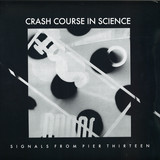
Crash Course in Science are a post punk band that formed in 1979 in Philadelphia.The band members, Dale Feliciello, Mallory Yago and Michael Zodorozny, met while attending art school. They began to experiment with crude electronics and off-beat writing. CCIS avoids conventional instrumentation by using toy instruments and kitchen appliances to augment the distorted guitar, drums and synthesized beats.Their first single, 'Cakes in the Home' was released in 1979 and their 4-song 12'' EP ''Signals From Pier Thirteen'' in 1981. Pier 13 was an abandoned coal-loading pier along the Delaware River near where CCIS rehearsed. The band went there often and was inspired by the huge silent machinery, shapes, shadows, ghosts and debris. The songs 'Cardboard Lamb' and 'Flying Turns' quickly became club favorites during the early 80's. This EP's raw, percussive sound influenced both techno and industrial music in later years. CCIS feel a strong connection to Throbbing Gristle, although they consider themselves as working in a parallel universe rather than being influenced by them. All songs have been remastered for vinyl by George Horn at Fantasy Studios in Berkeley. The vinyl is housed in the original jacket featuring stark black and white photos of Pier 13. Each LP includes a double sided 11x11 insert with lyrics, photos of the band and the atmospheric pier. Crash Course in Science go above and beyond what is considered 'New Wave' in attitude and sound.
"Born in Poti, near Lake Paliastomi in Georgia, Nino Gvilia is a singer-songwriter whose lyrics offer up meditations on what it is to be human in the 21st Century, and aim to carry us beyond into ecology and the politics of the non-human world.
Her songs are influenced by folk and minimalism and make use of magnetic tapes, field recordings, vocal samples of contemporary thinkers and philosophers, and an array of strange instruments and vintage textures, drawing for us an intense dreamlike atmosphere.
Now I should tell you that Nino Gvilia does not exist. She is a purely fictional character invented in order to help us reflect on the place of the songwriter in times of global crisis."
Nino Gvili: songs & lyrics, vocals, toy guitar, harmonium, field recordings.
Zevi Bordovach: arrangements, synth, hammond, harmonium, vocals.
Pietro Caramelli: arrangements, electric guitar, electronics, vocals.
Giulia Pecora: violin.
Clarissa Marino: cello.
Recorded by Paul Beauchamp at O.F.F. Studio, Turin, March 2023.
Mixed by Paul Beauchamp and Pietro Caramelli.
ABRAN, the young French electronic music producer, presents 'Doppler'. This new EP is the fruit of new experiments in the studio. He has found a way to distort the sound and spatialise the instruments so as to immerse the listener in a unique sensory journey. The aim: to translate the famous scientific phenomenon of the Doppler effect into sound and image.
Embark on a journey that combines space observation, underwater movements, interstellar travel and extraordinary sensory phenomena... 'Doppler': new EP soon available in Dolby Atmos!
Diogo Silva, Nuno Fulgêncio and Rui Martins collectively go by the name Bardino. With their sound consisting of an inventive mix of
electronica, rock, jazz, the Porto-based trio are pushing their sound into unchartered waters. A feeling that will be reinforced after
experiencing their new album, ‘Memória da Pedra Mãe’.
Their enthralling music draws upon the imagery of the beautiful and rugged scenery of their home country. ‘Centelha’ , their previous
album (released by Saliva Diva in 2020) was recorded in Chaves,
in the very remote region of Trás-os-Montes. Their 207 EP of the same name was created in the rustic heart of Serra das Meadas. In this
latest offering, the mention of "Pedra Mãe" (Mother Stone), refers to a rare geological phenomenon popularly known as "breeder stones"
found in isolated, deserted, and inhospitable places. On the inspiration of the new album, they explain that they want to refer to "the
importance of collective memory in the cohesion and identity of communities and the process of creating new memories, a process that
is both natural and conflicting, since it mirrors a tension between past, present and future".
The album was recorded in the summer of 2023 at Arda Recorders in Porto and produced by João Brandão and Rui Martins. In this
new material, Bardino's resources expand: Nuno Fulgêncio's drums, Diogo Silva's bass and Rui Martins' veritable arsenal of keyboards
(acoustic and electric piano, various synthesisers) are augmented by the alto and tenor saxophones of Brian Blaker (who stands out in
"Memória" and "Black Mica"), the guitar of Leonardo Outeiro (who features on "Punctum No 2") and, already indicating their affiliation
with the Porto label Jazzego, Hugo Oliveira, who records as Minus & MRDolly (and is a guest on "Pedra Mãe") and Sérgio Alves, aka
AZAR AZAR (who plays piano and Moog on "Tília"). Bardino's entry into the increasingly unavoidable Jazzego catalogue also reinforces
their obvious links to a new wave of projects that have been experimenting with different tangents to the notion of "jazz", taking this
music as part of a wider set of coordinates.
Over the course of eight tracks, and clearly benefiting from the distinct imprint of the recognised quality work of João Brandão, one of
Portugal's current best producers, Bardino presents dense, deeply cinematic music of the highest definition, in which the different
instruments translate a broad emotional and visual landscape, with solos of enormous elegance arranged over grooves that induce the
idea of movement. All the musical coordinates mentioned earlier are present, but perhaps in this new material you can feel a greater
fluidity, certainly the result of honing the vision of the central trio through a vast experience collected on stages all over the country. And
there are even echoes of a decidedly Portuguese songbook, as is so clearly felt in "O Semeador", something new in the range of aesthetic
references embraced by Bardino. This is, in fact, music that thrives on a benign tension between past, present and future, in the sense
that it embraces traditions and history, seeks a new framework in this diverse now and dares to project itself forward. Because the future
is the best of all locations.
Three years on from the bands acclaimed ‘Grateful End’ album, and following up last years reissue of their live release ‘Psychedelic Scum Freaks’. Taipei's underground psych monsters Dope Purple return with their new album proper, ‘This Is The Harsh Trip For New Psyche’
The album is co released again by Riot Season & WV Sorcerer Productions and is available on three vinyl variants, and also digitally.
The album, it's a mixture of harsh noise and psych rock, the noise element being well recorded and presented so we can hear many details, and blends perfectly with the other instruments in all frequencies. The whole album moves between a spectral sadness and insanity, each track takes a rather different direction, recognising the influence of Classic Japanese bands such as High Rise, Mainliner, and Les Rallizes Dénudés.
The album is a collaboration with Berserk, a young underground pioneer from the Taipei scene, and has been performing chaotic frequency manipulation and carefully textured post-apocalyptic soundscape since 2015.
After the success of the collaborations on 2019’s Tek 9 LP, Dego and Dom team up again for AKO Beatz, this time a whole LP’s worth of back and forth, which started collaborating in-person pre lockdown, to then be finished virtually.
The sound is a kind of fantasy 1997 where drum and bass had held on to one of its alternate futures. The year 1997 had experimental intricate beats, warm bass, and odd sounds; the skill of playing real instruments matching the knowledge of breakbeat science.
If they hadn’t chosen another path, this is what it could have sounded like. The sound is very now but from another time. Is it the future, is it the past? It’s just anachronistic.