Australia's Dancing in Space crew have thus far kept their vinyl releases to a minimum, reappearing every so often with a fresh batch of their own excellent disco edits. Here they try something different, delivering a typically assured two tracker from one of the most talented and productive scalpel fiends in the business, Chicago scene stalwart Rahaan. A-side 'Allright' is a typical Rahaan rub, with the talented re-editor skilfully rearranging and lightly dubbing out what sounds like a turn-of-the-80s fusion of classic disco, synth-splattered boogie and soaring jazz-funk. On 'My Strategy', he successfully breathes new life into an old Philadelphia International favourite, opting for a largely instrumental extension that subtly pitches the track up, tempo wise, for greater dancefloor pleasure.
On edit imprint Disco Mind's tenth release, they hand over the reins to iconic Italian DJ, producer and remixer Beppe Loda, once resident DJ at influential rural club Typhoon during the 1980s - and it's that period that inspired the four scalpel jobs on show. 'Mr Rocket' is a chugging chunk of oddball early 80s headiness, while 'Tu Sei' sees Loda rework what sounds like a synth-laden fusion of space rock and intergalactic jazz-funk. On side B, he does a great job on spiralling, big hair-sporting disco-rock number 'Falling', before showcasing more spacey synths and chugging rock riffs on 'Marzio'.
This one means a lot to us. A project we’ve been working on for a couple of years. One where we hand over the curatorial keys of the label to very specific artists in whom we have absolute trust and who have an almost academic knowledge of a specific rhythm or a specific region where our eyes and sensitivity cannot reach. In order to amplify powerful voices from the global south, where the true underground is happening today, and that move away from the traditional axis of New York, London, Berlin. We present to you: Mzansi Bass curated by Shannen SP.
A project meant to explore the space between 3-step, Gqom, the dark sides of Amapiano, and mutations of Pritori rap deeply rooted in Black African rave music from the local scenes of Durban, Johannesburg, Cape Town, Eastern Cape, and their global mutations from Brazil and the Netherlands. The project is anchored around the legacy act of DJ Lag and new comers of South African bass whose music has broken international barriers with pure-emotionally-rich dance music. The release works as both a celebration of the roots and the future offering it projects. As Shannen puts it, it's electronic music with a futuristic feel, both raw but minimal, trance-inducing and deeply physical, built in a very particular geographic space for
the whole world to enjoy.
Indulge into this special soundscapes crafted by their own inhabitants. Expect a couple each year from now on.
Part celebration, part reflection, THE TIME OF OUR LIVES arrives as both the final release of Lancey’s twenties and the closing chapter of a creative world he has spent the last decade constructing. The most expansive statement of his career to date, moving freely between trap, alternative R&B, dance music, Afro-influenced rhythms and more, Lancey explores triumphant highs and lows of stark vulnerability across the album, interrogating ideas of success, freedom, loneliness and what it truly means to have the time of your life. Lancey Foux stands at the forefront of UK rap’s evolution, blending elements of hip-hop, cloud rap, trap, Jersey club, drill, and more into a sound that’s uniquely his own. Since emerging from Newham, East London in 2015 with a clutch of freestyles and SoundCloud singles, Lancey has occupied a lane entirely of his own making. As he closes out his twenties, Lancey looks ahead to the next decade full of more unpredictable artistry as he continues to break the rules and change the game.
Since the release of DAMAGED in 2024, Michael Fiedler aka GHOST DUBS has been surfing intensifying waves of adulation, earning praise from such diverse underground legends as Justin Broadrick (Godflesh/Jesu), Regis, Stefan Betke (Pole) and Steve Von Till (Neurosis). With second album Oblique, his mastery of sculpting sound waves results in a spellbinding set of alien soundscapes: larger in scale, richer in tone and considerably more cinematic than its predecessor. Lower, deeper and moodier, its cloudy abstractions, shadowy pulsations and submerged rhythms find Fiedler reaching further into his own sonic void, crafting blurred melodies and addictive narco loops into something simultaneously heavyweight and hypnotic.
Lead single and album opener “Low Times” sets the atmospheric pressure to maximum, resembling a dream date between prime dirt-house era Andy Stott and Berlin dub-tech pioneers Basic Channel. From there, Oblique descends into a series of enchanting mood scenes: the furtive, balletic gyrations of “After All”, the haunting ambience and buried heartbeat throb of “Soft Collapse”, and the noirish atmospherics of “Blackout Dust”, which worms its way into the mind like some forgotten David Lynch scene. The spirit of reggae is more distanced here than on DAMAGED, but the ghost of Jamaican dub still permeates these foggy soundscapes, particularly on “Bombed Suburbs”, where Augustus Pablo-style melodicism is chopped, screwed and slowed into a magnetic lock groove.
Superficially minimal but maximal in its minute detail, Oblique is a record of contorted reflections, mesmeric echoes and tantalising audio mirages. By the vaporous mist of closing track “Almost a Structure”, obvious rhythm has been craftily filtered away, leaving a blurred and blunted residue full of mystery and implied narrative. Dense in the best possible sense and crushing when played loud yet equally potent played quiet, Oblique imagines dub techno burning its own rigid rulebook: sensual, funky and concussive rather than dry or alienating. Following Fiedler’s recent work scoring Sound of Falling, recognised at Cannes in 2025, Oblique finds Ghost Dubs shedding his influences and making it clear he has arrived at a sound entirely his own — essential deep listening and a bewitching dose of future shock.
Season Two continues with its fifth edition - a shift south this time, from KiF's English hedgerows to the island of Lutruwita, Tasmania, and the work of Soda Lite.
A gooseberry plant took root in the sand between the bricks of Alex's back patio - nutrient-deficient leaves and all - and fruited regardless. That's most of the appeal: "I'm drawn to species that survive in the interstices of human industrialisation." The husk itself carries the same idea, shielding the berry until it's ready to be let go.
Past Soda Lite records - Earthbound, Aqua Solar Cura, Vale & Stone - built outward from field recordings first. Here that flipped: you can't field-record a plant, only the noise around it, so only two tracks (Vibrant Matter and An Sí Gaoithe) carry field sound at all. The rest came from narrowing to a single species instead of the wider non-human world, and "trying to create and replicate sound and energy on the level of the plant and its perceptive world."
Two more things worth knowing. ‘Bryn Celli Ddu’ takes its name from a Neolithic burial chamber in Wales, aligned so the summer solstice sunlight reaches its back wall - the sun turning up again as its own recurring character. And ‘An Sí Gaoithe (Return)’ is a reworking of a Vale & Stone title, old fragments reprocessed into something new - "a bit like composting."
Soda Lite is the recording project of Alex Last, a gardener and composer working from Lutruwita on unceded Palawa land. Their music moves through field recordings gathered directly from the island's own biomes - coastline, forest, alkaline lake bed - alongside slow, warbling synth work, built less as backdrop than as document: proof of a specific place, at a specific time, being listened to closely. Past records have taken their titles and themes from geology and land relationships as often as botany - Aqua Solar Cura, Earthbound, Vale & Stone - so a plant with its own mineral-adjacent etymology (soda, found in dried alkaline lakebeds; lite, from the Greek for stone) suits the pairing.
At this point, the vast swathes of unreleased Muslimgauze material Bryn Jones left behind when he passed away over 25 years ago are as legendary as any of his work. And sure enough, there's still some being unearthed today.
The fourth entry in a 7" single series is taken from one of Jones' customary completely unlabelled DATs, which he sent to labels seemingly as fast as he finished them.
A new series of singles collecting one of Bryn Jones’ innumerable DAT tapes that would show up at the labels he worked with sans any identifying marks.
Side A layers multiple voices (a background, faraway wail that either is or is akin to a muezzin, and a flatly declaimed two-word phrase that periodically halts proceedings) over his classic, slightly brick-walled hand percussion for a strangely meditative experience, as Jones phases elements in and out, more or less prominently in the mix. Side B however, open in a surprisingly dreamy place for Muslimgauze, with a looped ascending synth pad and beautiful sampled singing only gradually acquiring percussive accompaniment. As with the other side, Jones is content to let these elements interact and swap spaces in the mix for the duration, trusting in the sturdiness of his chosen components to carry the listener through.
Subject Sue is an Amsterdam-based artist creating dystopian nightclub music at the intersection of darkwave and ethereal techno. Inspired by queer club culture and the fragile edge between euphoria and estrangement, her music unfolds into a cinematic nocturnal haze.
Music has always been part of her life. As a vocalist and keyboard player, she performed in various projects and studied Visual Arts, where she explored themes of alter egos, personal realities, and the tension between subjectivity and objectivity in storytelling. Over time, she shifted from being an observer of these themes to embodying them herself. What began as an alter ego gradually evolved into something more personal.
Through Subject Sue, she explores desire, identity, and the strange beauty of the night, transforming fragments of her subjective inner world into cinematic club music. Drawing inspiration from Amsterdam’s queer nightlife and fleeting moments of intimacy, she creates music that inhabits the space between desire and isolation.
Debut EP Details In The Dark explores the blurred boundaries between lust and romance, intimacy and alienation through six tracks rich with pulsating synthesizers, textured soundscapes, and haunting vocal harmonies.
Dark Entries is Elbow Deep in the Hoopla thanks to J.D. Slater. Legendary actor, director, and composer J.D. Slater is sometimes known as “the Lou Reed of gay porn.” Slater cut his teeth in the New York punk scene, even opening for the Talking Heads and Blondie at CBGB with his project Frenzy. A true polymath of the erotic, he co-founded Raging Stallion Studios with Chris Ward in 1999, which has remained a prolific outlet in the world of gay pornography. Elbow Deep collects the scores from three late 1990s fisting-focused Club Inferno films: At Arm’s Length, Hand Over Fist, and Heads or Tails. Never before released, these works show Slater digging deeper into the electronic music production techniques that were blossoming in that era, like loop-based sampling. Says Slater, “Suddenly I could have access to every instrument in the world. My whole concept of sound and structure evolved with the technology.” The works here are trance-inducing groovers, laced with acid and dosed with brooding ambience. Check out the Gregorian vibes on “Grand Fuck,” the legato lurch of “Stallion Funk,” or the frosty atmospheres of “At Arm’s Length.” Elbow Deep in the Hoopla comes with an insert featuring an interview with J.D. Slater. Starkly sexy, these tracks remind us of Slater’s creed: “The main rule for writing a porn score is to remember what you are writing for.”
Coil’s 17-minute soundtrack for »How to Destroy Angels«, performed on January 19, 1984: ritual music ›for the accumulation of male sexual energy‹, structured around magickal and numerological concepts.
Throughout history man has made and used music for two distinct and separate purposes. In recent years, particularly since the advent of sound recording, the most popular use of music has been for entertainment - the temporary amusement and distraction of as large a number as possible. As a consequence, many people tend to overlook its more fundamental and ancient use as a tool for affecting man's body and spirit. The many varieties of religious music from around the world contain a vast quantity of clues to the way in which sound can affect the physical and mental state of the serious listener, yet many find their associations with religion itself too difficult a stigma to overlook in their appreciation of the sound and its potential, for its own sake.
On this record, hopefully the first in a series, we have tried to produce sound which has a real, practical and beneficial power in this modern Era. Specifically, it is intended as an accumulator of male sexual energy. Although we make neither claims nor rules for its use, we do suggest that for maximum potency it should only be played in circumstances that exclusively male and/or onanistic in nature. What these are is entirely up to you.
The execution of the piece was structured around concepts we felt would work for us - in this case magickal and numerological rather than conventionally musical in form. One image or symbol which we drew upon that may be useful to bear in mind is that of Mars, often indicated by the male symbol.
Should this music have any power, over and above the banal and transitory titillation achieved by most records available now, it is a positive and beneficial power to be used and controlled by the listener, as he desires.
Coil’s 17-minute soundtrack for »How to Destroy Angels«, performed on January 19, 1984: ritual music ›for the accumulation of male sexual energy‹, structured around magickal and numerological concepts.
Throughout history man has made and used music for two distinct and separate purposes. In recent years, particularly since the advent of sound recording, the most popular use of music has been for entertainment - the temporary amusement and distraction of as large a number as possible. As a consequence, many people tend to overlook its more fundamental and ancient use as a tool for affecting man's body and spirit. The many varieties of religious music from around the world contain a vast quantity of clues to the way in which sound can affect the physical and mental state of the serious listener, yet many find their associations with religion itself too difficult a stigma to overlook in their appreciation of the sound and its potential, for its own sake.
On this record, hopefully the first in a series, we have tried to produce sound which has a real, practical and beneficial power in this modern Era. Specifically, it is intended as an accumulator of male sexual energy. Although we make neither claims nor rules for its use, we do suggest that for maximum potency it should only be played in circumstances that exclusively male and/or onanistic in nature. What these are is entirely up to you.
The execution of the piece was structured around concepts we felt would work for us - in this case magickal and numerological rather than conventionally musical in form. One image or symbol which we drew upon that may be useful to bear in mind is that of Mars, often indicated by the male symbol.
Should this music have any power, over and above the banal and transitory titillation achieved by most records available now, it is a positive and beneficial power to be used and controlled by the listener, as he desires.
Madelyn Byrd returns to Glasgow’s Somewhere Press with a hazed set of weightless soundscapes. »Night Rider« opens in widescreen with the chirp of cicadas dancing across a desert landscape, before Shiroishi’s saxophone eventually cuts through the dark like neon. The story Byrd tells is close to their heart: they spent their teenage years in the Sonoran Desert, the vast subtropical expanse spanning parts of Arizona, California, and Mexico. Its seemingly alien landscape — pocked with giant, tree-like cacti and looming rocky outcrops — is lodged in the cultural memory, a quality Byrd draws on as they slowly reveal their poetic narrative.
The album plays like a road movie of sorts, moving through Byrd’s memories and setting them to very different rhythms. Clattering drums emerge on »Of Nature, Of Bodies, Of Dreams«, while Byrd’s soft tones, processed to sound almost otherworldly, glide gently across the metallic clangs. Each track highlights a form of movement: there is the microscopic, insectoid crunch of »Imprint«, where guitar prangs meet Shiroishi’s spirited runs, while »Into Sonoran Pool« creates motion from the atmosphere itself, recreating the thick desert air with shimmering electrical currents and psychedelic processes.
At this point, the album begins to echo Robert Ashley’s late-period theatrical work: compositions that broke with familiar formats, juxtaposing dialogue with knowingly experimental orchestral flourishes. Byrd strikes a similar note through a fusion of poetry, sound design, choral music, and chiming, listless ambient elements that also recall Harold Budd. Budd grew up in the Mojave Desert, which borders the Sonoran, creating an eerie parallel with the moods he conjured throughout his long career.
Byrd finds a similarly aesthetic link to the West Coast landscape, referencing the history of experimental music while establishing their own voice. As the album rides into the sunset with a roar of engines, they offer a distinct vision of pop: »What Is, What Was« integrates a chugging break and ketamised vocal hook, while the finale, »In Perfume, Remember«, lands as a James K-like heartmelter.
'The Shadow BoxerÔ - a tale of oppression, discipline, and inevitable revenge - is re-interpreted by British producer Heritage, whose musical style perfectly aligns with the Shaw Cuts squad.
Ku Ding trained in Tai Chi under Master Yeung for over a decade. This discipline prioritizes health, self-defense and above all, the virtue of tolerance. 'Looking Back, Moving ForwardÔ mirrors this holistic training for body and mind through its broken rhythms, dreamy pads, and warm bass.
Despite facing relentless harassment at work from his tyrannical boss Jin Dasheng, Ku Ding remains calm and endures the humiliation. The playful percussions, vocal snippets, and powerful low-end grooves of 'DancehallÔ underscore the protagonist's deep-rooted discipline and resilience.
However, after his lover A Bao is killed and both his master and his friend Hu Binglian are successively murdered, he is forced to rise up and fight back using his martial arts prowess.
'2003Ô comes in swinging, fueling Ku Ding with the perfect mindset for the battle ahead via punchy drums and an energetic bassline.
Driven to mete out justice, Ku Ding prepares for his revenge without betraying his sacred tolerance. The complex breakbeat patterns of 'HaywireÔ carried by recurring, subtle chords, give him a final boost. But can this rational approach succeed? You better find outÉ
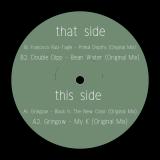
Feeling both familiar and forward-looking, MBK004 expands its reach with an international lineup of
producers united by a shared appreciation for the New York underground sound.
Crafted by Tunisian producer Gringow, our first two tracks take listeners to the darker side of minimal.
Also owner of the HeardOf label, Gringow lends his talent to Minimal Brooklyn with 15 minutes of
hypnotic rhythms. “Black is the new color” gives chills, while “My K” triggers introspection.
Flipping the record will bring listeners to a brighter space. We begin with Chilean DJ/producer
Francisco Ruíz-Tagle and his original track “Primal Depths”. Francisco introduces textures that have
been cultivated throughout his life. His submission to Minimal Brooklyn holds nothing back, delivering
a multidimensional auditory experience to listeners.
MBK004 ends with “Bean Water”, an original track from Chicago-based producer Double Dipp. This
spell-casting production truly highlights the attraction of minimal. Dynamic instrumentals with clean
resolution. This is Double Dipp’s formula for timelessness.
Hackney Electronica come to Dark Entries with the Feedback Memory EP, featuring 5 cuts of acidic rave-inflected wave. Quinn Whalley (Paranoid London), Unai Trotti (Cartulis Music), and Margo Broom (Hermitage Working Studios) formed Hackney Electronica during COVID era. Trotti and Whalley were spending countless hours digging through records and making music during lockdown. As their sound took shape – heavy and hypnotic – they invited Broom to join, cementing the motley trio. Following their debut EP, Synaptic Shadows, the five pieces on Feedback Memory muse on the loss of self in the digital era and the fine line between pleasure and paranoia. Each track pulses like a memory from the backstreets of Hackney, where the night transforms the city into an electrified maze of fleeting highs and inevitable crashes. Their hard-hitting dancefloor indulgences shine on “Trapped in the Circuit” and “Six Foot Seven,” which features Mutado Pintado on vocals, while tweaked-out wave sounds blossom on “Feedback Memory” and “Lost Trip - Destino.” Things close out with “Compressed Air,” a lush, breakbeat-laced affair that veers into trip-hop territory. Housed in a sleeve designed by Germán Bardo, Feedback Memory continues Hackney Electronica’s tumultuous journey through the flickering alleys of the mind, where tension and transcendence intertwine.
“What Robot Says L” on What Robot Says Records is a deeply immersive Dub Techno journey crafted for demanding listeners who seek atmosphere, precision, and emotional depth beyond conventional dancefloor music. Across four carefully sculpted tracks, the release moves through shifting moods and textures, balancing raw energy with subtle elegance while exploring the deeper and more hypnotic side of techno.
A1. Nicolas Barnes – Dusted Maze opens the EP with a smooth and introspective approach, combining delicate textures, refined grooves, and floating harmonic layers that capture the timeless spirit of classic Dub Techno through a modern lens.
A2. Continuing the journey with TM Shuffle, Monoder – Vihreesametti delivers a warmer and more fluid interpretation of the genre, blending rolling grooves, dub-driven chords, and sophisticated sound design into a deeply immersive experience.
On the B-side, B1. Denizo – Versus follows with dark dub pressure, stripped-back rhythmic architecture, and evolving ambient detail, creating a hypnotic late-night atmosphere filled with tension and movement.
B2. Closing the EP, The Open Circle – Shinkai dives into deeper and more mysterious territory, emphasizing submerged atmospheres, minimal rhythmic tension, and profound spatial depth that slowly unfolds with every listen.
WRSL1 – “What Robot Says L” is not designed for casual listening, but for those who appreciate Dub Techno as an evolving exploration of mood, space, and sonic detail — a refined and highly immersive statement from some of the genre’s most skilled contemporary artists.
but wait a minute.. Does anybody know What Robot Says?
Thematically, the album revolves around movement - excursions, outings, journeys, and the various vehicles and vessels that make them possible. It is music for those who drive, sail, walk, and fly. For those already on the move, and for those who are about to set off.
Each track functions as a vehicle of its own, collectively built and designed for different conditions and purposes. You can travel solo or collectively. The album is introduced by the single "ULYSSE."
Tropical Soldiers In Paradise:
Lush as tropical forests inhabited by fruit bats, fluorescent frogs, and giant millipedes. Comforting as paradise beaches from a screensaver. Absurd and psychedelic as the mission of Lieutenant Colonel Channon and the First Earth Battalion, where the paranormal abilities of warrior monks revolutionize the armies of the world.
A structure without status, uniforms without uniformity, and unity powered by diversity.
Tropical Soldiers In Paradise play crooked lounge (if such a genre existed). Their music blends a generous dose of improvisation with hip-hop-rooted beats and a distinctly new-wave approach to jazz. Since 2018, TSiP have released three albums and performed countless concerts on both intimate and major stages, bringing joy and solace to audiences along the way.
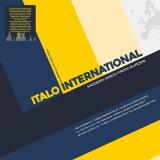
Following the acclaimed Milano Undiscovered, Italia Undiscovered and Italia Synthetica series comes Italo International: a new collection celebrating the enduring legacy of Italo Disco. Eight exclusive tracks by established European artists reimagining one of Italy's most influential musical movements with originality, respect, and a contemporary vision.
Italo International is a journey through the many shades of elegant and visionary electronic music, moving between Italo Disco, Synth Pop and dancefloor-oriented sounds. The talented and steadily rising Polish producer Rafał Lachmirowicz, aka Also Playable Mono; Hungarian artist Gianni Durante, aka Electro Potato, who for years has been bringing back the sound of early-Eighties Italo Disco with passion and a contemporary sensibility; Norwegian Tommy Holsen, aka DJ TinTin, who together with the Eighties band Go explores the classic sounds of Nordic Synth Pop; British producer Mark Wilkinson, aka Kid Machine, who for over fifteen years has been creating productions made for the dancefloor; Tyrell Corporation, the alias of Dutch producer Alden Tyrell, who joins forces with Italian duo Italoconnection to rework a track destined to set the dancefloor on fire; Swedish multidisciplinary artist Tobias Bernstrup, who for three decades has been reinventing the more sophisticated side of Italo Disco with elegance and a distinctive vision; the Dutch project Sfera Celeste Project, which blends Moroder-inspired sounds with a hypnotic minimalism reminiscent of Jeff Mills; and, closing the journey, British artists Heartbreak, Ali Renault and Sebastian Muravchik, with a poignant and slow-burning excursion into the melancholic world of Synth Pop.
“My Love” is one of its key tracks on “Summer End”, the current album by French singer & songwriter Al Sunny. Now that summer really has ended, Al Sunny asked a few producers and DJs from all over France to deliver their interpretation “My Love”. Featuring a wonderful organic take by Ludovic Llorca aka Art of Tones this EP is available digitally and as limited four track 12inch vinyl edition including the Art of Tones, Hugo LX and Jared mixes.
Art of Tones
Art of Tones is the house and disco project of acclaimed French producer Ludovic Llorca. Launched in 2006, the alias quickly earned international recognition through its distinctive combination of soulful musicianship, powerful grooves and dancefloor energy. His catalogue includes releases on respected labels such as 20/20 Vision, Local Talk, Glitterbox, GAMM and Toy Tonics, establishing him as a highly regarded producer and remixer within the global house scene.
Hugo LX
Hugo LX is a Paris-based DJ and producer whose musical universe moves effortlessly between deep and soulful house, downtempo beats, jazz, hip-hop and ambient influences. Known for his refined production style and wide-ranging musical knowledge, he has released music on respected labels including NDATL, MCDE, Balance and People of Earth, alongside projects on his own Doma Music imprint. Both behind the decks and in the studio, his work is defined by warmth, subtlety and a deeply personal approach to electronic music.
Jared
Jared is a French DJ, producer and event curator based in Bordeaux, with a strong connection to house music and club culture. Over the years, he has performed at a wide range of events and international stages, including Tomorrowland, developing a reputation for energetic and carefully constructed DJ sets. His musical approach combines a deep understanding of the dancefloor with warm grooves, contemporary production and an enduring passion for house music.