AUMATRA
The vibration that links the invisible. A shared pulse between mind, body and machine. AUMATRA is neither a place nor an object. It is a living structure: a sonic ritual activated when the pulses of different minds fall into sync.
A space where every sound becomes a frequency, and every frequency becomes a connection.
Inspired by the ancestral and shaped by the digital, AUMATRA is a weave of intensity, discipline and collective creation-an echo from the past projected toward what has yet to be name
Cerca:inte
Between Faith and Noiz represents the exact point where faith and inner chaos coexist.
It's an introspective journey toward the center of the mind: the space where thought becomes distorted, where sound turns into a reflection of doubt, where faith is tested within one's own noise.
Noiz symbolizes that internal, mental, and emotional noise that distorts reality - the voices, the interference, the overload of stimuli.
Faith, on the other hand, is the thread that keeps direction, the spark that survives when everything vibrates and collapses.
The EP portrays that invisible struggle between believing and falling apart, between the silence that soothes and the noise that purifies.
Each track acts as a stage of that journey: the oath (Faith and Oath), the wound (Ulcerate), the essence (Oxeo), the connection (Captures Spirits), and finally, the release (Noiz).
It's not about finding faith outside, but rebuilding it from within the noise.
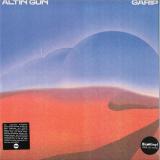
Altin Gün, die türkisch-psychedelische Band aus Amsterdam, veröffentlicht ihr sechstes Studioalbum "Garip", ein ehrgeiziges und vielseitiges Werk, das als Hommage an die türkische Volksmusiklegende Neset Ertas (1938-2012) dient. "Garip" enthält zehn von Ertas" ikonischen Kompositionen, die von Altin Gün auf einzigartige Weise neu interpretiert und musikalisch erweitert werden. Die Band verbindet dabei eine Vielzahl von Einflüssen, von der klassischen Anatolischen Volksmusik über Arabesque und Bollywood-Soundtracks bis hin zu westlichen Rock- und Synth-Vibes. Das Album ist eine kreative Weiterentwicklung des bereits etablierten Sounds von Altin Gün, der Elemente aus Funk, Rock, und türkischer Folklore miteinander vereint. Mit hypnotischen Basslinien, kräftigen Schlagzeugrhythmen und filigranen Synthesizer-Arpeggien schafft "Garip" eine Atmosphäre, die die Essenz von Ertas" emotional aufgeladenen Liedern einfängt und gleichzeitig die experimentierfreudige Energie der Band widerspiegelt. Die Band, die für ihre packenden Live-Auftritte bekannt ist, beweist mit "Garip" einmal mehr, dass sie zu den innovativsten Vertretern der modernen türkischen Musikszene gehört.
- A1: Aether
- A2: Airships
- A3: Sones
- A4: Intermezzo Op.32
- A5: Timone
- A6: Aer 1
- A7: Aer 2
- A8: Aer 3
- B1: Kujaku
- B2: Portolano
- B3: Moderato
- B4: Ao
- B5: Aether
- B6: An Ode
The monumental 2006 live recording of mama!milk, which laid the foundation for their current performance style, is now available on CD and LP!
mama!milk, hailed worldwide as “Japanese New Exotica,” praised for their “music that entices you on a journey” and “soundtracks to unseen films.”
This site-specific, one-day-only performance, unique to the 21st Century Museum of Contemporary Art, Kanazawa, is packaged here.
- A1: Intergalactic Announcement
- A2: Calar Infinitos
- A3: Closed Loop Grids
- A4: Panopticum
- B1: Biomath
- B2: Wunschmaschine
- B3: Healing Of A Ghost Feat Sara Clarke
- C1: Secular System
- C2: My Battery Is Low And It’s Getting Dark
- C3: Datasette
- D1: Quand Le Temps S´arrête
- D2: Help Is On The Way
- D3: Quantum Waltz Feat Peryl
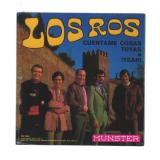
'Cuéntame cosas tuyas' is perfect pop with flawless arrangements; it's crossed over into the international soul scene, made its way into playlists by DJs like Gilles Peterson, and was even covered in the early 2000s by La Costa Brava-proof of its appeal among an ever-broader audience. On the B-side you'll find the superb '¡Yeah!', packed with soul and funk flair. Two irresistible tracks that, after years out of print, we're putting back into circulation with the reissue of this essential record-one that's practically impossible to find in its original pressing. Few late-'60s Spanish pop songs have reached the status that 'Cuéntame cosas tuyas' has earned decades after its original 1969 release. The single, put out by Barcelona label Belter, has become one of the most coveted gems for collectors of '60s sounds. 'Cuéntame cosas tuyas' is perfect pop with flawless arrangements-a sure-fire dance-floor killer, right up there with Elia y Elizabeth's 'Alegría' in any imaginary ranking of Spanish-language pop anthems. Although originally from Valencia, Los Ros (formerly Los 4 Ros) built their career in Palma de Mallorca and released nearly twenty singles on Belter. Between 1968 and 1970, their friendly, commercial pop started weaving in bolder elements drawn from soul, funk, and even psychedelia-something you can also hear on the B-side of this very single, featuring the superb '¡Yeah!'
Daniele Baldelli and Jolly Mare come together for a record that feels less like a collaboration and more like a shared state of mind. Flusso Uno moves through Afro-cosmic kraut-inflected psychedelia and cinematic electronics with a natural, unforced flow, where rhythm, texture and narrative all pull in the same direction.
Rather than referencing the past, the EP treats it as a living language. The longform, ritualistic percussion of early cosmic dance culture meets the hypnotic motorik pulse of krautrock and the more structured, sample-driven tribalism that followed in later decades. What ties it all together is a deep sense of atmosphere and intention: music that feels physical, emotional and quietly transportive.
“We particularly focused on ritual percussions, hypnotic grooves and suspended atmospheres, trying to blend musical anthropology, auteur electronics and narrative instinct.”
Dhol Parade opens the journey like a slow-burning procession, drums circling and expanding as if guiding the listener into another space. With Icari the perspective lifts, melodic lines drifting and tilting, constantly searching for balance between gravity and flight. Huldufolk pulls everything back into a shadowy, nocturnal zone, where textures feel half-real, half-imagined.
Finally, Viaggio Tascabile loses the record in a quietly reflective way, a compact voyage that sums up the EP’s philosophy: small in scale, deep in meaning. Flusso Uno is not about nostalgia or revivalism. It is about taking the spirit of cosmic culture and letting it breathe in the present, where storytelling, dancefloor intuition and sonic exploration still meet. A record made for open ears, open minds and long nights.
- A1: Eclypso
- A2: Relaxin' At Camarillo
- B1: Come Sunday
- B2: He's A Real Gone Guy
- C1: Stella By Starlight
- D1: Juju
- D2: Harlem Blues
This is joy beyond expectation the arrival of a new Ryo Fukui recording. Captured on June 26, 2004, this live session documents the ninth anniversary concert of Slowboat, the jazz club Fukui founded and considered his musical home. The trio features Ryo Fukui on piano, Benisuke Sakai on bass, and Yoshihito Eto on drums. Fukui was 56 years old at the time, and his playing is powerful and expansive, yet still marked by delicacy and razor sharp precision. In terms of energy, stamina, and technique, he was entering a true period of artistic maturity. He delivers the music of his beloved Phineas Newborn Jr. and Tommy Flanagan with depth and elegance, and approaches the works of Wayne Shorter—an early-life influence—with thrilling intensity. The performance captures Fukui at a moment of profound fulfillment, offering a truly compelling glimpse into his late career brilliance.
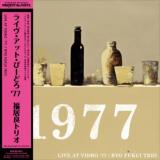
Who could have imagined that Ryo Fukui had left behind a recording like this? Captured on June 8, 1977, this previously unreleased live session was recorded at the Sapporo jazz club Vidro by Masataka Ito, the producer behind Fukui’s albums Scenery and Mellow Dream. It is unmistakably the Ryo Fukui Trio of that era, yet the performance possesses an overwhelming intensity and freshness that far surpass any studio recording—excitement in its purest form.
The 16-minute, searing performance of “Mellow Dream” is just the beginning. The propulsive energy of “Speak Low”, the beautifully woven lyricism of “Body & Soul,” the blistering drive of “Love For Sale”, the weighty depth of “Mr. P.C.”, and the crystalline fragility of “My Foolish Heart”—each track is delivered with feverish brilliance. It was this very live recording, excerpts of which were evaluated at the Trio Records headquarters at the time, that ultimately led to the production of Fukui’s second album Mellow Dream. In every sense, this is an extraordinarily precious document.
Ryo Fukui, who passed away in 2016 after releasing only five albums, recorded this fourth work in 1999. Featuring bassist Lyle Atkinson and drummer Leroy Williams—the longtime rhythm section of Barry Harris this New York-recorded album captures the full appeal of Fukui as a bebop pianist. Centered around standards, the track selection, structure, and of course the performances all radiate intent and vitality. His assured and weighty touch, the firm yet elastic swing, and the emotion and lyricism that permeate his dynamic phrasing everything here conveys Fukui’s breath, will, and presence in vivid form. The re-performance of his signature piece “Mellow Dream” is also a welcome highlight.
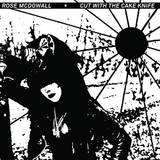
Cut The With The Cake Knife was recorded by Rose McDowall in 1988/89 following the break up of her group Strawberry Switchblade. Produced with the aid of several musicians in several studios, the album features songs written for the fabled second Strawberry Switchblade album. More importantly perhaps it showcases the honest, direct and life-affirming songs of one of the greatest unsung songwriters of the modern pop era at a tumultuous time in her career.
Tibet opens the set and could be one of the best pop songs you've never heard. The innate sadness of the songs' content - the loss of a friendship, impending sorrow - is heightened to heart-melting level by McDowall's pop nous and melodic sensibility. Choruses and hooks are everywhere on Cake Knife, from the outsider take on stadium 80s pop in Wings Of Heaven to the spiraling, ecstatic So Vicious, a glorious anthem that highlights the human fragility in McDowall's vocal performance, an instrument that has never lost the naïve purity it first exemplified in Strawberry Switchblade's early 80s recordings. The centerpiece of the album, the title-track, is the greatest Switchblade pop chart hit that never was. Like the veiled melancholy of her former group's hits, Cut With The Cake Knife hints at a darkness beneath the gloss, a darkness that saw McDowall delve into more esoteric territory with her subsequent recordings and collaborations. Cut With The Cake Knife serves as the bridge between the pop music McDowall had been making with her friends Jill Bryson, Lawrence from Felt and Primal Scream to what became a more extreme, deep sound informed by neo-folk and post industrial music.
Rose McDowall's role in the canon has always been one of an outsider. Beginning in Glasgow's East End in the avant proto-noise group The Poems, achieving fame briefly in the 80s and then disappearing into counter-cultural folklore, the emphasis in the internet-age has been skewed towards her image and cultural significance. Unseen to many, her solo work, her groups Sorrow and Spell and her collaborations with a whole host of underground luminaries have still touched lives. As McDowall elucidates: 'They're real sad songs, about real life. I've had people come up to me to say I'd connected with them and helped them. I remember a gig in America when we made a whole room cry. It was bizarre. A couple at the front of the stage started crying and then these two boys beside and suddenly everyone was crying. And I thought, "that's power."
Night School's issue of Cut With The Cake Knife includes unpublished photographs, extensive sleeve notes from Rose McDowall and 2 bonus tracks culled from the bootleg 7' 'Don't Fear The Reaper.' First vinyl pressing is Clear w/ Black swirl; 500 only / has DL card and booklet, with a poster
CD has extensive booklet and is packaged in anO-Card.
https://b2b.integralmusic.com/articles/2046502
THE LAZARUS PLOT
SOMETHING GOOD HAS GOT TO COME OUT OF ALL OF THESE GOOS
Talk-Mo-Band mit Frontfrau aus der verfluchten Szene von Elgin, Illinois. ,Something Good Has Got To Come From All These Goodbyes" versammelt die gesamten Aufnahmen von The Lazarus Plot - ihr Debüt-Doppel-7"-Single von 1998, die EP ,The End", eine Split-Veröffentlichung mit Long Live Nothing, eine vereinzelte Compilation sowie zwei bisher unveröffentlichte Songs - zusammen mit einem 24-seitigen Booklet mit Texten und Fotos, gestaltet von Laura Laurent. Ein geheimes Teenager-Tagebuch voller Trauer und Sehnsucht, vertont mit Musik, die vom Louisville und Chicago der Vor-Internet-Zeit inspiriert ist. Keine Reue.
- A1: Intro + Colors (Feat. Nic Hanson) (Live À L'olympia)
- A2: Love On Me (Feat. Later.) (Live À L'olympia)
- A3: Tiger Teeth (Feat. Nic Hanson) (Live À L'olympia)
- B1: Djon Maya Maï (Feat. Victor Démé) + Bensema (Feat. Lass) (Live À L'olympia)
- B2: Danse (Feat. Sirius Trema) (Live À L'olympia)
- B3: Nuit Blanche (Feat. Clou) (Live À L'olympia)
- B4: Les Hommes C'est Pas Des Mecs Bien (Feat. Clou) (Live À L'olympia)
- C1: Intemporel (Live À L'olympia)
- C2: Manyé (Avec David Walters)(Synapson Remix)(Live À L'olympia)
- C3: Toujours (Feat. Tim Dup & Lass) (Live À L'olympia)
- C4: Breathe (Feat. Thaïs Lona) (Live À L'olympia)
- C5: Guess What (Feat. Nic Hanson) (Live À L'olympia)
- D1: All In You (Feat. Anna Kova) (Live À L'olympia) + Going Back To My Roots (Feat. Tessa B) (Live À L'olympia)
- D2: Between The Lines (Dub Version) (Live À L'olympia)
- D3: Together (Feat. Beat Assailant) + Superfinal (Feat. Tbow, Thaïs Lona, Sirius Trema, Pierre Mirabeau) (Live À L'olympia)
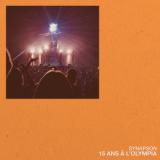
On October 16, 2025, Synapson took over the Olympia for a sold-out anniversary concert, celebrating 15 years of their career. A symbolic night in an iconic venue, in front of a crowd that came to relive the tracks that shaped their journey.
Today, the duo unveils “15 ans à l’Olympia”, a live album recorded during this unique show, a vibrant testament to their stage energy and the evolution of their project.
The arrival of REAL, Vol. 1 marks a seismic shift in the global music landscape, uniting two of Nigeria’s most formidable forces for a project that defines the current zenith of Afrobeats. This collaborative effort sees Wizkid, the smooth-talking pioneer of the genre’s international expansion, and Asake, the "Mr. Money" whose neo-Fuji sound redefined the street-pop aesthetic, finding a middle ground between luxury and grit. The project serves as a sonic bridge between eras, blending the minimalist, high-fashion sensibilities of Wizkid’s recent output with the high-octane, choir-backed energy that has made Asake a household name. It is less of a competition and more of a conversation between two masters of their craft, exploring themes of spiritual gratitude, the weight of superstardom, and the unyielding pulse of Lagos.
With soundscapes both cinematic and deeply rhythmic, the production moves beyond standard club formulas, opting instead for a sophisticated fusion of traditional Yoruba percussion, shimmering synths, and the heavy, resonant log drums of Amapiano. Wizkid provides the effortless, melodic swagger that acts as the project's anchor, while Asake injects a spiritual intensity through his signature layered chanting and rapid-fire flows.
Ultimately, REAL, Vol. 1 is a celebration of authenticity in an era of global crossover. By stripping away the pressure of conforming to Western pop standards, Wizkid and Asake have created a body of work that is unapologetically Nigerian yet universally resonant. It captures the spirit of a city that never sleeps and the ambition of two artists who have conquered the world without losing their souls. This is more than just a collection of hits; it is a blueprint for the future of African music, proving that when Wizkid and Asake occupy the same frequency, the result is nothing short of legendary.
- 112: Bells & A Baby Crying
- 2: Ur Cool Knife
- 3: I Haven't Forgotten You
- 4: Wash You Out
- 5: My Spell
- 6: Rock On (Ft. Royal Tusk, April Lawine)
- 7: Smash
- 8: Pt. Iii (Ft. Fireball Kid)
- 9: At Midnite
- 10: Underground Shopping District
- 11: This One
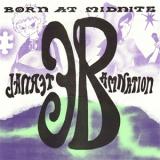
Wer ist Born At Midnite und warum sollte dich das interessieren? Born At Midnite sind keine gewöhnlichen Drag-and-Drop-Produzenten, sondern eine vertikal integrierte Songmaschine. Mit Samplern, künstlichen Drums, Tonbandgeräten und hauseigenem Artwork, alles im Homeoffice-Tempo; seit einem halben Jahrzehnt steuert das Duo aus Montreal ganz lässig auf den Status der ,coolsten Band der Szene" zu. Indem sie den allgegenwärtigen Narzissmus und die Selbstverliebtheit unserer Zeit ausspielen - und sich gleichzeitig darüber lustig machen -, flicken die Jungs eine Art ungesponserten ,Product-Placement-Punk" zusammen. Also sag mir, was hat es mit ihrem Debütalbum auf sich? Was ist das Gegenteil eines Wunsches, der mit einem schrecklichen Fluch einhergeht? Es ist etwas, das niemand wollte, das aber vor ewiger Verdammnis schützt; es ist ,Eternal BAM Nation", das lang erwartete und doch schnell zusammengestellte Debütalbum von Born At Midnite. Und du weißt, dass diese elfeinhalb Songs den Kern der Sache treffen.
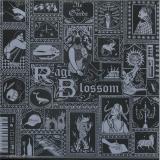
Born Bad Records knew exactly what it was doing when it signed this Nantes-based trio, whose sharply defined sound and raw authenticity stand out. With Rage Blossom, Île de Garde unveils an EP charged with palpable tension, somewhere between dark pop and psycho-wave. A catalogue of modern misdeeds, a David Lynch-like backdrop where Sylvia Plath’s poetry might cross paths with the controlled excesses of Fever Ray.
The EP opens with “Fear The Sun,” its Mike Oldfield-esque soundscapes plunging us into an apocalyptic and unsettling world. “Homicide Volontaire” follows with meticulous narration, a technical exercise evoking the anger and defiant lucidity of a Virginie Despentes. The hallucinatory hit “To Death” snaps like an anthem to collective dancing in the face of the inevitable. Since we’re going to die, let’s dance! On the B-side, “Ageless Woman” weaves together a half-mythological, half-mysterious text, carried by haunting backing vocals. “Birthday Girl,” featuring Kuntessa, radiates an ironic and joyful riot-grrrl energy, an uninhibited celebration of women’s liberation. Finally, “Boy,” a small post-punk jewel, closes the EP with an ending as surprising as it is delicate.
The group’s genius also lies in the complementarity of its musicians. Morgane Poulain anchors the drums with a dynamic that is both subtle and narrative, airy yet jagged. Cécile Aurégan, the architect behind a multitude of synths, builds powerful sonic landscapes, layer upon layer. Klara Coudrais, the band’s poetic figurehead, elevates her texts with a rich and plural vocal palette, giving life to several characters who vibrate with intensity. The band’s writing, hovering between darkness and light, echoes a kind of visceral poetry, exploring the seasons of the soul with authenticity and force.
With this EP, Île de Garde establishes itself as a band to watch closely, capable of translating on stage both the raw energy and the fine craftsmanship that define their music. An immersive journey, full of tension, urgency, beauty, and electric flashes.
Île de Garde, a Nantes-based trio with sharply drawn sonic contours and raw authenticity, unleashes its full arsenal on Rage Blossom, an EP radiating palpable tension between dark pop and psycho-wave. A catalogue of modern misdeeds, a David Lynch-like setting where Sylvia Plath’s poetry would meet the controlled excesses of Fever Ray. An immersive journey of tension, urgency, beauty, and electric sparks.
Opening track “Fear The Sun” plunges us into an apocalyptic and unsettling landscape. “Homicide Volontaire” continues with meticulous storytelling, a crime vignette evoking anger and the fierce lucidity summoned by a situation with no way out. The hallucinatory trance of “To Death” snaps like an anthem to collective dance in the face of the inevitable. Since we are going to die, let’s dance! “Ageless Woman” blends a half-mythological, half-mysterious text, carried by hypnotic backing vocals. “Birthday Girl,” featuring Kuntessa, releases an ironic and joyful riot-grrrl spirit, an uninhibited celebration of feminine liberation. Finally, “Boy,” a small post-punk case study, closes the EP with a simple, sensitive truth.
The three musicians propel and relay one another in this breathless race. Morgane Poulain drives the drums with a dynamic that is both subtle and narrative, airy yet staccato. Cécile Aurégan, architect of multiple synths, builds powerful sonic landscapes, layer after layer. Klara Coudrais, the storyteller, elevates her texts with a rich and multifaceted vocal palette, giving life to all their characters, both mythical and ordinary. The band’s writing, between darkness and light, proclaims a visceral poetry, exploring the seasons of the soul with authenticity and strength.
- A1: Super Boiro Band - So I Si Sa
- A2: Bembeya Jazz National - Armée Guinéenne
- A3: Kaloum Star - Maliba
- A4: Balla Et Ses Balladins - Nyo
- B1: Quintette Guinéenne - Douga
- B2: Le Simandou De Beyla - Festival
- B3: Horoya Band - Zoumana
- C1: Kaloum Star - Gbassikolo
- C2: Sombory Jazz De Fria - Nana
- C3: Syli Authentic - Fabara
- D1: Balla Et Ses Balladins - Paulette
- D2: 22 Band Kankan - Deny
On October 2 1958, after over 60 years of colonial rule, Guineans voted overwhelmingly for their independence, and Guinea was declared a Republic with Sékou Touré as President. Guinea was the first of West Africa’s Francophone colonies to gain independence. To free Guinea from its colonial legacy, president Touré sought to restore dignity to his nation and give cause for Guineans to take pride in their culture, history and newfound freedom. To achieve this, he instructed his government to implement new cultural policies that were intended to revitalise and celebrate indigenous culture. The focus of these new policies was on music.
In 1961, President Touré launched authenticité, the name of his new cultural policy for Guinea. One of its first acts was to assemble the best Guinean musicians into a new state-sponsored orchestras that were tasked with presenting traditional Guinean music in a new and modern style. All musicians in Guinea’s orchestras were officially designated as members of the public service. During the years of Sékou Touré’s presidency (1958 – 1984), the government’s cultural policy of authenticité was applied strictly to the creative arts. Guinea’s sole political party, the Parti Démocratique de Guinée exercised complete authority over artistic production. The scale of the Guinean government’s commitment and efforts to invigorate its indigenous musical cultures was unmatched in Africa, and it presented a clear contrast to the minimal endeavours undertaken by Guinea’s former colonial rulers.
From 1967 to 1983, Guinea’s government presented selections of songs from the Voix de la Révolution catalogue on its own recording label, Syliphone. These recordings were described as ‘the fruit of the revolution’. Syliphone was revolutionary in many aspects: it was the first recording label to feature traditional African musical instruments such as the kora and balafon within an orchestre setting; it was the first to present the traditional songs of the griots within an orchestre setting; and it was the first government-sponsored recording label of post-colonial Africa. Syliphone represented authenticité in action, and over 750 songs were released by the recording label on 12-inch and 7-inch vinyl discs. All are highly sought after by collectors worldwide.
This is the second of a two-volume release which presents a selection of the best songs from Guinea's Syliphone recording label. This volume focuses on recordings from the 1970s, when Guinea’s authenticité policy had transformed the nation's music through a network of over 30 orchestras, each representing their local region, and each presenting Guinean musical traditions alongside the influences of Cuban music, jazz and funk.
- A1: Slap, Whack And Blow
- A2: Duck Strut
- A3: The Needle Nose
- A4: Wiretap
- A5: Wigged Out
- A6: Nuclear Wind I
- B1: Kaye Okay
- B2: Siren's Sea
- B3: Midnight Heist
- B4: Nuclear Wind Ii
- B5: Planet Nine
The funky, atmospheric, evocative and sometimes downright weird output of companies such as DeWolfe, Cavendish, Burton and the ubiquitous KPM have always been a guiding inspiration for ATA Records, as evidenced in the spooky soundtrack works of The Sorcerers, the big band brass of The Yorkshire Film & Television Orchestra and even in the soul-jazz of The Lewis Express ('Theme From The Watcher).
Everything released on ATA is written and guided by the label heads Neil Innes and Pete Williams, who frequently dip their toes in the Library pond while working on other projects. These occasional one-off tracks have accumulated over the past few years and have now found a home on the first volume of an ongoing series : The Library Archive
Recorded using the same techniques and equipment used to create the now legendary catalogues of music sold to the film and television industry of the 60's & 70's, The Library Archive could easily sit alongside the plain minimalist covers of KPM or Telesound.
The fierce Brass of 'Whack, Slap & Blow' and 'Kaye Okay' could both be a Keith Mansfield cut, acting as a theme tune to a glamorous saturday night tv show circa 1972. 'Duck Strut' is a cheeky slice of Bass driven Brit-funk, Muted horns and flute adding an element of Quincy Jones amongst the grooving drums and percussion. 'The Needle Nose', 'Midnight Heist' and 'Wiretap' are amongst the more cinematic tracks on the album. Moody and atmospheric, they conjure up images of dark alleys, shadowy figures and dead letter drops. 'Wigged out' channels the wonky organ weirdness of Italian library legends I Marc 4 while 'Nuclear Wind I & II' use Moog and Mellotron as electronic counterpoint to ethereal voices. 'Siren's sea's' acoustic interlude conjures up images of distant clifftops, gossamer vocals enticing you onto the rocks before album closer 'Planet Nine' traverses the cosmos.