Mess Esque are a duo featuring music and instruments by Mick Turner
and words and voice by Helen Franzmann. Their self-titled album is a
beguiling travelogue of restless, somnambulant wanderings.
Perhaps best known as one of the Dirty Three, Mick’s been playing
guitar and making music with many collaborators for forty years. He’s
loved his paintings too but revered especially for his solo music - since
1997, Drag City have released four of his albums, plus an EP and an
album of the Tren Brothers (Mick with percussionist and fellow Dirty
Three-ite, Jim White) and two EPs featuring Mick as the Marquis de Tren
with Bonnie ‘Prince’ Billy.
Mick’s last record was 2013’s ‘Don’t Tell the Driver’, a work that found
him departing from his traditional hermetic instrumental template by
employing a rhythm section and brass charts and even collaborating with
a vocalist. After all the purely instrumental music he’s made with Dirty
Three and solo, a singer is now part of the sound he’s hearing in his
head these days; while demoing new material, he realized that he was
again writing music that needed lyrics - and for that matter, someone
other than himself to sing them. But who? In 2019, he was introduced to
Helen through a mutual friend who’d produced her last album. Under the
name Mckisko, Helen has released three albums over the past 12 years,
working and touring with a range of Australian musicians along the way.
Her music has been described as numinous and transformative. Her
most recent album, ‘Southerly’, saw her moving into a more expansive
sound which led to an openness and excitement around further
collaboration.
Helen’s words are carefully observed, her phrasing responding intuitively
to Mick’s looping guitar figures with vocal repetitions of her own. Starting
with a feeling or a voicing, there are often no words - both players are
searching on their own paths. Then suddenly they have arrived and are
passing the emerging meaning back and forth, the rising intensity
forming a kind of undertow that pulls the listener deeper into their world.
Often, Helen would record her vocals in the middle of the night, seeking
that 2am flow, a moment of greatest isolation through which to trace her
melodie with fragility and strength. This crystallizes Mess Esque’s
intention: riding the sleepy drift through the blurred edges of the day…
time-traveling to that moment beyond stasis where sense and no sense
coincide and share space and time and energy. Viewing from afar the
immense peace of this planet when its ghost world of spirits below - the
madness of crowds, people sliding past each other faraway in the night -
are quieted at last.
With Spam Vol.2, KVR - Niels Broos, Dries Laheye & Lander Gyselinck - delivers its second statement.
Recorded in a beautiful studio tucked beneath a bridge in Rotterdam, the album distills a week of free improvisation into vivid, shape-shifting pieces. A beautiful chaos of bass guitars, synths stacked on clavs, drums and machines to get lost in, in between coincidence and intention. Jungle rhythms, elastic time, open structures and organic textures come together in a lively sound that feels playful as well as restless and deeply intuitive.
KVR is Niels Broos (Jameszoo, Binkbeats) on keys, Dries Laheye (STUFF., Selah Sue) on bass and Lander Gyselinck (STUFF., Lander & Adriaan, BeraadGeslagen) on drums.
For fans of Thundercat, Hudson Mohawke, The Comet Is Coming, Jameszoo, etc.
out of Stock
Last delivered 8 months ago available to reorder, subject to availability
i am so thrilled to share the film for my concert cornucopia with you . this has been a long journey with hundreds of people helping out . i am so beyond enormously grateful to every single one of them .
i feel the modern concert film is a matriarchially friendly construct , welcomed in the current climate . where female musicians can share their worlds uncorrupted . in cornucopia , i was joined by musical director and multi instrumentalist bergur þórisson , percussionist manu delago , flute septet Viibra , harpist katie buckley and the hamrahlid choir .
i spent last decade working with 360-degree sound and visual software in virtual reality and animation, creating Biophilia and later Vulnicura as a VR album . i was deeply inspired by the idea of a fully-immersive experience spreading Utopia and Fossora into fully surround speakers . my intention was to bring what we had created for 21st-century VR into a 19th-century theatre - taking it from the headset to the stage .
this vision was realised with 27 moving curtains that captured projections on different textures and LED screens , creating a digitally animated show : a "modern lanterna magica" for live music . i also wanted to feature bespoke instruments: a magnetic harp , an aluphone , a circular flute , and a reverb chamber , specially built with an audio architect to enhance the most intimate version of a performance—in a personal chapel .
throughout this tale, there is a subplot woven in : a second story of an avatar—a modern marionette who alchemically mutates , from puppet to puppet , from the injury of a heart wound to a fully healed state . i hope you enjoy it . warmness , björk
out of Stock
Last delivered 8 months ago available to reorder, subject to availability
A pandemic album of songs of heartbreak, virality, and dead rats, which Wood called "goodbye cruel world: the musical." The revealing chamber pop/folk album "In Case I Make it" (ICIMI), which Will Wood playfully dubbed "Goodbye Cruel World: The Musical," turned out to be a surprisingly strong followup to his chaotic and sardonic previous release, "The Normal Album." While divisive among some fans due to its gentler sounds and more traditional vocal stylings than most of his last work, ICIMI attracted new, older audiences and showed a more personal side that provided a new context to his discography. Widely considered to be some of his most powerfully emotional work, both the harshly introspective and humorous songwriting, as well as its unique delivery, are still distinctly Will Wood in their experimental nature and uncompromising unwillingness to conform to the expectations of both die-hard fans and audiences at large. In 2021, the underground singer-songwriter was suddenly the subject of unexpected online attention, which, in tandem with mental health struggles, inspired him to put out a "musical suicide note," intended to express parts of his artistic and personal identity that had gone largely unseen by a fanbase he felt misunderstood. Leading the album with intentionally algorithm-unfriendly singles and putting an eight-minute love ballad as the second track on the LP, Wood aggressively redefined himself as being more than just a handful of wacky, unwitting viral pops. Ironically, the surprise viral success of the deep cut "The Main Character," a relentless satire of online culture, drew attention to the album and its second biggest hit, the angst-ridden yet danceable "Against the Kitchen Floor." However, the immense orchestration and vulnerable writing have kept audiences coming back. Songs like "Euthanasia" and "Tomcat Disposables" have developed reputations as tearjerkers, and songs like "Cicada Days" and "White Noise" have become fan anthems in the years since.
Loaded with tension and anchored by bold textural and stylistic contrasts, Sam Slater’s third solo full-length finds the British sound artist, composer, and engineer grappling with his creative contradictions head-on.
Having spent a life time in bands and producing records, Sam transitioned somewhat by accident through his work with Johan Johansson into working as a composer on high profile projects such as his collaboration with Hildur Guðnadóttir on the Grammy Award-winning Joker and Chernobyl, and with Pulitzer Prize-winning journalist Mstyslav Chernov on the soundtrack to the lauded 2000 Meters to Andriivka. Having a vast set of interests and influences is an asset when helping realise a directors vision for a soundtrack, but one's own musical voice can end up being constrained. In Lunng, Slater has gone back to his wildly divergent range of influences and rather than shy away from the extremes, he's used them to create a singular vision.
Take the opening track “Heatsick”: Slater imagines an extravagant fusion of 2000s drone metal and vintage British brass, welding ear-splitting overdriven drones and blown-out choral vocals to stirring trombone swells from veteran player Hilary Jeffery. On paper, it’s hard to imagine—but Slater’s intentionality conducts these polarizing elements into a surreal blur of sonic extremes, with the guitars’ relative harshness softened by Jeffery’s eerily nostalgic colliery echoes.
His last solo album, I do not wish to be known as a Vandal (Bedroom Community, 2022), showcased this breadth by assembling a team of collaborators including Sam Dunscombe and Yair Elazar Glotman. On this record he’s linking up with acclaimed multi-instrumentalist Maria W. Horn, idiosyncratic sax virtuoso Bendik Giske, versatile percussionist Adam Betts, and the aforementioned Jeffery, Slater ushers these players toward a lattice of calculated confutations.
Working to explore the tension between the divergent practices of his collaborators—Lunng was meant to be challenging. On “Praya”, Giske’s familiar overblown horn phrases are almost vaporized, vanishing among Slater’s weightless synths and Horn’s chillingly hoarse vocals. There are traces of Horn’s Funeral Folk project, but Slater shifts the emphasis, letting her voice brush past the other elements like a hallucination.
Slater’s use of extremes isn’t just in the micro; dynamics drive the album’s overall flow. “Praya” sets the stage for the record’s heaviest, most prickly moment: “Passengers”. Here, Horn’s voice cracks, rasps, and gurgles over serrated synths and Betts’ ritualistic drums. Slater turns an industrial symphony into a folk opera—dark, dramatic, and strangely beautiful—etched with Giske’s fluttering phrases.
But the mood soon shifts. Slater careens toward chaos, unleashing double-time rhythms and piercing textures familiar to anyone with a soft spot for classic black metal. These grotesque incongruities are deliberate; Slater surveys years of musical conflict and leans in, using dissent as fuel to build kinetic energy.
The weight of sentimentality bears down on “Black Metal Rewind (Night Drive Astra, 2006)”, melting teenage memories into hypnagogic ambience—shoegaze dreams whirled with angelic choral delusions. On “Death by Nostalgia, 1688”, he ventures further into polarizing territory, distorting AutoTuned voices with cryptic strings and medieval tonalities, unsettling any stable sense of past or present.
In this record Slater focuses on pure energy, color, and mood. Lunng distills years of listening into a bracing brew—boiling each sound down to its essence, then serving it with unflinching intent.
This record is a tribute to Jackie Mittoo, a key figure in the development of reggae, ska, and rocksteady. Known for his work at Studio One and his role as keyboardist for The Skatalites, Mittoo left a profound mark on Jamaican music with his melodic style and rhythmic approach to the keyboards.
The track is built on a classic reggae foundation produced by Sergio Caño, with a restrained rhythm and simple structure. The focus is on the organ, played by Joan Sobrevals, who carries the main line with a sober, respectful sound clearly influenced by Mittoo's school. Without seeking to imitate, the performance takes characteristic elements of his style — melodic phrasing, spaced chords, marked beats — to shape a coherent piece that remains faithful to the style.
The production maintains a minimalist aesthetic, without overloading, leaving space for each instrument to breathe and fulfil its function. The result is a serene, mid-tempo piece that invites you to listen carefully, without virtuosity, but with a clear intention: to pay tribute to a great musician who defined a sound, an era, a style.
Thank you, Jackie!
out of Stock
Last delivered 8 months ago available to reorder, subject to availability
“’Death & Connection’ is a body of work born from the absence of the people who no longer hold space in our lives”, comments the band. “This record was created from a necessity to express and soothe our deepest losses; however, that was never the intention — we simply set out to make an album we wanted to hear.” With “Death & Connection”, Shields invite the audience to experience the next evolution of their sound – mature, refined and fearless. Throughout the band’s career Shields toured with bands such as Ice Nine Kills, Born Of Osiris, Chelsea Grin, Veil Of Maya, Escape the Fate or Loathe.
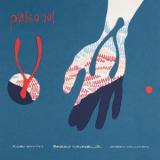
Barry Walker Jr. is a pedal steel player and guitarist whose roots in Americana, Country and Folk traditions influence his melding of minimalism, ambient and spiritual music. The Portland-based instrumentalist is also a member of the Rose City Band, known for his gorgeous phrasing and deft interplay with guitarist Ripley Johnson. On Paleo Sol, Walker demonstrates his singular voice as a pedal steel player and composer. Evoking the American western ranges and basins, the album embodies a longer, geologic view of time that patiently marvels at the ripples of change throughout lifetimes and ages. Walker is joined on Paleo Sol by drummer Rob Smith (Rhytion, Pigeons) and bassist and Mouth Painter bandmate Jason Willmon (Fruited Planes). Paleo Sol"s tranquil landscapes glide, built on warm finger-picked guitar figures and pedal steel swells coupled with deft percussion and bass touches by Smith and Willmon respectively. The trio plays with exceptional fluidity either completing each others phrasing or working together to build momentum. Smith notes: "The drums are not keeping time as much as evidencing its elasticity, mixing into the other instruments, changing phase states." Every gesture on the album is rich with intention, moving with grace and playing with timbre and time.
Continued Sound is proud to present The Shadow by Ojiji.
In 1979, Rupert “Ojiji” Harvey put out one of the most distinctly original albums of a generation. Combining progressive jazz-fusion arrangements with soul, funk, and reggae from his native Jamaica, Ojiji’s The Shadow is an album only he could create.
Ojiji, along with his brother Carl, were performing in nightclubs before they were old enough to legally enter. At just 15, Ojiji was tapped by reggae keyboard legend Jackie Mittoo to join his band The Cougars. Not long after, the Harvey brothers teamed up with other Cougars members to form the funk band Crack of Dawn. This union proved to be groundbreaking, not just in the soul/funk genre, but for Canadian music as a whole. In 1975, they were signed to a major label, Columbia Records, the first Black Canadian band in history to do so. Tracks like “It’s Alright” and “Keep the Faith” still echo in the halls of Canadian funk history.
Personal and industry differences caused Crack of Dawn to break up in 1977, and a young Rupert Harvey was without a band for the first time. However, the creative mind never rests. Outside of the band, Ojiji had been writing and composing his own personal songs since age 17. These songs were a fusion of the sounds and styles he’d soaked up during his time with his musical mentors mixed with new emerging musical influences he was hearing every day.
With the help of his brother Carl and some Crack of Dawn bandmates, he began recording his debut solo album The Shadow. The band's tightness heard in the intricate arrangements are a testament to their interwoven musicianship at the time. Many tracks were recorded in only one-take. Each song in The Shadow’s eclectic glory paints a picture of a young man's singular lived experience through music. Regaling us with where he’s been. Inviting us to where he’s going.
Waiting is the essence of travel. Patience is its own reward.
Two people. A Telecaster guitar with a few effect pedals. A drum machine. An audio interface is connected to a laptop. The ingredients are simple yet effective.
But any suggestion of four-track cassette machines and vintage bedsit productions is quickly dispelled by digital dubbiness and refined arrangements. A tail of reversed echos. The crystalline flourish of octave-pitched delays. Riddled hi-hats tickle and taunt. A bass drum asserts its space.
Winkler's guitar patterns have a fragmented, almost haphazard connotation. Searching in a shimmer of reverb. Until the beat, the framework, sets in to reveal structure. Intentionality. Reihse's programmed rhythms go just to the point of a groove, holding the moment of tension, knowingly delaying the gratification. Beats that have scratchy patina anda subtly playful edge; their crispness stands in contrast to the contemplative drift of the guitar. Is it a trance? Or a dance? Yes.
There are some apparent references here: a good portion of Les Disques du Crépuscule, some kraut-esque electronica, even a smidgen of Morricone / Spaghetti Western, blending into a kind of Musique Noir – yet these serve as a set of orientational coordinates, rather than quotations.
This is so far the most assured release by Periode, perhaps eschewing some of the naiveté that was wilfully cultivated in earlier output – there is no cheeky cover version this time. And no singing either. The nine pieces have the quality of a series, a variation on a mood, or a subset of moods. What emerges is an inviting swagger in the face of bleakness. There is a profound melancholy, but it is not the darker kind, and does not exclude humour.
First impressions may suggest that this is purely nocturnal music. Yet it equally evokes the harsh sunlight and baking summer heat. Or a rainy day. And transportation: the music suggests the motion of travel, even if that travel only happens within the mind. And waiting. Waiting while doing nothing much. Because that's all you can do. (Alexander Paulick)
Berlin-based Swiss vocalist Lucia Cadotsch returns with her celebrated Speak Low trio for their second album, released by We Jazz Records on 27 Nov. "Speak Low II" features Cadotsch on voice, Otis Sandsjö on tenor saxophone and Petter Eldh on double bass, and introduces guest artists Kit Downes on hammond organ and Lucy Railton on cello. "Speak Low II" picks up where their genre-bending and forward-looking debut album left off, introducing new shades into the band's sound and also diving even deeper into the songs they tackle. What makes Speak Low special is their approach to really get to the heart of each composition with seemingly minimal means, yet generating a sound which is both instantly recognisable and remarkably impactful.
"Speak Low II" comes almost five years after the band's lauded debut, and proves the depth of the band's approach right from the start. At the core of the trio's operation is an openness to their love of the music and to their surrounding scene(s). The album comes across as a unified collection of songs made truly theirs and found through listening to records and spending time with their musician friends, often on the road. The highly evolved band sound and the equality of the musicians shines through on the Speak Low sound, as the group uses their 100+ performances together as a vehicle for the development of their music.
"The first album was filled with pretty famous songs, but that was actually not at all intentional" explains Cadotsch. "Those were just my favourite songs of the previous 10 years and we started working on making them ours, musically. We were playing around with concepts for the second album, but soon realised that we just needed to find the right songs and adapt them organically, which comes through in how we interact with the songs and each other. This time around, we wanted to dig deeper and made finished arrangements of around 20 tracks, half of which we ditched in the process. The ones that made the cut have been through a lot and they just felt right for us."
In a way, the Speak Low approach could be described as archaeological. Three music lovers connecting with songs found at various sources, readily throwing away any ideas that don't seem natural to them, and hanging on tight to the ones that do.
Turns out there is a concept to "Speak Low II". It's the band itself, their shared musical development and their love of music.
"Speak Low II" will be available on We Jazz Records on vinyl (PURPLE and BLACK editions), CD and digitally. The vinyl versions come with a heavy duty tip-on sleeve and a printed inner sleeve. CD in digisleeve with no breaking plastic parts.
out of Stock
Last delivered 5 years ago available to reorder, subject to availability
Tashi"s latest punk anthems: electric guitar improvisations to brutally impact us with... gentle lyricism and introspective depth! In a time of extraordinary institutional inhumanity, seeing the faces of the many deprived, what is there to feel but exhaustion? What to want but silence? Tashi seeks it all out actively, with intention. Hard truths absorbed, he enjoins power to reconstitute as spirit, to disseminate to everyone outside the walls.
out of Stock
Last delivered 8 months ago available to reorder, subject to availability
Chicago producer Ellery Cowles lands on Apnea Records with three tracks that draw from the city's foundational rhythms while reaching for something more devotional. Walking by Faith isn't chasing nostalgia--it's after deeper ground. "Fall of Jericho" kicks things off with syncopated Chicago swing colliding with latin percussion and acid basslines that curl and bite in equal measure. "Fly" builds around a looped vocal fragment, letting raw drum patterns stretch and breathe as the track slowly reveals itself. Closer "Crying of Yahweh" is the most patient of the three--seven minutes of hypnotic techno coiling around latin rhythms, carrying a quiet spiritual weight that lingers long after it fades. Cowles moves between reference points with ease--Chicago house, devotional threads, latin heat--but never forces the connection. The music feels like it's been lived in rather than simply constructed, generous with its time and intentional with its space. Out now on Apnea Records.
out of Stock
Last delivered 7 months ago available to reorder, subject to availability
Inspired by Sam Kidel’s ›mimetic hacking‹ concept, Berlin-based composer Jasminev Guffond pipes opiated brass and woodwind motifs into a reverb chamber modelled on an Amazon fulfilment centre.
»Muzak for the Encouragement of Unproductivity« is a poetic inversion of Muzak’s traditional role in stimulating seamless productivity in the workplace. Beginning as a pre-radio music distribution network (1934, U.S.), Muzak was transmitted along electrical wires with the intention of being at once ubiquitous and indiscernible, always present yet easily ignorable. As a pseudo-science the aim was to capitalize on the potential of music to have a psychological effect on listeners, and with the goal of maximum productivity, was employed as a sonic disciplinary force in the work place.
Previously installed for Dystopia Sound Art Biennial (2024), at the Amazon Packing Station located before HAUNT-Frontviews in Berlin, Muzak for the Encouragement of Unproductivity sonically addresses utopic notions of seamless, efficient productivity, inherent to capitalist cultures, and their very real dystopic effects from labour exploitation to the impacts of over-production on the environment. This poetic inversion, further developed as an album, is not meant as a kind of melodic control but rather a reflective space in which to consider the benefits personally, globally and environmentally, of slowing down.
Reverb, essential to the Muzak aesthetic, is programmed (using convolution reverb) with the dimensions of the Berlin Amazon fulfillment centre, DBE2. Amazon fulfillment centers are global contemporary factories, promising a consumer utopia of next day delivery of almost any product imaginable. Inspired by Sam Kidel’s concept of »mimetic hacking«(1), the reverberation characteristics of the DBE2 facility perform a symbolic sonic break-in to the guarded Amazon fulfillment center, a trespass to the flow of production.
Guffond’s ambient Muzak with its drifting horn, clarinet and synth-like modulations is just too down-tempo for upbeat spending. If this is Muzak it is possibly Muzak for the end of the world, thoughtfully seeking transcendence through implied questioning after all avenues for shopping have been exhausted.
out of Stock
Last delivered 8 months ago available to reorder, subject to availability
“There's a clarity here that feels hard-won. Honing ideas first explored with his Organic Music series, Tiago Sousa unlocks the final puzzle pieces on Sustained Tones Vol 1. This music is enchanted, the way each layer moves in conjunction with the others: complex structures that feel less constructed than discovered, like stumbling upon ancient mechanisms still whirring beneath the earth. "Readily Reliance" opens as an effervescent sea, waves gilded in neon creating an enveloping sense of eternal motion. Bright organ timbres throw silhouettes and cast Sousa as the deft puppeteer keeping everything moving with an effortless precision. These evolving shapes suspend listeners somewhere between the physical and the cosmic, held in place by nothing but intention and sound.
Drones build rippling foundations in other places, using slower tempos to construct immersive, off-kilter sound worlds where minimalism becomes emotive, almost poignant. The fluctuating tones have a gossamer sheen, creating this interesting sonic dichotomy: a solid surface with fragile rotations beneath. It's music that commands attention; it is so much more than simply aural furniture. Sousa writes these beautiful sequences that are all interconnected, intricate sonic architecture that pulls us further into some kind of unknowable ether.
On the piano pieces, "Smooth Flow Into It" and "Swirling Mist and Thin Dust," Sousa shines sunlight through all the cracks. Washes of melody are effervescent, clouds clearing to reveal the day has not gone. Not yet. Positioned in the middle of Sustained Tones Vol 1, these pieces ground the album in something transcendent yet still earthen: moments of breath inside all that cosmic drift. Darkness finds its way through on "Restlessness," where Sousa smears sinuous electronics into a ghostly sonic mesh that seeps through the skin. It feels like a slow inhale, time suspended long enough to take note of where we are and how we feel before moving forward. Expressive, almost sparkling synth arrangements return to send us back into reality on closer "Becoming a Landscape." Its title hints at larger concepts at play throughout this album, where lines between our physical beings and the wider environment are blurred. The tones that echo throughout these six pieces mirror the echoes inside our bodies, from heartbeats and voices to something quieter, something much smaller and more elemental. By immersing us inside these mesmerising, beautiful soundscapes, Sousa immerses us within ourselves.’’
A student of the Weatherall school of DJing, Asa Tate has showcased an astonishingly mature approach to production over the years that belies his age. You’d be forgiven for thinking these 4 tracks had been discovered from a dusty DAT tape, locked away in the vaults of a northern Italian club and rediscovered after 30 years....Listen more closely and you’ll notice the contemporary production flair and more recent influences that make this EP a perfect reinterpretation of the mid 90s house sound: sitting somewhere between dream house and Morales finest work under the red zone moniker.
The EP wastes no time in setting it’s intentions with the A1 Title Track, “Replica” - after a brief and floaty progressive house intro the refrain “ E-e-e-e-e-e-e-ECSTASY” echoes loudly over sampled vocals, euphorias piano chords, throbbing lead synths and a bouncy tech house bass line.
“89” is a sultry deep house cut featuring rising Spanish star, Dariam Coco on Vocals. It floats like a butterfly, but stings like a bee, as the soft chords are interrupted with huge drum fills deftly transforming an after party jam to a peak time moment.
We continue to “ Unknowns” - a masterclass in building tension and holding it - this track simmers with restrained intensity for almost 6 minutes. It’s trademark Asa Tate production at its most understated and classy. We round of the EP with the fittingly titled “Last Dance” , a wistful composition that brings us back down to earth slowly, safely and gently; always grooving but never pushing - this one is the soundtrack to the end of a long summer day and reaffirms Asa Tate’s claim to be a modern master of Deep House.
out of Stock
Last delivered 29 days ago available to reorder, subject to availability
In keeping with tradition, the new year brings another offering from Portuguese pianist and composer Tiago Sousa.
The fourth volume of the Organic Music Tapes series concludes this cycle that has significantly transformed Tiago Sousa’s music. Compositions in a fluid state, forming nebulae of sounds with vague contours for piano, organ, and tape loops, based on techniques pioneered by American minimalism, particularly by composers such as Steve Reich, Terry Riley, and Charlemagne Palestine.
While throughout this series the electric organ has played a more prominent role in contrast with pre-recorded loops, this is the moment when this technique is extended to the piano compositions. New opportunities arise for the repetition and variation of small motifs to induce subtle perceptions and psychoacoustic effects. This final edition represents the maturation of the Portuguese composer’s intentions surrounding the idea of organic music. In music, too, the organic world is quite different from the one built on the rules of syntax and grammar. It refers instead to a type of interdependent relationships and patient, repetitive processes that are simultaneously spontaneous and unpredictable, which shape rivers and mountains, the grain of wood, muscle fibers, or marks on a jade stone.
Enter then the fourth volume and be locked in a new theatre of eternal music by an artists that keeps pushing his own style to ebullient highs.
out of Stock
Last delivered 8 months ago available to reorder, subject to availability
ugne&maria is a collaboration between Marija Rasa Kudabaite and Ugnė Vyliaudaite, both residing in Belgium. Their musical style is characterised by a multilayered, down-tempo, yet danceable approach, incorporating violin, synthesizers and sampling techniques.
We were completely blown away by the duo’s live performance at Meakusma Festival in August 2024. It was one of those rare moments when time seemed to stand still: the music, the atmosphere and the audience merged into a single warm, smooth and radiant aura of positive energy and vibes. This experience made us want to share such exceptional talent on Hands in the Dark and we are over the moon to announce the release of ugne&maria’s new album ‘Zotasphere’, dropping on 16th January 2026.
The 8 songs featured on the record came together slowly, bit by bit. Diary-like, each track reflects on different moments and life events that have followed ugne&maria over the past couple of years. Layers of sound and layers of memory are interlaced into the album, an embodiment of all that feels distant, yet still present. Most of the tracks move around a steady, unhurried pulse, never faster than 120 bpm. Some tracks even ended up being intentionally slowed down, as if the music itself wished to breathe more, mirroring life’s natural pace, with elements stretching, shifting and decelerating. Focused on bass and rhythm, influenced by the depth and warmth of classic house and low-end music, ugne&maria let the sounds drift elsewhere. The violin became a voice, the voice became a texture.
Baro Sura’s Today & Always is a cinematic album told in three parts; it’s cosmic, cyclical, and impossibly human. As Baro writes, “Love is the universe… it is not linear… it can be lonely… it is recursive & contradictory yet eternal.” This album moves through devotion, doubt, persistence, and quiet reconciliation with each track as a signpost in an astrological journey. “Yours Now, Yours Next” opens the project with a Taurus-like groundedness, capturing the paradox of steadfastness and emotional weight. “i Still Care” teeters like Libra’s scales, a reflection on indecision, contradiction, and the heart’s refusal to let go. Blending spiritual storytelling with an ambient soul, Baro invites listeners into a world of intentional vulnerability where silence speaks and love echoes, today & always.
The vinyl LP at the heart of this éthiopiques 31 tracks 2 to 11 was one of the very last vinyl records ever released in Ethiopia. But above all it represents, we felt, the absolute masterpiece of the Ethiopian Groove – the Swan Song of Swinging Addis. The album leaves a clear idea for posterity of the level of sophistication and mastery that modern Ethiopian music had achieved, before being crushed under the Stalino-military heel of the Derg – as the bloody revolution that was unfolding came to be called.
Ethiopia1976.
The Revolution that broke out in February 1974 rolled on in a ruthless march. The whole of Ethiopian society was utterly stunned. The bouquets of flowers handed joyfully to the first tanks of the coup d'état were to wilt very rapidly. From September 1976 to February 1978, 18 months of Red Terror (the name given by the junta itself) spilled blood throughout the country. This fratricidal conflict took its heaviest toll among students and youth. The shift from feudalism to a cruel and primitive Stalinism left the country's citizens deeply traumatised, and snuffed out any pretence of activism, whatever the sector of society. This ice age was to last for seventeen long years.
ሙሉቀን፡መለሰ Mulukèn Mellèssè Muluqän Mälläsä
It was three tracks by Muluken that served as the opener for éthiopiques-1 more than 25 years ago. Seven more tracks appeared on éthiopiques-3 and 13, all accompanied by The Equators, which was soon to become the Dahlak Band.
The first track, Hédètch alu, also the very first piece that Muluken ever recorded, left audiences both unsettled and amazed. Reflecting the singer's extremely young age (he was just 17 at the time), this angelic voice mystified many, who thought they were in fact listening to a feminine voice. He was not yet 22 when he released his last vinyl record in 1976 with Kaifa Records (KF 39LP), one of the very last to be issued in Ethiopia, before the cassette tape became the dominant medium for music distribution – and before the new revolutionary regime put a stop to all independent musical life, via an unspeakable barrage of prohibitions and other persecutions.
Mulu qèn, literally, “A well filled day”. This tender maternal intention wasn't enough to ward off the cruelty of fate. His mother's premature death drove Muluken to leave his native Godjam, in northeast Ethiopia, to live with an uncle in Addis Ababa. Born Muluken Tamer, he took his uncle's last name – Mèllèssè.
The spelling Muluken appeared in his administrative records. Transcription of Amharic to the Latin alphabet, both in Ethiopia and for scholars, gives rise to controversies and quibbles that can never be neatly settled. French allows for a closer approximation of the original pronunciation, thanks to its battery of accent marks, confusing as they may be to anglophones.
Between rather accommodating administrative record-keepers and the various versions that pop up in interviews given by the artist, Muluken's year of birth oscillates between 1953 and 1955…
1954? One thing is certain: the artist's talent made itself known very early indeed, because he got his start in 1966-67, at the age of 13 or 14. Photos from the period attest to his extreme youth. It's a strange sort of initiation for a very young teenager to become a sensation in the heart of Addis's nightlife at the time, Woubé Bèrèha – the Wilds of Woubé. And what's more, in the club of the Queen of the Night, the Godjamé Assègèdètch Alamrèw herself, the very same that was portrayed by Sebhat Guèbrè-Egziabhér in his novel-memoir Les Nuits d’Addis Abeba2… The legendary female club owner who is remembered to this day by the capital's ageing boomers.
Muluken first tried his hand at the drums, before he grabbed the microphone. He emigrated briefly to the Zula Club, across the street from the old Addis Post Office, one of the ground-breaking bars of the burgeoning musical scene, before joining the Second Police Band in 1968, for around three years. He spent a few months with the short-lived Blue Nile Band founded by saxophonist Besrat Tammènè. As the musical scene grew increasingly successful, and pulled slowly but decisively away from its institutional ties, Muluken released his first 45rpm single in February 1972 (Amha Records AE 440). It was included in two LP Ethiopian Hit Parade compilation albums in September of the same year. All in all, Muluken released eight two-track 45s and the same number of original cassette tapes between February 1972 and 1984, the year that he departed for permanent exile in the USA. After converting to Pentecostalism in 1980, Muluken gradually abandoned all secular musical activity. In 1985, at the end of a concert in Philadelphia, he decided to quit concerts and recording for good. Mèlakè Gèbré, the historic bass player from the Walias band who was playing with him that night, recalls that everything appeared so irredeemably diabolical in Muluken's eyes, that it was to be the end of his contribution to Ethiopian Groove.
The end of the story, the beginning of a legend.
Dahlak Band, forgotten by History
Aside from his personal history and vocal talents, it must be remembered that Muluken Mèllèssè was one of the biggest names in the musical innovations that marked the end of the imperial period. These éthiopiques aim to convince those who are just discovering this hidden gem... As for Ethiopians themselves, they are to this day captivated by this singular and atypical figure in the Abyssinian pop landscape – even though he withdrew from public life some 40 years ago. Incorrigible devotees of poetic twists, of more or less hidden meanings, Ethiopians appreciate above all the care Muluken took in choosing his lyrics and the writers who penned them, such as Feqerte Haylou, Alemtsehay Wodajo and, here, Shewalul Mengistu (1944-1977). Love songs, written by women, a far cry from the conventional drivel that pleases sappy sentimentalists.
Muluken is equally acclaimed for his perfectionism when it came to music, the opposite of the overly casual approach that is all too common. He remained a faithful partner of musicians who came from a lineage that borrowed from several inventive and pioneering bands (Venus, Equators, Dahlak). Amongst them were certain artists who began their musical lives with Nersès Nalbandian at the Haile Sellassie Theatre and who come of age in around 1973 – at just the wrong time, you might say. Among them were the pillars Shimèlis Bèyènè (trumpet), Dawit Yifru (keyboards) and Tilayé Gèbrè (sax & flute). Most notably Tilayé Gèbrè, certainly one of the most important musicians, composers and arrangers of his generation, of the end of the imperial era, and of the early years of the Derg.
It was only in 1981 that a miraculous opportunity arose for Tilayé to escape the Stalinist paradise of the dictator Menguistou Haylè-Maryam. Once again it was Amha Eshèté (1946-2021) who provided a solution. The spirited and courageous producer, who had been in exile in Washington since 1975, succeeded, thanks to his incredible perseverence, in bringing the Walias Band to the USA. It was, in fact an extended Walias Band comprising ten musicians3, six of whom chose to slip away after a few concerts and the recording of an LP (The Best of Walias, WRS 100). Tilayé Gèbrè was one of these. He has been living in the USA ever since. There he joined the then-nascent Ethiopian diaspora, which lived largely unto itself, and was making only very modest headway in the American musical market. It seems unfair that Tilayé Gèbrè and the Dahlak Band were not able to benefit earlier from the public recognition that they do deserve.
A similar draining away of the top-rate talents would lead to the reorganization of the major groups of the “Derg Time”. The remaining artists spread themselves around between Ibex Band (renamed Roha Band), Ethio Star Band and a remodeled Walias Band. That spelled the end of the Dahlak Band.
With this record, produced by the essential Ali Abdella Kaifa a.k.a. Ali Tango, we can appreciate everything that the Derg not only destroyed, but also prevented from flourishing. This gem of Ethiopian-style afrobeat came out in 1976 (and, by way of a parenthesis, before the FESTAC 1977 in Lagos, which was attended by an impressive delegation of Ethiopian musicians — although Fela was already personna non grata in his own country). Despite everything that might distinguish this ethio-groove from Fela’s music – no colonial axe to grind, no question of political confrontation with the authorities, no claims to negritude or Africanism for the Ethiopian musicians, and less extrovertion! –, this LP fits beautifully into the saga of intense and electrified soul of the new “African” groove that Fela and Manu Dibango embodied so well from that point onwards.
In restoring this record to its place in the afrobeat epic, it can be seen that, if nothing else, the timeline bestows a legitimate pedigree and a historical primacy to works that had no international impact when they were originally released.
Warning! Masterpiece!
out of Stock
Last delivered 3 months ago available to reorder, subject to availability
“Stuck in My Head / Home is Behind” marks the most profound and personal release from Jamie Collomb, known to many as Oneduz - artist, father, husband, and co-founder of The Global DNB Collective. This vinyl project, created with unwavering passion and intention, was Jamie’s proudest work, a true reflection of his artistic soul.
Tragically, Jamie passed away unexpectedly just as the record entered production. Featuring original tracks by Eclipsed Shadows and Noisesmith, and powerful remixes by two of Jamie’s heroes: drum & bass legends Blame, and longtime friend and inspiration Danny Styles. This release stands as both a musical statement and a lasting tribute.
Following Jamie’s passing, his creative partner Andy (Syntax Era) and GDNBC designer Ryan Feyler (Drbblz) came together to carry his vision across the finish line. Every detail of this release honors Jamie’s legacy.
All profits from this album will go directly to support Jamie’s wife, Shanda, and their two young children, Porter and Hadley. This is more than a record, it’s a celebration of Jamie’s life, his music, and the community he helped build.
The Germany-based band Rikas' new album, "Soundtrack For A Movie That Has Not Been Written Yet," promises to be their most cohesive and contemplative project to date
Comprising 11 brisk yet beautiful tracks, the album showcases the band's tight tempos and mellow delivery. "We started this record just to have fun. It's not been that easy, because so much change has happened," guitarist and keyboardist Sascha Scherer reflects. "We've had to learn to adapt... This record is more inward-looking. We were reflecting. " Scherer further explains, "I think a lot of bands have trouble staying still. When you stop touring and moving to a new city each day, you feel lost. I feel like our new album is capturing that feeling of go, go, go." This feeling of inertia contains layers: there's a sense of restlessness, but also brotherhood and camaraderie-- feelings Rikas aim to depict in each of the album's videos. "For our sophomore album, we wanted to create a very homogeneous one," Scherer continues. "Which was not easy to achieve because we have made the experience that throughout all of our records every song differs from each other. We have four songwriters who happen to be also multi-instrumentalists in our band, and that's why we don't have to put much effort into diverse record making. Instead, we had to put pressure on ourselves to make something consistent. But we also didn't want to make every song sound the same. So the concept of the album lays in its topics."The songs for "Soundtrack For A Movie That Has Not Been Written Yet" were written over the past year, adapting and shaping old snippets and ideas, as well as creating songs completely from scratch. "For some reason, when we started writing and listening back to the songs, they all shared a similar feeling of cruising, traveling, being in motion," Scherer says. "This wasn't intentional at first, but felt more and more suiting as we proceeded with the writing. We found we'd enjoy the songs most while driving in our van, looking out the window, seeing the landscapes passing by. This has something very meditating to itself already, amplified even more by a suiting soundtrack. This is the soundtrack we tried to write. The album in its entirety is supposed to feel warm, hugging, like 'being bedded in cotton.'" For the visual content of the album, the band decided to travel to San Remo, northern Italy, to capture some of the late November sun. "In a way, you could say we tried to film the first part of the movie whose soundtrack we had just written," Scherer concludes. "Soundtrack For A Movie That Has Not Been Written Yet" is a testament to Rikas' ability to adapt and reflect on their journey, offering listeners a meditative and immersive experience that captures the essence of being in motion.
Brand new album from global superstar duo LANY, 10 new tracks and follow-up to their latest release A Beautiful Blur in 2023. Maroon Color 1LP Vinyl with printed inner sleeve and 12x24 poster. LANY have quietly cracked the mainstream on their own terms as one of the most ubiquitous, unpredictable, and undeniable alternative rock bands of this era. Tallying billions of streams, selling out legendary arenas, and earning widespread critical acclaim, the platinum-certified Los Angeles group consistently deliver rafter-reaching anthems anchored by airtight songcraft and the outsized personality of enigmatic frontman and songwriter Paul Jason Klein. LANY will be releasing their brand new album ''Soft'' in October 2025. Thematically and visually ''Soft'' exists in tension - an intentional contrast of the hard and soft. Tangible, literal, physical hardness juxtaposed with metaphorical, relational (and, at times too, physical) softness. Sonically, the album explores these same tensions - much of the softness and vulnerability of lyric that has defined LANY's acclaimed career, now with a harder, braver edge to the production.
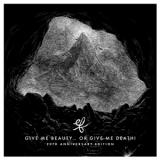
Long regarded as singular architects within European post-rock, EF have built a catalogue defined by dynamic patience, melodic clarity, and widescreen emotional reach. Across two decades of touring, the Gothenburg ensemble have carried that language to clubs and theatres at home and abroad, earning a reputation for meticulous, high-impact live shows and a body of work that has steadily gathered critical regard and a devoted international following. Reimagined and with expanded production including strings and brass, this edition is a considered re-engagement with the material that first crystallised EF's voice. The band returns to thesesongs with the benefit of twenty years' craft, presenting new arrangements that stretch time and deepen narrative, while retaining the quiet-to-catharsis arc that has always set their music apart. "Since it's our precious first born we wanted to give it the love it surely deserves. We felt we didn't want to celebrate its big 20th birthday by just remastering it and we surely didn't want to make the songs too modern and unrecognisable for the old fans. We wanted to give it a tighter, more dramatic and bombastic make over_ a gentle touch of today's EF." (Niklas Åström) Originally released in 2006, `Give Me Beauty_ or Give Me Death!' introduced EF's signature blend of cinematic guitars, patient dynamics and aching melody. For this new edition, along with an incredible cover illustration by Phillip Janta and brand-new bonus track `Noll', the band returned to the material with fresh ears and clear intentions: to open more space in the arrangements and to enrich the melodic lines with orchestral colour. `Give Me Beauty_ or Give Me Death!' (20th-Anniversary Edition) is a document of growth rendered with care: more instrumentation, more time, more consequence. The album is an act of stewardship_ both a homage and a forward-looking manifesto for EF and for discerning listeners everywhere. FOR FANS OF Explosions in the Sky, Mogwai, Caspian, Gospeed You! Black Emperor, Yndi Halda, Mono Black or White Double Vinyl, Digisleeve Single CD. Includes bonustrack Noll.
Long regarded as singular architects within European post-rock, EF have built a catalogue defined by dynamic patience, melodic clarity, and widescreen emotional reach. Across two decades of touring, the Gothenburg ensemble have carried that language to clubs and theatres at home and abroad, earning a reputation for meticulous, high-impact live shows and a body of work that has steadily gathered critical regard and a devoted international following. Reimagined and with expanded production including strings and brass, this edition is a considered re-engagement with the material that first crystallised EF's voice. The band returns to these songs with the benefit of twenty years' craft, presenting new arrangements that stretch time and deepen narrative, while retaining the quiet-to-catharsis arc that has always set their music apart. "Since it's our precious first born we wanted to give it the love it surely deserves. We felt we didn't want to celebrate its big 20th birthday by just remastering it and we surely didn't want to make the songs too modern and unrecognisable for the old fans. We wanted to give it a tighter, more dramatic and bombastic make over_ a gentle touch of today's EF." (Niklas Åström) Originally released in 2006, `Give Me Beauty_ or Give Me Death!' introduced EF's signature blend of cinematic guitars, patient dynamics and aching melody. For this new edition, along with an incredible cover illustration by Phillip Janta and brand-new bonus track `Noll', the band returned to the material with fresh ears and clear intentions: to open more space in the arrangements and to enrich the melodic lines with orchestral colour. `Give Me Beauty_ or Give Me Death!' (20th-Anniversary Edition) is a document of growth rendered with care: more instrumentation, more time, more consequence. The album is an act of stewardship_ both a homage and a forward-looking manifesto for EF and for discerning listeners everywhere. FOR FANS OF Explosions in the Sky, Mogwai, Caspian, Gospeed You! Black Emperor, Yndi Halda, Mono Black or White Double Vinyl, Digisleeve Single CD. Includes bonustrack Noll.
A record label born in Madrid in 2025, with the intention of physically producing electronic music, without pretensions of musical genre or trends. We seek to reveal unpublished talents and release with artists who share our sonic aesthetic. The purpose is to showcase a pure and authentic expression in every work. DEFENESTRE RECORDINGS presents its first release: ALARMA 2ØØØ, produced by RØBØT CITY (alias Salvador Rojo). The album consists of eight tracks, materialized in a 12-inch vinyl record that has been hand-treated and screen-printed on each copy, reflecting the project’s human and sentimental essence. Composed and produced entirely in analog by Salvador Rojo in Lugo (March-June 2025), the record is a journey into the artist’s sound universe: Side A delivers 4 tracks of pure, hard-hitting electro (paranoid, industrial, powerful beat), achieving a harmonious and emotional sound; while Side B presents cuts that take us from more ambient soundscapes to organic, astral, and liberating techno. ALARMA 2ØØØ is the first declaration from DEFENESTRE RECORDINGS, a label committed to hardware sound and pure, unfiltered expression.
out of Stock
Last delivered 9 months ago available to reorder, subject to availability
DJ Nobu: A Japanese artist who was inspired by Jeff Mill's performance at Liquid Room and has become a world widely known DJ.
Masakazu Hiroishi: A project manager of "Live at Liquid Room" at Sony Music Japan n 1995
Images are taken from the video shot in 1995: the quality is rough per the artist's intention.
212 pages, Softcover, A4 (210x300mm) x 17mm spine, 950gr, English
Visual Documentary: Jeff Mills at Liquid Room, Tokyo filmed on Saturday, October 28, 1995 (135pages)
Interviews: Jeff Mills / DJ Nobu / Masakazu Hiroishi (60pages)
“Detraex Corp arrives on Sagome to deliver a heady journey through experimental rhythm and dub-informed weight and release with their new album Live at Pompeii. The album, much like its Carlo Gabriele Tribbioli created artwork, represents a journey, a collection of sounds and emotions, sequenced to share with us, the listener, a variety of experience, and of memory, which are at once familiar and other.
"Live at Pompeii sets things off with the tone-setting Tykes of, where frazzled, shuffling drums meet sub bass weight and ketamine oud, sounding something like Wordsound’s Scarab leaving the 90s and entering the future. Tombaroli invites the head nods, clearly communicating the album’s intentions and inviting us to that party under that out-of-town bridge with its insistent percussion and pulsing weight.
"Other tracks, such as Bullet Holes, carry us further into a psychedelic alternative, with its lysergic fever-dream soundtrack to an unnamed mediterranean plaza, and No Minus’s sounding like a nascent, primitive distant cousin to Jeru’s Premier-produced Come Clean.
"Channel 83 firmly returns us to the club, weaving mystical soundsystem magic with its stunted horns and swirl of voice, driven forward with the most chest-rattling of stomps, before the album enters its finale, where the grimey judder of Expect Excerpt slides to a bleary-eyed half-speed, evoking the club which won’t let you leave.
"Mount Point eventually provides that release, an early morning sunrise of a track, with rich, slow trudge and post-club shimmer, before Landings Dub signals the end of the journey, a metallic elegy to what has preceded, and a contemplation of your upcoming repeat listen, and re-entry, to the world of Detraex Corp.”
Words by Daniel Magee
Music by Detraex Corp
Mastered by Giuseppe Ielasi
Artwork and Layout by Carlo Gabriele Tribbioli
out of Stock
Last delivered 8 months ago available to reorder, subject to availability
Cintura Interna is João Hã’s new release for Sucata Tapes, a work shaped by accident, drift, and unlikely connections. Its guiding notion comes from “Música Careca” (Bald Music) — a strange term apparently used by Jean Dubuffet to describe his own sound experiments. Dubuffet wasn’t a musician, but he was bald; the phrase lingers as an apt description for music that is naïve without innocence: amateur bruitism, soft sound, raw and direct, where intention is left exposed to errancy.
The piece itself came together without project or plan, eventually forming what Hã calls an “accidental Frankenstein” — or perhaps Frankenoise. Built from recordings made more than 15 years ago on cassette and obsolete equipment, mixed with more recent material, Cintura Interna bridges time and decay, refusing diaristic or documentary framing.
As an unexpected detour, the release also includes a version of the garage classic Louie Louie.
Lexachast is an ongoing collaborative work by Amnesia Scanner, Bill Kouligas & Harm van den Dorpel.
Initially birthed as a joint, improvised performance between Amnesia Scanner and Kouligas at the ICA, London in 2015, it was later recreated and extended with visual artist van den Dorpel into a 15-minute online-only audiovisual work – known simply as Lexachast. Since then, it has expanded into a live show that has been performed at Transmediale, CTM Festival, Unsound Krakow & Adelaide, Next and LEV Festival and during Paris Fashion Week in collaboration with the brand Ottolinger. Now to be released on PAN, is a new document of Lexachast in its current, full-grown form.
Whilst broadly inspired by the experience derived from and exposure to algorithmic patterns as generated by visual artist Harm van den Dorpel’s specially- devised program, the work is a sonic reference to the fallouts of avant-EDM and cyberdrone. This in turn is simultaneously mirrored by the perturbing visuals, created by a unique algorithm that sources and blends various filtered imagery from DeviantArt and Flickr in real time – with a bias towards the NSFW, extreme banality, and ornamental melancholia. The results were a perfect fit for the deliberate intention of non-intent, an anti-video of sorts, which ended up as a defining element for the project.
Toxy Kated is a free-spirited, chameleon-like band that produces different styles of music without labeling them. Dani Casarano, Camilo Castaldi, Kitty, and Galo Akun—who have known each other for over two decades—decided to join forces to create something new, without rules. Everything happens collectively, in sessions where emotion intersects with sensitivity, and improvisation coexists with intention. Their upcoming EP is a testament to this unique sonic journey, a defiant refusal to conform and a bold declaration to expand the boundaries of music.
out of Stock
Last delivered 4 months ago available to reorder, subject to availability
Adey Omotade, a sound artist and cultural cartographer rooted in Lagos and shaped by diasporic experiences in Paris, Johannesburg, Berlin and Ivory Coast, brings a rare sensibility to this work: walking between worlds, bringing with him the cadence of home and the dissonance of diaspora. In his hands, sound becomes ritual: a migration of soul, an assemblage of bells, melodies and chants woven from Ifa shrines, river banks and Yoruba festivals. Playing the dual role of griot and cartographer, Omotade, who works across acoustic ecology, experimental music and sound design, builds each track like a shrine: layered, intentional, alive with breath and blood, each track a libation, each break an invocation. Each track unfurls like aso-oke, the celebratory fabric of the Yoruba people: drums that speak in polyrhythms, synths bending like waves, incantations layered like memory, fading then returning, gently like the water at the banks of the Osun River.
The influence of experimental sound design is evident throughout, but ‘Ni'ran’ is no cold abstraction. It pulses with life, with the heartbeat of talking drums, the breath of ambient textures and the warmth of the voices of babalawos, priests of Ifa, invoking ire (blessings) on all. ‘Oori : Ogbe’ invokes the sacred Odu Ifá — a divination verse that speaks of beginnings, clarity and destiny. In ‘Ofo : 'Nkantation’, polyrhythms unfold like verses, each beat a coded message inviting listeners to reflect on destiny and alignment.The title track ‘Ęęro : Eeşu’ begins with the haunting voice of a priest reciting the Odu Ifá, a calling to give unto Eesu his due. Percussive patterns unfold like verses, each beat both a memory and a prayer.
"Cake" was a New York band formed in 1973, following a line-up tweak and a change from their previous name "Mixed Company» (referring to the racially mixed personell). At Arabellum Studios in Colony, Albany, NY, the band recorded their only 7-inch single. "Make Up Your Mind" / "Let Your Body Go» was released on Key Records in 1979.
Half a life time later, after appearing in DJ mixes and online auctions in the late 2000s, the single started gaining notoriety among DJs and diggers. Working its way up to "holy grail" status on the modern soul and disco collector scene, original copies of the sought after record would eventually sell for as high as $1000.
In 2012, Hans Jørgen Wærner (Mutual Intentions Co-Founder and notorious disco collector) got in touch with Arabellum studio owner Art Snay who produced the record. This lead him to lead singer Bob Treffiletti who had a cassette tape with unreleased long versions of the songs. The sound quality of the tape was not adequate for what Hans had in mind, and so the hunt for the original master tapes began! Unfortunately, Art Snay later passed away. At one point chances of finding the original recordings seemed so slim, the project was all but abandoned….
Luckily, Bob managed to get hold of the master tapes via Art's wife and they were sent away to legendary disco mixer / remixer John Morales, who transferred the tape to digital format. After several rounds in one of Norway's best mastering studios (Strype Audio), noise reduction and sound surgery were done while retaining the soul of the original recordings. The songs were finally ready to be pressed on the format they have always deserved: the 12-inch disco single!
The 12-inch comes with four 5 min + long songs and can be pre-ordered now. The high-quality lacquer cut pressing is produced at Optimal Media in Germany and limited to 300 copies worldwide.
out of Stock
Last delivered 10 months ago available to reorder, subject to availability
This exclusive repress comes as a special edition limited vinyl in red, yellow, and white splatter - the signature Peacemaker colours. The Cruel Intentions are finally re-issuing their long sold-out debut album No Sign of Relief! The band has gained massive international attention after being featured on the soundtrack of HBO Max's hit series Peacemaker, directed by James Gunn. On "No Sign of Relief" you'll find the tracks Jawbreaker, Borderline Crazy, Sick Adrenaline and Reckoning - four songs personally handpicked by Gunn for the series. This exclusive repress comes as a special edition limited vinyl in red, yellow, and white splatter - the signature Peacemaker colours. "No Sign of Relief" is an album bursting with confidence and energy that instantly rubs off on the listener. It's groovy, angry, cheeky, and fun - music that sparks emotions of rage, joy, confidence, and pure excitement.
Born from a profound devotion to the piano and a reverence for the organic flow of life, byt’ surprises listeners by presenting "paths of sand", a remarkable creation by Amsterdam-based composer xico, offering sound and soul to those willing to listen beyond the surface.
Through the magic of experimentation, xico captured the fleeting beauty of the muse of improvisation, as described by Nachmakovich, transforming the ephemeral into something lasting. Performances recorded on the same old piano during the 2023 Kaalstaart Festival in the Netherlands have since evolved into a fully realized work. A journey of nearly three years of dedicated silence that began with Telva’s intuitive recognition of xico’s voice, starting with an invitation to her radio show and blossoming into a captivating fascination with what unfolded. This process led to the art of shaping the selected live recordings into a collector’s item, now materialized as a limited edition of 200 pressed vinyl copies, forever remaining as an artistic memento.
Perfectly attuned to the energy of the autumn equinox, paths of sand unfolds as an intimate reflection of music’s ability to hold what cannot be held, to speak what cannot besaid, and to embody what can never be described.
xico is a sound artist and improviser from Ibiza whose work explores the merging point between disruptive and post-natural soundscapes, crafting immersive sonic environments through compositions that unfold like ecosystems.
Encouraged by an understanding of chance as nature’s and awareness' most accessible voice, he focuses on creating generative live-sets with varying degrees of unpredictability. For him, subordinating human intention to nature’s order is a conscious choice, and making art through this lens becomes a statement and a spiritual practice. With his distinctive touch, his compositions resonate with the world in unexpected and profound ways, offering experiences you may never have heard before.
out of Stock
Last delivered 10 months ago available to reorder, subject to availability
"Marionette presents Mélodies pour Clairons, the debut album by multidisciplinary artist Ioa
Beduneau. Based in the South of France, Ioa’s world is rooted in creation - building intricate
self-playing installations and handmade DIY electronics. His practice is driven by a desire to
connect, challenge, and open up dialogues around disability and other social constructs.
Proudly identifying as a disabled artist who is attuned to how our bodies interact with the world,
Ioa brings a fresh and inimitable perspective to electronic and electroacoustic music.
On Mélodies pour Clairons, Ioa contemplates lifeforms using modular synths, channeling
principles of physical modeling and bioacoustics. Ideas begin on paper and evolve into sound,
forming an abstract yet intentional sonic ecosystem. Clairons refers both to a musical instrument
and to a loved one with whom this music was shared, serving as a kind of sound diary during
the stillness of the pandemic. The movement of air, pressure, resonance, and the physical
properties of the clairon (a medieval trumpet) are reimagined and manipulated on this album,
resulting in impressionistic and deeply moving compositions with poetic sensibility. Organic
ASMR tones, synthesized bird calls, and pirouetting melodies of pipes and bells score an
imaginary biodome where chaos and harmony coexist. Striking and singular, these works
embody the kind of boundary-pushing music that defines Marionette."
»La Traversée« (»The Crossing«) is Matthias Puech’s second album for Hallow Ground and follows up on 2023’s »Mt. Hadamard National Park.« Profoundly inspired by re-reading »The Odyssey,« the French composer, instrument designer, and scholar used a Eurorack modular synthesizer to create four pieces that are by far the most intuitive and emotionally charged in his ever-expanding catalogue. Puech’s masterful command of sound comes to the forefront with even more urgency on this record. A wandering meditation on the human condition, »La Traversée« is an album that is constantly in motion—complex electronic music at its most gripping and evocative.
The foundation for »La Traversée« was laid when Puech prepared a live set for a tour organised in collaboration with Hallow Ground in support of »Mt. Hadamard National Park.« Before writing the first three pieces—»Ennosigaios,« »Polyphármakos,« »Nekuia«—the 18½-minute-long »Ithâké« was composed in near-total isolation in the South of France at the end of 2023. Puech performed the material live several times before taking a step black from it for a while. He revisited the pieces when preparingthem for a release. »I was struck by how the technical process and the intention behind the music had completely vanished from my memory,« he says.
What remained intact, however, was Puech’s association of the material with one of the most influential texts of Western literature. Reading a graphic novel adaptation of »The Odyssey« with his two four-year-olds, he noticed the effect that it had on them and himself. »Its themes of longing, fear of and attraction to the unknown, unresolved quests, and the struggle for control felt topical,« he says. »I was completely taken. Every story ever told seemed contained in this ancient tale; every story I have ever tried to tell as a composer seemed inscribed in this framework.« This also extended to formal motifs such as the repetition of incidents, narrative developments, or dramatic effects that also mark »La Traversée.«
Puech says that he perceived Homer’s writing as musical, »like an old Delta blues or a Renaissance counterpoint,« which inspired his writing process. »With a couple of knobs on my Eurorack system, I could control the unfolding of a story,« he notes. »This made me pass through different emotional statesand led to moments in which everything made sudden sense—when you as an artist get a glimpse atsomething essential, can touch upon something universal.« This shines through »La Traversée,« a wildly imaginative album that is deeply personal while also telling a story far more wide-reaching than that of its creator.
out of Stock
Last delivered 10 months ago available to reorder, subject to availability