Biomes are little worlds of organic relationships, full of struggles, symbiosis, and sheer obsolete noise. In "De Silenti Natura," Henrique Vaz is meticulously crafting synthetic auditory biomes, sprouting from their own fuzzy logic. Unfolding across two distinct acts, the Brazilian artist interprets and replicates the complex, often ambiguous sounds of (un)natural environments, creating imaginary systems to inhabit over two sides of tape. The soundscape of the first side and title track is entirely algorithmically synthesized, with no samples used, leveraging Supercollider for real-time sound generation. The environment thus built is a flourishing one, seemingly unable to escape its own grandeur as insect-like buzzing and crackles expands into mountain ranges and forests of erupting sonorous drama. The second side introduces 'hydrophone' water synthesizers, submerged in a goldfish bowl to interface with the unfurling waves of electronic chords, creating a unique blend of damp and unwieldy sloshing movements, prismatically scattered into a luscious soundscape, and resembling everything from the bridge of a starship to the echoed drip-drip of stalactites.
Both sides of the album slowly unwrap and uncrinkle, revealing layers of hisses, distant digital choirs, warm enveloping chords, and juddering bleeps. Despite their unwieldy and strange nature, myriad elements convey a familiar sense of environment, flitting between the blossoming of new (manmade) life and the doom and destruction of the (real) world.
As the ringing of bells (fully synthetic; no samples were used) hove into view during the closing movement of side one, a simulacrum cacophony of voices is ushered in. It’s a reminder of the holy nature of sound itself, beamed into our heads intangibly. The flipside’s water ritual, frantically dunking ‘water synthesizers’ to birth swooping melodies and yawning tones, is jabbing at sleeping giants. It’s pushing and pulling the stars in the night sky into place. It’s both a simple act of beautiful creation, and a storm in a teacup.
Buscar:interface
The qualities of that object may be summarized as follows: 1, Formal legibility of plan; 2, clear exhibition of structure, and 3, valuation of materials for their inherent qualities „as found“ “ Reyner Banham „The new Brutalism“ Architectural Review (1966)
Following on from our audio visual experiences in St. Gertruds church in cologne, this album contains eight excerpts from live sets, specially produced for the unique space of the building designed by Gottfried Böhm, in an attempt to capture its architecture and sound. Since 2015, our goal has been to establish a format at the interface between pop and club culture, as well as "academic" electronic music, in which media art, visuals, sound installations and dance performances play a central role in an immersive and architecturally memorable environment alongside the sophisticated musical program.
- A1: Space Odyssey
- A2: Against The Odds
- A3: Lush Feat Tkay Maidza
- A4: Be Easy Feat Magi Merlin
- B1: Mars Feat Kurtis Wells
- B2: Gaspard’s Dream
- B3: Blurry
- B4: Quest (Real Love) Feat Poté
- C1: Interface
- C2: Too Much Of The Same Things Feat Kurtis Wells
- C3: Closer To The Source (Signals)
- C4: No Escape Feat Barney Bones
- D1: Sunseeker Feat The Code
- D2: Left In The Air
- D3: Music For The End
Black Vinyl[26,26 €]
‘EVERYTHING IS HERE’ is a journey through space and time, inspired by the more rarefied aspects of prog rock and the wistful side of psychedelia.
Fusing these influences with the accessibility of French electronic and the groove of R&B and disco, this album depicts the sweet dizziness of contemplation. Nostalgic, yet determined and modern in it’s genre blending, the first album of Kartell truly reveals what’s been underlining in his previous EP.
Taking influences in the space and dream pop aesthetic, the musical approach of the album embraces the 60’s and 70’s fascination for outer space, exotic locations, technologies and science fiction which was on the edge of becoming reality.
Nebulous textures and otherworldly sounds characteristic of space rock are infused throughout the record, while keeping a focus on making catchy songs, leaning on a minor-key groove and a pop yearning. It’s also a challenge and an artistic proposition to gather a wide range of genres to tell a story. Densely produced and cinematic, the album draws a truly living landscape where live bass, drums and guitars hold the line, evolving around hazy effects and synthesizer layers.
Mannequin Records boss Alessandro Adriani returns on his own label with four tracks that were previously available exclusively as digital releases.
Known for his unique blend of electro and synth wave sounds, Adriani has made a significant impact on the underground music landscape. With this new vinyl release, Adriani brings his distinctive musical vision to a vinyl audience, offering a tangible experience that digital formats cannot replicate. Each track is a testament to his ability to merge pulsating electronic beats with atmospheric synth melodies, creating a soundscape that is both nostalgic and innovative.
U.S. Cinematic outfit Whatitdo Archive Group returns to explore the worlds of Mid-Century Exotica and Library Music with "Palace Of A Thousand Sounds," out on May 5th.
From the instrumental cinematic-soul outfit behind 2021's critically acclaimed The Black Stone Affair comes Whatitdo Archive Group's most recent foray into the realms of the esoteric and arcane, and their most adventurous album to date: Palace Of A Thousand Sounds, available May 5th, 2023 on Record Kicks on limited edition LP, CD and digital platforms.
After The Black Stone Affair enthralled record collectors by traversing the cinematic landscape of an imagined 1970s Spaghetti Western, Palace Of A Thousand Sounds finds Whatitdo Archive Group entrenched deeper in the worlds of mid-century exotica and library music—from the Tropicalia-steeped Amazon to the minor key tonalities of the far-out Near East.
When the dust finally settled from their debut album, composer and tireless sound scientist Alexander Korostinsky set out to discover the band's new direction, with the ultimate goal to breathe new life into the mid-century era sound with the compass of modernity as his guide.
From its conception in 2021, Palace has sought to carry on a legacy set in motion by the likes of Martin Denny, Les Baxter and Juan García Esquivel. Korostinsky, guitarist Mark Sexton, and drummer Aaron Chiazza recorded the album in marathon sessions from Korostinsky's Studio "A," in Reno, Nevada—a mysterious sonic laboratory where the year 1970 has yet to happen, and vintage analog equipment interfaces with modern musical perspectives and experimental recording techniques to produce era-defining sounds.
Not content to appeal to the sensibilities of armchair anthropologists, Palace Of A Thousand Sounds finds the band interrogating the genre itself while making studious tributes to the real places and times it draws from. It's in this tension between here and there, fantasy and reality, that Whatitdo Archive Group find their groove.
Drawing from a century of pop and folk sounds from around the world the way only 21st-century crate-diggers can, Palace is rooted in an undercurrent of heavy funk that is decidedly here and now. Whatitdo Archive Group showcase the breadth of their influences with disarming confidence, equally at home behind sweeping harp, loungey vibraphone or Turkish bağlama saz. A lush seventeen-piece orchestra commanded by award-winning composer Louis King (Janelle Monáe, Monophonics) completes the instrumental mélange, enticing listeners to imagine a borderless planet unified by melody and rhythm.
The album is unafraid to explore the strange and uncomfortable in pursuit of an authentic musical identity, subverting expectations in pursuit of forwarding the genre while paying homage to its past. Fans will appreciate the architectural complexity of the record accessible only through multiple listens—each visit to the palace yielding new details to marvel at, curiosities to ponder, grand mysteries to explore.
Once the needle drops, W.A.G carefully guides you from room to room, sound to sound within the walls of the album's sonic palace. Listening becomes an aural journey providing glimpses into different worlds both real and imagined; you are everywhere and nowhere all at once—a guest in the grand halls and hanging gardens of time and sound.
Steeped in obscurity, a cult following of crate-diggers and musical oddity collectors has been brewing over the mysterious releases of the Whatitdo Archive Group. Surfacing in 2009 from the high deserts of Reno, NV USA, this three-piece recording collective(Alexander Korostinsky, Mark Sexton and Aaron Chiazza) focuses solely on curating, performing and preserving esoteric soundtrack, library and deep-groove collections. As an onlooker, it's hard to tell whether the music they are procuring is actually archival, music of their own creation, or both. Their debut LP The Black Stone Affair, the formerly lost soundtrack music of a once-shelved Italian cinematic masterpiece, was released in 2021 and received praise from the likes of Wall Street Journal, Mojo Magazine, Uncut, Shindig, Blues & Soul Magazine, BBC 6, FIP Radio (FR), KCRW (US), JazzFM (UK) and more. Two years later, the Whatitdo Archive Group is back. Get ready for an exotic adventure with their sophomore full-length effort: Palace of a Thousand Sounds.
- A1: Space Odyssey
- A2: Against The Odds
- A3: Lush Feat. Tkay Maidza
- A4: Be Easy Feat. Magi Merlin
- B1: Mars Feat. Kurtis Wells
- B2: Gaspard’s Dream
- B3: Blurry
- B4: Quest (Real Love) Feat. Poté
- C1: Interface
- C2: Too Much Of The Same Things Feat. Kurtis Wells
- C3: Closer To The Source (Signals)
- C4: No Escape Feat. Barney Bones
- D1: Sunseeker Feat. The Code
- D2: Left In The Air
- D3: Music For The End
Color Vinyl[26,85 €]
‘EVERYTHING IS HERE’ is a journey through space and time, inspired by the more rarefied aspects of prog rock and the wistful side of psychedelia.
Fusing these influences with the accessibility of French electronic and the groove of R&B and disco, this album depicts the sweet dizziness of contemplation. Nostalgic, yet determined and modern in it’s genre blending, the first album of Kartell truly reveals what’s been underlining in his previous EP.
Taking influences in the space and dream pop aesthetic, the musical approach of the album embraces the 60’s and 70’s fascination for outer space, exotic locations, technologies and science fiction which was on the edge of becoming reality.
Nebulous textures and otherworldly sounds characteristic of space rock are infused throughout the record, while keeping a focus on making catchy songs, leaning on a minor-key groove and a pop yearning. It’s also a challenge and an artistic proposition to gather a wide range of genres to tell a story. Densely produced and cinematic, the album draws a truly living landscape where live bass, drums and guitars hold the line, evolving around hazy effects and synthesizer layers.
"ECHOES PART 1 and 2 scheduled for release on 17th of May is the first of three singles set to introduce the next album project of Ulrich Troyer - TRANSIT TRIBE - to be released later this year.
Featuring the jazz vibes of Flip Philipp of the Vienna Symphony Orchestra, "ECHOES" has all the resonance of pure gamelan in dub, stately, processional and instrumentally rhythmic with its sparser second part isolating contrasting pulses as the complexity unfolds and dazzles.
Twenty years in the making, now the fully developed vision of multi-instrumentalist Vienna-based Ulrich Troyer can be heard coming to its final fruition. The interface of electronics and the unique warmth of human interplay is apparent on this track as well as all the other sounds to be heard on the album where a remarkable array of new and old friends contribute to the proceedings. Thematically the album, as may be gathered from its title, is a clear appeal for humanity to be shown as the people of the world struggle to cope with increasing problems, whether caused by movement or lack of movement."
Steve Barker (DJ, Radio Presenter - On the Wire, BBC 1984 – 2023,
now Slack City Radio & reggae/dub columnist and contributor to The Wire)
Credits:
Flip Philipp: vibraphone, c-marimba
Ulrich Troyer: analog synthesizers, drum-machine, sampler, field recordings, dub effects
Written & arranged by Ulrich Troyer
Recorded by Ulrich Troyer at 4Bit Studio & 4Bit Bungalow except Vibraphone, C-Marimba recorded by Ulrich Troyer at Konzerthaus, Vienna
Mixed by Ulrich Troyer at 4Bit Bungalow, Vienna
Produced by Osman Murat Ertel & Ulrich Troyer
Mastering & Lacquer Cut by Kassian Troyer at Dubplates & Mastering, Berlin
Cover Drawing by Ulrich Troyer
Kindly supported by the City of Vienna (MA7 - Kultur), Federal Ministry Republic of Austria (Arts, Culture, Civil Service & Sport), SKE-FONDS (AT) & Amt für Kultur, Bozen (IT)
Special Thanks: Steve Barker, Osman Murat Ertel, Eva Kelety & Flip Philipp
- The Sage
- Deathwill
- 죽음이두려울때까지
- 풀이
- Confluence Loop
- 나락
- Noise And Cries
As part of Subtext's 20th anniversary, Subtext presents the debut album from bela as a co-release with Unsound.
bela was based in Seoul when they began to develop the framework for 'Noise and Cries (굉음과울음)'.Chewed up by a society that's slow to embrace those who exist on the margins, they and their close friends became fixated on the concept of death. "I wanted to cry, I Wanted to die," they recall. "The precariousness of living in South Korea hits different. I thought, let's share what is killing us." bela refused to lose hope, so they inventoried the sounds, experiences and emotions that had formulated their identity and wondered how this might form a different sort of South Korean musical expression. They considered the guttural death metal growls and industrial music they heard when they began to interface with Western culture as a teenager, the idiosyncratic folk rhythms that rattled away in the background of state events, the evocative, euphoric drones that had offered them solace, and the heady, cybernetic maximalism that's come to define contemporary queer club music.If this was going to be an album about death, bela knew wouldn't it be preoccupied with loss, but rooted in a deep desire to regain the will to live.
'Noise and Cries (굉음과울음)' is the first time bela has recorded their voice, and they metamorphose it from moment to moment, embracing a precarious vulnerability. Opener 'The Sage' references Jungtaryeong, two well-known arias from the Korean Pansori tradition - a folk form that is usually performed by a drummer and a singer. Screaming, whispering and rasping, bela twists borrowed words from the original arias, repurposing them to highlight the hypocrisy and brutality of patriarchal wisdom.
These bellowed phrases contrast with an abrasive rhythm that bela based on the eatmore jangdan, an irregular, traditional beat that's been remoulded into a jerky, electro-acoustic call to action. Even if the gargled Korean wordplay can't be fully understood, the mood translate flawlessly. On 'Death Will I', they reassemble the damaged relationship between a queer child and their
Best known for his work for legendary Thai director Apichatpong Weerasethakul (he even designed the enigmatic “bang” in 2021’s labyrinthine ‘Memoria’), Japan’s Koichi Shimizu has been honing a unique musical language since the early ‘90s, where some of his earliest material can be found on a split LP with Yoshiteru Himuro via once-iconic imprint Worm Interface (itself home to music from Autechre side-line Gescom). ‘Imprint’, was initially released quietly back in 2021 and has been remastered for this new edition, removing one track and bumping it up with four more, making it all available on vinyl for the first time.
The album offers a perfect overview of Shimizu’s broad palette, ranging from fine-wrought keys to electronic brutalism and guttural rhythmic pulses, plotted with an underlying narrative cadence that evinces his ability to heighten the impact of moving image, whilst also colouring the imagination with ephemeral sound imagery. His tekkerz are in bracing, anticipatory effect on a retooled, expanded version of his music from ‘Memoria’ within the convulsive, swarming silhouette of ‘Imprint’, and ‘The Path’ finds his aural accompaniment to ‘Uncle Boonmee...’ given room to breathe and develop into an unexpected, OOBE-like experience. In ‘Moth’ he magnifies and anthropomorphises a winged insect with finely chiselled technical nous, and his exquisite arrangement to ‘Faded Sign’ is somehow comparable to the ephemeral emotional register of cinematic collaborations between Ryuichi Sakamoto and Carsten Nicolai.
PHILIPP ROLLER produced his album, "Sommer 97," back in 1996 during his student days in his small home studio. Drawing inspiration from acts like Kraftwerk, Orbital, various artists on Warp Records, and computer game music, Roller crafted a unique sonic experience. Initially released on cassette, the album was unveiled to an intimate audience at Künstlerhaus Stuttgart in February 1997. Following the initial release, Roller had the opportunity to sign with a small British label. Unfortunately, circumstances led to the label's dissolution before the record could see the light of day. Despite efforts to secure a new label, "Sommer 97" remained confined to DAT tapes and hard drives for years. Fast forward to 2020 when Michael Kübler and Daniel Varga (Rework) joined forces to establish EXLOVE Records. Recognizing the album's potential, they decided to bring "Sommer 97" out of obscurity and into the world. Philipp Roller, now residing in Berlin and working as a freelance interface designer for music software, has had an illustrious past creating a lot of music not only on his own but even for fashion shows, art and image films, and contributing ideas to Rework's debut track "Anyway I Know You" on Playhouse. In August 2021, Roller released his first single, "Kiss & Tell / Roller Disco," on Exlove Records. Finally, after a remarkable 26-year journey, Roller's legendary "Sommer 97" tape is set to be released as a double album on vinyl.
- A1: Q - From Within (Body Mix)
- A2: Integrity Ii - Living In A Fantasy
- A3: Strange Ways - Strange Ways
- B1: Thee J Johanz - Stompin N Rising
- B2: Exposure - Love Quest
- B3: Tons Of Tones - Oh Ah Oh Ah Oh
- C1: Interface - Temazepam
- C2: It’s Thinking - Hyperion
- C3: Eric Nouhan - Technobility
- D1: Secret Cinema - Sundance
- D2: Hole In One - Spiritual Ideas For Virtual Reality
Vol.3[25,17 €]
Through 35 hedonistic highlights stretched across three volumes, Music For The Radical Xenomaniac delivers the first ever deep dive into The Netherlands’ colourful house sound of the 90s and the under-celebrated producers and record labels whose music soundtracked a countrywide cultural movement.
Plenty of books and documentaries have celebrated the riotous raves, legendary clubs, high profile DJs and promoters who shaped The Netherlands’ hedonistic house scene throughout the 90s. Music For The Radical Xenomaniac dares to challenge these narratives by shining a light, for the first time, on those who created the scene’s kaleidoscopic, game-changing and globally influential soundtrack.
Leading the charge were a disparate group of key creators who not only forged links with their counterparts in Detroit, Chicago, New York, Belgium, Germany and the United Kingdom, but also became celebrated figures on the worldwide electronic underground (Eric Nouhan, Aad De Mooy, Orlando Voorn, Stefan Robbers and Steve Rachmad). Alongside key underground imprints (Stealth Records, Basic Energy, ESP, Prime and Outland Records included) and lesser-known producers, these pioneers gave flavour to a radical musical movement via open-mindedness, unheard-of creativity and a genuinely futuristic ethos. All of these artists and labels are represented throughout the series.
So, what defined this hedonistic house sound from The Netherlands? Stylistically, it was varied – as the series so emphatically proves – but was defined by a set of distinctive sonic characteristics: emotive musical motifs, high-frequency synth sounds, mellow basslines, pulsating rhythms and more than a touch of hallucinatory intent.
Volume 2 contains a wealth of notable tracks and slept-on gems. These include Q’s ‘From Within (Body Mix)’, a lesser-known cut from the trio better-known as Quazar (Gert van Veen, R.o.X.Y co-founder Eddy De Clercq and Eric Cycle), Eric Nouhan’s melodic masterpiece ‘Technobility’, which is appearing on vinyl for the first time since 1994, and a rare collaboration between regular production partners Maarten van der Vleuten and Mike Kivits (better known as Aardvarck), which was initially released on a special R&S Records’ offshoot set up by the label’s co-founder, Renaat Renaat Vandepapeliere (Integrity II’s ‘Living In Fantasy’).
Other highlights include Exposure’s ‘Love Quest’, a highly sought-after 1991 track by The Hague-based DJ/producer Maurits Paardekooper, and an ambient-infused Andrew Weatherall favourite originally released by Stealth Records in 1993, Hole In One’s ‘Spiritual Ideas For Virtual Reality’.
Packed full of forward-thinking 90s gems remastered for today’s dance floors by Alden Tyrell, Music For The Radical Xenomaniac Volume 1 is a life-affirming celebration of a distinctly Dutch musical movement, whose rich textures and melodies are still inspiring new generations of DJs and dancers today.
As a follow-up to the debut EP; Anaesthesia, Avilynn is back with another dynamic four track EP; Five Million Sunsets, which is accompanied by a remix from Ostgut Ton’s Answer Code Request.
‘Why So Serious’ opens the project and focuses on dynamically evolving and unfurling drums, plucked synths and modulating percussion while expansive reverberations and nuanced echoes further instil dynamism throughout. Answer Code Request steps up next, shifting the focus to an aesthetically industrial feel, twisting elements of the original’s synthesis and high-octane drums into an ominous, subtly unfolding take on things.
Opening the flip-side is title-cut ‘Five Million Sunsets’ which sees Avilynn explore a more textural landscape, dropping the tempo significantly and introducing circling dub chords, earthy sub tones and menacing bass swells throughout. Last up to round out the release is ‘Your Eye Was Bigger Than The Other One’, here Avilynn focuses her musical theme around “a trippy experience where the person has a distorted reality’’, the composition laid out across three and a half minutes melds together choppy broken drums, eerie tones and bubbling synths alongside gritty distorted moments and metallic chimes.
About the label:
Life experiences in macro and micro; daily reveries and introspections; byproducts of clubbing and city life…converted into sonic frequencies.
The focus of the label is on releasing physical products and the use of the cityscape as the primary interface between artist and music listener. Access to Avilynn’s music and multimedia output is made possible through stickers scattered about different cityscapes which feature personal quotes and QR codes. You can find sticker locations via insta’s highlights at instagram.
Teichmann + Söhne’s »Flows« is not so much the result of a collaborative process as it is a process in itself. Over the course of nine pieces, the Gebrüder Teichmann—Andi and Hannes—and their father Uli repeatedly find common ground between the very different musical styles, sound aesthetics, and subcultural codes they have internalised throughout their lives. The source material out of which the album evolved was culled from several recordings of rehearsal sessions in preparation for the trio’s concerts that took place between the years 2012 and 2022. The three added only a few overdubs to those recordings but edited them rigorously to both preserve and transform the spirit of their unlikely collaboration. The combination of Uli’s background as a versatile jazz artist and multi-instrumentalist with his sons’ penchant for dub techniques, modular synthesis, and live sampling as well as their interest in electronic dance music take on ever-different shapes. »Flows,« released on the occasion of Uli’s 80th birthday, is as joyful, lively and free-spirited as its makers.
It took the three musicians decades to get together to jam. Uli and Lu, the mother of Andi and Hannes, ran the legendary Jazzclub Kneiting between 1978 and 1983 while he also made a name for himself as a musician who, besides jazz, is knowledgeable in a plethora of music styles from all over the world and has an instrument collection to match. Naturally, Andi and Hannes rebelled against this versatility by opting for simplicity. Already as pre-teens, they formed a punk band and once they got a whiff of the burgeoning techno scene, strayed even further from their father’s path. They eventually moved from their native Regensburg to Berlin where they made a name for themselves with a slew of releases on seminal labels like Disko B or Kompakt before starting to more regularly collaborate with musicians from the realms of Contemporary Music, Improv, and Sound Art. Even after Uli had finally contributed some saxophone licks to the brother’s 2011 »They Made Us Do It« LP, it indeed needed someone else to make them do it, i.e. finally get together to reconcile their musical differences in a creative way.
Finding out that the three had never performed together, Yoichi Osaki from Berlin’s iconic Miss Hecker venue, a focal point of the city’s so-called Echtzeitmusik (real-time music) and Improv scene, scheduled them to play their first concert on April 1, 2012. Even though the date was chosen deliberately, things got serious very quickly and this first joint concert proved to be the first of many. It also laid the foundation for »Flows« since the three would start recording their rehearsals. Revisiting the roughly 90 recordings, some of which clock in at a full hour, after ten years of playing with each other then started what Hannes describes as a »form-finding process.« It was a holistic one and involved all three of them, extending also to their choice of cover artwork, a piece created by Lu, who died in 2016 and to whom the album is dedicated. For the collage, she had used photos of the place where it all began, Regensburg, and the river that flows through it, the Danube. This made the piece, coincidentally created around the time Teichmann + Söhne started playing their first concerts together, correlate perfectly with the working process of the three musicians on a visual level.
Similarly, Teichmann + Söhne can be thought of as a human-musical collage. It is a meeting of three different musicians who all have in common that they have occupied alternative spaces and perfected a variety of musical styles and subcultural codes throughout their lives. When those flow into each other, this necessarily creates something that is as unique as the nine tracks collected on this album. While it is mostly Uli who takes the lead on pieces like the appropriately titled »Im Zwischen« (»In the Inbetween«), the brothers respond by live sampling his playing, thus serving as a creative interface between acoustic sounds and electronic responses. This in turn provides a framework in which Uli can improvise on a variety of acoustic instruments like the saxophone and the clarinet as well as a mandolin and glockenspiel or even percussion. This indeed makes their music flow—across different generations, between different musical ideas and genres, into previously uncharted territory.
Rainbow Generator are Australia’s first true experimental electronic music group. Consisting of David Labuschagne AKA Mojo, and Rob Greaves AKA Ras. Starting in the mid-70’s, the pair took it upon themselves to begin exploring the possibilities of the sonic dimension and with an ‘open mind’ began investigating the interface between psyche and sound.
In 1976 David established the ‘Lectric Loo’ studio in Woolloomooloo, Sydney. Known to the ‘heads’ as simply the “Loo”, the 3-story building was owned by the Department of Main Roads, and slated for demolition. So, it was that the entire block became a haven for squatters, and while Mojo had the main 3-story building to himself, the rest of the buildings were taken by a hotch-potch of people that included Anarchists, a Clown School and a collection of other random squatters.
Recording in the ‘Lectric Loo’ provided them the ability to record freely. In 1975 they began to experiment, putting Mojo’s Fender Strat through effects pedals, playing with sounds while manipulating shortwave radio stations and also challenging convention by playing the insides of instruments. By 1976 they had built a kit synthesizer and shortly after purchased a full Roland 100 Synthesiser set-up and were on their way.
In 1978, with little resources, or any form of distribution they released their sole LP ‘Dance of the Spheres’. As Mojo puts it, “we were intent on making music with whatever we could beg, borrow, buy, and liberate. Albeit with scant regard for the rules or conventions or niceties of the game. Ultimately, it was all an act of love, of joy. Not just an adventure; it was a musical odyssey”.
This odyssey continued their exploration of the interface between psyche and sound.
Fusing genres and boundaries, Dance of the Spheres incorporates elements of 70’s psych and folk with spoken-word and of course the emerging sounds of the synthesizer and drum machines. Furthermore, the addition of traditional instruments such as the didgeridoo and the classical Indian instrumentation technique of a Raga add a timeless layer, all seamlessly complementing the other elements and launching the album to another dimension.
- A1: Euromasters - Alles Naar De Kl- -Te (Rotterdam Mix)
- A2: King Dale - Utter (Hardcore Power Mix)
- A3: 2 Low 4 Zero - Fast (De Kuip-Hardcore-Mix)
- A4: The Agressor - I'm Coming (Hardcore Mix)
- A5: Sperminator - No Woman Allowed (Men's Room Mix)
- A6: General Noise - Rotterdam Subway
- B1: Rotterdam Termination Source – Poing
- B2: Dj Rob - Boy's Interface (Uh…... Mix)
- B3: German Division - Concerto Grosso
- B4: Hard Attack - Way Aah
- B5: Bald Terror - Rotterdam
- A1: We Crossed The Atlantic
- A2: The Love You Bring
- A3: When I Was Howard Hughes
- A4: Failed Adventure
- B1: Stars (Twilight Mix)
- B2: Grand Central
- B3: International Exiles
- B4: Merry-Go-Round
- B5: Radios Appear
- C1: City Terminus
- C2: Min Min Light
- C3: Oregon Snow
- C4: Cherry Lake
- C5: Blackout
- D1: Please Don’t Say Goodbye
- D2: Museum Station
- D3: Blue Train
- D4: You Were There
- D5: Something Better Beginning
Selected Songs 1997-2003 compiles some of the finest moments in the recording history of Hydroplane, the Melbourne-based indie-pop three-piece that operated alongside The Cat’s Miaow through the second half of the nineties. It’s the third release in what feels, now, like a loosely planned series by World Of Echo, documenting the music made by this group of friends in Melbourne sharehouses (The Cat’s Miaow’s Songs ’94-’98, 2022), or in the case of The Shapiros (Gone By Fall, 2023), while traversing the International Pop Underground.
Hydroplane would be familiar to anyone already following these breadcrumb trails – Andrew Withycombe, Bart Cummings and Kerrie Bolton were the group’s core, all members of The Cat’s Miaow. With Cat’s Miaow drummer Cameron Smith itinerant, having moved to London, the trio used this opportunity to expand their music. It’s a subtle, but important shift. If The Cat’s Miaow was about the perfect, minimalist, two-minute pop song, Hydroplane’s music was far more open-ended, embracing the loops and drones, sampled house-y shuffle beats, the burbling of a Roland Jupiter-4 synth, all of which the trio joined, effortlessly, to their endless capacity for moving, elegant melodicism.
They may have only planned to release one seven-inch single, but the sound Hydroplane created was so bewitching, so compelling, that the project’s lifespan ran for around half a decade, and they ended up releasing three albums, including a self-titled debut recently reissued by Efficient Space, and seven singles. There are all kinds of compelling things happening in the music compiled here – the hazy repetition of the gentler side of Krautrock is in here, somewhere, which also suggests Stereolab at their most intimate and disarmed; the gently drifting guitars, gauzy and oneiric, set the songs adrift and floating, each one lost in its own imagined, distracted world. Songs like “The Love You Bring” set indistinct tonal floats across dance rhythms, in a way not quite heard since My Bloody Valentine’s “Instrumental” – but with the added gift of Bolton’s gorgeous voice.
This loose coalition with dance music, and the quiet experimentalism at the heart of Hydroplane, also gestures towards peers like Hood, Acetate Zero and Other People’s Children, and releases on renegade labels like Wurlitzer Jukebox and Enraptured. Like those groups and labels, The Cat’s Miaow were reconciling independent pop music’s past – sweet melody and melancholy, chiming and droning guitars – with the futures promised by DIY electronics and nascent digitalia, the interface of indie and IDM that led to some of the underground’s most blissful, texturally swoonsome music. All that is here, but also, the poise of the melodies is pure Cat’s Miaow, though, with Bolton’s voice sailing, pacifically, over some of the most pared-down, gorgeous music made during their decade.
It was a time, too, when such music could make waves – “We Crossed The Atlantic”, one of their early singles, was picked up by John Peel, who played it repeatedly on his legendary radio show, the song reaching #13 on his 1997 Festive 50. That the song itself was a cover of a tune by 1960s Australian beatnik-pop-poet Pip Proud felt even more perfect – a group of outsiders paying tribute to another outsider, played on the radio one of the few broadcasters brave and human enough to take a chance on this music. But it was a time where everything was up for grabs, and genres were flowing into each other: folk songs went drone; indie re-discovered noise; ambient pop floated, again, out onto the dancefloor. And while they may have been sequestered away in Melbourne, Australia, Hydroplane felt core to that scene, a quietly driving force.
Compiling material from across their brief but mercurial career, this double album perfectly captures the magic and mystery of Hydroplane’s dreamlike, perfect pop songs.
The collaboration between Klara Lewis and Nik Colk Void somehow seemed inevitable. Both artists having seen their releases published by Editions Mego, individually carving out idiosyncratic voices in the worlds of extreme, abstract electronic music. With Full-On, Lewis and Void explore and assimilate the very edge of their individual practice where a unique collaborative interface allows two voices to combine and morph into a third voice.
Lewis and Void play ping pong with the conversation of sounds, generating ideas and bouncing them off each other, simultaneously encouraging the other to go further with their ideas opening up an opportunity to engage with previously unexplored terrain. Guitars, synths, euro rack modular systems, voice, sampling and outboard processing are folded in a playful unification with a propensity to tease, explore and extract new ideas and shapes, sometimes brutal, sometimes playful.
Trust was also a compositional tool allowing instinct to freely move on any aspect of the sound and space. This sound/feeling/instinct/association let this wild and wonderful material grow organically into something new.
The result of this exploratory interplay are 17 intense miniatures reveling in the process of unadulterated experimentation and whimsical interplay, not just between the humans, but the machines themselves. United in an endless series of sonic U-turns, this daring duo intertwine pop and noise whilst also bringing together visions of tender techno and forthright ambient.
The various zones which manifest from all this reveals vocals shifting in mysterious ways, dust drenched beats churning limpidly and devilish string loops navigating a disorientating domain. The experience of listening to Full-On is to be confronted with a range of ideas resulting in a platter of emotions. A place where beauty and the beast collide with the impulsive and outright weird. What a wonderful world.
- A1: Klaus Schulze – Tango-Sety
- A2: Emak – Tanz In Den Himmel
- A3: Interface – Louder Than Words
- A4: Asmus Tietchens – Zeebrügge (Cdm Edit)
- A5: Sky – Westway
- B1: Klaus Krüge R– Motorik
- B2: Conrad Schnitzle R– Auf Dem Schwarzen Kanal
- B3: Axxess – Pages
- B4: Blue Vision – Vision (Cdm Edit)
- B5: Mirage – Woman (Cdm Re-Edit)
- A1: Off - Electrica Salsa (Maxi Version)
- A2: Two Of China - Los Ninos De Parque (Corrida Mix)
- A3: Torsten Stenzel Presents Recall Iv - Contrast (Boing Mix)
- A4: Interface - Plastic Age
- B1: Fantasy Ten - The Big Bang
- B2: Second Mission - Kyrieleison (For All Of Us) (For All Of Us)
- B3: Talla 2Xlc - The Eternal Mystery
The sound of the classic period of Psychic TV - featuring Peter Christopherson and Geff Rushton (John Balance) of COIL, this full show is interspersed with recordings of the Pagan marriage between Genesis and Paula P-Orridge conducted by Sveinbjörn Beinteinsson Allsherjargodi. Psychic TV at their most esoteric, their most ritual, and often most extreme, a perfect accompaniment to the legendary 'Dreams Less Sweet' album of the same year. "Thee First Will To And Testament Ov Psychic TV. All our works remain interconnected, interfaced, and intentional. Thee Process is thee Product". These recordings of a live disconcert by Psychic TV in Reykjavik, Iceland that took place November 1983 organised by HÖH and GRAMM Records, to whom, eternal and infernal thanks all ways.
The sound of the classic period of Psychic TV - featuring Peter Christopherson and Geff Rushton (John Balance) of COIL, this full show is interspersed with recordings of the Pagan marriage between Genesis and Paula P-Orridge conducted by Sveinbjörn Beinteinsson Allsherjargodi. Psychic TV at their most esoteric, their most ritual, and often most extreme, a perfect accompaniment to the legendary 'Dreams Less Sweet' album of the same year "Thee First Will To And Testament Ov Psychick TV. All our works remain interconnected, interfaced, and intentional. Thee Process is thee Product". These recordings ov a live disconcert by Psychic TV in Reykjavik, Iceland that took place November 1983 organised by HÖH and GRAMM Records, to whom, eternal and infernal thanks all ways. Out of print for 23 years, this is the ultimate edition for Psychick Youth - meticulously remastered, with the track order finally arranged into what was the original show. Available as ltd white vinyl 2LP w/ inserts, classic black 2LP w/ inserts and CD in glossy digipak with 12-page booklet.
White Vinyl
300 copies, red cardboard folder, foil embossed, incl. 6 prints & 17-minute digital bonus track
arbitrary presents »Delirious Cartographies« by composer, improviser and synthesist Richard Scott. Part of the Danish imprint’s Framework editions, this release includes three pieces on 12” vinyl and 6 printed drawings – as well as a text by Scott – published as a limited edition portfolio folder.
"These compositions capture aspects of my personal sonic experience of specific times and places. Extending beyond my usual work with analogue synthesizer, these pieces open the doors and windows to the outside world, incorporating field and live recordings made in various locations and situations. Rather than intending any clear sense of narrative, these are molecular dialogues between elements and geographies which do not necessarily share organic points of connection, other than my own incomplete experience and memory of them."
The final piece »6 Graphic Etudes« (included as digital prints) is intended as a set of visual / sonic sketches, each of which describes a discrete kind of movement or texture. These may have a variety of uses; as musical exercises, as scores, combined as parts of scores, or simply as stand-alone visual propositions / artworks.
The pieces were composed between 2017 and 2021 at Sound Anatomy, Berlin, Spektrum Berlin, EMS Stockholm, NOVARS, University of Manchester University, Boliqueime, Portugal and the Electronic Music Studios University of Huddersfield.
As well as various microphones, hydrophones and recorders, the instruments used on this recording are mostly analogue and modular synthesisers: Hordijk Modular, Serge Modular, EMS Synthi A, various Eurorack modules, Buchla Thunder midi controller, Oberheim Xpander, Clavia Nord Micro Modular, CataRT and maxMSP, Rob Hordijk Blippoo box. On “Thunder, actually bicycles...” Axel Dörner plays a Holton Firebird trumpet with additional live-sampling via maxMSP and a controller interface developed by Sukandar Kartadinata.
Written & produced by Richard Scott. Drawings by Richard Scott. Graphic design by Mads Emil Nielsen. Mastered & cut by Kassian Troyer at D&M, Berlin.
Thanks to Axel Dörner, Rob Hordijk, Beatriz Ferreyra, Ricardo Climent, David Berezan, Joseph Hyde, Richard Whalley, Pierre Alexandre Tremblay, Tim Scott, Andy Adkins, Electric Spring Festival, Sines & Squares Festival, Basic Electricity and Sound Anatomy.
Elias Devoldere is the drummer in bands such as Nordmann, Hypochristmutreefuzz, Suwi, Robbing Millions, and John Ghost. Following an ep, Kaiku, released last summer, Bloomed > Exploded is his debut full length as a solo artist. Besides writing and singing, he composed, played, recorded, and produced the bulk of the ten songs himself. 'Everything blooms', he explains the title of his first album. 'Until it explodes, and something else is able to grow from it'. In this case, what came full cycle is an intimate coming-of-age album of intangible atmospherics, crisp melodies, and understated rhythmical patterns.
BLOOMED >
'As a kid, I just wanted to play football, you know?', says Elias. 'But when I was eight years old, my parents made me choose between drawing school and music school'. And thus began a dedication to rhythm for Elias. At 18, he enrolled at the Royal Academy of Fine Arts in his hometown of Ghent, opting for a jazz education. 'Not because I aspired to become a master 'jazz drummer', but to learn music, to become a good musician'. It was at the academy that, after an impromptu jam session, Nordmann first came together. The exhilarating instrumental quartet went on to win second place at the prestigious Humo's Rock Rally in 2014, and released three albums to critical acclaim, with a new one in the works.
Devoldere, in the meantime, had completed his degree with a craving - ironically - for music. 'I was in over my head with jazz for such a long time, and went on an epic discovering spree. Moses Sumney, James Blake, Kendrick Lamar, Connan Mockasin... Lots of stuff I had missed over the years. In a way, I reconnected with the kind of music I was into before jazz dominated my life. Pink Floyd was my first love, for instance, and later Radiohead proved to be a game changer. Diving back into those kind of sounds, I was feeling the urge to follow my old dreams, of being a solo artist - or something more than 'just' a drummer, anyway. So I bought a guitar, an interface for my laptop, and started writing'.
EXPLODED
When he released his 5 track ep Kaiku in the summer of 2021, it summarised a lot of firsts for Elias. First time writing lyrics, first time as a lead vocalist, first time recording his own songs all by himself. The songs had been around for a while, but taking those leaps took a long time. 'Making the ep helped me to find my voice, in every way possible'. Still, in the aftermath of the pandemic, the songs on Bloomed > Exploded sprouted in a time of upheaval. 'Musically the album is quite serene, gentle even. But the themes speak of internal unrest and uncertainty. There are a lot of questions on the album, as it turned out. Duality, as the title suggests, coming from the struggle between a wish to turn everything upside down and a search for peace. Honestly: the prospect of my 30th birthday was messing with my head too'.
Recording during a period of solitude in France, Elias initially relied heavily on synthesizers and drum machines. 'Explode / Boalis was one of the first songs I wrote for this album, and pivotal for its atmosphere, based mostly on electronic elements. Later, I did use 'real' drums on most of the other songs, though, and contributions from other musicians, but the overall mood is very cohesive'. 'Pure', that's how Bruno Ellingham, the UK engineer who mixed the album, described it. Much to the delight of Elias, who reached out to Ellingham because of his previous work with bands such as Massive Attack and Portishead. 'Hearing the end result, I thought he really captured the essence of the original demo's. For me, that adds to this album being a sincere reflection of my true self. 'Take a dive/ Into the place where it's more quiet', as I sing in the last song, that kind of sums it up for me'.
For a quarter of an hour, Zürich was the navel of the world. Let's look back: at New York's CBGB's, pre-punks were shredding away, Malcolm McLaren, as a man with a fine-tuned taste for the hip, imported the sound to London, where his sweetheart Vivienne Westwood dressed the test-tube band The Sex Pistols. A few pop magazines later (we are in an analog world!) punk bands sprouted everywhere, like shiny pimples on poorly fed teenagers. Contrary to legend, even back then, it was often those with a musical background who were the most successful. One such example, Henrich "Wüste" Zwahlen, who had learned the violin, attended a jazz school and went into prog-rock before joining the Nasal Boys, one of the first punk bands in Zürich. The scene included the female band Kleenex (cover: Fischli of art heroes Fischli/Weiss), whose minimalism was praised by the London music press, while the world's most important rock theorist, Greil Marcus, wrote an ode highlighting Zürich's role as the birthplace of Dadaism. A fertile ground for the militant youth movement that exploded in 1980 and stirred up the city of banks, protestantism and boredom with raw wit and expressive violence. Gathering at concerts of local bands and fueled by endogenous and artificial substances - they paid homage to exuberance and self-indulgence.
The mantra of "everything-is-possible" was driven forward on the musical front by progress in terms of means of production: analog electronic instruments were no longer reserved for hippie nerds, who sat in front of large plug-in boards like autistic-psychedelic switchboard operators connecting cables for their sound carpets. Now snazzy stage personnel elicited fast-paced sounds from handy devices often made in Japan. Kraftwerk was fashionable, the Zurich duo Yello experimented with new synthetic sounds, and the groundbreaking album "Alles Ist Gut" by the Düsseldorf based duo D.A.F. (Deutsch Amerikanische Freundschaft) was released, which chanted its program of provocation times danceability with lines such as "Tanz den Jesus Christus, tanz the Mussolini, tanz the Adolf Hitler." In England meanwhile, electronically backed New Romantic bands were replacing New Wave. The Human League, Heaven 17, Duran Duran, OMD, Depeche Mode or Visage stormed the charts.
In Zürich's underground, the duo Aboriginal Voices caused a stir at that time. A couple, good-looking, styled, looking cool into the cold neon light, with a danceable beat and sequenced electro sounds, to which Micheline gave a very unique touch when she sang in French and English. Micheline had a classical piano education, had left home early, worked as a lighting technician in a strip joint and at Booster, the hottest boutique in town (one of the relicts that still exists). Voilà: a musician who was as stylish as she was tough. She was already playing with Wüste in the band "Doobie Doos", a band where everyone played an instrument they didn't master. In 1980 the Aboriginal Voices were formed, initially with vocalist Magda Vogel (of later UnknownmiX fame), who was trained as a classical singer.
Frustrated by organizational friction and constant hassles with band lineups, Wüste and Misch decided to do everything as a twosome: self-mixed, self-styled, self-produced. With the top-of-the-line Linn drum machine clocking the beat, Wüste's guitar and Micheline on the Yamaha synthesizer created a unique sound of danceable electronic music. Whereby the Aboriginal Voices acted as a kind of proto-influencer, receiving the latest equipment to try out, especially since they made it a point not to work with tapes, but to design everything for live shows. They had an interface built for the legendary Roland MC-4B, who sequenced the modular Roland System 100M but where one output controlled a light show synchronized with the sound. A pioneering act that fit well into the DIY spirit of punk, with its self-distributed tapes and fuck-you attitude towards the cretins of the music industry. Consequently only two cassettes and an EP were released. There was something futuristic about the sound, the vestiary style and the electronics, while the attitude remained rebellious. Of course something so deeped in the Zeitgeist wasn't meant to last. Wüste moved to New York, Micheline stayed in Zurich, both still active in the music scene to this day.
Sven Regener, head of the band Element of Crime and one of Germany's most successful pop writer said a few years ago when asked if he knew of any Swiss music: "Of course! In 1983, a Swiss band called Aboriginal Voices played with us at a festival in Zurich. Great, avant-garde electro-pop. That was my first encounter."
If you ever saw them live, you never forgot them, and so over the years you belonged to a teeny-tiny circle of insiders, happy to be joined after all these years by new aficionados who appreciate the sound of that quarter-hour, when Zurich was ravishing, creative and exciting.
- Thomas Haemmerli
Trumpeter, composer, bandleader & producer, Nick Walters delivers his 2nd studio album within the last year for his D.O.T. Records imprint. Padmāsana is an exquisite mix of jazz fusion and traditional Indian sounds, inspired and constructed from experiences and samples he encountered whilst travelling around the Indian subcontinent. The album was pieced together at his studio in East London, featuring live contributions from Tenderlonious on flute, Kieran McLeod on trombone, Tim Carnegie on drums, and Walters himself on trumpet and synthesisers. Padmāsana was mixed by Sam Interface at More Time Studios.
Debut album by Dutch producer w1b0, who passed away in August, to be released in November on U-TRAX.
Wibo Lammerts' sudden death on August 15thshocked the worldwide electro community, and also left the record label, that had been working on the debut album with the artist known as w1b0 for the past two years, dumbfounded and in grief.
Wibo had jokingly always called his upcoming debut album 'his legacy', which now sadly has become a painful truth. With the support of Wibo's family, U-TRAX is now doing the only thing that doesn't feel totally wrong: proceed as planned, and release 'When Humans Ruled The Earth' on November 11.
W1b0 made quite a name for himself with heavy electro tracks that he released on labels like Bass Agenda, Hilltown Disco and Discos Antónicos. Standing at 202 meters, and combined with a cheerful character, most people remember him as the gentle giant of electro.
For this album, Wibo wanted to steer away from the dark and heavy electro he mostly made until then. The idea of having a platform to create delicate electronic music in different styles, and make it a showcase of his versatility, was very appealing to him. And that is where he and U-TRAX found each other.
The full-length album (over 75 minutes on cd and digital) comes after 'The Pilex Program EP', released in October, that featured a remix by Detroit's Ectomorph of 'Pilex Driver' and saw 'Program Yourself To Feel' remixed by a well-known Dutch producer that recently created the new 'techno alias' Human Form.
As usual with U-TRAX, the album comes in three different editions, with the 11-track double vinyl version containing the Ectomorph and Human Form remixes. The CD and digital version boast original versions only, plus four additional tracks: 'Alternate Reality Interface', 'Mixed Matter Fluctator', 'Synthetic', and 'In There'. The cassette version more or less has the same track list as the CD/digi version, but has both aforementioned remixes and a bonus track in the incredibly hypnotizing 'I Wanted You', a track that unfortunately couldn't be on the CD and vinyl versions.
Buyers of the physical releases get treated on superior quality products, another trademark of U-TRAX. The vinyl edition boasts over one hour of music, on two 180 grams, green vinyl discs, in a black & white & neon green gatefold sleeve. The eye-catching artwork is created by Utrecht artist Leffe Goldstein, known amongst others for his psychedelic beer can designs for Utrecht brewery Maximus. Wibo, being the beer lover he was, had zero doubts about having Leffe Goldstein do the cover for his album. The CD has a total playing time of 75 minutes and comes in a beautiful 6-panel digipack, while the cassette will have full-color on-body print and comes in a plastic-free Maltese cross fold-up sleeve.
Opener 'Acid Whip' is one of the oldest compositions on this album, in which a dark 303 bassline hums over layers of spacey strings. Wibo named it after the legendary Whip It party in Amsterdam's De Melkweg. 'Alternate Reality Interface' then presents bouncy rhythms toying around with all sorts of analog (bass) synthesizers, before we go really deep with the epic ambient techno track 'Wandering Souls'.
Then things get a little lighter spirited: 'Mixed Matter Fluctator' is an electro track that builds on sounds created by Matt Buggins. It has very strong Detroit influences, the city Wibo loved so much and that he made a pilgrimage to with a group of friends that called themselves 'The Techno Tourists'. The tempo goes up a notch in 'Program Yourself To Feel', that halfway opens up in wide science fiction strings that evoke memories of Star Wars, the movie series that Wibo was a great fan of, and that was the source of many of his tracks' names. The Human Form remix opens the vinyl edition of this album and is a downright belter of a track.
Next is a somewhat experimental intermezzo named 'Synthetic'. Erratic beats and pounding bassdrums get accompanied by very subtle eerie-sounding strings, before melancholic synthesizers and piano chords take over. This is an excellent prelude to the epic 'Hologram Computing', a track that is one of our favorites. It slowly and softly builds and builds, before a pounding bassdrum breaks loose and a hypnotic arpeggio takes you to higher planes.
Not ready to letting the listener relax, w1bo then serves 'Beilstein Reference', which again presents his trademark cocktail of down-to-earth electro rhythms and catchy melodies, covered in all sort of little sounds and noises, giving the song a lot of energy. What follows is 'Hit me', a track loosely based on a song by Dutch indie rock band Mr. Joe Abe. Wibo met the band's singer on a camping site while being on holidays and the two decided Wibo should do a remix of one of their songs. Nothing was left of the original except the vocals, and the result is a remarkable cheerful, poppy electro song.
'Anticipated Input' is one of the more recent tracks Wibo made for this album, combining electro, acid and, yes: epic strings. But not all is peace and quiet on this album, as 'Pilex Driver' shows. This is w1b0 going experimental in a danceable fashion: Industrial sounds make the track sound like we're passing a construction site that is playing loud electro music. On the vinyl version of this album, Ectomorph totally decomposed the original and made it into a mysterious, almost subdued, and totally brilliant electro track that sees a main role for the retro Roland CR drum machines sounds.
TFHats, Wibo's fellow member of the Transhumanism collective, added lyrics to 'Cartesian Coordinates'. His vocals add a pleasant New Wave flavor to this song, that has breaks that remarkably reminds one of Nirvana's 'Smells Like Teen Spirit'. What follows is the most personal track on this album. 'Fornan' is a song that Wibo made for his wife Nanette, and was added as the last piece of the puzzle that creating an album is. The warm Detroit techno atmosphere in this electro song couldn't be a more beautiful tribute to his love, and mother of their two young boys.
The album then takes a surprising detour through a 1980s landscape with 'In There', that features the Joy Division-esque vocals of another one of Wibo's friends, indicated only as Vincent. The super slow and gloomy track is a treat for anyone that loved the darker side of New Wave. The album has a worthy closer in the sensitive, yet playful 'Schlegel Diagram'.
h 08: Hit Me (w1b0's Slugfest Assault Dub) feat. Mr Joe Abe
Laila Sakini's new album 'Paloma' arrives via Modern Love and is her most striking and ambiguous to date - a pointed and timely meditation on hope and hierarchies that riffs on Zbigniew Preisner's magical "The Double Life of Veronique" score and enduring outsider music tome "The Langley Schools Music Project". Subtly transcendent, fathoms-deep music.
When Laila Sakini's debut album ‘Vivienne’ arrived in 2020, it felt like the record we were waiting for to map out our tangled reactions to an uninvited reality. Never self-consciously strange, it revealed itself slowly and cautiously, like a shadow in the corner of the eye, or an alchemical symbol in a bowl of alphabet spaghetti. This time around Sakini has worked her unique world-building to an even finer point, forming six tracks around a theme that's so close to our heart it's almost beating in time. Initially inspired by Krzysztof Kieślowski's 1991 arthouse classic "The Double Life of Veronique", the cult Polish director's enduring modern fairytale that serves as a cosmic rumination on identity and choice. Detailing two identical women - both singers, both in love - the film lets one live as the other dies, forcing us to consider the implications of art and endurance in the face of life's myriad challenges.
Sakini takes Polish composer Zbigniew Preisner's influential score for the film and uses it as a jumping-off point for ‘Paloma’, bending the more grandiose moments into baroque awkwardness on opening track 'Fluer D'Oranger' and evoking the mood of scene-setting cues 'Weronika' and 'Véronique' on the recorder-led 'The Light That Flickers In The Mirror'. And while Preisner's score zeroed in on the musical virtuosity of the film's lead characters, Sakini reinterprets that as a metaphor for self-discovery. Playing piano, violin, glockenspiel, timbale, recorder, and occasionally singing, Sakini captures a mood of innocence that immediately transports the listener back to simpler times. Her music isn't self-consciously simplistic, but forcing herself to interface with instruments impulsively rather than studiously, her sounds are all heart, no filigree.
In spirit, it reminds us of cult Canadian album "The Langley Schools Music Project", a collection of 1970s recordings of school kids singing rudimentary renditions of pop songs in a school gymnasium. That album's genius was in the bottling of hope and innocence: the feeling of joy from hearing and wholesomely interacting with music that's known and loved without a sense of hierarchy or desire for cultural clout. Sakini subtly subverts this by evoking the amateur spirit in the most bewitching way; instead of sourcing her ideas from Bowie, Fleetwood Mac and the Beach Boys, her stock is the established art canon, and by reforming those sounds she makes an insightful comment on intellectualism and access. European classical music is all too often trapped behind the frosted glass of respectability and assumed skill - craft replaces spirit, and technique replaces soul. By approaching these gestures from a different angle, Sakini softens the edges sonically and intellectually, finding music that bubbles with emotion, and most strikingly - hope.
Her choice of instruments and the way she interacts with them allows us to feel as if we're not only listening but contributing. It's a bottom-up way of absorbing art that's traditionally been top-down, and a reminder that we're all part of the experience, whether we're humming along to the remnants of a theme as it dribbles out of an ear in the shower, or dreaming of spotlights in a parallel life that may or may not be real. Sakini's music is nostalgic in a sense, but nowhere near the buttered popcorn and high-fructose candy migraine of the Netflix/Spotify algorithm generation of regurgitated churn. She makes sounds that remind us of what time and experience may have stolen from us, and how we might recover it.
Repress expected. Date TBA
By 1980 when this was originally released Pharoah Sanders was solidly entrenched with his own voice on tenor. The passing of John Coltrane and Sanders's fruitful years of playing with the prolific saxophone genius resulted with an unmistakable influence on his sound and explorations of the instrument. Beginning with "Greetings to Idris" the structure of the music is one that follows tradition yet opens up for the musicians to improvise within the arrangements. "Greetings to Idris" is in reference to the featured drummer Idris Muhammad who also played with Coltrane during his late period. Naturally Sanders is featured as the main instrument and his horn can be bold and demanding of your full attention. Always interested in other instruments from other cultures, much like Trane, he incorporates the Japanese instrument the koto, a beautifully harmonic stringed instrument to counter his soft rich blowing on tenor with only wind chimes and a harmonium for a delicious peaceful bit of music on "Kazuko"(Peace Child) that has the qualities of a meditative offering. Most of the music, eight tracks, is composed and arranged by Sanders and demonstrates his leadership. There is one John Coltrane composition entitled "After The Rain" that gets the Tranesque treatment by Sanders that makes it hard for even the most discerning listener to distinguish between the original version and Sanders impression. It is a bluesy duet featuring only sax and piano and leaves you wanting to hear it over and over again because of it's simple and haunting melodies. Another song that Coltrane recorded entitled "Easy To Remember" has a gentle swing to it built around a classic quartet (drums, bass, piano, sax) like that employed by Coltrane that results in a superb standard. Sanders incorporates the use of another "foreign" instrument to jazz by working in a tabla and sitar on "Soledad " that takes center stage before Sanders joins in on the music. The result is a thing of genius as the East and West merge and interface for composition that is peaceful. Sanders music on this LP fluctuates between the tranquil sounds of his mellow horn to the outer limits where he left off with the explorations of Trane's late period. What separates this LP from others is that it is a group playing under his leadership where he gives all others close to equal billing. The uptempo, "You've Got To Have freedom" is one such song where Sanders gets out there on some of his solos but works within the group structure as the other musicians, most notably Eddie Henderson on flugelhorn, bring the music back home. There is a chorus sung much of the time throughout where the the proclamation "Ya gotta have peace and love, ya gotta have freedom" is presented in Manhattan Transfer style but with much more soul. The use of vocalists is done again on the track entitled "Think About The One." The chorus features vocalese specialist Bobby McFerrin. This LP shows the different sides of Pharoah Sanders, a man always willing to explore the music, explore his soul and share it with you. The closing track "Bedria" is a mellow exploration of the various ranges of the tenor. It is a ten minute song that displays all the grace of his being, a gentle giant who can manipulate the horn to do extraordinary things, reverberating out and back in undulating waves of harmonic bliss. Sanders on this LP is next to perfect. One of his best recording from his post Impulse career. It belongs in your jazz collection right next to John Coltrane.
A retrospective double LP compilation of the work of dutch producer Aad De Mooy. Specifically focusing on the first half of the 90's with his aliases as Interface, Time Warp and Paradise 3001 on ESP Records. This compilation attempts to encapsulate and expose the masterful prowess of Aad's work as a producer with a focus on maximum dancefloor efficiency. This double LP consists of 10 tracks ranging from downtempo acidic breaky chuggers to full on floor activators channeling tribal and early progressive trance inducing elements perfectly arranged in highly effective compositions. Can't go wrong – all killer no filler is all one can say about Aad's meticulous productions. Compiled by Castro & Nemo and re-mastered for vinyl at manmade mastering.
Who controls the mind controls the body. After three years of experimentation in isolation, Dopplereffekt have emerged with Neurotelepathy, an oracular narrative of cerebral entanglement and advancement. The sleek mathematical models of 2017’s Cellular Automata have evolved into these synaptic interpretations, transferences and modifications, rejecting binary expectations to meditate on the possibilities and pitfalls of what’s to come. With their second LP and fifth release in total on Leisure System, the duo of Rudolf Klorzeiger and To-Nhan have themselves achieved a near-telepathic capacity for collaborative thought and mechanical construction. They continue to use live appearances to present experimental trials of theoretical models, and that effort is heard in the sizzle and swing of the percussive highlights here, programmed with a serious depth and wriggle that reflect both an extension of and return to form. Considerations of the machine-human interface, neurological realities and physical probabilities dominate. But these tracks are economical and precise, glittering with emotional depth and cinematic effects. The album's core, a three-act movement of symphonic uncertainty and revelation, marks one of the pair's most evocative compositions in a career full of them. Territory is monitored, traced and scanned, resulting in unexpected modulations. Underlying systems are questioned, competing mindsets animated and mutated: brain-to-brain, brain-to-machine and beyond. Neurotelepathy processes these transformative mental, psychological and transgenerational states both traumatic and triumphant.
Los Angeles-based experimental producer Al Lover will release his new studio album ‘Cosmic Joke’ on May 27th via Fuzz Club Records.
A staple of the global psychedelic scene, Lover has spent nearly a decade fine-tuning a broken, abstracted form of electronica that pools together a tapestry of trip-hop, synthesised krautrock, dub and dark ambient. Utilising an arsenal of samples, drum machine, analogue synths and live instrumentation, Lover’s is a kaleidoscopic sound that’s J-Dilla, DJ Shadow and Lee Scratch Perry by way of Brian Eno, Kraftwerk and Kluster. Central to Lover’s music is a desire to explore the fringes of psychedelic music and the common threads that run through its far-reaching styles, drawing elements from the past and connecting them to the future. Through the years he has released a number of studio albums and beat tapes, remixed the likes of Osees and Night Beats, been resident DJ for the Levitation and Desert Daze festivals and collaborated with the likes of Goat, Anton Newcombe, Cairo Liberation Front and White Fence. Now, Lover returns with his latest studio album, ‘Cosmic Joke’ – a series of synthesised philosophical meditations on modern life, in all its tragicomic absurdity. "'Cosmic Joke' came from observing the rising, compounded absurdity in recent years and seeing structures of normalcy dissolving. It’s my attempt to view these things as part of a higher-order process, through a metaphysical lens rather than an ideological one. It’s been an exercise in holding the paradoxical relationship of comedy and tragedy, joy and pain, growth and decay, scale and decline as part of an interlocked system that, at a deep level, is essential to how we interface with the world.”
Deluxe Edition is on 180g transparent green vinyl, gatefold sleeve, printed inner-sleeve.
Los Angeles-based experimental producer Al Lover will release his new studio album ‘Cosmic Joke’ on May 27th via Fuzz Club Records.
A staple of the global psychedelic scene, Lover has spent nearly a decade fine-tuning a broken, abstracted form of electronica that pools together a tapestry of trip-hop, synthesised krautrock, dub and dark ambient. Utilising an arsenal of samples, drum machine, analogue synths and live instrumentation, Lover’s is a kaleidoscopic sound that’s J-Dilla, DJ Shadow and Lee Scratch Perry by way of Brian Eno, Kraftwerk and Kluster. Central to Lover’s music is a desire to explore the fringes of psychedelic music and the common threads that run through its far-reaching styles, drawing elements from the past and connecting them to the future. Through the years he has released a number of studio albums and beat tapes, remixed the likes of Osees and Night Beats, been resident DJ for the Levitation and Desert Daze festivals and collaborated with the likes of Goat, Anton Newcombe, Cairo Liberation Front and White Fence. Now, Lover returns with his latest studio album, ‘Cosmic Joke’ – a series of synthesised philosophical meditations on modern life, in all its tragicomic absurdity. "'Cosmic Joke' came from observing the rising, compounded absurdity in recent years and seeing structures of normalcy dissolving. It’s my attempt to view these things as part of a higher-order process, through a metaphysical lens rather than an ideological one. It’s been an exercise in holding the paradoxical relationship of comedy and tragedy, joy and pain, growth and decay, scale and decline as part of an interlocked system that, at a deep level, is essential to how we interface with the world.”
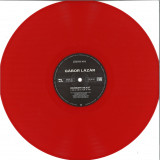
Gábor Lázár’s “Boundary Object” is a collection of eight real-time recorded, unedited tracks made in Budapest and Prague between 2020 and 2022 using a self-designed compositional interface. It's Gábor Lázár’s second album for Planet Mu following “Source” in 2020. The title comes from the idea of a Boundary object as a flexible concept of sociology and computation of how collaborations could happen between groups of people who have different kinds of backgrounds and different levels of knowledge. A Boundary object could be anything which translates between these groups to make a collaboration happen. Boundary objects are plastic, interpreted differently across communities but with enough common identity across social words and contexts to maintain integrity. This is a neat summary of how Gábor’s approach and working process led to his music on this album. Prismatic, flexible, and functioning on different levels of interpretation. On “Boundary Object”, the shiny surfaces and uniformity of “Source” have collapsed inward, leaving intact the recognisable pulse and frames of his music. While each individual track has a non-linear structure, the album as a whole has a strong narrative. Passages that start out Trance-like and familiar warp and weft into different shapes as if Gábor is examining the music like a 3d object, pulling at the edges, breaking and rebuilding what he examines, turning expectations inside-out. “Boundary Object” is intense, full-spectrum and a lot of fun.
Spiralling through the space-time continuum, Alberta Balsam's debut EP amalgamates clipped breakbeat with lithe IDM and sawtooth electro. Inspired by the visionary author Ursula K. Le Guin, the vinyl is presented by Dekmantel Records together with a transcendental sci-fi narrative. Printed on a poster-inlay designed by British artist Alex Morgan, the story tells of a quest for survival on a planet ravaged by ecological collapse.
In a bid to rescue all lifeforms from impending destruction, a lone holobot frantically consults her neurobiological interface. Humans can no longer subsist on Earth: waterways are contaminated, and the unbreathable atmosphere has taken on a toxic purple, almost holographic hue. Faced with environmental apocalypse, she turns skyward, to take root among the stars. With nods to the utopian futurism, attunement to nature and alien visions of pioneering electronic artists such as Drexciya and Delia Derbyshire, Alberta transmutes a synergy that's entirely her own. Higher Dreams journeys elsewhere on a passage that's equal parts intergalactic and introspective, questioning how, on the brink of the abyss, we can find hope.
Blasting off the A-side with 'Atuan Tombs' – a reference to Le Guin's masterful Tales From Earthsea series – a cyborg voice narrates plundering through the skeletal remains of an urban landscape. Hollowed out kick-drums thunder in 'Cascade;' glitched-out beats that shatter into incandescent, intricate melodies. On the B-side, the titular track crescendos, it’s biblical vocals conveying the gravitas of an approaching dystopia. Yet Higher Dreams is far from doom-inducing – the EP closes off with ‘Suspended in the Manifold,' the vibrant Roland TR-808 rhythm fuelled by the colossal power of a solar flare.
Renowned for her live hardware-based sets, Alberta flexes her immeasurable skill as a tech-savvy producer adept at constructing danceable, yet simultaneously lush and expansive interludes. Having trained as an epidemiologist, the theme of care reverberates through her music. Crucially, she regards dance as medicine – a primordial remedy to sustain our interconnected existence.
Summer 2021 sees the fourth in the Frigio Allstars series hitting all respectable shelves.
Jack Carel opens the 12” with the acid burning grunge of “Fuck This Shit” followed by Sons of Traders with the chugging 4/4 nastiness of “A for All.” A trippy, dark industrial streak runs in the snares and swagger of Rambal Cochet’s “Doomsday Scenario Interface” and in the powerful introspection of Daniel Holt’s “The Recluse.” Neud Photo arrives on Frigio with a menacing debut, “The Split” which pierces a haze of smoke in this late-night floor-filler. Honored Matres who appeared on the first volume of these series, returns with the blackest of the compilation. Machine gun percussion close the 12” with Chris Mitchell offering the chopped and gnawed “Alsina.
Repress!
"The latest release on Textasy's Berlin-based imprint further mines the interface between electro and jungle. DJ DR-660's EP is, as the name suggests, dedicated to carnal pleasures, whether it's cleverly flipping a familiar spoken word sample into speedy bass-heavy beats and slow jam smoothness on 'Talk 2 Me (Consent)' or combining Miami bass style lewdness and rolling breaks on 'Fuk Me From The Back (Da Bomb Edit)' The latter is especially good, fluidly alternating between rhythms and hip hop samples in a way that will excite dancefloors. Elsewhere, 'Rhodes Rec' has the kind of smokey keys you could expect in an ambient d&b number, but riding speedy juke/ghettotech drums and another rude vocal. The whole EP is fire. 9/10' - DJ MAG (words by Ben Murphy)
Distorted classical choral recordings, synths, processed guitar… The exquisitely complex human-machine interface experiments conducted by Stefano Pilia are kept in a delicate balance by John Duncan‘s lyrics and the soulful quality of his vocals, for an album of electroacoustic songs that are a unique blend for both artists. Seeds and memories from the past are re-actualized in the present through a machine electroacoustic compositional process creating a dark, gloomy and terrifying image of the future. Duncan’s lyrics offer a counterpointing liberation to the machine processes in action here, poetically revealing the dark and intimate struggle between the human soul and its rapport with the machine.
These recordings are a point of departure for Matilde Piazzi‘s inspired liner notes and photos, that take this release to another level entirely, becoming a metaphor for contemporary efforts to reach the limits of knowledge and discovery, their heroic nature and their inevitable failure.
Both artists worked on their respective sections in isolation, Pilia in an industrial area of central Bologna, Duncan in the wilderness several kilometers south of the urban sprawl. Together, their recordings developed an almost magnetic attraction that seemed to meld effortlessly.
The experience of listening quickly takes on a cinematic quality, exquisitely moving from an oceanic uplifting (Try Again) to the depths of apocalyptic, unsettling vocals (Fare Forward), constantly maintaining a lush, richly complex tapestry. The linear understanding of time is suddenly gone, dominated by a crushing machine-defined present, with Duncan’s lyrics and vocals becoming a shamanic portal to a possible future.
‘Try Again’ is released on digital/LP and was written, recorded and mixed by Stefano Pilia and John Duncan. Mastered by Ivan Pjevcevic. LP edition comes with insert, lyrics obi and text/photography by Matilde Piazzi.
Behind the finest and most moving pieces of contemporary-classical music lie deeply personal and poignant stories, and Simon Goff's new album Vale is no exception. The British violinist and composer's dazzling exploration of the interface between violin and technology and between the poles of intimacy and grandeur, as rich and deep and wide as the landscape that lies its heart, named after the Vale of York where Goff grew up. The album encapsulates not just a landscape but a place in time and an identity forged through youth and adulthood, all viewed from his current base in Berlin. Goff's artistic project is one which has been informed by his previous collaborations as both a performer and recording engineer, performing with artists such as Thor Harris (Swans, Amanda Palmer) and Federico Albanese, playing in concert halls across Europe. On his very first day working at the legendary Vox-Ton studios, Goff was introduced to Adam Wiltzie (half of the venerated post-classical/ ambient duo Stars Of The Lid/A Winged Victory for the Sullen), and over the next two years, he worked with post-classical and post-rock visionaries such as the late Jóhann Jóhannsson, Hildur Gudnadóttir (notably on the film soundtracks for Chernobyl and Joker), Dustin O'Halloran and Yair Elazar Glotman.