Camisole is proud to unveil another part of the french cold wave history with the reissue of "Paroles Absurdes" LP by White Pain.
Hailing from Lyon the band began as a duo with Patrick Saveau and Patrick Gravier in 1984.Active figures in the underground scene of their city, they played some gigs and even had their own show on the local radio station.They developed a small following around them and recruited other members to record this album in 1986.
"Paroles Absurdes" is driven by the feeling that you can't escape your fate. Saying Words that you sometimes regret but you feel to be true.This testimony infuses this whole album.However, positive assumptions flow from time to time and left their more pop appeal roll into some songs.
This reissue also includes the first two tracks of the group only released on tape in 1985.As a duo, White Pain was a synth and drum machine band inspired by early 80's german pioneers like DAF or Din a Testbild.They used to have a raw, powerful, and dark sound quite unique in France at this time."Vienna" is probably the best way to resume their first intention.
out of Stock
Last delivered 4 years ago available to reorder, subject to availability
Kicking off proceedings on new label, Scene Unseen is Yorkshire’s finest, Jinjé a.k.a. Lee J Malcolm.
Scene Unseen will focus on exploring and showcasing scenes from around the world (some seen or some maybe unseen), as well as releasing music from artists who incorporate sounds from across the globe within a music style that's closer to home. This is where Jinjé steps in, delivering an EP of Afro-funk and Afro-tech. He draws upon his usual duties as a fine Techno, House and Electronica producer and combines them with rhythms inspired by African and Indian music, using instruments (played and recorded live by Jinjé) and field recordings from both regions.
Jinjé (Lee J Malcolm) has released on labels such as Messrs. Kicks & Drums, EPM Music, Mesh and Ostgut Ton. He was also a founding member and mainstay in the Leeds band, Vessels (Different Recordings), until leaving a couple of years ago to concentrate on solo projects.
The track names tell all, as Jinjé gives a clear nod to the Africanism is his music. First track, 'Ngoma' is a name used across Africa to describe certain drums and percussive instruments, which can be heard here, like Djembes from the Conga region, as well as live and acoustic components, blended with modular and other electronic sounds.
'Burkina Faso' takes us west and hits the ground running with a vocal sample of Tribal women from the area, singing praise and joy to engineers who have come to provide fresh water to the village: "Praise God for they have come to build us a well." The progression of the track is based around this joy and develops nicely alongside some intense bass and drums.
'Dusk' is inspired by thoughts of the Serengeti planes at night fall, all built around Jinjé's live M'bira plugged into a modular synth, grouped with live flute and field recordings from India which provide additional percussion.
'Ya Maji' is a collection of high energy rhythms from a Moroccan frame drum, congas, clapping, live bass, distorted marimba and the mighty Korg Ms20 playing the lead synth lines.
Last up is 'Jara', a nod to Steve Reich and his six marimbas, as well as drawing inspiration from Fela Kuti. Vocal samples bring in more of the field recordings Jinjé made in India, as well as the clapping elements. Acoustic and electronic sounds intertwine to great effect and sum up the EP as a whole.
Look out for more from Jinjé in this musical direction as he seeks to bring these tracks and future ones to a live band setup.
out of Stock
Last delivered 4 years ago available to reorder, subject to availability
Expectations is an extended player from minimalist disco outfit Harvey Sutherland and Bermuda. The second release for Sutherland's own Clarity Recordings brings his Bermuda project into sharp focus - six tracks spanning Harvey's influences from the West Coast to West End Records.
Recorded with bandmates Graeme Pogson (drums) and Tamil Rogeon (electric strings), Expectations follows last year's stomping label debut single Priestess/Bravado.
The EP includes a long-awaited studio version of live favourite Clarity, uptempo burner Coast 2 Coast and a moment of spiritual introspection with Spiders. The title track offers glimmers of the Doobies and the 'Dan a sign of things to come from the Melbourne producer and his unique trio.
Expectations 12 and digital will be released worldwide 24 March 2017, via Clarity Recordings. Distributed by Monocarpic (AUS/NZ) and Above Board Distribution (ROW).
out of Stock
Last delivered 8 months ago available to reorder, subject to availability
(Emmanuel Top, Tom Hades, Kony Donales + original remastered) Zolex heads up our next Bonzai Classics vinyl release with his 1993 cut, Time Modulator. New remixes come from Emmanuel Top, Tome Hades and Kony Donales who add their own unique twists to a techno classic.
Zolex heads up our next Bonzai Classics vinyl release with his 1993 cut, Time Modulator. New remixes come from Emmanuel Top, Tome Hades and Kony Donales who add their own unique twists to a techno classic. Back in the mid-nineties, Frank Struyf was churning out top club hits on Dance Opera, Circus, Frank’s own Zolex Records and our very own XTC and Bonzai Records imprints. Despite his busy DJ schedule Frank still found the time to produce his own sounds. Many years of producing quality records followed and he is still twiddling the knobs and spinning sets to this day.
The Original Mix graces the A1 slot, with its dark drums and rolling techno vibe hitting the spot. Moody and twisty, the groove becomes infectious and hypnotic thanks to a combination of blippy, bleepy sounds and relentless strings. The energy levels rise after the break, causing chaotic scenes on the floor, an absolute stomper. French DJ and producer Emmanuel Top takes up the A2 slot, delivering a fine remix with his instantly recognisable signature sound. Responsible for so many acid laden moments throughout his career, Emmanuel Top remains an inspiration to many. On the remix here, the tension mounts as 303 lines fade up alongside a hybrid drum construction and hypnotic FX. The acid effect takes hold, dominating the groove, the perfect set builder to whip up the crowd. Over on the flip, Belgian artist Tom Hades offers up his interpretation, turning the original into a slamming slice of techno for the modern dancefloor. Undoubtedly, Tom is responsible for some of the best techno joints released in recent years. Here, he employs his skills to great effect, using banging beats and minimalistic sounds that drive a solid, dark room techno vibe. This one is a must have, no doubt. To complete the vinyl, we have French artist Kony Donales on remix duties. Kony is the owner of Cayden Records which has churned out top techno tracks since 2011. He is known for his minimal style and he definitely knows how to work a track. The remix here brings the essence of Time Modulator into the 21st century with a strong contemporary groove. Nice pounding kicks and crispy percussions set the rhythm loose as metallic hits join raucous percussions and FX. Top-notch stuff once again.
out of Stock
Last delivered 2 years ago available to reorder, subject to availability
Four killer tracks of high grade electronic soul from James Baker AKA REKAB. A fantastic EP showing both breadth of style and respect for the roots and traditions of the music from this artist.The first, Locked on Dodge, is a driving deep Detroit techno track with a hypnotic arpeggiated lead and filtered atmospherics to lose yourself inside. Don’t get too comfortable though, it’s capped with a surprise electro switch in the breakdown to keep the floor on their toes! The second track, We Need to Care, delivers a cool clear synth sound design over Chicago influenced house tempo beats and lush pads. Simultaneously groovy and comforting, this is a track for those special moments. Jacking with your eyes closed and a big grin on your face.
Third we have a clear tribute to Drexciya with In Search of the Deep Sea Dweller. Tough 808 beats and laser zaps punch through a bed of evocative strings whilst a filtered single note loop rises and falls like the tide. An abstract robotic voice presides over the track, adding atmosphere whilst giving it a sense of mysterious machine driven intelligence.
Lastly, Too Much Time gets its space boogie on. Electro funk beats jump round staccato synth chords and a simple but effective Moog-like bass line. Once the scene is set, a writhing 303 joins the proceedings accompanied soaring pads and beautiful melodic leads that make you feel like you’re being lifted into the cosmos.
----------
ReKab aka James Baker from the UK started Djing in the early 90’s. Later on he started playing around with music. Finally the ReKab sound was established in 2019 with his first release on Where We Met records. Other releases followed soon on Móatún, Withhold, Intellitronic Bubble, We’re Going Deep and Fourier Transform.
His music is very deep and full of emotions and influenced by his love for Detroit.
out of Stock
Last delivered 17 months ago available to reorder, subject to availability
This fresh collab will see the Dutch producer bringing two EPs “Leaving Earth Part.1 and 2” on EYA Records sister label this year.
Intricate rhythms,bleeps and bass, emotive melodies and acid lines.
The artist opens a portal to new dimensions, it’s a powerful journey into timeless music and deep space. 5,4,3,2,1.. ignition and take off. The dream is alive.
out of Stock
Last delivered 9 months ago available to reorder, subject to availability
A.B. Crentsil is a heavyweight of Highlife music and the main vocalist of Sweet Talks, one of the most popular Ghanaian bands of the 1970’s. In 1992, musician Charles Amoah and producer Richie Osei Kuffour offered him the opportunity to explore a new popular sound: Bürger Highlife. Little did he know these studio sessions would give birth to the biggest song of his career.
Charles Amoah, who had released his Sweet Vibrations LP in 1984 to great acclaim, extensively toured in Europe with bands such as Black Earth and Saraba, was eager to bring a new sound to Crentsil, an artist he had admired for years. Throughout the 1980’s, Highlife had been changing pretty radically, following the same evolution as Congolese Soukous, Caribbean Zouk and most popular black music
genres of that era: Heavy use of drum machines, synths and digital technology was conveniently replacing big bands and expensive
analog studios and equipments. Mostly recorded, produced or mixed in Germany, this new breed of electric Highlife dubbed ‘Bürger Highlife’ could be defined as a fusion of Disco, Jazz, Funk and Pop with the popular Highlife beats, rhythms and lyrics.
According to A.B. Crentsil, the name was a reference to the ever present American cultural influence on Ghanaian musicians. Charles
Amoah has his own take: “I initially called this particular kind of Highlife ‘Ethno Pop’. Bürger is the German word for citizen, and that’s how Ghanaian musicians living and working in Germany were calling each other”.
The music for both “Obi Baa Wiase'' and “Sika Be Ba” was entirely composed and played by Charles Amoah, using minimal equipment: a
DX7 synth, a Korg M1, a Yamaha RX5 drum machine, and an Akai 1000 sampler. A.B. Crentsil provided the lyrics for both tunes on the spot. Obi Ba Wiase’s message is one of gratitude and faith: it says we should appreciate our life way more and follow the example of people who have a lot less but still praise God all day.
Charles remembers fondly Crentsil’s larger than life personality: "A.B. slept a lot, he really loved sleeping. His lack of punctuality was easily dismissed by his wonderful sense of humour and it wasn't uncommon to find musicians rolling with laughter on the studio floor."
Charles also remembers vividly the "Obi Baa Wiase" session: he could feel the magic in the air while working on the soon to be hit, and
knew something special was happening. A.B. asked for a break in the middle of the session, which Charles adamantly refused until the song was finished and the magic fully captured.
Success was not immediate, and Charles was first a little concerned by the lack of buzz following the immediate release of the Gyae Me
Life Ma Me album. But a few months down the line, the situation took a new turn. "Obi Baa Wiase" was making its way into radio playlists,
weddings and festive celebrations. It was covered by local bands, and soon most of Ghana and its European and American diasporas were hooked. It became A.B. Crentsil’s most requested song at live events for the following decades.
As producer Richie Moore wrote on the album back cover : "A perfect integration of two musical geniuses, the result of which are the
scintillating tracks of music on this record… so all you party fans go onto the floor and dance the body music"
out of Stock
Last delivered 4 years ago available to reorder, subject to availability
"Prime Sequences" is the latest album by dj and electronic music producer GummiHz, real name Alexander Tsotsos. Alex has an ear for what he describes as elastic frequencies, thus gummi-hertz! In other words, low bass lines, airy synth phrases and shuffle rhythms, playfully arranged within loose forms. A philosophy that comes across throughout this long player. Elements fall in and out of order, time swings back and forth, all together in perfect harmony! Pushing the boundaries of what has become his signature sound, a fusion of house and techno all the way from Berlin to Detroit! This package features underground music coming straight from the heart, or the Hertz more appropriately! The story unfolds within no less than nine tracks showcasing Alex's versatility in making waves!
The opening track titled "Berlinopolis" is a sonic portrait of the city of Berlin, where Alex lives since more than a decade. A smooth soundscape produced by combining abstract melodies with field recordings of the city's ambience. "'Second Wave" follows airy jazz chords and drum parts to launch the listener into trajectory. It feels like the sort of track that would probably make it into Herbie Hancock's deep house collection! The title track "Prime sequence" is a Detroit brewed piece with some Berlin minimalism rawness in the rhythm section! Combining a mixture of drama, suspense and shaking drums to dominate the dance floor. Next up comes "Submerge", a tight and hypnotic affair carrying the right amount of subtle release. It locks in right from the start and doesn't let go! "Prime Dub" dives deeper into the frequency spectrum. Rhythm and sound stimulate the brain waves as a heavy chord phrase cycles to infinity. "Proto Sequence" follows a simple still infectious groove laced with various modulations. This track has party written all over it! Inspired by proto-house motifs pioneered by artists like Chi-town's Ron Hardy. "Metafunk" reaches out to Berlin's club culture at its core. That is, the youth and street culture! The phrase on repeat signifies the urge to reclaim the streets, while endlessly flowing within finely tuned electronics. "Mindloop" is a track written for the after hours looping state of mind. Another minimal house cut with a fair dose of psychedelic sound design. Lastly, "Descension" relaxes the mood through deep pulsating rhythms and playful arpeggios. Pushing towards a meditative state by stimulating mind, body and soul!?
"Prime Sequences" covers a wide range of styles like ambient electronics, peak time house and techno, as well as seriously effed up after hour minimalism! Made for both djs and music lovers, this is the second long player by GummiHz to come out on vinyl after his debut album "Sleepless Nights" back in 2009! While it succeeds his latest EP, "Groove is in the Hertz". What makes it even more special is that it comes out on brainchild Claap, giving the artist total freedom of expression.
out of Stock
Last delivered 4 years ago available to reorder, subject to availability
Following the sublime smash debut "X17", LA-based label Elbow Grease head conductor Dave Aju continues on his righteous piece-by-piece journey toward a multi-genre multiverse, where deep musical roots come together in kaleidoscopic expression, and unfakeable funk reigns supreme.
"Spacio Tempo" picks up where we last left off, though with a notable drop in bpm as the title implies, with a rolling 4/4 textural tapestry that combines pulsating layers of soulful synth work, effervescent live percussion, and heavenly strings into a dense yet open-as-the-night-sky extended gem yet again. Just as the machine patterns of near-equator rhythms bubble over and begin to lock into a hypnotic groove, a bold left turn into a dank latin jazz noir vibraphone solo and SH-101 duet tango ensues, before landing us safely back at home base - right on time, at its own spacial pace.
As per the Elbow Grease release recipe so far, the B1 cut offers DJs a more driving flex, this time in the form of the "Acido Tempo Mix": a raw 303-driven take on the original which will undoubtedly stomp its way fiercely thru many bass bins in sweaty basements and warehouses worldwide. Finally the B2 blessing "Domingo Dub" closes things out, removing all but the highest vibes as an ambient drifting and uplifting take on the main theme, where the faintest of vocal tones, space echoes, and light percussive touches leave us elated in a West Coast, with subtle splashes from the D, sunset dream. Another solid single turned three-tracker sure-shot from EG.
out of Stock
Last delivered 3 years ago available to reorder, subject to availability
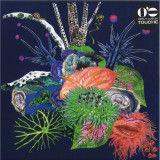
O’o share many of the musical characteristics of their ornithological namesake. The Kaua’i O’O produced the most exquisite birdsong before its extinction in Hawaii in the late 1980s. The beauty and character of its voice was delicate and mysterious, tuneful and surprising. You can experience it with just a cursory websearch, a haunting cri de coeur from the last century. If the poor O’O is consigned to history, then life is just beginning for this French duo, based in Spain, who’ve won plaudits and awards already in their short musical lifespan.
O’o are about to release their sublime debut album Touche. This is not an endling, it’s just the beginning: “I found the name on a website of weird English language words, and I loved the way the letters were arranged like a pair of glasses,” says O’o singer Victoria Suter. “Afterwards, I went onto YouTube and started listening to the last bird of its species, calling for a mate that would never come. I thought: ‘Oh my God, that’s so sad’. Then we talked about the name and we thought it could be a nice thing to honour it and keep it alive in some way.”
Suter met her musical partner Mathieu Daubigné at college in Agen, South West France, when the pair were studying music theory in their teens. Victoria moved to Barcelona in 2010; Mathieu followed six years later. Their debut EP, Spells, appeared in 2018 a beautifully crafted patchwork of vocals and samples that is redolent of the uncanny vocalese of Laurie Anderson. The bird makes an appearance at the beginning of the EP: “Sweet tooth beak. Soft melody peak / Oh O’o, go round and round in circles / Looking for a honeydrop, til you vanish, til you drop”.
That sense of profound longing for something lost is carried over to Touche, as well as the same heightened sensory awareness of the world around them. What has developed in spades is the creative process. O’o have blossomed organically, augmenting their pop sensibilities. Avant-garde techniques have been brought to heel as the pair create off-kilter pop music that warms the heart and nourishes the brain. The catalyst that enabled this bold pop transformation came with the song ‘Touche’ itself, a saucy chanson at the heart of the album. Suter’s wry narrative about a botanical femme fatale is inserted into a lithe and skittish song with reggaeton beats and an inviting, balmy atmosphere.
“The song is about a flower which attracts male insects, producing the very same smell as the female of the species,” explains Victoria. “The poor male is fooled by the sex-appeal of this botanical trap, and gets so excited that he exhausts himself and wastes all his other chances of ulterior mating and having any offspring. The flower entices the insect in in mermaid-like fashion, to come nearer and touch her. It’s the hot track!”
‘Touche’ reaches into hitherto unexplored areas of pop, while the rest of the album is accessible in the way that James Blake, Radiohead or Kate Bush are accessible, and it always challenges, in a way that pop isn’t supposed to. Suter writes playful, poignant, observational songs that tell stories as well as tell us something about ourselves. Songs like ‘Dorica Castra’ are built upon the voice as an instrument, centrifugal and layered from its core.
Complimentary to this method is Daubigné, who brings startling innovation with found sounds, samples and clever vocal manipulations—creating unique, otherworldly sonic flourishes. A guitar whirs like a musical spinning top on ‘Spin’, created in Ableton; an Ondes Martenot appears to make a guest appearance on the title track, though it’s the ingenuity of the Prophet 8 synthesiser. “I’ll often say to Mathieu, ‘what’s that?’” says Suter, He’ll reply, ‘that’s your voice’.”
O’o found their own voice when they won a competition held by the legendary festival organisers Primavera Sound. Victoria entered the band into a competition she saw on Instagram, sending off rough demos on the final day of entry, thinking little more about it other than the fact Mathieu might be annoyed. Soon they would have to build a live set from scratch and figure out how to present their music for the first time. At stake was seventy hours of recording time at Aclam studios, used by Rosalía and Kendrick Lamar, and for the winner a coveted spot at the festival. A pool of 350 acts were whittled down, and then O’o triumphed at a Battle of the Band style face off.
The O’O might be extinct, but O’o the band have learned how to fly. Just watch them go.
out of Stock
Last delivered 4 years ago available to reorder, subject to availability
Swedish duo Thunder Tillman come together again in healing harmony to produce a much needed LP for troubled times. Thunder and his life coach Pony bring their spirits in sync for 40 minutes of improvised soundtracks for mental and physical wellbeing.
Recorded on Stockholm’s Wind Island, the pair have carefully selected specimens from their collection of vintage musical paraphernalia to channel these specific vibrations for maximum healing power.
Side one is a gentle wake up call for the soul, with pipes and chimes that gently give way to mind-expanding synths and feedback echoes that sound like sun glistening off a mountain river. Those sounds lead into an electric piano and life affirming synth figure, before disintegrating into santoor strings and chants with a slight Indian flavor. It’s a cosmic combination that invites relaxation and meditation, and the kind of deep breathing exercises that could turn back the clock on a host of bodily ailments. An electric piano comes back to the foreground with a bass and synth combination that drives forward with healing hands, before parting the frequencies for ear-tickling pads and voices. Rounding out the side is a chiming synth and santoor figure that brings the wandering spirit home and to rest.
Side two starts up with Cosmic Osmosis - a motorik drum machine beat and bass line that briefly brings to mind some of their more krautrock inspired modes across their three previous Eps, but soon collapses back into visceral synth twinkles and relaxing washes of analogue tones. It’s a dynamic that drives the whole record, sounds that excite the soul perhaps even the body on an atomic level, before bringing that energy down to a calming, relaxing home. There’s a craftsmanship to their synthesized tones that goes beyond mere artistry, and the interplay between sounds and frequencies is especially inspired, to the point where the music practically sparkles out of the speakers. Side two closes out with harmonic chimes that could put you on a Himalayan mountain side, and succeeds in raising the spirit, mind and body to higher plains of cosmic consciousness.
The Aural Healing Program is accompanied by a 40 minutes Visual Healing Program that will be unveiled in conjunction with the vinyl release. The first visual healing session featuring side B opener Cosmic Osmosis, is already available for all to partake. So just relax, let go and let the frequencies guide you.
out of Stock
Last delivered 3 years ago available to reorder, subject to availability
‘Mehldau can truly translate his thoughts and feelings into complex and lasting music. He is one of those people whose brain and fingers and musical ability is all one beautiful entity.’ – Jamie Cullum
Nonesuch Records releases Brad Mehldau’s Jacob’s Ladder on 2 x 140g black vinyl on June 17th . The album features new music that reflects on scripture and the search for God through music inspired by the prog rock Mehldau loved as a young adolescent, which was his gateway to the fusion that eventually led to his discovery of jazz. Featured musicians on the album include Mehldau’s label mates Chris Thile and Cécile McLorin Salvant, as well as Mark Guiliana, Becca Stevens, Joel Frahm, and others. The album’s first single, ‘maybe as his skies are wide’, builds off an interpolation of one portion of Rush’s classic ‘Tom Sawyer’.
Mehldau explains, “We are born close to God, and as we mature, we invariably move further and further away from Him on account of our ego. Jacob’s Ladder begins at that place closer to God with the voice of child, and then moves into the world of action. God is always there, but in our discovery and conquest, and all the joys and sorrows they bring, we may lose sight of him. He sets a ladder before us though, like in Jacob’s dream, and we climb towards him, to find reconciliation with ourselves, to stitch up all those worldly wounds and finally heal. The record ends with my vision of heaven – once again as a child, His child, in eternal grace, in ecstasy.
“The musical conduit on the record is prog,” Mehldau continues. “Prog – progressive rock – was the music of my childhood, before I discovered jazz. It matched the fantasy and science fiction books I read from C.S. Lewis, Madeleine L’Engle and others at that time, aged ten through twelve. It was my gateway to the fusion of Miles Davis, Weather Report, Mahavishnu Orchestra and other groups, which in turn was the gateway to more jazz. Jazz shared with prog a broader expressive scope and larger-scale ambitions than the rock music I had known already.
“The prog from Rush, Gentle Giant, and Emerson, Lake and Palmer here only hints at the genre’s conceptual, compositional and emotional range. These bands and others have continued to influence newer groups that bring prog impulses into the arena of hard rock and screaming math metal, like Periphery, whose music is included here, and also inspired the screaming vocals on ‘Herr und Knecht.’ I tried to avoid a direct tribute approach to all the songs, and opted in some cases for excerpts, or reworking of themes.”
Although Brad Mehldau is best known as a jazz composer and improviser, he has made several albums that fall outside of the mainstream jazz genre, including his 2001 Largo, produced by Jon Brion. Wide-ranging in texture and big in scale, it features woodwind or brass ensembles are on several tracks, as well as a heavy emphasis on powerful drums. In 2010, Nonesuch released his second collaboration with Brion, Highway Rider, which includes performances by Mehldau’s trio – drummer Jeff Ballard and bassist Larry Grenadier – as well as drummer Matt Chamberlain, saxophonist Joshua Redman, and a chamber orchestra led by Dan Coleman. Mehldau also orchestrated and arranged the album’s fifteen pieces for the ensemble.
Mehldau’s 2014 collaboration with Mark Guiliana, Mehliana: Taming the Dragon featured Mehldau on Fender Rhodes and synthesizers and Guiliana on drums and effects, playing twelve original tunes – six by the duo and six by Mehldau. His 2019 album Finding Gabriel featured performances by him on piano, synthesizers, percussion, and Fender Rhodes, as well as vocals. Guest musicians included Ambrose Akinmusire, Sara Caswell, Kurt Elling, Joel Frahm, Mark Guiliana, Gabriel Kahane, and Becca Stevens, among others.
New York's Marcos Cabral steps up for his first full release on Dimensions Recordings, with the Nature Walk EP.
Following on from his epic Prochainement masterpiece on Dimensions 002, the EP provides a glimpse into the mind of a well-established and hugely respected artist.
Nature Walk is a broad EP that demonstrates just why Marcos's records have been finding their way into a multitude of DJs' bags for the last fifteen years.
Stefan Schwanders Repeat Orchestra presents “Infamous Lost Tracks”, an album appearing out of the blue, coming from spheres where time, space and Zeitgeist are nothing more than words.
With the Repeat Orchestra Schwander (who of course also is Harmonious Thelonious, A Rocket In Dub, Antonelli and a lot more) found a unique way of channeling deep House Music, a minimalistic setup and an idea of creating enjoyable music into amazing tracks that sound so effortless and natural. From first track "Call And Response" on it’s obvious that the main thing that this album is about is the groove, sometimes euphoric, sometimes quite unobtrusive but always irresistible, build from massive basslines, complex rhythms and the masterfully performed interplay of repetition and modulation. Warm harmonies, multilayered (at times quite unusual ("Nightdubbing")) melodies and subtle arrangements complete these Infamous Lost Tracks and their very own formular between Düsseldorf, Chicago and Lagos. There’s nothing harsh in this music, no aggression, still it’s far from being tame or tranquil: The pumping energy of "A Means To An End" or the sublime liquid shuffle of "Less Sensational" show the swing and kick inside these works that are made for delight but not to please.
And “Monks In A Club” is the most brilliant example of dancefloor understatement that you’ll ever hear in your life. Reduction, elegance and the right kind of mania concentrated into some minutes of pure club heaven. Handclaps, nonchalance & madness. An essential singularity and the swan song to the Repeat Orchestra, there will be no more of it. Get It And Smile.
out of Stock
Last delivered 19 months ago available to reorder, subject to availability
For fans of Turkish Psychedelic Funk and Anatolian Rock. Alexander Korostinsky (Whatitdo Archive Group and The Sextones) marks his solo debut with two heavy psychedelic tracks. 7" vinyl is limited to 300 copies.
Record Kicks busts down the doors with yet another 7" heater– this time by Alexander Korostinsky (The Sextones, Whatitdo Archive Group), an accomplished songwriter/producer making his debut as a solo artist with a heavy psychedelic 7" available at selected stores next June 17th and limited to 300 copies worldwide. Korostinsky gives a loving nod to the sound of 60s and 70s Anatolian Psych Rock all while staying true to his unique songwriting style and recording approach. On the A side is "Bones of God", a psychedelic Turkish-infused cut featuring an electric saz and sitar dancing across tape-y drums and his distinctive bass playing. On the flip side, "Altin Maske'', a hypnotic exploration into Korostinsky's mind as a solo artist– think a Turkish David Axelrod and you'll be set. "Altin Maske's" twists and turns guide the phased out drums and electric saz into a beautifully psychotic meltdown.
Meticulously recorded and produced entirely on a Tascam 388 by Korostinsky at his own Archive Group Studios,this 45 is imbued with Korostinsky's love of analog recording production and vintage records. One listen and you'll notice thatthese songs are begging to be sampled and are a must have for any serious crate-digger. If this first release is any indication of what we can expect from Korostinsky in the future, then we are excited to see where he takes us next.
The 7" vinyl is limited to 300 copies worldwide which makes it an instant collector's item.
out of Stock
Last delivered 4 years ago available to reorder, subject to availability
Known for her lengthy tenure touring and busking with beloved New
Orleans jazz band Tuba Skinny, prolific songwriter and singer Erika Lewis has been churning out American originals all her own for the past several years
From classic country to cosmic Americana to dreamy indie folk, Lewis continues to dip her toes more deeply into an ever- expanding pool of roots music styles. Her new record 'A Walk Around the Sun' is a testament to Lewis' songwriting prowess and exceptional vocal ability. Produced by John James Tourville (The Deslondes), 'A Walk Around the Sun' features 11 all-original songs exploring the gray areas between love and loss, joy and grief, longing and contentment. Though her songwriting shines brightly, it's never at the cost of melody or arrangement; complete with sweeping strings, pedal steel, and even the occasional fuzz of a psych-rock guitar solo, Lewis' voice soars with emotion and texture throughout. Beautifully balanced, adroitly performed, and masterfully produced, 'A Walk Around the Sun' brings Lewis' solo work out from the wings to center stage,
beneath a spotlight nearly impossible to ignore.
28th April 2022 marks the 50th anniversary of the release of David Bowie’s STARMAN, the first single from THE RISE AND FALL OF ZIGGY STARDUST AND THE SPIDERS FROM MARS. To celebrate, Parlophone Records is proud to announce release details to mark the album’s Golden Jubilee.
On 17th June 2022, 50 years and one day after the original U.K. release date, THE RISE AND FALL OF ZIGGY STARDUST AND THE SPIDERS FROM MARS will be issued as a limited edition 50th anniversary picture disc, featuring a half-speed master and a replica promotional poster for the album.
THE RISE AND FALL OF ZIGGY STARDUST AND THE SPIDERS FROM MARS is the breakthrough album that catapulted David Bowie into the international spotlight. Over the past 50 years it has remained a touchstone record, growing in stature with each passing year. It is now ingrained in popular culture, its undeniable influence spanning musicians from Arcade Fire to Lady Gaga, to Harry Styles’s androgynous fashion sense to Noel Fielding’s shirts on The Great British Bake-Off to Ziggy make-up challenges on Tik-Tok.
David Bowie laid to rest the Ziggy Stardust persona in July 1973 at his infamous last show with the Spiders From Mars at London’s Hammersmith Odeon, but Ziggy’s impact reverberates to this day.
Rising star Amy Dabbs delivers us another huge house EP, dropping as the debut release on her brand new label Dabbs Traxx. The modern take on classic house that she's become renowned for in her recent
highly acclaimed releases permeates every track on Four Track Mind EP, serving up Amy's trademark pacey rhythmic percussion, emotive melodies, and fat subby basslines.
Ghosts kicks things off with ticking clocks and haunting melodies woven throughout, creating a deeply atmospheric track. It surrounds you with thick layers of pads and strings, underpinned with tear-jerking chords and vocals, sprinkled with touches of Amy’s beloved Juno 106. This track relays a moving tale of facing the ghosts of your past which, alongside Ghosts’ powerful percussive drops, is guaranteed to give the dancefloor goosebumps in more ways than one.
Til You See takes us in an uplifting direction, with a powerful bassline blazing against a backdrop of soaring pads and delicately placed arpeggiators, leading towards a spine-tingling yet subtle vocal as the track reaches its peak. Bringing Amy's desire to create music that moves you to life, this stunning track is brimming with jubilance and optimism from beginning to end.
Last but by no means least comes the EP's title track, Four Track Mind, its nostalgic organ sounds, bouncy percussive chops and big basslines ensuring it will be a huge dancefloor moment when played out. This energetic track takes you into the heavens with its relentlessly uplifting transitions throughout, Amy's intention clearly to place you firmly in the centre of the dancefloor with a massive smile on your face.
Having recently been named as one of BBC Radio 1's Future Stars 2022, and with a string of solo EPs coming out over the next 6 months, it's quickly becoming clear that Amy Dabbs is going to be a name we'll be hearing a lot more of this year
out of Stock
Last delivered 3 years ago available to reorder, subject to availability
One of Europe's key figures in the drum and bass music scene of the 2000s - Sunchase - returns with his long-awaited album on Kashtan, a newly launched label from Ukraine, on 1st of December 2020.
Sunchase had numerous singles on such cult labels like Moving Shadow, Metalheadz and Hospital Records and after 10 years he finally returns to the LP format. His second album 'Timeline', just like the concept of the label, blurs the boundaries between genres of electronic music, and cannot be assigned to any particular style. The melancholic and abstract sounds give off a sense of reclusiveness, with dubstep and drum and bass rhythms peeking and sometimes breaking through to the surface, yet more often they go deeper, creating room for bass music, dub and even a slight touch of IDM, thus creating a very special state. The album as a whole appears as a voluminous, complete, and aesthetically established piece of work.
The releases of Kashtan will be executed in a rather unusual format: it will be a limited series of collectible packs, including a USB stick with music and additional multimedia content, as well as other materials. These packs can later be collected into a catalog. Also, the LP will be released digitally on Kashtan's Bandcamp page and all other known online stores.
out of Stock
Last delivered 2 years ago available to reorder, subject to availability
The Hamadcha of Fez are dervishes belonging to the very old (XVII) Moroccan Sufi brotherhood Hamdouchiyia. Its members are mystics who sing and dance to trance in honor of the holy founder, the miracle worker Sidi Ali Ben Hamdouch.
During a performance their amazing spiritual and artistic practices transmit to those who approach them their “baraka”, a divine grace.
The audience vibrates and moves to the rhythms of the dervishes songs, tempos, stories and fascinating dances.
Dj Click puts down his suitcases in the heart of the old city. He goes in search of atypical sounds coming from the heart of the streets, soaks up the atmospheres, then offering us a sound postcards where tradition alongside modernity.
He is the first producer to be accepted into their brotherhood for a such meeting!
out of Stock
Last delivered 3 years ago available to reorder, subject to availability
Legendary 70s group RIPPLE migrated from the Mid-West to Atlanta, GA. They signed with the new Atlanta based record label GRC and struck gold with their first single ‘I Don’t Know What It Is, But It Sure Is Funky’.
Two songs that never gained release at the time were ‘Maybe It’s You’ - a jazzy soul masterpiece that lilts along before springing into a falsetto crescendo and ‘Sweet Lady’ - an eclectic hodgepodge of influences - soul, funk, latin… the original demo runs at under 3 minutes, thankfully we have had an extended edit cleared (thanks to Phil Ward’s talents) so you get a double dose of the amazing keyboard solo.
"Blues styles have been used and adapted extensively throughout country music’s recorded history. In fact along with elements of Southern rock, the core of Country Music Hall of Fame member Hank Williams Jr.’s sound has always been the blues, and his latest album, Rich White Honky Blues, is a sonic testimony to that. Having used these same blues elements on his early albums, this raw and gritty new studio album returns to those roots. The project came together this past summer over three hot days in Nashville, Tennessee inside producer Dan Auerbach’s legendary studio, Easy Eye Sound. The vibrant and raucous album was recorded live with some of the finest blues session players in the country with Kenny Brown (guitar), Eric Deaton (bass) and Kinney Kimbrough (drums) all joining Bocephus and Auerbach in the studio. Never one to rest on his laurels, even after 56 studio albums and induction into the Country Music Hall of Fame, the acclaimed singer/songwriter and musician is still finding new creative ground to explore.
"
Indie-pop singer-songwriter, composer and producer Australia’s Ben Lee releases his 14th solo studio album “I’m Fun!”. The new album features guests Zooey Deschanel, Christian Lee Hutson, Money Mark, Megan Washington, Georgia Maq, Eric D Johnson.
On the album, Ben Lee says “This album, this moment in my career, is all about balancing some hard-earned wisdom from a 30-year long career with the vigor and energy of youth. That’s why it was as important to me to collab with artists like Jon Brion and Money Mark who I’ve both known for over 2 decades, as much as people like Shamir and Georgia Maq who are young and lit up with creative adrenaline. I like being a generational bridge between freaky artists. They are my tribe!”
Even before the launch of his solo career, Ben attracted attention in his teens as a member of the Sydney band Noise Addict. Following the band’s demise in the mid-90s, he began issuing a string of acclaimed solo albums while taking part in several side projects, including The Bens (Ben Folds, Ben Kweller, Ben Lee).
In his 30-year music career, Ben Lee has been gloriously prolific and unpredictable. The 4x ARIA award winning artist boasts an enviable catalogue including ‘Grandpa Would’ 1995, ‘Something To Remember Me By’ [1997], ‘Breathing Tornados’[1998], 2x ARIA Platinum album ‘Awake In New Sleep’[2005], ‘Ripe’ [2007], ‘The Rebirth of Venus’[2009], ‘Deeper Into Dream’ [2011] which have collectively spawned a multitude of chart hits, including “Cigarettes Will Kill You”, “Gamble Everything For Love”, “We're All in This Together” and “Catch My Disease”
Born and raised in the deep outskirts of Mexico City, the Gama brothers are keeping alive the rich legacy of marimba music running through their family with their latest project, Son Rompe Pera. While firmly rooted in the tradition of this historic instrument, their fresh take on the folk icon challenges its limits as never before, moving it into the garage/punk world of urban misfits and firmly planting it in the 21st century.
The (seventh) new Half-handed Cloud album, ‘Flutterama’, is
a record of 18 jubilant indie-pop songs by John Ringhofer
that investigate spiritual incompetence with lively
arrangements and radiant melodies that skilfully dissolve into
deterioration using herky-jerky tape manipulation, analogue
wow-and-flutter, and an animated orchestra of homerecorded sound effects.
Ringhofer’s work on ‘Flutterama’ was inspired by Frances
Mary Hunter Gordon’s adolescent liturgies (recorded at
Abbey Road during The Beatles era), turbid sights and
sounds in Guy Maddin films, audaciously bold forms in Sister
Corita Kent’s devotional printmaking, the exquisite brittleness
of Elizabeth Cotten’s voice, Alberto Burri’s stitched wound
burlap assemblages, Alvar Aalto church design, Andrea
Büttner’s poverty-informed artwork, Lou Barlow/Dinosaur Jr’s
lo-fi ‘Poledo’ sound collage (which namechecks Jesus), Julie
Canlis book ‘A Theology of the Ordinary’, Wallace Berman’s
visual collage, and The Raincoats’ magnificently shaky DIY
aesthetic.
The album’s tape-fiddled tunes - recorded on the very same
16-track recorder last serviced by a sound technician who
also worked with The Beach Boys in their home studio -
employ surprisingly little synthesizer (“it felt like cheating,”
says Ringhofer) - he preferred to craft most of the album’s
effects the long way, frequently going behind the back of rock
instrumentation by hand-feeding ½” magnetic reel recordings
of chord organs, deflating balloons, some guitars, piano
(occasionally tracked with a baby on his lap), brass,
tablecloth swipes, and a quickly-cranked half-speed music
box. He was assisted by long-time Half-handed Cloud
contributor Brandon Buckner on drums, and single song
backing vocals from Anacortes, WA songsmith John Van
Deusen.
LP pressed on Opaque Brown vinyl
Second Sub Pop album by acclaimed UK act TV Priest finds them building on the
post-punk of their early material and maturing into a powerhouse of tense, politically
caustic, and thoughtful rock music.
Without a brutal evaluation of their own becoming, TV Priest might have never made
their second album. Heralded as the next big thing in post-punk, they were
established as a bolshy, sharp-witted outfit, the kind that starts movements with their
political ire. There was of course truth in that, but it was a suit that quickly felt heavy
on its wearer’s shoulders, leaving little room for true vulnerability. “A lot of it did feel
like I was being really careful and a bit at arm's length,” says vocalist Charlie
Drinkwater. “I think maybe I was not fully aware of the role I was taking. I had to take
a step back and realize that what we were presenting was quite far away from the
opinion of myself that I had. Now, I just want to be honest.”
Having made music together since their teenage years, the London four-piece piqued
press attention in late 2019 with their first gig as a newly solidified group, a raucous
outing in the warehouse district of Hackney Wick. Debut single ‘House of York’
followed with a blistering critique of monarchist patriotism, and they were signed to
Sub Pop for their debut album. When ‘Uppers’ arrived in the height of a global
pandemic, it reaped praise from critics and fans alike for its “dystopian doublespeak,”
but the band - Drinkwater, guitarist Alex Sprogis, producer, bass and keys player Nic
Bueth and drummer Ed Kelland - were at home like the rest of us, drinking cups of
tea and marking time via government-sanctioned daily exercise. As such, the
personal and professional landmark of its release felt “both colossal and minuscule”
dampened by the inability to share it live. “It was a real gratification and really
cathartic, but on the other hand, it was really strange, and not great for my mental
health,” admits Drinkwater. “I wasn’t prepared, and I hadn’t necessarily expected it to
reach as many people as it did.”
As such, ‘My Other People’ maintains a strong sense of earth-rooted emotion, taking
advantage of the opportunity to physically connect. Using ‘Saintless’ (the closing
song from ‘Uppers’) as something of a starting point, Drinkwater set about crafting
lyrics that allowed him to articulate a deeper sense of personal truth, using music as
a vessel to communicate with his bandmates about his depleting mental health.
“Speaking very candidly, it was written at a time and a place where I was not, I would
say, particularly well,” he says. “There was a lot of things that had happened to
myself and my family that were quite troubling moments. Despite that I do think the
record has our most hopeful moments too; a lot of me trying to set myself reminders
for living, just everyday sentiments to try and get myself out of the space I was in.”
“It was a bit of a moment for all of us where we realised that we can make something
that, to us at least, feels truly beautiful,” agrees Bueth. “Brutality and frustration are
only a part of that puzzle, and despite a lot of us feeling quite disconnected at the
time, overwhelmingly beautiful things were also still happening.”
This tension between existential fear born from the constant uncertainties of life, and
an affirmative, cathartic urge to seize the moment, is central to ‘My Other People’, a
record that heals by providing space for recognition, a ground zero in which you’re
welcome to stay awhile but which ultimately only leads up and out. For TV Priest, it is
a follow-up that feels truly, properly them; free of bravado, unnecessary bluster or
any audience pressure to commit solely to their original sound.
For the 25th release in our Phonica White series, we are very excited to have three stunning tracks from Disco wizard Ron Basejam! When he’s not producing and performing with the legendary band Crazy P, Ron Basejam aka James Baron can be found putting out all kinds of dance floor power tools on labels such as Razor N Tape, Futureboogie and his own RBJ edits imprint, as well as delivering amazing remixes.
This release kicks off with ‘The Hurt Inside’, evoking late night Los Angeles highway cruises and the driving power of Knight Rider, it breaks down into a glorious euphoria for the breakdown before hitting Mach 10 again with the raw funk bassline and drums kicking back in. Over on the B-Side, proceedings begin with ‘Don’t Bus My Aux’ which finds Ron Basejam digging into a Deep House-in- fused world, drawing you in with Balearic pads before erupting with thunderous bass, vocal chops and chants that are expertly contrasted against soulful Rhodes-esque keys while the percussion grows into frenzy.
Rounding out the release, ‘Music People’ sets a call to the dance floor as its mantra, sitting some- where craftily between House and Techno with ease. The sung vocals flutter in the background with the marching drums and rumbling low end maintaining a cavernous groove. The track builds into an almost Boards of Canada-style warbling synth breakdown before sinking into the pounding percussion for the climax.
Artwork as always is supplied by the talented Pedro Carvalho de Almeida.
out of Stock
Last delivered 85 days ago available to reorder, subject to availability
THEME reshapes Arp Frique & Mariseya with their third release
THEME drives us further into their experimental/electronic mission with their third release, a remix of Arp Frique & Mariseya’s "Nyame Ye". Pulling its soulful vocal into a looping playground of crafted grubby synths that fill all the right spaces, it dials down the tempo effortlessly whilst leaving just enough feeling from the original in its wake, THEME slowly sucks you deep into this downtempo gem
out of Stock
Last delivered 4 years ago available to reorder, subject to availability
Propulsive tabla percussion and meditative drones collide in deep instrumental conversation on Shruti Dances, the debut collaborative album between UK heavyweights Auntie Flo and Sarathy Korwar, forthcoming on the newly relaunched, Make Music imprint.
Across six exchanges of dynamic electronic production and richly layered Indian classical percussion, Shruti Dances discovers two architects of rhythm and movement on an explorative journey through South Asian tonality and diasporic identity.
One an elemental force on drums, the other on the decks, London-based, Indian-raised drummer/composer, Sarathy Korwar and Scottish-Goan producer/DJ, Auntie Flo first connected back in 2019, unaware both were navigating opposite ends of the beat equilibrium. Where Auntie Flo (aka Brian D’Souza) was new to Korwar’s reimagining of jazz, Indian classical music, electronics and spoken word, Korwar was already a big admirer of Auntie Flo’s intl-facing club output, having first discovered D’Souza’s Rainfall On Red Earth off his Soniferous Garden 12” and 2019 SAY award-winning (Scottish Album of The Year), Radio Highlife. Once properly acquainted, Korwar invited Auntie Flo to remix a track off his landmark 2019 album, More Arriving, described by The Guardian as “a stylistic leap from jazz to hip-hop to spoken word…a protest record encompassing the breadth of immigrant experiences”.
The seeds of an unlikely yet powerful musical bond had been sown and when mutual friend, co-founder of Mixcloud, and Make Music label organiser, Nikhil Shah, asked the duo to inaugurate the label’s new live/electronic direction (previously home to Leon Vynehall, U and George Fitzgerald), Korwar and D’Souza hit the studio. Expanding on early conversations around traditional Indian instrumentation, practicing meditation and improvisation, Shruti Dances (a riff on free dance movement, Ecstatic Dance) was born. Meaning 'that which is heard' in Sanskrit, shruti refers to a note in musical terms, but in this case also references the album’s most prominent influence and instrument, the shruti box.
“The shruti box formed the basis of the sound of the project. It’s a drone instrument, similar to a harmonium, and it makes an amazing sound. I’ve spent the last two years studying sound therapy, and immersing myself in ambient and drone through the Ambient Flo project, and am particularly interested in how they can induce meditative states of consciousness. I was really excited to hear what the Shruti box could do with this EP.” Auntie Flo
Across six tracks, (each named after 6 of the 7 main musical notes in the Indian solfege system), Shruti Dances draws on a celestial mix of traditional percussion and processed digital effects. On opening track Dha, Korwar’s sparse tabla rhythms hop across D’Souza’s scattered, arpeggiated synths, where as on Pa, a Balearic shuffle channels Moroccan Gnawa music and Senegalese sabar meets Mark Ernestus’s Ndagga Rhythm Force. Harmonic speed tabla and roaming drones provide a sense of the ethereal and fourth-worldly on Ma, a track that’s resplendent, curious atmosphere would fit snug into the deep listening-focused programming of Auntie Flo’s Ambient Flo online radio station, a curatorial platform and avenue exploring his interest/promotion of mental health, launched over the UK’s first lockdown. Ni sees Korwar pick up the sticks, thrashing toms in a spirited frenzy, whilst downtempo album closer Sa offers some room for reflection, its slow, swirling chords cloud our focus, leaving us with all but the distant sound of birdsong.
out of Stock
Last delivered 21 months ago available to reorder, subject to availability
With a tour schedule to make even the most hard working of musicians blush, Madalitso Band have taken their exuberant, Malawian folk music from the streets of Lilongwe to thrilling audiences across Europe and are now are gearing up to release their third album Musakayike via the acclaimed Swiss imprint Bongo Joe Madalisto Band return this summer with a packed tour schedule and a brand new album Musakayike. Recorded in Malawi in November of last year, the duo, along with their "accidental manager" Neil Nayar, headed into the studio with a cleareridea of how to to capture that Madalisto Band sound without losing any of their groove and infectious energy. After all, this is music to make you clap, dance and smile.
out of Stock
Last delivered 4 years ago available to reorder, subject to availability
Some musicians take a while to build an audience and connect with fans but for
the Los Angeles-based quartet Dirty Honey, success came right out of the gate.
Released in March 2019, the band's debut single, "When I'm Gone," became the
first song by an unsigned artist to reach No. 1 on Billboard's Mainstream Rock
chart. Their second single, "Rolling 7s," went into the Top 5 and was still headed
up when Covid changed everything. That same year, Dirty Honey opened for The
Who, Guns 'N Roses, Slash, and Alter Bridge and was the "do-not-miss-band" at
major rock festivals such as Welcome to Rockville, Rocklahoma, Louder Than
Life, Heavy MTL, and Epicenter. On its first U.S. headline tour in January and
February 2020, the band sold out every date.
"Don’t be afraid, old son, it’s only me,
though not as I’ve appeared before,
on the battlements of your signature,
or margin of a book you can’t throw out"
~ Michael Donaghy
Whytwo is a young, enigmatic artist from Scotland, UK. A talented multi-instrumentalist and performer with an extraordinarily broad range.
First coming to Blu Mar Ten's attention after entering their 2017 remix competition, Whytwo created a wildly different take on their track 'Titans', bending it into a skittering, menacing groove while somehow maintaining a playful edge.
Fast-forward a little and we've now arrived at Whytwo's debut LP, 'Ghost', an exhilarating and elasticated take on Drum & Bass that exists in the hinterland between elation, melancholy and longing.
Mirroring Whytwo's music, the album's title, 'Ghost', is richly layered word, meaning, in different places and at different times; a memory of something or someone; to disappear without communication; to move quietly and quickly; to secretly do work for another; and, of course, a being caught between worlds.
From the old English, 'Gast', meaning 'breath' or 'spirit', the word eventually transformed into 'Ghost' coming to describe "a slight suggestion, mere shadow or semblance". All of these definitions relate, in some way, to the album now before us.
In conversations with Whytwo, he describes how his Jazz musician Grandfather was the person responsible for first giving him music-making software, and whose clarinet features on some of the album tracks. At the same time that 'Ghost' was being created, Whytwo was looking after a young child and some of the drums on 'Ghost' are recordings of the child hitting things. Whytwo describes the feeling of existing between these two extreme states, young & old, naive & experienced, primitive & advanced, and taking the role of a medium 'caught between worlds' whose task was to stitch together this generational fabric.
The result is nothing less than spectacular. Despite having its roots in Drum & Bass, the rules and conventions of the style are ruthlessly disobeyed resulting in glittering cascades of melody, harmony and rhythm that somehow burst with both sadness and joy, hope & loss, memory and anticipation. The music swoops and dips, briefly casting shadows before blasting them away with sunlight, evoking memories both personal and collective. This is 'Lost Soul Music' that manages to speak to all of us.
Despite being deceptively listenable, Whytwo insists this is not relaxing background music. Listeners should fully engage with the music beyond its attractive surface and absorb it at the same deep human level where it was created. 'Ghost's production levels are astoundingly high but focussing on those would be a mistake. They only serve to carry the spiritual content of the music across to the audience and unlock the valves of feeling. The beauty here is not the machine, but the ghost in the machine.
out of Stock
Last delivered 3 years ago available to reorder, subject to availability
A totally obscure release from Youngstown, Ohio's Tony Lavorgna and his late 70's early 1980's band: The St. Thomas Quartet. Like many private press album's it's an ad for their set list, recorded on the cusp of cassettes and definitely pre-cd so strictly vinyl it is. A mixed bag of tunes and influences but two of the tunes absolutely leap into your ears.
A Hammond led Soul Jazz version of Herbie Hancock's "Chameleon" at nearly ten minutes that seems to just get more drivingly funky and intense and David Thomas on the B3 is absolutely inspired on this monster of a track. It makes you wonder why on earth more Hammond players didn't make a feature of this tune?
The other inspired choice is War's "The World Is A Ghetto" which just has to be one of the funkiest versions of this much covered tune. Some soulful sax from leader Lavorgna signposts the way for the rest of the bands soulful and jazzy contributions with again Hammond man David Thomas underpinning with his funk drenched riffs.
Tony Lavorgna is a one off too, his life story is available in Comic Book form under the title "Bebopman" by American Splendor writer Harvey Pekar.
out of Stock
Last delivered 4 years ago available to reorder, subject to availability
New album by the Berlin-based musician, composer and producer MIDORI HIRANO aka MIMICOF, entirely recorded using the EMS SYNTHI100 at Electronic Studio Radio Belgrade during an artist residency: contemporary electronic music / ambient for the advanced listener.
Midori Hirano is a Japanese musician, composer and producer based in Berlin. She started learning the piano as a child and later studied classical piano at university. Therefore the music she releases under her own name is based on the use of piano, but yet experimental and an eclectic mixture of modern digital sounds with subtle electronic processing and field recordings. So far, Hirano released 7 solo albums under her civilian name on labels such as Sonic Pieces and DAUW.
Under the moniker MimiCof she explores the realm of more experimental music and detailed rhythmic patterns, combined with an idea of drawing melodic shapes and harmonies. As MimiCof she performed at prestigious festivals and events such as CTM, Heroines of Sound Festival, Boiler Room Berlin and L.E.V. Festival, and was selected by Frank Bretschneider for the first volume of the "Sichten" compilation series on his raster label.
Besides producing her own works, Hirano has composed music for dance performances, video installations and films which have been screened at Berlin International Film Festival, Krakow Film Festival, SXSW Film Festival and HongKong International Film Festival (among others) and remixed tracks by artists including Rival Consoles, Foam And Sand aka Robot Koch, Liars and Pascal Schumacher.
While the last MimiCof album "Moon Synch" (2017, Alien Transistor) was recorded on the Buchla analogue modular Synthesizer at EMS Elektronmusikstudion in Stockholm, her latest effort "Distant Symphony" (the 4th as MimiCof) was created on a different synthesizer: the EMS SYNTHI 100 Synthesizer at Radio Belgrade. All sounds from this instrument were recorded as single sound samples at first, then mixed and modified into three long pieces of music, so that the audience can experience the machine's uniqueness and versatility of sound. Hirano understands this work as a gesture of respect for the SYNTHI 100's character: though a vintage instrument, it has never lost the beauty of its modern sound.
out of Stock
Last delivered 4 years ago available to reorder, subject to availability
The Nutty Trax Volume One EP is a record that looks at the more fun side of breakbeat hardcore whilst not descending into cheese territory. It takes its cues from the early sound of 1994, when things were a little naughty and a little annonymous. Larger than life pianos, hefty breaks, bouncy stabs and of course, the female lead vocal. This was made for midnight parties and summer afternoons, and is packed with feel good vibes!
out of Stock
Last delivered 4 years ago available to reorder, subject to availability
Alex the Fairy is an artist based in Berlin producing music with an emphasis on electronic and concrete methods. Alex the Fairy is also part of the 3Ddancer trio, a live act focusing on improvisation and expression using electronics.
Alex The Fairy writes: "I had sent The Tapeworm tracks before, but I was being difficult so was asked to send a new bunch, with a deadline. I sent the new bunch, a fairly odd collection expecting perhaps some of them to be combined with the older stuff but not seeing any coherence in them. I figured The Tapeworm would find at least something. To my surprise the suggestion that came back was exclusively the tracks I had sent the second time, and, re-listening through the tracks in this new order after returning from a Christmas dinner lying on the floor of my nephews bedroom gave them a completely new context. Despite them being quite varied in terms of age (one had been flung together a few days earlier on the train while another was approaching Schulreife) they seemed to meld together in such a way that I hardly recognised them…
Last year my grandmother died. My last grandparent. I had put off seeing her during corona, as I thought it best not to put her at risk and had almost left to visit her days before her death but had delayed my departure because of a medical appointment. My failure to her weighs heavy on my mind - fates grimacing grin: too little, too late. The approaching march of death, one generation closer was a confrontation I wasn't prepared for.
While clearing out her flat in the following weeks I had kept some of my grandfathers cassettes, live recordings of jazz greats, Pink Floyd, Sade and some classical among them, none originals, several presumably from the radio e.g. a church organ rendition of Bach. At the time I wasn't sure why I was hanging on to them, other than the urge to hoard, and that it felt wrong not at least to keep some. Half a year later, half way through mixing this cassette, suffering from my first bout of COVID, I had the insatiable urge to hook up the cassette player I had received from my grandfather after his death around nineteen years earlier and had been dragging along with me since. I stuck a cassette in only to immediately return to the safety of my covers. I began to work my way into what I had saved, hearing the fruits of my grandfathers labour decades before. It felt like quite an intimate interaction with someone I had long lost contact to/was long gone. Quite a wonderful thing, these time traveling cassettes.
I returned to the tracks to mix them shortly before my corona/cassette experience, with a new mixing console at hand. I had been looking for one for several years, but nothing had ever clicked, until I found this old broadcast desk 30 minutes from my place (it also coincided with a payment from a job the sum of which matched the price identically… fates return). Installing became a massive hassle and I doubted my decision continuously, but the further it was implemented the more it made sense. The first track I recorded with the mixer is on this cassette. Shortly before the mixing I was introduced to an Effektgerät by a friend, Rapha. Another good friend Art lent me their one, and I ended up using copious amounts of it throughout mixing, alongside my usual space creators. All the tracks on this release were mixed again on this mixer and are in a sense all a bit of a dub of the originals. I wouldn't have worked this way without the mixer, and the effect gave me a dimension I hadn't had before, so, from a technical perspective, the mixer and this effect define this release, giving it a coherence, at least for me. Emotionally of course the chaos and turbulence of the preceding year and my newfound appreciation for the medium give it a meaning I will struggle to formulate." – Alex The Fairy, Berlin, 9 May 2022
out of Stock
Last delivered 4 years ago available to reorder, subject to availability
Strictly limited to 10,000 numbered copies, pressed on MoFi SuperVinyl at RTI, and mastered from the original master tapes, Mobile Fidelity's ultra-hi-fi UltraDisc One-Step 180g 45RPM 2LP collector's edition enhances the blockbuster work for today – and the ages to come. Surpassing the sonics of any prior version, it peels away any remaining limitations to provide a transparent, lively, ultra-nuanced presentation of a record that won six Grammy Awards – including prizes for Album of the Year, Best Male Rock Vocal Performance, and Best Rock Song. The expanse and depth of the soundstage, fullness of tones, natural snap and extension of the guitar strings, realistic rise and decay of individual notes, and roll of Clapton's vocals all attain demonstration-grade levels.
Housed in a deluxe box, the UD1S Unplugged pressing features special foil-stamped jackets and faithful-to-the-original graphics that illuminate the splendor of the recording and the reissue's premium quality. No expense has been spared. Aurally and visually, this UD1S reissue exists as a curatorial artifact meant to be preserved, touched, and examined. It is made for discerning listeners that prize sound quality and production, and who desire to fully immerse themselves in the art – and everything involved with the album, from the images to the finishes.
Truly, everything about Unplugged matters. Having sold more than 10 million copies in the U.S. and more than 26 million copies worldwide, the 1992 work resonates with listeners of all generations and speaks a universal language. Recorded for MTV before a very small audience on January 16, 1992, the 14-track set became the signpost for future acoustic-based endeavours that witnessed artists of all stripes re-examining their catalogues and, in many instances, as Clapton does here, placing familiar originals in fresh contexts and unveiling spirited versions of cover material. Needless to say, Clapton's session turned MTV's series into can't-miss programming for which the likes of Rod Stewart, Tony Bennett, Nirvana, Pearl Jam, and more would soon participate.
Kicking off his performance with a spirited instrumental to establish the mood, Clapton immediately wades into the style that originally caught his attention as a British teenager in the early 1960s: American blues. Backed by a superb band that includes guitarist Andy Fairweather Low, pianist Chuck Leavell, bassist Nathan East, and drummer Steve Ferrone, Slowhand delivers a rhythmic, toe-tapping rendition of Bo Diddley's "Before You Accuse Me" that announces he's come to reconnect with his muse. What follows over the course of nearly the next hour stirs the heart, shakes the soul, moves the mind, and invigorates the senses.
Of course, there's no talking about Unplugged without keying in on "Tears in Heaven," the striking ballad Clapton penned about the death of his four-year-old son. More emotional, direct, spare, and healing than the studio version released a year prior, it crackles with an intimacy, maturity, poignancy, honesty, sweetness, and integrity that inform the entire concert. Indeed, how Clapton frames other favorites here – transforming "Layla" into a relaxed, comfortable stroll and ruminating on the seasoned ripples flowing throughout "Old Love," for example – indicate both a creative rebirth and gleeful acceptance of the next phase of his career.
And that very direction (two of Clapton's next three albums would be all-blues projects) is what really makes Unplugged so indispensable. Equivalent in mastery if not in volume to the output that earned him his "God" nickname, interpretations of Jesse Fuller's "San Francisco Bay Blues" (complete with kazoo!), Big Bill Broonzy's "Hey Hey," Robert Johnson's "Walkin' Blues" and "Malted Milk," and Muddy Waters' "Rollin' & Tumblin'" showcase a learned professor in his element and all the wheels turning.
In every regard, Clapton's Unplugged session was appointment listening when it came out in August 1992. With the arrival of MoFi's UD1S pressing, that sensation is more urgent than before.
More About Mobile Fidelity UltraDisc One-Step and Why It Is Superior
Instead of utilizing the industry-standard three-step lacquer process, Mobile Fidelity Sound Lab's new UltraDisc One-Step (UD1S) uses only one step, bypassing two processes of generational loss. While three-step processing is designed for optimum yield and efficiency, UD1S is created for the ultimate in sound quality. Just as Mobile Fidelity pioneered the UHQR (Ultra High-Quality Record) with JVC in the 1980s, UD1S again represents another state-of-the-art advance in the record-manufacturing process. MFSL engineers begin with the original master tapes and meticulously cut a set of lacquers. These lacquers are used to create a very fragile, pristine UD1S stamper called a "convert." Delicate "converts" are then formed into the actual record stampers, producing a final product that literally and figuratively brings you closer to the music. By skipping the additional steps of pulling another positive and an additional negative, as done in the three-step process used in standard pressings, UD1S produces a final LP with the lowest noise floor possible today. The removal of the additional two steps of generational loss in the plating process reveals tremendous amounts of extra musical detail and dynamics, which are otherwise lost due to the standard copying process. The exclusive nature of these very limited pressings guarantees that every UD1S pressing serves as an immaculate replica of the lacquer sourced directly from the original master tape. Every conceivable aspect of vinyl production is optimized to produce the most perfect record album available today.
MoFi SuperVinyl
Developed by NEOTECH and RTI, MoFi SuperVinyl is the most exacting-to-specification vinyl compound ever devised. Analog lovers have never seen (or heard) anything like it. Extraordinarily expensive and extremely painstaking to produce, the special proprietary compound addresses two specific areas of improvement: noise floor reduction and enhanced groove definition. The vinyl composition features a new carbonless dye (hold the disc up to the light and see) and produces the world's quietest surfaces. This high-definition formula also allows for the creation of cleaner grooves that are indistinguishable from the original lacquer. MoFi SuperVinyl provides the closest approximation of what the label's engineers hear in the mastering lab.
SACD
Mastered from the original master tapes, Mobile Fidelity's numbered hybrid SACD enhances the blockbuster work for today – and the ages to come. Peeling away remaining sonic limitations to provide a transparent, lively, ultra-nuanced presentation of a record that won six Grammy Awards (including prizes for Album of the Year, Best Male Rock Vocal Performance, and Best Rock Song), it places Clapton and company in your room. The expanse and depth of the soundstage, fullness of tones, natural snap and extension of the guitar strings, realistic rise and decay of individual notes, and roll of Clapton's vocals all attain demonstration-grade levels. A perennial audiophile favourite, Unplugged now tosses its hat into the ring as a demonstration disc.
Grönland Records announce a revised, remastered reissue of “Sleepwalkers” by DAVID SYLVIAN. Available as a gatefold 2LP with exclusive art print and as a gatefold digipack CD, this new edition also features the previously unreleased track “Modern Interiors”.
in the 00s, DAVID SYLVIAN produced two of his strongest and most solitary statements, BLEMISH and MANAFON. but those records don’t tell the whole story. during that the same period, SYLVIAN created an alternate body of work: a series of collaborations and side projects with leading talents of pop and improv, electronic and contemporary classical music. the best of these recordings are gathered here on SLEEPWALKERS, meticulously sequenced and remixed: the fruits of one-off meetings and lifelong partnerships, they jump from bliss to intrigue, romance to sensuality, as arch experiments lead into the lushest pop.
the single ‘world citizen – i won’t be disappointed,’ written with RYUICHI SAKAMOTO, is a sublime example, with an impeccable melody and lyric warmed by SYLVIAN’S gorgeous tenor. SYLVIAN has worked with SAKAMOTO for close to three decades. by contrast, on ‘pure genius,’ a collaboration with CHRIS VRENNA aka tweaker, he sounds like he’s walked into a heist flick, singing the part of a delusional, dangerous bedroom genius. as sylvian explains, tracks like this ‘give me a chance to write in a way that’s completely non-personal, playful. it’s an exercise of some kind, working within the parameters of a given assignment.’
intrigue of a different kind drives ‘sugarfuel,’ with music by JEAN-PHILIPPE VERDIN, aka READYMADE FC. the lyrics offered ‘an opportunity to grapple with a more overt sexual theme than anything i’d previously attempted, as suggested by a vocal sample in the original track provided, a threateningly insistent ‘i’m on your side.’ so i took that as my point of entry and ran with it. i would love to write more on this subject should i find the right context. you’re always aware of walking a thin line exploring sexuality with language alone. the failings of the great and the good are strewn all around.’
NINE HORSES’ ‘wonderful world’ strolls in on a black tie bassline and the echoing coos of swedish chanteuse STINA NORDENSTAM, whose high chirps brush hands with SYLVIAN’S lead; there’s the blistering ‘money for all’ by FRIEDMAN and SYLVIAN, an oblique response to the fallout of 9/11 and the war on iraq. this is followed by the last known recording of SYLVIAN’S singing voice in over a decade, ‘do you know me now?’, a live studio recording later augmented by JAN BANG, EIVIND AARSET and ERIK HONORÉ. it’s certainly a title that’s become more relevant over time as SYLVIAN, in the latter stages of his career, repeatedly comes face to face with a new generation of admirers fixated on the life and times of the band formed by his younger self. SYLVIAN is one of only a handful of musicians to have successfully moved on from overt pop beginnings into a domain all his own but is consistently plagued by the misguided desires or expectations of some unfamiliar with his evolution to do a u-turn, pick up where he left off in the late 90s. although this compilation, as well as his writing for NINE HORSES, adequately shows SYLVIAN’S traditional love of melody is
intact, that it’s consistently remained part of his output, there’s no denying his focus has shifted, evolved.
the refusal to embrace complacency, the need to cover new ground ‘as older generations of popular musicians have a moral duty to explore despite, or because of, the greater possibility of failure’ will, i believe, lead to a reassessment of his later work that embraces a sightly more complex relationship with what we’re referring to as ‘melodic’, accompanied by an exploration of improvisation without dogma or beholden to any ‘givens’ for which he’s not infrequently been castigated. for SYLVIAN, there are no such boundaries. it’s obvious that different facets of his work co-exist without conflict but not necessarily for the majority of his audience. again, this places SYLVIAN in the odd, rare, unenviable(?) position of moving forwards leaving many in his devoted audience behind as, should he decide to return to music, it’s unlikely he’ll be aiming to placate an audience in love with work that preceded the 00s. in fact we’ve no idea where new work, should it surface, may lead.
SLEEPWALKERS also spotlights the innovators who contributed to MANAFON and BLEMISH. CHRISTIAN FENNESZ hangs a crackling, shimmering curtain behind the vocal on ‘transit,’ matching his signature mass of sui generis sounds to sylvian’s stately performance. and the title track began with an instrumental handed to SYLVIAN by MARTIN BRANDLMAYR of POLWECHSEL, soon after the first recording session for MANAFON. spite crackles in the gaps between the percussion, and onkyo artists TOSHIMARU NAKAMURA and SACHIKO M set the stage for the scathing lyrics in the chorus.
it cuts close to the bone and so do the two spoken word cuts, ‘angel’ and ‘thermal,’ produced by SAMADHISOUND recording artists JAN BANG and ERIK HONORÉ (and featuring ARVE HENRIKSEN on trumpet). SYLVIAN describes the latter work as a ‘love poem’ to his daughter. ‘‘thermal’ reflects on a period when our time in sonoma, ca was coming to an end. we’d stayed in temporary accommodation which had lulled us into a false sense of security. we had pear, apple, lemon, and figs trees growing in the yard. a small but exotic paradise. a cocoon. but the cracks were beginning to show in the relationship between ex-wife INGRID CHAVEZ and i which is where i think this underlying sense of anxiety, which runs throughout the poem, is derived from, coupled with the need to provide physical and spiritual stability to the children, the youngest of whom was just under two at the time. the poem is addressed to her. our world was dissipating, coming apart at the seams, but we were an island unto ourselves.’
‘five lines’ marked the start of a new partnership with acclaimed young composer DAI FUJIKURA, who at the time of recording was also working on remixes of MANAFON for what became DIED IN THE WOOL. the string quartet was performed by the celebrated ICE ENSEMBLE and written for SYLVIAN, who FUJIKURA cites as an early influence. says SYLVIAN, ‘the composition moves through numerous changes in time signature but as i had no knowledge of what these were i just relied on my gut instinct, and responded, as i always do, with what felt right to me, composing an entirely new melody in the process. some months later i was working in a studio in london and dai dropped by. i rather tentatively asked if he’d like to hear a rough mix of the song as it stood, painfully aware that my contribution might make no sense to him at all but, to my relief he loved the result.’
there’s one further new addition to this collection, the first official release of a track composed in response to the tsunami in fukushma, ‘modern interiors’, featuring SYLVIAN once again in collaboration with BANG and AARSET.
like 2000s EVERYTHING AND NOTHING, SLEEPWALKERS is a retrospective of a particular decade when SYLVIAN was free of major label interference and could follow his own instincts without having to explaining himself – but it’s also an eye-opening complement to his solo releases. as SYLVIAN explains, ‘some collaborations seem to be a one-off exchange but you can never be too certain of that fact. others have been long term. in this respect, RYUICHI comes to mind. there’s others with whom you hope to continue working as you feel you’ve barely scratched the surface. other times offers come out of the blue, welcome, inspired. regardless, it’s wonderfully explorative to have so many possibilities to juggle with. each collaboration seems timely. it’s as if there’s a rightness to the exchange at a given moment in time.’
in the meantime, we hope you enjoy the work presented here, personally selected, remixed and sequenced and entirely remastered. these are the orphans, abused, estranged, exotic, migrating from diverse corners of the globe, brought together under one roof which they're learning to share despite their differences.
‘as many of you will already be aware, despite relatively continuous work on solo albums, i’ve maintained strong ties with a number of musicians throughout my life in one context or another. on this new collection, let’s call it SLEEPWALKERS 2.0, a selection of collaborative work produced over the period encompassing blemish through to manafon, i’ve included compositions by nine horses as well as more fleeting flirtations and one-offs. neglected offspring. represented also is long term friend and writing partner, RYUICHI SAKAMOTO, as well as more recent but potentially equally productive partnerships such as CHRISTIAN FENNESZ, ARVE HENRIKSEN and contemporary classical composer DAI FUJIKURA.
i hope you enjoy the work presented here, personally selected, remixed and sequenced and entirely remastered. these are the orphans, abused, estranged, exotic, migrating from diverse corners of the globe, brought together under one roof which they're learning to share despite their differences.
we contain multitudes. we’re nothing if not contradictory.’
DAVID SYLVIAN, 2010
(consistency is contrary to nature, contrary to life: aldous huxley)
out of Stock
Last delivered 4 years ago available to reorder, subject to availability
Label favourites Balearic Ensemble return to the fore following last summer's spectacular 'Cachonda' EP, this time with a 12" treasury of wonderful, eclectic dancing music of the highest balearic order. They're joined by Das Komplex, notable for recent excursions on DJ Harvey's Mercury Rising, to round out their five-track excursion for the label: this is the Mediterráneo EP.
Opener 'Pitiusas First' sets the tone with dizzy, downbeat percussions as a bass guitar skates and glissades underfoot; soaring, starry-eyed synth work and Latin organ stabs in concerto. This homage to the islands and islets of Ibiza comes with a note of melancholy, or nostalgia: waking up to find that your best years might have evaded you - and celebrating the fact. It's a maturing of the Residentes sound in a way we haven't heard before; a gorgeous moonlight serenade, the last tango on Formentera, and a tip for orange-tinted sunsets all summer long.
Second track 'Almendros y Drones' takes us deeper into the throes of that distinctive Mediterranean sound with dizzying arpeggios and analogue bass over teetering hihats and fizzing synths; it's an eruptive, volcanic beast of a track that will take liberties with your dancefloor. Over-the-top filter action and driving piano perforations, crashing snares and resonant howls, Almendros, Drones.
The third offering is 'Mojada', taking cues from classic deep house with its deep-set bassline and modular squeaks. It's a slow burner, an aquaplane on Eivissa, cueing 303 squelches and 90s drum machine riffing before its eventual, explosive peak.
After Mojada we enter the chugging, gritty realm of Das Komplex's remixes. He refashions the heady throes of 'Mojada' into a driving, churning unit; percussions, distorted into infinity; basslines bent and buckled into submission; slabs of piano lathered with space echo delay. Wonky late-nite dancing music at its very best.
Extra treat: Das Komplex also left us his 'Pineapple Bonus Mix' of Mojada, which is a more sunset-suited affair altogether. This special mix lasers in on that exuberant piano part, then plays with percussions and dynamics to create a full-on dub version of the original track.
out of Stock
Last delivered 3 years ago available to reorder, subject to availability
Having initially met more than a decade ago at a local community radio station, sometimes doing guest slots on each other’s live, improvised noise shows, Cormac Culkeen and Dave Grenon knew they had a mutual interest in working with sonic textures. They listened to each other’s bands for a handful of years, and in 2017, “made good on a threat” that they’d been making for quite a long time: to start a band. At Cormac’s gentle but clear urging—declaring that they’d gone ahead and booked a space in which to record a video—the two wrote their first song, “Sebaldus,” an ambitious 12-minute trip, which also serves as the fireworks finale to their self-titled debut album. With surges of pathos that smooth out into something more soothing in turn, Cormac goes: “The hunter, you’ve seen him / The archer, his arrows are strong / And hunger, you’ve known her / I know the winter is long.” The track is as much about enduring a Canadian winter as it is about the eponymous 8th century hermit, shot through with sublimated desire. As Cormac put it, Joyful Joyful’s songs are “a little bit outside of time.” But while the lyrics beg close, oblique reading unto themselves, there’s also a distinct sense that they’re only one of many more ways that the duo shapes sound. Cormac, whose voice is like a sea with irregular tides, lights up about an idea in traditional sean-nós Irish music that songs already exist and are out there; it’s up to the singer to become the conduit. This belief in music as something to be channelled, and something more than sound, resonates with the singer’s fundamentalist religious past. To paraphrase: lots of group singing, harmonies, no instrumentation, totally unmediated, no priest, congregational—not choral, not a performance, not about talent, the spirit moves through people. “Of course that informs how I think about singing,” Cormac says. So, when they were exiled from the church because of their queerness, they took the music with them, dislocating it from its dogmatic bounds but not from its transcendent potential. This record might be thought of, then, as a kind of queering of sacred, devotional traditions—or at the very least, a space where all of these things can be held at once. Perhaps perceivable by some as contradictions, these intersecting influences create the conditions for an incredibly singular sound. Dave is steady and exploratory in his handling of this multiplicity, arranging sounds as they’re revealed, corralling them, coaxing them into form. “Because Dave is there,” Cormac says, “I get to sing three times higher, and three times lower, and faster, and backwards, and all of these sounds! That are there. They’re all there.” When asked about early musical memories, Cormac recalled an immediate fascination with harmony: from demanding that the first person they ever heard singing it explain what they were doing, to always (still, to this day) singing in harmony with their twin sister around the house, to being part of a children’s choir that sang soprano in Handel’s Messiah—not realizing until they entered the room with all the other ranges that their learned melody was but one part of the whole. Just as tellingly, Dave reflects on his early attraction to “abstraction and becoming abstract,” describing childhood afternoons messing with microphone and speaker feedback loops, producing long, enduring sounds with almost undetectable variations. In a way unique to the coalescing of these two listeners, notions of harmony are central to their output. Dave samples field recordings, old keyboards and synths, and vocal drones, running the live singing through four or five parallel effects chains, sampling and treating everything again in the moment. “Another way to put it is that Cormac’s voice comes into the board and then comes back out shifted, delayed, and shattered; Cormac and I hear it, live with it, and respond,” Dave says. This work is contingent not only on a deep intuition (neither of them read sheet music) of polyphony and due proportion (something St Thomas Aquinas famously listed as an attribute of beauty) but also on their connection to each other and ability to read subtle cues. Dave says they’d hold each other’s hands while performing if it was more convenient to do so, riffing on something else Cormac mentioned about traditional Irish singing: that someone would always hold the singer’s hand, for fear that without a tether to the ground they might find themselves utterly lost, unsure how to return. Joyful Joyful doesn’t shy away from offering such experiences of departure; they’re willing to unsettle their audiences because they themselves are unsettled. Their shared penchant for spooky, heavy music, and self-described “omnivorous” listening practices equip them with an array of sonic concepts that support this effort; Diamanda Galás, The Rankin Family, Pan Sonic, Pauline Oliveros, Keith Fullerton Whitman, Yma Sumac, and Catholic hymnody were just a few that came up. Observing their audience gives them insight about the effect of each song—something they considered while arranging the album. Its arc is marked by soft, sometimes sudden oscillations between cacophony and euphony, day and night (listen for insects), and from sexual, visceral entanglements to more ephemeral, celestial ones. Front to back, it arouses expansion, unraveling. Of lightning, Vicki Kirby writes: “quite curious initiation rites precede these electrical encounters. An intriguing communication, a sort of stuttering chatter between the ground and the sky, appears to anticipate the actual stroke.” By all accounts, something similar seems to happen at Joyful Joyful shows, between those on the stage and those off it, between what’s earthly and what’s beyond. “A lightning bolt is not a straightforward resolution of the buildup of a charge difference between the earth and a cloud … there is, as it were, some kind of nonlocal communication effected between the two,” writes Karen Barad, extrapolating on Kirby’s thought. Cormac acknowledges that while they and Dave play a role in this mysterious charge that comes about, they’re not solely responsible. However ineffable it may be, it’s undoubtedly a form of communion—and a sensuously shocking one at that