From his 'FAT' Studio near the central Swedish town of Örebro, Sjunne Ferger crafted a small but radical legacy of genre bending music. With an open minded 'anything goes' attitude born from his jazz roots, compiled here are songs charting a transition from fusion beginnings via his debut 7" with group 'Exit' through to a more blissful synthetic sound palette. Across the album's 7 songs Sjunne's heady musical optimism aspired to an aesthetic that moved freely between drum machines & synths to more organic instrumentation with rich arrangements never losing sight of a light ethereal feel.
Hypnotic ambient pieces written for short film swirl amongst the electronic & electrified- unreleased versions of 'Destiny' and 'Candlelight' hint at his sound to come, while the album culminates in the highlights 'Night Rituale' and 'Childrens Mind' -Intoxicating mixes of Sjunne's influences & inspiration, they unknowingly hint at Mkwaju Ensemble and other key Japanese contemporaries, and bear witness to the Swede's deep Eastern philosophical outlook. Retaining his own unique sound throughout, 'Childrens Mind' is a primer for Sjunne Ferger's 'Mindgames' LP reissued on Strangelove later in 2021.
out of Stock
Last delivered 5 years ago available to reorder, subject to availability
Alkisah REMIXED is the album curated by Les Ateliers Claus and Kiosk radio (both based in Brussels) and is created with the stems of the Alkisah album by Indonesian duo Senyawa. Alkisah is co-released by a multitude of independent record labels from all over the globe each and to extend this collaboration we decided to involve our musical family.
Six artists were invited to tell ‘Alkisah’ stories into different possibilities and produce unique speculative works. This remix LP brings a variety of musical genres and shines a different and surprising light on Senyawa’s compositional works. Going from a musique-concrète approach, towards dub and dance floor bangers highlighting the timelessness of Senyawa their music.
Remixes are delivered by Sugai Ken (jap), Celine Gillain (b), Sagat (b), Tolouse Low Trax (ger), Dntel (usa), Front de Cadeaux (it/b)
out of Stock
Last delivered 5 years ago available to reorder, subject to availability
“Maestro melodist Christophe Petchanatz (aka Klimperei) and all around music fanatic David Fenech engage remotely in a repetitive exchange of recordings and overdubs on their debut album titled ‘Rainbow de Nuit’, sporadically spanning over the last decade. Evocations of experimental and improvised jazz, chansonesque songs, bluesy folk, and outsider music undulate harmoniously across the record. From music boxes and walkie-talkies down to plastic straws, plucking various stringed instruments such as the charrango and banjo, kazoos and snake-charmer ocarina and flutes, all the way through the sweet accordion and melodica, found and traditional tuned percussion - there is far from a shortage of sound sources on this freakishly inviting record. What germinates as an imaginative and emotional chord progression played by Klimperei, evolves with Fenech layering additional recordings, which would then find their way back home to Klimperei yet again, and so on, and so forth. This recursive compositional and improvisational loop, combined with Fenech’s musique-concrete-like mixing and editing techniques, transforms the acoustic recordings by way of compression, saturation, and reverberation or simple pitch changes - resulting in the duo’s recordings seemingly sound like they may very well be an octet in real time. While the majority of the recordings have been ping-ponged remotely, David and Christophe unite under one roof to record the closing track of the album.
The pieces presented on ‘Rainbow de Nuit’ treat the ears to a carousel ride waltzing through a multiverse made up of surrealist puppet theaters, dramatic film noir act changes, and a mosaic of polyphonic instruments and toys alike. In other words, a score to a fable brought to life with haunting yet charming melodies and occasional hallucinatory voices reminiscent of laughter and infantile epiphanies which we hear on Tarzan en Tasmanie and Madrigal for Lola. This is taken a step further by Fenech, to a brief libretto of incomprehensible tongues on Pocarina. Amid the mysterious and dark (Septième Ciel and Rugit Le Coeur) also lies tender and simple compositions (Rainbow de Nuit and Chevalier Gambette), murky suspenseful melancholy (Levy Attend and Eno Ennio), and casually slipping into pensive psychedelic backdrops (Un Cercueil à Deux Places) - forming a colorful blend of sounds. A world of echoes. A tale of tales. One persistent earworm that you’ll likely be whistling and humming along to on a first listen.”
out of Stock
Last delivered 5 years ago available to reorder, subject to availability
Inkswel is firing into 2020 with his debut release The People EP on Boogie Angst.
Having previously released on such top notch labels as BBE, Rush Hour, Sonar Kollektiv and Yoruba Soul (as one half of Planetself), quality is assured from the producer with two original tracks and high quality remixes.
Too Late featuring Atlanta rapper and broken beat master Daz-I-Kue collaborator Stan Smith is built around an 80's synth line and electro percussion throwing things back to the early days of hip hop and breakdancing.
Having previously worked with vocalists such as Georgia Ann Muldrow, Amp Fiddler and Steve Spacek – Inkswel first delivers The People - a perfectly crafted lo-fi club rocker with San Fran luminary Dave Aju on vocals.
Boogie Angst is run by Dutch electronic dons Kraak & Smaak and as well as their own output is also home to the likes of Moods, Secret Rendezvous, Vhyce and Saux.
out of Stock
Last delivered 4 years ago available to reorder, subject to availability
Controversial glam act New York Dolls were the epitome of rock ‘n’ roll excess, prefacing
the rough edges of punk. Formed in late 1971 and initially known as Actress, the earliest
incarnation featured bassist Arthur Kane, guitarist Rick Rivets and the guitarist that would
become Johnny Thunders, with drummer Billy Murcia and singer David Johansen; soon,
Rivets was replaced by Egyptian-born Sylvain Sylvain. Decked out in androgynous clothing,
including platform boots, lipstick and body stockings, The Dolls toured England in 1972,
which was ruptured by Murcia’s tragic alcohol-and-drugs-related death, bringing Jerry Nolan
into the group. Signing to Mercury, they issued a self-titled debut, followed by Too Much Too
Soon, but disappointing sales saw Mercury drop them. Live At Radio Luxembourg was
recorded in December 1973 and features hot live versions of songs from these two seminal
studio albums; with plenty of banter delivered in cod-French accents between the tracks, the
set reveals the group in their prime, their no-limits attitude taking the form of raucous guitar
riffs, shouted vocals, crashing drums and driving bass, and in addition to classic Dolls like
“Puss N Boots” and “Jet Boy,” there are some blues references too.
Luca Yupanqui was not yet born when she recorded her debut album. The music on the aptly titled Sounds of the Unborn is the expression of life in its cosmic state _ pre-mind, pre-speculation, pre-influence, and pre-human. It is the first album created by a person while they were still inside the womb, the expression of a soul that hasn't yet seen the light of day nor taken a single breath of air. It is a message that comes from a different realm, a sublayer of our existence. Sounds of the Unborn was made with biosonic MIDI technology, which translated Luca's in utero movements into sound. With the help of her parents, Psychic Ills bassist Elizabeth Hart and Lee Scratch Perry collaborator Iván Diaz Mathé, Luca's prenatal essence was captured in audio. They designed a ritual, a kind of joint meditation for the three of them, with the MIDI devices hooked to Elizabeth's stomach, transcribing its vibrations into Iván's synthesizers. They let the free-form meditations flow without much interference, just falling deeper into trance and feeling the unity. After five hour-long sessions, the shape of an album began to emerge. Elizabeth and Iván then edited and mixed the results of the sessions, respecting the sounds as they were produced, trying to intervene as little as possible, allowing Luca's message to exist in its raw form. This cosmic soul summoning created new sounds, striking into uncharted territory for Elizabeth and Iván as musicians. A new language was being created, a new form of communication. It was a music without intellect or intentionality behind it, with no preconception or attempt to create any specific sound or melody. Every note on Sounds of the Unborn occurred naturally. It is human nature to wonder what life is like inside another human being's consciousness. How does it feel? What does it sound like? All these questions became stronger and more important to Elizabeth and Iván while they were waiting for Luca to come into the world. At a certain point the questions turned into, What would she say if she could speak? How would she react to the outer world? And ultimately, What kind of music would she play if she was able to? This album is an attempt to answer those questions. RIYL: Brian Eno, Mort Garson, Kaitlyn Aurelia-Smith
Zwerm is a Belgian-Dutch electric guitar quartet (with a backyard rehearsal shed located in Antwerp) that operates along the borders between styles and traverses traditions that are typically not convergent. Zwerm rhymes Larry Polansky with Nadah El Shazly and are galvanized by the likes of guitars pioneers like The Velvet Underground and Sonic Youth, the microtonal DYI-er Harry Partch, Middle Eastern sonorities and the prog-madness of Kind Gizzard & the Lizard Wizard. ‘Musical adventure’ is not just a hollow cliché for this quartet, but a genuine commitment. Zwerm calls itself a ‘guitar quartet’, but that can be interpreted broadly as well as with a pinch of salt: “If we want to do something on instruments we don’t really master, we’ll just figure out a way to make it work.”
Toon Callier, Johannes Westendorp, Kobe van Cauwenberghe and Bruno Nelissen all met in 2007 while working on a project with Glenn Branca. A new guitar quartet was born and it became clear rather quickly that staying in the strictly contemporary compositions lane was not for this quartet-with-five-to-six-members (an organizational chart is available upon request).
An appetite for new and lasting collaborations has been a constant theme throughout their artistic parcours. The group has shared stages with theatrical producers like Walpurgis and Post uit Hessdalen, dancers such as Ecce and with the musicians Fred Frith, Stephen O’Malley, Shiva Feshareki, Rudy Trouvé, Mauro Pawlowski, Larry Polansky, Eric Thielemans, Yannis Kyriakides, François Sarhan, Serge Verstockt and Stefan Prins. These projects have not always translated into records, but they have been decisive in creating a unique musical approach. In 2015, when Zwerm was asked by De Handelsbeurs to collaborate with Fred Frith, they proceeded to pen a few new musical sketches over which Firth sublimely improvised. In 2018 ‘Badminton in Tehran’ was released, their first record that was made up completely of only the group’s compositions.
“a basket full of buttons here
and if you push the wrong one: fear
and if you push the right one: love
or maybe none of the above”
The route that Zwerm has taken is often defined by the question “What if... ?” - like a dart thrown at a musical map, not quite blindly, but naive enough to lead to unexpected endings.
“What if we play Renaissance pieces written by John Dowland, but instead of playing lutes we play these tunes with a Telecaster – and then jam it through effect pedals and an amplifier?”
“What if we connect one hundred guitar pedals and just leave our guitars at home?”
“What if we record a record with ten different one-page-pieces that we found on the Internet?”
In 2020 our metaphorical dart landed on “What if we tried microtonality?”.
‘Microtonality’ sounds a bit creepy, but actually there is nothing to be afraid of: there are no out-of- tune notes, just alternate notes. On the continents where Western musical theory is less stringently applied, microtonality is the rule, and has become the subject of many deep and thoughtfully written theories. However for Zwerm, this phenomenon occurs in many, often surprisingly lighthearted forms. A dilapidated piano that has settled into a beautiful microtonal tuning of its own accord, enthusiastic choral singing, a guitar whose three strings are tuned a quarter-tone higher, a saz (Turkishquarter-tone lute), a maddening guitar pedal, ...
"the dreams they were convicted for telling only lies reality came after for claiming to be wise what you don’t see is what you get just never light a spark I’m a crow in the dark”
“And… what if we work with a drummer?” Enter Karen Willems - dummer, extraordinaire, and ardent player in groups, projects and collaborations galore. One chance meeting and the deal was done. It was obvious before the start that Willems was the versatile and creative percussionist-in-a-toy-store necessary for this project. And in the studio, to our delight, she demonstrated an easy dexterity when switching quickly from one idea to the next.
At the reins behind the scenes was producer Rudy Trouvé, who – during previous sessions for ‘Badminton in Terhran’, when the classically trained guitarists went completely off the rails, staring deeply and forlornly into their scores, looking for answers – was able to pinpoint the problem and get the wagons rolling in the right direction again. Completing the team were Mark Dedecker (recording)and Joris Calluwaerts (mixing).
The results are in and it’s called ‘ Great Expectations’ – a title that, in several ways, fits perfectly with these strange times.‘Great Expectations’ goes wide! Zwerm is at its best when it can run along the borders between style and across traditions that otherwise would not necessarily intersect. The most straightforward rockers have a proggy tinge while the dreamy psychedelic songs lean more toward Richard Youngs. And if a nice melody dared come to close to becoming a ‘Kit-Katjingle’, then barbs-a-la-Pere-Ubu were trailed, tracked, found and promptly embedded. ‘Heavy Machinery’ sits neatly somewhere between Captain Beefheart and Richard Wagner, and ‘On My Way To Aguno’, set to an Iranian folk song chord progression, grew into a hyper-personal lullaby. Zwerm used the saz (Turkish lute) and the sinter (Moroccan gnawa bass instrument) without falling into pastiche psychedelia, but you can still sense the orient.
After an almost 6 year hiatus, and the break up of the audio-visual trio it had evolved into, Origamibiro returns with Miscellany, a body of work amassed during the years since the release of 2014’s Odham’s Standard.
Though the group never officially disbanded, a number of life-changing events meant it simply became impossible to continue together. As such, the project organically reverted back to the solo pursuits of composer Tom Hill. Fellow multi-instrumentalist Andy Tytherleigh, however, remains a strong collaborator.
Miscellany comprises a varied mixture of work, ranging from electroacoustic to orchestral chamber music. Drawing upon much of the found-sound style for which Origamibiro became known, the DIY approach to sampling and composing continues to play a central role in the process.
Exploration into the tangible nature of everyday objects and textures - both in and outside of the home - is a theme relished in much of Origamibiro’s work. Forest brambles and plastic toy Easter eggs are examined in surgical detail alongside the debris of demolished piano parts, to be repurposed into whatever sonic potential they offer up.
However, new additions to the instrumental palette - viola da gamba, piano, zither, singing bowl, glockenspiel, drum machines and gongs - contribute to an even broader timbre.
The Copenhagen-based, Scottish-born composer Clarissa Connelly’s music is evocative of the whimsical and almost child-like, tainted by an undercurrent of dark sensuality, disquietude and existential dread. Characterized by complex arrangements, big compounded chords, as well as a broad array of instruments, effects and sounds, her songs orient the listener towards utopian beauty that lie somewhere between the baroque and the primordial. With an experimental approach to vocal techniques, her voice can manifest benevolent fay-like creatures as easily as banshees and maleficent spirits singing melodies that retain the accessibility typically associated with pop-music. The compositions are lyrically and aesthetically grounded in Celtic folklore and Scandinavian vitalism. The threshold between the mundane and the fantastical are accentuated in her work, in such a way that the pursuit for – and the ability to recognize – real beauty in the world become anchored in the realm of work, everyday anxiety, motivation, human brilliance and failure.
With forthcoming album The Voyager, Connelly sets out to not only to study the relationship between nature and music, but also its relationship with time. She says: “I’ve always been especially excited about times in the north before Christianity came, and how the Pagan culture and Christianity became intertwined in people through rituals and formations in the landscape - burial mounds, passage graves, dolmens, etc.” She continues: “In some way, it’s very difficult to translate nature into an understandable movement of change. Looking at a mountain I often view a still picture of time – a moment right now – but sometimes, I can look at the mountain and see millions of years of change and movement. I believe that this point of view can be assisted by art and music. In a landscape ornamented with ruined Viking fortresses or ancient burial mounds, I find that I, for whatever reason, seem to be able to perceive time and comprehend history (the history of nature and culture) as a series of changes in a more salient way.”It is here that The Voyager derives so much of its power. It roots itself in history, mythology, capable of intertwining and unravelling both past and present. Songs such as Holler and The Hills Are Crying – opening and closing tracks on the album, respectively – conjure images of these ancient Danish sites, offering something more than just a fluid, long-forgotten way, and instead a tangible reverie that can educate, engage and thrill in equal measure. Connelly explains: “I have the idea, that the mystical and fantastical nature of these olden barrows and ruins can kindle a more dynamic and historically informed perspective. I think that an understanding of time as a movement is articulated when looking at the landscape in this way and can maybe bring us out of our little bell jar, and into a greater experience of life as a whole.”
The Voyager is released in conjunction with an app Vandringen (released 27 september 2020), conceived and created by Clarissa Connelly - along with the contributions of 21 other Danish musicians, painters, sculptures, performers - which highlights special ancient Danish locations, not viewable on Google Maps. These locations are presented with local knowledge and a number of them are interpreted for the modern day by the creatives involved. Connelly concludes: “I am very eager to write music that sounds like something that is happening now but has also happened a very long time ago. I have always found it fascinating to view history through changes in the landscapes around us, and therefore I started created this app and wrote this album.”
The three players in Chicago’s Moontype orbited each other for years before they came in phase. Bodies of Water, their debut album for local label Born Yesterday, documents travel, insecurity, friendship, and the titular element—all of which are representative of the band members’ strong connection to place and to one another. “Being rooted in the landscape became important to me while studying geology, which completely changed how I think about the world,” offers songwriter, vocalist and bassist Margaret McCarthy of the album’s central themes. The arrangements themselves feel like open-hearted negotiations; sparse fingerpicking gives way to saturated tube-screaming as naturally as the changing of tides. Over twelve tracks, Moontype revels in the woozy concoction of its many influences, but always lands on punchy hooks, shifting between arrangements both spacious and mystifying without abandoning their conversational warmth.
Conservatory students at Oberlin College’s prestigious music program, each member focused on exploring different sounds. Guitarist Ben Cruz, who came up on classic rock shredding and migrated into jazz performance, admired the indie pop of Fountains of Wayne, the groundbreaking composition work of pianist Vijay Iyer, and the genre-morphing folk of heavy hitters like Neil Young and Joni Mitchell. He played in several projects alongside Emerson Hunton, who’d drummed from age six and entrenched himself in the Twin Cities improvised music scene before even heading to college. Margaret—who grew up outside of Boston playing piano, singing in choirs and writing on guitar—spent her time creating knotty, riot grrrl-and-hyperpop inspired songs for bass and voice, as well as noise soundtracks for art installations. Inspired by artists like Adrianne Lenker and Gillian Welch, she recorded the EP bass tunes at home in an apartment over the town’s optician, releasing it upon graduation. A week later she migrated even farther west to Chicago, where Ben and Emerson had already enmeshed themselves in several projects, from avant garde ensembles to a country group.
Ben was instantly impressed by Margaret’s songs, at once “challenging and unlike anything I had played before.” The duo decided to try performing together, but knew this special music would be even better fortified with drums. Emerson was the obvious choice—as Ben puts it, “He’s our great friend and also the best drummer we know. Who else do you call?” Moontype-as-trio gigged around town, eventually embarking on a first fall tour in Emerson’s Prius. On that trip, they felt the music morph into something living, and the care and trust between them intensified. They decided to put together songs for a record, recorded at the end of 2019 with Jamdek Recording Studio’s Doug Malone, a dependable collaborator whose patient process perfectly captured the magic of their newfound familiarity. While Margaret’s skeletal demos still informed the bulk of Moontype’s full-band debut (some of which are re-recordings of bass tunes cuts), the resulting arrangements are songs reborn and strengthened by the three musicians’ absorption of one another’s ideas.
On Bodies of Water, Margaret’s soothing, unadorned alto is often peppered by the gliding, eerie harmonies of her bandmates. “We love the act of singing together,” explains Ben, who describes it as “connecting and grounding and wholesome.” The push-pull search for common ground characterizes the instrumentals as well. Round basslines occupy higher octaves, trading space with guitars chugging in lower registers, and all the while drums break apart and glue back together in idiosyncratic grooves that never lose the pocket. Of the complicated rhythms that sometimes result: “Any mathy moments are based on how the lyrics fall naturally, which feels like it frees us up from having to stay in one time signature,” says Emerson. “Rhythmic elements never feel like they’re being added in, more like they’re already there and we just float on through.”
Touring’s restlessness informed these songs, but so did the DIY scene that welcomed Moontype to Chicago—including, according to Margaret, the “wild harmonies” of Ohmme, the “deadpan explanatory rock” of Ratboys, and the “luxe math rock pattern music” of The Knees. Working at beloved venue Sleeping Village inspired Margaret’s observational vignettes; “We are sitting at the desk and you are mixing all the bands,” she reports in the middle of the dextrous folk hammer-ons of “3 Weeks,” gently admitting, “I am trying to have fun and I am trying to get paid” in a world of bikes, trucks, and velvet. “About You,” a robust power-popper written about a post-gig romp around Richmond with artist Bebé Machete, opens with a Phair-ian quip: “Looking at you with my fuck me eyes / Do you wanna get inside of mine?” Meanwhile, the spectre of lost camaraderie looms over “Ferry,” an atmospheric and anthemic standout that questions, “If I’m not your best friend / then who am I to anyone?” Alongside water, this preoccupation with friendship is a focal concern lyrically, but the palpable love between Moontype’s players is essential in communicating that desire for connection, and all three members are dedicated to exploring sound and meaning organically and together. Care and generosity are at the core of Moontype, and Bodies of Water is a clever album full of insightful music, as cosily enveloping as it is incisively honest.
Songs of Comfort & Hope is inspired by the series of recorded-at-home musical offerings that Yo-Yo Ma began sharing in the first days of the COVID-19 lockdown in the United States. Throughout the spring and summer, Ma’s #SongsofComfort grew from a self-shot video of Antonín Dvořák’s “Goin’ Home” into a worldwide effort that has reached more than 20 million people.
Ma and longtime collaborator Kathryn Stott mark the next chapter in the project with this brand new album, offering consolation and connection in the face of fear and isolation. The album includes 21 new recordings, which span modern arrangements of traditional folk tunes, canonical pop songs, jazz standards, and mainstays from the western classical repertoire. Among the new takes on old favorites are Pulitzer Prize® winner Caroline Shaw’s artful and eloquently arranged “Shenandoah”; Australian composer Harry Sdraulig’s “Fantasia on Waltzing Matilda”; pianist Stephen Hough’s lush arrangement of “Scarborough Fair”, and two-time Academy® Award-nominated icon Jorge Calandrelli’s re-imagining of a pair of songbook treasures: “We’ll Meet Again” by Ross Parker and Hughie Charles, and Violeta Parra’s “Gracias a la Vida.”
Yo-Yo Ma and Kathryn Stott share the warmth of decades of music making again with Songs of Comfort & Hope, offering audiences new paths into treasured musical memories and a few notes of hope for a better future.
Die GRAMMY-nominierte Band CHA WA veröffentlicht mit ,My People" eine neue Song-Kollektion, die aus der reichen und lebendigen Straßenkultur von New Orleans schöpft. ,My People" vereint zeitgenössische Klänge mit der Musik von Straßenparaden und der Mardi Gras Indianer-Gemeinschaft - einer Gruppe schwarzer New Orleaner, die mit ihrer Kleidung, ihrer Musik und ihrem Dialekt den indianischen Stämmen Respekt zollen. Vollgepackt mit einer lebendigen Ansammlung von New Orleans-Klängen und -Geschichten, schöpft diese Sammlung neuer Originalsongs aus den Grooves von New Orleans-Funkbands der 70er Jahre wie The Meters (besonders bei Stücken wie ,Wildman" und ,Bow Down") und nimmt deutliche Einflüsse aus der Geschichte der Stadt mit Brass-Band-Musik, Jazz, R&B, Hip-Hop, Rock, Soul und afrikanisch inspirierten Arrangements (einschließlich einer relaxten Coverversion von Bob Dylans ,Masters Of War" in diesem Stil). Cha Wa wurde von Bandleader Joe Gelini kurz vor der Veröffentlichung des 2018 erschienenen Debütalbums ,Spyboy" gegründet, das 2020 bei den GRAMMYs mit einer Nominierung für das beste regionale Roots-Album ausgezeichnet wurde. ENG The next generation of New Orleans music shares a bold vision for the future with a reverence for the past. It builds upon tradition to bring something unique to the world. The future of New Orleans music is Cha Wa, a Mardi Gras Indian funk band that takes the music of the streets into the 21st century, with guests like Alvin Youngblood Hart and Anjelika Jelly Joseph. On "My People", the band tries to "take the influence of Monk and Bo and Willie Tee [from the original Wild Magnolias] back in the day, when they were interpreting the music of their time - the deep funk, disco, Afrobeat and tinges of reggae," says drummer & bandleader Joe Gelini. "And we're also trying to interpret and write new music that we're inspired to play that's relevant to our generation, and our current social environment." "My People" feels like pure joy, a distillation of generations of New Orleans expression, but it also never fails to remind us how hard-won that joy was and still is: not least in the tense, funky and explosive title track, with its declaration "My people, we're still here." "Mardi Gras Indian songs are inherently songs about freedom," Gelini says. "And that struggle is as relevant today as it's ever been."
Debut album, duo from Detroit which includes Chris Samuels of Ritual Howls 350 Units of limited cloudy clear/Bronze splatter colored vinyl Electronic, Industrial, Experimental music for Fans of Ritual Howls, Throbbing Gristle, Coil, The Legendary Pink Dots, Drew McDowall, Suicide, Cabaret Voltaire // Mission to the Sun synthesizes ambient, post-industrial landscapes with expansive arrangements and haunting vocals. Comprised of Christopher Samuels (synths, samples, programming) of Ritual Howls and Kirill Slavin (vocals), the Detroit-based duo creates an atmosphere of lamentation for a world left behind. Fragments of industrial noise and hypnotic synths fill Samuels' foreboding, alien terrain, and it's in this vastness that Slavin's voice mourns the drudgery of everyday life and the loss of universal consciousness. The duo's debut album, Cleansed by Fire, takes the listener on a journey home to the inferno of the sun, navigating memories of a life lived, dissolved into time. A wind of desolation opens "Take Me Back," with Slavin mourning for a return home to a distant reality. The song uses repetition to build a somber ambience while maintaining a spaciousness sparsely accented by noise with care and precision. Slavin's lyrics examine the conflict and paradoxes that riddle the human condition with Samuel's instrumentation providing a fitting backdrop. "The Unbroken Sea" illustrates this symbiotic reflection with a propulsive bass line contradicted by ethereal synths that swell and contract, only to be finally engulfed by a pulsating crescendo of rhythmic noise at the end. The dystopian title track "Cleansed by Fire" marches steadily along to a creeping darkwave rhythm. The basic elements of dance music are there, yet the song remains devoid of danceability. Punctuated by lyrics inspired by J.G. Ballard and technological isolation, a glimmer of pop sensibility can be found beneath the haze of the track's potent mood. Mission to the Sun beautifully captures an alien feeling: one ripe with despair and longing, one that doesn't quite belong to this world or time. A slow, satisfying burn, Cleansed by Fire traverses the dystopian past and present, while moving toward the future.
With 'BREAKOUT', Echoes of Zoo push their adrenaline fueled jazz sounds to thrilling new levels. Rarely did one single word capture an entire musical atmosphere this accurately: the gates of the cages fell open and won't ever be shut again. 'BREAKOUT' celebrates breaking loose and is constantly
seeking for unexpected and exciting encounters - both culturally and musically. Infused with an eclectic range of western, oriental and African influences, Echoes of Zoo let their psychedelic and energetic jazz roam the streets in all freedom - much like an animal that has just stepped out of his cage and looks you straight in the eye. Meeting is direct, barriers are gone, the adrenaline and energy are rushing high. The band takes a deep dive into the musical melting pots which the world's biggest cities are today:
Balkan ornaments meet Brazilian rhythms
Gipsy scales meet fuzz guitars
Beninese grooves meet Turkish makam
Bass guitars meet Sufi rhythms
Rage riffs meet Kurdish trance
Indian raga meets western guitars
Romanian drums meet swing riffs
Tallava meets drum 'n bass
...
Echoes of Zoo are profoundly inspired by the endless variety of animals and musical genres. Join them on their trip through the city in all diversity, victory and freedom. BREAKOUT.
Echoes of Zoo is a band with a unique sound, under the high tension of Middle Eastern rock music with the striking complexity of West African percussion and a few Dub flavors, all in the service of psychedelic jazz played with a punk attitude. For this project, Nathan Daems (sax) is accompanied by Bart Vervaeck (electric guitar), Lieven Van Pee (electric bass) & Falk Schrauwen (drums), musicians you probably know from other projects they are part of such as Black Flower, De Beren Gieren, Sylvie Kreusch or Compro Oro.
After releasing a first self-produced EP - 'First Provocations' - in January 2019, the group was well received by both the audience and professionals in the sector. Supported and followed by some pioneering organisations and festivals, Echoes of Zoo has already been invited to Brussels Jazz Festival, BRDCST Festival (AB), Brosella Festival (carte blanche guesting Pantelis Stoikos), Leuven Jazz Festival, Amok Festival (KAAP), Recyclart, ...
Reuben Sawyer is nothing if not prolific. He's also a man of many talents - his various projects have included the coldwave sounds of The Column, Hollow Sunshine's blown-out psych-noise, Anytime Cowboy's take on countrified weirdo-pop, and even ambient house courtesy of Rose. Oh, and he's a visual artist too, of course. Pfft, who needs an attention span anyway? One thing he's also dabbled in, however, is post-punk. Human Trophy is firmly in line with that tradition, but pulling from multiple directions at once - one minute this album rattles along like Big Black with the tempo down and the textures dialled up, the next we're firmly in Christian Death territory. The twisting guitar lines and pummelling bass of 'Forming Horrors' even call to mind his blackened punk project Dry Insides, but with less velocity and a helluva lot more menace. Is 'Corpse Dream' a goth record? Possibly. Whether goth is a lifestyle choice for Sawyer or not, he's certainly adept at immersing himself in sounds and making them feel like a comfortable fit. As with all his projects, it feels like another effortless facet of Reuben Sawyer - and in keeping with the rest of his output, it's absolutely packed with songs you'll wanna play again and again. Penultimate track 'The Roads' is built on a none-more gloomy pile-up of darkly portentous rhythms and a firm sense of disquiet, but once you're locked into its circular riffage you'll feel an urge to keep the loop going endlessly. Then there's the closer 'Blood Apex', a dual-vocal nightmare set to music which draws you back in even as it attempts to push you away. Yeah, it's pretty great.
A year characterised by a pandemic, lockdowns, political ineptitude and oh, so much staying the fuck at home is enough to make anyone want to blow off a little steam. One overused piece of glib idiocy at the start of the Trump era was 'at least punk will be good', as though punk can only be good when it flips the bird to right-wing, authritarian shit-headery rather than amplifying anything else. Sure, there've been plenty of great records over the last four years, but sometimes (across the whole of 2020, for instance) the levels of anger, fear and frustration can be overwhelming and you need a little space to goof around. For some of us, though, goofing around is serious business - and here's a record to illustrate that perfectly. Smirk is the solo project of Public Eye's Nick Vicario, and while you'll hear similarities to his main outfit across these 12 excellent tracks (from the off, you can imagine how PE might refine garage-carved nuggets like 'S Construction'), here there's less sang-froid and more_ well, fun. The reference points you might expect are still there (Killed By Death comps and Wire, especially their 80s period, to name a couple), but with added scuzz and something even approaching joy - the whirling synths of 'Eyes Conversing' feel ominous, but they also convey a sense of delirious excitement. And dammit, it's all fucking cool too. With a name like Smirk, your first instinct might well be to wonder whether Vicario is laughing at us. The first line of the album (a defiant 'it's not funny') should tell you that this isn't the case, but the album certainly finds him in playful mood. The tasteful acoustic instrumental 'Lude 2' descends deliberately into farce as it speeds up and slows down like a turntable alternating speeds, or a record warping in real time.
Robert Zimmerman, aka the rock-folk singer-songwriter Bob Dylan, was born in Duluth, Minnesota in 1941. His first three albums – Bob Dylan, The Freewheelin’ Bob Dylan, The Times They Are A-Changing – reoriented both folk music and rock. His early songs were largely inspired by Woody Guthrie, and in turn provided inspiration (and soon a religion) to many music fans around the globe.
There is no doubt that the baby-boomers of 1968 – a whole generation – were seeking an ideal, and the promise of change in Dylan’s first songs transformed a merely average nasal-toned folk singer into a figurehead of the protest movement, and later one of its high priests.
But there are also those who will remember how Dylan invented his own life-story as an orphan with Indian blood who spent his childhood in a circus/ Or how he happily explained to 'Time' why their magazine was pointless (and to CBS News why opinions expressed by media were useless and harmful.) Of course they were, and so Bob was there to change the world. Times, indeed, they were changing, and Bob began wearing silk shirts way before he was handed the Nobel Prize for Literature. We need more Jesus Christs and Bob Dylans as world-changers.
Previously unreleased live recording of the great tenor saxophonist Dexter Gordon, alongside a star-studded line-up - bassist Niels-Henning Ørsted Pedersen, pianist Tete Montoliu and drummer Alex Riel performing at the classic Copenhagen venue Jazzhus Montmartre, which has now closed. Four tracks from this recording are now available on vinyl for the first time.
Dexter Gordon (1923 - 1990) was an American jazz tenor saxophonist and an Academy
Award-nominated actor (Round Midnight, Warner Bros, 1986). He is regarded as one
of the first and most important musicians to adapt the bebop musical language of
people like Charlie Parker, Dizzy Gillespie, and Bud Powell to the tenor saxophone. His
studio and live performance career were both extensive and multifaceted, spanning
over 50 years in recorded jazz history.
“Gordon was in great form, and his supple, mercurial style, with a tendency to phrase
just behind the beat, would have been pretty demanding, but Riel, Montoliu and
Ørsted Pedersen rise splendidly to the occasion. You can tell that Gordon feels at home
from the number of outrageous quotations he inserts into his solos, but the warm, dry
breadth of his tone, clarity of improvised line and sheer command of the instrument
are uplifting.” - The Observer
2LP Set With 19 Classic Tracks From One Of The Most Beloved Singers Of All Time In One Of The Greatest Soul Acts.
Gladys Knight & the Pips remain, without doubt, one of the greatest acts of the soul era. With powerful lead vocals supported by ultra-smooth harmonies delivering a catalogue of hits, their mark on the charts alone is impressive enough. Add in their remarkable fashions, memorable choreography & collaborations with some of the greatest songwriters of all time, and you have the
definition of iconic artist right there.
Breaking through in the late 50’s on Jackie Wilson’s Brunswick label, first serious chart success came soon after signing to Buddah in 1973 and the release of a Jim Weatherly number, ‘Where Peaceful Waters Flow’. Their second release for Buddah took them into the pop stratosphere. ‘Midnight Train to Georgia’ - another Weatherly composition - landed them a US No.1 and UK No.10 hit.
And then classic hit after classic hit flowed. ‘Best Thing That Ever Happened To Me’ (Weatherly), ‘Baby Don’t change Your Mind’ (Van McCoy), ‘Make Yours a Happy Home’ (Curtis Mayfield), ‘Baby, Baby Don’t Waste My Time’ and ‘Bourgie’ Bourgie’’ (both Ashford & Simpson) all feature here among many others as a slice of the group’s huge repertoire.
After the group amicably disbanded in 1989 Gladys continued to record and
perform, including her joining the select band of superstars to have performed
a James Bond theme, with her unmistakable ‘Licence to Kill’. Still performing
solo to this day, “The Georgia-born ‘Empress of Soul’ reigns supreme,” wrote
The Times of Gladys as recently as 2019. But it will be group’s golden era from
the early-70’s to the mid-80s catalogued here that Gladys Knight & the Pips will
always be most fondly, and recognisably remembered.
From Tumaco, in the deep pacific coast of Colombia, Plu con Pla carries forward essential styles such as Bunde and Currulao, which were created by the African diaspora in response to the realities of life in this coastal jungle territory. The musical language of the South Pacific region is traditionally interpreted with a marimba handmade from the wood of the Chontaduro palm tree and resonating tubes of Guadua (similar to bamboo), a large, two-sided bass drum called the bombo, two slender, high-pitched drums called cununos, and cylindrical shaker called a guasá, along with powerful call and response vocals. Plu con Pla brings a mastery of this language and repertoire together with an urgency of exploration and growth, incorporating hard-hitting urban styles such as Hip Hop and Reggae into their expression, and bringing Bass, Drum Set, Keys, and more into the mix. True to their roots, collective process and social justice consciousness is central to both their music and their actions, with lyrics that address hard themes such as racism and civil war, and a continuing commitment to teaching, leading workshops and accompanying the peace process in Colombia.
out of Stock
Last delivered 5 years ago available to reorder, subject to availability
Superb Gatefold delux editioon of a magic ambient to ambient-core sound... Ritch and conceptual music... Out from the fields and upper than any montaign... this is This tale is written inside the gatefold : The Bandiagara Escarpement unravels for more than 400.000 hectares, multitude of sandstone cliffs and plateaus, ravines and caverns. A West African area of unique and exceptional beauty also known as the Land of Dogon.
Summer night is fading away when the Hogon Kalapodis stands up abruptly after days completely motionless staring at the stars through the openings of the Kukulu Kommo Cave. Time has come. The heliacal rising of Sirius is getting nearer. Aware of the power of the word to bring everything into existence by naming, the Hogon reaches with a resolute pace the Polio Kommo Plain where his ancestors wrote in stone the past and future of mankind. There he finds the Awa fully deployed in two lines, the oldest standing and the others sitting before them. Dressed with braids of dyed fibers and embroidered with cowry shells, figures of mythological beings, humans, animals hold the painted wooden masks tightly between their teeth. Behind them, the whole tribe stood around the rock ark in the kanaga position : legs well planted in the sandstone, arms waving to the lightening sky.
Just a nod and Nogod, the most skilled percussionist, starts a solo on his Gom Boy. First he keeps on repeating over and over the same obsessive pattern and then, squeezing the leather chords of the talking drum with arm and body, he modulates the frequency produced with the beats originating from the rest of the tribe. The last Dama has just begun.
The end of the mourning ritual is now looming over the cliff. Hundreds of Boy Na and Boy Tolo and Gom Boys jam together with bells and bullroarers and all the singers. The masked crews jump and dance quickly in sonic belligerence and the faster they cross one another, the more the rhythm accelerates.
Drumming gets supersonic. No longer possible to detect a percussive sound, only a single powerful Black Drone. Super fast music becomes super slow.
In the light of dawn, looking at the horizon, Sigui Sirius A Tolo is now rising. Also its dark companion Po Sirius B Tolo is over there and far away a new New form is taking shape. Nogod standing right at the middle of the vibing tribe, whispers sweetly something but somehow in all that rumble everybody hears clearly the name : S………I………R………I………U………S………C
out of Stock
Last delivered 5 years ago available to reorder, subject to availability
Luca Yupanqui was not yet born when she recorded her debut album. The music on the aptly titled Sounds of the Unborn is the expression of life in its cosmic state _ pre-mind, pre-speculation, pre-influence, and pre-human. It is the first album created by a person while they were still inside the womb, the expression of a soul that hasn't yet seen the light of day nor taken a single breath of air. It is a message that comes from a different realm, a sublayer of our existence. Sounds of the Unborn was made with biosonic MIDI technology, which translated Luca's in utero movements into sound. With the help of her parents, Psychic Ills bassist Elizabeth Hart and Lee Scratch Perry collaborator Iván Diaz Mathé, Luca's prenatal essence was captured in audio. They designed a ritual, a kind of joint meditation for the three of them, with the MIDI devices hooked to Elizabeth's stomach, transcribing its vibrations into Iván's synthesizers. They let the free-form meditations flow without much interference, just falling deeper into trance and feeling the unity. After five hour-long sessions, the shape of an album began to emerge. Elizabeth and Iván then edited and mixed the results of the sessions, respecting the sounds as they were produced, trying to intervene as little as possible, allowing Luca's message to exist in its raw form. This cosmic soul summoning created new sounds, striking into uncharted territory for Elizabeth and Iván as musicians. A new language was being created, a new form of communication. It was a music without intellect or intentionality behind it, with no preconception or attempt to create any specific sound or melody. Every note on Sounds of the Unborn occurred naturally. It is human nature to wonder what life is like inside another human being's consciousness. How does it feel? What does it sound like? All these questions became stronger and more important to Elizabeth and Iván while they were waiting for Luca to come into the world. At a certain point the questions turned into, What would she say if she could speak? How would she react to the outer world? And ultimately, What kind of music would she play if she was able to? This album is an attempt to answer those questions. RIYL: Brian Eno, Mort Garson, Kaitlyn Aurelia-Smith
out of Stock
Last delivered 5 years ago available to reorder, subject to availability
Oz Echoes peels away another layer of Australia's '80s DIY hive mind. The Oz Waves successor exposes a deeper circuit of micro-run cassettes, community radio archives and irrationally abandoned studio sessions, as Steele Bonus sequences a 10-track compendium of drone pop, psyche-electronics and agitated tape cut-ups.
From the Sydney cassette network, The Horse He's Sick returns with an industrial car crash, alongside Wrong Kind of Stone Age's pagan cacophony and primal riddims. M Squared dynamo Patrick Gibson appears in both Height/Dismay and Mr Knott, his respective studio-as-an-instrument collaborations with Dru Jones (Scattered Order) and ex-Slugfucker Gordon Renouf - the former's worn out apparition hails from an instantly deleted 1981 7", while Mr Knott entrust one of the compilation's five previously unreleased tracks.
Matt Mawson represents Brisbane music media-printed matter collective ZIP, as Adelaide's Three D Radio grants access to their vaults of live-to-air recordings and aspiring demo submissions, rescuing the slap-happy punk-funk of The Frenzied Bricks and Jandy Rainbow's prodigious beginnings in Les Trois Etrangers and Aeroplane Footsteps. Synchronously in Melbourne, Ash Wednesday (Karen Marks, The Metronomes) leads Modern Jazz' improvised proto-techno and EBM pioneers Shanghai Au Go-Go home record their sardonic synth-wave.
A cherry-picked cast of unusual suspects, Oz Echoes' unfamed artist and non-band narratives are detailed by track-by-track liner notes with rarely published archival visions and artwork from Video Synth, prompting further rabbit hole ventures into this golden era of creative risk-taking and instant action.
out of Stock
Last delivered 9 months ago available to reorder, subject to availability
In 2018, Sean Worsey, a successful lawyer in California, began to receive some rather surprising emails. These were not from prospective clients, or about current cases he was working on, but rather queries from record collectors. They wanted more details about a pair of obscure, largely forgotten records he’d made in the mid 1980s as part of a virtually unknown band called Passion Theatre. To say he was surprised is an understatement. “People from around the world were emailing, calling and messaging us about the music, particularly a track called ‘Vacation Day’,” he says. “Our records were rare and gaining in value, mainly because there were not many manufactured at the time. By 2019, several individuals in the music industry had emailed me about licensing tracks.”
We eventually agreed with Sean to include ‘Vacation Day’, on Charles Bals’ second compilation, Retour Au Club Meduse. Impressed with the quality of the compilation Sean approached us again to discuss whether we would be interested in reissuing both of his old EP’s in full, an idea he’d been considering for a few months already. We jumped at the idea of course and have spent the last few months putting the reissue project together. The original studio tapes were long gone but a friend of Sean’s had some mint vinyl copies which we had shipped over from California to use as the master source, restored and mastered superbly by Technology Works in London. The striking original artwork from the two EP’s has been faithfully reworked into a gatefold double vinyl LP by designer Asger Behncke Jacobsen and features extensive interview/sleeve notes by Matt Anniss.
In the words of Sean Worsey - “One of the nicest things about the renewed interest in our music is that we can now enjoy it for what it is – back then we were a bit too worried about succeeding.”
out of Stock
Last delivered 5 years ago available to reorder, subject to availability
10Questions is a record label by Dam Swindle's Lars Dales and graphic designer Bas Koopmans. The first release promises a lot for the coming series with signing the first EP with Demi Requisimo. Demi is one of the rising stars in dance music due to his energetic tracks and signature style, combining italo and electro with chopped up disco samples from around the globe.
The EP starts of with it's namesake track. 'Dictionary of fools' is a great example of Demi's knack for creating dancefloor bombs. The razor sharp bassline cuts through the track like a knife through butter but it's the female vocal that covers the track like a warm blanket. This track will get anyone's blood pumping and makes you wish you heard it first on a sunny festival.
'Noisey Cricket' ventures more into the 80's proto-house territory with it's distinctive drum programming and italo style bassline. The pads and vocal chops elevate the track to another level and underscore Demi's nose for finding just the right balance between electronic sounds and samples.
The final track of the EP, 'Atomic' is one of those tracks that sneak up on you. Demi takes a ballsy approach and let's you wait a full 3 minutes before the bassline comes in but lord it has never sounded sweeter. This is a party starter if you ever heard one and a beautiful example of how well Demi understands crafting a deceptively simple track with maximum impact. A master of his craft.
10Questions is a label build on the concept that the record and record sleeve are an integral part of the full experience of an EP. The artist is given a questionnaire and depending on his/her answers the artwork is made. This way the music and art co-exist in the same creative universe, that of the artist and the label alike.
out of Stock
Last delivered 5 years ago available to reorder, subject to availability
Cognitiva and ANMA Records present ‘Outlines’, a snapshot of a new generation of exciting producers from across Europe, collaborating and mixing jazz, broken beat & house in exciting new ways. 10 tracks split into two parts on vinyl, featuring ones-to-watch artists Contours, Werkha, Footshooter, Allysha Joy, Karmasound, Domenico Sanna and more. ANMA and Cognitiva have not only curated the featured artists but also some of the collaborations featured.
out of Stock
Last delivered 5 years ago available to reorder, subject to availability
Former member of Rodolfo Alchourrón and Gato Barbieri's bands, Cevasco's first solo effort is a combination of fusion jazz with a pinch of unexpected Brazilian flavours and electronic sounds that now, more than 30 years after the original release of the album, still evoke a refreshing feel of modernity in the same vein as many other experimental Argentine and Uruguayan artists from the same era. Includes guest appearances from artists such as Litto Nebbia or Ruben Rada. Reissued on vinyl for the first time, including insert with liner notes and previously unseen photos. Details: Few musicians can boast of having played with "the greatest" without some eyebrows to be raised. The bass of Adalberto Cevasco has been heard in multiple concerts and recording sessions of artists as diverse as the Spanish divas Rocío Jurado and Isabel Pantoja, tango genius Astor Piazzolla or the cream of the Argentine jazz scene -from Pocho Lapouble, Gustavo Kerestezachi, Rubén López Furst or Andrés Boiarsky to the great Gato Barbieri- With the latter, as part of a dream band that included artists like Nana Vasconcelos as well as other Argentines such as Lapouble or Domingo Cura, he recorded two fundamental pieces in the Impulse! label catalogue in sessions held in Argentina and Los Angeles and also toured across various countries. The daily sold-out shows at the Regina Theater in Buenos Aires and their overwhelming performance at Montreux Festival are still well remembered. It is therefore out of question that Adalberto Cevasco belongs to that top-level league of musicians whose talent has also contributed to enhance those who accompany them. The history of this album begins with an encounter. Adalberto Cevasco joins Rodolfo Alchurrón's jazz-funk project Sanata y Clarificación as bassist and meets Litto Nebbia, who is invited to sing along. Some years on, when Nebbia's Melopea record company was developing, he would receive a cassette with a collection of demos recorded by Cevasco over the years. Some of the songs dated back to 1981 while others were made well into the decade and included such outstanding collaborations as that of the Uruguayan Rubén Rada, whom Adalberto Cevasco had met playing in a group of fusion candombe called Candonga. In addition to producing the complete album, Nebbia would also collaborate in a special way in one of the most outstanding tracks (Reencuentros Nº2) by adding to Cevasco's fusion jazz some unexpected Brazilian flavours and electronic sounds that now, more than 30 years after the original release of the album, they still evoke a refreshing feel of modernity. As the Argentine press of the moment highlighted, it'd seem as if the influences received and developed by the bassist during his career as a freelance musician - from post-Piazzolla tango to proyección folclórica (a movement of revision and modernization of the Argentinian musical roots) - had been added to their superb rhythmic work in this album. "Pájaros Eléctricos" was never presented live and has remained as the only published work by Cevasco as a soloist since the date of its release.
out of Stock
Last delivered 5 years ago available to reorder, subject to availability
Bad Colours is the moniker of London-born, Maryland-raised, Brooklyn-based DJ and producer Ibe Soliman. With influences of garage from both sides of the Atlantic as well as funk, post-disco, proto-house and rap samples; his debut album 'PINK' is set for release by Bastard Jazz on 26th February 2021.
The drive to record an album came about while isolating at home in Flatbush during the COVID-19 pandemic. Inspired by some rough ideas and samples that friends sent him, Ibe focussed his attention on making music. From time well spent soaking up and storing sounds from clubs around the world, Ibe found, now with the time to dedicate towards it, the tracks flooding out. Taking cues from early Trax records and Larry Heard, the UKG musicality of MJ Cole, Todd Edwards' vocal sampling techniques, the brashness of Bmore, and an encyclopedia of disco, funk and soul knowledge; Ibe got to work and quickly compiled more than enough tracks for a full-length release.
Flowing from the album intro 'PINK!', first single 'Cookin' vibes over a Chris Faust sample and saxophone from south California virtuoso Carras Paton. 'Feelin' Like' was originally built around a short vocal sample by Jarv Dee, but grew to include additional lyrics on black power from the Seattle rapper after he heard it: "Dancey stuff with a message" says Ibe.
Slow jam 'Heyyy', with its preemptive lyrical synths, bridges to the album's next single 'Get You Off'. Ibe had been listening to a lot of Marvin Gaye - particularly 'I Want You' - during lockdown, getting into the production and vocals. After writing the "I just wanna get you off" hooks, he handed the track over to talented singer, actor and playwright Marcus Harmon who wrote the verses and provided the stunning vocal performance.
Keeping the sensual vibe, 'Skin To Skin' samples vocals from 'Private Play' by Wash 'N' Set, also produced by Ibe, with the Chris Isaak-esque guitar lines by Lex from Foreign Tapes. Made late at night, CMYK reminded Ibe of driving at night in the rain in NYC, where the colors bleed together on the wet road while 'Boss', the first track made for the album, is based around a Sunny Jones sample. The closing track 'Feel' was made at the peak of Black Lives Matter protests. "I just wanted something hard sounding," says Ibe.
Known for his residencies at some of New York's top venues, Ibe has been rocking crowds as a DJ for over a decade, and has shared the decks with the likes of James Murphy, Mark Ronson, and Q-Tip. He's performed alongside Wiz Khalifa, Snoop Dogg, Pusha T, and Young Thug, to name a few. In high demand as a private party curator, he's helped set the tone for Jeff Koons, FKA Twigs, Justin Timberlake, Travis Scott, and Usher. When Ibe's not behind the decks, he's in the lab, where he's produced for Kendrick Lamar, Faith Evans, Keyshia Cole, and Rick Ross, among others.
out of Stock
Last delivered 5 years ago available to reorder, subject to availability
Sam Gendel’s new album, DRM, is the follow-up to his Nonesuch debut, Satin Doll, released earlier this year. DRM features Gendel’s solo musical experiments with vintage instruments such as a forty-year-old Electro Harmonix DRM32 drum machine, antique synthesizers, and a sixty-year-old nylon-string guitar — accompanied by his voice. While Satin Doll was a futuristic homage to classic jazz, DRM includes just one cover song: Lil Nas X’s ‘Old Town Road’, which Gendel interprets as an instrumental, playing the melody on an old German analogue synthesizer. The album’s accompanying short films were directed by Marcella Cytrynowicz and filmed at various locations around Gendel’s home state of California during COVID lockdown.
“I’m imagining people listening to DRM and thinking, ‘What the hell is this?’, like they’d just encountered some sailing ship in the sky,” Gendel says of the new work. “I imagine it as if someone many years into the future listened to the popular music of today and then tried to recreate it, without any of the tools or the understanding. Stylistically, it’s not too far from so much contemporary pop-rap music that you hear on the radio. A lot of those electronic backgrounds and instrumentals you hear today are tending towards something really out-there and experimental. It’s rhythmic and pointillistic, collaging different, seemingly unfitting elements together in cool ways. The visuals aren’t necessarily dictated by the music, but they both share the same slightly surreal feel, like I’m a video game character, inhabiting all these different backgrounds,” says Gendel.
Gendel is best known as a world-class saxophonist — it’s the instrument with which he’s led most of his bands, as well as the instrument on which he’s guested with the likes of Vampire Weekend, Ry Cooder, Moses Sumney, Sam Amidon, and Louis Cole’s Knower — but DRM is saxophone-free. “There was no active effort on my part not to include it; it just wasn’t part of the equation when I started recording it,” he says. “I just found a formula, working around this DRM32 drum machine, and rolled with it. I don’t consider myself just a saxophonist, I’m just someone who works in music.”
DRM was recorded in one sixteen-hour session, and then manipulated by Gendel with electronic percussionist Philippe Melanson. It was mixed by Blake Mills, and mastered by Grammy-nominated engineer Mike Bozzi. Gendel’s previous discography includes 2018’s Music for Saxofone & Bass Guitar with bassist Sam Wilkes, 4444, and Satin Doll, which the Los Angeles Times called “a woozy, blissfully twisted album.” He also performs on two other Nonesuch releases this month: Joachim Cooder’s Over That Road I’m Bound and Sam Amidon’s new self-titled album.
out of Stock
Last delivered 5 years ago available to reorder, subject to availability
Since his 2012 debut as Heathered Pearls, Jakub Alexander has constructed art — music, objects, installations, performances — as a way of re-imagining fragments of his past and mapping ideas for his future. The Polish-born, Michigan-raised, New York-based artist and producer sees imagery and narrative framework as fluid components to his craft. Alexander’s first album, Loyal, mimicked the hypnotic motions of ocean waves at night, offering melodic, loop-based ambient music as a tribute to the tasteful influence of his mother and aunt. The second Heathered Pearls album, Body Complex, found inspiration from comfort, imperfection, and visions of interior architecture, transforming Loyal’s soft textures into driving 4/4 figures, glacial tone drifts, and starry synth plateaus. His 2017 EP, Detroit, MI 1997 - 2001, reflected on a formative era through ephem- eral dance music. The third Heathered Pearls full-length,
Cast, returns to moodier loop formats joined by the distinctly new presence of the spo- ken word. The move mirrors the multitudes of its namesake: collaborators comprise a cast, healing in the bind of a cast, complex emotions and the shadows they cast. Alexander started work on Cast when living in Berlin and in Queens.
“I hit a wall listening to these tracks when they were instrumental.” This is where he diverged from previous modes, deciding to integrate speech. With a healthy distaste for aspects of performance art, he invited strictly non-scripted recordings, a series of anti-performances. This new format adds a surprising human element to music that has previously operated as sea-shapes or infrastructure. These flashes of language, Alexander’s close friends speaking about things, narratively and cerebrally, casually and profoundly, turn the distinctive Heathered Pearls sound into some- thing surprisingly gritty, tangible, and in certain sweeps, cinematic. It is as if the world outside of these compositions bleeds into the music, casting their verbal being from just off the surface, like the album’s cover artwork where the light hits the plexi object but misses the wall.
Alexander sees his covers as naturally unfinished workstations; the gauzed and patinaed copper on Cast continues in this philosophy. This is all to say Cast deals with absence as much a presence. Among the guest storytellers is Alexander’s friend and tourmate Nick Murphy (formerly Chet Faker), who unwinds a series of tender observations on “Basic Needs.” The swirling synthesizer immerses a series of empathies; feeling like an egg yolk, a window’s view, his love for the color yellow, and wanting yellow to love him back.
Ornament – an information carrier and a coding element for a unique and complex algorithm that modulates the state, space, intention, and path.
Embroidery technique – a conscious coding ritual, where the intention is modeled by both the external forms and the internal structures of the ornament symbols.
An embroidered structure – geometrical and sonic – is a set of energies, generating and conducting a harmonious path and destiny, where both holding the same harmony principles of the sacred process of the cryptography of the heart.
The sound ornament dances in time and space. The patterns with the rhythmic repetition of geometric tones embroider your symbolism, enhancing the expressiveness of the feeling and catching up after the spirit.
Feel the high frequencies, while perceiving the low pulsations. It is the contrast between slow and fast energies, where balance is the key. It is the basic impeccability of the curves in the harmonious flow, it is the conscious ritual of awareness with pure thoughts to create the unique.
Trace inner power into other dimensions. Encrypt intent with the ornament and weave your bright oscillation into the fabric of Existence. Explode as the calm light and jump into the Immeasurable.
out of Stock
Last delivered 5 years ago available to reorder, subject to availability
This year marks the tenth anniversary of the theatrical release of Universal Pictures’ Scott Pilgrim vs. the World. The film adaptation by director Edgar Wright (Hot Fuzz, Baby Driver) of Bryan Lee O’Malley’s graphic novel series stars Michael Cera, Mary Elizabeth Winstead and Kieran Culkin and has since become a cult classic due in no small part to the use of music in its storytelling. The soundtrack album and score were originally released in 2010 by ABKCO Records.
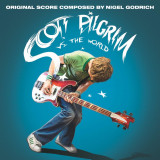
Each side of each LP is graced with an image of one of the “Seven Evil Exes” characters from the film, with an image of Scott Pilgrim with Ramona Flowers on the eighth side. This marks the first time ever that Godrich’s score will get a vinyl release, which will also be available separately on a blue vinyl 2-LP set, also on March 26. On the same day, the original single LP version of the soundtrack will be reissued as the Ramona Flowers Edition on blue, green and magenta vinyl, representing the colors of the character’s hair throughout the film.
Now ABKCO, with Edgar Wright and Nigel Godrich’s oversight, has curated an expanded, four LP picture disc Seven Evil Exes Edition offering of the soundtrack/score, including more performances by Sex Bob-Omb and demos from Beck, as well as fan favourite “Black Sheep” by Metric and sung by actress Brie Larson.
Since its release, Scott Pilgrim vs. the World (Original Motion Picture Soundtrack) has received many accolades. UK’s The Independent ranked it at number 4 out of “the 40 greatest film soundtracks of all time,” declaring that Wright “found a way to seamlessly integrate his soundtrack into Scott Pilgrim vs. the World’s narrative.” It was also included on Alternative Press’ list of “16 Fantastic Movie Soundtracks You Need To Hear.” “We Are Sex Bob-Omb” won the 2010 Houston Film Critics Society Award for Best Original Song.
Scott Pilgrim Vs. The World (Seven Evil Exes Limited Edition)
• 4x LP picture discs
• Limited Edition Set
• Exclusive bonus tracks not included on original soundtrack by Sex Bob-omb, Beck, plus highly sought- after Brie Larson w/ Metric
• Social support from Edgar Wright + Beck
Bonus ephemera: • Full colour film poster • Exclusive Colouring Page by Bryan O’Malley
• Printed note from Edgar Wright, Director
This year marks the tenth anniversary of the theatrical release of Universal Pictures’ Scott Pilgrim vs. the World. The film adaptation by director Edgar Wright (Hot Fuzz, Baby Driver) of Bryan Lee O’Malley’s graphic novel series stars Michael Cera, Mary Elizabeth Winstead and Kieran Culkin and has since become a cult classic due in no small part to the use of music in its storytelling. The soundtrack album and score were originally released in 2010 by ABKCO Records.
Each side of each LP is graced with an image of one of the “Seven Evil Exes” characters from the film, with an image of Scott Pilgrim with Ramona Flowers on the eighth side. This marks the first time ever that Godrich’s score will get a vinyl release, which will also be available separately on a blue vinyl 2-LP set, also on March 26. On the same day, the original single LP version of the soundtrack will be reissued as the Ramona Flowers Edition on blue, green and magenta vinyl, representing the colors of the character’s hair throughout the film.
Now ABKCO, with Edgar Wright and Nigel Godrich’s oversight, has curated an expanded, four LP picture disc Seven Evil Exes Edition offering of the soundtrack/score, including more performances by Sex Bob-Omb and demos from Beck, as well as fan favourite “Black Sheep” by Metric and sung by actress Brie Larson.
Since its release, Scott Pilgrim vs. the World (Original Motion Picture Soundtrack) has received many accolades. UK’s The Independent ranked it at number 4 out of “the 40 greatest film soundtracks of all time,” declaring that Wright “found a way to seamlessly integrate his soundtrack into Scott Pilgrim vs. the World’s narrative.” It was also included on Alternative Press’ list of “16 Fantastic Movie Soundtracks You Need To Hear.” “We Are Sex Bob-Omb” won the 2010 Houston Film Critics Society Award for Best Original Song.
Scott Pilgrim Vs. The World (Original Score Composed By Nigel Godrich)
• 2xLP
• First time released on vinyl
• Blue colour vinyl
• Social Support from Edgar Wright (Director) & Beck
serpentwithfeet is not only imagining, but exploring a world wherein Black love is paramount. His new album, DEACON, is "a study rather than a story," delving into Black, gay love and the tenderness present in the best companionships, romantic or otherwise. Fully self-actualized and more devoted than ever to personal fulfilment, DEACON highlights his growth as a songwriter, which he credits to taking a more straightforward approach to expression. Spending time with pop songwriters and observing how they traverse language encouraged serpent to take more risks lyrically, resulting in more purity. Raised by religious parents in Baltimore, serpent's flair for theatrical themes and gospel sensibilities can be traced to the Black church, a place where the artist had his earliest experiences with glamour and the ornate. Well-executed vocal flourishes and the implementation of a quickening vibrato are just a few of the skills he picked up during his time in a Pentecostal choir. He proudly follows in the tradition of R&B artists whose gifts were helmed in the church, and he approached DEACON with an undeniable passion and reverence for the genre. In his love for love, serpentwithfeet is offering a look into the soul of a man who articulates his passion in a warmer, gentler way. He's become wholly confident in his gift and messaging on DEACON, which is to be expected when one gives vent to maturity. Through his music, he allows compassion to be the backbone of his art, as he communes with his most loving self.
serpentwithfeet is not only imagining, but exploring a world wherein Black love is paramount. His new album, DEACON, is "a study rather than a story," delving into Black, gay love and the tenderness present in the best companionships, romantic or otherwise. Fully self-actualized and more devoted than ever to personal fulfilment, DEACON highlights his growth as a songwriter, which he credits to taking a more straightforward approach to expression. Spending time with pop songwriters and observing how they traverse language encouraged serpent to take more risks lyrically, resulting in more purity. Raised by religious parents in Baltimore, serpent's flair for theatrical themes and gospel sensibilities can be traced to the Black church, a place where the artist had his earliest experiences with glamour and the ornate. Well-executed vocal flourishes and the implementation of a quickening vibrato are just a few of the skills he picked up during his time in a Pentecostal choir. He proudly follows in the tradition of R&B artists whose gifts were helmed in the church, and he approached DEACON with an undeniable passion and reverence for the genre. In his love for love, serpentwithfeet is offering a look into the soul of a man who articulates his passion in a warmer, gentler way. He's become wholly confident in his gift and messaging on DEACON, which is to be expected when one gives vent to maturity. Through his music, he allows compassion to be the backbone of his art, as he communes with his most loving self.
Manslaughter 777 is the new collaboration of drummer/percussionist Lee Buford (The Body) and drummer Zac Jones (Braveyoung/MSC). Debut album World Vision Perfect Harmony follows a decade of collaborations starting with The Body and Braveyoung's Nothing Passes. For their debut as a duo, Buford and Jones blend bracing and imaginative takes on rhythmic-centric forms from dub, breakbeats, hip hop and beyond for a phantasmagoria of bristling drumscapes. Manslaughter 777 pulls together a vast array of disparate percussive traditions and patterns into a veil of dark, propulsive energy. Recorded and mixed by Seth Manchester at Machines With Magnets, the album's mélange of live and sampled beats fizzle, splat and rupture with an edge. While there are sounds that could be at home on a record by The Body, Manslaughter 777 inhabits much more open spaces. The duo's music is based primarily on drums and eclectic samples, shifting melodic ideas to the overtones and resonances of their respective percussive thuds or clicks. Buford and Jones incorporate hybridizations of live, sampled, and electronic percussion obscuring their boundaries while highlighting their specific tonal and timbral qualities. An alchemical balance of detailed and dynamic production guides each element to the fore in steady waves of relentless momentum. Taken as a whole, World Vision Perfect Harmony is a cornucopia of rhythmic texture. Manslaughter 777 channels a deluge of kineticism into a web of syncopated grooves that are equally entrancing and provocative. Audacious sound architects, Buford and Jones built an album that passionately revels in the world of rhythm. Manslaughter 777's constructs glide as gracefully as they rumble. Together, they are a monument to the power of percussion.
“Gyropedie,” Anne Guthrie’s third record for Students of Decay, takes us further into her hermetic practice, wherein expertly captured field recordings, French horn, and electronics are woven into potent and richly imagined electroacoustic environments. In Guthrie’s own words, “Quite literally a record of pilgrimage from East to West. Remnants of Midwest and East Coast soundmarks, instruments sold to lighten the travel load, sketched out and then buried under the new. Winter birds and crunching snow, frozen playgrounds, broken synths - I spent a year decoupaging over this, but of course it's still there. A second moon appears occasionally in the daytime, and there are frequent, murky transmissions. California has something alien about it I'm still trying to grasp. Primarily vintage, unabashed, corny, I find myself becoming an impressionist.”
Anne Guthrie is an acoustician, composer, and French horn player. She studied music composition and english at the University of Iowa and architectural acoustics at Rensselaer Polytechnic Institute, where she completed her Ph.D in 2014. Her music combines her knowledge of acoustics and contemporary composition/improvisation. Her electronic music has focused on exploiting the natural acoustic phenomena of unique architectural spaces through minimal processing of field recordings. Her composition has focused on the orchestration of non-musical sounds, speech in particular. Her French horn playing has focused on electronic processing and extended techniques used in improvisatory settings, as a soloist and with Fraufraulein and Delicate Sen, among others. Her acoustics research has focused on the use of ambisonics for stage acoustics.
out of Stock
Last delivered 5 years ago available to reorder, subject to availability
• In 1970 Miles Davis released “Bitches Brew”, which crystalised the trumpeter and bandleader’s experiments in rhythm, electronics and musical structure which he had been building on over the previous three years. The album has since become one of the most influential in musical history and was joined over the next couple of years by “Jack Johnson” and “On The Corner” in defining the future of music.
• Miles was the master bandleader and his LPs at the time declared that these were his ‘Directions In Music’, but he forged them with the help of a hand-picked group of musicians who proved themselves good enough to share his space on stage and in the studio. These players would all become central to jazz’s continued relevance and many would go on the record best-selling jazz records of their own. This compilation looks at the records that they made around the time they played with Miles and how they fed into or were fed by their time in his group.
• So we have Wayne Shorter and Joe Zawinul with versions of tracks they cut with Miles. Herbie Hancock’s journey into the electronic instruments that Miles convinced him to play, and Keith Jarrett’s firm rejection of them. Lonnie Liston Smith borrows the Indian percussion from “On The Corner” for his take on electronic funk. Chick Corea, John McLaughlin and Gary Bartz all show their distinctive talents that were allowed to shine in Miles’ band. As a bonus, we have Miles’ musicians alongside Betty Davis (his wife at the time) on a take of Cream’s ‘Politician Man’ and Miles’ 1970 group live at The Cellar Door on Joe Zawinul’s ‘Directions’.
• Available on CD and double vinyl with in-depth sleeve notes. The Miles Davis track is available on vinyl for the first time.
There are no two voices like these. The late Amália Rodrigues, the Queen of Fado, a unique singer up there with the great voices of 20th century popular song like Piaf, Sinatra, Ella, Oum Kalthoum. Mariza, the young singer that has helped bring Fado into the 21st century. Two of the greatest and most influential stylists of Fado, the ex-libris of Portuguese popular music, a world cultural heritage.
Two artists who have a lot in common, beyond their origin. Mariza swept global audiences off their feet like only Amália had done in the 1950s and 1960s, with her residences at legendary venues such as the Paris Olympia or Carnegie Hall. Through her critically acclaimed recordings and unexpected collaborations, Mariza expanded what Fado could be – just like Amália had done in the 1960s and 1970s. Mariza became the ambassador of Portugal’s music in the 21st century like only Amália had been able to be in the 20th century.
2020, the 20th anniversary of Mariza’s career, the centenary of Amália’s birth. “This the best way I can find to pay my tribute to Amália, and to thank her for the legacy and inspiration she gave us,” says Mariza. It’s been a long time coming, but now it’s here: Mariza Sings Amália. Ten Amália standards reinvented for the 21st century, their soul intact, their identity unmistakable, their stylings unexpected.
For this new album, Mariza invited an old friend – Brazilian musician and producer Jaques Morelenbaum, regular accomplice of Ryuichi Sakamoto or Caetano Veloso. Morelenbaum produced Mariza’s triple-platinum 2005 album Transparente; here, he creates a seductive, inspired series of orchestral arrangements, simultaneously classic and innovative, that allow Mariza to delve into songs we all thought we knew and make them new, fresh, ravishing.
Mariza may have performed all over the world, may have multi-platinum albums that topped charts throughout the glove, may have received endless prestigious awards – but in the studio, face to face with the standards that defined Fado for global audiences, Mariza is starting from scratch. She has recorded Amália before, but never like this, never with this wisdom, this experience, this power of interpretation. Now was the time to try on for size the great Amália classics: “Gaivota”, “Estranha Forma de Vida”, “Com que Voz”, “Fado Português”, “Povo que Lavas no Rio”, “Foi Deus”... Ten in all for an album where Mariza more than lives up to her awards, her success, her performances and assumes the mantle only Amália wore before: that of an ambassador of music, culture, talent.
Recorded between Lisbon and Rio de Janeiro, Mariza sings Amália. Like only Amália could have done, like only Mariza can. Is it Fado? Yes, and no. Above all, it’s a match made in heaven.
Fueled By Ramen will be reissuing one seminal album from our 25- year history each month throughout the calendar year of 2021. For March 2021, we will be releasing Panic! At The Disco’s fifth studio album ‘Death Of A Bachelor’ on silver vinyl.
FBR 25 Podcast
We are currently working on a 16 part podcast that will delve into the history of FBR, it’s cultural relevance and Global impact over the past 25 years. Each episode will look at the careers of some of our most important artists, and deep dive into the making of albums told by the artists themselves in their own words.
25th Anniversary Merchandise
We announced the 25th Anniversary around Thanksgiving last year with our first 25th Anniversary limited merch drop, and then will be working throughout 2021 on new and exclusive designs to drop throughout the year.