Best Intentions announces Inverse, a new 4-track EP from Melbourne-based producer and DJ; Pugilist, arriving 12 December on digital and limited white-label 12" vinyl. Marking his first release on the London imprint, Inverse sees Pugilist expanding further into the shadowy, percussive terrain he has become known for, merging future-focused techno, lo-fi industrial, and the energy of early hardcore breaks through his own atmospheric lens. The EP captures both the toughness of the dancefloor and the subtle experimentation that runs through his catalogue. A Scottish/Kiwi artist now based in Melbourne, Pugilist has built a reputation for stylistic range and rhythmic depth. His releases on Modern Hypnosis, Samurai Records, and 3024, along with the recent launch of his own imprint Ruff Kutz, demonstrate his ability to move across tempos and moods while maintaining a distinctive sonic identity. On the decks, he is celebrated for tightly curated sets, deep crates, and an array of unreleased dubs. Speaking on joining the Best Intentions roster and the inspiration behind the project, Pugilist shares: "Stoked to be joining the Best Intentions fam with 4 x retro rave rollas across the hardcore continuum, from minimalist Techno, to smoked out Electro, to krusty Hardcore and Breaks. This EP is a mix of styles which have informed my production style over the years. It is great to be putting out music with a shared vision for giving back for a greater cause. I have been a fan of the label since its inception so jumped at the chance to do a 12". I will be donating my share of profits to the Asylum Seeker Resource Centre - a wonderful Melbourne-based charity for asylum seekers here in Naarm. They do wonderful work." The EP's closing track, FKRY, a collaboration with POD, brings warped leads, stepping drum work, and old-school jungle tension into a modern, heavyweight techno frame.
Buscar:inverse
- 1
Ghent based pianotrio Steiger have earned their place in the ever growing peloton of young Belgian jazz innovators. As a result, they won the Young Jazztalent price at the 2017 Gent Jazz Festival. With their luscious and rigid grooves in minimalistic framing, they cose themselves between SCHNTZL and De Beren Gieren, likewise minded young Beljazzbands that don't take it so closely with traditions. They play jazz with a rock'n'roll attitude. Sdban Ultra is very pleased to present a sampler of their debut album 'And Above All' on a limited 10" vinyl for Record Store Day 2018. This release marks their introduction on Sdban Ultra, their sophomore album is expected next fall. And Above All' houses both jazz and modern compositions, avant-garde and experimental electronics. Steiger takes inspiration from jazz and refers to the traditions but equally pulls those apart, for example in the chaotic miniature 'Bachfag' and in the intimate 'Inverse/Reverse'. With 'Berlin Revisited' the band clearly chooses electronic instrumentation. It is reminiscent of the electronic jazz of the noughties: bands like Triosk, Sofa Surfers and Flanger did not so much work towards jazz but used the genre as a stepping stone to dive into the cosmos. Steiger are launching themselves into infinity on this track with a pounding beat, shrill cymbals, overdriven keys and an unwieldy bass.
'Dispersion' is an EP deep in style, talent and wonder. Embellishing the underground kudos of Berlin-based techno DJ and producer AVION, owner of the hotly tipped, and renowned imprint Crossing, Dispersion is an eclectic mix of cerebral, uncompromising and colorful techno. Title track 'Dispersion' is a gleaming display of spacious dancefloor beats; melancholic, yet industrial. 'Real' is clinical, functional techno, emulating some of The Wizard's influential magic. 'Inverse' blends together a contemporary approach to sonic aptitudes, while remaining a strictly dancefloor and body orientated, while 'Enidan' a colorful moment of ambient beauty, plays the EP out.
It is the first release on Marcel Fengler's regarded, techno imprint IMF in 2017. 'Dispersion' is an ambitious, and unique EP, from a true underground -and mysterious - talent. The EP's style embodies the bright, hypnotic and pulsing music that has characterized his releases to date on Crossing. Talking about the release, Fengler states, 'He got my attention after some pretty strong releases on his own imprint Crossing. I felt that this was something I didn't have on my label, but still reflected the idea of IMF.
Samuel Kerridge, with his signature sonic arsenal, stands alone in the worlds of rhythm and noise. A singular artist, his music is to be appreciated on its own terms. Here, he returns to James Ruskin's Blueprint Records with the eleven track album, "Memoir Of Disintegration".
The British producer has been carefully turning techno inside-out for over a decade. Taking a distinctly post-punk approach to the genre, he has become an integral part of Regis' legendary imprint Downwards. Kerridge has helped to define the label's contemporary sound: broken techno and snarling punk, informed by industrial music and metal.
Samuel Kerridge has released seven EPs and five albums (including a collaboration with Dva Damas' Taylor Burch) and his recent, "Kick To Kill", has become something of a statement of intent, blossoming into a new label and event series with a focus that broadens beyond techno tracks into full-blown song writing. Aside from his solo work, he collaborates with OAKE in what he describes as the "power metal techno" duo UF, and has recently started his own guitar band, Death Disco.
Kerridge ran the Berlin-based Contort label and party series and curated the legendary Berlin Atonal festival for three years, underlining his credentials as a stalwart figure in the world of experimental, boundary-pushing techno. He's also an accomplished live performer, most recently developing a hybrid live-DJ set that dismantles hundreds of tracks into a sampler to make new music in real time. It's an inventive process that places him in the lineage of iconic and ground-breaking techno acts, while still carrying the flag for the darkest corners of underground electronic music.
The landscapes of Orlan 19 resembled the dream of a mad cartographer: cliffs were floating above the surface, horizons were bending and vanishing into infinity, and energy vortices were flaring up beneath their feet in psychedelic patterns. The familiar laws of physics didn’t apply here — gravity shifted chaotically, and time flew with unpredictable intensity. As Spacelunch, absorbed in thought, stroked the ground which distorted like a mirage under his touch, Cat’s grumbling echoed simultaneously from the past and future:
— Doc, don’t you think we’re just walking in circles?
— No wonder. That’s how inverse modelling works. Every action we take reshapes the surrounding space.
— Can you explain it in simpler terms? There’s only one genius here.
— Ever heard of the Philadelphia Experiment?
— Of course! You know how much I love sushi rolls!
— Well, I set myself up for this predicament… Back in my university days, we experimented with magnetic fields trying to program them by thought. You get where I’m going, don’t you? The planet is reacting to our intentions. So, focus on visualizing the portal.
The confusion on Cat’s face gave way to a mask of detachment. Clusters of matter began to tremble pulling the threads of reality to their breaking point before finally forming a vortex. Having devoured as much as it could, the vortex snapped shut with a loud pop and dissolved in a blinding flash.
As the scene began to take shape, silhouettes emerged under the soft glow of a desk lamp, evoking an overwhelming sense of nostalgia. A worn desk and a small bed stood by the wall adorned with faded photographs, while the floor let out a gentle creak underfoot. The clearer the interior came to be, the more paralyzing the realization, and the more elusive the explanation for what had happened became.
— Holy…! Cat, are we looking at the same thing?
— Yeah, but… This can’t be real.
Spacelunch slowly approached the window and froze still. A single thought raced through his mind: “The only force strong enough to pull me this far… was love.”
Afterhours. continues its quest for exquisitely crafted minimal dance music and welcomes young talent Aron for its seventh release. "Limbic" features three original dancefloor cuts and a groove-focused remix by Arno, Pressure Trax's head honcho.
The "Limbic" EP starts with 'Prawn Repetitions' (A1), immediately locking the listener into a seemingly endless loop of stomping sub-bass, slippery drums, snipped chords and a mantra-like vocal stating "I'm a Shrimp" just enough times to hypnotize. 'Inverse Perspective' (A2) strips down the sonic space to focus on micro/macro rhythms, leaving just enough room for its haunting atmospheric pads to cut through. The track title "Limbic" (B1) is as wacky as it is catchy. Its sound design feels alien, not only in its wobbliness but also in the type of vocal snippets used and overall aesthetic graininess; yet, it remains highly stomping and dancefloor appropriate, with its second part elevated, and humanized, by (very) human melodies. Arno's Remix of "Limbic" (B2) deconstructs its every element, grounding the alien elements into a groove-centered, drum-machine-driven composition that embraces the harmonious aspects of the original without ever losing pace on its (very) insistent bass pattern.
Between the acoustic and the electronic, the four-by-fours and the breakbeat, Aron's tracks are as trippy as they are soulful: dense and detailed tracks with enough forward momentum to keep any room moving.
- A1: I Love You Honey
- A2: At Last I Found You
- A3: Love Is The Warmth Of Togetherness
- A4: Please Make Love To Me
- A5: At Last I Know (I Belong To You)
- A6: My One And Onely Love
- A7: My Man's Gone Now
- B1: Touched By Rodin In A Paris Museum
- B2: Moon Don't Come Up Tonight (Live At Lone Mountain College)
- B3: I Love You Honey (Live At Lone Mountain College)
First time release on vinyl of the breathtaking songs Patty Waters recorded with engineer Steve Atkins in 1970 at the Coast Recordings studio, together with the unreleased single 'My One And Only Love' and a recorded live session at Lone Mountain College in 1974.
The album 'You Loved Me' is the missing link between her two groundbreaking pioneering and highly acclaimed ESP-Disk records from the end of the 60's and her post 90's releases. The missing link between the radical ingenue of the 1960s and her late 90's songs wherein she expressed the resolution of all of her life's moments through mature readings of traditional songs and jazz standards. This collection aims to provide that missing link and to finally complete the picture of her storied recording career.
In what would have been her third LP, the 'You Loved Me' album serves as the inverse of Patty's debut. While her debut "Sings" concerned itself with themes of heartbreak, loneliness and yearning, there's an abundance of love, joy and togetherness on "You Loved Me".
Or in Patty's own words:
"I was a young girl alone at age 19, I was longing for love and dreaming of how wonderful love could be"
On 'You Loved Me' Patty Waters velvet voice captures this longing for love, straight from her soul to your heart. Crossing the border of the avant garde jazz entering a strange zone, somewhere between spiritual jazz, early folk vibes on the songs on the A-sides while the 14 minute composition 'Touched By Rodin In A Paris Museum' on the B-side is (dixit David Stubbs for Uncut in 2004) a brilliant extended showcase for the uneasy Cageian minimalism of her piano playing.
'You Loved Me' proves also again why Albert Ayler introduced her to ESP-Disk president Bernard Stollman, impressed Miles Davis, Pharoah Sanders and Henry Grimes with her concerts and can count Patti Smith and Yoko Ono (to name a few) amongst her fans.
On his Discrepant debut Memotone aka Bristolian Will Yates collects some unreleased recordings under a most aptly titled name - »Pruning« - following a healthy stream of releases for such esteemed labels as Black Acre, The Trilogy Tapes or Soda Gong.
Considering the process of pruning as a practice of selective removal, the album takes its name at face value never falling into a mere collection of tossed off material or random B-side assemblage, making it a cohesive listen throughout its disparate timeframe and evasions.
A statement about Memotone's vision itself, »Pruning« veers closer to his Fourth World/ECM/Exotica meets Sci-fi transmutations in alignment with what would be expected from a Memotone release on Discrepant. »Moss Zone« briefly sets the tone with a warm but queasy synth bedsheet that flows into the »Weird Figures« cyber- jungle, all small twinkling percussions and rainforest pads slowly rising. 'Riders' brings the synth-flute to an early Warp meets John Hassell's »City: Works of Fiction« scenario that pops up again in more disrupted form on »Wisdom MOTHER«. »Not What I Thought's« skewed tropical guitar gets going on lo-fi percussion and dissonant synth chords while »Jim Starling and The Inverse Church« bring to mind »Autoditacker« era Mouse on Mars going jazz-fusion. Or what we should expect from their Smalltown Supersound stint. »Beach Scene« is exactly it, as the sun sets into »Come In Don't Mind the Ghost« summer night's stars with all the allure of Stereolab.
Alluring, that's exactly it. Do come in.
- A1: Inni
- A2: Kyrrð
- A3: Ókyrrð
- A4: Var
- B1: Í Ösku Og Eldi
- B2: Ólga
- B3: Gráminn
- B4: Flækjur
“Eerie, wailing sounds over distorted feedback drones… Vibrato-heavy harmonies chirrup and throb in agonisingly slow motion.”
The Guardian, Album of the Month
“Cinematic...carefully orchestrated...delicately explores unfamiliar territory with uncanny finesse.”
The Wire
Acclaimed Icelandic theremin musician Hekla returns with Turnar, her third album of devastatingly heavy, spectral soundscape-songwriting, entering a sublime paranormal plane of haunting dread.
Now augmenting her virtuosic solo theremin work with cello, voice, and the sacred church organ of Icelandic master Kristján Hrannar, the evolution of Hekla’s unique magic summons new worlds with Turnar. The album was recorded partly in (and named after) a medieval castle tower in rural France, its ruinous black broken in spare beams of angelic stained-glass light. But, writes Hekla, “the sound of theremin kind of opens up a portal into a new realm that both looks into a dark old world and to the future.” The record is an alternately beautiful and crushing space voyage into a glacial underworld cascading with phosphorescence and cave drip, conjuring ancient choral ritual just as readily as redolent sci-fi gloam.
Opener “Inni” begins with swooning and shimmering lines of theremin that shiver with electrified energy before subfrequency bass elevates them into a glowing plasma, hovering above a crystallised surf. Key moment “Gráminn” wails with ghostly harmonics while distorted drones crash together in a stormy and blackened netherworld sea. It traces a neat progression from Hekla’s last album - the acclaimed Xiuxiuejar - while also welcoming an expanded timbral palette and flourishing compositional confidence. At the end of side A, “Var” delicately places sonic artefacts about a desolate negative space, creating a dense inverse gravity. As with the rest of the record, a claustrophobic gauze hangs over music that could otherwise be called subverted songwriting, aligning Hekla’s sonics with avant-garde, musique concréte and sound-art.
- A1: Moon's Milk Or Under An Unquiet Skull (Part One)
- A2: Moon's Milk Or Under An Unquiet Skull (Part Two)
- B1: Bee Stings
- B2: Glowworms/Waveforms
- B3: Summer Substructures
- B4: A Warning From The Sun (For Fritz)
- C1: Regel
- C2: Rosa Decidua
- C3: Switches
- C4: The Auto-Asphyxiating Hierophant
- C5: Amethyst Deceivers
- D1: A White Rainbow
- D2: North
- D3: Magnetic North
- D4: Christmas Is Now Drawing Near * Featuring – Robert Lee, Rose Mcdowall
- E1: Copal
- E2: Bankside
- F1: The Coppice Meat
- F2: Ü Pel (Insense Offering)
Black Vinyl[54,58 €]
Red in Clear Vinyl. First compiled as a double CD in 2002, Moon's Milk (in Four Phases) is a suite of four EPs that Coil released seasonally via their in-house Eskaton imprint across 1998. The line-up for these sessions were John Balance, Peter "Sleazy" Christopherson, Drew McDowall, and William Breeze. Recorded primarily at their home studio in Chiswick, London on the eve of a permanent relocation to the small seaside town of Weston-super-Mare, the collection has long loomed as a pivotal and pinnacle work in the group's discography, but has never been officially reissued, or repressed on vinyl. Time has only ripened its tapestry of regal strangeness.Arranged sequentially in tribute to the equinoxes and solstices, Moon's Milk captures Coil at a revelatory crossroads, leaning deeper into improvisation, spontaneity, and sound design. "Moon's Milk or Under an Unquiet Skull" initiates the proceedings on Spring Equinox, a two-part netherworld organ séance woven from vocal drones, cathedral keys, seasick strings, and opiated undertow. From there, Summer Solstice skews lighter but no less incantational, with Balance embracing his voice-as-instrument across lucid dream torch songs ("Bee Stings"), purgatorial spoken word ("Glowworms/Waveforms"), sultry chamber pieces ("Summer Substructures"), and falsetto ravings ("A Warning From The Sun (For Fritz)").Autumn Equinox exudes more of a pensive and twilit mood, from the Rose McDowall-sung folk ballad "Rosa Decidua" ("I hear your voice sing near to me / I've put away the poisoned chalice (for now) / And lie down amongst the flowerbeds") to hall-of-lords hallucination "The Auto-Asphyxiating Hierophant" to the liminal string-plucked classic "Amethyst Deceivers," featuring excellent alien guitar by Breeze layered with Balance's oft-quoted couplet: "Pay your respects to the vultures / For they are your future."The album's final chapter, Winter Solstice, is its most swooning, remote, and ceremonial. Opener "A White Rainbow" stirs strings, layered choral vocals, and shivering rhythm into an imploding burial hymn. "North" oscillates bleakly, a ghost in the machine murmuring opaque prophecy ("This black dog has no owner / This black dog has no odour"), while "Magnetic North" is its inverse, a guided meditation of gently flickering software and surreal chakra poetics ("Red rose filling the skull / Yellow cube in the lower pelvis / Silver moon crescent below the navel"). The suite fades to grey with a traditional English carol ("Christmas Is Now Drawing Near"), rendered like an executioner's song by Rose McDowall's doomed, beautiful voice.The Dais box set includes the entirety of the rare Moon's Milk Bonus Disc CD-R / 2019 Threshold Archives CD, which includes three collaborations with Thighpaulsandra. This material is as rich and intoxicating as the previous four phases, ranging from electro-acoustic singing bowl rituals ("Copal") to dissonant electronic recitations of visionary Angus MacLise poetry ("The Coppice Meat") to ominous classical melancholia ("Bankside"). Once again, Coil confirm the vastness of their confounding, infinite alchemy, explored and refined across decades of experimentation - both sonic and bodily. From post-industrial to post-everything, theirs is an art untethered, in the wilds of its own design.
Moon Diagrams – the solo project of Deerhunter co-founder and drummer Moses Archuleta – returns with a second album, Cemetery Classics, on June 21. The 12-track album is a co-release between Sonic Cathedral (in the UK and Europe) and Angus Andrew from Liars’ new label No Gold (in the US and the ROW) and was mixed by James Ford. It features guests including Anastasia Coope, Patrick Flegel (Cindy Lee) and Josh Diamond (Gang Gang Dance). It’s Moses’ first new music since 2019’s Trappy Bats mini-album and the follow-up to 2017’s acclaimed debut Lifetime of Love and everything seems a bit more extreme – from the Basinski-esque degradation of ‘Neptune’ to the Faustian industrial noise of ‘Listen To Me’ via Art of Noise-style postmodern pop (the first single ‘Very Much My Promise to You’), Daft Punk bangers (‘Fifteen Shows at One Time’), trip-hop, shoegaze, Jan Hammer, Depeche Mode, late Leonard Cohen and more. “It’s about finding out your arms are too short to box with god,” says Moses of the emotional force that courses through Cemetery Classics. “It’s the inverse of a desert island disc – a graveyard disc. Songs to take into the afterlife.”
Die Sages Comme Des Sauvages sind nicht die, für die Du sie hälst. Du dachtest, sie seien naiv und nett, aber sie sind anarchistisch und wütend. In der Peripherie angesiedelt, bahnen sie sich ihren Weg zwischen dem Populären und dem Coolen. Ihre Lieder sind ein Gegenmittel gegen die schlechten Nachrichten, ein Versuch, den hohlen Raum wieder zu verzaubern. Ismaël Colombani begann im Alter von 6 Jahren mit dem Geigenspiel und spielte in mehreren Avantgarde-Musikgruppen. Er komponiert auch Musik für die Bühne, vor allem für die Tanzgruppe Peeping Tom. Ava Carrère studierte an den Beaux-Arts, bis sie das Bedürfnis verspürte, einen direkteren Weg zu finden, um die Menschen anzusprechen. In der Welt des Berliner Metakabaretts entdeckte sie, dass sie voll von Liedern war. Kaugummi und LSD sind Beispiele für Serendipität. Das sind Dinge, die man findet, ohne sie zu suchen. Sages Comme Des Sauvages ist ein anderes. Ismaël war nicht dazu bestimmt, Ava zu treffen, so wie griechische Instrumente nicht dazu bestimmt waren, die Musik von La Réunion zu spielen. Als sie ihre Stimmen mischten, entstand ein drittes Wesen, das der Gruppe. Sie fanden Spuren einer Musik, die nicht vollständig vom Kommerz beherrscht wurde, und brachten Instrumente, Freundschaften und die Idee mit, dass die Kreolisierung der Welt verstärkt werden sollte. Sages Comme Des sauvages wurde zu einem Begriff, veröffentlichte zwei Alben, wurde von französischsprachigen Radiosendern wie France Inter und RTBF gespielt und gab Hunderte von Konzerten. Und nun ist es an der Zeit sie zu entdecken.
One of the longest-serving and most consistently intriguing artists within the fold of Phantasy, U returns to the label with another two-track trip of sonic mystery and erratic magic, ‘Parade/Watchers’.
Presented on limited-pressing 12” vinyl with a sleeve riso printed by U with London's Error Press.
With the texture and earthy promise of a psychedelic mulch, ‘Parade’ presents a glorious timelapse of acid-inflected minimalism. Unfolding defiantly at nearly fifteen minutes, U’s driving but subtle composition transports from guttural, electronic uncertainty to a wide-eyed denouement in one illusionary transition.
With inverse effect but no less power, ‘Watchers’ unexpectedly drops listeners into a rough wash of digital hardcore, spinning it’s initial warehouse chords into a collage of decay and regrowth, a nephilim-scaled journey and arguably U’s most ambitious production to date.
- A1: Moon's Milk Or Under An Unquiet Skull (Part One)
- A2: Moon's Milk Or Under An Unquiet Skull (Part Two)
- B1: Bee Stings
- B2: Glowworms/Waveforms
- B3: Summer Substructures
- B4: A Warning From The Sun (For Fritz)
- C1: Regel
- C2: Rosa Decidua
- C3: Switches
- C4: The Auto-Asphyxiating Hierophant
- C5: Amethyst Deceivers
- D1: A White Rainbow
- D2: North
- D3: Magnetic North
- D4: Christmas Is Now Drawing Near * Featuring – Robert Lee, Rose Mcdowall
- E1: Copal
- E2: Bankside
- F1: The Coppice Meat
- F2: Ü Pel (Insense Offering)
Red in Clear Vinyl[57,35 €]
First compiled as a double CD in 2002, Moon's Milk (in Four Phases) is a suite of four EPs that Coil released seasonally via their in-house Eskaton imprint across 1998. The line-up for these sessions were John Balance, Peter "Sleazy" Christopherson, Drew McDowall, and William Breeze. Recorded primarily at their home studio in Chiswick, London on the eve of a permanent relocation to the small seaside town of Weston-Super-Mare, the collection has long loomed as a pivotal and pinnacle work in the group's discography, but has never been officially reissued, or repressed on vinyl. Time has only ripened its tapestry of regal strangeness. Arranged sequentially in tribute to the equinoxes and solstices, Moon's Milk captures Coil at a revelatory crossroads, leaning deeper into improvisation, spontaneity, and sound design. "Moon's Milk or Under an Unquiet Skull" initiates the proceedings on Spring Equinox, a two-part netherworld organ séance woven from vocal drones, cathedral keys, seasick strings, and opiated undertow. From there, Summer Solstice skews lighter but no less incantational, with Balance embracing his voice-as-instrument across lucid dream torch songs ("Bee Stings"), purgatorial spoken word ("Glowworms/Waveforms"), sultry chamber pieces ("Summer Substructures"), and falsetto ravings ("A Warning From The Sun (For Fritz)"). Autumn Equinox exudes more of a pensive and twilit mood, from the Rose McDowall-sung folk ballad "Rosa Decidua" ("I hear your voice sing near to me / I've put away the poisoned chalice (for now) / And lie down amongst the flowerbeds") to hall-of-lords hallucination "The Auto-Asphyxiating Hierophant" to the liminal string-plucked classic "Amethyst Deceivers," featuring excellent alien guitar by Breeze layered with Balance's oft-quoted couplet: "Pay your respects to the vultures / For they are your future." The album's final chapter, Winter Solstice, is its most swooning, remote, and ceremonial. Opener "A White Rainbow" stirs strings, layered choral vocals, and shivering rhythm into an imploding burial hymn. "North" oscillates bleakly, a ghost in the machine murmuring opaque prophecy ("This black dog has no owner / This black dog has no odour"), while "Magnetic North" is its inverse, a guided meditation of gently flickering software and surreal chakra poetics ("Red rose filling the skull / Yellow cube in the lower pelvis / Silver moon crescent below the navel"). The suite fades to grey with a traditional English carol ("Christmas Is Now Drawing Near"), rendered like an executioner's song by Rose McDowall's doomed, beautiful voice. The Dais box set includes the entirety of the rare Moon's Milk Bonus Disc CD-R / 2019 Threshold Archives Copal CD, which includes three collaborations with Thighpaulsandra. This material is as rich and intoxicating as the previous four phases, ranging from electro-acoustic singing bowl rituals ("Copal") to dissonant electronic recitations of visionary Angus MacLise poetry ("The Coppice Meat") to ominous classical melancholia ("Bankside"). Once again, Coil confirm the vastness of their confounding, infinite alchemy, explored and refined across decades of experimentation - both sonic and bodily. From postindustrial to post-everything, theirs is an art untethered, in the wilds of its own design.
Classic black vinyl plus bonus 7"-single with two exclusive tracks! Babydoll is the fifth Rat Columns album and, following 2021's Pacific Kiss, the second to be released on Tough Love. The recordings took place in Perth, Western Australia, partially by engineer Jason Hayles in a 1960's office building that formerly housed the secretarial pool of a successful mattress company, and partially by DW in an industrial unit, and feature the ensemble cast of Taylah McLean, Chris Grunwaldt, Scott Payne, Richard Ingham, Cohen Bourgault and, of course, DW himself. It was then mixed and mastered in Melbourne by Mikey Young and Joseph Carra, respectively. Babydoll seems to mark a return to a murkier, dirgier Rat Columns format. Distortion is fetishized again and many small amplifiers were tortured in the album's production. Tempos have drifted down and the lyrical concerns move ever inward, in an inverse bloom. The mood is dour, introspective, circular, the songs long, and short attention spans are neglected. 'Cerulean Blue' churns through a crystalline memoryscape, homaging low-brow grunge auto-fiction and a partial history of mid-period rave. 'Life In The Jungle' is a fever dream of imperialist wartime fantasy projection. 'Heavenly Assault' attempts a crushing density amid visions of transcendent devotion. 'Virtual Sweden' takes us ever northwards into the frosted tip of Scandinavian détente. 'Babydoll', like 'Cerulean Blue', homages a primarily imagined low-cosmopolitan world of alt-lit digi-poets, bedroom fantasists, underwater prisons for gorgeous, gorgeous girls. 'Bees Make Honey' lets more sophisticated music machines into the conversation, and marks the first use of vocal tuning software on a Rat Columns album, albeit in an avant-amateurist fashion. 'Jane, I Live For You' enters the space-ballad race, dreaming of synthetic folk-rockers, leaning on sampler keybeds in the half-light. 'December' is yet another tribute to fallen Stars, mansions on the hill, winter skin in cashmere sweaters, truth in education, love, faith, (im)purity. In all these respects, it is a classic Rat Columns record. Because all Rat Columns records are classic records.
Boy Harsher, Portishead, Thom Yorke, Radiohead, Beak>, ERAAS, SUUNS. Over the past seven years, Public Memory's distinctive use of analog synthesizers, electronic beats mixed with organic percussion, lo-fi sound design, and gritty ambience has created a singularly eerie and shadowy world. The first seconds of Public Memory's new record, Elegiac Beat, thrust us immediately into that world. We are in media res, with a feeling of sudden movement from a sensible point A to B. Given some time however, we realize that there is something askew–a bit of brightness here, some shadows pushed aside, some jazz and funk amongst the dub and Krautrock. This is an unfamiliar, ambiguous mood that pushes Public Memory towards new ground. We still drift past the clouded lights and hollowed out buildings of previous albums, but with an occasional bounce in our step now, a bit of golden haze around the edges. First single "Savage Grin" cements this clearly. The track has a jazzy, trip-hop flavor, albeit filtered through Public Memory's narcotic, hazy lens. We could be in a hotel lounge in the alps somewhere on holiday, or out of time in a majestic, sparkling ballroom. But we still have the feeling of being haunted, or perhaps even hunted in some way. This feeling intensifies and comes to a head towards the ever-darkening end of the track, leading directly into "Afterimage", in which someone almost imperceptibly sings "I hear them coming" in a twisted, auto-tuned flail. Second single "7 Floor" begins with flanged drums and damaged synthesizer stabs, evoking a kind of apparition floating towards us in the mist. As the track moves on there is, similarly to "Savage Grin", a contrast in feeling between a cold exterior roaming and an interior, warmer, human place. This time however, we move from the colder to the warmer as the synths from the track's beginning make way for a Rhodes-style organ and backing string synth, infusing an unexpected sense of peace. But like "Savage Grin", the track moves to its end through an in-between place beyond the haze. Faded and distant synthesizers meld with voices–human, or perhaps otherwise–that beckon us, or perhaps warn us. We can't be sure which. Third single "Far End Of The Courtyard" brings us closest to classic Public Memory territory with hip-hop beats, chopped and screwed samples, lo-fi ambience, and ghostly electric pianos complementing the vocals. There is darkness, perhaps more here than in the previous two singles, but with a crucial moment of uplifting lightness so subtle it may be missed upon first listen. As an inverse to both "Savage Grin" and "7 Floor" we end with brightness, the jazzier side of the record pushed to the forefront as the track fades away on that golden haze. In the end though, the haze may be just that: a vapor, a mist, a slight dusting of some other world on top of the degraded one Public Memory so effectively portrays. Elegiac Beat is between two places, and as it straddles the line between the two, we are uncertain if the light it brings shines directly from the sun, or if it is dimly reflected through that majestic ballroom world. For fans of 1990s Bristol trip hop, coldwave, and Thom Yorke's The Eraser
2023 Repress
2x12"
'They hit the limit. The limit hit back!'
Vision Recordings presents 'Dead Limit' starring Noisia & The Upbeats
'Jones' depth of character is mouth-watering 9/10 RuPaul LeSnack, Variety
'Great stunt sequences hampered by a terrible soundtrack' 2/10 Mario van Peebles 2015 Shark Documentary Festival Awards Honorary Mention
'Depicts gravely the ongoing struggle between man and wild insects' 7/10 National Geographic
Federico Madeddu Giuntoli is an italian multidisciplinary artist. Mostly autodidact, his art is based on groundedness and simplicity, and focused on the complexity of human journey in a non aggressive, warm and unfiltered way.
His works, ranging from contemporary art, music, writing and photography, are usually delicate and subtle, yet unequivocally tuned into a certain kind of pop communication, however essential and experimental it may be.
"The text and the form" is his first solo album, featuring german e-poetess AGF and japanese artist Moskitoo (12K).
The album is a collection of 11 minimal and intimate short songs, in which piano fragments, lonely guitar solos, spoken words and evocative vocals resonate with processed microsounds and lo-fi field recordings, creating a concise and very deep journey into romance and sense of mystery.
In the artist's words, "the album shaped itself according to a loose process of refinement and layering. A long, undisturbed assembling across more then a decade, often against my own will to reach a definitive form. If any relevance in this work can be found, I would say it resides in its capability to deliver a rare sense of vulnerability, longing and aliveness together, an aroma of improvisation and instability mixed with a unexplicable impression of perfection".
RAW SPACE" is rooted in chaos and chance, sensuality and intensity - it's an album that's able to sound alarmingly freeform and tightly controlled simultaneously. Already established as a genre-disrupting DJ, and even dubbed "demon of the Nile" by Ugandan politicians after an exuberant performance at Nyege Nyege festival in September 2019, Kampala-based sonic hypnotist Authentically Plastic brings a digger's literacy, an activist's intent, and an artist's playfulness to their jagged debut album. As both a DJ and a producer, Authentically Plastic is drawn to the idea of chance as a creative tool - to push against the idea of the all-knowing genius, and approach artistry instead as a facilitator, unraveling parallel mismatched rhythmic events. Their musical process is to start with chaos, then attempt to mold those fleshy structures into polyrhythmic mutations, pulling influence from East Africa's innovative musical landscape and augmenting it with an exploratory sense of surrealism. On opening track 'Aesthetic Terrorism', rough-hewn industrial rhythms chug mechanically against course, dissonant synth blasts and acidic arpeggios. There's a faint sparkle of Detroit's chrome-plated Afro-futurism, but bathed in neon light, reflecting Africa's contemporary electronic revolution. Authentically Plastic's productions have a sense of thematic coherence, but their myriad influences are torched into cinders, leaving inverse impressions and ghost rhythms: the tuned overdriven clatter of 'Anti-Fun' echoes Ugandan kadodi modes, yet simultaneously mirrors the rugged out-zone grit of Container or Speaker Music; standout centerpiece 'Buul Okyelo' meanwhile is as rhythmically cross-eyed as Slikback or Nazar, but juxtaposes kinetic dancefloor thumps with chaotic microtonal ritual cycles. Writing "RAW SPACE", Authentically Plastic found themselves fascinated by sonic flatness. They realized that in Western art, there's an obsession with depth of field that carries into music, robbing it of intensity. The album is an example of the power that can be reclaimed when you let go of depth, letting sounds rub together carnally and spawn something fresh and unexpected.
White Vinyl
The 25th release on Auxiliary is a remix 12" by ASC. Featuring four remixes of the EP of the same name, released in 2014, Return Of The Emissary Remixes is an inventive and creative re-imagining of the original tracks.
Inverse Ratio is transformed into a more uptempo Grey Area affair, while Fenris gets a heavier workout on its remix. Flipside sees a sparser approach to Zoning, while Night Clouds notches up the intensity somewhat. A statement of intent from Auxiliary and ASC.
Zeitgeber is a project that sees Lucy and Speedy J exploring roots and limits. The duo have both indulged their experimental sides from time to time. Perhaps most notably Speedy J with his mid-'90s run on Novamute, and Lucy on his 2011 full-length for Stroboscopic Artefacts. But Zeitgeber is something more, with two artists pushing each other to go further. SA018 is a single that gives only a slight hint as to what is to come in the shape of a complete LP. 'Body Out' is floor-ready techno with a twist. The textures that lie beneath feel like they're just as important (if not more), slithering and twittering away in constant dialogue with the just-slightly-off-the-grid beat. 'Body In' is the inverse of the A-side, a slow-moving chorus of indescribable ambience. As a precursor to the forthcoming album, it's a perfect taster of the uncompromising sounds yet to be heard. - Zeitgeber is a new project run by Lucy (Stroboscopic Artefacts' label head) and Speedy J (Electric Deluxe's boss). ' - 'Body Out Body In' is the Single that precedes Zeitgeber upcoming Album.
"More than any other artist to emerge from the fertile black metal scene of the early ‘90s, Ihsahn has firmly established himself as an unpredictable maverick. Frontman and chief composer with the legendary Emperor, he re-wrote the rulebook on epic extreme music across a series of albums that are still widely regarded as classics. From the genre-defining majesty of In The Nightside Eclipse in 1994 to 2001’s wildly progressive tour-de-force Prometheus: The Discipline Of Fire & Demise, Ihsahn’s unique approach and liberated musical ethos ensured that when he embarked on a solo career with 2006’s The Adversary, fans were primed to expect the unexpected. Box includes seven double LP’s, two single LP’s, all on 140g ultra-clear vinyl. Bringing Ihsahn’s core-works in one unique box, including a 36-page booklet. Limited to 1,000 copies – a true collector’s item.
Artwork lovingly restored by Dan Capp design. Vinyl mastered by Jens Borgren (Opeth, Katatonia, Soilwork)."
‘Archive Series Volume no. 5: Tallahassee Recordings’ is the lost-in-time debut
album from Iron & Wine. A collection of songs recorded three years prior to his
official Sub Pop debut, ‘The Creek Drank the Cradle’ (2002). A period before the
concept of Iron & Wine existed and principal songwriter Sam Beam was studying
at Florida State University with the intent of pursuing a career in film.
‘Archive Series Volume no. 5’ documents the very first steps on a journey that
would lead to a career as one of America’s most original and distinctive singersongwriters. ‘The Creek Drank the Cradle’ arrived like a thief in the night with its
lo-fi, hushed vocals and intimate nature, while almost inversely Tallahassee
comes with a strange sense of confidence. Perhaps an almost youthful discretion
that likely comes from being too young to know better and too naïve to give a
shit.
The recordings themselves are more polished than ‘The Creek Drank the Cradle’
and give a peak into what a studio version of that record might have offered up.
‘Archive Series Volume no. 5’ was recorded over the course of 1998-1999 when
Beam and future bandmate EJ Holowicki moved into a house together. Beam
had not been performing publicly however, he was known for playing an original
song or two in the early morning glow of a long night. Holowicki - also in the film
program and who would go onto a career as a sound designer at Skywalker
Sound - had a mobile recording device and after some prodding convinced his
friend to record these late-night meditations.
Together they would record close to twenty-four songs, ideas and sketches, with
EJ on bass and Sam on vocals, guitar, harmonica and drums. The recordings -
all captured in the house where they lived - have a ‘live in the room’ feel akin to
say Neil Young’s ‘Harvest’ or Nick Drake’s ‘Five Leaves Left’, rather than the
homespun lo-fi 4-track home recording experiment taking place at the time.
These recordings, minus one track, have never been made available and were
instead left preserved on a hard drive for the last twenty years. The one track
that floated out there, called ‘In Your Own Time’ was shared without a title to
childhood friend Ben Bridwell (Band of Horses) at some point. The song became
known as the ‘Fuck Like A Dog’ song and Ben shared it with more than a few
folks during the golden era of mix CDs. Two of those folks were Jonathan
Poneman from Sub Pop and journalist Mike McGonigal, who included it on his
best songs of 2001 mix CD, passed out to friends and acquaintances. And for
many that is where the Iron & Wine story begins, until now.
‘Archive Series Volume no. 5’ is the foreword to your favourite book that you’ve
somehow skipped over time and time again. It’s an alternative history mixed with
some revisionist history told over the course of eleven songs. It’s also the debut
record by Iron & Wine some twenty years after the fact.
- 01: Transcievers
- 02: A Mould Beyond Perception
- 03: False Fusion
- 04: The Bird Of Paradise
- 05: Everything Is Bleeding
- 06: Self-Mutilation
- 07: Phantasies From The Schema
- 08: Scope
- 09: Hallucinatory Violence
- 10: Grotesque. Empty. Spaces
- 11: Open As A Glade Unfolding
- 12: Emersion
- 13: Intramuscular Administration
- 14: Locked Within Herself
Dalhous end the 5-year silence with the long awaited follow up to 2016's House Number 44, presenting the second volume of The Composite Moods Collection. "Point Blank Range" reinterprets the established narrative with an inverse look at the proceedings. Taking the “point of view of the disease", the perspective is now turned inside out, revealing an alternate account from the eyes of the photographed subject of House Number 44. If Vol.1 was a documented presentation of another person's condition, Vol.2 takes the listener behind the facade.
From the outset, the album offers a narratively uncooperative stance, weaving together layers of anxiety and painful specificity that often overtly manifests the psychotic protagonist's stormy interior state. A clearly subjective assault, which is made evident right from opening track 'Transceivers' through to the imploding nature of 'Intramuscular Administration’, to the vulnerable, psychedelic mania of 'Open As A Glade Unfolding'. Continuing to work within the framework of a soundtrack-like structure, Dalhous ramps things up to provide the aural equivalent of sound and picture, manifesting an almost quasi-visual experience.
The entire record can be listened to as a continuous piece, each track seamlessly linked together as though part of an interconnecting nervous system. Where House Number 44 offered airy, widescreen soundscapes of detached detail, Point Blank Range presents an altogether different form. Creating airtight vacuums of agitated twitching feeling, tracks are pulled to the forefront of the stereo field, continually mutating their densely painted neurochemical hallucinations with a breadth of sound previously unheard on previous releases.
Listeners will be able to decipher nods to long standing soundtrack influences from composers such as Fabio Frizzi, with his use of strikingly bold and haunting melodies, to Tangerine Dream’s distinctively foggy atmospheres of The Keep. There are moments that evoke the nihilistic drones of Brian Gascoigne’s soundtrack to Phase IV, and the more horrific passages of metal clanging ambience from the likes of Chu Ishikawa with his scores for Shinya Tsukamoto.
After their former record label Blackest Ever Black disbanded, Dalhous found themselves out on a limb. It took 5 years to find a new home with Denovali. Given the unusually extended period between records, Dalhous had the time to dive deeper into the material, rendering a level of experimentation previously unavailable to them. Over 4 hours of material was created, a total of 1TB of data. Countless revisions to the track listing ensued with some of the unused material being reutilised in the making of the final chapter in the trilogy to form a direct companion piece.
Lennard Poschmann returns to Oliver Hafenbauer's Die Orakel label with a brand-new EP under his O-Wells alias.
'Ebecs' showcases the Robert Johnson resident's subtle, distinct approach to Detroit-ish,
IDM & ambient-influenced electronic music.
Opening track ‘Ectid’ is a free-floating introduction revealing a glorious acid undercurrent. ‘Bbmore’ demonstrates a different kind of approach with the same wistful ingredients, unravelling a tightly wound drum structure from the inside. On ‘Exolite’, the inverse unfolds, as Wells blends experimental textures and introduces stabs of cathartic and deep bass.
Introducing the other half of the release, ‘Culling Virus’ is Wells' take on simmering, paranoid electro. On the pairing of LL0P 1 and LL0P 2, he provides an intermission with two tense locked grooves before concluding the release with the cascading and dense ‘Shnuck’, a psychedelic transmission of complex layered sound design.
Sheffield’s Tommy Vicari Jnr delivers a study in contrasts for his first release on Drone. ‘Kept In’ is a concordant, synthetic techno pop excursion that bursts into your head like a thought and ricochets throughout. The static and reverb harnessed by Vicari to create ‘Closing In’ is a dub/techno assault, and inverse to the propulsive and glitchy rhythm of the A side.
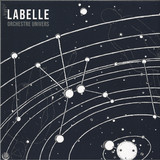
With the help of the Orchestre Regional de la Réunion, Labelle opens a new chapter in the merging of classical and electronic music, and the heritage of Europe and the Indian Ocean. This third LP, composed especially for the Orchestre univers, was recorded live over the course of four concerts, performed at the four corners of the Réunion, in the island's most beautiful concert halls. A sequence of breathless trancelike moments, Post-maloya and technological experiments, the album floats between tradition and modernity, like a sonic odyssey that is only the beginning of an ongoing saga...
- 1