Endless is a journey through cosmic soundscapes, where jazz-funk, early electronics, and ambient experimentation meet.
Carefully curated by Charles Maurice from his personal collection, this compilation brings together 10 rare recordings from 1969 to 1985, revealing an era of fearless creativity and sonic exploration.
Marking 10 years since Charles Maurice’s first compilation in 2015, Endless also celebrates a milestone — his 13th release in a decade of unearthing rare and beautiful music from forgotten archives.
From Beaver & Krause and their pioneering Moog experiments to the lush electronic symphonies of Jean-Claude Petit, the dreamy synth work of Ector Davis, and the cinematic beauty of Bernard Larquet, each track opens a window into a different musical galaxy.
Highlights include Patrick Marcel’s privately pressed 1985 recording “Bagnols”, an atmospheric fusion of ambient textures and ECM-inspired jazz, and Wlodek Gulgowski’s Scandinavian jazz-funk masterpiece that bridges groove and cosmic elegance.
Unearthed from obscurity, Endless – Universal Cosmic Sounds celebrates a timeless vision of music without boundaries — a rediscovery of the rare, the beautiful, and the endlessly imaginative.
out of Stock
Last delivered 10 months ago available to reorder, subject to availability
Another side of Steve Rachmad. Preceeds and album of archive tracks that shows the far reaching talents of this master producer.. TIP!
Some things are just too good to be hidden from view. That's certainly the case with 'Things To Think About', the first album from Dutch electronic music legend Steve Rachmad's lesser-known Sterac Electronics project.
Rachmad first rose to prominence in the late 1990s, spearheading a surge in Dutch techno that was heavily inspired by the futurist intent and machine soul of Detroit. Since then, he has continued to successfully explore a wide range of dancefloor-centric electronic styles under a dizzying array of aliases.
It's a while, though, since the public has been treated to a heavy dose of Sterac Electronics
material. He first established the alias at the turn of the millennium, primarily as an outlet for hardware-driven electro music shot through with funk and soul.
A handful of highly regarded 12' singles were released on Music Man and Interpersonal XP, before Rachmad began focusing on other projects. When inspiration struck, he returned to the project, jamming out tracks using a mighty collection of vintage synthesizers and drum machines.
Recently, Rachmad and Tom Trago decided to revisit the Sterac Electronics archive, discovering a killer collection of cuts created at different points over the course of the last 15 years.
Now 9 of those spellbinding hardware jams have been gathered together for the first time on 'Things To Think About', a warm, rich and evocative collection of electro-fuelled workouts that giddily pay tribute to the music of Rachmad's youth.
'Things To Think About' will be released as a limited-edition double album, preceded by this 12' single featuring another previously unheard gem from the vaults.
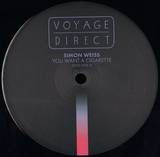
It was December 2015 when Simon Weiss delivered his first EP for Voyage Direct, an impressively intergalactic affair full of supersonic synthesizer arpeggio lines, Motor City influences and robotic drum machine hits. Two years on, the experienced Dutch producer returns to action for the first time since, in the process delivering another quartet of starry-eyed productions.
.
Through releases on Deepermotions, Rush Hour and Hometaping is Killing Music, Weiss has established a reputation for combining a deep understanding of dancefloor dynamics with a sci-fi inspired futurist aesthetic. Both of these complimentary traits are much in evidence on his second outing for Voyage Direct.
Weiss blasts off via Brain Fever', where raw, mind-altering arpeggio bass, fuzzy drum machine hits, spacey chords and alien electronics thrust our hero skywards. Think of it as techno for funk-fuelled, Italo-disco loving astronauts whose journey to the end of the universe is only just underway. This intergalactic funk blueprint is explored further on the deeper and more melodious You Want A Cigarette', where Weiss's vocoder vocals wrap themselves around mutant TB-303 lines, rush-inducing chords and clattering machine percussion.
On Space Ghetto (Booty)', our hero celebrates the discovery of previously unknown worlds in the only way he knows how. With kaleidoscopic, full-throttle electronic motifs and funk-fuelled synth-bass to the fore, Weiss offers his own unique take on electrofunk. Pleasingly fuzzy and tightly wrapped in the syncopated drum machine handclaps of ghetto-house, it's a typically far-sighted and attractive proposition.
With just two minutes to go until his spacecraft touches down on alien territory, Weiss rounds things off via the melancholic chord progressions and heartfelt vocoder vocals of Intro', a beat-free excursion just tailor made for dramatic set openings and spine-tingling mix endings. He may be stepping into unknown territory, but it won't be the last you'll hear from Simon Weiss.
Berlin-based duo Brigade returns with their sophomore effort, having spent the intervening years refining their approach to sample-based composition. Where 2022's "Hard Times, Soft Music" established their credentials as purveyors of comfort food electronics, „Unlimited Dreams Corporation“ finds the pair digging deeper into the archives, constructing elaborate sonic collages from decades of discarded vinyl.The fictional corporate framework, a company peddling bespoke dream experiences, works as an aesthetic guide, appropriate for 2025.
The fourteen tracks unfold with the patience of bedroom producers who understand that the best plunderphonic work happens in the margins. Brigade layers found sounds and field recordings with careful restraint, creating pockets of warmth that invite repeated listening. The broken beat rhythms feel lived-in rather than showy, while the more ambient moments provide necessary breathing room. It's headphone music that rewards attention without demanding it, the kind of record that reveals new details months after initial discovery.
out of Stock
Last delivered 9 months ago available to reorder, subject to availability
French musician, producer, and live artist Contre Soirée aka Olivier Decodts makes a significant return to Veyl with 'Psychiatry', a four-track EP shaped by deeply personal experience and emotional intensity. Rooted in post-punk, the release blends electronics with guitar parts, everything performed by Olivier himself.
What may have initially sounded like a PR stunt quickly revealed itself as anything but: ’Psychiatry' was conceived, completed, and sent to the label during Olivier’s stay in a psychiatric hospital. The first three tracks form a raw and honest narrative, tracing the events and emotional journey leading up to his hospitalization and explore the boundaries between vulnerability and resilience.
Closing the release is a cover of the Pixies' 'Gauge Away', a long-time favorite of Olivier’s. His rendition pays tribute to the original while placing it firmly within the emotional and sonic context of the EP, a final note of reverence and catharsis.
'Psychiatry' is a fearless expression of personal truth, pushing beyond the dancefloor to uncover something more intimate and affecting.
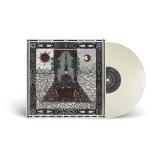
2LP, 9mm spine gatefold sleeve with silver hot foil & metallic inks. Printed inner sleeves. Engraving on Side D, the vinyl here is of silvery colour. Pelagic reissued THE OCEAN's 2010 albums "Heliocentric" and "Anthropocentric" on vinyl! "Heliocentric" was the first album with current vocalist Loïc Rossetti, a game changer in the band's history. The album is characterized by his shimmering cleans alongside abrasive, powerful screams. "Heliocentric" sees the band venture into calmer territories as compared to its predecessors: the album is defined not solely by walls of guitars, but also by careful orchestrations of piano, upright bass, strings and textural electronics. Conceptually "Heliocentric" is a comprehensive critique of the legacy of christianity: the iconic opening track "Firmament", still a fan's favourite, starts off with original text from the bible; while "Ptolemy Was Wrong" and "Catharsis of A Heretic" tackle Gallilei's and Copernicus' discoveries that Earth is not at the center of the universe, for which Giordano Bruno was burnt at the stake. The album concludes with Charles Darwin's theory of evolution, and considerations by Richard Dawkins', the spearhead of modern day's aetheism, in the epic 14 minutes closing track duality "The Origin Of Species" and "The Origin Of God". For fans of BREACH TOOL THRICE NINE INCH NAILS CULT OF LUNA ISIS KARNIVOOL ROSETTA RUSSIAN CIRCLES MONO MASTODON OPETH BETWEEN THE BURIED AND ME PINK FLOYD
Acclaimed Scottish composer Craig Armstrong releases his new work Pacific via his own label CMA Records. Written for piano, cello, and electronics, the three-movement piece was originally commissioned in December 2024 by Christian Kellersman, a pioneering figure in contemporary classical and jazz music, for his new live event series Berlin Confidential, co-curated with Alexander Szlovák. The series aims to promote innovative new music projects, with a particular focus on emerging musicians and composers.
Armstrong was among the first artists invited to perform as part of Berlin Confidential, premiering Pacific at Berlin’s historic Meistersaal concert hall in March 2025. The concert featured Armstrong on piano alongside cellist Lena Angelina von Almen and producer and musician Guy Sternberg, combining acoustic instruments with live electro-acoustic treatments to create a rich and atmospheric sound world.
Recorded in May 2025 at Lowswing Studios in Kreuzberg, Pacific continues Armstrong’s ongoing exploration of blending acoustic and electronic sound in a natural, seamless way. Over several days in the studio, Armstrong, von Almen and Sternberg developed the work’s intricate textures and dynamic interplay, resulting in a recording that captures both the intimacy and expansiveness of the original live performance.
Speaking about the inspiration behind the piece, Armstrong says: “I wrote this work during a time of great instability in the world, I wrote “Pacific” as an Elegy dedicated to the many suffering in today’s conflicts and in the hope that peace will prevail.”
Across its three movements, Pacific 1 is elegiac in nature, with the main themes stated and developed throughout the piece, punctuated by recurring piano motifs. The movement is reflective and atmospheric, with subtle electronic interventions. The second movement is arrhythmic in nature, following shifting time signatures that reflect a sense of uncertainty - the music is searching and static, ending without resolution but leaving hope for one to come. Pacific 3 moves towards peace and resolution, bringing the work to a close with quiet strength and emotional release.
When speaking about the creative process and his collaborators, Armstrong said: “Lena’s beautiful playing , tone and expression worked so beautifully on Pacific, Lena was also a great collaborator and was always willing to experiment and try new musical approaches. Lena is such a natural musician and she brought so much emotion and beauty to the piece. I wish her all the best in her future musical journey.”
He continues: Guy is a unique combination of being a brilliant engineer and mixer and a prolific very talented musician/composer. I was very fortunate to spend time with Guy in his studio in Berlin. His sensitivity to the project and his electronic programming made a wonderful contribution to the composition. His collaboration and friendship made the days working in Berlin such a great experience I would like to thank Emma Ford for her dedication, enthusiasm and guidance on Pacific”
For both von Almen and Sternberg, the collaboration was equally meaningful. Von Almen reflects on the experience of recording the piece, saying: “As a musician, it is always a great privilege to work on a piece together with the composer, and of course I felt even luckier to go through the process of creating something new with an artist like Craig Armstrong. Figuratively speaking, it felt like knitting a silk scarf: using the finest materials and taking the utmost care during the recording, we have realised another beautiful and touching work by Craig, which will bring us and certainly many others great joy. I feel very honoured to have been part of this and to have experienced this warm encounter.”
Sternberg adds: “Diving into Armstrong’s music while working on this record felt like examining a diamond under a microscope, discovering endless beauty within simplicity. Perfection and complexity emerging from simplicity, where every note, tone, noise, and gesture has meaning. I’m deeply grateful to have been part of this process, and for the freedom Craig gave me to express myself through his music, to let our sonic visions merge into one. It’s been both a lesson in music-making and in setting the ego aside, if only for a moment.”
Reflecting Armstrong’s belief in the role of music as a force for empathy and reflection, proceeds from Pacific will be donated to charities working towards peace: Médecins Sans Frontières and the Red Cross.
The limited-edition vinyl release has been pressed on Eco Vinyl at SeaBass Vinyl, a sustainable plant near Edinburgh. The record features striking cover art by Dirk Rudolph, who has designed several of Armstrong’s previous releases.
out of Stock
Last delivered 10 months ago available to reorder, subject to availability
Straight out of the local mud of the city of Antwerp comes dancing this next Souvenirs from Imaginary Cities slab of free-flowing bits of electronic wonder : Schönen Abend by Simon B. Just in time to ease you out of this endless winter and right into springtime. Like the previous hit by Purple Uncle, this flower takes some time to bloom and fill up your head and body with it's ear wormy fragrance.
It's hazy and cinematic, makes you think of Italian electronic pioneers and their library magic, Patrick Cowley's School Daze and Haruomi Hosono in some kind of gothic manner. It's quite stripped and lush at the same time, rhythms like minimal mechanics make you fly above the river and land just outside reality. It's a nice place where soft jazz tingles right around the dark corner, and that particular mix of exotica and melancholia — the trademark of this port city's best electronic auteurs is definitely in the air. The river still shines, but she’s deeply poisoned. The old town has lost every bit of fresh air but keeps on digging for old gold. This bitter pill is served with delicacy and lightness, the wound is dressed up seductively — feet in the mud, head in the air. Stuff is sensuous, with quiet places reminding of the good side of those times when the big wheel stopped turning ever so madly. A strange quietness whistles through the leaves. Some things take time to unfold. In or out of C.
Four years in the making, this is the solo debut LP of Simon B, a longtime contributor to Antwerp's improvised music scene (Groovecats Deluxe, Wij Blij Trio ). Primarily a double bass player, he also has a deep-felt passion for offbeat electronica and the rainbowy side of American minimalism, which takes front here. The smoky voice on the last track belongs to Nina-Joy Thielemans, Nina-Joy is part of Particals, a trio working with live electronics and field recordings, releasing an lp on Ultra Eczema later this year. Furthermore, you can hear the tenor and soprano saxophone of Adia Van Heerentals on 4 tracks, deepening out Simon's naturally flowing compositions and playing around with his melodies. You may know her from Bodem and her strong presence in the Belgian jazz scene lately.
Simon's electroacoustic experiments — using a clarinet and some outboard effects — were important tools in finding the very specific colour of this record. There's this airy character, like wind blowing through old layers of bricks and over the river, anchored with a deep sense of bass, gathering ages of dust and memories in these eight elegantly wobbling tracks, forming a perfect whole that’s really coming together in one deep listening from A to Z.
The centrepiece is perhaps Come to Me, instrumental and reprise with vocals, but no fillers on this one. Every part of the mystery is needed to come to its end and back again. It's a record that works in the morning, to open up a day and in the quiet corners of the night, with it's sleazy quirkiness, smiling towards you from the right corner of the eye. A perfect compagnon for your long-form wandering habits, light reflections on a wet surface obsessions, coffee slurping in the morning and the forgotten art of beachcombing. Quite essential these days, witnessing a world going apeshit.
out of Stock
Last delivered 10 months ago available to reorder, subject to availability
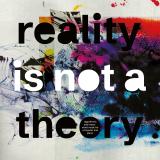
Recorded in concert at the University of Sheffield in March 2025, Reality Is Not A Theory is the first collaboration between Mark Fell and Pat Thomas. Major figures in British experimental music since the 1990s, Fell and Thomas have developed their rigorous practices from radically different backgrounds and perspectives: where Fell’s singular take on synthetic abstraction emerged from Sheffield’s electronic underground, Thomas is a virtuoso improvising pianist steeped in jazz and modernist art music who has simultaneously worked with sampler-based electronics for decades. As the record’s wonderfully academic subtitle explains, we are presented here with two sides of ‘algorithmic and improvised music for computer and piano’, exemplifying both players’ insatiable search for new (and sometimes uncomfortable) playing situations.
The performance begins with Fell’s electronics close to the timbres of acoustic percussion, attacks that suggest wood, metal or glass threaded along a rapid pulse while Thomas focuses on the lowest registers of the piano, deadening the strings. As Fell’s electronics start to ring out and occupy more harmonic space, Thomas turns to wide, repeated clusters, which slowly expand into patterns of chords. Like in his recent solo recordings and his trio work with Joel Grip and Anton Gerbal, Thomas’ playing combines extreme dissonance with a deep lyrical sense. Fell’s work gradually shifts its focus toward drum sounds, drawing on the microtemporal processes that have characterized his practice in recent decades. Heard together with Thomas’ probing piano, the computer sounds call up unexpected associations with the klangfarben antics of improv drummers like Paul Lovens or Tony Oxley. Throughout its second half, the music grows increasingly frenetic, as Thomas sounds out rapid, irregularly repeated figures and beautifully sour chords in the upper register, while Fell’s percussion develops into angular pan-pipe-like feedback and waves of glissandi.
With great confidence and patience, Fell and Thomas often let their individual contributions remain rhythmically distinct and unsynchronised, allowing unexpected correspondence and coincidence to guide the music’s development. Recorded in a hall named after Sheffield steel manufacturer and Master Cutler Mark Firth, the location might suggest a model for understanding how Fell and Thomas interact here: two workers in the same workshop, each immersed in their own part of the production process. Arriving in a striking sleeve designed by Mark Fell, with liner notes by Francis Plagne, Reality Is Not A Theory is an invigorating document of the meeting of two mavericks of contemporary music.
Quadratschulz returns to Clone / Dub Recordings with a sonic ode to Tokyo - ??six beautifully crafted tracks inspired by the neon-lit nights and electric pulse of the city. Drawing from the spirit of Japanese electronics, arcade culture, and city pop nostalgia, he blends crisp rhythms with emotive melodies and playful synth work. It'??s a journey through dreamy downtowns and rain-soaked alleyways, full of warmth, precision, and imagination. Of course, Japanese electronics play a key role - ??led by the unmistakable playful sound of the Roland TB-303 weaving through the tracks like a main character. Braindance for the dancefloor - ??Quadratschulz in top form. First limited press on opaque red vinyl.
b 02 The Garden of Evermod Shoseien Version
out of Stock
Last delivered 6 months ago available to reorder, subject to availability
Sex Tapes From Mars presents Outdom Records' boss, LATENT, who shares a brand-new four-track EP that spars with breakbeat, electro, house, and left-field electronics, neatly centring them all into a steady, sexy collision. The record as a whole captures genuinely original-sounding, rough-edged b-boy breaking badness - nostalgic, but never polite. It's a few BPMs slower than Sex Tapes' last few outings, but no less effective. Arguably, it's more late '80s sounding than ever, although, in fact, it's a brand-new, stonking release that showcases the label's versatility and unpredictability.
The opening track, "Break Machine", sets the pace with a clear nod to the '80s US group of the same name, bringing tidy drum workouts and clipped vocal samples that recall early Chicago, as well as choppy rave and street party energy at its most unfiltered.
"Disco Hijack" pushes the clutch into a more functional gear, merging delay-heavy, druggy, chuggy, sludgy bass with more robotic vocoder tropes, sharing something playful but IDM and European skewed. It's a dancefloor tool with a wink - just the style this now accomplished label has made its identity. Oh, don't forget the amens and clattering jungle breaks. 1990 or 2040? Fuck knows.
On "Distress Robot", pneumatic percussion and malfunctioning android chatter bring a darker, more mechanical edge, while "Virtual Body" closes with a spacious, garage-leaning shuffle that pulls the EP into recognisable contemporary yet still very much peak-time territory.
LATENT gives lean grit, pushes the edges, and lets the tracks feel alive in their imperfections. It’s music that thrives on tension between old-school reference points and modern floor pressure.
Bristol's label head Elon Dust HAS done it again.
Vinyl-only as per, don't sleep."
out of Stock
Last delivered 89 days ago available to reorder, subject to availability
»Lilac« is the first Donna Regina album since 2019’s »Transient.« The world has changed considerably since then, which has also left its mark on the Berlin indie pop duo. The songs released as part of the 2021 single »Welt in einer Stadt« (»World in a City«) for Karaoke Kalk had already dealt with the pandemic-induced standstill and its effects on urban space, and also the rest of the album shows that Günther and Regina Janssen have been influenced by recent social and political developments. »In ›Lilac,‹ I imagine good ol’ Earth as a big ol’ bear shaking us off because it can’t stand us anymore,« says Regina Janssen. It has become a serious album, Günther affirms, but he is also adamant that it is not a sad one. Musically, Donna Regina have remained true to the spirit of their early work, recently re-released by Karaoke Kalk: their arrangements are as minimalist as they are emotionally rich.
»The music is always there,« says Regina Janssen about the creation of the tracks on »Lilac.« As always, the two record their music »track by track and without computers,« as Günther notes. Samples play a smaller role this time than on earlier albums, with analogue instruments such as a monophonic synthesiser and, above all, guitars coming to the fore again. This frames lyrics that are being delivered by Regina in German, English, or in both languages. They delve even further into the intricacies of urban life. »Cities are underrated! What a civilisational achievement it is to have so many people living under one sky,« says Regina. »They constantly put you in touch with the unfamiliar. Sometimes they’ll be overwhelming, and they are always alive.« This ambivalence shapes the tone of the album that ponders on the state of the world today.
Starting with the ominous sounds of »Whole World In My Town,« through the dreamscapes of »Autumn In Paris,« to the elegiac conclusion of »No More Roses,« Regina and Günther Janssen move through different timbres and styles with a few select means. Their preference for minimalist electronics becomes evident at times, while elsewhere the pieces open up to balladic arrangements in which the guitar plays a leading role. This turns »Lilac« into a city by itself, the songs forming its soundscape: every neighbourhood looks different, every street has its own character.
out of Stock
Last delivered 10 months ago available to reorder, subject to availability
On Beacon Hill: at twilight we find Anthony Moore, roots winding backwards to the halcyon days of Slapp Happy and the "70s progressive art rock scene, at guitar and piano. With the atmospheres and accompaniments of AKA & Friends, he breathes infernal new life into songs from his six decades of multivarious music making. This new delivery system is unto a séance, a communal incantation, twining Anthony"s avant and pop traditions together in a darkly radiant coil of folky chamber music; a rope to lower the listener through cobwebs and murk, unveiling new life beneath Anthony"s mad old lines. AKA are Anthony Moore, Keith Rodway and Amanda Thompson. A pagan family of sound worshipers hailing from that unholiest of all places: Hastings UK, home of Crowley and Turing. Like their sinister forbears in that infamous tradition, this latest trinity shares a passion for subverting pattern and number, factoring unlikely permutations arising from sea and horizon, greensward, the southerly aspect, and the planisphere as half-world. Their equatorial shore speaks of a planet of water and earth, fire and air. AKA"s humble tools of choice for this endeavor are guitar, piano, organ, synthesizer and vocals. The Friends of AKA are Tullis Rennie, trombone and electronics; Olie Brice, double bass; Richard Moore, violin; and Haydn Ackerley, guitar. They too navigate the shoreline of the south coast, haunt the same taverns and regularly play together in whatever combinations fit the bill. Leaving the drums (and their drummer) at home to realize anew these dreamladen songs, AKA & Friends ensure that the notes fall around the beat and not on it, so as to define the pulse with absence. As such, time is liberated, prised free from the merciless clock; a rhythm of waves, passing through a steady-state universe of no beginnings and no endings. Discontinuities are dissolved, all is transition.
Valby Vokalgruppe was initiated in 2008 by Anja Jacobsen, the Danish collective’s current line-cup is completed by Lil Lacy, Sonja LaBianca, Cæcilie Trier and Laura Marie Madsen. The group has written and performed a large number of cross-aesthetic pieces over the years, including an album Bah New Era released in 2012 on Eget Værelse.
Sharpened to its core, the group dives deep into rhythmical architectures built almost solely from the voice - think Platonic solids reimagined as sound objects. Think trance without electronics. These new compositions are compressed, sparkling forms — vocal geometries that spin, collide, and dissolve through repetition. From inside the circle: radical precision, soft dissonance, and playful intuition guide the way. The group explores the voice not as melody alone, but as material — vibrating, modulating, refracting.
Solids For Voices transcends into deep concentration calling for a clear state of mind, in recognition of an increasingly fragmented and incoherent reality. Valby Vokalgruppe endeavours a total absorption into the voice, the rhythm and the trance.
Concrete Noir is the latest project from multimedia artist and sound designer Piero Fragola, known for genre-defying ventures like We Love (BPitch Control) and ANGLE (Tiptop Audio Records). With this project, he explores a hybrid space where electronics, voice and image merge into an introspective and shadowy form. The debut album, Romance Ruins, is the first release on the newly founded Frequens Records.
Composed entirely using Tiptop Audio’s ART modular system, it unfolds as a series of layered, emotionally charged compositions. These are structured songs with a physical low-end impact.
Musically, Romance Ruins moves beyond genre boundaries to inhabit a space shaped by contrast and collision. The result is a form of modern hybridization—melancholic yet forceful, intimate yet expansive. The sonic identity is carefully constructed but deliberately raw, emphasizing emotion over precision.
The title itself captures the core of this paradox. Romanticism, in its intensity, may ultimately destroy. And yet, from that destruction, something vital emerges. The album embraces the figure of a decadent hero—a child of broken ideals who reclaims beauty from collapse. It’s a romantic vindication of decadence, a belief that clarity can rise from ruin, and meaning from fragmentation.
Moving through a broad range of tempos, the tracks explore murky, melancholic, tactile and cinematic moods. Synths intertwine with guitars (Fender and Gretsch Dobro). All vocals are performed by Piero Fragola, except on Faraway Places, where his voice is joined by that of Viktoria Lishkee—the album’s only guest appearance.Nearly every track is paired with a video, expanding the work’s audiovisual dimension. As a designer for Tiptop Audio and instructor at IED and LABA in Florence, Fragola brings a multi-sensory vision to Concrete Noir—one where medium and message, form and feeling, are inseparable. With Romance Ruins, he delivers an artistic statement. A body of work that resists categorization and embraces the beauty of decay.
Romance Ruins marks the beginning of Frequens Records. Available in a 180-gram vinyl edition.
out of Stock
Last delivered 11 months ago available to reorder, subject to availability
Cambridge’s acclaimed psych-folk quintet Fuzzy Lights return with their fifth album ‘Fen Creatures’. Following on from 2021’s critically lauded ‘Burials’ the band have created their most conceptually focussed work to date – a mediation on environmental crises that uses the folklore and history of East Anglia as a lens to examine humanity’s fractured relationship with the natural world.
The album operates across multiple historical timelines, from Iron Age hill forts to medieval plague houses, from Byron's Romantic-era environmental warnings to the immediate threat of rising sea levels, creating a temporal tapestry that weaves ancient stories with contemporary concerns.
Musically, the quintet, Rachel Watkins (vocals/violin), Xavier Watkins (guitar/electronics), Chris Rogers (guitar), Daniel Carney (bass), and Mark Blay (drums), have pushed deeper into experimental drone territories while maintaining the crystalline folk sensibilities that have become their signature.
Lead track ‘Greenteeth transforms the traditional cautionary tale of Jenny Greenteeth, the water spirit who lures children to their deaths. "When I read this story to my daughter, she was instantly drawn into it," Watkins notes. "There's something timeless about these tales and the way they speak to fundamental fears and connections that span generations."
Elsewhere, 'War Ditches' imagines the Iron Age dead of a Cambridge hill fort keeping watch over the land, their vigil ending as modern people lose connection with the earth. 'The Promise' creates an imaginary encounter with the ghosts of Landbeach village across multiple eras, connecting the 1665 plague with our recent pandemic experience through shared narratives of community resilience and loss.
Critics praised ‘Burials’ as "way beyond folk and folk in essence all at once" (Backseat Mafia) and "folk-rock looking back squarely at the early 1970s" (Financial Times), and 'Fen Creatures' promises to cement Fuzzy Lights' reputation as one of Britain's most vital contemporary folk acts. The album positions them firmly within the lineage of artists like Fairport Convention, Trees, and Comus who understood that engaging with tradition isn't nostalgic escapism, but a way of accessing older wisdoms about how to live in the world.
‘Burials’ press:
“...the musical battle between the fuzzy and the light makes Fuzzy Lights special.” MOJO ★★★★
“...a simmering, sinister undercurrent which often explodes with apocalyptic fervour.” SHINDIG ★★★★
“...subverting genre expectations and folk melodies.” FINANCIAL TIMES ★★★★
“Way beyond folk and folk in essence all at once, it's a record that’ll bring you much reward.” BACKSEATMAFIA - 8.3/10
“a genuine delight....a stirring and unsettling listen, goosebumps adding to the pleasure of timeless music played well, with perfect precision. Don’t leave it another eight years, eh?” FOLK RADIO
“...re-inventing the folk-rock playbook and dragging it screaming through an array of influences...Fuzzy Lights’ most unique, reflective and ambitious record to date” FOR THE RABBITS
Fin" is the fourth album by Spanish band Exnovios, a group that has been described as a blend of Spacemen 3 influences and the best of Spanish '60s pop. The new dozen songs that make up their fourth LP happily shifts away a bit from to the usual unbeatable formula of this Pamplona-based quartet (garage reverbcore as if sung by Spanish legends Juan y Junior) and add new and fascinating layers-at once fresh yet entirely logical in the evolution of such a unique band within the local scene. Exnovios' new collection of songs wasn't created in a rehearsal space or recorded in a single week in the studio. Rather, it was composed and rehearsed slowly in bedrooms and living rooms-songs that were later brought into the studio with the idea of finishing building them there. Over the course of nearly a year, the band approached each song one by one, in a handcrafted manner, alongside their trusted ally, producer Guillermo Mutiloa. The result is a treasure trove of songs, perhaps more psych-folk than ever, as acoustic pieces abound-full of exquisite melodies without abandoning the consciousness-expanding journeys that have made Exnovios a cult favorite: from the instant classic 'Nubes' (with its very Byrds-like harmonies and gorgeous twelve-string acoustic guitar), to the delightful Big Star-style fiction of 'El cine se queda en silencio', or even the fabulous cover of Stephin Merritt's 'Tú tú tú tú.' These are often drumless tracks, perhaps with some light percussion, always featuring detailed and exquisite arrangements of guitar, electronics, percussion, and even touches of strings. And despite the reduced presence of drums (which, along with the laid-back recording approach, makes this almost Exnovios' "White Album"), fans of the band's legendary fuzz-guitar reverbcore sound won't be disappointed: there's the psychedelic 'Viaje Alucinante', full of their classic riffs; their brutal cover of Psychic TV's 'Godstar' (drenched in echo and eccentric vocal effects); and the perfectly crafted 'Naves Misteriosas', which pulls off the impossible feat of sounding like 'Cerca de las Estrellas'-era Los Pekenikes in the verses, Phil Spector in the chorus, and the Ramones in the post-chorus. And there's much more: percussion reminiscent of the most 'baggy' Primal Scream on the brilliant 'Aún no es tarde'; love lyrics wrapped in an exquisite drum machine soaked in reverb and Suicide-style Farfisa on 'Ha venido a quedarse'; the beautiful two-chord electronic Christmas carol 'Ya es Navidad'; and that lysergic waltz that sings of the peace brought by karmic revenge, carried along by waves of fuzz and delay, titled 'El día del juicio final.' "Fin" reveals more sides and nuances of Exnovios than ever before-a festival of eclectic styles that all remain true to the musical vision that has defined them over the past decade, with their melodic powers at the peak of their talent.
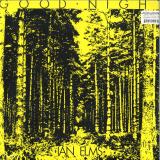
Ian Elms’s cult isolationist synth masterpiece Good Night returns via Dark Entries. Originally released in 1982, Good Night blends Berlin school minimalism and BBC Radiophonic weirdness with the aesthetics of then-nascent DIY punk electronics throughout its fifteen short tracks. According to Elms, these pieces were composed in two broad but interrelated modes: pieces with voice and synthesizer, which are obliquely narrative, and instrumental synthesizer pieces that aspire to capture fleeting emotions. Ian met with producer David Hoser at Octopus Studios and they began constructing pieces using a Polymoog Keyboard 280a, sampled drum tracks, and Elms’s synthesizer. On “The Street Enters the House”, live drums lurch along with skeletal motifs while Elms’s elliptical lyrics evoke domestic discontent. “A Light Moves Across Curtains” features metronomic pummeling and icy strings buttressing the scant cryptic lines from Elms. Instrumental gems like “Goodnight” and “Surrounded by Trees” are built around detuned riffs in round-like structure, both drifting and static like the motion of waves. With original pressings fetching three digits – if you can even find a copy – this reissue is essential listening for fans of John Bender, Transparent Illusion, and the early 80’s DIY cassette scene. Each copy of Good Night comes with a postcard featuring a photograph and notes by Elms. “This record is intended for anyone who by accident or design spends most of their time alone (whether in the body or in the mind).” – Ian Elms.
out of Stock
Last delivered 3 months ago available to reorder, subject to availability
Downwards present Alexander Tucker in metamorphosis from psych folk to techgnostic bard, aided by notable guests – Justin K Broadrick, Regis, Phew, Karl D’Silva, JJOWDY, and Elvin Brandhi – in a quest for disordered convention and new thrills. One up to Tucker’s outings for Alter and The Tapeworm, and spiritual successor to his »Nonexistant« trio on Downwards, »Clear Vortex Chamber« is an enigmatic take on the brownfield edgelands where the eldritch intersects electronic heck. Decades of work spread between hardcore punk, psych rock, folk, and drone — including work with Stephen O’Malley (Ginnungap) and Neil Campbell (Astral Social Club, ESP Kinetic) — feed forward into this album’s unsteady machine rhythms and cranky junkyard atonalities, where Tucker panel-beats aspects of his previous sound with a newfound industrial thrust and cyber-punky lust that suits him dead well.
A crafty example of how to mutate without losing sight of yourself, the album’s eight parts feel like a cyborg patching itself into modernity. On opener »Udug« Tucker’s signature falsetto peals from a A Scanner Darkly-style scramble suit of stereo-strobing electronics, setting a melodramatic, neo-gothic tension that riddles the album thru the knotted, fractured industrial dancehall bullishness of »Mallets« with Yeah You’s feral gob Elvin Brandhi, via a pair of standout »Fedbck« parts with Tucker’s personal idol, Justin K Broadrick (Godflesh, Jesu, and the rest), featuring the Brum deity’s claw-handed riffs and howl on the first, and smeared with Karl D’Silva’s brass in its noctilucent second part.
Regis also proves a staunch foil for the album’s most robust, club-ready cut »Zona«, hammered out from buzzing metallic drums and monotone bass drones, and pitting his severed vox against Tucker’s own androgynous harmonies to recall aspects of The Ephemeron Loop via British Murder Boys, whilst scene legend, Can and Ryuichi Sakamoto spar Phew (aka Aunt Sally) ideally tempers the flow in a relatively soothing »Sansu«, sharing more cyber-romantic, recombinant sentiments with the channelling of Robert Wyatt gone Funk Bruxaria on »Folded«.
out of Stock
Last delivered 9 months ago available to reorder, subject to availability
“Tubby did three original dub albums, ‘Dub From The Roots’. ‘The Roots of Dub’ and the third is ‘Brass Rockers’ with Tommy McCook ‘pon the flying cymbals. Where he mixed it with the horn going in and out in a dub way and one named ‘Shalom Dub’ you can call Tubby’s too because he mixed the versions as they were off forty fives’’
Bunny ‘Striker‘ Lee
King Tubby and Producer Bunny ‘Striker’ Lee are intertwined in the birth of Dub Music. After discovering a mistake that made a ‘serious joke’ ( more of which later...) they went on to release the first pressings of this new musical genre namely ‘Dub Music’. Tubby’s vast knowledge of electronics and Bunny’s vast catalogue of rhythms would lay the foundations of what today is taken as a standard... the Remix / Version cuts to an existing vocal tune.
Osbourne ‘King Tubby’ Ruddock was born in Kingston, Jamaica on 28th January 1941 and grew up in the High Holborn Street area of downtown Kingston. He studied electronics at Kingston’s National Technical College and also on two correspondence courses from the U.S.A... When he had qualified Tubby began repairing radios and other electrical appliances in a shack in the back yard of his mother’s home. His work in the early days included winding transformers and building amplifiers for Kingston’s Sound Systems. Tubby built his first Sound System in 1957 playing jazz and Rhythm & Blues at local weddings and birthday parties. His reputation as a man who knew and understood both electronics and music grew steadily and as the sixties drew to a close. Tubby purchased his own basic two track equipment. He installed this alongside his dub cutting machine, a home made mixing console and his impressive collection of Jazz albums in the back bedroom of his home at 18 Dromilly Avenue which he christened his music room.
Tubby and Striker were at Treasure Isle Studio’s one day while Ruddy from Spanish Town was working with the engineer Byron Smith....
“Tubby and myself was talking when Ruddy was cutting some dub but Smithy (engineer) made a mistake through we were talking and forgot to put in the voice. It was two track recording in those days. Ruddy said ‘No Man! Make it stay! and so they cut the rhythm. When I went over to Ruddy’s that Saturday night a dance was in progress and when they played the vocal to the tune... then he said we’re going to play ‘Part Two’. They never called it ‘Version’..and then he played the rhythm track. The song was a catchy song and everybody started to sing along and the deejay started to toast so everything went down well. On Monday morning I went up and I said ‘Tubbs the mistake we made was a serious joke.It mash up Spanish Town! The people went wild. So you have to start to do that now ‘cause when the man put on the ‘Part Two’ everyone start singing this song. It played about twenty times. I said you try Tubbs!’...Well the next Saturday night now when Tubby strung up down the farm U Roy said he’s going to play ‘Part Two’ but Tubby did it different now. He started with the voice then dropped it out and let the rhythm run and then he brought in the voice in the middle and from there Tubby started to get really popular.’’
Bunny ‘Striker’ Lee
Dynamic Sounds upgraded to sixteen track recording in 1972 and Tubby purchased, again with the help of a deal brokered by Bunny Lee. The old four track equipment and the MCI console from their Studio B. The four tracks now gave him far wider scope to work with and he began to create a new musical form where the bass and drum parts were brought up while the faders allowed Tubby to ease the vocal and rhythm in and out of the mix. It was only a matter of time before Tubby’s dub plate experiments began to make it on to vinyl and the first ever long playing King Tubby releases would feature a collection of his mixes to a selection of Strikers rhythms. So please sit back and enjoy this historic set of sounds. Lovingly restored and with a few extra gems added to the CD Editions. These releases were the first to carry the name of King Tubby and the first to credit the great musicians that contributed so much to the rhythms that made these albums possible.
out of Stock
Last delivered 11 months ago available to reorder, subject to availability
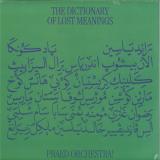
PRAED return to Discrepant, after their 2017’s entry Fabrication of Silver Dreams (CREP44)
Known for their signature blend of Egyptian Shaabi, free jazz and improvisation, the Lebanese duo behind PRAED - Raed Yassin and Paed Conca - now assemble a full orchestra for the second time taking the music to a deeper, rooted level.
Following their 2020 release Live in Sharjah, also under the PRAED Orchestra! moniker, the duo now revisit their unique blend of Arabic heritage and free jazz sensibilities with an album that keeps pushing further into strange and unexpected directions.
The Dictionary of Lost Meanings is just that, seven fully composed pieces and large-scale improvisations, performed by an expanded ensemble of musicians from across the globe. The result is dense and playful, unpredictable but familiar, a record where Arabic rhythms and microtonal melodies collide playfully against electronics, warped vocals and orchestral textures.
It’s less about genre than about memory — like tuning into a radio station broadcasting from somewhere between the past and the future.
PRAED continue to blur the line between popular culture and experimental music in ways that feel both grounded and completely their own.
PRAED ORCHESTRA! are
Raed Yassin: Synthesisers, Vocals, Beats
Paed Conca: Clarinet, Electric bass
Alan Bishop: Alto saxophone, Electric bass, Vocals
Andreas Bral: Harmonium, Electronics
Elisabeth Klinck: Violin
Christian Kobi: Soprano and Tenor Saxophones
Hans Koch: Bass Clarinet
Martin Küchen: Alto and Sopranino Saxophones
Maurice Louca: Synthesizer, electronics
Stan Maris: Accordion
Radwan Ghazi Moumneh: Buzuk, Vocals, Modular Synth
Youmna Saba: Electric Oud, Vocals
Sam Shalabi: Oud, Electric Guitar
Els Vandeweyer: Vibraphone
Khaled Yassine: Drums, Percussion
Michael Zerang: Drums, Percussion
Recorded by Jasper Jan Peeters at the Summer Bummer Festival, DE Studio,
Antwerp August 26, 2022
Mixed by Adham Zidan
Mastered by Mark Gergis
Produced by PRAED
Photos by Geert Vandepoele
out of Stock
Last delivered 4 months ago available to reorder, subject to availability
Ben Pest and ARA-U unite for the next release on No Static / Automatic. Kaos Sympatic EP started life with the pair recording jams of various vintage studio kit, including an EMS VCS3, Roland VP330 and an Orgon Systems prototype known only as the “Silver Box”, which developed into full tracks over subsequent sessions. Ben Pest has been busy releasing high grade club tracks including collabs with Radioactive Man and Kursa for Asking For Trouble and Love Love Records last year, and with solo EPs dropping on Cultivated Electronics and Posh End music. Here he links with NS/A boss ARA-U, turning out some of their headiest material to date.
The EP kicks off with ‘Err Hello’, it’s wholly discordant, lairy, and unapologetically weird. ‘‘Get A Grip’ drifts in with hallucinatory wafts of sound over a warped riff, building into a granular, distorted headfuck of a hoover-bass moment. This one will make the subs rattle on the right side of distortion. On the B Side title track ‘Kaos Sympatic’ gets stuck in with a big broken beat and guttural sub that transforms into a techno drop to drive this track home. Finishing up, ‘Slapback’ serves up a cut of high energy electro funk, coming off like classic ERP on heat. Limited edition purple vinyl.
out of Stock
Last delivered 6 months ago available to reorder, subject to availability
Multi Culti dive deeper into muso alchemy with ‘Cimbal Tanz,’ a record release that bridges the cult solo 'cimbal’ performance of Emil Jourjou with fellow Moldavian producer Bliz Nochi’s electronics.
Bliz Nochi began learning music at age 7 playing the accordion, later mastering the guitar and piano. By 17, he was experimenting with new metal genres, Dub, electronic, and indie music. In 2016, he released his first works under the name Bliz Nochi, blending world music and exotica infused with Balkan elements, which led him to connect with master musician Emil Jourjou.
Emil Jourjou, a master cimbal player born in Chisinau, Republic of Moldova, studied at the prestigious Ciprian Porumbescu music school. His years of experience and deep connection to Balkan musical traditions build a cultural bridge between classical and folkloric orchestral music, having performed at such events as the World Expo in Hanover, and for the Philharmonic in Lübeck.
In 2021, the pair began recording together, remixing their friend and mentor Andi Otto for Multi Culti (later licensed to last year's Buddha Bar compilation). That collaboration paved the way for this full-length LP, with one side focused on traditional cimbal recordings and the other side a fusion featuring Bliz Nochi's production, a format Multi Culti initiated to showcase the too often obscured talent of the solo musician.
Bliz Nochi's LP is more than an album; it’s a journey through sound blending tradition and modernity, offering listeners a unique blend of Moldavian music and contemporary electronic styles. This project highlights Bliz Nochi's dedication to his roots and innovative spirit, bringing a fresh perspective to the music scene.
out of Stock
Last delivered 11 months ago available to reorder, subject to availability
Out on Madrid's leading label for braindance, breakcore, acid, and experimental electronics, it marks a fearless new chapter in electronic music. Amidst a sea of mediocrity and plagiarism, I'm Not Here stands as a testament to the uniqueness of the Cornish Braindance scene, which has given rise to some of the greatest producers in electronic dance music. Here, Benjamin James demonstrates that he is the torchbearer of that legacy, delivering anthems for a world spiraling in self-alienation--where identity flickers between screens and silence.
out of Stock
Last delivered 10 months ago available to reorder, subject to availability
An’archives presents Kagome Kagome, the first collaboration between France’s Delphine Dora and Japan’s Ayami Suzuki. Curious listeners might know Dora from the string of lovely, idiosyncratic albums she’s released over the past two decades, most recently for labels like Modern Love, Morc and Recital; she’s also worked with the likes of Michel Henritzi and Sophie Cooper. Suzuki’s performances, predominantly for voice, place her within a tradition of Japanese improvised music – see the music she’s made with artists such as Takashi Masubuchi, TOMO and Leo Okagawa – but her approach also takes in folk song, ambience and claustrophobic drone.
On Kagome Kagome, Dora and Suzuki play to their many strengths: a gentle, free-willed folksiness; long, aerated drone constructs; ghostly, time-warping explorations for voice. They met on Dora’s May 2024 tour of Japan, though they’d been in touch beforehand, with Dora proposing the collaboration to Suzuki, developed around “concepts of ‘otherworldliness’ and ‘impermanence’,” the latter says, “and explored the relationship between ‘the invisible’ and sound in Japanese culture – a common interest we share.”
They recorded across several days that month, with the sessions for Kagome Kagome taking place in Kanumi, in Tochigi prefecture, at a space named Center. “I was particularly looking forward to seeing Delphine encounter the vintage 104-year-old harmonium from Nippon Gakki Seizo Co. that had just been repaired at Center,” Suzuki recalls. “It was as if the harmonium had been waiting for Delphine to draw sound from it. I felt it was a beautiful relationship where they could guide each other.”
Indeed, there’s something channelled about the music that Dora and Suzuki made together in the session that constitutes Kagome Kagome. Dora’s harmonium might be the spine of the album, but Suzuki’s free- floating voice, and gaseous, muddied banks of electronics, wrap around the wheezing, ancient tonality of the harmonium beautifully – they, too, sound as though they were just waiting to be willed out of the daytime air. Their voices nestle together beautifully – “when we sang together in a tunnel,” Suzuki says, “there were times when we sang the exact same melody without planning. It happened so naturally that the boundaries between us became blurred.”
And that title? It’s drawn from a Japanese children’s song, and the song titles themselves constitute the song’s lyrics, in alternating Japanese (Romanized) and French language. Urban legend connects the song “Kagome Kagome” to the Nikko Toshogu Shrine, nearby Center, that Suzuki and Dora visited while they were in Kanumi. “The mysterious lyrics of ‘Kagome Kagome’ and its puzzle-like connection to Nikko Toshogu were a perfect fit for this mysterious album,” Suzuki reflects, “which I think has its own kind of puzzle-like elements.”
A deep album of prayer and magic, of divination and ritual, Kagome Kagome’s sense of serious play, its rich beauty, feels somehow dislocated from our time. If you’ve ever enjoyed the music of Nico, Kendra Smith, Charalambides, or other channelers of ghostly mystery, its eerie otherness will, somehow, feel oddly familiar.
out of Stock
Last delivered 11 months ago available to reorder, subject to availability
Developed over three years across residencies, tours, and periods of deep listening, “Your Whistle Tells of Landscape” finds Australian sound artist Alexandra Spence continuing her investigations into the perceptual entanglements of sound, place, memory, and imagination. Like much of the artist’s work, it unfolds at the liminal edge between the real and the imagined — between what is heard and what is remembered.
Composed from a constellation of materials gathered across sites and seasons — snowscapes recorded in Vancouver, insect choruses from a Sydney backyard, ceramic fragments unearthed while mudlarking with tinysound — it renders an intimate cartography of experience: one shaped equally by ecological resonance and internal drift. Each piece traces a kind of imaginary geography, where sonic ephemera become proxies for topography, weather, or myth.
The album is informed by time spent at EMS (Stockholm) and MESS (Melbourne), where Spence deepened her engagement with microtonality and tuned feedback systems, and by dialogues with sympathetic artists such as Tashi Wada and Patrick Farmer. Sound materials were sourced from Serge Modular systems, a custom lyre built by Tim Wall, amplified objects, handmade electronics, and Spence’s own field recordings captured within rockpools, beneath sand, and among a flock of sheep in the French Pyrenees. On “Magenta,” a collaboration with Delphine Dora, the domestic and mythic intertwine, as layers of voice, environmental recordings, and Halldorophone feedback drift in and out of one another like overlapping weather systems.
Despite its diverse material palette, the album resists spectacle or accumulation. Instead, it moves with a quiet sense of continuity and a rich interiority — less a sequence of compositions than a set of situated attunements. Across its duration, sounds seem to murmur, glint, or hover right at the edge of presence, invoking a listening practice that is as much about orientation as it is about reception. These are pieces not simply about place, but of place — etched with the grains of time, vibration, and breath.
"Eight tracks of jagged electronics, heavy basslines, and fractured spoken word collide in a body-jerking soundclash that is both raw and vital."
Good On Paper enjoyed "Baldauf’s crisp, distanced tones accompanied by Roe’s ominous, pulsating programmed bass line and four-to-the-floor whack, coaxing pure pop out of tension and incongruity." Electronic Sound Magazine hailed the LP as "a blistering, club-forward workout", with "top-drawer, nose-bloodying electronics,’" positioning the Stroud duo as "rather like a wonky Tom Tom Club with added grit."
Among the true Keiji Haino devotees, Nijiumu’s Era of Sad Wings (released on P.S.F. in 1993) has always held a special place in the pantheon. Operating for only a few years in the early 90s and apparently only performing a handful of shows, Nijiumu operated at the opposite end of the dynamic spectrum to Haino’s famed power trio Fushitsusha, dwelling in a hushed, meditative realm of mysterious droning sonorities and free-floating melodies that occasionally erupts into violence. Black Truffle is pleased to announce a new double-LP edition of a lesser-known 1994 Nijiumu recording, When I sing, I slip into the microphone. Into that void, I bring comrade “prayers”, then, turning to face the outside, together we explode. Here, Nijiumu is the trio of Haino, Tetuzi Akiyama and the obscure Takashi Matsuoka, the three performing on a wide variety of string, wind and percussion instruments, as well as electric guitar and bass, and Haino’s unmistakeable voice.
Like on the early solo Haino album that shares the group’s name (released on P.S.F. in 1993), the instrumentation swims in reverb (the use of which Akiyama recalls as ‘a kind of point of the band’), often obscuring the instrumental sources. On the short opening piece, a distant reed instrument arcs long buzzing melodies over a bed of cymbals and gongs, like a psychedelic take on Tibetan music. The epic second part, occupying almost 50 minutes, begins as a splayed, near-formless cloud of electric guitar and bass, shadowed by bowed and plucked strings, the three elements working through twisting atonal shapes. At various points in the recording, we hear what seems to be the sounds of musicians moving between instruments, their shuffling and bumps fitting seamlessly into this radically open music. Eventually, what sounds like electric guitar moves closer to the foreground, fixing on a repeated melodic cell around which hover mysterious clouds of long tones and a sporadic shaker. At the half-hour mark, the music begins to build to a violently emotive climax, Haino’s impassioned vocal cries punctuating a lumbering, bass-heavy murk, contrasted at points by what sounds like a tin whistle. Suddenly, the volume drops to a near-whisper, opening the way for the stunning final moments, which touch on the slow-motion balladry of Haino’s classic Affection, here given an eccentric twist by an occasional woodblock hit. The third piece opens with a hazy trio of rumbling bass, bowed strings and abstracted slide guitar, the latter calling to mind some of Akiyama’s later solo work. Eventually joined by Haino’s voice, its fragile, haunted tone might remind the listener of the man in black’s documented love of the madrigals of the murderous Count Gesualdo, before the recording abruptly breaks off mid-note. In this new edition, the Nijiumu trio recording is supplemented by a piece recorded solo by Haino in 1973, a bracing electronic blowout stretching almost half an hour. Using a homemade electronics setup to unleash a barrage of crunching distortion and shuddering harmonic fuzz, it takes its place in the canon of extreme live electronics next to Robert Ashley’s Wolfman and Walter Marchetti’s Osmanthus fragrans, looking forward to extreme noise years before Merzbow. Taken as a whole, these four sides of music are a stunning document of some of the lesser-known waystations of Haino’s singular creative path.
out of Stock
Last delivered 12 months ago available to reorder, subject to availability
“Is all that we see or seem but a dream within a dream?” This quote from a poem by Edgar Allan Poe sums up the lamenting, primal work that is "All That We See or Seem"; a project conceived between Finland, England and Brazil. The self-titled album consists of two long-form pieces of droning mysticism hailing from the trio of Gruth (concept, production, electronics), Ellen Southern (vocals, field recordings, percussion) and Johanna Puuperä (violin, modular synthesizer, additional vocals).
The album opens straight into a thousand yard stare with “Myrskymielellä", adapted from a 1891 poem by the Finnish national poet, Eino Leino, who wrote it at the tender age of 13. Here a blank distant droning of synths and the sounds of flowing water hover underneath like a dark river observed from the air. This is a sound and feeling that will stay constant for the entirety of the piece´s thirty minute duration. It is a trance-inducing composition that slowly unfolds elements of pagan ancestry into its own life. At first, faint female vocals are introduced as distant spatial elements, which gradually advance into waves of cries and anguish as the piece progresses and moves further into the storm. The tranquility of the first half is slowly morphed into a full blown ceremony as driving ritualistic percussion and a foreboding witch-like presence shifts the piece into a Dead Can Dance-like territory. Here a constant enveloping mixture of violins, modular synths, field recordings and vocal screams creates the feeling of a grande finale. It is an astounding piece of music that develops like a drone symphony for the beginning of time.
With the second piece, “A Dream Within A Dream”, from Edgar Allan Poe´s 1849 poem, you are transported to the shores of an undisclosed island; a place where it´s only you, your thoughts and the endless emptiness. The continual sound of waves is soon brought together with a cloud of synths and mourning violins that will keep a steady dreamlike state during most of the piece´s duration. This time the wordless vocals feel almost angelic in their pageantry. The composition flows like a slow caress of the soul and feels like the spirit twin of Gavin Bryars' “The Sinking of the Titanic” with its lamenting slow movements towards the unknown.
Truly a ghost of a record, “All That We See or Seem” is an experience hard to shake and feels like entering sacred ground. We are in a place surrounded by earth, both ancient and present. "Let loose, Vanha, the rage of an earthly storm! Detach the elements, completely open the sky! In the Earth, let an incessant storm prevail, so that in my chest I would not feel the miserable pain” - Eino Leino
out of Stock
Last delivered 12 months ago available to reorder, subject to availability
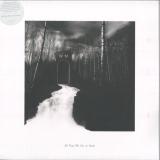
Erik K Skodvin summons his alter ego Svarte Greiner for a dive into the dark, wintery Swedish forest with the score to the psychological thriller/horror film “From Darkness” (orig: Ur Mörkret).
The film is director Philip W. Da Silva's debut and is set largely at night, deep in a Swedish nature reserve where mining used to take place. Loss, mental health and Nordic mythology come together in a story that revolves around the search for a missing woman. The score follows an eclectic and atmospherical path throughout the narrative with an uneasy underlaying vibe; although one with occasional points of refuge in the otherwise vast darkness. There is a gloomy, barely tangible sound of Nordic folk tradition buried in the music, even if it comes across in a different, more abstract way, where the various instruments are often used more as sound sources that are improvised (and abused) into becoming their own element. Skodvin performed and recorded the majority himself. In addition, he commissioned free improviser Axel Dörner to participate with his unique, custom-built electro-acoustic interface, which, along with Claudio Puntin's processed reeds and additional electronics, has been built into the elaborate backdrops to create an entire world that balances on the border between the approachable and the elusive - not unlike the journey of the protagonists. Skodvin's partner in Deaf Center, Otto A Totland, appears on piano in the stand out piece “What have you become?”.
The result is a harrowing yet deeply melancholic journey through the human psyche. One that echoes through the dark forests, cabins and lost mines of the desolate Swedish woodlands.
“It is presumed that as humans mined ore in the 1800s, they had many mishaps and dug too deep, leading them to assume they had unleashed some evil spirit that was guarding the ore. She was referred to as "Cave Wraith". It was said that she employed darkness to lure miners to their deaths. They prohibited villagers from visiting during the darkest months of the year. Some used sacrifices to subdue the evil entity.”
The vinyl is released in an edition of 150 numbered copies, with screenprinted artwork on black cardboard inside a screenprinted PVC sleeve, incl. Riso-printed insert with liner notes by Mike Lazarev, 180g vinyl.
out of Stock
Last delivered 12 months ago available to reorder, subject to availability
“Oh damn I got fired suddenly, replaced by a hydraulic pump with life long guarantee”.
The undefinable Kaboom Karavan returns to the dusty Belgian roads with a total Fiasko! - or a full blown disaster if you will (seen from a minimalist perspective), although one that might be the antidote to the sterilised and scattered world that increasingly surrounds us. Fiasko! represents a musical chaos that feels both ecstatic, fun, as well as deeply melancholic. Like an overwhelming moment where the world seems to touch you on all senses. This is music for a new underground of black tie workers raising up to the dullness of societal norms by connecting to their inner child. It’s protest music towards the new normal, where the rules are thrown out of the window and unpredictable sense of joy prevails. Shortly said, Fiasko! Is contemporary exotica made by a madman with too much time on his hands.
As usual, Kaboom Karavan releases contains a conglomerate of strange, mostly home made instrumentation, which will be too long to list here. To shorten it down… Bram Bosteels himself, the captain of the ship, plays all kinds of acoustic instruments, guitars, electronics and uses his voice. Additionally we have Bart Maris on trumpet, tuba and trombone. Stefaan Smagghe plays violin and sarangi. Lastly we have Raphael de Cock on such typical instruments as igir, jadagan and uillean pipes. All that remains to be said is: Bring your neighbour, let yourself loose and have some fun. Listen to Fiasko!
out of Stock
Last delivered 12 months ago available to reorder, subject to availability
Returning with its final instalments, Die Schachtel's Decay Music series extends its explorations of inspired contemporary experimental efforts of the ambient, ethereal, and emotively abstract with Luigi Turra and Elio Martusciello’s “Liminale” and Sergio Armaroli and David Toop’s “And I Entered Into Sleep”, two astounding electroacoustic gestures of blurred space and time, plumbing complexity of meaning bound to sonority. Creatively groundbreaking and inspired, radically rethinking the terms of what ambient music can be perceived to be, they stand among the most striking efforts to appear within the series to date.
Reconfiguring the notion of bridge building on a multitude of terms, it feels fitting that the tenth and final installment of Die Schachtel’s Decay Music series, Sergio Armaroli and David Toop’s “And I Entered Into Sleep”, was co-created by an artist whose work featured in the first suite of LPs issued by Brian Eno’s Obscure Records in 1975, the groundwork toward which Decay Music’s own efforts nod. Since that auspicious debut, “New and Rediscovered Musical Instruments” — his split with Max Eastley — David Toop has been regarded as a pioneer in British experimental and improvised music: a sonic voyager who has continuously challenged the sources and materiality of sound through rigorously thoughtful performances, a vast catalog of recordings, and a steady flow of highly influential texts. Be it as a member of Alterations, his group breaking group with Peter Cusack, Terry Day, and Steve Beresford that ran between 1977 to 1986, or through is noteworthy work with artists like Rie Nakajima, Thurston Moore, Paul Burwell, Rhodri Davies, Lee Patterson, Ryuichi Sakamoto, Akio Suzuki, Elaine Mitchener, and numerous others, collaboration has always played a central role within Toop’s singular practice, but few can claim the sprawling sense of beauty and intimacy that’s achieved by “And I Entered Into Sleep”, his first recorded outing with Sergio Armaroli.
A composer, percussionist, vibraphonist, and multidisciplinary artist, Armaroli has been issuing radical and forward-thinking musical gestures for decades, working as one of Italy’s most noteworthy interpreters of composer’s like Giacinto Scelsi, John Cage, Franco Evangelisti, Giancarlo Schiaffini, and Walter Branchi, as both a solo performer and member of the highly regarded Rib Trio, as well as forging a singular practice as a composer, intertwining his efforts as a painter, concrete percussionist, fragmentary poet and sound artist, within a total art, rooted “within the language of jazz and improvisation” as an “extension of the concept of art”. Like Toop, Armaroli’s career has been populated by many collaborators, notably with Riccardo Sinigaglia, Alvin Curran, and Walter Prati, among others, setting the stage for a remarkable meeting between the pair.
Featuring Armaroli on vibraphone and prepared vibraphone and Toop on electronics, “And I Entered Into Sleep” is “a sonic journey, a Proustian suggestion à la Recherche, into the unconscious between electronic and acoustic sounds”. Using a bell that sounds at the beginning of Proust’s “À la Recherché du Temps Perdu”, which reappears more than 3,000 pages later — signaling a transition of phases, as well an auditory trigger of memory — as a departure point, as an association to the percussive vibraphone pulses that thread the album’s two sides, the pair weave a striking interior world of immersive psychological depth. Feeling almost subaquatic at times, like captured glimpses of rumbling, shadowy ecosystems lost within murky ambiences, before washing ashore in a series of pointillistic, highly detailed alien landscapes of the mind, each artist’s markedly different sound-sources, and treatment of the subsequent material elements, dance in abstract grace, incorporating subtle nods to minimalism, free jazz, and musique concrète within its seamless total form of sparse texture and tone.
Easily one of the most striking and memorable releases by either artist to appear in recent years, Sergio Armaroli and David Toop’s “And I Entered Into Sleep” traverses uncharted realms at the borders of literary reference, sound art, ambience and abstraction through delicately musical sounds, revealing new depths at every turn. Issued as the tenth and final album in Die Schachtel’s Decay Music series, highlighting inspired contemporary experimental efforts of the ambient, ethereal, and emotively abstract.
out of Stock
Last delivered 12 months ago available to reorder, subject to availability
The Pitch is a quartet made up of Boris Baltschun, Koen Nutters, Michael Thieke and Morten Joh. Founded in Berlin in 2009, they play a hypnotic form of structured improvisation full of acoustic exploration and electronic intervention. On Neutral Star, The Pitch are joined by Australian guitarist/composer extraordinaire Julia Reidy for a record of star gazing electro-acoustic jazz.
Reidy's playing and compositional technique between Takoma-style fingerpicking and Glenn Branca'esque microtonality, perfectly complements the loose improvisational framework The Pitch is providing. Endless ≠ Limitless, a recent piece by Reidy and Joh, is transformed from a washed-out/obscured tape delay composition into a colorful, meandering ensemble piece with a swarming character - blooming with intrigue for the patient ear. The B-side strikes a more gentle tone: the 24-minute Neutral Star begins with a siren-like overtone whose drone-like flowing slowly morphs into a deterritorial modality with jazzy undertone. Accompanied by constant eruptions of vibraphone, clarinet, electronics and double bass punctuation – while permanently questioned by Reidy's drippingly pearly steel guitar work. Slowly evolving into new territories through the expansive instrumentation and keen listening between the players.
The fact that Neutral Star was recorded in one take (by Rabih Beaini in his Morphine Raum studio/venue) in front of a live audience and without overdubs is hard to believe, even for the trained ear. The recording appears to be too multilayered for a single snapshot, with its compositional structures constantly shifting and moving against themselves, counterintuitively and anti-cyclically. Reidy´s playing has been described as "unstable harmonic territory, and the collaboration with The Pitch interprets this concept brilliantly - adding further non-places to the territory. And the listener, however, is never left alone in the process of tectonic shifts - at least as long as their listening is attentive and contemplative at once.
out of Stock
Last delivered 12 months ago available to reorder, subject to availability
After bending boundaries on the acclaimed labels Optimo Music and Höga Nord, Rudolf Abramov resurfaces with a fierce new statement – inaugurating Aquasonic Records, the freshly minted label founded by one half of the duo.
They unveil a sweeping collection of rare recordings, drawn from the shadows of their enigmatic Berlin studio.
This debut full-length album unfolds like a sonic tapestry, threading krautrock, new wave, dub, psychedelia, experimental electronics, ambient, and jazz into a singular, genre-bending experience.
True to form, the duo assembles a diverse ensemble of guest collaborators, fusing layered musical worlds into a cohesive, concept-driven whole.
At its core, the album captures a dynamic interplay: acoustic instruments recorded with raw intimacy and spatial breath meet the hypnotic churn of modular synths, samplers, and analog machines. A vivid document of process, presence, and unfiltered sound, resisting definition, yet wholly their own.
Best known for his cinematic jungle excursions, Seb Uncles returns to Livity Sound for a second extended release of introspective electronics with a strong influence from mystical sources.
As Eusebeia, Uncles has developed a strong, independent presence in modern electronic music defined by a prolific run of deep-diving, breakbeat-driven albums and EPs. In 2022 he released Cosmos on Livity Sound, a mini-album that zoomed out to a more reflective strain of electronica shaped by atmospheric synth lines in the hauntological vein of Ghost Box, Pye Corner Audio et al.
The Wyrding Way finds Uncles delving even deeper into this area of his output, keeping drums to a bare minimum and focusing instead on powerful melodic lines. There are still considered soundsystem moments that connect with Livity's long-standing sonic focus, not least the subtle dub inflection of EP centrepiece 'By The Light Of The Moon'. Elsewhere Uncles leaves the melodic parts unaccompanied, letting the phrasing and emotional pull of the title track tell its own story.
Balancing light and dark elements and drawing inspiration from personal experiences and perspectives, combined with spiritual and existential observations, Uncles capitalises on the evocative streak in his studio practice to deliver a timeless, immersive experience unlike anything else in his considerable back catalogue.
Livity Sound is a label set up by Peverelist in 2011 as a vehicle for a raw and exploratory strain of UK techno, rooted in the heritage of UK dance music and sound system culture. It has since become one of the UK's foremost protagonists for cutting edge underground electronic music.
out of Stock
Last delivered 8 months ago available to reorder, subject to availability
In-Correcto 15–25 marks the first vinyl compilation by Bogotá’s independent label InCorrecto, created in collaboration with Austrian imprint discos elgozo. Celebrating ten years of sonic exploration and creative resistance from the Global South, this special edition brings together a vibrant constellation of artists that define the label’s sound: La Muchacha, Ana María Vahos, Felipe Orjuela, Mau Gatiyo, Conjunto Media Luna, Briela Ojeda, Zarigüeya, Buha 2030, and many more. Between mutant cumbia, Latin American folk, introspective electronics, and borderless sonic experiments, 15–25 is both a party and a statement: a manifesto of the in-correct as an artistic and collective force.
Since 2015, In-Correcto has grown from a cultural magazine into one of Latin America’s most vital independent hubs, operating as a record label, publishing house, and creative collective. With more than 160 releases ranging from punk and ambient to trip-hop and experimental cumbia, the label has supported a generation of artists whose work is as socially engaged as it is sonically daring. Through compilations, anniversary concerts, and political projects, In-Correcto has solidified its reputation as a catalyst for collaboration, solidarity, and cultural cross-pollination in Bogotá and beyond. Based in Vienna with roots on Colombia’s Caribbean coast, discos elgozo shares this vision. Founded in 2024, the label works with Colombian artists and their diaspora, releasing music that fuses ancestral knowledge, queer-feminist expression, sonic experimentation, and joy as a political force—as a way to resist cultural erasure, reactivate traditions, and recover collective vitality. Its catalog spans salsa brava, bullerengue, psychedelic cumbia, and experimental jazz, with a strong focus on vinyl as an act of listening, memory, and resistance.
Carefully pressed, In-Correcto 15–25 is more than a record: it is a bridge between Bogotá’s underground and a global network of listeners. A sonic archive and an invitation to dance, it reaffirms that joy, experimentation, and community remain powerful tools to imagine the world otherwise.
out of Stock
Last delivered 12 months ago available to reorder, subject to availability
World of Echo unites with the confounding genius of TRii for a highly limited first time vinyl run of 2020's Music For Desert Reboot tape, first released as TRj on the TRjj Musik label and then again as a second cassette by Mascarpone earlier this year.
As with all the sounds produced within the TRjj/TRii /TRj/TRi universe, strange illusion is part of the process, and this is certainly music that befits such smoke and mirror nomenclature, a kind of gamelan Werkbund re-programmed via the isolationist sounds of DIY home electronics conceived for a film that might or might not actually exist. Consider this time-dilation rug-pulling that's well in touch with its own mythology, so much so that it's hard to think of any obvious contemporaries, but if you've ever enjoyed the minimalist murk of Civlistijavel, the private quarters confessionals of Thomas Bush's first LP or any one of Guy Gormley's projects, you'll not got too far wrong here. Is further clarification required? That perhaps misses the point, though there is a track that features around two-thirds in entitled 'First Time Realizing the Clock Was Absent' that might function as a form of instruction to the listener. Namely, where does the time go? Music For Desert Reboot might not provide the answer, but it certainly knows how to ask the question.
Living in the present is an album built around the work of American minimalist poet, Robert Lax (1915-2000) who is widely praised for his artistic concept of reduction, in which a pause becomes as important as the things said.
The album brings together the sound of Robert Lax reading his poetry, narrative field recordings by Nicolas Humbert and subtle yet imaginative timbres by Carina Khorkhordina (trumpet) and Miki Yui (electronics) who is also behind the final mixing of the album.
Living in the present is drawing from an archive of audio recordings originally made by film maker Nicolas Humbert while shooting a film on Robert Lax entitled Why Should I Buy A Bed When All That I Want Is Sleep?, ( Nicolas Humbert and Werner Penzel, Germany, 1999) The film was made on the Greek island of Patmos where Lax has lived withdrawn for 3 decades.
More than 25 years after the premiere of Why Should I Buy A Bed When All That I Want Is Sleep?, Humbert, Khorkhordina and Yui are revisiting the original audio material and patiently open worlds within worlds, pointing to new harmonic textures and isolating timbres, synchronizing different layers of time and traces of various locations into a new composition in its own right.
In some ways this album feels like an expansion of the work Humbert and Penzel did with Lax across six years, between 1993 and 1999, where they developed a unique intimacy in their textual-visual collaboration. On two long pieces, for each side of the album, “Where do i begin” and “One moment passes, another comes on” respectively – Yui’s electronics and Khorkhordina’s trumpet interweave beautifully with Humbert’s field recordings, in a manner that shadows the reflective reduction of Lax’s poetry. Indeed, it's no surprise that Lax’s poetry draws musicians into its orbit; it offers the curious a welcoming reduction in which only individual words and syllables represent the essence of language.
Lax’s poetry is notable for its qualities of near-stillness and its capacity to pause the reader’s thought, asking them to hold the sensuality of language for an extended, quietly revelatory moment. His readings on this album share a similar cadence, interested in settling with syllables, with single or several words, for an extended time.
Ultimately, Living in the present unfolds with unforced grace and poetics – one moment passes, then another comes on. (Jon Dale)
out of Stock
Last delivered 12 months ago available to reorder, subject to availability
The Alien Dub Orchestra is ragtag collective of Bavarian musicians, featuring members of The Notwist and G.Rag y los hermanos Patchekos. The cohort formed around the idea of performing the standards of the fabled Breadminster Songbook, aka the back-catalogue of lone dubman Elijah Minnelli. Minnelli is known for constructing wheezy, forlorn odes to his hometown, both as highly sought-after self-released 7" singles, and a critically-acclaimed debut album, ‘Perpetual Musket’ for FatCat Records, lauded by the likes of The Guardian, The Wire, and The Quietus. ‘The Alien Dub Orchestra: Plays the Breadminster Songbook’ finds group covering Minnelli’s cumbia-infused dub reggae with full band, playing an eclectic array of instruments including: guiro, accordion, melodica, sousaphone, trumpet and assorted percussion.
The tale begins in 2022, when Minnelli was invited to lend his unique dubbing style to a pair of remixes for The Notwist, and what followed was an ever-flourishing relationship between the Breadminster native and the wider Munich scene. The seeds of the Alien Dub Orchestra were sown during a support gig for The Notwist, where assorted musicians joined Minnelli for a encore, reinterpreting one of his dub remixes across woodwind, brass and assorted percussion.
“The idea of real, competent professionals playing something you’ve muddled together on a computer in a damp basement is quite overwhelming,” reflects Minnelli on the process, “hearing them interpret and improve these melodies is a real joy and privilege.”
Despite the non-traditional origins of the source material, the inherent musicality of Minnelli’s songwriting shines through across his releases, and this creative kinship is what attracted the Orchestra to reimagining his work. The first live collaboration led to recording sessions and further gigs, with the Orchestra building a full set of Minnelli’s music.
The resulting album puts forward the strongest case yet of the shared musical throughline between the acts, where cumbia, dub and folk sensibilities coalesce to something all together unique. The tracks are wrought new, with melodies fleshed out and broader instrumentation expanding the sonic possibilities of the compositions. The tactility of the tracks is perhaps best demonstrated on the gorgeous ‘Vine and Fig Tree’, with it’s layed vocals and expressive bassline returning as a cavorting sousaphone line. Elsewhere, fan favourite ‘SLATS’ sounds as if it was simply written to be performed this way.
To further instill the cylindrical nature of these collaborations, the entire second half of the album is made up of dub versions of the Orchestra’s renditions. For these dubs, Minnelli is joined by Raimund Wong, who had caught his ear with his ambitious live sets, a daisy chain of tape machines and FX pedals. Again, despite their differing creative processes, the two bonded over a shared love of dub music. Each dub was a one-take, with Minnelli riding the faders and Wong’s filters and FX supplying a sound that doesn’t seek to imitate dub, so much as it tries to be it’s own chaotic self. The droning, psychedelic hypnosis of ‘Pundit Dub’ stretches the material to a whole new realm that feels outside of anything else Minnelli has produced before, an ode to the benefits of recycling sound if ever there was one. The whole second half is a perfect closing note to an album that is undoubtedly a love letter to folk tradition, dub ideology and, most importantly, the joy of uninhibited collaboration.
Elijah Minnelli - voc, guiro, percussion
Philip Gross - accordion, melodica
Theresa Loibl - clarinet, melodica
Cico Beck - electronics, keyboards
Sascha Schwegeler - congas, steel drum, percussion
Micha Acher - sousaphone, trumpet
Markus Acher - drums, voc
Dub mixes performed live by Elijah Minnelli & Raimund Wong at Breadminster County Council Studios
out of Stock
Last delivered 12 months ago available to reorder, subject to availability
»Chitin« captures Berlin-based duo Narval (Peter Strickmann and Evgenija Wassilew) in a series of recordings made during a 2025 residency in the village of Schöppingen, Münsterland. Known for their use of everyday objects, self-built wind and percussion instruments, feedback systems, and small-scale electronics, Narval treat the performance space itself as a collaborator. In Schöppingen, this meant farmhouses, a parish church, a sculptor’s studio, and surrounding cornfields — each site imprinting its acoustics and atmosphere onto the performances. The result is a set of recordings where birds, insects, and ambient traces of rural life seep into the music, blurring the boundary between intentional gesture and environmental chance.
The title refers to chitin: the hard-yet-flexible material that forms insect shells, fungal walls, and crustacean exoskeletons. Like tape or rural matter, it is at once protective and permeable, tactile and intimate — qualities mirrored in the album’s sound world. By working with a deliberately limited palette of tools, Narval allow small sonic details to accumulate into shifting durations, giving each piece the strange, layered texture of surfaces both organic and mechanical. Chitin offers a portrait of site-specific listening where the line between instrument and environment continually dissolves.
Peter Strickmann – objects, smartphone, ceramophone, cornfield, iron bar Evgenija Wassilew – AM radio, prepared Stylophone, feedback, smartphone, Bastl Kastle, iron bar Recorded by Peter Strickmann and Evgenija Wassilew Mastered by Jacob Calland
out of Stock
Last delivered 12 months ago available to reorder, subject to availability