The first and most independent of all independent producers, Joe Meek needs little introduction. He was the first to chart in both the UK and the USA with an independently produced song -which was actually recorded in his home’s kitchen- when The Tornados' Telstar took the world in 1962. Meek was, of course, one of the most in vogue producers of the first half of the 1960s, providing the soundtrack to the evolution of UK Rock’n'Roll to Swinging London, scoring hits with actors like John Leyton (Johnny Remember Me), showmen like Screaming Lord Sutch and bands like The Outlaws and The Tornados. He also produced a wide stream of R&B and freakbeat 45s that are nowadays hardly sought after by the collectors with the biggest bank accounts.
Joe Meek experimented with all kinds of recording techniques in his home studio, his tricks and gimmicks won his productions chart placement and critical and public acclaim, but none of his projects was so advanced and way out as the avantgarde experimentation showed in his I Hear a New World electronic symphony from 1960. Aided by The Blue Men formed by Rod Freeman (group leader, guitar, vocals), Ken Harvey (tenor sax, vocals), Roger Fiola (Hawaiian Guitar), Chris White (guitar), Doug Collins (bass), Dave Golding (drums) -also known as Rodd-Ken and The Cavaliers- who provided a tight base to his electronically produced sounds, Meek came up with what he envisioned as the soundtrack of the future, the sounds he envisioned were to be heard in outer space. It was too way out for its time, certainly. To the point that of all the opus, only four tracks saw the light of day on a 7" EP released on Triumph, Meeks very own label. It wouldn’t be until 1991 that the whole recordings from the I Hear a New World sessions would see the light of day on a CD issued by the RPM label.
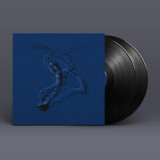
Wah Wah offers a new reissue of this now classic early electronics masterpiece, housed in a beautiful front-laminated back-flapped sleeve and offered as a limited 400 copies only black vinyl version and an ultra-limited 100 copies only transparent purple vinyl. Get yours before they fly!
RIYL : Delia Derbyshire and The BBC Radiophonic Workshop, Louis and Bebe Barron’s soundtrack to Forbidden Planet, Raymond Scott, Tom Dissevelt & Kid Baltan, Morton Subotnick…
The first and most independent of all independent producers, Joe Meek needs little introduction. He was the first to chart in both the UK and the USA with an independently produced song -which was actually recorded in his home’s kitchen- when The Tornados' Telstar took the world in 1962. Meek was, of course, one of the most in vogue producers of the first half of the 1960s, providing the soundtrack to the evolution of UK Rock’n'Roll to Swinging London, scoring hits with actors like John Leyton (Johnny Remember Me), showmen like Screaming Lord Sutch and bands like The Outlaws and The Tornados. He also produced a wide stream of R&B and freakbeat 45s that are nowadays hardly sought after by the collectors with the biggest bank accounts.
Joe Meek experimented with all kinds of recording techniques in his home studio, his tricks and gimmicks won his productions chart placement and critical and public acclaim, but none of his projects was so advanced and way out as the avantgarde experimentation showed in his I Hear a New World electronic symphony from 1960. Aided by The Blue Men formed by Rod Freeman (group leader, guitar, vocals), Ken Harvey (tenor sax, vocals), Roger Fiola (Hawaiian Guitar), Chris White (guitar), Doug Collins (bass), Dave Golding (drums) -also known as Rodd-Ken and The Cavaliers- who provided a tight base to his electronically produced sounds, Meek came up with what he envisioned as the soundtrack of the future, the sounds he envisioned were to be heard in outer space. It was too way out for its time, certainly. To the point that of all the opus, only four tracks saw the light of day on a 7" EP released on Triumph, Meeks very own label. It wouldn’t be until 1991 that the whole recordings from the I Hear a New World sessions would see the light of day on a CD issued by the RPM label.
Wah Wah offers a new reissue of this now classic early electronics masterpiece, housed in a beautiful front-laminated back-flapped sleeve and offered as a limited 400 copies only black vinyl version and an ultra-limited 100 copies only transparent purple vinyl. Get yours before they fly!
RIYL : Delia Derbyshire and The BBC Radiophonic Workshop, Louis and Bebe Barron’s soundtrack to Forbidden Planet, Raymond Scott, Tom Dissevelt & Kid Baltan, Morton Subotnick…
The Last Question is the first album by electronics master Tim Clark. It collects his early works, when he was the Music Director of the Strasenburgh Planetarium in Rochester, N.Y. These tunes were the soundtrack to the planetarium’s adaptation of Isaac Asimov’s The Last Question short stoy. The idea was conceived by Von Del Chamberlain, director of teh Abrams Planetarium, and was taken to fruition in a joint venture bewtween the Abrams and Strasenbergh Planetariums, were the shows were premiered in 1972.
Clark composed and produced the works in the Strasenberg Planetarium’s own sound studio, equipped with three Ampex 440 recorders, a 4-channel mixing board with 18 inputs and a Moog Synthesizer. The album was released as a private pressing in 1973 and it has since become an elusive collector’s piece among electronic music afficionados. Comes with remastered sound and straight reproduction of the original artwork.
ULTRA RARE OUTER SPACE PRIVATE PRESS!
RIYL : Tonto’s Expanding Head Band, Iasos, Peter Davidson, Michael Stearns, Steve Roach...
The Last Question is the first album by electronics master Tim Clark. It collects his early works, when he was the Music Director of the Strasenburgh Planetarium in Rochester, N.Y. These tunes were the soundtrack to the planetarium’s adaptation of Isaac Asimov’s The Last Question short stoy. The idea was conceived by Von Del Chamberlain, director of teh Abrams Planetarium, and was taken to fruition in a joint venture bewtween the Abrams and Strasenbergh Planetariums, were the shows were premiered in 1972.
Clark composed and produced the works in the Strasenberg Planetarium’s own sound studio, equipped with three Ampex 440 recorders, a 4-channel mixing board with 18 inputs and a Moog Synthesizer. The album was released as a private pressing in 1973 and it has since become an elusive collector’s piece among electronic music afficionados. Comes with remastered sound and straight reproduction of the original artwork.
ULTRA RARE OUTER SPACE PRIVATE PRESS!
RIYL : Tonto’s Expanding Head Band, Iasos, Peter Davidson, Michael Stearns, Steve Roach...
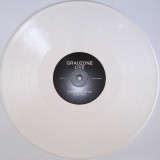
WRWTFWW Records is very happy to release Swiss cult band Grauzone’s recording of their April 12th 1980 live show at Gaskessel in their hometown of Bern. The 9-track album, documenting the very beginnings of the group, is available as a limited edition white vinyl LP in heavy 350gsm sleeve with special artwork by band member Stephan Eicher.
Experience the early Grauzone days, live from Bern, Switzerland, with a concert recorded at legendary local venue Gaskessel, with Martin Eicher on guitar and vocals, Christian G.T. Trüssel on bass, Marco Repetto on drums, Stephan Eicher on synth, and Claudine Chirac on saxophone. The performance is a true time capsule of the early 80s underground, showcasing the punk side of Grauzone with renditions of songs that were never officially released, as well as future fan-favorite “Moskau”. A piece of Swiss music history, This limited release is a must have for all Grauzone fans and DIY archivists.
About Grauzone:
The pioneering band from Bern (Switzerland) had a short-lived but highly-regarded career which birthed a cult discography that still fascinates and resonates today. Consisting of core members Martin Eicher, Stephan Eicher, and Marco Repetto, and on-and-off participants Christian GT Trüssel, Claudine Chirac, and Ingrid Berney, the elusive group broke new grounds in the early 80s, experimenting with punk and industrial music, early techno sounds, minimalism, new wave, pop, and various electronics. With an innovative and polished approach to design, visuals, performance, and all around style and philosophy on top of their superb music, the constantly transforming unit developed a whole experience - the Grauzone experience: wild and unpredictable, yet sophisticated and cohesive, or as Swiss music historian Lurker Grand would call it, "an Art band with a Punk attitude".
Completely rejecting the music industry rules and refusing to play the game of promotion, touring, release schedules, and TV appearances even though they had a multi-platinum international hit with the song "Eisbär", the band quickly disintegrated in full convention-defying glory, leaving behind an inspiring music legacy for the world to discover and discover again, one generation after the other.
Stephan Eicher went on to be, arguably, the most successful Swiss musician ever, with an international career extending from pop chanson to experimental escapades and collaborations with Moondog, artists Sophie Calle and Sylvie Fleury, and author Martin Suter among many other luminaries. Marco Repetto flourished as a techno and ambient producer, releasing multiple projects including releases on Aphex Twin’s Rephlex label.
out of Stock
Last delivered 15 months ago available to reorder, subject to availability
Hackney Electronica come to Dark Entries with the Synaptic Shadows EP, featuring 5 cuts of acidic rave-inflected wave. Quinn Whalley (Paranoid London), Unai Trotti (Cartulis Music), and Margo Broom (Hermitage Working Studios) formed Hackney Electronica during COVID era. Trotti and Whalley were spending countless hours digging through records and making music during lockdown. As their sound took shape - heavy and hypnotic - they invited Broom to join, cementing the motley trio. The five pieces on Synaptic Shadows explore themes of altered states, late-night cityscapes, and the fine line between pleasure and paranoia. Each track pulses like a memory from the backstreets of Hackney, where the night transforms the city into an electrified maze of fleeting highs and inevitable crashes. The anxious grooves on “H.E. Nuestro Circuito” and “Whispers from the Depths” channel 1980s DIY electronics onto the contemporary dancefloor, while “Efecto Perfecto,” “The One”, and “Nueva Ola” offer breakbeat-laced electro that will keep you dancing until dawn. Housed in a sleeve designed by German Bardo, Synaptic Shadows is more than just a debut release, it’s a journey through the flickering alleys of the mind, where tension and transcendence intertwine.
Polar Bear's groundbreaking debut 'Dim Lit' (2004) is being released on vinyl for the first time, marking over two decades since its arrival reshaped the UK jazz landscape
Led by drummer and composer Seb Rochford, the album introduced a band whose fearless approach to improvisation, rhythm, and texture would go on to influence a generation. Blending raw energy with intricate composition, 'Dim Lit' set the blueprint for Polar Bear's signature sound - expansive, unpredictable, and entirely their own.
From the outset, 'Dim Lit' positioned Polar Bear as one of the most forward-thinking groups of their time. The album bridged jazz, electronic elements, and avant- garde sensibilities, carving out a new space in the contemporary music scene. The interplay between Rochford, saxophonists Pete Wareham and Mark Lockheart, bassist Tom Herbert, and electronics specialist Leafcutter John created a dynamic, shape-shifting sound that blurred genre boundaries. With its hypnotic grooves, explosive improvisation, and unexpected sonic detours, 'Dim Lit' remains a vital document of a band redefining what jazz could be.
This first- ever vinyl release offers a new perspective on 'Dim Lit's deep, layered soundscapes, giving longtime fans and new listeners alike the chance to experience the album in a fresh, immersive format. Edition Records now represents all digital rights to the Polar Bear catalogue, ensuring the band's visionary work continues to reach audiences worldwide.
Eight years ago exactly, in April 2017, the Australian soon-to-be dark synth maestro Buzz Kull released his first full-length album Chroma via Burning Rose imprint.
The seminal album is a mass of jagged synth lines and pounding drum machines, a testament to Marc Dwyer’s personal sonic exploration over time. Each song on Chroma transcends the traditional archetype of darkwave by pushing pop sensibilities, focusing on different emotional states and boundaries. Since his debut, Dwyer has given the world tewo more album tackled multiple tours abroad, and continues to remain an elusive but omnipresent figurehead of goth electronics global underground.
With this dark gem being out of print for years now, it was time to bring it to life!
New run of 500 on black vinyl LP housed in reverse board jackets.
out of Stock
Last delivered 16 months ago available to reorder, subject to availability
Mysticisms is delighted to present the music from one of the inspirations for the whole Dubplate series, the lesser known, but admired Digi Dub label. Hailing from the late 80s / early 90s South-East London squat scene, the music of label head Lee Berwick and cohorts was unlike any other at the time. Not simply a retake on digital dub emanating from Jamaica, Digi Dub mixed the heritage of reggae with the alternative-culture of Britain to forge a unique version.
Inspired by punk and the early electronics of the likes of A Certain Ratio, Cabaret Voltaire and Throbbing Gristle, Berwick came to music production later, after first quitting a career as a computer programmer to travel through Asia, returning after several years just as electronic “computer music” was gaining a fundamental new lease in 1988. A regular at Jah Shaka gigs over the burgeoning rave scene of the time, he steadily built a studio centered around the Akai Sampler.
Based, at the time, in South-East London, it’s lack of underground “Tube” lines and challenging transport links, helped create its own social and music eco-system. Squatted houses, shops, clubs and parties all thrived around the triangle of Bermondsey, New Cross and Camberwell. After meeting Kenny Diezel and the Mutoid Waste Company, he started to formulate his “dubby electronic sound” by literally play live to thousands of wide-eyed Ravers at Mutoid Waste parties.
Recording as Launch DAT, the first tracks with Kenny formed, soon joined by Harry and Nick, the trio progressed from building a sound system to L.S. Diezel being created. Friends since their teens Harry and Nik progressed from playing in bands, jamming Sly and Robbie dubs to moving from the countryside of the Home Counties to urban Peckham and into the orbit of Mutoid Waste and the squat and party scene.
Progressing to include Atari S1000HD, Akai S3200XL, Alesis Sequencer and Roland 303, the sound expanded but the raw spirit remained. The early recordings with Berwick, in the beautiful “Lovers style” that is For The Love Of and its stripped-back instrumental “Stepper” dub accompaniment in Bad Boys, as well as an early take on take on the merging of digital dub and hip hop in Skunk Funk, all capture the essence of that London period.
However, the inclusion of the seminal Suicidal Dub, that appeared as the title to their debut album and was recorded on a bus a few years later after Mutoid had relocated to Rimini, Italy, offers a glimpse to the future. Heralded as a proto-dubstep classic it has long been sought after and its inclusion makes for the essential.
Mutate The Mystery.
out of Stock
Last delivered 22 months ago available to reorder, subject to availability
Acclaimed director and musician Jim Jarmusch and experimental lute player and composer Jozef van Wissem met nearly 20 years ago, forming a close bond after they ran into each other on the streets of New York City. In 2011, they began performing and producing records together. The follow up to “American Landscapes “ entitled “ The Day The Angels Cried” releases June 6 and coincides with a world tour. The duo weaves an intricate Lute and guitar string tapestry of droning, minimal free-folk compositions destined to captivate listeners with their dark hypnosis. This time vocals and electronics are added as well. Van Wissem’s work comes from a tradition of avant-garde minimalism and lends itself well to the director’s stark cinematic works. Jarmusch has played guitar in bands on and off since the late ‘70s. Van Wissem’s compositional style involves hypnotic circular musical phrases that allow for a lot of contemplative space between the notes. Their first live performance was in Issue Project Room in Brooklyn in October 2011, where they appeared together for a Van Wissem curated concert program called “New Music for Early Instruments.” The idea for their first album, Concerning the Entrance Into Eternity (Important Records) developed from their live performance. Jarmusch has said that he considers these songs as Van Wissem’s compositions, and sees himself as someone filling in the background to Jozef ’s foreground, like the “scenic” on a film shoot, the one who paints the backdrops. “The sound of the lute is as bright as the sun, a beautiful red color and my stuff sounds sort of like the moon, more like blue, like mercury.” .According to Van Wissem: We started with layers of instrumental parts.. Jim recorded a otherworldly Passerelle bridge guitar part to which we added vocals. This became the title track " The Day The Angels Cried" The lyrics for this song came to me during a vision I had in a dream. It was much like a vision Swedenborg writes about. In it he converses with angels. In my vision the angel looked down from the heavens upon the earth engulfed in flames. Recent events in Los Angeles and other parts of the world, have led me to believe that this dream was a premonition. “The Day The Angels Cried” ( Inc 040/41) releases June 6th on Incunabulum Records, right before the duo start their World tour. releases June 6, 2025 Jozef Van Wissem Voice, Baroque And Renaissance Lutes, 12 String Electric Guitar, Slide Guitar, Electronics, Found Recordings Jim Jarmusch Voice, Electric Guitars, Acoustic Guitars, Passerelle Bridge Guitar, Electronics, Found Recordings
"Evil is very real and having its way, and love is also real and hasn't lost yet." That's how Activity's Travis Johnson described their third album, A Thousand Years In Another Way. A friend had asked why these songs seemed to capture the strange, heavy feeling of being alive right now better than anything else_and that was his answer. The album doesn't try to explain this time we're living in; it simply feels like it. It's a mix of violence, alienation, and tenderness_reflecting the surreal, dreamlike (or nightmarish) rhythm of daily life. Across ten songs, Activity blends experimental rock, electronics, and found sounds with a sense of paranoia, flickers of hope, and a warped reality. Working with producer Jeff Berner (of Psychic TV), the band manipulated sounds and played with room acoustics to create a feeling that's disorienting_like the air is thick and the walls are listening. Coming out of a period of uncertainty, the Brooklyn-based quartet_Travis Johnson, Jess Rees, Bri DiGioia, and Steven Levine_pieced the album together from fragments: clipped samples, looping guitar lines, ghostly melodies. Rees, DiGioia, and Johnson share vocal and writing duties, shaping a record that feels both deeply personal and strangely alien. There's a constant sense that things could shift or fall apart at any second_nothing stays one thing for long. A Thousand Years In Another Way might not offer answers, but it captures the feeling of right now better than most. And maybe, it sounds a bit like your world too.
“Evil is very real and having its way, and love is also real and hasn’t lost yet.”
That’s how Activity’s Travis Johnson described their third album, A Thousand Years In Another Way. A friend had asked why these songs seemed to capture the strange, heavy feeling of being alive right now better than anything else—and that was his answer. The album doesn’t try to explain this time we’re living in; it simply feels like it. It’s a mix of violence, alienation, and tenderness—reflecting the surreal, dreamlike (or nightmarish) rhythm of daily life.
Across ten songs, Activity blends experimental rock, electronics, and found sounds with a sense of paranoia, flickers of hope, and a warped reality. Working with producer Jeff Berner (of Psychic TV), the band manipulated sounds and played with room acoustics to create a feeling that’s disorienting—like the air is thick and the walls are listening.
Coming out of a period of uncertainty, the Brooklyn-based quartet—Travis Johnson, Jess Rees, Bri DiGioia, and Steven Levine—pieced the album together from fragments: clipped samples, looping guitar lines, ghostly melodies. Rees, DiGioia, and Johnson share vocal and writing duties, shaping a record that feels both deeply personal and strangely alien. There’s a constant sense that things could shift or fall apart at any second—nothing stays one thing for long.
A Thousand Years In Another Way might not offer answers, but it captures the feeling of right now better than most. And maybe, it sounds a bit like your world too.
During a month living with the Wampís in the Amazon Rainforest, Aboutface and the Wampís community collaboratively captured field recordings, music instrumentation and traditional Wampis Nampets – ancient songs sung from the perspective of animals living in their rainforest environment.
These recordings then informed 4 improvised performances to articulate the story of the 4 Nampet songs from within each animal's habitat, to depict nature and culture as inseparable, and to propose that humanity is not exclusive to humans but a multinaturalist characteristic available to all living organisms.
This is the first project of its kind in Wampís history and contains sound recordings of biodiversity that no longer exist due to deforestation.
Indigenous-managed Amazonian rainforests sequester around 340 million tonnes of CO₂ each year—equivalent to the UK’s annual fossil fuel emissions. In stark contrast, non-Indigenous-controlled forests have become sources of carbon emissions, therefore accelerating our global climate crises. Among the vital custodians of these precious ecosystems are the Wampís people, who protect 1.3 m ha of precious rainforest territory currently being decimated by mining for gold. This devastating practice is currently decimating Wampís territory, destroying their river habitats, leaving toxic methylmercury pollution that strips all biodiversity, contaminates the food chain, and causes widespread harm.
100% of all sales revenues from this release will directly go to the Wampís to protect their rainforest territory, to fund Wampís-led eco-initiatives against illegal mining, alongside ways to preserve Wampís cultural heritage– embedded in their songs, art and crafts, central to their conservation of their territory called The Iña Wampisti Nunke: A system of life that encompasses reciprocal relationships between humans, plants, animals, and spirits, central to the harmony of all its multi-dimensional ecology– which they term Tarimat Pujut.
For more project information, a short essay is provided alongside a nonstop-listening version of the album as part of the free Bandcamp download with every LP.
Credits
Nampet songs
Kutir, Wancha and Pinchichi by Elizabeth Huampankit Najamtai.
Manchi by Fernando Ijisam Tsakim.
Acoustic Percussion by Wampís band Guayabita
Fernando Ijisam Tsakim, Edilberto Ijisam Tello, Larry Tello Huampankit, Jose Luis Cahuata Pipa, Tedy Tello Cahuata, Heyner Tello Cahuata, Eli Artista Antonio, Never Tello Huampankit
Violin by Taro.
Peruvian bamboo quena, classical flute, acoustic guitar, electronics, composition and arrangement by Aboutface.
Original portrait painting of Fernando Ijisam Tsakim by Nyran Loomcal.
All other artworks, analogue photography and design by Aboutface.
Rainforest field recordings identified and collected by The Wampís of Guayabal and Aboutface.
The Ottawa composer/performer and head of Black Bough Records plays every instrument on his CST debut: an accessibly avant-garde work of dark/ambient modern chamber music. Mark Molnar has been a linchpin of the Ottawa experimental music scene for over two decades, spanning contemporary classical, electroacoustic, industrial/noise, and improv. As a string player in a wide range of projects, an organizer and curator of innumerable shows, and via his own avantgarde label Black Bough Records, Molnar's unflagging contributions to independent music culture in Canada's capital city have been significant. EXO is his Constellation debut: a remarkable and bracing suite of post-classical composition on which Molnar plays every instrument. Meticulously self-recorded, primarily with strings, harp, and piano, EXO balances thematic melodicism, polytonality, and dissonance across three elegiac pieces of exquisitely expressive dynamism. This is exacting modern chamber music that blends formal and harmonic complexity with a solemn emotive sensibility accessible to a broad audience. Listeners that yearn for some edge and disquietude in a landscape of often all-too-approachable post-classical music should find EXO eminently worth their time and attention. While Molnar is a highly trained string player, and studied music under Aubrey Wolfe, microtonality with James Tenney, and composition with R. Murray Schafer, his trajectory has been entirely and intentionally outside the academy, signalling a socio-artistic commitment to DIY culture, forged from an early passion for the sonic worlds of post-hardcore, post-punk, no-wave, free improv, power electronics, and other independent/underground musics. His classically-informed works have been described as "tense currents of musical modernism invigorated with punk's raw vitality." EXO carries an undercurrent influenced by dark industrial and ambient metal in particular, with microphones purposely placed to pick up the low-end frequencies of the piano body, and of a bass drum positioned as a resonant skin in the acoustic space; an electroacoustic strategy organically meshed to the crisply defined and pristinely recorded pointillisms and polychords of strings, harp, and piano, which feed into this noisefloor of crepuscular sub-bass disquietude and decay. It's a production aesthetic that lends EXO a distinct undertow of tension and feeling, a sort of roiling maximalism where the chamber instrumentation traces arcs and waves of form and flow as if drawn from a dark, impervious ocean below. It also reinforces the profound hermeticism of Molnar's process, as a forbiddingly solitary creative act of immersion and navigation. The album artwork, featuring semiabstract stills of the sea by British photographer Ed Allen, further reifies this metaphor. The album's opening piece 'Sub Luna' (and its shortest at 8 minutes) showcases Molnar's adeptness at naturalistic and flowing complexity: tight cascades of climbing and descending chordal clusters hold their polytonal densities for various durations, yielding to more clarified harmonic suspensions and motifs, as melodic themes led primarily by violins in the higher registers provide a fractured lyricism. Molnar says: "the opening and closing figures of this piece act as opposing shorelines; the shorelines provide a reliable expression of range and key signature, and the tides come in and swallow them up, the motion of a body that addresses the relationship between states of lucidity and melodic figures." On 'Terre Sacer' everything happens in soupier waters, as a slow and doleful theme, anchored by grinding bass notes, circles in a gyre of dark resonances, until glistening strings gradually ascend to enrobe a plaintive and gently harrowing single-voiced ostinato over the composition's final third. Molnar's drone, ambient, minimalist, and goth-industrial influences are on display here. Side Two of EXO features the 18-minute multi-movement 'pallida Mors' (pale death): a waterfall of heterophony introduces dense chordal movements where strings are recorded and mixed to evoke pipe organ, in the album's most overtly dissonant and (anti)liturgical sequence. This gives way to ever more open and fragile spaces, before a resurgence of dark clusters and noise treatments introduces a final repeating piano coda, shrouded in devastated bass resonance, settling into what Molnar calls "a meditative hollow." Constellation is honoured to release this work by Mark Molnar, a longtime fellow-traveler whose selfless and boundlessly generous activities as an independent arts enabler sometimes obscure his own accomplished and uncompromising artistry. We trust EXO can help shed some much deserved light on this fine composer. Thanks for listening.
I must admit to being a sucker for two-guitar bands. Ok, Hendrix pulled off a trio. But I don’t care what anybody says: The Yardbirds were a better band than anything that came out of them (Ok, maybe not Zep. But Cream?).
Maybe the reason I go back so far in my references is that, within the two-guitar band format, original new roles are difficult and rare. There’s the classic (socially problematic and often boring) “rhythm/lead” solution. There’s the JB’s or Nile Rodgers’ chicken pickin’ vs comping solution (which avoids chordal clashes by relegating one of the guitars to the role of single-note percussion instrument). There’s Ornette’s Prime Time division between Bern Nix’s rolled-off “jazz” tone and Charles Ellerbee’s trebly wah. Almost everything else is a variation on one of these.
In Ches Smith’s record Clone Row, each piece is built around a different concept for guitar interaction. The delightful and gifted weirdness of Mary Halvorson’s playing is counterpointed, contrasted, unisoned with, played off, juxtaposed (that is to say, enters every relationship possible) with Liberty Ellman’s equally amazing sound palette, chops, and imagination. This definitely ain’t your father’s guitar band.
The overall vibe of the record—despite Halvorson’s occasional noise outbursts or Ellman’s distorted guitar lines (see Mixed Fridge) is neither punk/funk, nor Zorn-ish metal—and certainly not the looser parameters of Ornette’s improvised harmolodics. Smith’s vibraphone playing, Halvorson’s guitar tone (whammy pedal squiggles aside), the brilliant electronics, and (most of all) the compositions themselves are somehow strangely West Coast cool. It’s as if I’m hearing a Jim Hall concert in which one of us did a lot of mushrooms, or (dare I write this?) some post-punk post-Dave Brubeck post-trip-hop experiment with classical form.
This recording is, most of all, about Ches as composer. He’s picked up a lot on his long, strange trip of the last few decades. The Haitian funkiness of his work with We All Break is audible—but deeply buried, encoded in the polyrhythms (check out Heart Breakthrough). His long-running side musician collaborations with John Zorn and Tim Berne are also evident but sublimated here into something new.
Not that improvising is absent. Check out the compelling collective statements in Sustained Nightmare and Ready Beat. Check out the brilliant interplay and bass soloing on Abrade With Me (a Weather Report for the age of extreme weather?) Nick Dunston is my favorite bassist of the new generation, and he plays brilliantly throughout. And Ches’ drumming here has all the groove, energy, and incredible range that have kept him in demand from Saturday night Vodou services to jazz and new music recording sessions (…the thinking man’s rock barbarian?).
The sus chords in Abrade With Me do build, for a moment, towards a fusion type of climax...but just at the moment I was gritting my teeth in anticipated defense against some horrible synth solo, the drums drop out, and we’re transported to the ambient lounge at the rave, and we suddenly understand we’re in the hands of a composer with the power to transport us just about anywhere.
So, this is a composer’s record most of all; a composer’s record performed by musicians who happen to be great improvisers. Ches Smith builds here on his reputation as a gifted new voice with an important vision, while showcasing some of the most creative musicians of our time.
It’s a follow-up long in the making as Ukrainian artist Volodymyr Gnatenko re-enters Kalahari orbit.
Somewhere between submerged video game OST and ritual incantation, Mershiy LP recalls the finest psychoacoustic ambient dub the ‘90s had to offer. Less direct than the previous album, allowing space for IDM introspection and some proper contemplation. A mind-melt but keeping it widescreen and pretty meticulous throughout.
Imagined vistas shot in pristine 4K, impeccably crafted with close listening in mind. Repeated listens reveal more insectoid detail and a knack for detailed sonic immersion.
A 6-track zone-out where diaphanous texture makes way for ominous dread as the narrative unfurls. Balancing urges and inclinations with a fathomless churn of acid, trance, dub and pointelist electronics.
Written and Produced by Volodymyr Gnatenko
Design by Susanne Janssen.
Mastered and cut by Anne Taegert at Dubplates And Mastering.
Distributed by One Eye Witness.
2025
out of Stock
Last delivered 5 months ago available to reorder, subject to availability
With over 2 decades of formal exploration and exhilarating abstraction Get On is, somewhat surprisingly, only the fourth solo Pita full length. Peter Rehberg has always been vouched for pushing the very limits of the technology du jour, be it software or in recent years a complex modular set. Rehberg’s motives are one of unbridled exploration often resulting in extreme and exhilarating audio works.
Having spearheaded the contemporary electronic sound with his uncompromising explorations of noise, rhythm and extreme computer music, he has also worked with numerous experimental musicians in collaboration. Rehberg stands in the wake of a sonic revolution, once fringe, which transformed over time into the sound of a generation of experimental geeks and club freaks worldwide.
Get On follows on from the 2016 release Get In. As with other titles in his ‘Get’ series we have an unwieldy blend of noise, abstraction, gnarled rhythm and blurred melody. Both analogue and digital tools are deployed as a means of expressing something outside of everyday electronics. ‘AMFM’ launches proceedings with some delightfully disorientating ricocheting electronics setting off a subversive sonic spectrum. ‘Frozen Jumper’ presents some ugly skittering electronics which rotate into exquisitely mangled forms before launching into an unsettling euphoria. The last piece ‘Motivation’ is a towering sensitive work, simultaneously haunted and emotionally moving. Get On marks another monumental work in the ongoing evolution from one of the ground zero pioneers of contemporary radical electronic music. As uncompromising as ever this is Pita in his prime. Emotion rung from the most twisted of frames.
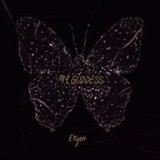
A deeply intimate and cinematic body of work, My Goddess unfolds as a self-contained emotional universe; an album about grief, depression, healing, and the enduring human urge to find beauty in a world that often feels unrelenting.
Composed against the backdrop of Lebanon’s ongoing political and economic collapse, My Goddess captures what it means to process personal heartbreak and collective trauma simultaneously. Across nine emotionally charged tracks, Etyen draws from profound loss, existential reflection, and the tragic death of his beloved cat Lucy to craft a record that is as fragile as it is resilient; both a personal reckoning and a universal portrait of survival through art. “This album is a conversation with myself. It’s about loss and grief, about finding beauty and trying to hold on to it,” says Etyen. “It’s about confronting the painful parts of life while still believing there’s something gentle and divine to hold onto.”
Blending cinematic textures, Etyen's unique and inspired electronics, and minimally sculpted yet immersive melodies, My Goddess pushes further into the raw introspection first glimpsed on Etyen’s 2022 debut album Untitled. But this time, the sonic architecture is more distilled, the emotional stakes more immediate. The result is a record that gently lingers in the spaces between memory, absence, and hope.
The album’s first single, the title track “My Goddess,” drops May 5 with a self-directed music video, one of three cinematic visuals accompanying the album. The trilogy further expands the emotional world of the record and affirms Etyen’s role not only as a musical artist, but as a multidimensional storyteller.
With over a decade of work that spans Netflix scores (Jinn), international festivals (Sonar Barcelona, Mutek), and critical acclaim and editorial support from Bandcamp Daily, BBC Radio and much more, Etyen has carved out a singular voice in electronic music—bridging personal, cultural and political resonance through sound. As the founder of Thawra Records, he also continues to champion independent artists from the region, building a vital platform for forward-thinking music in and beyond the Arab world.
Indifferent Engine is a post-hardcore punk band from Cambridge, UK, known for their genre-defying sound and visceral live performances. Drawing inspiration from early hardcore, art punk, post-rock, ambient music, pulp science fiction and obsolete electronics, the band creates a soundscape that is as eclectic as it is intense. Originally conceived as a solo project by frontman Adam Paul, Indifferent Engine evolved into a full band in 2019, bringing their unique blend of chaotic energy and experimental sound to stages across the UK. Their performances are a sensory experience, often featuring the largest rig of vintage CRT TVs in the UK live scene, bathing the stage in the soft, eerie glow of static. This visual backdrop, combined with Adam's commanding stage presence -- fluctuating between Mark E. Smith-esque monologues and raw, visceral screams -- creates an emotional atmosphere that is equal parts unsettling and captivating.
Amuleto Apotropaico has a way to fend off demons by channeling a secular spiritualism rooted in a rigorous but playful connexion to the infinite possibilities of noise. The propulsion of their continuous music ebbs into and flows out of this primordial flux through their unique brand of brutalist liturgy.
Amuleto Apotropaico is a Portuguese duo consisting of António Feiteira (drums & electronics) and Francisco Pedro Oliveira (guitar, flute & electronics) formed in 2021. Having grown up together, saturated in the lore of their hometown of Santa Maria da Feira, the duo now resides in Porto and continues to moor their rhythmic rituals in the traditions of Northern Iberia.
None of this is a nostalgic look back to a time-that-never-was. Amuleto Apotropaico's cycles are ouroboric: every step forward invokes a simultaneous step backward such that their observance of sonic ceremony (seeming to invoke a now-forgotten tradition) becomes a constructivist gesture that shapes its own legacy. If time-travel exists, this duo has found out how.
For their self-titled first release (also the first release of the Perf label), António Feiteira has culled, recomposed and processed recordings from the band's last two years of concerts in order to create a exciting 4-tracker. Apotropia I & II, which open sides A and B on the vinyl release, are both textural meditations on subtle density. Feiteira's sensitive percussion flourishes are married to Oliveira's modular-enhanced flute and guitar patterns. Albedo e Rito showcases the duo's sense of melodic contour while crescendoing to a peak of lightness. Bruxa do Calhau Branco, lifts the whole journey into an astral dimension where multi-layered drums, synths and digital clicks breathe out, announcing that their moment of worship has settled back into the ubiquitous hubbub of room hum.
Multi-instrumentalist and composer J.H. Burch gives new intensity to a neglected ethnographic and folklore reality: the rural Amazigh poets of the Ait Bouguemez valley of Morocco. His vision of cultural exchange led him to the vocal repertoire of the all-female Troupe Asnimer, whom for decades have been amongst the most important custodians of the various Amazigh oral art forms in the region. The Asnimer women recite in chorus songs written by numerous anonymous authors, some dating back centuries, making their tradition and a fluid and constantly evolving collective oeuvre. Each of the tribal forms has its own time and place, some like Tamawayt are poems of travel and lamentation, Timnadin of daily labour, others are sung as Sufi rites. From the Asia and the Pacific, J.H. Burch succeeds here through his knowledge of different sound traditions and a varied use of instrumentation (baglama, santur, tanpura, kamanche, organ, deyurey, electronics, percussion), and in becoming a conduit for Asnimer, frames the collaboration without distorting its ancestral and rural physiognomy. On the contrary, the songs of the Amazigh tribes of the Haut-Atlas are colored through afro-asiatic spiritual arrangements of meditative sensitivity. Limited to 200 copies.
This new album celebrates 10 years of activity by the quartet House of Echo!
Wallsdown II: Beyond Cyborgs, tECHnO Inside Us is the second part of a trilogy, following Wallsdown, released in 2020. This new repertoire, half organic, half electronic, questions the relationship between man and machine and the digital worlds of today and tomorrow. It confronts electronics and artificial intelligence with the acoustic quartet, which, throughout the album, enter into osmosis, reverse their roles, and merge.
“Less than a month after one of the most violent fire events in the history of the continent, new shoots had burst through the scorched hardpan, nourished by the still-vital roots of those flayed and blackened trees.” John Vaillant, Fire Weather.
Loscil (aka Scott Morgan) returns to kranky with Lake Fire, a nine-track offering of ash-laden sonics that mine the tension within the cycle of destruction and rejuvenation.
Lake Fire is the result of a disjointed creative process. Originally conceived as a suite for electronics and ensemble, most of the original compositions were deserted, save for Ash Clouds, featuring James Meager on double bass. The remaining tracks were reshaped and remixed, built anew out of the remnants of the abandoned work. The result is a phoenix, an album burnt to the ground only to be reassembled out of its cinders. Fragments of the original lurk beneath a densely overpainted canvas of sound.
Infused into the resulting rearrangements are impressions from a road trip into the mountains marking a personal half-century milestone, surrounded by the ominous proximity of wildfires and dense smoke; celebrating life while the world burns. The album’s title comes from the striking irony that forest fires are often named after regional lakes - perhaps subconsciously referencing ancient lore. The cover photos were taken from this same trip, while sitting in a rowboat staring into the grey abyss of an opposing mountainside outside of Revelstoke, BC, obfuscated by smoke from a nearby lake fire.
Press quotes for previous solo release “Clara”:
"The sound sculptor Scott Morgan continues to astound.” Pop Matters
"A beautifully nuanced work, Clara is both revealing and mysterious -- and loscil fans wouldn't expect anything less.” Allmusic
press quotes for previous collaboration release with Lawrence English “Colours of Air”:
"As you might expect from the steady hands at the tiller, this is a cortex-hugging drone record of beauty and depth.” The Quietus
"One of the thrills of listening to this record is how its initially predictable veneer fades on subsequent listens to reveal layers of mischief underneath.” Resident Advisor
out of Stock
Last delivered 7 months ago available to reorder, subject to availability
FELT’s sixth volume extracts another fascinating mineral from Guy Brewer’s Carrier alias, further descending the wormhole of darkside minimalism with his most obfuscated rhythmic explorations yet.
FATHOM witnesses Guy Brewer’s unrelenting distillation of precision electronics develop beyond prior incarnations into unclassifiable mutations. Carrier is his sonic vessel in this new era, liberating his prior restrictions to highlight the outer kinetic recesses of experimental sounds that finds a natural home on Perko’s ever-evolving FELT imprint.
The title track twitches along in hallucinatory abstraction, circling the depths with glitched-out programming and fogged-out atmospherics. The Cusp narrows its gaze, meditating on a tense drum rollage that teeters on mellowed menace. Markers then forms a mechanised rinse-out of rumbling subs and plummeting steppers momentum. Trooper unfurls in a finale of future-shocked half time rollage and arpeggiated textures that affirms Carrier’s unwavering vision in sound and style.
out of Stock
Last delivered 10 months ago available to reorder, subject to availability
Unreleased extras from the critically-acclaimed 'Memorial Waterslides' album sessions. "These songs are outsiders: when working on the overall listen of the Waterslides album we found they didn't fit in with the journey we'd envisioned through it, but put together on a single like this they work like magnets - polar opposites joined." MEMORIALS - Verity Susman (Electrelane) and Matthew Simms (Wire). A simmering cascade of sound, pressed on neon orange vinyl. Two exclusive tracks that extend their esoteric musical palette, a journey through psychedelic rock, far-out folk and wild analogue electronics. "A work of inspired joy." The Wire" - 500 copies pressed on neon orange for ww RSD 2025
Thumbprint records is a brand new label out of Bristol. It is ran by the artist who goes under the name LMB and is a well overdue personal project.
For the first installment Thumbprint Records bring you an all round excellent EP by Morphology who have been releasing music for the past 15 years on such lables as Abstract Forms, Cultivated Electronics and De:tuned.
This is Morphology's first release of 2025 and we are proud to make it our first release. Each 4 tracks are classic Morphology, moody,solid and definitely dance floor material. We hope you enjoy!
Supported by the likes of Craig Richards, Bobby, Lukas Wigflex, Ralf Lawson, Radioactive Man and Dave Harvey.
out of Stock
Last delivered 16 months ago available to reorder, subject to availability
Chiminyo is a UK-based jazz/electronic artist and the founder of the new label NRG Discs (having previously released on Brownswood, Nightdreamer, Gearbox, and Astigmatic, with artists such as Gary Bartz, Shabaka Hutchings, Maisha, Nubya Garcia, Cykada, Uniri, as well as solo). Chiminyo is a versatile musician who blends the raw energy of live drums and percussion with cutting-edge electronic production.
His early solo releases showcased his knack for unique approaches to making music, using self-coded software to trigger synths and samples from every cymbal crash and drum hit, eliminating loops and click-tracks. This DIY, tech-driven methodology allowed Chiminyo complete, spontaneous control over his music—all from the stool behind his drum kit—creating a sound that is both daring and innovative.
Chiminyo's latest project, NRG, continues this trend of innovative thinking. Born from discussions around the UK jazz scene, Chiminyo concluded that this musical expression is less about "jazz" and more about the energy (NRG) that fuels it. As a result, NRG has evolved into a semi-regular event where Chiminyo brings together some of London's finest musicians for live, improvised performances that encapsulate the spirit of the scene. These live recordings are then given the magic production treatment by Chiminyo and co-producer Aviv Cohen, transforming them into the masterpieces we get to hear on wax.
The first three NRG LPs were a massive success, generating over 600,000 streams, selling over 800 copies (without distribution support), and receiving airplay on BBC Radio, Jazz FM, NTS, Soho Radio, and many more. High-profile DJs like Gilles Peterson and Jamz Supernova championed the albums, which were also covered in print by The Guardian, Jazzwise, Echoes Magazine, and various online channels. This success led to an invitation to record a live album at Ronnie Scott's, one of London's most iconic jazz venues—an incredible opportunity for any artist.
NRG 4 brings together some of the best jazz and electronic musicians in London. The album features Marisia Osu (harp), James Akers (tenor saxophone), Daniel Casimir (double bass), Lyle Barton (synthesizers), and Tilé Gichigi-Liperé (live electronics)—an all-star lineup whose members have released multiple records on Concord, Brownswood, Jazz Re:freshed, Astigmatic and more, and have collaborated with artists such as Laura Misch, Nubya Garcia, Blue Lab Beats and Emma-Jean Thackray. Three tracks are graced with features from Jorja Smith's backing vocalist BAELY and Cuban saxophone maestro Regis Molina.
Steve Bicknell returns to KR3, once again unleashing his mastery of power electronics!
Following his two reinterpretations of last year's "JK Flesh Remixes" and four years after his solo EP "A Day In The Life" in 2021, Bicknell takes us deep into the realms of his sonic mysticism, marking a significant milestone in the fifth anniversary of the label.
Several Streams of Thought LP - is an unrelenting and immersive odyssey, presented through nine tracks, seven of which will be available on a double 12-inch vinyl, with two exclusive cuts in a limited 7-inch format.
The album hits hard, straight to the brain, with no warning, across sides A, B, and C. Each side is a raw, untamed techno experience, with Bicknell's unmistakable signature dominating throughout, delivering unwavering intensity and relentless impact.
However, on side D, a transformation takes place: a 15-minute soundscape that turns the embedded waves into breath - a blinding light emerging from the darkness. It's a moment of tribalism and evocative magic, offering a refreshing pause, a return to balance after the intensity of the shadows.
The 7-inch, available in a limited edition under the title "the eye of the invisible world", contains two tracks - one on side E and the other on side F.
The mystical sounds complete this dual experience: one part filled with dark, untamed energy, while the other brings a sense of mental lightness, emphasizing breathwork and emotional self-
healing.
S | B is back, stronger than ever!
out of Stock
Last delivered 11 months ago available to reorder, subject to availability
Orchid Mantis, by Michelle Helene Mackenzie and Stefan Maier, is a work that draws its inspiration from the history of the Sanzhi Pod City, in northern Taiwan. Sanzhi Pod City was built from 1978 onwards, made up of buildings constructed from assemblages of `pods' inspired by the futuro houses of Finnish architect Matti Suuronen. The project was abandoned in 1980, following a number of accidents during construction and persistent rumours that the site was haunted. However, this wasteland of a city has allowed insects to proliferate, in particular five species of orchid mantis. It is this strange environment, made up of utopian buildings, proliferating insects and vegetation reclaiming the site, that serves as the imaginary space for Michelle Helene Mackenzie and Stefan Maier's music, a music of carefully designed pace and progression, drawing, through resonance and stridulation, subtle sonic materials that guide and accompany us into multiple worlds with admirable ease and grace. Breach, by American composer Olivia Block, engages in a dialogue between field recordings and synthesised sounds, creating a vibrant plea for wild spaces that face an ever-growing threat to their survival from human activities. The work is based on recordings collected in the San Ignacio lagoon in the Mexican part of Southern California. This lagoon is known as a breeding ground for eastern Pacific grey whales. With the help of precise electronics, the music unfolds like a drift, depicting the subjective soundscape of whales caught up in the noise of the Anthropocene. The composer uses otoacoustic emissions in particular, representing the sound saturation caused by humans in the habitat of these large marine mammals. Going beyond a merely descriptive dimension, Olivia Block manages to transcend her subject to offer a fascinating musical form that engages the listener in a constantly renewed way.
Norman Westberg (guitar), Giridhar Udupa (ghatam, konnakol, khanjira, percussion) and Jacek Mazurkiewicz (double bass, electronics)An extraordinary meeting of three artists from three different musical worlds and three different continents. Norman Westberg (ex-Swans) and Jacek Mazurkiewicz have already released one album together "First Man In The Moon" in 2021 (published by the Swiss label Hallow Ground).In the new project, they are accompanied by Giridhar Udupa, an Indian master of ghatam (a clay percussion instrument that looks like a jug). The album will feature 3 long trance compositions, referring to ambient, krautrock, free jazz and Indian music.Jacek Mazurkiewicz describes the creation of this album as follows:"I met Norman Westberg while supporting the Swans tour in Poland as 3FoNIA. A few years later, during Norman's tour with Gira, we recorded a duet.The trio session took place similarly to the previous duet session during Norman's solo concert in Warsaw on the Swans tour.Recorded with Adam Toczko, a quick meeting on a day off from work.I invited Giridhar Udupa to the trio, whom I had met earlier during the period when I co-founded the band Limboski. I once invited Wacek Zimpel to play a few concerts with Giridhar. Wacek later created Saagara and I was wondering about some unusual musical context in which I would find myself with Giridhar. I was looking for an interesting sound configuration, but also a cultural one, with a different approach to creating music. I got the impression that for both Norman and Giridhar it was a fairly fresh meeting, not obvious. And on the other hand, ordinary - everyone did their own thing."Detroit guitarist Norman Westberg moved to New York in 1980 and became a part of the experimental music scene that was experiencing its golden age. Westberg himself became a permanent fixture when he joined the iconic avant-rock band Swans in 1983, and was the only member other than frontman Michael Gira to play with them for most of the band's run, both until their 1997 disbandment and his return in 2010. Westberg has also been involved with other legendary New York noise-rock acts, including Jim Thirlwell's Foetus and the post-Swans Heroine Sheiks, in which he played with Cows frontman Shannon Selberg; and in 2014, he joined the noise-rock supergroup Hidden Rifles, whose members included Mike Watt of Minutemen and Mark Shippy of U.S. Maple. Westberg's solo compositions, most often for solo guitar and a set of effects, draw on drone and post-minimalism, bringing to mind dark ambient passages from Swans albums.Giridhar Udupa is an extremely valued teacher and world-renowned artist, an Indian master of ghatam (a clay percussion instrument that looks like a jug). He was born into a family with long musical traditions. He began learning to play at the age of four, guided by his father. At the age of twelve, he already had his first performances behind him. He currently gives concerts alongside the greatest masters. He has received many prestigious awards. He performs in the USA, Spain, Canada, France, Switzerland, Germany, Oman and Kuwait. Giridhar Udupa is a member of the band of the Indian vocalist Bombay Jayashri, nominated for an Oscar for the best song for the film Life of Pi. He is one of the founders of the Layatharanga band. He also plays virtuoso other traditional instruments of South India, such as mridangam and kanjira, and is excellent at using the konnakol technique (a type of rhythmic vocalization).For three decades, the artist has been a global ambassador and icon of Carnatic music. He is the founder of The Udupa Foundation, a charity organization established in 2015 to promote Indian music, performing arts and culture. He has participated in recording dozens of albums. He is also well-known in our country thanks to his cooperation with Polish performers, which resulted in excellent artistic effects, such as the famous Indialucia - Michał Czachowski's group / project or the Saagara formation, led by Wacław Zimpel. Udupa also played on the album Lechoechoplexita, released by Leszek Hefi Wiśniewski, and on the album of the band Layatharanga, released in our country.Jacek Mazurkiewicz is interested in music in the broad sense. He puts his sounds together based on emotional impressions and pulse. Combining acoustics with electronics, he is constantly looking for a new sound. Solo as 3FoNIA, in a duet with Mikołaj Trzaska or Tomek Dąbrowski, the JMB trio with Wojtek Jachna and Jacek Buhl, in the Modular String Trio quartet, the Afrobeat quintet Faso Tamala are just some of his musical incarnations. With Patryk Zakrocki, as part of an audio mission, he massaged hundreds of pairs of ears in the Inner Ear Massage Office. He also deals with sound design, composing and producing music for films and theatre performances. He collaborated with many Polish and foreign artists.
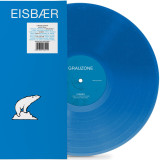
WRWTFWW Records is very honored to announce the official reissue of Grauzone's essential 1981 maxi single with timeless classic "Eisbär", proto-techno beast "FILM 2", and romantic synth ballad "Ich Lieb Sie", just in time for the 40th anniversary of the Swiss band's formation. The three-track vinyl is sourced from the original reels, cut at 45rpm, and comes with its iconic artwork on a 350gsm sleeve.
Ich möchte ein Eisbär sein...Written by Martin Eicher after a nightmare in which he saw talking polar bears on the walls, and with music by the Grauzone crew consisting of Martin and his brother Stephan Eicher, Marco Repetto, Christian "GT" Trüssel, and Claudine Chirac (on saxophone), "Eisbär" is the most recognizable title from the band, a sublime mix of ingredients reflecting the transitional era it comes from - the raw energy of punk music still palpable, combined with the audacity of early electronics, the warm groove of a disco gem, beautifully fragile lyrics, and one of the best basslines ever. It became a mega hit, totally unplanned, but how could you resist such a track
"FILM 2" is the ultimate b-side monster, a menacing all-instrumental pre-techno masterpiece, slowly building to a magnetizing frenzy. An instant underground favorite, it was famously heard played at both speeds depending on the scenes and DJs you were frequenting, 45rpm as it was first intended, and 33rpm for the cosmic experience (search Daniele Baldelli's Cosmic C75 1982 mixtape online for a great example of this).
The maxi single ends with "Ich Lieb Sie", a synth-pop meets doo-wop ballad, a true love song oozing with innocence. Simple, stylish, and just right.
At the crossroads of post-punk, new wave, pop, and electronic experimentation, the Eisbär maxi offers three songs that are technically different but hold the same spirit, the perfect embodiment of Grauzone's music - wild, unpredictable, and youthful, yet sophisticated, catchy, and ingenious. The magic recipe for the good stuff.
Stephan Eicher went on to be, arguably, the most successful Swiss musician ever, with an international career extending from pop chanson to experimental escapades and collaborations with Moondog, artists Sophie Calle and John Armleder, and author Martin Suter among many other luminaries. Marco Repetto flourished as a techno and ambient producer, releasing multiple projects including releases on Aphex Twin's Rephlex label.
Grauzone and WRWTFWW will continue to collaborate on the band's 40th anniversary reissue campaign, with numerous projects planned for the year, including a vast selection of music, visuals, and literature never available before.
out of Stock
Last delivered 8 months ago available to reorder, subject to availability
Carrying on their longstanding dedication to the seminal output of Merzbow, Urashima returns with what is unquestionably their most ambitious release to date: “Collection 001-010”, a deluxe, 10 LP vinyl box set limited to 299 copies, gathering together the entirety of the project’s first ten releases, originally released in 1981. Encountering the band in its early incarnation of the duo of Masami Akita and Kiyoshi Mizutani, raw, exposed and bristling with energy, foreshadowing numerous trajectories they would follow over the coming years, these astounding full lengths - the majority of which have never been released on vinyl - come housed in a beautifully produced, deluxe wooden box, with each LP in its own individual sleeve reproducing the original artwork, and a LP-sized 32-page book containing reproductions of artworls and collages by Masami Akita, an interview conducted by Jim O'Rourke, and liner notes penned by Lasse Marhaug, Thurston Moore, and Akita himself, amounting to what is unquestionably one of the most historically significant releases we’re likely to encounter in 2025.
Deluxe Edition of 299 copies, remastered from the original analog tapes by Masami Akita, each LP comes in its individual sleeve reproducing the original artwork, also includes a LP-sized 32-page book. ** Since its founding during the late 2000s, the Italian imprint, Urashima, has become a definitive voice in the landscape of noise. Bringing forth beautiful limited edition releases, they’ve sculpted a singular vision of one of the most vibrant and revolutionary bodies of experimental sound to have graced the globe. Among the many projects that they have supported over the decades, there has been an undeniable dedication to the output of the seminal Japanese noise outfit, Merzbow, making a significant amount of the project’s out of print back catalog available across a range of formats. Now they return with what is arguably their most stunning and ambitious release dedicated to the project to date: “Collection 001-010”, gathering the entirety of Merzbow’s first ten releases, largely privately released by the band on cassette across 1981, in a deluxe, 10 LP vinyl box set. Representing what is effectively ground zero in Japanese noise and collectively amounting to some of the most sought after releases ever produced within that movement, Urashima’s truly beautiful collection comes fully remastered by Masami Akita himself from the original tapes, presenting all but a small number in their first ever vinyl pressings, with each LP housed in its own individual sleeve reproducing the original artwork, alongside a LP-sized 32-page book containing reproductions of artworks and collages by Masami Akita, an interview conducted by Jim O'Rourke, and liner notes penned by Lasse Marhaug, Thurston Moore and Akita himself. Towering with energy and groundbreaking creative vision, within the realms of noise and experimental music, releases don’t get more monumental or historically important than this!
Merzbow came roaring onto the Tokyo scene in 1979, and remains, to this day, one of the most prolific and aggressively forward-thinking projects in experimental music. Eventually becoming the solo vehicle for the efforts of Masami Akita, in its earliest incarnation the project was the duo of Akita and Kiyoshi Mizutani, taking their name from German artist Kurt Schwitters' pre-war architectural assemblage, The Cathedral of Erotic Misery or Merzbau, and quickly set out to challenge entrenched notions of what music could be. Embracing technology and the machine, even in its earliest iterations, Merzbow pushed toward new territories of the extreme, arriving at a space of pure, unadulterated sonic onslaught that has continued, for over 40 years, to set the pace for the entire genre of noise, and has remained one of the movement’s most important, definitive voices, continuously laying the groundwork for countless artists who have followed in its wake.
When dealing with historical gestures, there’s an invertible aura surrounding original line-ups and early statements, and rightfully so. It is often within a band’s debut that we catch the purest glimpse of the raw energy and creative ferment that made them what they are. This is certainly the case when regarding the coveted early releases of Merzbow, capturing the emergence of the project in its form as the duo of Masami Akita and Kiyoshi Mizutani as they helped set the blue print from the then emerging movement of Japanese noise. Over the course of its nearly five decades of activity, Merzbow has always been noted for how prolific and ambitious the project is. This was no less the case in the very beginning. While they were active for roughly two years prior, in 1981 alone they issued ten self-released cassettes numerically titled “Collection 001-010”, albums which have both individually and collectively become holy grails in the realms of noise, with only two - “Collection 007” and “Collection 009” - ever receiving vinyl reissues prior to now.
As Lasse Marhaug deftly articulates in the newly commissioned liner notes for “Collection 001-010”, despite having been recorded in different location across a span of time, the sum total of Merzbow’s first ten releases might be best regarded as a single release to be listened to in the same, durational sitting, with the material standing well apart from what most came to expect from Merzbow, while foreshadowing numerous trajectories the project would take over the coming years. Not only do these recordings feature a vast array of instrumentation - tapes, acoustic and electric guitar, violin, drums, voice, recorder, organ, found sounds, clarinet, homemade and prepared instruments, a vast arsenal of effects and electronics, and piano, to only begin to scratch the surface - the majority of which would disappear from the project’s active sources of sound generation over the subsequent years, but there is a slow pacing and raw sense of openness and exposure that reveals strong connections to the avant-garde improvisations of groups like AMM, Musica Elettronica Viva, and Gruppo di Improvvisazione Nuova Consonanza, the psychedelia of groups like Taj Mahal Travellers and Flower Traveling band (both of whom Akita mentions having seen in youth within his interview with Jim O’Rourke), and rock in general - albeit in fully abstracted forms - unspooling as brittle, pointillistic, textural, raw and abrasive forms, that occasionally flirts with unexpected tonal sensibilities. As Marhaug describes it in his excellent liner notes: «Sonically, “Collection” sounds more sparse and stripped. It’s dry sounding, up-front, no reverb, and there’s less heavy low-end grime and thin on the signature frequency sweeps. Viewed in a 1981 context, musically, it’s more akin to what the LAFMS (Los Angeles Free Music Society) pool of artists were doing at that time than what was happening in industrial music... There’s a strong playfulness throughout, like the sound objects are being explored for the first time, without neither restraint nor hurry. Events are allowed to be fully examined before the music moves on, or simply cuts off. To a large degree, the music on “Collection” feels acoustic in nature, although a Electro-Harmonix ring-modulator features prominently throughout.»
Easily described as a rarely encountered revelation into the original and earlier documented studio sound of Merzbow, “Collection 001-010” collectively amounts to an engrossing sonic journey in its own right, while also allowing for important, often overlooked connections drawn from numerous other creative wellsprings, notably free jazz, underground rock, the output of European and Japanese avant-garde music, as well as Dada, Fluxus, and Mail Art, much of which, beyond the illumination made possible by the sounds, Jim O’Rourke’s fantastic interview with Akita, published in the booklet, further explores, offering great insights into the origins of Merzbow and the thinking behind the project, as well as aspects of the earliest days of Japanese noise.
For Record Store Day 2020, Far Out Recordings presents a special 'poisoned vinyl' edition of Ivan 'Mamão' Conti's critically acclaimed Poison Fruit album. The 180g splattered colour LP is accompanied by an exclusive bonus 7” with a previously unreleased track from the original Poison Fruit sessions ‘Katmandu, and ‘Ninho’, a track never before released on vinyl.
From an artist in their seventies, you probably wouldn’t expect to hear an album like this. But Brazilian drumming legend Ivan ‘Mamão’ Conti has been experimenting and innovating for the last half a century. As one third of cult Rio jazz-funk trio Azymuth, Mamão was at the root of the group’s ‘samba doido’ (crazy samba) philosophy, which warped the traditional samba compass with jazz influences and space age electronics. Even with his lesser known jovem guarda group The Youngsters, Mamão was experimenting with tapes and delays to create unique, ahead-of-its-time sounds, way back in the sixties. More recently Mamão recorded an album with hip-hop royalty Madlib under the shared moniker ‘Jackson Conti’.
With his first album in over twenty years, and the first to be released on vinyl since his 1984 classic The Human Factor, Mamão shares his zany carioca character across eleven tracks of rootsy electronic samba and tripped out jazz, beats and dance music. Featuring Alex Malheiros and Kiko Continentino on a number of tracks, the Azymuth lifeblood runs deep, but venturing into the modern discotheque (as Mamão would call it), Poison Fruit also experiments with sounds more commonly associated with house and techno, with the help of London based producer Daniel Maunick (aka Dokta Venom) and Mamão's son Thiago Maranhão.
Take a bite of Mamão’s psychoactive Papaya and join the maestro on a weird and wonderful stroll through the Brazilian jung
out of Stock
Last delivered 18 months ago available to reorder, subject to availability
Entering its 26th year of activity, the morphing, Los Angeles based experimental outfit, Sissy Spacek, joins Shelter Press with Entrance, among the project's most captivating outings to date. Encountering the duo of John Wiese and Charlie Mumma joined in various configurations by an incredible cast of collaborators - Tim Barnes, Marco Fusinato, Aaron Hemphill, Brad Laner, Katsura Mouri, Ralf Wehowsky, and C Spencer Yeh - collectively transformed into a series a deeply intimate and delicate gestures of musique concrète, Entrance radically repositions the possibilities presented by group improvisation outside of time and place. Founded at the end of the last millennium, the Los Angeles based project, Sissy Spacek, initially emerged from the knotted, fiery context 1990s American noise and grindcore, producing sheets of visceral sonority that quickly set the scene on its head. Going through numerous evolutions, before eventually settling as a duo of John Wiese and Charlie Mumma - joined by a rotating and often recurring cast collaborators - over the last 25 years the band has continuously entered states of evolution that have defied the expectations of its own context, seeding the sonic extremes noise with subtle and sophisticated approaches to free improvisation and musique concrète. Fiercely positioning its efforts within the outer reaches of contemporary experimental music, while resisting the constraints of a singular sound or proximity, Wiese regards Sissy Spacek as being primarily centred around the practice of musique concrète and the pursuit of extremes. From its earliest releases - collage treatments of material gathered from the band's full throttle practice sessions - the project's conceptual framework has continuously evolved within a deeply engaged process of experimentation, not only reworking tactical approaches, but also definitions and perception regarding the location and action of their work. In recent years, this has led to an increasingly varied and diverse output. Percolating within, is a thread marked by a striking sense of delicacy and intimacy, driving forward while doubling as an unexpected challenge, in real time, to perceptions connected to the band's past. Entrance is the most recent of these. Embarking upon the four compositions that comprise the finalized four sides of Entrance, Wiese and Mumma enlisted longstanding collaborators, Tim Barnes, Marco Fusinato, Aaron Hemphill, Brad Laner, Katsura Mouri, and C Spencer Yeh, as well as new initiate, Ralf Wehowsky (of the seminal German electronic noise collective P16.D4), requesting a contribution of sounds from each, determined by a general set guidelines that dictated certain qualities the given sonorities, while allowing for the expression of each player's distinct creative voice. The sets of resulting recordings were then chopped, harvested, manipulated, and reassembled as the four tape compositions that make up the album - Web Of Unfolding Appearance, Figure Of Reflected Light, Trancher And The Inheritors, True Dimension (From The Opaque - Spike) - each blurring the lines of authorship and clear creative proximity in remarkable ways. Where historical gestures of musique concrète tend to draw upon non-instrumental sound sources - regarding its sonorous material as raw elements, unburdened by inherent meaning or association, to be transformed and imbued with musicality - Sissy Spacek turns this position on its head. Entrance comprises works of musique concrète that not only draw upon instrumental sound sources, with all their possible meanings or associations, but also individual characters and personalities of their players, crediting each resulting piece to its respective configuration of contributors. As such, Entrance is an effort of sound collage defined by a rare sense of intimacy and humanity: four pieces that often take on the resemblance of group improvisation, but have, in fact, been assembled outside of time and place. Bent under the ever-present hand of Wiese's tape treatments and manipulation, each of the album's four compositions unfurl startling states of sonic abstraction and percolating texture, marked by a striking sense of hard-shifting structure, that culminate as tense, driven manifestations of ambient music: scrapes, squeals, rattles feedback, rolling drums, bouncing tones, whispers, bent electronics, electric artefacts, and seemingly everything else under the sun, configured into immersive, sublime mediations in sound from the most improbable events.
Chris Ryan Williams (trumpet & electronics) and Lester St. Louis (cello & electronics) work together as HxH (H by H). Their skills have seen them move smoothly across various situations, constantly carving out new terrain and working in new configurations of musicians at a rapid pace. While worth reading, their biographies capture only a part of their complex rhizome.
HxH started about three years ago. The project is a direct response to all their activity with others and more importantly all their future leaning sonic desires. Their debut album STARK PHENOMENA is both their first studio recording and their first physical release. The album is appropriately set to be released by KMRU on his growing label OFNOT. It’s an ideal introduction to their sound world and their approach.
HxH describe their music as “electroacoustic,” but until recently the presence of Black musicians in this field has been greatly overlooked and largely ignored, making this phrase only partially appropriate. What HxH do really is to always be unpredictable. Every gig is a new soundscape. Sometimes you might hear echoes of Autechre or Robert Hood but then the sound-field will open up into a new terrain all their own. Chris and Lester bring together techniques from across the sound spectrum of electronic music and also draw on their deep backgrounds in Jazz, Improvisation, Classical and Noise scenes to create a sound that is true to them. After all, these two have worked with the likes of Bennie Maupin and the music of Black Fluxus artist Ben Patterson. Their rhizome is deep.
One of the ways that their unique approach manifests is in their merging of both acoustic instruments and electronic instruments in real time. This is something few have managed to do – but their spontaneous leanings work in both complex and accessible ways because of their deep understanding of landscape crafting. You can hear this clearly on the track “Pyrex Vision.” Their approach makes it tempting to compare their music to Sun Ra jamming with Laurel Halo – a comparison that would be only partly accurate.
Chris and Lester note that the sounds on STARK PHENOMENA are “imbued with such hopeful, gracious care; one that is far flung from obsessive carefulness or fuck the world carelessness, but more a caring embrace without the fuzziness of nostalgia.”
They note that when they began working together, they would “always come back to speaking on our concepts of an architecture of the expanse,” noting that their live sets often take on the joyfully noisy task of “dreaming big.” For HxH it was essential that STARK PHENOMENA have a quality that is “almost sculptural.” They consider the album “an object to be viewed from all sides.” This kind of thinking has resulted in them directly engaging with numerous sculptors and artists including Torkwase Dyson. Shape wise HxH’s sound fields work in a parallel to Dyson’s black architectural works.
They also note that the opening cut “BEACH” (the opening and longest track from the album) was “written weeks after our first gig in a studio session donated to us by our dear friend jaimie branch.” And that Pyrex Vision “was continually being edited months after sending our ‘final mixes’ to KMRU.” Their sound sources and samples come from studio sessions, live gigs, durational installations, 3am improvised downloads and more.
KMRU notes: "I think there is an in-between layer on this record. I was first caught by the Pyrex Vision track which organically flows between monologue, subtle field recording, and instrumentation. It's such a beautiful track, evoking deep emotion through simplicity. STARK PHENOMENA effortlessly glides in between imaginative mosaics of sounds — free yet complex — unlocking memories within its layers."
out of Stock
Last delivered 5 months ago available to reorder, subject to availability
Hüma Utku returns to Editions Mego with her new album. The title Dracones makes reference to the mediaeval latin term "Hic sunt dracones" (Here be dragons), marking the unexplored, dangerous places on world maps, expressing the fear of chaos, the unexpected and the unknown.
This new work by the Istanbul sound artist is a sonic journal of an expedition into uncharted territory, one which occupies self and domesticity. Inspired by Utku’s experience of matrescence, Dracones explores the themes of familial demonology, metamorphosis and homecoming as well as human relationship to the experience of love woven layers of euphoria, alienation and consumption.
Musically, Dracones traverses a wide array of sonic tools whereby industrial sounds are imbedded with certain psychological angles, this is an album where, all matter meshes into a sly snapshot of the human experience with a tension and release exposure occurring frequently with dark corners opening up to bright layers of electronic experimentation.
The haunting opening track ‘A World Between Worlds’ tackles pregnancy, of which Utku was experiencing when making this record. The emotional, physical, spiritual and mental experience of this journey is all documented here.. This track features the ‘Lyraei’, an electromagnetic string instrument and modern interpretation of the ancient lyre, that was built and played by Mihalis Shammas. ‘Comfort of The Shadows’ moves from within to without, what was once hidden is now exposed. Utku’s ability to conjure the visual in the sonic is at the forefront as howling electronics give a distinct impression of movement. ‘A Familial Curse’ presents a desire to break the cycle of generational trauma with a creeping sense of dread that rolls into an industrial rhythm prior to landing in a beautiful place represented with shimmering guitar tones. ‘Here be Dragons’ is a rich and dark evocation, a spooked surrender to the themes of the record whereby Utku’s wildly distorted voice beckons all manner of phantasmagoria over cello and recordings of her ultrasound. ‘Care in Consume’ engages in further sonic exploration as a means of conjuring ‘matriphagy’, with its unique psychic energy coursing through electronic veins. ‘A House within a House’ could also be read as a body within a body as the pulse of ultrasound audio rattle amongst a cage of thudding rhythms and swirling electronics, one also ending in optimism as an exquisite melody is born from the prior fire. The striking journey ends with the more soothing ‘Ayaz’a’, a track embracing love and all the hardships that a period of fundamental metamorphosis brings, this is a heartfelt dedication to her son and concludes an album draped in life, experience, joy and pain.
Dracones is a deeply visual journey through inner and outer worlds, a space where symbolic evocation is supreme and passive listening is not an option.
All tracks composed,performed and recorded by Hüma Utku
Buchla 100, vocals, cello, electric guitar performed by Hüma Utku
‘’A World Between Worlds’’ features the ‘Lyraei’ built, played and recorded by Mihalis Shammas
Buchla 100 recorded in EMS Stockholm 2022-2023
Mixed by Enyang Urbiks
Mastered by Heba Kadry, NYC
Cover Artwork by Marco Ciceri
Design by Tina Frank
out of Stock
Last delivered 18 months ago available to reorder, subject to availability
Left Ear are delivering two previous unreleased Australian ‘experimental’ electronic tracks from the 80’s and honoring them with a split 12” release.
Side A: Features an unreleased full-length version of Tim Gruchy’s Jungles, a solo electro-percussive piece recorded in Tim’s Lab D’Avoid studio in Brisbane. The track is emblematic of his style during an era when he worked extensively in music, both as a percussionist and primarily with electronics, including early analog synths.
A shorter version was originally released on the Meanjin (Brisbane) art collective ZIP’s Eye Ear EP book package in 1986 and, more recently, on Left Ear’s Antipodean Anomalies 2 compilation.
This original version of Jungles was initially part of the soundtrack for the ZIP Performing Group’s infamous Ironing Board Dances. Footage of the performance was treated through a Fairlight synthesizer, mixed with hand-painted slides, and transferred to VHS for various film festivals.
Side B: Michael Krillich’s Arnhem Land began its journey in 1982 in a shared house in North Bondi. Inspired by Brian Eno and David Byrne’s My Life in the Bush of Ghosts, he experimented with tape loops, cut-ups, and samples, incorporating synthesizers, effects pedals, a drum machine, and an unknown sample from an Australian Aboriginal record. This creation became part of his cassette release, Thematic Variations. In 2010, Krillich uploaded an unreleased extended version of Arnhem Land from Thematic Variations to YouTube, which was shared by record dealer Matt Bowden with Left Ear Records, who pursued to release it on vinyl. Their search to uncover the sample’s origins led them to Arnhem Land Vol. 1 (1957), recorded by Peter Elkin in the Daly River region. After years of research and through the guidance of Professor Allan Marrett and local custodians, the sample was verified as a “Wangga” ceremonial song sung by George Morkai, an Emmiyangarl man. Rights to the song had passed through generations to Tobias Worumbu, who granted us permission for its use, bringing Arnhem Land full circle.
Five Green Moons is the brand new project from the legendary Justin Robertson and here he drops the first fruits of that project with the incredible Moon 1.
This isn't Justin at his house controls. This is Justin delving into his roots and digging around through the likes of P.I.L, Gang Of Four, On-U-Sound, Current 93, Coil, Sabres Of Paradise and all manner of post punk echoes and basement electronics. As the man himself puts it - Moon 1 is a haunted ballroom full of memories. The sound of a dystopian disco. An object on a wonky orbit. A spectral visitation. And it is alive.
out of Stock
Last delivered 23 months ago available to reorder, subject to availability
Kicking 2025 off with a NEW LIFE, Kito Jempere resumes operations retro-outfit shining, all machines blazing, pulling up with a boiling four-trackpackage bound to get dance floors quivering in excitement. A stick ofdynamite flung into the mouth of today's corporate dance music blandness, 'New Life' finds the Saint Petersburg producer spitting multi-strain madnesswith reckless fun and adventurous panache. Take New Order in theirTechnique days, sprinkle with early hip-hop breaks and finish it with a funk-savvy mix of acid, happy hardcore and ghetto tech jack, and you prettymuch have the opening track and lead-single 'New Life' capsulized to a tee.
A blissed-out, choppy ride spinning recklessly into dance-y abandon, 'LoveFilter' takes us on a heavy-lidded trip across dreamy electronic folds andonto vaporous apexes, where drum-heavy jolts and sliced vocals collidewith spacious pads from outer space. As hypnotic as it reveals hard-hitting, 'Killer Line De-Part' deploys a warped kaleidoscope of trancey shades,grunge-y grit and largely '80s informed analogue wizardry, convergingtowards the most hair-raising finale with your feet in the air and a dumbsmile across the face. Rounding off the record, 'Put Love Into Your Heart(Club Mix)' is a luminous slice of trippy, feelgood electronics engineered fordance floor communion and uplifting let-go. Fill your heart with love.
out of Stock
Last delivered 18 months ago available to reorder, subject to availability
This album came together through a series of coincidences. It captures a recording session from 1994 featuring Kris Vanderstraeten, Daniel Duchamp, and Luis Ferin. The session, long forgotten, resurfaced 30 years later when it was rediscovered in an old DAT tape archive. Initially unrecognized, the tape began with a recording of passing cars, captured from a Brussels balcony at the time. This ambient sound was seamlessly integrated as an intro to the musical session that followed. The quality of both the recording and the performance proved to be exceptionally good, making it a rediscovered gem. The session marked a refreshing collaboration with musicians from a jazz and free improvisation background, leading to lasting friendships.
KRIS VANDERSTRAETEN: Drums, percussion, sounds, electronics DANIEL DUCHAMP: Double bass, (prepared) cornet, effects LUIS FERIN: Soprano sax, electric guitar TIMO VAN LUIJK: Autoharp, percussion, sounds, effects
out of Stock
Last delivered 19 months ago available to reorder, subject to availability