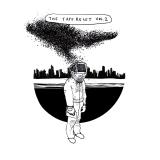
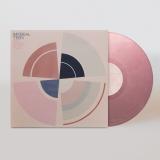
Woxow's The Tape Reset Vol. 2 is out now on Little Beat More!
Composed during the same sessions that gave life to The Tape Reset Vol. 1 in 2021, Woxow’s The Tape Reset Vol. 2 emerges only now, five years later. A second chapter that remained quietly on the shelf, completing the sonic path opened by the first volume and revealing another side of the same creative moment.
The EP is largely built around organic samples, arranged with a restrained and precise approach. Subtle instrumental appearances shape the atmosphere along the way. A vibraphone introduces the opening moments, setting a cinematic tone that gradually unfolds through layered textures and steady beats, while the record closes with a clarinet solo, a final gesture that echoes the instrumental heard in the intro of the first volume, subtly bringing the journey full circle.
Essential and evocative, The Tape Reset Vol. 2 expands the universe of the project while preserving its core language: beats, samples, and carefully placed instrumental voices moving together in a quiet, cinematic flow.
out of Stock
Last delivered 7 days ago available to reorder, subject to availability
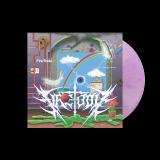
Lavender Networks is the debut release on Warp Records by Nu Age pioneer Fire-Toolz. The Maryland-born, Chicago-based artist also produces and engineers for other artists including No Joy’s latest album Bug Land (Pitchfork Best New Music). Lavender Networks features Zola Jesus, Brothertiger, Nailah Hunter, Lipsticism, Jennifer Holm and Sling Beam. Dream logic, laughter in tears and emotional truth through absurdity are explored on this cybernetic journey running at fiber optic speeds.
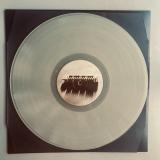
Lavender marble 12" vinyl
c A3. CODENAME_SPARKLY LAGOON LAN LINE (feat. Lipsticism)
c A3. CODENAME_SPARKLY LAGOON LAN LINE (feat. Lipsticism)
[c] A3. [CODENAME_SPARKLY LAGOON LAN LINE] (feat. Lipsticism)
[c] A3. [CODENAME_SPARKLY LAGOON LAN LINE] (feat. Lipsticism)
[c] A3 | [CODENAME_SPARKLY LAGOON LAN LINE] (feat. Lipsticism)
out of Stock
Last delivered 7 days ago available to reorder, subject to availability
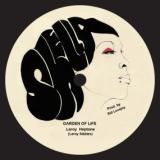
Leroy "Heptone" Sibbles
Garden Of Life (Horns cut)
This raw, deep roots grail by Heptones and Studio One legend Leroy Sibbles has been near impossible to find, until now.
Most reggae fans will be familiar with the Heptones’ Lee Perry sessions including their outstanding “Garden Of Life” from 1979.
Few but the most grizzled collector knew that Sibbles had recorded a deep roots cut in Toronto several years earlier in 1975 while living in Canada.
Urgent, soulful and raucous with its killer horns section and bubbling organ, this version of Garden Of Life is actually Leroy’s favourite.
The dub version transports us right into the converted garage/studio in 1975 as snatches of conversation between musicians are immortalized on wax.
One of 3 official releases showcasing Sid Lovejoy's Toronto productions including the long out of print “Rebel” by Rothadam and the roots missile “King Kong Man” by Sid Lovejoy.
out of Stock
Last delivered 7 days ago available to reorder, subject to availability
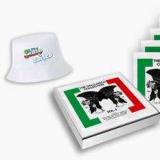
Die legendäre „The Italo Disco Collection“ geht in die vierte Runde! Vol. 4 präsentiert erneut eine exklusive Auswahl großer Italo-Disco-Klassiker der 80er Jahre – zeitlose SynthesizerSounds, treibende Beats und unverwechselbare Melodien, die das einzigartige Lebensgefühl einer ganzen Ära verkörpern.
Auf 4 LPs versammelt die Box zahlreiche Highlights der ItaloDisco-Geschichte. Mit dabei sind unter anderem Ken Laszlo, Valerie Dore, Radiorama und Koto – echte Kultnamen und unverzichtbare Vertreter des legendären Genres.
Als besonderes Extra wartet auf alle Italo-Disco-Fans neben der hochwertigen Vinylbox ein exklusiver „Italo Disco“-Fischerhut. Damit wird die Collection nicht nur zum musikalischen Highlight, sondern auch zum echten Sammlerstück.
out of Stock
Last delivered 7 days ago available to reorder, subject to availability
Dream 2 Science’s 1990 release ‘My Love Turns To Liquid’ - reissued on 12” with three mixes from the original and the ‘Cozmic Remixes'. The Cozmic Remix instrumental is pressed on vinyl for the first time.
Ben "Cozmo D" Cenac who's the mind behind Dream 2 Science (as well as Newcleus and Sha-Lor) wrote the track which was “designed to flow and feature Yvette’s (Lady E’s) vocal stylings. He wanted something smooth, laid back, deep and hella sexy!”. It came out on Cenac's own Power Move Records, distributed by Fore Records which was owned by Gregg Fore - he then encouraged Cenac to produce a full EP which turned into the now iconic Dream 2 Science EP (reissued on Rush Hour in 2012).
The Dream 2 Science project left a mark on the deep house scene that went under the radar at first but years later still resonates and represents some of the best music to come out of that famed era.
out of Stock
Last delivered 7 days ago available to reorder, subject to availability
Sorry We Play Vinyl makes no bones about their love of wax, and when they serve up music as worthy as this, then who can fault them? It's another anonymous offering with three cuts that traverse a wide world of sound. 'EDIT16' starts with an elephantine swagger and cow bells adoring a deep minimal sound next to woozy, aloof vocal musings. 'EDIT17' has a more ethnic groove that's clean and fresh, and this time the foreign-tongued vocal brings an exotic and eventually hypnotic charge that is sure to make this one a summer anthem with the heads. 'EDIT18' closes down with a psychotic melange of trippy vocals that are layered up in ghostly, spectral waves over a paddy rhythm. Brilliantly unusual.
out of Stock
Last delivered 7 days ago available to reorder, subject to availability
20/20 Vision continues to flourish even well into its third decade. For its next trick, the Leeds label welcomes back Brett Johnson, who was last here 20+ years ago. Releases on Classic Records, DJ Heather collaborations and Derrick Carter championing his work all make him a bona fide house hero and 'Broken Machine' confirms it. 'Unstuck' opens with a mutating disco bassline that refuses to settle, while 'Juiced' dives deep into his signature boompty swing with a drop designed for pure devastation. The title track is the centrepiece - a trippy trip that stretches time entirely before 'iRemember' closes with starry-eyed ambient pads laced above a deep, slow, gorgeous groove. Sophisticated, playful and musical as always.
out of Stock
Last delivered 7 days ago available to reorder, subject to availability
Uluru is back with another tasty 7”.
Making his debut on the label, Italian producer Losco Department jump into the dancefloor with a lovely Arabic rework.
Flip it to find Dj Dibba dropping another Uk Garage Reggae Remix.
out of Stock
Last delivered 7 days ago available to reorder, subject to availability
Uluru is back with another tasty 7”.
Making his debut on the label, Uk producer Dj Hiphoppapotamus bring his energy with two cuts from his sensational “Tropical Wiseguy” series, featuring Father Funk on the b side.
Pull up guaranteed!
Pressed on high quality black and green transparent vinyl (48 gr.)
Edition of 250, cut it loud and fat, highly recommended for big sound systems.
out of Stock
Last delivered 7 days ago available to reorder, subject to availability
The third expedition is archived to wax...and what are its actual findings?
Why do we keep dancing in dark basements and out between the trees? Is it genetics?
Can we see what hides before our eyes? Or can we see better with them closed?
This expedition brings as many questions as definitive answers, and we will keep on searching.
Beneath the sleek, confident guitar line that powers “Overdrive,” the lead single of All Over You, another guitar marks the time more impatiently, as if the groove its locked into is the timebomb- tightness of a pre-hookup heartbeat. Its energy isn’t nervous — after all, it’s hard to be nervous with Will Schwartz cooing come-ons like “I just wanna get you in the bed / Light you up like a cigarette” in your ear — but it is urgent. Excited. Titillated.
That’s the word that best describes the prospect of a new Imperial Teen record: titillating. They come out every five or six years, each new album acting as, to quote Roddy Bottum, “an episodic piece of where we are now, where the world is now, who we have become, and the geography of our collective consciousness.” There is considerable distance between Imperial Teen, its members — Bottum (guitars, keyboards, vocals), Schwartz (vocals, guitars, keyboards), Jone Stebbins (bass, vocals), and Lynn Truell (drums, vocals) — having made lives for themselves in different cities, but the collective consciousness that exists between them makes distance and time seem immaterial to the listener.
Time, especially time together, is not immaterial to Imperial Teen: it is precious. “For the last few records,” Stebbins explains, “the process has been similar. We live great distances away from each other, so initially, we get together to collaborate, write, and create. When we have enough material, we reconvene to record. Both scenarios, creating and recording, take multiple trips, sometimes with big lapses of time in between due to our various schedules.” Bottum concurs: “The biggest challenge in writing and recording is the distance between us, but the longing and desire and the ultimate coming together becomes more potent as a result.”
All Over You is a triumph of maximized moments together, four people bringing the force of their personalities to bear on years of built-up ideas. Title track “All Over You,” initially built over the computer, gained its charming sneer in the studio, where Stebbins’ buoyant, fuzzed out bassline added bounce to the song’s punchy, sloganeering lyrics, a perfect set-up for Truell to drive the song home, screaming the last line of the chorus, “We’ve got nothing to do,” like a rallying cry for a generation that’s been given nothing and told to deny themselves everything. “In my head,” Truell says, “I just went back to punk, to that feeling of prowling around looking for anything to do and being so mad about how boring everything is that you just have to yell.” The track had an attitude, it had an unexpected texture thanks to Truell’s playing improvised percussion, but her scream is what took it to the next level, transforming it into a signature Imperial Teen song.
One of Imperial Teen’s less magical concerns on All Over You is the effect capitalism has on the creation of art. This expresses itself in the headspinning rush of music industry success and disappointment that plays out in “Hands All Up,” and also in Imperial Teen’s sound. All Over You features the band’s most expansive, textured palette to date, and much of it’s steeped in — bubblegum music and boy/girl harmonies, electro beats and grungy distortion, power pop mall anthems and kiss-off lyricism — has been dismissed, at one point or another, as a fad. Time, of course, has proven otherwise, and All Over You makes a case for Imperial Teen as four of that time’s architects, inheriting, preserving, and pushing the boundaries of what pop music can be from one song to the next.
“We want to make people dance and think and feel,” says Schwartz. In all of those ambitions, All Over You crushes, brought to life by four musicians who found each other in the clubs of San Francisco over three decades ago and have remained family ever since. It is less a return from hiatus than a broadcast from the sonic utopia Imperial Teen has long ruled over, where the music is bratty and sexy and the parties don’t stop until everyone’s found euphoria. A raveup for mind, body, and soul, best enjoyed in a dark room packed with as many sweaty bodies as possible
A space is often described by its dimensions. The height of the ceiling, the expanse between walls. Division into functional elements of varying density follows. We have ideas of how such dimensions should be balanced to work well for sound — the classical concert hall, a Northward mastering room.
It’s tempting to try and use this idea of space to understand Space the group (Lisa Ullén, Elsa Bergman, Anna Lund). To calculate their cartesian co-ordinates: dynamics that run from whisper soft to punishing, shaking force; Ullén’s piano running the full expanse of the frequency spectrum; the mix of sudden, surprising and suggested variations in density (the space) that generates their musical structures.
But (a) space is a social phenomenon where meaning is accumulated and possibilities created by and through a constantly shifting set of social relations and their histories and entanglement inside and beyond the physical structures of a room or building. Reduced to its raw dimensions, Cafe OTO shouldn’t sound good: the low ceiling, the hollow void underneath the stage-not-stage, the hard glass windows out onto the street. But OTO as a social space — for gathering close to listen; the serious pursuit of a convivial good time (its productive mythology that an OTO audience is both up for it but also expects more); and then the idea of all that has happened before and what will come; that this is also part of ‘the music’ and changes what sounds to the point that none of those cartesian co-ordinates matter.**
It’s less of shock that Space sound good. Lisa Ullén is easily the most singular pianist in Sweden right now and Elsa and Anna’s ability to reroute in realtime reaffirms just how well they function as a group. The trio might have got their shit together holding down the rhythm section for the first incarnation of Anna Högberg Attack — but much like Högberg’s ongoing pursuit of artistic renewal, the trio avoid being shackled to any ideas about what a piano trio should be and there is something that happens (happened) in that room, on that night, with those people that made for something beyond just good.
It’s a gift that the sound of every concert at OTO gets recorded. A choice handful of these transcend their decoupling from that social space and radiate the room’s attendant energies. This record is one of them.
** See Jack Halberstam in Fred Moten & Stefano Harney, The Undercommons (2013): “…we must refuse the idea that music happens only when the musician enters and picks up an instrument; music is also the anticipation of the performance and the noises of appreciation it generates and the speaking that happens through and around it, making it and loving it, being in it while listening."
Creole Culture is the triumphant return of Dawn Richard’s King Creole era. Steeped in history but with its flag planted firmly in the future, Creole Culture pulls elements from Richard’s heritage as a Black and Native American woman who has spent a lifetime making and engaging with music. Following New Breed (2019) and Second Line (2021), Creole Culture is akin to a panel of a triptych: a fully-realized sonic and narrative universe in which Richard, as King Creole, rebuilds her hometown of New Orleans in her image. She not only honors her city for what it was or what it gave her, but stakes a claim for it as a cradle of global culture now and for all time.
Creole Culture follows two acclaimed avant-garde R&B albums with composer Spencer Zahn — the later of which, 2024’s Quiet in a World Full of Noise, found Richard exorcising the specters of grief and trauma in the wake of her father Frank Richard’s health struggles and the killing of her cousin Cisco. It is a softer take on the brass-soaked swagger of Richard’s previous King Creole efforts, an evolution brought about when she realized she had left a crucial viewpoint out of her exploration of New Orleans: her own. “New Breed was the story of New Orleans through my father’s eyes,” Richard explains. “I used his samples, his music, his cultures, his work with Chocolate Milk, his side of the family. Second Line was my mom — her interludes riddled the album with her depiction of what is meant to be a Creole woman in New Orleans. The masculine and feminine sides of King Creole had expressed themselves through them, but the story felt unfinished, like my version of the story was untold.”
That story is, for lack of a better word, complex: at turns triumphant and tragic, sexy and mournful, braggadocious and contemplative. Creole Culture presents Richard’s New Orleans as a utopian soundscape — an intoxicating blend of R&B, soul, hip-hop, pop, and jazz — that’s survived and thrived despite the dystopian circumstances visited upon it. Richard presents the melange of influence and artifact on Creole Culture with the care of a botanist nurturing new hybrids in a rose garden.
What emerges from that care is at once delightful and unexpected, enlisting a crew of guest stars including Big Freedia, Anjelika “Jelly” Joseph, Tarriona “Tank” Ball, and Durand Bernarr for features that play against type. Tank’s turn at spoken word verse on “l v r” serves to add dimension to King Creole’s New Orleans, as does Joseph’s undeniable voice on “chuuuurch.” “I’m not normally a features girl,” says Richard, ”but King Creole can’t build a world from scratch without help. What’s beautiful about the features here — which is also true of my band and producers — is they come from people who understand the materials of the world they’re from, they’re people I love, and they’re people who are just extraordinary at what they do. They’re part of the atmosphere of this place. You need them for the record to breathe.”
In the end, that’s what King Creole creates: a space where Dawn Richard can breathe, can be at peace with herself, and let loose with others. From finding love in opening single “enough” to relishing in the Afrocaribbean futurism of “fiesta,” Creole Culture is a tremendous, freeing breath of fresh air. It captures the resolve of a woman and a place who’ve survived the unimaginable and sees the future not as something to be endured, but as something to be created. Dawn Richard has been making that future one album at a time over the course of her career. Creole Culture is her most stunning one yet.
Environments are sticky, they stick to whatever happens within them. They can’t help it. And neither can you.
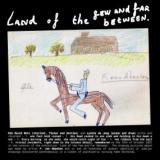
Land of the Few and Far Between / Songs for St. Michel is a collection of musical ‘figures’ written and recorded in 2022 and 2023 using a method Lyckle and Kim call the ‘snelkookpan’, translated as the pressure cooker. The ’snelkookpan’ in essence is trying to write and live-record as many musical figures in a given timeframe in a specific place. For ‘Land of the Few and Far Between’ this was an afternoon and evening in an exhibition Kim had curated about collecting and memory in The Hague. For ‘Songs of St. Michel’ this was 6 days in the basement of an art institution in Maastricht where they were joined by Otto de Jong on guitar. The figures are usually worked out by ear, sometimes improvised, sometimes written down, but often they are simply remembered and soon after recording forgotten. For ‘Land of the Few and Far Between’ they recorded ten figures. For ‘Songs for St. Michel’ fifteen. Of each a selection of five ended up on this seven inch.
F. van Abeelen (one of whom’s drawings is pictured on the sleeve of this seven inch and of whom 750 drawings were part of the exhibition mentioned above) was forced as a boy to hide in a basement for years. Only a small window gave access to the outside world. That sliver was his reality. After these years in hiding he began drawing his sliver of reality obsessively. Daily series of similar drawings that he would meticulously catalogue in an organizer. We never met F. Our friend who discovered the drawings in a closet of psychiatric nursing home Dorestad never met F. We only recorded ten musical figures next to 750 drawings by F.
St. Michel is a house that stands on the outskirts of Maastricht. It is built on the floodplains of the river Maas and living there you see the river change daily. It is a river fed by rain. No rain means a low river. Rain means a river that sometimes comes frighteningly close to flooding. Which it sometimes does. Due to the ebb and flow of the Maas, stuff is deposited in the boggy areas that are its floodplains. A shoe, a CD, a drone, some wood.
Places impress themselves onto what you are doing. You become an unwitting prop in the place’s story.
The first ‘snelkookpan’ happened in 2017 in the water-basin of one of the earliest concrete structures in the Netherlands; a bunker that was part of Amsterdam’s defensive line, built around the 1890’s. Something that used to house water was now empty. For three days Kim and Lyckle recorded improvised music there, which is still alive on a hard drive somewhere. In 2020 they recorded ‘the third of May’ at an old pumping station in Den Helder; an eleven part piece of auditory historical-horror which was released by South of North in 2024. Since 2023 Lyckle and Kim have mainly recorded live shows. With a Clarinet, kawai K1, Ipad, organelle, samplers and a variety of instruments curated for their minimal size or odd sound they’ve made chains of brief and improvised mini compositions inspired by browsing environments (digital and otherwise).
Land of the Few and Far Between / Songs for St. Michel adds to this growing collection of recordings for environments that are somehow sticky.
The title of Ghost Bridge, the East-Coast-spanning chamber ensemble Hour's fifth record, is less metaphorical than one might expect. Bandleader Michael Cormier- O'Leary repurposed it from an unrealized movie concept about a bridge that inexplicably starts disappearing. On the nearly-ten-minute title track of this richly imaginative suite of songs_written for a 13-piece ensemble that includes woodwinds, strings, and vibraphone as well as a rock rhythm section_Hour conjures up this central image with spectral string harmonics and free-time percussion gestures. While writing the keyboard pieces that became the takeoff point for the album, Cormier-O'Leary also found himself reflecting on the loss of loved ones or even his own mortality. The six kaleidoscopic instrumental pieces on Ghost Bridge, though, feel more cosmically inquisitive than straightforwardly elegiac, sketching a progression from existential doubt toward understanding and acceptance. Ghost Bridge forms a contrast with Hour's art-rock-informed, more improvisatory early releases, representing a step further into intricate chamber orchestration. Known for his work with Friendship, Wendy Eisenberg, and 2nd Grade, Phillybased multi-instrumentalist and Dear Life Records founder Cormier-O'Leary has made Hour a home for increasingly cinematic instrumental compositions since the mid-2010s. With dazzling production by Lucas Knapp, Ghost Bridge delivers plenty of the live ensemble's trademarks, especially cyclically developing guitar and keyboard melodies. However, even more than on Hour's last studio album, unconventional harmonies and sophisticated counterpoint take center stage here. These emotionally multifaceted compositions feel as rooted in contemporary classical and film soundtrack music as in indie rock. One of the most striking elements of Ghost Bridge is the more significant developmental role the orchestral instruments assume in each piece. Instead of underscoring Cormier-O'Leary's central hooks, there is a new mesmerizing level of detail to the group's conversational interactions and kinetic energy. "Centralia" is a stately and idiosyncratic fugue built from repeated and overlapping phrases, while Ghost Bridge's compositions are full of unexpected pivots in harmony that allow recurring melodic motifs to sound continually reshaded. On "Pearls," the chords modulate drastically around Cormier-O'Leary's inviting central melody in a way that emulates cuts in a film telling several parallel stories. There is an unsettled quality to the chords on Ghost Bridge, with Cormier- O'Leary's progressions avoiding firm grounding in either clearly sunny or melancholy tonalities. This mood is made more concrete by the record's sole vocal track, the jazz-inflected "Sky is Blue," featuring an uncannily gorgeous performance by Heeyoon Won. The song seems to be a communication from a person who has departed, offering consolation or perspective to someone left behind. Though its sonic palette is often tranquil, Ghost Bridge explores heartbreak, grief, anger, and helplessness in a distinct and pretense-free way. The project represents a bold step forward for Cormier-O'Leary as a composer and arranger, and on Ghost Bridge Hour reaches its most fully realized form to date, connecting soaring themes with an inventiveness that perfectly suits the searching nature of the subject matter.
De Kloe: their name is as hard to explain as the music they channel from a total oddball universe. Rumour has it a wormhole sits hidden between the beer crates and a broken dartboard in the basement of the DPG Media building in Antwerp. Leon Jespers, Elian Van den Eynde and Midas Heuvinck stepped through and came back with De Kloe’s first full-length album.
Needless to say, De Kloe operates in the cracks - splicing obscure samples, fractured lyrics, jagged basslines, and serrated guitar riffs into something volatile and alive. Club rhythms pulse underneath, but nothing stays in place for long. Tracks mutate, structures dissolve, and both live and on record the band leans into instinct over control.
After the singles ‘Our House’ & ‘The Fish’ the trio finally presents their debut album ‘Vanity Fair’: more extravaganza tunes you didn’t know you need it, but soon will be addicted to.
A place where pop music collides with dubbed out samplemania, short sharp no wave riffs, sun-gazing psychedelica, 90’s indie sleaze, post everything vibes and endless sonic fun & happiness.
Some people would say Vanity Fair is a musical exploration of glossy machinery, the dacay of celebrity and a secret wink to John Bunyan’s Pilgrim’s Progress where
everything is on display and nothing is quite what it seems.
Other will say ‘Vanity Fair’ is a splendid record with 12 marvelous songs you just have to listen to and buy it because your life will only gets better from then on.
We believe both of them.
Credits
All songs written and produced by De Kloe
Elian Van den Eynde: guitar
Leon Jespers: electronica & keyboard
Midas Heuvinck: bass
Guest musicians
Kiara Govaert & Nina Brügger: vocals
Kiara Govaert: ocarina
Co-production and mixing by Martijn De Bondt
Recording by Simon Beeckaert
Mastering by Gert Van Hoof
Graphic design and layout cover by Leon Jespers
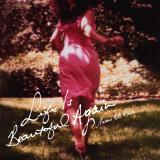
"Life Is Beautiful Again" is the debut album of Nadine El Roubi, a Sudanese-born, New York-based singer, rapper, songwriter, and multidisciplinary artist.
The album is the culmination of music created over the last three to four years. While the album can be categorized as primarily neo-soul, its true genre remains fluid — shaped by influences in hip-hop, neo-soul,and indie music.
Both melancholic and powerful, introspective and self-assured, Life Is Beautiful Again explores personal and external chaos, womanhood, belonging, and the determination to maintain faith through struggle. Thematically, it marks a shift from her previous work. Where earlier releases were overtly political, defiant, and outward-facing, this album turns inward. It is softer, more reflective, and rooted in the belief that vulnerability can be its own form of strength.
Written and recorded over three years across four cities, the album carries the imprint of many different versions of a Sudanese woman navigating change, loss, love, ambition, and growth, these songs became a way of making sense of the world.
At its core, the album’s message is simple: even through the ugliest of times, life will always become beautiful again.
Moulded By Industry is William D Drake's six album, his first for ten years and a return to the richly layered sonic texture and epic production of his majestic Briny Hooves. He is joined by long time collaborators James Larcombe, Dean Gaisburgh-Watkyn and Steve Jackson, with the addition of a new crew member, singer Treana Morris. Moving on from his nine years of pianistic and compositional duties in Cardiacs, Drake's solo work has been known for its synthesis of Mellotron-driven grandeur with a surreal playfulness.
But the deep heart of Drake's work is in its powerful evocation of the landscape of the countryside and its connection with love, longing and loss. To this end, his own enigmatic lyrics have rubbed shoulders with poetry drawn from across the centuries. From obscure sources such as Samuel Spree to the poetry of Thomas Hardy and Rupert Brooke, his settings make old words shimmer with human emotion. The texture of his music also reflects an inspirational lack of concern for distances of time. The earthy breath of his harmonium is interwoven with tones teased from archaic instruments by James Larcombe – hurdy-gurdy, dulcitone and melodeon.
But Drake's sound-world is no museum. Here, ancient words and the timbres of ancient instruments become one with the rush of a moment's emotion. Moulded By Industry brings this approach a new sonic depth, intoxicatingly shaded by Treana's lush vocal harmonies and underpinned by Steve's rhythm. Dean's evocative guitar textures give an oceanic sense, tinged with Americana, recalling his work with Drake in their alt country band Nervous. These many layers of sound are drawn together into vivid soundscapes by the painterly mixing of producer Ott. Renowned for his work in electronica and dub, Ott's two decades of experience working with artists such as Sinéad O'Connor, the Orb and Brian Eno bring an organic touch here, more akin to the elemental forces of land and sky than grid electricity. More than any of Drake's previous albums, Moulded By Industry reignites the emotional urgency of old texts. The gorgeous single The Flickering Shade, haunted by glimmers of lost possibilities, is set from words by Thomas Ashe. Turtledove's heady evocation of the blissful madness of love sets the words of an anonymous 17th century ballad. above all, the album is a testament to Drake's love of John Clare, 'The Northamptonshire Peasant Poet'. Clare wrote as the centuries old process of enclosure, in which wild and common land was appropriated commercially, was accelerating.
His works, rather than representing simple sentimentality, are passionate love poems to the landscape and cries from a soul reeling from the creeping unfamiliarity devouring it. This sense of the tension between passion and ill-ease has its most potent expression in Green Shadows. The brooding, slow-tempo energy of Steve's drums drive a horizon-wide lament, alternately lulled by Treana's vocal textures and made restless by James' plaintive hurdy-gurdy and the emotive pull of Dean's slide guitar. The present moment is also a time of enclosure, both metaphorically, as our lives, memories and emotions are drawn into the commercial space of social media, and literally as land and water are swallowed by vast data centre developments. Moulded By Industry celebrates a regained sense of being in the moment in the landscape, in life and in love. The album closes with the utterly delightful single Love In The Universe. The kind of song that could make a cynic use the word 'joyous' without irony, this Harry Nilsson-esque romp reassures us, with a wink, that 'in an infinite universe everything has its place ... even the human race'.
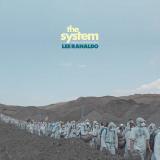
A quick scan of the world’s favourite crowdsourced discography reveals that Sonic Youth co-founder Lee Ranaldo was not a total stranger to crackling electric experimentation in the years following his songwriting turns of the 20-teens. Yet »The System«, ingeniously culled and sequenced from Ranaldo’s soundtrack work for Dutch filmmaker Joris Postema’s ›eco-doc‹ of the same name, nonetheless feels like a reawakening. Quietly released in a vastly different (and much more ›filmic‹) form by Doxy Music/Riva Media Records in 2025, this LP reimagines and reconfigures the initial release, including unreleased material written and recorded for the film, to lend it new stature as both a return to drone-improv form and a reunion with introspective Downtown angst.
Given the state of the world, it’s not surprising that the film Ranaldo scores – a documentary on three climate activists bruising their fists on the black iron prison of techno-fascist deathkultur – is a study in despair and futility. But rather than wallowing in navel-gazing doom and gloom, the film documents the unstoppable spirit that has animated human resistance since the time of the Pharaohs.
As it turns out, the gorgeous scope of Lee Ranaldo’s guitar palette is a perfect manifestation of the hope and despair that animates the film. But like other high-water marks in the guitar-centric soundtrack canon – the high plains raga of Bruce Langhorne’s »Hired Hand«, Neil Young’s sparse and ghostly solo transmissions on »Dead Man«, or the monolithic mantras of Popol Vuh’s »Nosferatu« – its devotion to spectral gestures and meditative song forms launches it firmly outside of the OST orbit into a universe fully its own.
It might seem like a long journey from the Lower Manhattan rhythmic grime of the album’s opener »Tajikistan (Nice to Meet You)« (reminiscent of guitar opuses like Robert Quine and Jody Harris’s »Escape«) to the ringing cowboy chords of the final track, but the narrative logic of the LP pulls the listener along as solidly as a pack horse. As the LP unwinds, and collaborators like Jim Jarmusch, cellist Leila Boudreil, Yeah Yeah Yeahs snare shaman Brian Chase, and guitarist Yonatan Gat take their places, new vistas unfurl: the ritualistic thrum of »Berlin Blockade«, the haunted overtone palaces of »Bergelmir«, and the cavernous acoustic strumming of »Instruments of Violence«. It all winds up with the high lonesome standard »Cool Water«, each unhurried note trailing off into long-tail reverb, layers of shifting vocal harmonies pulling everything skyward – a hopeful note in an album where existential dread never lurks too deeply below the surface.
In the end, »The System« functions both as a film score and a hallucinatory (mostly) instrumental guitar record, revealing a sensibility not too often spotted in the 21st century – a liminal space where the song, the jam, and the meditation merge into a blurred whole. »The System«’s expansive fabric, emerging from a collective sound circling around Ranaldo’s signature tones, envelops and ampl amplifies the contributions of its community of creators – the perfect antidote to narcissistic despair. Much like the subjects of the film light the way towards intra-generational resistance, the music of »The System« reveals a path through gathering darkness. The world could be yours if you follow.
Common Primitives is the second collaborative album between Andy Bell (Ride guitarist, Oasis bassist) and Essex-based harp and synth duo Masal. It’s a stunning, meditative collection which veers from kosmische to astral jazz by way of Turkish folk tunes and all the way back again.
Their first outing, 2023’s acclaimed Tidal Love Numbers, consisted of four lengthy and almost ambient tracks and is included here on vinyl for the first time as part of a two-record set with the new album. By contrast, the seven tracks that make up Common Primitives are almost concise, but also a lot more layered and complex.
“We tend to work from initial, free-jammed ideas, building form and arrangement from there,” explains Masal’s Al Johnson. “Above all, we believe you should go where the vibe takes you.”
For Andy, that vibe was very much jazz legend Pharoah Sanders’ classic 1977 album Pharoah, which was reissued a few years ago.
“It puts me into a hypnotic state,” he explains. “That’s why I worked with more guitar loops on this record. The Tisziji Muñoz part on ‘Harvest Time’ has had me in a vice-like grip for the last three years and it arrives here via the Vini Reilly filter.”
For Özlem Simsek, there is nostalgia, too, and she even adds vocals as well as her heavenly harp to the opening track, ‘After Kâtibim’, based on a traditional Turkish folk song she had sung as a child growing up in Istanbul.
From there, the album takes us on a real journey, with the apt, impressionistic titles added by Andy once it had all been pieced together. There’s the beautiful, elegant ‘I Swear We Are Infinite’; the atmospheric ‘Yuzuki Fighting Spirit’ and the beatific ‘Soap And Water’. ‘Tower Of Babylon’ was named after the novelette by Ted Chiang, its structured creation reflecting that in the story; first single ‘The Morning Of The Trip’ finds Andy playing his guitar “as if it was a waterfall”. The journey ends with ‘Rudi’s Dream – The Third Bardo’, the trio accelerating onto the autobahn for a krautrock crescendo inspired by their studio’s resident cat.
DPRTNDRP make a long-awaited return to Infernal Sounds with 'Byrnei', a release that's been quietly building anticipation across the 140 scene. Following their acclaimed 'What Ya Mean' EP in 2020, the duo are back with five heavyweight cuts that showcase exactly why they've remained one of dubstep's most respected production outfits for well over a decade.
Opening with the title track, 'Byrnei' wastes no time setting the tone. Rolling with DPRTNDRP's unmistakable swing, weight and groove, it's a certified soundsystem weapon - built to lock dancers into its hypnotic rhythm while delivering devastating low-end pressure.
Next up, 'Jiaozi' shifts into overdrive. A relentless barrage of razor-sharp percussion, cavernous basslines and seismic energy, it's an uncompromising slice of peak-time dubstep designed to hit with maximum impact from the first drop to the last.
'Fury' explores a deeper side of the duo's sound, drawing influence from their dub-focused alias, D-Operation Drop. Rich in space, texture and heavyweight sonics, it perfectly blurs the line between traditional dub and modern 140, combining meditative atmospherics with chest-rattling low-end.
Adding another dimension to the EP, Causa steps in to rework 'Fury', twisting the original into a hypnotic, distorted roller. Layered with his unmistakable wobble-heavy aesthetic, the remix pushes the track into darker territory, delivering an immersive journey of oppressive bass weight and razor-sharp sound design.
Bringing the release to a thunderous close, 'Backfire' is pure, uncompromising pressure. Stripped back, direct and devastatingly effective, it's arguably the heaviest moment on the EP; a no-nonsense soundsystem destroyer that leaves a lasting impression.
From start to finish, 'Byrnei' is a statement of intent. It's a masterclass in weight, groove and precision, reinforcing DPRTNDRP's status as true innovators within the 140 landscape. With five expertly crafted cuts destined for dancefloors and soundsystems worldwide, this is another landmark release from two producers operating firmly at the top of their game.
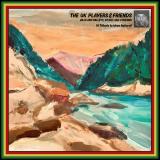
The UK Players & Friends Hills and Valleys, Rivers and Streams (A Tribute to Idren Natural) 9 brand new tracks by The UK Players. Voiced by Singers and Poets who knew Idren Natural personally. Recorded and Mixed by Supa Yout’ at Earth Works Studio, Amsterdam. Sleeve artwork and written testimonials from close friends and associates. Idren Natural aka Ras Natural aka InI Oneness, DJ, Singer, Chanter, Musician, was a pivotal player and pillar of UK/European Roots, Reggae, Dub, Sound System Culture. A humble Rastaman who did so much for so many, inasmuch as inspiring, encouraging, and connecting. He selflessly helped those less fortunate than himself. A strong advocate of the culture and philosophy of Rastafari. He was a commanding presence who lit up the stage, giving JAH all the glory. His passing was a great loss to the community. The UK Players Dub Band formed in 1996. They teamed up with Ras Natural/InI Oneness to record their debut 7” single ‘Further’ for Jah Works with Producer Jah Rej. This single gained exposure via Jah Shaka, Abashanti, and King Shiloh Sound Systems, even the famous Radio 1 DJ ‘John Peel’ played it. More recordings with Jah Rej at Seventh Sense Studio led to the debut album ‘Take Heed’. During the halcyon days of InI Oneness & The UK Players (1997-2004) they toured the UK and Europe, clocking up over 250 gigs in that time. Amongst brethren within the Rastafari community, the band became affectionately known as Ras Naturals band. Friends of Natural like Ras Iyah, Tony Roots, Sister Aisha, Wayne McArthur, and Barry Isaacs (among others) performed with them during this time. Members of InI Oneness & The UK Players never split up, throughout the years they branched out into other projects, reconvening for specials and one offs. Following Idren Naturals passing in 2022, the band stepped up to play his memorial show, where the idea formulated of making a tribute album to him. Ben King offered the use of Earth Works studio to help realise the vision. Work began with longtime live sound engineer Supa Yout’ in March 2024. Jah Rej assisted production on a number of these recordings, and sadly passed during the making of it, the last album he worked on. Various vocalists who were close to Natural, submitted vocals across the following year. The album was mixed and dubbed in March ‘25 at Earth Works by Soupa Yout' & Kingsway. Artwork and written memories/testimonials were then assembled. Everyone involved in the creation of this album knew Idren Natural personally. This album shines a spotlight on his spirit. Carrying songs of tribute, and messages for the times. ALPHA DUB: Every time the band played a gig, Natural would insist on starting with a dub. In that tradition, this album is no different. ‘Mandlion’ passing through the studio, headtopped a Melodica cut on it. Dubbed to the max by Supa Yout! NATURAL VIBE: The ‘Forward Fever’ crew from Belgium were one of the first collectives that Natural affiliated with in Europe. Here, Ras Cloud cleverly weaves all of Naturals song titles into the lyrics, creating a song in itself. WORD & FLESH: Fellowdread was born and raised in Kingston, Jamaica. Now living in Bristol, England, residing with Natural in his last days. His Poetry is rich in inflection, knowledge and wisdom, teachings that spark up the divine. ALL ABOUT LOVE: A pause for contemplation, this one stills the listener. Rootsman Rak’s words warn against complacency, and encourages action. A completely (natural) acoustic track featuring the skilled percussionist Jonah Dan. REMEMBER HIM: Inna Dubplate style, Barry Isaacs toasts to Idren in personal remembrance, reminding us all of the man he was. The track also features snippets of a phone call from Naturals oldest friend ‘Fergie Greenspears’ recounting memories. RISE UP RASTA CHILDREN: The legendary Tony Roots, graces the album with his unique delivery. Natural, The Players, and Tony go back a long way. A song of strength to affirm the soul, and rally against Babylon. Livicated to the one (Natural) SONG FOR THE RIVER MAN: During those halcyon days, many stages were shared with Albaroot, whom the band met whilst on tour in Scotland. Clark Innes (lead singer/songwriter) reminisces about the force of nature that was Natural, times shared, and that knowing, to never meet again. ONE STEP AHEAD: An interpretation of the ‘Look Inside’ riddim by Reuben Addis. Built for Sound System, it is the only track on the album that rolls into a dub. Lyrical Benjie literally entered the studio, rode the riddim without hearing it first, cutting his vocal in one take! A message for the times that sends shivers up your spine. THE PRAYER: Iman Onedub AKA Iman Gebre Iyesus, member of the Ethiopian Orthodox Tewahedo Church, met Idren Natural at Fairfield House in Bath. Here he seals the album with a recital of the Lord's Prayer in English, with Amharic. His rich textural tones elevated with a one away riddim to carry the listener home.
"Back in 2022, Ban Ban Ton Ton raved about George T’s then digital-only release, “Roll On, Kings Cross”. We described it as a “dynamite dose of poetry and digidub.” Likening the prose – which describes a train journey from the coast to the city – to Michael Smith and Joe Duggan, while comparing the production to Dennis Bovell’s remixes of Jarvis Cocker’s “Swanky Modes”, and The Sabres Of Paradise’s “Wilmot”. Melodica-led with a hefty post-punk flavour, its dub, which focuses on manipulating and morphing the bass-line, we called “hollowed out house.”
These tracks have now been pressed to vinyl for the second release on new imprint Noetic Rhythm, where they’re joined by Leonidas’ “Great Northern” mix. Eschewing his usual futuristic ethno techno jacking, here he drops into roots reggae. Creating something more skanking, more stepping. An extended “discomix” showered in filtered, Mutron Bi-phased percussion, ghostly horns and peppered with the odd syndrum pop. Washes of sampled surf appropriately accompanying George informing us that “to the left there’s the sea.”
The 12 also features, “Dr Doctor”, a fresh collaboration with Yas Mine, The singer / guitarist’s French vocals countering George’s Matt Johnson-esque delivery, and a John Barry / “Midnight Cowboy”-like melodica melody serenading the song’s slow, squelchy, electronic skanking. The dub, instead, showcasing Yas’ fine fretwork." BAN BAN TON TON review
-
"These tracks are massive! I love Roll On King's Cross the best" KAY SUZKI (Time Capsule)
"I played the dub (Dub On, King's Cross) at a club in Oslo alongside some Maurizio and it sounded great. Bit of an oddball." Also played on NTS Radio and in Mixmag mix. JONNIE WILKES // OPTIMO
"Really digging Mr Demure when he drops into dubwise" DR ROB // BAN BAN TON TON
"Yes. Nice" NICK THE RECORD
"Awesome" JONNY ROCK
"I really like this EP... Love the Leonidas dub!" CEDRIC WOO (Beauty & The Beat, LDN)
"Love the blend of Augustus P vibes with a post punk dub feel. Bingo!" DICKY TRISCO
"I love it and will be playing" TREVOR FUNG (Ibiza Legend)
"Yes this is dark but kinda friendly.... brilliant...It's like ghost town ...I love Leo's mix" FOR MANKIND (Pikes Ibiza)
"Love the release and LOVE LOVE LOVE Dr Doctor!!!! Psyched to play this one out all weekend." ZILLAS ON ACID // James Weissinger (Philadelphia, US)
"This is amazing. Dub on kings cross is a banger - really love this one" ARVEENE
"Loving the Leonidas dub" ATEMI (Blackbush Orchestra / Abstrack)
+
PREVIOUSLY
"Melodica heaven" JD TWITCH/OPTIMO (RIP)
"I love this" IVAN SMAGGHE
"It's hot!!" JONNY ROCK
+ plays/support from:
DON LETTS (BBC 6Music)
TOM RAVENSCROFT (BBC 6Music)
HARRI (Sub Club)
[f] Roll On, King's Cross [Leonidas' Great Northern Mix] 06:54
[g] Dr Doctor [Instrumental Mix] 03:25
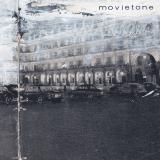
World Of Echo are proud to announce the long-awaited reissue of the self-titled debut album by Bristol’s Movietone. Originally released in 1995 by Planet Records and reissued on CD in 2003 by The Pastels’ Geographic Music imprint, this is the first time Movietone has been reissued on vinyl. An expanded double-LP edition, it includes the extra tracks from the 2003 CD (their first two singles, and an unreleased demo of “Chance Is Her Opera”), and adds three more unearthed gems: demos of “Alkaline Eye” and “She Smiled Mandarine Like”, and an early take of “Late July”, recorded in a garden by Dave Pearce (Flying Saucer Attack) in 1993.
Taken together, this is the definitive collection of music from the first phase of one of Bristol’s most remarkable groups. Movietone was the cumulation of a series of events, explorations, and discoveries, starting at secondary school – the group’s core membership of Kate Wright, Rachel Brook, Matt Elliott and Matt Jones met at Cotham School in Bristol. As for many other groups, their early years were all about experimenting, and finding ways to ‘make do’, a DIY sensibility that would inform Movietone through their decade-long lifespan. From formative rehearsals in a shed in the garden of Brook’s family home, to recording early material to four-track in Redland Library, and on into the Whitehouse and Mr Grin’s studio sessions for their debut album, Movietone’s music fell together in a creatively unpredictable, yet conceptually rigorous manner.
By the time they released Movietone, they’d found a home with Bristol’s Planet, run by author Richard King and James Webster, who had both released their first two singles, “She Smiled Mandarine Like” and “Mono Valley”. There was other music happening around them in Bristol, too, from the Jones brothers’ avant-rock outfit Crescent (who were Movietone’s closest conspirators), through Elliott’s jungle/electronica project Third Eye Foundation, and Brook and Elliott’s membership of Flying Saucer Attack. A closely knit community, Movietone are the centre of this nestling architecture of groups. The vision in the music, mostly, belongs to Wright, but Movietone ran in democratic creative consort. Listening back to Movietone, you can hear this democracy in action through the wildness of the music, which is balanced by the poetics of Wright’s lyrics and melodies.
Full of half-captured memories and entangled abstractions, there’s an elliptical, ruminative quality to much of the writing here that shows the deep influence of the Beat Generation writers, along with a twilight environment captured in the songs that’s pure third-album Velvets, Galaxie 500, early Tindersticks, Codeine. Unpredictable interventions – the crashing glass in “Mono Valley”, the sudden explosions of “Orange Zero” point towards the noise blowouts of My Bloody Valentine, the unpredictability of Sonic Youth; Wright’s understated vocal cadence suggest a deep, embodied understanding of John Cage’s Indeterminacy.
Movietone would go on to make 3 fantastic albums for Domino: Night & Day (1997), The Blossom Filled Streets (2000) and The Sand & The Stars (2003) and their Peel Sessions were released earlier this year on Textile. Still held in high regard by artists like Steven R. Smith, and The Pastels, whose Stephen McRobbie once described them as “one of the great unknown English groups,” it’s an absolute thrill to listen to Movietone anew – still inspired, still seductive, still magic, still mysterious.
OTHELLO is the debut album by pianist and composer Orson Claeys. Bringing together influences from jazz, hip-hop, urban culture, and everyday life, the record offers the clearest portrait yet of an artist shaped as much by the worlds around him as by music itself.
The title refers to Claeys' full name, Orson Dwight Othello Claeys, and reflects the album's central concern:identity. Throughout the record, personal experiences, cultural influences, and artistic inspirations converge into a body of work that seeks to understand how an artist is formed, both within and beyond music. Musically, OTHELLO builds on jazz, strongly intertwined with hip-hop, contemporary culture, and ideas beyond traditional musical frameworks. For Claeys, music is not a fixed genre, but an open and evolving form of expression.
This broad perspective is evident in the album's carefully chosen collaborations. A track like "WHAT A NIGHT" first took shape during a studio session with indie-soul singer Sevens, whose harmonic ideas laid the foundation for the track. As the composition evolved, Claeys felt it called for a stronger hip-hop voice. Through a recommendation from Mixmonster Menno of STUFF., he was introduced to L.A. rapper IAMOMNI, whose contribution brought exactly the energy and perspective the track needed. The result unfolds like a late-night journey through Los Angeles, with IAMOMNI's contribution adding a sense of movement, character, and place.
Elsewhere on the album, "SPIRAL", featuring Belgo-Brazilian vocalist Helena Casella, grew out of a long-standing mutual admiration. Conceived as a meeting point between R&B and jazz, the composition balances the groove and emotional depth of the former with the improvisational spirit and spontaneity of the latter. The collaboration developed naturally from the outset, with Casella instinctively understanding the atmosphere Claeys envisioned while enriching the music with her own warmth and nuance.
A long-held ambition materializes on "SHADOWBOXING", where Claeys is joined by drummer, producer, and one of the key figures in contemporary Belgian jazz, Lander Gyselinck. Gyselinck's work, particularly his collaboration with Zwangere Guy on Pourriture Noble, was instrumental in showing Claeys how the language of hip-hop could coexist naturally with jazz, an idea that runs through OTHELLO. Drawing inspiration from boxing, the track is a musical equivalent of a fighter's walk towards the ring: focused, intense, and driven by the sense of anticipation that precedes stepping into the fight.
After this heightened intensity, the album gradually moves toward its closing statement. OUTRO / HANIN", featuring oud player Akram Ben Romdhane, a longtime collaborator whose playing forms a natural bridge between Claeys' previous work and the broader musical landscape explored across the album. The title references the Tunisian Arabic word hanin, meaning "nostalgia", a fitting conclusion to a work deeply concerned with memory, identity, and personal history.
Beyond music itself, OTHELLO is informed by a wider cultural landscape. Urban culture, with its visual language, creative independence, and sense of community, forms an important backdrop to the record. Sport also plays a significant role, particularly boxing and basketball, whose emphasis on discipline, focus, and resilience mirrors Claeys' own creative process. Rather than being treated as separate influences, these worlds coexist without hierarchy, reflecting an artistic vision that resists rigid boundaries and allows different disciplines, communities, and experiences to inform one another.
The third chapter of The Third Room's curator-led series is shaped by Verraco, one of the key voices behind a new generation of artists reshaping contemporary club music. Through his productions, DJ sets and his work with TraTraTrax, he has helped define a sound where hybrid forms, rhythmic experimentation and cross-cultural influences are pushing the genre into new territory. Structured across two distinct sides, the release draws a clear connection between past and present. The A-side leans into a deeper, more classic space, while the B-side moves towards a more forward-facing, hybrid sound. It opens with Libration (Stone Version) by Substance & Vainqueur, a revisiting of their landmark 2007 release, a track that helped define the language of Dub Techno as it is understood today. Reduced, deep and spatially precise, it established a blueprint for how rhythm, delay and tone could function together. It's presence here acts less as a nod to the past and more as a reminder of a foundation that continues to shape the genre. Skee Mask's Clear Sky 909 continues this thread, softening the edges without losing depth. Warm, enveloping textures and fluid movement give the track a sense of openness, balancing clarity with emotional weight. The B-side shifts perspective. On Untitled (Teamgeist Mix), Verraco, joined by Tils, delivers the record's defining moment - a dense, intricately designed piece built on a driving low-end and evolving rhythmic patterns. Elements from Techno, Bass and Leftfield House converge into a detailed, forward-moving structure that actively bridges cultural contexts. It results in a form of dance music shaped by technical precision, but drive.n by a clear sense of intent, marking a distinct expression of Verraco's current sound. Untitled by 1morning introduces a rolling, tribal-infused groove with a strong sense of depth, while PatumPa by Regal86 closes the record with a bright, loop-driven energy that leans into pure motion. Across both sides, the release moves between reference and progression. Rather than separating old and new, Verraco connects them - tracing a line from foundational Dub Techno to a more fluid, contemporary club language. Copyright 2026 The Third Room A1 Written and Produced by Peter Kuschnereit & Rene Loewe | A2 Written and Produced by Bryan Mueller | B1 Written and Produced by JP Lopez & Jakob Ferdinand Tils and mixed by Lurka | B2 Written and Produced by 1morning | B3 Written and Produced by Regal86 Mastered by Andreas Kauffelt (Schnittstelle Berlin) Artwork by Charlotte Ernst Design by Daniel Bornmann (STUEDIO.XYZ) Distribution by Clone Pressing by Matter Of Fact
out of Stock
Last delivered 10 days ago available to reorder, subject to availability
Futurismo proudly present a vital compilation born in the shadows of American punk; AMERICAN GRAVE Gothic Punk / Deathrock USA: 1978-1988, the third volume in their Altered Vision anthology series.
Drawing from darkest depths of the American spirit, American Grave is testament to a subculture spawned from late night savagery, graveyard hangouts and suburban isolation. Deathrock, post-punk, goth, whatever term you prefer, this compilation showcases the sounds and aesthetics of a tarnished golden era, an underground movement that took the DIY concepts of punk and the velocity of a burgeoning hardcore scene and immersed it in echoes, distortion, tribal rhythms and macabre vocals, thematically preying upon cult horror flicks, surrealism, and the manipulation of religious iconography. Whilst the UK had a counterpart scene many would hail as Goth, this was different, this was a truly American incarnation, a new breed of youth haunted by the ghosts of old blues, garage and glam, bleak theatrical imagery dressed up to evoke a response, smeared eyeliner, leather, bones…black. This was a backlash against a culture in decay, bucking against a puritanical oppression brought on by the archaic social standards set by their parents. It was aggression manifested as gloom, it was a ceremony, the celebration of death.
American Grave has been co-curated by Wesley Eisold (Cold Cave/American Nightmare/Heartworm Press) in collaboration with Futurismo head honcho Del Jae, to bring you a haunting tracklist ranging from the all important integral mainstays of the genre to those rarer and more elusive artists, including many recordings that have never been reissued before on any format. Featuring the music of Christian Death, T.S.O.L., The Cramps, Of A Mesh, The Gun Club, Twisted Roots, Kommunity FK, The Brainz, Theatre Of Ice, Burning Image, Fur Bible, PSI Com, Shadow Of Fear, Super Heroines, 45 Grave and more.
The music on this compilation is reinstated further from a visual perspective by an array of incredible images by famed punk photographer Edward Colver, and lovingly designed to the level you would expect from a Futurismo release.
2xLP on limited edition ‘Splintered Tomb’ coloured vinyl. It is housed in a gloss laminated outer sleeve with colour inner sleeves and contains a large fold-out poster with unseen photos by the great Edward Colver, words by Lisa Fancher and liner notes by Wesley Eisold of Cold Cave/American Nightmare.
We release our second record, COPPIES002. Another hand stamped white label EP, collecting tunes from thecommunity, for the community. This time with tracks by Kerr Wilson, Salomo, illousion and APRS. Kerr starts on A1 with his "The Key To My Heart". He showed the first version of the track to Robert around 4 years ago in a memorable summer spent together. We made the promise that this will be pressed on record one day and, here it is! Thanks Kerr! It's a melancholic late-summer tune that makes you tear up and feel like the warm euphoria won't last forever, but it will surely return if you're patient. Salomo follows with a similar moody approach on "Say less (on the DF)", even though we can argue about the meaning of the title ;). illousion builds more tension on the flipside with "Masc or Mask". Entering dubby, rolling terrains with more high intensity drum patterns for later moments of the night. APRS is closing the EP with "I Want to Speak" on B2, maybe the counter argument to Salomos desire of a less noisy dancefloor. He crafted a minimal, loopy trip that drags you down the rabbit hole and won't iet you go til the party is over. COPPIES002 is available on vinyl only with digi download option
out of Stock
Last delivered 11 days ago available to reorder, subject to availability
Thursday, 2025. Philadelphia. South Philly, to be precise. A basement, to be even more precise. And not just any basement, but the subterranean headquarters of Zillas On Acid.
Which is where Roman Flügel found himself, presumably with good intentions. Some time before that, he had decided to wake Sister Midnight from its slumber.
But rather than simply carrying on where things had left off, a new idea was needed. Enter Sister Midnight Special Products: a new series dedicated to collaborations, chance encounters and other musical situations that deserve to become records.
No grand manifesto, no five-year plan. Just making music with people you like, in places you happen to find yourself, and seeing what happens. Special Product 01 is “Conga Dream,” born from a basement jam with Zillas On Acid and apparently unwilling to behave itself ever since.
Three musical free spirits meet somewhere between the basement, the dancefloor and the more pleasantly confused corners of the mind. Club music is involved, certainly, but functionality has been politely asked to wait outside. Instead: pocketprotector synthesizers, a little E-mu Proteus 3, assorted electronic activity and, as advertised, congas.
The result is less a tool than a small trip. Or perhaps a tool for taking small trips.
Either way, it works.
Zillas On Acid put it like this:
“A basement jam deep beneath the streets of Zilladelphia yields surprising results: pocket protector synths, a dash of E-mu Proteus 3, and yes of course the aforementioned congas.”
And with that, Sister Midnight Special Products is officially open for business.
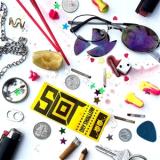
SLOT is the high-energy, dance-punk project of couple Abby Detrich (vocals) and Max Detrich (bass, drum machine), based in Baltimore, Maryland, USA. Their music is a potent, genre-fusing sound described as gritty but flirty pop songs with a punk, in-your-face delivery, and pumping, heavy, danceable beats. Drawing on dance punk, noise pop, and alt-rock, their sound is rooted in Max's transition from drummer to electronic beats via a Boss DR-5 drum machine, with Abby contributing lyrics and dynamic vocals. The band's upcoming album is a bold, flirty, punchy, and raw statement, delving into themes of the intersection of performance and sexuality, self-acceptance, and personal reclamation. It was recorded with collaborator Danny Gibney in Harrisonburg, VA, capturing an experimental sound inspired by Y2K media. SLOT delivers an energetic, bratty, and in-your-face live show, having shared the stage with bands like Brainiac and played festivals like MACROCK. Beyond music, Abby is a floral artist and Max is a graphic designer, and they are both dedicated to progressive community causes in Baltimore.
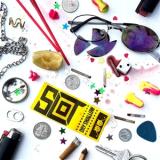
SLOT is the high-energy, dance-punk project of couple Abby Detrich (vocals) and Max Detrich (bass, drum machine), based in Baltimore, Maryland, USA. Their music is a potent, genre-fusing sound described as gritty but flirty pop songs with a punk, in-your-face delivery, and pumping, heavy, danceable beats. Drawing on dance punk, noise pop, and alt-rock, their sound is rooted in Max's transition from drummer to electronic beats via a Boss DR-5 drum machine, with Abby contributing lyrics and dynamic vocals. The band's upcoming album is a bold, flirty, punchy, and raw statement, delving into themes of the intersection of performance and sexuality, self-acceptance, and personal reclamation. It was recorded with collaborator Danny Gibney in Harrisonburg, VA, capturing an experimental sound inspired by Y2K media. SLOT delivers an energetic, bratty, and in-your-face live show, having shared the stage with bands like Brainiac and played festivals like MACROCK. Beyond music, Abby is a floral artist and Max is a graphic designer, and they are both dedicated to progressive community causes in Baltimore.
It took a long time – ten years – for his talismanic song, ‘Ça ira tu verras’, to prove his prophecies right, at a time when, everywhere else in the world, nothing seems to be going right. And if everything is going well for Séverin, it’s because he’s managed to build himself a bulwark, an impregnable citadel, and his records now exude a whiff of simplified idealism, with the influence of Souchon and Voulzy never far from his pen and guitar as he brings his bittersweet moods to life in verses and choruses.
But above all, he knows how to invent new settings for himself, push back the boundaries, step beyond the walls of his Parisian studio to go and see how things sound elsewhere. Recorded at Chale Abbey Studios on the Isle of Wight (UK), Séverin once again wanted to let the collective spirit of his regular collaborators take centre stage. Ambroise ‘Sage’ Willaume and Jérémie Arcache, who featured on the previous album *Nouveaux Dinosaures*, once again form the backbone of the band, on guitar and keyboards respectively. Bassist Théodora Delillez (Astral Bakers) and Canadian drummer Robbie Kuster complete the band’s core line-up, which, in just six days at this electric priory, went on to achieve – judge for yourselves – nothing short of miracles.
Whilst all around us the war on falsehood rages – from AI to post-truth, all these fake debates, hypocrites and false values – here is an album that doesn’t cut corners when it comes to emotions, nor in the way it sets them to music.
Five years after establishing himself as one of the UK's most distinctive selectors, Bloom marks the beginning of a new chapter for Yung Singh. More than a debut EP, it introduces EKTA his own label and creative world, built around the Panjabi concept of unity and the belief that dance music can be a meeting point for cultures, histories and new ideas.
Rather than treating heritage as something to preserve behind glass, Bloom places it at the centre of contemporary club music. Drawing inspiration from Panjabi folk traditions, Indian classical rhythms and centuries-old musical practices, Singh reimagines these influences through a modern electronic framework without reducing them to nostalgia or tokenism. The visual identity mirrors this philosophy, taking cues from Phulkari embroidery "flower work" passed down through his own family and connecting those traditions with the idea of growth, renewal and the arrival of a new creative season.
Finalised while touring Panjab during Basant, the festival celebrating the arrival of spring, Bloom became both a personal and artistic statement: the first release on a label intended not to represent one culture alone, but to create space for many. As Singh explains:
"EKTA as a name really sums up what I love about music and arts in general: unity and oneness. I want the label to be a sonic universe where artists bring their specific heritage into a modern club framework. It's about merging diverse folk traditions to treat these sounds not as relics, but as the future of dance music."
Across three tracks, Bloom presents different perspectives of that vision. 'NUG46' transforms field recordings captured in New Zealand into a meditative piece built around hypnotic tabla and razor-sharp jungle rhythms. 'Situationz' pays tribute to legendary Panjabi artist Sukshinder Shinda through the driving "Shinda Break", recontextualising a rhythm instantly recognisable to generations of listeners into a high-energy club weapon. Closing the record, 'Tabla Trouble' leans fully into organic instrumentation, layering classical percussion, strings, flutes and vocals into a composition that defines the open-ended musical language of EKTA.
Bloom is not simply the first release on a new label. It is the foundation of a wider vision one that looks to the past not for comfort, but for inspiration, using tradition as a catalyst for imagining the future of dance music.