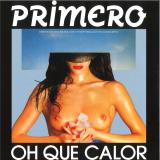
Vintage Pleasure Boutique returns to the classic Hotsound Records catalogue with Primero’s “Oh Que Calor”, another unmistakable production from Michiel van der Kuy.
This vinyl edition brings together three newly remastered original versions: Extended, Radio and Instrumental, preserving the sound and atmosphere of the original release, alongside fresh remixes from A.P. Mono, Spacehawk and Disco Computer.
All three remixers share a fascination with Van der Kuy’s signature sound. Their interpretations may take different routes, but the original DNA remains intact: pulsing synths, Linn Drum, cosmic melodies and that unmistakable late-’80s vocal spacesynth energy.
And “Oh Que Calor” still has the power to transport you somewhere else entirely: to a seaside resort on some Spanish coast, sometime in the late 1980s – hot nights, neon lights, open-air dancefloors and a whole summer soundtrack built from Italo Disco, spacesynth and electro. Somewhere between the beach and the club, Primero feels completely at home.
For fans of Laserdance, Koto, Cyber People, Proxyon and Sisley Ferre, this is both a return to the original and a new chapter.
Three original versions. Three new remixes. One unmistakable Hotsound DNA.
CYBERPHUNK CLAUSURA (2LP) is the closing chapter of the CYBERPHUNK saga, following CYBERPHUNK and CYBERPHUNK EXPANSION.
What began as an exploration through Electro, Breakbeat and Acid now reaches its final form: a convergence of SubBass pressure, fractured rhythms and dystopian energy condensed into a complete double LP experience.
Across 12 tracks, Calagad 13 expands the sonic language of the series — combining high-impact breaks, hypnotic sequences, acid mutations and darker atmospheric structures into a body of work designed to be experienced as a continuous journey.
Pressed as a limited edition of 150 copies, CLAUSURA stands as both a collector’s piece and a defining release within the COSMIC TRIBE catalogue.
While this release concludes the main CYBERPHUNK narrative, the universe will continue evolving through forthcoming reinterpretations and remix transmissions.
Lucid Dream Records is proud to announce its very first release: a reissue of four tracks by German producer Trancefeld, originally released on Sunset Recordings and CTM in the early 2000s. Years after their initial release, these productions still sound remarkably fresh on today’s dancefloors. Pure Fiction and Arcade showcase Trancefeld's tight programming, pairing hypnotic rhythms with progressive and trippy influences. On the flip side,
Seaquence explores deeper and more melodic territory before Outroduction closes off the EP with a richly textured and contemplative downtempo cut. Even today, these recordings remain difficult to place within a single category and together showcase the versatility and timeless quality of Trancefeld's musical output
After years of steadily building momentum within the deeper side of drum & bass, Monika now delivers his long-awaited debut album, How We Saw Forever, landing this August on Spearhead Records.
UK-born and now based in New Zealand, Monika has developed a sound that blends deep rolling grooves, soulful textures, delicate musicality and moments of genuine emotional weight. Across the album he moves effortlessly between late-night introspection, euphoric warmth and darker, more experimental territory, showcasing an artist fully confident in his own sonic identity.
Having already made a strong impression through previous releases on Spearhead and appearances across the label’s 20-year anniversary campaign, How We Saw Forever feels like a major step forward creatively. From the haunting beauty of “What Turns Your World” featuring Oktae, through to the nostalgic rave energy of “Mango Pop” and the weightier pressure of “Syndicate”, the album captures Monika’s ability to balance emotion, atmosphere and dancefloor impact without ever feeling formulaic.
At its core, How We Saw Forever is an album about atmosphere, memory and emotion, music designed equally for solitary headphone moments and packed dancefloors at sunrise. There’s a cinematic thread running throughout the project, but also a raw honesty that gives the album its real depth.
Speaking about the album, Monika says:
“This project became a reflection of so many different seasons of life over the last few years. Some tracks came from really emotional places, others were written purely from joy and escapism, but together they tell the story of where I’ve been creatively and personally. I wanted the album to feel immersive, something people could disappear into.”
Released via BCee’s Spearhead Records — a label long celebrated for championing soulful and emotionally rich drum & bass. How We Saw Forever marks another exciting chapter for both Monika and the wider Spearhead family.
Social Distortion's third eponymous album from 1990 turned out to be their best-known work and would come to spawn the most hits, with singles 'Ball And Chain', 'Story Of My Life' and the Johnny Cash cover 'Ring Of Fire'. It mixed Punk with Rockabilly, Blues & Country, and split the difference between Rockabilly and Ramones-style Punk. It is albums like this that prove why Social Distortion was able to survive the demise of the LA Hardcore scene with flair and come out on top!
Grammy- and Academy Award-winning rapper and actor Common is widely regarded as one of the most influential Chicago rappers of all time. He is best known for his sophisticated lyrics and jazz-rap, which introduced the world to hip-hop classics such as "I Used to Love H.E.R.", "The Light" and "GO!".
He started his career with Can I Borrow a Dollar? This album immediately drew attention thanks to its top-notch production and clever, playful lyrics. Common worked with contemporary household producers like No I.D., The Twilite Tone and The Beatnuts to create this album, which put Chicago hip hop on the map.
Can I Borrow a Dollar? is available on black vinyl.
Disco Collected celebrates the dance music which originally developed from R&B, soul, and funk from the late 60s and 70s and turned into a mighty subculture in discotheques, with Studio 54, Manhattan, New York as one of the most famous and extravagant discos all over the world. Disco used a steady four to the floor beat, string sections, horns which created a perfect setting for DJs who mixed their special 12 inches to an eager dance crowd.
Movies like Saturday Night Fever and Thank God It’s Friday contributed to disco’s mainstream popularity. Compiled on Disco Collected are some of the best, well-known and great disco hits by Rose Royce, Chic, Kool & The Gang, The Trammps, Thelma Houston, KC & The Sunshine Band and 16 more guaranteed floor fillers.
The 2LP Disco Collected is available as a limited edition on disco ball silver vinyl and includes an insert.
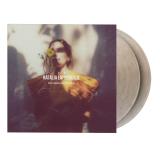
Un Canto por México, Vol. 2 is Natalia Lafourcade's second album dedicated to the reconstruction of the Centro de Docementación del Son Jarocho, a cultural building that was damaged after the 2017 Puebla earthquake. The album features unique new interpretations of her earlier songs, as well as collaborations with artists such as Caetano Veloso and Silvana Estrada. This album really showcases the enduring strength of her songs, which remain powerful in any form.
The album was very positively received by fans and critics. It even got nominated for multiple Latin Grammy Awards (Album of the Year, Best Engineered Album) and Grammy Awards (Best Regional Mexican Music Album).
Un Canto por México, Vol. 2 is available as a limited edition of 2000 individually numbered copies on smokey marble vinyl, packaged in a gatefold sleeve, with printed inner sleeves.
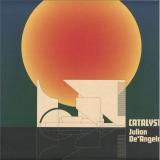
Nearly a decade in the making, Catalyst is Julion De’Angelo’s long-awaited debut album, a bold statement of artistic vision and musical dedication. Released on his Maybee Hill Music imprint, the album blends driving rhythms with rich melodies, from the Beatdown house energy of “The Tundra” and “Antheme” to the expansive jazz textures of “Karma” and “Confused Ones.” Honoring Detroit’s legacy while pushing beyond it, Catalyst bridges soulful experimentation, organic composition, and contemporary dance music into a sound that is distinctly Julion’s own. Spanning six tracks across the double 12″ vinyl with full color double-sided insert, pressed at Mother Tongue Records.
Continuing with the next installment Len Faki's Hardspace series, he breathes new life into four distinct tracks, re-imagining them through the signature Hardspace lens: heavy, thumping, and relentlessly propulsive. Spanning decades of sound, these reworks bridge the gap between nostalgic grit and future-facing intensity, proving once again that a strong is often the most effective tool in the bag.
DJ Sneak's 2009 cut Acido sits perfectly between acid-house and techno-leaning aesthetics-a natural fit for a Hardspace edit that amplifies its jacking, loopy groove. Staying closer to techno's roots is Like A Tim's warehouse classic Rashness; here, Faki channels the raw, frantic energy of the original, proving how nuanced changes can generate a completely different, captivating energy as he reshapes the track's dynamic impact and tightens the low-end.
The B-side takes two contemporary cuts further into the red: the Snuff Crew edit ramps up the intensity, stripping back Where's The Bad? to a singular, hypnotic loop for peak-time impact. Finally, Umfang's Complete Your Collection undergoes quite the transformation, adding layered, rhythmic complexity and shifting bass weight to create a trippy but floor-focused drive.
FatCat was recorded in a single session-live, with all four musicians together in the same place. What you hear on the record isn't a polished production, but a one-of-a-kind recording of four people playing at the same time in the same room.
This is not a nostalgic gesture. It's a stance. As music is increasingly understood as the output of a prompt, the question of what actually makes music becomes urgent again. Not flawless, efficient production, but the imperfect moment and its context. Not the result, but the process in which four people listen to each other, react to each other, misjudge, and find one another. This fallibility - the hesitation before an entrance, the slight pull in the timing, the glance between musicians that signals a turn - is not a weakness but the substance itself. It cannot be synthesized, because it isn't a data point but a lived relationship: between the instruments, between the people, between their shared history and what emerges new in this one take. The album is thus also a statement on the question of where, in the age of generative music, authorship and art can still be located: not in the result alone, but in the shared risk taken in creating it.
"The question was always: how do I bring my work as a producer and beatmaker onto the stage? How can something that usually happens alone behind closed studio doors become a live experience?" With the album FatCat, Sepalot pursues this question to its logical conclusion: what began as a live performance now becomes the recording itself - the studio becomes a stage for a day, and the stage becomes the definitive version of the album.
The love for electronic music remains, the raw pressure of hip hop is still palpable - and yet everything on FatCat sounds like a fresh start, captured in the very breath in which it was played.
On stage as in the studio, the four characters fit together like a puzzle. Sepalot's signature as producer and mastermind is unmistakable. On drums, Fabian Füss, longtime partner behind the kit and the voice that makes Sepalot's radio hit "Rainbows" so unforgettable. On bass, Robin Jermer. On trumpet, Matthias Lindermayr, multiple award-winning jazz virtuoso with his own albums on Enja Records. And then there's Sepalot himself, who turns it all into more than just the sum of its parts.
The eclectic beats, the pulsing bass, Sepalot's passion for atmospheric sound design - all of it remains, now joined by an element of jazz and captured in its most immediate, unpolished form. The album shows what four people in one room are capable of: a sound born of shared experience, and precisely for that reason, unique.
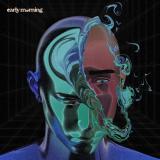
The fourteenth release on Early Morning brings Roy Rosenfeld back to the label for the first time since its second. The two years in between have not had a quiet stretch in them: new singles every few months across 2025 and 2026, and a touring year running from Mexico City and New York through Paris, Barcelona, Ibiza and Amsterdam to Montreal, Santiago and Buenos Aires. He is back in New York on the day this record goes global, and in Amsterdam for ADE later the same month. What arrives here is two long-form pieces, 15 minutes and 15 seconds together, both built on patience and both written for rooms where there is time to stretch out.
New Life takes its time. A full minute passes in suspended texture before the groove arrives, and when it does it carries the weight of everything that was withheld. The track moves in patient cycles, stepping away briefly at its midpoint before opening into an extended central passage where the rhythm withdraws and the harmony is left exposed. The return is the payoff, and Rosenfeld holds it to the final bar rather than letting it fade.
Seven Three Eight begins where New Life arrives. It is in motion from the first bar, with no preamble and no easing in. The low end breathes in long swells beneath a top layer that keeps shifting, and two breakdowns punctuate the arc without ever surrendering the momentum. It closes at full stride, running the seven minutes and thirty-eight seconds its title names.
Two tracks, near identical in length and opposite in approach. EARLY014 is a record about pacing, and about a producer who trusts the long form to do the work.
Elypsia Records presents A Future Tribe, the new album from Italian electronic music producers CEM3340 & 2030. Rooted in the formative language of electro and early techno, A Future Tribe channels the past through a lens very much focused on the future. Across the album, analogue warmth, machine-driven funk, synthetic textures and futuristic atmospheres come together in a sound that channels the pioneering spirit of early Detroit while remaining unmistakably connected to the present. For CEM3340 and 2030, machines are not simply tools, they are central to the creative process. Both producers have spent years immersed in the culture of electronic hardware. They've been carefully building and refining their own approach to production through an extensive collection of synthesisers, drum machines, sequencers and studio equipment. Based in Bari, southern Italy, their work reflects a deep fascination with the physicality of electronic music: oscillators, circuitry, voltage, rhythm and the unpredictable character of machines programmed and played with a human touch. That philosophy is deeply embedded in A Future Tribe. Rather than treating the early years of techno as a museum piece, CEM3340 & 2030 approach its foundational ideas as a living language - one that can be stripped back, re-translated and taken somewhere new. The influence of Detroit's first generation of electronic innovators is unmistakable. There are echoes of the futuristic electro and techno pioneered by artists including Juan Atkins and his contemporaries, where funk, science fiction, machines and the possibilities of tomorrow became part of a new musical vocabulary. It is an approach that has already earned the duo recognition within that lineage. Their previous Machines Awake EP, released through Atkins' Metroplex Records, was described as paying homage to the classic foundations of the genre while pushing them into new territory. Juan himself gave the release his sonic approval. But A Future Tribe is not an exercise in retro-futurism for its own sake. The album comes from two producers who understand the history, have the hardware to explore it and, crucially, are interested in what happens when those influences are given space to evolve. The result is electronic music that is full of funk, groove and a kind of nostalgia that is pure and intentional without being a pastiche. Together, they make music that is rooted in one simple truth: machines can't come to life without human creativity.
The next WOLF Music EP is here, and once again it comes courtesy of a new addition to the label roster. New York-based DJ and producer DJ Alone Again is a natural fit for what we do at WOLF, delivering a sound that hits that sweet spot where deep meets soulful, with the raw, understated energy of the authentic New York underground running through every track.
With a growing catalogue of original productions and edits, DJ Alone Again has released music through labels including YORE Records, House Salad Music, Dobro, Fantin Zoo Records, and Dealt With Records. His musical roots extend beyond house, too. Earlier work with the band Vain Pursuit, alongside a wealth of SoundCloud mixes and underground edits, reveals an artist with a deep appreciation for melody, songwriting and the emotional side of dance music.
Opening the EP is ‘Freedom of House’, a sublime take on the classic NYC-meets-Chicago deep house sound. Warm, soulful and hypnotic chords sit at the heart of the track, surrounded by intricate, skippy percussion and a deep, driving bassline. Carefully placed female vocal snippets drift in and out of the groove, while a spoken-word ode to the freedom and self-expression that house music offers provides the track with its emotional centre. It’s a celebration of movement, individuality and that unspoken connection forged on the dancefloor.
On the A2, ‘State of Flux’ keeps those warm, evocative chords front and centre, building an infectious groove around an instantly memorable melody courtesy of the vibes. Subtle synth strings add depth and atmosphere, bringing a touch of late-night melancholy to the arrangement, while the rhythm rolls steadily underneath. Everything is expertly layered without ever feeling crowded, giving the chords, melody and percussion room to breathe whilst pulling the listener deeper into the track.
‘Horizontal Patterns’ takes the winning formula of ‘State of Flux’, adding a beautifully understated vocal hook that sums this track up perfectly: deep in the groove.
Closing out the EP is ‘In Your Orbit’, a serene, dream house number with a deeply hypnotic edge. Ethereal flute lines drift through the arrangement, weaving around vocal phrases that seem to lift the consciousness somewhere beyond the dancefloor. There’s a sense of weightlessness and escape in the arrangement, but the dance floor pulse courtesy of the warm chord stabs never lets you float too far away. Dreamy yet deeply rooted, it’s a meeting point between introspection and movement; music to lose yourself in.
If this EP had landed on Guidance 30 years ago, it would probably be changing hands for a small fortune on Discogs by now.
16 bongo bashin' tropic-trashin' mambo-shmambo monsteros!!
Everybody likes a bit of LATIN. It's steamy. It's tropical. It's hot. It gets the dames a-dancin' and the guys pay attention. Those wild rhythms are the sound of sweat. It's the heat that can't be beat.
Now let me tell you about LATIN. Real LATIN, bangin' LATIN. Not the sweet soft stuff your mama used to play. I'm talkin' hard bangin' LATIN that's the real deal. The stuff that makes you move. The motion of the ocean. Hot, wild, sexy rhythms. Skin slappin' coconut crackin' conga crushin' caliente copana. And horns to die for!!
You got your rhumba, your mambo, you got your cha cha cha. You got your Cuban heat, Brasilian beat, colourful Colombian cumbia and pure fire from all those little islands in the Caribbean. You cut 'em, you chop 'em, you cook 'em on up with a slug of jazz and some downhome RnB and you got yourself the devil's own firecracker. It's a sauce like liquid lava. It's LATIN that's off the scale.
Now you add your mezcal, your Carolina Reaper, you add yourself whatever you want, and that right there is a volcano in a bottle. Krakatoa ain't got nothin' on this baby! Put the needle on the record, watch your dancefloor EXPLODE!
*Limited edition (500) reissue of The Orchids second album – originally released on Sarah Records in 1991- remastered with the 7” and E.P tracks from the time. Translucent pink*
“The Orchids have a lightness of touch, an autumnal and mellow fruitfulness, a clear-eyed pop nous. Imagine some nexus that takes in Felt, Orange Juice, The Beach Boys and The Go-Betweens”
-Stuart Maconie
“The Orchids can come on like esoteric angels high on Felt and Massive Attack”
– John Mulvey, NME
The early summer bloom of 1992 felt like it had been pollinated by a lot of sunshine-loving records from the year before, optimistic headrushes that embraced hedonistic bliss or at least a sweeter ride. There was still an element of bedroom wistfulness to singles like Higher Than The Sun, Nothing Can Stop Us and even Paris Angels’ Perfume but there was no denying the appeal that techno, rave and Bleep held, especially when it was microdosed. Bands were more willing to experiment with technology and producers, if not necessarily going for all whistles-blazing club bangers.
The Orchids, hailing from the suburbs of Glasgow were unlikely to ever emerge from their hood as contenders for a deal on Soma Records (which had begun in 1991 in that city) but they evidently wanted to stretch their boundaries beyond their introverted debut. Unholy Soul is somewhat breezier than Lyceum. It’s still laced with a Scottish melancholy but there’s more breathing space within the production. They’d hinted as much on their 12” ‘Penetration’ EP from 1991 and lovelorn songs such as Waiting For The Storm and Peaches are now spiked by absent-minded cherubs with an ear for the 3.a.m comedown.
As lead singer James Hackett says today: “Unholy Soul was the first time we had spent more than a couple of days in the studio, doing so after work. It was a thrilling period of creativity and we had most of the songs written but not enough. We didn’t worry about that too much though because with Ian Carmichael there was a new opportunity for studio generation. Also this was the first time we had heard Pauline (Hynds) singing with One Dove so we asked her to sing on some of the songs. We were obviously influenced by a lot of the music of the time but you can still hear it’s The Orchids at heart”.
The next year of course One Dove (with Carmichael programming) released their debut album - produced by Andrew Weatherall - on the Boy’s Own label. It felt like there was a lot of ideas being spun back and forth between artists and producers in the early 90s. If some of the records also sound very much of that time that’s no bad thing either. There was a lot of loved-up nostalgia for the 60s then so it’s no surprise that many of the records have a youthful exuberance coupled to a technological innocence, that’s the charm.
Landing on the 4th of September via his own imprint Knee Deep In Sound, ‘Obsessions’ is less a traditional dance record and more a reckoning — with where Daley Padley finds himself now, as an artist and as a person. Written across a period of constant movement, touring and introspection, the album holds the push and pull between intensity and stillness that has come to define his world.
This is an artist who started making music in Barnsley — long nights, small rooms, total commitment to sound. Those early marathon sets weren’t a stepping stone to something else. They were the foundation of everything that followed: global tours, chart success, the creation of Knee Deep In Sound, a career built entirely on instinct rather than expectation. Hot Since 82 has never followed a fixed path. He’s carved out a space that sits somewhere between underground credibility and global reach — and it’s that same restless, uncompromising approach that shaped this album.
“Some days feel heavier, some thoughts harder to hold. But music still reaches the places words can’t. It’s therapy and a reset button.”
That sense of release runs through the entire record. While rooted in house music, Obsessions doesn’t sit in one place for long — not to prove a point, but because that’s simply how Padley hears music. It moves between deep house, breakbeat, melodic electronica and full club focus as naturally as a conversation shifts tone. Moments of euphoria give way to reflection and tensions dissolves into release.
The album opens with ‘All That Matters’ — a track that feels immediately both expansive and intimate and sets the emotional register for everything that follows. From there it unfolds like a journey rather than a sequence.
Lead single ‘Shaded’, landing on the 12th June taps directly into classic house lineage while feeling unmistakably current — a bridge between where this music began and where it’s heading. Elsewhere, ‘Life’s Too Short’ and ‘Eternity’ introduce warmth and movement, weaving piano, breakbeat and subtle Afro influences into the album’s wider palette.
As the record progresses, the light changes. ‘Wow’ leans into darker, late-night territory — tension, restraint, a hypnotic centre. The collaborations with Kuuda on ‘State Of Mind’ and ‘Time’ bring the album back into full club focus: driving, physical, built for scale.
FORT is launching a sub-label, NOCOWALNYA, and introducing its debut release.
The new label's guiding principles are authenticity, the personal taste of its founders, and a synergy of opposing sensibilities: melancholic romanticism and raw, uncompromising rhythm. The first release is the EP NOCOWALNYA 001, recorded by three key figures of the label: Nocow, Valentin Fufaev, and DJ Designer.
NOCOWALNYA deliberately steers away from the canons of classic techno, trance, or house. The label is built as a space for artists ready for unconventional forms and bold experiments, a place to express their individuality.
The sub-label's visual symbol, a logo of two young men standing on an anvil, sums up the idea perfectly. It's a manifesto of duality: fragile sensitivity set against a cold, industrial beat, romantic motifs joined with dense, hard-hitting sound.
It's fitting that the sub-label takes its first step with its three founders, who stood at the origins of FORT. NOCOWALNYA 001 distills their shared vision and shows how different creative approaches can come together as a single monolith.
The result is a techno-trance hybrid where driving energy meets sincere musical drama. This release doesn't just open the new label's catalogue, it sets the direction for every single and mini-album to follow. The release will come out in two formats: digital and vinyl.
Francesco Messina is perhaps best known for his split album with fellow composer Raul Lovisoni, Prati Bagnati del Monte Analogo, originally released on the seminal Italian label Cramps in 1979. Along with contemporaries Franco Battiato, Juri Camisasca and Giusto Pio, Messina helped reshape the world of modern composition with an organic rawness and haunting beauty.
In November 2023, Messina performed Prati Bagnati live for the first time in Milan, Italy – along with pianist Michele Fedrigotti, who appeared on the original LP. The concert was a tremendous success and led the composer to further reflect upon the music he made over 40 years ago. From his home piano – a hundred-year-old Schimmel with magnificent resonance – new pieces began to emerge out of these meditative sessions.
As Messina says in the liner notes, "The idea of making a new album wasn't the driving force at all; what mattered was trying to reconnect with the 'freedom' I had experienced back then while creating that music. I started over without haste or deadlines, simply trying to find a deeper, inner connection."
W.25TH / Superior Viaduct is honored to present Le api dell'invisibile. From the hazy drone of "For Florian" and the title track to the gentle swells of "Letter for an Absent Friend," the album is a lush amalgam of new age and ambient minimalism that is vividly reminiscent of Messina's earlier work.
The title draws inspiration from a famous reflection by Austrian poet Rainer Maria Rilke: "We are the bees of the invisible. We ceaselessly gather the honey of the visible, to store it in the great golden hive of the Invisible." It is a phrase that has long shaped the way Messina looks at his music – transforming lived experience into sound, making audible what normally eludes the eye.
Kisah Pasar Baru: The Modern Sound of 1950s Indonesia
When Indonesia gained its independence from the Dutch colonial government in 1945, politicians and soldiers weren’t the only ones playing a major role in building the sense of national identity.
Also working on the nationalist front were merchants and traders of phonograph records, who prior to the country’s independence served as local agents for foreign labels like Odeon and Beka. In Batavia, one of these traders were Tio Tek Hong, distributor of the international label Odeon and the other figure was Soejoso Soekarso, who also served in the Indonesian Military as an Air Force Marshall.
Irama Records, the music label he founded in 1951, was first attempt to “nationalize” the means of production of “indigenous music” from both foreign labels and intermediaries like Tio.
Soejoso stood at the intersection of music, business, and nationalism. He was the vanguard in the process of popularizing of a new breed of “national” music, especially the type he showcased in the compilation Kisah Pasar Baru: The Modern Sound of 1950s Indonesia, released in 1958.
Yet, the idea of an indigenous music championed by Soejoso was in fact the amalgamation of a myriad of cosmopolitan strands. As an air force officer, Soejoso spent some of his time playing in the Hawaiian band Lieve Souvenier in Semarang before relocating to Jakarta and started jamming with the band Elshinta Hawaiian Senior.
In addition to Hawaiian music, Soejoso was a versatile musician who also had the chops for jazz, a musical genre wildly popular in the 1940s and early 1950s Indonesia. And it was jazz that he first recorded for his Irama Records label.
One night in 1951, he squeezed pianist Nick Mamahit, bassist Max van Dalm, drummer Dirk van der Capellen, and guitarist Dick Abel into a 2×3-meter studio on Jl. H. Agus Salim, Central Jakarta, to record the first local jazz album of the post-independence era.
Kisah Pasar Baru is a compilation of hybrid music that Soejoso and his coterie of musicians championed in the early 1950s, a mix of Hawaiian, Keroncong and Jazz and it became a hit soon after being release.
One of the best compositions on this album, “Pajung Fantasi,” composed by the legendary composer Ismail Marzuki, is essentially built from Bing Slamet’s baritone—Indonesia’s equivalent of Bing Crosby--and the distinctive Hawaiian-styled steel guitar. The most famous song on the album, “Sabda Alam,” also written by Ismail Marzuki, follows the same pattern, its steel-guitar works now backing Theresa Zen’s hauntingly ethereal vocals.
Kisah Pasar Baru was never designed to be a long-playing record, and its presence on the market was to capitalize on a new trend in the recording industry. The album is a greatest-hits compilation, with songs in this album previously circulating individually on 78-rpm discs—a format that was gradually abandoned following the invention of the 7-inch single and the 12-inch long-play vinyl.
This is the first time this monumental record is being reissued for the international market outside of Indonesia.
pdqb has been spending an increasing amount of time on the Blue Planet lately. From his perspective, this was never going to end well.
With an intelligence operating several evolutionary levels beyond anything currently available to humanity, pdqb identified the problem almost instantly. Humanity's operating system had developed a number of serious inefficiencies, and the planet was clearly heading in the wrong direction. Even artificial intelligence would not be of much help here: created by humans and trained on human knowledge, it remains, in pdqb's estimation, a rather primitive form of intelligence compared to the cognitive systems he carries within himself.
So pdqb has decided to intervene - personally, and in human form. His identity will remain undisclosed. His intervention, however, will be unmistakable: a brief intelligence boost, followed by approximately 10.000 years of world peace.
It will be fine.
Contact Imminent contains three transmissions from pdqb himself, carrying his characteristic Electro-Cognition signature sound - three pieces of evidence that the future is still worth saving.
For the B-side, pdqb selected two Earthlings whose music he already appreciated, but whose name was particularly appropriate for the occasion: Extrawelt.
Because after the intervention, this planet will no longer be what it was. It will not be the old world, nor simply a new one.
It will be an Extrawelt.
A slightly improved version of reality, with another 10.000 years to get things right.
5. VITAL SALES POINTS:
" transparent vinyl with black dots
" mastered by the infamous Andreas LUPO Lubich
" cover artwork by SUPERFLEX
" two remixes by Extrawelt
raum…musik welcomes Jaffa Surfa back for its 121st release with ‘Tribal Diesel EP’, a four-tracker moving through progressive techno, industrial-tinged minimal, house and broken beat. Rather than treating these as fixed genres, Surfa reshapes them into something uncanny and unmistakably tribal, while keeping the groove firmly at the centre.
That approach is clearest on the A-side. “Diggers Diesel” has a ritual pull and, as the EP’s title suggests, finds Jaffa Surfa at his most tribal. Processed drums and splintered voices gradually lock into a hook while murky synths shift beneath them. “Lidl Sin” takes a leaner, slightly industrial but definitely understated route. Its reduced arrangement leaves enough room for each detail to register, with drums, synth stabs and sequenced lines appearing to exist in a state of constant mutation. On the b-side, “NGLZ” is the EP’s most direct house cut, driven by heavy low end, syncopated rhythms and flashes of phased samples. Breakbeat accents and old-school vocal fragments nod towards US house, though the track’s restless movement keeps it from settling into anything conventional. “Upstarz Galeri” closes on a wider screen, carrying traces of krautrock and decades-old sci-fi and cyberpunk soundtracks without ever feeling nostalgic. Airy and expansive, it pairs breakbeats and growling basslines with densely layered samples, giving its machine funk an unexpectedly emotional charge.
'Tribal Diesel EP' never overstates the contrast between its parts. Jaffa Surfa holds everything together through texture, rhythm and an almost cybernetic atmosphere. It is clearly built for the club, but carries enough personality and ambiguity to reward closer listening.
Sohrab Karimi is doing a fine job of establishing his still young but increasingly vital label Kolony Gorky with another superb two-tracker here. 'Work It!' kicks off at pace with slick, punchy tech house drums, but the structure of them is offset by liquid synths, trippy details, and warped melodies that bring an after-party vibe where space and time melt away to a fuzz. On the flipside is a deeper jam, 'Yousef Abad, which is slower, more dubby and soothing for those late-night hours when you just want to lock into a groove and zone right out.
'Life As A Duck' marks the return of Fergus Sweetland's imprint Pressure Systems and the label's first vinyl release. The title originates from a joke between two friends - friends that are ducks. These ducks found one another whilst discovering themselves, trying to navigate a world built for humans. Being a duck is another way of saying neurodivergent; existing adjacent to everything whilst trying to make sense of a strange planet, determined to remain as true to themselves at the same time as trying to be accepted in society. The tracks were made in direct response to a challenge presented to Fergus from a close friend: strip it back. The test was to apply brain-licking sound design to as few elements as possible and work them into functional club tracks. 'Tickle My Tism' meets the challenge. Fergus' signature low end captures the hips as the tension builds, expanding into an unexpected soundscape with precise smoothness. 'Trouble In The Bubble' is a dark yet dubby rolling club track full of texture and soundscapes. Nørbak's remix of 'Trouble In The Bubble' strips things down further with the Portuguese Garage (PTG) version, providing a more club-focused slant to the tune. 'Mind Easer' closes out the EP. The concluding track was written to ease the mind of a fellow duck when their feathers were ruffled by life. Its soothing focus allows one to melt into the sound and calm their mind. It tells you that everything is going to be okay. Expect the unexpected as Fergus' distinct sound design carries you through a four-track journey that emphasises that less is more - from a duck just trying to do his best.
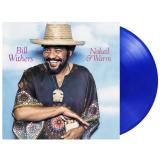
Bill Withers was a modest, gentle, and yet towering musical figure responsible for some of the most important, universally known soul hits ever written. It’s no wonder that “Just the Two of Us” and “Ain’t No Sunshine” won him two Grammy awards and undoubtedly played a huge role in getting him inducted into both the Songwriters and Rock and Roll Hall of Fame.
Naked & Warm is Withers' fifth studio album, released in 1976. A year earlier, the Sussex label—home to Bill's first four landmark albums—ceased operations. Withers then signed with the mighty Columbia Records, which would remain his home until the end of his recording career. While Naked & Warm retains Bill's unique, earthy approach to soul that made him Sussex's biggest star, it's clear that musically too, he was in transition; the first half of the album is full of synthesized jazz-funk vamps, while "City Of The Angels" is an almost 11 minutes long cosmic funk excursion combining biting Rhodes chords with swirling synth pads and Dorothy Ashby's spiritual harp work. All in all, Naked & Warm might be one of Bill's most underrated records, simply because his previous work for Sussex was just that impactful.
Naked & Warm is available as a 50th anniversary edition of 1500 individually numbered copies on blue vinyl and includes a 4-page booklet featuring lyrics and new liner notes written by Marcia Withers.
Tresor Records is delighted to welcome Rod Modell to its catalogue, with the release of his new album Captagon.
Rod Modell needs no introduction, his various projects render him a master of techno. In repetition and barely noticeable change, Modell resculptures perceptions. His sound-design echoes cinematic ethereality, where ferric artefacts slam against percussion, rusty delays filter observation - the resulting web is a complex, radiating ambience that etches a natural ebb and flow.
Transformative sounds alight from the outset, “Triangulation” recalls flickering harmonies and grains, a tectonic swipe. Fast-paced dub techno emerges in “Reiki”, the disorienting clangs suggesting a step away from his recent ambient excursions. “Ito” crunches the pulse further with insistent noise, into soaring epiphanies of darkened transmissions.
Modell singularly uproots standard sonic hierarchies of techno production, crisp static as forceful as his beats, a provocation of rhythm and noise. Unceasing in its fast tempo, “Jade” is trademark Tresor business - the seismic sub-sonics underpin a momentous drive, with reverberated vocal inflections disfiguring warped, dancing materials. “Scrawler” is upfront and direct, a slamming groove and swaying chords di using ethereality. Enter vast chambers of smeared minimalism.
Where Modell’s recent releases had indicated a priority for ambient sounds, this new album extends Modell’s essential vision within techno. Closing track “Air-Port” shows Modell at his most crucial best - an ethereal colossus of sub-bass weight and morphing geometry.
Acid Pauli returns to the curious world of Gwar Is Not The Answer (originally released 2006 on Smaul) with a carefully remastered re-release that includes two new remixes from Jonathan Kaspar and Acid Pauli. The title track unfolds at an unhurried pace, weaving loose acid traces through warm percussion and off-centre melodic fragments that seem to appear and dissolve before settling into place. It drifts forward with a quiet sense of momentum, balancing eccentric textures with a groove that remains firmly grounded throughout. With his new remix Jonathan Kaspar takes the original into leaner territory, sharpening its contours and drawing out its tension while preserving the peculiar character at its core. His remix stretches the track into a more focused club framework where rolling low-end pressure meets finely tuned rhythmic movement, allowing small details to carry unexpected weight. On the flip Acid Pauli revisits the track from a different angle. The remix opens up the source material into a spacious and fluid arrangement where shimmering tones circle around a deep pulse and subtle harmonic shifts gradually reveal themselves over time. Together the three versions explore different dimensions of the same musical language, moving between psychedelic house, understated dancefloor functionality and the kind of idiosyncratic storytelling that has long defined Acid Pauli's work.
Sciahri's label, Sublunar, is proud to welcome back one of its familiar faces - Cirkle - with his new EP, "Fading Trails". Known for his unmistakable sound, Cirkle continues to blend classic and modern techno elements in a way that cements his place as one of the most distinctive producers in the scene.
The EP opens with "Silent Rage", a powerful and hypnotic track driven by infectious vocals and intense energy. Next comes "Beaten II", the follow-up to one of his most celebrated work a dark, epic journey that pulls you deep into its atmosphere.
On the flip side, "Machina" explores a minimal but heavy low-end territory, showcasing precision and raw groove at its finest. Finally, "Fading Trails" delivers a deep and emotional trip, its arrangement guiding the mind into another dimension a true standout piece.
Rupert Marnie, co-founder of The Press Group and Remoto Records, makes his debut on Smallville with some serious curveball action.
Once you immerse yourself in the wonderful breadth of Hamburg’s subculture, it is quite likely that you will soon hear about Matthias Schubert also known as Rupert Marnie. Operating in the City's deepest part of the underground, Matthias provides some highlights that you should know about - may it be co-running a vinyl label (The Press Group) and an amazing record-store (remoto records) together with a group of like-minded friends or may it be as a DJ or Liveact, playing house, techno or ambient music at clubs like Golden Pudel, Südpol or Frappant in Hamburg or outside of town (Club der Visionäre/ Berlin, Bassiani/ Tblisi...)- there is quite a lot of things that Matthias has accomplished. And we are very happy to present his latest installment – four raw and gritty tracks, deeply driving yet bouncy, wobbly at times and definitely with a Curveball-appeal and no compromises.
Smallville 77 will be released 4th of September 2026 with a full cover artwork from Stefan Marx.
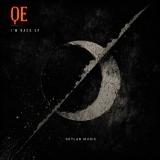
QE's I'm Back EP sits between oldskool vibes and deep raveish techno, and it flows. Five tracks, deep and rolling, with an oldskool feel in the groove and a rave pull running underneath. On a floor it plays as one long stretch rather than a run of peaks. What's Next? and This is Next open it up, then I'm Back, Set You Free and Release Yourself keep the movement going. Nothing hurries, and nothing needs to. Steady, deep, and made for staying inside the groove.
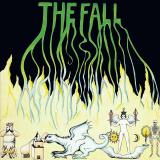
7–Early Years–79 was The Fall's first comp ever. Originally released on Step-Forward in 1981, the LP compiles the group's first four singles recorded for the label between 1977 and 1979 – Bingo-Master's Break-Out, It's The New Thing, Rowche Rumble and Fiery Jack – none of which appeared on any of the band's studio albums. (Also included is "Dice Man" from 1979's Dragnet.) Taken together, these 7-inches are The Fall as they initially emerged from the primordial soup of '77 Manchester, pushing out from founder Mark E. Smith's poetry-collective origins into the early punk scene.
Right from the first track, "Repetition," Smith and crew's working-class art punk is in full effect. His obtuse lyrical brilliance and inimitable vocal delivery ride atop the band's ringing atonal guitar, looping basslines and propulsive drumming – complemented by wheezy combo organ tones. The tracks from each 7-inch are presented here in reverse chronological order. The Fall's fierce contrarianism defines the early UK punk sound and, at the same time, sounds nothing like any of their contemporaries.
The revolving cast of band members includes Martin Bramah, Una Baines and Karl Burns as well as Marc Riley, Craig Scanlon and Stephen Hanley who would remain in The Fall's classic '80s lineups. Many of their best-known songs are featured here – from "Psycho Mafia" and "Rowche Rumble" to the Mayo Thompson-produced "Fiery Jack."
Superior Viaduct's edition is the first time that 77–Early Years–79 has been reissued on vinyl. Includes liner notes by Stephen Malkmus.
“Nothing grows in the shadow of great trees,” said Constantin Brancusi when leaving Auguste Rodin’s studio. The same holds true in music, as Richard Raux’s journey proves. At the end of 1970, after recording the debut album of the legendary band Magma, which he co-founded, Raux set out to explore new musical horizons. Under the names Faarmadin and later Hamsa, he crafted a sound deeply rooted in jazz and improvisation, yet daringly open to experimentation.
A devoted admirer of Charlie Parker, Raux played bebop alongside René Urtreger and performed with Bernard Lubat’s Percussion Expérience. Jazz is a cornerstone of Hamsa’s iconoclastic approach, blending seamlessly with psychedelic and progressive rock, and the rich musical traditions of Madagascar, where Raux spent his formative years.
Hamsa is as much a personal endeavor as it is a “family affair.” Alongside his brother Patrice on guitar, Raux brought together a circle of friends—Alain Lecointe (double bass), Jean-Lou Besson (drums), John Faure (guitar), and Alain Pistre (percussion)—to record at the iconic Château d'Hérouville, just outside Paris, at the end of 1974. Yet the spirit of Hamsa is deeply Malagasy, rooted in the village of Andranomadio, which gives its name to the album’s opening track: a vibrant explosion of percussion and color. Africa’s presence resonates throughout the record, whether invoking Brotherhood of Breath (Chris McGregor) on “Johanna,” the Malagasy-infused work of Jef Gilson, or paying homage to John Coltrane’s Africa.
Far from being “just another fusion,” Raux’s music dazzles and transports. The saxophone-guitar unison on “Ahiri Lalita” captivates, the vocals of “Fahamadina” sweep you away, and the manifesto of “L’exploité” hits hard—yet with a liberating warmth. Sunshine and joy shine through on the album’s closing track, “Cultivate the Garden of Your Heart” (with Alby Cullaz on double bass and Jean Padovani on drums), capturing the ethos of Richard Raux and Hamsa—and now, ours too.
Originally released on Flying Nun in 1983, Fall In A Hole is a double LP of an especially incendiary Fall show at Mainstreet Cabaret in Auckland, NZ in August 1982. The second of a two-night stand, this would be the band's final concert of its successful first tour of Australia and New Zealand. Recorded by longtime Flying Nun associate Chris Knox – who also made the striking cover artwork – Fall In A Hole follows the release of earlier live albums Totale's Turns and A Part of America Therein, 1981.
Besides capturing The Fall onstage during one of its most feral and exhilarating periods, Fall In A Hole is historically significant for several reasons. It heralds the end of Marc Riley's tenure with the band, an era considered by many Fall fans to be the group's peak, and showcases the two-drummer lineup heard on 1982's Hex Enduction Hour, with both Paul Hanley and Karl Burns sharing drumkit duties onstage. With Riley and Craig Scanlon on dual guitars and Stephen Hanley on bass, The Fall was stepping out in its final iteration with a majority of personnel rooted in their late '70s lineup.
The setlist is peppered with a mix of singles and album tracks old and new – including several that had yet to be released. Rarities like "Fantastic Life," "Backdrop" and "Solicitor In Studio" are given epic, feedback-drenched airings, while fan favorites like "Hip Priest," "Prole Art Threat" and "The Classical" radiate with lively, raucous energy.
Superior Viaduct's edition is the first time that Fall In A Hole has been reissued on vinyl. Includes liner notes by Roy Montgomery. Digital transfers made from analogue master tapes in the Flying Nun Collection and Chris Knox Collection held at the Alexander Turnbull Library (National Library of New Zealand).
Originally released in 2023, this highly sought-after release finally gets its much-needed repress in 2026. Original copies are already exchanging hands on Discogs for £50+, so make sure you grab this while you can — before the Discogs sharks get their grubby mitts on it!
Two Cold, a name synonymous with the number two and of course, ice cold beats. Even though the London based brothers haven’t actually released any music yet, their coming has been foretold by a growing chill that has permeated the dance music stratosphere.
Legs beginning to quiver and shake? That’s Two Cold.
Hips involuntarily gyrating in an attempt to stay warm? Two Cold.
Jaw chattering like maracas? It’s those frosty boys, you’d better believe it.
If you like your dance music to take you on a psychedelic journey through time and space, the DESERT LEATHER EP is for you.Winding passages that explore breaks, bleeps, bass and beyond. Genre defying influences snatched from every dimension of the dance diaspora.
Inescapable body-rocking beats that echo through your very bones so hard that even your ancestors have a boogie.
The DESERT LEATHER EP will expand your mind to the very edge of the horizon, where earth and sky meet and where all laws of nature are meaningless.
Two lads
Wicked beats
Original styles
Clever boys
Original styles… wait I said that already
Lots of bass
Delightful melodies
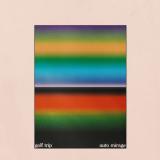
Auto-Mirage is the result of an artistic exploration built around the idea of escape.
Many different settings could be associated with this album, without ever having to choose just one. It can feel like a carefree van trip with no particular destination, the start of a relaxed summer evening with friends or even a sleepless night filled with introspection.
Its alternative identity flows between indie and surf pop, with touches of jazz and soul influences. The arrangements are meticulously crafted, adding depth to the compositions as well as authenticity to the voice.
Auto-Mirage brings together recognized talents such as Olefonken (Hubbabubbaklubb) for the mixing part, Brian “Big Bass” Gardner for the mastering, the captivating voice of Swiss singer Sreya and the striking flights of UK harpist Rachel Kitchlew. This album blends visions and influences to create a project that can accompany anyone, in any situation, as long as it brings that sense of escape.
The evolution of Andreas Tilliander's moniker TM404 has reached its third stage. The first TM404 album was a heavily self-restricted concept album, live recorded with classic Roland machines. The subsequent album had a more playful vibe, shaped by Tilliander's extensive live touring. This third TM404 album on Kontra-Musik simply tells the story of what he's been up to since. The third part of a musical diary, initiated in 2013. The TM404 venture might have started out as a dreamy acid dub project, more suited for the chill-out than the main floor. But by popular demand Tillander found himself touring big clubs around the globe and the TM404 sound adapted organically. As a result, the album features tracks like Vactro and Rymdeko: fast paced acidic techno tracks in the same vein as classic Plus 8 releases, but with more space echo. Much more. But never fear, fans of the classic warm and bubbling TM404 sound. You'll certainly get yours as well. A substantial portion of this album was recorded in a studio flat in Berlin as part of an artist residency. For obvious reasons, Tilliander could only bring a small portion of his studio gear to this German sanctuary. As a consequence, this album has a more stripped down vibe than its predecessors, which creates more space for Tilliander's glowing melodies. The last track on the album, a loving homage to Kontra-Musik's label boss, is a sublime example. And for the Instagram generation, here's the short version: The album is called Syra. That translates to Acid. You're welcome.
In the seclusion of a house in the Bavarian Forest, something unfolded that felt less like a conventional album production and more like an internal process of condensation. This house wasn’t a studio - it was a retreat. Its 1960s-inspired interiors, creaking wooden stairs, and crackling fireplace shaped the sound of Carl Gari as much as the instruments themselves. Though the house no longer exists, its atmosphere remains present in the recordings.
The music of Carl Gari - Jonas Yamer, Till Funke, and Jonas Friedlich - resists easy categorization, a trait that continues on this monumental new album. From the friction between electronic music and guitar textures, the trio forges a distinctive, idiosyncratic sound. Distorted electric guitars and pulsating basslines intertwine with analog drum machines, tape delays, and intricate effect chains, creating music that is raw, organic, and psychedelic. A new element on the album is the trio’s first use of vocals: Jonas Yamer, usually on bass, raises his voice in a punk-tinged, invented language that hints rather than narrates, unsettling more than it explains.
The guest artists do not merely decorate the sound - they alter its very structure at critical points. Polygonia contributes layered vocals that mesh seamlessly with the album’s technoid architecture. Will Brooks of Dälek delivers a dark rap feature on ‘Poison Shyness (Anti-Social)’, his words carving the sonic space with precision. Coby Sey adds introspective vocals that hover between experimentation and restraint on ‘Inner Link’. New York rap pioneer Sensational introduces a deliberately rough, individual counterpoint on ‘Disco Lights’, while the German percussionist Simon Popp drives the album forward with an uncompromising drum performance that insists rather than accompanies on ‘Zeitesser’.
The cover photographs, taken by Jonas Yamer, project images of corridors onto paintings located in the now demolished house where the album was recorded. Visually, this reflects a key motif of the album: spaces exist only as overlays and echoes - not mystical ghosts, but traces of a place that has physically vanished.
Recorded between 2016-2024 in Neunburg vorm Wald and Munich. With kind support by Kulturreferat der Landeshauptstadt München.
Mixed by Johannes Wagner aka J.Manuel at Apollo Studio, Berlin (A1, D1 w/ Fadi Mohem). Mastered & cut by Stefan Betke at Scape Mastering.
Photography by Jonas Yamer. Packaging design by Sepehr Mokhtarzadeh.
Aura Safari are taking it back to the source with new album Spaced Out Disco on Hell Yeah. The eight-track record is inspired by the iconic sound, feel and studio techniques of the original 1970s disco and was played entirely live with real instruments.
Aura Safari are Andrea Moretti, Lorenzo Lavoratori, Daniele Melloni and Nicholas Iammatteo, and they have been releasing EPs, LPs and remixes on this label since 2020. They have long been entrenched in the local scene of Perugia and are live specialists with a unique chemistry that allows them to translate funk, jazz, soul, disco and house into their own timeless and universal musical language.
Integral to the album is the live performance aspect. All the band members hooked up in the studio and played together, often laying down tunes in one take and then adding some post-production for a modern edge. Disco, dub, jazz-funk and instrumental grooves define the sounds while the creative use of classic delay, echo, spacey FX and dubbed out arrangements lead the record the same Jamaican character that inspired original dub-disco pioneers like Arthur Russell, the Compass Point Studio and labels like Prelude and West End.
'Starlove' opens with low-slung grooves and squelchy bass that twist you inside out before 'Spaced Out' shimmers with astral melodies and synths that rise like a rocket disappearing into the night sky. Funky claps and flashes of Dexter Wansel-inspired soul complete the picture, while 'Santa Barbara' eases the pace with a brain-bending dub workout full of weighty low-end and warm, sun-kissed chords. 'Cosmic Affair' lives up to its name, gliding through the galaxy on uplifting guitars and slinky drums, all wrapped in irresistible retro-futurist magic and lit by the moon.
'Disco Mirage' turns inward with simmering bass, dusty open hi-hats and hazy synth trails drifting through effervescent jazz keys that rise like champagne bubbles. 'Magik Space Dust' stretches towards the stars with soaring leads and knotted bass locked into an effortless groove.
Spaced Out Disco does exactly what it promises and plots a richly imagined journey that never stops looking towards the stars while keeping its feet firmly on the dancefloor.
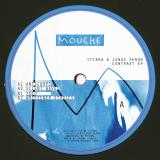
Contrast EP splits into two sides, and the split is the point. Ittara takes the first side with Anticorps and Silent Waves, Jonas Xenon takes the second with 2010 and Wriezener Studies. What connects them is depth: mega deep techno and house, pushed into dubbish territory, built for dancing rather than for show. The low end sits heavy and the space around it stays open, so the tracks have room to move and echo. On a floor it works slowly, pulling people into a long, dubby groove that keeps them moving. Detroit techno, deep house and dub techno all sit in the frame. Two artists, two approaches, one pull towards the deep end.
Cirkle makes a striking debut with the EP "Sonic Surge" on Sublunar, curated by Sciahri, delivering a truly memorable release. Hailing from Greece and affiliated with labels such asSk11, Cirkle unveils his interpretation of timeless techno in this EP, characterized by a distinctive and deeply personal sound.
Opening with the sharp and compelling "Sonic Surge," the record quickly captivates listeners before transitioning into "Echoes Of Eternity," a hypnotic journey driven by an unstoppable groove. On the B-side, "Subsonic" commands attention with its irresistible and powerful rhythm, leading up to the EP's epic conclusion, "In The End There Is a Hope." This minimal yet profound track leaves an indelible mark with its unforgettable sonic textures.










![Various - Ravers Kaki [Stickered Sleeve]](https://www.deejay.de/images/l/6/4/1270164.jpg)


![pdqb - CONTACT IMMINENT[with two Extrawelt remixes]](https://www.deejay.de/images/l/1/2/1268612.jpg)