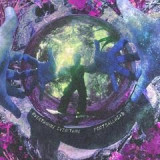
My debut studio album. Recorded at Yawn Studios, West Kirby with Bill Ryder-Jones. A collection of songs I have written over the past few years of travelling far and wide with some fresh versions of familiar favourites and newer tracks too.
The album is also available on yellow and spatter Vinyl via slinky.to/btmatm
I would love for you to buy a copy. This really has been a labour of love and I have poured my heart, soul and bank account into it
The new album from American doomed dark metal veterans GREY SKIES FALLEN “Molded By Broken Hands” will see its release on March 8th. This release date will coincide with the 25th anniversary of the band’s debut album “The Fate of Angels”.
“Molded By Broken Hands” will see the long-running contingent deliver their most triumphant work yet and is an album that carries that feeling of the underappreciated and underrated dark metal scene that was culminating in the US during the late ‘90s), an era where GREY SKIES FALLEN grew from, while helping to signal a new resurgence of doomy-dark metal artistry currently building.
Through soaring, emotionally searing melodies, glorious epic harmonics, and with an overall conquering aura, “Molded By Broken Hands” will finally deliver the recognition GREY SKIES FALLEN are worthy of.
“Modled By Broken Hands” was recorded and engineered with all keyboards provided by Colin Marston (Krallice, Gorguts) in the Thousand Caves and was mixed and mastered by legendary Swedish producer Dan Swano (Edge Of Sanity). It also features artwork and design by Travis Smith (Opeth, Katatonia).
Track Listing: 1. A Twisted Place in Time, 2. Molded by Broken Hands, 3. No Place For Sorrow, 4. I Can Hear Your Voice, 5. Cracks in Time, 6. Save Us, 7. Knowing That You’re There
The music contained on "Blut, Milch und Thränen" was recorded somewhat unconventionally as two separate tracks, which were subdivided into several movements to correspond with the album's gripping narrative. With regard to this narrative, Kvelgeyst recounts the tale of an alchemist, beset by visions that leads him to search for an adept who in turn shall serve as the victim in a sinister ritual, hoping to achieve unio mystica. Initially, he is pleased, as he discovers an adept soon enough in the gutters. Regrettably for him, however, he is finally confronted with the realization that he has fatally misinterpreted his visions, and it is not he who sacrifices the adept in his pursuit of revelation, but rather he must serve as the sacrificial lamb in ritual slaughter, thus enabling the adept to achieve unio mystica. This, in turn, drives the adept into utter madness, rendering him free of all his senses and forcing him to the gutters from whence he emerged.
Beside Trawbreaga Bay, in Co Donegal, on the north coast of Ireland, in an old schoolhouse, with a suitcase full of hired recording gear, Oisin Leech strums gently on an acoustic guitar and watches the tide pull the water away from the ancient inlet - The thickness of Oisin's voice soothes the room as the sound waves bounce around in the land where his ancestors still live and still wander - With a musical history that led Leech from the street punk bands of yesteryear through an ongoing stint with folk duo The Lost Brothers, he found himself for the first time working on songs to sing alone. In his mind, the songs became imagined vignette films playing behind closed, guitar eyes. After writing nearly 40 new songs in this fashion, Leech wrote "October Sun" which would become the foundation for his debut solo record, Cold Sea.
Cold Sea was produced by guitarist/songwriter Steve Gunn. Leech dreamt of making the record in Donegal Ireland, a county significant to him because it is the home of his ancestors. Pitching this idea to Gunn sparked the first of several serendipities circling the Cold Sea sessions - Gunn had always wanted to visit Donegal to connect with his own familial roots in the region.
Cold Sea is perhaps most notable for its tremendous warmth. Each song was recorded in a few takes and adorned gently with synthesizers and guitar from Gunn. Several songs feature contributions on the upright bass by Bob Dylan band stalwart Tony Garnier. M. Ward plays guitar on October Sun and there are strings by Roisin McGrory and bouzouki by the legendary Donal Lunny throughout. It is a friendship record but even at its most collaborative, Cold Sea remains centered around the humble acoustic guitar and wool blanket vocals of Leech.
Cardinal Fuzz and Little Cloud Records bring to you the new LP from a band we hold dear, Firefriend – ‘Decreation Facts’ – From São Paulo in Brazil and now close to two decades of creating and honing what has become their trademark, a heavy reverb, minimalistic slow-burn menace which sends chills down your bones. If you don't know Firefriend from somewhere along the last decade, you must cut a safe course through music. ‘Decreation’ is the undoing of creation, something destructive and primal and that Firefriend carry through on all the twelve songs written for this LP. Yury explained that the album "is a commentary on our 21st century, so violent and radical. We live in times of accelerated transformation. We wrote and recorded this album between the pandemic and WW3 – times of ground-breaking changes – and somehow that uneasy feeling got into our songs. Reality is the most crazy trip, isn it? And we are always trying to explore new territories: we want a new album to take you to new places, so we were chasing the sounds, structures and moods to make this a truly new album to match this wild new world’ ‘Decreation Facts’ is all this as they simply inject you with a liquid paranoia for their dark conjuring’s that is hugely dark and foreboding – Julia and Yury’s uber cool stoned and detached delivery creates a seriously dark menace with Julia’s delivery having echoes of Nico – all the while THAT claustrophobic reverb and tremolo encloses and swirls around the inside of your head and vibrates your inner core. This is HEAVY shit. Decreation Facts’ is an unsettling sonic fuck you to those that seek to destroy this planet for their love of money and power and we think it is a stunning achievement. As Terence McKenna might once have said – ‘Firefriend should be consumed alone, in the dark, in silence, with your eyes closed’. Firefriend advises, “Express yourself through any method you want. That is how you become a transmitter, generating waves that will open connections with others vibrating on the same frequencies. That energy field will change the game.” Now that is a truly psychedelic perspective if there ever was one. RCKNRLL, FUZZ, FEED YOUR HEAD
“Refuse”:
A unique sound that could be described as “Breakbeat Soul" O.Love's instruments and vocal prowess take centre stage, showcasing a fusion of live instruments & soulful vocals re-arranged and remixed with original breaks and beats by DJ DSK!
"Tonight":
A catchy rootsy original reggae tune, featuring lyrics that exude positivity and soulfulness. It receives the remix treatment from DJ DSK, who infuses it with heavy beats and luscious dub elements. The result is a speaker-shaking, dancefloor rocker!
Dire Straits never made a big to-do about its final run. In classic understated British fashion, the band simply let its music speak for itself. And how. Originally released in September 1991, On Every Street became the group's swan song – a lasting testament to the influence, musicianship, and integrity of an ensemble whose merit has never been tainted by cash-grab reunions or farewell treks. It remains an essential part of the Dire Straits catalog and a blueprint of the distinctive U.K. roots rock the collective played for its 15-year career.
Sourced from the original master tapes, housed in gatefold packaging, and pressed at RTI, Mobile Fidelity's 180g 45RPM 2LP set of On Every Street presents the album like it has always been meant to be experienced: in reference-grade audiophile sound. Recorded at AIR Studios in London and produced by Dire Straits leader Mark Knopfler, it features all of the band's sonic hallmarks – wide instrumental separation, visceral textures, seemingly limitless air, broad soundstages, atmospherics that you can almost reach out and feel. Each element is made more vibrant, physical, and lifelike on this collectible reissue, which marks the first time this 60-minute work has been available at 45RPM speed.
Afforded generous groove space and black backgrounds, the songs from On Every Street burst with nuanced details and vibrant colors. Dire Straits' playing appears to float, their intricate performances organized amid hypnotic, fluid, three-dimensional arrangements. Mobile Fidelity's definitive-sounding set also brings into transparent view Knopfler's finely sculpted guitar lines, expressive tones, and laid-back vocals – as well as the balanced accompaniment from his band mates. Here's a record on which you can hear the full blossom and decay of individual notes, and imagine the size and shape of the studio. It is in every regard a demonstration disc. And it happens to be filled with timeless fare.
Remarkably, On Every Street almost never came to light. Dire Straits initially dissolved in September 1988 after touring behind its blockbuster Brothers in Arms and suffering the departure of two members. At the time, Knopfler professed his desire to work on solo material; bassist John Illsley also explored side projects. But Knopfler's decision in 1989 to form the country-leaning Notting Hillbillies reignited a spark to reconvene his primary band and craft a fresh batch of songs. Six years removed from Brothers in Arms, Knopfler, Illsley, keyboardist Alan Clark, and keyboardist Guy Fletcher teamed with A-list session pros – steel guitarist Paul Franklin, percussionist Danny Cummings, saxophonist Chris White, guitarist Phil Palmer included – to create what still stands as an unforgettable farewell.
The platinum record brings the band full circle in that it returns Dire Straits to a quartet formation; finds the group refreshingly out of step with the era's prevailing trends; and sees Knopfler and Co. knocking out song after song with the deceptive ease of a punter tossing back a pint at a pub. That subtle cool, clever poise, and innate control – signature traits that no other band ever matched – dominate On Every Street. Knopfler's clean, virtuosic six-string escapades unfurl with dizzying melodicism and economical efficiency. Led by his winding fills and focused solos, Dire Straits traverse a hybrid landscape of rock, jazz, country, boogie, blues, and pop strains with near-faultless prowess.
More than any other entry in the group's oeuvre, On Every Street welcomes quick detours down back alleys and into the depths of human souls. What makes it more brilliant is its staunch refusal to cater to commercial expectations or take advantage of prior successes; every passage feels true, every measure echoed in the service of song. It's evident in the humorous satire of "Heavy Fuel," closeted desperation of the witty "Calling Elvis," and shake-and-bake bounce of "The Bug." It pours from the album's darker corners, as on the high-and-lonesome melancholy of the title track and bruised emotionalism of "When It Comes to You."
Hinting at the open-minded approaches and boundless curiosity he'd embrace as a solo artist, Knopfler doesn't limit himself when it comes to style or subject matter. Look no further than "You and Your Friend," a shuffle whose all-inclusive lyrics encourage an array of interpretative meanings. Another of the album's deep cuts, "Iron Hand," comes on as one of the band's most memorable moments – the narrative addressing the abuses of power at the 1984 Battle of Orgreave during the U.K. miners' strike. Given cinematic heft by the expert production, the true-fiction account puts into perspective the richness, poetry, and depth of On Every Street.
"Every victory has a taste that's bittersweet," sings Knopfler on the title track. At least that bittersweetness seldom sounded so damn good on record.
"For a long time, I'd come across these discs without really understanding what connected them, apart from a button and that famous logo designed by René Dessirier. Then, with a little more digging, I discovered the "self-production" link. For choirs, schools, folk singers, young pop groups, popular homes and even great composers who engraved unique copies of certain recording sessions...
The French equivalent of the English "Derby Service", the Kiosque d'Orphée, formerly at 7 Rue Grégoire de Tours in the 6th arrondissement, was taken over by Georges Batard in 1967 and moved to 20 Rue des Tournelles in the 4th arrondissement of Paris. The adventure lasted until 1991. Georges Batard was a sound engineer who used a Neumann tube engraver to engrave acetates from the tapes he received, before printing the precious vinyls in the press factories of the day, where he was able to produce very small runs of between 50 and 500 copies.
Of course, there were other structures for releasing his records, such as Voxigrave or, later, FLVM, but none of them had so many records in their catalog. Le Kiosque d'Orphée was neither a label nor a publisher, but a structure that allowed you to press your own vinyl, at a time when it was quite an adventure to get your first 45 rpm or 33 rpm album released!
Georges Batard was described as passionate and conscientious. His son, bassist Didier Batard, wrote of him:
"Georges was passionate about recording and reproducing the stereo sound of his great passion, music. He paid close attention to distortion rates, signal-to-noise ratios, response curves, rise times and other damping factors in audio equipment. He was looking for the exact reproduction of concert hall sound in his living room (with the same sound level, if possible...). In the late '50s/early '60s, he found other sound enthusiasts in AFDERS (Association Française pour le Développement de l'Enregistrement et de la Reproduction Sonores). He became its honorary president. Every Saturday afternoon, its members met to test au- dio equipment. Their opinions were published in the monthly Revue du Son.
All you had to do was send in your tapes and choose the number of record copies you'd like to take home with you, so you could finally share your creations and, in a way, exist. You could opt for a generic sleeve, available in several colors, directly customizable with your name and credits, or you could design your dream sleeve yourself in your living room or at a printer's.
This "Do It Yourself" temple gave birth to some superb pouches. Stencilled, hand-written, illustrated with paintings, drawings, illustrations by friends or girlfriends of the time, photo prints hastily stuck in the middle of a blank, white sleeve, on which the traces of time would leave their imprints, so that collectors and the curious would come and buy them decades later, with the promise of a musical discovery, unfortunately not always fulfilled...
What most of these records have in common is the youth of their songwriters, whether or not they've had a career. Stories of buddies, of getting by and dreams of glory made up this catalog. Most of them were amateur productions, both in terms of the level of the musicians and the quality of the recordings, made on a two-track or, the ultimate luxury, a 4-track in a teenager's bedroom or parents' living room.
It was the beginning of the home studio, thanks to the advent of the Revox portable tape recorder. A bit of a shaky DIY system, but, in return, the luxury of setting no limits: one-sided tracks, no outside censorship, no artistic director, no manager, no Barclay or EMI/Pathé Marconi logos...
When you finally had your own record, you could give it away or sell it to friends, family or after concerts. You could also drop it off at the nearest record shop, with undisguised pride.
It was also a calling card that could be sent to radio stations or music labels, in the hope of launching a career...
Many of the protagonists in this story tried to sign with labels, but in those days, bridges were not so easy to build between one's hometown, or even one's village, and the major or more specialized label that might have released these records. At the time, the advertisements published in the press by the Kiosque d'Orphée opened up the field of possibilities for provincial composers. It was now possible to make their own record, without having to go through the process of signing with a label.
Some of the composers who have gone on to make a career have used this channel to release their first record or parallel projects (Claude Engel, Dominique A, Andy Emler, Michel Deneuve, Claude Mairet, Mick Piellard, Tristan Mu- rail...) and sometimes even single or very limited pressings of work or promotional copies (Bernard Parmegiani, Jef Gilson...).
This album is the conclusion of a long investigation, begun six years ago. It took a long time to find the records, scattered all over the place, in the homes of collectors and sometimes the musicians themselves, and then to listen to them, sometimes painstakingly, to unearth these moments of grace.
From this work, 23 tracks remain, but there are dozens of others that could have been included, so we had to choose, and the choice had to be as universal as possible. This selection is obviously not objective, but I hope you'll like it.
Most audiophiles know Alan Parsons Project's I Robot by heart. Engineered by Parsons after he performed the same duties on Pink Floyd's Dark Side of the Moon, the 1977 record reigns as a disc whose taut bass, crisp highs, clean production, and seemingly limitless dynamic range are matched only by the sensational prog-rock fare helmed by the keyboardist and his creative partner, Eric Woolfson. Not surprisingly, it's been issued myriad times. Can it be improved? Relish Mobile Fidelity's stupendous UltraDisc One-Step 180g 33RPM box set and the question becomes moot.
Mastered from the original master tapes and pressed at RTI on MoFi SuperVinyl, I Robot comes to life with reference-setting realism on this numbered, limited-edition reissue. Boasting immaculate highs and lows, generous spaciousness, and see-through transparency that takes you into the studio with Parsons and Woolfson at Abbey Road, this definitive edition is designed to demonstrate the full-range capabilities of the world's best stereo systems while offering listeners the convenience of having all the music on one LP.
Featuring a nearly inaudible noise floor, this transcendent UD1S edition functions as a repeat invitation to savor reference-grade soundstages, immersive smoothness, sought-after instrumental separation, three-dimensional imaging, and consummate tonal balances. Able to be played back at high volumes without compromise or fatigue, it is a demonstration record for the ages – the likes of which are no longer being made. This is the very reason you own and invest in high-end audio gear.
The special characteristics of this UD1S version extend to the premium packaging. Housed in an elegant slipcase, the reissue features special foil-stamped jackets and faithful-to-the-original graphics. Aurally and visually, it is made for discerning listeners who prize sound quality and production, and who desire to fully immerse themselves in everything about this conceptual landmark. The Alan Parsons Project's most famous record deserves nothing less.
Inspired by and loosely based around the Isaac Asimov stories of the same name, I Robot delves into themes of artificial intelligence and technological dominance that make the record extremely relevant in the 21st century. Indeed, Parsons and Woolfson's pinnacle creation dovetailed with the ascendency of Star Wars, which itself is experiencing a rebirth in an age of self-driving cars, smart devices, and mindless automation. Lyrically, songs such as "The Voice" call into question human behavior – and their relationship to increasing robotic supremacy – in everyday life. Parsons and Woolfson reflect the associated paranoia, dichotomy, and transformation via shifting sci-fi arrangements steeped in drama and moodiness.
The absorbing tunes on I Robot also continue to fascinate due to their perfectionism and innovation. Borrowing from Pink Floyd's strategies, Parsons and Woolfson utilize a looped sequence on the title track to create new downbeats. "Some Other Time" employs two different lead vocalists and yet gives the illusion that only one is involved. Captivating strings, a piccolo trumpet, and bona fide pipe organ grace "Don't Let It Show." The origins of "Nucleus" stem from a unique analog keyboard concoction dubbed "the Projectron," devised by Parsons and electronic engineer Keith Johnson. Andrew Powell's orchestral and choral arrangements top it all off, with "Total Eclipse" arriving as a frightening track that presages the climactic "Genesis Ch. 1 V. 32."
Does man or machine win in the end? Decide as you get lost in Mobile Fidelity's UltraDisc 180g 33RPM LP pressing. Secure your numbered copy today!
More About Mobile Fidelity UltraDisc One-Step and Why It Is Superior
Mobile Fidelity Sound Lab's UltraDisc One-Step (UD1S) technique bypasses generational losses inherent to the traditional three-step plating process by removing two steps: the production of father and mother plates, which are created to yield numerous stampers from each lacquer that is cut. For UD1S plating, stampers (also called "converts") are made directly from the lacquers. Since each lacquer yields only one stamper, multiple lacquers need to be cut. Mobile Fidelity's UD1S process produces a final LP with the lowest-possible noise floor. The removal of two steps of the plating process also reveals musical details and dynamics that would otherwise be lost due to the standard multi-step process. With UD1S, every aspect of vinyl production is optimized to produce the best-sounding vinyl album available today.
MoFi SuperVinyl
Developed by NEOTECH and RTI, MoFi SuperVinyl is the most exacting-to-specification vinyl compound ever devised. Analogue lovers have never seen (or heard) anything like it. Extraordinarily expensive and extremely painstaking to produce, the special proprietary compound addresses two specific areas of improvement: noise floor reduction and enhanced groove definition. The vinyl composition features a new carbonless dye (hold the disc up to the light and see) and produces the world's quietest surfaces. This high-definition formula also allows for the creation of cleaner grooves that are indistinguishable from the original lacquer. MoFi SuperVinyl provides the closest approximation of what the label's engineers hear in the mastering lab.
Miles Davis' A Tribute to Jack Johnson is the best jazz-rock record ever made. Equally inspired by the leader's desire to assemble the "greatest rock and roll band you have ever heard,” his adoration of Johnson, and Black Power politics, Davis created a hard-hitting set that surges with excitement, intensity, majesty, and power. Bridging the electric fusion he'd pursued on earlier efforts with a funkier, dirtier rhythmic approach, Davis zeroes in on concepts of spontaneity, freedom, and identity seldom achieved in the studio — and just as infrequently accepted by the mainstream.
Sourced from the original analog master tapes, pressed on MoFi SuperVinyl, and housed in a Stoughton jacket, Mobile Fidelity's 180g LP reissue brings it all to fore with startling realism. Benefitting from SuperVinyl’s nearly inaudible noise floor, superb groove definition, and clean, ultra-quiet surfaces, this 180g LP showcases everything — from the bold tonality of the headliner's white-hot trumpet solos to the decay of crashing cymbals, carry of wiry guitar notes, and echoes of the studio — in reference fashion.
Bristling with exuberance, Davis' high-register passages explode with authority and commanding presence. Around him, a barrage of urgent backbeats, knifing riffs, and supple bass lines emerge amidst black backgrounds. One of the most prominent differences long-time fans will notice is how much more aggressive, immediate, and vibrant the music sounds, with those aspects central to the composer's original desires.
Utilizing wah-wah and distortion, the go-to instrumentalist of the performances— guitarist John McLaughlin — attacks with a nasty edge, slashing style, and vicious streak that allows A Tribute to Jack Johnson< cross the until-then-impenetrable divide between rock and jazz. Davis puts both feet in the former camp and erases any gap. The stories of the record’s creation are nearly as legendary as the sounds within: Two sessions, multiple jams, different sets of musicians (several uncredited), and near-miraculous production perfectionism that made it all appear cohesive.
The least-well-known masterpiece of Davis' career, the 1971 record — seamlessly assembled and spliced together by producer Teo Macero — was a victim of limited record-label promotion. Audiences also didn’t immediately know what to make of its original cover art — faithfully replicated here. In addition, the powers that be at Columbia Records were directing the public’s attention to Miles at Fillmore, a completely different kind of album guided by two keyboardists. A Tribute to Jack Johnson practically lives in a different universe, one from the future. To many listeners who did manage to hear it — among them critic/musician Robert Quine, Stooges leader Iggy Pop, and renowned critic Robert Christgau — it surpassed everything that came before.
Indeed, Davis treated it as a personal manifesto: An opportunity to salute the Black championship boxer admired for his threatening image to the establishment and impeccable taste in clothes, cars, women and music. Davis explains in the liner notes his affinity for Johnson — a stance mirrored by the defiant music, which hits with a prize fighter's force and reflects the graceful elegance with which a pugilist navigates the ring — and closes the album with a Johnson quote read by Brock Peters.
Inspired not only by Johnson but by Jimi Hendrix and Sly Stone, Davis changed his approach and his band. He surrounds himself with a cadre of musicians in their 20s and, in the case of bassist Michael Henderson, a 19-year-old fresh from touring with Stevie Wonder. Henderson gives Davis what he requested: boogie-based grooves that don’t lose shape or direction. Soprano saxophonist Steve Grossman, drummer Billy Cobham, and organist Herbie Hancock adhere to a similar aesthetic that prizes brazenness, innovation, and energy.
In that vein, during a portion of “Yesternow,” Davis segues into a separate performance (which became known in its entirety as “Willie Nelson”) played by guitarists McLaughlin and Sonny Sharrock, bass clarinetist Bernie Maupin, keyboardist Chick Corea, bassist Dave Holland, and drummer Jack DeJohnette. Dig it!
Talking with jazz scholar Bill Milkowski — who himself noted how McLaughlin’s unrestrained style, decibel-forward volumes, and rapid-fire power chords engendered himself to the rock crowd at the same time that his harmonics and syncopation still definitely made him a jazz player — guitarist Henry Kaiser summed up part of the appeal of A Tribute to Jack Johnson as well as anyone, saying: “It’s a jazz record that way way more open than other jazz records at the time, but still not free jazz. McLaughlin’s rhythm guitar playing on ‘Right Off’ — the use of different chords in a rock shuffle than what anybody had used before — was revolutionary.”
And to think that’s just one aspect of a record that contains multitudes. “Never let them forget it.” Indeed.
Of the countless accolades and analyses that surround Blue, no point is more significant than the fact that the 1971 Joni Mitchell album continues to become more popular, revered, referenced, and relevant with each passing day. Such vitality is not only extremely singular; it is the ultimate measure of great art and, in the context of Blue, indisputable proof of the record's accessibility, integrity, and timelessness. If the most brilliant and everlasting music seeks to find truths shared by all of humanity, Blue can be said to be universal doctrine.
Sourced from the original analogue master tapes, pressed on MoFi SuperVinyl, and strictly limited to 12,000 numbered copies, Mobile Fidelity's UltraDisc One-Step 180g 45RPM 2LP box set presents the landmark album with reference-grade detail, tonality, and directness. Marking the first time the beloved LP has received audiophile-quality treatment, it's one of six iconic 1970s Mitchell records Mobile Fidelity is reissuing on definitive-sounding vinyl and SACD sets.
Everything about Blue sounds more intimate, involving, and inescapable on this transparent pressing, which benefits from a virtually non-existent noise floor and superior groove definition. Mitchell's voice, positioned front and center, and primarily accompanied by minimalist acoustic guitar, piano, and dulcimer playing, comes across clearly and prominently. Suspended notes and radiant chords double as question marks, commas, and phrases. The in-the-room presence and spatial dimensionality make absolute the full-range spectrum of introspective emotions — hurt and distress, self-awareness and joy, difficulty and uncertainty, warmth and desire — Mitchell navigates, queries, and contemplates throughout the record. The defencelessness the singer once spoke about is laid bare here like never before.
The packaging of the Blue UD1S set complements its distinguished status. Housed in a deluxe box, both LPs come in special foil-stamped jackets with faithful-to-the-original graphics that illuminate the splendor of the recording. This UD1S reissue exists as a curatorial artifact for listeners who prize sound quality and production, and who desire to engage themselves in everything involved with the album, including the unforgettable cover photograph of a ruminative Mitchell shot by Tim Considine.
Deemed the third Greatest Album of All Time by Rolling Stone; universally celebrated by critics, fans, artists, and educators; and defined by a spell of disarmingly vulnerable songs that are at once confessional, intense, spare, honest, painful, hopeful, and exquisite, Blue charts love, spiritualism, independence, and loss like no record before or since. Widely considered the album that established the singer-songwriter template, the largely autobiographical LP changed everything shortly after its original release in June 1971. Amazingly, it continues to do so more than five decades later.
An incalculable influence on generations of artists, it stands as the through-line from Carole King, Elton John, James Taylor, Joan Armatrading, and Leonard Cohen to Patti Smith, Carly Simon, Emmylou Harris, and Rosanne Cash to 21st century contemporaries like Brandi Carlile, Taylor Swift, Sharon Van Etten, and Courtney Barnett. Teetering between agony and optimism, it is — to borrow a phrase from Mitchell's eternal "A Case of You" — a bottomless "box of paints."
The beauty of the stripped-down arrangements, intoxicating melodies, and Mitchell's wisdom on Blue didn't go unnoticed. Critical acclaim, coupled with the depth of the material and Mitchell's reputation, propelled the album into the Top 20 in the U.S. and Top 10 in the U.K. Yet while so much pop music diminishes with age, Blue has defied norms and headed in the opposite direction. Its 50th anniversary year witnessed an outpouring of tributes, reflections, and testimonials that helped frame the record's escalating importance and symbolism — apt in an age in which women have become the prominent trailblazers in rock, R&B, and hip-hop.
Perhaps most succinctly, in a 2021 article celebrating the LP, the Los Angeles Times declared: "In 1971, nothing sounded like Joni Mitchell's Blue. 50 years later, it's still a miracle." Nothing, indeed. Yet "miracle" suggests Blue partially owes to a divine agent or inexplicable circumstance. And though Mitchell's bracing conviction and forthright sincerity can appear otherworldly, her musical approach and lyrical storytelling is nothing if not personal and human. What we hear is pure truth — no matter how aching, complicated, or stark.
Much has been written about the circumstances that inspired the songs on Blue: Mitchell's romances; her time overseas; her disdain for celebrity; her lingering sense of loss at having given up her daughter for adoption; her treatment by the very same industry that her music made uncomfortable; her prolonged search for resolution. These situations and experiences pushed Mitchell to question everything — especially big-picture concepts that have always obsessed mankind: fulfilment, autonomy, love, honesty, being.
"I wanna make you feel free," Mitchell sings on the record-opening "All I Want." Mission accomplished. Blue is liberation — and the start of a freedom that continues to impact music, culture, and identity today.
More About Mobile Fidelity UltraDisc One-Step and Why It Is Superior
Mobile Fidelity Sound Lab's UltraDisc One-Step (UD1S) technique bypasses generational losses inherent to the traditional three-step plating process by removing two steps: the production of father and mother plates, which are created to yield numerous stampers from each lacquer that is cut. For UD1S plating, stampers (also called "converts") are made directly from the lacquers. Since each lacquer yields only one stamper, multiple lacquers need to be cut. Mobile Fidelity's UD1S process produces a final LP with the lowest-possible noise floor. The removal of two steps of the plating process also reveals musical details and dynamics that would otherwise be lost due to the standard multi-step process. With UD1S, every aspect of vinyl production is optimized to produce the best-sounding vinyl album available today.
Suffolk-based singer songwriter James Varda’s fourth and final album before his death from a long battle with cancer in 2015, Chance And Time, set for a vinyl only reissue on Unspun Heroes is an astonishing aural document of a creative, forward -thinking musician coming to terms with a life slowly evaporating away. There is hubris, melancholy and an undeniable weight of sadness in these ten songs but, miraculously, there is also a stoic realisation and acceptance from Varda that is both heart-wrenching and deeply affecting. On Chance And Time Varda reconnects the human spirit to the land, a heavy, fearful heart to an optimistic soul, and in a beautiful poetic flourish gives a real tangible sense of loving and hope to his family and friends offering genuine reassurance and even, at times, a green light for celebration.
Carrying a certain air of mystique, that same sense of a ‘other worldliness’ if you will of say a Karen Dalton or a Jeff Buckley, Varda’s delivery and tone carries huge emotional weight here and an unique ability to add an honest perspective and warmth to the starkest of realities. The hard hitting impact of the opening tracks is blunt and sharply defined. There is pain, hardship, and fear wrapped in these tales - ‘The Doctor Spoke, Two Hearts Broke” - made all the more hitting as this is a real life journey in the here and now being catalogued. As we move towards the second half of the record there is something even deeper and truly incredible at play. Varda’s whole demeanor is one of understanding and acceptance - hear the celebratory shamanic vibe of the extraordinary ‘Pass It On’ and the poignantly reflective, chokingly sad finale ‘We Won’t Dream’ - bringing to an end a record that will leave a mark on everyone who hears it. Real art is both timeless and omnipresent, these songs from James Varda will hang in the air forever and be there for those who look to find understanding, joy and a sense of hope. Chance And Time is both an extraordinary record and poignant study of life and living, of death and what comes after.
James Varda released four albums between 1988 and his death in 2015. A fledgling career beginning on the singer-songwriting folk scene where his arrival was met with both curiosity and critical acclaim as was his debut, the John Leckie produced Hunger. Any momentum was lost however as it would be ten years before the next, In The Valley was met with a ruffle of applause. Cancer took hold of the troubadour and for a number of years Varda lived life and wrote songs until The River And The Stars appeared like a phoenix from the flames as he began to wrestle with the realities of his situation. It’s a record that beautifully lays the ground for this his masterpiece that was to follow.
Unspun Heroes, a new label set up by Simon White, has the sole purpose of finding and reissuing albums that he considers both undervalued and seemingly ignored. All releases will be on vinyl only complete with Obi strip and extensive liner notes. Each will be individually numbered and limited.
Heavee is a Queer Chicagoan DJ & producer with a long history in footwork. His 2022 'Audio Assault' EP on Hyperdub showcased synth-driven, melodic footwork, but ‘Unleash’ goes much further into audio world-building, with a fresh, spongy and citrus-y sound palette and rich, bright chord sequences.
It's minimal, airy, balancing light and dark, sometimes breezy and sometimes clinical. Heavee works simultaneously outside and inside the box, rebuilding footwork's framework and vibe to his own unique specification. Rhythmically, it's dance floor ready, using footwork's 160 template as a springboard for building new drum sounds to express these rhythms, and draws from R&B, rap, jazz and grime, with a sprinkling of bitter-sweet vintage Detroit techno.
‘Unleash’ takes footwork’s “eats all” approach to music and leads it in a fresh direction with a freedom of spirit. It's a strong addition to the footwork cannon and shows that experiments in dance music can be fun.
out of Stock
Last delivered 2 years ago available to reorder, subject to availability
Authenticity is important in music culture, at least to those whose relationship with it is a lifelong love affair. As listeners, we instinctively respond to artists whose musical output is an authentic representation of their inspirations, experiences and working methods.
By any measure, Guillaume Metenier’s collaborative Soul Sugar project oozes authenticity. It began in the late 2000s as an outlet for the virtuoso organist and producer’s updated takes on ‘60s and ‘70s soul-jazz and Hammond funk, but over the years it has evolved into something entirely different: a vehicle for classic dub and reggae inspired musical fusions made in collaboration with friends and like-minded musicians. As a result, Soul Sugar albums mix impressive musicianship with great grooves and untold nods to the sounds and artists that have helped shape Metenier’s musical outlook.
This authentic approach and soul-enriching sound is naturally in evidence on Soul Sugar’s firth studio set, Just a Little Talk, which is set to be released by Metenier’s own Gee Recordings label in March 2024. This time round, Metenier’s close circle of musical collaborators includes Blundetto, Samuel Isoard, Yvo Abadi, Jolly Joseph, Jahno, Shniece, Slikk Tim and Leo Carmichael. While many are old friends who have appeared on previous albums and singles, there are some first-time collaborators too.
This familiar-but-also-fresh approach is mirrored by the blend of tracks on offer on Just a Little Talk. New songs and instrumentals sit side by side with a small selection of on-point cover versions – something Metenier has been doing since the inclusion of Jimmy Smith and Dr Lonnie Smith covers on 2009 debut album Nothing But The Truth. Memorable covers since have included ‘Why Can’t We Live Together’, ‘I Want You’ and ‘Never Too Much’, all featuring the honeyed voice of Leo Carmichael.
This time round, the headline-grabbing covers are undeniably special. You’ll find takes on Curtis Mayfield’s ‘Makings Of You’, re-framed as a languid roots reggae song featuring voiced by the returning Carmichael, and Donald Byrd’s ‘Blackbyrd’, which Metenier has brilliantly re-imagined as a fabulous fusion of Studio One dub and Blaxploitation funk.
Yet it’s the album’s original compositions that arguably stand out. For proof, check lovers rock-influenced reggae-soul treat ‘The End of Your World’ (featuring heart-aching roots style lyrics and Junior Murvin-esque lead vocals by Jolly Joseph), the similarly conscious ‘Just a Little Talk’ and recent single ‘Top of My List’– an effortlessly emotive gem marked out by Metenier’s weighty dub bassline and Shniece’s incredible lead vocal.
The original instrumentals, in which Metenier often trades licks and solos with guitarists Slick Tim and Samuel Isoard, are similarly impressive – and, to return to our theme, as authentic as they come. Fittingly, one of these – ‘Tubby’s Ghost’ – was originally written and recorded in 1998 with bassist Patrick Bylebyl, who was then Metenier’s partner in a project called Seven Dub. It is, then, a new cover of one of Metenier’s own tunes – and a pleasingly heavyweight one at that. It delivers a genuinely pleasing conclusion to Soul Sugar’s most true and authentic album to date.
out of Stock
Last delivered 8 months ago available to reorder, subject to availability
Before coming to Europe, in 1970, pianist Manuel Villarroel was a vet in his native Chilli. A few years later, as leader of the Machi Oul Big Band, he returned to the animal kingdom. A very specific kind of animal, for sure, the Quetzalcoatl, also known as the Feathered Serpent. What is behind this title (also the name of one of the three original compositions on this album released on the Palm label in 1976), is first and foremost a sort of homecoming...
After discovering the jazz of Herbie Hancock, McCoy Tyner, Miles Davis and John Coltrane, Villarroel was taken by the free jazz which was all the rage at the time in America and Europe, and this would inspire the first version of his Machi-Oul, project. This was a septet, with which the pianist would record, in 1971, the tremendous Terremoto (re-released by Souffle Continu FFL085). After this masterstroke Villarroel was invited to record with Perception (Perception & Friends) and with Baikida Carroll (Orange Fish Tears). While these were notable contributions, Villarroel was already looking into other combinations.
“I had to deal personally with my situation as an expatriate, without disavowing it. I tried not to betray my roots, I tried to translate into my music what was essential to me, to reflect my origins – Latin America, its musical and above all human feelings – while remaining faithful to jazz, which is the mode of expression of the musicians in the group”. This then is the ‘homecoming’ we mentioned, which would incite Manuel Villarroel to compose what he would call “structured free music”. In January 1972 the pianist enlarged his formation to reach the size of a real big band: the Septet became the Machi-Oul Big Band. Three years later in January 1975, with producer Jef Gilson at the helm, fifteen musicians including those from the old Septet (Jef Sicard, François and Jean-Louis Méchali, Gérard Coppéré) worked on a rare form of jazz. From togetherness to dissonance, we danse to it “Bolerito” then shake it up on “Leyendas De Nahuelbuta”. As for the concluding serpent, it is a piece which is impossible to pin down: “Quetzalcoat” is as impressive as it is difficult to grasp. To remind ourselves of this, lets listen to it again.
For a few years Leo Robinson was the sort of hidden secret you sometimes come across in local music scenes. First in Manchester and now in Glasgow, he’d pop up regularly on DIY bills or as local support to a touring act, quietly blowing them off stage with his rich baritone vocal and homespun lo-fi tales of folklore and animism. With The Temple – his debut on PRAH Recordings – he looks set to cross over from being a cult concern.
“There's a spectrum within the album between fully mythologising or symbolising my lived experience, and just stating it in very matter of fact terms - that push and pull between the need to abstract and the need to break through the abstraction and have an honest moment with oneself” he explains. “This is one of the themes of the album as well as part of the process. The aim was to take all these anecdotal or symbolic elements and merge them into one narrative and one world, in a way that you can find your way through the record as if it were a landscape or language with its own logic.”
The record takes on a pastoral, slightly baroque nature that Robinson partly attributes to a friend screening a lot of ‘70s BBC material in his book shop that they used to hang out at. There are also elements of jazz, flickering to life in “The Spring”’s piano-led finale and coda.
Thematically, Robinson likens it to a Jungian ‘Hero's Journey’, his voice possessing a character who goes through several defined stages of consciousness. From conception and the beginning of an earthly life, the first half of the album recognises the development of the protagonist’s narrative and identity, before “The Pink Light”’s freeform departure from the hitherto more song-based suite devastatingly shatters this. The second half of the album then sees the protagonist witness “the uncontainable” water; learning that true divinity lies not in the individual self or lofty notions of gods and temples, but in the unremarkable nettles, insects and dogs on the roadside riverbank - referenced on tracks “The Cormorant” and “The Spring”.
Although now residing north of the border, The Temple was written while Robinson was finding his feet in Manchester, having moved there to go to art school as a teenager (as a visual artist, he has exhibited at the Tiwani Contemporary in London and Cardiff’s Chapter Arts Centre). As a result, many of the tracks bear out the shadows of his experiences in the northern city – at their most visible and explicit on the beautifully fragile storytelling of “The Pavement”. Written the day after the Manchester Arena Bombings, it recalls Robinson waking up to go to work on a hot summer’s day to discover that his street had been blocked off for terrorism investigations; it then progresses through the rest of his day, amidst the grimly surreal aftermath of the previous night.
Having written the chords, melodies and lyrics to the album, Robinson fleshed out the tunes by scoring out parts for the additional instrumentation, but it was only when a friend sent a demo to PRAH that he was able to fund its full recording. Guitars, vocals, piano and French Horn (the latter recorded by Lauren Reeve-Rawlings) were put down at Green Door Studios in Glasgow. Microphones were placed around the room and the sound of the musicians stepping on creaky floorboards and opening creaky doors were left audible to further the record’s live feel. The harpsichord heard on “The Serpent”, meanwhile, came from University of Glasgow lecturer David McGuinness. Strings were then recorded at PRAH Studios by Francesca Ter-Berg and Raven Bush, the Social Singing Choir adding their choral vocals to “Temple II”.
The result is an album that feels both luscious and yet intimately raw; as grand as Richard Dawson at his most panoramic but containing the rough edges and skeletal looseness of a Calvin Johnson work. At times Robinson lyrically moves towards the surreal, but ultimately this is a record grounded in reality; a true showcase of Robinson’s skill as a lyricist and songwriter.
15 years after their last album of original music, the Robinson Brothers present ‘Happiness Bastards’- their 10th studio album. Some may say the project has been several tumultuous years in the making, but we argue it's arriving at just the right time. Call it brotherly love or music destiny that brought them back together, the highly anticipated record consecrating the reunion of this legendary band just may be the thing that saves rock & roll. In a time where the art form is buried beneath the corporate sheen of its successors, The Black Crowes are biting back with the angst of words left unsaid penned on paper and electrified by guitar strings, revealing stripped, bare-boned rock & roll. No gloss, no glitter, just rhythm and blues at it's very best - gritty, loud, and in your face.
Since The Black Crowes reunited in 2019, they've made a triumphant return to form with over 150 shows spanning 20 countries worldwide, celebrating the 30th anniversary of ‘Shake Your Money Maker’, the album that put them on the map. Upon their return from the road, they knew they needed something new to show for their lost time. The Robinson Brothers and longtime bassist Sven Pipien headed to the studio with producer Jay Joyce in early 2023 and the experiences of years past transcribed themself through the music as the band found their way back to their roots. And it's finally here!
In 2005, an 18-year-old Raphael Gimenes left the sunny shores of Brazil behind, embarking on a journey to a distant and wintry land. "Dinamarca," the Portuguese name for Denmark, became his new home, where he has lived for almost two decades. Today, he presents his third album, a deep exploration of his life in Scandinavia. Rather than being a nationalistic tribute, "DINAMARCA" tells chapters from Gimenes" life story as a Brazilian living in the northern corners of the world. It guides us through the enchanting nordic woods, the vast fields stretching to the horizon, and the timeless sea resting beneath an endless sky. The melodies of blackbirds, the dances of red deer, and the whispers of ancient oaks form the backdrop for his musical stories. Within his songs, we experience moments of deep solitude and boundless inspiration, moments where reflection and creative passion intertwine. Gimenes skillfully turns the power of love into harmonies, dedicating songs to both his companion and his closest friends. Beyond these experiences, he leads us on journeys to Denmark"s neighboring lands, Norway and Sweden, where revelations and encounters with the mystical found their way into the lyrical fabric of his songs. The album"s orchestration includes Gimenes" vocals and the resonant chords of his classical guitar. Accompanying him throughout the album are Jan Kadereit"s multilayered percussion, and Lucas Delacroix"s bass synth, who also plays the electric guitar at times. The music further unfolds with the nuances of a string quartet, and a brass quintet, both recorded in the tropical highlands of Minas Gerais. Other guest musicians feature on individual songs, such as pianist Sebastian Macchi, flautist Flavia Huarachi, cellist Lucas Almeida, and singers Gaby Echevarria, Cecilia Pahl, and Cris Ferro. Gimenes has garnered acclaim and accolades across continents. His debut release, "Raphael Gimenes & As Montanhas de Som," delved deep into the rhythms and traditions of Brazil. It rose to prominence as the top Brazilian release in 2016 in Holland and was hailed as a "conceptual masterpiece" in Japan. His second album, "A Tongue Full of Suns," co-produced with Faroese multi-artist Teitur, ventured into the English language, blending Gimenes" inspirations from the world of prog-rock. Danish rock legend TimChristensen praised it as "top-shelf neo-folk," while Brazilian website80minutos described it as "hypnotizing." The music within "DINAMARCA" delves deep into the soul of a man who embraced a new land with open arms, while staying true to his roots. It unites elements from both of Gimenes" prior works, embarking on a journey across new musical horizons. The result is music that transcends borders, weaving itself into an intricately beautiful tapestry - a soul that has learned to harmonize with two worlds.
Daniel Boeckner understands the grit and gravel that accumulates in the heart and that it takes an unwavering courage to crack through that clutter and burrow to the other side. And in Boeckner's hands, that quest comes via post-apocalyptic synth and guitar heroism, a rallying cry for those always coming home through the scorched clouds. Throughout his work with Wolf Parade, Handsome Furs, Divine Fits, Operators, Atlas Strategic, and more, the iconic Canadian indie rocker recognizes that few feelings are more gratifying-more memorable, more generative, more abundant-than hope. But it takes getting the hell out of your own way. A culmination of that deep library of musical reference, Boeckner is set to release his first album under his own name: Boeckner! No matter where his genre exploration has taken him, there's something about growing up in punk and DIY spaces that puts collaboration in Boeckner's blood. Composed of a collection of intimately familiar elements, Boeckner! elicits the same thrill of young passion and discovery. It's a jet-powered chase through a tech-noir cityscape-fueled by a dream and that special someone in the passenger seat. That urgency and passion have always been a trademark of Boeckner's, and writing on his own pushes those feelings further into the center of the scope. But while Boeckner may be the clear driving force behind the album, he's not without collaborators for his solo debut. After meeting producer Randall Dunn while contributing to the soundtrack to the Nicolas Cage-starring psychedelic horror film Mandy, Boeckner knew he'd found the perfect counterpart for his solo debut. "I'd been a fan of his forever, especially the Sunn0))) records he produced," Boeckner says. "Working with Randall really unlocked some suppressed musical urges, things that I enjoy in my private life but don't normally weave into what I'm releasing-like occult synth, pseudo-metal, krautrock, and heavy psych influences." That base allows Boeckner to thoughtfully weave between emotional imagism and more grounded storytelling. Throughout the record, his imagery delves into science fiction, but it's charged first and foremost by experience. The trio of Boeckner, Dunn, and drummer Matt Chamberlain (Pearl Jam, David Bowie, Fiona Apple) formed a sort of dark engine for the album, and Chamberlain's ingenious approach of triggering a vintage Arp synthesizer simultaneously with each drum track helped Boeckner shape the record's atmosphere. That tense futurism was influenced by Boeckner's time staying in Dunn's Circular Ruin studio, a dusky, electronic aura burned into every track. By the end of the album, Boeckner! eases from sci-fi epic into something more akin to a torched VHS copy of a John Cassevetes film, the chemtrails and nuclear fallout fading long in the distance. Like all good sci-fi, the emotion and pain hits home for the author and listener alike, and the genre flourishes bolster the human experience. In revealing more than ever before, Boeckner! ratchets up the musical intensity to unforeseen levels and hopes to find some peace at the end of the journey.
Violist, violinist and singer-songwriter Marla Hansen returns to Karaoke Kalk with "Salt", her second full-length album to date. Building upon the sonic palette the Berlin-based musician established with her debut "Dust" in 2020, "Salt" takes the delicate mixture of acoustic instruments such as viola, violin, piano and guitar combined with subtle electronics to the next level. The new album is both a remarkable departure and at the same time sheds a new yet reassuring light on Hansen's work and creativity. "Salt" features numerous collaborations with like-minded musicians and friends, e. g. producer and composer Simon Goff, The Notwist's drummer Andi Haberl and the renowned artist DM Stith.
The "Dust" has settled. After having recorded her solo debut of that name, in 2020 the world came to a grinding halt, leaving Marla Hansen left to her own devices in her adopted home of Berlin. For Hansen, who previously had lent her talent to many creative minds such as The National, Sufjan Stevens, The Hidden Cameras, Jay-Z and Ravi Coltrane, the collaborative aspect of writing and producing music had always played a crucial part in finding her own path as a solo artist.
"I started to explore synthesizers and electronic production myself," she remembers of the time when meeting other musicians in person was out of the question. "I am proud that I accomplished many of the electronic elements of the new album by myself, and otherwise laid the groundwork for the final electronic structures through my own experiments. I always wanted to record a 'big' record, one that has a lot of power and sound, and this one is 'bigger' than anything I have done so far."
"Salt" is big, indeed. The opener "Chains" is driven by a gliding bass line, bobbing 808 snares, deep chords and a mesmerizing chorus doubled by luscious strings, marking the beginning of a new chapter in her creative journey. A stark statement, both musically and lyrically. Meanwhile, the title track of the album is an almost abstract sounding ambient miniature, sketch-like, dark and haunting, showcasing Hansen's voice in a shy, brittle and fragile state. If This Mortal Coil/The Hope Blister were ever to record another album, these songs should be high up on the shortlist of tunes to pick. "The One Time" - a duet with Hansen's long-time friend DM Stith - gently meanders between a Philip Glass-inspired piece for chamber orchestra and a vocal ensemble performing on Top Of The Pops. In this range of styles and approaches, Hansen's vision is more present than ever.
For refining and finishing the songs, Hansen turned to Simon Goff, who produced the album and engineered much of the recording, merging Hansen's newly-found songwriting approach with the artistic delicacy which made her debut album an exceptional piece of work. Features include among others: Alice Dixon (Oriel Quartett) on cello, Kyle Resnick (The National, Beirut) on trumpet, Benjamin Lanz (The National, Beirut) on trombone and tuba, and Miles Perkin on bass. And then there is The Notwist's Andi Haberl, who "crafted perfect drum and percussion parts to move the songs wherever they needed to go, either into their driving grooves, slow-build explosions or gentle swells of feeling."
But what are songs actually about? "The themes revolve around a feeling of being trapped. Having to stay inside during the pandemic, with all the silence and stillness coming with it. Simultaneously, I was caught up in a professional situation that was not working for me, yet it required a lot of energy and time. I was thinking a lot about how to break old habits and patterns. Patterns in my life, patterns I saw my friends and loved-ones stuck in. There are a lot of ways that people can be trapped, and breaking out of that requires a lot of courage and energy - on all levels. The title 'Salt' seemed to fit, ocean themes showed up naturally in some of the songs, and I thought often about the quote: 'The cure for anything is salt water: sweat, tears or the sea.' Maybe I was just dreaming of the ocean, since it was inaccessible for the first time! But I wanted a cure for this feeling of being trapped, in a time of uncertainty and anxiety, salt as a remedy seemed to have some truth in it: sweat, tears or the sea."
Perseverance and the urge for freedom prevailed in the end. "Salt" is a bold artistic achievement, with songs as big as the biggest waves imaginable. With melodies as alluring as the most comfortable breezes. Perfect from start to finish.
The elusive gemstone of 1970s Harlem soul and funk from the Ray Alexander Technique, officially reissued with bonus tracks. Renowned for its enviable combination of musical muscle and malleability, guitarist/songwriter Raymond Alexander Jenkins’ tight four-piece unit was so revered on the uptown club circuit that it was offered the opportunity to serve as the Apollo Theater house band. Jenkins demurred, hopeful and confident in his groupís chances at making it on its own, and Let’s Talk is the sublime result of their hard work. Independently released and recorded with a distinctly lo-fi charm, it is a collection of unabashedly sincere songs that perfectly encapsulates the era’s heady milieu of Black pride and cultural awareness, and the plaintive emotion of struggling to realize dreams whilst navigating a city and neighborhood in decline. Personal tragedy coupled with Jenkins’ inability to gain traction as a musician, would haunt him for years. But Let‘s Talk’s reputation would eventually spread via word-of-mouth praise amongst soul and funk connoisseurs and record collectors. Now elevated to exalted status, it may finally be more widely appreciated as a testament to Jenkins’ gifts. The main album is augmented by two songs by Ray Alexander Technique with Chris Bartley, not available on the original album.
One of the most successful and enjoyable debuts in history, The Cars' self-titled album doubles as a greatest-hits collection. That's because not one song here is unrecognized or unknown. A huge reason why the Boston quintet became America's most popular new-wave band, The Cars launched eight tracks still regularly heard on radio stations everywhere. Consider the hit list: "You're All I've Got Tonight." "Good Times Roll." "Just What I Needed." "Moving in Stereo." "My Best Friend's Girl." "Don't Cha Stop." If you're a fan of pop music, this album is mandatory. Just call it the best new-wave rock album ever made.
And now, The Cars sounds better than it has in any previous incarnation. Mastered from the original analogue tapes, Mobile Fidelity's numbered-edition LP allows the music's oscillating rhythms, futuristic keyboard passages, panned stereo images, and rippling textures to be experienced like never before. The songs take on a surreal quality, the Cars manipulating the vibrant music at will to mesmerize the listeners' senses and hold them at bay. Mobile Fidelity's pressing epitomizes the sensation of "moving in stereo."
Led by Ric Ocasek and Benjamin Orr, the Cars managed to unite then-disparate styles: bubblegum pop melodies, angular art rock, progressive arrangements, and terse minimalism. Orr's low, understated singing and Ocasek's cool, detached vocals lend shades of doubt and double meaning to the lyrics, which are further counterbalanced by orchestral keyboard flourishes and electronic beats. The brilliant arrangements also benefit from a laidback cool and understated irony that remain uncommon in the over-the-top world of mainstream music. Obsessed with incorporating the latest technologies and sounds into its palette, the band spiced its tunes with delightfully quirky accents — country-tinged guitar fills, echoing Syndrums, reggae splashes, hard-rock tones, robotic pulses.
The results are the sounds of a creative landmark. At once accessible and eccentric, edgy and catchy, The Cars explodes with emotion, energy, and hooks. It's impossible not to get caught up humming and singing along to every song, an appeal that comes courtesy of Roy Thomas Baker's stellar production. The legendary producer, best known for his work with Queen, ensured that the record seamlessly packed a smooth midrange, spacious imaging, and call-and-answer choruses in one tight package. Baker's trademark touches with harmony vocals abound.
"The MoFi disc is much better than the original in every way. It's more dynamic, much more natural on top, and all three dimensions have a lot bigger space. This disc is great from start to finish, but "Moving in Stereo" will blow you away on a great system in a big room."
—Jeff Dorgay, TONEAudio
Re-Press of Original Pirate Material on a burnt orange vinyl
- The 25th March 2022 marks the 20th anniversary of the instant British classic Original Pirate Material - The Streets.
- For the PR approach for this anniversary label are working with zeitgeist creatives: Sabotage Studios and photographer Isaac Lamb. Sabotage Studios will connect the creative anniversary projects with with cool, veritable influencers and magazines in an authentic way. Aiming for an editorial around the anniversary projects with: The Face, Vice, 10 Magazine, HERO, Noisy Wonderland and Hunger.
- Hugely popular and influential designer Corbyn Shaw, who focus on archetypes of British Culture is creating a Original Pirate material tribute piece of work for the OPM anniversary:
- Minnow Films and comedian James Acaster to create a short documentary around the for the OPM Anniversary. Talking to BBC, Amazon and smaller publications like Vice and Noisy to promote this.
out of Stock
Last delivered 3 months ago available to reorder, subject to availability
Ivan The Tolerable is the alter ego solo project of Middlesbrough based musical wizard Oli Heffernan. Aside from his solo work as ITT, Oli has played in numerous bands over the years including Year Of Birds, King Champion Sounds with members of the Ex, Detective Instinct, and Shrug, and has collaborated with icons like Mike Watts of the Minutemen, and J Mascis of Dinosaur Jr.
Ivan The Tolerable started by accident in 2013 when Heffernan recorded a bunch of songs for his band at the time (Year Of Birds). These were a bit too left-field for a speedy garage band, so Oli decided to put them out on tape himself, and hasn’t looked back since with releases on Up In Her Room, Stolen Body Records and Library of the Occult to name just a few.
We are delighted to bring you our next entry from the Ivan The Tolerable archive reissue series, 2019’s ‘Wild Nature!’ Originally released on CD by Ack Ack Ack Records back in 2019, the album has now been remastered and repackaged, and will be released on super ltd edition orange wax. Here’s a bit about the album in Oli’s own words.
‘Wild Nature was originally recorded sporadically during the first half of 2019. It started life in one house, then I moved and it was finished in another. I remember screenprinting the original CD artwork on the sly at my old job during my lunch breaks and hand-assembled a small run of about 50 that are all long gone. I also remember walking around Albert Park early one morning in thick fog with a field recorder to capture the sounds that were then processed to form 23 Minutes Over Albert Park (condensed to 4 mins for the reissue due to time constraints). I think this was also the last album I recorded vocals on and also the last one I recorded completely by myself - all instruments, recording, mixing, mastering and artwork done by me at home. I know the first and last tracks were recorded as a birthday present for someone but I cant remember much about the other songs i'm afraid - 4 years is a long time in my speedy world. I've been asked a bunch over the years about a vinyl edition of this one - so here it is. Enjoy - especially everything that went through the delay pedal, which is sadly no longer with us.’
Debut 7” from Dave Guy. Member of The Roots, El Michels Affair, Menahan Street Band, The Dap Kings, The Budos Band. Produced by Homer Steinweiss & Nick Movshon.
Big Crown Records is proud to present the debut offering from the newest artist to join the label, the man on trumpet, Dave Guy. Dave is a long time friend, collaborator, and contributor to a boatload of songs on the label and far beyond it.
A member of The Roots, The Dap Kings, and The Budos Band, he has lent his talents to the music of everyone from Amy Winehouse & Lizzo to Lee Fields & Charles Bradley. Now Dave steps to the front of the stage with a debut record that could have only come from a seasoned veteran. Teaming up in the studio with fellow long time collaborators Homer Steinweiss & Nick Movshon, who handle the production as well as play on the recordings, the set of songs on this 7" are telling of what's to come.
Side A, "Footwork" is a Latin inspired tune that gets you up from the intro drum fill and is sure to soundtrack many a dancefloor from Soho to Harlem and far beyond the city that inspired it. Dave's trumpet lines are infectious, something about his playing walks the line of jazz and vocal arrangement. The choruses are moving, the verses are gorgeous, the backing band couldn't be sharper as they push the tune down the tracks making this an instant classic. Side B, "Morning Glory" is drenched in swag. The trumpet line repeats to great effect over the walking beat and the arrangement takes you through all the changes while staying entirely in the groove. It is easy to draw comparisons to 70s soundtrack music a la Marvin Gaye's Trouble Man but Dave's music is clearly contemporary pulling the best influences from the past and pushing them forward.
Jards Macalé’s biography is a testament to the electrifying energy of music and the unwavering spirit of artistic rebellion. Macalé has remained true to his vision, unapologetically embracing the unconventional and challenging the status quo. His music, a conduit of emotion and a mirror to society, continues to weave a sonic tapestry that resonates with the souls of listeners.
In 2022, Macalé celebrated the momentous 50th anniversary of his debut solo album, a groundbreaking masterpiece released by Philips in 1972. This iconic record gifted us timeless tracks such as “Vapor Barato”, “Mal Secreto”, “Farinha do Desprezo”, “Revendo Amigos”, and “Hotel das Estrelas”. Its sheer brilliance united the realms of Brazilian music, infusing samba and bossa nova with the fiery essence of rock, classical harmonies, and the improvisational spirit of jazz. As the years passed, a new generation of musicians and fans discovered this gem, fueling its resurgent popularity and inspiring fresh collaborations.
Last year, Jards Macalé assembled a formidable new band, igniting stages across Brazil with a tour that now sets its sights on Europe. Together with Gui Held on guitar, the Paulo Emmery on bass, and Thomas Harres on drums, Macalé conjures an exhilarating homage to his illustrious body of work. This live performance embodies the untamed spirit and boundless musical freedom that define this visionary artist, transporting audiences to a realm where the past intertwines with the present in a breathtaking display of artistic prowess.
out of Stock
Last delivered 2 years ago available to reorder, subject to availability
Los Angeles duo crushed announce their signing to Ghostly International and the first vinyl pressing of their 2023 debut EP, extra life. A love letter to `90s radio, the first collaboration from musicians Bre Morell and Shaun Durkan finds them tuning a shared taste for maximalist dream pop. Open-hearted hooks and melodic riffs move through a haze of breakbeats, spliced sound design, and distortion. Faithful yet fluid in its channeling of golden age alt-rock, Britpop, trip-hop, and electronica, there's a refreshing freedom to the sound, which quickly resonated with fans and critics upon initial release. Pitchfork called it "effortless, widescreen dream pop that's serene without being sentimental," and NPR cited its "deep sense of place and time." The music also struck Ghostly, and the first measure for crushed and their new label home is to give extra life a wider physical release paired with remixes from band favorites Real Lies and DJ Python. The story of crushed is written across midnight transmissions. In the early 2010s, Morell, who fronts the band Temple of Angels (Run For Cover Records), hosted a graveyard shift college radio show and used to play music from Durkan's former band Weekend (Slumberland Records). In 2020, Durkan, having focused on production work (Tamaryn, Young Prisms) following Weekend's run as a formidable shoegaze act, hosted a late-night program on a community radio station in San Francisco. Driving one day, he heard Temple of Angels by chance and was immediately drawn to Morell's voice. He added a song that night to his on-air tracklist. Morell saw it and reached out to thank him and point to that connection made a decade earlier. The exchange sparked a long-distance project. First, they filled an audible moodboard with `90s classics from the likes of Natalie Imbruglia, Sneaker Pimps, and The Sundays. Songs that transported them back to places of comfort and discovery; Morell's memories of a metallic, lavender boombox that dispatched past sounds from a world beyond her Houston suburbia, and Durkan, in his mom's car on the way to band practice. These touchpoints provided a palette for crushed to experiment without expectations, purely for the fun of it. A creative intimacy emerged; stepping outside the reverb walls of her full band, Morell embraced more clarity and a range of emotions in her vocals, while Durkan looked inward as a producer, collaging fragments from their everyday lives: voice memos, piano recordings, even the panting of Morell's late dog on "milksugar." The wistful ballad embodies extra life's feeling as a whole. "I am home again," sings Morell; her refrain cycles above a drum machine beat as Durkan colors their universe with star-lit strums, synth swells, and the crackle of fireworks in the distance. Elsewhere, the duo's uptempo mode is equally effective, like the super-charged duet "coil" or the propulsive opener "waterlily," which sets a cinematic tone for the set. Bold, bright, and replayable, extra life presents crushed as a project of immense promise, two artists unlocking something special within themselves, a space to hold both melancholy and bliss. Durkan adds, "To me, extra life is true and pure - in a way I haven't felt about music in a really really long time."
The lost tapes have surfaced, bringing with them a walloping new stereo mix! A sonic cocktail of acid garage, blues & psych rock from one of Detroit’s finest – featuring Ted Nugent! Dominated by gritty head-swirlers and heavy, fuzz guitar licks, their debut is considered to be an early innovator of heavy metal. Their five and a half minute version of “Baby Please Don’t Go” is an absolute acid garage classic with some fantastic feedback and great guitar sustain. Nugent creates some serious guitar noise on this number and shows off his brilliant chops. The album closes with another garage classic, “Gimme Love.” This song has some laser fuzz guitar riffs and angry Mike Drake vocals. In between these two garage monsters are many other great compositions. There are a few covers, two work really well (the splendidly bluesy “Let’s Go Get Stoned” and the gritty Who cover “It’s Not True”). They also hit real hard with “Colors,” a furious acid rock song with some sinister soloing. “Phillip’s Escalator” is very Syd Barrett era Pink Floyd with brit vocals, clanging chords and first class guitar scrape. It’s a true classic on this exceptional outing. The guitar freakouts, Who-like energy and great songs make this debut a prime slice of early Detroit rock. – The Rising Storm
What is the price we pay for joy, and is it worth it? The thread of this question runs taut through The Fourth Wall"s upcoming album, Return Forever, a fever dream of a record that unearths unresolved complexities of the immigrant experience in nine chapters. Throughout the album, songwriter Stephen Agustin circles a fire that feels so bright and yet so unknowable; there are not many answers to be found, only a disruption, the emergence of a world seen with new eyes. The Fourth Wall self-recorded Return Forever, beginning with recordings Agustin made in isolation during the pandemic. The record features Kasey Shun, Chris Lau, Kendall Sallay, and Andrew White. It is slated on DevilDuck Records.
Punk pioneers Crass continue their vinyl reissue series, re-pressing their limited releases by adjacent artists through Crass Records, in association with One Little Independent. The series, including over twenty bands and solo artists recorded at the legendary Southern Studios and produced by Penny Rimbaud, continues with two more historic pieces from the Crass Records catalogue; ‘Barbed Wire Halo’ by Annie Anxiety and ‘Neu Smell’ by Flux of Pink Indians.
They follow records from the likes of Captain Sensible, Omega Tribe, Honey Bane, Jane Gregory, Lack of Knowledge, Sleeping Dogs, Rudimentary Peni and Zounds. First released on 7” vinyl, limiting the sound, the new series has been remastered for 12” by Alex Gordon at Abbey Road Studios, allowing them to be heard as never before. This, plus enlarged replicas of the original covers, brings new gusto to their already radical sound.
New York City musical maverick and performance artist Annie Anxiety, aka Little Annie aka Annie Bandez, began her illustrious career (including work with Adrian Sherwood, Coil, Current 93, and Lee ‘Scratch’ Perry) with Crass. They released her first solo single, 1981’s ‘Barbed Wire Halo’ alongside ‘Cyanide Tears’, an extraordinarily prescient piece of jagged electronics, samples, and skeletal rhythms, led by Annie’s nightmarish vocals.
She tells us; “When creating this single with Penny I hadn’t heard the word ‘avant-guard’ nor could I spell it – I only got explained ‘concretism’ via an interview I did in Berlin regarding some of my work three years ago – My father was a printer so I grew up with sound of printing press and subway train beats and always heard melodies and cross rhythms within those beats – I was just making dance music / disco tunes to my mind and Pen heard those same tunes I was hearing – my first recording, in retrospect I guess, was pretty ‘out there’ at its release, but to us it was dance floor for a club yet to be invented- one day”.
Penny Rimbaud expands; “Annie Anxiety is a total enigma, a passionate voice in the wilderness of consensual reason. Dada in instinct, Monroe in affection, Rambo in inflection, Annie rams it home with divine thunder. An instigator and innovator, she’s the bonkers angel of Yonkers, NYC. With no time to spare, Annie takes to the road with complete conviction, overtaking Kerouac halfway down 5th Avenue. Catch her if you can”.
After the great reception of the first vinyl signed by the label head FM-3, it was difficult to overcome, but the banana house is a mine of emerging talent and quality in what broken rhythm is concerned... BAN002 is a Various Artist of four cuts in which artists such as CoolTasty, Majestic Noise and Tomy are chosen, obtaining a very appetizing shake full of sonic nuances, which will leave a genuine taste in your mouth. Try it, we are sure you'll love it!!!
out of Stock
Last delivered 12 months ago available to reorder, subject to availability
Recorded in Oslo in September 1970, Afric Pepperbird was released on New Year's Day in 1971. Half a century later, it still conveys the freshness and excitement of discoveries being made. The album signalled the arrival of four Norwegian improvisers - Jan Garbarek, Terje Rypdal, Arild Andersen and Jon Christensen - at the fledgling ECM label. It was the start of a lifelong association with each of the musicians, whose influence was soon to reach far beyond the borders of their homeland. In extended passages on Afric Pepperbird, with Christensen and Andersen stretching out, it's quite often Rypdal effectively holding the centre with taut chords. Everybody is roaring here, with Garbarek deep into his free jazz vocabulary. "Garbarek should be heard," wrote reviewer Joe Klee in DownBeat. "I would venture that not since Django Reinhardt has there been a European jazz musician so original and forward-looking as this young Norwegian."
Japanese alt-rock band BO NINGEN are delighted to announce they will be releasing an alternative soundtrack album to cult director Alejandro Jodorowsky's seminal film 'The Holy Mountain', set for release on 15th March 2024 via Alcopop! Records on double CD and a limited box set of triple vinyl, each in their own unique colour In partnership with Deeper Into Movies, the band will also be hosting a very special live performance of their alternative soundtrack at EartH, Hackney on 1st March 2024 --a 700 capacity tiered seated venue with original Art Deco features and state of the art L-ISA sound system, to provide the best possible experience of this must-see-and-hear event.
Commenting on the release, Kohhei Matsuda (guitar/synth) and Monchan Monna (drums) said: "We wanted to make something more than 'a band jamming to the film' live score. To do so, we tried to decipher the secret of Jodorowsky's alchemy to reach our own Holy Mountain, reflecting the underlying structure of the film-- which is delusional at sight, yet mystically logical throughout--in each stage of the music. It was quite an experience to work on the piece that way, diving deep into the director's vision where the border between the reality, delusion, the film, and real life blurs. Trying not to drown in it all, we had to find our own path back to our own version of reality. This is an aural representation of our own version of the film. We hope each of you find your own way to your own version of The Holy Mountain through reliving this mind-altering journey with us."
The band originally performed their alternative soundtrack to the film 'Holy Mountain' in July 2019 for 2 sold out nights at the Rio Cinema in Dalston, where it was nominated for 'Best Event Cinema Campaign Of The Year 2019'. During the brief latter periods of the pandemic when the band were allowed to travel internationally between London and Japan, BO NINGEN at last managed to reconvene as a unit in London to finally commit the soundtrack to record.
Footballhead is a Chicago-based alternative rock band headed by singer/ songwriter Ryan Nolen - At its heart, the band is a vessel to toil forward through internal and external insecurity It also serves the unrelenting spirit of new- millennium Midwestern youth, with MTV and skatepark dreams in the core of their memories. By blending pop structures with alt and emo sounds, Footballhead channels the frantic, dramatic, and anthemic to map the pressure points of existence. It's outcast music, revitalized in search of a modern, blissful awakening. Nolen was a skate kid from the western Chicago suburbs; the one who only kicked it with older neighborhood kids. The punkish attitude of late-90s and earlyaughts alt- rock galvanized Nolen, from the infectiously fun music down to the fashion.
A teenage relocation to Palm Springs, CA coincided with Nolen inundating himself with all the music he could: Warped Tour, 411 videos, Limewire, and the like. The Footballhead ethos comes from this comfort zone of pop impulses and raucous energy, carried by a DIY spirit that grants Nolen the autonomy to facilitate honesty and reflection. Joined by Adam Siska, snow ellet, Liam Burns, and Robbie Kuntz, Footballhead crafts supercharged rock songs like brief, open secrets. However weathered one is from their struggles and mistakes, this music offers unbridled fun as a reprieve, and salves for the shaken. These are your old friends inviting you in to commiserate, elevate, and believe.
Phantom Of The Paradise is a legendary 1974 American musical horror film written and directed by Brian De Palma, and starring Paul Williams, William Finley and Jessica Harper.
In the film, a disfigured composer writes his music for a woman he loves so that she will perform his music. However, a record producer betrays him and steals his music to open his rock palace, The Paradise. Betrayed, the composer dons a new appearance and exacts revenge on the producer.
Initially, the film was a box office failure and received negative reviews, however it earned praise for its music, receiving Academy Award and a Golden Globe nominations. Over the years, the film has become a true cult classic.
"Memories Of Love" is the fourth full length album by soul singer & songwriter Myles Sanko following the acclaimed "Born In Black & White" (2013), "Forever Dreaming" (2014) and "Just Being Me" (2016). In ten stylishly recorded and arranged new songs "Memories Of Love" Myles Sanko captures the uplifting spirit from his numerous outstanding stage performances on the European jazz festival & club circuit of the last few years and transforms them into a stunning collection of modern soul music.
"This album is my most personal album yet", says Myles Sanko. "Each song is a memory of love, a story of love, good or bad, happy or sad. Love is not always as we picture it in fairy tales but a work in progress for as long as we choose to love. Over the years I have written love songs and most of them have some reality in them but also a lot of fiction. Maybe this was because I wasn't truly ready to share that part of me in a way that I am defiantly more comfortable doing now. I'd say becoming a father has changed my outlook and made me a little more brave and accepting of myself". One of the main reasons for the positive balance in sound and spirit of "Memories Of Love" are the musicians. Myles Sanko recorded the album together with the same band he was touring with over the last eight years. He produced it himself and co-wrote most music with long time bandmate Tom O'Grady (Resolution 88).
out of Stock
Last delivered 5 years ago available to reorder, subject to availability
Body Parts is the debut studio album by Prophet Posse, a collaboration side-project of Three 6 Mafia with members of its then-label, Prophet Entertainment. The Prophet Posse group was known as a larger, “offshoot” version of Three 6 Mafia, as it included each member of Three 6 Mafia as well as all the artists signed to Prophet Entertainment. All the artists featured on the album were Prophet Entertainment artists with the exception of guest act Dayton Family.