Search:italian house

Styles
All
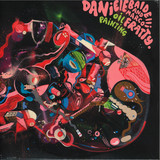
Daniele Baldelli & Marco Fratty - Oil Painting 2x12"

Leng Records’ first album of the year release comes courtesy of two contrasting legends of Italian dance music, Afro-Cosmic pioneer Danielle Baldelli and sometime FPI Project member Marco Fratty (real name Marco Frattini).

Both producers have a wealth of experience. Baldelli first to rose to fame as resident DJ at the near mythical Cosmic Club in the early 1980's, before moving into music production two decades ago. Since then, he’s collaborated with heaps of producers – most notably DJ Rocca, Marco Dionigi and Dario Piana – but “Oil Painting” marks his first collaboration with Frattini, an experienced producer whose bustling discography stretches right back to the Italian house explosion of the late 1980's and early ’90s.

The pair’s debut collaborative release is bold, bubbly, vibrant and funky, with the storied Italian veterans making extensive use of live instrumentation, vintage synthesizers and chugging, floor-friendly grooves. As you’d expect from a Baldelli-related project, the influences are obvious – think funk, dub-disco, cosmic rock, Italo-disco and nu-disco – but the resulting colourful cuts refuse to settle on one specific style.

Firmly focused on the dancefloor, “Oil Painting” is a gleeful, celebratory and excitable as anything either producer has released to date. For proof, check the surging arpeggio style synth-bass, kaleidoscopic synthesizer lines and eyes-closed rock guitar solos of “Automatic Amplitude”, the flute-laden dub disco shuffle of “Jasmine Flavour”, the organ-laden cosmic funk chug of “Oil Painting” and the lolloping disco-funk exuberance of “Steam Engine”, where crunchy guitar licks and Meters style organ stabs wrap themselves around a vintage disco bassline and head-nodding, toe-tapping drums.

The highlights don’t step there, either. Check the percussion and delay-laden Afro-Cosmic funk fusion of “Slinky Funk”, a veritably tropical excursion that repurposes the bassline and incessant cowbells from Cymande classic “Bra”, and the Clavinet-heavy stomp of “Positive Flow”, whose snaking, constantly-changing saxophone solo and flash-fried guitar riffs help create a thrillingly excitable mood.

From start to finish, “Oil Painting” is an album full to bursting with musical joy and umpteen giddy calls towards the dancefloor. From producers of Baledlli and Frattini’s experience, we’d expect nothing less.

out of Stock

Order now and we will order the item for you at our supplier.

26,01

Last In: 34 days ago
Ennio Moricone - Legend of 1900
  • 1900: S Theme
  • The Legend Of The Pianist
  • The Crisis
  • The Crave
  • A Goodbye To Friends
  • Study For Three Hands
  • Playing Love
  • A Mozart Reincarnated
  • Child
  • 1900: S Madness #1
  • Danny's Blues
  • Second Crisis
  • Peacherine Rag
  • Nocturne With No Moon
  • Before The End
  • Playing Love
  • I Can And Then
  • 1900: S Madness #2
  • Silent Goodbye
  • Ships And Snow
  • Lost Boys Calling (Feat Roger Waters & Eddie Van Halen)

Ennio Morricone composed and arranged scores for more than 500 film and television productions, making him one of the most influential and best-selling film composers since the late 50s. The Legend of 1900 (Italian: La leggenda del pianista sull'oceano) is a 1998 Italian drama film directed by Giuseppe Tornatore and starring Tim Roth, Pruitt Taylor Vince, and Mélanie Thierry. The film is inspired by Novecento, a monologue by Alessandro Baricco. The Legend Of 1900 was nominated for a variety of international awards, winning several for its soundtrack, including a Golden Globe for Best Original Score - Motion Picture. This release includes the song “Lost Boys Calling” featuring Roger Waters & Eddie van Halen. Throughout his career, Morricone received an unprecedented amount of awards, including Grammys, Golden Globes and BAFTAs. Ennio Morricone has influenced many artists including Danger Mouse, Dire Straits, Muse, Metallica, Radiohead, Hans Zimmer, and many more. The Legend of 1900 is available as a limited edition of 2500 numbered copies on green coloured vinyl and contains an insert and is housed in a deluxe sleeve with silver foil finish.

pre-order now04.04.2025

expected to be published on 04.04.2025

29,37
Various - Deep House Gems vol.1

Groovin proudly presents a new EP from the vaults of the well renowned italian label d.vision. Four gems of 90's italian deep-house made by seminal producers like Massimino Lippoli and Andrea Gemolotto, also including a huge mix by Kerri Chandler on side A1.

out of Stock

Order now and we will order the item for you at our supplier.

12,19

Last In: 7 months ago
Alessandro Alessandroni - Paesaggio Bellico

Four Flies Records is proud to present Paesaggio Bellico, a collection of unreleased music from legendary composer and multi-instrumentalist Alessandro Alessandroni.

Available digitally starting on the centenary of the maestro's birth on 18th March 2025 and on vinyl on 21st March, Paesaggio Bellico is a true gem hidden within the vast treasure trove of Italian film scores and library music.The album brings together themes and atmospheric pieces inspired by the world of war, viewed not just from a military standpoint, but also through a deeply human and existential lens.

The LP version features 18 tracks, while the digital release expands to 29, including alternate takes and thematic variations. These compositions were meticulously unearthed from scores written and recorded by the maestro between 1969 and 1978 for television documentaries and war films.

Alessandroni's war-inspired music masterfully balances action, suspense, and introspection. Expansive, panoramic themes give way to anxious, tormented moments. Horrifying visions are countered by calmer atmospheres, and glimmers of hope soften the intensity of pain.

Each track embodies the unique sound that has made Alessandroni an irreplaceable figure for soundtrack and library music enthusiasts. His signature whistle – so unmistakable for generations of fans of the genre – soars above delicate 12-string acoustic guitar arpeggios. More dramatic pieces feature his iconic Fender Stratocaster, equipped with a fuzz distortion pedal. And, of course, Alessandroni's vocal group, the Cantori Moderni, a constant presence in his arrangements, contribute, this time lending their voices to the more unsettling aspects of military psychology. An elegant string section adds depth and emotional impact to the more orchestral tracks, completing the picture of this monumental work.

The result is a sonic journey that delves into the darkest, most martial sides of war, but also explores its intimate and deeply painful dimensions, creating a powerful dialogue between the atrocities of conflict and the human emotions it evokes.

The release is enriched by original artwork from Eric Adrien Lee, who reimagined the 1970s graphic design of Italian war-themed library albums. The vinyl LP is housed in a tip-on hard cover (the kind used for higher-end productions during the golden age of Italian soundtracks), with an inner sleeve featuring a color-inverted variation on the cover art, which makes the physical record even more unique.

out of Stock

Order now and we will order the item for you at our supplier.

32,35

Last In: 12 months ago
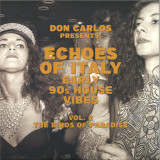
Various - ECHOES OF ITALY – THE BIRDS OF PARADISE – EARLY 90S HOUSE VIBES VOL.2 (2x12")

Googling “paradise house”, the first results to pop up are an endless list of European b&b’s with whitewashed lime façades, all of them promising “…an unmatched travel experience a few steps from the sea”. Next, a little further down, are the institutional websites of a few select semi-luxury retirement homes (no photos shown, but lots of stock images of smiling nurses with reassuring looks). To find the “paradise house” we’re after, we have to scroll even further down. Much further down.

It feels like yesterday, and at the same time it seems like a million years ago. The Eighties had just ended, and it was still unclear what to expect from the Nineties. Mobile phones that were not the size of a briefcase and did not cost as much as a car? A frightening economic crisis? The guitar-rock revival?! Certainly, the best place to observe that moment of transition was the dancefloor. Truly epochal transformations were happening there. From America, within a short distance one from the other, two revolutionary new musical styles had arrived: the first one sounded a bit like an “on a budget” version of the best Seventies disco-music – Philly sound made with a set of piano-bar keyboards! – the other was even more sparse, futuristic and extraterrestrial. It was a music with a quite distinct “physical” component, which at the same time, to be fully grasped, seemed to call for the knotty theories of certain French post-modern philosophers: Gilles Deleuze, Félix Guattari, Paul Virilio... Both those genres – we would learn shortly after – were born in the black communities of Chicago and Detroit, although listening to those vinyl 12” (often wrapped in generic white covers, and with little indication in the label) you could not easily guess whether behind them there was a black boy from somewhere in the Usa, or a girl from Berlin, or a pale kid from a Cornish coastal town.

Quickly, similar sounds began to show up from all corners of Europe. A thousand variations of the same intuition: leaner, less lean, happier, slightly less intoxicated, more broken, slower, faster, much faster... Boom! From the dancefloors – the London ones at least, whose chronicles we eagerly read every month in the pages of The Face and i-D – came tales of a new generation of clubbers who had completely stopped “dressing up” to go dancing; of hot tempered hooligans bursting into tears and hugging everyone under the strobe lights as the notes of Strings of Life rose up through the fumes of dry ice (certain “smiling” pills were also involved, sure). At this point, however, we must move on to Switzerland.

In Switzerland, in the quiet and diligent town of Lugano, between the 1980s and 1990s there was a club called “Morandi”. Its hot night was on Wednesdays, when the audience also came from Milan, Como, Varese and Zurich. Legend goes that, one night, none less than Prince and Sheila E were spotted hiding among the sofas, on a day-off of the Italian dates of the Nude Tour… The Wednesday resident and superstar was an Italian dj with an exotic name: Don Carlos. The soundtrack he devised was a mixture of Chicago, Detroit, the most progressive R&B and certain forgotten classics of old disco music: practically, what the Paradise Garage in New York might have sounded like had it not closed in 1987. In between, Don Carlos also managed to squeeze in some tracks he had worked on in his studio on Lago Maggiore. One in particular: a track that was rather slow compared to the BPM in fashion at the time, but which was a perfect bridge between house and R&B. The title was Alone: Don Carlos would explain years later that it had to be intended both in the English meaning of “by itself” and like the Italian word meaning “halo”. That wasn’t the only double entendre about the song, anyway. Its own very deep nature was, indeed, double. On the one hand, Alone was built around an angelic keyboard pattern and a romantic piano riff that took you straight to heaven; on the other, it showcased enough electronic squelches (plus a sax part that sounded like it had been dissolved by acid rain) to pigeonhole the tune into the “junk modernity” section, aka the hallmark of all the most innovative sounds of the time: music that sounded like it was hand-crafted from the scraps of glittering overground pop.

No one knows who was the first to call it “paradise house”, nor when it happened. Alternative definitions on the same topic one happened to hear included “ambient house”, “dream house”, “Mediterranean progressive”… but of course none were as good (and alluring) as “paradise house”. What is certain is that such inclination for sounds that were in equal measure angelic and neurotic, romantic and unaffective, quickly became the trademark of the second generation of Italian house. Music that seemed shyly equidistant from all the rhythmic and electronic revolutions that had happened up to that moment (“Music perfectly adept at going nowhere slowly” as noted by English journalist Craig McLean in a legendary field report for Blah Blah Blah magazine). Music that to a inattentive ear might have sounded as anonymous as a snapshot of a random group of passers-by at 10AM in the centre of any major city, but perfectly described the (slow) awakening in the real world after the universal love binge of the so-called Second Summer of Love.

For a brief but unforgettable season, in Italy “paradise house” was the official soundtrack of interminable weekends spent inside the car, darting from one club to another, cutting the peninsula from North to centre, from East to West coast in pursuit of the latest after-hours disco, trading kilometres per hour with beats per minute: practically, a new New Year’s Eve every Friday and Saturday night. This too was no small transformation, as well as a shock for an adult Italy that was encountering for the first time – thanks to its sons and daughters – the wild side of industrial modernity. The clubbers of the so-called “fuoriorario” scene were the balls gone mad in the pinball machine most feared by newspapers, magazines and TV pundits. What they did each and every weekend, apart from going crazy to the sound of the current white labels, was linking distant geographical points and non-places (thank you Marc Augé!) – old dance halls, farmhouses and business centres – transformed for one night into house music heaven. As Marco D’Eramo wrote in his 1995 essay on Chicago, Il maiale e il grattacielo: “Four-wheeled capitalism distorts our age-old image of the city, it allows the suburbs to be connected to each other, whereas before they were connected only by the centre (…) It makes possible a metropolitan area without a metropolis, without a city centre, without downtown. The periphery is no longer a periphery of any centre, but is self-centred”.

“Paradise house” perfectly understood all of this and turned it into a sort of cyber-blues that didn’t even need words, and unexpectedly brought back a drop of melancholic (post?)-humanity within a world that by then – as we would wholly realise in the decades to come – was fully inhuman and heartless. A world where we were all alone, and surrounded by a sinister yellowish halo, like a neon at the end of its life cycle. But, for one night at least, happy."
out of Stock

Order now and we will order the item for you at our supplier.

28,99

Last In: 6 months ago
Kapote - Para Mytho Disco  LP 2x12"

Toy Tonics Music Berlin presents "Para Mytho Disco". The 2nd "Kapote" album of label founder and creative director Mathias Modica.
Keyboarder, DJ, producer, music nerd, graphic designer, multi-instrumentalist, sub-culture impressario and artist (formerly known as Munk of Gomma records.)

Kapote & Toy Tonics
In the last years Kapote was in the spotlight mainly for building the Toy Tonics label with his friends. Developing a platform for new positive quality dance music with a human touch. Toy Tonics is the opposite of the dark, druggy Techno and Trance sounds of the last years.
The warm inclusive music of Toy Tonics represents a new vibe that a young generation of diverse, stylish and culturally intersted generation of dancers loves now. Kapote's Toy Tonics became the key label for that vibe. (In 2024 Toy Tonics made 150 Toy Tonics events in 18 countries. With more than 150.000 people dancing. 90 millions streams on their music.)
Toy Tonics is more than a music label: It's a audio - visual universe. A community, almost a movement.
Based on a new positive attitude and aesthetic diversity. Mixing musicianship with DJ culture, analogue music with electronic, ideas from the past with sounds from now. To create something new. Connecting dance music with graphic design, art and underground fashion.
Kapote and his gang release vinyl, posters, shirts, art fanzines and make exhibitions and partys.

Toy Tonics started in Berlin as a underground niche project. But now became the key label of the new house, wild style disco and organic dance music scene.
Probably one of Berlin's biggest electronic music phenomena along with Keinemusik and Live from Earth.

It went fast: 2020 Kapote's crew started to make small parties in Berlin's off spaces. The "Toy Tonics Jams". The parties became "talk of the town", and Berlin clubs like Griesmühle and Panorama Bar invited the crew. Then international clubs and festival called. Toy Tonics were invited to SONAR (playing the mainstage with Kaytranada and DJ Tennis), KALA festival, Montreux Jazz festival.
Now TT has a residency at Panorama Bar Berlin and sold out events in Europe leading clubs like Phonox in London, Rex Club in Paris, Tunnel in Milan.
Toy Tonics now is the reference brand of a new generation of music loving dancers. Similar to Gomma records, Kapote's former label (2003 - 2015) that was one of the key labels of the "indie dance" scene of the Y2K years (along with DFA and Output Records).

Kapote created a multi-cultural movement with graphic designers, photographers, illustrators from the Berlin scene.
They publish the Toy Tonics Pocket Poster magazine, posters and design shirts. They organize the Toy Tonics Pop Up Galleries mixing music and art. In underground venues in Berlin and in new gallery spaces and museums around Europe.
Toy Tonics has been invited by Palais de Tokio museum in Paris, Triennale Museum Berlin, Design week Milano to create events.
The new Kapote album
The 12 tracks have a very own style. Based on dance music, but going much further. "Para Mytho Disco' is a futuristic mix of sounds. It's far away from the dark monotone techno and trance music from Kapote's hometown Berlin. Instead, he creates warm friendly atmospheres full of sonic colours and little musical surprises.
Kapote's knowlege of music history and his backround as a jazz piano student and son of classic music composer is clearly inside this music. Before turning into a DJ and electronic music producer he has been playing in bands since he was 13 years old.
The album is full of emotional chord progressions played by Kapote on various keyboards. Sometimes reminding music from the past, without being retro at all. The basslines and melodies are inspired by jazz fusion from the 1970ies. And he programmed syncopated grooves that come from afro-american dance music. There are influences from Japanese electronic music (Yellow Magic Orchestra), from 1980s Synthwave and from 1990s electronica (like Squarepusher and Luke Vibert).

Kapote plays keys, bass, flutes and percussions, he plays synth solos and sings on a few tracks. The complexity of the arrangements makes this music never boring. Lot of melodies and solos that catch the listener. Colourful soundscapes that make you want to listen or dance to this album more, and discover details also after you heard it several times.

Kapote background

Before starting Toy Tonics, Kapote used to run a label called Gomma. He produced four albums under the name Munk and music for other artists.
He produced music with Peaches, Franz Ferdinand founder Nick McCarthy, with New York street art legend The Rammellzee, Italian actress Asia Argento, the first three albums of WhoMadeWho and worked with LCD Soundsystem (listen to "Kick out the chairs", the Munk song with James Murphy )
In those "Gomma days" Kapote aka Munk was also one of the main DJs for VICE magazine parties and made music for art projects and fashion brands (Margiela, Prada, Colette).
In 2015 he stopped Munk and Gomma and started Toy Tonics. He found young producers and helped to develop their sound (Coeo, Cody Currie, Gee Lane, Barbara Boeing, Sam Ruffillo). Later he founded the sublabel Kryptox to release music by Berlin based bands that make new forms of jazz or neo classical sounds.

Under the name Kapote Mathias didnt release much:
Only his Kapote debut album "What it is" (2019) and an EP called "Electric Slide" (2022) and a collabo EP with Italian producer Sam Ruffillo ("Robot Salsa").

An although his Munk and Kapote music was an underground phenomena his music has always been a favourite of many great people from the scene.
Supported by DJs like Harvey, Chromeo, Moodymann, Jennifer Cardini, Gerd Janson, MYD, Andrew Weatherall to Blessed Madonna, Justice and Laurent Garnier… to name just a few.

out of Stock

Order now and we will order the item for you at our supplier.

20,59

Last In: 8 months ago
FROLLEN MUSIC LIBRARY - 001-015
  • Lost
  • Chupa Chups
  • The Hands Of Time
  • Red And Blue And Green
  • Eff Emm Ell Baby
  • Numero Ono
  • Otta My Way
  • Zap
  • Humble Pie
  • Dreamz
  • Jet Pack
  • Machine Mind
  • Faded
  • Clear The Air
  • Unclearly
  • Darkness Falss
  • Dial Up
  • Running
  • Sei Cardigani Di Bali
  • Skeleton Key
  • Day One
  • Lemon Tarts
  • Follow The Light
  • Top Down
  • Snoozin
  • Emenee
  • Rock Candy
  • Senza Tutti
also available

BLUE VINYL[23,49 €]


'001-015' is a "best of" compilation celebrating the first 15 sample packs made by Frollen Music Library. Launching in late 2021, the sample house has since been featured in productions by ScHoolboy Q, Leon Thomas, Devin Malik and more. This retrospective "best of" traverses a wide range of styles and moods to appeal to every music enthusiast as well as producers and songwriters alike. Whether it's bouncing Hip Hop beats or evocative cinematic etudes, FML's 3- piece house band, comprising Henry Jenkins, Darvid Thor and Hudson Whitlock have a deep love and respect for many musical styles. FML'sdiverse catalogue takes cues from the 'Third Stream' composer David Axelrod, as well as drawing upon cinematic themes from 60's and 70's Italian film score composers a la Ennio Morricone and Riz Ortolani. There are 90's New York boom bap beats, as well as synthesiser music inspired by Tonto, , utilising a locally made synthesiser from Melbourne Instruments. Jenkins, Thor and Whitlock have been playing in bands and producing music for their local music scene for the last 15 years. Recording and performing with The Cactus Channel, Karate Boogaloo, Mo'Ju, Surprise Chef and many many more. Not only is this brand-new LP a great musical collage worthy of any music library enthusiast, but also functions as a tremendous sampler demonstrating the many styles of FML. Fast, slow, sweet AND sour!

pre-order now28.03.2025

expected to be published on 28.03.2025

23,49
FROLLEN MUSIC LIBRARY - 001-015

'001-015' is a "best of" compilation celebrating the first 15 sample packs made by Frollen Music Library. Launching in late 2021, the sample house has since been featured in productions by ScHoolboy Q, Leon Thomas, Devin Malik and more. This retrospective "best of" traverses a wide range of styles and moods to appeal to every music enthusiast as well as producers and songwriters alike. Whether it's bouncing Hip Hop beats or evocative cinematic etudes, FML's 3- piece house band, comprising Henry Jenkins, Darvid Thor and Hudson Whitlock have a deep love and respect for many musical styles. FML'sdiverse catalogue takes cues from the 'Third Stream' composer David Axelrod, as well as drawing upon cinematic themes from 60's and 70's Italian film score composers a la Ennio Morricone and Riz Ortolani. There are 90's New York boom bap beats, as well as synthesiser music inspired by Tonto, , utilising a locally made synthesiser from Melbourne Instruments. Jenkins, Thor and Whitlock have been playing in bands and producing music for their local music scene for the last 15 years. Recording and performing with The Cactus Channel, Karate Boogaloo, Mo'Ju, Surprise Chef and many many more. Not only is this brand-new LP a great musical collage worthy of any music library enthusiast, but also functions as a tremendous sampler demonstrating the many styles of FML. Fast, slow, sweet AND sour!

pre-order now28.03.2025

expected to be published on 28.03.2025

23,49
CESARE CREMONINI - ORA CHE NON HO PIÙ TE (REMIXES) EP

‘Ora che non ho più te’ by Cesare Cremonini is one of the most successful Italian electro pop singles of 2024 with 100 million streams.

Many DJs have remixed it and included it in their electronic DJ sets; Mondo Groove decided to put 4 of them on vinyl.

– Benny Benassi is an internationally renowned Deejay and record producer, pioneer of electro house, a genre brought into the mainstream by his 2002 summer club hit “Satisfaction”.
He received the Grammy Award for best remix in 2008.

– Deborah De Luca, born under the shade of the sails of Scampia, a difficult neighborhood at the periphery of Naples, over the years has refined her style, which is reflected in this remix: a solid techno base skillfully mixing melodic and minimalist elements.

– DJ Ralf, the most underground of the ranks, tries his hand at a lengthy Future Acid House remix.

– Samuele Sartini and Nicola Zucchi, respecting the soul of the song, project it into a more club-like dimension, enriched by a magical riff that enhances its intensity.

Limited edition hand numbered copies on white colored vinyl

out of Stock

Order now and we will order the item for you at our supplier.

20,97

Last In: 10 months ago
50DIX - Go Ahead!

A new artist appears on the streets of City HC Records, he is Andrey Orenstein
multidisciplinary artist, part of the alternative Rock band ‘Tequilajazz’, with several solo musical incarnations such as: Amor Entrave, for electronic Indie beats with tocuhes of IDM of broken beats, Do you like trains? for Acid House, and 50DIX, dedicated to street beats such as jungle, drum n bass, ghetto house, Juke and Footwork, and the pseudonym he uses for Go Ahead! EP, the new and multifaceted 22nd release from the Valencian label.

IF U WANT 2 is the elegant track that takes us into the bustling avenues of the 2st century megapolis, where the urban rhythms of the dance battles in Chicago, Footwork and Juke, along with brief Jungle passages alternate in a brilliant composition with funk and jazz nuances accompanying tight percussion and distorted kicks at 160 BPM.

Tough and Ghetto House and rugged acid define FOOLZ, second track of the A-side in which the demonic power of the 303 sounds embrace the thick and husky voice that together with infectious laughter set a rhythm as pugnacious as it is playful.

FETTA DI LIMONE, Juke, Footwork and Jungle, a perfect combination of American influences, legacy of Dj Rashad together with the English tradition around bass music, are fused by 50DIX with the unexpected and playful Italian lyrics of Tomasso Girardi, in perfect conjunction with the pianos, ethereal pads and mutant synths, that forge the development of the track. Already anthemic before the first beat sounds.

Juke, IDM, Halftime and abstract broken beats combine for the ultimate dance elixir, in the last track of the vinyl titled ICE FEELS KEEN, reaching 170 BPM in a catharsis of braindance, soul and acid exaltation in a dreamy harmony, where the syncopated notes of Oleg Egorov's bass and the velvety voice of Julia Garnits (Ice Hokku) commune.

Bonus digital track - 50Dix ICE FEELS KEEN (DZA REFLIP). Hypnotic, sharp and minimalistic, DZA's remix transforms the original track into an intimate and evocative experience, in which every sonic element acquires more prominence and presence.

Bonus digital track 2 - Fetta di limone (Kaxtelian remix) Inspired by the classic hardtrance sounds of the 90s, from Valencian dance temples such as Chocolate, Kaxtelian reinterprets the track with distorted drums, catchy melodies and Rave spirit at 165 bpm.

Mastering by Steve Voidloss at Black Monolith Studios in London (UK), except for the Bonus track 2 mastered by Raszia.

Once again, artwork and design by Dani Requeni, giving artistic coherence to the label's aesthetic.

out of Stock

Order now and we will order the item for you at our supplier.

14,08

Last In: 13 months ago
Various - Disco Discharge presents More Sin - Box Of Sin 2 (4x12")
  • A1: Where Is My Man (Vocal) / Eartha Kitt
  • A2: I Need You (Extended 12” Mix) / Sylvester
  • A3: Was That All It Was (12” Version) / Jean Carne
  • A4: After The Rainbow (12” Version) / Joanne Daniëls
  • B1: Searchin’ (I Gotta Find A Man) (12” Version) / Hazell Dean
  • B2: Native Love (Step By Step) (12” Version) / Divine
  • B3: He’s A Saint, He’s A Sinner (Extended Version) / Miquel Brown
  • B4: Danger For Love (Full Length Version) / Deborah
  • C1: Voyage Voyage (Pwl Britmix) / Desireless
  • C2: Self Control (Extended Version) / Laura Branigan
  • C3: Get Lost Tonight (12” Version) / Fancy
  • C4: Brother Louie (Special Long Version) / Modern Talking
  • D1: Stop… Bajon (Club Mix) / Tullio De Piscopo
  • D2: Dolce Vita (Extended Version) / Ryan Paris
  • D3: I’m So Hot For You (Dance Mix) / Bobby “O”
  • D4: This Girl’s Back In Town (Extended Vocal Remix) / Raquel Welch
  • E1: Paninaro (Italian Remix) / Pet Shop Boys
  • E2: Sub-Culture (Remix) / New Order
  • E3: Homosapien (Elongated Dancepartydubmix) / Pete Shelley
  • F1: The Anvil (Dance Mix) / Visage
  • F2: Fantasy (“Short” Album Version) / Hotline
  • F3: The Dominatrix Sleeps Tonight (Dominant Mix) / Dominatrix
  • F4: Duel (Bitter-Sweet) / Propaganda
  • G1: Love On Top Of Love (Killer Kiss) (The Funky Dred Club Mix) / Grace Jones
  • H3: Can’t Stop The Music (12” Version) / Village People
  • G2: Pink Cadillac (Club Vocal) / Natalie Cole
  • G3: Heat It Up (Acid House Remix) / Wee Papa Girl Rappers
  • H1: Deep In Vogue (Banjie Realness) / Malcolm Mclaren And The Bootzilla Orchestra
  • H2: Pistol In My Pocket (12” Version) / Lana Pellay
also available

Box 1[96,01 €]


4LP set containing 29 original / extended / full-length / 12” versions of Queer club classics – 1980-1989
‘More Sin’ features Pet Shop Boys, Sylvester, Divine, New Order, Eartha Kitt, Grace Jones, Hazell Dean, Desireless and many more.
Highlights include the hard-to-find 12” version of ‘Can’t Stop The Music’ by Village People and the rarely compiled underground club anthems ‘Pistol In My Pocket’ by Lana Pellay and ‘After The Rainbow’ by Joanne Daniëls.
All tracks fully annotated and with a foreword by Ian Wade – author ‘1984: The Year Pop Went Queer’. Following the success of the first ‘Box Of Sin’ in 2023, Demon / Edsel and Disco Discharge are proud to announce the sequel – ‘More Sin: Box of Sin 2’ will be released on 31st January 2025.

Over 4 LPs, ‘More Sin’ presents 29 choice selections from the music you might have heard on Queer dancefloors between 1980 and 1989 – a decade of dance in all its devilish delights. Meticulously researched from the published gay club charts at the time, the LP set encompasses full-length versions of Diva, High Energy, Alternative, Pop, Europop and House classics. Not only were the ‘80s Queer clubs where you were most likely to hear the latest groundbreaking developments in dance music, there was a lot of diversity on offer – on a given night you might hear a legendary soul singer’s new opus right next to some post-punks from Manchester and the latest European pop chart topper.

‘More Sin’ aims to reflect this. On ‘More Sin’, the space-age soulful club sound of Jean Carne rubs up against the widescreen Europop beauty of Desireless and cutting-edge house music from London courtesy of Wee Papa Girl Rappers… and along the way come some of the most important and era-defining artists of the decade – from Sylvester to Siouxsie & The Banshees, from Pet Shop Boys to Divine, from Hazell Dean to Grace Jones. Producing and mixing these classics is like a roll-call of the era’s studio giants – Trevor Horn, Larry Levan, Clivillés & Cole, Ian Levine, John Luongo, Bobby “O”, Martin Rushent and Stock, Aitken & Waterman to name a few. It’s time to give in to sin again.

out of Stock

Order now and we will order the item for you at our supplier.

78,19

Last In: 12 months ago
Marcello Cassanelli / Caruso & Helen McCormack - The Coin EP Vol.3

First release of 2025 is The Coin EP Vol.3. Marcello Cassanelli is back on Ten Lovers Music with two stunning tracks and a beautiful outro solo on his Rhodes. Starlight kicks off side A with some superb Italian Disco for 2025, following that a trip to Cuba for Tropical Breeze on which Marcello employs long time collaborators and super talented Giulia Barozzi on vocals and Antonio Rapa on drums.

Across both tracks Marcello plays the keys, bass, flute, guitar and drum programming. Rounding off side A is Dream Horizon an improvised one minute beatless outro jam on the Rhodes. On the AA side we have a new project from Caruso and Helen McCormack. First up is Have and Hold which harks back to the Manchester Street Soul scene of the late 80’s. Very simply constructed with electronic drums, bass, piano and a lead synth on top of which Helen’s vocal sits perfectly. Second on side AA is Love You More, a very atmostpheric track written by Helen with the strings arranged by Cormac Fulton. The percussion is from fellow TLM artist Takashi Nakazato (Kyoto Jazz Massive/Jazztronik).

Both tracks were produced by Steve Conry who also assisted Jose Rico on the mixes. Finally to finish on side AA is Central, a beautiful Deep House instrumental using only real analogue synths like the Solina String Ensemble, ARP Odyssey and Oberheim Xpander, mixed by Steve Conry and Matt Cox

stock from24.04.2026

11,72

Last In: 10 months ago
Senpolya & Wassily Minkow - Don't Kill My Vibe

Our debut single with Senpolya was born out of desire to create some modern Russian pop infused with references to the 80s dance music. While making 80s-inspired tunes is popular nowadays, this decade means different things to different people: be it A-ha and Modern Talking or African boogie and Chicago house. But we ended up making neither one nor the other.

The crowd who contributed to this release is absolutely legendary. Each time I listen to it and think of them, a new dimension opens up in my mind, adding up some deeper layers of context Ive immersed myself in over the past few years.

An italian producer and bass player Marco Boccamazzo created the first remix. By adding bass guitar and strings, he took the track back by another ten years.

DJ Popinjay, an alter ego of a tropical disco master who wishes to remain anonymous, provided the second rework.

The third remix or more like an essentially an entirely new track, comes from Sonestrose, a duo consisting of Andrey Algorithmic, an art director of Moscow Powerhouse, and Alexander Basian, the studio's sound engineer.

Ignat Akimov, also known as DJ Pecan and an art director of Esthetic Joys Embassy, crafted the fourth hallucinogenic remix, which spans from acid house with Indian drums to cool jazz sound.

Lipelis and Scruscru help me in making some key decisions about the tracks structure, arrangement, and mixing.

Ilya Varankin made a photo of us (on film!) and Nikita Demin designed the cover picture inspired by Daptone Records.

At last, I want to thank my wife, Masha Dostoewskaya, without whose love and patience I wouldn't have been able to see this project to an end.

out of Stock

Order now and we will order the item for you at our supplier.

11,72

Last In: 14 months ago
Lorenzo Dada / Leo Benassi - Island EP

he debut release of italian new artist “lorenzo dada & leo benassi”.

we’ve met in milano and they sent us a beautiful 90’s italian balearic deep house EP.

it’s a modern re-interpretation of italian deep house like 90’s IRMA records releases.

if you like that sound, you will love this record!

out of Stock

Order now and we will order the item for you at our supplier.

14,71

Last In: 3 months ago
Various - ECHOES OF ITALY - ARTISTS IN WONDERLAND – EARLY 90S HOUSE VIBES VOL.1 LP 2x12"

Volume 1 of this expertly curated project of 90s Italian House - put together by Don Carlos.

If Paradise was half as nice… by Fabio De Luca.

Googling “paradise house”, the first results to pop up are an endless list of European b&b’s with whitewashed lime façades, all of them promising “…an unmatched travel experience a few steps from the sea”. Next, a little further down, are the institutional websites of a few select semi-luxury retirement homes (no photos shown, but lots of stock images of smiling nurses with reassuring looks). To find the “paradise house” we’re after, we have to scroll even further down. Much further down.

It feels like yesterday, and at the same time it seems like a million years ago. The Eighties had just ended, and it was still unclear what to expect from the Nineties. Mobile phones that were not the size of a briefcase and did not cost as much as a car? A frightening economic crisis? The guitar-rock revival?! Certainly, the best place to observe that moment of transition was the dancefloor. Truly epochal transformations were happening there. From America, within a short distance one from the other, two revolutionary new musical styles had arrived: the first one sounded a bit like an “on a budget” version of the best Seventies disco-music – Philly sound made with a set of piano-bar keyboards! – the other was even more sparse, futuristic and extraterrestrial. It was a music with a quite distinct “physical” component, which at the same time, to be fully grasped, seemed to call for the knotty theories of certain French post-modern philosophers: Gilles Deleuze, Félix Guattari, Paul Virilio... Both those genres – we would learn shortly after – were born in the black communities of Chicago and Detroit, although listening to those vinyl 12” (often wrapped in generic white covers, and with little indication in the label) you could not easily guess whether behind them there was a black boy from somewhere in the Usa, or a girl from Berlin, or a pale kid from a Cornish coastal town.

Quickly, similar sounds began to show up from all corners of Europe. A thousand variations of the same intuition: leaner, less lean, happier, slightly less intoxicated, more broken, slower, faster, much faster... Boom! From the dancefloors – the London ones at least, whose chronicles we eagerly read every month in the pages of The Face and i-D – came tales of a new generation of clubbers who had completely stopped “dressing up” to go dancing; of hot tempered hooligans bursting into tears and hugging everyone under the strobe lights as the notes of Strings of Life rose up through the fumes of dry ice (certain “smiling” pills were also involved, sure). At this point, however, we must move on to Switzerland.

In Switzerland, in the quiet and diligent town of Lugano, between the 1980s and 1990s there was a club called “Morandi”. Its hot night was on Wednesdays, when the audience also came from Milan, Como, Varese and Zurich. Legend goes that, one night, none less than Prince and Sheila E were spotted hiding among the sofas, on a day-off of the Italian dates of the Nude Tour… The Wednesday resident and superstar was an Italian dj with an exotic name: Don Carlos. The soundtrack he devised was a mixture of Chicago, Detroit, the most progressive R&B and certain forgotten classics of old disco music: practically, what the Paradise Garage in New York might have sounded like had it not closed in 1987. In between, Don Carlos also managed to squeeze in some tracks he had worked on in his studio on Lago Maggiore. One in particular: a track that was rather slow compared to the BPM in fashion at the time, but which was a perfect bridge between house and R&B. The title was Alone: Don Carlos would explain years later that it had to be intended both in the English meaning of “by itself” and like the Italian word meaning “halo”. That wasn’t the only double entendre about the song, anyway. Its own very deep nature was, indeed, double. On the one hand, Alone was built around an angelic keyboard pattern and a romantic piano riff that took you straight to heaven; on the other, it showcased enough electronic squelches (plus a sax part that sounded like it had been dissolved by acid rain) to pigeonhole the tune into the “junk modernity” section, aka the hallmark of all the most innovative sounds of the time: music that sounded like it was hand-crafted from the scraps of glittering overground pop.

No one knows who was the first to call it “paradise house”, nor when it happened. Alternative definitions on the same topic one happened to hear included “ambient house”, “dream house”, “Mediterranean progressive”… but of course none were as good (and alluring) as “paradise house”. What is certain is that such inclination for sounds that were in equal measure angelic and neurotic, romantic and unaffective, quickly became the trademark of the second generation of Italian house. Music that seemed shyly equidistant from all the rhythmic and electronic revolutions that had happened up to that moment (“Music perfectly adept at going nowhere slowly” as noted by English journalist Craig McLean in a legendary field report for Blah Blah Blah magazine). Music that to a inattentive ear might have sounded as anonymous as a snapshot of a random group of passers-by at 10AM in the centre of any major city, but perfectly described the (slow) awakening in the real world after the universal love binge of the so-called Second Summer of Love.

For a brief but unforgettable season, in Italy “paradise house” was the official soundtrack of interminable weekends spent inside the car, darting from one club to another, cutting the peninsula from North to centre, from East to West coast in pursuit of the latest after-hours disco, trading kilometres per hour with beats per minute: practically, a new New Year’s Eve every Friday and Saturday night. This too was no small transformation, as well as a shock for an adult Italy that was encountering for the first time – thanks to its sons and daughters – the wild side of industrial modernity. The clubbers of the so-called “fuoriorario” scene were the balls gone mad in the pinball machine most feared by newspapers, magazines and TV pundits. What they did each and every weekend, apart from going crazy to the sound of the current white labels, was linking distant geographical points and non-places (thank you Marc Augé!) – old dance halls, farmhouses and business centres – transformed for one night into house music heaven. As Marco D’Eramo wrote in his 1995 essay on Chicago, Il maiale e il grattacielo: “Four-wheeled capitalism distorts our age-old image of the city, it allows the suburbs to be connected to each other, whereas before they were connected only by the centre (…) It makes possible a metropolitan area without a metropolis, without a city centre, without downtown. The periphery is no longer a periphery of any centre, but is self-centred”.

“Paradise house” perfectly understood all of this and turned it into a sort of cyber-blues that didn’t even need words, and unexpectedly brought back a drop of melancholic (post?)-humanity within a world that by then – as we would wholly realise in the decades to come – was fully inhuman and heartless. A world where we were all alone, and surrounded by a sinister yellowish halo, like a neon at the end of its life cycle. But, for one night at least, happy.

out of Stock

Order now and we will order the item for you at our supplier.

28,99

Last In: 6 months ago
PETER LC - Il Letto. La Porta. La Musica

Groovin Recordings move forward with the unreleased series focusing on rising Italian producers. It is now the moment for Peter LC, one of the most interesting young artists in the new italo-house scene.
Born with a distinctive passion for Disco and House music, Peter loves to experiment with all the shapes of house from Italo, Deep Tech, and Classic House genres, continually evolving his unique sound.
This new EP called "Il Letto. La Porta. La Musica." starts with a journey into early 90’s Italian Riviera, also featuring a remix by legendary Italian producer Don Carlos. On the flip we find "Losing my Feelings", which meets Deep house at its finest, echoing the timeless grooves of Chicago and Detroit, and "Love Calling", a classic piano house anthem, driven by soulful female vocals and pure 90’s vibes.

out of Stock

Order now and we will order the item for you at our supplier.

12,40

Last In: 4 months ago
Manuold - Hot & Crunchy

Manuold

Hot & Crunchy

12inchGDWAX006
GLBDOM
06.02.2025

Smart dresser and dedicated beard groomer Manuold - real name Emmanuele Macagnone - has notched up some excellent releases since making his bow in 2017, including admired EPs on House Puff and Madhouse Records. Here he brings his classy brand of deep house to GLDOM for the first time. With its squelchy synth-bass, loose-limbed garage-house drums, gospel vocal samples and warm pads, opener 'Jersey' sounds like a long-lost Kerri Chandler gem. He continues the retro-futurist theme on the low-slung and jazzy 'Hot & Crunchy', before doffing a cap to deep house/tech-house fusion on the Tenaglia-influenced 'Zanzibar'. Over on the flip, 'Night Long' is a chunky slab of 21st century New Jersey deep house with an Italian twist, while 'In The Clouds' sees him successfully lean into his Italo-house influences while retaining a dreamy and chunky deep house flex.

out of Stock

Order now and we will order the item for you at our supplier.

14,71

Last In: 7 months ago
DJ 1985 - We Trippin'

Especial welcomes new artist DJ 1985 to the label. As so often, the idea of pushing new music has been the raison d'etre of the past decade. An EP of a love for Acid, from the breaks anthem of the title We Trippin’ to exploring the ethereal and even mind-melting Ambient House and Balearic of how the Roland TB-303 has become a fundamental element in the history of electronic music.

Soviet born; Belgrade exile Stanislav Grishchuk is DJ 1985. A man of many monikers, came to House later, originally progressing from Breaks, Hardcore and onto Drum and Bass as DJ Saint Man, a Mixmaster in the truest sense, switching it up to include Ghetto House and Booty, DJing led to producing, finally seeing DJ 1985 emerged to encompass Acid, Bleep, Breakbeat, Chicago and beyond.

A DJ supreme from the old school – check his Boiler Room mix for live vinyl dexterity – his productions nod to Aphex Twin and the Rephlex / UK lineage, the Techno. Electro of masters Underground Resistance and Drexciya and on to Italo, Italian House and early 90s New Jersey and New York’s golden period and of course the masters Kraftwerk, all influence the sounds of this debut EP.

Starting as 808 and 909 Electro and Techno jams, all the tracks are recorded live, MPC, synth and drum machines, no computers involved. We Trippin’ is built around the “Think” break, with trippy 303 line, some 808, synths and off we go “we trippin”.

Dolphin and Sirens was inspired by the Boka Bay dolphins of Montenegro, near where the recording was made. A flotation bath of warm dreamy acid beats and aquatic found sound, fast, shifting breaks, the Adriatic Sea of Croatia and beyond beckoning.

Catland’s title is a nod to Stanislav’s love of all the feline, but the breaks’n’303 cut is an endlessly uplifting spark, celestial, a cosmic evolutionary odyssey.

DJ 1985 completes his debut EP with the aptly titled The Last One. Spherular, mysterious, this rise of spatial breaks is a reawakening of symbolic music that is touched by both East and West. Stanislav’s music intersects, trans-national, almost spiritual and psychedelic. Live jamming, more hearted, the snap electro percussion, dream-laden pads are twinned with an ethereal otherness via the endless possibilities of the TB-303.

out of Stock

Order now and we will order the item for you at our supplier.

17,27

Last In: 9 months ago
Patrick Gibin - Strength In Numbers 2x12"

After a string of celebrated releases for labels like Eglo, Neroli, and Sounds Familiar, Patrick Gibin unveils his debut album on his own Mother Tongue imprint, showcasing his signature dedication to all things deep and soulful.


Standout collaborations include tracks with Kaidi Tatham, such as “Gear Up Rudi!” and “Let It Go,” with Kaidi also delivering a rare vocal performance on the title track. Patrick’s early house and acid influences shine on “No Matter What” and “Joint Purpose (Alternative Mix),” while his notorious love for boogie is on full display in “Team Spirit” and the Sandra St. Victor collaboration, “Come Mornin’.”


Sandra, best known as the powerhouse voice of The Family Stand, brings her unmistakable vocal brilliance to the album, enhancing its emotional depth and soulful energy. The album closes with the mellow outro “In This Together,” another title that shows the mindframe and ethic behind Mother Tongue in all its endeavours. This collective spirit is further reflected in the contributions of Italian talents Edoardo della Bitta and Alberto Lincetto, whose musical artistry added a vital dimension to the album’s rich and soulful sound.
It’s all about Strength in Numbers!

out of Stock

Order now and we will order the item for you at our supplier.

21,64

Last In: 5 months ago
Items per Page:
N/ABPM
Vinyl