"Manchester has produced some of the world's most loved artists and bands - from indie to acid house - listened to by millions around the world.
Ad Hoc Records continues this musical tradition, as a record label dedicated to showcasing the very best of Manchester's music scene - with a firm 21st century, 'post-everything' mentality. First, Banana Hill's very own: Cervo (Black Acre/Lumberjacks in Hell); with its pulsing beat and bassline, Hesse Groove makes you want to discover a new part of town late at night. Next, is Taurtollo with an outstanding, universal composition that will be sure to delight ears and dancefloors. Penultimately, Paul Chamber's brings a raw, Fela Kuti sampling afro-house cut sure to get your head bobbing. Lastly, Ad Hoc regular Yadava (Church/Banoffee Pies/So Flute) brings the relaxing jazz-funk number Kadampa 125. If this doesn't get you moving whilst simultaneously achieving a zen state of mind, nothing will."
Death To Techno'Death to Techno is a new, futuristic ep of "The White Screen", ever before into a world of ruff beats, dark electronics and analog effects. Musical producer Dori Sadovnik, the sound genius from Red Axes, produced this ep at Garzen Studios, diving together with the whites into a new world of unknown pleasures and sins.
A mind and body bender between techno rhythms and broken rock n 'roll tapes, between the dancefloor and a campfire, between darkness and light - the new recordings are asking big questions about past and future, vintage and electro, about the screen and about the white.
"Death to Techno," the main track that opens the record, is also treated in a wildly remix version of the RED AXES pair. The cover of the album - "Hellenic Plasticine Party" - was created by multidisciplinary artist Oren Fisher, who has been accompanying the band since its inception.
Produced by: Dori Sadovnik
Musicians:
Stav Ben Shahar - Drums
Noa Ayali - Chello
Liat Raz - Vocals
Nimrod Goldfarb - Contra Bas
Shay Landa - Organs
Echocord's Colour sub-label returns early June with a four- track EP from Eindhoven's Albert Van Abbe in the shape of 'Klangbilder'. Dutch Techno artist Albert Van Abbe has nearly two decades of experience under his belt in various forms of musical and visual expression, releasing on his own Vanabbe imprint, Figure Jams, Semantica and No Comment, as well as playing live and DJing at hot spots across the globe such as Berghain, Tresor, DGTL and Awakenings festival. 'Klangbilder 1' leads with a robust rhythmic drive, employing bumpy toms, shuffled hats and lumpy kicks at its core as vacillating synths, tension building drones and menacing pizzicato strings develop throughout. 'Klangbilder 2' takes things deeper next, retaining the dusty drums sound of the previous cut whilst stirring in airy ethereal pads and choppy, resonant stab sequences. 'Klangbilder 3' kicks off the B-Side with modulating synth whirrs, emotive organ tones and a muted drum tones throughout before 'Klangbilder 4' closes the package, taking things beatless and cinematic via emotive synth leads, droning subs and expansive echoes.
As The Title Suggests, Joakim Recorded This New Album Last Year At Studio Venezia, The Installation/sculptural Ensemble/recording Studio Created By Xavier Veilhan For The Prestigious 2017 Venice Art Biennale. Built Inside The French Pavilion & Inspired By The Grotto-like Merzbau By Kurt Schwitters, Studio Venezia Had Dozens Of Artists Create And Record There Over The 6 Months Of The Biennale (from Chassol To Brian Eno, From Joakim To Sebastien Tellier), Invited By Xavier Veilhan Himself With The Help Of Co-curator Christian Marclay.
With An Impressive Collection Of Rare Instruments From Medieval Horns To Rare Modular Synths (baschet Crystals And Percussions, A Buchla, A Clavinet...), Studio Venezia Was An Amazing Creative Playground For The Adventurous Musician. Those Instruments Were Captured By A Team Of Sound Engineers In The Best Possible Way Thanks To Nigel Godrich's (beck, Radiohead...) Mobile Studio Loaded With State Of The Art Vintage Recording Gear.
Before Going There In May 2017, Joakim Examined The Instrument List And The Specific Context Of A Studio Open To The Public Within An International Contemporary Art Exhibition To Anticipate His Creative Process. Instead Of Drafting Compositions And Demos Ahead Of The Recording Session, He Decided To Have An in-situ' Approach By Creating A System Involving The Visitors Of The Studio In The Composition Phase. Joakim Asked Random Visitors Of The Pavilion To Pick A Word, A Letter (between A And G), Tap A Tempo And Sometimes Choose The Instruments That He Would Play For Each Piece. The Word Was Translated Into A Chord Using A Transcription Table Joakim Invented. Hence The Song Titles Made Of The Given Word Plus The Name And Origin Of The Contributor. The Music Was Then Mostly Improvised, Based On Those Chords, Scales And Tempi. The Recordings Were Then Taken Back To New York Where Joakim Made Some Light Editing And Mixed The Pieces.
In Terms Of Influences, Joakim Tried To Channel The Spirit Of Proto-ambient German Heroes Cluster, 60s And 70s Modal Jazz, Japanese Evocative Minimalism And Drone Composers' Hypnotic Transcendence.
One Can Hear The Studio Through These Recordings, Which Was The Point, To Use The Studio As An Instrument, Like The Kraut Rock Pioneers Did. You May Hear The Floor Cracking, People Talking Or Coughing, And The Peculiar Quality Of Music Recorded In A Large Space With Its Acoustic Properties, A Rare Occurrence When Everyone Is Now Working From Small Home Studios And Major Large Studios Are Closing Down. This Album Also Marks A Return For Joakim To His Musical Education As A Classically Trained Pianist As You Can Hear Him Improvise On The Piano ( arms', air', dream'), Fender Rhodes ( trust') Or Harpsichord ( absense').
Following The Release Of The Studio Venezia Sessions, Joakim Will Create A Live Performance Based On His Experience In Venice. The Premiere Of This New Solo Performance Is Commissioned By The Villa Medicis In Rome For Their Villa Aperta Festival Early June. More Shows Will Follow.
'syncho Sound System & Power' Features The Music Of Nigeria Fuji Machine,
Which Includes Some Of The Country's Finest 'fuji' Master Drummers And Singers, And Is Newly Recorded By Soul Jazz Records In Lagos, Nigeria. Fuji Is The Heavily Percussive And Improvisational Style Of Nigerian Popular Music, At Once Modern And Yet Deeply Rooted In The Traditional Islamic Yoruba Culture Of Nigeria.
Here On This Album Nigeria Fuji Machine's Striking And Powerful Lead Vocalist Taofik Yemi Fagbenro Soars Above A Wild And Energetic Backdrop Of Polyrhythms Played On Traditional Talking Drums, Trap Drums, Electronic And Street Percussion To Create A Powerful Wall Of Intense Sound. Fuji Is A Hi-energy Street Music, Heavily Percussive Which Evolved Out Of The Islamic Celebration Of Ramadan, Which Became A Major Event In Mid-20th Century Lagos. Groups Of Young Men Walked Through Muslim Neighbourhoods At Night Singing Improvised 'wéré' Music To The Accompaniment Of Pots, Pans, Drums, Bells
And Anything Else Available, Waking Believers For The Early Morning Prayer. By The Early 1970s This Music Had Crossed-over Into Popular Nigerian Culture Where It Came To Be Known As Fuji, First Made Popular By The Artist Alhaji Sikiru Ayinde Barrister, As The Music Began To Be Performed Commonly At Parties And Social Events. In The 1970s And 1980s Three Nigerian Artists - King Sunny Adé, Chief Ebonezer Obey And Fela Kuti - All Secured International Major Record Deals Bringing Popularity To The Nigerian Musical Styles Of Juju (adé And Obey) And Afro-beat (fela Kuti's Unique Mixture Of Highlife, Funk And Jazz) Abroad, But In The Process Ignoring Much Of Nigeria's Rich Musical Landscape. Fuji Is, Alongside Highlife, Juju, Afro-beat, Sakara, Afro-reggae, Waka, Igbo Rap, Apala And Numerous Others - One Of These Central Styles Of Nigerian Music. The Singer Barrister Described The Music As Follows: 'fuji Music Is A Combination Of Music Consisting Of Sakara, Apala, Juju, Aro, Afro, Gudugudu, And Possibly Highlife.' Juju Performer King Sunny Adé Described The Difference Between The Two
Styles Of Fuji And Juju Somewhat Competitively Thus: 'fuji Music Is More Or Less Like My Music Without Guitars. It's Like I'm Singing In A Major Key And They Are Singing In A Minor. The Music Itself Is The Music Of Juju Music.' Today Fuji Remains A Powerful Popular Music With Deep And Powerful Islamic Roots
Which Continues To Modernise And Attract New Generations Of Young Nigerians And Nigeria Fuji Machine's 'syncho Sound System & Power' Is A Powerful And Intense Musical Experience. This Album Is Released As A Limited-edition Heavyweight Vinyl Edition (+free Download Code), Deluxe Cd And Digital Format.
Moscow Is Mythologized For Its Grandeur And Gravity But Its Parable Pleasures Offer Splendor And Even Absurdity. Over The Ten, Symmetrical Pieces Of For, Kate Nv Scores Her Native Urban Environment With Just Enough Whimsy To Gurgle Through The City Cracks And Grow Psychotropic Foliage. Each Sound Assumes Its Own Personality, Moving Through The Album Metropolis Like Miniature, Mutating Molecules Viewed From Nv's Apartment Window.
Alternately A Guitar-wielding, Post-punker And One Within The Multitude Of Moscow Scratch Orchestra's Avant-garde, Nv Is A Versatile Artist That Maneuvers Instinctively In Whatever Musical Environs She Finds Herself. Nv's Second Solo Album Is An Even More Abstract Endeavor Than The Hybrid Pop Of 2016's Binasu. Inspired By Casual Moments Of Ephemeral Sound From Within And Beyond Her Apartment Walls, The Record Has A Clarity Arrived Altogether And From Right Under Her Nose. Recorded At Home, Nv Says It Was As If The Music Was Not Written By Herself, But Her Chair.
For Inhabits A Stage That Piero Milesi & Daniel Bacalov, Ann Southam, Or Hiroshi Yoshimura May Have Written Music For And Dresses It With Viktor Pivovarov's Psychedelic Depictions Of Moscow - Contorting Bodies, Flying Pencils, And Multi-dimensional Faces Dance With Subtle Arpeggiations, Conversational Voice Synthesis, And Anthropomorphic Midi. Animating Objects Is Essential To The Album. Like A Surreal Still Life, Each Piece Is An Alien Arrangement Of Common Elements That Extend The Everyday Ritual Into An Eternal Landscape Of Unconscious Activity. Somewhere Along That Landscape, Kate Awaits And Greets With Apples For Hands And Fish For Feet.
Like The Album Title, Each Composition Contained Within Is Represented As A Three Letter Word, In Russian And English. The First Half Of For Was Written In The Spring. Starting With yxo Ear,' Previously Released On The Peaceful Protest Compilation Cassette In 2017, Melodies Meander And Lollygag. a Two' Incorporates Human Breath Played Like Notes On A Pump Organ. Oak' Offers A Warm Tune To Tango. How' Loops Curious Notes That Bump Into Each Other With A Chirpy Acknowledgement. You,' The Only Track On For With Lyrics, Sets A Wassily Kadinsky Poem To Song.
The Second Half Of The Album Was Written In The Autumn. The Feathery Edges Of One' Extend Like Watercolors Bleeding Off A Rubber Scroll. See' Is A Subdued, Shadowy Variation Of How', As If The Same Song Were Played In Different Weather, Dimmer Light, Or By Kate's Devious Doppelganger. The Electronics Unravel And Unwind On Dog' Until The Final Track, Who,' Ends With Vague Solemnity And Rattled Metals.
A Short Online Film Series By Shura Kulak Will Accompany The Release Of For. The Films Follow A Solitary Figure Performing Ordinary Tasks Through A Slow, Warped Lens — Each Song Enacting A Daily Habit: Waking, Dressing, Reading, And So On. In Her Live Performances Around The Album, Kate Nv Will Play Each Song From Memory, Allowing For Variation From The Recorded Tracks, And Scenes From The Films Will Be Re-created And Improvised In The Moment.
An der Grenze (ADG) is glad to introduce you to its 5th release "Talka" on 2 x 12" (ADG005) by Moscow- based composers, live performers & DJs OID & Anrilov, and revisited by Unbroken Dub.
Whereas OID, a versatile artist, has made a name for himself with releases on DJ Koze's PAMPA, Milnormodern and PNN, Anrilov releases here his first solo track. Unbroken Dub, for his part, already has a significant experience with multiple releases on Rawax as well as solo EPs on Delsin and Resonance Moscow, amongst others.
On vinyl 1, each artist presents his own version of "Talka". Whereas OID proposes a dark, mind-blowing and bewitching version, Anrilov opts for a rather cadenced, breakbeat and mystic one.
On vinyl 2, Unbroken Dub delivers two different interpretations of "Talka". On the A-side, his Refix is deep, linear and mystic whereas, on the B-side, his remix appears to be the best musical translation of his artist name: serene and dubby.
Steve Reich's Drumming is regarded as one of the most important musical works of the last century. Distilled through his studies of African percussion in Ghana during 1970 and Balinese gamelan music, Reich revolutionized our understanding of polyrhythms, sculpting a new sonic territory to illuminate the radical potential of Minimalism.Divided into four sections, performed without pause, Drumming is written for eight small tuned drums, three marimbas, three glockenspiels, piccolo and voice. The singers recite melodic patterns that mimic the sounds of the instruments, gradually rising to the surface and then fading out. The overall effect can be transfixing - pulling listeners into the rhythm and possessing a raw immediacy, directness and energy.The premier performances of Drumming took place in December 1971 in New York City - first at The Museum of Modern Art, then at Brooklyn Academy of Music and finally at Town Hall where this recording was made - and featured the composer along with a cast of longtime collaborators including Art Murphy, Steve Chambers, Russ Hartenberger, James Preiss, Jon Gibson, Joan La Barbara, Judy Sherman, Jay Clayton, Ben Harms, Gary Burke, Frank Maefsky and James Ogden.Originally released in 1972 by gallerist John Gibson in a small private edition, Drumming represents the culmination of Reich's investigation into rhythmic phase relationships and its early realization captures a remarkably organic feel, especially compared to the more widely known version on Deutsche Grammophon from 1974.This first-time vinyl reissue and first-time CD release has been carefully remastered from the original master tapes.
One of our humble imprint's closest allies and a longstanding pillar of Philadelphia's electronic music community, Billy Werner has been a constant presence in the booth at parties throughout the Northeast Corridor since 1998. We debuted his M//R alias in 2014 with the 'Gathering Response Data' 12" . Since he's been busy bringing the grit to points beyond the City of Brotherly Love, putting in work for the likes of DetailsSound, L.I.E.S. and JackDept. Most recently, he turned out a remix of Karen Gwyer's 'Why Does Your Father Look So Nervous' for the 'Rembo' remixes on Don't Be Afraid, as well as another for Chaperone's 'Grit Neglect' on the aforementioned 'SnapbackBalaclava'EP.
Written, recorded, and mixed over a period of 15 months,'Among The Methods' is in no small part a reflection of the affinities and sensibilities Billy holds as both selector and producer. Referencing a variety of influences from jazz to dub to electro, the album's allure stems from his deft ability to recontextualize those genres' disparate aspects into a familiar-yet fiercely idiosyncratic-musical context.The end result is at once wildly fractured and precision-focused as 'Among the Methods' finds its own seductive rhythm within a matrix of dub echoes and modulated low-end. It's heady ground,to be sure;as well as the most declarative aesthetic statement fromM//R to date.
Presented without further comment. The music is the message
Helsinki's We Jazz Records Presents "y-otis", The Debut Lp From Berlin-based Swedish Saxophonist/composer Otis Sandsjö, Joining Forces With Keyboardist Elias Stemeseder, Bassist Petter Eldh And Drummer Tilo Weber. The Album Is A Forward-reaching, Multilayered Collection Of Eight Originals Penned By Sandsjö And Produced By Sandsjö And Eldh. What You Get Is A Form Of "liquid Jazz", Born In An Era Where The Understanding Of Jazz As A Musical Language Has Evolved Way Beyond The Concept Of The Previous "modern". Informed By Hiphop And Electronic Music, "y-otis" Is Pure Jazz In That The Quartet Stays True To Its Constant Mission Of Creating A New Form Of Musical Communication. Sandjö's Circular Sax Riffs, The Album's Rich Production Touch, And The Chopped-up Jazz Form Creates A Musical Concept Which Stays Melodic And Beat-laden While Being "free" Right To The Edge Of Avantgarde. It's As If The Music Is Sampling Itself, Constantly Keeping Ahead Of The Curve In The Musical Lineage Of Jazz.
Otis Sandsjö (b. 1987) Hails From Gothenburg, Sweden. He Is Known Previously For Example For His Inspired Work On Singer Lucia Cadotsch's Globe-trotting Trio Formation "speak Low", Also Featuring "y-otis" Co-producer And Bassist Petter Eldh. Elias Stemeseder Was Dubbed One Of The Top 15 Young European Musicians To Watch By All About Jazz In 2017. Tilo Weber Ranks Among The Most Creative Young Drummers In The Scene. Stemeseder Is Currently Based In New York, While The Remaining Three Musicians Here Live In Berlin. Live On Stage, The Band Performing The Material On The New Release Is Called Y-otis.
out of Stock
Last delivered 4 years ago available to reorder, subject to availability
Crosstown Rebels deliver their next album in the form of a masterful offering from Chic Miniature. The cosmic duo, Ernesto Ferreyra and Guillaume Coutu Dumont make a welcome return to the label with eight tracks of melodic bliss.Fourteen years in the making, a thread of mystery weaves its way through the tapestry of this melancholic LP. It's a true journey through a sublime sonic soundscape. Opening track Adormecido is shrouded in mystery, closely followed by Miso Drunky with its tribal drums and dramatic synth stabs. Kaléidoscope bubbles up next, swiftly followed by Tilt with its genteel cowbell. Then comes Año Uno the first track created back in 2004 with its impressive church-like bells. Suki Ni is twinkling and sublime that flows into the delicate groove of Let It Slide, which samples an ambient rain storm. The album closes on La Sandunga gracefully littered with plentiful percussion.Of the album, the pair explain how they were 'raised on old technology and integrated the newer technology in our everyday lives as it was developing' a fact that is clearly apparent upon listening to the album. They give a sonic hat tip to their 'love of melancholic melodies....almost always rooted in the past, but to us, no time is attached. Are the new machines dreaming about the past, or are the new ones contemplating the future that lays ahead'. The album proves their ability to fuse the new with the old to create an album bursting with timeless tracks.Ernesto Ferreyra and Guillaume Coutu Dumont's partnership is a true meeting of musical minds. Their first release was gifted to us way back in 2005- the Conexio´n Califa EP released on German imprint Raum Musik. Since then they've released on Musique Risque´e as well as a previous EP on Crosstown Rebels. Individually, they've released a plethora of music with Ferreyra also heading up his own label Loosen Up Records and Guillaume signing music to Musique Risquée amongst others.
Austin Based Experimental Collective Thousand Foot Whale Claw Is Back With The New Cosmic Full Length black Hole Party, Out June 29, 2018. Featuring Members Of S U R V I V E, Troller, Single Lash And Future Museums, This Is The Supergroup's Second Lp And Their Most Accomplished Work To Date. Inspired By Progressive 70's German Kraut-rock, Thousand Foot Whale Claw Maintains A Classic Style While Establishing An Original Voice. With Album Art By Renowned Contemporary Sci-fi/fantasy Illustrator Kilian Ang, black Hole Party's Aesthetic Is Cohesively Curated Throughout Its Dense, Multi-layered Track List, Ranging From Serene Sound Baths To Driving Dance Beats.
Tfwc Was Founded In San Marcos, Tx By A Core Group Of College Friends Who Bonded Over Loose Collaborative Jams Of Effects Driven Improvisations. Eventually These Unstructured Practices Evolved Into Refined Studio Sessions And Intense Live Performances, Leading To A Rich Discography And Enthusiastic Fanbase. Balancing Repetition With The Unexpected, Tfwc's Sustained Motifs Slowly Reveal The Band's Signature Free-form Experimentation. Known For Heavy Walls Of Guitar And Electronic Drones, Tfwc Spirals Into Circular Rhythms And Looping Riffs Stacked With Shredding Guitar Solos And Ambient Soundscapes. Explorations Spurring From A Central Theme Is The Basis For The Band's Compositional Approach, Always Seeking New Instruments, Sound Sources And Production Techniques For Each Piece. Recorded And Engineered At Stassney Studios In Austin, Tx With Producer/artist Dylan Cameron, black Hole Party Has Become The Band's Most Defining Body Of Work Thus Far.
On black Hole Party, The Polished Structure And Acute Development Of All Six Tracks Is Distinct And Tangible, Making This Record More Composed Than Any Of Their Previous Releases. Propulsive Songs Such As deridium Rail' And The Album's Title Track Are Driven By Four-on-the-floor Dance Beats And Arpeggiated Synthesizers, Contrasting Songs Like genesis Effect' That Predominantly Features The Natural Tones Of 12-string Acoustic Guitar And Harmonium. The Wide Variety Of Sonic Flavors Is Reflective Of Tfwc's Vast Musical Tastes, Refusing To Settle On One Approach And Allowing The Band's Idiosyncrasies To Shine Regardless Of Genre. To Classify Tfwc As An Instrumental Psych Band Is Only Partially Accurate, However There Are A Lack Of Proper Terms To Fully Encapsulate The Band's Broad Scope. Black Hole Party Is The Latest And Brightest Collection Of Songs From Thousand Foot Whale Claw, Meant To Be Enjoyed In A Multitude Of Environments For All Fans Of Expansive Listening.
"it Sounded All Right Through Two Walls, So What's The Problem" The Final Words Of 'two Walls', The Fast And Very Catchy Leading Track Of Dj Marcelle's New Record, Sum Up An Aesthetic Almost Lost In Today's Musical Climate, Where Often A Pleasing Attitude And Overproduced Music Sadly Rule, Even In So-called 'alternative' Circles.The Quote Comes From The Late Mark E. Smith (1957 - 2018), Legendary Frontman Of The Fall, And Is Taken From Some Of The Conversations Marcelle Had With Smith Over The Years. Smith Is Referring To A Recording Process But For Marcelle His Words Stand For Something Bigger.Although The Fall Have Been With Marcelle During Her Whole Musical Life (which More Or Less Started In 1977 During The Punk Wars) And She Has A Deep Love For Their Music, It Was Especially Smith's Attitude That Inspired Marcelle.Smith Was An Iconoclast, A Surrealist Dadaist Breaker Of Conventions In Music And Art More Generally. A Magically Creative Individual, A Brain-twisting Wordsmith. An Attacker Of The Pretentious And Dishonest Elements In Society And Music Scenes. An Autodidact Whose Singular Vision, Fired By Both Humour And Sharp Observation, Found A Voice In A Body Of Work Unlike Anything Else.The Day After Marcelle Heard Of Smith's Passing She Created A New Track, Lauding Smith, Whose Name Was An Institution In Itself: Mark E. Smith! Therefore, The Repetitious Use Of A John Peel Sample Pronouncing Smith's Name Celebrates The Life Of This Totally Unique Artist.This Track Opens With Another Smith Quote: "you're Probably Right, Marcelle". And Indeed, The Dutch Producer / Dj Shares Many Of Smith's Attitudes In That She Tries To Stay True To Herself, Doesn't Think Too Much About Audience Expectations And Always Tries To Stay Ahead Of The Public. 'punky' Energy Combined With The Avant-garde And Always Going Forward With Fresh Productions And Dj Sets. To Make And Play Music Which Reflects The Present And Doesn't Rest In The Comfort Zone Of One Dimensional Party Music.There Are Five More Versions Of 'two Walls' On This Ep, But They Differ So Much From The Original That You Can Count Them As Different Tracks. 'dubai Muezzin Dub' Was Partly Recorded In The United Emirates When Marcelle Played There Earlier In 2018. 'problematic Dub' Is Pure Industrial Techno Torn Apart By The Wildest Dub Effects, Its Coming And Going Of Sounds Equals A Ride In A Calypso. 'studio Door Dub' Celebrates The Repetition Of The Fall And The 'emerson, Lake & Palmer Symphony Dub' Is Both Pure Avant-garde And Hilarious Fun. And Belp, Who Owns The Jahmoni Label, Comes With A Wicked Abstract Noise Remix. The 'for' Ep Is The Fourth (get It) Vinyl Release Of Marcelle On The Munich Label Jahmoni Since 2016. As Always, Sleeve And Label Are Very Colourful. Both Labels Show Special Photos: On One Side We See An Old Picture Of Smith Embracing Marcelle, The Other Side Depicts The Label Of A 1985 The Fall Test Pressing That Once Belonged To John Peel But Which Was Stolen Out Of His Car In Amsterdam. Later Marcelle Found The Record On A Flea Market, Recognising Peel's Handwriting. "when I'm Dead And Gone" Smith Sang In The 1979 Song 'psychik Dancehall', "my Vibrations Will Live On, In Vibes On Vinyl Through The Years. People Will Dance To My Waves."Now We Can Listen And Dance To A Vinyl 'for' The Incomparable Mes, Made With Total Commitment And Which - Like The Fall - Defies Comparison.
Mehmet Aslan returns to his own Fleeting Wax imprint, in order to deliver the first in a series of releases as part of a new project, ghost station, including a collaboration with fellow Turkish singer, songwriter and vocal producer, Idil Mese.
Efsun, translating to enchantment in Farsi, is the sound of Idil Mese transforming an understated, somewhat folksy instrumental of Aslan's into a bewitching and subtle musical spell. Initially tense,
Idil Mese's vocal spell wraps beautifully around a brittle guitar motif, inches above a sea of atmospheric ambience. In it's second half, synthesis and sitar unite, taking efsun into more revelatory territory, employing a playful melody and warm, cosmic textures.
Meanwhile, on 'ghost station', from which the project takes its name, layers of meaning and recording slowly unravel, revealing a compelling soundscape. Recorded in one take, and completed across one night, 'ghost station' began with Aslan and his sampler surfing the busy radio waves of Berlin, eventually settling on a beautiful score broadcast on one of the city's classical stations. Just as soon as Aslan had the frequency on lockdown, the signal disappeared unable to be retrieved quickly enough, if ever. Loosely inspired by the work of Swiss visual artist and musician Pipilotti Rist, the track instead unfolds woozily like a dream, undulating through offbeat bleeps, ghostly voices and improvised swells of noise, while still maintaining it's own quietly propulsive groove.
Sounding more like himself than ever on his own Fleeting Wax outlet and incorporating an impressive range of musical techniques over just two tracks, 'ghost station' further establishes Mehmet Aslan as a restlessly inventive musical talent. -Text by John Thorp
As a Dutch label, we're proud supporters of the homegrown sounds of guys like Nachtbraker, Frits Wentink and Fouk. Adding another Dutchie to our list of exquisite producers, we present you 'Pitto' with his debut on Heist Recordings. Pitto is a musically omnipotent creature, venturing into deep house with the underground hit 'Richklap' on Wolfskuil back in 2012 and dreamy electronic pop with his album 'Breaking up the Static' on Sonar Kollektiv and Virgin. He has also moved beyond producing his own music, running 'Studio Stekker'; a Dutch music festival that focused on freeform creative interactions between musicians where the artists performing on the festival locked themselves up a week in advance in Kytopia (Colin Benders' synth paradise) to make new music together. Through this, he's worked with people like Kyteman, Matthew Johnson, Sebastian Mullaert and Colin de la Plante, better known as 'The Mole', who is also present on Pitto's Heist debut with a remix.
The 'Late night studio moves' ep is one of varied styles, where Pitto's inspiration from African music, jazzy and soulful samples becomes evident. He finds his 'funk' in repetition, clever sample combinations and combining electronic and live elements in the most organic way.
'Late night studio moves' finds its basic groove in an African percussive loop. Over the 9:26 minutes, the track slowly adds elements, chopped African chants and piercing synth hits. It's all really dreamy and energetic at the same time, but it is when the bass and main keys kick in, that you really feel the euphoric vibe of the track. The Mole chose to remix this track and he turned it completely upside down, both in vibe and tempo. His version is an atmospheric and mesmerizing downtempo track, where the percussion works in an intoxicating way and bells, birds and chants move in and out of the spotlight.
Pitto's second original track on the ep is the mesmerizing 'Treat me like a fool'. 16th hi-hats, claps on the hats, and a chopped piano loop set the mood here, but it's the vocal that steals the show. A mantra like 'You love me' builds up and breaks down into 'you love me like an angel, but you treat me like a fool'. Each time, the track builds and builds, never quite giving in to a massive drop, but instead, focuses on the stripped back soul that is the heart of the track.
'Jazz kids' evolves around a jazzy bass loop and a set of quirky African percussive elements that you could imagine Henrik Schwarz making if he were in a more leftfield mood. A syncopated synth melody filters in and out throughout the track and a basic kick and hi-hat combo keeps the energy going strong on this on.
We're proud to bring you this deep, dreamy and provocative EP by Pitto and hope you'll enjoy it as much as we do.
Left of centre experiments from the Dutch underground of yesteryear. Muziekkamer was the name of the home recording studio that gave birth to the twelve tracks on 'Popmuziek', an intriguing document of sketch arrangements and primitive, fairytale sampling wave cuts. This is music which excels due to its inherent naivety; the limitless ambition of 'Black Box' almost sounding like a precursor to the 90s ambient techno of Likemind or Stasis. On 'Being Home Tonight' we can hear an early form of what the likes of Tolouse Low Trax have been bringing to the forefront of contemporary club culture whilst the erratic art-rock of 'Walkman' mirrors what Leven Signs & co were doing over the pond. In trying to create something which represented 'intrusiveness' as a contrast to an earlier ambient tape the trio incidentally blurred the lines between various musical fashions to come. An amazing snapshot of time and place!
Helsinki's We Jazz Records presents "Y-OTIS", the debut LP from Berlin-based Swedish saxophonist/composer Otis Sandsjö, joining forces with keyboardist Elias Stemeseder, bassist Petter Eldh and drummer Tilo Weber. The album is a forward-reaching, multilayered collection of eight originals penned by Sandsjö and produced by Sandsjö and Eldh. What you get is a form of "liquid jazz", born in an era where the understanding of jazz as a musical language has evolved way beyond the concept of the previous "modern". Informed by hiphop and electronic music, "Y-OTIS" is pure jazz in that the quartet stays true to its constant mission of creating a new form of musical communication. Sandjö's circular sax riffs, the album's rich production touch, and the chopped-up jazz form creates a musical concept which stays melodic and beat-laden while being "free" right to the edge of avantgarde. It's as if the music is sampling itself, constantly keeping ahead of the curve in the musical lineage of jazz.
Otis Sandsjö (b. 1987) hails from Gothenburg, Sweden. He is known previously for example for his inspired work on singer Lucia Cadotsch's globe-trotting trio formation "Speak Low", also featuring "Y-OTIS" co-producer and bassist Petter Eldh. Elias Stemeseder was dubbed one of the top 15 young European musicians to watch by All About Jazz in 2017. Tilo Weber ranks among the most creative young drummers in the scene. Stemeseder is currently based in New York, while the remaining three musicians here live in Berlin. Live on stage, the band performing the material on the new release is called Y-OTIS.
'Middle of the Road Less Travelled' is not only the debut release by Michal Turtle on Light of Other Days, it is also his first new material released since the amazing reissues put out by Music From Memory in recent years. The three tracks on this EP were written and produced by Michal in 2017 with additional production and guitar playing by Light of Other Days' very own HOVE.
The two met back in 2016 when HOVE contacted Michal after he heard the 12' «Are you Psychic» and was blown away. As it turned out Michal was living in Basel which is only a short train ride away by train from the Light of Other Days home base in Zurich. The two started meeting and playing music together. Soon after, they put together a live-show for Michal's music which had its debut show at Phono Festival in Denmark in 2017. During this time, they started working on new music together as well. The result is this EP.
The music on 'Middle of the Road Less Travelled' is a continuation of Michal's musical exploration into other-worldly territory. Michal is a master in building hypnotic textures from repetitive rhythms that collide with trippy and atmospheric synthesizers. The delayed and dubby guitar lines by HOVE were recorded during rehearsal sessions in Michal's living room in Basel and the last track of the EP 'Agallo (Real)' ends with vocals performed by Lucianne Lassalle. Besides playing in local bands with Michal back in the 80s, Lucianne also performed and co- wrote early Michal Turtle tracks like 'Phantoms of Dreamland' or 'Village Voice' from his first record 'Music from the Living Room'.
Four Flies Records continues its 7" line-up with anotherde rigueur repechagethat will have your dancefloor jump frantically up and down. Two freaky afro- flavoured tracks, written by Giuliano Sorgini and his partner in musical delices Alessandro Alessandroni. Recorded during a non-specified session which may be traced back to the recording of Sorgini'sUnder Pompelmoand Pawnshop's first 7". The sound and the ideas behind the music are exactly the same, even though there's more rhythmic and percussive emphasis on both tracks. Two little precious gems, unreleased to this day, brought back to light and finally available for DJs and fans all over the world.Afrodelic breaks for your pleasure!
It's been over 10 years since the release of Gui Boratto's breakthrough full length debut 'Chromophobia'. As to what its title suggests, he shook up the techno game with a contrast of lushly coloured minimal grooves and melody, whilst many will recall that the album included the highlight single Beautiful Life' which became a dance floor anthem for that era. Four albums in and countless EPs and remixes under his belt, the Brazilian producer's unique savoir-faire in carving out a functional album out of diversely routed singles and features is back at it on his fifth studio LP, 'Pentagram'. Here Gui Boratto lays down a nuanced 12-track narrative that reinvigorates his signature sound into a refreshingly different perspective that feels all too familiar - including the return of Beautiful Life' vocalist (and Gui Boratto's wife) Luciana Villanova on the single "Overload".
Through his signature kaleidoscopic approach, Boratto delivers an album built as a far-reaching hub-and-spoke system, broadly inclusive as can be. From the opening cut, 'The Walker' - hot on the trail of Tears For Fears 'Elemental' (one of Boratto's "favourite 80's bands") - to the hi-NRG euphoria of 'Forgotten' and its pounding tech alter ego 'Forgive Me'. "I was going into 2 different directions", Boratto says, "the typical indie- electronic-rock' Boratto kind of production like It's Majik' or Like You' and a much more techno approach." He goes on, "I decided to split them into two twin sister songs. When I play live I always put these two songs together."
The Brazilian Producer further embraces the pop-friendly essence of his past work on tracks like 'The Phoenix', featuring vocalist Nathan Berger, and 'Overload', both melding acidulous synthlines with laser-precise breaks, vox hooks and drops calibrated for extended radio and club use, although sieved through his distinctive rainbow-hued musical prism. For the symbolists out there, the album's pared-down closer '618' duration accidentally happens to equate the proportions of the said pentagram. "Coincidence" Boratto questions, and capsulises, "not so ufanista and supporter of Brazilian neo-concretism, but I guess the brazilian sculptor Lygia Clark also inspired me a lot. Not the meaning of her sculptures, but the shape of the hinge of most of her work. I've wanted to transmit the scientific pentagram's point of view. It's not a religious kind of thing."
Whereas 'Spur' (a field-tested 808 and 909-heavy "purist track", "very, very old school" Boratto insists) and 'Alcazar' are sheer smooth-edged four-to- the-floor epics, the album also shares its lot of startling moments, such as with the John Barry'esque 'Scene 2' (with a hint of Amon Tobin, 'Easy Muffin' style, throw in) and its refined string-laden buildup, 100% fitted for a 007 opening credit sequence, or with 'Hallucination' (feat B.T.) and the further James Holden-ish title-track 'Pentagram' (think 'The Idiots Are Winning'), "one of those exercises I did when I got my Buchla modular synth" Boratto analyses, "I think I've used more then 30 different snares, with different delays and reverbs. The whole song is alive". And so is 'Pentagram' in its entirety: alive and definitely just as manifold and hopeful as its architectonics are the stuff of science and dreams all at once.
Es ist zehn Jahre her seit der Veröffentlichung von Gui Borattos bahnbrechendem Debütalbum - Chromophobia . So wie der Titel vermuten ließ, war das Album mit seinen kontrastreichen Minimalgrooves und den üppig gefärbten Melodien ein Schocker im besten Sinne. Ihr erinnert euch sicher noch an die Hit-Single - Beautiful Life , eine Dancefloor-Hymne aus dieser Zeit. Nach vier Alben und unzähligen EPs und Remixen ist das einmalige Savoir-faire des brasilianischen Produzenten, aus vielfältigen Singles und Features stimmige Alben zu schaffen, auch auf seinem fünften Studioalbum - Pentagram zu hören. Hier legt Gui Boratto ein Zwölf-Track-Narrativ vor, das seine Handschrift auf erquickende Weise wiederbelebt. Wiederbelebt wird auch die Stimme von - Beautiful Life (die der Frau Gui Borattos gehört) auf dem Stück - Overload .
Durch seinen charakteristisch kaleidoskopischen Ansatz liefert Boratto ein Album, das gebaut ist wie die Speichen deines Fahrrads, von dem Opener - The Walker - direkt auf der Spur von Tears For Fears - Elemental (einer von Borattos - favourite 80's bands ) - zur Hi-NRG-Euphorie von - Forgotten und seinem stampfenden Counterpart - Forgive Me . - Ich bin in zwei unterschiedlichen Richtungen gegangen , sagt Boratto: - den typischen ,Indie-Electronic-Rock'-Weg wie in - It's Majik oder - Like You und den Techno-Weg. Er fügt hinzu: - Ich hab mich entschieden jedem Track seinen Zwillings-Track an die Seite zu stellen. Immer wenn ich live spiele lege ich die zwei Stücke zusammen.
Der brasilianische Produzent erschließt weiter die Pop-Essenz seiner vergangenen Arbeit auf Tracks wie - The Phoenix (feat. Nathan Berger) und - Overload . Beide kombinieren zwitschernde Synthi-Melodien mit lasergenauen Breaks, Hooklines, Drops und sind wie gemacht für die Rotation und den Club. Und für die Symbolisten da draußen: die Länge des reduzierten Closers - 618 beträgt zufälliger Weise genau die Proportionen des besagten Pentagramms. - Fügung , fragt Boratto und fasst zusammen: - Ich bin kein Anhänger des brasilianische Neo-Konkretismus , aber ich glaube die brasilianische Künstlerin Lygia Clark hat mich sehr inspiriert. Nicht die Bedeutung ihre Skulpturen aber die Form der meisten ihrer Arbeiten. Ich wollte den wissenschaftlichen Blickwinkel auf das Pentagramm übersetzen. Nicht im religiösen Sinne oder so."
Während - Spur (ein erprobter - purist track auf der Basis von 808 und 909, - sehr, sehr old school , wie Boratto betont) und - Alcazar glatte Vierviertel-Epen sind, hält das Album auch Überraschungsmomente bereit. Z.B. das John Barryschen - Scene 2 (auch eine Spur von Amon Tobins - Easy Muffin ist darin zu hören) und seinem Streicher-Aufbau, der hundertprozentig geeignet wär für eine Eröffnungssequenz in einem Bond-Film. Auch - Hallucination (feat. B.T.) oder der James-Holden-hafte Titeltrack - Pentagram (wir denken da an - The Idiots Are Winning ) wäre da zu nennen. - Einer dieser Übungen, die ich gemacht habe, als ich meinen Buchla-Modular-Synthesizer bekommen habe, war , erinnert sich Boratto, - mehr als 30 verschiedene Snares, Delays und Reverbs zu verwenden. Der ganze Song sollte am Leben sein. Und so ist - Pentagram im Ganzen: lebendig und sicher genau so vielfältig wie sein Bauplan, der auch der Wissenschaft und den Träumen zugrundeliegt.
out of Stock
Last delivered 3 years ago available to reorder, subject to availability
Way back in 1967, an animated superhero cartoon was released into the world. It was created by Grantray-Lawrence Animation and was based on a web-spinning, crime fighting blue and red dressed character that had originated in1962, in Marvel Comics by Stan Lee and Steve Ditko. This amazing series (that we're not allowed to mention the name of for legal reasons) ran on ABC TV in the USA, then Canada, then a few years later started to spread its web further, running here in the UK throughout summer holidays, after school and possibly early mornings at weekends in the late 1970s. The series then got released on VHS video (and probably Betamax too) in the mid 1980s and still continues to spin its animated magic around the world through further broadcasts, YouTube and DVDs.
The series was notoriously low budget, with animated errors everywhere and numerous scenes, sequences and backgrounds being re-used all the time, often across the same episode. Even a certain spider logo on a costume would appear with six legs, then eight legs later on, then back to six again in the same show.
Series One opened with a newly written spider theme, a classic, hooky song all about doing whatever spiders can, and had, as Big George (RIP) once pointed out to me, a set of session singers falling slightly out of time with the backing track after the first verse. Series One also featured background music by jobbing composers Bob Harris and Ray Ellis but these cues and master tapes are now believed to be lost.
After Series One the company Grantray-Lawrence went bankrupt, so the amazing spider series (that we're not allowed to mention for legal reasons) was taken on by producer Steve Krantz. He brought in new talent, including animation director Ralph Bakshi who later went on to turn a Robert Crumb strip cartoon into the feature Fritz The Cat. Krantz also slashed the already cripplingly small spider budget, and brought in the idea of using economic library music. Here, thanks possibly to an independent sync agent (it has been suggested that a company called Music Sound Track Services may have been the one) production turned to the KPM catalogue. This was one of the few really established library catalogues around at the time with a modern edge, it was full of fabulous, modern dramatic music tracks - often all on the same LP. But more importantly all the tracks were far longer than the one minute musical cuts that many of the fledgling USA library companies were issuing at the time. Not only would this KPM music be efficient, affordable and very easy to use, it would also mean syndication worldwide would not be held up by any future musical issues. Krantz produced two amazing spider series (that we're not allowed to mention for legal reasons), and both were smothered with KPM music. In fact barely a spider second goes by without music playing in either the background or foreground.
For many years I - and many nostalgic others - have been thinking about putting this vinyl album together. For many enthusiasts this really is formative music - a junior foray into hip swinging crime jazz and esoteric musical grooviness. I've also read on line accounts by DJs from WFMU on the trail of original spider master tapes, and there's even a whole forum dedicated to Spidey-Jazz'. Then recently I was looking at an old spider tracklist and realized that several of my favourite KPM cues were there including Syd Dale's Hell Raisers' and Walk And Talk', both from one of the most elusive and desirable KPM albums of all time (yes, you just try and find yourself a copy of KPM 1002 right now), so I decided to push on and get the album made.
So, what features on this Spider-Jazz Lp Well it's music from the amazing TV series we are not allowed to mention for legal reasons, BUT, not music from Series One. No, but it is all from Series Two and Series Three. From looking at archival cue sheets, over 50 tracks from various early KPM 1000 series albums were used across episodes. I've distilled this down into one exciting and enthralling LP, and if this works a further Spider Jazz album may well swing in to production. If you're interested (and I'm sure you may well be) cues here came from KPM1001, KPM1002, KPM1015, KPM1017, KPM1018 and KPM1043 and were composed by master library composers of the era - Dale, Hawkshaw, Hawksworth, Mansfield etc.
And if you are listening over there in the USA, you may well recognize many of the cues here not just from the amazing TV series (that we're not allowed to mention for legal reasons) but also from classic 1960s and 1970s NFL highlight shows that we are allowed to mention.
The remarkable thing about BELP's new album is its two-dimensional function. It works both on a loud and a quiet volume. Some tracks would go down well as a club track, like opener 'Travelling Thru Galaxies'. This track brings back memories of the best work released on the Hyperdub label, with it's fine combination of synths and irresistible, dubby beats. Elsewhere, 'Off Ending' might start off as 'dancehall-but-not-quite dancehall' track but when half way the synths kick in they change the feeling of the track to a more cerebral level.
BELP is the artist name of Sebastian Schnitzenbaumer. Born in Munich, he partially grew up on the Seychelles islands off the coast of East Africa. Educated in classical piano, those two gravitational poles, European and African influences, form the basis for his musical development. Currently he has close ties to the (dub) Sausage Studio in Hackney, London. In his hometown Munich, the Bavarian capital, BELP took a central role in a series of discussions and events aiming to improve the image and possibilities of Munich, which to his regret is a predominantly posh and hedonistic city where optimistic and uplifting music take central role.
In different guises Schnitzenbaumer works as a much needed antidote. Since 2013 he runs the Schamoni label, focusing on supporting local artists like Leroy and Protein. Its sublabel Jahmoni is responsible for recent works by international artists like Aaron Spectre and DJ Marcelle/Another Nice Mess.
BELP's music is dark, serious and layered. His love for dub and dancehall shines through in his broken beats. At the same time the synth layered tracks give the album an atmospheric feeling.
This also is what makes this album essential: it's refusal to be pigeonholed. The last track on side A, 'By Beauteous Softness', is an a cappella rendition of a 17th century Henry Purcell piece, beautifully sung by Alexander Schneider. This track is preceded by 'Transmission', which is a brilliant abstract work, sounding like wind closing on you from all sides. And you can sip a cocktail whilst listening to the jazzy 'Time And Again' (BELP once worked as a jazz pianist).
It's clear to hear BELP took a long time recording this album. Every note, synth, drum beat, is carefully placed. But what the album might lack on spontaneity it more than compensates this with its sheer musical beauty. This also reflects on the abstract sleeve, like 'Elephants' designed by BELP himself.
Enjoy this album on big speakers, as background music or simply on headphones. There will always be new sounds and layers to be discovered!
Enigmatic producer Waxwood has a genuinely global outlook. Born in Russia, resident in Brooklyn and a regular visitor to Los Angeles, he can often be found jetting off to far-fung parts of the World in order to make feld recordings and immerse himself in different musical cultures.
You can hear these disparate global infuences and inspirations in
Waxwood's frst single for Claremont 56, which comes on the back of a near legendary 2015 cassette for NYC's Styles
Upon Styles, Sahasraha, which magically fused tropical hand
percussion and densely layered feld recordings with lilting ambient chords, hypnotic electronic rhythms and all manner of intoxicating
aural fourishes. 'Kama' is a slightly different beast from its' predecessor, with a sunny disposition and laidback breeziness throughout. Although underpinned
by a sturdy kick-drum pattern, its chiming melodies and metallic
percussion fourishes - reminiscent of indigenous music from far-
fung nations such as Malaysia and Indonesia - combine with gentle acoustic guitar motifs and waves of acid-esque electronics to create a beguiling and life-affrming mood. It offers more proof that Waxwood is a producer with a unique musical vision. The track's inherent gentle breeziness is explored in greater detail on the accompanying remix, which has been provided by Phantom Island regulars Fuga Ronto (AKA Swiss musicians/producers Ron Shiller and Tobi Schweizer). Riffng on Waxwood's original, they've added superb new vocals and instrumentation - think dreamy harmonies, tumbling synthesizer melodies and mesmerizing guitar parts - to create a sunset-friendly Balearic revision that's both stunningly beautiful and dazzlingly sun-kissed.
Music and Poetry of the Kesh is the documentation of an invented Pacific Coast peoples from a far distant time, and the soundtrack of famed science fiction author, Ursula K. Le Guin's Always Coming Home In the novel, the story of Stone Telling, a young woman of the Kesh, is woven within a larger anthropological folklore and fantasy. The ways of the Kesh were originally presented in 1985 as a five hundred plus page book accompanied with illustrations of instruments and tools, maps, a glossary of terms, recipes, poems, an alphabet (Le Guin's conlang, so she could write non-English lyrics), and with early editions, a cassette of field recordings' and indigenous song. Le Guin wanted to hear the people she'd imagined, she embarked on an elaborate process with her friend Todd Barton to invoke their spirit and tradition.
For Music and Poetry of the Kesh, the words and lyrics are attributed to Le Guin as composed by Barton, an Oregon-based musician, composer and Buchla synthesist (the two worked together previously on public radio projects). But the cassette notes credit the sounds and voices to the world of the Kesh, making origins ambiguous. For instance, The River Song' description reads, The prominent rhythm instrument is the doubure binga, a set of nine brass bowls struck with cloth-covered wooden mallets, here played by Ready.' According to writer and long-time friend of LeGuin, Moe Bowstern (who pens the liners for the Freedom To Spend edition of Kesh), Barton built and then taught himself to play several instruments of Le Guin's design, among them the seven-foot horn known to the Kesh as the Houmbúta and the Wéosai Medoud Teyahi bone flute.' Barton's crafting of original instruments lends an other-worldly texture to the recordings of the Kesh, not unlike fellow builders Bobby Brown and Lonnie Holley. Bowstern notes, Other musician / makers have crafted their own Kesh instruments after encountering the earlier cassette recordings that accompanied some editions of the book.' Both Barton and Le Guin are sensitive to the sovereignty of indigenous Californians and were careful not to trample the traditions of the Tolowa people who lived in the valley long before the Kesh. You research deeply, and then you bring your own voice to the table,' said Barton. Within the Kesh culture, the numbers four and five shape the lives, society and rituals. Barton composed loosely around these numbers, patiently listening to the land of Napa Valley for signs and audio signals from the natural elements. Todd incorporated ambient sounds of the creek by Le Guin's house and a campfire they built together. The songs of Kesh are joyful, soothing and meditative, while the instrumental works drift far past the imaginary lands. Heron Dance' is an uplifting first track, featuring a Wéosai Medoud Teyahi (made from a deer or lamb thigh bone with a cattail reed) and the great Houmbúta (used for theatre and ceremony). A Music of the Eighth House' sends gossamer waves of the faintest sounds to float on the wind.' Like the languages invented in the vocal work of Anna Homler, Meredith Monk, and Elizabeth Fraser, the Kesh songs and poems play with the shape of voice.
The Music and Poetry of the Kesh cassette was meant to accompany and enhance the experience of reading Always Coming Home. Presented in this edition as a long-playing album, where only traces of the book linger (the jacket offers some of Le Guin's illustration, and a letterpressed bookmark featuring the the narrative modes of western civilization and the Kesh valley is included), the music alone breaking the silence of what might be. It can transport—offering a landscape for imagining a future homecoming. One in which we are balanced, peaceful, and tend to the earth and its creatures. A line from the Sun Dance poem reminds us, We are nothing much without one another.' Freedom To Spend gives new life to the recordings of the Kesh people in the first ever vinyl edition of Music and Poetry of the Kesh, out on LP, and digital formats on March 23, 2018. The LP will include a deluxe spot printed jacket with illustrations from Always Coming Home, a facsimile of the original lyric sheet, liner notes by Moe Bowstern, multi-format digital download code and a limited edition bookmark letter pressed by Stumptown Printers in Portland, OR.
This past Monday, January 22, Ursula passed from this realm to another leaving a life spent building and exploring other worlds while challenging social concepts of the real word she inhabited.
Freedom To Spend had been working under Ursula's enthusiastic endorsement and with Todd Barton, her musical collaborator on Kesh, to give the music that accompanied her 1985 epoch a new life. With the Le Guin family's encouragement to move forward with our planned release, we are humbled to play this small role in sharing Ursula's work.
As Pete Swanson, one third of Freedom To Spend, stated, Ursula's legacy is her work which transformed the world, and this is another piece of the universe that her imagination birthed becoming real.' Listen to A Teaching Poem / Heron Dance' below.
Fresh on Francis Harris' Kingdoms imprint comes Rasmus Juncker's 'Ophold' - six tracks of sublime atmospheres and textures. The Danish musician, sound composer and DJ fits perfectly with the label's aesthetic, joining the dots between ambient, leftfield electronica and modern classical.
Juncker has a background in studying jazz drumming and has been playing improvised music within the jazz domain for many years. He also started to DJ at the age of 14 and was introduced to the world of electronic music production at the same time.
When Rasmus started to think about his debut album he spent several months trying to find his own way to combine his favourite musical influences, improvisation, electronics and classical music. 'Almost a year later', Juncker says, "I went to a sensory deprivation floating tank in Copenhagen while researching for another performance and while I was lying there, floating in the water, deprived from most of my senses, I got the idea to do something drastic in my musical process. Philosophers like Immanuel Kant describe this deprived state as a mental 'Cesura', which became some sort of guideline for the album."
So Juncker decided to start working on the album by leaving the process as well as the final result completely open. 'I wanted to create sounds and music that I had no idea what they would sound like, but would feel like a mental 'Cesura', an 'Ophold' (in Danish)' he states.
He invited musicians, one after the other, to his studio. "I had an electronic musician to improvise patterns and new interesting sounds based on my experience in the deprivation tank. I chose some of the takes and some weeks later I invited a jazz guitarist to listen and improvise on top of what he heard. Then a classical string quartet and a double bass player came to my studio months later, and finally I recorded myself on percussion and drums.
Throughout the recording process I've been experimenting with special microphones in various setups, used noises from the recordings and the room became absolutely essential for the pieces." Juncker states.
"The material I used was all first take improvision which I arranged, layered and edited into compositions. The final pieces were mixed by Andreas Pallisgaard with the same improvised and experimental approach of the recording and the production. None of the musician met each other, but their sounds developed into something completely fantastic I think. The presence of the acoustic instruments and the depth and complexity of the synthesized layers gave some kind of an indescribable sounding music from another galaxy.
Track by track:
'Norddrum' starts proceedings - ethereal, grainy sounds merge and disassociate, as a distant rhythm gradually finds its way to the fore.
The second track, 'Sora' , clocking in at under 2 minutes, is an interlude full of strings, pads, and percussive hits, rich in feeling. This strong sense of sound design and seemingly disparate sounds woven together into a whole carries through into 'Eksotisk Tirsdag' - the strings, plucked instruments and electronics harking back to 4th world adventurers like Jon Hassel and Brian Eno.
'Cyklus' dives into drone textures, pulsing and modulating to create an unearthly soundtrack.
'Havekunst' is another 2 minutes interlude, this time bringing a fully charged rhythmic barrage to the front.
'Cesura', the final track is in essence the EP's centerpiece - a sprawling 8 minute journey that traverses tense, fibrous sections and on into pulsing modular passages, before opening up into glorious moments of wonder and brightness. It's a hugely bold yet fragile endeavour, in line with the whole release.
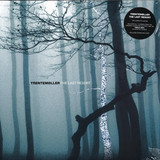
Special vinyl re-issue of Trentemøller's groundbreaking debut album. Includes all of the 13 songs on vinyl for the first time. Triple-vinyl in gatefold sleeve.
Trentemøller's debut album remains one of the few genre-defining and groundbreaking albums in many regards. It's still being praised for its composition and sounddesign alike and sounds as fresh and breathtaking today as it did when it was originally released in 2006.
The Last Resort - a beautifully crafted, astonishing masterpiece, that will leave you breathless. The 13 instrumental tracks together form a wordless musical story, almost like the soundtrack of a movie. It
manages to capture a whole range of emotions in subtle melodic miniatures, dreamy ambiences, dusty beats, deep dub-tracks and driving groove-excursions. An ever-changing kaleidoscope of colours and moods. Although it's an electronic album, it also incorporates live-drums, guitars, bass and other acoustic instruments like celesta, glockenspiel, melodica and even DJ scratching to create a more organic feel. The album received fantastic acclaim from both music fans and journalists around the world and made it into the top-lists of the month, the year, the decade - alongside an array of awards for best production or best album.
Back in 2006, the original pressing only included a selection of songs from the original 13-track album release. It missed out on songs which had been released on singles or didn't "fit" on the so called "vinyl edition". Due to 'public demand' and simply because this album deserves a proper vinyl release we are happy to finally present, for the first time, the full album on vinyl. It spans of three vinyl discs and is packed in a beautiful gatefold sleeve which also holds a download-code. The recut has been carefully crafted from first generation, orignal masters by Calyx in Berlin. Since the album has been praised for its fantastic sound the primary directive was to cut the lacquers for the re-issue so that they would sound exactly the same as the original release, which has been the CD version of the album. No 'digital remastering' or any other alterations have been applied.
All 13 songs of the classic album on one vinyl release for the first time. Triple-Vinyl edition. Gatefold sleeve. download code. original sound-quality. NO digital remastering.
out of Stock
Last delivered 21 days ago available to reorder, subject to availability
A great compilation can open the gate to another world. Who knew that some of the most exciting Afro-funk records of all time were actually made in the small West African country of Benin Once Analog Africa released the first African Scream Contest in 2008, the proof was there for all to hear, gut-busting yelps, lethally well- drilled horn sections and irresistibly insistent rhythms added up to a record that took you into its own space with the same electrifying sureness as any favourite blues or soul or funk or punk sampler you might care to mention.
Ten years on, intrepid crate-digger Samy Ben Redjeb unveils a new treasure- trove of Vodoun-inspired Afrobeat heavy funk crossover greatness. Right from the laceratingly raw guitar fanfare which kicks o Les Sympathics' pile-driving opener, it's clear that African Scream Contest II is going to be every bit as joyous a voyage of discovery as its predecessor. And just as you're trying to get o the canvas after this one-punch knock out, an irresistible Afro-ska romp with a more than subliminal echo of the Batman theme puts you right back there. Ignace De Souza and the Melody Aces' Asaw Fofor" would've been a killer instrumental but once you've factored in the improbably-rich-to-the-point-of-being-Nat-King-Cole-influenced lead vocal, it's a total revelation.
The screaming does not stop there, in fact it's only just beginning. But the
strange thing about African Scream Contest II's celebration of unfettered Beninese creativity is that it would not have been possible without the assistance of a musician who had been trained by the Russian secret services to "search and destroy" enemies of the country's (then) Marxist-Leninist president Mathieu Kerekou.
Already familiar to fans of the first African Scream Contest as a mainstay of ruthlessly disciplined military band Les Volcans de la Capitale, Lokonon André vanished in a cloud of dust at Ben Redjeb's behest with a list of names and some petrol money, only to return a few days later having miraculously tracked down every single name he'd been given. The source of this Afrobeat bounty-hunter's impressive people-finding skills - his training with the KGB - highlights the tension between encroaching authoritarian politics and fearless expressions of personal creative freedom which is the back-story of so much great African music of the 60s and 70s. Happily, in this instance, Lokonon was tracking the artists down to oer them licensing deals, rather than to arrest them.
Where some purveyors of vintage African sounds seem to be strip-mining the
continent's musical heritage with no less rapacious intent than the mining companies and colonial authorities who previously extracted its mineral wealth, Samy Ben Redjeb's determination to track this amazing music to its human sources pays huge karmic dividends.
Like every other Analog Africa release, African Scream Contest II is illuminated by meticulously researched text and eortlessly fashion-forward photography supplied by the artists themselves. Looming large - alongside Lokonon André - in the cast of biopic-worthy characters to emerge from this seductive tropical miasma is visionary space-nerd Bernard Dohounso, who laid the foundations for Benin's vinyl predominance by importing and assembling the turntables that would play the products of his Bond villain-acronymed pressing plant SATEL, a factory that would revolutionise the music industry in the whole region.
The scene documented here couldn't have been born anywhere else but in the Benin Republic , and the prime reason for that is Vodoun. It's one of the world's most complex religions, involving the worship of some 250 divinities, where each divinity has its own specific set of rhythms, and the bands introduced on the African Scream Contest series and other compilations from that country were no less diverse than that army of dierent Gods. At once restless pioneers and masters of the art of modernising their own folklore, the mystic sound of Vodoun was their prime source of inspiration.
One especially irascible Vodoun-adept was Antoine Dougbe, who styled himself The devil's prime minister' while turning ancestral rhythms into satanically alluring modern beats. As Orchestre Poly-Rythmo songwriter Pynasco has observed sagely, Evil is not elsewhere, evil extends into the house'. And African Scream Contest II is a gloriously cinematic road-trip through an undiscovered realm of music lore whose familiarity is every bit as thrilling as its otherness.
Prairie is the project of multi-instrumentalist and producer Marc Jacobs, hailing from Brussels with roots in The Netherlands. He previously released an EP (I'm so in love I almost forgot I survived a Disaster - 2013) and an LP (Like a Pack of Hounds - 2015) on the Berlin imprint Shitkatapult. On stage, Prairie plays with two or three musicians and together they re-create a free association of musical ideas and atmospheres. Prairie has played in selected venues and festivals across Europe and toured with Apparat in 2016.If the apocalypse was painted in several layers of pastel gouache, its soundtrack might be PRAIRIE's Flash Flood. Listening to the album, we drift through a series of frozen landscapes that gesture at a post-apocalyptic ambience. This is a kind of blackened music that has been left to sediment, excavated from traces in ice core samples. Flash Flood showcases a deep sensitivity to narrative and rich cinematic textures as Marc Jacobs returns with palimpsestic sonic layers. It has been three years since PRAIRIE's last release—the 2015 Cormac McCarthy-inspired Like a Pack of Hounds—and it is clear that it has been several years of pensive reflection. Now, PRAIRIE takes the sentiment of his 2012 debut, I'm So In Love I Almost Forgot I Survived A Disaster, several steps further: it is after the apocalypse, and no one has survived. And yet with Flash Flood, we can hear the hum of this impossible future.
'After the Flash Flood' introduces the sonic ruins of distorted guitars, field recordings, drum programming and synths that create the textures of the entire album. The melancholic and subdued black metal churn of 'Raindeath' becomes the cold backdrop for unnerving, paranoiac speech. The third track, 'Sisters', foregrounds this coldness while slowly moving away toward alternate vistas where the acoustic timbres of the saz-driven 'A Permanent War Economy' take over. 'Underwater Body Hunting' and 'Rabid Ibrahim' are hard hitting beat-oriented tracks that insist on burning slow. There is a patience with PRAIRIE's FLASH FLOOD that is difficult to deny. The lamentation of 'Elephants Will Rise Again' perhaps signals that it is not only the human that is lost after catastrophe. The album closes with 'Hard Water: Cracked Ice' and 'Hayashi Clock'. The former is a beautiful coalescence of clean harmonious tones and softly overdriven drums, while the latter brings us back to a meditative state, drifting through the final pastel tapestry.
"... his cosmos is located somewhere between Bohren & der Club of Gore and Sunn O))), ambient is as familiar to him as brachial sounds, and he is as much acquainted with guitars as with synths and modern technology" (GROOVE)
"... Like Ben Frost, (Prairie) exudes a certain harshness while tempering his work with moments of sublime beauty. This isn't club material, it's music for the hammer in one's hand, the confrontation of the demon, the soul-shattering revelation." (A Closer Listen)
Zia Mohiuddin Dagar : rudra veena
Annie Penta : tanpura
Concert recorded at the home of Shantha and Niranjan B. Benegal, Seattle, Washington 9 March 1986.
Recorded by Niranjan Benegal. Files obtained from Jeff Lewis.
Mastered & Cut by Rashad Becker at Dubplates & Mastering 1117 & 0318.
Liner notes by Renaud Brizard, edited by Stephen O'Malley & Ian Christe.
Front and back cover photos by unknown.
Interior photography by Niranjan B. Benegal, Dan Neuman & unknown, Seattle 1978-1980. .
Around ten years ago, deep into a cozy and hazy night following a concert with my sound brothers Daniel O'Sullivan and Kristoffer Rygg in London (as Æthenor), they graciously introduced me to a recording of rudra veena (a kind of noble deeper bass relative to the sitar, in a way) as performed by dhrupad master Zia Mohiuddin Dagar.
Dhrupad, for those who do not know, is a branch of Hindustani classical music said to "show the raga in its clearest and purest form". It's pacing concentrates heavily on the slow, contemplative alap section and works with specific microtonal gestures and deep characteristics of resonance ... in short I was hooked on this new (to me) and ancient form of music from the first listen, and feel that a more or less continual listening & reviewing of Zia Mohiuddin Dagar's recordings in the years that followed have influenced my own approach to music quite heavily (if, albeit, indirectly).
In early 2015 I was able to make contact with Zia Mohiuddin Dagar's son Bahauddin and some of his American students/disciples, primarily Jeff Lewis. Over time we developed a friendly and educational exchange, access a massive archive of recordings and developed these two paired titles for my label. It's been a long path to arrive at actually releasing them but also probably in many ways one of the most significant releases I've worked on. And I'm proud to be able to reveal these to date unreleased archival recordings of one of the masters of dhrupad, Z. M. Dagar, to the public for the first time.
Zia Mohiuddin Dagar was the nineteenth generation in a family tradition known as Dagar gharana, a rich lineage which continued and performed the musical form of dhrupad (Bahauddin Dagar continues the lineage as a master rudra veena dhrupad player of note today). Initially, dhrupad was a rigorous, austere, devotional genre that was sung in Hindu temples. But between the 16th and the 18th centuries, it became the preeminent genre in royal courts in North and Central India, and the Dagar gharana developed and continued publicly following the eventual loss of court patronage for dhrupad in the 19th century. The French ethnomusicologist Renaud Brizard covers the story of Zia Mohiuddin Dagar's life and teaching (a long story also in Seattle, my hometown!), the Dagar family and gharana, the rudra veena and more topics in an extensive set of liner notes in this release.
Ragas Abhogi & Vardhani were recorded in a private house concert in Seattle at the home of the Benegals in March 1986 (the week before the accompanying release SOMA029 Raga Yaman was recorded). The Benegals were friends (& Shantha Benegal was also a student) of Dagarsahib who sometimes hosted Hindustani music concerts in their home. It's a rare glimpse of a more intimate, personal and perhaps different kind of performance considering the form of dhrupad.
-Stephen O'Malley, March 2018, Paris, France
Stephen O'Malley would like to especially thank Bahauddin Dagar, Jeff Lewis & Jody Stecher for their enthusiasm, cooperation, patience, insight & advice toward developing these editions. Thank you also to Laurel Sercombe & John Vallier from the University of Washington Ethnomusicology Archives, Shantha Benegal, Philippe Bruguière, Dan Neuman, Ira Landgarten, Renaud Brizard, Ian Christe, Peter Rehberg, Rashad Becker, Daniel O'Sullivan & Kristoffer Rygg, all for their direct or indirect cooperation, assistance & patience.
Recorded by unknown at the University of Washington, HUB Auditorium, Seattle, Washington 15 March 1986 , concert co-sponsored by the UW Ethnomusicology Division and Ragamala.
Original digitally processed audio recording made with Panasonic PV-9000 VCR, Sony PCM-F1, PZM mics. Mastered & Cut by Rashad Becker at Dubplates & Mastering 1117 & 0318.
Liner notes by Renaud Brizard, Stephen O'Malley & Ian Christe.
Front and back cover photos by Niranjan B. Benegal, Seattle Center Folklife Festival 1979. Elizabeth Reeke & Annie Penta on tanpuras.
Inner gatefold photography by Niranjan B. Benegal & Ira Landgarten.
Around ten years ago, deep into a cozy and hazy night following a concert with my sound brothers Daniel O'Sullivan and Kristoffer Rygg in London (as Æthenor), they graciously introduced me to a recording of rudra veena (a kind of noble deeper bass relative to the sitar, in a way) as performed by dhrupad master Zia Mohiuddin Dagar.
Dhrupad, for those who do not know, is a branch of Hindustani classical music said to "show the raga in its clearest and purest form". It's pacing concentrates heavily on the slow, contemplative alap section and works with specific microtonal gestures and deep characteristics of resonance ... in short I was hooked on this new (to me) and ancient form of music from the first listen, and feel that a more or less continual listening & reviewing of Zia Mohiuddin Dagar's recordings in the years that followed have influenced my own approach to music quite heavily (if, albeit, indirectly).
In early 2015 I was able to make contact with Zia Mohiuddin Dagar's son Bahauddin and some of his American students/disciples, primarily Jeff Lewis. Over time we developed a friendly and educational exchange, access a massive archive of recordings and developed these two paired titles for my label. It's been a long path to arrive at actually releasing them but also probably in many ways one of the most significant releases I've worked on. And I'm proud to be able to reveal these to date unreleased archival recordings of one of the masters of dhrupad, Z. M. Dagar, to the public for the first time.
Zia Mohiuddin Dagar was the nineteenth generation in a family tradition known as Dagar gharana, a rich lineage which continued and performed the musical form of dhrupad (Bahauddin Dagar continues the lineage as a master rudra veena dhrupad player of note today). Initially, dhrupad was a rigorous, austere, devotional genre that was sung in Hindu temples. But between the 16th and the 18th centuries, it became the preeminent genre in royal courts in North and Central India, and the Dagar gharana developed and continued publicly following the eventual loss of court patronage for dhrupad in the 19th century. The French ethnomusicologist Renaud Brizard covers the story of Zia Mohiuddin Dagar's life and teaching (a long story also in Seattle, my hometown!), the Dagar family and gharana, the rudra veena and more topics in an extensive set of liner notes in this release.
Raga Yaman was recorded at a public concert in Seattle at the HUB Ballroom at the University of Washington in March 1986 (the week after the accompanying release SOMA028 Ragas Abhogi & Vardhani was recorded) at the end of his last tour of the United States. Yaman was a special raga for Zia Mohiuddin Dagar, one of his signature raags. For centuries, Yaman has been considered as one of the most fundamental ragas in Hindustani music and is one of the first ragas which is taught to students. A deep knowledge of Yaman gives a key for understanding many other ragas. It's filled with tranquility, contemplation, pathos and spiritual yearning. .
For the last decade, Argentina has become the epicenter of a musical explosion that characteristically blends folk music from the surrounding Andes and electronic beats. The artist arguably responsible for its emergence on a global platform is one named Chancha Via Circuito- a Buenos Aires native named Pedro Canale whose first album Rodante (2008) opened the floodgates by pushing the borders of Cumbia listeners weren't even aware existed. He's gone on to release other highly acclaimed albums such as Rio Arriba (2010), which Resident Advisor described as 'aural magical realism', and Amansara (2014), which catapulted him onto acclaimed international stages and received praises from Pitchfork to the New York Times.
Four years later, in the midst of some very notable global turbulence, Chancha Via Circuito brings us his highly anticipated new album Bienaventuranza- a word that essentially means bliss. Replete with his signature touches of Andean instruments (think lots of flute and charango), the folkloric elements on this album blend fluidly with danceable and digestible electronic beats. He's been cooking this record slowly, with unprecedented amounts of care and in a much more collaborative manner than his past albums.
Appearing on the album are heavy hitters in the digital cumbia scene, including Mateo Kingman, Kaleema, and Lido Pimienta, all of whom contribute their highly distinguishable sounds to the natural flow of the album. Most of these collaborations came about almost effortlessly. La Victoria is a track that blends cumbia, dancehall, and a bit of mysticism- carried by Lido Pimienta's luminous voice, Colombian Dancehall wizard Manu Ranks happened to be in town and slipped into the song naturally. Kawa Kawa came from an improv jam during rehearsal one day with Kaleema (Heidi Lewandowski) and Federico Estevez (percussionist in Chancha Via Circuito). Niño Hermoso, which is lyrically a fable, sounds the way it does because Pedro saw a video of Gianluz (Gianluca Zonzini), who he knows from dance classes, singing a Pocahontas song on Youtube.
As dancefloor-friendly as it is mystical, Bienaventuranza is as Chancha as it gets- with elements from Cumbia to Dancehall to Andean Folk to Global house, crystal clear production, and collaborations that are evidently natural and genuine, the record holds true to the sound that Canale has played such a huge part in creating. Since the release of his last album, the digital folk scene has also grown exponentially. From a new generation of producers to more listeners in unassuming parts of the globe, Pedro has been humbled to see the sound develop- and proves with this album that he's grown swiftly alongside it.
out of Stock
Last delivered 14 months ago available to reorder, subject to availability
A continuation of his kaleidoscopic sun-dappled cosmic-disco, Neon Leon was the much-loved CD-only sophomore album by Sorcerer. Just in time for Spring/Summer, we present the first ever vinyl issue, released as a deluxe double LP.
A perfectly formed suite of ten tracks featuring soft guitars, subtle synths and lightly grooving percussion, Neon Leon magically evokes that elusive summer feeling throughout. The guitar-driven "Algorhythm" serves as the album opener, blasting bold, sun-drenched jazz chords atop bright synths and groove-based drum programming. "Ride The Serpent" and "Distort Yourself" are guided by a more sultry, slo-mo disco impulse whilst the staggering "Chemise" and strident "Face It" merge 80s West Coast production sheen with Sorcerer's trademark laid back, gentle disco. "Raydio"'s undeniable head-nod groove adds a rare vocal to the proceedings, joyously combining with the bubbling cosmic funk.
Since its initial release in 2009, exceptional producers have created vibrant variations on the dreamy, dubby, melodic nu-disco theme. Happily, the emergence of such luminaries as Jex Opolis, Harvey Sutherland, Suzanne Kraft, Tornado Wallace et al has only served to make the master - Sorcerer - sound ever more brilliant and vital.
Utilising his array of guitars, drum machines, synths, and trusty MPC, the loved-up Sorcerer sound inspires halcyon memories of warm days, endless sunsets and pure youthful abandon. Influenced by surf, 80s dance pop, acid-R&B, space jazz, krautrock, disco, dub, and am radio gold, his music maps a tour through a uniquely Californian lifestyle. Yet when music so vividly captures a vibe and a feeling, it can make writing about it appear almost redundant. Instead, to glean the full colour of what your turntable will soon gratefully radiate, we prescribe the generous soundclips presented here.
And, for a unique insight into the process behind the wonderful sounds conjured up, here's Sorcerer himself:
"Neon Leon's is the name of a bar in a Elmore Leonard book I was reading on a vacation to Belize with my future wife. I was soaking up his brand of noir during the making of the songs on this record, along with another favorite Ross Macdonald. We were living in a small apartment in the Mission District of San Francisco where i had my own room to jam. It was painted Orange and Turquoise and was a very inspiring place to create and focus. I could walk out of my house to any number of hole in the wall bars where people were deejaying, hanging-out, and knew about me and my music.
After White Magic I developed more confidence in my style and process so I stuck with it and I believe it shows in the tunes I selected for the record. The sounds are rich and I dug deeper into sampling from obscure dollar records and getting looser musically. I made a handful of collage videos for the tracks at this time as well, which represent where my mind was at visually. In my mind it's Cosmic Funk that rules the day and I am thankful to have the opportunity to share it with the world again."
Lovingly remastered by the esteemed Simon Francis, cut reassuringly loud on to heavyweight double vinyl and presented in a deluxe gatefold jacket with freshly commissioned artwork throughout from original designer Rich Robinson, this limited edition of 500 copies is sure to fly.
WHEN YOU'VE FINISHED LOOKING AROUND THE WEBSITE, YOU CAN FIND US ON THESE SOCIAL CHANNELS
South African Mbaqanga And Bubblegum Instrumentals For The Dance-floor. First Time Available Outside South Africa. Cult Favorite Among Collectors. Follows The Successful Reissue Of bafana Bafana' Last Year. Professor Rhythm's 1991 Recording Professor 3 Is A Vivid Reflection Of Urban South Africa As Apartheid Was Ending. Thami Mdluli's Production Project Had Young And Old Dancing To A Sound That Sought To Unite Blacks Within Southern Africa. our Music Gave Hope To The Hopeless,' He Says. Mdluli's Third Instrumental Album (which Contains Some Background Vocals, To Be Exact), Portrays The Moment When The Dominant Mbaqanga And American R&b-based Bubblegum Sounds Being Produced In Johannesburg And Other Urban Centers Were Transforming Into House And Hip-hop-inspired Kwaito. The Pop Of The 80's And All That Went With It—from The Models Of Synths And Drum Machines To The Lyrical Style—gave Way To A Changing Melodic Emphasis And New, Much Slower Tempi Using A Completely Different Rhythmic Skeleton. Upbeat, Chipper Bubblegum, Often With Double-time Breakdowns And Upstroke Syncopations, Faded And The Sounds Began To More Closely Resemble Those Of Contemporary Black America—where Hip-hop Was Slowing Down And The Bass-lines And Melodies Were Getting Moodier, Darker In General. At The Same Time House Music Had Briefly Reached Mainstream Acceptance In The States And That Popularity Continued To Feed Into Awareness Overseas. These Two Influences Blended With The Burgeoning House Music Scenes In Johannesburg And Pretoria As Professor Rhythm 3 Was Being Produced In March 1991 (the Same Year Apartheid Ended). Mdluli Explains, we Were Influenced By Foreign Bands And So People Updated Their Sound.' According To Mdluli, The Evolving Sound Was Bolstered By Widening Availability Of House And Rap Records From Abroad While, Most Importantly, An Increasing Sense That Apartheid Might Soon Be Finished Was Met With A New Positivity Vibe Society. 1991, '92, '93... Mandela Was Released. People Were Upbeat, They Were Happy, The Music Was Good.' Professor 3 Came Out On Vinyl As The Lp Business Was Dying In South Africa And Sold Around 20,000 Copies. It Was Mainly Distributed On Tape, Which Sold Closer To 100,000. With The Help Of Engineer Fab Rosso, The Recording Features Backing Vocalists From Mango Groove. After Making A Half-dozen Records As Professor Rhythm, Mdluli Once Again Shifted His Focus Musically. By The Mid-90's He Had Veered Off Gospel Music— And Left Playing In Bands And Started Making His Own Solo Recordings. His Enormous Success In The Gospel Realm In The Years Since Is A Remarkable Story In Its Own Right, But For Now We Are Only Dancing.
For his third album for Far Out Recordings, London based multi-instrumentalist and one of Europe's finest saxophonists Sean Khan ventures to Rio de Janeiro to collaborate with iconic Brazilian polymath Hermeto Pascoal. Taking its title from the escaped slave settlement 'Palmares' in the Northeast of Brazil during the 1600s, Palmares Fantasy is Khan's utopian jazz message for the world, and features Azymuth drummer Ivan 'Mamao' Conti, bassist Paulo Russo, guitarist Jim Mullen, and guest vocals from Brazilian chanteuse Sabrina Malheiros, and Cinematic Orchestra frontwoman Heidi Vogel.
Like Hermeto Pascoal, Sean Khan is a self-taught musician. Never able to afford his original dream of studying at Berklee, and having been turned away from Guildhall School of Music for being 'too raw', he became disillusioned with what he saw as the exclusivity, elitism and dangerous institutionalisation of the jazz world. Yet Sean's love for music and the drive to create never faltered.
Hermeto Pascoal, the man Miles Davis once dubbed the most impressive musician in the world', is a similarly independent artist. A true maverick whose ingenuity and freedom from conventional restraints is so great that he has essentially conceived his own musical language, made him the dream collaboration for Sean.
Aspiring to inclusivity and equality also informs the message in Khan's music. Inspired by the 17th Century settlement of Palmares in Brazil's Alagoas region, which was free from the Portuguese crown's murderous exploitation of South America for a century, Khan notes his fascination with the fact that while majoritively made up of escaped African slaves, many deserter conquistadors also joined the settlement.
Hearing the deep-grooving title track with this history in mind, the listener is transported to a futuristic musical eden, with Mamao's insatiable 10/8 rhythm back-boning Hermeto's wild improvised vocals, rhodes and whistles, while Sean's harmonically brilliant sax and flute add more layers of moody, characterful expression. 'Moment of Collapse' is Sean's poetic study on the uncertainties of modern day western civilisation, delicately presented by the gorgeous vocals of Heidi Vogel and drenched in lugubrious strings and Alice Coltrane-esque harp. The two covers on the album are of Hermeto's own 'Montreux' (on which Hermeto plays solos on a teapot and a pint of water), and an uplifting soulful jazz-funk take on Milton Nascimento & Lo Borges MPB classic 'Tudo Que Voce Podia Ser' featuring the vocals of pioneering nu-bossa voice Sabrina Malheiros.
The recording sessions for the album were part of an intensive and hugely productive eight-week excursion to South America for Far Out boss Joe Davis in the summer of 2016, which also saw the sessions for Azymuth's Fênix and a forthcoming album from Uruguayan fusion legend Hugo Fattoruso.
Fantastic' Gilles Peterson
Loving this!' Opolopo
Thank you!' Sassy J
Proper! Great track.' Colin Dale
this is great!' Yannick Elverfeld (RBMA / Needs Records)
I've enjoyed Sean Khan's earlier releases, but this really seems like he's grown into his fairly considerable talent.' Mark Sampson (Songlines)
His last album was his best so far, but I think this one may be even better.' Laurence Pragnell (Soul Brother Records)
dope!!!' Kyri (R2 Records)
this is great - really cool vibe!' Sam Redmore
wonderful track - can't wait to hear the lp.' Simon Harrison (Basic Soul Radio)
This is very tasty indeed.' Gavin Boyd (Soul Has No Tempo)
New Lp-edition of a private press library recordings of the early '70s.
Together with Florian Fricke and Peter Michael Hamel, Deuter is certainly the main responsible of a fruitful encounter between European sensibility and Eastern aesthetics in the German music of the 1970s. Soundtrack was originally produced by Kuckuck in 1973 not for an official and public release, but as a library' to be used for films, TV and radio. As a library it respects the canonical and typological structure of the genre with 26 short sonic fragments, sequences imagined and conceived like fulminating illuminations. There's still a solid electronic vocation that, however, has put aside the most disruptive effluvia of D (1971) of pure kraut' ancestry. In fact, the album is more like an ideal passing bridge between some ritual instances of the previous Aum (1972) and the following successful phase of Deuter during the period when he stays in the Bhagwan Shree Rajneesh's ashram in Poona realizing, in parallel to a renewed inner life, masterpieces like Celebration, Haleakala, Ecstasy and Silence is the Answer. Musically speaking, Soundtrack presents itself as a heterogeneous work with nocturnal, cinematic, galactic and atmospheric-environmental implications. Electronics remains the predominant factor but can vary from mantra drones of more ceremonial and meditative space-relax' tones of some tracks (Triad, Deep Sea, Gothic Velvet or Evening) to the most amused formulations of pulsating analog synths that in the hands of Deuter become toy-equipement' to modulate and explore (Desert Rock, Synth Effect, Flea Dance or Laser). There is no lack of acoustic moments more ethnically inspired with Arabian and Indian (Reed, Arabia) or devotionally solar themes (Tom Bombaddils Dance), so evoking an air of diffuse peace then completely conquered in the beloved India.
Danny McLewin (Psychemagik) and Jamie Cruisey have a new label of original signed artists called SPIRITS. The first release is from Mexican hotness 'Lokier' of She Made Monster and 'Jason Greer' aka 'The Machine', one of the Californian undergrounds best kept secrets. They met in 2015 at a festival in London and after spending a few days together, became musically obsessed with each other. That summer, as Jason bounced around Europe, he stayed with Lokier in Barcelona for some weeks and after long night walks, some tapas and absinthe bars they came up with their first EP together.
A1 "White Room's" slo-mo headnod film score, kick starts the EP, brooding synths buzzing with electric cocaine gloss, their oscillators fluttering like cyborg butterflies around the pulsating strobelight beat. Creepy.
A2 "Stained Glass" hits tough straight out the gate with subterranean bubbling acid bass and charges headlong into deep psychedelic territory with a goth-inspired guitar, reverb on 11, turning the track into a next-level robo-Giallo monster!
B1 "Pearly Hate" begins as if a menacing swarm of bionic rave bees is slowly surrounding you, the tension of their impending drone amping up steadily as your brain thinks: Do I run This midtempo Carpenter-esque jam is atmospheric putty in the hands of sleazoned DJ's and sounds like the beginning of a long, strange trip.
B2 "Red Floor" is a chugging, barely restrained dark disco beast, flagrantly wearing its Weatherall and Neu Beat-ing heart on its tattered sleeve, elliptical melodies keeping you from your sanity with a solid drop for the dancefloor - another one for DJ's who ride it rough.
Thus completes the first release for new label SPIRITS. Four tracks exploring another corner of otherworldly analogue hedonism for extra-dimensional travel. Keep your ear on "Red Floor", as its potential for dancefloor uplift is proven and Machine-ready! Stay jacked in for more missives soon...
Ivan Smagghe:
"When your best Mexican chola low-rider meets our favourite Californian mechanic, you get a proper slice of (Lokier and) Machine funk. This is grease electronics, black leather under the very dark sun of 'Pearly Hate' or in the bright isolation tank of 'White Room''
Lithuanian based label Sodai started its journey in 2016, making it a label still in it's infancy but making a big impression. Owned by artist Gardens Of God, who started the label to create his own 'no limits' platform for his experimental sounds and projects. While at the same time a platform to give other artists the chance to also have freedom with art and music.
With releases from Raxon, Few Nolder and Alex Krell under their belt, they can announce the exciting debut from UK producer Third Son this April. 'I've been an admirer of Gardens Of Gods' music for a long time, when he asked me if I could do something for his imprint, I was more than thrilled!' adds Joseph.
'Syncope's' synths spread far and wide, making this a journey of a track, modulating and panning in and out, pushing and pulling along a percussive drive. His broad musical range can be felt in this mix, with its slightly hypnotic tones.
'Irony' has a punctuated low end, which creates a deep and dark groove. The synthetic elements in this track gain in attitude, on top of ambient pads, leading nicely into 'Bach' to close out the release. It's driving and determined bass makes the backbone of the track, with a modulating hook line, along building and expanding frequency ranges.
The whole package makes for a very strong first release from Third Son, and Sodai are excited to be welcoming him to the family.
The Saqqara Ep Is A Multilayered, Sonic Canvas From The Mind Of Chris Barratt, As He Launches His New Alias, Baratt, For Life And Death. Fine Brushstrokes Move From All Areas Of His Musical Hideout, Spreading Over Five, Varied, Aural Sculptures, Each One Warping And Weaving On Its Own Cosmic Trajectory. Pooling From Key Aspects Of His Eagles & Butterflies Project, Barratt Induces New Musical Shades, Hinting At Moments Of Disco And Funk, Through A Lens Of Psychedelia. The Title Track Is A Late-night Floor-filler - A Bold Yet Uniquely Personal Necropolis Built From Riveting Delays And Arpeggiators. Time Bending Sees Dj Tennis Join In, Stepping Up With His Trademark, Rough Around The Edges Production Aesthetic, En Route To Unknown Destinations. Barratt Hones-in On A Confident, Stripped-down Style On Khaos - Rhythm Versus Melody - Just In Time For Festival Season. 1983 Soundtracks A Ride To Utopia On A Rocket-fueled Vespa, Leading To Collider, The Land Of Un-quantised Madness, Where The Most Treasured Of Synthesisers Live Amongst Their Drum Machine Counterparts. Flowing Yet Incredibly Interconnected, Saqqara Is Best Interpreted As A Mini Artist Album - The First Of Many Barratt Offerings.
From his Saint Denis apartment, and with the help of his machines, Labelle has laid the foundations of an electronic maloya, modern and deeply rooted in its home territory: La Réunion. On 'univers-île' his latest album released in September 2017, the sound of the Creole Reunionese language played a key role. On 'Post-Maloya", Labelle release a fascinating EP of introspective trance music. Post-Maloya EP is characterized by vivid dream-like journey through which traces a path of exploration. Here you will find the maloya stamp, which is Reunionese traditional music, both in the rhythms and the instruments used, like the valiha. This traditional tubular harp from Madagascar is played by Vola on the track 'Jaojoby'. Vola was taught by Rajery himself, who is widely considered as master of this instrument. This track is an homage to Jaojoby, king of Salegy, a popular musician in Madagascar. The hypnotic sounds evoke distant dimensions and resonate like shamanic incantations whose aim is to gently lead us towards the trance. As the title suggests - 'Post-maloya' is the exploration of new musical processes mixed with the use of traditional maloya instrumentation. This is an appropriate name for this new opus, which is more electronic and percussive; carving an experimental path between electronic and traditional music. In parallel with the creation this EP, the Regional Conservatory of Réunion Island has given free reign to Labelle to create a series of live performances which he played all around the island last month, including an original creation linked to his expression of 'Post-maloya' supported by an ensemble of eleven musicians from Réunion Island's regional orchestra.
Following the U.S. Army's liberation of Munich in May 1945, the world's first Amerikahaus was inaugurated there with a library, a magazine reading room, a children's library, a record and lm department, and lecture and seminar rooms, together with a concert hall and exhibition space. Up to 80,000 people a month utilized the offerings of Amerikahaus during its early years. Beginning in 1953, the United States Information Agency (USIA), an institution founded as an instrument of the Cold War, began to finance Amerikahaus. In addition to representing the U.S., its principal task in West Germany was to democratize and denazify the postwar population. After the beginning of the Cold War, many of these re-educative measures also served as propaganda in a programmatic linking of democratic and economic principles meant to strengthen transatlantic relations against the Communist Bloc. In 1997, the U.S. government concluded its work at Amerikahaus in Munich and shipped almost all its items back to the States. However, 1,630 long-playing vinyl records from the library were left behind in cardboard boxes in the basement. When Michaela Melián looked through this forgotten collection, one of the first things she came across was Don Gillis' 1940 tone poem »Portrait of a Frontier Town«, whose second movement is entitled »Where the West Begins«. Don Gillis, a composer and radio producer, used the musical styles and genres of that decade to create an explicitly American program music. Michaela Melián's »Music from a Frontier Town« is fueled by the diverse sonic material of this extensive record collection once considered as an instrument of cultural education. This record has been produced in addition to Melián's twenty-four hour performative music installation »Music from a Frontier Town« in the garage of what is now the Bavarian Center for Transatlantic Relations at Karolinenplatz, Munich (4-5 May 2018).