The true test of originality for any musician comes when you hear an instrument being played and you instantly know who’s playing it. For electric guitarists, certainly Hendrix qualifies; Page and Clapton, too. Maybe Eddie Van Halen before the legion of imitators. You probably have your own list, but to us, standing toe-to-toe (or pick-to-pick) with those legends is Television guitarist and solo artist Tom Verlaine. His self-taught, jazz-influenced style, largely devoid of effects, and vibrato tone (oh, that tone!) makes any Verlaine solo unmistakably a Verlaine solo. That he was quite an accomplished, idiosyncratic songwriter is just a bonus. Real Gone Music is very, very proud to announce that we have arranged with the Verlaine estate to release Tom’s last three solo albums on LP; Songs and Other Things was the last record he released, in the same year (2006) as the all-instrumental Around. As the title indicates, this was indeed a return to lyrics and vocals, the first record with “songs” since 1990’s The Wonder (although the first track, “A Parade in Littleton”—one of the “Other Things”—is a low-key, funky instrumental that would have been home on a late Talking Heads album). The time off clearly allowed Verlaine to build up a strong cache of compositions, with “Nice Actress” and “The Earth Is in the Sky” among the highlights. The record also marks a welcome return of Verlaine’s enigmatic lyrics, which as always prompt head scratching while somehow making intuitive sense. But in the end, it’s the amazing guitar work—ably supported by Fred Smith of Television fame and Jay Dee Daugherty of The Patti Smith Group among others—that elevates Songs and Other Things to essential status, worthy of its exalted position as the final release of Tom Verlaine’s career. Bassist and original engineer Patrick Derivaz has mastered the album for its vinyl debut; Verlaine’s long-time partner Jutta Koether contributes notes. Teal vinyl pressing!
Buscar:its all true
PM Warson returns with the new album "A Little More Time". Having established himself as "one of the leading lights on the modern-day R&B scene" (Shindig! magazine UK), his third long-player represents an expansion of his mid-century vision. Less a departure, more an arrival, the album moves beyond the R&B revivalism of his previous work, taking in a breadth of styles and moods within its distinctly '60s sonics.
Recorded at Lightship 95, London's floating analogue studio, the 10 original tracks combine the direct feel of live performance, alongside a developed songwriting and production approach. The album is led by the second single (following "Right Here, Last night") and title track "A Little More Time" setting the tone with a dose of sweeping vintage pop and uptown soul. "For this record I wanted to channel the sound I'd developed playing live with a band, while at the same time further exploring my songwriting. I allowed my wider influences to permeate a bit more and placed the vocal and lyric more forward in the songs" PM Warson says.
PM Warson is a UK musician, songwriter and producer. He emerged in 2021 with the album "True Story", after a series of DIY vinyl releases. Breakout single "(Don't) Hold Me Down" surfaced initially among soul collectors (with the original release clocking in at over $200 on collector sites), before finding a wider audience on European radio and streaming platforms.
With touring opportunities limited due to the ongoing pandemic travel restrictions, he turned his attention to a quick-fire follow-up. The lean, brooding "Dig Deep Repeat" was released in May 2022, led by the single "Leaving Here". Extensive tour and festival dates throughout Europe followed, where he gained a reputation as an impressive live act, performing alongside the likes of Cedric Burnside, Robert Finley, Nick Waterhouse and GA20.
After a run of dates in France, and an appearance at the legendary 100 Club in London, he set about working on new music during 2023. Having released the single "Right Here, Last Night" as a 7inch vinyl on his own Acid Jazz-distributed FYND marque, he teams up again with Légère Recordings for his third album, the expansive "A Little More Time".
- A1: Beyond This World
- A2: Feelin' Alright
- A3: Sunshine
- A4: What "U" Waitin' 4?
- B1: U" Make Me Sweat
- B2: Acknowledge Your Own History
- B3: Belly Dancin' Dina
- B4: Good Newz Comin
- C1: Done By The Forces Of Nature
- C2: Beeds On A String
- C3: Tribe Vibes
- C4: J Beez Comin' Through
- D1: Black Woman
- D2: In Dayz "2" Come
- D3: Doin' Our Own Dang
- D4: Kool Accordin' "2" A Jungle Brother
"2" A Jungle Brother The Jungle Brothers' 1988 debut, Straight Out The Jungle, was important for many reasons. It was sloppy and goofy but had moments of real focus and social consciousness. It was a true kitchen sink' record, that caught a rap fanbase enraptured by Eric B. & Rakim, Public Enemy and Boogie Down Productions a bit off-guard. Also of note, beyond the excellence of the album itself, the Jungle Brothers were the fulcrum for what would become the Native Tongues movement - they came first, De La Soul and A Tribe Called Quest followed, under their guidance. By 1989, the group had even more confidence, plus a Warner Bros. contract and advance in their back pocket. They used it to great advantage on the self-produced and criminally underrated Done By The Forces Of Nature, expanding their sonic palette and continuing their Afrocentric approach to music and life. Singles like What 'U' Waitin' 4' and Doin' Our Own Dang' (with De La and Q-Tip, alongside Monie Love) showed the group's fun side, which has also lead the way in the hip-house' movement. But things weren't all fun and games, as deeper, more pensive album tracks like Black Woman,' Beeds On A String,' and Acknowledge Your Own History' show. It was another accomplished mix of fun, frolic and knowledge-of-self, proving that you could be serious in the rap game but still let off steam and fill the dancefloor. Done By The Forces Of Nature stands as one of the most cherished hip-hop documents of the late '80s among true-school heads, and this edition is the perfect way to revisit this classic thinking-man's (and woman's) rap platter. Issued for the first time ever on 2-LP with the original picture sleeve artwork, it also comes with a reproduction of the original insert, with credits and lyrics.
"Dance With Me Volume 4" is the fourth compilation record from Salon Recordings’ artists and affiliates. Features thirteen tracks from twelve artists including label founder Damar Davis, residents Sevyn, Oye Manny, Grandfather, and Bobby Cabbagestalk. Salon’s yearly compilations are a showcase of musicians across the globe who understand the unique elements that make up the Salon sound. From the most atmospheric corners of house music to up-tempo beats designed for the dance floor, Salon Volume 4 stays true to the signature soulfulness of the independent label. Featuring a tight line-up of new and familiar producers from all the US and beyond the compilation is a sampling of the best that the label has to offer. The tracks range in tone from hypnotically entrancing to beautifully ruminative, each an offering from artists shaping the dance music scene as it navigates the post-lockdown age.
Few bands have as enduring a legacy in the acoustic/newgrass/jam band
scene as Colorado-based Leftover Salmon
Carrying the torch passed down by the progressive bluegrass pioneers, The
Seldom Scene and Newgrass Revival, Leftover Salmon are true architects of the
contemporary jam grass scene, inspiring the careers of a generation of artists
ncluding Billy Strings, Greensky Bluegrass and Yonder Mountain String Band.
On 'Grass Roots', Leftover Salmon reflect on its bluegrass and festival
campground origins with a set of songs that draws from the repertoires that The
Salmon Heads and The Left Hand String Band played when they first jammed in a
Telluride Bluegrass Festival campground. Collaborating with jam scene icons
Billy Strings, Oliver Wood, and Darol Anger, and with the recent addition of Jay
Starling on resophonic guitar, lap steel and keys to the band's official line, Leftover
Salmon have all the instrumental firepower needed to deliver hard driving
versions of bluegrass standards and grassed- up versions of songs from Bob
Dylan, David Bromberg, and The Grateful Dead. Now available on Limited Edition
Banana Yellow Vinyl
Now available on Limited Edition Banana Yellow Vinyl
Last Summer, Daniel Foggin, guitarist, writer and chief architect of Smote, uprooted himself from his usual home in Newcastle to live and work in a farmhouse in Kelso, near the Scottish border. “Through the summer when I was working up there, myself and Rob (Smote drummer) would finish work and go sit by a small river and have a couple of beers in the sun, and it was the best thing ever” he relates “So I guess the philosophy is that to some people it looks like any other stream, but to us it was supreme happiness.” Hence came the title of the fourth Smote album proper, one largely recorded in this same farmhouse – A Grand Stream. It’s an album that’s the truest incarnation thus far of his vision for this band – a full-scale psychic voyage into the ether and a drone-and-repetition-fuelled series of incantations that takes simple, primal ingredients and utilises them for the purposes of aural sorcery, summoning spectres and revelations aplenty in its wake. Whilst the folk-tinged, ceremonial ambience that Smote have made their trademark is present and correct here, utilising Swedish classic psych heaviness and Swans textures as fuel for the ominous rhythms of ‘Coming Out Of A Hedge Backwards’ and the uplifting cadences of opener ‘Sitting Stone Part 1’, Foggin and his cohorts also waste little time exploring new more eerie and ethereal textures and dimensions. The meditative ‘Chantry’ in particular sees them gravitate towards a headspace akin to the drone-based epiphanies of Kali Malone’s ‘Does Spring Hide Its Joy’ filtered through the transcendent amplifier worship of ‘Earth 2’. A Grand Steam takes this band – one who’ve always eschewed the cliches and stumbling blocks of all contemporary psych rock in favour of their own unique and wyrd vision – into a realm in which they transcend through willpower and skill alike into something preternaturally thrilling, mapping out their own crepuscular new territory Question is; dare you step over the threshold?
On 'Be Am' (now available only vinyl), Norwegian pianist, composer and
producer Bugge Wesseltoft has allowed his creative impulses to wander
where they may - no pre-set rules to govern the composition and
production, no obligations to (not) use electronics, not even a will to be
totally alone: this is pure playing and composition, where the music
speaks freely by whatever means it will
In the 25 years since Wesseltoft founded Jazzland Recordings, he has engaged in
numerous group projects and collaborations such as New Conception of Jazz,
duos with the likes of Sidsel Endresen, Henning Kraggerud and Henrik Schwarz,
one- off projects such as Trialogue, Bugge and Friends, and OKWorld! And of
course, the super- trio Rymden. However, it is in his solo material that we can
glimpse the true soul behind the effervescent and mercurial mind of one of the
most influential and important Norwegian musicians of an entire generation.
Many of the pieces here have the feeling of being wordless songs - indeed, no
words are needed when the notes convey all that is needed on tracks like "Tide"
or "State". The arrival of Håkon Kornstad on the track pairing of "Emergence" and
"Roads" shifts the mood from one of peace within solitude to peace within
company, the latter track being an understated dialogue, a musical soundtrack for
watching the world hustling and bustling, or sleeping its way towards a new day.
Tracks such as "Messenger", "Green" and "Be Am" throw more angular shapes,
musical shadow-play where unexpected progressions shift to moments of gospel
uplift before taking unanticipated shifts towards unexpected harmony. With "Life",
kalimba accompanied by birdsong loops, carrying us into a piece that takes
tentative but exact steps between positions, like tai chi in musical form.
"Sunbeams through leaves softly rustling" closes the album with that beautiful
Satie-like melodic simplicity that Bugge has made his own.
ohn Fahey’s Takoma label is best known for pushing the envelope when it comes to acoustic guitar playing, but in 1967 it released a record that has become one of the true cult classics of the ‘60s free jazz movement. Charles Martin Simon was an aspiring writer whose artist wife died in 1965. When he tried to pick up the torch and become an artist using her art supplies, he was, in his words, “reduced to nothing,” and thus created an alter ego or “psyche fragmentation,” Charlie Nothing. Under that moniker he became most famous for creating “dingulators,” working guitar sculptures made from parts of American cars; in 1967, though, he recorded The Psychedelic Saxophone of Charlie Nothing/In Eternity with Brother Frederic, an album consisting of two separate saxophone improvisations accompanied only with gong, tabla, and ukelele. Its cover adorned by Nothing’s own hand-drawn art, this record has since become not only something of a “secret handshake” among free jazz fans, but also a classic of outsider art, fitting right next to your Moondog records if not in sound than in spirit. For its first ever reissue in any format, we’ve gone back to the original tapes to present an all-analog release of The Psychedelic Saxophone of Charlie Nothing/In Eternity with Brother Frederic on black vinyl with the original art intact, offering an unfiltered experience of this man’s cracked genius. A memorable look ‘n’ listen to say the least.
2024 Repress
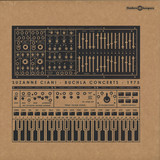
Finders Keepers invite you to witness the incredible first ever Buchla synthesiser concerts/demonstrations providing a distinctive feminine alternative to The Silver Apples Of The Moon if they had ever been presented in phonographic form. This is history in the remaking.
This spring Finders Keepers Records are proud to release an archival project that not only redefines musical history but boasts genuine claim to the overused buzzwords such as pioneering, maverick, experimental, groundbreaking and esoteric, while questioning social politics and the evolution of music technology as we've come to understand it. To describe this records as a game-changer is an understatement. This record represents a musical revolution, a scientific benchmark and a trophy in the cabinet of counter culture creativity. This record is a triumphant yardstick in the synthesiser space race and the untold story of the first woman on the proverbial moon. While pondering the early accolades of this record it's daunting to learn that this record was in fact not a record at all... It was a manifesto and a gateway to a new world, that somehow never quite opened. If the unfamiliar, modernistic, melodic, pulses, tones and harmonics found on this 1975 live presentation/grant application/educational demonstration had been placed in a phonographic context alongside the promoted work of Morton Subotnick, Walter Carlos or Tomita then the name Suzanne Ciani and her influence would have already radically changed the shape, sound and gender of our record collections. Hopefully there is still chance.
In short, Suzanne was a self-imposed twenty-year-old employee of the Buchla modular synthesiser company, San Francisco's neck and neck contender to New York's Moog. Buchla was run by a community of festival freaks and academic acid eaters whose roots in new age lifestyles and the reinvention of art and music replaced the business acumen enjoyed by its likeminded East Coasters. In the eyes of the consumer the creative refusal to adopt rudimentary facets like a piano keyboard controller rendered the Buchla synthesiser the more obscure stubborn sister of the synth marathon, steering these incredible units away from the mainstream into the homes and studios of free music aficionados, art house composers and die-hard revolutionaries. Championed and semi-showcased by composer Morton Subotnick on his albums The Bull and Silver Apples Of The Moon, Buchla's versatility began to open the minds of a new generation, but the high-end design features and no-compromise modus operandi was often confused with incompatibility and, in the pulsating shadow of Moog's marketing, the revolution would not be televised nor patronised. Suzanne Ciani, as one of the very few female composers on the frontline (and also providing the back line) did not lose faith.
These concerts' are the epitome of rare music technology historic documents, performed by a real musician whose skills and academic education in classical composition already outweighed her male synthesiser contemporaries of twice her age. At the very start of her fragile career these recordings are nothing short of sacrificial ode to her mentor and machine, sonic pickets of the revolution and love letters to an absolutely genuine vision of and 'alternative' musical future. In denouncing her own precocious polymathmatic past in a bid to persuade the world to sing from a new hymn sheet, Suzanne Ciani created a bi-product of never before heard music that would render the pigeon holes ambient' and futuristic' utterly inadequate. Providing nothing short of an entirely different feminine take on the experimental records' of Morton Subotnick and proving to a small, judgmental audience and jury the true versatility of one of the most radical and idiosyncratic musical instruments of the 20th century. These recordings have not been heard since then.
The importance of these genuinely lost pieces of electronic musics puzzle almost eclipses the glaring detail of Suzanne's gender as a distinct minority in an almost exclusively male dominated, faceless, coldly scientific landscape. Those familiar with Suzanne's work, a vast vault of previously unpublished non-records', will already know how the creative politics in her art of being' simultaneously reshaped the worlds of synth design, advertising and film composition before anyone had even dropped a stylus in her groove. Needless to say this record, finally commanding the archival format of choice, courtesy of the Ciani and Finders Keepers longstanding unison, was not the last first' with which this hugely important composer would gift society, and the future of a wide range of exciting evolving creative disciplines.
You have found a holy grail of electronic music and a female musical pioneer who was too proactive to take the trophies. With the light of Buchla and Ciani's initial flame Finders Keepers continues to take a torch through the vaults of this lesser-celebrated music legacy shining a beam on these non-records' that evaded the limelight for almost half a century. You can't write history when you are too busy making it. With fresh ink in the bottomless well, let's start at the beginning. Again. You, are invited!
Resonance is one of the most powerful forces this world has,
simply because there is no way to stop it. A drop of
condensed water separates itself from the concrete ceiling.
Propelled only by its own weight, it plummets down towards
a cacophony of naked bodies and §ailing arms to shatter on
a the forehead of an ecstatic dancer. And while all this is
happening, a voice resonates through the entire room,
making the walls shake and the crowd lose themselves even
further : “Move Your Body, Move Your Soul”. Narciss emerges
from a grimey basement in Berlin to bring us two heavy
utility dance§oor cuts on Actions Speak Louder Than Words,
his ¦rst Solo EP on Seelen. The title track is truly something
to behold. With a breakneck tempo, hard hitting percussions
and a legendary house vocal, it wields an absolutely
hypnotizing power that, before you know it, will make
everyone in attendance grind and juke till the early morning
hours. There is a palpapable vibe of mid 90s Detroit-Techno
but still it manages to cut out an identity for its own, with
razor sharp sound-design and a very uplifting attitude for its
genre. And while the tracks arrangement and sound-design is
very minimal, it is on Brennpunkt that Narciss really §exes
his trademark way of building tension with remarkably few
elements. Everything here is stripped down to its most
functional core. The synth-lead is simple yet menacing, the
kick-drum hits like a boxer, and you can be pretty sure that
the hihats will leave burns if you get too close to the record.
As is custom on this label, the B-side is dedicated to thereconstructive efforts of friends or family. This time the
mastermind of Manhigh and Grounded Theory, Mr. Henning
Baer, and Seelen’s very own Shaleen have both let their
actions speak. Henning Baer has taken on the title track in
his Remix and has transformed it into a true vintage electro
cut. A distorted synth and pad add heavy grit to the original’s
vocal, and the warehouse sized kickdrum will knock anyone
unprepared off their feet. Meanwhile Shaleen’s reinterpretation of Brennpunkt strips it down even further,
swirling the original’s elements into a groovy maelstrom.
This version rumbles, clicks and sneers, with sampled voices
from a Shakespeare play giving the whole ordeal a truly
macabre feeling. This is a tool for only the most darkest of
warehouses when the night is at its peak. So now, to
summarize this record : it is a call to action. And because of
this, it continues to resonate, even when the last track has
been played. And a resonance can never be stopped.
- Remember
- Street Corner
- Sister Disaster
- Fanfare
- You're Sorry Now
- Mele Ipu Ekahi
- Revolution Get Down
- Used To Be
- Find Someone To Believe In
- You're Sorry Now (Slight Return)
- Making Up For Lost Time
- Some Confusion City
- Poison Arrow
- Black Is The Color
- D-Am
- Stone Rain
- Noise Epic
- Rude Awakening
- Voodoo Train
- Startime
- Mele Ipu Elua
Clear red vinyl[21,81 €]
Seeing the BellRays live is a revelation of what the rock music should be: an aggressive and soulful guitar-driven music that you feel in your guts. The BellRays have been channelling the true spirit of rock and soul since 1990, with this being their fourth blood-letting release. As expected this record oozes a genuine passion, combining the best of a 60s soul review with the fury of garage rock's greatest. Just imagine a young Tina Turner fronting the MC5 and you'll be getting close. But make no mistake, front woman Lisa Kekaula is no mainstream soul singer. Although her warm traditional R&B vocal stylings are big, lush and beautiful, her ferocity is uncompromising. When her rock growl rumbles the floor, you best pay attention, there are no options available. This is a band preaching the continuation of the rock'n'roll tradition in all its purity, anger and visceral power. The BellRays are on a self-professed mission to save rock music from itself and they need a witness.
- Remember
- Street Corner
- Sister Disaster
- Fanfare
- You're Sorry Now
- Mele Ipu Ekahi
- Revolution Get Down
- Used To Be
- Find Someone To Believe In
- You're Sorry Now (Slight Return)
- Making Up For Lost Time
- Some Confusion City
- Poison Arrow
- Black Is The Color
- D-Am
- Stone Rain
- Noise Epic
- Rude Awakening
- Voodoo Train
- Startime
- Mele Ipu Elua
Black Vinyl[20,97 €]
Seeing the BellRays live is a revelation of what the rock music should be: an aggressive and soulful guitar-driven music that you feel in your guts. The BellRays have been channelling the true spirit of rock and soul since 1990, with this being their fourth blood-letting release. As expected this record oozes a genuine passion, combining the best of a 60s soul review with the fury of garage rock's greatest. Just imagine a young Tina Turner fronting the MC5 and you'll be getting close. But make no mistake, front woman Lisa Kekaula is no mainstream soul singer. Although her warm traditional R&B vocal stylings are big, lush and beautiful, her ferocity is uncompromising. When her rock growl rumbles the floor, you best pay attention, there are no options available. This is a band preaching the continuation of the rock'n'roll tradition in all its purity, anger and visceral power. The BellRays are on a self-professed mission to save rock music from itself and they need a witness.
I needed to do some recording to cheer myself up. The studio I usually use was booked all month, but before the disasters of Brexit & Covid I’d met pianist Yves Meerschaut in Gent, and he’d shown me his recording studio, Room 13, and that did have a couple of days free in January… I decided to make a record of old songs that other people have liked, and / or that I play differently now, and / or that haven’t appeared on vinyl before. So, here, there’s: “Pennypot Lane”, a fox song that people like, “Winter Turns to Spring” that was Tony Benn’s favourite song, “The Blue Sea Says Yes”, a song about how the sea welcomes us all, heroic or fragile, equally in our mortality (something like that anyway) , that I had forgotten about till people started saying how much they liked it, “More Than Enough”, that Roy Bailey and Martin Simpson have kindly rescued from the obscurity of its previous appearance on a CD in 1992, “Babbecombe at the Closing of the Day”, a song about going to Babbecombe model village, “At the Siege of Madrid” which quite a few people like, but is one of those songs that always somehow eludes a definitive performance, “A True History of Couscous”, a song I like that is more or a less fictionalized autobiography, and lastly.. “You Don’t Have to Say Goodbye”. This is a song from my first CD; Thames Valley folk-stalwart Terry Silver used to enjoy performing it so that afterwards he could shock audiences who’d been happily singing along to it by revealing it had been written by that dreadful lefty Robb Johnson, It’s also, more recently, a song our son Arvin likes very much too, and he graces this version with his characteristically modest tasteful Spanish guitar playing. He also nagged me into doing the artwork for the cover. Three of these songs are lucky enough to have Yves’s breathtaking, exquisite piano playing embellishing them, and Sian Allen gifts “Madrid” some beautiful trumpet accompaniment too. But primarily, for good or ill, it’s mainly me with an acoustic guitar. Robb Johnson, May 24. “in my view one of the best songwriters this country has produced in many a year… the appellation National Treasure is often over-used, but in Robb’s case it is entirely appropriate (St Edith’s Folk) // “an English original”, (Robin Denselow, the Guardian) // “a national treasure” (Mike Harding) // “one of this country’s most important songwriters (no argument!)
I was sent an unfinished version of Dose Your Dreams so that I might contribute string parts. I couldn’t stop listening to the rough mixes I received. A friend asked me how the record was. I replied, “My God, Fucked Up have made their Screamadelica.” And psych-rock-groove it is. The drums mixed wide, propensity for drones, for delay pedal, for repetition, groove. The politics and aesthetics of hardcore married to an “open format” approach to genre. Elements of doo-wop, krautrock, groove, digital hardcore. “None of Your Business Man” opens the album in familiar enough territory, a sax assisted exit from an office space. But things get psychedelic very quickly. By the time the title track arrives, Mike Haliechuk is whispering, wah pedals are in full effect, and we’re wearing oversized t-shirts and pinwheeling. “Accelerate,” the lyrical centrepiece of the album, storms in like Boredoms on a bullet train and dissolves into a digital nightmare. The album closer, “Joy Stops Time,” finds Fucked Up at their most Düsseldorfian, nearly eight minutes of blissful motorik. At the center of it all is Damian Abraham’s scream a man chained, a man tortured, a true protagonist. The effect is one of an epic, every chapter attempting its own narrative devices, its own genre hybridization and it works, it works so insanely well. The drama unfolds like a miniature world of many parts being explored, a map being illuminated, location by location. As with David Comes to Life, there is a story here. David who once came to life is now indentured to a desk job. David meets the elderly Joyce who closes his eyes, opens his mind, and sends him on a spiritual journey. David embarks on his own metaphysical odyssey. He sees a stage adaptation of his own life. He speaks to an angel in a lightbulb. He sees an infinite series of universes as simulations within simulations. Meanwhile, Lloyd Joyce’s lover was sent, decades ago, by Joyce on the same odyssey, but was lost in the void. Lloyd seeks to be found and reunited with his lover. Where will David end up? Will Joyce and Lloyd be reunited? Dose Your Dreams meaning: treat your dreams as you would a dream, allow yourself to be lost within them, allow them to open your heart and your mind, enjoy them as you would a drug. Reach out for my hand and pull me close. Owen Pallett.
Archeo Recordings' rewarding relationship with Tony Esposito continues on AR027, as the label provide a remastered reissue of his transcendent fusion-pop masterpiece "Pagaia" alongside a trio of brand new reworks from Perugia's mighty Feel Fly. Whether you're looking for cosmic house, mellow acid, trancey techno or dubby downbeat, these remixes have you covered, and the original remains a true work of art. Available in all good record stores on 12th July as a 50 copy super limited edition on Solid Blue Vinyl (including gadget scarf) and limited black vinyl edition.
50 copy Solid Blue Vinyl Edition (including gadget scarf), and also limited black vinyl run "Pagaia" hails from the Neapolitan percussionist's 1982 LP Tamburo, his first release for the brilliant Bubble imprint. Though the album delights and excites from start to finish, dancing through jazz-funk, Mediterranean pop, slow disco and smooth fusion, it's "Pagaia" which is first among equals. Esposito's nuanced hand drums lay the foundation for Claudio Pizzale, Sara Borsarini and Simona Pirone's wordless vocals, a life affirming chorus which carries us onto the swell of bass, piano and horns which drive the track through four and a half minutes of emotional release. Emphatic and expressive, the track transports the listener into a state of body moving rapture, all driven by Tony's rhythmic fluency. The song found its way into Italian living rooms over the credits of TV show Domenica In, and found its way into club culture thanks to fanatical support from the likes of Daniele Baldelli, who even included it on his first official Cosmic compilation.
Following a string of essential releases for the likes of Internasjonal, International Feel and New Interplanetary Melodies, Daniele Tomassini, better known as Feel Fly, now joins the Archeo family with a trio of contemporary club translations of the killer "Pagaia". The Perugian's "Cosmical Remix" extends that familiar introduction into a deep and DJ-friendly blend of drum and voice, awash with airy reverb and augmented by additional percussion, building through the original piano and bass into the churn of a dance floor wormhole. Driven by an unstoppable sequencer throb, the interpretation skirts the dark side of space before landing in the light of the miracle, those heavenly vocals and lush keys leading the way. The "Instrumental Cosmical Remix", not entirely instrumental, but utterly cosmical nonetheless, sees Daniele serve a tense and tracky arrangement of his first rework, perfect for deep space exploration. Stripped of the joyful exuberance of the original, this variation is a complex blend of shadowy trance idents and the mature techno we'd expect from the likes of François K. Not content with soundtracking either side of the peaktime, Feel Fly serves up a third version, following the Compass Point through a musical map of club-dub to turn out an immersive interpolation of deep bass, spring reverb and stabbing keys that sits perfectly beside the Rhythm & Sound catalogue. Each interpretation is an emphatic demonstration of Tomassini's musical talent, production prowess, and stylistic range, and furthermore a fitting tribute to the lasting genius of Esposito's original.
2024 Reissue
Dark Entries celebrates its 15th anniversary by returning to where it all started, our initial darkest entry: Eleven Pond’s masterpiece Bas Relief, an ultra-obscure album from 1986 that would become a definitive dark pop holy grail. Eleven Pond was James Tabbi (vocals, acoustic guitar), Jeff Gallea (drum machine, synthesizer, vocals), Jack Schaeffer (guitar) and Dan Brumley (synthesizer, samples, vocoder, melodica). They met in Rochester, NY, while attending art school, brought together by their shared love of 4AD and Factory Records. Taking cues from acts like Joy Division, Fad Gadget, and For Against, Eleven Pond’s infectious basslines, churning guitar riffs, and atmospheric synths will charm all fans of moody music. But what really makes Bas Relief shine is the timeless songwriting on classics like “Tear and Cinnamon”, “Portugal”, and the anthemic “Watching Trees.”
With only 500 copies in it’s initial release, Bas Relief resurfaces with a fresh remaster that corrects a pitch shift from previous reissues. Each copy is housed in a screen printed jacket, like the 1986 edition, and includes a lyric sheet, two postcards and a bookmark. Bas Relief is a true lost relic of the cold 80’s and an essential piece Dark Entries history.
Boxed set of five 7-inch vinyl records, 300 copies limited edition. Artwork poster included.
All tracks remastered from the original master tapes.
Alessandro Alessandroni is no longer remembered simply as 'the whistler' in Morricone's spaghetti western soundtracks – and rightly so, since he was the key figure behind much of Italian 'secret music' from the 60s and 70s, always there in the studio during recording sessions, whether as a multi-instrumentalist or as the leader of session vocal group I Cantori Moderni di Alessandroni. Today his pervasive presence and important role has been finally recognized by music professionals and enthusiasts alike, so much so that he is now considered the true father of Italian library music – a genre whose sound he shaped since 1968.
As a film composer, Alessandroni often worked for small productions that had very limited (and often regional-only) distribution, and whose budgets were worlds apart from those in the 'top league' where friends and colleagues like Morricone, Bacalov, Trovajoli or Piccioni thrived. Rarely released as a soundtrack, this music ended up, at best, forgotten inside dusty ¼-inch reels or, at worst, disappearing into thin air.
After a string of releases that have brought back to life forgotten or lost works by Alessandroni (Sangue di Sbirro, Afro Discoteca, Lost and Found, etc.), it was pretty natural for us at Four Flies to start delving into a little investigated area of his filmography: his scores for erotic films, the last genre to gain popularity in the flourishing Italian film industry of the 60s and 70s, and perhaps the most extreme too, the one that, by pushing things too far, eventually put an end to that industry and its genres.
So, we're now very proud to present Alessandroni Proibito, an exclusive boxed set of five 7-inch records. It contains a total of 14 previously unreleased tracks from the soundtracks of 4 soft-core erotic films that included hard-core sequences and, therefore, fell somewhere in-between normal commercial distribution and the underground scene of adult movie theatres.
Taking an artisanal approach to his musical craft, Alessandroni was not afraid of having to deal with spicy subject matter, wobbly productions, implausible plots, improvised actors, or cinematographers who were clearly no disciples of Storaro. And he was so good at making a virtue out of necessity, at turning budget constraints into creative advantages, that he created soundtracks that far surpass the films' quality, with music that at once captures and elevates the spirit of the erotic genre as if into a condensed symbol.
More specifically, the maestro recorded many of the pieces in a DIY fashion at home, using a 4-track Teac tape machine to arrange his compositions. The Teac allowed him to play different instruments on each track, which meant he could basically put an entire soundtrack together all by himself, or almost all by himself.
These recordings often feature drum machines – which provide that retro, early electronic music vibe – as well as funk guitars and exotic-sounding percussion in the rhythm tracks. In addition, there is an extensive, almost bewildering use of synthesizers to replace solo instruments that would have required a paid session player. On top this minimalist arrangement, Alessandroni layered what he could: some piano chords, a little flute and, most importantly, his signature 12-string guitar phrasing.
The result is just stunning: a unique mixture of electronic music and acoustic instruments, in a style that stops short of kitsch and ranges from cinematic ambient pieces like "Tensione erotica" to disco-funk tracks like "Snake Disco" and "One Sunday Morning", both of which feature vocals by Alessandroni himself.
Alessandroni Proibito comes with artwork by Eric Adrien Lee and a matching 30x70cm folded poster inspired to the insert-size posters which used to be hung outside movie theatres to attract cinema-goers.
The boxed set is being released in a limited edition of just 300 copies and will never be reissued. First come, first served.
Atlantic records impresario Jerry Wexler had many strings to his bow, but undoubtedly his greatest stroke of genius was leading Aretha towards the Fame Studios in 1967 to conduct her first sessions for the label. A lady with many quite uneven Columbia albums to her name would turn the world of soul music upside down and reveal the Queen of Soul to the world. The music created was both harrowing and spine-chilling in equal measure, leaving everyone in its radius in a state of soulful euphoria.
“Can” was recorded during the ‘Hey Now Hey’ LA album sessions circa 1972, with Quincy Jones at the helm, and is a scintillating slow burner of exquisite beauty.
“I’m Trying” is a glorious 1969/70 outtake from her ‘Spirit in the Dark’ LP, cut at Criteria with Wexler and the MSS boys in tow.
A friend of mine recently alluded that you sometimes don’t realise the true greatness of a track until it is embossed in 7” vinyl. So true!
Originally released in 1969, “Poe Through The Glass Prism” was one of the first ever concept-based rock albums. This Scranton, PA band (the first rock group from the Northeast to perform on national television shows and obtain a major record label deal) adapted Edgar Allan Poe poems to psychedelic rock with stunning results: swirling organ, fuzz bursts, passionate vocals… the sound quality was exceptional as the album was engineered and produced by Les Paul (the legendary inventor of the electric guitar and many studio recording devices) at his recording studio in New York. The album and its single “The Raven” hit the Billboard, Cashbox and Record World charts in 1969 and remained on for several weeks.
We’re proud to offer the first ever band sanctioned LP reissue of this cult psychedelic classic.
*Sourced from the original master tapes
*Insert with liner notes by Plastic Crimewave and rare photos
“The Glass Prism were forerunners of the Goth movement. “The Raven” was the first true expression of Goth Rock.
Gordon is a great advertisement for live jazz. When he really starts “stretchin’ out” on a number, and his long, firmly anchored legs begin vibrating rapidly from side to side, the intense swing of his music has a natural visual counterpart. It’s true that you cannot see him in this album but you can feel the impact of his personality as it is poured into his music. This session was not recorded in a nightclub performance but in its informal symmetry, it matches the relaxed atmosphere that the best of those made in that manner engender. Everyone was really together, in all the most positive meanings of that word. It was so good that Blue Note put these four men in the studio again, two days later. We’ll be hearing that one in the near future. Meanwhile, proceed directly to Go! You won’t collect $200.00, but you will get a monopoly of Melody Avenue, Swing Street and Inspiration Place.