
Auf Lager
Bei uns am Lager und sofort versandfertig
11,56 €
Bei uns am Lager und sofort versandfertig

Moulton Music proudly presents House of Moulton Vol. 1, our first-ever vinyl series. This release digs deep into the Moulton catalog, highlighting some of our biggest tracks alongside exclusive and unreleased remixes that you won’t find anywhere else.
Side A kicks off with a fresh 2025 mixdown of “Work.Groove” by Mark Farina and Homero Espinosa, followed by a brand-new remix from Hotmood who brings the funk with an uptempo, driving version perfect for peak-hour sets. We’ve also included the acapella of “Work.Groove” for DJs and heads who like to get creative.
Side B goes even deeper, starting with an unreleased remix of “Burning Hot” by JT Donaldson and Seven Davis Jr. This version captures the essence of Moulton’s deep house sound with analog synths, tough beats, and signature funk. Rounding out the release is David Harness and Tedd Patterson’s Main Afro Mix of “Black Music” by Franky Boissy and Roland Clark, a powerful and soulful cut that closes the record in style.
Bestelle jetzt. Wir sammeln aktuell Bestellungen für eine Nachpressung.

Ani004 marks a pivotal moment for Animism Records, delivering a versatile VA that captures the label’s evolving sound.
Thoma Bulwer opens with a breaks-and-garage-infused cut, setting a crisp and percussive tone. Tommy Vicari Jnr follows with a bassline-driven house stomper, primed for peak-time floors, while US producer John Manhard brings a deep, rolling groove to B1.
Closing the VA, Tred Benedict shifts the energy with a warm ambient piece, rounding off this finely balanced release.
Bei uns am Lager und sofort versandfertig

A vault of deep pressure unlocked - The Hidden Files collects a set of heavyweight VIPs from The Untouchables, each a reimagined version ofpast dread-infused cuts. Typically crafted for - and reserved within - theirown DJ sets, these alternate versions are now unearthed for wider transmission. Stripped back, rebuilt, and submerged in new layers of sub-weight, they explore a more introspective energy. Tension, restraint, and meditative pressure - the Brussels duo reveals hidden forms with signature finesse.
Bei uns am Lager und sofort versandfertig

After the warm reception of its first VA release, Phosphor is back with a new chapter: darker, more mysterious, and with a solid line-up of artists. The A-side sets the tone with two club-focused tracks made to move the floor, while the B-side drifts into a more hypnotic and introspective territory.
The record opens with “Satisfaction”, a club-driven cut marking Jesse Maas’ first appearance on Phosphor. Heavy basslines, crisp percussion and a vocal hook give it a strong presence on the dancefloor.
Next up, “Unlimited” sees the label’s founders, Blue Vision, reaffirming their style: melancholic yet groovy, nostalgic yet forward-looking. Deep electro wrapped in lush synths and a powerful low end, it’s a track that continues to shape their identity.
On the B-side, Light Blue File steps in with “Consciousness”, a hypnotic journey marked by his signature production. Rolling basslines and intricate breakbeat drums build a tense, immersive energy.
The VA concludes with B.AI delivering a spacious, emotional piece. Floating textures, drifting pads and a subtle pulse create a deep and introspective finale.
Bei uns am Lager und sofort versandfertig

Long-standing friend of Stampo and affiliated labels, SJV heads up the third release on the label. The UK producer shines strong with his debut vinyl release—four cuts immersed with emotion but a distinct drive we have grown fond of over the years as he shared tracks with us. Now they will gain their deserved recognition as we release them into the wild, ready for those deeper moments on the dance floor.
Bei uns am Lager und sofort versandfertig

Back on wax for the first time since its original 2018 release, Stay Cool returns as a limited edition green vinyl repress. This collector's cut includes the extended mix of Stay Cool, plus three versions of You're So Special - the original extended, a peak-time remix from Gerd Janson, and a rave-ready rework by Eats Everything, both appearing on vinyl for the very first time. A favourite among crate-diggers and DJs alike, this rare slice of modern electro-pop and club finesse is back for a limited time only.
Bei uns am Lager und sofort versandfertig

Sélavy is Prosper’s debut album. It features 13 tracks that range from fairly traditional French chanson to more techno, rap, rock, punk, and even pop styles. Wordplay and stylistic devices play a central role in the lyrics. Much like his work as a visual artist—where he cuts and assembles elements that seem to have little in common at first glance.
Prosper uses the French language as a tool to express his emotions and reflections on life, with all its sorrows and joys. In doing so, he dissolves the boundaries between poetry, song, and artwork.
Bei uns am Lager und sofort versandfertig

La Rama’s club ready sub-label RamaJam is back after a long stretch with 6x new traxx for the dance. Introducing for the first time on record, two Montréal duos that have been rocking the city for the last few years.
The Wet Steppahz are Boogaloo Jones & Pitza Dave, young producers extraordinaire, engineers at local studio Breakglass, live PA performers and organizers of the 140/160 party series. You can also find Boogaloo every weekend laying it down with the Fella’s Q-Tips & Curls crews. Young guns on the come up, be sure to follow their label STEPPATRAXX for some hot fire.
DAPASHU? is the meeting of veteran producer Shash’U & long time local DJ, promoter and studio fiend Dapapa. A quick lookup on Shash’U will have you inundated with originals and versions for you to drop at any jam. A mainstay at dance competitions, a regular feature of institution Loop Sessions, and always ready to share a tip from his production tool kit. Dapapa gets busy on the regular at venues around the city & heads both the Ol’Jack Nu Jack organization and DASA (a Montréal production suite bridging local and international likeminded artists). A fellow who takes no tune for granted.
Musically we make it easy, 3 cuts per side, representing each crew’s essence. No need to describe each tune, listen in and take notes on the mood + we laced you with those BPMs on the label so you can throw them in to the mix at any moment, no stress!
Mastered and cut in the city by our man Cristobal Urbina. Pressed in Canada & distributed from our brick and mortar shop located at 77 rue Bernard O, Montréal QC, H2T 2J9.
PS Props: These tunes were selected from recordings of the Steppahz and DAPASHU? playing live for a Seer Records party at Osmo x Marusan in April 2024… Big shout out to Emiliano & Maximum Enemi <3
Bei uns am Lager und sofort versandfertig

C.A.R. (Choosing Acronyms Randomly) is the musical project of Chloé Raunet, a Canadian-born, London-based artist known for her icy synths, warm vocals, and left-field pop sensibility. Drawing from post-punk, electro, and experimental songwriting, she creates music that’s both emotionally charged and sonically adventurous.
Following a five-year hiatus, C.A.R. returns with Shyana, the first single from her long-awaited fourth album, Dance at Oscar’s. Produced by Nathan Ridley, the release marks a creative rebirth: a new label, a new live formation with Joni Green, and a sound pulsing with revitalised energy. After a pandemic-induced break to focus on filmmaking — and a period of burnout and disillusionment — Raunet was ready to walk away from music altogether. But a pair of carried-over festival dates and an impromptu onstage reunion with longtime friend Joni Green unexpectedly reignited the spark. What was meant to be a farewell became the start of something new.
Shyana is a shimmering slice of machine-funk — a warped and groovy tribute to Paul Anka, filtered through C.A.R.’s surreal pop lens. A meditation on teen hysteria, pop manufacture, and the strange alchemy of early fame, the track pulses with wonky elegance and strutting confidence. One of the most playful cuts from Dance at Oscar’s, it showcases Nathan Ridley’s tight, swaggering production while capturing the album’s embrace of movement, humour, and the weirdness of cultural nostalgia.
On the B-side, Cecilia Road offers a more reflective counterpoint — a nostalgic, synth-drenched ballad built around a call-and-response vocal, throbbing melodies, and emotional tension. Intimate yet expansive, it hints at vulnerability without losing the pulse.
Artwork by Chloé Raunet, Craig Richards and Oliver Hupfau.
Bei uns am Lager und sofort versandfertig

Enter DJ Fly’s sonic arsenal with this precision-engineered breakbeat, crafted as a high-performance toolkit for the modern turntablist.
This vinyl delivers a sharp selection of expertly curated sound banks, including signature samples from DJ Fly’s legendary DMC routines, along with exclusive, never-before-heard material. All content is organized into thematically distinct sections to optimize workflow and creative output:
Epic & Orchestral – Acoustic & Electronic Instruments – Modern Textures & One-Shots.
Custom skipless loops (skipproofs) are designed to streamline cueing and enhance performance fluidity across all scratching and beat juggling techniques.
Features one side cut at 45 RPM and the other at 33 1/3 RPM, providing expanded control over pitch, tempo, and phrasing – perfect for hybrid routines and intricate transitions.
Each bank is structured to ensure harmonic, stylistic, or tempo-based coherence (BPM-aligned), supporting seamless layering, real-time improvisation, and the construction of musically cohesive sets.
A precision-cut breakbeat, purpose-built for vinyl technicians and battle-ready routines.
a A1 - The King's Bank Am/90bpm
b A2 - Bass Armor Bank [Fm/180bpm]
[h] A8 - Skip Beat_Crown Drum [90bpm]
[j] B2 - Durandal Bank [133,33bpm]
[k] B3 - La Joyeuse Bank [83,33bpm]
[l] B4 - Excalibur Bank [100bpm]
[n] B6 - Classic Cuts Bank [100bpm]
[83,33bpm]
Bei uns am Lager und sofort versandfertig

Repress
the journey continues...
The third part in the Drexciya re-issue series! Another part of the exciting journey of Drexciya with mind blowing tracks such as You Don't know, Intensified Magnetron, Aqua Worm Hole etc.
One of the finest moments in electronic music history and Detroit techno available in remastered versions including unreleased material. Essential in every serious electronic music collection
Bei uns am Lager und sofort versandfertig

This spring, PILLZ continues its ascent by welcoming another fast-rising talent to its roster: Barcelona’s Natural Goofy. Quickly earning a reputation for his sharp interpretations of the genre’s darker edges, the Spanish producer weaves together twisted electro, hypnotic minimalism, and acid-infused rave power. His Misty Secrets EP is a perfect reflection of this vision—a refreshing yet nostalgic exploration of his sonic world. Sitting seamlessly within the esteemed PILLZ catalogue, the release further strengthens the label’s position as a go-to source for forward-thinking, peak-time weaponry and the alluring sounds of the night. Four cuts of hypnotic mischief from Natural Goofy.
Bei uns am Lager und sofort versandfertig
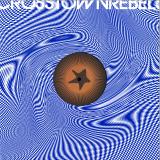
Lilya Mandre makes her Crosstown Rebels debut with her emotive three-tracker, ‘Exi(s)t’. Out on 10th October 2025, the Casablancan artist unveils two originals, including a collaboration with Zac Martel and Jono McCleery, backed by a remix from Haitian star Francis Mercier. Marking her first appearance on Damian Lazarus’ iconic Crosstown Rebels imprint, Moroccan-born artist Lilya Mandre steps into the spotlight with ‘Exi(s)t’. Landing on 10th October, the EP pairs her expressive, melodic style with a striking vocal feature from UK-based singer-songwriter Jono McCleery and a collaboration with Montreal’s Zac Martel, completed by a stellar remix from Haitian heavyweight Francis Mercier.An ascending name in the global electronic sphere, Lilya Mandre channels her Casablanca roots into a sound that balances deep, minimal-leaning grooves with raw emotional weight. Her magnetic presence has already taken her to stages such as Hï Ibiza, where she joined Crosstown head honcho Lazarus for his summer residency, plus the likes of Moga Festival, La Clairière Paris, and Picnik Electronik, while recent releases on Mind of A Genius, IN/ROTATION and Madorasindahouse continue to position her as one of the scene’s most exciting breakthrough candidates. With ‘Exi(s)t’, she brings this same captivating energy into the studio, weaving powerful collaborations and evocative solo work into a release that captures her artistry in full.
Opening track ‘A Part Of Your Soul’, crafted alongside. Canadian producer Zac Martel (Madorasindahouse), sees Lilya also link up with acclaimed English singer-songwriter Jono McCleery (Ninja Tune), whose delicate and soulful vocals glide over rich synth work and fluid percussion to deliver a stirring and cinematic cut. Deep Roots founder Francis Mercier then steps in on remix duties, injecting his signature blend of worldly percussion and driving energy to transform the original into a hypnotic, club-ready anthem. Closing the package, ‘Malou’ takes things deeper as Lilya steps out solo, layering subtle melodies and textural flourishes for a track that’s both restrained and emotionally resonant. With its balance of expressive collaborations and immersive solo work, ‘Exi(s)t’ sets a compelling tone and brings an impressive debut to Crosstown Rebels, showcasing her ability to craft moments that resonate both on the dance floor and beyond.
Bei uns am Lager und sofort versandfertig

Detroit, MI – – Blank Code Records, a cornerstone of the underground electronic music scene, is proud to announce the launch of its highly anticipated sublabel, Modern Relics @modernrelicsrecords. This new venture is set to redefine the future of electronic music by merging a diverse range of genres, including techno, drum & bass, atmospheric, polyrhythms, ambient, and dub.
Conceived in the heart of Detroit, Michigan—an internationally renowned hub for electronic music innovation—Modern Relics is dedicated to exploring the freshest, most experimental soundscapes. The label aims to introduce listeners to groundbreaking productions that push the boundaries of genre and convention, reflecting the cutting-edge spirit of the underground scene.
Modern Relics will serve as a platform for both emerging and established artists who are unafraid to break free from traditional constraints, weaving together intricate rhythms and atmospheric textures that captivate and challenge the listener’s perception of sound. Drawing from a wide array of global influences, the label will focus on music that’s as dynamic as it is genre-defying, from hypnotic techno to the pulse of drum and bass, with hints of ambient sound design and the intricate complexity of polyrhythms.
"We wanted to create a space where experimentalism meets accessibility, where the boundaries of different genres can be blurred and redefined," says Co-Founder Chad Parraghi. "Detroit’s legacy in electronic music made it the perfect place to launch a new chapter that honors the city’s rich history while also pushing into the future with new and innovative sounds."
Modern Relics will launch with a series of forward-thinking releases. Expect immersive soundscapes that transport you into uncharted auditory territories—one where techno meets the experimental, drum and bass merges with ambient sound design, and dub echoes resonate within polyrhythmic structures. The label will feature a diverse roster of talented artists whose work reflects the international underground, bringing together voices from every corner of the globe.
Bio: Echoføn is the project of Detroit producers and Blank Code co-founders Chad Parraghi and Corbin Davis. Their music pulls from the roots of Detroit techno while folding in the energy of drum & bass and the complexity of polyrhythms, giving their tracks a sound that feels both raw and forward-looking.
Through their work with Blank Code, Parraghi and Davis have long been part of Detroit’s underground, building spaces for artists and pushing new ideas into the scene. Echoføn is a natural extension of that—two voices combining into something new, but still grounded in the city that shaped them.
Their first release, the Empty Space EP on Modern Relics Records, has already picked up support from artists like Polygonia, Kangding Ray, and Forest on Stasys, marking an exciting start for what’s ahead.
Bei uns am Lager und sofort versandfertig

DUSTY DONUTS ISN’T JUST A LABEL — IT’S A TURNTABLE MANIFESTO.
Since its inception, the collective of vinyl scientists behind Dusty Donuts has been applying their signature "Dusty Formula" to every cut – a potent blend of deep crate knowledge, razor-sharp edits and roots firmly planted in the Hip-Hop culture. Each 45 is crafted with the instincts of seasoned DJs and the ears of lifelong diggers, spinning like a secret weapon on the decks: restructured classics and forgotten gems, reimagined with just the right bounce for today’s dance floors.
Now, with their new imprint DUSTY DONUTS CLASSICS, the crew levels up – kicking things off with a standout collaboration featuring the incredibly talented Emma Noble, who they first crossed paths with at the legendary Mojo Club. Emma’s soulful style and versatility made her the perfect fit for the launch of this new venture.
Bei uns am Lager und sofort versandfertig

For their first album as Gilla Band (formerly Girl Band), the
foursome have redrawn their own paradigm. ‘Most Normal’ is like
little you’ve heard before, a kaleidoscopic spectrum of noise put in
service of broken pop songs, FX-strafed Avant-punk rollercoaster
rides and passages of futurist dancefloor nihilism.
Lockdown robbed Gilla Band of any opportunity to try the new
material out live, but the pandemic also incinerated any idea of a
deadline for the new album. They were free to tinker at leisure, to
rewrite and restructure and reinvent tracks they’d cut, to, as
drummer Adam Faulkner puts it, “pull things apart and be like,
‘Let’s try this. We could try out every wild idea.’”
The group also fell under the spell of modern hip-hop, “where
there’s really heavy-handed production and they’re messing with
the track the whole time,” says Fox. “That felt like a fun route to go
down, it was a definite influence.”
‘Most Normal’ opens with an absolute industrial-noise banger that
sounds like a manic house party throbbing through the walls of the
next room as a downed jetliner brings death from above. What
follows is unpredictable, leading the listener through a sonic house
of mirrors, where the unexpected awaits around every corner.
The common thread holding ‘Most Normal’’s ambitious Avant-pop
shapes together is frontman Dara Kiely. Throughout, he’s an antic,
antagonistic presence, barking wild, hilarious, unsettling spiels,
babbling about smearing fish with lubricant or dressing up in binliners or having to wear hand-me-down bootcut jeans (“It was a
big, shameful thing, growing up, not being able to afford the look I
wanted and having to wear all my brother’s old clothes,” says
Kiely).
‘Most Normal’, then, is a triumph, the bold work of a group who’ve
taken the time to evolve their ideas, to deconstruct and reconstruct
their music and rebuild it into something new, something
challenging and infinitely rewarding. It’s a headphone masterpiece.
It’s a majestic exploration of the infinite possibilities of noise. It’s a
bold riposte to your parochial beliefs on whatever a pop song can
or should be. It’s the best work these musicians have put to
(mangled) tape.
Bei uns am Lager und sofort versandfertig

Braiden, an artist synonymous with the UK’s underground continuum, makes a powerful return after his hiatus with Raindance, a four-track EP of original productions on his own Off Out imprint. First emerging during the post-dubstep era with standout releases on Joy Orbison’s Doldrums and iconic Dutch imprint Rush Hour, Braiden carved a unique path as both DJ and producer through long-standing residencies on Rinse FM and NTS, where his boundary-pushing selections became essential listening.
The record channels the energy of the club and the scene he emerged from, blending freshly explored influences into a focused yet diverse body of work.
The EP opens with its title track, an unruly and visceral cut that channels early grime’s skeletal power into a hypnotic techno landscape. Clattering claps, cascading strings and a guttural bassline drive it forward, shimmering with movement and wired with an unpredictable edge. Touch The Sky, featuring a vocal contribution from multidisciplinary artist KESH, follows as a meditative centrepiece — a weightless, emotional interlude hovering with restrained melancholy and awe. X5x ramps up the energy again, urgent, euphoric, and devastatingly effective, its acid-licked synth line and thunderous kicks recalling the vastness of late-night warehouse catharsis. Lagrangian Point closes the EP on a different axis altogether; a time-dilating drone that strips away the percussion entirely while retaining the physicality and ethereal tone that runs through the EP.
Also a visual artist and photographer, Braiden’s finely tuned aesthetic runs through the record, with him self-designing and photographing the artwork printed on a full colour sleeve. Raindance arrives as a meticulously crafted statement: fierce and cinematic, a notable evolution from his earlier single-led releases, with additional mix engineering support from friends Joy Orbison and Objekt.
b A2. Touch The Sky ft. KESH
Bei uns am Lager und sofort versandfertig

Since the 1940s, Library Music has lurked in the shadows, peripherally touching our lives through TV and film. Among the stalwarts of the industry was UK's Studio G, with cues heard on Doctor Who, and sampled by the likes of The Chemical Brothers, and Tyler, the Creator. Jazz Dispensary's Dream a Dream with Studio G: Cratedigger's Archive (1970–2009) culls some of their most sought-after cuts, with liner note commentary from Saint Etienne’s Bob Stanley, and illustrations by Ivan Minsloff.
Bei uns am Lager und sofort versandfertig
Best known for his cinematic jungle excursions, Seb Uncles returns to Livity Sound for a second extended release of introspective electronics with a strong influence from mystical sources.
As Eusebeia, Uncles has developed a strong, independent presence in modern electronic music defined by a prolific run of deep-diving, breakbeat-driven albums and EPs. In 2022 he released Cosmos on Livity Sound, a mini-album that zoomed out to a more reflective strain of electronica shaped by atmospheric synth lines in the hauntological vein of Ghost Box, Pye Corner Audio et al.
The Wyrding Way finds Uncles delving even deeper into this area of his output, keeping drums to a bare minimum and focusing instead on powerful melodic lines. There are still considered soundsystem moments that connect with Livity's long-standing sonic focus, not least the subtle dub inflection of EP centrepiece 'By The Light Of The Moon'. Elsewhere Uncles leaves the melodic parts unaccompanied, letting the phrasing and emotional pull of the title track tell its own story.
Balancing light and dark elements and drawing inspiration from personal experiences and perspectives, combined with spiritual and existential observations, Uncles capitalises on the evocative streak in his studio practice to deliver a timeless, immersive experience unlike anything else in his considerable back catalogue.
Livity Sound is a label set up by Peverelist in 2011 as a vehicle for a raw and exploratory strain of UK techno, rooted in the heritage of UK dance music and sound system culture. It has since become one of the UK's foremost protagonists for cutting edge underground electronic music.
Bei uns am Lager und sofort versandfertig
