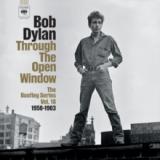
Let the Good Times Roll (Terlinde Music Shop, St. Paul, MN, 1956)
I Got a New Girl (Informal Recording, Hibbing, MN, 1959)
Jesus Christ (Informal Recording, Minneapolis, MN, 1960)
K.C. Moan (Informal Recording, Madison, WI, 1960)
Remember Me (Informal Recording, East Orange, NJ, 1961)
Railroading On the Great Divide (Gerdes Folk City, NYC, 1961)
Man of Constant Sorrow ('Bob Dylan' Rehearsal, NYC, 1961)
He Was a Friend of Mine ('Bob Dylan' Outtake, NYC, 1961)
Ramblin' Round ('Bob Dylan' Outtake, NYC, 1961)
Story: East Orange, New Jersey (Party, Minneapolis, MN, 1961)
Po' Lazarus (Party, Minneapolis, MN, 1961)
Dink's Song (Party, Minneapolis, MN, 1961)
I Was Young When I Left Home (Party, Minneapolis, MN, 1961)
Cocaine (Party, Minneapolis, MN, 1961)
Talkin' New York (Gerdes Folk City, NYC, 1962)
Corrina, Corrina (Gerdes Folk City, NYC, 1962)
(I Heard That) Lonesome Whistle ('Freewheelin'' Outtake, NYC, 1962)
Rocks and Gravel ('Freewheelin'' Outtake, NYC, 1962)
Let Me Die in My Footsteps (The Finjan, Montreal, 1962)
Tomorrow Is a Long Time (Party, Minneapolis, MN, 1962)
Don't Think Twice, It's All Right (The Gaslight Cafe, NYC, 1962)
The Cuckoo (The Gaslight Cafe, NYC, 1962)
The Ballad of the Gliding Swan (BBC-TV, London, 1962)
John Brown ('Broadside Ballads' Album Version, NYC, 1963)
Dusty Old Fairgrounds (Town Hall, NYC, 1963)
House of the Rising Sun (Informal Recording, NYC, 1963)
Seven Curses ('The Times They Are A-changin'' Outtake, NYC, 1963)
Masters of War ('Freewheelin'' Alternate Take, NYC, 1963)
Girl from the North Country ('Freewheelin'' Alternate Take, NYC, 1963)
Liverpool Gal (Party, Minneapolis, MN, 1963)
Boots of Spanish Leather ('The Times They Are A-changin'' Outtake, NYC, 1963)
Moonshiner ('The Times They Are A-changin'' Outtake, NYC, 1963)
The Lonesome Death of Hattie Carroll (Party, Los Angeles, 1963)
The Times They Are A-changin' (Informal Recording, Los Angeles, 1963)
Who Killed Davey Moore? (Carnegie Hall, NYC, 1963)
Lay Down Your Weary Tune (Carnegie Hall, NYC, 1963)
Blowin' in the Wind (Carnegie Hall, NYC, 1963)
North Country Blues (Carnegie Hall, NYC, 1963)
A Hard Rain's A-gonna Fall (Carnegie Hall, NYC, 1963)
Talkin' World War III Blues (Carnegie Hall, NYC, 1963)
Only a Pawn in Their Game (Carnegie Hall, NYC, 1963)
When the Ship Comes In (Carnegie Hall, NYC, 1963)
Suche:j d hall
Der düstere Zauber von Ritual Howls sechstem Album ,Ruin" entfaltet sich bereits in den ersten Momenten der ersten Single ,Follow the Sun", wenn der klare Ruf von Paul Bancells hallender Gitarre von Chris Samuels pulsierendem Kick und flirrenden Drum-Programmierung sowie dem knurrenden, verzerrten Bassgroove von Ben Saginaw untermalt wird. Mehr als ein Jahrzehnt nach ihrer Gründung verfeinert das Trio seine nuancierte Mischung aus Industrial, Goth und Post-Punk auf ein neues Niveau vollendeter Fülle, und die Ergebnisse verkörpern mehr denn je die Gegensätze, die sie ausmachen. Mit ,Ruin" kehren Ritual Howls zurück zu ihren düsteren Wurzeln. Mehr als ein Jahrzehnt nach ihrer Gründung verfeinert das Trio weiterhin seine nuancierte Mischung aus Industrial, Goth und Post-Punk zu einer neuen Ebene von alles verzehrender Fülle, und mehr denn je verkörpern die Ergebnisse die Kontraste, für die sie bekannt geworden sind: auf einmal eindringlich düster, aber kinetisch eingängig, intim roh, aber verlockend geheimnisvoll. Seit ihrer Gründung in Detroit hat die Band immer lose Elemente der Old-School-Rave-Kultur in ihre Arbeit einfließen lassen, was zu einer zutiefst physischen Erfahrung ihrer schweren, düsteren, melodischen und akribischen Konstruktionen führt. Nach ihrem letzten Album (Virtue Falters, 2023) zog Bancell nach Los Angeles, und ein Großteil von Ruin entstand über das Internet, gipfelnd in einer Reihe intensiver Aufnahmesessions mit dem langjährigen Toningenieur Adam Cox in Michigan. ,Es begann damit, dass Chris musikalische Ideen präsentierte - Beats, Melodien, Sounds, Riffs - und ein paar fertige Tracks; er und Ben trafen sich zum Jammen, und ich steuerte aus der Ferne einige Gitarrenparts bei ", erzählt er. Von der Entfernung grundlegend unbeeindruckt, funktioniert Ritual Howls als echte kollaborative Einheit, und Ruin ist ein reichhaltiger, unbestreitbarer Beweis dafür, dass sie weiterhin an der Spitze ihrer Kunst stehen.
- Boss Battles (Chrono Trigger)
- At The Bottom Of Night (Chrono Trigger)
- To Far Away Times (Chrono Trigger)
- Chocobo's Theme (Final Fantasy Series)
- No Promises To Keep (Final Fantasy Vii Rebirth)
- Battle Themes (Final Fantasy Series)
- Fear Of The Heavens (Secret Of Mana)
- Into The Thick Of It (Secret Of Mana)
- Battlefields (Secret Of Mana)
- Dearly Beloved (Kingdom Hearts)
- The Afternoon Streets (Kingdom Hearts)
- Edge Of Existence (Kingdom Hearts)
Pianist Mischa Cheung will give the world premiere performance of the Piano Fantasies programme on October 31, 2025, at Dai-ichi Seimei Hall in Tokyo. Piano Fantasies features twelve newly arranged piano works from four of SQUARE ENIX's most beloved game series: FINAL FANTASY, KINGDOM HEARTS, CHRONO TRIGGER, and Secret of Mana. The concert marks the first public performance of the complete programme, giving audiences the chance to experience the full musical journey as conceived for the album. Produced by Merregnon Studios, Piano Fantasies presents new interpretations of SQUARE ENIX's iconic soundtracks. The album features cover artwork created by the in-house art team at SQUARE ENIX and will be released on CD and vinyl in collaboration with German label Black Screen Records.
- Hurry (Demo)
- Drifter (Demo)
Transparentes orangefarbenes Vinyl. Diese beiden Tracks, die aus den Randbereichen von "Nosebleed Weekend" ausgegraben wurden, bieten einen rohen, aufschlussreichen Einblick in den kreativen Prozess von The Coathangers und zeigen eine Band in voller Fahrt, die zwischen Instinkt und Absicht hin- und hergerissen ist. "Hurry" und "Drifter" wurden beide während der Sessions für dieses Album geschrieben und als Demos aufgenommen, aber letztendlich auf Eis gelegt und blieben in den Archiven liegen. Jahre später hörte sich Sängerin Julia Kugel die Tracks mit neuen Ohren an und entdeckte etwas Wichtiges: eine Lockerheit, einen Funken. "Hurry" begann als Experiment mit vertauschten Instrumenten - Julia am Schlagzeug, Stephanie an der Gitarre - mit einem rauen Charme und einer wilden Dynamik. Die Rhythmusgruppe ist treibend, die Gitarren sind übersteuert und drahtig, der Gesang hallt mit einer Art privater Dringlichkeit nach. Der Song ist nicht auf Hochglanz poliert, und genau darum geht es: Man hat das Gefühl, dass die Band etwas Neues entdeckt hat, indem sie nicht zu viel nachgedacht hat. "Drifter" hingegen ist eine frühe Version eines Songs, der später auf der "Parasite" EP erschien, diesmal mit einem leichteren Touch die Verzerrung wurde gerade so weit zurückgenommen, dass die Gesangsmelodie mehr im Vordergrund steht und selbstbewusster wirkt. Es fühlt sich ein bisschen wie eine Zeitreise zu den ursprünglichsten Instinkten der Band an. Beide Tracks haben eine Unmittelbarkeit, sind Skizzen, die während des Chaos der Albumproduktion entstanden sind, voller Experimentierfreude und Risikobereitschaft. Die von Suicide Squeeze auf 7" gepressten Tracks sind weniger auf Perfektion ausgerichtet, sondern mehr auf den Prozess: ein Beweis für die Fähigkeit der Coathangers, ihrem Bauchgefühl zu vertrauen und den Dingen Raum zum Atmen zu lassen.
0829421012252[48,95 €]
LTD edition Halloween vinyl re-issue
We’ve got a special AA-side vinyl release for all Toolroom and Cutting Recs fans with the original UK Edit of the seminal ‘This Brutal House’ from Nitro Deluxe followed, by the 2023 rework from Toolroom’s founder Mark Knight! A release you do not want to miss!
Sat in-between Electro and House genres, Nitro Deluxe’s pivotal record ‘Let’s Get Brutal’ on legendary imprint Cutting Records helped paved the way for the early beginnings of House music as we know it today. A record that has influenced so many of House music’s iconic artists, from being sampled by Kevin Saunderson (aka Good Life) in their huge hit ‘Big Fun’ and most recently, Mark Knight.
An unmistakable record and one that struck a chord in the early career days of label boss Mark Knight, who simultaneously sought to beef up his current sets in 2023 with the magic of those early House records, when the opportunity arose to update this classic Mark straight in. Keeping this new version sentimental to the original, with all those original synth elements included but laid over the top of an up-to-date Tech House groove with a renewed energy, so that today’s floors will appreciate that seminal riff, all over again.
- Killing Saturday Night
- E.s.p
- Sagittarius A (Ft. Gabe Mantle (Gob) (Previously Unreleased Version)
- That Girl (Jay Ruston-Mix)
- Jackknife (Jackal/The Crimson Ghosts Remix)
- Renegades Of The End Times
- Killer Creature Double Feature
- In The Night
- Saturday Night Creepers
- Suicide Pact With Rock N Roll
- Down The Roads Of A Wrecked Mind (Previously Unreleased Track)
- Ufo (Previously Unreleased Track)
- Astronomicon (Todd Rundgren Mix)
CLEAR RED CROSSED VINYL[22,06 €]
The first-ever best of of Nim Vind is called Anthology 1 and is released by Sunny Bastards Records! This collection of audio medicinals created in a UFO vibrating in the Key of NV is guaranteed to blow your mind. Experience the energy and indulge in some Halloween candy with Nim Vind's 180-gram Vinyl album. This collection includes Nim Vind's most popular tracks from regular albums Fashion Of Fear, Stillness Illness & Saturday Night Seance Songs, along with some special versions or tracks that have never been released before. Nim Vind was introduced to Europe through Zillo Magazine and the Goth club "Pagan Love Songs". This led to the release of his first album, "Fashion of Fear", on Fiendforce Records Germany. The album was recognized by Metal Hammer UK, Maximum Rock n Roll and many other magazines that support underground artists. Rue Morgue Magazine (the world's biggest Horror Entertainment Print magazine) selected Nim's album "Saturday Night Seance Songs" as the Album of the Year. He has shared stages with the likes of Gary Numan, Filter, Blitzkid, The 69 Eyes, Todd Kerns (Slash with Miles Kennedy and the Conspirators), Peter Murphy of Bauhaus, and many more. The album kicks off with NV classic "Killing Saturday Night", which has garnered 1.7 million plays on Spotify and more than 330,000 views on YouTube. The collection attempts to showcase some of the songs that have been a part of his story, bringing us up-to-date with his current work. If you're a Horrorpunk, Goth, Post-Punk, Rock N Roll or Alternative collector, this collection is a must-have! Vinyl only compilation, for fans of MISFITS, JERRY ONLY, CHRIMSON GHOSTS, BLITZKID, THE OTHER.
- A1: Babysbreath
- A2: Teardrop
- A3: Iwantyou
- A4: Fur
- A5: Dizzy
- A6: Plume
- A7: Burst
- A8: Tinkerwench
- A9: Charm
- B1: Sugaredglowing
- B2: Glimmer
- B3: Finger
- B4: Moinaexquisitewallflower
- B5: Butterfly
- C1: Youreyesimmaculate
- C2: Bloweyelashwish
- C3: Crushing
- C4: Precious
- C5: Darkglassdolleyes
- C6: Halo
- D1: Babysbreath (Mycomium Version)
- D2: Spidervelvet
- D3: Lips To Kiss
- D4: Feathermouth
- D5: Moinaexquisitewallflower (Original Version)
Eine atmosphärische Symphonie aus ätherischem Verfall, die zum Klassiker des 21. Jahrhunderts aufgewertet wurde. Aufgenommen 1992 zu Hause mit einer 12-saitigen Gitarre, einem 4-Spur-Recorder, einem Loop-Pedal, unendlichem Hall und dem strukturierten Gesang der geheimnisvollen Sängerin Melissa Arpin Duimstra, verwandelte Scott Cortez' bezauberndes Projekt postadoleszente Tagträumereien im Schlafzimmer in ein ruhiges, mondbeschienenes Schweben auf einem endlosen Meer. Diese erweiterte und remasterte Doppelalbum-Edition enthält fünf weitere verzerrte Reflexionen aus dem Archiv, mit Texten und einer Replik einer Postkarte, in denen man sich verlieren kann. Hier braucht man keine Augenspülstation - Blindheit ist beabsichtigt.
- Describe
- Gimme Time
- More
- D.i.a.a
- Perfect
- My Love
- Couldn't Call
- Tell Me That !!!!
- Normal Today
- Doing Now
- Miracles
- Bergamont
Auf "Describe" lernt Hannah Jadagu auf die harte Tour, dass Entfernung relativ ist. Nachdem ihr Debütalbum "Aperture" aus dem Jahr 2023 von Medien wie der New York Times und NPR mit begeisterten Kritiken bedacht wurde, führte Jadagus aufblühende Karriere sie weg von ihrer aufblühenden Beziehung in New York. Auf ihrem expansiven zweiten Album setzt sie sich mit dieser Trennung auseinander, findet Verbindungen, die über das Physische hinausgehen, und stärkt dabei ihre eigene Stimme. "Describe" schwingt diese Spannung zwischen dem Wunsch nach Verbindung und dem Verlangen nach Freiraum mit. Wie schon auf ihrem Debütalbum sind die Texte von einer emotionalen Präzision geprägt, die nur aus gelebten Erfahrungen stammen kann. "I've been five thousand miles away", singt sie über hallende Hi-Hats in "More" - "Why does three thousand feel like more?" Aber diese Distanz hat Jadagu auch dazu gebracht, neue Dimensionen ihres Sounds zu erkunden. "Ich stehe total auf Künstler, die Analoges mit Modernem mischen können", sagt sie, und der Umzug nach Kalifornien für den Sommer gab ihr die Möglichkeit, neue Kollaborateure kennenzulernen und mit analogen Synthesizern und Drum Machines zu experimentieren. Während das warme Summen ihrer Gitarre ihr Hauptinstrument für "Aperture" war, begann sie zu spüren, dass ihre Muskelgedächtnis sie zurückhielt. "Es war befreiend, an einem Synthesizer sitzen und eine Note spielen zu können, während ich meine Stimme erkundete", sagte sie. "Das empfand ich als etwas befreiender als das Spielen auf einer Gitarre." In Zusammenarbeit mit dem Produzenten Sora Lopez in seinem Studio in Altadena und aus der Ferne mit dem Co-Produzenten und Kollaborateur von ,Aperture", Max Baby, aus Paris, schuf Jadagu einen Sound für "Describe", der unverkennbar ihr eigener ist und sich völlig von den verzerrten Gitarrenmelodien ihres Debüts unterscheidet. Ein Großteil von "Describe" handelt jedoch von dem, was ungesagt bleibt: ,In diesem Album versuche ich vor allem, Ideen auszudrücken, die nicht immer so konkret sind", sagte Jadagu. ,Es ist einfach ein Fluss von Dingen, die ich fühle, durchlebe und ausdrücke." Passenderweise endet "Describe" mit "Bergamont", einem Song, in dem Jadagu einige ihrer bisher ehrlichsten Texte zu einem vielschichtigen Synthesizer-Sound singt, der die Anspannung und Entspannung eines langen, reinigenden Atemzugs nachahmt. "I hope you find something true to you ", singt sie. Auf "Describe" sucht Jadagu nach Worten, um die Wahrheit zu beschreiben, nach ihren eigenen Vorstellungen, und genießt die Ungewissheit dieser Reise.
- 1: I'm Not Getting Excited - Live
- 2: Great No One - Live
- 3: Whatever - Live
- 4: Mars, The God Of War - Live
- 5: Future Me Hates Me - Live
- 6: Introduction
- 7: Jump Rope Gazers - Live
- 8: Uptown Girl - Live
- 9: Bird Talk
- 10: Happy Unhappy - Live
- 11: Out Of Sight - Live
- 12: Thank You
- 13: Don't Go Away - Live
- 14: Little Death - Live
- 15: Dying To Believe - Live
- 16: River Run - Live
The anticipation is there in Elizabeth Stokes’ solo guitar riff under the opening lines of “I’m Not Getting Excited”: a frenetic, driving force daring a packed Auckland Town Hall to do exactly the opposite of what the track title suggests.
As the opener of The Beths’ Auckland, New Zealand, 2020 expands to include the full band, the crowd screeches and bellows. It’s a collective exhalation, in one of the few countries where live music is still possible.
The album title, and film of the same name, deliberately include the date and location, lead guitarist Jonathan Pearce says. “That’s the sensational part of what we actually did.” In a mid-pandemic world, playing to a heaving, enraptured home crowd feels miraculous.
In March 2020, everything seemed on track for another huge year for The Beths. Home after an 18-month northern hemisphere tour, they had just finished recording sophomore album Jump Rope Gazers and were primed for more extensive touring. But within days, New Zealand’s lockdown split the band between three separate houses. All touring was cancelled.
“It was existentially bad,” Stokes says. As well as worrying about economic survival, they lost something crucial to the band’s identity: live performance. “It's a huge part of how we see ourselves... What does it mean, if we can't play live?”
The band found an outlet through live-streaming, returning to the do-it-yourself mentality of their early days to connect with a global audience. The album and film have their genesis in that urge to share the now-rare experience of a live show, as widely as possible.
The fuzzy-round-the-edges live-streams pointed the way aesthetically. Native birds, wonkily crafted by the band from tissue paper and wire, festoon the venue’s cavernous ceiling while house plants soften and disguise the imposing pipes of an organ. The presence of the film crew isn’t disguised: much of the camerawork is handheld; full of fast zooms and pans.
With much of the material still fresh, the band was less focused on re-invention than playing “a good, fast rock show”, Pearce says. The tempo is up on crowd favourites “Whatever” and “Future Me Hates Me” (released as a live single on its third anniversary) as both band and audience feed off the mutual energy in the room.
Certain songs have taken on special resonance post-Covid. Pearce has found “Out Of Sight”, a tender rumination on long-distance relationships, hits particularly hard with live audiences.
Album closer “River Run” visibly brings Stokes to tears as a mix of achievement and relief kicks in. “You can finally relax at that point … You play the last note, breathe out a sigh and look up - and you’re in a giant room full of people happy and smiling.”
Amsterdam label Spectral Bounce recruits French club stalwart Chris Carrier for SPEC06 — Perfect Encounter. Active since 1994, the Parisian artist has released a wellspring of records on Robsoul, Slapfunk and his own Sound Carrier recordings, parallel to his longtime career as a DJ. Characterised by swirling delays and progressive arrangements, Perfect Encounter shows the producer exploring the mesmeric corners of tech house, ideally fitted to the Spectral Bounce aesthetic.
Opener “XLR8” starts with rolling toms that make way for fluid, modulated tones; each bar ebbs and flows to the sweeping synths set in motion by Carrier. Processed with a multitude of delays, rhythmic FX boldly swish above the drums, making for an immersive soundstage. Second track “Light Side” retains the billowing echoes but moves more nimbly, cutting things back to make for a spacious and breezy number. Its croaking synths hop around the stereo field, accompanied by tight percussion and a walking bassline.
The hallucinogenic “Third Moon” sees Carrier step further into trance-inducing territory. The track’s pulsing, syncopated bass note thrums underneath an arpeggio that evolves into a heady prismatic drone. While the chugging beat is ever-present, melodic refrains rise up and evaporate like wisps of vapour, alongside a vocal that fades away as quickly as it appears. The EP’s eponymous “Perfect Encounter” dials up the tension and closes the record with a mysterious touch. Speedy 16th note patterns propel the beat, creating shifty rhythms that rattle and hiss. A rasping, gelatinous synth and squeaky detuned tones resemble extraterrestrial signals — alien morse code for an enraptured dancefloor.
Credits:
- A1: Do What You Gotta Do
- A2: Looking For A Fox
- A3: Slippin' Around
- A4: I'm Qualified
- A5: I Can't See Myself
- A6: Wind It Up
- B1: Part Time Love
- B2: Thread The Needle
- B3: Slip Away
- B4: Funky Fever
- B5: She Ain't Gonna Do Right
- B6: Set Me Free
Clarence Carter, blind from birth, was a blues singer with lascivious wit, a talented guitarist, a songwriter with a twinkle in his eye, and a champion of down-to-earth soul grooves who taught himself to play the guitar.
He sang in a gospel choir, completed a degree in music, and grounded the duo Clarence & Calvin but was not however very successful.
After a car crash involving Calvin Scott, Carter started on a solo career and signed a contract with Rick Hall and the Fame label as a soloist.
Among the earliest singles recorded at the Muscle Shoals studio were a few hits. After leaving Fame for Atlantic, he managed to enter the Top 20 of the R & B charts with "Looking For A Fox". His breakthrough came with "Slip Away", which sold a million copies and was awarded a Gold Record.
The legendary Fame Studios in Muscle Shoals remained the home basis, as it were, for Carter during his career with Atlantic. "This Is…" begins with a contemplative, soft sound. "Do What You Gotta Do", written by Jim Webb, is a lovely, melancholic mid-tempo ballad, saturated with Barry Beckett’s keyboard and smothered by lush, plaintive winds.
But the man is primarily funky here … as three danceable, finger-snapping tracks prove; "Wind It Up", with further witty improvisations and a fervid organ solo, the highly syncopated, playful "Thread The Needle", and the smoky, irresistible "Funky Fever" – all written by Carter himself.
Dan Penn’s and Spooner Oldham’s "Slippin’ Around" has an unorthodox bossa nova-like beat that is reminiscent of Ray Charles’s "What’d I Say", while Carter’s unmistakable chuckle is to be heard for the first time on the riotous funk-rock number "I’m Qualified", which has the very same unique, infectious groove as was to be heard on Wilson Pickett’s "In The Midnight Hour". "She Ain’t Gonna Do Right", composed by the same man, brings more Alabama Country to the mix, whereby Beckett contributes a catchy, persistent organ riff in the refrain.
The Sator Arepo, or Sator Square, is an ancient word puzzle comprising five palindromes that's etched on various historical sites throughout the Western world. Its origins are unknown, but the square has long been thought to hold magical properties, used as a charm against illness and evil, to cure insanity or to determine whether someone was guilty of witchcraft. Self-styled "punk ethnomusicologist", acoustician and musician Julien Hairon uses this mystical symbol as the starting point for his debut Judgitzu album in an attempt to reconnect with his Celtic heritage, exploring how its hallowed messages might harmonize with contemporary Tanzanian dance music.Hairon has been traveling across the world for over a decade, collecting field recordings from countries such as Indonesia, Australia, Cambodia, China and Bangladesh, and presenting them on his Les Cartes Postales Sonores label, re-issuing any curious cassettes and CDs he came across on the PetPets' TAPES imprint. It was during this time that he became fascinated by rituals that involved spirits, prompting him to examine his own ancestry when he returned to Brittany. "Many artifacts in the landscape remain," Hairon explains, "and the power of spirits is still palpable." He represents this Celtic mysticism on 'Sator Arepo' with murky drones and magickal synth tones, using xenharmonic scales (tuning outside of standard 12-tone equal temperament) that reach back to the ancient world. These sounds are augmented with fast-paced, sci-fi rhythms informed by his time in Tanzania; "Singeli has contaminated me," admits the producer.The most astonishing example of this is 'Miracle', a thrusting soundsystem experiment that layers serpentine, bagpipe-esque electronic wails over extravagant clusters of blocky percussion. Driven by the frenetic 175BPM pulse that echoes through the streets of Dar Es Salaam - popularized globally by forward-thinking producers like Sisso, Duke and Jay Mitta - Hairon opens up a rare conversation, seeking to draw parallels between today's most urgent dance forms and the archaic rituals of antiquity. On 'Vitalimetre', Hairon drives his sonic palette into the red, harmonizing with Dutch hardstyle and gabber, and splaying distorted drones over maddeningly blown-out kicks and ratcheting percussion. 'L'or Des Fous' takes a more meditative route, prioritizing Hairon's eccentric tonality with expressive sheets of pitch-warped sound that ghost walk across energized, rattling beats.If you heard Hairon's last Judgitzu release 'Umeme / Kelele', described by Boomkat as "one of 2019's deadliest dancefloor sessions," then you'll know how mindboggling this material can be. And with 'Sator Arepo', the French producer deepens his reach, grasping a world that we've almost forgotten and juxtaposing it with a landscape most of us barely comprehend.
- Done
- Blue
- Jet Fuel Can't Melt Steel Beams
- The Screaming Planet (Feat. Julia Jacklin)
- Lost (Season One)
- How To Socialise & Make Friends
- Sing Your Heart Out
- Running With The Hurricane
- The Opener (Ten Minute Version)
Am 13. Oktober 2023 verabschiedete sich die Melbourne-Band Camp Cope mit einem letzten Auftritt vor einem begeisterten, ausverkauften Publikum in der legendären Sydney Opera House Concert Hall. Zwei Jahre später haben Run For Cover & Poison City Records ,The Final Show - Live at Sydney Opera House", um diesen besonderen Moment der Band bei ihrem letzten Live-Auftritt zu feiern. Die Vinylversion dieser Veröffentlichung enthält neun Songs aus dem letzten Auftritt, darunter Titel aus jedem der beliebten Alben der Band. Dazu gehören Songs wie ,Lost (Season One)" aus ihrem selbstbetitelten Debütalbum sowie Titel aus ,How to Socialise Make Friends" von 2018 und ihrem Abschiedsalbum ,Running with the Hurricane" von 2022. Alle Elemente, die die Musik von Camp Cope so besonders machen, sind hier versammelt - Bassistin Kelly-Dawn Hellmrich und Sarah Thompsons Schlagzeug harmonieren wieder einmal perfekt miteinander, während Gitarristin Jennifer Aslett die unverwechselbare Stimme von Sängerin Georgia Maq mit noch mehr Stimmung untermalt. Die Band ist auch nicht allein - Julia Jacklin ist bei ,The Screaming Planet" dabei, und ein Chor aus Freunden wie Rin McArdle und Courtney Hartmann singt bei ,Sing Your Heart Out" mit. Camp Cope beendet diesen letzten Auftritt passenderweise mit ,The Opener" - einem Song, der von den unglücklichen Erfahrungen einer Band inspiriert ist, die versucht, sich in einer sexistischen, von Männern dominierten Musikszene zurechtzufinden. Hellmrichs unverkennbare Basslinie eröffnet diese letzte, erweiterte Version des Songs, den die Band über zehn Minuten lang spielt. Begleitet von einem Chor aus Freunden auf der Bühne und einem ganzen Opernhaus voller Fans, die mitsingen, wirken die letzten Zeilen des Songs über anfängliche Ablehnung wie eine erfüllte Prophezeiung: ,See how far we've come not listening to you."
Developed over three years across residencies, tours, and periods of deep listening, “Your Whistle Tells of Landscape” finds Australian sound artist Alexandra Spence continuing her investigations into the perceptual entanglements of sound, place, memory, and imagination. Like much of the artist’s work, it unfolds at the liminal edge between the real and the imagined — between what is heard and what is remembered.
Composed from a constellation of materials gathered across sites and seasons — snowscapes recorded in Vancouver, insect choruses from a Sydney backyard, ceramic fragments unearthed while mudlarking with tinysound — it renders an intimate cartography of experience: one shaped equally by ecological resonance and internal drift. Each piece traces a kind of imaginary geography, where sonic ephemera become proxies for topography, weather, or myth.
The album is informed by time spent at EMS (Stockholm) and MESS (Melbourne), where Spence deepened her engagement with microtonality and tuned feedback systems, and by dialogues with sympathetic artists such as Tashi Wada and Patrick Farmer. Sound materials were sourced from Serge Modular systems, a custom lyre built by Tim Wall, amplified objects, handmade electronics, and Spence’s own field recordings captured within rockpools, beneath sand, and among a flock of sheep in the French Pyrenees. On “Magenta,” a collaboration with Delphine Dora, the domestic and mythic intertwine, as layers of voice, environmental recordings, and Halldorophone feedback drift in and out of one another like overlapping weather systems.
Despite its diverse material palette, the album resists spectacle or accumulation. Instead, it moves with a quiet sense of continuity and a rich interiority — less a sequence of compositions than a set of situated attunements. Across its duration, sounds seem to murmur, glint, or hover right at the edge of presence, invoking a listening practice that is as much about orientation as it is about reception. These are pieces not simply about place, but of place — etched with the grains of time, vibration, and breath.
- A1: Play It Cool
- A2: That Will Never Do
- A3: It's Too Late, She's Gone
- A4: Blue Shadows
- A5: Today I Sing The Blues
- A6: Get Out Of My Life, Woman
- B1: Hideaway
- B2: Funky
- B3: Hot Tomato
- B4: Wide Open
- B5: Sweet Thing
- B6: Let Me Down Easy
Born in 1934, Freddie King was nicknamed “The Texas Cannonball,” and his powerful guitar playing could certainly knock you flat. In the late 1960s,
a fan and fellow musical king – King Curtis – brought Freddie into the Atlantic Records for a pair of fine albums.
With sax accompaniment from Curtis and piano work by James Booker complementing the axeman's explosive solos,
Freddie King is a Blues Master shows the Rock and Roll Hall of Famer at the top of his game.
Freddie King is a Blues Master is available as a numbered limited edition of 750 copies on translucent yellow coloured vinyl
- A1: 5 A.m
- A2: Black Cat
- A3: Luck And Strange
- B1: Breathe (In The Air)
- B2: Time
- B3: Fat Old Sun
- C1: Marooned
- C2: A Single Spark
- C3: Wish You Were Here
- C4: Side B: Vita Brevis
- D5: Between Two Points With Romany Gilmour
- D6: High Hopes
- E1: Sorrow
- E2: The Piper’s Call
- E3: A Great Day For Freedom
- F1: In Any Tongue
- F2: The Great Gig In The Sky
- F3: A Boat Lies Waiting
- G1: Coming Back To Life
- G2: Dark And Velvet Nights
- G3: Sings
- H1: Scattered
- H2: Comfortably Numb (Encore)
LP 4x12"[92,23 €]
23 Live-Tracks von der gefeierten Luck and Strange Tour auf 4 LPs in 2 Doppel-Gatefolds und Schuber. Enthält ein 24-seitiges Booklet mit Fotos von der Tour. Produziert von Charlie Andrew und David Gilmour.
Die Tour begleitete Gilmours fünftes Soloalbum Luck And Strange, das #1 in Großbritannien, Deutschland (seine erste #1 dort), Polen, den Niederlanden, Tschechien, der Schweiz, Portugal und Österreich erreichte.
Die Shows begannen mit zwei ausverkauften Warm-up-Shows im Brighton Centre, bevor sie für sechs ausverkaufte Abende in den Circus Maximus in Rom umzogen, gefolgt von der gleichen Anzahl in der Londoner Royal Albert Hall, bevor sie für ausverkaufte Abende im Intuit Dome und der Hollywood Bowl in Los Angeles in die USA zogen und mit fünf ausverkauften Abenden im Madison Square Garden in New York endeten.
Alle dreiundzwanzig Termine waren ausverkauft, und da keine neuen Shows in Sicht sind, sind »The Luck And Strange Concerts« die beste und einzige Möglichkeit, den Meister seiner Kunst auf der Bühne zu erleben.