"Fragments of Light" documents seven years of creative dialogue between Purl (Ludvig Cimbrelius) and Ecovillage (Emil Holmström & Peter Wikström). Their journey began with a spontaneous meeting in Los Angeles during October 2019, evolving into a transcontinental process where Ludvig refined ideas during Sri Lankan train journeys while Emil and Peter furthered their ambient dreaming in northern Sweden. Sonically, the album inhabits a space between pop ambient and new age—combining atmospheric textural depth with accessible melodies, while also carrying forward the contemplative nature central to the artists' work and personal lives. Ecovillage, who has collaborated with many revered artists (such as Laraaji, Carlos Niño, and Fennesz), here pour their own deep sensibilities into the ever widening river of Purl—this initial, ambient-rooted alias of Ludvig Cimbrelius. Featuring original, hand-painted artwork by Steven Jackson and delicate mastering work by Ludvig for a special limited physical edition released via his own LILA लीला imprint, “Fragments of Light” carries the hallmarks of an ambient classic-to-be. The album fits naturally alongside works by artists like Brian Eno, Harold Budd, and Hiroshi Yoshimura, as well as contemporary artists who bridge the ethereal with melodic sensibility.
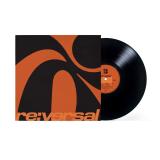
UK techno lynchpin James Ruskin celebrates 30 years of Blueprint with a remastered edition of his 'Further Design' LP, releasing 4th September 2026. Founded by Ruskin and Richard Polson in 1996, the infl uential label has spent three decades documenting uncompromising techno through releases from the likes of Rommek, Kr!z, Truncate, and many more, with 'Further Design' originally landing in 1998. The anniversary celebrations have already seen Mark Broom revisit seminal Regis recordings on the 'Power Is Neutral' EP, with further releases from Kerrie, Nastia, and more to follow, alongside a merchandise run later this year.
James Ruskin has been a constant presence in techno for over three decades. He defi ned the sound of British techno through his DJ sets, productions, and the releases on his infl uential Blueprint label. His stripped-back, functional, and forward-thinking sound has remained utterly uncompromising, with performances at clubs and festivals around the world while never straying from underground ideals. Substance over trends has always been his MO, through a catalogue spanning Blueprint, Tresor, and numerous collaborations that remain timeless.
The purposeful titles of the tracks on this essential album hint at the minimalist approach to sound. This is bold, linear techno with 'Enter', 'Below', and 'Indirect World' kicking off with rolling low ends and smart sound designs that even now sound futuristic. The likes of 'The Divide' bring spangled synths and crunchy percussive textures that jerk you into motion, while 'Time And Place' is an immersive cosmic odyssey and 'Unknown Destination' melts the mind with liquid synth work that loops around hypotonic rhythms. 'Work' is another perfectly calibrated cut with meticulous percussive placement and the shimmering of bells that dissolve space and time.
It is testament to Ruskin's original vision that 'Further Design' remains as evocative today as it was upon its release, full of otherworldly imagery and grooves that continue to move dance fl oors around the world.
Having mysteriously re-emerged from the Croydon smog back onto London’s underground scene, Daniel Poli joins the Brixton Row catalogue with a four-track EP.
Reminiscent of his early 2000s sound, the record also touches on a more emotive flavour he’s experimented with recently. Rolling tech-house paired with a more mellow, electro-inspired B2.
Grooved throughout, built for dancing, no filler. Solid.! Liro on Bosom LTD with four deep, dubby cuts. Viaje Circular opens loose and circular, percussion looping under a warm bass. Ritmo Atemporal tightens up, minimal touches, hi-hats doing the work. La Pausa on the flip, dub chords, space to breathe. Los Tatas closes heavier, more percussive drive.
Soon after their 1978 debut on the Brian Eno-produced »No New York«, a compilation that defined the No Wave scene, James Chance's group Contortions had already evolved – getting sharper, tighter and just plain faster. Despite the loss of keyboardist Adele Bertei and bassist Geoge Scott (who refused to sign a new contract demanded by Chance and his then partner, band manager Anya Phillips) Contortions were firing on all cylinders, and their first full-length album, 1979's »Buy«, is a marvel of hot-wired energy.
Led by the brash yelps and free-sax squawks of Chance, Contortions spit out fiercely rhythmic tunes charged by the wiry guitar lines of Jody Harris and the dizzying slide guitar of Pat Place. With drummer Don Christensen slipping in pointillist beats and David Hofstra's infectious basslines, the songs on Buy crackle with both precision and abandon. Opener »Designed to Kill« shoots sparks of sound in all directions, while »Contort Yourself« is a nihilistic dance number wherein Chance instructs listeners to twist into knots, physically and mentally. "It's better than pleasure, it hurts more than pain," he snarls, later imploring, "You better try being stupid instead of smart."
Heavily influenced by the showman funk of James Brown (whose »I Can't Stand Myself« the band had covered on »No New York«), Contortions coined a downtown dance-punk sound that had immediate influence on subsequent No Wave bands – including Place's Bush Tetras and Bronx trio ESG – as well as the burgeoning disco movement. On »Buy«, Contortions' self-invented template is imprinted so hard into the grooves that it sounds like they're about to break, capturing a combustible band in all its fiery fury.
Blume presents two pieces composed in 1970 by the American pianist and composer David Tudor (1926-1996), one of electronic music's most important pioneers, for the Pepsi-Cola Pavilion, a unique artist-designed and programmed space for Expo '70 in Osaka, Japan, created by Experiments in Art and Technology (E.A.T.). Pepsibird and Anima Pepsi deploy electronic technology as a means to experience sound in ways that are anything but matter of fact, rendering liberated environments within and through which one might democratically express and commune. Viewed through the lens of what was, is, and might have been, they offer the tools for time travel: an unmediated encounter with radical, optimistic ideas that gave way to the complex cultural landscape of our time.
Initially trained on organ and then piano, Tudor emerged as a leading figure within New York's musical vanguard after his groundbreaking 1950 performance of Stefan Wolpe's Battle Piece and the American premiere of Pierre Boulez's Second Sonata. Within less than a year he had joined the Merce Cunningham Dance Company as its accompanist, a role he kept until his death, and began one of his most lasting creative relationships with John Cage, who would state that his entire output between 1951 and the end of the 1960s was written with Tudor in mind. Christian Wolff, Earle Brown, Morton Feldman, Sylvano Bussotti, Mauricio Kagel, and Karlheinz Stockhausen all wrote works for him during the 1950s and '60s. Through indeterminacy and chance-based methods, Tudor was noted for radically intervening with the works he played, often making them entirely his own, and it was this same singularity of vision that led him to gradually abandon the piano in favor of electronic process, through which he began working as a composer in his own right.
His engagement with electronics dates to the early 1950s and Cage's Project for Music for Magnetic Tape. By the following decade the pair had moved to live electronics, with Tudor rendering works like Cartridge Music and Variations II through contact microphones and complex systems of feedback and amplification. Before modular synthesizers existed, he designed and built his own electronics, often with engineers from Bell Laboratories, producing dozens of unique instruments and processing tools that helped lay the groundwork for the technological needs embraced by most electronic musicians ever since. A clear marker of his emergence as a composer came in 1966 with 9 Evenings: Theatre and Engineering, where he premiered Bandoneon! (a combine), turning the cavernous performance space into a feedback instrument and a total environment. The event led directly to the founding of E.A.T. the following year by the engineers Billy Klüver and Fred Waldhauer, alongside Robert Rauschenberg and Robert Whitman.
Among the most ambitious of E.A.T.'s projects was the Pepsi-Cola Pavilion, for which Tudor composed four pieces between March and April 1970: Pepsibird, Anima Pepsi, Pepscillator, and Microphone. Together with Forrest "Frosty" Myers, Robert Whitman, the sculptor and filmmaker Robert Breer, and the architect John Pearce, he was tasked with the design and function of the building: a 120-foot diameter steel and polyvinyl dome, shrouded in mist and fog and lit in the evenings by a square of intense blue-white xenon light. Tudor worked with Gordon Mumma and Fred Waldhauer on a unique sound system capable of processing and variable distribution through 37 speakers, controlled both by automated means and by the performer, and with Lowell Cross on a sound-activated laser deflection system inside the pavilion's mirrored performance hall.
Both pieces are an advanced form of musique concrète: libraries of tape recordings, live mixed and processed through the pavilion's sound console and distributed through 8 channels of stationary and rotating patterns designated by Tudor's instructions (small circle, great circle, large rhomboid, spiral, small triangles, small ovals). Pepsibird is focused upon a physical interiority, its source tapes being recordings of the brain wave activity of humans and animals: cat's eye, nerve firing, bats, EKG, alpha waves, a modified nightjar. Recorded in situ in 1970 and mixed down to stereo, it retains a striking sense of the space and ambience that Tudor achieved in performance. For more than eighteen minutes he merges subtle textures and pulses, at times resembling birdsong, within a blanket of vast, resonant ambience of subaquatic density, foreshadowing the relationship to the natural world of later works like Rainforest IV (1973).
Anima Pepsi is centered on the exterior: field recordings that Tudor made of animal and insect sounds (mosquitoes in a jar, a fly on flypaper, a wasp chewing, a beetle walking) and a mix of human and animal sounds that he called the "funny tape". Where Pepsibird deploys interior sounds in ways that allude to the natural world, Anima Pepsi pushes the sounds of nature and humanity toward the otherworldly through the clear presence of electronic sounds and processing, moulding detailed, pointillistic patterns of abstract sonority into gauzy blankets of ambience and space.
The collaboration did not last: less than a month after the opening, Pepsi withdrew its support, fired E.A.T., and disregarded Tudor's tapes, which according to accounts had to be smuggled out by staff, playing its own soundtrack in the pavilion for the rest of the Expo. Heard today, Pepsibird and Anima Pepsi anticipate many territories of later electroacoustic practice, from field recording to live processing, while the terms on which they were made, radically unpredictable, indeterminate, and experimental to the core, reconfigure what we've come to expect from electronic process, making one wonder if the past was ahead. Issued by Blume in a highly limited vinyl edition of 300 copies on red vinyl, with a 20-page LP-size booklet containing You Nakai's essay and newly commissioned liner notes by Bradford Bailey.
Blume presents The Days Pass Quickly Immersed in the Shadow of Eternity, a new work by Lea Bertucci commissioned by the ZKM Center for Art and Media Karlsruhe and premiered in Karlsruhe in November 2025. Written for, and created in collaboration with, the flutist Norbert Rodenkirchen, it draws on his collection of Renaissance, Medieval, and Neolithic instruments, harnessing sounds that have been largely absent from the modern world. What does it mean to employ one of humanity's oldest known technologies, the flute, appearing in human hands tens of thousands of years before the advent of the wheel, within an experimental, electroacoustic composition that is inherently forward-thinking?
Since her emergence within New York City's Noise scene during the early 2010s, Bertucci has balanced a fierce dedication to the DIY ethos and immediacy of the underground with a refined sense of creative rigor and ambition, moving from brittle, challenging compositions for saxophone, electronics, and tape toward investigations of acoustic phenomena, site-specific resonance, and complex harmonic interplay. Following her return to the rural environments of Upstate New York where she was born and raised, her work has entered a more introspective phase, with an expanded instrumental, technical, and vocal palette that has found her increasingly composing for others, as on 2023's Of Shadow and Substance and on Fata Morgana, a work for organ released earlier this year.
The piece grew from a meeting with Rodenkirchen after a performance by the early music ensemble Sequentia, to which he belongs. Struck by his ability to conjure "spirits from deep within human memory, as a clarion call into the present", Bertucci began a series of conversations that led the pair into the studio at ZKM in the summer of 2024. Conceived for ZKM's 42.4 speaker system, grouped into 8 discrete outputs before being mixed down to stereo, the work aligns with the collaborative process she has honed alongside her solo efforts, in duos with Ben Vida, Lawrence English, and Olivia Block: a dialog with personal and responsive agency offered to both musicians.
It carries forward her inquiry into the fundamentally human aspects of listening ("I am looking for sounds that call from somewhere deep within the listener and that tap into archetypal human knowledge and feeling") and her investigation of psychoacoustic phenomena and otoacoustic emissions through a meticulous alignment of pitches and timbres. Where many of her most celebrated efforts played, and played with, the room, this one is rooted in an implied space: the flutes recall and blur the boundaries between the eras and environments in which those instruments were originally played, from acoustically engineered Renaissance and Medieval halls to the naturally reverberant caves of the Neolithic, and those of the present.
Bertucci is not the first to bring ancient sound sources into experimental music: Harry Partch's instruments drew on Greek, Chinese, and Japanese precursors, Alvin Curran regularly plays a conch shell, and Walter Maioli has spent decades working at the borders of experimental music and archaeology. Her piece occupies a more rarefied position through its hybridity, combining advanced technology with archaic sound sources while sidestepping the exoticism and romantic primitivism that can hobble such efforts. Compared with its closest cousin, Phill Niblock's Four Full Flutes, where the instruments are manipulated beyond clear recognition, here the flutes remain recognizable and embrace the layers of history they carry. The result is an electroacoustic work that largely forgoes the auditory signifiers of the idiom: it could easily pass for a live ensemble, and only attentive listening reveals that it could only have been made through advanced technology.
As Rodenkirchen's playing interweaves with Bertucci's computer-facilitated arrangements of flute samples, ranging from pulsing clusters to dense combinations of sustained tones, timbres, and distances, the piece draws connections with folk and spiritual traditions across human history: Medieval polyphonic ecclesiastical music, Sardinian canto a tenore, Pygmy vocal music, Buddhist chant. By conjoining one of our earliest known technologies with our most advanced, Bertucci proposes that our tools are not the message, but rather the unending continuum of humanity itself. Issued by Blume in a highly limited vinyl edition of 300 copies on transparent light blue vinyl, with newly commissioned liner notes by Bradford Bailey.
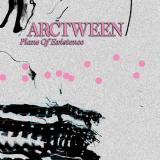
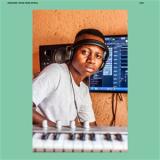
For some time I had hoped to release a full body of work from Tito. Ever since I heard him at Mr. Bean’s Music Club, and revisited records that started appearing around 2018, it felt clear that there was a
particular sensitivity behind the music — curious, rhythmic, spacious, unpredictable. Mostly in the sense that his references and musical background naturally pull from many places at once. When the idea of releasing Plane Of Existence on vinyl started becoming real, it immediately made sense for O Sótão Records.
Based in Porto, Tito Romão first built his path as a drummer, later expanding into composition andproduction through different instruments and collaborations. While drumsare his main instrument, he also studied cello and taught piano for a short period. Later he developed his Arctween project, DJing, and gradually shaping his own language under a new moniker. From Forbidden Cuts in 2018 to Dance Of The Spheres via Discotexas in 2020, his catalogue has slowly traced a path between groove-based experimentation and more immersive sound design.
The years that followed brought even more movement. Together with Gazpa, a longtime friend fromskateboarding days, he released Gaztween’s I through Jazzego Records in 2020, later followed by II in
2025. Around the same period he was also producing Ping Pong,eventually released in 2024 through
Jorge Caiado’s Mad Luv Records. For a couple of years he has held a Saturday residency at the iconic
Mr. Bean’s, still playing regularly with the house band and moving freely between instruments.A lot of that openness leaks into Plane Of Existence. Tito started producing the album during 2024, often late after work, without looking for a clear destination. By 2025 the concept slowly revealed itself. Therecord became an ode to Karlheinz Stockhausen, Manuel Göttsching, and to the modern ambient scene, while carrying traces of jazz, hip-hop and dub throughout its structure.
Chicago bassist EMMA DAYHUFF leads an all-star ensemble feat. PAUL CORNISH, COREY WILKES, JONATHON PINSON & ISIAH COLLIER on this stunning debut album blending modern jazz groove-based composition and fearless improvisation into a deeply personal and cinematic listening experience. She just opened for ROBERT GLASPER here in Chicago on Friday, Sept. 4.
Recorded in Los Angeles, the album draws inspiration from Dayhuff’s Montana upbringing while embracing the creative energy of Los Angeles and Chicago’s contemporary jazz scenes. The album also features a previously unrecorded composition by legendary composer and bassist Bill Lee. Includes plus high-quality download in MP3, FLAC and more.
Cruising at the intersection of their classic deep house glide & dedicated jazz funk wizardry. Side A sports a lowkey mid-tempo keyboard affair, cut with an electro undercurrent while the flip presents an elegant piece of late-night dancefloor dreaminess with "PERFECT DESIGN".
TEMU's g'd up boogie take on LOOSE JOINTS' Paradise Garage classic "IS IT ALL OVER MY FACE" has found itself rip-roaring back into print with a brand new pressing on 45, accompanied by a previously unheard instrumental version on the flip.
Division 81 Records is proud to present Step Like a Giant, a collection of songs from acclaimed Swedish vocalist and songwriter Cecilia Stalin, capturing a remarkable period of her artistic journey on the vibrant UK jazz scene of the early 2010s.
Best known worldwide as the unforgettable voice of Koop, Cecilia has long been celebrated for her ability to blend jazz, soul, and lyrical storytelling into performances of extraordinary warmth and depth.
Step Like a Giant shines a light on that creative era, revealing an artist whose songwriting is every bit as compelling as her unmistakable voice.
Inspired by the spiritual legacy and boundless imagination of John Coltrane, the album is both a tribute and a personal statement. Rich with soulful vocals, adventurous harmony, and emotionally resonant compositions, Cecilia honors Coltrane's fearless pursuit of expression while crafting music that is entirely her own.
These recordings capture the intimacy and creative energy of a thriving musical community, offering listeners a timeless collection that feels as relevant today as when it was first created.
Beautifully presented on vinyl by Division 81 Records, Step Like a Giant is an essential release for jazz collectors, longtime Koop fans, and listeners drawn to soulful, contemporary songwriting.
DJ Support: FISHER, ACRAZE, AFROJACK, Rebuke, ALOK, Mau P, Tchami, MEDUZA, James Hype, Joel Corry, Hot Since 82, Dombresky, Oliver Heldens, OFFAIAH, Danny Howard, MEDUZA, Bob Sinclar, Joel Corry, Groove Armada, Sam Feldt & more.
Toolroom’s next Sampler showcases 4 big releases from Malaa, Zaark, ESSEL, Cristoph, Mark Knight & Wh0.
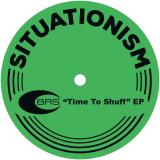
The “Time To Shuff” EP was the first ever release from UK deep house pioneers BRS (British Rhythm Services) in 2000, originally on Cyclo records.
Situationism Records are excited to be able to re-issue this timeless classic and sort after EP from BRS …26 years later and we have lovingly repressed on vinyl and emulated the original artwork.
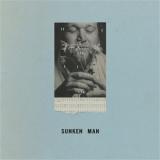
Michael Rawls, Frontmann von Sunken Man, wuchs zwischen Suffolk und Norfolk in Virginia auf. Auf der einen Seite die Stille einer Kleinstadt, auf der anderen der Lärm der Großstadt. Rawls baute sich ein erfülltes Leben abseits der Musik auf: Finanzberater, Unternehmer, Familie _ und trotzdem tauchten die Songs immer wieder auf. Dann ging eine Ehe in die Brüche, und in der Stille eines Hauses, in dem ein Kind schlief, fing er an, ernsthaft zu schreiben. Songs über Liebeskummer und Neuanfänge. Darüber, jemanden neu zu lieben, während man das, was vorher war, immer noch mit sich trägt. Rawls brachte die Songs zu Matthew E. White ins Spacebomb Studio in Richmond. White produzierte das Album; Alan Parker, der unter anderem schon mit Bon Iver, Lucy Dacus und Dijon zusammengearbeitet hat, spielte alle Instrumente selbst. Das Album wurde vom dreifachen Grammy-Gewinner Alex De Jong abgemischt und von TW Walsh gemastert. Das Ergebnis sind neun Songs, die irgendwo zwischen Springsteens emotionaler Direktheit und Wilcos melodischer Intelligenz angesiedelt sind. Liebeskummer, ja - aber auch Hoffnung. Die Art von Hoffnung, die man sich erst verdienen muss.
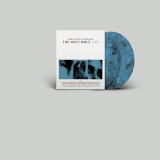
In 2014, to mark 20-years since the release of their landmark album The Holy Bible, Manic Street Preachers embarked on a sold-out tour playing the record in full. More than a decade later, The Holy Bible Live captures an unforgettable show at London’s Roundhouse, documenting a band revisiting a defining chapter of their history. Out on 23rd October, this deluxe edition features the complete live show on CD and 2LP Blue Marble vinyl, including a special Side D etching, as well as the Director's Cut of Kieran Evans' acclaimed live concert film Be Pure – Be Vigilant – Behave on Blu-Ray. The package also includes a brand-new Steven Wilson mix of the original album on CD, an exclusive 16-page book and a Pennie Smith photo print; making it an essential addition to any Manics collection. Pre-order yours now.
In 2014, to mark 20-years since the release of their landmark album The Holy Bible, Manic Street Preachers embarked on a sold-out tour playing the record in full. More than a decade later, The Holy Bible Live captures an unforgettable show at London’s Roundhouse, documenting a band revisiting a defining chapter of their history. Out on 23rd October, this deluxe edition features the complete live show on CD and 2LP Blue Marble vinyl, including a special Side D etching, as well as the Director's Cut of Kieran Evans' acclaimed live concert film Be Pure – Be Vigilant – Behave on Blu-Ray. The package also includes a brand-new Steven Wilson mix of the original album on CD, an exclusive 16-page book and a Pennie Smith photo print; making it an essential addition to any Manics collection. Pre-order yours now.
Underground heroes to worldwide pioneers. Deep cuts from the world's largest archive, pressed on heavyweight, collectible vinyl. Here is a list of names that defined techno, afrobeat, minimal, tech-house and alternative electronic music - all still top of their game.
The A-side features a typically robust Ricardo Villalobos remix of Beck, made accessible by the vocal lead and distinguished by an astonishing 14 minutes of playful drums and sound design that only Villalobos could create.
The AA-side opens with three pioneers co-creating a bass-heavy tech-house banger, with a tinge of guilty pleasure. Katy B on vocals, with Four Tet and Floating Points on production duties. Two further pioneers, Jeff Mills and Tony Allen, follow it up with a deep, brooding organ jam built on layers of intricate, varied percussion. To close, we hear a different side of Villalobos in collaboration with Max Loderbauer of the experimental jazz and electronic music scene. Built on original acoustic recordings, it is reframed with serene delicacy.
This is our deepest release yet.
Limited run. Follow the sound.
a A1: Beck - Cellphones Dead (Ricardo Villalobos Remix) 14:36
b B1. Four Tet, Katy B, Floating Points - Calm Down 4:04)
c B2. Jeff Mills, Tony Allen - Locked And Loaded [7:47
[d] B3. Ricardo Villalobos, Max Loderbauer - Recat [7:15]
[a] A1: Beck - Cellphones Dead (Ricardo Villalobos Remix) [14:36]
[b] B1. Four Tet, Katy B, Floating Points - Calm Down [4:04)
[c] B2. Jeff Mills, Tony Allen - Locked And Loaded [7:47]
[d] B3. Ricardo Villalobos, Max Loderbauer - Recat [7:15]
[a] A1: Beck - Cellphones Dead (Ricardo Villalobos Remix) [14:36]
[b] B1. Four Tet, Katy B, Floating Points - Calm Down [4:04)
[c] B2. Jeff Mills, Tony Allen - Locked And Loaded [7:47]
[d] B3. Ricardo Villalobos, Max Loderbauer - Recat [7:15]
[a] A1: Beck - Cellphones Dead (Ricardo Villalobos Remix) [14:36]
[b] B1. Four Tet, Katy B, Floating Points - Calm Down [4:04)
[c] B2. Jeff Mills, Tony Allen - Locked And Loaded [7:47]
[d] B3. Ricardo Villalobos, Max Loderbauer - Recat [7:15]
[a] A1: Beck - Cellphones Dead (Ricardo Villalobos Remix) [14:36]
[b] B1. Four Tet, Katy B, Floating Points - Calm Down [4:04)
[c] B2. Jeff Mills, Tony Allen - Locked And Loaded [7:47]
[d] B3. Ricardo Villalobos, Max Loderbauer - Recat [7:15]
[a] A1: Beck - Cellphones Dead (Ricardo Villalobos Remix) [14:36]
[b] B1. Four Tet, Katy B, Floating Points - Calm Down [4:04)
[c] B2. Jeff Mills, Tony Allen - Locked And Loaded [7:47]
[d] B3. Ricardo Villalobos, Max Loderbauer - Recat [7:15]
Für manche zu gewagt, für andere unwiderstehlich - Twin Temple haben sich zu kulturellen Provokateuren und zu einer der meistdiskutierten Crossover-Bands der Musikszene entwickelt. Entstanden in einer der dunkelsten Phasen im persönlichen Leben der Bandmitglieder, ist ,DOOMED LOVERS" ihr bisher intimstes und emotional offenstes Werk. Das Album erweitert die filmische Bandbreite ihres unverwechselbaren Sounds und bleibt dabei doch verwurzelt in den zeitlosen Traditionen des frühen Rock 'n' Roll; es gilt als das bislang ambitionierteste und am besten umgesetzte künstlerische Statement der Band. ,DOOMED LOVERS" markiert das bisher kühnste Kapitel von Twin Temple. Produziert vom GRAMMY-preisgekrönten Produzenten Shooter Jennings im legendären Studio 3 bei Sunset Sound in Hollywood, setzt das Album das Bekenntnis der Band zur klassischen analogen Aufnahme fort und erweitert gleichzeitig ihre Klangpalette durch üppige Orchesterarrangements, die von einem 37-köpfigen Orchester eingespielt wurden.
Für manche zu gewagt, für andere unwiderstehlich - Twin Temple haben sich zu kulturellen Provokateuren und zu einer der meistdiskutierten Crossover-Bands der Musikszene entwickelt. Entstanden in einer der dunkelsten Phasen im persönlichen Leben der Bandmitglieder, ist ,DOOMED LOVERS" ihr bisher intimstes und emotional offenstes Werk. Das Album erweitert die filmische Bandbreite ihres unverwechselbaren Sounds und bleibt dabei doch verwurzelt in den zeitlosen Traditionen des frühen Rock 'n' Roll; es gilt als das bislang ambitionierteste und am besten umgesetzte künstlerische Statement der Band. ,DOOMED LOVERS" markiert das bisher kühnste Kapitel von Twin Temple. Produziert vom GRAMMY-preisgekrönten Produzenten Shooter Jennings im legendären Studio 3 bei Sunset Sound in Hollywood, setzt das Album das Bekenntnis der Band zur klassischen analogen Aufnahme fort und erweitert gleichzeitig ihre Klangpalette durch üppige Orchesterarrangements, die von einem 37-köpfigen Orchester eingespielt wurden.
Der 20-jährige in Pretoria lebende Produzent Sam Austin Audebe alias DJ BLACK LOW schickt sich mit seinem Debütalbum "Uwami" an das beliebte Tanzmusikgenre Amapiano aufzumischen. Der Hybrid aus Deep House, Jazz und Kwaito-Musik eroberte sich in den letzten fünf Jahren zunehmend einen Platz in der westlichen Global-Pop-Fangemeinde, während er in Südafrika bereits an jeder Straßenecke allgegenwärtig ist. Der Sound von DJ BLACK LOW ist im Vergleich zu anderen Amapiano Produktionen etwas roher und direkter und basiert auf verzerrte Samples und Synthies. Mit dabei sind auch Gäste wie DJ La Bengwa und DJ Saxo Boy.
This compilation containing both super limited and sold out EPs "Naehe & Flackern" and "Es laesst nicht los, mich jedoch laengst" on one 12" Vinyl. The band Nidare presents their EP "Naehe und Flackern", a collection of three powerful songs that thematically deal with the feeling of hate. The singer's lyrics paint a vivid picture of hate in different facets: the hate towards society, the hate the singer faces in his life and the hate the singer himself carries outward. "Naehe und Flackern" is an EP that takes listeners on an emotional journey while also being a profound emotional exploration. Nidare manages to channel the darkness in her lyrics and music. The EP is an expression of pain, anger and despair, but also a call for self-reflection and understanding of the complex nature of human emotions. "Es laesst nicht los, ich jedoch laengst" is a visceral, unapologetic journey through the emotional landscape of a fractured world. Built around themes of political disillusionment, mental health struggles, and the crushing weight of existential dread, this EP serves as both a cry for help and a reflection of the suffocating atmosphere of modern life.
KKYV10 is a four-track EP by Bulgarian producer Loopdeville, currently based in Spain. The release explores a flexible space between minimal, breakbeat and house, shaped by groove-led structures, textured sampling and a slightly twisted, off-centre energy. Built to move through different moments — daytime light, peak pressure, late fade. The EP opens with "The Bizz", a track built around jazzy elements, vocal cuts and a jackin low-end. Its warm, rolling groove sets a natural tone for the record, balancing playfulness with reflections. "Shmuck Norris" follows with a heavier, more direct approach. Driven by raw drums and a rolling bassline, the track leans into a big-beat aesthetic while maintaining a stripped structure. On "Rashford", the EP shifts into a breakbeat framework. The track carries a deeper, more introspective mood, with subtle background movement adding acid tension beneath it’s surface. The closing track, "Septimo", draws from UK-influenced minimal with garage elements. Focused on sub frequencies it is designed for systems that favour depth and clarity in low parts. Together, the four tracks form a cohesive yet varied release, reflecting Loopdeville’s recognisable sense of tension and detail while staying totally aligned with Kooky’s sonic direction.
This special 3LP clear vinyl collates the “Back To Black” era in a definitive package. Featuring the original studio album, 4x unreleased demos, rare B-sides and demos, alongside the notable live performance from Paradiso, Amsterdam (February 8th 2007) from the Back To Black tour, never released in full and on vinyl.
This edition features brand new alternative cover artwork, including Amy’s handwritten lyrics, and never-before-seen photos by original album photographers Mischa Richter and Alex Lake, plus brand new, exclusive liner notes from Mark Ronson and Salaam Remi.
2026 celebrates the 20th anniversary of the 5x Grammy award winning album “Back To Black”, universally regarded as one of the greatest, most important and influential albums in pop history.
DAYBREAKERS continue the journey through Fred Everything's archives with a second collection of previously unreleased recordings. If the last release captured the early years, this next chapter moves into the period between 2008 and 2015, uncovering more forgotten gems from one of Montreal's finest.
Fred Everything is one of those producers whose influence runs deep. From his early releases on 20:20 Vision through to decades of essential music on Lazy Days and beyond, he's built a catalogue that's earned the respect of DJs and dancers across the world, always staying true to his own sound.
Once again, Fred opened the vault, revealing another batch of unheard productions that had somehow escaped release. This time the sound leans a little further into the dancefloor, with warm grooves, rolling basslines and the kind of understated musicality that's become synonymous with his name.
These recordings may have been made between 2008 and 2015, but they've lost none of their spark. Timeless, understated and effortlessly classy, they remind you why Fred Everything remains one of deep house's most consistent voices.
Three more lost gems, finally finding their place.
Die EP ,PERFECT HOUSE" von MX Lonely ist der Nachfolger ihres hochgelobten Debütalbums ,ALL MONSTERS". Nach dem Erfolg ihres Albums (gelobt von Pitchfork, Stereogum, Alt Press, POST-TRASH und vielen anderen) kehrten sie zu den Songs zurück, die sie während der Arbeit an dem Album geschrieben hatten, und hauchten den Stücken Leben ein, die nicht auf die ursprüngliche Platte gepasst hatten. Sie haben einen schweren, düsteren Alternative-Rock-Sound entwickelt, der gleichermaßen von Schönheit durchzogen ist und von Stereogum als ,die Art von Indie-Rock, die wir in den 90ern als ,angular` bezeichnet haben und die in eine regelrechte Fuzz-Riff-Eruption ausartet" beschrieben wird. ,ALL MONSTERS" war ihre erste komplett selbst aufgenommene Veröffentlichung, auf der die Band - Synthesizer-Spieler und Sänger Rae Haas, Gitarrist Jake Harms, Bassist Gabriel Garman und Schlagzeuger Andy Rapp - einen lebendigen, unmittelbaren, analogen Sound eingefangen hat, der das Gefühl ihrer Live-Shows verkörpert und gleichzeitig ein länger andauerndes und nuancierteres Erlebnis schafft als je zuvor. Für die Zukunft wollen sie weiterhin auf Tour gehen und eine Community aufbauen, die auf gegenseitiger Katharsis basiert. Auch wenn sie sich der Selbstreflexion verschrieben haben, möchten MX LONELY letztendlich andere in ihre Welt einbeziehen.
2026 jährt sich die Veröffentlichung von Koop Islands, dem gefeierten dritten und letzten Studioalbum des schwedischen Duos Koop, zum 20. Mal. Mit seiner einzigartigen Verbindung aus Jazz, Swing, Electronica und filmischer Orchestrierung etablierte das Album Koop als international renommierten Act. Umfangreiche weltweite Tourneen und ein Katalog, der bis heute eine große globale Streaming-Hörerschaft begeistert, folgten.Mit Gaststimmen von Ane Brun, Yukimi Nagano von Little Dragon, Mikael Sundin und Earl Zinger enthält Koop Islands den internationalen Streaming-Hit ,Koop Island Blues", der inzwischen mehr als 100 Millionen Streams auf Spotify verzeichnet. Das Album bietet außerdem ,Strange Love", Koops zweiterfolgreichsten Song im Streaming, der hier als Bonustrack enthalten ist. Zuvor war der Titel nicht auf einer regulären europäischen Vinyl-Ausgabe erhältlich - nun erscheint er erstmals in diesem Format.
After almost twenty years of releasing music, Sven Tasnadi finds himself circling back to some of the sounds that first drew him into house music. Explorer was written at home following a longer break from producing and after moving out of his studio, a change of setting that coincided with a shift in priorities. "The tracks on this EP came together at home after a longer break from music and after I moved out of my studio," he explains. "Musically they are very deep and minimal, at times almost meditative. They were inspired by a new chapter in my life as well as my never-ending love and connection to artists like Lawrence from Smallville and Frank & Tony from Scissor and Thread."
That sense of returning to something runs through the whole record. For much of Tasnadi's career, producing and DJing were closely connected, with many releases naturally shaped by the club. Things have changed. "DJing is no longer my main focus, so I can dedicate myself to these deep and minimal sounds again, free from pressure or expectations," he says. "In a way, after almost twenty years of releasing music, things have come full circle for me."
"Atlas (Chapter 1)" and "Atlas (Chapter 2)" grew from the same initial idea but followed separate paths during production. Chapter 2 came first, while Chapter 1 emerged later from a variation Tasnadi discovered while the track was still essentially a loop. "I was still looking for the right theme for the original idea when another version suddenly opened up," he recalls. He saved that variation for later so he could stay focused on the first version. When he returned to it, the two had developed distinct enough identities to stand independently. Their shared DNA is still audible in the restrained rhythms, slowly shifting details and the way small changes carry much of the movement.
The title track moves further into dub techno, another longstanding passion for Tasnadi. "Explorer is almost a classic dub techno track," he says. "Subtle movements within a constantly repeating pattern create a particular atmosphere. It feels like the track could just keep going forever." It is a patient approach to repetition that he connects to artists such as Moritz von Oswald and his friend Daniel Stefanik.
"Megasektor", one of the first tracks Tasnadi made at home with a new equipment setup, brings the EP into deep house territory. "To me it's almost classic deep house, or at least how I define deep house for myself." Warm, compact and gently propulsive, it provides a natural closing point for a record that is ultimately less about changing direction than reconnecting with an instinct that has always been there.
Explorer captures Tasnadi at a point where making music has become more personal again. The four tracks come from following ideas for their own sake and from rediscovering the deeper, more minimal sounds that have stayed with him throughout his career.
He makes his debut with us with Love & Learn, a 3-track EP where romantic and emotional elements meet a more driving, electronic and techno-infused sound.
Warm, hypnotic and full of feeling, the three tracks move between intimacy and the dancefloor, each carrying its own atmosphere while sharing BOBBY.’s distinctive touch.
Long Distance Operators (LDO) is a collaboration between the Australian musician Hugo Race and the Belgian violinist Catherine Graindorge. Hugo Race, singer, songwriter, producer and author, has a long and wide-ranging history, from the trans-global Dirtmusic and his groups True Spirit and Fatalists to his origins in the 80's Melbourne post-punk scene with Nick Cave & the Bad Seeds and The Wreckery. Catherine Graindorge, violinist and composer, is known for her solo work and collaborations with International artists such as Iggy Pop, John Parish, Pascal Humbert (16 Horsepower), Simon Huw Jones (And Also The Trees). She also plays and composes for theater and cinema. The music of LDO is an intensely atmospheric dreamweave of violins, electronics and Hugo's darkly evocative voice. The duo explores metaphysical lyrics, experimental sounds and retro-baroque orchestrations in a romantic, song-based context.
Long Distance Operators (LDO) is a collaboration between the Australian musician Hugo Race and the Belgian violinist Catherine Graindorge. Hugo Race, singer, songwriter, producer and author, has a long and wide-ranging history, from the trans-global Dirtmusic and his groups True Spirit and Fatalists to his origins in the 80's Melbourne post-punk scene with Nick Cave & the Bad Seeds and The Wreckery. Catherine Graindorge, violinist and composer, is known for her solo work and collaborations with International artists such as Iggy Pop, John Parish, Pascal Humbert (16 Horsepower), Simon Huw Jones (And Also The Trees). She also plays and composes for theater and cinema. The music of LDO is an intensely atmospheric dreamweave of violins, electronics and Hugo's darkly evocative voice. The duo explores metaphysical lyrics, experimental sounds and retro-baroque orchestrations in a romantic, song-based context.
As part of the 20 Years of BM anniversary celebrations, Bondage-Music proudly presents Bondage Games Pt. 11 — a special five-part vinyl series. Each release is named after a constellation, together forming a unique tribute to two decades of Bondage-Music.
With Bondage Games Pt. 11, the label's iconic vinyl series returns in its most ambitious edition to date. Created to celebrate 20 years of Bondage-Music, the series unfolds across five constellation-themed releases, each featuring four exclusive productions from artists closely connected to the label.
The first chapter, Ursus, brings together four exclusive tracks from Roger Gerressen, Sascha Dive, Rhadow and Lola Palmer. From Roger Gerressen's hypnotic groove-driven Patterned Shards and Sascha Dive's unmistakable deep house craftsmanship on Dub Chronicles #10 to Rhadow's atmospheric Ripples and Lola Palmer's warm and emotional Slow Down, the record perfectly reflects the timeless musical identity that has defined Bondage-Music since day one — deep, soulful, groove-focused and made for both intimate listening and late-night dancefloors.
Pressed on heavyweight 180g vinyl and housed in an individually printed sleeve, Ursus continues Bondage-Music's longstanding commitment to exceptional quality in both music and design. The artwork was created by BM's longtime Head of Artwork, Pete Bombart — a close friend and an integral part of the label since its earliest days. His unmistakable visual language has become inseparable from the Bondage-Music identity, earning a loyal following far beyond the music itself.
Whether collected as part of the complete anniversary series or enjoyed on its own, Bondage Games Pt. 11: Ursus is a celebration of the artists, the friendships and the unmistakable sound that have shaped Bondage-Music over the past twenty years.
At the foot of the mountain. Our gaze is inclined toward the summit.
Toward the ascent. The destination that awaits us.
From the valley, we look up at the summit: our destination. But also the path: the true destination.
We can already trace our route, and we are already imagining ourselves walking up there. Along the small ridge, just above the tree line. There, we take a short break and look for the exact spot in the valley where we were standing earlier. It is strange to grasp that we have actually climbed this mountain. To look down from up here at the place where we were just moments ago – the same place we looked up from, toward the place where we are standing now.
And now, knowing what it is like to be up here, we remember what we imagined it would be like back then. What we believed it would mean to stand here.
Along the way, our gaze wanders back and forth. Up toward the mountain, down into the valley, sometimes only at our shoes. We keep walking, one step after another. Our thoughts detached. Our body functioning purely mechanically.
Step left. Step right. Step left. Step right.
Our mind has completely detached itself, and our thoughts race at an immense speed. They summon the most different moments. Moments from our lives. Moments that shaped us, that made us who we are. Or are we perhaps simply trying to understand who we are and how we got here?
It is strange that reaching the summit and looking down could make us believe that we have finally reached, or are striving toward, some superior, triumphant position. When in fact, it is really only about looking at the path we inevitably have to take. Processing impressions from a certain distance. Reconsidering what we have experienced, without losing sight of what lies ahead.
Our gaze turns back toward the summit.
Is there a destination?
An ascent? A summit? A descent? The return?
Or is it only about the insights we encounter along the way?
Am Fuß des Berges. Unser Blick ist zum Gipfel geneigt.
Auf den Aufstieg. Das Ziel, das uns erwartet.
Vom Tal aus blicken wir auf den Gipfel: unser Ziel. Aber auch den Weg: das wahre Ziel. Unsere Route kann man jetzt schon abstecken, und wir stellen uns bereits vor, wie wir dort oben laufen. Über den kleinen Grat, leicht oberhalb der Baumgrenze. Dort machen wir eine kleine Pause und suchen genau die Stelle im Tal, an der wir vorhin noch standen. Es ist verrückt, zu begreifen, dass wir diesen Berg tatsächlich hinaufgestiegen sind. Von hier oben auf den Ort hinunterzusehen, an dem wir eben noch waren – an denselben Ort, zu dem wir hinaufgeblickt haben, als wir noch dort unten standen. Und jetzt, da wir wissen, wie es ist, hier oben zu sein, erinnern wir uns daran, was wir uns damals darunter vorgestellt haben. Was wir geglaubt haben, es würde bedeuten, hier zu stehen.
Unterwegs wandert unser Blick hin und her. Hinauf zum Berg, hinunter ins Tal, manchmal nur auf unsere Schuhe. Wir gehen weiter, einen Schritt nach dem anderen. Unsere Gedanken losgelöst. Unser Körper funktioniert rein mechanisch. Schritt links. Schritt rechts. Schritt links. Schritt rechts.
Unser Geist hat sich völlig losgelöst, und unsere Gedanken rasen mit einer ungeheuren Geschwindigkeit. Sie rufen die verschiedensten Momente herauf. Momente aus unserem Leben. Momente, die uns geprägt haben, aus denen wir geworden sind, wer wir sind. Oder versuchen wir vielleicht einfach nur zu verstehen, wer wir sind und wie wir hierhergekommen sind?
Es ist schon seltsam, dass das Erreichen des Gipfels und der Blick nach unten uns glauben lassen könnten, dass wir endlich eine überragende, triumphale Position erreicht haben oder anstreben würden. Dabei geht es doch eigentlich nur um den Blick auf den Weg, den wir zwangsläufig beschreiten müssen. Eindrücke mit etwas Abstand zu verarbeiten. Erlebtes noch einmal Revue passieren zu lassen, ohne den Blick nach vorne zu verlieren.
Unser Blick wendet sich wieder dem Gipfel zu. Gibt es ein Ziel? Einen Aufstieg? Einen Gipfel? Einen Abstieg? Die Rückkehr? Oder geht es nur um die Erkenntnisse, die uns unterwegs begegnen?
'When Southern Lord picked up and re-released their 2010 debut LP Unsilent Death after its smaller first pressing sold out, they offered a comparison of 90s AmRep bands and early Cro-Mags going faster than either. That sort of works. So does Eyehategod's songbook played by 2013 Converge. This music is more suffocating than it is Suffocation; it also pulls largely from hardcore and comes with plenty of raw emotion attached to it.'' PITCHFORK
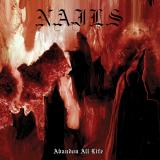
NAILS is beyond brutality. These grindcore tyrants of the American underground have triumphantly returned with their 2nd full length “ABANDON ALL LIFE”! Like the band's debut album: “Unsilent Death", was recorded with CONVERGE’s Kurt Ballou.
These 10 tracks of barbaric rage have no resemblance to the laughable retro party metal that passes as extreme music in today’s world. Abandon All Life viciously carpet bombs the listener with a horrifying brand of Death/ Grind/ Hardcore chaos.
Bludgeoning beatdowns, grinding blasts, hyper-distorted vocals, hard-hitting metallic chugs and early death metal riffs intensifies to a climatic end where the guitars wail and militant drum breakdowns send us marching. With profound hatred, the howling war cry of ABANDON ALL LIFE shows NAILS as a band without equal in their class.
''A swirling, savage and harrowingly sincere listen from start to finish, the record introduced the world to the band in the most brutal and brilliantly harsh manner possible. The new version of the album also features tracks that were never released from the sessions over a decade ago and completes the story of one of the most influential and affecting crossover releases of the century so far.'' ROCK SOUND
'When Southern Lord picked up and re-released their 2010 debut LP Unsilent Death after its smaller first pressing sold out, they offered a comparison of 90s AmRep bands and early Cro-Mags going faster than either. That sort of works. So does Eyehategod's songbook played by 2013 Converge. This music is more suffocating than it is Suffocation; it also pulls largely from hardcore and comes with plenty of raw emotion attached to it.'' PITCHFORK
Los Orioles, the already legendary Biel/Bienne based, psyche-rock tropical sound group, has signed on with Creaked for their latest release, Vacances à Mer. The seven-piece Swiss band are known and loved for their inimitable blend of Latin rhythms, psychedelic rock, French lyrics and furiously rocking live shows, complete with transcendental dance routines. With this new 4-track EP, Los Orioles expands their rep...
Bristol innovator Addison Groove has long been reshaping footwork and bass music, but now steps into an entirely new world as Astel. Shards is an album in which he explores ambient frontiers with a sense of space, emotion and hints of nostalgia on Biofield Records, a new label from Darwin designed for deeper listening. There is a weightlessness to the music, with 'Cosmic Affinity' casting you adrift in the deep unknown with smeared pads and gentle flutters of hope way off in the distance. 'Starlight Shards' is all shifting tones and feathery lines, while 'Astral Radiance' has a sandy texture as well as long, sweeping synth arcs. It's an escapist world that provides plenty of prompts for your own endlessly deep reflection.
Seven years after the haunting resonance of Voids, electronic pioneer Martyn returns to the album format with Music For Existing. Arriving on 15 May 2026, the record is more than a collection of tracks; it is a profound exploration of what it means to remain devoted to a craft in an era of relentless noise.
The album’s announcement is heralded by the lead single "Heavy Sound." The track serves as the perfect bridge between Martyn’s past and present - a masterclass in tension and release that previews the album’s dialogue between the producer, the musicians, and the audience. We live inside a culture that has prioritised and monetised restlessness. The modern apparatus runs on the continuous production of "next," driven by algorithms that value novelty over depth.
Music For Existing serves as a love letter to the communal act of making music - something that is both healing and inherently defiant. For Martyn, a musician often finds solace in musical conversation with others; in the moment we press record, we simply exist together. This record is an invitation to build human infrastructure around what we love, leaning into the fluid nature of community and seeing exactly where the music takes us when we choose to listen.
The album is a sprawling, "off-the-grid" tapestry that echoes Martyn’s profound appreciation for jazz - free, instinctive, and bursting in every sonic direction. This collection features an expansive cast of collaborators, including Duval Timothy, Dan Only, Lucinda Chua, and Mark Cisneros. The record is further elevated by the contributions of jazz talents Mischa Porte and Cees Bruinsma, alongside the evocative words of writer and poet Musa Okwonga.
While the acoustic textures and improvisational spirit of this record may feel like a departure, they represent a homecoming. Jazz has always been ingrained in Martyn’s work; even in his most stripped-back club tracks, the DNA of swing, syncopation, and free-form structure was always present, if not always visible.
Music For Existing marks the beginning of an exciting journey that will continue from the studio to the stage, celebrating the radical act of existing in the moment.