quête:j period

Genres
Tout
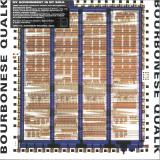
Bourbonese Qualk - My Government Is My Soul

Mannequin Records reissues "My Government Is My Soul", a searing 1989 statement from Bourbonese Qualk, one of the UK’s most defiant and politically engaged experimental acts. Originally released on the group’s own label, this LP captures the uncompromising spirit of a band deeply embedded in the resistance movements of 1980s Britain.

Recorded during a turbulent period of social unrest, "My Government Is My Soul" stands as a fierce response to authoritarianism, surveillance, and the neoliberal decay that defined the Thatcher era. Bourbonese Qualk fused industrial rhythms, minimal synth, distorted tape loops, and spoken-word polemics into a sound that was both confrontational and deeply physical—a weaponized form of music rooted in activism and direct action.

Widely regarded by fans as one of the band’s strongest works, "My Government Is My Soul" has earned a near-mythic status in underground circles. Fans have praised the album’s stylistic breadth—“sometimes it kisses the hem of rock, at others it bows towards the likes of Steve Reich & Philip Glass".

This reissue, fully remastered by Rude 66, reintroduces a critical work of post-industrial dissent to a new generation. Still as urgent and unflinching as ever, the album resonates with today’s climate of mass disinformation and systemic control. It is a timely reminder that sound can still be a form of resistance.

pas en stock

Commandez maintenant et nous commanderons l'article pour vous chez notre fournisseur.

23,95

Last In: 9 months ago
Tribesman - The Tribe / Finsbury Park

2025 Record Store Day title - now available for general sale. Transparent Red colour vinyl 12". Limited edition of 500. For Record Store Day 2025 Reggae Archive Records return to the beginning and reissue our very first release from 2012, Tribesman's "The Tribe"/"Dub" coupled with "Finsbury Park"/"Dub". Originally released in 1979 originals were already very sought after when we chose it as our inaugural release and we were immensely happy to expose the tracks to a wider audience, thirteen years later and that first release has itself become an expensive collectors item with many people asking us to repress.
As with our original run we've kept the sides switched from the original issue and lead with the fantastic roots reggae anthem "The Tribe", 1979 may have been the pinnacle for UK roots reggae and "The Tribe" is in the leading pack, in four minutes it encapsulates 400 years of history and suffering whilst tying things into the present. The addition of Maria Folkes female vocal, a rarity in roots reggae, adds a sweetness that rather than diluting the roots message makes its delivery even stronger and more effective. The band's excellent tribute to their North London home "Finsbury Park" occupies the B side and both sides are full extended disco mixes with the vocals leading into excellent period dub mixes, a great double header, all killer and no filler on this essential reggae 12" First time on colour vinyl, new label art, hype sticker.

pas en stock

Commandez maintenant et nous commanderons l'article pour vous chez notre fournisseur.

23,49

Last In: 9 months ago
Various - American Folk Blues Festival LP 2x12"
  • 1: I'm A Stranger Here/Stranger Blues
  • 2: Nervous
  • 3: I Just Want To Make Love To You
  • 4: Born With The Blues
  • 5: I Got My Eyes On You
  • 6: John Henry
  • 7: I Need Money
  • 8: Everyday, I Have The Blues
  • 9: Night Time Is The Right Time
  • 10: My Own Fault
  • 1: Baby, Won't You Please Come Home
  • 2: Moanin
  • 3: Money Honey
  • 4: Kansas City
  • 5: Bye Bye Baby
  • 6: Medley : The Blues Ain't Nothin' But A Woman & Bye Bye Baby
  • 7: Eyesight To The Blind*
  • 8: Your Funeral & My Trial*
  • 9: Bye Bye Bird*
  • 10: Fattening Frogs For Snakes*
  • 11: Bye Bye Blues*
  • 12: Wake Up Baby**

The blues, born in the cotton fields of the American South, emerged from makeshift instruments and simple harmonies rooted in African heritage. It captured the struggles, hopes, and fleeting joys of laborers enduring harsh conditions, with its hallmark "blue note" adding a unique dissonance to this evocative musical style.

As industrialization progressed, the blues migrated to urban centers like Chicago and New Orleans, evolving with modern instruments and expanding themes to reflect urban struggles, sensual nights, and existential despair. This period birthed many of the musicians who later formed the American Folk and Blues Festival (AFBF), an initiative started in 1950s Germany to introduce Europe to the genre and counter its reductive reputation as a precursor to jazz.

The Lost Recordings celebrates these legendary artists through restored performances from the 1962 Olympia in Paris and the 1963 Stadttheater in Bremen. Featured artists include John Lee Hooker, Memphis Slim, Sonny Terry, Brownie McGhee, T-Bone Walker, Helen Humes, and others, showcasing the depth and evolution of the blues.

From intimate duos like Brownie McGhee and Sonny Terry’s harmonica-guitar interplay to T-Bone Walker’s electrifying group performances, each act demonstrates the genre's versatility and influence. John Lee Hooker’s solo mastery mesmerized audiences, while T-Bone Walker pioneered the electric guitar's place in blues, inspiring legends like B.B. King.

The album also highlights Sonny Boy Williamson, whose charismatic harmonica and profound sensitivity defined his performances. These concerts take listeners on a journey through the authentic sound of the blues, traversing America’s history and foreshadowing its transformative impact on global music.

pré-commande30.06.2025

il devrait être publié sur 30.06.2025

78,57
Kalahari Surfers - Own Affairs LP
  • A1: Free State Fence
  • A2: The Surfer
  • A3: Prayer For Civilisation
  • A4: Hillbrow 1
  • A5: Hillbrow 2
  • B1: Hippo In Town
  • B2: Independence Day
  • B3: Don't Dance
  • B4: Crossed Cheques
  • B5: September 1984

This is an album made during a crucial period in South Africa’s history during which there was a palpable feeling of a slow turning towards the collapse of the apartheid state side by side with an increasingly well-organised culture of resistance through the formation of the United Democratic Front (UDF) and various affiliated bodies. However, as a result, there was increased pushback from the state security establishment, a turning to dirty tricks and the formation of hit squads whose members murdered and tortured many of our friends and created chaos throughout South Africa as well as neighbouring countries.

This album is situated in this political environment however it took advantage of the new do-it-yourself music technologies available at that time. Technologies that made it possible to make and release records without interference from traditional record company executives. Two musician friends of mine pooled their resources after their respective bands had broken up. Ivan Kadey (National Wake) and Lloyd Ross (Radio Rats) built an 8-track recording studio control room and fitted it out in a second hand caravan and called it Shifty. They parked it in a garage attached to the only house left in a demolished and derelict mining village near Soweto on the outskirts of Johannesburg.
All the work on this album was completed there, mainly after hours and mostly alone where I enjoyed an exhilarating freedom to develop a whole new set of musical skills and ideas, incorporating my love of a wide range of music I’d grown up with. Influences of 1970s progressive/kraut/and psychedelic rock combined with mbaqanga bass styles, early reggae/dub and Indian tabla rhythms. Stockhausen, early Zappa and Holgar Czukay were radio text and shredding influences, and Chris Cutler’s band Henry Cow & Art Bears helped me see a way to political expression. Mostly though was the exciting post-punk and no-wave music coming through to us from Europe and America: bands like This Heat, the Mekons, Raincoats, Sonic Youth and Pere Ubu were immensely important to me as was my reading from the period: J.M.Coetzee’s first 3 novels are strong influences on Free State Fence; the stark landscape, superstition, ritual, and sexual repression are in many of his settings. JG Ballard was a constant presence throughout that period, especially whilst living in such a surreal environment, surrounded by mine dumps, but mostly I think the whole French post-modern philosophical movement—Derrida, Foucault and of course, Baudrillard’s Simulacra and Simulation—set out a new sense of possibilities, possible ways to express oneself, ways to think, and ways to try and analyse the political intersection of public and private life. Most important at that time was the influence of sound recordings I had made and experiences garnered from working as a sound recordist on documentary films. These financed my work and later the studio and were consistent employment throughout the 1980s. Film work also enabled me to experience much of South Africa that was hidden from most. The track Independence Day is a good example; drawn from some time spent in the rural homeland of Venda. This then was the first full length Kalahari Surfers album, completed in summer of 1984 it was taken to EMI pressing plant but rejected by the cutting engineer as being ""political, pornographic and anti religious"". Chris Cutler at Recommended Records took up the challenge and released the album through his label. He wrote the original liner note

pré-commande27.06.2025

il devrait être publié sur 27.06.2025

29,37
Stimulator Jones - Cool Green Trees (1999-2005) (LP)

"Chasing the funky symphonies that filled my head and my dreams..."

December 25th, 2023 - an Instagram post. Stimulator Jones shared half a dozen FIRE tracks from his beat tape archive. We were immediately drawn to the rough hewn boom bap.

"I'd release that", Rob commented.

Hours of material was shared and the result is this: Cool Green Trees (1999-2005). A collection of beats and loops Stimulator Jones created between the ages of 14-20 at home in his basement, bedroom and computer room in Roanoke, Virginia.

You will not believe the profound soulful genius contained within these naive schoolboy melodies.

December 25th, 1998 - 25 years ago to the day and his much-coveted Yamaha SU10 sampler was finally bestowed upon young Stimmy AKA Sam Lunsford: "I immediately hooked up a CD Walkman to the input jack and looped the beginning two bars of Grover Washington Jr.'s "Mercy Mercy Me". I don't know what exactly was so thrilling about hearing two measures of music repeating over and over but it was so infectious and hypnotizing and enthralling to me. I'll never forget that ecstatic rush of making my first loop - an uncontrollable, gleeful smile plastered all over my face." When you hear the pocket breakbeat symphonies featured here on Cool Green Trees, you'll feel the same sense of frisson.

In the wake of his Stones Throw breakthrough - Exotic Worlds & Master Treasures - Stimulator Jones was pegged by many as a 90s throwback artist. However, he literally IS a 90s artist. He's been recording music most of his life and he's now 40. He created the bulk of Cool Green Trees as a teenager. Everything before 2004 was recorded when Sam was still in school. He was in 8th grade when he made the 1999 tracks - he didn't even have his learner's permit. This album is a snapshot of a young man in a simpler time. Things were still mysterious back then and he was flying blind, relying on his ears and having to figure things out for himself: "I had no road map for becoming a beatmaker. I have been collecting music since I was a kid, I am a lifelong digger and seeker of cool and interesting sounds. I was there in the golden age of Hip Hop, and while I may have been a suburban white kid in Roanoke, Virginia, I was tuned in and I bought so many classic albums when they came out. I was attracted to Hip Hop because of the musical and poetic quality. I was hypnotized by the rhythms, partially because I was a drummer. I didn't brag about collecting my breakbeat records or making beats - it was something I did in isolation. It wasn't something I generally wanted to bring attention to and it didn't really score me any cool points. I certainly wasn't flexing on social media about it."

Hell, he can do that now!

Opener "Pharoah Jones" was inspired by Yesterday's New Quintet and Madlib's ability to capture that classic 70s sound whilst playing all the instruments. Sam created this one stoned afternoon by laying down a 2 bar loop and a shaker loop on his Yamaha SU700 sampler. He hung a microphone from the ceiling and played his Yamaha Stage Custom drum kit over the top before adding ender Rhodes and playing his dad's Selmer tenor sax through an Electro Harmonix Memory Man echo pedal. Yes! Up next, "Ghost Gospel" utilises a dope loop from a gospel record and adds some soul-funk drums overtop, whilst working that filter knob. Says Sam: "The loop reminded me of something Ghostface would rap over. The sample was in 3/4 waltz time but I flipped it for a 4/4 groove, a technique I picked up from RZA. "Ill Feeling" uses sped-up pieces from a dusty old funk record and putting them over a classic NOLA drum loop; gain chopping up a slow, bluesy 3/4 time signature and bending it to a 4/4 groove. Classy shit. "Capital Punishment" features drums tapped in live, inspired by MF Doom's Special Herbs series. "Do Not Adjust" consists loops found on a compilation of 70s French music at Happy's Flea Market, a classic Roanoke digging spot.

The sublime, evocative title track, "Cool Green Trees" was created when Sam was still living at home. He dumped samples off his SU10 into the family desktop and arranged them in a demo version of Pro Tools: "This track was sort of my ode to the DJ Shadow style of sample based production. Super spacey, slow, and moody. The heavily filtered drums were inspired by Alec Empire's 'Low on Ice' album. I later added some scratches and sounds from a Spider Man storybook record." "Chill Scratch" snags the final bit of a bossanova record and pairs it with a drum loop before adding experimental scratching run through an Electro Harmonix Memory Man echo pedal. "Poisonous Fumes" was made using a sampler, mixer and a turntable; a kind of mixtape beat collage with added scratches and sounds from various records. Using dialogue from superhero records was a nod to Madlib. "Welcome Aboard The Starship" is dark, downtempo trip-hop with a spooky bent. Sam paired a slow, hard drum loop with a guitar sample grabbed off a psychedelic rock record. To finish, he added various backwards sounds and weird atmospheric effects and a little scratching. Swoon.

Side B opens with "Keep On Runnin", made on a borrowed Roland SP202 sampler. Having always loved the sound of the Lo-Fi filter on those machines, reminiscent of the Emu SP1200, Sam always imagined Del or another of the Hieroglyphics crew rapping over this beat. You can certainly hear why. "Sounds Impossible" sees Sam experimenting with layering multiple kick samples at different volumes to create patterns similar to those heard by Showbiz and Lord Finesse during their God-level 1995 period. "Painted Faces" was made by chopping up a REDACTED record which he had gotten from Happy's Flea Market and paired it with a REDACTED drum loop. By the time Sam recorded "The Knew Style", he had acquired a shitty old 1960s portable turntable off eBay. It didn't function properly when he bought it but his brother opened it up, cleaned it out and got it working: "I remember he told me that there was a bunch of sand inside of it when he opened it up, as if its previous owner had taken it to the beach. I would take that turntable on my Happy's Flea Market digs so I could preview records...that's how I found this loop."

"Chicken Wing Blues Sauce" loops up a classic blues joint and pairs it with some REDACTED drums. A bit of filtering and arranging et voilà! "Kool Breeze", from 1999, is one of Sam's oldest surviving beats, as is "Sexx Bullets". The Roots sampled the same record, leaving Sam frustrated yet vindicated. "Soul Child" was an early SU10 creation, looping a dusty old Soul Children 45 and pairing it with 70s rock drum loops to great effect. "Take Off Runnin" was another loop found digging with a portable turntable. Paired with some boom bap drums it makes for a hypnotic head-nod groove. "Centurian" was intended to be a little beat interlude a la Pete Rock. The sample is from a sun-dappled soft-psych record and it's paired with a Robin Trower drum loop that just happens to fit perfectly. Sometimes you slap things together kind of haphazardly and magic happens. "Bozack" was the first beat Sam made using Pro Tools, his first foray into using chopped sounds instead of loops, an exciting new world. "Church" is beat interlude using a Phil Upchurch loop with the "Long Red" drums - a favourite break of Dilla et al. Sam was really on a tear in late 2004, probably because he was unemployed and phoneless and able to just make beats all day. He made "Splash One" on a borrowed Yamaha SU700 and again was experimenting with tapping the drums in live with his fingers, instead of using a loop or sequenced pattern. Channeling 9th Wonder, Sam used a water splash sound effect from a Batman record as a percussive element, hence the title (also a 13th Floor Elevators reference). The main loop is a backwards portion of one of his favourite Roy Ayers songs.

"Hank" is another fun little beat interlude thing, created on a borrowed Roland SP202 sampler with the fantastic Lo-Fi effect that resembled the Emu SP1200 at a fraction of the price. "73 goatee", from 99, is another of his oldest surviving beats, created in his bedroom with his Yamaha SU10 and his brother's Vestax MR-300 4-track recorder: "This one will always feel special. I can remember having a feeling all the way back then on the night that I created it that this was a solid beat with a catchy loop. There was something in the Fender Rhodes melody that resonated with me emotionally, and I had never heard a producer sample that portion before. I felt like I had found my own unique sound, my own unique loop. It came from an Ahmad Jamal '73. I actually even recorded myself rapping and scratching over this beat way back then, I still have that version in all its imperfect sloppy glory."

Sam explains just how much these tracks mean to him: "They all have immense historical and sentimental value and I'm proud of them. These beats come from an innocent, simple time when I was just figuring out how to craft these sounds. They're something very personal to me. They are the initial part of a journey that I really was taking *alone*. There was no YouTube. I couldn't Google shit. I didn't even know any other beatmakers, producers or DJs in my town that could teach me anything. It was always just me, alone, in a room with some equipment - chasing the funky symphonies that filled my head and my dreams. What I was doing wasn't cool. Most of my peers thought I was a weirdo and couldn't care less. Creating these sounds was an anti-social endeavour. In a sense, I felt like it was me against the world, and all I had to instruct and assist me were the recordings produced by my heroes - RZA, DJ Premier, Erick Sermon, Beatminerz, Showbiz, Diamond D, Beatnuts, Prince Paul, The Bomb Squad, Pete Rock, Q-Tip, E-Swift, Mista Lawnge, DJ Shadow, Cut Chemist, Peanut Butter Wolf, El-P and so many more...I dedicate this collection to them, and to my older brother Joe who has always been a musical and technical guiding light for me.

This was a time before every kid was a self-described producer and beatmaker, before everyone had a DAW, before Kanye and "chipmunk soul", before Red Bull beat battles, before there was any social media beyond chat rooms and AOL Instant Messenger, before Soundcloud, before SP-404 mania, before lo-fi beats to study to, before Splice, before targeted ads for MIDI chord packs, etc. In 99 when I told people that I had a sampler and made beats I was mostly met with bewildered confusion and indifference. Kids and adults alike would wonder why I got this weird machine for Christmas instead of something worthwhile like a Playstation or a mountain bike or even a guitar for that matter because at least that could be used to make "real music". Back then, sampling was still not widely respected as an art form - it was seen as lazy, talentless and unoriginal at best and outright criminal theft at worst. I had gotten respect for playing drums and guitar and things of that nature but this was a step in the wrong direction in the eyes of many."

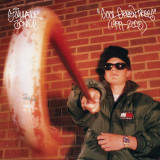
The cover photo is a picture of Sam standing on his back porch in the latter part of 1998, just before he got his first sampler. He was 13 years old, in 8th grade. His dad took the picture with his 35mm film camera: "I actually wanted to be pointing my dad's .22 pistol at the camera lens but he wouldn't let me. He gave me an old walking cane to use instead. The Tommy Hilfiger puffer jacket came from the lost and found at William Fleming High School where my mom worked as a secretary. I was thrilled when she brought it home because we never spent money on expensive name brand clothing like that - we were for the most part strictly a sale rack, bargain bin, thrift store, yard sale, flea market kind of family when it came to clothes. My watch is some cheap off-brand fake gold department store watch." Mastering for this vinyl edition was overseen by Be With regular Simon Francis and it was cut by the esteemed Cicely Balston at Abbey Road Studios to be pressed in the Netherlands by Record Industry.
pas en stock

Commandez maintenant et nous commanderons l'article pour vous chez notre fournisseur.

25,63

Last In: 9 months ago
The Beths - Jump Rope Gazers LP

VERY LIMITED 2025 REPRESS ON BEAM OF LIGHT VINYL .

Everything changed for The Beths when they released their debut album, Future Me Hates Me, in 2018. The indie rock band had long been nurtured within Auckland, New Zealand’s tight-knit music scene, working full-time during the day and playing music with friends after hours. Full of uptempo pop rock songs with bright, indelible hooks, the LP garnered them critical acclaim from outlets like Pitchfork and Rolling Stone, and they set out for their first string of shows overseas. They quit their jobs, said goodbye to their home town, and devoted themselves entirely to performing across North America and Europe. They found themselves playing to crowds of devoted fans and opening for acts like Pixies and Death Cab for Cutie. Almost instantly, The Beths turned from a passion project into a full-time career in music.

Songwriter and lead vocalist Elizabeth Stokes worked on what would become The Beths’ second LP, Jump Rope Gazers, in between these intense periods of touring. Like the group’s earlier music, the album tackles themes of anxiety and self-doubt with effervescent power pop choruses and rousing backup vocals, zeroing in on the communality and catharsis that can come from sharing stressful situations with some of your best friends. Stokes’s writing on Jump Rope Gazers grapples with the uneasy proposition of leaving everything and everyone you know behind on another continent, chasing your dreams while struggling to stay close with loved ones back home.

"If you're at a certain age, all your friends scatter to the four winds,” Stokes says. “We did the same thing. When you're home, you miss everybody, and when you're away, you miss everybody. We were just missing people all the time.”

With songs like the rambunctious “Dying To Believe” and the tender, shoegazey “Out of Sight,” The Beths reckon with the distance that life necessarily drives between people over time. People who love each other inevitably fail each other. “I’m sorry for the way that I can’t hold conversations/They’re such a fragile thing to try to support the weight of,” Stokes sings on “Dying to Believe.” The best way to repair that failure, in The Beths’ view, is with abundant and unconditional love, no matter how far it has to travel. On “Out of Sight,” she pledges devotion to a dearly missed friend: “If your world collapses/I’ll be down in the rubble/I’d build you another,” she sings.

“It was a rough year in general, and I found myself saying the words, 'wish you were here, wish I was there,’ over and over again,” she says of the time period in which the album was written. Touring far from home, The Beths committed themselves to taking care of each other as they were trying at the same time to take care of friends living thousands of miles away. They encouraged each other to communicate whenever things got hard, and to pay forward acts of kindness whenever they could. That care and attention shines through on Jump Rope Gazers, where the quartet sounds more locked in than ever. Their most emotive and heartfelt work to date, Jump Rope Gazers stares down all the hard parts of living in communion with other people, even at a distance, while celebrating the ferocious joy that makes it all worth it -- a sentiment we need now more than ever.

pré-commande27.06.2025

il devrait être publié sur 27.06.2025

22,65
Aipd Q41/B47 - Neutopian Sunrise (Cassette Release Only)

Eighteen Berlin-schoolish Synthwave tracks published under pdqb's moniker Aipd Q41/B47. Carefully prompted and edited many moons ago with an AI model that is already outdated.
To become aware of transience in our fast-paced world, the album is not available digitally or via streaming. It exists only on tape. A relic on a relic! It's as if reading this text on the paper of an extinct tree.

To remind the listener of their own transience, the tape's appearance is mirror-like silver; one can see their reflection in it, look at themselves, and with the next glance, the previous one is gone.

pas en stock

Commandez maintenant et nous commanderons l'article pour vous chez notre fournisseur.

16,18

Last In: 9 months ago
WYTCH HAZEL - II: SOJOURN

Wytch Hazel

II: SOJOURN

12inchOMEN17
Bad Omen
27.06.2025
  • The Devil Is Here
  • Save My Life
  • Still We Fight
  • Wait On The Wind
  • See My Demons
  • Barrow Hill
  • Chorale/Slaves To Righteousness
  • Victory
  • Angel Take Me

Wytch Hazel's stellar 2016 debut Prelude confirmed these Lancastrian apprentice wizards to be Britain's most promising new hard rock band. Two years on, that promise comes to abundant fruition on II: Sojourn, an album that moves Wytch Hazel on from the innocence and exuberance of the debut to a darker, more profound and complex place, carefully wrought into optimum shape by the band's singer, guitarist, songwriter and mastermind Colin Hendra. "I'm really into the idea of an album," notes Colin. "I don't do mix-tapes, I don't listen to singles, I'm interested in albums. I want to make a good, listenable, cohesive work, that is the whole thing." Asked what inspirations were brought to bear this time, Colin has good news, and even better taste: "I was listening to plenty of Judas Priest, Thin Lizzy and Wishbone Ash last year," remarks the frontman. "This seems to be more of a hard rock album, where the last one was more rock-folk. It's definitely more rock than folk!" The most crucial influence fully expresses itself via Les Paul guitars in sweet twin harmony through cranked Super Lead Marshalls - "Exactly the same type of amp that Thin Lizzy would have used," beams Colin - a benefit of working in James Atkinson's Hand Of Law Studio, a converted gaolhouse in Leeds. "We knew there would be a lot more great gear, more amps, more options," enthuses Colin of this productive new work environment. "We were more prepared, we planned better. I had a lot more vocals to record on this album, pretty much every song has at least three harmonies, but James is a really chilled out guy, he made it easy for us. I had a very clear idea of how I wanted each song to sound, I thought about every single aspect. I probably over-prepared for this album, and it paid off!" Wytch Hazel's proud, avowed Protestant Christianity continues to set them apart from the occult hocus-pocus of their peers, and the very title Sojourn has a Biblical inspiration: "It's used a lot in the Old Testament, people would travel somewhere to stay for a short period of time," explains Colin, comparing the idea to Wytch Hazel's development since Prelude. "We're going to reside here with this sound for a while, and the next album might not sound the same. Come and have a listen to this aspect of Wytch Hazel - it's a temporary stay. We'll be here for a while, then there will be something else. I'm always writing, it's a constant stream, but I'm always trying to raise the bar, because I don't want the next album to be not as good as the other ones!"

pré-commande27.06.2025

il devrait être publié sur 27.06.2025

31,72
SURMAN + KROG - ELECTRIC ELEMENT LP

SURMAN + KROG

ELECTRIC ELEMENT LP

12inchJBH110LP
Trunk
27.06.2025

Unreleased electronic / jazz / madness from two titans of jazz and experimentation: JOHN SURMAN and KARIN KROG.

I could now write a load of blown up puffery about how amazing this is, but everyone does that, and a lot of the time it’s all a load of bollocks. But basically this was sent to me by Karin / John when I asked if they had anything hanging about that had not been released. This came through and blew my tiny mind. Like something from prime Annette Peacock “Pony” period. Here is what John Surman said…

John Surman writes:

Back in 2012/13 there had been some talk about a big futuristic open air urban dance/theatre production for about 80/100 actors/dancers with lasers and all kinds of lighting effects on different stages. I was invited to get involved and, together with Ben and Karin, we eventually decided to get to work on some ideas. I think that the original plan was that in performance there would be a mixture of live music and electronica.

Not altogether surprisingly, bearing in mind the complexity of the project, it never moved forward and developed into anything more than an interesting idea. It was probably over ambitious & I guess the funding never came through.

The only information I that I can find relating to the production refers to two silent movies made in 1927/1928 by the filmmaker Eugene Deslaw, entitled `La Marche Des Machines´ and `Les Nuits Électriques.These were clearly intended to act as inspiration for the project.

After months turned into years it became obvious that the project was going nowhere, and so the recorded music laid around gathering dust until Johnny Trunk asked Karin if she had any interesting music that he might be interested in releasing. One thing led to another and so, finally, Electric Element found a home!

For anyone interested in the equipment used this will have to be an approximation since the memory might be playing tricks. Karin was probably using a Yamaha Rex50 f/x unit, a Roland VT-3 Voice Transformer and an Oberheim Ring Modulator. I was playing Bass Clarinet and Contrabass Clarinet through various f/x units together with a Yamaha WX5 wind synth. All the instruments and voice were also processed through Ben´s equipment. After writing this I asked Ben for his recollections and he came up with the following:

John, Karin and I created this music in 2 or 3 days in the winter of 2013 at their studio in Oslo, Norway. I followed up with another 2 or 3 days of mixing, editing and post-processing . We kept a collaborative, improvisational and free-form approach to the sessions. I grew up immersed in music such as Cloudline Blue, the 1979 duo album of Krog/Surman, and this felt like a similar approach. I have mixed sound for many of their live duo concerts and I would use effects and electronics as an

accompaniment and counterpoint to the performed music. The relation of organic and artificial sound sources in music has always fascinated. In this case, I used some contemporary digital signal processing to introduce my own aesthetic into the conversation, in particular using granular synthesis to recombine small 'clouds' of sound into alternate forms. Some of the software tools I used included Ableton Live, Max/MSP and Reaktor.

pas en stock

Commandez maintenant et nous commanderons l'article pour vous chez notre fournisseur.

21,81

Last In: 8 months ago
Elia y Elizabeth - Remixes De Oro / Alegría

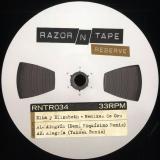
RNT takes a trip south with some fresh modern takes on a pair of Colombian tropicalia classics from the 1970s! Sisters Elia and Elizabeth Fleta recorded some of the most beloved rare groove from Baranquilla’s early-70s period, and when Jaime Tuiran (Vagabundo Club Social) brought the project to label owners Aaron Dae and JKriv, they jumped at the opportunity to work with such rarefied source material.

On the A side, the mysterious newcomer producer Demi Riquisimo crafts a synth-laden tropical opus of a remix of Elia y Elizabeth’s signature hit 'Alegria' and the ever solid Parisian Yuksek works the tune into a concise and mid tempo disco stomper.

On the flip, Bostonian-come-Colombian BOSQ turns 'Soy Una Nube' into an uptempo soul banger, and Baranquilla natives Vagabundo Club Social lend their homegrown organic and clubby style to their mix of 'Alegria'. The perfect blend of earthy OG soul with modern and musical production, this record is as colorful and vibrant as the streets of Baranquilla during Carnaval. And RNT is throwing in a 7Inch with solid new masters of the original songs on heavyweight wax, to boot!

En stock du22.04.2026

14,08

Derniere entrée: 8 jours
Oliver Coates - Mary & George OST

Oliver Coates

Mary & George OST

12inchINV318LP
Invada
20.06.2025
  • 1: Timp X
  • 2: G In Motion
  • 3: ‘Howl & Freeze’
  • 4: ‘Hunt’
  • 5: ‘The Centre Of The Universe’
  • 6: ‘Pulp’
  • 7: ‘1 Minute 1 Life’
  • 8: ‘France’
  • 9: ‘Joy’
  • 10: ‘ Two Weeks’
  • 11: ‘How We Rise’
  • 1: ‘Scars’
  • 2: ‘Haunt’
  • 3: ‘Slay’
  • 4: ‘Present Danger’
  • 5: ‘Mary Chopper’
  • 6: ‘Release An Angel’
  • 7: ‘Pig Mob’
  • 8: ‘Butoh Baby 2’
  • 9: ‘La Badinage Marias With Outside Sustain’
  • 10: ‘Burning’
  • 11: ‘Androgyny, Lie In Bed’
  • 12: ‘Regicide’
  • 13: ‘He Shall Ascend’

Preeminent cellist / composer Oliver Coates follows his scores for
‘Aftersun’ and ‘Foe’ with a stately string and electronic orchestration for Tudor and Stuart-era period drama ‘Mary & George’. Coate’s score draws on his roots in classical, electronic and club music to accompany an adaptation of the non-fiction book ‘The King’s Assassin’ by Benjamin Woolley, which outlines the romantic affair between King James VI and I and George Villiers, 1st Duke of Buckingham.
The score sees Coates reaching for a suitably lavish palette of strings, from symphonic to puckered chamber arrangements, sometimes underlined with Burial-esque beats and choral pads, as in ‘France’, or alloying the two in a way recalling Nicholas Britell’s ‘Succession’ soundtrack. There’s enough harpsichord to make the ruffed-necks swoon, and Coates takes the license to distort sounds to taste when necessary, resulting a clear highpoint in his work, both solo and for film

pré-commande20.06.2025

il devrait être publié sur 20.06.2025

28,78
Dodheimsgard - 666 International LP
  • Shiva Interfere (9:10)
  • Ion Storm (4:20)
  • Magic (1:35)
  • Regno Potiri (10:20)
  • Carpet Bombing (2:25)
  • Final Conquest (5:59)
  • Logic (1:01)
  • Sonar Bliss (7:39)
  • Completion (6:32)
  • Outro (1:30)

To fans of black metal, Dødheimsgard need no introduction, being one of the great purveyors of the Norwegian Black Metal creative evolution.

The band was formed in 1994 by Aldrahn (Thorns) and Vicotnik (Ved Buens Ende). The early incarnation was that of a raw and at often melodic black metal band, with their debut album also featuring Fenriz of Darkthrone on bass. In recent years, Dodheimsgard has become known for its eclectic musical ventures and poignant mood shifts, with a less chaotic, more considered approach compared to their earliest works. Following the 'Kronet til Konge' and 'Monumental Possession' opuses, there was a shift in direction as demonstrated on 1998's 'Satanic Art' EP and by Dødheimsgard's third album, 666 International, Vicotnik had taken over a lot of the writing duties, with DHG's style becoming more technical yet ferocious black metal, with strong experimental ideas and industrial elements.

Vicotnik's riffs were inspired by cult bands such as Thorns and perfectly entwined with Aldrahn's delightfully twisted lyrics and immense vocals to create something truly unique. In its 666 International incarnation, DHG (as they were later to be known) featured a line- up of well- respected Norwegian musicians including Czral (Aura Noir, Ved Buens Ends, Virus), Apollyon (Aura Noir, Immortal), plus Mr Magic Logic (Fleurety) on keyboards, as the album was constructed over a period of time. All in all, 666 International is rightly regarded as a highly influential masterpiece of avant-garde metal by many since its release in 1999.

pré-commande20.06.2025

il devrait être publié sur 20.06.2025

28,53
OSKA - Refined Believer LP

OSKA

Refined Believer LP

12inch316971
Nettwerk
20.06.2025
  • A1: The Final Straw
  • A2: It Happens Either Way
  • A3: Forever Blue
  • A4: With Love, Your Clementine
  • A5: Like A Song
  • B1: Oh Marie
  • B2: April, May, July
  • B3: Maybe I Love You
  • B4: Gloria
  • B5: Refined Believer

Throughout Refined Believer's 10 captivating tracks, OSKA illustrates her experience with losing faith in certain friendships and romantic relationships, only to connect with someone who reaffirms her conviction. "Something that I was going through in my life was trusting some people again," OSKA says of the title Refined Believer and its title track, which alludes to the singer inching back to a place of trust after a period of holding back. "I feel like I can believe in something bigger than myself again, which doesn't have to be something religious. It just means that I'm finding the ability to hope again."

pré-commande20.06.2025

il devrait être publié sur 20.06.2025

27,31
Mark Ernestus' Ndagga Rhythm Force - Khadim

Khadim is a stunning reconfiguration of the Ndagga Rhythm Force sound. The instrumentation is radically pared down. The guitar is gone; the concatenation of sabars; the drum-kit. Each of the four tracks hones in on just one or two drummers; otherwise the sole recorded element is the singing; everything else is programmed. Synths are dialogically locked into the drumming. Tellingly, Ernestus has reached for his beloved Prophet-5, a signature go-to since Basic Channel days, thirty years ago. Texturally, the sound is more dubwise; prickling with effects. There is a new spaciousness, announced at the start by the ambient sounds of Dakar street-life. At the microphone, Mbene Diatta Seck revels in this new openness: mbalax diva, she feelingly turns each of the four songs into a discrete dramatic episode, using different sets of rhetorical techniques. The music throughout is taut, grooving, complex, like before; but more volatile, intuitive and reaching, with turbulent emotional and spiritual expressivity.

Not that Khadim represents any kind of break. Its transformativeness is rooted in the hundreds upon hundreds of hours the Rhythm Force has played together. Nearly a decade has passed since Yermande, the unit's previous album. Every year throughout that period — barring lockdowns — the group has toured extensively, in Europe, the US, and Japan. With improvisation at the core of its music-making, each performance has been evolutionary, as it turns out heading towards Khadim. “I didn’t want to simply continue with the same formula," says Ernestus. “I preferred to wait for a new approach. Playing live so many times, I wanted to capture some of the energy and freedom of those performances.” Though several members of the touring ensemble sit out this recording — sabar drummers, kit-drummer, synth-player — their presence abides in the structure and swing of the music here.

Lamp Fall is a homage to Cheikh Ibra Fall, founder of the Baye Fall spiritual community. The mosque in the city of Touba is known as Lamp Fall, because the main tower resembles a lantern. Soy duggu Touba, moom guey séen / When you enter Touba, he is the one who greets you. After a swift, incantatory start Mbene sings with reflective seriousness. Her voice swirls with reverb, over a tight, funky, propulsive interplay between synth and drums, threaded with one-two jabs of bass. Cheikh Ibra Fall mi may way, mo diayndiou ré, la mu jëndé ko taalibe... Cheikh Ibra Fall amo morome, aboridial / Cheikh Ibra Fall shows the way forward, he gives us strength, he gathers his disciples... Overflowing with grace, Cheikh Ibra Fall has no equal.

Interwoven with Wolof proverbs, Dieuw Bakhul is a recriminatory song about treachery, lies, and back-biting. Over moody, roiling synths and ominous, lean bass, Mbene throws out fluttering scraps of vocal, as if re-running old conversations in her head. The music shadows her despair to the verge of breakdown, at one moment seemingly so lost in thought and memories, that it threatens to disintegrate. Bayilene di wor seen xarit ak seen an da ndo... Dieuw bakhul, dieuw ñaw na / Stop judging your friends and companions... A lie is no good, a lie is ugly.

Khadim is a show-stopper; currently the centrepiece of Ndagga Rhythm Force live performances. The song is dedicated to Cheikh Ahmadou Bamba, aka Khadim, founder of the Mouride Sufi order. Serigne Bamba mi may wayeu / Serigne Bamba is the one who makes me sing. The verses name-check revered members of his family and brotherhood, like Sokhna Diarra, Mame Thierno, and Serigne Bara. Though Islam has been practised in Senegal for a millennium, it wasn’t until the start of the twentieth century that it began to thoroughly permeate ordinary Senegalese society, hand-in-hand with anti-colonialism. The verses here recall Bamba’s banishment by the French to Gabon, and later to Mauritania, in those foundational times. During exile, his captors once introduced a lion to his cell: gaïnde gua waf, dieba lu ci Cheikhoul Khadim / the lion doesn’t budge, it gives itself over to Cheikh Khadim. Deep, surging bass, steady kick-drum, and simple, reverbed chords on the off-beat lend the feel and impetus of steppers reggae. A reed plays snatches of a traditional Baye Fall melody; the dazzling polyrhythmic drumming is by Serigne Mamoune Seck. Mbene compellingly blends percussive vocalese, narrative suspense, exultant praise, introspection, and grievance.

Nimzat is a devotional tribute to Cheikh Sadbou, a contemporary of Bamba, buried in a mausoleum in Nizmat, in southern Mauritania. Way nala, kagne nala... souma danana fata dale / I call upon you and wonder about you... If I am overwhelmed, come to my aid. The town holds special significance for Khadr Sufism. An annual pilgrimage there is conducted to this day. The rhythm is buoyantly funky; the mood is sombre, reined-in, foreboding. Punctuated by peals of thunder, Mbene sings with restrained, intense reverence; huskily confidential, steadfast. Nanu dem ba Nimzat, dé ba sali khina / Let us go to Nimzat, to seal our devotion.

Mbene Diatta Seck: vocals.
Bada Seck: bougarabou, thiol, mbeung mbeung bal, tungune.
Serigne Mamoune Seck: bougarabou, khine, mbeung mbeung, tungune.
Text by Mark Ainley (Honest Jons).
Mastered by Rashad Becker.
Everything else by Mark Ernestus.

pas en stock

Commandez maintenant et nous commanderons l'article pour vous chez notre fournisseur.

22,65

Derniere entrée: 80 jours
Beraber - Gentle Actions

"6-track house finesse from Amsterdam mainstay Beraber, topped off with a killer remix by Brazilian artist Zopelar. Expect six melodic tracks for the body & mind. Beraber returns to United Identities with Gentle Actions, setting the tone for long summer evenings and sun-soaked days. The Amsterdam based producer and DJ organically blends Chicago's classically-schooled keys and machine backdrops with subtle, atmospheric textures. This long-awaited record by Beraber (Baris Akardere) is a deeply personal collection of music, encapsulating a period of creative and personal growth. Rather than a concept record, it serves as a document of the past years, bundling some of most cherished productions into a cohesive and heartfelt gift to the audience. This EP marks the first time the producer has used his own vocals in his productions, next to vocal contributions from Barcelona-based artist Ivy Barkakati, whose lyrics perfectly resonate with the journey of the EP. Gentle Actions opens with Between Us, a calm builder, gracefully layered with meandering pads. Distant Language picks us up with its dubbed-out groove, guiding our feet on a journey through melodic landscapes. It flows into Responsibility, an introspective track with a powerful message about turning dreams into reality, before continuing with Lost in Loops, a loose and soulful house cut featuring his own vocals. The journey ends with the more upbeat, instrumental Good Company, topped off with a deep, nocturnal remix by Zopelar. Written and produced entirely in his Amsterdam studio -- housed in the same building that once held De School -- Beraber continues to rely on a deeply analog and outboard gear-heavy approach. The result is a record that stays true to his soulful and introspective signature, mirroring the sonic identity of his acclaimed radio show, Gentle Actions on Amsterdam's online radio station RRFM."

pas en stock

Commandez maintenant et nous commanderons l'article pour vous chez notre fournisseur.

14,71

Last In: 5 months ago
Sahib Shihab & The Danish Radio Jazz Group - OKTAV
  • A1: Di-Da (Sahib Shihab) 5’10
  • A2: Dance Of The Fakowees (Sahib Shihab) 4’14
  • A3: Not Yet (Sahib Shihab) 3’25
  • A4: Tenth Lament (Sahib Shihab) 6’20
  • B1: Mai Ding (Sahib Shihab) 4’50
  • B2: Harvey’s Tune (Sahib Shihab) 3’07
  • B3: No Time For Cries (Sahib Shihab) 3’52
  • B4: The Crosseyed Cat (Sahib Shihab) 3’34
  • B5: Little French Girl (Sahib Shihab) 2’35”

Recorded August, 1965, Copenhagen, Denmark.

Original LP issue: OKTAV – OKLP 111


Sahib Shihab (Edmund Gregory) played with many of jazz’s finest musicians. Shortly after he became one of the first jazz players to change their names due to an Islamic conversion, he joined Thelonious Monk for his Blue Note sessions. He also played with Art Blakey, Dizzy Gillespie, Oscar Pettiforn and Quincy Jones. A unique musician, he was at home in every musical style, from the experimentalism of Thelonious Monk to the more direct hard bop of Art Blakey. Sahib Shihab’s distinctive sound was rooted in his modernist compositions and arrangements, complemented by an intense, soulful playing style.


In 1959 he toured Europe with Quincy Jones after getting fed up with racial politics in USA and ultimately settled in Scandinavia. He worked for Copenhagen Polytechnic and wrote scores for television, cinema and theatre. He remained there until 1973. During this period, he recorded several albums as leader for European labels such as Vogue, Storyville and Futura.


In 1961 he joined The Kenny Clarke-Francy Boland Big Band and remained a key figure in the band for the 12 years it ran. He married a Danish lady and raised a family in Europe, although he remained a conscious African-American still sensitive to racial issues.


This record, on the Danish Oktav label, his second as a leader and also his rarest is a true masterpiece !!!


Personnel :

Sahib Shihab (Baritone saxophone, Flute, Cowbell)

Poul Hindberg (Alto saxophone, Clarinet)

Ib Renard (Baritone saxophone)

Bent Nielsen (Baritone saxophone, Flute, Clarinet)

Niels-Henning Ørsted Pedersen (NHOP) (Bass)

Alex Riel (Drums)

Allan Botschinsky (Trumpet)

Fritz von Bülow (Guitar)

Bent Axen (Piano)

Bent Jædig (Tenor saxophone, Flute)

Niels Husum (Tenor saxophone)

Svend Åge Nielsen (Trombone, Bass trombone)

Torolf Mølgaard (Trombone, Euphonium)

Palle Bolvig (Trumpet)

Palle Mikkelborg (Trumpet)

Poul Kjældgård (Tuba)

Louis Hjulmand (Vibraphone)

pré-commande13.06.2025

il devrait être publié sur 13.06.2025

30,88
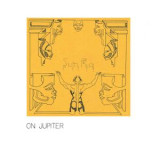
SUN RA - ON JUPITER

Sun Ra

ON JUPITER

12inchSTRUTLP476
STRUT
13.06.2025
  • On Jupiter
  • Ufo
  • Seductive Fantasy

A cosmic fusion of deep funk, interstellar jazz, and avant-garde soundscapes, On Jupiter stands as one of Sun Ra"s most iconic releases. Recorded in 1979 during a prolific period at Variety Arts Studios in New York, this album captures the Arkestra at the height of their creative powers, blending futuristic improvisation with infectious rhythms and otherworldly textures.

pré-commande13.06.2025

il devrait être publié sur 13.06.2025

23,11
L.S. Diezel & Launch DAT - Dubplate #5: For The Love Of

Mysticisms is delighted to present the music from one of the inspirations for the whole Dubplate series, the lesser known, but admired Digi Dub label. Hailing from the late 80s / early 90s South-East London squat scene, the music of label head Lee Berwick and cohorts was unlike any other at the time. Not simply a retake on digital dub emanating from Jamaica, Digi Dub mixed the heritage of reggae with the alternative-culture of Britain to forge a unique version.

Inspired by punk and the early electronics of the likes of A Certain Ratio, Cabaret Voltaire and Throbbing Gristle, Berwick came to music production later, after first quitting a career as a computer programmer to travel through Asia, returning after several years just as electronic “computer music” was gaining a fundamental new lease in 1988. A regular at Jah Shaka gigs over the burgeoning rave scene of the time, he steadily built a studio centered around the Akai Sampler.

Based, at the time, in South-East London, it’s lack of underground “Tube” lines and challenging transport links, helped create its own social and music eco-system. Squatted houses, shops, clubs and parties all thrived around the triangle of Bermondsey, New Cross and Camberwell. After meeting Kenny Diezel and the Mutoid Waste Company, he started to formulate his “dubby electronic sound” by literally play live to thousands of wide-eyed Ravers at Mutoid Waste parties.

Recording as Launch DAT, the first tracks with Kenny formed, soon joined by Harry and Nick, the trio progressed from building a sound system to L.S. Diezel being created. Friends since their teens Harry and Nik progressed from playing in bands, jamming Sly and Robbie dubs to moving from the countryside of the Home Counties to urban Peckham and into the orbit of Mutoid Waste and the squat and party scene.

Progressing to include Atari S1000HD, Akai S3200XL, Alesis Sequencer and Roland 303, the sound expanded but the raw spirit remained. The early recordings with Berwick, in the beautiful “Lovers style” that is For The Love Of and its stripped-back instrumental “Stepper” dub accompaniment in Bad Boys, as well as an early take on take on the merging of digital dub and hip hop in Skunk Funk, all capture the essence of that London period.

However, the inclusion of the seminal Suicidal Dub, that appeared as the title to their debut album and was recorded on a bus a few years later after Mutoid had relocated to Rimini, Italy, offers a glimpse to the future. Heralded as a proto-dubstep classic it has long been sought after and its inclusion makes for the essential.

Mutate The Mystery.

pas en stock

Commandez maintenant et nous commanderons l'article pour vous chez notre fournisseur.

17,86

Last In: 16 months ago
Lenxi - Did you get the dream I sent you?

Nous'klaer Audio proudly presents Lenxi and her debut album: 'Did you get the dream I sent you?' A personal 10-track long player balancing IDM, indie pop and techno, which was written in and about a period of life where heartbreak and threats reinforced each other, creating an inescapable loop of isolation. Attempting to regain confidence and hope, a process of dreaming up a fictive emotional escape emerged. Paintings, sketches, voice notes, and a first few synth-lines took shape--laying the groundwork for this very album. In the tail of the storm, the London-born, Amsterdam-based producer and DJ refined her ideas further in places that carried hopeful memories. Places that felt familiar. Revisiting studios in beloved locations from the past --in London and Paris-- and seeking for the new --in studios and the Westcoast waters of L.A.-- all helped to shape those purest ideas into full songs forming a story that demanded closure. Lenxi's debut album is a stunning sequence of dreams hinting at hope combined with nostalgia--built on a strong force battling the vulnerability of being alone--and ultimately finding a way out and onto the dance-floor. The album is pressed on 180g vinyl and comes with a download-card.

pas en stock

Commandez maintenant et nous commanderons l'article pour vous chez notre fournisseur.

17,86

Last In: 9 months ago
ACTIVITY - A THOUSAND YEARS IN ANOTHER WAY
  • In Another Way
  • A Piece Of Mirror
  • We Go Where We're Not Wanted
  • Your Dream
  • Good Memory
  • Scissors
  • Heavy Breathing
  • Her Alphabet
  • I Came Here To Harm You
  • A Beast

"Evil is very real and having its way, and love is also real and hasn't lost yet." That's how Activity's Travis Johnson described their third album, A Thousand Years In Another Way. A friend had asked why these songs seemed to capture the strange, heavy feeling of being alive right now better than anything else_and that was his answer. The album doesn't try to explain this time we're living in; it simply feels like it. It's a mix of violence, alienation, and tenderness_reflecting the surreal, dreamlike (or nightmarish) rhythm of daily life. Across ten songs, Activity blends experimental rock, electronics, and found sounds with a sense of paranoia, flickers of hope, and a warped reality. Working with producer Jeff Berner (of Psychic TV), the band manipulated sounds and played with room acoustics to create a feeling that's disorienting_like the air is thick and the walls are listening. Coming out of a period of uncertainty, the Brooklyn-based quartet_Travis Johnson, Jess Rees, Bri DiGioia, and Steven Levine_pieced the album together from fragments: clipped samples, looping guitar lines, ghostly melodies. Rees, DiGioia, and Johnson share vocal and writing duties, shaping a record that feels both deeply personal and strangely alien. There's a constant sense that things could shift or fall apart at any second_nothing stays one thing for long. A Thousand Years In Another Way might not offer answers, but it captures the feeling of right now better than most. And maybe, it sounds a bit like your world too.

pré-commande06.06.2025

il devrait être publié sur 06.06.2025

22,27
Articles par page:
N/ABPM
Vinyl