After a hiatus of a few years to concentrate on various studio projects, Steevio’s Mindtours label is back with a vinyl release over 2 volumes, pressed on bio-vinyl at the carbon neutral pressing plant Deepgrooves.
Dod yn ôl at fy nghoed (which is Welsh for ‘to return to my trees’ meaning to return to balanced state of mind) sees Steevio experimenting with deep, broken-beat bass techno awash with polymetric rhythms and jazz infused chord structures. Steevio’s musical approach has in recent years become more free-form, with loose mathematical frameworks, evading clear generic boundaries, and this release continues and expands on that theme.
All tracks were recorded live and improvised from a blank canvas in real-time on an analogue modular synthesizer.
Vol. 1 was all recorded during Covid lockdown and represents some the best material from jams from that period. All tracks were recorded live and improvised from a blank canvas in real-time on an analogue modular synthesizer.
Vol. 2 to be released 1 month after.
Suche:j period
Roy Porter was approaching 50 years of age at the time when he released his first album, breaking a long period of silence and aiming for a comeback. The album is a hot one, with a superb sense of rhythm and vigorous drumming that clearly conveys his ambitious attitude. It is also his most expensive album, with the original selling for over $1000. The album includes 'Jessica', one of his best-known songs, which he wrote for his girlfriend, a long jazz-funk song with a melody of indescribable melancholy and colour, 'Funky Twitch', with its percussive beat and lush horns & guitar, and 'Wave', which quotes a phrase from Jobim's classic song 'Wave'. The LP comes on clear yellow vinyl, plus a 7" featuring a Kenny Dope re-edit of 'Jessica'!
Released in July 1963, "Impressions" is a compilation of recordings from various sessions between 1961 and 1963 of John Coltrane. The album showcases the range of Coltrane's musical interests, from modal jazz and hard bop to ballads, reflecting his evolving style during the early 1960s and received positive reviews for its adventurous spirit and technical brilliance. Critics and fans alike praise the album for capturing a pivotal moment in Coltrane's career as he moved towards more experimental and spiritual jazz. The early 1960s were a period of significant evolution for Coltrane. Having recently left Miles Davis's sextet, Coltrane was delving deeper into modal jazz, a style that focuses on scales (or modes) rather than traditional chord progressions. This period saw Coltrane pushing the boundaries of jazz with extended solos, complex improvisations, and a deeper spiritual search, which would later culminate in his iconic album "A Love Supreme."
- A1: Freeze (Scrappy Mix)
- A2: Freeze (Mad Dog Dub)
- B1: Freeze (Limelight Mix)
- B2: Don't You Wanna Dance (Unreleased 1990 Mix)
- B3: Freeze (Credit Power Dub)
- C1: Welcome To My House (Jerome Derradji Edit)
- C2: Freeze '92 (Remix)
- D1: Don't Give Up On Love (Long Version)
- D2: Love Motion Diversey St Trip (Acid Love)
2024 Repress
In the midst of House music's burgeoning scene in 1986 Chicago, a young local DJ named Jonathan Gilbert, known as Scrappy, seized a golden opportunity to showcase his skills at the renowned Medusa's Club's video room. It was in 1987, one fateful night, when the main DJ failed to show up, that Gilbert stepped in, securing a residency at one of the city's hottest spots. As the year progressed, Gilbert ventured into music production, teaming up with The Boxx Boys--Jim Marcus and Van Christie, notable for their later formation of the iconic group Die Warzau. Their collaboration birthed the legendary acid house anthem from Chicago, "Freeze," which Gilbert released under his Zap Records label in 1988, solidifying his place in Chicago's music history. The track became a timeless favorite, and is often featured in Jerome Derradji's sets. With Scrappy's gracious consent, we have the privilege of reissuing this seminal track, along with delving into his archives to uncover previously unreleased gems and alternate versions from his Atlantic Records era around 1990. For a brief period, Scrappy rode the waves of Chicago's house scene with his distinctive flair before bidding farewell to pursue new horizons in California. Presented for the first time on Still Music, "Acid House + Medusa's - Chicago, 1987-1992" invites listeners on a journey through the vibrant tapestry of late-eighties Chicago House. DJing, indulgence, romance, and the pulsating beats of acid house defined Scrappy's era, and fortunately, he left behind a legacy of unforgettable house tunes, emblematic of the city's unparalleled musical spirit. This limited edition DLP release, accompanied by an insert detailing the captivating tale of one of Chicago's unsung talents, ensures that Scrappy's story and his contribution to the era remain etched in musical history.
Da Best Riddim Eternal Action Krew ! Here is the mission that DA BREAK has given itself for this 3rd album : To drop a new
opus of great quality, which will remain eternally engraved in the memories of Soul Music... BOOM! As simple as that! ;)
Jennifer "Hawa" Zonou & Rémy Kaprielan, founding members of the group, have decided to tighten the ranks and clarify
the content of their music: an aesthetic still anchored in their dear 90's Soul Hip Hop culture, but also with a sharpened ear,
attentive to today's world and sounds, always searching for federating grooves and warm vibes.
DA BREAK has entrusted the production of the LP to Pierre Vadon (also the band's Live keyboard player) who has already
proved the quality of his compositions and arrangements on the second album LET IT SHINE. The mission remains
unchanged: to gather, in the line of the social values defended in the 90s urban music, crib of their inspiration. Grounded,
conscious, questioning, celebrating, comforting, staying open to the world and to each other. Each song is a painting, a
story, a reflection...
Composed during an intense period on the emotional level, this album is a subtile mixture of musical influences: from the
most old school Hip Hop beat to the most contemporary flow, going from West Coast vibes to Caribbean colors. DA BREAK
IS BACK and its key word remains the same: GROOVE.
Over the last 20 years, Portland, Oregon's Federale has carved out a unique niche within the indie music landscape, blending their signature spaghetti-Western instrumental sound with increasing doses of moody vocal arrangements in the spirit of Lee Hazlewood or later-period Leonard Cohen. Still, through it all songwriter (and lead singer, when there is one) Collin Hegna has maintained a strictly retro vibe, and Federale's records have always sounded period-correct for an alternate-universe 1971 where rock and roll never caught on.
Reverb & Seduction, Federale’s sixth studio album, marks the band’s 20th anniversary, and finds them beginning to color outside those Ennio Morricone lines. Perhaps Hegna—who also spent the last 20 years as a dues-paying member of The Brian Jonestown Massacre—has finally decided to give his psych-rock alter ego a seat at the Federale table.
“Before, I'd have an idea and think, ‘Well, that can't be a Federale song’, because it had distorted guitars or whatever,” says Hegna. “But then I thought, 'Well, why not?’” This openness to a broader palette of influences allows Reverb and Seduction to veer into psychedelic and even gothic territory—think Love and Rockets or Sisters of Mercy—that the 2010s Federale might have considered off limits.
The album's first single “Heaven Forgive Me,” for example, draws on Goblin (the Italian prog-rockers who scored Suspiria) and perhaps even a little Depeche Mode, while “Advice from a Stranger” borrows the fuzz and feedback of DIG!-era BJM and The Electric Prunes.
Repress!
Vocal powerhouse Izo FitzRoy exploded on to the scene in 2017 with her debut LP 'Skyline', the album incorporating a stunning fusion of styles spanning gospel, funk and soul as Izo's raw bluesy tone and direct lyricism took centre stage.
Her new album 'How The Mighty Fall' builds further on the soul foundations of her debut. Recorded between Paris, London and Sheffield, it sees her collaborating with three stellar producers and a host of talented musicians.
Disco royalty – Dimitri From Paris (Glitterbox, BBE) directs fellow Parisians Cotonete on her smash single 'I Want Magic'. Studio wizard Shawn Lee (BBE, Ubiquity) brings the funky AOR vibes on 'Slim Pickings' and the Mercury Prize nominated - Colin Elliott (Richard Hawley, Jarvis Cocker, Paul Weller) who produced the bulk of the album, completes the trio. Guesting on the record are the UK's most in demand brass section – The Haggis Horns and Izo's long-time collaborators - Soul Sanctuary Gospel Choir.
Conceived during the aftermath of the breakdown of her long-term relationship, Izo looked to this personal experience for inspiration for the album as well as casting further afield at the wider themes of mental, societal and communication breakdowns.
Despite the strong material, at one point it seemed the record might never materialise. Just as the world was getting on board with her debut LP and international touring was taking off, Izo lost the use of her voice and required surgery on her vocal chords in the second part of 2018. A long schedule of vocal rehabilitation was necessary to get back to a position where she could first talk, then sing regularly enough to get back to work.
Thankfully after this difficult personal period for her, the silver lining from the experience was that post-recovery she gained a whole new octave at the top of her vocal range! This in turn has influenced her song writing on the album & allowed her to enhance her compositions with more vocal light and shade from this unexpected gift.
Hometown to Come' is the second full-length album by Minhwi Lee from Seoul, South Korea. The eight tracks were written over a period of seven years after Lee's first album and loosely form a single story, contemplating how people who have lost their hometown can return.
“What I had imagined from the title, Hometown to Come, was something forever delayed yet constantly approaching; however, upon repeated listens, it takes on a different meaning—a promise of hospitality being realized every day. Even if our places to meet disappear, ‘the song we sing today’ will remain. We will continue to grow, cross paths again, venture far away, and encounter more faces. And when time has passed and you, having forgotten me, ask about my smile or sadness, I will hum ‘the same song,’ cherishing it as a keepsake.” (morceau j. woo, sound designer)
I have no neat and tidy way to summarize Joan of Arc. The group's obdurate dedication to shape-shifting reinvention charmed and frustrated in equal measure, and often simultaneously. Any conversation of who or what Joan of Arc is must also consider what the band is not—beyond a unit that avoided convention. Only one person, bandleader Tim Kinsella, remained in Joan of Arc from its 1996 debut to its final days in 2020. For nearly a quarter century, Joan of Arc maintained a fluid lineup that drew from a multitude of subversive Chicago music communities. Every musician and behind-the-scenes collaborator that played a role in Joan of Arc (a number that exceeds 100) influenced the band's direction and character. All the while, Tim helped maintain Joan of Arc's singular identity throughout all the shifts. No two Joan of Arc albums sound identical, but if you listen close enough, you trace ideas that took root on one LP and blossomed in the next. This book expands and deepens the story of Joan of Arc's first five albums (its Jade Tree period) with archival photos and pages ripped from Tim's journals, presented alongside Tim's recollections and a compact early history. This book comes with a live recording of the one and only show by Red Blue Yellow the band Tim started just before Joan of Arc presented here on a 7", along with download code for a couple hundred bonus tracks from the group's archives.
- A1: Jun Sato - Lorang
- A2: Fumihiro Murakami - Miko
- A3: Tadahiko Yokogawa - Stop Me
- A4: Love Peace Trance - Yeelen
- B1: Ichiko Hashimoto - Lete
- B2: Yosui Inoue - Pi Po Pa
- B3: Eiki Nonaka - Phlanged Vortex Clip
- C1: X Cara - Night In Aracaju
- C2: Poison Girl Friend - Nobody
- C3: Dream Dolphin - Take No Michi
- D1: Keisuke Sakurai - Harai Cd Version
- D2: Hiroki Ishiguro - Unity
- D3: Dido Shizuru Ohtaka Michiaki Kato - Mermaid
- D4: Keisuke Kikuchi - Retro Electric
2024 repress
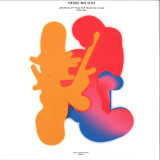
Music From Memory is excited to announce a special compilation that they’ve been working on for some time now; MFM053 – VA – Heisei No Oto – Japanese Left-field Pop From The CD Age (1989-1996). Compiled by long-time friends of the label, Eiji Taniguchi and Norio Sato, Heisei No Oto delves into a world of music released almost exclusively on CD and brings together a fascinating selection of discoveries from a little known and overlooked part of Japan’s musical history.
The last ten or so years have seen a global wave of interest in Japanese music encompassing ambient, jazz, new wave and pop records from the 1980s, some of which is increasingly considered the most innovative and visionary music of that time. Although some music from this period, in the form of ‘City Pop’ or ‘rare groove’ records, had been coveted by collectors and DJs for a number of years, most Japanese music from the time was little known outside and often even within Japan.
Sometime around the mid 2000s, two Osaka record store owners, Eiji Taniguchi of Revelation Time and Norio Sato of Rare Groove, along with a handful of deep Japanese diggers such as Chee Shimizu of Organic Music records in Tokyo, began to explore beyond the typical ‘grooves’ or ‘breaks’. Much like their counterparts in Europe and the US, they began delving into home-grown ambient, jazz, new wave and pop records, discovering visionary music, often driven by synthesizers or drum computers, that broke beyond the typical confines of their genres.
Spending tireless hours in local record stores and embarking on digging trips across the country, Eiji Taniguchi and Norio Sato, much like Chee Shimizu, have been at the forefront of unearthing and introducing many of the very Japanese records now loved and sought after around the world. Yet as YouTube algorithms and vinyl reissues would transport such music into the global consciousness and demand and therefore scarcity intensified for such records, so Eiji and Norio have recently begun to turn their attention to CDs.
The title of the compilation Heisei No Oto refers to the sound of the Heisei era, which began in 1989 and corresponds to the reign of Emperor Akihito until his abdication in 2019. Marking the culmination of one of the most rapid economic growths in Japanese history, 1989 also coincided with the music industry’s final shift away from vinyl in favour of CDs. And, although compact discs were first introduced seven years earlier it wasn’t until late into the ‘80s that, beyond dance music labels, CDs became the exclusive format for major and independent labels in Japan and throughout the world.
This however didn’t signal the end of the innovation in Japan. Many of those same musicians who have become known for their work in the ‘80s would continue to produce outstanding music well into the mid ‘90s, as greater innovation and advances in musical equipment allowed Japanese musicians and producers to refine and explore new sounds. While musicians such as the seminal Haruomi Hosono, whose productions feature on a number of tracks, would continue to push the boundaries of these new technologies, these technological advances also meant less established musicians were able to make use of increasingly affordable but state-of-the-art equipment.
Including music by Haruomi Hosono as well as Yasuaki Shimizu, Toshifumi Hinata and Ichiko Hashimoto who have become known and loved around the world in recent years, Hesei No Oto also features Japanese pop star Yosui Inoue, producers Jun Sato and Keisuke Kikuchi in aaddition to less established artists from the contemporary, jazz, new wave, pop and dance music scenes. Bringing together a selection of tracks that seem to define these specific genres and in fact move fluidly between a number of them, the music on the compilation is again underscored by experimentations with synthesizers and drum computers though with something of a gentle Pop sensibility. Reimagined here then under the encompassing term ‘Left-field Pop’, this is an exciting chapter in Japanese musical history that has only just begun to be fully explored.
VA - Heisei No Oto - Japanese Left-field Pop From The CD Age (1989-1996) is a 2xLP/2xCD that includes liner notes by Chee Shimizu and artwork by Hagihara Takuya and is released on February 28th.
We can"t really say that Japanese jazzmen benefit (not justify in fact) from a great international fame. However, trumpet player Terumasa Hino is an exception, undoubtedly because since the 70s he has collaborated with numerous Americanmusicians : Gary Burton, Roy Haynes, Herbie Hancock ... On Into the Heaven, which was released in 1970, Terumasa Hino is surrounded by the same musicians as on Hi- Nology, released a year earlier : his brother Motohiko Hino on drums, Hiromasa Suzuki on electric piano, Kunimitsu Inaba on electric bass and Takeru Muraoka on tenor sax. The eponymous piece, which lasts more than 20 minutes, is a jazz fusion giving room to choruses and which is reminiscent of the music that Miles Davis then offered, in what we will call his "electric period". B side opens with "Love More Train", a brilliant and long hard bop song, while the album closes melancholy with the peaceful"Feeling Blues As YouAre Feeling".
Terumasa Hino is undoubtedly one of the most famous Japanese jazzmen. Learning the trumpet at the age of 9, he began his career as a professional musician by playing in the orchestra of an US Army base, before joining Hideo Shiraki's Quintet and then forming his own band in 1964. On Hi-Nology we find his brother Motohiko Hino on drums, Hiroma Suzuki on electric piano, Kumitsu Inaba on electric bass and Takeru Muraoka on tenor sax. The inspiration from the "electric period" of Miles Davis (notably Miles In The Sky released in 1968) is felt and is even accepted, since the opening piece is entitled "Like Miles". Coincidentally, Hi-Nology was recorded on July 31, 1969, the day after the release of In a Silent Way and has nothing to envy of this great record by Miles Davis.
Over the past decade, Kasra V has blossomed as a prominent figure in the music industry, particularly through his renowned residency on NTS Radio which has expanded his profound knowledge and expertise in music. Since landing his radio residency in January 2014 he has successfully broadcast over 200 radio shows, making use of the format to explore a wide array of sonic attitudes, styles and systems. To celebrate his achievement Kasra V launches his own imprint V-Sion which he will not only use for his own release output but also to propel his vision of contemporary dance music. To kick things off he presents a stunning 9-track compilation '10:10 Kasra V presents 10 years on NTS Radio' featuring unreleased tracks from some of his most revered guests who have graced his show throughout the years. Each contribution is wholly in line with Kasra V's genre-spanning approach. Over the years some periods have seen him playing straightforward club music, others featuring an extended notion of listening music. One hears a whole breadth of influences in his releases on acclaimed labels such as Radiant Records and Shaytoon Records: collected strands of rave, acid house, San Francisco breakbeat, new beat, ambient, oddball pop from 90s and 80s, UK bleep and so on. The regularity of a broadcasting residency pushed him to carry out a constant study of the history of dance music, and he envisions V-Sion as an output to curate musical output, contributing to the ongoing dialogue between past, future and the ever-changing fulcrum of the sonic present. The tracks presented on 10:10 are also emblematic of this historically-informed approach to dance music. They are all tuned for the floor, but present a range of possible floors to conjure: Fantastic Man's progressive opener, "Neural Filter", is airy and laced with delicate breakbeats, while "Archangel Waltz" by Sepehr presents a shadowy drama of string samples and throbbing bass swells."Qadak" by 500SEC lays an anthemic Arabic melody over bubbling electro; 2 tracks prior, Angel D'Lite circulates a whisper and moan through the mix of a euphoric, rave-stabbed anthem. The latter encouraged Kasra to put out this very compilation, which is just a testament to the value of the company we keep.
Joe Pernice has been writing for a long time—most of his life, in fact—and has crafted a remarkable catalog that boldly reinterprets and recasts classic American pop. Who Will You Believe may be his most moving and nuanced album yet; it’s certainly his timeliest. “These songs were all written during the same time period,” he says, “and they all seemed to tap into a mood I was in at the time. I go through spells where I’m a certain way for three or four months. I might be more reticent than usual, or more outgoing. With all of my records—and especially with this one—the songs all feel like they belong together, probably because they all arrived during the same stretch of time.”
In a single six-month stretch he was left reeling from the deaths of three close friends, including David Berman, poet and songwriter for Silver Jews and Purple Mountains, and Gary Stewart, the Rhino Records co-founder and tireless Pernice Brothers supporter since their first album in 1998. “That was such a bad patch when David and Gary both took their own lives. And my cousin Joe Harvard, who started Fort Apache Studios in Boston and was like a brother to me—he died, too. It was such a tough year. I was thinking about them a lot and watching how divided America had become. I was doing my best to try and take nothing for granted.”
Pernice has been releasing albums for over 25 years. And with age comes a greater patience and an immense appreciation for the act of creation. Who Will You Believe showcases a beautiful balance between such sadness and moments of solemnity with warm humor and camaraderie.
Wayne Shorter’s mesmerizing 1970 album Odyssey of Iska was the last release of the saxophonist’s early Blue Note period. The album was a tribute to his daughter Iska which found Shorter continuing his own unique explorations into fusion having just left Miles Davis to form his band Weather Report. This stereo Tone Poet Vinyl Edition was produced by Joe Harley, mastered by Kevin Gray from the original analog master tapes, pressed on 180g vinyl at RTI, and packaged in a deluxe tip-on jacket.
We are proud to announce the 20th anniversary of "The True Meaning", the 2nd studio album by legendary Queensbridge MC Cormega. This critically acclaimed album was the first Independent Hip Hop album to win the prestigious "Independent Album of the Year" at the Source Awards in 2003. This is a true classic featuring Mega's sharp and heartfelt rhymes over tight well-crafted beats produced by The Alchemist, Large Professor, Buckwild, Hi-Tek, DR Period, J. Waxx Garfield, J-Love and others. Standout tracks include "The True Meaning", "The Come Up" Produced and featuring Large Professor, The Alchemist produced "The Legacy", "Built For This" produced by J. Waxx Garfield and the J-Love produced "Love in Love Out".
B[13,87 €]
Gravity Loss will be the first EP released as part of Dsum's eagerly anticipated album, 'Water In The Moon.' Since his last album in 2022, he is pleased to announce a 12-track project focused purely on electro sounds, aiming between experimental ambient and Detroit techno, and which might be his most musical album to date.
To be released on his label Back Door, Dsum's fourth album has been years in the making and sees him go back to the sound of his electronic music roots. The album's inception traces back to the lockdown period of 2020, serving as a tribute to his introspective musical exploration and honoring the genesis of electronic music.
Featuring an analog sound loaded with lush pads, spatial synths, and solid raw 808 electro rhythms, tracks are brought together with a succession of short variations and instrumental snippets, contributing to a vision of what sound in outer space should be.
'Gravity Loss' alongside 'Double Distance' will be the two EPs bringing "Water In The Moon" to life, both to be released on vinyl as well as digital. This project's wax version sees ten tracks spread across 2x12" records releases in June and July, followed by the full album release in a digital format with extra exclusive tracks featuring all twelve songs in their original intended order.
Northampton, Massachusetts. The Five Colleges. Hampshire College. Forward-thinking education. Electronic Music studies. A vast student population created and sustained a vibrant cultural scene. This is but a snapshot of a fraction, but a fertile and significant one that impacted the lives of many who came in contact with it. The book follows a tight group of people who got together, made music, promoted and released it, created the conditions for others to record and release music, booked bands and then scattered throughout the Midwest and East Coast.
First person memories and memorabilia from Christopher Vine, Craig O'Donnell, Elliott Sharp, James Whittemore, Nicholas Brown, Sean Elias and others, patch up a story of joyous action, firm and enthusiastic DIY endeavours to make things happen as they would like them to happen. It is about a local scene and some key protagonists and it communicates values and methods that are still current — and probably will always be in some form or another among young people with a serious drive to act upon their artistic inclinations. This is also a depiction of what was in fact a model of a music scene. A complete ecosystem was in place during this period. Northampton, sure, but extended across the whole of Pioneer Valley in Western Massachusetts. Bars, music and record stores, live music, College radio, electronic music studios, written press and a lot of energy going into creative work. The immediate "punk effect" motivated the appearance of numerous bands, many short lived, others evolving into New Wave / Power Pop territory, eventually crossing into Post-Punk experimentation.
Turning The Crank is also a companion to an EP of the same title, including music played, produced and recorded in Northampton between decades (1970s going into the 1980s) by different combinations of individuals resulting in The Higher Primates, The Scientific Americans and Human Error. Music in turns mechanical and austere, gorgeously loose, in love with Dub.
First ever reissue of this excellent self-titled South African jazz album by Spirits Rejoice.
Check out tracks like 'Woza Uzo Kudanisa Nathi' or 'Papa's Funk' !
The 1970s is regarded as a period of experimentation, boundary-breaking and hybridization in modern music and this spirit certainly informed the mushrooming of ideas that occurred in South African jazz during this time. In the shadow of more commercial township jive and soul, South African jazz evolved on the fringe, nurtured by passionate and enterprising independent producers who courted the interest of the mainstream with enchanting concoctions of jazz with folk, rock, soul and funk.
With a lineup hailing from far flung regions of South Africa, the mercurial sound of Spirits Rejoice and its willingness to weave a patchwork of different influences into its recordings is not hard to account for. More difficult to reconcile is that the band didn’t manage to level up to the status enjoyed by its peers in larger music markets abroad. Nevertheless, Spirits Rejoice has maintained its revered status in the collective memory of South African jazz for over four decades and their recorded artifacts return in the 2020s with the group’s vitality and energy undiminished.
** TRILOGY ***
post-punk experiments
VOLUME 1 of a series of 3 re-releases of the 80s underground solo cassette tapes by Menko Konings (aka EM / Menko / eM.)
This first re-release/remaster is the cassette tape “dedicated to Charles Bronson” (1986) by Menko, with almost one hour music
TAPE RESTAURATION / REMASTER (2024) by the grand master RUDE 66
Vocals on Debra by Tonny Timmermans (aka Antonia)
Limited edition of 50 (hand numbered) golden cassette tapes with original J-card
“When I went solo in 1983 I only had a guitar, a bass and a four track cassette tape recorder. Sometimes I borrowed a rithmebox or a synth for a couple of days. These solo cassette tapes were created in that period.” (MK)
Music journalist Oscar Smit described these tapes in the 80s - in his column Dolby of the legendary Dutch magazine Vinyl - s.a.: “Big city music, metropolis beat, drum composers, funking basses, nervous rhythm guitars, radio and TV sounds in the background and intonationless vocals.”

![ROY PORTER SOUND MACHINE - JESSICA [DELUXE EDITION] (LP+7")](https://www.deejay.de/images/l/8/4/1071884.jpg)