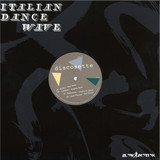
Phosphene describes vision without stimulus, which is a fitting metaphor for this artist debut on Pomelo. Sparse mathematical patterns form the backbone of its four tracks, creating sensory impact through subtle mutations and tense arrangements. Mimikry and Metro’s stark rhythms and strict tonality take a nod from Robert Hood and Terry Riley, while Math and Ak-ki on the flip-side evoke the more grounded moments of Mika Vainio, with grumbling, bassy grooves and brief flashes of cathartic enlightenment.
Поиск:j rob
Все
L’Illustration Musicale, Sonimage, Técipress-In Editions (Timing), Musax, Freesound,
Montparnasse 2000 in France but also De Wolfe and Chappell in England, every of these
sound illustration labels have in common to bring out as a legendary spectre the name of Jacky
Giordano and his aliases. Widespread practice in the library music world, Joachim Sherylee,
chosen for the In Motion album, is one of his plentiful aliases (with José Pharos, Jacky
Nodaro, Gruppo Sounds, Rubba...) used by the french composer, that we regain as well for
Black Devil with Bernard Fèvre or even for the Shifters with Yan Tregger.
For his enthronement on the mythical English label De Wolfe, it's under the obscure name of
the Rubba collective that Jacky Giordano aka Joachim Sherylee sneaked in the londonian De
Wolfe studios with the companionship of British colleagues such as John Hyde (aka John
Saunders, James Harrington, Astral sounds or even Wozo) and his wife Monice Hyde (aka
Monica Beale), Alan Howe (aka John Collins), Robert Poole and Tim Broughton.
Published in 1980, the In Motion: Modern Progressive Group Sounds Played By Rubba LP
and its minimalistic and utilitarian red record cover which contains 13 tracks, mainly composed
by Joachim "Giordano" Sherylee and was never reissued since then. This record became cult
over time; it will have taken that the Hip-Hop world seizes it in order to dig out from the
disregarded and underestimated musical gems graveyard. First of all with beatmaker Madlib
and Freddie Gibbs in 2011 with the track “Thuggin'”, in which he sampled the track “Way Star”,
also used more recently by Mil and the rapper Westside Gunn on his track “Brains Flew” by
(1964 Version).
Nearly 40 years after, the Farfalla Records label, after publishing Timing Archives, presents
another aspect more progressive and psychedelic of the multi-faceted composer Jacky
Giordano by fully reissuing at last this coveted, mysterious and mesmerizing "Rubba". Very
desired by crate-diggers, In Motion appears in the want-list of plenty enthusiasts in this
enigmatic world of the library music. (Erwann Pacaud)
This is a serious collaboration, two internationally acclaimed artists joining forces on a series of new recordings and live shows showcasing the unending diversity & innovation present in UK Reggae & Dub.
First up is “Sound System Girl” - digging deep into Sandra’s Sound System History on a future sounding re-cut of the Cuss Cuss Riddim , on the flip side ‘Fyah Bun’ is stepping spiritual dub music at it’s best.
Sandra Cross needs no introduction, she is a true legend whose career begun at the age of 14 with a no.1 hit in the UK Reggae charts. Since then she has gone on to be one of THE defining female voices of British Reggae. Sandra’s award winning career has seen her hook up with the likes of Mad Professor and Sly & Robbie for a near endless round of hit singles & albums.
Vibronics, the future sound of dub, have been vibrating the world with bass since 1996. Their music is at the forefront of the UK Dub scene, proven by over 60 releases on their own legendary SCOOPS label as well as a host of albums, singles and remixes for a myriad of other labels such as Jarring Effects, Dubhead and Jah Tubbys. In the studio they have worked with Michael Prophet, Iration Steppas, Macka B, Aba Shanti, Brain Damage, High Tone, Big Youth, Gaudi and an almost endless list of dub & reggae luminaries.
Always one to explore, Shipwrec have set sail and discovered a new isle of musical experimentation. Phainomena is a terrain for ambient introspection, dream-filled drone and stunning soundscapes. An old friend returns to the fold to inaugurate this venture, Julian Edwardes. Seven works of abstract immersion coalesce to create "Consonance." The Dutch artist journeys into far-flung realms and worlds, sweet silken synthlines and juddering noise being his transportation tools of choice. Off-centre echo and muted delay swirl in these audio planets. Mountains, oceans, unending skies are conjured as notes bulge, expand and disperse. Wildlife buzzes, chirps and trills in this land of sonic undulations, plants are given musical form with modulated ruffles as bleeps of cloud scud across an expanse of frequencies. An album of brilliant brightness, shifting shapes and unearthed undercurrents where expression is as ephemeral as it is eternal, a sentiment captured in Rob van Hoesel's sublime cover work.
- A1: Antonio Ruscito - Seclusion One
- A2: Antonio Ruscito - Seclusion Two
- B1: Antonio Ruscito - Seclusion Two (Aleksi Perala Remix)
- B2: Antonio Ruscito - Seclusion Three
- C1: Roberto - Into The Blue
- C2: Roberto - Dx Waves
- D1: Roberto - Chord Recall
- D2: Roberto - Chord Recall (Peverelist Remix)
- E1: Stl - Spy Vs Spy
- E2: Stl - Atomsmasha
- F1: Stl - Summer Breeze & Brotherhood
- F2: Stl - Freebird
A beautiful fox that knows no bounds, it's presence keeps me move around, Upon a hill I watch her brown, she thought that I will leave her drown, I chase her tail and watch her shy, but as I catch her she's still not mine ...
From the mysterious forest a black 12". Vinyl only!
“Ta Da” is the debut full length from J. McFarlane Reality Guest, the collective name for the trio headed by the eponymous McFarlane. As a member of the group Twerps, McFarlane has traversed guitar-centric, melodic pop music for some years while honing a highly unique, personal musical language. Ta Da is the first recorded unveiling of McFarlane’s affecting, oblique songwriting panache. Originally released in her native Australia on Hobbies Galore, Ta Da will be released worldwide by Night School in June 2019.
Wheezing into view with a troubled reed instrument set against a s of whoozy synth lines, Human Tissue Act is a foggy curtain the listener is invited to peel back. The dissonant notes are left to dance entwined, with clarinet heralding a Harry Partch-esque mallet percussion interlude. It’s a mood. With no resolution in sight, an audience dragged closer into uncertainty is suddenly drenched with the light of inter-weaving wah wah synth and saxophone. I Am A Toy introduces us to McFarlane’s vocal, an effortless and matter-of-fact, accented statement that quietly takes the reins. While McFarlane’s previous work in Twerps might reference 80s UK and antipodean guitar pop, Ta Da showcases a different influences immersed in psychedelic music and synths. It’s a brilliant, deft concoction swimming in Young Marble Giants-type minimalism washed with bare pop and harmony similar to Kevin Ayers making sense of a Melbourne suburb full of faces half-recognised in the blanching sun.
What Has He Bought begins with a Casio-keyboard rhythm pattern, palm-muted guitars and immaculately enunciated vocal give way to a burnt melodica part that elevates the spirits. Simple patterns repeated, like a well-tempered pop song that does what it needs to do and no more, build into the sound of summer leaking orange juice. They’re moments of joy, layered on top of each other like a melting cake. Do You Like What I’m Sayin’ recalls Marine Girls covering a classic ‘66 Garage nugget, organ lines fighting funk with guitar chords played just behind the percussion. “In a talking world, meanings are the same. Words want to hold on to the people they contain. Do you like what I’m sayin’?” We’re in a Beckett play perhaps, obtuse absurdities rendered pretty. Alien Ceremony is a heart-melter, given a melancholic timbre by bowed double bass it’s a tragi-comic piece that almost reeks of Robert Wyatt at his mid-whimsical twisting a fugue completely out of shape. Beneath the layers of harmony and twinkling instrumentation you sense there’s a genuine sadness somewhere even if it remains veiled.
Through out Ta Da, McFarlane plays with counterpoint and contrast to sometimes delirious effect. On Your Torturer, a simple, upbeat chord progression is hard panned, underpinning a flute solo which seems out of place, hence making it completely in place on this warmly surreal album. My Enemy is a slowly swinging eulogy to a failed relationship punctuated by analogue synth burbles, with our protagonist simply asking, in the aftermath, “can we be nice?” Here McFarlane’s vocal is straight forward, lyrically conversational but still not completely in focus, a surreal kitchen sink drama filtered through a dream where everything is in the wrong place. It’s a fine precursor to Heartburn, which similarly borrows BBC Radiophonic Workshop-style noise synths and the use of space to carve up the simple “You Will Make My Heart Burn” line. At this point, the listener has been in such close proximity to McFarlane’s show, the reality guest in a performance where they’re the sole audience member, that when Where Are You My Love rises on the horizon as a sleepy, psychedelic send off it’s uplifting. The vocal drifts away into the sunset, simple and direct. It leaves the listener slightly confused, perhaps, but grateful for the gentle surprise.
All aboard the Beyond Paradise escape capsule, as they throw down with a four-track trip of cosmic chuggers from The Local Beatnik.
‘Mountain Walk’ opens up proceedings, a weighty chugfest that stomps through the undergrowth. Tripped out vocals, throbbing bass synths and mystic wobbles, all venturing out of the interstellar jungle. Turning the corner, psychedelic new wave guitars, entrancing drum loops and lustful French phrases meld together for ‘Eskase’, causing kaleidoscopic swirls as far as the eye can see.
Flip it to take a trip to the Far East for ‘Travel’, getting lost along the way and wandering into a parallel universe where sci-fi, synth wielding robots dominant the dancefloors, drum machines are fed acid and disorientated travellers are captured for their musical knowledge. Out of their grasp and heading to relative safety, you stumble across a delectable ‘Eastern Dish’. One fork full, then two, spiced just right and you’re hallucinating to the space-age synths and percussive treats that follow. Sitars flow with steelpans offering a suitably immersive closer for this standout E.P. from The Local Beatnik.
Vor 20 Jahren startete Chloé Thévenin ihre Karriere mit Mixer und
Plattenspieler, bereits 1999 zählte sie zur Speerspitze der Pariser
Techno-Szene. Seitdem kennt man Chloé als technisch versierte und
groovig agierende DJ mit Vorliebe für Deep House und Minimal. In der
französischen Kapitale sind besonders die Batofar-Residency und PulpNächte im Rex in Erinnerung geblieben. Ihre Skills präsentierte sie einem
größeren Publikum auf Mix-CDs wie "I Hate Dancing" (2004) oder "Live
At Robert Johnson" (2008). Hinzu kamen regelmäßig eigene
Produktionen, die sie auf über einem Dutzend 12_ÇÖ_ÇÖes
veröffentlichte. Daneben brachte Chloé mit "The Waiting Room" (2007)
und "One In Other" (2010) auch zwei Großformate heraus. Dass es bis
zur Fertigstellung ihres dritten Langspielers sieben Jahre gedauert hat,
erklärt sich für Chloé durch die Wechselfälle des Lebens. Aufgrund
spannender Kollaborationsarbeiten und verschiedener
Kompositionsaufträge für Filme und Installationen blieb ihr zu wenig Zeit
für die Albumproduktion. Außerdem gründete sie mit Lumière Noire ein
eigenes Label, auf dem "Endless Revisions" als eines der ersten Werke
erscheint. Dieses gleicht einem elektroakustischen Soundabenteuer und
hat mit Tanzmusik nichts am Hut. Zwar mäandern immer mal wieder
satte Beats durch die Tracks, aber eben nur als ein Element unter vielen
anderen. Ein Album für den kontemplativen Hörgenuss
Berlin based trio Keller Crackers collective likes to shape haunting esoteric sounds, in which self-built instruments dance with ritualistic synthesised rhythms, field recordings, psychoacoustic drones and poetical spoken silhouettes.
After a self-released MC and a mesmerising tune called “Anem” out in February 2019 on the custom-made Kashual Plastik 007 double-vinyl compilation, now they give birth to their own debut record “KC”, a four track EP resulting from various improvisational studio sessions, a bag full of spontaneous visionary DIY sound fashion that melts meandering serialism, foggy ‘Chris & Cosey’-ness, exoticism and freely expressed emotions. Some pieces are given time to evolve, being dragged through long arrangements and slow transitions, while others are playful and short. To close up the magic circle, the release includes a tripping Tolouse Low Trax signature remix.
The opening tune “Specialised” swings on a trance-like hypnotic bass line, while a self-made kalimba played through a tape delay and overtones from a DIY circuit bended device inject dynamics and colour to the composition. Out of the sonic depth, the spoken words of Sylvana Wickman emerge enchanting and unreal, naming a series of technical terms, assembling a deep notion on the specialised society we live in.
“Cow Tongue” follows, a fleeting composition of crackling electronic clicks jumping off a micro-modular device. They got overdubbed again by Sylvana’s voice, delightfully reciting phrases from a recipe of regional delicacies.
The A side of KC`s first strike finishes with a spaced-out synth bass and the lo-fi beats of a Yamaha RX15 drum machine. They are the gripping foundation of “Aithouses Anamonis“, which means “Waiting Rooms”. It describes the scene of a man sitting in a waiting room observing the consumerist behaviour by the folks around him.
The B-side opens with a Tolouse Low Trax remix of “Specialised”, elevating the original with the bass line of “Aithouses Anamonis“, while melting the all into a dark nebulous Tolouse Low Trax signature stripped down funk for endless nights in neon lights.
For their final track “Colours”, Keller Crackers invited a steady free member of their live shows to record with them: free jazz musician Robert Würz. He tuned his flute enthralling over a suspenseful bass line formed in a whirlwind of synth-sounds. The whole frenzy gets divine through sliding chords that rise from a self-built guitar.
A musical bouquet for open spirits, that value charming minimal wave zones, undefinable post-industrial psychedelics and hallucinogenic poetry reflections on the current state of our mechanical times.
As a visual artist and ambient composer, Tor Lundvall's work often recontextualizes the familiarity of everyday life through abstraction and space. Starting with the snapshot of a moment, Lundvall extracts its underlying complexity of the seemingly mundane and gives sleeping suggestion a presence and purpose. Mainly working sans vocals, Lundvall returned to voice exploration for 2018's A Dark Place, a somber, dark synth album that merged his mastery of textural ambience with traditional pop structures.
Rescued from old DAT tapes A Strangeness In Motion: Early Pop Recordings 1989-1999 are some of Lundvall's earliest completed synth pop works which have remained unreleased until now.
Though Lundvall's work throughout the collection has the recognizable ambient bones and sensibilities he has refined throughout his career, many of the tracks call back to the synth-driven pop of Orchestral Manoeuvres In The Dark, The Human League and New Order, with the common thread being the sparse density and mood created by reservation and the lonely impulse to twist convention, not to rip it up and repurpose it. Rather than 10 disparate ideas, Lundvall's curation of A Strangeness In Motion: Early Pop Recordings 1989-1999 feels like excerpts from a broader work, allowing the listener to fill in the holes and ladder up to his larger themes and concepts, perhaps coloring his prior works in new hues and tones.
'For years I dismissed these songs as naive and youthful relics, but I've grown much fonder of them in recent years along with the memories they evoke,' he says of the decade spanning collection of tracks, many of which were sketched out in his duo with Drew Sullivan, After The Outing. 'Original One', 'Procession Day', 'The Clearing', and 'The Melting Hour' are present here as solo reworkings, originally culled from his sessions with Sullivan. The remaining songs were ideas originally considered for Passing Through Alone (1997) and its proposed follow up, provisionally and playfully titled Femalamania.
'The title was summing up my girl problems at the time and also a silly word spin on Robyn Hitchcock's Fegmania!' he says. 'Sadly, the project was abandoned—a rare decision for me and perhaps the only time I've scrapped an album entirely.'
Acht Jahre nach dem Klassiker „Thora Vukk“ veröffentlicht Robag Wruhme ein weiteres Meisterwerk – Venq Tolep!
Mit spielerische Leichtigkeit nimmt Wruhme synthetische Klänge und gesampelte Geräusche, schneidet sie zurecht und baut daraus Beats, ohne dass seine Musik je gebastelt klingt: jeder einzelne perkussive Sound eine kleine Einheit, die vor Melodiösität berstet. Oder diese zumindest andeutet. Für "Venq Tolep" seine erste Pampa Albumveröffentlichung seit 8 Jahren, hat Robag Wruhme sich genau da hinein vertieft und den Raum dieser Teile weit aufgezogen. Er findet Beats in den Beats, öffnet diese weiter, entdeckt Hooklines und Harmonien, und spürt, wo er schliesslich gänzlich auf Rhythmen verzichten kann. "Venq Tolep" klingt rund. Ein Bogen spannt sich. Und natürlich ist es das Robag Wruhme Universum. Wärme statt Coolness und Freundlichkeit statt Härte. Aber mit "Venq Tolep" formuliert Robag Wruhme noch etwas anderes: Das Album spricht die Sprache von Clubmusik – Klanggestaltung, Layering, Arrangement sind vertraut. aber "Venq Tolep" wagt auch die größtmögliche Annäherung von Track an Song: Techno Pop? Pop Techno? Pop Ambient? Ambient Pop? – Ach was, ganz einfach: »"Venq Tolep" ist Robag Wruhmes Einschreibung in die Pop Musik.
Formate:
- Limitierte 2LP inkl. 7inch mit zwei exklusiven Bonus Tracks, Postkarte & Download Voucher
- CD erscheint im hochwertigen Digipak
- A1: Episode One – Fit The Nineteenth
- B1: Episode Two - Fit The Twentieth
- C1: Episode Three - Fit The Twenty-First
- D1: Episode Four – Fit The Twenty Second
‘Just rain! Tell that to the dolphins!’
The brand new first-time vinyl edition of The Hitchhiker’s Guide to
the Galaxy: Quandary Phase comes on heavyweight blue vinyl,
packaged in the lavish style of the preceding Primary Phase,
Secondary Phase and Tertiary Phase LP releases.
Here, for the first time ever on vinyl, are Episodes 19 to 22 of the
BBC radio series. First broadcast in 2005, the Quandary Phase is
based upon the Douglas Adams’s fourth novel So Long, and
Thanks for all the Fish. This is the first ever publication of the
original radio edits of the Quandary Phase, as heard on their
original Radio 4 broadcast.
Hitching a lift back to Earth after it miraculously reappeared, Arthur
Dent returns to his cottage and tries to resume normal life. But an
encounter with a striking woman named Fenchurch leads to a
series of unanswered questions. Why has the planet’s entire
population of dolphins vanished, leaving behind them some very
charming crystal bowls? Who is Wonko the Sane, and what is
God’s Last Message to His Creation? Meanwhile Ford Prefect is
Having revelations of his own, and as for Marvin the Paranoid
Android…well, just don’t ask. Suffice to say, things may never be
the same again.
Starring William Franklyn as The Book, with Simon Jones as
Arthur Dent, Geoffrey McGivern as Ford Prefect, Bill Paterson as
Rob McKenna, Jane Horrocks as Fenchurch, Sandra Dickinson as
Tricia McMillan and Stephen Moore as Marvin the Paranoid
Android, with a guest cast including Arthur Smith, June Whitfield,
Stephen Fry, Jackie Mason, Rula Lenska, Patrick Moore and
Christian Slater, with music by Philip Pope and Paul ‘Wix’
Wickens. Adapted, Directed and Co-Produced by Dirk Maggs
Two 180g heavyweight coloured vinyl discs are presented in
illustrated wallets inside a rigid, bound 20 page book, including a
moving tribute to Douglas Adams written by Stephen Fry and
sleeve notes by Jem Roberts, Adams’s official biographer.
‘Whoooo…I’m flying…’
Born in 1949 in Recife (Brazil), Roberto De Melo Santos, despite a very light discography, is among
the true icons of the Brazilian Soul music under his artist alias, Di Melo. He’s indeed only needed an
eponymous album, released in 1975 on Odeon, to assert himself as a star in his native country, but
also as a legend for all collectors and connoisseurs of the world. More than 40 years after its release,
this famous album sells for several hundred euros in its original version, and even for the few
reissues that were offered. Not very active since then, Di Melo however returned in 2016 with the
album O Imorrível, released on the Brazilian label Casona Produções.
It is then that a year later, came a meeting with the French group Cotonete, that Florian Pellissier,
founding member and keyboard within the band tells us about: “On tour in Brazil with Cotonete, we
had a few days off in Sao Paulo and I really hoped to make a collaboration with an important artist or
band from the Brazilian funk scene. We had thought of Marcos Valle, Meta Meta or Ed Motta... but
Rafaela Prestes our Brazilian "sound ingineer/genious" told me she’d worked with Di Melo for his
recent comeback and gave me his number. No sooner said than done, as I'm a huge fan of Di Melo.
The next day he arrived at our house with Jo, his wife, and Gabi, his daughter. He takes the guitar in
front of us and gives us a private show of 3 hours… we cried the tears of joy. He had 400 original
songs never recorded, a gold mine. On the same night, we started working the arrangements for 2
days, followed by a rehearsal and two small gigs in Sao Paulo. Immediately after, we recorded in the
magical Epsilon B studio. This album is the summary of this moment, of these 5 days of madness
spent together between “the best band in the world” and the legend Roberto Di Melo… Simple,
beautiful, Brazilian-French, human music…”
Today, Atemporal found its final version in collaboration with Favorite Recordings and is proudly
presented as what we believe will become the genuine long-awaited follow-up to the classic Di
Melo’s LP.
Summer is coming sooner this year, and you can tell from the heat of the two latest releases from Slow Motion: yes ladies and gents, Italian Dance Wave Compilations are back! The first of the two, “Italian Dance Wave Disco Sette”, is here to delight you: starting from a half Italo and half Asian influenced Altieri track, killing it with a dancefloor belter that will make you sweat the night away, raving sensations guaranteed. Lukebox (Fabrizio Mammarella and Umberto Saba from the duo Loudtone) will serve you a slightly more downtempo, modular, weirdo beast that will make your head bang without you even notice: banger. Back on your turntables, is also Robotalco who is providing some proto-house extravaganza and adding some charme to the dirty, chunky beats of the compilation. Last but not least, José Manuel, delivering a touch of biting deep house and electro tribal feels to close the gap, and make us scream “hell yes”.
Mount Liberation Unlimited are Tom and Niklas, two Swedes from space who have spent the last 5 years
carving out a particularly vivid niche in contemporary electronic music. Their previous work has seen them
connect with an impressive list of global dance powerhouses: New York's Beats In Space, Melbourne's
Superconscious and Munich's Permanent Vacation have all released 12'' heat from the duo, while their
hometown buddies at Studio Barnhus provided an outlet for what has been perhaps their biggest and boldest
release yet, 2017's double smash single Double Dance Lover. Their live shows are fervent, fast-paced and very
multi-instrumental affairs, performed non-stop at an increasingly prestigious list of clubs and festivals, serving
as prime examples of the MLU boys' core obsession: the interaction of human rhythm and electronic pulse.
They have their own great little radio show on Gilles Peterson's Worldwide FM! Australia loves them! They
got their artist friend Tom-Hadar Elde to sculpt their heads for their debut album cover!
That self-titled debut, to be released May 31 on Studio Barnhus, has been in progress since the very formation
of the MLU project in 2014. It contains some of their earliest work and of course their very latest – all perfected
at the Neve desk of legendary Gothenburg studio Svenska Grammofonstudion, in cahoots with mix engineer
Christoffer Berg (Depeche Mode, Robyn, Fever Ray).
The result is a sonically fascinating, endlessly generous and straight up FUN record that takes the listener on a
joyride through bittersweet stoner disco, frenzied scando-kraut jams and some of the sweetest dance pop to
come out of Sweden this side of Super Trouper.
The record is preceded by a limited 10'' release of album track Climb Me Up, complete with an exclusive club
mix of the song.
“Style” can be defined as that special ability to watermark every track with an instantly-recognizable identity. Local Suicide, aka Munich’s Brax Moody and Greek-born Vamparela, has it in spades. And following releases on labels such as Bordello, My Favorite Robot, Multi Culti, Roam, Duro and OMBRA, it only made sense that the duo would eventually find its way to Lumière Noire. After all, “black light” (as per the meaning of Chloé’s label’s name) could describe the way Local Suicide’s music flirts with the more troubling zones of the listener’s psyche, where danger roams and aural comfort is no longer a guarantee. The EP’s two tracks set a dark, shifty sonic tableau, in which German-American multidisciplinary artist - and a unique personality of the Berlin underground - Nicki Fehr comes to blend his voice with Vamparela’s. With its swerving bass slithering over a slow tempo, Leopard Gum is the perfect slow burner, a slice of comatose disco that will find its way to the darkest corners of nightlife - and haunt its DJ sets. The synths that come crashing across the track’s Smagghe & Cross remix add their saturated signature that provide a different kind of hook through its breathless nine-minute run. The same measured tempo is found once more on the more ethereal Already There, where Local Suicide affirm their adherence to the more captivating signatures of new wave and post disco. Permanent Vacation stalwarth Lauer adds a surprizing electro pop shimmer to the track. With Leopard Gum’s opaque and impenetrable atmosphere, Local Suicide have released one of their strongest efforts to date.
Lloyd Parks is one of the greatest bass player in Jamaican music history, but he’s also a brilliant singer. He started his singer carrier in 1967 at Studio One with The Termites and then had numerous hits with songs like “Officially”, “Slaving”, “Ordinary Man”, “Mafia” or “We’ll Get Over It”. In 2013, Fruits Records producer Mathias Liengme travelled to Jamaica to record The Inspirators album, an all stars group gathering Leroy “Horsemouth” Wallace, Lloyd Parks, Earl “Chinna” Smith and Anthony “Sangie” Davis playing and singing together. Taken from these recording sessions, Lloyd Parks’ “No Bother Chuck It Pon Me” is for the first time available on 7” record including a wicked dub version on the B side by Roberto Sánchez.
Celebrating its 25th anniversary, Far Out Recordings proudly presents two albums of previously unheard Azymuth demo recordings from 1973-75
Since their debut album release in 1975, Azymuth have risen to rank alongside the world’s greatest jazz, funk and fusion artists. As young men in Rio de Janeiro, they stood out for both their exceptional talent as musicians, and their wild rock ‘n’ roll antics in the predominantly middle-class worlds of bossa nova and jazz. Their signature ‘Samba Doido’ (crazy samba) sound ruptured the tried and tested musical structures of the day, resulting in what can only be described as an electric, psychedelic, samba jazz-funk hybrid.
Before they became Azymuth, José Roberto Bertrami (keyboards), Ivan ‘Mamão’ Conti (drums), Alex Malheiros (bass) and Ariovaldo Contesini (percussion) played backing band to just about every major artist in Brazil. Bertrami was also contracted as an arranger and songwriter at some the biggest labels of the era: Polydor, Philips, Som Livre, and EMI being just a few. Azymuth’s name can be found on record sleeves by the likes of Jorge Ben, Elis Regina, Marcos Valle, Ana Mazzotti and countless others. But at the dawn of the seventies, fascinated by developments in improvisational music - from jazz in the US, to progressive rock in the UK and of course samba, bossa and tropicália on home turf - the energetic young group were inspired and ready to move forward. Any spare moment in which they weren’t in sessions and writing music for other artists, they would be carving out their own sound.
These previously unheard recordings took place between 1973-75 at Bertrami’s home studio in the Laranjeiras district of Rio de Janeiro. At the time of recording, there was nothing in Brazil, less the world that sounded anything like them, so perhaps it’s unsurprising that when Bertrami presented his demos to the record companies he had been working for, he was turned away, and told in effect that the music was ‘wrong’.
One of the demos ‘Manhã’ would be picked up by Som Livre and Azymuth released their seminal debut album in 1975. Throughout the late seventies and eighties, the group released a series of now classic albums for Milestone Records, before taking an indefinite hiatus to pursue their individual careers.
When English producers Joe Davis and Roc Hunter arrived in Brazil in 1994 to record the first Azymuth album in over a decade, Bertrami dug out the demos which had sat virtually untouched for over twenty years. Joe recalls how he was “blown away by the freedom and intensity of the music, as well as the genius of the ideas musically.” Beginning a long and fruitful relationship, ‘Prefacio’ would be the first track Azymuth recorded for Far Out Recordings and was released on the Carnival album (1996).
Along with ‘Manhã’ and ‘Prefacio’, only a handful of these demos were ever professionally recorded and released, making this the first opportunity to hear many of these early Azymuth compositions in their raw, original form.
On every track the frenetic energy in the studio is palpable, giving the recordings a beautifully personal feel and a sense of the phenomenally creative vision Bertrami, Malheiros and Conti were realising at the time. Fifty years on, Azymuth’s earliest recorded music retains an ineffable, futuristic quality, standing amongst their most captivating and moving work.
Credits:
Keyboards: José Roberto Bertrami (Mini Moog Series One, Arp Omni, Arp 2600, Arp Solina Strings, Fender Rhodes 88, Hammond B3 with box speaker, Clavinet with Wah Wah)
Drums: Ivan ‘Mamão’ Conti
Bass: Alex Malheiros
Percussion: Ariovaldo Contesini
Produced by Azymuth and Jose Roberto Bertrami
Recorded at José Roberto Bertrami’s home studio in Laranjeiras, Rio De Janeiro, Brazil between 1973–1975.
Issue and project co-ordinator: Joe Davis
Tape transfers by Roc Hunter (thanks to Simon Hitner)
Mastered by Daniel Maunick at the Sugar Shack, Lanark, Scotland
Mastered by Frank at Carvery Cuts
All tracks published by Far Out Music Publishing/Westbury Music LTD
Celebrating its 25th anniversary, Far Out Recordings proudly presents two albums of previously unheard Azymuth demo recordings from 1973-75
Since their debut album release in 1975, Azymuth have risen to rank alongside the world’s greatest jazz, funk and fusion artists. As young men in Rio de Janeiro, they stood out for both their exceptional talent as musicians, and their wild rock ‘n’ roll antics in the predominantly middle-class worlds of bossa nova and jazz. Their signature ‘Samba Doido’ (crazy samba) sound ruptured the tried and tested musical structures of the day, resulting in what can only be described as an electric, psychedelic, samba jazz-funk hybrid.
Before they became Azymuth, José Roberto Bertrami (keyboards), Ivan ‘Mamão’ Conti (drums), Alex Malheiros (bass) and Ariovaldo Contesini (percussion) played backing band to just about every major artist in Brazil. Bertrami was also contracted as an arranger and songwriter at some the biggest labels of the era: Polydor, Philips, Som Livre, and EMI being just a few. Azymuth’s name can be found on record sleeves by the likes of Jorge Ben, Elis Regina, Marcos Valle, Ana Mazzotti and countless others. But at the dawn of the seventies, fascinated by developments in improvisational music - from jazz in the US, to progressive rock in the UK and of course samba, bossa and tropicália on home turf - the energetic young group were inspired and ready to move forward. Any spare moment in which they weren’t in sessions and writing music for other artists, they would be carving out their own sound.
These previously unheard recordings took place between 1973-75 at Bertrami’s home studio in the Laranjeiras district of Rio de Janeiro. At the time of recording, there was nothing in Brazil, less the world that sounded anything like them, so perhaps it’s unsurprising that when Bertrami presented his demos to the record companies he had been working for, he was turned away, and told in effect that the music was ‘wrong’.
One of the demos ‘Manhã’ would be picked up by Som Livre and Azymuth released their seminal debut album in 1975. Throughout the late seventies and eighties, the group released a series of now classic albums for Milestone Records, before taking an indefinite hiatus to pursue their individual careers.
When English producers Joe Davis and Roc Hunter arrived in Brazil in 1994 to record the first Azymuth album in over a decade, Bertrami dug out the demos which had sat virtually untouched for over twenty years. Joe recalls how he was “blown away by the freedom and intensity of the music, as well as the genius of the ideas musically.” Beginning a long and fruitful relationship, ‘Prefacio’ would be the first track Azymuth recorded for Far Out Recordings and was released on the Carnival album (1996).
Along with ‘Manhã’ and ‘Prefacio’, only a handful of these demos were ever professionally recorded and released, making this the first opportunity to hear many of these early Azymuth compositions in their raw, original form.
On every track the frenetic energy in the studio is palpable, giving the recordings a beautifully personal feel and a sense of the phenomenally creative vision Bertrami, Malheiros and Conti were realising at the time. Fifty years on, Azymuth’s earliest recorded music retains an ineffable, futuristic quality, standing amongst their most captivating and moving work.
Credits:
Keyboards: José Roberto Bertrami (Mini Moog Series One, Arp Omni, Arp 2600, Arp Solina Strings, Fender Rhodes 88, Hammond B3 with box speaker, Clavinet with Wah Wah)
Drums: Ivan ‘Mamão’ Conti
Bass: Alex Malheiros
Percussion: Ariovaldo Contesini
Produced by Azymuth and Jose Roberto Bertrami
Recorded at José Roberto Bertrami’s home studio in Laranjeiras, Rio De Janeiro, Brazil between 1973–1975.
Issue and project co-ordinator: Joe Davis
Tape transfers by Roc Hunter (thanks to Simon Hitner)
Mastered by Daniel Maunick at the Sugar Shack, Lanark, Scotland
Mastered by Frank at Carvery Cuts
All tracks published by Far Out Music Publishing/Westbury Music LTD