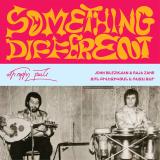
Discotchari unveils a full deadstock run of this rare 7 inch from 1970, found in original factory boxes and reissued as the first release of the label. It features previously unheard material from oud virtuoso John Bilezikjian and percussionist Raja Zahr, a Burbank via Beirut collaboration. The record will be available on vinyl and digital platforms from November 3rd, 2023.
Recorded under the name Something Different, the duo produced a single 45 RPM that was shelved as their solo careers took off. At just 21, Bilezikjian handles oud, bass and harpsichord, while Zahr delivers rich and inventive percussion.
Side A, Zulu Man, blends late 60s psychedelia with a more experimental edge, closer to underground acts than mainstream rock of the era. Carried by evocative vocals and expressive oud lines, the track unfolds like an epic narrative.
Side B, Chemical Reaction, is harder to define, moving between cinematic moods and rhythmic tension. The track evokes shifting landscapes and contrasting atmospheres, making it as intriguing as it is unpredictable on a dancefloor.
Les Disques du Crepuscule presents a new 180 gm vinyl edition of Fidelity, the 1996 studio album by cult Manchester ensemble The Durutti Column.
Limited to just 500 copies, this special double disc edition is pressed on heavyweight 180 gm vinyl and features cover artwork by Crepuscule design director Benoit Hennebert, based on a portrait by Vini Reilly of filmmaker Carol Morley.
Originally released by Crepuscule on CD only in April 1996, Fidelity featured 10 tracks written and performed by Vini Reilly, with occasional guest vocals by Eley Rudge. In addition to Vini’s trademark guitar stylings, the album showcased sleek electronic textures and programmed beats.
This 2019 vinyl re-master features two bonus tracks: My Only Love was originally released in 1995 on a covermount CD with a specialist guitar magazine, while experimental piece The New Fidelity was issued on a Portuguese compilation album from 1992 called Hare, Hunter, Field.
On Last Night At Marienbad's latest, the imprint brings together three of the brightest souls found within the realms of Jazz, namely Mauricesax, 9ick and Milan93, with their collective talents synergising effortlessly on 'A Garden Between Us', alongside a stellar cast of remixers who add even further delight between the grooves….
As a genre, Jazz has perhaps lent itself the most to other musical universes, in that its curious heart, endlessly experimental nature, and parameter-defying spirit have wrapped itself deep within the core of countless albums, scenes, and music makers. It's a genre that welcomes reinvention, consistently defying its contents and always reaching out to find new methods of expressionism. Electronic music, in its many forms, has truly embraced Jazz perhaps like no other movement of music has, with a truly astonishing array of records surfacing in the past 40 years which have blended Jazz's unique motifs with grooves, chords, and emotive excellence. From 90s Jazz house and UR Techno, through to Future Jazz, downtempo, and Hip Hop, and around many other suns, there remains such an intrinsic and symbiotic relationship between the two musical realms that caters to those who wish to live music both within and out with themselves.
As practitioners of blending electronica and Jazz, few do it like the trio of Mauricesax, 9ick, and Milan93. All three are known for their distinctive soundscapes, yet share commonalities in terms of musical language, feel, and sense of progression. Bringing them together allows for overlaps in their sounds to emerge, and just like Jazz itself, this is where the intrinsicness of sound begins to blossom. 9ick brings his softly evolving vibe to the table, one which was so prevalent and celebrated on his 2025 album 'SMIL'; Milan93 draws from his focal point of exploring fill-laden grooves and a myriad of emotive sensibilities; and Mauricesax draws up his extensive musicality that exists at the corner of jazz, electronic, and experimental music, along with running musical workshops all over the globe.
'A Garden Between Us' represents the trio's core tenets, with this immediately obvious from the record's opener, 'Rhodora'. A gentle solo piano quickly evolves into a series of powerful rhythmic pulses, with brass lines bringing vitality and feel to proceedings. The track shifts gears with purpose, transitioning between musical vignettes of the highest order, with the synth work doing much to bind the transitions together. 'Tulip' emerges slightly differently, with glossy Rhodes tones and an unravelling rhythmic undercurrent setting an enthralling stage. The track flourishes amongst sweeping textures, coming up for air amongst a deeply hypnotic rhythmic section that holds on and never lets up. 'Honeysuckle' lands next, which sees the trio emerge with a boundless, dynamic soundscape. The drums shift within the undertones, as keys, chords, horns and hip-hop vocal samples dance around the pulse, capturing the imagination with their narrative-like placement. Wrapping up the A side comes 'Camellia'. A dazzling array of harmonic sounds converges around the transfixing rhythm section, which emerges from deep below to lavishly roll out over the midsection, with the delicateness of the instrumentation a real highlight here.
The B side features two exquisite remixes, with Pacific Coliseum's version of 'Tulip' landing first. Beginning with a signature four to the floor to get things going, his careful handling of the source material is seen in the tactful introduction of the blissful elements that made the original cut so impactful, with great focus placed on emotive fidelity. The result is a summer-bound house number that reimagines the original in all the right ways, flipping it into a euphoria-driven jazz-laden pacer that reaches for the heavens as much as it drives right into the heart. Teuteu then showcases their take on 'Honeysuckle', and at 9 minutes long, represents the longest cut on the record - and the experience is all the richer for it. Leaning heavily into dance music flavours, Teuteu shifts perspective totally into the realm of the club, with the walls beating hard to the kicks. The sax lines that drift ethereally up top keep eyes closed and souls full, as the dance shifts into the next phase.
An experience that drifts from the daydreaming, to soul-warming through to the club shaking - what else is left to experience, except for 'A Garden Between Us' and how it will brighten up life itself….
On Left At Sunset, Tornado Wallace taps into those fragile, glowing moments after a long night in the club, when the lights come up just enough, the bass softens, and the first hint of morning slips through the windows. Time feels suspended.
The lead track Asahi Ga Yondeiru (“the morning sun is calling”) captures that feeling perfectly. Built around Courtney Bailey’s gentle vocal, it drifts somewhere between late-night house and early morning reflection. It is not about the peak. It is about what comes after it. That quiet euphoria when you realize the night gave you something you will carry back into the real world. The rest of the EP stays in that same emotional zone: warm, slightly melancholic, but full of light. These are tracks for the very last dance, when the floor is half-empty, hearts are wide open, and every sound feels a little more meaningful. Not an ending, really. Just the beginning of whatever comes next.
Keen listeners who have dug below the surface of Oren Ambarchi"s triple-digit discography know that alongside hypnotic minimalism, veins of irreverent and joyously wayward exploration run deep. Cooked is something of a landmark in Oren"s work, bringing this gloriously cuckoo sensibility right into the heart of his most high-profile solo work. Carrying on the grand Ambarchi tradition of meticulously constructed all-star studio jams (which reached new heights with Shebang), Cooked brings together collaborators from Australia, Germany, Japan and Sweden for two side-long epics where the foot keeps tapping even as the mind boggles. Cooked is a long way from the spacious, light-dappled grooves of Ghosted, but Oren"s Swedish bandmates play starring roles here, with Johan Berthling"s double bass anchoring both sides, and drummer Andreas Werliin lending his delicate touch to the second piece, "Sleight of Hand". Beginning with glistening layers of electric 12-string guitar, "Sleight of Hand" takes some key cues from electric Miles touchstones like "Feio" or his epic take on David Crosby"s "Guinnevere", with Berthling"s sparse basslines punctuating an almost weightless cornucopia of shifting detail, glimmering with subtle contributions from Michiko Ogawa on sho and James Rushford on a panoply of acoustic keyboards. Suddenly, everything is overwhelmed by a knotty, hyper-complex "solo" from Marcus Pal on digital synthesis, teleporting us to an alternate history where Allan Holdsworth traded the SynthAxe for Xenakis" UPIC. Building with additional drums and percussion from Will Guthrie to a peak of sizzling intensity, the music then goes sideways into a gently surreal coda, where some distinctly Zawinul-esque chords and Fredrik Rasten"s guitar float over a sprightly rhythm box, the avian inventions of Swedish virtuoso whistler Isak Hedtjärn wafting atop the sunlit stew.
2024 feiern die Broilers ihren runden Geburtstag: 1994 - 2024, 30 Jahre Broilers. 30 gemeinsame Jahre bedeuten Wachsen und Zusammenwachsen. Auch miteinander streiten und zusammen streiten – für die gute Sache. Zusammen feiern und zusammenstehen, in den Besten aller Zeiten und den Schlechtesten aller Zeiten. Und weil es für jede gute Geburtstagsparty auch die passende Musik geben muss, hat die Band zum ersten Mal alle ihre Hits und Lieblingslieder auf einem Album versammelt. Und nicht nur das, die Broilers machen sich selbst ein Geschenk: Zehn der 22 enthaltenen Songs, nämlich alle, die vor 2011 eingespielt wurden, haben sie noch einmal komplett neu aufgenommen. So erstrahlen legendäre Broilers-Klassiker in zeitgemäßem Glanz, ohne ihre Wurzeln zu verleugnen. Die Broilers sind ein Phänomen: Seit über einem Jahrzehnt gehören sie konstant zu den erfolgreichsten Rockbands im deutschsprachigen Raum. Millionen verkaufter Konzertkarten, Nummer- 1-Charts-Platzierungen, Edelmetallauszeichnungen in Folge, kaum ein Superlativ, den die Gruppe sich noch nicht zu eigen gemacht hätte. Ein paar Schulfreunde aus den Vierteln am Stadtrand von Düsseldorf gründeten 1994 eine Band, die sich am ruppigen Sound einer Streetpunk-Variante orientierte, der schon Anfang der 80er-Jahre unter der Bezeichnung „Oi!“ auf der britischen Insel das Licht der Welt erblickte. Die bedingungslose Liebe, die ihnen bis heute von vielen ihrer Anhängerschaft entgegengebracht wird, hat ihren Ursprung in dieser Zeit. Neben den Liedern, mit denen sie über die Jahre ihren Hörern stets aufs Neue aus dem Herzen sprachen, führte aber auch die Kombination der individuellen Charaktere der einzelnen Musiker an die Spitze: Wie fünf Superhelden aus einer Comicserie bündeln sie als Team ihre Kräfte, begeistern so die Fans und können aus dieser Unterschiedlichkeit Kraft schöpfen und spenden. Die Broilers haben keine Angst vor Pathos, Emotionen und Kontrasten: In ihrer Musik sind wuchtige Bläsersätze, Offbeats, da ist Soul und Rocksteady, da sind Flirts mit Power-Pop und Kitsch und das alles, als wäre es das Logischste und Normalste auf der Welt. Diese eklektische Mischung trauen sich nicht viele. Die Broilers wollen es sich anders gar nicht mehr vorstellen. »Jolly Good Fellas – Best of Broilers 1994 - 2024« legt davon eindrucksvoll Zeugnis ab!
American DJ, producer, and Ovum label boss Josh Wink remixes Chris Liebing's 'Eye C' via CLR on 25th September 2026, one of the standout tracks from Liebing's first fully solo-produced LP, 'Evolver', which landed in March. The album featured collaborations with the likes of Luke Slater, Charlotte de Witte, and Daniel Miller, with Josh Wink the latest to rework material from the project. The Philadelphian is an electronic music veteran who has shaped countless releases on his own Ovum, while also remixing the likes of Depeche Mode, Moby, and Radiohead.
Josh Wink showcases his production skills once again with a blistering take on Chris Liebing's 'Eye C', rewriting it with fizzing synth modulations and prickly acid lines. The track grows in intensity as rumbling drums march on, and the synths become ever wilder before pulling back into a deep, atmospheric groove, rebuilding beneath the menacing vocals and icy, incendiary hi-hats.
The original version of Chris Liebing's 'Eye C' is a deep, rolling techno masterclass with pulsing synths and deft percussion peeling away from the groove. It's linear and heady, perfect for the small hours, with unsettling vocal fragments refracted around the mix and subtle hypnotism floating overhead as the drums grow ever harder.
What an unbelievable record. From the wild cover to the iconic breakbeats, Roots from Ian Carr’s Nucleus is one of the dopest albums we know. This is seriously thick, funky-prog jazz-rock heaven. Originally released on Vertigo in 1973, other than a couple of versions at the time for other territories, Roots was never re-pressed since so it’s gone on to become another one of those impossible to find records.
Maybe it was a little too out there for the time, but it’s aged very, very well indeed and this Be With re-issue, re-mastered from the original analogue tapes, shows off just why this deserves to be back in press.
Genius trumpeter and visionary composer Ian Carr was one of the most respected British musicians of his era. He was a true pioneer and saw the potential in fusing the worlds of jazz with rock, just as Miles Davis and The Tony Williams Lifetime did in the US. In late 1969, following the demise of the Rendell-Carr quintet, and tiring of British jazz, Carr assembled the legendary Nucleus. Regarding music as a continuous process, Nucleus refused to “recognise rigid boundaries” and worked on delivering what they saw as a “total musical experience”. We can get behind that.
Under bandleader Carr, Nucleus existed as a fluid line-up of inventive, skilled musicians. This constant evolution and revolution was all part of the continuous musical exploration and discovery that took jazz to new levels.
Working together with producer Fritz Fryer and engineer Roger Wake, the seven compositions by Carr, Brian Smith and Dave MacRae that make up Roots flirt with perfection, and Nucleus at that time made up of the cream of 1970s UK jazz with Brian Smith on tenor saxophones and flutes, Dave MacRae on piano and electric piano, Jocelyn Pitchen on guitar, Roger Sutton on bass, both Clive Thacker and Aureo De Souza on drums and percussion, Joy Yates delivering the vocals and of course Carr on trumpet.
The spellbinding title track immediately renders the album indispensable. Riding the illest of loping breakbeats, “Roots” is low-slung, doped-out heist-funk. An absolute monster. If it sounds familiar then that’s likely down to it being sampled by Madlib for Lootpack and Quasimoto’s “Loop Digga”, as well as by a whole host of beat manipulators. “Roots” conjures prime instrumental hip-hop / beat music, only 20 years ahead of its time. Truly, these are the roots. Through sinuous bass, twinkling keys and a hypnotic guitar riff, a smoky brass motif weaves its way into a gloriously deep haze around Carr’s solos. “Roots” is over 9 minutes long, but there’s not a single wasted second, not surprising given that this is a condensed version of an originally 40 minute long commissioned composition.
The soothing vocal fusion delight of “Images” follows. Meticulously constructed, with gorgeous flute work from Brian Smith, with Joy Yates’ silky vocals and Dave MacRae’s Rhodes never sounding better. The cool, driving “Caliban” closes out the first side. Originally the third movement in a four part commission to celebrate Shakespeare’s birthday it stands up on its own, all robust rhythms and blended brass. Keyboard colour and Carr’s trumpet are splashed across the funk drums and basslines (and there’s even some bamboo flute). This really is fusion: the elements of jazz and rock coming together in beautifully synthesis.
Side two opens in riotous fashion with the short, thrilling samba of “Wapatiti”. Next up, “Capricorn” forms a smoothed-out, jazzy constellation. Mellow and dreamy, its twinkling percussion and languid horns slowly build the vibe before head-nod drums and a killer bassline enter the fray. With a distinct heaviness that Black Sabbath would’ve envied, “Odokamona” is a venomous slice of riff-soaked jazz metal (yes, you read that right), elevated by Carr’s wah-wah horns.
The album closes with MacRae’s exceptionally cosmic “Southern Roots and Celebration”. Very much in conversation with Weather Report, it opens as a languorous, spiritual jazz of chiming keys and serene guitar that turns slowly, gorgeously into a mid-paced, brass-laced banger. It’s another sure-fire party starter and the sound of the band having a righteous blast, building an ecstatic chaos that ends with Yates screaming.
And of course we need to talk about Keith Davis’ cover for Roots. Perhaps the coolest record cover of all time? Certainly one of the most bonkers. Just your run-of-the-mill high-gloss, acid-tinged airbrush dystopian/utopian living-room party scene. Consider this your chemical flashback trigger warning.
Front-and-centre the hip-to-death green robot holds court with their giant ball of yellow barbwire wool, hooked up to… something(?) being teased out from under the stairs (probably best not to ask). A thoroughly zoned-out, long-legged Pop Art party-goer lounges half-plugged in to the painting behind her as a pair of legs flail into shot from the the top of the stairs opposite. We won’t even begin to guess what the chap’s up to in the middle, but the view out of the windows is rather nice, and someone’s already got the hoover out ready to tidy up. All of the Nucleus sleeves are something special, but this particular one? Crikey.
This Be With edition of Roots has been re-mastered from the original Vertigo master tapes, Simon Francis’ mastering working together with Pete Norman’s cut to weave their usual magic with these wonderful recordings. The crazy cover has been restored at Be With HQ as the finishing touch to this long overdue re-issue.
Larry June has built a career on making hard work look effortless, and his album Who Coppin’ stands as a masterclass in smooth, lifestyle-driven West Coast hip-hop. The album delivers a high-grade mix of Bay Area luxury, entrepreneurial motivation, and unbothered charismatic flows. Spanning a laid-back audio palette designed for early-morning juice runs and late-night freeway cruises alike, Uncle Larry balances the discipline of a hustle-first mindset with warm, sun-drenched production anchored by crisp organic instrumentation and heavy-knocking bass.
The album features a tightly curated roster of collaborators who align seamlessly with Larry's signature aesthetic. Spoken-word encouragement from Wallo267 sets an intentional tone on the opener "Go Outside Intro," framing the record around execution and focus. Soulful contributions from Jhené Aiko on "California Dream" and Musiq Soulchild on "Pretty Green Eyes" provide lush R&B textures, while NorCal legend B-Legit and longtime partner DJ.Fresh reinforce June’s deep West Coast roots. Meanwhile, Swizz Beatz injects high-energy bounce into "Flex," offering a vibrant contrast to Larry’s understated, cool-headed cadence.
Behind the boards, top-tier producers like Cardo, Teeko, Beat Butcha, Jay Versace, and June Santana craft a nostalgic yet modern backdrop filled with warm sample flips, smooth G-funk synthesizers, and relaxed soul grooves. The project builds to an emotionally grounded conclusion on "God Got Us (Ain't Too Many)," where June strips away the flexes to offer direct encouragement to his audience, proving once again that consistency, self-belief, and steady progress remain the ultimate luxuries.
There is a hush most of us only knew as children, the warm drift between familiar household sounds and being carried to bed, a place that belongs to you and to some self you have not met yet. June McDoom’s debut full-length, Follow the Light, lives in that dream space and then keeps walking, slipping out of time and waking somewhere new, barely familiar enough to feel like home yet wholly your own. She came up in a Jamaican household on the edge of the Florida Everglades, an existence built of extended family, communal care, bass and harmonics. Her father, a carpenter and a student of sound, built his own speakers and kept three sound systems going across as many rooms. His low end would rise through her bedroom floor like some wayward cat while she lay above it with folk records, finding harmonies that were new and hers alone. Two musics in one room. Lushness as past and premonition. She found folk on her own, somewhere between the cast recording of The Sound of Music and Simon and Garfunkel, while everyone around her called it sleepy music. She did not mind being the only one. The solitude let her fall for harmony first, before words, before anything else, and harmony is still the thing she reaches for. Generationally speaking, the music was already in the air. Her grandfather, Colin Smith, is a distinguished mento man who played banjo and guitar and built his own rumba boxes, worked to keep Jamaica’s oldest acoustic folk form alive. Mento is the root of all of it: ska, rock steady, reggae, dub and everything after. He is the one who put a guitar in her hands. An inheritance, a gift and a map. Even her name is part of it, though she will tell you she landed on it more by feel than reason. She records as June McDoom, born Alyssa, June being a nickname one of her grandmothers, Joan, went by, a name she thought was cool to carry and simply liked the sound of. An etheric channel that reverberates all the same. A dub all its own.
Made slowly and by hand with her longtime partner Evan Wright, Follow the Light lays the harmony of folk over the rhythm of dub, with Dionne Warwick, Minnie Riperton, Pentangle and the washed guitars of Cocteau Twins haunting its outer edges. Voice and guitar seeking each other out first, then everything else stacked across long days in the studio they keep at home, restraint kept on purpose. The lead single “Without You” is the whole method surfacing, split open and sparkling like a geode in a creek bed. Angelic heroics, and nothing less.
At the heart is family. Her grandmother Aggie, the light behind “Memory,” guiding still. And underneath, the quieter truth the record keeps: none of us are only one person, but a continuum of selves, the ones who shaped us and the ones we have yet to meet. Future you is an ancestor your current self gets to greet. Press play and the same invitation is yours: A few minutes out of time, a place that turns familiar the longer you stay until you surface somewhere new and find it was yours all along
There is a hush most of us only knew as children, the warm drift between familiar household sounds and being carried to bed, a place that belongs to you and to some self you have not met yet. June McDoom’s debut full-length, Follow the Light, lives in that dream space and then keeps walking, slipping out of time and waking somewhere new, barely familiar enough to feel like home yet wholly your own. She came up in a Jamaican household on the edge of the Florida Everglades, an existence built of extended family, communal care, bass and harmonics. Her father, a carpenter and a student of sound, built his own speakers and kept three sound systems going across as many rooms. His low end would rise through her bedroom floor like some wayward cat while she lay above it with folk records, finding harmonies that were new and hers alone. Two musics in one room. Lushness as past and premonition. She found folk on her own, somewhere between the cast recording of The Sound of Music and Simon and Garfunkel, while everyone around her called it sleepy music. She did not mind being the only one. The solitude let her fall for harmony first, before words, before anything else, and harmony is still the thing she reaches for. Generationally speaking, the music was already in the air. Her grandfather, Colin Smith, is a distinguished mento man who played banjo and guitar and built his own rumba boxes, worked to keep Jamaica’s oldest acoustic folk form alive. Mento is the root of all of it: ska, rock steady, reggae, dub and everything after. He is the one who put a guitar in her hands. An inheritance, a gift and a map. Even her name is part of it, though she will tell you she landed on it more by feel than reason. She records as June McDoom, born Alyssa, June being a nickname one of her grandmothers, Joan, went by, a name she thought was cool to carry and simply liked the sound of. An etheric channel that reverberates all the same. A dub all its own.
Made slowly and by hand with her longtime partner Evan Wright, Follow the Light lays the harmony of folk over the rhythm of dub, with Dionne Warwick, Minnie Riperton, Pentangle and the washed guitars of Cocteau Twins haunting its outer edges. Voice and guitar seeking each other out first, then everything else stacked across long days in the studio they keep at home, restraint kept on purpose. The lead single “Without You” is the whole method surfacing, split open and sparkling like a geode in a creek bed. Angelic heroics, and nothing less.
At the heart is family. Her grandmother Aggie, the light behind “Memory,” guiding still. And underneath, the quieter truth the record keeps: none of us are only one person, but a continuum of selves, the ones who shaped us and the ones we have yet to meet. Future you is an ancestor your current self gets to greet. Press play and the same invitation is yours: A few minutes out of time, a place that turns familiar the longer you stay until you surface somewhere new and find it was yours all along
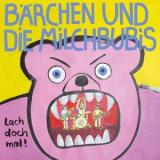
Mit"Lach doch mal" legen Bärchen und die Milchbubis ihr zweites Studioalbum seit ihrer viel beachteten Rückkehr vor. Die Band, die bereits Anfang der 1980er-Jahre mit ihrer eigenwilligen Mischung aus Punk, Pop und scharfem Humor Kultstatus erlangte, knüpft dabei an ihre Stärken an und präsentiert zwölf neue Songs voller Energie, Haltung und Alltagsbeobachtungen. Zwischen humorvollen Seitenhieben, gesellschaftspolitischen Themen und persönlichen Geschichten entstehen Stücke, die gleichermaßen wütend, nachdenklich und verspielt wirken. Produziert von Tobias Levin (u.a. Tocotronic, Ja, Panik, Rocko Schamoni), verbindet das Album den charakteristischen Charme der Band mit einer zeitgemäßen Perspektive. Gastbeiträge von Bela B, Stefanie Schrank und den Feigen Flittchen unterstreichen die kreative Offenheit dieser Veröffentlichung. Lach doch mal zeigt eine Band, die auch Jahrzehnte nach ihrer Gründung unverwechselbar geblieben ist.
Mit"Lach doch mal" legen Bärchen und die Milchbubis ihr zweites Studioalbum seit ihrer viel beachteten Rückkehr vor. Die Band, die bereits Anfang der 1980er-Jahre mit ihrer eigenwilligen Mischung aus Punk, Pop und scharfem Humor Kultstatus erlangte, knüpft dabei an ihre Stärken an und präsentiert zwölf neue Songs voller Energie, Haltung und Alltagsbeobachtungen. Zwischen humorvollen Seitenhieben, gesellschaftspolitischen Themen und persönlichen Geschichten entstehen Stücke, die gleichermaßen wütend, nachdenklich und verspielt wirken. Produziert von Tobias Levin (u.a. Tocotronic, Ja, Panik, Rocko Schamoni), verbindet das Album den charakteristischen Charme der Band mit einer zeitgemäßen Perspektive. Gastbeiträge von Bela B, Stefanie Schrank und den Feigen Flittchen unterstreichen die kreative Offenheit dieser Veröffentlichung. Lach doch mal zeigt eine Band, die auch Jahrzehnte nach ihrer Gründung unverwechselbar geblieben ist.
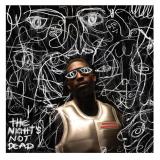
Released first as three EPs, 9PM, 12AM and 3AM, each explores a different moment of the night, from the anticipation of getting ready, to the unifying energy of the dancefloor, and finally the conversations and reflections that linger long after the music stops. Together, they culminate in The Night's Not Dead, a complete body of work that celebrates nightlife as far more than a party.
Once upoun a time Fat Mike came up with the idea of calling up 101 of the best old and new punk rock band around, have them each record a 30-second long song, then put all the tracks out on one record to make the best punk compilation ever. And guess what, the dream came true. The 101 most famous punk rock bands around doing each a 30 seconds long song Back in print for the first time in ten years! Pressed to Lime Vinyl Features super rare songs (recorded exclusively for this compilation) by Green Day, The Offspring, Blink- 182, Pennywise, Rancid, Less Than Jake, The Vandals, Bad Religion, and more
A collection of vinyl and limited digital releases, curated by Millsart, an alias of Jeff Mills, of his most eclectic and transcendent compositions that derive from his Every Dog Has Its Day project as well as new unreleased works. Vernacular creations that fall off from the "other side" of the Electronic Music tree, this project is designed for the experienced Techno music listeners, and its goal is to reflect upon the pure artistry of the craft of storytelling. A realization between music and life. Whereas "dancing" is the goal of Dance Music, the goal of this music is about "reflecting on the complexity and simplification of life".Soundtracks for people in their evolutionary process.
This release 'Drifter' is about 'Hype'.
Hype
An animal that prowls on the vulnerable - it excites those who might be looking the other way or with their eyes and minds wide shut.
What is life without hype?
As a transitional tool, hype can be most effective especially when impulse reactions are at play. Something of a psychological currency, there is a lot to gain by giving people what they want - the rush that comes with taking part in a process of making something bigger, more successful and more preferred. Even if there is nothing there.
What's wrong with getting exciting about something?
There are only a few rare masterclass cases that have lasted a lifetime.
As Andy Warhol proclaimed that "everyone will be World famous for 15 minutes" rings darkly true in an era when each one of us can be the talent scout, artist, critic, audience.......and then a revisionist, hoping to bring hype back again by reminding people how great the first round felt.
We are all free to use our attention and time anyway we please. This is the freedom we have, right?
In most cases, we wake up and at some point, the question of justification becomes a debate between those who found unconditional solace and those who re-discovered the subject of substance and "kicked the tires".
Should I care if others like or dislike something?
For some, the hype of something never ends. It hardens and becomes part of a foundation like a cement podium. Something to be stood on to speak over all dissenting voices.
"Here is a tender journey through loss and rebirth — a raw exploration of grief, heartbreak, and the emptiness that follows. It unfolds the fragile moments after losing a beloved friend, the fragile attempts to mend a fractured love, and the sudden rupture that shakes the soul to its core. Amidst the turmoil, anxiety pulses and the body aches with memories too heavy to hold. Yet, slowly, the darkness gives way to light. Breath returns. Support is found in unexpected places. Memories surface through hypnotic whispers, guiding the way back to softness and hope. This is not a story of instant healing, but a delicate awakening — a reckoning with old patterns, a reclaiming of the self, a learning to love differently.
Intimate and universal, fragile yet fiercely alive."
Kvrk makes a debut on Distant Gaze with Synthetic Memories, a four-track EP exploring shadowy electronics where organic textures and synthetic forms constantly blur into one another.
Opening with Pulsewidth, the EP begins as a slow burn – a restrained piece of synthwave shaped by drifting ambience, hypnotic sequences and a steady sense of tension.
The pace gradually lifts with Void Caller and title track Synthetic Memory, pushing deeper into prog sound. Straight, driving rhythms form the backbone, occasionally dissolving into broken-beat passages, while warped synths and psychedelic details keep everything in constant motion.
Beneath the electronic framework runs something more primal: forest-like soundscapes, mystic undertones and subtly shamanic motifs give the music an earthy, ritualistic dimension.
Closing the release, Blu:sh reworks Void Caller through his signature deep and trippy approach, stretching the original into a spacious late-night interpretation with a submerged, dreamlike pull.
Selva Discos is proud to present its latest release: the EP by the band Discoteca Tropicana. This record features 4 original tracks that celebrate the rhythms that have influenced Brazilian disco music, showcasing the best of this fusion: the swing and tropical flavour that bring sunshine to any dance floor.
The project is the result of a collaboration between Kiko Costato, the enfant terrible of the Brazilian music scene, and Zé Nigro, a producer and multi-instrumentalist who has won two Grammy Awards and has worked with major names in Brazilian and international music such as João Donato, Antonio Carlos & Jocafi and Natasha Diggs.
This EP is based on 4 different themes. For each one, Kiko and Zé Nigro recruited some of Brazil’s finest studio musicians – people who work with Seu Jorge, Céu, Criolo, Metá Metá, Cidadão Instigado and Tulipa Ruiz – as well as pioneering artists from the Brazilian Black music scene, such as the backing vocalists who work with the legendary Gilberto Gil.
“Corpos Celestes” is a more classic “disco diva” track, featuring string arrangements and a grand piano, as if it were the start of the evening, a magical moment straight from the heyday of disco in the United States; “Corpo Treme” is the sweat, the vuco-vuco, a song for that moment when you’ve already let yourself go, a sprint to the frenetic rhythm of the carimbó; “Tobina” is the meeting of Brazil and Africa, from which Brazilian swing is born, an original chant straight from the Congo, with a characteristic African guitar, adapted to Brazilian rhythms, just like the afoxé. Finally, the dancefloor hit “Não Pode Acabar”, a more urban disco track, which works just as well for kicking off a party with the right vibe as for closing a set with the highest energy.