To need, to be needed, in four corners. Sleep and privacy, gases come and gases go, and now you are the only one in the room you sit in, you are one with the room you sit in, as if there are no negatives and no positives--did you know that you are an extension of your apartment? Did you know that you are in a codependent relationship with your apartment? Did you know that your apartment knows and appreciates all of your secrets?--I feel safe, which is not a new need for human beings, but a very ancient one, almost the first one. It is enacted by the possibility of sound, humming or strumming something mostly. But the quiet apartment makes its own sounds: a single longing note of birdsong told to the beat of restful breathing, the angelic insistence of tinnitus, the neighbours. Sometimes I wonder if silence means nobody's home. How still I sit. Sometimes I return to silence and feel hugged by the cool lightness of its touch, like sleeping with just a sheet in summertime. Like turning the key. Like a visit from the cat next door. Like a somnambulant ray reaching across the room, asking if you'd like to step outside. Reste Envie is a desirous message to oneself, made from a place of lived solitude: the parameters of home. Roger 3000 is a painter and a musician from Brussels, Belgium. Rest En Vie follows his 2020 release on his own imprint Tundra Records, Fiftine. His first solo EP, UFO Love Letters, was released by JJ Funhouse in 2014, followed by a contribution to Ekster's 2017 compilation album EXO3. Roger 3000 frequently collaborates with other musicians and artists, most recently with Lawrence le Doux (with whom he released the EP Chou Chou on Lexi Disques in 2021); with Carole Louis as Ondine & Turbotin for the EP Club Solitude, as well as with Bitsy Knox, with whom he released the LP OM COLD BLOOD in 2018 on Tanuki Records. Text by Bitsy Knox
The second entry on Dance Data is the debut album by Izapa, who has been a fixture in LA’s modular synth community for some time now, so it’s a treat to get a glimpse into the sounds he’s been honing in his private world. The record showcases his sensibilities for a wide variety of rhythmic structures / styles, from angular hi-tek drum-n-bass to half time electro zoners, there is a little something for anyone that’s looking for dance music that prioritizes feel over function (while still retaining the latter). Featuring a swirling acidic remix from Buttechno.
*MILKY CLEAR VINYL - 300 COPIES ONLY FOR WORLD!!* Technology + Teamwork’s fizzling synths, interweaving textures and punchy rhythms are beguiling on their long-awaited debut album We Used To Be Friends. However, at the heart of it all it’s the connection between the group’s two members, Anthony Silvester and Sarah Jones, the friendship the much-travelled duo have managed to maintain for nearly 15 years and a showcase of the slow-burning construction of the electronic world that they’ve surrounded themselves with. We Used To Be Friends is ultimately the tale of two storied artists in their own right, holding onto each other through personal and career twists and turns, relocations and broader movements through respective phases of their lives. Silvester and Jones first met and then collaborated as part of biting post-punk five-piece XX Teens in 2008, eventually breaking off to forge their own path together even as the latter’s demand as a drummer grew. Performing with everyone from Hot Chip, Harry Styles and Bloc Party among many others, Jones has been a constant percussive presence across the sphere of alternative UK pop music – she’s also found time for her own solo project Pillow Person and played on records by the likes of Puscifer and Kurt Vile. Silvester meanwhile has performed in art galleries across Europe including: Fridericianum in Kassel, Kölnischer Kunstverein in Cologne, and Vleeshal in Middelburg, as well as providing sound design and composing work for several art films. Technology + Teamwork is the constant throughout all of that though. “Technology + Teamwork's name perfectly describes how we work” Silvester explains. “Sometimes the teamwork is between each other and sometimes it’s between us and the technology.” Although going by the name Technology + Teamwork as far back as 2014, two events conspired that pulled the project into focus for the pair of them: firstly, Silvester spent a year constructing a soundproof studio shed on the border of London and Essex where he lives. Secondly, inevitably, the pandemic brought the globe-trotting Jones back home to just seven miles away from her long-time collaborator and friend. “We probably hung out more than we had for a few years” says Silvester. “Also, after all her Pillow Person releases Sarah had gotten really good with recording vocals and knowing what did and didn’t work and had a really good home studio set up. We still worked separately though, exchanging ideas via email and WhatsApp.” As with many artists through 2020 and early 2021, working separately was a new necessity that they were forced to adapt to. However, it became clear that there were creative benefits to it. “It really changed our sound and our sounds became a lot more focused as a result” Jones says. “I wanted to use the same ideas of improvisation that I might use while playing the drums for myself and apply that to melodies and lyrics.” The album bristles with hyperpop modernity. You can hear it in the manipulated vocals most prominently on Big Blue’s disco strut and on Moving Too’s heady mix of pitched up voice and burrowing sub bass. However, the pair also looked to San Francisco and the West Coast synthesis movement of the 60s, Silvester inspired by the likes of Suzanne Ciani and Don Buchla. The plaintive lo-fi and melancholy of Amsterdam incorporates Mutable Instrument’s Marbles by Émilie Gillet which – inspired by Buchla’s own synthesis work – outputs random voltages to give the track an air of unpredictability. It’s something that occurs throughout the album, the duo revelling in the happy accidents that disrupt the flow of their hook-laden pop. “The ‘Buchlian’ ideas of music having randomness and uncertainty, completely freed us up” Silvester explains. “It felt a bit like having more members in the band, machines that didn't do what you expected or intended.” Perhaps more subtly, is the influence of 17th and 18th century Baroque music, with Silvester drawing a line between it and the 90’s R’n’B he and Jones both love – exemplified perhaps best on K+B’s percussive claps and sultry grooves. The portentous juddering synthpop of the title track, meanwhile, alludes specifically to Handel’s Sarabande. It’s typical of an album that only needs a scratch of its seemingly glossy surface to unearth a myriad of contorted touchstones and reference points that’ve fermented beneath it. Thematically there’s an anxious sense to the record, with tracks often balancing above a quiet sense of unerring tension even at their most bombastic. Moving Too is the result of an existential doubt that hit Silvester while out cycling, with the outro refrain "it's not enough to die you also have to be forgotten" a take on something Samuel Beckett once said. These worries are echoed on the album’s closing track What A Year, which borrows a lot of lines from the late drag performer and fashion designer Dorian Corey including the grimly defiant "you're gonna leave your mark somewhere in this world just by getting through it”. Those clouds offer a counter point to We Used To Be Friends, but then isn’t that what great pop albums do? Technology + Teamwork undoubtedly love the craft of the hook and the song, but they always position themselves left of centre, prepared to scuff things up, pull something out of shape or manipulate something to leave it sounding warped. Much like their friendship, nothing here is particularly linear – and it’s all the better for it. Bio: Anthony Silvester & Sarah Jones first collaborated as part of biting post-punk five piece XX Teens in 2008, eventually breaking off to forge their own path together even as the latter's demand as a drummer grew. Performing with everyone from Hot Chip, Bat for Lashes, Harry Styles and Bloc Party (among many others), Jones has been a constant percussive presence across the sphere of alternative UK pop music - she's also found time for her own solo project Pillow Person and played on records by the likes of Puscifer and Kurt Vile. Silvester meanwhile has performed in art galleries across Europe including Fridericianum in Kassel, Kölnischer Kunstverein in Cologne, and Wleeshal in Middelburg, as well as providing sound design and composing work for several art films. Technology & Teamwork is the constant throughout all of that though. "We Used To Be Friends" proves that Technology & Teamwork undoubtedly love the craft of the hook and the song, but they always position themselves left of centre, prepared to scuff things up, pull something out of shape or manipulate something to leave it sounding warped. Much like their friendship, nothing hear is particularly linear - and it's all the better for it.
Since Interstellar Space, John Coltrane's posthumously released duo album with Rashied Ali, the combination of sax and drums has received an aura of sublime spiritual ambition. It is where tireless truth seekers come together to aim for something transcendental. Something too big for words. Of course, a lot has happened in the meantime.
The available options - philosophically, stylistically, temperamentally - are endless. Musicians are aware of those historical turning points, yet they also try to add their own twists and interpretations. Some of them succeed. One of reed player Mattias De Craene's many projects - MDC III - is a project involving drums and saxophone. A striking difference: De Craene invited two drummers (Simon Segers, Lennert Jacobs), that have been active in the worlds of jazz, pop, free improvisation and experimental music. They are the ideal foil for De Craene's vision, which seems to exclude no opposites. While the use of a recorder, electronics and percussion steers the music beyond the classic acoustic limitations, the result becomes strikingly rich with contrasts. What is abstract and introspective the first moment can switch - gradually or abruptly - to moments of fierce ecstasy the next.
The music feels free (free from limitations, free to choose its own logic), but also invites. Shifting moods and textures are combined with intricate rhythmical patterns, as the drummers lock together in dense, complex and/or ritualistic grooves. A minimal pulse, accompanied by murmuring hisses of brushes and a serenading sax is contrasted with moments of exuberance. The result is many things at once, but despite these wildly varying colors, sounds, textures, rhythms and moods, they are all linked, part of a generous, iridescent whole.
The trance-inducing trio MDCIII is back. And that equals yet another delicious load of modular drums, wildly processed saxophone sounds, improvisation & pulsating grooves.
After their first EP, MDCIII ft. Sylvie Kreusch, and their subsequent first (internationally) acclaimed album 'Dreamhatcher', the 'double drums' saxophone trio with Mattias De Craene, Simon Segers & Lennert Jacobs is all set to show what angle rock 'n roll can really come from. On their new album 'Drawn In Dusk' (release: end of September via W.E.R.F records) the trio delivers a whole new palette of sounds that are just as mystical, energetic and wild as 'Dreamhatcher'.
Klasse Wrecks is happy to welcome new Berlin-based producer Jotel California to the family. The emerging young artist provides a strong and varied EP that introduces his deft production skills and understanding of balanced sonics. 'Borrowed Time' traces the lines of traditional electro but stirs the pot with new flavours and the result is something that is both unique and powerful. Late 90s Techno is referenced on the title track, a dark and haunting driver that emerges into euphoria later on in the journey. While the A1 features the cut up vocals of Babyblade and takes the listener on a pulsing trip that thrashes back and forth before restlessly settling down
Vincentiulian is the kind of name that needs no introduction. He is one of the best-known DJs and producers from the famous Romanian scene, and his evolution throughout the years tells its own story. He has played alongside the biggest names in the industry, shared the decks with household DJs like Priku, Rhadoo, or Cezar, and played the most important festivals out there.
His Subbass EP on Vivus Records cements his aura even more as a wonderful producer.
The opening track, Works, kicks things off wonderfully and subtly. It’s certainly a perfect track for the warm-up moments in the club, but its intricate background noises add a lovely layer of complexity as the track goes on.
Then we head off in a different direction: At Chalet is a much stronger track with an imposing bassline that dominates the sound and perfectly complements the mysterious vocals.
The titular track, Subbass, has a natural futuristic vibe and feels like a
ready-made club banger. The spacey atmosphere is something that only adds charm to it. The Tobias Laun Remix is a more chill but equally powerful way to end this mesmerizing EP, with Tobias showing his prowess at adjusting the pace just at the right rhythm for the dancefloor. The strong bass complements superbly with the sublime background noises to make this the perfect last chapter.
SPF 50 returns to Professional Music with 'Secret Technology', a diverse 5-track EP of playful, sonically rich material aimed at the dancefloor. The record explores some of the the core staples of the dance: bouncy grooves, rippling, psychedelic synth lines and a few cheeky vocal chops.
Heavily inspired by golden era tech-house, but with an ear for modern sound design, the music comes in with bad-boy energy but hints at something deeper bubbling beneath. Heavy kicks and sharp hats mingle with complex, modular basslines. Dusty breaks and euphoric vocals jiggle over top of lab-concocted acid. This one is for fans of serious fun.
yet is a slippery word in English. Amorphous, these three letters in dierent contexts can define contrast or emphasis, set a place in time, show an expectation that something will occur or, paradoxically, that it is likely to stop.
It is this mercurial nature that makes yet the perfect title for Tresor’s latest compilation: the label follows on from the more explorative sections of 2021’s landmark Tresor 30 boxed set with a compilation, featuring 13 artists making music that resists easy definition.
Every track hints at and borrows from the familiar yet none follow the expected path: halfway through Deserto, Nandele & A-Tweed dramatically reveal a very dierent sonic landscape that was initially suggested; DJ Sotofett collaborates with Sri Lankan artist Kavadi with results that are unlike anything in the Norwegian producer’s catalogue as yet.
Further invention can be found as Jean Redondo’s Hypersonic moves across spaces inhabited by digital hardcore and hyperpop before swerving o-road and into a futuristic hip-hop section; on No Longer Human, Ireen Amnes takes a dierent path at the crossroads melding hyperpop, trance, and sci-fi soundtrack atmospherics, Significant Other heads towards UK Bass and Dubstep, and France’s Willis Anne skims by the outskirts of footwork with a piece that is almost completely uncategorisable.
Yet more sonic experimentation comes from E-Saggila, Nadia Struiwigh, NVST, Solid Blake, and Viikatory who oer unique takes on the well-established electro blueprint, while Ryan James Ford, and Nit. both find ways to blend elements normally found in ambient pieces with those heard on a dancefloor.
The feel of the compilation is yet again reflected in the enigmatic artwork by Malik Arbab, where shapes and colours suggest animals and plants but in a world that appears to be transient and constantly evolving.
Dishwasher_ are the latest disciples of yet another new wave of talent in the fertile Belgian groove and jazz scene. It would, however, be a shame to limit them to the constraints of any given musical style. Ever since their formation in 2019, the Ghent-based trio have been experimenting with all possible genres to create a contemporary sound they can now rightfully call their own. With their self-titled debut album, to be released in April 2023 via Sdban Ultra, they are closing off an impressive first chapter, delivering a unique and diverse yet coherent collection of groove-driven cuts.
While labeling Diswasher_ as a jazz band wouldn’t do them enough justice, it is a fact that improvisation and a certain free approach turn out to be key in the creation and performance process of the album’s tracks. Werend, Louise and Arno specifically aim to capture their live energy and synergy on the album by experimenting with structures and textures, playing with song lengths and implementing influences from various other styles — electronic music in the first place, but as well traces from (Middle-)Eastern and Balkan music, next to dance, hip-hop and even metal.
As a result, the record tends to be a pure and honest representation of Diswasher_’s musical identity and artistic quest over the past years — both as individual musicians and as a band. Saxophones drenched in effects, diverse layers of synthesizers, a bass guitar hopping from fingerpicking licks to deep and drone-like bass tones, drums can sometimes sound like drum computers, and sometimes as subtle rhythmic chords: it’s pretty clear how deep this trio have dived to search and find something totally fresh and new.
Members of the band are Arno Grootaers, Werend Van Den Bossche and Louise van den Heuvel. Their debut album is coming out on Sdban Ultra, the innovative label of Black Flower, ECHT! and Compro Oro (among others). In 2023 they will fully focus on new talent, by signing Dishwasher_, but also KAU (formerly KAU trio) and Schroothoop. Apart from that, you can expect debut albums or EPs by LũpḁGangGang, Bandler Ching, KVR trio and Adja coming out this year. Stay tuned.
Freude am Tanzen is back for a very special occasion. In 2022, three Various Artists EPs will be released, celebrating the 24th anniversary of the label from Thuringia. Whilst occasions like this would normally be celebrated on the quarter century, this release makes sense not only on the mathematical level. 3 compilations with 4 tracks provide the half of 24.
The release however also makes sense in terms of history. Freude am Tanzen is showcasing a broad range of electronic music, never neglecting their history but also looking into the future.
The last installment of the anniversary-compilation starts with the upcoming effgee reminiscing about something that’s most likely happened to everyone once or twice, packed into a classic yet fresh house track. Beautiful chords combined with a proper baseline. Sharing the A-Side with him is d.m.s., who’s production is settled somewhere between the urban and the jungle, incorporating elements of both worlds. Some groove to it, with vocals that stimulate to think!
The B-Side on this release focusses on variation. Lauer combines lush deep house vibes with some acid elements into his track ‚Janitors‘, while LoYoTo have opened their whole toolbox for their contribution. A wide array of samples and a meticious drum arrangement.
CHRIS CLARK
Ms. Clark is often cited as the Dusty Springfield of Motown, a white soul singer with a black Southern voice. And she is no stranger to the Northern Soul scene with songs like “Love’s Gone Bad”, her version of Frank Wilson’s “Do I Love You” and the unreleased “Something’s Wrong”. But Clark’s Motown legacy continues surprise with the 2018 discovery – “Whenever I’m Without You” – originally recorded in 1968. Finally making its vinyl debut 55 years on!
THE TEMPTATIONS
The Temps need no introduction, they were, of course, Motown’s most successul male vocal group scoring 18 No.1 R&B/Hot 100 singles and 3 Grammy’s. “All I Need Is You Love To Me” is another 1968 recording that eluded release at the time and is one their best, how could this slice of Motown magic escape. Finally making its vinyl debut 55 years on!
Angelo is an LP, named after a car, featuring nine songs Brijean have crafted and carried with them through a period of profound change, loss, and relocation. It finds percussionist/singer Brijean Murphy and multi-instrumentalist/producer Doug Stuart processing the impossible the only way they know how: through rhythm and movement. The months surrounding the acclaimed release of Feelings, their full-length Ghostly International debut in 2021 which celebrated tender self-reflection and new possibilities, rang bittersweet with the absence of touring and the sudden passing of Murphy’s father and both of Stuart’s parents. In a haze of heartache, the duo left the
Bay Area to be near family, resetting in four cities in under two years. Their to-go rig became their traveling studio and these tracks, along with Angelo, became their few constants. Whereas Feelings formed over collaborative jams with friends, Angelo’s sessions presented Murphy and Stuart a chance to record at their most intimate, “to get us out of our grief and into our bodies,” says Murphy. They explored new moods and styles, reaching for effervescent dance tempos and technicolor backdrops, vibrant hues in contrast to their more somber human experiences. Angelo beams with positivity and creative renewal — a resourceful, collective answer to “what happens now?”
Angelo the car is a 1981 Toyota Celica they got off Craigslist during their first stint in Los Angeles, where Murphy and Stuart have since settled. “Such a bro-y, ‘80s dude car, it’s been super fun to drive around in a new town,” Murphy says. “He’s older than us, he’s a classic, he’s got a story.” It is a spiritual vehicle with a cinematic appeal, first dropping them off in an alleyway for the scene-setting intro, “Which Way To The Club.” The question is quickly resolved by “Take A Trip” as a cruising bassline mingles with crowd sounds, hand-claps, cuíca hiccups, whip-cracks, even a horse neigh. Brijean have found some club on this cross-dimensional trip — the kind of
imagined space or chamber within one’s self capable of “shifting a fraction of who you are,” says Murphy. They wrote the track with the simple intention to be “as free as we could be,” adds Stuart, likening the flip on the B section to a realm unlocked: ”What if the world changed completely? You open the door to a new room.”
Next is “Shy Guy,” a motivational anthem for the wallflowers among us. Murphy sets up the daydream: “We are in junior high, we’re on the dance floor, what’s going down, who is dancing, who is not, how are we gonna make them dance?” The narrator, the MC, hypes up the room as conga-driven rhythms bounce between languid synth and guitar lines. “Show me how to move...I feel something...I know you feel it too,” Murphy sings sweetly, calling back to the opening lines of Feelings, and this time the audience chants it back. It is easy to picture Brijean performing this one — something they only got to do a handful of times until more recently, opening shows for Khruangbin and Washed Out, an experience they found informative. Murphy explains, “It was inspiring to be out there and let loose more. To see how people can expand their expression on stage gave me more liberty with how I viewed my musicianship. My role for so long was to be a backup percussionist, so why would I ever leave the drums, you know? But then after playing all these runs, you see these artists and realize you can, you have permission.”
“Angelo” and “Ooo La La” deliver the danciest stretch in Brijean’s catalog to date. The title track adopts a deep house pulse replete with strings, hi-hats, and kicks. The latter opts for a funkier groove that foregoes verses in favor of warbled hums and extended breakdowns. What follows is perhaps the duo’s dreamiest run, a comedown initiated with the honey-hued interlude “Colors” drifting into “Where Do We Go?”, a tropicália reverie where Murphy contemplates the passage of time and space.
It all culminates in “Caldwell’s Way,” a fond farewell to their Bay Area community — “a part of my life that I knew couldn’t come back,” says Murphy. Above shimmering organ sounds, lush strings, and the birdcall of their former neighborhood, she wistfully articulates the uncertainty of moving on by remembering the characters dear to them. There’s the wisdom of their neighbor, Santos, who refused payment when helping them move out: “I’d rather have 100 friends than 100 dollars.” And the song’s namesake, Benjamin Caldwell Brown, a friend and club night cohort for many years. “I’m only miles away, maybe I’m just feeling lonely,” the line resigns to warm nostalgia, and “Nostalgia” runs the closing credits to this healing and transportive collection.
Heels & Souls Recordings’ fifth reissue sees them reach across the Atlantic to Vancouver, pressing up Pilgrims Of The Mind’s 'What’s Your Shrine?' for the first time ever on vinyl, 25 years since its CD-only release on Map Music. A departure from the label’s previous releases, the LP is a beautiful smorgasbord of styles - progressive house, downtempo, ambient, tech house and trance all nestle together, a wiggling journey of sonic delight from the mind of Stéphane Novak.
Turn the dial back to ‘97 and Vancouver's underground had a distinctive buzz to its rumblings, an amalgamation of scenes and styles gave rise to a cohort of producers that were unconstrained by genre, offering up a heady mix of sounds to expand the mind. ‘Welcome To Lotus Land’ the key 1996 compilation on Robert Shea’s seminal Map Music, championed much of this output including two cuts from POTM. Stéphane then released his first and only full-length album, ‘What’s Your Shrine?’ on the same label the following year.
Picking out choice moments from an album as considered and complete as this is tough. Those horizontally inclined will be drawn to the ambient dwellings of ‘Sandcastle’ & ‘Following the Sofuto Kuriimo’, tracks like ‘Nothing Can Pull Us Apart’ and ‘L’Amour? Encore?!’ are perfectly suited to warming up limbs on the dancefloor, ‘My Baby Likes Rum’ and ‘Loosejaw’ prime for one in full swing. Yet to pick individual tracks misses the stunning sum of its parts that this 70+ minute cruise is, surely one of the finest albums from the American West Coast during its halcyon days of the ‘90s.
Digging deep in his vaults, Stéphane managed to uncover the original unmastered DATs that have been given a fresh mastering by Justin Drake at the Bakehouse Studios. This beautiful, double-disc gatefold comes complete with liner notes from Ciel, words from Stéphane himself, plus never-before-seen photography - the complete package this music always deserved.
Lobster Theremin ambient sub-label Lobster Sleep Sequence announce their double LP + 7” album from Dutch producer nthng - featuring a limited run of copies on deep green vinyl. Themed around events in the artist's life, Unfinished is a deeply personal journey, yet there’s something very relatable to the world he has conjured. Lockdown has forced us to look inward, explore realities within ourselves and the fragility of our forgotten world. The album is a series of peaks and troughs - hopeful words, ominous tones and other-worldly soundscapes, giving way to a journey in no way linear - but a true reflection of our times. The title track sets the scene perfectly, while Son features deep bass notes, dreamy keys and spoken word - creating a visceral and unsettling scene. Subnautica resides in the fringes of ambient and techno - as tribalistic drums are suspended in our new rendered reality.
The marching bass and howling synths of Wrath of the Demon lull conspicuously in a vacuum, while the hauntingly beautiful vocals featured on Disappeared But Not Forgotten evoke a poignant, powerful reaction across the record’s B-side - “Everything stopped, you just disappeared...”
At its most tranquil Our Time offers a sense of rest - a space to appreciate, as we leave the window open, peer outside and feel the gentle breeze brush across our face. Saafe continues this theme, and feels like a warm embrace - “She saved my life in a matter of speaking, when she gave me back the power to believe.”
Ending Theme is beautifully organic as you hear the sound of the piano pedal touch the floor, tones are introspective and vulnerable - while the looming presence of uncertainty subtly takes form in thinly layered pads.
The album also sees the release of a digi only bonus track Only a Flash of Light and invites you outside while the stars are at their brightest.
Emotional Rescue dives back in the world of post punk experiments and early synthesised electronics to present another of the labels iconoclastic 7" 'collectors specials', with a look at Stockholm's Staalfagel.
Born in 1977, Erik Fritjofsson and Petter Brundell merged and formed Staalfagel out of the suburbs of Jakobsberg. Like so many at the time, the duo was tired of Prog, Jazz and Symphonic Rock and formulated something new and against at the same moment; a time where drummers were jettisoned in place of drum machines and the inspirations of artists like Creedence Clearwater Revival, Devo and Pere Ubu were thrown in the mix to fervent results.
With Micke Kjell soon joining on bass, they toured Sweden constantly, the manic machine beat, beating guitars and strange synth sounds defeated the throng and led to a considerable following. Recorded live to tape with no overdubs or mixing, the faithful CR 78 drum machine, the results radiate energy.
Release just 4 records in 2 years (1980 - 1982), Utan Rymddrakt Pa Uranus appeared as their last ever release. Jettisoning the punky-funk vocals of previous releases, the single is a pure electronic groove. Funk bass and guitar atop, its short form simplicity is perfection distilled in 2 parts of less than 3 minutes, conjoined like some reggae dream, with 'Uranus II' acting the dub 'version' counterpoint.
Discovered and shared by long-time friend, DJ and collector, Gary The Tall steps out from behind the decks and microphone of his long running NTS show to present an exemplary "Reversion". Teaming up with master producer and label affiliate, Timothy J Fairplay on engineering duties, they keep the originals' straightforward charm, deceptively editing, looping and reversing with aplomb, for a killer flip side.
The batteries are charged again! After an adequate summer break the Fortunea Records crew continues its mission to bring out extraordinary compositions with a brand-new EP by Moff & Tarkin.
The Icelander is currently living in Vienna and presents on this record his multi-variant taste in music. Poems of Soy starts with the cinematic opener ‚Sting’. Playful arpeggio synths dive headfirst into an hypnotic shuffle beat which is companied with siren-seeming vocals from the distance. The follow up ‚Love or Something‘ takes that groove and expands it with more pressure and a snappy baseline.
The B-side starts with an acid injected rave bomb called ‚Dating on LinkedIn‘. A track of sublime quality featuring 909 driven beats merged with acid bass lines. And with ‚Great Tan‘ M&T takes us back to the glory days of the big beat movement.
There’s more than a hint of ambition on the double LP sophomore effort from Sam Austin Rabede, the producer known as DJ Black Low. Pretoria, South Africa-born and based, the young man makes amapiano with new ways of expressing this local turned-global style of dance music.
In DJ Black Low’s musical imagination, the songs manage to smoothly vacillate between dreamy and firmly-grounded. Adorned with vocalists across most of the twelve tracks, there’s a new dimension to Black Low’s now-signature approach to abstract, angular deconstruction of the rhythmic developments in his songs.
The album references influences and ambitions in its song titles and lyrics while the music itself is anthemic in its sonic and structural aspirations. On many of the songs a slow-burning tension transforms into something unexpected until you’re somewhere else as the track concludes. There is an emotional and compositional maturity that builds on his earlier work. Vocals and lyrics are in focus.
Production collaborators among Black Low’s Gauteng Province circle add to the constantly churning array of ideas that populate this consistently surprising release. Despite being a relative newcomer, DJ Black Low is onto something here.
The next transmission from planet BRUK comes courtesy of Lårry, an enigmatic artist ploughing an individualist furrow through various fields of electronic expression, one hand tweaking the tiller and the other casually dismissing the rules of rave. You might have caught their sharply-pointed sound on Super Hexagon or Awkwardly Social, or perhaps stumbled across their fabled 2021 live performance from Fitzroy in Berlin, or even unconsciously swayed to something spun in a set any time over the past five years. Lårry's discography is modest but mighty, and How Was That For You builds into that idea with four
precise tools for forward-leaning soundsystem communion. From the fractalised barbs of electronica stepper 'In Water' to patiently dread-eyed wobbler 'Angela's Knife', 'Uniform Uninform's icy incisions to the snaking spiral staircase of 'Yargachin', this is brain fodder first and foremost, with bassweight impact threaded through as an added bonus. Keeping fine company amongst the other oddities inhabiting the Bruk mandate, Lårry continues to keep us on our toes, literally and figuratively.
Alvars Orkester was formed in 1987 in Johannishus, a small village in the south-east of Sweden by a group of young boys interested in the mysteries of psychic sickness, mental institutions, industrial music culture and the power of sound. For the first very creative years, Alvars was very active within the independent cassette culture scene releasing their stuff (that quite soon drifted from the industrialism inspired by Test Dept, TG, SPK and z'ev to an atmospheric, psychedelic and quite ambient version of noise) on small labels in Italy, Portugal, USA etc.
Joachim Nordwall writes: "1990-1991. In the middle of all teen confusion going on, me and Zwarre had a long creative time together. Recording every weekend, connecting with like-minded (or at least we thought so) people around the world and trading tapes with whoever. Our world was analogue synths, Party Zone late Friday nights on MTV, zines and out-there experimental music. By then, we had a few tapes out and had "Nobody Finds Nothing" being released on the Italian super-label (in our opinion) Biotope Art Organization. We were in the midst of something and recorded "Nuthull" for another Italian top level label called Old Europa Café. However, they did not like it and the tape was abandoned and forgotten. Then years and years later, close to present time, Zwarre was in touch with OEC for some reason and had the master returned." - Joachim Nordwall, Gothenburg, 21 February 2023
KINGUNDERGROUND TO RELEASE SET OF 45s, FROM CAVENDISH MUSIC CATALOGUE. PAYING HOMAGE TO LIBRARY MUSIC, FURTHERING ITS EXPOSURE TO A NEW GENERATION OF LISTENERS.
Library Music experienced its heyday in the 60s and 70s, as thousands of instrumental tracks were produced by musicians and composers for the purpose of placements in radio, television, and film.
The first 45 of the to be released, classified as ‘Dramatic’ features tracks from both John Scott and Tony Kinsey. Titling was important to Library Music, because it needed to clearly represent the emotions being expressed through the music, so it was easy for television and film executives to find what they needed to complete their projects. John Scott wasted no time getting into the dramatics with the opening track “Milky Way”, it displays the importance of grabbing a listener from the top, as well as being concise clocking in at just 47 seconds. Scott was not only a master composer, but also known for his work on the Saxophone, including playing on John Barry’s soundtrack for ‘Goldfinger’ in the James Bond series.
The juxtaposition of Tony Kinsey’s composition on the record offers a dynamic not present in the two tracks from Scott. Kinsey is more patient in his approach to “Kaleidoscope” building the tension with multiple movements and highlighting several instruments. The way the keys and bass play off each other leaves just enough room for a guitar lick to sneak in, as if it is hinting toward something.
In all there will be 8 individual 45s, licensed from Boosey & Hawkes & Cavendish Music Library and released by KingUnderground. Including compositions by Tony Kinsey, John Scott, Sam Fonteyn, Ray Davies, and more.
ENARCHY is the debut album by Leipzig-based producer and singer Maria die Ruhe. It is the result of a deep and thorough look the
artist took into both her own inner workings and the world around her. In 14 tracks, she explores different types of energy,
oscillating between head and heart. Final destination of this sometimes painful process of self- exploration is the embodiment of
her own power and creativity; the realization, that she manifests her role as catalyst, healer, and fighter for freedom and equality
by reporting on her experiences. These songs are about nothing less than that. And you can also dance to them.
In a musical sense, Maria surpasses herself compared to previous releases. She is bolder, more explorative and dissolves genre
boundaries. Acoustic instruments like the cello and the piano unite playfully with electronic beats. Her expressive voice speaks and
sings from the lowest lows to the loftiest heights. Her self-disclosing lyrics communicate the deepest messages of the soul. One can
tell right away: something is at stake here, this is about a real human living through something real, and now reporting from the
front lines of the human experience.
With lines like „Things are changing all the fucking time“ (ENARCHY) she posts a reminder for the current zeitgeist and the resulting
global uncertainty. „Some things need to be destroyed before they can heal“ is a demand for openness towards change, even if it is
challenging, requires energy, and leaves behind some scars.
In ART IS THE ONLY REAL TRANSLATION OF LIVING FOR ME, Maria uses sentences like „I’ve been trying to please you, I got headaches
and I still don’t fit“ to express her desperation with existing structures of injustice and the lack of livability of the artist lifestyle.
„Ah, you’re an artist - and what do you do professionally?“ Everyone loves music and art! When, o when, will the understanding
follow that there need to be people who make this art as a central part of their lives?
Frustration takes turns with hope and a growing acceptance of the self. In EQUALISTA, Maria discusses antiquated conditions like the
inequality between the sexes in a kind of manifesto, with a simple proposal for solution: „Let’s both be selfish and raise our
energies, to create a whole world with all the things we need.“
In WE BELONG TO NEVER, Maria sings about the everyday horror of toxic relationships. Lines like „Disengagement and rage, I’ve become such a slave.“ express the despair of the emptiness that results from a lack of affection. She also describes treacherous
narcissistic manipulation: „You cut me small just to feel tall.“
In SKIN, she confesses: „I’m not as enough as everyone else.“ and describes the long and painful way from rejecting her own body
to loving herself unconditionally. „I hate what I feel, while I pretend to be free“ means she doesn’t want to be reduced down to
her body, doesn’t want to be seen as an instagrammable, thoroughly designed product; she wants to be acknowledged as an
individual.
In LOST, she poses a question that many are currently forced to ask themselves: „What do we do with all this solitude?“ Maybe
making use of the reclusion by exploring the shadow self. „Can you cope with the truth?“
The conclusion: energy is being freed up through the means of self-experience and living through the personal darkness -
ENARCHY. The realization: every human being is self-determined and should simply do what they feel. It is everyone’s right to
choose their own life’s path. Here, intuition serves as a signpost. This is both feminine and strong.
ENARCHY celebrates an embodied anarchy by working through the personal shadow and the genuine, healthy integration of the
struggle survived - not as a destructive rebellion, but as a testament of shameless, joyful self-empowerment.
„In the end, I want to be alive, because in reality, I’m free.“
Hi! This time "REPORT" and musician Fillimonov have prepared something really unique for you.
The music presented on this vinyl record is made from live samples, original vocal inserts, and the arrangement is made using synthesizers and drumm-machines. You will definitely hear the junction of two eras and completely different musical cultures that are united in this EP.
Minimalistic, danceable, musical - in the best traditions of the "REPORT" label.
Autumn of 2022 marked 20 years since the initial release of Metro Area's first and only album, Metro Area. Environ had already remastered and re-released this essential LP for its 15th anniversary. So this time around, we're doing something a bit different.
To celebrate two decades of Metro Area, Environ has partnered with renowned mastering engineer Matt Colton (Metropolis Studios) to remaster and recut the first four Metro Area 12"s: Metro Area, Metro Area 2, Metro Area 3 and Metro Area 4. Unlike the album reissue, these records include the original, extended 12" versions of all songs, including some which have never been re-released.
Metro Area 2 is the duo's second 12" EP, originally released in 2000.
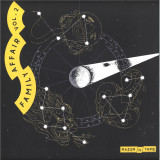
RNT brings the heat for their 2nd outing in their Family Affair compilation series, representing both their ever-expanding RNT ménage, as well as their tight knit musical nuclear fam.
Side A welcomes two seasoned producers to the catalog for the first time: Red Axes with their flip of fellow Israeli Nenor’s banger 'Do You Remember', and Chicago legend Boo Williams comes correct with 'Besty Smith', characteristically bumping and soulful.
OG RNT artist Frank Booker delivers his classic sampley deep sound with 'Time Won’t Tell', and Underground System’s Peter Matson takes JKriv’s 'Something Else' in a synthy and modern electro disco direction to round out the B side. Aural hugs all around in this fam jam!
British musician, multi-instrumentalist, producer and DJ cktrl returns with the release of his new EP ‘Yield’. Born from a desire to change the narrative around contemporary Black British music, the boundary-pushing musician aims with this project to prioritise the art of bonafide musicianship. A stark departure from cktrl’s previous work, ‘Yield’ is a celestial and palpably more inward body of work that harkens back to the pre-electric age of modal jazz while simultaneously pulling in elements from the disciplines of classical and baroque music. Speaking on the project’s sonic identity, cktrl says: “I want to be able to show that you can make things from scratch again that have that feeling and beauty without having to sample an old record. Even though that’s an art-form within itself, I want to show raw orchestration and instrumentation can be the sole source” The origins of the title came from a period where cktrl was looking to find solace in himself after an introspective period of grief and heartbreak. As an intentionally instrumental project with minimal vocals, cktrl wants prospective listeners to see these new songs as guided meditations where they can wholly insert themselves in it. Eliciting and reaping whatever feelings come to the fore. Speaking on what ‘Yield’ means to him as a concept, cktrl explains: “Some people who I've asked to define the word ‘yield’ have looked at it from a harvest point of view, whereas others have seen it as something to submit to, to render, like you're giving up yourself. I see it as a barometer for how you feel - no matter if you're at your lowest or your highest vibration, you still need to show up for yourself. You still have to be present. It’s about getting the best from yourself no matter where you are in life” The new project is the follow up to last year’s ‘Zero’ which featured collaborations with esteemed contemporaries like the GRAMMY-nominated Mereba and anaiis. Upon the project’s release, it was met with a plethora of critical acclaim from highly regarded publications and platform such as British Vogue, Dazed, CRACK Magazine, Resident Advisor, NOTION, Harper's Bazaar and ES Magazine for its sprawling and experimental scope, spanning avant-garde jazz, classical music, alternative R&B and electronica. cktrl has a tune for every occasion: as content making beats by himself at home in Lewisham as he is amongst this generation’s fashion and cultural vanguards. Music has been a part of his life for as long as he can remember: from clarinet lessons throughout his school life to fond memories from his NTS days. Moulded by a unique blend of his West Indian heritage, years of classical training in both the clarinet and saxophone, cktrl strives to do what hasn’t been done before. His approach to creation is decidedly wide-ranging and broad. In fact, where sonic descriptions might fail to encompass the breadth of cktrl’s scope, three words surface when he unpacks his musical aims: freedom, range and feeling. Elsewhere, throughout his career, cktrl has been recognised and heralded by fashion and film VIPs as he firmly embeds himself within the black cultural renaissance emerging here in Britain. Acquiring a global network of creatives that include the late Virgil Abloh, Bianca Saunders, Tremaine Emory, Saul Nash, Maximilian Davis, Ahluwalia, Stephen Isaac Wilson, Sean Frank, Campbell Addy, Ib Kamara and Jenn Nkiru who secured him a cameo in Beyoncé’s ground-breaking film ‘Black Is King’.
KingUnderground presents a stunning collection of 8 releases pressed onto 7” vinyl from the Cavendish Music catalogue. Paying homage to the genre of Library Music, furthering its exposure to a new generation of listeners.
Library Music experienced its heyday in the 60s and 70s, as thousands of instrumental tracks were produced by musicians and composers for the purpose of placements in Radio, Television, and Film. This rich piece of European music history would go on to inform genres to come and speak heavily to the Jazz, Funk, and Hip Hop communities of the future.
This was often a musician's first opportunity to become a composer, or what most would commonly know now as producer of music. These composers would work with a stable of musicians to record 100’s of tracks that would go into a publishing Library. The pieces of music were recorded quickly and deliberately. The composers, musicians, and engineers understood their role in the process, it was an act of discipline amongst all involved. Often the composer was given a brief on what the end goal was for the client. The specifics would include tempo to lock into, song ending time, ect.
Never before have these tracks from the Cavendish Music Library been pressed on 7” vinyl at 45RPM. In all there will be 8 individual 45s, licensed from Boosey & Hawkes & Cavendish Music Library. The collection includes compositions by Tony Kinsey, John Scott, Sam Fonteyn, Ray Davies, and more.
There’s a boldness to Library music. It's in the forward nature of where the drums sit in the mix and the percussive playing of the keys that gives you something to grab hold of, it feels grounded yet exciting. It’s music beamed in from a different galaxy!
Workaday Strangeness: Gyrating Death Throes From a Void Axiom' is the new LP from Glasgow-based music originator Wormhook. The music therein, we understand, emerged for highly personal therapeutic reasons; nevertheless to describe it as ‘idiosyncratic’ would do a disservice both to Wormhook and to the concept of idiosyncrasy. While the record is certainly a profoundly unique, irreplicable creation, its music is nevertheless based on a visceral, breathing human rhythm which is common to all living bodies. It represents a celebration of the act of creation as a means of processing psychic and spiritual conflict, unconscious thought leading to spontaneous musical discovery.
Through something approaching the musical equivalent of automatic writing, Wormhook gives birth to fluid, home-woven spectral incantations and an untutored, backward-masked concrète hymnody. Brittle-as-glass guitar and grainy, hand-processed electronics underpin cantorial, intuitively modal vocals delivering a kind of raw, revelatory yet anti-prophetic ur-poetry, bridging the centuries between Hildegard von Bingen and Lonnie Holley and fixing the solitary star of Wormhook within the hermetic constellation which these visionaries inhabit.
Tod Dockstader's Aerial series, an electronic/drone masterpiece, is cherished among fans of the artist's work and this second volume is available in an audiophile quality double LP edition.
Tod Dockstader's Aerial series is sourced from his life long passion for shortwave radio. Dockstader collected over 90 hours of recordings, made at night, and comprised of cross signals and fragments plucked from the atmosphere.
Opening with airwave drones, Dockstader gradually allows elements to slowly come and go, summoning an ominous atmosphere of ethereal cloud clouds. Malignant placidity continues, giving the feeling of eavesdropping upon late-night audio activity not unlike discovering number stations while sweeping the dials. These sounds pull you in as their density and rhythms come and go.
Backward voices, deep echoing choruses of conversations flowing under the surface, ocean sounds, pulsing electro-rhythms, all seem to be created via the collaging of many hours of source recordings. A masterwork of collage and juxtaposition by an overlooked pioneer of American electronic music.
Artwork by John Brien (Imprec) is inspired by the propagation of shortwave radio signals throughout the earth's atmosphere.
"This return of Dockstader is something to cherish, not just because his output has been so limited and scarce but because what we do have is so intriguing, persuasive and cliche-free; the music of an inspired explorer who trails in nobody's slipstream." The Wire
"One of the great figures of musique concrete composition." Dusted
The Aerial project
I've written before of my interest in shortwave radio, in the notes to the Quatermass CD. Also, in the notes to the Omniphony CD (which has my first "Aerial" mix, "Past Prelude," in it), I mentioned "The Aerial Etudes," which was my working title for what became the three CDs you have. And, at the end of an interview with Chris Cutler (which can be found in the "Unofficial TD Website"), the piece I mentioned I was starting to work on at the time became Aerial.) When I was very young, people got most of their entertainment from radio. They called it "playing the radio," as if it were a musical instrument. That's what I've tried to do in this piece. About this time, a few people encouraged me to look into using a computer for this work.
I'd never used one, but I saw it would allow me to keep my mixes digital - no more transfer losses. So, at the end of 2001, I got a computer and an editing program for it, and spent what seemed a long time learning it. I began selecting mixes and loading them into the computer in late March, 2002. Out of the 580, I selected 90 "best" mixes - eventually reduced to 59, the ones on the CDs. Finally, in assembling the CDs, I followed David Myers' suggestion to allow each piece to flow into the next - making a continuous journey to the end. Tod Dockstader, 14 september 2003
About Tod Dockstader: Dockstader moved to New York in 1958 and became a self-taught sound engineer and sound effects specialist and apprenticed as a recording engineer at Gotham Recording Studios. It was around this time that he started to use his off-work hours to experiment with mixing and manipulating sounds on magnetic tape (musique concrète). By 1960 he had amassed enough material to assemble his first record Eight Electronic Pieces which was released on the Folkways label in 1961 (this would later be used in the soundtrack of Fellini’s Satyricon). The last of the eight pieces was later re-worked into his first stereo piece. In 1961 he applied to use the facilities at the Columbia-Princeton Electronic Music Center and was denied access by Vladimir Ussachevsky. Ussachevsky’s official reason was the “overstrained” scheduling of the studios, although many suspect that Dockstader’s lack of academic training was a factor in the decision. He continued to create music throughout the first half of the 60s, working principally with tape manipulation effects. His last piece at Gotham was Four Telemetry Tapes in 1965, after which he left to work as an audio-visual designer on the Air Canada Pavillion at Montreal’s Expo ‘67. It was around this time in 1966 that some of Dockstader’s pieces were released on three Owl L.P.s, and his work became known to a larger audience. He achieved modest recognition and radio play alongside the likes of Karlheinz Stockhausen, Edgard Varèse, and John Cage.
Benjamin Damage is back on ARTSCORE with a stunningly crafted record that explores the deepest parts of his mind.
We strongly believe that an Artist should have the freedom to express many phases of his thoughts, and doing it with the power of Techno is one of our main goals to inspire you. Benjamin is clearly on top of his game, and we are proud to deliver something very powerful here, done in one of the most elegant ways.
Mal-One’s seventh single sets out to tell the listener in 3 minutes and 21 seconds, everything that it is not. But in doing so by default or design, becomes everything it says it is not!!!
So here it is for your listening pleasure. The non-Punk, Punk single. As Mal-One is asked at the end of the song what this song is all about…seems he runs out of time….
Hope you enjoy the illusion…..
Let me tell you what these songs all about…
This is not a song about Young Parisians
This is not a song about an Outside View
Ripping Her to Shreds, Hong Kong Garden
One Chord Wonders or a Freak Show
This is not a song about Complete Control
This is not a song about Less Than Zero
New Rose, Defiant Pose
Sex & Drugs & Rock & Roll
This is not a song about the Blitzkrieg Bop
This not a song about Top of the Pops
God Save the Queen, Something Better Change
I’ve Got a Right or Life’s A Gamble
This is not a song about London Girls
This not a song about Identity
An Alternative Ulster, Baby Does Good Sculptures
Or Everybody being Happy NowaDays
Hey Mal-One…..Yeah
So what’s this song about ?
Do you really want to know ?
Yeah well let me tell ya
Nous'klaer audio presents Oceanic's debut album Choral Feeling. A rhythmically diverse electronic album full of sonic explorations and beautiful moments, all bound together by a sense of colour. The album touches on the core of what music can be for: a sense of togetherness, finding meaning in moments, a way to cope with loss and soundtracking dreams about a different future. The music on this album reflects that in the most personal way. Each track consists almost entirely of his friends' voices, recorded and transformed into the sounds you'll hear. No, you can But how Just think of anything How can it just be anything Why does it need to be more Because they're afraid of it. They're not afraid of the words Then what are they afraid of The power behind the words How can words have power If you say something, only you, maybe I can hear it. Perhaps someone sitting over near that tree can hear it too. If we say it together, maybe we can reach past that tree and reach that rock. But if us and a million others say them same thing, all at the same time. Then every tree and every rock everywhere will hear us. Trees and rocks don't have ears. No they don't but they do. Why don't they just cover their ears Because then they need to do that every time we use our voice. And use them we did and use them again we shall. They got tired of covering their ears, so they decided to cover our mouths. Won't they hear us now? We're safe here. For how long will we be safe? For now. Perhaps until later. Just try. Read the words like I've written, but do so like the birds in the trees. You are my sunshine A little louder You are my sunshine, my only sunshine, you make me happy When skies are grey You'll never know dear How much I love you Please don't take my sunshine away Beautiful. Shall we go teach the others When will we have enough to free ourselves We'll always have more than they do. We only need to not forget I'll never forget Sing it again. Artwork by Bob Verhoeven. Text by Gregory Markus.
Fan favorite dark dance outfit Boy Harsher have contributed a sumptuously eerie track for the David Gordon Green directed finale to the iconic Halloween franchise. Sacred Bones and Nude Club (Boy Harsher's imprint) are joining forces and releasing a proper 12" maxi single containing four versions of the track "Burn it Down," to be released in tandem with the original score provided by John Carpenter, Cody Carpenter, and Daniel Davies. Boy Harsher said of the experience: "During an extremely brief period of rest between tours, we got this call from the music supervisor of Halloween. The director, David Gordon Green, had listened to our music and wanted to use something for the final installment in the trilogy - Halloween Ends. We flew to New York the next day to meet the team and discuss the possibilities. It was totally surreal. Obviously we're huge fans of Carpenter and the franchise is a fav, but to work with Gordon Green was also so special, his early films (George Washington, Undertow, Snow Angels) were heavy influences on our work. The real kicker is that Halloween Ends was shot in Savannah, GA - the birthplace of Boy Harsher and where we met. Unbelievable. It all felt too synchronous, and we knew we had to make something work although we were about to leave for a multi-month tour that week. We flew home to Massachusetts, dug through old demos, and found "Burn It Down". In the end it was the perfect energy for the bittersweet love affair between Allyson and Corey, so during a couple days off - we cleaned it up and made it come alive."
Flexi Cuts is pleased to introduce Lazy Snail's new EP, Lucky Life. A truly valuable work, the result of time and research, where Alessandro (aka Lazy Snail) wanted to explore different sides of electronic music of an inner and mature nature at the same time.
Lucky Life is like going up to the attic and finding something precious to take care of; it sums up a long musical journey, from the past to the present, in five tracks full of meaning.
The first track, Remèrcier, is a tribute to 'dance' music, an intense talk over a hypnotic moog bass.
This is followed by Vagrants, dedicated to his hometown (Cudgnola), where we find an 808 rhythmic patterns as involving and beating as a walk in the rain.
The B-side opens with One Place, which features a vocal stunning collaboration with Flicker Fox, who brings the track into a techno universe with percussion and intimate echoes.
Climbin' High was inspired by Alessandro's passion and admiration for the mountains. He composed it imagining an extreme climb, and immediately afterwards an equally dangerous but necessary descent. Just like in reality.
The record ends with No Evil, an ambient-flavoured gem that opens on the climax in a riot of expert snares and synths.
Nearly 10 years on since his last solo LP, Berlin techno icon Marcel Dettmann arrives on Dekmantel with an expansive album captured in a flash of inspiration.
In many ways Fear Of Programming is a reflection on the artistic process – the critical hurdles one has to overcome, the constant strive for originality, the ability to capture inspiration in its pure moment of inception. Bar the closing title track (and we all know Marcel loves a surprise closing), these 13 tracks came together during a period in which our hirsute host was able to immerse himself in studio practice and set the intention to record an album’s worth of material every single day. From the resulting mass of work there were many options to choose from, and Fear Of Programming stood out as one of the most complete statements on Dettmann’s approach in the here and now.
Unconcerned with an overarching concept, it was the work in the studio which drove the musical direction. No labouring over knotty arrangements, no painstaking mix downs – just honest expression, a moment caught, a groove locked, a stroke of synth sent pirouetting over a cavernous bed of texture. The results are varied, and while you might well hear plenty of bruising machinations in line with the techno Dettmann has made his name on, there are plenty of other shades expressed across the album.
Ambient sojourns, beatless epics and angular electronica have equal footing with strident, floor-friendly workouts. Standout piece ‘Water’ offers an icy ballet of swinging minimal and drip-drop melodics fronted by Ryan Elliott on lesser-spotted vocal duties, urging, ‘give me a sign, just a little something to let me know that you’re mine’. It’s playful, but still underpinned with the sincerity that comes with Dettmann’s work.
Running on instinct, Dettmann presents an honest version of himself in the here and now, speaking through the sonics and not over-thinking the results. His decades of experience helming a thousand techno parties speak for themselves, while his evolution as a musical entity through collaboration and his own BAD MANNERS label demonstrate his appetite for change. Indeed, the working method which resulted in the album also spurred him on to create a live set beyond his well-established DJ practice. Without resorting to a conceited overhaul, Fear Of Programming opens up the idea of what Dettmann represents in the modern techno landscape.
3xLP, Widespine Jacket
Yellow & Black Translucent Smoke Vinyl
Yellow Tape 2 is the follow-up to Key Glock's 2020 debut album, Yellow Tape, and like it's predecessor, remains distinctly featureless. The album showcases Glock, at times alongside his alter ego, Glizock, floating over trap-heavy production with the authentic tone his fans have come to know. Featuring the singles, "Toolie," "Ambition for Cash," & "Da Truth," the album sees production from Tay Keith, Juicy J, Sosa 808, Budda Bless and more. The Deluxe version features 10 new tracks, including the standout single, Proud, dedicated to the late Young Dolph.
(Produced, Arranged and Conducted by Claus Ogerman)
Not long after the dawn of her career, as a teenager in Rio de Janeiro, Joyce was declared “one of the greatest singers” by Antonio Carlos Jobim. Yet despite reputable accolades and the fact that she has since recorded over thirty acclaimed albums, Joyce never quite achieved the international recognition of the likes of Jobim, João Gilberto and Sergio Mendes, all of whom became global stars after releasing with major labels in the US.
There was a moment when it seemed she might be on the cusp of an international breakthrough. While living in New York, Joyce was approached by the great German producer Claus Ogerman. Ogerman had already played a pivotal role in the development and popularisation of Brazilian music in the 1960s, recording with some of the all-time greats like Jobim and João Gilberto, as well as North American idols like Frank Sinatra, Billie Holiday and Bill Evans.
"I met him in New York City, in 1977”, recalls Joyce. “I was living and playing there, and João Palma, Brazilian drummer who used to play with Jobim, introduced me to Claus. We had an audition, he liked what we were doing and decided to produce an album with us.”
Featuring fellow Brazilian musicians Mauricio Maestro (who wrote/co-wrote four of the songs), Nana Vasconcelos and Tutty Moreno, and some of the most in-demand stateside players including Michael Brecker, Joe Farrell and Buster Williams, the recordings for Natureza took place at Columbia Studios and Ogerman produced the album, provided the arrangements and conducted the orchestra.
But mysteriously, Natureza was never released, and what should have been Joyce’s big moment never happened. As Joyce remembers, “I returned home, but Claus and I remained in contact, by letters and phone calls. He was very enthusiastic about the album and tried to hook me up with Michael Franks. He wanted me to go back to NYC in order to re-record the vocals in English with new lyrics, which I actually wasn’t too happy about. But then I got pregnant with my third child and could not leave Brazil. And little by little our contact became rare, until I lost track of him completely. And that was it. I never heard from him again."
While Claus was known to be something of an elusive character, the album’s disappearance might also have been a result of timing. The Brazilian craze was coming to an end, making way for disco and new wave at the end of the seventies, and Ogerman struggled to find a major label interested in a new Brazilian sensation. Additionally, as Joyce mentions, it wasn’t quite finished. Ogerman wanted to add finishing touches to the mix and to record alternative English lyrics for the US and international markets - a critical artistic difference between Joyce and Ogerman.
As the military dictatorship’s grip on Brazil began to subside in the 1980s, Joyce had a handful of hits in her home county, including a tribute to her daughters ‘Clareana’, and the iconic ‘Feminina’ - an intergenerational conversation between mother and daughter about what it means to be a woman. But already a feminist pioneer, these successes were hard fought. Joyce had caused controversy as a nineteen-year-old when she became the first in Brazil to sing from the first-person feminine perspective, and the institutional sexism she faced was worsened by the dictatorship who would often censor her music. Even once the Junta was out of the way, Joyce found herself up against the male-dominated major record companies in Brazil, who sought to dictate her career and sexualise her image, before dropping her for refusing to play along.
A few years after the success of her albums Feminina and Agua E Luz in Brazil, Joyce’s music began to find its way to the UK, Europe and Japan, and “Feminina” and “Aldeia de Ogum” became classics on the underground jazz-dance scenes of the mid to late-eighties and early-nineties.
The full-length version of “Feminina” from the Natureza sessions was first heard on a Brazilian Jazz compilation in 1999 and “Descompassadamente” was licensed for a CD compiling the work of Claus Ogerman in 2002. Following these, word began to get out about an unreleased Joyce album with Claus Ogerman and the legend of Natureza grew.
Forty-five years since it was recorded, Natureza finally sees the light of day, as Joyce intended: with her own Portuguese lyrics and vocals. Featuring the fabled 11-minute version of ‘Feminina’, as well as the never before heard ‘Coração Sonhador’ composed and performed by Mauricio Maestro, Natureza’s release is a landmark in Brazilian music history and represents a triumphant, if overdue victory for Joyce as an outspoken female artist who has consistently refused to bow to patriarchal pressure.
***Disclaimer! While “Feminina” and “Descompassadamente'' were mixed by legendary engineer Al Schmitt and mastered from the original master tapes, the remaining five tracks are unmixed. Due to significant deterioration of the master-tapes, the best audio source for these tracks was an unmixed tape copy Joyce had kept of the recordings. The best care has been taken in the restoration and mastering of this release, but the sound quality may differ from other releases on Far Out Recordings. We advise listening to sound clips before buying where possible.
There was a time when a person would pick up an instrument to compose yet another song for a loved one. A sad figure humming into a microphone, pronouncing the most basic words and forms to convey quantity, quality, fact, statistics and similar sounds describing pain, loss and sorrow. The human brain would perceive the melody sad and perhaps within herself feel a sense of melancholia.
In another parallel world a new composition would then appear. But not one composed on a wooden built instrument, no, sounds made into structures and tables that would assists the listener into providing an additional context and meaning through digital synthesis and quantised harmonies. But who could really tell if these sounds were real? Or where they just sounds impersonating an idea of something?
Rhyme nor reason is as abstract in its shapes and ideas as it is concrete and elegant in its narratives. A carefully crafted wooden cabinet with an over-whelming amount of different drawers and hidden compartments. Each box storing blissful arrangement; a fluorescent stone, a paper note saying something about lunch, some collectible objects, a forgotten token or perhaps an autograph, all so very vibrant and joyful for its possessor.
Deleted files stored on rapidly rotating platters coated with magnetic material. Small, easy to loose SSD memory cards of recorded corrupt files and digital artefacts. Software engineered compositions trying to grasp the shared belief of an upcoming future, vivid and uncertain; birds, waters and long lost recollections. A release unconcerned with the literal depiction of things from the visible world. At least not for now.
BART & THE BEDAZZLED: PEOPLE PERSON + CARBOARD MAN (7")
Bart & The Bedazzled return with a sensational AA-side 45 with the highlife-vibed-plaintive pop of 'People Person' and the layered 'Cardboard Man', featuring the gorgeous guest vocals of Earth Girl Helen Brown. "World dance pop meets '80s indie" LA's northeast side is home to a dizzying number of independent artists and bands. One of the scene's most distinctive sounds emanates from Bart & The Bedazzled, a collaborative group led by talented songwriter Bart Davenport. After debuting in 2018 with the Blue Motel album Bart reconnects with the stellar musicians that make up the Bedazzled for two exclusive new songs of, what he terms, "world dance pop meets 80s indie". Consisting of Los Angeles' highly respected players, the collective are undoubtedly a "musicians' band" playing for joy, performing for and with other artists that inhabit underground haunts such as Zebulon or Permanent Records Roadhouse. This is their sound!
With these new tracks The Bedazzled usher in a new phase, adding a small dose of drum machinery to the mix, resulting in an uplifting, danceable endeavour. On top of this, hand played congas and shakers blend with ultra clean guitars to form a rich context for Bart Davenport's patented, smooth vocal. Newcomer band member and producer Nic Hessler (Catwalk, Captured Tracks) fits these pieces together in seamless mixes.
People Person celebrates the collective human experience, while subtly acknowledging that people often are "the worst". It's an upbeat ode to a beautiful world that sadly may never be saved. Meanwhile, the semi-fictional Cardboard Man critiques a society desperate for truth and a way out of dark times only to find omnipresent, puppet-like heroes offering nothing real. Featuring guest singer Heidi Alexander aka Earth Girl Helen Brown her distinctive tone and phrasing add a much needed weirdo energy to a decidedly consonant pop track.
It comes as no surprise the group have gravitated towards world-dance-ish sounds. Andrés Renteria is an accomplished crate-digger and DJ, as is bassist Jessica Espeleta. She kicks off People Person with a dubby bass line, setting the stage for Wayne Faler's African highlife inspired guitars. It's still Bart & The Bedazzled, but this time they come with a sound somewhat reminiscent of '80s bands that also incorporated international flavors, such as the post Young Marble Giants project Weekend or French electro-obscuros Antena. Like those bands, Bart & The Bedazzled have a wide range of influences and the artistic intention to make something contemporary with them.
Above all, they're a group of friends who enjoy the creative process together. For them the journey is as important as the finished work.
1999, drei Jahre nach dem Erfolgsalbum "Synkronized", kehrten Jamiroquai, angeführt von Jay Kay und dem Keyboarder Tobby Smith, mit einem Longplayer zurück, das noch mehr Hits wie "Little L", "You Give Me Something" und das geniale "Love Foolosophy" enthielt. Doppel-LP aus schwarzem Vinyl, Cover aufklappbar, bedruckte Innenhüllen. Jamiroquai feiert 2022 sein 30-jähriges Jubiläum!En 1999, trois ans après le raz de marée "Synkronized", Jamiroquai emmené par Jay Kay et le clavier Tobby Smith, reviennent avec un album qui aligne encore les tubes comme «Little L», «You Give Me Something», l'imparable «Love Foolosophy». Double LP vinyle noir, pochette ouvrante, sous pochettes imprimées. Jamiroquai fête ses 30 ans en 2022 !