Jack Bessant is a solo singer-songwriter and the bassist/songwriter in
platinum selling English rock band Reef, formed in 1993
2020 saw Jack, via his own label, CHEDX Records, partner with High Head
Recordings to distribute his albums 'Been Notified' and 'Lucky Mountain' plus the
'Peacemaker EP' and now he brings you his most recent EP 'Brother Thunder' on
Vinyl.
'...if you're willing to slip into the same low spiritual gear, it will speak to you…'
7/10 Classic Rock Magazine.
'...Bessant has made an EP of charming intimacy and tuneful tender mourning…'
4/5 RNR Magazine.
Jack will be on tor throughout the UK with REEF in April 2022, with the new REEF
album arriving on the 29th April. Later in the year, we'll see more new music from
Jack Bessant as he continues his output as a solo artist.
WELCOME to the third volume in our Wigan Casino mini-series exploring the diverse playlist of the world's No.1 Northern Soul venue. The 23rd September 2018 marks the 45th Anniversary of the super club and we have selected 18 tracks that we hope capture the unique atmosphere of the huge ballroom and the mesmerizing dance moves that held us spellbound all those years ago.
WIGAN CASINO finally closed its doors in December 1981 after eight long years of weekly All-Nighters, during which time it came to define Northern Soul. The term had, of course, been coined years earlier, but it was the Casino Soul Club that established the style of music and the scene to the wider public.
The Casino transformed the Northern Soul scene into a mass youth movement with its own sound track, uniform, cultural icons and a 100,000 strong membership. In reality, the stereotype of moustachioed young men in baggy trousers and vest tops, festooned with sew-on patches, was actually quite short lived. Northern Soul was ever evolving and as the Seventies progressed so did the music and the fashion, embracing soulful-disco and jazz-funk. Today, 45 years on, it is still evolving and attracts followers from all over the globe to its international Weekenders and Festivals. Right On!
No en stock
Última entrega hace 4 años disponible para reposición sin garantía
A concentrated four track showcase extending the warm glow of last summer’s album “Cruise Control” into the spring of 2026. Satin Jackets lines up a heavyweight cast and delivers an EP that moves effortlessly between sunlit elegance and late night force.
A1) Satin Jackets & Kimchii – “Bring On Up Our Love” (Flashbaxx Remix)
Flashbaxx transforms the Satin Jackets and Kimchii track into a driving disco house floor weapon with bright chords and classic dancefloor swagger. Guaranteed to get everyone grooving.
A2) Satin Jackets & Erobique & Thunder – “You Get Me So High”
A radiant meeting of Satin Jackets, Erobique and Thunder that sails between disco, Westcoast soul and soft focus glamour. Built around the 2025 vocal, the trio turn it into a warm and irresistibly smooth homage to timeless Yacht Rock.
B1) Satin Jackets & Nazzereene – “Know Me” (Johannes Albert Remix)
The Berlin producer dives deep into Chicago house aesthetics and delivers a crisp, rolling late night tool that lights up any club at peak time.
B2) Satin Jackets feat. Seint Monet – “Control” (Ceci Remix)
Ceci closes the EP with a dreamy, slow burning rework that wraps Seint Monet’s vocal in hazy pads and gentle after hours warmth.
Extra Mile EP is the kind of twelve inch you do not pass on. A tight, potent combination of artists who elevate each other with ease.
The record captures an expansive performance in Poitiers, France in November 2023. First working together in an unpredictable trio with minimalist legend and eccentric extraordinaire Charlemagne Palestine, Ambarchi and Thielemans quickly established a remarkable musical chemistry that led to an ongoing series of duo concerts, including the performance documented on their LP Double Consciousness (Matière Mémorie, 2023).
Kind Regards finds the duo refining their shared language while continuing to take risks, allowing the music’s gravitational pull to lead them from meditative calm to unexpectedly expressive passages of melodic invention and rhythmic drive.
Recorded in sparkling fidelity and carefully mixed by Ambarchi’s longtime collaborator Joe Talia, the LP contains a single unbroken performance, stretching out for over 45 minutes. Guitar and drums weave together into a symbiotic whole that nevertheless affords us ample opportunity to marvel at the highly personal approaches these two musicians have developed to their chosen instruments through decades of diverse collaboration and prolific performance. The set begins with Thielemans’ hypnotic tom patterns, around which Ambarchi’s wavering, shimmering guitar tones—achieved with the help of the rotating speaker of a Leslie cabinet—flurry and swirl. Thielemans’ drums play subtle tricks with time and perception, adding and dropping beats within repeated patterns to create an effect at once rhythmically insistent and liquified. Growing at first into a rapidly pulsing texture of brushed drums and flickering harmonics, the music builds momentum into an irregular groove over which Ambarchi’s guitar is transformed into haunting, monumental electric organ chords, strikingly recalling the Wurlitzer work of Alice Coltrane, before settling into a section of gentle portamento melody embedded into the tactile clicks and clangs of Thielemans’ percussion.
When Thielemans adopts a more traditional jazz approach to the kit in some of the set’s second half, the results are stunning, demonstrating a feel for shifting accents and sensibility to the touch of the stick on the drum or cymbal that recalls greats like Jack DeJohnette or Billy Hart (one of Thielemans’ mentors). And when Ambarchi turns up the heat, he does so in an unexpected and delightful way, letting loose a swarm of jittering delayed tones straight out of Henry Kaiser’s classic It’s a Wonderful Life, with a more active use of the guitar’s fretboard than his usual approach to the instrument allows. As the performance draws to a close after a climactic episode of distorted harmonic groans and crashing cymbals that manages to be at once thunderous and carefully attuned to detail, it is clearer than ever that, for these two serial collaborators, this is a very special pairing.
Kind Regards shows us the kind of magic that can happen when two masters who have dedicated decades to reimagining their instruments simply begin to play, following the music wherever it goes.
Emerging producer Très Mortimer dishes out eight huge heaters on the highly-anticipated ‘M1 City’ release, a dedication to the mighty Korg M1, coming to Seth Troxler’s Slacker 85 on 25th October.
Kicking off ‘M1 City’ is the simplistic, but refined and booth-rattling ‘Work That Body’. A crisp M1 stab is the main character in this, amplified by thunderous and high energy drums.
Then there’s ‘Secrets’, a house jam inspired by the likes of MK that utilises TR-909 drums, a subtle rolling bassline, intimately whispered and soulfully sung vocal shots, and, of course, classic Korg M1 synth stabs. Together with dramatic contemporary builds, a highly danceable house smasher is formed.
‘No More’ is pure gasoline for the dancefloor. Très pairs another barrage of clean M1 stabs with a rousing vocal sample that leads into, with the help of a rolling snare, another highly effective house drop. Following the extremely saucy ‘Big Daddy’ skit, we’re dropped straight into ‘One Of Those Nights’, a show-stopping track complete with cutting, sharp stabs, a bulging bassy synth and a West Coast-esque synth sound.
‘Bitch I’m From Chicago’ feat. Gleebz is, as the title suggests, a dedication to the city where house music found its name. Batting off all the poser cities like LA and Miami in the sassy lyrics, it embodies the spirit of Chicago with hefty kick drums and weighty chord stabs.
At the tail end of the release, ‘Let Me Go’ and ‘Love’ (featuring vocalist 7000 (7K)), bring things to a rousing emotive close. Both tracks see Très put clean vocals over piano riffs, giving off differing moods – the former is euphoric, the latter melancholic. Synths bubble beneath, and each track funnels their own respective house grooves, resulting in two tracks fit for both the dancefloor and headphones.
Très Mortiner explains: “The M1 sound is classic. It automatically transports you back to those timeless house songs that never get old. For me, house music is all about connection. People experiencing a little moment of euphoria together when they hear a riff that they all know on the dance floor. That’s what it’s all about. With this project I wanted to tap into that 90s rave sound and spirit. I wanted it to sound like the OG Chicago rave scene.”
“M1 City is my first project to be released on vinyl. I think vinyl is very much alive. It’s essentially for music connoisseurs now. I don’t expect people to have a vinyl collection when all music is always available to everyone on their phones. Nevertheless, I love the idea of some random DJ finding this record in a shop in 10 years. Who knows what I’ll be producing then?”
Très Mortimer is a key figure in Chicago's house scene, steadily building a strong following with his no-nonsense, dancefloor-driven sound. Drawing inspiration from his Polish roots, Trés has signed with major labels like Mad Decent, Insomniac’s IN/Rotation, and Ministry of Sound, while also launching his own imprint, Optics Records. He made his mark with a clever rework of Zombies' 1968 hit ‘Time Of The Season’ (1M+ streams). Standout releases include his downtempo collaboration with plumpy, "BAMBU," and his latest single, "At Night I Think Of You," which was recently given a remix makeover by Seth Troxler and Nick Morgan.
Slacker 85, launched in 2023, is the record label behind ‘M1 City’. Founded by Seth Troxler, it aims to give a platform to "oddball, esoteric and diverse sounds," positioning itself as a counter to the polished, refined dance artists dominating the scene. Troxler, upon the label’s launch, declared that he wanted to create something for "the anti-hero, the kids who could have done it but didn’t care to try”—essentially, "the slacker." So far, it’s delivered a range of releases from artists like Jackmaster, Danny Daze, Dan McKie, and Andre Salmon, offering tracks rooted in house music's past but evolving within its present boundaries.
‘M1 City’, this ode to a piece of gear that consistently finds itself at the heart of house music history, highlights Très Mortimer’s respect for and knowledge of the scene and its key gear. Trè combines this admiration and inspiration of house music’s greats with a modern sensibility, resulting in eight tracks worthy of today’s dancefloors and today’s ravers.
To celebrate 10 years of one of London’s most loved underground club nights, Tangent, Mr Bongo are thrilled to launch this new compilation series. Crafted by its two residents, John Gómez and Nick the Record, it aims to transmit a taste of Tangent’s spirit. A party rooted in inclusivity and open-mindedness, whose name captures the spontaneous switches in musical direction that are a defining element of their nights. For the compilation, the pair have cherry-picked a selection of their prized, rare and dancefloor-ready tracks from around the globe, that have soundtracked the past decade of parties.
Friends for close to 20 years, music lovers, record obsessives and internationally renowned DJs in their own right, John and Nick have two lifetimes worth of musical knowledge to draw from. John a long-standing NTS Radio resident and compiler for Music From Memory. Nick one of the UK’s go-to record dealers, resident DJ since the ‘90s at one of Japan’s pioneering parties, Life Force, and co-captain / co-edit-expert of Record Mission with Dan Tyler (Idjut Boys).
In 2014, the pair decided to bring some of Life Force’s grassroots principles to the UK, whilst channelling underground clubbing institution Plastic People’s meticulous attitude to sound. Tangent grew from being a small gathering of friends, to an established fixture in London’s nightlife, whilst always maintaining a strict no guest DJ policy. “As London’s clubs have become increasingly reliant on international guests, we wanted to emphasize the importance of a club night growing through its residents”, John and Nick reflect. With 10 years of the duo at the helm, an intimate connection between DJ and dancefloor has been built, allowing for freedom of expression on both sides of the decks.
Tangent reaches around the globe and across different eras to make connections that stimulate emotional reverberations in the unfamiliar. Where the blissfully Balearic ‘Laberinto’ by Miguel Perikás, goes hand-in-hand with the Cameroonian hip-house of King B.’s ‘Love is Crazy’. The thundering ‘Amek Amek’ by L'Innovateur Djoe Ahmed et le Zoukabyle, rubs shoulders with the soulful Caribbean-influenced touch of Champagn’s ‘Bel Ti Négress’. And Pellegrin El Kady’s afro-cosmic ‘Seiva de Carnaval’, crosses paths with Kajou’s Kompa disco anthem ‘Tet Chajé’.
Tangent’s longevity is in part down to it having always embraced contemporary sounds. The sub-rattling bass of Srirajah Sound System’s stunning Molam dub stepper ‘Si Phan Don Lovers Rock’ and the slow, woozy mantra of leftfield dancehall explorer Androo’s ‘Lyriso’, are two shining examples.
This compilation represents an ongoing dialogue between past and present, transporting listeners to the heart of a pure musical experience, where open minds and open hearts are eager to follow the tangent.
Few bands have defined the sound of American melodic rock quite like Night Ranger. From the thunderous riffs of “Don’t Tell Me You Love Me” to the soaring anthem of “Sister Christian,” this new Best Of collection captures the very essence of their decades-long career — now reimagined for 2026. Featuring the classic hits alongside fan favorites and standout tracks from their most recent albums, this compilation spans the full spectrum of Night Ranger’s signature sound: anthemic choruses, blazing guitar solos, and unforgettable melodies. Highlights include the power-pop perfection of “(You Can Still) Rock in America,” the heartfelt balladry of “When You Close Your Eyes,” and the cinematic sweep of “Four in the Morning.” But “Best of the last 20 years… and Some Hits” is not just a look back. It also celebrates the band’s creative output over the last 20 years, spotlighting tracks like “Time of Our Lives,” “High Road,” “No Time to Lose,” “Somehow Someway,” and “Truth,” proving that Night Ranger’s energy, songwriting, and musicianship have only grown stronger with time. These songs show that the band continues to innovate while staying true to the melodic rock roots that made them legendary.
The current lineup — Jack Blades (bass and vocals), Kelly Keagy (drums and vocals), Brad Gillis (guitars), Eric Levy (keyboards), and Keri Kelli (guitars) — delivers every track with the energy and precision that have kept Night Ranger at the forefront of rock for more than four decades. This edition also features two bonus tracks that make this compilation truly special: a fresh studio take on “Wasted Time” recorded at Sweetwater Studios, accompanied by an exclusive music video, and a festive live performance of “Feliz Navidad” that showcases the band’s playful side. Perfectly timed ahead of their summer 2026 tour, this Best Of serves as both a definitive introduction for new fans and a must-have collection for longtime followers. Whether revisiting the classics or discovering the new 2026 renditions and recent masterpieces, Night Ranger – Best of the last 20 years… and Some Hits is a celebration of enduring melodies, electrifying performances, and the unforgettable spirit of one of rock’s most iconic bands.
House is the Religion. The DJ is my Deacon. The Music is my God and James Bangura is cool af.
Genuine, passionate, clear, authentic and real…. He isn’t trying, he just is. And his music is the same. It’s fucking cool. It’s real and authentic and it just is James Bangura. So it’s a real honour to add him to the Shall Not Fade roster; from Techno to Jungle to House and everything between the DC native can extract the true essence of a genre and simultaneously make it his own & pay homage to its roots.
So on Jack Sermon there’s no surprise when he flexes a seemingly generationally inherited knack for all things House (and Techno) and delivers four tracks of raw, real, genuine House music. OG shit.
‘House is the Religion, and the DJ is my Deacon, but the music is my God” says the Evangelical vocal on title track ‘Jack Sermon’. Never has there been a more aptly named track…This is a jack sermon… an OG inspired Chi town cut channeling early house music’s soulful beginnings delivered with straight up jacking house beat offset with laidback dusty dub chords….. We don;t say this lightly but we’re calling anthem on this one.
‘Scat Pack’ takes a more percussive and drum forward House motif. Thunderous kicks tease techno but this is still house, NY at heart complete with voguing diva vocals . Blown out and choppy we could say ‘this could have been ripped from a late 90’s club recording on a lost tape’ but that would do disservice to the precise but invisible fusion that's been laid down here..
‘Funk To Berlin’ opens the flip side and in Bangura’s journey to explore classic forms of house and techno, this track may well have taken root from Dub techno pioneers from the past. Deep dub chords and deeper subs lead the track but that jacking percussion makes this more than homage. Machine Funk, Machine soul. AA side business.
‘The Green Line’ closes out the EP in style.. rolling it out with skittering synths that work like percussion, ethereal pads and a faint vocal ‘Chicago’ spiralling into itself making this track one you can get lost in. Some might argue that this one is techno but who cares. It’s the journey not the destination. Two tickets please.
If you don’t know James Bangura’s music already (or even if you do) do some digging.. Look for releases on Mister Saturday Night, K7! and Floorspeed and check his output as part of “Black Rave Culture” with Amal and Nativesun and as a member of Groovedeep with Toronto’s Ciel and fellow DC native Jackson Ryland.
To close, we’ll leave you with this note from James……. told he is cool af.
House music, to me, exists on a wide spectrum. I’m inspired by its many forms: stripped-back minimalism, percussive drive, hypnotic textures, and soulful undertones. Rather than confining myself to one approach, I treat each track as an exploration—testing structure, pushing rhythm, and allowing subtle details to carry emotional weight. The studio becomes a space where groove and atmosphere meet intention. This body of work highlights that process. It reflects how I balance technical precision with feel, tension with release, and tradition with forward motion. Every decision—from drum programming to spatial design—is part of shaping a sound that feels honest and instinctive. - James Bangura
No en stock
Última entrega hace 54 días disponible para reposición sin garantía
"Motorway City" is a superb, driving-based collection of library music. The tracks on this album were all written between the mid-60s and the early 80s to hymn car travel, back when the petrol-operated motor car was seen as the transport mode of the future, when motorways were new and thrilling. It was car travel’s golden age.
The tracks are highly collectable rarities from the libraries of De Wolfe, Chappell and Hudson. It has been compiled by Bob Stanley of Saint Etienne who has also written the informative sleevenotes. It stretches from mod movers to proto-ambient, something for every car journey.
Library music soundtracked the many short films that extolled the virtues of TopTray restaurant at Watford Gap or the comfortable leather seats in an Alpine Sunbeam. These tunes illuminated the joys of motor travel, and were given titles such as ‘Fast Lane’, ‘Super City’ and ‘Clearway’.
Many of these tracks seem time specific. The sun peeks over the horizon for Basil Kirchin’s ‘Through New Territory’; Reg Tilsley’s ‘Hold The Road’ is so bright at midday that you’ll need to wear shades to stop the sun getting in your eyes; John Fiddy’s ‘City Skyline’ has to be seen (and heard) at dusk.
Ex-Soft Machine Karl Jenkins provides the tense ‘Wheeling’, and Peter Reno’s thunderous ‘Convoy’ shifts the mood up a gear. Maybe you should risk nudging the speed up, 80-plus, to the soundtrack of Alan Hawkshaw’s ‘Fuel Injection’ or Simon Park’s mellow-but-dynamic ‘Big Road’.
Beautifully packaged in a gatefold sleeve, "Motorway City" could be the soundtrack to your summer holiday.
Writings on the topic that go off in all directions, mind-numbing lectures given by academics, and testimonies, most of them heavily doctored, from those who “lived through that era”: so many people today fantasize about the early days of punk in our country… This blessed moment when no one had yet thought of flaunting a ridiculous green mohawk, taking Sid Vicious as a hero, or – even worse – making the so-called alternative scene both festive and boorish. There was no such thing in 1976 or 1977, when it wasn’t easy to get hold of the first 45s by the Pistols or the Clash. Few people were aware of what was happening on the fringes of the fringes at the time. Malcolm McLaren was virtually unknown, and having short hair made you seem strange. Who knew then that rock music, which had taken a very bad turn since the early 1970s, would once again become an essential element of liberation? That, thanks to short and fast songs, it would once again rediscover that primitive, social side that was so hated by older generations? Who knew that, besides a few loners who read the music press (it was even better if they read it in English) and frequented the right record stores? Many of these formed bands, because it was impossible to do otherwise. We quickly went from listening to the Velvet Underground to trying to play the Stooges’ intros. It’s a somewhat collective story, even though there weren’t many people to start it.
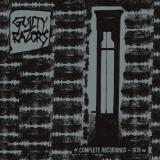
The Guilty Razors were among those who took part in this initial upheaval in Paris. They were far from being the worst. They had something special and even released a single that was well above the national average. They also had enough songs to fill an album, the one you’re holding. In everyone’s opinion, they were definitely not among the punk impostors that followed in their wake. They were, at least, genuine and credible.
Guilty Razors, Parisian punk band (1975-1978). To understand something about their somewhat linear but very energetic sound, we might need to talk about the context in which it was born and, more broadly, recall the boredom (a theme that would become capital in punk songs) coupled with the desire to blow everything off, which were the basis for the formation of bands playing a rejuvenated rock music ; about the passion for a few records by the Kinks or the early Who, by the Stooges, by the Velvet mostly, which set you apart from the crowd.
And of course, we should remember this new wave, which was promoted by a few articles in the specialized press and some cutting-edge record stores, coming from New York or London, whose small but powerful influence could be felt in Paris and in a handful of isolated places in the provinces, lulled to sleep by so many appalling things, from Tangerine Dream to President Giscard d’Estaing...
In 1975-76, French music was, as almost always, in a sorry state ; it was still dominated by Johnny Hallyday and Sylvie Vartan. Local rock music was also rather bleak, apart from Bijou and Little Bob who tried to revive this small scene with poorly sound-engineered gigs played to almost no one.
In the working class suburbs at the time, it was mainly hard rock music played to 11 that helped people forget about their gruelling shifts at the factory. Here and there, on the outskirts of major cities, you still could find a few rockers with sideburns wearing black armbands since the death of Gene Vincent, but it wasn’t a proper mass movement, just a source of real danger to anyone they came across who wasn't like them. In August 1976, a festival unlike any other took place in Mont-de-Marsan – the First European Punk Festival as the poster said – with almost as many people on stage as in the audience. Yet, on that day, a quasi historical event happened, when, under the blazing afternoon sun, a band of unknowns called The Damned made an unprecedented noise in the arena, reminiscent of the chaotic Stooges in their early adolescence. They were the first genuine punk band to perform in our country: from then on, anything was possible, almost anything seemed permissible.
It makes sense that the four+1 members of Guilty Razors, who initially amplified acoustic guitars with crappy tape recorder microphones, would adopt punk music (pronounced paink in French) naturally and instinctively, since it combines liberating noise with speed of execution and – crucially – a very healthy sense of rebellion (the protesters of May 1968 proclaimed, and it was even a slogan, that they weren’t against old people, but against what had made them grow old. In the mid-1970s, it seemed normal and obvious that old people should now ALSO be targeted!!!).
At the time, the desire to fight back, and break down authority and apathy, was either red or black, often taking the form of leafleting, tumultuous general assemblies in the schoolyard, and massive or shabby demonstrations, most of the time overflowing with an exciting vitality that sometimes turned into fights with the riot police. Indeed, soon after the end of the Vietnam War and following Pinochet’s coup in Chile, all over France, Trotskyist and anarcho-libertarian fervour was firmly entrenched among parts of the educated youth population, who were equally rebellious and troublemakers whenever they had the chance. It should also be noted that when the single "Anarchy in the UK" was first heard, even though not many of us had access to it, both the title and its explosive sound immediately resonated with some of those troublemakers crying out for ANARCHY!!! Meanwhile, the left-wing majority still equated punks with reckless young neo-Nazis. Of course, the widely circulated photos in the mainstream press of Siouxsie Sioux with her swastikas didn’t necessarily help to win over the theorists of the Great Revolution. It took Joe Strummer to introduce The Clash as an anti-racist, anti-fascist and anti-ignorance band for the rejection of old-school revolutionaries to fade a little.
The Lycée Jean-Baptiste Say at Porte d’Auteuil, despite being located in the very posh and very exclusive 16th arrondissement of Paris, didn’t escape these "committed" upheavals, which doubled as the perfect outlet for the less timid members of this generation.
“Back then, politics were fun,” says Tristam Nada, who studied there and went on to become Guilty Razors’ frontman. “Jean-Baptiste was the leftist high-school in the neighbourhood. When the far right guys from the GUD came down there, the Communist League guys from elsewhere helped us fight them off.”
Anything that could challenge authority was fair game and of course, strikes for just about any reason would lead to increasingly frequent truancy (with a definitive farewell to education that would soon follow). Tristam Nada spent his 10th and 11th unfinished grades with José Perez, who had come from Spain, where his father, a janitor, had been sentenced to death by Franco. “José steered my tastes towards solid acts such as The Who. Like most teenagers, I had previously absorbed just about everything that came my way, from Yes to Led Zeppelin to Genesis. I was exploring… And then one day, he told me that he and his brother Carlos wanted to start a rock band.” The Perez brothers already played guitar. “Of course, they were Spanish!”, jokes their singer. “Then, somewhat reluctantly, José took up the bass and we were soon joined by Jano – who called himself Jano Homicid – who took up the rhythm guitar.” Several drummers would later join this core of not easily intimidated young guys who didn’t let adversity get the better of them.
The first rehearsals of the newly named Guilty Razors took place in the bedroom of a Perez aunt. There, the three rookies tried to cover a few standards, songs that often were an integral part of their lives. During a first, short gig, in front of a bewildered audience of tough old-school rockers, they launched into a clunky version of the Velvet Underground's “Heroin”. Challenge or recklessness? A bit of both, probably… And then, step by step, their limited repertoire expanded as they decided to write their own songs, sung in a not always very accurate or academic English, but who cared about proper grammar or the right vocabulary, since what truly mattered was to make the words sound as good as possible while playing very, very fast music? And spitting out those words in a language that left no doubt as to what it conveyed mattered as well.
Trying their hand a the kind of rock music disliked by most of the neighbourhood, making noise, being fiercely provocative: they still belonged to a tiny clique who, at this very moment, had chosen to impose this difference. And there were very few places in France or elsewhere, where one could witness the first stirrings of something that wasn’t a trend yet, let alone a movement.
In the provinces, in late 1976 or early 1977, there couldn’t be more than thirty record stores that were a bit more discerning than average, where you could hear this new kind of short-haired rock music called “punk”. The old clientele, who previously had no problem coming in to buy the latest McCartney or Aerosmith LP, now felt a little less comfortable there…
In Paris, these enlightened places were quite rare and often located nex to what would become the Forum des Halles, a big shopping mall. Between three aging sex workers, a couple of second-hand clothes shops, sellers of hippie paraphernalia and small fashion designers, the good word was loudly spread in two pioneering places – propagators of what was still only a new underground movement. Historically, the first one was the Open Market, a kind of poorly, but tastefully stocked cave. Speakers blasted out the sound of sixties garage bands from the Nuggets compilation (a crucial reference for José Perez) or the badly dressed English kids of Eddie and the Hot Rods. This black-painted den was opened a few years earlier by Marc Zermati, a character who wasn’t always in a sunny disposition, but always quite radical in his (good) choices and his opinions. He founded the independent label Skydog and was one of the promoters of the Mont-de-Marsan punk festivals. Not far from there was Harry Cover, another store more in tune with the new New York scene, which was amply covered in the house fanzine, Rock News (even though it was in it that the photos of the Sex Pistols were first published in France).
It was a favorite hang-out of the Perez brothers and Tristam Nada, as the latter explained. “It’s at Harry Cover’s that we first heard the Pistols and Clash’s 45s, and after that, we decided to start writing our first songs. If they could do it, so could we!”
The sonic shocks that were “Anarchy in the UK”, “White Riot” or the Buzzcocks’s EP, “Spiral Scratch” – which Guilty Razors' sound is reminiscent of – were soon to be amplified by an unparalleled visual shock. In April 1977, right after the release of their first LP, The Clash performed at the Palais des Glaces in Paris, during a punk night organised by Marc Zermati. For many who were there, it was the gig of a lifetime…
Of course, Guilty Razors and Tristam were in the audience: “That concert was fabulous… We Parisian punks were almost all dressed in black and white, with white shirts, skinny leather ties, bikers jackets or light jackets, etc. The Clash, on the other hand, wore colourful clothes. Well, the next day, at the Gibus, you’d spot everyone who had been at this concert, but they weren’t wearing anything black, they were all wearing colours.”
It makes sense to mention the Gibus club, as Guilty Razors often played there (sometimes in front of a hostile audience). It was also the only place in Paris that regularly scheduled new Parisian or Anglo-Saxon acts, such as Generation X, Siouxsie and the Banshees, the Slits, and Johnny Thunders who would become a kind of messed-up mascot for the venue. A little later, in 1978, the Rose Bonbon – formerly the Nashville – also attracted nightly owls in search of electric thrills… In 1977, the iconic but not necessarily excellent Asphalt Jungle often played at the Gibus, sometimes sharing the bill with Metal Urbain, the only band whose aura would later transcend the French borders (“I saw them as the French Sex Pistols,” said Geoff Travis, head of their British label Rough Trade). Already established in this small scene, Metal Urbain helped the young and restless Guilty Razors who had just arrived. Guitarist for Metal Urbain Hermann Schwartz remembers it: “They were younger than us, we were a bit like their mentors even if it’s too strong a word… At least they were credible. We thought they were good, and they had good songs which reminded of the Buzzcocks that I liked a lot. But at some point, they started hanging out with the Hells Angels. That’s when we stopped following them.”
The break-up was mutual, since, Guilty Razors, for their part, were shocked when they saw a fringe element of the audience at Metal Urbain concerts who repeatedly shouted “Sieg Heil” and gave Nazi salutes. These provocations, even still minor (the bulk of the skinhead crowd would later make their presence felt during concerts), weren’t really to the liking of the Perez brothers, whose anti-fascist convictions were firmly rooted. Some things are non-negotiable.
A few months earlier (in July 1978), Guilty Razors had nevertheless opened very successfully for Metal Urbain at the Bus Palladium, a more traditonally old-school rock night-club. But, as was sometimes the case back then, the night turned into a mass brawl when suburban rockers came to “beat up punks”.
Back then, Parisian nights weren’t always sweet and serene.
So, after opening as best as they could for The Jam (their sound having been ruined by the PA system), our local heroes were – once again – met outside by a horde of greasers out to get them. “Thankfully,” says Tristam, “we were with our roadies, motorless bikers who acted as a protective barrier. We were chased in the neighbouring streets and the whole thing ended in front of a bar, with the owner coming out with a rifle…”
Although Tristam and the Perez brothers narrowly escaped various, potentially bloody, incidents, they weren’t completely innocent of wrongdoing either. They still find amusing their mugging of two strangers in the street for example (“We were broke and we simply wanted to buy tickets for the Heartbreakers concert that night,” says Tristam). It so happened that their victims were two key figures in the rock business at the time: radio presenter Alain Manneval and music publisher Philippe Constantin. They filed a complaint and sought monetary compensation, but somehow the band’s manager, the skilful but very controversial Alexis, managed to get the complaint withdrawn and Guilty Razors ended up signing with Constantin with a substantial advance.
They also signed with Polydor and the label released in 1978 their only three-track 45, featuring “I Don't Wanna be A Rich”, “Hurts and Noises” and “Provocate” (songs that exuded perpetual rebellion and an unquenchable desire for “class” confrontation). It was a very good record, but due to a lack of promotion (radio stations didn’t play French artists singing in English), it didn’t sell very well. Only 800 copies were allegedly sold and the rest of the stock was pulped… Initially, the three tracks were to be included on a LP that never came to be, since they were dropped by Polydor (“Let’s say we sometimes caused a ruckus in their offices!” laughs Tristam.) In order to perfect the long-awaited LP, the band recorded demos of other tracks. There was a cover of Pink Floyd's “Lucifer Sam” from the Syd Barrett era – proof of an enduring love for the sixties’ greats –, “Wake Up” a hangover tale and “Bad Heart” about the Baader-Meinhof gang, whose actions had a profound impact on the era and on a generation seeking extreme dissent... On the album you’re now discovering, you can also hear five previously unreleased tracks recorded a bit later during an extended and freezing stay in Madrid, in a makeshift studio with the invaluable help of a drummer also acting as sound engineer. He was both an enthusiastic old hippie and a proper whizz at sound engineering. Here too, certain influences from the fifties and sixties (Link Wray, the Troggs) are more than obvious in the band’s music.
Shortly after a final stormy and rather barbaric (on the audience’s side) “Punk night” at the Olympia in June 1978, Tristam left the band ; his bandmates continued without him for a short while.
But like most pioneering punk bands of the era, Guilty Razors eventually split up for good after three years (besides once in Spain, they’d only played in Paris). The reason for ceasing business activities were more or less the same for everyone: there were no venues outside one’s small circuit to play this kind of rock music, which was still frightening, unknown, or of little interest to most people. The chances of recording an LP were virtually null, since major labels were only signing unoriginal but reassuring sub-Téléphone clones, and the smaller ones were only interested in progressive rock or French chanson for youth clubs. And what about self-production? No one in our small safety-pinned world had thought about it yet. There wasn’t enough money to embark on that sort of venture anyway.
So yes, the early days of punk in France were truly No Future!
No en stock
Última entrega hace 6 meses disponible para reposición sin garantía
The album opens with the ominous guitar-driven Hollow Sky, accompanied by its haunting music video's verdant vistas. The song, with Iceglass ghostly vocals, shimmers with that sounds like an Omnichord flittering like sonic firefly lights and brooding bass. This perfectly scores the less traveled wanderings through the dark wooden path of Dante's perdition, leading to the titular well that graces the album cover. The Crater opens with an unsettling riff and bass, with low, repetitive frequencies on the synth create a sense of unease. Here, Iceglass recounts a fatalistic requiem for the king of romance that is cataclysmic and leaves a scar upon the earth. With Fall Industrial Wall, once again, Iceglass channels a silky and Nico-like emotive deadpan; against a dirgelike melody backed by minimal synth, bass, and drum. Almost medieval and plaintive, with its folk droning horns, deep and shallow in their resonance. This song is anachronistic, setting the scene of ruins centuries-old with crumbling edifices strewn about like memories lost in time. With the poetic lyrics of The Chamber do we find the eponymous abyss. Here, dualities are laid bare; besides love, there is heartbreak, and without this sorrow, what meaning would there be to love if one knows not what it is to lose? This song encapsulates the idea that love is heartbreak, and love lost is reaching the deepest chamber of the heart. This is carried through a sombre horn, minimalist drum machine, and deliberate bassline overlaid with Iceglass german and english lyrics. The Well is led in with a softly distorted bassline overlaid with eerie banshee howls give way to Iceglass otherworld vocal refrain, echoing through time as if emanating from a hole in the ground, and encircling that hole is a garden of woe and despair. The sinfully seductive song The Moor features a captivating SAX SOLO courtesy of Perseas; a welcome shift in tone, juxtaposed well with the intensity of Iceglass tenebrous vocal purr. This hitherto unexplored foray into dark sensuality takes the song into sordid mid 80s territory, bringing to mind a dusky drive along a serpentine road, with equally haunting instrumentations straddling time with icy fire. Broken Characters is an acoustic folk interlude featuring Selofan's Dimitris Pavlidis on guitar. Here we find a more gentle approach with its earnest and romantic lyrics. The song's melodic hook is a soft caress along with the forlorn horn elements highlighting Iceglass at her most Nico-sounding vocal yet, singing the sorrowful truth that most artists are indeed broken characters. Chimerical opens with dirgelike synth organs. The chill of winter has befallen the lamentations sung by Iceglass carried by haunting chord progressions and minimal percussion, plaintively beseeching the song's subject to remain elusive, idealistic, and a dreamer. After an album highlighting more Jill than Jack, our male protagonist finally makes his ascent in the sonorous and breathtaking Dark Hill, a masterful march of sweeping synth horns, and trepidatious drum machine with William Maybelline's bellowing voice cracking like thunder, rattling the atmosphere like his heart against his ribs. Spirals swirls in a cautionary knell of cathedral-esque droning synth dirge, with Icarian lyrics shining like a sombre ray of hope; like the sun's rays creeping into the darkest of places. The song, minimalist in its tight percussion, echoes with the solace of Larissa Iceglass vocal litany; invoking elements of the supernatural, almost like a Casio preset sequenced to the beating of an angel's wings.
Mutant präsentiert in Zusammenarbeit mit Back Lot Music und Focus Features stolz die Veröffentlichung des Soundtracks zu Craig Brewers sensationellem neuen Film Song Sung Blue – der herzergreifenden wahren Geschichte der legendären Milwaukee-Tribute-Künstler Lightning und Thunder.Die Oscar®-nominierten Schauspieler Hugh Jackman und Kate Hudson spielen Lightning und Thunder (Mike und Claire Sardina), das großartige Neil-Diamond-Tribute-Duo, das im Mittelpunkt dieser atemberaubenden neuen Interpretation eines Jukebox-Musicals steht.Mit Coverversionen von Songs von Neil Diamond, Patsy Cline, Buddy Holly und vielen mehr!
'The joyous harmonies and high-octane jive dances of South Africa’s greatest mbaqanga girlgroup, the Mahotella Queens, have enthralled audiences for six decades. "Buya Buya: Come Back" is the first full album of exciting new Queens material in nearly 20 years and marks their long-awaited return to the world stage. "These songs are in the Mahotella Queens’ original style and I can promise fans that it has been worth the wait," says lead singer Hilda Tloubatla, who at the grand age of 83 is the group’s last surviving original member. Hilda has been leading the Queens with her famously resonant voice since the beginning in 1964 and is now actively preparing the ground for the group’s future. She is now accompanied on record and on stage by the youthful voices of Amanda Nkosi and Nonku Maseko – the next generation of Queens – proof if ever it were needed that the mbaqanga beat is as indestructible now as it was 60 years ago. "Buya Buya: Come Back" is the group’s debut album for Umsakazo Records in the UK and is being launched with a two-week tour of Japan, the first performances of the Mahotella Queens outside South Africa since 2019 and their first appearance in Japan since 2005.'
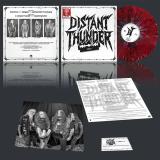
Schon immer schwirrte im Kopf von Husky (Drums / Asphyx, Rotten Casket, ex Sodom, ex Desaster, ex Metalucifer, ex Metal Inquisitor) die Idee herum, eine Band zu gründen, die sich dem puren Thrash Metal widmet und dabei auch einen kanadischen „Razor“-Touch aufweist, ohne jedoch die musikalischen Wurzeln aller Musiker zu verlieren. Auf einem der unzähligen Treffen mit seinem alten Kumpel Patrick (Bass / ex Crematory, ex Apophis) kam es vor zwei Jahren dann auf dem Party.San Open Air zum finalen „lass uns doch mal jetzt was zusammen machen“. Patrick rekrutierte zusätzlich Holg (Gitarre / u.a. Abandoned, Roxxcalibur) und Husky verpflichtete Benni (Vocals / u.a. Knife, The Earwix), um das Line-Up passend zu komplettieren.
Im Juni 2025 traf man sich im niederländischen Enschede, um bei Tom Meier Recordings (u.a. Asphyx, Soulburn, Cryptosis, Graceless, Rotten Casket) ein erstes Demo aufzunehmen. Die Band hat im Anschluss bei niemand Geringerem als High Roller Records einen Deal erhalten, um das Demo als MCD/MLP zu veröffentlichen und auch das folgende Debütalbum wird dort erscheinen.
Und dies ist erst der Anfang…Seid bereit für „Razorsharp Thrash Metal“!
Don your bandanas, leather jackets and distressed jeans, because heavy metal is about to shine brighter than ever as Swedish newcomers BOMBER bring back the hottest era in hard rock history. Asserting their own trademark blend of 70s and 80s inspired classic and hard rock with catchy hooks, top-notch guitar solos and a vibrant aesthetic, BOMBER brings you their debut album, Nocturnal Creatures, via Napalm Records! After explosive live shows in Sweden and a subsequent tour of Germany, the hard rockers prove that the glorious era of rock isn’t over and that they’re already setting the highest standards on Nocturnal Creatures. On ten powerful tracks, BOMBER turns the night into an intoxicating adventure that convinces both old and new fans of the prominent classic and hard rock genre. Album opener and title track “Nocturnal Creatures” opens the gates with epic storytelling and interludes the following passionate ride through “Zarathustra”. With fiery vocals, melodic guitars and untamable drum-play, the track gets the listener’s pulse pumping, while “Fever Eyes” ensnares with wistful weeping choirs and guarantees a quickly increasing temperature. “Black Pants Magic” emerges into an unforgettable high-class rock experience through its industrious and catchy hook, while songs like “A Walk Of Titans (Hearts Will Break)” and “You’ve Got Demons” surprise with dynamic melodies and Anton Sköld’s powerful voice. On “The Tiger”, BOMBER send their listeners right into the eye of a raging thunderstorm of riffs driven by brilliant grooves, while “Kassiopeia” sets the strings on fire with its marvelous solos. Bursting album closer “Aurora” presents Nocturnal Creatures’ crowning achievement, bringing the 40-minute escapade to the edge of the world. With their new studio album, Nocturnal Creatures, the rising stars of Sweden establish a milestone in the legacy of hard rock that leads the once so majestic genre to new glory – marked by their very own special vision!
With his new album 'Cruise Control', Satin Jackets presents a perfect musical soundtrack for relaxed moments that take us away from the stresses of everyday life. The title of the album is meaningful: 'Cruise Control' stands for the feeling of switching on the autopilot, leaning back and enjoying the journey to the fullest - an atmosphere that the album unfolds.
The album is a collection of singles that have been released over the last few years and are all interwoven at their core. Because no matter where you listen to the songs, they work, images arise in your head and your feet rarely stay still. Satin Jackets remains true to himself with his album sound, as he repeatedly receives feedback from listeners who appreciate the positive mood in his songs and which always puts them in a good mood.
The songs are first created in the producer's head and then develop together with the features, who add their own touch. For Satin Jackets, 'the most important thing is this immediate feeling that it fits musically and atmospherically'. This can also come out of nowhere, as was the case with David Bay and Small Black, who got in touch with the producer and it was an instant fit.
'There are always those magical moments when a song comes out of nowhere. Once I had an idea for a chord sequence that I couldn't get out of my head, but somehow that certain something was still missing. I then spontaneously asked a bassist friend of mine if he would like to play something to it - ten minutes later we had a hook that carried the whole piece. It's these unexpected, spontaneous inspirations that make the process so exciting.'
'Cruise Control' is more than just another album from Satin Jackets. It is an invitation to enjoy the moment and surrender to the music - a soundtrack that creates a good mood and takes us on a relaxing journey. So just switch on the autopilot again, put on your headphones and let yourself go.
Ready for take off?
Satin Jackets präsentiert mit seinem neuen Album "Cruise Control" einen perfekten musikalischen Begleiter für entspannte Momente, die uns vom Alltagsstress befreien. Der Titel des Albums ist vielsagend: "Cruise Control" steht für das Gefühl, den Autopiloten einzuschalten, sich zurückzulehnen und die Reise in vollen Zügen zu genießen - eine Atmosphäre, die das Album entfaltet.
Das Album ist eine Sammlung der Singles, die über die letzten Jahre erschienen und im Kern alle miteinander verwoben sind. Denn egal, wo man die Songs hört, sie funktionieren, es entstehen Bilder im Kopf und die Füße bleiben selten still. Mit dem Albumsound bleibt Satin Jackets sich treu, denn immer wieder bekommt er die Rückmeldung von Hörer:innen, die die positive Stimmung in seinen Songs schätzen und die immer wieder für gute Laune sorgt.
So entstehen die Songs zuerst im Kopf des Produzenten und entwickeln sich im Anschluss gemeinsam mit den Features, die ihre eigene Note mit einbringen. Für Satin Jackets ist es "das Wichtigste dieses unmittelbare Gefühl, dass es musikalisch und atmosphärisch passt". Das kann auch aus dem Nichts kommen, so wie bei David Bay und Small Black, die sich bei dem Produzenten meldeten und es sofort passte.
"Es gibt immer wieder diese magischen Momente, in denen ein Song quasi aus dem Nichts entsteht. Einmal hatte ich eine Idee für eine Akkordfolge, die mir nicht aus dem Kopf ging, aber irgendwie fehlte noch das gewisse Etwas. Ich habe dann spontan einen befreundeten Bassisten gefragt, ob er etwas dazu spielen möchte - zehn Minuten später hatten wir einen Hook, der das ganze Stück getragen hat. Es sind diese unerwarteten, spontanen Eingebungen, die den Prozess so spannend machen."
"Cruise Control" ist mehr als nur ein weiteres Album von Satin Jackets. Es ist eine Einladung, den Moment zu genießen und sich der Musik hinzugeben - ein Soundtrack, der für gute Stimmung sorgt und uns auf eine entspannte Reise mitnimmt. Von daher einfach mal wieder den Autopiloten einschalten, , Kopfhörer aufsetzen und fallen lassen.
No en stock
Última entrega hace 56 días disponible para reposición sin garantía
The extroverted blend of attitude, energy, and ostentatiousness that spills from the New York Dolls’ self-titled debut can be seen in full view on the album cover. Depicting the quintet in its hallmark flash-and-trash apparel and in drag appearance, the 1973 album scared away a considerable amount of potential listeners while capturing the attention of a sizable audience that recognized the band for what it was: zeitgeist pioneers who helped develop the punk and glam rock movements.
Named by Rolling Stone the 301st Greatest Album of All Time and by Mojo the 49th greatest album of all time, New York Dolls receives long-overdue audiophile treatment on Mobile Fidelity’s numbered-edition 180g 45RPM 2LP set. Sourced from the original master tapes, pressed at Fidelity Record Pressing in California, and housed in a Stoughton gatefold jacket, this collectible version marks the first time the group’s career-making statement is available to be experienced in audiophile quality.
Far from harboring the crude elements that became associated with the punk scene, New York Dolls benefits from keen production overseen by none other than Todd Rundgren. Though more accustomed to working far higher-caliber musicians, Rundgren — taken by the New York Dolls’ charisma and cool, if not their instrumental approach — fully understood the ensemble’s aesthetic. He captured what went down at New York City’s Record Plant with an astute blend of live-on-the-floor feel, raw authenticity, and professional acumen.
On Mobile Fidelity’s definitive-sounding reissue, you can hear those facets as well as key details, dynamics, and textures with previously unimaginable insight. Rundgren preserved generous degrees of grit, grime, and grease while bestowing the raucous music with elevated levels of separation, solidity, and impact every landmark recording deserves. His vision extends to introducing choice accents — barroom piano notes, Moog synthesizer passages, Buddy Bowser’s honking saxophones — that add to the songs’ appeal without interfering with the primary architecture.
Afforded extra groove space on this pressing, the tenor, presentation, and attack of both vocalist David Johansen and now-iconic guitarists Johnny Thunders and Sylvain Sylvain come across with stunning vibrancy and vitality. The New York Dolls often seem headed off the rails and into the red, but somehow, the strut, swagger, and sloppiness — and the associated sleaze and scruff, scrape and snarl, frenzy and feverishness those characteristics entail — remain together as a whole that shakes its collective fist at the frustrations, isolation, disarray, and disillusionment of youth chaos and urban decay.
Kicking off its debut with “Personality Crisis,” cited by Rolling Stone as one of the 500 Greatest Songs of All Time, the band makes obvious its grasp of alienation, deviance, displacement, and suburban disaffection — as well as its capacity to play hanging-by-a-thread boogie, noisy rock ‘n’ roll, and Brill Building-inspired pop. The lipstick-kissed New York Dolls possesses traits many of its harsher predecessors would overlook: joyfulness and melody, topped with a knack for knowing how and where to take a song inside of three-and-a-half minutes.
Dive and dash with the belligerent “Looking for a Kiss”; stomp your feet and clap your hands to the big choruses of “Jet Boy”; surrender to the demands and provocations of the coded “Vietnamese Baby”; decide whether “Bad Girl” yearns to explode or implode. It’s one of several tunes here that allude to the world coming to end. Of course, that doesn’t mean there isn’t time for a fling before everything burns. “There’s no place I gotta go,” yowls Johansen. And he means it.
Adorned with tonal crunch, glitter, and gristle, New York Dolls takes pride in its brashness and brattiness. The rambunctious effort, which earned the band the distinction of being voted both “Best New Group of the Year” and “Worst New Group of the Year” in the pages of Creem, displays knowing reverence for the blues without calling attention to the style. The folk-laden “Lonely Planet Boy” is nothing if not a collision of heart-on-the-sleeve emotions and the desire in the face of challenges to maintain a tough-skinned exterior. An interpretation of Bo Diddley’s “Pills,” complete with shivering harmonica and clattering rhythms, announces there’s no cure for what infects this band. It’s that contagious. And how.
His deliveries gushing with campy fun, playful irreverence, and sheer decadence, Johansen doubles as the equivalent of an open fire hydrant that spouts at will. He’s at once tender and vicious, serious and tongue-in-cheek. On arguably his finest hour on the album, Johansen’s phrasing, passion, and lyrical ambiguity alone turn “Trash” into an insistent glam-rock gem whose echoing harmonies and girl-group references stamp it a pop classic.
Too much, too soon? Only for those averse to some of the finest rock ‘n’ roll ever put on tape.
Enjoy The Ride Records in conjunction with Paramount Pictures proudly presents the score to Days Of Thunder (Music From The Motion Picture) by Hans Zimmer (35th Anniversary Edition). After decades of being locked in the vault, the iconic full score was finally released to the public for the 30th Anniversary on limited edition CD by La-La Land Records, and we are excited to bring it to our favorite format yet again to celebrate the 35th Anniversary! This 2xLP 140g vinyl set has the full score, along with six bonus tracks with five alternate takes, plus the rarely heard Rock Arrangement of the Days of Thunder main title. Days Of Thunder (Music From The Motion Picture) is housed in a high gloss gatefold jacket featuring the iconic film poster, along with stills from the film.the film.
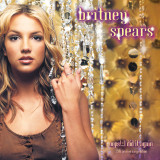
In May 2000, pop princess supreme Britney Spears released her second studio album Oops!... I Did It Again, which features Stronger, Lucky and the title track Oops!... (red leather jumpsuits and the necklace from The Titanic were never looked at the same again!). The massive commercial success debuted at #1 in 20+ counties, selling 1.3 million copies in its first week, breaking the SoundScan record for highest debut album sales by a female artist.
Britney’s record was broken 15 years later in 2015 by Adele’s 25. Considered one of the best-selling albums of all time, to date, it has sold ~20 million copies worldwide. 25 years later, with Britney’s trailblazing influence still being seen in pop artists today, we are delighted to release a 25thANNIVERSARY EDITION 2-LP DELUXE vinyl release. Featuring an alternate cover, a 20-page booklet of never-before-seen and rarely seen photos of the era PLUS 2 new remixes, “Stronger (Adamusic Remix)” & “Oops!...I Did It Again (Pessto Remix)” on black vinyl
2CELLOS are back with their third album Celloverse, which returns to the sound and concept of their self-titled debut, building on Luka Sulic & Stjepan Hauser's unique ability to re-imagine current and classic rock and pop songs with their own extraordinary energy — blasting instrumental music off into a whole new Celloverse. The album includes audio recordings of their YouTube releases of "Thunderstruck" and "I Will Wait" as well as new takes on songs such as Avicii's "Wake Me Up," Iron Maiden's "The Trooper" and another Michael Jackson favourite "They Don't Care About Us." The title song is a 2CELLOS original, and to top it all off, there's an unforgettable guest collaboration with their good friend, Lang Lang on the Paul McCartney classic "Live and Let Die." Celloverse is available as a 10th anniversary edition of 1000 numbered copies on orange coloured vinyl and includes an insert.
Introducing the ultimate Rock and Power Ballads collection - NOW That’s What I Call Rock Anthems – Out 31st May! Get ready to crank up the volume and let the music take you on a journey through 79 epic hits, spread across 4 CDs.and with 45 epic hits on 3-LP’s pressed in stunning Neon Violet Vinyl
No en stock
Última entrega hace 19 meses disponible para reposición sin garantía
Jules Reidy"s sublime music maps the human experience in glittering constellations of sound. The guitarist is a driver of Berlin"s fertile contemporary music scene. A wide-eyed imagination combined with technical mastery guide each work in Reidy"s extensive catalog, from solo guitar albums and collaborations with innovative peers, including recent works with claire rousay, Oren Ambarchi, Andrea Belfi and Sam Dunscombe to major commissions from JACK Quartet and Zinc & Copper. The songs of Ghost/Spirit collectively convey an astral sense of yearning and wonder, pushing towards transcendence. The album charts a deeply personal journey with love, spirituality and transformation expressed in fractal guitar figures, ethereal vocal vapors and rippling microtones. Reidy"s guitar approach unlocks the tonal and textural possibilities of the instrument from their use of alternate tunings and astute processing. The maximalist melodics of album opener "Every Day There"s a Sunset" are bolstered by rumbling bass samples from Andreas Dzialocha, Reidy"s collaborator in the duo Sun Kit. On "Satellite," cello samples from Judith Hamann stretch out through the cosmos, orbited by spiraling finger-picked guitars, while stacked trombone chords echo out into the ether. Thundering drum samples from Berlin metal mainstay Sara Neidorf push the album to ecstatic peaks on "Every Day There"s a Sunrise," fragmented rhythms breaking apart in the atmosphere. Field recordings of the Berlin S-Bahn recur throughout the album, another endless cycle of leaving and returning that shuttles beneath the album"s whirling tones. Ghost/Spirit captures the inherent power and agency in choosing to offer yourself up to the universe and let go, ego death and prayer rendered in incandescent sonics. Reidy"s inimitable skill as a guitarist, producer and composer is on full display, and when combined with the intensity of experience, the resulting album is a remarkable work of art.
Jules Reidy"s sublime music maps the human experience in glittering constellations of sound. The guitarist is a driver of Berlin"s fertile contemporary music scene. A wide-eyed imagination combined with technical mastery guide each work in Reidy"s extensive catalog, from solo guitar albums and collaborations with innovative peers, including recent works with claire rousay, Oren Ambarchi, Andrea Belfi and Sam Dunscombe to major commissions from JACK Quartet and Zinc & Copper. The songs of Ghost/Spirit collectively convey an astral sense of yearning and wonder, pushing towards transcendence. The album charts a deeply personal journey with love, spirituality and transformation expressed in fractal guitar figures, ethereal vocal vapors and rippling microtones. Reidy"s guitar approach unlocks the tonal and textural possibilities of the instrument from their use of alternate tunings and astute processing. The maximalist melodics of album opener "Every Day There"s a Sunset" are bolstered by rumbling bass samples from Andreas Dzialocha, Reidy"s collaborator in the duo Sun Kit. On "Satellite," cello samples from Judith Hamann stretch out through the cosmos, orbited by spiraling finger-picked guitars, while stacked trombone chords echo out into the ether. Thundering drum samples from Berlin metal mainstay Sara Neidorf push the album to ecstatic peaks on "Every Day There"s a Sunrise," fragmented rhythms breaking apart in the atmosphere. Field recordings of the Berlin S-Bahn recur throughout the album, another endless cycle of leaving and returning that shuttles beneath the album"s whirling tones. Ghost/Spirit captures the inherent power and agency in choosing to offer yourself up to the universe and let go, ego death and prayer rendered in incandescent sonics. Reidy"s inimitable skill as a guitarist, producer and composer is on full display, and when combined with the intensity of experience, the resulting album is a remarkable work of art.
Classic free jazz album reissued for the first time since the 70s. Old-style gatefold sleeve LP, with liner notes by Ed Hazell.
Noah Howard, an alto saxophonist and composer, was known for weaving intricate and innovative musical patterns, often likening his work to "sound paintings." His 1971 album Patterns, the first LP he self-produced on his Altsax label, stands as a testament to his experimental and spiritual approach to music. In interviews, Howard frequently used visual terms like "patterns" and "shapes" to describe his compositions, emphasizing the importance of melody and structure even in highly improvisational settings. For Howard, patterns and melodies were essential to guiding listeners through his explorations without alienating them, maintaining a balance between innovation and accessibility. Howard's quest for an original sound was deeply influenced by jazz greats like Charlie Parker, Ornette Coleman, and Jackie McLean. While he admired these legends, Howard avoided imitation, striving instead to develop his own distinct voice. His sound was unmistakably his own, and he felt a deep obligation to carry the jazz tradition forward through personal expression, not by mimicking others. His music was also rooted in spirituality, a legacy he traced to his upbringing in the Black Baptist Church. He believed jazz had always contained a spiritual essence, from Louis Armstrong to John Coltrane, and his work aimed to channel this cosmic, spiritual energy.
Patterns was recorded in the Netherlands during Howard's second stint in Europe, where he found a more open, less racially charged environment compared to the U.S. For the album, Howard collaborated with Dutch musicians such as Misha Mengelberg (piano), Han Bennink (drums), and Earl Freeman (bass). Despite the challenges faced by guitarist Jaap Schoonhoven, who felt out of place in the session, the album came together as a powerful mix of blues, jazz, and classical elements.
The music on Patterns is a high-energy fusion of American free jazz and Dutch improvisation. Howard's saxophone work alternates between leading with passionate, lyrical lines and blending into the collective improvisation. The album’s dynamic interplay, particularly between Mengelberg’s dissonant piano clusters and Bennink’s thunderous drumming, creates a vivid "sound painting" full of contrasting forms and colors. Patterns remains one of Howard’s most unique and celebrated recordings, showcasing his visionary approach to jazz.
The Fluid are arguably the great unsung band from the fertile underground rock scene of the late '80s and early '90s. The Denver five-piece - John Robinson (vocals), James Clower (guitar), Matt Bischoff (bass), Garrett Shavlik (drums), and the dear departed Ricky Kulwicki (guitar) - fused the fire of '80s hardcore with crunching Detroit protopunk, '60s garage rock, and '70s rock swagger. Think MC5, Faces, '70s Stones, all cranked up and really high on Sex Pistols and Black Flag singles. Rising from the ashes of early-'80s Denver bands Frantix (whose "My Dad's a Fuckin' Alcoholic" is a true gem of American punk) and White Trash, The Fluid were the first non-Seattle band to sign to Sub Pop, and Clear Black Paper was the second full-length album the label ever released. The label honchos were fans of Frantix, and happily got involved with The Fluid when the opportunity arose via the label's European licensing partner, Glitterhouse. Witnessing The Fluid's dominant live presence helped - a particularly fiery early show at Seattle's Central Tavern featured The Fluid, Mudhoney, Mother Love Bone, and Soundgarden all trying to outdo one another on stage. The band fit right in on Sub Pop's nascent roster of acts who, wherever they stood on the spectrum of punk/rock/metal, shared a commitment to thunderous riffs and explosive live shows. Legendary for their ferocious stage presence, The Fluid toured all over the US and Europe, holding their own and then some on bills with Mudhoney, Nirvana, Soundgarden, Dinosaur Jr., and other powerhouses of the era. From 1986 to 1993, The Fluid put out four albums and a number of EPs and singles, including a split 7" with Nirvana in 1991, before doing one album for a major label and promptly disbanding. Yet, while their partners-in-crime bulldozed into the mainstream, The Fluid remained something of a cult band, their audience confined to those who got hip during the band's existence, and crate diggers who nabbed original vinyl or CDs, which had quickly become rarities after selling through their original runs. Why? Record industry machinations? The fickle finger of pop culture? Being from Denver, not Seattle? Who the hell knows_ and who cares! The point is the band ripped, and the world deserves to hear them again. The Fluid took influences they shared with their contemporaries and ran in their own direction, focused on ass-shaking grooves more than misanthropic sludge. Rock anthems like "Cold Outside" sit alongside Stooge-oid rhythmic poundings ("Black Glove"), bluesy romps ("Leave It"), the occasional grungy dirge ("Wasted Time"), and raw punk bangers ("Is It Day I'm Seeing?" from the seminal 1988 Sub Pop 200 compilation). The band wasn't shy about their inspiration, either: scattered through their catalog are covers of The Troggs, The Rolling Stones, MC5, Iggy Pop and James Williamson, and Rare Earth. The Fluid stand out as champions of a feral, urgent, exuberant approach to rock 'n roll. As it turns out, that wasn't a recipe for stardom in the era of hyper-slick pop, boomer dinosaurs crying tears in heaven, and hair-metal power-ballads. But someone had to do it. To set things right, Sub Pop, The Fluid, and producer Jack Endino (Nirvana, Soundgarden, High on Fire, Mudhoney) teamed up to refresh and reissue The Fluid's entire indie-label catalog: their 1986 debut, Punch N Judy; 1988's Clear Black Paper; 1989's Roadmouth; the 1990 Glue EP (produced by Butch Vig, of Nevermind fame); and a treasure trove of rarities and previously unreleased material. All the music has been remastered from original tapes by Endino and JJ Golden, and the bulk of it has been meticulously remixed by Endino and the band, righting some sonic quirks that diminished the impact of the original records. Now, with their definitive material sounding better than ever, it's high time The Fluid get their due.
The Fluid are arguably the great unsung band from the fertile underground rock scene of the late '80s and early '90s. The Denver five-piece - John Robinson (vocals), James Clower (guitar), Matt Bischoff (bass), Garrett Shavlik (drums), and the dear departed Ricky Kulwicki (guitar) - fused the fire of '80s hardcore with crunching Detroit protopunk, '60s garage rock, and '70s rock swagger. Think MC5, Faces, '70s Stones, all cranked up and really high on Sex Pistols and Black Flag singles. Rising from the ashes of early-'80s Denver bands Frantix (whose "My Dad's a Fuckin' Alcoholic" is a true gem of American punk) and White Trash, The Fluid were the first non-Seattle band to sign to Sub Pop, and Clear Black Paper was the second full-length album the label ever released. The label honchos were fans of Frantix, and happily got involved with The Fluid when the opportunity arose via the label's European licensing partner, Glitterhouse. Witnessing The Fluid's dominant live presence helped - a particularly fiery early show at Seattle's Central Tavern featured The Fluid, Mudhoney, Mother Love Bone, and Soundgarden all trying to outdo one another on stage. The band fit right in on Sub Pop's nascent roster of acts who, wherever they stood on the spectrum of punk/rock/metal, shared a commitment to thunderous riffs and explosive live shows. Legendary for their ferocious stage presence, The Fluid toured all over the US and Europe, holding their own and then some on bills with Mudhoney, Nirvana, Soundgarden, Dinosaur Jr., and other powerhouses of the era. From 1986 to 1993, The Fluid put out four albums and a number of EPs and singles, including a split 7" with Nirvana in 1991, before doing one album for a major label and promptly disbanding. Yet, while their partners-in-crime bulldozed into the mainstream, The Fluid remained something of a cult band, their audience confined to those who got hip during the band's existence, and crate diggers who nabbed original vinyl or CDs, which had quickly become rarities after selling through their original runs. Why? Record industry machinations? The fickle finger of pop culture? Being from Denver, not Seattle? Who the hell knows_ and who cares! The point is the band ripped, and the world deserves to hear them again. The Fluid took influences they shared with their contemporaries and ran in their own direction, focused on ass-shaking grooves more than misanthropic sludge. Rock anthems like "Cold Outside" sit alongside Stooge-oid rhythmic poundings ("Black Glove"), bluesy romps ("Leave It"), the occasional grungy dirge ("Wasted Time"), and raw punk bangers ("Is It Day I'm Seeing?" from the seminal 1988 Sub Pop 200 compilation). The band wasn't shy about their inspiration, either: scattered through their catalog are covers of The Troggs, The Rolling Stones, MC5, Iggy Pop and James Williamson, and Rare Earth. The Fluid stand out as champions of a feral, urgent, exuberant approach to rock 'n roll. As it turns out, that wasn't a recipe for stardom in the era of hyper-slick pop, boomer dinosaurs crying tears in heaven, and hair-metal power-ballads. But someone had to do it. To set things right, Sub Pop, The Fluid, and producer Jack Endino (Nirvana, Soundgarden, High on Fire, Mudhoney) teamed up to refresh and reissue The Fluid's entire indie-label catalog: their 1986 debut, Punch N Judy; 1988's Clear Black Paper; 1989's Roadmouth; the 1990 Glue EP (produced by Butch Vig, of Nevermind fame); and a treasure trove of rarities and previously unreleased material. All the music has been remastered from original tapes by Endino and JJ Golden, and the bulk of it has been meticulously remixed by Endino and the band, righting some sonic quirks that diminished the impact of the original records. Now, with their definitive material sounding better than ever, it's high time The Fluid get their due.
The Fluid are arguably the great unsung band from the fertile underground rock scene of the late '80s and early '90s. The Denver five-piece - John Robinson (vocals), James Clower (guitar), Matt Bischoff (bass), Garrett Shavlik (drums), and the dear departed Ricky Kulwicki (guitar) - fused the fire of '80s hardcore with crunching Detroit protopunk, '60s garage rock, and '70s rock swagger. Think MC5, Faces, '70s Stones, all cranked up and really high on Sex Pistols and Black Flag singles. Rising from the ashes of early-'80s Denver bands Frantix (whose "My Dad's a Fuckin' Alcoholic" is a true gem of American punk) and White Trash, The Fluid were the first non-Seattle band to sign to Sub Pop, and Clear Black Paper was the second full-length album the label ever released. The label honchos were fans of Frantix, and happily got involved with The Fluid when the opportunity arose via the label's European licensing partner, Glitterhouse. Witnessing The Fluid's dominant live presence helped - a particularly fiery early show at Seattle's Central Tavern featured The Fluid, Mudhoney, Mother Love Bone, and Soundgarden all trying to outdo one another on stage. The band fit right in on Sub Pop's nascent roster of acts who, wherever they stood on the spectrum of punk/rock/metal, shared a commitment to thunderous riffs and explosive live shows. Legendary for their ferocious stage presence, The Fluid toured all over the US and Europe, holding their own and then some on bills with Mudhoney, Nirvana, Soundgarden, Dinosaur Jr., and other powerhouses of the era. From 1986 to 1993, The Fluid put out four albums and a number of EPs and singles, including a split 7" with Nirvana in 1991, before doing one album for a major label and promptly disbanding. Yet, while their partners-in-crime bulldozed into the mainstream, The Fluid remained something of a cult band, their audience confined to those who got hip during the band's existence, and crate diggers who nabbed original vinyl or CDs, which had quickly become rarities after selling through their original runs. Why? Record industry machinations? The fickle finger of pop culture? Being from Denver, not Seattle? Who the hell knows_ and who cares! The point is the band ripped, and the world deserves to hear them again. The Fluid took influences they shared with their contemporaries and ran in their own direction, focused on ass-shaking grooves more than misanthropic sludge. Rock anthems like "Cold Outside" sit alongside Stooge-oid rhythmic poundings ("Black Glove"), bluesy romps ("Leave It"), the occasional grungy dirge ("Wasted Time"), and raw punk bangers ("Is It Day I'm Seeing?" from the seminal 1988 Sub Pop 200 compilation). The band wasn't shy about their inspiration, either: scattered through their catalog are covers of The Troggs, The Rolling Stones, MC5, Iggy Pop and James Williamson, and Rare Earth. The Fluid stand out as champions of a feral, urgent, exuberant approach to rock 'n roll. As it turns out, that wasn't a recipe for stardom in the era of hyper-slick pop, boomer dinosaurs crying tears in heaven, and hair-metal power-ballads. But someone had to do it. To set things right, Sub Pop, The Fluid, and producer Jack Endino (Nirvana, Soundgarden, High on Fire, Mudhoney) teamed up to refresh and reissue The Fluid's entire indie-label catalog: their 1986 debut, Punch N Judy; 1988's Clear Black Paper; 1989's Roadmouth; the 1990 Glue EP (produced by Butch Vig, of Nevermind fame); and a treasure trove of rarities and previously unreleased material. All the music has been remastered from original tapes by Endino and JJ Golden, and the bulk of it has been meticulously remixed by Endino and the band, righting some sonic quirks that diminished the impact of the original records. Now, with their definitive material sounding better than ever, it's high time The Fluid get their due.
The Fluid are arguably the great unsung band from the fertile underground rock scene of the late '80s and early '90s. The Denver five-piece - John Robinson (vocals), James Clower (guitar), Matt Bischoff (bass), Garrett Shavlik (drums), and the dear departed Ricky Kulwicki (guitar) - fused the fire of '80s hardcore with crunching Detroit protopunk, '60s garage rock, and '70s rock swagger. Think MC5, Faces, '70s Stones, all cranked up and really high on Sex Pistols and Black Flag singles. Rising from the ashes of early-'80s Denver bands Frantix (whose "My Dad's a Fuckin' Alcoholic" is a true gem of American punk) and White Trash, The Fluid were the first non-Seattle band to sign to Sub Pop, and Clear Black Paper was the second full-length album the label ever released. The label honchos were fans of Frantix, and happily got involved with The Fluid when the opportunity arose via the label's European licensing partner, Glitterhouse. Witnessing The Fluid's dominant live presence helped - a particularly fiery early show at Seattle's Central Tavern featured The Fluid, Mudhoney, Mother Love Bone, and Soundgarden all trying to outdo one another on stage. The band fit right in on Sub Pop's nascent roster of acts who, wherever they stood on the spectrum of punk/rock/metal, shared a commitment to thunderous riffs and explosive live shows. Legendary for their ferocious stage presence, The Fluid toured all over the US and Europe, holding their own and then some on bills with Mudhoney, Nirvana, Soundgarden, Dinosaur Jr., and other powerhouses of the era. From 1986 to 1993, The Fluid put out four albums and a number of EPs and singles, including a split 7" with Nirvana in 1991, before doing one album for a major label and promptly disbanding. Yet, while their partners-in-crime bulldozed into the mainstream, The Fluid remained something of a cult band, their audience confined to those who got hip during the band's existence, and crate diggers who nabbed original vinyl or CDs, which had quickly become rarities after selling through their original runs. Why? Record industry machinations? The fickle finger of pop culture? Being from Denver, not Seattle? Who the hell knows_ and who cares! The point is the band ripped, and the world deserves to hear them again. The Fluid took influences they shared with their contemporaries and ran in their own direction, focused on ass-shaking grooves more than misanthropic sludge. Rock anthems like "Cold Outside" sit alongside Stooge-oid rhythmic poundings ("Black Glove"), bluesy romps ("Leave It"), the occasional grungy dirge ("Wasted Time"), and raw punk bangers ("Is It Day I'm Seeing?" from the seminal 1988 Sub Pop 200 compilation). The band wasn't shy about their inspiration, either: scattered through their catalog are covers of The Troggs, The Rolling Stones, MC5, Iggy Pop and James Williamson, and Rare Earth. The Fluid stand out as champions of a feral, urgent, exuberant approach to rock 'n roll. As it turns out, that wasn't a recipe for stardom in the era of hyper-slick pop, boomer dinosaurs crying tears in heaven, and hair-metal power-ballads. But someone had to do it. To set things right, Sub Pop, The Fluid, and producer Jack Endino (Nirvana, Soundgarden, High on Fire, Mudhoney) teamed up to refresh and reissue The Fluid's entire indie-label catalog: their 1986 debut, Punch N Judy; 1988's Clear Black Paper; 1989's Roadmouth; the 1990 Glue EP (produced by Butch Vig, of Nevermind fame); and a treasure trove of rarities and previously unreleased material. All the music has been remastered from original tapes by Endino and JJ Golden, and the bulk of it has been meticulously remixed by Endino and the band, righting some sonic quirks that diminished the impact of the original records. Now, with their definitive material sounding better than ever, it's high time The Fluid get their due.
20 years of The Go! Team"s Thunder Lightning Strike, 20 years of lasers through tracing paper, orange tone oscillations, cable access hangover,music made through sunburnt circuits, a K-tel dream sequence, a haunted vision mixer, station wagon-core, straight to video, VHS in distress, something in the fog, fluff on the needle, chromakey constellations, a hovercraft on the fret board, maxing the minute maid, faxing a car alarm, a Morse code pep talk, etch-a-sketch jackknife, a daily Haley"s comet, light sound colour motion, a holiday from yourself... CD and LP are packaged with a recreation of the original CD-R version of the album that stands up as a document of band leader Ian Parton"s unique method of working.
For our second release, circuit|breaker quips back the stacked offering of CBRK001 with another dynamic double LP, exhibiting some of the best local and international talent that’s cropped up on our radar over recent years.
The label is as driven as ever to build a bridge between our community and the wider electronic
music domain, giving artists a platform to preach the sound that speaks to them, and this release is but another stepping stone towards greatness, for us and for them.
CBRK002 opens up with a rolling, gritty number that could only be Fergus Sweetland, as metallic voices beckon forth on ‘Untitled (ARP 1.02)’. Hasvat Informant, whose thunderous reputation precedes him, then storms the barn with the explosive ‘Abispa Ephippium’. The B-side shifts gears to Goa’s Dotdat and his frantically groovy track ‘Holo’, followed by a gorgeous minimal number by Berlin-based Pino Peña – Mia’s Pocket; one that’s sure to get summer dancefloors pumping.
The C-side of the record contains two heaving tracks, the C1 from the prominent force of Cloudy Ku with ‘A Room of One’s Own’, and the C2 from the dark visage that is disgrays with
‘Turmstraße’. The final side of the record has Amsterdam legend Juan Sanchez open the filter with a warm, jacking submission in ‘Indulge’, while the Berliner Marsch takes us home with a
devious timbre that will have bodies glued to the floor on ‘Into You’.
No en stock
Última entrega hace 20 meses disponible para reposición sin garantía
Am 31. Dezember 1973 spielten AC/DC ihre erste Show im Chequers Nightclub in Sydney. Heute, 50 Jahre nach diesem Gig, sind sie veritable Rocklegenden, die Millionen von Tonträgern verkauft haben, aber nicht im Entferntesten daran denken, sich aufs Altenteil zurückzuziehen. Erst vor kurzem hat die Band ihre unzähligen Fans mit der Ankündigung der ‘POWER UP’-Tour, die sie im Sommer 2024 durch Europa führen wird, wieder in einen Freudentaumel versetzt.
Um das 50-jährige Thronjubiläum der Rock’n’Roll-Könige angemessen zu feiern, veröffentlicht Columbia Records/Legacy Recordings den Backkatalog der Band in wahrlich royaler Ausstattung: als goldene, limitierte Vinyl-Edition. Jeder LP dieser Sonderedition liegt ein Druck (30cm*30 cm) mit brandneuem AC/DC-Jubiläums-Artwork bei.
LIVE – Die Doppel-LP aus dem Jahr 1991 wurde in Donnington Park und Birmingham (UK), Edmonton (Kanada) und Moskau mitgeschnitten.
No en stock
Última entrega hace 2 años disponible para reposición sin garantía
To celebrate 10 years of one of London’s most loved underground club nights, Tangent, Mr Bongo are thrilled to launch this new compilation series. Crafted by its two residents, John Gómez and Nick the Record, it aims to transmit a taste of Tangent’s spirit. A party rooted in inclusivity and open-mindedness, whose name captures the spontaneous switches in musical direction that are a defining element of their nights. For the compilation, the pair have cherry-picked a selection of their prized, rare and dancefloor-ready tracks from around the globe, that have soundtracked the past decade of parties.
Friends for close to 20 years, music lovers, record obsessives and internationally renowned DJs in their own right, John and Nick have two lifetimes worth of musical knowledge to draw from. John a long-standing NTS Radio resident and compiler for Music From Memory. Nick one of the UK’s go-to record dealers, resident DJ since the ‘90s at one of Japan’s pioneering parties, Life Force, and co-captain / co-edit-expert of Record Mission with Dan Tyler (Idjut Boys).
In 2014, the pair decided to bring some of Life Force’s grassroots principles to the UK, whilst channelling underground clubbing institution Plastic People’s meticulous attitude to sound. Tangent grew from being a small gathering of friends, to an established fixture in London’s nightlife, whilst always maintaining a strict no guest DJ policy. “As London’s clubs have become increasingly reliant on international guests, we wanted to emphasize the importance of a club night growing through its residents”, John and Nick reflect. With 10 years of the duo at the helm, an intimate connection between DJ and dancefloor has been built, allowing for freedom of expression on both sides of the decks.
Tangent reaches around the globe and across different eras to make connections that stimulate emotional reverberations in the unfamiliar. Where the blissfully Balearic ‘Laberinto’ by Miguel Perikás, goes hand-in-hand with the Cameroonian hip-house of King B.’s ‘Love is Crazy’. The thundering ‘Amek Amek’ by L'Innovateur Djoe Ahmed et le Zoukabyle, rubs shoulders with the soulful Caribbean-influenced touch of Champagn’s ‘Bel Ti Négress’. And Pellegrin El Kady’s afro-cosmic ‘Seiva de Carnaval’, crosses paths with Kajou’s Kompa disco anthem ‘Tet Chajé’.
Tangent’s longevity is in part down to it having always embraced contemporary sounds. The sub-rattling bass of Srirajah Sound System’s stunning Molam dub stepper ‘Si Phan Don Lovers Rock’ and the slow, woozy mantra of leftfield dancehall explorer Androo’s ‘Lyriso’, are two shining examples.
This compilation represents an ongoing dialogue between past and present, transporting listeners to the heart of a pure musical experience, where open minds and open hearts are eager to follow the tangent.
No en stock
Última entrega hace 2 años disponible para reposición sin garantía
Enjoy The Ride Records and Enjoy The Toons Records in conjunction with Nickelodeon are proud to
present Ren & Stimpy - You Eediot!, available for the first time on vinyl. Performed by legendary voice
actor Billy West (Futurama, Looney Tunes, Doug) and Bob Camp (ThunderCats, Tiny Toon
Adventures, SpongeBob SquarePants), this limited edition vinyl reissue of the 90s Ren & Stimpy
album features iconic songs "Happy, Happy, Joy, Joy", "Log Blues / Log Theme", show opening &
closing themes, along with over 15 additional tracks. Housed in a 400gsm jacket with a 4-page
songbook featuring updated artwork by Steven Wild, this is a must have for Nickelodeon fans!
Given The Fall's penchant for iconoclasm, it's no surprise that they decided to say goodbye to the '70s with a series of gigs at Northern England's gruffest halls. The band's formidable live show was met with even more derision and disorder than customary during these late '79 and early '80 performances, and they skillfully amplified such sentiments back at the crowd. Totale's Turns, The Fall's first live album, was released on Rough Trade just prior to their pivotal third album, 1980's Grotesque. "The difference between you and us is that we have brains," shouts Mark E. Smith to open Totale's Turns as the band breaks into the rollicking "Fiery Jack," their latest single at the time. Each player is at their jagged best: Marc Riley and Craig Scanlon's splintering guitars, Steve Hanley's thunderous bass and Smith's combative sneer reverberate over "Rowche Rumble," "Choc-Stock" and "Spectre Vs. Rector" more than any studio would ever allow. Totale's Turns never panders to live-record conventions, serving instead as a gripping exhibit of The Fall en masse and arguably the most accurate document of the group to date. Superior Viaduct's edition is the first time that Totale's Turns has been available on vinyl domestically. Liner notes by Brian Turner.
Limited Clear w/ Silver Splatter vinyl. 15 years after the band's debut album was release, Sargent House is set to do a special anniversary re-issue with updated artwork and limited-edition clear w/ silver splatter vinyl with Silver/Red foil jacket available. Upcoming tour dates include multiple festival appearances and a UK/EU headline tour in August. 12th Nottingham Rescue Rooms, 13th Manchester Gorilla, 14th London Underworld, 15th Bristol ArcTanGent. For Fans of Fu Manchu / Melvins. This the debut is being repressed. Red Fang is the formation of long time friends and collaborators Bryan Giles (Last of the Juanitas, Party Time), Aaron Beam (Dark Forces, Lachrymator), David Sullivan (Party Time, facedowninshit, Shiny Beast) and John Sherman (Party Time, Bad Wizard, Trumans Water, All Night). Unleashed on New Year's Eve of 2006 in Portland, Oregon, Red Fang stormed out of the gates, introducing a sweaty, seething basement to a new kind of unforgettable fist-pumping, beer-chugging rock music. Since that night, the band has continued with the same intensity, energy, and intimacy to quickly become a touring juggernaut, playing shows all over the US with bands like The Melvins, Big Business, and The Sword, to name just a few. Residing somewhere between Black Flag and Black Sabbath, Red Fang recall a time when rock was more urgent and horrifying. Synthesizing a variety of heavy music influences into their own distinct musical identity, the band easily shifts from barn-burning punk to mid-tempo, hyper-distorted bass destruction all while maintaining a cohesive sound. Red Fang create gigantic rock songs that are easy to listen to (not easy listening, mind you) and qualify the simultaneous usage of both the thinking and the banging head, which are usually mutually exclusive. Their instrumentation is fluid and effortless, and the vocals are delivered melodically and forcefully, with enough rasp and effect saturation to fit nicely within the music. Paired with elemental imagery, the lyrics are immense and satisfying without any pretense.
"Known for her powerful vocals, dynamic stage presence, and diverse musical influences, LA-based soul and funk singer Nikka Costa returns from a musical career break with future-forward disco-inspired sounds on ‘Dirty Disco’.
The lyric “Everyone is welcome, everyone’s an Avatar” denotes a place where anyone can go to be themselves and let their freak flag fly! and sets the tone for her disco and soul fused, progressive album, which is recorded with and produced by Justin Stanley (Prince, Jamie Lidell, Beck etc). Along with the talents of versatile musicians such as Brandon Coleman (Kamasi Washington, Thundercat, Donald Glover, Flying Lotus), Greg Phillinganes (Michael Jackson, Stevie Wonder) and Kaveh Rastegar (John Legend, Beck), Nikka Costa invites you to immerse yourself in her “Dirty Disco” world.
“Dirty Disco is about a place anyone can go to be themselves and let their freak flag fly! It’s about a place where no one is looking, no one cares what you're doing or what you're into. It could be a disco, but it could also be another planet or headspace or vibe. It's dark and sparkly, blue and purple. Gritty, raw and sexy. Whatever you want it to be.” - Nikka Costa"