In terms of "legendary" House records, it doesn't get any better than LNR's "Can't stop the house".
Originally released in the golden year of 1987 the Chicago duo of Larry Thompson and Rick Lenoir (with a helpful production assist from the mighty Adonis and a dope remix from Steve "Silk" Hurley) crafted this anthemic slab of chunky, funked out jacking House. "Can't stop the house" is a straightforward, stripped back club track, no special FX - just straight up party music for sweaty dancefloors. This official 2016 reissue contains 4 mixes of this stone cold classic - The vocal mix, basement mix, house of trix mix and the rapid edit, all culled from the numerous pressings that came out in 1987 - 1989. In a sense, this is "the complete" collection of this cornerstone of Chicago House. The full set. All audio has been lifted from Rick Lenoir's private collection of reel to reel tapes from his basement and remastered accordingly. This reissue has been realised with the full involvement of Thompson & Lenoir and is 100% legit! Don't snooze, this one deserves a spot in any self respecting House heads record bag or DJ set, classic material made available again for 2016 - You can't stop it!
quête:jam for real
DJ Support and positive Feedback by the likes of
Laurent Garnier, Dixon, Ame, Adriatique, Ian Pooley, Timo Maas, Trikk, Frankey & Sandrino, Sacha, The Drifter, Severino (Horse Meet Disco), Alex Dallas (Zukunft Zürich),
Yør Kultura, Lehar, Denis Horvat, BOG, Echonomist, Fred Everything, Luca Bachetti, Karotte, Roberto Rodriguez…
We're happy to announce the fourth chapter of our sought-after Outbound series which also marks Lossless' second release in 2020. After two extended chapters of Outbound, fully showcasing our labels artist roster, Outbound.4 is a crisp double A-Side affair - featuring two killer Techno workouts courtesy of our French stalwart Anthony George Patrice followed up by two Deep/Dub House delights delivered by Son Dos.
Without a doubt, Berlin based frenchman Anthony George Patrice steadily adjusted and developed his sound to a higher level over the last years. His contribution on Side A - "DBZU (Eine Brücke Zum Übermenschen)" and "Crowned Eagle" exposing new artistic shades and Anthony's ability to take you on a sonic journey and soak you into his rich and driving deeper Techno soundscapes.
Side AA belongs to Son Dos - a creative power plant by two Sweden born men: Barcelona based Marco Gegenheimer and Tapia J. Arriagada living in Malta. The duo already caused a stir with their debut "Children Of Almost" on Outcast Oddity. Marco also released some great music on Studio Barnhus as one half of MLiR!
On our Outbound.4 the guys showcase two amazing cuts originated from fruitful studio jams.
The beautiful "Cala" is hypnotizing us in deep, meditative balearic territories while her powerful brother "Maffio" might have had a little testosterone injection along the way and moves us straight onto the dancefloor. Both tunes are capable to unveil their power outdoors just as much as they will in a sweaty basement!
Son Dos quoting on Anthony George Patrice's tracks:
"These songs sound like a Movie score to us, a soundtrack taking you further and further into an unexplored forest: ...you are on a mission ... chugging drums, haunting strings and rolling percussion guide you... your heartbeat intensifies, with each step that you take...
all of a sudden, the floor underneath you turns into flowing geometrical patterns and you start falling...
a voice tells you "Happiness Is A Miisunderstanding", and the fear you had leaves your mind...you connect yourself with a higher power and realise why you started this mission in the first place"
Anthony George Patrice quoting on Son Dos tracks:
"Lovely balearic yet powerful atmosphere on "Cala"… Head flies and shoes get used. All that you wish for!" ...
"Hands in the air for "Maffio"! Here comes the peaktime booming system. Simple, efficient yet super interesting and deeply rooted dance floor killer. This is ace!
Ragoo Records celebrates its debut on wax with an highquality record, “Break It Down”. The release features an
original cut from Astratto & Brine plus three stunning
remixes from the best young talents in the Italian house
scene. Recorded and fully composed on the first day they
met in the studio, the Original Mix is a dusty deep house
jam perfect for the club or for chillin’ wherever you want
to. For Astratto, Ragoo Records co-founder, this
represents his first official vinyl release. Brine has
delivered hot tracks through the infamous Irma and has
recently appeared on Boogie Cafè Records and Trend
Records. On the A2 Sam Ruffillo offers an impressive
remix that merges the Original to the land of jazzy vibes
with some smooth Rhodes and an extra groovy bassline.
Over the last years Sam Ruffillo has been releasing great
EPs via Irma Records and the Bristol-based Boogie Cafè.
DJ Rou’s remix occupies the flip side with a real classic
deep house joint full of warm pads and rolling drums. Chief of L'Archivio record store in Bologna, charismatic DJ and
outstanding producer, DJ Rou has released his music
through labels such as Bosconi Records, Cognitiva, Red
Rooster and Daphian Prod. The B2 remix is produced by
D’Arabia, Red Rooster founder and House of Disco
affiliated artist, who accomplishes an hot groove
explosion, with a special Jamiroquain feeling, perfect for
burnin’ the dancefloor. This EP is intended to be a
snapshot of Bologna’s house music scene. All artists
featured on it are based in the city and contribute to its
musical landscape.
For their sophomore album, Chemical Reaction, Galaxians have stripped back the music and pumped up the vocals. Emma Mason's unstoppable voice elevates the group to a fully-formed musical act. This new LP is all about her voice.
Mason's powerhouse vocal on the West End Records-inspired Chemical Reaction beckons you onto the dancefloor. Jed Skinner's bright and breezy synth melodies allow the song to really breathe, whilst Sam Bell's front-and-centre conga groove (straight out of Double Exposure's My Love Is Free) and Matt Woodward's intricate rolls ramp up the track's energy and momentum. The shorter Mama Ghetto Vogue Edit is brought to life by Darren Pritchard, vogue dancer and mother of Manchester's House of Ghetto, who meets a neon wonderland in the electrifying video.
Elsewhere on the album, Heartbreaker champions female empowerment and personal freedom over a pounding boogie groove. It's a tight arrangement which drops into a delay-drenched Levanesque drum break before crescendoing back into a final chorus via one of Skinner's trademark JX-3P synth solos.
On the proto-house funk of Fight For Love, where Emma flexes her vocal chords to jaw-dropping effect, a failing relationship is thrust into the spotlight over a punchy Linn Drum groove. On the silky shuffle of after-hours jam Work It Out, which brings to mind the classic Sly & Robbie Compass Point productions, Emma croons about a lover, her voice cast in a softer, more subdued glow. Heat of the City sizzles with the essence of an urban summer, and is peppered with heart-stopping hand claps.
Third single Horizon sees the band in more reflective low-key mode, and could be their minor hit of the summer. There's some neat drum programming here, intertwined with Woodward's intricate fills and hi-hat playing.
On Not The Money, Mason's vocal shifts to a lower register in the mid-section, bringing to mind Grace Jones at her most commanding.
All in all it's a life-affirming experience, one born out of a sense of community and collaboration. Seven years on from their early explorations Chemical Reaction sees Galaxians retain sight of the principles that make their output, and dance music as a whole, so vital - commonality of experience, singular moments shared by a crowd, and rhythm as the best medicine.
The late engineer and producer Paul C’s fingerprints are all over this single from Ultramagnetic MC’s, perhaps the defining release of their career. While earlier records gave notice of their strange and unique talents, they were loveably messy affairs. This, however, is the real deal, as polished as their early sound would ever be.
‘Give the Drummer Some’ grabs a fistful of different elements – from James Brown, Dee Felice Trio and James Brown – but bends them to its own purpose. This is a song with a momentum of its own and endlessly quotable lyrics. One of which, of course, was sampled by The Prodigy – huge hip-hop fans – for ‘Smack My Bitch Up’ in 1997. The now hugely rare 7” of ‘Give the Drummer Some’ edits this out to make it more radio-friendly, but this reissue reverses that cut, giving you the original lyrics. If anyone knows why Kool Keith also changes the word ‘rappers’ to ‘monkeys’ for that edit, answers on a postcard…
The brilliant B-side harks back to the time when every group had a song dedicated to their DJ. ‘Moe Luv’s Theme’ sees Kool Keith at his most straightforward, singing the praises of the turntable skills of Moe Luv. It would be throwaway were it not for the effortless repurposing of Jackie Robinson’s oft-sampled ‘Pussyfooter’. That – and the presence of one of the world’s great MC’s at the height of his powers – elevates it far above a footnote.
‘Reality Tunnels’ is a concept that was originally introduced by Robert Anton Wilson in his 1983 book ‘Prometheus Rising’. In essence, the concept of a reality tunnel relates to an idea on how we create our own perspective – the subjective filter that we each apply to the world around us; the things we perceive and what our consciousness deems worthy of attention, IE what we see and hear is entirely relative to what we do not.
At points angular and uncompromising with levels in the red, frequencies pushed out and EQ curves stretched into strange new shapes, Pinch mixes both low and hi fi on this boldly distinct sonic statement. It sees him flexing years of production skills – but unconventionally so – knowing well that safe predictability and rounded polish don’t get the most interesting results.
Dark trip hop Bristolia segues into blistering jungle on album opener ‘Entangled Particles’, before planet-hopping onto the spiky insidious grimestep of ‘All Man Got’, featuring the rugged rasp of OG warhorse Trim.
Beginning a triptych of future techno, ‘Accelerated Culture’ offers the album’s most relatively straightforward moment, albeit one of scorching, anthemic dancefloor heat. Delving deeper into the vortex is the synapse sparking wobbler ‘Returnity’, before ‘Finding Space’ reaches to the cosmos’ far-flung, glowing outlands.
Back to an urban reality is ‘Party’, where a subtly menacing sense of dread is ignited by Killa P’s incremental flow, which ramps-up and pairs-back the intensity in unexpected ways. Still moving freely between different realities, ‘Back To Beyond’ is beautiful gloaming ambience, executed with equal fine-tuned grace as the genre’s masters.
Jamaican vocalist Inezi lends sweet tones to the slow burning, roots-meets-modern-bass spiritual ‘Change Is A Must’, and on ‘Non-Terrestrial Forms’ an atmospheric, misty steppers intro segues stealthily into fiercely dystopian, amen-fuelled jungle tekno; marking one of several surprise attacks on the album, where a subtle-slight-of hand shoots the intensity level dynamically up.Closing as it begins, the album is bookended by a piece that recalls the dark, intricate soundscapes of Massive Attack’s ‘Mezzanine’ and Tricky’s ‘Maxinquaye’ – found here in ‘The Last One’s scorched, smoky rocker.
Hit the vinyl double pack for an exclusive and quite unique sounding 120bpm glitchy techno roller featuring man like Trim once again and live cello recordings.
‘Reality Tunnels’ is a concept that was originally introduced by Robert Anton Wilson in his 1983 book ‘Prometheus Rising’. In essence, the concept of a reality tunnel relates to an idea on how we create our own perspective – the subjective filter that we each apply to the world around us; the things we perceive and what our consciousness deems worthy of attention, IE what we see and hear is entirely relative to what we do not.
At points angular and uncompromising with levels in the red, frequencies pushed out and EQ curves stretched into strange new shapes, Pinch mixes both low and hi fi on this boldly distinct sonic statement. It sees him flexing years of production skills – but unconventionally so – knowing well that safe predictability and rounded polish don’t get the most interesting results.
Dark trip hop Bristolia segues into blistering jungle on album opener ‘Entangled Particles’, before planet-hopping onto the spiky insidious grimestep of ‘All Man Got’, featuring the rugged rasp of OG warhorse Trim.
Beginning a triptych of future techno, ‘Accelerated Culture’ offers the album’s most relatively straightforward moment, albeit one of scorching, anthemic dancefloor heat. Delving deeper into the vortex is the synapse sparking wobbler ‘Returnity’, before ‘Finding Space’ reaches to the cosmos’ far-flung, glowing outlands.
Back to an urban reality is ‘Party’, where a subtly menacing sense of dread is ignited by Killa P’s incremental flow, which ramps-up and pairs-back the intensity in unexpected ways. Still moving freely between different realities, ‘Back To Beyond’ is beautiful gloaming ambience, executed with equal fine-tuned grace as the genre’s masters.
Jamaican vocalist Inezi lends sweet tones to the slow burning, roots-meets-modern-bass spiritual ‘Change Is A Must’, and on ‘Non-Terrestrial Forms’ an atmospheric, misty steppers intro segues stealthily into fiercely dystopian, amen-fuelled jungle tekno; marking one of several surprise attacks on the album, where a subtle-slight-of hand shoots the intensity level dynamically up.Closing as it begins, the album is bookended by a piece that recalls the dark, intricate soundscapes of Massive Attack’s ‘Mezzanine’ and Tricky’s ‘Maxinquaye’ – found here in ‘The Last One’s scorched, smoky rocker.
Hit the vinyl double pack for an exclusive and quite unique sounding 120bpm glitchy techno roller featuring man like Trim once again and live cello recordings.
Here is Niall Power’s debut release on Psyko social records, a 5 track EP filled with all sorts of Detroit inspired techno and electro bangers with remixes from some amazing producers such as Lee Holman, Leafeater and Ikeaboy.
Niall Power’s Steel Reinforcement wears it’s classic era Techno and Electro on it’s sleeve. Born out of a cross of diverse backgrounds and disciplines, the Irish based DJ spicing up the current techno aesthetics by adding a pinch of acid, sprinkled with that extra touch of sleaze. Power’s ‘Spinal Fusion’ and ‘Kyphosi’, embodies the visceral secrets of sounds that work the dance floors. Heavily blessed with taste and cursed with extensive dj background. Vicious kicks and snares along with synth and pad elements conjure up a painkiller haze, woozing in and out of consciousness. Teaming up with three huge remixes from Lee Holman |DE|MAR|CATION| Leafeater StickyGround and Ikeaboy D1 Recordings this EP is a great weapon for any techno or electro dj.
For PSR, this is a really exciting first release as it shows they have an in-depth understanding of the modern techno zeitgeist with inspiration from the past to explore all flavours of the genre for the future.
Early support from the likes of Neil Landstrumm, Jamie Behan, Sunil Sharpe, Aubrey, Plural, Cáilin Power and Dave Clarke just to name a few.
UK Dub pioneers Alpha & Omega (Greensleeves / Steppas Records) represent a major part of the foundation of soundsystem culture and bass music migration from Jamaica, via the UK, to the world. Formed in the 1980’s and with over 30 studio albums to their name, A&O deliver us their latest production. Shadrach, Meshach And Abednego is a remarkable return to the mystical UK dub sound introduced by A&O in the 1980s. A powerful album in both word and sound featuring some of the greatest conscious reggae vocalists of our time; Danny Red, Joseph Lalibela, Wellette Seyon, Ras Tinny and Nai-Jah.
- A1: Choir Of The Damned
- A2: Enemy Of God
- A3: Hail To The Hordes
- A4: Awakening Of The Gods
- A5: People Of The Lie
- B1: Gods Of Violence
- B2: Satan Is Real
- B3: Mars Mantra
- B4: Phantom Antichrist
- C1: Fallen Brother
- C2: Flag Of Hate
- C3: Phobia
- C4: Hordes Of Chaos
- D1: The Patriarch
- D2: Violent Revolution
- D3: Pleasure To Kill
- D4: Apocalypticon
One thing‘s for sure: There aren‘t many bands with a history as long and eventful as Kreator‘s, who fascinatingly succeed in exploring new horizons while challenging and reinventing themselves time and again.That was perfectly illustrated by their latest record ‘Gods Of Violence’ in 2017. With this 14th studio album of their impressive career, the thrashers from Essen, Germany crafted a work of art of utmost vigor, drawing its unfailing power from the pounding heart of one of the greatest, most versatile metal bands of all time.
Mainman Mille Petrozza’s influences range from Hannah Arendt, Pink Floyd and Tocotronic to Slayer, even though he was born and bred in the metal scene. Nevertheless, he is and always has been open to inspiration from various sources, which is why his lyrics are by no means merely based on corny genre templates but offer trenchant observations of our time combined with a witty aside to long-standing cliches: One of the best songs on ‘Gods Of Violence’ is really called ‘Satan Is Real’.
Formed in 1982, Petrozza and ‘Ventor’ – the only two remaining founding members – have come a long way from playing in a small-scale student band. “In my history book, Kreator didn‘t really exist until 1985“, says Petrozza, laughing. “Although we had already started jamming together in `82, we only entered the stage two or three times up until `85. Back then, our set list consisted of five original tracks and five heavy metal cover songs, we went through several line-up changes and didn‘t really find ourselves until ‘Endless Pain’.Over the years, Kreator, the leaders of the German ‘Big Four’ of thrash, have sold more than two million albums worldwide and have played countless shows all around the globe. It is one of these shows that is captured on ‘London Apocalypticon’. Recorded in December 2018 at London’s legendary Roundhouse venue, headlining a bill with US hardcore pacesetters Hatebreed and Norwegian Black Metal legends Dimmu Borgir. Kreator’s explosive set was quite rightly heralded as “a demonstration of consummate musicianship and stagecraft” by Metal Hammer magazine.
Alex Jann returns to Dance Trax after last year’s intense electro workout alongside Assembler Code. Here he fly’s solo showcasing his broad style of electro futurism - inspired by authentic machine funk, Jann re-imagines classic sounds for modern times. Marco Bernadi on flight deck reporting for remix duties - Stay alert!
DJ Support
Nightwave “really digging this and will play in isolation streams lol cant choose a fav tracks, love them all and heavy Bernardi rmx” 5/5
Martyn Bootyspoon “Don't come around is a jam” 5/5
Solid Blake “top!” 5/5
tiga “downloading for tiga, thanks” 4/5
Fear-E “Excellent stuff!” 5/5
Paul Woolford/ Special Request “Y E S Cybernetic Memory bangs, gonna throw it in the mix on my Radio 1 show, can you send me a WAV please? T H A N K Y O U” 5/5
Horse Meat Disco “Love this” 4/5
Extrawelt “Dope!” 5/5
Martelo “this is super wavey.. into it!” 5/5
Len Faki “great vibe - love it!” 5/5
Âme “thanks” 3/5
Mr Beatnick “inward energy is perfect for my NTS show”
Ben UFO “thanks” 4/5
Mosca “Marco always hits that sweet spot of offness” 3/5
anja schneider “THX for the music” 4/5
Barely Legal “Hard” 5/5
BERZERKER LEGION was founded in 2016 by guitarists Tomas Elofsson (Hypocrisy) and Alwin Zuur (Asphyx) with a vision to create death metal of the most belligerent quality, they recruited a line-up of solid well-known musicians consisting of James Stewart (Vader) on drums, Jonny Pettersson (Wombbath) on vocals and Fredrik Isaksson (Dark Funeral) on bass to complete the Legion. Alwin Zuur (guitars/songwriter) comments: « During the recent years Tomas and I met each other at shows and festivals regularly. Much of our conversations were about music and styles. During these meetings we found out that we really had a lot of common musical interests . Music wise ‘Obliterate the Weak’ displays the perfect balance between brutality, melody and harmony. Being a fan of the early 90’s Swedish Gothenburg style, with bands like At The Gates, Eucharist, a Canorous Quintet, as well as being a die-hard fan of brutal old school death metal style with bands like Bolt Thrower, Obituary, I have always wanted to write songs showing a mix of such different death metal genres. The great musical cooperation between Tomas and me has made ‘Obliterate The Weak’ a variously solid diverse album where you can expect 11 songs of violent pounding riffing in a massive wall of sound mixed with immense melodies and thrilling harmonies.» Vocalist Jonny Pettersson explains the lyrical theme of ‘Obliterate the Weak’: « The lyrical concept is based around how religion is poisoning the world, and even after so many years of evolution, development , we still have huge parts of the world that believes in a fairytale, people who believe that this fairytale is worth going to war over, worth killing for and uses as an excuse for truly malevolent acts. These are weak minded sheep that will do anything in the name of whatever god they believe in. 'Obliterate the Weak' draws from the will to eradicate all forms of religion and tells a story of atrocities made in the name of a fiction. » Saying the album songs transpire massively produced invigorating heavy death metal is an understatement. BERZERKER LEGION knock out with warlike triumphant, powerfully addictive harmonies that will turn them into an unstoppable beast in a live situation and on record.
Following on from an excellent debut in 2019, with ‘Karoussel’, Mow Records unveils its second album. A further exploration of label head Mowgan’s penchant for house music and authentic African sounds, ‘Soya’ features percussion and vocals from Solo Sanou, an artist whose roots lie in Burkina Faso - though he’s based in Toulouse, where the album was recorded.
Comprised seven Afro house cuts that utilise organic instrumentation and Solo’s raw, emotive voice, the album is the second installment in a series of five long-players recorded by Mowgan in the space of a year. This new LP goes deep into the heart of Africa’s rich musical culture, delivering contagious rhythms, rousing atmospherics and a pure, organic, unadulterated sound that has been cultivated through electrifying jam sessions at Mowgan’s studio. Also featured on ‘Soya’ are Yoan Hernandez and Yaya Dembele who play guitar, Gauthier Djalate on bass, alongside Mamadou ‘Madou’ Dembele, a multi-instrumentalist who plays flute and ngoni, while also handling backing vocals with Adama Coulibaly aka Demsi and teaming up for a duet with Solo on ‘Badenya’. Another vocalist, Fanta, was intrinsic to this LP. The granddaughter of renowned Malian performer Kandia Kouyaté, Fanta appears on ‘Fatanya’ and is a crucial component of the album’s conception…
The story goes that Mowgan was making an album with Fanta when he realised he needed a percussionist. Fanta brought in Solo Sanou, who was very timid to begin with. Mowgan liked his style and decided to work on some music with Solo separately. As the relationship blossomed, and they recorded more music, Solo brought more and more instruments to Mowgan’s studio. During those sessions Mowgan gently encouraged Solo to try using his voice, eventually he did and, when he heard how good it sounded, ended up singing across the whole LP. So, the beauty of this album, beyond the wonderful instrumentation, is the fact that you’re hearing Solo Sanou sing for the very first time.
With all the songs recorded in his native languages, Bobo and Bambara, ‘Soya’ is an exhilarating blend of electronic production and African influences that emanates a feeling of authenticity throughout. From the opening cut ‘Adamine’, which is about Solo’s first meeting with Mowgan, to ‘Badenya’ which refers to family bonds - “There may be quarrels, but it will never catch fire,” Solo says.
There is social commentary, such as that featured on ‘Fantaya’, which is about poverty - “While some people worry about what they will eat at night, others have fun without worrying about them,” he says.
A soul-nourishing, vibrant and utterly contagious collection of raw, authentic Afro house, ‘Soya’ marks another step forward for Mow Records and a triumph for all the artists involved. Look out for further installments…
Apollo are delighted to welcome Steve Legget & Mark Hand to the fold with their lush new single ‘If You Cannot Try’ featuring the dulcet vocals of Greg Blackman. Originally released as an uplifting bumping house track on Ramrock Records Blackman sent the stems of the release to longtime collaborator Steve Legget for a rework. Legget tore the original to pieces, deconstructing it into a much more ambiguous form. ”I’ve never been a fan of a chorus in a song,” Legget muses. "I like songs that are not direct that leave room for your imagination - Mark and I ended up building a new song around the texture of the original.”
Hand and Legget met in the early 90s at the Northern College of Art in Middlesbrough, and have collaborated at various times in the intervening years, through a shared love of Detroit techno, experimental electronic music, jazz and funk. Their creative process involves sending audio files back and forth - “The release was written in collaboration over the internet Greg in Colchester, Mark in Hartlepool, and me in St Albans."
Hand added spaced out textures and riffs from his collection of vintage Fender Rhodes and classic synths - taking the track into sunny space funk realms that comes on like a lost release from joe Claussell’s Spiritual Life label or Basic Channel jamming with Herbie Hancock.
Using their new version as the seed - Hand decided to try his own ’Teesside Techno’ version - "I wanted to give the track more of a 'machine funk' vibe with my rework” he explains. “I generally like to work by jamming with hardware - the bass line is generated by triggering the arp on my Juno 6..using triggers from a TR606 kick drum and hats replaced by a TR909.. the result being more of a jackin' electronic funk mutation!"
This continuing game of musical pass the parcel has indeed born some juicy fruit -
Scottish trumpeter Malcolm Strachan is a founder member of top UK funk/jazz-funk band The Haggis Horns as well as being one of the busiest session musicians in the UK today. In a professional career spanning 20 years, he's recorded with the likes of Mark Ronson, Amy WineHouse, Corinne Bailey Rae, Jamiroquai, Martha Reeves and The Vandellas, Jesse Glynne, The Craig Charles Fantasy Funk Band, Black Honey, The New Mastersounds and Blue Note saxophone legend Lou Donaldson. Now he's finally releasing his first solo album, aptly titled "About Time", on Haggis Records and he's going back to his original roots... Jazz.
The album is a collection of original compositions, all written and arranged by Malcolm, which are firmly rooted in the classic acoustic modern jazz style typified by the great 60's and 70's recordings on the legendary Blue Note Records label. A nice variation of themes and tempos feature throughout the album. From full-on latin vibes to beautiful ballads, soul jazz grooves to cinematic soundtrack flavours, all woven together by a great group of experienced musicians.
Malcolm's core quartet is himself on trumpet/flugelhorn, fellow Haggis Horns members George Cooper (piano) and Erroll Rollins (drums), plus Courtny Tomas on double bass. Featured guests are Atholl Ransome on tenor sax (The Haggis Horns), Rob Mitchell on baritone sax (Abstract Orchestra) and Danny Barley on Trombone. Strings are courtesy of Richard Curran and the percussionist is one of the finest session players in Europe, Karl Vanden Bossche (Incognito, Robert Palmer, Joss Stone, The Gorillaz, Sade, Blur - He and Malcolm met while touring with Mark Ronson)
Malcolm's love of jazz comes from his parents. Aged 7, his jazz musician father gave him a trumpet. From then on, jazz was his life. His musical education came via music teachers, youth jazz orchestras and jazz summer schools but mostly from his dad's record collection listening to Art Blakey and Dizzy Gillespie records and learning to improvise and solo by ear. At 18, he enrolled at Leeds College of Music and quickly immersed himself in the city's vibrant acid jazz, funk and soul scene and from making his recording debut in 1999 with The New Mastersounds, jazz was his musical passion but took a back seat to funk/soul/pop which were the day job. Until now.
Jazz is back. The wait is over. It really is "About Time" for Malcolm Strachan.
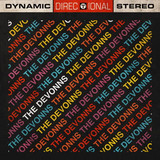
The Devonns dust off the golden age of 70's Chicago Soul with their self-titled debut album on Record Kicks. Straight from the streets of Chicago, Illinois, The Devonns (pronounced "De vaughns") are the brand new soul outfit and the latest addition of the Record Kicks' family, whose self-titled debut album that drops April 03, is an assortment of influences taking us back to the heyday of soul.
Drawing influences from bands such as The Dramatics, The Isley Brothers and Leroy Hutson, yet bringing in their own unique modern twist, influenced by artists such as Jamie Lidell and Raphael Saadiq; singer Mat Ajjarapu explains how unintentionally, the rich heritage of Chicago's history with soul music influenced him.
"The city was at the epicentre of a lot of good music back in the 50's all the way to the 80's, a lot of the labels specialising in soul were based in the Chicago and we even had our own sound known as "Chicago soul". Through several years of crate digging it surprised me how many songs I loved were recorded in this city, for example one of my favourites is this great little song by The Natural Four, produced by Leroy Hutson 'Can This Be Real', and released via Curtom Records."
The band started in 2016 after multi-instrumentalist and songwriter Mathew Ajjarapu dropped out of med school and found himself unemployed and drifting. Listening to music constantly at the time, he found inspired to put a band together and create his own music. Pairing up with some of the best musicians Chicago has to offer, he founded The Devonns: the rhythm duty is entrusted to Khalyle Hagood (bass), Ari Lindo (guitar) and Khori Wilson (drums).
Originally he wanted to focus on 50s style doo-wop, similar to The Flamingos; rich in reverb and vocal harmonies, but in the first initial practise they had it was evident the band clicked on their love of soul music from the 70s, so their music took a natural turn towards that sound, with tracks such as the Wilson Pickett-esque single 'Tell Me'.
The release took almost two years to complete as Mat explains "I am a perfectionist, I had a very specific vision in my head about how it should sound and I wasn't going to rest until I achieved it."
"This is a definitely a throwback soul record, as well as being drawn to lush and intricate arrangements of Motown, I was also inspired by the more lo-fi works of smaller labels such as Chess and Capsoul, and I wanted to capture the magic they had in those recordings in our record, as everything feels too precise nowadays" clarifies Mat.
It was thanks to his engineer Mike Hagler, who introduced him to Paul Von Mertons (Mavis Staples, Paul McCartney, Elton John) who arranges and conducts for Brian Wilson's live touring show and after a 45 minute phone conversation about what Mat wasn't keen on, on the album, he realised Paul totally understood where he was coming from.
After a few months wait for Paul to get back from touring they entered the studio with "Paul's players" and as soon as they hit record, Mat explains "I was getting chills up my neck, it was one of the happiest days of my life, and finally we had nailed it!"
Tracks such as 'Come Back; which Mat wrote in ten minutes on a $300 Daneelectro Singlecut guitar initially, came to life, with Paul's rich string arrangements and features guitarist and percussionist Ken Stringfellow (R.E.M.).
It still took a few months to get the recording process finished but finally after a torturous nineteen months they album was finally finished.
The result is an album filled with lavish arrangements and catchy melodies which take us on a nostalgic musical journey inspired by chic 70s soul, yet the band don't hesitate to add their own unique and elegant contemporary stamp to the record.
The landmark 1980 album, representing a period of consolidation for Patrice Rushen. Her studio reputation as a go-to pianist and arranger among other artists and musicians was well established and was growing exponentially. Although never originally planning a career as a solo artist, she had built this side of her work through three Prestige albums and two sophisticated soul and disco albums for Elektra, 'Patrice' and 'Pizzazz'. "I was lucky to have a group of musicians that I knew well by the time of these recording sessions," remembers Patrice. "I had my pick of really incredible players because of all of the studio work I was doing. I also played with Lee Ritenour, Harvey Mason and others almost on a weekly basis at The Baked Potato club in L.A." Tracks include the singles 'Don't Blame Me', 'Look Up!' and 'Never Gonna Give You Up'. "'Never Gonna Give You Up' came out of playing ideas at home. Bassist Freddie Washington was living with my family while he tried to get a foothold in L.A.'s music scene and that groove came out of those jams. With 'The Dream', I had been listening to Minnie Riperton's 'Come To My Garden', one of my favourite albums. With Charles Stepney's arrangements, I saw that he didn't have to use large instrumentation to be orchestral in his approach. So, 'The Dream' was a homage to that kind of writing." "After 'Posh', we had a much better idea from the performance side what was important in our music and that informed my next album, 'Straight From The Heart'. We took a little break after 'Posh' was released, although I was still writing and working regularly on scores for film and TV. That had always been my main focus in my music."
- A1: Ousia
- A2: What It Takes
- A3: Disinheritance
- A4: Agathon
- A5: Determined Outcome
- A6: Misology
- A7: Afterworld Alliance
- A8: Palinodes
- A9: Backhanded Cloud
- A10: Glorious You
- B1: For Raymond Scott
- B2: Matronymic
- B3: The Red Desert
- B4: Conciliation
- B5: Ataraxia
- B6: The Unlimited
- B7: The Runaround
- B8: Climb That Mountain
- B9: Captain Praxis
- B10: Eudaimonia
- B11: The Lydian Ring
"Aporia" is a New Age album from Sufjan Stevens and his step-father and record label co-owner, Lowell Brams. In the spirit of the New Age composers who sanded off the edges of their synths' sawtooth waves, "Aporia" approximates a rich soundtrack from an imagined sci-fi epic brimming with moody, hooky, gauzy synthesizer soundscapes. The album may suggest the progeny of a John Carpenter, Wendy Carlos, and Mike Oldfield marriage, but it stands apart from these touchstones and generates a meditative universe all its own. This is no mere curio in the Sufjan Stevens catalog - but a fully realized collaborative musical piece. Stevens and Brams recorded "Aporia" over the course of the last several years during Brams' visits to Stevens' home in New York with the help of several frequent Asthmatic Kitty collaborators, including Thomas Bartlett (Doveman), D.M. Stith, Nick Berry (Dots Will Echo), John Ringhofer (Half-handed Cloud) drummer and longtime collaborator James McAlister, keyboardist and trombonist Steve Moore (Sunn O)))), guitarist Yuuki Matthews (The Shins) and vocalist Cat Martino.
Deliberately breaking all the rules Mr. Hornby once famously outlined regarding the creation of homemade (tape) compilations, Saroos’ members indeed had the term “mixtape” on their minds while working on their latest full-length – albeit in the hip-hop sense: a sonic snack box, interconnected shots from the hip, something that just came together and immediately felt right.
Whereas hip-hop folks nowadays often use the vacuous term “project” in order to steer clear of the ontological debate caused by the almost synonymous use of album/mixtape, Florian Zimmer, Christoph Brandner, and Max Punktezahl, otherwise busy with The Notwist, Driftmachine & Lali Puna, stick to the classics: their new 16-track project “OLU” (Off Label Use) is, officially, still an album. But it’s wild and vibrant like a mixtape, interwoven like its cover: a seamless burst of ideas, impulsively combined to form a split-screen snapshot of recent moments and momentums.
Re-appropriating the term “Off Label Use” – which actually means: using prescription drugs in ways that aren’t mentioned on the instruction leaflet – in their own “off-label” way, Saroos never sounded more loose-limbed and elastic. Whereas the trio’s earlier releases were rather conceptual and homogenous, “OLU” indeed has a more loose, spur-of-the-moment feel, a spontaneous force at its core. Checking the weighty sci-fi inspirations at the door, they use that Bomb Shelter-type of freedom to reinvent themselves at every turn, chasing sounds that happened to emerge in the group’s triangular energy field.
Kicking it off “with a killer, to grab attention” (Hornby/Cusack, after all), the massive reverb-stumblin’ adjustment between beats and bass of opening track “Quarantaine” cross-fades smoothly into “Humdrum Rolloff,” an early hint at the group’s off-label practices: the underwater creepers floating around here were really voices (mostly). From majestically built oriental sound-pieces (“Looney Suite Serenade”), synth-based “End House Mario” and a triptych of speaker-boxxxing gas lamp experimentations entitled “Cord Burn 1-3,” Saroos have rarely sounded this playful and unrestricted: there’s a new energy at work that welds all the different sonic playing fields together to create one continuous 40 minute mix.
For the B-side descent, “Tatsu Jam,” at less than 4 minutes still the longest cut, billows over the kind of sizzling hi-hats you’d expect to hear on real trap tapes from Hotlanta. A prelude to a bunch of quicker-paced instrumentals (“Scratch Pets”, “24h Love Gumbo”) and ambient sun showers, until the next “Plateau” (Mo’Wax vibes!) brings the beats to the fore once again (“Tomorrow’s Kudos”), and the ultimate “Whirligig” sounds like a mix of Oktoberfest 2020 and Johnston’s “Casper The Friendly Ghost” coming apart at the seams.
Whatever you wanna call it – album, LP, mixtape, project, who cares? –, it’s definitely a double A-side tour-de-force.
Like an ode to your Walkman and to those 90-minute tapes that you used to rewind with your pen, DA BREAK's first LP was all about Funk & Hip Hop 90's flavors. Like an ode to your Walkman and to those 90-minute tapes that you used to rewind with your pen, DA BREAK's first LP was all about Funk & Hip Hop 90's flavors. This was completely unexpected, a major learning experience, and above all a lot of fun and gave the Lyon-based gang a whole lot of ideas for the next stage in their musical journey, propelling them towards new musical horizons: infectious riddims with grooving keyboard & guitar licks as their bedrock and free association leading them into jazz, broken beat, soul or disco vibes … During the creation of Let It Shine, all doors were wide open and all musical genres potentially welcome. The production still has a « home made » feel to it, like the previous album, but with a modern, sonic twist when needed- a result of three years on the road together and new creative input from group members. Whether it be on a New York summertime roof-top, or settled in a Low-Rider with some G-Funk, or moving to some phat Jamaican style bass-lines or getting sensual on a tight breakbeat, lead singer Hawa knows how to shine her feminine and versatile brilliance on the project. She gives to the songs the final touch and the emotion needed to share with us her stories about human relationships - everyday tales sharing her real life-experience. This ever-expanding musical spectrum, Da Break play with it, explore it and also let it kick
completely free at times ! Song after song, they bring a magic glow to LET IT SHINE.