Based in Bath, UK and born out of a love for drinking tea and dusty rhythms. Mint Tea is a platform that searches for up and coming talent within an emerging scene. In this blend, a various artists release with producers from four different countries curated into the perfect accompaniment for late nights or early mornings. With tracks from Moda, Raar, Akasha System and James Henry the release combines a beautiful balance of influences from ambient, lo-fi, techno and house.
Поиск:james henry
Все
- 1: Rapp Payback (Where Iz Moses?)
- 2: Mashed Potatoes
- 3: Funky Men
- 4: Smokin' & Drinkin
- 5: Stay With Me
- 6: Honky Tonk
By 1980 James Brown did one album for Henry Stone"s T.K. While this doesn"t have Brown bubbling over with innovation, he still provided a more substantial alternative to disco. On this album, we have a sublime sped-up version of "The Payback," which rocks like nobody"s business. Or on the remake of "Mashed Potatoes", Brown is reuniting with Bobby Byrd. Shortly afterward they both go through a travelogue of cities and states like it"s "Night Train" all over again. Soul Syndrome has Brown still full of ideas. The inane "Funky Men" has a killer reggae/funk guitar riff and a fantastic Latin horn arrangement...In the end, it makes it a nice album that counts in the rich carrer of the master of Funk !
From Ōtautahi, Aotearoa (Christchurch, New Zealand) comes a collaboration between James Barrett, best known for his work in techno on Perc Trax, Mord, South London Analogue Material, and KAOS/OAKS as Keepsakes, and Henry Nicol, a founder of industrial-freak outfit Loghorn Breed who’s work as a member of Dog Power saw his music signed to legendary Aotearoa indie label Flying Nun. As CUT 989 the two bring their respective musical worlds in to collision,
producing a debut EP representing a mutated hybrid of industrial, post-punk, techno, and experimental music tied together with cynical lyricism musing on anxiety, human nature and the crumbling state of politics and society in the modern era.
The A1 starts with bass driven drum hits and rolling metallic percussion combine with booming vocals and looping dark synth melodies in ‘The Dominant Trough’. The A2 follows with ‘Castle Of Doubt’, where sombre atmospheres and hand-drum rhythms come together with melancholy Lyra-8 refrains and verbed-out vocals to complete the first side of the record.
‘TPOTT’ launches the flip and picks up the energy with gated reverb toms, weighty kick drums, heavy bass sweeps and vocals ranging from enraged screaming to faint whispers in a driving slab of electronic bitterness. The B2 closes this debut offering with ‘Skin’ – a mournful bass-heavy piece featuring tribalistic drumming, experimental percussions, gloomy synth work and lyrics pondering political betrayal.
"And what about you? What are you looking for?" - René Daumal
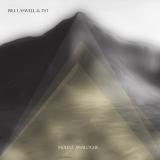
This musical journey pays tribute to René Daumal and his enchanting world of mysteries and magic. The album shares its title with Daumal's novel, Mount Analogue: A Novel of Symbolically Authentic Non-Euclidean Adventures in Mountain Climbing, published posthumously in 1952, eight years after the author's untimely death.
Mount Analogue is a classic allegorical adventure novel. The novel describes an expedition undertaken by a group of mountaineers to travel to and climb the titular Mount Analogue an enormous mountain on a surreal continent, that is invisible and inaccessible to the outside world and can be perceived only by the application of obscure knowledge. The central theme of mountaineering is extensively explored through literary and philosophical lenses. Daumal died before the novel was completed, providing an uncanny one-way quality to the story, which ends abruptly in the middle of a sentence.
The first disc features a fifty-minute composition divided into six chapters: Introduction, Meeting, Supposition, Crossing, Arrival, and Conclusion. This album weavestogether a rich tapestry of diverse instruments, sounds, and voices that collectively tell the story of this conceptual work, loaded with a synesthetic multitude of colors, aromas, meanings, textures, and moods.
Contributors to this musical poem include Bill Laswell (bass), Henry Kaiser (guitar), Anna Clementi (vocals), Percy Howard (voice), Hideo Yamaki (percussion), Graham Haynes (cornet), Dorian Cheah (violin), Nils Petter Molvaer (trumpet), Peter Apfelbaum (keyboard), and P.ST (concept, electronics), who all lend their talents to a series of excerpts from Daumal's text.
A truly global project, the recordings took place across various locations in Europe, North America, and South America, culminating at Orange Music Studio in New York, thanks to the collaborative efforts of Bill Laswell, James Dellatacoma, and Michael Fossenkemper.
The second disc presents five improvisations for solo electric guitar by Henry Kaiser. The first solo, Jodorowsky's Peradam, draws its inspiration from Alejandro Jodorowsky's 1973 film The Holy Mountain, which was inspired by the Daumal novel. Kaiser's initial forty-eight-minute guitar solo serves as a foundational guide for his four subsequent, Rashomon-esque, solo musical interpretations of Mount Analogue, as seen through the psychedelic labyrinth of Jorodrowsky's cinematic masterpiece.
"And what about you? What are you looking for?" - René Daumal
This musical journey pays tribute to René Daumal and his enchanting world of mysteries and magic. The album shares its title with Daumal's novel, Mount Analogue: A Novel of Symbolically Authentic Non-Euclidean Adventures in Mountain Climbing, published posthumously in 1952, eight years after the author's untimely death.
Mount Analogue is a classic allegorical adventure novel. The novel describes an expedition undertaken by a group of mountaineers to travel to and climb the titular Mount Analogue an enormous mountain on a surreal continent, that is invisible and inaccessible to the outside world and can be perceived only by the application of obscure knowledge. The central theme of mountaineering is extensively explored through literary and philosophical lenses. Daumal died before the novel was completed, providing an uncanny one-way quality to the story, which ends abruptly in the middle of a sentence.
The first disc features a fifty-minute composition divided into six chapters: Introduction, Meeting, Supposition, Crossing, Arrival, and Conclusion. This album weavestogether a rich tapestry of diverse instruments, sounds, and voices that collectively tell the story of this conceptual work, loaded with a synesthetic multitude of colors, aromas, meanings, textures, and moods.
Contributors to this musical poem include Bill Laswell (bass), Henry Kaiser (guitar), Anna Clementi (vocals), Percy Howard (voice), Hideo Yamaki (percussion), Graham Haynes (cornet), Dorian Cheah (violin), Nils Petter Molvaer (trumpet), Peter Apfelbaum (keyboard), and P.ST (concept, electronics), who all lend their talents to a series of excerpts from Daumal's text.
A truly global project, the recordings took place across various locations in Europe, North America, and South America, culminating at Orange Music Studio in New York, thanks to the collaborative efforts of Bill Laswell, James Dellatacoma, and Michael Fossenkemper.
The second disc presents five improvisations for solo electric guitar by Henry Kaiser. The first solo, Jodorowsky's Peradam, draws its inspiration from Alejandro Jodorowsky's 1973 film The Holy Mountain, which was inspired by the Daumal novel. Kaiser's initial forty-eight-minute guitar solo serves as a foundational guide for his four subsequent, Rashomon-esque, solo musical interpretations of Mount Analogue, as seen through the psychedelic labyrinth of Jorodrowsky's cinematic masterpiece.
- 1: The Wallflower (Roll With Me, Henry)
- 2: Good Rockin' Daddy
- 3: If I Can't Have You
- 4: Spoonful
- 5: All I Could Do Was Cry
- 6: My Dearest Darling
- 7: At Last
- 8: Trust In Me
- 9: Fool That I Am
- 10: Don't Cry Baby
- 11: Seven Day Fool
- 12: Something's Got A Hold On Me
- 13: Stop The Wedding
- 14: Fools Rush In
- 15: Next Door To The Blues
- 16: Would It Make Any Difference To You
Aufgenommen live im Village Gate in New York City am 26. und 27. November 1963 mit den Pianisten Horace Parlan, Melvin Rhyne und Jane Getz sowie dem Bassisten Henry Grimes und dem Schlagzeuger Sonny Brown. Die Musik wurde ursprünglich für einen Dokumentarfilm aufgenommen. Die Bänder lagen 62 Jahre lang im Archiv, bis sie nun veröffentlicht wurden. Restauriert und gemastert von Matthew Lutthans im Mastering Lab anhand der Originalbänder. Die Deluxe-CD-Edition enthält ein umfangreiches Booklet mit seltenen Fotos und Liner Notes von Jan Persson, Tom Copi, Raymond Ross und anderen, neu in Auftrag gegebene Liner Notes der Autoren John Kruth und May Cobb sowie Interviews und Testimonials von Jane Getz, den Saxophon-Ikonen James Carter und Chico Freeman, dem Posaunisten Steve Turre, Adam Dorn – Sohn des langjährigen Kirk-Produzenten und -Förderers Joel Dorn – und anderen.
When we did the first ever vinyl reissue of this 1972 masterpiece back in 2012 it sold out so fast and so many lost the chance to grab a copy has translated into continuous messages asking us to do a repressing of this marvel - which we did and, again, it sold like hot bread. So here is a new edition of this UK jazz masterpiece, this time with a twist :
- Silk-screened cover art : we respect the original design, but have upgraded the printing from regular offset to silk screen to give it an artistic touch!
- In adition to the limited black vinyl edition (400 copies), we offer an ultra limited clear vinyl version (100 copies-only!)
One of the big names in UK Jazz, Neil Ardley was offered the leadership of the seminal New Jazz Orchestra in 1964. Under his direction the Orchestra moved though different styles and changes of personnel, bringing in musicians such as Mike Gibbs (trombone), Harry Beckett andHenry Lowther (trumpets) or even Jack Bruce (bass), some of them also contributed with the writing of some original compositions, making the NJO the root from which the UK's 70's jazz scene was to blossom.
By 1972 the NJO was already defunct, but his legacy remained in the works of its members. Ardley's 'A Symphony Of Amaranths' is a perfect example of what was boiling in the UK jazz scene. It was Ardleys tribute to his idols Duke Ellington and Gil Evans, and featured the skills of some great musicians of the scene including Don Rendell,Stan Tracey, Henry Lowther, Harry Beckett, Jeff Clyne & Jon Hiseman. Side B is inspired by the words of Edward Lear, W. B. Yeats, James Joyce and Lewis Carroll that are musicated by Ardley and feature, among other highlights, Ivor Cutler's narration of 'The Dong With A Luminous Nose' and Norma Winstone's vocals on 'Will You Walk A Little Faster'.
Musicians that participated in the recording session :
- Derek Watkins, Nigel Carter, Henry Lowther, Harold Beckett (trumpets)
- Derek Wadsworth, Ray Premru (trombones)
- Dick Hart (tuba)
- Barbara Thompson, Dave Gelly, Don Rendell, Dick Heckstall-Smith (woodwind, saxes)
- John Clementson (oboe)
- Bunny Gould (bassoon)
- Dave Gelly (glockenspiel)
- Neil Ardley (prepared piano)
- David Snell, Sidonie Goossens (harp)
- Stan Tracey (piano, celeste)
- Karl Jenkins (electric piano)
- Alan Branscombe (harpsichord)
- Frank Ricotti (vibraphone, percussion)
- Chris Laurence, Jeff Clyne (bass)
- Jon Hiseman (drums, percussion)
- Eric Gruenberg, Jack Rothstein, Kelly Isaacs (violin)
- Ken Essex (viola)
- Charles Tunnell, Francis Gabarro (cello)
- Ivor Cutler (narrator)
- Norma Winstone (vocal)
- Jack Rothstein, Neil Ardley (conductors)
We Jazz Magazine, Issue 16 / Fall 2025 "Thembi" for Pharoah Sanders. 128 pages, 170 x 240 mm in size and printed on 140g Edixion paper with laminated 300g Invercote covers. All articles presented in English. 50 pages of Pharoah Sanders by Henry Boon, Pierre Crépon, Tony Higgins, Arsi Keva, Patrick Preziosi, Andy Thomas and Seymour Wright, Tomoki Sanders by Tej Adeleye, Don Cherry by Magnus Nygren, Jameszoo by Rob Garratt, Discaholic column by Mats Gustafsson, album reviews, live reviews, photo essay & more.
When we did the first ever vinyl reissue of this 1972 masterpiece back in 2012 it sold out so fast and so many lost the chance to grab a copy has translated into continuous messages asking us to do a repressing of this marvel - which we did and, again, it sold like hot bread. So here is a new edition of this UK jazz masterpiece, this time with a twist :
- Silk-screened cover art : we respect the original design, but have upgraded the printing from regular offset to silk screen to give it an artistic touch!
- In adition to the limited black vinyl edition (400 copies), we offer an ultra limited clear vinyl version (100 copies-only!)
One of the big names in UK Jazz, Neil Ardley was offered the leadership of the seminal New Jazz Orchestra in 1964. Under his direction the Orchestra moved though different styles and changes of personnel, bringing in musicians such as Mike Gibbs (trombone), Harry Beckett andHenry Lowther (trumpets) or even Jack Bruce (bass), some of them also contributed with the writing of some original compositions, making the NJO the root from which the UK's 70's jazz scene was to blossom.
By 1972 the NJO was already defunct, but his legacy remained in the works of its members. Ardley's 'A Symphony Of Amaranths' is a perfect example of what was boiling in the UK jazz scene. It was Ardleys tribute to his idols Duke Ellington and Gil Evans, and featured the skills of some great musicians of the scene including Don Rendell,Stan Tracey, Henry Lowther, Harry Beckett, Jeff Clyne & Jon Hiseman. Side B is inspired by the words of Edward Lear, W. B. Yeats, James Joyce and Lewis Carroll that are musicated by Ardley and feature, among other highlights, Ivor Cutler's narration of 'The Dong With A Luminous Nose' and Norma Winstone's vocals on 'Will You Walk A Little Faster'.
Musicians that participated in the recording session :
- Derek Watkins, Nigel Carter, Henry Lowther, Harold Beckett (trumpets)
- Derek Wadsworth, Ray Premru (trombones)
- Dick Hart (tuba)
- Barbara Thompson, Dave Gelly, Don Rendell, Dick Heckstall-Smith (woodwind, saxes)
- John Clementson (oboe)
- Bunny Gould (bassoon)
- Dave Gelly (glockenspiel)
- Neil Ardley (prepared piano)
- David Snell, Sidonie Goossens (harp)
- Stan Tracey (piano, celeste)
- Karl Jenkins (electric piano)
- Alan Branscombe (harpsichord)
- Frank Ricotti (vibraphone, percussion)
- Chris Laurence, Jeff Clyne (bass)
- Jon Hiseman (drums, percussion)
- Eric Gruenberg, Jack Rothstein, Kelly Isaacs (violin)
- Ken Essex (viola)
- Charles Tunnell, Francis Gabarro (cello)
- Ivor Cutler (narrator)
- Norma Winstone (vocal)
- Jack Rothstein, Neil Ardley (conductors)
No Tags is a podcast and newsletter about underground music culture hosted by Tom Lea and Chal Ravens.
Designed by All Purpose Studio, this book collects the best interviews and discussions from the first year of No Tags, along with four new essays by some of our favourite writers and thinkers.
Featuring: Eris Drew, Simon Reynolds, JK & Bempah, Sorry Records, CCL, Jeff Weiss, lorecore, GG Albuquerque, indie sleaze, Frankie Decaiza Hutchinson, Meaghan Garvey, Ray Philp, Jonny Banger, OK Williams, Iglooghost, the sound of Tory Britain, payola, The Large, Gavin Douglas, Marvin Sparks, Dr Robin James, Lena Raine, Midland, Henry Bruce-Jones, Vivian Host, Chris Zaldua, the spirit of 2011, Amy Lamé, the bursting festival bubble and Fish56Octagon.
- The James Bond Theme - Ray Barretto
- The Silencers - Patti Seymour
- Mexican Flyer - Ken Woodman And His Piccadilly Brass
- Mister Kiss Kiss Bang Bang - Dick Hyman
- Lady Chaplin - Bobby
- You Only Live Twice - Ronnie Aldrich And His Two Pianos
- The Ipcress File / John Barry
- The Liquidator / Sherley Bassey
- The Monkey Farm / Henry Mancini
- 99: Barbara Feldon
- Search For Vulcan - Ray Barretto
- Mission Impossible - Roland Shaw And His Orchestra
- Goldfinger Part1 - Jimmy Smith
- Mister Kiss Kiss Bang Bang - Santo & Johnny
Limitiert auf 500 Stk. – 100 Stk.
OSS! Spy vs. Spy! MI6! All operating in the shadows of darkness and danger... listen...underneath that double-trouble of uncertainty lays the groove. The exotic and the erotic sounds. 007! The music with a license to kill and thrill. When the clock strikes five and it is cocktail time, no man is a match for the soundtrack of the Femme fatale of the underworld. Shake that thing baby-don"t stir it....and the Martini too. The spy universe has been quite an inspiration for composers and orchestras. Lounge music, Exotica and symphonic, this record will have you spinning the globe hitting every longitude and latitude from Bangkok to Rio. So drop that needle and get on board this second volume as this jet is leaving the gate right on time.
- Pastures Of Plenty
- This Land Is Your Land
- Blowin Down This Room Feeling Bad
- Hard Ain T It Hard
- I Ride An Old Paint
- John Henry
- Pretty Boy Floyd
- Talking Dust Bowl Blues
- Tom Joad
- House Of The Rising Sun
- Dust Pneumonia Blues
- Hard Travellin
- The Biggest Thing That Man Has Ever Done
- Sinking Of The Reuben James
- Car Song
- So Long It S Been Good To Know You
Plasma Color Vinyl. 'The way Bloomsday's Iris James Garrison writes songs feels like somewhere between a mirror and a memory. Spacious, full-bodied folk songs, they are an ode to things that are good no matter how small; they sometimes feel like the ghost of a Mary Oliver poem. Bloomsday's new record, 'Heart of the Artichoke', is a relic of unfettered creativity and community. They recount the miracles of the mundane, the memories that become sacred, an ode to all that is holy: nightswimming, songs plucked from the ether, the ways friendship can endure. Like earlier Bloomsday songs, the work here is threaded with warmth; it's simmering, crisp and deeply human, an encapsulation of the present moment. Recorded across 10 days in June 2023 in upstate New York at duo Babehoven's studio and co-produced by Babehoven's Ryan Albert, with mixing by Henry Stoehr of Slow Pulp. The record was built out with a wideranging group of collaborators, including inventive drumming from Andrew Stevens (Lomelda, Hovvdy), Alex Harwood, Richard Orofino, Babehoven's Maya Bon, Hannah Pruzinsky (h.pruz, Sister.), and Chris Daley. It was an insulated and collaborative experience: all family dinners on the back porch, bonfires, feeling a full sense of joy, of friendship, of purity in the artistic self. Collaboration is an integral part of Bloomsday's musical process. Garrison is malleable in the studio, their songwriting generous and spacious. But in listening to the record, there's a sense that Garrison leaves room for the players, for the listener; for songs to find the shapes they're meant to take. Garrison's role as maestro is crucial, singular - it's a collaborative, exploratory spirit harnessed by Garrison's intuition, and by an honest commitment to carve out creative space for play, to delve into what's known - or pushing past that, into unknown. "The ghosts of the past still come up and haunt me," Garrison says, "but I sit in what I have and see it. All of these songs are about loved ones, about personal struggles with getting out of my head and being present." Heart of the Artichoke was written from a healed, matured place - written in a moment of safety from chaos. It's a prayer for the present, an appreciation of tenderness and what happens once we give ourselves the space to really see, and really feel - becoming free and whole - an ode to the way healing allows us to bloom.
'The way Bloomsday's Iris James Garrison writes songs feels like somewhere between a mirror and a memory. Spacious, full-bodied folk songs, they are an ode to things that are good no matter how small; they sometimes feel like the ghost of a Mary Oliver poem. Bloomsday's new record, 'Heart of the Artichoke', is a relic of unfettered creativity and community. They recount the miracles of the mundane, the memories that become sacred, an ode to all that is holy: nightswimming, songs plucked from the ether, the ways friendship can endure. Like earlier Bloomsday songs, the work here is threaded with warmth; it's simmering, crisp and deeply human, an encapsulation of the present moment. Recorded across 10 days in June 2023 in upstate New York at duo Babehoven's studio and co-produced by Babehoven's Ryan Albert, with mixing by Henry Stoehr of Slow Pulp. The record was built out with a wideranging group of collaborators, including inventive drumming from Andrew Stevens (Lomelda, Hovvdy), Alex Harwood, Richard Orofino, Babehoven's Maya Bon, Hannah Pruzinsky (h.pruz, Sister.), and Chris Daley. It was an insulated and collaborative experience: all family dinners on the back porch, bonfires, feeling a full sense of joy, of friendship, of purity in the artistic self. Collaboration is an integral part of Bloomsday's musical process. Garrison is malleable in the studio, their songwriting generous and spacious. But in listening to the record, there's a sense that Garrison leaves room for the players, for the listener; for songs to find the shapes they're meant to take. Garrison's role as maestro is crucial, singular - it's a collaborative, exploratory spirit harnessed by Garrison's intuition, and by an honest commitment to carve out creative space for play, to delve into what's known - or pushing past that, into unknown. "The ghosts of the past still come up and haunt me," Garrison says, "but I sit in what I have and see it. All of these songs are about loved ones, about personal struggles with getting out of my head and being present." Heart of the Artichoke was written from a healed, matured place - written in a moment of safety from chaos. It's a prayer for the present, an appreciation of tenderness and what happens once we give ourselves the space to really see, and really feel - becoming free and whole - an ode to the way healing allows us to bloom.
- A1: St Thomas 7 32
- A2: There Will Never Be Another You 5 52
- A3: Stay As Sweet As You Are 4 41
- A4: I've Told Ev'ry Little Star 4 52
- B1: How High The Moon 10 46
- B2: Oleo 6 00
- B3: Paul's Pal 9 30
- C1: Sonny Rollins Interview 1 54
- C2: It Don't Mean A Thing 4 54
- C3: Paul's Pal #2 7 00
- C4: Love Letters 5 34
- D1: I Remember You 6 50
- D2: I've Told Ev'ry Little Star #2 6 33
- D3: It Could Happen To You 3 27
- D4: Oleo #2 3 15
- D5: Will You Still Be Mine? 4 16
- D6: I've Told Ev'ry Little Star #3 4 26
- E1: I Want To Be Happy 4 08
- E2: A Weaver Of Dreams 4 12
- E3: It Don't Mean A Thing #2 4 31
- E4: Cocktails For Two 4 58
- E5: I've Told Ev'ry Little Star #4 5 54
- E6: I Want To Be Happy #2 5 15
- F1: Woody 'N' You 15 54
- G1: But Not For Me 17 39
- H1: Lady Bird 18 49
Freedom Weaver: The 1959 European Tour Recordings is the first official release of the 'Saxophone Colossus' Sonny Rollins’ European tour in 1959 with bassist Henry Grimes, and drummers Pete La Roca, Kenny Clarke and Joe Harris. Available previously only as a bootleg release, this is the first official release in cooperation with Sonny Rollins and released as a 3-CD set. Freedom Weaver includes an elaborate booklet with rare photos by Ed van der Elsken, Jean-Pierre Leloir, Bob Parent and many others; lead liners by jazz scholar Bob Blumenthal, and new interviews with Rollins himself, Branford Marsalis, James Carter, Joe Lovano, James Brandon Lewis and Peter Brötzmann. Mastered by the legendary mastering engineer Bernie Grundman.
The music from LES TONTONS FLINGUEURS (aka Crooks in Clover aka Monsieur Gangster) is as instantaneously recognizable as the James Bond theme thanks to a short and recurring melodic motif that can still stick in the heads of 21th century kids. Monothematism is a word used by musicologists to refer to the use of stylistic variations based on a single musical theme as can be heard in the Tontons : on the banjo, during the nose punch sequences, played jazz, blues, gloria or Hully Gally style. Though the Tontons music may on first listen sound nothing different than a straightforward yet catchy soundtrack, it turns out to be a real exercise in style. When reading Michel Magne's autobiography " L'amour de vivre " it clearly appears that mixing folk music and sound experiments was a mindful artistic choice. In the movie, Antoine Delafoy (Claude Rich) who is engaged to Patricia (the Mexican's daughter) is merely a Michel Magne caricature. He embodies a contemporary music composer in search of the " absolute anti-chord " by using a water tap. " We don't really know what it is but it's amusing ". In reality and despite his classical musical education, Michel Magne has indeed had a venture into avant-garde music, going as far as organizing an infrasounds concert at the Salle Gaveau venue (Paris) on July 15th, 1954. Infrasonic frequencies which quickly made the audience run for the toilets. On December 3rd,² 1956 his low-frequency sounds contributed to an " empirique " show at the Théâtre des Trois Baudets (Paris) with Alexandro Jodorowsky, Jean Michel Rankovitch and Tinguely. At the same time he wrote music on words by Françoise Sagan for Mouloudji. Again with this desire to cross the boundaries of musical genres. He recorded in 1959 an album of " musiques tachistes " from which a show with dances was staged by Michel Descombey. His taste for provocation and avant-garde did not prevent Michel Magne from composing and arranging popular music. He hence wrote the music for six Georges Lautner movies including the famous Tontons Flingueurs in 1963.Being part of the avant-garde long-haired world what could Michel Magne think of Michel Audiard ? A most kind character who had nevertheless been burned by supporters of the " nouvelle vague " including journalist Henry Chapier who described Les Tontons Flingueurs as being " chansonnier " cinema (in Combat 1963), meant for disenchanted quinquagenarians. Audiard had responded to Truffaut, another of his dispisers : " Dad's movies filled theaters, son's movies empty them. We should have been warned : with its seaside sounding name the Nouvelle Vague (new wave) drove millions of viewers out on the countryside ". In between melodic effectiveness and daring arrangements and tonality, Michel Magne's work is worth being listened to with fresh ears, cleared of clichés !
- Concrete Barges On The Banks Of The Thames
- Lab Coats
- When Do We Start Fighting?
- We Can Still Win This
- In A Magic World, Then Yes
- John X Kennedy
- Consistent Effort
- The Dogs Are Barking Again
Dog Unit sind eine Post-Rock-Band, zu der man tanzen kann, und ihre Debüt-LP 'At Home' ein betörendes Amalgam aus bezauberndem Drone, taktilen Strukturen, Zeitlupen-Polyrhythmen und Skewiff-Riffs. Dog Unit sind Henry Scowcroft und Sam Walton an Gitarren, die zwischen heulendem Feedback und souveräner Melodik wechseln, Pop-Dub-Bass-Maestro James Weaver, dessen minimalistischer Stil ein Genie für Prägnanz und Motorik offenbart, und Schlagzeugerin Lucy Jamieson, die zuverlässigste Zeitnehmerin diesseits einer Atomuhr. Gemeinsam auf der Bühne oder auf Platte hat man das Gefühl, es handelt sich hier nicht um vier Musiker, sondern um ein 16-gliedriges Geschöpf, das seine Zuhörer auf eine hügelige Reise eleganter modernistischer Wunder führt, wie ein Hochgeschwindigkeitszug, der wunderschön durch die japanische Landschaft fährt.
The Pheromoans are tenants of an unruly domain. Over the last 18 years the group have evolved from garage rock primitivists to auteurs of their own curious sound; a frothy brew of loose electronics, refractory rock and humdrum musing. Their songs are mutable, capricious, unreliable narrations, often withholding as much as they reveal. Russell Walker’s understated vocal has always been the band’s unifying focus, it is wry, unsparing and wilfully honest. Walker’s lyrics are an observational tour de force, sometimes droll, yet often tipping over into unlikely pathos. With previous releases on Upset The Rhythm, Convulsive and Alter, 2024 will witness The Pheromoans return with lucky album number 13, entitled ‘Wyrd Psearch’ (out March 1st on Upset The Rhythm).
‘Wyrd Psearch’ was recorded in Lewes throughout 2023. This was undertaken by founding member James Tranmer, his keen instinct for how the band should sound shaping many of the creative decisions. Joined by new guitarist Henry Holmes, the five piece doubled down on a decidedly breezy, melodic approach. Scott Reeve’s drumming is ever brisk, whilst Daniel Bolger explores AOR peripheries on keyboard and bass. “Wyrd Psearch finds us on relatively zestful form” affirms Walker “whether it be merrily recalling the Jason Williamson / Tim Lovejoy Covid summit, or mentally bathing in the pleasures of lunch hours spent strapped to a listening post in Borders.” With The Pheromoans there is always a familiarity at play, only broken and reassembled, like a bygone sitcom gone rogue in your memory. This contributes to the group’s peculiarly British outsider perspective, one that shouts from the sidelines, but never goes unnoticed.
Subjects covered lyrically on ‘Wyrd Psearch’ include “mid-life crises, male pattern baldness, and thwarted artistic and personal ambitions” according to Walker himself. “Nothing is off limits for scrutiny, even rural arts communities” he concludes. Lead single ‘Downtown’ swings with chiming guitars and finds Walker mid-breakdown trying to persuade a loved one to accompany him into the town centre to collect controlled medication and wind back the clock to happier times. “I want to keep you in cotton wool until pay day” he confides. ‘Cropped to Death’ and ‘Father Austin’ are ruminative and more relaxed in nature, whilst ‘Twibbon Wife’ is a more energetic effort, all jabbed synth chords, circuitous basslines and rampant drum fills. ‘Faith in the Future’ similarly bounds along with reverie.
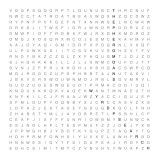
Walker claims that the album’s title is an expression of his frustration at the ubiquity of people claiming things are eerie or weird / wyrd in the present cultural milieu. The artwork for the record is designed as an actual word search too, a knowing nod to how we all grapple for meaning amongst the absurdity of each day. Leaning into ‘weird’ as a coping mechanism is not on The Pheromoans’ agenda however. This album holds little sway with the supernatural, it’s not enough. The overriding impression given by ‘Wyrd Psearch’ is of a band renewed with ideas. There’s no trouble finding the right words, they’re hitting their mark, keeping up with the commentary. ‘Wyrd Psearch’ is a document of The Pheromoans mastering their unquiet moment.
Reggae and Jamaican music have long embraced a symbiotic relationship with the movies. Rooting back to the island's golden era, countless arrangements have either been direct covers, or inspired by, the musicality and mood found in both cinema and television. These reinterpretations would become part of the backbone of the instrumental sound that accompanied the Jamaican record industry's acceleration from the mid-60s and beyond. Talented young musicians, rising from Alpha Boys School and the early studios of Coxsone, Duke Reid and others, found a showcase for their unique playing style on hundreds of different recordings, while appealing to the country's own love affair with Westerns, James Bond canon, and other rebellious themes and motifs that were projected from Hollywood during this time.
In this same tradition, in a new interval, arrives the debut release of Anant Pradhan and Larry McDonald, the latter a master percussionist with direct participation in some of Jamaica's earliest recordings. McDonald, although often uncredited, was a legitimate influence in helping to bridge the Afro-Caribbean sound from calypso into ska and later reggae with his iconic style on hand drums and percussion. A kindred spirit of McDonald, despite 50 years separating them, Anant Pradhan is a bonafide member of the next generation. Although this is his first "solo" record, the talented saxophonist has already played on dozens of incredible sessions for the likes of Victor Axelrod, The Inversions, Andy Bassford, Channel Tubes, Ralph Weeks and Combo Lulo. As an official member of the current touring group of the legendary Skatalites, Pradhan has honed his musicianship under some of the greats of reggae music. His particular soulful, instrumental arrangements are an homage to that influential era of Jamaican music. Pradhan and his band's performance retain the skill and innovation of the old vanguard, and like the generations before, capture a magic that may only be possible when cinema goes reggae.
A cult favorite from A Nightmare Before Christmas, Danny Elfman's "Sally's Song" was immortalized in Tim Burton's 1993 classic stop-motion film. It's immediately recognizable in all its haunting charm, and now, Pradhan and McDonald have managed to transform it into an irrefutable reggae classic, reinvented with its melancholic lead sax and bombastic percussion. The prolific Henry Mancini is already entrenched in the Jamaican canon, yet nobody has knowingly attempted to recreate one of his most magical numbers, "Meglio Stasera" aka "It Had Better Be Tonight," that of the riveting one-take scene in 1963's The Pink Panther. The galloping percussion of the original is transposed through a cloud of smoke, slow and low in a roots style at the hands of McDonald. Pradhan's sax leads the way over the locked-in rhythm section, both deep and cheeky all at once. These first two productions of Anant Pradhan and Larry McDonald are a deserving entry into the canon of reggae covers, and are equally adept to be heard on the screen and or at the dance alike.
Lovely Is Today (Edit) by Eddie Harris b/w September 13 (Edit) by Deodato | Galaxy Sound Co. — GSC4540, test pressing | Hot off the presses via the always-on-point @galaxy_sound_company crew. This will mark number 40 in the GSC45 series. Every release has been stellar, elevating it to the rarified “buy-it-on-site” status. If you love hip-hop, broken beats & top-class edits, anything w/ their stamp on it — you know it’s going to be top notch. They’ve got a bottomless discography full of that good ish, & here comes another addition to the cannon in the form of a pair of glorious jazz-funk nuggets.
Side A is an edit of “Lovely Is Today” by Eddie Harris, which is taken from his brilliant 68 soul-jazz LP “Plug Me In”. Chicagoan Harris pioneered the usage of amplified electric Varitone saxophones. It features a stellar line-up: Ron Carter (bass), Haywood Henry (baritone sax), Jodie Christian (piano), Garnet Brown (trombone), James Bossy (trumpet), Grady Tate & Richard Smith on drums, &, of course, Harris on tenor sax. Here the edit trims off the intro noise & extends the breaks recalling hip-hop songs it sampled: “2 Deep” by Gang Starr, “Intro” by Mobb Deep, “It Ain’t Hard To Tell (The Stink Mix)” by Nas, “What’s My Name Yo?” by MC Lyte, among others.
Side B is an edit of “September 13” by Deodato, taken from his self-titled jazz-funk 73 LP. Deodato, aka Eumir Deodato De Almeida, is a Brazilian artist known for his range of production work for Kool & The Gang to Björk, as well as TV & film scores & collabs w/ Milton Nascimento, Ithamara Koorax & Marcos Valle. Heads will know this one as the source for heaters like “In The House” by Pete Rock & C.L. Smooth, “Park Joint” by Camp Lo, “Epoca” by Gotan Project, “Don’t U Know” by DJ Rels aka Madlib & “Track 13” on Beat CD #2 by J Dilla.
A real soul gem from 1970 on the James Brown affiliated Deluxe label, the first and only album by this mysterious singer: Marie Queenie Lyons.
It is perhaps apropos that Queenie Marie Lyons’s best known song is titled ‘See And Don’t See.’ For all the acclaim that song has accrued, and all the times it has been compiled, reissued and, yes, bootlegged — for all the times it has been seen — Queenie herself has somehow remained unseen. How did a singer from Ashtabula, Ohio record one of the great female-led soul albums and then simply fall off the map, never to record or perform again? Queenie was a natural performer and a gifted singer. At the age of fifteen, she was doing three shows a week at a local venue. In early 1962, Queenie moved to Queens and was soon playing gigs across the city — an early engagement was with Gene Krupa at the famous Metropole Café in Times Square — as well as touring with established acts like Fats Domino and Ray Charles. The following year, Queenie made her debut recording, for a subsidiary of RCA called Groove, credited to an entirely fictitious “Shelley Shoop and the Shakers.” It remained Queenie’s only presence on wax until early 1968, when a Nashville-based label called Sims gave her her first accurately attributed single, “A Minute Of His Goodtime / Good Soul Lovin’.” Although the 45 is now a highly collectible part of the Northern Soul and Lowrider Oldies pantheons, it made no impact at the time, as Sims was focused on more typical Nashville sounds. A few months later Queenie was back in New York City, performing R&B and pop covers with her band when a man passed her his business card at a performance. The card read James Brown Enterprises. James Brown “was my idol,” she says, and someone whose business acumen and stage presence she strove to emulate. Although Queenie ended up on tour with James Brown for only a month or so, when the group reached Cincinnati in mid-’68 she entered the King Records studio there to record what would become the
album you hold in your hands. The songs were a combination of covers, some of which she’d been doing in her live shows, like ‘Fever’ and ‘Try Me,’ and originals written by producer Henry Glover and pianist Don Pullen, who was the bandleader on the session. The album opener, ‘See And Don’t See,’ was also recorded by the veteran R&B singer Maxine Brown, but Queenie’s version blows hers away. “Soul Fever” is a supremely funky and soulful affair, with Queenie’s powerful and captivating voice magnetically attractive, with an urgency that is impossible to ignore. ‘Your Thing Ain’t No Good Without My Thing,’ ‘Your Key Don’t Fit It Anymore,’ and ‘I Don’t Want Nobody To Have It But You’ are as funky and soulful as the best of Tina Turner and Aretha — a statement not to be made lightly!
The album was critically acclaimed — the October 10, 1970, issue of Billboard listed it as their sole “four star” pick in the Soul category — but perhaps due to the tumult at Starday-King, whose stewardship had turned over several times in only a few years, it never seemed to be able to break through to a larger audience.
King Tree & the Earthmothers is Henry James, Adam Ditt & Derek Eglit
Guitarist/singer Henry James (Robert Jon & The Wreck) and bassist
Adam Ditt (Balto, Gethen Jenkins) met in high school and were always
performing around and touring with different bands
There was a lot of chaos and inconsistency, but the constant would be after
school improvised jam sessions which would inspire the name and core concept
of the project. There was a certain freedom involved in performing as a trio that
always seemed to spark inspiration. Over the years James would find himself
working on psychedelic and progressive rock-influenced bedroom demos. Some
of these can be heard on 2020's "King Tree & The Earthmothers", an effort
performed, produced and recorded entirely by Henry James.
There were various incarnations of King Tree as a live band (as far back as 2016),
but the full potential of the group would not be realized until the addition of
drummer Derek Eglit (Painted Wives, Pinkly Smooth) in 2021. With an undeniable
and explosive chemistry, the trio became locally known in Southern California for
eclectic and virtuosic live performances. They brought a collection of songs to
the studio as a band in 2022 and are now preparing to release their true debut
album in 2023 and hit stages across Europe for the first time in October and
November.
King Tree & the Earthmothers is the "other" band for Henry James, guitarist for
Robert Jon & The Wreck - They will be touring Europe in October/November 2023
The early days of "Baltimore Club Music" saw it played at popular venues like Club Fantasy, The Ozone, Hammerjack's, and Paradox. DJs Sean Marshall, Marc Henry, Shawn Caesar (at DJs Outlet in Old Towne Mall), Scottie B and Danny Class (at Inner City Records), Technics (at Music Liberated), DJ Patrick (at Sound of Baltimore), and Diamond K and Kenny B (at Electronics & More) all contributed to the mix of hip-hop, house music and homemade beats that made up this new sound. "Booty Mission" (1992) is a creation of Shawn Caesar and Ty "Flex" James and is considered one of the most influential releases, an essential for any Baltimore Club Music fan. It is sure to remain timeless.
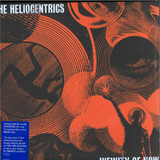
The UK’s cosmic, psychedelic-funk ensemble issue their first album on maverick producer Madlib’s label, Madlib Invazion. The Heliocentrics’ albums are all confounding pieces of work. Drawing equally from the funk universe of James Brown, the disorienting asymmetry of Sun Ra, the cinematic scope of Ennio Morricone, the sublime fusion of David Axelrod, Pierre Henry’s turned-on musique concrète, and Can’s beat-heavy Krautrock, they have – regardless of the label on which they’ve released their music - pointed the way towards a brand new kind of psychedelia, one that could only come from a band of accomplished musicians who were also obsessive music fans. Drummer Malcolm Catto and bassist Jake Ferguson are the Heliocentrics’ masterminds and producers, and they are obsessive weirdos in today’s musical climate, searching, progressive humans who are often out-of-time with current trends. They have been playing together for nearly two decades and their collective drive is to find an individual voice. The Heliocentrics search for it in an alternate galaxy where the orbits of funk, jazz, psychedelic, electronic, avant-garde and “ethnic” music all revolve around “The One.” With Madilb’s label Madlib Invazion for Infinity of Now, the Heliocentrics have returned to develop their epic vision of psychedelic funk, while exploring the possibilities created by their myriad influences, Latin, African, and more.
Created In the heart of Athens, GA with their trusty- producer, Henry Barbe (Deerhunter, Drive By Truckers) You Know Who is an 11-song record that pushes the boundaries of modern country and rock n' roll music. The Pink Stones sound takes influence from recordings of George and Tammy, as well as J.J. Cale's self produced Tulsa sound. The record is also just as inspired by the windy city cuts of Curtis Mayfield, all styles that covers the band's sound in cigarette smoke and whiskey spills. The six piece band has utilized their performing chops to make a tight but soulful album with featured guests such as Nikki Lane, Jack Quiggins and Ryan Jennings (Teddy & the Rough Riders), John James Tourville (Deslondes), and Annie Leeth (Faye Webster). No strangers to friends and guests, this ramshackle unit formed together flawlessly to take the next leap into The Pink Stones deep sphere.
'Originally released in 1971, Detroit's 'El Count Executives' epitomise the mythical, spoken sentiment of love through their only single, 'Pot Of Gold' & 'Nothing Comes To a Sleeper (But A Dream)', written & released by Ohio native, Kennedy Hollman, on his record label
'Gemini", aptly named after his astrological sign.
Hollman, who had his debut single 'l've Got Style' in 1967, recorded as 'The Mints', later known as 'The Imperial Wonders', became a leading figure amongst the Cleveland circuit.
His initial release by 'El Count Executives', recorded in Detroit at Gary Rubin's 'Pioneer Recording Studio', was shortly followed by 'The Soul In-Pressions', released on 'Aquarius',
another astrologically tipped label ran alongside Henry Watkins, Jr. & James Lately. Towards the late 70s, Holman was part of Detroit's Soul/Disco act, 'Solid Solution' Now available as a limited 7" single for the first time in over 50 years, kindly licensed from
the Holman estate’
- A1: The High Numbers - I’m The Face
- A2: The Action - Never Ever
- A3: The Hollies - Bus Stop
- A4: Small Faces - Don’t Burst My Bubble
- A5: Georgie Fame & The Blue Flames - Sweet Thing
- A6: Tony & Tandy - Two Can Make It Together
- A7: Jimmy James & The Vagabonds - Ain’t No Big Thing
- A8: Geno Washington & The Ram Jam Band - Michael (The Lover) (The Lover)
- A9: The Artwoods - I Take What I Want
- B1: Dusty Springfield - Little By Little
- B2: The Richard Kent Style - I’m Out
- B3: Bluesology - Come Back Baby
- B4: Wynder K Frog - Henry’s Panter
- B5: The Organisers - The Organiser (Feat Harold Smart)
- B6: Timebox - Soul Sauce
- B7: The Spencer Davis Group - High Time Baby
- B8: The Syndicats - Crawdaddy Simone
- C1: Fleur De Lys - Circles
- C2: Rod Stewart - Good Morning Little Schoolgirl
- C3: The Yardbirds - Over Under Sideways Down
- C4: The Birds - How Can It Be
- C5: The Creation - Makin’ Time
- C6: The Carnaby - Jump & Dance
- C7: The Eyes - I’m Rowed Out
- D4: The Quik Bert’s - Apple Crumble
- D5: Apostolic Intervention - Madame Garcia
- D6: Madeline Bell - Picture Me Gone
- D7: Sharon Tandy - Hold On
- D8: Pp Arnold - (If You Think You’re) Groovy (If You Think You’re)
- D9: Love Affair - Everlasting Love
- C8: The Kinks - She’s Got Everything
- D1: The Mike Cotton Sound - Soul Serenade
- D2: John Mayall & The Bluesbreakers - Crawling Up A Hill
- D3: The Alan Bown - Set Emergency 999
Demon are proud to release “Eddie Piller Presents British Mod Sounds Of the 1960s”, the follow up the “The Mod Revival”. This 2LP set serves an introduction to 'British Mod Sounds of the '60s’ and features 34 tracks.
Curated by Acid Jazz Records and Modcast founder Eddie Piller, this collection features the stapes of the British Mod scene including Small Faces, The High Numbers, The Action, The Fleur De Lys, The Kinks, Spencer Davis Group, The Creation, Rod Stewart, The Yardbirds, and The Love Affair.
"Be in with the In Crowd once more."
Every great youth cult deserves a great soundtrack, and when the '60s Mods adopted classic American R&B, with a side order of hip Jazz, they undoubtedly found the right music for their exuberant and stylish way of life. And yet, buying expensive imports, hoping for a local release or praying for a rare visit from overseas talent was never going to be enough to satisfy British youth with a thirst for the latest sounds. Certainly not those on the dancefloor and definitely not those with their own musical ambitions.
It was a music scene that began with imitation, before skill and imagination lead curious minds to innovation, a scene that evolved from average (at best) copies of releases on the Chess, Motown and Stax labels, to become something more sophisticated,something quite unique, something very British.
The music world is most fortunate that the past two decades have witnessed the rediscovery of mind-opening music that went under-recognized when originally released, and the wellspring of musical content produced by a generation of brilliant musicians. One such musician was the late great drummer Steve Reid, whose reissued eclectic recordings on his own Mustevic Sound label gave his career a second wind.
Though teased on a well-received compilation, one Mustevic release never saw reissue: New Life Trio’s Visions Of The Third Eye, a tremendous collaborative effort between Reid, guitarist Brandon Ross and bassist David Wertman.
Due to overwhelming demand, Early Future Records and Finders Keepers Records are proud to announce a second limited edition pressing of the classic and final Mustevic recording. The release also includes a 20-page written zine featuring an in-depth testimonial and interview with Brandon Ross, and an explorative essay by Finders Keepers’ Andy Votel, as well as a wealth of archival photos, scores and reviews.
Reid’s long and varied career began in his native New York City, where he was involved early on as a member of the Apollo Theater House Band and the R&B scene of the 1960s, including recordings with Martha Reeves and James Brown. In the late 1960s, Reid spent three years in West Africa absorbing musical traditions and experimenting with artists such as Fela Kuti, Guy Warren and Randy Weston. After a stint in prison for dodging the draft as a conscientious objector, the drummer came out swinging in the 1970s. He worked regularly as a session and Broadway musician even while immersing himself into the jazz world, from the straight-ahead styles of Freddie Hubbard and Horace Silver to the otherworldly sounds of Sun Ra and Charles Tyler.
The do-it-yourself ethos of the New York Loft Scene inspired Reid to create his own label, Mustevic Sound, on which he began releasing his own recordings and those of a couple of friends. One of these trusted friends was David Wertman, a young bassist from New York who released his own Kara Suite on Mustevic in 1976.
New Life Trio’s story began when Wertman moved from New York to the more sedate but creatively vibrant town of Northampton, Massachusetts. Here Wertman met Brandon Ross, a young guitarist from New Jersey who had relocated there with his brother to join a coterie of New York expats who had found a comfortable, collaborative environment amidst the liberal college towns in the area, including avant-garde legends Archie Shepp and Marion Brown. Wertman and Ross became friends and began to perform together regularly, both formally and informally.
A string trio of Wertman, Ross and violinist Terry Jenoure was set to record, but Jenoure dropped out just prior to the date. This led Wertman to call his friend Steve Reid to come join the two at the Tin Pan Hollow Studios in Vermont to record what would become Visions Of The Third Eye on December 6, 1978. Originally conceived as an all-acoustic date, the recording would morph slightly when Ross added electric guitar muscle on a number of pieces. Reid would then take the helm and release the recording in 1980, giving a very auspicious birth to what has now become a classic spiritual jazz recording.
Fast forward to 1995…..New Life Trio gets a belated second wind from Stuart Baker’s inclusion of the Ross-voiced “Empty Streets” on his Universal Sounds of America compilation. The brief, haunting lead track just hinted at what the full Visions Of The Third Eye album had to offer. Audience awareness resulted in the pursuit of out-of-print original LPs, thus the rarity of Visions Of The Third Eye led to it becoming a kind of “holy grail” record for collectors of jazz and creative music. The album’s cover image was even incorporated into the cover of Freedom, Rhythm & Sound (SJB, 2009), a wonderful coffee table book presenting album covers from those revolutionary decades in Black creative music. The recording’s legend was cemented.
New Life Trio’s legend continues to grow partly due to the brevity of its existence. The triumvirate of Reid, Ross and Wertman would never work together again. Each member would continue along his own path, finding success in numerous projects. Reid’s career was reinvigorated with the reissue of the bulk of his Mustevic Sound recordings in the early 2000s, which led him to a rewarding partnership with Four Tet’s Kieran Hebden until Reid’s untimely passing in 2010. Wertman balanced life between Florida and Massachusetts as a regular in the local jazz scene, recording numerous projects with his wife, Lynne Meryl, before passing away in 2013. The fantastically creative Ross has remained active in the New York creative music scene with a number of projects, most notably with Henry Threadgill, Cassandra Wilson and Harriet Tubman, a wildly eclectic co-led band with underpinnings of rock, dub and free jazz.
London-based composer/bassist, Daniel Casimir returns with his solo debut album Boxed In, a dynamic collision of pulsing modern jazz and orchestral instrumentation.
Featuring Casimir's quintet of fellow British jazz luminaries, including Nubya Garcia, Moses Boyd, Al MacSween and James Copus, the album astutely bridges traditional and contemporary jazz forms enveloping strings, woodwind & brass arrangements.
Boxed In represents Casimir's debut set of compositions written for orchestra. Despite his interest in writing for orchestra while studying jazz and classical music, attending conservatoires and completing a masters degree at Trinity Laban, he was never given the opportunity or choice to fulfil his aspiration. Casimir notes that as only one of two black musicians in his study cohort the normalisation of the situation made it almost easy to miss its inherent injustice.
Coming up through the essential development foundation Tomorrow's Warriors, Casimir has gone on to feature on all of Nubya Garcia's recorded output to date as well as projects by Makaya McCraven and Ashley Henry and has performed with Lonnie Liston Smith and Jason Rebello amongst others.
This album reflects the experiences of navigating prescribed labels traditionally placed on black musicians. As well as being inspired by Wayne Shorter's hybrid orchestral jazz projects, Boxed In was also influenced by a conversation Casimir had in 2018 with legendary composer and producer Quincy Jones who talked a lot about classical music orchestration.
The album is also inspired by Derek Owusu's book Safe which reflects on the Black British male experience and becomes the broad thematic skeleton of Boxed In with the track Safe split into three parts across the album, the first of which opens proceedings in a purposeful up-tempo style with stylistic touches of Roni Size-esque drum & bass (in part courtesy of producer/polymath Moses Boyd). The album's title track follows, with Garcia's soaring tenor taking lead, followed by New Waters and the introduction of vocalist Ria Moran.
Flute, woodwind and brass melodies envelop Casimir's charming string arrangments on Your Side and Safe Part 2, showing off Casimir's command and ease in an orchestral setting. Get Even and Rewind The Time confirm Casimir's penchant for weaving brooding pop vocals with jazz composition while the fanfaric Into The Truth leads literally into The Truth where Copus and MacSween engage throughout to the track's triumphant close.
The closing track Outro is a lively Afrobeat-tipping style with Casimir's deft bass manoeuverings and large ensemble arrangement on full show.
Pressed on 140g Black Vinyl Including a signed print from Eddie Piller, limited to 750.
Demon are proud to release “Eddie Piller Presents British Mod Sounds Of the 1960s”, the follow up the “The
Mod Revival”. Featuring 100 original tracks across 6LPs, its a deep dive into the Mod scene in '60s Britain.
Including a selection of classic and rare tracks, tracing the scene from its R&B rootsto a soulful finale
Curated by Acid Jazz Records and Modcast founder Eddie Piller, and featuring new sleeve notes from
respected author and broadcaster Paul 'Smiler' Anderson.
As Eddie Piller points out in the forward to the extensive sleeve notes that accompany this collection, he
chose the word 'Sounds' carefully, reflecting the variety of talent contained here, from uncool session
musicians without an ounce of style in them, acts who saw an opportunity to jump on the Mod bandwagon
and bands who whole heartedly embraced Mod way of life.
And so this new collection mixes the Mod mainstays (Small Faces, The High Numbers The Action, The Fleur
De Lys), with a generous selection of future superstars (David Bowie, Rod Stewart, Elton John, Marc Bolan,
Jeff Beck and Graham Gouldman of 10cc are all represented here), and a few artists so obscure, so rare, that
they never got to release a record in the '60s, but Eddie has tracked down the tapes nonetheless.
"Be in with the In Crowd once more."
Every great youth cult deserves a great soundtrack, and when the '60s Mods adopted classic American R&B,
with a side order of hip Jazz, they undoubtedly found the right music for their exuberant and stylish way of
life. And yet, buying expensive imports, hoping for a local release or praying for a rare visit from overseas
talent was never going to be enough to satisfy British youth with a thirst for the latest sounds. Certainly not
those on the dancefloor and definitely not those with their own musical ambitions.
It was a music scene that began with imitation, before skill and imagination lead curious minds to innovation,
a scene that evolved from average (at best) copies of releases on the Chess, Motown and Stax labels, to
become something more sophisticated,something quite unique, something very British.
All formats are stylishly packaged (of course) and include new sleeve notes by Paul 'Smiler' Anderson, author
of the best-selling and highly regarded books'Mods: The New Religion' and 'Mod Art'.
- A1: Clyde Mcphatter - You'll Be There
- A2: Etta James - At Last
- A3: Nina Simone - I Got It Bad (And That Ain't Good)
- A4: Ray Charles - Baby Let Me Hold Your Hand
- A5: Hank Ballard - Annie's Aunt Fannie
- A6: Perry Como - Magic Moments
- B1: Betty Everett - Black Girl
- B2: William Bell - You Don't Miss Your Water
- B3: Screamin'jay Hawkins - I Put A Spell On You
- B4: Sam Cooke - Twistin' The Night Away
- B5: Bob & Earl - Harlem Shuffle
- B6: Dee Dee Sharp - Gravy (For My Mashed Potatoes)
- C1: Solomon Burke - Just Out Of Reach (Of My Two Open Arms)
- C2: Chris Kenner - I Like It Like That
- C3: Eddie Floyd - I've Never Found A Girl (To Love Me Like You Do)
- C4: Clarence "Frogman" Henry - (I Don't Know Why) But I Do
- C5: Wilson Pickett - Land Of A Thousand Dances
- C6: Elvin Bishop - She Puts Me In The Mood
- D1: Percy Sledge - Out Of Left Field
- D2: Etta James - A Sunday Kind Of Love
- D3: Clyde Mcphatter - A Lover's Question
- D4: Ray Charles - Tell The Truth
- D5: Dee Clark - Hey Little Girl
- D6: Skeeter Davis - The End Of The World
Robert Jon & The Wreck are back and ready to tear up the UK and Europe
all over again with their new record, Shine A Light On Me Brother.
The impressive new album, written and recorded during the COVID pandemic,
and self-produced by Robert Jon & The Wreck, is set to release 3 September,
2021. Robert Jon & The Wreck is comprised of Robert Jon Burrison (lead vocals
and guitar), Andrew Espantman (drums and background vocals), Steve Maggiora (keyboards and background vocals), Henry James (lead guitar and background vocals), and Warren Murrel(bass and background vocals). They will take
the new album on tour in September/October 2021 AND February/April/May/
June/July 2022.
Robert Jon & The Wreck has been writing songs and releasing albums since the
band’s conception in 2011. During this time, this quintet of follicular proficient
gentlemen has been busy fine-tuning their sound playing to packed houses
across Europe and the United States.
The band has been received with accolades and raving reviews for years now,
from nominations of “Best Rock” and “Best Blues” and winning the title of
“Best Live Band” at the Orange County Music Awards in 2013, to numerous top
10 chart placement on Southern Rock Brazil’s Top 20 Albums to being praised
as “Classic and fresh at the same time” by Rock The Best Music, “Raising the
bar for the Southern genre” by Blues Rock Review, and “keeping the history
of classic 60’s and 70’s rock alive for newer generations” by Blues legend Joe
Bonamassa.
“A classy re-bore of well-trodden southern rock tropes by an Orange County
quintet with impeccably realised contemporary commerciality. Born of Allmans
and Skynyrd, but box fresh for 2000.” - Classic Rock Magazine
“Full of Eagles like guitar riffs and on infectious groove.” - Blues in Britain
Having already unearthed three collections of archival ‘70s recordings by Catherine Christer Hennix, Blank Forms continues their annual illumination of the visionary Swedish composer’s music by turning to more recent work with this first-time vinyl edition of Hennix’s “Blues Alif Lam Mim in the Mode of Rag Infinity/Rag Cosmosis,” a 2014 piece first released as a CD in 2016 (Important Records).
The double album captures the April 22, 2014 premiere of Hennix’s composition by by the Chora(s)san Time-Court Mirage, her expanded just intonation ensemble, featuring a brass section of Amir ElSaffar, Paul Schwingenschlögl, Hilary Jeffery, Elena Kakaliagou, and Robin Hayward; live electronics by Stefan Tiedje and Marcus Pal; and voice by Amirtha Kidambi, Imam Ahmet Muhsin Tüzer, and Hennix herself. Intended to reveal the blues’ origins in the eastern musical traditions of raga and makam, “Blues Alif Lam Mim in the Mode of Rag Infinity/Rag Cosmosis” has its roots in Hennix’s 2013 realization of an “Illuminatory Sound Environment,” a concept developed in 1978 by anti-artist Henry Flynt on the basis of Hennix’s own “The Electric Harpsichord.”
As Hennix explains in Other Matters, Blank Forms’ 2019 collection of her writings:
“Rag Infinity/Rag Cosmosis presents fragments of ‘raga-like’ frequency constellations following distinct cycles and permuting their order, creating a simultaneity of ‘multi-universes.’ When two such ‘universes’ come in proximity of each other and begin unfolding simultaneously along distinct cycles, there is a kaleidoscopic exfoliation of frequencies as one universe is becoming two, but not separated—the effect of cosmosis is entrained, binding two or more frequency universes into proximity where their modal properties interact and blend, creating in the process entirely new microtonal constellations in an omnidirectional simultaneous cosmic order with phenomenologically ‘transfinite’ Poincaré cycles (cyclic returns to initial conditions).”
As with Hennix’s best work, the organic unfolding of this quivering drone belies a precision that opens onto the infinitesimal. Upon its mesmerizing ebb and flow, the vocalists incant a devotional poem written in Arabic by Hennix and featuring quotations from the Quran. Also reproduced on the album’s gatefold jacket, Hennix’s reduction of the sacred text to its most elegant formulation invites the contemplator to bring their inner knowledge to the composition for use as a prompt for meditation. Yet the piece offers depth to even the most secular listener willing to immerse themselves in music brimming with such serene intensity.
Catherine Christer Hennix (b. 1948) started her creative life playing drums with her older brother Peter, growing up in Sweden where she heard jazz luminaries, such as John Coltrane, Eric Dolphy, Dexter Gordon, Archie Shepp, and Cecil Taylor perform from 1960 to 1967. Directly after high school, Hennix went to work at Stockholm’s pioneering Elektronmusikstudion (EMS), where she developed early tape music, incorporating computer generated speech done at the Royal Technological University (KTH), where she was an undergraduate student. After traveling to New York In 1968, she met artists Dick Higgins and Alison Knowles who invited her to stay at the Something Else Press Town House where she had the opportunity to meet, among others, composers John Cage, James Tenney, and Phil Corner. During the following years she developed fruitful collaborative relationships with many composers in the burgeoning American avant-garde, including, most significantly, Henry Flynt and La Monte Young. Young introduced Hennix to Hindustani raga master Pandit Pran Nath and she would later study intensively under him as his first European disciple. While Hennix continued to make music performing alongside Arthur Russell, Marc Johnson, Henry Flynt, and Arthur Rhames, she also served as a professor of Mathematics and Computer Science at SUNY New Paltz and as a visiting Professor of Logic (at Marvin Minsky’s invitation) at MIT’s Artificial Intelligence Laboratory. In recent years Hennix has led the just-intonation ensemble the Chora(s)san Time-Court Mirage, which has featured musicians Amelia Cuni, Amirtha Kidambi, Chiyoku Szlavnics, Hilary Jeffrey, Amir El-Saffar, Benjamin Duboc and Rozemarie Heggen. She currently resides in Istanbul, Turkey pursuing studies in classical Arabic and Turkish makam.
- 1: Anything To Say You’re Mine
- 2: My Dearest Darling
- 3: Trust In Me
- 4: A Sunday Kind Of Love
- 5: Tough Mary
- 6: If I Can’t Have You *
- 7: My Heart Cries *
- 8: Next Door To The Blues *
- 9: I Just Want To Make Love To You
- 10: At Last
- 11: All I Could Do Was Cry
- 12: Stormy Weather
- 13: Girl Of My Dreams 2:23
- 14: Spoonful *
- 15: It’s A Crying Shame *
- 16: Something’s Got A Hold On Me *
Contains new specially prepared liner notes by Penguin Guide To Jazz’s writer Brian Morton and by Paris’ prestigious Jazz Magazine.
6 bonus tracks (Green Vinyl) “The question of whether Etta James became a pop singer, a jazz singer, or a blues singer needn’t detain you long. She was all of those, as At Last bears out, and more besides. James touched on gospel, doo-wop and rhythm’n’blues
with equal facility. “Dance With Me, Henry” was a hit, but renamed “The Wallflower” and covered by Georgia Gibbs. Because James had a composition credit, it made her some money, but she didn’t like to be bested. She made sure that the next time it would be her name on the label.“ Penguin Guide to Jazz “At Last!, her debut LP, made for the celebrated Chicago label Chess, certainly is one of her most memorable. It’s impossible to not be moved by the power of her voice, beginning with the opening notes of “Anything to Say You’re Mine”.
Every phrase, every word is attacked with an energy that commands respect. But beware, this young woman (she was only 22 at the time) could also take on the sweetest forms of a melancholy ballad, such as “Stormy Weather”, and manage to achieve tenderness. At Last! is one of the key soul music albums of the early 1960’s.” Jazz Magazine ETTA JAMES, lead vocals; The Riley Hampton Orchestra. Arranged and conducted by Riley Hampton. Recorded in Chicago, Illinois, 1960 and 1961. Original sessions produced by Phil and Leonard Chess.
- A1: Huey Lewis & The News - The Power Of Love
- A2: Lindsey Buckingham - Time Bomb Town
- A3: The Outatime Orchestra Conducted By Alan Silvestri - Back To The Future
- A4: Eric Clapton - Heaven Is One Step Away
- A5: Huey Lewis & The News - Back In Time
- B1: The Outatime Orchestra Conducted By Alan Silvestri - Back To The Future (Overture)
- B2: Etta James - The Wallflower (Dance With Me Henry) (Dance With Me Henry)
- B3: Marvin Berry & The Starlighters - Night Train
- B4: Marvin Berry & The Starlighters - Earth Angel (Will You Be Mine) (Will You Be Mine)
- B5: Marty Mcfly With The Starlighters - Johnny B Goode
”Back To The Future” - erschienen 1985 ist für Fans klassischer 80er-Jahre-Filme eine feste Größe. Reisen Sie mit dem kultigen Soundtrack mit Songs wie ”Earth Angel”, ”Johnny B. Goode” und Huey Lewis & The News’ ”The Power Of Love” in die Vergangenheit.
Das Album ”Back To The Future” erscheint als LP.
- A1: Wolfwalkers Theme
- A2: Wolves
- A3: Running With The Wolves (Wolfwalkers Version)
- A4: Mechanical
- A5: Wolf Or Girl
- A6: I'm A Wolfwalker
- A7: Howls The Wolf (Moll's Song Wolf Run Free) (Moll's Song Wolf Run Free)
- A8: Our Forest
- B1: What Are You Doing Here?
- B2: This Is Intolerable
- B3: Please Mummy
- B4: My Little Wolf
- B5: Our Victory
- B6: Follow Me
- B7: Mebh's Tune
- B8: Robyn's Tune
In the cinema, the composer must go to meet the filmmakers, enter their world, but without giving up his own. This is the difficulty or the paradox of music for the image. By collaborating with directors from a wide variety of backgrounds, I think I have indirectly discovered a lot about myself. It helped me to progress, to explore territories that were not naturally mine. Cinema is a laboratory where I have sought to construct original orchestral formulas combining Corsican polyphonies, musicians from jazz, variety, classical, or even rappers. Like the world today, a fragmented world where all cultures mingle. So said Bruno Coulais, one of the most innovative composers of contemporary cinema, during the tribute paid to him in 2011 at the Cinémathèque de Paris
In 1978, Bruno Coulais, a young composer of concert works, discovered in film music a new means of expression, a way of bringing the demands of his writing to the masses. François Reichenbach, then Josée Dayan, Jacques Davila, Souleymane Cissé or Laurent Heynemann, first on television and then in the cinema, lead him of his own accord in the discovery of this new world.
In 1995, he composed the music for Microcosmos. This centimeter-scale initiatory journey offers him the opportunity to reveal the full dimension of his writing. He injects into his score a strange lyricism, between wonder and fantasy, confirming the lesson learned from François Reichenbach: "to any documentary image, music brings a part of fiction".
The success of Microcosmos established the musician and made him the indispensable composer of other natural tales, notably alongside Jacques Perrin (Le Peuple migrateur, Oceans, Les Saisons, etc.). Other long-term relationships will be forged, in particular with Benoît Jacquot, with whom he has worked for more than a decade, not to mention Frédéric Schoendoerffer, James Huth or Jean-Paul Salomé.
In addition to great popular successes such as Les Choristes, Brice de Nice or Sur La Piste Du Marsipulami, it is hardly surprising that this insatiable curiosity has found in the animated cinema the most inspiring playgrounds, in particular through his collaboration with two exceptional designers, Henry Selick and Tomm Moore.
The first, American director of The Nightmare Before Christmas produced by Tim Burton, invites Bruno Coulais to sign in 2009 the magnificent score of Coraline (film nominated for the Oscars). 10 years later, he is about to find him for a new and beautiful Wendell & Wild adventure. For Irishman Tomm Moore, Bruno Coulais has already composed the music for two Oscar-nominated films, The Secret of Kells (2009) and Song Of the Sea (2014), and in 2020 he will sign the score for Wolfwalkers.
Whether it is about author's films or more mainstream films, Bruno Coulais maintains the same standards, always considering his art as a window open to the world. Much less wise than it seems, he reveals in it a gift of a modern alchemist and a very personal way of mixing the most diverse cultures in universal harmony at work.
Unbegrenzt is the third in an ongoing series of archival records of the unheard music of Swedish composer Catherine Christer Hennix, co-released by Blank Forms Editions and Empty Editions. It follows Selected Early Keyboard Works and Selections from 100 Models of Hegikan Roku (named the #1 archival release of 2019 by The Wire), in addition to a two-volume collection of Hennix’s writing titled Poësy Matters and Other Matters.
Recorded in February of 1974 and featuring Catherine Christer Hennix (recitation, percussion, and electronics) and Hans Isgren (bowed gong), Hennix’s realization of Karlheinz Stockhausen’s “Unbegrenzt” (German for “unlimited”) from Aus den Sieben Tagen is an elaboration both rigorous and radically different from the canonical 1969 recording issued by Shandar. The collection of 15 text pieces written in Paris during May of 1968, Aus den Sieben Tagen, denies its performers notated direction and instead provides poetic cues that hinge upon Stockhausen’s conception of “intuitive music,” a Eurocentric perspective on improvisation antithetical to the vernacular forms Hennix had engaged with as a young drummer performing in Stockholm jazz clubs with musicians like Bill Barron, Cam Brown, Hans Isgren, Lalle Svenson, Allan Vajda, Bo Wärmell, and many others. While both Hennix and Isgren saw the formal prospect of Aus den Sieben Tagen as a productive development of and beyond La Monte Young’s event scores, she here steadfastly counters his rationalization of intuition with the Principle of Sufficient Reason. (Cf. Brouwer’s Lattice.) Eschewing the busy, conservatory-addled lapses into idiomatic citation of Stockhausen’s 1969 recording, Hennix’s alternative realization of the “Unbegrenzt” score’s instructions to “play a sound with the certainty that you have an infinite amount of time and space” is based on her concept of Infinitary Compositions, the trademark of her ensemble The Deontic Miracle which, at one time, considered adding Stockhausen, La Monte Young and Terry Jennings scores to its repertoire. Taking a mature, minimal iteration of Stockhausen’s compositional method of “moment-forming” to heart, her version’s dark, controlled feedback and amplified bowed gong subtly shift through an immanent sequence of formative moments, step by step. Its bubbling computer noise, percussion, and repeated ominous transient sounds of temple blocks over the bowed gong terminate with the integrated recitation of exotic text fragments from Hevajra Tantra which faithfully take Stockhausen’s score into deeper vistas of the unconscious and a more devastating opening to the unlimited time and space of a dreaming mind.
Audio restoration and mastering by Stephan Mathieu, with an essay by Bill Dietz.
Catherine Christer Hennix (b. 1948) started her creative life playing drums with her older brother Peter, growing up in Sweden where she heard jazz luminaries, such as John Coltrane, Eric Dolphy, Dexter Gordon, Archie Shepp, and Cecil Taylor perform from 1960 to 1967. Directly after high school, Hennix went to work at Stockholm’s pioneering Elektronmusikstudion (EMS), where she developed early tape music, incorporating computer generated speech done at the Royal Technological University (KTH), where she was an undergraduate student. After traveling to New York In 1968, she met artists Dick Higgins and Alison Knowles who invited her to stay at the Something Else Press Town House where she had the opportunity to meet, among others, composers John Cage, James Tenney, and Phil Corner. During the following years she developed fruitful collaborative relationships with many composers in the burgeoning American avant-garde, including, most significantly, Henry Flynt and La Monte Young. Young introduced Hennix to Hindustani raga master Pandit Pran Nath and she would later study intensively under him as his first European disciple. While Hennix continued to make music performing alongside Arthur Russell, Marc Johnson, Henry Flynt, and Arthur Rhames, she also served as a professor of Mathematics and Computer Science at SUNY New Paltz and as a visiting Professor of Logic (at Marvin Minsky’s invitation) at MIT’s Artificial Intelligence Laboratory. In recent years Hennix has led the just-intonation ensemble the Chora(s)san Time-Court Mirage, which has featured musicians Amelia Cuni, Amirtha Kidambi, Chiyoku Szlavnics, Hilary Jeffrey, Amir El-Saffar, Benjamin Duboc and Rozemarie Heggen. She currently resides in Istanbul, Turkey pursuing studies in classical Arabic and Turkish makam.