Web Web mit ihrem sechsten Album in sieben Jahren und mit einem neuen Touch. Mehr psychedelisch, mitunter krautiger als zuvor.
Dazu haben sich WEB WEB diesmal (wieder) in Originalbesetzung (ohne Max Herre) einen besonderen Gast ausgesucht: JJ Whitefield (The Poets Of Rhythm / Karl Hector & The Malcouns / Syrup), der den fantastischen Gitarrensound beisteuert. Seine Riffs sind manchmal funky wie bei den Poets Of Rhythm oder Syrup, oder psychedelischer wie bei Karl Hector & The Malcouns oder seinen vielen Live- und Studioaufnahmen mit Embryo. Die Soundfarbe seiner Gitarre gibt dem Album den Schub in die wunderbare Atmosphäre spaciger Jazz-Kraut Bands der Siebziger. Das Konzept des Albums sollte das exakte Gegenteil zum vorigen WEB MAX Album (WEB MAX II) darstellen: Wieder zurück zu den (WEB WEB-) Wurzeln, mit spontanen, improvisierten Stücken, Fragmenten, Ideen, die größtmögliche Freiheit und Live Spirit bedeuten. Und genauso unvorhersehbar und improvisiert war auch die Idee, JJ Whitefield mit ins Boot zu holen: Einen Tag vor der Session dachte sich Roberto Di Gioia: "JJ und ich leben seit jeher in München. Wir sind uns aber leider nie wirklich über den Weg gelaufen. Ich bin ein großer Bewunderer seiner Kunst, seiner Musik, seiner Art zu spielen. Er ist so inspirierend, weil er keine Kompromisse eingeht. Er spielt auf seine so eigene Art und Weise, er ist keine Kopie von irgendwem und irgendwas."
Die 14 Kompositionen entstanden an zwei Tagen, aufgenommen von Jan Krause (Beanfield) in München. Die energetische Live-Session ging über zweimal 10 Stunden, und alle - Roberto Di Gioia (Rhodes, Fender Precision Bass, Moog, Mellotron, Percussion), Christian von Kaphengst (Fender Precision Bass, Rhodes), Peter Gall (Drums, Percussion, Fender Rhodes), Tony Lakatos (Tenorsaxophon, Querflöte) - waren bis ins Mark "on fire". Dabei wechselten die Musiker die Instrumente, um einen vollkommen anderen Gesamtklang zu erzeugen: Kaphengst am Fender Rhodes klingt anders als Roberto, sein Spiel hat einen anderen harmonischen Aufbau, und Roberto am Bass kennt man von zahlreichen Max Herre Aufnahmen, oder von Till Brönners Album "Till Brönner", und natürlich auch bei dem von ihm produzierten "Let Yourself Be Loved" von Joy Denalane, das auf Motown Records erschienen ist.
Suche:jan ken po
Wie Hip-Hop nach Hamburg kam
Die Compilation ist als Zeitreise zu den Anfängen der Hamburger Hip-Hop-Kultur konzipiert und umfasst über 100 weitgehend unveröffentlichte Songs und Skits. Begleitet wird das Triple-Vinyl von einem 96-seitigen Booklet, das von den frühen Jahren von Hip-Hop, Rap und DJing in Hamburg erzählt. Präsentiert wird das Werk von den Herausgebern des Buchs und den Kuratoren der Museumsausstellung EINE STADT WIRD BUNT.
Kennt eigentlich noch jemand Easy Business? Was wie ein Ratgeber Video auf YouTube klingt, ist der Name einer der ersten Hamburger Rap-Gruppen. Die vierköpfige Formation aus Steilshoop gründete sich schon in den späten 1980er Jahren und begann bald erste englischsprachige Texte zu schreiben. 1989 nahmen sie gemeinsam mit Mario von Hacht den Song „Money“ in einem Jenfelder Jugendzentrum auf.
Als House-Produzent verfügte Von Hacht über ein vergleichsweise schon recht ansehnliches Produktions-Equipment. Selbst die legendäre Roland TR-808, analoger Drumcomputer und Allzweckwaffe von Hip-Hop-Produzenten, war bereits 1989 Teil seines Maschinenparks. Nur hatte er sie eben nicht für Rap genutzt – bis Easy Business anklopften. Und so öffnete ein Musik-Nerd und Technik-Freak dem Hip-Hop eine Tür in Hamburg. Von Hachts Offenheit für den neuen Musikstil sollte sich auszahlen: 1995 produzierte er mit „Nordisch by Nature“ den ersten Chartstürmer von Fettes Brot.
Es sind Geschichten wie diese aus der Gründerzeit des Rap in Hamburg, um die sich die 3-Vinyl-Compilation EINE STADT WIRD BUNT dreht. Unter den über 100 Songs und Skits aus den frühen Jahren des Rap in Hamburg finden sich neben dem Song „Money“ von Easy Business auch ein Mitschnitt eines Auftritts der Gruppe in der Fabrik im Mai 1991.
Von frühen Aufnahmen von MC Africa True, der später unter dem Namen Nana einige Hits landen würde, bis zu den Britcore-Veteranen von Readykill, von 2 Ruff, deren Mitglied Simple Simon zu den ersten Hip-Hop-Produzenten der Stadt gehörte, bis zu den Reim Banditen, die als eine der ersten hiesigen Bands mit einem Majorlabel-Vertrag als Hamburger Antwort auf die Fantastischen Vier positioniert werden sollten, vereint das Triple-Vinyl eine einzigartige Sammlung musikhistorischer Zeitdokumente. In Kombination mit dem begleitenden Booklet vermitteln sie ein authentisches – und überaus unterhaltsames – Bild von den Anfängen des Rap in Hamburg.
Nach dem preisgekrönten, 2021 erschienenen Buch „EINE STADT WIRD BUNT. Hamburg Graffiti History 1980-1999“ und der gleichnamigen Ausstellung, die bis Anfang Januar 2024, als eine der erfolgreichsten aller Zeiten, im Museum für Hamburgische Geschichte gezeigt wurde, folgt mit der Compilation nun also eine weitere Dokumentation Hamburger Subkultur Geschichte der 1980er und 1990er Jahre. Im Fokus diesmal: die Pioniere des Rap in der Hansestadt.
Zum Team hinter dem Triple-Vinyl gehören neben den vier Herausgebern von EINE STADT WIRD BUNT. Oliver Nebel, Frank Petering, Mirko Reisser und Andreas Timm drei ausgewiesene Kenner der deutschen Hip-Hop-Szene. Oliver Herbst, einst DJ der Hip-Hop-Band City Nord, betreibt heute ein Musiklabel, auf dem die Platte erscheint, und konnte im Zuge der Recherche an viele alte Kontakte anknüpfen. Ebenfalls mit an Bord: der langjährige Chefredakteur des Hip-Hop-Magazins Backspin Dennis Kraus und der Musikjournalist und Moderator Falk Schacht.
Über einen Zeitraum von über zwei Jahren hinweg hat sich das Team auf Recherche begeben. Sie nahmen Kontakt zu Bands, Rapper*innen, DJs und Produzenten auf, die in den 1980er und 1990er Jahren in und um Hamburg aktiv waren. Sie sichteten und archivierten unzählige Stunden von Radio-Shows, Tapes, Demo-DATs und Live-Mitschnitten und führten Interviews mit Hip-Hop-Pionieren aus der Hansestadt. „Unser Ziel war es, ein kaum beleuchtetes Kapitel Hamburger Subkulturgeschichte zu erzählen“, sagt Mirko Reisser.
Begleitet werden die Platten deshalb von einem rund 80-seitigen, reich bebilderten Booklet im Vinyl-Format, das in aufwändig recherchierten Texten nachzeichnet, wie der neue Musikstil ab Mitte der 1980er Jahre in Hamburg langsam heimisch wurde. Zu den zentralen Themen dieser Erzählung gehört die Abwesenheit von technischem Equipment – und der Umgang der jungen Szene mit diesem Mangel.
Ein Vierspur Kassettenrekorder musste für die ersten Aufnahmen im Kinderzimmer reichen. Und wer DJ werden wollte, übte Scratchen mit dem Plattenspieler der Eltern. Anders als heute, wo man mit einem Smartphone in der Hand theoretisch ein Millionenpublikum erreichen kann, stellte die Aufnahmetechnik damals eine große Hürde dar. Wer jedoch über die technischen Voraussetzungen verfügte, Songs aufzunehmen, wurde schnell zur Anlaufstelle für die junge Rap-Szene.
Parallel zu dieser Ära der Technik-Autodidakten, öffneten die Rapper*innen der frühen 1990er Jahre ebenfalls ein Fenster in eine neue Welt: Indem sie anfingen, auf Deutsch zu rappen, grenzten sie sich bewusst von den amerikanischen Vorbildern ab und schufen ein ganz neues Selbstbewusstsein der jungen Subkultur. Und ganz nebenbei auch ein ganz neues Bewusstsein für die Möglichkeiten der deutschen Sprache. „Hier wurde etwas gänzlich Neues erschaffen“, sagt Oliver Herbst.
Viele Künstler, die auf der Compilation vertreten sind, dürften heute nur noch echten Hip-Hop-Nerds bekannt sein. Doch es finden sich auch bekannte Namen auf der Tracklist. Jan Eißfeldt etwa, der heute solo als Jan Delay oder als Teil der Beginner Konzerthallen füllt. Oder Fettes Brot, die von einem Hip-Hop-Trio aus dem Hamburger Umland zu einer der erfolgreichsten deutschen Popbands der Gegenwart heranwuchsen. Oder Deichkind, die zu einem massentauglichen Universal Kunstprojekt avanciert sind.
Wie schon das gleichnamige Buch und die Museumsausstellung, so blickt auch die Compilation EINE STADT WIRD BUNT. hinter die Kulissen einer jungen Subkultur – und erzählt parallel spannende Kapitel Musik-, Technik- und Stadtgeschichte aus der Hip-Hop-Hochburg an der Elbe.
INTERPRETEN
Fettes Brot, Absolute Beginner, Deichkind, Das Bo, Ferris MC, Mr. Schnabel, Sleepwalker, Kastrierte Philosophen, Mellow Mark, David Fascher, Easy Business, Reim Banditen, Readykill, TobiTob, I.L.L. Will, City Nord, MK Cram (Poets of Peeze), Dialektik, 2 Ruff, Nina, Flashmaster Ray, Dennis Deutschland, 2BIAS, MC Africa True alias Nana, Vers Chaoten, Die Erstausgabe, THC (Ter Hartchor), R.A.F. (Reimende Antifaschisten), Direkt Aktion, Fogmoor, Syren, Mental Disorda (Crime Code Barets), Dennis the Menace, Selma, 08/15, Hamburg Royal, Skunk Funk, B-Low, Gizmo, AJ, SMG, Phantom Black, Leon Le Pro alias EL’OMC, Paolo 77, Monti, Hanseknaller, Schlechta Umgang u.v.a.
ZITATE VON
André Luth, Jan Eißfeldt, Mathias Arfmann, Ale Dumbsky, David Fascher, Fatih Akin, Carsten Bohn, Schiffmeister (Björn Beton), Pasha Kamber (DJ MPK), Boris Ekambi, Sleepwalker, Mr. Schnabel, Nana Abrokwa, Simon Vegas u.a.
PRODUCER
Mario von Hacht (Super Mario), Sleepwalker, B-Base, Bubblez, TobiTob, X-Ray, Simple Simon
- A1: Monsters And Angels
- A2: Adonis Blue
- A3: I Think I Love You
- A4: Look At Me
- A5: Beauty To My Eyes
- B1: Just Like You
- B2: Little Gods
- B3: I'm Shooting Cupid
- B4: Say It
- B5: Perfect Place
- Voice of the Beehive's sophomore album. 1991's Honey Lingers, saw the UK/US pop-rock band build further on their signature mix of jangly guitars, upbeat rhythms, and melodic pop hooks, edging closer to a glossier, more mainstream sound
- Working with producers such as Don Was (The B-52s, Bob Dylan), Hugh Jones (Echo & The Bunnymen, The Charlatans) and Alan Tarney (A-ha, Saint Etienne), its 3 singles - 'Monsters And Angels', 'I Think I Love You', and 'Perfect Place'- all broke the UK Top 40.
- 'Monsters And Angels' was also a significant top ten Modern Rock track at US radio as well as breaking the US Top 100.
- The album saw the band build on the indie-rock of their debut to bring in more mainstream pop influences.
- The album sold over 60,000 copies in the UK, enjoying silver sales.
- These new versions see the album remastered :
1. re-issued on vinyl for the very first time, pressed on limited edition hot-pink vinyl..
2. The expanded - 37 tracks- and remastered double CD delves into the archives to uncover B-sides, acoustic versions and alternate takes, as well as live tracks from an iconic 1991 performance at The Kentish Town & Country Club recorded for BBC Radio One.
- Process Of Elimination
- The Defectors
- They're Guilty
- Circumcision
- White Glove Test
- Trick Or Treat
LOUISVILLE, KENTUCKY has had more than its share of out-of-nowhere bands following from the second big bang that was punk rock. The Babylon Dance Band, Circle X, Your Food, Squirrel Bait, Bastro...these are but some of the exceptional music acts originating in Louisville after 1977. Now it"s time for the great secret of the Louisville first-wave punk scene to be revealed: The Endtables. The Endtables were the crazed brainchild of guitarist Alex Durig, brooding chess-master of the amplified freak-out, and singer Steve Rigot, a flamboyant transgender giant from the shores of southern Indiana who reinvented himself as a Warhol Factory superstar. Like Scarlett O"Hara wrapped in a green velvet curtain, Rigot crafted his own glamorous reality from what was available in the blasted cultural landscape of 1970"s Kentucky. Gold spray paint, duct tape, Ace bandages ... a spectacularly other trailblazer who caused folks to toss their received ideas of beauty and go with the new thing instead. The band first took the stage in late 1978 and was finished by the summer of 1980. In the fall of 1979 they recorded six tracks at a Louisville studio, four of which came out on a 7" EP on their own Tuesday Records. The two remaining tracks ("White Glove Test" and "Trick or Treat") were issued as a single on Self Destruct records in 1991. Both records are among the rarest of any American punk release - more sought after than seen, passed on disintegrating cassette tapes and shouted over upon impact. The music of The Endtables is another chapter in pure American weirdness, as jaw-locking today as the day it was recorded. The scent of modern can be detected in Steve Rigot"s remote vocalese, set against Alex Durig"s guitar outbursts, while drummer Steven Jan Humphrey and bassist Albert Durig (age fifteen!) supply frenzied rhythm. The band rocks its fevered vision to a ferocious degree while Rigot grimly rhymes the truths that remained locked out of the public"s pop tastes in "79-"80. Thirty years of rap and roll later, The Endtables seem inevitable.
Low Fidelity was commissioned by Anna Koch / Weld with support from the Swedish Arts Council for the performance Insisting On. Sneak premiere for Issue Project Room, Saint Vitus Bar, Brooklyn, USA in December 2015. First performance at Weld, Stockholm, Sweden in February 2016.
Invocation I is an excerpt from a live recording at Inter Arts Center, Malmö, Sweden, January 2017 based on Lindström’s ‘giant electronic feedback set-up. The True Laptop Quartet is named after a set of instruments built on electromagnetic feedback principles. Both the instruments and the piece were commissioned by Bergen Assembly 2016 for Tarek Atoui’s Within project. Track recorded at Sentralbadet, Bergen, Norway, June 2016 with September 1st 2016 with Tarek Atoui, Espen Sommer Eide, Mats Lindström and Kaya Molsen as the musicians. Light Vessel 21 was a collaboration with Anna Koch and presented as an A/V installation on board the historic LV21 vessel. LV21 saw most of her service off the Kent coast on the Varne and East Goodwin stations. The piece was commissioned by Töne Festival, Kent, England. World premiere: June 20th 2014. Sotto il Ponte was recorded live, with Alba G. Corall on live video, at Huset Under Bron, Stockholm, Sweden in February 2014. Shadow of the Dutchman was an overture to the Wagner opera in a version for three pianos and live electronics. The piece was commissioned by Folkoperan, Stockholm, Sweden. Its debut performance was in February 2013.
- A1: Spirit Of Cyrus (Ft. Snoop Dogg)
- A2: The Force
- A3: Saturday Night Special (Ft. Rick Ross, Fat Joe)
- A4: Black Code Suite
- A5: Passion
- A6: Proclivitie (Ft. Saweetie)
- A7: Post Modern
- B1: 30 Decembers
- B2: Runnit Back
- B3: Huey In The Chair (Ft. Busta Rhymes)
- B4: Basquiat Energy
- B5: Praise Him (Ft. Nas)
- B6: Murdergram Deux (Ft. Eminem)
- B7: The Vow (Ft. Mad Squablz, J-S.a.n.d., Don Pablito)
Rock & Roll Hall of Fame inductee, two-time Grammy® Award-winning Hip-Hop icon, Kennedy Center Honoree, actor, author, NAACP Image Award winner, entrepreneur, philanthropist, and founder/CEO of Rock The Bells, LL COOL J continues his trailblazing career with upcoming album 'The FORCE'.
LL’s highly anticipated 14th studio album The FORCE (Frequencies of Real Creative Energy) set for release September 6th follows over a decade long hiatus. The record was executive produced by Hip-Hop innovator and Rock & Roll Hall of Fame inductee Q-Tip, of A Tribe Called Quest. With this album, LL will help celebrate the 40th anniversary of the creation of Def Jam Recordings. As LL was the label’s first release, there is no better way to represent the legacy of Def Jam Recordings on its 40th year
Rock & Roll Hall of Fame inductee, two-time Grammy® Award-winning Hip-Hop icon, Kennedy Center Honoree, actor, author, NAACP Image Award winner, entrepreneur, philanthropist, and founder and CEO of Rock The Bells, LL COOL J has created one of the most multifaceted careers and brands in entertainment and continues to display his wide range of talents with every project.
Four decades after he first burst onto the scene, LL COOL J continues his vibrant, trailblazing career. LL COOL J helped elevate the burgeoning rap and Hip-Hop scene of the 80’s, which developed into the musical and cultural phenomenon that is Hip-Hop as we know it today. Of LL’s many contributions to the culture, he also is credited with the creation of the acronym “G.O.A.T.” - short for “Greatest of All Time.”
First introduced to the world in 1984 as a Def Jam Recordings’ flagship artist, LL is the first rap artist to amass ten consecutive platinum-plus selling albums, including his critically-acclaimed debut album, RADIO, and the international, timeless anthem and album of the same name, MAMA SAID KNOCK YOU OUT. LL’s hit singles include “Going Back to Cali,” “Doin’ It,” “Around the Way Girl,” “Loungin’”, “Headsprung,” and Hip-Hop’s first rap ballad “I Need Love.”
Up next, this fall LL is back to make his latest artistic contribution and continue to elevate Hip-Hop culture after over a decade long hiatus with the release of his highly anticipated new album, The FORCE (Frequencies of Real Creative Energy), executive produced by Hip-Hop innovator and Rock & Roll Hall of Fame inductee Q-Tip, of A Tribe Called Quest. With this album, LL will help celebrate the 40th anniversary of the creation of Def Jam Recordings.
In December 2017, LL became the first rapper to earn the prestigious Kennedy Center Honor, which is America’s highest achievement for any performer. In addition, he received his star on the world-renowned Hollywood Walk of Fame on January 21, 2016.
In March 2018, LL launched his own SiriusXM timeless Hip-Hop channel entitled “LL COOL J's Rock The Bells Radio,” garnering millions of daily listeners. The channel features a wide range of innovative and timeless Hip-Hop content, music, interviews, and in-depth retrospectives curated, programmed, and presented by the award-winning artist himself. Since founding the radio station, Rock The Bells has developed into a global platform that has become the preeminent voice for timeless Hip-Hop. Rock The Bells focuses on content, commerce and experiences that honor the CULTURE and the core elements of Hip-Hop – MCs, DJs, Breakers, Graffiti Artists – and more. Rock The Bells hosted its inaugural eponymous music festival in Queens, New York in August 2022, which sold out back-to-back years in 2022 and 2023, where LL headlined both festivals.
LL COOL J was inducted into the Rock & Roll Hall of Fame on October 30, 2021, in Cleveland, Ohio for the 36th annual induction ceremony. Considered by most as the crowning achievement for one’s musical career, the ceremony was a celebration of LL’s lasting impact on Hip-Hop and the music industry.
In Summer 2023, LL COOL J, Rock The Bells, and Live Nation Urban kicked off his first arena tour in 30 years across North America called The F.O.R.C.E. Tour, inspired by the name of LL’s forthcoming album. Living up to the acronym for Frequencies of Real Creative Energy, the lineup for this tour was personally curated by LL COOL J. Building off their amazing performance together on the GRAMMY® Awards earlier that year celebrating the 50th Anniversary of Hip-Hop, all dates featured collaborative live performances with preeminent Award-winning Hip-Hop band The Roots, the legendary DJ Jazzy Jeff, and DJ Z-Trip.
LL hosted the GRAMMY® Awards for an unprecedented five years in a row from 2012-2016, for which he earned rave reviews. In addition, he hosted and produced the GRAMMY® Nominations Concert Live Special for seven years and has also been a presenter at the Emmy®, Golden Globe® and SAG Awards. Most recently, at the end of 2023, LL helped produce CBS’ live concert special A GRAMMY Salute To 50 Years Of Hip-Hop, which celebrated the 50th anniversary of Hip-Hop and was nominated for an NAACP Image Award.
LL has always been an avid philanthropist involved in numerous causes, including literacy for kids as well as music and arts programs in schools. Founded in 2005, LL’s charity “Jump & Ball” – which takes place every August in his hometown of Queens, New York – aims to give back to his local community by offering an athletic and team building program dedicated to bringing wholesome fun to young people.
Between being a musician, actor, philanthropist and entrepreneur, LL COOL J is the ultimate multi-hyphenate whose career continues to expand and where he remains one of the most beloved and innovative brands in entertainment. He currently resides in both New York and Los Angeles.
- Father Fiction
- Doctor Green
- Fear Is Here
- A Blackout
- Bloody Me
- Small Dark Voices
- Help!
- Bloody Me (Solo)
Louisville, Kentucky-based musician and artist Evan Patterson never planned for JAYE JAYLE to blossom from a stripped-down solo project into the otherworldly, full-band sonic experience that it is today. In the beginning, the songs were short and lighthearted, written on acoustic guitar with no intention of releasing them or even performing them publicly. Time, however, is a fickle thing. `After Alter' is an astounding collection of musical memories and emotional fragments, all drawn together from previous recording sessions and previous lives in order to chart a cathartic creative course into new, unknown territories. At once volatile, gut wrenching and serene; expect the unexpected. Raw remnants and lingering refrains from these pivotal moments are reframed to form a powerful reminder of what Jaye Jayle is and always has been: an unadulterated, unfiltered outlet for the sounds that pour out of Patterson's mind at any given time or place. `After Alter' is a document of the indecipherable, of feeting feelings dragged once again to the surface. Lead single and opening track `Father Fiction', for example, dives headlong into the fables and factious ideologies of organised religion with a hardened gaze and a wry smile as rolling drums and repetitive discordant guitar refrains spiral ever down into the labyrinth of meaning and misinterpretation. Elsewhere, `Fear Is Here' sees Jaye Jayle facing up to day-to-day examples of how terrifying everything around us can become within an instant as the song's truncated blues piano hook is pushed ever further, distorted over time into something strange and hideous whilst the crawling post-hardcore dirge of `A Blackout' serves as a searing critique of the American Dream; a nameless, homeless protagonist worships the alluring glow of billboard ads from their bed in the dirt on the side of the highway. Simultaneously both tracks five and eight though, the arresting `Bloody Me' is Jaye Jayle's dichotic, janiform identity made manifest. Written even before the band's debut album was released, track five's `Bloody Me' is a bolshy, bass-driven punk rock retaliation to dressing up for Halloween because Patterson is always dressed for Halloween. Track eight's `Bloody Me' however, is a tender solo acoustic recording cut straight to wax at Third Man Records in Nashville, mere hours before Patterson saw Bob Dylan perform for the first time. Two sides of the same coin; one ferocious and snarling, the other plaintive and bare but both unapologetically Jaye Jayle. By creatively exorcising these poignant moments, Jaye Jayle have opened themselves to even more inspiration. FOR FANS OF Leonard Cohen fronting Spiritualized, Spacemen 3, JJ Cale, Lungfish, Angels of Light, Young Widows The very limited Help Edition is single colour purple vinyl!
- A1: Jimmy Carter & Dallas County Green - Travellin
- A2: Mistress Mary - And I Didn't Want You
- A3: Plain Jane - You Can't Make It Alone
- A4: Dan Pavlides - Lily Of The Valley
- A5: Angel Oak - I Saw Her Cry
- B1: Kathy Heidiman - Sleep A Million Years
- B2: Deerfield - Me Lovin' You
- B3: Arrogance - To See Her Smile
- B4: Jeff Cowell - Not Down This Low
- B5: Kenny Knight - Baby's Back
- C1: The Black Canyon Gang - Lonesome City
- C2: Allan Wachs - Mountain Roads
- C3: Mike & Pam Martin - Lonely Entertainer
- C4: Bill Madison - Buffalo Skinners
- D1: White Cloud - All Cried Out
- D2: Ethel Ann Powell - Gentle One
- D3: Sandy Harless - I Knew Her Well
- D4: Fj Mcmahon - The Spirit Of The Golden Juice
- D5: Doug Firebaugh - Alabama Railroad Town
Over 19 tracks, Wayfaring Strangers: Cosmic American Music mines gold from dollar bin country-rock detritus to reconstruct events as seen from the genre's wild west - Americana's vast private press substructure. As progenitor and contemptuous poster boy for the music that came to be Cosmic American, Gram Parsons found himself mired in a recording career spent mostly in scouting the perimeters of chart success. "He hated country-rock," Parsons collaborator Emmylou Harris would later reflect. "He thought that bands like the Eagles were pretty much missing the point." Parsons had been orbiting the idea of Cosmic American Music for some time. In 1968 he'd parted ways with the Byrds and was looking to take air with a new project. "It's basically a Southern soul group playing country and gospel-oriented music with a steel guitar" he told Melody Maker, on the subject of The Flying Burrito Brothers. So it was that when A&M's Burrito Brothers debut The Gilded Palace of Sin made it to shelves in February of 1969, early adherents to the Cosmic American gospel were already echoing its message from areas flanking Gram Parsons' Southern California hills and canyons. There was F.J. McMahon in coastal Santa Barbara, Mistress Mary further inland in Hacienda Heights, and Plain Jane of Albuquerque, New Mexico, each responding by committing their own private readings to tape before day one of the 1970s. Parsons himself might've disdained them, had he even been aware of such minor ripples, shimmering at the edges of his desert oasis. But these were true believers all the same, given over fully to his roots music concept, each filling vinyl grooves with non-rock instrumentation like fiddle, banjo, and pedal steel guitar, the last undoubtedly Cosmic American Music's most distinguishing stringed signifier. Only too predictably, big labels did the grunt work of confining and defining the movement, as ABC, United Artists, RCA, and more played catch-up with Asylum's raptor rock juggernaut, via backwoods crossover also-rans with names like Gladstone, American Flyer, and Silverado. Twang reigned, the shitkickers kicked shit, and the vaguely western-sounding guitar records piled up. Country-rock became "the dominant American rock style of the 1970s," as Peter Doggett's comprehensive Are You Ready for the Country put it much later. Wayfaring Strangers: Cosmic American Music picks up and dusts off golden ingots from the dollar-bin detritus of that domination, to reconstruct events as seen from the genre's real Wild West-America's one-off private press label substructure.
Canadian band the Holiday Crowd as part of the Snowflakes Christmas Singles Club, it was a match too good to not be made. The Toronto, Ontario-based indie rockers formed in 2010 and released a mini-album, a full-length and a 7" between 2012 and 2016. In 2022, the group returned with a new single, 'Party Favours', like their other records released by Portland, Oregon label Shelflife Records. Despite being Canadian, the band's sound is heavily influenced by British indie rock of the 1980s and early 1990s. For their Snowflakes Christmas single, the original four members of the band, lead vocalist Imran Hanniff, guitarist Colin Bowers, British-born bassist Alex Roberts and drummer David George Barnes, reunited to write the original 'Winterland'.
Winterland' takes you right back to the 1980s with its jangly guitar, rolling bass, pounding drums and Imran's warm vocals. The song seems to look back on childhood memories, but the parts about the heart that turned to coal, the last-minute shoppers and the 'graveyard malls' show that there is a deeper meaning to the lyrics. The single's B-side 'Hard Candy Christmas' was written by Carol Hall for the 1978 musical 'The Best Little Whorehouse in Texas'. The song became a hit for Dolly Parton in 1982 when it was featured in the movie version of the musical in which she starred. The Holiday Crowd's reworking of the song perfectly captures the melancholy of the original, with its message of focusing on the sweet things in life, even when times are hard. The single is released on snow-white bio-vinyl in a sleeve with a playful design by Kenichi Ueda and limited to 300 copies.
»Nuts of Ay«, the thirteenth album by the Berlin-based electronic pop duo Tarwater (Ronald Lippok and Bernd Jestram), is their first in a decade, since 2014’s »Adrift«. Beautifully poised and smartly dressed, it's an album that draws Tarwater’s various pasts into a high-definition present, while bringing the duo, yet again, into productive dialogue with all kinds of fellow travellers.
Tarwater’s music has always been marked by a hypnotic pop-ness, but that’s particularly evident on »Nuts of Ay«, where a song like »Hideous Kiss« weaves together jangling guitar, pastoral flute, and flittering electronics into a gem-like construction. While the lyrics of »Hideous Kiss« are written by the duo, »Nuts of Ay« also continues a longstanding Tarwater tradition of recasting the words of others in their own mould. This time, their remit is broad: poetry from Derek Jarman (»All Nuns«) and Millner Place (»Trapdoor Spider«); lyrics from Jean Kenbrovin (»I’m Forever Blowing Bubbles«), the late Shane MacGowan (»USA«) and, again, John Lennon (»Everybody Had a Hard Year«).
This cast of found and borrowed lyricists also finds collaborative echo in the guest musicians dotted throughout »Nuts of Ay«. Schneider TM turns up on the lovely, Felt-like »Spirit of Flux«, where guitars channel the tangled reveries of Vini Reilly and Maurice Deebank into lush pop. Carsten Nicolai joins, as Alva Noto, dappling »On Waves and Years« with intimate glitching textures; he also provides the album cover art. Elsewhere, Masha Qrella appears on »Down Comes the Goose«, and actor Lars Rudolph pitches in for »USA«.
It may have been ten years since the album's predecessor, but Lippok and Jestram have kept active with other projects. They’ve collaborated with Masha Qrella, Immersion, and Iggy Pop; worked on radio plays with Kai Grehn, some based on the writing of Nick Cave (»The Sick Bag Song«, featuring Tilda Swinton, Paula Beer and Alexander Fehling) and William S. Burroughs (»The Cat Inside«); and made music for several radio-tatorts (radio plays based on »Tatort«, a long-running German police TV series) by playwright Tom Peuckert.
Both voracious and committed in their creative energies, Jestram and Lippok report back from these experiments with »Nuts of Ay«, one of their most compelling, deeply lustrous, dreamlike albums yet. They say there was no concept for the album, which is surprising, perhaps, given its holistic mood, explaining it »grew together like a coral reef in the studio over a period of several years«. There’s something to be said for letting an album gather and mutate naturally, without an overarching framework in place, and »Nuts of Ay« certainly feels like an unforced collection of material that nonetheless inhabits a similar space, one where guitars twist like driftwood next to amorphous, aqueous electronics, Lippok’s droll yet completely convincing vocal delivery riding songs that pulse and plume with curious, unpredictable rhythms.
But you can also hear elements – submerged but still present – of other music that’s inspired the duo: they’ve drawn some connections for us with psychedelic folk, Bowie in Berlin, Burial, and the film music of Popol Vuh and Krzysztof Komeda. This music shares a strong sense of place – whether in the world, or the mind – and the twelve songs on »Nuts of Ay« have such similar presence; a shared mood, a shared world, a shared sense of the possibilities of what electronic pop music could, and should, be. A bold and brave pop experiment.
Artwork by Carsten Nicolai
Mastering by Bo Kondren, Calyx Berlin
»Trapdoor Spider«, »On Waves and Years« & »Breaking Day«: lyrics by Milner Place
»All Nuns«: lyrics by Derek Jarman
»USA«: lyrics by Shane MacGowan
»Down Comes the Goose«: lyrics from a traditional song
»Forever Blowing Bubbles«: lyrics by Jaan Kenbrovin
»Everybody Had a Hard Year«: lyrics by John Lennon
Man muss es als eine glückliche Fügung des Himmels bezeichnen, dass diese drei Musiker zusammengefunden haben: Am Kontrabass der Schwede Anders Jornim, einer der wichtigsten Tieftöner der europäischen Jazz-Szene mit acht Alben als Bandleader für ECM und einer prallvollen künstlerischen Vita mit Touren und Aufnahmen an der Seite von Legenden wie Elvin Jones, Albert Mangelsdorff, Joe Henderson, Lee Konitz oder Kenny Wheeler. An der Gitarre Arne Jansen, der zweifach mit dem "ECHO Jazz" ausgezeichnete Berliner, der mit dem senegalesischen Orchestra Baobab, Nils Landgren oder Jazzanova spielte und dessen Duo-Aufnahme mit Nils Wülker unlängst sogar auf Platz 15 der deutschen Pop-Charts kletterte. Am Saxofon der ebenfalls in Berlin lebende Uwe Steinmetz, der sich neben seiner Zusammenarbeit mit u.a. Joe Maneri oder Tord Gustafvsen einen Namen als Komponist für die NDR Bigband oder das Fitzwilliam String Quartet machen konnte. Erstmals trat das deutsch-schwedische Trio 2016 in der Kathedrale in Göteborg im Rahmen eines nordischen Kirchenmusikfestivals auf. Sofort war klar, dass es eine spezielle Verbindung zwischen den drei Musikern gibt. Eine in dieser Form nicht oft zu beobachtende Gleichgestimmtheit, die auch die gemeinsame Tournee des Trios im Herbst 2022 prägte - und im besonderen Maße das Abschlusskonzert in der Waldkirche am Timmendorfer Strand am 22. Oktober. Nicht umsonst trägt das aus dem Live-Mitschnitt entstandene Album nun den Titel "The Pilgrimage". Zum einen, weil es mit "La Peregrinacion" beginnt, einem Pilgerlied des Argentiniers und "Misa Criolla"-Komponisten Ariel Ramirez. Zum anderen, weil Jansen, Jormin und Steinmetz in ihren zwischen Jazz, Klassik, nordischer und außereuropäischer Folklore wandelnden Stücken den Urgründen eines universellen menschlichen Phänomens nachspüren.
- A1: Boxtop . Ike Turner, Carlson Oliver & Tina Turner (Aka Little Ann)
- A2: Hot Legs . Tina Turner & Tom Jones
- A3: Rock & Roll Music . Tina Turner & Chuck Berry
- A4: Rocket Man . Heaven 17
- A5: Ball Of Confusion . The Temptations
- A6: Let's Stay Together . Al Green
- B1: Proud Mary . Ike & Tina Turner
- B2: River Deep, Mountain High . Ike & Tina Turner
- B3: Shame, Shame, Shame . Ike & Tina Turner
- B4: I've Been Loving You Too Long . Ike & Tina Turner
- B5: Get Back . Ike & Tina Turner
- B6: Ain't That A Shame . Ike & Tina Turner
- C1: River Deep, Mountain High . Darlene Love
- C2: I Can't Stand The Rain . Alannah Mules & Jeff Healey
- C3: On Silent Wings . Kip Winger
- C4: Proud Mary . Ross Stevens
- C5: I Don't Wanna Fight . Rose Reiter
- D1: What's Love Got To Do With It . Tiffany
- D2: We Don't Need Another Hero
- D3: (Beyond Thunderdome) . Jane Child
- D4: What You Get Is What You See . Deniece Williams
- D5: Better Be Good To Me . Richard Kendrick
- D6: Private Dancer . Jasy Andrews
One of the most dynamic female soul singers in the history of the music, Tina Turner oozed sexuality from every pore in a performing career that began the moment she stepped on-stage as lead singer of The Ike & Tina Turner Revue in the late '50s.
Her gritty and growling performances beat down doors everywhere, looking back to the double-barrelled attack of gospel fervor and sexual abandon that had originally formed soul back then. After almost fifty years in the music business, Tina Turner has become one of the most commercially successful international female rock stars to date.
. For Fans Of: The Weather Station, Weyes Blood, Adrianne Lenker, Phoebe Bridgers, Joan Shelley, Lana Del Rey, Cass McCombs, Angel Olsen & Neil Young. Camelot, the legendary seat of King Arthur’s court in Early Middle Ages Britain, was probably not a real place. A corruption of the name of a real Romano-Briton city, the word “Camelot” accumulated symbolic, mythic resonances over centuries, until achieving its present usage as a near-synonym of “utopia.” In the mid-20th century alone, Camelot inspired an explosion of representations and appropriations, among them the violent, affectless Arthurian court of Robert Bresson’s 1974 film Lancelot du Lac and the absurdist iteration of Monty Python’s 1975 Holy Grail, both of which feature armoured knights erupting into fountains of blood; the mystical Welsh world of novelist John Cowper Powys’s profoundly weird 1951 novel Porius, with its Roman cults, wizards and witches, and wanton giants; and the nationalist nostalgia of President John F. Kennedy’s White House. Unsurprisingly there are fewer Camelots in more recent memory. Camelot, Canadian songwriter Jennifer Castle’s extraordinary, moving 2024 chronicle of the artist in early middle age, charts a realer, more rooted, and more metaphorical place than the fabled Camelot of the Early Middle Ages (or its myriad depictions), but it too is a space more psychic than physical. In Castle’s Camelot, the fantastic interpenetrates the mundane, and the Grail, if there is one, distills everyday experience into art and art into faith, subliming terrestrial concerns into sublime celestial prayers to Mother Nature, and to the unfolding process of perfecting imperfection in one’s own nature. Co-produced by Jennifer and longtime collaborator Jeff McMurrich, her seventh record is at once her most monumental and unguarded to date, demonstrating a mastery of rendering her verse and melodies alike with crisply poignant economy. For all their pointedly plainspoken lyrical detail and exhilarating full-band musical flourishes, these songs sound inevitable, eternal as morning devotions. “Back in Camelot,” she sings on the lilting, vulnerable title track, “I really learned a lot / circles in the crops and / sky-high geometry.” The album opens with a candid admission of sleeping “in the unfinished basement,” an embarrassing joke that comes true. But the dreamer is redeemed by dreaming, setting sail in her airborne bed above “sirens and desert deities.” If she questions her own agency whether she is “wishing stones were standing” or just “pissing in the wind” it does not diminish the ineffable existential jolt of such signs and wonders. This abiding tension between belief and doubt, magic and pragmatism, self and other, sacred and profane, and even, arguably, paganism and monotheism, suffuses these ten songs, which limn an interior landscape shot through with sunstriped shadows of “multi-felt dimensions” both mystical and quotidian. The epic scale and transport of “Camelot,” with its swooning strings, gives way dramatically to “Some Friends,” an acoustic-guitar-and-vocals meditation in miniature on Janus-faced friends and the lunar and solar temperatures of their promises—“bright and beaming verses” versus hot curses which recalls her minimalist last album, 2020’s achingly intimate Monarch Season. (In a symmetrical sequencing gesture, the penultimate track, the incantatory “Earthsong,” bookends the central six with a similarly spare solo performance and coiled chord progression, this time an ambiguous appeal to … a wounded lover? a wounded saint? our wounded planet?). Those whom “Trust” accuses of treacherous oaths spit through “gilded and golden tooth” cynics, critics, hypocrites, gurus, scientists, doctors, lovers, government, the so-called entertainment industry sow uncertainty that can infect the artist, as in “Louis”: “What’s that dance / and can it be done? What’s that song / and can it be sung?” Answering affirmatively are “Lucky #8,” an irrepressible ode to dancing as a bulwark against the “tidal pools of pain” and the “theory of collapse,” and “Full Moon in Leo,” which finds the narrator dancing around the house with a broom, wearing nothing but her underwear and “big hair.” But the central question remains: who can we trust, and at what cost faith, in art or angels or otherwise? Castle’s confidence in her collaborators is the cornerstone of Camelot. Carl Didur (piano and keys), Evan Cartwright (drums and percussion), and steadfast sideman Mike Smith (bass) comprise a rhythm section of exquisite delicacy and depth. This fundamental trio anchors the airiness of regular backing vocalists Victoria Cheong and Isla Craig and frames the guitars of Castle, McMurrich, and Paul Mortimer (and on “Lucky #8,” special guest Cass McCombs). Reprising his decennial role on Castle’s beloved 2014 Pink City, Owen Pallett arranged the strings for Estonia’s FAMES Skopje Studio Orchestra. On the ravishing country-soul ballad “Blowing Kisses” Pallett’s crowning achievement here, which can be heard in its entirety in the penultimate episode of the third season of FX’s The Bear Jennifer contemplates time and presence, love and prayer and how songwriting and poetry both manifest and limit all four dimensions: “No words to fumble with / I’m not a beggar to language any longer.” Such rare moments of speechlessness “I’m so fucking honoured,” she bluntly proclaims suggest a state “only a god could come up with.” (If Camelot affirms Castle as one of the great song-poets of her generation, she is not immune to the despairing linguistic beggary that plagues all writers.) Camelot evinces a thoroughgoing faith not only in the natural world including human bodies, which can, miraculously, dance and swim and bleed and embrace and birth but also in our interpretations of and interventions in it: the “charts and diagrams” of “Lucky #8,” a daydreamt billboard on Fairfax Ave. in LA in “Full Moon in Leo,” the bloody invocations of the organ-stained “Mary Miracle,” and all manner of water worship, rivers in particular. (Notably, Jennifer has worked as a farmer and a doula.) The album ends with “Fractal Canyon”s repeated, exalted insistence that she’s “not alone here.” But where is here? The word “utopia” itself constitutes a pun, indicating in its ambiguous first syllable both the Greek “eutopia,” or “good-place” the facet most remembered today and “outopia,” or “no-place,” a negative, impossible geography of the mind. Utopia, like its metonym Camelot, is imaginary
Camelot, the legendary seat of King Arthur's court in Early Middle Ages Britain, was probably not a real place. A corruption of the name of a real Romano-Briton city, the word "Camelot" accumulated symbolic, mythic resonances over centuries, until achieving its present usage as a near-synonym of "utopia." In the mid-20th century alone, Camelot inspired an explosion of representations and appropriations, among them the violent, affectless Arthurian court of Robert Bresson's 1974 film Lancelot du Lac and the absurdist iteration of Monty Python's 1975 Holy Grail, both of which feature armored knights erupting into fountains of blood; the mystical Welsh world of novelist John Cowper Powys's profoundly weird 1951 novel Porius, with its Roman cults, wizards and witches, and wanton giants; and the nationalist nostalgia of President John F. Kennedy's White House. Unsurprisingly there are fewer Camelots in more recent memory. Camelot, Canadian songwriter Jennifer Castle's extraordinary, moving 2024 chronicle of the artist in early middle age, charts a realer, more rooted, and more metaphorical place than the fabled Camelot of the Early Middle Ages (or its myriad depictions), but it too is a space more psychic than physical. In Castle's Camelot, the fantastic interpenetrates the mundane, and the Grail, if there is one, distills everyday experience into art and art into faith, subliming terrestrial concerns into sublime celestial prayers to Mother Nature, and to the unfolding process of perfecting imperfection in one's own nature. Co-produced by Jennifer and longtime collaborator Jeff McMurrich, her seventh record is at once her most monumental and unguarded to date, demonstrating a mastery of rendering her verse and melodies alike with crisply poignant economy. For all their pointedly plainspoken lyrical detail and exhilarating full-band musical flourishes, these songs sound inevitable, eternal as morning devotions. "Back in Camelot," she sings on the lilting, vulnerable title track, "I really learned a lot / circles in the crops and / sky-high geometry." The album opens with a candid admission of sleeping "in the unfinished basement," an embarrassing joke that comes true. But the dreamer is redeemed by dreaming, setting sail in her airborne bed above "sirens and desert deities." If she questions her own agency_whether she is "wishing stones were standing" or just "pissing in the wind"_it does not diminish the ineffable existential jolt of such signs and wonders. This abiding tension between belief and doubt, magic and pragmatism, self and other, sacred and profane, and even, arguably, paganism and monotheism, suffuses these ten songs, which limn an interior landscape shot through with sunstriped shadows of "multi-felt dimensions" both mystical and quotidian. The epic scale and transport of "Camelot," with its swooning strings, gives way dramatically to "Some Friends," an acoustic-guitar-and-vocals meditation in miniature on Janus-faced friends and the lunar and solar temperatures of their promises_"bright and beaming verses" versus hot curses_which recalls her minimalist last album, 2020's achingly intimate Monarch Season. (In a symmetrical sequencing gesture, the penultimate track, the incantatory "Earthsong," bookends the central six with a similarly spare solo performance and coiled chord progression, this time an ambiguous appeal to _ a wounded lover? a wounded saint? our wounded planet?) Those whom "Trust" accuses of treacherous oaths spit through "gilded and golden tooth"_cynics, critics, hypocrites, gurus, scientists, doctors, lovers, government, the so-called entertainment industry_sow uncertainty that can infect the artist, as in "Louis": "What's that dance / and can it be done? What's that song / and can it be sung?" Answering affirmatively are "Lucky #8," an irrepressible ode to dancing as a bulwark against the "tidal pools of pain" and the "theory of collapse," and "Full Moon in Leo," which finds the narrator dancing around the house with a broom, wearing nothing but her underwear and "big hair." But the central question remains: who can we trust, and at what cost faith, in art or angels or otherwise? Castle's confidence in her collaborators is the cornerstone of Camelot. Carl Didur (piano and keys), Evan Cartwright (drums and percussion), and steadfast sideman Mike Smith (bass) comprise a rhythm section of exquisite delicacy and depth. This fundamental trio anchors the airiness of regular backing vocalists Victoria Cheong and Isla Craig and frames the guitars of Castle, McMurrich, and Paul Mortimer (and on "Lucky #8," special guest Cass McCombs). Reprising his decennial role on Castle's beloved 2014 Pink City, Owen Pallett arranged the strings for Estonia's FAMES Skopje Studio Orchestra. On the ravishing country-soul ballad "Blowing Kisses"_Pallett's crowning achievement here, which can be heard in its entirety in the penultimate episode of the third season of FX's The Bear_Jennifer contemplates time and presence, love and prayer_and how songwriting and poetry both manifest and limit all four dimensions: "No words to fumble with / I'm not a beggar to language any longer." Such rare moments of speechlessness_"I'm so fucking honoured," she bluntly proclaims_suggest a state "only a god could come up with." (If Camelot affirms Castle as one of the great song-poets of her generation, she is not immune to the despairing linguistic beggary that plagues all writers.) Camelot evinces a thoroughgoing faith not only in the natural world_including human bodies, which can, miraculously, dance and swim and bleed and embrace and birth_but also in our interpretations of and interventions in it: the "charts and diagrams" of "Lucky #8," a daydreamt billboard on Fairfax Ave. in LA in "Full Moon in Leo," the bloody invocations of the organ-stained "Mary Miracle," and all manner of water worship, rivers in particular. (Notably, Jennifer has worked as a farmer and a doula.) The album ends with "Fractal Canyon"'s repeated, exalted insistence that she's "not alone here." But where is here? The word "utopia" itself constitutes a pun, indicating in its ambiguous first syllable both the Greek "eutopia," or "good-place"_the facet most remembered today_and "outopia," or "no-place," a negative, impossible geography of the mind. Utopia, like its metonym Camelot, is imaginary. Or as fellow Canadian songwriter Neil Young once sang, "Everyone knows this is nowhere." "Can you see how I'd be tempted," Castle asks out of nowhere, held in the mystery, "to pretend I'm not alone and let the memory bend?"
A RADICAL HORIZON is comprised of a series of duets between cellist Lori Goldston and pianist Stefan Christoff, recorded on a late Fall afternoon in Brooklyn, NY. A conversation between friends, these improvised excursions reflect a willingness to be open to the spirits in the space and between the notes; a spirit of communion that, as Stefan writes, "guides and dances with our dialogue together".
Stefan Christoff is a Canadian musician, community organizer, and journalist based in Montreal, Quebec. He has collaborated with artists such as Sam Shalabi and Adriana Camacho, performs with his brother Jordan as a duo in Anarchist Mountains, and has released music on labels such as Moon Villain, Shimmering Moods, and Aural Canyon.
A lifelong community activist, he helped establish the Musicians For Palestine project and has engaged in street-level solidarity work in Lebanon and The Philippines as well as closer to home in Montreal. This is his second appearance on Beacon Sound after 'In Sofia', an album of piano improvisations recorded in Bulgaria, was released on the label in 2023.
Classically trained and rigorously de-trained, possessor of a restless, semi-feral spirit, Lori Goldston is a cellist, composer, improvisor, producer, writer and teacher from Seattle. Her voice as a cellist, amplified or acoustic, is full, textured, committed and original. A relentless inquirer, her work drifts freely across borders that separate genre, discipline, time and geography.
Current and former collaborators and/or bosses include Earth, Nirvana, Mirah, Jessika Kenney, Ilan Volkov, Eyvind Kang, Stuart Dempster, David Byrne, Terry Riley, Jherek Bischoff, Malcom Goldstein, Steve Von Till, Lonnie Holley, Cat Power, Ellen Fullman, Maya Dunietz, Mik Quantius, Embryo, O Paon, Tara Jane O’Neil, Natacha Atlas, Broken Water, Ed Pias, Christian Rizzo and Sophie Laly, Threnody Ensemble, Cynthia Hopkins, 33 Fainting Spells, Vanessa Renwick, Mark Mitchell, Lynn Shelton, and many more.
Her work has been commissioned by and/or performed at the Kennedy Center, Sydney Festival, Cineteca Nacional de México, Tectonics Festival, Frye Art Museum, Time Based Art Festival (TBA), WNYC, The New Foundation, Paris Fashion Week, Northwest Film Forum, On the Boards, Seattle International Film Festival, Seattle Jewish Film Festival, Bumbershoot, Crossing Border Festival, Boston’s Museum of Fine Arts, Joe’s Pub, the Stone, University of Chicago, and venues large and small throughout North America, Mexico, Australia, and Europe.
- A1: Anemona
- A2: Pandancer Feat Cosima Olu
- A3: Mega-Zapper
- A4: Leyli Feat Arnau Obiols
- B1: Milo Feat Kamohelo
- B2: Xummiemu
- B3: Wild Child Meadows Feat Oliver Grimball
- B4: Uh-Oh!
- C1: Utado Feat Nah Eeto
- C2: Curry Wurst Collab Feat Janne Tavi
- C3: ?Sally Está Loca!
- C4: Heavenly Pills
- D1: Dolphin Lundgren Feat Kamohelo
- D2: Soul Ego Spacesuit
- D3: Perroflautas
- D4: Higher, Better, Faster, Slower
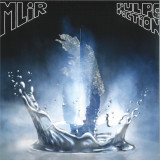
MLiR is one of those rare creative partnerships where personalities and talents perfectly match, an exquisite balance of similarity and polarity leading to ingenuity. In the case of MLiR, this dynamic has resulted in the form of consistently vibrant takes on current, past and future global dance music, an artistic expression
fuelled by equal parts tireless record digging and masterful studio wizardry.
Their two previous EPs on Studio Barnhus count among the label's most played and loved, and the forthcoming debut album Pulpo Fiction, released this October on the Stockholm label, takes it to the next level with a staggering tracklist of 16 new recordings featuring vocal talent as diverse as Kenyan rapper Nah Eeto, American
poet Oliver Grimball and Swedish soul singer Cosima Olu.
The music is as wild a ride as ever with MLiR at the controls – ranging from the nostalgic to the futuristic, the deep to the poptastic – with a firm base in the kind of high-powered, light-footed dancefloor material the duo is so beloved for.
Clear Vinyl[26,26 €]
Der Afrobeat-Virtuose Seun Kuti bereitet sich darauf vor, sein neuestes musikalisches Meisterwerk, das von Lenny Kravitz produziert wurde und auf dem Damian Marley und Sampa The Great zu hören sind, auf die Welt loszulassen. Sein Album “Heavier Yet (Lays The Crownless Head)“ erscheint sechs Jahre nach dem Grammy-nominierten Album "Black Times" und einen entscheidenden Moment in Seun Kutis glanzvoller Karriere und zeigt seine Entwicklung als Künstler und Aktivist. Produziert von dem legendären Musiker Lenny Kravitz und Fela Kutis ursprünglichem Tontechniker Sodi Marciszewer (künstlerischer Produzent), verspricht „Heavier Yet (Lays The Crownless Head)“ ein Klangerlebnis wie kein anderes. Mit der Expertise von Kravitz und Sodi und dem unvergleichlichen Talent von Seun Kuti bleibt das Album den Wurzeln des Afrobeat treu und definiert gleichzeitig die Grenzen der zeitgenössischen Musik neu. Die sechs elektrisierenden Songs auf „Heavier Yet (Lays The Crownless Head)“ verkörpern den Geist des Widerstands, der Resilienz und der Revolution. Jeder Song handelt davon, sich Herausforderungen zu stellen und für Veränderungen zu kämpfen. So wie die Einzelsingles „Dey“ feat. Reggae-Ikone Damian Marley, beschrieben als "ein Song über das Umarmen und Verfechten dessen, was wir sind, ungeachtet dessen" und „Emi Aluta“ "ein Song über den Kampf (Aluta bedeutet Kampf), der eine Hommage an alle großen Revolutionäre ist", mit dem sambischen Sänger, Rapper und Songwriter Sampa The Great, einem der besten und innovativsten Lyriker unserer Zeit. Der Song „T.O.P.“ handelt davon, "wie die Gesellschaft Geld und Erfolg mehr schätzt als Menschen". Seun Kuti möchte dies ändern, indem er Empathie fördert und die Verbindung zur Natur wiederherstellt. In einem anderen Song, „Love & Revolution'“, drückt er seine Liebe zu seiner Frau aus und glaubt, dass wahre Liebe die Menschen dazu inspirieren kann, die Welt zu einem besseren Ort zu machen. "Dieses Projekt war für mich etwas ganz Besonderes, von dem Moment an, als ich es konzipierte und mit Lenny Kravitz sprach, der mir so viel brüderliche Liebe und Respekt entgegenbrachte", sagt Seun. "Er hat mich in sein Haus eingeladen. Ich habe seine Tochter Zoe kennengelernt und er hat uns mit Feuereifer geführt. Seit wir vor drei Jahren über das Album gesprochen haben, war er als ausführender Produzent dieses Projekts immer an unserer Seite und hat uns sehr unterstützt". "Ich möchte mich bei Craig Ross und Sodi, dem Produzenten dieses Projekts, bedanken. Wir hatten eine großartige Zeit. Es war das erste Mal für mich, dass ich mit Sodi im Studio war und ich war wirklich beeindruckt von seiner Arbeit und seinen väterlichen Ratschlägen und seiner Hingabe". Jeder Song auf dem Album ist ein Beweis für Seun Kutis unerschütterliches Engagement, Musik als Werkzeug für sozialen Wandel und Empowerment einzusetzen. Mit seinen kraftvollen Texten und ansteckenden Grooves führt er das Erbe seines Vaters, des legendären Fela Kuti, fort und bahnt sich gleichzeitig seinen eigenen Weg in der Welt der Musik.
Seun Kuti ist ein nigerianischer Musiker, Sänger und Songwriter, der für seine fesselnden Auftritte und seine gesellschaftskritische Musik bekannt ist. Er ist der jüngste Sohn des Afro-Beat-Pioniers Fela Kuti. Seun hat die meiste Zeit seines Lebens damit verbracht, das politische und musikalische Erbe seines Vaters zu bewahren und zu erweitern, und zwar als Leiter der ehemaligen Band seines Vaters, Egypt 80. Als aufstrebender Saxophonist und Schlagzeuger trat er in die formellen Reihen der Band ein, bevor er 12 Jahre alt war. Als Fela 1997 starb, übernahm Seun Kuti auf Wunsch seines Vaters die Leitung von Egypt 80, die er seither innehat. Im Laufe seiner Karriere hat Seun Kuti 4 Alben mit Egypt 80 veröffentlicht: `Many Things' (2008), `From Africa with Fury: Rise for Knitting Factory Records" (2011), koproduziert von Brian Eno und John Reynolds, "A Long Way Beginning" (2014) und das für einen Grammy nominierte "Black Times" (2018), das ein Feature von Carlos Santana enthält. Außerdem haben sie zahlreiche EPs veröffentlicht. Seun hat vor einem begeisterten Publikum auf der ganzen Welt gespielt und mit vielen großen Künstlern zusammengearbeitet. Im Jahr 2022 schloss er sich für die EP "African Dreams" mit dem Roots-Frontmann und MC-Extraordinarius Black Thought zusammen. Im Jahr 2023 arbeitete Seun an Janelle Monaes "The Age of Pleasure" (Grammy-Nominierung für das Album des Jahres) mit den beiden Singles "Float" und "Knows Better" mit, tat sich mit Talib Kweli und MadLib für deren Album "Liberation 2" bei dem Song "Nat Turner" mit Cassper Nyovest zusammen und veröffentlichte eine neue Version der Single "Bad Man Lighter" mit Black Thought und Vic Mensa.
Black Vinyl[23,95 €]
Der Afrobeat-Virtuose Seun Kuti bereitet sich darauf vor, sein neuestes musikalisches Meisterwerk, das von Lenny Kravitz produziert wurde und auf dem Damian Marley und Sampa The Great zu hören sind, auf die Welt loszulassen. Sein Album “Heavier Yet (Lays The Crownless Head)“ erscheint sechs Jahre nach dem Grammy-nominierten Album "Black Times" und einen entscheidenden Moment in Seun Kutis glanzvoller Karriere und zeigt seine Entwicklung als Künstler und Aktivist. Produziert von dem legendären Musiker Lenny Kravitz und Fela Kutis ursprünglichem Tontechniker Sodi Marciszewer (künstlerischer Produzent), verspricht „Heavier Yet (Lays The Crownless Head)“ ein Klangerlebnis wie kein anderes. Mit der Expertise von Kravitz und Sodi und dem unvergleichlichen Talent von Seun Kuti bleibt das Album den Wurzeln des Afrobeat treu und definiert gleichzeitig die Grenzen der zeitgenössischen Musik neu. Die sechs elektrisierenden Songs auf „Heavier Yet (Lays The Crownless Head)“ verkörpern den Geist des Widerstands, der Resilienz und der Revolution. Jeder Song handelt davon, sich Herausforderungen zu stellen und für Veränderungen zu kämpfen. So wie die Einzelsingles „Dey“ feat. Reggae-Ikone Damian Marley, beschrieben als "ein Song über das Umarmen und Verfechten dessen, was wir sind, ungeachtet dessen" und „Emi Aluta“ "ein Song über den Kampf (Aluta bedeutet Kampf), der eine Hommage an alle großen Revolutionäre ist", mit dem sambischen Sänger, Rapper und Songwriter Sampa The Great, einem der besten und innovativsten Lyriker unserer Zeit. Der Song „T.O.P.“ handelt davon, "wie die Gesellschaft Geld und Erfolg mehr schätzt als Menschen". Seun Kuti möchte dies ändern, indem er Empathie fördert und die Verbindung zur Natur wiederherstellt. In einem anderen Song, „Love & Revolution'“, drückt er seine Liebe zu seiner Frau aus und glaubt, dass wahre Liebe die Menschen dazu inspirieren kann, die Welt zu einem besseren Ort zu machen. "Dieses Projekt war für mich etwas ganz Besonderes, von dem Moment an, als ich es konzipierte und mit Lenny Kravitz sprach, der mir so viel brüderliche Liebe und Respekt entgegenbrachte", sagt Seun. "Er hat mich in sein Haus eingeladen. Ich habe seine Tochter Zoe kennengelernt und er hat uns mit Feuereifer geführt. Seit wir vor drei Jahren über das Album gesprochen haben, war er als ausführender Produzent dieses Projekts immer an unserer Seite und hat uns sehr unterstützt". "Ich möchte mich bei Craig Ross und Sodi, dem Produzenten dieses Projekts, bedanken. Wir hatten eine großartige Zeit. Es war das erste Mal für mich, dass ich mit Sodi im Studio war und ich war wirklich beeindruckt von seiner Arbeit und seinen väterlichen Ratschlägen und seiner Hingabe". Jeder Song auf dem Album ist ein Beweis für Seun Kutis unerschütterliches Engagement, Musik als Werkzeug für sozialen Wandel und Empowerment einzusetzen. Mit seinen kraftvollen Texten und ansteckenden Grooves führt er das Erbe seines Vaters, des legendären Fela Kuti, fort und bahnt sich gleichzeitig seinen eigenen Weg in der Welt der Musik.
Seun Kuti ist ein nigerianischer Musiker, Sänger und Songwriter, der für seine fesselnden Auftritte und seine gesellschaftskritische Musik bekannt ist. Er ist der jüngste Sohn des Afro-Beat-Pioniers Fela Kuti. Seun hat die meiste Zeit seines Lebens damit verbracht, das politische und musikalische Erbe seines Vaters zu bewahren und zu erweitern, und zwar als Leiter der ehemaligen Band seines Vaters, Egypt 80. Als aufstrebender Saxophonist und Schlagzeuger trat er in die formellen Reihen der Band ein, bevor er 12 Jahre alt war. Als Fela 1997 starb, übernahm Seun Kuti auf Wunsch seines Vaters die Leitung von Egypt 80, die er seither innehat. Im Laufe seiner Karriere hat Seun Kuti 4 Alben mit Egypt 80 veröffentlicht: `Many Things' (2008), `From Africa with Fury: Rise for Knitting Factory Records" (2011), koproduziert von Brian Eno und John Reynolds, "A Long Way Beginning" (2014) und das für einen Grammy nominierte "Black Times" (2018), das ein Feature von Carlos Santana enthält. Außerdem haben sie zahlreiche EPs veröffentlicht. Seun hat vor einem begeisterten Publikum auf der ganzen Welt gespielt und mit vielen großen Künstlern zusammengearbeitet. Im Jahr 2022 schloss er sich für die EP "African Dreams" mit dem Roots-Frontmann und MC-Extraordinarius Black Thought zusammen. Im Jahr 2023 arbeitete Seun an Janelle Monaes "The Age of Pleasure" (Grammy-Nominierung für das Album des Jahres) mit den beiden Singles "Float" und "Knows Better" mit, tat sich mit Talib Kweli und MadLib für deren Album "Liberation 2" bei dem Song "Nat Turner" mit Cassper Nyovest zusammen und veröffentlichte eine neue Version der Single "Bad Man Lighter" mit Black Thought und Vic Mensa.
Born in Cleveland, Ohio to Russian parents, Alina Baraz has been around music all her life. With both parents having classical training, she was destined to find her voice through music. Almost immediately after the release of her first single, “Roses Dipped in Gold” at age 19, Baraz and her family moved to Los Angeles to pursue her career as a singer/songwriter full time.In 2015, Baraz released her debut project, Urban Flora. The acclaimed project was praised by the Guardian, NPR, Huffington Post, Harpers Bazaar and many more, and sat on Billboard’s Top Dance/Electronic Albums chart for over 125 weeks, peaking at #2. In January of 2017, she released the viral single “Electric” ft. Khalid, which has been streamed over 190M times and counting. In 2018 she released The Color of You, enlisting Grammy-nominated producer Robin Hannibal (Kendrick Lamar, Calvin Harris, Cee Lo Green) to help produce the project Baraz has been in the works of a special project, leading with her single “Trust” as her first release of 2020.
Stefano De Santis kicks off this Best Of Various with Murk, as the name suggests its a dark workout from one of Rome’s finest producers. Following that are Batavia Collective from Jakarta. When we first heard the live demo for this we were blown away and had to get it out on TLM. Batavia Collective are Elfa Zulham on drums, Doni Joesran on keys and Kenny Gabriel on synth bass. All mixed by Stefano De Santis. Rounding off the A side we have Cormac Fulton and his follow up to Perplexed on TLM025 with a new track called Loungeware. Based in Salford this is another atmospheric track from Cormac featuring Netherlands born but now Rio de Janeiro based flautist Floor Polder. Floor also appeared on Steve Conry’s rework of Guinu - Eletromadinga which featured on Colin Curtis Presents Jazz Dance Fusion 4 Part 2. Loungeware was mixed by Steve Conry and Matt Cox. Onto the AA side and we have Montreal resident Mike Perras with Soullous, a superb dancefloor track, live drums and amazing keys, in fact everything you want from house music. Next up is Future Jazz Ensemble from Vibo Valentia who follow on from their Rough Time EP TLM028 and appearance on TLM030 with another broken jazz monster of a track called Over The Rainbow. Finishing off side AA is Takahiro Fuchigami from Fukuoka with another fine track called Outer Heaven, a great follow up to Strange Acquaintance which was on TLM034.