Repress!
Funkiwala Records presents the third in the series of "Lokkhi Terra meets"albums, with the London fusionistas creating another unique sound-clash, this time with ex-Fela Kuti keyboardist and legendary UK Afro-beat ambassador Dele Sosimi, and members of his critically acclaimed Afro-beat Orchestra.
This particular collaboration has been bubbling away for a few years now, teasing audience expectations with a handful of sold out shows each year in between both bands busy schedules.
Featuring the two pianos of Kishon Khan and Dele Sosimi – Cuban percussionists/vocalists Geraldo De Armas (Yoruba Andabo), Oreste Noda (Ariwo), Javier Camilo (Ibrahim Ferrer) - a horn section led by Justin Thurgur (Bellowhead) featuring Yelfris Valdes (Sierra Maestra) and Graeme Flowers (Kyle Eastwood) to name a few – this is an All-star cast.
Kishon Khan's Lokkhi Terra have over a number of years now been quietly establishing themselves as one of London's more unusual heavyweight outfits, described as "Stunning Headliners… A majestic multi-cultural blend of sounds… effortlessly builds bridges between rolling Indian raga rhythms, Afro-Cuban grooves, Acid Jazz/funk and free flowing improvisation" (Timeout London). Included amongst the band members are London's top Cuban musicians, adding their infectious rich musical history to the city's melting pot.
When the band wanted to explore Cuban links with another of their favourite traditions, Afrobeat, who better to bring in then one of the Afrobeat originators – maestro Dele Sosimi – "Sosimi creates some of the most bewitching grooves in modern African music" E Jazz News.
Bringing together two Yoruba speaking musics - with different accents, from different sides of the Atlantic - Havana meets Lagos in London – A Cuban-Afrobeat-Experience. CUBAFROBEAT.
All About Jazz 4star review
A younger version of London's Grand Union Orchestra, founded by world-jazz pioneer Tony Haynes in 1982, Lokkhi Terra was put together by keyboard player Kishon Khan in 2005. Both ensembles have made a specialism of jazz / South Asian fusion, with Lokkhi Terra also giving as much attention to music from Cuba, where Bangladeshi-born, London-based Khan lived for a while in the early 2000s.
Cubafrobeat, as the title foretells, is a blend of Cuban dance music and Nigerian / Yoruban Afrobeat—a fusion rendered seamless by the synergies existing between Afro-Cuban and Yoruban music, language and mythology. The album is Lokkhi Terra's third and partners the band with the keyboard player and vocalist Dele Sosimi .
A young-going-on-child-prodigy member of Fela Kuti's Egypt 80, Sosimi went on to become musical director of Femi Kuti's Positive Force, before relocating to London and setting up Dele Sosimi's Afrobeat Orchestra, the finest Afrobeat band outside Nigeria, bar none, now with a string of consistently engaging albums under its belt. Cubafrobeat features Sosimi as lead vocalist on all four tracks, and on Fender Rhodes on two of them. His singing plays a prominent role in the Afrobeat Orchestra, but, such is the whirlwind impact of the band in full instrumental flight, that Sosimi is often thought of first and foremost for his keyboard and arranging talents. That may change by the time 2018 is over. Cubafrobeat is the third album in as many months to feature Sosimi as guest vocalist, spotlighting the gravitas, air of mystery, intimacy and ferocity his voice can bring to an occasion.
The first of these albums was the genre-bending spiritual-jazz band Emanative's Earth (Jazzman). One of the stand-out tracks, "Ìyáàmi," features Sosimi making obeisance to the titular Mother Goddesses of the Yoruba spirit worlds. His raw and intense invocations carry the track for nine mesmerising minutes. Otherwordly is not the half of it. Next up was dub / reggae / jazz band Soothsayers' Tradition (Wah Wah 45s), which featured Sosimi as lead vocalist on the compelling "Sleepwalking (Black Man's Cry)." Earth and Tradition are both outstanding albums and have previously been reviewed here.
Cubafrobeat is a total stonking blinder, too. It is an effectively nuanced affair, opening with the fiery "Afro Sambroso" and closing with the relatively reflective "Rumbafro." Sosimi's vocals light up the music, as do the several solos from trumpeters Graeme Flowers and Yelfris Valdes Espinosa and trombonist Justin Thurgur (a member of both Lokkhi Terra and the Afrobeat Orchestra). Sosimi and Kishon Khan's intertwining Fender Rhodes solos on "Cubafro" are also a delight, as is the drum and percussion section throughout.
The sound of summer, for sure, Cubafrobeat has enough depth and variety to make it something for all seasons.
Songlines 4star review
Lokkhi Terra are one of London's most authentic groups. They are a Latin-flavoured collective whose keyboard player and bandleader Kishon Khan segues from percussive montunos to complex Bengali rhythms and back, with jazz chops sparking funky and outward-looking fusions. Their collaboration with Dele Sosimi, Britain's foremost Afrobeat ambassador, has been bubbling for a while; here four tracks at ten minutes see musical conversations that never lose their sense of flow. An extensive line-up of stellar players, including trumpeter Yelfris Valdés, conguero Oreste Noda and trombonist Justin Thurgur, highlights the genre-crossing potential of world traditions. Opener 'Afro Sambroso' showcases batá drums from Gerardo de Armas Sarria before the track links Cuban grooves with Afrobeat. 'Timbafro' crackles and sways via Khan's organ, Sosimi's vocals and Oscar Martinez's timbales. 'Cubafro' features dazzling interplay between Khan, Sosimi and Javier Camillo's Spanish-language vocals. 'Rumbafro' is all rumba choruses, Yoruba vocals and Afrobeat horns. Rooted in their sources, but with musical threads intertwining, separating and reconfiguring – with grooves at a premium – this is a fusion lover's dream
quête:javier
Tobias Freund, the Berlin based producer, musician, and label owner of Non Standard Productions has created an incredible cover record that pays tribute to some of the most iconic and influential artists of the past four decades.
The album Tobias. & Friends - TOP TEN places a unique spin on the original tracks, with its combination of electronic sounds and vocal performances from Javiera González, Barbie Williams, Cormac McAdam, Carlos Cabezas, and Stian Westerhus.
Having already worked with Javiera González on the recent post punk album release “The Mutual Torture - Don’t” (NSP 19), Tobias has once again used his talents to honour some of his favourite bands.
Each track has been carefully re-produced at Non Standard Studios in Berlin, resulting in a perfectly balanced mix of old and new.
- A1: Yankee Y El Valiente (Trooko's Versión)
- A2: Ooh La La Ft. Santa Fe Klan (Mexican Institute Of Sound's Versión)
- A3: Fuera De Vista Ft. Baco Exu Do Blues (Trooko's Versión)
- B1: Santa Calamifuck (Eva, Chucho, Yulian X Nick Hook's Versión)
- B2: Goonies Contra E.t. Ft. Sarah La Morena & El Individuo (Danny Brasco X Nick Hook's Versión)
- B3: Caminando En La Nieve Ft. Akapellah, Apache & Pawmps (Orestes Gomez X Nick Hook's Versión)
- C1: Ju$T Ft. Pharrell Williams & Zack De La Rocha (Toy Selectah's Versión)
- C2: Nunca Mirar Hacia Atrás (Bomba Estéreo's Versión)
- C3: El Suelo Debajo (Son Rompe Pera's Versión)
- D1: Tirando El Detonador Ft. Lido Pimienta, Javier Arce & Iggor Cavalera (Mas Aya X Nick Hook's Versión)
- D2: Unas Palabras Para El Pelotón De Fusilamiento (Radiación) Ft Lin-Manuel Miranda (Adrián Terrazas-González X El Producto's Versión)
RUN THE JEWELS haben ihr Hit-Album "RTJ4" durch das Prisma Lateinamerikas neu interpretiert. Mit dabei sind Bomba Estéreo, TROOKO, Baco Exu do Blues, Lido Pimienta, Akapellah, Iggor Cavalera, Sarah La Morena, Danny Brasco, Santa Fe Klan & mehr. Künstler aus 10 LATAM-Ländern - Produzenten, Rapper, Sänger, Musiker, Programmierer - beteiligten sich an der Schaffung dieses
hybriden, bahnbrechenden und zukunftsweisenden Projekts.
A true Balearic classic. One of a handful of records that can comfortably boast this title, Elkin & Nelson's 1979 classic 'Jibaro' sits in the canon of selections that enlightened the ears of the jet-set and globe trotting music fanatics in the heady and much storied years of the White isle in the 1980's. The Colombian brothers Javier and Leon Marin Velez brought their own rustic brand of folksy-Rock-Psychedelia to the listening public in 1974 with their debut LP 'Angeles Y Demonios' on Columbia records. The brothers had relocated to Spain, snared a major label deal and ran with it. The first of 3 LP's it proved a big hit in later years with adventurous DJ's and selectors. A cult record you might say. Of course, this LP featured 'Jibaro' in all it's forms, but it is this 1986 reissue 12" promo pressing with it's iconic, distinctive jacket that was the coveted slab sonic adventurers were seeking. Fully sanctioned and legitimately remastered from the original sources and packaged in it's original Columbia promo sleeve 'Jibaro' is back on the shelves, still an incredible record that gets pulled by the most discerning selectors across the globe. A true classic, featured here in it's long and short versions as per the '86 release. Absolute top-shelf stuff here, essential, must own and classic.
"Matasuna Records" musical journey takes the listener this time to "Panama" - a country in Central America, which offers a rich and breath-taking variety of musical treasures. In a first reissue, two songs from the legendary "Loyola Records" label were selected, both released in 1969: one by "Camilo Azuquita" and one by the group "Panama Brass". Two super-rare tunes that fetch crazy prices, if you're lucky enough to find a copy at all. Available for the first time as an official remastered reissue on 7inch vinyl - the song by Panama Brass even makes its 7inch premiere. Don't sleep on it!
The A-side features the killer boogaloo tune "Borombon" by "Camilo Azuquita". Its take of the song composed by "Javier Vasquez" is undoubtedly the best version of this song. The striking piano, driving bass and rich horns are fueled by percussive accompaniment and especially by Azuquita's powerful voice. A terrific song that has also recently gained new notoriety in movies and series - such as "Better Call Saul".
The B-side features the instrumental Latin Jazz/Guaracha tune "Con La Mano En La Biblia" by "Panama Brass" - an orchestra led by the excellent organist "Cristobal Munoz Jr." and consisting of Panama's best musicians. A no less energetic and furious song composed by "G. Garcias". The musicians of the orchestra combine a great musicality and diversity in the song, delivering a special delicacy.
"Camilo Luis Argumédez" is a singer and composer born in "Colon (Panama)" on February 18th 1945. He became world famous under his stage name Camilo Azuquita. He began his career at a young age, when he participated in various competitions organized by local radio stations. He left Panama for the first time for an engagement in "Lima (Peru)" - the prelude tocountlesstrips.
After returning to Panama, another engagement in 1966 took him to "Puerto Rico", where he also recorded music. Due to a tour he was involved in, he ended up in "New York City" where he made new & fruitful acquaintances with other artists that resulted in some more recordings.
In 1968 he returned again to Puerto Rico, where he joined a band to record an album. In the following years, tours and concerts followed, as well as an engagement in a club where he musically accompanied many stars of Latin American music.
Between 1972 and 1976 he spent four years in "Los Angeles", where he performed in night clubs, recorded two albums and toured California with his own band "Melao". In LA, through a brother of the "Fania" boss, he got a contract with "Vaya Records", a subsidiary of the Fania label, which brought him back to New York City in 1976. There he joined the band "Tipica'73" and their two following albums brought him much success.
A tour led him to "Paris", where he met the journalist "Pierre Goldman". A proposed project became reality two years later: Azuquita opened the first Parisian Salsa Club. As this became a complete success and the audience filled the club on each of the evenings, a first engagement of one month was extended to several years. In France, he performed at the world-famous "Olympia Theater "or played at the "Old Bourget airport", opening for a live concert by reggae legend "Bob Marley" in front of 75,000 people. From France, he traveled throughout Europe, where the performances in front of European audiences brought him enormous prestige.
From 1985 to 1987, "Azuquita y su Melao" toured extensively in "California", where he signed a 1-year contract at "Club Candilejas" in "Hollywood" in 1988. In the following decades, he recorded many more albums - in NYC, Cali (Colombia), France or Havana (Cuba), among others. In addition, he was still very active on tours, festivals and concerts around the globe. An extremely remarkable artist, whose activity has brought him to the top.
---
"Panama Brass" was an orchestra directed and orchestrated by the excellent organist "Cristobal Munoz Jr." The orchestra consisted of one of the best musicians of Panama at that time. Munoz was an exclusive artist of "Loyola Records" at the time and was considered a promising or up-and-coming conductor. That this album could be realized at all had only been possible thanks to Hubert J. Pretto. Pretto, then Assistant Vice President & General Manager of "Coca Cola Panama" arranged the funds necessary for the realization of this album and supported the campaign to promote music culture in Panama. This album would remain the only one released by this group.
- A1: Grand Bazaar, Istanbul
- A2: Voluntary Retirement
- A3: New Digs
- A4: Severine
- A5: Brave New World
- A6: Shanghai Drive
- A7: Jellyfish
- A8: Silhouette
- B1: Modigliani
- B2: Day Wasted
- B3: Quartermaster
- B4: Someone Usually Dies
- B5: Komodo Dragon
- B6: The Bloody Shot
- B7: Enjoying Death
- C1: The Chimera
- C2: Close Shave
- C3: Health & Safety
- C4: Granborough Road
- C5: Tennyson
- C6: Enquiry
- C7: Breadcrumbs
- C8: Skyfall
- C9: Kill Them First
- D1: Welcome To Scotland
- D2: She's Mine
- D3: The Moors
- D4: Deep Water
- D5: Mother
- D6: Adrenaline
Thomas Newman became the ninth composer in the James Bond series history. His score for Skyfall won the BAFTA Award for Best Film Music. In 2013, it became one of two Bond scores to be nominated for the Academy Award for Best Original Score. The other to be nominated was the score from The Spy Who Loved Me. Skyfall does not contain the title song performed by Adele.
Skyfall (2012) is the twenty-third spy film in the James Bond film series. It features Daniel Craig in his third performance as James Bond, and Javier Bardem as Raoul Silva, the film's villain. The movie was directed by Sam Mendes. The story centres on Bond investigating an attack on MI6. The attack is part of a plot by former MI6 agent Raoul Silva to humiliate, discredit and kill M as revenge against her for betraying him. The film sees the return of two recurring characters to the series after an absence of two films: Q, played by Ben Whishaw, and Moneypenny, played by Naomie Harris. Skyfall is the last film of the series for Judi Dench, who played M, a role that she had played in the previous six films.
The limited edition of Skyfall of 1.500 individually numbered copies is pressed on coloured (transparent & black mixed) vinyl. The package includes a big poster, a 4-page insert and 2 printed innersleeves. Both innersleeves have one hole in the middle to show James Bond on the labels. Don't forget to check the secret service inscriptions on the run out grooves.
- A1: Los Avilenos - Cumbia Con Guitarra
- A2: Tito Chicoma Y Su Orquesta - Ritmo Veregua
- A3: Freddy Roland Y Su Orquesta - Arroz Con Coco
- A4: Silvestre Montez Y Sus Guantanameros - El Diablo
- A5: Mita Y Su Monte Adentro - El Yoyo
- A6: Los Kintos - Tin Marin
- A7: Orquesta Reve - Mi Son Combinado
- B1: Poppy Y Sus Piranas - Guayaba
- B2: Al Valdez Y Su Conjunto - Aprieta
- B3: Sonora Casino - El Negro Javier
- B4: German Neciosup Y Su Orquesta - Casamiento No
- B5: La Sonora Mag - El Negro Bembon
- B6: Nico Estrada - La Malanga
- B7: Melcochita Y Karamanduka - Machu Picchu
This sampler compiles 14 killer tropical tracks for the dance floor, all taken from the vaults of Peru's MAG records, including cumbias to descargas, boogaloo to salsa. Classic songs such as 'Arroz Con Coco' or 'Aprieta (Oye Como Va),' and also obscure recordings like the stunning 'Ritmo Veregua' by Tito Chicoma or the totally under-the-radar -recorded in Lima- 'Mi Son Combinado' by Cuba's legendary Orquesta Revé. MAG will turn 70 in 2023 and is a pivotal label in Peruvian music, mainly focused on tropical rhythms although its extensive catalogue also includes rock, pop and jazz recordings. This compilation celebrates the recent addition of Discos MAG to the Vampisoul family, where the best and most elusive titles from the MAG archive will become available again. MAG has been, since its foundation in 1953, an essential label in the music scene of Peru, allowing the development of the careers of both tropical artists and musicians of other genres. At the head was Don Manuel Antonio Guerrero, its founder, whose name comes from the acronym of the label itself (M.A.G.). In 2021 MAG was acquired by the Spanish company Distrolux SL, owner of the Munster and Vampisoul record labels, after years of previous collaborations in which some of the most emblematic titles in the catalog were already reissued for the international market: Nils Jazz Ensemble, Sonora Casino, Traffic Sound, Al Valdez, Pax_ "14 MAGníficos" is a 14-track compilation that celebrates a new era in the history of the label, now under the Vampisoul umbrella, with a selection of astonishing dance floor-oriented gems. This is also a perfect introduction to MAG, showcasing the amazing musical variety sported by the Peruvian label throughout the years. The comp includes juicy Cuban songs like 'Mi Son Combinado', an outstanding original taken from the extremely scarce LP recorded by Cuba's finest Orquesta Revé for MAG in Lima, and the explosive guaracha 'Tin Marin' by Los Kintos, a group lead by guitarist Pancho Acosta. Also classic songs such as 'Arroz Con Coco' or 'Aprieta (Oye Como Va),' and obscure recordings like the stunning 'Ritmo Veregua' by Tito Chicoma.
Wganda Kenya was ahead of its time, anticipating current contemporary Afro-Latin-funk trends in a prescient way that has inspired a legion of fans across the globe. As part of that legacy, "Africa 5.000" (1975) has a legendary reputation as one of Discos Fuentes' best hard-to-find Afro Caribbean funk records and is a highly prized collector's piece. This LP features several classic dance floor gems as well as some lesser-known nuggets and a non-album bonus cut, plus informative notes. "Africa 5.000" (1975) has a legendary reputation as one of Colombia's best hard-to-find Afro-funk records and is a highly prized collector's piece today. The epic 'La torta' ('The Cake') kicks things off with a lively Colombian interpretation of Haitian compas. The tune is still remembered as a big picó (amplified sound system) hit at the verbenas (outdoor dance parties). 'Fiebre de lepra' ('Leprosy Fever') was also released as a 45 single and is certainly one of Wganda Kenya's wilder tracks. Funky wah-wah guitar, makossa style bass, manic organ, and feverishly insane vocals (from Wilson "Saoko" Manyoma and Joe Arroyo) indicate that Fruko and his pals were having a ball goofing around in the studio. If for no other reason, "Africa 5.000" is sought after for being the album containing Fruko and Javier García's outrageously funky and off-kilter 'Tifit hayed', which has become a tropical dance floor favorite in recent years. Again the "kitchen sink" approach is employed, including massive Latin bass lines, tasty Farfisa organ stabs, a bluesy, jazzy piano solo, and plenty of humorous vocal sound effects (including animal noises and lip burbling). However, it's the stomping break beats and cowbell counterpoint that has kept dance floors busy. Side B leaps out of the speakers with the heavy, strutting 'El caterete', which was the flip side to the 'Fiebre de lepra' single and is based on the 1970 song 'Cateretê' by Brazilian singer/songwriter Marku Ribas. Like its sibling Fuentes studio band Afrosound, Wganda Kenya was ahead of its time, anticipating current contemporary Afro-Latin-funk trends in a prescient way that has inspired a legion of fans across the globe, and this reissue of "Africa 5.000" will only serve to further cement the band's growing reputation amongst today's diggers of tropical psychedelia. First time reissue.
Diggin’ in the vast vaults of Victor Simonelli, a collection of classic Jazz-N-Groove remixes from the legendary Bassline Records label, fully remastered for the first time on one 12”.
Started back in 1993 by the man himself, the label features releases from the likes of Romanthony, Jocelyn Brown, DJ Duke and many more, also going on to spawn the Big Big Trax sublabel too.
For this 12 inch, a spotlight on Jazz-N-Groove, the legendary production team consisting of Marc Pomeroy, Brian Tappert & previously Roy Grant. Showcasing soulful house done properly, this EP takes in four of their sought-after ‘90s remixes of anthemic cuts from Northbound, Body Moods and Strive For Jive. For the house trivia heads out there, the pair also went on to launch Soulfuric Records and also digital download store, Traxsource.
Divino Niño are no strangers to bold reinvention. When Camilo Medina and Javier Forero_friends whose bond dates back to their childhoods in Bogotá, Colombia_moved to Chicago and recruited guitarist Guillermo Rodriguez to form a band, they were psych-pop outsiders playing live shows with a drum machine. With the addition of drummer Pierce Codina, their 2019 breakthrough and debut LP for Winspear, Foam, solidified their place as local indie rock mainstays. Soon after, multi-instrumentalist Justin Vittori joined to round out their lineup. Once again, with their masterful, unpredictable, and eminently danceable new album, the band has done something radical: They totally upended the way they write songs, eschewing practice room jams for unrelentingly collaborative beats, implied grooves for immersive dance floor heaters, and mellow vibes for frenetic doses of reggaeton, electropop, and trap on their most adventurous and ambitious work to date. Welcome to the Last Spa on Earth. Written and recorded over the past two years, Last Spa on Earth deals in release and catharsis: confronting your darkest moments and coming out better for it. The album artwork, done by Medina, a longstanding visual artist, depicts a dreamy, yet graffiti-tagged spa, void of physical bodies so listeners can envision themselves in this unique environment. It represents the yin and yang approach Divino Niño took while creating the album: the serenity of the spa and the chaos of the party. Ultimately, the band's desire is to provide healing in the same way one feels after sweating, shivering, stretching, and resting at the spa against the backdrop of the world's darkness. Last Spa on Earth is the cathartic product of Divino Niño letting go of their musical preconceptions, past traumas, and future anxieties to embrace change, chaos, and each other's contributions both to these songs and to each other.
- 1: Can I Sing With You? Ft. Sidi I.b
- 2: No Hay Pescado Ft. Sidi I.b., El Latigazo & Mame Samba
- 3: Neuron Landfill (Vertedero De Nueronas)
- 4: Smelk
- 5: The Light Mandem Forward Ft. Kiki Hitomi W/ Javier Afonso
- 6: Guidance & Healing Ft. Mame Samba
- 7: Monsanto Ft. Troy Harkin*
- 8: Mike Input At Loud Speakers Corner*
- 9: Bus Meter Ft. Zeeteah & Sidi I.b
- 10: Assuage No.9 Ft. Zeeteah
Helmed by Dave Watts aka D.WattsRiot (Fun-da-mental), the debut KingL Man album, ‘Headonix’ is beat-laden shout out in response to the perpetual state of war we seem to find ourselves at. Outrage and disgust, love and hate, history and presence.
Contributions come from four continents.
Fresh on the scene is Senegalese vocalist Sidi I.B., who arrived on Canarian shores with two hundred other compatriots, cold, wet and hungry after seven days at sea with nothing but his future in his hands.
Temporarily housed at the infamous migrant holding centre in Las Raíces, Tenerife, the studio environment provided an avenue of relief from the inadequate conditions at the overcrowded camp.
Also from Senegal, living in Santa Cruz de Tenerife, is rapper Ibrahima El Latigazo who delivers his lyrics in French, Wolof, Spanish, English & Sérère. Rounding up the Senegalese contingent is Mame Samba, a group that hold the spirits close when performing. Their contribution is from recording sessions they had with François R. Cambuzat & Gianna Greco (Putan Club / Ifriqiyya Electrique).
Kiki Hitomi (Waq Waq Kingdom/King Midas Sound) returns to the fold, exhaling positivity with Canarian multi-instrumentalist Javier Afonso (Grenouille). The Canarian faction also includes violinist Mónica Viñoly, Dani Garcia (Lagoss/Tupperwear) and Vakawuare. Further guests include percussionist Miroca Paris (Cesária Évora/Madonna); Hamid Mantu (TransGlobal Underground);
Ramjac (Dub Colossus), drums and percussion respectively.
First ever reissue of one of the most sought after titles in the catalogue of Peruvian's label MAG, in high demand not only among Latin music collectors but also among those interested in the most exotic and experimental psychedelic sounds around. - It includes 'Astronautas a Mercurio', a cosmic descarga full of electronic effects, filtered voices and fierce guitars with wah wah and raw distortion, as well as guarachas, cumbias and descargas. - Details: Hugo Macedo was a member of the first sonora in Peru, directed by his brother: the Sonora de Lucho Macedo. His brothers were the singers of the band while he performed as a timbalero. After nine years he founded the Sonora Casino of Hugo Macedo in 1964, later incorporating his wife, Lucía "Pochita" Rivera as a vocalist. "Trompeteros" was released on the Peruvian record label MAG in 1972. Previously, the Sonora Casino had already recorded several albums for Philips since the mid-60s. At the time their repertoire was fed by rhythms such as cha cha cha, bolero, guaracha... Their MAG period would start in 1970 with the album "Pochita y la Sonora Casino de Hugo Macedo" in which Hugo Macedo's wife was granted with an important visual presence on the front cover, with a similar follow-up on "Trompeteros", creating some confusion since vocalist Pachito Nalmy was the actual main singer on the record. The vocalist, who hails from Callao, demonstrates here a great vocal versatility as captured on songs like 'Guajira del amor', with a heavy rhythm that will surely delight boogaloo lovers, or the bolero number 'Pasa, pasa', being both songs own compositions of the multitalented Nalmy. Guarachas, descargas and cumbias complete the offering of this fantastic album, one of the strongest tropical LPs in the MAG catalogue. But the real banger here is the almost magical 'Astronauts to Mercury', a cosmic descarga full of electronic effects, filtered voices and fierce guitars with wah wah and raw distortion, closer to the sound of any psychedelic recording than the classic tropical sound of La Sonora Casino, and right next to those elements, an impressive brass section that boosts the intensity of the song to the highest levels. It is not surprising that "Trompeteros" has become in recent years a highly sought-after album not only by Latin music collectors but also by those after the most exotic and experimental psychedelic sounds around... Pablo Iglesias aka DJ Bongohead
The Mutual Torture pay homage to many of their music heroes from the early 80es. Consequently, their modus operandi is deeply rooted in Post Punk paranoia, alien soundtracks, improvisation, and simulation. Their outcome is coolness that's glowing cold under the red sun, structure and order, and 12 transcendental messages. In the end, there are no more heroes left but just The Mutual Torture.
This band of non-standard humans appears with a conceptual approach to transforming the energy and the boldness of a genre which is known for its pioneering spirit, overwhelming playfulness and a strong desire to experiment. The Mutual Torture are soulmates of those who formed this genre: a German-Chilean band with an attitude and a plan to tour their album live. In particular: Tobias Freund (drum computers and electronics), André Schöne (bass), and Javiera González (vibrantly morphing vocals).
All tracks have been written and produced by Tobias Freund at Non Standard Studios ©2021.
REDSHARK was founded in 2012 in Barcelona - Spain, by Philip Graves (guitar) with the aim of delivering Classic Pounding Heavy Speed Metal. Their traditional 80s metal influences may plunder the nostalgia circuit but REDSHARK are ruthlessly carrying the torch with great attitude, and powerful melodic songwriting. The band had their full line up fixed in 2013 with Javier Bono on 2nd guitar, Mark Striker on drums, Chris Carrest on bass, and Pau Correas on vocals. Their debut official release "Evil Realm" ep came out in 2019 and showed the band pushing the velocity further. Those intense five songs drew a roaring response and helped to spread REDSHARK name nationwide and abroad. REDSHARK have since honed their gloriously raw yet precisely incisive, dark, catchy and addictive speed heavy metal crunch staying faithful to their original influences taken from undisputed metal legends like Judas Priest, Savatage, Exciter and Metal Church. The band's albums front cover concepts look entertaining with their comic book type of artworks depicting a mad red human shark on a killing spree. It also represents the band's out for blood impulse in churning out those hard hitting riffs and also refers to their energetic live performances. That redshark is obviously the band's mascot. In 2021, they composed and recorded their full length debut album 'Digital Race’. It was produced by Jaume Perna (Jack Dark) and mixed & mastered by Gonzalo Vivero in In The Red Audio. As always, the cover art was by Jose Antonio Vives. LG Valeta , guitar player from the much acclaimed ‘77 guests on the track 'Pallid Hands' with a stunning Flamenco guitar solo. REDSHARK is pursuing their heavy speed galore with 'Digital Race', sticking to their traditional and catchy melodic sound that has been associated with the band 80s tinged Metal since their early days.
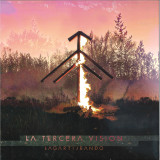
Arriving two years after his last full-length effort ("Jallalla"), Lagartijeando (aka Mati Zundel) once again returns to Wonderwheel with an expansive new album, "La Tercera Vision." A maturation of the Lagartijeando sound, "La Tercera Vision" ("the third vision") sees the Argentinian wade into uncharted, if sonically familiar waters, bridging his Andean inspired electronic-folk with psychedelic ambience, West African instrumentation, and even a few moments of pop melodies. The beauty of Lagartijeando's work is its ability to marry seemingly unrelated styles and sounds to something seamless and wholly original.
"Isla de Sol," the opening track, introduces the album with a taste of Mati's classic sound: Andean pan flute, the familiar chugging rhythm of a cumbia beat, luscious string arrangements, and a sampled vocal. Moving on, "Mano de Fatima" (the project's second single) sees a fusion of traditional Moroccan Gnawa instrumentation with digital cumbia rhythms, featuring the work of Khalil Mounji on vocals and guembri (aka sintir, the three-stringed, skin-covered lute used in Gnawa music). Eva de Marce - a singer-songwriter-producer based in Madrid - takes centre-stage on "Tierra Natal," with her vocals coming through in a rich whisper, singing a melody reminiscent of a lullaby.
At the album's halfway mark, Lagartijeando introduces a new direction for his sound with "Onda," a collaboration with the Brazilian artist Tagua Tagua. An earworm of a melody is sung over a joyous beat that nods to pop sensibilities while being satisfyingly infused with Zundel's sonic DNA. It's a gem of a tune that suggests an exciting new sound for the Argentinian. A few more collaborations close out the album, two with Mexican singer-songwriter Madeleine Bachan Kaur ("Crepúsculo" & "La Montaña Sagrada"), "Magaleña" with Javier Arce, and the album closer "Ware" featuring Sajra. Also included in the album is "Sideral Cumbia," the first single released earlier this Summer, which has seen extensive press and radio support from the likes of Vice / Noisey, Electronic Groove, Sounds And Colours, KCRW ("Today's Top Tune" & "Morning Becomes Eclectic"), and KEXP, as well as landing a spot on Spotify's "Fresh Dance" playlist.
Lagartijeando is the name of producer, musician and DJ Mati Zundel. Strongly influenced by his travels throughout Latin America, Mati's signature psychedelic dance tracks latch onto everything from traditional folk sounds from the Bolivian altiplano to the jungle beats of Brazil. Mati hypnotically fuses his traditional influences (with an emphasis on shaman chant and charango loops) with contemporary electronic beats, creating a sound that once left NPR speechless.
"La Tercera Vision" is due out on Brooklyn's Wonderwheel Recordings October 29th.
- 1: O Mar
- 2: I_Still Hear_The Roar Of A Distant Crowd
- 3: Small Piece With Walfisch And Autodrum
- 4: ??
- 5: Icaro
- 6: Cycloïd-E
- 7: Móbil
- 8: Escucha Para Acelerador De Partículas, Parancatadora Y Voz
- 9: Música Nocturna
- 10: Tripa Con Dientes
- 11: Uma Isis Esfera
- 12: Aerodrones
- 13 1: Prepared Dc-Motor, 1 Mdf Wheel, Touch Fasterner, Mdf Box 25X25X9Cm
HIGHLIGHTS: Objetos Musicais is a collection of 13 sound pieces created by artists from South America and Switzerland, who work in an intermediate zone among the craft of luthiers, visual arts and experimental music. Their works evoke the visionary ideas of Walter Smetak, a Swiss composer who lived in Salvador, Bahia (Brazil) Smetakian spirit tunes in with a new community of contemporary artists, who relate to the work of the so-called "experimental luthiers": artists who build their own instruments, lead them towards radical extended versions or take the exploration towards the building of resonant machines. DESCRIPTION: Objetos Musicais is a collection of 13 sound pieces created by artists from South America and Switzerland, who work in an intermediate zone among the craft of luthiers, visual arts and experimental music. Their works evoke the visionary ideas of Walter Smetak, a Swiss composer who lived in Salvador, Bahia (Brazil). Smetak was a pioneer of musical experimentation in that country and developed, in the 60s and 70s, a musical poetics that was captured in two seminal albums, Smetak (1974) and Interregno (1980), both of which, after being out of print for a long time, have been reissued today, hence the motivation for this tribute. On those two albums, Smetak combined Afro-Brazilian ritual traditions, theosophy, microtonality studies, collective improvisation and the use of unconventional musical instruments, which he called Plasticas Sonoras. Smetak came to build around 150 acoustic instruments, many of which are true sound sculptures of great visual impact. This latter aspect is the most directly evoked one on this album-and it so happens that the Smetakian spirit tunes in with a new community of contemporary artists, who relate to the work of the so-called "experimental luthiers", artists who build their own instruments (Marco Scarassatti, Phillipp Laeng, Maria Anália), lead them towards radical extended versions (Ruben Dhers, Claudio Merlet), develop hybrid projects involving instruments and sound sculpture (Javier Bustos, Alvaro Icaza and Verónica Luyo, Juan Pablo Egúsquiza, Edgardo Rudnitzky) or take the exploration towards the building of resonant machines (Nicole L'Huillier, O Grivo, Zimoun, Cod.Act), without these categories being mutually exclusive, but rather tending to mix, thereby opening up new sonic possibilities. This new community of artists has begun to create a whole new field of research and, in a way, a new discipline, understandable within the context of this new paradigm opened by the maker culture, which has pushed creators and developers from all over the world to conceive alternative-anti-hegemonic and DIY-forms of production. Therefore, this collection allows the artists to evoke Walter Smetak but also to connect his work to this new scene-to which it precedes-a link for this new art that makes its way at some point among the work of experimental luthiers, sound art, experimental music and the DIY ethics. Curated by Luis Alvarado and Chico Dub. Art by René Sánchez. Limited edition of 300 copies on vinyl. This project is part of the experimental music and sound art platform Incidencias Sonoras: COINCIDENCIA, by the Swiss Arts Council Pro Helvetia.
- A1: Miguel A Ruiz - Transparent
- A2: Camino Al Desvan - La Contorsion De Pollo
- A3: Mecanica Popular - Impresionistas 2
- A4: Finis Africae - Hybla
- A5: Orfeon Gagarin - Ultima Instancia
- B1: Victor Nubla - 2000 Lenguas
- B2: Javier Segura - Malaguenas 2
- B3: Jabir - Vuelo Por Las Alturas De Xauen
- B4: Miguel A Ruiz - Trivandrum
- B5: Mecanica Popular - Impresionistas 1
- C1: Finis Africae - Hombres Lluvia
- C2: Esplendor Geometrico - Sheikh
- C3: Victor Nubla - Chandernagor
- C4: Luis Delgado - El Llanto De Nouronihar
- C5: Camino Al Desvan - Adjudicado A La Danza
- D1: Mataparda - Me Llena La Cachimba
- D2: Suso Saiz - Horizonte Paseo
- D3: Camino Al Desvan - Fock Intimida A Gordi
- D4: Mataparda - La Papa Suave
- D5: Eli Gras - Flu
Following “La Contra Ola” (BJR015), Bongo Joe presents 'La Ola Interior', a compilation exploring the ambient side of the Spanish electronic music produced in the 80’s, bringing together 19 little-known and innovative pieces from the golden age of Spanish electronic music !
It gathers musicians from various horizons and of many generations, who shared the desire to create an immersive soundscape and to combine electronic music with non-Western musical traditions. As a general rule, the Anglo-Saxon tropism did relate the spanish peninsula’s ambient music to the Balearic Sound, that is to say to the relaxing music played in Ibiza’s nightclubs. But this music takes place in the productive territory of experimental musics, and particularly in its two main breeding grounds: the tape recording underground and the independent musicians-producers scene.
Inseparable from the processes of self-publishing, distribution and exchange of music that were then taking place in Spain in an artisanal way, the vast underground movement of cassettes was divided between an "ethno-trance" combining industrial beats and oriental sounds on the one hand (Esplendor Geométrico, Miguel A. Ruiz / Orfeón Gagarin) and unclassifiable low-fi tinkerers on the other hand (Camino al desván, Eli Gras, Mataparda, Victor Nubla). Hyperactive, this scene is radical and strongly dominated by the hardest musical styles, but the ambient, influenced by the German Kosmische Musik and "krautrock", also develops here.
The second vein of Spanish ambient comes from some of the independent labels of the peninsula (DRO, GASA, El Cometa de Madrid, EGK) whose activity will mark the return of some of the most adventurous musicians-producers of the 70s. Some were influenced by American minimalism (Luis Delgado / Mecánica Popular, Suso Saiz, Javier Segura), others by Fourth-World Music conceived by Jon Hassell and Brian Eno (Finis Africae, Jabir). Having passed through folk, ancient, traditional or contemporary music, and being familiar with improvisation and studio techniques, these artists come from a mutant hippie culture, capable of phagocyting many musical styles from electronic ambient to ethnic improvisation and modal jazz.
These two scenes and generations that make up LA OLA INTERIOR intersect around a common interest in non-Western musical traditions. Their exploration may be that of the tribal origins of electronic rhythms or the Arab heritage of Spain. Above all, it is a dreamy exoticism, an immobile journey as the sounds, rhythms or instruments of these traditions are scrutinized by Western practices (avant-garde music, electronic technology). The result is a hybrid music, filtered and reinvented, neither Western nor extra-Western, with a pronounced taste for the fusion of opposites, which we have called "Acid Exoticism" because of its permanent search for trance or contemplation. Atmospheric, contemplative and serial, these musics still plunge us today into a sensorial journey, at the same time interior and distant, organic and technological, between exotic reminiscences and interior visions.