'I heard about Seif Abu Bakr and The Scorpions maybe 3-4 years ago. Their album 'Jazz, Jazz Jazz' ended up on my radar because of an eBay auction with the bids eventually rising daily up to a staggering 1000$. The music is a unique combination of incredible horn arrangements powerfully performed, a vigorous drummer contributing a funky backbone and Seif's vocals uniting those elements. The results range from instrumental tracks awaking memories of 1970s crime thriller soundtracks to more Sudanese-rooted tracks, a lot of them modernized versions traditional rhythms of the diverse regions of Sudan and even an excursion into Colgolese Soukouss.
I went for my second trip to Sudan in December 2018 and after doing some research on the first trip my local colleagues Larissa and Yassir had managed to reach Amir, The Scorpions band leader and he was happy to meet. We got together with him in a Cafe right at the Nile in Omdurman. It was a happy occasion for everyone. He told us stories about him meeting Jimmy Cliff and Lewis Armstrong when they visited Sudan and how he and his band mates from The Scorpions played extensively in Kuwait, both in club residencies as well as for television. Amir brought tons of incredible photos illustrating not only the bands history but the vivid cultural live in the many music clubs in Khartoum of the 1970s. During this decade up until 1983 the capital was home to a huge number of clubs, bards and concert halls. This scene started to perish after president Nimeiry's turn away from his socialist policies, that he was widely associated with in the first decade of his rule, towards the implementation of Sharia law in 1983. During the first decade of his rule he had actively supported various artists of the Jazz scene, taking some of them on trips throughout Africa. The 1989 coup of Bashir and his generals then caused the final blow to a once thriving scene. Both of these political events within 6 years lead to significant drawbacks for the Sudanese jazz scene resulting into hardly no gig opportunities left and parties and concerts being critically observed. A number of musicians faced prosecution, most of the time for their political views; some left Sudan for good. Music never completely vanished from public life and even the regime kept selected artists close, but for a majority of those bands affiliated to the jazz scene life and making ends became a lot harder. The Scorpions dissolved as a group around the same time.
The re-release was produced with a clean copy of the vinyl version as a source. The original reel tape of the album stayed with Saif Abu Bakr along with another reel with other recordings that were never released. Unfortunately it was lost when Saif Abu Bakr had to flee to Kuwait temporarily during the second gulf war when Iraq raided Kuwait. Vinyl version comes with extensive booklets with photos, interviews, liner notes. The vinyl version also has a DLL code.

Search:jazz cafe
Jill Barber's 2013 masterpiece "Chansons" is an album of interpretations of classic French songs from both France and Québec. Jill meticulously curated the repertoire herself, selecting material both from her own collection and from recommendations from friends within the Francophone community. “I spent time with the songs. I strolled the streets with Aznavour, I sat in a sidewalk cafe with Piaf,
poured a stiff drink with Gainsbourg, and I became absolutely enamoured and inspired by French music in the process.” Jill Barber is a 3-time JUNO Award nominee, a Polaris Music Prize nominee,
and winner of the Sirius/XM Jazz Album of the Year. She has headlined the Montreal Jazz Festival, Toronto's Massey Hall, and the Blue Note in Tokyo, and played clubs and festivals around the world.
Songs from Jill's catalogue have been streamed more than 160,000,000 times on digital services. Outside Music is proud to reissue "Chanson"s for its 10th Anniversary on limited edition Blush
coloured vinyl.
Wien, Porgy&Bess. Am vorletzten Tag des letzten Vor-CoronaJahres stehen, singen, jubeln, shaken wir, dichtgedrängt. Wir wissen nicht, dass es, für eine gefühlte Ewigkeit, das letzte Mal ist. Fast forward: Kaum 19 Monate später…
Alle – Ausführende und Zuhörende und Veranstaltende – haben die erste Covid-Krise hinter sich. Und irgendwie spüren wir das aus diesem live-Mitschnitt heraus. Die Energie ist nicht ungebrochen, aber unbeugsam. Die Spielfreude ist nicht versiegt, aber mit ein paar melancholischen Pinselstrichen ein wenig dunkel gefärbt. Es wird mit einem lauten „trotzdem!" musiziert. Die ursprünglichen Qualitäten des Projektes sind durch die Erfahrungen der vergangenen Monate noch gereift.
Der Vorhang hebt sich wie zu einem düsteren Kriminalfilm, ein exquisiter roter Teppich wird ausgerollt, bevor das Manifest der Achterl erklingt, wovon sie singen wollen und wovon nicht, wie sie leben und sterben wollen.
- A1: T.m.c.p
- A2: Heart Of Gold (With Mighty Mo Rodgers)
- A3: Bon Ton Cafe
- B1: The Change Has Yet To Come (With Mighty Sam Mcclain)
- B2: Memphis
- B3: If You Love Somebody Set Them Free (With Little Milton)
- B4: Junior Parker
- C1: City Of Angels To The City Of Lights (With Mighty Mo Rodgers)
- C2: Royal Shuffle
- C3: Master Lester
- C4: Things Are Gonna Change (With Little Milton)
- D1: Poppa Willie
- D2: At Last, On Time (With Mighty Sam Mcclain)
- D3: The Feeling Is Real (With William C Brown Iii)
Ein europäischer Jazzklassiker - zum ersten Mal auf LP!
Jean-Jacques Milteau gilt seit den 1980er Jahren als der beste Blues Harp-Spieler Frankreichs. 2001 reiste er in die oft als Wiege des Blues bezeichnete Stadt Memphis in Tennessee, um dort mit international bekannten Größen der lokalen Szene dieses erstaunliche Album einzuspielen. Neben eigenen Stücken und Songs seiner Mitspieler erfahren hier auch Neil Youngs “Heart Of Gold” und Stings “If You Love Somebody Set Them Free” soulig-bluesige Überarbeitungen.
In 1995 the self-titled full-length debut of Die Anarchistische Abendunterhaltung (DAAU) was released. The band consisted of four young, 'classically derailed' musicians who played their own compositions with acoustic instruments such as violin, cello, clarinet and accordion. Their work contained influences from Roma music, Eastern European folk, klezmer and jazz, but was performed with the energy, rebellious spirit and Sturm und Drang of a bona fide punk band. DAAU was part of the fertile Antwerp scene, which also produced dEUS, Zita Swoon and Kiss My Jazz, and soon signed an international record deal with Sony Classical.
The group's influential first record, which has been out of print for a while, is now finally being released again and is available on vinyl for the very first time.
In those early days, DAAU consisted of four young, classically trained musicians who tackled their instrumental compositions with a true punk spirit. 'If we'd had guitars, bass or drums at that time, we would probably have been just another rock band', says accordionist Roel Van Camp, who, together with his schoolmates Buni Lenski on violin, the latter's brother Simon on cello and Han Stubbe on clarinet made up the Antwerp quartet. 'With our acoustic instruments we tried to create our own version of the music we loved listening to, from sixties rock and prog to new wave.'
The quartet, which initially played in streets and cafes, appealed to a diverse audience and sometimes joked that they were a classically trained unit that had 'gone off the rails'. 'As befits teenagers, we wanted to shake things up', Stubbe remembers, 'even though we always kept cherishing our classical backgrounds.' Van Camp: 'Our education was never supposed to feel like a straitjacket. We were free-spirited enough to ignore the laws and regulations of the music academy and to create our own sound. Our compositions were open to influences from Roma music, Eastern European folk, klezmer and jazz'. 'That eclecticism was a direct result of the zeitgeist', Han Stubbe adds. 'We loved different styles and happily mixed them together'.
The monniker Die Anarchistische Abendunterhaltung was derived from Steppenwolf, a novel by German writer Hermann Hesse about a character who was outside society. 'In the book, the narrator talks of a theatre', Van Camp explains. 'And at the entrance there is a warning sign sign that says: if you go in here, you are guaranteed to lose your mind. That was an apt description of the way our music worked'.
Almost all tracks on DAAU's first album were 'Drieslagstelsels' (or 'three-course rotations'). The term referred to an agricultural method of the early Middle Ages, but also to the fact that each song of the group consisted of three major movements. Van Camp: 'The titles of those pieces referred to our method of writing. We piled up a huge bunch of ideas, because we wanted to tell more than just one story. With each composition, we took the listener for a ride'.
In 1995 the self-titled full-length debut of Die Anarchistische Abendunterhaltung (DAAU) was released. The band consisted of four young, 'classically derailed' musicians who played their own compositions with acoustic instruments such as violin, cello, clarinet and accordion. Their work contained influences from Roma music, Eastern European folk, klezmer and jazz, but was performed with the energy, rebellious spirit and Sturm und Drang of a bona fide punk band. DAAU was part of the fertile Antwerp scene, which also produced dEUS, Zita Swoon and Kiss My Jazz, and soon signed an international record deal with Sony Classical.
The group's influential first record, which has been out of print for a while, is now finally being released again and is available on vinyl for the very first time.
In those early days, DAAU consisted of four young, classically trained musicians who tackled their instrumental compositions with a true punk spirit. 'If we'd had guitars, bass or drums at that time, we would probably have been just another rock band', says accordionist Roel Van Camp, who, together with his schoolmates Buni Lenski on violin, the latter's brother Simon on cello and Han Stubbe on clarinet made up the Antwerp quartet. 'With our acoustic instruments we tried to create our own version of the music we loved listening to, from sixties rock and prog to new wave.'
The quartet, which initially played in streets and cafes, appealed to a diverse audience and sometimes joked that they were a classically trained unit that had 'gone off the rails'. 'As befits teenagers, we wanted to shake things up', Stubbe remembers, 'even though we always kept cherishing our classical backgrounds.' Van Camp: 'Our education was never supposed to feel like a straitjacket. We were free-spirited enough to ignore the laws and regulations of the music academy and to create our own sound. Our compositions were open to influences from Roma music, Eastern European folk, klezmer and jazz'. 'That eclecticism was a direct result of the zeitgeist', Han Stubbe adds. 'We loved different styles and happily mixed them together'.
The monniker Die Anarchistische Abendunterhaltung was derived from Steppenwolf, a novel by German writer Hermann Hesse about a character who was outside society. 'In the book, the narrator talks of a theatre', Van Camp explains. 'And at the entrance there is a warning sign sign that says: if you go in here, you are guaranteed to lose your mind. That was an apt description of the way our music worked'.
Almost all tracks on DAAU's first album were 'Drieslagstelsels' (or 'three-course rotations'). The term referred to an agricultural method of the early Middle Ages, but also to the fact that each song of the group consisted of three major movements. Van Camp: 'The titles of those pieces referred to our method of writing. We piled up a huge bunch of ideas, because we wanted to tell more than just one story. With each composition, we took the listener for a ride'.
A true surprise success for Paharas Musica, originally written during the end of the pandemic, 'White Isle Memories' captured the loss of not being able to visit the white isle of Ibiza and combines the producer talents of Ridney & Inner Spirit (aka Richard Earnshaw).
A production aimed at the beach bar culture of the island the production duo are joined by multiinstrumentalist, vocalist and loop pedal extraordinaire Michael Sebastian. In it’s original guise the track has racked up well over 1.3 million streams and in that gained the attention of German producer SOMMA (1.7 million monthly listeners), who was keen to grab the stems and deliver a special 2023 remix.
Adding to the package Ridney’s sunset reprise from his Café Mambo Ibiza DJ sets and Inner Sprits own incredible 2023 remix.
DJ Support:
Mark Knight (support on Kiss FM), Purple Disco Machine, Mousse T, Ken Fan (Café Del Mar), Ryan McDermott (Café Mambo Resident), Hector Romero, Des Mitchell (Radio One Mallorca), Mr V, Lenny Fontana, Loeca, Jazzy M, Dario D’Attis, Danny Rampling, Chad Jackson, Brandon Block, Booker T, Black Legend, David Dunne, Graham Sahara, Lizzie Curious, Martyn the Hat.5
NEW 45 BY DEEP-FUNK PIONEER LUCKY BROWN RECORDED DURING THE NOW LEGENDARY SPACE DREAM SESSIONS!
In around 2001, Joel Ricci, the trumpet player/composer behind his former stage alias, Lucky Brown, went traveling on a worldwide "quest for funk". During that pilgrimage, he went to London England in time to attend Keb Darge's 'Legendary Deep Funk' 6-year anniversary at Madame Jojo's. While in the middle of the dancefloor, he was moved so significantly by this obscure brand of 'deep funk' Mr. Darge was unveiling, he became overcome by a mystical sense of 'coming home'. Additionally, he spent a week at Camden's Jazz Cafe to meet The Poets of Rhythm, The Breakestra, The Sugarman Three, DJ Snowboy, DJ James Trouble, and others. When Joel mentioned the nature of his quest to Neal Sugarman, he warmly invited him to come visit Brooklyn and kick it with members of Antibalas, Binky Griptite & The Mellomatics, and the Dap Kings. But before the trip back to the states, Joel spent some time in Paris playing his trumpet at a club called 'Cithea' where they would host weekly 'rare groove' jam sessions. During the jams, Parisian students of Tony Allen would overtake the stage with their instruments and their full African clothing, chant the word, 'Fela', and begin to play this intense free improvised funk and afrobeat. While traveling by train from Paris to the south of France to visit family, Joel began hearing this inspiring polyrhythm swirling in his inner ear and mixing with the "clack-clacka" of the train moving down the track. As soon as he arrived at his destination, he sat down at a piano and jotted down the polyrhythm, bass line and fundamental horn cluster on a piece of sheet music paper. The simple tune was finally rendered to tape ten years later with Lucky Brown's Crawdad Farmers aka The Funk Revolution on the Magik Carpet at drummer Olli Klomp's Lakeside log cabin in Stanwood, Washington. The tune became the title track to Lucky's first full-length on Tramp Records (Lucky Brown's Space Dream, TRLP-9011).
Space Dream is so titled in part to commemorate a soulfunk masquerade party Joel threw at a temporary all-ages Bellingham Washington music venue called 'The Pickford Dream Space'. This is Joel's stripped-down tape-only remix and re-edit which has never before appeared on 45RPM and commemorates the re-release, remaster and repackaging of upcoming Tramp LPs, "Space Dream" and "Don't Go Away", the fully realised 'director's cut' featuring Ricci's early group funk experiment: "The Funk Revolution."
Limited to 300 copies. The Groove Connection formed in Medway, Kent during the early '90's, amongst the Acid Jazz heyday, playing clubs, pubs and festivals up and down the land with their urban jazz-funk grooves. The band comprised of usually six to eight members over the years, including Mark 'Bertie' Gilbert, the former (initial) bass player from The Milkshakes, and was originally an instrumental project, with vocals added later giving the band further appeal. Recording/releasing their first CD EP in 1996 (In Full Pursuit), described by Blues & Soul as 'an impressive debut set', The Groove Connection also released a 7" vinyl single in 1998 (What It Is), which was produced by respected DJ and percussionist Snowboy. A year later, their first album 'Infiltration' was released. All releases were via their own NeuJaz label. As well as working with Snowboy, the band also supported Jamiroquai twice in 1997 (at Finsbury's Jam in the Park and the Phoenix Festival), as well as playing to a full house at the Jazz Cafe, Camden on many occasions, and the band toured the UK as part of the Messin' Around Jazz Cotech collaboration. In 1999, the band found themselves on the Verve Records' released compilation 'Messin' Around Presents Root Down', alongside Lalo Schifrin, Jimmy Smith, The JBs, and Roy Ayers to name just a few. In 2001 the band recorded, and released their second album 'Back To Brooklyn', introducing vocalist Laura Knight and guest hammond virtuoso Gary Baldwin, a ten-track full-length, CD-only release. Other tracks were recorded in the same session… Two tracks that didn't make the last album were 'Can You Hear Me' and 'When I'm With You', both vocal filled, and we've decided to capture them onto two continuous 'grooves'.
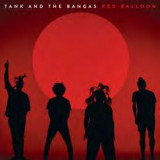
Gerade erst Grammy-nominiert als “Best New Artist” haben Tank And The Bangas ihr drittes Studioalbum aufgenommen. Zu dem vor R&B-, Hip-Hop-, Jazz-, Funk- und Soul-Grooves aus allen Nähten platzenden
Album luden sie diesmal Gäste wie Questlove, Lalah Hathaway, Big Freedia, Jacob Collier, Trombone Shorty, Jamison Ross und Wayne Brady ein.
Die in New Orleans ansässige Band mit der energiegeladenen Frontfrau Tarriona “Tank” Ball wurde 2017 durch den NPR Tiny Desk Contest auf YouTube berühmt (sensationelle 12,5 Millionen Aufrufe). „Red Balloon“ entstand jetzt in Folge der pandemiebedingten Unterbrechung des anstrengenden Tour-Pensums der Band. Die Pause gab den Musikern Raum zum Atmen und die Chance für ein kreatives Kräftesammeln. Das Werk zeigt die Band auf einem neuen künstlerischen Level, produziert wurde es von der Band selbst
und aufgenommen in New Orleans und Los Angeles.
Shapes of Rhythm is proud to present the self-titled debut LP of Turkish psychedelic pop from MLDVA & Çınar Timur. This record is a celebration of the classic music and culture typically of the 70s and 80s, but which also leans into western jazz funk and soul jazz moments. If you're into the Turkish music legends of the 70s and 80s such as Barış Manço and more recently Altın Gün or Derya Yıldırım & Grup Şimşek, you've come to the right place.
MLDVA were formed in Krakow, Poland in 2013 as a DJ and production outfit. Under the influence of Greek and Turkish folk and psych-rock music they began to transform into a band, taking up instruments including the Saz which is one of the most recognisable trademarks of the Turkish sound. Two years later in 2015 they invited Turkish instrumentalist Çınar Timur to join them and this completes the line up on their debut. This electric album is packed with excellently-recorded expansive tracks which are full of energy, psychedelic deep grooves, hard-hitting breakbeats and everything else you'd expect with classic Turkish sounds.
The instrumental double-header of Neşat Erkaş' Zülüf Dökülmüş Yüze, moving into the time-honoured traditional Kozan Dağıis the perfect opening track. The introduction is an overture of sorts with two minutes of Çınar Timur's pondering guitar. This tees up the record perfectly before heading into a break-beat driven workout with the band matching Çınar's evocative and energetic riffing. The result is a tight sound and a heavy groove that sets the tone for what's to come.
With the band unveiled, Sarı Çizmeli Mehmet Ağa, written by Barış Manço (a legend in Turkish popular music), hits a relaxed, deeper and more psychedelic groove, dominated by Wojciech Długosz's dreamy Rhodes piano, set against choppy wah-wah guitar licks that characterize that classic electric Turkish pop sound. We're introduced to Ulaş Çıbuk's vocals for the first time, telling the historic tale of a charitable village lord Mehmet Ağa from 19c Anatolia known for his generosity. He shared his fortune with people inneed and as a result, died penniless. This track also features the unique sound of Çınar's Mictrotonal electric guitar.
Bir Adım Öte is MLDVA & Çınar Timur's magnificent mellow moment, marking the halfway point in their debut. The group shows that it's not all about the frenetic in a nod to western Soul-Jazz constructs. They showcase restraint, emotion and that joy in repetition of a wonderful guitar refrain. Not content with holding this down, Wojciech Długosz's Rhodes solo steps into a world that's US-influenced Soul jazzand is a lesson in reduction and feeling. Çınar Timur then takes a solo turn, keeping it western-influenced with an on the spot improvisation. When the three minutes of solos are over, we're brought back out of thedream and towards the East again.
Adımız Miskindir Bizim kicks off like a hip hop/funk crossover tune, until the chord changes muscle in, to remind you where you are in the world. As with other tracks on the debut, the tune is marked by recurring motifs, this time from Çınar's microtonal electric guitar. We've more solo Rhodes action, thist ime busier and more urgent. The lyrics–originally written by Yunus Emre – criticizevalues such as holding grudges that destroy ideas of love, friendship and peace among people which causes hostility. Adımız Miskindir Bizim concludes with an uplifting vocal vamp which switches it up unlike any of thetracks on the LP.
In Fesupanallah– made most popular by Erkin Koray – Ulaş Çıbuk sings about the simple subject ofbeing patient with never ending problems in life, and trying to find a solution for them. This cut takes a rhythmical side-step to the rest of the album. The kick drum maps out a solid four-four, but the vocals and guitar lines move around it to impose Fesupanallah as being the record's most traditionally Turkish-sounding cut.
The album's closing track Ölüm Allah'ın Emri (another Manço classic) was recorded live in the band's more familiar surroundings of Krakow's Cheder Cafe during 2020's Jewish Culture Festival. The lyrics tell the tale of someone who has accepted death but cannot accept the separation that comes with it. We open with a dreamy, psychedelic mood before progressing into a heavy-riffing rock feeling with probing synths. Ulaş delivers his vocals over the top of a stripped back, shuffling groove. As the track progresses towards a frenetic conclusion, drummer Szymon Piotrowski cuts loose, combining with Grzegorz Dąbek's synth lines.
MLDVA & Çınar Timur's debut LP is not the sound of a band starting out. Taking time to hone their craft and let influences across the global spectrum of music mature, this is the result of years of jamming, gigging and collaborating. Now, after prestigious festival appearances and their place on Saz Power – an essential modern Turkish music compilation – they're making a lasting contribution to a rich, time-honored culture. MLDVA & Çınar Timur releases Friday 30 June 2023 on limited edition vinyl LP and digital download/streaming services on Shapes of Rhythm. Global distribution by Kudos Records.
Jackie Mittoo is one of the defining figureheads of reggae music!
From forming The Skatalites, at age 15, alongside Don Drummond, Roland Alphonso, Tommy McCook and others, to his work as writer, arranger, producer at Studio One records during the sixties,
writing and playing for artists such as Alton Ellis, Ken Boothe, Marcia Griffiths and The Heptones (to name a few), to his career as a solo artist as well as leader of bands such as The Soul Brothers, Soul
Vendors and The Sound Dimension, Jackie Mittoo is at the heart of reggae music. He was one of the instigators of Ska, Rocksteady and Reggae. In the seventies, DJ music and Dancehall were based
upon classic rhythms of the sixties, many using the instrumental tracks that Jackie Mittoo created at Studio One at this time.
- A1: The Language Of Love Ft Adam Evald, Антоха Мс
- A2: Strong Accent Ft Curly Castro, Sindysman, Lovvlovver
- A3: Forget, Forgive Ft Mishinuki
- A4: Ingen Förstår Ft Adam Evald, Ni!
- A5: The Closing Shift At The Jazz Cafe Ft Jimi Tenor, Starving Yet Full, Ÿorik, Mak Glonti
- A6: Breed Ft Ÿorik
- A7: Praise This Ft Sindysman
- B1: In The Mood For Dub (Memories Of Love) Ft Mishinuki
- B2: Light Ft Fotiniya
- B3: Obey (Reprise) Ft Mishinuki
- B4: Kabwato Ft Budūchi, Ni!, Lipelis
- B5: Magic Mystery Tour Ft Adam Evald
- B6: Track 04 (りんロゴ) Ft Jimi Tenor, Fotiniya, Rich Thair
- B7: The Sun Is Still Up Ft Noteless, Adam Evald, Saya Siiang, Alina Royz, Katya Panterrra
Green Monster, the 4th Kito Jempere studio album is a journey through love, interconnectedness and creative freedom, bound together by musical friendship that breaks through walls, borders, languages and shapes; accumulated over a celebrated twenty year career and ten years of Kito Jempere.
Over fourteen tracks Kito teams up with over 26 artists from all over the world: a range of talented artists including Warp records artist Jimi Tenor, Red Snapper drummer Rich Thair, Azari & III ex-vocalist Starving Yet Full, L.I.E.S. records Lipelis (on bass), Curly Castro and SINDYSMAN. The album blends hip-hop, free-flowing jazz and world-building soundscapes into a piece dedicated to Kito’s musical roots; marrying multiple artforms, cultural influences and international artists into a body of work that feels deeply personal, healing and detailed. The accompanying artwork is a world created by Kito made using Midjourney prompt, connecting the albums audio world with visible objects — both vinyl and CD will contain booklets with lyrics and the visual world of Green Monster.
Kito describes the album ‘like getting Ennio Morricone, Weezer, The Beatles, Oneothrix Point Never, Eduard Artemiev, Jaga Jazzist, Massive Attack, Fugazi, Jimi Tenor, Hans Zimmer, Radiohead, John Cage and Aphex Twin all together, then collaborating with movie-directors Wes Anderson, David Lynch, Dziga Vertov and Andrei Tarkovskiy.’ Used as a metaphor to help create his album.
A native of Los Angeles, Henry Franklin came of age while the city was producing a crop of exciting jazz talent. Frankin’s lasting impact on jazz can be evidenced by the long list of legends who sought him out for tours and recording sessions, Stevie Wonder, Bobby Humphrey, Freddy Hubbard, & Pharaoh Sanders to name a few. Franklin’s solo output is best remembered for his two solo outings with the Black Jazz label- “The Skipper” & “The Skipper At Home”. Together, they form one of the most compelling diptychs in the entire post-bop canon. Recognised by his peers and contemporaries, Franklin’s entry for Jazz Is Dead gives the living legend his flowers and recognises the contributions The Skipper has made as one of jazz’s most influential heartbeats.
Fast-rising pianist and producer Yoni Mayraz presents his debut LP ‘Dybbuk Tse!’ revealing the story of a malicious possession that is taking over one’s body and soul.
Dybbuk, known from Jewish folklore, is a malevolent wandering spirit that enters and possesses the body of a living person. It’s a cursed soul of a dead one that wanders tirelessly for sins committed during their life. The most vulnerable victims are the young and the sinful. Possession can be taken literally or as an analogy to the burden that young people carry generations back, which they have no influence on, and which they have to accept. Dybbuk can only be removed by exorcism. The titular ‘Dybbuk Tse!’ is a command to remove the spirit from the possessed body. The album is a story about possession but also about exorcism through music.
Recorded live with his band in a dusty wooden studio, ‘Dybbuk Tse!’ is indeed experimenting with the ‘darker side of things’, but yet with a somewhat lighthearted approach which is so typical of Yoni’s work. He easily combines jazz with the sound of 90’s New York hip hop and raw old school breakbeat. The album interweaves unique Middle Eastern melodies, sophisticated structures and sounds, and beautifully crafted solos played by some of the promising talents on the scene.
London based Israeli born pianist and producer Yoni Mayraz has set foot in the instrumental music scene with his EP ‘Rough Cuts’ released in 2020. Since then, Yoni and his band have been playing major venues and festivals around the world including the legendary Ronnie Scott’s and The Jazz Cafe, to name a few, bringing raw energy to stage with live versions of the studio materials, and stretching the melodies and structures into a Dancefloor-focused take on jazz.
‘Dybbuk Tse!’ album will be released by Astigmatic Records on LP in regular and limited (B1 poster included) editions, as well as on all streaming platforms.
Repress!
Using an old door, 17 strings, chopsticks and combining them with phasers, echo units and amplification, the new device was to become his signature sound, mixing Irish folk influences with Asian and North African sounds in a mesmerising and soulful new way that brought him to the attention of the leading improvisers of his day - Alice Coltrane, Ravi Shankar, Don Cherry and more.
A logical follow up to AllChival's recent reissue of Stano's debut LP, Michael O'Shea's self titled LP was originally released on Wire's Dome Imprint in 1982.
The background to the album is as interesting and inspiring as the artist who created it - born in Northern Ireland but raised in the Republic, O'Shea was keen to travel and escape the troubles of his home.
Wandering throughout Europe and the Middle East, O'Shea found himself living and working as a relief aid in Bangladesh in the mid Seventies where he learned to play sitar while recovering from a bout of hepatitis. A later period spent busking in France accompanied on zelochord by Algerian musician Kris Hosylan Harp led to O'Shea's idea of combining both instruments as a homebuilt instrument - Mo Chara (Irish for "My Friend").
He later described the process on the back of the LP himself saying:
"Having sold my sitar in Germany and being desperate for money to travel to Turkey, I conceived of the idea of combining both sitar and zelochord. The first Mo Cara was born, taken from the middle of a door, which was rescued from a skip in Munchen"
A combination of dulcimer, zelochord and sitar, O Shea would play it with a pair of chopsticks, striking the strings softly using Irish folk rhythms mixed with the rich, nostalgic sounds of of the many Asian artists he'd encountered on his travels.
It was a pan cultural sound standing at an unusual crossroads of folk, traditional, rock, progressive, jazz, electronic and post-punk worlds without hesitation.
Perfecting the instrument on the streets, there were further spells spent busking in the underground stations and cafes of London's West End and Covent Garden during the heady days of the 1970s when they were full of eccentric street entertainers, jazz improvisers and musical pioneers.
His work with Rick Wakeman never saw the light of day but O'Shea's contact with the world of post-punk London ensured his name would live on.
Introduced to Wire's Bruce Gilbert and Graham Lewis via cartoonist Tom Johnston, O'Shea eventually acquiesced to an open invite to record at their studio. Turning up unannounced in the summer of 1981 the LP was recorded in a day in the legendary Blackwing Studios and released on Dome the year after.
The first side features the fifteen minute masterpiece "No Journeys End" with the B side featuring more input from Wire in processing the Mo Chara sound.
Lewis himself said years later of the forgotten masterpiece: 'I always said it was the best job we ever did.'
After an aborted LP with The The's Matt Johnson the following year, O'Shea quietly disappeared from the formal recording world and his brief but unique contribution to the music world came to a sad end in 1991 when O'Shea was struck by a post van and died a few days later in hospital in London.
This repress on All City's AllChival imprint has been remastered and reissued with the approval of both Dome and his surviving siblings.
Gianni Brezzo, the jazz affiliated band / studio project led by Cologne-based producer maestro Marvin Horsch, has a diverse musical profile that is reflected both in his genre-hopping as well as his creative output. Along with producing for Cologne bands like Keshavara, Woman and Xul Zolar, Gianni has released a number of EP and LP’s since 2017, including 2021’s “The Awakening” which featured vocal appearances from Berlin/Tel Aviv based singer / producer J.Lamotta and soul singer Otis Junior from Louisville, Kentucky. Gianni’s 2022 LP “Tutto Passa,” released on Jakarta Records, was a meditation around Marvin’s relationship to Italian culture, accompanied by research into Italian composers of the 60’s / 70’s such as Piero Umiliani, Stelvio Cipriani and Armando Trovajoli to more recent work by Sven Wunder. This was quickly followed up with EP “Amoria,” an extension of the themes grown from “Tutto Passa.” Gianni’s tracks have consistently placed on Editorial Lists including Spotify’s “State Of Jazz” (509k Likes) and “Café / Croissant” (200k Likes), and “lofi beats” (4.8M Likes) and most recently was synced in an episode of Gossip Girl for HBO US. Gianni’s latest excursion, “Soundscapes Vol. 1 – Music for Harlequins” is a special kind of release, one that ventures into worlds familiar, yet undeniably foreign and exciting. Gianni journeys through baroque pastures and medieval acoustics to bring forth an aural palette of colorful, timeless arrangements that fit comfortably in the sonic pocket. Featuring lush and nuanced instrumentation, all seamlessly melded together within Gianni’s groove-driven framework, the tracks on “Harlequins” present thematic moods that act as sonic windows into an enduring past. Jakarta is ecstatic to share such a project, with limited 300 vinyl initially pressed, arriving March 10th, 2023.
Esa's Aweh label is back with its second release, this time Esa’s Afro-Synth Band share their Brazilian boogie influences on “Vem Comigo”, which migcatch live over the summer at some festivals including Lente Kabinet in Amsterdam, or The Jazz Cafe in London. This is a special collaboration with singer/ songwriter Diego Moraes from São Paulo, and Forest Law who’s part of the Afro-Synth Band. Vem Comigo features in The Invisible Hand Podcast project, and Aweh continues the storytelling of these important topics.
Limited edition run of 500 copies - pressed on transparent blue vinyl
Following a CD-only release in Japan in 2021, legendary downtempo producer Calm finally releases his “Before” album on vinyl and digital courtesy of Hell Yeah. The 10-track record is a slow-burning Balearic beauty.
Calm aka Kiyotaka Fukagawa has never been to the White Isle, but he sure knows how to capture its musical essence. He has done so over a long and storied career that has taken in 17 albums and some 35 EPs on many labels including this one over the last 20-plus years. His unique blend of ambient, jazz and leftfield was last showcased on this label in 2018 with his By Your Side album, and now he does it again with another timeless and escapist offering.
The record was written, arranged, mixed and produced by Calm, but with gorgeous musical embellishments, trumpets, flutes, saxophones, violins, bass and keys played by friends and guests like Shiba, Sinsuke Fujieda, Fumiko Takeshita, Tomokazu Sugimoto, Yuichiro Kato and Toshitaka Shibata. Tracks from it have already had support from Cosmo Coleen Murphy on Worldwide FM, while Phil Mison says it is "100% reminiscent of an old Café Del Mar or José Padilla record." He is not wrong.
As soon as the opening chords of 'Beauty on Earth' wash over you there is no escaping the naturalistic charm and beauty of this record. 'Long Summer Dream' layers mystic wind sounds and gentle percussive patterns into suspensory bliss, 'Blue in Void' is a plaintive moment of sombre sax and pensive piano, then 'Liminal Moment' awakens the soul with its gorgeous flute lines and looping arps.
There is perfect horizontal sunset house on 'I Love You,' 'Feel It' picks up the pace with seductive saxophone motifs and psychedelic synth loops and 'Before Sunrise Blue' is crushing downtempo melancholia. 'Kunpoo' reawakens you with leggy bass and expansive synths that reach for the heavens, while 'Freedom Sunset' is an epic 10-minute journey out to sea. Lastly, 'Let's Make Harmony' is super slow motion jazz-funk that swells the heart. Before is a superb album that is well-deserving of this double vinyl pressing and is sure to become a Balearic classic.
DJ Support:
Phil Mison, Colleen Cosmo Murphy, Chris Coco, Buena Onda Crew
Cornetist Don Cherry first rose to prominence as part of the revolutionary Ornette Coleman Quartet that turned the jazz world on its ear in 1959 when it arrived at the Five Spot Café in NYC. Though Cherry co-led the album The Avant-Garde with John Coltrane in 1961, it wasn’t until he signed with Blue Note in 1965 that he began his career as a leader with a run of fiery albums including Complete Communion, Symphony for Improvisers, and 1966’s Where Is Brooklyn? This last session was a highly interactive quartet date that featured Pharoah Sanders on tenor saxophone and piccolo, Henry Grimes on bass, and Ed Blackwell on drums. This Blue Note Classic Vinyl Edition is all-analog, mastered by Kevin Gray from the original master tapes, and pressed on 180g vinyl at Optimal. from Coleman's playful lyricism.
Moreover, the rhythm team of Ed Blackwell on drums and Henry Grimes on bass provides a scintillating underpinning for the music that is worth listening to all on its own. Sanders' mix of Coltrane's yearning long notes, Ayler's ghostly, fluttering wail, Coleman's fast, bumpy phrasing and his own manic bagpipe screams certainly separates the faint-hearted from the stayers on the opening Awake Nu. But the conversation between Sanders and Cherry is light, lyrical and engaging on The Thing, and the saxophonist even gets into a stubborn, Sonny Rollins-like repeating Latin vamp on There Is the Bomb. An unflinchingly quirky classic. (THE GUARDIAN)