Zur Feier des 40-jährigen Jubiläums des belgischen Labels PIAS erscheint exklusive Auswahl an 12“-EPs mit Musik von einigen der wichtigsten und erfolgreichsten Wegbegleiter. Mark Thomas Griffin, besser bekannt als MC 900 FT JESUS, ist amerikanischer Rapper aus Dallas, Texas. Griffin ist ein klassisch ausgebildeter Musiker und Trompeter und bekannt für seine Mischung aus Hip-Hop, Jazz und Elektronik, die in den 90er-Jahren ihrer Zeit weit voraus war. Seine Texte sind oft sozialkritisch geprägt, aber durchzogen von seinem bissigen und bisweilen schrulligen Humor.
pas en stock
Dernière livraison il y a 2 ans réapprovisionnement sans garantie
Superfan is the songwriting veil of Kali Priya Flanagan, the Brooklyn-based multi-instrumentalist and producer. While initially imagined as a solo act, ambitious string arrangements crafted in collaboration with cellist Omeed Almassi have come to define Superfan’s noisy and magnetic pop soundscape.
Today, Superfan announces their forthcoming album ‘My Piledriver Heart’ (MPDH), out October 16 via new label home AD 93 (Joanne Robertson, Dagmar Zuniga, YHWH Nailgun). Along with the announcement, Superfan presents his new single “In the Gold Room” paired with the live version filmed by Garrett Winston inside Agger Fish Building in the Brooklyn Navy Yard.
MPDH marks the first release outside of the record deal Flanagan signed at age 14. The album finds Flanagan embracing a more expansive, experimental vision of indie rock - melding deeply tuned acoustic guitar, cello, and Eastern musical influences into what he calls his “Acousticello” sound. Recorded largely live with cellist Omeed Almassi and producer Hudson Pollock, the record explores heartbreak, independence, and hopeful melancholia. Kali says “This time around it was about being (myself) versus becoming myself. This album was made to acknowledge the ebbs and flows in chugging along with life and love, from a place of comfort within the self that opens you up to the beauty in everyday life.” He does so through intimate performances that blur the line between folk, chamber music, pop-rock ballads, and alternative rock. Last year, he released the singles “Apeiron (Fantasy Football)” and “Miss W Jones” and earlier this year he released “Picture of Return.”
Following his acclaimed debut Tow Truck Jesus, Flanagan opened for The Strokes at Red Rocks, and has quietly become a fixture of New York’s DIY scene, performing alongside artists like Horsegirl, Knifeplay, and Quiet Light, while also playing support shows with King Woman and Victoryland this summer. He is also in the rising emo band Holidays in United States.
Before Superfan, Flanagan found success during the pandemic under his first moniker, “KALI.” His initial releases garnered millions of streams and led to collaborations with seasoned high-profile producers and industry teams. Despite his budding career as an indie-pop star, Flanagan was dissatisfied with the conditions of his artistic output and community as he reached adulthood. His coming-of-age years in Los Angeles were marked by an ever-present new-wave pop music oblivion: “hits” made in 5-hour sessions with strangers, a social life suffocated by others’ aspirations for fame, and an absent audience for live music that pushed past the prescriptions of recorded music. On MPDH, Kali says “I can’t help my urge to write these pop-rock ballads, but we really wanted to push the boundary of genre and expressing the sentiments of the songs through experimentation.”
The songs of Jules de Corte are condensed, folky gems with an almost effortless charm. Poised between the intimate and the universal, between lightness and darkness, they touch on religion, love, loss, and the small dramas of everyday life. Yet they resist easy translation. Packed with wordplay, de Corte’s signature alliterations, humor, and local cultural references, the songs inevitably lose something in another language. Still, when a Belgian quartet of improvisers takes them on, joined by American songwriter Bonnie ‘Prince’ Billy, the songs are reborn rather than merely transposed: literal fidelity gives way to interpretation, and what is lost in words is often gained in spirit.
Even without tracing every change, their overall effect is fascinating. Songs are slowed down, often doubled in length, and filled with unexpected musical intrusions. They gain fuller arrangements and are placed in an entirely new context. Replacing de Corte’s piano with guitar can create a radically different vibe, as in “Mariska.” An added solo can heighten the contrast between childlike perspective and the almost matter- of-fact brutality of “Little Anita.” In “The Stranger,” another use of contrast unsettles the everyday harmony, transforming it with a subtle, disorienting twist.
Ultimately, these performances show that interpretation is not successful simply because it is literal. With the groundwork laid by Linus, Bonnie ‘Prince’ Billy further liberated the songs from their original versions. Lyrics and melodies become malleable, shaped by his recognizable cadences, timbre, and personal quirks. Like his collaborators, he allows himself the freedom to bend the material to his own approach. There is no radical break between this performance and his other records. Listeners familiar with the originals may be puzzled at first; for those new to de Corte, it is a wholly different experience.
Does it really matter that the original “Little Jesus, Mighty God” is a 100-second nugget combining playful naivete with biblical fervor? In the hands of these five explorers, the song becomes an intriguing contemplation, with subtle musical shades and a recitation in which every syllable carries a maturity that offers a new perspective. Then there is “The Outsider,” which feels as genuine as any original American folk song. The musicians’ process is more than reinterpretation—it is reimagination, bringing new musical compatibility and emotional depth. Whether that depth was there from the start, waiting to be uncovered, or created in the process is beside the point. What matters is that Linus and Bonnie ‘Prince’ Billy have made the essence of these songs their own, paying homage yet dancing to their own tune.
Linus is the Belgian duo of guitarist and banjo player Ruben Machtelinckx and reedist and synthesiser player Thomas Jillings. Across five previous albums — Onland (2014), Linus + Skarbø / Leroux (2015), Felt Like Old language at the crossroads of folk, jazz, minimalism, chamber music and free improvisation. Their music is adventurous, shaped by a particular sensitivity to texture, timbre and the subtle interaction between musicians.
What began as a duo gradually grew into a flexible musical world, bringing Linus together with musicians such as Nils Økland, Ingar Zach, Niels Van Heertum, Øyvind Skarbø and Frederik Leroux. Yet each new constellation has remained recognisably Linus: music in which carefully considered forms leave space for intuition, interaction and the unexpected.
For their sixth album, Linus takes a new step by moving into the world of song and text. Inspired by a shared love for the late Dutch songwriter Jules De Corte, the album is a reimagining of De Corte’s unique repertoire. More than simply interpreting De Corte’s songs, they absorb and reshape them, bringing them into dialogue with their own musical language. In keeping with this open approach, they are joined by celebrated vocalist Bonnie “Prince” Billy. With albums such as 1999’s I See a Darkness appearing on several greatest album lists, Bonnie “Prince” Billy is a cult figure in the alternative folk scene, and his highly intuitive way of singing seamlessly matches the subtle interplay Linus has developed over more than a decade.
Celestial Echo Records presents Nathaniel Best – Set Your House In Order, an incredible gospel soul LP from 1986, finally back in circulation.
Originally released on Spirit Records of Nevada, the album is very much of its time in the best way — gospel music with drum machines, warm synths and basslines that push it right into modern soul and boogie territory. Nathaniel Best’s voice carries the whole record with real conviction, joined by group vocals and arrangements that give the album that rich, uplifting 80s gospel soul sound.
For us, the standouts are clear. “Call Him” is the boogie dancer — bright, driving and full of movement, the kind of gospel cut that sits perfectly in a modern soul or boogie set. The title track, “Set Your House In Order”, is something else entirely: a beautiful downtempo soul glider, deep and heartfelt, with that slow-burning quality that makes the whole LP feel so special.
Those two tracks tell the story, but the magic runs through the whole record. Scattered across the album are these amazing slower gospel soul moments, balanced with enough groove and lift to keep it moving. It’s not just a one-tracker, it’s a proper LP with feeling, range and a sound that collectors have been chasing for years.
Best’s musical story runs deep. He grew up around gospel, recorded from a young age, played piano in church, sang with the Love Center Choir under Bishop Walter Hawkins, and later worked with names including The O’Jays and The Fairfield Four.
Original copies have always been hard to come by, and the album has built a serious reputation with gospel, soul and boogie collectors over the years.
Celestial Echo Records presents Nathaniel Best – Set Your House In Order, an incredible gospel soul LP from 1986, finally back in circulation.
Originally released on Spirit Records of Nevada, the album is very much of its time in the best way — gospel music with drum machines, warm synths and basslines that push it right into modern soul and boogie territory. Nathaniel Best’s voice carries the whole record with real conviction, joined by group vocals and arrangements that give the album that rich, uplifting 80s gospel soul sound.
For us, the standouts are clear. “Call Him” is the boogie dancer — bright, driving and full of movement, the kind of gospel cut that sits perfectly in a modern soul or boogie set. The title track, “Set Your House In Order”, is something else entirely: a beautiful downtempo soul glider, deep and heartfelt, with that slow-burning quality that makes the whole LP feel so special.
Those two tracks tell the story, but the magic runs through the whole record. Scattered across the album are these amazing slower gospel soul moments, balanced with enough groove and lift to keep it moving. It’s not just a one-tracker, it’s a proper LP with feeling, range and a sound that collectors have been chasing for years.
Best’s musical story runs deep. He grew up around gospel, recorded from a young age, played piano in church, sang with the Love Center Choir under Bishop Walter Hawkins, and later worked with names including The O’Jays and The Fairfield Four.
Original copies have always been hard to come by, and the album has built a serious reputation with gospel, soul and boogie collectors over the years.
“One foot out the door, another in the otherworld…”
So begins Hannah Lew’s debut, self-titled solo record, soaked in imperious, wide-eyed pop songwriting and a girl-group/post punk aesthetic that belies the artist’s history in the U.S. underground. A towering, hook-laden album, it’s infused with an optimism and surrealism that conversely deals with the times we find ourselves in.
Recorded at home in Richmond, CA and in The Best House studio with Maryam Qudus in Oakland CA, with the assistance of a crack team of West Coast musicians, this album sees Hannah Lew stepping out from behind the legacy of her two groups Grass Widow and Cold Beat. While musically bearing similarities with her previous work, “Hannah Lew” is a bold leap into direct pop territory, making ample use of a vocal style that teases out the inherent melancholy in her melodies. Mastered by Sarah Register, each song is a perfectly honed nugget that frequently pulls the heart in two directions at once.
Themes of change, breaking up, shattering old ways of being are shot through the record. For the front cover, a photograph of the artist’s face was printed, ripped up and re-assembled, resembling the creative process embarked upon by Lew for her first “solo” material. The album feels instinctual, almost dream-like in its assemblage of sweeping synths and pulsating, propulsive drum machine beat patterns with Lew’s vocal performances sensitive and caressing over the top. Increasingly relying on the subconscious and dreams to guide her creative process, Hannah Lew frequently abandons literal interpretations or linear narratives, the songs seeming to exist in a swooning, effortless flow-state while remaining emotionally hard hitting.
On an album where every song could be a single, there are kaleidoscopic shades and varying emotional tones in abundance. First single Another Twilight is carried along a pumping, Italo-disco-style 4/4 beat and mono-synth bass line, the low end pulling at the heart and body. Lew’s vocal melody teases the track before swan-diving into a gorgeous chorus as she sings “it’s all over baby and I don’t mind… in decline, I take my time…” The album is suffused with moments like this. On slow builder Damaged Melody, an arpeggiated synth elongates the verse before a cascading synth showers down melodic glitter. The stunning Replica uses dual swirling synth patterns before a driving, synthpop chorus for the ages carries Hannah Lew’s vocal into the stereo field, sailing in on a high register singed with the embers of a break up.
In a departure from previous groups, her solo songs are guided by dreams and free association inspired by Dada and the Surrealist movement and sculpted afterwards. As such, the songs reveal themselves on repeated listens, revealing traces of heartbreak inspired by both personal and global elements - Hannah Lew regards the album “a wartime album.” On Move In Silence, Lew intones “there’s a war outside, just out of view,” revealing the dichotomy at play throughout. With the songs evolving naturally and in a flow state, the pressures and sadnesses of the modern age bleed through, mixed in with Lew’s inherent love, sensitivity and fractured-but-intact optimism. On the swooning, sublime Sunday layers of Numanoid synths open up for the commanding vocal performance pontificating on grief, love, pain as she “feels the ache on Sunday…” As the chorus builds and Lew’s call-and-response vocal adds to the emotional tension, it almost feels like too much to take.
Elsewhere, there are echoes of Hannah Lew’s previous work. On Time Wasted a bass guitar comes in with a heavy, punk attack before the synths and vocal harmonies reminiscent of later Cold Beat elevate everything. The glassy, sweetly resigned closer The Clock sounds like so classic it could be cover, a sweetened Jesus & Mary Chain tune perhaps, before it erupts into volcanic chorus that could only come from Hannah Lew in 2026.
First Word Records proudly present ‘One 4 Detroit’; the third single from Above The Clouds (aka kidkanevil & Magic Manfred), complete with a remix by 14KT.
This 7" vinyl release follows on from last Summer's MF DOOM cover 'Arrow Root', which received strong support from the likes of Japan's DJ Koco and Philadelphia's DJ Jazzy Jeff, and their recent cover of ‘Change’ which was originally by Shadez of Brooklyn, most notably appearing on DJ Premier's 1997 mix album 'New York Reality Check 101.
One of the original First Word roster, UK Producer/DJ and all-round laptop music geek kidkanevil has developed a distinctive and progressive sound over the years, gleefully exploring the beats and bleeps of the electronic music universe to international recognition. Leeds born, sound system bred and raised on a (un)healthy diet of video games and anime, his solo work inhabits the curious space between bass frequencies and otaku culture. But as a devoted teenage backpack rap nerd, somewhere in the back of kid's mind was a lingering desire to reconnect with his first love, hip hop.
Not long after moving to Berlin he joined a studio space in graffiti plastered Kreuzberg, where he met multi instrumentalist wizard Magic Manfred; a disciple of all things boogie, disco, funk and soul. Born and raised in Berlin, and currently a touring musician for many an act, Manfred's musical map joins the dots from piano lessons at four, to starting a band with his teenage friends, leading him to his true calling - the bass - via the club vibrations of his hometown, which introduced him to the world of DJing and production, and a stint studying in the explosive London jazz scene to finalise his Jedi training.
Bonding over their mutual love of '90s hip hop, a friendship and musical kinship developed, coupled with a desire to honour past eras but push things forward, Above The Clouds was born; named after their joint favourite Primo beat, with a touch of irony regarding their basement based studio of a windowless variety.
kidkanevil explains that “after we made a bunch of piano joints it felt like time for a switch up, I had these raw drums looped and Manfred started playing this simple synth line on the Prophet - it kind of happened in an instant. This one was really a case of capture a moment and let it be. It had this cold, industrial bounce to it that really felt ‘Detroit’ somehow, so it became something of a tribute to that sound. Obviously there’s a rich musical history there that’s beyond anything we could encapsulate, but I hope the respect comes across. From Berlin to the D with love!
We felt pretty strongly that if we’re gonna nod to Detroit, we needed a remix from someone who reps there directly. I’ve been a fan of 14KT since the early 2000s beat scene, and as he’d previously released music on First Word, it made perfect sense to approach him. We asked and did he oblige!! I’m very comfortable saying we got schooled! He really blessed us with an amazing remix that brought a life and soul to what was originally a pretty stark beat, we’re super honoured to have this as our first ever remix.
‘U3P1’ (named after a synth preset so we didn’t forget!) is on the flip - this also came about pretty fast. I was thinking Ummah-era Tribe with the drums, and Manfred once again put down this super nice riff and it grew from there. It kinda felt like it needed some trumpet and it's always nice to highlight some of the amazing musicianship lurking beyond the club systems here in Berlin, so we called up Berlin based trumpeter and composer Paolo de Jesus, who blessed us with a beautiful performance and arrangement. And that was that; we hope you enjoy!”
‘One 4 Detroit / U3P1’ is released on limited 7" vinyl & digital platforms, June 12th 2026.
After the release of long player ‘The Gospel Of Jesamy’, Arp Frique & The Perpetual Singers return with a heavy hitting 4-track EP entitled ‘Alpha & Omega’.
The Amsterdam-based multi-instrumentalist, composer and producer follows up his very well received gospelfunk album with a big chunk of funk fuelled, high energy spiritual music featuring some stellar vocals also present on the previous record:Texas born gospel singer Brandon Delagraentiss, longtime collaborator Marissa Nyamekye aka Mariseya and the legendary LA-born vocalist Rocq-E Harrell who - in her career spanning decades - has sung with Stevie Wonder, Patti Labelle, Earth Wind & Fire, and toured with Diana Ross and the legendary Barry White.
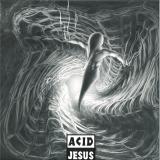
RAWAX proudly presents Acid Jesus aka Roman Flügel & Jörn Elling Wuttke with her groundbreaking debut album called "Acid Jesus" from 1993
Following the title of the classic Ecstasy Club record - be it a direct influence or merely a coincidence - Acid Jesus was the first of many collaborations between Roman Flügel and Jörn Elling Wuttke.
Situated in Germany’s then blistering techno scene and especially a mirror of Frankfurt at the time, the early recordings are also a feedback loop to what was happening in the UK and the USA before and at that very time. With many definitions and interpretations of techno already in place, and while its triumphal procession slowly geared itself into exhaustion, Flügel and Wuttke succeeded with their own and unique take on it, that owned as much to Underground Resistance and the Belleville Three as it did to Sven Väth and Andrew Weatherall. Depicting the booster detonation of what was to become the holy label trinity of Playhouse, Klang and Ongaku, this is a collection of tracks and experiments in sound that won’t sound dated, yet classic, mesmerizing and eternal. Jesus loves the acid and vice versa.
RAWAX proudly presents Acid Jesus aka Roman Flügel & Jörn Elling Wuttke with her groundbreaking debut album called "Acid Jesus" from 1993
Following the title of the classic Ecstasy Club record - be it a direct influence or merely a coincidence - Acid Jesus was the first of many collaborations between Roman Flügel and Jörn Elling Wuttke.
Situated in Germany’s then blistering techno scene and especially a mirror of Frankfurt at the time, the early recordings are also a feedback loop to what was happening in the UK and the USA before and at that very time. With many definitions and interpretations of techno already in place, and while its triumphal procession slowly geared itself into exhaustion, Flügel and Wuttke succeeded with their own and unique take on it, that owned as much to Underground Resistance and the Belleville Three as it did to Sven Väth and Andrew Weatherall. Depicting the booster detonation of what was to become the holy label trinity of Playhouse, Klang and Ongaku, this is a collection of tracks and experiments in sound that won’t sound dated, yet classic, mesmerizing and eternal. Jesus loves the acid and vice versa.
The writer Max Sebald often pondered over the nature of human memory, specifically, how our thoughts and desires - and their results - overlap and mutate over time. In A Place in the Country, he writes of the significance of what see as “similarities, overlaps and coincidences”. Are they the “delusions” of the self and senses, or manifestations of “an order underlying the chaos of human relationships, ... which lies beyond our comprehension”?
Song of the Night Mists, the new album by post-classical composer Stefan Wesołowski, often feels it draws on Sebald’s premise.
On a simpler plane, the one where the market dictates the neatly ordered information we consume, Song of the Night Mists can be described thus: recorded in the main by Stefan Wesołowski in Gdańsk, both in his studio and in Saint Nicholas' Basilica, the album incorporates acoustic instruments - piano, violin, double bass - and classic synthesizers such as the Roland Jupiter-8, the Soviet Polivoks. A Roland Space Echo RE-150 tape delay was also pressed into service as an instrument. We also hear the basillica’s organ and field recordings from the Tatra Mountains. Other musicians were Maja Miro, who played the flute parts on ‘Glacial Troughs’ and brother Piotr Wesołowski, who played the organ on ‘Wilhelm Tombeau’. Sound engineer was Marcin Nenko, who was also on hand to record the basilica organ parts. The album was mixed in New York by Al Carlson (Oneohtrix Point Never, Jessica Pratt, Zola Jesus, Lady Gaga, and Liturgy) and Rafael Anton Irisarri handled the mastering.
Ostensibly, Song of the Night Mists is the last in a trilogy, following on from albums Liebestod (2013) and Rite of the End (2017). All three deal with existential matters such as love, death, decay and “an ultimate end”; apocalyptic and Promethean in spirit, and betraying very human conceits. The Sebaldian nature of the new record starts to make itself felt when Wesołowski talks of how he used sampling. One element is unexpected, that of sampling himself: “I go back to dozens of my own unused sketches and recordings, treating them as raw material to cut, slow down, reverse, and transform in every possible way.” Memory as sound, to be reemployed by the listener through their own imaginings.
Another set of samples made by Wesołowski plays another role. These are field recordings, originally created for an audio illustration of the formation of the Tatra Mountains, and used in a film by sound designer Michał Fojcik. Wesołowski: “You can hear cracking ice, streams, footsteps in the snow and the wind, and a real avalanche, recorded from the inside.” The “Tatra connection” on the album is also found in samples referencing composer Karol Szymanowski. The album’s title alludes to a poem about the mountains by Polish poet, Kazimierz Przerwa-Tetmajer.
Wesołowski’s Tatra recordings are “about a world without humans - about the fact that the world existed, was beautiful, and had meaning long before people arrived, and for the vast majority of its history, it was a place without us.” Wesołowski, using one iteration of the natural world, plays out in sound Sebald’s idea of another order, underlying the chaos of human relationships lying beyond human comprehension.
These feelings play themselves out on the five album tracks. Sonorous and rich, they illustrate tectonic shifts we have no control over. Wesołowski hints that the overall sound is a “meditation on the metaphysics of the non-human set against the spirituality that human presence has brought into it.” In that light, the opening number, ‘Core’, with its slow build, and crackling and straining sound effects, create an effect of the earth groaning into life in a creation myth. Once the piano part raps out a simple melody and modulated tonguing trumpet samples add to the overall atmosphere, the listener can certainly find a cue in the “spiritual”, or “human” side of the story. Human versus nature: from the strains and harmonic muscle stretches of the second number, ‘Glacial Troughs’, through to the powerful and filmic ‘Stalagmite’ and heart-on-sleeve romance expressed in closer, ‘Wilhelm Tombeau’, we listeners are cast as Friedrich’s wanderer, looking out over a landscape that will appear only if we engage with it.
Formations of melody appear incrementally, almost appearing by chance - like hidden footings in the rock shelves to give us something to grasp onto. Rhythms are used sparsely: the prolonged percussive taps on ‘Glacial Troughs’ are an anomaly and maybe there to give pace to the album to come; essentially to keep the listener strapped in. Elsewhere, percussion is used as an aid to mood, the two thudding, timpani-style passages on ‘Peak’ there to offset the short, beautiful, kosmische passage that splits them.
Elements of the borderline religious spirit that drove German electronic music in the late 1960s and 1970s also find a place on Song of the Night Mists. The swells and recessions of the organ find their emotional climax on ‘Wilhelm Tombeau’, a track which summons up echoes of the “mountain magic” vistas created by Popol Vuh or Tangerine Dream, especially with the slightly atonal wobble of the Mellotron that counters it.
This is a dramatic album, but it does feel a strangely short, or curtailed listen on ending, evoking the feeling one gets when waking from a dream, and, for all its incipient grandeur, a track like ‘Stalagmite’, for instance, ends on a minor note. Wesołowski admits that Song of the Night Mists is born of the all too human process of temptation, doubt and recalibration - Sebaldian overlaps and coincidences forming something that must live another life, away from its creator. In Wesołowski’s words, the album is “a newborn foal must stand up and walk right after birth.” Now it is yours to ponder.
Red Vinyl. Jim Jarmusch's crypto-vampire love story film, "Only Lovers Left Alive" won the 2013 Cannes award for best soundtrack. The soundtrack, predominantly by Jozef Van Wissem and SQU"RL, also features Zola Jesus, Yasmin Hamdan and Madeline Follin (of Cults). "Only Lovers Left Alive" which is set against the romantic desolation of Detroit and Tangier, features an underground musician (Adam, played by Tom Hiddleston), who is deeply depressed by the direction of human activities. He reunites with his resilient and enigmatic lover (Eve, played by Tilda Swinton). Their love story has already endured several centuries at least, but their debauched idyll is soon disrupted by her wild and uncontrollable younger sister (Ava, performed by Mia Wasikowska). Can these wise but fragile outsiders continue to survive as the modern world collapses around them?The physical formats of the soundtrack have been out of print for years and the vinyl will cost you a pretty penny on Discogs. Sacred Bones is thrilled to bring this incredible soundtrack back in print on several variants including clear and red splatter vinyl.SQU"RL are: Carter Logan, Jim Jarmusch, and Shane Stoneback. An enthusiastically marginal rock band from New York City who like big drums & broken guitars, cassette recorders, loops, feedback, sad country songs, molten stoner core, chopped & screwed hip-hop, and imaginary movie scores. Jozef Van Wissem is a Dutch minimalist composer and lute player based in Brooklyn.
Marcos Valle is one of the few artists you cannot miss if you have the slightest interest in Brazilian music. Whether your taste is focused on bossa jazz, samba, psych folk or soul, Valle has surely recorded a great album for you. “Garra” was originally released in 1971 and brought us Valle’s classics such as ‘Com Mais De 30’, ‘O Cafona’, ‘Vinte E Seis Anos De Vida Normal’ and the rare groove classic ‘Wanda Vidal.’ Remastered from the original tapes and pressed on 180g vinyl. This release is part of our new reissue series that comprises many other outstanding Brazilian classics by the likes of Evinha, Cassiano, Gerson King Combo, Hyldon... By the late 60s he had already put out enough quality records to secure a place within the top Brazilian songwriters of all time, but his career luckily did not stop there and he continued releasing amazing music over the following decades until this day. By the dawn of the 1970s, the multi-talented Valle was entering a new era, ready to test the government censors (Brazil was under strict military rule since a coup d’état in 1964) and express a socially aware stance and a playful hodge-podge of musical styles including samba, bossa nova, baião (a rhythmic beat from the rural northeast of Brazil), black American music, and rock. “Garra” was originally released in 1971 and maintains the same socially conscious content as in his previous album while also combining diverse musical styles and influences. Recorded amongst sessions for a steady stream of popular TV soap opera soundtracks, it brought us Valle’s classics such as ‘Com Mais De 30’, ‘O Cafona’, ‘Vinte E Seis Anos De Vida Normal’ and the rare groove classic ‘Wanda Vidal.’
Celebrating 40th anniversary of Yves Deruyter's musical career with this 10 x 12" Vinyl Box Set. Including tracks from F.U.S.E. vs LFO, Tronikhouse, Robert Armani, L.S.G., Edge Of Motion, Plastikman, The Prodigy, Ecstasy Club, and the master himselfYves Deruyter.
Yves Deruyter - 40 Years at the Pinnacle of the Night
Forty years. A rollercoaster of a musical career, meandering through five decades, leaving timeless marks on the collective dancefloor memory. Yves Deruyter is the exception that proves the rule. An icon behind the decks, celebrated far beyond national borders for his legendary sets, impeccable musical choices, and the anthems released under his name. The result of collective effort, where Yves, with his vision and unique touch, consistently left his mark-transforming good tracks into inescapable bombs that still resonate through time.
If you've spent forty years living to the pulse of music, the night is in your DNA. Yves Deruyter, a DJ to the core-the real deal. The man who bent the night to his will, dragging weekend vibes into the workweek like a warrior, a true master behind the turntables who made his people dance. His beats: the oxygen that generations lived on.
Yves sharpened his musical weapons in the early '90s within the iconic afterparty scene of Barocci and The Globe-places that became sanctuaries in Belgium's endless night. Here, die-hard dancefloor warriors, cutting-edge music lovers, and night owls from the four corners of the globe gathered. They willingly followed Yves' masterful mixing and his razor-sharp set construction. Clubs with a more conventional timeframe were the next step, with the iconic Cherrymoon as his home base for years-alongside endless guest DJ spots and global gigs. From there, the underground pulsed through Yves' hands and crates, reaching ever-larger crowds-without ever compromising for commercial or crossover sounds. Yves stayed true to his choices, lifting his audience to euphoric heights like a craftsman, armed with his hits, hidden gems, and freshly unearthed nuggets.
From the pounding energy of Rave City to the flippy, epic flashes of Calling Earth-tracks that not only captured the spirit of the times but conquered dancefloors worldwide. This isn't just music; it's a time capsule-a connection between generations and a reminder of the energy from a golden era.
With musical partners like Roel Butzen, Frederico Santini, M.I.K.E. Push, and more recently, Insider, Yves forged a sound that etched its place into rave and dance history. From The Rebel to The House of House, parts of Yves' musical taste have become immortal pillars of dance music heritage. In the early rave days, he topped Belgium's DJ rankings year after year, elevating every club he played to the highest echelons of popularity. The same held true for the records where his name appeared like a badge of honor.
From The Globe to the globe itself-it seemed almost written in the stars. Yves, thestar DJ, became one of the instigators of the electronic music storm that put Belgium on the global map-a storm that never subsided. Festivals like Love Parade, Mayday, I Love Techno, Nature One, and Tomorrowland saw Yves as a trusted force, effortlessly commanding crowds and turning dancefloors inside out. Forty years later, that storm still ignites partygoers, vibrates through dancefloors, and keeps entire generations moving.
Even today, Yves still holds a steady residency with Yves Deruyter and Friends at Club Moustache, where his concept always sells out. Here, both fresh talent and seasoned DJs deliver a killer blend of modern electronic dance music and timeless classics, creating an atmosphere that hooks the crowd every single time.
Because partying doesn't need an excuse. But forty years? That deserves the spotlight-not as a mere milestone, but as a showcase of timelessness. Music mutates, reinvents itself for new generations, yet retains the same impact as that very first time. Yves proves that forty is just a number, and relevance isn't about trends-it's about vision, energy, and an unmistakable touch. His sets? Indestructible. His sound? A heartbeat echoing through time.
And Yves? He doesn't live in the past. Today, Yves distills those four decades into a compilation capturing the essence of his career. Belgian beats, interpreted and refined into a sound that powered raves around the world. Ten vinyls featuring not just a fiercely curated selection that contextualizes the magic of his early days, but also new versions of three unbeatable anthems-potent hits designed to turn dancefloors upside down in wonder, without losing a shred of their soul. Yves remains a beacon in the night, a searchlight for that one perfect beat-always relevant, always chasing that magical moment.
Yves Deruyter-a name spoken in the same breath as the greats of the scene. A ten-vinyl compilation is more than a celebration; it's a well-earned trophy. As unique, indestructible, and uncompromising as the man himself.
Mezerg invites his fans to join him for a new world tour, kicking off in New York and concluding at the Zenith in Paris on April 26th.
For those unfamiliar with Mezerg, his real name is Marc Mezergue. Originally from Bordeaux, he launched the project in 2017. Prior to that, he started playing piano at the age of 16, teaching himself entirely. He later pursued studies at the Bordeaux Jazz Conservatory, though he wasn't particularly inclined to follow that path further. Nevertheless, it provided him with a solid musical foundation.
For their 35th release Left Ear returns to the archives of Spanish Musician Jesús Mª Catalán and his project Respuesta Alternativa, or the Alternative Response. Unlike his previous release, the tracks from this compilation were not released at the time and the tapes only found recently, which had been lying dormant in a shoebox since their creation from the period 1987-1990. When not on the road working as a sound technician,
Jesús continued to craft atmospheric tracks in the quiet of his bedroom and later finished productions with the assistance of long-time collaborator Julián C. Pérez. Together, they captured simple themes, with the sound evolving over time. Transitioning from guitars, they incorporated vocal samples to weave enduring musical tapestries. Given Jesus’ geographic location (Spain) and the atmospheric down-tempo nature of the music, we wondered if the ‘balearic’ sounds had played a part in his productions. Jesus explains that “the distinction in the Balearic and Asturias Islands is marked by the different character of its people and the incidence of the weather, where the sea influences the Mediterranean Sea of the Balearic Islands is a calm sea. The Cantabrico de Asturias Sea is stormier”.
As a proud Asturian, Jesús was influenced by and payed homage to his surroundings, with lush breezy passages echoing calm ocean days and others reflecting sudden turns in conditions, weaving a stormier, more confronting layer into his already distinct sounds.
The 1973 album “El Violento” was the fifth full-length salsa LP led by Julio Ernesto Estrada Rincón, aka Fruko, and the second credited to Fruko Y Sus Tesos. Though it did not contain hits like ‘A la memoria del muerto’ or ‘El Preso’, it’s a collector’s item today in places like the US, Europe and Japan, perhaps precisely because it is obscure yet full to the brim with unrelentingly hard and heavy salsa bangers that never let up from start to finish (hence the title, which translates as “The Violent One”). A mix of originals and interesting covers, the LP is “all killer and no filler”, purposely designed to set the dance floor ablaze. It features Fruko’s two main vocalists that took over from the first pair of Humberto “Huango” Muriel and “Píper Pimienta” Díaz, namely the beloved duo of Álvaro “Joe” Arroyo and Wilson “Saoko” Manyoma. Los Tesos were a talented “wild bunch” who listened to their fearless leader, with Fruko holding down the bottom end on electric bass, Hernán Gutiérrez in the piano chair, the Villegas brothers on hand percussion (Jesús tickling the bongos and Fernando slapping the congas), augmented by Rafael Benítez on timbales and an ace horn section of Freddy Ferrer and Gonzálo Gómez (trombones) and Jorge Gaviria and Salvador Pasos (trumpets). The super aggressive sound comes directly from the South Bronx playbook of Willie Colón. The snarling trombones and soaring trumpet are somewhat sweetened by a nice little Puerto Rican cuatro guitar solo. Sonically lightening the mood somewhat, ‘Nadando’ (‘Swimming’) is a bouncy tune in the ‘Mercy’ genre (basically a hybrid of pop, funky soul, cumbia and salsa, in the style of Nelson y Sus Estrellas), gleefully sung by Joe Arroyo. The beats are complex and ever changing, with a little bit of mozambique, conga, bomba, jala jala and of course salsa thrown in for good measure. The side closes out with a brilliant, uptempo salsa reworking of the venerable ranchera chestnut, ‘Tú, sólo tú’. Side two explodes with the frenetic descarga jam session ‘Salsa na’ ma’—which is exactly that: nothing more than the hottest “sauce” to make the dancers go crazy. Fruko’s tune is dedicated to the Latin community in New York that listens to salsa from everywhere and dances to it so fervently on the weekend. The relentless percussion propels the listener along at breakneck speed as if hurtling down the Bronx Expressway, demonstrating that Fruko y Sus Tesos have mastered the ‘violent’ form of urban salsa that was having its transnational moment in the early 1970s. While “El Violento” may not be as well known as some Fruko records, it certainly deserves a new look and should be assessed on its own merits as a very powerful, confident entry in the historical evolution of Colombian salsa dura.Sleeve
For this uniquely personal retrospective spread over twelve vinyl discs, Sven Väth takes us back to the early days of his DJ career. On What I Used To Play we meet great pioneers of electronic music, gifted percussionists, obscure wave bands, and innovative producers of a bygone 'new electronic' era. Rough beats and irresistible grooves from the identification stage of house, techno, and acid remind us not just how far electronic music has evolved over the past four decades, but how great it was to dance to EBM, techno, and house for the very first time.
If there is one protagonist of the electronic music scene who has remained curious, innovative and at the very cutting edge of music for over four decades, it's Sven Väth. His multi-layered artist albums and Sound of the Season mix compilations have been defining the genre for over two decades, and even today, he is constantly on the lookout for the next top tune to add to the highlights of his next set. At least, that's the case when he's not producing them himself as an artist or remixer. "Actually, it's always been part of my DNA to think ahead," and nothing had been further from his mind than looking back at his past, but when in spring of 2020 the international DJ circuit had to be scaled down to virtually zero, the 'restless traveler' suddenly had time. Time to stop and reflect on "how it actually was back then, at the very beginning of my career..."
"It was a great trip and with every track, beautiful memories came flooding back".
In the London apartment, he had just moved into, Sven has set up a "little music room", where he cocooned himself for several days, "to look way back for the first time and review my musical journey through the eighties, so to speak."
The interim result was six thematically oriented playlists with a grand total of 120 tracks from 'early 80s' to 'Balearic late 80s', together with excursions into afrobeat, European new wave, and EBM sounds and a few epochal techno/house tracks from the USA in between. From these 'Best of Sven Väth's favorites', the project What I Used To Play crystallized. Sven remembers how the Cocoon team reacted to his proposal: "They found the idea of making a compilation out of it MEGA from the beginning and everyone said 'Sven, go for it', but then, of course, the work really started, namely, to clear the rights and to get clean sounding masters of the up to 40-year-old tracks. There was also disappointment, of course. We couldn't clear certain titles because the rights holders in the USA had fallen out with each other or simply disappeared from the scene. In short, it wasn't easy, but now I can safely say we got the most important tracks."
Finally, after two years of research, curation, design, and administrative fine-tuning, the "little retrospective" from 1981 to 1990 is available. The exquisitely packaged, and three-kilo heavy box set is not only physically impressive, WIUTP is also the definitive record of Sven Väth's musical development. On each of the twenty-four sides of vinyl, you can trace track by track, what influenced him during which phase, and how he took off as a DJ from his parents' Queen's Pub straight into the spotlight at Dorian Gray. There and at Vogue (later OMEN), Sven became the style-defining player in the DJ booth that he still is today.
1981 - 1990: Future Sounds of Now
In the early eighties, the crowd in clubs like Vogue and Dorian Gray danced to what nowadays we call 'dance classics' - mainly disco, funk, soul, and chart pop. It was up to a new generation of DJs, including Sven Väth, the youngest protagonist in the Rhine-Main area at the time, to create their own club-ready music mix. Good new tracks and potential floor-fillers were rarities that had to be sought out and found, in order to prove oneself worthy.
Without MP3s, internet streaming, or other digital download possibilities, music didn't just gravitate to the DJ, instead, it had to be tracked down. In well-stocked record stores in Frankfurt and Wiesbaden or even in Amsterdam, London, or New York, Sven and friends sourced the material for countless magical nights. On WIUTP we can follow Sven's very personal journey through this wild, innovative era in which synth-pop, funk, hip-hop, and disco were successively replaced as 'club music' by house, techno, acid, and breakbeat. By the end of the decade, it was clear to see that these once exotic 'fringe' phenomena would soon become 'mass' phenomena.
Early 80s
Dirty Talk by the Italian-American duo Klein & M.B.O. represents the most innovative phase of the Italo-disco genre in the early eighties like no other track. Mario Boncaldo (I) and Tony Carrasco relied entirely on the original synthetic drum and percussion sounds of the Roland TR-808, coupled with the raunchy vocals of Rossana Casale and guitar accents of Davide Piatto. Of course, other tracks from this period were also influential in style, most notably Unit by Logic System, which worked as the perfect soundtrack to the laser lighting system at the legendary Dorian Gray club. With stomping beats and robotic rap interludes, Bostich by Yello also belongs on Sven's eternal playlist - after all, it caught the attention of Afrikaa Bambaataa, who invited the Swiss duo to perform at the Roxy in New York in 1983.
EBM Wave - Mid 80s
From today's point of view, the almost ten-minute-long, downtempo track Giant by Matt Johnson's band project The The, would probably not be considered an obvious club classic. However, a closer (re)listen reveals the rhythmic intricacies of the percussion overdubs by JG Thirlwell (aka Foetus) on Johnson's composition, and it becomes clear why this exceptional piece of music is one of Sven's absolute favorites. Other classics from this phase include Kaw-Liga by the mysterious The Residents, the hypnotic-synthetic Our Darkness by Anne Clark (and David Harrow), and last but not least, the somber, monotonous anthem Where Are You? by 16Bit, one of Sven Väth's projects together with Michael Münzing, Luca Anzilotti from 1986.
US House - Late 80s
You certainly can't talk about Chicago house without mentioning Frankie Knuckles. The resident DJ at the Warehouse not only gave the name to an entire genre, but also produced epochal floor fillers on the Trax label like the timeless Your Love, sung (and moaned) by Jamie Principle. Acid house protagonists Phuture also hail from Chicago, and on We Are Phuture (also released on Trax) we hear the chirping acid sounds of the legendary Roland TB-303 in full effect. Another featured classic is No UFO's by Detroit's Model 500 aka Juan Atkins, who is rightly considered the 'Godfather of Techno' even if the genre-defining track from 1985 still breathes with the spirit of hip-hop and electro from the first breakdance era.
Afrobeat
Le Serpent, by Algerian-born Abdelmadjid Guemguem, is a track that sounds completely different from everything else on WIUTP. Made in 1978, it's a monumental, rousing groove created without bass or synths, just with five congas! Even though Guem sadly passed away in 2021, his immortal, acoustic beats are understood all over the world and will continue to enrich many thousands of DJ sets for years to come. Another classic that not only Sven appreciates beyond measure is Hugh Masekela's Don't Go Lose it, Baby. In addition to being one of the most important jazz pioneers, the trumpeter and freedom fighter from Johannesburg was very experimental, integrating electronic sounds into his music in later years, in a similar vein to Miles Davis and Herbie Hancock. Dutch jazz pianist Jasper van't Hof's afrobeat project Pili Pili has also aged well. The trance-like, almost sixteen-minute-long track of the same name, manages to fill a whole side on the seventh of twelve vinyl discs in the WIUTP box.
UK-US-Euro - Late 80s
Time for a change of scene, in the truest sense of the word, and from a musical perspective, this section is like landing on another planet. First up is Andrew Weatherall's classic remix of Primal Scream's Loaded, featuring the iconic Peter Fonda sample (lifted from the 1966 biker film Wild Angels) that came to personify the mood triggered by the British Second Summer of Love in the late eighties: "We wanna be free to do what we wanna do, and we wanna get loaded...". This period also saw the emergence of M/A/R/R/S whose only single, 1987's Pump Up The Volume, became a club classic with support from DJ legend CJ Mackintosh. In this most eclectic of sections, we also encounter New York house and reggae producer Bobby Konders and his seminal Nervous Acid.
Balearic - Late 80s
Those who know him, know that Sven had already lost his heart to the 'magic island' of Ibiza as a teenager, so with that in mind, the WIUTP project couldn't end without a Balearic chapter. Inspired by Manuel Göttsching's E2-E4, the immortal, eponymously titled Sueño Latino belongs in there without question. Equally popular on the island was, and still is Break 4 Love by Raze, which thinking about it, would also fit perfectly into the house chapter. Last, but not least, there's an overdue reunion with Sven Väth himself, in his role as frontman of the successful Frankfurt trio OFF. Together with Michael Münzing and Luca Anzilotti (later of Snap!) this 'Organization For Fun' created the off-the-wall club hit Electric Salsa in 1986 which incidentally turned into an international chart smash, putting Sven in the enviable position of having to decide between pop stardom and a DJ career. Well, we all know how that decision turned out and the rest, as they say, is history. A not insignificant part of his story is What I Used To Play. Enjoy!
Her sound remains vast and yearning, with gut-punch drums pushing through explosions of colored powder; her voice is a chrome-plated sigh, and her agile melodies soar effortlessly. - Pitchfork *BEST NEW MUSIC*
she achieves some serious cinematic grandeur. - Stereogum
Simply too sublimely crafted to ignore. - Consequence of Sound
A catchy ethereal piece of pop - Brooklyn Vegan
Rose's layered, reverb-laden vocals hit like waves of sunlight, warming her lines almost to the point of wordlessness. - Paste Magazine
"Hila. A record about loss. What persists beyond the range of ordinary perception? The place mourning keeps returning to - not quite transcendence, not quite doubt. The edge of what we can see."
Frankie Rose has spent fifteen years building one of the most quietly distinctive bodies of work in American independent music. Bursting out of the shackles of her legacy on 2024's Love As Projection, 2026's Hila builds on the muscular, dance-ready songwriting and transcendent melodies to result on Rose's most exploratory and affecting record of her career. Imbued with yearning melodies and brooding post-punk dynamics, Hila is Frankie Rose at her most impressionistic and expansive.
Self-produced at her home studio featuring collaborations with drummer Justin Welch (Elastica/Lush), Hila was recorded following extensive touring with The Jesus & Mary Chain and Swervedriver. The result is the most confident, searching music Rose has produced; muscular in its production yet emotionally vulnerable in its diffracted neon glow. A record informed by loss and the way grief mutates our senses, it's fitting that Rose channels the nuanced darkness of later Coil, at times the pounding EBM-production of Skinny Puppy and the near-spiritual alien-ness of Cocteau Twins. On Hila, the doors of perception are constantly melting, revealing the porous nature of the seen and unseen. The result is a synesthesia that flips the senses.
If Love As Projection was an outward-looking record looking to embrace the world, Hila brings the dark cosmos into inner space. Rose's love for 80s production and soaring melodies remain, they're cornerstones to her craft after all, but there's something more assured and gothic underneath the massive waves of sound. Opener Olo shimmers into a pulsating, cinematic brooder, Rose's vocal transcending and swan diving between registers in the chorus breakdowns. First single Cant Be Wrong serves as a transition from the optimistic pop of Rose's previous album, introducing a thumping 80s funk rhythm track under the soaring vocal performance. The ebullient Shadow Twin is that song's sibling, recalling major label-era Strawberry Switchblade melancholy mixed with Robin Guthrie's twinkling guitar work.
Hila blossoms darkly from here on in, blowing out into a glacial wide-screen sonic dynamic. On Rainman and the title track the listener is transported to a rain-soaked, nocturnal cityscape ridden with desire, moonlight cutting through blinds, intoxicating chasms without bounds. Rose's use of saxophone and digital synthesis recalls the nightmusic of Hats-era Blue Nile or the more ambient end of Emeralds' catalog. Indeed, in the towering synthetic cello sounds that climb into the mind on Hila, there's a distinct flavour of the instrumentals on Bowie's Low. This is musick to play in the dark, to light the way a little, just enough to trick the senses.
Leading into the strobe-filled haze, single Manifest pounds forward with a massive Industrial 4/4 beat and post-punk/goth musicality, an exercise in unlit ecstasy. For Best Of Times, the liberal saxophone passages feel like a suppressed, 80s Michael Mann soundtrack with Frankie Rose's effortless, melodic vocal performance probing, searching for connection. Navigating through the dry, iced landscape into a rising sun, closer Velvet Refrain flips the melancholy of the preceding passages. With a massive sound dripping with harmony, the clanging guitar and vocal duet feels they're sound-tracking an unexpected happy ending after bouts of darkness."
Get Over it, Underdog is an 11 song collection about the duality of the American underdog. The characters within these tunes are exotic dancers, cringe white guys, historic world explorers, ultra wealthy people playing God, baby Jesus, eccentric women who have done life their own way, and dreamers. The album is a rich tapestry that weaves together all of these tales into one enchanting piece. Through the lyrics in these songs we learn how the underdog character can embody any of the best and/or worst characteristics of humanity. The underdog may be a noble hero or an evil villain either of whom is able to pull off surprising or unexpected victories which good or bad in nature can often times lead to an underdog's ultimate downfall. Each song takes an honest look at what it means to be some kind of underdog all coming from a songwriter who has been called an underdog by others and who has at times identified himself in this way only to realize that in the end, every human being contains multitudes beyond the limited capacity we have to observe and truly know ourselves and each other.
Genre Is Death is an uncompromising noise duo made up of Ty V (guitar, vox) and Tayler Lee (bass, vox). Their sound is abrasive yet melodic, using heavy distortion, dissonant riffs, and reverberating vocals to create a wave of boldly hypnotic noise. The duo have been compared to the likes of Sonic Youth and Teenage Jesus and the Jerks, yet have managed to create a sound that is distinctly their own, avoiding mimicking the zeitgeist of decades before. Beyond the integrity of their music, Tayler’s intimidating glare, or Ty’s staggering gait, the duo share something truly inimitable— the overwhelming feeling that their music is a byproduct of the high esteem they hold of each other. The duo moved to NYC in August of 2023 looking for something more than their mundane suburban lifestyle of day drinking and playing doom metal in friends' basements…their move to NYC coupled with their desire to express something, anything, led to the inception of Genre is Death. The pair hit the ground running, playing anywhere and everywhere they could… however, it was only after a chance encounter with 80s noise forerunners Live Skull that the pair was introduced to the strange underbelly of NYC noise and began playing regular gigs with The Art Gray Noizz Quintet and Lydia Lunch. In 2025 the pair played New Colossus Festival, toured with Gogol Bordello, embarked on their first East Coast tour, and played gigs with Cherubs, Bush Tetras, and Jon Spencer. Their upcoming record was recorded with legendary sound engineer Martin Bisi (Sonic Youth, Swans).
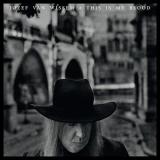
**RED VINYL**Bookending “This Is My Blood “ are two cinematic hypnotist slide lute pieces that evoke contemporary deserted landscapes. They were improvised and made for “ Maquina”, a film shot in the Colorado desert during a psychedelic trip by film maker Joaquim Pujol. The works on here, like the ecstatic second piece invite a return to long form listening. They explore contemporary darkness and contemplate personal loss. There is solely one vocal piece, “ Remission”. A worldwide concert tour of this material is slated for 2026/2027. Since studying the lute in New York with Patrick O'Brien in the 1990s, Van Wissem has gone on to create works equally as rooted in classical Renaissance and Baroque forms of lute music, as contemporary sounds spanning drones, electronics and field recordings. Throw in some of his formative influences from the no wave and industrial scenes, alongside a dedicated approach to minimalism and this has resulted in Van Wissem producing distinct and singular work whose sound is often a marriage of opposites; meditative and intense, forward thinking but with a sense of the arcane. The Quietus has called him "probably the most famous lutenist in the world”. Jozef Van Wissem is an avant-garde composer and lutenist who plays a unique all-black baroque lute. His timeless music is often described as hypnotic, minimal, and hauntingly atmospheric, merging beauty with a dark, meditative edge. His lyrics have a mythical Christian appeal, incorporating themes of love, faith, and the afterlife, often with a repetitive, mantra-like quality. Bridging classical traditions with modern sounds like drones, electronics, field recordings and voice. He collaborates with filmmaker and musician Jim Jarmusch, including the award-winning soundtrack for Only Lovers Left Alive, for which Van Wissem won the Cannes Soundtrack Award in 2013. He also scored the Sims Medieval Video game ( 2011), Uncle Howard ( 2016) Land (2018), Irma Vep (2022), Queens (2023) and Un Prince (2024). He did a world tour in duo with Jarmusch in 2025 and their 5th record “ The Day The Angels Cried” was released. Van Wissem tours extensively, performing in diverse venues from rock festivals to churches, and has worked with artists like Tilda Swinton and Zola Jesus. In 2019 he was commissioned by Cinematheque Francaise to score the silent horror film Nosferatu (1922). He released the soundtrack in 2022 on his own Incunabulum label. The New York Times wrote: Beginning with a solo played on the lute, his performance will incorporate electric guitar and distorted recordings of extinct birds, graduating from subtlety to gothic horror. “My soundtrack goes from silence to noise over the course of 90 minutes,” he said, culminating in “dense, slow death metal.” In 2024 Van Wissem did a sold out nationwide American tour with the film. A worldwide tour is slated for 2026/2027
You probably have at least one friend who is completely obsessed with Marnie Weber. Her dark, punk-infused humour and fearless embrace of eccentric feminine power archetypes combine with gut-punch viscerality and a strange beauty that is anything but pretty.” Village Voice “This neo-gothic fairytale wavers between happiness and sadness, amusement and tragedy, attraction and repulsion.” The White Review “Weber reaches a new scale for her work…The sentimentality and romance at its root fearlessly sets it apart.” BOMB “Wild multimedia works that often dwell on the ghostly and the monstrous. Think: Fairy tales gone seriously awry.” LA Times Acclaimed LA multidisciplinary artist and musician Marnie Weber collects highlights from a long and storied career on Returning Home: The Music of Marnie Weber, a collection of neo-goth art-pop that steers between kankyō ongaku pop songs, noise-rock, and haunted fairytale darkness. The career of Marnie Weber (b. 1959) began with gigs paid in beer at an LA trucker bar in 1977. Her band, Party Boys, formed when Weber was then 19 and had just left home. By the early 80’s, the band began regularly performing at LA’s fabled Al’s Bar, sharing the stage with generational talents that passed over its beer-drenched floors. L7, Beck, Arto Lindsay, Ry Cooder, The Fall, Fear, Hole, Hüsker Dü, Social Distortion, Nirvana, The Residents, Sonic Youth, Urge Overkill, Jesus Lizard, the Misfits, among plenty more, played to audiences that included Bret Easton Ellis, Steve Buscemi, Tommy Lee, Bill Murray, Al Pacino, Sean Penn, and Chloe Sevigny.
"Nearly two decades after their 2007 debut and a 2010–2022 hiatus, Austin, TX’s Voxtrot return with Dreamers in Exile, a new LP that turns an underdog story into a true second act.
The band who quietly became cult heroes in the streaming era deliver a record that carries the electric rush longtime fans remember while speaking directly to the new era of youth who discovered them through playlists and word of mouth.
Musically, Dreamers in Exile folds Voxtrot’s classic DNA—C86 sparkle, Sarah Records romanticism, the pulse of The Velvet Underground, the elegance of Felt—into a sharper, more confident sound.
Guitars chime and sprint, rhythms push forward, and Ramesh Srivastava’s literate, heart-forward lyrics trace the distance between youth and maturity, exile and home, regret and renewal. Mixed by Dean Reid (Lana Del Rey, James Blake), it reads as both reintroduction and redemption.
For a band born of the 2000s blog wave alongside Vampire Weekend, The National, and Grizzly Bear, Dreamers in Exile is less nostalgia than proof of life. It’s the sound of a beloved group returning on their own terms and finding their songs resonating more widely than ever."
We’ve purged the Acid Mothers Temple archives once again, resurrecting another classic album ‘Electric Heavyland’.
Originally released in 2002 on CD only (via Alien 8 Recordings), ‘Electric Heavyland’ is presented here for the first time on vinyl, remastered and with a whole bonus live side!
Housed in a beautiful gatefold sleeve with heavy use of the original black and metallic silver ink artwork
“Suddenly, my world explodes as the band pounces on the joint with some hell-blues, laced with sci-fi laser transmissions. Jesus H. Fuck, this is loud. There comes a point when heavy jamming and pure noise meet, and that point is tearing shit up at this very moment.” Pitchfork
Of key note for AMT diehards/collectors. Side D was recorded live at at the 2nd Acid Mothers Temple Festival December 13th 2003 with Yamazaki Maso (Masonna) as a guest.
Makoto says "we have played this song, Atomic Rotary Grinding God live only once, this is that recording"
Produced, engineered and mixed by Kawabata Makoto live recorded by Takayama Manabu (original source is VHS video tape)
Limited Algae Sea Vinyl. CocoRosie is Bianca and Sierra Casady. Sierra sings and plays guitar and flute. Bianca sings and does percussion (rattles things, makes things squeak, shakes a gold chain belt). They write all the music together. La Maison de Mon Réve was written and recorded in a tiny apartment in the 18th district of Paris during the spring of 2003. La Maison de Mon Réve was released by Touch and Go Records in March 2004. La Maison de Mon Réve is deceptively innocent; enchanting and sweet yet eerie and twisted. An acoustic guitar paints melody through a haze of cryptic sounds and perversely angelic voices. A broken radio transmits a music box orchestra. Tiny field mice sing opera. This 20th anniversary edition of CocoRosie's debut album La Maison de Mon Réve is pressed on transparent algae sea vinyl and limited to 1500 copies worldwide. Packaged in a gatefold jacket with neverbefore-seen photos, the vinyl includes the full album along with a previously unreleased bonus track, "Hairnet Paradise."
pas en stock
Dernière livraison il y a 9 mois réapprovisionnement sans garantie
This is a reissue of the original 1963 album El Decano De Los Cantores 4. Chuíto el de Bayamón (Jesús Sánchez Erazo) was a legendary Puerto Rican troubadour and one of the earliest jíbaro singers to appear on the radio, also known as "el decano de los cantores" (the dean of the singers). Known for his witty décimas and lively improvisation, he helped popularize traditional Puerto Rican music. His work influenced generations, including salsa greats like Héctor Lavoe. In the 1940s, he became the lead-singer for cuatro player and composer Ladislao "Ladí" Martínez's Conjunto Típico Ladí, created in New York City. With Ladí, he recorded "Un jíbaro en Nueva York," a controversia with Ernestina Reyes "La Calandria." It was actually Ladí who baptized him as "Chuíto el de Bayamón". From 1949 to 1977 Chuíto collaborated with Abelardo Díaz Alfaro, the famous Puerto Rican author, in the radio program "La vida de Teyo Gracia y su mundo" aired in WIPR. In addition, Chuíto participated in the films "La trulla" (1951), "Preciosa" (1965), and "El otro camino" (1959). Throughout his career Chuíto recorded more than 40 LPs and performed in New York, Boston, Chicago, New Jersey, Hawai'i, Spain, Cuba and other Latin American cities. His repertoire is characterized by its witticism and sense of humor, and sophisticated musical arrangements. Along with Flor Morales Ramos "Ramito", Odilio González and Daniel Santos, he had a huge influence in the singing style of Puerto Rican salsa star Héctor Lavoe. In 1975 and 1976 he was recognized with the "Agüeybaná Gold Album" award. This is the forth edition of Ansonias Chuito reissue series.
Until The End (The Lost Album) features recordings made by Wil Malone throughout 1970, possibly intended as a follow-up to Wil Malone – Wil Malone, which was recorded in mid-1969 and mastered for release on Fontana Records on July 5, 1969.
Recently unearthed from the Morgan Blue Town tape vaults, these tracks offer a compelling mix of ’60s pop and bubblegum, diverging from the original album’s string-heavy, progressive-psych sound. All the material comprises either demos or finished masters, recorded over several months. With the exception of the brass parts — performed by session musicians — all instruments were played by Wil Malone himself.
It’s a shame the debut didn’t achieve greater commercial success, as it might have brought these follow-up recordings to light much earlier, back in the 1970s.
Get ready to trim your tree with a rollicking mix of mid-century Rhythm & Blues holiday gems. This vinyl is packed with everything from soulful longing to boisterous celebration, featuring legendary artists like Charles Brown's heart-wrenching "Please Come Home for Christmas" and the Dominoes' gorgeous "Christmas in Heaven" with a young Jackie Wilson on vocals. Dive into the bluesy mischief of Jimmy Butler's playful "Trim Your Tree" and the fiery gospel of Marvin Williams' "When Was Jesus Born." From the sweet soul stomp of Big Dee Irwin & Little Eva's "I Wish You a Merry Christmas" to Lightnin' Hopkins' funky "Happy New Year," each track captures a unique holiday spirit. This lively collection is sure to be a December favourite, filled with both cheer and heartbreak, grit and grace_an unforgettable Christmas party on vinyl!
Pink vinyl. Get ready to trim your tree with a rollicking mix of mid-century Rhythm & Blues holiday gems. This vinyl is packed with everything from soulful longing to boisterous celebration, featuring legendary artists like Charles Brown's heart-wrenching "Please Come Home for Christmas" and the Dominoes' gorgeous "Christmas in Heaven" with a young Jackie Wilson on vocals. Dive into the bluesy mischief of Jimmy Butler's playful "Trim Your Tree" and the fiery gospel of Marvin Williams' "When Was Jesus Born." From the sweet soul stomp of Big Dee Irwin & Little Eva's "I Wish You a Merry Christmas" to Lightnin' Hopkins' funky "Happy New Year," each track captures a unique holiday spirit. This lively collection is sure to be a December favourite, filled with both cheer and heartbreak, grit and grace_an unforgettable Christmas party on vinyl!
It's spring of 2023 in the North Carolina Piedmont, and songwriter and singer M.C. Taylor - leader of the band Hiss Golden Messenger - is feeling alive. Joyful. Eternal, he might say. For the Grammy-nominated musician, whose albums have traced an internal path through adulthood, fatherhood, spirituality, and depression for well over a decade, this is something new. "The tunes on Jump for Joy were composed in free moments throughout 2022, a year during which Hiss was on the road more or less constantly," explains Taylor. "And perhaps because the post-pandemic energy out in the world felt so chaotic and uncertain, I found myself thinking a lot about the role that music has played in my life and how exactly I ended up in the rarefied position of leading a band and crew all over the globe through dingy graffiti-scrawled green rooms, venerated music halls, dust-blown roadside motels.
Sometimes playing in front of 5,000; sometimes 200. Sleeping sitting up. Laughing until my stomach hurts. Not being able to fall asleep at 3 a.m. in some anonymous bed because my mind is spinning with anxiety or depression or adrenaline, or because my ears are still ringing. Robbing Peter to pay Paul, then robbing Paul to pay Peter back. Over and over again. It's an outlaw life but one, I'm coming to realize, that makes me happy." The songs that make up Jump for Joy - the sharpest and most autobiographical that Taylor has written under the Hiss name - read as a sort of epistolary, postcards between the present-day songwriter and his alias Michael Crow, a teenaged dreamer very much like Taylor himself, who trips his way through the 14 tunes that make up the record. In this way, Jump for Joy is a meditation on a life lived with art, and the ways that our hopes and dreams and decisions bump up against_ and, with a little bit of luck, occasionally merge with real life. "Creating this character became the way that I could explore these vulnerable, tender moments that were so decisive in my life, even if I didn't know it at the time," explains Taylor.
Produced by Taylor and engineered by longtime Hiss compatriot Scott Hirsch over two weeks in the late fall of 2022 at the fabled Sonic Ranch studio in Tornillo, TX, just a short walk from the Mexican border, Jump for Joy dances with joyful, spontaneous energy that feels like a fresh chapter in the Hiss Golden Messenger oeuvre. Taylor is accompanied throughout the album by his crack live band: guitarist Chris Boerner, bassist Alex Bingham, keyboardist Sam Fribush, and drummer Nick Falk, a collection of musicians that have helped make Hiss Golden Messenger's live performances legendary affairs
pas en stock
Dernière livraison il y a 12 mois réapprovisionnement sans garantie
Indie exclusive Peak Edition on Orange & Black Swirl Vinyl, in a gatefold cover + poster.
It's spring of 2023 in the North Carolina Piedmont, and songwriter and singer M.C. Taylor - leader of the band Hiss Golden Messenger - is feeling alive. Joyful. Eternal, he might say. For the Grammy-nominated musician, whose albums have traced an internal path through adulthood, fatherhood, spirituality, and depression for well over a decade, this is something new. "The tunes on Jump for Joy were composed in free moments throughout 2022, a year during which Hiss was on the road more or less constantly," explains Taylor. "And perhaps because the post-pandemic energy out in the world felt so chaotic and uncertain, I found myself thinking a lot about the role that music has played in my life and how exactly I ended up in the rarefied position of leading a band and crew all over the globe through dingy graffiti-scrawled green rooms, venerated music halls, dust-blown roadside motels.
Sometimes playing in front of 5,000; sometimes 200. Sleeping sitting up. Laughing until my stomach hurts. Not being able to fall asleep at 3 a.m. in some anonymous bed because my mind is spinning with anxiety or depression or adrenaline, or because my ears are still ringing. Robbing Peter to pay Paul, then robbing Paul to pay Peter back. Over and over again. It's an outlaw life but one, I'm coming to realize, that makes me happy." The songs that make up Jump for Joy - the sharpest and most autobiographical that Taylor has written under the Hiss name - read as a sort of epistolary, postcards between the present-day songwriter and his alias Michael Crow, a teenaged dreamer very much like Taylor himself, who trips his way through the 14 tunes that make up the record. In this way, Jump for Joy is a meditation on a life lived with art, and the ways that our hopes and dreams and decisions bump up against_ and, with a little bit of luck, occasionally merge with real life. "Creating this character became the way that I could explore these vulnerable, tender moments that were so decisive in my life, even if I didn't know it at the time," explains Taylor.
Produced by Taylor and engineered by longtime Hiss compatriot Scott Hirsch over two weeks in the late fall of 2022 at the fabled Sonic Ranch studio in Tornillo, TX, just a short walk from the Mexican border, Jump for Joy dances with joyful, spontaneous energy that feels like a fresh chapter in the Hiss Golden Messenger oeuvre. Taylor is accompanied throughout the album by his crack live band: guitarist Chris Boerner, bassist Alex Bingham, keyboardist Sam Fribush, and drummer Nick Falk, a collection of musicians that have helped make Hiss Golden Messenger's live performances legendary affairs
pas en stock
Dernière livraison il y a 12 mois réapprovisionnement sans garantie
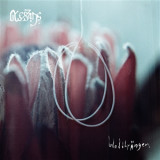
Blodsträngen, the third from Gothenburg's inimitable fourpiece Blessings, begins and ends in the same space: the safety and familiarity of their rehearsal room. In between these moments however, the album knows no boundaries; it rampages through your inner sanctum, upending everything it can, razing everything you hold dear and drawing on the walls whilst panting, drooling and muttering to itself in strange tongues_ Blodsträngen is Blessings fine-tuning their deliberately dissonant sound whilst simultaneously casting their net wide for ever more left-field, experimental influences; a disparate collection of idiosyncrasies that the band somehow manage to pull into something cohesive, captivating and empowering. The band leave the messages and meanings behind their music open to interpretation as a means of sharing this attitude of openness with their audience because, when all is said and done, all that matters is all playing disgustingly loud music together in a room. FOR FANS OF Unsane, Breach, Young Widows, Black Flag, Trap Them, Converge, Old Man Gloom, At The Drive In, Swans, The Jesus Lizard
Friends since the age of six, most of the album was written and recorded by the pair when they were nineteen. The songs possess all the singular magic of a duo writing and playing together while sounding like a full, sonically charged band. Their debut E.P. track 'Two Monkeys', included here, has a level of shoegazey dirt that will leave many distortion freaks reeling. `Every Word Said' is prog-pop perfection. The title track is as moody as anything by Flying Saucer Attack. 'Another One Making Clouds' evolves over 35 minutes and doesn't stop elevating and surprising. A founding notion of our label was to release recordings made as the musicians' first intended. No `notes' and no re-recording with a `proper' producer in a `real' studio. A noble preference we saw labels like Rough Trade pursuing with The Strokes, The Smiths, The Fall et al.This album is a proud example. And captures something you can't fake. A young band finding an epic, emotional, cinematic sound in their bedroom. Using it in that peculiarly British way to express the wonder, confusion and heartache of being nineteen. Of wanting to be seen and not seen. It's a kind of British `soul' music with ancestors like The Cure, Echo & The Bunnymen, The Jesus & Mary Chain and the original shoegaze bands. Progressive guitar music, channeling deep emotion, a desire to hear something that sounds like how you feel inside. The stuff nobody talks about. Everything Else.
Friends since the age of six, most of the album was written and recorded by the pair when they were nineteen. The songs possess all the singular magic of a duo writing and playing together while sounding like a full, sonically charged band. Their debut E.P. track 'Two Monkeys', included here, has a level of shoegazey dirt that will leave many distortion freaks reeling. `Every Word Said' is prog-pop perfection. The title track is as moody as anything by Flying Saucer Attack. 'Another One Making Clouds' evolves over 35 minutes and doesn't stop elevating and surprising. A founding notion of our label was to release recordings made as the musicians' first intended. No `notes' and no re-recording with a `proper' producer in a `real' studio. A noble preference we saw labels like Rough Trade pursuing with The Strokes, The Smiths, The Fall et al.This album is a proud example. And captures something you can't fake. A young band finding an epic, emotional, cinematic sound in their bedroom. Using it in that peculiarly British way to express the wonder, confusion and heartache of being nineteen. Of wanting to be seen and not seen. It's a kind of British `soul' music with ancestors like The Cure, Echo & The Bunnymen, The Jesus & Mary Chain and the original shoegaze bands. Progressive guitar music, channeling deep emotion, a desire to hear something that sounds like how you feel inside. The stuff nobody talks about. Everything Else.
The Scream, Siouxsie & the Banshees' first album, was released late enough in the punk era to bear some claim as the first post-punk album, with only a minor traces of 'punk' (one lingering early song, "Carcass" comes to mind) and enough hints of what had come even earlier, Andy MacKay-like saxophone flourishes - to feel utterly new. Not to mention the effort producer Steve Lillywhite must have put into the album, his first fully-credited major label production. Siouxsie was clearly the focus of the band, with her unique vocal style and lyrics, but the real star, we've always known, was John McKay, who wrote most of the album's music (as well as singles like "Hong Kong Garden"), creating a wholly new guitar sound - harsh and brittle, yet melodically intoxicating . . . best articulated by a somewhat confounded Steve Albini years later ". . . only now people are trying to copy it, and even now nobody understands how that guitar player got all that pointless noise to stick together as songs". McKay's influence lives on; many of the most influential guitarists of the past four decades credit him as a major influence - Geordie from Killing Joke, Jim Reid of The Jesus And Mary Chain, U2's The Edge, Thurston Moore, Johnny Marr and even the two guitarists - The Cure's Robert Smith and Magazine's John McGeoch - who followed him in The Banshees. McKay's burgeoning status as the anti-guitar hero was halted when he and Banshees drummer Kenny Morris - at odds with Siouxsie and bassist Steve Severin - fled the band just after the start of a tour supporting the group's second album, Join Hands. It was a weekly music paper scandal, later the subject of a BBC documentary, and Siouxsie's vitriol working its way into the lyrics of a later Banshees b-side, "Drop Dead / Celebration". Aside from a solitary single on Marc Riley's In Tape label nearly a decade later, no music was heard from McKay again. So it comes as a major surprise to learn of a pile of excellent recordings made in the years just after he left The Banshees, unheard by all but a very few, some of which feature drummer Kenny Morris, plus Mick Allen from Rema Rema, Matthew Seligman of the Soft Boys and longer-term collaborator Graham Dowdall and John's wife Linda . . . the latter three of whom now all sadly deceased. Sixes And Sevens is an historic lost album. Brazenly genius and bearing fair claim as the lost treasure of the post-punk era, the album collects eleven studio tracks, carefully mastered from original tapes. It's a masterpiece which best speaks for itself.
The Scream, Siouxsie & the Banshees' first album, was released late enough in the punk era to bear some claim as the first post-punk album, with only a minor traces of 'punk' (one lingering early song, "Carcass" comes to mind) and enough hints of what had come even earlier, Andy MacKay-like saxophone flourishes - to feel utterly new. Not to mention the effort producer Steve Lillywhite must have put into the album, his first fully-credited major label production.
Siouxsie was clearly the focus of the band, with her unique vocal style and lyrics, but the real star, we've always known, was John McKay, who wrote most of the album's music (as well as singles like "Hong Kong Garden"), creating a wholly new guitar sound - harsh and brittle, yet melodically intoxicating . . . best articulated by a somewhat confounded Steve Albini years later ". . . only now people are trying to copy it, and even now nobody understands how that guitar player got all that pointless noise to stick together as songs". McKay's influence lives on; many of the most influential guitarists of the past four decades credit him as a major influence - Geordie from Killing Joke, Jim Reid of The Jesus And Mary Chain, U2's The Edge, Thurston Moore, Johnny Marr and even the two guitarists - The Cure's Robert Smith and Magazine's John McGeoch - who followed him in The Banshees.
McKay's burgeoning status as the anti-guitar hero was halted when he and Banshees drummer Kenny Morris - at odds with Siouxsie and bassist Steve Severin - fled the band just after the start of a tour supporting the group's second album, Join Hands. It was a weekly music paper scandal, later the subject of a BBC documentary, and Siouxsie's vitriol working its way into the lyrics of a later Banshees b-side, "Drop Dead / Celebration". Aside from a solitary single on Marc Riley's In Tape label nearly a decade later, no music was heard from McKay again. So it comes as a major surprise to learn of a pile of excellent recordings made in the years just after he left The Banshees, unheard by all but a very few, some of which feature drummer Kenny Morris, plus Mick Allen from Rema Rema, Matthew Seligman of the Soft Boys and longer-term collaborator Graham Dowdall and John's wife Linda . . . the latter three of whom now all sadly deceased.
Sixes And Sevens is an historic lost album. Brazenly genius and bearing fair claim as the lost treasure of the post-punk era, the album collects eleven studio tracks, carefully mastered from original tapes. It's a masterpiece which best speaks for itself. John McKay will be made available for a limited number of interviews . . . and yes, there are surprises in store.
This April, Jessie Wagner releases her long awaited second solo album, “War Within”
on Little Stevie Van Zandt’s Wicked Cool Records. Jessie is a true multi-talent. She is a vocalist, songwriter, actor, model and dancer who possesses a unique worldview which she shares via her very personal songs.
Many of Jessie’s current fans know her best as a featured vocalist with some of the best known and most loved names in music. She launched her career within a year of moving to New York when she became a member of the world renowned disco group Chic, with Nile Rodgers. Jessie played to sold out crowds at London’s famed O2 Arena with Chic and then later on, with Kid Rock, with whom she also performed at the Grammys. Jessie then got to tour with her personal rock idol Lenny Kravitz and is featured in his tour documentary, “Just Let Go”. She performed with Stevie Nicks and Robert Plant at the Montreux Jazz Festival and sang on the platinum selling album “Rock and Roll Jesus”.
Apollo / R&S are delighted to welcome back The Primitive Painter, aka the duo of Roman Flügel and Jörn Elling Wuttke for a timely reissue of their 1994 lost classic self-titled album of sonorous IDM.
Growing up in Frankfurt, in the 80s and 90s the duo met at an indie rock club in their home town of Darmstadt, bonding over their shared obsession with the first wave of acid, Chicago house and early Detroit techno as well as their patronage of now iconic Frankfurt club nights like The Omen or Dorian Gray or the infamous Delirium Record shop run by scene stalwarts Ata (Robert Johnson) and Heiko MSO (Playhouse).
Taking inspiration from the likes of The Black Dog and Transmat as well as seminal compilations such as Planet E’s Intergalactic Beats and Warp’s Artificial intelligence compilation the duo honed their inventive take on the Detroit techno blueprint under the monicker Acid Jesus, debuting on their freshly minted Klang Elektronik label. The label was started in conjunction with Ata and Heiko after Fluegel & Wuttke (regular patrons of the Delirium store) pressed a demo on them, muttering the immortal line; “Please listen to the tape, we are big Mr. Fingers fans.”
Through the mid ’90s the project flourished giving rise to a classic album and a brace of singles that number amongst the best of the era’s techno, winning them a influential fans most notably Sven Väth, David Holmes and Andrew Weatherall who invited them to play live at one of the legendary Sabresonic parties in London.
Alongside the success of the Acid Jesus project, the duo found great inspiration in outside of the club, including an ambient happening when the KLF came to play Frankfurt; “There were live sheep eating grass on stage while they played at Mark Spoon’s club XS”, as well as cinematic influence from the likes of Jim Jarmush and Wim Wenders. It was however the euphonic IDM grandeur of Apollo Recordings self titled compilation of 1993 that really got their creative juices flowing: “It was a ten track compilation with artists like David Morley, Model 500, Aphex Twin which still sounds so good today,” Jörn enthuses. “ It was really the trigger to go away from the Detroit sound and more towards the big melodies of B12 etc.”
Deciding to make their tribute to this style of music the duo turned out 10 tracks of gauzy, melodious electronica in a white hot fever, one after another over the ensuing months. Settling on a name for the new project they picked ‘The Primitive Painters’ taking inspiration from the band Felt. “We are both children of the C86 movement,” explains Jörn. “this attitude of noisy art school influenced rock like Primal Scream, MBV, The Jesus & Mary Chain really inspired us to take a DIY approach to our music.”
They sent the resulting demo cassette to Renaat at R&S / Apollo. “We really had no expectations,” Jörn explains. “So we were shocked and delighted when we received a fax saying that he wanted to release it”.
The resulting release was bungled by an R&S mix up that attributed the album to the duo’s own Klang Elektronik label which confused both fans and distributors alike, denying the release the critical boost and attention that it so richly deserved. Accordingly the release slipped out without much fanfare, with a chastened Fluegel & Wuttke returning to their Acid Jesus activities which would eventually lead to their blockbusting success as Alter Ego.
Over the ensuing years the reputation of The Primitive Painter album has only grown, with second hand copies (only 500 vinyl were pressed) changing hands for exorbitant amounts on Discogs, leading us to this opportune moment of a richly deserved ‘first’ release on the label for which the project was started, Apollo / R&S.
“This really brings us full circle,” says Jörn. “Apollo / R&S meant and means so much to us as artists and so it was bittersweet to not have the official release - to put that right all these years later feels really good.”
This new vinyl release comes in re-created original gatefold artwork and includes all original 10 tracks (Stoned Soul Picnic was previously on the CD only).
pas en stock
Dernière livraison il y a 14 mois réapprovisionnement sans garantie
“We all grew up playing heavy music. For me personally, listening to artists like Swans, Godflesh, Neurosis and Kiss It Goodbye in my 20s was cathartic in a lot of ways. Identifying with people that have a similar world perspective, who are channeling their angst and frustration into the creative outlet of art and music — that was important.”
Josh Graham isn’t just talking about his decades-long career in heavy music, which has included A Storm of Light, Battle of Mice, and many years as the one-man visual department for Neurosis. He’s also talking about the formation of Guiltless, his new band with bassist Sacha Dunable (Intronaut), drummer Billy Graves (Generation of Vipers) and guitarist Dan Hawkins (A Storm of Light).
Guiltless released their debut EP, Thorns, via Neurot Recordings in early 2024. Crushing and cheerless, it seemed to welcome the apocalypse looming on our collective horizon. “The EP had a pretty narrow focus starting from my ideas,” Graham explains. “With this record, my main goal was to really collaborate with Sacha and Dan and Billy because those guys are great songwriters. The new album is meant to open up the sonic palette and explore more territory.”
That new album is Teeth to Sky, the band’s first full-length. Even more pulverizing and focused than its predecessor, the album’s collaborative songwriting approach was paired with an adjustment to the lyrical content.
You can hear it on “One Is Two,” which channels a tightly controlled Meshuggah churn through the more visceral lo-fi approach of Kiss It Goodbye or Swedish noise rock legends Breach. On “In Starless Reign,” Guiltless blend dissonant black metal and thundering doom while Graham invokes humanity’s inability to see the forest through the trees. Then there’s the bruising title track, which combines the gnarled sensibilities of The Jesus Lizard, Cherubs and Barn Owl into a rumination on Mother Nature’s revenge.
Teeth To Sky was recorded remotely by the members of Guiltless—except for the drums, which were recorded by Travis Kammeyer (Generation of Vipers) at Fahrenheit Studios in Johnson City, Tennessee. The album was mixed by Kurt Ballou at God City in Salem, Massachusetts, and mastered by Brad Boatright at Audiosiege in Portland, Oregon.
![MC 900 FT JESUS - [PIAS] 40](https://www.deejay.de/images/l/9/8/1027998.jpg)